


Abstract
Although RNA cytosine-5 methylation (m5C) is an important post-transcriptional regulatory mechanism, its contribution to plant antiviral immunity remains unclear. In this study, we identified Thiamine thiazole synthase 2 (TaTHI2) as a host mRNA target of the wheat m5C methyltransferase TaNSUN2 during infection by Chinese wheat mosaic virus (CWMV), a soil-borne virus that poses a major threat to wheat production. TaNSUN2 contributes to the m5C modification of TaTHI2 transcripts, enhancing mRNA stability and sustaining TaTHI2 accumulation. The disruption of a key m5C site markedly reduced methylation, weakened TaNSUN2–RNA binding, and accelerated transcript decay, leading to the compromised production of reactive oxygen species (ROS) and increased viral infection. Mechanistically, the TaNSUN2-dependent m5C modification stabilized TaTHI2 mRNA, thereby promoting ROS-mediated antiviral defense. Collectively, our results establish the m5C modification of TaTHI2 mRNA as a critical post-transcriptional control point in CWMV resistance and highlight TaNSUN2-dependent RNA methylation as an integral component of host antiviral immunity.
1. Introduction
Post-transcriptional RNA modifications constitute a pervasive regulatory layer that shapes gene expression across living organisms [1,2,3]. To date, more than 170 chemically distinct RNA modifications have been identified, primarily in mRNA, tRNA, and rRNA [4,5,6]. Among these, several mRNA modifications, including N6-methyladenosine (m6A), N1-methyladenosine (m1A), 5-methylcytosine (m5C), and N7-methylguanosine (m7G), have emerged as important modulators of RNA fates [4,7]. RNA modifications have also emerged as novel and efficient targets in responses against viruses [8], and accumulating evidence suggests that they further participate in plant stress responses and immune regulation, fine-tuning transcript stability, translation efficiency, and signaling outputs during pathogen challenge. In particular, both m6A and m5C modifications have been implicated in plant–pathogen challenges, highlighting RNA modifications as integral components of post-transcriptional immune control [9,10,11,12].
Among these modifications, m5C is a conserved yet comparatively understudied mRNA alteration [13]. Members of the NOP/Sun (NSUN) family—which includes NSUN2 in mammals and TRM4B in Arabidopsis thaliana—have been identified as major m5C methyltransferases in eukaryotes [1,14,15]. In rice, OsNSUN2 mediates the m5C modification of photosynthesis-related transcripts and enhances their expression [16]. We recently demonstrated that TaNSUN2 functions as an m5C methyltransferase in wheat and is involved in susceptibility to Chinese wheat mosaic virus (CWMV) infection by directly methylating viral RNA. During infection, TaNSUN2 is recruited to viral replication complexes, where it deposits m5C marks on CWMV genomic RNAs to promote viral RNA stability and accumulation [17]. Similar strategies have been reported for other mammalian viruses, emphasizing that viral pathogens can hijack host RNA methyltransferases to facilitate replication [18,19]. Emerging evidence suggests that m5C modification can influence mRNA stability and translation [16,20], thereby shaping gene expression outcomes under stress conditions, including pathogen infection [17]. However, although the m5C-mediated regulation of host transcripts has been reported in other systems, whether TaNSUN2 modulates host antiviral responses through the m5C modification of endogenous transcripts in wheat remains unclear.
CWMV is a soil-borne furovirus that poses a serious threat to wheat production [21] and causes wheat yellow mosaic disease, which leads to yield losses of 10–30% in affected fields and up to more than 70% in severe cases [22,23]. This disease has been widely reported in major winter wheat-producing regions of China, including Shandong, Jiangsu, Anhui, and Zhejiang provinces, and has shown a trend of spreading toward northern and western areas [24]. CWMV’s bipartite positive-sense RNA genome consists of RNA1, which encodes replication-associated proteins and the movement protein (MP), and RNA2, which encodes the coat protein (CP) and a cysteine-rich protein (CRP) that functions as a suppressor of RNA silencing [21,25,26]. These viral proteins are essential for viral replication, movement, and host interaction, while viral accumulation is strongly influenced by environmental factors such as temperature [21,25,27]. Host defense against CWMV involves multiple layers of regulation, including reactive oxygen species (ROS) signaling [28,29]. ROS bursts represent a key component of plant basal immunity [30,31,32] during the battle between plants and viruses; specifically, they function as signaling molecules that activate downstream antiviral defenses and restrict viral infection [28]. Moreover, the expression of some endogenous genes is increased in plants in response to viral infections [33,34]. Previous studies have shown that the expression of the thiamine biosynthesis-related protein THI2 is upregulated in response to abiotic stress [35,36], and TaTHI2 has been identified as an endogenous CWMV resistance factor. During infection, TaTHI2 protein abundance is increased in the plasma membrane, which then interacts with the calcium-dependent protein kinase TaCPK5, suppressing catalase activity and promoting ROS accumulation, thus restricting viral spread [29]. Although TaTHI2 plays a central role in this antiviral pathway, its post-transcriptional regulation has not yet been characterized.
Given the emerging role of m5C in controlling mRNA fate and the importance of TaTHI2 in CWMV resistance, we hypothesized that TaTHI2 mRNA is subjected to TaNSUN2-mediated m5C modifications during viral infection. In this study, we demonstrated that TaNSUN2 directly methylates TaTHI2 mRNA, enhancing its stability, whereas the disruption of a key m5C site compromises ROS accumulation and promotes CWMV infection. Together, our results identify TaTHI2 mRNA m5C modifications as a key post-transcriptional control point in ROS-mediated resistance to CWMV.
2. Materials and Methods
2.1. Plant Materials and Growth Conditions
Nicotiana benthamiana plants were cultivated in a controlled growth chamber at 25 ± 2 °C with a 16 h light/8 h dark photoperiod and 65 ± 5% relative humidity. For viral infection assays, the wheat cultivar ‘Fielder’ was used, which is susceptible to CWMV. Wheat seedlings were initially grown in a greenhouse at 25 ± 2 °C. After reaching the four-leaf stage, the seedlings were rub-inoculated with CWMV and subsequently transferred to a growth chamber maintained at 15 ± 2 °C under a 16 h light/8 h dark cycle. Experimental analyses were conducted 14 dpi. Additionally, TaNSUN2-overexpressing (TaNSUN2-OE) and knockout (TaNSUN2-KO) wheat lines previously generated in our laboratory were used in this study.
2.2. Virus Inoculation and Agroinfiltration
For transient expression in N. benthamiana, Agrobacterium tumefaciens strain GV3101 carrying pCB35S-R1 (OD600 = 0.6–0.8) was mixed with an equal volume of GV3101 containing pCB35S-R2 or its mutants. The mixture was resuspended in infiltration buffer (100 mM MES; 10 mM MgCl2; and 20 mM acetosyringone) and infiltrated into the abaxial sides of the leaves using needleless syringes. For wheat infection, CWMV RNA1 and RNA2 were in vitro transcribed using the Ambion Message Machine kit (Invitrogen; Carlsbad, CA, USA) after linearization with SpeI. Equal amounts (5 μg each) of the transcripts were diluted in 1× FES buffer and rub-inoculated onto the entire second leaves of the wheat seedlings. Each treatment included six seedlings and was repeated in three independent biological replicates. The inoculated plants were maintained at 15 °C, and viral disease signs were recorded at 14 dpi.
2.3. m5C RIP Assay
Total RNA (200 µg) extracted from wheat plants was incubated in a final volume of 500 µL containing 1× IP buffer (50 mM Tris-HCl; 150 mM NaCl; 0.5% (v/v) Nonidet P-40), 200 U RNasin, and 10 µg anti-m5C antibody with gentle rotation for 2 h at 4 °C. Subsequently, 200 µL of protein A agarose beads pre-equilibrated in 1× IP buffer was added to the reaction, followed by an additional 2 h of rotation at 4 °C. The beads were collected via centrifugation and washed four times with 1× IP buffer. m5C-enriched RNA was eluted via incubation with an elution competition buffer (50 mM Tris-HCl; 150 mM NaCl; 0.5% (v/v) Nonidet P-40; 200 U RNasin; and 6.7 mM free m5C) for 1 h at room temperature with vigorous shaking. The eluted RNA was purified via phenol/chloroform extraction, followed by ethanol precipitation. Parallel immunoprecipitation reactions were performed using normal IgG as a negative control. The enriched RNA fragments were analyzed via RT-PCR and qRT-PCR using gene-specific primers, which are listed in Table S1.
2.4. Preparation of RNA Probe and MST Assay
A Cy5-labeled RNA probe was commercially synthesized. For the binding assay, the labeled RNA probe was mixed with purified TaNSUN2-GST or GST alone (negative control) at predetermined ratios. The mixture was incubated in the dark for 2 min to allow for RNA–protein interactions. Subsequently, the samples were loaded into capillary tubes and analyzed using an MST instrument to examine the protein–RNA binding. Data were processed and analyzed using software provided by NanoTemper Technologies (Munich, Germany), and equilibrium dissociation constants for the interactions were calculated based on the obtained binding curves.
Cy5-labeled RNA probes corresponding to the indicated TaTHI2 sequences were chemically synthesized. For the MST-binding assays, the labeled RNA probes were incubated with the purified TaNSUN2-GST protein at various concentrations. Purified GST protein was used as a negative control. RNA–protein mixtures were prepared at predetermined molar ratios and incubated in the dark for 2 min to allow for complex formation. The samples were subsequently loaded into standard capillaries and analyzed using a microscale thermophoresis instrument (NanoTemper Technologies) according to the manufacturer’s instructions. MST data were processed using the NanoTemper Analysis software, and the equilibrium dissociation constants (Kd) were calculated by fitting the binding curves.
2.5. Plasmid Construction
The full-length coding sequence of TaTHI2 was amplified from the cDNA derived from the wheat cultivar ‘Fielder’ and cloned into the pGWB454 vector. The TaNSUN2-GFP construct used in this study was generated and maintained in our laboratory.
2.6. RNA Stability Assay
For the mRNA stability assays in N. benthamiana, recombinant expression constructs were introduced into leaves via Agrobacterium tumefaciens (GV3101)-mediated infiltration. After 36 h of expression, actinomycin D (Sigma, A4262; Shanghai Pureone Biotechnology, Shanghai, China) dissolved in ddH2O was infiltrated into the abaxial sides of leaves at a final concentration of 25 μg/mL using a needleless syringe. Each treatment included six infiltrated leaves per experiment, and the experiment was independently repeated three times to generate biological replicates. Leaf discs were collected immediately after actinomycin D infiltration and designated as the 0 h time point. Subsequent samples were harvested at 2 and 4 h post-treatment and immediately frozen in TRI reagent (Invitrogen) for RNA extraction. Total RNA was extracted using TRIzol reagent according to the manufacturer’s instructions and treated with DNase I to remove genomic DNA contamination. First-strand cDNA was synthesized from 1 μg of total RNA using a reverse transcription kit. Quantitative PCR was performed using gene-specific primers to determine the relative transcript abundance at each time point. The transcript levels were normalized to the N. benthamiana reference gene ubiquitin-conjugating enzyme (NbUBC), and the RNA decay rates were calculated based on changes in the relative transcript levels over time.
2.7. Construction of Vector with Point Mutations
The full-length TaTHI2C830T coding sequence was generated by amplifying two overlapping fragments of the TaTHI2-pGWB454 template using site-directed mutagenesis primers (Table S1). The two fragments were assembled into a full-length CDS using overlap extension PCR, and the resulting PCR products were cloned into the pGWB454 vector for the subsequent experiments.
2.8. Histochemical Staining for Hydrogen Peroxide (H2O2)
To visualize the H2O2 accumulation, histochemical staining with DAB was performed according to a previously established protocol [32]. In this assay, DAB reacts with H2O2 in the presence of endogenous peroxidases to form a stable, dark-brown polymeric precipitate, thereby marking the sites of H2O2 localization. Briefly, leaf samples collected from agroinfiltrated N. benthamiana were submerged in DAB staining solution (Sigma-Aldrich; Merck KGaA; Darmstadt, Germany), incubated overnight in the dark, and then decolorized by boiling them in absolute ethanol until the chlorophyll was completely removed. For the quantitative analysis, the relative staining intensity was measured using the ImageJ 1.8.0 software (http://rsbweb.nih.gov/ij (accessed on 26 June 2025)), as described previously [37].
2.9. Western Blot Assay
Total protein was extracted from homogenized N. benthamiana and wheat tissues using a lysis buffer containing 6% SDS, 100 mM Tris-HCl (pH 8.8), and 2% β-mercaptoethanol. Equal amounts of total protein (5 μg per lane) were mixed with SDS loading buffer, boiled at 95 °C for 10 min, and separated via SDS-PAGE on 12.5% polyacrylamide gels. Proteins were transferred onto nitrocellulose membranes using a wet transfer system. Following transfer, membranes were stained with Ponceau S to verify equal protein loading across lanes and were then blocked with 5% (w/v) skim milk in TBST for 60 min at room temperature and incubated with primary antibodies, including anti-CP (1:5000; HuaanBio; Hangzhou, China) and anti-RFP (1:2000; Chromo tek; Martinsried, Germany), followed by HRP-conjugated secondary antibodies (1:5000; TransGen Biotech; Beijing, China). Immunoreactive signals were detected using an enhanced chemiluminescence (ECL) substrate and visualized with an Amersham Imager 680 system, and band intensities were quantified using the ImageJ 1.8.0 software. The relative protein abundance was calculated by normalizing the band intensity to the control group, which was set to 1.0. Quantification was based on three independent biological replicates.
2.10. Statistical Analyses
All statistical processing was performed using the GraphPad Prism 10.1.2 software (https://www.graphpad-prism.cn/?c=h&a=login (accessed on 14 September 2024)). Two-tailed Student’s t test was applied for comparisons between two groups, while one-way analysis of variance (ANOVA) accompanied by Tukey’s correction was adopted for comparisons among multiple groups. Statistical significance was defined as p < 0.05 and labeled as follows: * p < 0.05; ** p < 0.01; *** p < 0.001; n.s. represents no significant difference. The different lowercase letters represent significantly different means, and means followed by different lowercase letters are significantly different at the p < 0.05 level.
3. Results
3.1. m5C Modifications of TaTHI2 mRNA in Wheat
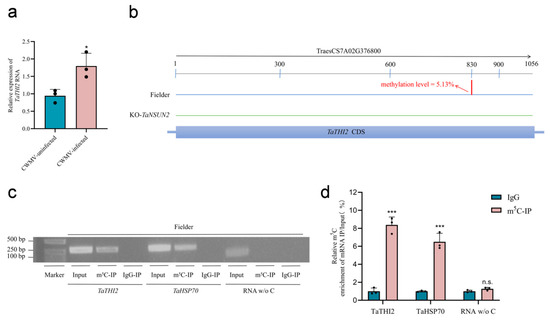
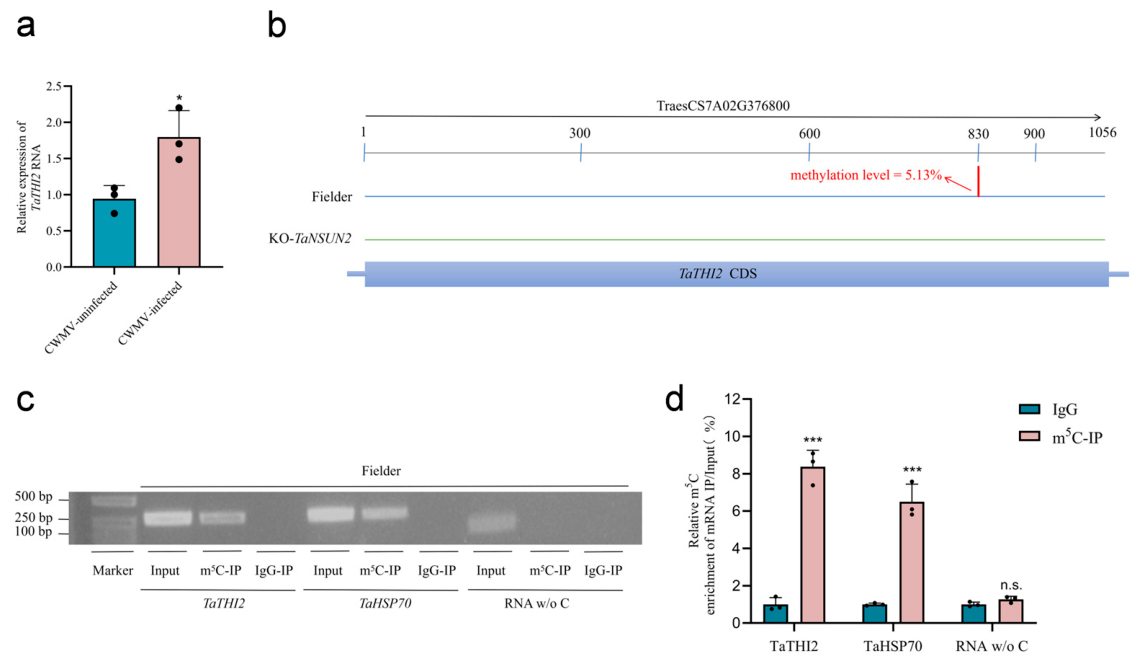
TaTHI2 has previously been identified as a key regulator of antiviral responses during CWMV infection [29]. Consistently, we observed a significant increase in TaTHI2 transcripts upon viral infection (Figure 1a and Figure S1). Given that post-transcriptional RNA modifications such as m5C and m6A are often associated with mRNA stability and expression [15], we next examined whether TaTHI2 mRNA undergoes m5C modification. Reanalysis of our previously generated RNA bisulfite sequencing data [17] revealed multiple candidate m5C sites within TaTHI2 transcripts. Notably, one site located at cytosine 830 (C830) was observed in wild-type plants but was notably absent in TaNSUN2-deficient lines (Figure 1b), suggesting that this modification is dependent on TaNSUN2, a previously characterized m5C methyltransferase in wheat. Primers were designed to amplify a TaTHI2 mRNA fragment encompassing the C830 region to further validate the presence of m5C modification at this site. Total RNA extracted from ‘Fielder’ plants was subjected to m5C RNA immunoprecipitation (m5C-IP) using an anti-m5C antibody, and RT-PCR analysis showed that the TaTHI2 fragment was enriched in the immunoprecipitated fraction compared with the input (Figure 1c). Consistently, RIP-qPCR analysis further confirmed a significant enrichment of TaTHI2 mRNA in the m5C-IP samples (Figure 1d). Notably, a chemically synthesized RNA fragment lacking cytosine residues showed no detectable enrichment under the same conditions, whereas TaHSP70 (heat shock protein 70), a transcript previously reported to carry m5C modification, was significantly enriched. Together, these results indicate that the enrichment of TaTHI2 reflects specific m5C modification rather than nonspecific binding.
Figure 1.
The transcriptional and m5C modification status of TaTHI2 in wheat. (a) The TaTHI2 transcript abundance in CWMV-infected and mock-inoculated ‘Fielder’ plants at 14 dpi, determined via qRT-PCR. The data represent means ± SDs (n = 3 biological replicates; two-sided t test; * p < 0.05). (b) A visualization analysis diagram of the m5C modification of IGV on TaTHI2 mRNA of Fielder and TaNSUN2-KO. Each column represents the site where modification was detected, and the positions outlined in red are the C830 position (7A, 550052928). The range of methylation levels is 0–0.05. (c) Detection of m5C-modified TaTHI2 mRNA via m5C RNA immunoprecipitation (m5C-RIP) followed by RT-PCR. Total RNA extracted from ‘Fielder’ plants was immunoprecipitated using an anti-m5C antibody or IgG as a negative control. TaHSP70, a known m5C-modified transcript, was used as a positive control and showed clear enrichment in the m5C-IP fraction. A chemically synthesized RNA fragment lacking cytosine residues (RNA w/o C) was used as a negative control and showed no detectable enrichment. (d) Quantification of mRNA enrichment in the m5C-immunoprecipitated fraction via m5C-RIP-qPCR. Data are the means ± SDs (n = 3 biological replicates; two-sided t test; *** p < 0.001, n.s. represents no significant difference).
3.2. Association Between TaNSUN2 and TaTHI2 mRNA and Its Effect on m5C Modifications
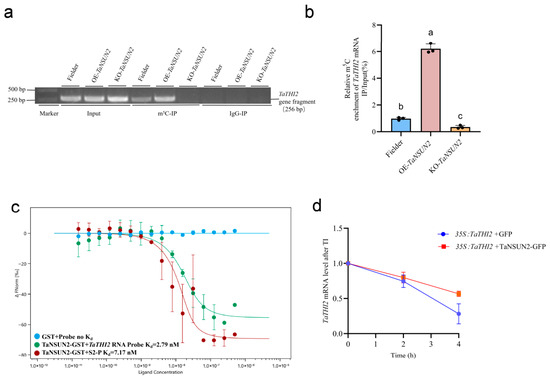
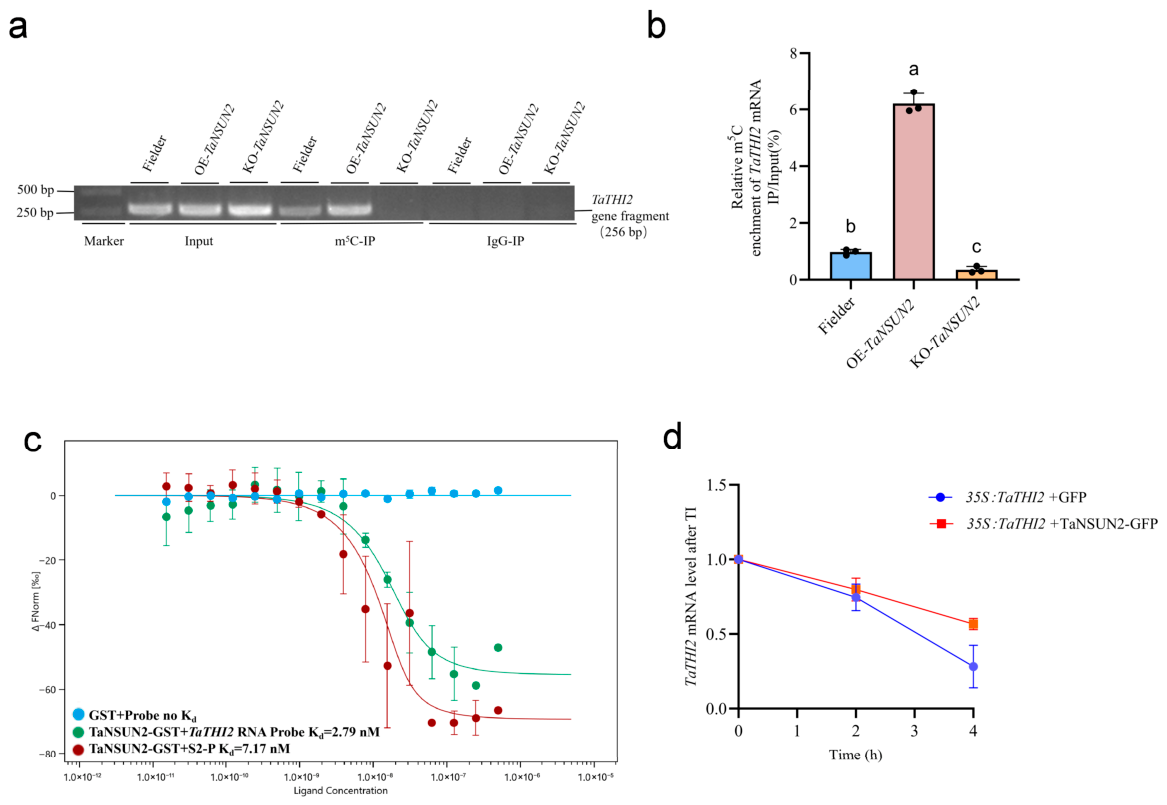
Total RNA was isolated from TaNSUN2-OE lines, TaNSUN2-KO lines, and the wild-type wheat cultivar ‘Fielder’ to determine whether TaNSUN2 regulates the m5C modification of TaTHI2 mRNA at the predicted C830 region. m5C-modified RNAs were enriched via m5C-IP using an anti-m5C antibody, followed by RT-PCR and qRT-PCR analyses. RT-PCR analysis revealed a marked increase in the enrichment of the TaTHI2 mRNA fragment, encompassing the C830 site, in the m5C-immunoprecipitated samples from TaNSUN2-OE plants compared with that in ‘Fielder’ plants, whereas this fragment was undetectable in TaNSUN2-KO plants (Figure 2a). Consistent with these results, m5C-RIP-qPCR analysis showed a significant increase in the relative m5C level in the TaTHI2 mRNA in TaNSUN2-OE lines and a pronounced decrease in TaNSUN2-KO lines relative to that in the wild-type (Figure 2b). Microscale thermophoresis (MST) assays were performed using the purified TaNSUN2-GST protein and a chemically synthesized TaTHI2 RNA probe encompassing the C830 region to determine whether TaNSUN2 was directly associated with TaTHI2 mRNA. In addition, a previously reported [17] CWMV RNA2 3′ UTR probe (designated as S2-P) was included as a positive control. Binding between TaNSUN2-GST and the TaTHI2 RNA probe was detected via MST, with an apparent dissociation constant (Kd) of 2.79 nM, whereas no detectable interaction was observed between the TaTHI2 RNA probe and GST under the same experimental conditions. The S2-P probe showed strong binding to TaNSUN2 under identical conditions, supporting the reliability of the assay (Figure 2c). Given the association between the TaNSUN2 and TaTHI2 mRNA levels, we examined the effect of TaNSUN2 on the TaTHI2 mRNA stability. Following transcriptional inhibition, TaTHI2 transcripts exhibited a slower decay rate in the presence of transiently expressed TaNSUN2-GFP than that in the control sample (Figure 2d).
Figure 2.
TaNSUN2-mediated m5C modification of TaTHI2 mRNA. (a) Detection of m5C modification on TaTHI2 mRNA via m5C RNA immunoprecipitation (m5C-RIP) followed by RT-PCR. Total RNA from ‘Fielder’, TaNSUN2-OE, and TaNSUN2-KO wheat plants was subjected to m5C-RIP using anti-m5C antibody. Input and IgG-immunoprecipitated samples were included as controls. (b) Quantification of TaTHI2 mRNA m5C modifications via m5C-RIP-qPCR. Enrichment levels were normalized to input RNA. Values represent means ± SDs (n = 3 biological replicates; one-way ANOVA with Tukey’s multiple comparisons test; different lowercase letters indicate significant differences; p < 0.05). (c) Direct association between TaNSUN2 and TaTHI2 mRNA analyzed via microscale thermophoresis (MST). Purified TaNSUN2-GST protein was incubated with chemically synthesized TaTHI2 RNA probe encompassing C830 region. GST protein incubated with same RNA probe served as negative control, and TaNSUN2-GST protein incubated with S2-P probe was used as positive control. Data are presented as means ± SDs (n = 3). (d) Analysis of TaTHI2 mRNA stability following transcriptional inhibition (TI) in presence or absence of TaNSUN2. Data represent means ± SDs (n = 3 biological replicates).
3.3. Cytosine 830 Contributes to the m5C Modification of TaTHI2 mRNA
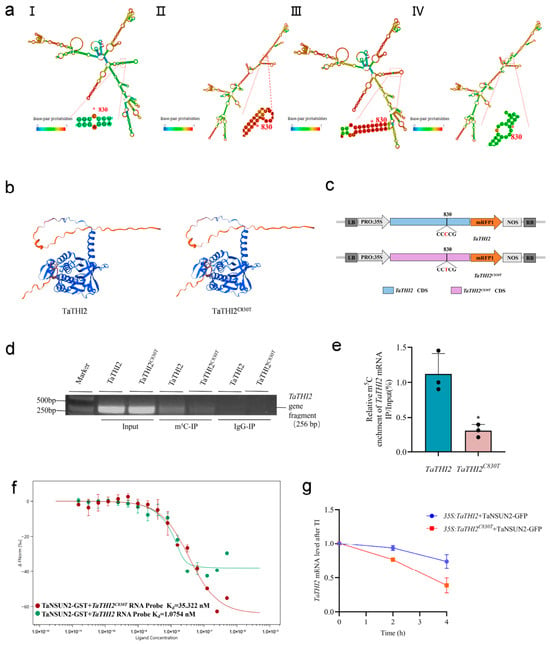
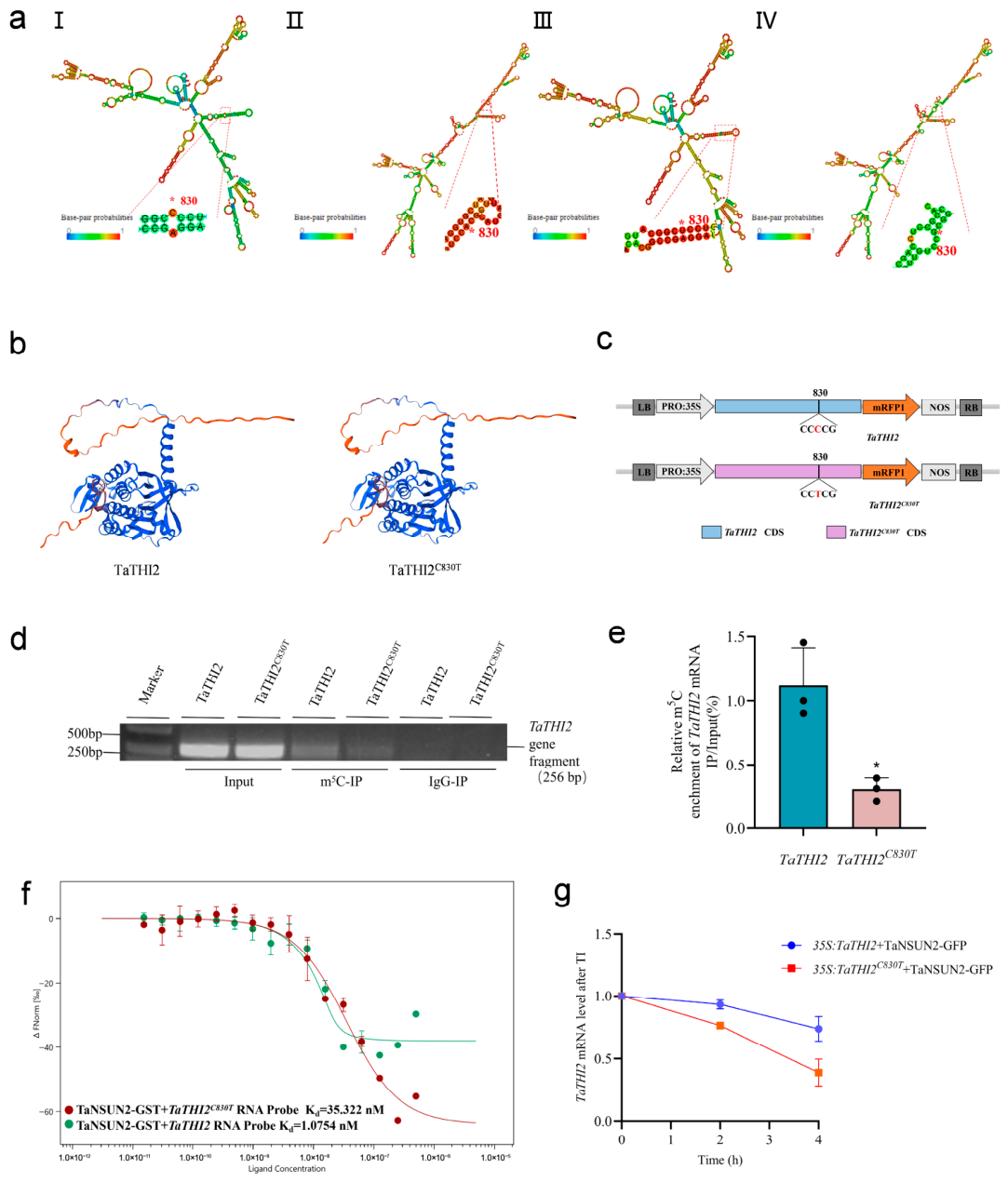
The potential effects of different C830 substitutions were first evaluated in silico to assess whether C830 represents a major m5C modification site on TaTHI2 mRNA. RNAfold was used to predict changes in the RNA secondary structure resulting from the substitution of C830 for A, U, or G. Among the tested substitutions, the replacement of C830 with U least affected the predicted secondary structure of TaTHI2 mRNA (Figure 3a) and was therefore selected for subsequent analyses. Meanwhile, structural prediction indicated that the C830T mutation exerted no obvious effect on the three-dimensional conformation of the resulting protein (Figure 3b). Furthermore, we constructed m5C-inactivation mutant forms of TaTHI2C830T and TaTHI2, and these were then transiently introduced into wheat protoplasts (Figure 3c). m5C-IP was performed using wheat protoplasts transiently expressing TaTHI2-RFP or TaTHI2C830T-RFP. RT-PCR analysis showed a reduction in the enrichment of the m5C-immunoprecipitated TaTHI2C830T mRNA fragment compared with that with the wild-type TaTHI2 transcript (Figure 3d), and m5C-RIP-qPCR analysis consistently revealed a significant decrease in the m5C modification of TaTHI2 mRNA following the substitution of C830 with T (Figure 3e). Next, we examined whether the C830-to-T substitution affected the interaction between TaNSUN2 and TaTHI2 mRNA. MST assays were performed using purified TaNSUN2-GST together with chemically synthesized RNA probes corresponding to wild-type TaTHI2 or the C830T variant. The C830T substitution markedly reduced the binding affinity of TaNSUN2 for TaTHI2 mRNA, as reflected by the substantially increased dissociation constant compared to that of the wild-type probe (Figure 3f). TaTHI2C830T mRNA decayed more rapidly than the wild-type transcript following transcriptional inhibition, indicating that the substitution at C830 was associated with a reduction in TaTHI2 mRNA stability (Figure 3g).
Figure 3.
C830 is a critical m5C modification site in TaTHI2 mRNA. (a) The predicted secondary structure of TaTHI2 mRNA after the substitution of cytosine 830 (C830) with adenine (A), uracil (U), and guanine (G). Panel I shows the predicted secondary structure of wild-type TaTHI2 mRNA, whereas panels II–IV show the predicted structures following the substitution of C830 with A, U, and G, respectively. The C830 position is indicated by red asterisks. (b) A three-dimensional structure prediction map of the wild-type TaTHI2 and mutant TaTHI2 protein sequences using the SWISS MODEL tool. Different colors correspond to different confidence levels. Red represents low confidence, whereas blue indicates high confidence. (c) A schematic representation of the TaTHI2 mutation used in the subsequent validation assays. The coding regions of the wild-type TaTHI2 and mutant TaTHI2C830T were cloned into the pGWB454 expression vector driven by the CaMV 35S promoter. (d) m5C RNA immunoprecipitation (RIP) analysis of TaTHI2 and TaTHI2C830T mRNA. RIP assays were performed using an anti-m5C antibody or IgG as a negative control on total RNA isolated from Nicotiana benthamiana leaves transiently expressing TaTHI2 or TaTHI2C830T. Enriched TaTHI2 mRNA fragments were detected via RT-PCR and agarose gel electrophoresis. (e) Quantification of the m5C modification levels of TaTHI2 and TaTHI2C830T mRNA via m5C-RIP-qPCR. The enrichment of TaTHI2 mRNA fragments, shown in panel (c), was calculated. Values represent means ± SDs (n = 3 biological replicates; two-sided t test; * p < 0.05). (f) The interaction between TaNSUN2 and TaTHI2 mRNA was analyzed via microscale thermophoresis (MST). The purified TaNSUN2-GST protein was incubated with chemically synthesized RNA probes corresponding to wild-type TaTHI2 or the C830T variant. Each binding assay was performed three times independently, and data are presented as means ± SDs. (g) Stability analysis of TaTHI2 and TaTHI2C830T mRNA in the presence of TaNSUN2 following transcriptional inhibition (TI). Data are shown as means ± SDs (n = 3 biological replicates).
3.4. C830-to-T Mutation in TaTHI2 mRNA Reduces ROS Accumulation and Facilitates CWMV Infection
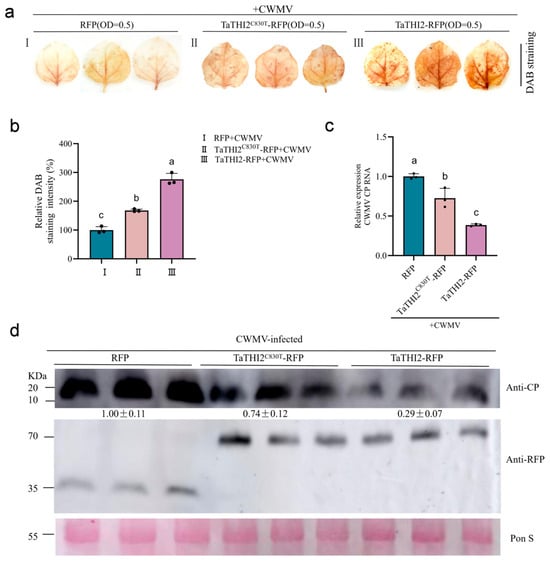
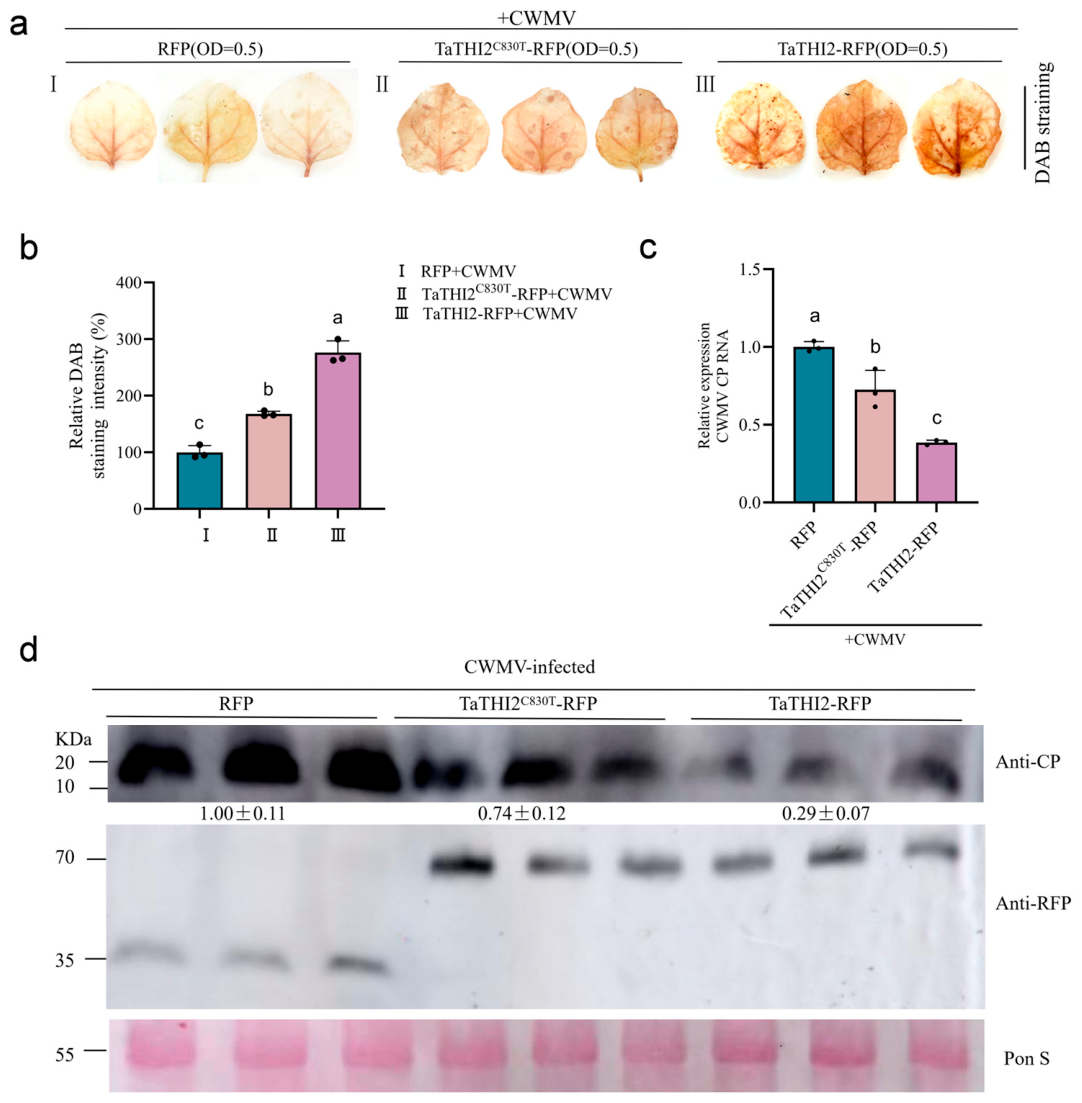
We compared the effects of wild-type TaTHI2 mRNA and mutant TaTHI2C830T mRNA to evaluate the effect of the TaTHI2C830T mutation on CWMV accumulation. As TaTHI2 is known to trigger an ROS burst signaling cascade that confers CWMV infection resistance, ROS accumulation serves as an additional indicator for assessing viral infection [29]. N. benthamiana leaves were co-infiltrated with CWMV and RFP, TaTHI2-RFP, or TaTHI2C830T-RFP to assess the effect of the C830-to-T mutation in TaTHI2 on the ROS production and CWMV accumulation. The ROS accumulation was analyzed via 3,3′-diaminobenzidine (DAB) staining and quantified using ImageJ. The ROS levels were markedly increased in leaves expressing either TaTHI2-RFP or TaTHI2C830T-RFP compared with those of the CWMV+RFP control. However, the ROS accumulation was significantly lower in TaTHI2C830T-RFP-expressing leaves than in those expressing TaTHI2-RFP (Figure 4a,b). The CWMV accumulation was further assessed via qRT-PCR and Western blotting. Consistent with the ROS results, both the CWMV RNA and CP levels were significantly reduced in leaves expressing TaTHI2-RFP or TaTHI2C830T-RFP compared with those in the control. Notably, viral accumulation was higher in TaTHI2C830T-RFP-expressing leaves than in those expressing TaTHI2-RFP (Figure 4c,d).
Figure 4.
The TaTHI2C830T mutant of TaTHI2 mRNA facilitates Chinese wheat mosaic virus (CWMV) infection by reducing reactive oxygen species (ROS) accumulation. (a) Nicotiana benthamiana leaves were co-infiltrated with CWMV and TaTHI2-RFP, TaTHI2C830T-RFP, or RFP alone, with CWMV + RFP serving as the control. Leaves were stained with 3,3′-diaminobenzidine (DAB) to detect ROS production. (b) Measurement of the relative DAB staining intensity as shown in (a). Values were obtained by measuring three representative images chosen from three biological replicates, and the data presented are the means ± SDs from three samples; different lowercase letters indicate significant differences (p < 0.05). (c) Accumulation of CWMV RNA in the inoculated leaves from (a), as analyzed via qRT-PCR. Data represent means ± SDs. Different letters show statistically significant differences (p < 0.05, Tukey’s test). (d) CWMV accumulation in these N. benthamiana leaves was detected via Western blotting using an anti-CWMV CP and anti-RFP antibody.
4. Discussion
Post-transcriptional RNA modifications are important regulators of plant stress adaptation and immunity [9,10,11]. In the CWMV–wheat pathosystem, TaTHI2 functions as an endogenous resistance factor that restricts viral infection by modulating TaCPK5–catalase signaling and ROS accumulation [29]. Consistent with these findings, TaTHI2 transcripts responded to CWMV infection, with altered expression dynamics observed between infected and mock-treated plants, and they showed consistent expression across infection stages and tissues associated with viral accumulation (Figure 1a and Figure S1). Previous RNA-BisSeq analysis identified m5C modification sites within TaTHI2 transcripts, among which the C830 site showed both a high sequencing depth and methylation level, suggesting that it represents a reliable and potentially functional modification site [17]. Building on this observation, we further validated this site and investigated its functional relevance. Together with m5C site prediction and m5C-RIP validation, these results established TaTHI2 as an infection-associated host factor and prompted an investigation of its post-transcriptional regulation (Figure 1c,d). Among RNA modifications, m6A has been extensively linked to developmental regulation, stress adaptation, and viral infection [38]; however, functional evidence of its involvement in plant immunity remains limited. NSUN family methyltransferases regulate mRNA fates in plants, as exemplified by the OsNSUN2-mediated m5C modification of photosynthesis-related transcripts in rice [16]. In wheat, TaNSUN2 acts as an mRNA m5C methyltransferase and is exploited by CWMV to enhance viral infection via viral RNA methylation [17]. Extending these findings, we showed that TaTHI2 mRNA undergoes TaNSUN2-dependent m5C modification in plants, as revealed via RT-PCR-based detection and quantitative m5C-RIP-qPCR following enrichment with an anti-m5C antibody (Figure 2a,b). TaNSUN2 was found to directly associate with TaTHI2 RNA (Figure 2c) and to contribute to the m5C modification of TaTHI2 transcripts, enhancing mRNA stability (Figure 2d) and, thus, establishing m5C as a determinant of TaTHI2 transcript stability during infection.
RNA methylation frequently occurs in a site-specific manner, with individual modified nucleotides exerting pronounced effects on transcript fates [4,14,15]. Given the prominent cytosine identified in TaTHI2 mRNA (Figure 1d), we next examined its functional relevance. Guided by the RNA secondary structure prediction (Figure 3a), a C-to-T substitution was introduced to minimally perturb transcript folding while disrupting the predicted m5C site (Figure 3c). This single-site mutation markedly reduced m5C enrichment (Figure 3d,e), weakened TaNSUN2–RNA binding (Figure 3f), and accelerated transcript decay (Figure 3g). Although this substitution introduces a conservative amino acid change, structural modeling using SWISS-MODEL revealed no obvious global differences between the wild-type and mutant TaTHI2 proteins (Figure 3b), suggesting limited impact on the overall protein folding. Nevertheless, a contribution from altered protein properties cannot be completely excluded. Given that the m5C modification has been reported to primarily regulate RNA stability and RNA–protein interactions [4,14,15], together with the coordinated loss of methylation, RNA binding, and transcript stability observed in this study, we propose that these effects are mainly attributable to disruption of the m5C regulatory axis. Consistent with the established role of TaTHI2 in ROS-mediated resistance [29], the loss of the TaTHI2 m5C modification significantly reduced the ROS accumulation, as shown by the DAB staining and quantitative analysis (Figure 4a,b), and concomitantly increased the CWMV RNA and CP levels (Figure 4c,d). These results directly link m5C-dependent transcript stabilization to ROS-mediated antiviral defense.
Plant viruses commonly hijack the host RNA modification machinery to favor replication [38]. In wheat, TaNSUN2 is recruited to the CWMV replication complexes to deposit m5C marks on viral RNAs, enhancing the viral RNA stability and accumulation [17]. Our findings revealed that TaNSUN2 simultaneously targets the host resistance transcript TaTHI2, indicating a dual role in the CWMV pathosystem. Accordingly, we put forward a hypothesis explaining the dynamic alterations in substrate allocation within wheat plants upon CWMV infection. The early TaNSUN2-mediated stabilization of TaTHI2 may contribute to the initial host defense. As the infection progresses, viral recruitment increasingly biases TaNSUN2 activity toward viral RNA, ultimately favoring infection. The partial retention of host-directed methylation likely generates a competitive balance between viral exploitation and host defense maintenance. While our results establish a functional link between TaNSUN2-mediated m5C modification and TaTHI2-dependent antiviral defense, the mechanisms underlying the substrate selection and downstream interpretation of m5C marks remain to be further explored.
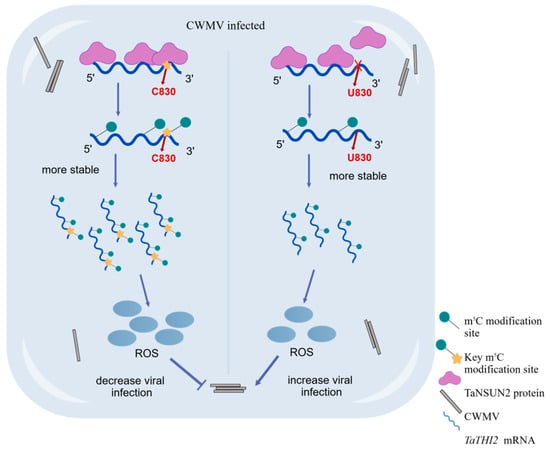
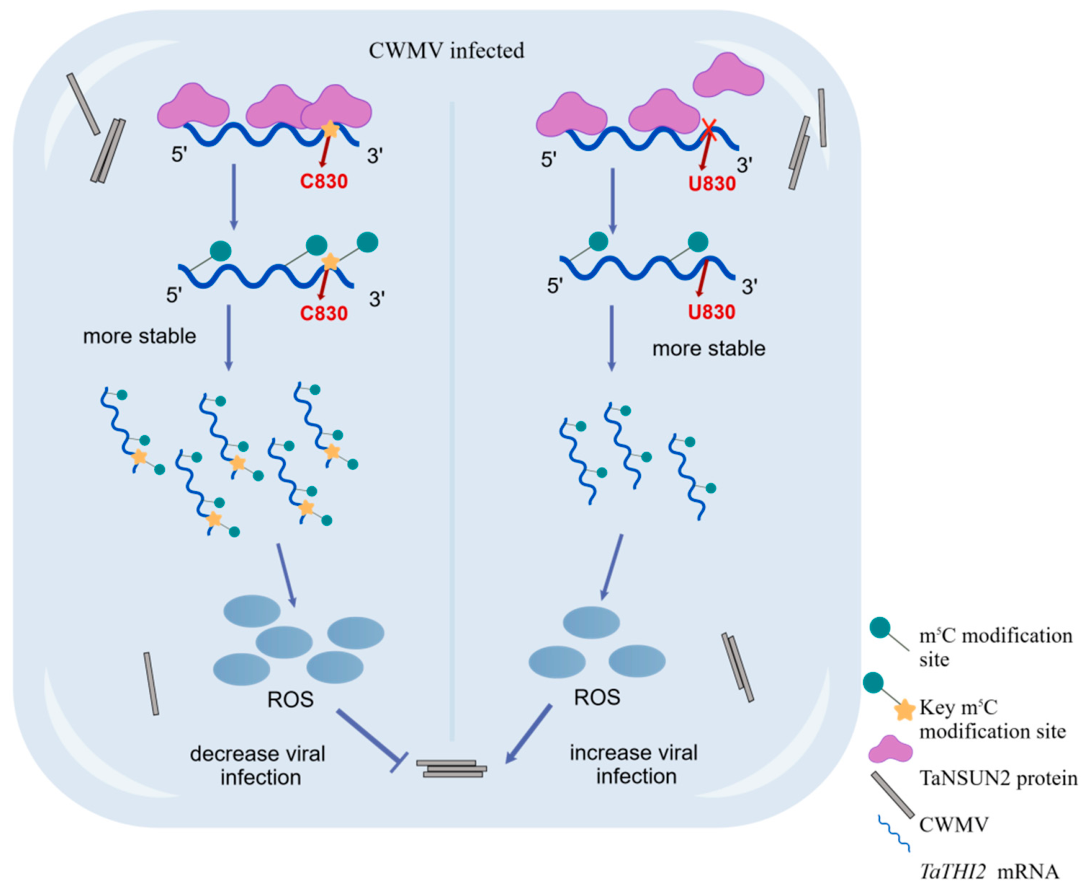
Collectively, our findings support a model in which TaNSUN2 modulates host antiviral immunity by mediating the m5C modification of the TaTHI2 transcript and elevating its mRNA stability (Figure 5). This modification stabilizes TaTHI2 transcripts, sustains TaTHI2 accumulation, and promotes ROS-mediated defense against CWMV. Disruption of the m5C-dependent regulatory axis compromises TaTHI2 stability, attenuates ROS production, and facilitates viral infection. These findings suggest that TaTHI2 mRNA m5C modification is a key post-transcriptional control point in CWMV resistance, highlight TaNSUN2-dependent RNA methylation as an integral component of host antiviral defense, and further implicate the m5C-mediated regulation of host transcripts in plant antiviral immunity.
Figure 5.
Working model of TaNSUN2-mediated m5C regulation of TaTHI2 during Chinese wheat mosaic virus (CWMV) infection. During CWMV infection, TaNSUN2 binds TaTHI2 mRNA and is associated with m5C modification at cytosine 830 (C830). This modification enhances TaTHI2 mRNA stability, sustains TaTHI2 accumulation, and promotes reactive oxygen species (ROS) production, thereby restricting CWMV infection. The disruption of m5C modifications at C830 leads to reduced TaTHI2 mRNA stability, decreased ROS accumulation, and enhanced viral infection. In addition, the yellow stars in the figure mark the C830 site with the potential for m5C modification, whereas the crosses represent the U830 site that is not subject to m5C modification.
Supplementary Materials
The following supporting information can be downloaded at https://www.mdpi.com/article/10.3390/agronomy16090921/s1. Figure S1: Phenotypic responses and viral coat protein accumulation in wheat cultivar ‘Fielder’ following CWMV infection; Table S1: Primers used in this study.
Author Contributions
Conceptualization, L.C., M.Z., J.Y. and Y.J.; methodology, L.C., M.Z., Y.W., L.F. and Y.L.; validation, L.C., M.Z., Y.W., L.F. and Y.L.; formal analysis, L.C., M.Z., Y.W. and L.F.; investigation, L.C., M.Z., Y.W., L.F., Y.L. and J.L.; resources, L.C., M.Z., Y.W. and J.L.; data curation, L.C., M.Z., Y.W., L.F. and Y.L.; writing—original draft, L.C., M.Z. and Y.J.; writing—review and editing, L.C., M.Z., Y.W., L.F., Y.L., J.L., J.Y. and Y.J.; visualization, L.C., M.Z., Y.W. and L.F.; supervision, J.Y.; project administration, J.Y. and Y.J.; funding acquisition, J.Y. and Y.J. All authors have read and agreed to the published version of the manuscript.
Funding
This research was funded by the Zhejiang Provincial Natural Science Foundation of China (grant no. LMS25C140004), the National Key Research and Development Program of China (grant no. 2024YFD1400402), the National Natural Science Foundation of China (grant no. 32372488), the China Postdoctoral Science Foundation (grant no. 2025M783810), and the Ningbo Natural Science Foundation (grant no. 2025J192).
Data Availability Statement
The original contributions presented in this study are included in the article/Supplementary Materials. Further inquiries can be directed to the corresponding authors.
Conflicts of Interest
The authors declare no conflicts of interest.
References
- Burgess, A.L.; David, R.; Searle, I.R. Conservation of tRNA and rRNA 5-methylcytosine in the kingdom Plantae. BMC Plant Biol. 2015, 15, 199. [Google Scholar] [CrossRef] [Scilit]
- Shu, X.; Li, W.P. Chemical decoding strategies for detecting RNA modifications, dynamics and structures. Chem. Commun. 2025, 61, 12069–12084. [Google Scholar] [CrossRef] [Scilit]
- Haruka, M.; Corina, N. Potential Roles of m6A and FTO in Synaptic Connectivity and Major Depressive Disorder. Int. J. Mol. Sci. 2023, 24, 6220. [Google Scholar] [CrossRef] [Scilit]
- Wiener, D.; Schwartz, S. The epitranscriptome beyond m(6)A. Nat. Rev. Genet. 2021, 22, 119–131. [Google Scholar] [CrossRef] [Scilit] [PubMed]
- Guo, S.T.; Li, Z.; Li, X.B.; Liang, Z.; Zhao, D.D.; Sun, N.; Liu, J.Q.; Wang, X.N.; Mei, S.; Qiao, X.Y.; et al. 2′-O-methylation and N6-methyladenosine enhance the oral delivery of small RNAs in mice. Mol. Ther.-Nucleic Acids 2025, 36, 102574. [Google Scholar] [CrossRef] [Scilit] [PubMed]
- Zheng, Y.Y.; Wu, Y.; Begley, T.J.; Sheng, J. Sulfur modification in natural RNA and therapeutic oligonucleotides. RSC Chem. Biol. 2021, 2, 990–1003. [Google Scholar] [CrossRef] [Scilit]
- Roundtree, I.A.; Evans, M.E.; Pan, T.; He, C. Dynamic RNA Modifications in Gene Expression Regulation. Cell 2017, 169, 1187–1200. [Google Scholar] [CrossRef] [Scilit]
- Li, Z.L.; Xie, Y.; Wang, Y.F.; Wang, J.; Zhou, X.; Zhang, X.L. NSUN2-mediated HCV RNA m5C Methylation Facilitates Viral RNA Stability and Replication. Genom. Proteom. Bioinform. 2025, 23, qzaf008. [Google Scholar] [CrossRef] [Scilit]
- Cui, X.; Liang, Z.; Shen, L.S.; Zhang, Q.; Bao, S.J.; Geng, Y.K.; Zhang, B.; Leo, V.; Vardy, L.A.; Lu, T.G.; et al. 5-Methylcytosine RNA Methylation in Arabidopsis Thaliana. Mol. Plant 2017, 10, 1387–1399. [Google Scholar] [CrossRef] [Scilit]
- Wu, J.; Peled-Zehavi, H.; Galili, G. The m(6) A reader ECT2 post-transcriptionally regulates proteasome activity in Arabidopsis. New Phytol. 2020, 228, 151–162. [Google Scholar] [CrossRef] [Scilit] [PubMed]
- Hu, J.; Cai, J.; Park, S.J.; Lee, K.; Li, Y.; Chen, Y.; Yun, J.Y.; Xu, T.; Kang, H. N(6)-Methyladenosine mRNA methylation is important for salt stress tolerance in Arabidopsis. Plant J. 2021, 106, 1759–1775. [Google Scholar] [CrossRef] [Scilit]
- Chen, T.; Greene, G.H.; Motley, J.; Mwimba, M.; Luo, G.Z.; Xu, G.Y.; Karapetyan, S.; Xiang, Y.Z.; Liu, C.; He, C.; et al. m(6)A modification plays an integral role in mRNA stability and translation during pattern-triggered immunity. Proc. Natl. Acad. Sci. USA 2024, 121, e2411100121. [Google Scholar] [CrossRef] [Scilit] [PubMed]
- Yang, X.; Yang, Y.; Sun, B.F.; Chen, Y.S.; Xu, J.W.; Lai, W.Y.; Li, A.; Wang, X.; Bhattarai, D.P.; Xiao, W.; et al. 5-methylcytosine promotes mRNA export—NSUN2 as the methyltransferase and ALYREF as an m(5)C reader. Cell Res. 2017, 27, 606–625. [Google Scholar] [CrossRef] [Scilit]
- Squires, J.E.; Patel, H.R.; Nousch, M.; Sibbritt, T.; Humphreys, D.T.; Parker, B.J.; Suter, C.M.; Preiss, T. Widespread occurrence of 5-methylcytosine in human coding and non-coding RNA. Nucleic Acids Res. 2012, 40, 5023–5033. [Google Scholar] [CrossRef] [Scilit] [PubMed]
- David, R.; Burgess, A.; Parker, B.; Li, J.; Pulsford, K.; Sibbritt, T.; Preiss, T.; Searle, I.R. Transcriptome-Wide Mapping of RNA 5-Methylcytosine in Arabidopsis mRNAs and Noncoding RNAs. Plant Cell 2017, 29, 445–460. [Google Scholar] [CrossRef] [Scilit] [PubMed]
- Tang, Y.; Gao, C.C.; Gao, Y.; Yang, Y.; Shi, B.; Yu, J.L.; Lyu, C.; Sun, B.F.; Wang, H.L.; Xu, Y.; et al. OsNSUN2-Mediated 5-Methylcytosine mRNA Modification Enhances Rice Adaptation to High Temperature. Dev. Cell 2020, 53, 272–286. [Google Scholar] [CrossRef] [Scilit]
- Jiang, Y.Y.; Liu, P.; Zhang, M.C.; Yong, B.; Yin, J.L.; Chen, L.W.; Shi, C.N.; Li, P.; Guo, Y.F.; Hu, H.C.; et al. Enhancing plant antiviral responses and productivity through the elimination of m(5)C methyltransferase. Sci. Adv. 2026, 12, eaea4046. [Google Scholar] [CrossRef] [Scilit]
- Feng, J.P.; Xu, T.M.; He, M.; Li, J.L.; Yao, P.P.; Ma, C.B.; Yang, S.M.; Xu, Z.C.; Yan, K.; Chen, X.Y.; et al. NSUN2-mediated m5C modification of HBV RNA positively regulates HBV replication. PLoS Pathog. 2023, 19, e1011808. [Google Scholar] [CrossRef] [Scilit]
- Ding, S.; Liu, H.B.; Liu, L.J.; Ma, L.; Chen, Z.; Zhu, M.; Liu, L.S.; Zhang, X.Y.; Hao, H.J.; Zuo, L.; et al. Epigenetic addition of m(5)C to HBV transcripts promotes viral replication and evasion of innate antiviral responses. Cell Death Dis. 2024, 15, 39. [Google Scholar] [CrossRef] [Scilit]
- Zuo, S.; Li, L.; Wen, X.; Gu, X.; Zhuang, A.; Li, R.; Ye, F.; Ge, S.; Fan, X.; Fan, J.; et al. NSUN2-mediated m(5) C RNA methylation dictates retinoblastoma progression through promoting PFAS mRNA stability and expression. Clin. Transl. Med. 2023, 13, e1273. [Google Scholar] [CrossRef] [Scilit]
- Diao, A.; Chen, J.P.; Ye, R.; Zheng, T.; Yu, S.Q.; Antoniw, J.F.; Adams, M.J. Complete sequence and genome properties of Chinese wheat mosaic virus, a new furovirus from China. J. Gen. Virol. 1999, 80, 1141–1145. [Google Scholar] [CrossRef] [Scilit]
- Chen, J.P. Occurrence of fungally transmitted wheat mosaic viruses in China. Ann. Appl. Biol. 2010, 123, 55–61. [Google Scholar]
- Ye, R.; Zheng, T.; Chen, J.; Diao, A.; Adams, M.J.; Yu, S.; Antoniw, J.F. Characterization and partial sequence of a new furovirus of wheat in China. Plant Pathol. 1999, 48, 379–387. [Google Scholar] [CrossRef] [Scilit]
- Guo, L.M.; Jing, H.; Jing, L.; Chen, J.P.; Zhang, H.M. Chinese wheat mosaic virus: A long-term threat to wheat in China. J. Integr. Agric. 2019, 18, 821–829. [Google Scholar] [CrossRef] [Scilit]
- Sun, L.Y.; Andika, I.B.; Shen, J.F.; Yang, D.; Ratti, C.; Chen, J.P. The CUG-initiated larger form coat protein of Chinese wheat mosaic virus binds to the cysteine-rich RNA silencing suppressor. Virus Res. 2013, 177, 66–74. [Google Scholar] [CrossRef] [Scilit] [PubMed]
- Yang, J.; Zhang, F.; Xie, L.; Song, X.J.; Li, J.; Chen, J.P.; Zhang, H.M. Functional identification of two minor capsid proteins from Chinese wheat mosaic virus using its infectious full-length cDNA clones. J. Gen. Virol. 2016, 97, 2441–2450. [Google Scholar] [CrossRef] [Scilit] [PubMed]
- Andika, I.B.; Sun, L.Y.; Xiang, R.; Li, J.M.; Chen, J.P. Root-specific role for Nicotiana benthamiana RDR6 in the inhibition of Chinese wheat mosaic virus accumulation at higher temperatures. Mol. Plant-Microbe Interact. 2013, 26, 1165–1175. [Google Scholar] [CrossRef] [Scilit]
- Li, P.; Zhao, L.L.; Qi, F.; Htwe, N.M.P.S.; Li, Q.Y.; Zhang, D.W.; Lin, F.C.; Shang-Guan, K.K.; Liang, Y. The receptor-like cytoplasmic kinase RIPK regulates broad-spectrum ROS signaling in multiple layers of plant immune system. Mol. Plant 2021, 14, 1652–1667. [Google Scholar] [CrossRef] [Scilit]
- Yang, J.; Chen, L.; Zhang, J.; Liu, P.; Chen, M.; Chen, Z.H.; Zhong, K.L.; Liu, J.Q.; Chen, J.P.; Yang, J. TaTHI2 interacts with Ca(2+)-dependent protein kinase TaCPK5 to suppress virus infection by regulating ROS accumulation. Plant Biotechnol. J. 2024, 22, 1335–1351. [Google Scholar] [CrossRef] [Scilit]
- Waszczak, C.; Carmody, M.; Kangasjarvi, J. Reactive Oxygen Species in Plant Signaling. Annu. Rev. Plant Biol. 2018, 69, 209–236. [Google Scholar] [CrossRef] [Scilit] [PubMed]
- Mittler, R.; Vanderauwera, S.; Suzuki, N.; Miller, G.; Tognetti, V.B.; Vandepoele, K.; Gollery, M.; Shulaev, V.; Van Breusegem, F. ROS signaling: The new wave? Trends Plant Sci. 2011, 16, 300–309. [Google Scholar] [CrossRef] [Scilit] [PubMed]
- Wu, J.G.; Yang, R.X.; Yang, Z.R.; Yao, S.Z.; Zhao, S.S.; Wang, Y.; Li, P.C.; Song, X.W.; Jin, L.; Zhou, T.; et al. ROS accumulation and antiviral defence control by microRNA528 in rice. Nat. Plants 2017, 3, 16203. [Google Scholar] [CrossRef] [Scilit]
- Tu, C.W.; Huang, Y.W.; Lee, C.W.; Kuo, S.Y.; Lin, N.S.; Hsu, Y.H.; Hu, C.C. Argonaute 5-mediated antiviral defense and viral counter-defense in Nicotiana benthamiana. Virus Res. 2023, 334, 179–199. [Google Scholar] [CrossRef] [Scilit]
- Zhong, K.L.; Xu, G.C.; Shi, J.J.; Liu, P.; Tu, A.Z.; Wu, M.L.; Liu, J.Q.; Chen, J.P.; Yang, J. NbPIRIN promotes the protease activity of papain-like cysteine protease NbRD21 to inhibit Chinese wheat mosaic virus infection. PLoS Pathog. 2025, 21, e1013037. [Google Scholar] [CrossRef] [Scilit]
- Idris, Z.H.C.; Abidin, A.A.Z.; Subki, A.; Yusof, Z.N.B. The Effect of Oxidative Stress Towards The Expression of Thiamine Biosynthesis Genes (THIC and THI1/THI4) in Oil Palm (Elaeis guineensis). Trop. Life Sci. Res. 2018, 29, 71–85. [Google Scholar] [CrossRef] [Scilit] [PubMed]
- Rapala-Kozik, M.; Wolak, N.; Kujda, M.; Banas, A.K. The upregulation of thiamine (vitamin B1) biosynthesis in Arabidopsis thaliana seedlings under salt and osmotic stress conditions is mediated by abscisic acid at the early stages of this stress response. BMC Plant Biol. 2012, 12, 2–16. [Google Scholar] [CrossRef] [Scilit] [PubMed]
- Sun, Y.D.; Folimonova, S.Y. The p33 protein of Citrus tristeza virus affects viral pathogenicity by modulating a host immune response. New Phytol. 2019, 221, 2039–2053. [Google Scholar] [CrossRef] [Scilit]
- Guo, J.; Zhang, T.Y.; Xie, H.X.; Hu, H.C.; Shi, C.N.; Zhao, Y.J.; Yin, J.L.; Xu, G.C.; Wu, Z.C.; Wang, P.K.; et al. An m(6)A methyltransferase confers host resistance by degrading viral proteins through ubiquitination. Nat. Commun. 2025, 16, 4821. [Google Scholar] [CrossRef] [Scilit]
Disclaimer/Publisher’s Note: The statements, opinions and data contained in all publications are solely those of the individual author(s) and contributor(s) and not of MDPI and/or the editor(s). MDPI and/or the editor(s) disclaim responsibility for any injury to people or property resulting from any ideas, methods, instructions or products referred to in the content. |
© 2026 by the authors. Licensee MDPI, Basel, Switzerland. This article is an open access article distributed under the terms and conditions of the Creative Commons Attribution (CC BY) license.