


Abstract
Background: Optimized nitrogen (N) application and planting density can enhance sweet potato yield. However, the agronomic mechanisms underlying their effects on photosynthetic efficiency and carbohydrate metabolism in sweet potato remain unclear. Methods: To address this, a two-year field experiment was conducted using a split-plot design with two varieties (YS-25 and GX-14), three N levels (60, 90, and 120 kg/ha; designated N60, N90, and N120, respectively), and three planting densities (D1–D3: 50,000, 62,500, and 83,333 plants/ha). Each treatment was replicated three times. Results: The results showed that the N60D2 treatment (60 kg/ha N; 62,500 plants/ha) optimized canopy light distribution by significantly increasing IPAR, light transmission rate, and extinction coefficient (K). This treatment enhanced individual plant photosynthetic capacity (higher photosynthetic rate: Pn, Ci, Gs, and Tr) and light energy use efficiency (Fv/Fm, Y(II), ETR, and qP), and promoted carbohydrate metabolism (sucrose, starch, fructose, and glucose) by increasing enzyme activities (Rubisco, SuSy, SPS, NI, SSS, and AGPase) in functional leaves and roots. These effects improved source–sink coordination, ultimately increasing storage root yield by 63.27–95.47% compared with the control plants (N120D1). Correlation analysis revealed that single-plant root weight and medium-sized root count were important yield determinants for both varieties. Conclusions: These results indicate that reducing nitrogen fertilizer combined with dense planting shapes a reasonable canopy structure for light distribution at the population level and optimizes light and carbon use efficiency at the individual plant level, thereby improving storage root yield and commercial characteristics of sweet potato.
1. Introduction
Sweet potato (Ipomoea batatas L.) is one of the most important crops for its high nutritional value and adaptability, which plays an important role in global food security [1]. Being the largest global producer, China dominates nearly half of total production around the world, yielding around 50 million tons of storage roots annually in 2020 [2]. Low planting densities and inefficient fertilizer management were the factors that contributed the most to limit yield potential [3,4]. Addressing these limitations is necessary for the optimization of sweet potato productivity and sustainability.
Sweet potato storage root formation and development are strongly dependent on photosynthetic performance and C-N metabolism [5,6]. The storage root number can be stabilized during the canopy closure period (30–45 DAP), which undergoes a series of physiological performances in adventitious root formation and storage root differentiation. At this stage, storage root formation in sweet potato is typically facilitated by up-regulated starch metabolism and down-regulated lignin biosynthesis in adventitious roots [1]. During the late growth period, approximately 70% of sweet potato storage root biomass is derived from photo-assimilates transported from source leaves. The extent of this assimilate transfer directly influences yield, root size, and commercial quality [7]. Collectively, enhancing sweet potato storage root yield can be achieved primarily by inducing storage root formation at the early growth stage and extending the duration of photosynthetic activity during the late growth season, a strategy that essentially balances source–sink interaction [8].
Increasing planting density is an agronomic measure to maximize crop yield potential [9,10]. However, excessive planting density intensifies resource competition between individual plants, leading to a compact canopy architecture, reduced photosynthetic efficiency, and ultimately causing yield loss [11,12]. This creates a critical trade-off: increasing planting density enhances resource uptake and utilization at the group level but simultaneously constrains the physiological performance of individual plants. Therefore, a key question is how to balance the relationship between individual plants and the population under dense sweet potato planting.
Crop growth leans on nitrogen (N), which improves photosynthetic efficiency and carbohydrate metabolism in every tissue of the plant [13]. Leaf traits, such as chlorophyll content and area, are closely associated with nitrogen fixation and metabolism [14]. However, excessive N application disrupts the balance between source and sink, and simultaneously reduces N-use efficiency and causes deleterious environmental effects [15]. Conversely, N-deficiency impacts the synthesis and allocation of photosynthate of photosynthetic assimilates, and ultimately decreases yield [16]. Appropriate N-level promotes adventitious root differentiation into storage roots during the canopy closure period, and eventually, improves storage number and yield at the harvest stage [2,17,18].
Canopy structures, such as branch number, leaf area, stem length, and leaf angle, strongly affect light distribution across canopy layers [19]. Intercepted photosynthetically active radiation (IPAR) reflects the level of light capture and absorption at the field level. Increasing the IPAR through lower canopy levels can significantly improve the individual photosynthetic performance of lower leaves and thus increase the light-use efficiency. Chlorophyll fluorescence is a nondestructive evaluation of PSII reaction center activity in individual plants. The parameters of the maximum (Fv/Fm) actual photochemical efficiencies of PSII (YII), electron transport rate (ETR), and coefficient of photochemical quenching (qP) were positively correlated to light-use efficiency. Gas exchange parameters, such as net photosynthetic (Pn), were used to evaluate the source capacity of individual plants. SPAD value presents the leaf chlorophyll content and has been an important indicator to evaluate plant physiological status. Rubisco (D-ribulose 1,5-bisphosphate carboxylase-oxygenase) is the major enzyme involved in C metabolism (CO2 fixation) and the activity of this enzyme reflects the capacity of photo-assimilate in source organs. Simultaneously, the sucrose–starch conversion process, which involves several enzyme activities, such as SuSy (sucrose synthase), SPS (sucrose phosphate synthase), AGPase (ADP-glucose pyrophosphorylase), SSS (soluble starch synthase), and invertase. Several studies indicate that the crop yield formation was significantly associated with these enzyme activities. These photosynthetic traits and enzyme activities are influenced by multiple genetic and phenotypic diversities, which must be considered when selecting planting density [20]. Therefore, calculated nutrient application in dense planting can alleviate resource competition, improve N-use efficiency, and facilitate balanced group development [21]. Hence, coordinating light–nitrogen optimizes source–sink relationships and improves yield production [22].
The storage root formation and bulking period are important stages to determine the yield, which is strongly influenced by the photosynthetic performance. Storage root number and fresh weight are key yield components, with storage root number being the main driver of commercial quality, including uniform appearance and size [2,3,4]. However, the agronomic mechanism regulating yield formation, stability, and their interactions with planting density, N levels, photosynthetic performance, and carbon metabolism remains poorly understood, particularly across sweet potato varieties with various phenotypes.
We hypothesized that appropriate planting density and nitrogen application rates could shape a reasonable canopy structure, optimize light distribution at the population level, and enhance both photosynthetic performance and carbon metabolism in individual plants. Subsequently, it will strengthen source–sink coordination, storage root yield, and improve the commercial characteristics of sweet potatoes. Therefore, this study aimed to evaluate the photosynthetically active radiation (PAR) through group plant layers, photosynthetic performance of individual plants, and carbon metabolism that was affected by planting density and nitrogen rates, clarify the relationship among photosynthetic performance, carbon metabolism, and yield components, and find the agronomic mechanism causing yield increase in response to planting density and nitrogen across sweet potato.
2. Materials and Methods
2.1. Experimental Design
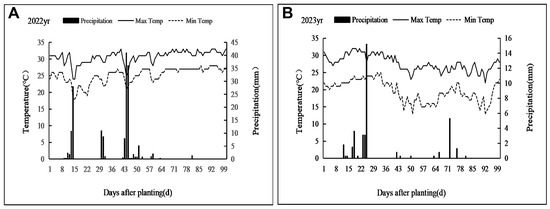
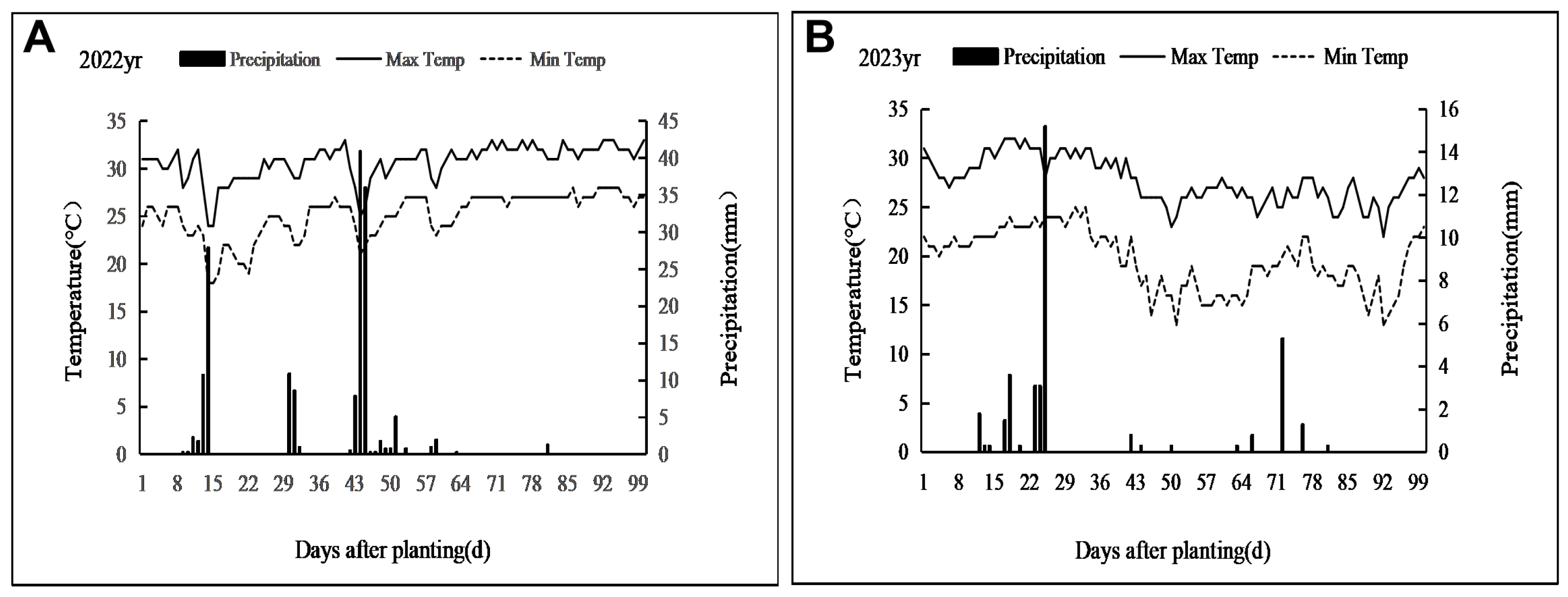
A two-year field experiment was conducted in the Research Breeding Base of the Institute of Nanfan & Seed Industry, Guangdong Academy of Science, Yazhou District, Sanya, Hainan Province, China (18°21′30″ N and 109°9′54″ E). The soil type of the field was sandy loam, as defined by the classification by the USDA (United States Department of Agriculture). Table S1 showed the physical and chemical properties in the 0–30 cm tillage layer. The study region had a tropical marine monsoon climate, and the climate data of the growing seasons are provided in Figure 1. A split-plot design was adopted in the experiments, two sweet potato varieties that are widely cultivated (Gaoxi 14 (GX-14) and Yanshu 25 (YS-25)) were used as main plots, three N levels (60 kg/ha (N60); 90 kg/ha (N90), and 120 kg/ha (N120, CK)) as sub-plots, and three planting densities as sub-sub-plots (50,000 plants/ha (D1, CK), 62,500 plants/ha (D2), and 83,333 plants/ha (D3)). The combination of N120D1 was the CK as adopted in the local high-yield field. Each treatment was applied three times, and each plot area was 30 m2 (6 m × 5 m).
Figure 1.
Climatic data during both growth seasons in 2022yr (A) and 2023yr (B).
Before sowing, phosphate (112 kg/ha) and potassium (240 kg/ha) were applied to the soil (the optimal P and K fertilizer for sweet potato growth that was discussed [3,18]. The fertilizer source used in this experiment was urea (N 46%), superphosphate (P2O5 16%), and potassium sulfate (K2O 52%), respectively. The sowing date was set for 20 March 2022, and the crop was harvested on 27 June 2022, during the 2022 growth season; the second sowing started on 29 October 2022, and was harvested on 6 February 2023, during the 2023 growth season. Throughout the experiment, a plastic mulch-drip irrigation technology (PMDIT) was adopted for saving water and weed control. And the soil water content (SWC) was maintained at a 60% level that was monitored by a soil moisture meter (PEAK METER Co, Ltd., Shenzhen, China; PM6508). During the 2022 growth period, the “GX-14” variety was infected with a Sweet Potato Virus Disease (SPVD), and the plants withered; hence, no data was collected in this season.
2.2. Sampling Method
The sampling time was arranged at 40, 65, and 90 days after planting. During each sampling period, the SPAD value of the fully expanded leaf (4th or 5th), photosynthetic characteristics, and chlorophyll fluorescence performance were measured. Five representative plants were randomly selected from each treatment, and each plant was divided into the shoot and root systems for further analysis.
2.3. Physiological Analysis
2.3.1. Light Distribution
During the canopy closure period, the SUNSCAN Canopy Analysis System (Delta-T Device Co., Ltd., Burwell, UK) measured total intercepted photosynthetically active radiation (IPAR) (measure site: 10 cm above the canopy), transmitted photosynthetically active radiation (TPAR) (measure site: 10 cm above the ground), and leaf area index (LAI). The extinction coefficient (K value) and light transmission ratio (LTR) were computed as [23]:
K = −ln (TPAR/IPAR) × LAI−1
LTR = TPAR/IPAR
2.3.2. SPAD Value of Functional Leaf
A hand-held chlorophyll meter was used to measure the functional leaves’ SPAD value (chlorophyll content) (TYS-4N, Beijing Jinkelida Electronic Technology Co., Ltd., Beijing, China). From each treatment, nine functional leaves were selected for measurement, and each leaf was measured twice at the same position (the middle part of the leaf).
2.3.3. Photosynthetic Characteristics
Seven functional leaves of each treatment were measured at 1000 μmol m−2 s−1 of light on a sunny morning from 9:00 a.m. to 12:00 p.m. The CO2 flux in the leaf chamber was kept constant at 400 μmol L−1. Leaf photosynthetic rate (Pn), stomatal conductance (Gs), transpiration rate (Tr), and intercellular carbon dioxide concentration (Ci) were measured via a portable photosynthesis system (LI-6400, Li-Cor; Lincoln, Nebraska, USA) [24].
2.3.4. Chlorophyll Fluorescence Measurements
A PAM-2500 High-performance field and laboratory chlorophyll fluorometer (Heinz Walz GmbH Co., Ltd., Nürnberg, Germany) measured the maximum quantum efficiency of PSII (Fv/Fm), the quantum yield of photosystem II (Y(II)), photochemical quenching (qP), non-photochemical quenching (NPQ), and electron transport rate (ETR) [24].
2.3.5. Agronomic Traits
Five representative plants were selected from each treatment and divided into two parts: above-ground and root system. The storage root number (SRN) and fresh weight (SRFW) were measured. The vein, leaf, and root organs were recollected in envelopes that were steamed at 105 °C for 30 min, and dried at 80 °C to gain a constant dry weight that accorded to [3]. After that, the root–shoot ratio and organ dry biomass allocation were estimated using the following formulas:
Dry biomass allocation = Organ dry biomass/total dry biomass
2.3.6. Carbohydrate Content Assay
The protocol for the carbohydrate content assay was adopted from our previous study [1]. A 250 mg fresh sample was taken and immediately placed in 5 mL of distilled water and extracted using an 80 °C water bath for 30 min in a test tube. After cooling to room temperature, the sample was centrifuged at 8000× g rpm for ten minutes at 4 °C. The supernatant was used to determine the contents of starch, sucrose, glucose, and fructose, according to the analysis kits purchased from the (Nanjing Jiancheng Bioengineering Institute; Nanjing, China).
2.3.7. Enzyme Activity Assay
The activities of Rubisco, SuSy, SPS, NI (neutral invertase), AI (acid invertase), AGP-ase, and SSS were assayed according to the test kit that was purchased from Kete Biotech Co., Ltd. (Kunming, China). A 100 mg fresh sample was powdered with 2 mL of distilled water and immediately placed in a test tube. Then, the sample was centrifuged at 5000× g rpm for ten minutes under 25 °C, a 10 µL supernatant was placed in a microplate well, and then 40 µL of distilled water was added into each well (diluted to 20%), and then incubated at 37 °C for 30 min. After incubation, each well was cleaned with distilled water 5 times, then dried. Then, 50 µL of enzyme-labeling reagent was added to each well, incubated, and cleaned 5 times, as mentioned above. Then, the chromogenic agent was added to each well, and reacted in a dark environment for 10 min. Then 50 µL of stopping solution was added to each well, and the absorbance of the extracts was determined at A450 (OD value). The enzyme activity was calculated using a standard curve.
2.4. Yield and Yield Component
The harvest period was arranged 110 days after planting (DAP). The total roots of each plot were dug out thoroughly. The roots with a diameter greater than 1.00 cm were classified as storage roots. The storage root number of individual plants was calculated manually. Electronic scales determined the fresh weight. Moreover, according to Si et al. (2022) [3], the storage roots that reached a fresh weight of 50~100 g were defined as small-sized storage roots, those that reached 100~250 g as medium-sized storage roots, and those over 250 g as large-sized storage roots. The root length and root diameter were also measured to describe the storage root appearance.
2.5. Statistical Analysis
During the experiment period of 2022, the “GX-14” plants were infected with Sweet Potato Virus Disease (SPVD), and hence, no data were collected. The effect of N, P, and their interaction (N*P) on variables was determined by conducting two-way analysis of variance (ANOVA) at the significance levels of p < 0.05, p < 0.01, and p < 0.001 for both varieties (SPSS Inc., Chicago, IL, USA, version 19). The differences between means were determined by conducting Duncan’s multiple range test at the level of significance of p < 0.05 (SPSS Inc., Chicago, IL, USA, version 19). Pearson product–moment correlation coefficients (r) and significance of the associations (p < 0.05) were calculated among the photosynthetic characteristics, yield, and yield components during the 2023 growth stage for both sweet potato varieties. A t-test was used to evaluate the difference in enzyme activity between N60D2 and N120D1 (CK). The Figures were designed using GraphPad Prism software version 8.4.2 for Windows.
3. Results
3.1. Yield and Storage Root Commercial Characteristics
Planting density, nitrogen application rate, and their interaction similarly influenced sweet potato yield and yield components (Table 1). Both average storage root number (SRN) and yield increased significantly with decreasing nitrogen application rate; the highest yield was observed in the D2 group under each nitrogen regime (Table 1; p < 0.05). Across both growth seasons, the N60D2 treatment increased yield by 63.27%, 95.47%, and 84.51% and increased SRN by 9.16%, 22.57%, and 39.42% relative to the N120D1 control (Table 1; p < 0.05). By contrast, single storage root fresh weight (SRFW) decreased substantially with increasing planting density at a given nitrogen application rate (Table 1; p < 0.05).
Table 1.
Effect of planting densities and nitrogen rates on storage root yield and yield components of sweet potato.
3.2. Storage Root Commercial Characteristics
Storage root length and the length-to-width ratio increased progressively with planting density at a fixed nitrogen application rate, whereas storage root width decreased (Table 2). The coefficient of variation (CV) of the length-to-width ratio was minimized in D2 plants across all nitrogen application rates (Table 2), with a range of 23.70–30.62 and 18.49–37.74% in YS-25 and GX-14 during the 2023 growth season. At a given nitrogen rate, D2 plants produced more medium-sized and fewer small storage roots than D3 plants, whereas large storage roots were mostly found in D1 plants (Table 2).
Table 2.
Effect of the planting density and nitrogen application rates on storage root commercial characteristics of sweet potato in the 2023 growth season.
3.3. Canopy Light Distribution
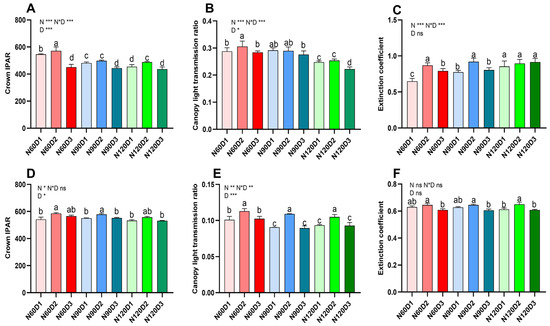
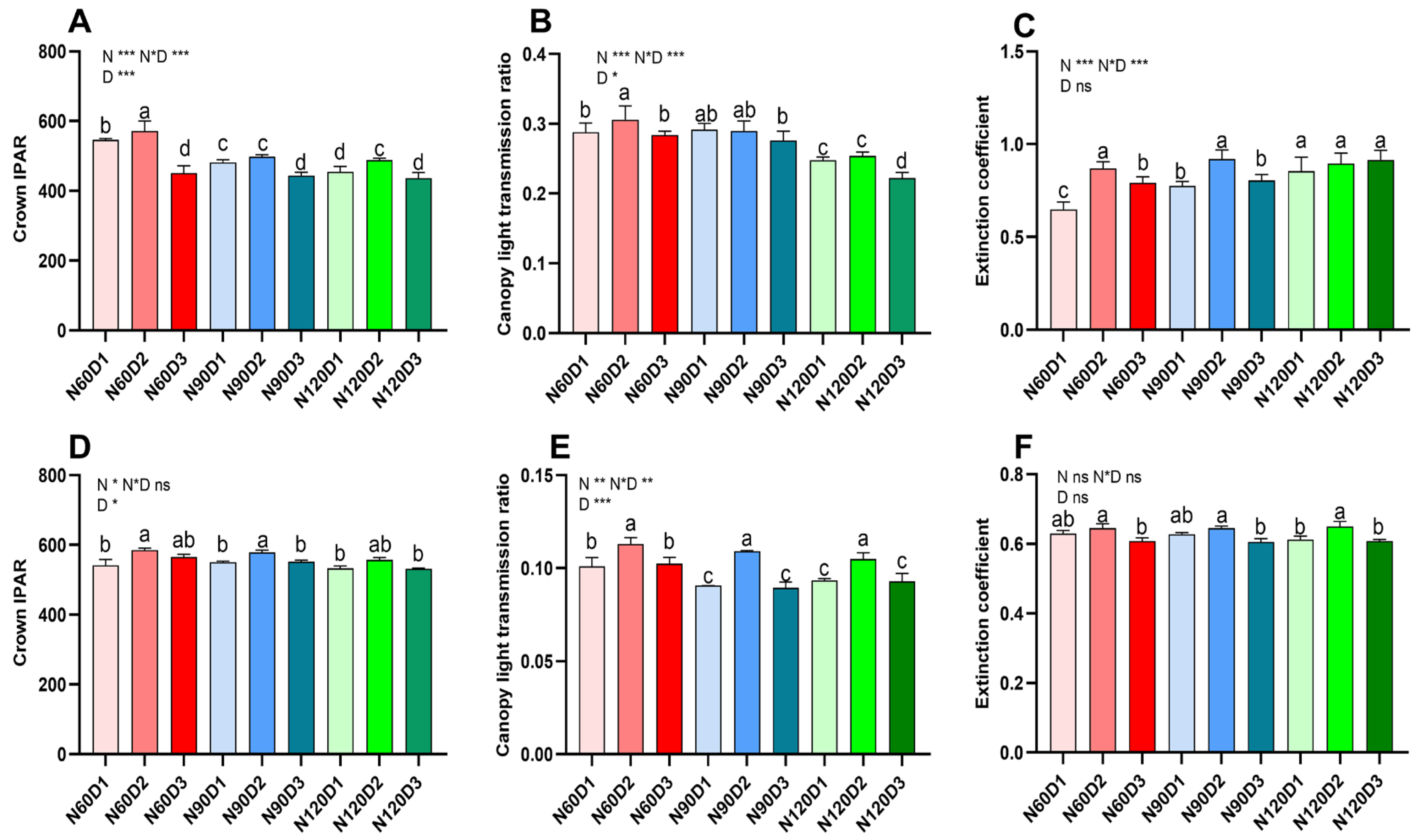
Across two growth seasons and two sweet potato varieties, the D2 treatment significantly enhanced canopy IPAR, light transmission rate (LTR), and extinction coefficient (K) at equivalent nitrogen levels. Average IPAR and LTR ranked as N60 > N90 > N120, peaking in the N60D2 treatment (Figure 2; p < 0.05).
Figure 2.
Effect of planting density and nitrogen application levels on canopy light distribution of sweet potato in 2023-GX14 (A–C) and 2023-YS25 (D–F) during the canopy close period. Crown IPAR (A,D), canopy light transmission rate (B,E), and extinction coefficient (C,F). Different lower-case letters above the bars denote significant differences at p < 0.05. “ns”, no significance; “*”, “**”, and “***” indicate significance levels at p < 0.05, p < 0.01, and p < 0.001, respectively.
3.4. Photosynthetic Capacity
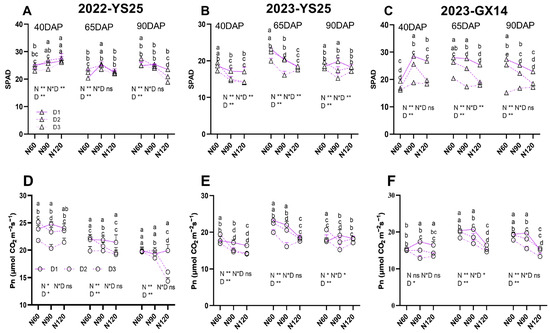
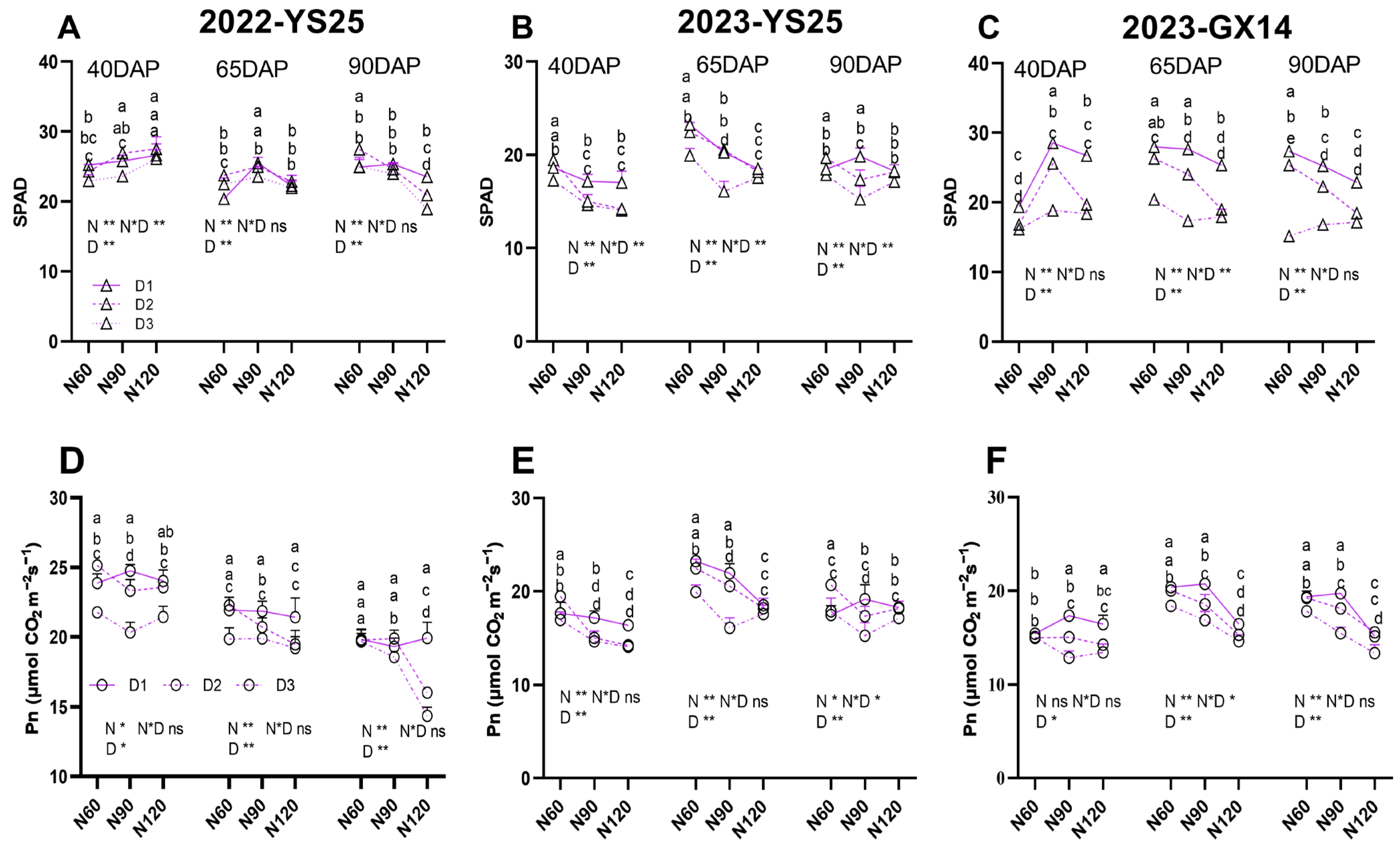
Leaf chlorophyll content (SPAD) followed similar patterns across growth seasons and varieties (Figure 3A–C). Over two years, SPAD decreased with increasing planting density. D1 increased SPAD by 1.68–16.84% and 8.21–46.18% relative to D2 and D3, respectively, with N60D1 peaking at 65–90 DAP (Figure 3A–C; p < 0.05). Leaf area increased with planting density under identical nitrogen levels across both seasons and varieties (Figure S1A–C; p < 0.05). However, LAI was higher in D2 than in D1 and D3, peaking in N90D2 (2022) and N120D2 (2023) (Figure S1B–D; p < 0.05). Planting density and nitrogen rate significantly affected leaf gas exchange (Figure 3D–F). Pn, Ci, Gs, and Tr declined with increasing density (Figure 3D–F, Figure S2; p < 0.05). During bulking, Pn remained higher in N60D2 than in other treatments across both varieties (Figure 3D–F; p < 0.05). Average Pn ranked N60 > N90 > N120, with N60 exceeding N90 and N120 by 3.15–11.86% and 8.31–19.55%, respectively (Figure 3D–F; p < 0.05).
Figure 3.
Effect of planting density and nitrogen application levels on leaf chlorophyll content (SPAD) (A–C) and net photosynthetic rate (Pn) (D–F) during storage root bulking period. Different lower-case letters above the bars denote significant differences at p < 0.05. “ns”, no significance; “*”and “**”, ndicate significance levels at p < 0.05, p < 0.01, respectively.
3.5. Chlorophyll Fluorescence Characteristics
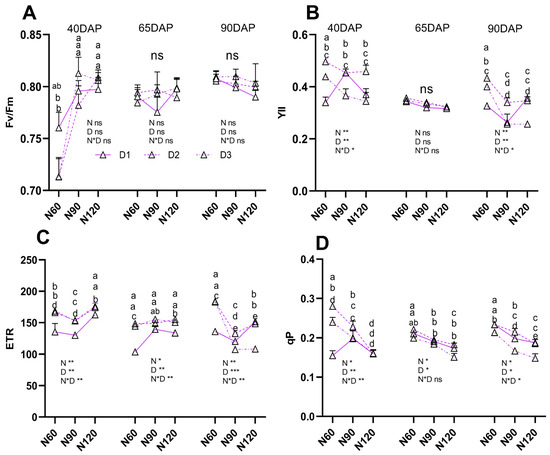
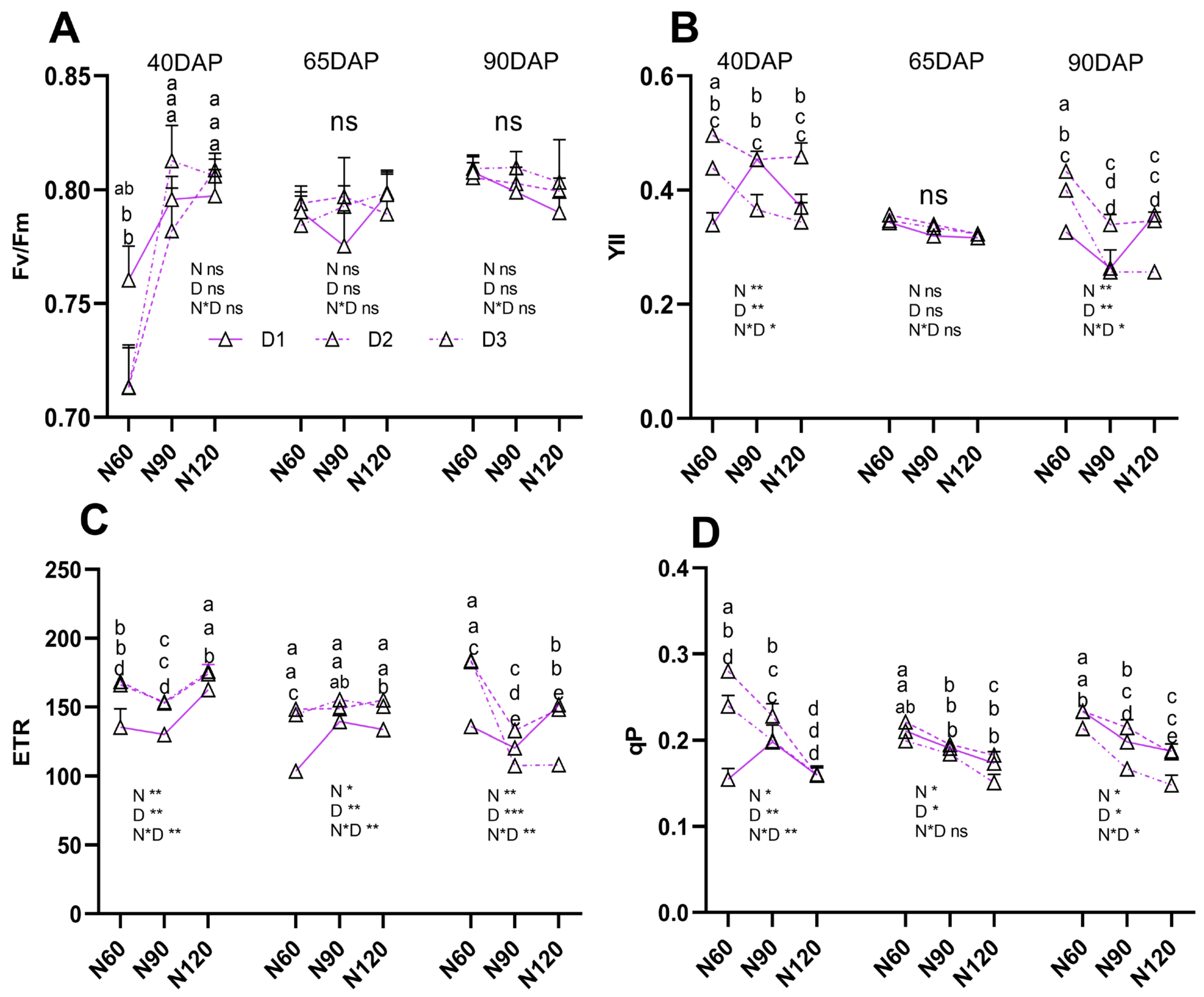
Planting density and nitrogen rate significantly affected sweet potato chlorophyll fluorescence characteristics during the 2022 growing season (Figure 4). At 40 DAP, the Fv/Fm ratio decreased under N60, particularly at D2 and D3 (Figure 4A; p < 0.05), but no treatment differences were observed from 65 to 90 DAP (Figure 4A; p ≥ 0.05). Under the same nitrogen level, Y(II), qP, and ETR were higher in D2 plants, peaking in N60D2 (Figure 4B–D; p < 0.05). Under N60, relative to N90 and N120, Y(II) increased by 0.86% and 2.04%, qP by 8.26% and 27.56%, and ETR by 10.94% and 0.66%, respectively (Figure 4B–D; p < 0.05).
Figure 4.
Effect of planting density and nitrogen application levels on chlorophyll fluorescence characteristics of 2022-YS25, Fv/Fm (A), YII (B), ETR (C), and qP (D). Vertical bars represent SE values (p < 0.05). Different lower-case letters above the bars denote significant differences at p < 0.05. “ns”, no significance; “*”, “**”, and “***” indicate significance levels at p < 0.05, p < 0.01, and p < 0.001, respectively.
3.6. Dry Matter Dynamic
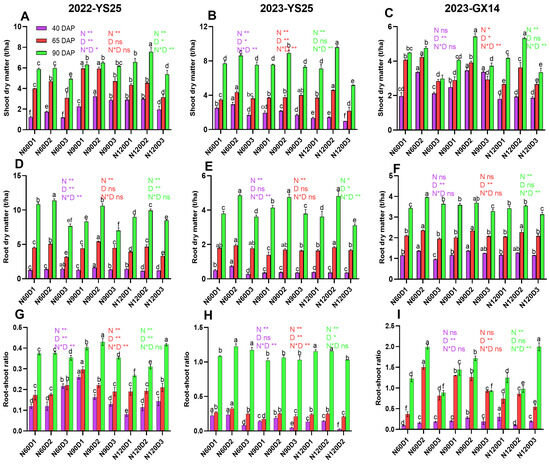
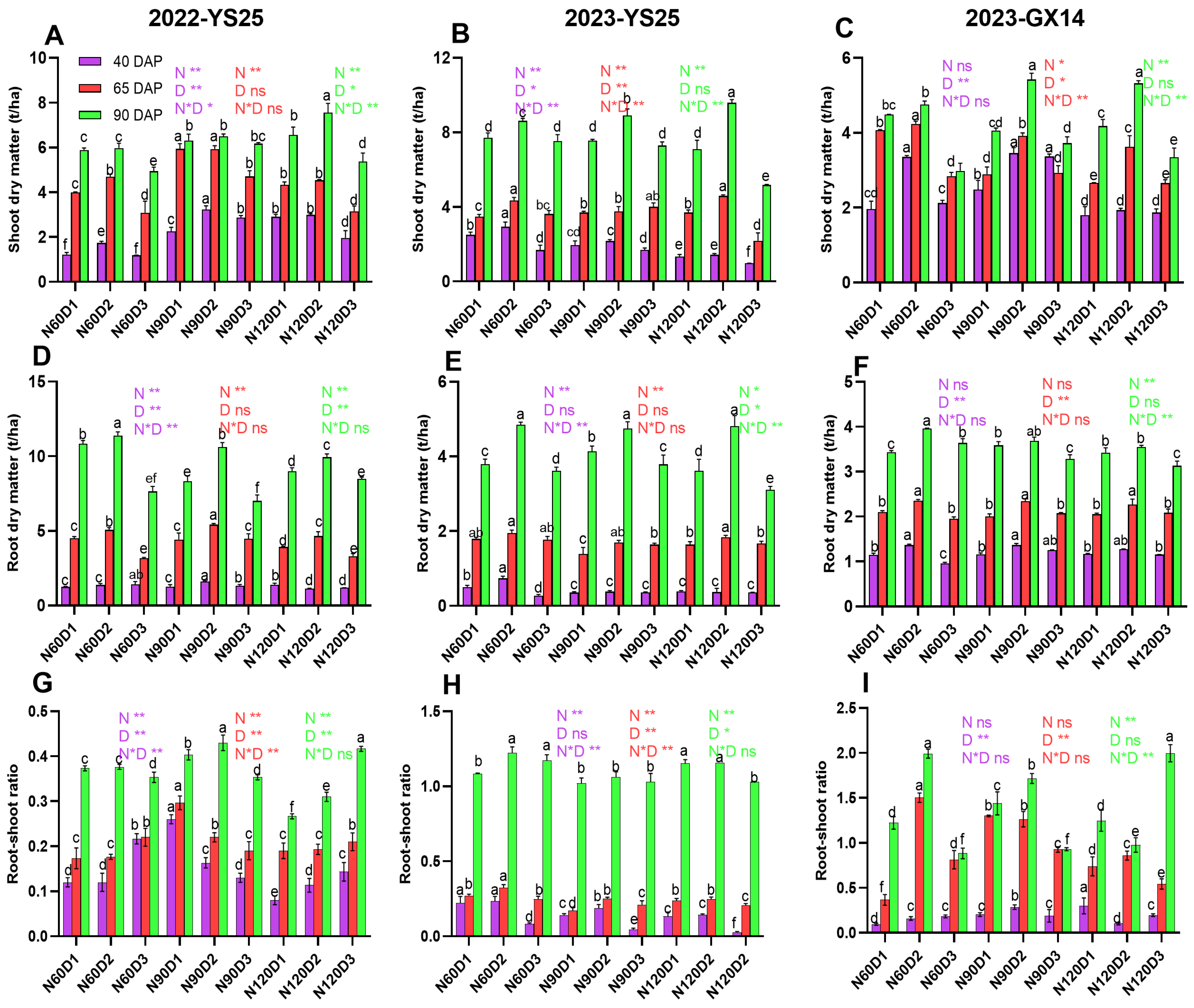
Dry matter allocation among sweet potato organs differed across growth seasons and varieties (Figure 5). Shoot dry matter increased progressively with growth period (Figure 5A–C). Root dry matter was significantly higher in N60- than in N90- or N120-treated plants, peaking in N60D2 from 65 to 90 DAP across both seasons and varieties (Figure 5D–F; p < 0.05). At 90 DAP, N60 increased dry matter allocation by 2.35–7.71% and 1.97–12.78% compared to N90 and N120, respectively (Figure 5D–F; p < 0.05). The root-to-shoot ratio showed seasonal variation: it was significantly higher in N60D2 plants during 2023 (Figure 5H,I; p < 0.05), but peaked in N90D1 during 2022 (Figure 5G; p < 0.05).
Figure 5.
Effect of planting density and nitrogen application levels on sweet potato dry matter dynamics, shoot dry matter accumulation (A–C), root dry matter accumulation (D–F), and root–shoot ratio (G–I). Different lower-case letters above the bars denote significant differences at p < 0.05. “ns”, no significance; “*”, “**”, and indicate significance levels at p < 0.05 and p < 0.01 respectively.
3.7. Storage Root Development Traits
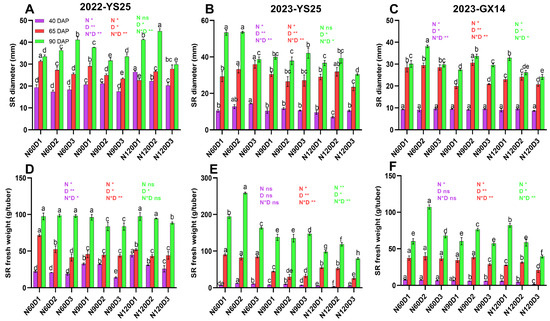
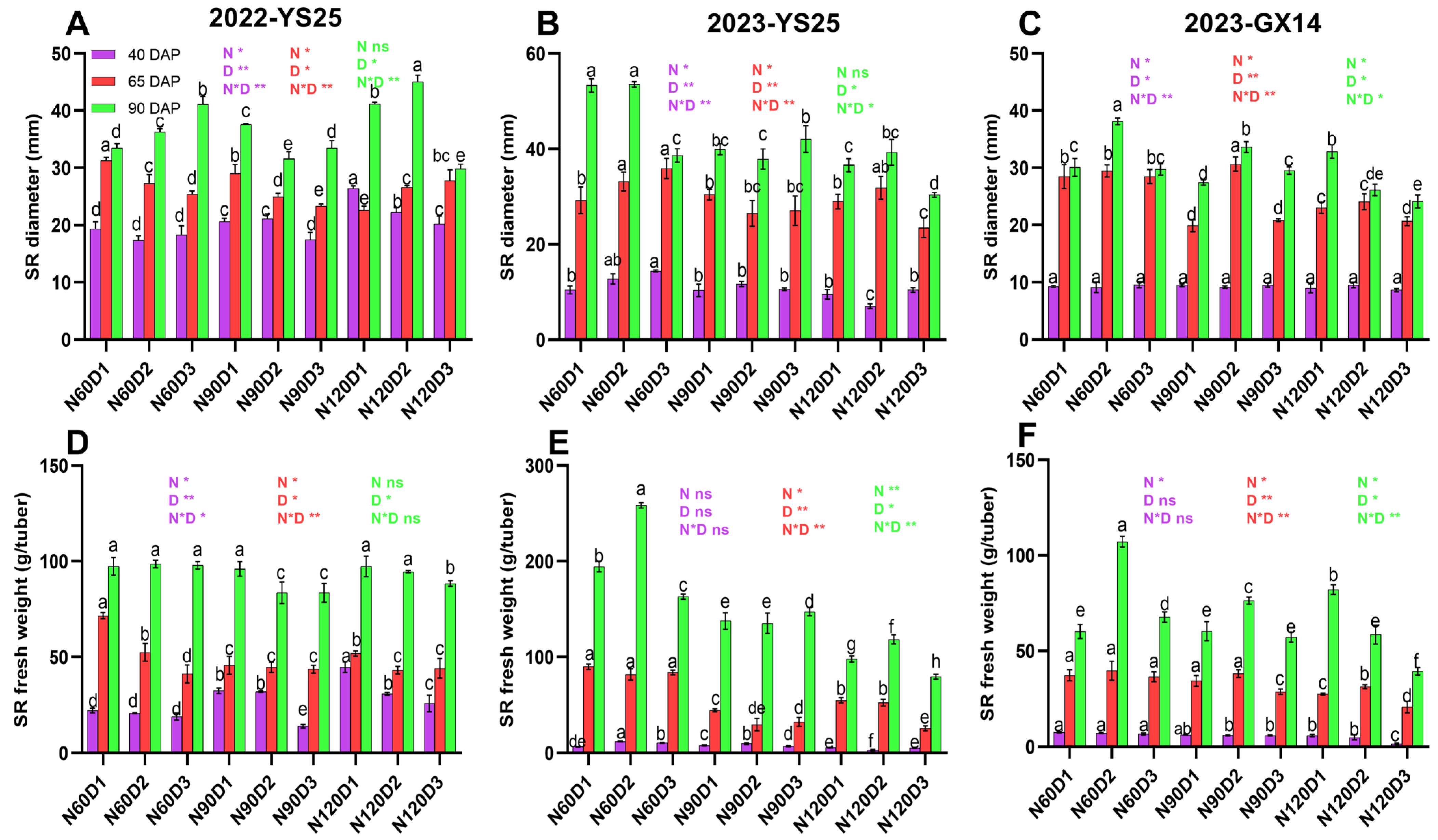
Planting density and nitrogen rate significantly affected storage root development during the bulking period in both growing seasons (Figure 6). Storage root diameter and fresh weight were significantly higher under N60 than under N90 or N120 (Figure 6; p < 0.05), peaking in N60D2 during the 2023 season.
Figure 6.
Effect of planting density and nitrogen rates on sweet potato storage root development during both growth seasons and both varieties. SR diameter (A–C), SR fresh weight (D–F); SR, storage root. Different lower-case letters above the bars denote significant differences at p < 0.05. “ns”, no significance; “*” and “**” indicate significance levels at p < 0.05 and p < 0.01, respectively.
3.8. Carbohydrate Content
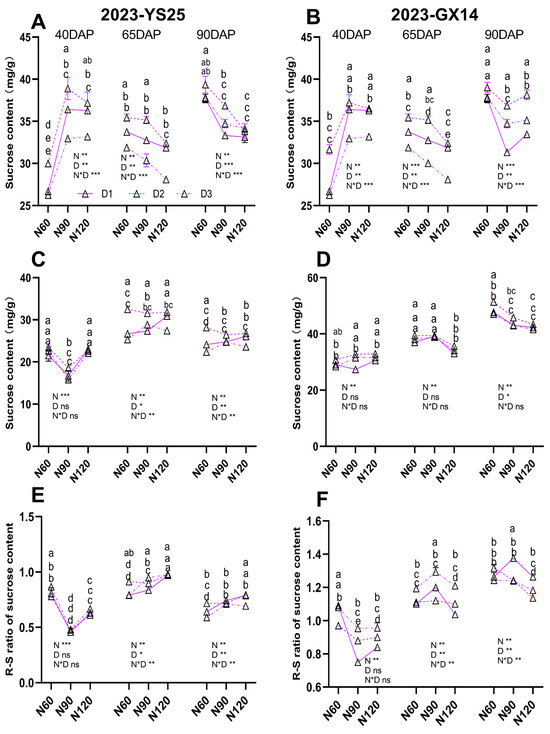
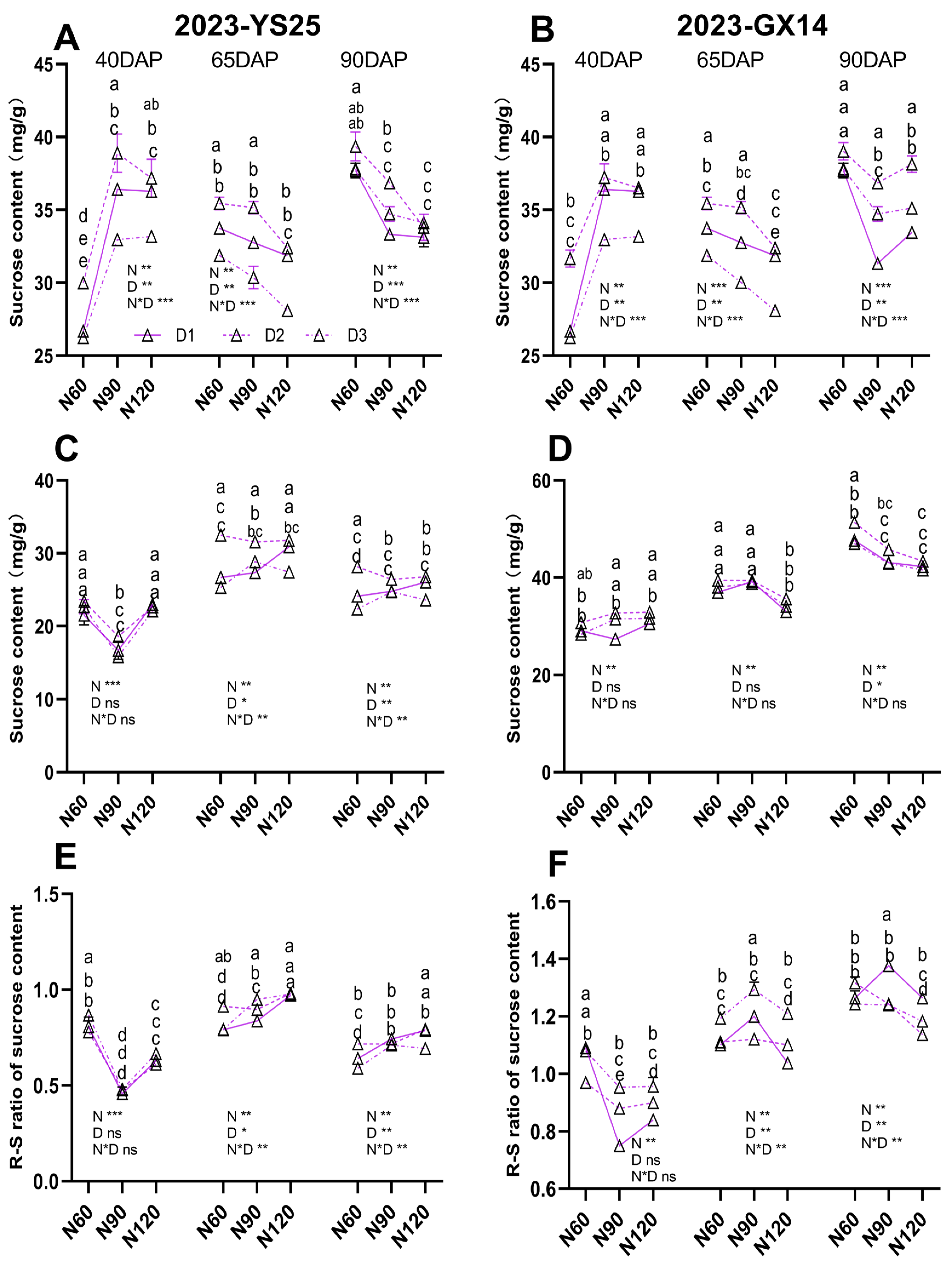
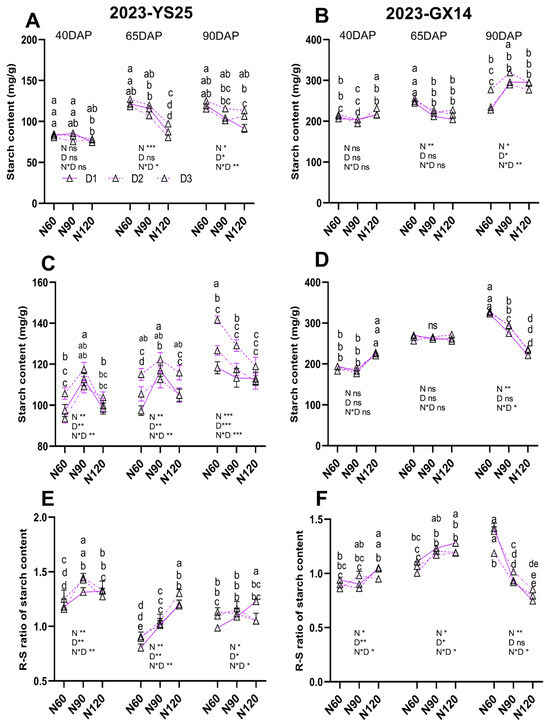
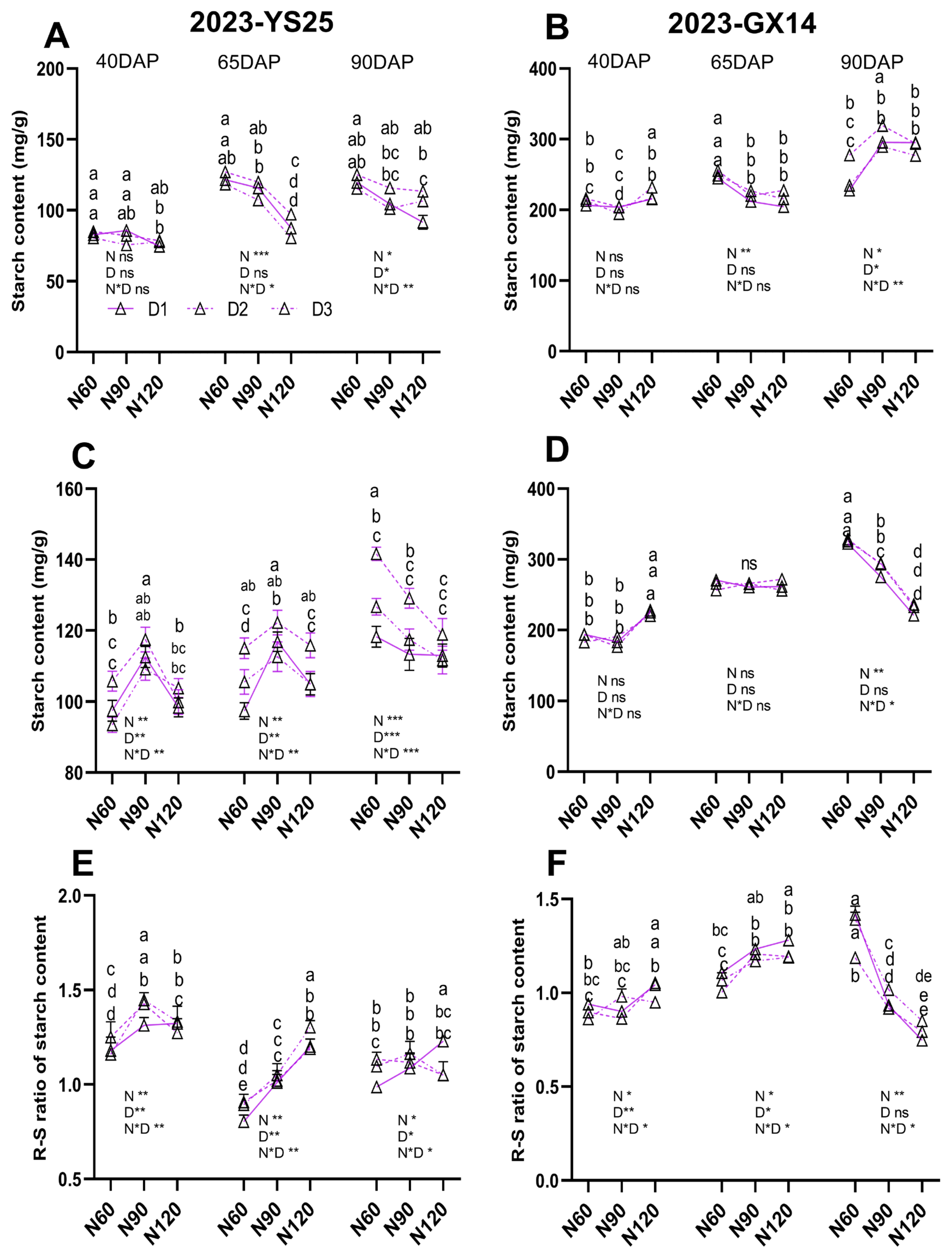
Leaf and storage root carbohydrate contents followed similar trends in both sweet potato varieties during the 2023 growing season (Figure 7 and Figure 8). Under the same nitrogen regimes, sucrose (Figure 7) and starch (Figure 8) contents were higher in D2 plants than those in D1 or D3, with the highest values in N60D2 at 65–90 DAP (Figure 7 and Figure 8; p < 0.05). The root-to-shoot ratio of sucrose content was higher in N60 than in N90 or N120 at 40 DAP, peaking in N60D2 (Figure 7E,F; p < 0.05). From 65 to 90 DAP, this ratio increased with nitrogen rate in 2023-YS25 but peaked in N90 in 2023-GX14 (Figure 7E,F; p < 0.05). The root-to-shoot ratio of starch content was lower in N60 than in N90 or N120 at 40 and 65 DAP (Figure 8E,F; p < 0.05). Conversely, at 90 DAP in 2023-GX14, N60 showed a higher ratio than N90 or N120 (Figure 8E,F; p < 0.05).
Figure 7.
Effect of planting density and nitrogen application levels on sucrose metabolism in sweet potato functional leaves (A,B), storage root (C,D) and root-shoot ratio of sucrose content (E,F) during the bulking period. Different lower-case letters above the bars denote significant differences at p < 0.05. “ns”, no significance; “*”, “**”, and “***” indicate significance levels at p < 0.05, p < 0.01, and p < 0.001, respectively.
Figure 8.
Effect of planting density and nitrogen application levels on starch metabolism in sweet potato functional leaves (A,B), storage roots (C,D) and root-shoot ratio of starch content (E,F) during the bulking period. Different lower-case letters above the bars denote significant differences at p < 0.05. “ns”, no significance; “*”, “**”, and “***” indicate significance levels at p < 0.05, p < 0.01, and p < 0.001, respectively.
3.9. Enzymes Activity
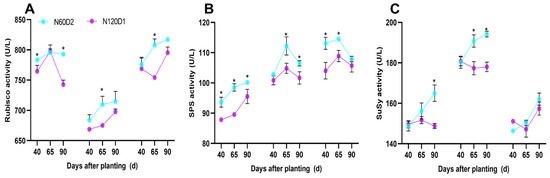
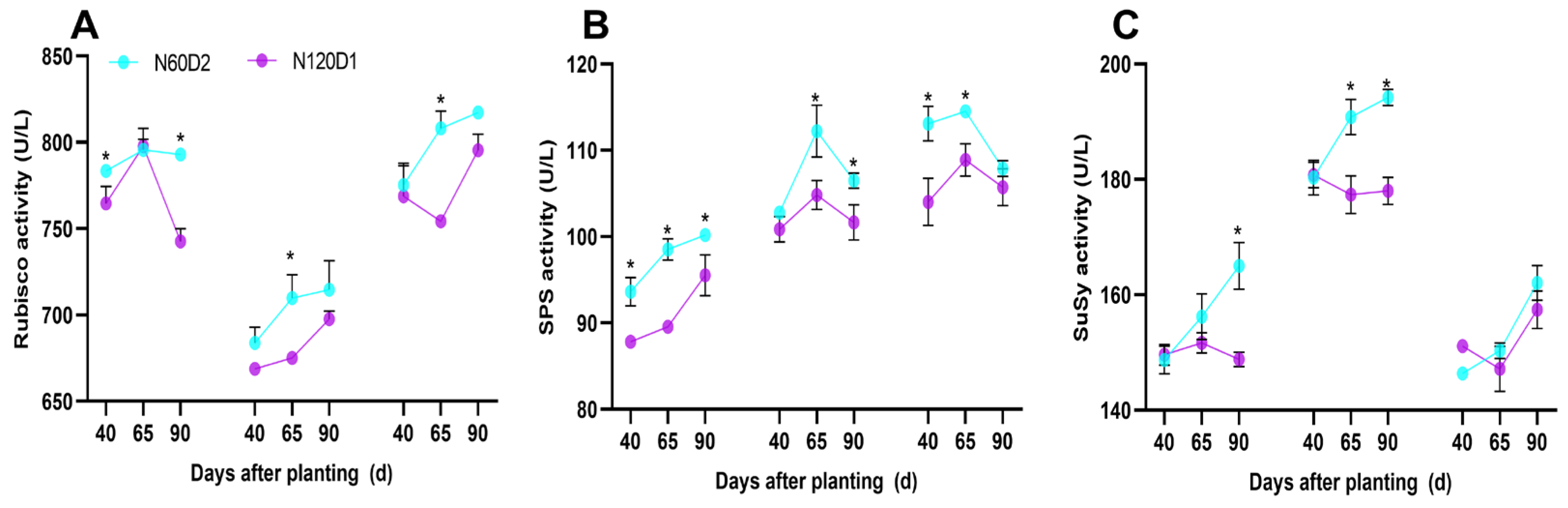
The activities of Rubisco, SPS, and SuSy in functional leaves of N60D2-treated plants were significantly higher than those in N120D1-treated plants for both varieties during the bulking period across two growth seasons (Figure 9; p < 0.05). During the two-year field experiment, compared with the plants in N120D1, the average increases in Rubisco, SPS, and SuSy were by 0.52%, 5.82%, and 3.69% in N60D2 for both sweet potato varieties, respectively (Figure 9; p < 0.05).
Figure 9.
Effect of planting density and nitrogen application levels on the activity of Rubisco (A), SPS (B), and SuSy (C) in sweet potato functional leaves during the bulking period. Vertical bars represent SE values. Significant differences between treatments, analyzed by the t-test, are indicated by *, p < 0.05.
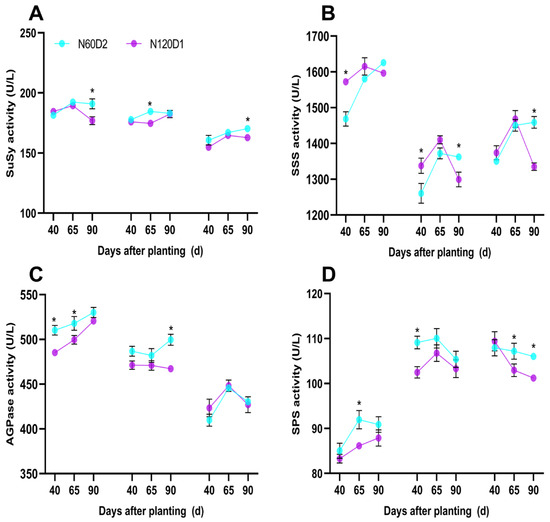
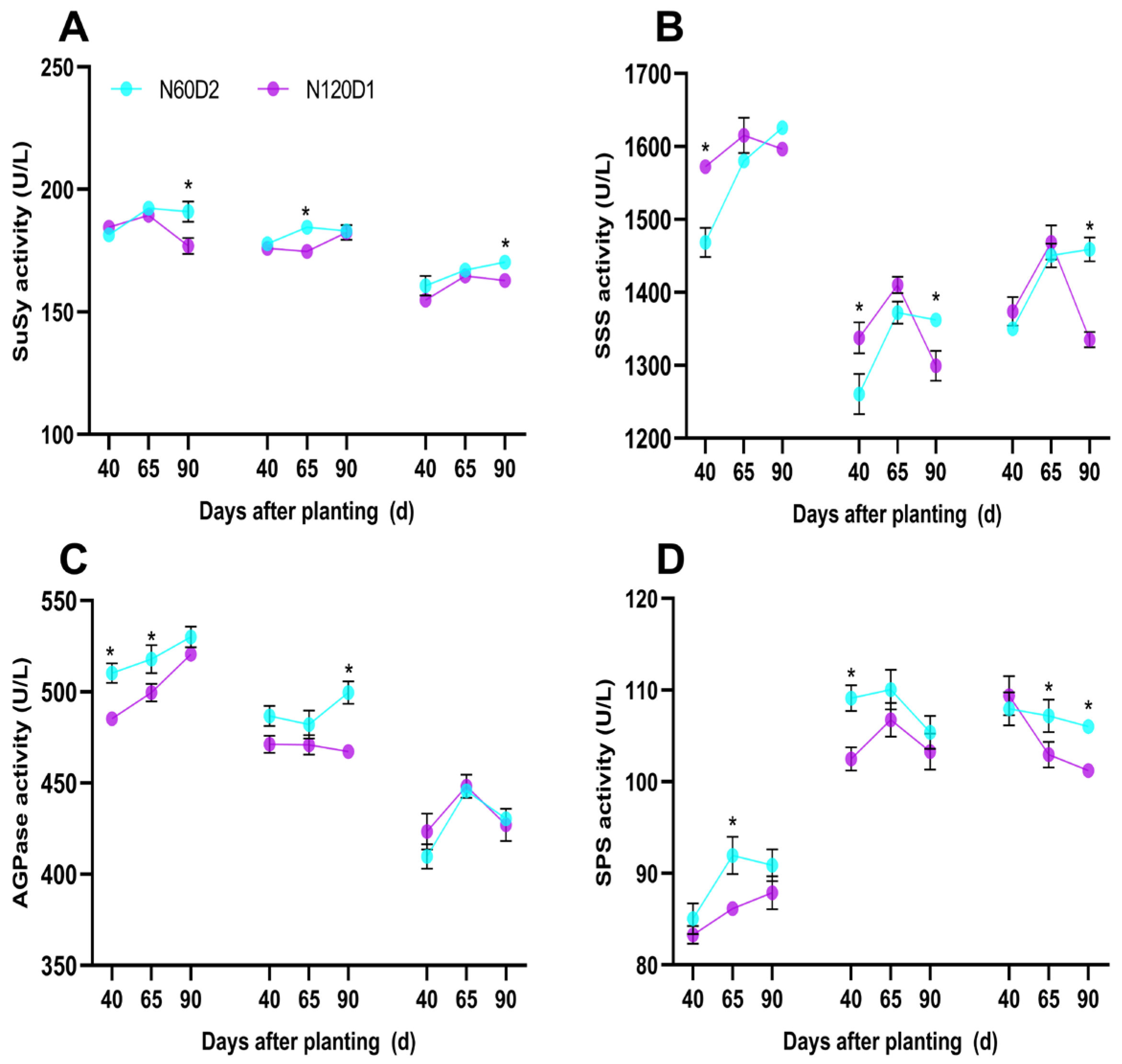
Compared to the plants in N120D1, the activities of SuSy, AGPase, and SPS in storage roots were significantly increased in N60D2 plants, especially from 65 to 90 DAP, and the average increases were by 2.60%, 1.089%, 2.32%, and 3.51%, respectively (Figure 10A,C,D; p < 0.05). However, regarding SSS in N60D2, it significantly decreased from 40 to 65 DAP, but increased dramatically at 90 DAP (Figure 10B; p < 0.05).
Figure 10.
Effect of planting density and nitrogen application levels on the activity of SuSy (A), SSS (B), AGPase (C), and SPS (D) in sweet potato storage roots during the bulking period. Vertical bars represent SE values (p < 0.05). Significant differences between treatments, analyzed by the t-test, are indicated by *, p < 0.05.
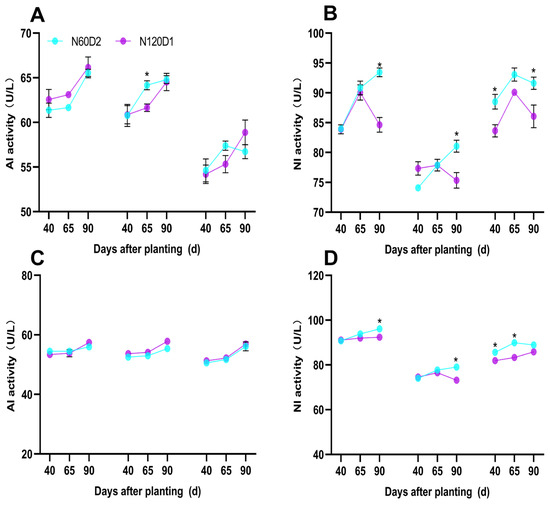
Those plants that were treated by N60D2 had higher activity of AI and NI (Figure 11A,B,D), as compared to those in N120D1. There was activity of AI in storage roots. However, there was no significant difference observed between the treatments (Figure 11C).
Figure 11.
Effect of planting density and nitrogen application on the activity of AI and NI in functional leaves (A,B) and storage roots (C,D) during the bulking period. Vertical bars represent SE values. Significant differences between treatments, analyzed by the t-test, are indicated by *, p < 0.05.
3.10. Correlation Analysis
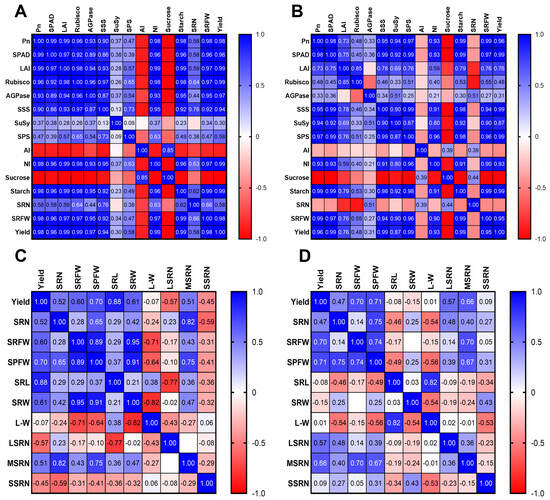
The relationships among photosynthesis, yield, and yield components during the 2023 growing season for both sweet potato varieties are presented in Figure 12, with similar trends observed across the two varieties. During the bulking period, AI activity and sucrose content in storage roots were negatively correlated with yield and yield components. Enzyme activities involved in carbon metabolism were significantly positively correlated with yield, storage root fresh weight (SRFW), and storage root number (SRN) (except for 2023-GX14) (Figure 12A,B; p < 0.05). During the harvest stage, SRN, SRFW, single-plant storage root fresh weight (SPFW), and medium storage root number (MSRN) were closely and positively associated with storage root yield (Figure 12C,D; p < 0.05). Storage root length (SRL) and width (SRW) were positively correlated with yield in 2023-YS25, whereas an opposite trend was observed in 2023-GX14 (Figure 12C,D).
Figure 12.
Pearson correlation analysis among photosynthetic characteristics, yield, and yield components during the 2023 growth stage: 2023-YS25 (A) and 2023-GX14 (B) (N60D2 vs. N120D1); and the correlation between yield and storage root commercial characteristics in 2023-YS25 (C) and 2023-GX14 (D). SRN, storage root number; SRFW, storage root fresh weight; SPFW, single-plant storage root fresh weight; SRL, storage root length; SRW, storage root width; L-W, length–width ratio of storage root; LSRN, large storage root number; MSRN, middle storage root number; SSRN, small storage root number. The number in each cell indicated the correlation coefficient (r), and negative and positive correlations were presented by blue and red cells, respectively.
4. Discussion
4.1. Light Distribution at the Population Level
Proper planting density and nitrogen management are the dominant factors for elevating crop yield potential. However, the underlying mechanism by which they modulate photosynthetic performance and carbohydrate metabolism at both the group and individual plant levels in sweet potato remains unclear. High photosynthetic capacity is required for optimal yield [24]. However, this capacity varies significantly depending on leaf nutrient status and canopy environmental factors, such as photosynthetically active radiation (PAR) [25,26]. Canopy architecture at the population level is a key determinant of sunlight distribution across canopy layers, significantly influencing the photosynthetic capacity of individual plants [27]. In maize, a canopy structure with a compact upper layer and an extended lower layer is suitable for dense planting, as it allows lower-layer leaves to capture more light, thereby enhancing photo-assimilate production at the population level [28]. Sweet potato is a typical creeping crop and exhibits relatively stable light distribution through canopy layers during the canopy closure period (40–50 days after planting) [4]. Sweet potato canopy structure parameters, such as vein length, leaf area index, and branch number, vary with plant type and agronomic practices and are closely correlated with light distribution [29]. In this study, plants in N60D2 exhibited significantly higher IPAR, light transmittance ratio, and extinction coefficient than those in other treatments. This enhancement may occur because higher planting density reduces pre-canopy closure incident solar radiation waste by increasing branch number and leaf area (Figures S1 and S2), thereby improving canopy light interception, radiation use efficiency (RUE), and storage root yield. These results are consistent with previous studies on rice [30] and maize [31].
4.2. Photosynthetic Performance of Individual Plants
Leaves are the primary photosynthetic organs, and their development significantly influences crop yield. Key factors such as leaf area index, leaf nutrient status, and chlorophyll content determine the photosynthetic capacity of individual plants [32]. Numerous studies have found a linear relationship between yield and leaf development [33]. However, yield is limited until sunlight availability coincides with leaf growth. Photosynthesis is a complex process in which leaves fix CO2 into carbohydrates, influenced by stomatal conductance, mesophyll conductance, and photosynthetic metabolism [34]. Leaf gas exchange is crucial for yield evaluation. Abiotic stress, such as shading and nutrient deficiency, considerably reduces stomatal conductance (Gs) and intercellular CO2 concentration (Ci), severely reducing yield formation [35,36]. Higher Fv/Fm, Y(II), and ETR indicate better leaf photosynthetic performance [37]. Conversely, qP and NPQ indicate the degree of openness of the PSII reaction center and energy dissipation, respectively [38]. Excessive planting density can aggravate leaf senescence and diminish individual plant photosynthesis, but improved leaf nutrient status may mitigate these deleterious effects [33,39]. In the present study, the average SPAD value was higher in N60-treated plants than in those treated with other nitrogen application rates. Leaf area and leaf area index were similar across nitrogen application rates, but were highest in D2 plants under the same nitrogen application rates. These conditions considerably improved light energy use efficiency, as evidenced by increased Y(II), qP, and ETR, and decreased NPQ. Consequently, the net photosynthetic rate (Pn) of N60D2 plants was significantly higher during the storage root bulking period. These results can be attributed to the fact that reduced nitrogen application combined with dense planting suppresses leaf senescence and strengthens the source organ of sweet potato, thereby optimizing photosynthetic performance. Similar findings have been reported in cereal crops, including maize [40], wheat [41], and rice [42].
4.3. Carbohydrate Metabolism
Carbohydrate metabolism is a complex process catalyzed by several enzymes, collectively known as the Calvin cycle, which occurs in leaf cells. Rubisco is a crucial enzyme in carbon fixation, and its activity reflects the dynamics of photoassimilation [43]. Sucrose is a major byproduct of photosynthesis and the most common form of carbohydrate transported from source to sink organs [44]. In sink organs, sucrose is broken down via invertase or sucrose synthase (SuSy) pathways to provide substrates and energy for starch synthesis and deposition, supporting storage root development in sweet potato [4,45]. Numerous studies have shown that improving the activities of AGPase, SSS, and SPS enhances starch production in sink organs, thereby contributing to yield formation [45,46]. Carbohydrate metabolism is positively correlated with dry matter allocation and accumulation between source and sink organs, and coordinating the source–sink relationship is a key factor in yield improvement [47].
In sweet potato, reducing nitrogen application rates facilitates storage root formation by optimizing dry matter allocation and accumulation from source to sink organs [26]. In contrast, excessive nitrogen application prevents dry matter transfer to sink organs, ultimately reducing yield. According to [1], an appropriate planting density can promote the expression of genes regulating SuSy, SPS, SSS, and AGPase activities, thereby increasing storage root yield. In the present study, N60D2-treated plants exhibited significantly higher activities of enzymes involved in carbohydrate metabolism, leading to significantly increased contents of sucrose, fructose, glucose, and starch in storage roots. Consequently, these plants showed increased dry matter allocation and accumulation in root sink organs, as indicated by a higher root-to-shoot ratio. These results are consistent with our previous studies [1,4]
4.4. Yield and Yield Component
Sweet potato storage root yield is determined by the number of storage roots per plant and single-root fresh weight at a given population density [48]. Numerous studies have identified storage root number per plant as the most important factor influencing yield [1,3,4,18]. Increased storage root number improves both yield and commercial characteristics, such as root appearance [1,3,4,18]. Storage root formation (sink number) stabilizes during the canopy closure period, with sink development depending primarily on carbohydrate accumulation during the bulking period. Therefore, extending the carbohydrate accumulation phase in storage roots is a key factor for maximizing final yield in sweet potato [49]. However, the primary yield-determining component varies with agronomic practices and variety [50]. Identifying this factor can help improve sweet potato productivity through field management and breeding. In the present study, the highest yield was achieved in N60D2-treated plants, with yield increases of 63.27% to 95.47% compared with control plants across three growing seasons and two sweet potato varieties. Additionally, N60D2 plants exhibited improved storage root appearance, as evaluated by the length-to-width ratio. Correlation analysis indicated that single-plant storage root fresh weight (SRFW) and the number of medium-sized storage roots (MSRN) were the dominant factors contributing to yield increase. Meanwhile, in this study, the coefficient of variation (CV) of the length-to-width ratio was minimized in D2 plants across all nitrogen application rates, with a range of 23.70–30.62 and 18.49–37.74% in YS-25 and GX-14 during the 2023 growth season. This result indicates that proper planting density can improve commercial quality by shaping a stable appearance of storage roots, and planting density was the greatest contributor to the appearance quality of storage roots in sweet potato. These results were aligned with our previous study [1,3].
4.5. Weather Conditions and Sweet Potato Development
In this study, in order to avoid water stress (there was very little precipitation during both growth seasons), the plants were irrigated by a plastic mulch-drip irrigation technology system, and the soil water content (SWC) was maintained at an optimal SWC level for sweet potato development (60–70%) [39]. High air temperature could also be a limiting factor to improving sweet potato yield. In the 2022 growth season, the average temperature during the day reached over 33 °C, which might negatively affect sweet potato development. In dense canopies, the reduction in canopy temperature accompanied by an increase in relative humidity mitigates the negative impacts of high-temperature stress and facilitates the proper development of winter wheat plants [51]. However, further study is needed to confirm this finding in sweet potato to support our previous hypothesis and results. To sum up, the plants suffered little stress caused by weather conditions (a small amount of precipitation and high temperature).
5. Conclusions
In this study, reducing nitrogen application while increasing planting density (N60D2) shaped a reasonable canopy structure for optimal sunlight distribution in both sweet potato varieties. This adjustment improved individual plant photosynthetic performance and carbohydrate metabolism, thereby coordinating source–sink dynamics and enhancing storage root development. However, the optimal combination of planting density and nitrogen rate may vary with seasonal climate and soil type, warranting further validation across multiple seasons and sites.
Supplementary Materials
The following supporting information can be downloaded at: https://www.mdpi.com/article/10.3390/agronomy16090897/s1.
Author Contributions
Q.L.: Writing—original draft, investigation, and conceptualization; X.Z., H.C. (Hongrong Chen), Y.C., H.C. (Hailong Chang), and J.W.: Investigation and methodology; S.K. and Y.L.: Review, methodology, and editing; G.Z.: Conceptualization, project administration and funding acquisition. All authors have read and agreed to the published version of the manuscript.
Funding
This work was supported by the earmarked fund for CARS-10-GW2, the National Tropical Plants Germplasm Resource Center, the Innovational Fund for Scientific and Technological Personnel of Hainan Province (Grant No. KJRC2023D09), and the project of Science and Technology Correspondent in Hainan Province (Grant No. ZDYF2024KJTPY020).
Data Availability Statement
Datasets generated during the current study are available from the corresponding author upon reasonable request.
Acknowledgments
We appreciate the Institute of Nanfan & Seed Industry, Guangdong Academy of Sciences for providing the experimental field and field management during the study periods.
Conflicts of Interest
The authors declare no conflicts of interest.
References
- Liang, Q.; Chen, H.; Chang, H.; Liu, Y.; Wang, Q.; Wu, J.; Liu, Y.; Kumar, S.; Chen, Y.; Chen, Y.; et al. Influence of planting density on sweet potato storage root formation by regulating carbohydrate and lignin metabolism. Plants 2023, 12, 2039. [Google Scholar] [CrossRef] [Scilit]
- Laurie, S.M.; Mulabisana, J.; Sutherland, R.; Sivakumar, D.; Pofu, K.; Mphela, W.M.; Truter, M.; du Plooy, I.; Araya, N.; Araya, H.; et al. Seventy years of sweet potato [Ipomoea batatas L. (LAM)] research in South Africa. Crop Sci. 2024, 64, 1112–1128. [Google Scholar] [CrossRef] [Scilit]
- Si, C.C.; Liang, Q.G.; Liu, H.J.; Wang, N.; Kumar, S.; Chen, Y.L.; Zhu, G.P. Response mechanism of endogenous hormones of potential storage root to phosphorus and its relationship with yield and appearance quality of sweetpotato. Front. Plant Sci. 2022, 13, 872422. [Google Scholar] [CrossRef] [Scilit]
- Liang, Q.; Chen, H.; Chen, Y.; Kumar, S.; Chang, H.; Wu, J.; Chen, Y.; Liu, Y.; Wang, Q.; Zhu, G. Appropriate Planting Density Can Improve the Storage Root Yield and Commercial Features of Sweet Potato (Ipomoea batatas L.) by Optimizing the Photosynthetic Performance. Agronomy 2024, 14, 2579. [Google Scholar] [CrossRef] [Scilit]
- Duan, W.; Zhang, H.; Xie, B.; Wang, B.; Hou, F.; Li, A.; Dong, S.; Qin, Z.; Wang, Q.; Zhang, L. Nitrogen utilization characteristics and early storage root development in nitrogen-tolerant and nitrogen-susceptible sweet potato. Physiol. Plant. 2021, 173, 1090–1104. [Google Scholar] [CrossRef] [Scilit]
- Yao, Z.; Wang, Z.; Fang, B.; Chen, J.; Zhang, X.; Luo, Z.; Huang, L.; Zou, H.; Yang, Y. Involvement of nitrogen in storage root growth and related gene expression in sweet potato (Ipomoea batatas). Plant Biol. 2020, 22, 376–385. [Google Scholar] [CrossRef] [Scilit]
- Zhou, M.; Hu, S.; Wang, S.; Yin, T.; Liu, Q.; Li, H. Sweet potato yield and quality characteristics affected by different late-season irrigation levels. J. Sci. Food Agric. 2024, 104, 5207–5218. [Google Scholar] [CrossRef] [Scilit]
- Jiang, Z.; Wei, Z.; Zhang, J.; Zheng, C.; Zhu, H.; Zhai, H.; He, S.; Gao, S.; Zhao, N.; Zhang, H.; et al. Source-sink synergy is the key unlocking sweet potato starch yield potential. Nat. Commun. 2024, 15, 7260. [Google Scholar] [CrossRef] [Scilit]
- Luo, N.; Wang, X.; Hou, J.; Wang, Y.; Wang, P.; Meng, Q. Agronomic optimal plant density for yield improvement in the major maize regions of China. Crop Sci. 2020, 60, 1580–1590. [Google Scholar] [CrossRef] [Scilit]
- Chapepa, B.; Mudada, N.; Mapuranga, R. The impact of plant density and spatial arrangement on light interception on cotton crop and seed cotton yield: An overview. J. Cotton Res. 2020, 3, 18. [Google Scholar] [CrossRef] [Scilit]
- Chen, J.; Wang, Y.; Zhi, X.; Qiu, Y.; Han, Y.; Feng, L.; Wang, Z.; Li, X.; Lei, Y.; Xiong, S.; et al. Modifying the planting density to change water utilization in various soil layers and regulate plant growth and yield formation of cotton. Field Crops Res. 2022, 289, 108738. [Google Scholar] [CrossRef] [Scilit]
- Shah, A.N.; Tanveer, M.; Abbas, A.; Yildirim, M.; Shah, A.A.; Ahmad, M.I.; Wang, Z.; Song, Y. Combating dual challenges in maize under high planting density: Stem lodging and kernel abortion. Front. Plant Sci. 2021, 12, 699085. [Google Scholar] [CrossRef] [Scilit]
- Fathi, A. Role of nitrogen (N) in plant growth, photosynthesis pigments, and N use efficiency: A review. Agrisost 2022, 28, 1–8. [Google Scholar] [CrossRef]
- Nasar, J.; Wang, G.Y.; Ahmad, S.; Muhammad, I.; Zeeshan, M.; Gitari, H.; Adnan, M.; Fahad, S.; Khalid, M.H.B.; Zhou, X.B.; et al. Nitrogen fertilization coupled with iron foliar application improves the photosynthetic characteristics, photosynthetic nitrogen use efficiency, and the related enzymes of maize crops under different planting patterns. Front. Plant Sci. 2022, 13, 988055. [Google Scholar] [CrossRef] [Scilit]
- Raza, A. Eco-physiological and biochemical responses of rapeseed (Brassica napus L.) to abiotic stresses: Consequences and mitigation strategies. J. Plant Growth Regul. 2021, 40, 1368–1388. [Google Scholar] [CrossRef] [Scilit]
- Sadras, V.O.; Villalobos, F.J.; López-Bernal, Á.; Fereres, E. Radiation Interception, Radiation Use Efficiency, and Crop Productivity. In Principles of Agronomy for Sustainable Agriculture; Springer International Publishing: Cham, Switzerland, 2024; pp. 177–197. [Google Scholar] [CrossRef] [Scilit]
- Dong, H.; Li, W.; Eneji, A.E.; Zhang, D. Nitrogen rate and plant density effects on yield and late-season leaf senescence of cotton raised on a saline field. Field Crops Res. 2012, 126, 137–144. [Google Scholar] [CrossRef] [Scilit]
- Si, C.; Shi, C.; Liu, H.; Zhan, X.; Liu, Y.; Wang, D.; Meng, D.; Tang, L. Influence of two nitrogen forms on hormone metabolism in potential storage roots and storage root number of sweetpotato. Crop Sci. 2018, 58, 2558–2568. [Google Scholar] [CrossRef] [Scilit]
- Plaga, B.N.; Bauhus, J.; Pretzsch, H.; Pereira, M.G.; Forrester, D.I. Influence of crown and canopy structure on light absorption, light use efficiency, and growth in mixed and pure Pseudotsuga menziesii and Fagus sylvatica forests. Eur. J. For. Res. 2024, 143, 479–491. [Google Scholar] [CrossRef] [Scilit]
- Jafari, F.; Wang, B.; Wang, H.; Zou, J. Breeding maize of ideal plant architecture for high-density planting tolerance through modulating shade avoidance response and beyond. J. Integr. Plant Biol. 2024, 66, 849–864. [Google Scholar] [CrossRef] [Scilit]
- Shao, H.; Wu, X.; Chi, H.; Zhu, F.; Liu, J.; Duan, J.; Shi, W.; Xu, Y.; Mi, G. How does increasing planting density affect nitrogen use efficiency of maize: A global meta-analysis. Field Crops Res. 2024, 311, 109369. [Google Scholar] [CrossRef] [Scilit]
- Tian, P.; Liu, J.; Zhao, Y.; Huang, Y.; Lian, Y.; Wang, Y.; Ye, Y. Nitrogen rates and plant density interactions enhance radiation interception, yield, and nitrogen use efficiencies of maize. Front. Plant Sci. 2022, 13, 974714. [Google Scholar] [CrossRef] [Scilit]
- Dong, B.; Wang, Z.; Evers, J.B.; Stomph, T.J.; van der Putten, P.E.; Yin, X.; Wang, J.L.; Sprangers, T.; Hang, X.; van der Werf, W. Competition for light and nitrogen with an earlier-sown species negatively affects leaf traits and leaf photosynthetic capacity of maize in relay intercropping. Eur. J. Agron. 2024, 155, 127119. [Google Scholar] [CrossRef] [Scilit]
- Araus, J.L.; Sanchez-Bragado, R.; Vicente, R. Improving crop yield and resilience through optimization of photosynthesis: Panacea or pipe dream? J. Exp. Bot. 2021, 72, 3936–3955. [Google Scholar] [CrossRef] [Scilit] [PubMed]
- Duan, M.; Zhang, X.; Wei, Z.; Chen, X.; Zhang, B. Effect of Maize Canopy Structure on Light Interception and Radiation Use Efficiency at Different Canopy Layers. Agronomy 2024, 14, 1511. [Google Scholar] [CrossRef] [Scilit]
- Li, H.; Zhu, Y.; Wang, G.; Liu, R.; Huang, D.; Song, M.; Zhang, Y.; Wang, H.; Wang, Y.; Shao, R.; et al. Maize yield increased by matching canopy light and nitrogen distribution via controlled-release urea/urea adjustment. Field Crops Res. 2024, 308, 109284. [Google Scholar] [CrossRef] [Scilit]
- Huber, M.; Nieuwendijk, N.M.; Pantazopoulou, C.K.; Pierik, R. Light signalling shapes plant–plant interactions in dense canopies. Plant Cell Environ. 2021, 44, 1014–1029. [Google Scholar] [CrossRef] [Scilit]
- Tian, J.; Wang, C.; Chen, F.; Qin, W.; Yang, H.; Zhao, S.; Xia, J.; Du, X.; Zhu, Y.; Wu, L.; et al. Maize smart-canopy architecture enhances yield at high densities. Nature 2024, 632, 576–584. [Google Scholar] [CrossRef] [Scilit]
- Ramírez, D.A.; Gavilán, C.; Barreda, C.; Condori, B.; Rossel, G.; Mwanga, R.O.; Andrade, M.; Monneveux, P.; Anglin, N.L.; Ellis, D.; et al. Characterizing the diversity of sweetpotato through growth parameters and leaf traits: Precocity and light use efficiency as important ordination factors. S. Afr. J. Bot. 2017, 113, 192–199. [Google Scholar] [CrossRef] [Scilit]
- Gu, J.; Chen, Y.; Zhang, H.; Li, Z.; Zhou, Q.; Yu, C.; Kong, X.; Liu, L.; Wang, Z.; Yang, J. Canopy light and nitrogen distributions are related to grain yield and nitrogen use efficiency in rice. Field Crops Res. 2017, 206, 74–85. [Google Scholar] [CrossRef] [Scilit]
- Gou, F.; van Ittersum, M.K.; Simon, E.; Leffelaar, P.A.; van der Putten, P.E.; Zhang, L.; van der Werf, W. Intercropping wheat and maize increases total radiation interception and wheat RUE but lowers maize RUE. Eur. J. Agron. 2017, 84, 125–139. [Google Scholar] [CrossRef] [Scilit]
- Zhang, C.; Chen, Z.; Yang, G.; Xu, B.; Feng, H.; Chen, R.; Qi, N.; Zhang, W.; Zhao, D.; Cheng, J.; et al. Removal of canopy shadows improved retrieval accuracy of individual apple tree crowns LAI and chlorophyll content using UAV multispectral imagery and PROSAIL model. Comput. Electron. Agric. 2024, 221, 108959. [Google Scholar] [CrossRef] [Scilit]
- Zhou, M.; Sun, Y.; Wang, S.; Liu, Q.; Li, H. Photosynthesis product allocation and yield in sweet potato in response to different late-season irrigation levels. Plants 2023, 12, 1780. [Google Scholar] [CrossRef] [Scilit]
- Singh, S.K.; Reddy, V.R. Methods of mesophyll conductance estimation: Its impact on key biochemical parameters and photosynthetic limitations in phosphorus-stressed soybean across CO2. Physiol. Plant. 2016, 157, 234–254. [Google Scholar] [CrossRef] [Scilit] [PubMed]
- Esmaeili, S.; Aliniaeifard, S.; Dianati Daylami, S.; Karimi, S.; Shomali, A.; Didaran, F.; Telesiński, A.; Sierka, E.; Kalaji, H.M. Elevated light intensity compensates for nitrogen deficiency during chrysanthemum growth by improving water and nitrogen use efficiency. Sci. Rep. 2022, 12, 10002. [Google Scholar] [CrossRef] [Scilit] [PubMed]
- Wang, Y.B.; Huang, R.D.; Zhou, Y.F. Effects of shading stress during the reproductive stages on photosynthetic physiology and yield characteristics of peanut (Arachis hypogaea Linn.). J. Integr. Agric. 2021, 20, 1250–1265. [Google Scholar] [CrossRef] [Scilit]
- Peng, J.; Feng, Y.; Wang, X.; Li, J.; Xu, G.; Phonenasay, S.; Luo, Q.; Han, Z.; Lu, W. Effects of nitrogen application rate on the photosynthetic pigment, leaf fluorescence characteristics, and yield of indica hybrid rice and their interrelations. Sci. Rep. 2021, 11, 7485. [Google Scholar] [CrossRef] [Scilit]
- Han, L.J.; Fan, D.Y.; Wang, X.P.; Xu, C.Y.; Xia, X.L.; Chow, W.S. The protective role of non-photochemical quenching in PSII photo-susceptibility: A case study in the field. Plant Cell Physiol. 2023, 64, 43–54. [Google Scholar] [CrossRef] [Scilit]
- Lan, T.; Du, L.; Wang, X.; Zhan, X.; Liu, Q.; Wei, G.; Lyu, C.; Liu, F.; Gao, J.; Feng, D.; et al. Synergistic effects of planting density and nitrogen fertilization on chlorophyll degradation and leaf senescence after silking in maize. Crop J. 2024, 12, 605–613. [Google Scholar] [CrossRef] [Scilit]
- Li, R.; Hu, D.; Ren, H.; Yang, Q.; Dong, S.; Zhang, J.; Zhao, B.; Liu, P. How delaying post-silking senescence in lower leaves of maize plants increases carbon and nitrogen accumulation and grain yield. Crop J. 2022, 10, 853–863. [Google Scholar] [CrossRef] [Scilit]
- Li, P.; Yin, W.; Fan, Z.; Hu, F.; Zhao, L.; Fan, H.; He, W.; Chai, Q. Improving crop productivity by optimizing straw returning patterns to delay senescence of wheat leaves. Eur. J. Agron. 2024, 159, 127274. [Google Scholar] [CrossRef] [Scilit]
- Zhao, L.; Zhou, H.; Tang, L.; Na, Y.; Duan, S.; Zheng, D.; Feng, N.; Shen, X. Optimizing Nitrogen Dosage and Planting Density to Improve Japonica Rice Yield. Agronomy 2024, 14, 1738. [Google Scholar] [CrossRef] [Scilit]
- Cummins, P.L. The coevolution of RuBisCO, photorespiration, and carbon concentrating mechanisms in higher plants. Front. Plant Sci. 2021, 12, 662425. [Google Scholar] [CrossRef] [Scilit]
- Saddhe, A.A.; Manuka, R.; Penna, S. Plant sugars: Homeostasis and transport under abiotic stress in plants. Physiol. Plant. 2021, 171, 739–755. [Google Scholar] [CrossRef] [Scilit]
- Ahmad, D.; Ying, Y.; Bao, J. Understanding starch biosynthesis in potatoes for metabolic engineering to improve starch quality: A detailed review. Carbohydr. Polym. 2024, 346, 122592. [Google Scholar] [CrossRef] [Scilit] [PubMed]
- Sheng, M.; Xia, H.; Ding, H.; Pan, D.; He, J.; Li, Z.; Liu, J. Long-term soil drought limits starch accumulation by altering sucrose transport and starch synthesis in sweet potato tuberous root. Int. J. Mol. Sci. 2023, 24, 3053. [Google Scholar] [CrossRef] [Scilit]
- Liu, Z.; Gao, F.; Li, X.; Zhang, J. Source-sink coordinated peanut cultivar increases yield and kernel protein content through enhancing photosynthetic characteristics and regulating carbon and nitrogen metabolisms. Plant Physiol. Biochem. 2024, 206, 108311. [Google Scholar] [CrossRef] [Scilit] [PubMed]
- Abrham, T.; Beshir, H.M.; Haile, A. Sweetpotato production practices, constraints, and variety evaluation under different storage types. Food Energy Secur. 2022, 10, e263. [Google Scholar] [CrossRef] [Scilit]
- Gao, Y.; Tang, Z.; Xia, H.; Sheng, M.; Liu, M.; Pan, S.; Li, Z.; Liu, J. Potassium fertilization stimulates sucrose-to-starch conversion and root formation in sweet potato (Ipomoea batatas (L.) Lam.). Int. J. Mol. Sci. 2021, 22, 4826. [Google Scholar] [CrossRef] [Scilit]
- Yan, X.; Chen, X.; Ma, C.; Cai, Y.; Cui, Z.; Chen, X.; Wu, L.; Zhang, F. What are the key factors affecting maize yield response to and agronomic efficiency of phosphorus fertilizer in China? Field Crops Res. 2021, 270, 108221. [Google Scholar] [CrossRef] [Scilit]
- Zhang, F.; Zhang, D.; Li, L.; Zhang, Z.; Liang, X.; Wen, Q.; Chen, G.; Wu, Q.; Zhai, Y. Effect of planting density on canopy structure, microenvironment, and yields of uniformly sown winter wheat. Agronomy 2023, 13, 870. [Google Scholar] [CrossRef] [Scilit]

Disclaimer/Publisher’s Note: The statements, opinions and data contained in all publications are solely those of the individual author(s) and contributor(s) and not of MDPI and/or the editor(s). MDPI and/or the editor(s) disclaim responsibility for any injury to people or property resulting from any ideas, methods, instructions or products referred to in the content. |
© 2026 by the authors. Licensee MDPI, Basel, Switzerland. This article is an open access article distributed under the terms and conditions of the Creative Commons Attribution (CC BY) license.