


Abstract
Olive tree cultivation occupies a central place in Algerian agriculture and is of considerable economic and cultural importance. Several production factors strongly influence the quality of olive oil. Among the determinants of this quality, the vegetative growth of the olive tree plays a crucial role, as it controls photosynthetic capacity, the distribution of assimilates, and fruit filling. These physiological mechanisms directly influence oil percentage, as well as fatty acid and phenolic compound compositions, and consequently, sensory characteristics such as bitterness and pungency. This study examines the quantitative relationships between vegetative growth, chemical parameters, and sensory attribute interactions that are still poorly understood using seven representative olive cultivars: local varieties (Chemlal, Bouchouk Lafayette, Blanquette de Guelma, Sigoise, and Limli) and European varieties (Frantoio and Belgentéroise). Vegetative growth was characterized by the average shoot length; fruit oil content was expressed as a percentage on a dry basis, and fatty acids were analyzed by gas chromatography after derivatization. The total polyphenol content was determined by spectrophotometry and expressed as concentration, and oxidative stability was measured using the Rancimat method. Sensory analysis was conducted by a trained panel in accordance with international recommendations. The results indicate substantial positive correlations between vegetative growth parameters, oil concentration, olive oil composition, and those sensory attributes related to polyphenols, for all varieties studied. This functional consistency suggests that improvement in one parameter is generally associated with improvement in others. The Algerian variety Chemlal stands out for its optimal performance profile in agronomic, chemical, and sensory aspects compared to the other varieties. These preliminary results suggest that optimizing oil characteristics is directly linked to the physiological and biochemical performance of the olive tree, thus confirming the relevance of a systems approach in the selection and management of olive varieties.
1. Introduction
The olive tree (Olea europaea L.), a perennial species belonging to the Oleaceae family, is one of the oldest crops in the Mediterranean basin, including Algeria [1]. This region offers particularly favourable agroclimatic and edaphic conditions for its vegetative development and fruit production. The fruits of the olive tree can be used either for table or for olive oil production; both uses are of great economic and nutritional importance [2]. Olive oil, particularly extra virgin olive oil (EVOO), is widely recognized as one of the most beneficial sources of lipids for human health. This functional value is primarily attributed to its chemical composition, dominated by a high proportion of monounsaturated fatty acids, especially oleic acid, as well as the presence of phenolic compounds with strong antioxidant activity [3].
The characteristics of olive oil depend on many factors, including genotype, soil and climate conditions, cultivation practices, fruit maturity stage, and extraction process [4]. Among these determinants, variety is one of the most influential factors, as it conditions not only the productivity of the tree but also the chemical composition and sensory attributes of the oil [5]. However, beyond the genetic component, vegetative growth is another key aspect of olive tree performance. Vegetative traits such as shoot length, vigour, and leaf biomass affect not only canopy structure but also determine the active photosynthetic surface area and the tree’s capacity to mobilize resources needed for flowering, fruit set, and fruit development [6,7]. Several studies have shown that vegetative vigor can directly affect oil yield, either through its effects on the available photosynthetic surface area or through its interactions with fruit load and the dynamics of carbon reserves [7]. Furthermore, the quality of olive oil is determined not only by its sensory attributes but also by its chemical characteristics, particularly its fatty acid profile, polyphenol content, and oxidative stability. These polyphenols, particularly secoiridoids, have a protective effect on low-density lipoproteins (LDL) against oxidation, as well as anti-inflammatory activity [8]. The fatty acid profile, rich in oleic acid, plays a crucial role in its resistance to oxidation [9]. Polyphenols, meanwhile, are also responsible for the bitterness, pungency, and antioxidant properties of the oil [10]. Their concentration depends heavily on the variety, the physiological state of the tree, and environmental conditions [11]. These compounds, combined with pigments and other natural antioxidants, contribute directly to the oxidative stability of the oil, which is a key indicator of its durability and quality during storage [12]. Thus, the combined analysis of vegetative growth, oil content, chemical characteristics, and sensory qualities is essential to better understand the mechanisms that determine the final quality of olive oil.
In Algeria, olive trees occupy a strategic place in the national agricultural heritage, with significant varietal diversity distributed between coastal, mountainous, and semi-arid zones. However, despite the existence of numerous local varieties, scientific knowledge of their agronomic behaviour and the quality associated with their oils remains limited [13]. The available studies focus mainly on either the morphological description of cultivars or the physico-chemical analysis of oils; however, no studies have examined the relationship between the vegetative growth of the tree and the characteristics of the fruit and oil. This gap in knowledge hinders the development of local varieties and the creation of cultivation recommendations adapted to Algerian agro-ecological conditions. Indeed, a multifactorial analysis may facilitate a robust agronomic set of recommendations for olive oil development programs. In this context, the present study was conducted on seven olive varieties cultivated in the Skikda region of Algeria: five Algerian (Blanquette de Guelma, Limli, Bouchouk Lafayette, Sigoise, and Chemlal), one Italian (Frantoio), and one French (Belgentéroise). The main objective was to analyse correlations between vegetative, fruit, and oil parameters in order to identify potential functional relationships that could serve as agronomic markers to drive enhanced oil quality.
2. Materials and Methods
2.1. Study Site and Plant Material
This study was conducted at the Emdjez–Edchich ITAFV station, located in the central region of Skikda Province in Algeria. Geographically, the station is positioned at 36°42′ north latitude and 6°47′ east longitude. This region has a humid Mediterranean climate, characterized by an average annual rainfall of approximately 800 mm and an average annual temperature ranging between 18 and 19 °C [14]. The experiment was carried out during the 2023/2024 olive growing season on a 0.3876 ha plot of olive trees, planted in April 2016 with a layout of 4 m × 3 m; the trees were one-year-old when they were planted. Seven olive varieties were selected for this study: five local Algerian varieties (Blanquette de Guelma, Limli, Sigoise, Bouchouk Lafayette, and Chemlal) [15] and two European varieties (Belgentéroise from France and Frantoio from Italy) [16]. This group of varieties was chosen because of their agronomic and economic relevance in their countries; they were certified by the national olive germplasm repository (Algeria), located in Sidi Aïche (Bejaïa). This germplasm bank includes the Algerian native varieties and represents a valuable genetic heritage.
2.2. Experimental Set-Up and Parameters Measured
The olive experimental station of Emdjez–Edchch ITAFV includes an olive plot with seven selected varieties. In this plot, each cultivar was planted in rows of ten trees. For each variety, 3 olive trees were selected according to their vegetative homogeneity. Individual tree identification was ensured by using numbered tags, guaranteeing data traceability throughout the experiment. Weekly phenological monitoring was carried out for all parameters. Vegetative growth was assessed by measuring the length of four productive shoots distributed according to the cardinal points on each tree, using a digital ruler with an accuracy of ±0.1 mm. At the same time, trunk diameter was measured at a standardized height of 30 cm from the collar. Using the same measuring device, the fruit yield per tree was measured by weighing the harvested fruit from each tree in kilograms. Fruit characterization focused on morphometric parameters: The length and width (maximum transverse diameter) of each fruit were measured using digital calipers (Mitutoyo, Model Absolute AOS Digimatic, San Francisco Bay Area, CA, USA) on a random sample of fifty fruits per tree. These dimensions were then used to estimate fruit volume. In addition, the fresh weight was determined individually by weighing on a precision electronic balance (±0.01 g) (Metler model PC4400, Metler Toledo, Madrid, Spain). The aim of all these measurements was to rigorously quantify inter-individual and intra-block variations during the vegetative cycle. It is a matter of fact that fruit size and shoot length, among others, can change from one year to the next because of the different crop load [17]. Thus, it would be useful to conduct experiments over two consecutive years. However, in this preliminary paper, we report results from the “on” year, that is, one of two consecutive years with the maximum crop [17], when fruits and shoots compete for resources to grow.
2.3. Harvesting and Sample Preparation
Olives were harvested manually using olive rakes. From each tree, 5 kg of fruit was sampled from the total harvest. Three trees were sampled for each variety studied. Immediately after harvesting, the olives were cleaned, and leaves and foreign bodies were removed by hand. The olives were then stored in openwork, food-grade plastic fruit crates until they arrived at the Bejaïa extraction station. Olives destined for oil extraction were processed within 24 h of harvesting. A visual inspection of fruit health was carried out. Olives were sampled on the same date, when most of them reached a maturity index (MI) of about 3, to ensure that lipogenesis was almost finished. MI was determined for each batch according to the method proposed by Uceda and Frias [18]. Oil extraction was carried out at the Bejaïa experimental station, according to a standardized protocol, using ABENCOR® equipment (ABENGOA, Seville, Spain) working under standardized conditions to minimize variability during the extraction process and facilitate comparisons between varieties. The fruit was crushed using a hammer mill after checking that all the fruit was in optimal sanitary condition. The paste obtained was then subjected to isothermal mixing at 24 °C for 30 min. The resulting olive paste was then centrifuged (relative centrifugal force of 1000 g) to separate and collect the liquid fraction from the pomace. The liquid fraction (oil + vegetable water) was then put into the dark by gravity in a decanting system. The resulting oil was stored in dark glass bottles at a controlled temperature of −18 °C. The samples were sent isothermally to IRTA (Catalonia, Spain) to be analyzed. The moisture percentage of the fruit was determined using the standard gravimetric method; a sample of approximately 70 g of olive fruit was weighed accurately to obtain the initial fresh weight (Wf), then placed in a ventilated oven at 105 °C for 24 h until a constant weight corresponding to the final dry weight (Wd) was obtained [19]. The moisture percentage (H%) was calculated as follows:
This method provides a reliable assessment of the water percentage, which is essential for interpreting oil yields. The crude oil percentage (or oil content on a fresh matter basis, denoted FMO) was determined by mechanical extraction using the ABENCOR system. However, in order to neutralize the effect of water variability between samples, the results were corrected to oil percentage on a dry matter basis (DMO) using the formula:
where DMO% = Oil percentage on dry matter basis (dry weight), FMO% = Oil percentage on fresh matter basis (wet weight), and H% = Moisture percentage of the fruit.
2.4. Chemical Analysis
All samples were chemically analyzed by the Official Laboratory of the Government of Catalonia to verify their compliance with the legal limits for classification as extra virgin olive oil. Fatty acid composition, oxidative stability, and polyphenol content were determined in accordance with official methods of analysis. The fatty acid methyl esters (FAME) composition was determined using the official method of the IOC based on gas chromatography of fatty acid methyl esters [20]. Oil samples were first transesterified in the presence of methanol and an alkaline catalyst, then injected into a gas chromatograph (HP 6890; Agilent Technologies, Barcelona, Spain) equipped with a capillary column (30 m_0.25 mm i.d. HP-Innowax, Agilent Technologies, Santa Clara, CA, USA) and flame ionization detector using helium as the carrier gas. The FAME identification was based on the retention time relative to that of a standard FAME mixture (Sigma-Aldrich, Madrid, Spain). The results are expressed as the relative % of the total integrated surface area, allowing quantification of the main fatty acids present. The total polyphenol concentration was analyzed according to the methodology proposed by Vázquez Roncero et al. [21]. Oils were extracted with methanol-water (60:40 v/v). This solution contains the extracted polyphenols. When these are put in contact with Folin–Ciocalteau reagent (SIGMA Chemical Co., St. Louis, MO, USA), a change in the solution’s color takes place that is proportional to the concentration of polyphenols. Such color change is measured on a spectrophotometer at 725 nm, with results expressed as mg/kg caffeic acid [21]. Oil stability was measured on a Rancimat-743 (Metrohm, Herisau, Switzerland); samples (3.0 g of olive oil) were subjected to forced oxidation at 120 °C with an air flow (20 L/h). The oxidation products are volatiles that are directed to a water double-distilled trap, where they increase its electrical conductivity, which is recorded with a probe. The analysis finishes automatically when the system detects an exponential increase in conductivity, and the induction time is reported (in hours at 120 °C), which is the time since the beginning of the experiment until the moment when the exponential increase is reached. This induction time is comparable among the samples. Each stability measurement was conducted in duplicate. All the analyses were carried out in the IRTA laboratories. Sensitivity to oxidation was calculated from the content (expressed in %) of monounsaturated fatty acids (MUFA), linoleic acid (C18:2), and linolenic acid (C18:3), as follows [22]:
Oxidative stress = MUFA (%) + 45 × C18:2 (%) + 100 × C18:3 (%)
2.5. Sensory Analysis
The sensory quality of each sample was examined by the official tasting panel for Catalan virgin olive oil. This committee of experts has been certified ISO 17025 since 2002 [23] and accredited by ENAC (Spanish National Accreditation Body), specializing in the descriptive analysis of extra virgin olive oils. It is officially recognized by the IOC and the European Union (EU). The sensory analysis of the samples was carried out in accordance with the methodology defined by the IOC. The sensory evaluation is carried out by a panel of a minimum of eight qualified tasters, using approved blue glasses containing 15 mL of oil at a controlled temperature of 28 ± 2 °C. They evaluated the official sensory criteria—fruitiness, bitterness, and spiciness—to ensure that no organoleptic defects are present [24,25]. Samples classified as extra virgin olive oil by the panel were subjected to a second tasting to characterize them further. This additional analysis was conducted according to a precise protocol, integrating all the primary descriptors defined by Catalan protected denominations of origin (PDOs), as well as a selection of secondary descriptors freely chosen by each taster. This methodical approach aims to refine the organoleptic evaluation of the oils studied [24,25]. The main attributes’ intensities were evaluated in the same way as the official attributes, i.e., on a continuous unstructured scale of 10 cm. The main descriptors used to evaluate Catalan PDO are “green,” “astringent,” “sweet,” “almond,” “walnut,” “apple,” and “other ripe fruit.” In addition, the global sensory score algorithm developed by Romero [26] was applied using the results of the panel. This algorithm, ranging from 0 to 9 points, supports the classification of virgin olive oils, requiring a minimum score of 6.5 to qualify as extra virgin.
2.6. Statistical Analyses
A comprehensive statistical analysis of the data was performed using SAS software (Statistical Analysis System, version 9.4; SAS Institute Inc., Cary, NC, USA). The parameters studied were agronomic, chemical, sensory, and technological in nature. All measurements were performed in at least three independent replicates. Moreover, the results were expressed as means accompanied by their standard deviations to assess intra-sample variability. The significance of differences between groups was assessed using one-way analysis of variance (ANOVA), with a significance threshold of p < 0.05. When ANOVA revealed significant differences, a post hoc test was applied to compare the means. Homogeneity of variances was tested using the Brown–Forsythe test, which was not significant for all the variables used in ANOVA, meaning that the variances were homogeneous. A Pearson correlation analysis was performed to identify linear relationships between the different variables measured. In addition, a principal component analysis (PCA) was performed to reduce the dimensionality of the multivariate data and visualize the overall relationships between the variables and samples. A correlation matrix was used to carry out PCA, and any variables that are a function of others were used. This method highlighted the most discriminating variables between the samples studied.
3. Results and Discussion
3.1. Relationship Between the Growth Characteristics of the Olive Tree and Those of the Fruit
At harvest time, it is possible to compare the effort expended by olive trees on tree growth, fruit growth, and oil synthesis [27]. These factors allow olive cultivars to be compared to identify different growth and yield balance profiles. We used data from three replicates of each cultivar listed in Table 1. The descriptors used were shoot length, trunk diameter, and fruit yield per tree, and volume, weight, moisture percentage, and fat percentage on a wet and dry basis for fruit growth. Descriptive statistical analysis of the seven olive varieties studied showed high variability in morpho-agronomic and technological parameters among them. The standard deviations observed were relatively high compared to the means, indicating significant dispersion of values between varieties. However, the variability observed, in terms of CV, resembles that observed in the Cordoba World Olive Germplasm Bank, where a CV = 40% was reported for fruit weight and a CV = 40% for shoot length [28]. Analysis of variance (ANOVA) was performed to evaluate the differences between each cultivar (Table 1).
Table 1.
ANOVA parameters and mean tree and fruit characteristics of each olive cultivar.
3.1.1. Inter-Varietal Variability of Vegetative Growth Traits
ANOVA revealed highly significant differences (p < 0.0001) between genotypes for all mean fruit traits: weight, volume, moisture percentage, fat percentage on both a wet and dry basis, and maturity index, indicating notable genetic variability for all traits. Similarly, shoot length and trunk diameter showed highly significant differences (p < 0.001), suggesting that these traits are strongly influenced by genotype. These results confirm the existence of significant phenotypic variability among olive genotypes. Based on Tukey’s post hoc test, the longest shoots were recorded for Chemlal (20.96 cm) and Bouchouk Lafayette (17.25 cm), indicating superior vegetative vigor. Intermediate lengths were observed for Limli and Blanquette de Guelma (12.63 cm and 11.83 cm), with the shortest on Sigoise (10.04 cm), Frantoio (8.19 cm), and Belgentéroise (8.05 cm). The genetic factor for shoot length accounts for 68% of the total observed variability. Long-shoot varieties exhibit a distinctive morphological signature, widely recognized in varietal collections. Genotypes characterized by strong elongation can be favoured to promote increased biomass production and rapid canopy development while also facilitating crown structure management [29,30]. Regarding trunk diameter, the thickest were recorded for Chemlal (17.1 cm), followed by Limli (13.7 cm), Belgenteroise (12.8 cm), Frantoio (12.1 cm), Sigoise (11.5 cm), Blanquette de Guelma (10.4 cm), and Bouchouk Lafayette (10.3 cm) had the thinnest trunks. These results also corroborate studies [31,32] highlighting the positive link between trunk diameter and the long-term productivity of olive trees. Furthermore, the highest yields were recorded for the varieties Chemlal and Frantoio (25.3 and 23.1 kg/tree, respectively). The varieties Blanquette de Guelma (18.4 kg), Limli (16.6 kg), Sigoise (15.4 kg), and Belgentéroise (13.6 kg) had intermediate yields. The variety Bouchouk Lafayette (10.9 kg) stood out for its lowest yield, as previously reported [31].
3.1.2. Inter-Varietal Variability of Fruit Characteristics
The average fruit weight, fruit water percentage, fresh fat yield, dry fat percentage, and fruit volume varied significantly among varieties. The heaviest fruits were observed for Belgentéroise (5.13 g) and Sigoise (5.08 g), indicating a strong potential for commercial fruit size. The varieties Bouchouk Lafayette (3.68 g), Blanquette de Guelma (3.45 g), and Frantoio (3.22 g) have intermediate potential. The lowest weight was observed for Limli (2.25 g). These results confirm that fruit size is a criterion for varietal differentiation influenced by genetics and growing conditions [33,34]. The highest values for water percentage, which is favourable for maintaining turgor and protecting against post-harvest water stress, were recorded for Chemlal (64.0%) and Blanquette de Guelma (63.6%). The varieties Limli (59.7%), Sigoise (57.4%), and Frantoi (56.6%) showed an intermediate level, while the lowest values were recorded for Bouchouk Lafayette (38.4%) and Belgentéroise (27.2%). It must be pointed out that too high an amount of water could negatively influence oil extraction because of the emulsions set in the crusher [35]. These observations are consistent with those reported by [35], highlighting the importance of moisture in olive crushing and processing. The highest oil percentage was obtained from Bouchouk Lafayette (17.29%), indicating an optimal potential for oil production from fresh fruit. Then, Chemlal and Limli averaged the same (11.84%) and Belgentéroise (11.17%). Frantoio’s fat percentage (9.92%) was statistically equivalent to Belgentéroise, while Sigoise and Blanquette de Guelma showed the lowest values (7.38% and 6.93%, respectively). Given the low oil percentages observed, cultivars rich in oil represent an economic asset in Mediterranean regions. Regarding fat percentage on a dry basis, a key indicator of economic value, the highest values were observed for Limli (33.7%), Chemlal (31.5%), and Bouchouk Lafayette (28.3%). The lowest oil percentages were observed in Frantoio (21.7%), Blanquette de Guelma (18.9%), Belgentéroise (15.9%), and Sigoise (15.4%). It must be pointed out that all the observed values are very low when compared with those reported in other countries, i.e., Frantoio in the Olive World Germplasm Bank (Cordoba, Spain) averaged 41.6% fat on a dry basis [36]; whereas Chemlal in Tunisia averaged 59.7% [37]. Both values are clearly higher than those observed in the present study. These results corroborate observations highlighting that oil percentage on either a dry or fresh basis is strongly influenced by the variety and stage of maturity [38]. Fruit volume varied considerably among varieties. The largest volumes were observed in Belgentéroise (3538 mm3), Bouchouk Lafayette (2845 mm3), and Sigoise (2418 mm3); these three varieties, with a larger size, are favourable for table use. The other varieties have smaller fruits, which are better for oil production: Frantoio (1906 mm3), Blanquette de Guelma (1281 mm3), Chemlal (1205 mm3), and especially Limli (851 mm3), which had the smallest volume. This variation in volume, already observed in the catalogs of Algeria [39] and of the world [40], is largely determined by genetics and can influence commercial use (olive oil or table).
As noted in our methods, olives were sampled when most of them reached an MI of about 3, to ensure that lipogenesis was almost finished. However, some differences in final MI were observed, due to the fact that some varieties ripen earlier and some others ripen slowly. Though samples were taken when visually the trees seemed to have a maturity index of 3.0, in the laboratory, most of the varieties showed a maturity index between 2.5 and 3.0, without significant differences between them; Belgentéroise, Blanquette de Guelma, Chemlal, and Frantoio, ranked (2.83), (2.95), (2.92), and (2.75). In contrast, Sigoise (2.14) did not reach the expected value of 3, while Limli and Bouchouk Lafayette had MI values between 3.5 and 4.1. These results highlight significant cultivar-dependent variation in the fruit ripening process, confirming that genetic factors exert a marked influence on ripening dynamics. They also confirm the value of selecting cultivars based on their maturity profile to optimize both harvest and fruit quality [41].
3.1.3. Relationship Between Vegetative Growth and Oil Yield
The correlation matrix analysis presented in Table 2 revealed a negative correlation between tree growth parameters and fruit growth characteristics, as is generally observed in the field every year. This is consistent with the two-year cycle of the olive tree. With one year devoted to vegetative growth and the following year to crop [42]. On the other hand, it is interesting to observe a positive correlation between shoot length and dry fat percentage (r = 0.77; p < 0.05), suggesting that trees with longer shoots tend to produce more oil. These two parameters are linked to the year’s photosynthetic activity, which releases sugars to produce lipids and other compounds [43]; no previous study has described a direct relationship between shoot length and dry fat percentage of olive fruits. However, several studies have shown parallel effects of vegetative vigor and water status on oil accumulation [44,45], suggesting the existence of a functional interaction between vegetative growth and lipid metabolism.
Table 2.
Pearson correlation matrix between (r) vegetative growth and fruit characteristics.
As expected, there is a strong positive correlation between average fruit weight and fruit diameter (r = 0.84; p > 0.05), indicating that heavier fruits are generally larger. Conversely, there is a negative correlation between fruit weight and dry fat percentage (r = −0.90; p > 0.01), meaning that the smaller fruits tend to have higher fat percentages [46,47]. Regarding significant associations with the maturity index (MI), shoot length and trunk diameter show positive correlations with MI (r = 0.94 and 0.87, respectively), indicating that trees exhibiting more developed vegetative growth tend to ripen fruit more quickly. Similarly, dry fat percentage and fruit volume (0.62 and 0.73, respectively) appear positively correlated with MI, reflecting a parallel progression between the advancement of ripening and the accumulation of fruit lipids. These results confirm that, beyond internal fruit characteristics, certain aspects of vegetative vigor are also linked to ripening dynamics, reinforcing the idea that the structural development of the tree can indirectly influence the quantity of oil in the olives [48,49]. Finally, no significant correlation was found between trunk diameter and fat percentage (r = 0.07), suggesting that these two parameters are quite independent of each other. These results provide a better understanding of the structure of the relationships between the morpho-agronomic and fruit characteristics of the varieties and offer reliable indicators to guide selection towards high oil genotypes.
3.1.4. Multivariate Exploration (PCA) of Relationships Between Vegetative Growth and Yield
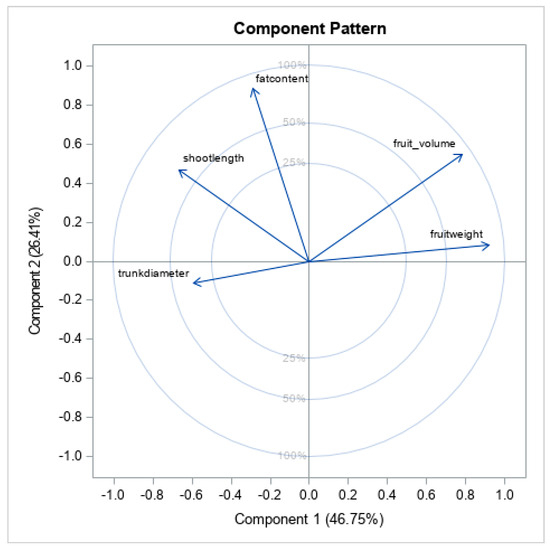
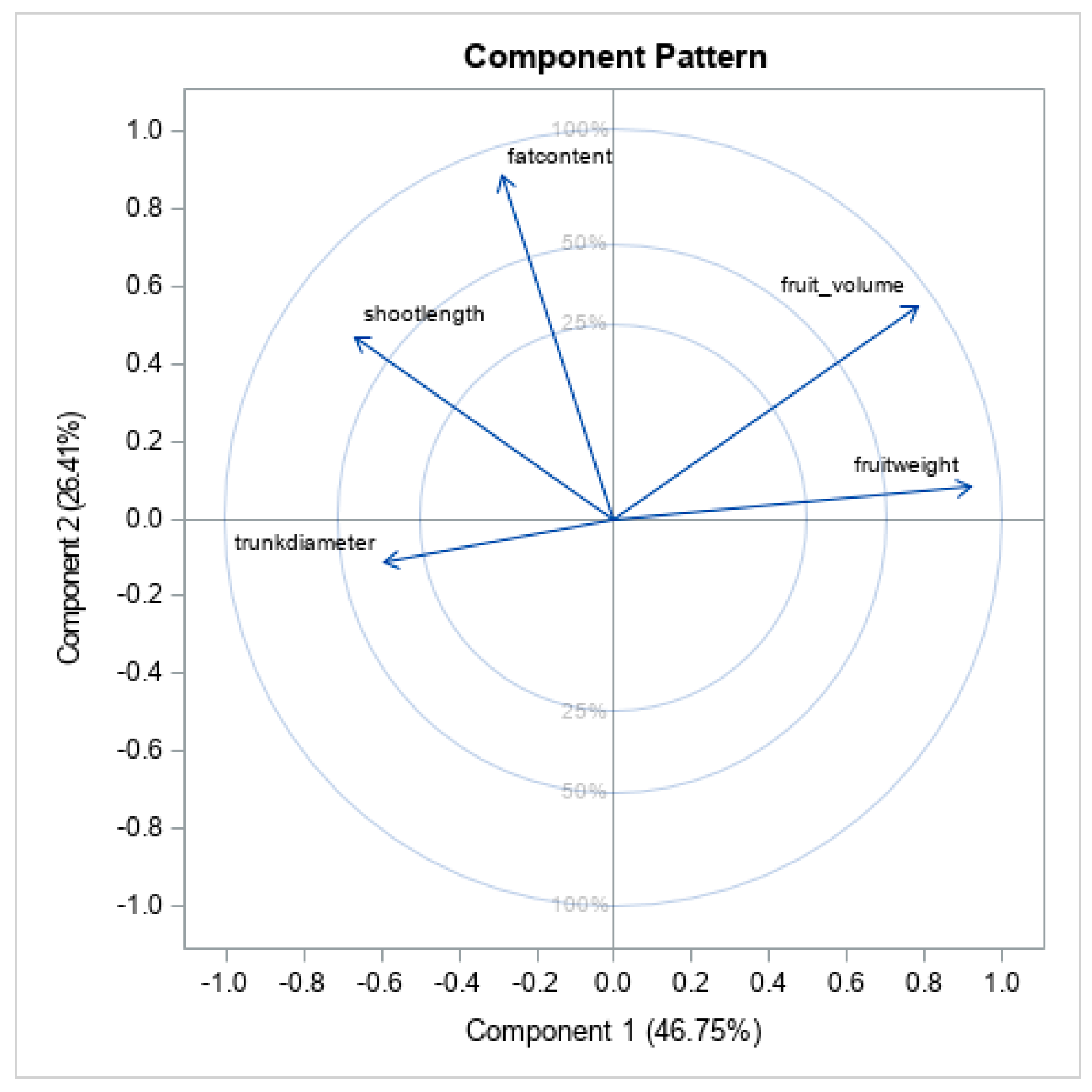
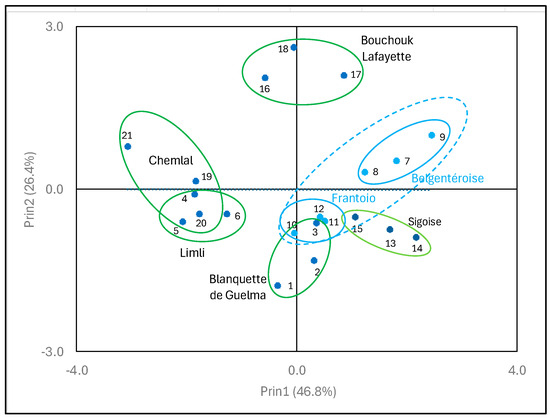
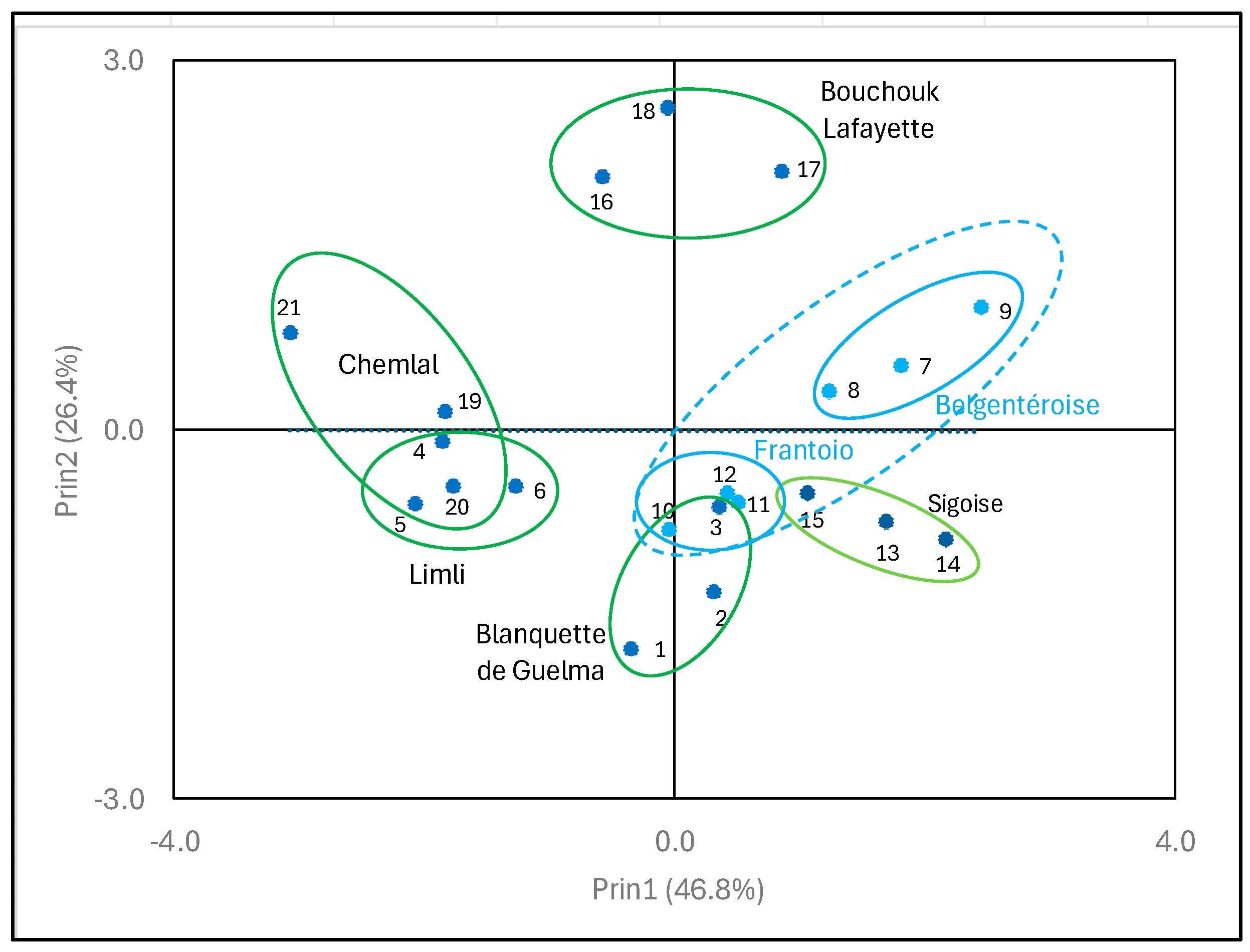
The PCA in Figure 1 highlights the relationships between these parameters. The first principal component explains 46.75% of the total variability, while the second explains 26.41%. The first three principal components explain up to 88.32% of the total variability. The first two components show a clear relationship between fruit weight and volume, as expected. Shoot length and fat percentage, which are both related to photosynthesis, are correlated. Finally, trunk diameter is positively correlated with shoot length, both being related to photosynthesis. These results suggest that cultivars producing longer shoots, and potentially more leaves, have a greater capacity to produce olive oil, possibly due to their higher capacity to produce sugars. The analysis of the scores in the vectorial space shown in Figure 2 reveals that the three replicates of each cultivar are close, indicating that these morphological parameters are under a degree of genetic control. Moreover, the European cultivars studied appear to have different morphological profiles than the Algerian cultivars. In fact, the olive varieties from Algeria tend to produce large fruits with low fat percentages, shorter shoots, and trees with thinner trunks. This could be linked to different capacities for adaptation to Algerian growing conditions.
Figure 1.
Principal component analysis (PCA) of olive tree growth and fruit characteristics. PC1 accounts for 46.75% of the total variability, and PC2 explains 26.41%.
Figure 2.
Biplot of individuals in the PC1 × PC2 vectorial space, when vegetative growth and fruit traits are considered. Figures represent the tree code within each cultivar and are inside ellipses. The dotted blue ellipse includes Italian and French varieties, with certain similarity to the Algerian Blanquette de Guelma and Sigoise.
3.2. Exploratory Analysis of the Relationship Between Growing Parameters and Olive Oil Stability
The stability of olive oil depends on the degree of unsaturation of fatty acids, mainly linoleic (C18.2) and linolenic (C18:3), and the total polyphenol concentration [50]. Clearly, the degree of unsaturation is linked to the ripening process, since desaturase needs time to convert oleic acid (C18:1) into linoleic (C18:2) and linolenic (C18:3), and maturation is linked to the fat percentage. On the other hand, palmitic acid (C16:0) is the first fatty acid synthesized among others. It is converted into stearic (C18:0) and oleic (C18:1) during the maturation process [51]. Since fat percentage was observed to be correlated with shoot length (Table 2), it is relevant to explore whether the components of olive oil that determine its stability are related to growth parameters and whether such correlations are cultivar dependent (Table 3).
Table 3.
Pearson correlation matrix between vegetative growth, fruit parameters, and oil characteristics.
Shoot length showed a significant positive correlation with both total polyphenol concentration (r = 0.73; p < 0.01) and oxidative stability (r = 0.77; p < 0.01), suggesting that vigorous shoots promote increased photosynthetic activity, leading to greater biosynthesis of phenolic compounds. Similarly, fruit weight was positively and significantly correlated with C18:1 percentage (r = 0.85; p < 0.01), and there were significant positive correlations between trunk diameter and oxidative stability (r = 0.67; p < 0.05) and C16:0 (r = 0.74; p < 0.01), a major contributor to the oxidative stability of the oil. On the other hand, negative correlations were observed between shoot length and C18:3 (r = –0.69; p < 0.05) and between trunk diameter and C18:2 and C18:3 (r = –0.61 and r = –0.78, respectively). These results confirm that vegetative growth directly influences the quality and stability of olive oil through its impact on fatty acid composition, polyphenols, and oxidative stability, in agreement with other studies [49,50,52,53].
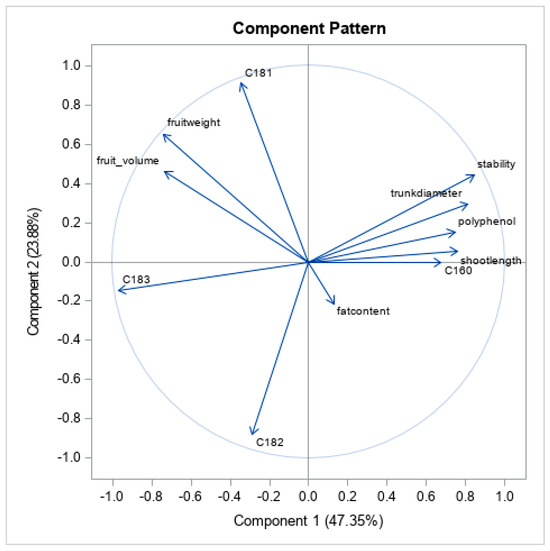
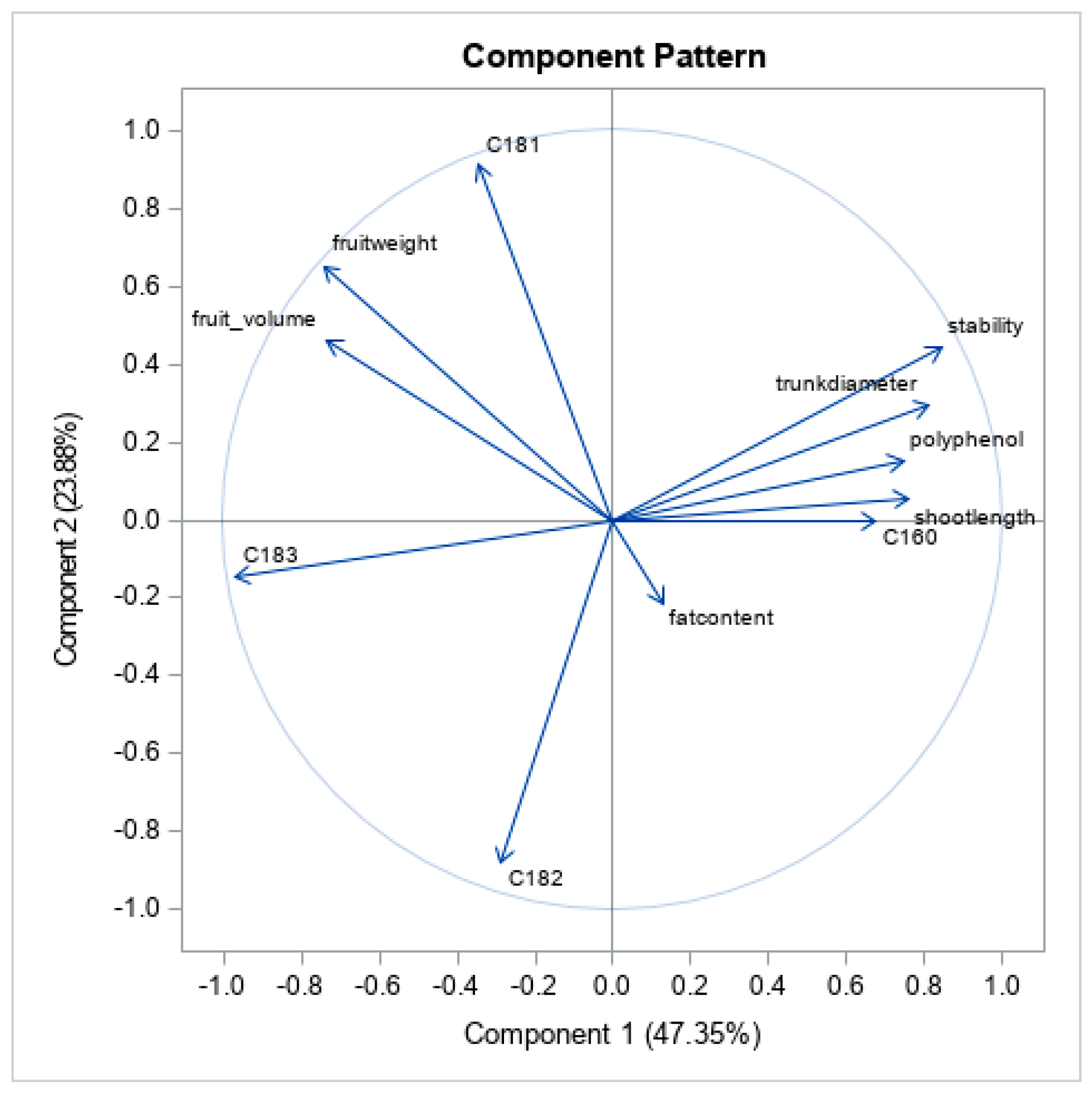
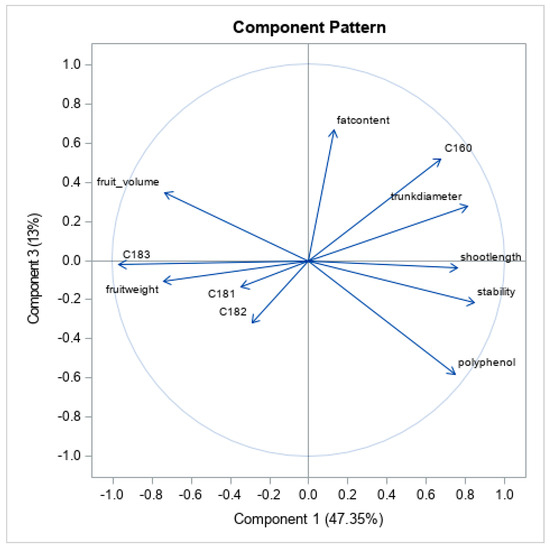
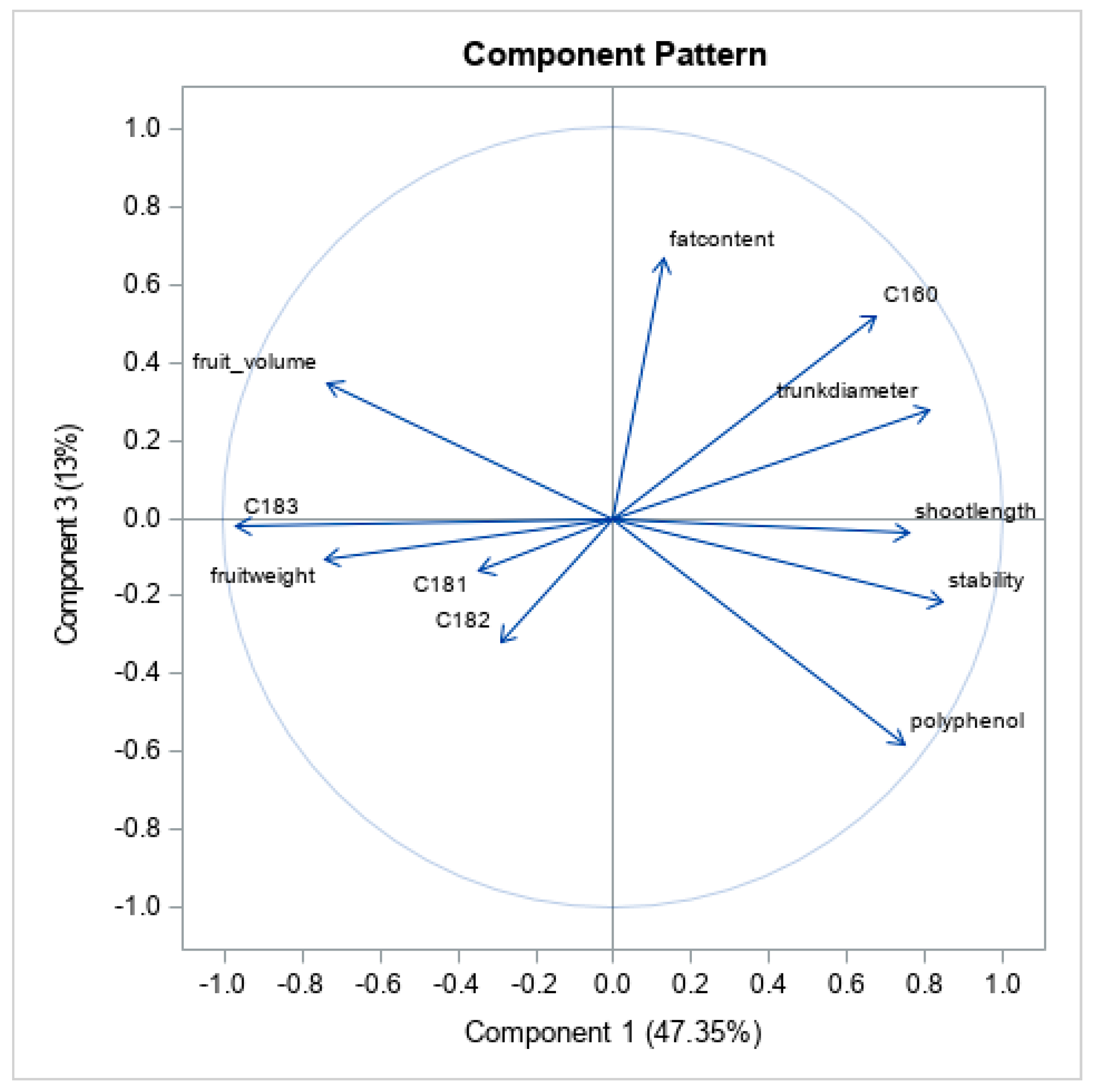
The PCA in Figure 3 reveals a clear correlation between photosynthetic parameters and olive oil stability. The first three principal components explain 84.24% of the total variability. The PC1 × PC2 space is driven, on positive values of PC1, by stability, polyphenols, palmitic acid percentage (C16:0), shoot length, trunk diameter, and fat percentage, all directly related to photosynthesis. Negative values of PC1 are driven by fruit weight and volume and unsaturated fatty acids (C18:1, C18:2, and C18:3), all related to the ripening process and inversely correlated with oil stability. The PC1 × PC3 graph in Figure 4 confirms the previous one and highlights two inverse correlations: polyphenols with fruit volume and shoot length with C18:3. The first inverse correlation could be related to the fact that larger fruits are generally richer in water, and this water can wash polyphenols during the milling process [26]. The second inverse correlation, however, was unexpected and difficult to explain. Perhaps varieties with higher vegetative growth tend to produce fewer fruits, and these fruits tend to ripen faster, thus providing more C18:3.
Figure 3.
PC1 × PC2 plot of principal component analysis (PCA) when vegetative growth, fruit traits, and olive oil characteristics are included. PC1 accounts for 47.35% of the total variability, and PC2 explains 23.88%.
Figure 4.
PC1 × PC3 plot of principal component analysis (PCA), when vegetative growth, fruit traits, and olive oil characteristics are included. PC3 accounts for 13% of the total variability.
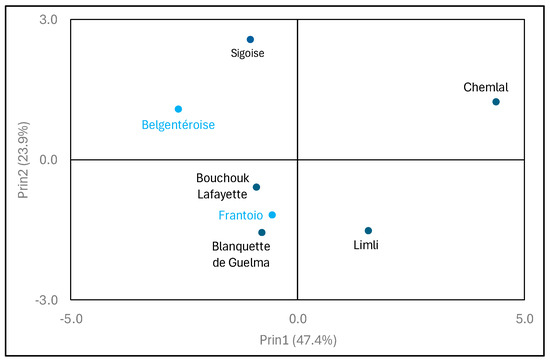
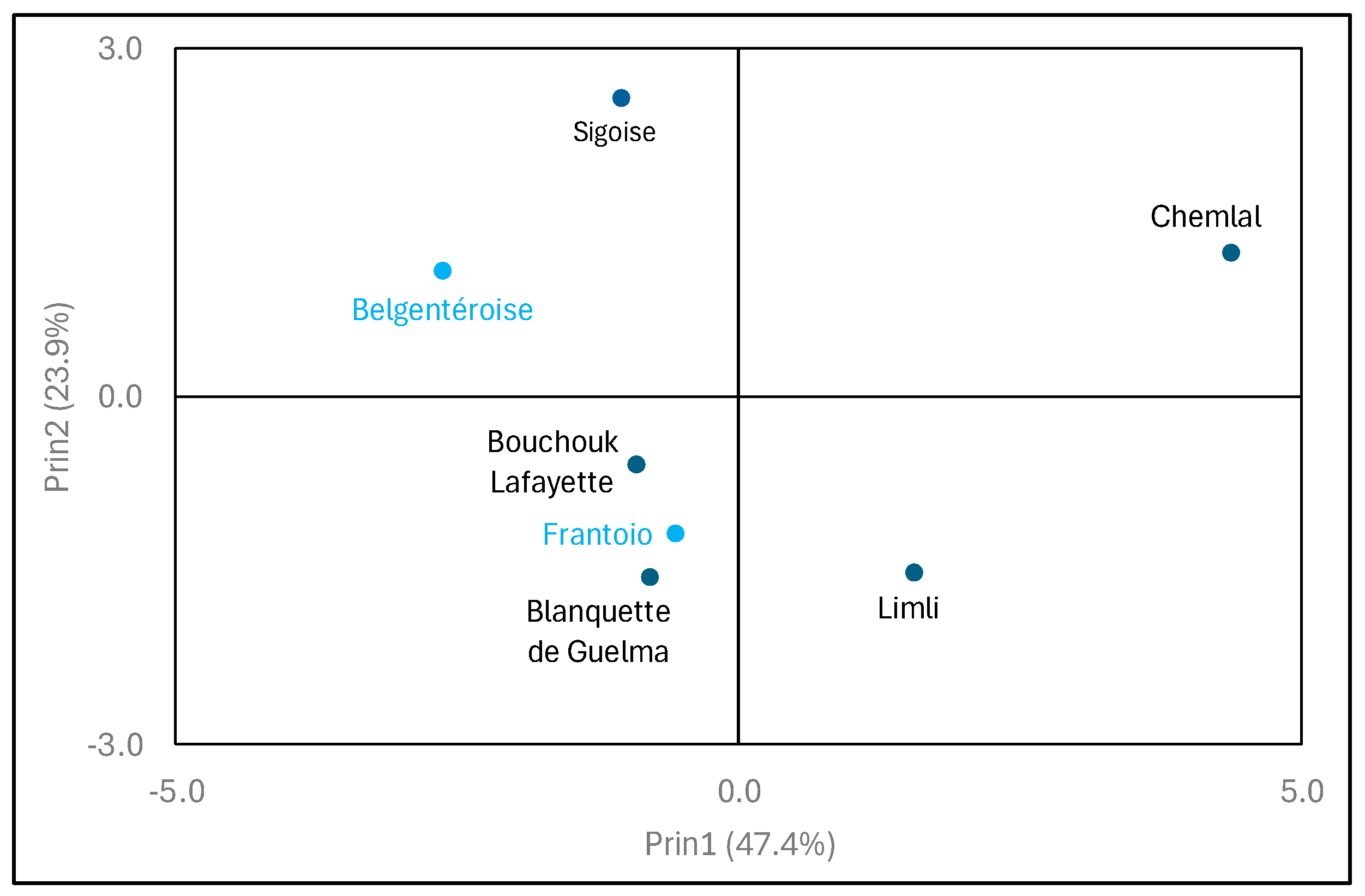
Regarding the varieties, the scatterplot in Figure 5 allows one to explore them in this vectorial space. The results are not definitive, but the two European varieties are on the left of the graphic, meaning higher unsaturated fatty acids and bigger fruits, whereas the Algerian varieties are placed in three out of four sectors of the vectorial space.
Figure 5.
Biplot of individuals in the PC1 × PC2 vectorial space, when vegetative growth, fruit traits, and olive oil characteristics are included. Foreign genotypes from Italy and France are colored blue.
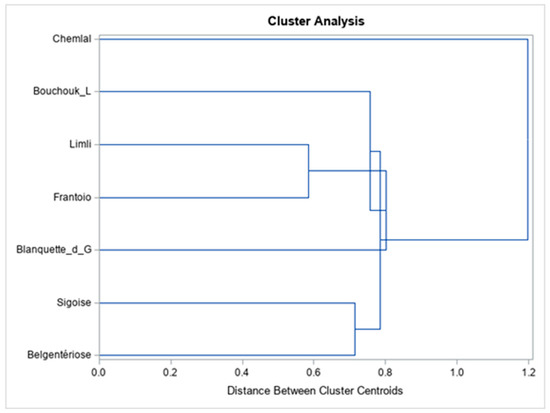
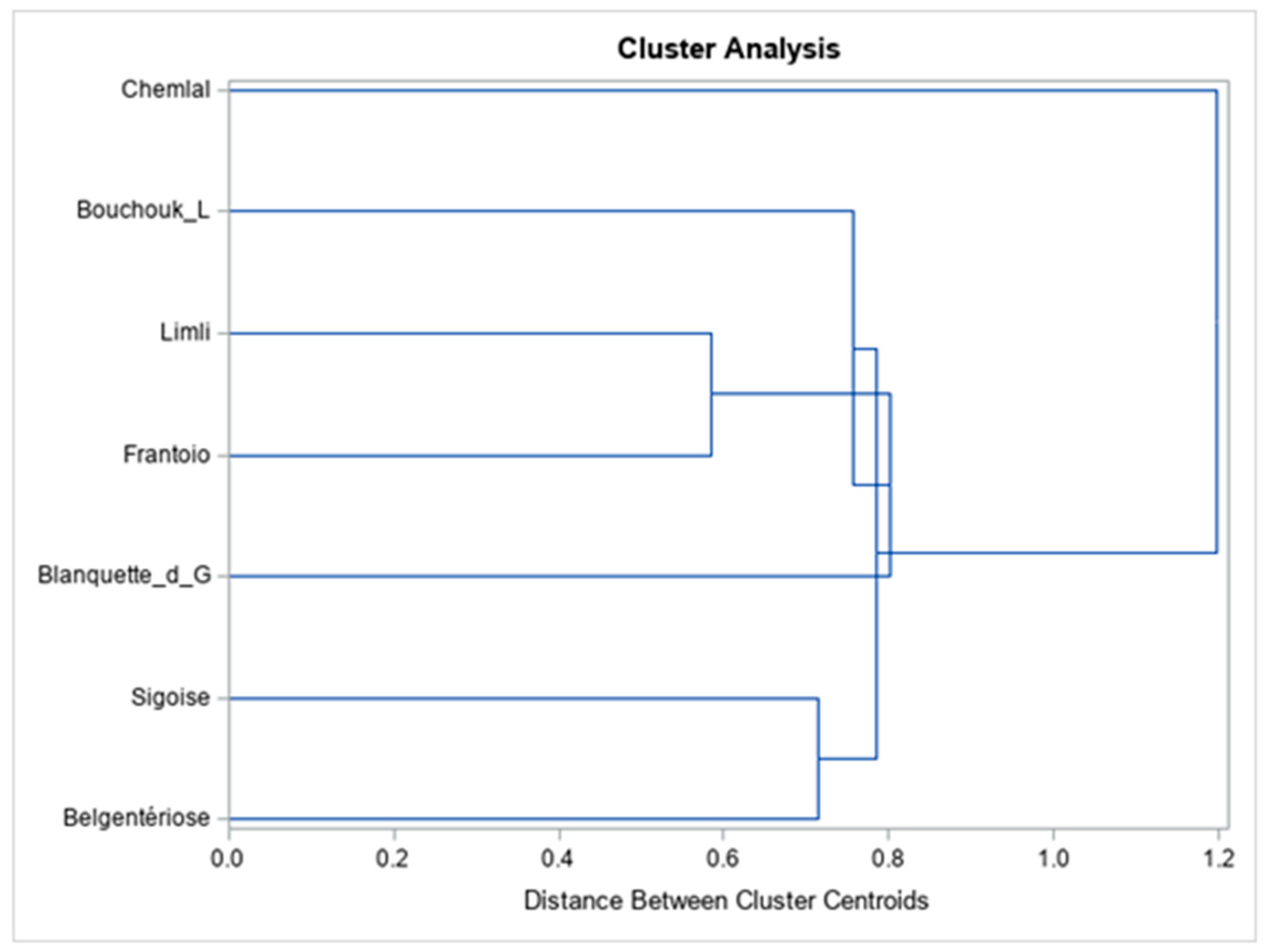
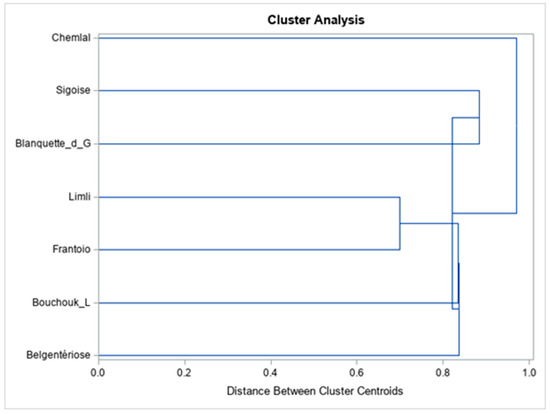
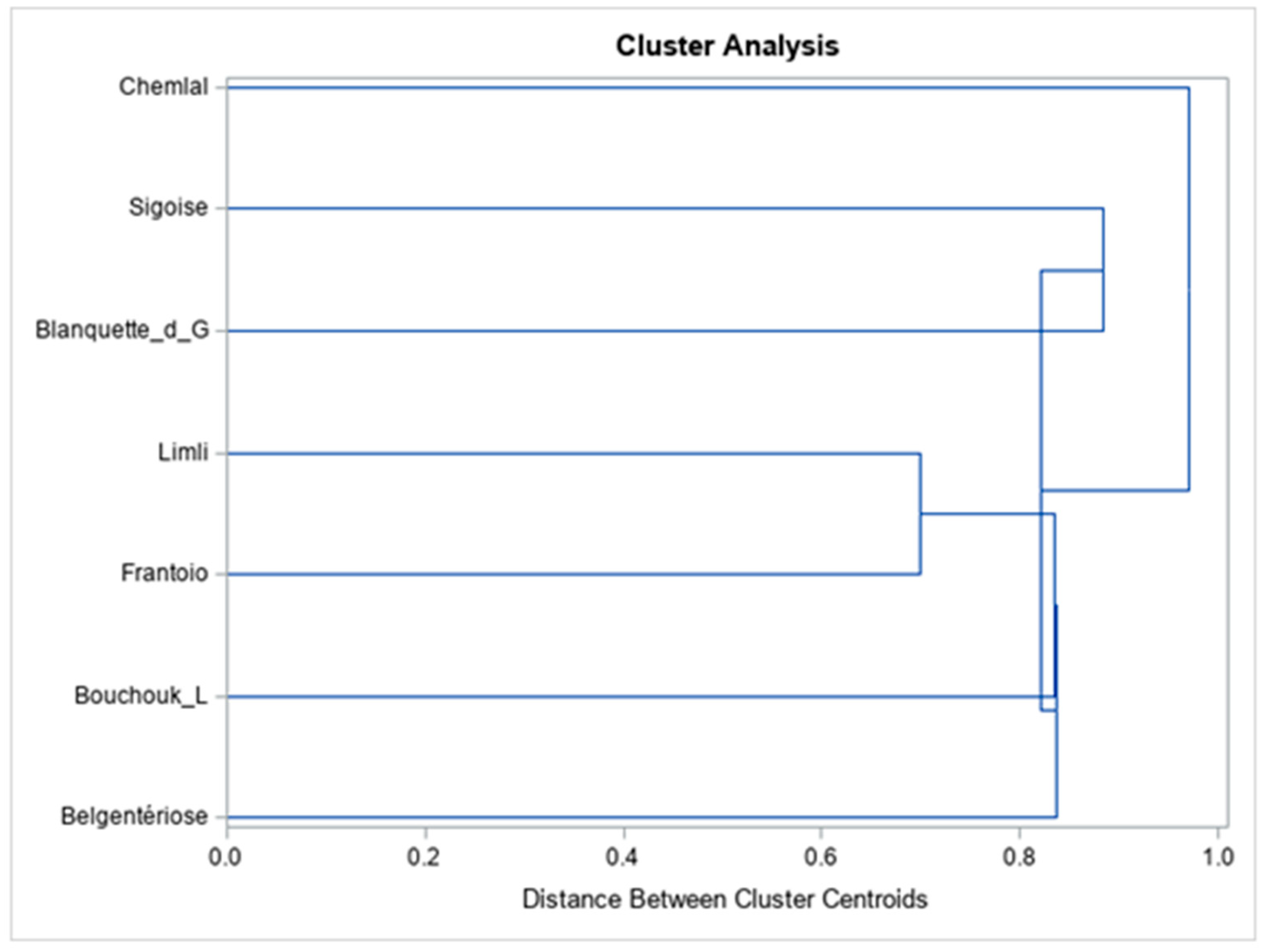
Cluster analysis presented in Figure 6 reveals that Chemlal is the variety that is most different, considering this set of parameters. However, no difference could be observed between the groups of European and Algerian varieties.
Figure 6.
Hierarchical classification dendrogram of olive varieties, when vegetative growth, fruit traits, and olive oil characteristics are considered. The centroid method was used to construct the clusters.
3.3. Exploring the Relations Between Growing Traits with Olive Oil Compounds, and Sensory Characteristics
Although no evidence of such relationships is available, the observed link between growth characteristics and polyphenols, combined with the already known relationship between polyphenols and certain sensory characteristics, mainly bitterness and pungency [10], opens the way to the search for a link. The correlation analysis (Table 4) revealed significant relationships between some sensory attributes and certain vegetative traits, and with some olive oil compounds. Positive, significant correlations were observed between shoot length and those sensory characteristics of the oil related to polyphenol concentration, mainly bitterness (r = 0.63; p < 0.01) and pungency (r = 0.63; p < 0.01). A significant positive correlation was observed between polyphenol concentration and bitterness (r = 0.85; p < 0.01), in agreement with earlier studies [9,10,11].
Table 4.
Pearson correlation matrix (r) between vegetative growth, fruit traits, oil composition, and oil sensory characteristics.
These results confirm the determining role of phenolic compounds in the oxidative protection of olive oil, as well as in the perception of the main organoleptic characteristics, mainly those linked to freshness, spiciness, and bitterness [10]. They also highlight a direct relationship between vegetative growth and oil quality, both in terms of sensory and oxidative stability. Indeed, as explained before, shoot length was found to be positively correlated with the intensity of spiciness and bitterness, suggesting that trees with greater vegetative vigor tend to accumulate more phenolic compounds responsible for these sensory attributes. Furthermore, the positive correlation observed between shoot length and oxidative stability (Table 3) confirms that tree vigor contributes to better resistance of the oil to auto-oxidative phenomena. Overall, these observations indicate that vegetative vigor influences not only productivity but also plays a determining role in the quality and sustainability of the oils produced, probably through metabolic dynamics favouring the biosynthesis and accumulation of polyphenols.
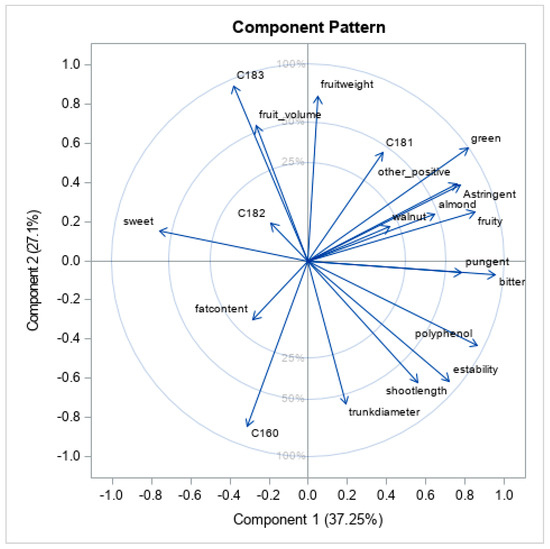
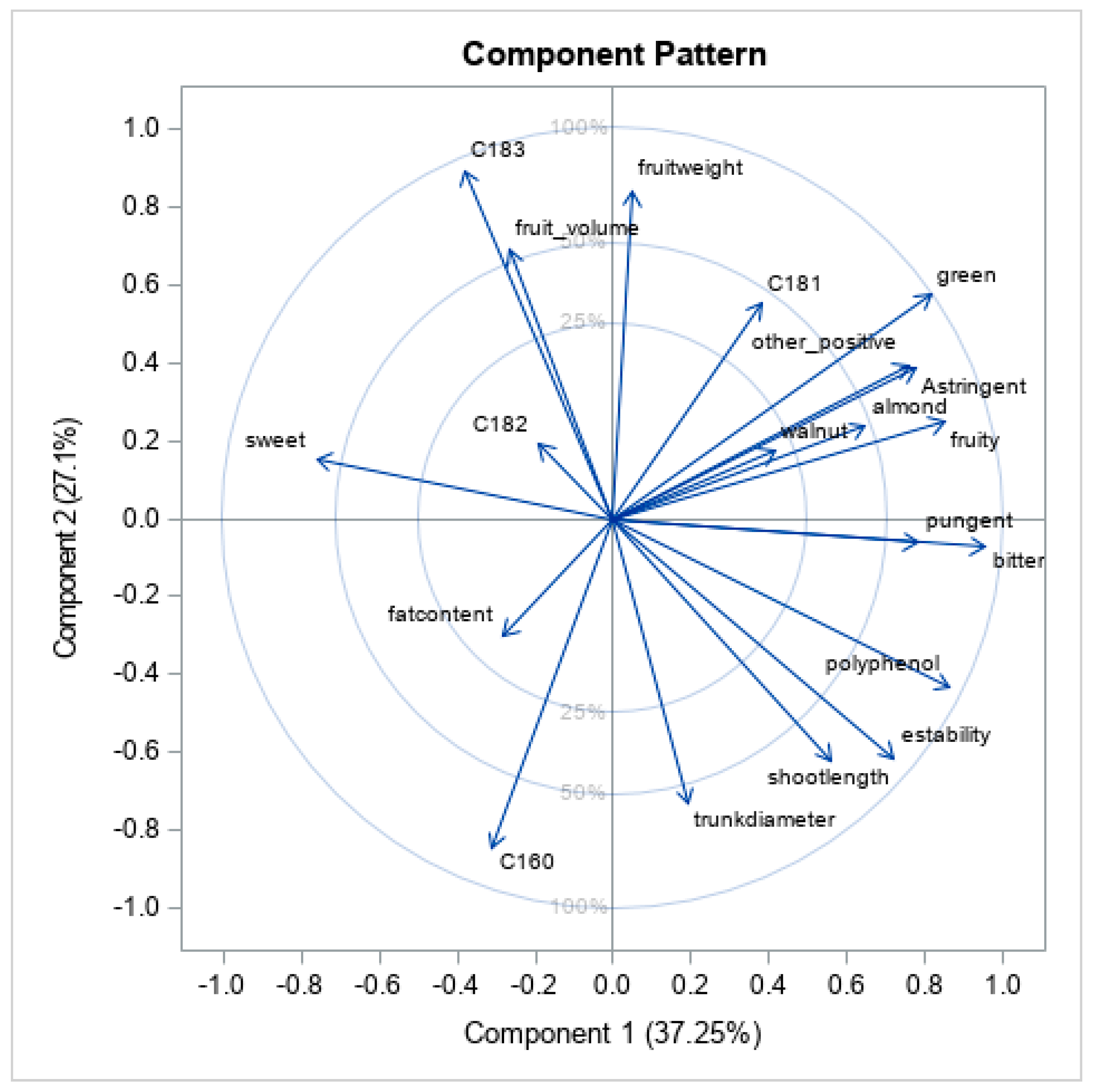
In Figure 7, when all parameters are considered, including vegetative and fruit growth, olive oil composition, and sensory properties, the PCA is less explicit than in the previous cases. Still, the first three principal components account for 78.38% of the total variability. Figure 7 shows the PC1 × PC2 space, where three main groups of relationships are displayed. First, on the right of PC1, there are all the aromatic characteristics, such as fruity, green, almond, walnut, and other positive aromas. Second, at the bottom of PC2, there are all the characteristics related to photosynthesis, such as trunk diameter, shoot length, polyphenols, C16:0, fat percentage, and stability (strongly correlated with polyphenols). Third, in the positive direction of PC2, there are all the characteristics related to maturation, such as fruit size, C18:3, and C18:2.
Figure 7.
Principal component analysis (PCA) of vegetative growth, fruit traits, olive oil chemical and sensory characteristics. PC1 accounts for 37.25% of the total variability, and PC2 explains 27.1%.
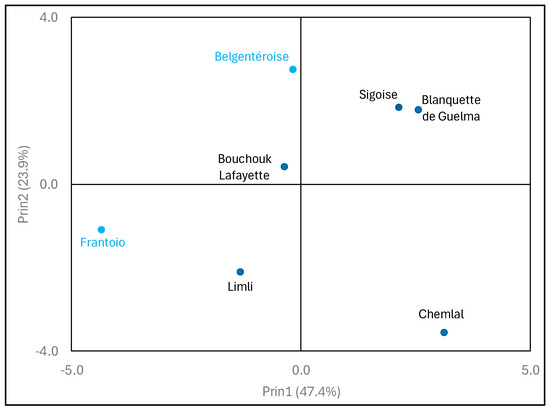
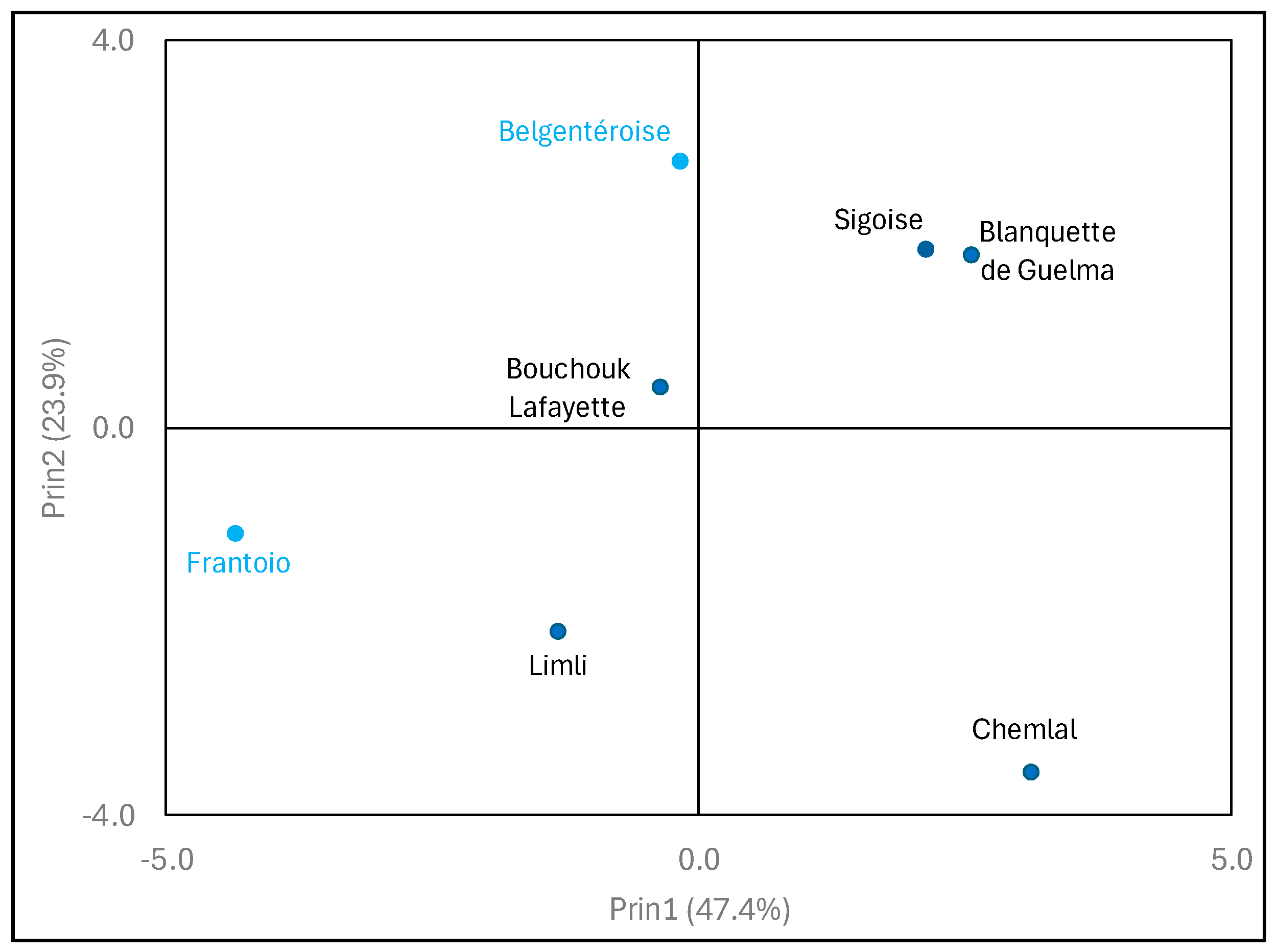
The scatterplot in Figure 8 illustrates the distribution of varieties in this vectorial space. Although there are significant differences among cultivars, such differences appear to be unrelated to the origin of the varieties. The cluster analysis in Figure 9 confirms the independence of each variety from the others (considering all the characteristics studied).
Figure 8.
Biplot of individuals in the PC1 × PC2 vectorial space, when vegetative growth, fruit traits, and olive oil chemical and sensory characteristics are considered. The European varieties are in blue.
Figure 9.
Hierarchical classification dendrogram of olive varieties when vegetative growth, fruit traits, and olive oil chemical and sensory characteristics are considered. The centroid method was used to construct the clusters.
4. Conclusions
This study highlights the close interdependence between the vegetative growth of olive trees, the qualitative characteristics of the oil, and the sensory properties that depend on polyphenols. The results particularly highlight the importance of the Algerian variety Chemlal, for its high vigour and fat percentage, high polyphenol concentration and stability, as well as its bitterness and fruity intensity. The results suggest that the management of vegetative growth cannot be dissociated from the final quality of the oil, supporting the relevance of the farm-to-fork producing chain. Future research incorporating a wider diversity of genotypes and agro-climatic conditions in multiyear studies is needed to clarify the mechanisms linking vegetative development, biochemical composition, and sensory expression.
Author Contributions
Conceptualization: N.C., A.J.R.-A., and F.B.; Data Collection: N.C.; Methodology A.J.R.-A., N.C., and A.J.R.-A.; Formal analysis: A.J.R.-A.; Investigation: N.C. and A.J.R.-A.; Data Management: A.J.R.-A.; Original Drafting: N.C., Revision and Editing: F.B. and A.J.R.-A.; Visualization: N.C. and A.J.R.-A.; Supervision: F.B. and A.J.R.-A. All authors have read and agreed to the published version of the manuscript.
Funding
Agusti Romero acknowledges the financial support to IRTA from the CERCA Program from the Generalitat of Catalonia (Spain).
Data Availability Statement
The original contributions presented in this study are included in the article. Further inquiries can be directed to the corresponding author.
Acknowledgments
The authors express their sincere gratitude to the Official Olive Oil Tasting Panel of Catalonia for its analysis of olive oil samples. The authors express their sincere gratitude to the Institute of Fruit Trees and Vine (ITAFV) of Emdjez Edchich, Skikda, for their warm welcome and for authorizing the conduct of this study on olive varieties.
Conflicts of Interest
The authors declare no conflicts of interest.
References
- Atrouz, K.; Bousba, R.; Marra, F.P.; Marchese, A.; Conforti, F.L.; Perrone, B.; Harkat, H.; Salimonti, A.; Zelasco, S. Algerian Olive Germplasm and Its Relationships with the Central-Western Mediterranean Varieties Contributes to Clarify Cultivated Olive Diversification. Plants 2021, 10, 678. [Google Scholar] [CrossRef] [Scilit]
- Fraga, H.; Moriondo, M.; Leolini, L.; Santos, J. Mediterranean Olive Orchards under Climate Change: A Review of Future Impacts and Adaptation Strategies. Agronomy 2021, 11, 56. [Google Scholar] [CrossRef] [Scilit]
- Jimenez-Lopez, C.; Carpena, M.; Lourenço-Lopes, C.; Gallardo-Gomez, M.; Lorenzo, J.M.; Barba, F.J.; Prieto, M.A.; Simal-Gandara, J. Bioactive Compounds and Quality of Extra Virgin Olive Oil. Foods 2020, 9, 1014. [Google Scholar] [CrossRef] [Scilit] [PubMed]
- Cimato, A. Effect of Agronomic Factors on Virgin Olive Oil Quality. Olivae 1990, 31, 20–31. [Google Scholar]
- Ugolini, T.; Cecchi, L.; Sani, G.; Digiglio, I.; Adinolfi, B.; Ciaccheri, L.; Zanoni, B.; Melani, F.; Mulinacci, N. Seasonal and Cultivar-Dependent Phenolic Dynamics in Tuscan Olive Leaves: A Two-Year Study by HPLC-DAD-MS for Food By-Product Valorization. Separations 2025, 12, 192. [Google Scholar] [CrossRef] [Scilit]
- Rosati, A.; Paoletti, A.; Al Hariri, R.; Morelli, A.; Famiani, F. Resource Investments in Reproductive Growth Proportionately Limit Investments in Whole-Tree Vegetative Growth in Young Olive Trees with Varying Crop Loads. Tree Physiol. 2018, 38, 1267–1277. [Google Scholar] [CrossRef] [Scilit]
- Massenti, R.; Ioppolo, A.; Veneziani, G.; Selvaggini, R.; Servili, M.; Bianco, R.L.; Caruso, T. Low Tree Vigor, Free Palmette Training Form, and High Planting Density Increase Olive and Oil Yield Efficiency in Dry, Sloping Areas of Mediterranean Regions. Horticulturae 2022, 8, 817. [Google Scholar] [CrossRef] [Scilit]
- Tresserra-Rimbau, A.; Lamuela-Raventós, R.M. Olive and Olive Oil: A Mediterranean Source of Polyphenols. In Olives and Olive Oil as Functional Foods: Bioactivity, Chemistry and Processing; Kiritsakis, A., Shahidi, F., Eds.; John Wiley & Sons Ltd.: Chichester, UK, 2017; pp. 417–434. [Google Scholar] [CrossRef] [Scilit]
- Pedan, V.; Popp, M.; Rohn, S.; Nyfeler, M.; Bongartz, A. Characterization of Phenolic Compounds and their Contribution to Sensory Properties of Olive Oil. Molecules 2019, 24, 2041. [Google Scholar] [CrossRef] [Scilit]
- Andrewes, P.; Busch, J.L.H.C.; De Joode, T.; Groenewegen, A.; Alexandre, H. Sensory Properties of Virgin Olive Oil Polyphenols: Identification of Deacetoxy-Ligstroside Aglycon as a Key Contributor to Pungency. J. Agric. Food Chem. 2003, 51, 1415–1420. [Google Scholar] [CrossRef] [Scilit]
- Servili, M.; Montedoro, G. Contribution of Phenolic Compounds to Virgin Olive Oil Quality. Eur. J. Lipid Sci. Technol. 2002, 104, 602–613. [Google Scholar] [CrossRef] [Scilit]
- Velasco, J.; Dobarganes, C. Oxidative Stability of Virgin Olive Oil. Eur. J. Lipid Sci. Technol. 2002, 104, 661–676. [Google Scholar] [CrossRef] [Scilit]
- Rouibah, K.; Belabbas, M. The Expansion of Olive Growing Areas in the High Plains of Eastern Algeria: Driving Factors, Socio-Economic Impacts and Challenges. Rev. Roum. Géogr. 2022, 66, 215–224. [Google Scholar]
- Ghachi, A.; Khaled, F.; Djedaiet, K.; Meddour, O. Characteristic Feature of the Flood Vulnerability in Urban Areas: Case of Skikda City (North East Algeria). AUB-G 2023, 71, 169–188. [Google Scholar] [CrossRef] [Scilit] [PubMed]
- Ministère de l’Agriculture et du Développement Rural. Catalogue des Variétés d’Oliviers d’Algérie; Ministère de l’Agriculture et du Développement Rural: Alger, Algeria, 2023. [Google Scholar]
- Muzzalupo, I. Olive Germplasm—Italian Catalogue of Olive Varieties; InTech: Rijeka, Croatia, 2012. [Google Scholar]
- Lavee, S. Biennial Bearing in Olive (Olea europaea L.). Ann. Ser. Hist. Nat. 2007, 17, 101–112. [Google Scholar]
- Uceda, M.; Frias, L. Trend of the Quality and Quantitative Composition of Olive Fruit Oil During Ripening. In Proceedings of the International Meeting on Olive Oil, Cordoba, Spain, 6–7 October 1975. [Google Scholar]
- Boudebouz, A.; Romero, A.; Hermoso, J.-F.; Boqué, R.; Mestres, M. Effect of Hopper Loading on the Formation of Alkyl Alcohols in Olive Fruits and Its Relationship with Sensory Quality Losses of Virgin Olive Oil. Foods 2023, 12, 2633. [Google Scholar] [CrossRef] [Scilit]
- International Olive Council. COI-T.20/33/Rev.1: Trade Standard Applying to Olive Oils and Olive-Pomace Oils; IOC: Madrid, Spain, 2016. [Google Scholar]
- Vazquez-Roncero, A.; Valle, C.J.; Valle, M.L. Determination of Total Polyphenols in Oliver Oils. Grasas Aceites 1973, 24, 350–357. [Google Scholar]
- Cert, A.; Alba, J.; Leon-Camacho, M.; Moreda, W.; Carmen Perez-Camino, M. Effects of Talc Addition and Operating Mode on the Quality and Oxidative Stability of Virgin Olive Oils Obtained by Centrifugation. J. Agric. Food Chem. 1996, 44, 3930–3934. [Google Scholar] [CrossRef] [Scilit]
- ISO/IEC 17025:2017; General Requirements for the Competence of Testing and Calibration Laboratories. International Organization for Standardization: Geneve, Switzerland, 2017.
- International Olive Council. COI-OH-Doc.-1: Guide for the Determination of Organoleptic Characteristics of Virgin Olive Oil; IOC: Madrid, Spain, 2011. [Google Scholar]
- International Olive Council. COI-Doc.-No-29-Rev-2: Sensory Analysis of Olive Oil; IOC: Madrid, Spain, 2018. [Google Scholar]
- Romero, A.J. Caracterización y Diferenciación de los Aceites Vírgenes de Oliva de la Comarca del Priorat. Ph.D. Thesis, Universitat Rovira i Virgili, Tarragona, Spain, 2011. [Google Scholar]
- Moutier, N.; Garcia, G.; Lauri, P.E. Natural Vegetative Development and Fruit Production of Olive Trees. Acta Hortic. 2008, 791, 351–355. [Google Scholar] [CrossRef] [Scilit]
- Del Rio, C.; Caballero, J.; García, M.D. Vigor (Banco de Germoplasma de Córdoba). In Variedades del Olivo en España (Libro II: Variabilidad y Selección); Rallo, L., Barranco, D., Caballero, J.M., del Río, C., Martín, A., e Isabel Trujillo, J.T., Eds.; Junta de Andalucía, MAPA y Ediciones Mundi-Prensa: Madrid, Spain, 2005; pp. 249–255. [Google Scholar]
- Belaj, A.; De La Rosa, R.; León, L.; Gabaldón-Leal, C.; Santos, C.; Porras, R.; De La Cruz-Blanco, M.; Lorite, I.J. Phenological Diversity in a World Olive Germplasm Bank: Potential Use for Breeding Programs and Climate Change Studies. Span. J. Agric. Res. 2020, 18, e0701. [Google Scholar] [CrossRef] [Scilit]
- Hermoso, J.F.; Plana, J.; Romero, A.; Tous, J. Performance of Six Olive Oil Cultivars in the South of Catalonia (Spain). Acta Hortic. 2008, 791, 333–337. [Google Scholar] [CrossRef] [Scilit]
- Aïachi Mezghani, M.; Masmoudi Charfi, C.; Gouiaa, M.; Labidi, F. Vegetative and Reproductive Behaviour of Some Olive Tree Varieties under Deficit Irrigation in Semi-Arid Tunisia. Sci. Hortic. 2012, 146, 143–152. [Google Scholar] [CrossRef] [Scilit]
- Rosati, A.; Paoletti, A.; Pannelli, G.; Famiani, F. Growth is Inversely Correlated with Yield Efficiency across Cultivars in Young Olive Trees. HortScience 2017, 52, 1525–1529. [Google Scholar] [CrossRef] [Scilit]
- Paoletti, A.; Rosati, A.; Famiani, F. Effects of Cultivar, Fruit Presence and Tree Age on Whole-Plant Dry Matter Partitioning in Young Olive Trees. Heliyon 2021, 7, e06949. [Google Scholar] [CrossRef] [Scilit] [PubMed]
- Moret, M.; Serrano, A.; Belaj, A.; León, L.; De La Rosa, R.; Luque, F. Genetic Markers of Olive Fruit Weight Selected to Be Used in Breeding Experiments. Mol. Breed. 2025, 45, 40. [Google Scholar] [CrossRef] [Scilit]
- Guerrini, L.; Migliorini, M.; Giusti, M.; Parenti, A. The Influence of Crusher Speed on Extra Virgin Olive Oil Characteristics. Eur. J. Lipid Sci. Technol. 2017, 119, 1600156. [Google Scholar] [CrossRef] [Scilit]
- Del Rio, C.; Caballero, J.; García, M.D. Rendimiento Graso de la Aceituna (Banco de Germoplasma de Córdoba). In Variedades del Olivo en España (Libro II: Variabilidad y Selección); Rallo, L., Barranco, D., Caballero, J.M., del Río, C., Martín, A., e Isabel Trujillo, J.T., Eds.; Junta de Andalucía, MAPA y Ediciones Mundi-Prensa: Madrid, Spain, 2005; pp. 349–356. [Google Scholar]
- Lazzez, A.; Vichi, S.; Grati-Kammoun, N.; Néji Arous, M.; Khlif, M.; Romero, A.; Cossentini, M. A Four-Year Study to Determine the Optimal Harvesting Period for Tunisian Chemlali Olives. Eur. J. Lipid Sci. Technol. 2011, 113, 796–807. [Google Scholar] [CrossRef] [Scilit]
- Alowaiesh, B.; Singh, Z.; Kailis, S.G. Harvesting Time Influences Fruit Removal Force, Moisture, Oil Content, Free Fatty Acids and Peroxide in the Oil of Frantoio and Manzanilla Olive Cultivars. Aust. J. Crop Sci. 2016, 10, 1662–1668. [Google Scholar] [CrossRef] [Scilit]
- Institute Technique de L’arborculture Frutiere et de la Vigne (ITAF). Catalogue des Variétés d’Oliviers d’Algérie; Diwan: Alger, Algérie, 2023; 148p. [Google Scholar]
- Cimato, A.; Fiorino, P.; Touzani, A.; Castañeda, C.; Serafini, E. World Catalogue of Olive Varieties; COI: Madrid, Spain; Mundi-Prensa: Madrid, Spain, 2000. [Google Scholar]
- Grilo, F.; Caruso, T.; Wang, S.C. Influence of Fruit Canopy Position and Maturity on Yield Determinants and Chemical Composition of Virgin Olive Oil. J. Sci. Food Agric. 2019, 99, 4319–4330. [Google Scholar] [CrossRef] [Scilit]
- Fichtner, E.J.; Lovatt, C.J. Alternate Bearing in Olive. Acta Hortic. 2018, 7, 103–108. [Google Scholar] [CrossRef] [Scilit]
- Seyyed Nejad, M.; Abood, N. Study on Lipid Changes of Leaves and Fruits in Olive Adapted to High Temperature Conditions in Khuzestan. Pak. J. Biol. Sci. 2007, 10, 4535–4538. [Google Scholar] [CrossRef] [Scilit]
- López-Bernal, Á.; Fernandes-Silva, A.A.; Vega, V.A.; Hidalgo, J.C.; León, L.; Testi, L.; Villalobos, F.J. A Fruit Growth Approach to Estimate Oil Content in Olives. Eur. J. Agron. 2021, 123, 126206. [Google Scholar] [CrossRef] [Scilit]
- Hernandez-Santana, V.; Fernandes, R.D.M.; Perez-Arcoiza, A.; Fernández, J.E.; Garcia, J.M.; Diaz-Espejo, A. Relationships between Fruit Growth and Oil Accumulation with Simulated Seasonal Dynamics of Leaf Gas Exchange in Olive. Agric. For. Meteorol. 2018, 256–257, 458–469. [Google Scholar] [CrossRef] [Scilit]
- Breton, C.; Souyris, I.; Villemur, P.; Berville, A. Oil Accumulation Kinetic along Ripening in Four Olive Cultivars Varying for Fruit Size. OCL 2009, 16, 58–64. [Google Scholar] [CrossRef] [Scilit]
- Zeleke, K.; Mailer, R.; Eberbach, P.; Wünsche, J. Oil Content and Fruit Quality of Nine Olive Varieties Affected by Irrigation and Harvest Times. N. Z. J. Crop Hortic. Sci. 2012, 40, 241–252. [Google Scholar] [CrossRef] [Scilit]
- Romero-Trigueros, C.; Vivaldi, G.A.; Nicolás, E.; Paduano, A.; Pedrero Salcedo, F.; Camposeo, S. Ripening Indices, Olive Yield and Oil Quality in Response to Irrigation with Saline Reclaimed Water and Deficit Strategies. Front. Plant Sci. 2019, 10, 1243. [Google Scholar] [CrossRef] [Scilit]
- Malheiro, R.; Casal, S.; Baptista, P.; Pereira, J.A. How Agronomic Factors Affects Olive Oil Composition and Quality. In Virgin Olive Oil; De Leonardis, A., Ed.; Nova Science Publishers, Inc.: Hauppauge, NY, USA, 2014; pp. 119–141. [Google Scholar]
- Montaño, A.; Hernández, M.; Garrido, I.; Llerena, J.; Espinosa, F. Fatty Acid and Phenolic Compound Concentrations in Eight Different Monovarietal Virgin Olive Oils from Extremadura and the Relationship with Oxidative Stability. Int. J. Mol. Sci. 2016, 17, 1960. [Google Scholar] [CrossRef] [Scilit]
- Sakouhi, A.; Herchi, W.; Sebei, K.; Absalon, C.; Kallel, H.; Boukhchina, S. Accumulation of Total Lipids, Fatty Acids and Triacylglycerols in Developing Fruits of Olea europaea L. Sci. Hortic. 2011, 132, 7–11. [Google Scholar] [CrossRef] [Scilit]
- Sandonís-Pozo, L.; Rufat, J.; Pascual, M.; Villar, J.M.; Arnó, J.; Escolà, A.; Rosell-Polo, J.R.; Martínez-Casasnovas, J.A. LiDAR-Derived Indices and their Relationship with Productivity and Oil Quality Attributes in High-Density Olive Orchards. Smart Agric. Technol. 2025, 12, 101213. [Google Scholar] [CrossRef] [Scilit]
- Mousavi, S.; De La Rosa, R.; Moukhli, A.; El Riachy, M.; Mariotti, R.; Torres, M.; Pierantozzi, P.; Stanzione, V.; Mastio, V.; Zaher, H.; et al. Plasticity of Fruit and Oil Traits in Olive among Different Environments. Sci. Rep. 2019, 9, 16968. [Google Scholar] [CrossRef] [Scilit]

Disclaimer/Publisher’s Note: The statements, opinions and data contained in all publications are solely those of the individual author(s) and contributor(s) and not of MDPI and/or the editor(s). MDPI and/or the editor(s) disclaim responsibility for any injury to people or property resulting from any ideas, methods, instructions or products referred to in the content. |
© 2026 by the authors. Licensee MDPI, Basel, Switzerland. This article is an open access article distributed under the terms and conditions of the Creative Commons Attribution (CC BY) license.