


Abstract
Soil salinization is a major challenge affecting crop yield in arid and semi-arid regions. Amendments to agricultural soil under drip irrigation represent a potential strategy to ameliorate soil salinization. This study conducted a field experiment over two years to identify the impacts of desulfurized gypsum, biochar, and straw on sunflower yield and soil characteristics in salinized and alkalized soil. Soil amelioration significantly improved soil characteristics by reducing saline–alkali stress at a 0–15 cm soil depth. Increased and decreased surface soil moisture and density of soil bulk were achieved by the second year, respectively, through the application of straw and biochar. These soil amendments also significantly decreased soil electrical conductivity and pH, and the application of biochar significantly reduced the sodium adsorption ratio (SAR refers to the adsorption ratio of sodium ions to other ions in soil) and Na+ by 32.1% and 34.7%, respectively, compared with drip irrigation alone. Application of desulfurized gypsum combined with drip irrigation decreased soil pH, SAR, and Na+ by 0.25, 41.6%, and 38.1%, respectively, compared with drip irrigation alone. The three soil amendments significantly increased sunflower yields by 51.2–80.0% in the second year, with the biochar treatment showing the most significant impact. The results showed that combined biochar and drip irrigation could play an important role in ameliorating soil salinization in the Hetao Irrigation Area, thereby contributing to increased crop yields and sustainable agriculture. However, given the relatively short experimental duration and the single location of this study, as well as the lack of long-term monitoring of salt balance and drainage conditions, further research with extended timelines, expanded geographic coverage, and focused assessment of salt dynamics is needed to confirm and generalize these findings.
1. Introduction
Soil salinization represents a global challenge facing agriculture [1]. As the second-largest country globally by surface area, China contains ±10% of the global saline–alkali area [2]. In addition, soil salinization is an important challenge hindering sustainable agriculture and food security in China since 6.6% of cultivated land is classified as saline–alkali soil [3]. The Hetao Irrigation Area represents a major irrigation area in Northwest China characterized by abundant underground salt and brackish water resources. While numerous previous studies have investigated the use of biological, engineering, and agricultural measures to ameliorate saline–alkali soils [4], biological measures only improved the economic benefits of agriculture, while not altering the state of salinization. Although engineering measures can improve the soil environment, whether this approach can improve alkaline soils remains unclear. In addition, these measures have been limited by their high cost, the large degree of engineering required, and their insufficient promotion [4].
Biochar, desulfurized gypsum, and returning straw to fields have recently been widely used approaches in studies on ameliorating saline–alkali soil, with these studies achieving promising results [5,6,7]. The many related previous studies have drawn inconsistent conclusions due to different research scales and methodologies used. Previous work has identified the beneficial effects of biochar application on saline–alkaline soil, including increasing soil permeability and organic matter content and reducing pH and salinity [7], as well as promoting microbial and crop growth [8,9]. In contrast, some studies have identified adverse effects of biochar application on soil properties in saline–alkali soil. This is due to the difficulties of preparing for the large-scale study with biochar, which contributes to high alkali metal, high salt ion, and high pH of biochar [9]. In addition, the appropriate application of desulfurized gypsum not only acts as a source of Ca and S but also alters the composition of soil-soluble salt ions and reduces soil Na+ toxicity, thereby increasing crop yields [10]. However, other studies have found that the beneficial effects of lowering pH and SAR increase with increasing desulfurization through gypsum application, although this also leads to an increase in soil electrical conductivity (EC) [11]. The straw return to the fields can act as a physical buffer against the accumulation of salt by inhibiting salt transport to topsoil from subsoil or shallow groundwater by restricting groundwater evaporation [12,13].
The benefits of drip irrigation include a small irrigation water flow, high irrigation frequency, and duration. These benefits can act to effectively regulate soil water and salt and reduce soil water evaporation, thereby managing soil salinization. Consequently, drip irrigation is regarded as suitable for irrigation of brackish water in the Hetao Irrigation Area [14]. Although numerous studies have attempted to identify irrigation methods or soil amendments suitable for ameliorating soil salinization [15,16], which were mainly environmentally controlled indoor studies, there remain insufficient long-term field experiments to verify the mechanisms identified in potted studies. Therefore, the aim of the present study was to investigate the effects of drip irrigation and application of biochar, desulfurized gypsum, and straw, as well as their combined application, for improving saline–alkaline soil and sunflower yield. The results of the present study can act as a theoretical basis for improving saline–alkali land in northern China.
2. Materials and Methods
2.1. Overview of the Experimental Site
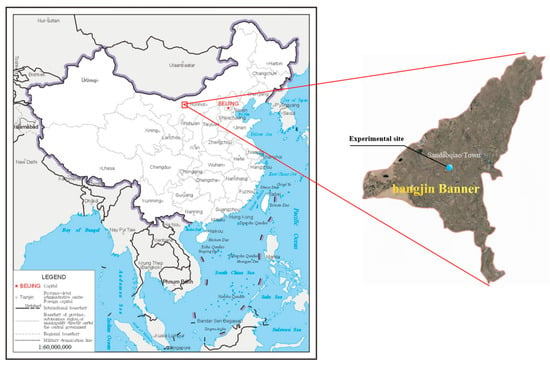
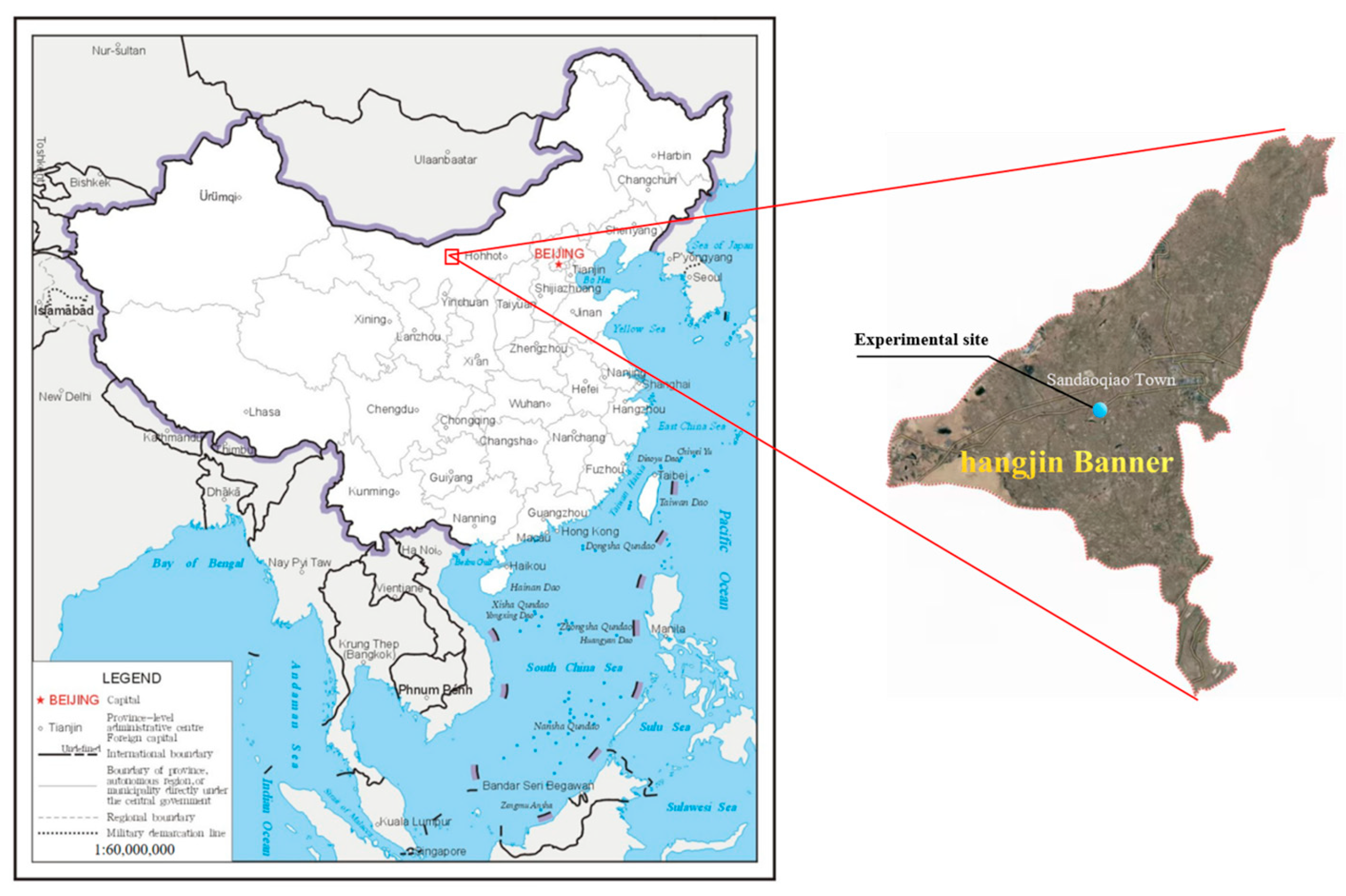
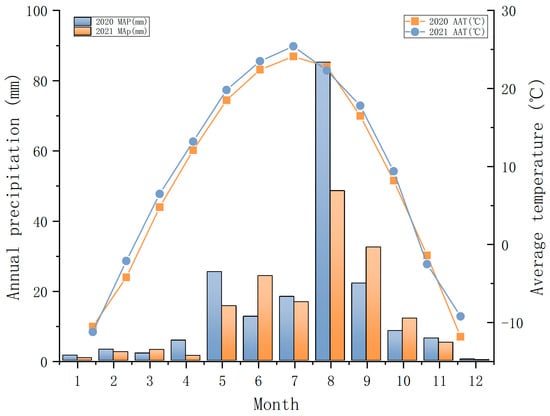
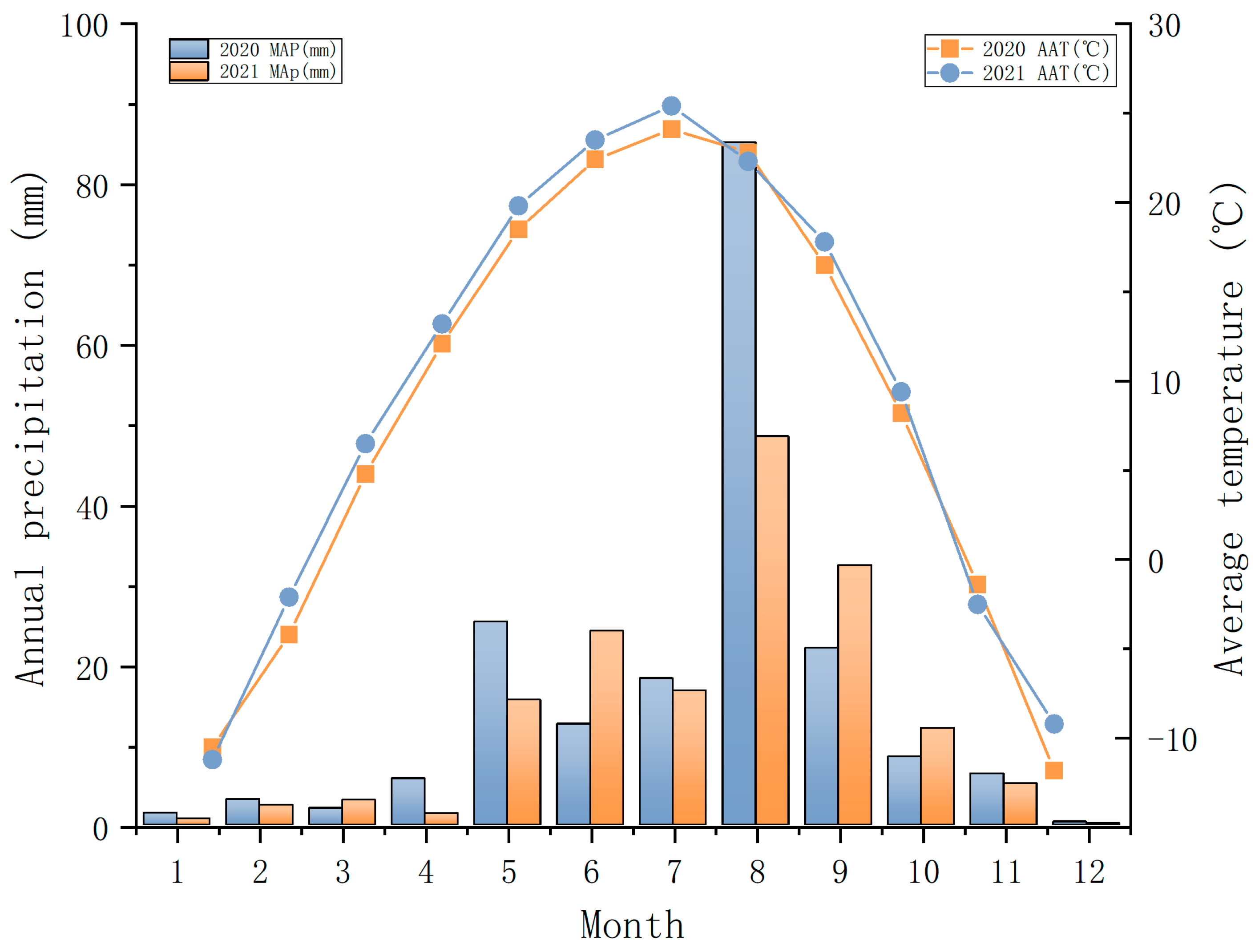
The current study conducted a field experiment in Sandaoqiao, Hetao Region (Figure 1), Inner Mongolia (106°34′–107°34′ E, 40°26′–41°13′ N) from May to October 2020 and 2021. Hetao Region falls in a mid-temperate continental climate zone with a mean yearly temperature and rainfall of 8.2 °C and 138.2 mm, respectively, and a mean annual frost-free period of 135 days. The total precipitation in 2020 and 2021 was 191.5 mm and 162.8 mm, respectively, concentrated in August and May for 2020 and August and September for 2021, with August being the month of highest precipitation in both years (Figure 2). According to the World Reference Base for Soil Resources (WRB), the soil can be classified as a Gypic (or Salic) Solonchak (Sodic). Table 1 summarizes the chemical and physical characteristics of soil (0–15 cm) and irrigation water in the experimental site.
Figure 1.
The location of the study area.
Figure 2.
Rainfall and temperature variation chart.
Table 1.
The physical and chemical properties of soil (0–15 cm) and irrigation water.
2.2. Test Materials
Biochar is produced by burning corn stalks at the carbonization temperature of 400 °C for 8 h under hypoxic conditions. The biochar used in the present study was purchased from Liaoning Jinhefu Agricultural Development Co., LTD, Anshan, China. Desulfurized gypsum used in the present study was gypsum waste produced by one of two thermal power plants in Baotou City. The primary component of the gypsum used is CaSO4 · 2H2O. The straw returned to the field in the present study was sunflower straw crushed into particles of 1–3 cm in length. Table 2 summarizes the main chemical characteristics of biochar and desulfurized gypsum used in the present study.
Table 2.
Main chemical properties of the biochar and desulfurized gypsum.
The soil amendments used in this study are readily available locally, with convenient transportation and low logistics costs. According to local market prices, desulfurized gypsum costs approximately 50–80 CNY per ton, straw (after collection and crushing) costs about 100–200 CNY per ton, while biochar is more expensive, priced at around 800–1200 CNY per ton.
From a cost–benefit perspective, both desulfurized gypsum and straw return offer lower material costs per unit area. Combined with their proven soil-improvement and yield-enhancement effects, they present a high cost-effectiveness ratio for widespread adoption. Although biochar requires a significantly higher initial investment, the sustained yield increase and long-term soil improvement benefits can gradually amortize its cost over multiple growing seasons. Overall, desulfurized gypsum and straw return demonstrate greater cost advantages in large-scale applications.
2.3. Experimental Design
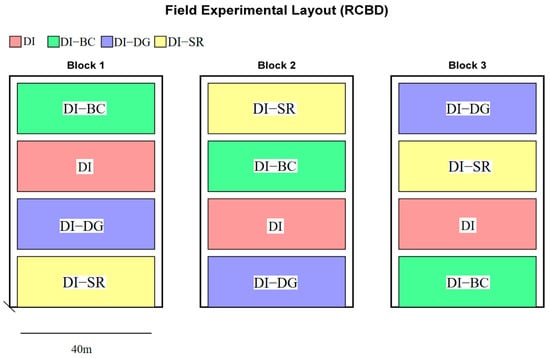
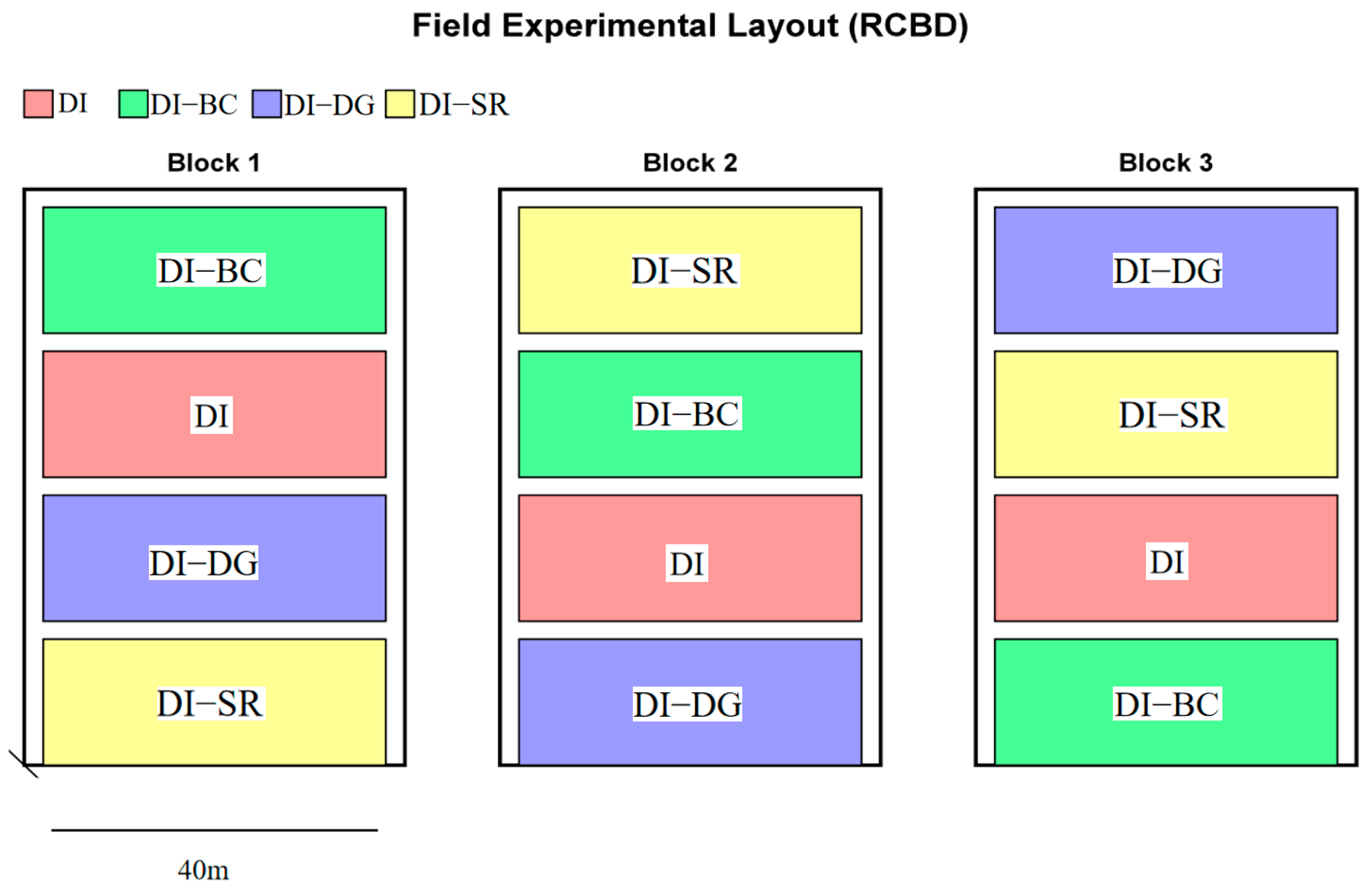
The present study used the following soil remediation treatments: (1) drip irrigation alone (DI); (2) drip irrigation coupled with biochar (DI–BC); (3) drip irrigation coupled with desulfurized gypsum (DI–DG); (4) drip irrigation coupled with straw returning (DI–SR). Each treatment consisted of three replicates for a total of 12 experimental plots (Figure 3). The area of each experimental plot was 1000 m2 (25 m × 40 m).
Figure 3.
Experimental site design diagram.
To prevent lateral movement of irrigation water and salts between adjacent plots, each plot was isolated by constructing raised soil bunds (approximately 30 cm in height and 100 cm in width at the base) around the perimeter. The experiment adopts a randomized block design, with a total of three blocks set up. Within each block, the four treatments were randomly assigned to the four plots.
Plots were covered with plastic film before sunflower sowing (T902). Plant sowing density was 3.3 × 10⁴ plants·ha−1. Drip irrigation was conducted 8 times over the growth period, using an irrigation volume of 200 m3·ha−1 each time. Basal fertilization was conducted using rotary tillage after spreading. The top dressing of fertilizer was dissolved into the soil during drip irrigation. Table 3 provides an overview of the experimental procedure followed in the present study. Soil amendments were applied to the surface soil mixed at a depth of 0–15 cm before sowing. The biochar, desulfurized gypsum, and straw application rates were 22.5, 45, and 22.5 t·ha−1, respectively. The optimal application of biochar in saline–alkali soil (1%) was determined based on the three-year field experiment by Liang et al. [17]. Considering the experience gained in saline–alkali soil improvement projects in this region, the final application of biochar implemented was 1% of the weight of the 0–15 cm soil layer, which was 22.5 t·ha−1. According to Mao et al. [3], the application rate of desulfurized gypsum was calculated based on the soil’s initial exchangeable sodium (Na+) and magnesium (Mg2+) contents:
Table 3.
The dates of sowing, harvesting, and fertilization, and fertilizer application rates in 2020 and 2021.
Instructions for calculating application rate: The above calculation identified the application of desulfurized gypsum to be 44.23 t·ha−1, rounded to 45 t·ha−1 for the convenience of specific operations. The return of straw to the field was determined according to the average sunflower straw yield in the experimental site over many years. All harvested sunflower stalks were crushed and returned to the field at an annual application rate of 22.5 t·ha−1.
The agricultural-grade flue gas desulfurization (FGD) gypsum selected for this study is a well-established commercial product. Its heavy metal concentrations (Hg, As, Cd, Pb, and Cr) are strictly maintained within the mandatory national limits (GB/T 37785-2019) [18]. The safety assessment of the product complies with the Soil Environmental Quality Standard of China (GB 15618-2018) [19], ensuring its environmental friendliness in agricultural applications.
2.4. Soil Sampling and Chemical Analysis
After each irrigation, soil samples were collected at 0–15 cm, 15–30 cm, and 30–50 cm to determine soil water content (SWC). The SWC sampling was conducted within 24 h after each of the 8 irrigation events during the growing season in both 2020 and 2021. After harvesting sunflowers, three soil samples were taken at the same three different depths under mulch from each plot using a 5 cm diameter ring knife for post-harvest soil chemical analysis. This harvest-time sampling was conducted once per year, specifically in mid-October 2020 (following the 11 October harvest) and early October 2021 (following the 5 October harvest).
A 1:5 soil-to-water extract was prepared from the air-dried and sieved (<2 mm) post-harvest samples. Deionized water was added to the soil at a ratio of 1:5. The mixture was stirred vigorously for 30 min and then allowed to settle. The pH and electrical conductivity of the supernatant were measured directly using an FE-20 digital pH/EC meter (Shanghai Mettler-Toledo International Trading Co., Ltd., Shanghai, China). The extract was then filtered. Soluble cation concentrations [magnesium (Mg2+), calcium (Ca2+), and sodium (Na+)] were measured with a Prodigy-7 inductively coupled plasma atomic emission spectrometer (ICP-AES, Leeman China Co. Ltd., Beijing, China). Soluble anion sulfate (SO42−) concentrations were measured using an ICS-1000 ion chromatograph (Metrohm China Co. Ltd., Hongkong, China). The present study calculated the SAR using the cation concentrations obtained from the 1:5 soil-to-water extract.
2.5. Determination of Sunflower Yield
At crop maturity, the number of sunflower plants and missing plants in each plot was recorded. From each of the three replicate plots per treatment, 15 representative sunflower plants were sampled, after which they were threshed and dried to determine dry weight as yield per unit area. yield per unit area based on the recorded plant density. To assess the representativeness of this sampling method, we compared the plant size and head diameter of sampled plants with the overall plot average and found no significant difference (p > 0.05), indicating the selected plants were representative of the plot.
2.6. Statistical Analysis
All data were analyzed using analysis of variance (ANOVA). All statistical assessments were conducted in SPSS (v.16.0, SPSS Inc., Chicago, IL, USA). Assessment of residuals of calculated and measured traits showed that the data were normally distributed. The least significant difference (LSD) test was used to analyze differences among the treatment means, with p < 0.05 considered significantly different.
3. Results and Analysis
3.1. Soil Water Content
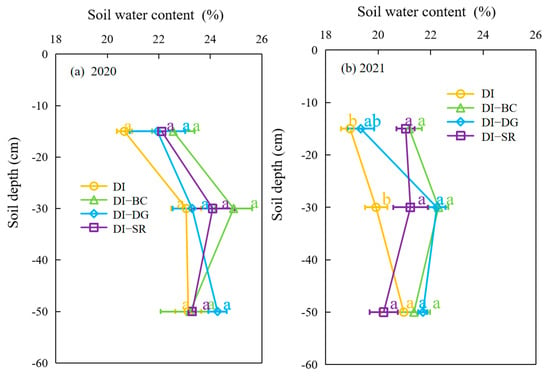
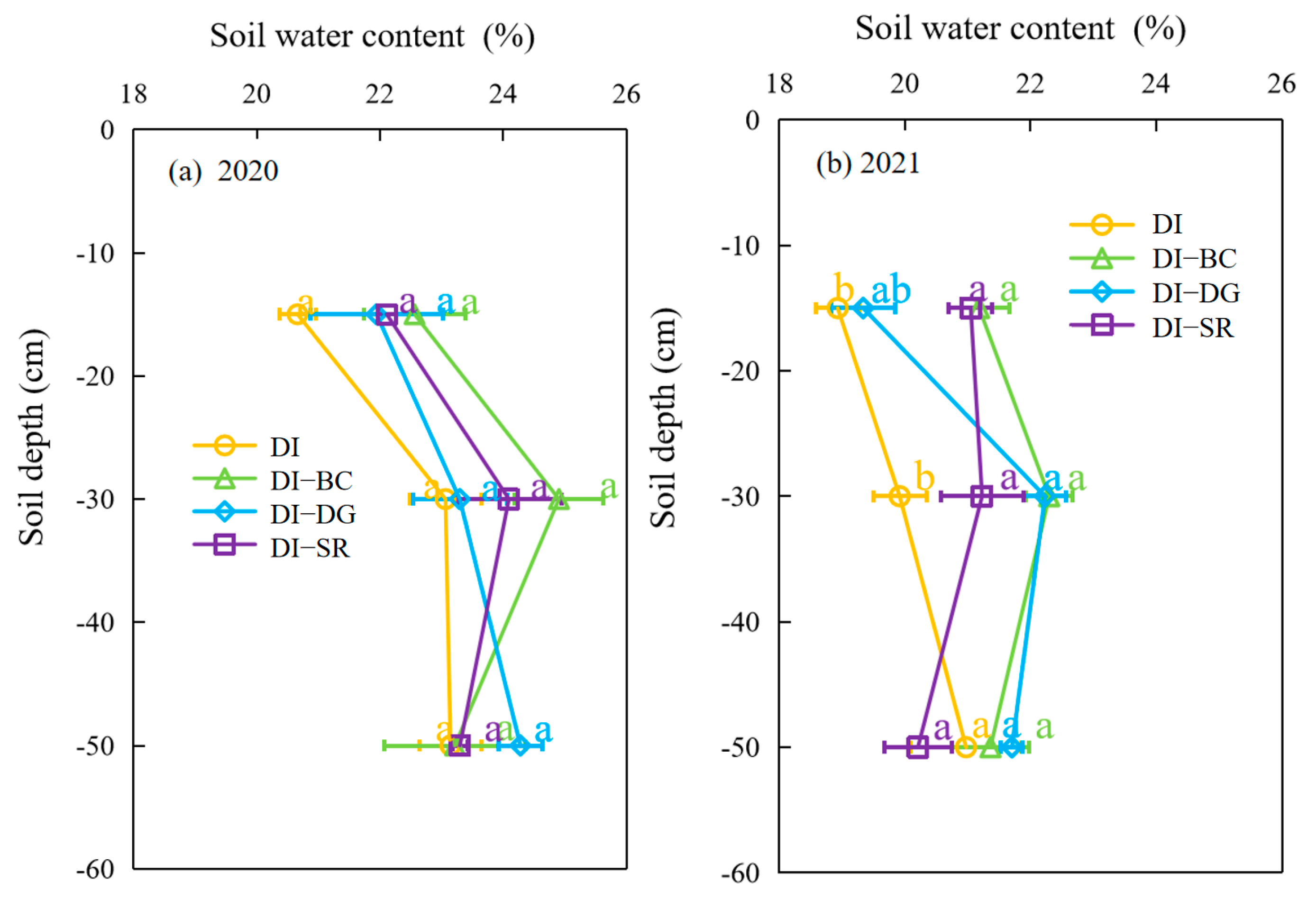
Figure 4 shows the SWC of each treatment during the crop growth period. The SWC of each treatment showed a rise followed by a fall with increasing soil depth. While no significant difference in SWC between all treatments in 2020 was observed, SWC increased in the biochar and straw application treatments by the second year. In 2021, the SWC of the 0–30 cm soil layer under the DI–BC and DI–SR treatments significantly exceeded that under the DI treatment by 11.9% and 8.8%, respectively. This observation could be attributed to the abundant pore structure and surface hydrophilic polar functional groups of biochar, which can effectively increase soil porosity, soil bulk density, and the capacity of soil for water retention.
Figure 4.
Effects of different drip irrigation conditions on soil moisture content in (a) 2020 and (b) 2021. Drip irrigation alone (DI), drip irrigation coupled with biochar (DI–BC), drip irrigation coupled with desulfurized gypsum (DI–DG), and drip irrigation coupled with straw returning (DI–SR). Error bars indicate standard errors of the mean (n = 3) and are inside the plot symbol if invisible. Averages accompanied by different letters are significantly different at p < 0.05.
3.2. Soil EC and pH
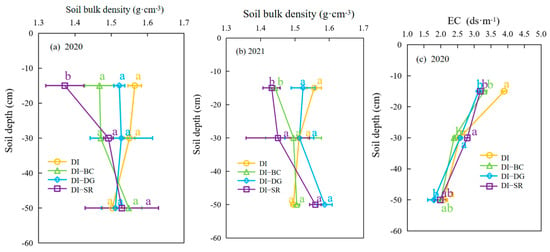
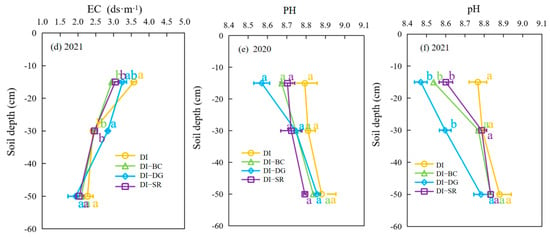
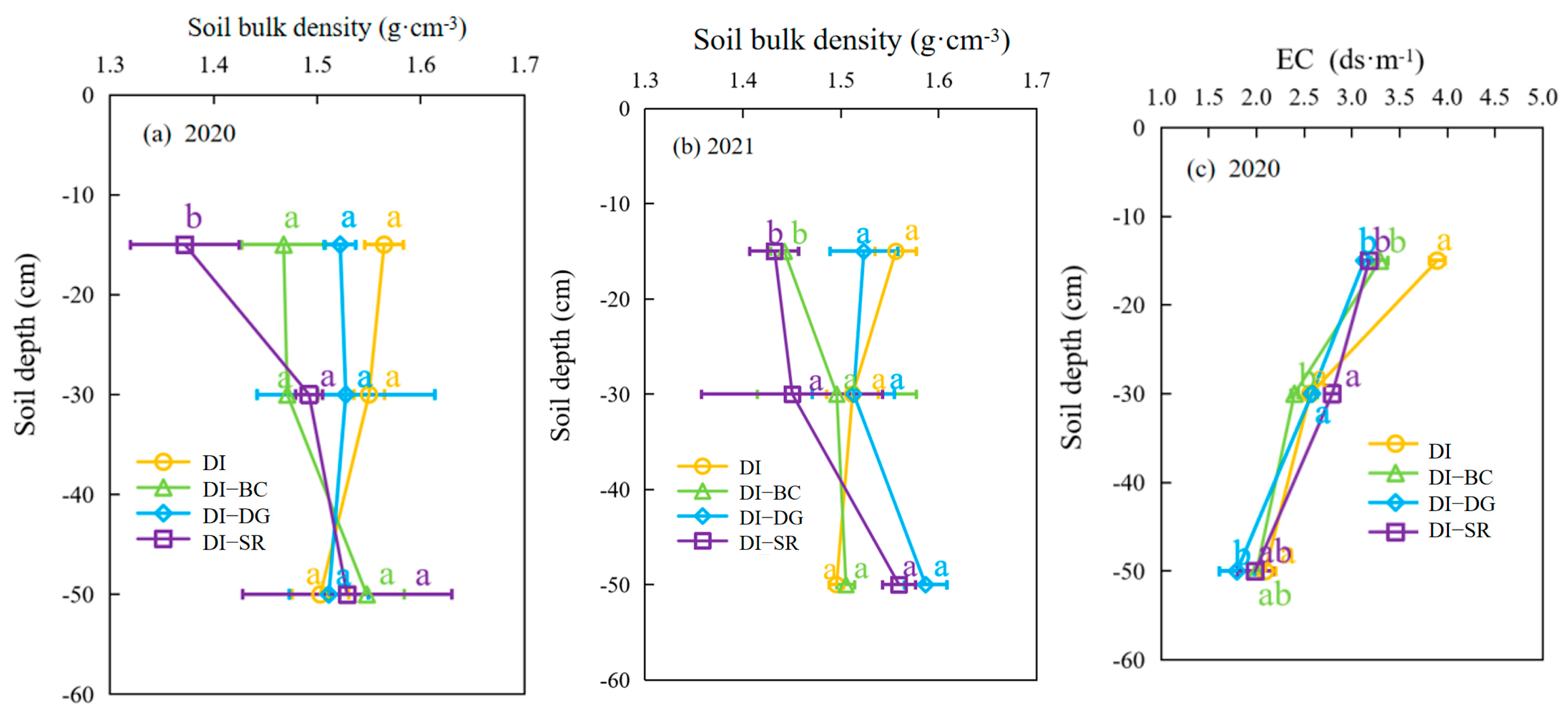
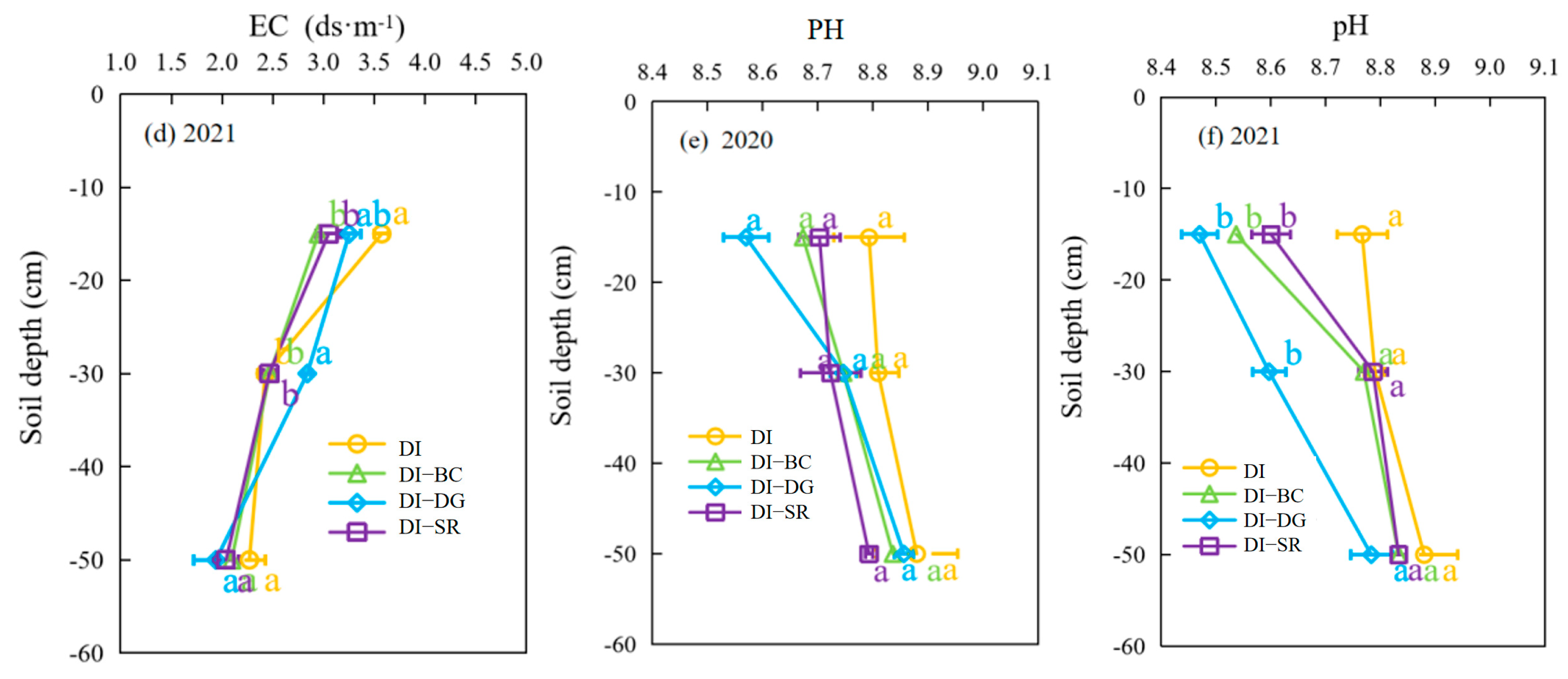
Soil EC is an index of soluble soil salt in solution. As shown in Figure 5, soil EC decreased gradually with increasing soil depth. Both the DI–BC and DI–SR treatments significantly reduced the soil EC of topsoil (0–15 cm). The average 2-year ECs of the DI–BC and DI–SR treatments were significantly below that of the DI treatment by 16.4% and 16.6%, respectively. EC of the DI–DG treatment at 15–30 cm significantly exceeded that of the DI treatment in 2021.
Figure 5.
Effects of irrigation methods on soil bulk density (BD), EC, and pH. (a) Soil bulk density of 2020, (b) soil bulk density of 2021, (c) EC of 2020, (d) EC of 2021, (e) pH of 2020, (f) pH of 2021. Drip irrigation alone (DI), drip irrigation coupled with biochar (DI–BC), drip irrigation coupled with desulfurized gypsum (DI–DG), and drip irrigation coupled with straw returning (DI–SR). Error bars indicate standard errors of the mean (n = 3) and are inside the plot symbol if invisible. Averages accompanied by different letters are significantly different at p < 0.05.
As shown in Figure 5, soil pH increased with increasing soil depth (Figure 5). Ca2+ from biochar and desulfurized gypsum can replace Na+ in soil colloids, thereby reducing soil pH, with the DI–DG treatment having the most significant effect. In 2021, the pH of the soil at a depth of 0–30 cm was significantly reduced by 0.25 compared with that of the DI, whereas those of the DI–BC and DI–SR treatments at a 0–15 cm soil depth were 0.23 and 0.17 lower than that of the DI treatment, respectively.
3.3. Soil Bulk Density
Returning straw to the field reduces soil moisture loss by creating a barrier between the soil surface and the atmosphere, effectively increasing the total porosity and soil moisture content. As shown in Figure 5, the return of straw rapidly reduced soil bulk density, with the 2-year mean soil bulk density of the 0–15 cm soil layer under the DI–SR treatment in 2020–2021 10.1% lower than that under the DI treatment. The application of straw had the most significant effect in decreasing soil bulk density in the second year. In 2021, the DI–BC treatment significantly reduced topsoil (0–15 cm) soil bulk density by 7.3% compared with the DI treatment. In contrast, applying desulfurized gypsum did not impact the two-year averages of SWC and soil bulk density.
3.4. Soil Na+ and SO4− Content
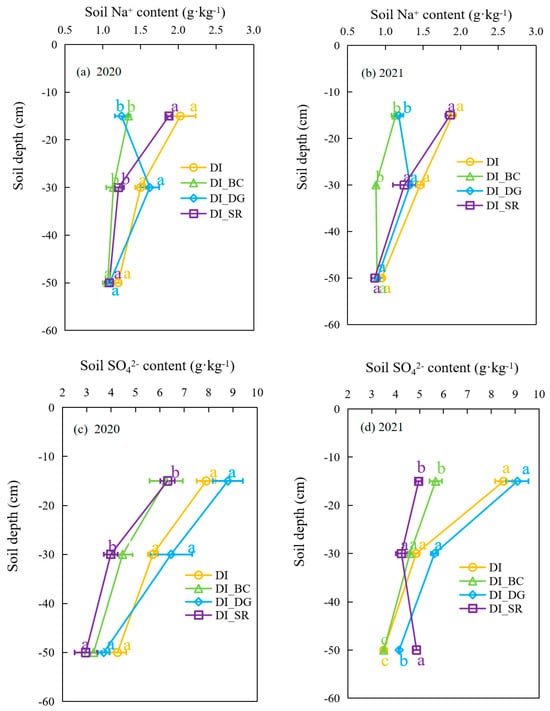
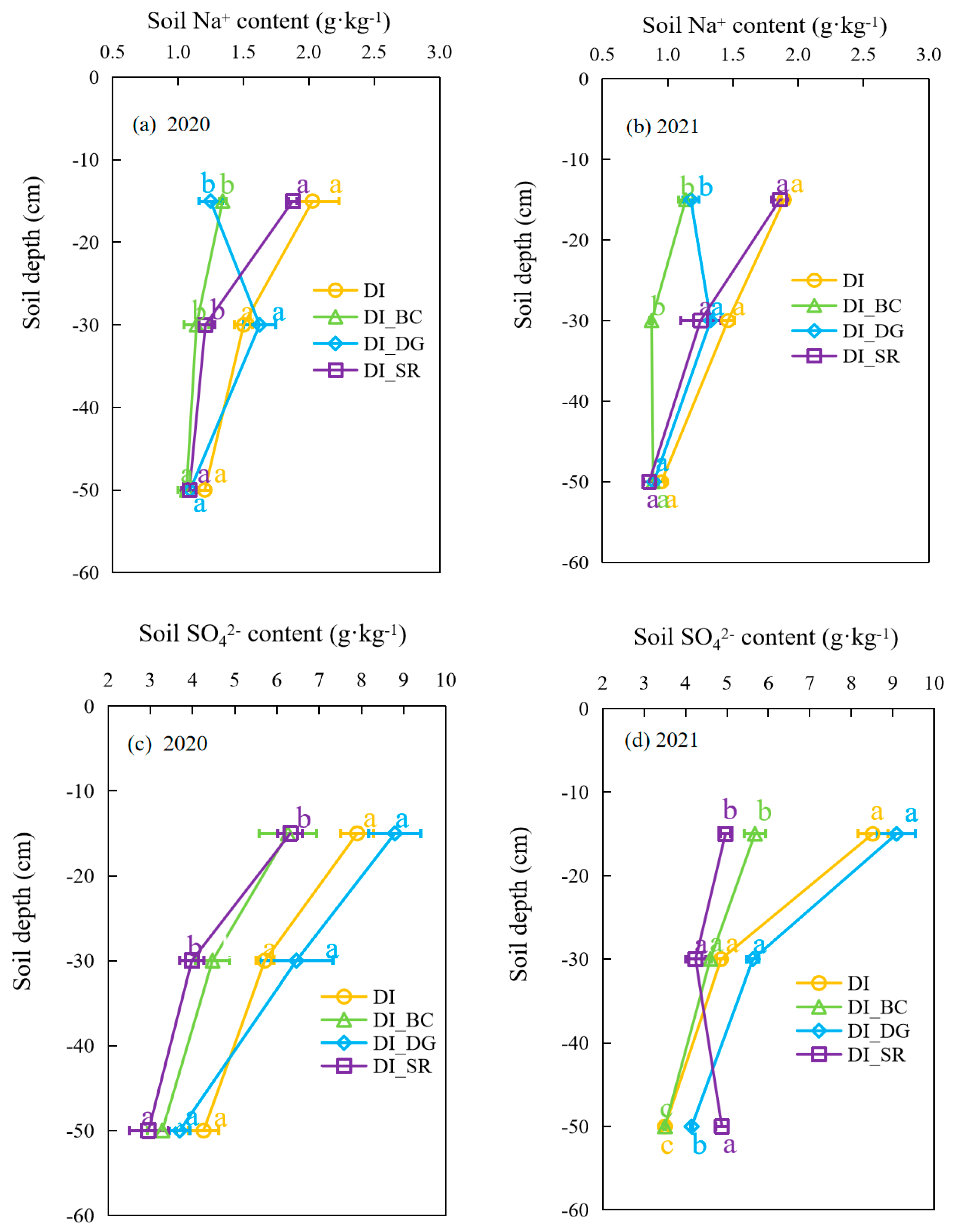
Among all treatments besides DI–DG, soil Na+ decreased with increasing soil depth (Figure 6). The combined drip irrigation and soil improvement measures reduced soil Na+. DI–BC reduced soil Na+ at a depth of 0–30 cm, particularly in 2021. The two-year average soil Na+ of DI–BC was significantly below that of the DI treatment by 34.7%. The DI–DG treatment reduced soil Na+ at a depth of 0–15 cm, with the two-year average soil Na+ lower than that of the DI treatment by 38.1%.
Figure 6.
Effects of irrigation methods on soil Na+ contant and soil SO42− contan. (a) Soil Na+ contant of 2020, (b) soil bulk density of 2021, (c) soil SO42− contan, (d) soil SO42− contan. Drip irrigation alone (DI), drip irrigation coupled with biochar (DI–BC), drip irrigation coupled with desulfurized gypsum (DI–DG), and drip irrigation. Error bars indicate standard errors of the mean (n = 3) and are inside the plot symbol if invisible. Averages accompanied by different letters are significantly different at p < 0.05.
Soil from the experiment conducted in the present study was mainly sulfated and chloride-heavy saline–alkali soil. Soil SO42− decreased with increasing soil depth (Figure 6). DI–DG had the highest SO42− among the soil amendment treatments, whereas DI–BC and DI–SR significantly reduced soil SO42− at a depth of 0–15 cm by 27.3% and 31.3% (2-year average) compared with the DI treatment, respectively.
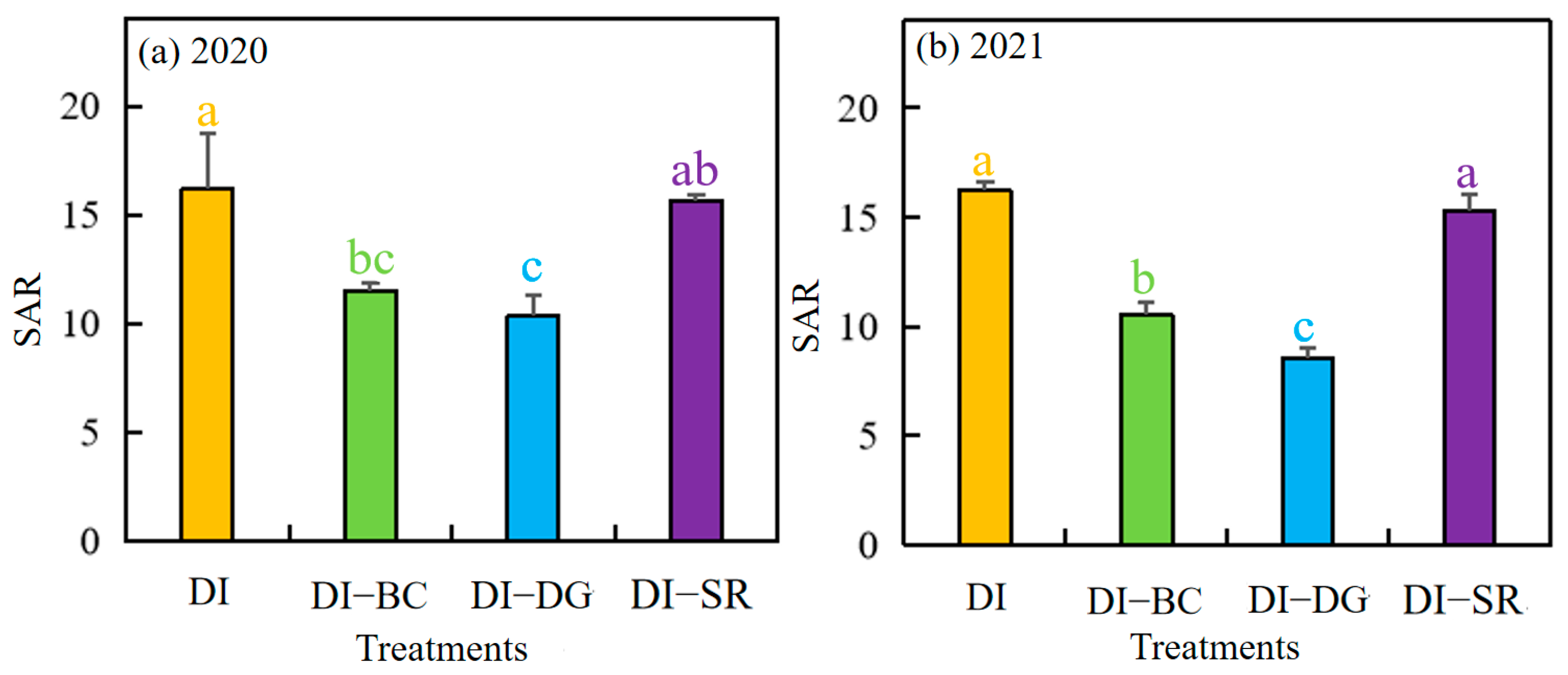
3.5. SAR
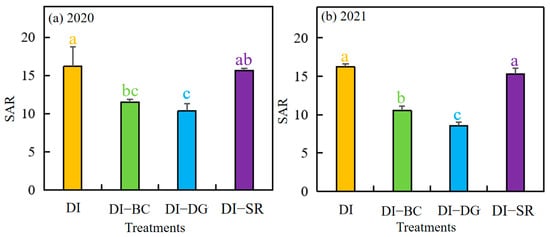
SAR is an important index reflecting the degree of soil salinization and alkalinization, with SAR showing positive relationships with the proportion of Na+ in the soil base cations and the risk of damage to the crop growth environment. The current study only measured SAR at the topsoil (0–15 cm) since soil amelioration measures were mainly applied to the surface soil layer (Figure 7). The DI–DG and DI–BC treatments resulted in significant decreases in SAR. The two-year average SARs decreased by 41.6% and 32.1% compared with those of the DI treatment, respectively. In contrast, the DI–SR treatment had no significant effect on SAR. The above observations could be attributed to the large specific area and developed pore structure of biochar, with its capacity for adsorbing soil salt and Na+, reducing soil Na+ and SAR. Dissolution of desulfurized gypsum resulted in releasing a large quantity of SO42−, with Na+ extracted from soil colloids effectively leached, further reducing soil SAR.
Figure 7.
Effects of irrigation methods on soil SAR in (a) 2020 and (b) 2021. Drip irrigation alone (DI), drip irrigation coupled with biochar (DI–BC), drip irrigation coupled with desulfurized gypsum (DI–DG), and drip irrigation coupled with straw returning (DI–SR). Error bars indicate standard errors of the mean (n = 3) and are inside the plot symbol if invisible. Averages accompanied by different letters are significantly different at p < 0.05.
3.6. Sunflower Yield and Its Correlations with Soil Properties
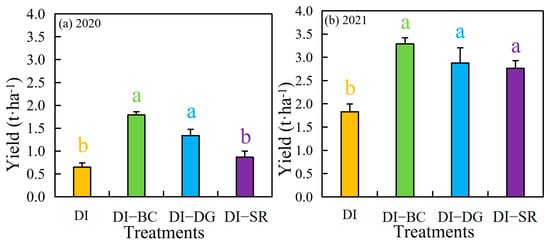
Saturated soil due to heavy rain in August 2020 resulted in a decrease in sunflower yield among the different treatments in 2020 by 1.2–1.9 t·ha−1 compared with those in 2021 (Figure 8). In 2020, the yields of sunflowers treated with DI–BC and DI–DG exceeded those of DI by factors of 2.75 and 2.06, respectively. The yield of DI–SR was not significantly different from that of DI. The sunflower yields of the DI–BC, DI–DG, and DI–SR treatments in 2021 significantly increased by 80.0%, 57.4%, and 51.2%, respectively, compared to those of the DI.
Figure 8.
Effects of irrigation methods on yield in (a) 2020 and (b) 2021. Drip irrigation alone (DI), drip irrigation coupled with biochar (DI–BC), drip irrigation coupled with desulfurized gypsum (DI–DG), and drip irrigation coupled with straw returning (DI–SR). Error bars indicate standard errors of the mean (n = 3) and are inside the plot symbol if invisible. Averages accompanied by different letters are significantly different at p < 0.05.
Besides the DI–BC treatment, sunflower yield was significantly or extremely significantly negatively correlated with soil water content (p < 0.05 or p < 0.01) (Table 4). The yield of sunflowers in DI was negatively correlated with EC (p < 0.05). Although the DI–SR treatment significantly reduced topsoil EC and pH compared to that in DI, there was no significant impact on crop yield, which may be related to the reduction in crop yield in the first year. The yield of sunflower under the DI–BC treatment showed negative correlations with EC, SAR, and Na+ (p< 0.05 or p < 0.01). The DI–DG treatment had the most pronounced effect in reducing surface soil pH and SAR, with these parameters negatively correlated with yield (p< 0.05). The DI–BC treatment reduced EC, SAR, and Na+ of surface soil. There was an increase in the yield of sunflowers in the DI–DG treatment due to reductions in topsoil pH and SAR.
Table 4.
Correlation between sunflower yield and environmental factors and saline–alkali parameters.
4. Discussion
Saline–alkaline soil in the Hetao Irrigation Area leads to compaction, cracking, and poor soil permeability. Biochar can significantly improve the physical and chemical properties of soil and increase soil porosity and soil water-holding capacity. Therefore, biochar is considered a potential condition of saline–alkaline soil [20]. There have been increasing recent studies on the use of biochar for improving saline–alkaline soil, with these studies confirming that biochar can significantly reduce soil EC, Na+, and SAR [21]. Based on a meta-analysis of 99 peer-reviewed papers, Wang found that the addition of biochar resulted in an average decrease of about 18.7% in EC in saline soils, and this effect was more significant under moderate to severe salinization conditions [22]. This result is supported by multiple field experiments, such as the two-year positioning experiment conducted by Zhou et al. in the Hetao Irrigation Area, which showed that rice husk biochar (20 t/ha) prepared at a pyrolysis temperature of 500 °C, combined with drip irrigation measures, can reduce the EC of the 0–20 cm surface soil by 23.4%, reduce SAR by 19.6%, and significantly increase corn yield [23].
The above observations could be attributed to two phenomena: (1) salt ions adsorbed by biochar are released into the soil over time; (2) biochar is rich in alkali metal ions and carbonate substances, which can be leached into the soil over time [24]. The results of the present study found that biochar treatment significantly reduced surface soil EC, pH, SAR, and Na+. On the one hand, drip irrigation technology can effectively prolong the leaching of surface soil salt, leading to Na+ exchange under the action of biochar being discharged from the soil. On the other hand, the changes in soil pH in saline–alkaline soils are greatly influenced by the composition of biochar and the pyrolysis temperature under which the biochar was produced. Tang et al. [25] found that biochar pyrolysis temperature was positively correlated with biochar ash content and soil pH, with biochar produced under a low pyrolysis temperature (<500 °C) weakly alkaline and more suitable for application to saline–observed differences in improvement to saline–alkaline land through the application of biochar can be attributed to two phenomenon: (1) most related studies continue to be laboratory-based pot cultivation experiments in which mechanisms related to the improvement of saline–alkaline soil and water and salt transport significantly differ from those in the field [25,26]; (2) the degree to which biochar can improve saline–alkaline soil is influenced by various factors, including soil type, the composition of biochar, and the pyrolysis temperature and process used to produce biochar [27,28]. Next, we will focus on the mechanism of action of biochar on salt-alkali barriers in long-term fixed field experiments.
Desulphurization gypsum is widely used in saline–alkali soil improvement due to its low cost and abundant resources. In this study, the pH, SAR, and Na+ contents of the topsoil were significantly decreased in the desulphurization gypsum treatment (Figure 5, Figure 6 and Figure 7). Ca2+ in gypsum can replace the Na+ in the soil colloid to form the soil aggregate structure for improving soil permeability [29]. Na+ extracted from the soil colloid was smoothly leached out of the soil, resulting in a relatively low SAR in the soil solution and a reduction in alkali stress on crops, consistent with the results of Mohammad [30]. Although we calculated the theoretical application amount of desulfurized gypsum and used drip irrigation technology to slow down the dissolution rate of desulfurized gypsum, the increase of SO42− in the soil still led to a significant increase in the EC of the 15–30 cm soil layer treated with desulfurized gypsum treatment in 2021 (Figure 5). Numerous studies have confirmed that in the absence of sufficient drainage or deep seepage conditions, salt is often not immediately removed from the entire soil but rather redistributes vertically. Studies have shown that the reduction effect of biochar on EC in saline soil is particularly significant in surface soil, and its effect is significantly regulated by the presence or absence of plants, experimental types, and water management methods. More importantly, the study suggests that the migration of salt is highly dependent on the intensity of water-driven leaching [22]. Similarly, field experiments conducted in the Hetao Irrigation District found that although the surface soil EC significantly decreased, the accumulation trend of anions (such as Cl−, SO42−) was still detected within a certain depth range, especially when the irrigation amount was insufficient to achieve complete leaching [23]. Therefore, while desulfurized gypsum application effectively ameliorates topsoil sodicity (reducing pH, SAR, and Na+), the concurrent increase in subsoil EC underscores the importance of managing application rates and ensuring adequate leaching. Future studies should incorporate drainage monitoring and profile salt stock calculations to optimize gypsum use for sustainable reclamation.
In contrast to the chemical replacement mechanism of gypsum, straw returning functions primarily as a physical barrier to modify soil water dynamics. Salt in soil mainly moves with the movement of groundwater, and straw returning reduces soil water loss by isolating the communication between the soil and atmosphere. In this study, straw application significantly reduced EC and pH in the soil depth of 0–15 cm, especially in the second year, whereas there was no significant effect on soil surface SAR and Na+ content. This may be due to the surface soil mixed with straw in water reduced infiltration rate, and the flow velocity is slow drip irrigation, extended the water stop stored time, in the surface soil layer increased the soil moisture (Figure 1), soil in the salt dissolved fully, and then with water to infiltrate deep in the soil, increase the salt-leaching efficiency [9].
On the other hand, straw application cuts off the continuity of soil capillary tubes and forms an obstacle layer for the upward movement of soil capillary water [31], leading to the reduction in soil water evaporation and thus preventing the salinity of soil solution from rising. In addition, organic acids produced by straw decomposition can neutralize CO32− and HCO3− [32], resulting in the reduction in soil pH (Figure 5), which is consistent with the conclusion by Zhang et al. [33] and Zhao et al. [34]
In conclusion, our study demonstrates that both biochar, desulfurized gypsum, and straw, when combined with drip irrigation, effectively ameliorated saline–alkali soil and increased sunflower yield in the Hetao Irrigation Area. The observed reductions in key salinity indices (EC, Na+, SAR) are consistent with established mechanisms, primarily enhanced salt leaching. For gypsum, an additional contribution from Ca2+–Na+ exchange is supported by the literature.
However, we temper the mechanistic interpretation of these results. Classic diagnostics such as exchangeable sodium percentage (ESP) and saturated hydraulic conductivity (Ksat) were not measured. Therefore, the precise contributions of adsorption versus leaching (for biochar) and exchange versus leaching (for gypsum) cannot be definitively partitioned from our dataset. Future research incorporating these measurements is needed to quantitatively delineate the operative pathways.
In 2020, despite intense rainfall events during the growing season, all three amendment practices (DI–BC, DI–DG, DI–SR) combined with drip irrigation still yielded significantly higher sunflower seed production than drip irrigation alone (DI). This indicates that even under the short-term adverse conditions of soil water saturation, the tested practices provided a stable yield enhancement. The observed reduction in key soil salinity indices (EC, Na+, SAR) by the end of the season further confirmed the fundamental role of these amendments in facilitating salt leaching.
In 2021, under more typical climatic conditions, the benefits of the amendments on both crop yield and soil improvement were more pronounced and consistent. This demonstrates the sustained effectiveness of the practices and highlights the optimized water and salt regulation provided by the drip irrigation system in the absence of extreme rainfall. Notably, the biochar and straw return treatments showed positive effects on soil moisture retention and salinity suppression in both years.
Furthermore, while the present investigation focused on individual amendments, future work could valuably explore combined management strategies—such as drip irrigation coupled with both biochar and gypsum, or with biochar and straw return. Such integrated approaches may synergistically enhance soil structure, nutrient retention, and salt leaching efficiency, potentially offering more robust and sustainable solutions for saline–alkali soil reclamation. Investigating these combinations under field conditions would help identify optimal amendment ratios and provide a stronger scientific basis for tailored rehabilitation protocols in the Hetao region and similar arid-saline agroecosystems.
5. Conclusions
The current study showed that the three soil amendment treatments increased sunflower yield and reduced soil salinity compared to drip irrigation alone. Biochar significantly decreased soil EC, pH, SAR, and Na+ of topsoil (0–15 cm), whereas desulfurized gypsum mainly reduced topsoil pH, SAR, and Na+, and straw returned reduced EC and pH. Among the soil amendment treatments, biochar showed the most significant impact in reducing soil EC, pH, and SAR, particularly after long-term application. The results of the current study showed that a combined application of biochar and drip irrigation can significantly increase crop yield and reduce surface soil salinization and alkalinization in the Hetao irrigated area. Therefore, this study can provide a reference for achieving sustainable agricultural development.
Author Contributions
T.L.: writing—original draft preparation, data curation; Y.W.: writing- data curation, formal analysis; T.B.: writing- original draft, investigation; A.X.: project administration, software; Z.W.: experimental material provision and data analysis; A.E.: writing—original draft preparation, methodology, data curation; L.T.: software, investigation; M.S.: resources, methodology. L.Z.: writing—original draft preparation, investigation, data curation. M.H.: resources, funding acquisition, writing—review and editing. All authors have read and agreed to the published version of the manuscript.
Funding
This work was supported by the National Center of Pratacultural Technology Innovation (under preparation), special fund for innovation platform construction CCPTZX2023B03; the Inner Mongolia Agricultural University High-Level Talent Introduction Project: NDY2022-50; and the Inner Mongolia Agricultural University Basic Research Project (BR22-10-20).
Data Availability Statement
The data used in the manuscript have not been used in any repository; all data are provided within the manuscript.
Conflicts of Interest
Author Lechuan Zhang was employed by the company COFCO Group Co., Ltd. The remaining authors declare that the research was conducted in the absence of any commercial or financial relationships that could be construed as a potential conflict of interest.
References
- Singh, A. Soil Salinity: A Global Threat to Sustainable Development. Soil Use Manag. 2022, 38, 39–67. [Google Scholar] [CrossRef] [Scilit]
- Zhang, C.; Zeng, G.; Huang, D.; Lai, C.; Chen, M.; Cheng, M.; Tang, W.; Tang, L.; Dong, H.; Huang, B.; et al. Biochar for Environmental Management: Mitigating Greenhouse Gas Emissions, Contaminant Treatment, and Potential Negative Impacts. Chem. Eng. J. 2019, 373, 902–922. [Google Scholar] [CrossRef] [Scilit]
- Mao, Y.; Li, X.; Dick, W.A.; Chen, L. Remediation of Saline–Sodic Soil with Flue Gas Desulfurization Gypsum in a Reclaimed Tidal Flat of Southeast China. J. Environ. Sci. 2016, 45, 224–232. [Google Scholar] [CrossRef] [Scilit] [PubMed]
- Singh, A. Soil Salinization Management for Sustainable Development: A Review. J. Environ. Manag. 2021, 277, 111383. [Google Scholar] [CrossRef] [Scilit] [PubMed]
- Saifullah; Dahlawi, S.; Naeem, A.; Rengel, Z.; Naidu, R. Biochar Application for the Remediation of Salt-Affected Soils: Challenges and Opportunities. Sci. Total Environ. 2018, 625, 320–335. [Google Scholar] [CrossRef] [Scilit]
- Temiz, C.; Cayci, G. The Effects of Gypsum and Mulch Applications on Reclamation Parameters and Physical Properties of an Alkali Soil. Env. Monit. Assess. 2018, 190, 347. [Google Scholar] [CrossRef] [Scilit]
- Wang, X.; Wang, J.; Wang, J. Seasonality of Soil Respiration under Gypsum and Straw Amendments in an Arid Saline-Alkali Soil. J. Environ. Manag. 2021, 277, 111494. [Google Scholar] [CrossRef] [Scilit]
- Xiaoqin, S.; Dongli, S.; Yuanhang, F.; Hongde, W.; Lei, G. Three-Dimensional Fractal Characteristics of Soil Pore Structure and Their Relationships with Hydraulic Parameters in Biochar-Amended Saline Soil. Soil Tillage Res. 2021, 205, 104809. [Google Scholar] [CrossRef] [Scilit]
- Zhang, J.; Bai, Z.; Huang, J.; Hussain, S.; Zhao, F.; Zhu, C.; Zhu, L.; Cao, X.; Jin, Q. Biochar Alleviated the Salt Stress of Induced Saline Paddy Soil and Improved the Biochemical Characteristics of Rice Seedlings Differing in Salt Tolerance. Soil Tillage Res. 2019, 195, 104372. [Google Scholar] [CrossRef] [Scilit]
- Yang, Z.; Zhang, Q.; Liang, L.; Zhang, X.; Wang, Y.; Guo, C.; Guo, J. Remediation of Heavily Saline-Sodic Soil with Flue Gas Desulfurization Gypsum in Arid-Inland China. Soil Sci. Plant Nutr. 2018, 64, 526–534. [Google Scholar] [CrossRef] [Scilit]
- Zhao, Y.; Wang, S.; Li, Y.; Zhuo, Y.; Liu, J. Effects of Straw Layer and Flue Gas Desulfurization Gypsum Treatments on Soil Salinity and Sodicity in Relation to Sunflower Yield. Geoderma 2019, 352, 13–21. [Google Scholar] [CrossRef] [Scilit]
- Xie, W.; Chen, Q.; Wu, L.; Yang, H.; Xu, J.; Zhang, Y. Coastal Saline Soil Aggregate Formation and Salt Distribution Are Affected by Straw and Nitrogen Application: A 4-Year Field Study. Soil Tillage Res. 2020, 198, 104535. [Google Scholar] [CrossRef] [Scilit]
- Jiao, Z.; Shi-you, C.U.I.; Xiang, F.Z. Effects of Suaeda glauca planting and straw mulching on soil salinity dynamics and desalination in extremely heavy saline soil of coastal areas. Chin. J. Appl. Ecol./Yingyong Shengtai Xuebao 2018, 29, 1686. [Google Scholar] [CrossRef]
- Tedeschi, A. Irrigated Agriculture on Saline Soils: A Perspective. Agronomy 2020, 10, 1630. [Google Scholar] [CrossRef] [Scilit]
- Ajayi, A.E.; Holthusen, D.; Horn, R. Changes in Microstructural Behaviour and Hydraulic Functions of Biochar Amended Soils. Soil Tillage Res. 2016, 155, 166–175. [Google Scholar] [CrossRef] [Scilit]
- Bhaduri, D.; Saha, A.; Desai, D.; Meena, H.N. Restoration of Carbon and Microbial Activity in Salt-Induced Soil by Application of Peanut Shell Biochar during Short-Term Incubation Study. Chemosphere 2016, 148, 86–98. [Google Scholar] [CrossRef] [Scilit]
- Liang, J.; Li, Y.; Si, B.; Wang, Y.; Chen, X.; Wang, X.; Chen, H.; Wang, H.; Zhang, F.; Bai, Y.; et al. Optimizing Biochar Application to Improve Soil Physical and Hydraulic Properties in Saline-Alkali Soils. Sci. Total Environ. 2021, 771, 144802. [Google Scholar] [CrossRef] [Scilit]
- GB/T 37785-2019; Flue Gas Desulfurization Gypsum for Agricultural Use. State Administration for Market Regulation: Beijing, China, 2019. Available online: https://openstd.samr.gov.cn/bzgk/gb/newGbInfo?hcno=DA9E988C9AF2DAE32227EC562C11816C (accessed on 4 February 2026).
- GB 15618-2018; Soil Environmental Quality—Risk Control Standard for Soil Contamination of Agricultural Land. Ministry of Ecology and Environment of the People’s Republic of China: Beijing, China, 2018. Available online: https://www.mee.gov.cn/ywgz/fgbz/bz/bzwb/trhj/201807/t20180703_446029.shtml (accessed on 4 February 2026).
- Usman, A.R.A.; Al-wabel, M.I.; Ok, Y.S.; Al-harbi, A.; Wahb-allah, M.; El-naggar, A.H.; Ahmad, M.; Al-faraj, A.; Al-omran, A. Conocarpus Biochar Induces Changes in Soil Nutrient Availability and Tomato Growth Under Saline Irrigation. Pedosphere 2016, 26, 27–38. [Google Scholar] [CrossRef] [Scilit]
- Akhtar, S.S.; Andersen, M.N.; Liu, F. Biochar Mitigates Salinity Stress in Potato. J. Agron. Crop Sci. 2015, 201, 368–378. [Google Scholar] [CrossRef] [Scilit]
- Wang, X.; Ding, J.; Han, L.; Tan, J.; Ge, X.; Nan, Q. Biochar Addition Reduces Salinity in Salt-Affected Soils with No Impact on Soil pH: A Meta-Analysis. Geoderma 2024, 443, 116845. [Google Scholar] [CrossRef] [Scilit]
- Zhou, H.; Guo, J.; Liu, H.; Wang, J.; Wang, Y. Effects of Biochar Pyrolysis Temperature and pplication Rate on Saline Soil Quality and Maize Yield. Agronomy 2024, 14, 1529. [Google Scholar] [CrossRef] [Scilit]
- Zhang, Y.; Wang, J.; Feng, Y. The Effects of Biochar Addition on Soil Physicochemical Properties: A Review. CATENA 2021, 202, 105284. [Google Scholar] [CrossRef] [Scilit]
- Tang, J.; Zhang, S.; Zhang, X.; Chen, J.; He, X.; Zhang, Q. Effects of Pyrolysis Temperature on Soil-Plant-Microbe Responses to Solidago canadensis L.-Derived Biochar in Coastal Saline-Alkali Soil. Sci. Total Environ. 2020, 731, 138938. [Google Scholar] [CrossRef] [Scilit] [PubMed]
- Hossain, M.K.; Strezov, V.; Chan, K.Y.; Ziolkowski, A.; Nelson, P.F. Influence of Pyrolysis Temperature on Production and Nutrient Properties of Wastewater Sludge Biochar. J. Environ. Manag. 2011, 92, 223–228. [Google Scholar] [CrossRef] [Scilit]
- Hammer, E.C.; Forstreuter, M.; Rillig, M.C.; Kohler, J. Biochar Increases Arbuscular Mycorrhizal Plant Growth Enhancement and Ameliorates Salinity Stress. Appl. Soil Ecol. 2015, 96, 114–121. [Google Scholar] [CrossRef] [Scilit]
- Xu, G.; Zhang, Y.; Sun, J.; Shao, H. Negative Interactive Effects between Biochar and Phosphorus Fertilization on Phosphorus Availability and Plant Yield in Saline Sodic Soil. Sci. Total Environ. 2016, 568, 910–915. [Google Scholar] [CrossRef] [Scilit]
- Zhang, H.; Lu, C.; Pang, H.; Liu, N.; Zhang, X.; Li, Y. Straw Layer Burial to Alleviate Salt Stress in Silty Loam Soils: Impacts of Straw Forms. J. Integr. Agric. 2020, 19, 265–276. [Google Scholar] [CrossRef] [Scilit]
- Sattari, M.T.; Farkhondeh, A.; Patrick Abraham, J. Estimation of Sodium Adsorption Ratio Indicator Using Data Mining Methods: A Case Study in Urmia Lake Basin, Iran. Env. Sci. Pollut. Res. 2018, 25, 4776–4786. [Google Scholar] [CrossRef] [Scilit]
- Cao, J.; Liu, C.; Zhang, W.; Guo, Y. Effect of Integrating Straw into Agricultural Soils on Soil Infiltration and Evaporation. Water Sci. Technol. 2012, 65, 2213–2218. [Google Scholar] [CrossRef] [Scilit]
- Zhao, Y.; Li, Y.; Wang, S.; Wang, J.; Xu, L. Combined Application of a Straw Layer and Flue Gas Desulphurization Gypsum to Reduce Soil Salinity and Alkalinity. Pedosphere 2020, 30, 226–235. [Google Scholar] [CrossRef] [Scilit]
- Zhang, Y.; Yang, J.; Yao, R.; Wang, X.; Xie, W. Short-Term Effects of Biochar and Gypsum on Soil Hydraulic Properties and Sodicity in a Saline-Alkali Soil. Pedosphere 2020, 30, 694–702. [Google Scholar] [CrossRef] [Scilit]
- Zhao, Y.; Li, Y.; Wang, J.; Pang, H.; Li, Y. Buried Straw Layer plus Plastic Mulching Reduces Soil Salinity and Increases Sunflower Yield in Saline Soils. Soil Tillage Res. 2016, 155, 363–370. [Google Scholar] [CrossRef] [Scilit]

Disclaimer/Publisher’s Note: The statements, opinions and data contained in all publications are solely those of the individual author(s) and contributor(s) and not of MDPI and/or the editor(s). MDPI and/or the editor(s) disclaim responsibility for any injury to people or property resulting from any ideas, methods, instructions or products referred to in the content. |
© 2026 by the authors. Licensee MDPI, Basel, Switzerland. This article is an open access article distributed under the terms and conditions of the Creative Commons Attribution (CC BY) license.