


Abstract
Under high-moisture conditions, maize threshing faces a conflict between effective kernel detachment and mechanical damage due to changes in kernel properties, kernel–cob connections, and structural constraints within the ear. This review examines the mechanical mechanisms of kernel detachment and damage formation, evaluates existing damage assessment methods, and summarizes advances in low-damage threshing technologies. Based on the relationship between the load required for kernel detachment and the damage threshold of kernels, existing technologies are classified into three categories: mechanical action optimization, contact-load regulation, and coordinated regulation of material state and threshing boundaries. The review discusses the effects of threshing-device configurations, operating parameters, flexible contact structures, and pretreatment methods on material motion and load transfer. Existing studies demonstrate that structural and parameter optimization can modify kernel loading conditions, whereas kernel dispersion, ear loosening, and cob fragmentation may alter internal structural constraints. However, experimental validation of pretreatment-assisted threshing remains limited, particularly regarding total kernel damage, threshing completeness, and adaptability across cultivars and moisture conditions. This review identifies the need to coordinate material-state regulation with mechanical threshing and provides a framework for evaluating low-damage threshing technologies under high-moisture conditions.
1. Introduction
1.1. Current Status of Maize Production and Harvest Quality Requirements
Maize (Zea mays L.) is one of the world’s major cereal crops and is widely used for food, animal feed, and industrial processing [1]. In recent years, global maize production has generally increased; however, substantial regional differences remain in production levels and utilization patterns due to variations in growing conditions, climate, and consumption demand [2]. In China, maize is an important food and feed crop, and its kernels are extensively used for animal feed, industrial processing, food, and seed, each of which imposes different requirements on kernel integrity and quality. Therefore, mechanized harvesting must improve operational efficiency while maintaining kernel quality. Threshing is a critical operation affecting maize harvest quality. Mechanical damage, such as kernel breakage and cracking, not only reduces market quality but also increases susceptibility to moisture uptake and microbial infection, thereby accelerating mold development and quality deterioration during storage [3]. Consequently, achieving high threshing efficiency while minimizing kernel damage has become an important objective in the development of mechanized maize harvesting technologies.
1.2. Mechanized Maize Harvesting Modes and Threshing Requirements
Harvesting is a time-sensitive operation in maize production and should be completed within an appropriate harvest window. According to the harvested material and operational process, mechanized maize harvesting can be broadly divided into two modes: ear harvesting and direct grain harvesting [4,5,6,7,8]. Ear harvesting mainly involves ear picking, husk removal, ear collection, and straw management and remains an important mechanized harvesting mode in China. However, the harvested ears require subsequent drying and threshing, increasing the number of postharvest operations and associated production costs. In contrast, direct grain harvesting integrates ear picking, threshing, cleaning, and grain collection into a single field operation, thereby simplifying the harvesting process and improving operational efficiency. However, performing threshing directly in the field imposes greater requirements on threshing performance and adaptability to variations in kernel moisture content. In particular, under high-moisture conditions, the trade-off between complete threshing and low kernel damage becomes more pronounced. Therefore, threshing performance is a critical determinant of harvest quality in direct grain harvesting of maize.
In major maize-producing regions of Europe and North America, relatively mature mechanized systems for direct grain harvesting have been established. Favorable combinations of cultivar maturity, cropping systems, and climatic conditions during the harvest period allow maize to undergo a certain degree of natural field drying, providing more suitable kernel moisture conditions for direct grain harvesting. Accordingly, maize harvesting machinery has progressively developed toward larger-scale, higher-efficiency, and more intelligent systems, with operational monitoring, automatic control, and parameter adjustment increasingly used to improve stability under variable field conditions. In contrast, under high-moisture conditions, substantial changes in kernel mechanical properties and kernel–cob connections make it difficult for conventional threshing parameters and structural configurations to simultaneously achieve complete threshing and low kernel damage. Kernel moisture content has therefore become a critical factor affecting the quality of direct grain harvesting of maize.
Maize is cultivated across a wide range of regions in China, with substantial differences in climatic conditions, cropping systems, and production scales, resulting in strong regional variability in mechanized harvesting practices. In recent years, advances in harvesting machinery have continuously improved the level of mechanized maize harvesting, with a gradual transition from conventional ear harvesting toward direct grain harvesting. However, the wider adoption of direct grain harvesting remains constrained by cultivar characteristics, kernel moisture content at harvest, machinery adaptability, and postharvest handling conditions [9]. At present, ear harvesting remains the predominant harvesting mode in China. Although this approach reduces the difficulty of field harvesting, the harvested ears require subsequent transportation, drying, and secondary threshing, increasing operational steps and production costs. Moreover, this multi-stage harvesting process relies heavily on adequate storage and drying facilities, and adverse weather conditions may increase the risks of quality deterioration and postharvest losses. With the expansion of large-scale farming and changes in the agricultural labor structure, there is an increasing demand to shorten the harvesting chain and improve operational efficiency. Direct grain harvesting can reduce subsequent threshing and material-handling operations; however, its overall economic benefits remain dependent on factors such as operational scale, machinery configuration, labor costs, and grain-drying costs [10]. Therefore, achieving both efficient threshing and low kernel damage under high-moisture conditions has become a key technical challenge limiting the further development of direct grain harvesting of maize.
1.3. Key Challenges in Low-Damage Threshing of High-Moisture Maize
High kernel moisture content is a major factor limiting the quality of direct grain harvesting of maize in some regions. In this review, high-moisture maize primarily refers to maize with a kernel moisture content of approximately 25–35% on a wet basis (w.b.), which is adopted as a working range rather than a universal threshold. In the winter wheat–summer maize rotation areas of the Huang-Huai-Hai region, the harvest period is constrained by the sowing window of the subsequent winter wheat crop, whereas in some parts of Northeast China, low temperatures during the late growing season may restrict natural field drying of maize kernels. Consequently, kernel moisture content at mechanical harvest varies considerably among regions due to differences in cultivar characteristics, maturity, climatic conditions, and cropping systems. These variations alter the mechanical properties of kernels and ear tissues, thereby affecting threshing performance and kernel damage behavior.
Under high-moisture conditions, maize threshing faces an inherent trade-off between threshing completeness and kernel integrity. Threshing quality is generally evaluated using multiple indicators, including kernel breakage rate, unthreshed kernel rate, and grain loss rate. However, differences among studies in experimental materials, definitions of moisture content, and damage assessment methods should be carefully considered when comparing results, and threshold values obtained under different experimental conditions should not be directly compared [11]. When moisture content, feeding rate, and rotor operating parameters are poorly matched, intensified mechanical action may increase kernel breakage and internal cracking. Nevertheless, the extent of kernel damage is jointly influenced by cultivar characteristics, threshing-device configuration, and operating parameters; therefore, high moisture content should not be regarded as inherently equivalent to a high risk of kernel damage [12].
From a mechanical perspective, variations in moisture content simultaneously affect kernel stiffness and deformation behavior, as well as kernel-cob connections and kernel-kernel interactions. Under some high-moisture conditions, kernels exhibit greater plastic deformability, while their local load-bearing capacity and fracture resistance may also change. Meanwhile, successful threshing still requires overcoming both the kernel-cob connection and the collective support provided by neighboring kernels. Consequently, under mechanical loading, kernel damage may occur before complete detachment is achieved. Therefore, the central challenge in threshing high-moisture maize is not simply to increase the intensity of mechanical action, but to control the damage boundary while satisfying the conditions required for kernel detachment, thereby achieving a balance between threshing efficiency and kernel integrity [13].
1.4. Development and Evolution of Low-Damage Maize Threshing Technologies
The development of low-damage maize threshing technologies has involved the progressive expansion of regulation strategies to balance kernel detachment and damage control. Early studies primarily focused on optimizing threshing elements, rotor configurations, and operating parameters to achieve kernel detachment through impact, rubbing, and compression. Subsequently, increasing attention was given to contact modes, load distribution, and material motion, leading to the development of flexible threshing elements, structural modifications, and parameter regulation strategies to reduce localized high-intensity loading. Li et al. [12] reviewed recent developments in low-damage corn threshing technologies and threshing devices, focusing primarily on equipment configurations, operating parameters, and mechanical approaches for improving threshing performance. While their review provides an overview of technological developments, the relationship between internal structural constraints of maize ears and external mechanical loads required for kernel detachment warrants further systematic analysis. In particular, the combined effects of kernel-cob bonding, inter-kernel supporting interactions, and cob structural characteristics on kernel detachment and damage formation require further investigation. In this context, the present review examines low-damage threshing from the perspective of load transfer within the kernel-cob system, linking kernel detachment requirements with damage thresholds. It further discusses how kernel dispersion, ear loosening, and cob structural pretreatment can modify internal material constraints and potentially reduce the mechanical load required for subsequent threshing. Table 1 summarizes the major regulation strategies, including mechanical-action optimization, contact-load regulation, and coordinated regulation of material state and threshing boundaries. These approaches are complementary rather than mutually exclusive and can be applied individually or in combination according to crop conditions and equipment configurations.
Table 1.
Development Pathways and Regulation Strategies of Low-Damage Maize Threshing Technologies.
The development of low-damage maize threshing technologies involves not only the optimization of machine structures and operating parameters but also the effects of cultivar characteristics, kernel moisture content at harvest, and operating conditions. Particularly under high-moisture conditions, simply intensifying mechanical action to improve threshing completeness often increases the risk of kernel damage. Therefore, further advances in low-damage threshing should be based on the structural characteristics of the kernel-cob system and the mechanisms of threshing-load generation, shifting from isolated optimization of mechanical action toward coordinated regulation of material state and the threshing process.
2. Materials and Methods
2.1. Literature Search and Selection
This study adopts a narrative review approach to examine recent advances in low-damage threshing technologies for high-moisture maize. Relevant literature published between 2005 and 2026 was collected from international and Chinese academic journals and scholarly publications, covering research in agricultural engineering, agricultural machinery, crop biomechanics, and grain processing. The search involved combinations of keywords including “high-moisture maize,” “corn threshing,” “kernel damage,” “kernel–cob bonding,” “threshing device,” “mechanical properties,” “discrete element method,” and “ear pretreatment.” Publications were selected based on their relevance to the mechanical properties of maize kernels and cobs, kernel detachment and damage mechanisms, threshing-device design and optimization, numerical simulation, and pretreatment technologies. Priority was given to studies reporting experimental conditions and threshing-performance indicators. Research involving other crops was included only when it provided relevant mechanical principles or methodological references.
2.2. Structure and Biological Characteristics of Maize Ears
The maize ear is primarily composed of the cob, kernels, and kernel-cob connecting tissues, and its structural characteristics directly influence load transfer and kernel damage during threshing. Mature maize ears are generally cylindrical or conical-cylindrical in shape, with kernels regularly arranged circumferentially and axially along the cob and attached to it through basal connecting tissues. Yu et al. [14] systematically investigated structural changes during maize ear development and domestication and reported that kernel arrangement and ear tissue characteristics jointly affect the mechanical response of the ear. During threshing, kernels are constrained not only by their connections to the cob but also by contact and supporting interactions among neighboring kernels. Consequently, an intact maize ear exhibits distinct multibody structural characteristics, as shown in Figure 1.
Figure 1.
Development of the maize ear. (A) Photograph and schematic illustration of a mature maize ear; (B) scanning electron microscopy images of a developing maize ear and schematic illustrations of meristem types.
The cob has a heterogeneous, multilayered tissue structure, and its mechanical response is closely related to its internal tissue composition. Zou et al. [15] investigated the microstructure and mechanical properties of maize cobs and found distinct differences in deformation and load-bearing behavior among different cob regions. During threshing, mechanical loads can be transmitted within the ear through kernel-kernel contacts and kernel-cob connections, with the latter directly affecting threshing difficulty. Mechanically, threshing involves overcoming these connection constraints through external loading to induce relative motion between the kernels and cob and ultimately achieve kernel detachment. Fang et al. [16] conducted kernel-cob tensile tests to develop a detachable maize ear model and incorporated connection-force parameters into a discrete element model, demonstrating that kernel-cob bonding characteristics directly affect kernel detachment behavior. However, threshing of an intact ear cannot be regarded simply as the detachment of individual kernels. The compact arrangement and mutual support of neighboring kernels cause loads to be transmitted and redistributed between the kernel assembly and the cob, resulting in pronounced collective mechanical effects. Moisture content further alters the mechanical properties of the maize ear, thereby affecting threshing performance and kernel damage. Mousaviraad et al. [17] and Tekeste et al. investigated the physical properties, mechanical behavior, and dynamic responses of maize kernels at different moisture contents, showing that moisture variations affect kernel stiffness, damping characteristics, and impact response. It should be noted that a lower peak impact force does not necessarily indicate a lower risk of damage, because kernel load-bearing capacity, connection constraints, and repeated loading also contribute to the final extent of damage. Petkevičius et al. [18] compared threshing performance between high- and lower-moisture maize ears and found that moisture conditions influenced kernel damage during threshing. However, because cultivar and operating conditions also differed among the tests, the effects of moisture content should be interpreted in the context of the specific experimental conditions.
In summary, maize threshing is a complex multibody mechanical process governed by kernel material properties, kernel–cob attachment strength, inter-kernel supporting interactions, cob structural characteristics, and moisture conditions. These factors establish the physical boundaries of kernel detachment and damage, determining the mechanical load required to disrupt kernel–cob connections and the load-bearing limit of kernels. In contrast, the safe threshing window refers to the range of machine operating settings that simultaneously satisfy the minimum required threshing efficiency and the maximum acceptable kernel damage level. Therefore, low-damage threshing requires the coordination of material-dependent physical boundaries with equipment operating parameters to achieve effective kernel detachment while maintaining kernel integrity.
2.3. Types and Evaluation Methods of Maize Kernel Damage During Threshing
Threshing damage to maize kernels refers to structural deterioration and quality degradation caused by mechanical loads such as impact, compression, friction, and shear. It includes visible damage, such as kernel breakage, chipping, and surface cracking, as well as hidden damage, including pericarp rupture, internal microcracks, and embryo injury. Such damage compromises kernel structural integrity and may adversely affect storage stability and processing quality. It should be emphasized that kernel breakage represents only one form of mechanical damage, and breakage rate alone cannot adequately characterize internal damage without visible fracture. Therefore, the evaluation of threshing damage should also consider cracking and tissue-level injury. The extent of damage is primarily influenced by loading mode, load intensity, loading position, and repeated loading. Tang et al. [19] combined impact experiments with finite element analysis and classified impact-induced kernel damage into surface damage, localized breakage, and complete fracture, demonstrating that damage patterns are closely associated with internal stress distribution and crack propagation. Owing to the irregular geometry and anisotropic properties of maize kernels, different loading positions produce distinct stress concentrations, resulting in different damage responses at the crown, lateral surface, and basal region under identical impact conditions. Hidden damage generated during threshing may not immediately manifest as visible breakage but can subsequently impair kernel quality. Gu et al. [20] found that mechanical threshing damage reduced seed germination and seedling growth, with embryo injury having a particularly pronounced effect on seed quality. Thus, breakage rate alone is insufficient to comprehensively characterize kernel damage. Current indicators for evaluating threshing-induced kernel damage can be divided into direct physical damage measurements and indirect indicators of tissue injury and functional deterioration. Direct measurements include the mass fraction of broken kernels and the proportion of cracked kernels by count, which quantify visible structural damage from different perspectives. The former reflects the mass-based severity of kernel breakage, whereas the latter describes the frequency of cracking among examined kernels. Additional structural assessments, such as pericarp rupture, internal cracking, and embryo injury, provide information on damage that may not be reflected by conventional breakage measurements. In contrast, electrical conductivity and germination-related indicators are indirect measures of the physiological consequences of mechanical damage. Increased electrical conductivity reflects electrolyte leakage associated with impaired cell membrane integrity, while germination rate and seed vigor indicate the effects of damage on seed viability and subsequent growth. The relevance of these indicators depends on the intended use of maize: visible breakage and cracking are important for food and feed quality, whereas germination and vigor are particularly important for seed maize. Therefore, damage evaluation should combine appropriate indicators according to the intended application rather than rely on a single measurement.
In summary, the evaluation of maize kernel damage during threshing should evolve from reliance on a single breakage indicator toward a comprehensive multiscale assessment that integrates changes in kernel morphology, internal structure, and functional quality.
2.4. Evaluation and Testing Methods for Maize Kernel Damage During Threshing
The assessment of threshing-induced damage to maize kernels has gradually evolved from conventional manual evaluation toward multiscale and intelligent detection. Different methods target macroscopic breakage, surface cracking, internal structural damage, and physiological quality changes, with varying detection accuracy, efficiency, and applicability. Therefore, appropriate detection methods should be selected according to the type of damage and evaluation objective. The principal methods and their characteristics are summarized in Table 2.
Table 2.
Methods and Characteristics for Evaluating Threshing-Induced Damage to Maize Kernels.
Mass-based evaluation of kernel breakage remains a commonly used direct method in agricultural machinery testing. Broken kernels are separated through sieving and manual classification, and their mass fraction relative to the total kernel mass is calculated to evaluate visible breakage [21]. Cracked-kernel proportion by count provides a complementary indicator of the frequency of visible cracking. However, both measurements have limited ability to identify internal structural damage without obvious external manifestations. Staining methods can reveal surface cracks and minor structural injuries, although sample preparation and manual assessment limit their suitability for continuous online detection. Electrical conductivity and germination tests provide indirect assessments of the physiological consequences of mechanical damage. Mechanical injury to cell membranes increases electrolyte leakage during soaking, resulting in higher electrical conductivity. Goneli et al. [22] reported an increase in electrical conductivity with increasing mechanical impact severity, supporting its use as an indicator of tissue injury. Germination rate, seed vigor, and seedling growth provide further evidence of the functional consequences of damage and are particularly relevant to seed maize. In contrast, for food and feed maize, evaluation generally places greater emphasis on visible breakage, cracking, and the resulting effects on product quality and storage stability. These physiological tests are therefore complementary to, rather than substitutes for, direct measurements of kernel damage. In recent years, machine vision and spectroscopic techniques have provided new approaches for the rapid detection of maize kernel damage. Huang et al. [23] combined hyperspectral imaging with deep learning to automatically identify intact, broken, and cracked kernels, demonstrating considerable potential for rapid and nondestructive damage detection. However, the robustness of these methods across different cultivars, moisture contents, and image acquisition conditions requires further validation. In addition to experimental detection methods, numerical simulation has increasingly been applied to investigate the mechanisms of threshing-induced damage.
In summary, the evaluation of maize threshing damage is evolving from reliance on a single breakage indicator toward comprehensive multiscale assessment. For commercial maize, evaluation primarily focuses on kernel breakage and visible damage, whereas for high-moisture maize, greater attention should also be given to hidden damage such as internal cracking. For seed maize, physiological indicators, including germination rate and seed vigor, should be further incorporated. Therefore, establishing a multilevel evaluation framework encompassing macroscopic damage, internal structural damage, and quality changes is essential for accurately assessing the performance of low-damage maize threshing technologies.
3. Formation Mechanisms of Maize Kernel Damage During Threshing
3.1. Principal Threshing Mechanisms of Maize
Maize threshing is a process in which mechanical actions overcome kernel–cob connections and inter-kernel constraints to detach kernels from the ear, primarily through impact, rubbing, compression, and shear. Impact promotes kernel detachment through transient loading, but excessive loads can readily induce cracking and breakage. Rubbing progressively disrupts the connecting tissues through frictional and tangential forces generated by relative motion, reducing the intensity of individual impacts; however, prolonged contact and repeated friction may increase the risk of surface damage. Appropriate compression and shear facilitate the failure of connecting tissues, whereas excessive localized loads may also cause kernel damage. In practical threshing processes, these mechanical actions are generally coupled, and their loading modes and intensities are jointly affected by threshing-device configuration, threshing elements, rotor speed, threshing clearance, and material motion. Therefore, threshing-induced kernel damage essentially results from the dynamic balance between the mechanical load required for kernel detachment and the structural load-bearing capacity of the kernel. Understanding load transfer within the kernel-cob system under different mechanical actions is fundamental to elucidating the mechanisms of threshing-induced damage.
3.2. Typical Maize Threshing Devices: Structures and Characteristics
Maize threshing devices influence kernel loading characteristics and cumulative damage by altering ear trajectories, contact modes, and duration of mechanical action. Current maize threshing systems mainly include tangential-flow, axial-flow, and tangential–axial-flow configurations. Although these systems achieve kernel detachment through combinations of impact, rubbing, compression, and shear, differences in material trajectories and loading processes result in distinct threshing performance and damage risks. Their principal structural characteristics and operating performance are summarized in Table 3.
Table 3.
Comparison of Structural Characteristics and Operating Performance of Typical Maize Threshing Devices.
For high-moisture maize threshing, structural optimization has primarily focused on reducing localized loads, improving material motion, and minimizing repeated loading. For example, flexible threshing elements can mitigate transient impacts through contact cushioning, guide structures can regulate material trajectories and residence time, and optimized concave structures can promote timely kernel separation and thereby reduce repeated loading [24]. However, structural optimization alone cannot fully address threshing-induced damage under high-moisture conditions, as its effectiveness is also influenced by kernel mechanical properties, moisture content, feeding rate, and operating parameters. Therefore, the key to low-damage threshing is not simply to reduce the intensity of mechanical action, but to coordinate mechanical loading, material motion, and duration of action while ensuring effective kernel detachment.
3.3. Typical Mechanical Actions During Maize Threshing
After entering the threshing clearance, maize ears continuously interact with the threshing elements, concave, and surrounding material, undergoing coupled mechanical actions including impact, compression, friction, and shear. Impact disrupts kernel-cob connections through transient loading, whereas excessive contact velocity and localized stress can induce cracking and breakage [25]. Compression mainly occurs within the rotor-concave clearance and during compression of the material layer, with the resulting loads influenced by threshing clearance, material filling level, and ear size [26]. Under high-moisture conditions, kernels exhibit increased plastic and viscoelastic deformation, while inter-kernel contact and support cause external loads to be transmitted and redistributed throughout the kernel assembly, thereby altering local loading conditions [27]. Friction and shear promote kernel detachment through ear rotation, relative sliding, and failure of connecting tissues; however, prolonged friction or excessive tangential loading may also cause pericarp rupture and localized damage. Overall, these mechanical actions are coupled and vary dynamically with material motion, while moisture-induced changes in material properties and collective constraints further alter load-transfer pathways. Therefore, low-damage threshing requires appropriate regulation of load distribution and loading modes while ensuring effective kernel detachment, thereby preventing localized loads from exceeding the kernel damage threshold.
3.4. Effects of Moisture Content on the Mechanical Properties of Kernels, Cobs, Kernel Basal Connecting Tissues, and Interfaces
Moisture content is a key factor affecting the mechanical properties and threshing performance of maize ears, as it alters the stiffness, viscoelasticity, and failure behavior of kernels, cobs, and connecting tissues, although these tissues respond differently to changes in moisture content. Therefore, the threshing behavior of high-moisture maize should be evaluated by considering the mechanical responses of the kernels, cob, and connecting tissues together with factors such as cultivar, maturity, and loading conditions. Kernels are the primary components directly subjected to mechanical loads during threshing. As moisture content increases, kernel stiffness and failure load generally decrease, whereas deformability increases, indicating an overall transition from brittle to more ductile behavior. However, failure load, failure energy, and impact resistance do not necessarily exhibit consistent trends; thus, the relationship between moisture content and kernel damage is not simply monotonic and also depends on the loading mode and damage criterion. The cob provides structural support for the kernels and plays an important role in load transfer during threshing. Changes in its moisture state affect its compression, bending, and fracture behavior, thereby altering the support provided to the kernels. Under certain conditions, cob deformation can absorb part of the external load and provide a cushioning effect; however, excessive compression or structural failure may alter ear motion and hinder kernel separation. Therefore, cob mechanical properties cannot be inferred solely from kernel moisture content and should be evaluated based on the moisture state of the cob itself and tests on intact maize ears.
Moreover, the threshing resistance of an intact maize ear is not determined solely by the fracture force of individual connecting tissues, but is also influenced by inter-kernel contact, cob deformation, and the overall structural constraints of the ear. Therefore, reduced local connection strength does not necessarily correspond to a proportional decrease in overall threshing resistance. Under high-moisture conditions, both kernel-cob connection characteristics and structural constraints within the ear should be considered. Overall, moisture content affects threshing not merely by altering kernel or connection strength, but through coupled changes in material properties, connection states, and the overall mechanical response of the ear, which collectively determine kernel detachment and damage behavior. These interactions constitute an important mechanical basis for low-damage threshing of high-moisture maize.
3.5. Mechanisms of Kernel Detachment and Mechanical Damage
Maize threshing is essentially a dynamic process in which kernel detachment competes with mechanical damage. Because kernels are arranged along the outer surface of the cob, mechanical loads generated by rotor elements, the concave, and material-material collisions in conventional threshing devices are generally applied first to the kernel surface and then transmitted inward through kernel deformation, inter-kernel contacts, and kernel-cob connections. This load-transfer pathway of “external loading-internal connection failure” creates an inherent conflict between effective kernel detachment and damage prevention in conventional mechanical threshing and represents a central challenge for low-damage threshing technologies. Therefore, the mechanisms of kernel detachment and damage formation should be analyzed in terms of load-transfer pathways, local stress responses, and the relationship between detachment and damage thresholds.
External mechanical loads must be transmitted through the kernels to the basal connecting tissues, inducing relative displacement between the kernels and cob and ultimately achieving detachment. However, owing to kernel deformation, support from neighboring kernels, and constraints imposed by the cob, part of the input energy is dissipated through kernel deformation and may contribute to internal damage. Localized contact between threshing elements and kernels can also cause stress concentration; when the resulting stress exceeds the kernel load-bearing capacity, surface cracks, internal microcracks, or even breakage may occur. Low-damage threshing therefore requires the applied load to be sufficient for kernel detachment while remaining below the damage threshold. High moisture content alters kernel stiffness, deformation behavior, and fracture resistance while increasing inter-kernel contact deformation and collective constraints, thereby modifying load transmission and redistribution within the ear. Consequently, the connection strength of an individual kernel cannot fully represent the actual threshing resistance of an intact maize ear [28].
When the kernel contact region reaches the damage threshold before the kernel-cob connection is sufficiently disrupted, pericarp rupture, embryo injury, and internal cracking may occur [25]. Repeated loading can further promote microcrack propagation and aggravate kernel damage. Therefore, low-damage threshing should focus not simply on reducing the intensity of mechanical action, but on optimizing load location and loading frequency while regulating kernel-cob constraints to widen the effective threshing window.
4. Structural Optimization and Low-Damage Regulation Technologies for Maize Threshing
4.1. Optimization of Threshing Devices and Rotor Structures
The threshing device is a key component governing kernel loading modes and damage levels during maize threshing. Optimization of rotor configuration, material trajectories, and threshing-space parameters can alter the frequency of mechanical action, material residence time, and load distribution, thereby reducing kernel damage caused by localized overloading and repeated impacts [29,30,31]. Current maize threshing systems mainly include tangential-flow, axial-flow, and tangential–axial-flow configurations (Figure 2), which affect threshing performance differently by altering material transport and mechanical loading processes.
Figure 2.
Classification of Threshing Devices.
In recent years, adjustable threshing structures have received increasing attention for reducing kernel damage in high-moisture maize, including variable-diameter concaves, adjustable threshing clearances, and adaptive adjustment mechanisms. By regulating the threshing space and contact conditions, these structures improve the matching between mechanical action and material properties, thereby reducing localized loads and repeated loading. Overall, optimization of threshing devices is shifting from simply intensifying mechanical action toward coordinated regulation of material motion, load transfer, and duration of action to balance threshing efficiency and kernel integrity.
4.2. Optimization of Threshing Structural Parameters and Low-Damage Regulation Technologies
As the primary components that directly apply mechanical action during maize threshing, threshing devices determine material motion and kernel loading characteristics through their structural configurations, operating parameters, and contact conditions. In recent years, research has primarily focused on structural optimization, operating-parameter matching, flexible contact regulation, and biomimetic damage-reduction technologies. The central objective is to ensure effective kernel detachment while minimizing mechanical damage caused by localized overloading and repeated loading.
4.2.1. Optimization of Threshing Structures and Operating Parameters
The rotor configuration, type of threshing elements, and rotor-concave clearance jointly determine the trajectory and loading process of maize ears within the threshing region. To improve the adaptability of conventional threshing devices to different cultivars and moisture conditions, researchers have investigated variable-diameter rotors, adjustable-clearance mechanisms, and coordinated parameter optimization to better match threshing intensity with material properties. Liu et al. [32] developed a variable-diameter and variable-clearance test bench for seed maize threshing, which improved kernel loading conditions by adjusting the threshing space and achieved a relatively low kernel breakage rate under optimized conditions. Subsequent studies focused on variable-diameter rotors and adaptive adjustment technologies to enable dynamic regulation of threshing clearance through mechanical and hydraulic actuation. In [33], a variable-diameter rotor and an adaptive control method were developed, with the rotor-diameter adjustment mechanism designed based on an Archimedean spiral. To further improve adaptability to complex operating conditions, Chen [34] investigated a rack-actuated variable-diameter threshing rotor to address the limited capability of mechanically driven systems for real-time, continuously variable adjustment of threshing clearance. Building on this approach, Liu et al. [35] developed a hydraulically driven variable-diameter threshing rotor capable of continuous adjustment.
As the direct source of mechanical loading, the type and arrangement of threshing elements have a substantial influence on kernel damage. Common threshing elements include spike teeth, rasp bars, plate teeth, bow teeth, and their combinations. Previous studies have regulated threshing performance under different cultivar and moisture conditions by optimizing element type and arrangement, rotor speed, and concave clearance [36,37,38,39]. However, conventional parameter optimization relies largely on experimental analysis and gives insufficient consideration to kernel–cob structural constraints and collective supporting effects, making it difficult to fundamentally resolve the trade-off between threshing completeness and kernel damage under high-moisture conditions. Some studies have therefore optimized the overall threshing configuration to improve material motion. Liu et al. [40] developed a spiral rubbing-compression threshing device to promote kernel detachment through friction and compression, while Zhang et al. developed a vertical axial-flow device for single-ear maize threshing to improve kernel loading conditions [41]. Yang et al. [42] and Di et al. [43] optimized tangential-flow, transverse axial-flow, and combined rotor configurations, respectively, demonstrating that coordinated regulation of structural and operating parameters can effectively improve threshing performance.
The geometric configurations of threshing devices and rotors directly affect the type and intensity of mechanical loads acting on kernels by altering material-layer distribution, trajectories, residence time, and contact conditions within the threshing region [44,45]. Based on transverse axial-flow, longitudinal axial-flow, and combined threshing configurations, various approaches, including variable-diameter rotors, optimized concave structures, and adjustable threshing clearances, have been developed to regulate material passage and the distribution of threshing intensity along the material path, thereby reducing kernel damage caused by localized overloading and repeated loading [46,47]. However, the effectiveness of these structural modifications depends on specific operating conditions and is jointly influenced by moisture content, cultivar characteristics, feeding conditions, and operating parameters. Therefore, Table 4 summarizes the major technical approaches in terms of their structural regulation principles, mechanisms of action, and applicable conditions.
Table 4.
Comparison of Optimization Strategies and Low-Damage Regulation Effects for Different Maize Threshing Devices.
Overall, structural optimization of threshing devices reduces kernel damage primarily by modifying material trajectories, contact frequency, and mechanical load distribution. However, existing studies remain largely focused on equipment-level parameter optimization, with insufficient consideration of kernel-cob connection states, inter-kernel supporting effects, and material response mechanisms under high-moisture conditions.
4.2.2. Application of Flexible Materials and Biomimetic Technologies in Threshing Systems
Flexible threshing elements modify contact stiffness and load-transfer characteristics through elastic deformation. Wang et al. [49] designed a longitudinal axial-flow threshing device with flexible hammer claws and a segmented combined concave, achieving favorable threshing performance under high-moisture conditions. Li [50] developed composite spike teeth using nitrile rubber, natural rubber, and ethylene propylene diene monomer (EPDM) rubber as outer-layer materials. Chen [51] further developed a flexible threshing and separation device combining flexible spike teeth, double-torsion-spring-loaded short rasp bars, and a concave consisting of a hexagonal-mesh screen and scale-patterned rubber threshing rollers. These designs illustrate different approaches to modifying contact conditions through flexible materials and structural configurations. However, their effectiveness should be evaluated in terms of both kernel damage and threshing completeness under comparable material conditions.
In addition to flexible materials, biomimetic technologies provide a new approach to reducing kernel damage during maize threshing. By mimicking the feeding behavior of a chicken beak, Li Xinping’s team found that disrupting inter-kernel supporting interactions could reduce threshing resistance and proposed a biomimetic kernel-dispersion pretreatment method followed by threshing [6,8], as shown in Figure 3a. Yuan et al. [52] developed an ear-loosening technique inspired by manual ear loosening, which improves threshing conditions by weakening the mechanical coupling among kernels, as shown in Figure 3b.
Figure 3.
Models of Maize Kernel Discretization and Ear Loosening.
Hou et al. [53] proposed a reciprocating oscillatory threshing method assisted by cob expansion-cracking and fragmentation pretreatment, based on discrete element simulations and experimental validation. The results showed that cob fragmentation weakened the mechanical coupling among kernels and altered their loading and motion states, thereby reducing the risk of damage associated with conventional impact threshing. This approach provides a basis for shifting low-damage maize threshing from mechanical load regulation toward material-boundary regulation, as shown in Figure 4.
Figure 4.
Maize Ear Fragment Samples Used for Threshing Tests.
In summary, biomimetic designs and approaches such as ear loosening and kernel discretization provide new pathways for low-damage maize threshing by weakening inter-kernel contact constraints and collective supporting effects. However, these methods primarily regulate the collective state of the kernels and have limited effects on the overall internal connection structure of the ear. Further pretreatment of the cob to divide an intact ear into relatively independent fragmented units can alter the constraint state and load-transfer pathways of the kernel-cob system and weaken mechanical coupling among kernels, providing a new direction for low-damage threshing of high-moisture maize.
4.3. Threshing Element Types and Contact Load Regulation
Threshing elements are the direct components through which mechanical loads are applied to maize ears, and their geometry, material properties, and arrangement determine the contact area, loading direction, and load-transfer characteristics during threshing [54]. Different threshing elements produce distinct mechanical actions: spike teeth primarily generate localized impact and combing actions, rasp bars mainly produce continuous rubbing, whereas plate teeth and helical teeth provide both conveying and threshing functions. Therefore, optimization of threshing elements should focus not simply on structural modification, but on regulating the type, intensity, and duration of loads acting on kernels. When comparing the performance of different threshing elements, factors such as rotor speed, threshing clearance, feeding rate, and material moisture content should be considered simultaneously to avoid attributing differences in operating conditions solely to element configuration.
- (1)
- Spike-Tooth Threshing Elements
Spike-tooth elements generally have a relatively small contact area, generating high localized contact stresses during operation and disrupting kernel-cob connections through impact and combing actions. Although these elements provide strong threshing capability, the concentrated loading over a limited contact area can readily cause surface cracking and kernel breakage when impact velocity or local pressure is excessive. Damage-reduction strategies therefore mainly focus on optimizing tooth-tip geometry, element arrangement, and contact area to reduce local stress concentrations and improve kernel loading conditions [55].
- (2)
- Rasp-Bar Threshing Elements
Rasp-bar elements generate rubbing and friction through continuous contact between their working surfaces and maize ears, promoting ear rotation and kernel separation. Compared with concentrated-impact elements, appropriately designed rasp bars can distribute loads over a larger contact area, reduce localized loading intensity, and alter kernel loading directions. However, rasp bars do not inherently result in lower kernel damage, as their performance depends on bar height, arrangement, contact pressure, and material conditions. Excessive rubbing and repeated friction may also cause pericarp abrasion and internal damage.
- (3)
- Plate-Tooth, Helical-Tooth, and Combined Threshing Elements
Plate-tooth and helical-tooth elements generally perform both material conveying and threshing functions. Their working-surface inclination, geometry, and arrangement affect axial conveying velocity, material residence time, and contact frequency. Appropriate designs can improve the continuity of material motion and reduce repeated loading caused by localized material retention. In addition, flexible coatings, elastic structures, and curved contact surfaces can cushion mechanical impacts through increased contact deformation, thereby reducing localized stress concentrations under certain operating conditions [56]. However, flexible structures may also reduce effective threshing intensity; therefore, wear resistance, frictional characteristics, and threshing completeness must be considered simultaneously.
Overall, optimization of threshing elements is shifting from the conventional concept of “increasing mechanical intensity to improve threshing completeness” toward “regulating contact loads to achieve low-damage threshing.” Different element types produce distinct load-transfer characteristics. Future research should therefore integrate the structural characteristics of the kernel–cob system with material responses under high-moisture conditions to achieve precise matching between threshing elements and material states.
4.4. Representative Maize Grain Harvesters and Their Threshing Systems
4.4.1. Representative Foreign Maize Harvesters and Their Threshing Systems
Commercial maize harvesters provide representative examples of threshing-system configurations and equipment design strategies. Differences in farming scale, crop conditions, and harvesting requirements have led to the development of various threshing configurations, including axial-flow and tangential–axial-flow systems, as well as adjustable rotor and clearance mechanisms. These designs illustrate how equipment structure, material conveying, and operating-parameter adjustment can be integrated to meet different harvesting requirements. However, commercial configurations alone do not establish their effectiveness in low-damage threshing of high-moisture maize, which requires validation under specified crop moisture, feeding, and operating conditions.
- (1)
- John Deere X9 1100
As shown in Figure 5, the John Deere X9 1100 (John Deere Harvester Works, East Moline, Illinois, USA) is equipped with a dual-rotor threshing and separation system. According to the manufacturer’s specifications, the machine features two longitudinal rotors, each with a length of 3.51 m and a diameter of 60.1 cm, operating within a speed range of 300–1300 r/min. Its dual-rotor configuration provides a large threshing and separation area and is designed for high-capacity grain harvesting. These specifications describe the machine configuration and do not constitute independent experimental evidence of kernel damage reduction during high-moisture maize threshing.
Figure 5.
John Deere X9 1100 combine harvester and its dual-rotor threshing and separation system. Source: John Deere official technical documentation.
- (2)
- CLAAS LEXION 8900
As shown in Figure 6, the CLAAS LEXION 8900 (CLAAS Selbstfahrende Erntemaschinen GmbH, Harsewinkel, Germany) is equipped with the APS SYNFLOW HYBRID (CLAAS Selbstfahrende Erntemaschinen GmbH, Harsewinkel, Germany) threshing and separation system, which combines tangential threshing with longitudinal axial-flow separation using twin rotors. According to the manufacturer, the accelerated pre-separation system can thresh up to approximately 30% of the grain before the crop reaches the twin rotors. The system also allows independent adjustment of threshing and separation speeds. These specifications describe the manufacturer’s technical design and claimed operating capabilities; they should not be interpreted as independent experimental evidence of reduced kernel damage under high-moisture maize conditions.
Figure 6.
CLAAS LEXION 8900 Combine Harvester and Its Threshing System.
- (3)
- Case IH CX8500
As shown in Figure 7, the Case IH CX8500 (CNH Industrial N.V., Grand Island, Nebraska, USA) employs a conical transition section with guide vanes to accelerate and uniformly feed crop material into the threshing system, thereby improving material-flow continuity and threshing efficiency. The machine is also equipped with the AFS Harvest Command™ system, which automatically adjusts key operating parameters to optimize harvesting performance.
Figure 7.
Case IH CX8500 Combine Harvester and Its Threshing System.
- (4)
- New Holland CR11
As shown in Figure 8, the New Holland CR11 (New Holland Agriculture, Zedelgem, Belgium) adopts a twin longitudinal axial-flow rotor configuration. The dual-rotor arrangement provides continuous axial threshing and separation, while its operating strategies allow threshing performance and grain quality to be adjusted according to harvesting conditions. This design illustrates the application of dual-rotor technology and adaptive operating control in high-capacity combine harvesters.
Figure 8.
New Holland CR11 Combine Harvester and Its Threshing System.
- (5)
- Kubota 4YZL-4A2 (PRO1108-4Y)
As shown in Figure 9, the Kubota 4YZL-4A2 (Kubota Agricultural Machinery (Suzhou) Co., Ltd., Suzhou, Jiangsu, China) adopts a longitudinal axial-flow threshing configuration. Its rotor arrangement provides continuous axial material transportation and threshing, while the feeding and reversing mechanisms facilitate material conveyance and blockage removal. This configuration illustrates the structural integration of axial-flow threshing and feeding regulation.
Figure 9.
Kubota 4YZL-4A2 Combine Harvester and Its Threshing System.
Overall, commercial maize harvesters demonstrate diverse design strategies for material conveying, threshing configuration, and operating-parameter adjustment. These examples provide references for understanding the structural development of maize threshing systems. Nevertheless, their suitability for high-moisture maize and their effectiveness in balancing threshing completeness and kernel damage cannot be established solely from equipment configurations and require dedicated experimental evaluation.
4.4.2. Representative Chinese Maize Harvesting Equipment
- (1)
- Zhonglian (Zhengzhou Zhonglian Harvest Machinery Co., Ltd., Xingyang, Zhengzhou, Henan, China) 4YZL-7K1 Maize Grain Harvester
As shown in Figure 10c, the YTO 4YL-5A2 (YTO Group Corporation, Luoyang, Henan, China) adopts a longitudinal axial-flow threshing rotor measuring 600 × 2670 mm. Its rasp-bar threshing structure provides continuous mechanical interaction between the crop material and the threshing components. This configuration represents a longitudinal axial-flow design for maize grain harvesting.
Figure 10.
Typical Maize Grain Harvesters.
- (2)
- World (Jiangsu World Agriculture Machinery Co., Ltd., Danyang, Jiangsu, China) 4YLZ-5B Maize Grain Harvester
As shown in Figure 10b, the 4YLZ-5B maize grain harvester produced by World Agricultural Machinery Co., Ltd. adopts a 2.9 m-long longitudinal axial-flow threshing structure. Its high operational capacity enables stable and efficient harvesting under high-yield crop conditions. The operating speed can be flexibly adjusted within the range of 1.0–9.0 km/h, making it suitable for maize-growing regions in northern China.
- (3)
- YTO 4YL-5A2 Maize Grain Harvester
As shown in Figure 10c, the Dongfanghong 4YL-5A2 (G4)(First Tractor Company Limited, Luoyang, Henan, China) self-propelled maize grain combine harvester developed by YTO integrates conventional harvesting technologies with advanced direct grain harvesting functions. It adopts a longitudinal axial-flow threshing rotor with dimensions of 600 × 2670 mm. The reinforced rasp-tooth structure represents a design approach for modifying kernel contact conditions and mechanical load transmission during threshing. However, its effectiveness in reducing kernel damage under high-moisture conditions requires further experimental verification. By replacing corresponding working components, the machine can efficiently harvest various crops, including wheat, soybean, and other legume crops. The equipped audible and visual alarm intelligent instrument enables real-time monitoring of machine operating status, improving operational accuracy and stability.
- (4)
- Jindafeng (Shandong Jindafeng Machinery Co., Ltd., Jining, Shandong, China) 4YZL-5C Maize Grain Harvester
As shown in Figure 10d, the 4YZL-5C maize grain harvester manufactured by Shandong Jindafeng supports both ear–stalk harvesting and grain harvesting modes. Its longitudinal axial-flow spike-tooth threshing rotor has dimensions of Φ550 × 3230 mm, providing an enlarged threshing area and extended threshing duration. The machine has an operating speed range of 1.6–9.8 km/h, a field capacity of 0.6–1.4 hm2/h, and a working width of 2930 mm.
The commercial combine configurations described above are summarized primarily from manufacturer specifications and technical documentation. These sources provide information on machine architecture, threshing and separation configurations, and available control technologies, but do not necessarily provide independently verified measurements of kernel damage under high-moisture maize conditions. Therefore, the commercial examples are presented to illustrate equipment design and technological development rather than to establish comparative threshing performance. Quantitative conclusions regarding kernel damage and threshing efficiency should be based on independent laboratory, bench-scale, or field experiments conducted under clearly specified material and operating conditions.
4.5. Applicability and Limitations of Low-Damage Threshing Technologies Based on Mechanical Load Regulation
Structural optimization, parameter matching, and flexible-element regulation can improve load distribution and reduce kernel damage during maize threshing to some extent. However, their practical effectiveness remains constrained by material conditions, operating loads, and equipment reliability.
Reducing local load peaks does not necessarily reduce the total mechanical action required for complete threshing. For ears with softer kernels, stronger kernel-cob attachment, or pronounced collective constraints among kernels, excessive reduction in mechanical intensity may result in insufficient kernel detachment and increased unthreshed losses. Therefore, achieving low-damage threshing requires simultaneous satisfaction of kernel detachment requirements and damage-control objectives, rather than simply defining the applicability of load-regulation technologies according to a specific moisture-content range.
Flexible components can buffer impact loads and reduce localized stress concentrations, but their long-term performance is affected by material wear resistance, fatigue characteristics, and complex operating environments. During actual harvesting, cob fragments, impurities, and prolonged friction may cause wear of flexible coatings and changes in contact stiffness and surface morphology, thereby affecting threshing performance [55]. Therefore, engineering application of flexible threshing structures requires further evaluation under continuous operation, wear conditions, and long-term stability, rather than relying solely on initial experimental results [57]. Furthermore, fixed structural parameters and operating conditions cannot continuously adapt to dynamic variations in ear size, moisture content, and feeding rate under field conditions. Adjustable mechanisms and sensor-based feedback technologies can improve adaptability to changing operating conditions; however, their practical application remains limited by measurement accuracy, response speed, and actuator reliability. The primary role of closed-loop regulation is to reduce deviations from target operating conditions and maintain stable performance, rather than ensuring theoretically optimal operation under all conditions.
The comparison of threshing structures, mechanical loading mechanisms, and ear pretreatment approaches reveals that kernel damage is determined not only by the magnitude of external mechanical loads but also by how these loads are transmitted and redistributed within the kernel-cob system. Conventional threshing elements and operating parameters primarily regulate load input, contact modes, and material motion, whereas flexible structures modify contact responses and loading histories. In contrast, kernel dispersion, ear loosening, and cob structural pretreatment alter internal supporting interactions and load-transfer pathways, potentially reducing the mechanical load required for kernel detachment. These findings indicate that the selection of threshing elements and operating parameters should consider the structural constraints and mechanical properties of maize ears rather than relying solely on external load reduction. Accordingly, coordinating threshing-device design with the internal structural state of maize ears provides a basis for improving threshing completeness while controlling kernel damage. However, the effectiveness of these combined strategies under high-moisture conditions requires systematic validation using comparable material properties, threshing completeness, kernel damage, and energy consumption indicators.
5. Low-Damage Maize Threshing Technologies Based on Modeling Simulation and Intelligent Regulation
Threshing is a complex process involving interactions among kernels, cobs, threshing elements, and material groups. Due to the limited accessibility within the threshing chamber and the high-speed motion of materials, conventional experimental methods cannot fully capture transient loads, stress distributions, and damage evolution during threshing. Modeling and simulation techniques can reveal the mechanical behavior of threshing processes at both microscopic contact and macroscopic motion scales, providing theoretical support for structural optimization and damage control. Meanwhile, intelligent sensing and adaptive control technologies can dynamically adjust threshing parameters according to variations in operating conditions, thereby improving the adaptability of harvesting equipment under complex field environments [58,59].
5.1. Research Progress on Maize Threshing–Separation Theory and Simulation Analysis
Establishing dynamic models of the threshing process is an important approach for analyzing material motion characteristics and mechanical interaction mechanisms. Based on Newton’s laws of motion and energy conservation principles, researchers have developed mathematical models to describe kernel trajectories, loading conditions, and interaction relationships between materials and mechanical components during threshing [60,61,62,63,64]. Early studies mainly focused on material motion behavior by analyzing interactions among threshing elements, rotors, and concaves, and establishing models of material velocity, motion trajectory, and force variation. Dynamic models can further characterize impact forces, contact duration, and energy transfer processes, providing a theoretical basis for evaluating kernel breakage risk [65]. For axial-flow threshing devices, researchers have further divided the threshing chamber into functional regions, including feeding, threshing, and separation zones, and established models of material velocity and motion characteristics within different regions to reveal the effects of rotor structural parameters and operating conditions on threshing performance [66]. In addition, multi-parameter coupling models can simultaneously consider indicators such as threshing loss, unthreshed rate, kernel breakage rate, and separation efficiency, providing theoretical support for comprehensive performance evaluation of threshing systems [67,68].
However, conventional dynamic models generally simplify materials as idealized particles or continuous media, with insufficient consideration of the heterogeneous structure of maize kernels, inter-kernel supporting effects, and moisture-induced changes in material properties. Therefore, for low-damage threshing of high-moisture maize, multi-scale mechanical models should be further integrated to elucidate the relationship between material characteristics and macroscopic damage behavior.
5.2. Application of Discrete Element Method and Finite Element Method in Low-Damage Threshing
The discrete element method (DEM) and finite element method (FEM) have been widely applied to investigate material motion, mechanical interactions, and damage formation during maize threshing. DEM-based studies mainly focus on material trajectories, contact forces, particle distribution, and interactions between maize ears and threshing components [57,69]. These applications provide quantitative information for analyzing threshing performance and evaluating the effects of structural and operating parameters. FEM is primarily used to investigate the stress distribution, deformation, and failure behavior of maize kernels and cobs under different loading conditions. Representative applications of these methods are discussed below.
Wang Yunxia et al. established an active parameter-searching approach based on mathematical regression models. By extracting key dimensional features and image boundaries, they determined the static and rolling friction coefficients between maize kernels in EDEM [70]. Cui Tao et al. optimized kernel-cob bonding parameters through multi-stage experiments and developed a calibration method for kernel–cob connection forces. They established a layered discrete element model of the cob axis and a five-sphere bonded aggregate model of maize ears, as shown in Figure 11 [71].
Figure 11.
Discrete Element Model of Maize Ear.
In the field of kinematic simulation, studies have mainly focused on the complex relative motion between maize ears and threshing devices [72]. Key parameters, including ear trajectories, velocity variations, and contact duration and locations between maize ears and threshing elements, have been investigated to reveal material movement characteristics during threshing [73,74,75].
Finite Element Analysis (FEA) can be used in maize low-damage threshing research to construct mechanical models of kernels and cobs, thereby simulating contact stress distributions and energy transfer mechanisms during threshing [76,77]. FEA can not only analyze the stress and strain distributions of maize ears during threshing, characterize deformation behavior, and determine the separation positions between kernels and cobs [78], but also quantify the effects of different threshing elements on kernel damage and reveal the relationships between moisture content, loading rate, and fracture thresholds [79,80]. Furthermore, FEA enables the analysis of loading responses at different regions of individual kernels and investigation of load variations under kernel supporting conditions [81].
Wang Bo et al. reconstructed a three-dimensional solid model of maize kernels using 3D scanning technology and performed impact finite element analysis using HyperMesh and LS-DYNA. They investigated the dynamic damage process of kernels, quantified variations in contact force, stress, and deformation, and determined the critical damage velocities of kernels under different moisture conditions [82].
In summary, domestic and international researchers have developed new approaches for virtual modeling and simulation of grain threshing processes based on discrete element method, finite element method, and other computational techniques. These methods simplify and visualize the unique characteristics of biological materials such as grains and the complexity of actual threshing processes. However, in practical applications, the viscoelastic behavior of kernels is difficult to accurately describe using conventional elastoplastic models. Moreover, particle contact models often neglect the dynamic variations in interfacial friction coefficients caused by moisture migration, resulting in considerable deviations in fracture threshold prediction.
5.3. Discrete Element and Multi-Scale Mechanical Modeling of the Threshing Process
The discrete element method (DEM) is commonly used to describe the motion and contact interactions of maize ears, kernels, and cobs within the threshing chamber [83], as shown in Figure 12. During modeling, geometric representations and contact models should be selected according to the research objectives. Simplified particle models can be adopted for analyzing material transport behavior, whereas more detailed structural representations and failure criteria are required for investigating connection breakage and kernel damage mechanisms.
Figure 12.
Cloud maps of simulation results obtained using two models. (a) Simulation results using the particle filling model. (b) Simulation results using the particle-core (mandrel) method.
In terms of geometric representation, maize kernels can be approximated using multi-sphere assemblies or other non-spherical particle models. For contact interactions, the Hertz-Mindlin contact model and its bonded extensions can be adopted. It is necessary to distinguish among geometric description, contact constitutive models, and failure criteria: the introduction of bonding elements alone does not necessarily represent plastic or viscoelastic behavior. When investigating hysteresis, energy dissipation, and residual deformation under high-moisture conditions, appropriate constitutive models should be selected, and model parameters should be calibrated through compression, impact, or bonding tests [84].
Coupled modeling approaches can be applied to analyze interactions that cannot be fully represented by a single DEM model. The coupling of multibody dynamics and discrete element method (MBD-DEM) can describe the interaction between moving components and granular materials, providing support for the analysis of flexible or bionic threshing elements. Computational fluid dynamics coupled with the discrete element method (CFD-DEM) is suitable for processes involving significant airflow effects, such as material conveying, threshing, and separation. Reference [85] investigated a rice stripping device, and its methodology can serve as a reference; however, it should not be directly regarded as validated evidence for maize threshing damage mechanisms. The necessity of coupling should be determined based on the actual contribution of airflow, structural deformation, and other factors to the target problem.
5.4. Crop Condition Perception and Intelligent Adaptive Regulation
Dynamic variations in feeding rate, moisture content, and crop morphology under field conditions may cause preset threshing parameters to deviate from their optimal operating ranges [86]. To improve equipment adaptability under complex operating conditions, a closed-loop system integrating “state perception–decision-making–parameter adjustment-state feedback” can be established to achieve dynamic matching of threshing parameters. State perception mainly involves monitoring feeding load, moisture content, and operational quality. Among these, feeding load can be indirectly characterized through signals such as drive-shaft torque, rotational speed, or displacement of floating components; moisture content can be obtained using online sensors; and kernel damage and impurity levels can be monitored using onboard vision systems combined with recognition algorithms.
Based on state perception, empirical models, material mechanical models, machine learning, and feedback control methods can be integrated to achieve multi-objective decision-making among kernel breakage, unthreshed loss, total loss, and throughput [87], thereby dynamically adjusting key parameters such as rotor speed and threshing clearance. Furthermore, the integration of multi-sensor fusion, edge vision, and digital twin technologies can enable threshing state prediction and parameter optimization, promoting the transition of low-damage threshing from fixed-parameter regulation toward dynamic crop-machine adaptation. However, these technologies still face challenges, including sensor errors and transmission delays, interference from complex field environments, real-time computational requirements, cross-variety and cross-condition generalization, as well as actuator response and long-term reliability. Therefore, their practical effectiveness requires further validation through continuous field operations. The main development directions and expected application benefits of digital and intelligent low-damage threshing technologies are summarized in Table 5.
Table 5.
Development Trends and Expected Application Benefits of Intelligent Technologies for Maize Threshing.
6. Low-Damage Threshing Technologies for High-Moisture Maize Based on Threshing Boundary Regulation
The difficulty of threshing high-moisture maize is not only associated with mechanical loading but also influenced by kernel strength, kernel-cob bonding, and structural constraints of the whole ear. Therefore, modifying the original constraint state of maize ears through pretreatment and reducing the load required for kernel detachment provide a new approach for low-damage threshing. Unlike conventional strategies that enhance mechanical actions, threshing boundary regulation aims to promote kernel separation by weakening internal material constraints. Current approaches mainly include kernel dispersion, ear loosening, and cob structural pretreatment. It should be noted that pretreatment may introduce additional damage and energy consumption; therefore, its effectiveness should be comprehensively evaluated in combination with subsequent threshing performance.
6.1. Kernel Dispersion and Ear Loosening Technologies
In intact maize ears, kernels are densely arranged along the cob, resulting in contact constraints and collective support effects among adjacent kernels. These structural characteristics influence the transmission of external loads within the ear and may increase the mechanical intensity required for effective kernel detachment. However, the degree of constraint is jointly affected by kernel arrangement, maturity, moisture status, and contact conditions, and it should not be simply assumed that kernels form completely fixed structural connections [88].
Kernel dispersion and ear loosening technologies modify kernel arrangement and internal constraints through pretreatment, increasing the available movement space of kernels and reducing subsequent threshing loads. Current studies mainly employ bionic rubbing, differential motion, and periodic torsional deformation to induce local ear deformation and relative displacement, thereby weakening inter-kernel contact and structural constraints and improving kernel detachment conditions. However, excessive pretreatment may introduce mechanical damage such as cracks; therefore, an appropriate balance between loosening effectiveness and damage risk is required. The damage-reduction effect should be further verified through methods such as threshing force measurement, high-speed imaging, and contact analysis to determine whether pretreatment can effectively reduce the load requirement and repeated loading during the main threshing process. Additional damage and energy consumption should also be comprehensively evaluated.
6.2. Cob Weakening and Ear Fragmentation Pretreatment Technologies
The cob is the primary supporting structure of the maize ear, and its structural integrity directly affects load transfer and kernel detachment. An intact cob provides structural support to the kernel assembly, which may increase the mechanical load required for kernel separation under high-moisture conditions. Unlike kernel dispersion and ear loosening, which mainly regulate inter-kernel contact relationships, cob weakening and ear fragmentation directly modify cob continuity and load-transfer pathways, potentially reducing the mechanical constraints during subsequent threshing. However, the overall benefit of these pretreatments depends on whether the reduction in subsequent threshing damage exceeds any additional damage introduced during pretreatment. Therefore, both pretreatment-induced damage and subsequent threshing damage should be considered when evaluating their effectiveness. The mechanisms and engineering limitations of different cob structural pretreatment methods are summarized in Table 6.
Table 6.
Comparison of Maize Cob Structural Pretreatment Methods and Damage Regulation Mechanisms.
6.3. Pretreatment-Gentle Threshing Synergistic Mechanism
The core concept of pretreatment–gentle threshing synergy is to integrate ear structural modification with subsequent kernel separation. During pretreatment, the structural constraints of the kernel–cob system are modified to reduce the mechanical intensity required for subsequent threshing. Gentle threshing then facilitates kernel separation under reduced loading conditions, potentially decreasing the risk of kernel damage [20]. However, the reported benefits of pretreatment must be evaluated across the entire process rather than solely during the subsequent threshing stage. Such evaluation should distinguish pretreatment-induced damage from threshing-induced damage and account for unthreshed kernels, kernel losses, energy consumption, and subsequent separation performance. In particular, results obtained from bench-scale experiments cannot by themselves establish the feasibility of continuous field operation. The additional fragments generated during pretreatment may increase the load on the cleaning system, while the energy required for fragmentation and material handling may affect overall operational efficiency. Therefore, the integration of ear pretreatment with continuous threshing and cleaning requires further experimental validation.
Pretreatment methods, including ear splitting, cob expansion cracking, and mechanical loosening, modify cob support, kernel arrangement, and load-transfer pathways, thereby regulating the threshing boundary. During evaluation, structural changes in the cob, kernel attachment conditions, and kernel body damage should be distinguished to clarify the actual mechanisms of different pretreatment approaches. After structural constraints are weakened through pretreatment, subsequent threshing intensity can be reduced by lowering rotor speed, adjusting threshing clearance, or applying flexible threshing elements. However, the optimal parameters should be determined according to moisture content, pretreatment degree, and equipment configuration.
Overall, the pretreatment-gentle threshing synergistic technology provides a new approach for low-damage threshing of high-moisture maize by improving the matching between material state and mechanical action. Future research should investigate load transfer, energy variation, and damage accumulation throughout the entire process and establish integrated regulation strategies suitable for continuous operation.
6.4. Development Trend from Load Control to Threshing Boundary Regulation
From the perspective of the primary regulation targets, low-damage maize threshing technologies can be categorized into three major directions: mechanical action optimization, contact load regulation, and coordinated regulation of material state and threshing boundaries. These technical approaches are not simple substitutes for each other; rather, they represent differentiated regulation strategies developed for different material conditions and operating environments. Their conceptual foundations, regulation focuses, and technical characteristics are summarized in Table 7.
Table 7.
Evolution of Maize Threshing Technologies and Regulation Strategies.
Traditional threshing achieves kernel separation through mechanical-action optimization, including adjustments to threshing elements, rotor configurations, and operating parameters. Although excessive local loading and repeated impacts may increase kernel damage, these optimization strategies remain important for improving threshing performance. Further regulation of contact loads through flexible components, clearance adjustment, and adaptive parameter control can improve kernel loading conditions and reduce localized stress concentrations (Figure 13) [90]. However, the effectiveness of these approaches depends on kernel moisture content, ear structural characteristics, and operating conditions. Under strong structural constraints, simply reducing mechanical intensity may compromise threshing completeness, indicating the need to coordinate external mechanical actions with the internal structural state of maize ears.
Figure 13.
Taper Adjustment Scheme. 1. Splined shaft. 2. Fixed bearing. 3. Front telescopic shaft. 4. Rack. 5. Sliding groove. 6. Rear telescopic shaft. 7. Linear bearing. 8. Movable spline sleeve. 9. Movable bearing.
In parallel with mechanical-action and contact-load regulation, pretreatment technologies provide an additional approach by modifying the structural constraints of maize ears. Pretreatments such as ear splitting, loosening, and cob weakening can alter kernel arrangement and load-transfer pathways, potentially reducing the mechanical load required for subsequent kernel detachment. These methods are particularly relevant when strong internal structural constraints limit the effectiveness of external load regulation alone. Nevertheless, their practical application requires consideration of pretreatment-induced damage, material alignment, conveying stability, energy consumption, and adaptability to subsequent separation and cleaning processes.
Therefore, future development of low-damage threshing technologies for high-moisture maize should focus on the complementary application and coordinated optimization of different regulation strategies. Mechanical-action optimization, contact-load regulation, material-state perception, structural pretreatment, and intelligent parameter matching should be selected and integrated according to crop conditions and equipment requirements. Rather than replacing conventional mechanical regulation, threshing boundary regulation provides an additional means of modifying internal material constraints, which can be combined with optimized mechanical actions to improve kernel detachment and damage control.
7. Comprehensive Evaluation and Future Perspectives of Different Low-Damage Threshing Technologies
Different low-damage threshing technologies primarily regulate contact modes, mechanical loads, operating parameters, and material constraint states. Comprehensive evaluation should compare damage, threshing completeness, loss, energy consumption, and reliability under comparable materials and operating conditions, while clearly defining their applicable boundaries.
7.1. Analysis of Maize Threshing Damage Reduction Methods
Maize threshing is essentially a dynamic balance between effective kernel detachment and structural damage. Reducing threshing damage can be achieved mainly through two pathways: decreasing the load required for kernel separation and improving kernel load-bearing capacity. Current damage-reduction strategies mainly include variety improvement and agronomic regulation, harvest-time optimization, threshing structure and parameter optimization, and ear structure and threshing boundary regulation.
By breeding varieties with higher kernel strength and faster dehydration rates and optimizing cultivation practices, the mechanical properties of kernels at harvest can be improved. Moderately delayed harvesting combined with natural field drying can enhance threshing characteristics; however, its application is restricted by climatic conditions and crop rotation systems. Optimization of threshing structures and operating parameters can improve material movement and load distribution through modifications of threshing elements, rotor structures, threshing clearance, and operating parameters. Nevertheless, its ability to regulate structural constraints within maize ears under high-moisture conditions remains limited.
In contrast, pretreatment methods that modify ear structural states, weaken inter-kernel support, and reduce the overall constraints of the kernel-cob system can decrease the load required for subsequent kernel detachment. This approach provides a new technical pathway for low-damage threshing of high-moisture maize.
7.2. Applicability Comparison of Different Technical Routes
Representative technical approaches include rigid component geometry optimization, flexible or variable-stiffness threshing, adaptive operating parameter regulation, and pretreatment-assisted threshing. These approaches differ in terms of modification cost, maintenance requirements, and adaptability to material variations. A qualitative comparison is provided in Table 8, and the performance obtained under specific experimental conditions should not be directly generalized to all moisture levels and maize varieties.
Table 8.
Comparison of Technical Approaches and Mechanical Regulation Characteristics for Low-Damage Maize Threshing.
7.3. Current Research Challenges
Although considerable progress has been made in threshing structure optimization, operating-parameter regulation, and ear pretreatment, experimental evidence demonstrating the simultaneous achievement of high threshing completeness and low kernel damage remains limited. Existing studies have reported improvements in individual performance indicators, but differences in cultivar, kernel moisture content, moisture-content basis, feeding rate, operating parameters, and damage assessment methods make direct comparisons difficult. In particular, some studies report reduced kernel breakage without providing corresponding unthreshed kernel rates, whereas others demonstrate changes in mechanical responses through numerical simulation without experimentally verifying overall threshing performance. Therefore, the effectiveness of a technical approach should be evaluated using both kernel damage and threshing completeness under clearly defined material and operating conditions.
Several additional challenges remain. First, the cross-condition applicability of numerical models requires improvement because equivalent particle representations and homogeneous material assumptions cannot fully characterize the heterogeneous properties of kernels, cobs, and connecting tissues under different moisture conditions. Second, damage assessment should integrate visible breakage, internal cracking, embryo injury, and subsequent seed quality. Third, the effects of pretreatment on overall harvesting performance require further investigation. Although ear loosening and cob fragmentation may modify internal structural constraints, their effects on total kernel damage, including pretreatment-induced damage, unthreshed kernels, material conveying, separation, and cleaning, have not been sufficiently established. Consequently, further studies should evaluate the entire pretreatment–threshing–separation process under different cultivars and moisture conditions rather than relying solely on improvements in individual performance indicators.
7.4. Development Trends and Future Directions of Low-Damage Maize Threshing Technologies
With the development of maize grain direct harvesting technology, simultaneously achieving complete threshing and low kernel damage under high-moisture conditions remains a major challenge. Moisture variation alters kernel mechanical properties, kernel–cob attachment characteristics, and collective structural constraints, thereby affecting the balance between kernel detachment and damage formation. Future research should therefore focus on coordinating threshing-device configurations, operating parameters, contact-load regulation, and material-state pretreatment. Particular attention should be given to matching these strategies with cultivar characteristics, kernel moisture content, and feeding conditions. The effectiveness of each approach should be evaluated using both kernel damage and incomplete threshing indicators, together with energy consumption and material separation performance. For pretreatment-assisted threshing, the total damage generated during pretreatment and subsequent threshing should be considered. Although structural pretreatment provides a potential means of modifying internal constraints, its applicability to different maize varieties and continuous harvesting conditions requires further experimental verification. Rather than assuming the superiority of a single technical route, future development should emphasize the complementary application of mechanical-action optimization and material-state regulation to establish reliable operating conditions for low-damage threshing.
In response to dynamic variations in field conditions, including feeding rate, ear size, and moisture content, state perception and adjustable threshing mechanisms should be integrated to achieve dynamic matching between crop characteristics and equipment parameters, such as rotor speed and threshing clearance. Meanwhile, pretreatment approaches including ear loosening, kernel dispersion, and cob weakening can modify material constraints and load-transfer pathways. Combined with gentle threshing, these approaches may enable whole-process damage reduction while considering pretreatment-induced damage, energy consumption, conveying performance, and subsequent separation and cleaning loads.
Furthermore, the integration of multi-sensor information, mechanistic models, and data-driven approaches can promote the transition of threshing parameter regulation from empirical adjustment toward intelligent perception and predictive control. Overall, low-damage threshing of high-moisture maize will gradually evolve from mechanical action optimization toward threshing boundary regulation, with further integration of material state regulation, dynamic parameter matching, and intelligent control to achieve coordinated optimization between effective kernel detachment and damage suppression.
Author Contributions
Conceptualization, visualization, G.W.; methodology, software, validation, M.Z. and J.T.; formal analysis, resources, data curation, C.L. and G.W.; investigation, Z.G.; writing—original draft preparation, M.Z. and G.W.; writing—review and editing, J.T. and W.C.; supervision, J.T.; project administration, funding acquisition, W.C.; All authors have read and agreed to the published version of the manuscript.
Funding
This research was supported by the Science and Technology Program of Tibet Autonomous Region (Grant No. XZ202601ZY0114-5), the Science and Technology Projects of the Xizang Autonomous Region, China (Grant Nos. XZ202501YD0001 and XZ202401ZY0024), and the Lhasa Municipal Key R&D Program, China (Grant No. LSKJ202528). We sincerely acknowledge this support.
Institutional Review Board Statement
Not applicable.
Informed Consent Statement
Not applicable.
Data Availability Statement
The data presented in this study are available within the article. Further inquiries can be directed to the corresponding authors.
Conflicts of Interest
The authors declare that they have no known competing financial interests or personal relationships that could have influenced the work reported in this paper.
Abbreviations
The following abbreviations are used in this manuscript:
| EPDM | ethylene propylene diene monomer |
| DEM | the discrete element method |
| FEM | finite element method |
| FEA | finite element analysis |
| MED-DEM | multibody dynamics and discrete element method |
| CFD-DEM | computational fluid dynamics coupled with the discrete element method |
References
- Ranum, P.; Pena-Rosas, J.P.; Garcia-Casal, M.N. Global maize production, utilization, and consumption. Ann. N. Y. Acad. Sci. 2014, 1312, 105–112. [Google Scholar] [CrossRef] [Scilit]
- Erenstein, O.; Jaleta, M.; Sonder, K.; Mottaleb, K.; Prasanna, B.M. Global maize production, consumption and trade: Trends and R&D implications. Food Secur. 2022, 14, 1295–1319. [Google Scholar] [CrossRef] [Scilit]
- Wang, K.; Xie, R.; Ming, B.; Hou, P.; Xue, J.; Li, S. Review of combine harvester losses for maize and influencing factors. Int. J. Agric. Biol. Eng. 2021, 14, 1–10. [Google Scholar] [CrossRef] [Scilit]
- Li, X.; Gao, L. Experimental Study on Breaking Mechanism of Kernel Stem of Corn Seed. Trans. Chin. Soc. Agric. Eng. 2007, 23, 47–51. (In Chinese) [Google Scholar]
- Li, X.; Jie, X.; Zhang, Y.; Li, F.; Gao, L. Detecting and Research on Characteristics and Mechanism of Inner Mechanical Cracks of Corn Seed Kernels. Trans. Chin. Soc. Agric. Mach. 2010, 41, 143–147. [Google Scholar] [CrossRef]
- Li, X.; Ma, L.; Geng, L.; Wang, S.; Pang, J.; Ji, J. Performance Test and Parameter Optimization of Corn Seed Bionic Thresher. Trans. Chin. Soc. Agric. Eng. 2017, 33, 62–69. [Google Scholar] [CrossRef]
- Li, X.; Ma, Y.; Jin, X.; Gao, L. Design and Test of Corn Seed Bionic Thresher. Trans. Chin. Soc. Agric. Mach. 2015, 46, 97–101. [Google Scholar] [CrossRef]
- Li, X.; Wu, K.; Jin, X.; Gao, C.; Gao, L. Analysis on Discrete Process of Kernels Caused by Beak Pecking Corn Ear by Simulating Threshing. Trans. Chin. Soc. Agric. Eng. 2015, 31, 34. [Google Scholar] [CrossRef]
- Zhu, X.; Chi, R.; Du, Y.; Deng, X.; Zhang, Z.; Dong, N. Design and Experiment of Intelligent Control System for Low Loss Threshing of High Moisture Content Corn. Trans. Chin. Soc. Agric. Mach. 2021, 52, 9–18. [Google Scholar] [CrossRef]
- Hou, L.; Wang, K.; Wang, Y.; Li, L.; Ming, B.; Xie, R.; Li, S. In-field harvest loss of mechanically-harvested maize grain and affecting factors in China. Int. J. Agric. Biol. Eng. 2021, 14, 29–37. [Google Scholar] [CrossRef] [Scilit]
- Wang, B.; Lin, Z.; Gao, M.; Zhang, G.; Geng, D.; Shi, Z. Statistical Analysis of Fatigue Damage Life of Corn Kernels. INMATEH Agric. Eng. 2023, 69, 589–596. [Google Scholar] [CrossRef] [Scilit]
- Li, X.P.; Xiong, S.; Geng, L.X.; Ji, J.T. Effect of Moisture Content on the Compressive Properties of Maize Ears. Trans. Chin. Soc. Agric. Eng. 2018, 34, 25–31. (In Chinese) [Google Scholar]
- Wang, G.; Jin, C.; Zhang, M.; Wu, C.; Tang, Q.; Yang, Y. Reducing Grain Damage in Moist Corn Threshing via Corncob Division. Agriculture 2024, 14, 1648. [Google Scholar] [CrossRef] [Scilit]
- Yu, R.; Yu, D.; Li, C.; Shan, H.; Kong, H.; Cheng, J.; Yin, X. The development and domestication of maize ear. J. Syst. Evol. 2026, 64, 425–436. [Google Scholar] [CrossRef] [Scilit]
- Zou, Y.; Fu, J.; Chen, Z.; Ren, L. The effect of microstructure on mechanical properties of corn cob. Micron 2021, 146, 103070. [Google Scholar] [CrossRef] [Scilit]
- Fang, X.; Zhang, J.; Zhao, X.; Zhang, Q.; Zhang, L.; Zhou, D.; Yu, C.; Hu, W.; Wang, H. Maize kernel damage dynamic prediction in threshing through PSO-LSTM and discrete element modelling. Biosyst. Eng. 2024, 242, 179–195. [Google Scholar] [CrossRef] [Scilit]
- Mousaviraad, M.; Tekeste, M.Z. Effect of grain moisture content on physical, mechanical, and bulk dynamic behaviour of maize. Biosyst. Eng. 2020, 195, 186–197. [Google Scholar] [CrossRef] [Scilit]
- Petkevichius, S.; Shpokas, L.; Kutzbach, H.D. Investigation of the maize ear threshing process. Biosyst. Eng. 2008, 99, 532–539. [Google Scholar] [CrossRef] [Scilit]
- Tang, H.; Zhu, G.; Sun, Z.; Xu, C.; Wang, J. Impact damage evolution rules of maize kernel based on FEM. Biosyst. Eng. 2024, 247, 162–174. [Google Scholar] [CrossRef] [Scilit]
- Gu, R.-L.; Huang, R.; Jia, G.-Y.; Yuan, Z.-P.; Ren, L.-S.; Li, L.; Wang, J.-H. Effect of mechanical threshing on damage and vigor of maize seed threshed at different moisture contents. J. Integr. Agric. 2019, 18, 1571–1578. [Google Scholar] [CrossRef] [Scilit]
- Dong, J.; Zhang, D.; Yang, L.; Cui, T.; Zhang, K.; He, X.; Wang, Z.; Jing, M. Discrete element method optimisation of threshing components to reduce maize kernel damage at high moisture content. Biosyst. Eng. 2023, 233, 221–240. [Google Scholar] [CrossRef] [Scilit]
- Goneli, A.L.D.; Corrêa, P.C.; Resende, O.; Neto, S.A.R. Electrical Conductivity for Quality Evaluation of Popcorn Kernels subjected to Mechanical Damage. Biosyst. Eng. 2007, 96, 361–367. [Google Scholar] [CrossRef] [Scilit]
- Huang, H.; Liu, Y.; Zhu, S.; Feng, C.; Zhang, S.; Shi, L.; Sun, T.; Liu, C. Detection of Mechanical Damage in Corn Seeds Using Hyperspectral Imaging and the ResNeSt_E Deep Learning Network. Agriculture 2024, 14, 1780. [Google Scholar] [CrossRef] [Scilit]
- Hou, Y.; Shang, S.; Li, X.; He, X.; Zheng, H.; Dong, T.; Li, X.; Liu, Z.; Yang, S.; Wang, D. Discrete Element Method (Edem) Simulation and Parameter Optimization: Design and Testing of a Low-Loss and High-Efficiency Corn Threshing Device. INMATEH Agric. Eng. 2023, 14, 194–204. [Google Scholar] [CrossRef] [Scilit]
- Yu, Y.; Li, L.; Zhao, J.; Wang, X. Discrete Element Simulation Based on Elastic–Plastic Damping Model of Corn Kernel–Cob Bonding Force for Rotation Speed Optimization of Threshing Component. Processes 2021, 9, 1410. [Google Scholar] [CrossRef] [Scilit]
- Mousaviraad, M.; Tekeste, M.Z. Systematic Calibration and Validation Approach for Discrete Element Method (DEM) Modeling of Corn Under Varying Moisture Contents (MC). J. ASABE 2024, 67, 259–274. [Google Scholar] [CrossRef] [Scilit]
- Li, X.; Du, Y.; Mao, E.; Zhang, Y.a.; Liu, L.; Guo, D. Design and experiment of corn low damage threshing device based on DEM. Int. J. Agric. Biol. Eng. 2023, 16, 55–63. [Google Scholar] [CrossRef] [Scilit]
- Bosilj, P.; Gould, I.; Duckett, T.; Cielniak, G. Estimating soil aggregate size distribution from images using pattern spectra. Biosyst. Eng. 2020, 198, 63–77. [Google Scholar] [CrossRef] [Scilit]
- Wang, G.; Guan, Z.; Mu, S.; Tang, Q.; Wu, C. Optimization of operating parameter and structure for seed thresher device for rape combine harvester. Trans. Chin. Soc. Agric. Eng. 2017, 33, 52–57. [Google Scholar] [CrossRef]
- Wang, Z.; Cui, T.; Zhang, D.; Yang, L.; He, X.; Zhang, Z. Design and Experiment of Rasp Bar Threshing Element of Corn Combine Harvester. Trans. Chin. Soc. Agric. Mach. 2021, 52, 115–123. [Google Scholar] [CrossRef]
- Xu, H.; Zhang, C.; Sun, Y.; Geng, D.; Zhang, X. Effects of different threshing methods on corn kernel damage. J. Shandong Univ. (Nat. Sci.) 2022, 36, 18–23. [Google Scholar] [CrossRef]
- Liu, Y.; Zhao, W.; Dai, F.; Shi, R.; Zhang, S.; Fu, Q. Optionmization of the working parameters and performance experiment of diameter changes and varied-line spacing seed corn threshing model machine. J. Chin. Agric. Mech. 2020, 41, 66–74. [Google Scholar] [CrossRef]
- Su, Z. Variable-Diameter Drum for the Rice Combine Harvester and Adaptive Control Method for Threshing. Ph.D. Thesis, Jiangsu University, Zhenjiang, China, 2020. [Google Scholar]
- Chen, L.P. Design and Experiment of Threshing Teeth Single-Acting Variable-Diameter Threshing Drum for Grain Combine Harvester. Master’s Thesis, Jiangsu University, Zhenjiang, China, 2021. [Google Scholar]
- Liu, Y.B. Study on Hydraulic Variable-Diameter Threshing Drum and Its Control Method. Ph.D. Thesis, Jiangsu University, Zhenjiang, China, 2023. [Google Scholar]
- Su, Y.; Liu, H.; Xu, Y.; Cui, T.; Qu, Z.; Zhang, D. Optimization and Experiment of Spike-tooth Elements of Axial Flow Corn Threshing Device. Trans. Chin. Soc. Agric. Mach. 2018, 49, 258–265. [Google Scholar] [CrossRef]
- Liu, L.H. Maize Test Bench and Its Control System for Single Longitudinal Axial Flow Threshing Cylinder. Master’s Thesis, Jilin University, Changchun, China, 2018. [Google Scholar]
- Li, X.; Mao, X.; Yi, S.; Wang, X.; Chen, T.; Wang, S. Design and experiment of plate and tooth type axial flow corn threshing and separating device. J. Chin. Agric. Mech. 2024, 45, 106–112. [Google Scholar] [CrossRef]
- Zhang, H.; Hu, J.; He, X.; Qu, Z.; Yang, L.Q.; Li, S.L.; Liu, B.J.; Zhang, J. Optimization design and experiment of open corn threshing device based on longitudinal axial flow. J. Henan Agric. Univ. 2025, 59, 122–135. [Google Scholar] [CrossRef]
- Liu, J.; Li, W.J. The Design of Spiral Corn Sheller by Extruding and Rubbing Method. J. Agric. Mech. Res. 2010, 32, 82–85. [Google Scholar] [CrossRef]
- Xiang, Z.; Ranbing, Y.; Shuqi, S. Experimental Parameter Optimization of Vertical Axial-flow Single Panicle Thresher for Corn. Trans. Chin. Soc. Agric. Mach. 2014, 45, 73–79. [Google Scholar] [CrossRef]
- Yang, L.; Wang, W.; Zhang, H.; Li, L.; Wang, M.; Hou, M. Improved design and bench test based on tangential flow-transverse axial flow maize threshing system. Trans. Chin. Soc. Agric. Eng. 2018, 34, 35–43. [Google Scholar] [CrossRef]
- Di, Z.; Cui, Z.; Zhang, H.; Zhou, J.; Zhang, M.; Bu, L. Design and experiment of rasp bar and nail tooth combined axial flow corn threshing cylinder. Trans. Chin. Soc. Agric. Eng. 2018, 34, 28–34. [Google Scholar] [CrossRef]
- Steponavičius, D.; Kemzūraitė, A.; Kiniulis, V.; Zokaitis, K. Analysis of corn ears movement within the threshing crescent using high-speed recording method. J. Meas. Eng. 2017, 5, 240–248. [Google Scholar] [CrossRef] [Scilit]
- Xing, H.; Ma, S.; Li, W.; Wang, F.; Bai, J.; Hu, J. Improving the performance of a sugarcane harvester extractor using design changes validated by computational fluid dynamic modelling and experiment. Biosyst. Eng. 2022, 218, 124–138. [Google Scholar] [CrossRef] [Scilit]
- Steponavičius, D.; Kemzūraitė, A.; Pužauskas, E.; Domeika, R.; Grigas, A.; Karalius, D. Shape Optimization of Concave Crossbars to Increase Threshing Performance of Moist Corn Ears. Agriculture 2023, 13, 983. [Google Scholar] [CrossRef] [Scilit]
- Wang, F.; Liu, Y.; Li, Y.; Ji, K. Research and Experiment on Variable-Diameter Threshing Drum with Movable Radial Plates for Combine Harvester. Agriculture 2023, 13, 1487. [Google Scholar] [CrossRef] [Scilit]
- Yue, D.; Wang, Q.; He, Q.; Li, D.; Yu, Q.; Geng, D.; Li, M. A Study of the Distribution of the Threshed Mixture by a Double Longitudinal Axial Flow Corn Threshing Device. Agriculture 2024, 14, 166. [Google Scholar] [CrossRef] [Scilit]
- Wang, Z.; Wang, Z.; Zhang, Y.; Yan, W.; Chi, Y.; Liu, C. Design and Test of Longitudinal Axial Flexible Hammer-claw Corn Thresher. Trans. Chin. Soc. Agric. Mach. 2020, 51, 109–117. [Google Scholar] [CrossRef]
- Li, Y.; Jiang, J.; Xu, Y.; Cui, T.; Su, Y.; Qiao, M. Preparation and Threshing Performance Tests of Rubber Composite Nail Teeth under Maize with High Moisture Content. Trans. Chin. Soc. Agric. Mach. 2020, 51, 158–167. [Google Scholar] [CrossRef]
- Chen, M.; Xu, G.; Wang, C.; Diao, P.; Zhang, Y.; Niu, G. Design and Experiment of Roller-type Combined Longitudinal Axial Flow Flexible Threshing and Separating Device for Corn. Trans. Chin. Soc. Agric. Mach. 2020, 51, 123–131. [Google Scholar] [CrossRef]
- Yuan, H.K. Research on the Mechanism and Bionic Key Technology of Corn Mechanical Threshing to Reduce Losses and Increase Efficiency. Ph.D. Thesis, Jilin University, Changchun, China, 2022. [Google Scholar]
- Hou, P.; Zhou, D.; Zhang, J.; Zhang, C.; Fu, J. Reciprocating swing threshing principle for low-damage maize kernel separation: Mechanism and experimental validation. Biosyst. Eng. 2026, 269, 104519. [Google Scholar] [CrossRef] [Scilit]
- Chen, Z.; Wassgren, C.; Ambrose, K. A Review of Grain Kernel Damage: Mechanisms, Modeling, and Testing Procedures. Trans. ASABE 2020, 63, 455–475. [Google Scholar] [CrossRef] [Scilit]
- Li, Y.; Fan, H.; Xu, Y.; Jiang, J.; Cui, T.; Su, Y.; Qiao, M.; Han, S.; Qian, J. Decreasing grain processing breakage with a novel flexible threshing system: Multivariate optimization and wear investigation. J. Food Process. Preserv. 2022, 46, e16794. [Google Scholar] [CrossRef] [Scilit]
- Yang, R.; Wang, P.; Qing, Y.; Chen, D.; Chen, L.; Sun, W. Discrete element simulation optimization design and testing of low-damage flexible drum threshing elements suitable for high-quality seed harvesting. Sci. Rep. 2025, 15, 13601. [Google Scholar] [CrossRef] [Scilit]
- Niu, L.; Zha, Z.; Yang, H.; Ma, J.; He, Q.; Wang, Y.; Cui, Y.; Li, X.; Geng, D. Design and Experiment of Flexible Threshing Device with Variable Stiffness for Corn. Agriculture 2024, 14, 836. [Google Scholar] [CrossRef] [Scilit]
- Gou, F.; Wang, J.; Ni, Y.; Qian, Z.; Yang, T.; Jin, C. A Review of Innovative Design and Intelligent Technology Applications of Threshing Devices in Combine Harvesters for Staple Crops. INMATEH Agric. Eng. 2025, 75, 706–725. [Google Scholar] [CrossRef] [Scilit]
- Fan, C.; Zhang, D.; Yang, L.; Cui, T.; He, X.; Qiao, M.; Sun, J.; Dong, J. A multi-parameter control method for maize threshing based on machine learning algorithm optimisation. Biosyst. Eng. 2023, 236, 212–223. [Google Scholar] [CrossRef] [Scilit]
- Mabasso, G.A.; Siqueira, V.C.; Resende, O.; Quequeto, W.D.; Schoeninger, V.; Simeone, M.L.F.; Martins, E.A.S.; Crippa, D.S. The effect of intermittent drying with variable resting times on quality parameters of corn obtained after storage. LWT 2023, 182, 114855. [Google Scholar] [CrossRef] [Scilit]
- Zhang, M.; Cheng, C.; Fu, J.; Chen, Z.; Ren, L. Regional airflow velocity control to meet the diverse requirements of unevenly distributed maize threshing mixtures. Biosyst. Eng. 2025, 257, 104210. [Google Scholar] [CrossRef] [Scilit]
- Baruah, D.C.; Panesar, B.S. Energy Requirement Model for a Combine Harvester, Part I: Development of Component Models. Biosyst. Eng. 2005, 90, 9–25. [Google Scholar] [CrossRef] [Scilit]
- Yang, L.; Zhang, X.L.; Li, Y.; Lv, L.; Shi, M. Modeling and control methods of a multi-parameter system for threshing and cleaning in grain combine harvesters. Comput. Electron. Agric. 2024, 225, 109251. [Google Scholar] [CrossRef] [Scilit]
- Mao, H.; Wang, Q.; Li, Q. Modelling and simulation of the straw-grain separation process based on a discrete element model with flexible hollow cylindrical bonds. Comput. Electron. Agric. 2020, 170, 105229. [Google Scholar] [CrossRef] [Scilit]
- Yang, F.; Yan, C.; Yang, B.; Yi, S.; Jiang, N. Simulation and Testing of Cereal Motion in Threshing Unit of Combine Harvester with Axial Feeding. Trans. Chin. Soc. Agric. Mach. 2010, 41, 67–71. [Google Scholar] [CrossRef]
- Chen, Z.; Wassgren, C.; Tamrakar, A.; Ambrose, R.P.K. Validation of a DEM Model for predicting grain damage in an industrial-scale handling system. Smart Agric. Technol. 2023, 5, 100274. [Google Scholar] [CrossRef] [Scilit]
- Miu, P.I.; Kutzbach, H.-D. Mathematical model of material kinematics in an axial threshing unit. Comput. Electron. Agric. 2007, 58, 93–99. [Google Scholar] [CrossRef] [Scilit]
- Miu, P.I.; Kutzbach, H.-D. Modeling and simulation of grain threshing and separation in threshing units—Part I. Comput. Electron. Agric. 2008, 60, 96–104. [Google Scholar] [CrossRef] [Scilit]
- Fan, C.; Zhang, D.; Yang, L.; Cui, T.; He, X.; Zhao, H.; Dong, J. Development and performance evaluation of a guide vane inclination automatic control system for corn threshing unit based on feedrate monitoring. Comput. Electron. Agric. 2022, 194, 106745. [Google Scholar] [CrossRef] [Scilit]
- Wang, Y.; Liang, Z.; Zhang, D.; Cui, T.; Shi, S.; Li, K.; Yang, L. Calibration method of contact characteristic parameters for corn seeds based on EDEM. Trans. Chin. Soc. Agric. Eng. 2016, 32, 36–42. [Google Scholar] [CrossRef]
- Cui, T.; Jing, M.; Zhang, D.; Yang, L.; He, X.; Wang, Z. Construction of the discrete element model for maize ears and verification of threshing simulation. Trans. Chin. Soc. Agric. Eng. 2023, 39, 33–46. [Google Scholar] [CrossRef]
- Zhao, J.; Zhao, H.; Tang, H.; Wang, X.; Yu, Y. Bionic threshing component optimized based on MBD-DEM coupling simulation significantly improves corn kernel harvesting rate. Comput. Electron. Agric. 2023, 212, 108075. [Google Scholar] [CrossRef] [Scilit]
- Xie, L.; Wang, J.; Cheng, S.; Zeng, B.; Yang, Z. Optimisation and dynamic simulation of a conveying and top breaking system for whole-stalk sugarcane harvesters. Biosyst. Eng. 2020, 197, 156–169. [Google Scholar] [CrossRef] [Scilit]
- Upadhyay, K.; Subhash, G.; Spearot, D. Visco-hyperelastic constitutive modeling of strain rate sensitive soft materials. J. Mech. Phys. Solids 2020, 135, 103777. [Google Scholar] [CrossRef] [Scilit]
- Fu, J.; Zhang, M.; Cheng, C.; Zhao, H.; Ren, L. Thickness monitoring of threshing mixture on the oscillating plate of corn grain harvester. Comput. Electron. Agric. 2024, 227, 109485. [Google Scholar] [CrossRef] [Scilit]
- Kang, Y.; Jin, C.; Chen, Y.; Guo, H.; Ning, X.; Yin, X. Research status of grain damage in cereals. J. Chin. Agric. Mech. 2020, 41, 94–104. [Google Scholar] [CrossRef]
- Yuan, L.; He, X.; Zhu, C.; Wang, W.; Wang, M.; Wu, S. Design and test of tangential and longitudinal-axial threshing and separating unit for wheat. Results Eng. 2024, 21, 101774. [Google Scholar] [CrossRef] [Scilit]
- Xiang, S.; Fu, J.; Zhang, Y. Research progress of corn threshing technology and device. J. Chin. Agric. Mech. 2019, 40, 95–101. [Google Scholar] [CrossRef]
- Chen, X.; Lu, C. Research on the Mechanical Characteristics of Extruding-RubbingType Corn Thresher Behavior Based on ANSYS Software. Light Ind. Mach. 2013, 31, 40–44. [Google Scholar] [CrossRef]
- Liu, H.; Di, Z.F.; Cui, Z.K.; Zhang, H.; Zhou, J.; Bu, L.X. Modal and Strength Analysis of Corn Harvester Threshing Drum Based on ABAQUS. J. Agric. Mech. Res. 2017, 39, 37–41. [Google Scholar] [CrossRef]
- Tao, T.; Wei, X.H. Finite Element Analysis of Corn Seed under Impact Load. J. Agric. Mech. Res. 2019, 41, 35–39. [Google Scholar] [CrossRef]
- Wang, B. Studies on Mechanism of Corn Threshing Damage and Threshing Device for Corn Grain Harvest. Master’s Thesis, Zhejiang University, Hangzhou, China, 2019. [Google Scholar]
- Li, X.; Du, Y.; Liu, L.; Mao, E.; Yang, F.; Wu, J.; Wang, L. Research on the constitutive model of low-damage corn threshing based on DEM. Comput. Electron. Agric. 2022, 194, 106722. [Google Scholar] [CrossRef] [Scilit]
- Chiaravalle, A.G.; Cotabarren, I.M.; Piña, J. DEM breakage calibration for single particle fracture of maize kernels under a particle replacement approach. Chem. Eng. Res. Des. 2023, 195, 151–165. [Google Scholar] [CrossRef] [Scilit]
- Tang, H.; Xu, C.; Zhao, J.; Wang, J. Stripping mechanism and loss characteristics of a stripping-prior-to-cutting header for rice harvesting based on CFD-DEM simulations and bench experiments. Biosyst. Eng. 2023, 229, 116–136. [Google Scholar] [CrossRef] [Scilit]
- Liu, Y.; Li, Y.; Ji, K.; Yu, Z.; Ma, Z.; Xu, L.; Niu, C. Development of a hydraulic variable-diameter threshing drum control system for combine harvester part II: Controller design and field performance. Biosyst. Eng. 2025, 254, 104160. [Google Scholar] [CrossRef] [Scilit]
- Liu, Y.; Li, Y.; Ji, K.; Yu, Z.; Ma, Z.; Xu, L.; Niu, C. Development of a hydraulic variable-diameter threshing drum control system for combine harvester part I: Adaptive monitoring method. Biosyst. Eng. 2025, 250, 174–182. [Google Scholar] [CrossRef] [Scilit]
- Li, X.; Li, Y.; Bin, P.; Sun, R.; Xu, S.; Wang, J.; Hou, J. Simulation Analysis of Fracture Process of High Moisture Content Corn Kernel Carpopodium. Appl. Sci. 2025, 15, 2215. [Google Scholar] [CrossRef] [Scilit]
- Li, X.; Du, Y.; Guo, J.; Mao, E. Design, Simulation, and Test of a New Threshing Cylinder for High Moisture Content Corn. Appl. Sci. 2020, 10, 4925. [Google Scholar] [CrossRef] [Scilit]
- Chen, L.; Zhang, L.; Li, L.; Zhang, L. Design and Experiment of a Low-Damage Threshing Drum for Corn with Stepless Taper Adjustment. Agriculture 2024, 15, 4. [Google Scholar] [CrossRef] [Scilit]
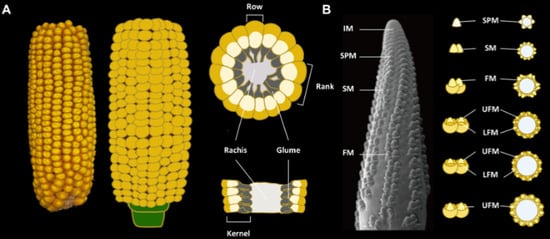
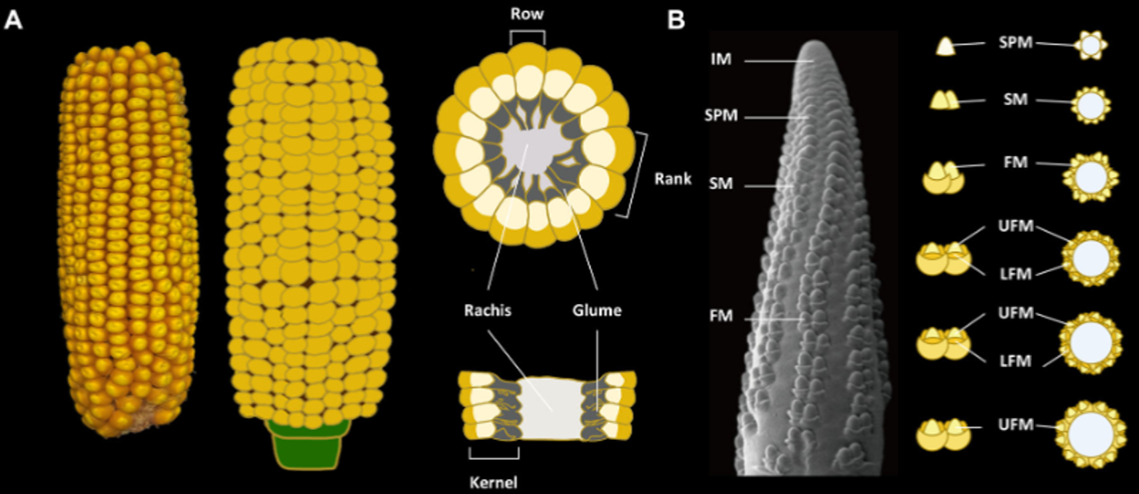
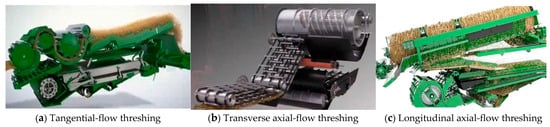
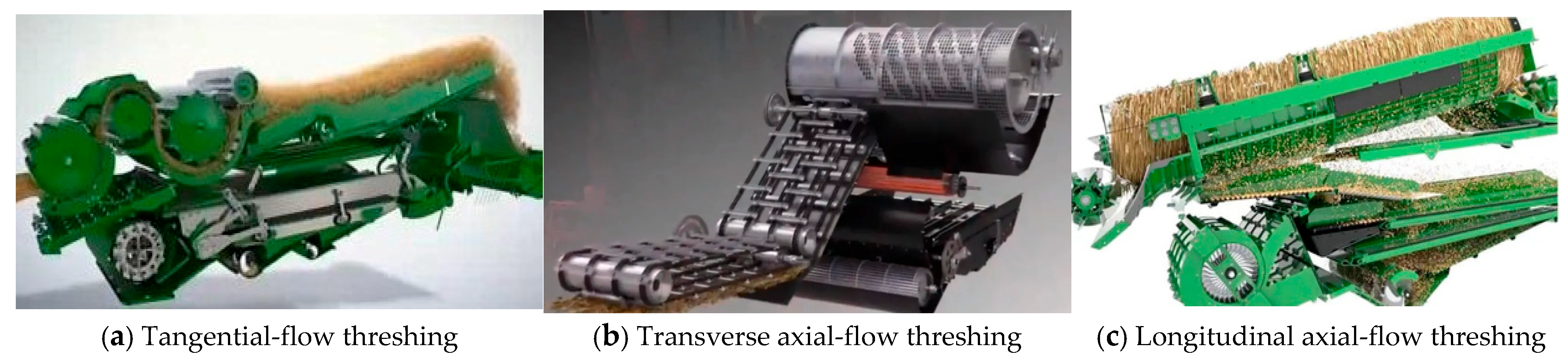
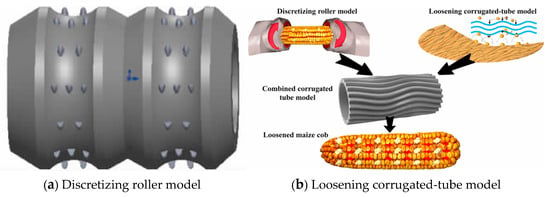
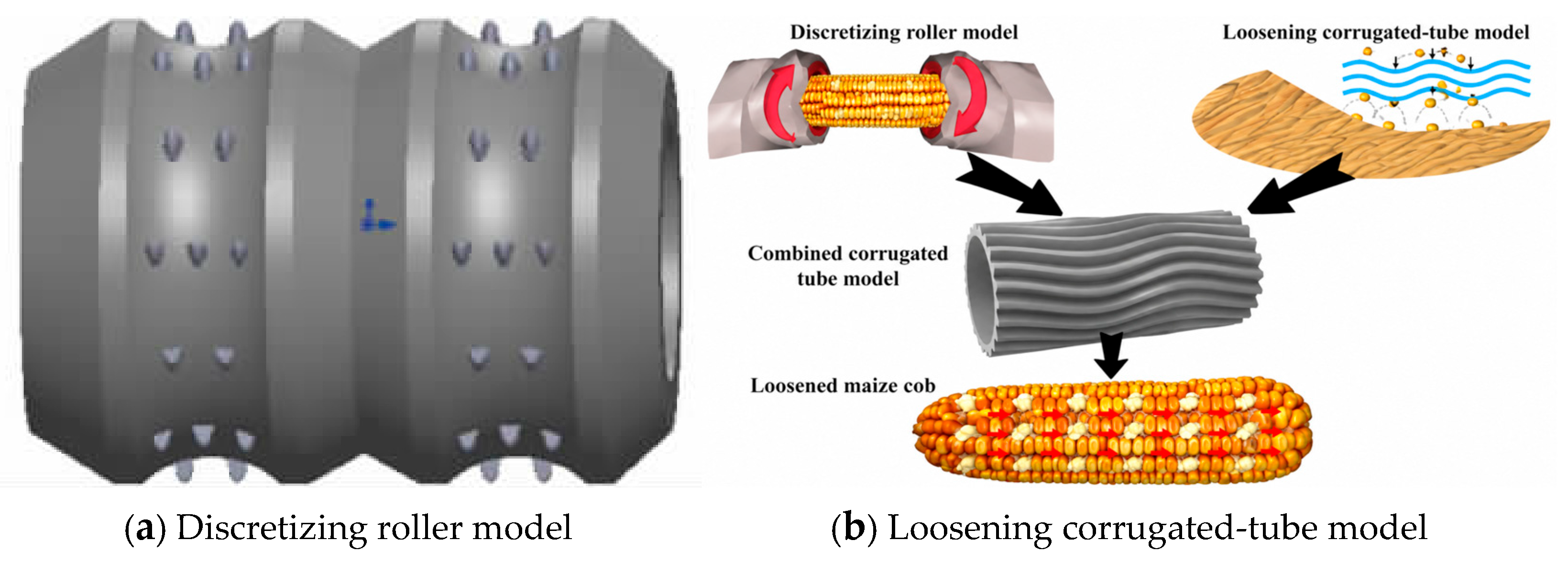
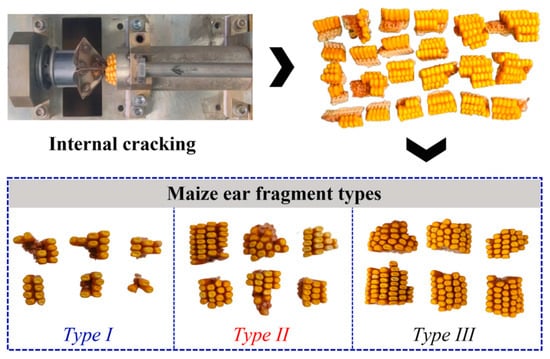
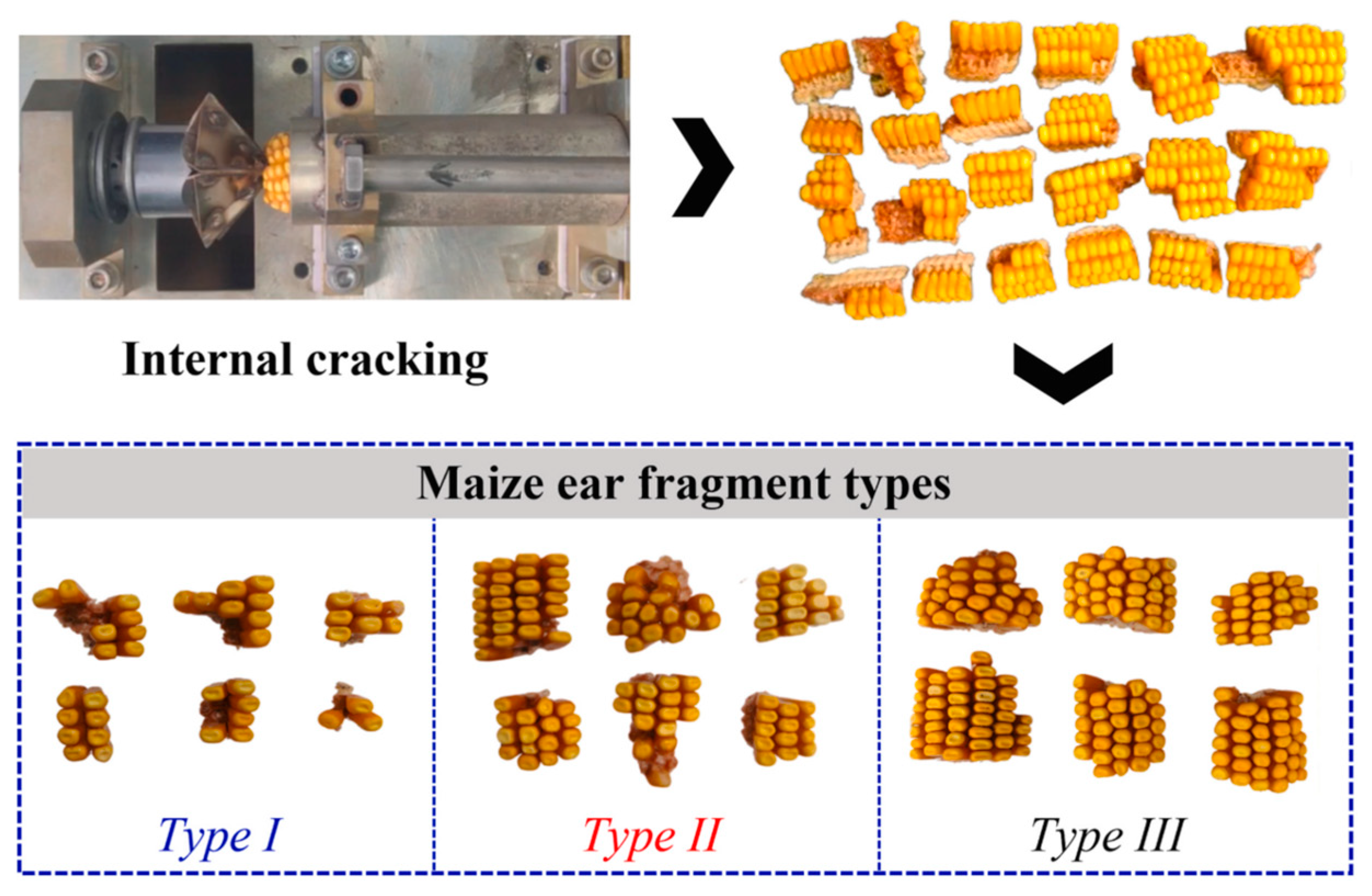
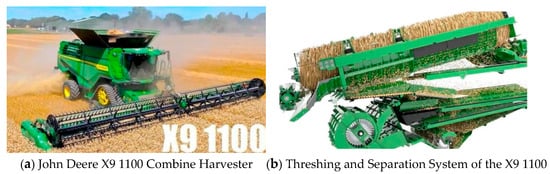
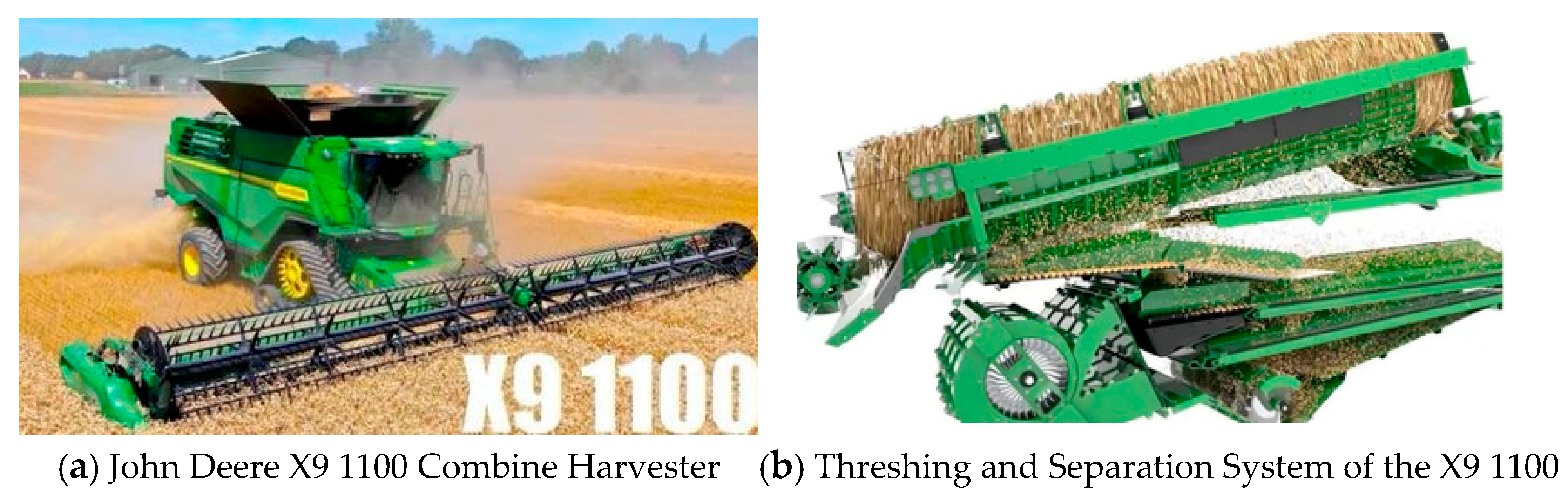
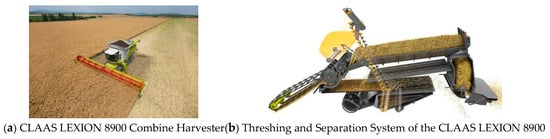
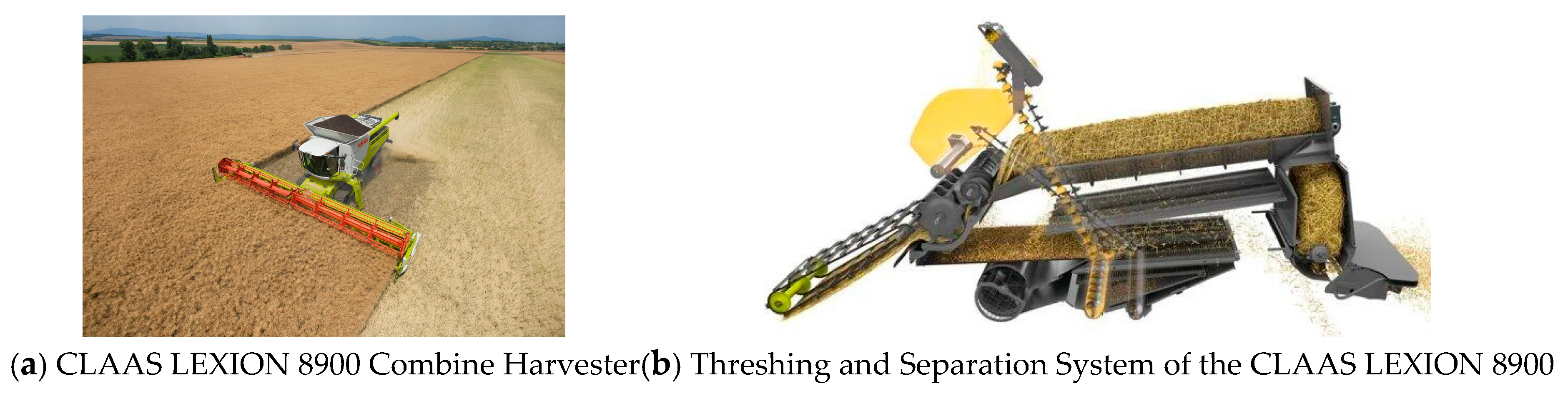
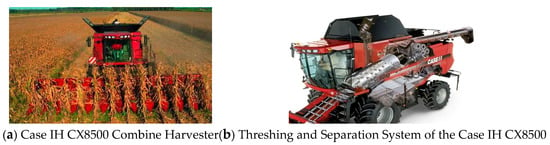
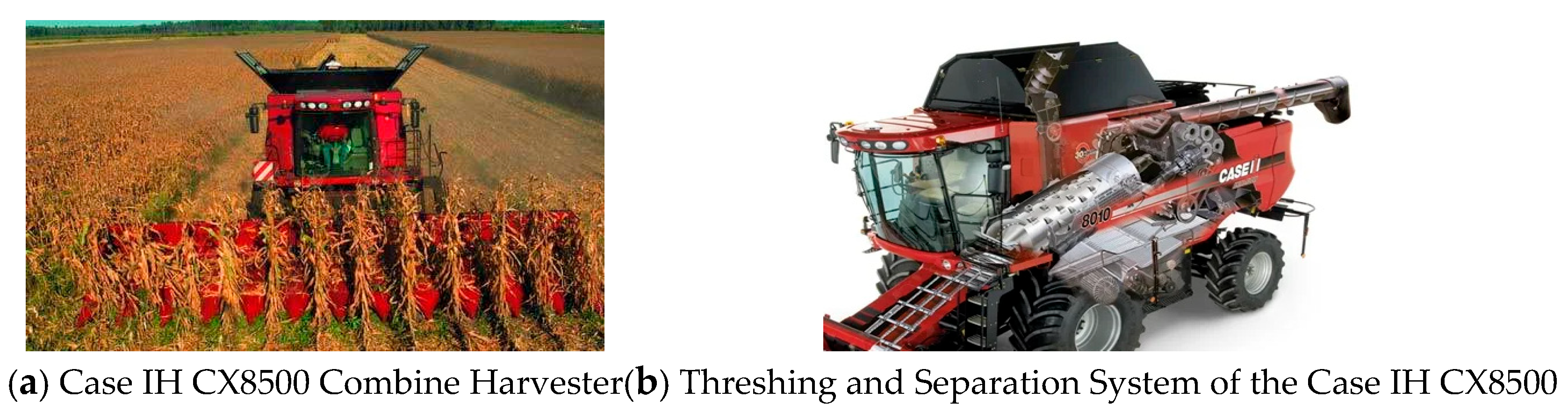
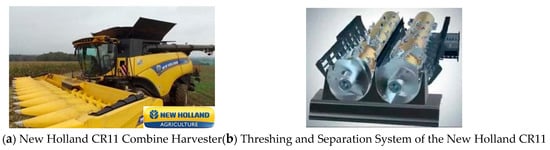
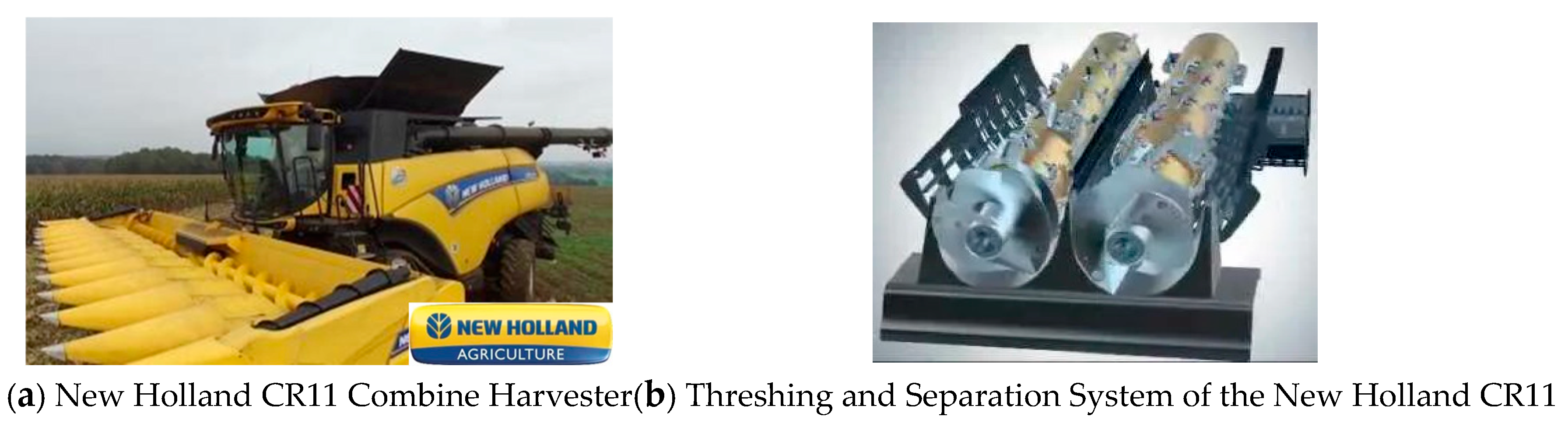
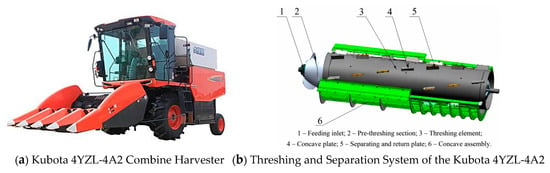
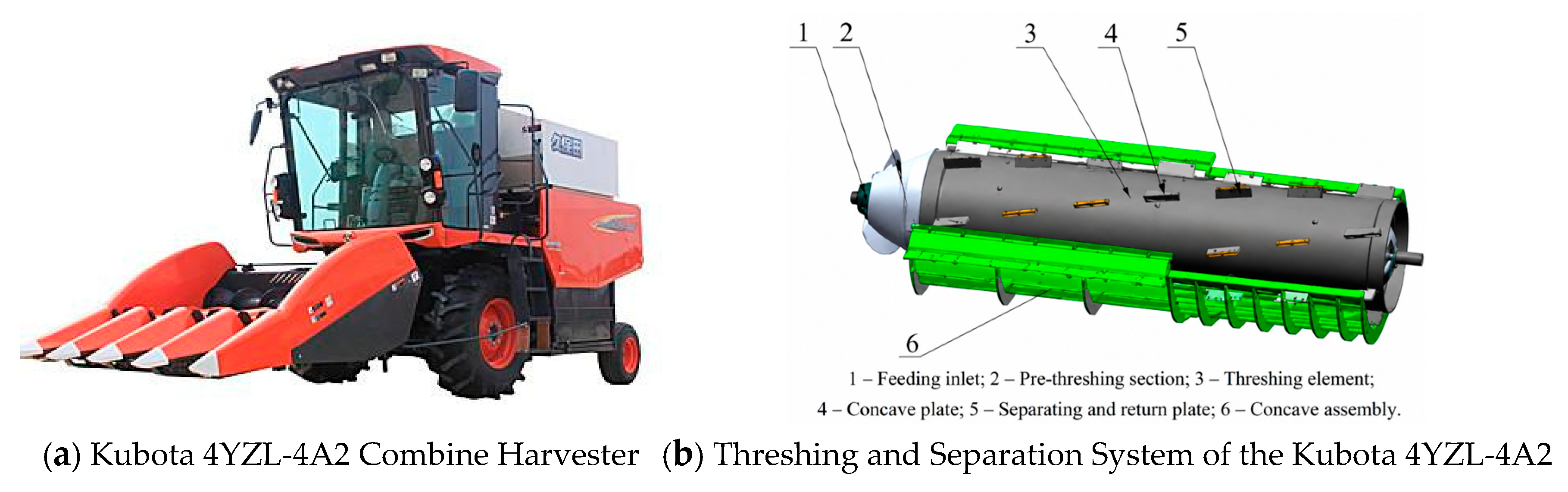
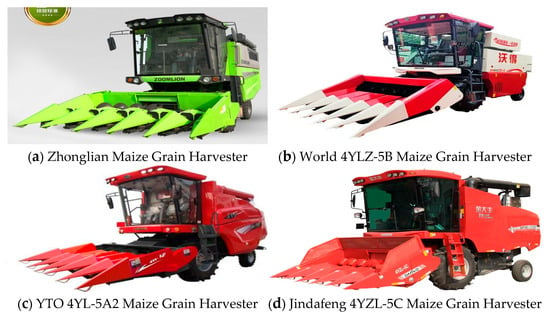
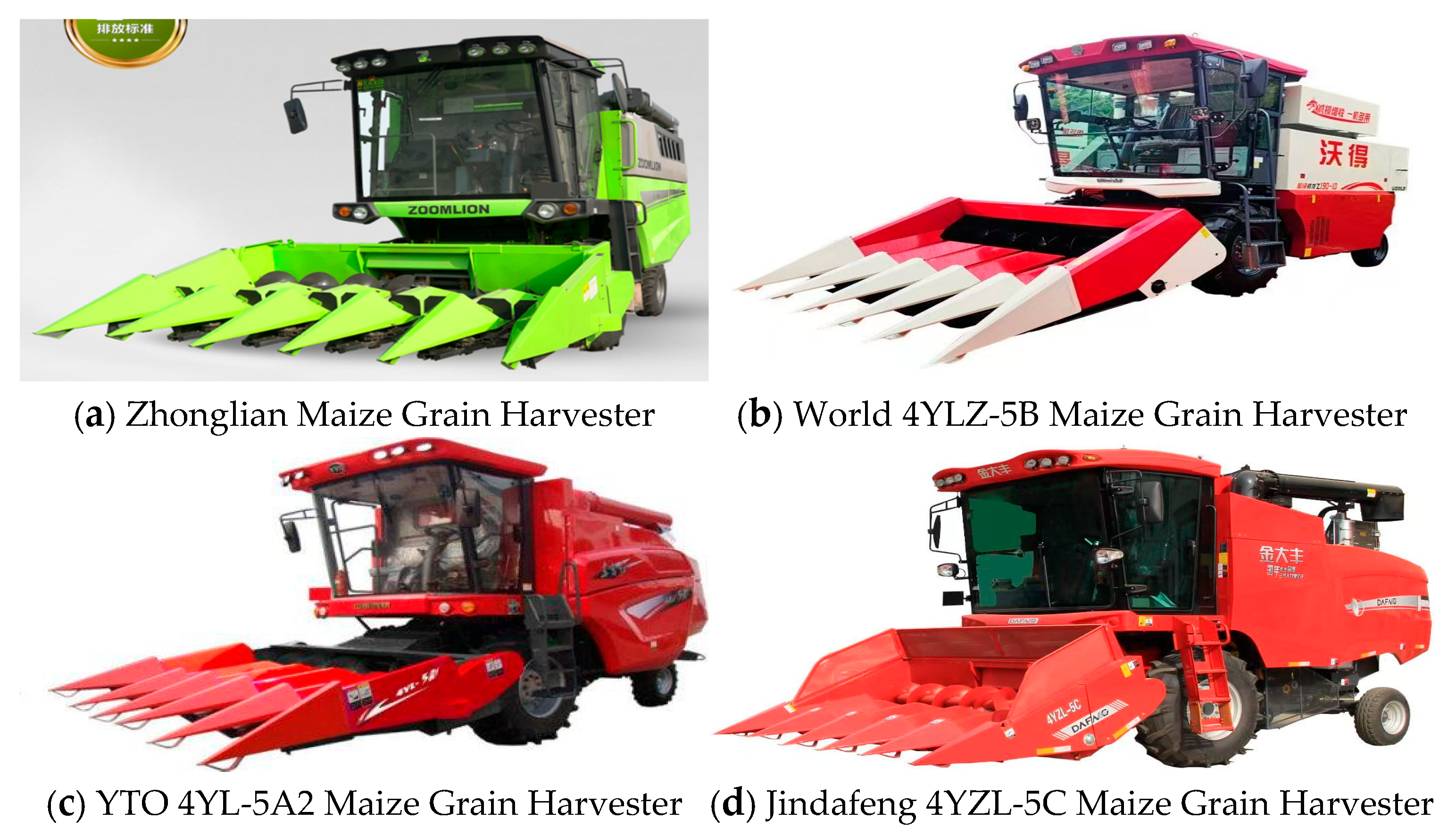
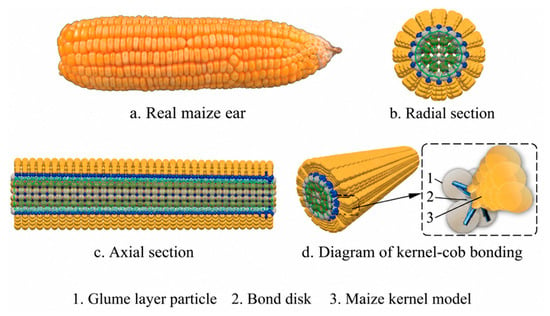
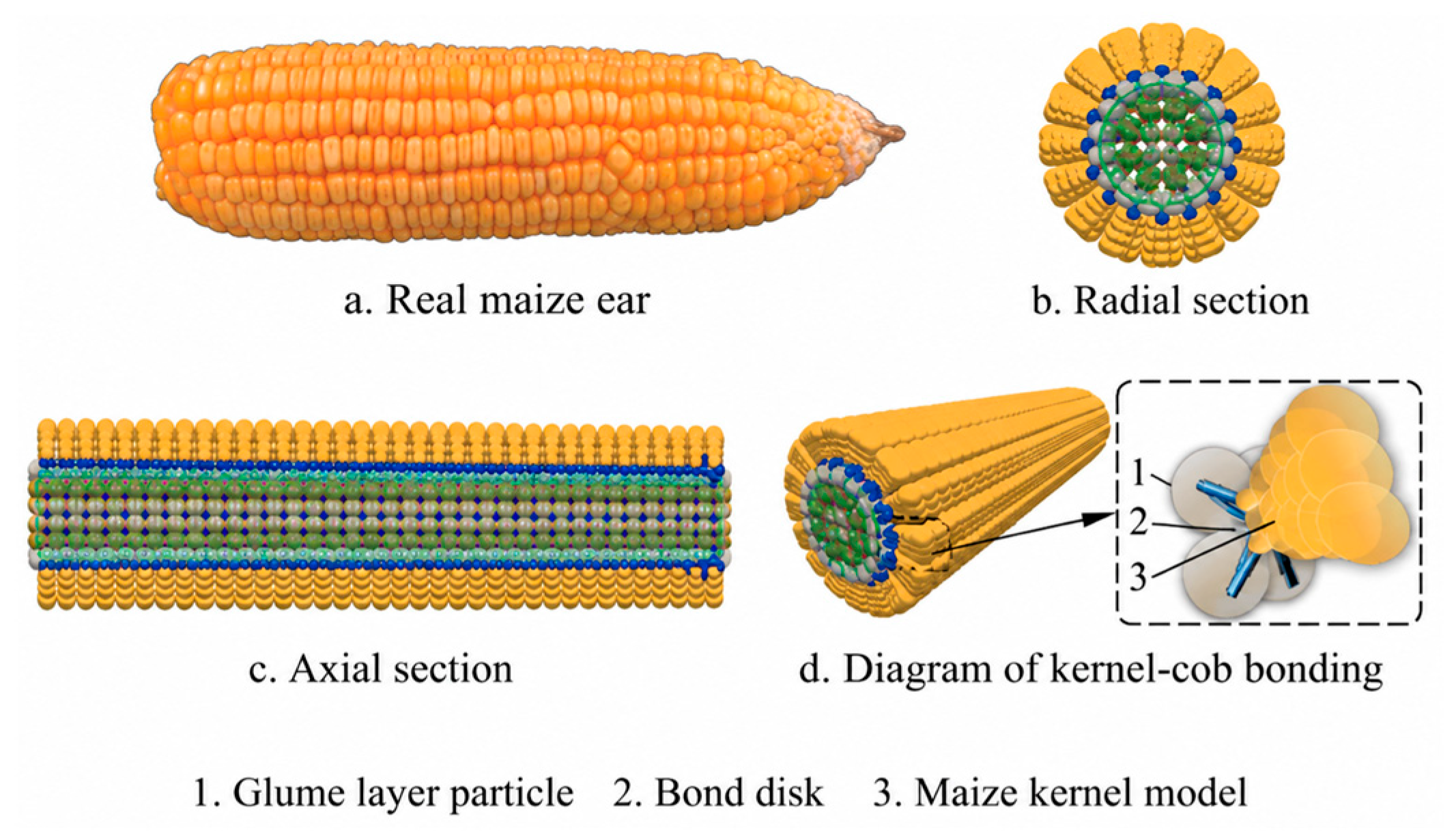
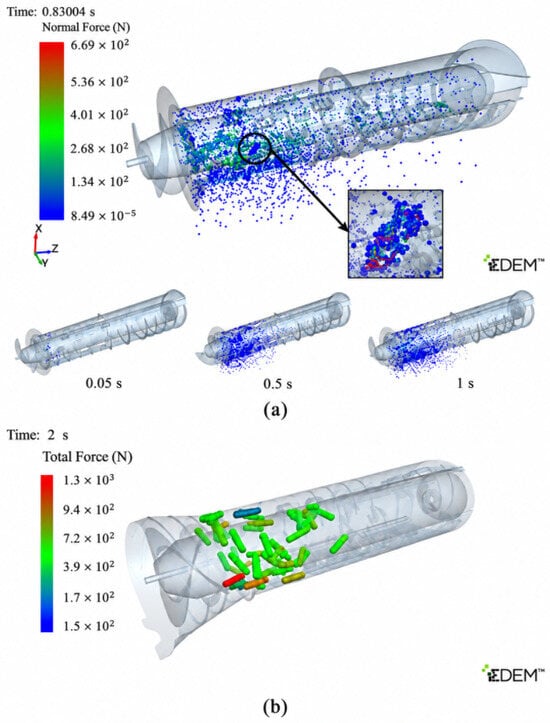
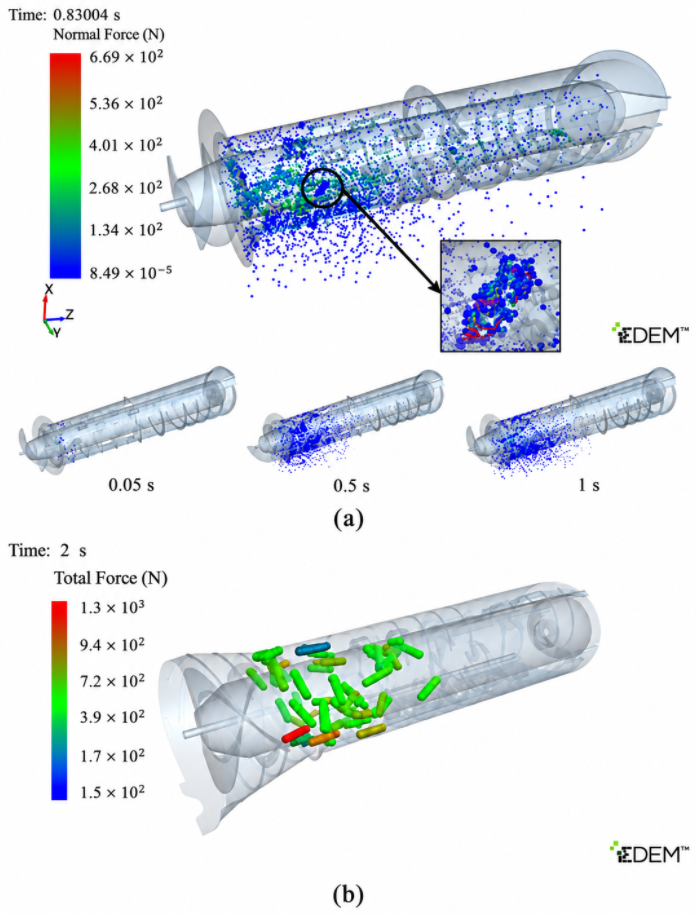
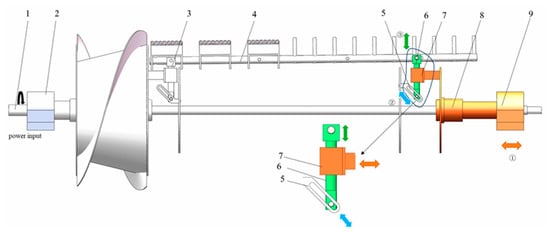
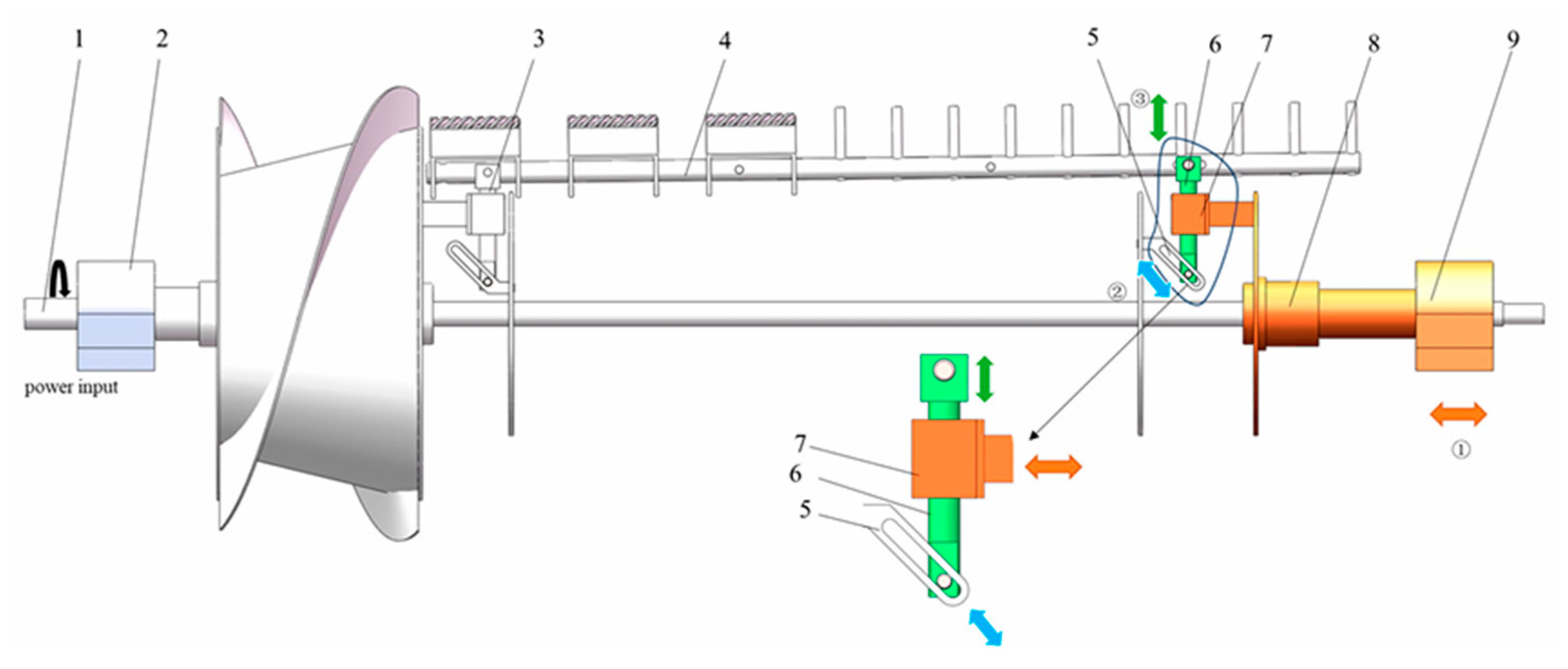

Disclaimer/Publisher’s Note: The statements, opinions and data contained in all publications are solely those of the individual author(s) and contributor(s) and not of MDPI and/or the editor(s). MDPI and/or the editor(s) disclaim responsibility for any injury to people or property resulting from any ideas, methods, instructions or products referred to in the content. |
© 2026 by the authors. Licensee MDPI, Basel, Switzerland. This article is an open access article distributed under the terms and conditions of the Creative Commons Attribution (CC BY) license.