


Abstract
Small open reading frames (sORFs) encoded by plant viruses play critical roles in viral infection. Soybean yellow leaf curl virus (SbYLCV) is a novel monopartite geminivirus causing substantial yield losses in soybean cultivation. In this study, we identified eleven sORFs (designated ORF1-ORF11) in the soybean yellow leaf curl virus (SbYLCV) genome, each predicted to encode peptides ranging from 25 to 100 amino acids. Functional assays revealed that six of these sORFs (ORF2, ORF3, ORF8, ORF9, ORF10, and ORF11) significantly enhanced the pathogenicity of potato virus X. Further analyses demonstrated that the putative proteins encoded by these sORFs exhibit distinct subcellular localization patterns and variable capacities to suppress post-transcriptional gene silencing. Collectively, these results advance our understanding of SbYLCV pathogenesis and offer candidate targets for the development of antiviral strategies against this virus.
1. Introduction
In recent years, soybean stay-green syndrome (SGS), a devastating disease that causes substantial yield losses, has emerged as a major constraint on soybean production in the Huang-Huai-Hai region of China. SGS displays two typical phenotypes: foliar stay-green and leaf shrinkage [1]. In 2018, our research team identified a novel geminivirus, termed soybean yellow leaf curl virus (SbYLCV), from soybean plants showing yellowing, leaf curling and stunting symptoms in Jilin Province, China [2]. The SbYLCV genome comprises a circular single-stranded DNA molecule of 2782 nucleotides (nt). It harbors the conserved nonanucleotide sequence TAATATTAC and six canonical ORFs, including V1 and V2 on the viral sense strand, and C1, C2, C3, and C4 on the complementary strand [2]. SbYLCV can systemically infect Glycine max, Nicotiana benthamiana, N. tabacum, N. glutinosa, and N. tabacum cv. Samsun. In N. benthamiana, it induces leaf curling and stunting, while infected soybean plants develop yellowing and leaf curling [2]. Cheng et al. [3] subsequently isolated soybean stay-green-associated virus (SoSGV) from SGS-affected plants and confirmed its pathogenicity by inoculation with an SoSGV infectious clone, thereby fulfilling Koch’s postulates for viral etiology. Likewise, Li et al. [4] and Wang et al. [5] independently identified geminiviruses associated with SGS using metatranscriptomic sequencing and whole-plant microbiome profiling, respectively. Comparative sequence analyses revealed high similarity among these viral isolates, demonstrating that SbYLCV and SoSGV are the primary causative agents of SGS.
Small open reading frames (sORFs) are genomic sequences encoding peptides of fewer than 100 amino acids. Although widely distributed across diverse organisms, sORFs have been historically understudied due to technical limitations in their detection and annotation [6]. Recent advances in high-throughput sequencing, translatomics, and proteomics have enabled identification of numerous functional sORFs in animals, plants, and microbes [7,8]. In plants, functional sORFs identified in Arabidopsis thaliana, Oryza sativa, and Solanum lycopersicum regulate multiple biological processes, including abiotic stress response [9,10], disease resistance [11,12], root development [13,14], leaf morphogenesis [15], organ size regulation [16,17], and crop domestication [18,19].
Despite their compact genomes, plant viruses have evolved diverse multifunctional small proteins with specific subcellular localizations [20]. In geminiviruses, Gong et al. [21] identified a set of novel sORFs in tomato yellow leaf curl virus (TYLCV), among which the V3 protein functions as a Golgi-localized RNA silencing suppressor. Subsequent functional studies further characterized the C5 and C7 proteins of TYLCV. The C5 protein targets plasmodesmata and acts as a viral movement protein [22], while the C7 protein functions as a pathogenicity factor with weak RNA silencing suppressor activity [23]. Likewise, Wang et al. [24] reported that the C6 protein encoded by tomato leaf curl China virus (ToLCCNV) localizes to mitochondria.
Beyond geminiviruses, sORFs are also widespread among positive-sense single-stranded RNA (+ssRNA) viruses, the predominant group of eukaryotic viral pathogens. The genus Potyvirus, the largest family of plant +ssRNA viruses, encodes two small proteins, 6K1 and 6K2. 6K1 is indispensable for viral replication and acts as a viroporin, representing the first viroporin identified in plant viruses [25,26]. The membrane-associated 6K2 facilitates vesicle formation and is critical for viral movement and replication [27,28,29]. Interestingly, functional sORFs can also be encoded by the complementary negative-sense strand of positive-sense RNA viruses. For instance, turnip mosaic virus (TuMV) encodes a reverse sORF (rORF) on its negative strand. The product of this rORF displays a unique subcellular localization and is recruited into viral replication complexes to enhance viral infectivity. In addition, an analogous rORF encoded by SARS-CoV-2 has been shown to suppress type I interferon production and promote vesicular stomatitis virus (VSV) infection [30].
In this study, we identified eleven previously unannotated sORFs (ORF1-ORF11) encoded by the SbYLCV genome. Functional screening demonstrated that six of these sORFs (ORF2, ORF3, ORF8, ORF9, ORF10, and ORF11) enhanced the pathogenicity of potato virus X (PVX). We further characterized the subcellular localizations and distinct capacities of the putative proteins encoded by these sORFs to suppress post-transcriptional gene silencing (PTGS). These findings provide novel insights into the infection mechanisms of SbYLCV and advance our understanding of plant–geminivirus interactions.
2. Materials and Methods
2.1. Plant Materials
Wild-type N. benthamiana plants were grown and maintained in our laboratory. The transgenic GFP 16c line was kindly provided by David C. Baulcombe (University of Cambridge, UK), and the transgenic RFP-H2B line was kindly provided by Michael M. Goodin (University of Kentucky, USA). All plants were cultivated in a growth chamber under controlled conditions: 60% relative humidity, a 16 h light/8 h dark photoperiod, with daytime and nighttime temperatures set to 25 °C and 18 °C, respectively.
2.2. Plasmids and Constructs
The full-length coding sequences of ORF1 to ORF11, derived from the SbYLCV-Jilin isolate (GenBank accession number OL404964), were first cloned into the pENTR™/D-TOPO® vector (Invitrogen, Carlsbad, CA, USA) and a PVX-based expression vector [31]. The resulting recombinant PVX-ORF constructs were transformed into Agrobacterium tumefaciens strain GV3101 for plant agroinfiltration. The full-length coding regions of ORF2, ORF3, ORF8, ORF9, ORF10, and ORF11 were subsequently recombined into the pEarleygate101, pEarleygate104, or pBA-35S-Flag-4Myc vector through gateway technology (Invitrogen, Carlsbad, CA, USA). These constructs were designed to express YFP-fused or Myc-fused sORF proteins, and all recombinant plasmids were transformed into A. tumefaciens EHA105. All primers used in this study are listed in Table S2.
2.3. Agroinfiltration and Viral Inoculation
A. tumefaciens cultures were resuspended in infiltration buffer containing 10 mM MgCl2, 10 mM MES (pH 5.6), and 100 μM acetosyringone, adjusted to an OD600 = 0.6 and infiltrated into leaves of six-leaf-stage N. benthamiana using a needle-less syringe [32]. For viral inoculation, A. tumefaciens cultures carrying the SbYLCV-Jilin infectious clone or the empty pBINPLUS vector were adjusted to OD600 = 0.6 and infiltrated into six-leaf-stage N. benthamiana plants. For co-infiltration assays, A. tumefaciens suspensions carrying different constructs were mixed at a 1:1 volume ratio prior to leaf infiltration.
2.4. Mass Spectrometry Analysis
At two weeks post-inoculation, symptomatic SbYLCV-infected N. benthamiana leaf tissues were collected, total proteins were then extracted with protein extraction buffer (40 mM Tris-HCl, pH 7.5, 150 mM NaCl, 5 mM MgCl2, 2 mM EDTA, 5 mM DTT, 0.1% Triton X-100, 2% glycerol, 2mM PMSF, and protease inhibitor mixture) [33], centrifuged for 10 min at 8000 g, and the soluble proteins were submitted to APTBIO for shotgun proteomic analysis using liquid chromatography–tandem mass spectrometry (LC-MS/MS) [24]. Polypeptides encoded by potential virus ORFs with lengths over 20 amino acids were collected to establish a protein database for the peptide-mapping search.
2.5. Sequence Analysis
ORFs in each submitted viral sequence were predicted using NCBI ORFfinder (https://www.ncbi.nlm.nih.gov/orffinder/). Amino acid sequences corresponding to ORF1-ORF11 from all viral isolates were compiled and aligned via multiple sequence alignment in MEGA 11 software.
2.6. Confocal Microscopy
Subcellular localization of the sORFs was examined using an LSM 980 confocal microscope (Carl Zeiss, Oberkochen, Germany). Fluorescence signals were detected under the following parameters: YFP (excitation 514 nm, emission 515–570 nm) and RFP/mCherry (excitation 594 nm, emission 596–644 nm) for dual-color imaging of YFP with RFP/mCherry; YFP (excitation 514 nm, emission 529–576 nm) and GFP (excitation 488 nm; emission 491–519 nm) for dual-color imaging of YFP with GFP [34]. All dual-color images were acquired using sequential scanning mode. All images were processed and exported using ZEN 2 software.
2.7. Protein Extraction and Western Blotting
Protein extraction and Western blotting were performed as previously described, with minor modifications [21]. Total protein was extracted from agroinfiltrated leaf tissues using a protein extraction buffer containing 50 mM Tris-HCl (pH 6.8), 4.5% (w/v) SDS, 7.5% (v/v) 2-Mercaptoethanol, and 9 M urea. Protein samples were separated by 12% SDS-PAGE and electroblotted onto nitrocellulose (NC) membranes. Membranes were blocked with 5% non-fat milk in phosphate-buffered saline with 0.1% Tween-20 (PBST) for 1 h at room temperature, then incubated overnight at 4 °C with primary antibodies diluted in blocking buffer, including anti-GFP (1:5000) or anti-PVX-CP (1:5000) antibodies. After three washes with PBST, membranes were incubated with an HRP-conjugated goat anti-mouse IgG secondary antibody (1:5000) for 1 h at room temperature.
3. Results
3.1. Prediction of SbYLCV-Encoded sORFs
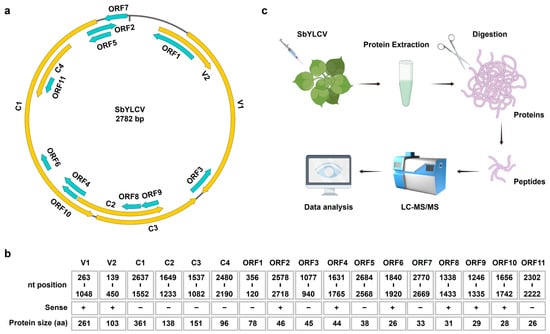
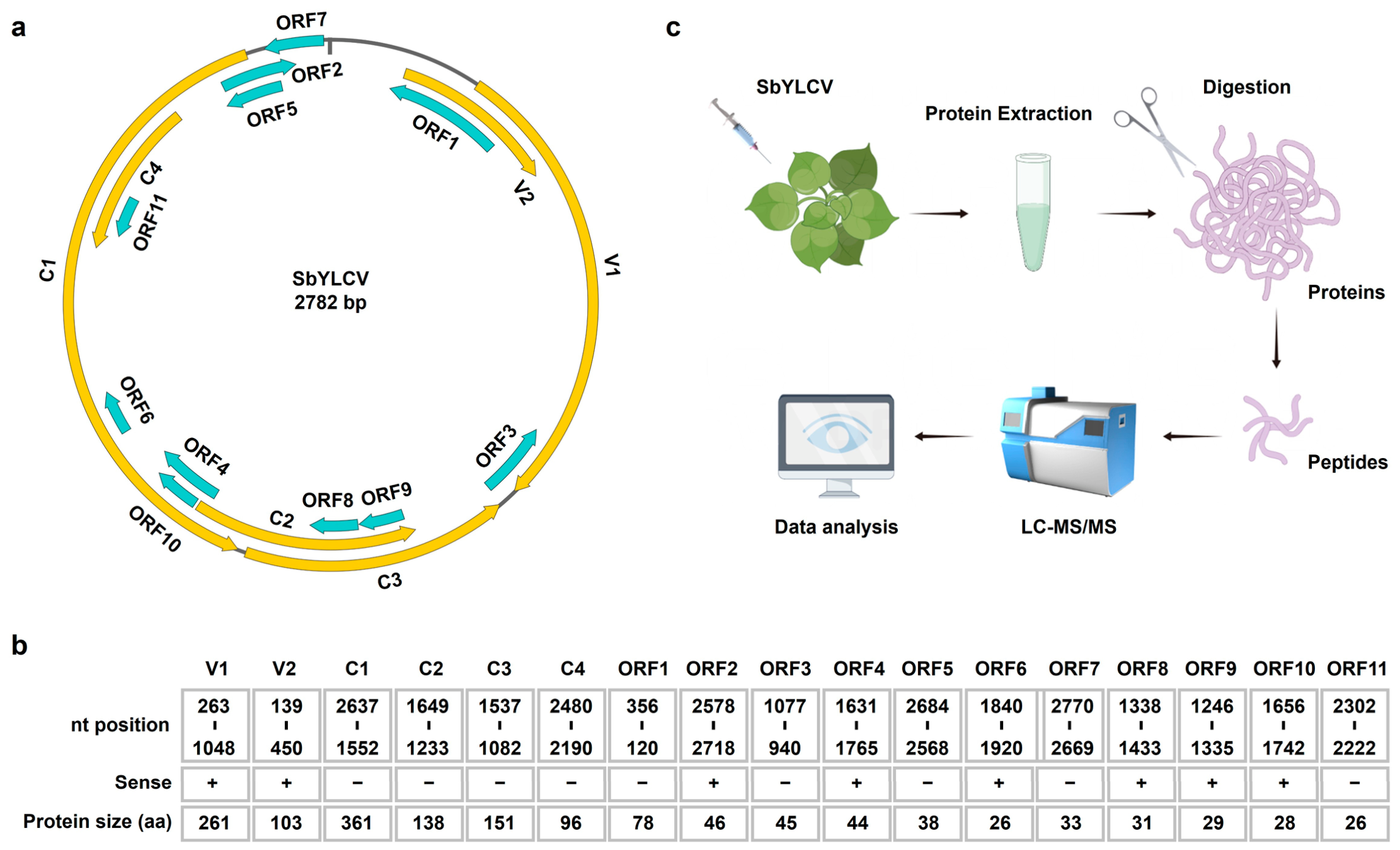
To identify potential sORFs in the SbYLCV genome, we used the NCBI ORFfinder tool (https://www.ncbi.nlm.nih.gov/orffinder/) to predict ORFs encoding peptides longer than 25 amino acids. A total of 17 ORFs were retrieved. Six of these candidates were previously characterized canonical ORFs (V1, V2, C1, C2, C3, and C4) and the remaining 11 were uncharacterized sORFs (Figure 1a). The sizes and genomic positions of these ORFs are illustrated in Figure 1a,b. The viral strand encodes V1, V2, ORF2, ORF4, ORF6, ORF8, ORF9, and ORF10, whereas the complementary strand encodes C1, C2, C3, C4, ORF1, ORF3, ORF5, ORF7, and ORF11. Notably, the newly identified ORF1-ORF11 encode peptides ranging from 25 to 100 amino acids, and ORF11 is the only sORF that is embedded within the canonical C1 and C4 ORFs but in different frames. To evaluate their expression, the infectious clone of SbYLCV was agroinfiltrated into wild-type N. benthamiana plants, and symptomatic leaves were harvested at two weeks post-inoculation and subjected to mass spectrometry analysis (Figure 1c). Unique peptides corresponding to seven sORFs (ORF1, ORF2, ORF4, ORF6, ORF8, ORF10, and ORF11) were successfully detected (Table S1), confirming the expression of these sORFs during SbYLCV infection.
Figure 1.
The SbYLCV genome contains additional open reading frames. (a) Schematic diagram of the SbYLCV genome. Arrows mark ORFs: yellow arrows indicate the six previously annotated canonical ORFs (V1, V2, and C1–C4), and blue arrows indicate eleven novel putative ORFs (ORF1-ORF11). (b) Molecular characteristics of all 17 ORFs, including nucleotide start/stop positions and the deduced lengths of encoded polypeptides. (c) Schematic workflow of mass spectrometry (MS) analysis. Key procedures consisted of extraction, tryptic digestion, LC–MS/MS data acquisition, and bioinformatic analysis.
3.2. Sequence Analysis of SbYLCV-Encoded sORFs
We further analyzed the amino acid sequences of the 11 sORFs among 21 SbYLCV (also termed SoSGV) isolates identified from six provinces of China, including the Jilin isolate used in this study. ORF1, ORF4, ORF6, ORF9, ORF10, and ORF11 were consistently detected in all tested isolates (Figure S1A–F). Notably, ORF4, ORF9, ORF10, and ORF11 exhibited identical sequence lengths across all 21 isolates (Figure S1B,D–F), whereas ORF1 and ORF6 harbored premature or extended termination codons in several isolates (Figure S1A,C). In contrast, ORF2, ORF3, ORF5, ORF7, and ORF8 were absent in certain isolates; even when present, their amino acid sequences showed low conservation among strains (Figure S2A–E). Intriguingly, the Jilin isolate encodes an additional in-frame ATG start codon in ORF2, whereas other isolates lack this upstream initiation site and thus initiate translation at the downstream second ATG codon (Figure S2A). Furthermore, ORF8 exhibits premature termination in most isolates compared to the Jilin isolate (Figure S2E).
3.3. Pathogenicity Analysis of sORFs Heterologously Expressed via PVX
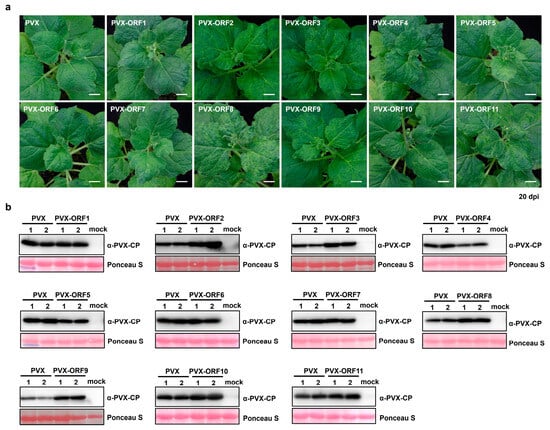
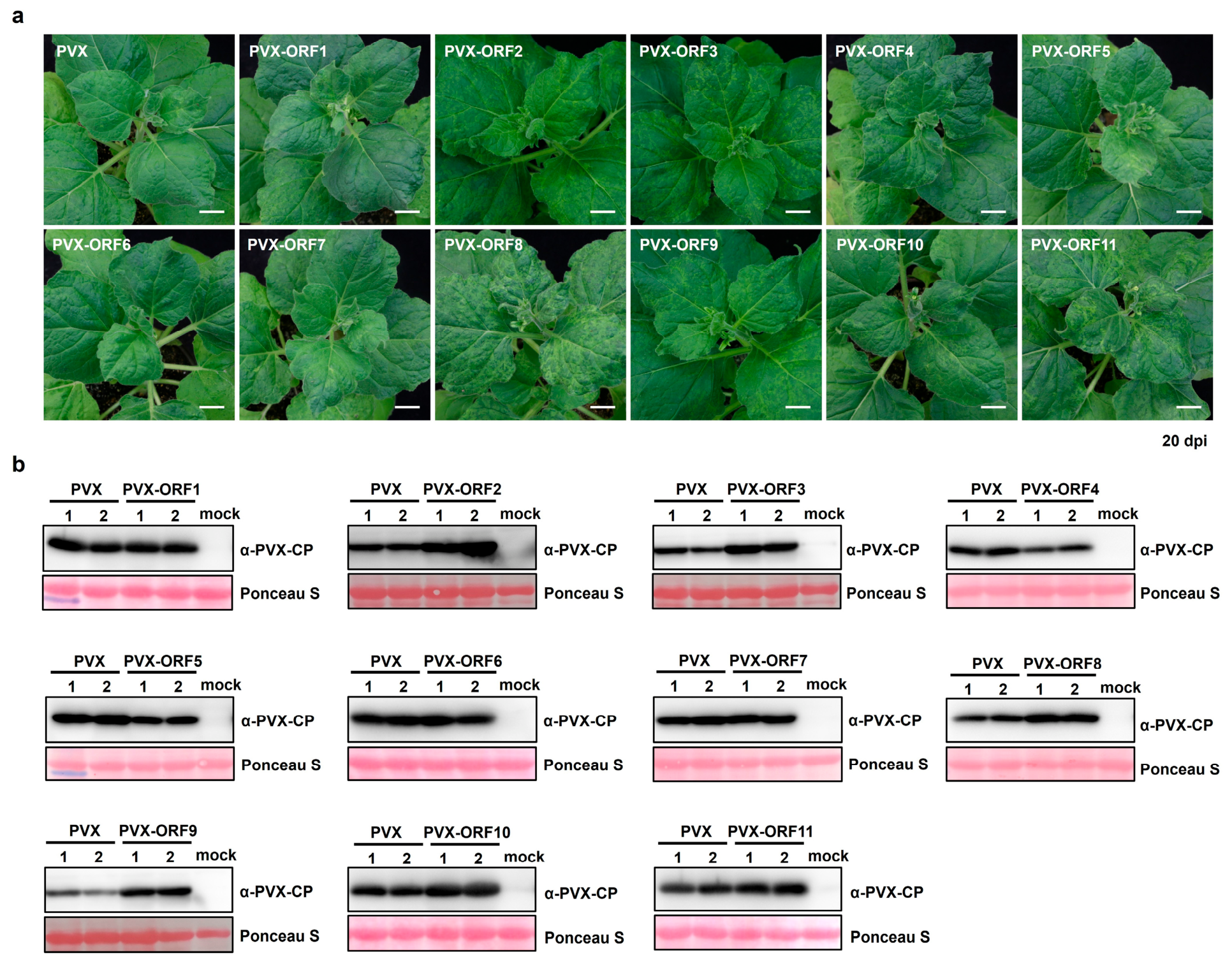
To explore the potential roles of SbYLCV-encoded sORFs during viral infection, we individually expressed ORF1-ORF11 in N. benthamiana via A. tumefaciens-mediated infiltration using a PVX vector, with the empty PVX vector serving as a negative control. At 20 days post-inoculation (dpi), plants inoculated with the empty PVX vector showed mild mosaic symptoms. In contrast, plants expressing PVX-ORF2, PVX-ORF3, PVX-ORF8, PVX-ORF9, PVX-ORF10, and PVX-ORF11 exhibited substantially enhanced disease symptoms, among which PVX-ORF8 caused the most severe phenotypic alterations (Figure 2a). Western blot analysis of systemic leaves collected at 20 dpi further verified that PVX-CP accumulated to significantly higher levels in plants expressing the six sORFs relative to the control group (Figure 2b). These data demonstrate that ORF2, ORF3, ORF8, ORF9, ORF10, and ORF11 facilitate PVX infection. Therefore, these six sORFs were selected for subsequent functional characterization.
Figure 2.
Effect of ORF1-ORF11 on PVX pathogenicity. (a) Disease symptoms in N. benthamiana plants inoculated with PVX or an individual PVX-ORF construct. Plants were agroinfiltrated with PVX-ORF1-ORF11, and phenotypic alterations were photographed at 20 dpi, with empty PVX serving as the negative control. Scale bar, 2 cm. (b) Western blot analysis of PVX-CP accumulation in leaf tissues corresponding to the treatments shown in (a). Three independent biological replicates were performed with consistent results. Ponceau S staining of Rubisco served as the total protein loading control.
3.4. Subcellular Localization Analysis of sORFs
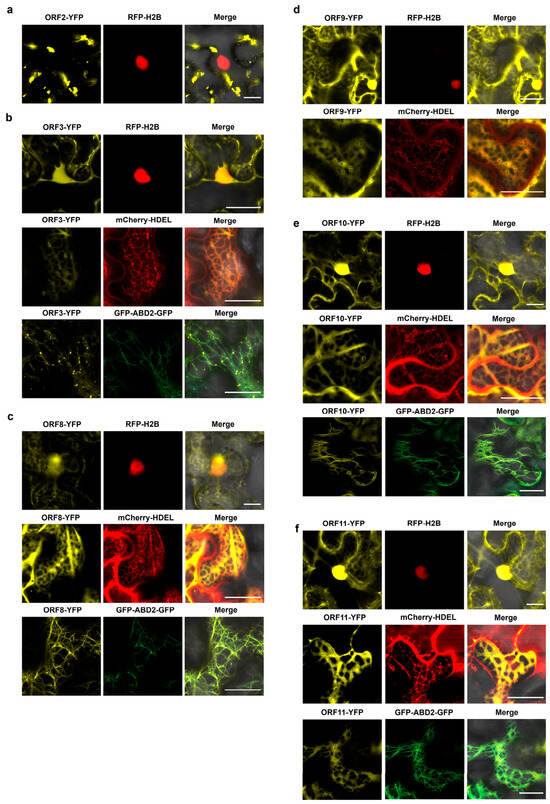
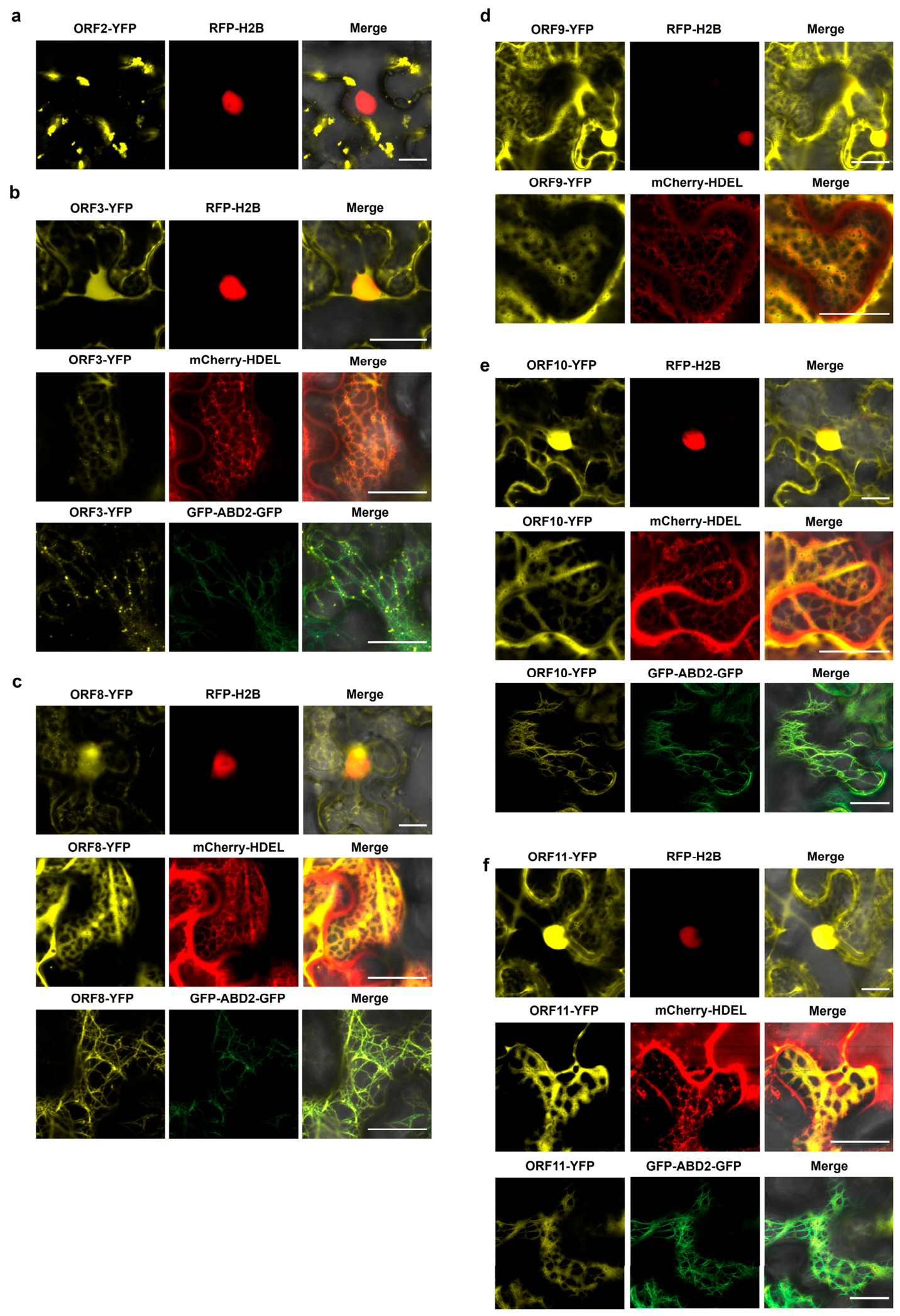
The biological functions of proteins are tightly linked to their subcellular localizations. To further investigate the roles of ORF2, ORF3, ORF8, ORF9, ORF10, and ORF11, we generated YFP-fused constructs for these six sORFs. Each construct was transiently expressed in RFP-H2B transgenic N. benthamiana plants via A. tumefaciens-mediated infiltration. Confocal microscopy performed at 48 h post-inoculation revealed that the putative proteins encoded by ORF3, ORF8, ORF9, ORF10, and ORF11 localized to both the nucleus and cytoplasm, whereas the product of ORF2 was restricted exclusively to the cytoplasm with no detectable nuclear signal (Figure 3a–f). Intriguingly, the putative proteins of these five sORFs also exhibited a reticular cytoplasmic distribution, implying potential association with intracellular membrane compartments. Similar localization patterns were observed with the N-terminal YFP fusions of the sORFs (Figure S3A–F), ruling out potential artifacts caused by the position of the fluorescent tag.
Figure 3.
Subcellular localization of the putative proteins encoded by ORF2, ORF3, ORF8, ORF9, ORF10 and ORF11. (a) ORF2-YFP localizes exclusively to the cytoplasm. Scale bar: 20 μm. (b) ORF3-YFP distributes in both the cytoplasm and nucleus. ORF3-YFP co-localizes with the ER marker mCherry-HDEL and the microfilament marker GFP-ABD2-GFP. Scale bar: 20 μm. (c) ORF8-YFP localizes to the cytoplasm and nucleus. ORF8-YFP co-localizes with the ER marker mCherry-HDEL and the microfilament marker GFP-ABD2-GFP. Scale bar: 20 μm. (d) ORF9-YFP localizes to the cytoplasm and nucleus. ORF9-YFP co-localizes with the ER marker mCherry-HDEL. Scale bar: 20 μm. (e) ORF10-YFP localizes to the cytoplasm and nucleus. ORF10-YFP co-localizes with the ER marker mCherry-HDEL and the microfilament marker GFP-ABD2-GFP. Scale bar: 20 μm. (f) ORF11-YFP localizes to the cytoplasm and nucleus. ORF11-YFP co-localizes with the ER marker mCherry-HDEL and the microfilament marker GFP-ABD2-GFP. Scale bar: 20 μm. All experiments were repeated three times with similar results.
To further define their subcellular patterns, each YFP-tagged sORF was individually coexpressed with the endoplasmic reticulum (ER) marker mCherry-HDEL and the microfilament marker GFP-ABD2-GFP [35] in wild-type N. benthamiana leaves. Colocalization assays showed that the products of ORF3, ORF8, ORF10, and ORF11 co-localized with both the ER and microfilament markers (Figure 3b,c,e,f), whereas the putative protein encoded by ORF9 co-localized specifically with the ER marker (Figure 3d). Collectively, these results suggest that the products of SbYLCV sORFs target distinct host subcellular compartments and cytoskeletal structures.
3.5. PTGS Suppression Activity Analysis of sORFs
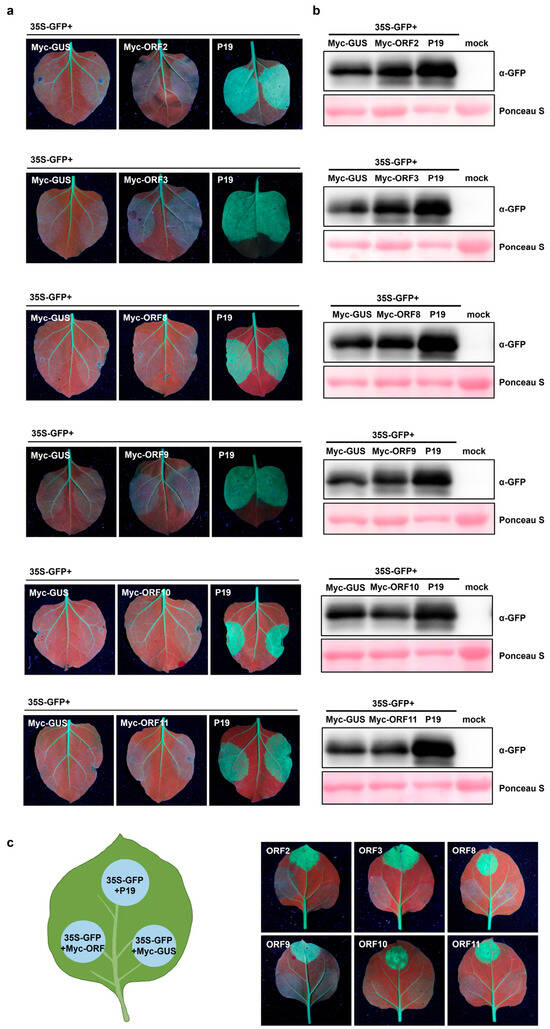
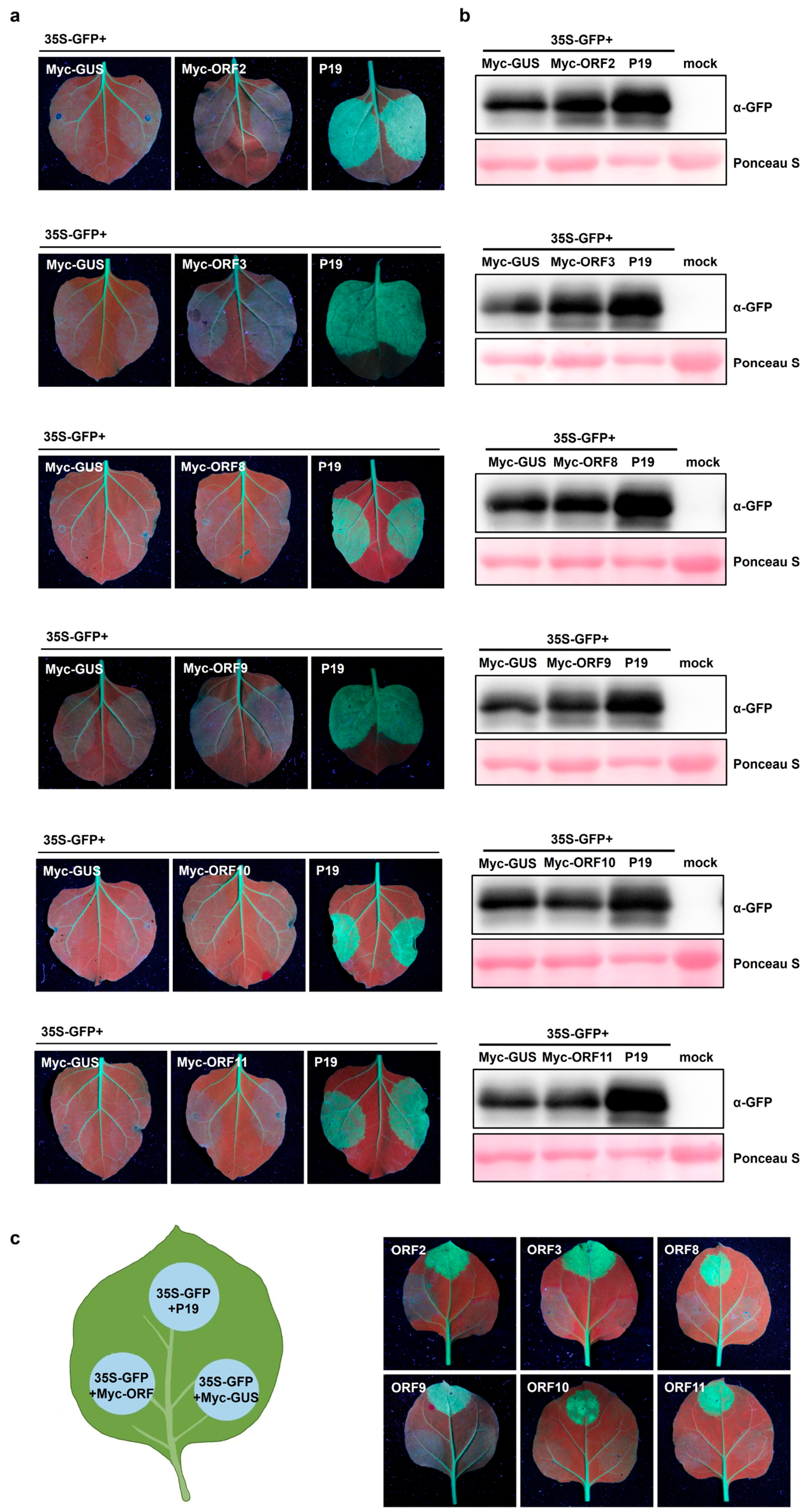
PTGS represents a conserved antiviral immune pathway in plants. During host–virus coevolution, this defense mechanism is commonly antagonized by viral suppressors of RNA silencing (VSRs) [36]. To determine whether SbYLCV-encoded sORFs exert PTGS suppression activity, A. tumefaciens cultures harboring 35S-GFP (an inducer of RNA silencing) were mixed with cultures expressing Myc-GUS (negative control), individual Myc-tagged sORFs (Myc-ORF2, Myc-ORF3, Myc-ORF8, Myc-ORF9, Myc-ORF10, or Myc-ORF11), or P19 (positive control) at a ratio of 1:1, and co-infiltrated into leaves of the 16c line of transgenic N. benthamiana. At 4 dpi, GFP fluorescence was nearly undetectable in the negative control. In contrast, leaf patches expressing P19, Myc-ORF2, Myc-ORF3, Myc-ORF8, Myc-ORF9 or Myc-ORF11 exhibited strong GFP signals. P19 conferred the most potent silencing suppression activity, followed by Myc-ORF2, Myc-ORF3 and Myc-ORF9. Myc-ORF8 and Myc-ORF11 exhibited weak VSR activity, whereas Myc-ORF110 showed no obvious difference from the Myc-GUS control (Figure 4a). Western blot assays of total protein extracts from infiltrated leaves revealed higher GFP protein accumulation in tissues expressing Myc-ORF2, Myc-ORF3, Myc-ORF8, Myc-ORF9 and Myc-ORF11, consistent with the observed fluorescence intensities (Figure 4b). These results demonstrate that ORF2, ORF3, ORF8, ORF9, and ORF11 function as VSRs. Among them, ORF2, ORF3 and ORF9 exhibit strong suppression activity, while ORF8 and ORF11 show mild effects, and ORF10 lacks detectable VSR activity.
Figure 4.
Analysis of PTGS suppression activity of the putative proteins encoded by ORF2, ORF3, ORF8, ORF9, ORF10 and ORF11. (a) Leaves of 16c N. benthamiana plants were co-infiltrated with A. tumefaciens cultures expressing 35S-GFP together with Myc-GUS (negative control), individual Myc-tagged sORFs (Myc-ORF2, Myc-ORF3, Myc-ORF8, Myc-ORF9, Myc-ORF10, Myc-ORF11), or P19 (positive control). GFP fluorescence was photographed under UV light at 4 dpi. (b) Western blot detection of GFP accumulation in agroinfiltrated leaf tissues corresponding to the treatments in (a). Three independent replicates yielded similar results. Ponceau S staining of Rubisco served as the total protein loading control. (c) 16c N. benthamiana leaves were co-infiltrated with A. tumefaciens mixtures carrying the indicated constructs shown in the left panel. Photographs were taken under UV light at 4 dpi.
We further conducted a parallel co-infiltration assay on the same 16c N. benthamiana leaf, with separate patches expressing 35S-GFP paired with each Myc-ORF construct, P19, or Myc-GUS. As expected, negative control patches expressing Myc-GUS displayed obvious GFP silencing at 4 dpi (Figure 4c). However, leaf patches co-expressing 35S-GFP with ORF2, ORF3 or ORF9 maintained clear GFP fluorescence, further validating their ability to suppress RNA silencing (Figure 4c).
4. Discussion
Traditional geminivirus research has long adopted a 10 kDa size threshold to define coding sequences, leading to the widespread under-annotation of functionally important viral sORFs. Recent studies have indicated the extensive existence of overlooked yet functionally relevant sORFs in both geminivirus genomes and their satellites [20,21,37,38]. In this study, we used NCBI ORFfinder to annotate 11 sORFs (25–100 amino acids) in the SbYLCV genome, alongside the six well-characterized canonical ORFs (V1, V2, C1, C2, C3, and C4) (Figure 1). Among these 11 sORFs, ORF11 is the only sORF that is embedded within C1 and C4, but it lies in different frames from C1 and C4. It is not known whether ORF11 is expressed through frame-shifting or splicing as described for TYLCV [39]. Future RNA-seq studies will be able to identify and map the mature viral mRNAs produced during infection.
To dissect the biological functions of these 11 sORFs, each sORF (ORF1-ORF11) was heterologously expressed using a PVX-based transient expression system. Functional assays showed that ORF2, ORF3, ORF8, ORF9, ORF10, and ORF11 markedly enhanced the pathogenicity of PVX (Figure 2), indicating their potential roles as viral pathogenicity factors during viral infection. It is noteworthy that ORF3 and ORF9 exhibited biological activity when expressed ectopically but were not detected using LC-MS (Figure 1). This discrepancy may indicate that they are expressed below the detection limit, only transiently, dynamically regulated, or expressed in restricted cell types or tissues during natural infection. Indeed, the new ORFs previously identified are not strictly required for invasion of the host, raising the possibility that these sORFs make a quantitative contribution to viral infection.
Targeting distinct organelles is important for viral proteins to exert their biological roles. In this study, the putative protein encoded by ORF2 was exclusively localized to the cytoplasm, whereas those of ORF3, ORF8, ORF9, ORF10, and ORF11 displayed dual nuclear and cytoplasmic distribution. Notably, the products of these five sORFs also formed reticular and punctate structures in the cytoplasm. Colocalization analyses with ER and microfilament markers further confirmed that the putative proteins encoded by ORF3, ORF8, ORF10, and ORF11 associate with both the ER and microfilaments, while that of ORF9 targets only the ER compartment (Figure 3). Previous studies have demonstrated that ER and cytoskeleton are involved in the intracellular trafficking of geminiviruses, an essential step in the geminivirus infection cycle [40,41]. The conserved association of the products of ORF3, ORF8, ORF9, ORF10, and ORF11 with the ER and cytoskeleton strongly implies their putative roles as movement regulators to facilitate viral propagation, a hypothesis that requires further experimental validation.
The PTGS suppression assays demonstrated that ORF2, ORF3, and ORF9 exert strong VSR activity, ORF8 and ORF11 exhibit weak inhibitory effects, and ORF10 lacks detectable silencing- suppression capacity (Figure 4). Well-characterized VSRs, such as the P19 protein of tomato bushy stunt virus, enhance systemic viral movement by binding to vsiRNA duplexes [42]. Accordingly, the elevated PVX virulence conferred by ORF2, ORF3, ORF8, ORF9, and ORF11 is most likely attributed to their VSR functions. Intriguingly, ORF10 also enhanced PVX pathogenicity independent of VSR activity, implying that this sORF promotes viral infection through a distinct mechanism. Given its unique ER and cytoskeletal localization, ORF10 may potentially assist intracellular viral transport (Figure 3). As mutant constructs defective in ORF expression were not examined as controls, we could not preclude the potential role of viral RNA in the symptom enhancement and RNA silencing suppression. Future research should construct mutant SbYLCV infectious clones carrying targeted deletions or site-directed point mutations in individual sORFs, which will help elucidate their specific contributions to viral infection and symptom development in soybean plants. In addition, screening and characterizing host proteins that directly interact with ORF2, ORF3, ORF8, ORF9, ORF10 and ORF11 will advance our mechanistic understanding of these sORFs, particularly their roles in viral trafficking, suppression of host immunity, and modulation of plant cellular processes. In-depth knowledge of viral sORF functions may facilitate the development of innovative resistance measures, such as breeding soybean cultivars that disrupt key virus–host interactions or designing targeted gene-silencing technologies to control geminiviral diseases in crops.
Despite their highly compact genomes, geminiviruses coordinate multiple sophisticated cellular events, including viral replication, transcription, intracellular movement, and host defense suppression, by encoding diverse multifunctional proteins. Here, we present the first systematic functional characterization of 11 SbYLCV-derived sORFs, providing new mechanistic insights into SbYLCV pathogenicity and plant–geminivirus interactions. These findings establish a fundamental framework for deciphering the molecular mechanisms underlying SbYLCV infection and aid in the future development of precise antiviral management strategies.
Supplementary Materials
The following supporting information can be downloaded at: https://www.mdpi.com/article/10.3390/agronomy16222276/s1, Figure S1: ORF1, ORF4, ORF6, ORF9, ORF10 and ORF11 exist across all analyzed soybean yellow leaf curl virus isolates; Figure S2: Several soybean yellow leaf curl virus isolates lack the coding sequences for ORF2, ORF3, ORF5, ORF7, and ORF8; Figure S3: Subcellular localization of YFP-tagged ORF2, ORF3, ORF8, ORF9, ORF10 and ORF11 of SbYLCV; Table S1: Unique peptides corresponding to SbYLCV ORFs detected by mass spectrometry in SbYLCV-infected Nicotiana benthamiana; Table S2: Primers used in the research.
Author Contributions
X.Z., X.Y. and Y.X. (Yi Xu) designed the project; Y.X. (Yanan Xu), C.C., M.D., S.H. and P.G. carried out experiments. All authors analyzed and discussed the data; X.Y. (Yanan Xu) and X.Z. wrote the manuscript. All authors have read and agreed to the published version of the manuscript.
Funding
This work was funded by the National Key Research and Development Program of China (2023YFD1401000) to S.H., and the Agricultural Science and Technology Innovation Program of the Chinese Academy of Agricultural Sciences (ASTIP) (CAAS-ZDRW202504) to X.Y.
Data Availability Statement
The original contributions presented in this study are included in the article/Supplementary Material.
Conflicts of Interest
All authors agree to publish. X.Z. is a member of the editorial board but was not involved in the journal’s review or any decisions related to this submission.
Abbreviations
| SGS | Soybean stay-green syndrome |
| SbYLCV | Soybean yellow leaf curl virus |
| SoSGV | Soybean stay-green associated virus |
| sORFs | Small open reading frames |
| TYLCV | Tomato yellow leaf curl virus |
| ToLCCNV | Tomato leaf curl China virus |
| PVX | Potato virus X |
| +ssRNA | Positive-sense single-stranded RNA |
| PTGS | Post-transcriptional gene silencing |
References
- Wei, Z.; Guo, W.; Jiang, S.; Yan, D.; Shi, Y.; Wu, B.; Xin, X.; Chen, L.; Cai, Y.; Zhang, H.; et al. Transcriptional profiling reveals a critical role of GmFT2a in soybean staygreen syndrome caused by the pest Riptortus pedestris. New Phytol. 2023, 237, 1876–1890. [Google Scholar] [CrossRef] [Scilit]
- Du, M.; Wang, Y.; Chen, C.; Li, X.; Feng, R.; Zhou, X.; Yang, X. Molecular characterization and pathogenicity of a novel soybean-infecting monopartite geminivirus in China. Viruses 2022, 14, 341. [Google Scholar] [CrossRef] [Scilit]
- Cheng, R.; Mei, R.; Yan, R.; Chen, H.; Miao, D.; Cai, L.; Fan, J.; Li, G.; Xu, R.; Lu, W.; et al. A new distinct geminivirus causes soybean stay-green disease. Mol. Plant 2022, 15, 927–930. [Google Scholar] [CrossRef] [Scilit]
- Li, Q.; Zhang, Y.; Lu, W.; Han, X.; Yang, L.; Shi, Y.; Li, H.; Chen, L.; Liu, Y.; Yang, X.; et al. Identification and characterization of a new geminivirus from soybean plants and determination of V2 as a pathogenicity factor and silencing suppressor. BMC Plant Biol. 2022, 22, 362. [Google Scholar] [CrossRef] [Scilit]
- Wang, X.; Wang, M.; Wang, L.; Feng, H.; He, X.; Chang, S.; Wang, D.; Wang, L.; Yang, J.; An, G.; et al. Whole-plant microbiome profiling reveals a novel geminivirus associated with soybean stay-green disease. Plant Biotechnol. J. 2022, 20, 2159–2173. [Google Scholar] [CrossRef] [Scilit]
- Posner, Z.; Yannuzzi, I.; Prensner, J.R. Shining a light on the dark proteome: Non-canonical open reading frames and their encoded miniproteins as a new frontier in cancer biology. Protein Sci. 2023, 32, e4708. [Google Scholar] [CrossRef] [Scilit]
- Matsumoto, A.; Pasut, A.; Matsumoto, M.; Yamashita, R.; Fung, J.; Monteleone, E.; Saghatelian, A.; Nakayama, K.I.; Clohessy, J.G.; Pandolfi, P.P. mTORC1 and muscle regeneration are regulated by the LINC00961-encoded SPAR polypeptide. Nature 2017, 541, 228–232. [Google Scholar] [CrossRef] [Scilit]
- Zhang, Q.; Wei, T.; Yan, L.; Zhu, S.; Jin, W.; Bai, Y.; Zeng, Y.; Zhang, X.; Yin, Z.; Yang, J.; et al. Hypoxia-responsive lncRNA AC115619 encodes a micropeptide that suppresses m6A modifications and hepatocellular carcinoma progression. Cancer Res. 2023, 83, 2496–2512. [Google Scholar] [CrossRef] [Scilit]
- Grillet, L.; Lan, P.; Li, W.; Mokkapati, G.; Schmidt, W. IRON MAN is a ubiquitous family of peptides that control iron transport in plants. Nat. Plants 2018, 4, 953–963. [Google Scholar] [CrossRef] [Scilit]
- Takahashi, F.; Hanada, K.; Kondo, T.; Shinozaki, K. Hormone-like peptides and small coding genes in plant stress signaling and development. Curr. Opin. Plant Biol. 2019, 51, 88–95. [Google Scholar] [CrossRef] [Scilit]
- Combest, M.M.; Moroz, N.; Tanaka, K.; Rogan, C.J.; Anderson, J.C.; Thura, L.; Rakotondrafara, A.M.; Goyer, A. StPIP1, a PAMP-induced peptide in potato, elicits plant defenses and is associated with disease symptom severity in a compatible interaction with Potato virus Y. J. Exp. Bot. 2021, 72, 4472–4488. [Google Scholar] [CrossRef] [Scilit]
- Wang, X.; Zhang, N.; Zhang, L.; He, Y.; Cai, C.; Zhou, J.; Li, J.; Meng, X. Perception of the pathogen-induced peptide RGF7 by the receptor-like kinases RGI4 and RGI5 triggers innate immunity in Arabidopsis thaliana. New Phytol. 2021, 230, 1110–1125. [Google Scholar] [CrossRef] [Scilit]
- Hsiao, Y.C.; Yamada, M. The roles of peptide hormones and their receptors during plant root development. Genes 2020, 12, 22. [Google Scholar] [CrossRef] [Scilit]
- Lauressergues, D.; Couzigou, J.M.; Clemente, H.S.; Martinez, Y.; Dunand, C.; Bécard, G.; Combier, J.P. Primary transcripts of microRNAs encode regulatory peptides. Nature 2015, 520, 90–93. [Google Scholar] [CrossRef] [Scilit]
- Narita, N.N.; Moore, S.; Horiguchi, G.; Kubo, M.; Demura, T.; Fukuda, H.; Goodrich, J.; Tsukaya, H. Overexpression of a novel small peptide ROTUNDIFOLIA4 decreases cell proliferation and alters leaf shape in Arabidopsis thaliana. Plant J. 2004, 38, 699–713. [Google Scholar] [CrossRef] [Scilit]
- Brito, M.S.; DePaoli, H.C.; Cossalter, V.; Avanci, N.C.; Ferreira, P.B.; Azevedo, M.S.; Strini, E.J.; Quiapim, A.C.; Goldman, G.H.; Peres, L.E.P.; et al. A novel cysteine-rich peptide regulates cell expansion in the tobacco pistil and influences its final size. Plant Sci. 2018, 277, 55–67. [Google Scholar] [CrossRef] [Scilit]
- Zeng, Y.; Tang, Y.; Shen, S.; Zhang, M.; Chen, L.; Ye, D.; Zhang, X. Plant-specific small peptide AtZSP1 interacts with ROCK1 to regulate organ size in Arabidopsis. New Phytol. 2022, 234, 1696–1713. [Google Scholar] [CrossRef] [Scilit]
- Bessho-Uehara, K.; Wang, D.R.; Furuta, T.; Minami, A.; Nagai, K.; Gamuyao, R.; Asano, K.; Angeles-Shim, R.B.; Shimizu, Y.; Ayano, M.; et al. Loss of function at RAE2, a previously unidentified EPFL, is required for awnlessness in cultivated Asian rice. Proc. Natl. Acad. Sci. USA 2016, 113, 8969–8974. [Google Scholar] [CrossRef] [Scilit]
- Jin, J.; Hua, L.; Zhu, Z.; Tan, L.; Zhao, X.; Zhang, W.; Liu, F.; Fu, Y.; Cai, H.; Sun, X.; et al. GAD1 encodes a secreted peptide that regulates grain number, grain length, and awn development in rice domestication. Plant Cell 2016, 28, 2453–2463. [Google Scholar] [CrossRef] [Scilit]
- Tan, H.; Li, F.; Zhou, X.; Lozano-Durán, R. New genes on the block: Additional open reading frames in the genomes of geminiviruses. Trends Microbiol. 2025, 33, 1267–1269. [Google Scholar] [CrossRef] [Scilit]
- Gong, P.; Tan, H.; Zhao, S.; Li, H.; Liu, H.; Ma, Y.; Zhang, X.; Rong, J.; Fu, X.; Lozano-Duran, R.; et al. Geminiviruses encode additional small proteins with specific subcellular localizations and virulence function. Nat. Commun. 2021, 12, 4278. [Google Scholar] [CrossRef] [Scilit]
- Zhao, S.; Gong, P.; Liu, J.; Liu, H.; Lozano-Duran, R.; Zhou, X.; Li, F. Geminivirus C5 proteins mediate formation of virus complexes at plasmodesmata for viral intercellular movement. Plant Physiol. 2023, 193, 322–338. [Google Scholar] [CrossRef] [Scilit]
- Liu, H.; Chang, Z.; Zhao, S.; Gong, P.; Zhang, M.; Lozano-Durán, R.; Yan, H.; Zhou, X.; Li, F. Functional identification of a novel C7 protein of tomato yellow leaf curl virus. Virology 2023, 585, 117–126. [Google Scholar] [CrossRef] [Scilit]
- Wang, Z.; Wang, Y.; Lozano-Duran, R.; Hu, T.; Zhou, X. Identification of a novel C6 protein encoded by tomato leaf curl China virus. Phytopathol. Res. 2022, 4, 46. [Google Scholar] [CrossRef] [Scilit]
- Chai, M.; Li, L.; Li, Y.; Yang, Y.; Wang, Y.; Jiang, X.; Luan, Y.; Li, F.; Cui, H.; Wang, A.; et al. The 6-kilodalton peptide 1 in plant viruses of the family Potyviridae is a viroporin. Proc. Natl. Acad. Sci. USA 2024, 121, e2401748121. [Google Scholar] [CrossRef] [Scilit]
- Cui, H.; Wang, A. Plum pox virus 6K1 protein is required for viral replication and targets the viral replication complex at the early stage of infection. J. Virol. 2016, 90, 5119–5131. [Google Scholar] [CrossRef] [Scilit]
- Grangeon, R.; Jiang, J.; Wan, J.; Agbeci, M.; Zheng, H.; Laliberté, J.F. 6K2-induced vesicles can move cell to cell during turnip mosaic virus infection. Front. Microbiol. 2013, 4, 351. [Google Scholar] [CrossRef] [Scilit]
- Movahed, N.; Cabanillas, D.G.; Wan, J.; Vali, H.; Laliberté, J.F.; Zheng, H. Turnip mosaic virus components are released into the extracellular space by vesicles in infected leaves. Plant Physiol. 2019, 180, 1375–1388. [Google Scholar] [CrossRef] [Scilit]
- Xie, J.; Jiang, T.; Li, Z.; Li, X.; Fan, Z.; Zhou, T. Sugarcane mosaic virus remodels multiple intracellular organelles to form genomic RNA replication sites. Arch. Virol. 2021, 166, 1921–1930. [Google Scholar] [CrossRef] [Scilit]
- Gong, P.; Shen, Q.; Zhang, M.; Qiao, R.; Jiang, J.; Su, L.; Zhao, S.; Fu, S.; Ma, Y.; Ge, L.; et al. Plant and animal positive-sense single-stranded RNA viruses encode small proteins important for viral infection in their negative-sense strand. Mol. Plant 2023, 16, 1794–1810. [Google Scholar] [CrossRef] [Scilit]
- Chapman, S.; Kavanagh, T.; Baulcombe, D. Potato virus X as a vector for gene expression in plants. Plant J. 1992, 2, 549–557. [Google Scholar] [CrossRef] [Scilit]
- Sun, S.; Li, S.; Zhou, X.; Yang, X. WRKY1 represses the WHIRLY1 transcription factor to positively regulate plant defense against geminivirus infection. PLoS Pathog. 2023, 19, e1011319. [Google Scholar] [CrossRef] [Scilit]
- Li, F.; Zhang, C.; Li, Y.; Wu, G.; Hou, X.; Zhou, X.; Wang, A. Beclin1 restricts RNA virus infection in plants through suppression and degradation of the viral polymerase. Nat. Commun. 2018, 28, 1268. [Google Scholar] [CrossRef] [Scilit]
- Wang, D.; Sun, S.; Ren, Y.; Li, S.; Yang, X.; Zhou, X. RepA Promotes the nucleolar exclusion of the V2 protein of Mulberry mosaic dwarf-associated virus. Front. Microbiol. 2020, 4, 1828. [Google Scholar] [CrossRef] [Scilit]
- Feng, Z.; Chen, X.; Bao, Y.; Dong, J.; Zhang, Z.; Tao, X. Nucleocapsid of tomato spotted wilt tospovirus forms mobile particles that traffic on an actin/endoplasmic reticulum network driven by myosin XI-K. New Phytol. 2013, 200, 1212–1224. [Google Scholar] [CrossRef] [Scilit]
- Jin, Y.; Zhao, J.H.; Guo, H.S. Recent advances in understanding plant antiviral RNAi and viral suppressors of RNAi. Curr. Opin. Virol. 2021, 46, 65–72. [Google Scholar] [CrossRef] [Scilit]
- Gupta, N.; Reddy, K.; Gnanasekaran, P.; Zhai, Y.; Chakraborty, S.; Pappu, H.R. Functional characterization of a new ORF βV1 encoded by radish leaf curl betasatellite. Front. Plant Sci. 2022, 13, 972386. [Google Scholar] [CrossRef] [Scilit]
- Hu, T.; Song, Y.; Wang, Y.; Zhou, X. Functional analysis of a novel βV1 gene identified in a geminivirus betasatellite. Sci. China Life Sci. 2020, 63, 688–696. [Google Scholar] [CrossRef] [Scilit]
- Pott, D.M.; Gao, M.; Shi, C.; Wang, L.; Medina-Puche, L.; Yagci, Z.; Acatay, S.A.; Zhang, J.; Gonzalo, L.; Merchante, C.; et al. Pervasive splicing in a plant DNA virus. bioRxiv 2025. bioRxiv:10.01.679800. [Google Scholar] [CrossRef] [Scilit]
- Breves, S.S.; Silva, F.A.; Euclydes, N.C.; Saia, T.F.F.; Jean-Baptiste, J.; Andrade Neto, E.R.; Fontes, E.P.B. Begomovirus-host interactions: Viral proteins orchestrating intra and intercellular transport of viral DNA while suppressing host defense mechanisms. Viruses 2023, 15, 1593. [Google Scholar] [CrossRef] [Scilit]
- Kumar, R.V. Plant antiviral immunity against geminiviruses and viral counter-defense for survival. Front. Microbiol. 2019, 10, 1460. [Google Scholar] [CrossRef] [Scilit]
- Zhu, Q.; Ahmad, A.; Shi, C.; Tang, Q.; Liu, C.; Ouyang, B.; Deng, Y.; Li, F.; Cao, X. Protein arginine methyltransferase 6 mediates antiviral immunity in plants. Cell Host Microbe 2024, 32, 1566–1578.e1565. [Google Scholar] [CrossRef] [Scilit]
Disclaimer/Publisher’s Note: The statements, opinions and data contained in all publications are solely those of the individual author(s) and contributor(s) and not of MDPI and/or the editor(s). MDPI and/or the editor(s) disclaim responsibility for any injury to people or property resulting from any ideas, methods, instructions or products referred to in the content. |
© 2026 by the authors. Licensee MDPI, Basel, Switzerland. This article is an open access article distributed under the terms and conditions of the Creative Commons Attribution (CC BY) license.