


Abstract
Rice–frog co-culture is an organic farming practice known to effectively reduce nitrogen (N) loss from paddy fields. Ammonia-oxidizing archaea (AOA) and bacteria (AOB) mediate the rate-limiting step of nitrification; however, their relative contributions to this process remain unclear in certain soil types. This study aimed to evaluate the effects of rice–frog co-culture on N leaching and the associated AOA and AOB communities. A two-year field experiment was conducted in Shanghai, comparing three cultivation patterns: conventional rice (CR), green rice–frog (GR) co-cultivation, and organic rice–frog co-cultivation (OR). Nitrogen leaching was monitored, soil properties were analyzed, and the abundance and community composition of AOA and AOB were assessed. Nitrogen leaching losses were significantly lower in GR and OR than in CR, by 14.82% and 28.45%, respectively. Ammonium (NH4+) was the predominant form of leached N, accounting for 58.10%, 56.20%, and 49.02% of the total N in CR, GR, and OR, respectively. Rice–frog co-culture significantly increased amoA gene copy numbers of AOA but suppressed those of AOB. The community structures of both AOA and AOB were strongly influenced by soil properties, including NH4+, soil organic carbon (SOC), total nitrogen (TN), and pH. Specifically, the AOA community was primarily shaped by NH4+ and SOC, whereas the AOB community was mainly driven by SOC content. These findings indicate that integrated rice–frog co-cultivation systems mitigate nitrogen leaching losses, modify soil physicochemical properties, and shift the abundance and community composition of ammonia-oxidizing archaea and bacteria.
1. Introduction
Rice (Oryza sativa) is a traditional crop in China [1]. In pursuit of high grain production, increasing amounts of nitrogen fertilizers are being used in paddies, and the over-input of N fertilizer produces environmental pollution [2]. The runoff and leaching of nitrogen not only cause the eutrophication of surface water, red tides, and algal blooms but also lead to an excessive nitrate content in groundwater, which harms public health [3,4]. Many studies have shown that more than 50% of the freshwater lakes in China have seriously deteriorated [5,6]. The amount of N applied to paddies around Taihu Lake was significantly higher than the actual amount needed [7,8]. Zheng et al. found that the main form of N loss through water leached from rice cultivated under different irrigation modes in each growth period was NH4+-N, accounting for about 49.06~50.96% of TN [9]. Paddy fields pose a great N pollution risk due to infiltration of groundwater [10], and traditional agriculture has been considered to reduce N losses [11]. Optimizing the use of fertilization can effectively control the loss of N from the paddy field while not reducing the rice yield, thereby improving N use efficiency in rice paddies [12].
A recent global meta-analysis confirms that nitrogen loss from rice paddies is a widespread issue but also highlights that optimized ecosystem management, such as integrated culture–aquaculture systems, holds great potential for mitigation [13]. Various ecological stereoscopic culture models have been recognized as a direction for promoting sustainable agricultural practices. Many studies on rice–fish (rice–carp, rice–shrimp, rice–crab and rice–turtle), rice–duck and rice–frog ecosystems have revealed how these practices reduce the use of chemical fertilizers and pesticides [11,14,15,16], as well as improve the nutrient cycle [17,18,19]. All the results indicate that the co-culture of rice and animals has the potential to control N leaching loss. Frogs were widely used to control pests in paddies in ancient farming ecosystems [20]. In addition, rice–frog co-cultivation has been proved to enrich soil microbial diversity and rice status elements [21,22]. Existing studies have demonstrated that, compared with conventional rice cultivation patterns, rice–crayfish farming significantly increases the abundance of soil ammonia-oxidizing microorganisms (AOA and AOB) and markedly reduces the α-diversity of AOB [23,24]. Compared with conventional rice cultivation, the rice–eel breeding model markedly enhances AOA abundance while reducing AOB abundance, and it substantially modulates the composition, structure, and diversity of soil ammonia-oxidizing microbial communities by altering key soil environmental variables including soil pH, SOM, and AN contents [25]. In contrast, limited research has addressed the impacts of rice–frog co-cultivation on ammonia-oxidizing microorganisms, and the underlying response mechanisms of these microorganisms remain unclear.
Nitrification is a process of obtaining energy by converting ammonia removed from amino acids into nitric acid through the action of nitrite bacteria and nitrate bacteria under aerobic conditions. Ammonia oxidation is the first and rate-limiting step of nitrification that is conducted by bacteria or archaea [26]. In agricultural soils, niche differentiation between AOA and AOB and their differential responses to environmental factors like fertilizer type and soil pH are areas of intense research [27]. Furthermore, the recent discovery of complete ammonia oxidizers (comammox) adds another layer of complexity to our understanding of nitrification [28].
Few field studies have quantitatively linked in situ-measured nitrogen leaching fluxes to rhizosphere-targeted high-throughput sequencing of AOA and AOB communities along an organic fertilizer substitution gradient in rice–frog integrated cropping systems. We proposed three hypotheses: (i) compared with conventional rice cultivation, rice–frog co-cultivation effectively reduces the leaching losses of multiple nitrogen forms in paddy soil; (ii) the nitrogen leaching reduction induced by rice–frog co-cultivation is closely associated with changes in the abundance, α-diversity, OTU distribution, and community structure of soil ammonia-oxidizing archaea (AOA) and ammonia-oxidizing bacteria (AOB); (iii) AOA and AOB exhibit distinct niche differentiation in rice–frog-modified soil microenvironments, with divergent dominant microbial phyla and functional OTUs prevailing in different rice cultivation patterns, thereby generating differential nitrogen leaching risks. We conducted a two-year field trial involving three rice cultivation patterns in Shanghai to test the above hypotheses.
2. Materials and Methods
2.1. Experimental Sites
The experimental field was established in 2009 in Qingpu Modern Agricultural Park, Shanghai (121.12° E, 31.15° N), which has a subtropical monsoon climate. Rice is the main crop in this area, harvested once annually. The soil pH at this location is about 6.8. The background soil properties before rice transplanting were as follows: pH 7.40, electrical conductivity (EC) 0.13 mS cm−1, available nitrogen (AN) 1.70 g kg−1, available phosphorus (AP) 0.38 g kg−1, and available potassium (AK) 0.55 g kg−1.
2.2. Experimental Design
The experiment employed a randomized complete block design with three replicates per treatment, resulting in nine experimental plots. Each plot measured 20 m × 30 m, with a 1.5 m wide buffer zone between plots to prevent lateral water movement. The experiment comprised three treatments, each replicated three times: conventional rice cultivation (CR), green rice–frog co-cultivation (GR), and organic rice–frog co-cultivation (OR). Plots were bunded to prevent lateral water movement. In CR, rice was cultivated with conventional chemical fertilizer application (300 kg N ha−1 as urea, 90 kg P2O5 ha−1 as superphosphate, and 120 kg K2O ha−1 as potassium chloride). In GR, rice was co-cultured with frogs, and fertilizer application consisted of 50% chemical fertilizer (150 kg N ha−1 as urea) plus 50% organic fertilizer (150 kg N ha−1 equivalent). In OR, rice was co-cultured with frogs using 100% organic fertilizer (300 kg N ha−1 equivalent). For all treatments, total N application was standardized at 300 kg N ha−1, with P and K adjusted to equivalent levels.
Tiger frogs (Rana tigrina rugulosa), which are highly adaptable to the environment, were obtained from Shanghai Qingpu Modern Agricultural Park; individuals weighing ≥20 g were released into the GR and OR paddy fields at a density of 12,000 frogs ha−1 15 days after rice transplanting. Frogs were not provided with supplemental feed, as the system was designed to rely on natural food sources (insects, zooplankton) within the paddy ecosystem. A 0.8 m high nylon mesh fence with overhanging flaps was installed around each plot to prevent frog escape. Perimeter trenches (0.5 m wide × 0.4 m deep) were excavated within each plot to provide aquatic refugia during field drainage. Disease monitoring was conducted weekly by visual inspection; no disease outbreaks occurred during the two-year study period.
2.3. Sampling and Measurements
The samples were collected by a leaching and runoff collection device during the rice growing season from 2016 to 2017. Leaching water samples were collected using ceramic suction cup lysimeters installed at 60 cm depth in each plot. Samples were collected on days 1, 3, 5, 7, 9, 11, 15, 20, and 30 after the first fertilization and then every 10 days until rice harvest. To prevent transformation of N forms, collected samples were immediately transported to the laboratory for analysis. Concentrations of total nitrogen (TN), nitrate nitrogen (NO3−-N), and ammonium nitrogen (NH4+-N) in water samples were determined using an automatic intermittent chemical analyzer (SmartChem 200, AMS Alliance, Frépillon, France). TN leaching losses were calculated by multiplying the time-weighted average N concentrations by the leaching volume.
Rice plants were sampled at five points in each plot. Selected plants were carefully uprooted and immediately transported to the laboratory. Rhizosphere soil was collected by gently shaking the roots and brushing off tightly adhering soil using sterile gloves. Part of each sample was frozen in liquid nitrogen, freeze-dried (Labconco, Kansas City, MO, USA), and stored at −80 °C for DNA extraction. The remainder was air-dried, ground, and sieved through a 2 mm mesh for analysis of soil physicochemical characteristics: pH, EC, AP, AK, AN, TN, soil organic carbon (SOC) and nitrate reductase activity (NR). Soil pH was measured in a 1:2.5 (w/v) soil-to-water suspension using a pH meter (FE28, Mettler Toledo, Greifensee, Switzerland).
The calculation formula for N leaching was as follows:
The time-interval-weighted N (TIN) concentration was calculated as follows:
Ni is the concentration of various forms of nitrogen (TN, NH4+-N, NO3−-N) in the leaching water, Ti is the interval time between samples i and i + 1, and FT is the total flooding time of the rice.
Leaching volume (LV; m3·ha−1) was calculated as
LS is the leaching rate (the average leaching rate measured in the 2 years 2016 and 2017 was 2.4 mm·d−1) and FT is the total flooding time of the paddy fields.
2.4. DNA Extraction
Total soil DNA was extracted using an E.Z.N.A.® Soil DNA Kit (Omega Bio-tek, Norcross, GA, USA). The quality of DNA was detected by 1% sodium agarose gel electrophoresis. The purity and concentrations of DNA were confirmed by a NanoDrop 2000 spectrophotometer (Thermo Fisher Scientific Inc., Wilmington, DE, USA), then the DNA was stored at −20 °C for quantitative real-time PCR (qPCR) and amplification.
2.5. Quantification of Arch-amoA and amoA Genes
qPCR was used to detect the abundance of AOA amoA and AOB amoA genes on a CFX96 optical real-time detection system (bio rad, Laboratories Inc., Hercules, CA, USA). Each 20 µL reaction buffer consisted of 10 µL SYBR Green (2×) PCR Master Mix (Life Technologies Corp., Carlsbad, CA, USA), 1 µL bovine serum albumin (BSA), 0.2 µL forward and reverse PCR primers (both 20 µM), 1 µL soil DNA and 7.6 µL double-distilled water (ddH2O). The primer sequences and annealing temperatures used in qPCR were those for the amoA-1F (5′-GGGGTTTCTACTGGTGGT-3′) and amoA-2R (5′-CCCCTCKGSAAAGCCTTCTTC-3′) primer sets. The arch-amoAF (5′-STAATGGTCTGGCTTAGACG-3′) and arch-amoAR (5′-GCGGCCATCCATCTGTATGT-3′) primer sets were used for AOA. Standard curves were generated using ten-fold serial dilutions of plasmid DNA containing cloned amoA genes. Amplification efficiencies ranged from 92% to 105%, with R2 values > 0.99.
2.6. Amplicon Library Preparation and Sequencing
The primers and reaction conditions for high-throughput sequencing were identical to those used for qPCR. Initial PCR products were purified using an AxyPrep DNA Gel Extraction Kit (Axygen Biosciences, Union, CA, USA). Then Tris-HCl (pH = 7.5) was used for elution, and the DNA was detected by agarose electrophoresis. QuantiFluor™-ST (Promega, Madison, WI, USA) was used for the quantitative analysis of DNA fragments. Finally, a library of PE 2 × 300 was constructed. Sequencing of the constructed library was performed on the Illumina MiSeq PE300 platform (Shanghai Majorbio Bio-pharm Technology Co., Ltd., Shanghai, China). The raw sequencing reads were submitted to the Sequence Read Archive of the National Center for Biotechnology Information under BioProject number PRJNA631906.
2.7. Bioinformatic and Statistical Analysis of the Community
Quality control analysis on the original sequencing results was performed in Trimmomatic software (v.0.36), and then sequence splicing was performed according to the FLASH software (v.1.2.11) program:
- (1)
- On a 50 bp sliding window, any 300 bp reads that got an average quality score less than 20 were truncated, truncated sections shorter than 50 bp were discarded, and reads that contained ambiguous characters were also discarded.
- (2)
- Overlapping sequences with a length greater than 10 bp were combined together. The maximum mismatch rate in the overlapping area was 0.2. Readings that could not be assembled were discarded.
- (3)
- Samples were distinguished according to the barcode and primers, and the sequence direction was adjusted by exact barcode matching while allowing a 2-nucleotide mismatch in primer matching. Using UPARSE software (v.7.1; http://drive5.com/uparse/, accessed on 28 September 2026), sequences with a similarity of 97% were clustered into OTUs, and singletons and chimeras were removed. Species annotation was performed online with the RDP classifier (https://github.com/rdpstaff/RDPTools, accessed on 28 September 2026), and the sequences were aligned against the AOA and AOB databases. In total, 218,726 high-quality AOA reads and 150,077 high-quality AOB reads were obtained.
Sequences were normalized to the minimum sample sequencing depth, and SPSS software version 16.0 (IBM, Armonk, NY, USA) was used for analysis of variance (ANOVA), significance testing (p < 0.05), and correlation analysis. The diversity index was calculated in mothur software (v.1.40.0). Correlation analysis, principal component analysis (PCA), redundancy analysis (RDA), and generation of the corresponding Venn diagrams and volcano plots were performed in R software (v3.6.0). Figures were drawn in Origin 8.0 and R software.
3. Results
3.1. Nitrogen Leaching Losses in Rice–Frog Co-Cultivation
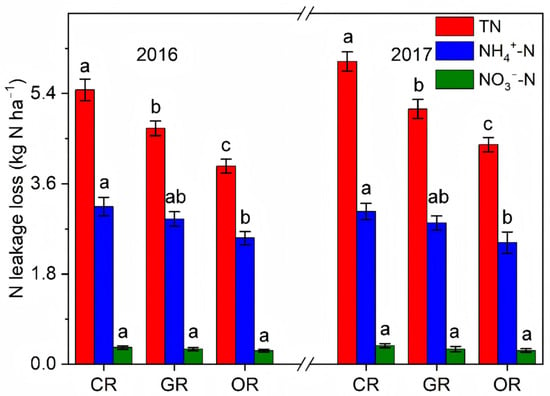
Rice–frog co-cultivation reduced nitrogen leaching relative to that for conventional rice cultivation in both trial years (Figure 1); TN leaching ranged from 3.95 to 6.03 kg N·ha−1 across the three patterns. Compared with those in CR, TN leaching losses in the GR and OR patterns were reduced by 14.82% and 28.45%, respectively. The NH4+-N leaching losses were 3.21 kg·ha−1, 2.64 kg·ha−1, and 1.94 kg·ha−1 for CR, GR, and OR, respectively. Relative to those in CR, NH4+-N leaching losses in OR decreased by 39.64%. In 2016, the NO3−-N leaching losses were 0.38 kg·ha−1 for CR, 0.34 kg·ha−1 for GR, and 0.28 kg·ha−1 for OR; in 2017, they were 0.44 kg·ha−1, 0.36 kg·ha−1, and 0.33 kg·ha−1. Compared with those in CR, NO3−-N leaching losses in the GR and OR patterns were reduced by 14.42% and 25.26%, respectively. Among the three rice cropping patterns, CR exhibited the highest leaching risk for TN, NH4+-N, and NO3−-N, followed by GR, while OR showed the lowest risk.
Figure 1.
N leaching in 2016 and 2017. Different lowercase letters denote significant differences between patterns within the same year (p < 0.05). The same convention is used below. Total nitrogen (TN), ammonium nitrogen (NH4+-N), nitrate nitrogen (NO3−-N), conventional rice cultivation (CR), green rice–frog co-cultivation (GR), and organic rice–frog co-cultivation (OR) are indicated.
3.2. Quantification of Archaeal amoA and Bacterial amoA Genes
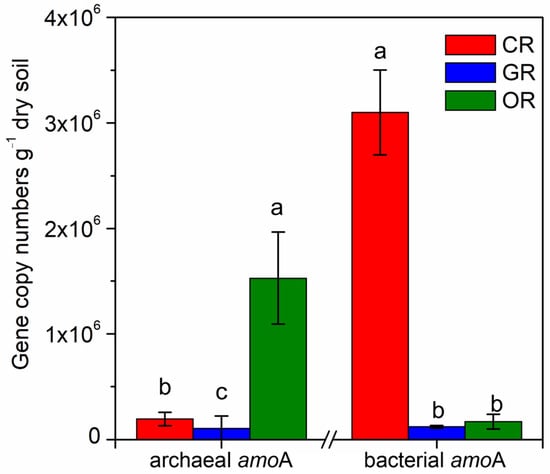
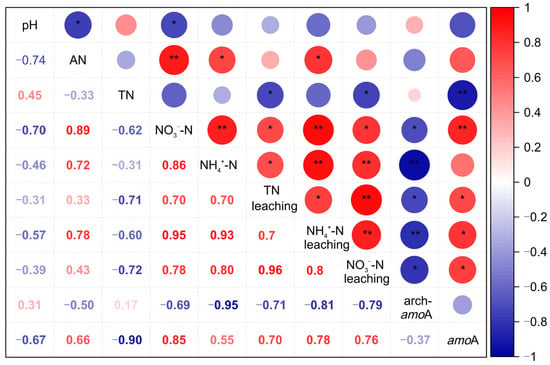
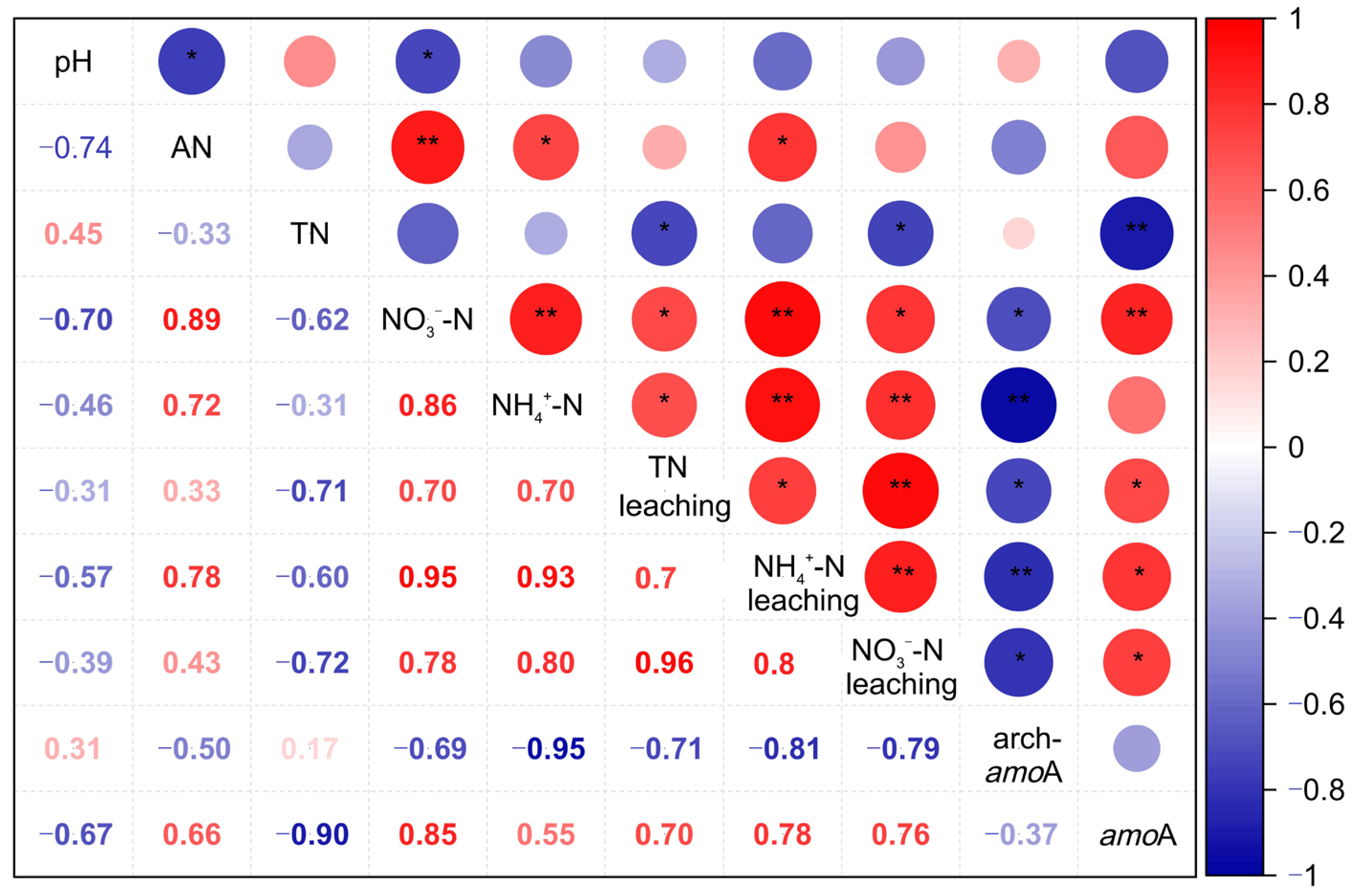
As shown in Figure 2, the abundances of the archaeal amoA and bacterial amoA genes ranged from 1.03 × 10⁵ to 1.53 × 10⁶ and from 1.19 × 10⁵ to 3.10 × 10⁶ copies g−1 dry soil, respectively. The two ammonia-oxidizer groups responded in opposite directions to rice–frog co-cultivation (Figure 2): relative to those in CR, AOA amoA copies in OR increased by 690.30%, whereas AOB amoA copies decreased by 96.16% in GR and 94.55% in OR. As shown in Figure 3, soil pH was negatively correlated with AN and NO3−-N. AN was positively correlated with TN (r = 0.33, p < 0.05) and with NH4+-N leaching losses (r = 0.78, p < 0.01) but was negatively correlated with NO3−-N leaching losses (r = 0.43, p < 0.05). AOA amoA copies exhibited strong negative correlations with TN leaching (r = −0.71, p < 0.05), NH4+-N leaching (r = −0.60, p < 0.01), and NO3−-N leaching (r = −0.72, p < 0.05), whereas AOB amoA copies exhibited strong positive correlations with soil TN (r = 0.33, p < 0.05), NH4+-N leaching (r = 0.78, p < 0.05), and NO3−-N leaching (r = 0.43, p < 0.05), suggesting that ammonia-oxidizing archaea activity was closely associated with nitrogen leaching losses. NR was positively correlated with soil TN (r = 0.45, p < 0.01) but negatively correlated with bacterial amoA copies (r = −0.67, p < 0.01).
Figure 2.
Archaeal amoA and bacterial amoA gene copies. Different lowercase letters denote significant differences between patterns (p < 0.05). amoA, ammonia monooxygenase subunit A gene; CR, conventional rice cultivation; GR, green rice–frog co-cultivation; OR, organic rice–frog co-cultivation.
Figure 3.
Correlation analysis for archaeal amoA and bacterial amoA gene copies and soil variables: soil total N (TN), soil nitrate N (NO3−-N), soil ammonium N (NH4+-N), soil available nitrogen (AN), total nitrogen leaching loss (TN leaching), nitrate N leaching loss (NO3−-N leaching), ammonium N leaching loss (NH4+-N leaching), arch-amoA and amoA gene copies, and soil nitrate reductase activity (NR). The color gradient represents Pearson correlation coefficients ranging from –1.0 (dark red, negative correlation) to +1.0 (dark blue, positive correlation), with white indicating no correlation (0); ** and * indicate significance at p < 0.01 and p < 0.05, respectively (two-tailed Pearson test). The size of a circle represents the magnitude of the correlation coefficient.
3.3. Within-Habitat Diversity and Relative Abundances of Major Phyla
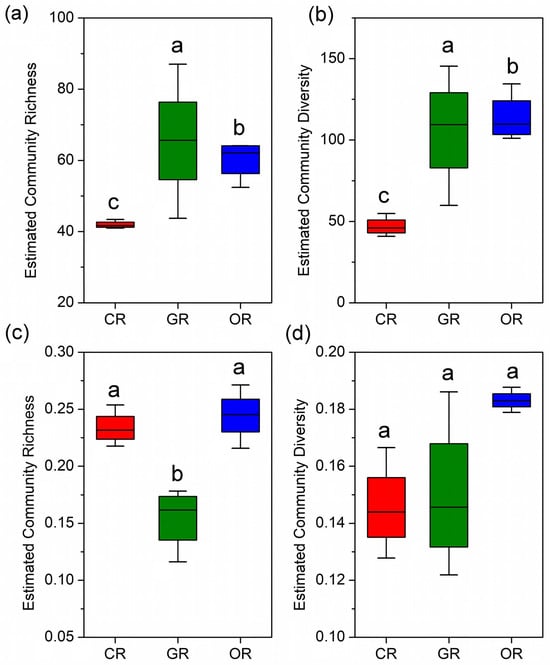
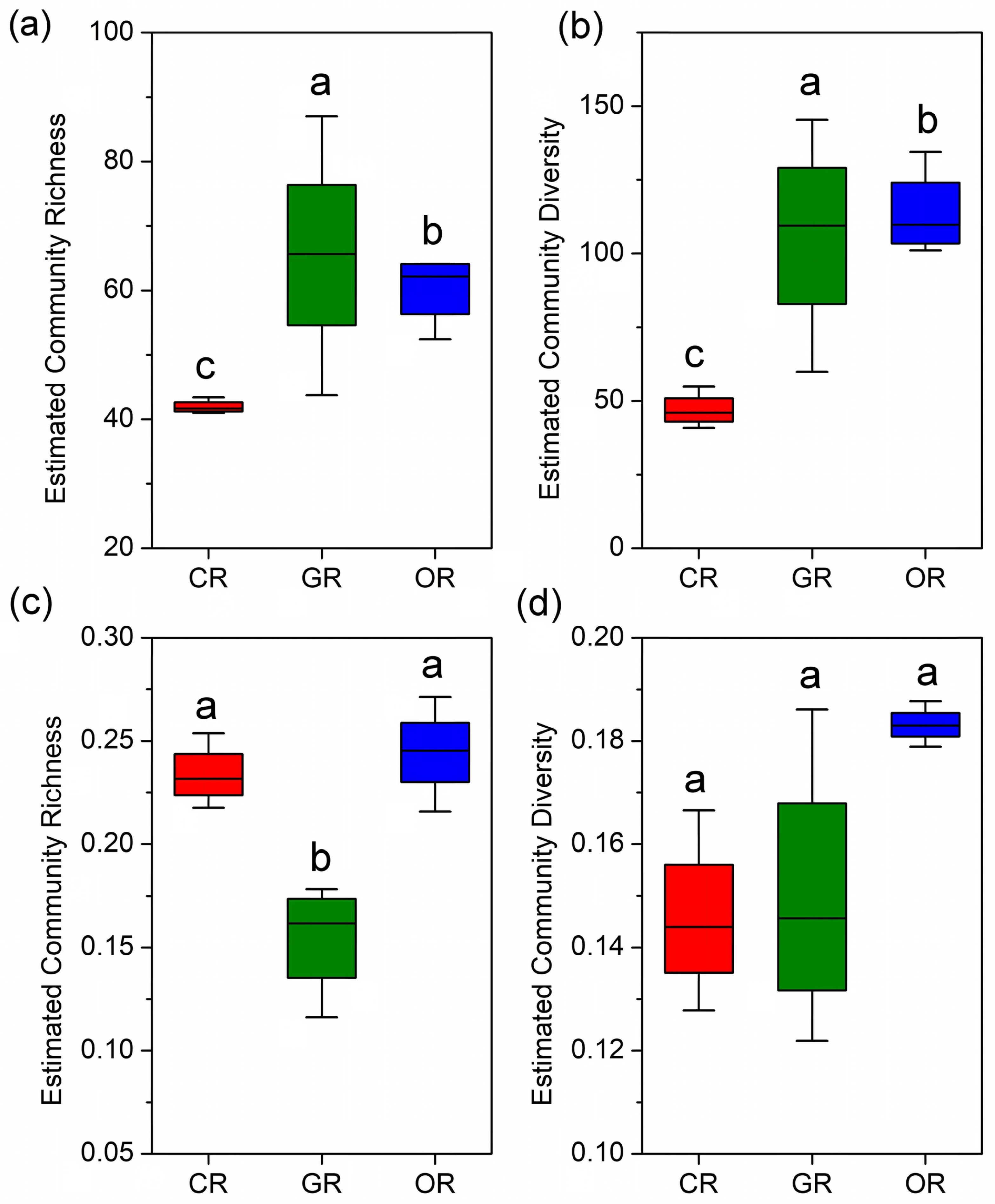
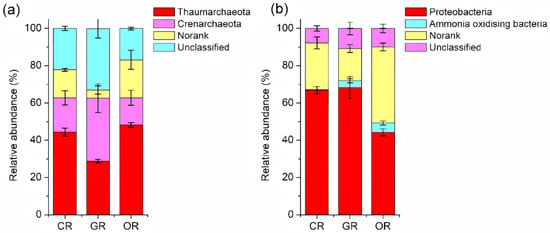
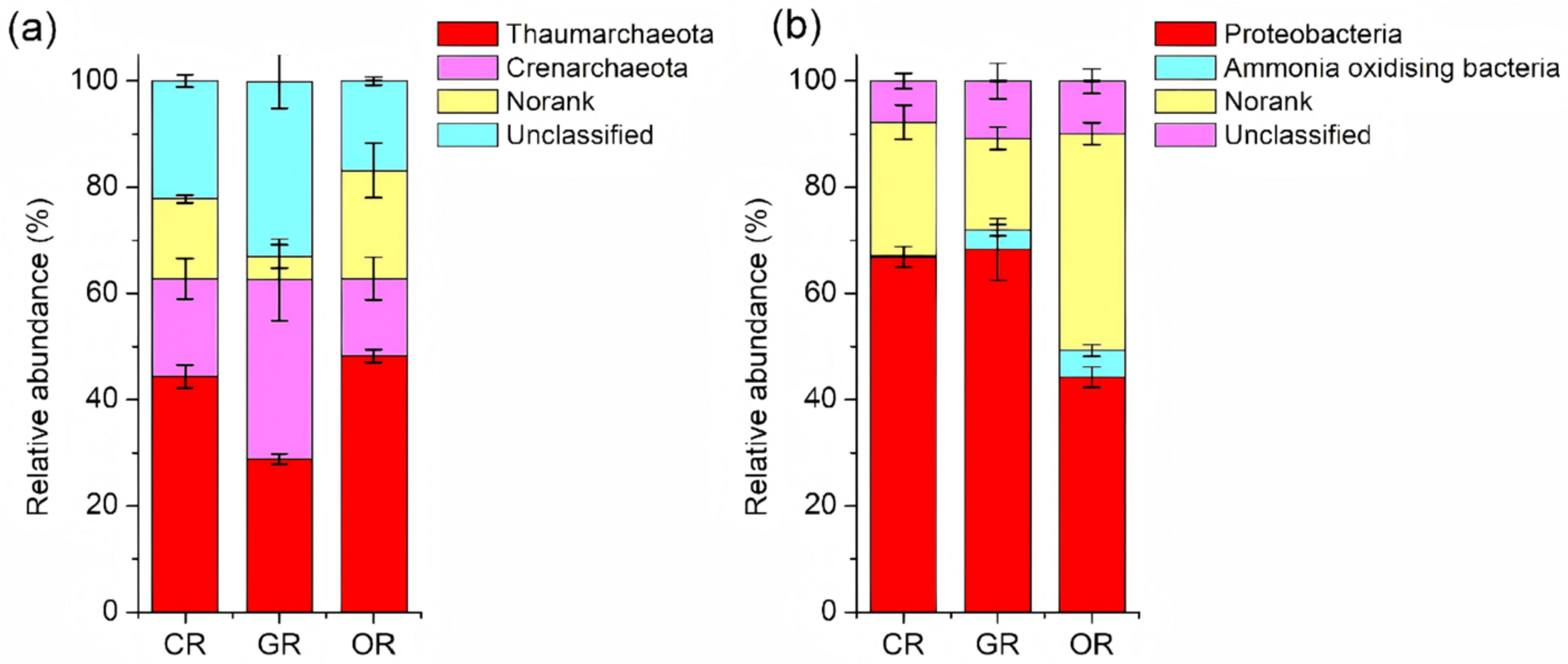
Rice–frog co-cultivation altered the composition of the ammonia-oxidizing communities at the phylum level. The richness of each soil sample was estimated by the abundance-based coverage estimator (ACE) index. The Simpson diversity index was adopted to represent the microbial diversity. The average estimated values of the community richness of AOA and AOB in the GR and OR groups were higher than those in CR (Figure 4). Soil microbial communities accompanied by differing soil functions changed across the three patterns (Figure 5). Thaumarchaeota (28.88~48.26%) and Crenarchaeota (14.57~33.71%) were the dominant phyla of AOA. The relative abundance of Thaumarchaeota was significantly higher in the OR group than in the GR and CR groups. However, the relative abundance of Crenarchaeota in the GR group was higher than that in OR and CR. Proteobacteria (44.24~68.26%) were the dominant phylum of AOB. The relative abundance of Proteobacteria was significantly lower in the OR group than in the CR group; thus, OR shifted the AOB community toward a lower share of the dominant phylum.
Figure 4.
Within-sample (α-diversity) measurements among CR, GR and OR. Different lowercase letters denote significant differences between patterns (p < 0.05). (a) Estimated species richness calculated as the abundance-based coverage estimator (ACE) index of AOA; (b) ACE index of AOB; (c) estimated species diversity calculated as the Simpson index of AOA; (d) Simpson index of AOB. AOA, ammonia-oxidizing archaea; AOB, ammonia-oxidizing bacteria; ACE, abundance-based coverage estimator; CR, conventional rice cultivation; GR, green rice–frog co-cultivation; OR, organic rice–frog co-cultivation.
Figure 5.
Relative abundance of microbial populations at the phylum level. (a) AOA; (b) AOB. AOA, ammonia-oxidizing archaea; AOB, ammonia-oxidizing bacteria; CR, conventional rice cultivation; GR, green rice–frog co-cultivation; OR, organic rice–frog co-cultivation.
3.4. OTUs Enriched and Depleted by Rice–Frog Co-Cultivation
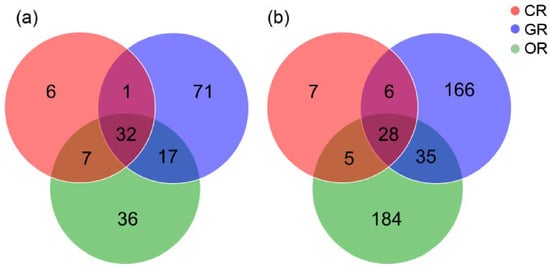
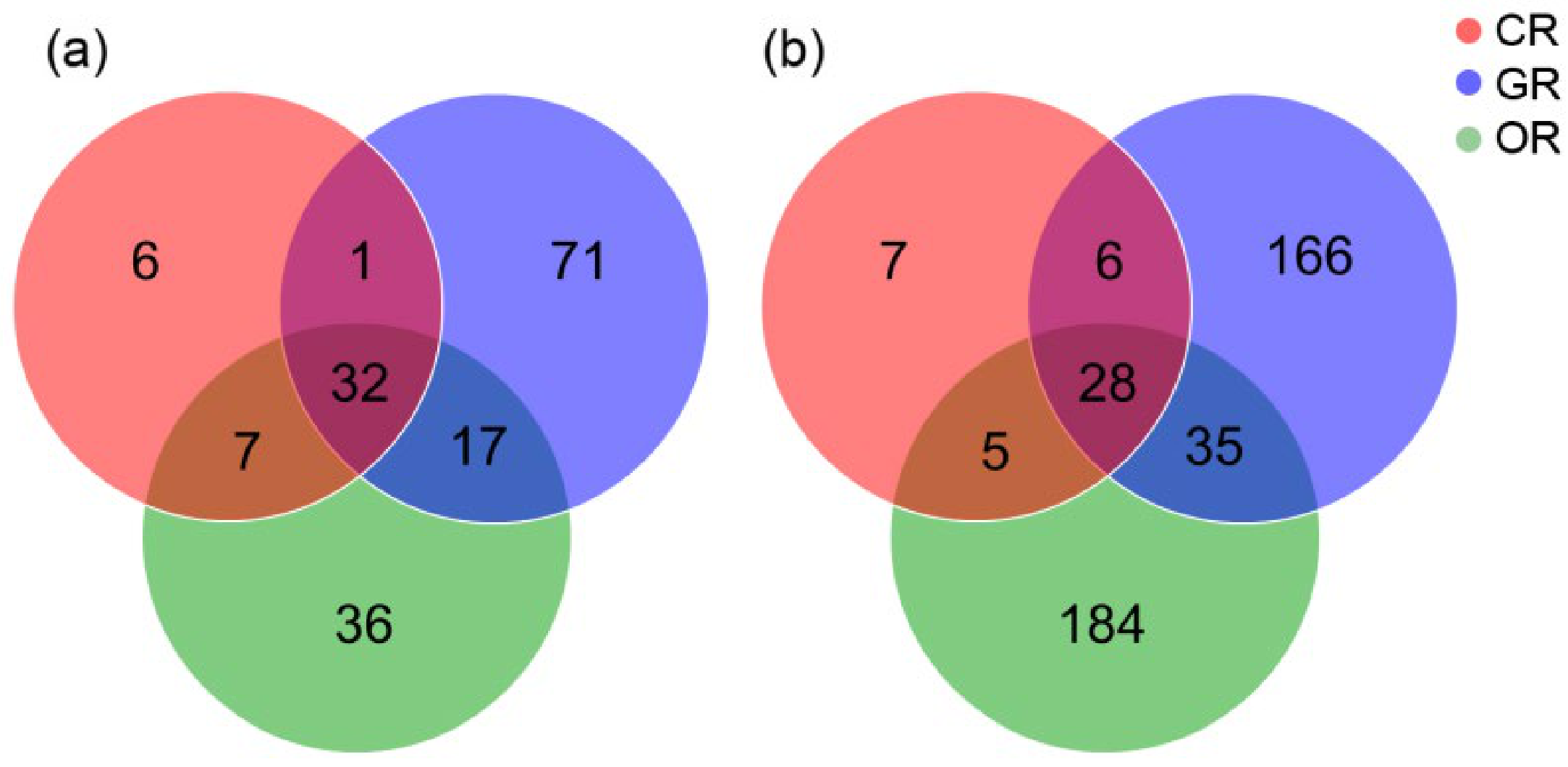
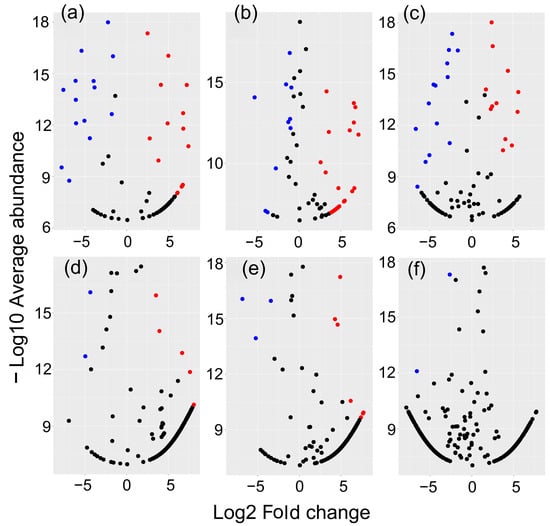
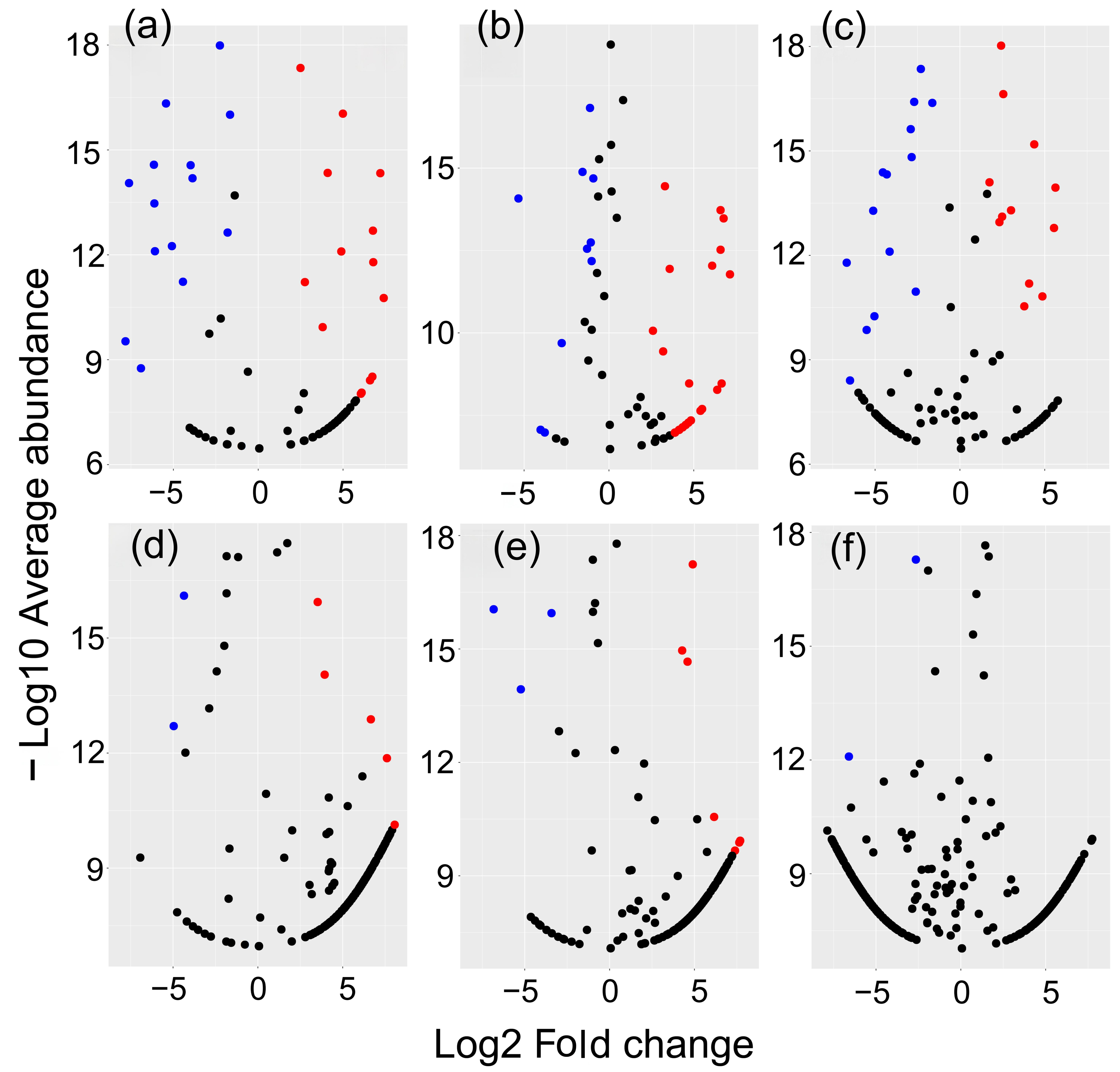
OTUs with an abundance below 0.001% of total sequencing were removed to guarantee the reliability of the analysis. OTU levels were then compared across the three patterns to build an OTU abundance matrix. Each sample is visually presented through a Venn diagram of shared OTUs. As shown in Figure 6, the number of OTUs across AOA detected in both GR and OR was 50, which was the largest. The number of OTUs detected in both CR and GR was 33, which was the lowest. The number of OTUs shared by all three groups was 32. For AOB, GR and OR shared the largest number of OTUs, at 63, followed by GR and CR at 34; CR and OR had the lowest number of OTUs, at 33, and the number of common OTUs among the three patterns was 28. The abundance of bacteria, archaea and fungi across the three rice treatment groups was analyzed with the DESeq2 package. The abundance was compared pairwise. The “enriched OTUs” (eOTUs) and the “depleted OTUs” (dOTUs) represented the increase or decrease in OTUs whose relative abundance differed by more than twofold among the rhizosphere soils. It can be seen from Figure 7 that the trends of the changes in the AOA and AOB communities in GR and OR tended to be consistent. Compared with CR, the numbers of AOB dOTUs in GR and OR were 15 and 10, and the numbers of AOA dOTUs were 22 and 30, respectively. The eOTUs belonged to Candidatus Nitrosotalea and unclassified ammonia-oxidizing Crenarchaeote. The numbers of AOB elimination OTUs for GR and OR were five and five, respectively, and the numbers of rich OTUs were 11 and eight, respectively. There were 11, eight and four eOTUs and five, five and eight dOTUs in AOB.
Figure 6.
Numbers of differentially enriched OTUs in paddy soil. (a) AOA; (b) AOB. OTU, operational taxonomic unit; AOA, ammonia-oxidizing archaea; AOB, ammonia-oxidizing bacteria; CR, conventional rice cultivation; GR, green rice–frog co-cultivation; OR, organic rice–frog co-cultivation.
Figure 7.
(a) GR vs. CR, AOA; (b) OR vs. CR, AOA; (c) OR vs. GR, AOA; (d) GR vs. CR, AOB; (e) OR vs. CR, AOB; (f) OR vs. GR, AOB. Red, blue, and black dots indicate enriched, depleted, and nonsignificant OTUs, respectively. AOA, ammonia-oxidizing archaea; AOB, ammonia-oxidizing bacteria; CR, conventional rice cultivation; GR, green rice–frog co-cultivation; OR, organic rice–frog co-cultivation.
3.5. Linkages Between Soil Properties and AOA or AOB
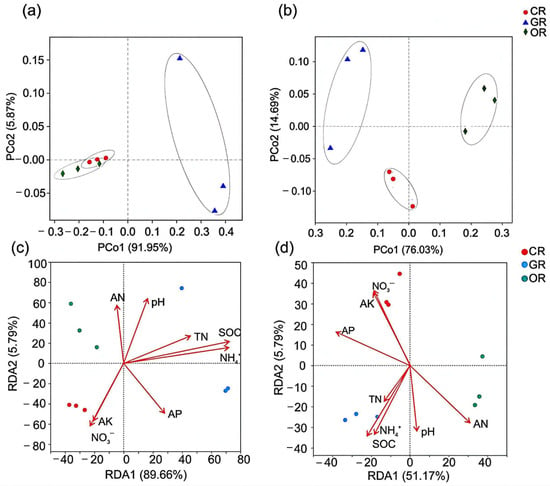
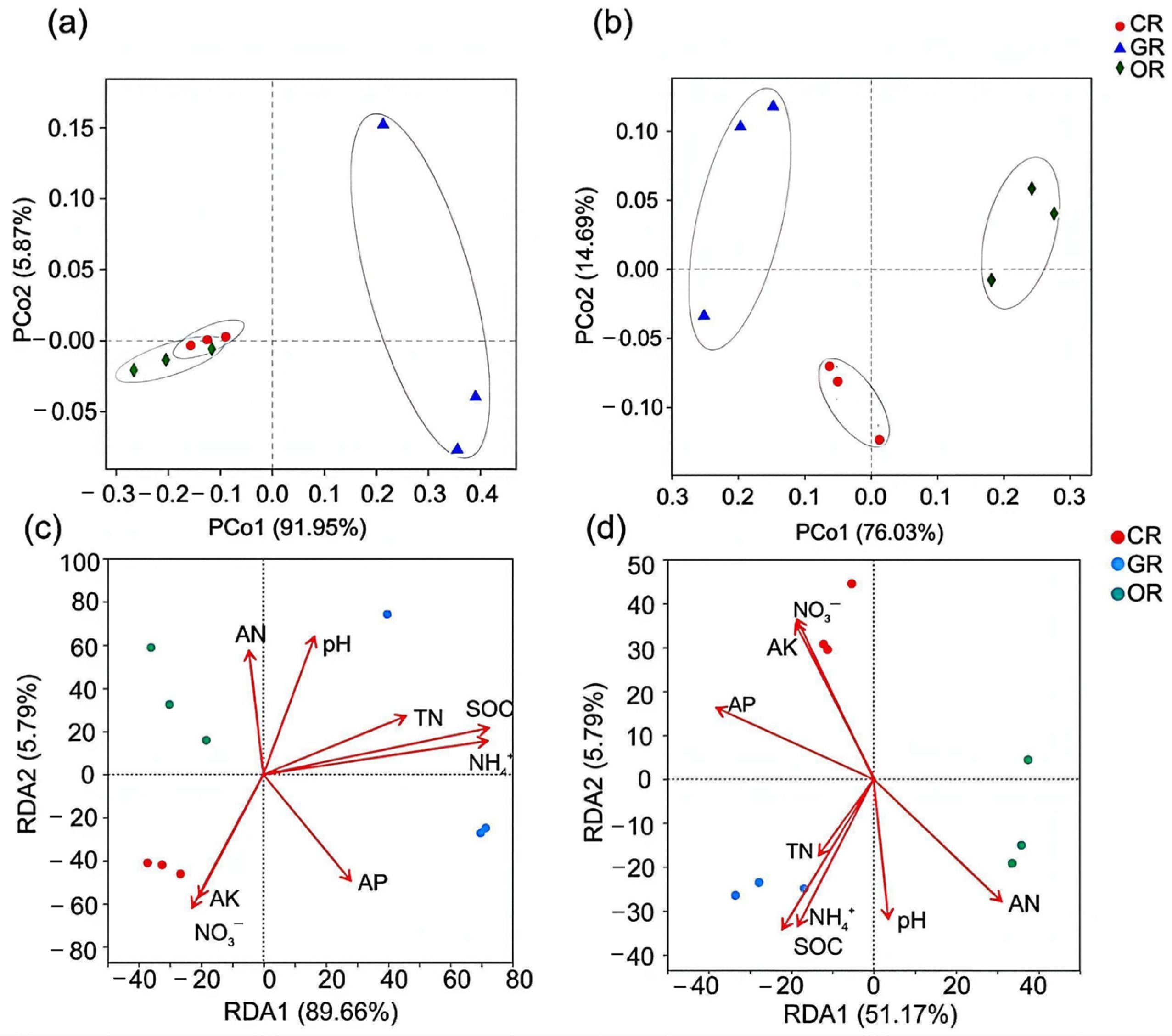
PCoA with Bray–Curtis distances for AOA showed that the community distinctly separated GR from CR and OR along the first principal coordinate (Figure 8a). The community of AOB distinctly separated GR and OR from CR along the first principal coordinate and separated OR from GR along the second principal coordinate (Figure 8b). These results indicated that the GR treatment influenced both the AOA and AOB communities, whereas the AOB community was affected by the OR treatment (Figure 8c,d). RDA was used to quantify the influences of edaphic factors (i.e., pH, SOC, AN, TN, NH4+, NO3− and AP) on AOA and AOB compositions. NH4+, SOC, pH and TN were the constrained factors that considerably contributed to the AOA community (p < 0.05) and the AOB community (p < 0.05). NH4+ and SOC were the determinants in the AOA community, whereas SOC was the determinant in the AOB community (Figure 8c,d). These results indicated that the assembly of the AOA and AOB communities in soil was mainly driven by NH4+-N and SOC under long-term rice–frog co-cultivation.
Figure 8.
(a,b) PCoA of AOA and AOB community variations among CR, GR and OR. (c,d) RDA based on Bray–Curtis dissimilarities of AOA and AOB communities and soil properties. AOA, ammonia-oxidizing archaea; AOB, ammonia-oxidizing bacteria; PCoA, principal coordinate analysis; RDA, redundancy analysis. Red arrows denote quantitative environmental factors, and the length of each arrow indicates the strength of that factor’s influence on the species data. AN, available nitrogen; AK, available potassium; NO3−, nitrate; AP, available phosphorus; NH4+, ammonium; pH, soil pH; TN, total nitrogen; SOC, soil organic carbon.
The results of the PCoA showed that the AOA and AOB communities of CR, GR, and OR were clearly separated from one another. The bacterial community structure differed significantly among the three treatments. Among the effects of soil environmental factors on the structure of rice field bacterial communities, the first and second principal component scores of the AOA community were 89.66% and 5.79%, and those of the AOB community were 51.17% and 44.51%, both of which had a high degree of interpretation. Among the environmental factors, NH4+ and SOC were important determinants (p < 0.05). The results indicate that GR and OR altered soil SOC and NH4+ contents, which were associated with shifts in AOA and AOB community composition and with lower nitrogen leaching losses.
4. Discussion
Rice–frog co-cultivation can improve soil physicochemical properties and reduce chemical fertilizer input and N leaching losses. Consistently with previous ecological rice farming studies, this study showed that rice–frog co-cultivation reduced the leaching of TN, NH4+-N, and NO3−-N in paddy soil [21,22]. In the present study, the annual TN leaching loss was reduced by 0.83 kg N ha−1 in the GR treatment and 1.35 kg N ha−1 in the optimized OR treatment. This mitigation effect can be attributed to enhanced microbial nitrogen immobilization during organic fertilizer mineralization, which effectively stabilizes mineral nitrogen, reduces soil NO3−-N accumulation, and ultimately lowers soil nitrogen leaching potential [29,30]. Soil nitrogen release characteristics are predominantly governed by the fertilizer type and application rate, and our results are consistent with previous findings that organic fertilizer input favors soil nitrogen retention [31]. The OR treatment adopted full organic fertilizer substitution, whereby soil nitrogen mainly existed in stable organic forms with low water solubility, thereby substantially decreasing nitrogen release and leaching risk in the paddy field. Nevertheless, the internal transformation pathways of soil nitrogen under rice–frog co-cultivation remain insufficiently clarified, and the microbial-mediated regulatory mechanisms require further in-depth exploration.
Rice–frog co-cultivation induced divergent responses in AOA and AOB amoA gene abundance. The OR treatment significantly increased archaeal amoA copy numbers relative to conventional monoculture (CR), whereas both GR and OR markedly suppressed bacterial amoA abundance. This divergent shift is consistent with the consensus that organic-centered soil management preferentially promotes AOA rather than AOB proliferation. Similarly, Liu et al. reported elevated AOA abundance and inhibited AOB growth under long-term organic fertilization in paddy soils, which was tightly associated with improved soil organic carbon (SOC) and altered ammonium availability [32]. Correlation analysis further confirmed distinct functional partitioning: nitrogen leaching losses (TN, NH4+-N, NO3−-N) were negatively correlated with AOA abundance but positively correlated with AOB abundance. Soil alkaline nitrogen was negatively related to both nitrogen leaching fluxes and AOB abundance, and soil NO3−-N concentration was a critical factor regulating AOB population size. The high chemical fertilizer input under conventional rice cultivation triggers rapid urea hydrolysis and surface NH4+-N accumulation, and the re-adsorption of excessive NH4+-N further stimulates AOB proliferation [33]. Enhanced AOB abundance accelerates soil nitrification, thereby elevating NO3−-N accumulation and subsequent nitrogen leaching [34], which is consistent with the highest nitrogen loss observed in CR. In contrast, the increased SOC content in the optimized rice–frog system largely promoted AOA growth. In addition, AOA exhibits substantially lower substrate affinity for NH4+-N compared with AOB [27]. The suppression of AOB dominance and the enrichment of AOA jointly reduced soil inorganic nitrogen accumulation, thereby minimizing nitrogen leaching in the GR and OR paddies.
Nitrification is a core biogeochemical process governing terrestrial nitrogen cycling and nitrogen loss, with ammonia monooxygenase (AMO) acting as the rate-limiting enzyme. Traditionally, AOB were considered the sole microbial driver of ammonia oxidation in aquatic and terrestrial ecosystems. This understanding was updated after functional amoA genes were identified in mesophilic archaea [35]. AOA have since been documented as dominant ammonia oxidizers in various agricultural and undisturbed soils [36] and were phylogenetically classified into the newly defined phylum Thaumarchaeota [37]. In this study, both AOA and AOB community richness and diversity were higher in GR and OR than in CR, indicating greater soil microbial community complexity under integrated rice–frog farming. This result is consistent with findings from other rice-based co-cultivation systems; for example, Xu et al. illustrated that rice–crayfish cultivation enhanced soil bacterial diversity and network stability, verifying the positive effects of ecological planting modes on soil microbiomes [15]. No significant difference in microbial diversity was detected between GR and OR. Continuous single chemical fertilization reduces AOA and AOB diversity, which potentially deteriorates soil biological quality [11]. In comparison, organic fertilization and combined organic–inorganic fertilization can effectively ameliorate soil microenvironments and stabilize microbial communities [38]. The metabolic divergence between AOA and AOB may further explain their adaptive advantages under organic farming conditions. Unlike AOB, which fix carbon via the energy-costly Calvin cycle, AOA utilize the 3-hydroxypropionate/4-hydroxybutyrate pathway for autotrophic carbon fixation with higher energy efficiency [39,40]. Moreover, AOA are capable of organic carbon metabolism, which facilitates organic carbon utilization in paddy soils [41]. In the current rice–frog system, organic fertilizer application and frog-derived excrement inputs increased the soil organic matter content, which consequently enriched the relative abundance of Thaumarchaeota and optimized the AOA community structure.
Soil inorganic nitrogen fractions are core determinants governing the assembly and succession of ammonia-oxidizing microbial communities in paddy ecosystems. AOA and AOB occupy distinct niches defined by soil nitrogen availability. He et al. also confirmed that nitrogen input induced niche separation among AOA, AOB, and comammox communities in paddy soils, with functional groups responding differentially to soil chemical properties [8]. Previous studies have demonstrated that AOB dominate nitrification processes in rice rhizosphere soils and that soil nitrification potential is strongly correlated with bacterial amoA abundance [42,43,44]. That pattern is not directly comparable with the present system: under rice–frog co-cultivation the AOA:AOB balance shifted toward AOA, so the relative functional contribution of the two groups in these soils remains to be established, because nitrification rates were not measured here. Accordingly, the ambient NH4+-N concentration determines the functional contribution of different ammonia oxidizers to soil nitrification. Multiple edaphic parameters, including NH4+-N, NO3−-N, TN, and SOC, have been widely reported to shape AOA and AOB community structures in paddy fields [9,38]. Consistently with these studies, our results indicate that NH4+-N and SOC availability were the main environmental filters associated with AOA and AOB community assembly under rice–frog co-cultivation.
5. Conclusions
Compared with conventional rice cultivation (CR), rice–frog co-cultivation patterns (GR and OR) effectively reduced the leaching losses of soil TN, NH4+, and NO3−. In particular, GR decreased them by 14.82% across both years compared with CR, and OR decreased them by 28.45%. TN was lost in the form of NH4+-N at a rate of approximately 58.10% with CR, 56.20% with GR, and 49.02% with OR in both years. Compared with conventional rice monoculture, rice–frog co-cultivation increased the ɑ-diversity and richness of soil AOA and AOB communities. It significantly enhanced the abundance of AOA amoA genes but sharply reduced AOB amoA abundance. Distinct niche differentiation occurred in ammonia-oxidizing microorganisms: OR enriched AOA-dominant Thaumarchaeota and functional Candidatus Nitrosotalea OTUs while depleting AOB-dominant Proteobacteria, greatly reshaping the AOA and AOB community composition. AOA abundance was negatively correlated with multi-form nitrogen leaching losses, whereas AOB abundance was positively correlated with nitrogen leaching risks, indicating their opposite associations with nitrogen leaching. Soil NH4+ and SOC were the important environmental factors driving the assembly and succession of soil AOA and AOB communities under rice–frog co-cultivation. In conclusion, optimized rice–frog co-cultivation improves the soil microenvironment, reshapes the ammonia-oxidizing microbial community structure, and mitigates paddy nitrogen non-point-source pollution, making it an effective and sustainable ecological rice cultivation mode.
Author Contributions
Conceptualization, X.Y., P.W. and Z.S.; methodology, X.Y. and Z.S.; formal analysis and investigation, X.Y. and P.W.; writing—original draft preparation, X.Y. and Z.S.; writing—review and editing, X.Y., P.W. and Z.S.; resources, Z.S.; supervision, Z.S. All authors have read and agreed to the published version of the manuscript.
Funding
This study was financially supported by the Agriculture Research System of Shanghai, China (Grant No. 202203), and the 2025 Shanghai Municipal Grassroots Science Popularization Action Plan Project (JCKP2025-29), and was conducted at the Shanghai Qingpu Regenerative Agriculture Science and Technology Field Station.
Data Availability Statement
The raw sequencing reads generated during this study have been deposited in the National Center for Biotechnology Information (NCBI) Sequence Read Archive (SRA) under the BioProject accession number PRJNA631906. Other datasets generated and analyzed during the current study are available from the corresponding author on reasonable request.
Acknowledgments
We thank Shanghai Qingpu Modern Agricultural Park for providing an experimental base and for paddy field management.
Conflicts of Interest
The authors declare no conflicts of interest.
References
- Zhang, J.; Jiang, L.; Yu, L.; Huan, X.; Zhou, L.; Wang, C.; Jin, J.; Zuo, X.; Wu, N.; Zhao, Z.; et al. Rice’s trajectory from wild to domesticated in East Asia. Science 2024, 384, 901–906. [Google Scholar] [CrossRef] [Scilit]
- Shang, Y.W.; Yin, Y.L.; Ying, H.; Tian, X.S.; Cui, Z.L. Updated loss factors and high-resolution spatial variations for reactive nitrogen losses from Chinese rice paddies. J. Environ. Manag. 2024, 358, 120752. [Google Scholar] [CrossRef] [Scilit]
- Ward, M.H.; Jones, R.R.; Brender, J.D.; de Kok, T.M.; Weyer, P.J.; Nolan, B.T.; Villanueva, C.M.; van Breda, S.G. Drinking water nitrate and human health: An updated review. Int. J. Environ. Res. Public Health 2018, 15, 1557. [Google Scholar] [CrossRef] [Scilit]
- Liu, X.; Fu, Y.J.; Li, L.; Zhou, F.; Wen, H.; Yan, Z.F.; Wang, L.C.; Wong, W.W.; Liu, C.Q.; Li, S.L. Chronic nitrogen legacy in the aquifers of China. Commun. Earth Environ. 2025, 6, 58. [Google Scholar] [CrossRef] [Scilit]
- Chen, X.F.; Chuai, X.M.; Yang, L.Y. Status quo, historical evolution and causes of eutrophication in lakes in typical lake regions of China. J. Ecol. Rural Environ. 2014, 30, 438–443. [Google Scholar]
- Guan, Q.; Feng, L.; Hou, X.J.; Schurgers, G.; Zheng, Y.; Tang, J. Eutrophication changes in fifty large lakes on the Yangtze Plain of China derived from MERIS and OLCI observations. Remote Sens. Environ. 2020, 246, 111890. [Google Scholar] [CrossRef] [Scilit]
- Qiao, J.; Yang, L.; Yan, T.; Xue, F.; Zhao, D. Nitrogen fertilizer reduction in rice production for two consecutive years in the Taihu Lake area. Agric. Ecosyst. Environ. 2012, 146, 103–112. [Google Scholar] [CrossRef] [Scilit]
- He, X.H.; Tian, J.M.; Zhang, Y.Q.; Zhao, Z.H.; Cai, Z.C.; Wang, Y.H. Attribution and driving force of nitrogen losses from the Taihu Lake Basin by the InVEST and GeoDetector models. Sci. Rep. 2023, 13, 7440. [Google Scholar] [CrossRef] [Scilit]
- Zheng, C.; Zhang, Z.; Wu, Y.; Mwiya, R. Response of vertical migration and leaching of nitrogen in percolation water of paddy fields under water-saving irrigation and straw return conditions. Water 2019, 11, 868. [Google Scholar] [CrossRef] [Scilit]
- Fu, J.; Jian, Y.; Wang, X.; Li, T.; Zhang, X. Declines in nutrient losses from China’s rice paddies jointly driven by fertilizer application and extreme rainfall. Agric. Ecosyst. Environ. 2023, 353, 108537. [Google Scholar] [CrossRef] [Scilit]
- Chen, B.; Guo, L.; Tang, J.; Li, Y.; Li, C. Comprehensive impacts of different integrated rice-animal co-culture systems on rice yield, nitrogen fertilizer partial factor productivity and nitrogen losses: A global meta-analysis. Sci. Total Environ. 2024, 915, 169994. [Google Scholar] [CrossRef] [Scilit]
- Lo, T.H.; Rudnick, D.R.; Burr, C.A.; Stockton, M.C.; Werle, R. Approaches to evaluating grower irrigation and fertilizer nitrogen amount and timing. Agric. Water Manag. 2019, 213, 693–706. [Google Scholar] [CrossRef] [Scilit]
- Chen, S.; Liu, M.; Zhang, Y.; Wu, H. Global patterns and controls of yield and nitrogen use efficiency in rice. Sci. Total Environ. 2023, 898, 165484. [Google Scholar] [CrossRef] [Scilit]
- Ge, L.; Sun, Y.; Wang, X.; Liu, Y.; Chen, X. Ecosystem sustainability of rice and aquatic animal co-culture systems and a synthesis of its underlying mechanisms. Sci. Total Environ. 2023, 880, 163314. [Google Scholar] [CrossRef] [Scilit]
- Xu, H.; Wang, D.; Li, X.; Li, J.; Xu, Y.; Xu, Z. Cultivating crayfish (Procambarus clarkii) significantly enhances the quantity and diversity of soil microorganisms: Evidence from the comparison of rice-wheat and rice-crayfish rotation models. Front. Microbiol. 2025, 16, 1528883. [Google Scholar] [CrossRef] [Scilit]
- Zhou, J.; Chen, H.; Tao, L.; Li, Y.; Zhang, Y. The impact of rice–frog co-cultivation on greenhouse gas emissions of reclaimed paddy fields. Biology 2025, 14, 861. [Google Scholar] [CrossRef] [Scilit]
- Fang, K.; Yi, X.; Dai, W.; Gao, H.; Cao, L. Effects of integrated rice–frog farming on paddy field greenhouse gas emissions. Int. J. Environ. Res. Public Health 2019, 16, 1930. [Google Scholar] [CrossRef] [Scilit]
- Bashir, M.A.; Liu, J.; Geng, Y.; Wang, H.; Pan, J.; Zhang, D.; Rehim, A.; Aon, M.; Liu, Q. Co-culture of rice and aquatic animals: An integrated system to achieve production and environmental sustainability. J. Clean. Prod. 2020, 249, 119310. [Google Scholar] [CrossRef] [Scilit]
- Ji, Z.J.; Zhao, L.F.; Zhang, T.J.; Dai, R.X.; Tang, J.J.; Hu, L.L.; Chen, X. Coculturing rice with aquatic animals promotes ecological intensification of paddy ecosystem: A review. J. Plant Ecol. 2023, 16, 14. [Google Scholar] [CrossRef] [Scilit]
- Yi, X.; Yi, K.; Fang, K.; Gao, H.; Dai, W.; Cao, L. Microbial community structures and important associations between soil nutrients and the responses of specific taxa to rice-frog co-cultivation. Front. Microbiol. 2019, 10, 1752, Erratum in Front. Microbiol. 2019, 10, 2206. [Google Scholar] [CrossRef] [Scilit]
- Sha, Z.; Chu, Q.; Zhao, Z.; Yue, Y.; Lu, L.; Yuan, J.; Cao, L. Variations in nutrient and trace element composition of rice in an organic rice–frog co-culture system. Sci. Rep. 2017, 7, 15706. [Google Scholar] [CrossRef] [Scilit]
- Yi, X.; Yuan, J.; Zhu, Y.; Yi, X.; Zhao, Q.; Fang, K.; Cao, L. Comparison of the abundance and community structure of N-cycling bacteria in paddy rhizosphere soil under different rice cultivation patterns. Int. J. Mol. Sci. 2018, 19, 3772. [Google Scholar] [CrossRef] [Scilit]
- Wang, R.; Zhu, J.; Jin, T.; Liu, Y. Characteristics of ammonia oxidation microbial abundance and community structure in paddy soils of rice–crayfish symbiosis farming system. J. Plant Nutr. Fertil. 2019, 25, 1887–1899. [Google Scholar]
- Yang, Z.; Yao, Y.; Sun, M.; Li, G.; Zhu, J. Effects of rice–crayfish co-culture on ammonia-oxidizing microbial abundance and community structure. Aquat. Ecol. 2023, 57, 21–33. [Google Scholar] [CrossRef] [Scilit]
- Chu, X.; Lü, W.; Fan, H.; Bai, N.; Zheng, X.; Li, S.; Zhang, J.; Zhang, H.; Zhang, Y.; Zhang, H. Effects of the rice-eel breeding model on the diversity and structure of soil ammonia-oxidizing microbial communities. J. Agro-Environ. Sci. 2024, 43, 1350–1359. [Google Scholar]
- Könneke, M.; Bernhard, A.; José, R.; Walker, C.; Waterbury, J.; Stahl, D. Isolation of an autotrophic ammonia-oxidizing marine archaeon. Nature 2005, 437, 543–546. [Google Scholar] [CrossRef] [Scilit]
- Qin, W.; Wei, S.; Zheng, Y.; Choi, E.; Li, X.; Johnston, J.; Wan, X.; Abrahamson, B.; Flinkstrom, Z.; Wang, B.; et al. Ammonia-oxidizing bacteria and archaea exhibit differential nitrogen source preferences. Nat. Microbiol. 2024, 9, 524–536. [Google Scholar] [CrossRef] [Scilit]
- Hutchins, D.; Capone, D. The marine nitrogen cycle: New developments and global change. Nat. Rev. Microbiol. 2022, 20, 401–414, Erratum in Nat. Rev. Microbiol. 2022, 20, 444. [Google Scholar] [CrossRef] [Scilit]
- Dai, X.; Guo, Q.; Song, D.; Zhou, W.; Liu, G.; Liang, G.; He, P.; Sun, G.; Yuan, F.; Liu, Z. Long-term mineral fertilizer substitution by organic fertilizer and the effect on the abundance and community structure of ammonia-oxidizing archaea and bacteria in paddy soil of south China. Eur. J. Soil Biol. 2021, 103, 103348. [Google Scholar] [CrossRef] [Scilit]
- Chen, Z.; Wang, H.; Liu, X.; Zhao, X.; Lu, D.; Zhou, J.; Li, C. Changes in soil microbial community and organic carbon fractions under short-term straw return in a rice-wheat cropping system. Soil Tillage Res. 2017, 165, 121–127. [Google Scholar] [CrossRef] [Scilit]
- Yue, Y.; Sha, Z.; Zhao, Z.; Lu, X.; Zhang, J.; Zhao, Q.; Cao, L. Effects of rice cultivation patterns on nitrogen and phosphorus leaching and runoff losses. Chin. J. Eco-Agric. 2014, 22, 1424–1432. [Google Scholar]
- Liu, H.; Yao, C.; Yang, H.; Liu, H.; Tao, Z.; Chen, S.; Mi, W. Soil depth and fertilization had more influence on comammox Nitrospira and ammonia-oxidizing archaea communities than ammonia-oxidizing bacteria in an acidic paddy soil. Appl. Soil Ecol. 2025, 206, 105885. [Google Scholar] [CrossRef] [Scilit]
- Jiang, X.; Hou, X.; Zhou, X.; Xin, X.; Wright, A.; Jia, Z. pH regulates key players of nitrification in paddy soils. Soil Biol. Biochem. 2015, 81, 9–16. [Google Scholar] [CrossRef] [Scilit]
- Fierer, N.; Bradford, M.A.; Jackson, R.B. Toward an ecological classification of soil bacteria. Ecology 2007, 88, 1354–1364. [Google Scholar] [CrossRef] [Scilit]
- Treusch, A.H.; Leininger, S.; Kletzin, A.; Schuster, S.C.; Klenk, H.P.; Schleper, C. Novel genes for nitrite reductase and Amo-related proteins indicate a role of uncultivated mesophilic crenarchaeota in nitrogen cycling. Environ. Microbiol. 2005, 7, 1985–1995. [Google Scholar] [CrossRef] [Scilit]
- Yarwood, S.; Brewer, E.; Yarwood, R.; Lajtha, K.; Myrold, D. Soil microbe active community composition and capability of responding to litter addition after 12 years of no inputs. Appl. Environ. Microbiol. 2013, 79, 1385–1392. [Google Scholar] [CrossRef] [Scilit]
- Pester, M.; Schleper, C.; Wagner, M. The Thaumarchaeota: An emerging view of their phylogeny and ecophysiology. Curr. Opin. Microbiol. 2011, 14, 300–306. [Google Scholar] [CrossRef] [Scilit]
- Sun, J.; Rengel, Z.; Zhou, Y.; Li, H.; Zhang, A. Ammonia-oxidizing archaea bacteria (AOB) and comammox drive the nitrification in alkaline soil under long-term biochar and N fertilizer applications. Appl. Soil Ecol. 2024, 193, 105124. [Google Scholar] [CrossRef] [Scilit]
- Nie, S.A.; Lei, X.M.; Zhao, L.X.; Brookes, P.C.; Wang, F.; Chen, C.R.; Yang, W.H.; Xing, S.H. Fungal communities and functions response to long-term fertilization in paddy soils. Appl. Soil Ecol. 2018, 130, 251–258. [Google Scholar] [CrossRef] [Scilit]
- Walker, C.B.; de la Torre, J.R.; Klotz, M.G.; Urakawa, H.; Pinel, N.; Arp, D.J.; Brochier-Armanet, C.; Chain, P.S.G.; Chan, P.P.; Gollabgir, A.; et al. Nitrosopumilus maritimus genome reveals unique mechanisms for nitrification and autotrophy in globally distributed marine crenarchaea. Proc. Natl. Acad. Sci. USA. 2010, 107, 8818–8823. [Google Scholar] [CrossRef] [Scilit]
- Wu, C.; Tang, X.; Tan, C.; Sun, T.; Zeng, Y.; Liu, Y.; Liu, Y.; Li, Y.; Liang, Y.; Yin, C. Long-term substitution of chemical fertilizer with organic manure enhances the activity and autotrophic growth of ammonia-oxidizing archaea and comammox nitrospira in paddy soil. J. Environ. Manag. 2025, 396, 127816. [Google Scholar] [CrossRef] [Scilit]
- Bowatte, S.; Jia, Z.J.; Ishihara, R.; Nakajima, Y.; Asakawa, S.; Kimura, M. Molecular analysis of the ammonia-oxidizing bacterial community in the surface soil layer of Japanese paddy field. Soil Sci. Plant Nutr. 2006, 52, 427–431. [Google Scholar] [CrossRef] [Scilit]
- Zhang, J.; Hu, L.L.; Ren, W.Z.; Guo, L.; Tang, J.J.; Shu, M.A.; Chen, X. Rice-soft shell turtle coculture effects on yield and its environment. Agric. Ecosyst. Environ. 2016, 224, 116–122. [Google Scholar] [CrossRef] [Scilit]
- Erguder, T.H.; Boon, N.; Wittebolle, L.; Marzorati, M.; Verstraete, W. Environmental factors shaping the ecological niches of ammonia-oxidizing archaea. FEMS Microbiol. Rev. 2009, 33, 855–869. [Google Scholar] [CrossRef] [Scilit]
Disclaimer/Publisher’s Note: The statements, opinions and data contained in all publications are solely those of the individual author(s) and contributor(s) and not of MDPI and/or the editor(s). MDPI and/or the editor(s) disclaim responsibility for any injury to people or property resulting from any ideas, methods, instructions or products referred to in the content. |
© 2026 by the authors. Licensee MDPI, Basel, Switzerland. This article is an open access article distributed under the terms and conditions of the Creative Commons Attribution (CC BY) license.