


Abstract
Polyethylene agricultural mulching films can increase crop yields; however, long-term residue leads to the accumulation of plastic fragments and microplastics in soil, threatening soil health and food security. In this study, we conducted a field-simulated experiment in a rapeseed (Brassica napus L.) system to compare plastisphere and rhizosphere soils with respect to soil properties, soil multifunctionality (MF), and bacterial and fungal community characteristics. Our results indicate that compared with the rhizosphere, the plastisphere exhibited a significantly higher pH and lower water content. In addition, inorganic nitrogen, dissolved organic nitrogen, total nitrogen, ammonium nitrogen, net nitrogen mineralization rate, and available phosphorus were all lower in the plastisphere, while total carbon was higher. These nutrient availability shifts translated directly into ecosystem function. Soil MF was substantially lower in the plastisphere than in the rhizosphere (p < 0.001). Both bacterial and fungal richness and diversity (Chao1 and Shannon indices) were markedly reduced in the plastisphere (p < 0.01). The plastisphere also showed reduced microbial diversity and richness in both bacteria and fungi (Chao1 and Shannon indices, p < 0.01), with strong compartmental separation across communities (bacteria R2 = 0.85; fungi R2 = 0.78; p < 0.01) and simplified co-occurrence network cohesion. Random forest analyses indicated that fungal community traits were more important than bacterial traits in predicting MF. Overall, residual mulching film drives nutrient limitation and restructures microbial interaction networks, leading to decreased soil multifunctionality and potential downstream impacts on nutrient cycling and plant nutrient supply.
1. Introduction
Plastic mulching is an essential agronomic practice that can increase soil temperature, enhance water retention, suppress weeds, reduce pest and disease pressure, and improve crop yield and quality [1]. In arid and semi-arid regions, plastic film coverage is particularly beneficial for improving water use efficiency [2]. However, polyethylene (PE) films are difficult to biodegrade, and long-term residue in soil leads to the accumulation of plastic fragments and microplastics (particle size < 5 mm) [3,4]. Moreover, the prolonged presence of these residual films in the soil undergoes environmental weathering, including photoaging, which further generates microplastics and facilitates the release of associated chemical additives [5,6].
The presence of these microplastics and their released additives can significantly impact critical soil processes. For instance, microplastics may alter soil moisture dynamics by changing soil pore structure, potentially accelerating water evaporation and contributing to soil drying [7]. Furthermore, after the plastisphere was introduced by Zettler et al. [8], accumulating evidence has shown that these plastic-associated habitats can profoundly alter surrounding soil properties, enhancing the sorption of metal ions and organic pollutants [9,10]. Such compounds can directly inhibit soil microorganisms, slow nutrient turnover, reduce soil fertility, and negatively affect plant development [11]. Recent studies further indicate that microbial communities in the plastisphere differ markedly from those in adjacent soils [12]. The plastisphere may strongly reshape soil microbial co-occurrence networks by promoting niche differentiation, enhancing dispersal limitation and reducing microbial interactions [13]. Specifically, plastic associated communities may exhibit higher modularity and lower network complexity, which is closely related to heterogeneous resource distribution and niche differentiation in this compartment [14]. Soil microbial communities primarily include bacteria and fungi and play key roles in nutrient cycling, organic matter decomposition, and plant–microbe associations [15].
The impacts of the plastisphere on bacterial communities have been widely investigated. A recent study suggests that microplastics can provide attachment niches for fungi and may serve as reservoirs and potential transmission carriers [16]. Compared with surrounding soils, fungal diversity and community composition in the plastisphere can vary significantly [17,18], driven by a distinct microenvironment formed on plastic surfaces and within biofilms. Differences in local physicochemical conditions and resource availability can act as environmental filters, promoting the establishment and enrichment of specific fungal taxa [12]. Moreover, bacteria and fungi may exhibit differing association patterns and degradation-related functions within plastisphere co-occurrence networks, with plastic surfaces potentially enriching microbial groups associated with organic carbon degradation [19]. In addition, the occurrence of viruses on plastic surfaces and their interactions with host microorganisms have attracted increasing attention [20]. Collectively, these findings suggest that the plastisphere is not merely a substrate for microbial attachment but actively contributes to microbial community restructuring and altered ecosystem processes [21].
The rhizosphere is the soil region influenced by plant root activity and represents a hotspot for nutrient transformations and microbial activity. Through their roles in nutrient cycling and plant–microbe interactions, rhizosphere microbes can affect plant growth and health [22]. Due to processes such as root exudation and nutrient uptake, the composition and spatial distribution of rhizosphere microbes usually differ from those in bulk soils [23]. As residual mulching films fragment and accumulate in the plough layer, plastic fragments inevitably occupy space within the root influence zone, creating novel microhabitats that alter local pore structure, water and nutrient distributions, and microbial colonization conditions. Therefore, a comparative analysis of nutrient status and microbial functional differences between the plastisphere and plant rhizosphere is critical for evaluating the impact of residual mulching on soil fertility and long-term ecosystem stability.
In this study, using rapeseed (Brassica napus L.) in a field simulated experiment, we compared physicochemical properties and soil multifunctionality (MF) of plastisphere and rhizosphere soils, characterized bacterial and fungal community composition and diversity, constructed co-occurrence networks, and evaluated relationships between microbial traits and MF. We hypothesized that (1) compared with the nutrient-enriched rhizosphere, the plastisphere soil would be more nutrient limited, and (2) resource limitation would simplify microbial diversity and network linkages, select for microbial communities with stress-tolerant traits, and ultimately reduce soil multifunctionality. By adopting a plant rhizosphere perspective, this study provides new insights into how residual plastic films reshape microbial communities and their associations with soil multifunctionality, advancing our understanding of the potential consequences for nutrient cycling and plant nutrition in agroecosystems.
2. Materials and Methods
2.1. Experimental Field Design and Soil Sampling
The field experiment was conducted at Qiushui Farm, Chenglong Campus, Sichuan Normal University (30°57′ N, 104°20′ E). Detailed information is provided in Supplementary S1. Briefly, a 40 m × 50 m field was established and divided into six main plots (80 m2 each). Each main plot contained two subplots (3 m × 3 m). Plastic films were added in March 2023 based on the residue level measured in a reference long-term mulching field. The films were mixed at a predetermined ratio of 1.098% (w/w), about 1.10 g kg−1 soil and incorporated into the soil in situ [24]. Therefore, the experimental design consisted of two treatments: a control treatment with no plastic films added (Rhizosphere) and a treatment with PE mulching films (Plastisphere).
Rapeseed was transplanted at the beginning of November 2023. The flowering stage represents the peak period for nutrient uptake in rapeseed and is also a critical growth stage characterized by a significant shift in soil nutrient dynamics. Therefore, data from the flowering stage were selected for visualization in this study. Soil samples were collected from rhizosphere and plastisphere compartments at the flowering stage after 60 days of transplanting. Soil sampling procedures are also described in detail in Supplementary S1. For rhizosphere sampling, soil was collected from the control plots following the 5-point sampling. For plastisphere sampling, soil was collected from the plastic fragment surface in the treatment plots. Each treatment included 6 independent replicates. The aging status of the plastic residues was characterized in Supplementary S1. Morphological and chemical changes of residue fragments were examined using scanning electron microscopy (SEM, SU8010, Hitachi, Tokyo, Japan) and attenuated total reflectance Fourier-transform infrared spectroscopy (ATR-FTIR, Bruker Vectex 70 spectrometer, Ettlingen, Germany) [25,26].
2.2. Determination of Soil Properties
After soil collection, the following parameters, including pH, soil water content (SWC), bulk density, NH4+-N, NO3−-N, dissolved organic carbon (DOC), dissolved organic nitrogen (DON), total carbon (TC), total nitrogen (TN), net mineralization rate, and available phosphorus (AP), were measured. Detailed analytical procedures are provided in Supplementary S1. Soil MF was calculated by standardizing 8 key soil properties (SWC, TN, NH4+-N, NO3−-N, DOC, DON, net mineralization rate, and AP), representing nutrient cycling characteristics, using Z-score transformation. The standardized values were then averaged.
2.3. Soil DNA Extraction, Amplicon Sequencing, and Bioinformatics
Soil microbial DNA was extracted from samples collected at the rapeseed flowering stage. Genomic DNA was extracted from approximately 0.5 g soil following the manufacturer’s protocol described by [27]. Bacterial 16S rRNA gene amplicons were amplified using primers 515F and 806R [28]. Fungal ITS amplicons were amplified using primers gITS7 and ITS4 [29]. Amplicon sequencing was performed on an Illumina MiSeq platform. Raw reads were processed in QIIME2 using the DADA2 workflow for quality control, denoising, merging, and chimera removal [30]. Microbial diversity and community analyses were performed in R. Visualizations were generated using GraphPad Prism v.10.1.2.
2.4. Statistical Analysis and Co-Occurrence Network Construction
Differences in soil properties between treatments were assessed using rank-based tests in GraphPad Prism v.10.1.2. Microbial ecological analyses included microbial alpha diversity (Chao1 and Shannon indices), beta diversity, and community structure visualization. Bray–Curtis distance-based principal coordinate analysis (PCoA) was calculated in R (v.4.3.3) using the vegan package (v.4.3.3). Differences in community composition were tested using permutational multivariate analysis of variance (PERMANOVA). Co-occurrence networks were constructed to assess microbial community dynamics. Spearman correlation coefficients were calculated among ASVs to define pairwise associations. Edges were retained when ∣r∣ > 0.65 and p < 0.001; the network was computed using the igraph package in R (v.4.3.3) [31]. Negative/Positive was calculated to evaluate network complexity [32], and networks were visualized using Gephi (version 0.10.1). To identify microbial predictors of MF, random forest regression was performed using Shannon diversity, PCoA1 of community structure, and bacterial and fungal network cohesion metrics. The model was built with 500 repeated runs, and variable importance was quantified using %IncMSE.
3. Results
3.1. Characterization of Plastic Aging
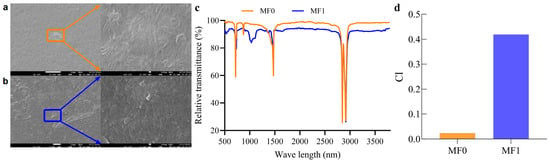
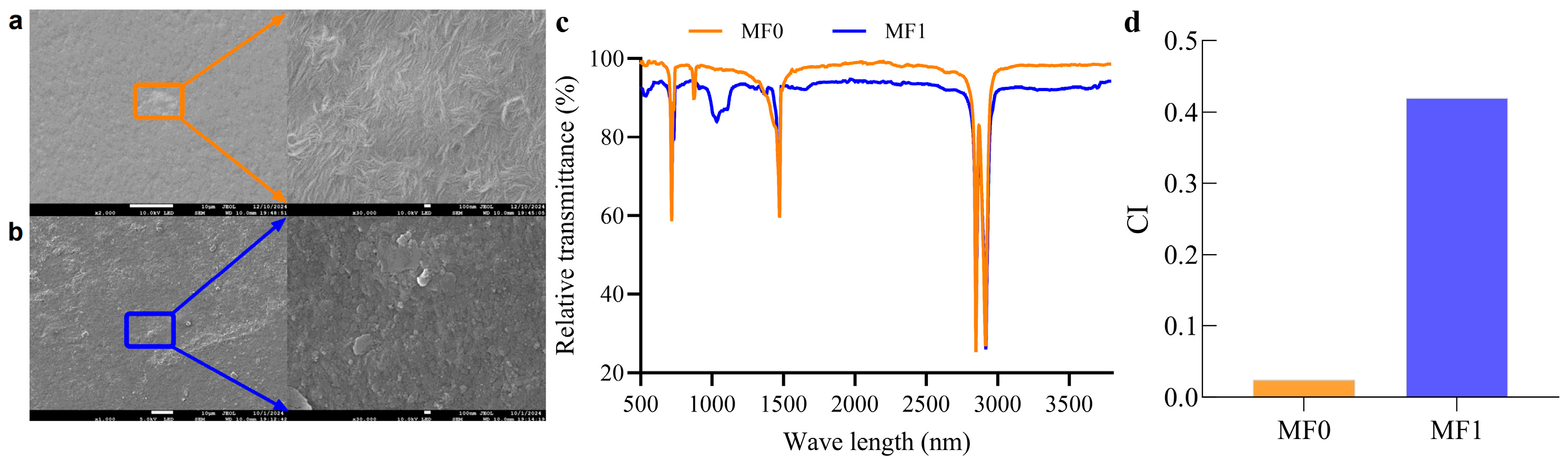
We investigated the physical and chemical transformations of PE films over one year of field aging using SEM and ATR-FTIR spectroscopy. Our findings consistently demonstrate that PE aging progresses through both surface degradation and polymer oxidation. Specifically, SEM images obtained at 10 µm and 100 nm magnifications revealed distinct morphological changes (Figure 1a,b). Compared to the unaged film (Figure 1a), the one-year-aged film (Figure 1b) exhibited clear signs of surface wear, indicative of mechanical abrasion and weathering processes experienced during field exposure. Furthermore, ATR-FTIR spectroscopy provided insights into the polymer’s chemical evolution (Figure 1c,d). The one-year-aged film showed notable alterations in absorption features compared to its unaged counterpart (Figure 1c). To quantify the extent of polymer oxidation, the carbonyl index (CI) was calculated. As illustrated in Figure 1d, the CI significantly increased after one year of aging, confirming enhanced oxidative degradation. Collectively, the consistent evidence from both SEM and ATR-FTIR analyses demonstrates that PE film aging over one year involves a clear progression of physical damage coupled with substantial chemical transformation.
Figure 1.
Morphological and chemical changes of PE films during aging. (a,b) SEM of PE films before aging and after one year of aging. (c) ATR-FTIR spectra of unaged and aged films and (d) corresponding CI values.
3.2. Soil Properties and Multifunctionality
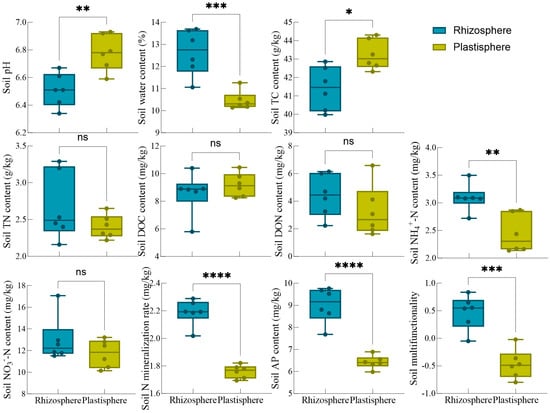
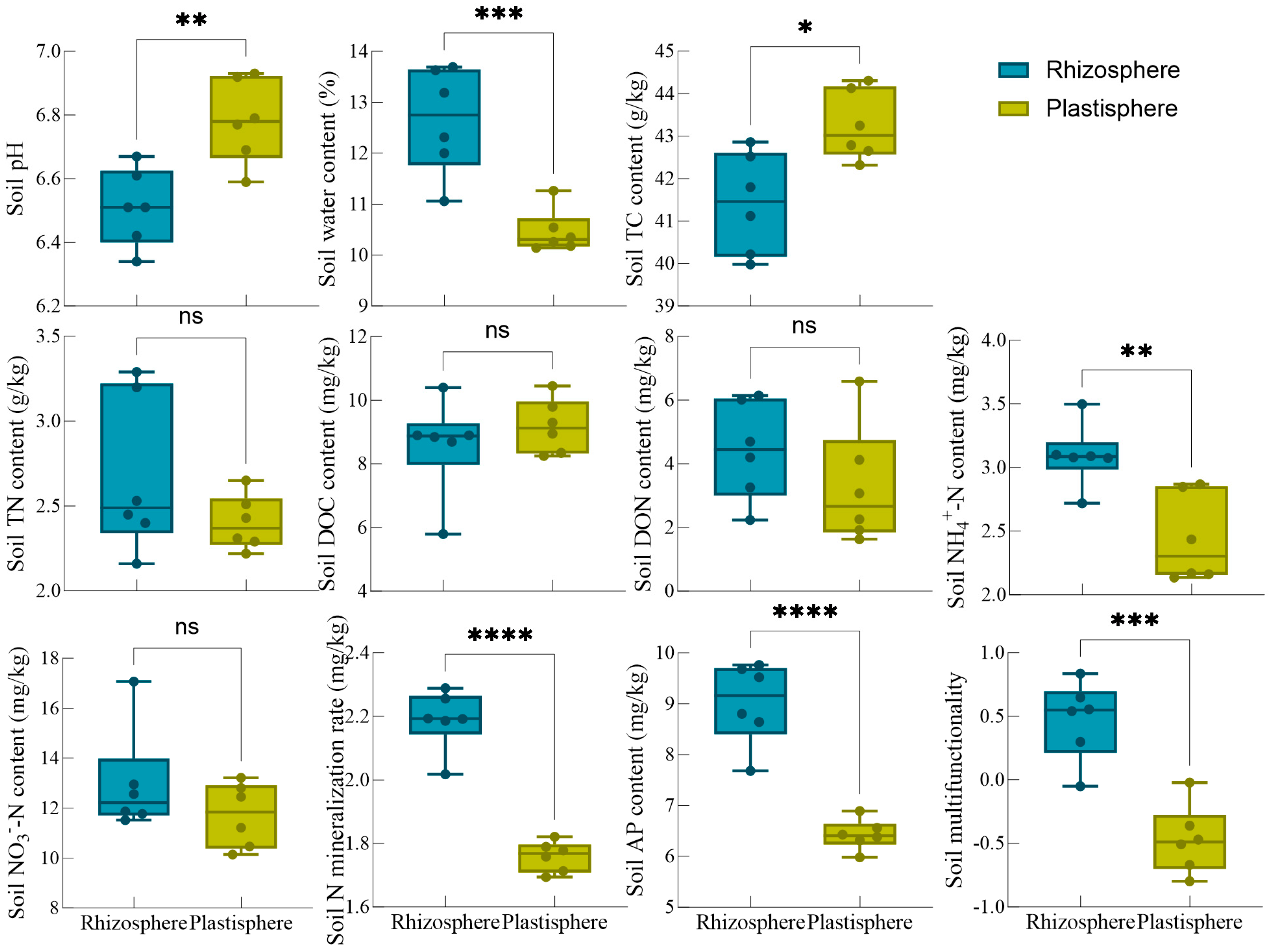
Soil properties and soil MF were compared between the rhizosphere and plastisphere (Figure 2). Overall, the plastisphere exhibited a distinct shift in soil environmental conditions relative to the rhizosphere. Specifically, plastisphere soils had significantly higher pH (p < 0.01) but markedly lower soil water content (p < 0.001). In addition to physical properties, several carbon- and nitrogen-related indicators were also altered. Compared with the rhizosphere, the plastisphere showed no significant changes in TN, DOC, DON, and NO3−-N. However, TC was significantly higher in the plastisphere (p < 0.05). Moreover, the NH4+-N (p < 0.01), soil net nitrogen mineralization rate (p < 0.0001), AP (p < 0.001), and MF (p < 0.001) were all significantly decreased in the plastisphere compared with the rhizosphere.
Figure 2.
Effects of PE film on soil properties and MF in the rhizosphere and plastisphere. Statistical significance is indicated as ns (not significant), * p < 0.05, ** p < 0.01, *** p < 0.001, **** p < 0.0001.
3.3. Microbial Community Composition in the Rhizosphere and Plastisphere
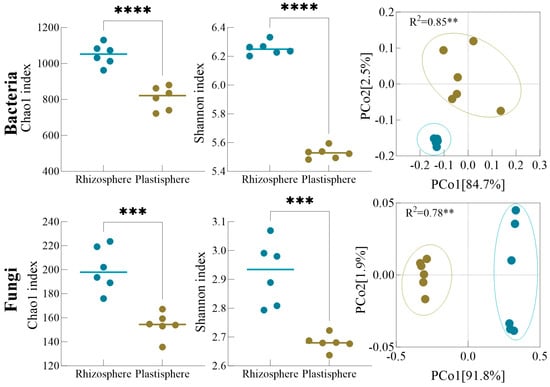
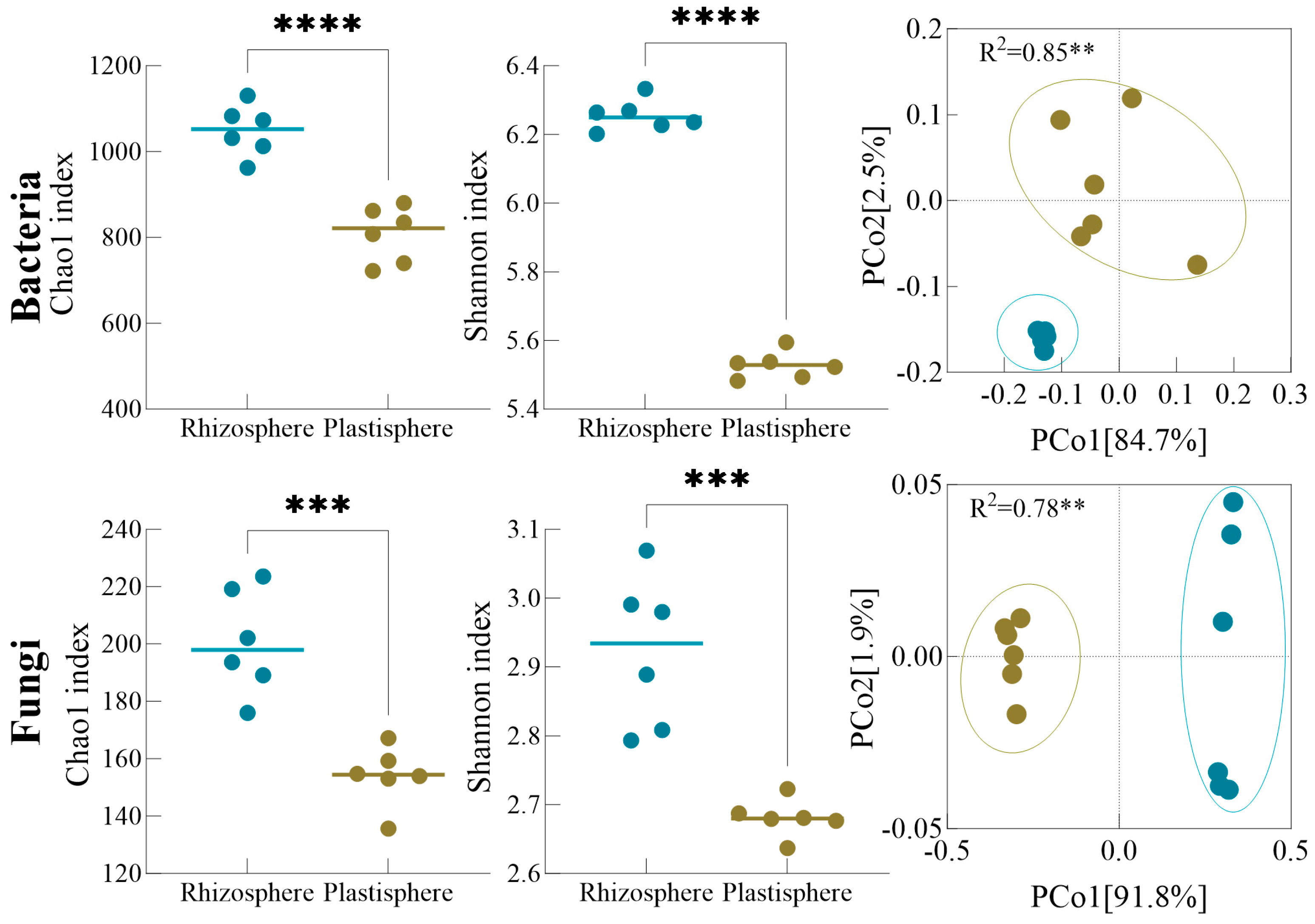
Bacterial and fungal community diversity differed significantly between the rhizosphere and plastisphere (Figure 3). Compared with the rhizosphere, the plastisphere exhibited lower bacterial Chao1 (1048.9 vs. 807.7) (p < 0.0001) and Shannon (6.3 vs. 5.5) (p < 0.0001). A similar pattern was observed for fungal communities, as both fungal Chao1 (200.6 vs. 153.8) and Shannon indices were significantly reduced in the plastisphere (2.9 vs. 2.6) (both p < 0.001). PCoA further confirmed clear community separation between the rhizosphere and plastisphere for both bacteria and fungi. For bacteria, PCoA1 and PCoA2 accounted for 84.7% and 12.5% of the variation, respectively (R2 = 0.85, p< 0.01). For fungi, they explained 91.8% and 1.9% of the variation, respectively (R2 = 0.78, p< 0.01). Collectively, plastisphere formation substantially reshaped microbial community composition in addition to reducing diversity.
Figure 3.
Diversity of bacterial and fungal communities in rhizosphere and plastisphere soils. ** p < 0.01, *** p < 0.001, **** p < 0.0001.
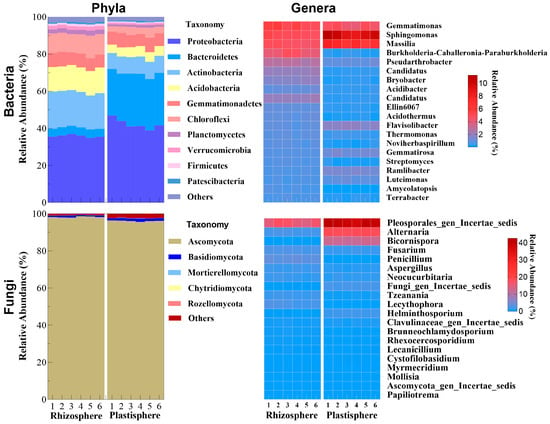
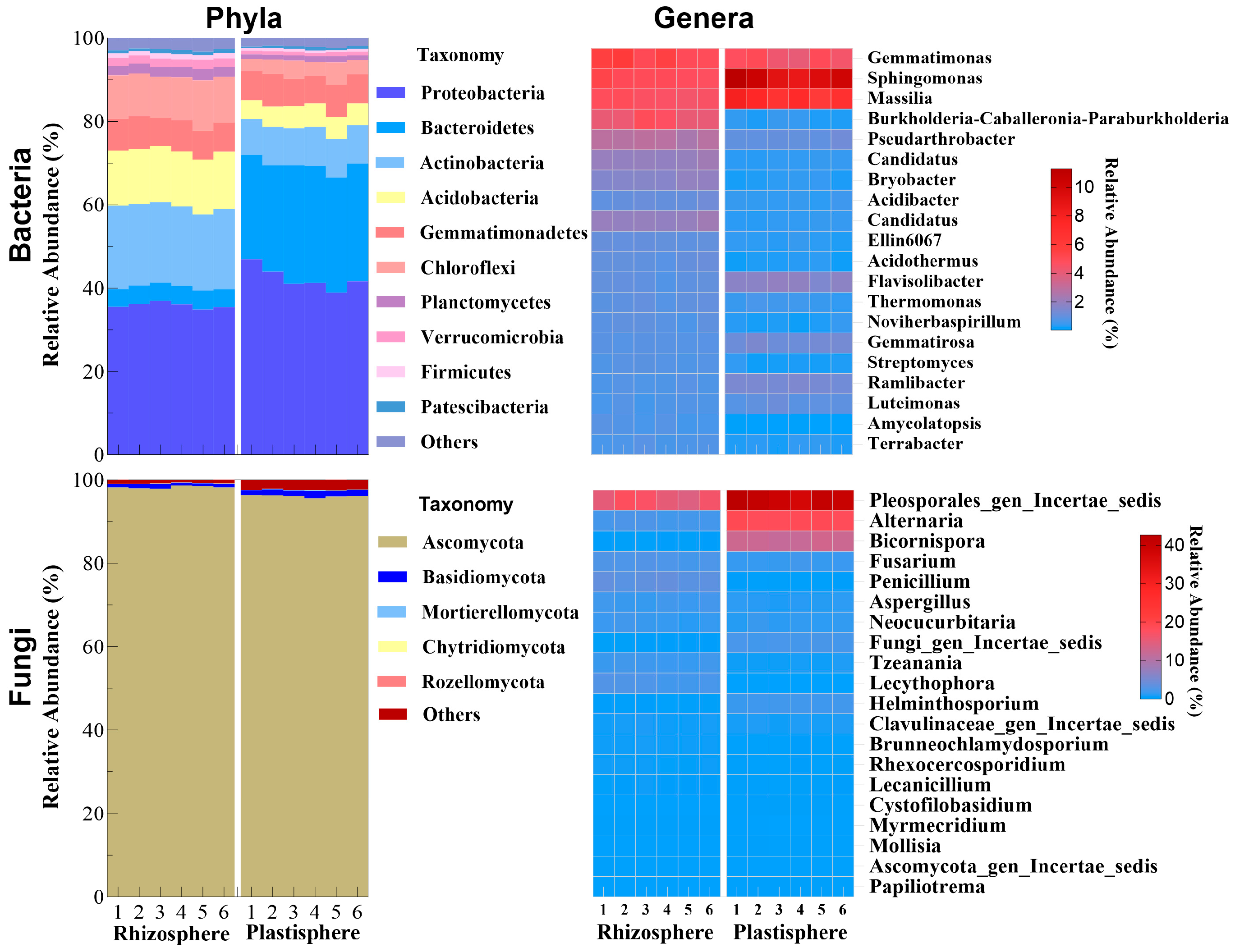
At the phylum level (Figure 4), bacterial communities were dominated by Proteobacteria (relative abundance 35.8% vs. 42.3%), Actinobacteria (19.2% vs. 9.0%), Bacteroidetes (4.4% vs. 27.2%), Acidobacteria (13.3% vs. 5.1%), Gemmatimonadetes (7.4% vs. 7.2%), Chloroflexi (10.6% vs. 3.8%), and Planctomycetes (2.4% vs. 1.3%) in both soil compartments. Relative abundances of Proteobacteria and Bacteroidetes increased in the plastisphere, whereas Actinobacteria and Acidobacteria decreased. Fungal communities were overwhelmingly dominated by Ascomycota (98.3% vs. 96.1%) in both soils, indicating that the main differences were concentrated at lower taxonomic levels. In addition, at the genus level, the community shifts were primarily driven by taxa replacement. In the plastisphere, Sphingomonas (4.9% vs. 9.8%) and Massilia (4.6% vs. 7.0%) were significantly enriched, whereas Burkholderia–Caballeronia–Paraburkholderia, Pseudarthrobacter (4.3% vs. 0.3%) decreased relative to the rhizosphere. In addition, Gemmatimonas (5.3% vs. 4.6%), Flavisolibacter (0.9% vs. 1.7%), and Ramlibacter (0.7% vs. 1.4%) remained relatively higher in the plastisphere soils. For fungi, the plastisphere showed higher relative abundances of Pleosporales_gen_Incertae_sedis (16.0% vs. 40.1%), Alternaria (2.2% vs. 18.6%) and Bicornispora (0.4% vs. 12.3%), while Fusarium (2.4% vs. 1.5%) and Penicillium (3.4% vs. 0.3%) decreased. In summary, plastisphere formation did not alter the overall dominance of Ascomycota in fungal communities but significantly reshaped both bacterial and fungal genera.
Figure 4.
Taxonomic composition of bacterial and fungal communities in rhizosphere and plastisphere soils.
3.4. Co-Occurrence Networks of Bacteria and Fungi in the Rhizosphere and Plastisphere
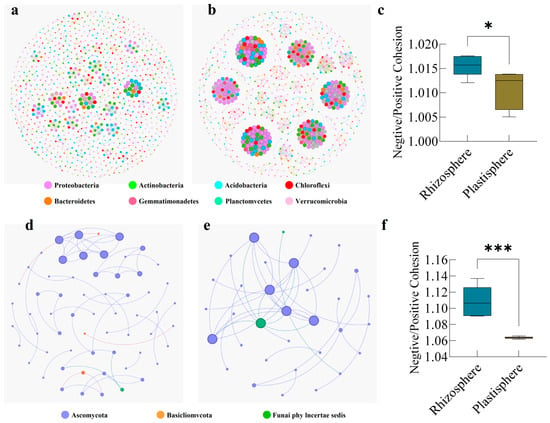
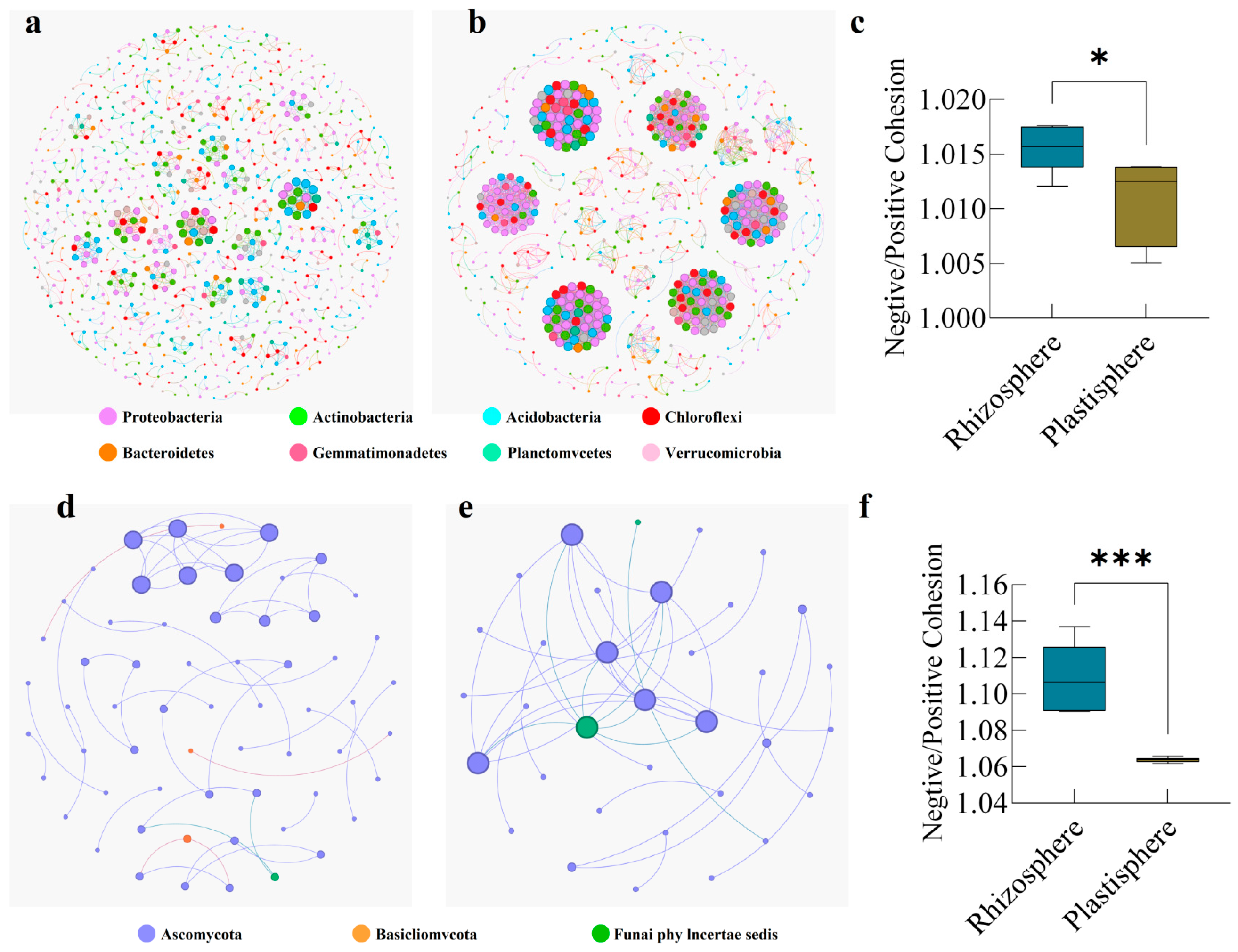
To examine interspecific association patterns between rhizosphere and plastisphere communities, co-occurrence networks were constructed separately for bacteria and fungi (Figure 5). Network complexity was evaluated using the ratio of negative to positive clustering coefficients. For bacteria, the rhizosphere network contained more nodes and more dispersed connections, with species associations forming multiple small modules (Figure 5a). In contrast, the plastisphere bacterial network was characterized by fewer nodes and a shift toward a smaller number of large, tightly connected modules, accompanied by higher modularity (Figure 5b). Consistent with this topology, the negative to positive ratio was significantly lower in the plastisphere than in the rhizosphere (p < 0.05; Figure 5c), indicating reduced overall network complexity. A similar trend was observed for fungal networks. The rhizosphere fungal network contained more nodes and edges and included both positive and negative associations, resulting in a more complex interaction topology (Figure 5d). Conversely, the plastisphere fungal network contained fewer nodes, with connectivity dominated by several highly connected hub taxa and a predominance of positive associations (Figure 5e). Accordingly, the negative to positive ratio was significantly lower in the plastisphere than in the rhizosphere (p < 0.001; Figure 5f). (p < 0.001; Figure 5f). Collectively, plastisphere formation not only altered microbial community composition but also weakened interspecific associations in both bacterial and fungal communities, suggesting the plastisphere microenvironment reduces interaction strength and may compromise community stability.
Figure 5.
Co-occurrence networks of bacterial and fungal communities in rhizosphere and plastisphere soils. Bacterial co-occurrence networks in rhizosphere (a) and plastisphere (b) soils. Nodes represent bacterial ASVs and are colored by phylum; node size is proportional to relative abundance, and edges indicate significant correlations. Negative-to-positive cohesion of bacterial (c) and fungal (f) networks. Fungal co-occurrence networks in rhizosphere (d) and plastisphere (e) soils. Nodes represent fungal ASVs and are colored by phylum. * p < 0.05; *** p < 0.001.
3.5. Relative Importance of Microbial Community Traits for Predicting Soil Multifunctionality
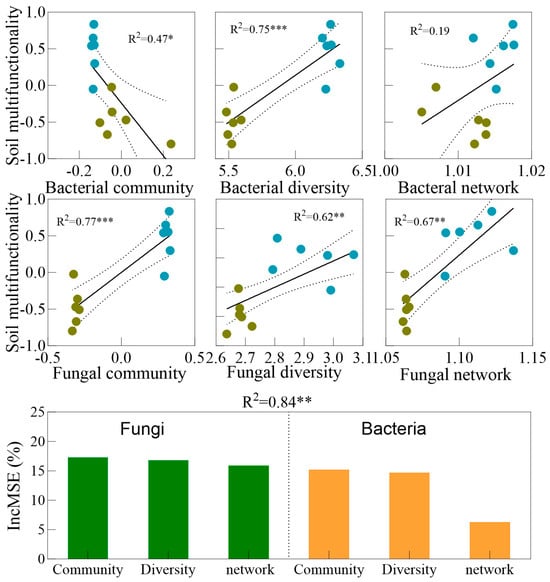
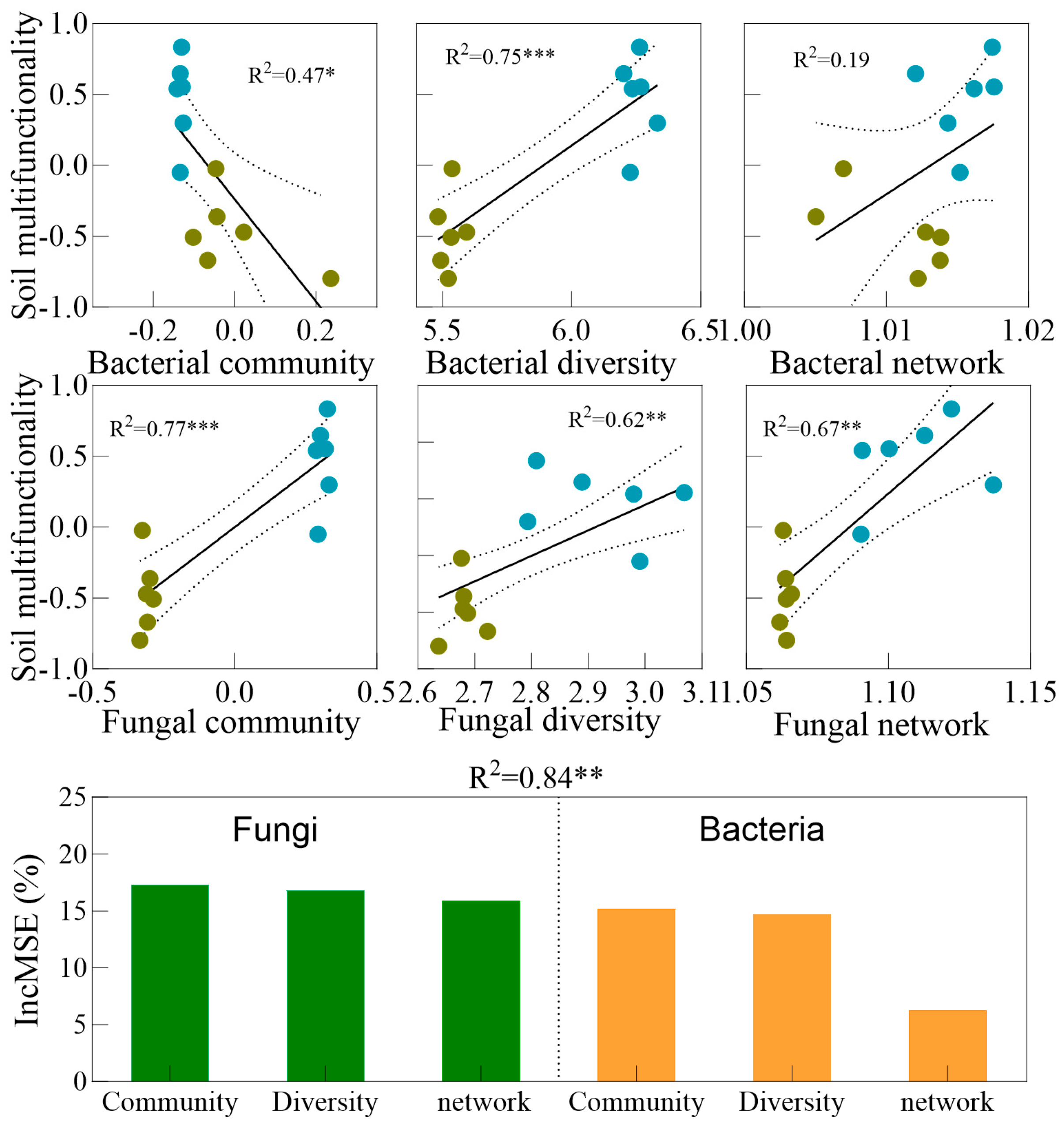
To identify the microbial community traits most closely associated with soil MF, we applied a random forest regression model incorporating bacterial and fungal Shannon diversity, PCoA1, and network metrics (Figure 6). Overall, MF showed clearer and stronger associations with fungal traits than with bacterial traits. In linear regression, MF was positively related to fungal community composition (R2 = 0.77), fungal diversity (R2 = 0.62), and fungal network (R2 = 0.67). By contrast, bacterial community composition exhibited a weaker positive relationship (R2 = 0.47), and bacterial diversity was moderately to strongly associated (R2 = 0.75), whereas the relationship between MF and bacterial network metrics was much weaker (R2 = 0.19). Consistent with these patterns, the random forest variable importance analysis indicated that fungal traits contributed more strongly to MF prediction than bacterial traits (Figure 6). Among all candidate variables, fungal community composition showed the highest importance (17.3%). Fungal Shannon diversity and fungal network metrics ranked next, with comparably high contributions (16.8% and 15.9%, respectively). For bacteria, although community composition (15.2%) and Shannon diversity (14.7%) also contributed substantially, bacterial network metrics showed a markedly lower importance (6.2%). The cumulative contribution of fungal traits (50.0%) was higher than that of bacterial traits (36.1%). Collectively, these results demonstrate that fungal community organization is a dominant driver of soil multifunctionality, exceeding the explanatory power of bacterial traits.
Figure 6.
Relative importance of microbial community traits for predicting soil multifunctionality. IncMSE is increase in mean square error. Blue circles represent the rhizosphere, whereas yellow-green circles represent the plastisphere. * p < 0.05; ** p < 0.01; *** p < 0.001.
4. Discussion
4.1. Differences in Soil Properties Between Rhizosphere and Plastisphere
The observed physicochemical and nutrient differences between the rhizosphere and plastisphere are likely driven by the aging-related transformations of residual PE film in soil (Figure 2). Consistent with the higher plastisphere soil pH, the aged residual film may generate carbonate- and ammonia-related products over time [33]. In addition, residual film can act as a physical barrier and alter ion exchange processes, influencing the mobility and availability of key cations (e.g., Ca2+ and Mg2+), which may further contribute to the elevated pH in the plastisphere [34]. The plastisphere also exhibited significantly lower soil moisture. This pattern can be attributed to the inherently hydrophobic nature of polyethylene, which reduces water retention in plastisphere soils [35]. Moreover, film coverage may modify pore structure and promote evaporative water loss, thereby amplifying moisture depletion. Supporting this interpretation, the increased bulk density in the plastisphere suggests film-induced soil compaction or crust formation, which would further restrict water-holding capacity [36].
Across nitrogen- and phosphorus-related variables, the plastisphere showed lower levels of inorganic nitrogen, soluble organic nitrogen, total nitrogen, net nitrogen mineralization rate, and available phosphorus compared with the rhizosphere. Prior studies indicate that microplastics and their degradation products can suppress key nitrogen transformation processes, such as nitrification and ammonification by altering microbial functional groups or inhibiting bacterial activity [37]. Microplastics may also introduce additives and contaminants, disrupting nitrogen cycling and reducing the availability of inorganic nitrogen [38]. Additionally, the reduced moisture in the plastisphere may further limit the persistence of soluble nitrogen fractions and accelerate soluble nitrogen loss, thereby weakening the overall nitrogen supply capacity. The significantly lower MF calculated from these nutrient variables is therefore consistent with a constrained nutrient turnover and reduced nutrient availability in the plastisphere.
In contrast, the rhizosphere contained relatively higher available phosphorus. This difference may reflect the supply of carbon- and nitrogen-containing substrates by root exudates, which can stimulate local microbial activity and nutrient turnover, promoting nitrogen accumulation and enhancing phosphorus mobilization compared with the plastisphere [39]. Meanwhile, the plastisphere exhibited higher soluble organic carbon and total carbon, which likely reflects carbon released during PE degradation [40]. However, because PE film derived carbon may include a substantial fraction of relatively inert material, the observed carbon enrichment may represent apparent accumulation rather than highly bioavailable organic matter, explaining why increased carbon does not translate into improved N and P availability or higher MF.
4.2. Changes of Bacterial and Fungal Microbial Community Structures
Our results show that, compared with the rhizosphere, the plastisphere bacterial community is characterized at the phylum level by increased relative abundances of Proteobacteria and Bacteroidetes (Figure 4). Consistent with this pattern, previous studies have reported that these taxa are frequently enriched in soils contaminated with soil organic pollutants and microplastics, where Proteobacteria and related groups often proliferate in impacted agricultural soils [41,42]. From a functional niche perspective, Proteobacteria and Bacteroidetes potentially possess metabolic capacities that enable the utilization of plastic-derived organic substrates and hydrocarbon components. Under the combined effects of enhanced carbon substrate availability and intensified chemical stress in the plastisphere, these functional traits may support a competitive advantage [43]. For fungi, the relative abundances of Mortierellomycota and Basidiomycota increased in the plastisphere. Mortierellomycota is able to decompose complex organic matter in soil [44], whereas the enrichment of Basidiomycota is closely associated with the relatively higher soil moisture maintained by plastic mulching [45].
At the genus level, Sphingomonas and Massilia remained relatively more abundant in the plastisphere (Figure 4). Sphingomonas, a key taxon involved in the metabolism of complex organic compounds and the degradation of pollutants, can directly participate in plastic breakdown via the secretion of multiple hydrolases. In addition, it harbors traits such as nitrogen fixation, phosphate solubilization, and the synthesis of plant growth regulators [46,47], thereby contributing to plant growth promotion and soil nutrient cycling through multiple ecological functions. Massilia exhibits nitrate-reducing activity that can drive soil carbon-nitrogen cycling and may further enhance the mineralization and transformation of soil organic phosphorus by promoting arbuscular mycorrhizal fungi, ultimately improving phosphorus availability [48]. Notably, Alternaria was also enriched in the plastisphere. Alternaria may act as a reservoir for potential plant pathogens, thereby contributing to the occurrence of plant diseases [49].
Importantly, the plastisphere-driven taxonomic reassembly reflects not only shifts in abundance but may also modulate community stability via alterations in co-occurrence network structure (Figure 5). Accumulating evidence indicates that microplastic and plastic mulch associated habitats can reduce the complexity of soil microbial co-occurrence networks while increasing modularity, ultimately weakening the strength and stability of microbial interactions [13]. When network topology is restructured, the community’s resistance to disturbance and process stability often decline synchronously. This, in turn, reduces functional redundancy and buffering capacity, thereby impairing the stability of nutrient cycling processes and pollutant degradation pathways [50,51]. Therefore, the simplification of plastisphere networks should be interpreted as a functional node replacement, from nutrient-cycling-dominated strategies toward stress-tolerance-oriented dominance. Such a functional reconfiguration lowers the probability that the system can sustain multiple ecosystem functions simultaneously, coherently explaining the observed patterns of decreased microbial diversity, marked compositional shifts, and weakened nutrient cycling stability.
4.3. Relationships Between MF and Microbial Community Traits
Recent studies indicate that microbial community traits, particularly diversity and co-occurrence network complexity, are closely linked to soil MF [52,53]. In this study, both bacterial and fungal diversity and community composition were significantly correlated with MF (Figure 6), suggesting microbial diversity underpins soil nutrient cycling capacity by expanding their functions [54]. In rhizosphere soils, higher microbial diversity may strengthen functional redundancy, accelerate plant litter decomposition, and thereby enhance microbial activity [52]. Beyond diversity, microbial complexity is also critical for ecosystem multifunctionality [55,56]. Consistent with this, fungal network complexity showed significantly positive associations with MF (Figure 6), indicating that lower complex fungal interactions may reduce multiple nutrient-transforming functions in plastisphere soil. Supporting the functional dominance of fungi, random forest modeling attributed higher predictive importance to fungal traits than bacterial traits, with fungi and bacteria contributing 50.0% and 36.1% to MF, respectively. Overall, these results indicate that fungal-related traits more strongly reflect MF variation than bacterial traits. The stronger fungal relevance likely arises from their central roles in carbon cycling and plant mineral nutrition, including promoting litter degradation through the transformation of complex polymers into labile monomers [57]. Bacterial community composition further influenced MF; Acidobacteria have been reported to enhance enzyme activities, whereas Proteobacteria may show negative effects [58]. Consistently, Acidobacteria were relatively more abundant in the rhizosphere than the plastisphere (13.3% vs. 5.1%), while Proteobacteria dominated both habitats (35.8% in rhizosphere and 42.3% in plastisphere) (Figure 4). The lower Acidobacteria and higher Proteobacteria abundance in the plastisphere may therefore contribute to reduced MF relative to the rhizosphere.
These patterns support a plastisphere-driven destabilization of fungal contributions to soil multifunctionality. As plastic-associated habitats expand, fungal community restructuring weakens the ability of microbial communities to maintain multiple nutrient-transforming functions under stress. This reduces interaction-mediated functional buffering and the capacity of redundant taxa to compensate for perturbations, such that network simplification translates into lower MF [17,59]. Because the random forest model assigned the highest predictive importance to fungal community traits and fungal network-related features, the plastisphere-associated MF decline is more parsimoniously explained by fungal-mediated changes in community interaction structure than by bacterial network changes alone. Fungal assemblages and their co-occurrence networks are highly responsive to environmental reconfiguration, enabling them to track shifts in the stability of processes underlying resource turnover [27]. Importantly, network simplification reflects not only taxonomic loss but also reconfiguration of interaction topology that determines robustness to disturbance [14], leading to downstream reductions in resilience and process stability [59,60]. Therefore, plastisphere-associated environmental factors may constrain fungal-mediated processes and reduce functional redundancy, potentially contributing to lower soil multifunctionality. These proposed mechanisms remain to be verified through direct measurements of microbial functional traits, enzyme activities, and nutrient cycling fluxes. Replicated, multi-site studies across soil types, climatic regions, and cropping systems are also needed to assess the generality and context dependence of these responses.
5. Conclusions
This study based on field evidence elucidates the coupled mechanisms by which plastic mulching film residues affect soil properties, microbial community structure, and soil multifunctionality. As the films undergo aging processes such as photo-oxidation, thermal oxidation, and mechanical abrasion, the polymer chains break, increasing the plastisphere soil pH and decreasing soil moisture. Meanwhile, the concentrations of inorganic nitrogen, dissolved organic nitrogen, total nitrogen, and the soil mineralization rate decline accompanied by a reduction in available phosphorus. Our results indicate a tight coupling between nutrient status and microbial diversity. More importantly, plastic film residues might weaken network stability and reduce functional redundancy by reshaping microbial ecological network architecture. Compared with diversity loss alone, simplification at the network level diminishes microbial interactions and process buffering, thereby impairing the soil’s resistance to environmental perturbations and its recovery capacity. Overall, from a rhizosphere perspective, this study demonstrates that plastic film residues reshape fungal and bacterial community structure, with potential implications for soil nutrient cycling and plant nutrient uptake and growth. These findings underscore the importance of considering rhizosphere microbial responses when assessing the ecological impacts of residual plastic films in agricultural soils. Future research should investigate how these responses vary across soil textures, climatic regions, and cropping systems and clarify the mechanisms linking microbial community shifts to changes in nutrient dynamics and plant performance.
Supplementary Materials
The following supporting information can be downloaded at: https://www.mdpi.com/article/10.3390/agronomy16212203/s1, S1. Details of experimental field design, soil sampling and measuremetnts.
Author Contributions
Conceptualization, methodology, investigation, writing—original draft preparation, R.C., Y.R. and D.L. (Dongyue Li); data curation, methodology, J.N., Z.L. and X.H.; conceptualization, funding acquisition, writing—review and editing, D.L. (Dongyan Liu). and B.Y. All authors have read and agreed to the published version of the manuscript.
Funding
This research was funded by Talent Program by Sichuan Normal University, grant numbers pt31800425.
Data Availability Statement
The original contributions presented in this study are included in the article/Supplementary Material. Further inquiries can be directed to the corresponding authors.
Acknowledgments
We acknowledge the Dajing instrument platform of the Life Sciences College at Sichuan Normal University for providing equipment support and College Students’ Innovative Entrepreneurship Training Program of Sichuan Normal University for financial support.
Conflicts of Interest
The authors declare that the research was conducted in the absence of any commercial or financial relationships that could be construed as potential conflicts of interest.
References
- Tan, Q.; Yang, L.; Wei, F.; Chen, Y.; Li, J. Comparative life cycle assessment of polyethylene agricultural mulching film and alternative options including different end-of-life routes. Renew. Sustain. Energy Rev. 2023, 178, 113239. [Google Scholar] [CrossRef] [Scilit]
- Liang, M.; Li, S.; Liang, Y.; Song, Y.; Lu, Y.; Yu, Z.; Tang, L.; Yin, X.; Khalid, N.; Biswas, A. China’s agricultural plastic mulch transition is a food security imperative with global implications. Nat. Food 2026, 7, 113–114. [Google Scholar] [CrossRef] [Scilit] [PubMed]
- Zhang, Q.-Q.; Ma, Z.-R.; Cai, Y.-Y.; Li, H.-R.; Ying, G.-G. Agricultural Plastic Pollution in China: Generation of Plastic Debris and Emission of Phthalic Acid Esters from Agricultural Films. Environ. Sci. Technol. 2021, 55, 12459–12470. [Google Scholar] [CrossRef] [Scilit] [PubMed]
- Ren, S.-Y.; Kong, S.-F.; Ni, H.-G. Contribution of mulch film to microplastics in agricultural soil and surface water in China. Environ. Pollut. 2021, 291, 118227. [Google Scholar] [CrossRef] [Scilit] [PubMed]
- Mao, R.; Lang, M.; Yu, X.; Wu, R.; Yang, X.; Guo, X. Aging mechanism of microplastics with UV irradiation and its effects on the adsorption of heavy metals. J. Hazard. Mater. 2020, 393, 122515. [Google Scholar] [CrossRef] [Scilit] [PubMed]
- Botta, L.; Carnati, S.; Pozzi, A.; Spanu, D.; Binda, G. The presence of additives dominates the metal adsorption process on plastic over polymer type and UV aging. J. Environ. Chem. Eng. 2026, 14, 122904. [Google Scholar] [CrossRef] [Scilit]
- Wright, A.C.M.; Boots, B.; Ings, T.C.; Green, D.S. Impacts of pristine, aged and leachate of conventional and biodegradable plastics on plant growth and soil organic carbon. Environ. Sci. Pollut. Res. 2024, 31, 11766–11780. [Google Scholar] [CrossRef] [Scilit] [PubMed]
- Zettler, E.R.; Mincer, T.J.; Amaral-Zettler, L.A. Life in the “Plastisphere”: Microbial Communities on Plastic Marine Debris. Environ. Sci. Technol. 2013, 47, 7137–7146. [Google Scholar] [CrossRef] [Scilit] [PubMed]
- Wang, J.; Lv, S.; Zhang, M.; Chen, G.; Zhu, T.; Zhang, S.; Teng, Y.; Christie, P.; Luo, Y. Effects of plastic film residues on occurrence of phthalates and microbial activity in soils. Chemosphere 2016, 151, 171–177. [Google Scholar] [CrossRef] [Scilit] [PubMed]
- Yang, N.; Zhang, Y.; Men, C.; Zuo, J. Degradation-driven release of microplastics and plasticizers from typical plastics: Implications for environmental risk assessment. Environ. Pollut. 2026, 409, 129069. [Google Scholar] [CrossRef] [Scilit] [PubMed]
- Tang, K.H.-D.; Li, R. The effects of plastisphere on the physicochemical properties of microplastics. Bioprocess Biosyst. Eng. 2025, 48, 1–15. [Google Scholar] [CrossRef] [Scilit] [PubMed]
- Sun, Y.; Xie, S.; Zang, J.; Wu, M.; Tao, J.; Li, S.; Du, X.; Wang, J. Terrestrial plastisphere as unique niches for fungal communities. Commun. Earth Environ. 2024, 5, 483. [Google Scholar] [CrossRef] [Scilit]
- Li, Y.C.; Zhao, S.; Li, H.; Xu, P.Y.; Cui, H.X.; Su, J.Q. Plastisphere denitrification dynamics shaped by soil acidification: Microbial Community and activity responses. J. Hazard. Mater. 2026, 509, 141910. [Google Scholar] [CrossRef] [Scilit] [PubMed]
- Li, Q.; Zhang, L.; Qin, Y.; Mei, W. Response of microbial community in the soil plastisphere of polypropylene robustness. World J. Microbiol. Biotechnol. 2026, 42, 309. [Google Scholar] [CrossRef] [Scilit] [PubMed]
- Jiang, X.; Huang, X.; Wu, X. A Comprehensive Review on Changes in Rhizosphere Soil Mediated by Microplastics: Soil Property, Microbial Gene Expression and Crop Growth. Microorganisms 2026, 14, 1879. [Google Scholar] [CrossRef] [Scilit]
- Sanchez, C. Fungal potential for the degradation of petroleum-based polymers: An overview of macro- and microplastics biodegradation. Biotechnol. Adv. 2020, 40, 107501. [Google Scholar] [CrossRef] [Scilit]
- Li, K.; Jia, W.; Xu, L.; Zhang, M.; Huang, Y. The plastisphere of biodegradable and conventional microplastics from residues exhibit distinct microbial structure, network and function in plastic-mulching farmland. J. Hazard. Mater. 2023, 442, 130011. [Google Scholar] [CrossRef] [Scilit]
- Gkoutselis, G.; Rohrbach, S.; Harjes, J.; Brachmann, A.; Horn, M.A.; Rambold, G. Plastiphily is linked to generic virulence traits of important human pathogenic fungi. Commun. Earth Environ. 2024, 5, 51. [Google Scholar] [CrossRef] [Scilit]
- Deng, W.; Wang, Y.; Fu, M.; Wang, Z.; Di, X.; Wang, J.; Liu, W. The Spatiotemporal Successions of Bacterial and Fungal Plastisphere Communities and Their Effects on Microplastic Degradation in Soil Ecosystems. Environ. Sci. Technol. 2025, 59, 15408–15419. [Google Scholar] [CrossRef] [Scilit]
- Kutralam-Muniasamy, G.; Shruti, V.C.; Perez-Guevara, F. Plastisphere-hosted viruses: A review of interactions, behavior, and effects. J. Hazard. Mater. 2024, 472, 134533. [Google Scholar] [CrossRef] [Scilit]
- Farooq, M.A.; Hannan, F.; Zou, H.X.; Zhou, W.; Zhao, D.-S.; Ayyaz, A.; Asad, M.A.U.; Ahmad, R.; Yan, X. Microplastics in soil-plant systems: Impacts on soil health, plant toxicity, and multiomics insights. Plant Cell Rep. 2025, 44, 283. [Google Scholar] [CrossRef] [Scilit]
- Kirkman, E.R.; Hilton, S.; Sethuraman, G.; Elias, D.M.O.; Taylor, A.; Clarkson, J.; Soh, A.C.; Bass, D.; Ooi, G.T.; McNamara, N.P.; et al. Diversity and Ecological Guild Analysis of the Oil Palm Fungal Microbiome Across Root, Rhizosphere, and Soil Compartments. Front. Microbiol. 2022, 13, 792928. [Google Scholar] [CrossRef] [Scilit] [PubMed]
- Zhou, Y.; Yu, J.; Liu, D.; Liu, R.; Zhang, Y.; Xiao, J. Microbial metabolic traits regulate the difference in microbial necromass contribution to SOC between rhizosphere and bulk soil. Plant Soil 2026, 520, 345–358. [Google Scholar] [CrossRef] [Scilit]
- Li, S.; Ding, F.; Flury, M.; Wang, Z.; Xu, L.; Li, S.; Jones, D.L.; Wang, J. Macro- and microplastic accumulation in soil after 32 years of plastic film mulching. Environ. Pollut. 2022, 300, 118945. [Google Scholar] [CrossRef] [Scilit] [PubMed]
- Almond, J.; Sugumaar, P.; Wenzel, M.N.; Hill, G.; Wallis, C. Determination of the carbonyl index of polyethylene and polypropylene using specified area under band methodology with ATR-FTIR spectroscopy. e-Polymers 2020, 20, 369–381. [Google Scholar] [CrossRef] [Scilit]
- Wang, G.; Sun, Q.; Wei, M.; Xie, M.; Shen, T.; Liu, D. Plastic Film Residue Reshaped Protist Communities and Induced Soil Nutrient Deficiency Under Field Conditions. Agronomy 2025, 15, 419. [Google Scholar] [CrossRef] [Scilit]
- Wei, M.; Wang, Y.; Xie, F.; Sun, Q.; Shao, H.; Cheng, X.; Wang, X.; Tao, X.; He, X.; Yong, B.; et al. The Ecological Trap: Biodegradable Mulch Film Residue Undermines Soil Fungal Network Stability. Microorganisms 2025, 13, 2137. [Google Scholar] [CrossRef] [Scilit] [PubMed]
- Parada, A.E.; Needham, D.M.; Fuhrman, J.A. Every base matters: Assessing small subunit rRNA primers for marine microbiomes with mock communities, time series and global field samples. Environ. Microbiol. 2016, 18, 1403–1414. [Google Scholar] [CrossRef] [Scilit] [PubMed]
- Li, S.; Deng, Y.; Wang, Z.; Zhang, Z.; Kong, X.; Zhou, W.; Yi, Y.; Qu, Y. Exploring the accuracy of amplicon-based internal transcribed spacer markers for a fungal community. Mol. Ecol. Resour. 2020, 20, 170–184. [Google Scholar] [CrossRef] [Scilit] [PubMed]
- Bass, D.; Silberman, J.D.; Brown, M.W.; Pearce, R.A.; Tice, A.K.; Jousset, A.; Geisen, S.; Hartikainen, H. Coprophilic amoebae and flagellates, including Guttulinopsis, Rosculus and Helkesimastix, characterise a divergent and diverse rhizarian radiation and contribute to a large diversity of faecal-associated protists. Environ. Microbiol. 2016, 18, 1604–1619. [Google Scholar] [CrossRef] [Scilit] [PubMed]
- Yuan, M.M.; Guo, X.; Wu, L.; Zhang, Y.; Xiao, N.; Ning, D.; Shi, Z.; Zhou, X.; Wu, L.; Yang, Y.; et al. Climate warming enhances microbial network complexity and stability. Nat. Clim. Change 2021, 11, 343–348. [Google Scholar] [CrossRef] [Scilit]
- Herren, C.M.; McMahon, K.D. Cohesion: A method for quantifying the connectivity of microbial communities. ISME J. 2017, 11, 2426–2438. [Google Scholar] [CrossRef] [Scilit] [PubMed]
- Zhao, T.; Lozano, Y.M.; Rillig, M.C. Microplastics Increase Soil pH and Decrease Microbial Activities as a Function of Microplastic Shape, Polymer Type, and Exposure Time. Front. Environ. Sci. 2021, 9, 675803. [Google Scholar] [CrossRef] [Scilit]
- Bandopadhyay, S.; Martin-Closas, L.; Pelacho, A.M.; DeBruyn, J.M. Biodegradable Plastic Mulch Films: Impacts on Soil Microbial Communities and Ecosystem Functions. Front. Microbiol. 2018, 9, 819. [Google Scholar] [CrossRef] [Scilit] [PubMed]
- Saleem, J.; Moghal, Z.K.B.; McKay, G. Prolonged Lifespan of Superhydrophobic Thin Films and Coatings Using Recycled Polyethylene. Polymers 2024, 16, 1791. [Google Scholar] [CrossRef] [Scilit] [PubMed]
- Hu, Q.; Li, X.; Šimůnek, J.; Shi, H.; Chen, N.; Zhang, Y.; Xin, M.; Song, F. Evaluating Soil Water Dynamics under a No-Tillage System with Residual Plastic Film Mulching in an Arid Region of Western China Using HYDRUS-2D. Soil Tillage Res. 2023, 234, 105849. [Google Scholar] [CrossRef] [Scilit]
- Dindar, E. The Effect of N Mineralization, Nitrification and Ammonification Rates in Soils Contaminated with Microplastics. Water Air Soil Pollut. 2024, 235, 699. [Google Scholar] [CrossRef] [Scilit]
- Zhu, F.; Yan, Y.; Doyle, E.; Zhu, C.; Jin, X.; Chen, Z.; Wang, C.; He, H.; Zhou, D.; Gu, C. Microplastics altered soil microbiome and nitrogen cycling: The role of phthalate plasticizer. J. Hazard. Mater. 2022, 427, 127944. [Google Scholar] [CrossRef] [Scilit]
- Zhang, S.; Tang, Z.; Xu, X.; Jiang, Y.; Guo, J.; Fang, F. Effects of the coexistence of polystyrene microplastics and imidacloprid on nitrogen and phosphorus transformation in soil. Front. Environ. Sci. Eng. 2025, 19, 15. [Google Scholar] [CrossRef] [Scilit]
- Li, M.-Y.; Wang, W.; Ma, Y.; Yang, J.; Liu, S.; Xiong, X.; Zhao, T.; Sun, Y.; Saqib, S.; Ashraf, M.; et al. Degradable versus inert microplastics: Effects on soil organic carbon persistence via microbial drivers in an agroecosystem. Funct. Ecol. 2026, 40, 2628–2641. [Google Scholar] [CrossRef] [Scilit]
- Tong, X.; Meng, X.; Wang, W.; Zhang, L.; Zhang, Q.; Peñuelas, J.; Zhu, Y.; Zhang, M. Comparative effects of conventional and biodegradable microplastics on greenhouse gas emissions from Loess Plateau orchard soils. Plant Soil 2026. [Google Scholar] [CrossRef] [Scilit]
- Song, T.; Liu, J.; Han, S.; Li, Y.; Xu, T.; Xi, J.; Hou, L.; Lin, Y. Effect of conventional and biodegradable microplastics on the soil-soybean system: A perspective on rhizosphere microbial community and soil element cycling. Environ. Int. 2024, 190, 108781. [Google Scholar] [CrossRef] [Scilit] [PubMed]
- Shi, Z.; Xiong, L.; Li, Z.; Shah, F.; Yuan, Q.; Whalen, J.K.; Wu, W. Biodegradable plastic exposure enhances microbial functional diversity while reducing taxonomic diversity across multi-kingdom soil microbiota in cherry tomato fields. Commun. Biol. 2025, 8, 1675. [Google Scholar] [CrossRef] [Scilit] [PubMed]
- Zhang, X.; Li, Q.; Zhong, Z.; Huang, Z.; Bian, F.; Yang, C.; Wen, X. Changes in Soil Organic Carbon Fractions and Fungal Communities, Subsequent to Different Management Practices in Moso Bamboo Plantations. J. Fungi 2022, 8, 640. [Google Scholar] [CrossRef] [Scilit] [PubMed]
- Xu, T.; Zheng, S.; Duo, X.; Hou, Z.; Wu, J. Long-term plastic mulching exacerbates the co-limitation of carbon and phosphorus in farmland by altering physicochemical properties and microbial interactions. Front. Microbiol. 2026, 16, 1694370. [Google Scholar] [CrossRef] [Scilit] [PubMed]
- Asaf, S.; Numan, M.; Khan, A.L.; Al-Harrasi, A. Sphingomonas: From diversity and genomics to functional role in environmental remediation and plant growth. Crit. Rev. Biotechnol. 2020, 40, 138–152. [Google Scholar] [CrossRef] [Scilit] [PubMed]
- Ren, H.; Chen, S.; Shang, J.; Gao, Y.; Deng, Y.; Wang, Z.; Hu, G.; Wang, B. Insights into the Response and Evolution of Microbial Communities During Long-Term Natural Remediation of Contaminated Abandoned Shale Gas Wells. Water Air Soil Pollut. 2024, 235, 729. [Google Scholar] [CrossRef] [Scilit]
- Sun, N.; Wang, L.; Feng, G. Host-dependent roles of hyphosphere keystone Massilia in organic phosphorus mineralization and arbuscular mycorrhizal fungal growth. J. Exp. Bot. 2026, 77, 4874–4890. [Google Scholar] [CrossRef] [Scilit]
- Bessadat, N.; Bataillé-Simoneau, N.; Colou, J.; Hamon, B.; Mabrouk, K.; Simoneau, P. New members of Alternaria (Pleosporales, Pleosporaceae) collected from Apiaceae in Algeria. MycoKeys 2025, 113, 169–192. [Google Scholar] [CrossRef] [Scilit]
- McBratney, A.; Field, D.J.; Koch, A. The dimensions of soil security. Geoderma 2014, 213, 203–213. [Google Scholar] [CrossRef] [Scilit]
- Cao, J.; Gao, X.; Cheng, Z.; Song, X.; Cai, Y.; Siddique, K.H.; Zhao, X.; Li, C. The harm of residual plastic film and its accumulation driving factors in northwest China. Environ. Pollut. 2023, 318, 120910. [Google Scholar] [CrossRef] [Scilit] [PubMed]
- Han, Z.; Xu, P.; Li, Z.; Lin, H.; Zhu, C.; Wang, J.; Zou, J. Microbial diversity and the abundance of keystone species drive the response of soil multifunctionality to organic substitution and biochar amendment in a tea plantation. Glob. Change Biol. Bioenergy 2022, 14, 481–495. [Google Scholar] [CrossRef] [Scilit]
- Qiu, L.P.; Zhang, Q.; Zhu, H.S.; Feich, P.B.; Banerjee, S.; Heijden, M.; Sadowsky, M.J.; Ishii, S.; Jia, X.X.; Shao, M.G.; et al. Erosion reduces soil microbial diversity, network complexity and multifunctionality. ISME J. 2021, 15, 2484–2489. [Google Scholar] [CrossRef] [Scilit] [PubMed]
- Laforest-Lapointe, I.; Paquette, A.; Messier, C.; Kembel, S.W. Leaf bacterial diversity mediates plant diversity and ecosystem function relationships. Nature 2017, 546, 145–147. [Google Scholar] [CrossRef] [Scilit] [PubMed]
- Harvey, E.; Gounand, I.; Ward, C.L.; Altermatt, F. Bridging ecology and conservation: From ecological networks to ecosystem function. J. Appl. Ecol. 2017, 54, 371–379. [Google Scholar] [CrossRef] [Scilit]
- Chen, W.; Wang, J.; Chen, X.; Meng, Z.; Xu, R.; Duoji, D.; Zhang, J.; He, J.; Wang, Z.; Chen, J.; et al. Soil microbial network complexity predicts ecosystem function along elevation gradients on the Tibetan Plateau. Soil Biol. Biochem. 2022, 172, 108766. [Google Scholar] [CrossRef] [Scilit]
- Karimi, B.; Maron, P.A.; Boure, N.C.P.; Bernard, N.; Gilbert, D.; Ranjard, L. Microbial diversity and ecological networks as indicators of environmental quality. Environ. Chem. Lett. 2017, 15, 265–281. [Google Scholar] [CrossRef] [Scilit]
- Ochoa-Hueso, R.; Collins, S.L.; Delgado-Baquerizo, M.; Hamonts, K.; Pockman, W.T.; Sinsabaugh, R.L.; Smith, M.D.; Knapp, A.K.; Power, S.A. Drought consistently alters the composition of soil fungal and bacterial communities in grasslands from two continents. Glob. Change Biol. 2018, 24, 2818–2827. [Google Scholar] [CrossRef] [Scilit] [PubMed]
- Sun, Y.; Shi, J.; Wang, X.; Ding, C.; Wang, J. Deciphering the Mechanisms Shaping the Plastisphere Microbiota in Soil. mSystems 2022, 7, e0035222. [Google Scholar] [CrossRef] [Scilit] [PubMed]
- Xie, M.; Wei, M.; Sun, Q.; Wang, G.; Shen, T.; He, X.; Liu, D. Comparative impacts of polyethylene and biodegradable film residues on soil microbial communities and rapeseed performance under field conditions. Front. Microbiol. 2025, 16, 1553807. [Google Scholar] [CrossRef] [Scilit]
Disclaimer/Publisher’s Note: The statements, opinions and data contained in all publications are solely those of the individual author(s) and contributor(s) and not of MDPI and/or the editor(s). MDPI and/or the editor(s) disclaim responsibility for any injury to people or property resulting from any ideas, methods, instructions or products referred to in the content. |
© 2026 by the authors. Licensee MDPI, Basel, Switzerland. This article is an open access article distributed under the terms and conditions of the Creative Commons Attribution (CC BY) license.