


Abstract
Mirabilis jalapa L., an ornamental plant, exhibits robust adaptability to diverse environmental conditions and is widely distributed across various regions of China. Seeds from different geographical origins may differ in growth and Cd accumulation characteristics. The present study aimed to evaluate differences in cadmium (Cd) accumulation among M. jalapa L. from four seed sources originating from geographically distinct regions with contrasting climatic and edaphic conditions (Heilongjiang, Gansu, Jiangsu, and Inner Mongolia). Pot experiments were conducted using both artificially Cd-spiked soils and field-contaminated soils, along with hydroponic cultures. Cd concentrations in roots, stems, and leaves were measured, and accumulation capacity was assessed using growth parameters, bioconcentration factors (BCF), translocation factors (TF), and tolerance indices. The results revealed that the Jiangsu (JS) seed sources exhibited significantly higher Cd BCF and tolerance indices compared to the other seed sources. In spiked soils with Cd concentrations below 50 mg·kg−1, no significant differences in Cd extraction rates were observed among seed sources; however, the extraction rate declined markedly when soil Cd exceeded this threshold. In field-contaminated soils, no significant variation in Cd extraction rates was detected among seed sources. A significant negative correlation was identified between Cd extraction rate and soil Cd content. Under hydroponic conditions, the Inner Mongolia (NM) seed sources exhibited a higher root tip number and tolerance index than the other seed sources. Integrated across the pot and hydroponic experiments, these results indicate that the Cd accumulation and tolerance strategies of different M. jalapa L. seed sources were different. Further research is needed to verify the internal mechanism. Soil Cd concentration threshold and Cd speciation differences are critical factors determining the phytoremediation efficiency of M. jalapa L., and low-concentration Cd-contaminated soil is more suitable for its phytoremediation application. Therefore, the selection of appropriate seed sources should be matched to soil Cd level and Cd speciation for sustainable phytoremediation. These findings improve our understanding of the variation in Cd accumulation among M. jalapa L. seed sources from different geographical origins and provide new insights into the phytoremediation of Cd-contaminated soils, as well as the selection of suitable seed sources for the sustainable utilization of contaminated agricultural and urban soils.
1. Introduction
Ecotypes are defined as distinct populations of a species that have undergone divergent adaptive evolution in response to different environmental conditions over time [1]. Extensive geographical distribution, pronounced climatic and edaphic heterogeneity, habitat fragmentation, and natural selection collectively drive the emergence of multiple ecotypes within a single species [2]. While certain ecotypes exhibit conspicuous morphological differentiation, others may display physiological or biochemical variations in the absence of any discernible phenotypic changes [3]. This phenomenon is well illustrated by the differential arsenic (As) concentrations observed in the fronds of Pteris vittata L. populations originating from various geographical locations [4]. The contrasting climatic and edaphic conditions may have promoted population-level differentiation.
The capacity for heavy metal tolerance and accumulation varies not only at the interspecific level but also among populations and genetic lineages within the same species [5,6]. Mirabilis jalapa L. exhibits strong adaptability to diverse environmental conditions and is widely distributed across contrasting soil types [7]. However, the tolerance and accumulation capacities of conspecific plants derived from different provenances can differ substantially. For example, four populations of Hylotelephium spectabile (Bor) H. Ohba were found to exhibit marked differences in Cd phytoextraction efficiency and underlying physiological mechanisms [8]. A critical examination of the literature reveals considerable discrepancies regarding the Cd accumulation capacity of the ornamental plant M. jalapa L. Some studies have reported that Cd concentrations in this species can reach the threshold established for hyperaccumulators [9], whereas others have shown that its enrichment capability falls below this standard [10]. These conflicting findings suggest that population-level variation may be a key factor influencing Cd accumulation in M. jalapa L. A combined field and laboratory reinvestigation of two M. jalapa L. sources, one sourced from the contaminated site and the other from the uncontaminated site, confirms that M. jalapa L. harbors inherent constitutive traits for Cd tolerance and accumulation, while definitively demonstrating that this species does not satisfy the established diagnostic criteria for classification as a Cd hyperaccumulator [11]. Nevertheless, the differential responses observed between different sources underscore the need for systematic investigations into provenance-specific variation. Previous studies have documented differences in reproductive characteristics among geographically distinct populations of M. jalapa L. [12]. However, the absorption and accumulation of Cd across different seed sources of this species remain largely unexplored. Therefore, a more comprehensive evaluation of Cd accumulation and tolerance among diverse seed sources of M. jalapa L. is urgently warranted.
The primary objectives of the present study were to (1) compare the growth performance and Cd accumulation of M. jalapa L. seed sources derived from seeds collected from different geographical regions, using both dose-gradient and naturally contaminated soils in a greenhouse experiment; and (2) evaluate Cd uptake, tolerance, and tissue-specific distribution among different M. jalapa L. accessions through a hydroponic experiment. By integrating data from these complementary experimental approaches, we aim to provide a comprehensive assessment of seed source variation in Cd phytoextraction by M. jalapa L. The findings will establish a theoretical foundation for the rational deployment of this species in the remediation of Cd-contaminated soils.
2. Materials and Methods
2.1. Plant Seeds and Soils Collection
Seeds of M. jalapa L. were obtained from two commercial suppliers: Lvyou Seed Industry Co., Ltd. (Huai’an, Jiangsu, China) and Lanxiang Horticultural Seedlings Co., Ltd. (Jiuquan, Gansu, China). The seeds originated from four distinct geographical regions, namely Heilongjiang (HLJ), Gansu (GS), Jiangsu (JS), and the Inner Mongolia Autonomous Region (NM). The seeds from Heilongjiang and Inner Mongolia were collected from wild seed sources. After collection, the seeds were air-dried, cleaned, and stored at 4 °C until use. The seeds of Gansu and Jiangsu were purchased from commercial suppliers. These four materials were designated as four seed sources according to their geographical origin for the purpose of the present study.
The four geographical regions differ substantially in their climatic and edaphic conditions. Heilongjiang (Harbin) is located in the cold temperate zone of northeastern China. The soils are predominantly black soils (Mollisols). Gansu (Jiuquan) is situated in the arid inland region of northwestern China. The soils are mainly irrigation silting soils and aeolian sandy soils. Jiangsu (Huai’an) lies in the transitional zone between the northern subtropical and warm temperate regions. The soils are predominantly loamy soils. The Inner Mongolia Autonomous Region (Ejin Banner) is located in the temperate continental semi-arid climate zone. The zonal soils are mainly chestnut soils (Kastanozems) and aeolian sandy soils. These pronounced environmental differences among the four seed sources may have contributed to potential variations in plant growth.
The field-contaminated soils were collected from three sites in the suburban area of Gejiu City, Yunnan Province, China: Jijie (JJ: 23°32′05″ N, 103°13′39″ E), Datun town (DT: 23°24′11″ N, 103°16′24″ E), and Jiajieshan (JJS: 23°23′37″ N, 103°16′34″ E). Gejiu is a well-known historical tin-polymetallic mining and smelting area in southwestern China. The Cd contamination in these soils is primarily derived from long-term mining, smelting, and associated activities, including irrigation with metal-contaminated water. The uncontaminated control soil was sampled from the Chenggong Campus of Kunming University of Science and Technology (KUST) (KM: 24°50′41″ N, 102°51′55″ E). At each sampling site, three replicate sampling plots were established within representative areas of the site. Within each replicate plot, eight subsamples were collected along a zigzag sampling route after removing surface litter. All subsamples were collected from the 0–20 cm soil layer using a stainless steel soil corer. The eight subsamples from each replicate plot were thoroughly mixed in situ to form one composite sample. Thus, three composite samples were obtained per site, and each composite sample consisted of eight subsamples. The three composite samples from each site were then combined and homogenized to produce one bulk experimental soil representing that site. The composite soil samples were sealed in labeled polyethylene bags, transported to the laboratory, air-dried at ambient temperature, gently crushed, and sieved through a 5 mm mesh to remove stones, plant residues, and other debris, while preserving partial soil aggregation. The sieved soils were homogenized and stored before the pot experiment. In addition to Cd, other potentially toxic metals (Pb, Zn, As, and Cu) were also determined. The full physicochemical properties of all tested soils are summarized in Table S1 (Supplementary Material). Total and extractable Cd concentrations in all soils were determined as described in Section 2.4.
To evaluate the effects of Cd from multiple perspectives, three complementary experimental systems were used in this study: (i) three field-contaminated soils (JJ, DT, and JJS) with a gradient of total Cd concentrations, representing realistic multi metal co-contamination conditions; (ii) a pot experiment with the uncontaminated control soil spiked with a gradient of Cd concentrations, allowing the effect of Cd alone to be assessed under soil conditions; and (iii) a hydroponic experiment with different Cd levels, providing a controlled system for comparing the responses of M. jalapa L. from different seed sources to Cd stress. The integration of these systems allows the differences among different seed sources to be compared under both realistic field conditions and controlled Cd treatments. To establish a controlled Cd concentration gradient, the control soil was spiked with CdCl2·2.5H2O (Sinopharm Chemical Reagent Co., Ltd., Shanghai, China) to generate six nominal Cd treatment levels: 0 (CK, control treatment), 10, 25, 50, 100, and 175 mg·kg−1. The spiked soils were thoroughly homogenized and subjected to a two-month stabilization and equilibration period. The measured actual Cd concentrations across all treatment substrates are reported in Table S2 (Supplementary Material). All experimental soils were subsequently sieved through a 5 mm mesh before being used in the formal pot experiment.
2.2. Experimental Design
A pot trial was conducted to evaluate the cadmium (Cd) accumulation capacity of M. jalapa L. Seeds were germinated, and seedlings of uniform size were subsequently transplanted into plastic pots (diameter × height = 15 cm × 18 cm), each containing 1.5 kg of soil. The experiment was arranged in a randomized complete block design with two factors (soil type and seed sources) and four replications. Plants were cultivated in a greenhouse under natural light, with day/night temperatures ranging from 20–25 °C to 12–18 °C. After 11 weeks of growth, the plants were harvested. No fertilizers were applied during the culture period, and soil moisture was maintained at 65–70% of field capacity.
A separate hydroponic experiment was performed to further investigate Cd accumulation in M. jalapa L. At four weeks after germination, seedlings with 6–8 leaves were pre-cultured in 1/10-strength Hoagland nutrient solution (prepared according to Zhang et al., [13]) prior to Cd exposure. The experiment was arranged in a randomized complete block design with two factors (Cd concentration and plant seed sources) and four replications. Plants were grown in cylindrical plastic buckets with an inner diameter of 15 cm and a height of 20 cm. Each vessel contained 1/2-strength Hoagland nutrient solution (pH 6.0) supplemented with Cd at concentrations of 0, 2, 5, or 10 mg·L−1 (supplied as CdCl2·2.5H2O, with dosages calculated based on net Cd). All vessels were identical across treatments, and each replicate vessel held three individual plants, resulting in 12 plants per treatment (4 replications × 3 plants). The vessel dimensions were selected to provide sufficient root growth space, minimize root crowding and entanglement, and ensure uniform aeration; the use of identical vessels across all treatments prevented vessel size from confounding treatment effects. Continuous aeration was provided throughout the 14-day experimental period, and the nutrient solutions were renewed every three days. The plants were maintained under natural light and harvested at the end of the treatment period.
2.3. Sample Pretreatment
Mirabilis jalapa L. samples were carefully washed to remove any residual Cd. They were rinsed three times with tap water followed by deionized water, then treated with a 20 mmol·L−1 EDTA-Na2 solution (Tianjin Kemiou Chemical Reagent Co., Ltd., Tianjin, China) for 20 min to remove surface-adhered Cd2+. The plants were subsequently rinsed again with tap and deionized water. Following measurements of plant height and root length, the samples were sectioned into roots, stems, and leaves. The root tip count was conducted using the WinRHIZO 2019 (Reagent Instruments Inc., Quebec, Canada) following the protocol of Qin et al. [14]. The fresh weight of plants was recorded before drying. They were initially heated at 105 °C for 30 min and then dried to a constant weight at 70 °C. The dried samples were weighed, ground, and prepared for Cd analysis. Soil samples were air-dried and sifted through a 0.149-mm sieve in preparation for further analysis.
2.4. Chemical Analysis
Soil pH was determined in a soil-to-deionized water ratio of 2:5 (w/v) using an acidometer (PHS-3E, INESA Scientific Instrument Co., Ltd., Shanghai, China). The physicochemical properties of the soils were analyzed following the procedures described by Cheng et al. [15]. For total Cd quantification, plant samples were digested with HNO3-H2O2 (Sinopharm Chemical Reagent Co., Ltd., Shanghai, China), while soil samples were digested with aqua regia-HClO4 (Sinopharm Chemical Reagent Co., Ltd., Shanghai, China). The bioavailability of Cd in soils was assessed using CaCl2-extractable and toxicity characteristic leaching procedure (TCLP) methods, as described by Zhao et al. [16] and Chi et al. [17], respectively. CaCl2-extractable Cd is reported as an operationally defined indicator of the potentially plant-available or exchangeable Cd fraction. TCLP-extractable Cd is reported as an indicator of Cd mobility or leachability under acidic extraction conditions.
For the CaCl2 extraction, 2.5 g of soil was accurately weighed into centrifuge tubes, and 25 mL of 0.01 mol·L−1 CaCl2 (Sinopharm Chemical Reagent Co., Ltd., Shanghai, China) solution was added. The mixture was shaken at 200 rpm for 2 h at 25 °C, and then centrifuged at 3000× g for 10 min to separate the extract from the solid residue. For the TCLP method, the extraction solution consisted of 0.57% CH3COOH (pH 2.88) (Tianjin Kemiou Chemical Reagent Co., Ltd., Tianjin, China). Approximately 1 g of soil was mixed with 20 mL of the extraction solution and shaken on a table concentrator at 200 rpm and 25 °C for 18 h. The resulting suspension was filtered through a 0.45 µm membrane prior to analysis (Aladdin Biochemical Technology Co., Ltd., Shanghai, China).
The total and bioavailable Cd concentrations in the digests and extracts were determined using flame atomic absorption spectrometry (AA240FS, Varian Inc., Palo Alto, CA, USA). Certified reference materials, including soil (GBW07447) and plant (GBW10048), were obtained from the Institute of Geophysical and Geochemical Exploration (CAGS) in Langfang, Hebei, China. Analytical results were considered acceptable when they fell within ±10% of the certified values, and the relative standard deviation (RSD) was maintained below 5%.
2.5. Calculation Indicators
The tolerance index (TI), bioconcentration factor (BCF), translocation factor (TF), and metal extraction ratio (MER) for M. jalapa L. were calculated using the following formulas, adapted from Feng et al. [18] and Fan et al. [19]:
where LS is the ratio of plant height in Cd-treated to control groups. WR is the ratio of root biomass in Cd-treated to control groups. WS is the ratio of shoot biomass in Cd-treated to control groups. WL is the ratio of leaf biomass in Cd-treated to control groups. For each Cd-treated replicate, the measured value was divided by the mean value of the corresponding control group. Because the numerator and denominator of each component have the same unit, LS, WR, WS, and WL are dimensionless. All four components were therefore normalized to their respective controls before TI calculation, and their arithmetic mean was used to obtain TI.
TI = (LS + WR + WS + WL) / 4
BCF = Cd concentration in plant leaves / Cd concentration in culture media,
TF = Cd concentration in plant leaves / Cd concentration in plant roots,
MER = [(aboveground biomass × aboveground Cd content) / (soil Cd content × soil mass)] × 100%,
2.6. Statistical Analysis
Data analysis was conducted using Microsoft Excel 2013, with graphical representation done in Origin 9.0. Results are presented as the average ± standard deviation (SD, n = 4). Statistical analysis included one-way or two-way analysis of variance (ANOVA) performed using SPSS 20.0. Pearson’s correlation analysis was performed to assess the relationship between Cd extraction ratio in different contaminated soils of M. jalapa L. and growth indexes at p < 0.05 and p < 0.01. Where significant differences were identified, Tukey’s HSD (honestly significant difference) test was used for multiple comparisons at α = 0.05.
3. Results
3.1. Effects of Cd Stress on the Growth of M. jalapa L. from Different Regions
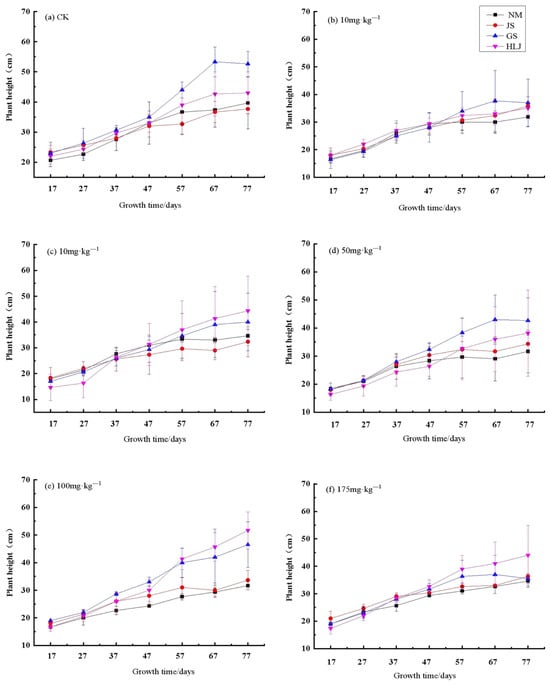
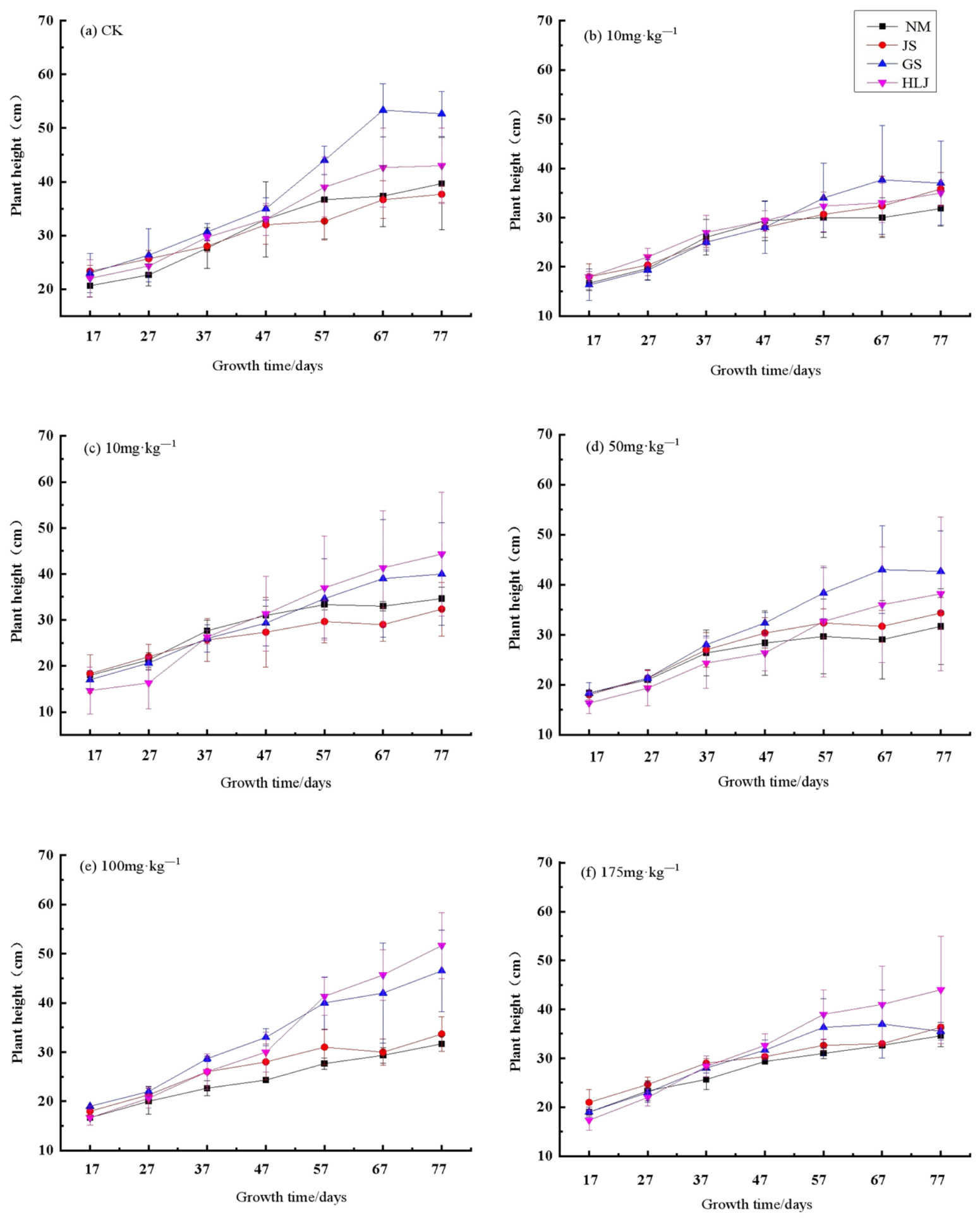
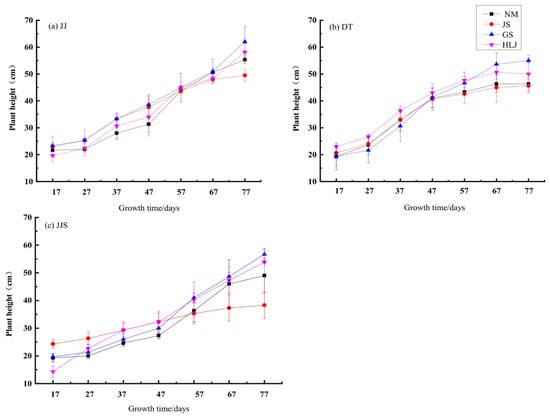
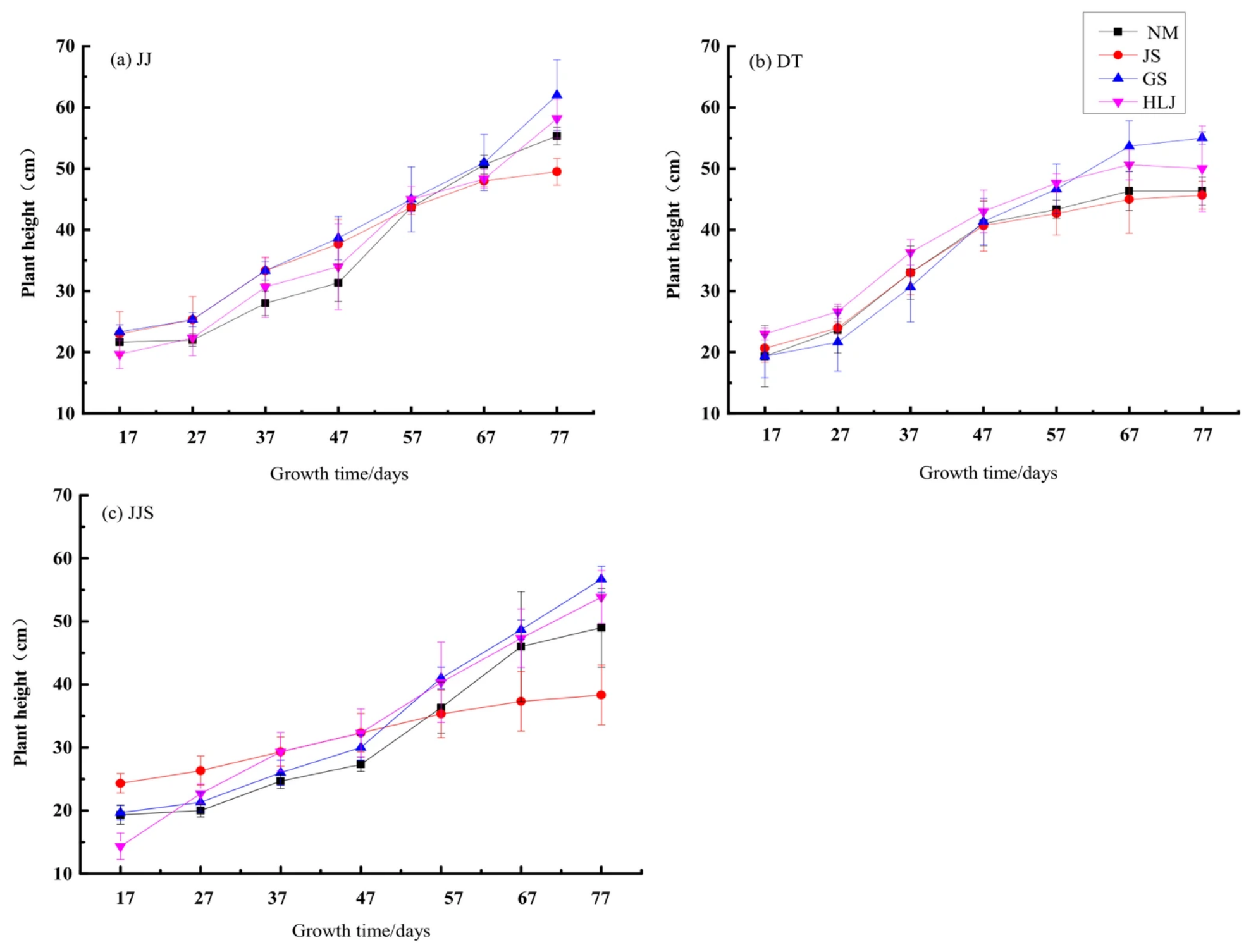
The growth dynamics of the four M. jalapa L. seed sources (NM, JS, GS, and HLJ) under varying cadmium (Cd) stress concentrations are presented in Figure 1. Overall, plant height increased progressively with the extension of the growth period. In control soil, the GS seed sources exhibited a higher growth rate compared to the other seed sources. At a Cd concentration of 100 mg·kg−1, the plant heights of the NM and JS seed sources were significantly lower than those of the GS and HLJ seed sources. A similar pattern was observed in the field-contaminated soils: NM and JS again had significantly lower plant heights than GS and HLJ across the different field-contaminated soils (Figure 2). Although the field-contaminated soils differed from the spiked soils in their physicochemical properties and in the concentrations of co-existing metals (Pb, Zn, As, and Cu), the relative ranking of the four seed sources remained consistent. This consistency indicates that the differences in growth performance among the seed sources are robust and not merely an artifact of a particular soil type or Cd treatment. Therefore, the field-contaminated soil results support the trends observed in the spiked-soil experiment, suggesting that the seed sources’ differences in response to Cd stress are relatively stable and can be detected under both controlled Cd-spiked conditions and realistic multi-metal field conditions.
Figure 1.
Growth dynamics of Mirabilis jalapa L. over an 11-week cultivation period following transplantation into soils amended with a gradient of Cd concentrations: s: (a) CK (0 mg·kg−1); (b) 10 mg·kg−1; (c) 25 mg·kg−1; (d) 50 mg·kg−1; (e) 100 mg·kg−1; and (f) 175 mg·kg−1. Data are presented as mean ± standard deviation (SD) (n = 4). The same below.
Figure 2.
Growth dynamics of Mirabilis jalapa L. over an 11-week cultivation period in field-collected cadmium (Cd)-contaminated soils: (a) Jijie (JJ) soil; (b) Datun town (DT) soil; and (c) Jiajieshan (JJS) soil.
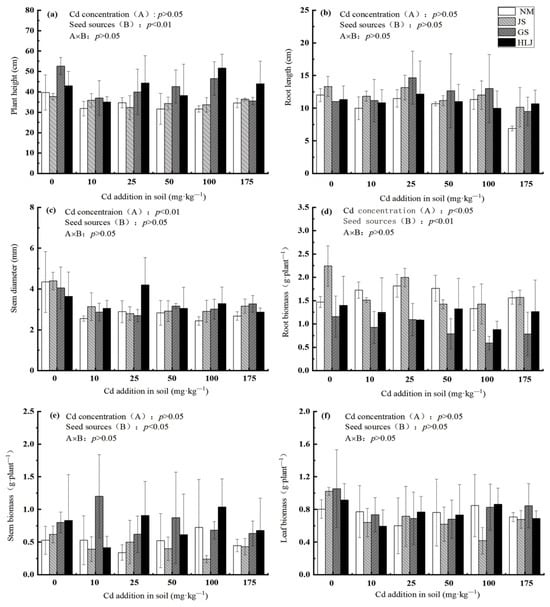
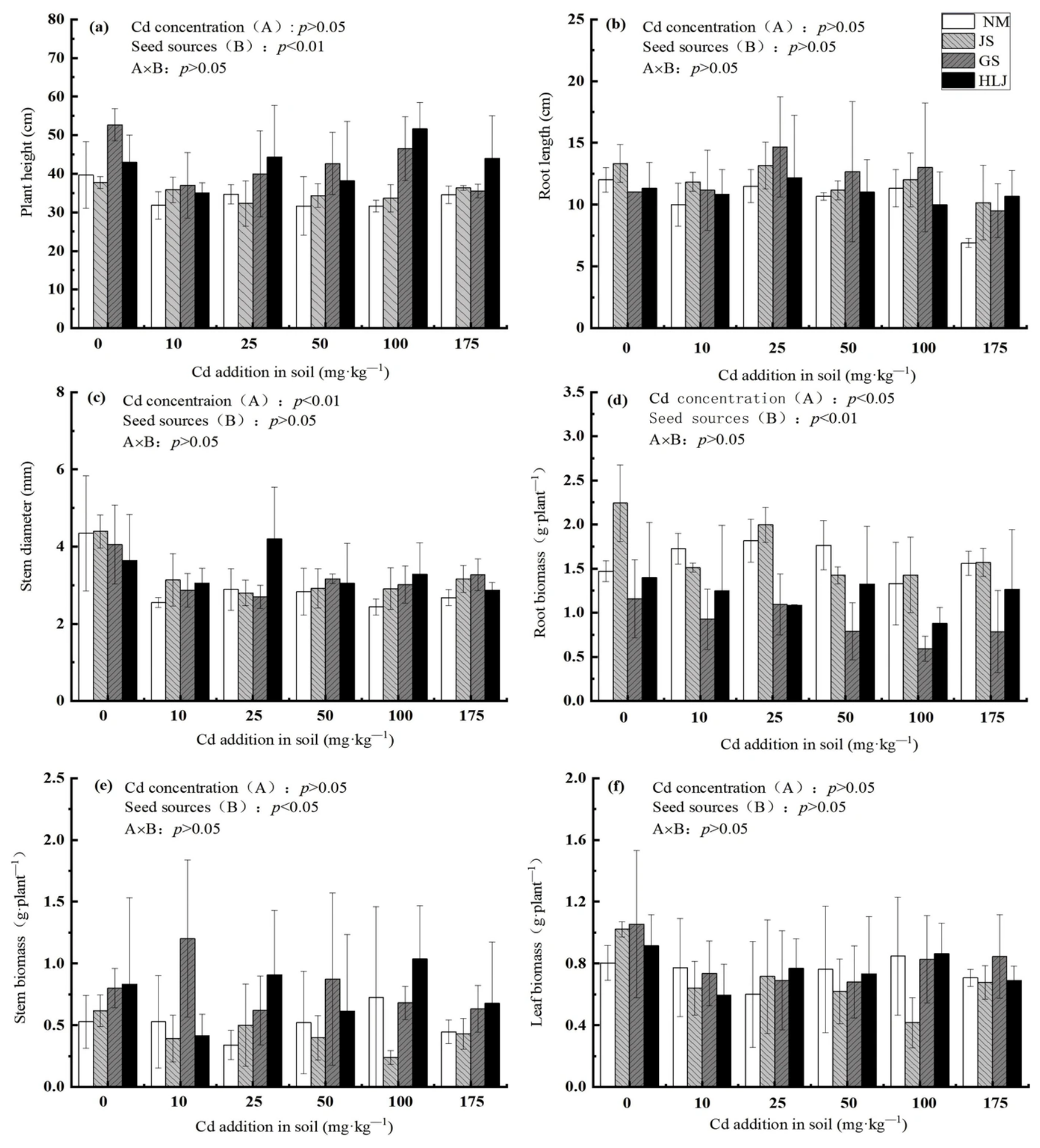
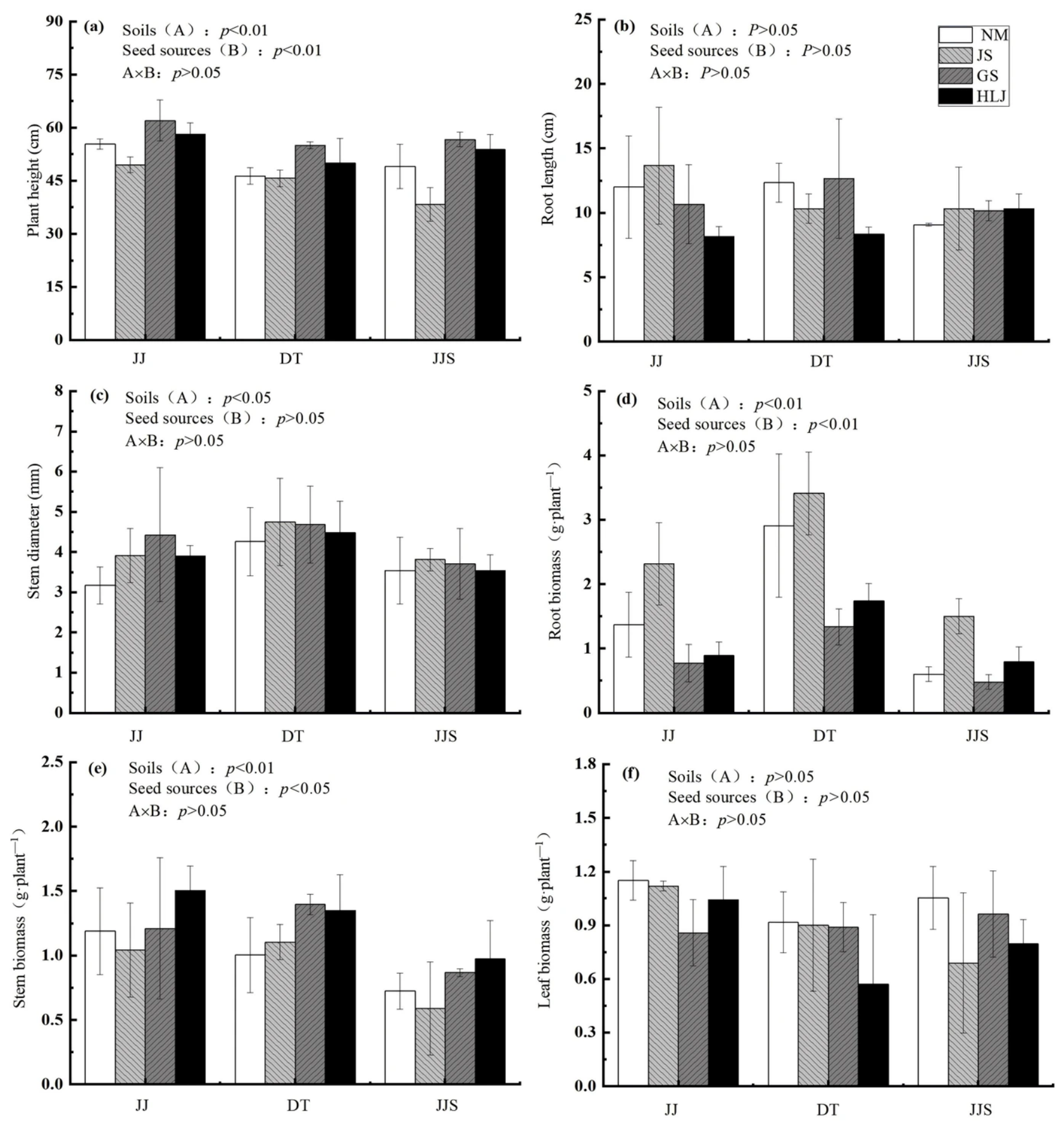
After 11 weeks of growth in soils with varying Cd concentrations, the biomass of the four M. jalapa L. seed sources at harvest is presented in Figure 3. Under the 100 mg·kg−1 Cd treatment, the NM seed sources exhibited a significantly lower plant height than the GS and HLJ seed sources. A two-way ANOVA revealed significant differences in plant height among seed sources (p < 0.01). However, no significant differences in root length were observed among seed sources, across Cd concentrations, or in their interaction (p > 0.05). Similarly, basal stem diameter did not differ significantly among seed sources, but significant variations were detected across Cd concentrations (p < 0.01). Root biomass was significantly influenced by both seed sources and soil Cd concentration, whereas stem and leaf biomass were not significantly affected by Cd concentration (p > 0.05). Nevertheless, stem biomass varied significantly among seed sources (p < 0.05; Figure 3). In the field-contaminated soil experiment, root length was not significantly affected by the different contaminated soils (p > 0.05). However, the plant height of the JS seed sources was significantly lower than that of the other seed sources in both the JJ and JJS soils (p < 0.05). Two-way ANOVA further indicated that leaf biomass was not significantly influenced by field-contaminated soil type, seed sources, or their interaction (p > 0.05).
Figure 3.
Growth status of M. jalapa L. grown in Cd-spiked soils for 11 weeks. (a) plant height; (b) root length; (c) stem diameter; (d) root biomass; (e) stem biomass; and (f) leaf biomass.
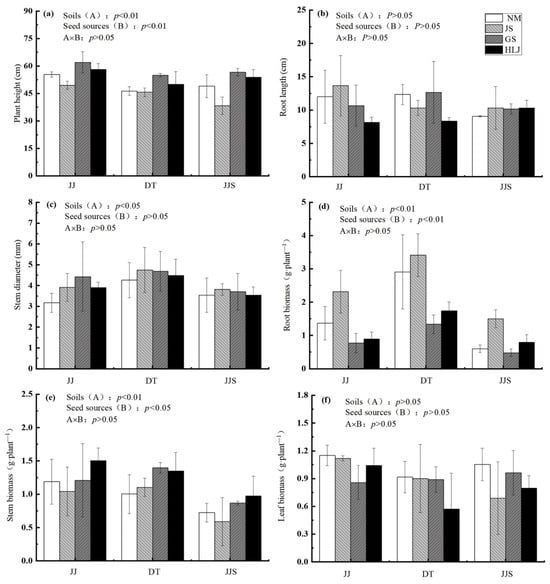
The growth dynamics of the four M. jalapa L. seed sources in field-contaminated soils collected from different regions are illustrated in Figure 4. Two-way ANOVA revealed that plant height, stem diameter, root biomass, and stem biomass were significantly influenced by soil contamination level (p < 0.05), whereas root length was not significantly affected (p > 0.05). Notably, the JS seed sources exhibited significantly lower plant heights than the other seed sources in both the JJ and JJS soils. Furthermore, no significant differences in leaf biomass were observed among soil types, seed sources, or their interactions (p > 0.05).
Figure 4.
Growth status of M. jalapa L. grown in field-contaminated soils for 11 weeks. (a) plant height; (b) root length; (c) stem diameter; (d) root biomass; (e) stem biomass; and (f) leaf biomass.
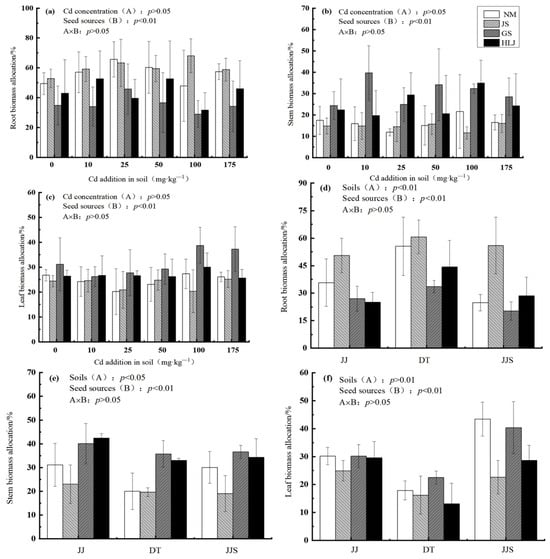
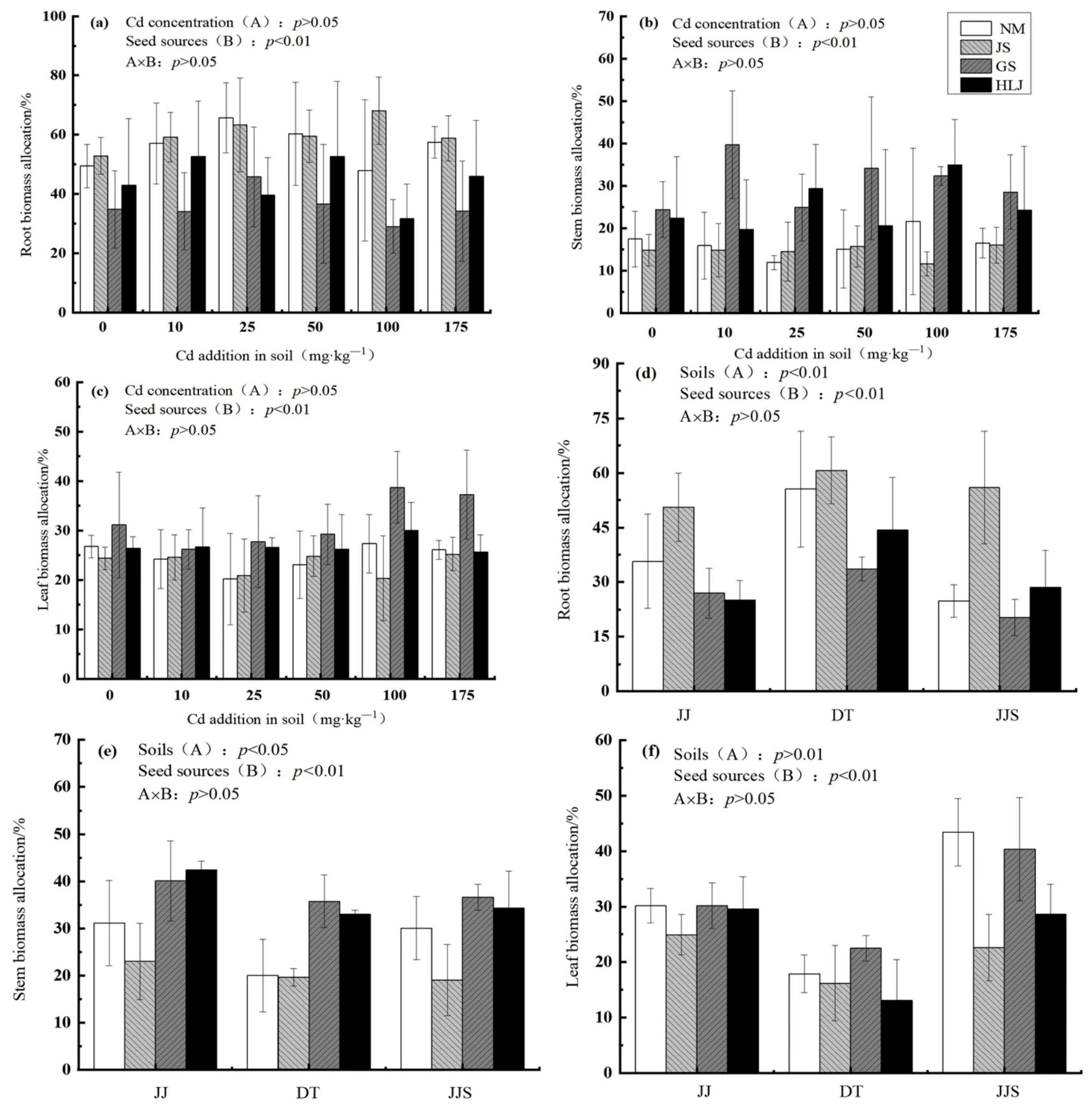
The biomass allocation patterns of M. jalapa L. grown in the different soils are presented in Figure 5. Across varying Cd concentrations, the majority of biomass was allocated to the roots across all seed sources. Two-way ANOVA indicated that biomass distribution among roots, stems, and leaves was not significantly influenced by Cd concentration (p > 0.05), but was significantly affected by seed sources (p < 0.01). Both root and leaf biomass allocation were significantly impacted by soil type and seed sources (p < 0.01), although their interaction effect was not statistically significant (p > 0.05). In contrast, stem biomass allocation was significantly influenced by seed sources alone (p < 0.01), with no significant differences detected across the different contaminated soils (p > 0.05).
Figure 5.
Biomass allocation of M. jalapa L. in different Cd-spiked and field-contaminated soils. (a) root biomass allocation in Cd-spiked soils; (b) stem biomass allocation in Cd-spiked soils; (c) leaf biomass allocation in Cd-spiked soils; (d) root biomass allocation in field-contaminated soils; (e) stem biomass allocation in field-contaminated soils; and (f) leaf biomass allocation in field-contaminated soils.
3.2. Effects of Cd Stress on Cd Uptake and Accumulation in M. jalapa L. from Different Regions
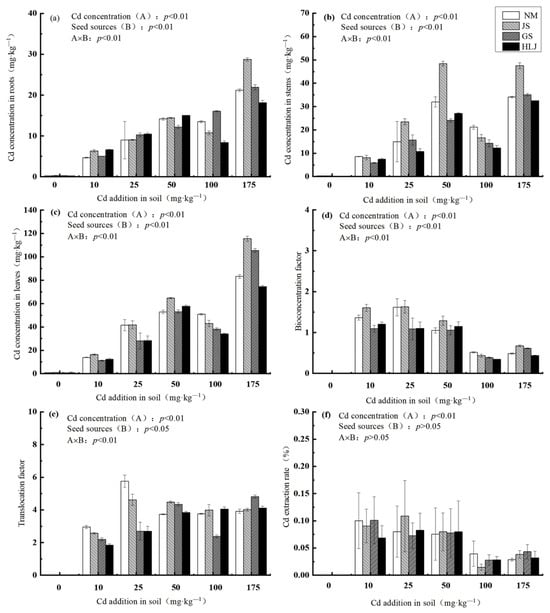
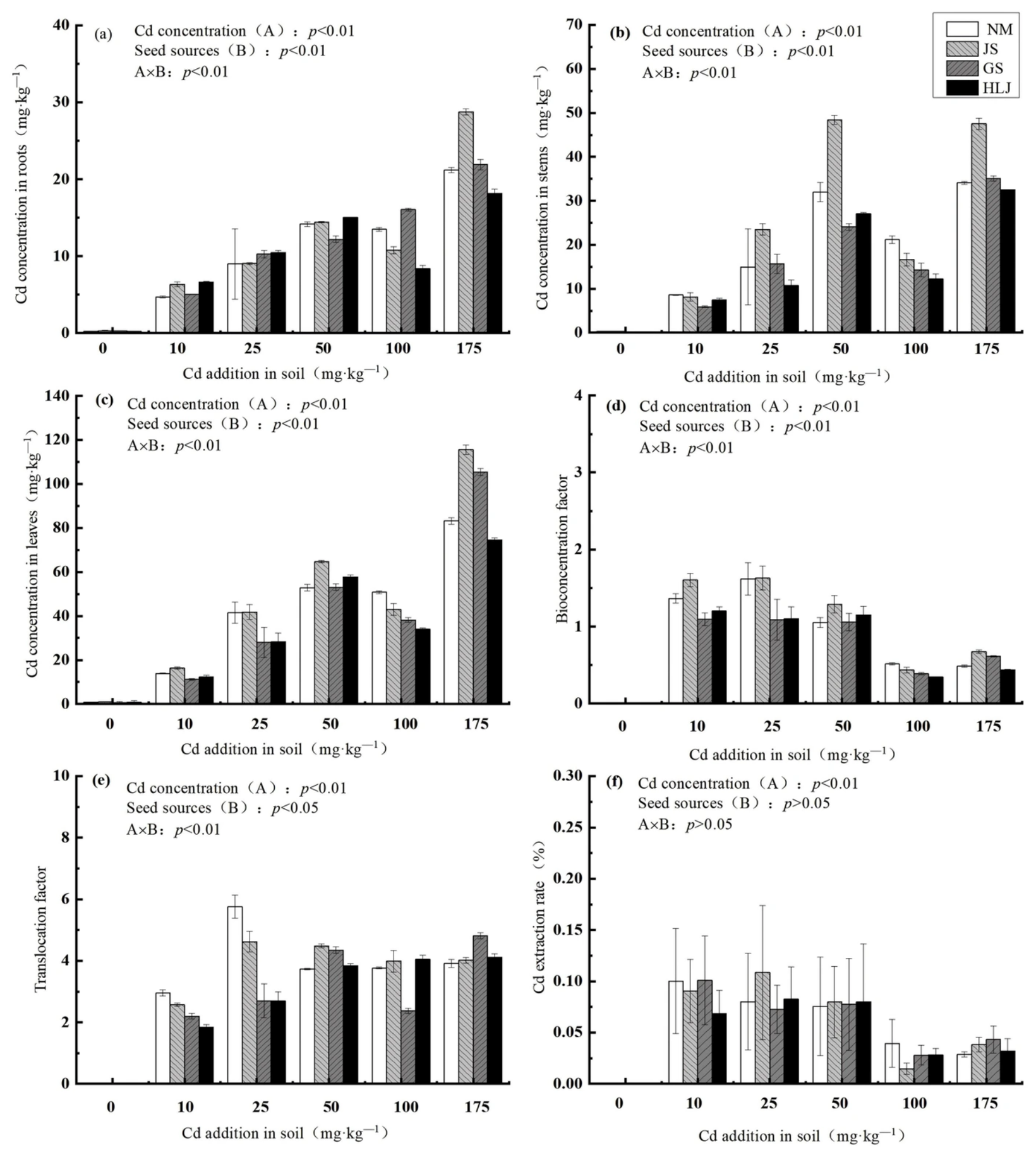
The Cd concentrations in the roots, stems, and leaves of the four M. jalapa L. seed sources grown in soils with varying Cd concentrations are presented in Figure 6. At the 175 mg·kg−1 Cd treatment, the Cd content in all tissues was significantly higher than that observed at the other treatment levels. When soil Cd concentrations were below 50 mg·kg−1, the Cd content in plant tissues increased with increasing soil Cd concentration (Figure 6). The translocation factors (TF) of all seed sources across all Cd treatments exceeded 1.0, indicating effective root-to-shoot Cd translocation. Two−way ANOVA revealed that Cd concentrations in roots, stems, and leaves were significantly influenced by soil Cd concentration, seed sources, and their interaction (p < 0.01). The bioconcentration factors (BCF) of the different seed sources decreased with increasing soil Cd concentration and were significantly affected by Cd concentration, seed sources, and their interaction (p < 0.01). Significant differences in TF were detected among Cd concentrations (p < 0.01) and among seed sources (p < 0.05). However, no significant differences in Cd extraction rate were observed among seed sources (p > 0.05). Notably, when the soil Cd concentration exceeded 50 mg·kg−1, the extraction rate decreased significantly.
Figure 6.
Cadmium accumulation in different seed sources of M. jalapa L. grown in different Cd-spiked soils for 11 weeks. (a) Cd concentration in roots; (b) Cd concentration in stems; (c) Cd concentration in leaves; (d) bioconcentration factor; (e) translocation factor; and (f) Cd extraction rate.
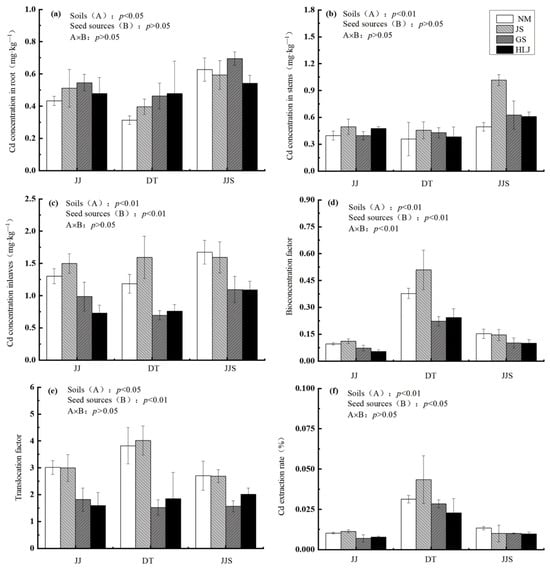
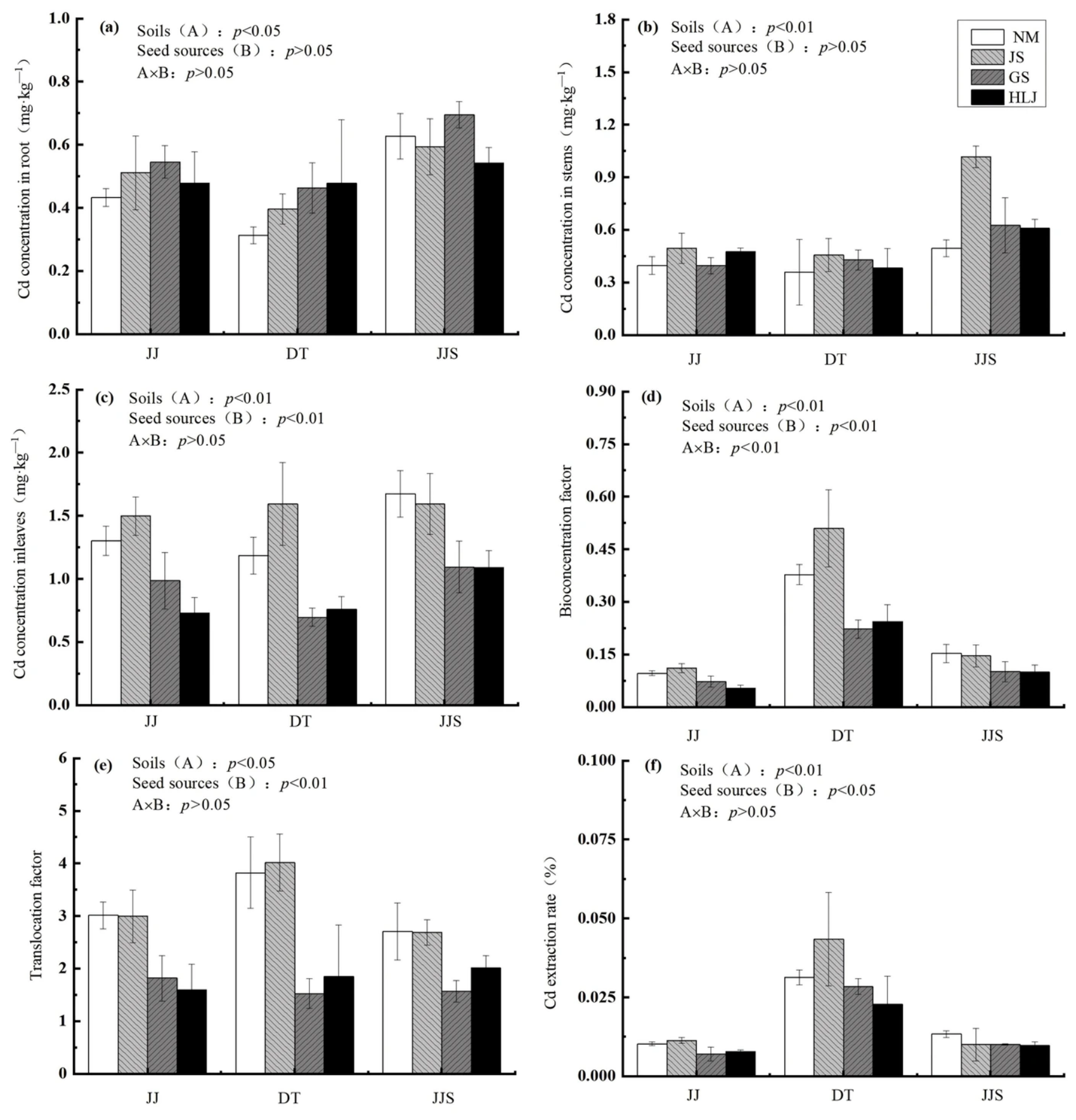
Under conditions of different field Cd-contaminated soils, the Cd concentrations in the roots, stems, and leaves, the bioconcentration factors (BCF), and translocation factors (TF) for the four M. jalapa L. seed sources are displayed in Figure 7. In the DT soil, the NM seed sources exhibited significantly lower root Cd content compared to the JJ and JJS soils. No significant differences in Cd accumulation were observed among seed sources in roots or stems. However, in the JJ and DT soils, the JS seed sources accumulated markedly higher Cd concentrations in their leaves than the GS and HLJ seed sources (Figure 7).
Figure 7.
Cadmium accumulation in different seed sources of M. jalapa L. grown in different field-contaminated soils for 11 weeks. (a) Cd concentration in roots; (b) Cd concentration in stems; (c) Cd concentration in leaves; (d) bioconcentration factor; (e) translocation factor; and (f) Cd extraction rate.
Two-way ANOVA further indicated that root Cd content was significantly influenced by soil type (p < 0.05), but not by seed sources (p > 0.05). Similarly, stem Cd content varied significantly across different soils (p < 0.01), with no significant seed source effect (p > 0.05). In contrast, leaf Cd content was significantly affected by both soil type and seed sources (p < 0.01), and the BCF was significantly influenced by their interaction (p < 0.01). The TF was also significantly affected by both soil type and seed sources (p < 0.05). Furthermore, the soil Cd extraction rate was significantly influenced by soil type (p < 0.05).
3.3. Effects of Cd on the Growth of M. jalapa L. in Hydroponic Culture
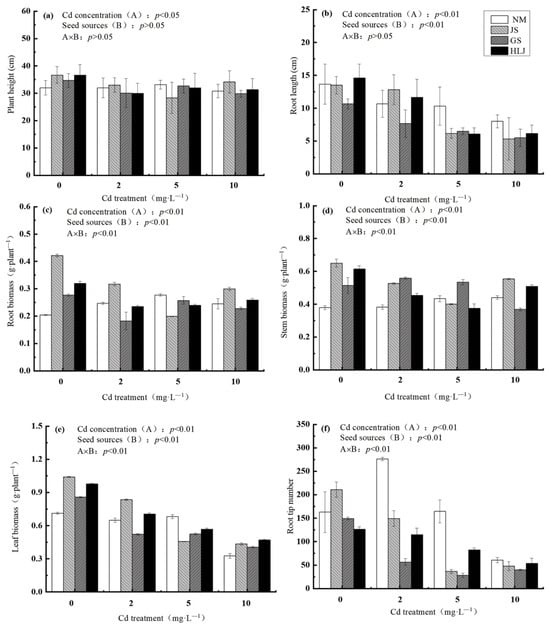
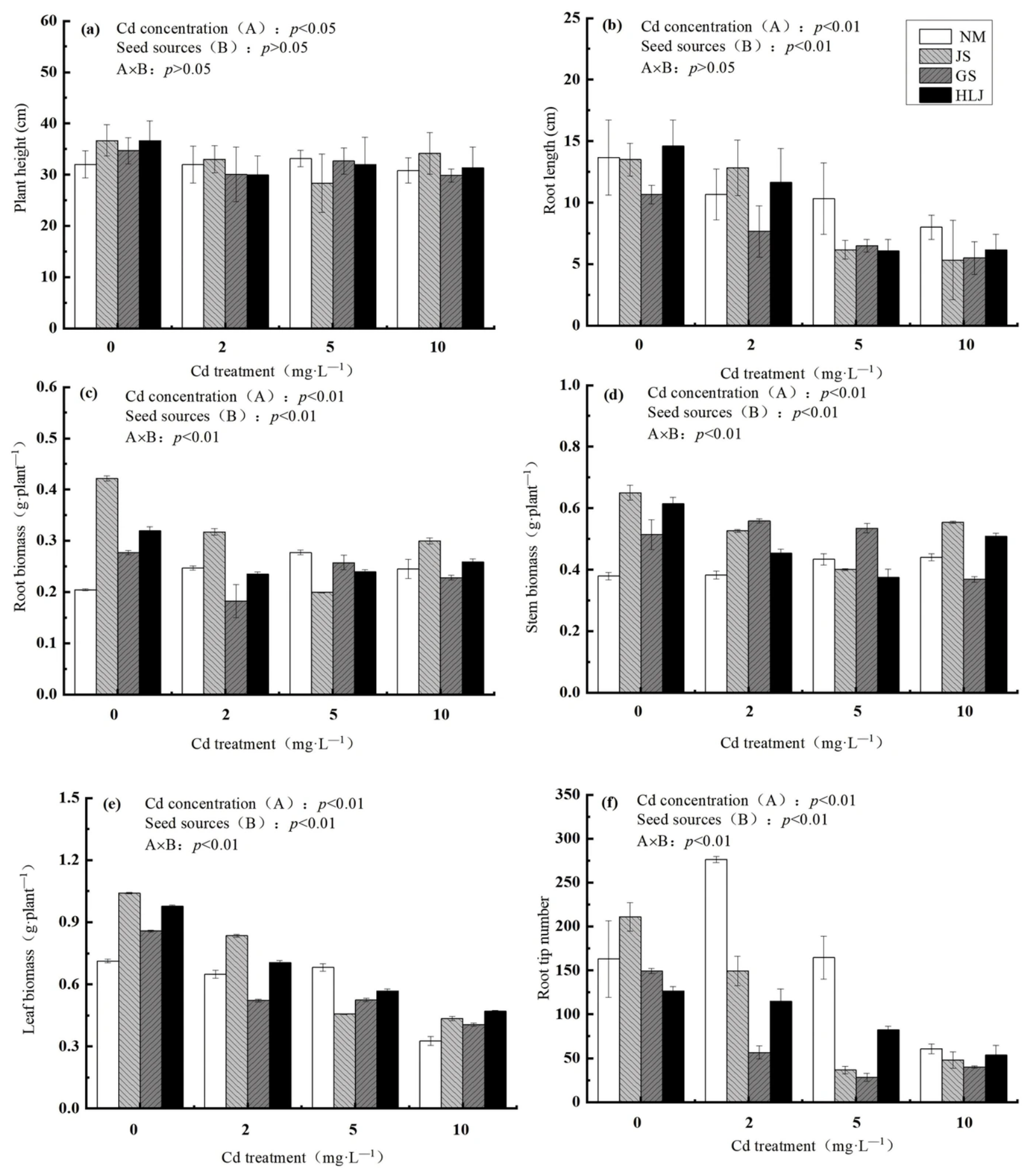
The effects of Cd treatment on the growth of the four M. jalapa L. seed sources under hydroponic conditions are presented in Figure 8. No significant differences in plant height were observed among the seed sources across the different Cd concentrations (p > 0.05). However, at Cd concentrations of 5 and 10 mg·L−1, root length, root tip number, and leaf biomass all decreased significantly across all seed sources (p < 0.05; Figure 8). Two-way ANOVA revealed that Cd concentration significantly affected plant height (p < 0.05), whereas no significant differences in plant height were detected among seed sources (p > 0.05). Root length was significantly influenced by both Cd concentration and seed sources (p < 0.01). Moreover, root biomass, stem biomass, leaf biomass, and root tip number were all significantly affected by Cd concentration, seed sources, and their interaction (p < 0.01).
Figure 8.
Effect of Cd addition on growth status of M. jalapa L. for 14 days under hydroponic conditions. (a) plant height; (b) root length; (c) root biomass; (d) stem biomass; (e) leaf biomass; and (f) root tip number.
3.4. Cd Accumulation in M. jalapa L. Under Hydroponic Conditions
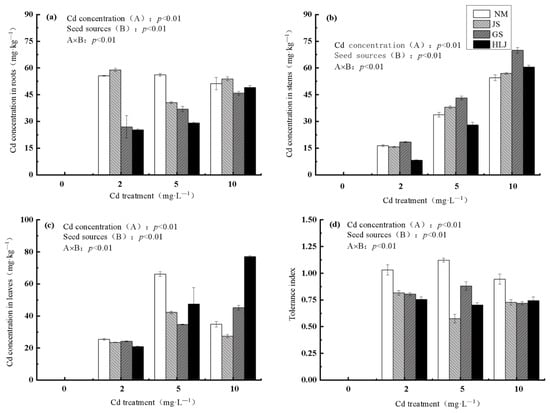
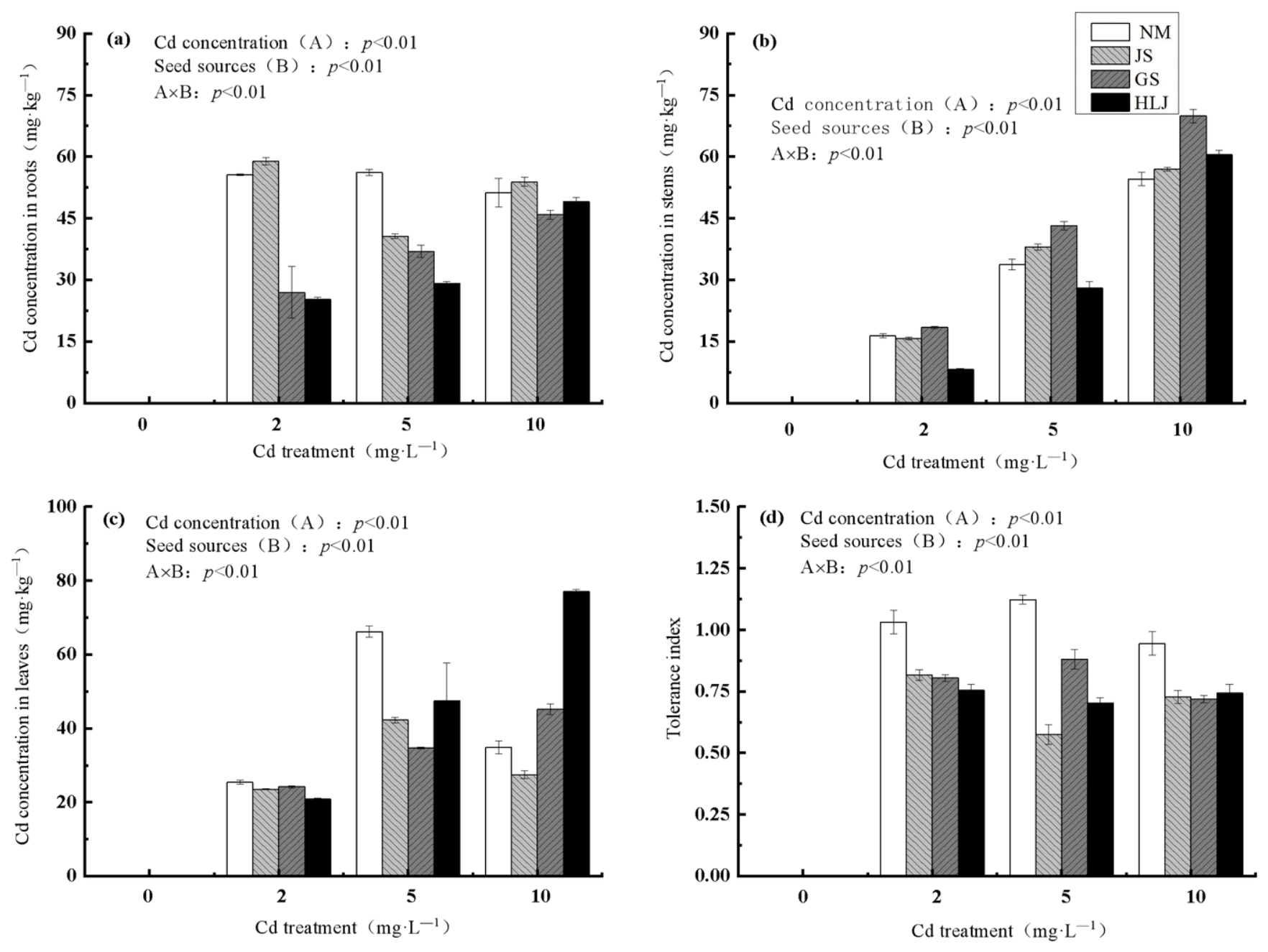
The Cd concentrations in roots, stems, and leaves, along with the BCF and tolerance indices of the four M. jalapa L. seed sources under varying Cd concentrations, are presented in Figure 9. The NM and JS seed sources exhibited significantly higher root Cd accumulation than the GS and HLJ seed sources. With increasing Cd concentration in the solution, root Cd accumulation in the HLJ seed sources increased markedly; however, no significant differences in root Cd content were observed in the NM seed sources across the 2–10 mg·L−1 Cd treatments. Stem Cd content increased significantly with rising Cd concentrations in all seed sources (p < 0.05; Figure 9). Under the 5 mg·L−1 Cd treatment, leaf Cd content also increased significantly with increasing solution Cd concentration, with the NM and JS seed sources showing significantly higher leaf Cd content than the other seed sources at this treatment level.
Figure 9.
Effect of Cd addition on concentration of Cd in tissues of M. jalapa L. for 14 days under hydroponic conditions. (a) Cd concentration in roots; (b) Cd concentration in stems; (c) Cd concentration in leaves; and (d) tolerance index.
Regarding tolerance indices, the HLJ seed sources exhibited no significant differences across Cd treatments. In contrast, the JS seed sources showed a significantly lower tolerance index at the 5 mg·L−1 Cd treatment compared to other treatments, whereas the NM population displayed a significantly higher tolerance index under the same condition. Two-way ANOVA revealed that Cd concentrations in roots, stems, and leaves, as well as the tolerance index, were all significantly influenced by solution Cd concentration, seed sources, and their interaction (p < 0.01).
3.5. Correlation Analysis Between Cd Extraction Rate and Growth Indices of M. jalapa L.
Pearson correlation analyses between the Cd extraction rate and growth indices of the four M. jalapa L. seed sources in artificially spiked soils and field-contaminated soils are presented in Table 1. In the spiked-soil experiment, the Cd extraction rate showed a highly significant positive correlation with the bioconcentration factor (BCF) across all seed sources (p < 0.01), and a significant negative correlation with soil Cd content (p < 0.05). When analyzed by seed sources, the Cd extraction rate of the NM and GS seed sources was significantly positively correlated with root biomass (p < 0.01), whereas that of the JS and HLJ seed sources also showed a significant positive correlation with root biomass, albeit at a lower significance level (p < 0.05). In the field-contaminated soil experiment (Table 1), the Cd extraction rate exhibited a highly significant positive correlation with BCF (p < 0.01), and a highly significant negative correlation with both total soil Cd content and TCLP-extractable Cd content (p < 0.01). Additionally, a significant positive correlation was observed between the Cd extraction rate and root biomass (p < 0.01).
Table 1.
Pearson correlation coefficients between Cd extraction ratio in different contaminated soils of Mirabilis jalapa L. and growth indices.
4. Discussion
4.1. Growth Responses and Cd Accumulation Characteristics of M. jalapa L. from Different Sources
An ideal phytoremediation material should exhibit rapid growth, a short life cycle, substantial aboveground biomass, a well-developed root system, high bioconcentration and translocation capacities, wide geographical distribution, and ease of cultivation and harvest. Among these traits, plant tolerance to heavy metals is a pivotal factor in selecting suitable species for phytoremediation [20]. M. jalapa L. is widely distributed across China and has been recognized for its potential in Cd phytoextraction [7]. However, the accumulation capacity of this species remains a subject of debate, with some studies identifying it as a Cd hyperaccumulator while others have challenged this classification. Such discrepancies may arise from variation among seed sources, a phenomenon that has been documented in other species, where materials from different geographical origins can exhibit divergent Cd accumulation and tolerance traits. It should be noted that the identification of germplasm in this study was based on geographical origin information. Therefore, the four accessions represent geographically differentiated germplasm of M. jalapa L., and the observed differences among them should be interpreted as origin-related seed source differences. Further molecular characterization is needed to confirm the genetic basis of this differentiation.
In the present study, plant height among M. jalapa L. seed sources from four distinct regions (NM, JS, GS, and HLJ) was significantly influenced by soil Cd levels in the spiked-soil experiment. However, root length and leaf biomass were not significantly affected by soil Cd content, suggesting that M. jalapa L. seed sources possess considerable tolerance to Cd stress (Figure 3). Similarly, in field-contaminated soils, no significant variation in root length or leaf biomass was observed among seed sources, further indicating robust growth potential across diverse contamination conditions (Figure 4). Across soils with varying Cd concentrations, biomass was predominantly allocated to roots and remained largely unaffected by Cd levels. In contrast, in field-contaminated soils, root biomass allocation was significantly influenced by soil type (Figure 5). This differential biomass distribution pattern across habitats likely reflects the overall survival strategy of each seed source in response to local environmental conditions.
Notably, Li et al. [11] reported that two sources of M. jalapa L., one from a contaminated site and one from a clean site, accumulated 93.88 and 81.76 mg·kg−1 Cd in their leaves, respectively, when grown in soil spiked with 175 mg·kg−1 Cd, with both seed sources exhibiting constitutively high Cd tolerance. These findings, together with our observations, suggest that M. jalapa L. possesses constitutive rather than induced tolerance characteristics. Recent studies on other species have further corroborated the importance of seed source variation in Cd tolerance. For instance, Zhang et al. [21] demonstrated that three different ecotypes of the hyperaccumulator Solanum nigrum L. from northern, central, and southern China exhibited significant differences in Cd accumulation and physiological characteristics. Similarly, Guo et al. [22] reported that under Cd exposure, one population of Hylotelephium spectabile exhibited a growth advantage over another, attributed to population-specific rhizosphere microbial community modulation and enhanced chlorophyll content. These studies underscore the notion that variation among materials from different geographical origins is a widespread phenomenon and should be carefully considered when selecting plant materials for phytoremediation. Nevertheless, the causes of such variation were not investigated in the present study.
Cd accumulation and translocation among seed sources. Cd concentrations in different tissues of M. jalapa L. seed sources were significantly influenced by both soil Cd levels in the spiked-soil experiment and the degree of contamination in field-collected “natural” soils (Figure 6 and Figure 7). In soil with high Cd concentration (175 mg·kg−1), the JS seed sources exhibited significantly greater Cd enrichment in roots, stems, and leaves compared to the other seed sources. However, no significant differences were observed among seed sources in terms of soil Cd extraction rate. Notably, the Cd extraction rate declined when soil Cd levels exceeded 50 mg·kg−1, indicating that the phytoextraction efficiency of M. jalapa L. is optimal under low-to-moderate contamination, a pattern consistent with previous reports. Despite a reduction in the bioconcentration factor (BCF) with increasing soil Cd content, all seed sources demonstrated strong Cd translocation ability, with translocation factors (TF) consistently exceeding 1.0. In field-contaminated soils, seed sources from different regions showed enhanced Cd extraction rates in the DT soil, further confirming the influence of soil properties on phytoextraction performance. Consistent with previous findings, M. jalapa L. performs well in soils with low to moderate Cd contamination [23].
Plants may adopt different strategies to accommodate their local growth environments. However, based on the present experimental design, we cannot conclude that the observed differences among seed sources reflect genetic adaptation or adaptive evolution, because genetic differentiation was not characterized in this study. For instance, variations in Cd accumulation in leaves of Malva sinensis Cavan from different locations have been documented, and genetic characteristics associated with Cd hyperaccumulation can differ significantly among different sources [24]. Among four populations of Noccaea caerulescens, one population showed Cd accumulation levels 10 to 60 times higher than the others [25]. These examples indicate that variation among materials from different geographical origins can influence Cd accumulation capacity. However, the present study did not characterize genetic diversity, and the observed differences among seed sources should not be interpreted as evidence of genetic differentiation or local adaptation.
4.2. Differences in Cd Tolerance Among M. jalapa L. Seed Sources UnderHydroponic Conditions
As Cd concentrations in the nutrient solution increased, root length and root tip number of M. jalapa L. seed sources decreased notably. Similarly, root, stem, and leaf biomass were significantly affected by Cd levels in the solution (Figure 8). Significant variations in Cd content were observed among the roots, stems, and leaves of different seed sources. The NM and JS seed sources showed significantly higher Cd enrichment in roots compared to the GS and HLJ seed sources. At a Cd concentration of 5 mg·L−1, the NM seed source not only exhibited markedly higher leaf Cd content but also demonstrated a superior tolerance index compared to other seed sources, indicating its greater potential to tolerate higher Cd concentrations under hydroponic conditions (Figure 9). This seed source-specific variation in tolerance index aligns with findings from Li et al. [11]. The differential responses among seed sources may be associated with genetic variation, but this remains a hypothesis because genetic variation was not directly investigated in this study. Other factors, such as commercial seed production, seed multiplication history, maternal effects, and seed lot heterogeneity, may also have contributed to the observed differences. Furthermore, exogenous application of glucose has been shown to enhance Cd enrichment in M. jalapa L. leaves by 138.6% compared to controls, indicating that agronomic practices could potentially be employed to improve the phytoextraction efficiency of promising plants [26].
4.3. Correlation Analysis and its Implications for Phytoextraction Efficiency
Pearson correlation analysis revealed that the Cd extraction rate of M. jalapa L. seed sources in both spiked and field-contaminated soils was positively correlated with BCF and inversely correlated with soil Cd content (Table 1). This suggests that higher soil Cd levels are associated with reduced removal efficiency, and as soil pollution intensifies, the phytoextraction efficiency declines. However, these correlations should be interpreted with particular caution because MER and BCF are not mathematically independent. The observed correlations involving MER can still provide useful descriptive information, but they should not be overinterpreted as direct biological evidence. Across seed sources from different regions, the correlations between the Cd extraction ratio and growth indices differed in both strength and significance (Table 1). In the artificially contaminated soil, the Cd extraction ratio of the NM seed sources was significantly correlated with root dry weight (r = 0.784, p < 0.01) and leaf dry weight (r = 0.656, p < 0.01), whereas the JS and GS seed sources showed stronger correlations with stem dry weight (r = 0.830 and 0.875, respectively, p < 0.01), and the HLJ seed sources was mainly correlated with root length (r = 0.718, p < 0.01) and root dry weight (r = 0.615, p < 0.05). In the field-contaminated soils, the Cd extraction ratio of the NM and JS seed sources was significantly positively correlated with the translocation factor (TF) (r = 0.718 and 0.932, respectively, p < 0.05 or p < 0.01), whereas no significant TF-Cd extraction correlation was found for the GS and HLJ seed sources. These contrasting correlation patterns indicate that different seed sources relied on different growth traits and physiological processes during Cd extraction. For example, NM and JS may depend more on Cd translocation to aboveground tissues, whereas GS and HLJ may depend more on root retention or other tolerance strategies. Because these strategies act at different stages of Cd uptake, translocation, and detoxification, the seed sources’ correlation patterns provide indirect evidence that different seed sources may employ distinct mechanisms for Cd uptake and detoxification. Similar differences in rhizosphere micro-characteristics and metal dynamics among plants used for Cd phytoremediation have been reported [27]. Nevertheless, correlation analysis alone cannot identify specific mechanisms, and further physiological, molecular, and rhizosphere studies are needed to verify this inference. Among the growth indices examined, root dry weight showed the most consistent and strongest positive correlation with the Cd extraction ratio. These results indicate that root biomass was significantly associated with the Cd extraction capacity of M. jalapa L. seed sources. However, the correlation does not establish causation. This relationship should be interpreted as an association rather than evidence that root biomass is a key determinant. Since roots are the first organ to contact and take up Cd, a larger root biomass may provide a greater absorptive surface area and more binding sites for Cd, potentially increasing total Cd uptake and subsequent extraction; however, this possibility requires further verification. Therefore, root biomass may serve as a useful indicator when selecting M. jalapa L. seed sources with high phytoextraction potential, but it should not be regarded as a confirmed key trait. This finding also suggests that management practices that promote root growth may potentially enhance the efficiency of Cd phytoextraction. Recent studies have further elucidated the complex interplay between plant genetics, rhizosphere microbial communities, and Cd bioavailability in determining phytoextraction efficiency [22]. The seed source differences observed in the present study underscore the importance of selecting appropriate seed sources for practical phytoremediation applications. For instance, the NM seed sources, which exhibited both high Cd accumulation and superior tolerance under hydroponic conditions, may represent a promising candidate for Cd phytoextraction in contaminated soils, particularly under low-to-moderate contamination levels. However, further field validation and mechanistic studies, particularly at the molecular and rhizosphere microbial levels, are warranted to fully elucidate the genetic and ecological determinants of seed source variation in Cd accumulation and tolerance in M. jalapa L.
In the present study, Pearson correlation analysis revealed that the Cd extraction rate of M. jalapa L. seed sources was significantly positively correlated with the bioconcentration factor (BCF) across both spiked and field-contaminated soils (Table 1). The Cd extraction rate of different seed sources was also significantly positively correlated with root dry weight. This pattern is consistent with observations in other species, though notable contrasts exist. Under different Cd treatments, the biomass of Chamaecrista fasciculata showed a significant negative correlation with shoot and root Cd content, but the correlation varied among populations, with some populations exhibiting no correlation between biomass and Cd enrichment capacity [28]. Studies have shown that the enrichment and tolerance of plants to heavy metals are related to the heavy metal concentrations in their native habitats [29]. In the present study, however, while no significant effect of seed sources on Cd extraction rate was observed in the spiked-soil experiment, significant seed source effects were detected in the “natural” polluted soils, underscoring the importance of soil properties and metal bioavailability in modulating phytoextraction performance. Research on Anisopappus chinensis has demonstrated that Co tolerance and translocation differ among seed sources, and such variation may result from directional selection [30]. The hydroponic experiment in the present study further revealed that the NM seed sources exhibited greater Cd tolerance compared to the other seed sources (Figure 9), consistent with the notion that plant tolerance to heavy metals correlates with the environmental conditions of their origin. Differences among seed sources may be influenced by the speciation and bioavailability of heavy metals present in the soil [30]. However, it should be noted that the spiked soils and field-contaminated soils differed markedly in Cd speciation and bioavailability. As shown in Table S2, although the total Cd concentration in some field-contaminated soils was comparable to that in the spiked soils, the proportions of extractable Cd were much lower in the field-contaminated soils. For example, in the 10 mg·kg−1 spiked soil, Cd-CaCl2-extractable Cd was 0.12 mg·kg−1 (1.18% of total Cd), and TCLP-Cd was 3.44 mg·kg−1 (33.7% of total Cd). In contrast, in the JJ field-contaminated soil, which had a similar total Cd concentration (13.5 mg·kg−1), Cd-CaCl2-extractable Cd was only 0.018 mg·kg−1 (0.13% of total Cd), and TCLP-Cd was 2.40 mg·kg−1 (17.8% of total Cd). The DT and JJS soils also showed lower extractable Cd proportions. These results indicate that Cd in the field-contaminated soils was less labile and potentially less bioavailable than Cd in the freshly spiked soils, likely due to aging, stronger binding to soil constituents, and the influence of co-existing metals and soil physicochemical properties. Such differences in Cd speciation may have contributed to the different plant responses observed between the spiked-soil and field-contaminated soil experiments. Nevertheless, this study did not determine the specific Cd fractions, such as exchangeable, carbonate-bound, Fe-Mn oxide-bound, organic-bound, and residual fractions. Therefore, future studies should separately investigate Cd speciation and bioavailability under different soil conditions to better understand their effects on Cd uptake, translocation, and tolerance in M. jalapa L. seed sources.
As shown in Figure 6, the translocation factor (TF) of the NM seed sources was significantly higher under Cd concentrations of 25 mg·kg−1, indicating efficient Cd transport to aboveground tissues. Research indicates that the relationship between biomass and leaf Cd concentration varies among different seed sources of the same plant species. In the present study, under the artificial Cd treatment (0–175 mg·kg−1), only the JS and GS seed sources exhibited leaf Cd concentrations exceeding 100 mg·kg−1 at the 175 mg·kg−1 Cd treatment, while all other treatments remained below the hyperaccumulator threshold (Figure 6). This finding confirms that the Cd accumulation capacity of M. jalapa L. is indeed limited and does not meet the criteria for Cd hyperaccumulation [11]. Notably, there is no correlation between biomass and leaf Cd concentration in populations with high tolerance, whereas a negative correlation exists between biomass and Cd enrichment in populations with low tolerance [28]. This pattern suggests that tolerance and accumulation may be governed by distinct physiological mechanisms that vary among populations. The differential tolerance and transport capacities of plants to heavy metals among populations may result from directional selection imposed by local environmental conditions [30].
4.4. Application Value and Limitations of M. jalapa L. in Remediation of Contaminated Soils
Extensive field and laboratory investigations have been conducted to characterize the hyperaccumulation capacities of Zn and Cd in Noccaea caerulescens, with findings indicating substantial genetic variation among populations. Research into heavy metal accumulation and tolerance across diverse populations is instrumental for optimizing phytoremediation strategies in different regions [5]. Among 60 distinct populations of Noccaea caerulescens, only a subset exhibited pronounced Cd hyperaccumulation [31]. Similarly, Arabidopsis thaliana populations from Poland and Italy both display high Cd tolerance; however, the Polish population exhibits Cd hyperaccumulation, whereas the Italian population shows a tendency for Cd exclusion, a disparity that may reflect divergent evolutionary strategies in Cd absorption, transport, and detoxification [32]. In contrast, studies on Alyssum inflatum Nyar have demonstrated that under nickel (Ni) stress, no significant differences in morphology, physiology, biochemistry, or shoot Ni content are observed among populations [33]. Understanding the relationship between phenotypic traits and plant tolerance can facilitate the selection of plants with enhanced tolerance, thereby aiding in the remediation of contaminated soils.
Different populations of the same plant species possess varying utility in remediation processes. Investigating the tolerance of a population to a specific contaminated site can enhance the precision and efficiency of phytoremediation efforts [28]. For instance, distinct genotypes of Pteris vittata exhibit varying arsenic (As) extraction rates, and selecting the appropriate genotype can significantly boost remediation efficiency [34]. In typical soils, certain plants may not display hyperaccumulation traits for heavy metals, which can be attributed to either genetic variances or the low bioavailability of heavy metals in the soil [35]. Recent studies on Noccaea caerulescens have further elucidated the genetic basis of population-level variation: variation in HMA4 gene copy number and expression among populations correlates with differences in Cd translocation capacity, with calamine populations exhibiting higher NcHMA4 expression and greater Cd translocation efficiency than serpentine populations [36].
The present study demonstrates that M. jalapa L. exhibits a relatively high translocation coefficient under natural habitat conditions, but its bioconcentration factor remains low in highly contaminated soils. This can be attributed to two factors: on the one hand, the Cd content in M. jalapa L. leaves is inherently low, indicating limited accumulation capacity; on the other hand, the high Cd content in the soil further reduces the enrichment coefficient. Therefore, M. jalapa L. is more suitable for phytoextraction of soils with low to moderate Cd contamination rather than heavily contaminated soils. In addition, the field-contaminated soils used in this study were co-contaminated with Pb, Zn, As, and Cu, which may have influenced plant growth and Cd accumulation. Although the spiked soil and hydroponic experiments partially separated the effects of Cd from those of co-existing metals, the interactions among multiple metals under field conditions should be considered when extrapolating the present results. Future studies with single-metal treatments, binary metal mixtures, or reciprocal transplant experiments are recommended to further separate the specific effects of Cd from those of other co-existing metals. By selecting appropriate plant species and seed sources, the efficiency of phytoremediation can be optimized, thereby providing a foundation for the sustainable use of contaminated soils.
5. Conclusions
This study evaluated the growth and Cd accumulation characteristics of four M. jalapa L. seed sources from different geographical regions under varying Cd concentrations in both spiked soils and hydroponic conditions. The main findings are summarized as follows:
- (1)
- All M. jalapa L. seed sources exhibited considerable tolerance to elevated Cd levels. In the spiked soil experiment, the Cd extraction rate decreased with increasing soil Cd concentration. A similar trend was observed in the field-contaminated soils, where the Cd extraction rate was also negatively correlated with soil Cd content. However, because the field-contaminated soils also differed in other physicochemical properties, including organic matter and nutrient contents, these results should be interpreted as combined effects of soil properties and Cd contamination.
- (2)
- In spiked soils with Cd concentrations below 50 mg·kg−1, no significant differences in Cd extraction rates were detected among seed sources. However, when soil Cd content exceeded 50 mg·kg−1, the extraction rate declined significantly. In field-contaminated soils, no significant differences in Cd extraction rates were observed among seed sources. The extraction rate was negatively correlated with soil Cd content across all seed sources. Under hydroponic conditions, the NM seed sources exhibited significantly higher root tip numbers and a superior tolerance index compared to the other seed sources, suggesting their greater potential for Cd phytoextraction under controlled conditions.
- (3)
- The Cd extraction rate of different seed sources was significantly and negatively correlated with soil Cd content, and positively correlated with root biomass. These results indicate that root biomass was associated with phytoextraction efficiency, but it has not been demonstrated to be a key determinant. Enhancing root biomass accumulation may potentially improve the remediation performance of M. jalapa L. in Cd-contaminated soils, but further studies are needed to confirm whether this relationship is causal.
- (4)
- While the present study has revealed differences in Cd uptake and accumulation among different seed sources of M. jalapa L., further investigations are warranted to elucidate the genetic architecture underlying these phenotypic variations. In particular, molecular genetic approaches, including transcriptomic, genomic, and quantitative trait locus (QTL) analyses, are needed to determine whether the observed differences in Cd tolerance and accumulation are associated with specific genetic polymorphisms or other origin-related factors. Additionally, the economic viability and sustainable utilization of M. jalapa L. as an ornamental plant for phytoremediation in contaminated agricultural or urban soils merit further research, with particular attention to cost-benefit analyses, biomass valorization pathways, and long-term ecological impacts.
Supplementary Materials
The following supporting information can be downloaded at: https://www.mdpi.com/article/10.3390/agronomy16212176/s1, Table S1: Basic physicochemical properties of the four field-contaminated soils used in the pot experiment; Table S2: The content of Cd in different soils.
Author Contributions
Conceptualization, Q.L., Y.L. and F.X.; methodology, Q.L. and Y.L.; software, Q.L.; formal analysis, Q.L., Y.L. and F.X.; data curation, Q.L.; writing—original draft preparation, Q.L.; writing—review and editing, Q.L., Y.L. and F.X. All authors have read and agreed to the published version of the manuscript.
Funding
This research was supported by the Department of Education of Hunan Province, grant number Xiang Jiao Tong [2024] No. 185 (Hunan Provincial Training Program for Young Backbone Faculty in Regular Higher Education Institutions).
Data Availability Statement
The original contributions presented in this study are included in the article/Supplementary Material. Further inquiries can be directed to the corresponding author.
Conflicts of Interest
The authors declare no conflicts of interest.
References
- Nóbrega, S.R.; Coelho, A.L.F.; Verola, C.F.; Costa, I.R.; Vilaça, R. Chromosome variations and diversity of Epidendrum ibaguense Lindl. (Orchidaceae) on the Tepequém’s Tepuy, Roraima, Brazil. Genet. Mol. Res. 2017, 16, gmr16039754. [Google Scholar] [CrossRef] [Scilit]
- Hufford, K.M.; Mazer, S.J. Plant ecotypes: Genetic differentiation in the age of ecological restoration. Trends Ecol. Evol. 2003, 18, 147–155. [Google Scholar] [CrossRef] [Scilit]
- Xu, F.F.; Ma, X.N.; Luo, W.Q.; Wu, F.Y. Mechanisms and variations of arsenic accumulation in different ecotypes of Pteris vittata L. Sci. Technol. Rev. 2017, 35, 86–91. (In Chinese) [Google Scholar]
- Wu, F.; Deng, D.; Wu, S.; Lin, X.; Wong, M. Arsenic tolerance, uptake, and accumulation by nonmetallicolous and metallicolous populations of Pteris vittata L. Environ. Sci. Pollut. Res. Int. 2015, 22, 8911–8918. [Google Scholar] [CrossRef] [Scilit]
- Martos, S.; Gallego, B.; Saez, L.; Lopez-Alvarado, J.; Cabot, C.; Poschenrieder, C. Characterization of zinc and cadmium hyperaccumulation in three Noccaea (Brassicaceae) populations from non-metalliferous sites in the Eastern Pyrenees. Front. Plant Sci. 2016, 7, 128–130. [Google Scholar] [CrossRef] [Scilit]
- Wu, F.Y.; Leung, H.M.; Wu, S.C.; Ye, Z.H.; Wong, M.H. Variation in arsenic, lead and zinc tolerance and accumulation in six populations of Pteris vittata L. from China. Environ. Pollut. 2009, 157, 2394–2404. [Google Scholar] [CrossRef] [Scilit]
- Peng, S.; Zhou, Q.; Cai, Z.; Zhang, Z. Phytoremediation of petroleum contaminated soils by Mirabilis Jalapa L. in a greenhouse plot experiment. J. Hazard. Mater. 2009, 168, 1490–1496. [Google Scholar] [CrossRef] [Scilit]
- Guo, J.; Yang, J.; Yang, J.; Chen, T.; Guo, L. Subcellular cadmium distribution and antioxidant enzymatic activities in the leaves of four Hylotelephium spectabile populations exhibit differences in phytoextraction potential. Int. J. Phytoremediat. 2019, 21, 209–216. [Google Scholar] [CrossRef] [Scilit]
- Yu, Z.; Zhou, Q. Growth responses and cadmium accumulation of Mirabilis jalapa L. under interaction between cadmium and phosphorus. J. Hazard. Mater. 2009, 167, 38–43. [Google Scholar] [CrossRef] [Scilit]
- Wei, S.; Xu, L.; Dai, H.; Hu, Y. Ornamental hyperaccumulator Mirabilis jalapa L. phytoremediating combine contaminated soil enhanced by some chelators and surfactants. Environ. Sci. Pollut. R. 2018, 25, 29699–29704. [Google Scholar] [CrossRef] [Scilit]
- Li, Q.; Wang, H.; Wang, H.; Wang, Z.; Li, Y.; Ran, J.; Zhang, C. Re-investigation of cadmium accumulation in Mirabilis jalapa L.: Evidences from field and laboratory. Environ. Sci. Pollut. R. 2020, 27, 12065–12079. [Google Scholar] [CrossRef] [Scilit]
- Zhou, B.; Jiang, Y.J.; Yan, X.H.; Wang, N.; Liu, W.Y. Stem cutting propagation and seed germination of Mirabilis jalapa with different geographical populations. J. Jinggangshan Univ. (Nat. Sci.) 2014, 2, 101–106. (In Chinese) [Google Scholar]
- Zhang, X.; Uroic, M.K.; Xie, W.Y.; Zhu, Y.G.; Chen, B.D.; Mcgrath, S.P.; Feldmann, J.; Zhao, F.J. Phytochelatins play a key role in arsenic accumulation and tolerance in the aquatic macrophyte Wolffia globosa. Environ. Pollut. 2012, 165, 18–24. [Google Scholar] [CrossRef] [Scilit]
- Qin, X.; Nie, Z.; Liu, H.; Zhao, P.; Qin, S.; Shi, Z. Influence of selenium on root morphology and photosynthetic characteristics of winter wheat under cadmium stress. Environ. Exp. Bot. 2018, 150, 232–239. [Google Scholar] [CrossRef] [Scilit]
- Cheng, S.; Liu, G.; Zhou, C.; Sun, R. Chemical speciation and risk assessment of cadmium in soils around a typical coal mining area of China. Ecotox. Environ. Safe 2018, 160, 67–74. [Google Scholar] [CrossRef] [Scilit]
- Zhao, M.; Xu, L.; Wang, X.; Li, C.; Zhao, Y.; Cao, B.; Zhang, C.; Zhang, J.; Wang, J.; Chen, Y.; et al. Microplastics promoted cadmium accumulation in maize plants by improving active cadmium and amino acid synthesis. J. Hazard. Mater. 2023, 447, 130788. [Google Scholar] [CrossRef] [Scilit]
- Chi, Y.; Wang, R.; Zhang, X.; Ma, X.; Qin, T.; Zhang, O.; Chu, S.; Zhao, T.; Zhou, P.; Zhang, D. Identification of cadmium-tolerant plant growth-promoting rhizobacteria and characterization of its Cd-biosorption and strengthening effect on phytoremediation: Development of a new amphibious-biocleaner for Cd-contaminated site. J. Environ. Manag. 2024, 371, 123225. [Google Scholar] [CrossRef] [Scilit]
- Feng, J.; Lin, Y.; Yang, Y.; Shen, Q.; Huang, J.; Wang, S.; Zhu, X.; Li, Z. Tolerance and bioaccumulation of Cd and Cu in Sesuvium portulacastrum. Ecotox. Environ. Safe 2018, 147, 306–312. [Google Scholar] [CrossRef] [Scilit]
- Fan, L.; Ding, J.; Ma, X.; Li, Y. Ecological biomass allocation strategies in plant species with different life forms in a cold desert, China. J. Arid Land 2019, 11, 729–739. [Google Scholar] [CrossRef] [Scilit]
- Roosens, N.; Verbruggen, N.; Meerts, P.; Ximenez-Embun, P.; Smith, J.A.C. Natural variation in cadmium tolerance and its relationship to metal hyperaccumulation for seven populations of Thlaspi caerulescens from western Europe. Plant Cell Environ. 2003, 26, 1657–1672. [Google Scholar] [CrossRef] [Scilit]
- Zhang, Y.; Jia, J.; Wei, S.; Zhan, J.; Kong, G.; Wang, B.; Robinson, B.H.; Skuza, L.; Xue, J.; Dai, H. Differences in cadmium accumulation and physiological characteristics of three different ecotypes of the hyperaccumulator Solanum nigrum L. survived in northern, central and southern China. Sci. Total Environ. 2025, 989, 179885. [Google Scholar] [CrossRef] [Scilit]
- Guo, J.; Guo, B.; Yang, J.; Liu, X.; Qian, T.; Wei, Y.; Jiao, Y.; Chen, T. Rhizosphere ecology and physiological regulation drive cadmium accumulation efficiency in Hylotelephium spectabile populations. Plant Physiol. Bioch. 2025, 227, 110141. [Google Scholar] [CrossRef] [Scilit]
- Wu, S.T. Study on phytoremediation with Mirabilis jalapa L. for soil polluted by Cd. Pollut. Control Technol. 2006, 19, 17–18. (In Chinese) [Google Scholar]
- Zhang, S.; Chen, M.; Li, T.; Xu, X.; Deng, L. A newly found cadmium accumulator-Malva sinensis Cavan. J. Hazard. Mater. 2010, 173, 705–709. [Google Scholar] [CrossRef] [Scilit]
- Assuncao, A.G.L.; Bookum, W.M.; Nelissen, H.J.M.; Vooijs, R.; Schat, H.; Ernst, W.H.O. Differential metal-specific tolerance and accumulation patterns among Thlaspi caerulescens populations originating from different soil types. New Phytol. 2003, 159, 411–419. [Google Scholar] [CrossRef] [Scilit]
- Li, Q.; Wang, H.; Xu, F. Glucose and fulvic acid enhance growth, cadmium tolerance, and phytoremediation potential in Mirabilis jalapa L. HortScience 2025, 60, 701–708. [Google Scholar] [CrossRef] [Scilit]
- Zeng, X.; Yang, Y.; Zhang, Q.; Zeng, C.; Deng, X.; Yuan, H.; Gong, X.; Zou, D.; Zeng, Q. Field-scale differences in rhizosphere micro-characteristics of Cichorium intybus, Ixeris polycephala, sunflower, and Sedum alfredii in the phytoremediation of Cd-contaminated soil. Ecotox. Environ. Safe 2023, 262, 115137. [Google Scholar] [CrossRef] [Scilit]
- Henson, T.M.; Cory, W.; Rutter, M.T. Extensive variation in cadmium tolerance and accumulation among populations of Chamaecrista fasciculata. PLoS ONE 2013, 8, e63200. [Google Scholar] [CrossRef] [Scilit]
- Wan, X.; Mei, L.; Liu, Y.; Huang, Z.; Chen, T.; Ding, G. A comparison of arsenic accumulation and tolerance among four populations of Pteris vittata from habitats with a gradient of arsenic concentration. Sci. Total Environ. 2013, 442, 143–151. [Google Scholar] [CrossRef] [Scilit]
- Lange, B.; Delhaye, G.; Boisson, S.; Verbruggen, N.; Meerts, P.; Faucon, M.P. Variation in copper and cobalt tolerance and accumulation among six populations of the facultative metallophyte Anisopappus chinensis (Asteraceae). Environ. Exp. Bot. 2018, 153, 1–9. [Google Scholar] [CrossRef] [Scilit]
- Sterckeman, T.; Cazes, Y.; Gonneau, C.; Sirguey, C. Phenotyping 60 populations of Noccaea caerulescens provides a broader knowledge of variation in traits of interest for phytoextraction. Plant Soil 2017, 418, 523–540. [Google Scholar] [CrossRef] [Scilit]
- Corso, M.; Schvartzman, M.S.; Guzzo, F.; Souard, F.; Malkowski, E.; Hanikenne, M.; Verbruggen, N. Contrasting cadmium resistance strategies in two metallicolous populations of Arabidopsis halleri. New Phytol. 2018, 218, 283–297. [Google Scholar] [CrossRef] [Scilit]
- Kakavand, S.N.; Karimi, N.; Ghasempour, H.R. Salicylic acid and jasmonic acid restrains nickel toxicity by ameliorating antioxidant defense system in shoots of metallicolous and non-metallicolous Alyssum inflatum Nayr. Populations. Plant Physiol. Bioch. 2019, 135, 450–459. [Google Scholar] [CrossRef] [Scilit]
- Sun, L.; Zhu, G.; Liao, X.; Yan, X. Interactions between Pteris vittata L. genotypes and a polycyclic aromatic hydrocarbon (PAH)-degrading bacterium (Alcaligenes sp.) in arsenic uptake and PAH-dissipation. Environ. Pollut. 2017, 230, 862–870. [Google Scholar] [CrossRef] [Scilit]
- Van Der Ent, A.; Baker, A.J.M.; Reeves, R.D.; Pollard, A.J.; Schat, H. Hyperaccumulators of metal and metalloid trace elements: Facts and fiction. Plant Soil 2013, 362, 319–334. [Google Scholar] [CrossRef] [Scilit]
- Craciun, A.R.; Meyer, C.-L.; Chen, J.; Roosens, N.; Groodt, R.D.; Hilson, P.; Verbruggen, N. Variation in HMA4 gene copy number and expression among Noccaea caerulescens populations presenting different levels of Cd tolerance and accumulation. J. Exp. Bot. 2012, 63, 4179–4189. [Google Scholar] [CrossRef] [Scilit]

Disclaimer/Publisher’s Note: The statements, opinions and data contained in all publications are solely those of the individual author(s) and contributor(s) and not of MDPI and/or the editor(s). MDPI and/or the editor(s) disclaim responsibility for any injury to people or property resulting from any ideas, methods, instructions or products referred to in the content. |
© 2026 by the authors. Licensee MDPI, Basel, Switzerland. This article is an open access article distributed under the terms and conditions of the Creative Commons Attribution (CC BY) license.