


Abstract
Astragalus membranaceus is an important medicinal crop whose commercial production is frequently constrained by severe weed infestation. However, limited information is available regarding herbicide programs that simultaneously achieve effective weed control and maintain root safety, the primary determinant of total root fresh weight and quality. In this study, three-year field experiments (2022–2024) were conducted to evaluate the weed control efficacy, crop safety, root growth, yield, and major bioactive constituents of different post-emergence herbicide programs. Linear mixed-model analysis showed significant treatment effects on weed control efficacy, underground injury, root growth, and total root fresh weight (p < 0.001), whereas no significant year × treatment interaction was detected for the evaluated response variables under the conditions of this three-year field experiment (p > 0.05). The combination of bentazone 48% AS (2.700–3.000 L·ha−1) and quizalofop-P-ethyl 15% EC (0.375 L·ha−1) achieved >90% total weed control, caused no detectable underground injury, and increased total root fresh weight by 21.04–30.03% relative to the untreated control. In contrast, chloransulam-methyl combined with quizalofop-P-ethyl caused severe underground phytotoxicity, with root injury indices ranging from 63.10 to 80.01, which were associated with substantial reductions in total root fresh weight. Correlation and regression analyses further demonstrated that underground injury was significantly associated with root yield, whereas visible aboveground injury showed little relationship with yield performance. Furthermore, astragaloside IV and calycosin-7-O-β-D-glucoside contents did not differ significantly among CK1, T8, and T9. These findings highlight the importance of incorporating underground phytotoxicity into herbicide safety evaluation and provide a basis for developing effective post-emergence weed management strategies for A. membranaceus. Because all three growing seasons were evaluated at a single experimental site, the applicability of these findings to other environments, soil conditions, and A. membranaceus cultivars requires further validation.
1. Introduction
Astragalus membranaceus (Fisch.) Bge. var. mongholicus (Bge.) Hsiao, commonly known as Huangqi, is a traditional Chinese medicinal herb highly valued for its roots. Due to its diverse pharmacological properties, such as invigorating Qi, modulating immune function, and improving disease resistance, this plant is widely used in pharmaceuticals, dietary supplements, and functional foods [1,2]. With increasing global demand, the cultivation area of A. membranaceus in China has expanded considerably [3]. However, severe weed infestation has become a major constraint during cultivation, significantly reducing root yield and medicinal quality, thereby hindering the sustainable development of the industry [4].
Field surveys have identified 66 common weed species in A. membranaceus fields, representing 59 genera across 24 families. Among these, the Fabaceae and Asteraceae families contain the highest number of species [4]. These weeds negatively affect A. membranaceus from the early stages of seedling emergence and establishment. During later growth stages, they compete with the crop for water, nutrients, and light, thereby suppressing growth and reducing yield [5,6]. In addition, weed infestations are often associated with increased incidence of diseases and insect pests, further raising field management costs [7].
Previous studies have evaluated chemical weed control in A. membranaceus and demonstrated that several herbicides can provide effective weed suppression, although crop responses vary among herbicide treatments [8,9]. Liu et al. [10] reported that two treatments containing 10% quizalofop-P-ethyl achieved >90% weed control and >80% recovery of yield loss; however, the tested herbicides inhibited plant height and root length to varying degrees, with significant inhibition of root length. Similarly, Li et al. [11] reported weed control efficacies of 77.81%, 64.48%, and 80.81% based on weed density, fresh weight, and dry weight, respectively, for their most effective treatment, while no significant differences in aboveground biomass were detected among herbicide treatments during the growing season. More recently, Zhao et al. [12]. identified several post-emergence herbicide treatments with acceptable crop-injury risk, which increased A. membranaceus yield by 14.16–27.48% relative to the untreated control. However, herbicide safety assessments in A. membranaceus have primarily focused on visible aboveground symptoms, whereas potential injury to the underground root system has received considerably less attention. This distinction is particularly important because the root is the harvested medicinal organ of A. membranaceus, and its growth and quality directly determine commercial and medicinal value. Consequently, recovery of visible aboveground symptoms after herbicide application does not necessarily indicate the absence of persistent injury to the medicinal root. More importantly, available studies have generally focused on visible aboveground injury, whereas quantitative assessment of underground herbicide injury has received comparatively limited attention. Thus, it remains unclear whether herbicide programs that provide satisfactory weed control and apparently acceptable aboveground crop safety can simultaneously maintain root productivity and medicinal quality.
To address these knowledge gaps, a three-year field experiment was conducted to systematically evaluate post-emergence herbicide programs in A. membranaceus. Specifically, this study aimed to (i) determine weed control efficacy and aboveground crop phytotoxicity; (ii) quantitatively assess underground root injury using injury incidence and injury index and examine its relationship with root growth and fresh root yield; and (iii) identify herbicide programs that provide effective weed suppression while maintaining root productivity and selected medicinal quality attributes.
2. Materials and Methods
2.1. Experimental Site Description
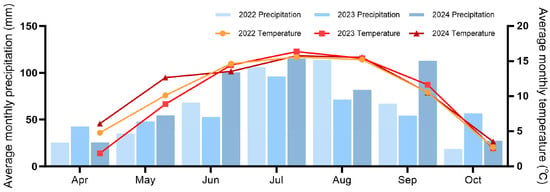
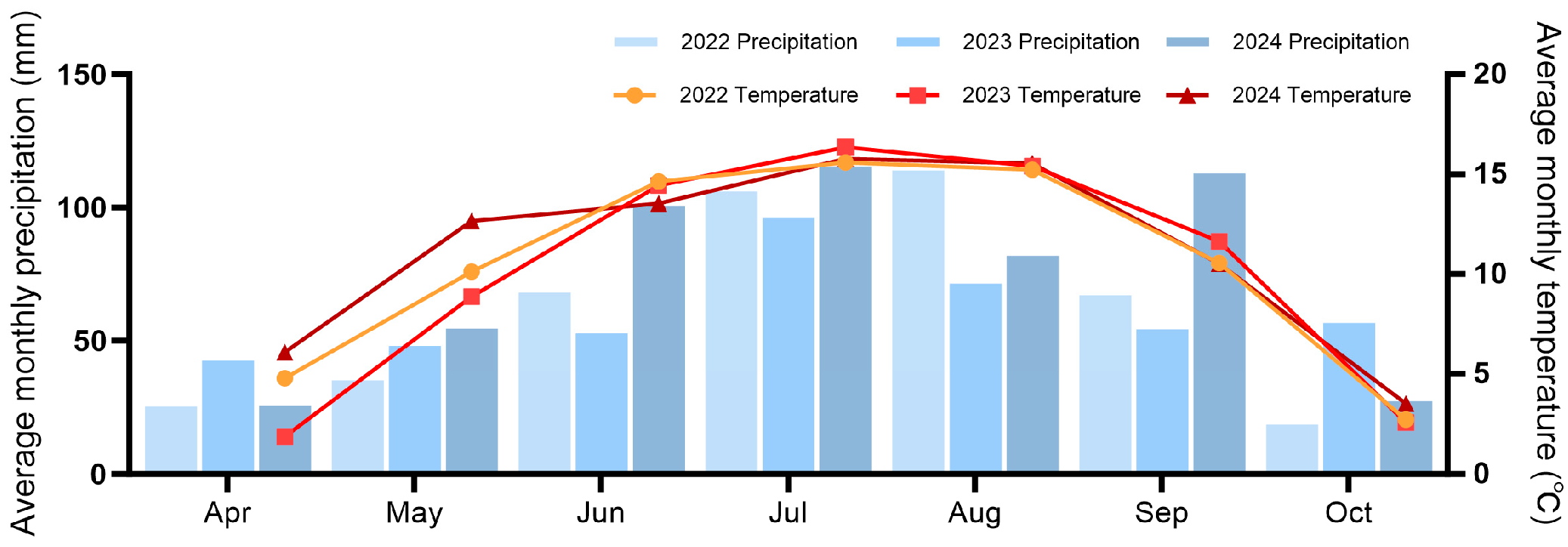
The field experiment was conducted in Minle County, Gansu Province, China (38°45′ N, 100°45′ E), at an elevation of approximately 2575 m. The region is characterized by a typical continental arid climate with a mean annual temperature of approximately 2.8 °C, an annual sunshine duration of about 2900 h, a frost-free period of approximately 130 d, and a mean annual precipitation of approximately 328 mm. Monthly precipitation and mean air temperature during the three growing seasons (April–October, 2022–2024) are presented in Figure 1.
Figure 1.
Monthly precipitation and mean air temperature during the growing seasons (April–October) in 2022–2024 at the experimental site.
The experimental field was located on irrigated desert soil with medium fertility, good drainage, and adequate irrigation. Prior to the initiation of the experiment each year, composite soil samples (0–20 cm depth) were collected for physicochemical analysis. Soil pH, electrical conductivity (EC), organic matter, alkali-hydrolyzable nitrogen, available phosphorus, and available potassium were determined using standard analytical methods. The physicochemical properties of the experimental soil for the three growing seasons are summarized in Table 1.
Table 1.
Physicochemical properties of the experimental soil before herbicide application during the three growing seasons (2022–2024).
The preceding crop was transplanted A. membranaceus, and no herbicides had been applied previously. The dominant broadleaf weeds included Chenopodium glaucum, Amaranthus retroflexus, Brassica napus, Portulaca oleracea, and Sonchus brachyotus, while the main grass weeds were Echinochloa crusgalli, Setaria viridis, and Digitaria sanguinalis.
2.2. Experimental Materials
The test crop was A. membranaceus, a local cultivar. Fomesafen, chloransulam-methyl, and bentazone were selected primarily for broadleaf weed control and were combined with quizalofop-P-ethyl to provide additional control of grass weeds. Imazamox + quizalofop-P-ethyl was also included as an experimental herbicide program to evaluate its overall weed control efficacy and crop safety. Metribuzin, which has activity against both broadleaf and grass weeds, was evaluated separately. Detailed information on herbicide formulations, application rates, manufacturers, and application timing is provided in Table 2.
Table 2.
Herbicide types and application rates.
2.3. Experimental Design
Field experiments were conducted over three consecutive growing seasons (2022–2024) under comparable management conditions. A. membranaceus seedlings were transplanted in early April of each growing season, and herbicide treatments were applied in early June, before the jointing stage of the crop. At the time of application, the dominant weed species were generally at the two- to four-leaf stage. In each growing season, the experiment was established independently as a randomized complete block design (RCBD) with three blocks. Each block contained all 17 treatments, including 15 herbicide treatments and two controls: a weed-free control maintained by manual weeding (CK1) and an untreated weedy control sprayed with water only (CK2), with each treatment represented once within each block. Treatments were randomly assigned to plots within each block, and treatment allocation was re-randomized independently in each growing season. Thus, each treatment had three replicate plots per year, resulting in a total of 51 plots per growing season. Each plot measured 4 m × 5 m (20 m2), with a 1 m buffer zone between adjacent plots. Because the RCBD was established independently in each growing season, blocks were treated as nested within year in the subsequent statistical analysis.
The herbicide treatments and application rates evaluated in this study were selected for experimental screening based on their weed-control spectra, preliminary field observations, and application rates used in relevant crops. Three application rates (lower, recommended, and higher) were evaluated for each herbicide program (Table 2). These treatments and application rates were evaluated experimentally and should not be interpreted as label recommendations for use in A. membranaceus. Herbicide applications were performed using a 20 L knapsack sprayer at a spray volume of 900 L ha−1, which was kept constant across all treatments. Aboveground crop phytotoxicity was assessed at 3, 7, 14, and 35 days after application (DAA) to characterize the development and subsequent recovery of visible crop injury, whereas weed control efficacy based on weed density and fresh weight was evaluated at 14 DAA. Underground phytotoxicity, root growth traits, and total root fresh weight were assessed at 120 DAA, corresponding to harvest in early October. The same assessment procedures and evaluation timings were applied consistently across all three growing seasons. All other agronomic management practices followed local production practices, and no additional chemical treatments were applied during the growing seasons to avoid potential interference with the experimental treatments. Unless otherwise stated, values presented in the tables and figures represent treatment means averaged across the three growing seasons (2022–2024). Statistical analyses were performed using the original plot-level observations from all three growing seasons.
2.4. Data Collection and Measurements
2.4.1. Assessment of Aboveground Phytotoxicity and Weed Control Efficacy
In accordance with the relevant national standards [13,14], aboveground phytotoxicity of the herbicide treatments to A. membranaceus was visually assessed at 3, 7, 14, and 35 DAA in each growing season to characterize the development and subsequent recovery of visible injury symptoms. Injury grades were assigned according to the severity of visible injury and the potential for crop recovery using the grading criteria presented in Table 3.
Table 3.
Grading criteria for phytotoxicity symptoms (aboveground parts).
The same grading criteria and assessment procedure were applied at each assessment time. Weed control efficacy was assessed at 14 DAA based on weed density and fresh weight. Five 1 m × 1 m (1 m2) quadrats were sampled within each 20 m2 plot. Within each quadrat, weeds were identified and counted separately by species and were subsequently classified as grass or broadleaf weeds. Species-specific counts were pooled to obtain grass, broadleaf, and total weed densities. After counting, all weeds within the same quadrats were harvested for fresh-weight determination; thus, weed density and fresh weight were measured from the same sampling areas. Measurements from the five quadrats were averaged to obtain plot-level values for each weed category.
Weed control efficacy was calculated separately within each block and growing season. For each herbicide-treated plot, weed density and fresh weight were compared with those of the corresponding CK2 plot within the same block and growing season. Thus, block-specific CK2 observations, rather than a common CK2 mean pooled across blocks or growing seasons, were used to calculate weed control efficacy. The resulting block-level efficacy values were used for subsequent statistical analyses. Weed control efficacy based on weed density and fresh weight was calculated as follows:
where Nc and Bc represent weed density and fresh weight, respectively, in the corresponding CK2 plot within the same block and growing season, and Nt and Bt represent the corresponding values in the herbicide-treated plot.
2.4.2. Assessment of Underground Phytotoxicity, Root Growth, and Yield
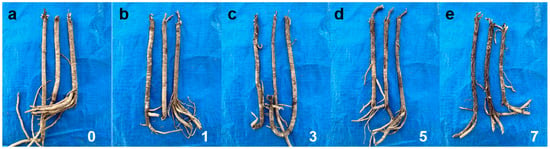
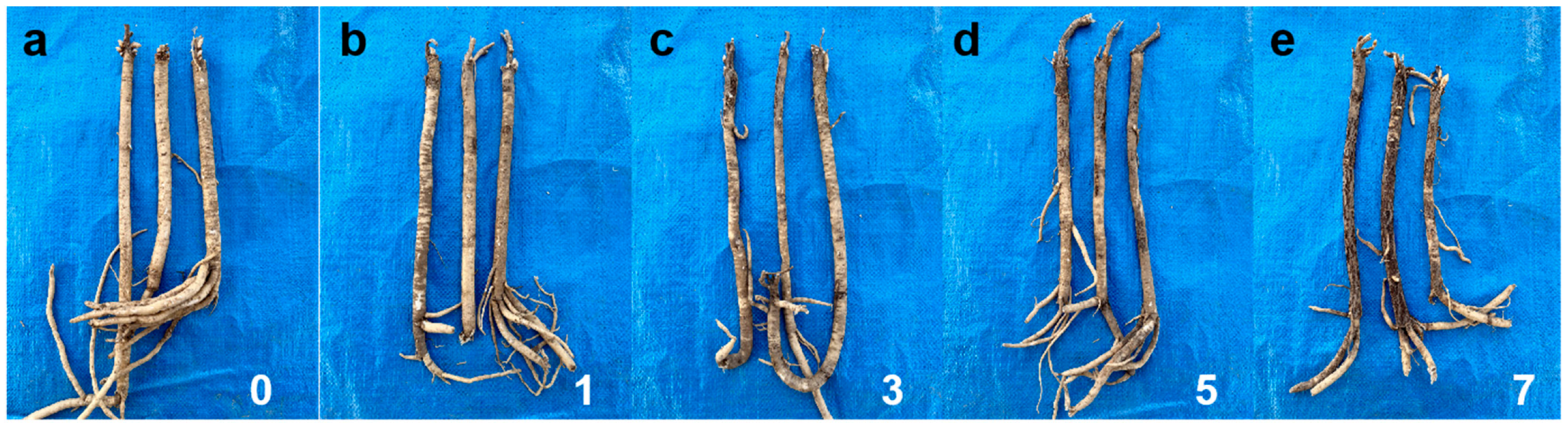
At 120 DAA, corresponding to the harvest stage in early October, roots were examined for underground injury symptoms using the predefined rating criteria presented in Table 4 and Figure 2. Twenty roots were randomly selected from each plot for injury assessment. All root injury assessments were performed by the same trained evaluator according to the predefined rating criteria to ensure consistency throughout the experiment. Based on the injury grades, underground injury incidence and injury index were calculated according to the following equations [15,16].
where Ni is the number of injured roots at each grade, Gi is the injury grade, N is the total number of roots surveyed, and Gmax is the maximum injury grade.
Table 4.
Herbicide damage classification standards (per root).
Figure 2.
Rating criteria for underground injury symptoms of A. membranaceus observed at harvest. (a) Injury grade 0. (b) Injury grade 1. (c) Injury grade 3. (d) Injury grade 5. (e) Injury grade 7.
At the same assessment time, a 1.6 m2 area was randomly sampled from each plot to determine root length, root diameter, and total root fresh weight. Before weighing, adhering soil was carefully removed, and the root surfaces were gently blotted dry to remove excess surface moisture, ensuring consistent fresh-weight measurements.
2.5. Determination of Major Bioactive Constituents
To further evaluate the medicinal quality of A. membranaceus, root samples from two selected herbicide treatments (T8 and T9) and CK1 were collected for analysis of the major bioactive constituents. T8 and T9 were selected for quality assessment because they combined high weed control efficacy, no detectable underground injury, and favorable root growth and yield performance in the field experiment. At harvest, 500 g of fresh roots were randomly collected from each plot for each selected treatment. The samples were kept dry during handling and transported to the Gansu Digital Chinese Herbal Medicine Testing Center Co., Ltd. for analysis. The contents of the two major bioactive constituents specified in the Chinese Pharmacopoeia (2020 Edition), astragaloside IV and calycosin-7-O-β-D-glucoside, were determined according to the analytical procedures prescribed in the Pharmacopoeia. The concentrations of both compounds were expressed as percentages on a dry-weight basis.
2.6. Data Analysis
All experimental data were analyzed using SPSS software (version 26.0). A linear mixed model was fitted separately for each response variable to evaluate the effects of experimental year, herbicide treatment, and their interaction. Experimental year, treatment, and the year × treatment interaction were specified as fixed effects, whereas block nested within year was included as a random effect to account for the randomized complete block design established independently in each growing season. Statistical analyses were performed using the original plot-level data from all three growing seasons. For weed control efficacy variables calculated relative to CK2, only the 15 herbicide treatments were included in the analysis. Underground injury incidence and underground injury index were also analyzed using the 15 herbicide treatments, as these variables were defined for herbicide-treated plots. For root growth and yield variables, including root length, root diameter, and total root fresh weight, all 17 treatments (15 herbicide treatments, CK1, and CK2) were included. Astragaloside IV and calycosin-7-O-β-D-glucoside were analyzed using CK1, T8, and T9. When a significant treatment effect was detected, pairwise comparisons among treatment estimated marginal means (EMMs) were performed using Sidak adjustment for multiple comparisons at p < 0.05. The same mixed-model framework was applied separately to each weed control efficacy variable presented in Figure 3, including efficacy based on grass weed density and fresh weight, broadleaf weed density and fresh weight, and total weed density and fresh weight. For conciseness, Table 5 presents the fixed-effect tests for total fresh weight-based weed control efficacy as the representative overall weed-control response.
Figure 3.
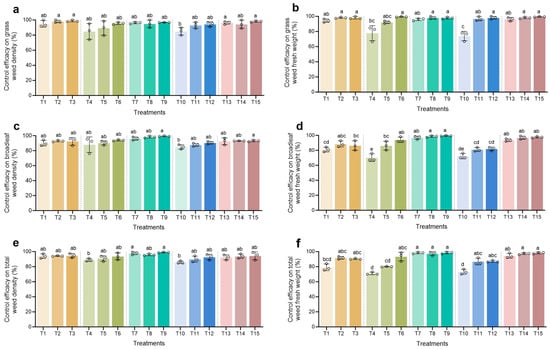
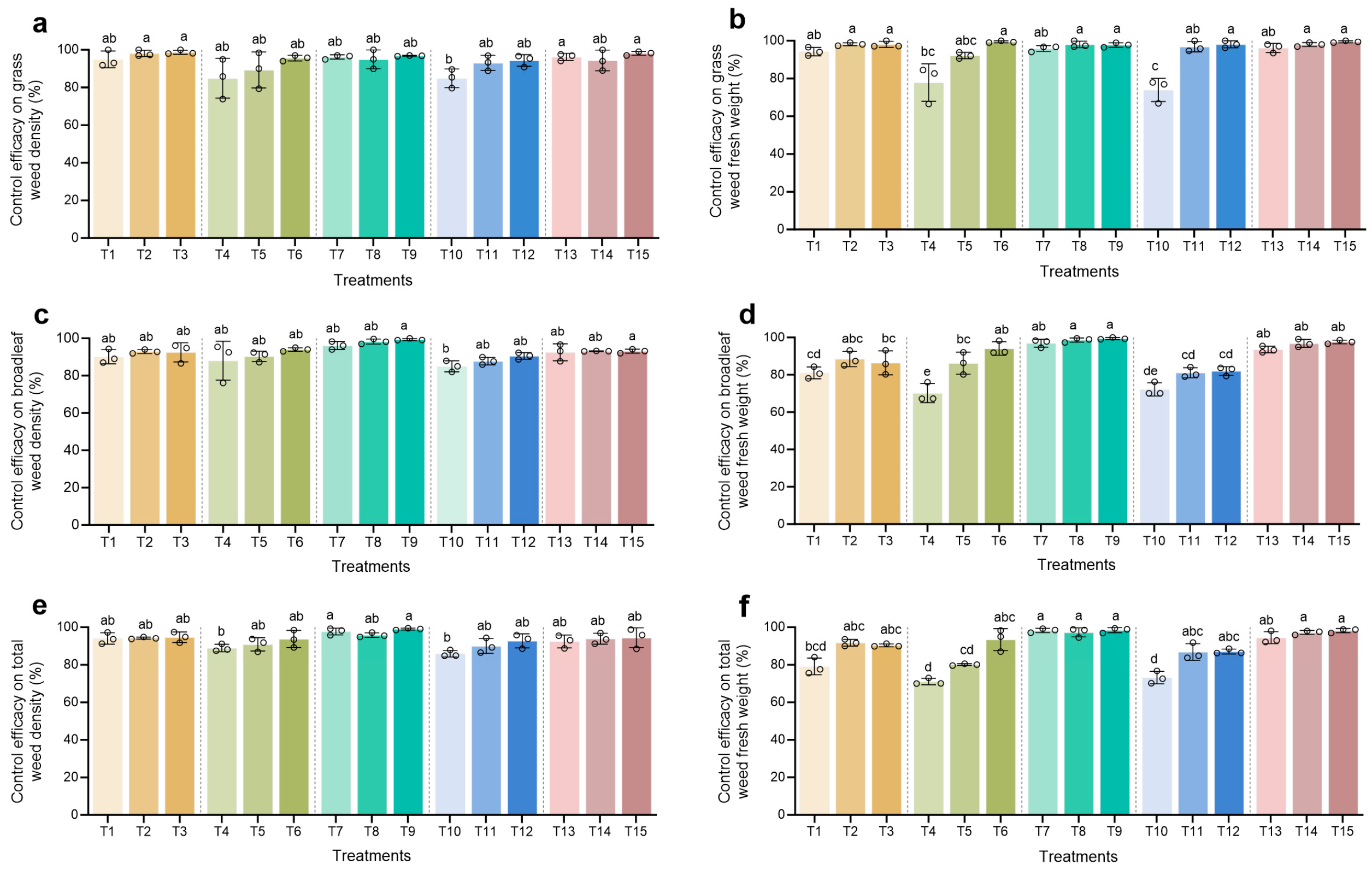
Weed control efficacy of different foliar herbicide treatments in A. membranaceus fields. Control efficacy on grass weed density (a), grass weed fresh weight (b), broadleaf weed density (c), broadleaf weed fresh weight (d), total weed density (e), total weed fresh weight (f). Weed control efficacy was calculated using the corresponding CK2 plot within the same block and growing season as the control. Bars represent treatment means across the three growing seasons (2022–2024), and error bars indicate standard deviations calculated from the three annual treatment means (n = 3). Black circles represent the treatment means for each individual growing season (2022, 2023, and 2024). Different letters indicate significant differences among treatment estimated marginal means (EMMs) based on pairwise comparisons with Sidak adjustment for multiple comparisons (p < 0.05). The dotted lines separate different herbicide combinations.
Table 5.
Results of linear mixed-model analyses for the effects of experimental year, herbicide treatment, and their interaction on weed control efficacy, crop safety, root growth, yield, and major bioactive constituents of A. membranaceus.
For the correlation analysis, the three replicate plots within each treatment × year combination were averaged to obtain treatment–year means. Pearson correlation analysis was then performed using 45 treatment–year observations (15 herbicide treatments × 3 growing seasons; n = 45) to examine the associations among weed control efficacy based on total fresh weight, root length, root diameter, total root fresh weight, aboveground phytotoxicity at 14 DAA, underground injury incidence, and underground injury index. Injury variables were analyzed in their original direction, with higher values representing greater injury severity. Correlations were considered statistically significant at p < 0.05. The same 45 treatment–year observations were used for the subsequent simple linear regression between underground injury index and total root fresh weight. Simple linear regression was used to characterize the association between these two variables at the treatment–year level. The correlation and regression analyses were used to explore associations among response variables rather than to test treatment effects; treatment effects and their statistical inference were evaluated separately using the linear mixed models described above.
Unless otherwise stated, values presented in the tables and figures represent treatment means averaged across the three growing seasons (2022–2024), whereas statistical inference was based on the original plot-level observations from all three growing seasons. Data used for graphical presentation are expressed as mean ± standard deviation (SD).
3. Results
3.1. Effects of Year, Treatment, and Their Interaction
The effects of year, treatment, and their interaction on the evaluated response variables are summarized in Table 5. Experimental year had no significant effect on any of the evaluated response variables (p > 0.05). Similarly, no significant year × treatment interaction was detected for any of the evaluated response variables under the conditions evaluated (p > 0.05). Treatment significantly affected weed control efficacy based on total fresh weight, underground injury incidence, underground injury index, total root fresh weight, root length, and root diameter (p < 0.001), whereas no significant treatment effect was detected for astragaloside IV or calycosin-7-O-β-D-glucoside content (p > 0.05).
3.2. Weed Control Efficacy of Different Herbicide Treatments in A. membranaceus Fields
At 14 DAA, the higher-rate treatments of each herbicide program provided >89.42% control of grass weeds based on both weed density and fresh weight (Figure 3a,b). For broadleaf weeds, T7, T8, and T9 showed relatively high control efficacy (Figure 3c,d). When grass and broadleaf weeds were considered together, T2, T3, T6, T7, T8, T9, T13, T14, and T15 achieved total weed control efficacies of 92.49–99.04% based on weed density and 90.36–98.46% based on fresh weight (Figure 3e,f), and these treatments showed significantly greater control than T10 (p < 0.05). Among the evaluated treatments, T7–T9 provided relatively high control of both grass and broadleaf weeds at 14 DAA.
3.3. Aboveground Phytotoxicity and Underground Injury Symptoms of A. membranaceus
Aboveground phytotoxicity varied among herbicide treatments (Table 6). No visible aboveground injury symptoms were observed in T1, T2, T3, T7, T8, or T9 at 14 DAA. Slight chlorosis (Grade 2 injury) occurred in T4, T5, and T12, whereas T6 and T13 showed chlorosis and leaf necrosis (Grade 3 injury). T14 and T15 showed more severe visible injury symptoms, including chlorosis, necrosis, and leaf abscission (Grades 4–5). By 35 DAA, visible aboveground injury symptoms had decreased in the affected treatments, although the extent of recovery varied among treatments.
Table 6.
Aboveground phytotoxicity and underground injury symptoms of A. membranaceus under different herbicide treatments.
At 120 DAA, corresponding to harvest in early October, underground injury symptoms varied among treatments (Table 6). No underground injury symptoms were observed in the sampled roots of T1 and T7–T10, corresponding to an injury incidence and injury index of 0. In contrast, T2, T3, and T11–T15 showed relatively low injury index values, ranging from 6.90 to 16.67. The highest underground injury incidence and injury index values were observed in T4, T5, and T6. Their injury incidences were 74.17%, 77.73%, and 84.17%, respectively, with corresponding injury index values of 63.10, 73.81, and 80.01.
3.4. Effects of Different Herbicide Treatments on the Root Length and Diameter of A. membranaceus
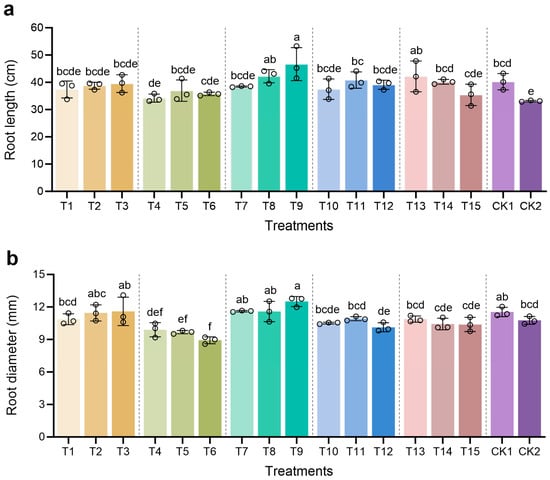
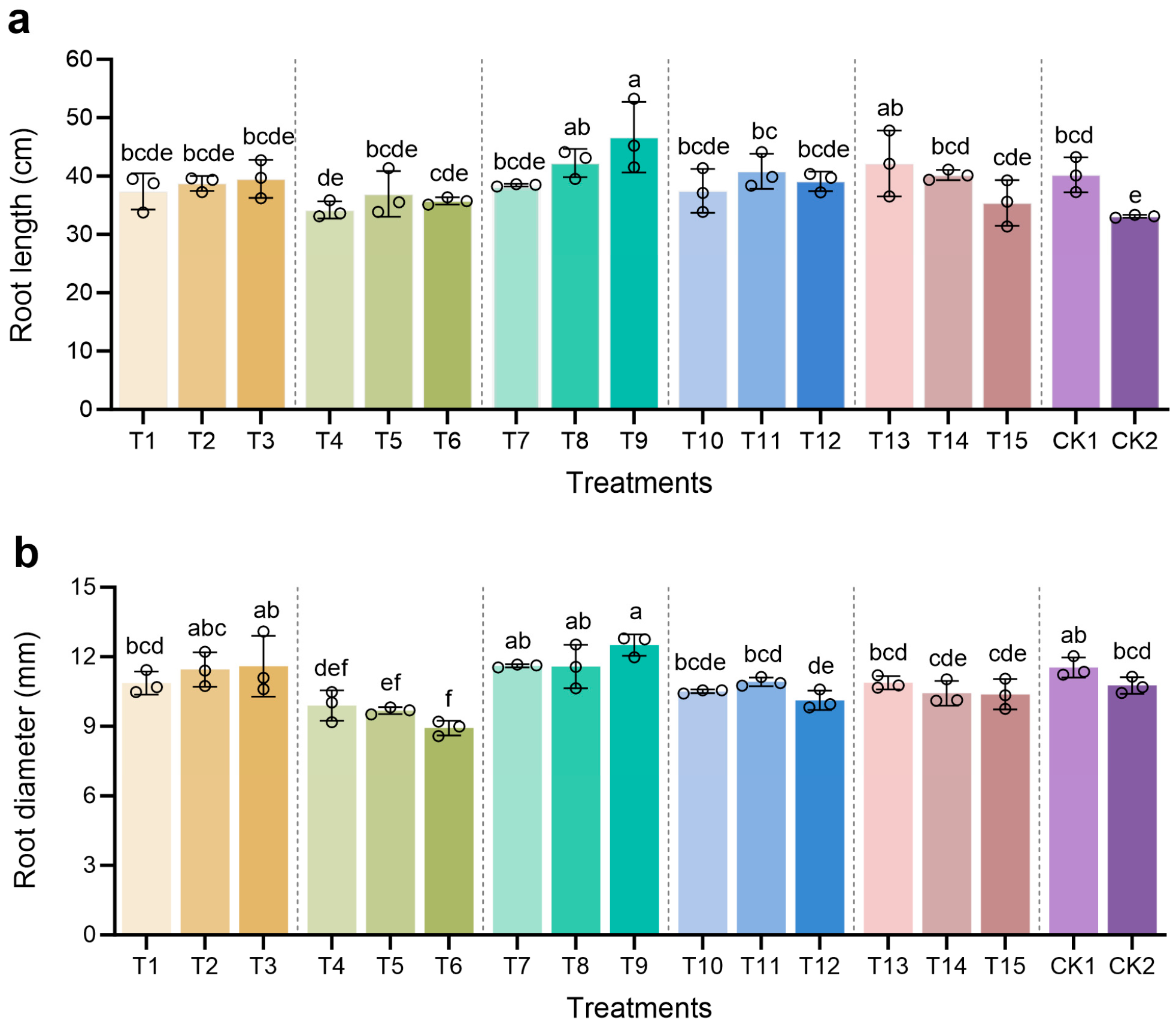
Significant differences in root length were observed among treatments (Figure 4a). T9 had the greatest mean root length and was significantly greater than both CK1 and CK2 (p < 0.05). T8 also had significantly greater root length than CK2 (p < 0.05), but did not differ significantly from CK1. In contrast, T4 and T6 had significantly shorter roots than T8 and T9 (p < 0.05). T4 and T6 did not differ significantly from CK2.
Figure 4.
Effects of different foliar herbicide treatments on the root morphology of medicinal A. membranaceus. (a) Root length. (b) Root diameter. Bars represent treatment means across the three growing seasons (2022–2024), and error bars indicate standard deviations calculated from the three annual treatment means (n = 3). Black circles represent the treatment means for each individual growing season (2022, 2023, and 2024). Different letters indicate significant differences among treatment estimated marginal means (EMMs) based on pairwise comparisons with Sidak adjustment for multiple comparisons (p < 0.05). The dotted lines separate different herbicide combinations.
Root diameter also differed significantly among treatments (Figure 4b). T9 had the greatest mean root diameter and was significantly greater than CK2 (p < 0.05), but did not differ significantly from CK1. T8 also had a significantly greater root diameter than CK2 (p < 0.05), but did not differ significantly from CK1. T6 had the smallest mean root diameter and was significantly smaller than both CK1 and CK2 (p < 0.05).
3.5. Effects of Different Herbicide Treatments on the Total Root Fresh Weight of A. membranaceus
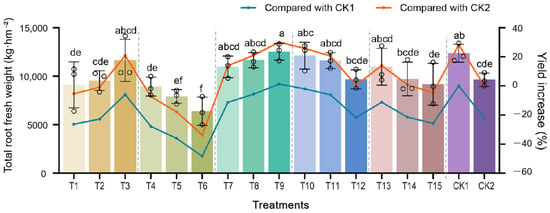
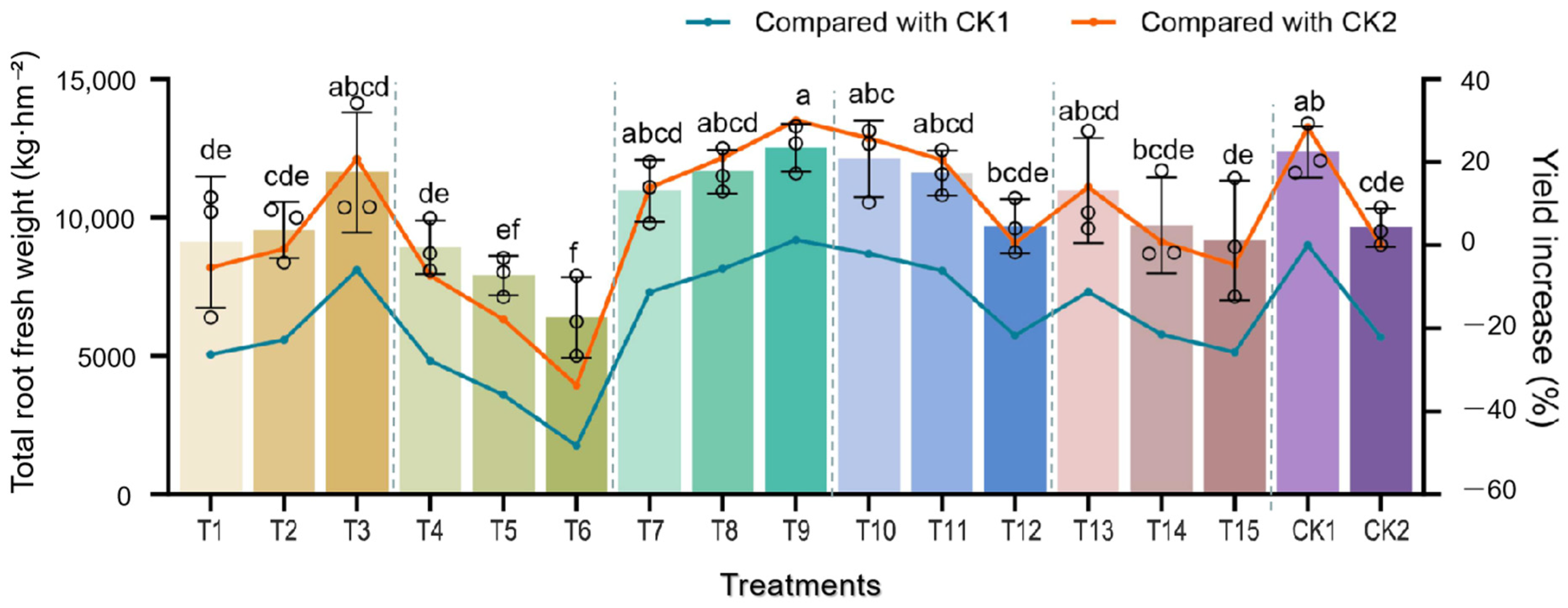
Significant differences in total root fresh weight were observed among treatments (Figure 5). The total root fresh weights of CK1 and CK2 were 12,364.51 and 9629.02 kg·hm−2, respectively, with CK1 being 22.12% greater than CK2. T7, T8, and T9 produced total root fresh weights that were 13.87–30.03% greater than that of CK2. Among these treatments, T9 produced the greatest total root fresh weight (12,520.20 kg·hm−2), which was significantly greater than that of CK2 (p < 0.05) but did not differ significantly from CK1. In contrast, T6 produced the lowest total root fresh weight, which was significantly lower than both CK1 and CK2 (p < 0.05) and represented a 33.67% reduction relative to CK2.
Figure 5.
Effects of different foliar herbicide treatments on the Total Root Fresh Weight of A. membranaceus. Bars represent treatment means across the three growing seasons (2022–2024), and error bars indicate standard deviations calculated from the three annual treatment means (n = 3). Black circles represent the treatment means for each individual growing season (2022, 2023, and 2024). Different letters indicate significant differences among treatment estimated marginal means (EMMs) based on pairwise comparisons with Sidak adjustment for multiple comparisons (p < 0.05). Curves represent the percentage increase or decrease in total root fresh weight relative to the controls (orange line, relative to CK1; blue line, relative to CK2). The dotted lines separate different herbicide combinations.
3.6. Correlations Among Evaluated Response Variables
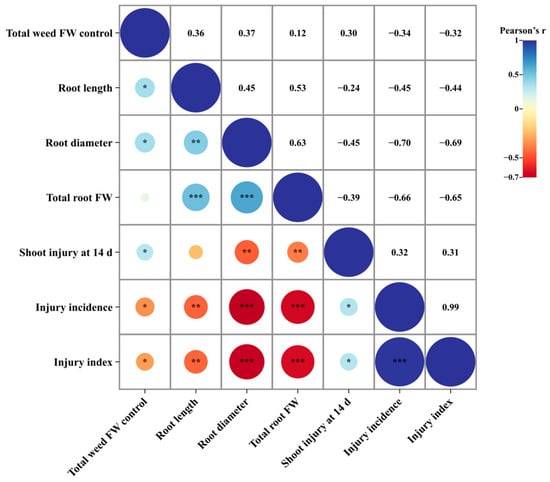
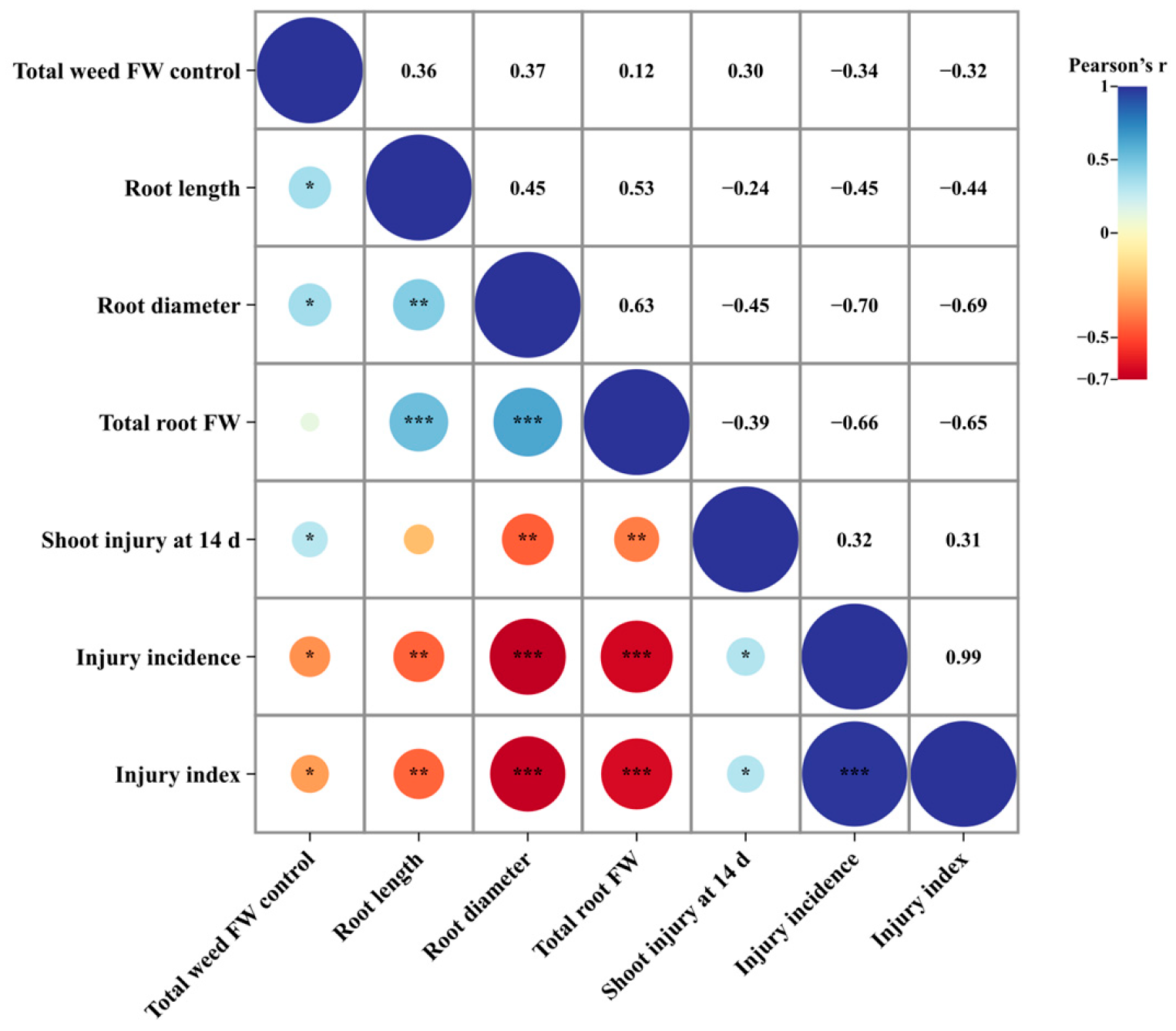
Pearson correlation analysis showed that total root fresh weight was significantly positively correlated with root length (r = 0.526, p < 0.001) and root diameter (r = 0.626, p < 0.001) (Figure 6). In contrast, total root fresh weight was significantly negatively correlated with aboveground phytotoxicity at 14 DAA (r = −0.389, p = 0.008), underground injury incidence (r = −0.661, p < 0.001), and underground injury index (r = −0.650, p < 0.001). No significant correlation was detected between total root fresh weight and weed control efficacy based on total fresh weight (r = 0.124, p = 0.418).
Figure 6.
Pearson correlation heatmap showing the relationships among the measured traits of A. membranaceus following different herbicide treatments. FW, fresh weight. Cool colors indicate positive correlations, warm colors indicate negative correlations, and color depth reflects the strength of the coefficients. * p < 0.05; ** p < 0.01; *** p < 0.001. Pearson correlation coefficients were calculated using treatment–year means from the 15 herbicide treatments across the three growing seasons (15 herbicide treatments × 3 growing seasons; n = 45).
3.7. Relationship Between Underground Injury Index and Total Root Fresh Weight
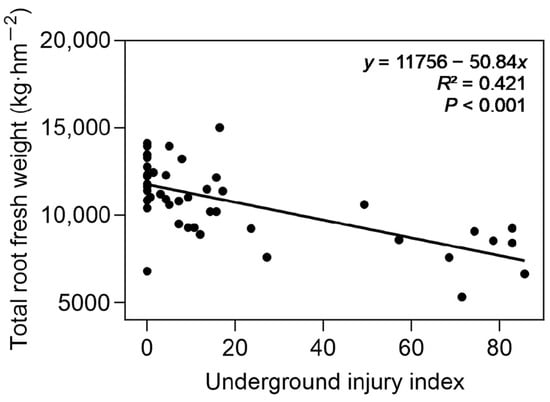
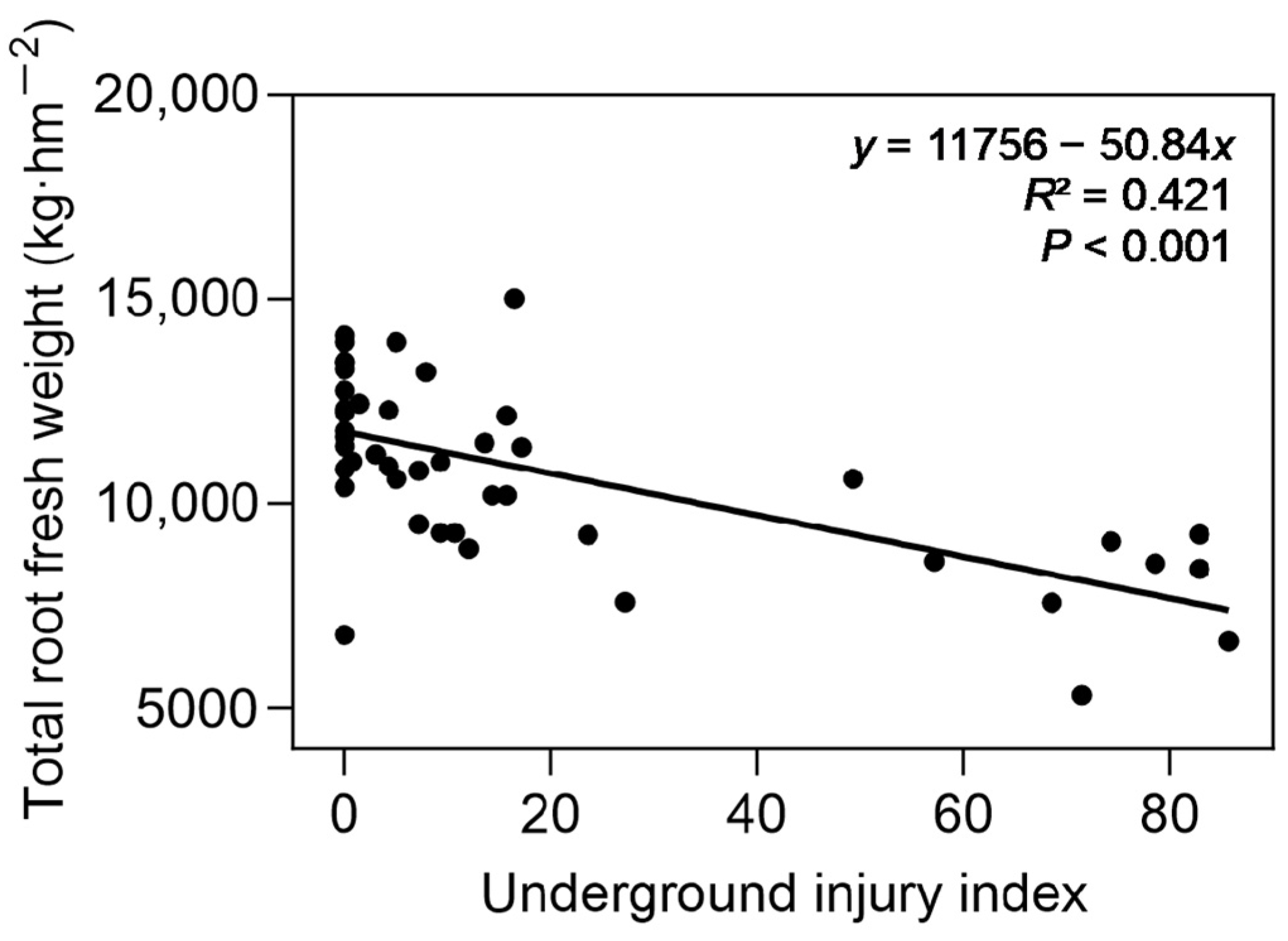
Given the significant correlation between underground injury index and total root fresh weight, simple linear regression was further used to characterize their association at the treatment–year level (Figure 7). The analysis was based on 45 treatment–year means, with each observation representing the mean of three replicate plots for one herbicide treatment within one growing season. A significant negative association was observed between underground injury index and total root fresh weight (p < 0.001). The fitted regression equation was Y = 11,756 − 50.84X, with an R2 value of 0.421. Thus, higher treatment-level underground injury was associated with lower total root fresh weight under the conditions evaluated, highlighting the relevance of belowground phytotoxicity assessment when evaluating herbicide safety in A. membranaceus.
Figure 7.
Relationship between root injury index and total root fresh weight across herbicide treatments and growing seasons. Each point represents a treatment–year mean (n = 45).
3.8. Major Bioactive Constituents of A. membranaceus Under Selected Herbicide Treatments
Based on their high weed control efficacy, absence of detectable underground injury, and favorable root growth and yield performance, T8 and T9 were selected for further assessment of medicinal quality. The contents of the two major bioactive constituents specified in the current Chinese Pharmacopoeia, astragaloside IV and calycosin-7-O-β-D-glucoside, were determined and compared with CK1 (Table 7).
Table 7.
Effects of selected herbicide treatments (T8 and T9) on the major bioactive constituents of A. membranaceus roots.
No significant differences were observed among T8, T9, and CK1 in the contents of either astragaloside IV or calycosin-7-O-β-D-glucoside (p > 0.05). The mean astragaloside IV contents ranged from 0.104% to 0.109%, while the calycosin-7-O-β-D-glucoside contents ranged from 0.047% to 0.050%. Furthermore, all measured values exceeded the minimum requirements specified in the current Chinese Pharmacopoeia for astragaloside IV, indicating that the two selected herbicide treatments maintained the evaluated medicinal quality attributes of A. membranaceus under the tested environmental conditions.
4. Discussion
4.1. Weed Control Efficacy of Different Herbicide Programs
The present three-year field study showed clear differences in weed control efficacy among the evaluated herbicide programs. T7–T9, consisting of bentazone 48% AS combined with quizalofop-P-ethyl 15% EC, provided high control of both grass and broadleaf weeds. T2, T3, and T6 also provided high total weed control, indicating that several of the evaluated herbicide programs effectively suppressed the weed community present in the experimental field. The high efficacy of T7–T9 against both weed groups was consistent with the different activity spectra of the two herbicides, with bentazone primarily targeting broadleaf weeds and quizalofop-P-ethyl targeting grass weeds [12]. However, complementary activity against grass and broadleaf weeds alone cannot explain the differences in overall treatment performance, because the fomesafen + quizalofop-P-ethyl (T1–T3) and chloransulam-methyl + quizalofop-P-ethyl (T4–T6) programs were also intended to control these two weed groups.
Previous studies in A. membranaceus fields have demonstrated that different weed-control methods and post-emergence herbicides can differ in weed control efficacy and their effects on crop growth, medicinal-material yield, and quality [17,18]. Wei [18] compared different weed-control methods in A. membranaceus and evaluated not only weed control but also root characteristics and major bioactive constituents, whereas Li et al. [11] evaluated different herbicides based on weed control efficacy, crop biomass, and medicinal-material yield, and Wen et al. [9] assessed both weed control and crop safety. These studies demonstrate the importance of considering crop responses in addition to weed suppression. The present results further show that high weed control efficacy does not necessarily correspond to high root performance. T4–T6 provided substantial weed control but were associated with pronounced underground injury and reductions in root growth and total root fresh weight. Moreover, weed control efficacy based on total fresh weight was not significantly correlated with total root fresh weight (r = 0.124, p = 0.418).
4.2. Contrasting Aboveground and Underground Phytotoxicity Among Herbicide Programs
Crop responses differed substantially among herbicide programs, particularly when aboveground and underground phytotoxicity were considered together. The chloransulam-methyl + quizalofop-P-ethyl treatments (T4–T6) caused pronounced underground injury, with underground injury incidence ranging from 74.17% to 84.17% and injury index values ranging from 63.10 to 80.01. These treatments were also associated with reductions in root growth and total root fresh weight. Importantly, visible aboveground symptoms decreased during the later assessment period, whereas substantial underground injury was still observed at harvest. This difference indicates that a reduction in visible foliar symptoms during crop growth does not necessarily correspond to the absence of injury symptoms in harvested roots.
The pronounced underground injury observed in T4–T6 should not be attributed solely to inhibition of acetolactate synthase (ALS). Chloransulam-methyl is an ALS-inhibiting herbicide, and inhibition of this enzyme disrupts the biosynthesis of branched-chain amino acids and restricts plant growth [19,20]. However, imazamox, evaluated in T10–T12, is also an ALS inhibitor but did not produce underground injury of comparable severity in the present study. Therefore, ALS inhibition alone cannot explain the contrasting underground responses of these treatments. Differences among herbicides sharing the same target site can arise from herbicide-specific properties and crop responses, including differences in uptake, translocation, metabolism, and selectivity [20,21]. The physiological basis for the particularly severe underground injury associated with chloransulam-methyl in A. membranaceus was not determined in the present study and therefore requires further investigation.
In contrast, no detectable underground injury symptoms were observed in T7–T9 under the assessment criteria used in this study. These treatments also provided high weed control efficacy, while T8 and T9 had significantly greater root length than CK2, and T9 produced significantly greater total root fresh weight than CK2. Previous studies have evaluated herbicide safety in A. membranaceus primarily through visible crop responses, growth, biomass, or medicinal-material yield [10,12]. The present study extends these evaluations by quantitatively assessing underground injury at harvest over three growing seasons. The contrasting responses of T4–T6 and T7–T9 demonstrate that herbicide programs providing effective weed suppression can differ substantially in their effects on the harvested root. Therefore, crop response, particularly belowground injury in a root-harvested medicinal crop, should be considered together with weed control efficacy when evaluating post-emergence herbicide programs.
4.3. Importance of Underground Injury Assessment for Herbicide Evaluation in A. membranaceus
This consideration is particularly relevant to A. membranaceus, for which the harvested root constitutes the medicinal material and root characteristics are integral to traditional quality evaluation [22]. In the present study, total root fresh weight was negatively correlated with underground injury incidence (r = −0.661, p < 0.001) and underground injury index (r = −0.650, p < 0.001). Root length and root diameter were also negatively correlated with both underground injury incidence and injury index. In comparison, total root fresh weight was negatively correlated with aboveground phytotoxicity at 14 DAA (r = −0.389, p = 0.008). These associations do not establish a causal relationship between phytotoxicity and root yield, but they show that greater underground injury at harvest was associated with poorer root performance across the evaluated treatment–year observations.
Previous herbicide studies in A. membranaceus have provided important information on weed control efficacy, crop safety, biomass, and medicinal-material yield [9,10,11,12,13]. However, quantitative assessment of injury to the harvested root has received less attention. A similar discrepancy between visible foliar injury and responses of underground harvested organs has been reported in potato. Olszyk et al. [23] found that, for some herbicides, effects on tuber production were greater than would be predicted from visible leaf injury, indicating that assessments based primarily on foliar symptoms may underestimate herbicide effects on underground production. Similarly, in the present study, aboveground symptoms decreased during crop growth in several treatments, whereas substantial underground injury remained detectable at harvest. This distinction is important because studies in root- and tuber-harvested crops have shown that weed interference and herbicide phytotoxicity can influence both yield and harvested-organ performance [24,25]. The present findings therefore complement previous evaluations of A. membranaceus herbicides by demonstrating that harvest-stage underground injury incidence and injury index provide additional information that is not fully represented by conventional aboveground phytotoxicity observations.
The contrasting responses among treatments further illustrate the practical relevance of this assessment. T4–T6 showed substantial underground injury despite providing effective weed suppression, whereas T7–T9 combined high weed control efficacy with no detectable underground injury at harvest. These results support the inclusion of underground injury assessment when evaluating post-emergence herbicides for A. membranaceus and potentially other medicinal crops harvested for their roots. Nevertheless, the present experiments were conducted at a single site over three growing seasons. Although no significant year × treatment interaction was detected under the conditions evaluated, additional field studies across different locations, soil conditions, cultivars, and weed communities are required before broader recommendations can be made.
5. Conclusions
This three-year field study demonstrated that post-emergence herbicide programs differed in both weed control efficacy and crop response in A. membranaceus. T7–T9 (bentazone 48% AS + quizalofop-P-ethyl 15% EC) provided high control of both grass and broadleaf weeds and showed no detectable underground injury at harvest under the assessment criteria used in this study. In contrast, T4–T6 (chloransulam-methyl 40% WG + quizalofop-P-ethyl 15% EC) caused substantial underground injury and were associated with reduced root performance despite providing effective weed suppression. Total root fresh weight was negatively correlated with underground injury incidence (r = −0.661, p < 0.001) and underground injury index (r = −0.650, p < 0.001), whereas no significant correlation was detected between total root fresh weight and weed control efficacy based on total fresh weight (r = 0.124, p = 0.418). These results demonstrate that weed control efficacy alone does not adequately characterize herbicide suitability for A. membranaceus and support the inclusion of harvest-stage underground injury assessment in herbicide evaluation for root-harvested medicinal crops. Under the conditions evaluated, T7–T9 combined high weed control efficacy, no detectable underground injury at harvest, and high root performance. Further multi-location and multi-environment field validation is required before broader recommendations are made.
Author Contributions
Y.Z. Conceptualization, Methodology, Investigation, Data curation, Formal analysis, Visualization, Writing—original draft, Writing—review & editing. J.Q.: Investigation, Resources, Formal analysis, Writing—review & editing. J.C.: Funding acquisition, Visualization. J.N.: Investigation, Visualization. C.W.: Investigation, Visualization. Q.Z.: Validation, Visualization. D.L.: Investigation, Visualization. All authors have read and agreed to the published version of the manuscript.
Funding
This research was funded by the Major Special Project of the Gansu Provincial Department of Science and Technology (Grant No. 24ZDNA009) and the 2025 Research Project for Provincial State-Owned Enterprises supported by the State-Owned Capital Operation Budget (Grant No. 2025GZ025).
Data Availability Statement
The original contributions presented in this study are included in the article. Further inquiries can be directed to the corresponding author.
Acknowledgments
The authors thank Gansu Yasheng Industrial (Group) Co., Ltd. for providing the experimental site and materials.
Conflicts of Interest
Authors Yangyang Zhang, Jinlong Chai, Jiangshan Nie, Changqing Wang, and Qianli Zhu were employed by Gansu Yasheng Agricultural Research Institute Co., Ltd. Dong Li was employed by Gansu Yasheng Bencaoyuan Chinese Herbal Medicine Co., Ltd. The remaining authors declare that the research was conducted in the absence of any commercial or financial relationships that could be construed as a potential conflict of interest.
References
- Ji, B.; Xuan, L.; Zhang, Y.; Zhang, G.; Meng, J.; Mu, W.; Liu, J.; Paek, K.-Y.; Park, S.-Y.; Wang, J.; et al. Advances in Biotechnological Production and Metabolic Regulation of Astragalus membranaceus. Plants 2023, 12, 1858. [Google Scholar] [CrossRef] [Scilit] [PubMed]
- Yang, M.; Li, Z.; Liu, L.; Bo, A.; Zhang, C.; Li, M. Ecological niche modelling of Astragalus membranaceus var. mongholicus medicinal plants in Inner Mongolia, China. Sci. Rep. 2020, 10, 12482. [Google Scholar] [CrossRef] [Scilit] [PubMed]
- Wei, Y.B.; Wei, Y.J.; Wei, Y.B.; Su, Y.J.; Chang, Y.; Bing, J.; Chen, Z.G.; Chen, F.; Gong, Y.F.; Wu, L.L.; et al. Effects of nitrogen and irrigation coupling on dry matter accumulation and yield of Astragalus membranaceus var. Mongholicus. Agric. Res. Arid Areas 2021, 39, 130–136. [Google Scholar] [CrossRef]
- Ren, Y.; Liu, S.; Liu, F.S.; Wang, D.Q.; Wu, F.M. Weed community structure in fields of Astragalus membranaceus of different ages. Acta Pratacult. Sin. 2021, 30, 34–41. [Google Scholar] [CrossRef]
- Chi, X.L.; Sun, K.; Wang, T.L.; Li, X.L.; Yang, G.; Guo, L.P. Effects of weeds on crops and their ecological control in ecological agriculture of Chinese materia medica. China J. Chin. Mater. Medica 2021, 46, 1876–1882. [Google Scholar] [CrossRef] [PubMed]
- Carrubba, A. Weed and weeding effects on medicinal herbs. In Medicinal Plants and Environmental Challenges; Ghorbanpour, M., Varma, A., Eds.; Springer: Berlin/Heidelberg, Germany, 2017; pp. 295–327. [Google Scholar] [CrossRef] [Scilit]
- Horvath, D.P.; Clay, S.A.; Swanton, C.J.; Anderson, J.V.; Chao, W.S. Weed-induced crop yield loss: A new paradigm and new challenges. Trends Plant Sci. 2023, 28, 567–582. [Google Scholar] [CrossRef] [Scilit] [PubMed]
- Xin, X.J.; Wang, H.Z.; Zhang, Y.H.; Li, X.M.; Zhao, Y.L. Comparative effects of five herbicides for weed control in Astragalus membranaceus fields. For. Prot. Sci. Technol. 2015, 3, 14–15. [Google Scholar] [CrossRef]
- Wen, X.J.; Qi, H.X.; Liu, Y.J.; Zhang, L.; Wang, X.M.; Li, J.; Sun, Y.; Zhao, Q. Safety of Different Herbicides on Astragalus membranaceus and Weed Control Effect in Field. J. Anhui Agric. Sci. 2018, 46, 103–105. [Google Scholar] [CrossRef]
- Liu, H.; Li, M.; Tian, Y.Q.; Ma, B.; Bao, Y.M. Effects of different herbicides on growth of Astragalus and on weed-control efficacy. Heilongjiang Agric. Sci. 2021, 12, 74–77, (In Chinese with English abstract). [Google Scholar]
- Li, X.; Yin, D.B.; Liu, Z.Y.; Wang, J.; Wang, J.J. Weed Control Efficacy of Different Herbicides in Astragalus membranaceus Fields and The Influences on Astragalus membranaceus Biomass and Medicinal Material Yield. Anim. Husb. Feed Sci. 2023, 44, 89–95. [Google Scholar] [CrossRef]
- Zhao, Y.T.; Chen, Y.B.; Chen, J.; Xie, G.Q.; Fan, S.H.; Wang, L.; Liu, H.; Zhang, X. Evaluation of Temporary Herbicides After Seedling in the Field of Astragalus mongholicus. Heilongjiang Agric. Sci. 2023, 11, 19–24. [Google Scholar] [CrossRef]
- GB/T 17980.125-2004; Pesticide Field Efficacy Test Guidelines (Part 125): Herbicide Control of Field Weeds in Soybean. China Standards Press: Beijing, China, 2004.
- NY/T 1467.24-2007; Pesticide Field Efficacy Test Guidelines (Part 24): Herbicide Control of Field Weeds in Adzuki bean. China Standards Press: Beijing, China, 2007.
- YC/T 526-2015; Grade and Investigation Method of Herbicide Phytotoxicity in Tobacco. China Tobacco Monopoly Press: Beijing, China, 2015.
- Wei, F. Herbicide phytotoxicity test methods. Weed Sci. 1992, 3, 18–21. [Google Scholar] [CrossRef]
- Délye, C.; Jasieniuk, M.; Le Corre, V. Deciphering the evolution of herbicide resistance in weeds. Trends Genet. 2013, 29, 649–658. [Google Scholar] [CrossRef] [Scilit] [PubMed]
- Wei, P. Effects of Different Control Methods on the Yield and Quality of Mongolian Astragalus Disease. Ph.D. Dissertation, Inner Mongolia Agricultural University, Hohhot, China, 2020. [Google Scholar] [CrossRef]
- Tranel, P.J.; Wright, T.R. Resistance of weeds to als-inhibiting herbicides: What have we learned? Weed Sci. 2002, 50, 700–712. [Google Scholar] [CrossRef] [Scilit]
- Dayan, F.E.; Duke, S.O.; Grossmann, K. Herbicides as probes in plant biology. Weed Sci. 2010, 58, 340–350. [Google Scholar] [CrossRef] [Scilit][Green Version]
- Gaines, T.A.; Duke, S.O.; Morran, S.; Rigon, C.A.G.; Tranel, P.J.; Anita, K.; Dayan, F.E. Mechanisms of evolved herbicide resistance. J. Biol. Chem. 2020, 295, 10307–10330. [Google Scholar] [CrossRef] [Scilit] [PubMed]
- Zhao, J.C.; Wang, Y.P.; Wang, Y.H.; Qian, J.X.; Deng, A.P.; Nan, T.G.; Kang, L.P.; Zhan, Z.L. A comparison of transplanted and simulated-wild Astragalus based on traditional quality evaluation. Chin. J. Exp. Tradit. Med. Formulae 2024, 30, 21–30. [Google Scholar] [CrossRef]
- Olszyk, D.; Pfleeger, T.; Lee, E.H.; Plocher, M. Potato (Solanum tuberosum) greenhouse tuber production as an assay for asexual reproduction effects from herbicides. Environ. Toxicol. Chem. 2010, 29, 111–121. [Google Scholar] [CrossRef] [Scilit] [PubMed]
- Soares, I.A.A.; Freitas, F.C.L.; Negreiros, M.Z.; Freire, G.M.; Aroucha, E.M.M.; Grangeiro, L.C.; Lopes, W.A.R.; Dombroski, J.L.D. Weed interference in carrot yield and quality. Planta Daninha 2010, 28, 247–254. [Google Scholar] [CrossRef] [Scilit]
- Barbaś, P.; Pietraszko, M.; Pszczółkowski, P.; Skiba, D.; Sawicka, B. Assessing phytotoxic effects of herbicides and their impact on potato cultivars in agricultural and environmental contexts. Agronomy 2024, 14, 85. [Google Scholar] [CrossRef] [Scilit]

Disclaimer/Publisher’s Note: The statements, opinions and data contained in all publications are solely those of the individual author(s) and contributor(s) and not of MDPI and/or the editor(s). MDPI and/or the editor(s) disclaim responsibility for any injury to people or property resulting from any ideas, methods, instructions or products referred to in the content. |
© 2026 by the authors. Licensee MDPI, Basel, Switzerland. This article is an open access article distributed under the terms and conditions of the Creative Commons Attribution (CC BY) license.