


Abstract
Soil salinization constrains agricultural productivity and sustainable land use by simultaneously impairing soil structure, nutrient availability, biological activity, and plant growth. Modified biochar (MBC) has attracted increasing attention because modification can regulate biochar alkalinity, surface chemistry, pore structure, and mineral composition, thereby improving its suitability for contrasting salt-affected soils. However, the interacting ionic, structural, nutritional, and biological limitations of these soils are unlikely to be resolved by a single material. This review synthesizes evidence on the co-application of MBC with functional amendments, including mineral and ionic materials, organic and nutrient inputs, polymers, and microbial agents, while using studies of pristine biochar or single materials only as contextual evidence. The available literature indicates that treatment performance depends on matching amendment function to the dominant soil constraint. Calcium- or magnesium-supplying and acidifying materials may be better matched to sodic and saline-sodic soils where alkalinity and exchangeable Na+ restrict infiltration; nutrient, organic, and biological amendments may be more relevant where fertility and rhizosphere limitations dominate; and polymers may complement MBC where aggregate stability and water retention are primary constraints. These combinations act through coordinated regulation of ion exchange and salt transport, nutrient retention and release, pore connectivity, aggregate formation, and microbial processes. Nevertheless, functional complementarity should not be equated with synergy because few factorial studies include MBC alone, the functional amendment alone, and their co-application. Field application is further limited by uncertain dose reduction, variable material quality, residual salinity, environmental risk, cost, and insufficient long-term validation. Future research should prioritize factorial dose–response experiments, multi-season field trials, and integrated agronomic, environmental, and economic assessment. This review provides a constraint-based framework for selecting and evaluating MBC-based co-application strategies in salt-affected soils.
1. Introduction
Salinization increasingly restricts agricultural production and the sustainable use of land. The most recent global assessment by the Food and Agriculture Organization of the United Nations estimates that approximately 1.381 billion ha of land are salt-affected, that is, 10.7% of the global land area [1]. The associated loss of productivity is not caused by soluble salts alone. High osmotic pressure and ion toxicity commonly coincide with poor infiltration and drainage, nutrient imbalance, low organic carbon, reduced microbial activity, and restricted root development. These problems are closely connected during soil degradation. For example, increasing nutrient supply may produce only a small improvement in plant growth when salinity continues to suppress root activity, whereas reducing ionic stress may have limited value if poor soil structure prevents effective drainage. Reclamation of salt-affected soils therefore requires improvement of several interacting soil functions rather than correction of an isolated property.
Salt-affected soils include saline, sodic, and saline-sodic soils, which differ in the principal constraints relevant to amelioration. Saline soils are dominated by high concentrations of soluble salts, producing osmotic stress and ion toxicity without necessarily causing sodicity-related structural degradation. Sodic soils contain excessive exchangeable Na+, which promotes clay swelling and dispersion, aggregate breakdown, surface crusting, and restricted infiltration. Saline-sodic soils are affected by both soluble salts and exchangeable Na+; because dissolved electrolytes can temporarily suppress clay dispersion, structural deterioration may intensify when salts are leached without concurrent replacement of exchangeable Na+ [2,3]. These distinctions are important when selecting MBC-based treatments: low-EC MBCs may be suitable where soluble-salt stress dominates, whereas sodic and saline-sodic soils generally require coordination with Ca2+/Mg2+-supplying or acidifying amendments, together with adequate leaching and drainage, to displace exchangeable Na+ and restore hydraulic function.
BC is commonly applied to salt-affected soils because it influences soil water relations, pore structure, ion exchange, nutrient retention, and carbon storage. Its performance is not uniform, as both material properties and application conditions shape the response. Wang et al. [4] observed lower soil electrical conductivity (EC) and higher cation exchange capacity (CEC) after BC application. The reduction in salinity varied with the initial soil salinity and the feedstock from which the BC was produced. This dependence on application context was also evident at a broader scale. The global meta-analysis by Su et al. [5] linked changes in soil fertility and plant productivity to BC properties, application rate, and crop type. Zhou et al. [6] likewise found that pyrolysis temperature and application rate affected soil quality and maize yield. The properties of pristine BC also require attention before it is used in salt-affected soils. Some BCs have a high pH and contain soluble salts, which may limit their direct application. Modification offers a way to adjust these properties before soil incorporation. Yan et al. [7] showed that HNO3 treatment lowered BC pH and changed its hydrophilicity, polarity, and pore structure. The treated BC also had stronger effects on salt-affected soil properties than the pristine material. In the study by Dai et al. [8], modification with H3PO4 and minerals lowered BC pH, EC, and base cation content, increased its porosity, and produced new mineral phases.
BC possesses a well-developed pore structure, abundant surface functional groups, and a high ion-exchange capacity. These characteristics favor water/nutrient retention and ionic regulation in salt-affected soils. However, BC may contain appreciable amounts of carbonates, alkaline oxides, and soluble inorganic salts associated with ash, which can increase soil alkalinity and salt loading and thereby restrict its application in salt-affected soils [9]. Current modification approaches mainly include acidification, oxidation, mineral loading, and composite modification, through which BC’s alkalinity, surface functional groups, pore structure, and mineral composition can be regulated to alleviate constraints associated with excessive alkalinity, insufficient reactive sites, and limited pore accessibility, while enhancing salt-ion adsorption, nutrient retention, and water regulation. Acid modification can dissolve part of the alkaline mineral and ash fractions and increase acidic and oxygen (O)-containing functional groups, thereby reducing BC alkalinity and enhancing surface reactivity. Yu et al. [10] reported that sulfuric acid (H2SO4) treatment introduced –SO3H groups onto corn-cob BC and increased its Na+ adsorption capacity from 24.2 to 221.1 mg·g−1. Méndez-Martínez et al. [11] found that citric acid treatment reduced the pH of coconut shell BC from 10.30 to 7.90 and increased its surface oxygen-containing functional groups. After applying this material to saline soil, soil EC decreased, and tomato nutrient absorption and growth were promoted. The effectiveness of acid modification is also influenced by the type of modifier and pyrolysis conditions. Munna et al. [12] compared BC treated with H2SO4, HNO3, and HCl. The results showed that acid type and pyrolysis temperature jointly affected BC pH, EC, and water-holding capacity, with corresponding differences in its performance in saline soil. In addition to acid modification, introducing reactive mineral phases can increase ion exchange and surface coordination sites, and promote precipitation reactions, thereby enhancing BC’s ability to retain specific ions and nutrients. Wu et al. [13] reported that MgO modification increased the maximum phosphate adsorption capacity of BC to 1.46 times that of the original BC, and promoted the growth of rice in saline soil. The field performance of modified materials also depends on application management. The 3-year experiment conducted by Guan et al. [14] in saline cotton fields showed that ferrous sulfate acidification of BC improved soil water-holding capacity and hydraulic properties, and the extent of improvement was affected by the application rate and irrigation level of BC. These studies indicate that modification can regulate BC physicochemical properties, but performance depends on the modification method, material properties, soil condition, and application strategy.
High field-scale BC application rates can impose transport, handling, and cost constraints [15]. In principle, a complementary amendment could lower the MBC dose needed by supplying Ca2+, nutrients, structural stabilization, or microbial functions that MBC alone cannot provide. However, most available studies do not compare dose-matched MBC-only and co-application gradients, so a general dose-sparing effect cannot yet be claimed. Demonstrating practical dose reduction will require factorial dose–response trials showing equivalent soil and crop outcomes at lower MBC inputs.
Salt-affected soils are often constrained by factors such as ion imbalance, nutrient deficiency, structural degradation, and limited biological activity, thus requiring the application of amendments with different functions. Gypsum and other calcium (Ca) amendments can provide Ca2+, promote the displacement and subsequent leaching of exchangeable Na+, thereby reducing soil exchangeable sodium percentage (ESP) and alleviating salt stress [16]. Organic fertilizers and other organic amendments can increase soil organic matter (SOM) and effective nutrient supply, while promoting microbial processes related to C and N cycling [17]. Polyacrylamide and other polymer soil conditioners can improve aggregate stability and soil hydraulic properties, and form pore conditions conducive to water and salt transport [18]. Microbial amendments can enhance biological regulation by promoting rhizosphere colonization, regulating soil enzyme activity, and facilitating nutrient conversion [19]. In recent years, the combination of BC and different functional amendments has received increasing attention, but research on the combination of MBC and functional amendments in salt-affected soils is still relatively limited. Previous reviews have mainly focused on the modification methods of BC and its mechanism of action in ameliorating salt-affected soils [20], or the overall ameliorative effects of BC on salt-affected soils [21]. In contrast, the joint use of MBC and separately applied functional amendments has received limited critical synthesis, particularly with respect to how different amendments complement MBC in terms of ion exchange, nutrient supply, structural stability, and biological regulation, and how these combinations affect soil and crop response. This review therefore separates direct co-application experiments from component-specific background evidence, compares soil and crop responses against the reported treatments, and identifies the soil conditions under which functional complementarity or antagonism is plausible. It also discusses the sustainability of treatment effects and the practical applications of different combinations under field conditions.
This article is a conceptual review. Its guiding proposition is that the suitability of an MBC–amendment combination depends on how the functions of its components match the dominant constraints of a particular salt-affected soil. This proposition provides a framework for interpreting published evidence; no new experiment is used to test it.
2. Materials and Methods
2.1. Literature Search and Study Selection
This focused narrative review assembled studies on MBC, functional amendments, and salt-affected soils from the scholarly literature and relevant reference lists. No predetermined starting year was imposed, and relevant publications available up to 2026 were considered. The searches were developed iteratively during manuscript preparation rather than under a prospectively registered systematic review protocol.
The structured retrieval framework covered Web of Science Core Collection and Scopus, while Google Scholar and relevant reference lists were used for supplementary citation discovery. The search combined biochar terms (“biochar”, “modified biochar”, “engineered biochar”, and “functionalized biochar”), soil terms (“salt-affected”, “saline”, “sodic”, “saline-sodic”, and “saline-alkali”), and intervention terms (“co-application”, “combined application”, “gypsum”, “fertilizer”, “organic amendment”, “polymer”, “microorganism”, and “mycorrhiza”). In Web of Science Core Collection, these terms were combined in the Topic field using the following Boolean search expression: ((“biochar” OR “modified biochar” OR “engineered biochar” OR “functionalized biochar”) AND (“salt-affected” OR “saline” OR “sodic” OR “saline-sodic” OR “saline-alkali”) AND (“co-application” OR “combined application” OR “gypsum” OR “fertilizer” OR “organic amendment” OR “polymer” OR “microorganism” OR “mycorrhiza”)). In Scopus, the same Boolean combination was applied to the title, abstract, and keyword fields. Google Scholar was used only for supplementary searches with shorter phrase combinations drawn from the same three term groups and was not treated as a source of a countable record set.
The cited bibliography was checked for duplicate titles and DOIs, and the studies were evaluated by treatment composition, soil system, comparators, and reported outcomes. Primary experiments in salt-affected soil were eligible for direct synthesis when finished MBC was applied alongside a distinct functional amendment. A reagent, mineral, or microorganism incorporated during char preparation was treated as an MBC component; studies of the finished product alone, pristine BC combinations, or a functional amendment alone informed only the contextual discussion. Reviews, non-soil experiments, and reports lacking a distinguishable combination or relevant soil or plant outcomes were not used as direct-effect evidence.
2.2. Data Extraction and Classification
For each direct study, we recorded feedstock, pyrolysis and modification method, whether the second component was added during preparation or applied separately to soil, amendment identity and dose, soil type and baseline EC or sodicity, study scale and duration, crop, comparators, and soil or plant outcomes. Outcomes were grouped as salinity and Na+ regulation, aggregation and water movement, nutrient cycling, microbial responses, and crop performance. A fertilizer supplied at the same rate to every treatment was treated as background management rather than evidence that the added fertilizer contributed to an MBC interaction. Results from related reports on the same experiment were not counted as independent experimental evidence. Table 1 and Table 2 summarize MBC-only and non-MBC amendment treatments, respectively; direct combinations are distinguished from contextual findings in Section 4 and Section 6.
2.3. Study Appraisal and Interpretation of Treatment Effects
Study appraisal considered replication and treatment controls, the description of material preparation and dose, baseline soil characterization, measurement methods, experimental scale, and duration. Where available, the combined treatment was compared separately with an untreated control, MBC alone, and the amendment alone. A response relative only to an untreated or pristine-BC comparator was attributed to the combined treatment, not to a proven interaction. The term synergy was reserved for experiments that tested a positive MBC × amendment interaction; an unfavorable interaction or increase in EC was considered a possible antagonistic response. Numerical effects are reported with their original comparator, and field trials were distinguished from pot and incubation studies when considering persistence. Differences in soil conditions, amendment rates, endpoints, and controls precluded a defensible pooled effect estimate or universal ranking. The studies were therefore synthesized narratively by amendment function, dominant soil constraint, and evidentiary strength.
Figure 1, Figure 2 and Figure 3 are conceptual illustrations of the mechanisms discussed in this review; they do not present original experimental data or independently test the guiding proposition. ChatGPT-5.6 was used in their visual preparation. The authors are responsible for selecting the scientific content, interpreting the cited literature, and checking the final labels and explanatory elements.
Figure 1.
Regulation of plant salt tolerance by the co-application of MBC and functional amendments in salt-affected soils.
Figure 2.
Physicochemical processes involved in the co-application of MBC and functional amendments for salt-affected soil amelioration.
Figure 3.
Microbial regulatory mechanisms of MBC–amendment co-application in salt-affected soils.
3. BC Preparation, Modification, and Functional Amendments
3.1. Preparation of BC from Natural Biomass
Natural plant residues can be converted into BC before any chemical or mineral modification. Yang and Sheng [22] air-dried and ground cotton stalks, pine wood, and cedar wood, then pyrolyzed each feedstock at 300–600 °C under oxygen-limited conditions; feedstock and temperature influenced the ash, volatile-matter, and fixed-carbon contents of the chars. Tu et al. [23] dried and cut rice and corn straw, Camellia oleifera shells, and garden branches before N2-protected pyrolysis at 300–700 °C, followed by grinding and sieving. In their comparison, the straw-derived chars generally contained more ash and had higher pH and electrical conductivity (EC) than woody chars, and rising temperature increased pH, EC, and specific surface area.
These experiments characterize BC produced from natural biomass; they do not test MBC co-applied with a separate amendment in salt-affected soil. Feedstock choice and pyrolysis conditions matter here because ash and soluble salts can carry into the finished MBC unless removed during later processing. A preparation account should state feedstock, drying and size reduction, oxygen-limited conversion temperature and duration, cooling and sieving, any later acid treatment, milling, or mineral incorporation, washing, and the final product’s pH and EC. The preparation reagent incorporated into MBC must be distinguished from a gypsum, fertilizer, polymer, organic material, or microbial inoculum applied separately to soil; their respective application doses should also be reported.
3.2. BC Modifications and Functions of MBCs
MBC differs from pristine BC mainly in terms of alkalinity, soluble salt content, surface chemical properties, pore structure, and mineral composition. BC used for the amelioration of salt-affected soils is generally alkaline, and its relatively high alkalinity may further increase soil pH when applied directly. At present, chemical, physical, and mineral modifications are commonly used to regulate BC properties. Chemical modification mainly involves acidification and oxidation to alter BC acidity/alkalinity and surface functional groups; physical modification, particularly mechanical ball milling, regulates particle size, SSA, and pore structure; and mineral modification introduces elements such as iron (Fe) and aluminum (Al) or mineral components to alter surface composition and reactive sites.
Acid modification mainly regulates BC properties by removing or neutralizing part of its alkaline and soluble components and altering the composition of surface functional groups. Acid treatment can dissolve part of the ash and alkaline minerals, thereby decreasing BC’s pH while increasing O-containing functional groups such as carboxyl and hydroxyl groups. Xia et al. [24] found that HNO3 treatment reduced the pH and total salt content of rice-straw and maize-straw BCs and increased nitrogen (N)-containing functional groups. Peiris et al. [25] compared the effects of HNO3, sulfuric acid (H2SO4), and hydrochloric acid (HCl) treatments on BC and found that HNO3 modification increased carboxyl-group content by 81.89% and further increased cation exchange capacity (CEC). He et al. [26] treated rice-straw BC separately with hydrogen peroxide (H2O2) oxidation and combined HNO3/H2SO4 treatment and found that both treatments significantly increased surface carboxyl-group content, with a greater increase under the HNO3/H2SO4 treatment. In addition, pyrolysis temperature is an important parameter that affects the initial properties of BC and its subsequent response to acid modification. Zhao et al. [27] analyzed changes in pore properties during acid modification and found that acid-modification conditions mainly affected SSA and total pore volume, whereas pyrolysis conditions exerted a greater influence on the average pore size of the MBC. Suliman et al. [28] compared BCs produced at 350–600 °C and found that increasing pyrolysis temperature promoted micropore development and increased pH and EC, while reducing O-containing surface functional groups. Zhang et al. [29] similarly reported that increasing pyrolysis temperature from 300 to 600 °C in BCs derived from wheat, rice, maize, and rapeseed straw increased pH, EC, and surface roughness, while decreasing H and O contents and surface functional groups.
Acidification creates a trade-off between alkalinity control and residual salinity. HNO3 or H2SO4 can dissolve alkaline ash and introduce acidic, N-containing, or sulfonic surface groups; however, retained nitrate or sulfate, solubilized mineral ions, and insufficient post-treatment washing may increase the EC of the final product. New ionizable surface groups may also retain exchangeable counterions that contribute to extractable salts. A lower pH should therefore not be interpreted as evidence of lower salt loading. Acid type and concentration, liquid-to-solid ratio, washing endpoint, and final pH and EC should be reported separately, and acid-modified BC intended for saline soils should be washed until conductivity stabilizes. The dependence of pH and EC on acid type, pyrolysis temperature, and treatment conditions reported across existing studies reinforces this requirement [12,24,25,26,27,28,29].
Physical modification mainly alters BC particle size, surface morphology, and pore accessibility through mechanical forces, with ball milling being one of the most commonly used methods. Lopez-Tenllado et al. [30] compared six BCs derived from different feedstocks before and after ball milling and found that ball milling increased SSA and pore volume, while also increasing the accessibility of carboxyl, phenolic hydroxyl, and lactone groups. Peterson et al. [31] examined different grinding-media-to-BC ratios and wet-milling conditions and found that the mass ratio of grinding media to BC was an important factor affecting SSA; after optimization of the milling parameters, the SSA of maize-straw BC increased to 194 m2 g−1. Lyu et al. [32] further compared the responses of BCs produced at 300, 450, and 600 °C to ball milling. Ball milling primarily increased the external surface area of BC produced at 300 °C, whereas both internal and external surface areas increased in BCs produced at higher temperatures.
Mineral-based modification introduces metal ions, metal oxides, or other mineral components into BC pores or deposits them on the BC surface. Impregnation, loading, surface coating, or co-pyrolysis is commonly used to introduce these components and modify the surface properties and reactivity of BC. The main elements used for modification are Fe, Al, Ca, and Mg. The physicochemical properties of the resulting materials depend not only on the loading level but also on the chemical forms of the incorporated elements and the mineral phases formed during preparation. Wu et al. [33] modified rice-straw BC using FeCl2 and FeCl3 and found that the BC prepared with FeCl2 as the modifier had a maximum phosphorus (P) adsorption capacity of 39.2 mg g−1, which was 2.4 times that of pristine BC. Babar et al. [34] prepared Al-modified rice straw BC by impregnation and calcination. The modification made the originally smooth BC surface rougher and increased its surface O, Mg, and Al contents. Ca modification can also significantly change the surface element composition of BC. In recent years, the ameliorative effects of MBC on salt-affected soils have been widely reported (Table 1).
Table 1.
Representative applications of MBC alone in different salt-affected soils and their ameliorative effects (contextual evidence).
3.3. Types and Functions of Main Co-Applied Amendments
Co-applied amendments can be classified according to their major functions in the amelioration of salt-affected soils. Their primary role is to compensate for the limitations of MBC in supplying exchangeable cations and readily available nutrients, stabilizing soil structure, and regulating biological activity. Materials used for the reclamation of salt-affected soils mainly include mineral and ionic amendments, organic and nutrient amendments, water-retaining and structure-stabilizing amendments, and biological amendments. Their functions mainly involve ion exchange and Na+ regulation, nutrient and organic C supplementation, water and structural regulation, and rhizosphere biological processes, respectively. Representative applications and reported effects of these functional amendments in salt-affected soils are summarized in Table 2.
Table 2.
Representative functional-amendment treatments, including amendment mixtures without MBC, for salt-affected soils.
BC can affect salt retention and transport through surface adsorption, ion exchange, and pore regulation, but it cannot continuously provide sufficient Ca2+ to reduce high levels of exchangeable Na+. Mineral and ionic amendments can regulate soil ionic composition by supplying Ca2+ and other multivalent cations. Among them, gypsum and flue gas desulfurization gypsum are widely used Ca-containing materials for the reclamation of salt-affected soils. Morsy et al. [63] found in a 2-season field experiment that gypsum application reduced soil EC and ESP by 7.3% and 39.0%, respectively, while increasing Ca2+, Mg2+, and K+ concentrations and reducing Na+ and Cl− accumulation in wheat leaves. Zhao et al. [64] reported that two years of flue gas desulfurization gypsum application in salt-affected soils of the Songnen Plain reduced soil EC, pH, ESP, and sodium adsorption ratio (SAR) by 38.6%, 14.6%, 61.2%, and 87.8%, respectively, and decreased water-soluble Na+ by 97.5%. Zhang et al. [65] further compared gypsum, BC, and their combined application and found that BC combined with gypsum increased saturated hydraulic conductivity by 58.4% while reducing ESP and SAR in salt-affected soil.
Salt-affected soils commonly have low organic matter contents and limited nutrient availability, while salt stress further restricts nutrient uptake by roots. Organic and nutrient amendments are mainly used to supplement soil organic carbon (SOC) and essential plant nutrients. Organic fertilizers, humic substances, and other organic amendments can supply SOC as well as N, P, potassium (K), and other nutrients, while readily decomposable organic fractions can also provide substrates for soil microorganisms. Guo et al. [66] compared three organic amendment treatments, including cattle manure, straw incorporation, and humic acid, and found that all three treatments increased soil organic matter (SOM) by 5.3–7.4 g kg−1. Humic acid also increased available P and K and reduced soil pH by 1.36 units. A 3-year field experiment conducted by Wang et al. [67] in the Yellow River Delta showed that organic fertilizer application increased SOM and available N and P, reduced soil pH and SAR, and increased maize yield by 15.01–26.67%. Ma et al. [68] found that the combined application of 10 g kg−1 BC and 50 g kg−1 organic fertilizer increased SOC by 20.68 g kg−1 and enriched salt-tolerant and C-fixing bacteria. Pan et al. [69] reported that acid-modified BC combined with wood vinegar increased available nutrient contents in salt-affected soil and increased strawberry seedling weight gain by 41.2% relative to the control.
Water-retaining and structure-stabilizing amendments mainly include polyacrylamide (PAM) and polymeric water-retaining materials such as hydrogels. PAM can enhance particle association through adsorption and bridging between polymer chains and soil particles. Albalasmeh et al. [70] compared PAM with different molecular weights and application concentrations and found that PAM increased soil aggregate stability, infiltration rate, and saturated hydraulic conductivity, with low-molecular-weight PAM producing greater improvements in aggregate stability and infiltration. In addition to PAM, polymeric water-retaining agents can also regulate water and salt dynamics in salt-affected soils. Zhao et al. [71] found that polymeric water-retaining agents reduced water and nutrient leaching by 12.6–22.7% and 14.2–65.0%, respectively, in salt-affected soil from the Yellow River Basin and increased maize yield by 25.9–32.1%. Shu et al. [72] found in a soil-column experiment using coastal salt-affected soil that polymeric water-retaining agents reduced capillary water rise and limited salt accumulation in the surface soil. Fei et al. [73] used Micro-CT analysis and found that BC combined with PAM increased soil porosity and macroaggregate content in salt-affected soil, with the combination of 50 g kg−1 BC and 1 g kg−1 PAM producing the greatest improvement in soil structure and hydraulic properties.
Biological amendments mainly include plant growth-promoting rhizobacteria (PGPR), N-fixing bacteria, mycorrhizal fungi, and other functional microorganisms. They can improve the rhizosphere environment under salt stress through N fixation, P solubilization, production of plant growth-regulating substances, and promotion of nutrient transformation. Khumairah et al. [74] isolated salt-tolerant PGPR from saline environments and inoculated rice plants with selected strains, resulting in significant increases in plant height, root length, and dry biomass under salt stress. BC provides a large SSA and pore space for microbial attachment and can improve the surrounding water and nutrient conditions. Hou et al. [75] found that the combined application of BC and Azotobacter chroococcum improved water and nutrient retention in coastal salt-affected soil. Compared with BC alone, the combined treatment increased NO3−-N by 60.54% and enhanced the relative abundance of the N-fixation gene nifH and soil nitrogenase activity. Malik et al. [76] applied BC together with the salt-tolerant bacteria Bacillus thuringiensis and Bacillus tropicus to naturally salt-affected soil. The combined treatments increased soil available P by 37–53%, microbial biomass by 61–77%, and wheat grain yield by 37% and 34%, respectively.
4. Effects of Co-Application on Salt-Affected Soil and Plant Ecosystems
4.1. Regulation of Soil Salinity and Structural Improvement
Direct evidence needs to be interpreted by both treatment composition and comparator. The experimentally studied partners include ionic and mineral materials, fertilizers and organic inputs, microorganisms, and plant-derived compounds. A combination of two applied components is relevant to the review scope, but it is not evidence of statistical synergy unless the study design tests their interaction. The following subsections report the individual comparisons in numerical citation order and distinguish independently co-applied amendments from constituents incorporated into the finished MBC.
For salinity indicators, Luo et al. [77] observed lower soil EC and improved rice seedling growth after applying Mg-modified BC with activated iron tailings. Abbas et al. [78] tested separately N-fertilized microbial-inoculated BC treatments and reported 66% and 53% lower soluble Na+ than with pristine BC; the contrast supports a treatment difference but does not isolate the N contribution. Contextual studies set boundaries for this interpretation: pristine BC applied with wood vinegar affected salinity indicators in cotton soil [79], whereas PAM-modified BC used as a single composite improved Na+ and Cl− leaching in soil columns [80]. Neither study alone demonstrates the response to MBC plus a separately applied amendment. Leaching benefits must also be evaluated alongside drainage and possible increases in solution EC. In the contextual soil-column experiment with a single PAM–BC composite [80], Na+ leaching increased by 11.0–27.3% and Cl− leaching by 17.8–42.3%, while residual soil total salt declined by 6.0–16.7% relative to the other tested treatments. These values describe the composite material, not an MBC–PAM co-application effect.
Excess exchangeable Na+ destabilizes clay and reduces pore connectivity, so Na+ displacement and hydraulic recovery need to be considered together. Fei et al. [81] related changes in coastal soil microstructure to water and salt transport. In a five-year field study, pristine wheat-straw BC co-applied with PAM reduced bulk density and total salt and increased water-stable aggregate mean weight diameter [82]; this is contextual evidence for physical recovery because the char was unmodified. A directly relevant study of humic-acid-modified magnetic BC with AMF reported improved soil water status and related physicochemical properties [83], although attribution to either component requires appropriate single-component controls. In a separate infiltration experiment, Duan et al. [84] found that acidified BC alone reduced profile salt and water-soluble Na+ and promoted water-stable macroaggregates. This result concerns a single modified material rather than MBC with an independently added amendment. The benefit of Na+ displacement in each setting also depends on pore connectivity and drainage that can remove salt from the root zone.
4.2. Improvement of Soil Fertility and Nutrient Cycling
The high pH and salinity of salt-affected soils can reduce the availability of certain mineral nutrients and restrict rhizosphere nutrient transformation and subsequent plant uptake. Existing studies on co-application have mainly evaluated SOC accumulation, nutrient availability, and fertilizer use efficiency, while functional amendments can further complement the nutrient-supplying capacity of MBC. He et al. [85] found that acidic BC combined with fertilizer increased rhizosphere nutrient availability and fertilizer use efficiency in coastal salt-affected soil, with greater overall effects than the corresponding individual treatments. In addition, Liu et al. [86] reported that the combined application of Bacillus subtilis-loaded BC, earthworms, and organic materials increased soil available N and K by 26.1% and 70.1%, respectively. Under salt stress, Abbas et al. [87] further found that bacterial-inoculated BC combined with 0.12 Mg ha−1 N fertilizer increased SOM by 70%, exchangeable K+ by 258%, and NH4+-N and NO3−-N by 127% and 226%, respectively, relative to pristine BC.
Nutrient cycling responses differ according to the amendment and comparator. Acid-modified BC with soybean meal increased rhizosphere total N and C by 24.6% and 16.0%, respectively, in the experiment of Li et al. [88]; acid-modified BC-based inoculants with additional materials affected soil enzymes and wheat yield in Li et al. [89]. By contrast, the study of Zhou et al. [90] evaluated acid-modified BC within a fertilized field system and mainly informs how char production temperature and rate relate to NH3 and N2O losses, rather than the separate benefit of a co-applied N amendment. Chen et al. [91] compared Fe-modified BC with pristine BC under a shared NPK background in a five-year field trial and reported improved aggregate stability and SOC retention; because NPK was common to those treatments, the contrast isolates the modified char more directly than a fertilizer interaction. In the five-year trial of Chen et al. [91], SOC mineralization was more than 30.4% lower with Fe-modified than pristine BC when both received NPK. This is a useful comparison of char modification under common fertilization, not a measure of an MBC × fertilizer interaction. The enzyme and yield responses reported for the additional inoculant treatment [89] likewise require their specific comparator to be kept separate from claims of component synergy.
Studies with a separately varied fertilizer offer more relevant comparisons. Lutfunnahar et al. [92] tested MgCl2-modified and pristine BC with and without fertilizer in coastal saline soil and observed changes in P and N fractions, including greater nitrate retention under selected modified-char treatments; each interpretation depends on the specific char and fertilizer levels compared. In contextual experiments, HCl- or H3PO4-enriched biochar changed P availability without establishing the effect of an independently added second amendment [93]. Gong et al. [94] reported more than 41% greater available P in surface soil and less P accumulation at depth with Fe-modified BC plus NPK than with NPK alone. As NPK was present in both arms, this is an incremental modified-char effect under fertilization rather than a separately quantified MBC × fertilizer interaction. Wang et al. [95] found that phosphoric- or pyrophosphoric-acid-modified halophyte BC changed labile P fractions in an incubation study that included saline soil. The P-bearing compounds were incorporated during char preparation, so this single-product result is contextual for P supply rather than evidence of co-application. Changes in extractable P fractions or nitrate retention alone do not demonstrate greater plant uptake or a positive component interaction.
4.3. Promotion of Soil Microbial Communities and Rhizosphere Processes
Salt stress limits microbial activity and shifts rhizosphere assembly. Acid-modified BC applied with wood vinegar changed bacterial richness and the abundance of selected taxa [96]. Abbas et al. [97] reported higher bacterial and fungal richness under microbial-inoculated BC with N fertilizer than under pristine BC; the comparator does not separate microbial loading from N supply. Nutrient-laden BC with a separately added PGPR inoculant altered maize-rhizosphere taxa in a coastal field study [98]. Fe-modified BC alone enriched selected bacteria and root-associated taxa [99], offering contextual evidence for MBC surface effects rather than a two-component co-application response. The bacterial- and fungal-richness increases reported by Abbas et al. [97] were 65.33% and 186.25% relative to conventional BC, respectively. Because the test treatment also involved microbial loading and fertilization, those percentages should not be attributed to N fertilizer or inoculation separately. The PGPR study [98] tested nutrient-laden BC prepared using livestock wastewater with an independently applied Paenibacillus inoculant; this is direct evidence of the finished nutrient-laden material plus an additional inoculant.
The independent contribution of a biological amendment is clearer when it is compared with BC or MBC alone. Pristine BC combined with exopolysaccharide-producing bacteria increased nutrient availability and altered the grape rhizosphere [100], while pristine BC with Stenotrophomonas changed community composition under the stronger influence of root filtering [101]. These contextual studies support the plausibility of microbial establishment on carbonaceous carriers but cannot by themselves substantiate claims about MBC–inoculant co-application. Persistence will depend on soil salinity, available substrates, the host plant, and competition with indigenous microorganisms.
4.4. Crop Growth, Physiological Responses, and Yield Increase
Reported crop responses link changes in soil conditions with ion balance, photosynthesis, and antioxidant defenses (Figure 1). EDTA-chelated BC with AMF increased maize shoot dry weight and root length by approximately 51% and 46%, respectively, relative to the untreated control [102]. Humic acid and vermicompost applied with a BC-based microbial inoculant increased cotton photosynthesis and yield [103], while sulfur-modified BC with licorice-root extract increased squash fruit yield in the reported field treatments [104]. Sulfur-enhanced BC with separately applied effective microorganisms also improved pepper performance under salt stress [105]. As a contextual single-product comparison, phosphate-loaded Fe/Mn-modified BC supported lettuce growth after P had been incorporated into the finished material [106]; this is not evidence for an independently co-applied P amendment. In the cotton experiment [103], the net photosynthetic rate, biomass, and yield increased by 43.9%, 85.1%, and 31.8%, respectively, for the combined humic-acid, biochar-inoculant, and vermicompost treatment relative to the untreated control; the three-component design should not be reduced to a two-component interaction. The 10 Mg ha−1 Sulfur-modified BC plus 1% foliar licorice-root-extract treatment [104] yielded approximately 99.78% more squash fruit than the untreated control in its two-season study. That experiment tested an MBC × extract interaction; its result remains specific to the studied crop and conditions.
Plant oxidative-stress responses vary by treatment and comparator. As contextual evidence of a prepared composite, oxalic-acid-modified BC with immobilized salt-tolerant PGPR increased wheat biomass and SOD and POD activity while reducing MDA [107]. H3PO4-modified BC with AMF reduced Na+ accumulation in the plant–soil system and improved growth under the experimental saline conditions [108]. The wood-vinegar- and diatomite-modified char with immobilized Bacillus reported by Mei et al. [109] is a single prepared composite, so its lower rice leaf Na+/K+ ratio provides contextual material evidence rather than proof of co-application with a distinct inoculant. In direct combinations, sulfur-treated BC with separately supplied ascorbic acid reduced electrolyte leakage in tomato [110], whereas acid-modified BC treatments with salicylic acid showed condition-dependent kidney-bean responses [111]. The wheat study [107] reported 25.58% greater plant height, 25.51% greater chlorophyll, and 58.06% and 57.15% higher SOD and POD activities for its oxalic-acid-BC product with immobilized PGPR. As the bacterium was loaded onto the char before application, this is a prepared composite rather than an independently applied PGPR amendment. In the contextual single-product rice experiment [109], the leaf Na+/K+ ratio was 70.57% lower; in the direct sulfur-modified-BC plus ascorbic-acid treatment [110], tomato leaf electrolyte leakage changed from 21.41% to 15.35%. These distinct endpoints and designs should not be quantitatively ranked against each other.
5. Improvement Mechanisms of Co-Application on Salt-Affected Soils
5.1. Physicochemical Regulatory Mechanisms
The dominant chemical pathway in sodic soil is displacement of exchangeable Na+: 2(X–Na) + Ca2+ ⇌ (X2–Ca) + 2Na+, where X represents exchange sites. Gypsum supplies Ca2+ through CaSO4·2H2O ⇌ Ca2+ + SO42− + 2H2O; its advantage depends on subsequent leaching of released Na+. Where sulfur is applied and oxidized, S0 + 1.5O2 + H2O → SO42− + 2H+ can acidify the soil, while CaCO3 + 2H+ → Ca2+ + CO2 + H2O can release additional Ca2+ in calcareous soil. These schematic reactions describe possible processes, not measured reaction fluxes in every combination [112].
In sodic and saline-sodic soils, high exchangeable Na+ contents can reduce soil colloid stability and promote clay dispersion, thereby weakening interparticle bonding [112]. MBC has a low bulk density and well-developed pore structure. After being applied to the soil, MBC can change the arrangement and contact state of fine particles, increase pore space and pore connectivity, and thereby reduce soil bulk density. Meanwhile, the oxygen-containing functional groups on the surface of MBC can bind with multivalent cations such as Ca2+ and Mg2+, further enhancing the binding between MBC and soil colloids and SOM [113]. When MBC is combined with polymer modifiers such as PAM, the polymer chains of PAM can simultaneously adsorb onto the surfaces of multiple soil particles, enhancing interparticle cohesion, reducing fine particle migration, and alleviating pore blockage caused by wetting and leaching processes [114]. These distinct functions can complement one another in promoting the aggregation of sodic and saline-sodic soils and improving hydraulic properties.
Structural recovery depends on coupling Na+ displacement with water and salt movement. Ca2+ and Mg2+ supplied by mineral amendments exchange with Na+ on soil colloids; the released Na+ must then be transported out of the root zone through adequate leaching and drainage. Carbonate precipitation can further lower carbonate alkalinity, whereas MBC pores and polymer bridges help preserve connected flow paths and limit reconsolidation [115,116,117]. Thus, ionic replacement alone is insufficient when drainage is poor, and leaching alone can worsen dispersion in saline-sodic soil if exchangeable Na+ is not replaced.
After entering the soil, exogenous nutrients may remain in the soil solution or be adsorbed and retained by MBC or soil colloids, whereas some of the retained nutrients may return to the soil solution through desorption. As the strength of nutrient retention varies among ion exchange, complexation, and precipitation, these processes have different effects on nutrient mobility and availability in soil. Nutrients retained by electrostatic adsorption or ion exchange are released more readily than those retained through inner-sphere complexation or mineral precipitation [118,119]. In salt-affected soils, high pH, abundant multivalent cations and coexisting salt ions further affect these reactions. Phosphorus retention and transformation in salt-affected soils are strongly affected by Ca2+ and Mg2+. These cations contribute to Na+ exchange but may also react with phosphate to form sparingly soluble Ca-P and Mg-P compounds. This reduces P mobility, although excessive fixation may restrict short-term P availability. Co-application of Fe-modified BC and mineral fertilizers also influences the transformation among different P forms and their subsequent mineralization [120]. Ammonium behavior is central to the retention and loss of inorganic N in salt-affected soils. Soil colloids and carbonaceous materials retain NH4+ through cation exchange and electrostatic interactions. However, the high pH of salt-affected soils favors the conversion of NH4+ to NH3. Acid-modified BC applied with N fertilizer can lower soil pH and increase NH4+ retention. This reduces NH3 volatilization and extends the residence time of inorganic N in rhizosphere soil [121]. Competition between K+ and NH4+ for exchange and adsorption sites also affects the retention and release of both nutrients [122]. By regulating nutrient immobilization and release, co-application of MBC and nutrient-based amendments can reduce nutrient migration losses while maintaining the supply of plant-available nutrients in the rhizosphere.
5.2. Microbial Regulatory Mechanisms
Where oxygen is available, microbial nitrification can be summarized as NH4+ + 2O2 → NO3− + 2H+ + H2O. Organic-acid-mediated dissolution of calcium phosphate may be represented as Ca3(PO4)2 + 4H+ → 3Ca2+ + 2H2PO4−. These net reactions describe possible nutrient transformations rather than demonstrated pathways for every reported MBC–amendment treatment [123,124].
Microorganisms drive SOM decomposition and nutrient mineralization in salt-affected soils. As they use organic substrates, they mineralize organic N and P while converting part of SOC into microbial biomass and residues [123]. Elevated salinity disrupts these processes because cells must allocate more C and energy to osmotic regulation and ion homeostasis, leaving fewer resources for growth and nutrient transformation [124]. Relieving salt stress and improving habitat conditions can therefore restore nutrient cycling and SOC processing.
Microbial responses to co-application can be interpreted through three linked mechanisms: habitat provision, cell retention, and resource regulation. MBC pores protect cells and retain water, whereas surface charge and Ca2+-mediated bridging can strengthen microbial attachment to modified surfaces [125,126]. Co-applied nutrients and organic substrates alter microbial C:N:P limitation and enzyme allocation; the direction of response depends on whether the amendment relieves the dominant nutrient limitation or creates a new imbalance [127,128]. These processes explain why microbial inoculants are more likely to persist when carrier chemistry, substrate supply, and soil salinity are jointly compatible.
Co-application can change N retention and gaseous-loss pathways by modifying substrate supply, pH, oxygen distribution, and the composition of nitrifying and denitrifying communities. Retention of NH4+ on exchange sites can slow substrate loss, whereas shifts in amoA-, nirS/nirK-, and nosZ-harboring microorganisms regulate nitrification and the balance between N2O production and reduction [129,130,131,132]. Because these controls may operate in opposing directions, lower mineral-N loss or N2O emissions should be attributed to a specific combination only when the individual and combined treatments were compared under the same conditions.
Microbial extracellular polymeric substances (EPS) link biological activity to structural recovery. Polysaccharides, proteins, and uronic acids bind mineral surfaces and bridge particles, thereby promoting microaggregate formation; the magnitude of stabilization depends on substrate quality, clay content, and multivalent cations [133,134]. This pathway complements the direct physical effects of MBC and polymers on aggregation.
5.3. Coupling Mechanisms Between Physicochemical and Biological Processes
Physicochemical and biological processes form a feedback loop. Lower salinity and improved pore connectivity reduce osmotic and diffusion constraints on microorganisms, whereas nutrient retention changes substrate availability and enzyme investment. Microbial biomass and EPS then promote organo-mineral associations and embed organic matter within aggregates, strengthening aggregate stability and protecting SOC [135,136,137,138]. The direction and magnitude of this feedback depend on clay mineralogy, ion composition, moisture regime, and the degradability of co-applied organic substrates.
Aggregate formation subsequently creates microsites with distinct oxygen, water, and substrate conditions, which select different microbial communities and N-transformation pathways [139]. Changes in microbial metabolism can in turn affect aggregate-binding agents and SOC persistence [140]. Co-application should therefore be understood as a coupled soil process rather than as the sum of independent material effects; however, causal attribution requires factorial experiments that measure both physicochemical and microbial responses over time.
6. Limitations of Co-Application
No single MBC–amendment pair can be ranked as universally best from the available experiments. In sodic and saline-sodic soils, low-EC MBC with a Ca2+ source or acidifying amendment is a plausible functional match when displaced Na+ can leave through leaching and drainage [77,115,141]. Where fertility and rhizosphere limitations coexist with salinity, MBC with nutrient, organic, or microbial amendments may be more relevant [85,88,96,98]. Polymer-based structural effects are supported mainly by contextual pristine-BC combinations or MBC composites [73,80,82], so a separate MBC–polymer interaction remains less well established. Treatment selection must consider initial EC, ESP or SAR, pH, texture, drainage, crop, rate, and time rather than a rank inferred across non-comparable studies.
A combination should be described as synergistic only when a factorial design shows that the joint response exceeds the additive or statistically expected response of the individual components. Functional complementarity is more common than demonstrated synergy in the current evidence base. Antagonism can arise when an acid or mineral amendment adds soluble ions and raises EC, when excessive adsorption or precipitation lowers nutrient availability, when overlapping functions provide little incremental benefit, or when chemical conditions reduce microbial diversity or inoculant survival [141]. The best combination is therefore the one that addresses the dominant soil constraint at the lowest effective inputs, rather than the combination producing the largest response in a single experiment.
Material compatibility affects both useful and adverse responses. Ball-milled gypsum-modified BC with separately added elemental S improved certain salinity indicators but reduced bacterial diversity [141], indicating a trade-off rather than uniform synergy. As contextual studies of pristine BC, Alhaj Hamoud et al. [142] compared gypsum, lime, and manure partners, while Chen et al. [143] found that more flue-gas-desulfurization gypsum lowered ESP but raised EC in a BC–gypsum treatment. Their observations help identify the risk of additional soluble ions but cannot determine the optimal ratio for an MBC combination. A factorial design should therefore compare MBC and amendment doses and test their interaction while measuring both sodicity and soil-solution EC. For the pristine-BC plus gypsum rate series [143], increasing gypsum from 10 to 50 g kg−1 alongside 20 g kg−1 BC reduced ESP from 12.99% to 11.58% but increased EC from 4.17 to 5.80 dS m−1. The opposite directions of these indicators show why sodicity improvement cannot be inferred from EC alone. A separate pristine-BC study [142] reported stronger rice performance for BC with 10 Mg ha−1 gypsum than for its alternative amendment combinations; neither comparison ranks gypsum as the optimal partner for MBC.
Soil type changes the dominant constraint. Coastal salt-affected soils often require control of upward salt movement and protection of rhizosphere nutrient supply, whereas soda-affected soils may require stronger pH regulation, exchangeable Na+ displacement, and restoration of infiltration [144,145]. Contextual single-product experiments show that a BC–methyl-cellulose composite reduced the pH of soda-affected soil [146] and Ca–wood-vinegar-modified BC altered pH and ESP in coastal soil [147]. Because these ingredients were incorporated into finished materials rather than separately applied, their outcomes should not be presented as evidence of MBC plus an additional functional amendment. Comparisons of the same finished MBC–amendment combination across both soil types remain scarce. The BC–methyl-cellulose product in soda-affected soil [146] was reported to lower pH from 9.34 to 7.48, while the Ca–wood-vinegar-modified product in a coastal soil [147] was associated with a pH decrease of 0.93 and a 46.05% lower ESP. Their soil settings and manufacturing routes differ, so these figures cannot establish a cross-soil superiority of either combination.
7. Environmental Safety and Risk Assessment
The environmental safety of MBC and functional amendments depends not only on their soil amelioration effects, but also on the components introduced during material preparation and soil application. BC may contain trace metals derived from raw materials and organic pollutants formed during the pyrolysis process. Their concentrations vary with feedstock and pyrolysis conditions. Alharbi et al. [148] analyzed 18 BCs prepared from six feedstocks at 300, 500, and 700 °C and found significant differences in polycyclic aromatic hydrocarbon (PAH) and metal contents across feedstocks and pyrolysis temperatures. The concentrations of Cr, Fe, Ni, Cu, and Zn in some BCs increased with pyrolysis temperature, and PAH composition and abundance also changed. PAHs are particularly worthy of attention because they may be formed during biomass pyrolysis and remain in the obtained BC. Yao et al. [149] further found that feedstock and pyrolysis temperature significantly affect PAH formation and content and emphasized that environmental evaluations should consider both total PAH concentrations and their bioavailability. Modification cannot eliminate risks inherent to pristine BC, and chemical reagents or mineral phases introduced during modification may further increase compositional complexity. The final MBC–amendment formulation should therefore be evaluated directly rather than assumed safe from data on the feedstock or pristine BC alone.
Environmentally persistent free radicals (EPFRs) are another potential risk associated with BC. EPFRs can be formed during pyrolysis and remain redox-active after BC enters the soil. Alfei and Pandoli [150] reported that the type and abundance of persistent free radicals in BC are significantly affected by raw materials and pyrolysis conditions, and the reactions in which they participate may also produce reactive oxygen species, which in turn induce oxidative stress in soil microorganisms and plants. Modification can change the surface functional groups, mineral composition, electron-transfer characteristics, and redox-active sites of BC, thus affecting the stability and reactivity of free radicals. Dong et al. [151] distinguished the intrinsic risks arising from raw materials and production processes, and external risks arising from post-application interactions, and listed PAHs, heavy metals, excessive soluble components, and nanoscale effects as the main factors of concern. Metals and acidic or alkaline components introduced during modification, together with co-applied functional amendments, may jointly change the chemical composition and environmental behavior of the formulation. MBC safety should therefore be evaluated at the level of the complete amendment system.
After the material enters the soil, its environmental risks may continue to change. BC undergoes oxidation, fragmentation, and mineral deposition and continues to interact with SOM and microorganisms, gradually changing its surface chemistry and sorption behavior. Long et al. [152] pointed out that aging usually increases oxygen-containing surface functional groups and alters BC pore and surface characteristics, but it may also promote the remobilization of previously retained metals and the formation or release of PAHs, EPFRs and colloidal particles. Wei et al. [153] further found that the migration of BC colloids is jointly controlled by particle properties, aging degree, pH, ionic strength, water flow, and porous-medium characteristics; interactions among coexisting pollutants can also alter contaminant mobility. These processes are especially important for salt-affected soils, because irrigation, leaching, and changes in ion composition continually alter the chemical environment around BC particles and dissolved components. Direct evidence on the long-term aging and migration of MBC–amendment systems in salt-affected soils remains limited. Consequently, the absence of toxicity or contaminant release in a short-term test does not establish long-term safety.
Existing BC quality standards were developed primarily for individual BC products and focus on feedstock sources, basic physicochemical properties, and contaminant limits. Lin et al. [154] compared six BC standards, including IBI, EBC, BQM, ANZBI, and national standards from China and Singapore, and found that they specify feedstock suitability, basic properties, and limits for heavy metals and organic contaminants; however, they do not explicitly address composite products containing functional components. Acidification, mineral loading, and other functionalization processes can significantly change BC pH, EC, elemental composition, and surface properties. Fakhar et al. [155] also emphasized that the modification method, material properties, and soil conditions should be considered together when evaluating MBC. Wang et al. [156] pointed out that the introduction of functional components can enhance specific soil amelioration functions but also increases variability in material properties and application responses. Therefore, standards designed for individual BC products cannot fully characterize composite systems created by modification and co-application. For mineral-, nutrient-, and biologically based combinations, evaluation criteria should capture both composition and potential environmental risks. Risk management primarily concerns material combinations, co-application ratios, and application rates. Current co-application studies generally select treatments according to improvements in salinity, nutrient status, or crop response, whereas the relationship between these application parameters and environmental safety has received less systematic evaluation. Suitable co-application strategies depend not only on soil amelioration performance but also on the properties and input intensity of the combined materials and the conditions of the target soil, so the same application rate may not produce equivalent environmental effects across modification methods and amendment combinations. Risk management should therefore be based on characterization of the final combined material together with field validation of modification type, amendment category, co-application ratio, and application rate to define an appropriate application range. Systematic comparisons remain scarce, particularly for different salt-affected soil types and long-term field conditions, limiting the development of safety-based application parameters for field use.
8. Conclusions and Perspectives
Priorities follow from the limits of the present evidence: direct factorial studies should specify finished-material pH and EC, baseline soil salinity and sodicity, both component rates, drainage, and the appropriate single-component controls. Multiseason field work is needed before claiming persistent synergy or a lower required MBC dose.
Available evidence supports functional complementarity, but not universal synergy, between MBC and co-applied amendments. The most defensible matching rule is constraint-based: low-EC MBC with Ca2+/Mg2+-supplying or acidifying materials for sodic and saline-sodic soils; MBC with nutrient, organic, or biological amendments where fertility and rhizosphere limitations dominate; and MBC with polymers where aggregate stability and water retention are primary constraints. These choices remain conditional on soil EC, ESP or SAR, pH, texture, drainage, crop, and application rate. Antagonistic responses—including increased EC, nutrient immobilization, or impaired microbial performance—must be screened before field use.
The contributions of different components may also change during the reclamation of salt-affected soils. MBC can remain effective over multiple growing seasons, whereas some functional amendments may be transformed, depleted, or redistributed more rapidly after application. As soil salinity, structure, nutrient status, and biological activity gradually improve, the major factors limiting crop growth may also shift. Material combinations that are effective during the initial stage of reclamation may therefore not require the same application rates or co-application ratios in subsequent growing seasons. Long-term studies are needed to clarify the relationship between the residual effects of MBC and the shorter-term effects of functional amendments, determine when supplementary application is required, and assess whether application rates and component ratios should be adjusted as soil conditions improve. Matching the persistence of different materials with changes in soil constraints is important for reducing unnecessary inputs while maintaining sustained amelioration.
Most existing studies have focused on specific soil types, crops, and management practices, while systematic comparisons across MBC-functional amendment combinations remain limited. Long-term field experiments across contrasting salt-affected soil types and regional conditions are needed to determine whether improvements in soil properties and crop production can be maintained under different environmental conditions. Greater attention should also be given to the persistence of ameliorative effects, together with the environmental safety and economic feasibility of different co-application strategies. Because relatively few factorial experiments include MBC alone, the functional amendment alone, and their co-application within the same design, such comparisons should be prioritized before general claims of synergy are made.
Author Contributions
Conceptualization, Q.W. and Y.S.; Investigation, Q.W., Y.S. and Z.W.; Writing—original draft, Q.W.; Writing—review and editing, Q.W., Y.S. and X.S.; Visualization, Q.W. and Z.W.; Supervision, Y.S. and X.S.; Funding acquisition, Y.S. and X.S. All authors have read and agreed to the published version of the manuscript.
Funding
This work was supported by the Key Science and Technology Project of the Water Resources Ministry (SKR-2022070); Zhejiang Provincial Natural Science Foundation of China (LQN25E090002); Science and Technology Program from Water Resources of Zhejiang Province (RC2536); National Key Research and Development Program of China (2025YFD1500105, 2020YFD0900705); and the Key Science and Technology Project for the Nanjing Water Conservancy Bureau (2019-1).
Data Availability Statement
No original experimental dataset was generated in this review; reported outcomes and comparisons are traceable to the cited studies.
Acknowledgments
During the preparation of this manuscript, the authors used ChatGPT-5.6 for language editing, including grammar, sentence structure, spelling, and punctuation. ChatGPT-5.6 was also used to prepare the visual elements of Figure 1, Figure 2 and Figure 3. The authors checked and edited the output, verified the scientific content and labels of the conceptual figures against the cited literature, and took full responsibility for the final manuscript and its interpretation.
Conflicts of Interest
The authors declare no conflicts of interest.
References
- Food and Agriculture Organization of the United Nations (FAO). Global Status of Salt-Affected Soils: Main Report; FAO: Rome, Italy, 2024. [Google Scholar] [CrossRef] [Scilit]
- Rengasamy, P. Soil processes affecting crop production in salt-affected soils. Funct. Plant Biol. 2010, 37, 613–620. [Google Scholar] [CrossRef] [Scilit]
- Qadir, M.; Oster, J.D.; Schubert, S.; Noble, A.D.; Sahrawat, K.L. Phytoremediation of sodic and saline-sodic soils. Adv. Agron. 2007, 96, 197–247. [Google Scholar] [CrossRef] [Scilit]
- Wang, X.; Ding, J.; Han, L.; Tan, J.; Ge, X.; Nan, Q. Biochar addition reduces salinity in salt-affected soils with no impact on soil pH: A meta-analysis. Geoderma 2024, 443, 116845. [Google Scholar] [CrossRef] [Scilit]
- Su, Z.; Liu, X.; Wang, Z.; Wang, J. Biochar effects on salt-affected soil properties and plant productivity: A global meta-analysis. J. Environ. Manag. 2024, 366, 121653. [Google Scholar] [CrossRef] [Scilit]
- Zhou, H.; Guo, J.; Liu, H.; Wang, J.; Wang, Y. Effects of Biochar Pyrolysis Temperature and Application Rate on Saline Soil Quality and Maize Yield. Agronomy 2024, 14, 1529. [Google Scholar] [CrossRef] [Scilit]
- Yan, L.; Gao, G.; Lu, M.; Riaz, M.; Zhang, M.; Tong, K.; Yu, H.; Yang, Y.; Hao, W.; Niu, Y. Insight into the Amelioration Effect of Nitric Acid-Modified Biochar on Saline Soil Physicochemical Properties and Plant Growth. Plants 2024, 13, 3434. [Google Scholar] [CrossRef] [Scilit]
- Dai, H.; Liu, Z.; Yu, J.; Teng, X.; Liu, L.; Jia, M.; Xue, J. Assessment of the Characters of a Novel Phosphoric Acid and Mineral-Comodified Biochar Composite and Its Potential Application in Saline–Alkali Soil Improvement. Agriculture 2025, 15, 785. [Google Scholar] [CrossRef] [Scilit]
- Gao, G.; Yan, L.; Tong, K.; Yu, H.; Lu, M.; Wang, L.; Niu, Y. The potential and prospects of modified biochar for comprehensive management of salt-affected soils and plants: A critical review. Sci. Total Environ. 2024, 912, 169618. [Google Scholar] [CrossRef] [Scilit]
- Yu, J.; Chang, J.-S.; Guo, H.; Han, S.; Lee, D.-J. Sodium ions removal by sulfuric acid-modified biochars. Environ. Res. 2023, 235, 116592. [Google Scholar] [CrossRef] [Scilit]
- Méndez-Martínez, M.; Juárez-Maldonado, A.; Benavides-Mendoza, A.; González-Morales, S.; López-Pérez, M.C.; Pérez-Labrada, F. Citric acid–modified coconut shell biochar mitigates saline–alkaline stress in Solanum lycopersicum L. by modulating enzyme activity in the plant and soil. Open Agric. 2025, 10, 20250474. [Google Scholar] [CrossRef] [Scilit]
- Munna, M.N.H.; Tanu, F.Z.; Mia, S.; Shapna, N.A.; Hakim, A.; Lal, R. Reclaiming saline soil by using acid-modified pineapple biochar. Arch. Agron. Soil Sci. 2025, 71, 1–16. [Google Scholar] [CrossRef] [Scilit]
- Wu, L.; Wei, C.; Zhang, S.; Wang, Y.; Kuzyakov, Y.; Ding, X. MgO-modified biochar increases phosphate retention and rice yields in saline-alkaline soil. J. Clean. Prod. 2019, 235, 901–909. [Google Scholar] [CrossRef] [Scilit]
- Guan, R.; Li, Y.; Jia, Y.; Jiang, F.; Li, L. Acidified biochar one-off application for saline-alkali soil improvement: A three-year field trial evaluating the persistence of effects. Ind. Crops Prod. 2024, 222, 119972. [Google Scholar] [CrossRef] [Scilit]
- Patel, M.R.; Panwar, N.L. Evaluating the agronomic and economic viability of biochar in sustainable crop production. Biomass Bioenergy 2024, 188, 107328. [Google Scholar] [CrossRef] [Scilit]
- Wang, S.J.; Chen, Q.; Li, Y.; Zhuo, Y.Q.; Xu, L.Z. Research on saline-alkali soil amelioration with FGD gypsum. Resour. Conserv. Recycl. 2017, 121, 82–92. [Google Scholar] [CrossRef] [Scilit]
- Qian, S.; Zhou, X.; Fu, Y.; Song, B.; Yan, H.; Chen, Z.; Sun, Q.; Ye, H.; Qin, L.; Lai, C. Biochar-compost as a new option for soil improvement: Application in various problem soils. Sci. Total Environ. 2023, 870, 162024. [Google Scholar] [CrossRef] [Scilit]
- Cao, Y.T.; She, D.L. Effects of biochar and PAM application on saline soil hydraulic properties of coastal reclamation region. Chin. J. Appl. Ecol. 2017, 28, 3684–3690. [Google Scholar] [CrossRef]
- Cui, Q.; Xia, J.; Yang, H.; Liu, J.; Shao, P. Biochar and effective microorganisms promote Sesbania cannabina growth and soil quality in the coastal saline-alkali soil of the Yellow River Delta, China. Sci. Total Environ. 2021, 756, 143801. [Google Scholar] [CrossRef] [Scilit]
- Lin, Y.; Yu, C.; Zhang, Y.; Lu, L.; Xu, D.; Peng, X. Biochar modification methods and mechanisms for salt-affected soil and saline-alkali soil improvement: A review. Soil Use Manag. 2024, 40, e12992. [Google Scholar] [CrossRef] [Scilit]
- Liu, Q.; Meki, K.; Zheng, H.; Yuan, Y.; Shao, M.; Luo, X.; Li, X.; Jiang, Z.; Li, F.; Xing, B. Biochar application in remediating salt-affected soil to achieve carbon neutrality and abate climate change. Biochar 2023, 5, 45. [Google Scholar] [CrossRef] [Scilit]
- Yang, H.; Sheng, K. Characterization of biochar properties affected by different pyrolysis temperatures using visible-near-infrared spectroscopy. Int. Sch. Res. Not. 2012, 2012, 712837. [Google Scholar] [CrossRef] [Scilit]
- Tu, P.; Zhang, G.; Wei, G.; Li, J.; Li, Y.; Deng, L.; Yuan, H. Influence of pyrolysis temperature on the physicochemical properties of biochars obtained from herbaceous and woody plants. Bioresour. Bioprocess. 2022, 9, 131. [Google Scholar] [CrossRef] [Scilit]
- Xia, X.; Wang, X.; Riaz, M.; Babar, S.; El-Desouki, Z.; Wang, J.; Yan, B.; Jiang, C. Nitric acid-modified biochar enhances saline-alkali soil remediation and cotton growth via regulating soil-plant homeostasis. Plant Physiol. Biochem. 2025, 229, 110722. [Google Scholar] [CrossRef] [Scilit]
- Peiris, C.; Nayanathara, O.; Navarathna, C.M.; Jayawardhana, Y.; Nawalage, S.; Burk, G.; Karunanayake, A.G.; Madduri, S.B.; Vithanage, M.; Kaumal, M.N.; et al. The influence of three acid modifications on the physicochemical characteristics of tea-waste biochar pyrolyzed at different temperatures: A comparative study. RSC Adv. 2019, 9, 17612–17622. [Google Scholar] [CrossRef] [Scilit]
- He, X.; Hong, Z.-N.; Jiang, J.; Dong, G.; Liu, H.; Xu, R.-K. Enhancement of Cd(II) adsorption by rice straw biochar through oxidant and acid modifications. Environ. Sci. Pollut. Res. 2021, 28, 42787–42797. [Google Scholar] [CrossRef] [Scilit]
- Zhao, F.; Tang, L.; Song, W.; Jiang, H.; Liu, Y.; Chen, H. Predicting and refining acid modifications of biochar based on machine learning and bibliometric analysis: Specific surface area, average pore size, and total pore volume. Sci. Total Environ. 2024, 948, 174584. [Google Scholar] [CrossRef] [Scilit]
- Suliman, W.; Harsh, J.B.; Abu-Lail, N.I.; Fortuna, A.-M.; Dallmeyer, I.; Garcia-Perez, M. Influence of feedstock source and pyrolysis temperature on biochar bulk and surface properties. Biomass Bioenergy 2016, 84, 37–48. [Google Scholar] [CrossRef] [Scilit]
- Zhang, X.; Zhang, P.; Yuan, X.; Li, Y.; Han, L. Effect of pyrolysis temperature and correlation analysis on the yield and physicochemical properties of crop residue biochar. Bioresour. Technol. 2020, 296, 122318. [Google Scholar] [CrossRef] [Scilit]
- Lopez-Tenllado, F.J.; Motta, I.L.; Hill, J.M. Modification of biochar with high-energy ball milling: Development of porosity and surface acid functional groups. Bioresour. Technol. Rep. 2021, 15, 100704. [Google Scholar] [CrossRef] [Scilit]
- Peterson, S.C.; Jackson, M.A.; Kim, S.; Palmquist, D.E. Increasing biochar surface area: Optimization of ball milling parameters. Powder Technol. 2012, 228, 115–120. [Google Scholar] [CrossRef] [Scilit]
- Lyu, H.; Gao, B.; He, F.; Zimmerman, A.R.; Ding, C.; Huang, H.; Tang, J. Effects of ball milling on the physicochemical and sorptive properties of biochar: Experimental observations and governing mechanisms. Environ. Pollut. 2018, 233, 54–63. [Google Scholar] [CrossRef] [Scilit]
- Wu, L.; Zhang, S.; Wang, J.; Ding, X. Phosphorus retention using iron (II/III) modified biochar in saline-alkaline soils: Adsorption, column and field tests. Environ. Pollut. 2020, 261, 114223. [Google Scholar] [CrossRef] [Scilit]
- Babar, S.; Baloch, A.; Qasim, M.; Wang, J.; Wang, X.; Iqbal, R.; Abd-Elkader, A.M.; Shehzad, K.; Xia, X.; Jiang, C. Unearthing potential of aluminum-modified biochar for saline-alkali soil rejuvenation and microbial diversity enhancement. Pedosphere 2026, 36, 511–526. [Google Scholar] [CrossRef] [Scilit]
- Sadegh-Zadeh, F.; Parichehreh, M.; Jalili, B.; Bahmanyar, M.A. Rehabilitation of calcareous saline-sodic soil by means of biochars and acidified biochars. Land Degrad. Dev. 2018, 29, 3262–3271. [Google Scholar] [CrossRef] [Scilit]
- El-Sharkawy, M.; El-Naggar, A.H.; AL-Huqail, A.A.; Ghoneim, A.M. Acid-Modified Biochar Impacts on Soil Properties and Biochemical Characteristics of Crops Grown in Saline-Sodic Soils. Sustainability 2022, 14, 8190. [Google Scholar] [CrossRef] [Scilit]
- Taheri, M.A.-R.; Astaraei, A.R.; Lakzian, A.; Emami, H. The role of biochar and sulfur-modified biochar on soil water content, biochemical properties and millet crop under saline-sodic and calcareous soil. Plant Soil 2024, 499, 221–236. [Google Scholar] [CrossRef] [Scilit]
- Wang, J.; Shi, D.; Huang, C.; Zhai, B.; Feng, S. Effects of Common Biochar and Acid-Modified Biochar on Growth and Quality of Spinach in Coastal Saline Soils. Plants 2023, 12, 3232. [Google Scholar] [CrossRef] [Scilit]
- Zhang, P.; Bing, X.; Jiao, L.; Xiao, H.; Li, B.; Sun, H. Amelioration effects of coastal saline-alkali soil by ball-milled red phosphorus-loaded biochar. Chem. Eng. J. 2022, 431, 133904. [Google Scholar] [CrossRef] [Scilit]
- Wang, J.; Muhammad, R.; Babar, S.; El-Desouki, Z.; Li, Y.; Wang, X.; Xia, X.; Jiang, C. Insight into amelioration effect of iron-modified biochar on saline-alkali soil chemical properties and bacterial communities along a soil depth gradient. Pedosphere 2025, 35, 879–892. [Google Scholar] [CrossRef] [Scilit]
- Zhang, L.; Liu, Z.; Liu, Z.; Chen, Y.; Zhang, Z. Preparation of Acid-Modified Biochar and Remediation Mechanisms on Soda–Saline–Alkali Soil. Agronomy 2025, 15, 2836. [Google Scholar] [CrossRef] [Scilit]
- Jing, L.; Zhang, L.; Liang, Y.; Abulaiti, M.; Zang, Z.; Wang, H.; Wang, X. Rhamnolipid-modified biochar improves the microenvironment of saline soils to enhance soil productivity. Front. Plant Sci. 2026, 17, 1721869. [Google Scholar] [CrossRef] [Scilit]
- Lu, G.; Feng, Z.; Xu, Y.; Guan, F.; Jin, Y.; Zhang, G.; Hu, J.; Yu, T.; Wang, M.; Liu, M.; et al. Phosphogypsum with Rice Cultivation Driven Saline-Alkali Soil Remediation Alters the Microbial Community Structure. Plants 2024, 13, 2818. [Google Scholar] [CrossRef] [Scilit]
- Al-Mayahi, A.; Menezes-Blackburn, D.; Al-Ismaily, S.; Al-Busaidi, H.; Al-Siyabi, A.; Al-Siyabi, B.; Al-Saidi, S.; Al-Harrasi, N. Elemental sulfur effects on salt leaching, plant growth, nutrient uptake, and microbial diversity in an arid saline soil. J. Saudi Soc. Agric. Sci. 2024, 23, 227–235. [Google Scholar] [CrossRef] [Scilit]
- Tian, Y.; Jiang, W.; Chen, G.; Wang, X.; Li, T. Gypsum and organic materials improved soil quality and crop production in saline-alkali on the loess plateau of China. Front. Environ. Sci. 2024, 12, 1434147. [Google Scholar] [CrossRef] [Scilit]
- Ali, O.A.M.; Zayed, B.A.; Abou El-Enin, M.M.M.; Sheikha, A.F.E.; Kheir, A.M.S.; El-Tahlawy, Y.A.; Nada, W.M.; Shaaban, A. Fusing Genotype and Soil Organic/Inorganic Amendment to Improve Saline-sodic Properties and Rice Productivity. J. Soil Sci. Plant Nutr. 2024, 24, 2413–2436. [Google Scholar] [CrossRef] [Scilit]
- Rezapour, S.; Nouri, A.; Asadzadeh, F.; Barin, M.; Erpul, G.; Jagadamma, S.; Qin, R. Combining chemical and organic treatments enhances remediation performance and soil health in saline-sodic soils. Commun. Earth Environ. 2023, 4, 285. [Google Scholar] [CrossRef] [Scilit]
- Wang, Y.; Gao, M.; Chen, H.; Chen, Y.; Wang, L.; Wang, R. Organic Amendments promote saline-alkali soil desalinization and enhance maize growth. Front. Plant Sci. 2023, 14, 1177209. [Google Scholar] [CrossRef] [Scilit]
- Song, J.; Zhang, H.; Chang, F.; Yu, R.; Wang, J.; Chen, A.; Xu, Y.; Liu, Y.; Zhou, J.; Li, Y. Subsurface organic amendment of a saline soil increases ecosystem multifunctionality and sunflower yield. Sci. Total Environ. 2024, 917, 170276. [Google Scholar] [CrossRef] [Scilit]
- Ding, Z.; Kheir, A.M.S.; Ali, O.A.M.; Hafez, E.M.; ElShamey, E.A.; Zhou, Z.; Wang, B.; Lin, X.; Ge, Y.; Fahmy, A.E.; et al. A vermicompost and deep tillage system to improve saline-sodic soil quality and wheat productivity. J. Environ. Manag. 2021, 277, 111388. [Google Scholar] [CrossRef] [Scilit]
- Zhang, K.; Feng, W.; Gong, M.; Bai, X.; Song, J.; Chen, M.; Ding, X.; Zhang, H. Humic acid application improves soil quality and wheat yield in saline-alkali soils. Front. Plant Sci. 2026, 17, 1807251. [Google Scholar] [CrossRef] [Scilit]
- Alsudays, I.M.; Alshammary, F.H.; Alabdallah, N.M.; Alatawi, A.; Alotaibi, M.M.; Alwutayd, K.M.; Alharbi, M.M.; Alghanem, S.M.S.; Alzuaibr, F.M.; Gharib, H.S.; et al. Applications of humic and fulvic acid under saline soil conditions to improve growth and yield in barley. BMC Plant Biol. 2024, 24, 191. [Google Scholar] [CrossRef] [Scilit]
- Qi, L.; Xiao, X.; Liu, T.; Ren, Z.; Ren, W.; Gao, Q.; Liu, M.; Wei, P.; Lai, Y.; Yao, W.; et al. Functionally responsive hydrogels with salt-alkali sensitivity effectively target soil amelioration. Sci. Total Environ. 2024, 918, 170350. [Google Scholar] [CrossRef] [Scilit]
- Hidayat, E.; Sarbani, N.M.M.; Samitsu, S.; Nugroho, F.A.A.; Lahiri, S.K.; Aoyagi, M.; Yonemura, S.; Harada, H. Evaluation of slow-release fertilizers derived from hydrogel beads: Sodium alginate-poly (acrylic acid) and humic acid-encapsulated struvite for soil salinity amelioration. Arab. J. Chem. 2024, 17, 105877. [Google Scholar] [CrossRef] [Scilit]
- Zhang, C.; García Meza, J.V.; Zhou, K.; Liu, J.; Song, S.; Zhang, M.; Meng, D.; Chen, J.; Xia, L.; Hu, X. Superabsorbent polymer used for saline-alkali soil water retention. J. Taiwan Inst. Chem. Eng. 2023, 145, 104830. [Google Scholar] [CrossRef] [Scilit]
- Yang, M.; Ji, C.; Chao, K.; Zhu, P.; Yuan, X.; Hao, Z.; Wang, X.; Shi, Y. Enhanced wheat yield and flag leaf physiology in saline-alkali soils using modified straw water-retaining agent. Agric. Water Manag. 2025, 307, 109264. [Google Scholar] [CrossRef] [Scilit]
- Wang, X.; Wu, J.; Wang, B.; Mao, Z.; Li, Q.; Zhu, Y.; Li, J.; Lu, R.; Zhou, W.; Gao, H.; et al. A biodegradable chitosan-CMC-silk fibroin hydrogel enhances soil water retention and wheat growth in saline-alkali soil. Int. J. Biol. Macromol. 2025, 321, 146496. [Google Scholar] [CrossRef] [Scilit]
- Sui, J.; Wang, C.; Chu, P.; Ren, C.; Hou, F.; Zhang, Y.; Shang, X.; Zhao, Q.; Hua, X.; Zhang, H. Bacillus subtilis Strain YJ-15, Isolated from the Rhizosphere of Wheat Grown under Saline Conditions, Increases Soil Fertility and Modifies Microbial Community Structure. Microorganisms 2024, 12, 2023. [Google Scholar] [CrossRef] [Scilit]
- Li, M.; Li, W.; Wang, C.; Ji, L.; Han, K.; Gong, J.; Dong, S.; Wang, H.; Zhu, X.; Du, B.; et al. Growth-promoting effects of self-selected microbial community on wheat seedlings in saline-alkali soil environments. Front. Bioeng. Biotechnol. 2024, 12, 1464195. [Google Scholar] [CrossRef] [Scilit]
- Peng, Z.-C.; Xing, Y.-X.; Ma, Y.-H.; Li, S.-H.; Jia, Y.-X.; Yang, H.-C.; Zhang, F.-H. Arbuscular mycorrhizal fungi enhance soybean phosphorus uptake and soil fertility under saline-alkaline stress. Sci. Rep. 2025, 15, 31792. [Google Scholar] [CrossRef] [Scilit]
- Ma, L.; Li, Y.; Zhang, Y.; Li, Y.; Wei, J.; Liu, Z.; Tan, D. Synergistic Application of Humic Acid and Microbial Fertilizers Improve Soil Quality, Reshape Microbial Network, and Enhance Wheat Yield in Coastal Saline–Alkali Soils. Microorganisms 2025, 13, 2716. [Google Scholar] [CrossRef] [Scilit]
- Li, S.; Wang, C.; Huang, H.; Zhao, L.; Cao, J.; Liu, M. Vermicompost and Azotobacter chroococcum amendment of saline-alkali soil decreases nitrogen loss and increases nitrogen uptake confirmed by ZmNRT1.1B of maize. Appl. Soil Ecol. 2025, 210, 106062. [Google Scholar] [CrossRef] [Scilit]
- Morsy, S.; Elbasyoni, I.S.; Baenziger, S.; Abdallah, A.M. Gypsum amendment influences performance and mineral absorption in wheat cultivars grown in normal and saline-sodic soils. J. Agron. Crop Sci. 2022, 208, 675–692. [Google Scholar] [CrossRef] [Scilit]
- Zhao, Y.; Wang, S.; Li, Y.; Liu, J.; Zhuo, Y.; Chen, H.; Wang, J.; Xu, L.; Sun, Z. Extensive reclamation of saline-sodic soils with flue gas desulfurization gypsum on the Songnen Plain, Northeast China. Geoderma 2018, 321, 52–60. [Google Scholar] [CrossRef] [Scilit]
- Zhang, Y.; Yang, J.; Yao, R.; Wang, X.; Xie, W. Short-term effects of biochar and gypsum on soil hydraulic properties and sodicity in a saline-alkali soil. Pedosphere 2020, 30, 694–702. [Google Scholar] [CrossRef] [Scilit]
- Guo, L.; Nie, Z.; Zhou, J.; Zhang, S.; An, F.; Zhang, L.; Tóth, T.; Yang, F.; Wang, Z. Effects of Different Organic Amendments on Soil Improvement, Bacterial Composition, and Functional Diversity in Saline–Sodic Soil. Agronomy 2022, 12, 2294. [Google Scholar] [CrossRef] [Scilit]
- Wang, S.; Gao, P.; Zhang, Q.; Shi, Y.; Guo, X.; Lv, Q.; Wu, W.; Zhang, X.; Li, M.; Meng, Q. Application of biochar and organic fertilizer to saline-alkali soil in the Yellow River Delta: Effects on soil water, salinity, nutrients, and maize yield. Soil Use Manag. 2022, 38, 1679–1692. [Google Scholar] [CrossRef] [Scilit]
- Ma, X.; Chen, B.; Wang, S.; Shao, L.; Cao, Y.; Xu, X.; Qiu, H.; Cao, X.; Zhao, L. Organic amendments enhance saline-alkali soil organic carbon capacity: A perspective on soil Fe speciation and salt-tolerant bacteria. Chem. Eng. J. 2026, 539, 176997. [Google Scholar] [CrossRef] [Scilit]
- Pan, X.; Shi, M.; Chen, X.; Kuang, S.; Ullah, H.; Lu, H.; Riaz, L. An investigation into biochar, acid-modified biochar, and wood vinegar on the remediation of saline−alkali soil and the growth of strawberries. Front. Environ. Sci. 2022, 10, 1057384. [Google Scholar] [CrossRef] [Scilit]
- Albalasmeh, A.A.; Hamdan, E.H.; Gharaibeh, M.A.; Hanandeh, A.E. Improving aggregate stability and hydraulic properties of Sandy loam soil by applying polyacrylamide polymer. Soil Tillage Res. 2021, 206, 104821. [Google Scholar] [CrossRef] [Scilit]
- Zhao, C.; Zhang, L.; Zhang, Q.; Wang, J.; Wang, S.; Zhang, M.; Liu, Z. The effects of bio-based superabsorbent polymers on the water/nutrient retention characteristics and agricultural productivity of a saline soil from the Yellow River Basin, China. Agric. Water Manag. 2022, 261, 107388. [Google Scholar] [CrossRef] [Scilit]
- Shu, M.; Yu, Y.; Yin, M.; Wang, J.; Bandala, E.R.; Rodrigo-Comino, J. Super absorbent polymer (SAP) on water-salt transport in saline alkali soil: Effects of dosage, height and thickness. Eur. J. Soil Sci. 2024, 75, e13500. [Google Scholar] [CrossRef] [Scilit]
- Fei, Y.; She, D.; Gao, L.; Xin, P. Micro-CT assessment on the soil structure and hydraulic characteristics of saline/sodic soils subjected to short-term amendment. Soil Tillage Res. 2019, 193, 59–70. [Google Scholar] [CrossRef] [Scilit]
- Khumairah, F.H.; Setiawati, M.R.; Fitriatin, B.N.; Simarmata, T.; Alfaraj, S.; Ansari, M.J.; Enshasy, H.A.E.; Sayyed, R.Z.; Najafi, S. Halotolerant Plant Growth-Promoting Rhizobacteria Isolated From Saline Soil Improve Nitrogen Fixation and Alleviate Salt Stress in Rice Plants. Front. Microbiol. 2022, 13, 905210. [Google Scholar] [CrossRef] [Scilit]
- Hou, J.; Tang, J.; Zhang, X.; Zhang, S.; Zhang, Q. Combined improvement of coastal saline-alkali soils by biochar and Azotobacter chroococcum: Effects and mechanisms. Appl. Soil Ecol. 2025, 212, 106214. [Google Scholar] [CrossRef] [Scilit]
- Malik, L.; Sanaullah, M.; Mahmood, F.; Hussain, S.; Shahzad, T. Co-application of biochar and salt tolerant PGPR to improve soil quality and wheat production in a naturally saline soil. Rhizosphere 2024, 29, 100849. [Google Scholar] [CrossRef] [Scilit]
- Luo, C.; Zhang, X.; Gong, Z.; Jia, Y.; Zhao, X.; Liu, F.; Guo, W. Effects of a combination of activated iron tailings and magnesium-modified biochar on rice seedling growth and properties of saline-alkali soil. J. Agro-Environ. Sci. 2024, 43, 68–78. [Google Scholar] [CrossRef]
- Abbas, H.M.M.; Liu, Z.; Khan, M.N.; Sultan, H.; Shah, A.; Rasul, F.; Tahir, A.; Nafees-Ur-Rehman, M.; Nie, L. Microbial-inoculated biochar combined with nitrogen mitigates salinity stress in rice by reducing salt accumulation and enhancing soil–plant interactions. Front. Plant Sci. 2026, 17, 1751156. [Google Scholar] [CrossRef] [Scilit]
- Yang, L.; Tang, G.; Xu, W.; Zhang, Y.; Ning, S.; Yu, P.; Zhu, J.; Wu, Q.; Yu, P. Effect of Combined Application of Wood Vinegar Solution and Biochar on Saline Soil Properties and Cotton Stress Tolerance. Plants 2024, 13, 2427. [Google Scholar] [CrossRef] [Scilit]
- Shi, W.; Wang, L.; Yin, H.; Guo, H.; Cheng, D.; Yang, J.; Huang, G.; Xu, Z.; Hou, L. Effect of polyacrylamide-modified biochar on salt elution of saline-alkali soil. J. Soil Water Conserv. 2023, 37, 371–376. [Google Scholar] [CrossRef]
- Fei, Y.; She, D.; Yi, J.; Sun, X.; Han, X.; Liu, D.; Liu, M.; Zhang, H. Roles of soil amendments in the water and salt transport of coastal saline soils through regulation of microstructure. Land Degrad. Dev. 2024, 35, 2382–2394. [Google Scholar] [CrossRef] [Scilit]
- Abulaiti, A.; She, D.; Liu, Z.; Sun, X.; Wang, H. Application of biochar and polyacrylamide to revitalize coastal saline soil quality to improve rice growth. Environ. Sci. Pollut. Res. 2022, 30, 18731–18747. [Google Scholar] [CrossRef] [Scilit]
- Zhang, Y.; Lou, X.; Wu, J.; Liu, H.; Ye, B.; Xiao, J.; Li, J.; Miao, Y.; Chen, X.; Liu, Y.; et al. Combined effects of humic acid-modified magnetic biochar and AMF on the properties of saline-alkali soil and photosynthetic parameters of muskmelon. J. Soil Water Conserv. 2024, 38, 352–362. [Google Scholar] [CrossRef]
- Duan, M.; Liu, G.; Zhou, B.; Chen, X.; Wang, Q.; Zhu, H.; Li, Z. Effects of modified biochar on water and salt distribution and water-stable macro-aggregates in saline-alkaline soil. J. Soils Sediments 2021, 21, 2192–2202. [Google Scholar] [CrossRef] [Scilit]
- He, K.; Xu, Y.; He, G.; Zhao, X.; Wang, C.; Li, S.; Zhou, G.; Hu, R. Combined application of acidic biochar and fertilizer synergistically enhances Miscanthus productivity in coastal saline-alkaline soil. Sci. Total Environ. 2023, 893, 164811. [Google Scholar] [CrossRef] [Scilit]
- Liu, Z.; Huang, Y.; Li, Q.; Zhang, L.; Liu, Z.; Zhang, Z.; Chen, Y. The Improved Remediation Effect of the Combined Use of Earthworms with Bacillus subtilis-Loaded Biochar in Ameliorating Soda Saline–Alkali Soil. Microorganisms 2025, 13, 1243. [Google Scholar] [CrossRef] [Scilit]
- Abbas, H.M.M.; Rais, U.; Sultan, H.; Tahir, A.; Bahadur, S.; Shah, A.; Iqbal, A.; Li, Y.; Khan, M.N.; Nie, L. Residual Effect of Microbial-Inoculated Biochar with Nitrogen on Rice Growth and Salinity Reduction in Paddy Soil. Plants 2024, 13, 2804. [Google Scholar] [CrossRef] [Scilit]
- Li, Z.; Li, J.; Zheng, G.; Qin, J.; Li, Y.; Liu, Z.; Wang, X. Enhancing Saline-alkali Soil Remediation by Acid-Modified Biochar and Soybean Meal: Targeted Modulation of Wheat Rhizosphere Microbial Communities. J. Soil Sci. Plant Nutr. 2026, 26, 7678–7693. [Google Scholar] [CrossRef] [Scilit]
- Li, M.; Wang, Y.; Huang, Y.; Zhu, C.; Wang, W. Synergistic remediation of saline-alkali soils using acid modified biochar-based microbial inoculants and exogenous additives enhances wheat yield through a tripartite soil-microbe-function nexus. J. Environ. Chem. Eng. 2026, 14, 124679. [Google Scholar] [CrossRef] [Scilit]
- Zhou, H.; Guo, J.; Liu, H.; Wang, J.; Wang, Y. Effects of acid-modified maize straw biochar produced at different pyrolysis temperatures on NH3 and N2O emissions from saline soils. Soil Tillage Res. 2026, 257, 106948. [Google Scholar] [CrossRef] [Scilit]
- Chen, M.; Wu, L.; Ding, X.; Liu, L.; Li, Y.; Fei, C.; Zhang, S. Fe-modified biochar improved the stability of soil aggregates and organic carbon: Evidence from enzymatic activity and microbial composition. Land Degrad. Dev. 2024, 35, 732–743. [Google Scholar] [CrossRef] [Scilit]
- Lutfunnahar, S.J.; Piash, M.I.; Rahman, M.H. Impact of MgCl2-modified biochar on phosphorus and nitrogen fractions in coastal saline soil. Open J. Soil Sci. 2021, 11, 331–351. [Google Scholar] [CrossRef]
- Mousavi, R.; Rasouli-Sadaghiani, M.; Sepehr, E.; Barin, M.; Vetukuri, R.R. Improving Phosphorus Availability and Wheat Yield in Saline Soil of the Lake Urmia Basin through Enriched Biochar and Microbial Inoculation. Agriculture 2023, 13, 805. [Google Scholar] [CrossRef] [Scilit]
- Gong, X.; Chen, M.; Wang, Z.; Ding, X. Effects of biochar and modified biochar application on phosphorus leaching in the coastal saline-alkaline paddy soil. Chin. Agric. Sci. Bull. 2024, 40, 57–62. [Google Scholar] [CrossRef]
- Wang, X.; Sun, T.; Ma, H.; Tang, G.; Chen, M.; Abulaizi, M.; Yu, G.; Jia, H. Effects of acidic phosphorus-rich biochar from halophyte species on P availability and fractions in alkaline soils. Chem. Biol. Technol. Agric. 2022, 9, 101. [Google Scholar] [CrossRef] [Scilit]
- Wang, Z.; Pan, X.; Kuang, S.; Chen, C.; Wang, X.; Xu, J.; Li, X.; Li, H.; Zhuang, Q.; Zhang, F.; et al. Amelioration of Coastal Salt-Affected Soils with Biochar, Acid Modified Biochar and Wood Vinegar: Enhanced Nutrient Availability and Bacterial Community Modulation. Int. J. Environ. Res. Public Health 2022, 19, 7282. [Google Scholar] [CrossRef] [Scilit]
- Abbas, H.M.M.; Li, S.; Zhou, W.; Sultan, H.; Khan, M.N.; Shah, A.; Tahir, A.; Iltaf, H.; Mu, Y.; Nie, L. Improving Rice Root Development and Soil Health in Saline Soils: A Biochar and Microbial-Inoculated Biochar with Nitrogen Approach. Plants 2026, 15, 986. [Google Scholar] [CrossRef] [Scilit]
- Peng, Z.; Yang, Q.; Li, X.; Zhang, X.; Wang, Z.; Liang, X.; Xie, J.; Gao, Z.; Liu, C. Interaction Between Nutrient-Laden Biochar and PGPR Reshapes Rhizosphere Microbiome to Reclaim Coastal Saline–Alkali Soil Fertility. Agriculture 2026, 16, 631. [Google Scholar] [CrossRef] [Scilit]
- Wang, J.; Riaz, M.; Babar, S.; El-Desouki, Z.; Li, Y.; Wang, X.; Xia, X.; Jiang, C. Iron-modified biochar enhances cotton growth and iron uptake in saline-alkali soil by reducing salinity and facilitating root colonization of beneficial bacteria. Plant Soil 2025. Epub ahead of printing. [Google Scholar] [CrossRef] [Scilit]
- Li, Y.; Zhang, J.; Wang, X.; Feng, Z.; Yang, E.; Wu, M.; Jiang, Y.; Huang, J.; Gao, Z.; Du, Y. The synergistic effect of extracellular polysaccharide-producing salt-tolerant bacteria and biochar promotes grape growth under saline-alkaline stress. Environ. Technol. Innov. 2025, 38, 104070. [Google Scholar] [CrossRef] [Scilit]
- Hu, F.; Chen, P.; Zhang, J.; Guo, Y.; Li, K.; Liu, S.; Li, L.; Chen, X.; Cui, J.; Long, X.-E. Root-Driven Filtering Overrides Biochar and Microbial Inoculants in Structuring Bacterial Assemblages of Seawater Rice Cultivation Ecosystem in a Saline–Alkali Soil. Microorganisms 2026, 14, 480. [Google Scholar] [CrossRef] [Scilit]
- Huang, P.; Huang, S.; Ma, Y.; Danish, S.; Hareem, M.; Syed, A.; Elgorban, A.M.; Eswaramoorthy, R.; Wong, L.S. Alleviation of salinity stress by EDTA chelated-biochar and arbuscular mycorrhizal fungi on maize via modulation of antioxidants activity and biochemical attributes. BMC Plant Biol. 2024, 24, 63. [Google Scholar] [CrossRef] [Scilit]
- Li, G.; Shan, Y.; Bai, Y.; Nie, W.; Sun, Y.; Su, L.; Zhang, J.; Liu, H.; Ding, Y.; Wang, X.; et al. Humic acid, biochar-based microbial agent and vermicompost improve cotton growth, photosynthesis, yield and fiber quality in saline-alkali soil. J. Sci. Food Agric. 2025, 105, 7019–7032. [Google Scholar] [CrossRef] [Scilit]
- Abdou, N.M.; Gyushi, M.A.H.; Abdel-Moatamed, B.R.; El-Tawwab, A.R.A. Biochar-Modified Sulfur and Licorice Root Extract Improve Rhizosphere Properties and Biochemical Adaptation in Cucurbita pepo Plants Under Salt Stress. J. Soil Sci. Plant Nutr. 2026, 26, 5506–5522. [Google Scholar] [CrossRef] [Scilit]
- Abd El-Mageed, T.A.; Rady, M.M.; Taha, R.S.; Abd El Azeam, S.; Simpson, C.R.; Semida, W.M. Effects of integrated use of residual sulfur-enhanced biochar with effective microorganisms on soil properties, plant growth and short-term productivity of Capsicum annuum under salt stress. Sci. Hortic. 2020, 261, 108930. [Google Scholar] [CrossRef] [Scilit]
- Che, N.; Qu, J.; Wang, J.; Liu, N.; Li, C.; Liu, Y. Adsorption of phosphate onto agricultural waste biochars with ferrite/manganese modified-ball-milled treatment and its reuse in saline soil. Sci. Total Environ. 2024, 915, 169841. [Google Scholar] [CrossRef] [Scilit]
- Wang, W.; Zhou, L.; He, Y.; Zhang, Z.; Zhu, C.; Huang, Y. Synergistic promoting mechanism of modified biochar combined with functional microbial agent on saline-alkali soil improvement. Environ. Technol. Innov. 2025, 40, 104639. [Google Scholar] [CrossRef] [Scilit]
- Qiao, X.; Sun, P.; Chen, Y.; Wang, X.; Zhang, F.; Yan, Y.; Yang, Y. Study on Na+ regulatory mechanisms and nutrient enhancement pathway in coastal saline soil-plant systems. Period. Ocean Univ. China 2025, 55, 112–123. [Google Scholar] [CrossRef]
- Mei, Y.; Kayoumu, M.; He, T.; Cui, X.; Duan, G. Enhancing salt tolerance and growth of Oryza sativa L. through biochar-bacteria composite amendment for potential application in coastal saline soil reclamation. Environ. Technol. Innov. 2026, 41, 104667. [Google Scholar] [CrossRef] [Scilit]
- Ikram, M.; Minhas, A.; AL-Huqail, A.A.; Ghoneim, A.M.; Mahmood, S.; Mahmoud, E.; Tahira, M.; Mehran, M.; Maqsood, M.F.K.; Rauf, A.; et al. Promoting tomato resilience: Effects of ascorbic acid and sulfur-treated biochar in saline and non-saline cultivation environments. BMC Plant Biol. 2024, 24, 1053. [Google Scholar] [CrossRef] [Scilit]
- Nasiri, M.; Andalibi, B.; Khomari, S.; Goli, E.; Nasiri, S.; El-Keblawy, A.; Mastinu, A. Enhancing salt stress tolerance in kidney beans: The synergistic effects of biochar and salicylic acid in arid and semi-arid regions. Plant Stress 2024, 11, 100423. [Google Scholar] [CrossRef] [Scilit]
- Luo, X.J.; Zhang, X.; Zhang, L.; Guo, L.L.; Nie, Z.Y.; Zhou, J.; Wang, R.Z.; Zhang, T.Y.; Miao, Y.; Ma, L.; et al. Characteristics of clay dispersion and its influencing factors in saline-sodic soils of Songnen Plain, China. Agric. Water Manag. 2024, 303, 109033. [Google Scholar] [CrossRef] [Scilit]
- Liang, J.; Li, Y.; Si, B.; Wang, Y.; Chen, X.; Wang, X.; Chen, H.; Wang, H.; Zhang, F.; Bai, Y.; et al. Optimizing biochar application to improve soil physical and hydraulic properties in saline-alkali soils. Sci. Total Environ. 2021, 771, 144802. [Google Scholar] [CrossRef] [Scilit]
- Tang, S.; She, D.; Wang, H. Combining polyacrylamide amendment to mitigate negative effect of biochar on the soil conservation of saline-sodic soil. Arab. J. Geosci. 2021, 14, 1627. [Google Scholar] [CrossRef] [Scilit]
- Zhang, S.; Yang, Y.; Zhang, J.; Qian, X. Mitigating salt stress in saline-alkali soils through co-application of superabsorbent carbon-based material and flue gas desulfurization gypsum. Front. Soil Sci. 2025, 5, 1639967. [Google Scholar] [CrossRef] [Scilit]
- Ma, X.; Chen, B.; Liang, J.; Shao, L.; Xu, X.; Qiu, H.; Cao, X.; Zhao, L. Beyond universal application: Dissecting the differential amelioration and carbon sequestration performance of biochar in chloride-, sulfate-, and soda saline-alkali soils. Geoderma 2026, 469, 117809. [Google Scholar] [CrossRef] [Scilit]
- Zhou, H.; Xu, H.; Zhao, L.; Wu, Y.; Ren, M.; Wang, C.; Wang, L.; Shen, G.; Bian, H.; Xia, L.; et al. Mineralization-based biochar unlocks sustainable restoration of soda saline-alkaline farmlands. Nat. Commun. 2026, 17, 7125. [Google Scholar] [CrossRef] [Scilit]
- Liu, Y.; Wang, S.; Huo, J.; Zhang, X.; Wen, H.; Zhang, D.; Zhao, Y.; Kang, D.; Guo, W.; Ngo, H.H. Adsorption recovery of phosphorus in contaminated water by calcium modified biochar derived from spent coffee grounds. Sci. Total Environ. 2024, 909, 168426. [Google Scholar] [CrossRef] [Scilit]
- Chen, M.; Liu, Y.; Pan, J.; Jiang, Y.; Zou, X.; Wang, Y. Low-cost Ca/Mg co-modified biochar for effective phosphorus recovery: Adsorption mechanisms, resourceful utilization, and life cycle assessment. Chem. Eng. J. 2024, 502, 157993. [Google Scholar] [CrossRef] [Scilit]
- Liu, L.; Zhang, S.; Chen, M.; Fei, C.; Zhang, W.; Li, Y.; Ding, X. Fe-modified biochar combined with mineral fertilization promotes soil organic phosphorus mineralization by shifting the diversity of phoD-harboring bacteria within soil aggregates in saline-alkaline paddy soil. J. Soils Sediments 2023, 23, 619–633. [Google Scholar] [CrossRef] [Scilit]
- Shen, S.; Zhang, D.; Wang, M.; Wang, X. Effects of combined application of wood vinegar-acidified biochar and nitrogen on active nitrogen and ammonia volatilization in saline soil. Environ. Sci. 2022, 43, 2779–2787. [Google Scholar] [CrossRef]
- Lu, J.; Li, Y.; Wang, B.; Zhao, T.; Wang, M.; Si, H. Analysis of monomeric and competitive adsorption mechanisms of nutrient ions on biochar surfaces based on molecular dynamics simulations. Bioresour. Technol. 2025, 416, 131746. [Google Scholar] [CrossRef] [Scilit]
- Kallenbach, C.M.; Frey, S.D.; Grandy, A.S. Direct evidence for microbial-derived soil organic matter formation and its ecophysiological controls. Nat. Commun. 2016, 7, 13630. [Google Scholar] [CrossRef] [Scilit]
- Rath, K.M.; Rousk, J. Salt effects on the soil microbial decomposer community and their role in organic carbon cycling: A review. Soil Biol. Biochem. 2015, 81, 108–123. [Google Scholar] [CrossRef] [Scilit]
- Wang, R.; Tu, Z.; Qi, C.; Wang, J.; Wu, L.; Tian, F.; He, Y.; Liu, X.; Wu, Z. Copyrolysis of biomass with Ca3(PO4)2 and MgO for loading Enterobacter hormaechei Wu15 to promote pea growth in saline–alkali soil. ACS Sustain. Chem. Eng. 2024, 12, 5010–5022. [Google Scholar] [CrossRef] [Scilit]
- Zhu, L.; Chen, Y.; Liu, N.; He, Y.; Liu, X.; Chen, Q.; Tian, F.; Wu, Z. Cellulose sulfate-modified biochar loaded with Rs-2 for improving saline-alkali soil. Soil Tillage Res. 2026, 260, 107126. [Google Scholar] [CrossRef] [Scilit]
- Zhang, G.; Zhang, L.; Shi, Z.; Yang, Y.; Liu, J. Microbial nutrient limitation and carbon use efficiency in saline-alkali soil amended with biochar: Insights from ecoenzymatic C:N:P stoichiometry. Biochar 2025, 7, 68. [Google Scholar] [CrossRef] [Scilit]
- Liu, S.; Wei, Y.; Wang, X.; Yang, J.; Lin, J.; Zhao, W.; Hu, W.; Du, M.; Zhou, Z.; Wan, S. Acid-modified biochar combined with reduced nitrogen fertilizer improves soil organic carbon and cotton yield in saline-alkali soil. Front. Plant Sci. 2026, 17, 1843141. [Google Scholar] [CrossRef] [Scilit]
- Kou, H.; Chen, Y.; Sun, P.; Li, H.; Xin, J. Study on the efficiency and mechanism of combined mineralization of organic nitrogen in saline soil by biochar and bacteria. Period. Ocean Univ. China 2025, 55, 83–93. [Google Scholar] [CrossRef]
- Yao, R.; Li, H.; Yang, J.; Zhu, W.; Yin, C.; Wang, X.; Xie, W.; Zhang, X. Combined application of biochar and N fertilizer shifted nitrification rate and amoA gene abundance of ammonia-oxidizing microorganisms in salt-affected anthropogenic-alluvial soil. Appl. Soil Ecol. 2022, 171, 104348. [Google Scholar] [CrossRef] [Scilit]
- Sun, J.; Rengel, Z.; Zhou, Y.; Li, H.; Zhang, A. Ammonia-oxidizing archaea bacteria (AOB) and comammox drive the nitrification in alkaline soil under long-term biochar and N fertilizer applications. Appl. Soil Ecol. 2024, 193, 105124. [Google Scholar] [CrossRef] [Scilit]
- Shi, Y.; Liu, X.; Zhang, Q. Effects of combined biochar and organic fertilizer on nitrous oxide fluxes and the related nitrifier and denitrifier communities in a saline-alkali soil. Sci. Total Environ. 2019, 686, 199–211. [Google Scholar] [CrossRef] [Scilit]
- Peng, Y.; Zhang, H.; Lv, Z.; Zhang, J.; Li, G. Microbial inoculation improves soil aggregation by enhancing exopolysaccharides and lipopolysaccharides-related gene abundance in saline soil. Appl. Soil Ecol. 2025, 214, 106388. [Google Scholar] [CrossRef] [Scilit]
- Luo, Y.; Cardoso, M.F.S.; Halfwerk, R.; Sechi, V.; Wanek, W.; Buisman, C.J.N. Distinct and synergistic roles of bacteria, fungi, and extracellular polymeric substances in soil aggregation. Soil Biol. Biochem. 2026, 222, 110274. [Google Scholar] [CrossRef] [Scilit]
- Totsche, K.U.; Amelung, W.; Gerzabek, M.H.; Guggenberger, G.; Klumpp, E.; Knief, C.; Lehndorff, E.; Mikutta, R.; Peth, S.; Prechtel, A.; et al. Microaggregates in soils. J. Plant Nutr. Soil Sci. 2018, 181, 104–136. [Google Scholar] [CrossRef] [Scilit]
- Costa, O.Y.A.; Raaijmakers, J.M.; Kuramae, E.E. Microbial extracellular polymeric substances: Ecological function and impact on soil aggregation. Front. Microbiol. 2018, 9, 1636. [Google Scholar] [CrossRef] [Scilit]
- Olagoke, F.K.; Bettermann, A.; Nguyen, P.T.B.; Redmile-Gordon, M.; Babin, D.; Smalla, K.; Nesme, J.; Sørensen, S.J.; Kalbitz, K.; Vogel, C. Importance of substrate quality and clay content on microbial extracellular polymeric substances production and aggregate stability in soils. Biol. Fertil. Soils 2022, 58, 435–457. [Google Scholar] [CrossRef] [Scilit]
- Zethof, J.H.T.; Bettermann, A.; Vogel, C.; Babin, D.; Cammeraat, E.L.H.; Solé-Benet, A.; Lázaro, R.; Luna, L.; Nesme, J.; Woche, S.K.; et al. Prokaryotic community composition and extracellular polymeric substances affect soil microaggregation in carbonate containing semiarid grasslands. Front. Environ. Sci. 2020, 8, 51. [Google Scholar] [CrossRef] [Scilit]
- Keuschnig, C.; Martins, J.M.F.; Navel, A.; Simonet, P.; Larose, C. Micro-fractionation shows microbial community changes in soil particles below 20 μm. Front. Ecol. Evol. 2022, 10, 1091773. [Google Scholar] [CrossRef] [Scilit]
- Duan, M.; Yan, R.; Wang, Q.; Zhou, B.; Zhu, H.; Liu, G.; Guo, X.; Zhang, Z. Integrated microbiological and metabolomics analyses to understand the mechanism that allows modified biochar to affect the alkalinity of saline soil and winter wheat growth. Sci. Total Environ. 2023, 866, 161330. [Google Scholar] [CrossRef] [Scilit]
- Sun, L.; Sun, Y.; Zou, L.; Ye, L.; Yang, S.; Qin, Q.; Wang, J.; Jiang, X.; Bai, N.; Wang, Z.; et al. Comparative study of pristine and desulfurized gypsum ball-milled biochar for saline-alkali soil amelioration in combination with sulfur. J. Environ. Chem. Eng. 2026, 14, 121664. [Google Scholar] [CrossRef] [Scilit]
- Alhaj Hamoud, Y.; Saleem, T.; Zia-ur-Rehman, M.; Shaghaleh, H.; Usman, M.; Rizwan, M.; Alharby, H.F.; Alamri, A.M.; Al-Sarraj, F.; Alabdallah, N.M. Synergistic effect of biochar with gypsum, lime, and farm manure on the growth and tolerance in rice plants under different salt-affected soils. Chemosphere 2024, 360, 142357. [Google Scholar] [CrossRef] [Scilit]
- Chen, Z.; Yang, R.; Wu, Y.; Hou, L.; Liang, X. Evaluation of biochar-desulfurized gypsum mixed application on saline-alkali soil improvement and N2O emission reduction in coastal areas. J. East China Norm. Univ. Nat. Sci. 2025, 4, 134–146. [Google Scholar] [CrossRef]
- Meng, Q.; Zhang, C.; Zhao, J.; Zhang, J.; Lu, Y.; Liu, F. Saline-alkali soil amelioration in China: A systematic review and evidence synthesis. Agric. Water Manag. 2026, 327, 110296. [Google Scholar] [CrossRef] [Scilit]
- Lei, S.; Jia, X.; Zhao, C.; Shao, M. A review of saline-alkali soil improvements in China: Efforts and their impacts on soil properties. Agric. Water Manag. 2025, 317, 109617. [Google Scholar] [CrossRef] [Scilit]
- Ma, S.; Zhu, Q.; Zhang, S.; Zhen, J. Biochar-composite methyl cellulose-coated slow-release materials for amelioration of soda saline soils. J. Environ. Chem. Eng. 2025, 13, 116003. [Google Scholar] [CrossRef] [Scilit]
- Sheng, M.; Tian, T.; Cheng, Z.; Zi, S.; Li, P.; Zhu, W.; Li, Y.; Guo, H. Ca-wood vinegar modified biochar from invasive plant Spartina alterniflora: The amelioration effect on coastal “saline-alkali soil-Pennisetum giganteum”. J. Environ. Manag. 2026, 402, 129101. [Google Scholar] [CrossRef] [Scilit]
- Alharbi, H.A.; Alotaibi, K.D.; EL-Saeid, M.H.; Giesy, J.P. Polycyclic Aromatic Hydrocarbons (PAHs) and Metals in Diverse Biochar Products: Effect of Feedstock Type and Pyrolysis Temperature. Toxics 2023, 11, 96. [Google Scholar] [CrossRef] [Scilit]
- Yao, C.; Wang, B.; Zhang, J.; Faheem, M.; Feng, Q.; Hassan, M.; Zhang, X.; Lee, X.; Wang, S. Formation mechanisms and degradation methods of polycyclic aromatic hydrocarbons in biochar: A review. J. Environ. Manag. 2024, 357, 120610. [Google Scholar] [CrossRef] [Scilit]
- Alfei, S.; Pandoli, O.G. Biochar-Derived Persistent Free Radicals: A Plethora of Environmental Applications in a Light and Shadows Scenario. Toxics 2024, 12, 245. [Google Scholar] [CrossRef] [Scilit]
- Dong, M.; Jiang, M.; He, L.; Zhang, Z.; Gustave, W.; Vithanage, M.; Niazi, N.K.; Chen, B.; Zhang, X.; Wang, H.; et al. Challenges in safe environmental applications of biochar: Identifying risks and unintended consequence. Biochar 2025, 7, 12. [Google Scholar] [CrossRef] [Scilit]
- Long, X.-X.; Yu, Z.-N.; Liu, S.-W.; Gao, T.; Qiu, R.-L. A systematic review of biochar aging and the potential eco-environmental risk in heavy metal contaminated soil. J. Hazard. Mater. 2024, 472, 134345. [Google Scholar] [CrossRef] [Scilit]
- Wei, W.; Huan, X.; Chen, Z.; Li, Y. Key factors controlling transport of biochar colloids in porous media and the mutual effects with coexisting contaminants. J. Contam. Hydrol. 2026, 277, 104851. [Google Scholar] [CrossRef] [Scilit]
- Lin, G.; Wang, Y.; Wu, X.; Meng, J.; Ok, Y.S.; Wang, C.-H. Enhancing agricultural productivity with biochar: Evaluating feedstock and quality standards. Bioresour. Technol. Rep. 2025, 29, 102059. [Google Scholar] [CrossRef] [Scilit]
- Fakhar, A.; Galgo, S.J.C.; Canatoy, R.C.; Rafique, M.; Sarfraz, R.; Farooque, A.A.; Khan, M.I. Advancing modified biochar for sustainable agriculture: A comprehensive review on characterization, analysis, and soil performance. Biochar 2025, 7, 8. [Google Scholar] [CrossRef] [Scilit]
- Wang, L.; Ok, Y.S.; Tsang, D.C.W.; Alessi, D.S.; Rinklebe, J.; Mašek, O.; Bolan, N.S.; Hou, D. Biochar composites: Emerging trends, field successes and sustainability implications. Soil Use Manag. 2022, 38, 14–38. [Google Scholar] [CrossRef] [Scilit]
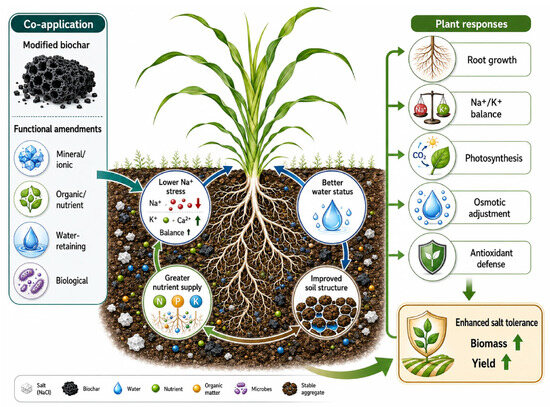
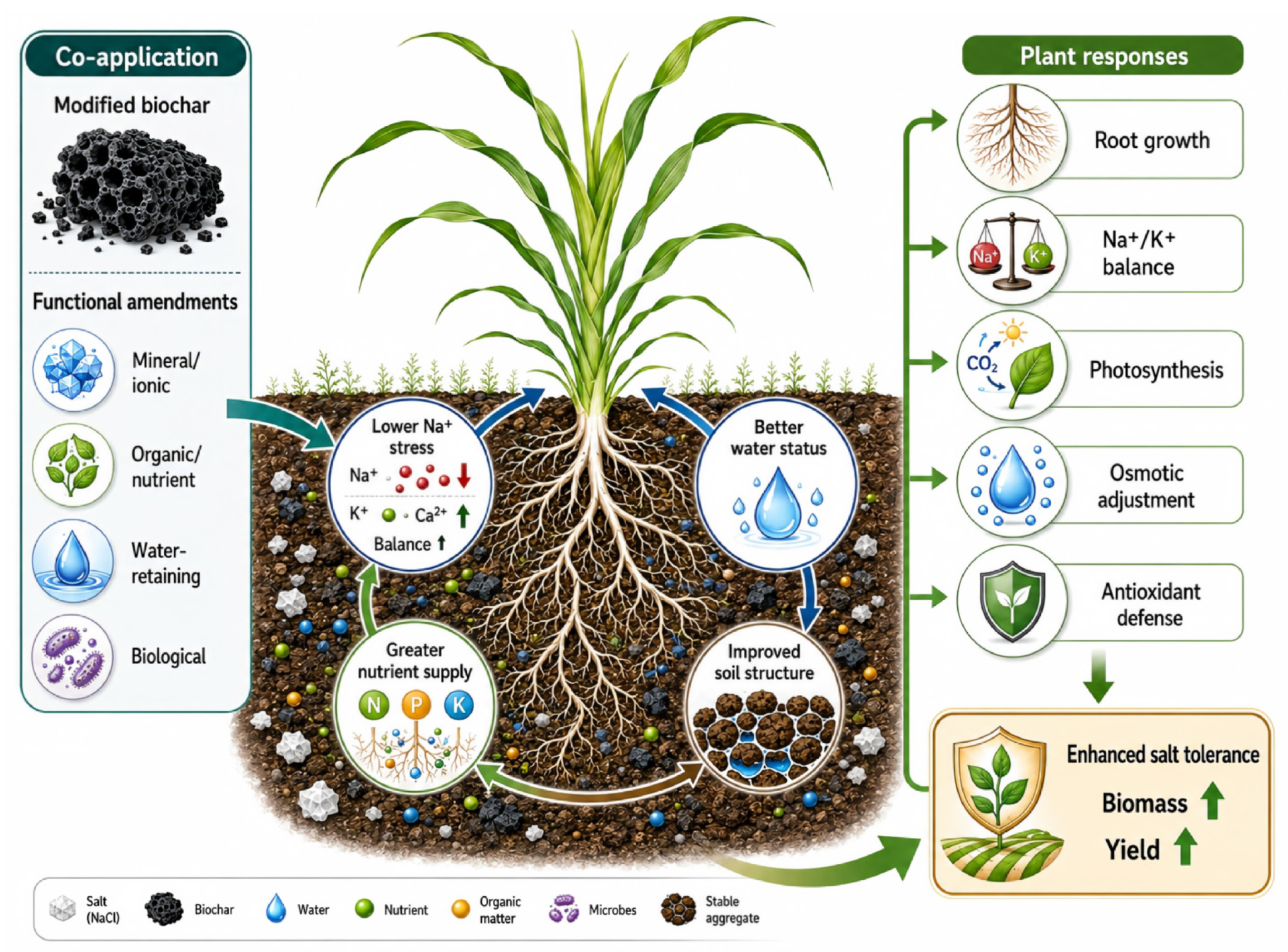
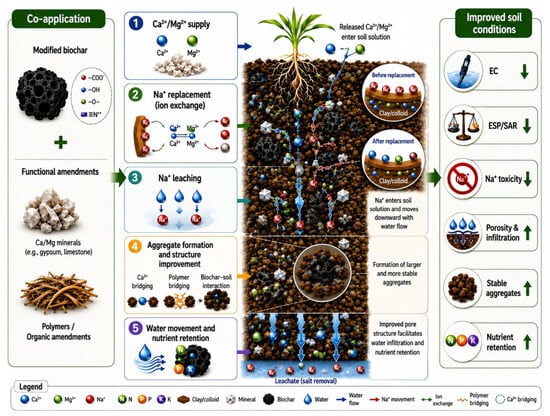
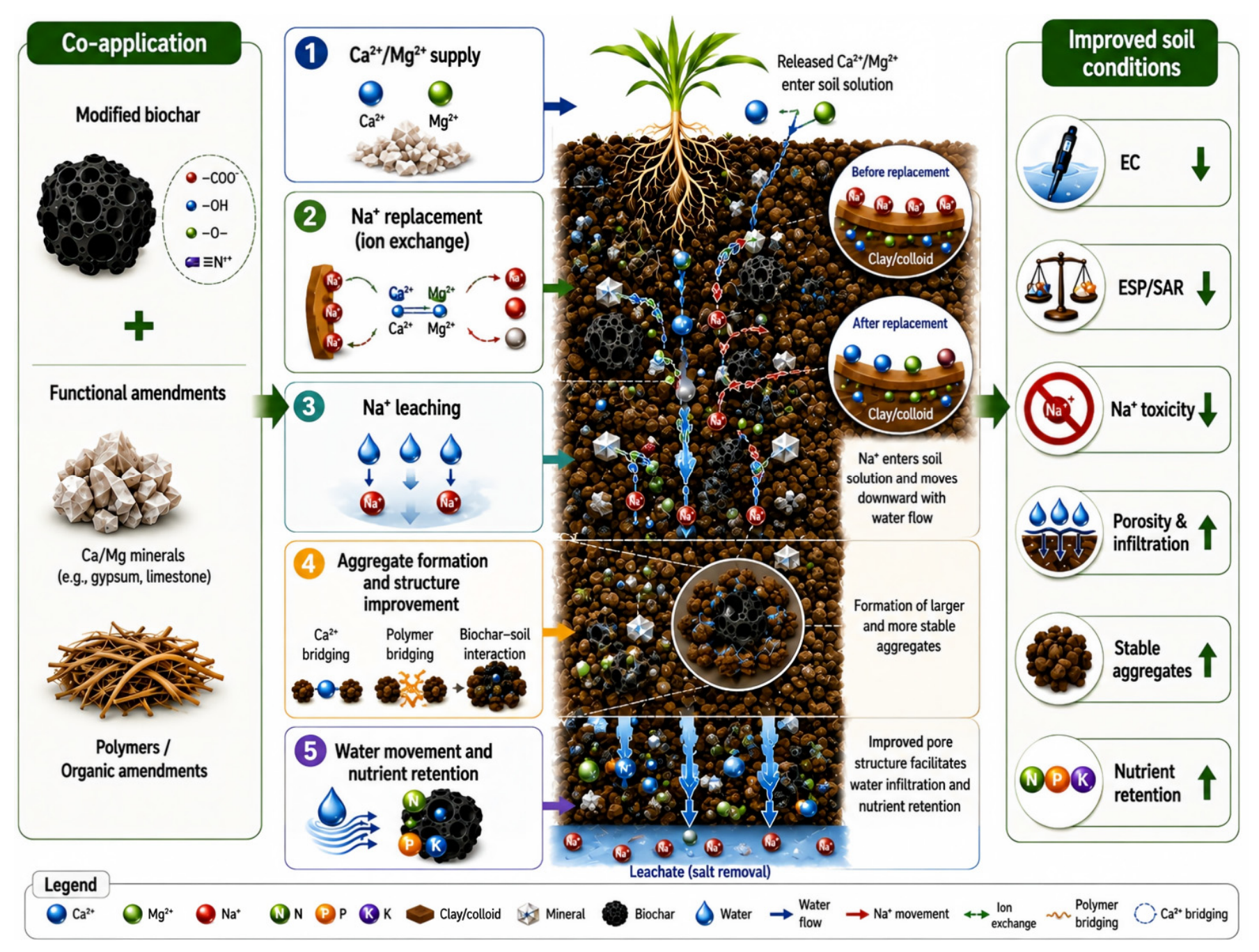
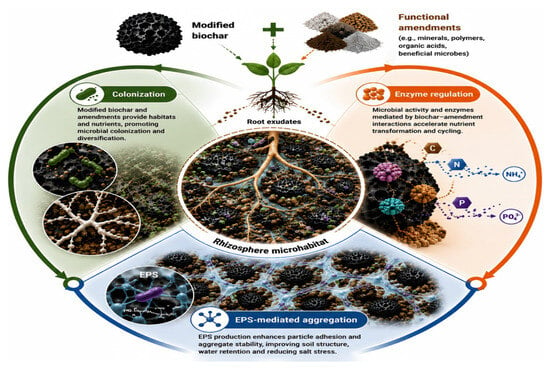
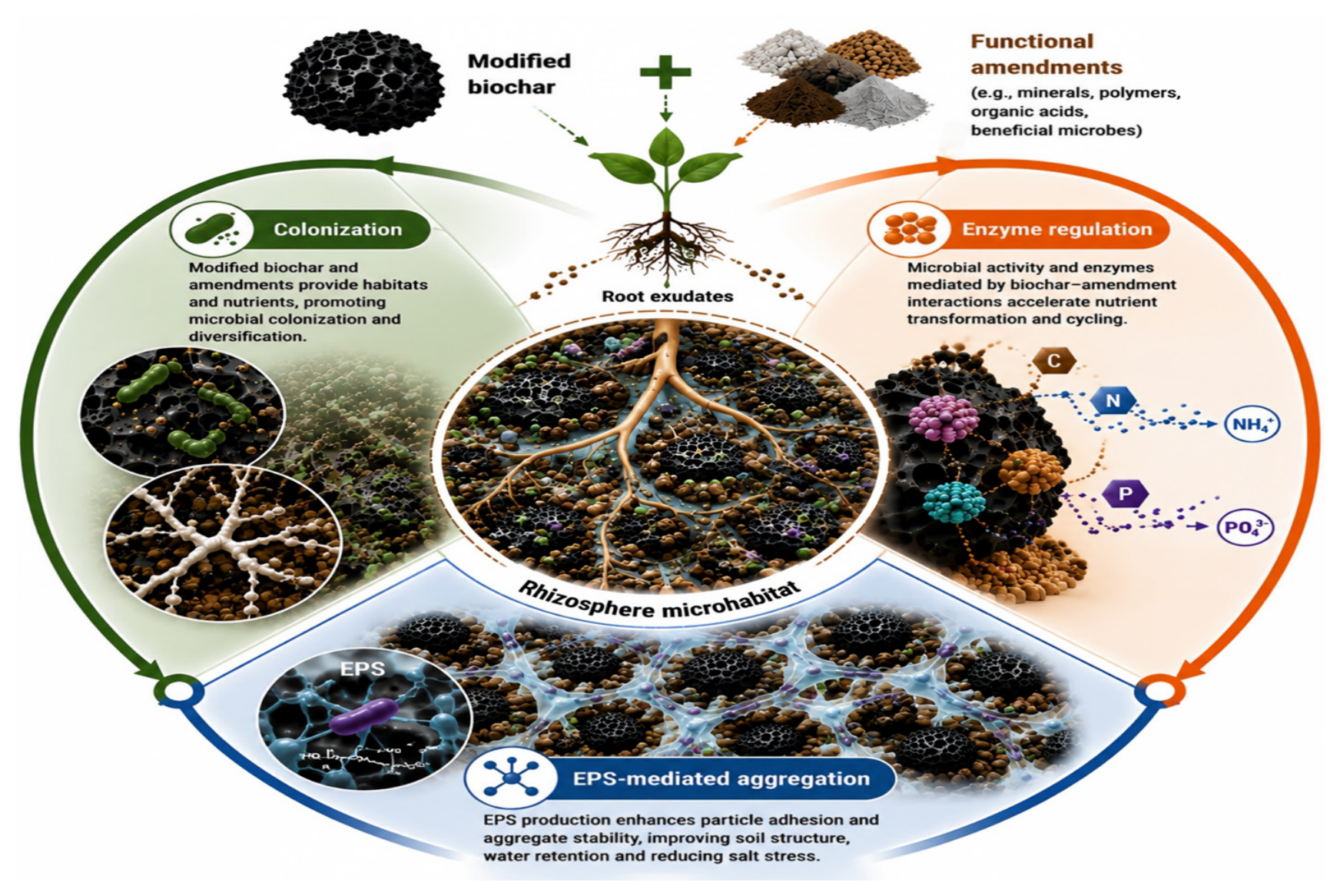
Disclaimer/Publisher’s Note: The statements, opinions and data contained in all publications are solely those of the individual author(s) and contributor(s) and not of MDPI and/or the editor(s). MDPI and/or the editor(s) disclaim responsibility for any injury to people or property resulting from any ideas, methods, instructions or products referred to in the content. |
© 2026 by the authors. Licensee MDPI, Basel, Switzerland. This article is an open access article distributed under the terms and conditions of the Creative Commons Attribution (CC BY) license.