


Abstract
Aerobic composting is widely used to stabilize livestock and poultry manure and recover organic nutrients, but its performance and end-product safety depend on nitrogen conservation, gas emissions, aeration, contaminant fate, and compost maturity. This critical review synthesizes evidence from a structured search of the Web of Science Core Collection, Scopus, and PubMed, complemented by citation tracking. Of the 204 records identified, 58 publications were retained for the review. Among these, 45 empirical studies met the eligibility criteria and constituted the formal narrative synthesis, whereas 13 review articles or meta-analyses were used only for background information and backward citation tracking. The 45 empirical studies were classified according to their relevance to livestock-manure composting and the directness of the supporting evidence. The review evaluates relationships among biochar feedstock, pyrolysis conditions, particle size, surface properties, and amendment rate, with emphasis on physicochemical regulation, microbial responses, contaminant fate, and post-application agronomic implications. Across the selected studies, biochar was frequently associated with improved porosity and moisture regulation, lower nitrogen losses and gaseous emissions, increased humification, and reduced operationally defined labile fractions of Cu and Zn. However, these responses were highly context-dependent and were not consistently observed across manure types, biochar materials, particle sizes, amendment rates, or composting systems. Biochar may also increase pH or electrical conductivity, inhibit germination when soluble salts or water-extractable organic compounds are present, redistribute rather than permanently immobilize contaminants, and produce null or contrasting responses for antibiotic resistance genes. Evidence for heavy-metal passivation was generally stronger than evidence for suppression of horizontal gene transfer or long-term ARG attenuation. The frequently investigated amendment range of approximately 10–15% (w/w) should therefore be regarded only as a provisional, feedstock-specific starting range rather than a universally applicable recommendation. Similarly, the apparent advantages of moderate pyrolysis temperatures represent trends observed in selected studies, not quantitative optima. The review also highlights the need for process-scale validation, direct measurements of microbial activity and contaminant speciation, evaluation of biochar-derived organic contaminants, and long-term soil–plant experiments. The simple study-quality appraisal further indicates that the available evidence should be interpreted cautiously because reporting and methodological quality varied among studies. Function-oriented selection criteria should be developed to match biochar properties with manure characteristics, composting conditions, and intended agronomic use.
1. Introduction
Livestock and poultry production generates large quantities of manure worldwide. When manure is inadequately stored, treated, or applied, nitrogen, phosphorus, organic matter, trace metals, veterinary pharmaceuticals, and antibiotic resistance determinants may enter soil and water systems. China provides an important example of the scale of this challenge because of its large livestock sector and regional concentration of intensive production.
National statistics and pollution-source assessments have documented substantial manure-related nutrient and organic pollutant loads [1,2]. Although the reported national manure-utilization rate reached 79.4% in 2023 [3], this aggregate value masks considerable regional variation in treatment capacity and management quality. In some regions, inadequately treated manure may still threaten surface-water and soil quality. Therefore, improving composting performance and end-product safety remains important for sustainable livestock production.
Aerobic composting is widely used to stabilize manure and recover organic nutrients. However, poorly aerated, excessively wet, or otherwise inadequately managed systems may exhibit ammonia volatilization, methane and nitrous oxide emissions, delayed maturation, and redistribution of trace metals, antibiotics, and antibiotic resistance genes [4,5]. These outcomes are not inherent properties of aerobic composting itself; rather, they are commonly associated with unfavorable feedstock characteristics or inadequate control of moisture, aeration, C/N ratio, temperature, and turning conditions. From an agronomic perspective, insufficiently matured compost may also exhibit elevated salinity, phytotoxicity, residual contaminants, or unstable nutrient-release behavior.
Biochar is a porous carbonaceous amendment that may modify the physical, chemical, and biological conditions of composting. Its properties, including aromatic carbon structure, specific surface area, surface functional groups, pH, ash content, and pore accessibility, may influence nitrogen transformation, organic-matter decomposition, contaminant partitioning, and microbial activity [6,7]. Selected studies have reported improved nitrogen conservation and reduced gaseous emissions after biochar addition, but the direction and magnitude of these responses vary with manure composition, biochar feedstock, pyrolysis conditions, particle size, amendment rate, moisture, aeration, and composting duration. Study-specific quantitative outcomes are summarized in Table 1.
Table 1.
Selected quantitative outcomes of biochar amendment on nitrogen conservation and greenhouse gas mitigation during livestock-manure aerobic composting.
Beyond waste treatment, integrating biochar into manure management may contribute to nutrient recycling and soil conditioning. Biochar-amended compost may influence soil organic carbon storage, nutrient availability, water retention, and crop performance, but the magnitude and direction of these effects depend on compost maturity, biochar stability, soil properties, crop species, and application rate. Despite a decade of intensive research, the industry still lacks a standardized decision-support framework for selecting biochar based on specific agronomic targets and manure types. This review synthesizes current understanding through four interconnected dimensions: (i) physical pore restructuring and hydrological regulation; (ii) nitrogen retention and chemical buffering; (iii) microbial niche reconstruction and successional metabolism; and (iv) the synergistic mitigation of heavy metals and ARGs. By bridging micro-mechanisms with scalable agronomic applications, this analysis aims to provide a conceptual reference for the optimized deployment of biochar-amended composting technologies.
Recent reviews have summarized the use of biochar in organic-waste composting, including effects on gaseous emissions, compost physicochemical properties, microbial processes, contaminant immobilization, and biochar functionalization [10,11,12]. These studies provide important foundations, but several issues remain unresolved. First, evidence from livestock-manure composting is often combined with evidence from food waste, sewage sludge, green waste, soil incubation, or aqueous adsorption systems, despite major differences in substrate chemistry and process conditions. Second, beneficial outcomes are more frequently synthesized than null, adverse, or contradictory responses. Third, the relationships among biochar properties, manure characteristics, composting conditions, contaminant fate, and post-application agronomic performance have not been consistently evaluated within a single evidence framework. Finally, the safety of biochar itself, including the possible release of water-extractable organic compounds and phytotoxic substances, remains insufficiently integrated into recommendations for compost use.
Accordingly, this review integrates biochar properties, composting responses, contaminant fate, microbial processes, and post-application agronomic implications within an evidence-calibrated framework. Specifically, this review aims to: (i) evaluate relationships between biochar properties and composting responses; (ii) compare the directness and methodological strength of available evidence; (iii) distinguish experimentally supported effects from proposed or indirect mechanisms; (iv) identify function-oriented criteria for biochar selection; (v) synthesize beneficial, null, adverse, and contradictory outcomes; and (vi) identify knowledge gaps requiring process-scale, field-scale, and long-term agronomic validation.
Figure 1 provides a conceptual synthesis of the major pathways through which biochar influences livestock-manure composting. The framework links biochar physicochemical properties (feedstock, pyrolysis temperature, particle size, surface chemistry) to structural and functional modifications of the composting matrix, including pore restructuring, moisture regulation, and chemical buffering. These modifications subsequently affect aeration, nitrogen transformation, microbial community succession, and the fate of heavy metals and antibiotic resistance genes. The net outcomes determine compost maturity, nutrient conservation, and agronomic performance after soil application. This graphical summary integrates the microscale mechanisms and process-level responses discussed in detail in Section 3 and Section 4.
Figure 1.
Graphical synthesis of biochar-amended livestock-manure composting.
2. Materials and Methods
The objective of this study is to provide a comprehensive and critical synthesis of the regulatory effects of biochar on livestock-manure composting. To ensure transparency and reproducibility, this review adopts a structured literature search and critical narrative review approach, combining a predefined search strategy with narrative synthesis to reconcile the inherent heterogeneity across diverse manure feedstocks and biochar types.
2.1. Search Scope and Strategy
A structured literature search was conducted on 11 February 2026. The Web of Science Core Collection, Scopus, and PubMed were searched as bibliographic databases. ScienceDirect was used for full-text verification and article retrieval. The formal synthesis included peer-reviewed, English-language original research articles published between 2015 and 2026. Review articles and meta-analyses were not eligible for the formal empirical synthesis; they were used only to provide background information, identify relevant terminology, and conduct backward citation tracking. In total, 58 publications were retained for the review, comprising 45 empirical studies used in the formal synthesis and 13 review articles or meta-analyses used for contextual purposes only.
The search strategy utilized a combination of Boolean operators across three thematic modules, applied to the Title/Abstract/Keywords fields:
Module 1 (Biochar terminology): (biochar OR biocarbon OR pyrochar);
Module 2 (Composting substrate): (aerobic composting OR livestock manure OR poultry litter OR swine manure OR cattle manure);
Module 3 (Outcome and risk terms): (nitrogen retention OR nitrogen loss OR ammonia OR NH3 OR nitrous oxide OR N2O OR methane OR CH4 OR greenhouse gas OR gaseous emission OR odor OR volatile organic compound OR VOC OR volatile sulfur compound OR VSC OR humification OR compost maturity OR germination index OR phytotoxicity OR salinity OR electrical conductivity OR nutrient availability OR heavy metal immobilization OR metal bioavailability OR antibiotic OR antibiotic resistance gene OR horizontal gene transfer OR microbial community OR microbial activity OR toxicity OR adverse effect OR negative effect OR inhibition OR environmental risk OR leaching OR pyrolysis).
Because the initial outcome module emphasized beneficial outcomes, the search strategy was broadened before final screening to include adverse, null, risk-related, and odor-related terms. This modification was intended to reduce the possibility that the synthesis would preferentially identify studies reporting beneficial effects of biochar.
The complete search string for each database followed the structure:
(Module 1) AND (Module 2) AND (Module 3).
Database-specific syntax adaptations (e.g., field tags such as TS= in Web of Science or TITLE-ABS-KEY in Scopus) were applied to ensure consistent retrieval across platforms.
To ensure inclusivity, seminal studies published prior to 2015 were identified through backward citation tracking of key foundational papers in the field; these supplementary references are explicitly noted where cited and are not included in the reference count.
The revised search yielded 204 records. After removal of 82 duplicates, 122 records were screened by title and abstract. Full texts were assessed for 84 publications. Of these, 45 empirical studies met the predefined eligibility criteria and were included in the formal narrative synthesis. An additional 13 review articles or meta-analyses were retained for background information and backward citation tracking but were not included in the empirical synthesis or study-quality appraisal. Thus, 58 publications were retained for the review overall. The main reasons for exclusion from the empirical synthesis were the use of non-manure substrates, absence of a biochar treatment, anaerobic rather than aerobic processing, and lack of outcome data relevant to the review objectives. Records were screened by the designated reviewers using the predefined eligibility criteria. Uncertain cases were discussed among the review team until a consensus decision was reached.
The detailed search strings for each database, the PRISMA screening flow diagram, and the publication-level classification used to distinguish empirical studies from contextual reviews are provided in the Supplementary Materials.
Several limitations should be considered when interpreting this review. First, the search was restricted to English-language publications and may have excluded relevant studies published in other languages. Second, the included studies differed substantially in manure composition, biochar feedstock, pyrolysis conditions, particle size, amendment rate, composting scale, and analytical methods. Third, the evidence classification describes relevance to livestock-manure composting but does not by itself represent methodological quality. Fourth, many studies reported relative gene abundance or operationally defined contaminant fractions rather than absolute abundance, transcriptional activity, bioavailability, or long-term remobilization. Finally, the geographical distribution of the evidence may be uneven, which may limit the transferability of conclusions across climates, production systems, and agronomic practices.
2.2. Eligibility and Evidence Classification
Studies were included if they met the following criteria: (i) empirical trials involving biochar amendment in livestock or poultry manure-based aerobic composting; (ii) reported quantitative or qualitative data on physicochemical dynamics, microbial succession, or pollutant fate.
Studies were excluded if they met any of the following: (i) used non-manure substrates (e.g., pure food waste, pure sewage sludge) without manure co-composting; (ii) lacked biochar amendment as a treatment variable; (iii) focused on anaerobic digestion rather than aerobic composting; (iv) were conference abstracts, theses, or non-English publications; (v) did not report any outcome measures relevant to the review objectives.
Review articles and meta-analyses were handled separately from empirical studies. They were not eligible for inclusion in the formal empirical synthesis, evidence classification, quantitative data extraction, or study-quality appraisal. Nevertheless, eligible reviews and meta-analyses identified during the search or citation-tracking process were retained as contextual publications to support background statements, identify relevant primary studies, and provide broader comparisons with the livestock-manure composting literature.
To address the complexity of composting matrices, evidence was classified according to substrate relevance and the directness of the measured outcome:
Direct evidence consisted of controlled composting experiments using livestock or poultry manure, with biochar included as an experimental treatment and with outcomes directly measured during composting or in the resulting compost.
Related evidence consisted of experiments involving manure co-composted with non-manure bulking materials, digestate, crop residues, or other mixed substrates, provided that manure remained a substantial component of the composting matrix and the measured outcome was relevant to the review objectives.
Indirect evidence consisted of studies conducted in systems without livestock manure, including food waste, sewage sludge, green waste, soil incubation, aqueous adsorption, or isolated microbial systems. Indirect evidence was used only to discuss possible physicochemical or biological mechanisms and was not used alone to support recommendations for livestock-manure composting.
Evidence categories describe the relevance and directness of the experimental system; they do not represent formal judgments of methodological quality.
A total of 58 publications were retained for the review. Among these, 45 empirical studies were included in the formal synthesis, and 13 review articles or meta-analyses were retained for background information and citation tracking (see Section 2.1 for details). A simple study-quality appraisal using five domains (replication, untreated control, composting scale, duration, and analytical robustness; each scored 0 or 1) was applied to the 45 empirical studies only, yielding total scores of 0–5. Scores of 0–1, 2–3, and 4–5 indicated low, moderate, and relatively high reporting or design quality, respectively. This appraisal qualified the narrative synthesis but did not constitute a formal risk-of-bias assessment. Study-level results are in Table S1; score distributions are summarized in Section 3.5.3. The review protocol was not prospectively registered.
In the narrative synthesis below, every citation drawn from Related evidence or Indirect evidence tiers is explicitly labeled as such at the point of use, ensuring that readers can distinguish direct empirical support for livestock-manure composting from analogous findings in related systems.
2.3. Synthesis and Data Extraction
Because of substantial variations in aeration regimes, moisture content, and biochar dosing (ranging from 1% to 20%), a formal meta-analysis was deemed inappropriate for certain sections due to statistical heterogeneity. Instead, a qualitative synthesis approach was employed.
Data were extracted from the included studies using a standardized spreadsheet organized into the following fields. Extracted information was checked against the full text before synthesis, with particular attention to manure type, biochar feedstock, pyrolysis temperature, amendment rate, composting duration, and the definition of each reported outcome. When quantitative values or experimental conditions were unclear, the study was retained only for qualitative discussion or the relevant parameter was recorded as “not reported”.
- Reference information (authors, year, journal);
- Manure type and initial characteristics (C/N ratio, moisture content, baseline pH);
- Biochar properties (feedstock, pyrolysis temperature, particle size, specific surface area, pH, ash content);
- Amendment rate and application method (w/w %, mixing depth);
- Composting parameters (duration, aeration regime, bulking agents used, turning frequency);
- Outcome measures (nitrogen retention/loss, NH3/N2O emissions, heavy metal fractions, ARG abundance, microbial diversity indices);
- Key findings and limitations as reported by the original authors.
Extracted data related to nitrogen conservation, heavy metal reduction, and ARG attenuation were tabulated to identify frequently investigated operating ranges, context-dependent trends, and persistent knowledge gaps. Findings were stratified by biochar pyrolysis temperature using a three-tier framework: Low (<400 °C), Moderate (400–600 °C), and High (>600 °C). Feedstock origin was classified into woody, straw-based, and manure-derived categories to support a targeted engineering selection framework. The temperature-based functional profiles and feedstock-based classification are presented later in Section 3.3.2, after the relevant characteristics have been introduced.
The geographical distribution of the included studies was classified according to the country or region of the lead or corresponding author’s affiliation. This classification was used as an indicator of the geographical origin of the research evidence and not as a definitive indicator of the location of the experimental facility. Internationally co-authored studies were assigned to the country or region of the lead or corresponding author and were marked with an asterisk in the geographical distribution table. When the affiliation or country information was unclear, the study was recorded as “not reported” until the information could be verified.
3. Results and Discussion
3.1. Effects of Biochar Characteristics and Pyrolysis Parameters on Composting
3.1.1. Physicochemical Properties of Biochar
The physical architecture of biochar, including its specific surface area (SSA), pore-size distribution, and pore connectivity, may influence its performance as a structural amendment and potential microbial habitat. Typical lignocellulosic biochars specifically synthesized for manure composting applications exhibit SSAs ranging from 20 to 350 m2·g−1, a property systematically governed by pyrolysis peak temperature, residence time, and feedstock ash content [13]. Consistent with standard IUPAC pore classification conventions, pore-size distributions may influence gas exchange, water retention, and sorption, but the functional role of each pore class depends on pore connectivity, accessibility, moisture state, surface chemistry, and the surrounding compost matrix. Larger pores may contribute to inter-particle gas transport, whereas smaller pores may participate in water retention or the sorption of ammonium- or ammonia-related species. These relationships should therefore be considered conditional rather than as fixed one-to-one assignments between pore size and composting function [14].
Surface chemistry, including oxygen-containing functional groups (OFGs) and cation exchange capacity (CEC), defines the interactive behavior between biochar and compost matrices. Low-temperature biochars generally possess a substantially higher density of acidic OFGs, such as carboxyl (–COOH) and phenolic hydroxyl (–OH), than high-temperature biochars, conferring higher polarity and cation retention capacity [10,15].
However, ammonium retention in biochar-amended composting systems is not governed by a single universal mechanism. It may involve cation exchange, electrostatic interactions, mineral phase complexation, pore-scale partitioning, and microbial assimilation, with the relative contribution of each pathway depending on pH, ionic strength, moisture content, and biochar surface chemistry. While deprotonated polar moieties can serve as binding sites for exchangeable NH4+ under favorable conditions, their effectiveness is contingent on the composting microenvironment rather than representing a stand-alone, universally dominant retention mechanism [14].
In terms of alkalinity and ash composition, most crop straw and wood-derived biochars are neutral to moderately alkaline, with K, Ca, and Mg mineral ions concentrated in the residual ash. These minerals can buffer abrupt pH drops caused by rapid organic acid accumulation in early-stage composting. However, excessive addition of high-ash biochar may undesirably elevate bulk electrical conductivity (EC), introducing potential salinity stress and adversely affecting seed germination of end products [16] (indirect evidence); the dual EC behavior and feedstock-specific dosage limits are elaborated in Section 3.2.2.
Thermochemical stability determines how biochar structures persist under the humid, thermophilic, and microbially active conditions of composting. Biochars produced at high temperatures often show greater aromaticity and structural persistence but may contain fewer oxygen-containing reactive sites. Biochars produced at lower temperatures may retain more labile organic fractions that can be transformed during composting, although the extent to which this affects pore integrity and habitat function depends on feedstock and process conditions [17]. As summarized in Table 2, the physicochemical properties of biochar generally generate dual effects on composting performance. While a high SSA enhances adsorption capacity for gases and pollutants, it can also trigger capillary condensation under high-moisture conditions, causing partial pore clogging by water films. Similarly, high ash content supplies macro- and micronutrients, but may simultaneously elevate EC and salinity risk. Therefore, the selection of biochar for optimized composting should not be based solely on maximum SSA or pyrolysis intensity but requires explicit consideration of the initial physicochemical traits of the target manure feedstock (pig, chicken, or cattle manure).
Table 2.
Main physicochemical properties of biochar and their corresponding effects on aerobic composting (selected lignocellulosic feedstocks).
The properties summarized in Table 3 should not be interpreted independently. The same characteristic may produce opposite outcomes under different composting conditions. For example, high alkalinity may buffer acidification in one substrate but increase NH3 volatilization in a high-ammonium manure. Similarly, fine particles may improve contaminant contact but reduce free-air space when moisture is high. Practical selection should therefore be based on the target function and the manure–biochar combination rather than on a single maximum property such as SSA or pH.
Table 3.
Potential benefits, adverse or null responses, and decision factors associated with biochar properties during livestock-manure composting.
3.1.2. Effects of Pyrolysis Temperature and Feedstock Selection on Biochar Functional Properties
Pyrolysis temperature is an important determinant of biochar properties, but its effects are strongly modified by feedstock composition, heating rate, residence time, ash content, and post-treatment. Feedstock lignin/cellulose ratio, heating ramp rate, and reactor residence time all introduce strong interactive effects that together determine property heterogeneity. The recent systematic review by Loc et al. [17] formally identifies this parameter synergy as the root cause of functional variability: temperature contributes the largest weight in shaping pore nucleation development and surface chemistry via sequential thermal decomposition of hemicellulose, cellulose, and lignin. As pyrolysis conditions progress from 300 °C to beyond 700 °C, raw biomass undergoes continuous transformation through dehydration, decarboxylation, and aromatization, leading to a systematic shift in all key biochar properties rather than discrete abrupt changes [14,17]. This temperature-dependent trajectory provides a conceptual basis for relating biochar properties to possible composting functions, but it does not by itself establish a predictive selection rule across different composting scenarios. The temperature-dependent transformation of key physicochemical properties and the corresponding composting implications are summarized in Table 4. This framework is used here as an organizing classification rather than as a set of universal temperature thresholds.
Table 4.
Effects of pyrolysis temperature range on key properties of biochar (lignocellulosic feedstocks).
These ranges are specific to lignocellulosic straw/wood biochars; sludge-, manure-, or bone-derived biochars may exhibit substantially different property trajectories at the same nominal temperatures. All quantitative values (SSA, pH, ash) are indicative and feedstock-dependent; they should not be interpreted as fixed thresholds. Terms such as “often,” “typically,” “frequently,” and “may” indicate probabilistic trends rather than deterministic outcomes. Agronomists must perform direct physicochemical characterization of each biochar production batch before application.
Distinct Functional Roles of Low-, Moderate- and High-Temperature Biochars in Composting
Low-temperature biochars (300–400 °C) represent a functional-group-enriched category. Low-temperature biochars often retain more oxygen-containing functional groups and may exhibit higher effective cation-exchange capacity than highly pyrolyzed materials, although the direction and magnitude of these differences depend on feedstock and pyrolysis conditions. In the generally weakly acidic microenvironment established during early composting, deprotonated polar moieties may contribute to NH4+ immobilization at the solid–liquid interface via electrostatic attraction and outer-sphere ion exchange. However, the overall nitrogen conservation effect is more accurately viewed as a composite outcome of cation exchange, electrostatic interactions, mineral phase precipitation, pore-scale NH3 partitioning, and microbial assimilation. The relative weight of each pathway varies with pH, ionic strength, moisture, and biochar surface chemistry. Thus, while low-temperature biochars enriched in OFGs may be advantageous for nitrogen conservation, their performance should be evaluated within this multi-pathway framework rather than being attributed to a single surface-chemical interaction. They may be considered for high-nitrogen-loss manure matrices with low initial C/N ratios, such as some poultry manure systems, but this possibility requires feedstock-specific validation. However, these incompletely carbonized biochars contain substantial residual pools of non-mineralized hemicellulose and amorphous cellulose. These biodegradable fractions may serve as labile carbon sources for indigenous microorganisms during active composting. Their transformation could alter pore integrity over time, but the extent and practical importance of any structural change require direct measurement under composting conditions. In field application, acid washing has been investigated as a pretreatment for modifying ash content and surface chemistry, but its scalability, chemical consumption, waste-stream generation, and effects on compost performance require further evaluation.
The influence of pyrolysis temperature on biochar performance in manure composting has been examined in several feedstock-specific studies. Li et al. [18] investigated corn stalk biochar produced at different temperatures (300–700 °C) as an additive in pig manure composting; biochar prepared around 500 °C prolonged the thermophilic phase, facilitated organic matter decomposition, and reduced NH3 emissions, whereas biochar produced above 700 °C elevated pile pH beyond 9.2 and increased NH3 volatilization [18]. In poultry litter composting, Agyarko-Mintah et al. [6] reported that biochar produced at 450–550 °C reduced NH3 emissions by 38–56% and N2O emissions by 65–75% relative to unamended controls. A recent study by Wang et al. [19] further demonstrated that biochar pyrolyzed at 450 °C, 550 °C, and 650 °C exerted differential effects on nitrogen conversion during composting, with the 450 °C biochar showing the highest total nitrogen retention. These findings suggest that biochars produced at moderate temperatures may provide a balance between nitrogen retention and structural persistence in some livestock-manure systems. However, this trend has not been established as a quantitative optimum across feedstocks, pyrolysis conditions, and composting systems, and the temperature associated with a favorable response appears to be feedstock-dependent. For high-salinity manures such as broiler litter, the elevated inherent ash and soluble salt content may necessitate adjustments to avoid excessive pH and electrical conductivity surges [11], although the precise optimum remains to be empirically defined across different manure types. Therefore, the 400–500 °C range may be used as an experimental starting interval in selected systems, but it should be treated as a feedstock-specific hypothesis rather than as a universally applicable production or application recommendation.
High-temperature biochars (>600 °C) generally exhibit greater aromaticity and lower abundance of many oxygen-containing functional groups, although their surface area, pore accessibility, alkalinity, and hydrophobicity remain strongly dependent on feedstock and pyrolysis conditions. High-temperature biochars generally exhibit relatively high aromaticity and structural persistence, although the extent of their transformation during composting has not been consistently quantified across manure composting systems. Their capacity for chemical retention of NH4+ may decrease as some oxygen-containing functional groups are lost. Under these conditions, nitrogen conservation may rely more heavily on physical partitioning and pH-related buffering than on cation-exchange interactions, although the relative contribution of these processes remains system-dependent [14].
Considering the temperature-dependent evolution of biochar properties, a provisional material-matching hypothesis can be formulated. In manure systems with a high risk of nitrogen loss, moderate-temperature biochars have frequently been investigated because they may provide a balance between surface reactivity and structural persistence. However, this interpretation is based on trends observed in selected studies rather than on a validated engineering rule. Direct comparisons using standardized feedstocks, amendment rates, and composting conditions are required before moderate-temperature biochars can be recommended for general use. However, this material-matching hypothesis requires direct comparison across manure types and operating conditions before it can be translated into a general recommendation.
Functional Heterogeneity of Biochars Derived from Different Raw Material Feedstock Categories
Although pyrolysis temperature remains the dominant processing variable, holding all thermal conversion parameters constant does not guarantee consistent composting performance. Intrinsic variability in the mineral composition of parent biomass systematically drives divergent outcomes. Native differences in lignin-to-cellulose ratio, phytolith (amorphous silica) architecture, and trace element signatures are directly inherited by the resultant biochar, yielding functionally distinct end products. In the context of industrial on-farm deployment for manure treatment hubs, the global composting research community has proposed partitioning biochar amendments into three functionally distinct categories, based on regional availability, property clustering, and documented performance across numerous independent compost trials: (i) lignocellulosic forest residue-derived biochars, (ii) agricultural straw biochars, and (iii) pyro-manure biochars produced by pyrolysis of raw livestock manure [12,17].
Woody forest-residue biochars, typically sourced from hardwood sawmill waste, orchard prunings, and primary forestry thinnings, typically contain negligible native silicon. This absence of Si-rich phytoliths is hypothesized to prevent physical blockage of micropore nucleation during thermal conversion, potentially allowing these materials to develop comparatively higher accessible SSA than equivalent-temperature straw biochars. They often exhibit the lowest total ash content across the three categories, frequently reported below 10% by mass, and typically maintain a moderately alkaline pH window of 7.5–8.5. This mineral-sparse profile suggests a reduced likelihood of introducing large pulses of additional soluble salts into the compost matrix. Because of their relatively low ash content and structural persistence, woody biochars may be considered as physical amendments rather than primarily as nutrient carriers. In high-ammonia or high-salinity manure systems, low-ash materials may reduce the risk of additional soluble-salt loading, but their effects on NH3 emissions must be verified for the specific manure–biochar combination.
Cereal straw biochars, derived from rice, wheat, and maize residues, represent a widely available and low-cost option for on-farm compost operations in China and many other agricultural regions. Their characteristic geochemical signature is defined by very high phytolith-bound Si and elevated K/Ca concentrations. Total ash fractions typically range from 10% to 30% by mass, generating moderately to strongly alkaline products across the pH range 8.0–10.0. Their wide availability and low cost make them a common choice, but their high phytolith content and alkalinity necessitate careful dose optimization to avoid pore clogging and excessive pH elevation in alkaline manure systems. However, two potential operational constraints should be considered. Mineral particles may partially obstruct internal pore development during carbonization, which could reduce accessible SSA relative to some hardwood biochars produced under comparable conditions. In addition, the combination of alkalinity and soluble K salts may increase EC in some compost matrices, particularly at high amendment rates. In feedstocks such as chicken manure that already naturally trend toward alkaline pH in late-stage compost, unregulated over-dosing of high-ash straw biochar can abruptly reverse nitrogen retention benefits and trigger resurgent NH3 volatilization. This mandates a site-specific pre-assessment protocol, as the commonly referenced pH 8.5 threshold for ammonia-loss risk is a reference value rather than a rigid limit [11] (indirect evidence) (see Section 3.2.2 for detailed discussion).
Pyro-manure biochars represent a closed-loop valorization pathway and are produced directly by thermochemical conversion of cattle, swine, or poultry manure without additional lignocellulosic blending. Their composition largely reflects the mineral composition of the parent manure, resulting in relatively high phosphorus and calcium contents compared with many lignocellulosic biochars. Their final equilibrium pH may nevertheless remain within a near-neutral to weakly alkaline range, although the actual value depends on feedstock composition and pyrolysis conditions. This material challenges or extends the conventional design assumption that biochars can only function as separate conditioners, not fertilizers: these pyrolyzed products act simultaneously as thermally sanitized structural amendments and as slow-release P- and Ca-enriched fertilizer carriers, although their final properties remain strongly dependent on pyrolysis atmosphere and temperature. Indigenous heavy metals such as Cu and Zn originally present in the feedstock manure may undergo partial solidification and speciation shift during pyrolysis, potentially reducing phytoavailability relative to untreated raw manure; however, the extent of immobilization depends on pyrolysis temperature, residence time, and the oxygen-limited conditions of the specific reactor configuration. This initial transformation may interact with subsequent changes during composting, but the extent and persistence of any combined immobilization effect require direct comparative evaluation. Their major inherent functional limitation is that maximum attainable porosity and SSA development are intrinsically constrained by the relatively high ash content, compared to dedicated lignocellulosic biochars. Therefore, their role is better suited to nutrient delivery and metal pre-stabilization rather than primary structural bulking. They may be more suitable for nutrient delivery and preliminary metal stabilization than for primary structural bulking, although their suitability depends on batch-specific properties, contaminant content, production conditions, and end-use requirements.
The main differences among woody, straw-based, and manure-derived biochars are summarized in Table 5. This classification provides a practical comparison of their typical mineral signatures, ash contents, pH ranges, and likely roles in manure composting. However, these categories should be regarded as coarse engineering groupings rather than deterministic predictors of biochar performance because the final properties of each product remain strongly dependent on feedstock composition and pyrolysis conditions.
Table 5.
Differences in functional properties of biochars produced from distinct raw material categories (coarse classification; actual properties require batch-specific characterization).
Decision Support for Agronomic-Oriented Biochar Selection
For industrial composting hubs, biochar selection should be treated as a site-specific decision rather than as a universal material-ranking exercise. The relevant criteria include manure composition, initial moisture and C/N ratio, composting aeration, target emissions, biochar pH and electrical conductivity, ash content, particle-size distribution, contaminant concentrations, and the intended soil–plant application. A material that improves aeration or nitrogen retention in one composting matrix may increase salinity, ammonia volatilization, or phytotoxicity in another.
If soil acidity is a major constraint, an alkaline biochar may be considered as one candidate material; however, its use should be evaluated against the buffering capacity of the receiving soil, the EC and soluble-salt content of the final compost, crop sensitivity, and cumulative application rate. Likewise, low-ash woody biochars may be considered where additional soluble-salt loading is a concern, but their suitability cannot be inferred from feedstock category alone and should be verified using batch-specific characterization. Manure-derived biochars may provide phosphorus, calcium, or other mineral nutrients, but their residual Cu, Zn, salts, and water-extractable organic compounds require particular attention before agronomic application.
Germination index, EC, pH, soluble salts, water-extractable organic compounds, and relevant contaminants should therefore be measured directly in the final compost–biochar product. A high germination index indicates lower acute phytotoxicity under the test conditions but does not establish long-term agronomic safety. Similarly, indicative EC values reported in some compost-quality assessments should not be interpreted as universal thresholds across soils, crops, or compost materials. At present, the available evidence supports a function-oriented screening and validation framework, but it does not support a single universally preferred biochar feedstock, pyrolysis temperature, particle size, or amendment rate.
3.1.3. Engineered Physical, Chemical, and Biological Biochar Modification Pathways
Adjusting pyrolysis temperature and feedstock selection can produce biochars with different physicochemical properties. However, the performance of unmodified biochars may be limited when composting systems involve competing requirements, such as nitrogen conservation, aeration improvement, contaminant control, and maintenance of compost quality. Surface modification has therefore been investigated as a possible way to tailor biochar properties to specific treatment objectives [20].
As summarized by Wang et al. [7], advanced design paradigms for compost-grade modified biochars have progressively integrated physical activation, heterogeneous chemical doping, targeted microbial colonization, and molecular imprinting. This material-engineering approach should be evaluated using a multidimensional framework that considers potential functional gains together with production scalability, reagent requirements, energy consumption, material durability, residual chemicals, and life-cycle environmental burdens [7]. At present, most evidence for engineered biochars comes from laboratory or small-scale experiments, and the available studies do not yet establish that surface modification consistently improves composting performance across manure types or operating conditions.
The literature commonly discusses several pathways for modifying biochars for waste-treatment applications, including physical activation, chemical surface modification, amination, and biological inoculation [15,20]. These approaches should currently be regarded as experimental or emerging strategies rather than established process requirements for livestock-manure composting. These technical options exhibit distinct microstructural and interfacial chemical footprints, producing highly differentiated performance outcomes inside active compost piles [7]. This review discusses the potential mechanisms, benefits, and operational limitations of physical activation, chemical modification, and biological inoculation [7].
Physical Activation: Mechanisms, Performance Gains, and Scalability Limits
Steam- or CO2-based physical activation has been used as a post-treatment strategy to modify pore structure and remove some pore-blocking residues. Under selected activation conditions, increases in specific surface area and total pore volume relative to unactivated biochar have been reported [7]; however, the magnitude of these changes depends on feedstock, activation temperature, residence time, and the analytical method used. In layer hen manure composting systems, this engineered porous matrix has been demonstrated to boost instantaneous NH3 adsorption capacity and reduce volatile sulfur odor emissions; however, quantitative data specific to steam/CO2-activated biochar in manure composting remain limited in the published literature, and further empirical studies are needed to establish dose–response relationships.
Nonetheless, physical activation faces pronounced engineering and economic barriers to large-scale deployment in composting operations. Sustaining endothermic steam/CO2 reactions above 850 °C substantially increases cumulative thermal energy input and the associated carbon footprint of production. Excessive activation may reduce particle strength and increase the formation of fine particles during handling. Under high-moisture conditions, these fines may contribute to pore blockage and reduced gas transfer. The magnitude of this risk requires evaluation under realistic turning, mixing, and loading conditions. Consequently, the application of physically activated biochar to large-scale livestock-manure composting remains uncertain because of energy demand, cost, particle durability, and the need for process-specific validation.
Chemical Modification: Surface Functionalization and Multi-Target Composting Benefits
In contrast to physical activation, which focuses on expanding porosity under high thermal energy, chemical modification relies on low-temperature wet impregnation or dry milling utilizing inorganic acids, strong oxidizing agents, or multi-valent metal cations to reconstruct the interfacial chemistry of pristine carbon scaffolds. The primary advantage of this approach lies in the targeted designability of surface reaction sites under moderate operational conditions, allowing producers to construct customized material properties to match specific feedstocks. Some studies have reported that chemical modification may influence compost pH, ammonium retention, or contaminant removal. However, the reproducibility of these effects across different manure composting systems remains uncertain. Heavy-metal responses to engineered biochars are discussed further in Section 3.5.1. Table 6 presents a systematic overview of typical chemical modification pathways and their corresponding mechanisms of action during aerobic livestock-manure composting. Specific examples of chemically modified biochars include NaOH-modified biochar, which reduced NH3 and H2S emissions by 40.6% and 77.7%, respectively, in layer hen manure composting systems [21].
Table 6.
Typology of chemical modification pathways for compost-bound biochars and their mechanisms of action.
Engineered Biochar-Mediated Microbial Inoculation and Targeted Niche Protection
The hierarchically interconnected porous network and surface chemical properties of raw lignocellulosic biochars confer specialized habitat functionality distinct from generic adsorbents used in conventional water or soil remediation. Micrometer-scale macropores can host attached colonization of 1 μm-sized bacterial cell clusters, while the nested meso- and micropore networks have been hypothesized to form potential microbial micro-refugia. Whether these structural features buffer inoculated populations against high-shear disturbance during repeated industrial pile turning or protect strains from the sustained 55–65 °C peak temperatures of the thermophilic phase remains insufficiently demonstrated in manure composting systems [27,28,29]. Notably, most existing evidence relies on bulk pile temperature measurements, and micro-scale temperature gradients within biochar particles during active composting remain unquantified. This structural trait is hypothesized to mitigate the persistent challenge of transient colonization failure commonly observed with liquid-only free-cell inocula, though empirical validation across diverse manure feedstocks and under field-scale turning regimes remains limited.
A commonly investigated formulation approach involves pre-adsorbing a microbial suspension onto dry biochar before incorporation into the composting matrix. Liquid pure-culture microbial suspension of target functional strains is uniformly sprayed onto the dry biochar matrix at pre-calibrated loading ratios. This allows passive equilibrium attachment to proceed before the finished biochar-carrier inoculum is directly blended with raw manure feedstocks and lignocellulosic bulking agents. Previous studies have explored biochar-carrier inoculation using thermotolerant lignocellulose-degrading bacteria, ligninolytic fungi, and nitrification-related microbial inoculants. However, much of this evidence originates from green-waste, mushroom-residue, submerged-plant, or other non-manure composting systems; direct validation in livestock-manure composting, particularly under full-scale turning and thermophilic conditions, remains limited. This tripartite modification strategy is explicitly designed to add an additional layer of intentionally programmed biological catalytic regulation, operating in parallel with the two existing native functions: porous physical structural support and surface chemical buffering [27,28,29]. Biochar-carrier inoculation may improve the initial retention of introduced microorganisms relative to liquid-only inoculation, but whether it consistently prevents competitive displacement by indigenous populations during repeated turning remains unresolved in livestock-manure composting systems.
However, when scaling from 500 g laboratory bench-scale trials toward multi-ton full-scale on-farm compost operations, this technological system faces two well-documented, non-trivial engineering bottlenecks. The first challenge originates from the overwhelming numerical superiority of indigenous background populations inside real livestock manure, which typically reach densities of 108–1010 CFU·g−1. When compounded with the harsh, highly fluctuating conditions of active compost piles (extended high-temperature exposure, across acidic–neutral–alkaline ranges, rapid osmotic shock events), introduced axenic pure cultures frequently face rapid competitive exclusion. Multiple studies have documented a common “colony counting paradox” phenomenon: molecular assays (e.g., qPCR or amplicon sequencing) appear to report high inoculated strain abundance immediately after dosing, but downstream aggregated process metrics (peak thermophilic duration, cumulative nitrogen loss ratio, final humification index) show no statistically significant performance gains against unamended controls [30]. The second major operational constraint relates directly to life-cycle economic scaling: industrial submerged fermentation production cost for specialized functional consortia, plus strict aseptic processing requirements during the biochar impregnation step, collectively inflate unit treatment expenses significantly. At this stage, biochar–microbial co-formulations are economically feasible only in high-value specialty organic fertilizer production workflows. They cannot yet be generalized as standard operations for bulk livestock-manure processing hubs with capacities of approximately 10,000 tonnes yr−1, and further long-term field validation is still required.
The synergistic co-benefit mechanism of this biochar–microbe partnership has been hypothesized to operate through a sequential, mutually reinforcing feedback loop: the biochar porous architecture may provide isolated refugium microhabitats far more stable than liquid-only sprayed free-cell inocula, potentially shielding proliferating inoculated populations from interspecific competitive displacement and severe mechanical agitation. However, this protective effect remains to be demonstrated at the particle scale in manure composting systems and requires particle-scale validation using techniques such as fluorescence in situ hybridization (FISH) or nano-CT. The successfully established functionally persistent consortium in return substantially accelerates hydrolysis of recalcitrant lignocellulose polymers early in the compost cycle, generating enhanced pools of phenol and quinone humification precursors. These in turn drive higher nitrogen retention efficiency by promoting sustained nitrifying pathway activity deeper into the maturation stage [31], a synergy first demonstrated in low-C/N food waste digestate systems (indirect mechanistic evidence) [32]. The final and most critical validation criterion for successful technology translation mandates that microbial strain compatibility testing must be performed in parallel with the full operational parameters of the specific target facility, including native manure baseline C/N, initial moisture content variability, and standard turning frequency protocols. Core intrinsic biochar carrier properties (pore size distribution profile, total ash mass fraction, and final equilibrium pH) must also be included in the microbial colonization pre-screening matrix, rather than attempting to deploy a generic one-size-fits-all biochar material across every divergent waste stream.
3.2. Effects of Biochar on the Physicochemical Microenvironment of Composting
The efficient operation of aerobic composting hinges on unimpeded three-phase (gas–liquid-solid) mass transfer. Livestock manures (e.g., swine and chicken manure) typically exhibit high inherent moisture content and strong cohesiveness; under self-weight and shear forces during turning operations, they are highly prone to physical compaction and pore collapse, which generates localized anaerobic microsites and triggers substantial emissions of CH4 and H2S. The incorporation of porous biochar may alter the physical pore network of composting matrices and influence the balance among gas transfer, water distribution, and microbial activity. The magnitude and direction of these effects depend on biochar particle size, dose, moisture, manure texture, and turning conditions.
3.2.1. Rigid Structural Backbone Construction and Hydrological Control
The relatively rigid structure of some biochars may help maintain pore space within composting matrices, although structural persistence depends on feedstock, pyrolysis conditions, particle size, moisture, and mechanical disturbance. In this context, biochar may function as a relatively rigid structural amendment within the composting matrix. Guo et al. [33] quantified this effect, reporting that biochar incorporation reduced bulk density (BD) by 45.9% and increased the free air space (FAS) by 31.3%; biochar also aided an increase in total porosity of compost aggregates by approximately 90%. This change in pore structure may reduce the spatial extent of some oxygen-limited microsites and may contribute to lower CH4 emissions in selected systems. However, the complete causal pathway has not been directly demonstrated in all composting studies. Complementary studies in poultry-litter composting have further demonstrated that biochar amendment reduces NH3 volatilization by 38–56% and N2O emissions by 65–75%, with total GHG emissions lowered from 183 kg CO2-eq t−1 (control) to 50–63 kg CO2-eq t−1 [6]. These structural and chemical co-benefits underscore that the magnitude of emission reductions is highly contingent on biochar feedstock and composting matrix.
Concurrently, the hierarchical porosity of biochar facilitates robust bidirectional water regulation (Table 7): selected studies indicate that it initially absorbs free water to prevent gas channel occlusion by water films, then gradually releases moisture in later stages to alleviate desiccation stress on microbial degraders [12]. These physical modifications collectively optimize the thermophilic phase dynamics in some systems. In selected swine-manure composting systems, biochar addition has been associated with an earlier onset and longer duration of the thermophilic phase [33]. However, temperature responses are not uniform across composting substrates and operating conditions [12]. Such divergent outcomes highlight that biochar effects on temperature dynamics are system-specific rather than universally predictable.
Table 7.
Phase-dependent moisture–oxygen dual regulation and proposed benefits of biochar amendments in selected composting studies.
However, the efficacy of these improvements is highly contingent on particle size. He et al. [35] demonstrated that fine powders (<1 mm) tend to clog interstitial pores, reducing overall porosity by 3.9% and exacerbating water film blockage, which counterintuitively triggered a 56.8% rebound in CH4 emissions. In contrast, coarse particles (4 mm–1 cm) act as effective structural props, increasing microporosity by 4.02%. In that study, the coarse-particle treatment was associated with a lower detected mcrA-to-pmoA abundance ratio and a 22.2% reduction in CH4 emissions. These findings are consistent with altered methane-cycling potential, but they do not by themselves demonstrate direct suppression of methanogenic activity or establish that the gene-abundance change caused the emission reduction. Coarser particles may be preferable when the primary objective is to preserve structural connectivity, whereas finer particles may be useful when contaminant contact is prioritized. The appropriate particle-size distribution should be validated under the moisture and turning conditions of the target system.
Most manure composting studies have focused on NH3, N2O, and CH4, whereas the effects of biochar on volatile organic compounds (VOCs), volatile sulfur compounds (VSCs), and odor intensity have been less consistently evaluated. Biochar may reduce some odor-related compounds through adsorption, improved aeration, or altered sulfur transformation, but high moisture can limit pore accessibility and high-ash materials may introduce additional soluble constituents. In addition, reductions in individual VOCs or VSCs do not necessarily indicate a reduction in total odor impact. Future trials should simultaneously measure composting performance, maturity, major greenhouse gases, NH3, VOCs, VSCs, and odor-related endpoints under comparable operating conditions [36].
3.2.2. Chemical Buffering and Nutrient Sequestration
Biochar regulates the dynamics and speciation of bulk nitrogen via multiple interacting pathways rather than a single surface-chemical mechanism. Ammonium retention may involve cation exchange, electrostatic interactions, mineral phase complexation, pore-scale partitioning, and microbial assimilation, with the relative contribution of each pathway depending on pH, ionic strength, moisture, and biochar surface chemistry. Under favorable pH conditions, deprotonated oxygen-containing functional groups (e.g., carboxyl and phenolic sites) on the biochar surface can carry negative surface charge, facilitating electrostatic attraction and ion exchange of transient NH4+ [8]; however, this mechanism is not universally dominant across all composting microenvironments. Simultaneously, the well-developed micro- and mesopores immobilize molecular NH3 through capillary condensation and dispersion forces [37]. Moreover, mineral carbonate/phosphate assemblages within the ash fraction can serve as weak-acid buffers and provide additional cation-bridging or co-precipitation sites for nitrogen species, further contributing to nitrogen conservation. The potential for ammonia volatilization is governed by a suite of interacting factors: increasing pH and temperature generally shift the ammonium–ammonia equilibrium toward NH3, thereby potentially increasing volatilization when ammoniacal nitrogen is abundant. The magnitude of this effect depends on pH, temperature, moisture, aeration, and gas-transfer conditions; therefore, pH 8.5 should not be treated as a universal threshold for triggering excessive NH3 loss across diverse manure composting systems [7,8].
Selected composting studies have examined several amendment rates in relation to total nitrogen (TN) conservation, with quantitative outcomes summarized in Section 3.3.2 [8,9]. These study-specific results do not establish a common optimum across manure types and biochar materials. From a chemical-engineering perspective, surface modification can lower the required amendment rate: foreign metal-anchoring strategies (e.g., Mg modification) achieve substantial nitrogen retention at lower dosages than pristine biochars [9].
The electrical conductivity (EC) variation exhibits duality: biochar isolates free electrolytic salts to decrease water-soluble EC, but its native ash releases base cations (K+, Na+) that paradoxically inflate liquid EC. Elevated EC exerts osmotic stress on microbial cells and reduces microbial biomass and activity [34,38] (indirect evidence). In poultry-manure composting systems, microbial activity, as indicated by CO2 respiration, is significantly and negatively correlated with electrical conductivity (EC) (r = −0.761, p < 0.001) [39]. This suggests that elevated salinity levels suppress decomposition processes, although the specific threshold may vary with salt composition and manure feedstock. For chicken-manure systems, low-ash woody biochars may be considered when salinity risk is a concern, although the suitability of any material should be evaluated using the properties of the manure and the final compost. Amendment rates of approximately 10–15% (w/w) have been frequently investigated in selected studies, but this interval should be treated only as a provisional starting range. In one poultry-litter study, 10% biochar was associated with improved nutrient retention and reduced gaseous emissions while maintaining a germination index above 90% [6]. These results are specific to the tested manure, biochar, and composting conditions. In particular, high-ash biochars may increase EC and pH at comparable application rates [38]. Amendment rate should therefore be selected through preliminary testing that considers both the intended benefit and potential adverse responses [40].
These physicochemical modifications collectively establish the micro-environmental conditions that underpin the microbial community responses detailed in Section 3.4. Given the multi-pathway nature of nitrogen retention, amendment rates should be validated for each manure–biochar combination rather than inferred from surface chemistry alone.
3.3. Mechanisms of Biochar-Driven Organic Matter Transformation and Humification
3.3.1. Lignocellulose Depolymerization and Humification Enhancement
Biochar amendment may influence organic matter turnover and humification through several potentially interacting pathways. These include changes in microbial attachment and enzyme accessibility, possible redox-mediated reactions associated with surface functional groups, and cation bridging involving Ca2+ and Mg2+. The relative contribution of these processes remains difficult to separate in manure composting systems, and evidence from aqueous, soil, or non-manure systems should not be treated as direct proof of the complete pathway.
Potential enzymatic and microbial contributions: The hierarchical pore network may facilitate microbial attachment and alter enzyme accessibility. Some studies have reported changes in lignocellulose-degrading microbial groups or enzyme activities after biochar addition, but the magnitude and direction of these responses depend on the compost matrix and operating conditions. The resulting soluble compounds may contribute to humification, although the complete causal pathway has not been consistently demonstrated in livestock-manure composting systems [41].
Possible redox-mediated and sorption-related processes: Quinone- or semiquinone-like surface groups may participate in redox-mediated reactions, and aromatic surfaces may influence the sorption and local concentration of humification precursors. These processes have been proposed in related systems, but their contribution to humification during livestock-manure composting remains incompletely demonstrated [42,43] (indirect mechanistic evidence for the manure composting context).
Potential multivalent-cation bridging: Ca2+ and Mg2+ released from compost minerals may participate in associations with deprotonated carboxyl groups in humic substances and may contribute to the aggregation or stabilization of organic–mineral structures [41,42]. The extent of this contribution depends on mineral composition, pH, ionic strength, and compost maturity. Whereas this pathway concerns humus architecture assembly itself, the complementary role of carboxylate–cation chemistry in trace-metal immobilization is elaborated in Section 3.5.1.
In a sludge–reed straw composting trial, Jia et al. [43] reported that corn-stalk biochar combined with bacterial inoculants was associated with cellulose degradation of 20.8–31.2%, hemicellulose degradation of 36.2–44.8%, and lignin degradation of 19.9–25.7%, together with increased humic-acid formation. Similarly, in a biogas-residue trial (indirect mechanistic evidence; Section 3.3.1), Chang et al. [44] showed that using biochar/zeolite co-loaded with lignocellulolytic strains (at 1.0% dosage) boosted final seed germination index (GI) by approximately 72.6% (indirect mechanistic evidence). This finding is consistent with a possible interaction between physical support materials and microbial inoculation, although the evidence is indirect for livestock-manure composting.
3.3.2. Redirecting Nitrogen Metabolism Pathways and Gaseous Conservation
Beyond physical adsorption, biochar may influence total nitrogen (TN) conservation through changes in physicochemical conditions and nitrogen-transforming microbial processes. The relative contributions of the following pathways remain system-dependent:
Changes in nitrification-related processes: Changes in oxygen transfer and pH may create conditions favorable for ammonia-oxidizing bacteria (AOB), including Nitrosomonas species, in some composting systems. These changes may facilitate conversion of ammonium (NH4+) to nitrate (NO3−), but the contribution of nitrification to overall nitrogen conservation depends on the balance among volatilization, nitrification, denitrification, microbial assimilation, and other nitrogen-transformation processes: Wang et al. [8] reported that digestate-residue biochar added to pig manure diminished cumulative NH3 and N2O emissions by ≥46.9% and ≥87.9%, respectively, yielding a bulk TN retention efficiency of 92.3–93.7%.
Targeted Functional Gene Abundance and Potential Activity: Gu et al. [9] reported that 5% magnesium-modified biochar was associated with reductions in NH3 release of 18.0–37.4% and reductions in TN loss of 31.3–37.9%. These responses were statistically associated with increased relative abundance of selected nitrification-related genes, including hao and nxrAB, and with changes in nitrogen-fixing Paenibacillus populations. However, these associations do not by themselves establish a causal microbial mechanism. Metagenomic profiling by Deng et al. [45] reported that biochar addition was associated with a 24.5% increase in bacterial amoA abundance, a 36.0% decrease in archaeal amoA abundance, an increase in the detected abundance of the nitrite oxidoreductase gene nxrA, and an increase in the nosZ/nirS abundance ratio. These gene-abundance patterns may be consistent with changes in nitrogen-transforming potential, including potential N2O-reduction capacity, but they do not demonstrate increased transcriptional activity, complete conversion of N2O to N2, or a causal pathway to nitrogen conservation.
Mitigating Denitrification Leakage (N2O Suppression): Enhanced pile aeration prevents the uncontrolled expansion of highly reductive anaerobic pockets, which otherwise favor incomplete denitrification and N2O release [45]. By constraining the spatial extent of anaerobic microsites, biochar narrows the thermodynamic window for denitrification-derived N2O production, complementing the nosZ/nirS gene-level evidence described above.
Direct evidence from livestock-manure composting trials supports the potential of biochar for nitrogen conservation. Quantitative outcomes for poultry-litter composting (NH3 reduction 38–56%, N2O reduction 65–75%, TN retention 78–84% of initial N) are detailed in Section 3.3.2 and summarized in Table 1 [6]. Similarly, in pig-manure composting, solid digestate biochar amendment reduced NH3 emissions from 10.8% to <5.7% of TN and N2O emissions from 0.34% to <0.04% of TN, achieving 92.3–93.7% total N retention [8]. However, the response depended strongly on biochar feedstock, pyrolysis temperature, amendment rate, and the initial manure–bulking-agent mixture. A recent meta-analysis of organic-waste composting studies further reported that biochar addition can reduce cumulative NH3, CH4, and N2O emissions relative to unamended controls [31] (indirect evidence); however, the pooled dataset incorporated heterogeneous feedstocks (including food waste, sewage sludge, and green waste) and widely varying operating conditions, and a universally optimal amendment rate for livestock-manure composting cannot be directly inferred from the aggregated result. In manure-based systems, the appropriate amendment rate should be treated as an outcome-specific and feedstock-dependent variable requiring feedstock-specific validation. For instance, selected studies have reported reductions in operationally defined labile metal fractions at amendment rates of approximately 10–15%, whereas ARG responses have varied across studies using approximately 8–15% biochar. These intervals should not be interpreted as common optima because the studies differed in substrates, biochar properties, operating conditions, and analytical methods. Important boundary conditions exist: under low-C/N feedstocks (such as broiler chicken litter) paired with high-ash, strongly alkaline biochars, the localized pH surge can shift the ammonium–ammonia equilibrium toward NH3 volatilization, overriding potential nitrification benefits. In these scenarios, low-alkalinity, low-ash biochars may be considered as candidate materials, but their effects on salinity and ammonia loss should be validated under the specific manure and composting conditions [8,38,46].
3.4. Modulation of Microbial Community Assembly and Metabolic Functions by Biochar
Biochar addition can alter the relative abundance, diversity, and co-occurrence patterns of microbial communities during composting. Whether these changes represent deterministic assembly and whether they cause improved process performance remain to be established [41].
3.4.1. Spatial Micro-Niche Reconstruction and Community Coexistence
Biochar may create localized physical and chemical heterogeneity within the compost matrix. Larger accessible pores may contribute to gas exchange, whereas smaller pores and water films may alter diffusion and sorption processes. However, the relationship between pore structure and oxygen availability at the microsite scale has not been directly resolved in most manure composting studies. Therefore, pore structure should be considered a possible contributor to microbial niche differentiation rather than direct proof of coexisting aerobic and anaerobic consortia [45]. Current literature often hypothesizes that biochar pores also serve as thermal “refugia” protecting heat-vulnerable microbes during peak heating [12,31] (indirect evidence for the manure composting context). This claim, however, still requires empirical validation using fluorescence in situ hybridization (FISH) or stable isotope probing (SIP) at the particle scale.
The widespread assumption of biochar-mediated thermal protection lacks direct visualization. Future studies should combine particle-scale microbial imaging methods, such as fluorescence in situ hybridization coupled with confocal microscopy, with nano-CT or related structural imaging to examine the spatial distribution of microorganisms and pore accessibility inside individual biochar particles across the thermophilic-to-maturation gradient.
3.4.2. Targeted Community Assembly and Succession Trajectory
Several studies have reported increases in thermophilic Firmicutes or Bacillus-related taxa during biochar-amended composting [12]. However, taxonomic enrichment does not necessarily demonstrate enhanced functional activity, and the response is dependent on composting substrate and operating conditions [12]. During subsequent maturation, nitrifying and denitrifying genera affiliated with Proteobacteria (including Pseudomonas and Paracoccus) often recover in relative abundance, which correlates with observed nitrate accumulation and reduced net N2O emissions [45].
Co-occurrence network analysis may reveal altered network connectivity or modularity in biochar treatments [41,45]. Because network metrics are inferred from correlations, they should be interpreted as hypotheses concerning microbial interactions rather than direct evidence of ecological stability or functional redundancy. Pyrolysis history may influence community composition through changes in surface chemistry, mineral content, pore accessibility, and carbon stability. Some studies have reported higher diversity under low-to-moderate-temperature biochar treatments or shifts toward taxa associated with recalcitrant-carbon transformation under higher-temperature treatments, but these patterns are not consistent across all composting systems [47,48].
3.4.3. Functional Gene Transcription and Extracellular Enzyme Enhancement
Changes in community composition have been reported together with differences in measured enzyme activities and the abundance of functional genes in some studies. Adsorption to biochar may influence the persistence or measured activity of extracellular enzymes, but the direction of the effect depends on enzyme type, surface chemistry, substrate accessibility, and potential assay interference [49]. Direct protection against thermal denaturation of extracellular enzymes remains to be demonstrated at the particle scale in manure composting systems and requires particle-scale validation before it can be cited as an established mechanism [49]. Metagenomic profiling by Liu et al. [41] discovered that biochar addition significantly enriched carbohydrate-active enzyme (CAZyme) encoding genes (GH5, GH6, and GH9 subfamilies), suggesting potential enhancement of lignocellulose degradation capacity, though functional validation via enzyme activity assays is still required.
Biochar addition has been associated with changes in functional gene sets related to nitrogen transformation. In some studies, bacterial amoA abundance increased, and the nosZ/nirS abundance ratio also changed [45]. These patterns may be consistent with altered nitrogen-transforming potential, but they do not directly demonstrate increased transcriptional activity or complete reduction of N2O to N2. These molecular characteristics may be associated with the emission-mitigation effects reported in some studies, but the available evidence does not establish a complete causal sequence. Taken together, these observations suggest that biochar-mediated changes in physical conditions, microbial composition, and nitrogen-transforming potential may be interrelated. However, the available studies do not yet establish a complete causal sequence linking these changes to process performance [41,50].
3.5. Synergistic Co-Pollutant Mitigation Effects
Biochar should not be treated solely as a passive material for adsorbing contaminants. Depending on feedstock, pyrolysis temperature, residence time, oxygen availability, and post-production handling, biochar may contain or release water-extractable and volatile organic compounds, including low-molecular-weight phenols, organic acids, furans, volatile aromatic compounds, and polycyclic aromatic hydrocarbons. The presence of these compounds may contribute to phytotoxicity, inhibit seed germination, alter microbial activity, or facilitate transfer to soil and plants after compost application. Importantly, compliance with basic pH, ash, moisture, or total-carbon specifications does not necessarily exclude biological effects caused by extractable organic compounds.
The environmental significance of these compounds depends on their concentration, chemical form, leachability, composting transformation, and persistence after soil application. Therefore, biochar intended for manure composting should be evaluated using water or compost-extract tests, germination-index assays, and, where relevant, targeted analysis of PAHs and other extractable organic compounds. Feedstock-specific certification criteria should be treated as minimum screening requirements rather than complete evidence of agronomic safety [51].
The primary agronomic concern involves the potential leaching of polycyclic aromatic hydrocarbons (PAHs) or intrinsic heavy metals from improperly pyrolyzed biochar. Biochar intended for composting and subsequent land application should be evaluated against relevant quality standards, such as those developed by the International Biochar Initiative (IBI) or the European Biochar Certificate (EBC). However, certification should be considered a minimum screening requirement rather than complete evidence of agronomic safety.
Legacy heavy metals such as Cu and Zn, together with antibiotic resistance genes (ARGs), are important environmental considerations when livestock-manure-derived compost is evaluated for land application. Their potential risks depend on total concentrations, chemical speciation, bioavailability, persistence, and post-application conditions. Biochar may influence metal and ARG-related outcomes through interacting physical, chemical, and biological processes, but the relative contribution and causal order of these processes remain uncertain [52].
The composting process may reduce some labile organic compounds through volatilization, biodegradation, or sorption to organic matter, but it may also redistribute them within the compost matrix. A lower concentration in the solid phase should not automatically be interpreted as complete degradation. Long-term soil studies are therefore needed to determine whether biochar-derived organic compounds remain extractable after compost aging, soil wetting–drying cycles, and rhizosphere exposure.
3.5.1. Heavy Metal Passivation via Bioavailability Reduction
A possible conceptual model for metal immobilization involves three partially overlapping processes rather than a demonstrated universal sequence.
Possible process 1: Interfacial chemical association. Deprotonated surface carboxyl and phenolic groups may interact with Cu2+ and Zn2+ through surface complexation and electrostatic attraction [43,53]. For high-temperature biochars, mineral phases and physical partitioning may also contribute, depending on ash composition and pore accessibility. These processes may reduce operationally defined labile fractions under selected conditions, but their relative contributions are not consistent across studies.
Possible process 2: Microbial and matrix-mediated redistribution. Biochar-induced changes in pH, moisture, redox conditions, and microbial community composition may influence the redistribution of metals among operationally defined fractions. Enrichment of metal-tolerant taxa has been reported in some systems, but taxonomic changes alone do not demonstrate biological sequestration or permanent immobilization [25,26].
Possible process 3: Association with humified organic–mineral phases. Newly formed humic substances may bind metal ions through carboxylate groups and organic–mineral associations involving Ca2+ and Mg2+ [42]. These processes may jointly contribute to lower extracted labile fractions, although their temporal order and relative importance remain uncertain [24,25].
Biochar may reduce the operationally defined labile or exchangeable fractions of Cu and Zn during manure composting. However, the interpretation of such changes depends on the extraction protocol (e.g., BCR sequential extraction, Tessier sequential extraction, or single-step extraction such as DTPA, CaCl2, EDTA, TCLP), compost maturity, biochar ash composition, and metal loading. A decrease in an extracted fraction should not automatically be interpreted as permanent immobilization or reduced plant uptake because changes in extraction behavior may reflect redistribution among operationally defined fractions rather than complete removal. For instance, Wang et al. [53] reported that 700 °C highly porous pine-wood biochar (SSA = 380 m2·g−1) decreased the operationally defined exchangeable Zn (Exc-Zn) by 34–63% and reducible Cu (Red-Cu) by 13–28% in pig-manure compost systems.
No universal optimal amendment rate has been established, and the currently available studies are insufficient to define a transferable dose–response relationship across manure types, biochar materials, and composting systems. In one study, 15% biochar was associated with the lowest extracted Cu fraction, whereas 10% performed better for Zn. Application rates above 20% were associated with lower apparent passivation in that experimental system. Across selected pig-manure composting studies, amendment rates of 10–15% were associated with reductions in operationally defined labile Cu and Zn fractions. These study-specific changes indicate altered extractability or partitioning under the tested conditions, but they do not by themselves demonstrate permanent immobilization, reduced plant uptake, or long-term agronomic safety. These study-specific results should not be interpreted as universal dose optima because the studies differed in manure characteristics, biochar properties, extraction procedures, and composting conditions [25,26].
Importantly, long-term agronomic safety is also influenced by post-application weathering. After composting is complete, natural aging processes continue to alter the surface properties of biochar. Three-year field experiments have reported that biochar aging may increase oxygen-containing surface groups and may be associated with lower extractable fractions of some heavy metals [54]. These findings suggest that aging could contribute to continued changes in metal partitioning after soil application, but the direction and persistence of this effect may depend on soil pH, dissolved organic matter, redox conditions, and the specific metal–biochar combination. Chen et al. [54] reported that cumulative Cu2+ desorption decreased to 0.20% after three years of field aging in their experimental system. This result provides study-specific evidence of reduced desorption, but it should not be generalized to all soils, biochars, or compost-derived materials. The operationally defined ‘passivation’ during the typical composting cycle does not equate to permanent stabilization. Future studies must prioritize long-term field lysimeter experiments to assess whether post-compost hydration and rhizospheric acidification trigger the re-release of previously immobilized Cu and Zn.
3.5.2. Changes in Antibiotic Resistance Genes and Potential Horizontal Gene Transfer
Available evidence suggests that biochar may influence antibiotic-resistance-related outcomes through at least two possible pathways, although the strength and directness of the evidence differ markedly:
At the level of potential selective pressure, biochar may reduce the aqueous-phase concentration of some veterinary antibiotics through sorption, which could influence antibiotic-selection pressure under certain conditions [52,55]. Evidence that metal-doped or acid-activated biochars consistently outperform pristine biochars in active manure composting remains limited, and the relevant evidence is partly indirect [20,55].
At the mobile genetic element (MGE) level (correlational evidence only), some metagenomic analyses have reported lower relative abundances of plasmid-, transposase-, or integron-associated sequences in biochar treatments [55,56]. However, such abundance changes do not demonstrate reduced donor–recipient conjugation or plasmid transfer, and direct process-level validation remains lacking in manure composting systems.
Interpretation is further complicated when ARG results are reported only as relative abundance. Changes in relative abundance may reflect shifts in total bacterial biomass or community composition rather than changes in absolute gene copy number. Accordingly, future studies should report absolute and relative ARG abundance together with total bacterial abundance and mobile genetic elements. The direction and magnitude of the response depend on the targeted gene, antibiotic residues, metal concentrations, composting temperature history, biochar particle size, amendment rate, and analytical normalization method [56,57,58]. Responses are often gene-specific: genes associated with mobile genetic elements may respond differently from genes with predominantly chromosomal or less mobile contexts, but their mobility cannot be inferred from gene names alone and should be verified using metagenomic, plasmid, or transfer-assay evidence [56,57,58].
It is equally important to acknowledge counter-evidence that tempers overly optimistic assessments. At the industrial scale, Zhou et al. [55] tracked ARG dynamics during 10% biochar-amended livestock-manure composting and reported no significant effects of biochar on either bacterial community structure or ARG profiles; ARG relative abundance exhibited a ‘decrease-then-rebound’ trajectory, with thermophilic bacteria retention and initial bacterial re-colonization driving ARG increases during maturation. This finding underscores that biochar addition alone does not guarantee ARG attenuation at scale. Further nuance emerges from feedstock-dependent responses: Zhou et al. [55] demonstrated that plant-derived rice straw biochar improved ARG and MGE removal, whereas manure-derived biochar paradoxically increased ARG abundance, likely because its inherently high nitrogen content promoted proliferation of ARG host bacteria. Particle size introduces additional complexity—Fu et al. [57] further reported that powder biochar (75 μm) decreased total ARG relative abundance by 91.0%, whereas granular biochar (2 mm) increased ARG abundance by 93.3% compared to untreated controls, confirming that physical particle architecture can override expected benefits. Collectively, these counter-examples illustrate that ARG attenuation by biochar is not a universal outcome but a highly conditional one, governed by composting scale, biochar feedstock, particle size, and amendment rate.
Against this mixed evidence base, biochar amendment rates of approximately 8–15% have been examined in selected studies addressing ARGs, heavy-metal fractionation, nitrogen conservation, or gaseous emissions. However, the available evidence does not establish this interval as a generally effective operating window or multifunctional optimum. The apparent overlap among dose ranges reflects the design of individual experiments rather than a validated cross-endpoint relationship. Differences in manure type, biochar feedstock, particle size, ash content, operating conditions, composting scale, and analytical normalization can substantially alter the observed response. The 10–15% interval should therefore be described only as a frequently investigated provisional starting range for experimental validation, not as a generally effective or optimized recommendation [56,57,58].
3.5.3. Geographical Distribution and External Validity
The geographical distribution of the 45 empirical studies included in the formal synthesis was classified according to the country or region of the lead or corresponding author’s affiliation. The 13 review articles or meta-analyses retained for background information were not included in this geographical distribution analysis. Internationally co-authored studies were assigned to the country or region of the lead or corresponding author and were marked with an asterisk in Table S2; they were not counted as a separate geographical category. This approach describes the geographical origin of the research evidence and does not necessarily identify the precise location of the experimental facility.
As summarized in Table S2, the empirical evidence base was geographically concentrated in China, with the remaining studies distributed across a limited number of other countries or regions. This analysis was based on the 45 empirical studies included in the formal synthesis and did not include the 13 contextual review articles or meta-analyses. This pattern may reflect both the scale of livestock production and the intensity of research on livestock-manure composting in China. However, geographical origin should not be interpreted as a direct indicator of experimental location, and the observed distribution may also be influenced by the English-language restriction and database coverage of the search.
This geographical concentration limits the external validity of the synthesis. Differences in climate, animal diets, manure composition, bedding materials, composting infrastructure, regulatory requirements, soil properties, crop species, and agricultural practices may influence the performance and environmental consequences of biochar-amended composting. Therefore, these findings should be validated under diverse climatic conditions, manure characteristics, composting scales, aeration regimes, and agronomic practices before broad extrapolation.
Multi-location field trials using harmonized measurements of compost maturity, nitrogen losses, gaseous emissions, contaminant bioavailability, antibiotic resistance gene fate, soil responses, and crop performance are needed to determine whether the trends observed in the current evidence base are transferable across production systems.
3.6. Post-Application Agronomic and Environmental Implications
Compared with evidence from the composting phase, direct evidence for the post-application agronomic performance of biochar-amended livestock-manure compost remains limited. Many studies have evaluated compost maturity, germination index, or short-term soil responses rather than crop yield, nutrient uptake, soil microbial function, metal remobilization, or long-term ARG behavior. Accordingly, the following assessment distinguishes direct post-application evidence from mechanistic inference and evidence transferred from studies of soil-applied biochar, biochar–compost mixtures, or non-manure systems [59,60,61].
The available evidence does not support a general conclusion that biochar-amended livestock-manure compost is agronomically superior to conventional compost under all soil, crop, and climate conditions. Reported effects on soil properties and crop performance depend on compost maturity, biochar feedstock and production conditions, soil pH and texture, crop species, application rate, nutrient equivalence, and environmental conditions [62,63,64]. These variables should be considered when interpreting both beneficial and adverse responses.
3.6.1. Soil pH, EC, Nutrient Availability, and Phytotoxicity
The agronomic value of biochar-amended manure compost cannot be inferred solely from improvements observed during composting. After soil application, the resulting compost interacts with soil texture, pH, buffering capacity, salinity, moisture, crop species, and fertilization practices. Biochar-amended compost may increase soil pH and nutrient availability, particularly in acidic soils, but alkaline or high-ash biochars may increase soil EC and create salinity risks in sensitive crops or poorly drained soils. The direction of the response depends on the properties of both the compost and the receiving soil. Field and review evidence indicates that biochar and biochar–compost effects on soil pH, nutrient availability, water relations, and crop productivity are strongly dependent on the initial soil condition and the properties of both the biochar and the compost [60,61,62,63,64].
Nutrient availability may also differ from total nutrient content. Biochar may retain ammonium and soluble phosphorus during composting, but these nutrients may be released slowly after soil incorporation. Conversely, strong sorption or mineral precipitation may temporarily reduce plant-available nutrients. Therefore, total N, P, and K concentrations should be reported together with extractable and plant-available fractions [61,62,63].
Phytotoxicity should be evaluated using germination index, root elongation, plant biomass, and, where possible, early-season crop growth. A high germination index indicates reduced acute phytotoxicity but does not establish the absence of long-term salinity, organic-contaminant, metal, or antibiotic-related risks. Water-extractable organic compounds originating from biochar should be considered alongside conventional maturity indicators. This is particularly important because biochar–compost materials may improve short-term germination or plant growth while still requiring separate assessment of soluble salts, water-extractable organic compounds, and other material-specific phytotoxicity risks [60,61,62].
3.6.2. Crop Growth and Yield
Evidence for crop growth and yield responses remains less extensive and less consistent than evidence for changes during composting. Positive effects may arise from improved nutrient supply, pH correction, water retention, and gradual carbon addition. However, neutral or negative responses may occur when compost EC, pH, ammonium concentration, soluble salts, or biochar-derived organic compounds are high. Responses are also crop-specific and may differ between greenhouse pot experiments and field conditions. Meta-analytic evidence suggests that biochar can increase crop yield and water- and nitrogen-use efficiency on average, but the magnitude of the response varies with soil fertility, soil organic carbon, biochar carbon characteristics, crop type, and experimental setting [63,64]. Recent crop experiments likewise reported positive, neutral, and contrasting responses among basil, strawberry, potato, and maize systems, indicating that crop-specific and environment-specific responses should be expected [60,65].
Accordingly, biochar-amended compost should not be assumed to be universally superior to conventional compost. Agronomic comparisons should include an unamended compost control, a mineral-fertilizer control where relevant, and equivalent total nutrient inputs. Yield effects should be evaluated across more than one growing season to distinguish transient nutrient responses from persistent soil-conditioning effects. This recommendation is supported by multi-year field evidence showing that biochar-blended compost may affect soil carbon, pH, potassium, and biochar redistribution over several years, while soil microbial and crop responses may remain variable [59].
3.6.3. Metal Bioavailability and Remobilization
A reduction in operationally defined exchangeable or extractable metal fractions during composting may reduce short-term bioavailability, but it does not necessarily demonstrate permanent immobilization. After soil application, acidification, root exudates, dissolved organic matter, redox fluctuations, and wetting–drying cycles may alter metal partitioning [66]. Long-term studies should therefore measure both total metal concentrations and plant-available, leachable, or pore-water fractions.
Particular attention is needed for manure-derived biochars, which may contain elevated Cu, Zn, P, Ca, or other mineral constituents. The suitability of such materials depends on the initial contaminant load, pyrolysis conditions, composting transformation, application rate, and cumulative soil loading over repeated applications. Field evidence further indicates that biochar feedstock and application history should be considered because repeated application may alter metal partitioning without necessarily increasing total soil or plant metal concentrations [66].
3.6.4. ARG Persistence and Soil Microbiome
The fate of ARGs after application of biochar-amended compost remains uncertain. Composting may reduce some ARGs, but relative-abundance measurements can be influenced by changes in total bacterial biomass, community succession, DNA persistence, and normalization strategy. A decline in relative abundance does not necessarily indicate a decline in absolute gene copies or a loss of horizontal-transfer potential. This distinction is also emphasized in recent reviews of biochar-based ARG control, which describe the evidence as context-dependent and note that changes in relative abundance do not by themselves establish elimination of resistance determinants or suppression of horizontal gene transfer [67].
After soil application, ARG persistence may be influenced by residual antibiotics, metals, soil microbial communities, organic carbon availability, and environmental conditions. Future agronomic studies should therefore quantify absolute ARG copy numbers, relevant mobile genetic elements, bacterial biomass, and, where feasible, conjugation or transfer potential. Changes in the soil microbiome should be interpreted as ecological responses rather than direct evidence of improved soil health. Multi-year field work on biochar-blended compost similarly found that soil microbial biomass, richness, diversity, and community composition did not necessarily change despite persistent effects on soil carbon and selected chemical properties [59].
3.6.5. Long-Term Carbon Stability and Environmental Trade-Offs
Biochar may increase the persistence of carbon in compost-amended soil, but the net carbon benefit depends on feedstock production, transport, energy consumption, composting emissions, soil decomposition, and possible priming effects. Global evidence indicates that the effects of biochar on soil carbon, crop yield, and greenhouse gas emissions vary substantially among experiments, highlighting the need to evaluate carbon benefits together with production conditions, soil properties, crop management, and greenhouse gas fluxes rather than assuming a uniform climate benefit [61,64]. A material with high carbon recalcitrance may provide longer-term carbon storage but lower short-term surface reactivity, whereas a less carbonized material may provide greater chemical reactivity but lower persistence. Long-term agronomic evaluation should therefore combine soil-carbon measurements with greenhouse gas fluxes, nutrient cycling, contaminant mobility, crop response, and life-cycle assessment.
4. Conclusions and Future Perspectives
This review integrated evidence on the physicochemical, microbial, contaminant-related, and agronomic implications of biochar-amended livestock-manure composting. Across selected studies, biochar was frequently associated with improved pore structure and moisture regulation, enhanced nitrogen conservation and humification, and reductions in operationally defined labile fractions of some heavy metals. However, these effects were strongly dependent on manure composition, biochar feedstock, pyrolysis conditions, particle size, amendment rate, moisture, aeration, and composting scale.
The evidence was not uniformly positive. High-ash or strongly alkaline biochars may increase pH and electrical conductivity, fine particles may reduce free-air space under wet conditions, and biochar-derived organic compounds may contribute to phytotoxicity or other environmental risks. Responses of ARGs and mobile genetic elements were inconsistent and should not be interpreted as evidence of universal suppression of horizontal gene transfer. Similarly, gene-abundance changes, network correlations, and operationally defined metal fractions provide useful evidence but do not independently establish transcriptional activation, causal microbial mechanisms, or permanent contaminant stabilization.
The approximately 10–15% amendment interval should therefore be regarded as a frequently investigated provisional starting range for experimental screening. It should not be interpreted as a generally effective dose, a multifunctional optimum, or a transferable recommendation across manure types, biochar materials, composting scales, or agronomic endpoints. Its practical suitability requires validation for each manure–biochar combination and should be evaluated against both beneficial outcomes and possible adverse effects. Biochar selection should be guided by the intended function and verified through batch-specific characterization and system-specific testing. Relevant criteria include surface chemistry, pore accessibility, ash content, pH, EC, soluble salts, contaminant content, particle size, production conditions, composting operation, and the intended soil–plant application. These criteria provide a screening framework rather than a universal decision rule.
Three priorities emerge from the review. First, process-scale studies should test proposed mechanisms rather than infer them solely from associations. Priority measurements include absolute microbial and ARG quantification, transcriptional or activity-based assays, contaminant speciation and bioavailability, gas fluxes, and particle-scale characterization. Second, harmonized experiments and predictive models are needed to relate particle size, pore connectivity, oxygen transfer, moisture, and turning conditions to composting outcomes. Third, multi-season field trials should evaluate nutrient availability, crop response, soil pH and EC, phytotoxicity, metal remobilization, ARG persistence, carbon stability, and biochar-derived organic contaminants. These studies should be accompanied by techno-economic analysis and life-cycle assessment to determine whether process benefits remain meaningful after production, transport, and application impacts are included.
From an engineering perspective, the economic feasibility of biochar integration depends on biochar production costs, transport distance, energy prices, avoided emissions, fertilizer value, and carbon-market conditions. Site-specific techno-economic and life-cycle assessments are therefore required [68,69]. However, techno-economic estimates are highly sensitive to regional biochar production costs, energy prices, transport distances, and prevailing carbon-market mechanisms. They should therefore be treated as indicative planning values rather than universally validated benchmarks.
Supplementary Materials
The following supporting information can be downloaded at: https://www.mdpi.com/article/10.3390/agronomy16191909/s1, (1) detailed search strings for each database; (2) a PRISMA 2020 flow diagram; (3) a study-level evidence-extraction table for the 45 empirical studies included in the formal synthesis; (4) a study-quality appraisal table for the 45 empirical studies; and (5) a contextual reference list identifying the 13 review articles or meta-analyses used for background information and backward citation tracking.
Author Contributions
Conceptualization, Z.L. and R.N.; methodology, Z.L., J.Z. and M.N.; literature search and screening, Z.L., J.Z., M.N., R.Z. and X.S.; data extraction and evidence classification, Z.L., J.Z., M.N. and R.Z.; formal analysis, Z.L. and X.S.; visualization, Z.L. and Y.Z.; writing—original draft preparation, Z.L.; writing—review and editing, Z.L., J.Z., M.N., R.Z., X.S., Y.Z. and R.N.; supervision, R.N.; project administration, R.N.; resources, R.N. All authors have read and agreed to the published version of the manuscript.
Funding
This research was funded by the Inner Mongolia Major Science and Technology Project, “Research and Demonstration of Livestock and Poultry Waste Resource Utilization” (Grant No. zdzx2018021), and the project “Germplasm Resource Conservation, Innovation, and Integrated Demonstration of Smart Breeding Technologies for Inner Mongolia Cashmere Goats” (Grant No. 2021ZD0012).
Data Availability Statement
No new data were created or analyzed in this study. Data sharing is not applicable to this article.
Conflicts of Interest
The authors declare no conflicts of interest.
Abbreviations
The following abbreviations are used in this manuscript:
| AOB | Ammonia-oxidizing bacteria |
| amoA | Gene encoding the alpha subunit of ammonia monooxygenase |
| ARGs | Antibiotic resistance genes |
| BD | Bulk density |
| BCR | Community Bureau of Reference sequential extraction procedure |
| C/N | Carbon-to-nitrogen ratio |
| CAZyme | Carbohydrate-active enzyme |
| CEC | Cation exchange capacity |
| CFU | Colony-forming unit |
| CH4 | Methane |
| CO2 | Carbon dioxide |
| CO2-eq | Carbon dioxide equivalent |
| COD | Chemical oxygen demand |
| Cu | Copper |
| DNA-SIP | DNA stable isotope probing |
| DTPA | Diethylenetriaminepentaacetic acid |
| EC | Electrical conductivity |
| EDTA | Ethylenediaminetetraacetic acid |
| EBC | European Biochar Certificate |
| FAS | Free air space |
| FISH | Fluorescence in situ hybridization |
| GH | Glycoside hydrolase |
| GHG | Greenhouse gas |
| GI | Germination index |
| H2S | Hydrogen sulfide |
| HA | Humic acid |
| hao | Gene encoding hydroxylamine oxidoreductase |
| IBI | International Biochar Initiative |
| IUPAC | International Union of Pure and Applied Chemistry |
| LCA | Life cycle assessment |
| MARA | Ministry of Agriculture and Rural Affairs of the People’s Republic of China |
| MGE | Mobile genetic element |
| mcrA | Gene encoding the alpha subunit of methyl-coenzyme M reductase |
| NanoSIMS | Nanoscale secondary ion mass spectrometry |
| nano-CT | Nanoscale X-ray computed tomography |
| NH3 | Ammonia |
| NH4+ | Ammonium |
| nirS | Gene encoding cytochrome cd1 nitrite reductase |
| N2 | Dinitrogen |
| N2O | Nitrous oxide |
| NO3− | Nitrate |
| nosZ | Gene encoding nitrous oxide reductase |
| nxrA | Gene encoding nitrite oxidoreductase subunit A |
| nxrAB | Genes encoding nitrite oxidoreductase subunits A and B |
| OFGs | Oxygen-containing functional groups |
| O/C | Oxygen-to-carbon ratio |
| PAHs | Polycyclic aromatic hydrocarbons |
| pmoA | Gene encoding the alpha subunit of particulate methane monooxygenase |
| qPCR | Quantitative polymerase chain reaction |
| SIP | Stable isotope probing |
| SOC | Soil organic carbon |
| SSA | Specific surface area |
| TCLP | Toxicity Characteristic Leaching Procedure |
| TN | Total nitrogen |
| TP | Total phosphorus |
| Zn | Zinc |
References
- National Bureau of Statistics of China. China Statistical Yearbook 2024; China Statistics Press: Beijing, China, 2024. [Google Scholar]
- Ministry of Ecology and Environment; National Bureau of Statistics. Communiqué of the Second National Pollution Source Census; Ministry of Ecology and Environment: Beijing, China, 2020. [Google Scholar]
- Ministry of Agriculture and Rural Affairs (MARA). National Comprehensive Utilization Rate of Livestock and Poultry Manure Reached 79.4%[EB/OL]. 2024. Available online: https://www.moa.gov.cn (accessed on 11 February 2026).
- Nigussie, A.; Bruun, S.; Kuyper, T.W.; de Neergaard, A. Delayed addition of nitrogen-rich substrates during composting of municipal waste: Effects on nitrogen loss, greenhouse gas emissions and compost stability. Chemosphere 2017, 166, 352–362. [Google Scholar] [CrossRef] [Scilit] [PubMed]
- Liu, Y.; Tang, R.; Li, L.; Zheng, G.; Wang, J.; Wang, G.; Bao, Z.; Yin, Z.; Li, G.; Yuan, J. A global meta-analysis of greenhouse gas emissions and carbon and nitrogen losses during livestock manure composting: Influencing factors and mitigation strategies. Sci. Total Environ. 2023, 885, 163900. [Google Scholar] [CrossRef] [Scilit] [PubMed]
- Agyarko-Mintah, E.; Cowie, A.; Singh, B.P.; Joseph, S.; Van Zwieten, L.; Harden, S.; Smillie, R. Biochar increases nitrogen retention and lowers greenhouse gas emissions when added to composting poultry litter. Waste Manag. 2017, 61, 138–149. [Google Scholar] [CrossRef] [Scilit] [PubMed]
- Wang, D.; Liu, Y.; Wei, X.; Shi, Y.; Xie, X.; Li, H.; Zhang, Q. Enhancing livestock manure composting efficiency through advanced biochar functionalization: A critical review. Environ. Chem. Ecotoxicol. 2025, 7, 2345–2355. [Google Scholar] [CrossRef] [Scilit]
- Wang, J.; Pan, J.; Ma, X.; Li, S.; Chen, X.; Liu, T.; Wang, Q.; Wang, J.J.; Wei, D.; Zhang, Z.; et al. Solid digestate biochar amendment on pig manure composting: Nitrogen cycle and balance. Bioresour. Technol. 2022, 349, 126848. [Google Scholar] [CrossRef] [Scilit] [PubMed]
- Gu, X.H.; Li, H.; Shi, Y.; Sun, C.; Li, J.; Li, S. Magnesium modified biochar facilitates favorable nitrogen conversion to mitigate ammonia and nitrous oxide emissions during pig manure composting. Chem. Eng. J. 2025, 504, 159749. [Google Scholar] [CrossRef] [Scilit]
- Lehmann, J.; Rillig, M.C.; Thies, J.; Masiello, C.A.; Hockaday, W.C.; Crowley, D. Biochar effects on soil biota—A review. Soil. Biol. Biochem. 2011, 43, 1812–1836. [Google Scholar] [CrossRef] [Scilit]
- Mandal, S.; Donner, E.; Vasileiadis, S.; Skinner, W.; Smith, E.; Lombi, E. The effect of biochar feedstock, pyrolysis temperature, and application rate on the reduction of ammonia volatilisation from biochar-amended soil. Sci. Total Environ. 2018, 627, 942–950. [Google Scholar] [CrossRef] [Scilit] [PubMed]
- Olivera-Begué, E.; González, D.; Sánchez, A. A critical review of the role of biochar in mitigating atmospheric emissions during the composting of organic waste. Processes 2026, 14, 71. [Google Scholar] [CrossRef] [Scilit]
- Khater, E.; Bahnasawy, A.; Hamouda, R.; Sabahy, A.; Abbas, W.; Morsy, O.M. Biochar production under different pyrolysis temperatures with different types of agricultural wastes. Sci. Rep. 2024, 14, 2625. [Google Scholar] [CrossRef] [Scilit] [PubMed]
- Li, D.Y.; Zhou, J.; Liang, J.; Xu, Q.; Zhang, J.; Xue, W.; Wong, J.W.C. Nitrogen conservation by hardwood biochar during food waste digestate composting: Pyrolytic temperature dictates microbial mechanisms. Biochar 2026, 8, 75. [Google Scholar] [CrossRef] [Scilit]
- Li, Y.; Kumar Awasthi, M.; Sindhu, R.; Binod, P.; Zhang, Z.; Taherzadeh, M.J. Biochar preparation and evaluation of its effect in composting mechanism: A review. Bioresour. Technol. 2023, 384, 129329. [Google Scholar] [CrossRef] [Scilit] [PubMed]
- Paz-Ferreiro, J.; Nieto, A.; Méndez, A.; Askeland, M.P.J.; Gascó, G. Biochar from Biosolids Pyrolysis: A Review. Int. J. Environ. Res. Public Health 2018, 15, 956. [Google Scholar] [CrossRef] [Scilit] [PubMed]
- Loc, N.X.; Phuong, D.T.M. Optimizing biochar production: A review of recent progress in lignocellulosic biomass pyrolysis. Front. Agric. Sci. Eng. 2025, 12, 148–172. [Google Scholar] [CrossRef] [Scilit]
- Li, R.; Wang, Q.; Zhang, Z.; Zhang, G.; Li, Z.; Wang, L.; Zheng, J. Nutrient transformation during aerobic composting of pig manure with biochar prepared at different temperatures. Environ. Technol. 2015, 36, 815–826. [Google Scholar] [CrossRef] [Scilit] [PubMed]
- Wang, H.H.; Shao, T.Y.; Zhou, Y.; Long, X.; Rengel, Z. The effect of biochar prepared at different pyrolysis temperatures on microbially driven conversion and retention of nitrogen during composting. Heliyon 2023, 9, e13698. [Google Scholar] [CrossRef] [Scilit] [PubMed]
- Ahmed, M.B.; Zhou, J.L.; Ngo, H.H.; Guo, W.; Chen, M. Progress in the preparation and application of modified biochar for improved contaminant removal from water and wastewater. Bioresour. Technol. 2016, 214, 836–851. [Google Scholar] [CrossRef] [Scilit] [PubMed]
- Cao, Z.; Zhu, R.; Li, Y.; Kakade, A.; Zhang, S.; Yuan, Y.; Wu, Y.; Mi, J. Mitigation of ammonia and hydrogen sulfide emissions during aerobic composting of laying hen waste through NaOH-modified biochar. J. Environ. Manag. 2024, 365, 121634. [Google Scholar] [CrossRef] [Scilit] [PubMed]
- Dong, D.; Lv, X.; Wang, X.; Zhang, X.; Du, X.; Dong, Z.; Xu, Y.; Yang, W.; Yan, Y.; Liu, T.; et al. Effects of Modified Corn Straw Biochar Addition to Compost on Greenhouse Gas Emissions During Pig Manure Composting. Agriculture 2026, 16, 328. [Google Scholar] [CrossRef] [Scilit]
- Fu, Z.; Chen, Y.; Lu, Y.; Wang, Y.; Chen, J.; Zhao, Y.; Yang, M.; Tian, X. KMnO4-modified biochar derived from swine manure for tetracycline removal. Water Pract. Technol. 2022, 17, 2422–2434. [Google Scholar] [CrossRef] [Scilit]
- Duan, Y.; Yang, J.; Guo, Y.; Wu, X.; Tian, Y.; Li, H.; Awasthi, M.K. Pollution control in biochar-driven clean composting: Emphasize on heavy metal passivation and gaseous emissions mitigation. J. Hazard. Mater. 2021, 420, 126635. [Google Scholar] [CrossRef] [Scilit] [PubMed]
- Zhou, L.; Xue, J.; Xu, Y.; Tian, W.; Huang, G.; Liu, L.; Zhang, Y. Effect of biochar addition on copper and zinc passivation pathways mediated by humification and microbial community evolution during pig manure composting. Bioresour. Technol. 2023, 370, 128575. [Google Scholar] [CrossRef] [Scilit] [PubMed]
- Awasthi, M.K.; Duan, Y.; Awasthi, S.K.; Liu, T.; Chen, H.; Pandey, A.; Zhang, Z.; Taherzadeh, M.J. Emerging applications of biochar: Improving pig manure composting and attenuation of heavy metal mobility in mature compost. J. Hazard. Mater. 2020, 389, 122116. [Google Scholar] [CrossRef] [Scilit] [PubMed]
- Luo, C.; Zhang, L.; Suo, L.; Liang, L. Synergistic application of biochar and compound microbial inoculant improves the performance of green waste composting. J. Environ. Manag. 2026, 397, 128260. [Google Scholar] [CrossRef] [Scilit] [PubMed]
- Zhang, T.; Chang, X.; Liu, X.; Chen, J.; Huang, Y.; Han, J.; Shi, P.; Wu, Z. Biochar-microbial inoculum co-application prolongs the thermophilic phase and enhances lignocellulose degradation in mushroom residue composting. Process Saf. Environ. Prot. 2025, 201, 107546. [Google Scholar] [CrossRef] [Scilit]
- Wang, H.; Su, Z.; Ren, S.; Zhang, P.; Li, H.; Guo, X.; Liu, L. Combined use of biochar and microbial agents can promote lignocellulosic degradation and microbial community optimization during composting of submerged plants. Fermentation 2024, 10, 70. [Google Scholar] [CrossRef] [Scilit]
- Liu, B.; Guo, Z.; Chen, W.; Wang, Z.; Xu, L.; Gao, S.; Wu, Y.; Zeng, Y.; Tang, B.; Wu, M.; et al. Addition of Thermotolerant Nitrifying Bacteria During Pig Manure Composting Enhanced Nitrogen Retention and Modified Microbial Composition. Microorganisms 2025, 13, 719. [Google Scholar] [CrossRef] [Scilit] [PubMed]
- Xu, J.; Xiong, Z. Biochar amendments mitigate trace gas emissions in organic waste composting: A meta-analysis. Nitrogen Cycl. 2025, 1, e005. [Google Scholar] [CrossRef] [Scilit]
- Li, D.; Ravindran, B.; Liang, J.; Xu, Q.; Zhang, J.; Yan, X.; Yuan, L.; Wong, J.W. Enhancing nitrogen retention in low C/N food waste digestate composting: Synergistic effects of biochar and nitrifying inoculation. Bioresour. Technol. 2026, 450, 134412. [Google Scholar] [CrossRef] [Scilit] [PubMed]
- Guo, X.X.; Wu, S.B.; Wang, X.Q.; Liu, H.T. Impact of biochar addition on three-dimensional structural changes in aggregates associated with humus during swine manure composting. J. Clean. Prod. 2021, 280, 124380. [Google Scholar] [CrossRef] [Scilit]
- Yan, N.; Marschner, P. Response of microbial activity and biomass to increasing salinity depends on the final salinity, not the original salinity. Soil Biol. Biochem. 2012, 53, 50–55. [Google Scholar] [CrossRef] [Scilit]
- He, X.; Yin, H.; Sun, X.; Han, L.; Huang, G. Effect of different particle-size biochar on methane emissions during pig manure/wheat straw aerobic composting: Insights into pore characterization and microbial mechanisms. Bioresour. Technol. 2018, 268, 633–637. [Google Scholar] [CrossRef] [Scilit] [PubMed]
- Raclavská, H.; Růžičková, J.; Raclavský, K.; Juchelková, D.; Kucbel, M.; Švédová, B.; Slamová, K.; Kacprzak, M. Effect of biochar addition on the improvement of the quality parameters of compost used for land reclamation. Environ. Sci. Pollut. Res. 2023, 30, 8563–8581. [Google Scholar] [CrossRef] [Scilit] [PubMed]
- Tang, R.; Yao, S.; Liu, Y.; Ren, T.; Ma, J.; Gong, X.; Li, G.; Ma, R.; Yuan, J. Iron-modified biochar enhanced nitrogen retention during composting: Bridging chemisorption and microbiome modulation. Chem. Eng. J. 2025, 513, 162761. [Google Scholar] [CrossRef] [Scilit]
- Yang, C.; Wu, J.; Xie, W.; Yang, J.; Feng, Y.; Wang, X.; Zhang, X.; Yu, X.; Yao, R. A closed-loop strategy for composting: Using biochar and fulvic acid derived from manure or straw to mitigate ammonia emission and enhance humification. RSC Adv. 2026, 16, 7149–7162. [Google Scholar] [CrossRef] [Scilit] [PubMed]
- Liu, Y.; Wang, W.; Xu, J.; Xue, H.; Stanford, K.; A McAllister, T.; Xu, W. Evaluation of compost, vegetable and food waste as amendments to improve the composting of NaOH/NaClO-contaminated poultry manure. PLoS ONE 2018, 13, e205112. [Google Scholar] [CrossRef] [Scilit] [PubMed]
- Chung, W.J.; Chang, S.W.; Chaudhary, D.K.; Shin, J.; Kim, H.; Karmegam, N.; Govarthanan, M.; Chandrasekaran, M.; Ravindran, B. Effect of biochar amendment on compost quality, gaseous emissions and pathogen reduction during in-vessel composting of chicken manure. Chemosphere 2021, 283, 131129. [Google Scholar] [CrossRef] [Scilit] [PubMed]
- Liu, Q.M.; He, X.Y.; Wang, K.L.; Li, D. Biochar drives humus formation during composting by regulating the specialized metabolic features of microbiome. Chem. Eng. J. 2023, 458, 141380. [Google Scholar] [CrossRef] [Scilit]
- Ye, L.; Gao, G.; Li, F.; Sun, Y.; Yang, S.; Qin, Q.; Wang, J.; Bai, N.; Xue, Y.; Sun, L. A comprehensive review on biochar-based materials for the safe utilization and remediation of heavy metal-contaminated agricultural soil and associated mechanisms. J. Environ. Chem. Eng. 2025, 13, 116179. [Google Scholar] [CrossRef] [Scilit]
- Jia, P.; Wang, X.; Liu, S.; Hua, Y.; Zhou, S.; Jiang, Z. Combined use of biochar and microbial agent can promote lignocellulose degradation and humic acid formation during sewage sludge-reed straw composting. Bioresour. Technol. 2023, 370, 128525. [Google Scholar] [CrossRef] [Scilit] [PubMed]
- Chang, H.; Lin, R.; Su, X.; Xu, X.; Liu, W.; Zhang, Y.; Mu, Z.; Wang, X.; James, A.; Pan, J. Optimizing biogas residue composting: Impact of biochar and zeolite co-loaded with lignocellulose-degrading microbial agents on degradation, humification, and microbial ecology. J. Environ. Chem. Eng. 2025, 13, 118705. [Google Scholar] [CrossRef] [Scilit]
- Deng, L.; Zhao, M.; Bi, R.; Bello, A.; Egbeagu, U.U.; Zhang, J.; Li, S.; Chen, Y.; Han, Y.; Sun, Y.; et al. Insight into the influence of biochar on nitrification based on multi-level and multi-aspect analyses of ammonia-oxidizing microorganisms during cattle manure composting. Bioresour. Technol. 2021, 339, 125515. [Google Scholar] [CrossRef] [Scilit] [PubMed]
- Fu, Q.; Wu, Y.; Wen, Q.; Chen, Z.; Tang, L. Co-stress of sulfamethoxazole and copper reshapes microbial interaction networks and nitrogen transformation during manure composting. Environ. Pollut. 2026, 408, 128864. [Google Scholar] [CrossRef] [Scilit] [PubMed]
- Li, J.; Xing, W.; Bao, H.; Wang, J.; Tong, X.; Zhang, H.; Luo, W.; Wu, F. Impact of pine leaf biochar amendment on bacterial dynamics and correlation of environmental factors during pig manure composting. Bioresour. Technol. 2019, 293, 122031. [Google Scholar] [CrossRef] [Scilit] [PubMed]
- Sanchez-Monedero, M.A.; Cayuela, M.L.; Roig, A.; Jindo, K.; Mondini, C.; Bolan, N.J.B.T. Role of biochar as an additive in organic waste composting. Bioresour. Technol. 2018, 247, 1155–1164. [Google Scholar] [CrossRef] [Scilit] [PubMed]
- He, X.; Yin, H.; Han, L.; Cui, R.; Fang, C.; Huang, G. Effects of biochar size and type on gaseous emissions during pig manure/wheat straw aerobic composting: Insights into multivariate-microscale characterization and microbial mechanism. Bioresour. Technol. 2019, 271, 375–382. [Google Scholar] [CrossRef] [Scilit] [PubMed]
- Liang, W.; Ma, X.; Wang, Y.; Zhang, W.; Yu, C. Biochar modulates microbial carbon metabolism to mitigate global warming potential during composting. Environ. Pollut. 2026, 407, 128768. [Google Scholar] [CrossRef] [Scilit] [PubMed]
- Růžičková, J.; Koval, S.; Raclavská, H.; Kucbel, M.; Svedova, B.; Raclavsky, K.; Juchelkova, D.; Scala, F. A comprehensive assessment of potential hazard caused by organic compounds in biochar for agricultural use. J. Hazard. Mater. 2021, 403, 123644. [Google Scholar] [CrossRef] [Scilit] [PubMed]
- Yan, Y.; Liu, Z.; Cao, J.; Fang, J. Mitigating antibiotic and antibiotic resistance gene contamination in animal manure compost by biochar: A review. Waste Manag. 2026, 210, 115240. [Google Scholar] [CrossRef] [Scilit] [PubMed]
- Wang, Z.; Zhang, M.; Li, J.; Wang, J.; Sun, G.; Yang, G.; Li, J. Effect of biochar with various pore characteristics on heavy metal passivation and microbiota development during pig manure composting. J. Environ. Manag. 2024, 352, 120048. [Google Scholar] [CrossRef] [Scilit] [PubMed]
- Chen, X.; Jiang, S.; Wu, J.; Yi, X.; Dai, G.; Shu, Y. Three-year field experiments revealed the immobilization effect of natural aging biochar on typical heavy metals (Pb, Cu, Cd). Sci. Total Environ. 2024, 912, 169384. [Google Scholar] [CrossRef] [Scilit] [PubMed]
- Zhou, Z.; Song, Z.; Gu, J.; Wang, X.; Hu, T.; Guo, H.; Xie, J.; Lei, L.; Ding, Q.; Jiang, H.; et al. Dynamics and key drivers of antibiotic resistance genes during aerobic composting amended with plant-derived and animal manure-derived biochars. Bioresour. Technol. 2022, 355, 127236. [Google Scholar] [CrossRef] [Scilit] [PubMed]
- Zhou, G.; Qiu, X.; Wu, X.; Lu, S. Horizontal gene transfer is a key determinant of antibiotic resistance genes profiles during chicken manure composting with the addition of biochar and zeolite. J. Hazard. Mater. 2021, 408, 124883. [Google Scholar] [CrossRef] [Scilit] [PubMed]
- Fu, Q.; Chen, Z.; Zhu, C.; Wen, Q.; Bao, H.; Wu, Y. Size matters: Powder biochar promotes the elimination of antibiotic resistance genes and potential hosts during swine manure composting. Sci. Total Environ. 2024, 906, 167384. [Google Scholar] [CrossRef] [Scilit] [PubMed]
- Tong, Z.; Liu, F.; Sun, B.; Tian, Y.; Zhang, J.; Duan, J.; Bi, W.; Qin, J.; Xu, S. Effect of biochars with different particle sizes on fates of antibiotics and antibiotic resistance genes during composting of swine manure. Bioresour. Technol. 2023, 370, 128542. [Google Scholar] [CrossRef] [Scilit] [PubMed]
- D’Hose, T.; Debode, J.; De Tender, C.; Ruysschaert, G.; Vandecasteele, B. Has compost with biochar applied during the process added value over biochar or compost for increasing soil quality in an arable cropping system? Appl. Soil Ecol. 2020, 156, 103706. [Google Scholar] [CrossRef] [Scilit]
- Mishra, G.; Gang, D.R.; Berim, A.; Collins, D.; Jobson, B.T.; Seefeldt, S.; Stacey, N.; Khosravi, N.; Hoashi-Erhardt, W.; Garcia-Perez, M. Biochar and compost amendments promote yield in specialty crops. Front. Plant Sci. 2026, 17, 1849840. [Google Scholar] [CrossRef] [Scilit] [PubMed]
- Rani, M.; Abideen, Z.; Munir, N.; Hasnain, M.; Mehdizadeh, M.; Qasim, M.; Radicetti, E. Enhancing soil fertility, nutrient recovery and carbon sequestration: The role of biochar, composted biochar, and biochar-compost mixtures in sustainable agriculture. J. Trace Elem. Miner. 2026, 15, 100276. [Google Scholar] [CrossRef] [Scilit]
- Agegnehu, G.; Srivastava, A.K.; Bird, M.I. The role of biochar and biochar-compost in improving soil quality and crop performance: A review. Appl. Soil Ecol. 2017, 119, 156–170. [Google Scholar] [CrossRef] [Scilit]
- Han, M.; Zhang, J.; Zhang, L.; Wang, Z. Effect of biochar addition on crop yield, water and nitrogen use efficiency: A meta-analysis. J. Clean. Prod. 2023, 420, 138425. [Google Scholar] [CrossRef] [Scilit]
- Li, X.; Wu, D.; Liu, X.; Huang, Y.; Cai, A.; Xu, H.; Ran, J.; Xiao, J.; Zhang, W. A global dataset of biochar application effects on crop yield, soil properties, and greenhouse gas emissions. Sci. Data 2024, 11, 57. [Google Scholar] [CrossRef] [Scilit] [PubMed]
- Cho, H.-N.; Shin, M.; Lee, I.; Ryoo, H.; Acharya, B.S.; Park, J.-H.; Cheong, Y.H.; Cho, J.-S.; Kang, S.-W. Impact of biochar and compost amendment on corn yield and greenhouse gas emissions under waterlogged conditions. Appl. Biol. Chem. 2023, 66, 87. [Google Scholar] [CrossRef] [Scilit]
- Lucchini, P.; Qulliam, R.S.; DeLuca, T.; Vamerali, T.; Jones, D. Does biochar application alter heavy metal dynamics in agricultural soil? Agric. Ecosyst. Environ. 2014, 184, 149–157. [Google Scholar] [CrossRef] [Scilit]
- Li, H.; Lin, Y.; Qin, X.; Song, L.; Fan, F.; Liu, Y.; Li, S. An updated review on how biochar may possess potential in soil ARGs control on aspects of source, fate and elimination. Biochar 2024, 6, 24. [Google Scholar] [CrossRef] [Scilit]
- Shakoor, A.; Arif, M.S.; Shahzad, S.M.; Farooq, T.H.; Ashraf, F.; Altaf, M.M.; Ahmed, W.; Tufail, M.A.; Ashraf, M. Does biochar accelerate the mitigation of greenhouse gaseous emissions from agricultural soil?—A global meta-analysis. Environ. Res. 2021, 202, 111789. [Google Scholar] [CrossRef] [Scilit] [PubMed]
- Galinato, S.P.; Yoder, J.K.; Granatstein, D. The economic value of biochar in crop production and carbon sequestration. Energy Policy 2011, 39, 6344–6350. [Google Scholar] [CrossRef] [Scilit]
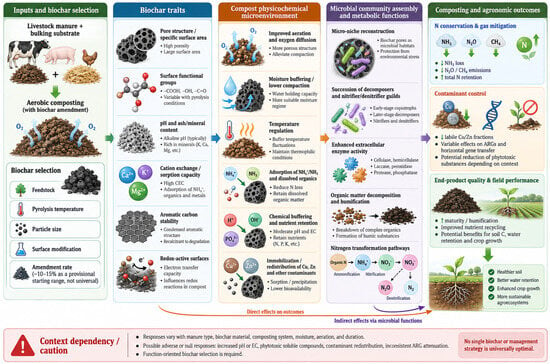
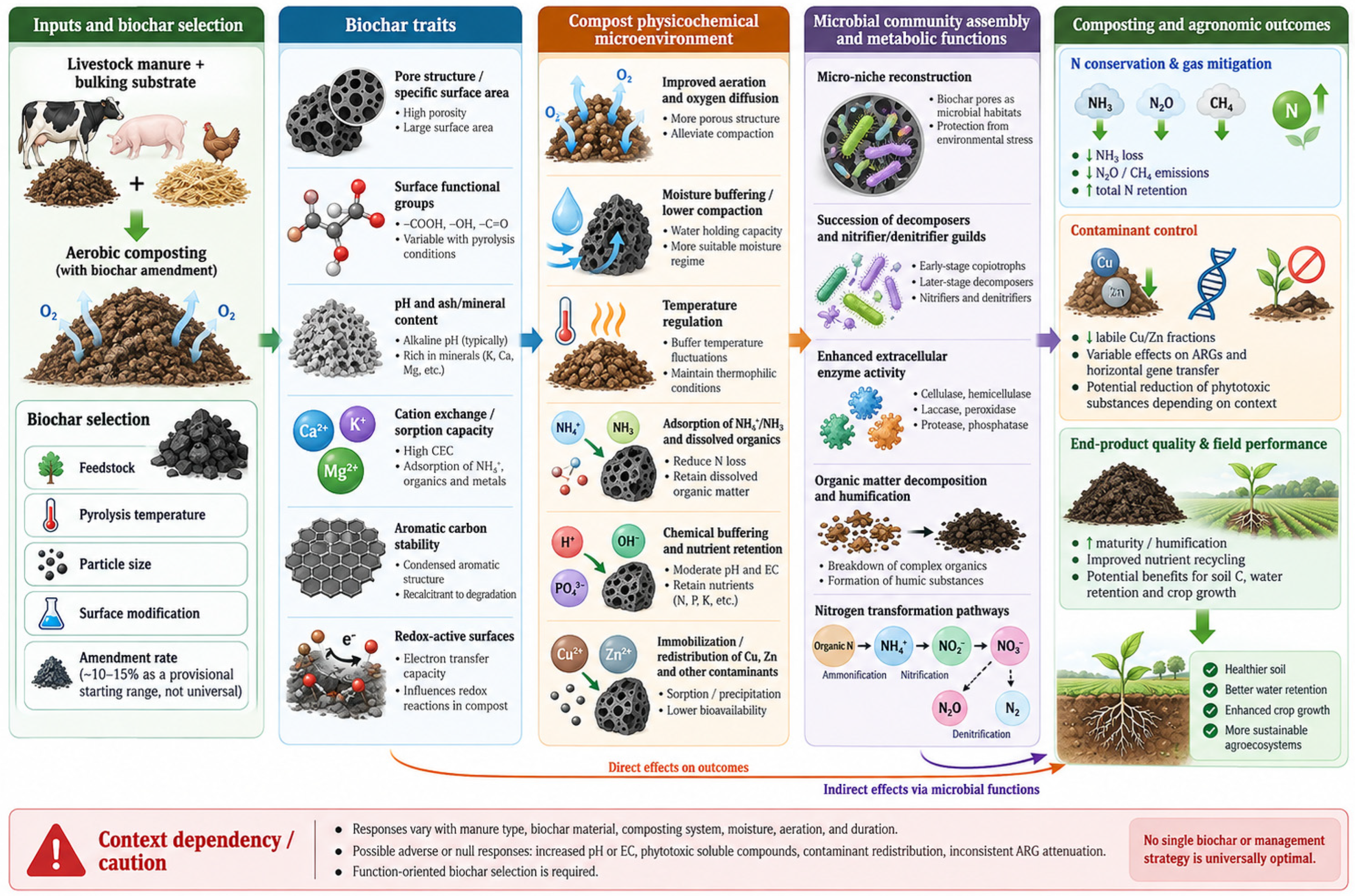

Disclaimer/Publisher’s Note: The statements, opinions and data contained in all publications are solely those of the individual author(s) and contributor(s) and not of MDPI and/or the editor(s). MDPI and/or the editor(s) disclaim responsibility for any injury to people or property resulting from any ideas, methods, instructions or products referred to in the content. |
© 2026 by the authors. Licensee MDPI, Basel, Switzerland. This article is an open access article distributed under the terms and conditions of the Creative Commons Attribution (CC BY) license.