


Abstract
To clarify the yield benefits of biochar application in maize and soybean intercropping and its effects on rhizosphere microbial functions, a two-year field experiment was conducted in Putian, Fujian Province, China, from 2025 to 2026. The experiment included three cropping systems, namely maize monocropping (MM), soybean monocropping (MS), and maize and soybean intercropping (SM), combined with two fertilization regimes: conventional chemical fertilization (CF) and biochar combined with chemical fertilizer (BF). We evaluated crop yield, rhizosphere soil physicochemical properties, enzyme activities, and microbial carbon-source utilization. The land equivalent ratio (LER) of maize and soybean intercropping remained above 1 in both years, indicating a stable land-use advantage. Compared with the corresponding monocropping treatments under conventional fertilization (MM-CF and MS-CF), SM-BF significantly increased maize and soybean yields by 29.40% and 34.78%, respectively. In the maize rhizosphere, SM-BF increased polyphenol oxidase, peroxidase, urease, and sucrase activities by 29.63%, 17.89%, 17.98%, and 35.03%, respectively, whereas the corresponding increases in the soybean rhizosphere were 27.96%, 17.89%, 26.10%, and 35.03%. These enzyme activities were the highest among all treatments. SM-BF also maintained relatively high levels of available N and available P in the maize rhizosphere and total N, available N, available P, and available K in the soybean rhizosphere. Biolog analysis showed that SM-BF generally resulted in the highest average well color development (AWCD) and microbial utilization of amino acids, polymers, carboxylic acids, and carbohydrates. Principal component analysis further showed that the cropping system contributed substantially to variation in rhizosphere microbial carbon-source utilization, while fertilization also had a detectable effect. Overall, maize and soybean intercropping showed a stable land-use advantage. Under biochar combined with reduced chemical fertilizer, the intercropping system maintained relatively high rhizosphere nutrient levels, enzyme activities, and microbial carbon-source utilization. These results suggest that interspecific interactions and fertilization management may jointly regulate the rhizosphere environment and microbial functional characteristics, which may be associated with the yield advantage of intercropping. This study provides a theoretical basis for efficient nutrient management and reduced chemical fertilizer input in maize and soybean intercropping systems.
1. Introduction
Crop production must increase yield per unit area while maintaining soil fertility and ecological functions under population growth, limited arable land, and agricultural non-point source pollution. Intercropping improves resource-use efficiency and system stability through niche complementarity between crops in their use of light, heat, water, nutrients, and rhizosphere space. It is therefore an important approach for sustainable agricultural intensification [1,2]. Maize–soybean intercropping combines a C4 cereal with a nitrogen-fixing legume. Complementary canopies, root interactions, and coordinated nitrogen use can increase the land equivalent ratio and nutrient-use efficiency. This system has strong potential for use in southern and southwestern China [3,4].
Zhao et al. [5] and Li et al. [6] showed that intercropping significantly increased crop yield compared with monocropping. In particular, legumes can enhance N uptake and N-use efficiency of maize in intercropping systems, which can contribute to higher crop yield. The yield advantage of cereal and legume intercropping is mainly associated with efficient interactions between aboveground plant parts and roots. Roots are the main link between plants and soil. They are responsible for the uptake of soil nutrients and water and also support aboveground plant growth and development. Soil enzymes are involved in key biochemical processes, such as organic matter decomposition and nutrient transformation. Their activities can, to some extent, reflect the potential intensity of specific biochemical processes in the rhizosphere. Urease, catalase, and phosphatase are commonly used to assess processes related to soil N transformation, redox reactions, and P cycling, respectively [7,8]. However, soil enzyme activities are affected by several factors, including root activity, microbial community composition, substrate availability, and soil environmental conditions. Therefore, changes in individual enzyme activities should not be directly interpreted as evidence of improved soil fertility or crop productivity [9]. Cereal crops usually have long, slender main roots and many fine roots, whereas legumes often have shorter, thicker main roots and fewer fine roots. Interspecific interactions can improve the spatial distribution of roots and alter soil structure [10]. Therefore, analysis of rhizosphere microbial functional diversity can help explain the processes behind the yield advantage of intercropping. This knowledge is important for increasing maize and soybean production in China. Biochar is an organic soil amendment produced by heating biomass under oxygen-limited conditions. It has a highly aromatic and porous structure and contains many macro- and micronutrients [11,12]. Biochar can improve soil pH, cation exchange capacity, water retention, and nutrient supply. It can also increase root nutrient uptake and thereby affect soil biological activity and crop yield [13,14,15]. However, most studies have focused on the effects of biochar on crop growth and yield in monoculture systems. Direct evidence is still limited on whether biochar combined with chemical fertilizer promotes yield formation by changing rhizosphere microbial functional diversity in maize–soybean intercropping [16,17].
We therefore established maize monoculture, soybean monoculture, and maize–soybean intercropping under conventional chemical fertilizer or biochar combined with chemical fertilizer. These treatments created different belowground environments for interspecific root interactions. We used Biolog EcoPlates and related measurements to assess how the combined application of biochar and chemical fertilizer affected rhizosphere microbial functions and their relationships with yield. This study aimed to clarify the processes that support yield formation under different planting and fertilization regimes and to provide evidence for wider use of this intercropping system.
2. Materials and Methods
2.1. Experimental Site
The field experiment was conducted from 2025 to 2026 in Baitang Town, Putian, Fujian Province, China (119.1° E, 25.4° N). The site has a southern subtropical maritime monsoon climate, with a long-term mean annual temperature of 19–21 °C and mean annual precipitation of 1300–1500 mm. The soil was classified as brown-red soil and had good fertility. Before the experiment, the soil had a pH of 6.58, total N of 1.56 g kg−1, available N of 118.23 mg kg−1, available P of 27.89 mg kg−1, and available K of 82.36 mg kg−1.
2.2. Experimental Design
The experiment was arranged in a two-factor randomized block design with three replicates. Each plot had an area of 60 m2. Adjacent plots were separated by 0.5-m-wide buffer strips with soil ridges, and a 1.0-m-wide pathway was maintained between blocks. Fertilizers were weighed and applied separately to each plot to avoid interference among fertilization treatments. To minimize border effects, all sampling points were located in the central area, at least 0.5 m from the plot boundaries. At harvest, the outermost crop row and plants within 0.5 m of both ends of each row were excluded, and crop yield was determined only from the effective central area of each plot. The main-plot factor was cropping system, including maize monoculture (MM), soybean monoculture (MS), and maize and soybean intercropping (SM). The sub-plot factor was fertilization regime, which was established according to Guo et al. [18], and included conventional chemical fertilization (CF) and biochar combined with chemical fertilizer (BF). The CF treatment received 300 kg ha−1 of compound fertilizer. The BF treatment received 10,000 kg ha−1 of maize-straw biochar combined with 210 kg ha−1 of compound fertilizer. The compound fertilizer contained 15% N, 15% P, and 15% K, with an N:P ratio of 1:1:1. All fertilizers were applied once as basal fertilizer before sowing. The maize cultivar was Cainuo 520, and the soybean cultivar was Zhonghuang 42. The target planting densities of monocropped maize and soybean were 111,111 and 81,633 plants ha−1, respectively. In the intercropping system, two rows of maize were alternated with two rows of soybean. The target planting densities of intercropped maize and soybean were 53,333 and 45,714 plants ha−1, respectively. Within the soybean strips, both plant and row spacing were 35 cm, while maize was planted at a plant and row spacing of 30 cm. The distance between adjacent maize and soybean rows was 30 cm. Maize and soybean were sown in mid-March and harvested in mid-July each year. After harvest, all crop residues were returned to the field. Other field management practices followed local farming practices.
2.3. Soil Sampling
Soil samples were collected at maize maturity and the soybean seed-filling stage. Each treatment included three field plots, and each plot was considered an independent biological replicate (n = 3). In each plot, surface soil (0–5 cm) was collected from five sampling points using a five-point sampling method. Soil samples from the five sampling points were labeled and stored separately without mixing. For rhizosphere soil sampling, two intercropping strips were randomly selected from each plot. Three maize plants and three soybean plants with similar growth were then randomly selected from each strip. The entire root systems were carefully excavated with a shovel. Loosely attached soil was gently shaken from the roots, and the soil that remained tightly attached to the root surface was collected as rhizosphere soil. The collected soil samples were passed through a 2 mm sieve to remove stones, plant residues, and other debris. A portion of each sample was immediately stored at −80 °C for subsequent analyses, while the remaining portion was used to determine soil chemical properties.
2.4. Soil Chemical Properties and Enzyme Activities
Soil urease, sucrase, catalase, and polyphenol oxidase activities were determined using the sodium phenolate colorimetric method, 3,5-dinitrosalicylic acid colorimetric method, potassium permanganate titration method, and pyrogallol colorimetric method, respectively, following the methods described by Guan [19] and Lu [20].
2.5. Crop Yield and Land Equivalent Ratio
Crop yield was measured 3 d before harvest. All maize ears in each plot were collected, manually threshed, bagged, labeled, oven-dried, and weighed. Soybean plants were harvested from each plot, bagged, labeled, oven-dried, and weighed. Yield per unit area was then calculated for each crop.
The land equivalent ratio (LER) was calculated as follows:
where Yiw and Yis are maize and soybean yields per unit area of the intercrop, respectively, and Ysw and Yss are maize and soybean yields in monoculture, respectively. LER > 1 indicates an intercropping advantage, whereas LER < 1 indicates an intercropping disadvantage.
LER = (Yiw/Ysw) + (Yis/Yss)
2.6. Biolog EcoPlate Assay
Biolog EcoPlates (Biolog Inc., Hayward, CA, USA) were used to determine microbial carbon-source use in the maize and soybean rhizospheres. Fresh rhizosphere soil (5 g) was placed in a sterile conical flask with 100 mL of sterile 0.15 mol L−1 NaCl solution. The flask was sealed and shaken at 120 r min−1 for 30 min at a constant temperature. The suspension was then placed in an ice bath and allowed to stand for 5 min. A 5 mL aliquot of the supernatant was transferred to a sterile 100 mL Erlenmeyer flask containing 45 mL of sterile water. This dilution step was repeated three times to obtain a 10−3 soil suspension for the Biolog EcoPlate assay. Inocula from all soil samples were prepared under the same conditions, and 150 μL of each suspension was added to each well of a Biolog EcoPlate. Microbial cell density was not standardized before inoculation.
The Biolog EcoPlates were preheated to 25 °C, and 150 μL of extract was added to each well. The plates were incubated at 28 °C. Absorbance at 590 nm was measured with a microplate reader at 0, 1, 2, 3, 4, 5, 6, and 7 d.
2.7. Statistical Analysis
The treatments showed similar response patterns in 2025 and 2026. Therefore, only the 2026 data are presented and discussed in the main text. The average well color development (AWCD) of Biolog EcoPlates was used to assess the overall metabolic activity and carbon-source utilization of the soil microbial community. AWCD was calculated as follows: AWCD = Σ(Ci − R)/31, where Ci is the absorbance value of each carbon-source well and R is the absorbance value of the control well. Absorbance values measured after 120 h of incubation were used to evaluate microbial functional diversity. Community richness (S) was defined as the number of utilized carbon sources and was calculated as the number of wells with a corrected absorbance value (Ci − R) > 0.25. The Shannon diversity index (H) was calculated as: H = −ΣPi lnPi, where Pi represents the proportional utilization of the ith carbon source and was calculated as Pi = (Ci − R)/Σ(Ci − R). The Simpson diversity index (D) was calculated as: D = 1−ΣPi2. The Simpson index reflects the distribution of microbial carbon-source utilization among different substrates, with higher values indicating greater functional diversity. The Pielou evenness index (J) was calculated as: J = H/lnS, where S is the total number of utilized carbon sources. The Pielou index represents the evenness of carbon-source utilization by the microbial community [21]. Microsoft Excel 2013 was used for data organization and preliminary analysis. Statistical analyses were performed using DPS 7.05 and SPSS 19.0. Data were subjected to analysis of variance (ANOVA), and treatment means were compared using the least significant difference (LSD) test at p < 0.05 when the ANOVA indicated a significant treatment effect. Figures were prepared using GraphPad Prism 9 and Origin 2019.
3. Results
3.1. Maize and Soybean Yield Under Different Field Management Practices
Planting pattern and fertilization regime significantly affected crop yield and 100-grain weight (Table 1). In 2025, SM-CF and SM-BF increased maize yield by 26.14% and 29.40%, respectively, compared with MM-CF. SM-BF also increased maize yield by 21.74% compared with MM-BF. Compared with MS-CF, SM-CF and SM-BF increased soybean yield by 18.86% and 21.09%, respectively. SM-BF increased soybean yield by 17.06% compared with MS-BF. Within the same planting pattern, yield and 100-grain weight under BF were generally higher than or similar to those under CF, but most differences were not significant. The LER values under CF and BF were 1.22 and 1.19, respectively. Similar trends were observed in 2026. Compared with MM-CF, SM-CF and SM-BF increased maize yield by 24.56% and 27.82%, respectively. Compared with MS-CF, the two intercropping treatments increased soybean yield by 26.77% and 34.78%, respectively. The corresponding LER values under CF and BF were 1.26 and 1.27. All intercropping treatments had LER values above 1 in both years, which showed a stable land-use advantage. Overall, intercropping was the main factor associated with higher yield. Biochar combined with chemical fertilizer showed a further positive trend under intercropping, and SM-BF gave the best overall yield performance.
Table 1.
Effects of planting pattern and fertilization regime on maize and soybean yield.
3.2. Rhizosphere Soil Enzyme Activities Under Different Field Management Practices
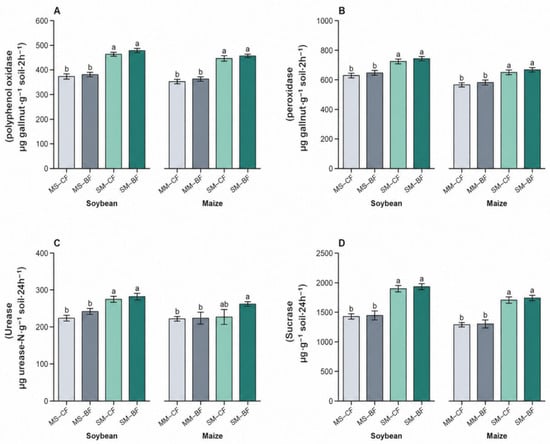
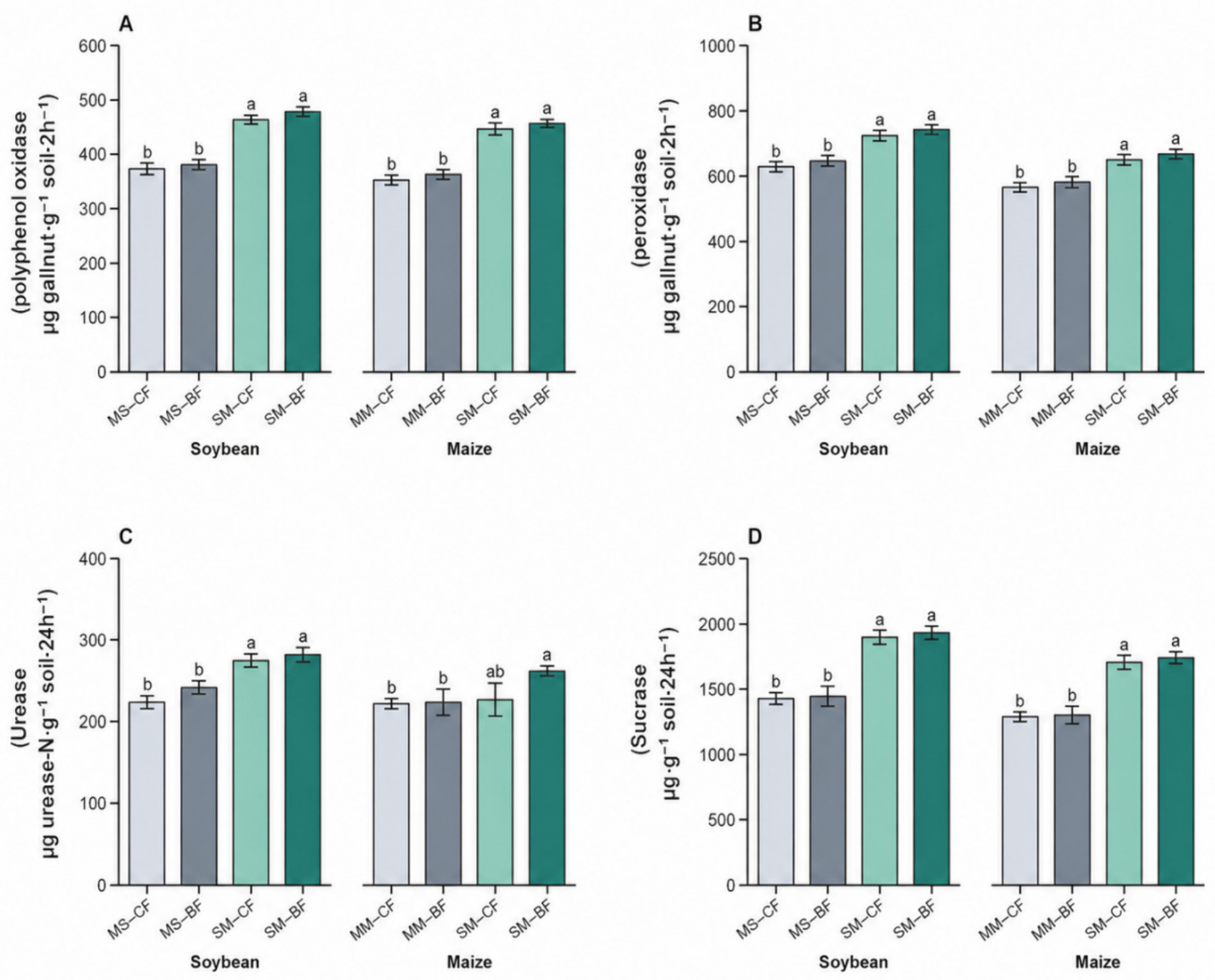
Soil enzyme activities indicate the potential rates of organic matter decomposition, nitrogen turnover, and redox processes in the rhizosphere. The interaction between planting pattern and fertilization regime significantly affected enzyme activities in the maize and soybean rhizospheres (Figure 1). Compared with soybean monoculture, intercropping significantly increased polyphenol oxidase, catalase, urease, and invertase activities in the soybean rhizosphere. Under CF and BF, the corresponding increases were 19.30% and 20.12%, 12.93% and 12.89%, 18.64% and 13.87%, and 24.42% and 25.09%, respectively. Compared with maize monoculture, intercropping also significantly increased these four enzyme activities in the maize rhizosphere. Under CF and BF, the corresponding increases were 20.73% and 20.55%, 12.93% and 12.89%, 2.27% and 14.49%, and 24.43% and 25.09%, respectively. Within the same planting pattern, enzyme activities were slightly higher under BF than under CF for both crops, but the differences were not significant. These results show that maize–soybean intercropping improved the biochemical environment of the rhizosphere. Biochar combined with chemical fertilizer may further increase the potential for rhizosphere nutrient turnover.
Figure 1.
Effects of planting pattern and fertilization regime on enzyme activities in the maize and soybean rhizospheres. (A) polyphenol oxidase activity; (B) catalase activity; (C) urease activity; and (D) invertase activity. Different lowercase letters indicate significant differences among treatments within the same crop at p < 0.05. Bars sharing at least one letter are not significantly different. Therefore, “ab” indicates that the treatment is not significantly different from treatments labeled either “a” or “b”.
3.3. Effects of Different Field Management Practices on the Physicochemical Properties of Maize and Soybean Rhizosphere Soils
Rhizosphere soil nutrient properties differed significantly among field management treatments (Table 2). In the maize rhizosphere, total N was highest under MM-CF and was 7.66%, 11.74%, and 16.14% higher than that under MM-BF, SM-CF, and SM-BF, respectively. No significant differences were observed among MM-BF, SM-CF, and SM-BF. In contrast, available N was highest under SM-BF and was 6.40% higher than that under MM-CF, while no significant differences were observed among MM-CF, MM-BF, and SM-CF. Available P was also highest under SM-BF and was significantly higher than that under the other treatments. Under MM and SM, BF increased available P by 57.0% and 26.4%, respectively, compared with CF. Available K did not differ significantly between SM-CF and SM-BF, but both treatments had significantly higher values than the corresponding MM treatments. In the soybean rhizosphere, total N, available P, and available K were significantly higher under SM-CF and SM-BF than under the corresponding MS treatments. Overall, SM-BF showed the highest soil nutrient levels. Under the same fertilization regime, SM increased total N by 14.9–15.2%, available N by 5.6–7.2%, available P by 11.3–11.6%, and available K by 11.5–15.7% compared with MS. Overall, SM generally increased the levels of available soil nutrients and was also associated with higher total N in the soybean rhizosphere. The different responses of total N and available nutrients between maize and soybean rhizosphere soils indicate crop-specific patterns of rhizosphere nutrient status.
Table 2.
Effects of different fertilization and planting patterns on N, P, and K contents in maize and soybean rhizosphere soils.
3.4. Average Well Color Development in the Maize and Soybean Rhizospheres
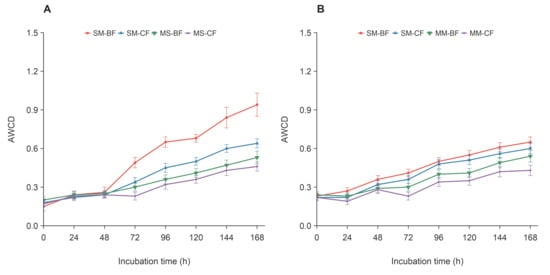
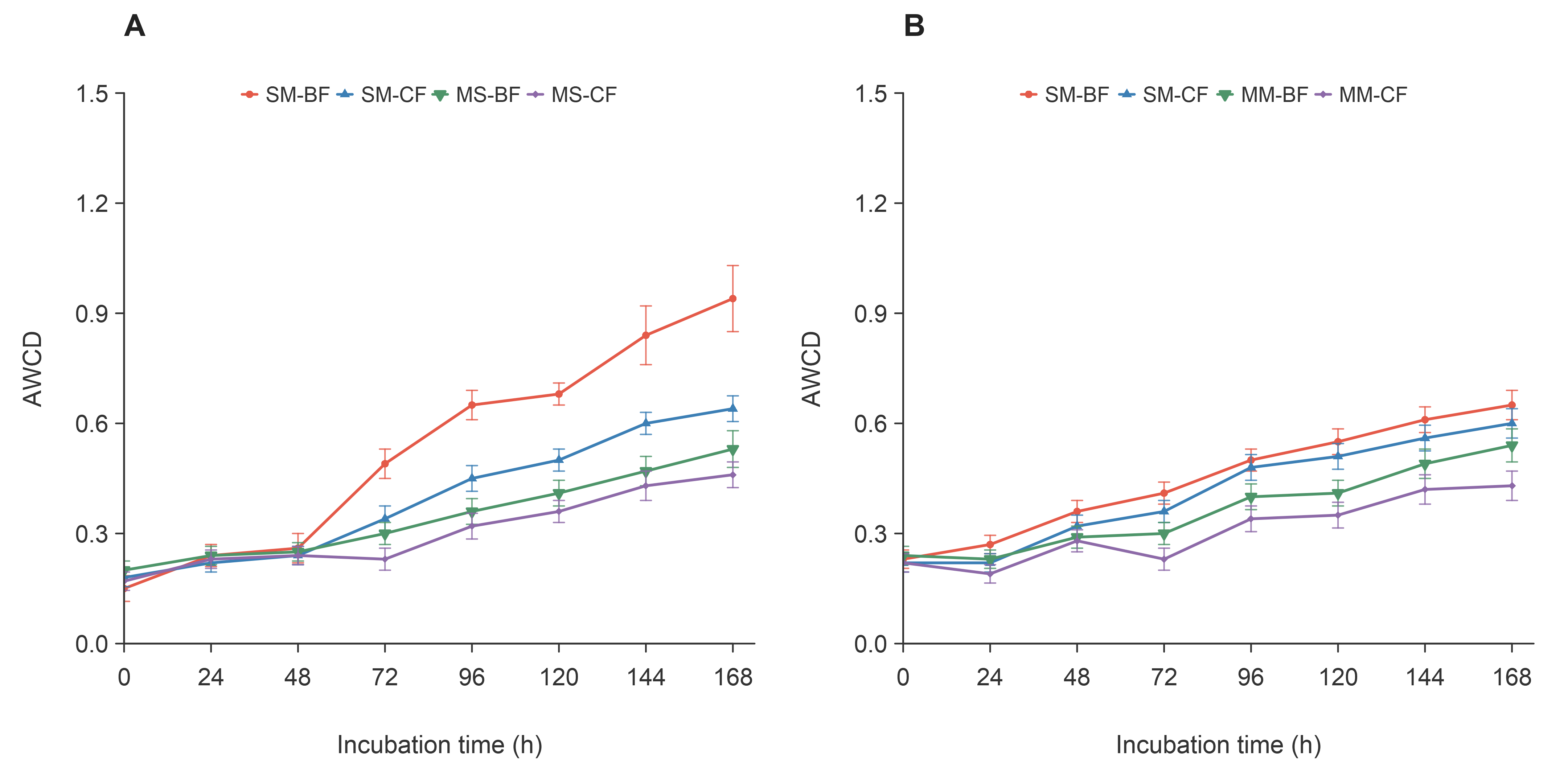
As shown in Figure 2A, planting pattern and fertilization significantly affected the carbon-source utilization of soybean rhizosphere microbial communities. The average well color development (AWCD) was measured every 24 h during incubation. The AWCD increased with incubation time, indicating a gradual increase in microbial carbon-source utilization. The utilization patterns of different carbon sources varied markedly from 24 to 168 h. After 120 h, the increase in AWCD slowed and gradually reached a stable level. Compared with monocropped soybean (MS), intercropped soybean (SM) showed a higher overall capacity of the rhizosphere microbial community to utilize carbon sources. Under the same planting pattern, the BF treatment consistently showed higher carbon-source utilization than the CF treatment. These results indicate that BF enhanced the carbon metabolic activity of the soybean rhizosphere microbial community.
Figure 2.
Changes in average well color development (AWCD) of rhizosphere soil microorganisms in soybean (A) and maize (B) under different planting patterns and fertilization regimes.
The maize rhizosphere showed a similar response (Figure 2B). Overall carbon-source use followed the order SM-BF > SM-CF > MM-BF ≈ MM-CF. SM-BF showed the greatest overall carbon-source use, whereas MM-CF showed the lowest. These results show that intercropping increased the metabolic activity of the rhizosphere microbial community. Compared with CF, BF further increased microbial use of carbon substrates.
3.5. Use of Different Carbon-Source Groups by Rhizosphere Microorganisms
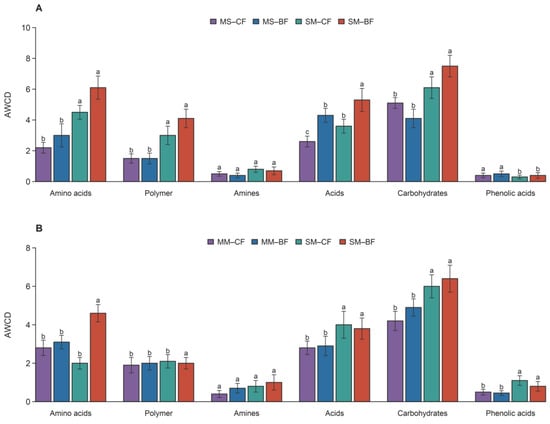
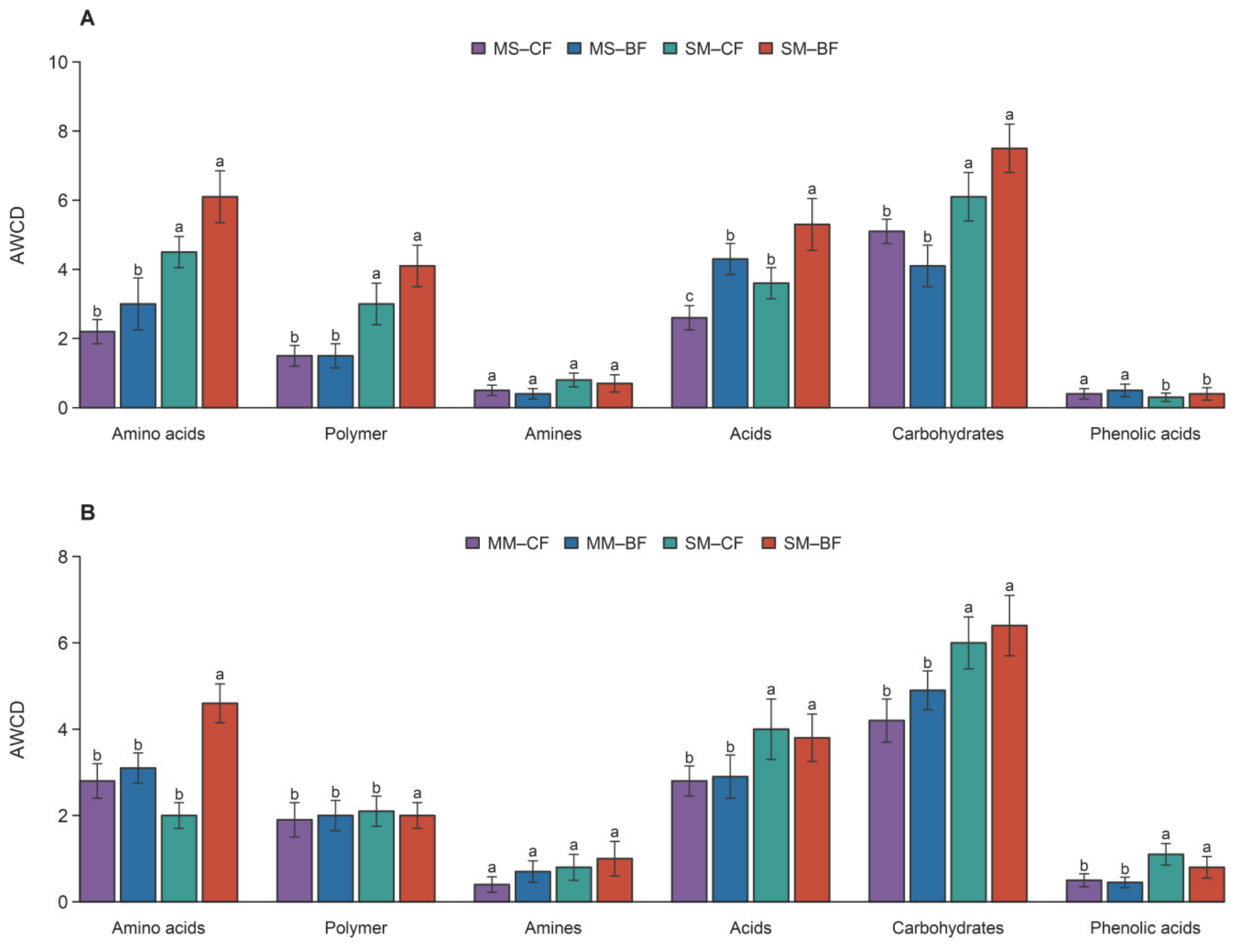
The absorbance values at 120 h were used to evaluate the utilization of six carbon-source categories by soybean rhizosphere microbial communities, including amino acids, polymers, amines, carboxylic acids, carbohydrates, and phenolic acids. As shown in Figure 3A, soybean rhizosphere microorganisms generally showed the highest utilization of carbohydrates and the lowest utilization of phenolic acids. The overall carbon-source utilization followed the order SM-BF > SM-CF > MS-BF > MS-CF. In particular, the SM-BF treatment had significantly higher AWCD values for amino acids, polymers, carboxylic acids, and carbohydrates than the other treatments. These results indicate that intercropping combined with biochar application increased the capacity of soybean rhizosphere microorganisms to utilize several types of carbon sources.
Figure 3.
Use of carbon-source groups by rhizosphere soil microorganisms in soybean (A) and maize (B) under different planting patterns and fertilization regimes. Different lowercase letters indicate significant differences among treatments within the same carbon-source group at p < 0.05.
The maize rhizosphere showed a similar pattern (Figure 3B). Carbohydrates were again the main carbon sources, whereas phenolic acids were used least. Compared with maize monoculture, intercropping significantly increased microbial use of most carbon-source groups. Within the same planting pattern, carbon-source use was higher under BF than under CF. SM-BF generally produced the highest use of amino acids, polymers, amines, carboxylic acids, carbohydrates, and phenolic acids. These results show that intercropping and biochar combined with chemical fertilizer jointly increased rhizosphere microbial functional diversity, especially the metabolism of carbon sources related to root exudates and organic matter decomposition.
3.6. Effects of Different Farmland Management Practices on the Functional Diversity of Carbon Substrate Utilization in Maize and Soybean Rhizosphere Soils
The functional diversity of rhizosphere microbial communities in maize and soybean was evaluated using the absorbance values measured after 120 h of incubation (Table 3). Compared with monocropped soybean (MS), intercropped soybean (SM) showed significantly higher Simpson, Shannon diversity, and Pielou evenness indices in the rhizosphere soil. Under the same planting pattern, the functional diversity indices were generally slightly higher under biochar combined with chemical fertilizer (BF) than under conventional chemical fertilizer (CF), but the differences were not significant. Similarly, all microbial diversity indices in the maize rhizosphere were significantly higher under SM than under monocropped maize (MM). Within the same planting pattern, the BF treatment also showed slightly higher microbial diversity indices than the CF treatment, but no significant differences were observed. These results indicate that planting pattern, rather than biochar application, was the main factor associated with changes in the functional diversity of rhizosphere microbial communities in the maize and soybean system.
Table 3.
Effects of different fertilization and planting patterns on the functional diversity indices of rhizosphere microbial communities in maize and soybean.
3.7. Principal Component Analysis of Rhizosphere Microbial Functional Profiles
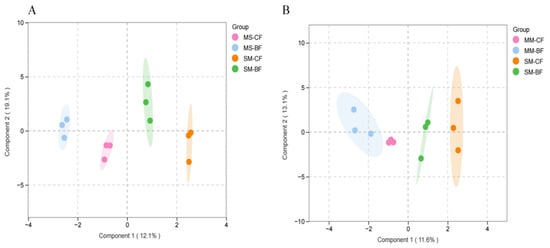
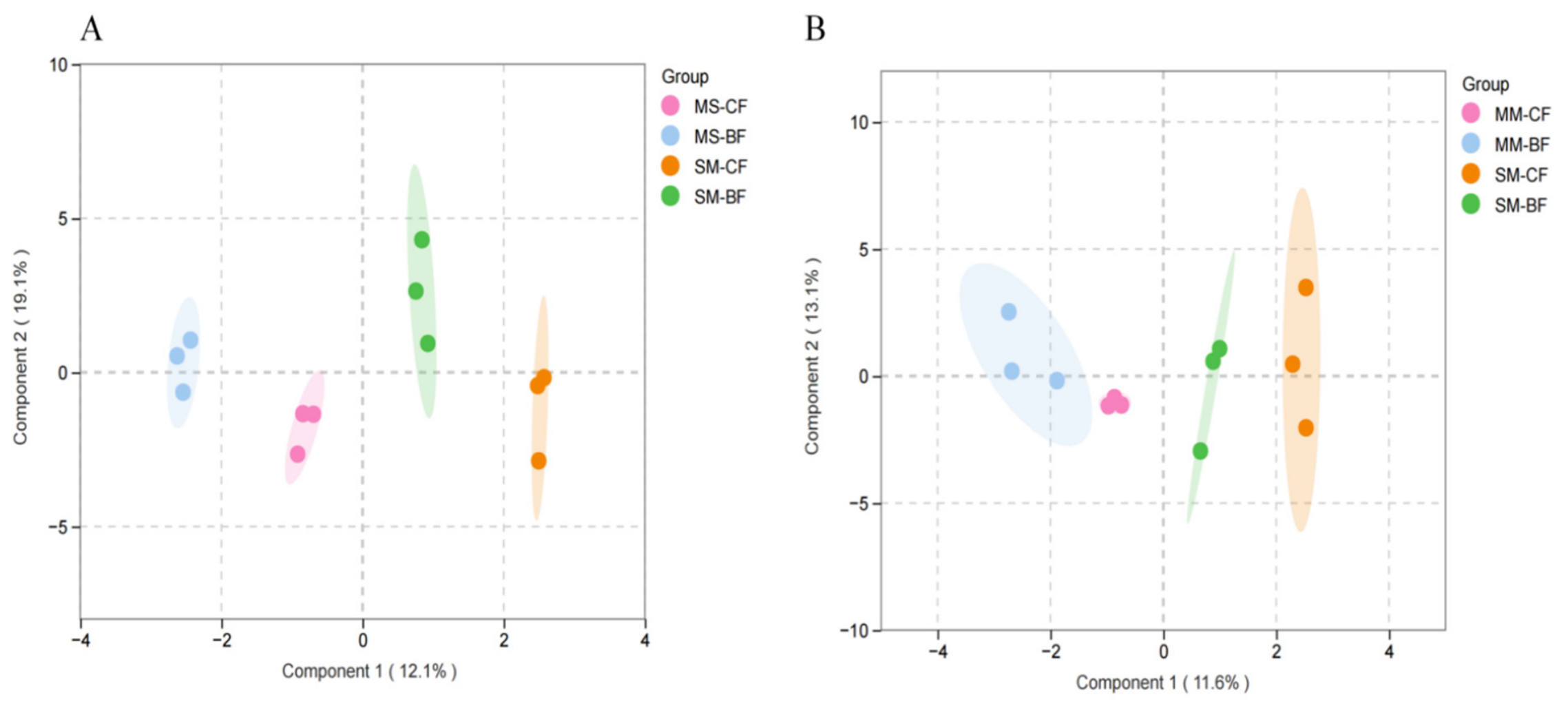
Principal component analysis (PCA) was performed based on the AWCD values measured after 120 h of incubation. In the soybean rhizosphere, PC1 and PC2 explained 12.1% and 19.1% of the total variation, respectively, accounting for 31.2% of the cumulative variation (Figure 4A). Samples from the MS-CF, MS-BF, SM-CF, and SM-BF treatments showed different distribution patterns in the ordination space defined by the first two principal components. The overall distance between monocropping and intercropping treatments was greater than that between the CF and BF treatments within the same planting pattern. In the maize rhizosphere, PC1 and PC2 explained 11.6% and 13.1% of the total variation, respectively, with a cumulative explained variation of 24.7% (Figure 4B). The overall distribution pattern was similar to that observed in the soybean rhizosphere. The distance between monocropping and intercropping treatments along the first two principal components was generally greater than that between the CF and BF treatments within the same planting pattern.
Figure 4.
Principal component analysis of carbon-source use profiles of rhizosphere soil microorganisms in soybean (A) and maize (B) under different planting patterns and fertilization regimes.
4. Discussion
4.1. Biochar Combined with Reduced Chemical Fertilizer May Strengthen the Effects of Maize–Soybean Intercropping on the Rhizosphere Environment
Complementarity and competition between crop root systems are important processes that improve resource use efficiency in intercropping systems. Our two-year field experiment showed that maize and soybean intercropping significantly increased the yield and 100-grain weight of both maize and soybean. The land equivalent ratios (LERs) of the SM-CF and SM-BF treatments were 1.22 and 1.19 in the first year and 1.26 and 1.27 in the second year, respectively, and all values were greater than 1. These results indicate that maize and soybean intercropping provided a stable land-use advantage under the conditions of this study (Table 1). Previous studies have shown that the yield advantage of cereal–legume intercropping is not simply due to growing two crops together. Instead, it is associated with complementary use of aboveground light and heat resources, spatial separation of root systems, niche differentiation in nitrogen (N) and phosphorus (P) acquisition, and rhizosphere microbial processes [16,17]. Maize can adjust its root morphology in response to interspecific competition and preferentially explore soil layers with greater nutrient availability, which may reduce resource overlap with neighboring legumes [22,23]. For N acquisition, competition by maize for soil inorganic N can reduce mineral N availability in the soybean rhizosphere. This may reduce the inhibition of nodule formation and biological N fixation caused by high inorganic N availability and increase the dependence of soybean on symbiotic N fixation. Maize may also improve its N acquisition through its strong root uptake capacity and N complementarity with neighboring legumes [24]. In the present study, intercropping generally increased crop yield and 100-grain weight and was accompanied by changes in rhizosphere enzyme activities, including urease and invertase. These responses are consistent with changes in resource complementarity and rhizosphere nutrient transformation under intercropping. However, soil enzyme activities mainly reflect the potential intensity of specific biochemical reactions and cannot alone demonstrate improvements in soil fertility or crop productivity. Therefore, changes in enzyme activities should be interpreted together with soil nutrient availability and crop yield.
4.2. Biochar Combined with Reduced Chemical Fertilizer May Strengthen the Effects of Maize–Soybean Intercropping on the Rhizosphere Soil Environment
Biochar combined with reduced chemical fertilizer may interact with rhizosphere processes in intercropping systems. Chemical fertilizers provide readily available N, P, and K for maize and soybean growth. Biochar has a porous structure and abundant surface functional groups and may affect soil nutrient retention, soil structure, and the rhizosphere microenvironment under suitable conditions [25]. Previous studies have shown that biochar, as a material rich in stable aromatic carbon, can affect soil nutrient cycling, soybean nodulation and biological N fixation, and rhizosphere soil enzyme activities. However, the direction and magnitude of these effects depend on biochar feedstock, pyrolysis conditions, application rate, soil properties, and cropping system [26,27]. Arbuscular mycorrhizal fungi can also grow on biochar surfaces and within its pores and may contribute to P acquisition and transport [28,29]. Thus, biochar has the potential to modify the rhizosphere environment, but this does not mean that it consistently produces positive effects under different field conditions. In maize and soybean intercropping systems, maize uptake of soil inorganic N may reduce mineral N availability in the soybean rhizosphere. This process may reduce the inhibition of soybean nodulation and biological N fixation caused by high inorganic N availability. Previous studies have also shown that biochar may affect rhizobial survival and nodule function by modifying soil aeration, water retention, and microbial habitats [30]. Under intercropping, rhizosphere processes and residue turnover of soybean may alter N supply in neighboring soil. Changes in rhizosphere microbial composition and function may also contribute to nutrient transformation and root nutrient acquisition [31,32]. In the present study, rhizosphere soil N, P, and K showed different responses to cropping and fertilization treatments in maize and soybean (Table 2). In the maize rhizosphere, SM-BF showed relatively high available N and P contents. In particular, BF increased available P by 57.0% and 26.4% compared with the corresponding CF treatments under monocropping and intercropping, respectively, whereas total N did not show the same response. In the soybean rhizosphere, total N, available N, available P, and available K were generally higher under intercropping than under the corresponding monocropping treatments. These results suggest that intercropping may be an important driver of changes in rhizosphere nutrient status. Biochar combined with reduced chemical fertilizer also showed some potential to regulate available nutrients, especially P availability. However, the responses differed among crops and nutrient indicators. Therefore, changes in rhizosphere nutrient status cannot be simply attributed to a positive effect of biochar.
The SM-BF treatment showed relatively high crop yield, rhizosphere enzyme activities, and microbial carbon-source utilization in this study. However, under the same cropping system, crop yield and most soil enzyme activities did not differ significantly between the BF and CF treatments. Thus, the present results do not provide sufficient evidence that biochar combined with reduced chemical fertilizer independently increases crop yield or consistently enhances rhizosphere biochemical processes. Instead, the results suggest that this fertilization strategy may have some potential to regulate the rhizosphere environment created by intercropping. For microbial function, SM-BF generally showed a relatively high average well color development (AWCD) and greater utilization of carbohydrates, amino acids, polymers, and carboxylic acids (Figure 3). However, most indices of microbial functional diversity were only slightly higher under BF than under CF within the same cropping system, and these differences were not significant. These findings therefore suggest that biochar combined with reduced chemical fertilizer may modify the carbon-source utilization patterns of rhizosphere microbial communities, rather than consistently increasing microbial activity or functional diversity. Previous studies have shown that biological N fixation and root exudation by legumes under intercropping may affect N acquisition by neighboring cereal crops and rhizosphere C and N transformation [33]. The surface functional groups of biochar and its adsorption of nutrient ions such as NH4+ may also affect nutrient retention and substrate availability in the rhizosphere [29]. However, this study did not directly measure nodule N fixation, AMT1 gene expression, NH4+ adsorption by biochar, or the abundance and activity of related functional microorganisms. These mechanisms should therefore be considered possible explanations based on previous studies rather than direct evidence from the present experiment, and they require further verification. From a practical perspective, the economic feasibility of applying biochar at 10 t ha−1 should also be carefully evaluated. Although the combined use of biochar and reduced chemical fertilizer may reduce some fertilizer inputs, biochar production, transportation, and field application involve additional costs. Moreover, crop yields did not differ significantly between BF and CF in most comparisons in this study. The actual nutrient composition of the biochar was not measured, and the total nutrient inputs were not strictly equal between the CF and BF treatments. Therefore, the observed differences between these treatments should be interpreted as the combined effects of biochar application and reduced mineral fertilizer input rather than the independent effect of biochar. The short-term economic advantage of this practice remains unclear. Biochar may have long-term effects on nutrient retention and the soil environment, but its practical value should be further evaluated through multi-year field experiments combined with cost–benefit analysis.
5. Conclusions
The two-year field experiment showed that maize and soybean intercropping improved the yield performance of both crops. All intercropping treatments had land equivalent ratios (LERs) greater than 1, indicating that intercropping was the main factor contributing to the land-use advantage under the conditions of this study. Maize and soybean intercropping was also associated with changes in rhizosphere soil enzyme activities, N, P, and K status, and microbial carbon-source utilization. When biochar was combined with reduced chemical fertilizer, both maize and soybean rhizospheres generally showed relatively high levels of available nutrients and microbial carbon-source utilization. However, within the same cropping system, crop yield, soil enzyme activities, and most indices of microbial functional diversity did not differ significantly between the BF and CF treatments. Therefore, our results suggest that biochar combined with reduced chemical fertilizer has the potential to regulate rhizosphere nutrient status and microbial functional characteristics in maize–soybean intercropping systems, but the current evidence is insufficient to demonstrate that this practice can consistently increase crop yield or broadly improve rhizosphere ecological functions. Its long-term effects and practical value require further evaluation.
Author Contributions
Conceptualization, W.L., L.C., Z.L. and J.X.; methodology, W.L., L.C. and F.C.; validation, W.L., L.C., F.C. and R.L.; formal analysis, W.L., L.C. and R.L.; investigation, W.L., L.C., F.C. and R.L.; resources, Z.L. and J.X.; data curation, W.L., L.C. and F.C.; writing and original draft preparation, W.L. and L.C.; writing and review and editing, F.C., R.L., Z.L. and J.X.; visualization, W.L. and R.L.; supervision, Z.L. and J.X.; project administration, Z.L. and J.X.; funding acquisition, J.X. All authors have read and agreed to the published version of the manuscript.
Funding
This study was supported by the 2024 Doctoral Research Start-up Fund of Zhangzhou Institute of Technology (Project No. ZZYB2403), the Natural Science Foundation of Zhangzhou City (Project No. ZZ2025JH05), and the Education Research Project for Young and Middle-aged Teachers in Fujian Province (Project No. JAT251318).
Data Availability Statement
The original contributions presented in this study are included in the article. Further inquiries can be directed to the corresponding authors.
Conflicts of Interest
The authors declare no conflicts of interest.
References
- Lin, W.; Chen, T. Transition of agricultural systems to ecologicalizaton and new vision of modern eco-agriculture development in China. Chin. J. Eco-Agric. 2019, 27, 169–176. [Google Scholar] [CrossRef]
- Brooker, R.W.; Bennett, A.E.; Cong, W.F.; Daniell, T.J.; George, T.S.; Hallett, P.D.; Hawes, C.; Iannetta, P.P.M.; Jones, H.G.; Karley, A.J.; et al. Improving intercropping: A synthesis of research in agronomy, plant physiology and ecology. New Phytol. 2015, 206, 107–117. [Google Scholar] [CrossRef] [Scilit] [PubMed]
- Fan, Y.F.; Wang, Z.L.; Liao, D.P.; Raza, M.A.; Wang, B.B.; Zhang, J.W.; Chen, J.X.; Feng, L.Y.; Wu, X.L.; Liu, C.Y.; et al. Uptake and utilization of nitrogen, phosphorus and potassium as related to yield advantage in maize-soybean intercropping under different row configurations. Sci. Rep. 2020, 10, 9504. [Google Scholar] [CrossRef] [Scilit] [PubMed]
- Zhang, L.Q.; Feng, Y.D.; Zhao, Z.H.; Cui, Z.G.; Baoyin, B.; Wang, H.Y.; Li, Q.Z.; Cui, J.H. Maize/soybean intercropping with nitrogen supply levels increases maize yield and nitrogen uptake by influencing the rhizosphere bacterial diversity of soil. Front. Plant Sci. 2024, 15, 1437631. [Google Scholar] [CrossRef] [Scilit] [PubMed]
- Zhao, Z.X.; Li, Z.Y.; Li, Y.; Yu, L.Y.; Gu, X.B.; Cai, H.J. Supplementary irrigation and reduced nitrogen application improve the productivity, water and nitrogen use efficiency of maize-soybean intercropping system in the semi-humid drought-prone region of China. Agric. Water Manag. 2024, 305, 109126. [Google Scholar] [CrossRef] [Scilit]
- Li, C.J.; Hoffland, E.; Kuyper, T.W.; Yu, Y.; Zhang, C.C.; Li, H.G.; Zhang, F.S.; van der Werf, W. Syndromes of production in intercropping impact yield gains. Nat. Plants 2020, 6, 653–660. [Google Scholar] [CrossRef] [Scilit] [PubMed]
- Li, H.G.; Liu, J.; Li, G.H.; Shen, J.B.; Bergström, L.; Zhang, F.S. Past, present, and future use of phosphorus in Chinese agriculture and its influence on phosphorus losses. Ambio 2015, 44, S274–S285. [Google Scholar] [CrossRef] [Scilit] [PubMed]
- Kruse, J.; Abraham, M.; Amelung, W.; Baum, C.; Bol, R.; Kühn, O.; Lewandowski, H.; Niederberger, J.; Oelmann, Y.; Rüger, C.; et al. Innovative methods in soil phosphorus research: A review. J. Plant Nutr. Soil Sci. 2015, 178, 43–88. [Google Scholar] [CrossRef] [Scilit] [PubMed]
- Ren, J.B.; Yang, X.L.; Chen, P.; Du, Q.; Peng, X.H.; Zheng, B.C.; Yong, T.W.; Yang, W.Y. Effects of interspecific distances on soil physicochemical properties and root spatial distribution of maize-soybean relay strip intercropping system. Sci. Agric. Sin. 2022, 55, 1903–1916. [Google Scholar] [CrossRef]
- Zhang, C.Y.; Ge, J.Y.; Chu, J.C.; Wang, X.Y.; Zhao, B.P.; Yang, Y.D.; Zang, H.D.; Zeng, Z.H. Yield effect and its root and soil enzyme characteristics of oat and red kidney bean strip intercropping. Acta Agron. Sin. 2025, 51, 459–469. [Google Scholar] [CrossRef] [Scilit]
- Yin, M.; Gao, Y.H.; Xu, P.; Chao, C.Y.; Wu, B.; Yan, B.; Wang, Y.F.; Lu, P.N.; Liu, H.S. Effects of biochar on soil fertility and the yield and quality of oil flax under different cropping patterns. Chin. J. Eco-Agric. 2025, 33, 1563–1573. [Google Scholar] [CrossRef]
- Jiang, S.; Zhang, Z.S.; Li, M.; Wu, H.T. Effect of short-term biochar addition on soil microbial community structure in degraded saline-alkali wetland. Soils Crops 2023, 12, 225–233. [Google Scholar] [CrossRef]
- Xiang, Y.; Deng, Q.; Duan, H.; Guo, Y. Effects of biochar application on root traits: A meta-analysis. GCB Bioenergy 2017, 9, 1563–1572. [Google Scholar] [CrossRef] [Scilit]
- Lehmann, J.; Rillig, M.C.; Thies, J.; Masiello, C.A.; Hockaday, W.C.; Crowley, D. Biochar effects on soil biota: A review. Soil Biol. Biochem. 2011, 43, 1812–1836. [Google Scholar] [CrossRef] [Scilit]
- Biederman, L.A.; Harpole, W.S. Biochar and its effects on plant productivity and nutrient cycling: A meta-analysis. GCB Bioenergy 2013, 5, 202–214. [Google Scholar] [CrossRef] [Scilit]
- Bedoussac, L.; Journet, E.P.; Hauggaard-Nielsen, H.; Naudin, C.; Corre-Hellou, G.; Jensen, E.S.; Prieur, L.; Justes, E. Ecological principles underlying the increase of productivity achieved by cereal-grain legume intercrops in organic farming. A review. Agron. Sustain. Dev. 2015, 35, 911–935. [Google Scholar] [CrossRef] [Scilit]
- Duchene, O.; Vian, J.F.; Celette, F. Intercropping with legume for agroecological cropping systems: Complementarity and facilitation processes and the importance of soil microorganisms. A review. Agric. Ecosyst. Environ. 2017, 240, 148–161. [Google Scholar] [CrossRef] [Scilit]
- Guo, X.Y.; Hu, D.; Lin, S.Q.; Wang, M.K.; Tan, W.F.; Huang, C.Q. Biochar combined with chemical fertilizer increases maize yield and soil ecosystem multifunctionality in an intercropped maize-soybean. Acta Agron. Sin. 2026, 52, 1536–1547. [Google Scholar] [CrossRef] [Scilit]
- Guan, S.Y. Soil Enzymes and Their Research Methods; Agricultural Press: Beijing, China, 1986. [Google Scholar]
- Lu, R.K. Methods for Soil Agrochemical Analysis; China Agricultural Science and Technology Press: Beijing, China, 2000; pp. 252–254. [Google Scholar]
- Gao, Y.; Duan, A.W.; Liu, Z.G.; Shen, X.J. Light environment characteristics in maize-soybean strip intercropping system. Chin. J. Appl. Ecol. 2008, 19, 1248–1254. [Google Scholar]
- Li, H.T.; Fan, Z.L.; Wang, G.C.; Wang, Y.L.; Hu, F.L.; Yin, W.; Wang, Q.M.; Cao, W.D.; Chai, Q.; Yao, T. Root plasticity of maize intercropped with a legume green manure contributes to the maintenance of grain yield under reduced nitrogen inputs. Field Crops Res. 2025, 334, 110151. [Google Scholar] [CrossRef] [Scilit]
- Jing, B.; Shi, W.J.; Chen, T.; Zhai, Z.M.; Song, J.W. Optimizing root distribution and water use efficiency in maize/soybean intercropping under different irrigation levels: The role of underground interactions. Soil Tillage Res. 2025, 249, 106490. [Google Scholar] [CrossRef] [Scilit]
- Rodriguez, C.; Carlsson, G.; Englund, J.E.; Flöhr, A.; Pelzer, E.; Jeuffroy, M.H.; Makowski, D.; Jensen, E.S. Grain legume-cereal intercropping enhances the use of soil-derived and biologically fixed nitrogen in temperate agroecosystems. A meta-analysis. Eur. J. Agron. 2020, 118, 126077. [Google Scholar] [CrossRef] [Scilit]
- Liu, X.Z.; Manevski, K.; Liu, F.L.; Andersen, M.N. Biomass accumulation and water use efficiency of faba bean-ryegrass intercropping system on sandy soil amended with biochar under reduced irrigation regimes. Agric. Water Manag. 2022, 273, 107905. [Google Scholar] [CrossRef] [Scilit]
- Harpole, W.S.; Biederman, L.A. On the importance of accurate reporting: A response to comments on ‘Biochar and its effects on plant productivity and nutrient cycling: A meta-analysis’. GCB Bioenergy 2014, 6, 172–175. [Google Scholar] [CrossRef] [Scilit]
- Scheifele, M.; Hobi, A.; Buegger, F.; Gattinger, A.; Schulin, R.; Boller, T.; Mäder, P. Impact of pyrochar and hydrochar on soybean (Glycine max L.) root nodulation and biological nitrogen fixation. J. Plant Nutr. Soil Sci. 2017, 180, 199–211. [Google Scholar] [CrossRef] [Scilit]
- Ma, H.; Egamberdieva, D.; Wirth, S.; Bellingrath-Kimura, S.D. Effect of biochar and irrigation on soybean-Rhizobium symbiotic performance and soil enzymatic activity in field rhizosphere. Agronomy 2019, 9, 626. [Google Scholar] [CrossRef] [Scilit]
- Hammer, E.C.; Balogh-Brunstad, Z.; Jakobsen, I.; Olsson, P.A.; Stipp, S.L.S.; Rillig, M.C. A mycorrhizal fungus grows on biochar and captures phosphorus from its surfaces. Soil Biol. Biochem. 2014, 77, 252–260. [Google Scholar] [CrossRef] [Scilit]
- Cheng, Z.Y.; Meng, L.B.; Yin, T.J.; Li, Y.; Zhang, Y.H.; Li, S.M. Changes in soil rhizobia diversity and their effects on the symbiotic efficiency of soybean intercropped with maize. Agronomy 2023, 13, 997. [Google Scholar] [CrossRef] [Scilit]
- Yu, L.L.; Tang, Y.L.; Wang, Z.G.; Gou, Y.G.; Wang, J.W. Nitrogen-cycling genes and rhizosphere microbial community with reduced nitrogen application in maize/soybean strip intercropping. Nutr. Cycl. Agroecosyst. 2019, 113, 35–49. [Google Scholar] [CrossRef] [Scilit]
- Sheoran, S.; Kumar, S.; Kumar, P.; Meena, R.S.; Rakshit, S. Nitrogen fixation in maize: Breeding opportunities. Theor. Appl. Genet. 2021, 134, 1263–1280. [Google Scholar] [CrossRef] [Scilit] [PubMed]
- Begam, A.; Pramanick, M.; Dutta, S.; Paramanik, B.; Dutta, G.; Patra, P.S.; Kundu, A.; Biswas, A. Inter-cropping patterns and nutrient management effects on maize growth, yield and quality. Field Crops Res. 2024, 310, 109363. [Google Scholar] [CrossRef] [Scilit]

Disclaimer/Publisher’s Note: The statements, opinions and data contained in all publications are solely those of the individual author(s) and contributor(s) and not of MDPI and/or the editor(s). MDPI and/or the editor(s) disclaim responsibility for any injury to people or property resulting from any ideas, methods, instructions or products referred to in the content. |
© 2026 by the authors. Licensee MDPI, Basel, Switzerland. This article is an open access article distributed under the terms and conditions of the Creative Commons Attribution (CC BY) license.