


Abstract
Rice (Oryza sativa L.) production is constantly threatened by devastating diseases such as rice blast, bacterial blight, and brown planthopper infestation. The AP2-type transcription factor OsHTR (also known as SMOS1/SHB/RAL1/NGR5/GR5) has been previously implicated in hormonal signaling networks and nitrogen use efficiency; however, its role in disease resistance remains largely unexplored. In this study, we functionally characterized OsHTR in disease resistance using knockout (KO) and overexpression (OE) transgenic lines in the ZH11 background. Transcriptome analysis revealed that differentially expressed genes in the htr mutant were significantly enriched in plant–pathogen interaction pathways, with multiple NBS-LRR and NB-ARC resistance-related genes upregulated. Real-time PCR validation confirmed the upregulation of 15 candidate resistance genes in the htr mutant. Comprehensive resistance evaluations suggested that HTR-KO lines exhibited enhanced resistance to rice blast and bacterial blight compared to wild-type ZH11 and HTR-OE lines, which displayed moderate susceptibility. In contrast, all lines remained highly susceptible to brown planthopper, indicating a disease-specific regulatory function of OsHTR. Furthermore, targeted knockout of individual upregulated resistance-related genes (LOC_Os10g04090, LOC_Os12g29690, LOC_Os02g11980, and LOC_Os11g11770) and OsHTR-interacting gene LOC_Os06g03710 confirmed their distinct contributions to blast and bacterial blight resistance but did not establish them as direct targets of OsHTR. Collectively, our results indicate that OsHTR functions as a negative regulator of disease resistance in rice, likely acting through transcriptional repression of defense-related genes, although direct binding remains to be demonstrated. This study uncovers a novel regulatory module connecting AP2-type transcription factors to disease resistance and provides valuable genetic resources for molecular breeding of broad-spectrum-resistant rice cultivars.
1. Introduction
Rice is a staple food crop for more than half of the world’s population, and its yield stability is crucial for global food security. Among the major constraints on rice productivity, diseases caused by fungal pathogens, bacteria, and insect pests cause substantial annual losses. Rice blast, caused by Pyricularia oryzae, is the most destructive fungal disease, responsible for 10–30% yield losses globally [1]. The disease threatens rice production across Asia, Africa, and the Americas, with particularly severe outbreaks in regions where high-yielding but susceptible cultivars are widely grown. Bacterial blight, caused by Xanthomonas oryza pv. aryzae (Xoo), is another devastating disease, particularly in irrigated and rainfed lowland ecosystems [2]. The emergence of new Xoo races that overcome existing resistance genes underscores the urgent need for continued discovery of novel resistance sources and understanding of resistance mechanisms. Additionally, the brown planthopper (Nilaparvata lugens) poses a significant threat as a phloem-feeding insect pest that can cause direct damage and transmit viral diseases [3]. Breeding cultivars with durable and broad-spectrum resistance is therefore a major objective in rice improvement programs.
Plant disease resistance is governed by a multilayered immune system, including pattern-triggered immunity (PTI) and effector-triggered immunity (ETI), which involve complex transcriptional reprogramming and phytohormone signaling [4,5]. PTI is activated by the recognition of conserved pathogen-associated molecular patterns (PAMPs) by cell-surface pattern recognition receptors, whereas ETI is triggered when intracellular nucleotide-binding leucine-rich repeat (NLR) receptors perceive pathogen effectors, typically leading to a hypersensitive response and localized cell death. Transcription factors play pivotal roles in orchestrating defense gene expression, and members of various transcription factor families, including WRKY, NAC, MYB, and AP2/ERF, have been functionally characterized as key regulators of plant immunity [6,7,8]. The AP2/ERF superfamily is one of the largest plant-specific transcription factor families, and its members are involved in diverse biological processes, including development, hormone signaling, and stress responses [9]. Recent reviews have highlighted that AP2/ERF transcription factors regulate plant disease resistance by acting downstream of mitogen-activated protein kinase (MAPK) cascades and modulating the expression of genes associated with hormonal signaling pathways, secondary metabolite biosynthesis, and the formation of physical barriers [10]. However, the functional characterization of individual AP2-type transcription factors in disease resistance, particularly in rice, remains incomplete.
OsHTR (Height Tiller Reduced) was originally identified from a mutant library of the elite rice cultivar 93-11, and map-based cloning revealed that it encodes an AP2-type transcription factor [11]. The same gene has been independently studied under different names, including SMOS1, SHB, RAL1, NGR5, and GR5, and has been shown to be involved in brassinosteroid, gibberellin, and auxin signaling networks [12,13,14,15,16]. Recent studies have demonstrated that GR5—allelic to SMOS1/SHB/RLA1/NGR5—acts as a transcriptional activator that determines grain size by influencing cell proliferation and expansion, and physically interacts with G protein γ subunits to regulate downstream target genes in grain development [16]. OsHTR/NGR5 participates in nitrogen use efficiency through interactions with key nitrogen regulatory factors, and natural variation in its expression level has been associated with agronomic performance [15]. Importantly, given its known roles in growth and development, we hypothesized that OsHTR might also participate in balancing growth–defense trade-offs. Despite these advances in understanding its roles in development and nutrient signaling, the potential involvement of OsHTR in disease resistance has not been systematically investigated. The central objective of this study was therefore to determine whether OsHTR plays a role in regulating rice immunity against major pathogens and, if so, to identify downstream resistance genes and evaluate the specificity of this regulation.
In this study, we present evidence that OsHTR functions as a negative regulator of disease resistance in rice. Through transcriptome analysis, we discovered that differentially expressed genes in the htr mutant are significantly enriched in plant–pathogen interaction pathways. We generated knockout and overexpression transgenic lines and conducted comprehensive resistance evaluations against rice blast, bacterial blight, and brown planthopper. Our results demonstrate that loss of OsHTR function enhances resistance to blast and bacterial blight, while overexpression leads to increased susceptibility. Furthermore, we validated the functional relevance of downstream upregulated resistance genes through targeted knockout experiments. This study expands the functional repertoire of OsHTR and provides novel insights into the molecular mechanisms connecting development-related transcription factors with disease resistance in rice.
2. Materials and Methods
2.1. Plant Materials and Growth Conditions
The wild-type rice cultivars used in this study were Oryza sativa L. ssp. japonica cv. Zhonghua 11 (ZH11) and the highly blast-susceptible cultivar CO39. The highly resistant cultivar Gumei 4 was used as a resistant control for blast evaluation. For bacterial blight evaluation, TN1 was used as a susceptible control and R498-Xa23 as a resistant control. For brown planthopper evaluation, TN1 was used as a susceptible control and Rathu Heenati as a resistant control. All plants were grown in a greenhouse at Huazhi Biotechnology Co., Ltd. (Changsha, China) under controlled conditions with a 14 h light/10 h dark photoperiod at 28 °C/25 °C.
2.2. Generation of Transgenic Lines
CRISPR/Cas9-mediated knockout lines of OsHTR (HTR-KO-1 and HTR-KO-2), using the binary vector BGK030 (BIOGLE GeneTech, Jiangsu, China, http://www.seedseek.cn) (accessed on 16 October 2024), and overexpression lines (HTR-OE-1 and HTR-OE-2), using the binary vector pCUbi1390, were generated in the ZH11 background. For targeted gene knockout, single guide RNAs were designed to target the coding regions of LOC_Os10g04090, LOC_Os12g29690, LOC_Os02g11980, LOC_Os11g11770, and LOC_Os06g03710 using the binary vector BGK030 (BIOGLE GeneTech). All constructs were introduced into rice calli via Agrobacterium tumefaciens-mediated transformation as described previously [17]. Transgenic lines were confirmed by sequencing and Real-time PCR. Primer sequences are listed in Table S8.
2.3. RNA-Seq, KEGG Pathway, and GO Analysis
Total RNA was extracted from leaves of wild-type 93-11 and the htr mutant at the heading stage (three biological replicates per genotype). RNA-seq libraries were prepared and sequenced on an Illumina platform generating >22 million paired-end reads (150 bp) per sample. Raw reads were trimmed and mapped to the rice reference genome (https://www.ncbi.nlm.nih.gov/assembly/GCA_000004655.2) (accessed on 15 December 2021) using HISAT2. Differentially expressed genes (DEGs) were identified using DESeq2 with a threshold of |log2 fold change| ≥ 1 and adjusted p-value < 0.05. KEGG pathway enrichment and GO enrichment analysis was performed using the clusterProfiler package (version 4.20.0).
2.4. Real-Time Quantitative PCR (RT-qPCR)
Total RNA was extracted from the third leaf of two-week-old seedlings by an RNA Prep Pure Plant kit (TIANGEN Biotech, Beijing, China, http://www.tiangen.com/en/) (accessed on 15 January 2022). The first-strand cDNA was synthesized using oligo (dT) (TaKaRa, Tokyo, Japan. http://www.takara-bio.com) (accessed on 15 January 2022) for nuclear-encoded genes and reverse-transcribed using Prime scriptase (TaKaRa). qRT-PCRs were performed on an ABI PRISM 7900 device (Applied Biosystems, Foster City, CA, USA) using SYBR Green Supermix (Bio-Rad, Hercules, CA, USA). All reactions were run with three biological replicates. Relative expression levels were calculated using the 2−ΔΔCt method with rice Ubiquitin1 (NM _001056014) as the internal reference. Primer sequences are listed in Table S7.
2.5. Rice Blast Resistance Evaluation
Blast resistance was evaluated in an artificial climate chamber using a seedling spray inoculation method as described previously [18], with minor modifications. Briefly, a conidial suspension (1 × 10⁵ conidia/mL in 0.02% Tween-20) was sprayed evenly onto 3-week-old seedlings until runoff. Three mixed-strain inocula were used: Yunchuan mixed strains (CH11391 from Yunnan, China, 12-1 and 20DT-14 from Sichuan, China), Hunan mixed strains (21TJ-23, 21DWS-2, 20CH-2), and Northeast mixed strains (22DF-18, 20CC-2, 22GZL-21, 22GZF-1). Inoculated seedlings were incubated in the dark at 26 °C with saturated humidity for 24 h, then transferred to normal growth conditions. Disease severity was scored at 7 days post-inoculation (dpi) using a 0–9 scale, where 0 = no lesions (highly resistant, HR), 1–3 = resistant (R) to moderately resistant (MR), and 5–6 = moderately susceptible (MS), and 7–9 = susceptible (S) to highly susceptible (HS). Each experiment included at least 12 seedlings per line, and the entire experiment was repeated three times independently.
2.6. Bacterial Blight Resistance Evaluation
Bacterial blight resistance was evaluated in an indoor greenhouse. Three Xoo strains were used: FuJ (Fujian, China), GD1358 (Guangdong, China), and HNA1-4 (Hunan, China). Plants at the booting stage were inoculated using the leaf-clipping method as previously described [19]. Briefly, a bacterial suspension (OD600 = 1.0) was prepared, and scissors dipped in the suspension were used to clip 2 cm from the leaf tip. Disease severity was scored at 21 dpi using a 0–9 scale, where 0 = no visible lesion at the inoculation cut site, 1 = lesion extends downward, length 2–3 cm, 3 = lesion length < 1/4 of the total leaf length, 5 = lesion length ≥ 1/4 but <1/2 of the leaf length, 7 = lesion length ≥ 1/2 but <3/4 of the leaf length, 9 = lesion length ≥ 3/4 of the leaf length. Each experiment included at least 7 leaves per line per strain, with three independent biological replicates.
2.7. Brown Planthopper Resistance Evaluation
Brown planthopper resistance was evaluated using a standard seedbox screening technique as described previously [20], with 2–3 instar nymphs derived from natural field populations in Changsha after two generations of purification and propagation. Each experimental unit consisted of 20 seedlings, and 10 nymphs were introduced per seedling. The average seedling mortality rate (%), average damage grade, and resistance level were recorded. Resistance was classified on a 1–9 scale, where 1 = seedling mortality ≤ 10.0%, 3 = seedling mortality ≤ 30.0%, 5 = seedling mortality ≤ 50.0%, 7 = seedling mortality ≤ 70.0%, 9 = seedling mortality ≥ 70.1%, 1 = HR and 9 = HS. Each line was tested with three replicates.
2.8. Statistical Analysis
All experiments were conducted with at least three biological replicates. Data are presented as mean ± standard deviation. Statistical significance was determined using Student’s t-test or one-way ANOVA followed by Tukey‘s HSD test.
3. Results
3.1. Transcriptome Analysis Reveals Involvement of OsHTR in Plant–Pathogen Interaction Pathways
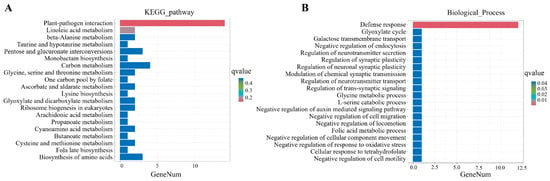
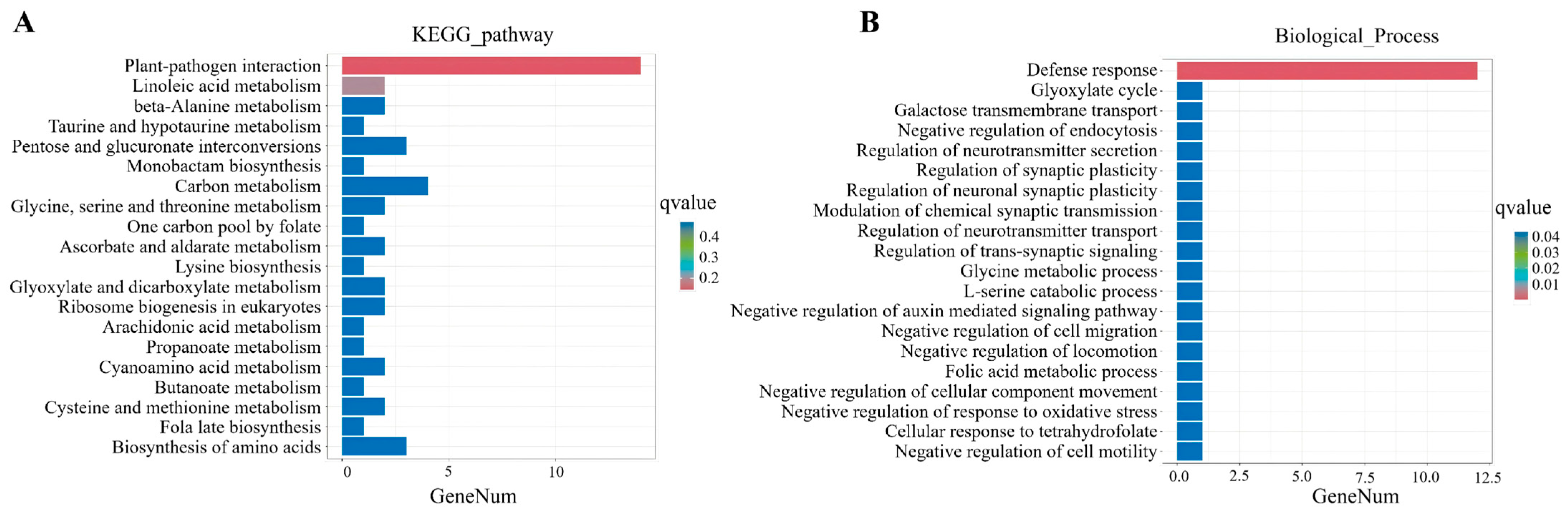
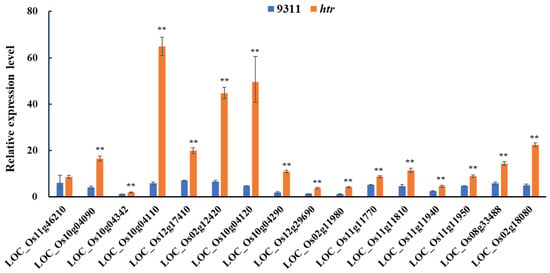
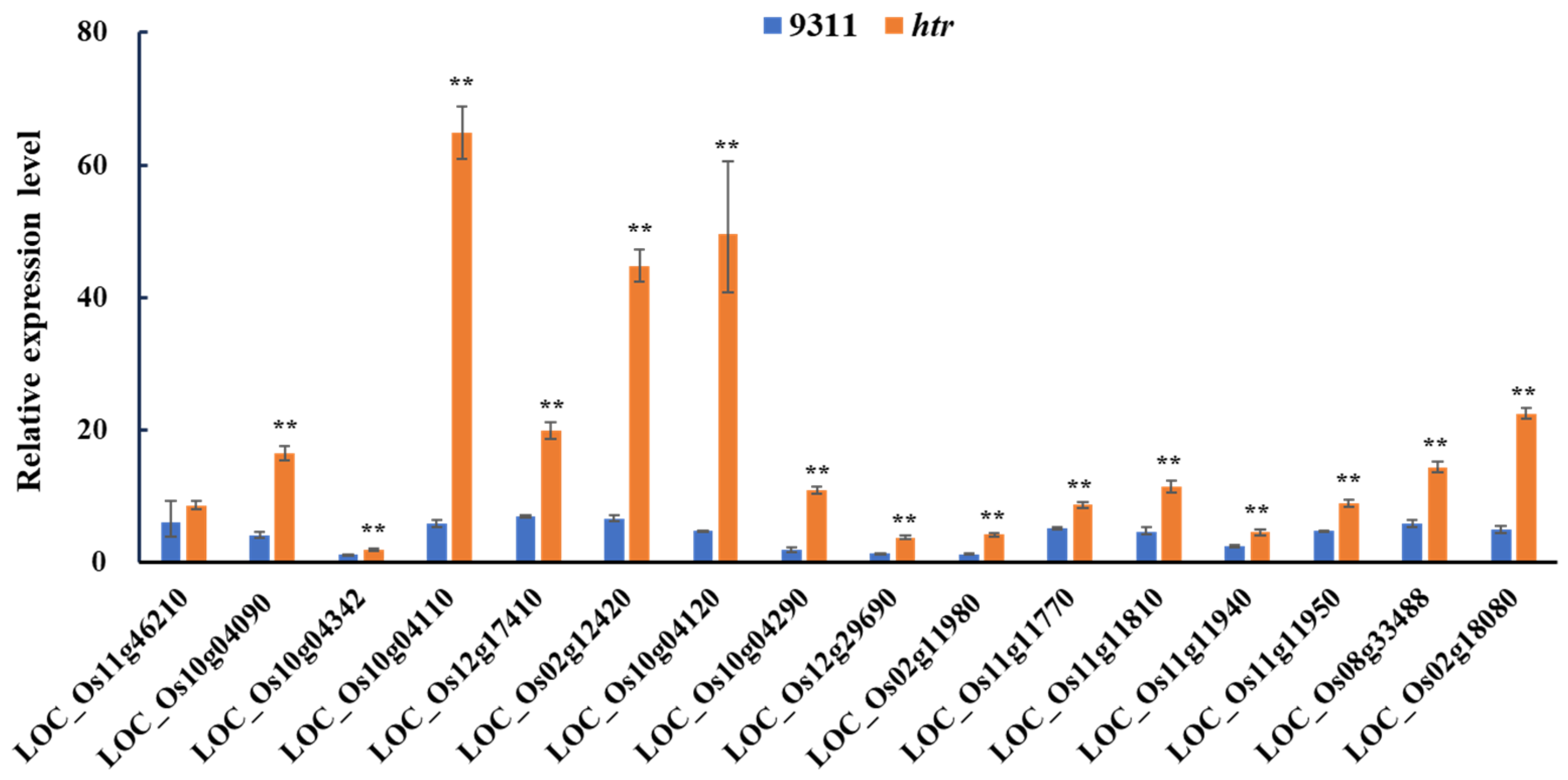
To gain insight into the molecular function of OsHTR, we performed RNA-seq analysis comparing the wild-type 93-11 and the htr mutant at the heading stage. Transcriptome analysis identified a total of 364 differentially expressed genes (DEGs) in the htr mutant compared to the wild type, among which 194 genes were significantly upregulated and 170 genes were significantly downregulated (Tables S1 and S2). KEGG pathway enrichment and GO enrichment analysis of the upregulated DEGs revealed significant enrichment in plant–pathogen interaction pathways and defense responses (Figure 1), which is consistent with previous independent findings on the smos1 mutant [12]. Among the upregulated DEGs, we identified multiple resistance-related genes, including NBS-LRR and NB-ARC family members. Based on a combination of high fold change (|log2FC| > 2), annotation as known resistance-related genes (NBS-LRR, NB-ARC, or receptor-like kinases), and previous reports [12], we selected 16 upregulated candidate genes for RT-qPCR validation (Table S3). The results showed that, except for LOC_Os11g46210, which exhibited no significant change, the remaining 15 genes were significantly upregulated in the htr mutant (Figure 2). It is important to note that these data indicate correlation rather than direct regulation; whether OsHTR directly binds to the promoters of these genes remains to be determined. These results suggest that OsHTR may negatively regulate the expression of a broad set of defense-related genes in rice, thereby participating in rice defense responses.
Figure 1.
KEGG pathway and GO analysis of up-regulated differentially expressed genes in the transcriptome of wild-type 93-11 and mutant htr. (A) KEGG pathway enrichment analysis. (B) GO enrichment analysis (biological processes).
Figure 2.
Wild-type 93-11 and mutant htr transcriptome upregulated differentially expressed genes real-time PCR validation. Values are the mean ± SD of three biological replicates. Asterisks indicate a statistically significant difference between the wild type and htr mutant. t-test, ** p < 0.01. Data are presented as mean ± SD (n = 3).
3.2. Generation and Validation of OsHTR Transgenic Lines
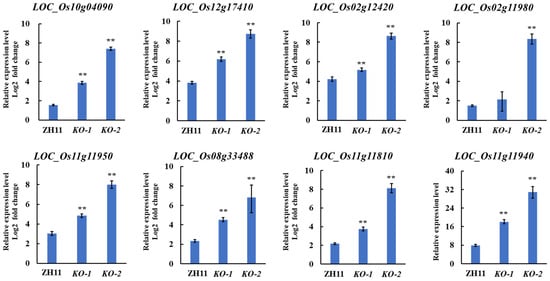
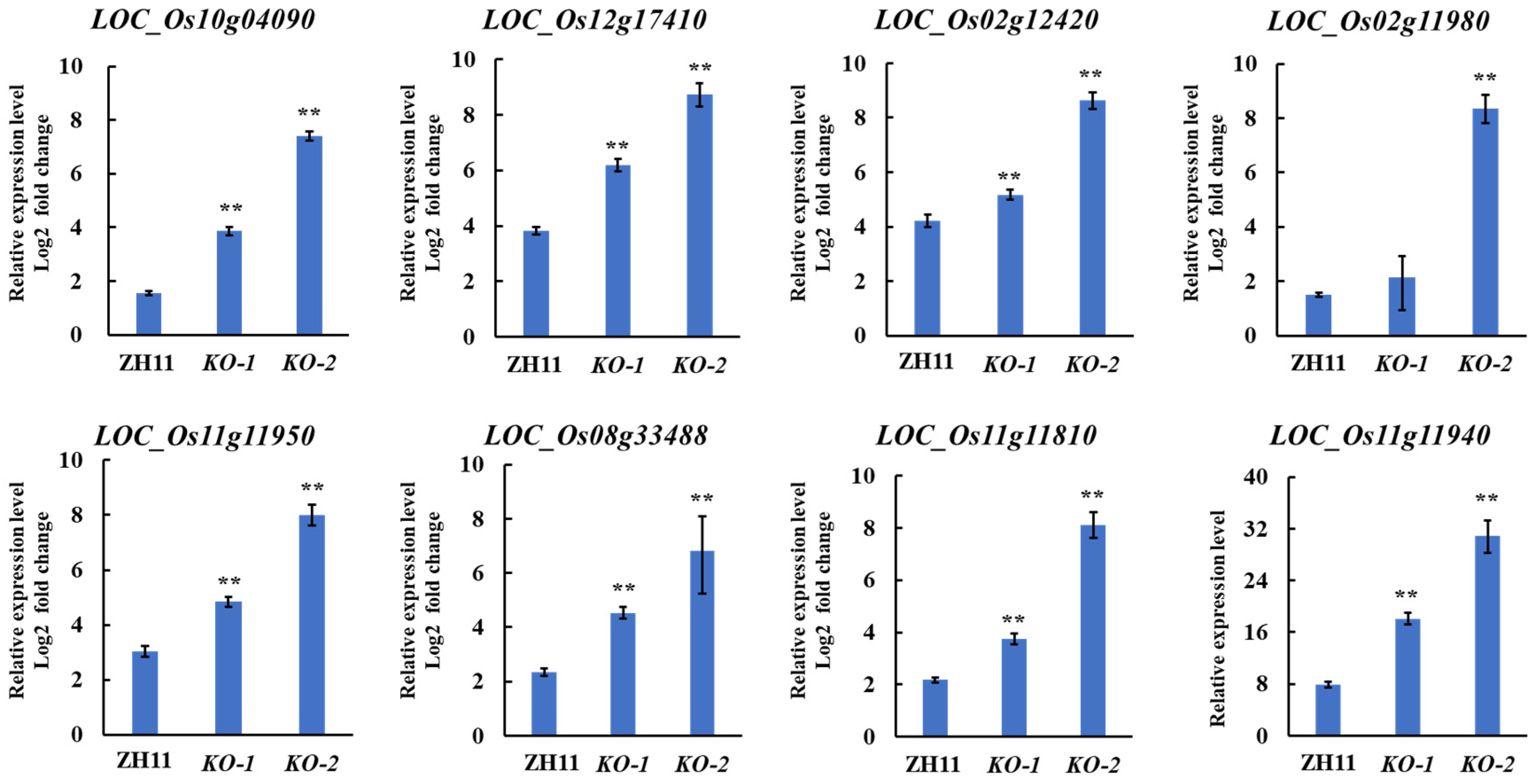
To further investigate the role of OsHTR in disease resistance, we generated knockout (HTR-KO-1, HTR-KO-2) and overexpression (HTR-OE-1, HTR-OE-2) transgenic lines in the ZH11 background. Successful gene editing and overexpression were confirmed by sequencing and RT-qPCR (Figure S1; Table S4). We then selected eight resistance-related genes that were upregulated in the htr mutant (LOC_Os10g04090, LOC_Os12g17410, LOC_Os02g12420, LOC_Os02g11980, LOC_Os11g11810, LOC_Os11g11940, LOC_Os08g33488, and LOC_Os02g18080) for expression analysis in the transgenic lines. The results confirmed that these genes were also upregulated in the knockout lines in the ZH11 background, consistent with the observations in the htr mutant (Figure 3). Although the transcriptome analysis was performed in the indica background 93-11, the similar upregulation patterns in the japonica background ZH11 suggest that the negative regulatory relationship between OsHTR and these defense genes is conserved across these two subspecies. This indicates that OsHTR functions similarly in both indica (93-11) and japonica (ZH11) backgrounds in regulating the expression of defense-related genes.
Figure 3.
Real-time PCR analysis of differentially upregulated genes in ZH11 and OsHTR knockout mutants and overexpression plants. Values are the mean ± SD of three biological replicates. t-test, ** p < 0.01. Data are presented as mean ± SD (n = 3).
3.3. OsHTR Negatively Regulates Rice Blast Resistance
We evaluated the blast resistance of OsHTR transgenic lines alongside wild-type ZH11 and control cultivars CO39 (susceptible) and Gumei 4 (resistant) using three geographically distinct mixed strain inocula (Yunchuan, Hunan, and Northeast mixed strains) (Table 1; Figure 4). The susceptible control CO39 exhibited high susceptibility (grade 8–9) to all three mixed strains, while the resistant control Gumei 4 displayed high resistance (grade 0) across all strains. Wild-type ZH11 showed high resistance (grade 0–1) to all three mixed strains. Thus, the wild-type background already exhibits strong resistance against these strain mixtures. Notably, the HTR-OE lines consistently displayed moderate resistance (grade 2–3) across all three inocula, indicating that overexpression of OsHTR compromises blast resistance. In contrast, the HTR-KO lines maintained or even enhanced resistance. Specifically, HTR-KO-2 exhibited high resistance (grade 0) to the Yunchuan and Northeast strains and resistance (grade 1) to the Hunan strain. These results demonstrate that OsHTR functions as a negative regulator of blast resistance and that loss of its function can enhance resistance even in an already resistant background.
Table 1.
Rice blast disease resistance inoculation identification.
Figure 4.
Identification of rice blast resistance in ZH11 and OsHTR knockout mutants and overexpression plants. (A), Yunchuan mixed strains; (B), Hunan mixed strains; (C), Northeast mixed strains. Data are representative images from one of three independent experiments, each with at least 12 seedlings per line.
3.4. Knockout of Individual Upregulated Resistance Genes Confers Blast Resistance
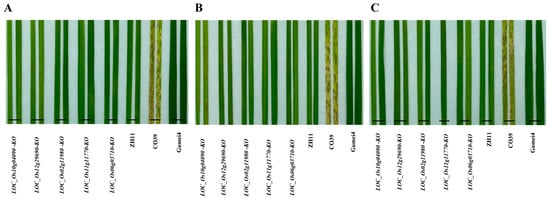
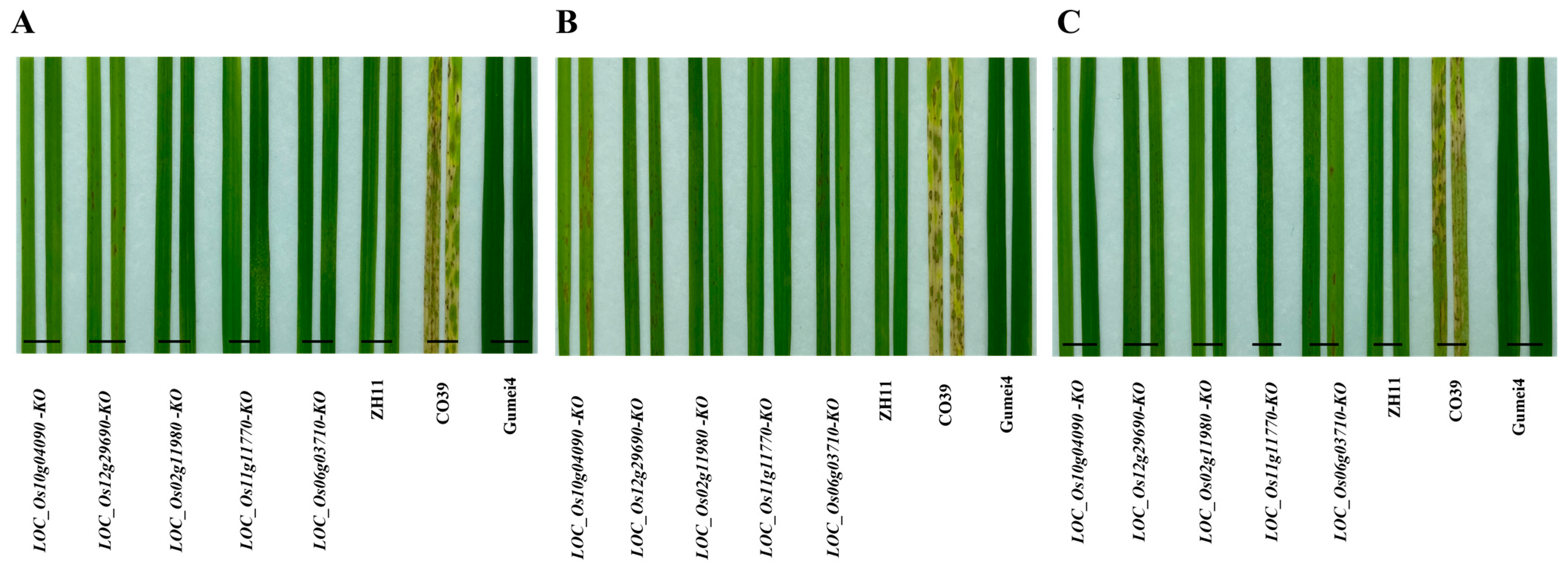
To validate the functional relevance of the upregulated resistance-related genes identified downstream of OsHTR, we generated knockout lines for five candidate genes: LOC_Os10g04090, LOC_Os12g29690, LOC_Os02g11980, LOC_Os11g11770, and LOC_Os06g03710 (the latter being an interacting gene of OsHTR [21]) using CRISPR/Cas9 gene editing (Table S4). Blast resistance evaluation results are shown in Table 1 and Figure 5. The LOC_Os10g04090-KO and LOC_Os12g29690-KO lines showed significantly reduced resistance to the Yunchuan and Hunan mixed strains (grade 3) compared to wild-type ZH11, while no significant change was observed against the Northeast mixed strains. The LOC_Os02g11980-KO line exhibited significantly reduced resistance to the Hunan mixed strain (grade 2) but no significant change against the Yunchuan and Northeast strains. The LOC_Os11g11770-KO line displayed significantly reduced resistance to the Hunan and Northeast mixed strains (grade 2–3) but no significant change against the Yunchuan strain. Interestingly, the OsHTR-interacting gene LOC_Os06g03710-KO maintained high resistance (grade 0–1) consistent with wild-type ZH11 against all three mixed strains. The observation that individual KO lines generally show less pronounced phenotypes than the HTR-KO lines suggests functional redundancy among these downstream genes. These results confirm that the upregulated genes downstream of OsHTR are bona fide resistance-related genes and that their individual knockout can confer significant changes in blast resistance.
Figure 5.
Identification of rice blast resistance in ZH11 and gene-edited knockout mutants. (A), Yunchuan mixed strains; (B), Hunan mixed strains; (C), Northeast mixed strains. Data are representative images from one of three independent experiments, each with at least 12 seedlings per line.
3.5. OsHTR Regulates Bacterial Blight Resistance
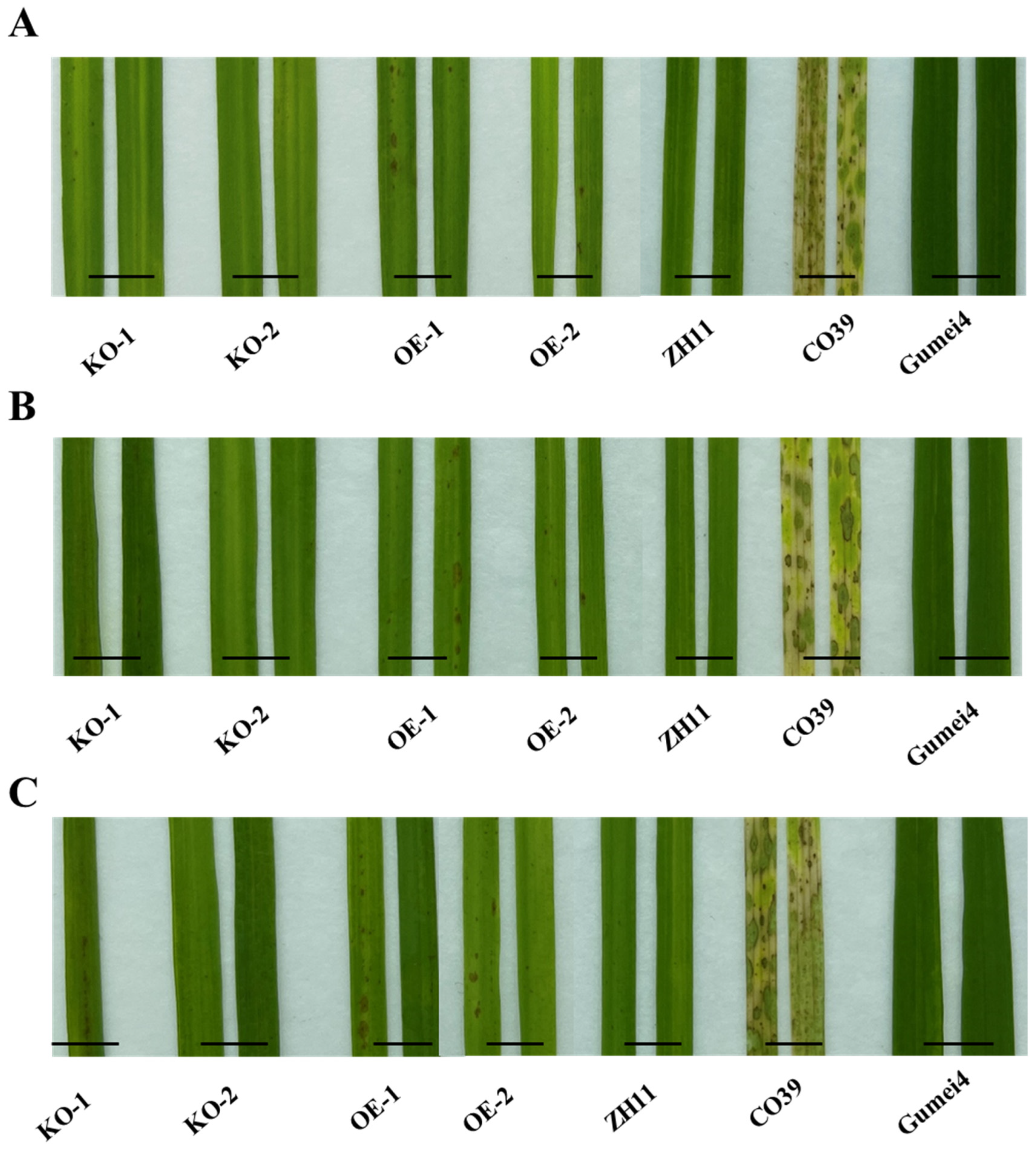
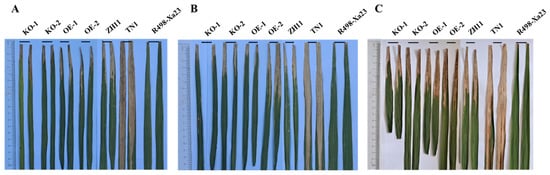
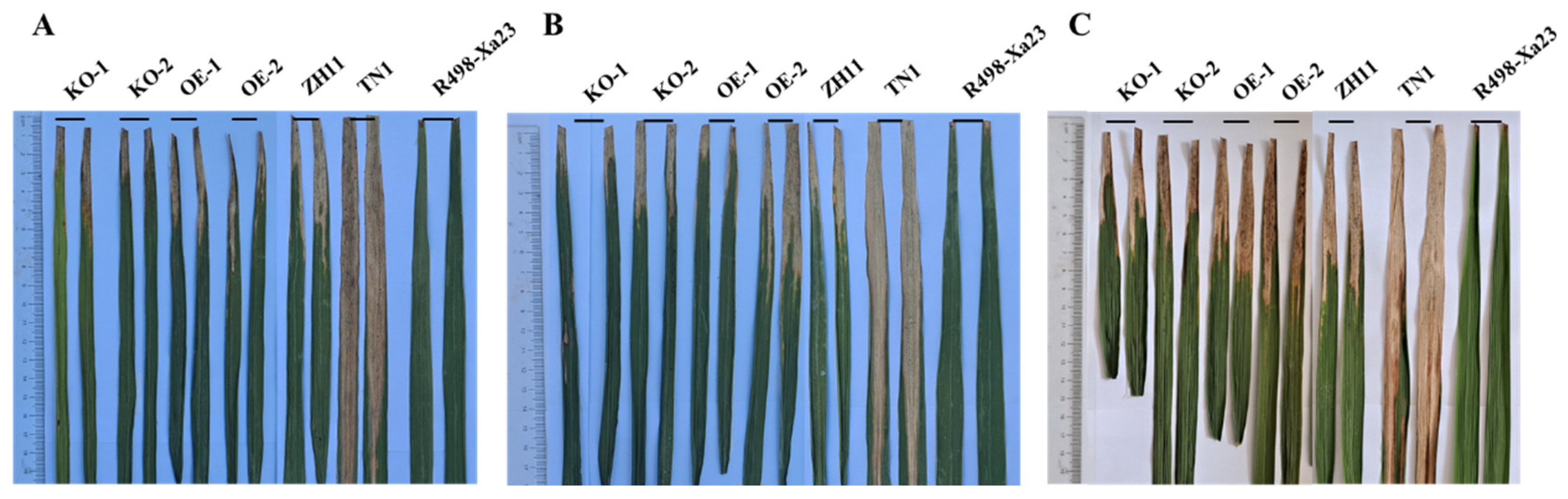
We further evaluated bacterial blight resistance using three Xoo strains (FuJ, GD1358, and HNA1-4). The evaluation included wild-type ZH11, OsHTR transgenic lines, and knockout lines of the downstream resistance genes (Table 2; Figure 6; Table S5). The susceptible control TN1 exhibited lesion lengths > 24.0 cm (grade 7) for all three strains, while the resistant control R498-Xa23 showed lesion lengths < 1.0 cm (grade 1). Compared to ZH11, the HTR-KO lines exhibited significantly shorter lesion lengths, indicating enhanced resistance, particularly against the GD1358 strain (grade 1). In contrast, the HTR-OE lines showed variable results: HTR-OE-1 did not differ significantly from ZH11 across all strains, while HTR-OE-2 showed a modest increase in lesion length for the GD1358 strain (grade 5). This inconsistency may reflect position effects of the transgene or strain-specific interactions. Among the downstream gene knockout lines, LOC_Os10g04090-KO and LOC_Os02g11980-KO showed enhanced resistance (shorter lesion lengths) against the GD1358 strain compared to ZH11, while no significant changes were observed for the other knockout lines against the three tested Xoo strains (Table S5 and Figure S3). These results indicate that OsHTR acts as a negative regulator of bacterial blight resistance and that loss of its function can enhance resistance, although the downstream genes may play distinct roles against different bacterial strains.
Table 2.
Bacterial blight resistance inoculation identification.
Figure 6.
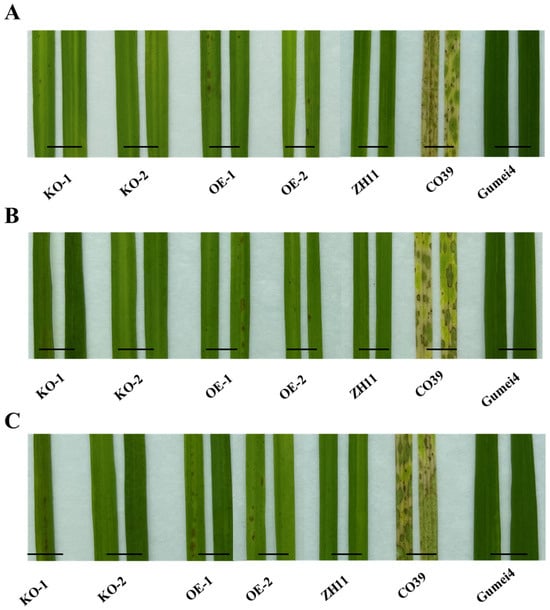
Identification of bacterial blight resistance in ZH11 and OsHTR knockout mutants and overexpression plants. (A), FuJ strain; (B), GD1358 strain; (C), HNA1-4 strain. Representative images from one of three independent experiments, each with at least 7 leaves per line.
3.6. OsHTR Does Not Affect Brown Planthopper Resistance
To determine whether OsHTR-mediated resistance extends to insect pests, we evaluated brown planthopper resistance of OsHTR transgenic lines and the downstream resistance gene knockout lines (Table S6; Figures S2 and S4). All tested materials, including wild-type ZH11, HTR-KO, HTR-OE, and the five downstream gene knockout lines, exhibited high susceptibility (HS, grade 9) to brown planthopper, with mortality rates ranging from 88.30% to 100.00%. In contrast, the resistant control Rathu Heenati showed high resistance (HR, grade 1) with only 2.00% mortality. These results demonstrate that neither OsHTR nor its downstream target genes contribute to brown planthopper resistance, suggesting that the OsHTR regulatory module is specific to microbial pathogen defense rather than insect resistance.
4. Discussion
In this study, we demonstrate that the AP2-type transcription factor OsHTR functions as a negative regulator of disease resistance in rice against both fungal and bacterial pathogens. Our findings provide several novel insights into the molecular mechanisms underlying rice immunity and the functional diversification of AP2 transcription factors.
4.1. OsHTR Bridges Development and Defense
OsHTR was previously characterized as a pleiotropic regulator of plant architecture and hormone signaling, with roles in brassinosteroid, gibberellin, and auxin pathways [11,12,13,14,15,16]. Its involvement in nitrogen uses efficiency and grain size determination further highlighted its significance in agronomic trait regulation [15,16]. Our transcriptome analysis revealed that the htr mutant exhibits significant upregulation of defense-related genes, particularly those encoding NBS-LRR and NB-ARC resistance proteins, suggesting that OsHTR normally suppresses defense gene expression under non-stress conditions. This is consistent with the emerging paradigm that plants must balance growth and defense, and that certain transcription factors function as nodes for this trade-off [22,23]. Recent studies have identified analogous mechanisms in other plant species: in Arabidopsis, the homeobox transcription factor HB34 balances immunity and growth by differentially regulating jasmonic acid biosynthetic and growth-related genes [24]. In rice, ERF transcription factor regulons have been shown to underpin the growth–defense trade-off under acute heat stress [10]. The enhanced disease resistance observed in HTR-KO lines suggests that targeted modulation of OsHTR could potentially decouple resistance from yield penalties—a major challenge in resistance breeding. However, given the previously reported effects of OsHTR on grain size, tillering, and nitrogen use efficiency [11,12,13,14,15,16], any potential application in breeding must carefully assess possible pleiotropic effects on agronomic traits under field conditions.
4.2. A Regulatory Module Involving OsHTR and Downstream Resistance Genes
The identification of 15 upregulated resistance-related genes in the htr mutant and their validation in transgenic lines establishes a transcriptional correlation in which OsHTR negatively correlates with multiple defense genes. Among these, LOC_Os10g04090, LOC_Os12g29690, LOC_Os02g11980, and LOC_Os11g1177 were functionally validated through targeted knockout, each contributing to blast and bacterial blight resistance to varying degrees. Our data do not distinguish between direct and indirect regulation; determining whether OsHTR directly binds to the promoters of these genes will require ChIP-seq or yeast one-hybrid assays. The differential resistance levels observed among the knockout lines against different pathogen strains suggest that these genes may recognize distinct pathogen effectors or function in different branches of the immune signaling network. The involvement of NBS-LRR and NB-ARC family members among these downstream genes is consistent with recent meta-QTL analyses, which identified that NBS-LRR type resistance gene analogs and NB-ARC domain-containing proteins constitute major components of the rice blast resistance gene network [25]. Additionally, novel blast resistance genes such as OsBRW1 have recently been shown to encode NBS-LRR proteins that interact with host factors to balance resistance and growth [26].
4.3. Disease-Specific Regulation by OsHTR
Interestingly, neither OsHTR transgenic lines nor the downstream gene knockout lines showed any resistance to brown planthopper, with all lines exhibiting high susceptibility comparable to the susceptible control TN1. This stark contrast between pathogen and insect resistance indicates that the OsHTR regulatory module is specific to microbial pathogen defense. The differential effectiveness likely reflects the distinct molecular mechanisms underlying resistance to biotrophic/hemibiotrophic pathogens versus phloem-feeding insects. Plant resistance to pathogens often involves NBS-LRR-mediated ETI and hormonal signaling through salicylic acid and jasmonic acid pathways, whereas resistance to brown planthopper typically involves distinct resistance genes and signaling mechanisms. A growing body of evidence has demonstrated that AP2/ERF transcription factors are key regulators of plant disease resistance, acting downstream of MAPK cascades and modulating hormonal signaling pathways, secondary metabolite synthesis, and physical barrier formation [10]. Our results suggest that the OsHTR-regulated defense genes are primarily components of antimicrobial immunity rather than anti-herbivory defense, reinforcing the functional specialization of distinct AP2/ERF family members in different biotic stress contexts.
4.4. Implications for Molecular Breeding
The discovery that OsHTR negatively regulates disease resistance has significant implications for rice improvement. Natural variation in OsHTR expression levels has been reported across diverse rice germplasm [15], and our results suggest that low-expression alleles may confer enhanced disease resistance. This makes OsHTR a potential target for marker-assisted selection or gene editing to improve disease resistance. However, caution is warranted because OsHTR also controls grain size, tillering, and nitrogen use efficiency [15,16]; therefore, knockout or suppression of OsHTR may negatively impact yield under field conditions. Field evaluations under natural disease pressure and normal agronomic management are essential before any breeding application. Furthermore, the identification of downstream resistance genes provides additional genetic resources for pyramiding resistance in elite cultivars [27,28]. Given that rice blast alone can cause yield losses of 10–35% globally, stacking multiple effective resistance genes is an essential strategy for durable resistance breeding. Additionally, executor R genes such as Xa7, Xa10, Xa23, and Xa27 provide broad-spectrum resistance against Xoo by being specifically induced by pathogen TAL effectors [27,29], and the genes identified in this study may complement existing Xa genes in pyramiding strategies. Future studies should investigate the natural allelic variation at these loci and their potential utility in breeding programs.
4.5. Future Perspectives
While this study establishes OsHTR as a negative regulator of disease resistance, several questions remain to be addressed. The direct molecular mechanism by which OsHTR represses downstream resistance genes—whether through direct promoter binding or indirect regulation via intermediate factors—requires further investigation through ChIP-seq and protein–protein interaction studies. Understanding whether OsHTR functions as a direct transcriptional repressor of defense genes or acts by modulating hormone signaling pathways is a critical next step. The recent characterization of GR5 (the same gene) as a transcriptional activator that physically interacts with G protein γ subunits and determines grain size suggests that OsHTR may exert its developmental functions through distinct transcriptional activation mechanisms while simultaneously repressing defense genes via a different mode of action [20]. This bifunctional behavior would position OsHTR as a central regulatory hub for the growth–defense trade-off. Additionally, the role of phytohormone signaling in mediating the OsHTR–defense connection needs to be elucidated, given the established involvement of OsHTR in multiple hormone pathways. Field evaluations of HTR-KO lines are necessary to assess the durability and stability of enhanced resistance under natural disease pressure and to evaluate potential yield trade-offs under agronomic conditions. Finally, exploring whether the OsHTR-mediated regulatory module is conserved across other cereal crops could extend the translational relevance of our findings.
5. Conclusions
This study uncovers a novel function of the AP2-type transcription factor OsHTR as a negative regulator of disease resistance in rice. We demonstrate that loss of OsHTR function leads to upregulation of multiple defense-related genes and enhanced resistance to rice blast and bacterial blight, while overexpression increases susceptibility. The downstream resistance genes identified in this study represent valuable resources for molecular breeding. Our findings expand the functional repertoire of OsHTR beyond development and nutrient use efficiency to include disease resistance, highlighting its potential as a target for improving multiple agronomic traits simultaneously, although potential trade-offs with yield-related traits require careful evaluation. This work provides a foundation for understanding the molecular coordination of growth, development, and immunity in rice and offers practical tools for developing disease-resistant cultivars.
Supplementary Materials
The following supporting information can be downloaded at: https://www.mdpi.com/article/10.3390/agronomy16131213/s1, Table S1. Up-regulated genes in flag leaf of htr mutant; Table S2. Down-regulated genes in flag leaf of htr mutan; Table S3. Information on 16 upregulated resistance-related genes in OsHTR mutants; Table S4. Gene editing mutation sites; Table S5. Bacterial blight resistance inoculation identification for downstream gene knockout lines; Table S6. Brown planthopper resistance identification for OsHTR transgenic lines and downstream gene knockout lines; Table S7. Information on the real-time PCR primers used in this study; Table S8. Gene editing target primer; Figure S1. Creation of OsHTR knockout mutants and overexpressing plants in the background of japonica rice ZH11 for verification; Figure S2. Identification of brown planthopper resistance in ZH11 and OsHTR knockout mutants and overexpression plants; Figure S3. Identification of bacterial leaf blight resistance in ZH11 and gene-edited knockout mutants; Figure S4. Identification of brown planthopper resistance in ZH11 and gene-edited knockout mutants.
Author Contributions
W.L. and X.J. performed gene cloning, data analysis and wrote the manuscript. C.W., J.D., Q.W. and X.W. performed RT-qPCR analysis. Z.L., X.Z. and H.X. performed phenotype analysis. W.L. designed the experiments and revised the manuscript. All authors have read and agreed to the published version of the manuscript.
Funding
The work was supported by the Guizhou Provincial Science and Technology Project (Qiankehejichu-ZK [2023]yiban179), the Guizhou Science and Technology Support Program Project ([2019]2304), the Guizhou Academy of Agricultural Sciences Emerging Team for Rice Genetics and Breeding (Qiannongkeyuan Emerging Team [2026]14), the innovation capacity construction of biological breeding for specialty crops in karst mountainous areas (Qianke Hefuqi [2024]003-1), the construction of scientific research capacity and conditions for the provincial key laboratory of biological breeding of characteristic grain and oil crops in karst mountainous areas (Qianke Hefuqi [2024]003-2).
Data Availability Statement
Data are contained within the article. The raw sequence data of transcriptome sequencing reported in this paper have been deposited in the NCBI’s Sequence Read Archive (SRA) of PRJNA1469631 that are publicly accessible at https://dataview.ncbi.nlm.nih.gov/object/PRJNA1469631 (accessed on 24 May 2026). The original contributions presented in the study are included in the article/Supplementary Materials, and further inquiries can be directed to the corresponding author.
Acknowledgments
Thanks for the funding from the projects mentioned in the Funding section. Thanks to DeepSeek (https://www.deepseek.com/) (accessed on 16 May 2026) for its auxiliary support in the writing of this manuscript (e.g., grammar, spelling, punctuation, and formatting).
Conflicts of Interest
The authors declare no conflicts of interest.
References
- Pedrozo, R.; Osakina, A.; Huang, Y.; Nicolli, C.; Wang, L.; Jia, Y. Status on genetic resistance to rice blast disease in the post-genomic Era. Plants 2025, 14, 807. [Google Scholar] [CrossRef] [Scilit] [PubMed]
- Liu, W.; Liu, J.; Triplett, L.; Leach, J.E.; Wang, G. Novel insights into rice innate immunity against bacterial and fungal pathogens. Annu. Rev. Phytopathol. 2014, 52, 213–241. [Google Scholar] [CrossRef] [Scilit] [PubMed]
- Cheng, X.; Zhu, L.; He, G. Towards understanding of molecular interactions between rice and the brown planthopper. Mol. Plant 2013, 6, 621–634. [Google Scholar] [CrossRef] [Scilit] [PubMed]
- Jones, J.D.G.; Staskawicz, B.J.; Dangl, J.L. The plant immune system: From discovery to deployment. Cell 2024, 187, 2095–2116. [Google Scholar] [CrossRef] [Scilit] [PubMed]
- Ngou, B.P.M.; Ding, P.; Jones, J.D.G. Thirty years of resistance: Zig-zag through the plant immune system. Plant Cell 2022, 34, 1447–1478. [Google Scholar] [CrossRef] [Scilit] [PubMed]
- Rushton, P.J.; Somssich, I.E.; Ringler, P.; Shen, Q. WRKY transcription factors. Trends Plant Sci. 2010, 15, 247–258. [Google Scholar] [CrossRef] [Scilit] [PubMed]
- Nuruzzaman, M.; Sharoni, A.M.; Kikuchi, S. Roles of NAC transcription factors in the regulation of biotic and abiotic stress responses in plants. Front. Microbiol. 2013, 4, 248. [Google Scholar] [CrossRef] [Scilit] [PubMed]
- Gutterson, N.; Reuber, T. Regulation of disease resistance pathways by AP2/ERF transcription factors. Curr. Opin. Plant Biol. 2004, 7, 465–471. [Google Scholar] [CrossRef] [Scilit] [PubMed]
- Licausi, F.; Ohme-Takagi, M.; Perata, P. APETALA2/Ethylene Responsive Factor (AP2/ERF) transcription factors: Mediators of stress responses and developmental programs. New Phytol. 2013, 199, 639–649. [Google Scholar] [CrossRef] [Scilit] [PubMed]
- Ma, N.; Li, Z.; Zhang, F.; Wang, X.; You, C.; Zhang, C.; Zhang, Z. Plant disease resistance outputs regulated by AP2/ERF transcription factor family. Stress Biol. 2024, 4, 2. [Google Scholar] [CrossRef] [Scilit] [PubMed]
- Dong, B.; Long, W.; Liu, X.; Liu, S.; Tian, Y.; Chen, L.; Jiang, L.; Wang, Y.; Wan, J. Phenotypic analysis and gene cloning of a dwarf mutant htr in rice. J. Nanjing Agric. Univ. 2017, 40, 573–583. [Google Scholar]
- Aya, K.; Hobo, T.; Sato-Izawa, K.; Ueguchi-Tanaka, M.; Kitano, H.; Matsuoka, M. A novel AP2-type transcription factor, SMALL ORGAN SIZE1, controls organ size downstream of an auxin signaling pathway. Plant Cell Physiol. 2014, 55, 895–912. [Google Scholar] [CrossRef] [Scilit] [PubMed]
- Li, J.; Zhao, Y.; Chu, H.; Wang, L.; Fu, Y.; Liu, P.; Upadhyaya, N.M.; Chen, C.; Mou, T.; Feng, Z.; et al. SHOEBOX modulates root meristem size in rice through dose-dependent effects of gibberellins on cell elongation and proliferation. PLoS Genet. 2015, 11, e1005464. [Google Scholar] [CrossRef] [Scilit] [PubMed]
- Qiao, S.; Sun, S.; Wang, L.; Wu, Z.; Li, C.; Li, X.; Wang, T.; Leng, L.; Tian, W.; Lu, T.; et al. The RLA1/SMOS1 transcription factor functions with OsBZR1 to regulate brassinosteroid signaling and rice architecture. Plant Cell 2017, 29, 292–309. [Google Scholar] [CrossRef] [Scilit] [PubMed]
- Wu, K.; Wang, S.; Song, W.; Zhang, J.; Wang, Y.; Liu, Q.; Yu, J.; Ye, Y.; Li, S.; Chen, J.; et al. Enhanced sustainable green revolution yield via nitrogen-responsive chromatin modulation in rice. Science 2019, 367, eaaz2046. [Google Scholar]
- Wang, Y.; Lv, Y.; Yu, H.; Hu, P.; Wen, Y.; Wang, J.; Tan, Y.; Wu, H.; Zhu, L.; Wu, K.; et al. GR5 acts in the G protein pathway to regulate grain size in rice. Plant Commun. 2024, 8, 100673. [Google Scholar] [CrossRef] [Scilit] [PubMed]
- Hiei, Y.; Ohta, S.; Komari, T.; Kumashiro, T. Efficient transformation of rice (Oryza sativa L.) mediated by Agrobacterium and Sequence Analysis of the Boundaries of the T-DNA. Plant J. 1994, 6, 271–282. [Google Scholar] [CrossRef] [Scilit] [PubMed]
- Gu, T.; Tao, R.; Zhu, X.; Hu, X.; Zeng, B.; Yang, S.; Wang, J.; Lu, D.; Wu, S.; Guo, X.; et al. Technical Specification for Identification and Evaluation of Blast Resistance in Rice Variety Regional Test; NY/T 2646-2014; Ministry of Agriculture and Rural Affairs of the People’s Republic of China: Beijing, China, 2014.
- Hua, J.; Li, X.; Huang, X.; Huang, R.; Xiong, Y.; Guo, Y.; Cao, S.; Guo, N.; Li, X. Techniquely Rules for Identification of Rice Varieties Resistance to Bacterial Blight (Xanthomonas oryzae pv. oryzae); DB36/T 1033-2018; Jiangxi Provincial Bureau of Quality and Technical Supervision: Nanchang, China, 2018.
- Lai, F.; Fu, Q.; Lv, Z.; Wang, W.; Wan, P.; H, J.; Wei, Q. Technical Specification for Identification of the Rice Resistance to Brown Planthopper, Nilaparvata lugens; T/ZNZ 023-2020; Zhejiang Society of Agricultural Products Quality and Safety: Hangzhou, China, 2020. [Google Scholar]
- Hirano, K.; Yoshida, H.; Aya, K.; Kawamura, M.; Hayashi, M.; Hobo, T.; Sato-Izawa, K.; Kitano, H.; Ueguchi-Tanaka, M.; Matsuoka, M. SMALL ORGAN SIZE 1 and SMALL ORGAN SIZE 2/DWARF AND LOW-TILLERING form a complex to integrate auxin and brassinosteroid signaling in rice. Mol. Plant 2017, 10, 590–604. [Google Scholar] [CrossRef] [Scilit] [PubMed]
- Jones, J.D.G.; Dangl, J.L. The Plant Immune System. Nature 2006, 444, 323–329. [Google Scholar] [CrossRef] [Scilit] [PubMed]
- Huot, B.; Yao, J.; Montgomery, B.L.; He, S. Growth–defense tradeoffs in plants: A balancing act to optimize fitness. Mol. Plant 2014, 7, 1267–1287. [Google Scholar] [CrossRef] [Scilit] [PubMed]
- Li, X.; Yu, J.; Zhou, W.; Yan, F.; Lin, C.; Tao, Z. A homeobox transcription factor HB34 suppresses jasmonic acid biosynthesis but promotes the expression of growth-related genes to balance plant immunity and growth in Arabidopsis. Plant Commun. 2025, 6, 101429. [Google Scholar] [CrossRef] [Scilit] [PubMed]
- Devanna, B.; Sucharita, S.; Sunitha, N.; Anilkumar, C.; Singh, P.; Pramesh, D.; Samantaray, S.; Beher, L.; Katara, J.; Parameswaran, C.; et al. Refinement of rice blast disease resistance QTLs and gene networks through meta-QTL analysis. Sci. Rep. 2024, 14, 16458. [Google Scholar] [CrossRef] [Scilit] [PubMed]
- Ma, S.; Xu, S.; Tao, H.; Huang, Y.; Feng, C.; Huang, G.; Lin, S.; Sun, Y.; Chen, X.; Kabore, M.; et al. OsBRW1, a novel blast-resistant gene, codes a NBS-LRR protein to interact with OsSRFP1 to balance rice growth and resistance. Plant Biotechnol. J. 2025, 23, 250–267. [Google Scholar]
- Jiang, H.; Huang, Q.; Yang, C.; Liang, Y. Resistance gene against Xanthomonas oryzae pv. oryzae (Xoo) in rice: Molecular mechanisms and breeding strategies for bacterial leaf blight. Front. Plant Sci. 2026, 17, 1744367. [Google Scholar] [CrossRef] [Scilit] [PubMed]
- Li, T.; Li, B.; Wang, Y.; Xu, J.; Li, W.; Chen, Z.; Mou, W.; Xue, D. WRKY transcription factors in rice: Key regulators orchestrating development and stress resilience. Plant Cell Environ. 2025, 48, 8388–8406. [Google Scholar] [CrossRef] [Scilit] [PubMed]
- Li, M.; Shafique, M.; Zhou, H.; Wang, J.; Liu, Y.; Wang, C.; Wang, Z.; Ji, Z. A new bacterial blight resistance gene Xa50(t) in the Xa4 locus confers resistance against Xanthomonas oryzae pv. oryzae in rice. Front. Plant Sci. 2025, 16, 1657476. [Google Scholar] [CrossRef] [Scilit] [PubMed]

Disclaimer/Publisher’s Note: The statements, opinions and data contained in all publications are solely those of the individual author(s) and contributor(s) and not of MDPI and/or the editor(s). MDPI and/or the editor(s) disclaim responsibility for any injury to people or property resulting from any ideas, methods, instructions or products referred to in the content. |
© 2026 by the authors. Licensee MDPI, Basel, Switzerland. This article is an open access article distributed under the terms and conditions of the Creative Commons Attribution (CC BY) license.