1. Introduction
Aphids are among the most destructive piercing–sucking insect pests in faba bean (
Vicia faba L.) production. Among them, the cowpea aphid,
Aphis craccivora Koch, is a dominant aphid species causing serious damage in faba bean fields. In recent years, the frequency of
A. craccivora outbreaks has increased markedly in major faba bean-producing regions of China and other parts of the world, partly owing to global climate warming and changes in cropping systems. Through intensive colony feeding and continuous extraction of phloem sap, aphids inhibit plant growth, induce extensive flower and pod abscission, and potentially result in yield losses of over 30% [
1]. Aphids also act as efficient vectors of several destructive viral diseases, including faba bean mosaic disease [
2,
3]. Faba bean is the third most important winter legume crop worldwide, with an annual cultivated area of approximately 2.5 million ha. China is the largest faba bean producer, with an annual production of approximately 1.69 million tons [
4]. Therefore, aphid infestation has become a major biotic constraint limiting the sustainable development of faba bean production.
Current aphid management relies heavily on chemical insecticides, including neonicotinoids and pyrethroids. However, frequent insecticide application has resulted in the evolution of insecticide resistance, negative effects on non-target organisms, and environmental contamination [
5]. Field aphid populations have developed various levels of resistance to commonly used insecticides, and in some regions, resistance of black bean aphid populations to imidacloprid has exceeded 100-fold [
6]. Under these circumstances, the identification and utilization of endogenous aphid-resistance resources in faba bean and the development of aphid-resistant cultivars represent fundamental strategies for green pest management.
Plant resistance to aphids involves multiple mechanisms, including morphological, physiological, biochemical, and molecular responses [
7]. At the physiological and biochemical levels, aphid feeding generally induces three major defense processes. First, the antioxidant defense system is activated. Aphid feeding induces reactive oxygen species (ROS) accumulation, which may cause oxidative damage to plant cells. Superoxide dismutase (SOD), peroxidase (POD), and catalase (CAT) are key enzymes involved in ROS scavenging, and their activity changes are closely related to aphid resistance [
8,
9]. Second, the phenylpropanoid pathway is induced. Phenylalanine ammonia-lyase (PAL), a key enzyme in this pathway, regulates the biosynthesis of several defense-related secondary metabolites, including lignin, flavonoids, and phenolic compounds [
10,
11]. Third, nutrient allocation is altered. Resistant plants may reduce the nutritional quality of phloem sap, particularly by lowering free amino acid and soluble sugar levels, thereby suppressing aphid growth and population development [
12,
13].
Secondary metabolites play central roles in plant defense against aphids. Phenolic compounds can deter aphid feeding, interfere with digestive enzyme activity, and impair insect growth and development [
14,
15]. Tannins, total phenolics, and flavonoids are often positively correlated with aphid resistance, and genotypes with higher polyphenol contents generally exhibit lower aphid susceptibility [
14]. In recent years, lignin has received increasing attention because of its dual function in cell-wall reinforcement and physical barrier formation. Traditionally, lignin has been considered to limit aphid stylet penetration mainly by increasing the mechanical strength of cell walls [
16]. Recent studies have expanded this view. In sorghum, disruption of the
Bmr12 gene impaired lignin biosynthesis but enhanced aphid resistance through accumulation of the auxin conjugate IAA-Asp [
17]. Overexpression of sorghum
CCoAOMT promoted lignin accumulation and hydroxycinnamic acid production, thereby directly limiting aphid stylet penetration [
18]. In apple, overexpression of the laccase gene
MdLac18 specifically promoted the accumulation of G-type lignin monomers, increased lignin content, and enhanced aphid resistance [
19]. In kiwifruit, overexpression of
AcLac35 increased lignin content and significantly enhanced disease resistance [
20]. The transcription factor
NtWRKY28 was shown to coordinately regulate lignin and flavonoid biosynthesis and enhance aphid resistance in tobacco [
21]. However, the role of lignin in faba bean resistance to aphids has not been reported.
In legume crops, aphid-resistant germplasm screening has been relatively well studied in alfalfa and soybean. Jiang et al. [
22] screened more than 200 alfalfa germplasm accessions and identified materials highly resistant to aphids, revealing positive associations between tannins, total phenolics, and aphid resistance. A recent study evaluated the resistance of 251 faba bean genotypes to two aphid species but did not identify complete resistance to faba bean aphids [
23]. Skovgard and Stoddard [
24] evaluated eight faba bean lines for resistance to black bean aphid and found that aphid fecundity and intrinsic rate of increase were significantly lower on ILB938/2 than on susceptible controls. Rahman et al. [
25] also identified several field-resistant pea materials. However, these studies were generally limited by small germplasm panels, insufficient laboratory validation, uncertain resistance stability, and the lack of lignin-related evaluation. Life-table analysis is a standardized approach for quantifying host plant resistance to aphids. The age-stage, two-sex life table integrates developmental duration, survival rate, fecundity, and population growth into quantitative parameters, including net reproductive rate (
R0), intrinsic rate of increase (
rm), and mean generation time (
T) [
26]. This method has been widely used to evaluate aphid resistance in crops such as rapeseed and cotton [
27], but its application in faba bean remains limited.
Therefore, the objectives of this study were to: (1) evaluate aphid resistance in a large collection of 937 faba bean germplasm accessions; (2) validate resistance using controlled net-house and laboratory life-table assays; (3) identify key physiological and biochemical indicators associated with resistance. The results are expected to provide elite parental materials and theoretical support for aphid-resistance breeding in faba bean.
3. Results
3.1. Identification of Aphid Resistance in Faba Bean Germplasm Resources
3.1.1. Field Preliminary Screening of Faba Bean Germplasm Resources
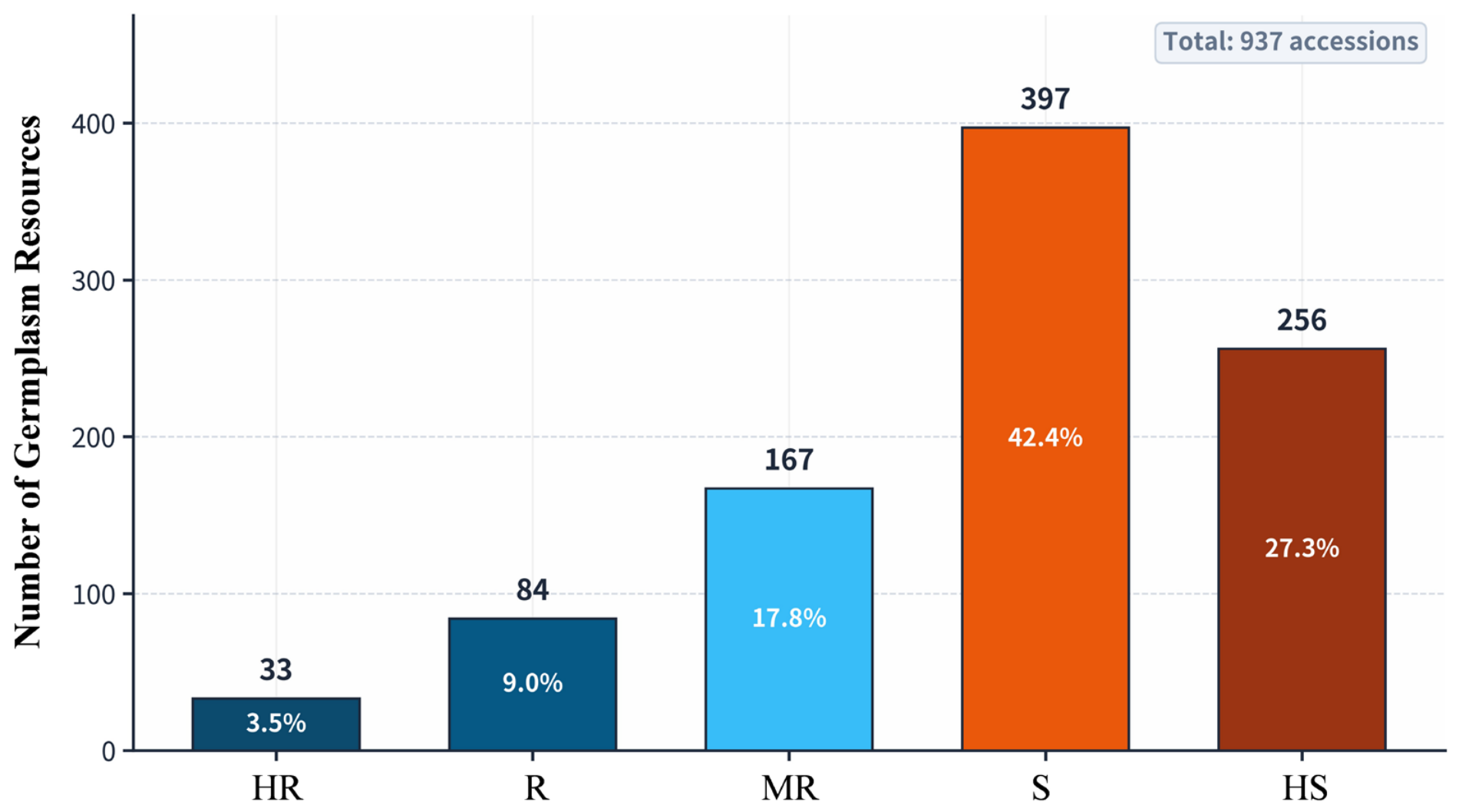
Field screening of 937 faba bean germplasm accessions under natural aphid infestation was conducted in 2024. The frequency distribution of resistance levels is shown in
Figure 1. Among the 937 accessions, 33 (3.5%) were classified as highly resistant (HR), 84 (9.0%) as resistant (R), 167 (17.8%) as moderately resistant (MR), 397 (42.4%) as susceptible (S), and 256 (27.3%) as highly susceptible (HS). Resistant types (HR + R) accounted for 12.5%, and susceptible types (S + HS) accounted for 69.7%.
3.1.2. Net-House Re-Screening
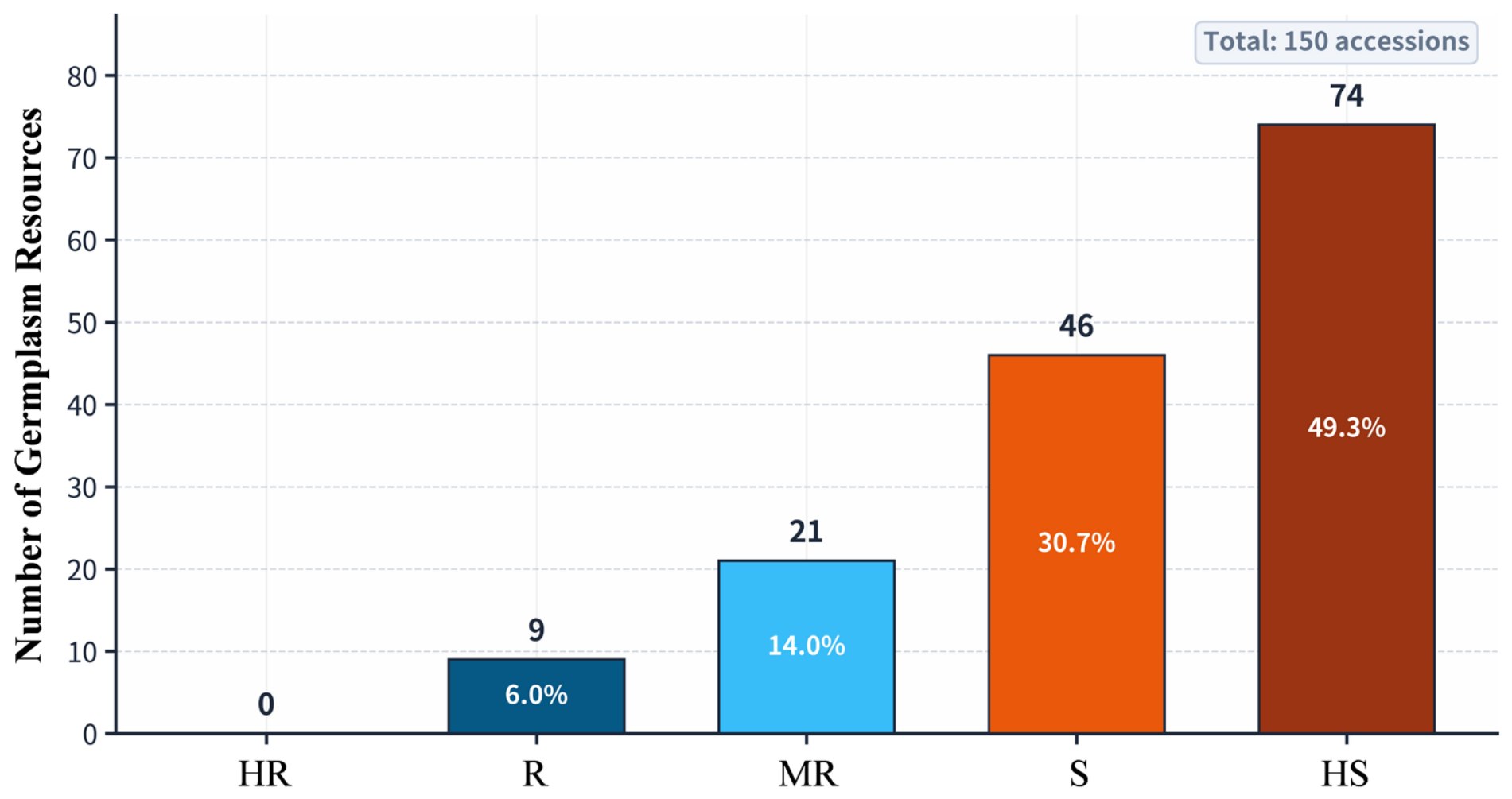
The results are shown in
Figure 2. Compared with the field-screening results, the distribution of resistance levels shifted markedly under net-house conditions. No accession maintained the highly resistant phenotype. Only nine accessions were classified as resistant, accounting for 6.0%; 21 accessions were moderately resistant, accounting for 14.0%; 46 accessions were susceptible, accounting for 30.7%; and 74 accessions were highly susceptible, accounting for 49.3%. Resistant accessions, including HR and R types, accounted for only 6.0%, whereas susceptible accessions, including S and HS types, accounted for 80.0%.
Among the 117 accessions classified as resistant in the 2024 field screening, most showed reduced resistance under precise aphid inoculation in the net-house assay. None of the 33 accessions initially classified as HR maintained the highly resistant phenotype. Among the 84 accessions initially classified as R, only nine maintained resistance, corresponding to a resistance-maintenance rate of only 10.7%. Among the 167 accessions initially classified as MR, only 21 maintained moderate resistance, corresponding to a maintenance rate of 12.6%. These results indicate that under the natural field conditions of this study, uneven aphid distribution and variable microenvironments may have led to an overestimation of resistance in some accessions, which were subsequently re-classified after exposure to consistent high inoculum pressure in the net-house.
3.1.3. Laboratory Validation Based on Aphid Life-Table Parameters
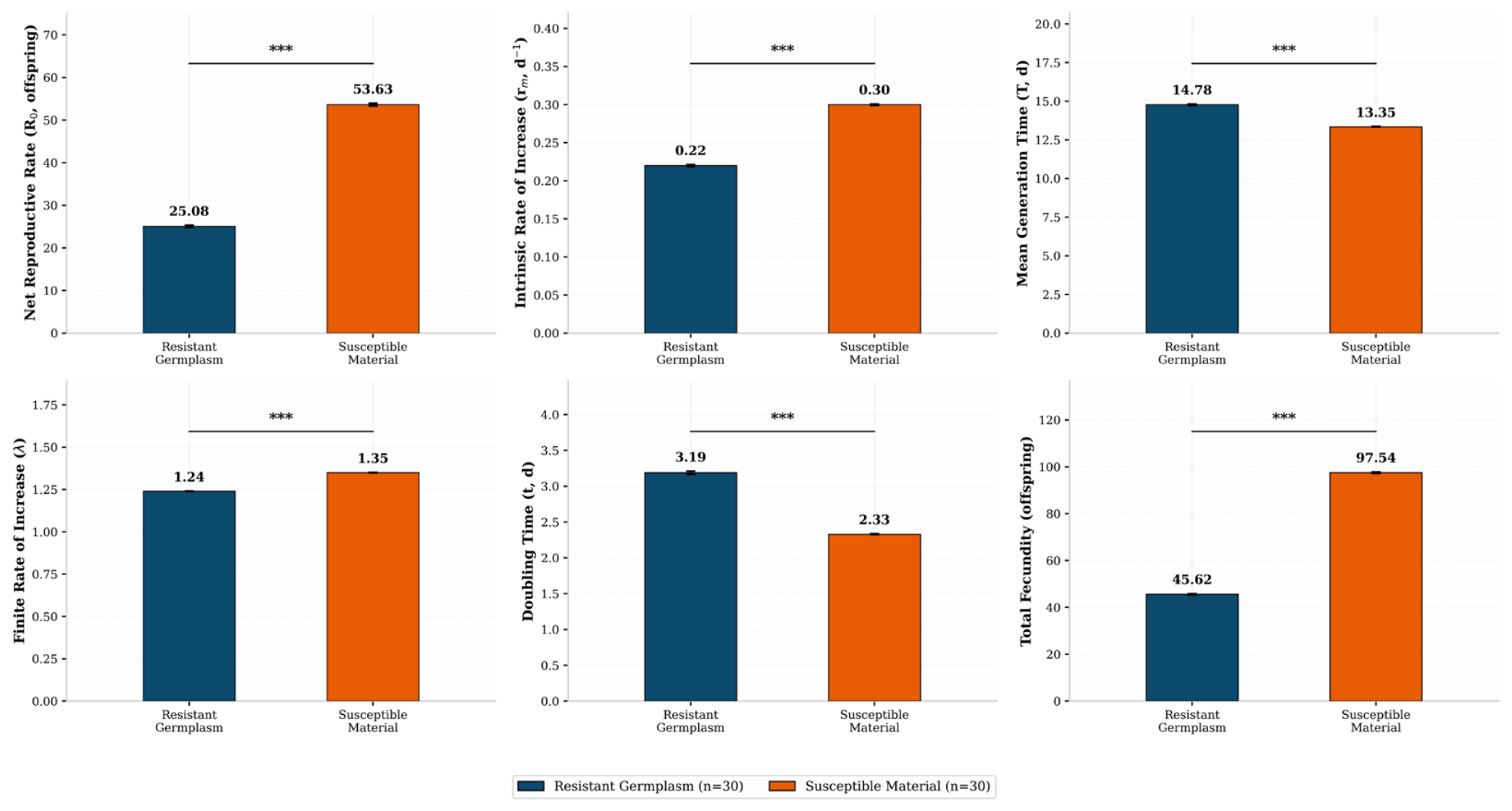
Life-table parameters were measured for 30 resistant accessions and 30 susceptible accessions selected from the 2024 field screening and 2025 net-house re-screening. These accessions were chosen based on consistent phenotypic performance across both screening stages: resistant accessions maintained HR or R classifications in the field and showed confirmed resistance in the net-house assay, while susceptible accessions consistently ranked in the S or HS categories under both conditions. Six key life-table parameters were systematically compared between resistant and susceptible groups (
Figure 3). The net reproductive rate of aphids on resistant accessions (
R0 = 25.08) was significantly lower than that on susceptible accessions (
R0 = 53.63), with an extremely significant difference (
p < 0.001). Aphids on susceptible accessions had approximately 2.14 times the net reproductive capacity of those on resistant accessions.
The intrinsic rate of increase was 0.22 on resistant accessions and 0.30 on susceptible accessions, with an extremely significant difference (p < 0.001). Thus, aphid population growth rate on resistant accessions was reduced by 26.7% compared with that on susceptible accessions. The mean generation time was 14.78 d on resistant accessions and 13.35 d on susceptible accessions, also showing an extremely significant difference (p < 0.001), indicating that aphids required 10.7% longer to complete one generation on resistant accessions. The finite rate of increase was 1.24 on resistant accessions and 1.35 on susceptible accessions, corresponding to an 8.1% reduction. Population doubling time was 3.19 d on resistant accessions and 2.33 d on susceptible accessions, indicating a 36.9% increase. Total fecundity was 45.62 offspring on resistant accessions and 97.54 offspring on susceptible accessions, with an extremely significant difference.
All six life-table parameters showed highly consistent differences between resistant and susceptible accessions. Resistant accessions suppressed aphid population development by reducing individual reproductive output, delaying development, and weakening population growth potential. The highly significant differences in all parameters confirmed that the resistant accessions identified through two years of screening exhibited consistent aphid-resistance effects across field, net-house, and laboratory conditions.
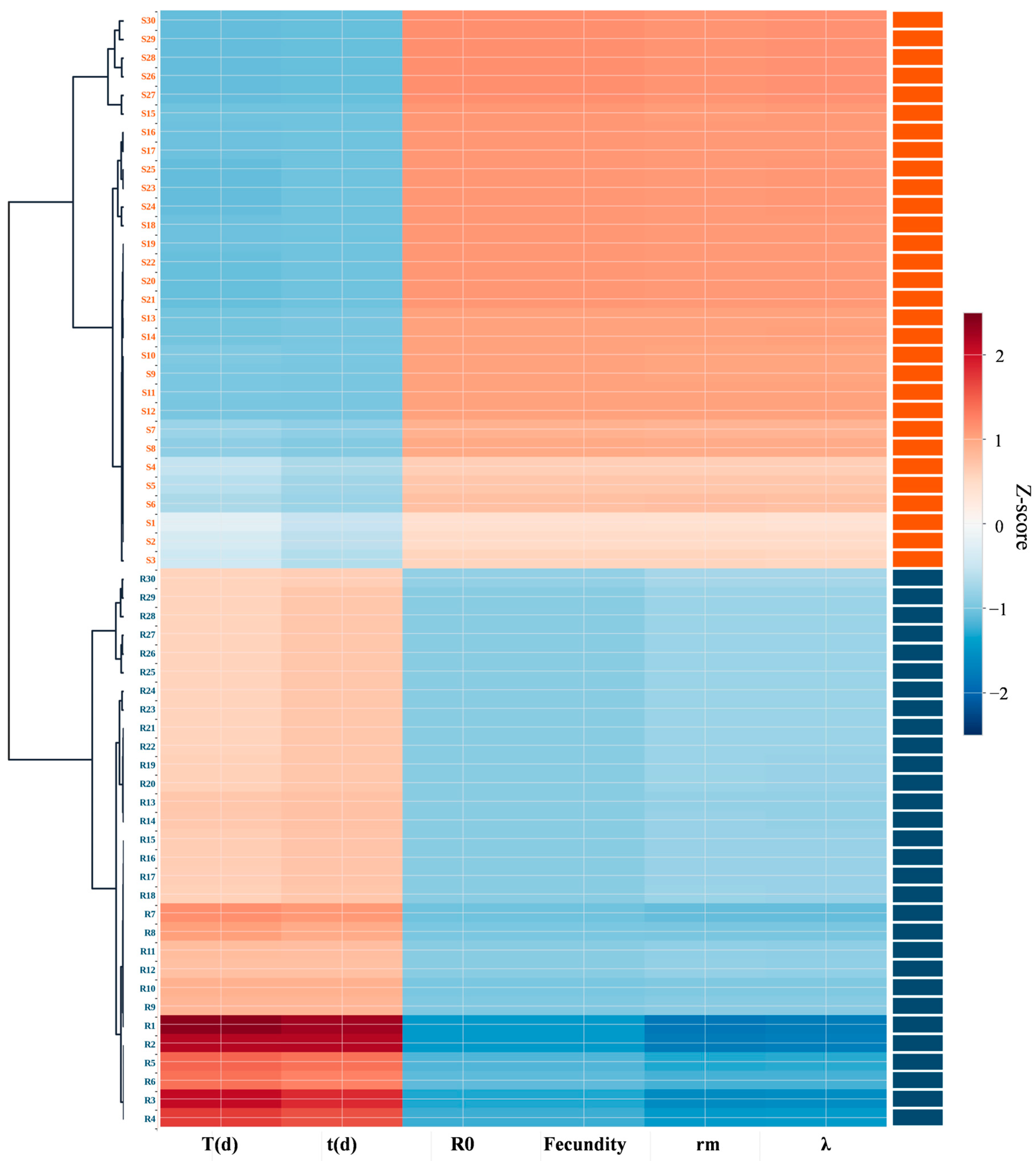
A heatmap was constructed to visualize differences in parameter patterns between the two groups (
Figure 4). The heatmap showed a clear binary structure. The hierarchical clustering dendrogram separated the 60 accessions into two major clusters at a relatively high distance threshold. The upper cluster mainly contained susceptible accessions, whereas the lower cluster mainly contained resistant accessions.
In terms of parameter patterns, R0, rm, λ, and fecundity showed positive Z-score values in susceptible accessions, indicating higher reproductive output and population growth potential. In contrast, these parameters showed negative Z-score values in resistant accessions, indicating strong inhibition of aphid reproduction. Conversely, mean generation time and population doubling time showed positive Z-score values in resistant accessions but negative values in susceptible accessions. This complementary pattern between reproductive and developmental parameters indicated that resistant accessions suppressed aphid population growth through the combined effects of reducing reproduction and delaying development.
At the individual accession level, R1–R6 showed strong negative values for R0, rm, fecundity, and λ, suggesting that these accessions had the strongest inhibitory effects on aphid reproduction and may represent the most stable resistant germplasm identified in the screening. R7–R30 showed more dispersed clustering patterns, suggesting genetic variation in resistance strength among resistant accessions. Among susceptible accessions, S9–S30 clustered tightly and showed uniformly high values for reproductive parameters, indicating that aphids developed and reproduced efficiently on these accessions. S1–S8 showed relatively dispersed patterns, but they still clustered within the susceptible group. Overall, the heatmap further confirmed the reliability and discriminative power of the three-stage screening system.
3.2. Physiological and Biochemical Changes in Resistant and Susceptible Accessions
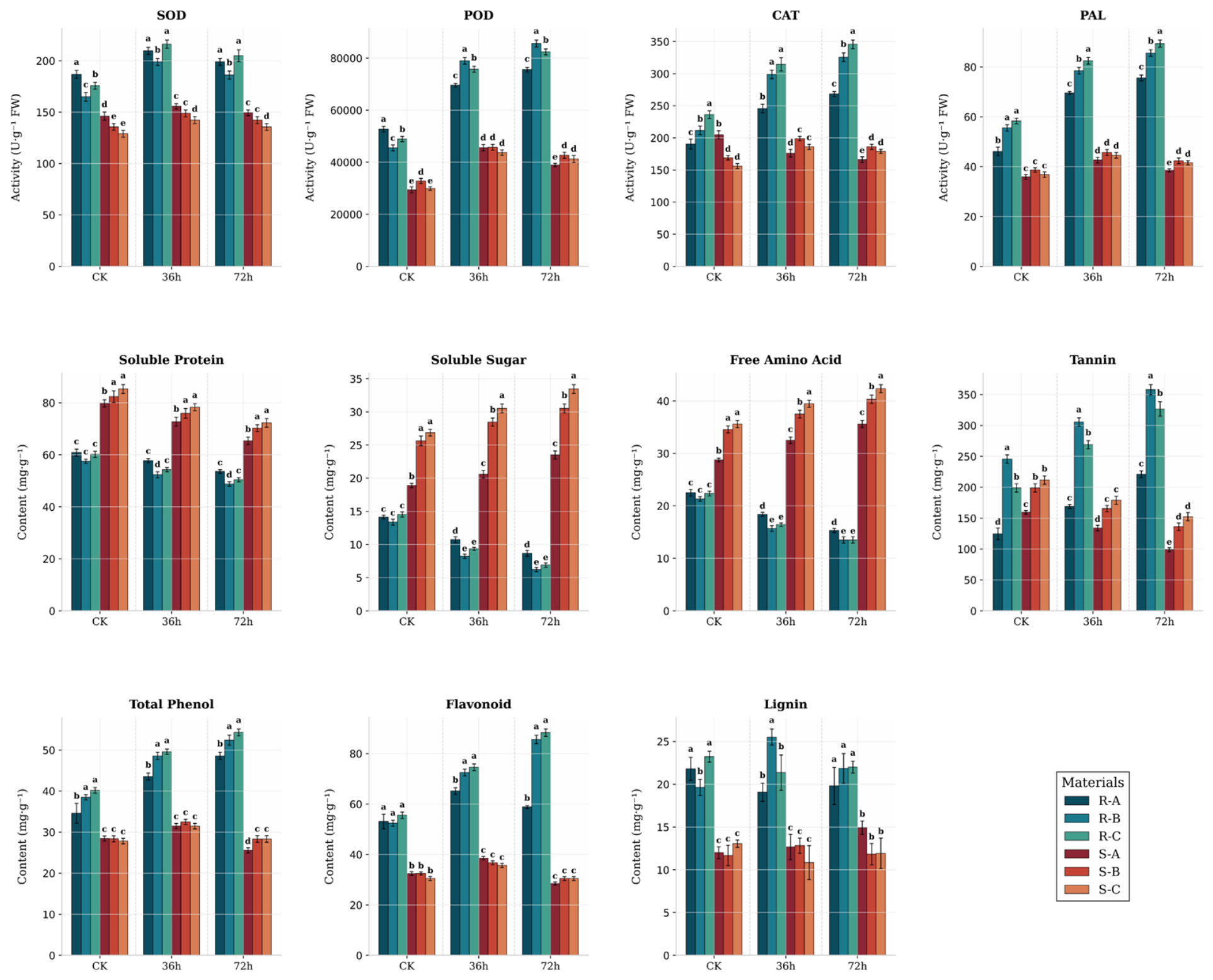
The results revealed distinct response strategies between resistant and susceptible materials in antioxidant stress responses, secondary defense metabolism, and primary nutrient regulation (
Figure 5). Under control conditions, basal enzyme activities were generally similar between resistant and susceptible accessions, although POD and CAT activities were slightly higher in some resistant accessions. After aphid feeding, resistant accessions showed a strong inducible activation pattern. SOD, POD, and CAT activities increased rapidly at 36 h and remained at high levels at 72 h, significantly higher than those in susceptible accessions at the corresponding time points. In contrast, susceptible accessions showed weak or delayed responses, with only slight increases or even decreases in enzyme activities. This coordinated activation pattern suggests that resistant faba bean accessions can rapidly and continuously activate the antioxidant defense chain and maintain cellular redox homeostasis under aphid feeding. Unlike a single mechanical injury event, aphid feeding involves continuous stylet penetration and saliva secretion. The sustained high enzyme activities observed at 72 h indicate that resistant accessions can continuously recognize and respond to aphid feeding as a persistent biotic stress.
PAL was significantly upregulated in resistant accessions after aphid feeding in a time-dependent manner. Driven by high PAL activity, downstream secondary metabolites, including tannins, total phenolics, and flavonoids, accumulated substantially in resistant accessions and reached peak levels at 72 h. In contrast, susceptible accessions remained at low response levels. Notably, lignin, a key component of cell-wall reinforcement, was also significantly induced in resistant accessions after aphid feeding and showed clear differences from susceptible accessions. These results indicate that resistant faba bean accessions establish not only a chemical defense system dominated by phenolics and flavonoids but also a physical barrier reinforced by lignin deposition.
In terms of protein metabolism, resistant accessions maintained relatively high soluble protein levels after aphid feeding, whereas susceptible accessions showed lower levels. In carbon and nitrogen metabolism, from 36 h to 72 h after aphid feeding, soluble sugars and free amino acids increased markedly in susceptible accessions, reaching levels higher than those in resistant accessions and controls. In contrast, resistant accessions maintained soluble sugars and free amino acids at consistently low levels throughout the feeding period. The divergence between resistant and susceptible accessions was also reflected in other physiological responses. Resistant accessions showed higher activities of SOD, POD, CAT, and PAL, as well as greater accumulation of tannins, total phenolics, flavonoids, and lignin, compared to susceptible accessions. Susceptible accessions exhibited lower levels of these defense-related compounds and weaker enzyme activities.
3.3. Systemic Response Patterns Revealed by Radar-Chart Analysis
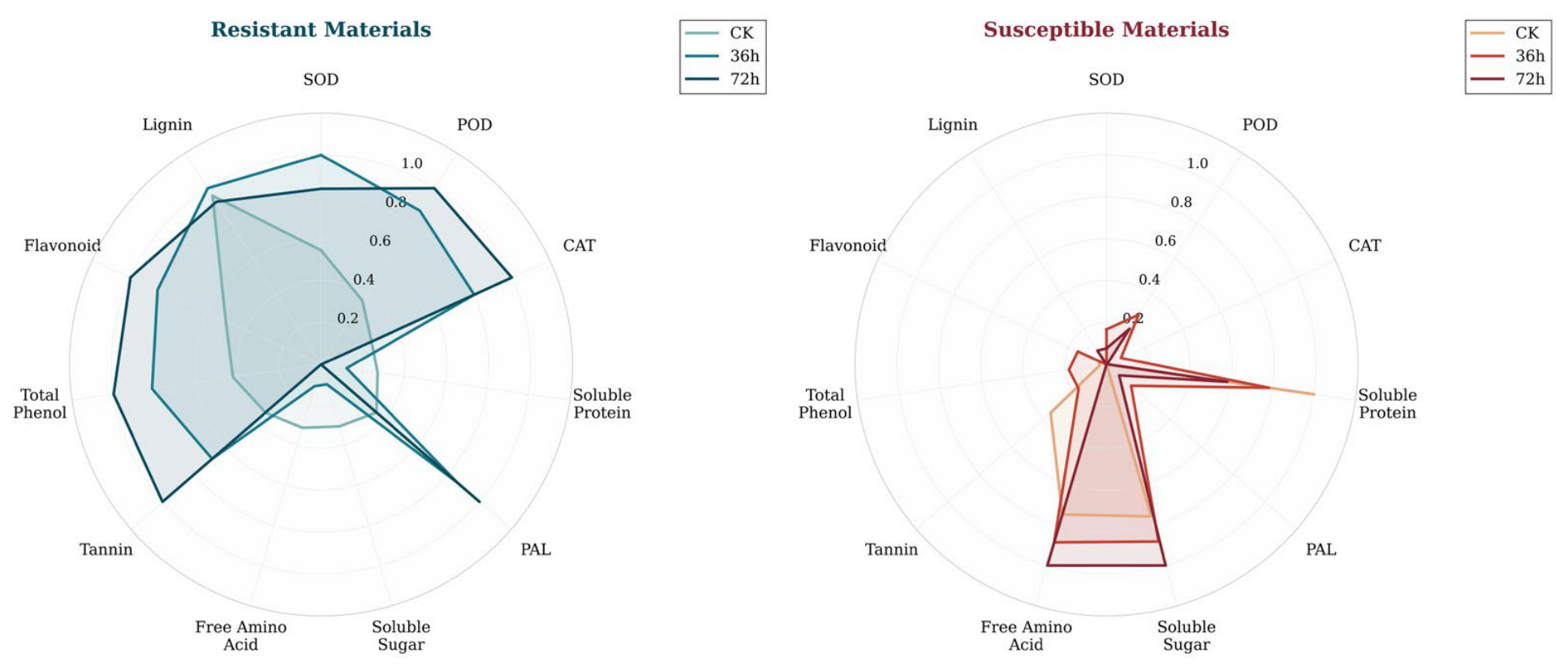
To further visualize the overall response patterns and temporal dynamics of resistant and susceptible accessions across the 11 physiological and biochemical indicators, data were normalized using the Min–Max method. This normalization eliminated differences in units and magnitudes among heterogeneous indicators, allowing antioxidant enzymes, secondary metabolites, and primary nutrients to be directly compared within the same radar chart (
Figure 6).
The radar charts of resistant accessions showed a typical defense-oriented profile. Under non-stressed conditions, the polygon area was moderate and relatively balanced. After 36 h of aphid feeding, the radar profile changed markedly and showed directional expansion. Specifically, axes representing defense-related indicators expanded outward strongly: CAT and POD approached the maximum normalized value, and SOD, PAL, tannins, total phenolics, flavonoids, and lignin also expanded significantly. In contrast, axes representing soluble sugars and free amino acids contracted toward the center. At 72 h, this asymmetric expansion was maintained or further strengthened, particularly for tannins and total phenolics, whereas nutrient-related indicators remained at low levels. These changes indicate that resistant accessions rapidly and persistently reallocated metabolic resources from primary physiological processes toward defense pathways, thereby establishing multilayered resistance barriers.
In contrast, susceptible accessions showed a passive response pattern characterized by nutrient imbalance. Under control conditions, their basal physiological profiles did not differ substantially from those of resistant accessions. However, after 36 h of aphid feeding, the direction of profile change was reversed. The increase in polygon area was mainly driven by abnormal expansion of the soluble sugar axis, whereas defense-related axes showed only slight changes or even contraction. At 72 h, this distorted profile became more pronounced. Soluble sugar and free amino acid axes extended to the highest values in the entire time series, whereas most defense-related axes collapsed toward the center or fell below control levels. This extreme asymmetry suggests that susceptible accessions failed to effectively activate defense networks under aphid stress and instead accumulated nutrients because of severe carbon and nitrogen metabolic disorder.
The radar-chart visualization was highly consistent with the quantitative bar-plot results. Resistant and susceptible accessions started from similar basal states but followed opposite response trajectories under aphid feeding. Resistant accessions achieved systemic resistance characterized by high defense and low nutrient availability through coordinated activation of antioxidant, phenylpropanoid, secondary metabolic, and physical barrier pathways. Susceptible accessions showed weakened defense responses and metabolic collapse, which unexpectedly improved the nutritional quality of the phloem for aphid feeding and reproduction. The pronounced expansion of the lignin axis in resistant accessions at 36 h and 72 h further highlights the contribution of lignin as a cell-wall physical barrier in faba bean aphid resistance.
3.4. Temporal Response Patterns and Metabolic Strategy Divergence Revealed by Heatmap Analysis
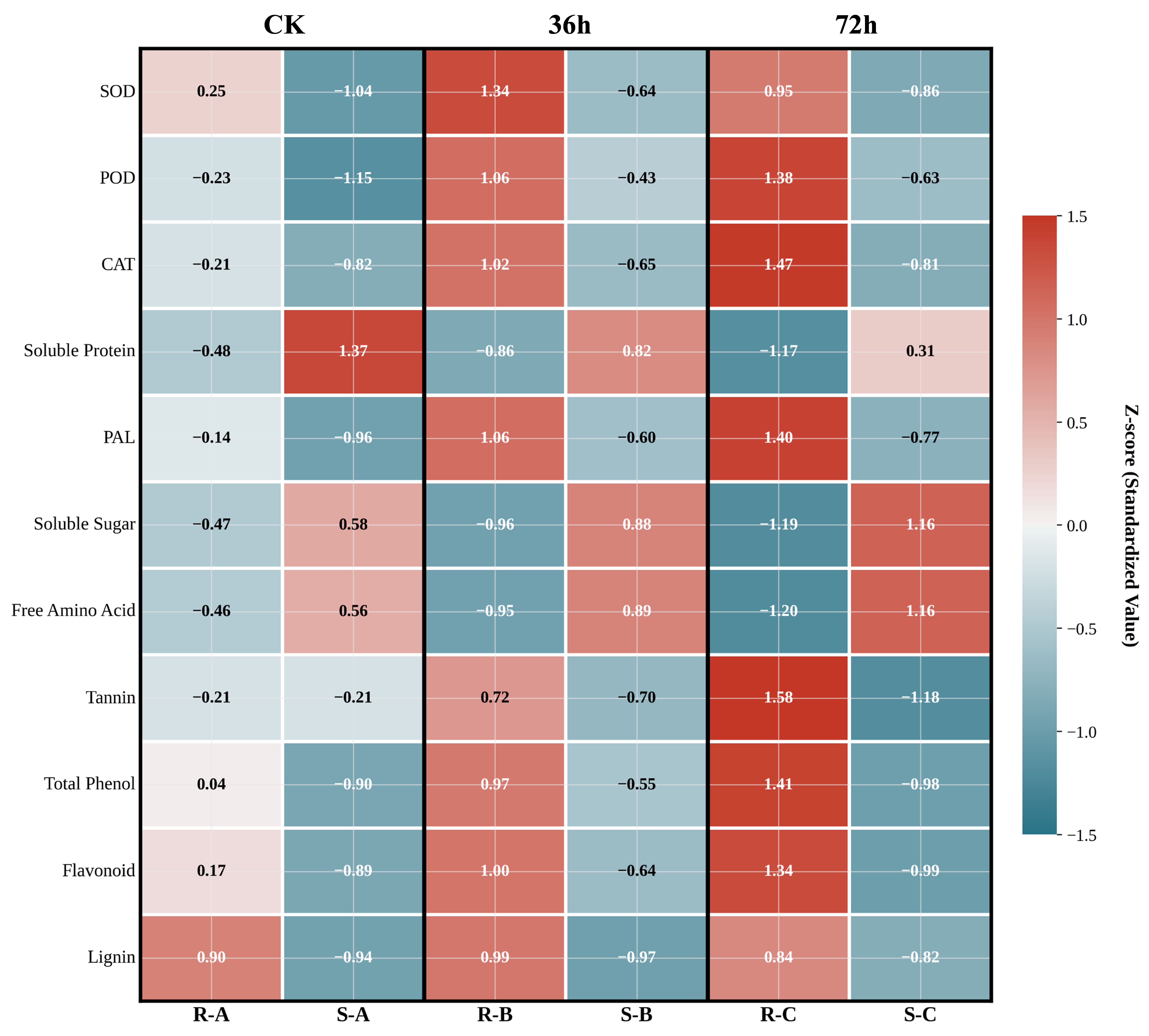
To further systematically display the overall differences in the 11 physiological and biochemical indicators between resistant and susceptible accessions, Z-score standardization was performed, and a temporal heatmap was constructed for resistant and susceptible accessions at CK, 36 h, and 72 h (
Figure 7). The heatmap used a color gradient to represent relative abundance, with red indicating values above the overall mean and cyan indicating values below the mean. Z-score standardization removed dimensional differences among heterogeneous indicators and clearly revealed the response characteristics of the two groups under aphid stress.
At the CK stage, most indicators showed relatively uniform light colors in both groups, indicating similar basal physiological states. However, slight metabolic tendencies were already visible. Resistant accessions showed slightly higher defense-related indicators and lower nutrient-related indicators, with lignin and SOD above the overall mean, whereas soluble nutrients such as soluble protein, soluble sugar, and free amino acids were below the mean. In contrast, susceptible accessions showed relatively higher soluble nutrient levels and lower activities of some defense enzymes.
After 36 h of aphid feeding, the heatmap showed a clear binary pattern. Resistant accessions strongly activated their defense systems, with SOD, POD, CAT, PAL, total phenolics, flavonoids, and lignin showing positive values and distinct red coloration. In contrast, susceptible accessions showed negative values for most defense indicators, reflecting delayed and insufficient defense responses. Meanwhile, soluble sugars and free amino acids increased in susceptible accessions but remained low in resistant accessions. At this stage, the heatmap clearly showed a complementary pattern between the defense axis and the nutrient axis, indicating opposite directions of metabolic resource reconfiguration.
At 72 h, the binary pattern became more polarized, and the color contrast reached its maximum. Resistant accessions maintained high levels of defense-related indicators, particularly tannins and CAT, indicating sustained activation of secondary metabolic barriers and antioxidant networks. In susceptible accessions, defense responses continued to weaken, whereas soluble sugars and free amino acids increased to the highest levels, suggesting severe pathological enrichment of carbon and nitrogen nutrients. In resistant accessions, soluble sugars and free amino acids remained at the lowest levels, indicating strict nutritional restriction. Soluble protein showed a special pattern at 72 h, with a significant decrease in resistant accessions, suggesting that metabolic resources may have been redirected from basal protein accumulation toward defense-related synthesis.
Overall, the heatmap confirmed the fundamental opposition in resource allocation strategies between resistant and susceptible accessions. Resistant accessions showed a defense-activation pattern, characterized by red vertical bands for defense-related indicators and cyan bands for nutrient limitation. Susceptible accessions showed a nutrient-imbalance pattern, with defense-related indicators remaining low and nutrient-related indicators becoming highly enriched. Notably, lignin displayed both constitutive and inducible defense characteristics in resistant accessions. Under CK conditions, lignin levels were already higher in resistant accessions than in susceptible accessions. After aphid feeding, lignin remained at high levels in resistant accessions but stayed low in susceptible accessions. This indicates that lignin not only participates in inducible defense but also contributes to basal structural resistance in faba bean. The heatmap results were consistent with the bar-chart and radar-chart analyses and further revealed the essential differences in physiological and biochemical response strategies between resistant and susceptible germplasm.
4. Discussion
Identification of elite insect-resistant germplasm is a prerequisite for overcoming bottlenecks in aphid-resistance breeding. Traditional evaluation of insect resistance in legume crops relies heavily on natural field infestation, but such single-dimensional phenotypic screening may obscure the true nature of plant–insect interactions [
28]. In this study, 937 faba bean germplasm accessions were screened under natural field aphid infestation, and resistant accessions, including HR and R types, accounted for only 12.5% of the population, indicating that elite aphid-resistant genetic resources are extremely scarce in faba bean. More importantly, after precise net-house inoculation of 150 representative accessions, most accessions previously classified as highly resistant or resistant in the field lost their resistance phenotype, and the resistance-maintenance rate was only 10.7%. This sharp contrast highlights the high false-positive rate associated with natural field screening. In real agricultural ecosystems, aphid dispersal and colonization exhibit strong spatial heterogeneity and aggregation effects. In addition, fluctuations in microclimatic conditions and random predation by natural enemies can cause some susceptible plants to appear resistant simply because they experience insufficient aphid pressure. This phenomenon may be considered an ecological escape [
28,
29]. Based on this understanding, the present study established a stepwise evaluation pipeline consisting of natural field screening, precise net-house re-screening, laboratory life-table validation, and physiological and biochemical characterization. By gradually tightening environmental control and increasing aphid pressure, this system effectively filtered out phenotypic errors caused by environmental heterogeneity and provided a reliable method for identifying genetically controlled aphid-resistant germplasm.
Quantification of host plant antibiosis requires consideration of both individual insect development and population reproduction. The age-stage, two-sex life table integrates developmental duration, survival rate, and stage-specific fecundity into standardized demographic parameters and is currently one of the most robust tools for evaluating the effects of environmental stress on insect fitness [
30]. In this study, aphids feeding on resistant accessions showed highly significant reductions in R
0, r
m, and total fecundity (F) (independent samples
t-test, all
p < 0.001). Because
rm reflects the maximum population growth potential under unrestricted conditions, its significant reduction suggests that resistant accessions can strongly suppress aphid population outbreaks in the field [
27].
The changes in life-table parameters likely reflect energy allocation tradeoffs in aphids feeding on unfavorable host plants. To survive on resistant accessions, aphids may need to activate costly detoxification pathways and expend more energy during stylet penetration and probing. These detoxification and feeding costs may reduce the energy available for ovarian development and embryogenesis, leading to reduced reproductive output [
31]. In addition, resistant accessions significantly prolonged mean generation time and population doubling time, indicating a clear developmental delay. According to the slow-growth–high-mortality hypothesis, prolonged developmental duration increases the exposure of nymphs to predators, parasitoids, and adverse environmental conditions, thereby enhancing the ecological value of resistant cultivars [
32].
Plant–aphid interactions represent a sophisticated chemical arms race. During probing and feeding, aphid stylets inevitably cause plant cell damage and induce ROS bursts. Moderate early ROS accumulation functions as an important immune signal, whereas excessive ROS can cause membrane lipid peroxidation and cell death [
33]. In this study, resistant accessions rapidly activated SOD, POD, and CAT within 36 h of aphid feeding and maintained high enzyme activities until 72 h. This coordinated antioxidant system not only prevented oxidative damage in resistant accessions but also supported structural defense. In particular, sustained POD activity may provide catalytic power for oxidative polymerization of lignin monomers, serving as a key bridge between antioxidant defense and structural reinforcement [
34].
Alongside ROS detoxification, resistant accessions significantly upregulated PAL activity, thereby inducing a strong phenylpropanoid-based defense response. The accumulation of total phenolics, tannins, and flavonoids in resistant accessions highlights the central role of secondary metabolic investment in antibiosis [
35]. From a toxicological perspective, polyphenols and tannins can act as strong protein precipitants. After ingestion by aphids, they may bind to digestive enzymes in the insect gut, reducing nutrient utilization [
36]. Specific flavonoids may also interfere with the metabolism of obligate aphid symbionts such as
Buchnera aphidicola, thereby disrupting the supply of essential amino acids to aphids [
37], but direct experimental evidence for this pathway in faba bean is currently lacking. Future studies incorporating metabolomic and microbiological assays are required to verify these candidate mechanisms in our specific plant accessions.
The mechanical strength of the cell wall represents one of the first physical barriers encountered by piercing–sucking insects during stylet penetration. To reach the phloem sieve elements, aphid stylets must repeatedly probe through the epidermis and mesophyll tissues; therefore, cell-wall reinforcement is a key determinant of basal aphid resistance [
38]. In recent years, lignin-mediated cell-wall fortification has been increasingly recognized as an important mechanism underlying aphid resistance in crops. For example, overexpression of the sorghum
CCoAOMT gene enhances resistance to sugarcane aphid by promoting lignin accumulation and related phenylpropanoid metabolism [
18]. Similarly, the apple laccase gene
MdLac18 enhances aphid resistance by regulating lignification [
19]. However, the role of lignin in faba bean aphid resistance has remained unclear. To the best of our knowledge, the present study provides the first evidence, from a temporal physiological and biochemical perspective, that lignin plays a dual role in faba bean resistance to aphids. Under non-infested conditions, resistant accessions had significantly higher lignin levels than susceptible accessions, indicating a constitutive structural barrier that may increase the mechanical resistance encountered during initial aphid probing. After sustained aphid feeding, lignin content was further induced in resistant accessions. Together with the marked increase in POD activity, these results suggest that resistant accessions may rapidly activate lignification and cross-linking of the middle lamella and primary cell walls at feeding sites. Such physical reinforcement may increase the energetic cost of stylet penetration and saliva enzyme secretion, reduce feeding efficiency, and physically isolate nutrient-rich cellular contents from aphid stylets, ultimately impairing aphid survival and population development [
39]. Therefore, genes involved in lignin biosynthesis and polymerization, such as
PAL,
CAD,
CCoAOMT, and
LAC, may represent promising targets for molecular breeding of aphid-resistant faba bean.
Phloem sap is the sole food source for aphids, and the concentrations of free amino acids and soluble sugars are major limiting factors determining aphid feeding preference and outbreak potential [
37]. The interaction between plants and aphids at the level of primary metabolism is essentially a competition for energy and nutrients. Susceptible plants may be manipulated by aphid salivary effectors, which interfere with phloem unloading and convert feeding sites into nutrient sinks, thereby inducing continuous import of carbon and nitrogen assimilates into damaged tissues [
40,
41]. In this study, susceptible accessions showed rapid increases in soluble sugars and free amino acids from 36 h to 72 h after aphid feeding. This pattern is consistent with host manipulation and provides a large nutrient supply for aphids, explaining the high fecundity observed in the life-table assays.
In contrast, resistant accessions exhibited strong resistance to metabolic manipulation. Under aphid stress, resistant accessions maintained soluble sugars and free amino acids at very low levels, forming a nutritional resistance mechanism [
7]. Notably, resistant accessions restricted free amino acids while maintaining relatively high soluble protein levels during early defense responses. This suggests that resistant accessions did not undergo passive protein degradation but instead reallocated nitrogen resources toward the de novo synthesis of defense-related proteins, such as antioxidant enzymes, PAL, and pathogenesis-related proteins [
42]. By restricting primary nutrient availability while enhancing secondary defense, resistant accessions not only reduced aphid reproductive potential from a nutritional perspective but also established strong physicochemical defense barriers.
Although this study identified several physiological and biochemical indicators strongly associated with aphid resistance, these findings are primarily based on phenotypic associations and metabolite correlations. The physical blocking effect of lignin-mediated defense should be further validated through detailed histochemical staining, such as phloroglucinol-HCl staining, combined with electrical penetration graph analysis to directly observe aphid stylet behavior in lignified tissues. In addition, the extremely resistant and susceptible accessions identified in this study, such as R1–R3 and S1–S3, provide ideal materials for subsequent molecular mechanism analyses. Future studies should combine transcriptomics and metabolomics to identify key genes regulating lignin biosynthesis, phenylpropanoid metabolism, and nutrient allocation. Functional validation using CRISPR/Cas9 genome editing or virus-induced gene silencing will help move faba bean aphid-resistance research from physiological correlation to molecular causality and ultimately support precision molecular breeding for insect resistance.
In conclusion, this study identified stable aphid-resistant faba bean germplasm through a stepwise screening and validation strategy. Resistant accessions suppressed aphid population growth by reducing reproduction and delaying development. Physiological and biochemical analyses revealed that aphid resistance was associated with coordinated activation of antioxidant enzymes, phenylpropanoid metabolism, secondary metabolite accumulation, lignin-mediated physical defense, and nutrient restriction. These findings provide valuable germplasm resources and mechanistic insights for aphid-resistance breeding in faba bean.