


Abstract
Global warming has intensified frequency and severity of extreme heat events, critically threatening cucumber (Cucumis sativus L.) production worldwide. To elucidate the mechanisms underlying heat tolerance, a comparative study was conducted between a heat-tolerant cultivar (N24) and a heat-sensitive cultivar (G30) under 43 °C stress. Using a combination of RNA sequencing and widely targeted metabolomics, we found that genotype N24 exhibited superior phenotypic at ability, characterized by reduced leaf wilting, lower membrane lipid peroxidation, and more stable reactive oxygen species (ROS) homeostasis. Transcriptomic profiling showed genes associated with photosynthesis and thylakoid membrane function were upregulated in N24, while hormone signaling pathways was enriched in G30. 93 N24-specific and 83 G30-specific differentially expressed genes were identified, including transcription factors such as HSF, bHLH, and bZIP. Widely targeted metabolomics further demonstrated that specific protective metabolite, such as 3-methyluric acid was accumulated and showed the ABC transporter pathway was also significant enriched in N24 plants. Integrated transcriptomic and metabolomic analysis suggested that ABC transporters may enhanced thermotolerance by facilitating the transport and subcellular compartmentalization of antioxidant metabolites. Collectively, these findings indicated heat tolerance in cucumber involved a synergistic regulatory network encompassing photosynthesis maintenance, transcription factor activation, and ABC transporter-mediated metabolic reprogramming. This study provides novel insights and valuable genetic resources for breeding heat-resilient cucumber varieties in a warming climate.
1. Introduction
Global climate change has intensified the frequency and severity of extreme heat events, posing a substantial threat to agricultural productivity and food security [1,2,3]. Heat stress profoundly impairs crop growth and yield. In tropical and subtropical regions, high temperatures commonly reduce the yield and commercial quality of vegetables such as tomato, pepper, cucumber, and eggplant [4,5]. Excessive heat damages the photosynthetic machinery, promotes membrane lipid peroxidation and protein denaturation, and causes the accumulation of reactive oxygen species (ROS) and hormonal imbalances [6,7,8,9,10]. These effects collectively result in physiological dysfunction and growth inhibition. Thus, elucidating the physiological and molecular mechanisms that confer thermotolerance in crops is of great importance for mitigating the adverse impacts of heat stress and for advancing molecular breeding aimed at enhancing heat tolerance.
Heat stress alters the composition and stability of intracellular molecules, disrupts membrane integrity and energy metabolism, and thereby impairs photosynthetic performance and carbon assimilation. Thylakoid membranes are highly sensitive to elevated temperatures, and Photosystem II (PSII) is particularly prone to heat-induced damage, resulting in suppressed photophosphorylation and reduced photosynthetic efficiency [10,11,12]. Concurrently, high temperatures enhance the generation and accumulation of reactive oxygen species (ROS), such as H2O2 and O2·−, which promote membrane lipid peroxidation. Increased levels of malondialdehyde (MDA) are commonly used as indicators of membrane damage [13,14]. Plants alleviate ROS-induced injury through morphological avoidance strategies-including adjustments in leaf orientation, stomatal behavior, and xylem conductivity-as well as by activating enzymatic and non-enzymatic antioxidant defense systems [15,16]. Nevertheless, when ROS accumulation surpasses the detoxification capacity, membrane permeability and photosystem stability deteriorate, leading to visible heat damage symptoms such as leaf curling, shriveling, and wilting [17,18].
At the molecular level, heat stress activates complex signal perception and transduction pathways that drive extensive transcriptional reprogramming and metabolic remodeling. These responses typically involve lipid and secondary metabolism, calcium signaling, protein phosphorylation, phytohormone signaling, RNA processing, and transcriptional regulation [19,20,21]. Heat shock transcription factors (HSFs) serve as central regulators of heat responses; among them, HSFA1s act as master switches that activate the expression of canonical heat-responsive genes [22,23]. Members of the WRKY transcription factor family-identified in species such as Arabidopsis, wheat, and pepper-also contribute to thermotolerance regulation [24,25,26]. The endoplasmic reticulum (ER) unfolded protein response (UPR) further participates in heat adaptation: bZIP28 undergoes cleavage in the Golgi apparatus before entering the nucleus to induce stress-responsive gene expression [27]. In addition, bHLH transcription factors such as PIF4 integrate light and temperature cues to modulate morphological acclimation and growth plasticity [28,29]. Together, these transcriptional regulatory networks maintain the structural and functional integrity of the photosynthetic apparatus, coordinate antioxidant defenses and metabolic reprogramming, and collectively enhance plant tolerance and adaptation to both acute and prolonged heat stress.
Dynamic metabolic adjustments constitute a vital compensatory strategy that enables plants to withstand high-temperature stress. Heat-induced metabolic reprogramming typically involves alterations in carbohydrates (soluble sugars and oligosaccharides), amino acids, organic acids, lipids and membrane phospholipids, as well as secondary metabolites such as flavonoids, phenylpropanoid derivatives, and polyphenols [30,31,32]. Osmoprotectants, including proline and glycine betaine, together with antioxidant metabolites such as ascorbate, glutathione, and flavonoids, are essential for maintaining cellular osmotic balance, redox homeostasis, and ROS detoxification [14,33,34]. Integrative transcriptomic and metabolomic analyses can elucidate the regulatory dynamics of metabolic pathways and gene–metabolite interactions, thereby providing mechanistic insights and identifying key metabolic nodes that contribute to thermotolerance.
Cucumber (Cucumis sativus L.), an important economic vegetable crop of the Cucurbitaceae family, is widely cultivated worldwide and prefers warm climates for growth. Its optimal growth temperature ranges from approximately 25–30 °C; when temperatures persistently exceed 35 °C, plant growth becomes inhibited, photosynthetic performance declines, and physiological functions are impaired [35,36]. High temperatures often lead to leaf wilting, chlorosis, flower abscission, and abnormal fruit development, ultimately resulting in reduced flowering and fruit set rates, lower individual fruit weight, and decreased marketable yield [21,37,38]. Significant phenotypic, photosynthetic, and redox homeostasis differences observed among various cultivars provide valuable references for identifying heat-tolerant genes and elucidating the molecular mechanisms of thermotolerance through comparative analysis of heat-tolerant and heat-sensitive materials [39,40].
In this study, one heat-tolerant cultivar (N24) and one heat-sensitive cultivar (G30) will be selected. Seedlings will be exposed to a time-course high-temperature treatment at 43 °C, during which phenotypic traits such as wilting will be systematically recorded. Indicators of oxidative damage and redox status, including MDA, H2O2, and O2·−, will be quantified. Time-series samples will be used for RNA-seq to characterize transcriptional dynamics, while widely targeted metabolomic profiling will be performed to delineate metabolic reprogramming. An integrated transcriptomic and metabolomic analysis will be conducted to identify key pathways and candidate genes associated with heat tolerance, thereby providing a theoretical foundation and molecular targets for subsequent functional validation and breeding of heat-tolerant cucumber cultivars.
2. Materials and Methods
2.1. Plant Materials and Growth Conditions
Two cucumber cultivars, including thermotolerant cucumbers “N24”, and thermosensitive cucumbers “G30” were grown in a standard culture chamber at the Crop Research Institute (Fuzhou China). Cucumber seeds with relatively consistent plumpness and uniformity were soaked in warm water at 50 °C for 15 min, then evenly sowed in a Petri dish with wet filter paper and germinated in a 28 °C incubator. After 2 days, the seeds with uniform germination degree were sowed in a nutrient bowl, filled with 90% peat soil and 10% perlite and vermiculite, and cultivated in a greenhouse (25/20 °C, 16/8 h of light/dark), with PAR 380 μmol m−2 s−1 and RH between 60–70%. Pest and water management were performed following standard management practices.
2.2. Temperature Measurement
After 14 days of cultivation, cucumber plants with the same shape, size, and growth potential were subjected to high-temperature treatment (HT) in a constant temperature incubator (43 °C) [14,32], PAR was set to 380 μmol m−2s−1 and RH was set to 60–70%. Each treatment was performed with 3 technique replications and 8 biological replicates. After 2 days of high-temperature treatment, the phenotypes were observed, and the heat injury level of each plant was determined according to the heat injury standard. The heat injury level is modified based on the standard [41]: 0, no injury; 1, a leaf drooped downwards; 2, two or three leaves drooped downwards, or one leaf shows yellowing, burning, and wilting; 3, three leaves are yellowing, burning, and wilting; 4, plants withering or even dying. The proportion of plants at each heat injury level and the heat injury index for each cultivar were calculated, The heat injury index:
2.3. Determination of Physiological Indexes
After heat treatment for cucumbers, the first leaf of each treatment was collected for physiological index measurements. The contents of malondialdehyde (MDA), hydrogen peroxide (H2O2), and superoxide anion (O2·−) were determined. The MDA content was measured using the thiobarbituric acid method [42], while H2O2 and O2·− were assayed using commercial reagent kits from Suzhou Comin Biotechnology. Each treatment consisted of three biological replicates with three technical replications.
Collect the second true leaf of each treatment for H2O2 and O2·− detection. The leaves were soaked in 3,3′-diaminobenzidine (DAB) solutions (SL1805, Coolaber, Beijing, China) (1 mg ml−1 DAB-HCl, pH 3.8) or nitroblue tetrazolium (NBT) (SL18061, Coolaber) (1 mg ml−1 NBT in 10 mM sodium azide and 10 mM phosphate buffer, pH 7.8) for 3 h in darkness and rinsed in ethanol for 0.5 h before detection of H2O2 and O2·− [43]. H2O2 quickly reacts with DAB under the catalysis of peroxidase to form brown substances, easily observable compounds in plant tissues. Meanwhile, O2·− is an oxygen-containing free radical that reduces NBT to water-insoluble blue substances easily localized in the leaves.
The chlorophyll fluorescence imager (Imaging PAM, Walz) was used to determine the chlorophyll fluorescence [14]. The plants were dark-adapted for 30 min. The fluorescence intensity was measured by applying a saturating pulse of 3000 μmol photons m−2 s−1 for 1 s, the fluorescence intensities were stored with a 12-bit resolution. The parameters consist of Fv/Fm (the maximum quantum yield of PSII photochemistry), Fq′/Fm′ (photosynthetic operating efficiency), qP (photochemical quenching), and ETR (electron transport rate).
2.4. RNA Extraction, Library Construction, and RNA-Seq
Total RNA was isolated and extracted using an Eastep® Super Total RNA Extraction Kit (LS1040, Promega, Beijing, China). Subsequently, messenger RNA (mRNA) was enriched using oligo beads, and ribosomal RNA (rRNA) was removed using a Ribo-Zero™ Magnetic Kit (MRZSR116, Epicentre Biotechnologies, Madison, WI, USA). The cDNA libraries were sequenced on the MGI sequencing platform by Metware Biotechnology Co., Ltd. (Wuhan, China). The sequences of all primers used in this study are listed in Supplementary Table S21.
2.5. RNA-Seq Data Analysis
The leaves of N24 and G30 cucumber plants under different high-temperature time points were collected in biological replicates for RNA-seq analysis. The RNA-seq library construction and subsequent data analysis were conducted following the procedures described in a previous study [13].
2.6. Metabolite Extraction and UPLC-MS/MS Analysis
The frozen leaf samples were lyophilized and ground into a fine powder using a grinding mill (JX-48, Shanghai Jingxin, Shanghai, China). Exactly 30 mg of the powder was weighed and extracted with 1500 μL of pre-cooled 70% aqueous methanol (containing internal standards) overnight at 4 °C with continuous shaking. After centrifugation at 12,000 rpm for 3 min, the supernatant was collected, filtered through a 0.22 μm microporous membrane, and transferred to a vial for UPLC-MS/MS (Applied Biosystems 4500 Q TRAP, SCIEX, Shanghai, China) analysis.
Metabolite profiling was performed using an ultra-performance liquid chromatography-tandem mass spectrometry (UPLC-MS/MS) system. Chromatographic separation was achieved on a Waters ACQUITY UPLC HSS T3 column (1.8 µm, 2.1 mm × 100 mm) maintained at 40 °C, with a flow rate of 0.40 mL/min and an injection volume of 4 μL. The mobile phase consisted of water with 0.1% formic acid (A) and acetonitrile with 0.1% formic acid (B). The gradient elution program was as follows: 0–5 min, 5% to 65% B; 5–6 min, 65% to 99% B, held for 1.5 min; then returned to 5% B in 0.1 min and re-equilibrated for 2.4 min.
Mass spectrometric detection was operated in the information-dependent acquisition (IDA) mode under both positive and negative ionization. The ion source parameters were set as follows: ion source gas 1 (GS1), 50 psi; ion source gas 2 (GS2), 60 psi; curtain gas (CUR), 35 psi; temperature (TEM), 550 °C; declustering potential (DP), ±80 V; and ion spray voltage floating (ISVF), ±5500 V in positive mode and −4500 V in negative mode.
3. Results
3.1. Morphological and Physiological Responses to of High-Temperature Stress in Heat-Tolerant and Heat-Sensitive Cucumber
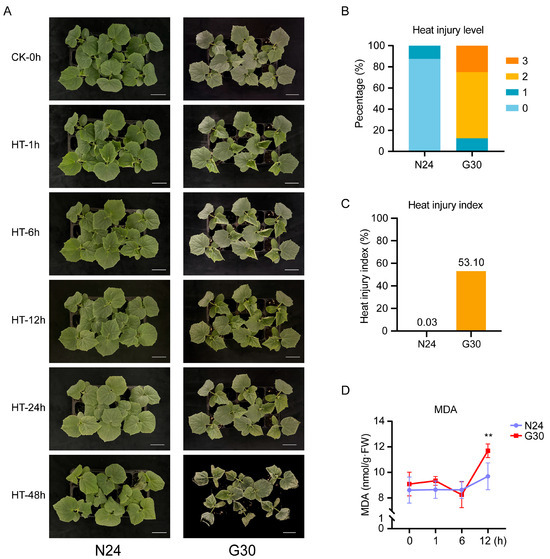
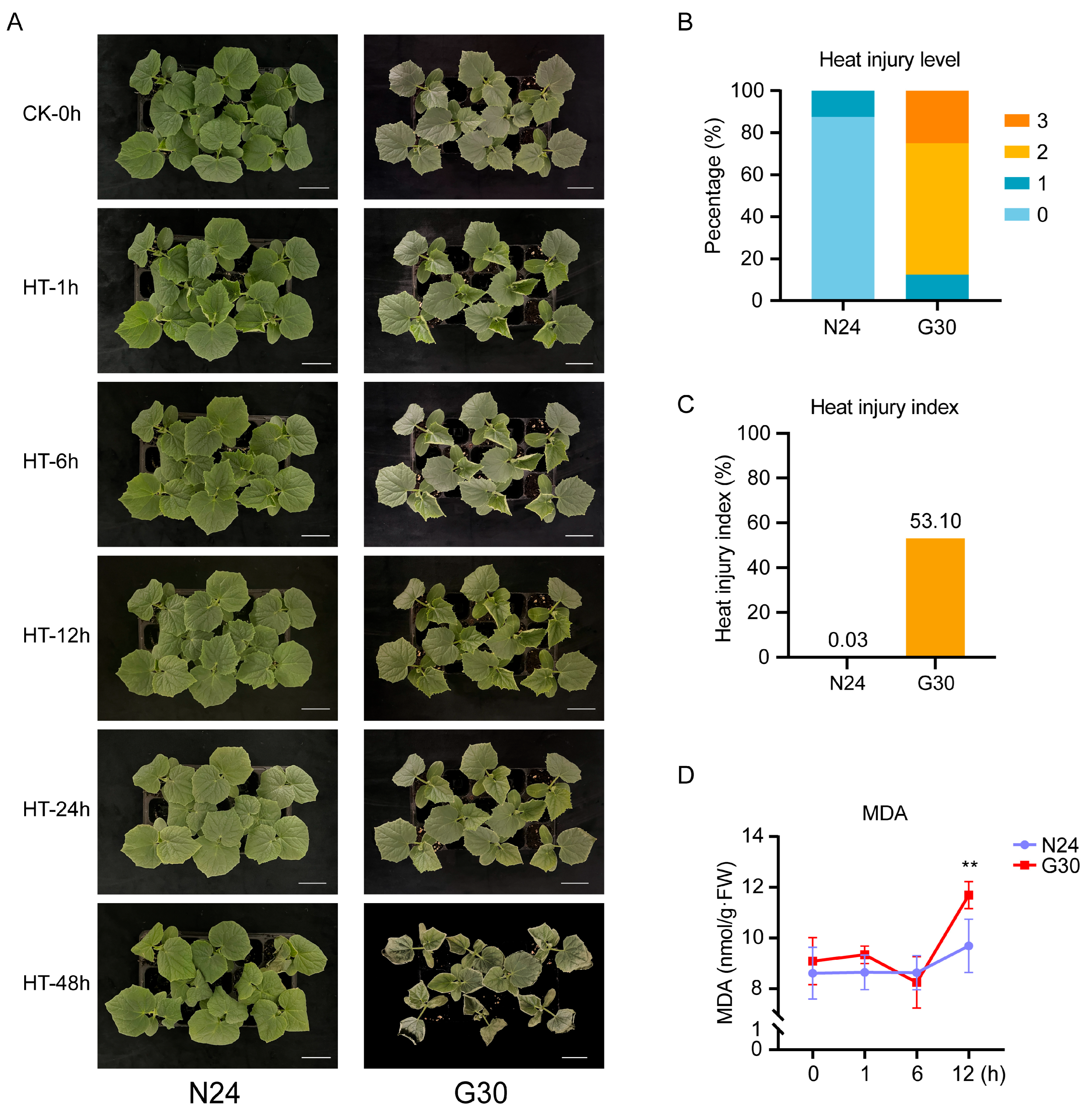
Heat-tolerant (N24) and heat-sensitive (G30) cucumber seedlings at the two-leaf stage were subjected to a high-temperature (HT) treatment (43 °C). Under normal condition, both cultivars displayed comparable growth phenotypes (Figure 1A).
Figure 1.
Phenotypic Observations of Plants Under Heat treatment. (A) Changes in cucumber of “N24” and “G30” under 43 °C heat treatment for 0, 1, 6, 12, 24, 48 h. (B) Heat injury level for cucumber of “N24” and “G30” under 43 °C heat treatment for 48 h. (C) Heat injury index for cucumber of “N24” and “G30” under 43 °C heat treatment for 48 h. (D) Changes in malondialdehyde (MDA) in “N24” and “G30” after 43 °C heat treatment for 0, 1, 6, 12 h. Scale bars in (A) represented 5 cm. Double asterisks indicate extremely significant (p < 0.01) (Student’s t-test). The data were presented as the Means ± SDs (n = 9).
Under HT condition, the second true leaf of N24 cucumber plants curled upward at 1 h and 6 h, while curling in G30 cucumber plants were observed at 1 h, 6 h, and 12 h. After 48 h of HT, distinct injury symptoms emerged: only one N24 plant showed mild leaf wrinkling, whereas all G30 plants exhibited severe leaf crinkling and wilting (Figure 1A). The heat injury level and index were significantly higher in G30 than in N24, indicating more severe heat damage in the sensitive cultivar (Figure 1B,C). The content of Malondialdehyde (MDA), a biomarker of membrane lipid peroxidation, increased significantly in G30 compared to N24 after 12 h of HT (Figure 1D). These results demonstrated that the heat-tolerant cucumber (N24) possesses superior thermotolerance and sustained growth capability under heat stress compared to the heat-sensitive cucumber (G30).
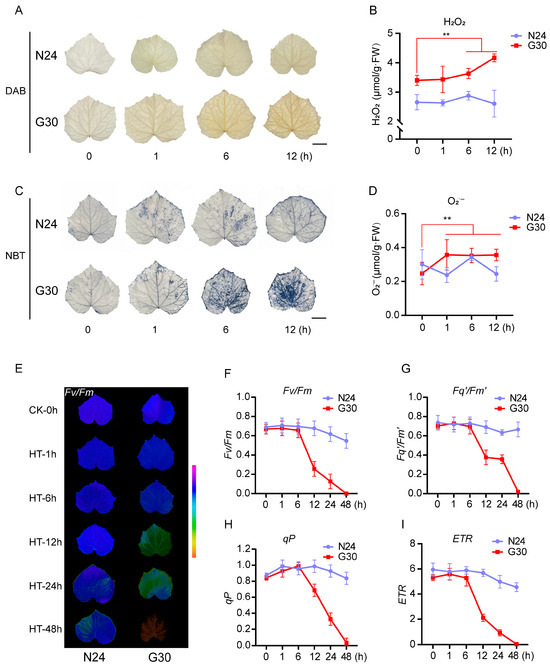
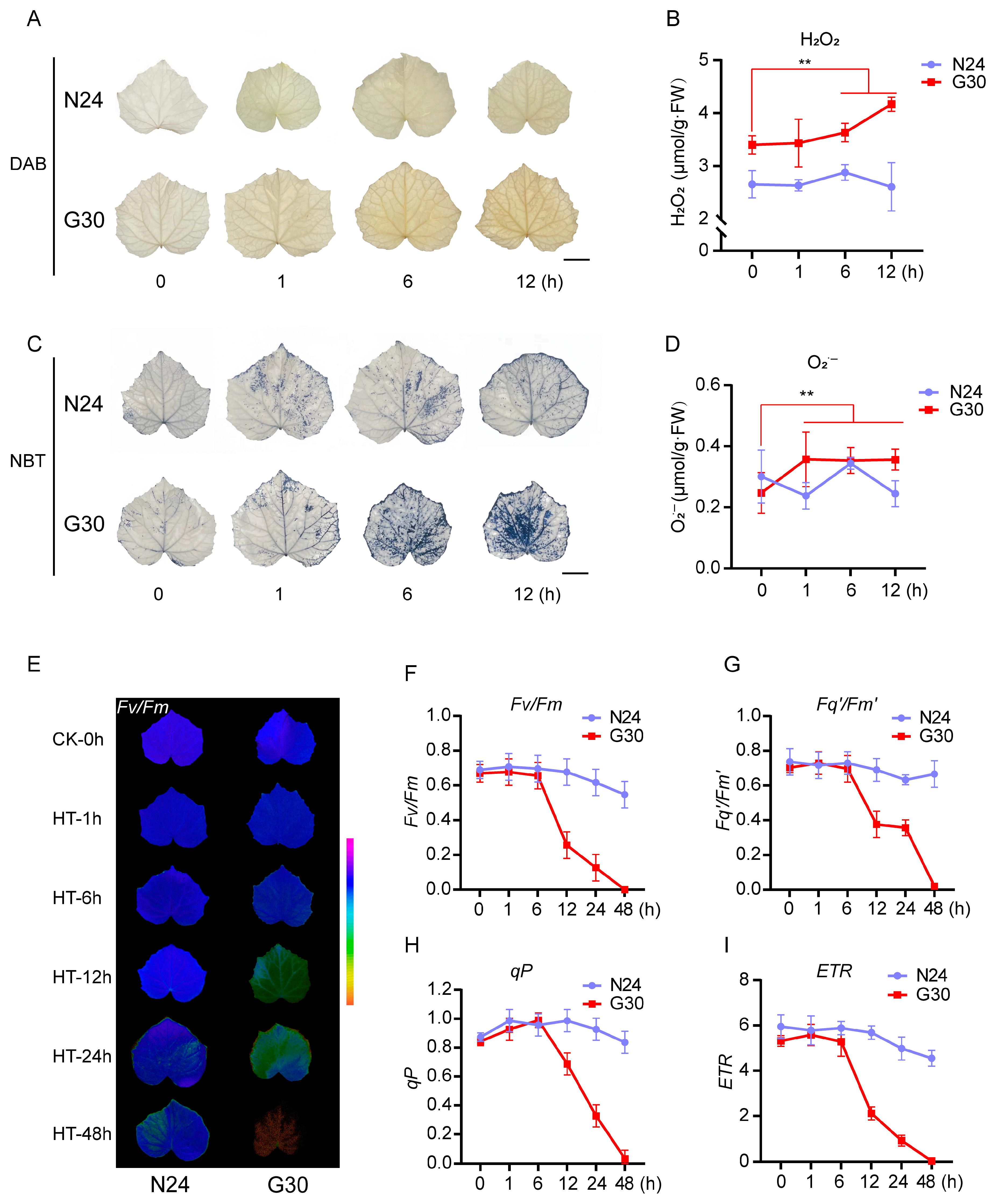
To assess reactive oxygen species (ROS)-induced damage, histochemical staining with 3,3′-diaminobenzidine (DAB) and nitroblue tetrazolium (NBT) was performed, and H2O2 and O2·− contents were quantified. DAB staining produced a brown precipitate in the presence of H2O2 and peroxidases. After 12 h of HT, the leaves of G30 plants exhibited more intense brown staining than N24, indicating higher H2O2 accumulation. This observation was consistent with quantitative data showing significantly elevated H2O2 content in G30 compared to its control (Figure 2A,B). NBT staining, which detects O2·− through the formation of a blue formazan precipitate, revealed stronger blue staining in G30 than in N24 at 6 h and 12 h. Quantitative analysis confirmed that O2·− level increased in both N24 and G30 plants under HT stress (Figure 2C,D). Together, these results demonstrated that prolonged heat exposure leads to excessive ROS accumulation and a disrupted cellular redox balance, which may contribute to the severe wilting phenotype observed at later stages.
Figure 2.
Oxidation and Photosynthetic Systems of Plants Under Heat treatment. (A) The leaves were stained with DAB to reveal H2O2 accumulation in “N24” and “G30” under heat treatment after for 0, 1, 6, 12 h. (B) The leaves were stained with NBT to reveal O2·− accumulation in “N24” and “G30” under heat treatment after for 0, 1, 6, 12 h. (C) Changes in H2O2 in “N24” and “G30” 43 °C under heat treatment after for 0, 1, 6, 12 h. (D) Changes in O2·− in “N24” and “G30” 43 °C under heat treatment after for 0, 1, 6, 12 h. (E) Chlorophyll fluorescence phenotypes (Fv/Fm) in “N24” and “G30” under heat treatment after for 0, 1, 6, 12, 24, 48 h. (F–I) Chlorophyll fluorescence values (Fv/Fm, Fq’/Fm’, qP, ETR) in “N24” and “G30” under heat treatment after for 0, 1, 6, 12, 24, 48 h. Scale bars represent 1 cm in (A,C). Double asterisks indicate extremely significant (p < 0.01) (Student’s t-test). The data were presented as the Means ± SDs (n = 9).
To assess the photosynthetic capacity of plant leaves following high-temperature treatment, chlorophyll fluorescence parameters were measured using a chlorophyll fluorometer. Fv/Fm (the maximum quantum yield of PSII photochemistry) serves as a key indicator of the photochemical efficiency and integrity of PSII. After heat treatment, the Fv/Fm value of the N24 remained largely stable, whereas that of the G30 decreased significantly after 12 h of stress (Figure 2E,F). Consistent results were observed for other fluorescence parameters, including photosynthetic operating efficiency (Fq′/Fm′), photochemical quenching (qP), and electron transport rate (ETR) (Figure 2G–I). These findings indicate that prolonged high-temperature treatment severely impairs the photosynthetic apparatus in the heat-sensitive cucumber G30, while N24 maintains robust photosynthetic functionality under the same stress conditions.
3.2. Divergent Transcriptomic Profiles Underpin Thermotolerance: Photosynthesis-Related Enrichment in a Heat-Tolerant Genotype Cucumber Plant
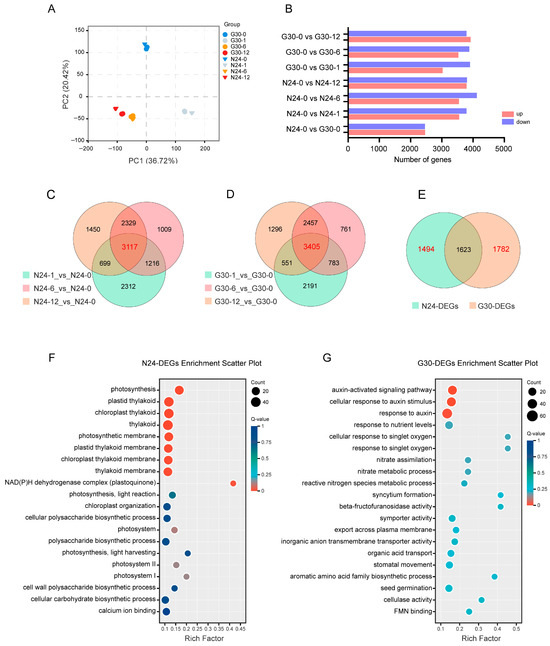
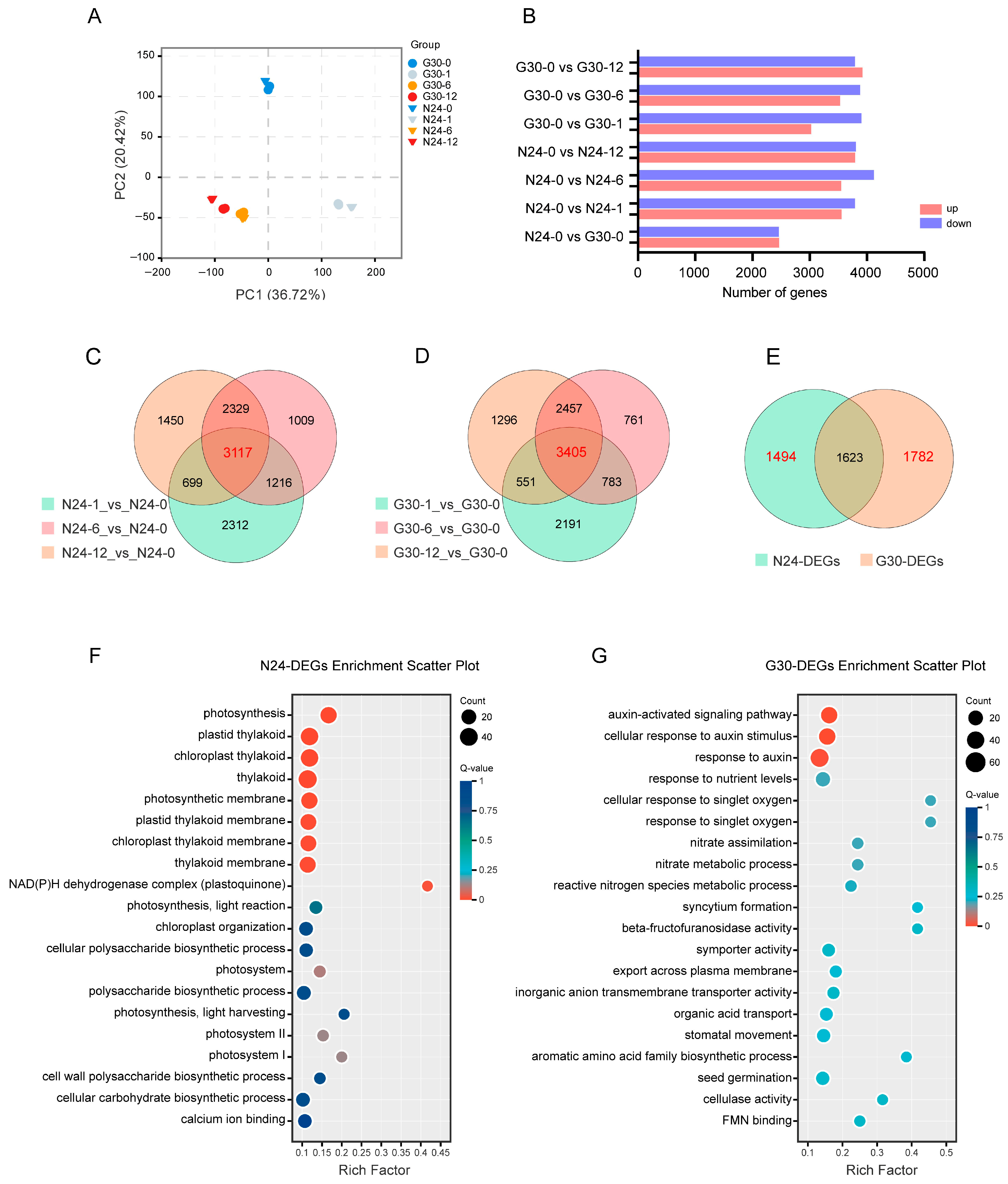
RNA sequencing was performed on leaves of N24 and G30 plants collected at 0, 1, 6, and 12 h post-HT treatment, Sample information and sequencing statistics were detailed in Table S1. Correlation analysis and principal component analysis (PCA) confirmed high reproducibility and overall data quality (Figure 3A and Figure S1). Under control conditions, few differentially expressed genes (DEGs) were detected between the two cucumber lines. In contrast, the number of DEGs increased markedly following HT stress in both cucumber lines (Figure 3B). Across all HT time points, 3117 and 3405 DEGs were identified in N24 and G30, respectively (Figure 3C,D). Venn analysis revealed 1623 shared DEGs, along with 1494 N24-specific and 1782 G30-specific DEGs (Figure 3E, Tables S2 and S3). Gene Ontology (GO) enrichment analysis of genotype-specific upregulated DEGs showed that “photosynthesis”, “plastid thylakoid”, and “chloroplast thylakoid” related pathways were enriched in N24 (Figure 3F, Table S4), whereas “auxin-activated signaling pathway”, “cellular response to auxin stimulus”, and “response to auxin” related pathway was enriched in G30 (Figure 3G, Table S5). These findings suggested that the two genotypes employed distinct transcriptional strategies in response to heat stress, and that upregulation of photosynthesis-related genes in N24 may underpin its superior thermotolerance.
Figure 3.
DEGs between the N24 and G30 Cucumber under Heat treatment. (A) PCA of transcriptome samples. (B) Number of up- and downregulated genes in the N24 and G30 cucumber. (C) Intersection of DEGs identified in N24. (D) Intersection of DEGs identified in G30. (E) Intersection of specific DEGs in N24 and G30. (F) GO enrichment analysis of responsive DEGs in N24. (G) GO enrichment analysis of responsive DEGs in G30.
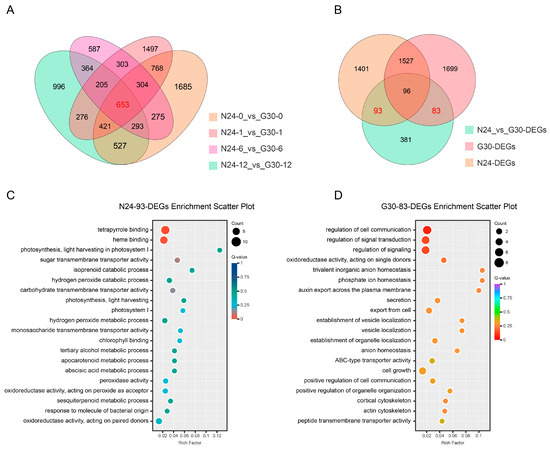
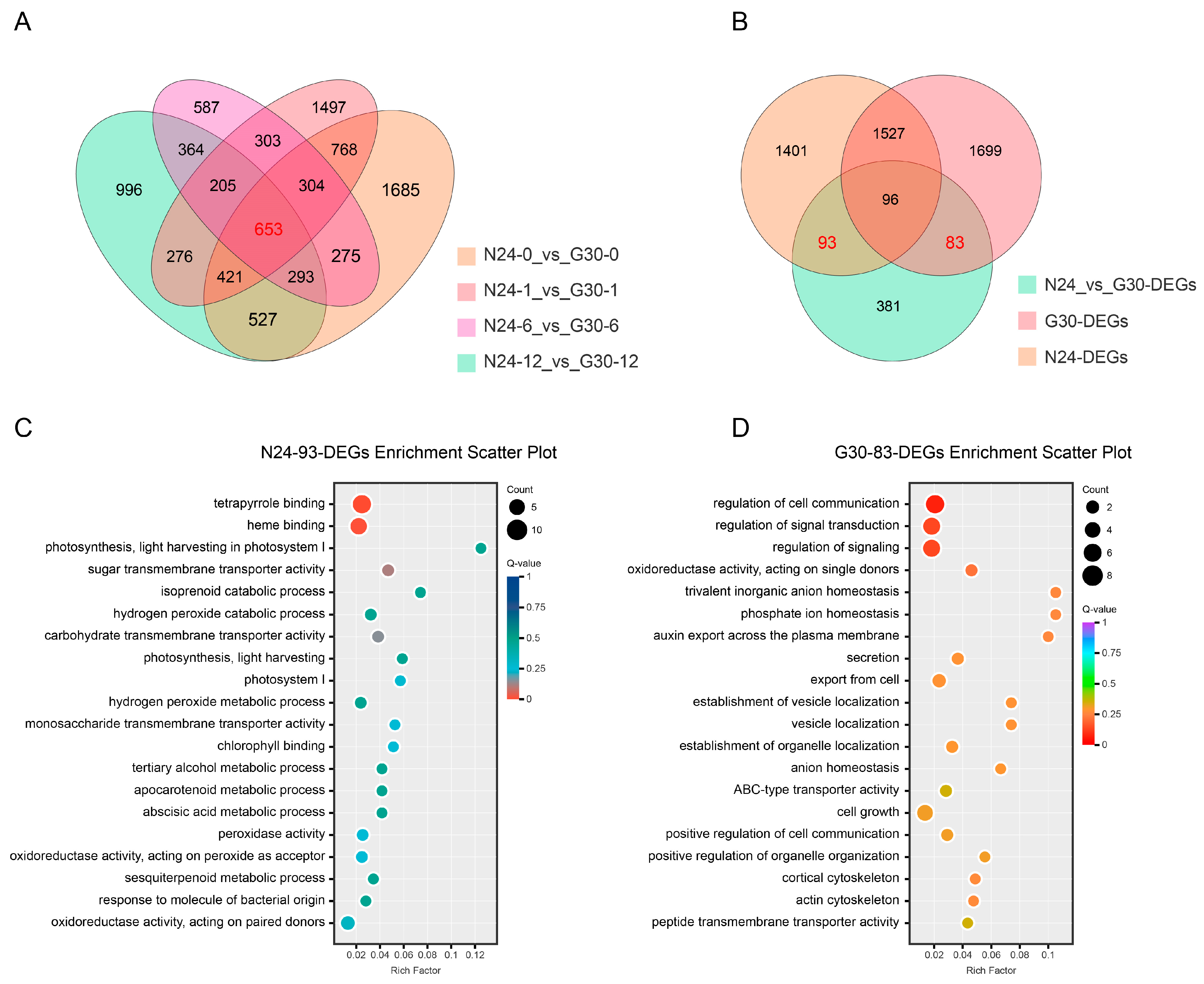
To identify the core transcriptional responses to heat stress, we compared DEGs across all time points. Venn analysis revealed that 653 DEGs were consistently shared across all HT stages (Figure 4A, Table S6). By intersecting these persistent genes with the genotype-specific DEG sets, we further pinpointed 93 and 83 candidate DEGs specific to the N24 and G30 genotypes, respectively (Figure 4B and Figure S2, Tables S7 and S8). These candidate genes are postulated to be potential key regulators underlying the divergent thermotolerance observed between the two genotype cucumber plants. Subsequent GO enrichment analysis showed that the 93 N24-specific candidate genes were enriched in “tetrapyrrole binding”, “heme binding”, and “photosynthesis, light harvesting in photosystem I” pathway (Figure 4C, Table S9). In contrast, the 83 G30-specific genes were predominantly enriched in “regulation of cell communication”, “regulation of signal transduction” and “regulation of signaling” pathway (Figure 4D, Table S10). Kyoto Encyclopedia of Genes and Genomes (KEGG) enrichment analysis indicated that DEGs from both genotype cucumbers were significantly enriched in several key pathways, including “MAPK signaling pathway—plant”, “Plant hormone signal transduction”, “Metabolic pathways”, and “Biosynthesis of secondary metabolites” (Figure S3, Tables S11 and S13). Weighted Gene Co-expression Network Analysis (WGCNA) identified multiple distinct gene modules, which were presented in a cluster dendrogram (Figure S4). These results implied that the preservation and activation of photosynthetic processes play was central to the superior heat tolerance of N24 genotype cucumber plants.
Figure 4.
Further Analysis of the DEGs between the N24 and G30 Cucumber under Heat treatment. (A) Intersection of the DEGs identified in the four stages of HT between the N24 and G30 cucumber. (B) Intersection of the specific DEGs in the four stages of HT between the N24 and G30 and specific DEGs in N24 and G30. (C) GO enrichment analysis of responsive specific DEGs in N24. (D) GO enrichment analysis of responsive specific DEGs in G30.
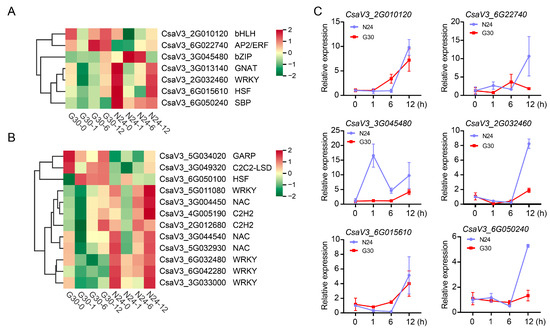
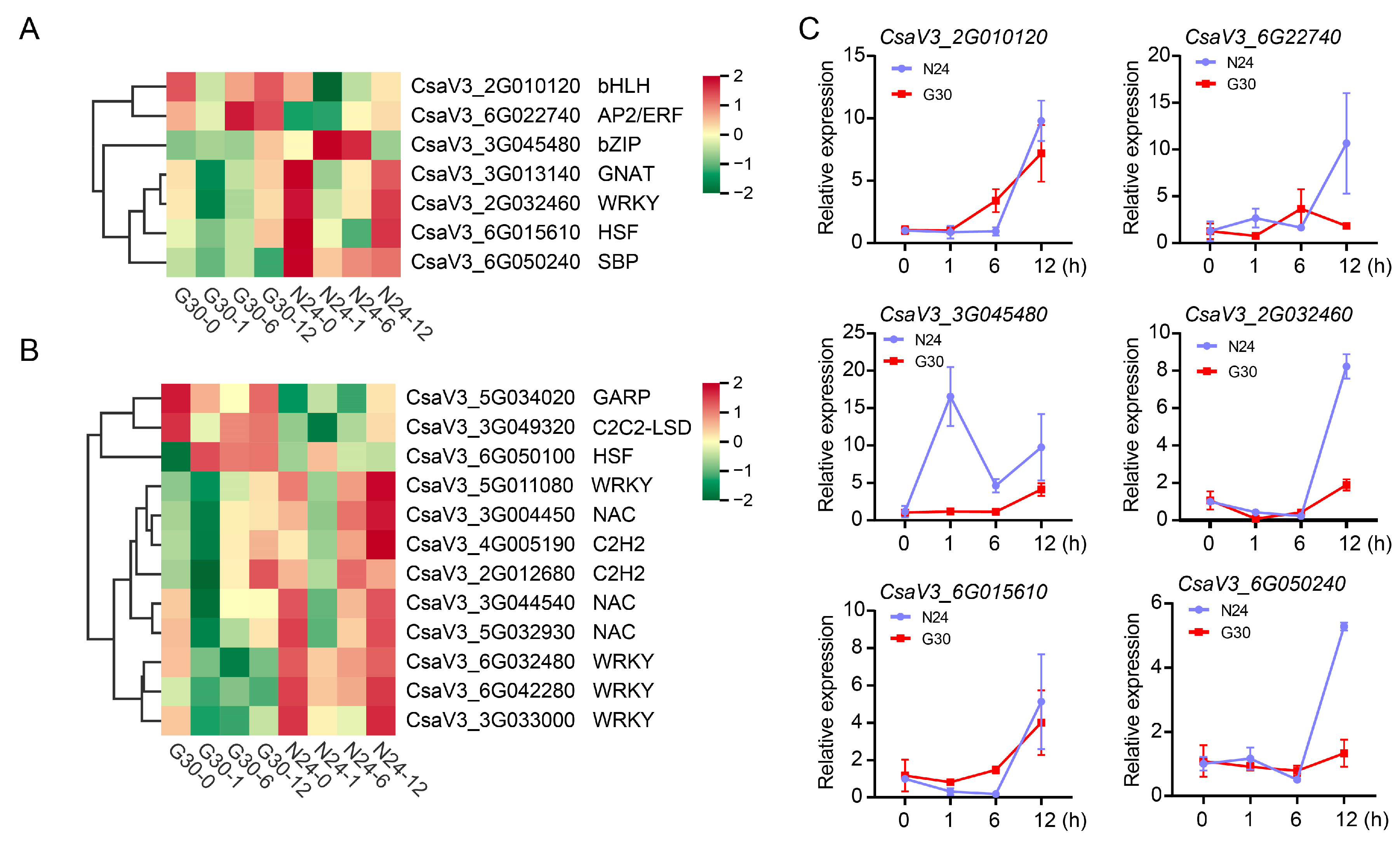
Transcription factors (TFs) were further screened among the candidate genes. Among the 93 N24-specific DEGs, six encoded TFs and one encoded a transcriptional activator (Figure 5A, Table S13); In the 83 G30-specific DEGs, 12 TFs were identified (Figure 5B, Table S14). These TFs encompassed members of the bHLH, AP2/ERF, bZIP, WRKY, and HSF families, suggesting their potential involvement in heat stress responsive transcriptional regulation. Subsequent qRT-PCR validation of the six N24-specific TFs showed significant upregulation of these genes under HT (Figure 5C), supporting their potential regulatory roles in heat tolerance.
Figure 5.
Expression pattern analysis of the genes under Heat treatment. (A) Expression patterns of TF genes in specific DEGs in N24. (B) Expression patterns of TF genes in specific DEGs in G30. Log2 (FPKM) values were used to construct the heatmap according to the results of a hierarchical clustering analysis. (C) Expression pattern analysis of TF genes in specific DEGs in N24 of the candidate genes after HT. Double asterisks indicate extremely significant (p < 0.01) (Student’s t-test). The data were presented as the Means ± SDs (n = 9).
3.3. Metabolomic Profiling Reveals Distinct Heat-Responsive Metabolites and ABC Transporter Pathway Enrichment in the Heat-Tolerant Cultivar
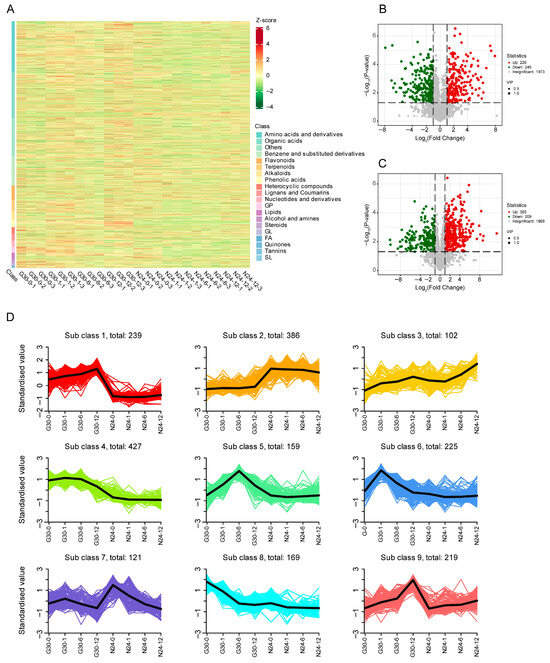
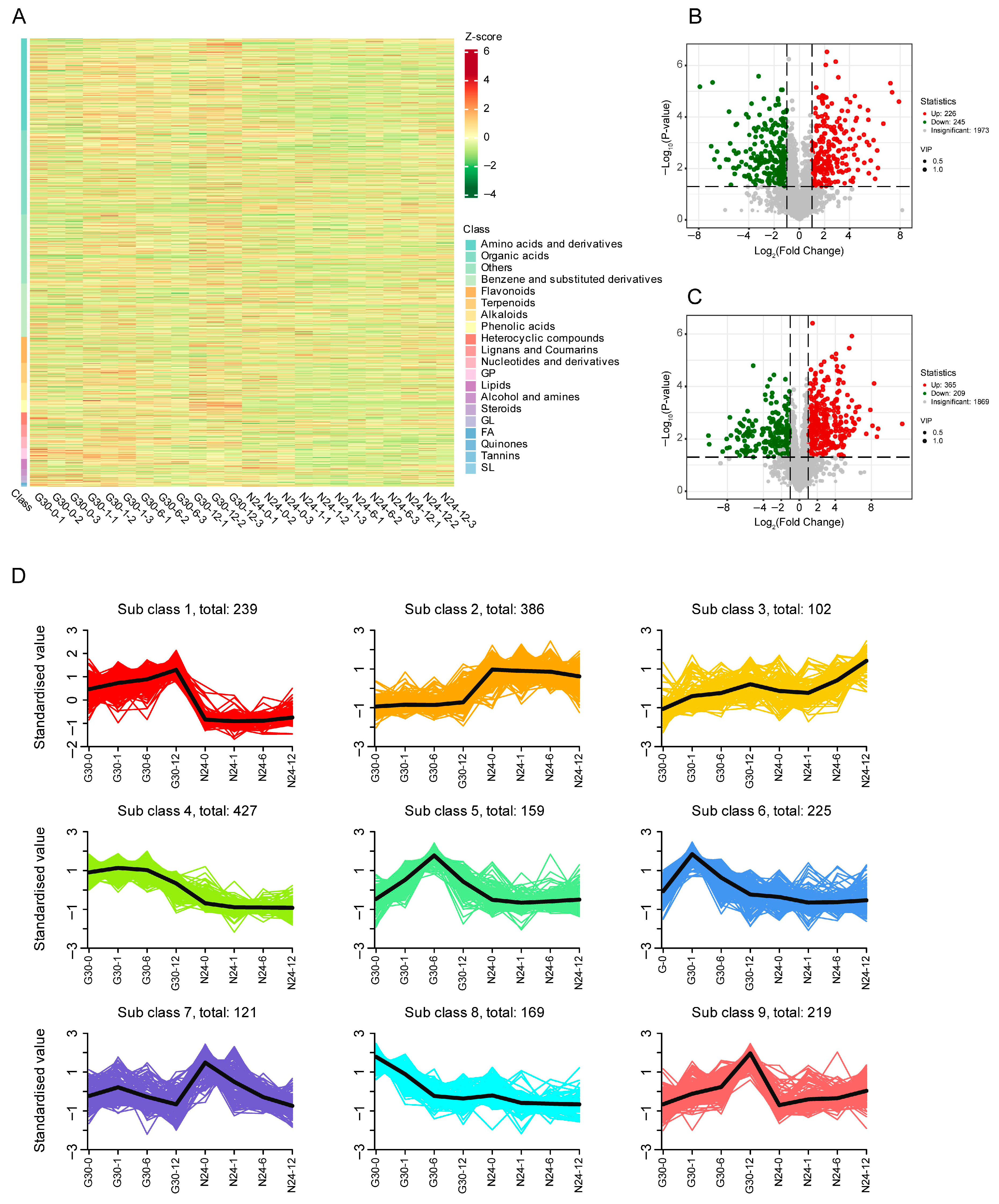
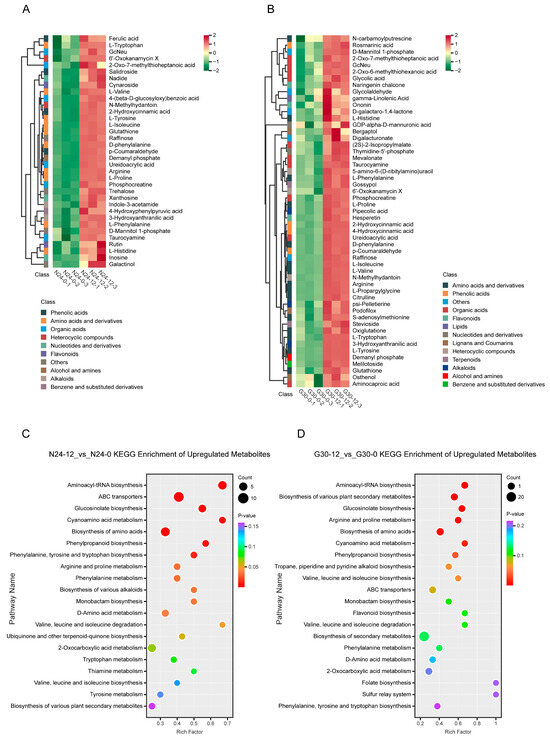
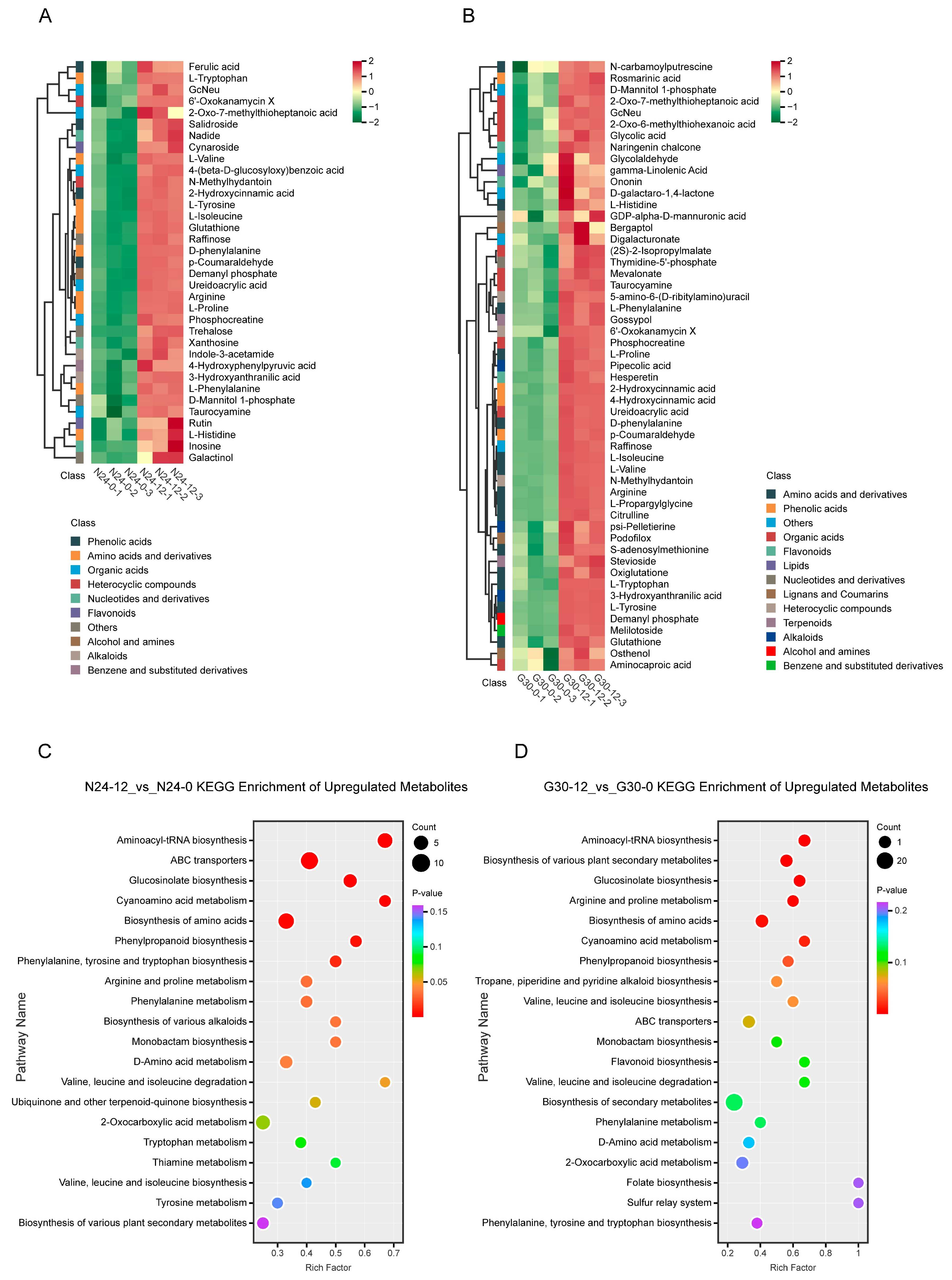
Widely targeted metabolomic profiling was performed using an ultra-performance liquid chromatography-electrospray ionization-tandem mass spectrometry (UPLC–ESI–MS/MS) system to characterize metabolite alterations between N24 and G30 cucumber plants under HT (Table S15). Heatmaps revealed distinct accumulation patterns of primary and secondary metabolite between the two genotype cucumber plants (Figure 6A). Volcano plot analyses further identified differential metabolites. Comparative analysis indicated that 226 metabolites were upregulated and 245 were downregulated in the N24 genotypes at the 12 h of HT (N24-12h) compared to the control (N24-0h), whereas metabolites 365 were upregulated and 209 were downregulated in the G30 genotypes at the 12 h of HT (G30-12h) compared to the control (G30-0h) (Figure 6B,C). Those differential metabolites were partitioned into ten distinct clusters based on their accumulation trends using K-means clustering analysis (Figure 6D). Notably, cluster 2 contained a larger number of metabolites enriched in N24 compared to G30, while metabolites in clusters 3 and 9 exhibited a marked and sustained accumulation increase specifically in N24 (Figure 6D), suggesting that these genotype-specific metabolic reprogramming events may contribute to heat tolerance.
Figure 6.
Metabolome profile analysis of cucumber under Heat treatment. (A) Heatmap of all detected metabolites in N24 and G30 under heat treatment after for 0, 1, 6, 12 h. (B,C) Differentially accumulated metabolites (DAMs) in N24 (B) and G30 (C) at heat treatment after for 12 h. (D) Clustering grouped the expression profiles of the metabolites in the N24 and G30 cucumber.
To identify the most robustly upregulated metabolites, the metabolites were ranked according to their identification confidence score. From the top-ranked high-confidence metabolites, we selected ten that also exhibited the most pronounced upregulation (Log2FC > 1) to generate Table 1 (for N24) and Table 2 (for G30). Among the upregulated metabolites, gentianose, ostruthin, and 3-methyluric acid were the most significantly accumulated in N24 genotypes (Table 1 and Table S16), while gentianose, dioleoyl phosphatidylcholine, and ostruthin were the top three upregulated metabolites in the G30 genotypes (Table 2 and Table S17). These findings indicated that the accumulation of gentianose and ostruthin represented a shared metabolic response to heat stress, whereas the specific upregulation of 3-methyluric acid in N24 genotypes may contribute to its enhanced thermotolerance. Heatmaps of upregulated metabolites in N24 and G30 are shown in Figure 7A,B, respectively. KEGG enrichment analysis of the upregulated metabolites revealed that “Aminoacyl-tRNA biosynthesis” and “ABC transporters” were predominantly enriched in N24 (Figure 7C, Table S18), while “Aminoacyl-tRNA biosynthesis” and “Biosynthesis of various plant secondary metabolites” were enriched in G30 (Figure 7D, Table S19). Notably, metabolites associated with the ABC transporters pathway were more prominent in N24. These results indicated that heat stress triggers both common and genotypes-specific metabolic reprogramming, and that those specific adaptations are likely fundamental to the observed differences in heat tolerance between two genotypes.
Table 1.
Top 10 Upregulated Metabolites (N24_12 vs. N24_0).
Table 2.
Top 10 Upregulated Metabolites (G30_12 vs. G30_0).
Figure 7.
Metabolome analysis of cucumber under Heat treatment. (A,B) Expression patterns of DAMs upregulated in N24 (B) and G30 (C) at heat treatment after for 12 h. (C,D) KEGG enrichment analysis of DAMs upregulated in N24 (B) and G30 (C) at heat treatment after for 12 h.
3.4. Integrative Transcriptomic–Metabolomic Analysis Identifies ABC Transporter–Associated Regulatory Networks Linked to Thermotolerance
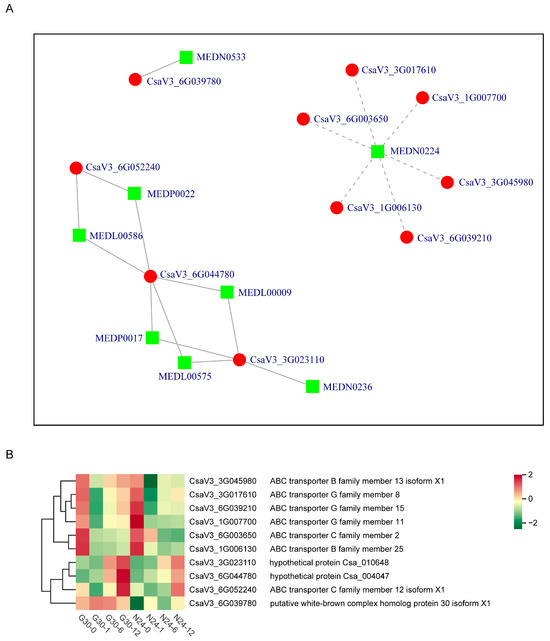
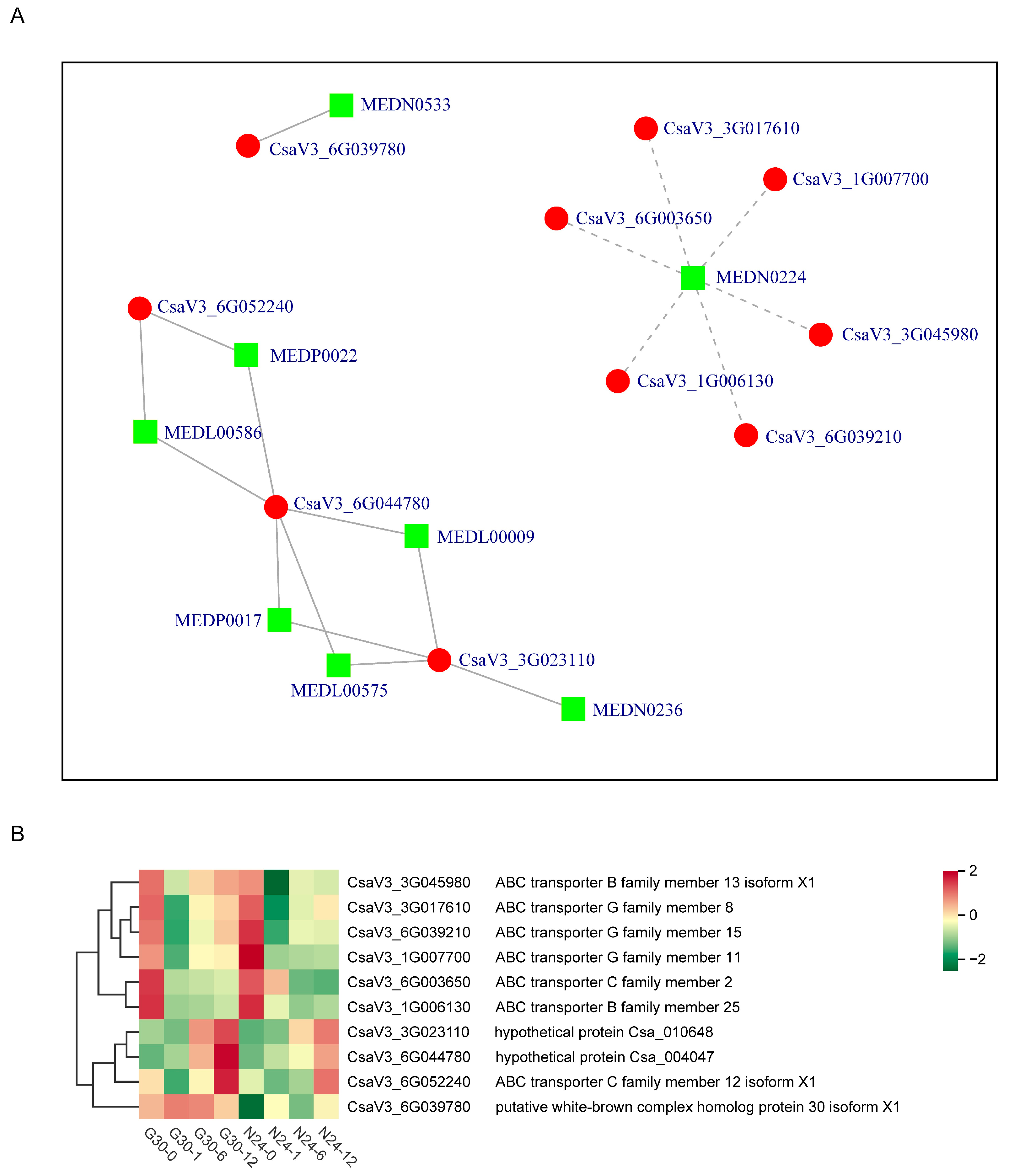
Given the cultivar-specific transcriptional and metabolic responses, integrative analysis was performed. N24 exhibited enrichment of the “ABC transporters” pathway; therefore, pathway Ko02010 was selected for co-expression network construction linking differential metabolites with gene expression changes (Figure 8, Table S20). Analysis revealed statistically significant correlations between ten ABC transporter-related genes and a set of heat-responsive metabolites. Transcriptomic heatmaps indicated that HT-upregulated genes CsaV3_3G023110, CsaV3_6G044780, CsaV3_6G052240, and CsaV3_6G039780 showed the most prominent associations with metabolite accumulation patterns. The co-expression pattern of these specific transporters with metabolites, such as antioxidants, suggests a functional synergy where their concerted upregulation may facilitate the transport or subcellular partitioning of protective compounds, thereby contributing to enhanced thermotolerance in N24.
Figure 8.
Integrated analysis of genes and metabolites of ABC transporter. (A) Integrated analysis of genes and metabolites of ABC transporter pathway (Ko02010). (B) Expression patterns of ABC transporter genes in Ko02010 pathway.
4. Discussion
Heat stress is one of the major abiotic factors limiting sustainable crop production. It inhibits plant growth through multiple pathways, including damage to the photosynthetic apparatus, induction of oxidative stress, and disruption of metabolic homeostasis [5,14,32,44]. In this study, the physiological and molecular responses of a heat-tolerant (N24) and a heat-sensitive (G30) cucumber cultivar were systematically compared under high-temperature stress. Transcriptomic and metabolomic analyses were conducted to identify heat tolerance-related genes in the leaves of the two cultivars after 0, 1, 6, and 12 h of exposure to 43 °C.
Under short-term heat stress, plants typically display upward leaf curling, marginal yellowing, and stomatal closure to limit water loss; prolonged exposure leads to desiccation, wilting, and inhibition of shoot growth [14,15,16]. Similar morphological changes were observed in this study. Cultivar N24 showed transient leaf curling at 1 h and 6 h of heat exposure, while cultivar G30 maintained persistent curling and developed severe wilting at later stages (Figure 1A). Notably, transient leaf curling is a rapid morphological adjustment to high temperature rather than direct heat damage; membrane system damage and ROS accumulation are key triggers of cellular dysfunction and plant decline [45,46]. The higher heat injury index and MDA content in cultivar G30 indicated more pronounced membrane damage (Figure 1D). Excessive accumulation of reactive oxygen species (ROS), particularly H2O2 and O2·−, likely exceeded the antioxidant capacity of G30, triggering membrane lipid peroxidation and protein dysfunction. This oxidative damage disrupted membrane integrity and guard cell activity, resulting in water loss and loss of turgor pressure. By contrast, cultivar N24 effectively maintained ROS homeostasis, reducing oxidative injury and delaying wilting (Figure 2). These findings suggest that cultivar N24 possesses stronger thermotolerance at both morphological and cellular levels through enhanced redox regulation and membrane stability.
Heat stress often impairs photosynthetic function by damaging thylakoid membranes, representing a key factor constraining crop thermotolerance [9,47]. High-temperature treatment typically leads to a significant decline in chlorophyll fluorescence parameters in cucumber, directly reflecting photosynthetic impairment [12,14,47]. Previous studies have shown that under heat stress, more members of the bHLH transcription factor family are significantly upregulated in heat-tolerant cucumber materials [40]. For instance, the representative bHLH transcription factor CsSPT regulates the high-temperature response by recruiting photosynthesis-related components, signaling molecules, and other transcription factors [40]. In this study, the heat-tolerant material N24 effectively maintained Photosystem II (PSII) activity under prolonged high-temperature stress, with chlorophyll fluorescence parameters (Fv/Fm, Fq′/Fm′, qP and ETR) significantly higher than those in the heat-sensitive material G30 (Figure 2E–I). This physiological observation was corroborated by transcriptomic findings: differentially expressed genes specifically upregulated in N24 were significantly enriched in functional terms related to “photosynthesis” and “thylakoid membrane” (Figure 3F). Furthermore, multiple transcription factors, including bHLH, were consistently highly expressed in N24, suggesting that they may form a coordinated response network by regulating photosynthesis-related genes (Figure 5A,C). In summary, N24 can stabilize photosynthetic machinery and activate a regulatory network centered on photosynthesis-related genes, thereby synergistically maintaining photosynthetic performance under heat stress, which lays an important physiological and molecular foundation for its thermotolerance.
In addition to mechanisms related to photosynthesis, plant responses to heat stress involve transcriptional reprogramming and coordinated regulation by hormone signaling. Studies have shown that multiple transcription factor families, such as HSF, WRKY and bZIP-play key regulatory roles in heat responses [44,47]. In the present study, members of these families also showed significant upregulation under high-temperature treatment, suggesting that they may work together to regulate downstream genes and contribute to the construction of a thermotolerance-related transcriptional network (Figure 5). Furthermore, differentially expressed genes in both genotypes were significantly enriched in pathways related to “Plant hormone signal transduction”, “Metabolic pathways”, and “Biosynthesis of secondary metabolites” indicating that hormone signaling may provide a fundamental source of basal resistance across different genotypes (Figure S3, Tables S11 and S13). This aligns with previous findings that hormones such as ABA and JA participate in thermotolerance by modulating stomatal behavior, antioxidant systems, and metabolic homeostasis [48,49,50]. Therefore, future research could further elucidate the interactive networks between transcription factors and hormone signaling, systematically clarifying the multilayered regulatory mechanisms underlying heat tolerance in cucumber.
Metabolomic analysis demonstrated extensive metabolic reprogramming in response to heat stress. In line with previous studies, heat-tolerant cucumbers accumulated higher levels of flavonoids and phenolic acids, whereas heat-sensitive lines accumulated more lipids and amino acid derivatives [32]. Distinct metabolic profiles were observed between cultivars N24 and G30, among which 3-methyluric acid was significantly upregulated in N24, suggesting a potential role as a novel antioxidant contributing to redox homeostasis (Table 1). N24otably, the ABC transporter pathway was specifically enriched in the heat-tolerant cultivar N24 (Figure 7C). ABC transporters have been implicated in maintaining membrane integrity, regulating lipid composition, facilitating metabolite transport, and mediating ABA-dependent signaling under heat stress [51]. They also participate in the protection of photosystems I and II by regulating thylakoid lipid composition and metabolite allocation [9,13,52,53], thereby contributing to the maintenance of photosynthetic efficiency under high temperature. Consistently, the expression of multiple ABC transporter genes in this study was strongly correlated with metabolite accumulation patterns, suggesting a coordinated role in antioxidant metabolite compartmentalization and detoxification (Figure 8B). This finding highlights the critical contribution of ABC transporter–mediated metabolite transport and spatial distribution to cucumber thermotolerance, offering new insight into how metabolic reorganization supports and reinforces photosynthetic protection under high temperature.
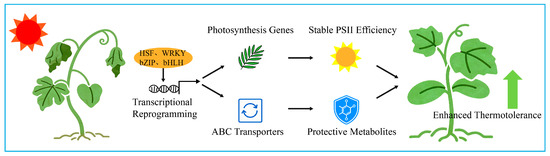
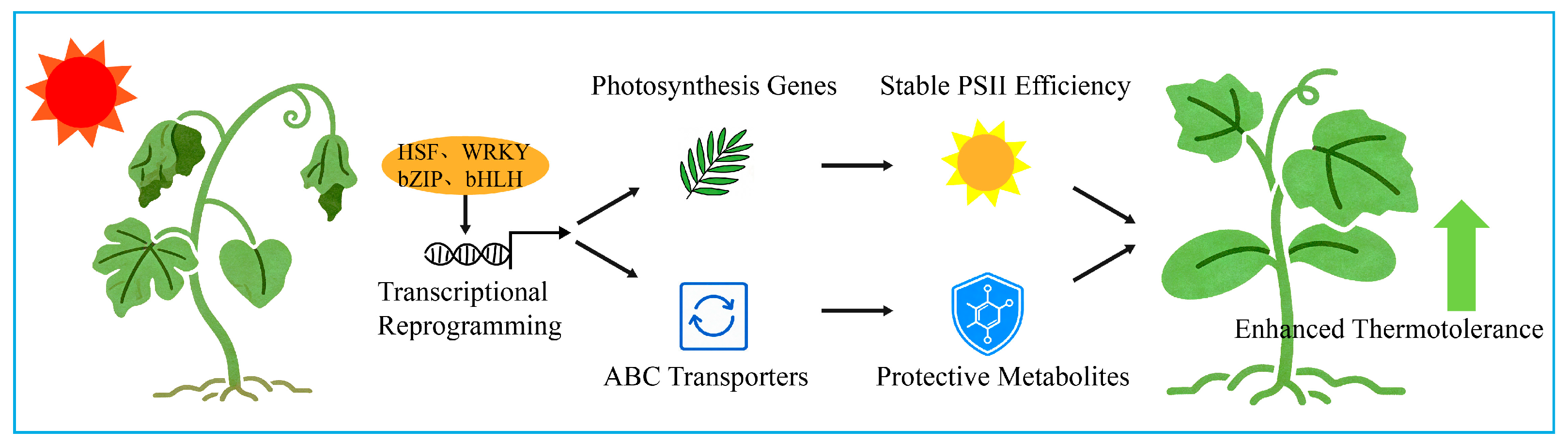
In summary, the integrated transcriptomic and metabolomic analyses revealed that the heat-tolerant cucumber cultivar N24 mitigates heat-induced oxidative damage and metabolic disruption by activating photosynthesis-related genes, regulating key transcription factors (HSFs and bHLHs), and remodeling the ABC transporter-associated metabolic network. We propose a coordinated mechanism underlying this thermotolerance (Figure 9). Upon heat stress, the plant initiates transcriptional reprogramming, which simultaneously activates the expression of key photosynthesis-related genes and ABC transporters. Concurrently, the enhanced expression of photosynthesis-related genes aids in preserving stable PSII photochemical efficiency. The upregulated ABC transporters likely contribute to thermotolerance by facilitating the transport or subcellular compartmentalization of protective metabolites (e.g., 3-methyluric acid), thereby helping to attenuate oxidative damage. These coordinated responses ultimately lead to enhanced thermotolerance. These mechanisms collectively enhance thermal resilience at multiple levels. Future research should focus on functional validation of candidate transcription factors and ABC transporter genes and explore their specific contributions to cucumber thermotolerance using proteomic and transgenic approaches. Such efforts will deepen the mechanistic understanding of plant heat adaptation and provide molecular targets for breeding heat-tolerant cucumber cultivars.
Figure 9.
A coordinated transcriptional and metabolic reprogramming network enhances heat tolerance in cucumber.
Supplementary Materials
The following supporting information can be downloaded at https://www.mdpi.com/article/10.3390/agronomy16010052/s1. Figure S1: Correlation analysis of transcriptome samples; Figure S2: A Heatmap of the 93 N-Specific DEGs, B Heatmap of the 83 G-Specific DEGs; Figure S3: A KEGG Enrichment Analysis of the 93 N-Specific DEGs, B KEGG Enrichment Analysis of the 83 G-Specific DEGs; Figure S4: WGCNA Module Dendrogram; ‘Table S1: Sample List and RNA-seq Statistics. Table S2: A Set of 1494 N-Specific DEGs Identified from Venn Diagram Analysis. Table S3: A Set of 1782 G-Specific DEGs Identified from Venn Diagram Analysis. Table S4: GO Enrichment Analysis of the 1494 G-Specific DEGs. Table S5: GO Enrichment Analysis of the 1782 G-Specific DEGs. Table S6: A Set of 653 Common DEGs Shared Across All Treatment Stages from Venn Analysis. Table S7: Expression of the 93 N-Specific DEGs Identified from Venn Diagram Analysis. Table S8: Expression of the 83 G-Specific DEGs Identified from Venn Diagram Analysis. Table S9: GO Enrichment of the 93 N-Specific DEGs Identified from Venn Diagram Analysis. Table S10: GO Enrichment of the 83 G-Specific DEGs Identified from Venn Diagram Analysis. Table S11: KEGG Enrichment of the 93 N-Specific DEGs Identified from Venn Diagram Analysis. Table S12: KEGG Enrichment of the 83 G-Specific DEGs Identified from Venn Diagram Analysis. Table S13: Expression of the 7 N-Specific Transcription Factors. Table S14: Expression of the 12 G-Specific Transcription Factors. Table S15: List of Detected Metabolites: Index. Compounds. and Quantitative Data. Table S16: List of Differential Metabolites in N_12 vs. N_0: Index, Compounds, and Quantitative Data. Table S17: List of Differential Metabolites in G_12 vs. G_0: Index, Compounds, and Quantitative Data. Table S18: KEGG Enrichment Analysis of Differential Metabolites in N_12 vs. N_0. Table S19: KEGG Enrichment Analysis of Differential Metabolites in G_12 vs. G_0. Table S20: Annotated List of Gene-Metabolite Correlations in Pathway Ko02010. Table S21: qRT-PCR primers.
Author Contributions
Conceptualization, Y.L.; Methodology, Y.L.; Software, Y.L.; Validation, Y.L.; Formal analysis, H.Z.; Investigation, H.Z.; Resources, H.Z.; Data curation, H.Z.; Writing—original draft, B.C. and S.Y.; Writing—review & editing, S.Y.; Visualization, B.C. and S.Y.; Supervision, B.C. and S.Y.; Project administration, H.Z.; Funding acquisition, H.Z. All authors have read and agreed to the published version of the manuscript.
Funding
This research was funded by the Public Welfare Scientific Research Institutes Special Program of Fujian Province, grant number 2024R1030002, “Elite Youth” program (FAAS), grant number YC2021009.
Data Availability Statement
The original contributions presented in this study are included in the article and Supplementary Materials. Further inquiries can be directed to the corresponding author.
Conflicts of Interest
The authors declare no conflicts of interest.
References
- Wang, X.; Zhao, C.; Müller, C.; Wang, C.; Ciais, P.; Janssens, I.; Peñuelas, J.; Asseng, S.; Li, T.; Elliott, J. Emergent constraint on crop yield response to warmer temperature from field experiments. Nat. Sustain. 2020, 3, 908–916. [Google Scholar] [CrossRef] [Scilit]
- Jagadish, S.V.K.; Way, D.A.; Sharkey, T.D. Plant heat stress: Concepts directing future research. Plant Cell Environ. 2021, 44, 1992–2005. [Google Scholar] [CrossRef] [Scilit]
- Saini, N.; Nikalje, G.C.; Zargar, S.M.; Suprasanna, P. Molecular insights into sensing, regulation and improving of heat tolerance in plants. Plant Cell Rep. 2022, 41, 799–813. [Google Scholar] [CrossRef] [Scilit]
- Zhao, C.; Liu, B.; Piao, S.; Wang, X.; Lobell, D.B.; Huang, Y.; Huang, M.; Yao, Y.; Bassu, S.; Ciais, P.; et al. Temperature increase reduces global yields of major crops in four independent estimates. Proc. Natl. Acad. Sci. USA 2017, 114, 9326–9331. [Google Scholar] [CrossRef] [Scilit]
- Lesk, C.; Anderson, W.; Rigden, A.; Coast, O.; Jägermeyr, J.; McDermid, S.; Davis, K.F.; Konar, M. Compound heat and moisture extreme impacts on global crop yields under climate change. Nat. Rev. Earth Environ. 2022, 3, 872–889. [Google Scholar] [CrossRef] [Scilit]
- Djanaguiraman, M.; Boyle, D.L.; Welti, R.; Jagadish, S.V.K.; Prasad, P.V.V. Decreased photosynthetic rate under high temperature in wheat is due to lipid desaturation, oxidation, acylation, and damage of organelles. BMC Plant Biol. 2018, 18, 55. [Google Scholar] [CrossRef] [Scilit]
- Niu, Y.; Xiang, Y. An Overview of Biomembrane Functions in Plant Responses to High-Temperature Stress. Front. Plant Sci. 2018, 9, 915. [Google Scholar] [CrossRef] [Scilit] [PubMed]
- Sachdev, S.; Ansari, S.A.; Ansari, M.I.; Fujita, M.; Hasanuzzaman, M. Abiotic Stress and Reactive Oxygen Species: Generation, Signaling, and Defense Mechanisms. Antioxidants 2021, 10, 277. [Google Scholar] [CrossRef] [Scilit]
- Hu, S.; Ding, Y.; Zhu, C. Sensitivity and Responses of Chloroplasts to Heat Stress in Plants. Front. Plant Sci. 2020, 11, 375. [Google Scholar] [CrossRef] [Scilit]
- Al-Zahrani, H.S.; Alharby, H.F.; Fahad, S. Antioxidative Defense System, Hormones, and Metabolite Accumulation in Different Plant Parts of Two Contrasting Rice Cultivars as Influenced by Plant Growth Regulators Under Heat Stress. Front. Plant Sci. 2022, 13, 911846. [Google Scholar] [CrossRef] [Scilit]
- Silva-Correia, J.; Freitas, S.; Tavares, R.M.; Lino-Neto, T.; Azevedo, H. Phenotypic analysis of the Arabidopsis heat stress response during germination and early seedling development. Plant Methods 2014, 10, 7. [Google Scholar] [CrossRef] [Scilit]
- Li, X.; Wen, Y.; Chen, X.; Qie, Y.; Cao, K.F.; Wee, A.K.S. Correlations between photosynthetic heat tolerance and leaf anatomy and climatic niche in Asian mangrove trees. Plant Biol. 2022, 24, 960–966. [Google Scholar] [CrossRef] [Scilit]
- Liu, R.; Shu, B.; Wang, Y.; Yu, B.; Wang, Y.; Gan, Y.; Liang, Y.; Qiu, Z.; Yang, J.; Yan, S.; et al. Transcriptome analysis reveals key genes involved in the eggplant response to high-temperature stress. Environ. Exp. Bot. 2023, 211, 105369. [Google Scholar] [CrossRef] [Scilit]
- Liang, Y.; Xie, W.; Yang, C.; Yu, B.; Qin, Q.; Wang, Y.; Gan, Y.; Liu, R.; Qiu, Z.; Cao, B.; et al. A quick and effective method for thermostability differentiation in cucumber (Cucumis sativus L.). Physiol. Plant. 2024, 176, e14215. [Google Scholar] [CrossRef] [Scilit]
- Liu, J.; Feng, L.; Li, J.; He, Z. Genetic and epigenetic control of plant heat responses. Front. Plant Sci. 2015, 6, 267. [Google Scholar] [CrossRef] [Scilit] [PubMed]
- Cao, Y.; Zhong, Z.; Wang, H.; Shen, R. Leaf angle: A target of genetic improvement in cereal crops tailored for high-density planting. Plant Biotechnol. J. 2022, 20, 426–436. [Google Scholar] [CrossRef] [Scilit]
- Hasanuzzaman, M.; Nahar, K.; Alam, M.M.; Roychowdhury, R.; Fujita, M. Physiological, biochemical, and molecular mechanisms of heat stress tolerance in plants. Int. J. Mol. Sci. 2013, 14, 9643–9684. [Google Scholar] [CrossRef] [Scilit] [PubMed]
- Liu, L.; Bao, A.; Li, H.; Bai, W.; Liu, H.; Tian, Y.; Zhao, Y.; Xia, F.; Wang, S. Overexpression of ZxABCG11 from Zygophyllum xanthoxylum enhances tolerance to drought and heat in alfalfa by increasing cuticular wax deposition. Crop J. 2023, 11, 1140–1151. [Google Scholar] [CrossRef] [Scilit]
- Jiang, J.; Liu, X.; Liu, C.; Liu, G.; Li, S.; Wang, L. Integrating Omics and Alternative Splicing Reveals Insights into Grape Response to High Temperature. Plant Physiol. 2017, 173, 1502–1518, Erratum in Plant Physiol. 2022, 189, 433. [Google Scholar] [CrossRef] [Scilit]
- Zhang, S.S.; Yang, H.; Ding, L.; Song, Z.T.; Ma, H.; Chang, F.; Liu, J.X. Tissue-Specific Transcriptomics Reveals an Important Role of the Unfolded Protein Response in Maintaining Fertility upon Heat Stress in Arabidopsis. Plant Cell 2017, 29, 1007–1023. [Google Scholar] [CrossRef] [Scilit]
- Yu, B.; Yan, S.; Zhou, H.; Dong, R.; Lei, J.; Chen, C.; Cao, B. Overexpression of CsCaM3 Improves High Temperature Tolerance in Cucumber. Front. Plant Sci. 2018, 9, 797. [Google Scholar] [CrossRef] [Scilit]
- Yoshida, T.; Ohama, N.; Nakajima, J.; Kidokoro, S.; Mizoi, J.; Nakashima, K.; Maruyama, K.; Kim, J.M.; Seki, M.; Todaka, D.; et al. Arabidopsis HsfA1 transcription factors function as the main positive regulators in heat shock-responsive gene expression. Mol. Genet. Genom. 2011, 286, 321–332. [Google Scholar] [CrossRef] [Scilit]
- Ohama, N.; Sato, H.; Shinozaki, K.; Yamaguchi-Shinozaki, K. Transcriptional Regulatory Network of Plant Heat Stress Response. Trends Plant Sci. 2017, 22, 53–65. [Google Scholar] [CrossRef] [Scilit] [PubMed]
- Li, S.; Fu, Q.; Chen, L.; Huang, W.; Yu, D. Arabidopsis thaliana WRKY25, WRKY26, and WRKY33 coordinate induction of plant thermotolerance. Planta 2011, 233, 1237–1252. [Google Scholar] [CrossRef] [Scilit]
- Cai, H.; Yang, S.; Yan, Y.; Xiao, Z.; Cheng, J.; Wu, J.; Qiu, A.; Lai, Y.; Mou, S.; Guan, D.; et al. CaWRKY6 transcriptionally activates CaWRKY40, regulates Ralstonia solanacearum resistance, and confers high-temperature and high-humidity tolerance in pepper. J. Exp. Bot. 2015, 66, 3163–3174. [Google Scholar] [CrossRef] [Scilit] [PubMed]
- He, G.H.; Xu, J.Y.; Wang, Y.X.; Liu, J.M.; Li, P.S.; Chen, M.; Ma, Y.Z.; Xu, Z.S. Drought-responsive WRKY transcription factor genes TaWRKY1 and TaWRKY33 from wheat confer drought and/or heat resistance in Arabidopsis. BMC Plant Biol. 2016, 16, 116. [Google Scholar] [CrossRef] [Scilit]
- Liu, J.X.; Srivastava, R.; Che, P.; Howell, S.H. An endoplasmic reticulum stress response in Arabidopsis is mediated by proteolytic processing and nuclear relocation of a membrane-associated transcription factor, bZIP28. Plant Cell 2007, 19, 4111–4119. [Google Scholar] [CrossRef] [Scilit]
- Choi, H.; Oh, E. PIF4 Integrates Multiple Environmental and Hormonal Signals for Plant Growth Regulation in Arabidopsis. Mol. Cells 2016, 39, 587–593. [Google Scholar] [CrossRef] [Scilit]
- Quint, M.; Delker, C.; Franklin, K.A.; Wigge, P.A.; Halliday, K.J.; van Zanten, M. Molecular and genetic control of plant thermomorphogenesis. Nat. Plants 2016, 2, 15190. [Google Scholar] [CrossRef] [Scilit] [PubMed]
- Jänkänpää, H.J.; Mishra, Y.; Schröder, W.P.; Jansson, S. Metabolic profiling reveals metabolic shifts in Arabidopsis plants grown under different light conditions. Plant Cell Environ. 2012, 35, 1824–1836. [Google Scholar] [CrossRef] [Scilit]
- Yang, L.; Wen, K.S.; Ruan, X.; Zhao, Y.X.; Wei, F.; Wang, Q. Response of Plant Secondary Metabolites to Environmental Factors. Molecules 2018, 23, 762. [Google Scholar] [CrossRef] [Scilit]
- Yuan, Y.; Ma, X.; Li, C.; Zhong, X.; Li, Y.; Zhao, J.; Zhang, X.; Zhou, Z. Integration of transcriptome and metabolome reveals key regulatory defense pathways associated with high temperature stress in cucumber (Cucumis sativus L.). BMC Plant Biol. 2025, 25, 6. [Google Scholar] [CrossRef] [Scilit] [PubMed]
- Liu, R.; Yu, B.; Shu, B.; Wang, Y.; Gan, Y.; Liang, Y.; Qiu, Z.; Yan, S.; Cao, B. SmEGY3 mediates H2O2 production to enhance high-temperature stress tolerance by activating the expression of SmCSD1 in eggplant [Letter]. Hortic. Plant J. 2024, 10, 1247–1251. [Google Scholar] [CrossRef] [Scilit]
- Liu, R.; Wang, Y.; Shu, B.; Xin, J.; Yu, B.; Gan, Y.; Liang, Y.; Qiu, Z.; Yan, S.; Cao, B. SmHSFA8 Enhances the Heat Tolerance of Eggplant by Regulating the SmEGY3-SmCSD1 Module and Promoting SmF3H-mediated Flavonoid Biosynthesis. Plant Cell Environ. 2025, 48, 3085–3104. [Google Scholar] [CrossRef] [Scilit]
- Wóycicki, R.; Witkowicz, J.; Gawroński, P.; Dąbrowska, J.; Lomsadze, A.; Pawełkowicz, M.; Siedlecka, E.; Yagi, K.; Pląder, W.; Seroczyńska, A.; et al. The genome sequence of the North-European cucumber (Cucumis sativus L.) unravels evolutionary adaptation mechanisms in plants. PLoS ONE 2011, 6, e22728. [Google Scholar] [CrossRef] [Scilit]
- Chen, L.; Yun, M.; Cao, Z.; Liang, Z.; Liu, W.; Wang, M.; Yan, J.; Yang, S.; He, X.; Jiang, B.; et al. Phenotypic Characteristics and Transcriptome of Cucumber Male Flower Development Under Heat Stress. Front. Plant Sci. 2021, 12, 758976. [Google Scholar] [CrossRef] [Scilit]
- Dong, S.; Zhang, S.; Wei, S.; Liu, Y.; Li, C.; Bo, K.; Miao, H.; Gu, X.; Zhang, S. Identification of Quantitative Trait Loci Controlling High-Temperature Tolerance in Cucumber (Cucumis sativus L.) Seedlings. Plants 2020, 9, 1155. [Google Scholar] [CrossRef] [Scilit]
- Yan, S.; Yu, B.; Ming, F.; Liang, Y.; Zhong, Y.; Wang, Z.; Zhang, X.; Li, X.; Qiu, Z.; Cao, B. CsIVP Modulates Low Nitrogen and High-Temperature Resistance in Cucumber. Plant Cell Physiol. 2022, 63, 605–617. [Google Scholar] [CrossRef] [Scilit]
- Yu, B.; Ming, F.; Liang, Y.; Wang, Y.; Gan, Y.; Qiu, Z.; Yan, S.; Cao, B. Heat Stress Resistance Mechanisms of Two Cucumber Varieties from Different Regions. Int. J. Mol. Sci. 2022, 23, 1817. [Google Scholar] [CrossRef] [Scilit]
- Liang, Y.; Yang, C.; Ming, F.; Yu, B.; Cheng, Z.; Wang, Y.; Qiu, Z.; Zhang, X.; Cao, B.; Yan, S. A bHLH transcription factor, CsSPT, regulates high-temperature resistance in cucumber. Hortic. Plant J. 2024, 10, 503–514. [Google Scholar] [CrossRef] [Scilit]
- Bhattarai, S.; Harvey, J.T.; Djidonou, D.; Leskovar, D.I. Exploring morpho-physiological variation for heat stress tolerance in tomato. Plants 2021, 10, 347. [Google Scholar] [CrossRef] [Scilit] [PubMed]
- Sun, J.Q.; Qi, L.L.; Li, Y.N.; Chu, J.F.; Li, C.Y. PIF4-mediated activation of YUCCA8 expression integrates temperature into the auxin pathway in regulating arabidopsis hypocotyl growth. PLoS Genet. 2012, 8, e1002594. [Google Scholar] [CrossRef] [Scilit]
- Zhang, X.; Wang, L.; Meng, H.; Wen, H.; Fan, Y.; Zhao, J. Maize ABP9 enhances tolerance to multiple stresses in transgenic Arabidopsis by modulating ABA signaling and cellular levels of reactive oxygen species. Plant Mol. Biol. 2011, 75, 365–378. [Google Scholar] [CrossRef] [Scilit]
- Haider, S.; Iqbal, J.; Naseer, S.; Shaukat, M.; Abbasi, B.A.; Yaseen, T.; Zahra, S.A.; Mahmood, T. Unfolding molecular switches in plant heat stress resistance: A comprehensive review. Plant Cell Rep. 2022, 41, 775–798. [Google Scholar] [CrossRef] [Scilit] [PubMed]
- Wang, D.; Fahad, S.; Saud, S.; Kamran, M.; Khan, A.; Khan, M.N.; Hammad, H.M.; Nasim, W. Morphological acclimation to agronomic manipulation in leaf dispersion and orientation to promote “Ideotype” breeding: Evidence from 3D visual modeling of “super” rice (Oryza sativa L.). Plant Physiol. Biochem. 2019, 135, 499–510. [Google Scholar] [CrossRef] [Scilit]
- Yang, X.; Li, R.; Jablonski, A.; Stovall, A.; Kim, J.; Yi, K.; Ma, Y.; Beverly, D.; Phillips, R.; Novick, K.; et al. Leaf angle as a leaf and canopy trait: Rejuvenating its role in ecology with new technology. Ecol. Lett. 2023, 26, 1005–1020. [Google Scholar] [CrossRef] [Scilit] [PubMed]
- Kan, Y.; Mu, X.R.; Gao, J.; Lin, H.X.; Lin, Y. The molecular basis of heat stress responses in plants. Mol. Plant 2023, 16, 1612–1634. [Google Scholar] [CrossRef] [Scilit]
- Li, N.; Euring, D.; Cha, J.Y.; Lin, Z.; Lu, M.; Huang, L.J.; Kim, W.Y. Plant Hormone-Mediated Regulation of Heat Tolerance in Response to Global Climate Change. Front. Plant Sci. 2021, 11, 627969. [Google Scholar] [CrossRef] [Scilit]
- Khan, M.I.R.; Kumari, S.; Nazir, F.; Khanna, R.R.; Gupta, R.; Chhillar, H. Defensive Role of Plant Hormones in Advancing Abiotic Stress-Resistant Rice Plants. Rice Sci. 2023, 30, 15–35. [Google Scholar] [CrossRef] [Scilit]
- Wang, H.; Sun, J.; Ren, H.; Zhao, B.; Li, Y.; Zhang, Z.; Ren, B.; Khan, A.; Zhang, J.; Chen, Y.; et al. Increased hormone activity promotes silk development and heat tolerance during the floret differentiation stage in maize. Crop J. 2025, 13, 545–555. [Google Scholar] [CrossRef] [Scilit]
- Dahuja, A.; Kumar, R.R.; Sakhare, A.; Watts, A.; Singh, B.; Goswami, S.; Sachdev, A.; Praveen, S. Role of ATP-binding cassette transporters in maintaining plant homeostasis under abiotic and biotic stresses. Physiol. Plant. 2021, 171, 785–801. [Google Scholar] [CrossRef] [Scilit] [PubMed]
- Li, W.; Zhang, C.; Lu, Q.; Wen, X.; Lu, C. The combined effect of salt stress and heat shock on proteome profiling in Suaeda salsa. J. Plant Physiol. 2011, 168, 1743–1752. [Google Scholar] [CrossRef] [Scilit] [PubMed]
- Dubey, S.; Saxena, S.; Chauhan, A.S.; Mathur, P.; Rani, V.; Chakrabaroty, D. Identification and expression analysis of conserved microRNAs during short and prolonged chromium stress in rice (Oryza sativa). Environ. Sci. Pollut. Res. 2020, 27, 380–390. [Google Scholar] [CrossRef] [Scilit] [PubMed]

Disclaimer/Publisher’s Note: The statements, opinions and data contained in all publications are solely those of the individual author(s) and contributor(s) and not of MDPI and/or the editor(s). MDPI and/or the editor(s) disclaim responsibility for any injury to people or property resulting from any ideas, methods, instructions or products referred to in the content. |
© 2025 by the authors. Licensee MDPI, Basel, Switzerland. This article is an open access article distributed under the terms and conditions of the Creative Commons Attribution (CC BY) license.