


Abstract
Tedera is a drought-tolerant perennial forage legume introduced in Australia in 2006. In October 2018, T15-1218 Lanza®, the world’s first tedera variety, was released by the Department of Primary Industries and Regional Development and Meat & Livestock Australia for commercial use. A key agronomic practise for the successful establishment and adoption of tedera is to have a robust herbicide package to control a range of grass and broadleaf weeds well tolerated by tedera. A total of 9 pre-emergent and 44 post-emergent herbicide treatments were evaluated in eight experiments from 2017 to 2021. To control grasses such as annual ryegrass (Lolium rigidum Gaud.), propyzamide and carbetamide can be recommended for pre- or post-emergent applications and butroxydim, clethodim, and haloxyfop for post-emergent applications. The broadleaf pre-emergent herbicides recommended are clopyralid to control emerged capeweed (Arctotheca calendula (L.) Levyns), fomesafen to control pre-emergent wild radish (Raphanus raphanistrum L.), and the double mix of fomesafen + diuron, flumetsulam + diuron, and the triple mix of fomesafen + diuron + flumetsulam to control pre-emergent capeweed, pre- and post-emergent wild radish, and other broadleaf weeds. The most consistently well tolerated post-emergent herbicides by tedera seedlings and adult plants were diflufenican, diuron, flumetsulam, fomesafen, and their two- or three-way mixes that will provide good control of capeweed and wild radish. Desiccants such as paraquat or diquat were also well tolerated by 1-year-old tedera plants that recovered after being desiccated.
Keywords:
Bituminaria bituminosa; propyzamide; flumetsulam; fomesafen; diflufenican; diuron; clethodim; butroxydim; haloxyfop 1. Introduction
Tedera (Bituminaria bituminosa var. albomarginata) is a drought-tolerant perennial forage legume native to the Canary Islands where it was traditionally utilized for direct grazing and/or cut-and-carry to produce high value goat cheese [1,2,3]. Tedera became a priority species for domestication and breeding leading to commercial release as a consequence of promising results of multi-species evaluation conducted across southern Australia in programs conducted by the Plant-Based Solutions for Dryland Salinity Cooperative Research Centre (Salinity CRC) and the Future Farm Industries Cooperative Research Centre (FFI CRC) [4,5,6,7,8]. The model of an integrated dryland agricultural system (MIDAS) widely used in Australia to assess farm-level evaluations of crops/forages and management innovations ([9]) was utilized to evaluate the impact of tedera at a farm level. MIDAS modelling results indicated that tedera offered the potential to increase farm profit by up to 26% [10]. Tedera breeding was conducted by the Department of Primary Industries and Regional Development of Western Australia (DPIRD) and in October 2018, the first cultivar, T15-1218 Lanza® was released by DPIRD and Meat & Livestock Australia (MLA) for commercial use in Australia.
Lanza® was released by DPIRD and Meat & Livestock Australia (MLA) for commercial use in Australia.During domestication and breeding of tedera, parallel research programs developed strategies for agronomic management and animal production. The animal production research concluded that: (a) grazing tedera did not cause any ill-effect to the grazing animals even when grazed either as a sole diet or in mixtures at different times of the year [11,12,13] and (b) tedera proved to be a valuable summer and autumn feed for sheep in Mediterranean-type climates [14]. The agronomy information was required for a newly domesticated species to cover all aspects of production [15], utilisation and seed harvesting under the prevailing local conditions.
Weed control is essential for the successful establishment of forage species [16,17,18,19]. Identification of herbicides that can reduce the competition of grass and broadleaf weeds without significantly affecting tedera production was a high priority requirement. The slow growth of tedera as a seedling makes it a poor initial competitor against weeds, especially broadleaf weeds. Moreover, tedera crops grown for seed production need to be weed free for high seed yield and quality. Use of herbicides is the primary strategy for weed control in the broadacre farming systems of Western Australia. Since tedera is novel to managed agriculture, there are no herbicides yet registered for use on this species.
Investigations on tolerance of tedera to herbicides initially focussed on herbicides registered on other legumes for effective weed control. Kelly [20] reported that five weeks after application of flumetsulam at 20 g a.i./ha and diflufenican at 75 g a.i./ha to one-month old tedera (accession PNF23-A15) had no significant negative effect on shoot dry weight of tedera compared to the un-sprayed control. Tedera seedlings were most susceptible to MCPA at 375 g a.i./ha, and diflufenican 12.5 g + MCPA 125 g a.i./ha and had intermediate susceptibility to bromoxynil 300 g a.i./ha. Mature tedera plants exhibited few initial symptoms of damage from flumetsulam and diflufenican. However, six weeks after spraying, they were not significantly different from the un-sprayed control. MCPA, diflufenican + MCPA and glyphosate were all reported to cause major damage.
Gray [21] reported on the survivorship and biomass four weeks after spraying tedera seedlings at third trifoliate leaf stage (accessions T2, T42, T48 and T51). Herbicides tested were flumetsulam at 16 g a.i./ha, diflufenican at 50 g a.i./ha, bromoxynil at 56 g a.i./ha, imazamox at 24.5 g a.i./ha, atrazine at 900 g a.i./ha and oxyfluorfen at 86.4 g a.i./ha and two non-selective herbicides (glyphosate at 540 g a.i./ha and glufosinate at 200 g a.i./ha). Results identified that flumetsulam, imazamox, diflufenican, and oxyfluorfen had no effect on tedera seedling survival and flumetsulam, imazamox, and diflufenican resulted in the lowest reductions in plant biomass of 13.9%, 19.5% and 29.9%, respectively. Atrazine resulted in no surviving seedlings (100% kill), while bromoxynil delivered 80% seedling survival and oxyfluorfen and bromoxynil treatments caused significant biomass reductions of 72% and 79%, respectively. As expected, the non-selective herbicides glyphosate and glufosinate greatly reduced tedera seedling survival to 35% and 0%, respectively [21].
Gray [21] reported the tolerance of one-month-old tedera seedlings (accession T48) to five application rates (control, half of label recommended rate (½RR), RR, double RR (2RR) and quadruple RR (4RR) of four selective herbicides (label recommended rates were flumetsulam at 16 g a.i./ha, diflufenican at 50 g a.i./ha, imazamox at 24.5 g a.i./ha and imazethapyr at 70 g a.i./ha) and one non-selective herbicide (glyphosate at 540 g a.i./ha). Four weeks after treatment, seedling survival was unaffected in comparison with the un-sprayed control (p > 0.05) for flumetsulam, diflufenican, and imazethapyr with all application rates. Flumetsulam caused the least plant biomass reduction of tedera seedlings and only 20% and 30% biomass reduction were recorded at 2RR and 4RR application rates, respectively. Diflufenican reduced plant biomass by between 25% at RR and 40% at 4RR. Tedera seedlings were very sensitive to imazethapyr; at ½RR, it reduced biomass by 30%. For imazamox, 4RR reduced survival to 70% while glyphosate at ½RR resulted in 30% plant survival. Imazamox and glyphosate were also quite detrimental in biomass production; at ½RR, there was a 55% and 70% biomass reduction, respectively.
Moore [22] reported the results of a field experiment where 12 herbicides were applied in spring at Barrule farm, near Kojonup, Western Australia (37.9 S, 117.3 E). A logarithmic sprayer was utilised to determine the dose response of a 3-month-old tedera stand (accessions T4, T27, T31, T42, T43, T48, and T52), which was 10–15 cm tall with 10–25 leaves. Tedera tolerance to the range of herbicides and doses were evaluated four weeks after spraying. Tedera tolerated with less than 10% visual damage the maximum rates applied of flumetsulam at 160 g a.i./ha, imazamox at 140 g a.i./ha, and imazethapyr at 350 g a.i./ha. Diflufenican at 250 g a.i./ha, bromoxynil at 400 g a.i./ha plus MCPA at 400 g a.i./ha, and bromoxynil at 500 g a.i./ha plus diflufenican at 50 g a.i./ha mix (maximum applied rates) were also tolerated with less than 50% damage to tedera. A mix of amitrole (50 to 500 g a.i./ha) + paraquat (25 to 250 g a.i./ha), terbutryn (50 to 500 g a.i./ha), and glyphosate (90 to 900 g a.i./ha) produced a range of responses by tedera over the range of rates tested. Atrazine (90 to 900 a.i./ha), cyanazine (180 to 1800 g a.i./ha) and metribuzin (75 to 750 g a.i./ha) were damaging to tedera at normal label rates.
List of herbicides evaluated in tedera in 1-month-old seedlings or in plants older than 3 months prior to 2017 reported above are presented in Table 1.
Table 1.
List of herbicides evaluated in 1-month-old tedera seedlings or in tedera older than three months prior to 2017.
This paper reports on the herbicide tolerance of tedera, which has been generated in experiments from 2017 to 2021, with the objective of identifying pre- and post-emergent herbicides to control grasses and broadleaf weeds without causing significant damage to tedera. We hypothesized that evaluation would reveal that: (1) tedera would tolerate at least one pre-emergent and one post-emergent herbicide used for the control of grasses such as annual ryegrass (Lolium rigidum Gaud.); and (2) tedera would tolerate at least one pre-emergent and one post-emergent herbicide used to control the most common broadleaf weeds in southern Australia such as capeweed (Arctotheca calendula (L.) Levyns) and wild radish (Raphanus raphanistrum L.). Annual ryegrass, capeweed, and wild radish are main problematic weeds in crops and pastures in Southern Australia [23].
2. Materials and Methods
Eight herbicide tolerance experiments under fairly weed free conditions were conducted from 2017 to 2021. General experimental details are presented in Table 2 and specific details for each experiment are presented in Section 2.1, Section 2.2, Section 2.3, Section 2.4, Section 2.5, Section 2.6, Section 2.7 and Section 2.8. The post-emergent herbicides were applied on actively growing plants, not stressed by prolonged periods of extreme temperatures, moisture, diseases, and/or with poor nutrition.
Table 2.
General experiment details for eight tedera herbicide tolerance experiments.
2.1. Experiment 1 (2017). Post-Emergent Herbicides on a 2-Year-Old Tedera Seed Crop
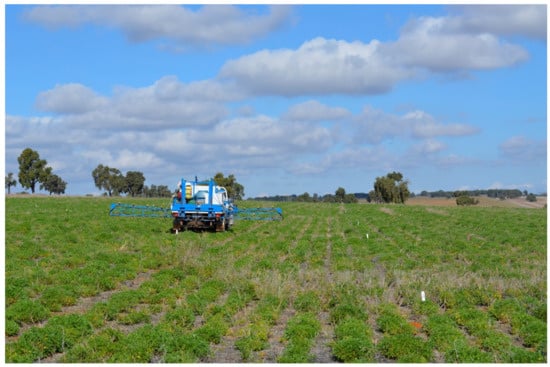
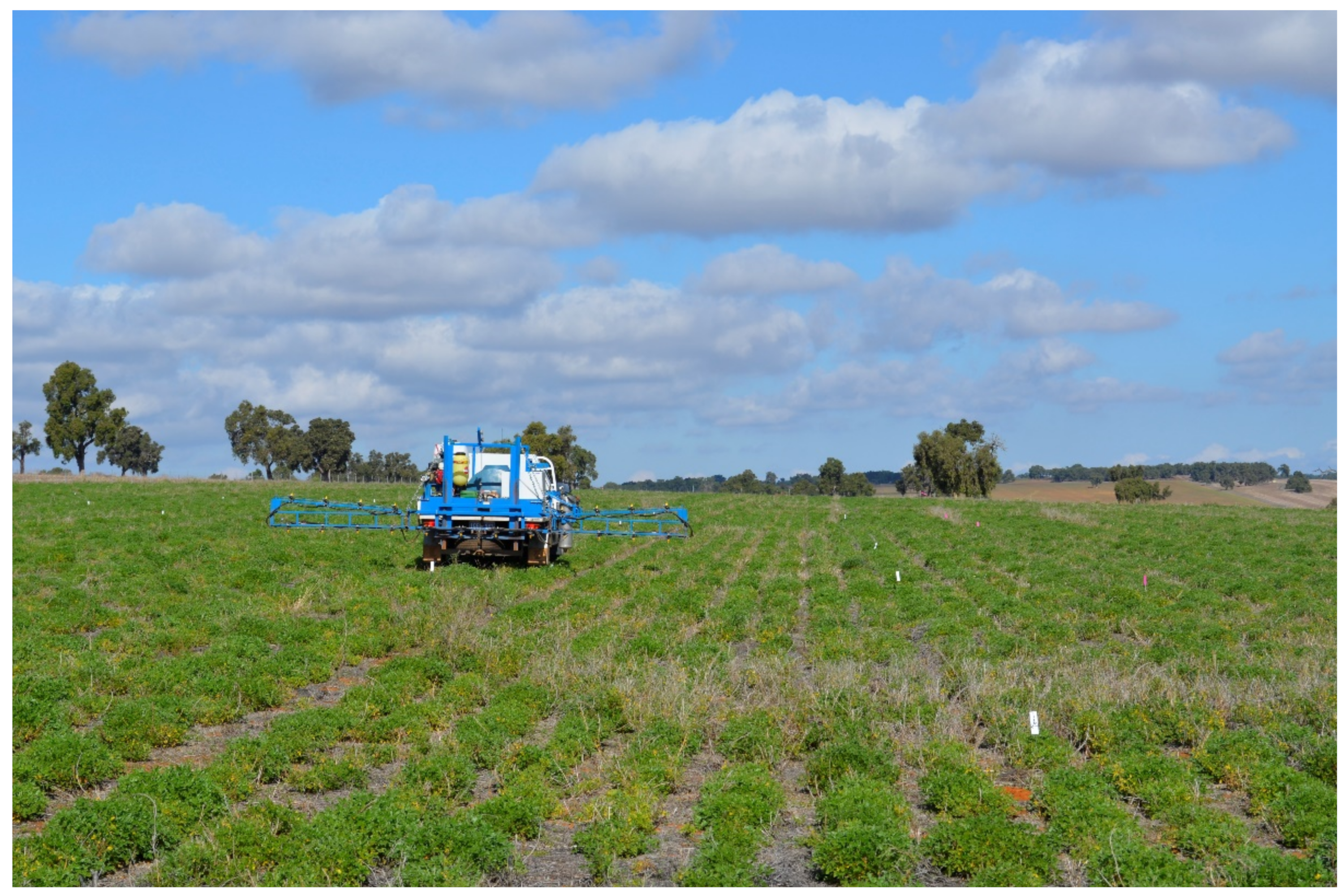
On 15 June 2017, a section of a tedera seed crop established in July 2015 was sprayed with 15 post-emergent herbicides plus an un-sprayed control (Table 3) in a randomized complete block design with plots of 3 m × 20 m and three replicates. Spraying was performed with Teejet AIXR11002 (coarse droplet size) nozzles and a boom output of 96 L/ha. The wind speed was 11 km/h, temperature of 20 °C, and a relative humidity of 54% (Figure 1).
Table 3.
Rates of active ingredient (a.i.) g/ha used in the eight experiments with post-emergent herbicides.
Figure 1.
Spraying a two-year-old stand of tedera with 15 post-emergent herbicide experiment at Dandaragan on 15 June 2017.
The effect of herbicides on the 2-year-old tedera was evaluated visually as biomass reduction and percentage of yellowing, chlorosis, and/or necrosis in comparison to the un-sprayed control four weeks after treatments application (WATA) on the 14 July 2017. Measurements were on a scale of 0–100% where 0% means no effect and 100% means plants were dead.
2.2. Experiment 2 (2018). Post-Emergent Herbicides on a 1-Month-Old Tedera Stand
The post-emergent experiment in the 2018 seed crop was sprayed on the 5 August 2018, five weeks after sowing (2–3 leaf stage tedera seedings) and compared 11 post-emergent herbicides (Table 3) in a criss-cross/strip-plot design with plots of 3 m × 5 m and three replicates. Eight broadleaf selective herbicides treatments (diflufenican, flumetsulam, flumetsulam + diuron, imazamox, imazethapyr, oxyfluorfen, prometryn and pyraflufen-ethyl) plus an un-sprayed control were applied in strips east-west, while three grass selective herbicides (butroxydim, haloxyfop and propyzamide) plus an un-sprayed control were applied in strip plots of 5 m × 3 m north-south, both randomised within each replicate. Spraying was performed using Teejet AIXR11002 (coarse droplet size) nozzles and a boom output of 96 L/ha. The wind speed at time of treatments applications was 10 km/h, temperature 19 °C, and a relative humidity 45%. The experiment was visually assessed for biomass reduction (%) in comparison to un-sprayed control, one and six WATA on 13 August 2018 and 14 September 2018, respectively.
2.3. Experiment 3 (2018). Post-Emergent Herbicides on a 1-year-Old Tedera Stand
A section of the 2017 seed crop was sprayed on the 28 June 2018 with 12 post-emergent herbicides (Table 3) in a criss-cross/strip-plot design/ with plots of 3 m × 5 m and three replicates. Nine broadleaf selective herbicides treatments (diflufenican, flumetsulam, flumetsulam + diuron, imazamox, imazethapyr, oxyfluorfen, prometryn, pyraflufen-ethyl and saflufenacil) were applied in strips east-west plus an un-sprayed control, while three grass selective herbicides (butroxydim, haloxyfop, and propyzamide) plus an un-sprayed control were applied in strip plots of 5 m × 3 m north-south at right angle to broadleaf herbicide application direction, both randomised within each replicate. Spraying was performed using Teejet AIXR11002 (coarse droplet size) nozzles and a boom output of 96 L/ha. At the time of treatments application, the wind speed was 12 km/h from the South, temperature was 20 °C, and relative was humidity of 40%. The experiment was visually assessed for biomass reduction (%) in comparison to un-sprayed control six and 11 WATA on 13 August and 14 September 2018, respectively.
2.4. Experiment 4 (2020). Pre-Emergent and Post-Emergent Herbicides on 1 Month Old Seedlings
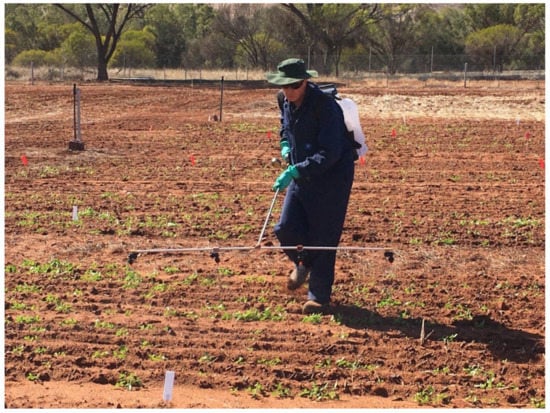
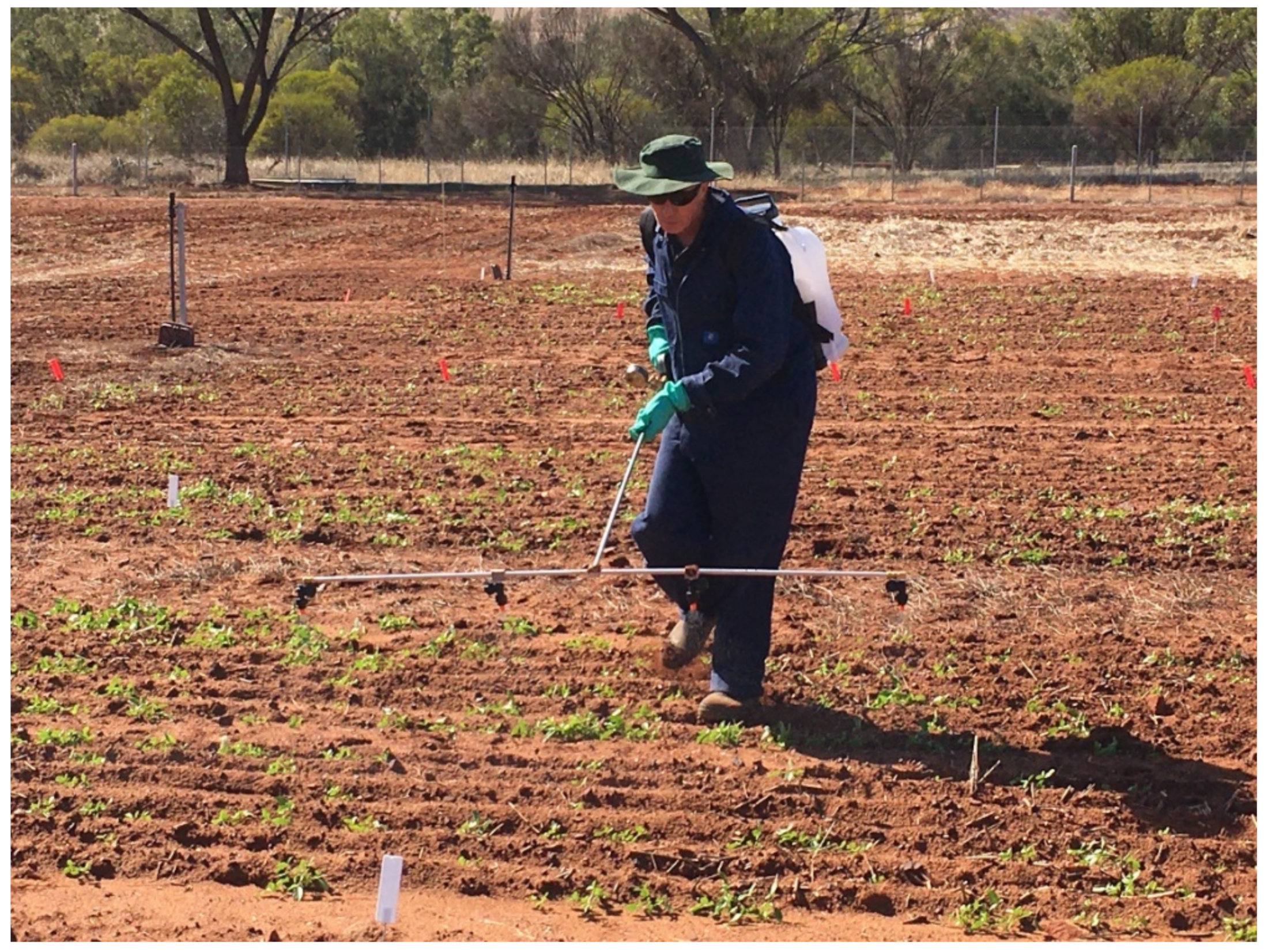
On the 27 March 2020, an experiment was conducted under weed-free conditions using 10 kg/ha tedera seed rate, sown 2 cm deep in 22 cm row spacing with knifepoint and press-wheel seeding system in a split-plot design. The main plots had two treatments of pre-emergent and post-emergent herbicide treatments application randomised completely. The sub-plots had seven herbicide treatments (Table 3 and Table 4) plus an un-sprayed control. Each experimental unit was 2 m × 3.08 m with four replicates. The pre-emergent herbicides were sprayed on the 26 March 2020, and the post-emergent herbicides were sprayed on seedlings on the 29 April 2020 using a knapsack hand-held boom-sprayer (Figure 2) fitted with Agrotop Airmix flat fan 110-01 nozzles (coarse droplet size) and calibrated to deliver 100 L/ha water. Seedling counts were taken on four 1 m rows in the middle of each 7-row plot about one month after of both pre- or post-emergent herbicide applications. Visual biomass reduction estimates were taken nine WATA on 29 May 2020. On the 25 August 2020 (21 WATA), two 50 cm × 50 cm quadrats per plot were cut to 5 cm of height per plot to assess the crop biomass.
Table 4.
Rates of active ingredient (a.i.) g/ha used in experiments 4 and 8 with pre-emergent herbicides.
Figure 2.
Spraying 1-month-old tedera seedlings with 7 post-emergent herbicides experiment at Northam on 29 April 2020.
2.5. Experiment 5 (2020). Post-Emergent Herbicides on 5-Month-Old Plants
The plots of Experiment 4 sown on the 27 March 2020 that were unaffected by the herbicide treatments were allowed to grow for 5 months, and 11 post-emergent herbicide treatments were applied using above mentioned knapsack hand-held boom sprayer (Figure 2) on the 31 August 2020 (Table 3). An un-sprayed plot per replication was included the experiment. The experiment was laid out in a randomized complete block design, and each experimental unit was 2 m × 3.08 m with four replicates. Visual assessment of the effect on flowering was assessed three WATA on 21 September 2020, and a biomass cut of a 50 cm × 50 cm quadrat/plot was taken 15 WATA on 18 December 2020.
2.6. Experiment 6 (2020). Post-Emergent Herbicides on 1 Month Old Seedlings
On the 5 October 2020, 99 4.5 L pots were filled with red sandy loam soil, sown with 12 tedera seeds each and placed in a naturally lit glasshouse set to have 20–25 °C temperature. One week after sowing, tedera rhizobium inoculant (WSM 4083) was watered into the pots. Pots were irrigated three times a week. One month after sowing, 5-leaf tedera seedings were sprayed with 31 herbicide treatments on 3 November 2020 (Table 3) using an overhead, compressed air, indoor spray-cabinet calibrated to deliver 100 L/ha at 200 kPa pressure. The 33 treatments including two un-sprayed were completely randomized in the glasshouse and replicated three times. Eight weeks after spraying, the experiment was harvested. Roots attached to the shoot were carefully washed several times manually using a water jet and a sieve (0.7 mm mesh size) to remove debris and soil particles while preventing root damage and losses. The detached roots were collected from the sieve and added to the main root mass. Root portion was separated from the shoot portion, and roots were stored in water in a cold room at 4 °C until the subsequent root image analysis, which commenced immediately afterwards. Fine cleaning of roots using forceps/tweezers was completed before scanning. All the material that was not live roots, especially dead roots which can be identified from their darker colour and lack of elasticity, was removed. Then, roots were spread into a thin layer (2–3 mm) of distilled water in a transparent plastic tray. Care was taken to fully submerge, spread roots, and minimize overlapping of roots. Roots were cut into small segments and spread with a paintbrush wherever appropriate to facilitate the above. For each sample, one or several 400 dpi resolution images were taken with a flatbed scanner (Epson Perfection V800 Photo; Epson, Nagano, Japan). When the root sample was too large to complete in one scan, the sample was divided into two or more sub-samples and images were taken for each sub-sample. The images were analysed with the software package WINRHIZO™ Pro 2007a (Regent Instruments, Quebec, QC, Canada) for total root length, average diameter, and surface area using the Global Threshold Method where a single threshold value was chosen automatically to classify all pixels of an analysed region. After scanning the roots, samples were oven dried at 60 °C for one week and root biomass assessed. The shoot length of each plant in each pot was measured. The shoots were then cut and oven dried at 60 °C for one week, and the shoot biomass was measured for each treatment.
2.7. Experiment 7 (2021). Post-Emergent Herbicides on a 3-Year-Old Tedera Stand
On the 24 June 2021, a section of a 3-year-old tedera seed crop was sprayed with 22 herbicide treatments plus three un-sprayed controls in a randomized complete block design (Table 3). Each experimental unit was 2 m × 30 m with three replicates. Visual assessments of biomass reduction (%) were conducted four and eight WATA on 22 July and 24 August 2021, respectively. A biomass cut was taken nine WATA on 31 August 2021 for each plot with a self-propelled lawnmower with a cutting width of 0.53 m and length of 5 m at a height of 5 cm. Samples were oven dried for 72 h at 60 °C, and tedera was separated from other species and weighed.
2.8. Experiment 8 (2021). Pre-Emergent and Post-Emergent Herbicides on 1-Month-Old Seedlings
On the 8 October 2021, a randomised complete block design experiment with 4 replicates was conducted with tedera sown at 2 cm deep at 10 kg/ha seed rate with 22 cm row spacing using a cone-seeder fitted with a knifepoint and press-wheel seeding system. The whole experimental area was sprayed with propyzamide 1000 a.i. g/ha to control grass weeds before application of pre-emergent treatment to the plots. The experiment had two un-sprayed controls, six pre-emergent treatments incorporated by sowing (IBS), and three post-sowing pre-emergent (PSPE) treatments applied on 8 October 2021, and 10 post-emergent treatments applied on the 11 November 2021 (Table 3 and Table 4). The herbicide treatments were applied using knapsack hand-held boom-sprayer (Figure 2) fitted with Agrotop Airmix flat fan 110-01 nozzles (coarse droplet size) and calibrated to deliver 100 L/ha water. On the 14 December 2021 (9 and 4 weeks after pre- and post-emergent treatment application, respectively), using a 50 cm × 50 cm quadrat in the centre of each plot, tedera plants were counted and then cut to ground level. Samples were oven dried for 72 h at 60 °C and weighed to assess crop biomass production.
2.9. Herbicide Mode of Action
2.10. Statistical Analysis
Analysis of variance using Genstat was undertaken for most of the data analysis, with blocking and treatment structures appropriate for the randomized block or strip plot designs. Significance lettering was determined based on the least significant difference (l.s.d.). With experiment 2, the analysis was repeated without pyraflufen-ethyl to confirm no significant interaction without this herbicide. For experiment 4, the application of propyzamide followed by flumetsulam + diuron was considered the same treatment pre- and post-herbicide despite different rates. This was done to give a balanced strip plot design and only after checking the results supported this adjustment. With experiment 6, shoot dry weight per plant, root dry weight per plant, and total root volume per plant were square root transformed prior to analysis to give more constant variance. Results were back transformed and presented on the original scale.
3. Results
3.1. Experiment 1 (2017). Post-Emergent Herbicides on a 2-Year-Old Tedera Seed Crop
Visual phytotoxic symptoms (yellowing, chlorosis, and/or necrosis) and biomass reduction (%) of two-year old tedera caused by 15 post-emergent herbicides is presented in Table 5.
Table 5.
Effect of post-emergent herbicides as visual phytotoxic symptoms (yellowing, chlorosis and/or necrosis) and biomass reduction (%) of two-year old tedera at Dandaragan.
Thirteen herbicides applied, one month after spraying (14 July 2017) had no significant biomass reduction on the 2-year-old tedera plants except for saflufenacil and saflufenacil + paraquat. Flumetsulam, imazamox, butroxydim, propyzamide, and clethodim did not produce significant visual symptoms. Imazamoz + Imazapyr produced the most yellowing, bromoxynil + diflufenican produced the most chlorosis, and saflufenacil + paraquat produced the most necrosis score as expected with paraquat being a desiccant herbicide.
3.2. Experiment 2 (2018). Post-Emergent Herbicides on a 1-Month-Old Tedera Stand
There was a significant negative effect of broadleaf herbicides on tedera biomass assessed visually on 13 August 2018 and 14 September 2018 (Table 6).
Table 6.
Response of 1-month-old tedera seedlings to post-emergent broadleaf herbicides applied on 5 August 2018 (5 weeks after sowing) at Dandaragan.
The broadleaf-selective herbicides that produced no biomass reduction on tedera were flumetsulam + diuron and flumetsulam, while diflufenical produced some initial biomass reduction but fully recovered by two months. Herbicides that produced minor biomass reduction but not significantly different to control were imazamox, prometryn, and imazethapyr. Oxyfluorfen caused a severe biomass reduction but had significantly recovered by five weeks after application.
There was a significant interaction between the broadleaf-selective herbicide Pyraflufen-ethyl and the grass-selective herbicides. Pyraflufen ethyl was significantly damaging for tedera when combined with haloxyfop or butroxydim. On the 13 August 2018, pyraflufen-ethyl + butroxydim and pyraflufen-ethyl + haloxyfop had a tedera biomass reduction of 83.3 and 80.0%, respectively, while pyraflufen-ethyl + propyzamide and pyraflufen-ethyl alone had 0.0% biomass reduction. On the 14 September 2018, both pyraflufen-ethyl + butroxydim and pyraflufen-ethyl + haloxyfop had a tedera biomass reduction of 60.0%, while also both pyraflufen-ethyl + propyzamide and pyraflufen-ethyl alone recorded no biomass reduction as compared to un-sprayed control.
When combined with any broadleaf weed selective herbicide apart from pyraflufen-ethyl, the grass-selective herbicides caused no significant biomass reduction.
3.3. Experiment 3 (2018). Post-Emergent Herbicides on a 1-Year-Old Tedera Stand
The broadleaf selective herbicides affected the biomass of tedera and broadleaf weeds significantly, mainly capeweed (Table 7). The broadleaf selective herbicides that had least reduction on tedera biomass were flumetsulam + diuron, flumetsulam, prometryn, and diflufenican. The best control of capeweed was achieved with flumetsulam + diuron, imazethapyr, prometryn, and imazamox. Saflufenacil desiccated the whole plot initially, but tedera plants showed good recovery with passage of time.
Table 7.
Response of capeweed and a 1-year-old tedera stand to post-emergent broadleaf herbicides applied on 28 June 2018 at Dandaragan.
The grass selective herbicides caused no significant reduction in the biomass of tedera, but significantly reduced the grass weeds, mainly annual ryegrass (Table 8). All grass selective herbicides controlled more than 80% of the grasses with no significant differences between treatments on 14 September 2018.
Table 8.
Response of grass and a 1-year-old tedera stand to post-emergent grass-selective herbicides applied on 28 June 2018 at Dandaragan (averaged over broadleaf herbicide treatments).
3.4. Experiment 4 (2020). Pre-Emergent and Post-Emergent Herbicides on 1-Month-Old Tedera Seedlings
Seedlings in the pre-emergent treatments were counted 1 month after sowing on 29 April 2020 and for post-emergent treatments on 28 May 2020 (Table 8). The pre-emergent application of terbuthylazine at both doses and post-emergent application at the lower dose were highly damaging to tedera and significantly reduced its plant population. The post-emergent application at high dose of terbuthylazine retained a high number of seedlings most likely due to higher number of seeds sown by chance, but not measured. However, those surviving seedlings were severely affected as presented in Table 9.
Table 9.
Number of tedera seedlings/m2 one month after the application of pre- and post-emergent herbicides.
Comparison of the un-sprayed control and herbicide treatments using visual biomass reduction assessments taken on the 28 May 2020 and the biomass cuts taken on the 25 August 2020 are presented in Table 10. There was no significant effect of time of application or interaction of herbicide by time of application.
Table 10.
Visual assessment on tedera biomass reduction taken on the 28 May 2020 and biomass cuts taken on the 25 August 2020, 2 and 5 months after the experiment was sown at Northam.
Application of propyzamide alone or followed by flumetsulam + diuron had no significant negative effect on plant population and crop biomass (visual) as compared to un-sprayed control. These were the only two treatments that produced tedera biomass at par with un-sprayed control. Prosulfocarb + S-metolachlor resulted in moderate biomass reduction, while terbuthylazine was damaging to tedera.
3.5. Experiment 5 (2020). Post-Emergent Herbicides on 5-Month-Old Plants
Three weeks after spraying on the 21 September 2020, the effect of the 11 herbicides were visually assessed on flowering (Table 11). All the treatments significantly reduced number of flowers except diflufenican and flumetsulam + diuron, as compared to un-sprayed control. A biomass cut of 50 cm × 50 cm quadrat/plot was taken on the 18 December 2020. Despite high variability in the results, the effect of herbicide was significant and four treatments at their highest rate were significantly less productive than the un-sprayed control: MCPA ester + diflufenican, MCPA ester + bromoxynil + diflufenican, bromoxynil + diflufenican, and MCPA ester + bromoxynil.
Table 11.
Effect of herbicides on tedera flowering three weeks after application (21 September 2020) and biomass production 15 weeks after application (18 December 2020).
Diflufenican at both rates and flumetsulam + diuron were the only treatments that had no significant negative effect on flowering or tedera biomass. Either two-way mixes of MCPA ester, bromoxynil, and diflufenican or their three-way mixes reduced number of tedera flowers and biomass significantly.
3.6. Experiment 6 (2020). Post-Emergent Herbicides on 1-Month-Old Seedlings
The pot experiment was harvested eight weeks after spraying 31 post-emergent herbicide treatments. Pots with two or fewer plants remaining were removed from the dataset prior to analysis. The herbicide treatment pyraflufen (label and double label rate) and bromoxynil at the highest rate killed almost all plants in all three replicates; therefore these treatments were not included in the statistical analysis, as they had no data.
The herbicide treatment effect on shoot dry weights and plant height were highly significant with a grand mean of 0.9 g/plant and 8.9 cm, respectively. Treatments including bromoxynil, mesotrione, fluroxypyr, and imazamox + imazapyr reduced or significantly reduced the shoot dry weight in comparison with the un-sprayed control. Regarding plant height, five treatments (imazamox + imazapyr, bromoxynil + diflufenican, fluroxypyr, mesotrione and flumioxazin) were significantly shorter than the un-sprayed control. The six treatments that had diuron either alone or in mixture with other herbicides produced significantly taller plants compared to un-sprayed control (Table 12).
Table 12.
Effect of post-emergent herbicides on tedera shoot dry weight, plant height, root dry weight, root average diameter, and total root volume in a pot experiment at Northam in 2020.
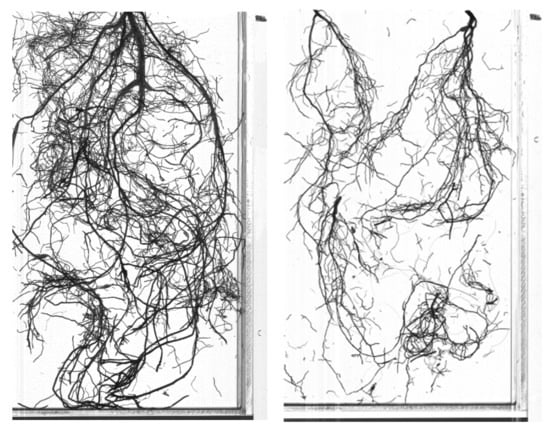
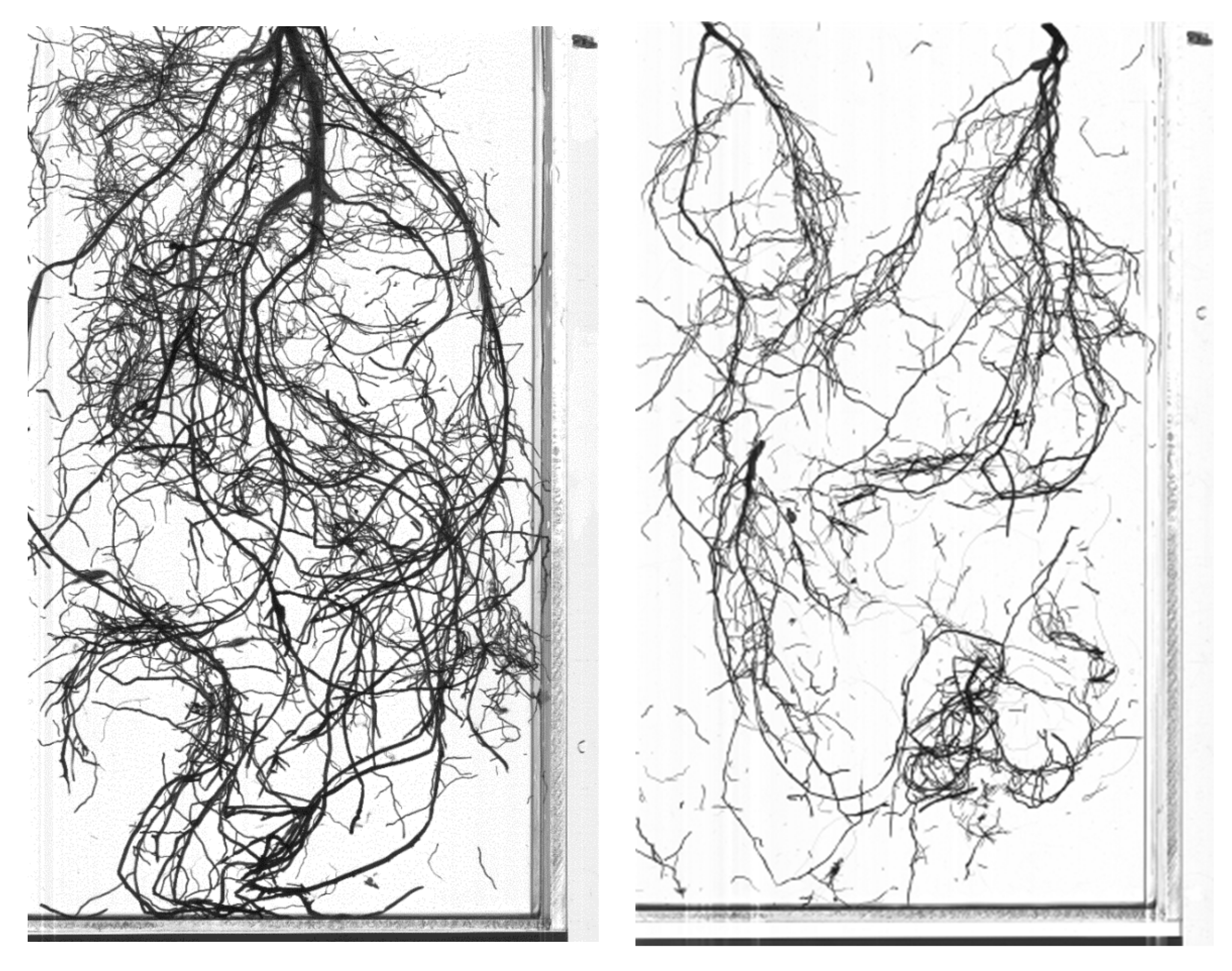
The herbicide treatment effect on root dry weight, average root diameter, and total root volume (root scanning image, Figure 3) were highly significant (Table 12). The mean root dry weight was 0.25 g/plant and flumioxazin, bromoxynil + diflufenican, and mesotrione at both rates and bromoxynil at the highest rate were significantly lower than un-sprayed control. The grand mean for the average diameter was 0.54 mm. The four diflufenican treatments, fomesafen and fluroxypyr at their highest rate and carbetamide had thicker roots, while bromoxynil + diflufenican at both rates and mesotrione and diuron at their highest rate had thinner roots than the un-sprayed control. The total root volume grand mean was 1.95 cm3, and only both rates of bromoxynil + diflufenican and mesotrione had lower volume than the un-sprayed control.
Figure 3.
(Left) Scanned image of un-sprayed tedera control; (Right) tedera sprayed with bromoxynil + diflufenican at 250 + 25 a.i./ha.
3.7. Experiment 7 (2021). Post-Emergent Herbicides on a 3-Year-Old Tedera Stand
Results are presented in Table 13 for visual biomass reduction after 22 treatment application in comparison with un-sprayed control observed 4 weeks (22 July 2021) and eight weeks after application (24 August 2021) and biomass yield taken nine weeks (31 August 2021) on 3-year-old tedera crop.
Table 13.
Visual tedera biomass reduction in comparison with un-sprayed control 4 and 8 weeks after treatment application and biomass yield 9 weeks after 22 post-emergent herbicide treatment application at Dandaragan during 2021.
There was a highly significant main herbicide effect for the tolerance of tedera for the two visual and biomass cut quantitative assessments in comparison with un-sprayed control. In the July observations, application of carbetamide, fomesafen, flumetsulam, diuron, and diflufenican either alone or in mixture with other herbicides resulted in less than 5% reduction in biomass. Two months after spraying (August), tedera visual biomass was similar to the un-sprayed control for these five herbicide treatments along with picolinafen at the lower rate alone or in majority of the mixtures except a mixture of flumetsulam, diuron, and picolinafen at the higher rate.
At the end of August (nine weeks after treatments application), the tedera biomass was at par with un-sprayed control for the all the above-mentioned treatments with the addition of the lower spraying rates of MCPB + MCPA + flumetsulam and 2,4-DB and 2,4-DB + flumetsulam. The high application rates of 2,4-DB (1000 and 2000 g.a.i./ha) and MCPB + MCPA + flumetsulam, flumetsulam + diuron + picolinafen, saflufenacil + paraquat and glyphosate produced the most long-lasting damage to the 3-year-old-tedera stand. Correlation between visual observations and biomass cut yields at 8 and 9 weeks after treatments application was 0.71.
3.8. Experiment 8 (2021). Pre-Emergent and Post-Emergent Herbicides on 1-Month-Old Seedlings
Plant counts taken on the 14 December 2021 had a grand mean of 54.6 plants/m2, and there were no significant differences among the herbicide treatments. The effect of the herbicide treatments on the biomass was highly significant, and results are presented in Table 14.
Table 14.
Effect of herbicides on tedera biomass (kg/ha) two months after sowing.
All herbicide treatments with fomesafen, flumetsulam, diuron and diflufenican were well tolerated by Lanza® tedera when sprayed pre-emergent (IBS or PSPE) or post-emergent. Imazamox + imazapyr at both rates and aclonifen + diflufenican + pyroxasulfone post-emergent significantly reduced tedera biomass in comparison with un-sprayed control and caused about 15 to 20% yellowing/bleaching symptoms.
4. Discussion
A total of 9 pre-emergent and 44 post-emergent herbicide treatments were evaluated in eight herbicide tolerance experiments from 2017 to 2021. Experiments 4 and 8 evaluated pre-emergent herbicides, experiments 2, 4, 5, 6, and 8 evaluated post-emergent herbicides in one-month-old seedlings and experiments 1, 3, and 7 evaluated post-emergent herbicides in tedera plants 1-year-old or older. Some common weeds in WA such as annual ryegrass, capeweed, and wild radish are controlled by specific herbicides; however, the full list of weeds controlled by each herbicide can be obtained from Moore and Moore [24] or their respective commercial labels in the country of interest.
The first hypothesis that tedera would have tolerance to at least one pre-emergent and one post-emergent herbicide to control grasses such as annual ryegrass was demonstrated. The herbicides evaluated that can control grasses when applied pre-emergent (IBS) were propyzamide, prosulfocarb + S-metolachlor, and aclonifen + diflufenican + pyroxasulfone. Propyzamide at the highest dose (2000 a.i. g/ha) in experiment caused no significant negative effect on tedera plant population and crop biomass. Propyzamide applied at 1000 a.i. g/ha to the whole site of experiment 8 caused no tedera biomass reduction. Prosulfocarb + S-metolachlor (experiment 4) caused no significant reduction in tedera plant numbers, but there was a significant reduction in biomass in comparison with the un-sprayed control. Aclonifen + diflufenican + pyroxasulfone (experiment 8) caused 14% reduction in Lanza® biomass in comparison with the un-sprayed control, but it was not statistically significant. This herbicide being a ready-mix product of three herbicides (e.g., Mateno® Complete), is a promising option from a grass weed control and herbicide resistance management point of view; however, it will require further evaluation before being recommend for use in tedera as pre-emergent IBS application. The three post-emergent grass selective herbicides butroxydim (experiments 1 to 3), clethodim (experiment 1), and haloxyfop (experiments 2 and 3) caused no significant damage to Lanza®. Propyzamide was also evaluated as post emergent (experiments 1 to 4) and caused no damage to Lanza®. Carbetamide is a pre-emergent grass-selective herbicide that was only evaluated as post-emergent in experiments 6 and 7. Results were outstanding with no damage to tedera, and it can be recommended for pre- and post-emergent applications. Prosulfocarb + S-metolachlor was also sprayed post-emergent (experiment 4) and had similar results to the pre-emergent application; there was no significant reduction in plant numbers, but there was a reduction in biomass in comparison with un-sprayed control. All the above-mentioned herbicides except aclonifen + diflufenican + pyroxasulfone, are registered in grain legumes for control of a range of grass weeds including annual ryegrass in Australia. Aclonifen + diflufenican + pyroxasulfone is registered in wheat and barley for control of a range of grass weeds in Australia. Use of carbetamide and propyzamide post-emergent could help manage Group 1 and 2 herbicide resistant annual ryegrass populations during a tedera-phase in rotations with crops in Australia. Resistance to herbicides Group 1 and 2 in annual ryegrass is quite widespread in Australia [25,26,27].
The second hypothesis that tedera would have tolerance to at least one pre-emergent and one post-emergent herbicide to control the most common broadleaf weeds in southern Australia such as capeweed and radish was demonstrated. The broadleaf tolerance to pre-emergent herbicides is presented in Table 15. Herbicides/rates (a.i. g/ha) in green or yellow were not significantly different to an un-sprayed control, with those in green causing less than 10% biomass reduction and those in yellow causing more than 10% biomass reduction. Those in red had significantly less biomass than the un-sprayed control. The pre-emergent herbicides that had no significant reduction in Lanza® biomass in comparison with un-sprayed were fomesafen to control wild radish pre-emergent and the double mix of fomesafen + diuron and the triple mix of fomesafen + diuron + flumetsulam to control both capeweed and wild radish (pre- and post-emergent). Flumetsulam + diuron or clopyralid to control post emergent capeweed, aclonifen + diflufenican + pyroxasulfone to suppress post emergent capeweed were also statistically similar to unsprayed control, but they caused more than 10% biomass reduction, therefore more research is required to recommend these herbicides at the rate applied.
Table 15.
Tedera tolerance to pre-emergent herbicides to control pre- and post-emergent broadleaf weeds. Herbicides/rates (a.i. g/ha) in green or yellow were not significantly different to an un-sprayed control, with those in green causing less than 10% biomass reduction and those in yellow causing more than 10% biomass reduction. Those in red had significantly less biomass than the un-sprayed control.
The evaluation of tedera tolerance to post-emergent herbicides was conducted on 1-month-old seedlings to maximize the weed control when weeds were still small and most susceptible. Tedera seedling tolerance from five experiments is presented in Table 16. Herbicides/rates (a.i. g/ha) in green or yellow were not significantly different to an un-sprayed control, with those in green causing less than 10% biomass reduction and those in yellow causing more than 10% biomass reduction. Those in red had significantly less biomass than the un-sprayed control.
Table 16.
Tolerance of 1 month old seedlings of Lanza® tedera to post-emergent herbicides to control broadleaf weeds. Herbicides/rates (a.i. g/ha) in green or yellow were not significantly different to an un-sprayed control, with those in green causing less than 10% biomass reduction and those in yellow causing more than 10% biomass reduction. Those in red had significantly less biomass than the un-sprayed control.
From the 27 herbicide treatment combinations evaluated with either one or multiple rates and up to five experiments, the most consistently well tolerated herbicide by tedera seedlings was fomesafen up to double the label rate (for other crops). Fomesafen is a herbicide widely utilized to control weeds in soybean crops [28]. Tedera and soybean are genetically close relatives [5,29], therefore the genetic mechanisms of tolerance in soybean might apply to tedera. Fomesafen is not registered for use in clovers and medics and in fact, there are papers reporting damage to white clover (Trifolium repens L.) [30] and lucerne (Medicago sativa L.) [31]. Further studies are required in WA, but it might be possible to control some of the clovers and medics in tedera stands with fomesafen. Flumetsulam and diuron were tolerated well either alone or in mixes with other herbicides. Diflufenican was well tolerated up to four-times the label rate, but some early damage occurred in experiments 2, 5, and 6. Kelly [20] reported flumetsulam and diflufenican as safe herbicides well tolerated by tedera seedlings. Gray [21] reported 14% biomass reduction for flumetsulam and 30% biomass reduction for diflufenican, which were more damaging than results in our experiments. Different combinations of flumetsulam, fomesafen, diuron and diflufenican can provide good control of capeweed and wild radish. Gray [21] also reported a 55% biomass reduction for imazamox (12.3 a.i. g/ha) and a 30% biomass reduction for imazethapyr (35 g a.i./ha) that agrees with our yellow classification/rating. Prometryn and fomesafen + clopyralid at label rates were also well tolerated but needs further evaluation as they were only evaluated in one experiment. MCPA + bromoxynil were tolerated at label rates, but they caused damage at higher rates. Kelly [20] reported tedera seedling to be susceptible to MCPA (375 a.i. g/ha) and moderately susceptible to bromoxynil (300 a.i. g/ha), while Gray [21] reported 80% reduction in biomass for bromoxynil sprayed at 56 a.i. g/ha. None of these two herbicides should be recommended on Lanza® tedera as these recorded low crop safety margins.
Adult tedera tolerance from three experiments is presented in Table 17. Herbicides/rates (a.i. g/ha) in green or yellow were not significantly different to an un-sprayed control, with those in green causing less than 10% biomass reduction and those in yellow causing more than 10% biomass reduction. Those in red had significantly less biomass than the un-sprayed control.
Table 17.
Tolerance of adult Lanza® tedera (one year old or older) to post-emergent herbicides to control broadleaf weeds. Herbicides/rates (a.i. g/ha) in green or yellow were not significantly different to an un-sprayed control, with those in green causing less than 10% biomass reduction and those in yellow causing more than 10% biomass reduction. Those in red had significantly less biomass than the un-sprayed control.
From the 26 herbicide treatment combinations evaluated with either one or multiple rates and up to three experiments, the most consistently well tolerated herbicides by adult plants of Lanza® tedera were very similar to the herbicides tolerated by the seedlings. Tedera tolerated diflufenican and flumetsulam at up to four-times the label rate, fomesafen up to double the label rate and most two- or three-way mixes with diuron. Different combinations of two or three of these herbicides can provide good control of capeweed and wild radish. Kelly [20] also reported flumetsulam and diflufenican as safe herbicides on mature tedera plants while MCPA and glyphosate caused damage. Moore [22] also supported the safe use of flumetsulam (10-times the label rate) and reported that adult tedera plants can recover with less than 10% biomass reduction four weeks after spraying with 10-times the label rates of imazamox and imazethapyr. Prometryn at label rate was also well tolerated but needs further evaluation as it was only evaluated in experiment 3. Saflufenacil + paraquat desiccated the tedera stand, however tedera as a perennial species was able to recover from being desiccated and grew back very well. This management practice can be very useful in winter when heavy weed infestations of several annual species could be present, and this is an effective way of controlling a diverse range of weeds. Tedera seed crops also showed tolerance to desiccation annually with diquat sprayed at 600 a.i. g/ha before harvesting seed in late spring.
5. Conclusions
Several pre- and post-emergent herbicides well tolerated by tedera to control grasses and broad-leaf weeds were identified. Effective herbicide options are an essential component of an agronomy package for a novel species to agriculture.
To control grass weeds such as annual ryegrass, propyzamide and carbetamide can be safely used as pre- or post-emergent options in tedera. Post-emergent application of butroxydim, clethodim, and haloxyfop can be recommended to control Group 1 herbicide susceptible annual ryegrass and other grass weeds in tedera.
The broadleaf pre-emergent herbicides that can be recommended in tedera were clopyralid to control emerged capeweed, fomesafen to control pre-emergent wild radish and the double mix of fomesafen + diuron, flumetsulam + diuron and the triple mix of fomesafen + diuron + flumetsulam to control pre-emergent capeweed, pre- and post-emergent wild radish, and other broadleaf weeds.
The most consistently well tolerated post-emergent herbicides by seedlings and adult plants of Lanza® tedera were diflufenican, diuron, flumetsulam, fomesafen, and their two- or three-way mixes that will provide good control of pre- and post-emergent capeweed and wild radish.
Desiccants such as paraquat or diquat were also well tolerated by adult tedera plants. Tedera plants showed good quick recovery after desiccation with these herbicides.
The tested post-emergent grass and broadleaf weed-selective herbicides could be applied mixed together (check product labels for compatibility) on tedera for broadening the spectrum of weeds controlled in one-pass-spray except mixing of pyraflufen-ethyl with haloxyfop or butroxydim.
Author Contributions
Conceptualization, D.R., H.S.D., D.C. and J.M.; methodology, D.R., H.S.D. and A.v.B.; formal analysis, A.v.B.; investigation, D.R., H.S.D. and J.M.; resources, D.R.; writing—original draft preparation, D.R.; writing—review and editing, H.S.D., D.C., A.v.B. and J.M.; project administration, D.R.; funding acquisition, D.R. All authors have read and agreed to the published version of the manuscript.
Funding
This research was funded by Meat & Livestock Australia, grant number B.CCH.6621 and the Department of Primary Industries and Regional Development, WA, Australia.
Data Availability Statement
Raw data are available upon request to Daniel Real. Data has not been archived in a repository.
Acknowledgments
DPIRD technical officers David Nicholson, Mengistu Yadete, Fekadu Mulugeta Roba, McKenzie Layman and Kim Tanlamai and DPIRD research scientist Kanch Wickramarachchi that provided invaluable help to conduct the field and glasshouse research work. We would like to thank David Brown and Richard Brown from Bidgerabee Farm at Dandaragan. We also thank Michael Ewing and Richard Bennett for critically reviewing this article.
Conflicts of Interest
The authors declare no conflict of interest.
References
- Méndez, P. Forage potential of Canary Islands legumes. In Proceedings of the Management of Mediterranean Shrublands and Related Forage Resources, Crete, Greece, 21–23 April 1993; pp. 141–144. [Google Scholar]
- Méndez, P.; Fernández, M. Interés forrajero de las variedades de Bituminaria bituminosa (L.) Stirton (“tedera”) de Canarias. In Proceedings of the XXX Reunión científica de la sociedad Española para el estudio de los pastos, Donostia-San Sebastian, Spain, 4–8 June 1990; pp. 264–272. [Google Scholar]
- Méndez, P.; Santos, A.; Correal, E.; Ríos, S. Agronomic traits as forage crops of nineteen populations of Bituminaria bituminosa. Grassl. Sci. Eur. 2006, 11, 300–302. [Google Scholar]
- Real, D.; Oldham, C.M.; Nelson, M.N.; Croser, J.; Castello, M.; Verbyla, A.; Pradhan, A.; Van Burgel, A.; Méndez, P.; Correal, E.; et al. Evaluation and breeding of tedera for Mediterranean climates in southern Australia. Crop Pasture Sci. 2014, 65, 1114–1131. [Google Scholar] [CrossRef] [Scilit]
- Pazos-Navarro, M.; Dabauza, M.; Correal, E.; Hanson, K.; Teakle, N.; Real, D.; Nelson, M. Next generation DNA sequencing technology delivers valuable genetic markers for the genomic orphan legume species, Bituminaria bituminosa. BMC Genet. 2011, 12, 104. [Google Scholar] [CrossRef] [Scilit]
- Pazos-Navarro, M.; Croser, J.; Castello, M.; Ramankutty, P.; Fuller, K.; Real, D.; Walker, D.; Correal, E.; Dabauza, M. Embryogenesis and plant regeneration of the perennial pasture and medicinal legume Bituminaria bituminosa (L.) C.H. Stirton. Crop Pasture Sci. 2014, 65, 934–943. [Google Scholar] [CrossRef] [Scilit]
- Pradhan, A.; Besharat, N.; Castello, M.; Croser, J.; Real, D.; Nelson, M.N. Evidence for Outcrossing in the Perennial Forage Legume Tedera. Crop Sci. 2014, 54, 2406–2412. [Google Scholar] [CrossRef] [Scilit]
- Castello, M.; Croser, J.S.; Lulsdorf, M.M.; Ramankutty, P.; Pradhan, A.; Nelson, M.N.; Real, D. Breaking primary dormancy in seeds of the perennial pasture legume tedera (Bituminaria bituminosa C.H. Stirt. vars albomarginata and crassiuscula). Grass Forage Sci. 2015, 70, 365–373. [Google Scholar] [CrossRef] [Scilit]
- Noble, D.H. MIDAS, a Bioeconomic Model of a Dryland Farm System. Edited by R. S. Kingwell and D. J. Pannell. Wageningen: Pudoc (1987), pp. 207. Exp. Agric. 1989, 25, 135. [Google Scholar] [CrossRef] [Scilit]
- Finlayson, J.; Real, D.; Nordblom, T.; Revell, C.; Ewing, M.; Kingwell, R. Farm level assessments of a novel drought tolerant forage: Tedera (Bituminaria bituminosa C.H. Stirt var. albomarginata). Agric. Syst. 2012, 112, 38–47. [Google Scholar] [CrossRef] [Scilit]
- Oldham, C.M.; Real, D.; Bailey, H.J.; Thomas, D.; Van Burgel, A.J.; Vercoe, P.; Correal, E.; Rios, S. Australian and Spanish scientists are collaborating in the domestication of tedera: Young merino sheep grazing a monoculture of tedera in autumn showed preference for certain accessions but no signs of ill health. Crop Pasture Sci. 2013, 64, 399–408. [Google Scholar] [CrossRef] [Scilit]
- Oldham, C.M.; Wood, D.; Milton, J.; Real, D.; Vercoe, P.; van Burgel, A.J. An animal house study on utilisation of fresh tedera (Bituminaria bituminosa var. albomarginata and crassiuscula) by Merino wethers. Anim. Prod. Sci. 2015, 55, 617–624. [Google Scholar] [CrossRef] [Scilit]
- Ghaffari, M.H.; Durmic, Z.; Real, D.; Vercoe, P.; Smith, G.; Oldham, C. Furanocoumarins in tedera do not affect ruminal fermentation in continuous culture. Anim. Prod. Sci. 2014, 55, 544–550. [Google Scholar] [CrossRef] [Scilit]
- Real, D.; Oldham, C.M.; van Burgel, A.; Dobbe, E.; Hardy, J. Tedera proves its value as a summer and autumn feed for sheep in Mediterranean-like climates. Anim. Prod. Sci. 2018, 58, 2269–2279. [Google Scholar] [CrossRef] [Scilit]
- Real, D. Critical Agronomic Practices for Establishing the Recently Domesticated Perennial Herbaceous Forage Legume Tedera in Mediterranean-like Climatic Regions in Western Australia. Agronomy 2022, 12, 274. [Google Scholar] [CrossRef] [Scilit]
- McCormick, L.H.; Boschma, S.P.; Cook, A.S.; McCorkell, B.M. Herbicides Evaluated for Tropical Perennial Grasses; Grassland Society of NSW: Gundagai, Australia, 2011; pp. 133–135. [Google Scholar]
- Glassey, C.B.; Clark, C.E.F.; Roach, C.G.; Lee, J.M. Herbicide application and direct drilling improves establishment and yield of chicory and plantain. Grass Forage Sci. 2013, 68, 178–185. [Google Scholar] [CrossRef] [Scilit]
- Lewis, T.; Lucas, R.J.; Moot, D.J. Subterranean Clover Response to Different Herbicide Applications; Australian Society of Agronomy Inc.: Warragul, Australia, 2017; pp. 1–4. [Google Scholar]
- Peck, G.A.; O’Reagain, J.; Johnson, B.; Kedzlie, G.; Taylor, B.; Buck, S.; Mace, G. Improving the Reliability of Establishing Legumes into Grass Pastures in the Sub-Tropics; Australian Society of Agronomy Inc.: Warragul, Australia, 2015; pp. 875–878. [Google Scholar]
- Kelly, F. There Are Herbicides that Can Be Used on the Drought-Tolerant Perennial Legumes Cullen australasicum, Lotononis bainesii and Bituminaria bituminosa to Control Major Broadleaf Weeds. Bachelor’s Thesis, The University of Western Australia, Perth, Australia, 2008. [Google Scholar]
- Gray, A. Establishing the Herbicide Tolerance of Bituminaria Bituminosa var. Albomarginata and var. Crassiuscula Seedlings to Control the Major Broadleaf Weeds during the Establishment Phase. Bachelor’s Thesis, The University of Western Australia, Perth, Australia, 2011. [Google Scholar]
- Moore, J. Tedera tolerance of herbicides and small crumbweed control. In Proceedings of the 19th Australasian Weeds Conference, Hobart, Australia, 1–4 September 2014; pp. 20–23. [Google Scholar]
- Ashworth, M.B.; Walsh, M.J.; Flower, K.C.; Powles, S.B. Identification of glyphosate-resistant Lolium rigidum and Raphanus raphanistrum populations within the first Western Australian plantings of transgenic glyphosate-resistant canola. Crop Pasture Sci. 2015, 66, 930–937. [Google Scholar] [CrossRef] [Scilit]
- Moore, C.B.; Moore, J.H. HerbiGuide—The Pesticide Expert on a Disk 2021 V35.0. Available online: www.herbiguide.com.au (accessed on 1 April 2022).
- Saini, R.K.; Preston, C.; Malone, J.; Gill, G. Molecular basis of resistance to clethodim in Australian ryegrass (Lolium rigidum) populations. In Proceedings of the 19th Australasian Weeds Conference, “Science, Community and Food Security: The Weed Challenge”, Hobart, TAS, Australia, 1–4 September 2014; pp. 11–14. [Google Scholar]
- Broster, J.C.; Pratley, J.E.; Ip, R.H.L.; Ang, L.; Seng, K.P. Cropping practices influence incidence of herbicide resistance in annual ryegrass (Lolium rigidum) in Australia. Crop Pasture Sci. 2019, 70, 77–84. [Google Scholar] [CrossRef] [Scilit]
- Broster, J.C.; Pratley, J.E.; Ip, R.H.L.; Ang, L.; Seng, K.P. A quarter of a century of monitoring herbicide resistance in Lolium rigidum in Australia. Crop Pasture Sci. 2019, 70, 283–293. [Google Scholar] [CrossRef] [Scilit]
- Oliveira, M.C.; Feist, D.; Eskelsen, S.; Scott, J.E.; Knezevic, S.Z. Weed control in soybean with preemergence- and postemergence-applied herbicides. Crop Forage Turfgrass Manag. 2017, 3, 40. [Google Scholar] [CrossRef] [Scilit]
- Nelson, M.N.; Jabbari, J.S.; Turakulov, R.; Pradhan, A.; Pazos-Navarro, M.; Stai, J.S.; Cannon, S.B.; Real, D. The First Genetic Map for a Psoraleoid Legume (Bituminaria bituminosa) Reveals Highly Conserved Synteny with Phaseoloid Legumes. Plants 2020, 9, 973. [Google Scholar] [CrossRef] [Scilit]
- Schuster, M.Z.; Pelissari, A.; Szymczak, L.S.; Lustosa, S.B.C.; Moraes, A. Chemical control of white clover in soybean crops. Planta Daninha 2015, 33, 561–565. [Google Scholar] [CrossRef] [Scilit]
- Hijano, N.; Monquero, P.A.; Munhoz, W.S.; Gusmão, M.R. Herbicide selectivity in alfalfa crops. Planta Daninha 2013, 31, 903–918. [Google Scholar] [CrossRef] [Scilit]

Publisher’s Note: MDPI stays neutral with regard to jurisdictional claims in published maps and institutional affiliations. |
© 2022 by the authors. Licensee MDPI, Basel, Switzerland. This article is an open access article distributed under the terms and conditions of the Creative Commons Attribution (CC BY) license (https://creativecommons.org/licenses/by/4.0/).