


Abstract
In this study, NH2-MgO was employed as a crosslinking agent to covalently link boron nitride (BN) and silicon carbide whiskers (SiCw) via an amidation reaction, yielding the BN-MgO-SiCw hybrid filler. The BN-MgO-SiCw/PBz composites were fabricated using a ball-milling-assisted solution mixing method combined with hot-press molding, and their comprehensive properties were systematically evaluated. The results demonstrate that the BN-MgO-SiCw/PBz composite exhibits excellent thermal conductivity, favorable dielectric properties, superior thermal stability, and outstanding mechanical performance. At a filler loading of 50 wt%, the composite achieved a thermal conductivity of 1.41 W/mK, which is substantially higher than that of the KH560-BN/PBz composite (0.91 W/mK) and approximately 5.2 times that of the neat PBz matrix. The dielectric constant (ε) and dielectric loss (tan δ) of the BN-MgO-SiCw/PBz composite were 6.81 and 0.013, respectively, remaining at relatively low levels. The thermal degradation temperature at 30% weight loss (T30) and the heat resistance index temperature (THRI) reached 572 °C and 244 °C, respectively, both higher than those of the KH560-BN/PBz composite at the same filler loading (511 °C and 224 °C). The tensile strength and flexural strength of the BN-MgO-SiCw/PBz composite were 50.0 MPa and 72.3 MPa, respectively, exceeding those of the KH560-BN/PBz composite (39.4 MPa and 56.2 MPa) while remaining slightly below those of the neat PBz matrix. Collectively, these findings indicate that the BN-MgO-SiCw/PBz composite holds great promise as a novel material with well-balanced comprehensive properties, making it a strong candidate for applications in fields such as electronic packaging.
1. Introduction
Polybenzoxazine (PBz) is a new type of phenol-formaldehyde resin (PF). Compared with conventional resins such as polyimide (PI), epoxy resin (EP), bismaleimide resin (BMI), PBz has more ideal thermal resistance performance and electrical insulation performance, which makes it widely used in the fields of electronics, aerospace [1,2,3,4]. However, the low thermal conductivity (0.2531 W/mK) of PBz limits its application in the field of microelectronic packaging [5,6,7]. Due to the rapid rise of integrated technology in the field of microelectronics, modern electronic equipment is constantly developing towards the direction of miniaturization and power density increase, resulting in microelectronics releasing a lot of heat during operation, which affects the accuracy and service life of the microelectronics equipment [8,9]. In order to effectively improve the heat transfer capability of electronic chips, research in recent years has focused on the preparation of ceramic/polymer composites with high thermal conductivity and electrical insulation properties [10,11,12,13,14,15]. Among various ceramic fillers, boron nitride (BN) is considered to be the ideal thermal conductive ceramic filler because of its excellent thermal conductivity, good electrical insulation performance and outstanding thermal stability [16,17,18,19,20].
In addition, establishing a good heat conduction network is an effective method to improve the comprehensive performance of polymer matrix composites [21,22]. Therefore, in order to achieve the synergistic effect of hybrid fillers, recent research has been dedicated to preparing high-performance polymer composites by adding composite fillers. For instance, Won et al. [23] added BN-SiC composite fillers to polymers through hydroxylation reactions, effectively enhancing the thermal conductivity of polymer composites. When the filling amount of the filler is 70 vol%, the thermal conductivity of the composite material is 1.61 W/mK. It is well known that the filling of a large number of heat-conducting particles can obtain composite materials with high thermal conductivity, but at the same time, it will inevitably lead to the deterioration of the mechanical properties of the composite materials. However, silicon carbide whiskers are single-crystal fibers with a certain aspect ratio, and thus are regarded as an ideal bridge material for connecting boron nitride [23,24,25,26]. Silicon carbide whiskers, as a high-performance ceramic filler, not only possess a high thermal conductivity but also exhibit excellent mechanical properties, which can significantly improve the poor mechanical performance of composite materials under high filler content [27,28]. In addition, the network structure formed between boron nitride and silicon carbide whiskers can construct the transmission path of phonons and electrons, which can effectively improve the thermal conductivity and electrical insulation performance of the composite material [29,30,31,32]. However, since both boron nitride and silicon carbide whiskers are chemically inert, it is difficult to form covalent connections. Therefore, the phase difference that can cause interfacial resistance exists between the whiskers of boron nitride and silicon carbide, hindering the migration of electrons and phonons and affecting the comprehensive performance of the composite material.
In this study, amino-modified magnesium oxide (NH2-MgO) was employed as a crosslinking agent to establish covalent connections between boron nitride (BN) and silicon carbide whiskers (SiCw) via an amidation reaction. Specifically, BN and SiCw were first functionalized with γ-glycidoxypropyltrimethoxysilane (KH560), while MgO was functionalized with 3-aminopropyltrimethoxysilane (KH540). The resulting BN-MgO-SiCw/PBz composites were fabricated using a hot-pressing method. The covalently bonded network architecture formed by BN-MgO-SiCw within the polymer matrix effectively reduces the interfacial thermal resistance between BN and SiCw, thereby facilitating enhanced electron and phonon transport.
Compared with previously reported systems, the BN-MgO-SiCw/PBz composites developed in this work exhibit comprehensive performance that is either superior to or comparable with similar material systems documented in the literature (Table 1). These results demonstrate that the BN-MgO-SiCw hybrid structure, achieved through covalent linkage via NH2-MgO, significantly enhances the thermal conductivity, electrical insulation, and mechanical properties of the PBz-based composites.
Table 1.
Performance comparison of composite materials from different systems.
2. Materials and Methods
2.1. Materials
Polybenzoxazine (PBz) was purchased from Shanghai Ruiyi Chemical Technology Co, Ltd. (Shanghai, China). Boron nitride (4–6 μm) was provided by Shandong Yasai Ceramic Technology Co., Ltd. (Jinan, China). Silicon carbide whiskers were received from Qinhuangdao Yinuo High-tech Material Development Co., Ltd. (Qinhuangdao, China). Spherical magnesium oxide was provided by Bohuasi Nano Technology Co., Ltd. (Ningbo, China). Silane coupler (KH560), 3-aminopropyltrimethoxysilane (KH540) and tetrahydrofuran (THF) were purchased from Shanghai Macklin Biochemical Technology Co., Ltd. (Shanghai, China).
2.2. Characterizations
Tensile strength and flexural strength were measured using a universal material testing machine (RGT-10A, Shenzhen Ruigeer Instrument Co., Ltd., Shenzhen, China) in accordance with GB/T 23805-2009. Microstructure characterization was performed using a scanning electron microscope (GEMINI 300, ZEISS, Jena, Germany). Fourier transform infrared (FTIR) spectra were recorded using a Fourier transform infrared spectrometer (SPECTRUM-400, PerkinElmer, Waltham, MA, USA), and Raman spectra were obtained using a Raman spectrometer (DXR SmartRaman, Thermo Fisher Scientific, Waltham, MA, USA). The thermal conductivity of the sample was detected by using a thermal conductivity tester with the direction of through-plane (GHP 456 model, NETZSCH GERAETEBAU GMBH, Selb, Germany). The dielectric constant (ε) and dielectric loss (tan δ) of the samples were measured using an E4980AL precision LCR meter (Keysight Technologies, Santa Rosa, CA, USA) at a frequency of 1 MHz. Thermogravimetric analysis (TGA) and derivative thermogravimetric (DTG) curves of the composites were obtained using a thermogravimetric analyzer (Netzsch, Selb, Germany) under a nitrogen atmosphere at a heating rate of 10 °C/min.
2.3. Synthesis of BN-MgO-SiCw Hybrid Fillers
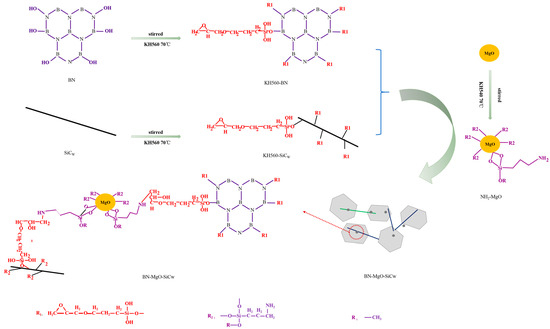
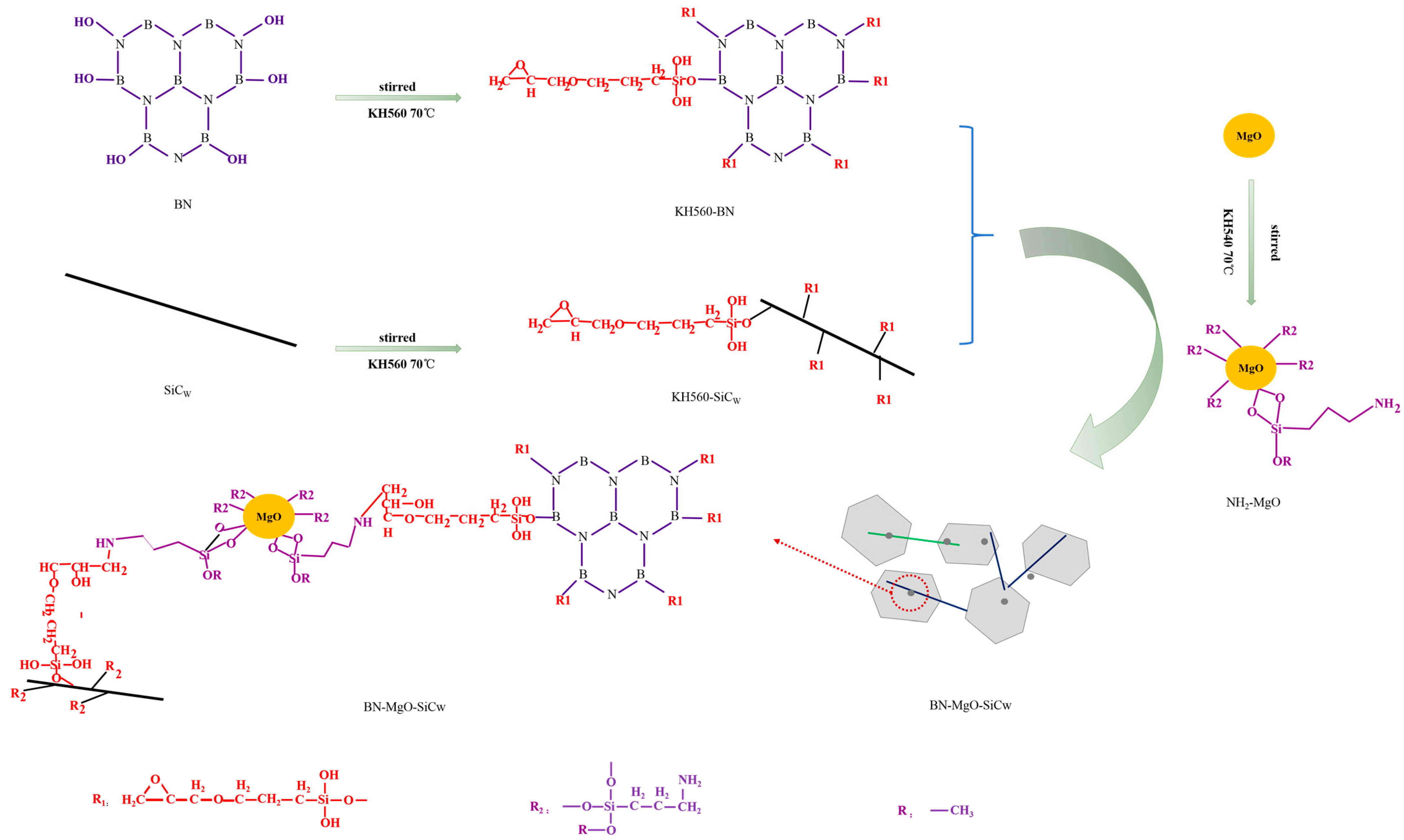
Figure 1 illustrates the synthesis process of the BN-MgO-SiCw hybrid fillers. First, 1 g of KH560 and 20 g of BN were added to a mixed solution of ethanol and deionized water (250 mL:250 mL) and stirred at 70 °C for 6 h. The resulting powder was then repeatedly rinsed with deionized water to remove any residual KH560, and finally dried in vacuo at 60 °C for 8 h to obtain KH560-functionalized BN (KH560-BN). Second, the same procedure was applied to modify SiCw, yielding KH560-functionalized SiCw (KH560-SiCw). Third, 1 g of MgO and 40 mL of KH540 were dissolved in 450 mL of ethanol. The mixture was sonicated for 1 h and then stirred at 60 °C for 10 h. Subsequently, the mixture was diluted with 1000 mL of ethanol solution, and the resulting NH2-functionalized MgO (NH2-MgO) was dried at 60 °C for 24 h. Fourth, 4 g of KH560-SiCw, 16 g of KH560-BN, and 0.04 g of NH2-MgO were added to 500 mL of tetrahydrofuran (THF), stirred for 0.5 h, and then sonicated for 1 h. The mixed solution was reacted at 60 °C for 4 h, and finally dried at 80 °C for 12 h to obtain the BN-MgO-SiCw hybrid filler.
Figure 1.
Synthesis process of BN-MgO-SiCw hybrid fillers.
2.4. Preparation of PBz Composites
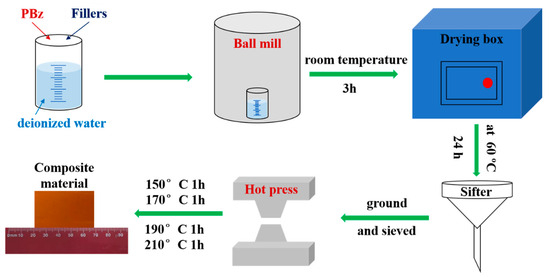
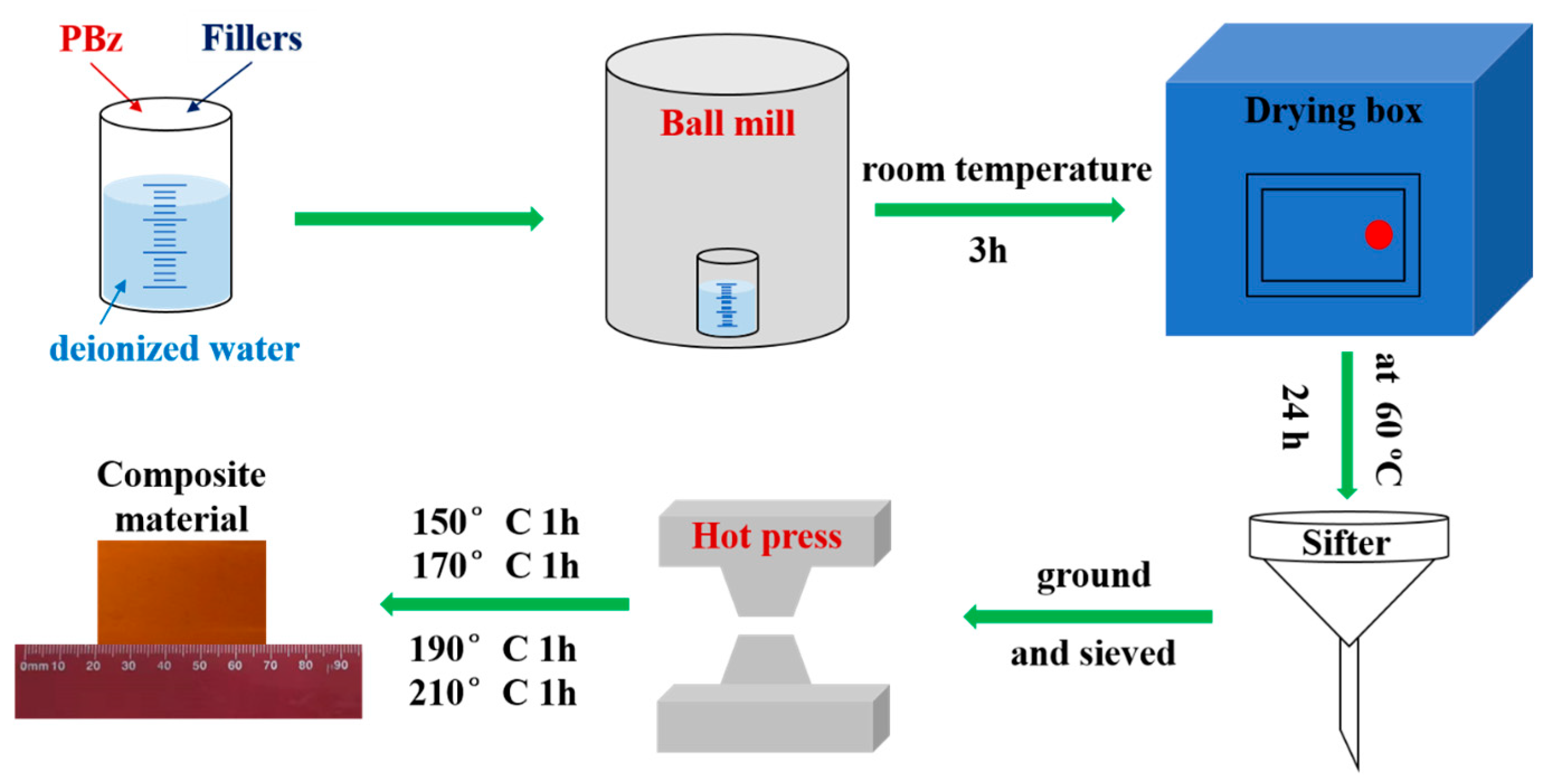
Figure 2 shows the preparation of PBz Composites. The PBz composites were prepared by a ball-milling-assisted solution mixing method combined with hot pressing. PBz and the fillers (KH560-BN or BN-MgO-SiCw) were mixed in deionized water at a designated ratio and ball-milled at room temperature for 3 h. The mixture was then dried at 60 °C for 24 h to obtain mixed powders, which were subsequently ground and sieved to increase fineness. The composites were then fabricated by hot pressing the powders at 12 MPa following a stepwise curing schedule: 150 °C for 1 h, 170 °C for 1 h, 190 °C for 1 h, and 210 °C for 1 h.
Figure 2.
Preparation process of PBz composites.
3. Results and Discussion
3.1. Characterization of Modification Results of Fillers
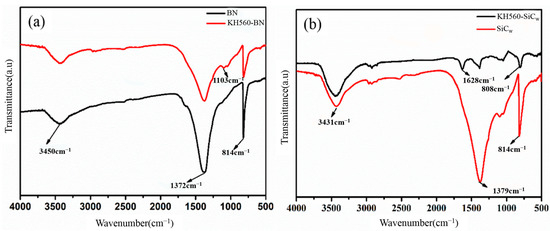
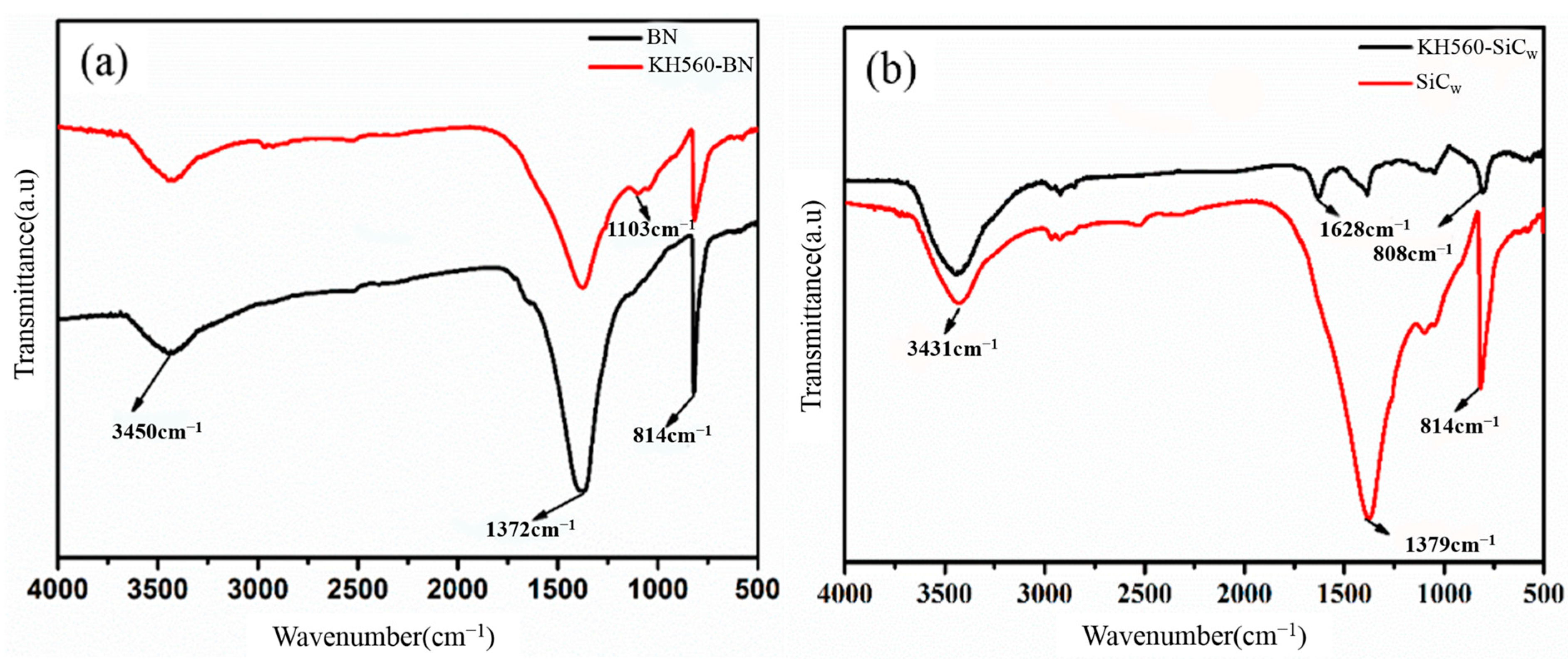
FTIR spectroscopy and Raman spectroscopy were employed to verify the surface modification of BN and SiCw with KH560, as well as the successful synthesis of the BN-MgO-SiCw hybrid filler.
Figure 3a presents the FTIR spectra of pristine BN and KH560-BN. The peaks at 1372 cm−1 and 814 cm−1 correspond to the characteristic absorption bands of B–N bonds, while the peak at 3450 cm−1 is attributed to –OH groups. Notably, a new absorption peak appears at approximately 1103 cm−1 in the spectrum of KH560-BN, which is characteristic of Si–O bonds. The emergence of this Si–O peak is attributed to the introduction of KH560 molecules, confirming the successful modification of BN.
Figure 3.
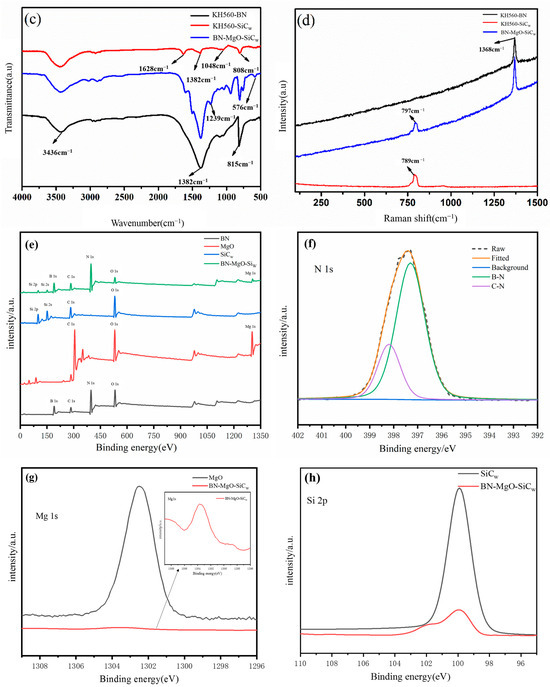
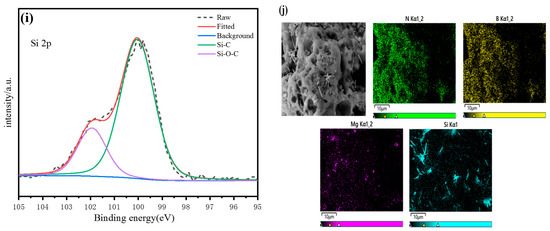
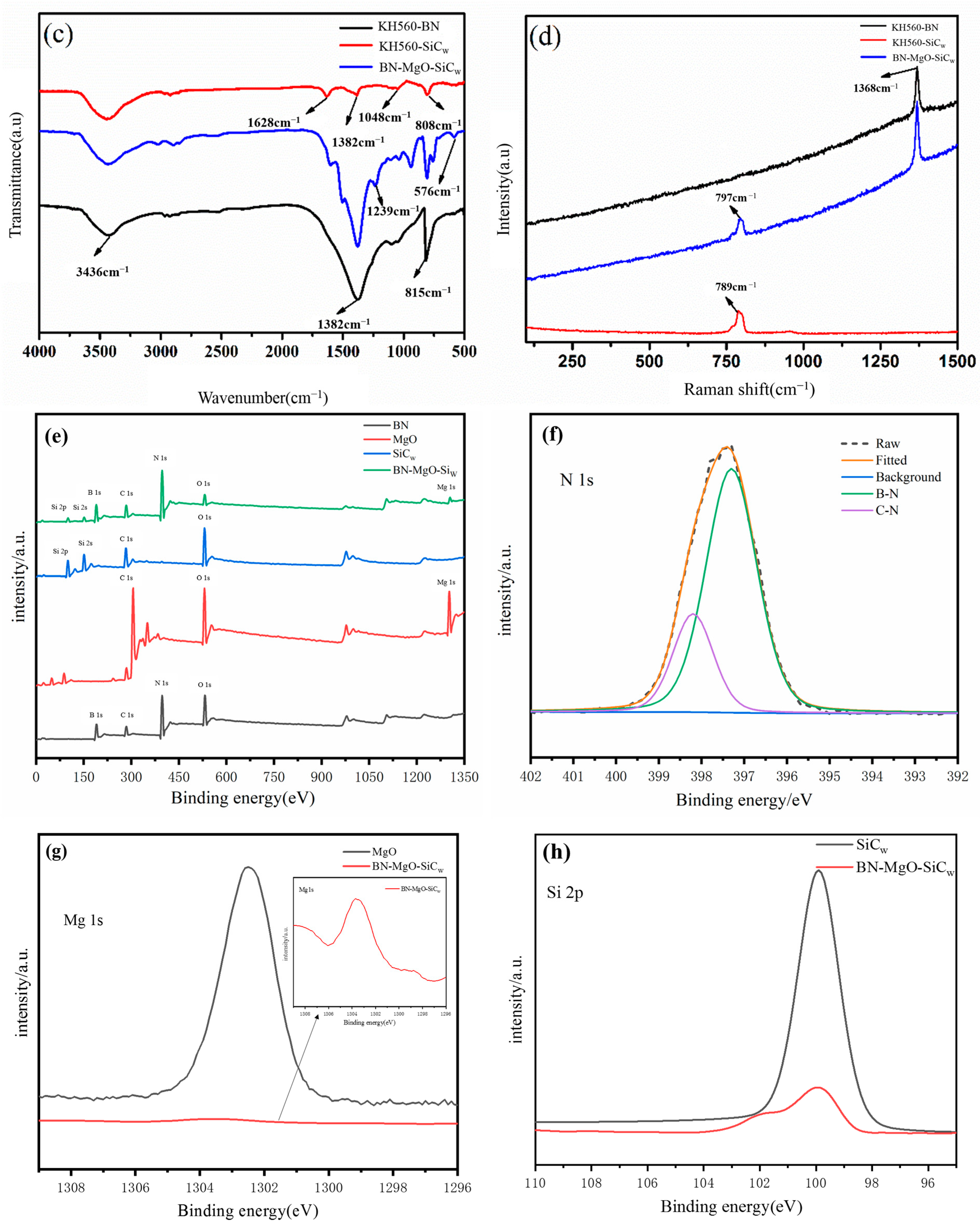
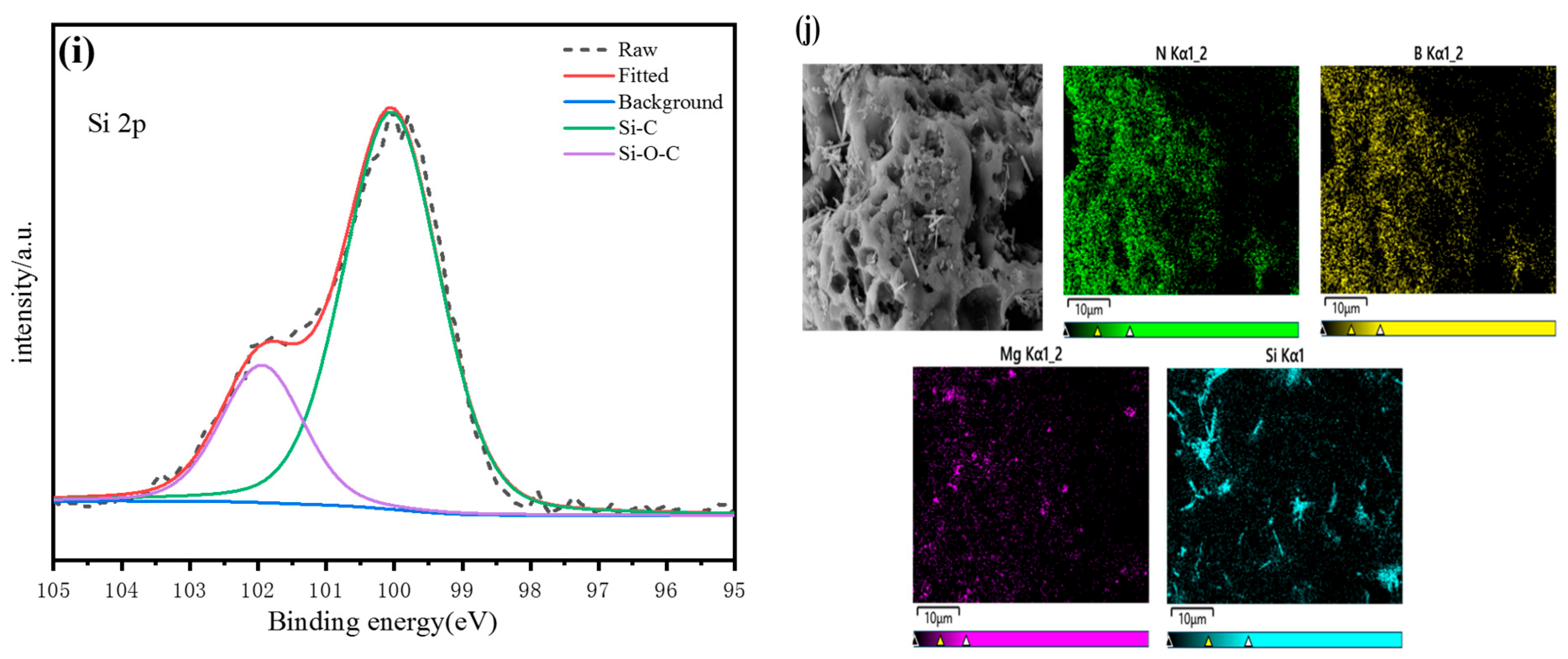
(a): FT-IR spectra of BN&KH560-BN; (b): FT-IR spectra of SiCw&KH560-SiCw; (c): FT-IR spectra of KH560-BN&KH560-SiCw&BN-MgO-SiCw; (d): Raman spectra of KH560-BN&KH560-SiCw&BN-MgO-SiCw; (e): XPS survey spectra of BN&MgO&SiCw & BN-MgO-SiCw; (f): N 1s peak spectrum of BN-MgO-SiCw; (g): MgO & Mg 1s high-resolution spectrum of BN-MgO-SiCw; (h): Si 2p high-resolution spectrum of SiCw& BN-MgO-SiCw; (i): Si2p peak spectrum of BN-MgO-SiCw; (j): EDS elemental mapping of BN-MgO-SiCw.
Figure 3b shows the FTIR spectra of pristine SiCw and KH560-SiCw. The characteristic Si–C vibration peak is observed near 814 cm−1 in both spectra. Notably, the intensity of the Si–C peak is significantly stronger in pristine SiCw than in KH560-SiCw. The peak near 1379 cm−1 in both spectra corresponds to C–H bonds. Compared with pristine SiCw, the intensity of the C–H peak in the KH560-SiCw spectrum is markedly reduced, indicating successful surface modification of SiCw by KH560.
Figure 3c displays the FTIR spectra of KH560-BN, KH560-SiCw, and the BN-MgO-SiCw hybrid filler. Compared with the spectra of KH560-BN and KH560-SiCw, two new absorption peaks appear in the BN-MgO-SiCw spectrum at approximately 1239 cm−1 and 576 cm−1. These peaks correspond to the stretching vibrations of C–N bonds and Mg–O–Si bonds, respectively, which originate from the amide bond and aminosilyl groups. These spectral changes provide strong evidence that BN and SiCw have been successfully covalently linked via NH2-MgO.
Figure 3d presents the Raman spectra of KH560-BN, KH560-SiCw, and BN-MgO-SiCw. The BN-MgO-SiCw hybrid exhibits both the characteristic peaks of KH560-BN and those of KH560-SiCw, confirming the integration of both components. The peak near 1368 cm−1 in the spectra of BN-MgO-SiCw and KH560-BN is primarily attributed to the E2g mode of atomic bond vibrations in KH560-BN. Meanwhile, the peak near 789 cm−1 in the spectra of BN-MgO-SiCw and KH560-SiCw corresponds to the E2g mode of Si–C bond vibrations. Furthermore, compared with the Raman spectra of KH560-BN and KH560-SiCw, the peak positions in the BN-MgO-SiCw spectrum exhibit slight shifts, which are likely due to charge transfer effects. These spectral changes further corroborate the successful covalent linkage between BN and SiCw.
To quantitatively investigate the chemical bonding states, XPS survey spectra and high-resolution scans (including N 1s, Mg 1s, and Si 2p) were conducted on the functionalized fillers. As shown in Figure 3e, compared to pristine MgO, the BN-MgO-SiCw hybrid filler exhibits additional N 1s and Si 2p peaks. Quantitative analysis reveals that the surface atomic concentrations of N and Si reach 32.15 at% and 4.11 at%, respectively. These results confirm the successful grafting of the amino-functionalized silane coupling agent (KH540) onto the filler system. High-resolution N 1s spectra of the BN-MgO-SiCw filler were deconvoluted into two distinct components (Figure 3f). The peak located at 397.2 eV corresponds to the B–N bond inherent to BN, while a new characteristic peak appearing at 398.3 eV is attributed to the C–N bond formed during the amidation reaction. Peak area fitting indicates that amino-derived nitrogen accounts for approximately 34% of the total N signal, providing strong evidence that amino groups were retained during the reaction and actively participated in interfacial interactions. Figure 3g presents the Mg 1s spectra of pristine MgO and the BN-MgO-SiCw hybrid filler. The Mg 1s peak for pristine MgO is observed at 1302.5 eV, whereas for the BN-MgO-SiCw filler, it shifts to 1303.5 eV, corresponding to a +1.0 eV chemical shift. This shift is primarily attributed to the formation of Mg–O–Si covalent bonds between MgO and KH540. Due to the higher electronegativity of Si compared to Mg, the electron cloud density around Mg decreases, resulting in an increased binding energy. As shown in Figure 3h, the Si 2p spectrum of pristine SiCw exhibits a symmetric single peak at approximately 100.5 eV, corresponding to Si–C bonds. In contrast, the Si 2p spectrum of the BN-MgO-SiCw filler becomes significantly broader and asymmetric, and can be deconvoluted into two components (Figure 3i). The peak at 100.5 eV is attributed to the Si–C bonds from the SiCw backbone, while the additional peak at 102.1 eV corresponds to Si–O–C bonds, which arise from the interfacial bonding involving KH540. Peak area fitting reveals that a substantial proportion of Si atoms participate in interfacial bonding, providing quantitative evidence for the formation of covalent linkages via the amidation reaction.
EDS elemental mapping was performed on the BN-MgO-SiCw ternary hybrid filler. As shown in Figure 3j, the elemental distribution maps reveal that B (from BN), Si (from SiCw), and Mg (from MgO) do not exist as isolated agglomerates. Notably, the Mg signal is spatially located between B and Si, effectively serving as a bridging component. Furthermore, the N signal originates from both BN and the amino groups on the KH540-modified MgO. The EDS maps clearly show that N is uniformly distributed across the Mg-rich interfacial regions, indicating that KH540-MgO indeed functions as a connecting phase. This visual evidence directly supports the formation of a BN-MgO-SiCw ternary filler network.
3.2. Microstructure Characterization of Fillers and Composite Materials
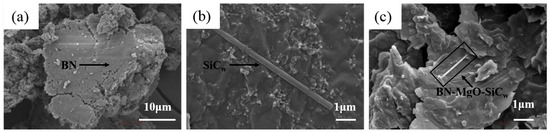
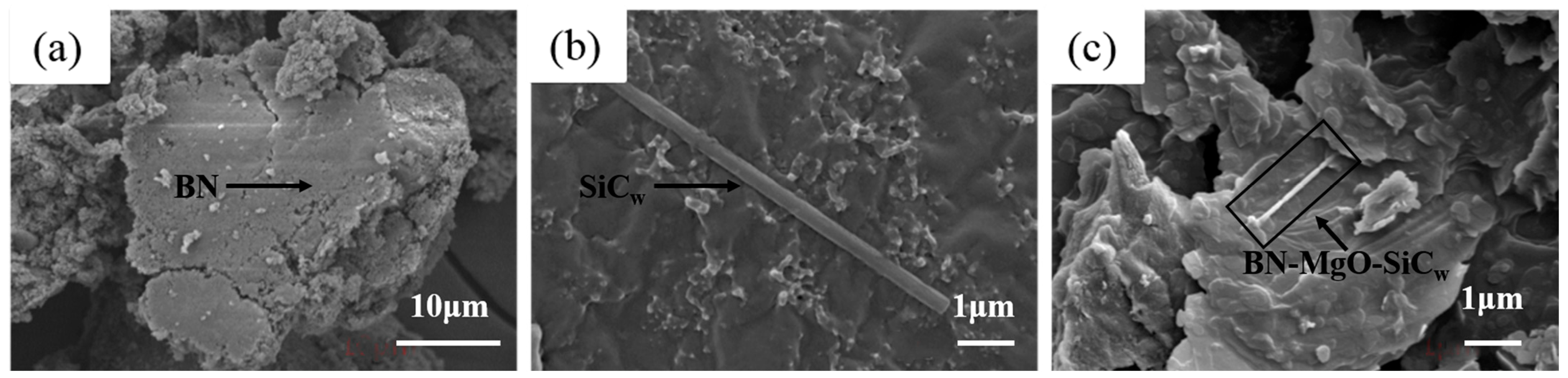
Figure 4 shows the microstructures of KH560-BN, KH560-SiCw, and the BN-MgO-SiCw hybrid filler. In Figure 4a, the KH560-BN exhibits a sheet-like morphology with a particle size of approximately 24 μm. Figure 4b reveals that KH560-SiCw displays a rod-like structure with a length of approximately 5 μm. Following the amidation reaction, Figure 4c clearly shows that the rod-like SiCw effectively bridges the sheet-like BN particles, forming an interconnected hybrid structure.
Figure 4.
The SEM of fillers: (a): m-BN; (b):m-SiCw; (c): BN-MgO-SiCw.
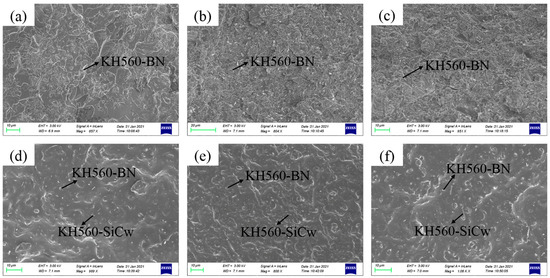
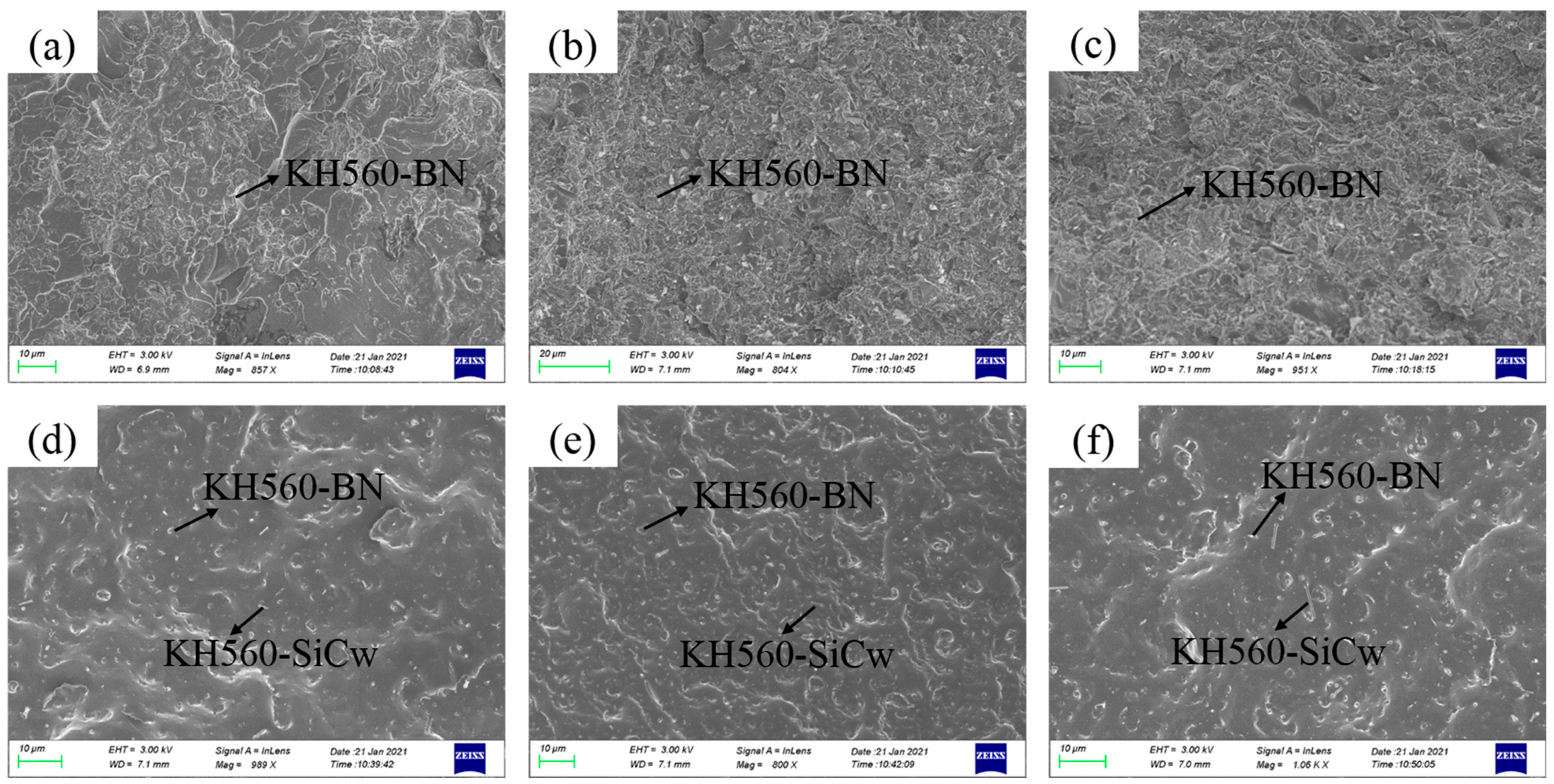
Figure 5 shows the microstructures of KH560-BN/PBz and BN-MgO-SiCw/PBz composites at different filler loadings. Figure 5a–c present the microstructures of PBz composites filled with 10 wt%, 30 wt%, and 50 wt% KH560-BN, respectively. Figure 5d–f show the corresponding microstructures of PBz composites filled with 10 wt%, 30 wt%, and 50 wt% BN-MgO-SiCw, respectively.
Figure 5.
The SEM of composites: (a) KH560-BN/PBz-10, (b) KH560-BN/PBz-30, (c) KH560-BN/PBz-50, (d) BN-MgO-SiCw/PBz-10, (e) BN-MgO-SiCw/PBz-30, (f) BN-MgO-SiCw/PBz-50.
As observed in Figure 5a–c, the distribution of KH560-BN within the polymer matrix becomes increasingly uniform with increasing filler content. At relatively low filler loadings, there is minimal interconnection between adjacent BN sheets. As the filler content increases, both the probability of contact and the contact area between BN particles increase, facilitating the formation of effective thermally conductive pathways within the PBz matrix. This structural evolution promotes heat transfer and consequently enhances the thermal conductivity of the composites.
For the BN-MgO-SiCw/PBz composites (Figure 5d–f), a similar trend is observed: the interconnectivity and contact area between fillers increase with higher filler loadings. However, unlike the KH560-BN/PBz system, the BN-MgO-SiCw/PBz composites exhibit additional interconnections between the rod-like SiCw and the sheet-like BN particles. This unique morphology contributes to the formation of a more efficient thermal conduction network within the PBz matrix, which is more favorable for heat transfer. Furthermore, the BN-MgO-SiCw hybrid filler demonstrates superior interfacial compatibility with the PBz matrix compared to KH560-BN alone.
As a result, the BN-MgO-SiCw/PBz composites exhibit significantly fewer structural defects than their KH560-BN/PBz counterparts. These combined advantages make BN-MgO-SiCw a highly promising filler system for achieving PBz-based composites with excellent thermal conductivity.
To further ascertain the absence of filler agglomeration within the polymer matrix at a loading of 50 wt%, we performed a detailed microzone XRD analysis on the 50 wt% BN-MgO-SiCw/PBz composite. Fifteen points on the sample surface were scanned to obtain the integrated intensities (I) of the characteristic diffraction peaks for BN, MgO, and SiCw. The intensity ratios, IBN/IMgO and ISiCw/IMgO, were then calculated for each point, as summarized in Table 2. The coefficient of variation (Cv), defined as Cv = (σ/μ) × 100% (where σ is the standard deviation and μ is the mean), was determined to be 10.4% for the IBN/IMgO ratio and 12.6% for the ISiCw/IMgO ratio. These Cv values, both below the 15% threshold, indicate a uniform distribution of the BN-MgO-SiCw fillers, confirming the absence of significant aggregation or agglomeration.
Table 2.
The integrated intensities.
3.3. Thermal Conductivity of Composite Materials
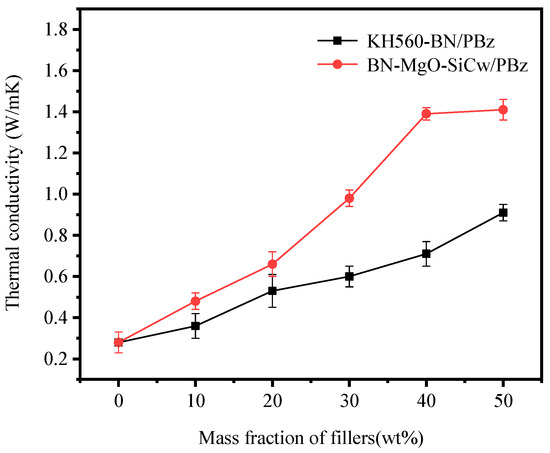
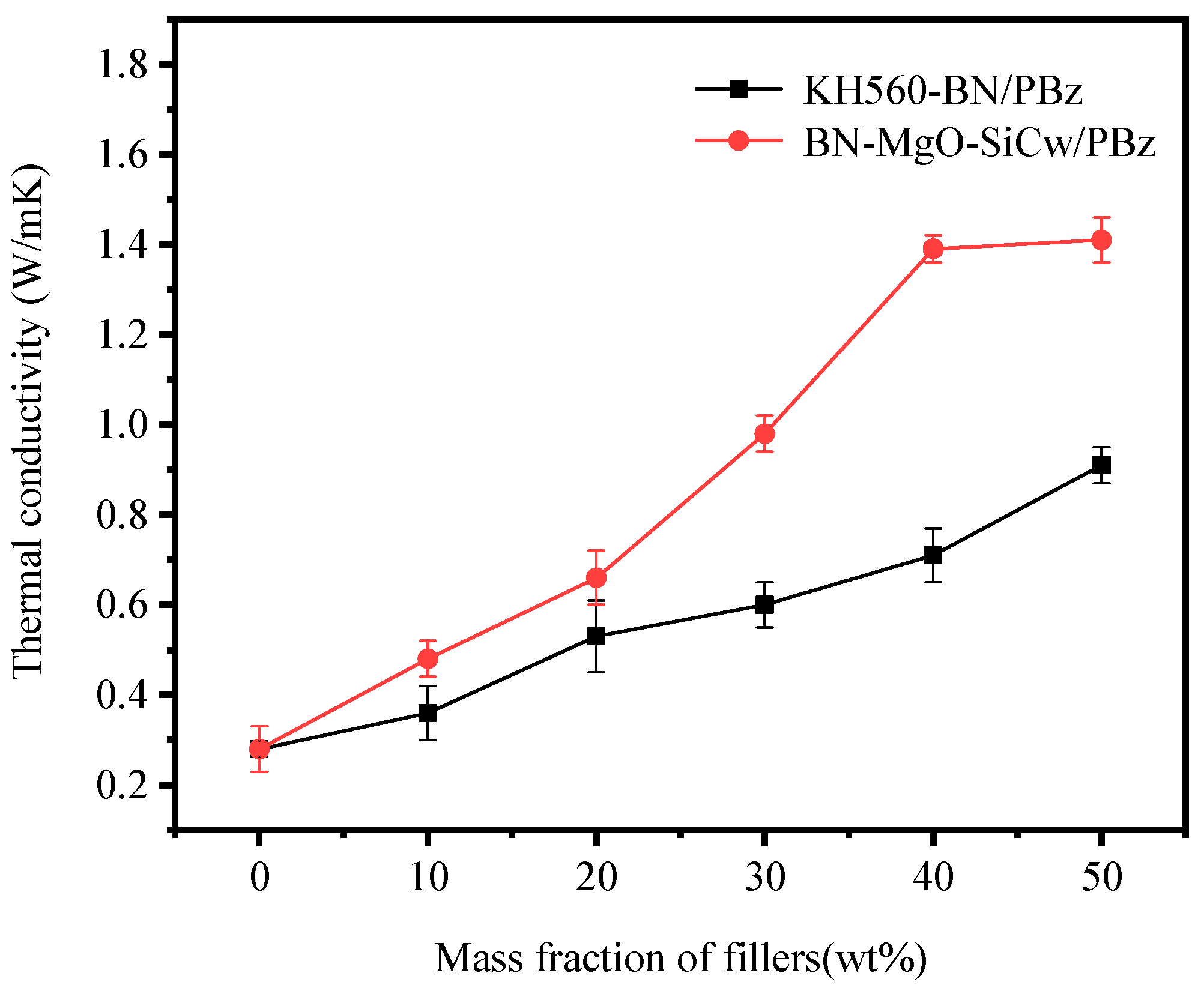
It is well established that the type, content, and thermal conductivity of both the filler and the matrix are key factors influencing the thermal conductivity of polymer composites. Figure 6 presents the thermal conductivity of KH560-BN/PBz and BN-MgO-SiCw/PBz composites as a function of filler content. All thermal conductivity measurements were repeated at least five times, and the results are reported as the average values. As clearly shown in the figure, the thermal conductivity of both composite systems increases with increasing filler content. This enhancement can be attributed to the closer packing and progressive alignment of filler particles at higher loadings, which facilitates the formation of more interconnected thermally conductive pathways. Such microstructural evolution effectively shortens the phonon transport distance and accelerates phonon transmission, thereby promoting faster heat diffusion.
Figure 6.
The thermal conductivity of the composite varies with the filler content.
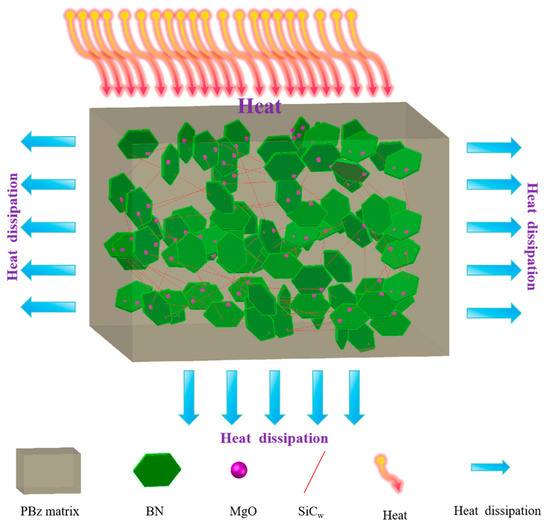
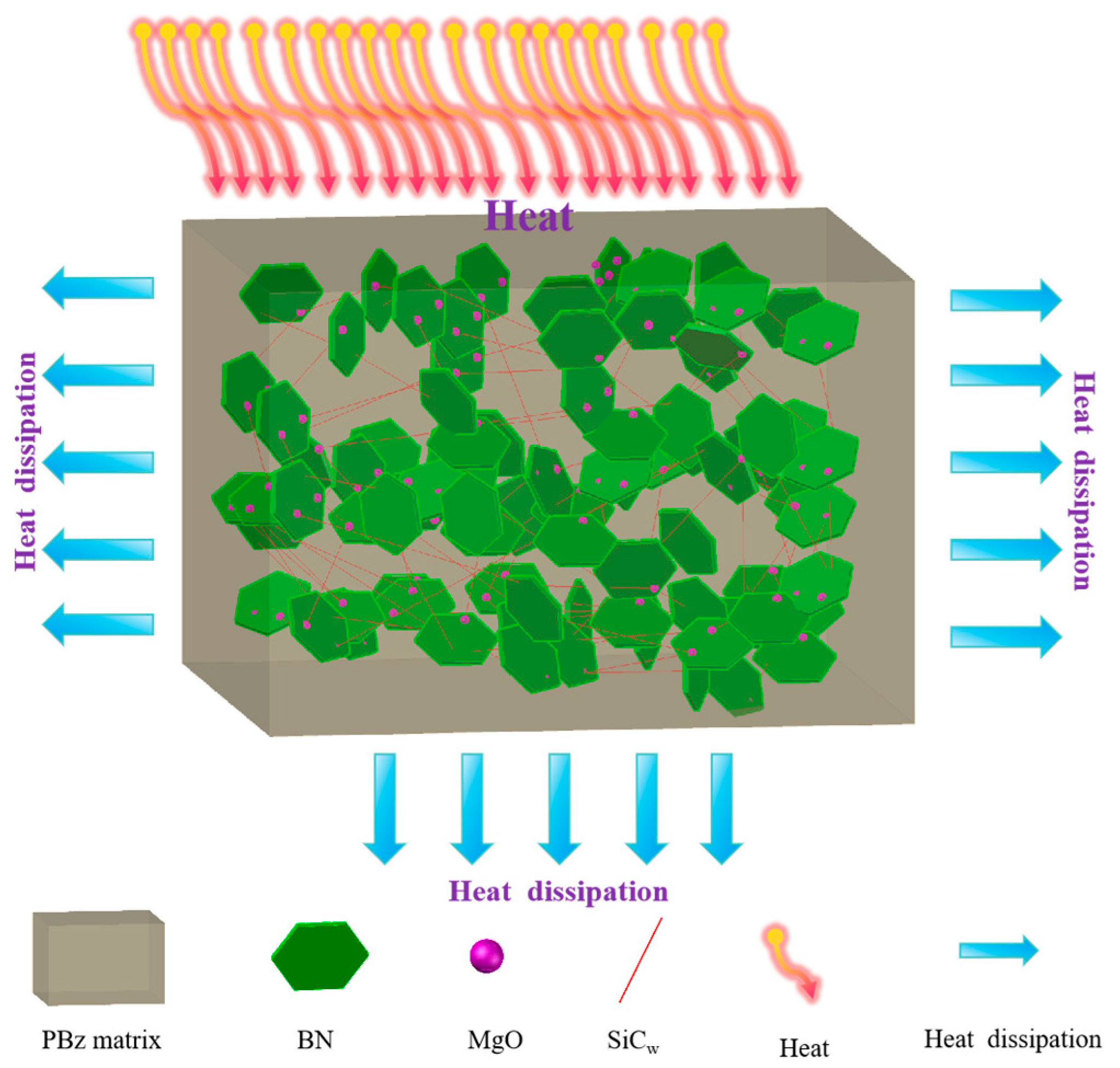
Furthermore, at equivalent filler loadings, the BN-MgO-SiCw/PBz composites exhibit significantly higher thermal conductivity than their KH560-BN/PBz counterparts, with this disparity becoming more pronounced as the filler content increases. At a filler loading of 50 wt%, the thermal conductivity of the BN-MgO-SiCw/PBz composite reaches 1.41 W/mK, which is approximately 5.2 times that of the neat PBz matrix. In comparison, the KH560-BN/PBz composite achieves a thermal conductivity of 0.91 W/mK, corresponding to 3.4 times that of the matrix. This enhancement can be attributed primarily to the following two factors. First, the rod-like KH560-SiCw and the sheet-like KH560-BN establish covalent connections through the spherical crosslinking agent KH540-MgO. This configuration enables KH560-SiCw to effectively bridge adjacent KH560-BN particles, facilitating the formation of a more stable and continuous thermally conductive network within the PBz matrix. Such a network accelerates phonon transport and promotes efficient heat diffusion. Second, compared to the binary KH560-BN system, the incorporation of the ternary BN-MgO-SiCw hybrid filler promotes denser packing within the matrix, reducing structural defects and voids. This improved microstructural integrity provides smoother pathways for phonon transport, further enhancing thermal conductivity. Figure 7 schematically illustrates the proposed heat conduction mechanism and corresponding thermal transport model for the BN-MgO-SiCw/PBz composite.
Figure 7.
The heat conduction mechanism of BN-MgO-SiCw/PBz composite materials.
3.4. Dielectric Properties of Composite Materials
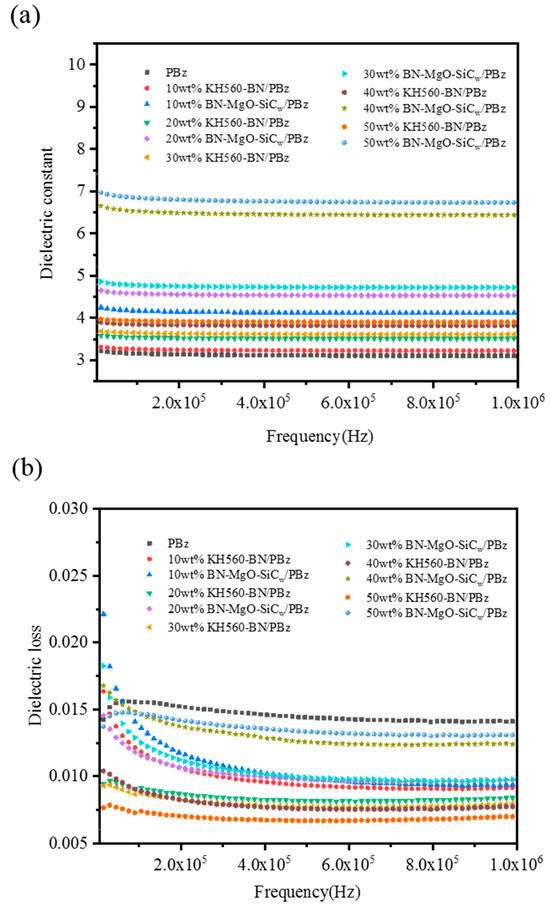
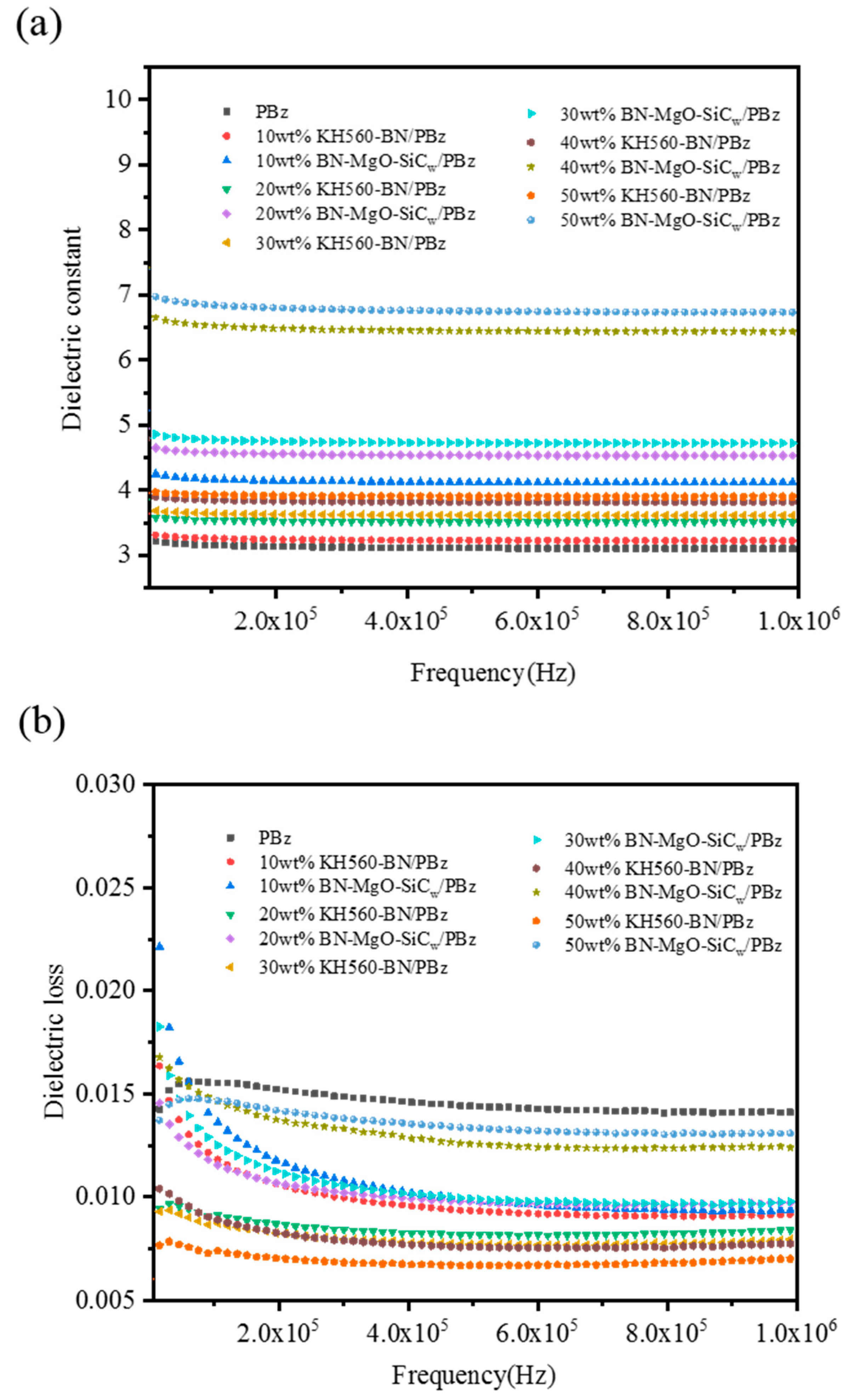
In addition to thermal conductivity, the dielectric properties of polymer composites used as microelectronic packaging materials are also very critical. Using polymer compo-sites with lower ε value and tan δ value as electronic packaging materials can significantly reduce the signal attenuation during transmission, thereby improving the working rate of electronic components. Figure 8a characterizes the ε values of BN-MgO-SiCw/PBz composites and KH560-BN/PBz composites with different filling content. At a frequency of 1 MHz, the ε value of the neat PBz matrix is 3.07. As the filler content increases, the dielectric constant (ε) of the composites exhibits a nonlinear upward trend. When the loading of KH560-BN reaches 50 wt%, the ε value of the KH560-BN/PBz composite is 3.83. This phenomenon can be theoretically explained using established dielectric models. According to the effective medium theory (EMT), the effective dielectric constant of a two-phase composite is governed by the intrinsic permittivity of the filler, its volume fraction, and the geometric shape factor.
Figure 8.
Dielectric properties of composites: (a): Dielectric constant; (b): Dielectric loss.
In this study, when the ceramic filler content is below 20 wt%, the Maxwell-Garnett theory applies: the ceramic particles are isolated and dispersed within the polymer matrix, with negligible interaction between fillers. Under these conditions, the increase in the dielectric constant is primarily attributed to the polarization of the high-permittivity ceramic fillers. When the ceramic filler content exceeds 20 wt%, the Bruggeman theory becomes more applicable. Here, the increase in the dielectric constant of the polymer composite arises from two main factors: first, the volume effect resulting from the increased proportion of high-permittivity ceramics; and second, the coupling effect, where interactions between neighboring particles lead to mutual coupling through local electric fields. Even at a ceramic loading of 50 wt%, although the dielectric constant is enhanced compared to the neat matrix and composites with lower filler fractions, it remains below the percolation threshold. Consequently, no sharp increase in ε is observed, allowing the composite to retain favorable dielectric properties. Furthermore, we observed that at the same filler loading, the BN-MgO-SiCw/PBz composite exhibits a significantly higher dielectric constant than the KH560-BN/PBz composite. For instance, at a filler content of 50 wt%, the ε value of the BN-MgO-SiCw/PBz composite reaches 6.81. This difference can be attributed to the following three factors: 1. Introduction of High-Permittivity Components: SiCw and MgO inherently possess high dielectric constants. Their incorporation into the polymer system directly increases the proportion of high-permittivity components, thereby elevating the overall dielectric constant of the composite. 2. Formation of a Polarization Network through Multi-Dimensional Fillers: The rod-like SiCw whiskers interspersed between the plate-like BN particles create localized polarization micro-regions. This multi-dimensional structure generates numerous enhancement points for the local electric field, leading to a polarization intensity in the composite that exceeds the simple sum of contributions from a single BN filler. 3. Enhanced Interfacial Polarization: The addition of three types of fillers introduces numerous heterogeneous interfaces within the polymer system, including MgO-PBz, SiCw-PBz, BN-MgO, BN-SiCw, and MgO-SiCw. Under an applied electric field, free charges and dipoles are more readily trapped and accumulated at these interfaces. This significant charge accumulation at the interfaces directly contributes to the substantial increase in the dielectric constant of the composite.
Figure 8b shows the dielectric loss (tan δ) of BN-MgO-SiCw/PBz and KH560-BN/PBz composites as a function of filler content. As the loading of KH560-BN increases, the tan δ steadily decreases. At a frequency of 1 MHz, the neat PBz matrix exhibits a tan δ of 0.015. When the KH560-BN content reaches 50 wt%, the tan δ of the corresponding composite drops to 0.0071. This reduction can be largely ascribed to the mitigation of interfacial polarization loss resulting from the surface modification of BN with KH560. The treatment promotes the formation of covalent linkages between the BN filler and the PBz matrix, leading to a more uniform and tightly bound interface with fewer micro-voids or structural imperfections. This improved interfacial bonding restricts the mobility of charge carriers, thereby suppressing polarization losses that typically arise from charge accumulation and migration at the interface. Additionally, the oxygen-containing functional groups introduced on the BN surface during modification may trap and immobilize injected charges, further inhibiting carrier transport and contributing to the observed reduction in dielectric loss.
Figure 8b also reveals that, at equivalent filler loadings, the BN-MgO-SiCw/PBz composites exhibit higher tan δ values than their KH560-BN/PBz counterparts. For instance, at a filler content of 50 wt%, the tan δ value of the BN-MgO-SiCw/PBz composite is 0.013. This phenomenon can be explained from the following perspectives: 1. Formation of Conductive Pathways: The covalent integration of the BN-MgO-SiCw hybrid filler system facilitates the formation of continuous or semi-continuous networks within the PBz matrix. These networks can provide pathways for the long-range transport of charge carriers, allowing charges to migrate over larger distances under an electric field and thus increasing dielectric loss. 2. Intrinsic Carrier Migration in SiCw: As a semiconductive material, SiCw contains a substantial number of free charge carriers. Under an external electric field, these carriers may undergo hopping and migration within the established filler network, contributing to the observed energy loss. 3. Enhanced Interfacial Polarization: The significant disparity in dielectric properties between the introduced MgO/SiCw fillers and the PBz matrix leads to substantial charge accumulation at their interfaces. This pronounced interfacial polarization under an applied field directly contributes to an increase in dielectric loss.
It is noteworthy that, despite the higher tanδ values of the BN-MgO-SiCw/PBz composites compared to the KH560-BN/PBz system, they remain well within the acceptable range for electronic packaging materials (tanδ < 0.02), satisfying the requirements for most microelectronic packaging applications.
3.5. Thermal Stability of Composite Materials
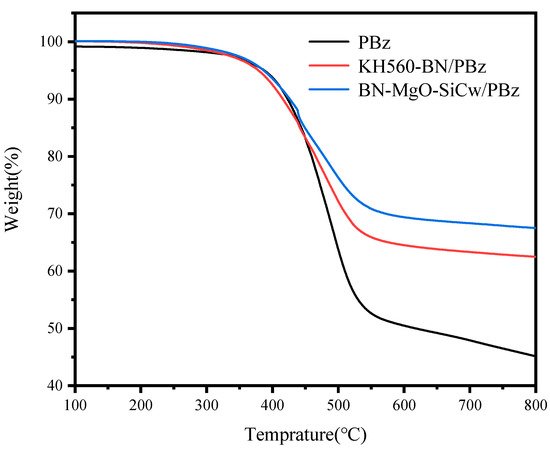
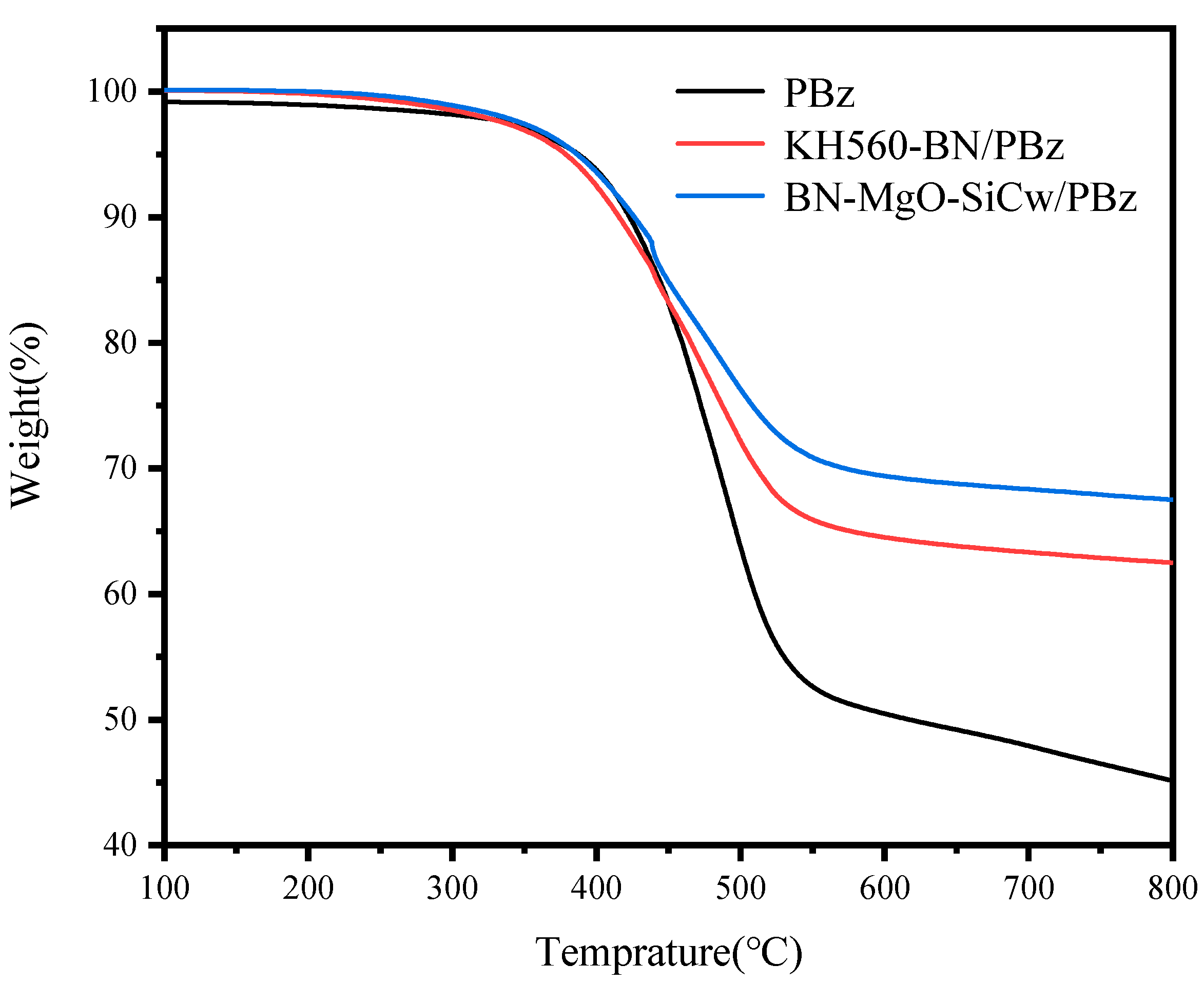
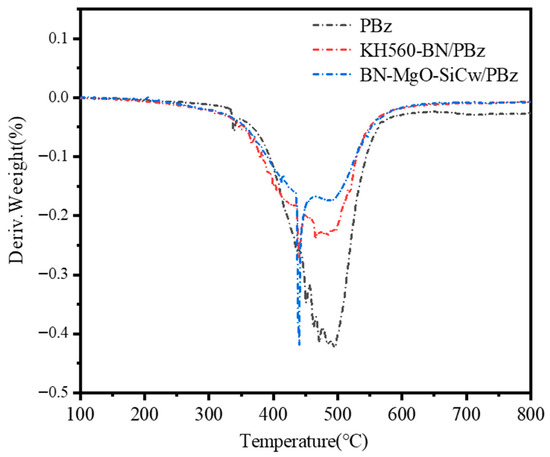
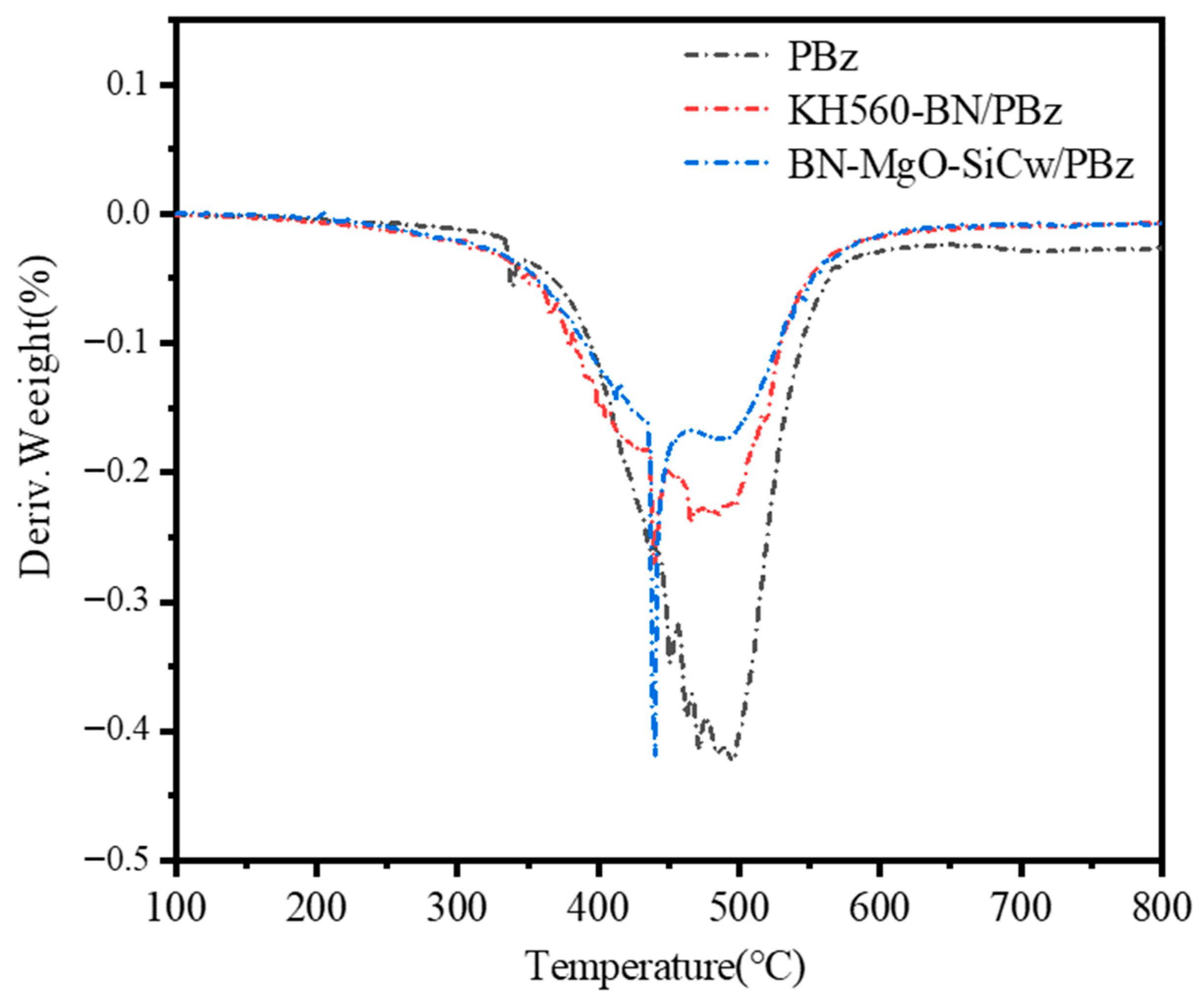
Figure 9 and Figure 10 present the TGA and DTG curves of the neat PBz matrix, along with the KH560-BN/PBz and BN-MgO-SiCw/PBz composites at a filler loading of 50 wt%. The corresponding thermal data are summarized in Table 3. As shown in the TGA curves, the incorporation of thermally conductive fillers significantly increases the char yield at 800 °C for both the KH560-BN/PBz and BN-MgO-SiCw/PBz composites compared to the neat PBz matrix.
Figure 9.
TGA curves of composites.
Figure 10.
DTG curves of composites.
Table 3.
Thermal date of composites.
The DTG curves reveal a sharp, narrow peak at approximately 430 °C for both composite systems, which is absent in the curve of the neat PBz matrix. This peak is attributed to the thermal decomposition of the silane coupling agent anchored on the filler surfaces, which undergoes concentrated degradation around this temperature. While the temperature corresponding to the maximum decomposition rate (Tmax) remains largely similar across all samples, the maximum decomposition rate itself varies considerably. Notably, the BN-MgO-SiCw/PBz composite exhibits the lowest maximum decomposition rate, whereas the neat PBz matrix shows the highest, indicating that the hybrid filler system effectively retards the thermal degradation process. For the neat PBz matrix, the thermal degradation temperature corresponding to a 30% weight loss (T30) is 485 °C, and the heat resistance index temperature (THRI) is 218 °C. This initial weight loss is primarily attributed to the decomposition of carbonaceous components and the volatilization of polymer fragments. Upon the addition of 50 wt% KH560-BN, the T30 and THRI increase to 511 °C and 224 °C, respectively. More notably, the BN-MgO-SiCw/PBz composite with the same filler loading exhibits significantly enhanced thermal stability, with T30 and THRI reaching 572 °C and 244 °C, respectively.
Therefore, we can conclude that due to the interaction between fillers, the thermal degradation of the composite is limited, and both T30 and THRI of BN-MgO-SiCw/PBz are significantly increased. Furthermore, under the condition of the same filling content, the improvement degree of BN-MgO-SiCw on T30, THRI and the char yield at 800 °C is significantly greater than that of KH560-BN. This is mainly due to the covalent connection between BN and SiCw in BN-MgO-SiCw and the synergistic effect to further hinder the heat degradation process of the polymer. Moreover, compared with KH560-BN, the BN-MgO-SiCw shows better interfacial compatibility, which is also conducive to the improvement of the thermal stability of PBz composites.
3.6. Mechanical Properties of Composite Materials
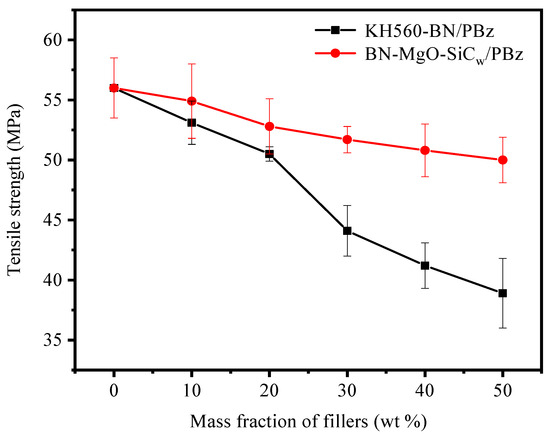
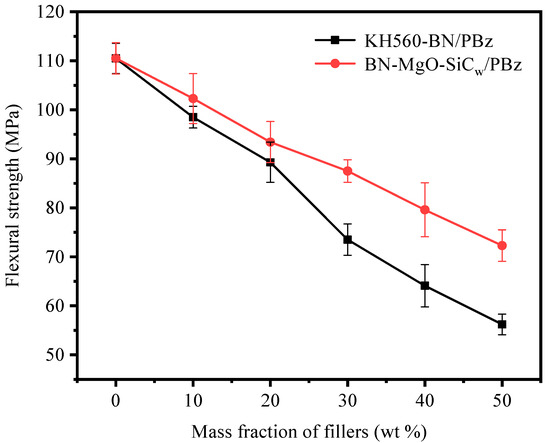
Figure 11 and Figure 12 illustrate the tensile strength and flexural strength of KH560-BN/PBz and BN-MgO-SiCw/PBz composites as a function of filler loading. All tests were repeated at least five times, and the results are reported as the average values. The neat PBz matrix exhibits a tensile strength of 56.0 MPa and a flexural strength of 110.5 MPa. With the incorporation of fillers, both the tensile and flexural strengths of the composites decrease progressively. This decline is primarily attributed to filler agglomeration at higher loadings, which impedes effective stress transfer within the polymer matrix and consequently deteriorates the mechanical properties. Notably, at equivalent filler loadings, the BN-MgO-SiCw/PBz composites exhibit significantly higher tensile and flexural strengths compared to their KH560-BN/PBz counterparts. For instance, at a filler content of 50 wt%, the BN-MgO-SiCw/PBz composite achieves a tensile strength of 50.0 MPa and a flexural strength of 72.3 MPa, markedly surpassing the values of 39.4 MPa and 56.2 MPa, respectively, observed for KH560-BN/PBz.
Figure 11.
Tensile strength of KH560-BN/PBz and BN-MgO-SiCw/PBz.
Figure 12.
Flexural strength of KH560-BN/PBz and BN-MgO-SiCw/PBz.
This enhancement can be attributed to the following two factors. First, SiCw possesses a high aspect ratio and excellent intrinsic mechanical properties, enabling it to function as an effective reinforcing agent within the polymer matrix. Second, the covalent linkages formed between KH560-modified BN and KH560-modified SiCw promote a stable synergistic interaction, further improving the load-bearing capacity and tensile performance of the BN-MgO-SiCw/PBz composites.
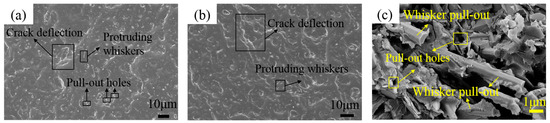
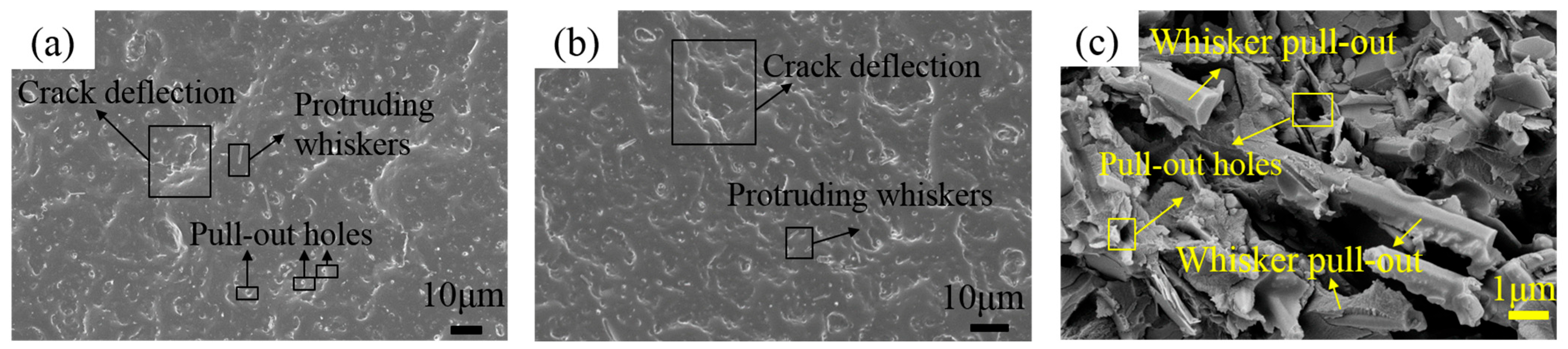
Analysis of the tensile fracture surfaces via SEM provides further insight into the mechanical behavior of the composites. As shown in Figure 13a,b, the relatively rough fracture surfaces with visible whisker protrusions suggest a toughened brittle fracture process. In Figure 13c, two distinct features can be observed: voids left by whiskers pulled out from the matrix and fractured SiCw whiskers. The presence of residual resin adhered to the surface of the pulled-out whiskers indicates strong interfacial adhesion between the SiCw and the PBz matrix. Meanwhile, the fractured whiskers confirm that the SiCw effectively bore and transferred stress during loading, providing direct evidence of the typical whisker pull-out and bridging mechanisms.
Figure 13.
Fracture morphology of BN-MgO-SiCw/PBz: (a,b): Overall fracture morphology; (c) local magnified fracture morphology.
Furthermore, as illustrated in Figure 13a,b, crack propagation appears to have undergone significant longitudinal deflection rather than continuing along the original fracture plane. This deviation occurs because, upon encountering SiCw whiskers, the advancing crack does not immediately propagate through them; instead, the whiskers are initially pulled out from the matrix. This pull-out process consumes additional fracture energy, thereby inducing crack deflection and enhancing the overall toughness of the composite.
In comparison to the KH560-BN/PBz composites, the BN-MgO-SiCw/PBz system exhibits notably improved tensile and flexural strengths. These enhancements substantiate the reinforcing role of SiCw within the polymer matrix. The high aspect ratio and outstanding mechanical properties of SiCw enable effective energy dissipation through whisker bridging and crack deflection mechanisms, which collectively contribute to the improved mechanical performance of the composites [39].
4. Conclusions
In summary, BN-MgO-SiCw/PBz composites were successfully fabricated via ball-milling-assisted solution mixing followed by hot-press molding. In this approach, KH540-functionalized MgO served as a crosslinking agent, enabling covalent linkage between KH560-BN and KH560-SiCw through an amidation reaction.
The BN-MgO-SiCw hybrid filler was incorporated into the PBz matrix to enhance the thermal conductivity, thermal stability, dielectric properties, and mechanical performance of the resulting composites. Owing to the covalent bonding between BN and SiCw and the resulting synergistic effect, the composite with 50 wt% BN-MgO-SiCw achieved a thermal conductivity of 1.41 W/mK, which is approximately 5.8 times that of the neat PBz matrix. Due to the intrinsically high dielectric constant and dielectric loss of SiCw, the dielectric performance of the BN-MgO-SiCw/PBz composite is slightly inferior to that of the KH560-BN/PBz composite at equivalent filler loadings.
The BN-MgO-SiCw/PBz composite also exhibits excellent thermal stability, attributed to the interactions between the filler components. The thermal degradation temperature at 30% weight loss (T30) and the heat resistance index temperature (THRI) reach 572 °C and 244 °C, respectively, both significantly higher than those of the neat PBz matrix.
With increasing thermally conductive filler content, the tensile strength and flexural strength of the composites progressively decrease. However, compared with the KH560-BN/PBz system, the incorporation of BN-MgO-SiCw substantially improves the mechanical properties. At a filler loading of 50 wt%, the BN-MgO-SiCw/PBz composite exhibits a tensile strength of 50.0 MPa and a flexural strength of 72.3 MPa. This enhancement is primarily attributed to the high aspect ratio of SiCw, as well as the synergistic interactions between BN and SiCw within the hybrid filler system.
Author Contributions
Conceptualization, Q.A., K.C., Y.P. and Y.S.; methodology, Q.A., Y.P., D.W. and J.L. (Jiakai Li); validation, K.X. and X.W.; formal analysis, Q.A. and Y.P.; investigation, Q.A., J.L. (Jingjing Li), S.W. and H.L.; resources, K.C. and J.L. (Jiakai Li); data curation, Q.A., K.C. and Y.P.; writing—original draft preparation, Q.A.; writing—review and editing, Y.P., D.W. and Y.S.; visualization, Q.A.; supervision, Y.S.; project administration, D.W., K.X. and H.L.; funding acquisition, Y.S. All authors have read and agreed to the published version of the manuscript.
Funding
This research was funded by the National Defense Technology, grant number (JSHS2020209B001-5). We are extremely grateful for the support of this project.
Institutional Review Board Statement
Not applicable.
Data Availability Statement
The original contributions presented in this study are included in the article. Further inquiries can be directed to the corresponding author.
Conflicts of Interest
Author Yaran Pei is employed by the Institute of Optical Physics and Engineering Technology. The remaining authors declare that the research was conducted in the absence of any commercial or financial relationships that could be construed as a potential conflict of interest. The funders had no role in the design of the study; in the collection, analyses, or interpretation of data; in the writing of the manuscript; or in the decision to publish the results.
Abbreviations
The following abbreviations are used in this manuscript:
| BN | boron nitride |
| SiCw | silicon carbide whisker |
| PBz | polybenzoxazine |
| PF | phenol-formaldehyde resin |
| PI | polyimide |
| EP | epoxy resin |
| BMI | bismaleimide resin |
| THF | tetrahydrofuran |
References
- Brunovska, Z.; Lyon, R.; Ishida, H. Thermal properties of phthalonitrile functional polybenzoxazines. Thermochim. Acta 2000, 357, 195–203. [Google Scholar] [CrossRef] [Scilit]
- Yang, C.; Lin, Y.; Wang, P.; Liaw, D.; Kuo, S. Polybenzoxazine/single-walled carbon nanotube nanocomposites stabilized through noncovalent bonding interactions. Polymer 2014, 55, 2044–2050. [Google Scholar] [CrossRef] [Scilit]
- Wang, D.; Li, B.; Zhang, Y.; Lu, Z. Triazine-containing benzoxazine and its high performance polymer. J. Appl. Polym. Sci. 2012, 127, 516–522. [Google Scholar] [CrossRef] [Scilit]
- Elmesallamy, S.M.; Fekry, M.; Hussein, L.I.; Abdelwahab, M.A.; Bakry, A. Polybenzoxazine/carbon nanotube nanocomposites as a polymeric sensing material for volatile organic compounds. J. Polym. Res. 2022, 29, 338. [Google Scholar] [CrossRef] [Scilit]
- Rimdusit, S.; Jubsilp, C.; Tiptipakorn, S. High Thermal Conductivity of BN-Filled Polybenzoxazines. In Alloys and Composites of Polybenzoxazines; Springer: Singapore, 2013. [Google Scholar]
- Pei, Y.; Lin, X.; Gong, H.; Zhang, Y.; Chen, G.; Feng, Y.; Saleem, A.; Jing, J.; Yang, R.; Wang, S. Enhanced thermal conductivity for polybenzoxazine matrix composites by constructing a hybrid conductive network and modification of fillers. J. Macromol. Sci. A 2021, 58, 472–481. [Google Scholar] [CrossRef] [Scilit]
- Mahanta, N.K.; Loos, M.R.; Zlocozower, I.M.; Abramson, A.R. Graphite Graphene Hybrid Filler System for High Thermal Conductivity of Epoxy Composites. J. Mater. Res. 2015, 30, 959–966. [Google Scholar] [CrossRef] [Scilit]
- Ishida, H.; Rimdusit, S. Very high thermal conductivity obtained by boron nitride-filled olybenzoxazine. Thermochim. Acta. 1998, 320, 177–186. [Google Scholar] [CrossRef] [Scilit]
- Bujard, P.; Kuhnlein, G. Thermal conductivity of molding compounds for plastic packaging. IEEE Trans. Compon. Packag. Manuf. Technol. 1994, 17, 527–532. [Google Scholar] [CrossRef] [Scilit]
- Agari, Y.; Ueda, A.; Tanaka, M.; Nagai, S. Thermal conductivity of a polymer filled with particles in the wide range from low to super-high volume content. J. Appl. Polym. Sci. 2010, 40, 929–941. [Google Scholar] [CrossRef] [Scilit]
- Chu, Y.; Otgonbayar, Z.; Park, G.S.; Jekal, S.; Kim, H.Y.; Ra, Y.H.; Song, S.; Yoon, C.M. Enhancing the thermal conductivity of epoxy molding compounds by adding SiO2-embedded carbon nanofibers for semiconductor packaging applications. Macromol. Res. 2025, 33, 105–116. [Google Scholar] [CrossRef] [Scilit]
- Shi, Z.; Fu, R.; Agathopoulos, S.; Gu, X.; Zhao, W. Thermal conductivity and fire resistance of epoxy molding compounds filled with Si3N4 and Al(OH)3. Mater. Des. 2012, 34, 820–824. [Google Scholar] [CrossRef] [Scilit]
- Procter, P.; Solc, J. Improved thermal conductivity in microelectronic encapsulants. IEEE Trans. Compon. Hybrids Manuf. Technol. 2002, 14, 708–713. [Google Scholar] [CrossRef] [Scilit]
- Agari, Y.; Uno, T. Thermal conductivity of polymer filled with carbon materials: Effect of conductive particle chains on thermal conductivity. J. Appl. Polym. Sci. 1985, 30, 2225–2235. [Google Scholar] [CrossRef] [Scilit]
- Teh, P.L.; Jaafar, M.; Akil, H.M.; Seetharamu, K.N.; Wagiman, A.N.R.; Beh, K.S. Thermal and mechanical properties of particulate fillers filled epoxy composites for electronic packaging application. Polym. Adv. Technol. 2008, 19, 308–315. [Google Scholar] [CrossRef] [Scilit]
- Goldin, N.; Dodiuk, H.; Lewitus, D. Enhanced thermal conductivity of photopolymerizable composites using surface modified hexagonal boron nitride fillers. Compos. Sci. Technol. 2017, 152, 36–45. [Google Scholar] [CrossRef] [Scilit]
- Hong, J.; Yoon, S.W.; Hwang, T.; Oh, J.-S. High thermal conductivity epoxy composites with bimodal distribution of aluminum nitride and boron nitride fillers. Thermochim. Acta 2012, 537, 70–75. [Google Scholar] [CrossRef] [Scilit]
- Ji, T.; Zhang, L.; Wang, W.; Liu, Y.; Zhang, X.; Lu, Y. Cold plasma modification of boron nitride fillers and its effect on the thermal conductivity of silicone rubber/boron nitride composites. Polym. Compos. 2012, 33, 1473–1481. [Google Scholar] [CrossRef] [Scilit]
- Isaac, I.; Xavier, R.; Francesc, F.; Serra, À. Thermoconductive Thermosetting Composites Based on Boron Nitride Fillers and Thiol-Epoxy Matrices. J. Polym. 2018, 10, 277. [Google Scholar]
- Kargar, F.; Salgado, R.; Legedza, S.; Renteria, J.; Balandin, A.A. A comparative study of the thermal interface materials with graphene and boron nitride fillers. J. Int. Soc. Opt. Photonics 2014, 9168, 70–74. [Google Scholar]
- Cho, H.B.; Tokoi, Y.; Tanaka, S.; Suematsu, H.; Suzuki, T.; Jiang, W.; Niihara, K.; Nakayama, T. Modification of BN nanosheets and their thermal conducting properties in nanocomposite film with polysiloxane according to the orientation of BN. Compos. Sci. Technol. 2011, 71, 1046–1052. [Google Scholar] [CrossRef] [Scilit]
- Jiang, F.; Cui, S.; Song, N.; Shi, L.; Peng, D. Hydrogen Bond-Regulated Boron Nitride Network Structures for Improved Thermal Conductive Property of Polyamide-imide Composites. ACS Appl. Mater. Interfaces 2018, 10, 16812–16821. [Google Scholar] [CrossRef] [Scilit]
- Ye, F.; Zhou, Y.; Lei, T.; Yang, J.; Zhou, W.; Zhang, L. Effect of whisker surface treatment on the mechanical properties of 20vol%SiCw/BAS glass-ceramic composites. J. Mater. Sci. 2001, 36, 237–240. [Google Scholar] [CrossRef] [Scilit]
- Geng, L.; Ochiai, S.; Yao, C. Study on Temperature Dependence of Thermal Expansion Behavior of SiCw/Al Composite by Internal Stress Analysis. J. Mater. Sci. Lett. 1998, 17, 1933–1935. [Google Scholar] [CrossRef] [Scilit]
- Fan, B.; Zhang, Y.; Wang, J.; Qin, T.; Song, J.; Yu, Z.; Zhang, X. Effect of sintering temperature on mechanical properties of WC-cBN-SiCw composites with multi-scale and multi-morphology toughening strategy. Mater. Lett. 2024, 374, 4. [Google Scholar] [CrossRef] [Scilit]
- Hu, C.; Zhang, J.; Li, S.; Wei, T.; Bao, G.; Jia, M.; Zhou, Q.; Xu, X. Effect of plastic deformation treatment on microstructure and comprehensive properties of SiCw reinforced 2000 series aluminium matrix composites. Can. Metall. Q. 2024, 63, 68–83. [Google Scholar] [CrossRef] [Scilit]
- Hasson, D.F.; Hoover, S.M.; Crowe, C.R. Effect of thermal treatment on the mechanical and toughness properties of extruded SiCw/aluminium 6061 metal matrix composite. J. Mater. Sci. 1985, 20, 4147–4154. [Google Scholar] [CrossRef] [Scilit]
- Ye, F.; Lei, T.; Zhou, Y. Interface structure and mechanical properties of Al2O3–20vol%SiCw ceramic matrix composite. Mater. Sci. Eng. A 2000, 281, 305–309. [Google Scholar] [CrossRef] [Scilit]
- Gao, Z.; Ye, F.; Cheng, L.; Zhao, K.; Liu, R.; Fan, S. A novel strategy to prepare BN interface and its effects on microstructure and properties of SiCw/BN/SiC composites. J. Alloys Compd. 2021, 858, 158218. [Google Scholar] [CrossRef] [Scilit]
- Xie, C.; Zhu, X.; Lin, J.; Min, J.; Zhang, J.; Liang, X.; Hu, P. In-situ growth of SiCw through collaborative multiple mechanisms to tune the transition layer. J. Eur. Ceram. Soc. 2025, 45, 9. [Google Scholar] [CrossRef] [Scilit]
- Mu, Y.; Zhou, W.; Ding, D.; Huang, Z.; Luo, F. Influence of dip-coated boron nitride interphase on mechanical and dielectric properties of SiCf/SiC composites. Mater. Sci. Eng. A 2013, 578, 72–79. [Google Scholar] [CrossRef] [Scilit]
- Tang, X.; Guo, Y.; Liao, Z.; Fan, J.; Zhang, K.; Yang, Z.; Yang, W. Synergistic enhancement of thermal conductivity between SiCw and h-BN in MVQ-based composite. Fuller. Nanotub. Carbon Nanostruct. 2019, 27, 434–439. [Google Scholar] [CrossRef] [Scilit]
- Chen, L.; Li, K.; Li, B.; Ren, D.; Chen, S.; Xu, M.; Liu, X. Enhanced thermal conductivity of benzoxazine nanocomposites based on non-covalent functionalized hexagonal boron nitride. Compos. Sci. Technol. 2019, 182, 107741. [Google Scholar] [CrossRef] [Scilit]
- Wang, Y.; Wu, W.; Drummer, D.; Shen, W.; Liu, C.; Wang, N. Synergistic construction of thermally conductive network in polybenzoxazine with boron nitride hybrid fillers. Mater. Res. Express 2019, 6, 125369. [Google Scholar] [CrossRef] [Scilit]
- Yang, Y.; Gao, J.; Lei, T.; Yang, J.; Wang, J.; Liu, J. Thermal conductivity and mechanical properties of polyimide composites with mixed fillers of BN flakes and SiC@SiO2 whiskers. Polym. Eng. Sci. 2020, 60, 1044–1053. [Google Scholar] [CrossRef] [Scilit]
- Gao, C.; Shen, Y.; Wang, T. Enhanced thermal conductivity for traditional epoxy packaging composites by constructing hybrid conductive network. Mater. Res. Express 2020, 7, 065308. [Google Scholar] [CrossRef] [Scilit]
- Liu, L.; Cao, C.; Ma, X.; Zhang, X.; Lv, T. Thermal conductivity of polyimide/AlN and polyimide/(AlN + BN) composite films prepared by in-situ polymerization. J. Macromol. Sci. Part A Pure Appl. Chem. 2020, 57, 398. [Google Scholar] [CrossRef] [Scilit]
- Wang, Y.; Wu, W.; Drummer, D.; Shen, W.; Liu, C.; Tomiak, F.; Schneider, K.; Huang, Z. Achieving a 3D Thermally Conductive while Electrically Insulating Network in Polybenzoxazine with a Novel Hybrid Filler Composed of Boron Nitride and Carbon Nanotubes. Polymers 2020, 12, 2331. [Google Scholar] [CrossRef] [Scilit] [PubMed]
- Homeny, J.; Vaughn, W. R-curve behavior in a silicon carbide whisker/alumina matrix composite. J. Am. Ceram. Soc. 1990, 7, 2060–2062. [Google Scholar] [CrossRef] [Scilit]

Disclaimer/Publisher’s Note: The statements, opinions and data contained in all publications are solely those of the individual author(s) and contributor(s) and not of MDPI and/or the editor(s). MDPI and/or the editor(s) disclaim responsibility for any injury to people or property resulting from any ideas, methods, instructions or products referred to in the content. |
© 2026 by the authors. Licensee MDPI, Basel, Switzerland. This article is an open access article distributed under the terms and conditions of the Creative Commons Attribution (CC BY) license.