


Abstract
Dielectric elastomer actuators (DEAs) can convert electrical input into useful deformation for locomotion, pumping, grasping, and other soft-robotic tasks. However, improvements in material permittivity, compliance, or free strain do not necessarily persist as improvements in loaded actuator output or robot-task performance. This review examines performance transfer across six connected boundaries encompassing material properties and actuation limits, compliant electrodes and interfaces, actuator geometry, dynamic device behavior, integrated electrical and control systems, and the robot task. This review synthesizes reported trade-offs in breakdown strength, dielectric and mechanical loss, electrode stiffness and continuity, force–stroke scaling, frequency response, durability, and system-level mass and power. The analysis distinguishes measured results from model predictions and keeps voltage, electric field, prestretch, waveform, frequency, load, contact, and energy boundaries attached to each comparison. A minimum reporting unit and a comparability test are proposed to support cross-scale comparisons based on matched operating points and task-specific endpoints. Selected studies demonstrate useful transfers within particular devices and tasks, although a universal material-to-robot transfer efficiency or a common ranking across unlike robotic functions remains unconfirmed in the studies considered here. Measurements with consistent system definitions on the same hardware family may help identify the stages at which performance is preserved, redirected, or lost.
1. Introduction
Dielectric elastomer actuators (DEAs) use electric-field-induced Maxwell stresses to deform an elastomer between compliant electrodes [1]. Electrical breakdown, material losses, and drive-system requirements can limit the conversion of this deformation into useful output [2,3]. DEAs convert electrically induced deformation into locomotion, fluid transport, and grasping [4,5,6]. The outcomes measured for these tasks differ and include travel speed, flow and pressure, and object retention, respectively. A material that produces large free strain may therefore be useful in one device without improving another. This review examines the contribution of material properties to loaded actuator output and, ultimately, robot performance. Performance transfer is used to describe this sequence, while keeping the mechanical constraints, drive conditions, and system components explicit. The photovoltaic-harvesting DEA robot illustrates the distinction between supplying auxiliary electronics and supplying the main actuator drive [7].
Existing reviews address complementary aspects of DEA development. High-frequency actuation has been reviewed through materials, dynamics, losses, lifetime, and applications [8]. Other reviews organize the field around soft-robotic configurations and applications [9], material development and multilayer fabrication [10], or modeling and control [11]. Building on these perspectives, this review examines the retention or loss of improvements measured at one stage after the actuator is incorporated into a loaded device or robot. Recent overviews cover dielectric elastomer and fluid actuators, including material-composite design [12], as well as DEA applications and challenges in soft robotics [13]. The present review focuses on the conditions needed to compare results across these scales, including the electric field, geometry, frequency, load, drive electronics, and the task being performed. The discussion follows six stages, covering the material, electrode/interface, architecture, dynamics, integrated system, and robot task. At each transition, this review identifies the input and output quantities measured together and the components excluded from the measurement boundary. This approach distinguishes a demonstrated improvement within one platform from a proposed relationship between results obtained on different platforms. Experimental observations, model predictions, and the interpretation presented here are identified separately. Quantitative examples are used to examine measurement conditions and reporting limits. Figure 1 introduces this sequence through selected examples. Section 2 and Section 3 discuss dielectric materials, compliant electrodes, architecture, and dynamic reliability; Section 4 considers drive integration, control, and applications. Section 5 brings these results together through their measurement conditions and limitations.
Figure 1.
Cross-scale performance transfer in DEAs. (a) Relative permittivity as a function of filler weight fraction in silicone composites [14]; (b) strain-dependent electrical conductivity of composite electrode materials [15]; (c) circular actuator designs without and with fiber reinforcement [16]; (d) forward and backward frequency-sweep responses of a prestretched rectangular planar DEA [17]; (e) measured high-voltage output waveforms [18]; (f) gripping setup of DEA fingers [19]. CCTO—calcium copper titanate; phr—parts per hundred rubber by mass.
2. Materials and Electrode Interfaces
2.1. Material Properties and Actuation Trade-Offs
Material selection involves a balance among permittivity, compliance, breakdown strength, and loss. These properties change together when a formulation is modified, as illustrated by printed-resin and silicone-composite studies [20,21,22]. Their significance also depends on the field, prestretch, and geometry used to measure actuation [5]. Material characterization is therefore a starting point for device design, and a separate assessment of loaded output may be useful. Figure 2 illustrates dielectric and actuation responses of titanium-dioxide/polyacrylate composites [23]. For a flat film, electric field E is given by electrode voltage V divided by film thickness lz [16]. In this review, the nominal field uses the thickness after any imposed prestretch but before electrical actuation.
Figure 2.
Dielectric and actuation responses of titanium-dioxide/polyacrylate composites [23]. (a) Frequency-dependent relative permittivity of composites with unmodified or silane-functionalized fillers and comparison at 0.1 Hz; (b) circular-actuator test configuration and field-dependent actuation strain. AR—polyacrylate rubber; CA—silane coupling agent; CA@TiO2—silane-functionalized titanium dioxide; DE—dielectric elastomer; phr—parts per hundred rubber by mass.
For an ideal uniform parallel-plate dielectric, Maxwell pressure is proportional to the square of the electric field. Using the nominal rather than instantaneous field is a small-deformation approximation. The electrostatic pressure p may be calculated with the permittivity of free space ε0, the relative permittivity of the elastomer εr, and the electric field E. With the tensile thickness strain taken to be positive, a small-strain estimate, rather than a finite-deformation constitutive law, is expressed in terms of electrostatic pressure p and elastic modulus Y, as sz = −p/Y [24].
For finite deformation, the incompressible ideal-dielectric formulation in [25] gives the following relations.
Here, λ1, λ2, and λ3 denote stretches relative to the unloaded reference state; direction 3 is through the thickness. The true stresses σ1, σ2, and σ3 are forces divided by current cross-sectional areas. Ws is the elastic contribution to Helmholtz free energy per reference volume, μ is the small-stress shear modulus, and Jlim describes limiting stretch. The true field E and electric displacement D satisfy (Equation (48) in [25]), with deformation-independent permittivity ε. For the Gent model, . These equilibrium relations describe homogeneous states [25].
Under voltage control, thinning raises the local electric field and may destabilize deformation when mechanical resistance is insufficient [26]. Electromechanical instability and electrical breakdown are distinct limits. Prestretch, interpenetrating networks, and strain stiffening can suppress an unstable interval in suitable configurations, but do not eliminate electrical failure [26,27]. Under fixed voltage, further thinning increases Maxwell stress and can reinforce deformation, whereas strain stiffening can restore mechanical resistance [25,26,27]. Prestretch and network constraints change this balance; their effects depend on the loading configuration and constitutive response [26,27]. Stability against this feedback and resistance to electrical breakdown therefore require separate assessment [26,27].
Filler design changes both electrical and mechanical behavior. Polydimethylsiloxane (PDMS)-based composites were studied as a function of particle size and loading [28], while CaCu3Ti4O12 (CCTO)/MXene (two-dimensional transition-metal carbide nanosheets), CCTO/PDMS, and lanthanum-based composites used different filler and interface approaches [14,29,30]. In another approach, diborate-ester polymer shells were formed on titanium dioxide (TiO2) nanoparticles before incorporation into PDMS. This is an interfacial-modification approach, rather than a change to the entire elastomer network [31]. Bimodal-network formulations and polar-acrylate films instead modify the polymer system, including a formulation designed for actuation without prestretch [32,33]. Comparison of these routes may be aided by jointly reported permittivity, modulus, breakdown, and actuation conditions. Material identity may be more clearly described alongside electrical and temporal specifications. Frequency-dependent permittivity and loss were measured for acrylic materials and described with a Cole–Cole representation, while another study compared time-dependent strains of several synthetic rubbers [34,35]. A separate investigation of vacuum-dependent response and failure suggests that specifying the environment may help interpret material performance. Its observed trend may not extend to all elastomer families [36]. The early prestretched-elastomer demonstration remains a historical point of reference, with preparation and test conditions that differ from many recent formulations [1].
A polyacrylate network study reported a soft and tough formulation and tested it in a non-magnetic DEA motor. Its motor comparison is a device-specific result, not a material-only speed coefficient transferable to other mechanisms [37]. Processing considerations further distinguish material design approaches. Polar-functionalized polysiloxane was processed without solvents into films and a multilayer device [24]. Silane modification of TiO2 particles was used to improve compatibility and electromechanical response in a polyacrylate composite [23]. Reactive jetting of PDMS nanocomposites provides a separate dielectric fabrication route [38]. These studies connect formulation to fabrication, while leaving loaded device output to be evaluated for each resulting geometry. A printed-resin series provides a within-study example of coupled material changes [20]. As the ratio of aliphatic urethane diacrylate (AUD) to epoxy aliphatic acrylate (EAA) changed from 9:1 to 0:10, relative permittivity measured at 1 kHz increased from 5.6 to 10.3, and the modulus decreased from 1.450 to 0.122 MPa, while breakdown strength decreased from 48.8 to 29.7 V µm−1. The 5:5 formulation had a reported mechanical hysteresis of 12.8% under the loading–unloading test. Thus, greater dielectric response and compliance were accompanied by reduced breakdown strength. Mechanical hysteresis also remained a separate quantity from electrical-to-mechanical efficiency. Comparisons with silicone formulations may be more informative when the relevant characterization and actuation conditions are matched [21,22].
Prestretch and preload can change measured actuation even before material chemistry changes. A biaxial-prestretch study varied these conditions explicitly, and a styrenic-rubber design used geometric stiffness compensation to make a comparatively stiff film useful in a particular mechanism [39,40]. A failure-boundary analysis for circular DEAs distinguishes electromechanical modes and allowable stretch. The maximum strain of an intact sample may not represent a generally safe operating point [2]. Poly(ionic liquid)/acrylic-elastomer composites add self-healing or multifunctional capabilities, although loaded DEA work would require separate measurements beyond these bending or light-emission demonstrations [41]. The fluorinated elastomer formulation PFED10, based on 2,2,3,4,4,4-hexafluorobutyl acrylate, 2-ethylhexyl acrylate, and dodecyl acrylate, illustrates the importance of keeping a reported strain attached to its mechanical preparation [5]. The reported 253% maximum area strain occurred in a circular DEA under 2.75 × 2.75 biaxial prestretch at a nominal field of 46 MV m−1, while its unprestretched test produced 25% at 13 MV m−1. This difference suggests that the two preparation and field conditions should be considered separately when interpreting the material response. In a separate diaphragm configuration using NBTO6, a formulation of hydrogenated carboxylated nitrile butadiene rubber with hydroxylated titanium dioxide, area strain above 100% was reported without prestretch at a nominal field of 100 V µm−1 [42]. These results come from separate material–device configurations [5,42]. Ethylsulfonyl-modified polysiloxanes were used in both a single-layer actuator and a five-layer stack [43]. The single-layer lateral strain and stack thickness strain describe different motions. This example links a material family to two architectures, but comparing their outputs requires a common displacement direction and loading condition. Prestretch-free operation therefore need not imply equivalent performance. In the PFED10 study, unprestretched PFED10 and VHB 4910 displayed 25% and 5% area strain at 13 MV m−1, respectively; loaded output and lifetime require separate comparison [5].
2.2. Electrode Mechanics and Interface Reliability
An attached electrode conducts charge while accommodating film deformation. Its electrical resistance, stiffness, and thermal behavior can affect actuation, as shown by hybrid conductive networks and conducting-polymer electrodes [44,45]. Thickness, adhesion, and patternability are consequently relevant alongside conductivity. Figure 3 illustrates breakdown behavior with different electrodes [46] and conductivity changes under strain in silicone-based composite electrodes [15].
Figure 3.
Electrode properties and breakdown behavior. (a) Actuation and local breakdown in DEAs with silver-grease or charcoal-powder electrodes [46]. (i) initial states at 0 kV; (ii) voltage-induced area expansion; (iii) permanent failure versus continued actuation after self-clearing; (b) conductivity changes under strain and tensile stress–strain responses of silicone-based composite electrodes [15].
Electrode fabrication offers several ways to balance conduction and compliance. Examples include ultrathin single-walled carbon nanotube networks [47], reusable carbon-grease/PDMS composite electrodes [48], and sprayed liquid-metal films for multilayer cylindrical DEAs [49]. In a transferred carbon nanotube (CNT) network, changing areal density produced a non-monotonic actuation response [50]. Patterned CNT-powder electrodes offer another fabrication route [51]. These results emphasize that electrode loading and processing may be usefully assessed together with the dielectric on which they are used. A conducting polymer series indicates that maximum conductivity or minimum local modulus alone may not identify the best-performing composition under a given dynamic test [45]. For solid electrodes comprising poly(ethylene glycol)-block-poly(propylene glycol)-block-poly(ethylene glycol) diacrylate (P123DA) and poly(3,4-ethylenedioxythiophene):poly(styrenesulfonate) (PEDOT:PSS), the reported conductivity declined from 77.9 to 1.43 and 0.08 S cm−1 as the P123DA-to-PEDOT:PSS solid-content ratio R changed from 1 to 10 and 20 and electrode thickness changed with composition rather than remaining matched. Atomic force microscopy (AFM) Derjaguin–Muller–Toporov (DMT) moduli of the three electrodes were reported as 226, 25.4, and 10.6 MPa, respectively. These are local indentation moduli and are not directly interchangeable with the macroscopic tensile modulus of a free electrode film or the effective stiffness of the laminated actuator. At 3.5 kV and 0.5 Hz, dynamic areal strain was 20.7%, 38.5%, and 26.5% for R = 1, 10, and 20. The middle composition thus performed best under that study’s dynamic test despite being neither the most conductive nor the softest by its AFM measure.
Interface reliability can involve mechanisms that are more usefully considered separately. One study investigated charge accumulation and polarization at the electrode–insulator boundary under strong fields, and another compared charcoal-powder electrode thickness in a self-clearing scenario [46,52]. An aligned-fiber electrode was explored through numerical optimization, so its predicted design advantage is a model result rather than an independently measured improvement in endurance [53]. A phase-transitional ferrofluid electrode enabled reconnection and reconfiguration in a demonstrated actuator, although its device-specific recovery leaves the cyclic lifetime of conventional electrodes to be evaluated separately [54]. Transparent nanotube electrodes also enabled microscopic observation of electromechanical instability rather than only a macroscopic failure endpoint [55]. The reported instability was localized, and the proposed role of pre-existing defects is a plausible interpretation, rather than confirmation of a shared initiation mechanism for all breakdown events. A separate integrated actuator combined a healable dielectric with healable transparent electrodes and an electroluminescent component [56]. Robot lifetime and fault-prediction rates remain to be assessed beyond these material- and device-healing demonstrations.
A silver-nanowire (AgNW)/graphene-nanoplatelet electrode study illustrates a different limitation of a conductive network: maintaining pathways after the membrane expands [44]. Optical and electron microscopy of bare-AgNW actuator defects showed holes in the dielectric vicinity, spheroidized nanowires, and discontinuities at the defect edge. Infrared images taken at 5 kV showed a locally warmer region for the bare network during defect formation and a more even macroscopic surface pattern for the hybrid electrode. Together, these observations suggest the presence of a coupled electrical–thermal–mechanical failure path in the tested device, although temperature at an individual nanowire junction and the thermal conductivity of the composite would require separate measurements. Within that study, adding the reported 600 µL graphene-nanoplatelet coating was selected after a 4.5 kV, 40-cycle defect comparison [44]. Comparing this result directly with the 0.5 Hz conducting-polymer strains above would mix membrane, electrode, waveform, and test duration variables [45]. Detachability can be an interface design variable as well as a repair tactic. A multilayer DEA study fabricated reconfigurable electrodes and used vacuum lamination to attach and detach them from the dielectric, then reused the electrodes in new actuators [57]. The reported mechanical cycling of the electrode is not equivalent to a high-voltage lifetime test of the whole DEA, and its knee-model demonstration remains distinct from clinical validation.
A poly(ionic liquid) electrode study distinguishes electrode recovery from repair of the dielectric. It reports rapid healing of a compliant electrode, retained DEA actuation after electrode damage, and grasping demonstrations in air and water [58]. Repair of a punctured dielectric, recovery after electrical breakdown, and lifetime under harsh conditions remain to be evaluated separately from electrode recovery and the reported grasping demonstrations. The P123DA/PEDOT:PSS electrode was patterned using a metal mask and oxygen plasma, then transferred onto a prestretched VHB acrylic elastomer film (commercial product designation). A flower-shaped active region was demonstrated at 3 kV [45]. The R = 10 electrode specimens had a reported mean transmittance of 98% over 300–900 nm. These measurements establish optical transmission and patterning feasibility for the electrode system, rather than the transparency or manufacturing yield of a complete multilayer device. Taken together, these studies identify conductivity–compliance and durability trade-offs rather than a generally superior electrode [15,44,45]. A useful next comparison would hold the dielectric and prestretch fixed while measuring resistance during deformation, electrode thickness and stiffness, adhesion, temperature, and dynamic output. Such a design would help distinguish electrical improvement from changes in mechanical constraint. Table 1 compares representative combinations under their reported conditions. These selected examples do not cover every material family. In the printed acrylate series, greater compliance accompanies lower breakdown strength [20]. The electrode studies instead identify network damage and conductivity–stiffness trade-offs [44,45]. Such limitations concern the tested formulations and configurations, rather than all members of a material family. Table 1 retains the reported output types, so free area strain, stack displacement, and high-frequency vibration are not used as interchangeable performance rankings. Energy density and loaded bandwidth would additionally require consistent work, normalization, and frequency-response definitions.
Table 1.
Selected DEA material–electrode combinations, operating conditions, and reported performance.
3. Architecture, Dynamics, and Reliability
3.1. Architecture and Force–Stroke Conversion
Preserving local film deformation through electrode design may not be sufficient to predict the output delivered to a load. Architecture determines the contribution of membrane deformation to useful displacement, force, or cycle work, and it can redistribute those endpoints rather than scale them together [20,61]. Prestretch changes the thickness and mechanical constraint, and heterogeneous dielectrics redistribute the field. Stacking adds active area or force paths but also passive material and back-drive resistance [3,39,62]. The studies in this section consequently discuss related but nonidentical questions, from a multilayer membrane’s areal strain to a wheel’s speed-dependent torque. Figure 4 illustrates layer-dependent bending [19] and a layered-film layout for rolled actuators [63], without treating layer count as a universal performance multiplier.
Figure 4.
Layered DEA configurations and responses. (a) A two-active-layer DEA finger before and during actuation, together with bending-angle responses for one to five active layers [19]; (b) electrode pattern, layer arrangement, and rolling direction for rolled DEAs [63].
Rolled actuators and aqueous-electrode fibers convert film deformation into geometry-dependent motion [63,64,65]. Three-dimensional printing and additive manufacturing provide routes to DEA and unimorph structures [66,67]. Water-pressure-biased balloons have also been modeled and tested, with pressure and prestretch determining the initial state from which actuation occurs [68,69]. These configurations differ in constraint and loading, so their free displacements need not predict the same loaded output. For heterogeneous films, a further field distinction is relevant, and the applied average field need not be the field within each dielectric sublayer [62]. One multilayer composite study alternated insulating Ecoflex and CNT/Ecoflex polarization layers, with flexible electrodes outside the composite film. Its eleven dielectric layers are therefore distinct from eleven independently electrode-driven DEA layers. In its material series, a change in the insulation-to-polarization thickness ratio altered the measured breakdown characteristic, while the pure-film reference retained a different breakdown level. The study used an ideal series-layer estimate to discuss local field redistribution, but those calculated sublayer fields are not independent measurements of each constituent’s intrinsic breakdown strength. The architecture can thus change the distribution of electric stress, while the limits of the layer model merit consideration when a breakdown or actuation difference is attributed to geometry.
Thinner active layers reduce the voltage needed for a given field; stacking alone does not reduce that field requirement [24,43,66]. Aqueous electrodes provide conduction [65], whereas oil encapsulation can suppress premature breakdown in highly prestretched tubular DEAs while also affecting their mechanical response [70]. Consequently, reducing voltage by thinning may ease drive integration without increasing the margin to electrical breakdown. For multilayer designs, layer uniformity and electrode–dielectric interfaces remain relevant to evaluating the fabricated device alongside layer count [24,43].
Direct ink writing (DIW) permits patterned dielectric structures and multilayer assembly [66,67]. In vat photopolymerization, including stereolithography and digital light processing (DLP), curing defines geometry; the cited DLP device used separately filled carbon-grease electrodes [20]. Multimaterial DIW of polysiloxane dielectrics and carbon-black/PDMS electrodes further integrates fabrication, with displacement and cycle retention reported in Table 1 [60]. These examples distinguish printing the dielectric from printing both dielectric and electrode. Their actuation and endurance results apply to the demonstrated fabrication routes. They are not treated here as performance measurements for stereolithography in general [20,60].
Related 4D-printing work used pellet-extruded thermoplastic elastomer/carbon-black composites for artificial muscles that lift objects through thermally triggered shape recovery [71]. This offers a complementary example of printable soft materials. Its recovery behavior is distinct from Maxwell-stress-driven DEA actuation. Accordingly, its shape-recovery results are discussed as a manufacturing comparison and are not included among the quantitative DEA results in Table 1 [71].
The distinction between a matched field and separately optimized maxima is illustrated in the composite series. At a common nominal field of 5 MV m−1, the reported area strain was 7.11% for the r = 3.31 composite and 1.70% for the pure film [62]. The same paper also reported maximum area strains of 22.79% for that composite at 13.62 MV m−1 and 18.78% for the pure film at 20.35 MV m−1. The maxima occur at different fields and are therefore best considered separately from a matched-field comparison. Conversely, the relatively small difference in the series’ permittivity-to-modulus descriptor does not predict the observed matched-field strain ratio by simple proportional scaling. These are within-study contrasts that motivate paired field and thickness reporting, rather than a transferable multiplication rule across other multilayer materials. Architectural alternatives reinforce the need to preserve force, stroke, and geometry as separate coordinates. A two-dimensional cooperative array, monolithic stack, and a multilayer gripper build outputs through distinct coupling and constraint paths [72,73,74]. A bio-inspired bipennate arrangement and a compact rolled pump instead convert actuator deformation into different directional or fluid tasks, so layer number alone provides little basis for ranking their reported outputs [75,76]. Simulations comparing triply periodic microstructures found different tendencies for displacement and blocked force. This is an in silico design contrast, rather than experimental confirmation of an optimum applicable to all tasks [77]. Electrode-pattern topology optimization also produced and tested selected motion designs, illustrating geometry-specific validation rather than a universal electrode shape [78].
A hollow-fiber DEA study compared planar and tubular geometries through analytical and numerical models supported by experiments on different fiber dimensions [79]. Its geometry factor makes the inner diameter and wall thickness part of the reported response. A modeled or measured strain advantage under selected geometries may not extend to other devices at the same field and load. A one-, two-, and three-layer silicone-device series reported output forces of 0.31, 0.61, and 0.88 N at 50 kV mm−1 [61]. Separate lifting demonstrations used loads of 300, 600, and 900 g with corresponding lifts of 1.62, 1.14, and 0.71 mm. Because the load changed with layer count, stroke scaling at a common load remains to be assessed separately. An undulating-drive wheel illustrates the speed-dependent effect of stacking on torque [3]. Between one and ten layers, peak low-speed torque increased from 0.078 to 0.49 mN m, whereas the curves approached approximately 0.05 mN m at 150 rpm. Back-drive resistance, measured at 120 rpm, increased from 0.22 to 0.61 mN m over the same layer range. Additional layers therefore improved low-speed torque while increasing passive resistance, with less advantage at higher speed. The study’s hypothetical-reducer comparison was a model-based design comparison, not a test of a physical geared alternative.
Several approaches illustrate the device-specific nature of operating-range matching. Fully polymeric domes and their later model-based optimization set nonlinear restoring-force curves for specific actuator designs, while a double-cone rotational system was optimized through its own geometric parameters [80,81,82]. An oblique-cone module was subsequently assembled into a fish-like swimmer, and a honeycomb metastructure directed planar expansion into a selected motion direction [83,84]. These studies illustrate architecture-specific conversion, while any change in the dielectric’s intrinsic energy density under mechanical bias would require separate assessment [80]. Bistability can be introduced with a shape-memory-polymer composite or a low-melting-point-alloy element, but those mechanisms bring their own thermal, timing, and reset boundaries [85,86]. A separate DEA–magnetorheological-elastomer design tested the effect of permanent-magnet placement on dynamic response. That passive magnetic bias is part of its device boundary and does not isolate an improvement in the dielectric alone [87]. An antagonistic DEA pair integrated with a bio-inspired skeletal reinforcement produced bending in a soft robotic structure, illustrating another geometry-dependent conversion of actuator motion [88]. Thermally drawn polyurethane-based actuator fibers offer bending and other deformation modes within a slender geometry [89]. A four-unit planar DEA offers another conversion of film actuation into programmable two-dimensional trajectories [90]. These device demonstrations expand the architecture choices, although loaded robot-task efficiency would require assessment beyond these demonstrations of multimodal deformation and a programmed path [89,90]. A push–pull conical DEA was examined using a force-balance model and displacement experiments, making its voltage bias and moving mass explicit design variables [91]. A swimming robot combined fiber-reinforced DEA skin with a spring-steel spine that supplied negative-stiffness bias [92]. In both cases, useful motion results from the interaction between active film and passive structure, rather than the film alone.
3.2. Dynamic Response, Models, and Durability
Actuator response changes with frequency and repeated use. Electrical charging, viscoelasticity, inertia, and contact contribute through different mechanisms [3,93,94]. Detectable motion at high frequency, retained displacement amplitude, and repeated-cycle endurance are distinct results [5,20,59]. Modeling studies resolve different parts of this dynamic behavior. Dissipative models address viscoelastic response [95], commercial-stack identification compares static and dynamic descriptions [96], and fractional Maxwell models represent time-dependent silicone behavior [97]. Studies of resonant-impact dynamics, cylindrical-actuator stiffness, and inertial detuning show that response peaks depend on structure and operating conditions [98,99,100]. Feedback experiments on curved-pipe and membrane vibration demonstrate vibration suppression for their respective mechanical systems [101,102]. Reporting model parameters and control performance, together with the geometry, load, and validation range, may aid comparison. Circular out-of-plane and conical actuators have been analyzed using Gent-based shooting methods and electrostriction-sensitive constitutive descriptions, respectively [103,104]. A rolled-multilayer muscle study also addressed time-varying responses and comparisons with experiments [105]. These models provide device-specific predictions, and extending them to another architecture would benefit from checking the constitutive assumptions and geometry.
A cone-shaped DEA driven by a multichromatic input combined slow pumping deformation with higher-frequency acoustic modes and demonstrated concurrent mechanical motion and sound generation [106]. This shows that one electrical input can excite outputs at different mode frequencies. It does not make displacement, sound pressure, and blocked force interchangeable measures of useful work. A dynamic model of a DEA makes the coupled mechanisms explicit. That device-level study combined an equivalent electrical resistance–capacitance (RC) element, a nonlinear Gent-based mechanical description with Kelvin and Maxwell branches, electromechanical coupling, and geometric balance [93]. Its identified equivalent capacitance was 3.6 nF, and its combined series resistance was 5.0 MΩ, yielding a reported electrical time constant of 18 ms for that experimental configuration. The series term contains electrode and circuit contributions, as well as the dielectric-related electrical response. It is not an intrinsic resistivity measurement of one material. Four Maxwell branches were selected in the paper’s low-frequency identification, where a 2.2% relative root-mean-square fitting error was reported. The branch count and fit quality describe this model and identification dataset, not an established universal DEA circuit or relaxation spectrum. Mechanical bandwidth also depends on factors beyond the RC time [93].
A numerical study of a conical-actuator robot combined nonlinear elasticity, viscoelastic elements, and Coulomb-type friction [94]. Under the simulated conditions, voltage, frequency, viscosity, and friction changed the trajectories and hysteresis. The results identify possible interactions between transient actuation and contact, while experimental locomotion remains to be evaluated in a physical robot. Energy interpretation would also require conjugate variables, such as force and displacement, rather than an arbitrary loop between two response quantities. Resonant DEAs have been arranged as a rotary motor and tested for speed, torque, and power under the tested transmission and load conditions [107]. These endpoints are best interpreted at their respective operating points; sustained free flight and coincident maxima of all motor metrics remain unconfirmed by the propeller-lift or underwater-propulsion demonstrations. A printed ring actuator retained approximately 20.9 µm displacement at 100 Hz under a 5.5 kV square wave, corresponding to 45% of its lower-frequency reference amplitude [20]. This is amplitude retention, not energy retention. Estimating mechanical power at 100 Hz would additionally require force and displacement measured together under that dynamic load, while separate static blocked-force and free-stroke values are insufficient for that estimate.
A nanosheet DEA used an approximately 600 nm PDMS film and a 200 nm electrode [59]. Its estimated electrical RC cutoff was about 120 kHz, while laser-vibrometer measurements at 50 V documented surface vibration at 5, 10, and 30 kHz. Thickness-direction displacement was derived from the velocity waveform. The estimated electrical cutoff and measured mechanical response represent distinct quantities, and loaded robotic motion at those frequencies remains to be evaluated. A robotic multi-channel testing platform screened linear DEA lifetime against voltage, frequency, electrode formulation, and connection material, then carried selected conditions into a tethered quadruped prototype [108]. This links reliability screening to a robot demonstrator, while service life beyond the tested conditions and untethered operation remain unconfirmed. A reservoir-layer DEA study reported delayed electrical breakdown for layered designs under increasing voltage [109]. This result concerns stability under the voltage-ramp test; cyclic lifetime under a robot load would require separate assessment. The additional layer also changes the thickness boundary, so reporting active dielectric thickness separately from total device thickness may aid comparison. A PFED10 membrane maintained approximately 120% area strain over 10,000 cycles at 1 Hz, 37.5 MV m−1, and 2.75 × 2.75 biaxial prestretch [5]. This characterizes repeated membrane actuation under a specified protocol. The robot-speed, loaded-actuation, and durability tests used different conditions and are therefore treated as separate operating points. A TiO2/polymethylvinylsiloxane (PMVS) film retained actuation strain through 400,000 electrical cycles at 5 Hz and 5 kV [61]. In a different type of endurance test, an integrated six-layer pump operated for more than three hours at 1.5 kV and 7 Hz, with mean flow near 1.75 mL min−1 [4]. The former monitors film deformation, whereas the latter monitors sustained fluid output. Breakdown mitigation includes field-distributing or protective layers [62,109], encapsulation [70], and self-clearing electrodes [46]. Their benefits depend on configuration; voltage-ramp breakdown, repeated electrical cycling, and loaded service life remain separate tests. The nonlinear relations in Section 2.1 help explain this trade-off, since reducing the operating field lowers electrical loading but also reduces Maxwell stress [25,26,27]. A suitable operating margin may therefore be assessed against both useful output and the relevant failure test.
4. System Integration and Robot Tasks
4.1. Drive and Power Boundaries
A functioning robot includes the actuator, electrical supply, control hardware, connections, and mechanical packaging. The mass and consumption of these components can be substantial [3], and harvesting may supply only an auxiliary branch [7]. Untethered means operation without a physical tether. Onboard energy, wireless energy supply, control location, and autonomous decision-making are specified separately. Figure 5 presents a modular fish robot [83] and a vibro-impact crawling robot [110] as integration examples, without implying autonomous operation. A modular multi-channel waveform generator and a low-cost voltage-amplifier platform provide laboratory drive systems [111,112]. Wireless transfer has supplied a conical DEA near a transmitter [113]. Fibrous DEAs have separately been incorporated into a motor-free hip exosuit [114]. Another design combines triboelectric harvesting, electrode self-healing, and extraocular-muscle-like motion [115]. These are different integration approaches, each of which may be more clearly interpreted with its supply, load, and operating conditions specified when assessed at the system level. A review of triboelectric-generator–DEA hybrids maps one possible high-voltage supply route and explicitly discusses output, consumption, and impedance-matching challenges. Its synthesis supports identifying the energy-supply boundary, while autonomous robot operation would require separate validation for each hybrid [116]. The energy source and driver can impose a measurable cost even when the device is cable-free. A battery-powered undulating-drive wheel used a 3.7 V, 110 mAh cell, high-voltage conversion, and timed multi-phase actuation. The paper reported untethered rotation demonstrations [3]. Its circuit consumption was about 1.57 W in the reported budget, substantially different from a measurement of membrane charging input alone. Two runs lasted 16 min 16 s and 13 min 54 s, close to the paper’s rough 15 min expectation for that configuration, with mechanical output needed separately to calculate cell-to-work efficiency. The electronics assembly alone was reported as 57.7 g against a roughly 93.5 g integrated device, so an actuator-only mass denominator would omit a major share of the moving system. This is a within-platform boundary example, rather than a general estimate of the electronics fraction in all DEA robots.
Figure 5.
DEA integration in robot platforms. (a) Fish robot assembled from oblique-cone DEA modules [83]. ①–⑥ DEA modules numbered from tail to head; (b) vibro-impact crawling on non-sticking foil, paper, and rubber surfaces, shown from left to right [110].
High-voltage organic photovoltaic mini-modules provide a distinct energy-supply example. One reported module exceeded 5 kV in open-circuit voltage under strong light-emitting diode (LED) illumination, and a module powered a DEA suction cup [117]. The highest reported open-circuit voltage and photovoltaic efficiency came from different module compositions. Continuous power for autonomous tasks under ambient light remains to be assessed beyond the open-circuit voltage and illuminated demonstration. An organic-photovoltaic/DEA laminate illustrates a narrow but valuable form of energy integration. The work placed a photovoltaic element and a DEA in one soft composite and reported milliwatt-scale photovoltaic output under its illumination conditions [7]. Its photovoltaic array supplied an auxiliary storage/controller pathway. It did not directly power the principal high-voltage DEA drive. The reported battery voltage rose from 0.85 to 1.05 V during a non-actuated charging test of that auxiliary branch under an irradiance of 11.7 mW/cm2. Whole-robot self-powered operation remains unconfirmed in this configuration, with the main high-voltage demand supplied through a separate input.
4.2. Sensing and Control
Control studies differ in both method and validation. Observer-based linear-quadratic regulator (LQR) and terminal-sliding-mode control were experimentally evaluated, while dynamic hysteresis and conical-actuator models were identified against experimental data [118,119,120,121]. A bistable-cone analysis examined nonlinear switching through a model [122]. In the port-Hamiltonian study, the physical model was experimentally validated, but the proposed controller was demonstrated in simulation [123]. Numerical multibody optimal control and a learned simulator for coin pulling likewise provided computational demonstrations, rather than physical robot-task trials [124,125]. Spiking-neural-network hardware has been used for DEA tracking control [126]. Flow regulation [127] and water-pressure-biased balloon positioning [68] address different outputs and control arrangements. Reporting the locations of sensing, computation, amplification, and energy supply helps distinguish actuator tracking from whole-robot autonomy when comparing these demonstrations. As a next validation step, tracking error and actuator survival could be evaluated together under the intended load and duty cycle. This would connect control accuracy to reliability without treating a short tracking test as a service-life result.
Cooperative DEA arrays provide a different system-level response to a failed unit. Neighboring elements were used to stimulate or compensate for the affected position, and self-sensing supported error detection [128]. Such redundancy is not material repair, and its soft and rigid array prototypes have different structural boundaries. Separately, a fractional-order creep–hysteresis model with inverse adaptive control was validated on a DEA experimental platform for tracking under single- and composite-frequency inputs [129]. Closed-loop performance in a robot task would require validation beyond this actuator-level tracking result. A resistive sensing-layer study combined resistance measurements and high-voltage feedback in a cascaded model to estimate force and displacement [130]. The protective layer occupied a small part of the membrane, and negligible influence was reported on overall force. The reported results therefore suggest a limited effect on force in the tested configuration. Its practical limits are better assessed through calibration, hysteresis, frequency-dependent error, and drift under the tested conditions.
For Actuator 01, under mechanically imposed displacement from 0 to −3 mm without applied voltage, the force and displacement root-mean-square error (RMSE) values were 42.54 mN and 0.1180 mm at 0.1 Hz [130]. At 0.2 Hz under the corresponding displacement condition, they were 130.65 mN and 0.31 mm. These results show that estimation error depends on the validation protocol, and their applicability to other electrically driven operating conditions would require further validation. The study also observed resistance drift during repeated cycling, reinforcing the need to report calibration and stability alongside a fitted correlation. For N paired observations, RMSE is a widely used metric to measure the difference between predicted values and actual (observed) values yi [130]. In Equation (4), the hat denotes a predicted value, and the square root applies to the mean of the squared residuals [130].
A gripper combined passive dielectric-elastomer switching with a tactile array [131]. Under a 15 mm ball-indenter test, the tactile nodes had activation thresholds of 0.132–0.363 N, with a mean of 0.192 N. The tactile signals were not used as feedback to regulate grasping force in the reported setup. Contact detection and state switching therefore represent a different capability from closed-loop force control.
4.3. Locomotion and Contact
The output available at the integrated-system boundary contributes to robot performance through interaction with the task and environment. A membrane that moves freely may produce a different stroke in a foot, fluid circuit, or grasp. Conversely, well-matched contact geometry can convert a modest actuator excursion into useful motion [4,131,132]. Examples include locomotion [5,6], pumping [4], and object handling [6,131]. These tasks are compared through their respective outputs and success criteria, retaining the drive, load, contact or fluid conditions, mass, and supply boundary for each result. Task demonstrations expose the final transfer boundary particularly clearly. A cylindrical-segment worm-like crawler, a fast in-plane-actuated soft–rigid hybrid robot, and a collision-resilient insect-scale flier each use different structures and environmental contacts to turn DEA motion into locomotion [133,134,135]. The aerial demonstrations may be more meaningfully assessed using lift, vehicle mass, drive, and test conditions than by numerical comparison with ground speed [136]. A photothermally modulated elastomer used an additional light stimulus in a crawling demonstration. The additional energy channel merits separate consideration when evaluating the electrically driven task [137]. These system demonstrations suggest that locomotion speed and task efficiency depend on factors beyond the material’s free strain [134].
A rolled-DEA crawler used paper-clip and hot-melt-adhesive contact materials to produce asymmetric foot–surface interactions [132]. Their reported friction coefficients on the test surface were approximately 0.29 and 0.44, respectively. These are not two directional coefficients for one material. The paper compared measured travel with a theoretical speed based on frequency and stroke under ideal no-slip motion. This motion-conversion ratio is kinematic, not an energy efficiency. The robot, with a reported mass of approximately 17.7 g, was operated using an external high-voltage supply and computer control, so the reported body mass does not describe the entire experimental setup. A PFED10 crawler with hook-like feet reached 20.6 body lengths per second on a sawtooth-shaped substrate at 38 MV m−1 and 30 Hz under external high-voltage drive [5]. Separate tests at 35 MV m−1 and 10 Hz demonstrated carrying 10.6 g at 0.43 body lengths per second and climbing a 45° slope at 0.73 body lengths per second. The walking demonstration at 400 V used a separate thin-film configuration.
A bilateral dielectric-elastomer structure produced bending and opening through alternate or simultaneous actuation [6]. The platform demonstrated crawling, steering, and rolling. Its maximum reported crawling speed was 4.3 mm s−1 at 2 Hz. Reconfiguration changed the contact sequence and motion, so the crawling result is not a measurement of rolling performance. Multimodal operation may be usefully described by a set of task-specific measurements on the shared platform. Contact and structure can create different mobile-task outputs from DEA deformation. A reconfigurable chiral-lattice foot enabled reversible direction changes and narrow-passage motion in a small robot, whereas a spring-rolled DEA with passive bristles produced motion in pipes whose geometry constrains contact [138,139]. A separate vibro-impact crawler deliberately avoided a conventional anchoring or tilted-bristle mechanism, offering another form of contact rectification [110]. These are distinct locomotion mechanisms, and pooling their task speeds may be misleading unless drive, surface or pipe diameter, and load are matched [138,139]. A minimum-energy-structure robot used two DEA units and one-way wheels for straight travel and turning tests [140]. Another task boundary appears in an insect-scale dragonfly. Wing phase affected the measured lift, and the study demonstrated liftoff, while sustained autonomous flight and improved whole-robot energy efficiency remain to be assessed [141]. These cases extend the comparison from contact mechanics to aerial force generation without treating either as a material property [140,141].
4.4. Fluid Tasks, Haptics, and Grasping
Fluid-mediated devices include a jellyfish-style swimmer using saltwater-electrode fibers [65], a fish design based on oblique-cone modules [83], and a centimeter-scale underwater robot with rolled DEAs and experimentally evaluated fuzzy proportional–integral–derivative (PID) control [142]. Conical flow regulators [127] and rolled tubular pumps [76] instead assess fluid transport. Swimming speed, regulation accuracy, and pump flow describe different outputs. Efficiency evaluation would require a paired input–output measurement for the particular task. A six-layer pump heterostructure coupled DEA deformation to a fluid-isolating layer and reported a maximum flow of 3.25 mL min−1 and blocked pressure of 2.75 kPa at 1.8 kV and 7 Hz [4]. The paper also reported electrical input power of approximately 0.21 W, and the information examined here does not fully resolve the operating-condition match between that measurement and the hydraulic endpoints. Maximum flow and blocked pressure nevertheless occur at different hydraulic loads. Their product is not pump output power. Hydraulic efficiency evaluation would require simultaneous pressure and flow at the load corresponding to the measured input.
Haptic and gripping devices provide still other task denominators. A skin-mounted vibrotactile stimulator, a bidirectional tactile display, and an audio–tactile interface demonstrate different user-facing outputs. Reporting waveform, mounting, and perceptual test context may aid their comparison [143,144,145]. A multilayer gripper and a suction cup with attachment sensing demonstrate object interaction through different contact physics, so neither isolated force nor successful attachment implies the other’s task performance [74,146]. A tri-modal actuator combines linear motion and sound generation with self-sensing, but these functions are not a measurement of simultaneous peak power in all modes [147]. A resonant-DEA self-loading suction cup continuously removed enclosed fluid and examined the effects of electric drive, moving mass, and substrate roughness on adhesion [148]. Net suction force is a fluid–seal–structure task outcome, rather than an intrinsic dielectric stress; reliable adhesion after seal failure would require separate assessment. Recent grippers further show that support architecture mediates task output. One DEA-based three-finger gripper varied prestretch and actuator geometry and demonstrated object grasping. Another used a printed quadrangular-star honeycomb support to shape a DEA finger and demonstrated grasping of lightweight objects [149,150]. These demonstrations illustrate grasping in the reported configurations, while a common blocked-force value or payload ranking across objects would require matched tests. A modular gripper used a nonlinear bias spring to increase displacement from approximately 4.1 to 12.7 mm relative to its constant-force-spring comparison [131]. The force–displacement analysis indicated approximately 0.5 N from eight DEAs at an 11.5 mm working stroke under the specified drive. This result concerns actuator–bias matching, not a direct measurement of fingertip force for every object. Demonstrated objects included a 98.75 g onion and a 62.82 g egg. In a separate retention test using a plastic egg approximately 60 mm high and 40 mm in diameter, slip occurred at loads of 117.76–126.14 g, corresponding to the calculated pull-off forces of approximately 1.16–1.24 N [131]. This is an object-retention measurement, distinct from actuator tensile force or directly measured normal gripping force. Object geometry, surface friction, drive, hold duration, and repeated trials would help to extend such observations into a grasping-performance comparison.
5. Cross-Scale Evaluation and Outlook
Across the studies, material properties, actuator geometry, and task conditions affect different aspects of performance. Formulation changes can improve dielectric response while reducing breakdown strength [20], the architecture alters force and stroke [3,61,62], and contact or hydraulic loading determines useful task output [4,5,131]. The present framework distinguishes six connected levels comprising the material, compliant electrode/interface, actuator geometry, dynamic device, integrated electromechanical system, and robot task. At each level, it may be useful to state the inputs, measured outputs, and components or losses outside the measurement boundary. A reported increase in dielectric constant accompanied by a lower modulus and breakdown strength does not necessarily translate into a device advantage, because the accessible field and range of stable operation may also change [20]. The same logic applies to electrode conductivity. A conductor that is electrically favorable can alter local stiffness, adhesion, heat distribution, and charge transport at frequency [44,45]. The next transfer from membrane to actuator depends on the active thickness, prestretch, electrode coverage, passive frame or bias, and field definition [42,62]. The system boundary adds the source, converter, control, wiring, sensor, and onboard mass. A low actuator-terminal voltage from a thin membrane may coexist with a high electric field or substantial system power [5,42,59]. Similarly, motion, onboard conversion, off-board computation, and auxiliary harvesting are distinct system boundaries. In the photovoltaic–DEA system, harvesting supplied an auxiliary pathway rather than the main high-voltage actuator drive [7]. The task boundary finally adds surface, fluidic resistance, object geometry, load, and success criteria. A fast hook-foot crawler [5], a pump at maximum flow [4], and a gripper evaluated at slip [131] represent different task tests. A performance-transfer interpretation may be better supported when the input and output at adjacent boundaries are measured in the same operating condition and with explicit denominators. Otherwise, it may be more appropriately described as a conditional example.
Instrumentation itself can limit the comparison. One portable DEA test bench documented terminal drive, displacement, temperature, and humidity, yet reported that its acquisition system was too slow to measure actuator current adequately [151]. Such a setup can support a displacement characterization while leaving an electrical-input or efficiency calculation unresolved. Reporting sensor bandwidth and missing channels alongside observed values may make this limitation explicit. Table 2 summarizes key information for interpreting and comparing DEA performance. It is a checklist synthesized for this review; the cited studies provide examples and do not necessarily report every listed item. A useful material record may include composition, preparation, film thickness, permittivity and mechanical-property measurement conditions, breakdown protocol, and loss over the intended drive range [20,21]. Where a modulus is local or model-derived rather than bulk and measured, that distinction may be made explicit. Electrode records may include conductive network, thickness, resistance or conductivity under strain, and cycling, adhesion, and any thermal observation at a specified location [44,45]. An actuator record may report active area, layer count, prestretch, frame or bias, voltage, nominal field and its thickness basis, waveform, frequency, load, and both free and constrained output when available [42,62].
Table 2.
Key information for interpreting and comparing DEA performance.
A Weibull distribution function describes breakdown fields (cumulative probability of electric failure F(EB)) under one specimen/test protocol. The quantities EB, ηB, and β, respectively, represent the electrical breakdown strength, characteristic breakdown strength, and shape parameter [5].
Dynamic and reliability results describe different quantities and protocols. Cycles on a free membrane, commanded switch events, and sustained loaded robot tasks probe different failure opportunities. Comparisons may be aided by reporting amplitude, frequency, environment, load, failure threshold, and sample count [4,5,44,61]. A useful device result reports phase, frequency response, hysteresis, and electrical input at the same working point as mechanical output. The gap between simulation and measurement may also be useful to report [59,93,94]. For integrated systems, the high-voltage topology, converter draw, electronics mass, battery placement, control location, sensing calibration, runtime, and standby versus active power may be more clearly reported separately [3,7,131]. A robot-task record then adds surface/contact, fluid, object, external load, body-size denominator, intervention, number of trials, and a task-specific failure rule [4,5,6,132]. Direct comparison may be more informative when the measured quantity, operating point, boundary, and denominator align or can be reconstructed without unsupported assumptions. For example, voltage-only comparisons across different membrane thicknesses are not field comparisons. Body lengths per second across different contact substrates are not isolated material comparisons, and theoretical unloaded speed is not a measured loaded gait [5,132]. The same considerations suggest caution when estimating pump efficiency from maximum flow, blocked pressure, and input measured at a different point [4]. When alignment is partial, it may be preferable to qualify the comparison and limit its interpretation to the matched subset. When essential conditions are absent, a side-by-side descriptive table may be preferable to a ranking or pooled regression. Table 3 summarizes interpretations and limitations synthesized in this review for the reported configurations and test conditions, including a printed power-density formula whose stated dimensions do not appear consistent with power per mass.
Table 3.
Interpretation and limitations of selected cross-scale performance comparisons.
Low voltage may be clearer when the supply, converter output, or actuator terminals are identified, together with film thickness and field. For untethered operation, identifying the onboard power, high-voltage conversion, control, and sensing components may clarify the system boundary. A description of autonomous operation may be more informative when it describes task decisions made without external intervention and the feedback used, rather than wireless activation alone. An efficiency value is interpretable in relation to its numerator, denominator, and synchronized measurement interval. The cited studies illustrate the distinctions between these system descriptions. An organic photovoltaic element can supply auxiliary electronics without supplying the DEA high-voltage channel [7], while a multimodal robot may still use manually switched external drive [6]. A useful next experiment could follow one material formulation through the membrane, electrode, actuator, integrated drive, and robot task on the same hardware family. With a fixed waveform and matched field, it could measure terminal voltage and current, membrane strain, force–displacement or pressure–flow, converter loss, electronics mass, and task output under a controlled load. Measurements could include repeated devices, uncertainty estimates, and explicit failure endpoints, such as electrical breakdown or loss of the required task output. Comparing operating points below the measured breakdown range may help assess the output–reliability trade-off for that device. This proposed design would test performance transfer within one platform without assuming a universal coefficient. It would be especially informative to compare a free actuator with the same actuator installed in a robot, so a loss at the attachment, contact, fluid circuit, or electronics boundary can be located rather than inferred from different papers.
Commercial stacked DEA components have been characterized [96], but the cited robot demonstrations do not establish widespread product deployment [3,108,114]. Translation also depends on insulation, drive integration, and repeated loaded operation. Haptics, vibration control, and fluid regulation may offer more constrained application targets [101,102,143]. Alongside tracking control [129,130], monitoring leakage or temperature and limiting the voltage or duty cycle are possible reliability measures requiring validation. The availability of a characterized component is distinct from validation of a complete robot for sustained service. The laboratory demonstrations therefore support application feasibility under their stated conditions, while broader deployment would benefit from repeated loaded testing with the complete drive and control system [3,108,114].
The electrode studies illustrate conductivity–compliance and defect-formation trade-offs [44,45]. To distinguish their contributions, it may be useful to vary the conductive network, thickness, and adhesion independently while measuring temperature, strain, resistance, and failure under a common dynamic load. The architecture studies provide examples of prestretch- and layer-dependent output [3,61,62]. Controlled comparisons at matched active material and field could separate these effects through force, displacement, work, and reverse-load measurements. The modeling and frequency-response studies motivate validation on independent frequencies, loads, and specimens [59,93,94]. It may also be useful to extend membrane-cycle tests [5,61] to loaded task cycles with explicit failure criteria and intermediate electrical, optical, and mechanical measurements. System-level reporting may identify the energy supply, conversion, control, and sensing components carried by the robot, with their mass and power reported separately. Self-contained hardware and autonomous task execution describe different capabilities. Autonomous operation would additionally involve a defined decision or feedback capability. The cited integration examples illustrate different arrangements of these components [3,7,131]. For pumps and grippers, repeated load curves and object trials would provide a stronger basis for task comparison than isolated demonstrations [4,6].
6. Conclusions
Dielectric-elastomer actuators have progressed from material formulations and compliant electrodes to fast, layered, and task-capable devices, including untethered demonstrations. However, an improvement at one scale does not transfer automatically to the next. The examined studies show useful material-level responses, dynamic actuation, and robot-level demonstrations, but the route between them is conditioned by the field, thickness, prestretch, electrode mechanics, geometry, loading, drive electronics, contact, and environment. Some improvements have been observed across particular boundaries. A matched material–robot example links an elastomer formulation to fast crawling under specified contact and drive conditions, while a heterostructure links an actuated film to sustained pumping. These are valuable end-to-end cases, but each establishes performance for its measured configuration and task rather than a universal material-to-robot transfer factor.
Several recurring trade-offs contribute to the conditional nature of performance transfer. Changes in permittivity and modulus can accompany lower breakdown strength. Layer count affects force, speed, and passive resistance differently, and fluid or object loading changes useful output. Electronics also contribute to the mass and power of the complete system. Reduced supply voltage may ease integration, while field tolerance, repeated-load durability, and control remain separate requirements. Comparisons may be clearer when operating points remain separate, and membrane endurance is distinguished from sustained robot-task operation. Explicit measurement boundaries may make performance reports easier to interpret. It may be useful to couple material and geometry data to terminal drive, paired mechanical or hydraulic output, converter and control costs, and a clearly defined task success measure, with all conditions and uncertainty visible. Progress in DEA soft robotics may be easier to assess when improved material metrics are tested through the complete device–system–task chain on the same platform, rather than inferred from separate maxima.
Author Contributions
D.C.: Wrote the main text and collected and curated the data. N.Y.: Performed the formal analysis and editing. X.Z.: Checked the text and performed editing. G.W.: Proofreading and editing. L.L.: Reviewed and edited the manuscript. J.C.: Conceptualization and supervision. All authors have read and agreed to the published version of the manuscript.
Funding
We gratefully acknowledge financial support for this work from the Natural Science Foundation of Henan Province (No. 242300421425), China Postdoctoral Science Foundation (No. 2023M733197), Sichuan Science and Technology Program (No. 2023YFG0246), and Talent Project from Mianyang Teachers’ College (No. QD2021A09).
Institutional Review Board Statement
Not applicable.
Data Availability Statement
No new data were created or analyzed in this study.
Conflicts of Interest
The authors declare no conflicts of interest.
References
- Pelrine, R.; Kornbluh, R.; Pei, Q.; Joseph, J. High-Speed Electrically Actuated Elastomers with Strain Greater Than 100%. Science 2000, 287, 836–839. [Google Scholar] [CrossRef] [Scilit] [PubMed]
- Li, Z.; Tian, A.; Zhang, D.; Wang, Y.; Lau, H.Y.K. On the failure modes and maximum stretch of circular dielectric elastomer actuators. Mater. Res. Express 2020, 7, 105701. [Google Scholar] [CrossRef] [Scilit]
- Minaminosono, A.; Shigemune, H.; Murakami, T.; Maeda, S. Untethered rotational system with a stacked die-lectric elastomer actuator. Smart Mater. Struct. 2021, 30, 065007. [Google Scholar] [CrossRef] [Scilit]
- Wang, L.; Zhuo, J.; Peng, J.; Dong, H.; Jiang, S.; Shi, Y. A Stretchable Soft Pump Driven by a Heterogeneous Dielectric Elastomer Actuator. Adv. Funct. Mater. 2024, 34, 2411160. [Google Scholar] [CrossRef] [Scilit]
- Feng, W.; Sun, L.; Jin, Z.; Chen, L.; Liu, Y.; Xu, H.; Wang, C. A large-strain and ultrahigh energy density dielectric elastomer for fast moving soft robot. Nat. Commun. 2024, 15, 4222. [Google Scholar] [CrossRef] [Scilit] [PubMed]
- Yang, Y.; Li, D.; Sun, Y.; Wu, M.; Su, J.; Li, Y.; Yu, X.; Li, L.; Yu, J. Muscle-inspired soft robots based on bilateral dielectric elastomer actuators. Microsyst. Nanoeng. 2023, 9, 124. [Google Scholar] [CrossRef] [Scilit] [PubMed]
- Abolhosen, A.M.R.; Lee, S.; Fukuda, K.; Someya, T.; González, L.H.; Shintake, J. Functional soft robotic composites based on organic photovoltaic and dielectric elastomer actuator. Sci. Rep. 2024, 14, 9953. [Google Scholar] [CrossRef] [Scilit] [PubMed]
- Tang, C.; Du, B.; Jiang, S.; Wang, Z.; Liu, X.-J.; Zhao, H. A Review on High-Frequency Dielectric Elastomer Actuators: Materials, Dynamics, and Applications. Adv. Intell. Syst. 2024, 6, 2300047. [Google Scholar] [CrossRef] [Scilit]
- Guo, Y.; Liu, L.; Liu, Y.; Leng, J. Review of Dielectric Elastomer Actuators and Their Applications in Soft Robots. Adv. Intell. Syst. 2021, 3, 2000282. [Google Scholar] [CrossRef] [Scilit]
- Jiang, S.; Peng, J.; Wang, L.; Ma, H.; Shi, Y. Recent progress in the development of dielectric elastomer materials and their multilayer actuators. J. Zhejiang Univ.-Sci. A 2024, 25, 183–205. [Google Scholar] [CrossRef] [Scilit]
- Medina, H.; Farmer, C.; Liu, I. Dielectric Elastomer-Based Actuators: A Modeling and Control Review for Non-Experts. Actuators 2024, 13, 151. [Google Scholar] [CrossRef] [Scilit]
- Molla, H.O.R.; Chen, J.; Xu, C. Advancing soft robotics: Recent progress in dielectric elastomer and fluid actuators. npj Robot. 2026, 4, 17. [Google Scholar] [CrossRef] [Scilit]
- Zhang, Q.; Yu, W.; Zhao, J.; Meng, C.; Guo, S. A Review of the Applications and Challenges of Die-lectric Elastomer Actuators in Soft Robotics. Machines 2025, 13, 101. [Google Scholar] [CrossRef] [Scilit]
- Sikulskyi, S.; Mekonnen, D.T.; El Atrache, A.; Divo, E.; Kim, D. Effects of Ferroelectric Fillers on Composite Dielectric Elastomer Actuator. Actuators 2021, 10, 137. [Google Scholar] [CrossRef] [Scilit]
- Hong, Y.; Yang, Y.; Lin, Z.; Jiang, T.; Luo, Z. Novel Silicone Rubber–Based Multi-Dimensional Filler Composite Electrode Materials for the Dielectric Elastomer Actuation Technology of Micro-Crawling Robots. Polymers 2026, 18, 1561. [Google Scholar] [CrossRef] [Scilit] [PubMed]
- Holzer, S.; Konstantinidi, S.; Koenigsdorff, M.; Martinez, T.; Civet, Y.; Gerlach, G.; Perriard, Y. Fi-ber-Reinforced Equibiaxial Dielectric Elastomer Actuator for Out-of-Plane Displacement. Materials 2024, 17, 3672. [Google Scholar] [CrossRef] [Scilit] [PubMed]
- Du, Y.; Wu, X.; Wang, D.; Zhao, F.; Hu, H. Multimodal Resonances of a Rectangular Planar Dielectric Elastomer Actuator and Its Application in a Robot with Soft Bristles. Biomimetics 2024, 9, 488. [Google Scholar] [CrossRef] [Scilit] [PubMed]
- Xing, H.; Hao, Q.; Yao, C.; Zhang, Z.; Li, J.; Cheng, Y. High-Voltage Power Supply for Four-Quadrant Dielectric Elastomer Actuators. Sensors 2024, 24, 6080. [Google Scholar] [CrossRef] [Scilit] [PubMed]
- Jamali, A.; Knoerlein, R.; Mishra, D.B.; Sheikholeslami, S.A.; Woias, P.; Goldschmidtboeing, F. Soft Gripping Fingers Made of Multi-Stacked Dielectric Elastomer Actuators with Backbone Strategy. Biomi-Metics 2024, 9, 505. [Google Scholar] [CrossRef] [Scilit] [PubMed]
- Huang, P.; Fu, H.; Tan, M.W.M.; Jiang, Y.; Lee, P.S. Digital Light Processing 3D-Printed Multilayer Dielectric Elastomer Actuator for Vibrotactile Device. Adv. Mater. Technol. 2024, 9, 2301642. [Google Scholar] [CrossRef] [Scilit]
- Luo, X.; Huang, W.; Wang, Y. Fabrication and Performance Tuning of Silica/Silicone Rubber Composites for High-Permittivity Low-Modulus Dielectric Elastomers. Int. J. Adv. Eng. Technol. Res. 2026, 1, 29–35. [Google Scholar] [CrossRef] [Scilit]
- Khmelnitskaia, A.G.; Ghazaryan, G.S.; Meshkov, I.B.; Kalinina, A.A.; Shevchenko, V.G.; Ponomarenko, S.A. PDMS/MQ Composites as Promising Materials for Dielectric Elastomer Actuators. INEOS OPEN 2025, 8, 184–187. [Google Scholar] [CrossRef] [Scilit]
- Peng, L.; Si, W.; He, Y.; Ning, N.; Wang, J. Enhanced Electromechanical Performance of Dielectric Elastomer by Co-Crosslinking of Silane-Functionalized TiO2 with Polyacrylate. Polymers 2026, 18, 872. [Google Scholar] [CrossRef] [Scilit] [PubMed]
- von Szczepanski, J.; Opris, D.M. High-Permittivity Polysiloxanes for Solvent-Free Fabrication of Dielectric Elas-tomer Actuators. Adv. Mater. Technol. 2023, 8, 2201372. [Google Scholar] [CrossRef] [Scilit]
- Suo, Z. Theory of dielectric elastomers. Acta Mech. Solida Sin. 2010, 23, 549–578. [Google Scholar] [CrossRef] [Scilit]
- Zhao, X.; Suo, Z. Method to analyze electromechanical stability of dielectric elastomers. Appl. Phys. Lett. 2007, 91, 061921. [Google Scholar] [CrossRef] [Scilit]
- Zhao, X.; Suo, Z. Theory of Dielectric Elastomers Capable of Giant Deformation of Actuation. Phys. Rev. Lett. 2010, 104, 178302. [Google Scholar] [CrossRef] [Scilit] [PubMed]
- Wei, X.; Gao, S.; Zhang, N.; Zhao, H. Dimensional effect of SrTiO3 particles on functional performance optimization of polydimethylsiloxane-based composites for dielectric elastomer actuators. Mater. Res. Express 2020, 7, 105012. [Google Scholar] [CrossRef] [Scilit]
- Duan, L.; Yin, Y.; Zhang, W.; Zhao, P.; Zhao, C.; Wei, X. A dielectric elastomer actuator with a large actuated strain enabled by CaCu3Ti4O12 / MXene /silicone dielectric composite. Polym. Compos. 2024, 45, 17257–17267. [Google Scholar] [CrossRef] [Scilit]
- Depari, L.N.; Shrestha, M.; Sreeram, A.; Teo, E.H. Field-assisted alignment of lanthanum-based nano-fillers in elastomeric composites for dielectric elastomer actuators. Mater. Des. 2026, 265, 116018. [Google Scholar] [CrossRef] [Scilit]
- Yang, C.; Lu, Z.; Dai, J.; Wei, W.; Luo, Y.; Wang, X.; Liu, X.; Yang, S.; Xu, Y.; Yuan, C.; et al. Synthesis and Self-Assembly of Diborate Ester Polymers for Dielectric Elastomer Actuators. Small Struct. 2024, 5, 2300479. [Google Scholar] [CrossRef] [Scilit]
- Zhao, Y.; Yang, Z.-P.; Chen, C.; Zhao, S.-N.; Zhu, Y.-L.; Yin, L.-J.; Dang, Z.-M.; Zhang, Z.-L. A bimodal-network dielectric elastomer enabling large and stable deformation under low electric fields for soft grippers. Nano Res. 2026, 19, 94908939. [Google Scholar] [CrossRef] [Scilit]
- Zhang, Z.; Yang, B.; Xie, Y.; Zhao, Y.; Feng, Q.; Yin, L.; Dang, Z. Dielectric elastomers with large actuation strain and high output force. J. Appl. Polym. Sci. 2024, 141, e55383. [Google Scholar] [CrossRef] [Scilit]
- Wang, H.; Yang, L.; Zhang, X.; Ang, M.H. Permittivity, loss factor and Cole-Cole model of acrylic materials for dielectric elastomers. Results Phys. 2021, 29, 104781. [Google Scholar] [CrossRef] [Scilit]
- Liebscher, H.; Suresh, J.N.; Tahir, M.; Mersch, J.; Wießner, S.; Cherif, C.; Gerlach, G. Viscoelastic strain response of dielectric elastomer materials for artificial muscles. Mater. Res. Express 2025, 12, 115701. [Google Scholar] [CrossRef] [Scilit]
- Guo, Y.; Li, T.; Guo, J.; Liu, L. Vacuum-dependent electromechanical properties and failure behavior of dielectric elastomer actuators. Smart Mater. Struct. 2026, 35, 065025. [Google Scholar] [CrossRef] [Scilit]
- Yin, L.-J.; Zhao, Y.; Zhu, J.; Yang, M.; Zhao, H.; Pei, J.-Y.; Zhong, S.-L.; Dang, Z.-M. Soft, tough, and fast polyacrylate dielectric elastomer for non-magnetic motor. Nat. Commun. 2021, 12, 1–10. [Google Scholar] [CrossRef] [Scilit] [PubMed]
- Malas, A.; Saleh, E.; Giménez-López, M.d.C.; Rance, G.A.; Helps, T.; Taghavi, M.; Rossiter, J.M.; Tuck, C.J.; Ashcroft, I.A.; Goodridge, R.D. Reactive Jetting of High Viscosity Nanocomposites for Dielectric Elastomer Actuation. Adv. Mater. Technol. 2022, 7, 2101111. [Google Scholar] [CrossRef] [Scilit]
- Wang, H.; Yang, L.; Zhang, X.; Ang, M.H. Effect of different prestretching index and preloading on actuation behaviors of dielectric elastomer actuator. J. Mater. Res. Technol. 2021, 24, 2144, Corrigendum in J. Mater. Res. Technol. 2021, 15, 4064–4073. https://doi.org/10.1016/j.jmrt.2021.10.029. [Google Scholar] [CrossRef] [Scilit]
- Moretti, G.; Sarina, L.; Agostini, L.; Vertechy, R.; Berselli, G.; Fontana, M. Styrenic-Rubber Dielectric Elastomer Actuator with Inherent Stiffness Compensation. Actuators 2020, 9, 44. [Google Scholar] [CrossRef] [Scilit]
- Wang, H.; Tan, M.W.M.; Poh, W.C.; Gao, D.; Wu, W.; Lee, P.S. A highly stretchable, self-healable, transparent and solid-state poly(ionic liquid) filler for high-performance dielectric elastomer actuators. J. Mater. Chem. A 2023, 11, 14159–14168. [Google Scholar] [CrossRef] [Scilit]
- Yu, W.; Zheng, W.; Hua, S.; Zhang, Q.; Zhang, Z.; Zhao, J.; Yuan, W.; Li, G.; Meng, C.; Zhao, H.; et al. A Prestretch-Free Dielectric Elastomer with Record-High Energy and Power Density via Synergistic Polarization Enhancement and Strain Stiffening. Adv. Funct. Mater. 2025, 35, 2425099. [Google Scholar] [CrossRef] [Scilit]
- Karaman, C.Z.; Venkatesan, T.R.; Nüesch, F.A.; Opris, D.M. Single-Layer and Stack Dielectric Elastomer Actuators Using Polysiloxanes Modified with Ethylsulfonyl Groups. ACS Appl. Mater. Interfaces 2025, 17, 38504–38514. [Google Scholar] [CrossRef] [Scilit] [PubMed]
- Shahsa, H.; Cuvin, P.; Gu, J.; Filleter, T.; Duduta, M. AgNW/Graphene Hybrid Electrode for Dielectric Elastomer Actuator. ACS Omega 2025, 10, 43434–43441. [Google Scholar] [CrossRef] [Scilit] [PubMed]
- Kim, E.; Lai, J.; Michalek, L.; Wang, W.; Xu, C.; Lyu, H.; Yu, W.; Park, H.; Tomo, Y.; Root, S.E.; et al. A Transparent, Patternable, and Stretchable Conducting Polymer Solid Electrode for Dielectric Elastomer Actuators. Adv. Funct. Mater. 2025, 35, 2411880. [Google Scholar] [CrossRef] [Scilit]
- Lau, G.-K.; Shiau, L.-L.; Chua, S.-L. Effects of Thinner Compliant Electrodes on Self-Clearability of Dielectric Elas-tomer Actuators. Actuators 2020, 9, 121. [Google Scholar] [CrossRef] [Scilit]
- Horii, T.; Okada, K.; Fujie, T. Ultra-Thin and Conformable Electrodes Composed of Single-Walled Carbon Nanotube Networks for Skin-Contact Dielectric Elastomer Actuators. Adv. Electron. Mater. 2023, 9, 2200165. [Google Scholar] [CrossRef] [Scilit]
- Rosales-Cuello, N.; Cárcamo, C.; Falcón, C.; Palza, H. PDMS composites with carbon grease as reusable compliant electrodes for applications in artificial muscles based on dielectric elastomer actuators. Sens. Actuators A Phys. 2023, 363, 114710. [Google Scholar] [CrossRef] [Scilit]
- Xiang, W.; Ye, J.; Xing, Z.; Zhang, P.; Chen, X.; Wang, L.; Liu, J. Spray-Printing and Spin Methods to Fab-ricate Multilayered Dielectric Elastomer Actuators Embedded with Liquid Metal Electrodes. ACS Appl. Electron. Mater. 2023, 5, 6003–6013. [Google Scholar] [CrossRef] [Scilit]
- Zhang, F.; Zhang, J.; Liu, L.; Zhu, J.; Zhang, W. Non-monotonic electromechanical deformation of dielectric elastomer actuators with different surface densities of carbon nanotubes. Phys. Scr. 2024, 99, 015909. [Google Scholar] [CrossRef] [Scilit]
- Wiranata, A.; Ishii, Y.; Hosoya, N.; Maeda, S. Simple and Reliable Fabrication Method for Polydimethylsiloxane Dielectric Elastomer Actuators Using Carbon Nanotube Powder Electrodes. Adv. Eng. Mater. 2021, 23, 2001181. [Google Scholar] [CrossRef] [Scilit]
- Iannarelli, A.; Niasar, M.G.; Ross, R. Electrode interface polarization formation in dielectric elastomer actuators. Sens. Actuators A Phys. 2020, 312, 111992. [Google Scholar] [CrossRef] [Scilit]
- Firoozan, M.; Baniassadi, M.; Baghani, M.; Chortos, A. In silico optimization of aligned fiber electrodes for dielectric elastomer actuators. Sci. Rep. 2024, 14, 4703. [Google Scholar] [CrossRef] [Scilit] [PubMed]
- Lee, Y.H.; Moon, S.W.; Lee, M.-G.; Song, W.J.; Choi, S.-Y.; Sung, G.; Cho, Y.E.; Choi, J.; Park, B.I.; Lee, Y.; et al. A reconfigurable dielectric elastomer actuator via phase-transitional ferrofluid enables sustainable operation. Sci. Adv. 2026, 12, eaeb7409. [Google Scholar] [CrossRef] [Scilit] [PubMed]
- Song, Z.-Q.; Wang, L.-M.; Liang, Y.; Wang, X.-D.; Zhu, S. Microscopic in situ observation of electrome-chanical instability in a dielectric elastomer actuator utilizing transparent carbon nanotube electrodes. Soft Matter 2024, 20, 6971–6983. [Google Scholar] [CrossRef] [Scilit]
- Liu, Y.; Luo, S.; Zhao, J.; Xu, L.; Yu, Z.; Yang, D. Healable Dielectric Elastomer Actuator with Premature Breakdown Warning Function for Information Transmission Encryption and Human-Machine Interaction. Adv. Sci. 2025, 12, e05829. [Google Scholar] [CrossRef] [Scilit]
- Fu, H.; Jiang, Y.; Lv, J.; Huang, Y.; Gai, Z.; Liu, Y.; Lee, P.S.; Xu, H.; Wu, D. Multilayer Dielectric Elastomer with Reconfigurable Electrodes for Artificial Muscle. Adv. Sci. 2023, 10, e2206094. [Google Scholar] [CrossRef] [Scilit] [PubMed]
- Wang, H.; Gupta, A.; Lu, Q.; Wu, W.; Wang, X.; Huang, X.; Hu, X.; Lee, P.S. Ultrasoft and fast self-healing poly(ionic liquid) electrode for dielectric elastomer actuators. Nat. Commun. 2025, 16, 7405. [Google Scholar] [CrossRef] [Scilit] [PubMed]
- Wiranata, A.; Kanno, M.; Chiya, N.; Okabe, H.; Horii, T.; Fujie, T.; Hosoya, N.; Maeda, S. High-Frequency, low-voltage oscillations of dielectric elastomer actuators. Appl. Phys. Express 2022, 15, 011002. [Google Scholar] [CrossRef] [Scilit]
- Danner, P.M.; Pleij, T.; Siqueira, G.; Bayles, A.V.; Venkatesan, T.R.; Vermant, J.; Opris, D.M. Polysiloxane Inks for Multimaterial 3d Printing of High-Permittivity Dielectric Elastomers. Adv. Funct. Mater. 2024, 34, 2313167. [Google Scholar] [CrossRef] [Scilit]
- Ma, X.; Wang, Y.; Zang, W.; Jiang, Y.; Ning, N.; Tian, M. Fabrication of multi-layer stacked dielectric elastomer actuator with high output force by co-crosslinking of electrode with DE substrate. Compos. Commun. 2024, 47, 101874. [Google Scholar] [CrossRef] [Scilit]
- Zhang, X.; Zhao, Z.; Wang, Z.; Xu, W.; Ke, K.; Liu, Z.; Yang, W. Multilayer Dielectric Elastomer Ac-tuator with Enhanced Breakdown Strength via Regulating the Layer Thickness Ratio. ACS Omega 2025, 10, 27127–27136. [Google Scholar] [CrossRef] [Scilit] [PubMed]
- Kunze, J.; Prechtl, J.; Bruch, D.; Fasolt, B.; Nalbach, S.; Motzki, P.; Seelecke, S.; Rizzello, G. Design, Manufacturing, and Characterization of Thin, Core-Free, Rolled Dielectric Elastomer Actuators. Actuators 2021, 10, 69. [Google Scholar] [CrossRef] [Scilit]
- Prechtl, J.; Kunze, J.; Moretti, G.; Bruch, D.; Seelecke, S.; Rizzello, G. Modeling and experimental validation of thin, tightly rolled dielectric elastomer actuators. Smart Mater. Struct. 2022, 31, 015008. [Google Scholar] [CrossRef] [Scilit]
- Shimizu, K.; Nagai, T.; Shintake, J. Dielectric Elastomer Fiber Actuators with Aqueous Electrode. Polymers 2021, 13, 4310. [Google Scholar] [CrossRef] [Scilit] [PubMed]
- Su, S.; He, T.; Yang, H. 3D printed multilayer dielectric elastomer actuators. Smart Mater. Struct. 2023, 32, 035021. [Google Scholar] [CrossRef] [Scilit]
- Sikulskyi, S.; Ren, Z.; Mekonnen, D.T.; Holyoak, A.; Govindarajan, R.S.; Kim, D. Additively manufactured unimorph dielectric elastomer actuators: Design, materials, and fabrication. Front. Robot. AI 2022, 9, 1034914. [Google Scholar] [CrossRef] [Scilit] [PubMed]
- Tsujino, A.; Hayakawa, T. Open-loop control for displacement of balloon-type dielectric elastomer actuator pre-stretched with water pressure. ROBOMECH J. 2025, 12, 1–14. [Google Scholar] [CrossRef] [Scilit]
- Koike, N.; Hayakawa, T. Evaluation of the deformation shape of a balloon-type dielectric elastomer actuator pre-stretched with water pressure. ROBOMECH J. 2021, 8, 2. [Google Scholar] [CrossRef] [Scilit]
- Lau, G.-K.; Tan, D.D.-T.; La, T.-G. Large axial actuation of pre-stretched tubular dielectric elastomer and use of oil encapsulation to enhance dielectric breakdown strength. Smart Mater. Struct. 2015, 24, 045025. [Google Scholar] [CrossRef] [Scilit]
- Bayati, A.; Rahmatabadi, D.; Khajepour, M.; Baniassadi, M.; Abrinia, K.; Bodaghi, M.; Baghani, M. 4D Printing of Composite Thermoplastic Elastomers for Super-Stretchable Soft Artificial Muscles. J. Appl. Polym. Sci. 2025, 142, e57177. [Google Scholar] [CrossRef] [Scilit]
- Addario, S.; Priuli, A.; Soleti, G.; Gratz-Kelly, S.; Zemlin, B.; Seelecke, S.; Rizzello, G. Design and Characterization of a Two-Dimensional Soft Array Based on Cooperative Dielectric Elastomer Actuators. Adv. Funct. Mater. 2026, 36, e77682. [Google Scholar] [CrossRef] [Scilit]
- Shintake, J.; Ichige, D.; Kanno, R.; Nagai, T.; Shimizu, K. Monolithic Stacked Dielectric Elastomer Actuators. Front. Robot. AI 2021, 8, 714332. [Google Scholar] [CrossRef] [Scilit] [PubMed]
- Thongking, W.; Wiranata, A.; Minaminosono, A.; Mao, Z.; Maeda, S. Soft Robotic Gripper Based on Mul-ti-Layers of Dielectric Elastomer Actuators. J. Robot. Mechatron. 2021, 33, 968–974. [Google Scholar] [CrossRef] [Scilit]
- Pan, J.; Carloni, R. Bio-inspired bipennate artificial muscles based on rolled dielectric elastomer actuators. Sens. Actuators A Phys. 2026, 409, 118127. [Google Scholar] [CrossRef] [Scilit]
- Wiranata, A.; Yamaguchi, Y.; Kuwajima, Y.; Furuhashi, Y.; Fukui, H.; Hosoya, N.; Maeda, S. Compact Tubular Dielectric Elastomer Pump for Indoor Plants. J. Appl. Polym. Sci. 2026, 143, e70699. [Google Scholar] [CrossRef] [Scilit]
- Safaei, M.A.; Baghani, M.; Baniassadi, M.; Bodaghi, M. In silico actuation performance investigation of dielectric elastomers with TPMS geometries. Eur. J. Mech.-A/Solids 2025, 111, 105540. [Google Scholar] [CrossRef] [Scilit]
- Chen, B.; Wang, N.; Zhang, X.; Chen, W.; Kuang, Y. Design of dielectric elastomer actuators using topology optimization on electrodes. Smart Mater. Struct. 2020, 29, 075029. [Google Scholar] [CrossRef] [Scilit]
- Jafarzadeh, S.; Skov, A.L. Beyond Planar: Enhanced Performance of Hollow Fiber Dielectric Elastomer Actuators. Adv. Sci. 2025, 12, e04803. [Google Scholar] [CrossRef] [Scilit] [PubMed]
- Neu, J.; Hubertus, J.; Croce, S.; Schultes, G.; Seelecke, S.; Rizzello, G. Fully Polymeric Domes as High-Stroke Biasing System for Soft Dielectric Elastomer Actuators. Front. Robot. AI 2021, 8, 695918. [Google Scholar] [CrossRef] [Scilit] [PubMed]
- Croce, S.; Neu, J.; Hubertus, J.; Seelecke, S.; Schultes, G.; Rizzello, G. Model-Based Design Opti-mization of Soft Polymeric Domes Used as Nonlinear Biasing Systems for Dielectric Elastomer Actuators. Actuators 2021, 10, 209. [Google Scholar] [CrossRef] [Scilit]
- Nalbach, S.; Banda, R.M.; Croce, S.; Rizzello, G.; Naso, D.; Seelecke, S. Modeling and Design Optimization of a Rotational Soft Robotic System Driven by Double Cone Dielectric Elastomer Actuators. Front. Robot. AI 2020, 6, 150. [Google Scholar] [CrossRef] [Scilit] [PubMed]
- Hitomi, T.; Sato, R.; Ming, A. Development of an Oblique Cone Dielectric Elastomer Actuator Module-Connected Vertebrate Fish Robot. Biomimetics 2025, 10, 365. [Google Scholar] [CrossRef] [Scilit] [PubMed]
- Liu, K.; Chen, S.; Chen, F.; Zhu, X. A Unidirectional Soft Dielectric Elastomer Actuator Enabled by Built-In Honeycomb Metastructures. Polymers 2020, 12, 619. [Google Scholar] [CrossRef] [Scilit]
- Niu, C.; Zeng, Q.; Liu, K.; Tang, J.; Geng, F.; Xiong, X.; Zhang, J. A bistable dielectric elastomer actuator regulated by shape memory polymer composite. Smart Mater. Struct. 2026, 35, 065047. [Google Scholar] [CrossRef] [Scilit]
- Fan, Q.; Niu, C.; Tang, J.; Xiong, X.; Guo, J. Bioinspired bistable dielectric elastomer actuator based on low-melting-point alloy phase change regulation. Smart Mater. Struct. 2023, 32, 055016. [Google Scholar] [CrossRef] [Scilit]
- Bernat, J.; Kołota, J.; Gajewski, P.; Marcinkowska, A.; Komosinski, M.; SzczęSny, S. On the influence of design parameters on the performance of the dielectric elastomer actuator with a permanent magnet. Sci. Rep. 2025, 15, 3820. [Google Scholar] [CrossRef] [Scilit] [PubMed]
- Franke, M.; Ehrenhofer, A.; Lahiri, S.; Henke, E.-F.M.; Wallmersperger, T.; Richter, A. Dielectric Elastomer Actuator Driven Soft Robotic Structures with Bioinspired Skeletal and Muscular Reinforcement. Front. Robot. AI 2020, 7, 510757. [Google Scholar] [CrossRef] [Scilit] [PubMed]
- Akimoto, Y.; Coativy, G.; Cavaillé, J.-Y.; Adrien, J.; Maire, E.; Guo, Y. Thermally Drawn Soft Dielectric Elastomer Actuator Fibers. ACS Omega 2026, 11, 5716–5725. [Google Scholar] [CrossRef] [Scilit] [PubMed]
- Cao, C.; Wu, C.; Li, X.; Wang, L.; Gao, X. A Quad-Unit Dielectric Elastomer Actuator for Programmable Two-Dimensional Trajectories. Adv. Intell. Syst. 2024, 6, 2300865. [Google Scholar] [CrossRef] [Scilit]
- Sun, W.; Zhao, B.; Zhang, F. Design Analysis and Actuation Performance of a Push-Pull Dielectric Elastomer Actuator. Polymers 2023, 15, 1037. [Google Scholar] [CrossRef] [Scilit] [PubMed]
- Koenigsdorff, M.; Holzer, S.; Konstantinidi, S.; Civet, Y.; Perriard, Y. A Soft Robotic Fish with a Dielectric Elastomer Actuator Body and Negative Stiffness Spine. Adv. Robot. Res. 2026, e202500173. [Google Scholar] [CrossRef] [Scilit]
- Zhao, Y.; Wen, L. Dynamic modeling with quantifying dissipated power density and experimental validation of dielectric elastomer actuators. Smart Mater. Struct. 2023, 32, 055013. [Google Scholar] [CrossRef] [Scilit]
- Wang, X.; Li, H. Dynamic modeling and analysis of a vibration-driven robot driven by a conical dielectric elas-tomer actuator. Vibroengineering Procedia 2023, 49, 23–29. [Google Scholar] [CrossRef] [Scilit]
- Li, J.; Zhang, Y.; Nguyen, T.; Sun, L.; Tran, D. The dissipative dynamic performances of dielectric elastomer actuator with viscoelastic effects. Mater. Res. Express 2022, 9, 075701. [Google Scholar] [CrossRef] [Scilit]
- Sohlbach, L.; Hobbani, H.; Blase, C.; Perez-Peña, F.; Schmidt, K. Modelling and simulation of a commercially available dielectric elastomer actuator. Smart Mater. Struct. 2024, 33, 025030. [Google Scholar] [CrossRef] [Scilit]
- Karner, T.; Belšak, R.; Gotlih, J. Using a Fully Fractional Generalised Maxwell Model for Describing the Time Dependent Sinusoidal Creep of a Dielectric Elastomer Actuator. Fractal Fract. 2022, 6, 720. [Google Scholar] [CrossRef] [Scilit]
- Wu, C.; Cai, A.; Gao, X.; Cao, C. Nonlinear Dynamics of a Resonant-Impact Dielectric Elastomer Actuator. Appl. Syst. Innov. 2022, 5, 122. [Google Scholar] [CrossRef] [Scilit]
- Li, J.; Sun, L.; Nguyen, T.D.; Zhong, T.; Liao, X. Research and analysis of resonant and stiffness of cylindrical dielectric elastomer actuator. Mater. Res. Express 2021, 8, 065701. [Google Scholar] [CrossRef] [Scilit]
- Wu, S.; Cole, M.O.; Wongratanaphisan, T. Study on the Inertial Detuning Mechanism and Nonlinear Vibration in a Biaxially Prestretched Dielectric Elastomer Actuator. Adv. Mater. Sci. Eng. 2026, 2026, 1385213. [Google Scholar] [CrossRef] [Scilit]
- Hiruta, T.; Ishihara, H.; Hosoya, N.; Maeda, S.; Takagi, K.; Kajiwara, I. Active vibration control for thin curved structures using dielectric elastomer actuators. Smart Mater. Struct. 2024, 33, 035047. [Google Scholar] [CrossRef] [Scilit]
- Hiruta, T.; Hosoya, N.; Maeda, S.; Kajiwara, I. Experimental validation of vibration control in membrane structures using dielectric elastomer actuators in a vacuum environment. Int. J. Mech. Sci. 2021, 191, 1385213. [Google Scholar] [CrossRef] [Scilit]
- Korn, D.; Farmer, C.; Medina, H. A detailed solution framework for the out-of-plane displacement of circular dielectric elastomer actuators. Eng. Rep. 2022, 4, e12442. [Google Scholar] [CrossRef] [Scilit]
- Farmer, C.; Medina, H. Effects of electrostriction on the bifurcated electro-mechanical performance of conical dielectric elastomer actuators and sensors. Robotica 2023, 41, 215–235. [Google Scholar] [CrossRef] [Scilit]
- Jeong, S.M.; Mun, H.; Yun, S.; Kyung, K.-U. Modeling dynamic behavior of dielectric elastomer muscle for robotic applications. Front. Bioeng. Biotechnol. 2023, 11, 1006346. [Google Scholar] [CrossRef] [Scilit] [PubMed]
- Gratz-Kelly, S.; Rizzello, G.; Fontana, M.; Seelecke, S.; Moretti, G. A Multi-Mode, Multi-Frequency Dielectric Elastomer Actuator. Adv. Funct. Mater. 2022, 32, 2201889. [Google Scholar] [CrossRef] [Scilit]
- Du, B.; Tang, C.; Jiang, S.; Wang, Y.; Liu, X.-J.; Zhao, H. High-Speed Rotary Motor for Multidomain Operations Driven by Resonant Dielectric Elastomer Actuators. Adv. Intell. Syst. 2023, 5, 2300243. [Google Scholar] [CrossRef] [Scilit]
- Li, A.; Yin, A.; White, A.; Sandhu, S.; Gogoj, A.; de Andrade, D.M.; Francoeur, M.; Jimenez-Santiago, V.; Remenar, V.; Tugui, C.; et al. A Robotic Testing Platform for Pipelined Discovery of Resilient Dielectric Elastomer Actuators. Adv. Sci. 2026, e77008, early view. [Google Scholar] [CrossRef] [Scilit]
- Jung, S.; Kang, M.; Han, M.-W. Dielectric Elastomer Actuators with Enhanced Durability by Introducing a Reservoir Layer. Polymers 2024, 16, 1277. [Google Scholar] [CrossRef] [Scilit] [PubMed]
- Wu, C.; Yan, H.; Cai, A.; Cao, C. A Dielectric Elastomer Actuator-Driven Vibro-Impact Crawling Robot. Micromachines 2022, 13, 1660. [Google Scholar] [CrossRef] [Scilit] [PubMed]
- Vu, M.; Lewandowski, M.; Guo, X.; Weightman, A.; Watson, S.; Echtermeyer, T. Modular multi-channel high voltage arbitrary waveform generator and imaging setup for dielectric elastomer actuator characterisation. HardwareX 2024, 18, e00526. [Google Scholar] [CrossRef] [Scilit] [PubMed]
- Wiranata, A.; Mao, Z.; Kuwajima, Y.; Yamaguchi, Y.; Muflikhun, M.A.; Shigemune, H.; Hosoya, N.; Maeda, S. Computer-controlled ultra high voltage amplifier for dielectric elastomer actuators. Biomim. Intell. Robot. 2024, 4, 100139. [Google Scholar] [CrossRef] [Scilit]
- Chen, L.; Sasatani, T.; Or, K.; Nishikawa, S.; Kawahara, Y.; Niiyama, R.; Kuniyoshi, Y. Wireless Powered Dielectric Elastomer Actuator. IEEE Robot. Autom. Lett. 2021, 6, 7278–7284. [Google Scholar] [CrossRef] [Scilit]
- Zhang, Z.; Yu, W.; Liu, J.; Zhang, Q.; Zhao, J.; Li, G.; Yuan, W.; Ma, X.; Meng, C.; Mu, J.; et al. Motor-free hip exosuit via high-output fibrous dielectric elastomer actuators. Sci. Adv. 2026, 12, eaec6917. [Google Scholar] [CrossRef] [Scilit] [PubMed]
- Liu, Y.; Yue, S.; Tian, Z.; Zhu, Z.; Li, Y.; Chen, X.; Wang, Z.L.; Yu, Z.; Yang, D. Self-Powered and Self-Healable Extraocular-Muscle-Like Actuator Based on Dielectric Elastomer Actuator and Triboelectric Nanogenerator. Adv. Mater. 2024, 36, e2309893. [Google Scholar] [CrossRef] [Scilit] [PubMed]
- Jang, J.; Choi, K.; Lee, G.; Cho, S.; Lee, M.; Choi, D.; Choi, K.; Choi, D.; Lee, Y. Toward Self-Sustained Soft Robotics: Triboelectric Nanogenerator–Dielectric Elastomer Actuator Hybrids. EcoMat 2026, 8, e70066. [Google Scholar] [CrossRef] [Scilit]
- Jiang, E.; Jamali, A.; List, M.; Mishra, D.B.; Sheikholeslami, S.A.; Goldschmidtboeing, F.; Woias, P.; Baretzky, C.; Fischer, O.; Zimmermann, B.; et al. Organic photovoltaic mini-module providing more than 5000, V for energy autonomy of dielectric elastomer actuators. Nat. Commun. 2025, 16, 2048. [Google Scholar] [CrossRef] [Scilit] [PubMed]
- Mulembo, T.; Njeri, W.; Nagai, G.; Tamagawa, H.; Naito, K.; Nitta, T.; Sasaki, M. Linear-Quadratic Regulator for Control of Multi-Wall Carbon Nanotube/Polydimethylsiloxane Based Conical Dielectric Elastomer Actuators. Actuators 2020, 9, 18. [Google Scholar] [CrossRef] [Scilit]
- Zhao, Y.; Meng, G.; Zhang, W.-M. Characterization and modeling of viscoelastic hysteresis in a dielectric elastomer actuator. Smart Mater. Struct. 2020, 29, 055019. [Google Scholar] [CrossRef] [Scilit]
- Kassim, S.O.; Zou, J.; Behnamgol, V.; Vaziri, V.; Aphale, S.S. Enhancing wide-band trajectory tracking and finite-time control of Dielectric Elastomer Actuators using Nonsingular terminal sliding mode control scheme. Mechatronics 2025, 109, 103336. [Google Scholar] [CrossRef] [Scilit]
- Huang, P.; Ye, W.; Wang, Y. Dynamic modeling of dielectric elastomer actuator with conical shape. PLoS ONE 2020, 15, e0235229. [Google Scholar] [CrossRef] [Scilit] [PubMed]
- Zhang, J.; Zhao, J.; Wang, X.; Wang, H.; Liu, P.; Huang, Y. Nonlinear dynamic morphing of conical bistable dielectric elastomer actuator. Smart Mater. Struct. 2024, 33, 035022. [Google Scholar] [CrossRef] [Scilit]
- Soleti, G.; Prechtl, J.; Massenio, P.R.; Baltes, M.; Rizzello, G. Energy based control of a bi-stable and underactuated soft robotic system based on dielectric elastomer actuators*. IFAC-Pap. 2023, 56, 7796–7801. [Google Scholar] [CrossRef] [Scilit]
- Huang, D.; Leyendecker, S. Optimal control of dielectric elastomer actuated multibody dynamical systems. Soft Robot. 2023, 10, 897–911. [Google Scholar] [CrossRef] [Scilit] [PubMed]
- Lahariya, M.; Innes, C.; Develder, C.; Ramamoorthy, S. Learning physics-informed simulation models for soft robotic manipulation: A case study with dielectric elastomer actuators. In Proceedings of the 2022 IEEE/RSJ International Conference on Intelligent Robots and Systems (IROS), Kyoto, Japan, 23–27 October 2022; pp. 11031–11038. [Google Scholar] [CrossRef] [Scilit]
- Sohlbach, L.; Pérez-Peña, F.; Schmidt, K. Spiking control of dielectric elastomer actuators. Robot. Auton. Syst. 2026, 198. [Google Scholar] [CrossRef] [Scilit]
- Sun, Y.; Chen, Y.; Geng, S.; Zhu, J.; Zhang, Z.; Xiang, C. A liquid flow control system based on conical dielectric elastomer actuator. J. Intell. Mater. Syst. Struct. 2026, 37, 1326–1340. [Google Scholar] [CrossRef] [Scilit]
- Neu, J.; Croce, S.; Schagaew, A.; Seelecke, S.; Rizzello, G. Cooperative Systems Based on Arrays of Dielectric Elastomer Actuators. Actuators 2025, 14, 544. [Google Scholar] [CrossRef] [Scilit]
- Wang, Y.; Liu, Y.; Zhang, X.; Zhang, X.; Han, L.; Li, Z. Fractional-Order Creep Hysteresis Modeling of Dielectric Elastomer Actuator and Its Implicit Inverse Adaptive Control. Fractal Fract. 2025, 9, 479. [Google Scholar] [CrossRef] [Scilit]
- Saha, D.K.; Godaba, H. Integrated force and displacement sensing in an untethered dielectric elastomer actuator with a piezoresistive element. Sens. Actuators A Phys. 2024, 365, 114889. [Google Scholar] [CrossRef] [Scilit]
- Ni, J.; Scharff, M.; Wilson, K.; Beh, H.Z.; Tairych, A.; Richter, A.; Anderson, I.; Gerlach, G.; Vorrath, E.-F.M. A Gripper System with Soft Dielectric Elastomer Functional Units for Actuation, Sensing, and Signal Processing. IEEE Robot. Autom. Lett. 2026, 11, 3598–3605. [Google Scholar] [CrossRef] [Scilit]
- Wang, S.; Chen, Y.; Jiang, Y.; Yang, L.; Wang, H. Engineering design and performance evaluation of a soft crawling robot driven by a rolled dielectric elastomer actuator. Eng. Res. Express 2026, 8, 155228. [Google Scholar] [CrossRef] [Scilit]
- Pfeil, S.; Henke, M.; Katzer, K.; Zimmermann, M.; Gerlach, G. A Worm-Like Biomimetic Crawling Robot Based on Cylindrical Dielectric Elastomer Actuators. Front. Robot. AI 2020, 7, 9. [Google Scholar] [CrossRef] [Scilit] [PubMed]
- Wang, X.; Chang, J.-C.; Li, S.; He, C.; Wang, F.; Axinte, D.; Dong, X. Fast-moving thin soft-rigid hybrid robot driven by in-plane dielectric elastomer actuator. Smart Mater. Struct. 2025, 34, 055005. [Google Scholar] [CrossRef] [Scilit]
- Chen, Y.; Xu, S.; Ren, Z.; Chirarattananon, P. Collision Resilient Insect-Scale Soft-Actuated Aerial Robots With High Agility. IEEE Trans. Robot. 2021, 37, 1752–1764. [Google Scholar] [CrossRef] [Scilit]
- Ren, Z.; Kim, S.; Ji, X.; Zhu, W.; Niroui, F.; Kong, J.; Chen, Y. A High-Lift Micro-Aerial-Robot Powered by Low-Voltage and Long-Endurance Dielectric Elastomer Actuators. Adv. Mater. 2022, 34, 2106757. [Google Scholar] [CrossRef] [Scilit] [PubMed]
- Tan, M.W.M.; Bark, H.; Thangavel, G.; Gong, X.; Lee, P.S. Photothermal modulated dielectric elastomer actuator for resilient soft robots. Nat. Commun. 2022, 13, 6769. [Google Scholar] [CrossRef] [Scilit] [PubMed]
- Wang, D.; Zhao, B.; Li, X.; Dong, L.; Zhang, M.; Zou, J.; Gu, G. Dexterous electrical-driven soft robots with reconfigurable chiral-lattice foot design. Nat. Commun. 2023, 14, 5067. [Google Scholar] [CrossRef] [Scilit] [PubMed]
- Du, Y.; Wu, X.; Xue, J.; Chen, X.; Cao, C.; Gao, X. A Soft Robot Driven by a Spring-Rolling Dielectric Elastomer Actuator with Two Bristles. Micromachines 2023, 14, 618. [Google Scholar] [CrossRef] [Scilit] [PubMed]
- Niu, Y.; Mei, J.; Xiang, C.; Li, J.; Yang, L. Multidirectional soft mobile robot driven by dielectric elastomer. Smart Mater. Struct. 2026, 35, 045017. [Google Scholar] [CrossRef] [Scilit]
- Chen, Y.; Arase, C.; Ren, Z.; Chirarattananon, P. Design, Characterization, and Liftoff of an Insect-Scale Soft Robotic Dragonfly Powered by Dielectric Elastomer Actuators. Micromachines 2022, 13, 1136. [Google Scholar] [CrossRef] [Scilit] [PubMed]
- Zhang, Y.; Zhang, C.; Shi, J.; Qu, J.; Qian, X. Controllable dielectric elastomer actuators for centimeter-scale flexible underwater robot. Soft Sci. 2026, 6, 37. [Google Scholar] [CrossRef] [Scilit]
- Son, J.; Lee, S.; Bae, G.Y.; Lee, G.; Duduta, M.; Cho, K. Skin-Mountable Vibrotactile Stimulator Based on Laterally Multilayered Dielectric Elastomer Actuators. Adv. Funct. Mater. 2023, 33, 2213589. [Google Scholar] [CrossRef] [Scilit]
- Phung, H.; Nguyen, C.T.; Jung, H.S.; Nguyen, T.D.; Choi, H.R. Bidirectional tactile display driven by electrostatic dielectric elastomer actuator. Smart Mater. Struct. 2020, 29, 035007. [Google Scholar] [CrossRef] [Scilit]
- Gratz-Kelly, S.; Krüger, T.F.; Rizzello, G.; Seelecke, S.; Moretti, G. An audio-tactile interface based on dielectric elastomer actuators. Smart Mater. Struct. 2023, 32, 034005. [Google Scholar] [CrossRef] [Scilit]
- Jamali, A.; Mishra, D.B.; Goldschmidtboeing, F.; Woias, P. Soft octopus-inspired suction cups using dielectric elastomer actuators with sensing capabilities. Bioinspir. Biomim. 2024, 19, 036009. [Google Scholar] [CrossRef] [Scilit] [PubMed]
- Gratz-Kelly, S.; Krüger, T.F.; Seelecke, S.; Rizzello, G.; Moretti, G. A tri-modal dielectric elastomer actuator integrating linear actuation, sound generation, and self-sensing capabilities. Sens. Actuators A Phys. 2024, 372, 115332. [Google Scholar] [CrossRef] [Scilit]
- Wu, C.; Cai, A.; Li, X.; Gao, X.; Cao, C. A self-loading suction cup driven by a resonant dielectric elastomer actuator. Smart Mater. Struct. 2023, 32, 105011. [Google Scholar] [CrossRef] [Scilit]
- Meng, X.; Xie, J.; Pang, H.; Wei, W.; Niu, J.; Zhu, M.; Gu, F.; Fan, X.; Fan, H. Design of Dielectric Elastomer Actuator and Its Application in Flexible Gripper. Micromachines 2025, 16, 107. [Google Scholar] [CrossRef] [Scilit] [PubMed]
- Guan, Y.; Liu, Z.; Cheng, Q.; Yang, X.; Yu, C.; Cheng, Y.; Gu, X. Research on design of soft gripper by dielectric elastomer actuator based on quadrangular star honeycomb support. PLoS ONE 2026, 21, e0352654. [Google Scholar] [CrossRef] [Scilit] [PubMed]
- Sohlbach, L.; Bhatta, S.; Perez-Peña, F.; Schmidt, K. A Portable Real-Time Test Bench for Dielectric Elastomer Actuators. Machines 2023, 11, 380. [Google Scholar] [CrossRef] [Scilit]
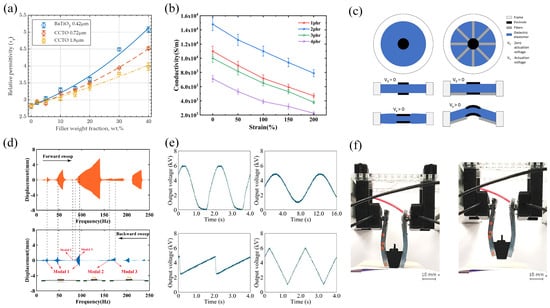
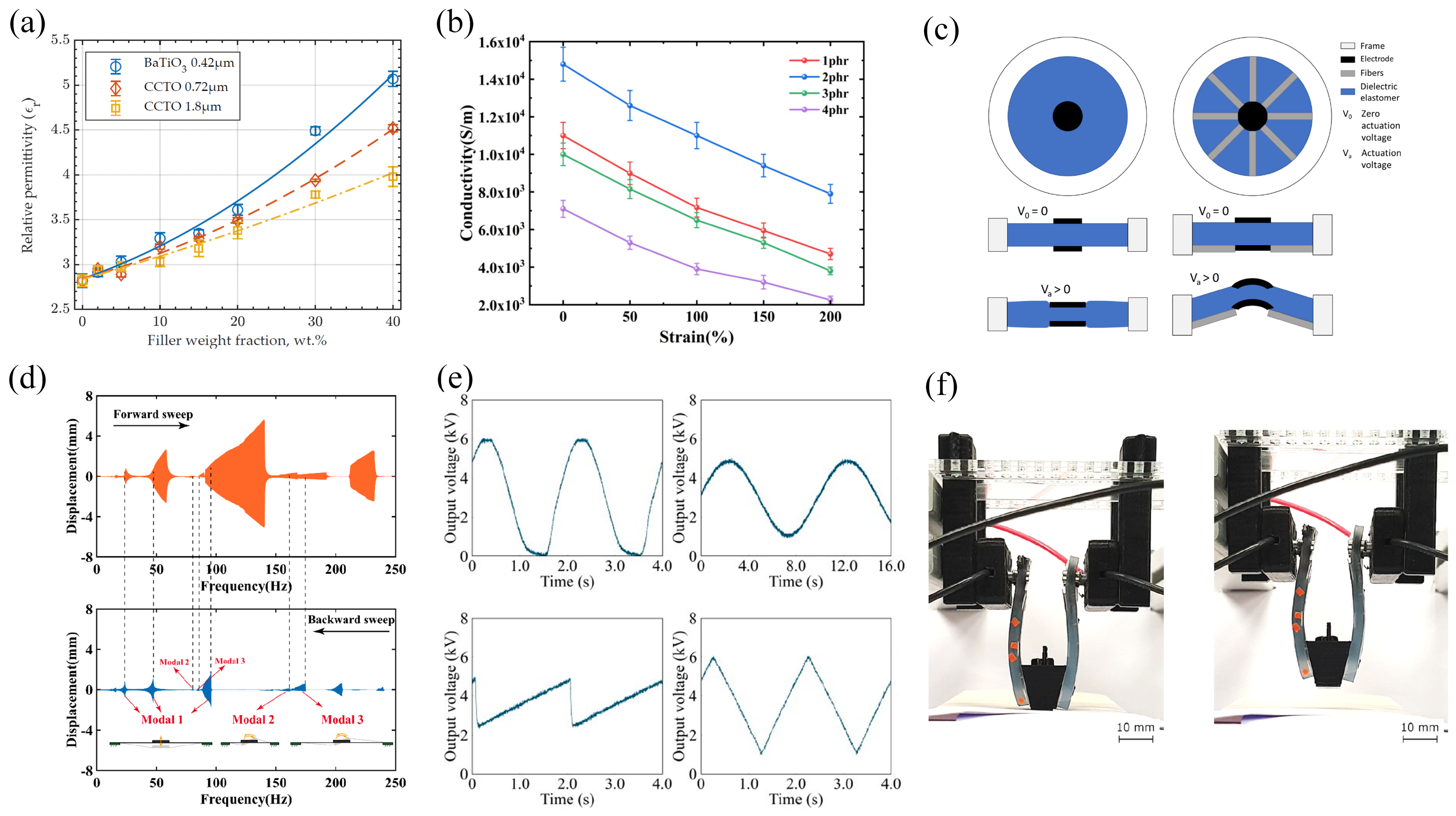
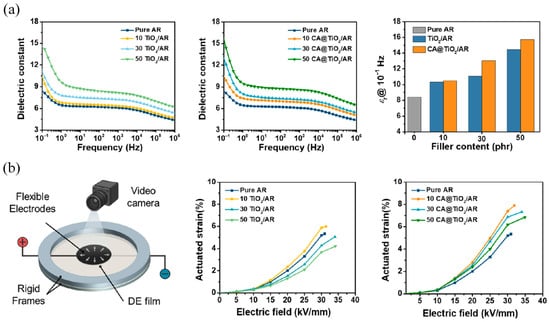
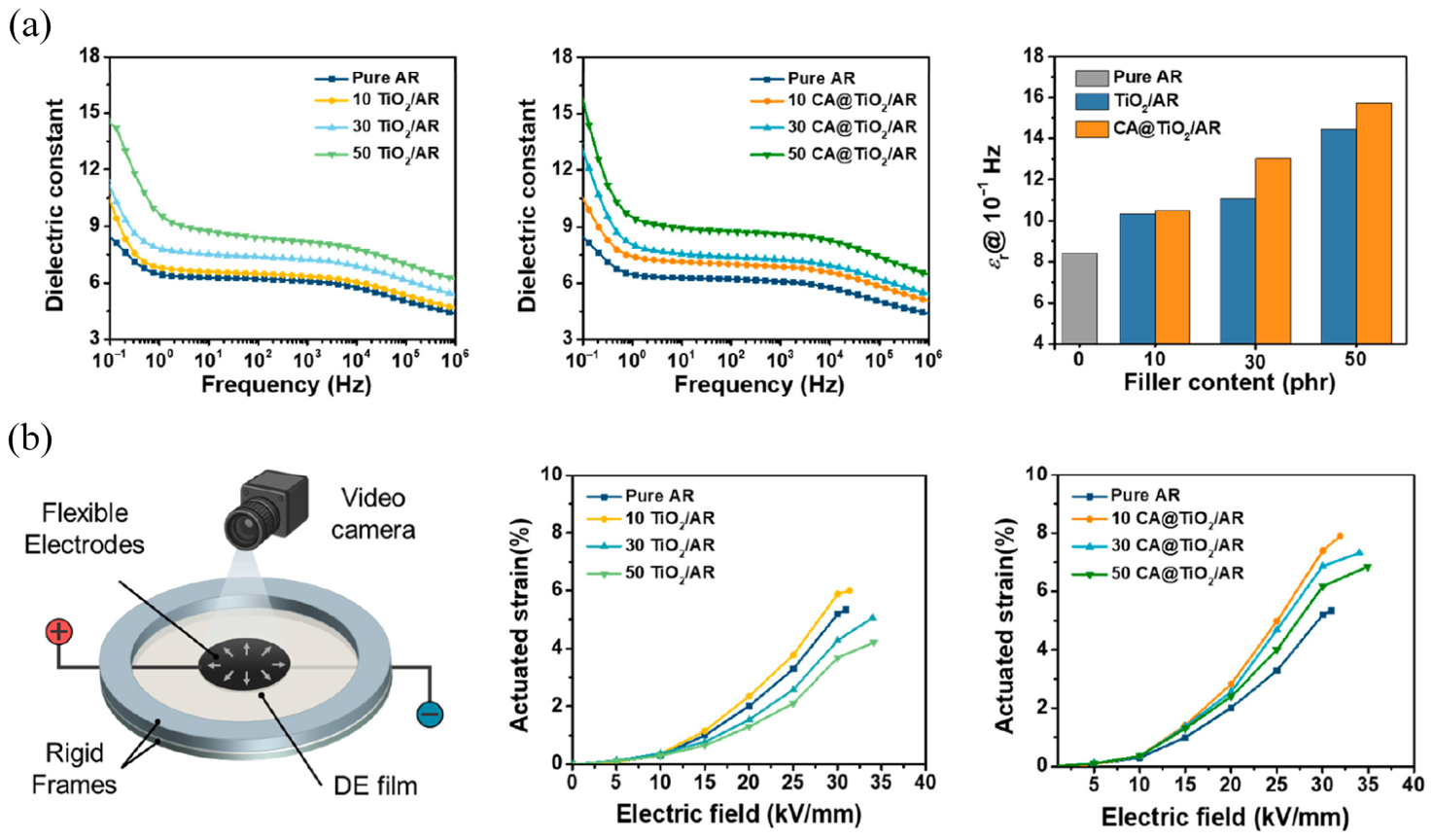
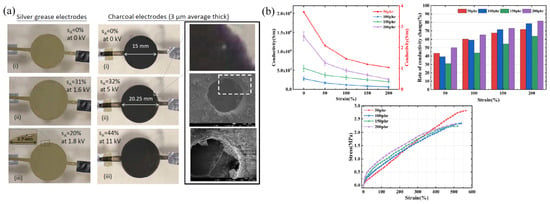
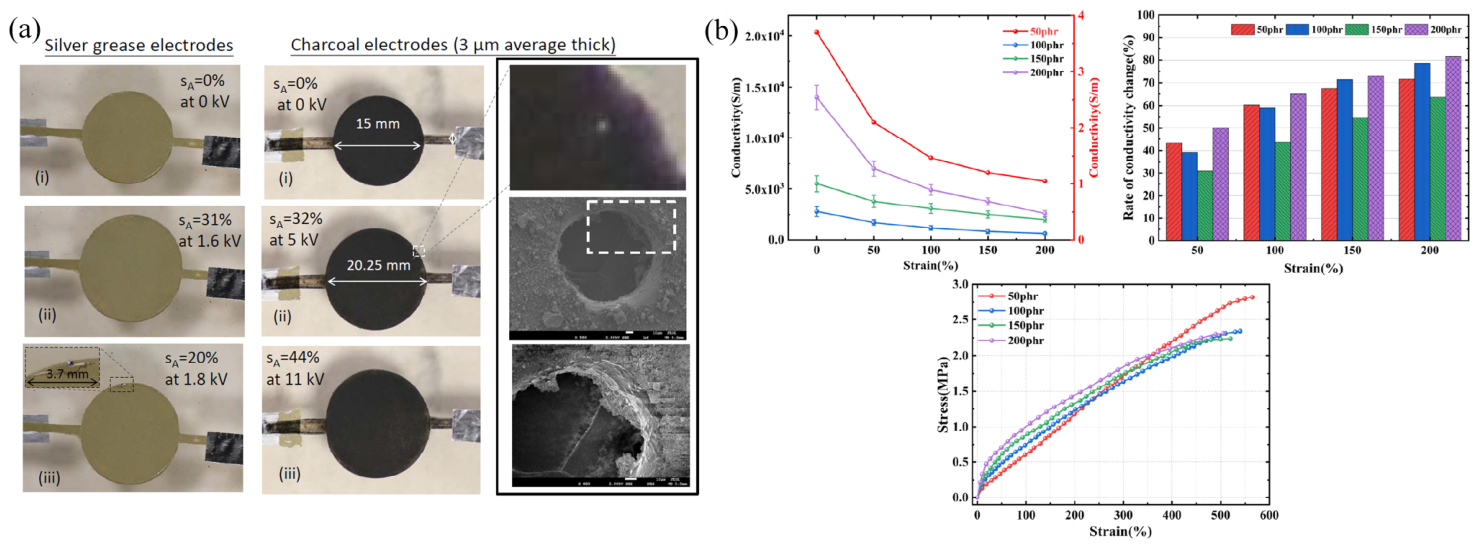
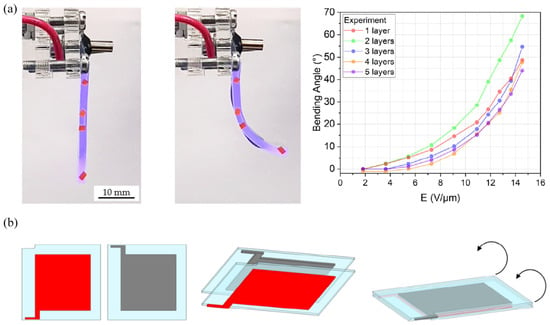
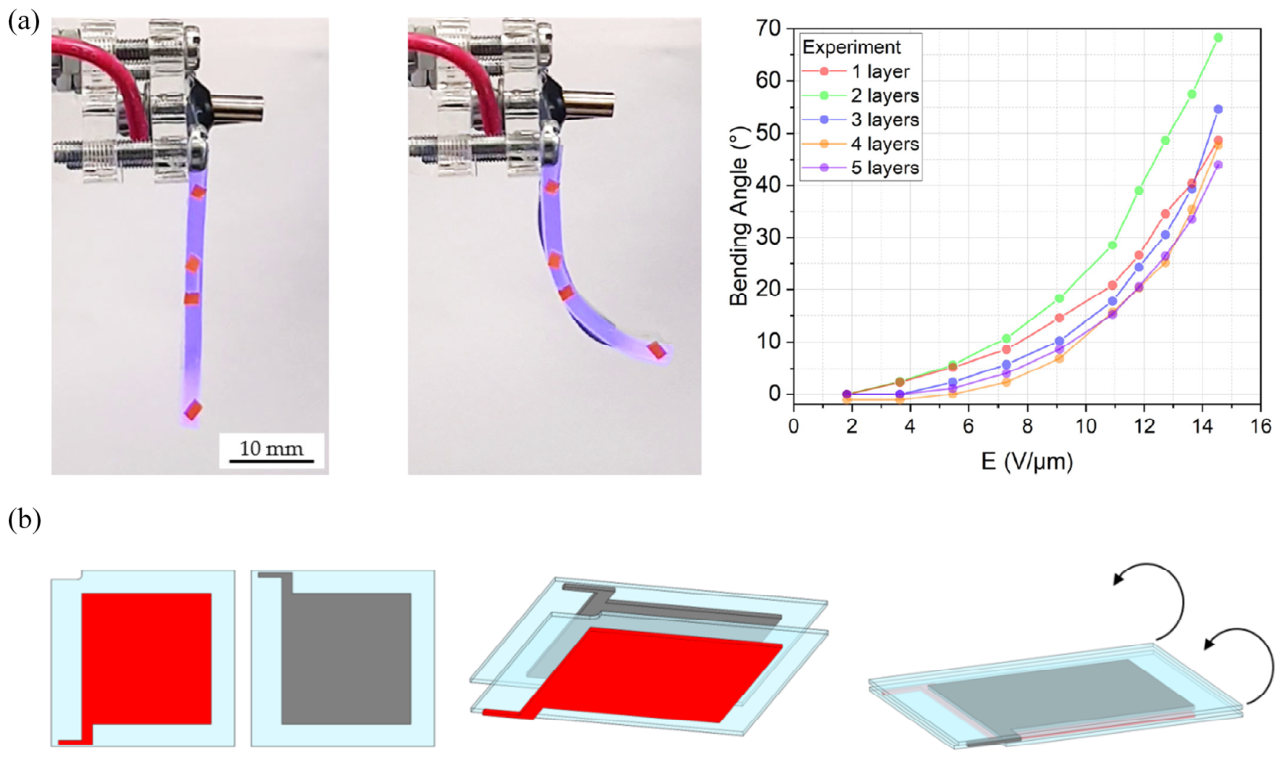
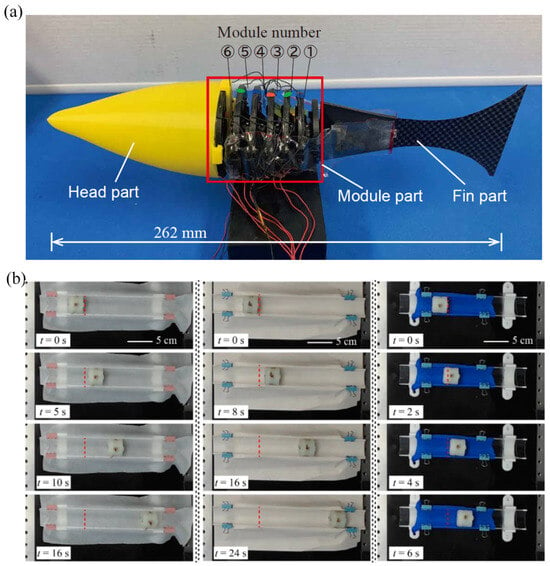
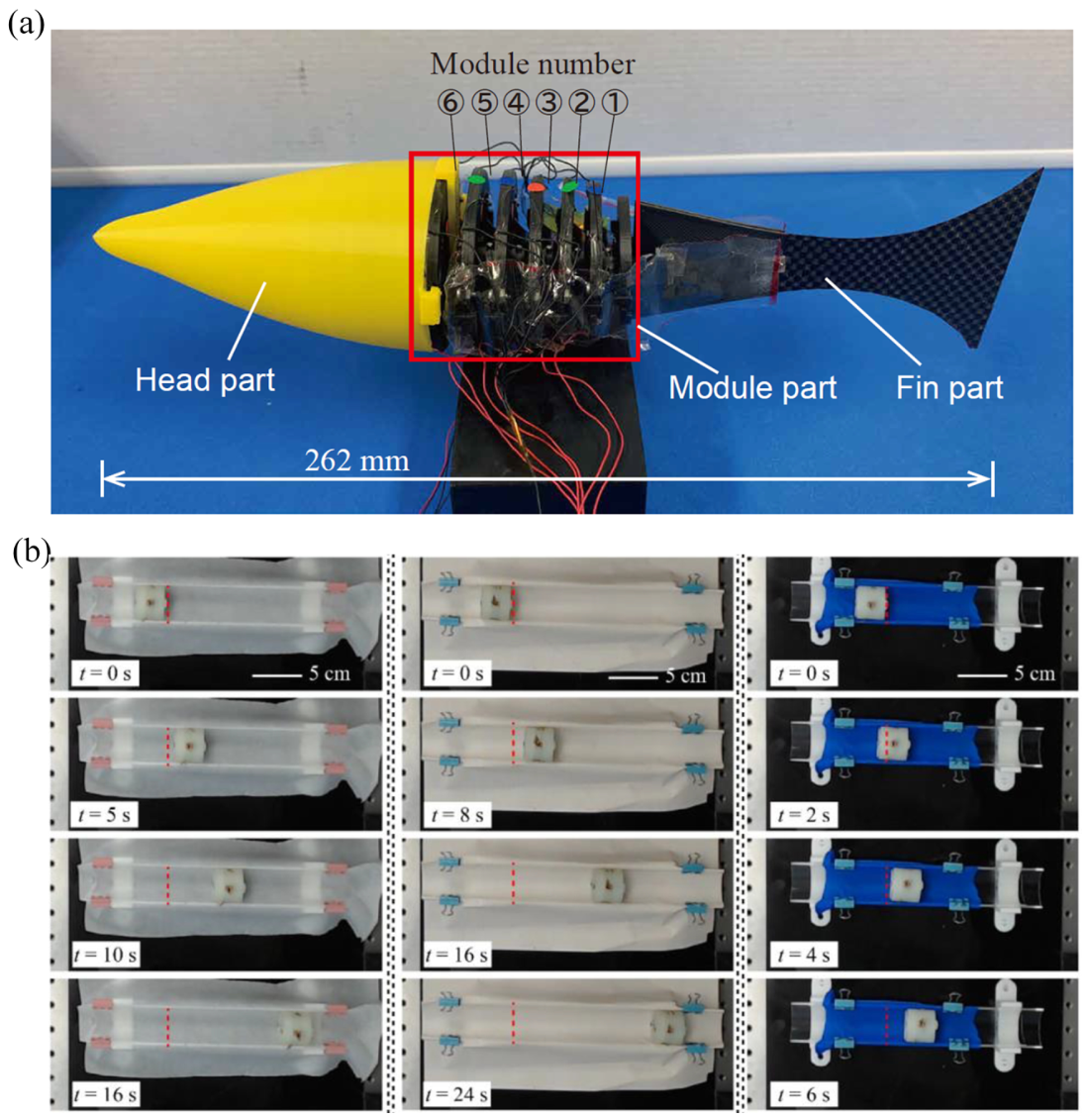

Disclaimer/Publisher’s Note: The statements, opinions and data contained in all publications are solely those of the individual author(s) and contributor(s) and not of MDPI and/or the editor(s). MDPI and/or the editor(s) disclaim responsibility for any injury to people or property resulting from any ideas, methods, instructions or products referred to in the content. |
© 2026 by the authors. Licensee MDPI, Basel, Switzerland. This article is an open access article distributed under the terms and conditions of the Creative Commons Attribution (CC BY) license.