


Abstract
Smart-polymer food packaging is used to maintain, monitor, or communicate information about food quality during storage and transport. Data from a free-standing film or material specimen alone cannot establish that a package’s function, such as indicating the condition of food, is (1) suitable for a specific food, (2) reliable under intended-use conditions, or (3) reproducible during manufacturing. This paper offers a four-domain translational evidence framework considering the following: (1) film and material performance, (2) finished package incorporation, (3) product–package performance validation, and (4) the ability of the production process to be followed when translating from pilot data to demonstration of final product capability. The framework is only a conceptual proposal. It has not been specifically tested through independent coding of the recognized evidence or through inter-rater agreement. Its development was based on a trial audit of five exports from the Scopus database, including 31,423 recorded occurrences and 29,602 working records (following preliminary deduplication). These counts do not represent eligible study counts, nor evidence counts, and no distribution of eligible study counts is claimed. We clarify what data are required to support finished-package integration, food-specific performance and reproducibility, food-contact safety and standards, and regulatory assessment, and also introduce a risk-based validation roadmap. Proposed evidence frameworks are intended to guide a systematic evidence map and individual applications to be developed in the future. They are not formulated as a final systematic review, an indication of technology readiness, or a certification scheme.
1. Introduction
Food packaging is a practical aspect of food preservation: it protects against the environment; aids handling and shipping; and contributes to the maintenance of product quality during storage. Polymer films, coatings and multilayer structures have been extensively employed in food-packaging because, by varying their composition and architecture, their physical response, barrier properties (gas and water vapor), optical properties and interactions with the surrounding environment can be tailored. The conventional barrier role of food packaging, as known historically, has been increasingly complemented in recent times through the development of active systems that interact with the food or with its external environment and the design of intelligent packaging systems that monitor relevant aspects and provide information on them through indicators and sensors. The operational parameters “active”, “intelligent” and “smart” are used in different ways by different authors. In this review paper, “smart-polymer food packaging” is considered as an overarching description of polymer-based food packaging systems, which have been designed to give an active, sensing, indicating and/or stimulus-responsive function [1,2,3].
The scope of material platforms is extensive. Active flexible films and polymer bio-nanocomposites can include antimicrobial or antioxidant agents; polysaccharide- and protein-based matrices can be used as renewable film-forming platforms; and functional coatings or responsive labels provide sensing, color change or other stimulus-dependent responses [4,5,6,7]. More specific are self-healing films and coatings, conductive polymers, cellulose-based matrices, pectin-based systems and nanocomposites, which provide integrated structural and functional attributes [8,9,10,11,12,13,14]. Such advances allow for means to prolong shelf life, offer freshness or provide specific condition indicators, but the desired response relies on more than the existence of a responsive compound. Matrix constituents, the dispersal of additives, moisture sensitivity, diffusion, optical detectability and the activity stability of the functional ingredient can all have a bearing on the response, so a response formed for a given polymer matrix or geometrical test structure cannot necessarily be inferred to apply to another packaging system or food matrix.
A key challenge is the shift from performance at the material level to performance at the level of the package. In the laboratory, films or coatings are typically tested in terms of tensile properties, barrier to water vapor or oxygen, antimicrobial efficacy, color response, response time, detection limit, or release kinetics. While informative for screening, such measurements do not necessarily translate into similar performance once films are converted into packages. Sealing and forming processes, the interfaces between layers, overall package design, headspace, contact with food, humidity, temperature, exposure to light and distribution all make a difference. Active and intelligent packaging has been reviewed in terms of manufacturing, safety and applications. Time–temperature indicators have been studied in terms of accuracy, safety and commercialization [15,16,17,18,19]. The question that is paramount, therefore, is not only if a material has a response under a certain set of conditions but also whether the response makes sense within the context of that target configuration.
Consider also the distinction between package-level validation and product-level validation. A finished-package study may investigate seal integrity, barrier retention, sensor placement, visibility of a signal or the impact of package conversion on the properties of the package material. Product-level validation would take this a step further by testing the system containing the marketed food under the appropriate storage and distribution conditions and benchmarking the packaging signal or function to an independent outcome such as a measured quality attribute. For an intelligent indicator, a visible color change alone is not evidence that the indicator will monitor the freshness reliably; the signal must be interpreted in relation to a relevant indicator of food state, monitoring environment and timeframe. Likewise, the indicator’s activity in an antimicrobial film may be clearly demonstrated in a laboratory assay but not offer proof of shelf-life extension in a packaged food product. Important lessons learned from intelligent sensing and time–temperature indicators are to interpret signals relative to food quality and thermal history; commercialization work highlights the critical transition from prototype to solution.
Manufacturing readiness is an additional evidence axis. A formulation that yields promising results from a small lab-specific sample may not be readily reproducible in multiple batches or compatible with extrusion, coating, printing, lamination or other conversion techniques. Scaling can affect thickness, dispersion, interfaces, response kinetics and barrier performance, and bring new considerations regarding expense, process compatibility, food-contact safety, regulatory compliance and end-of-life disposal. These challenges are especially current for biopolymer-based systems, as water sensitivity, mechanical performance, process window and commercial viability regularly occur in recent reviews [19,20,21,22]. There has been further dissemination in the literature into conductive polymers, self-healing materials and converged and integrated intelligent packaging architectures [23,24,25]. There has been a survey of intelligent food packaging from a more comprehensive perception–response–communication–integration perspective published in 2026, highlighting the significance of translation and technology readiness as well as material functions [26]. This developing literature warrants a targeted, unbiased evaluation of validation depth.
The present article thus provides a proposal for a framework review. Several reviews have documented scientific evidence on concept and sensing technologies for smart, active and intelligent packaging, and have covered the science around active agents in packaging and in package application, as well as the research on indicators, sensors and measured attributes as barriers to commercial translation. Those valuable contributions offer specific and commercialization-oriented perspectives on the technologies involved. But, here, a different question is raised and addressed: what minimum evidence is to be reported before an assertion moves from a specimen of material to an integrated package, target-food application, or repeatable manufacturing process? This article separates the evidence types, describes what observations are to support each, and connects the observations to a risk-based validation pathway. However, it does not provide a statistic of the proportion of published observations that support each category, nor does it claim that the domains have been validated by independent systematic coders.
2. Framework Development and Preliminary Scopus Search Audit
The framework was created as a conceptual and methodological proposal, based on information in the Scopus export material provided to the authors. Export audit shows the source and initial management of five matching sets of search results; this is not an exhaustive literature search, a completed systematic review or a study-level synthesis of evidence. No study denominator, study-level distribution across four evidence domains, pooled effect or study proportion conclusion about those studies restricted to material testing is made. The four-domain model is a reasoned suggestion from the research question stated, guided by the relevant review literature, rather than an empirical result from preliminary record counts.
2.1. Review Question and Scope
The overarching question of framework development is what evidence should be demanded to demonstrate the proposed functionality of smart-polymer food-packaging systems, beyond mere isolated laboratory film samples, in finished packages, in real-world intended-use contexts, and during pilot-scale or industrially relevant processing. The related questions are about (i) the polymer-containing systems and functions to which the proposed framework applies; (ii) the difference between material testing and finished package testing; (iii) evidence to show the proposed functionality for food or a justified representative product under defined conditions; and (iv) recording of reproducibility, scale-up, process compatibility, safety, cost, and regulatory factors. These are all questions for the proposed framework design, not existing claims that the start of the above audit has answered them empirically.
In this review, the term ‘smart-polymer food packaging’ has been used as a working definition for food-packaging materials and systems, which include a polymer film, coating, layer, label, substrate or polymer-based functional element with an active, intelligent, indicating, sensing or stimulus-responsive attribute. This scope has been set out as the boundary of the review. It does not mean that the technologies compiled in the review are all defined by a common technical or regulatory definition. Conventional barrier packaging can only be considered when combined with a defined intelligent, active, sensing or responsive function for food packaging.
2.2. Information Source and Search Strategy
Five Scopus export sets were available for the preliminary audit: existing review articles (search A, 1596 records); validation and scale-up (search B, 9334); laboratory metrics versus package performance (search C, 19,726); responsive-polymer food packaging (search D, 245), and bibliometric reviews (search E, 522). Their sum is 31,423 record occurrences; because the search sets overlap, this sum is not a count of unique publications or eligible studies. The counts are reported solely to describe the source exports used during framework development.
The export records kept the number of records and a summary of the query logic, but the specific query strings that were run and the dates on which those searches were performed were not retained. Dates in export file names cannot be assumed to be the search date, where they exist. Table 1 can therefore only report the query logic and export counts that were preserved in the audit file—an attempt to reproduce exact database syntax.
Table 1.
Summary of the five Scopus export sets available for the preliminary audit.
The available search logic is summarized below. These descriptions are not represented as verbatim database query strings:
- (A)
- (Smart OR intelligent OR active) W/3 packag* AND (polymer* OR biopolymer* OR film* OR coating* OR composite*) with a review-document-type limit.
- (B)
- packag* AND (polymer* OR biopolymer* OR film* OR coating* OR composite*) AND validation/real-world/package-level/scale-up/intended-use terms.
- (C)
- Film/material-property/barrier/mechanical/sensor/antimicrobial terms AND packaging/food-contact terms AND correlation/prediction/validation/finished-package terms.
- (D)
- Stimuli-responsive/responsive-polymer/smart-polymer terms AND packaging/food-packaging AND film/coating/sensor/indicator/active/intelligent packaging terms; and
- (E)
- Bibliometric/scientometric/science-mapping terms AND smart/intelligent/active/responsive/biopolymer terms AND packaging.
Each of the five searches had unique yet overlapping aims and the searches should not be conflated into a single population of literature. The precisely run strings, search dates, available database filters, and export-level metadata were not available to record in the audit. The original Scopus search histories or saved query references are necessary to create the PRISMA-S-compliant search log and reproducible search update. This article does not assert that this information has been reconstructed.
2.3. Eligibility Criteria
For a future primary-study corpus, with respect to the broader body of records, the primary-study corpus should be composed of original experimental studies of polymer-containing food-packaging systems with a stated active, intelligent, sensing, indicating, or stimulus-responsive function, or experimental studies that explicitly evaluate integration or validation of such a system. Formats and end-use styles may include but are not limited to films, coatings, blends, composites, multilayers, labels, and a polymer-supported sensing component for which a food-packaging context is established in the full text. Records on non-food applications without justified potential for a transferable packaging test; conventional barrier packaging systems lacking an active, intelligent, sensing, or responsive function; and non-polymeric devices lacking a substantial interface with the polymer may be considered background or citation-discovery records but should be omitted from the primary experimental corpus. Systematic reviews and meta-analyses, opinions, editorials, and conference-abstraction-only records may be kept as background or citation discovery texts but should not count as primary experiments. Conference-abstract-only records may be included in a primary-study corpus if the review protocol officially allows conference abstracts in the primary studies and there are enough full methods and results to justify inclusion, but, otherwise, they should be omitted.
2.4. Record Management and Study Selection
The five outputs from Scopus were integrated into a working set with the bibliographic data exported from the Scopus search (title, authors, year, source, abstract, keywords, DOI, and Scopus identifiers). An initial deduplication by Scopus EID was used where provided, otherwise DOI or normalized-title comparison was attempted. The final working set contained 29,602 records for preliminary screening, which has not yet been verified against the inclusion criteria as a deduplicated set of eligible studies. A broad automated lexical screen was used to provide record prioritization; the reported appraisal was for the first 100 of 219 Priority A records. This assessment does not specify the AI system, version, prompts, validation procedure, or whether human consensus was performed, in conformity with open, algorithmic and objective reporting of this work. These outputs are simply used as initial triage indications; the outputs are not eligibility decisions, extracted study data, or evidence-level coding. They are not used to generate labels for evidence distribution in the framework.
A forthcoming systematic evidence map would report the number of records identified, the number of duplicates removed, the number of records screened, the number of records excluded, the number of full-texts sought and retrieved, the number of full texts assessed, the reasons for full-text exclusion, and the number of studies included. The outputs available for inclusion are insufficient to complete a PRISMA flow diagram. Figure 1 presents a rough conceptual template for what might be a future workflow; it is not intended as an actual PRISMA flow diagram and has no observed screening results.
Figure 1.
Proposed workflow for a future systematic evidence map. Schematic illustrations only; no experimental observations, measured performance, or actual study timelines are represented.
2.5. Data Extraction and Evidence-Level Coding
A draft standardized data-charting form should be tested on a sample of a few included papers and refined prior to full data extraction. This follows scoping-review guidance on developing and using data-charting forms [27,28,29].
The form must be recorded:
- -
- Bibliographic info.;
- -
- Polymer/matrix;
- -
- Functional additive(s)/sensor(s);
- -
- Packaging function;
- -
- Food/product;
- -
- Specimen/packaging design;
- -
- Processing or conversion;
- -
- Test environment, test time/period;
- -
- Reported material and functional endpoints;
- -
- Comparator or reference method;
- -
- Food-level outcome;
- -
- Replication and variability;
- -
- Batch/factory-level;
- -
- Food-contact and safety info.;
- -
- Cost and regulation discussion;
- -
- Author-reported limitations results should be transcribed, along with units and test conditions. If a data element is not reported, it should be marked as “not reported” (not an estimate).
Each domain is scored as one evidence dimension, not in a serial, stepladder fashion. For each study, the coder enters whether there is evidence shown, partially shown, or irrelevant for each domain, and how the setup and experimental conditions are configured. A study can show evidence for more than one domain; a higher-numbered domain does not mean that every lower-numbered domain was assessed. This is not a certification scheme or a fine global technology-readiness rating.
Level I—Material and film performance. Testing is restricted to material samples, films, coatings or functional components, for example, mechanical, barrier properties, response to stimuli, antimicrobial efficacy, color change, response time, detection limit or durability—no validation of finished package.
Level II—Finished-package integration. The functional material is embedded within a package or package-specific assembly, and the results of integration, including sealing, shape, visibility of signals, placement of sensors, retention of barriers, or compatibility of conversion, are assessed.
Level III—Product-level and intended-use validation. The system is tested with the intended food or a product representative that is technically justified under the specified storage or distribution conditions, where a qualifying independent product-quality or safety-related endpoint is employed.
Level IV—Manufacturing readiness and scale-up. The study provides evidence beyond a laboratory prototype, such as repeated batches or pilot/industrial processing, evidence of reproducibility or process-window robustness. Cost, food-contact safety and regulatory evaluation are documented as individual cross-cutting dimensions; they are not alone indicative of manufacturing readiness.
They would only support evidence at the material level, even if use of a package is later provided in the final application. The final package with a model system supports evidence at the package-integration level but does not support validation of the final package in final application with targeted food use. If reproducibility of manufacturing is demonstrated in consecutive pilot runs and no report of a food trial at the product level is shown, then the variable food trial is not demonstrated. Feed only demonstrates a future use of a potential food even if this use does not occur in the application. Missing domains should be not marked as failed, and instead marked as partially met, with the identified domain not met. Missing evidence should not be marked as failed. In all cases, the use of the highest results within a domain as a study classification should be avoided. A separate profile, examined on a domain-by-domain basis, will provide a more accurate assessment.
2.6. Evidence Synthesis and Reporting
This is not an evidence synthesis, and a future map could perform the summation of import eligibility, by year, polymer family, function, food category, package configuration, and evidence domain, with the deduplication and eligibility-screened study set as the denominator. Comment should be separate from primary experimental work. Quantitative outcomes should be presented with the units, methods, conditions, controls, and measures of variability, not assembled to endpoints solely because they are labeled “endpoints”. The current export audit has not completed the availability of screening, verified full-text extraction, or domain-level coding, so no numbers or proportions of studies are given. A future review should record the full string, time of retrieval, database platform and limit set, deduplication process, screening criteria, justification for full-text exclusion, and extraction instrument, following PRISMA-S and the relevant review-practice guidance [30,31].
3. Classification of Smart-Polymer Packaging
Smart-polymer food packaging is classified along separate functional, material, and configuration axes as demonstrated in Figure 2. Active packaging deliberately releases or absorbs substances to maintain or improve the condition of packaged food; intelligent packaging monitors the condition of the food or its surrounding environment and communicates information; stimulus-responsive packaging describes a material response to a trigger such as pH, temperature, light, or humidity. Stimulus responsiveness is a material behavior and may serve an active or an indicating function; it is not necessarily a separate regulatory or product category. These distinctions are consistent with the functional descriptions used in reviews of active packaging, intelligent sensing, and responsive films [32,33,34,35,36]. A polymer matrix alone does not make a package active or intelligent.
Figure 2.
Multidimensional classification framework for smart-polymer food packaging. Schematic illustration only; not experimental data or an observed timeline.
Examples help distinguish the mechanisms without implying that they have been validated at the package or product levels. An antimicrobial polymer film that releases an active agent is an active-packaging example; an anthocyanin-containing pH-sensitive film proposed or tested for freshness indication is an intelligent-indicator example [37,38,39]; and a polymer whose release or optical response changes with pH, temperature, light, or humidity is stimulus-responsive, with its final classification depending on whether the measured output preserves food or communicates information [33,36,37]. RFID may provide identification or data carriage, while RFID coupled to a calibrated sensing element may contribute to intelligent monitoring [40,41]. These are mechanism-level examples drawn from the cited literature; the present manuscript does not claim that each example has passed finished-package, food-product, or manufacturing validation.
3.1. Function-Based Classification
3.1.1. Active Polymer Packaging
Active packaging involves an additive to be released, scavenged or otherwise control a component in the food or headspace to preserve or enhance the food quality. Typical functional groups are antimicrobials, antioxidants, oxygen scavengers, carbon-dioxide emitters/absorbers, ethylene scavengers, and moisture controllers. The polymer matrix can deliver these agents, control their release, and act as the packaging material itself. The functional label on the package should specify the method of action, for example, “releasing antimicrobial” or “oxygen scavenging”, rather than just “active” film. Record the active agent, its location, the mode of action, and whether the test measured its release or scavenging capacity, the response of microorganisms, the extent of oxidation, or the level of improvement in the food quality. These are distinct measures. For example, finding an inhibition zone from a laboratory test shows antimicrobial activity under the conditions of that test but by itself does not necessarily prove better safety or shelf life for packaged food. Active packaging should be distinguished from intelligent packaging, whose goal is primarily to communicate information [32,33].
3.1.2. Intelligent Packaging: Indicators, Sensors and Data Carriers
Intelligent packaging is used here for systems monitoring the food, container or environment property and providing information to a user or data system. Intelligent packaging is frequently referenced in reviews as consisting of indicators, sensors and data carriers, although there is some overlap between these technologies [34,35,40,41]. Indicators may be categorized according to the variable they give, a time–temperature indication, freshness or spoilage, a gas level, leak or package condition, or other properties of the food product. Colourmetric indicators are easily read by eye, but this response can be qualitative or semi-quantitative, can be influenced by ambient light, temperature and humidity, can have stability issues with the colorant, and depend on the optical properties of the package. Freshness indicators need to be associated with the target molecule or condition of interest, and ideally to an independent indicator of food quality; a color change alone does not indicate that food is safe or unsafe [36,42].
Sensor types include chemical, physical, or biological sensors that detect gases or volatile compounds, temperature, relative humidity, pH change, microbial metabolites or specific biological entities. Biosensors that combine a biological recognition element with a signal-transduction system are used. The packaging matrix can be mechanical support or interface-compatible material, but the analytical performance of the sensor and its usability close to food should be tested as an independent data matrix. Sensitivity, selectivity, response time, calibration, stability, interference, migration or contact safety and external reader needed are relevant coding fields [34,35,43]. Data carriers, including identifying, tracking or exchanging data barcodes, QR codes and RFID tags, are designed to identify, trace or exchange data. They may also include sensor functionality by coupling a sensing element, for example, to measure temperature, humidity, gases, or the integrity of a package. It should be clearly defined whether a passive identifier or the tag with a sensor (or a measurement-related signal) is used. Possible constraints (cost, readout range, data volume and handling, tag collision, recycling capability, integration into the package) should be derived when this information is stated [40,41,44,45].
3.1.3. Stimuli-Responsive and Controlled-Release Polymer Packaging
Stimuli-responsive packaging involves a material or formulation that exhibits a change in performance in response to some trigger, such as temperature, light, pH, humidity or an enzyme-related condition. In active food packaging, the response may be used to control the release of a substance, or just to indicate a condition. A particular formulation or material can change color to indicate a condition or its release behavior to influence a package environment, but those are different things and should be classified separately in evidence mapping. Controlled-release performance depends on the polymer matrix, properties of the active agent, the method used to encapsulate or disperse it, the conditions that trigger the response and the mass-transfer characteristics. For evidence mapping, the stimulus, the mechanism of response, the response measurement and the stimulus are noted, as well as noting whether the observation was made in a film, the package headspace or the food system. Validated packaging functions should not be labeled since a trigger response was observed in a laboratory specimen [33].
3.2. Classification by Polymer Matrix and Functional Architecture
The polymer matrix is determined regardless of the use of the packaging. If applicable, groups that should be reported include petroleum, bio-based or biodegradable polymers, natural biopolymers, various polymer blends and composites or nanocomposites based on polymers. Do not assume that bio-based, biodegradable and compostable are interchangeable terms; they describe different material or end-of-life properties and should be reported only when they are identified in the research. The matrix type influences mechanical stability, barrier efficiency, transparency/readability, active-agent compatibility and processability [43,46]. Codify as a separate function architecture: (i) a dispersed functional additive within a polymer matrix; (ii) a multilayer or coated structure; (iii) a label, patch or insert within or on the package; (iv) a printed or electrospun functional layer; (v) an integrated electronic or RFID-enabled structure. For instance, electrospun nanofibers have been explored as an indicator-based pH buffer but, in this case, should be recorded as the fabrication route and as part of the final configuration of the package and not as a dedicated separate function [47].
The reason why architecture is important is that the chemistry of the indicator may not perform the same if that indicator chemistry is dispersed in a film, applied as a coating, on a label, or with a space between the food. The same is true for an active compound that is included in a matrix that may be different, for example, from an active compound placed in a sachet, or in a surface layer of the pack. The extraction form should capture where the functional component was physically located, whether it was in contact with the food, and whether a final package was tested. These will be important for subsequent assessment of the translation from the film to the package validation [32,36,46,47].
3.3. Proposed Coding Framework for the Evidence Map
Every study must be assigned to at least one function code and at least one material/architecture code. Multi-label coding: systems can combine various functions including preservation, sensing and traceability. The main function of the paper should be the main/primary function experimentally tested; therefore, papers testing primary and secondary functions should retain the secondary function(s), while papers proposing a function without testing should be assigned “proposed, not experimentally demonstrated”. The following fields are sufficient to provide a consistent minimum: (1) principal function; (2) secondary function(s); (3) target or active mechanism; (4) polymer matrix; (5) functional component; (6) architecture, component location; (7) direct or indirect food contact; (8) output type-visual, electronic, chemical, biological, or data; (9) test configuration; and (10) highest level of evidence supporting this function relative to the other framework elements and as detailed in Section 2. The classification of functions and the level of evidence must be displayed separately and independently. For example, a highly sophisticated sensor could be solely supported at the material level if no test at the finished package or product levels was performed.
This categorization aims to ensure that the evidence map is reproducible and does not treat all “smart packaging” papers as equivalent. It also allows for the synthesis to report which combinations of function, polymer matrix and architecture have been tested in finished packages and food systems rather than just counting publications by broad terminology.
4. Material and Film Performance
Material- and film-level characterization is the first layer of evidence in the proposed systems framework. It defines what the presence of a particular polymer film alone can do, within standard laboratory test conditions, but does not in itself define that this function will be retained upon conversion to a package or when food is stored inside it. In smart-polymer packaging applications, the parameters relating to the performance of the polymer must thus be presented in an integrated manner with respect to interacting groups of properties: morphological and chemical composition; physical/mechanical properties; water-vapor and gas barrier properties; thermal properties; optical properties; and functional properties such as sensing ability or antimicrobial capacity and antioxidant properties. Because the nature of these properties and how they arise is determined by a package’s polymer chemistry and formulation, the nature of the additives within the polymer, the film thickness, preparation route, conditioning and test method, numerical comparisons should only be made when the conditions are very similar, as illustrated in Figure 3 [48,49,50,51,52].
Figure 3.
Principal material- and film-level performance domains for smart-polymer food packaging. Schematic illustration only; not experimental data or an observed timeline.
The current manuscript does not include an internally verified study-level dataset with polymer grade, additive loading, film thickness, testing conditions, and numerical results; for this reason, a quantitative cross-study comparison table will not be added: direct comparison of values in titles or review-level summaries would likely create data points based on widely varying protocols and would be impossible without creating the individual missing testing conditions. While the referenced literature body provides material families and measurement scales [37,38,39,48,49,50,51,52,53,54,55,56,57,58,59,60,61,62,63,64], a numerical comparison requires full-text extraction from individual primary articles, with units, thickness, conditioning, testing method, controls, and variance, as specified here, as required extraction variables for future evidence mapping.
4.1. Structural, Chemical and Morphological Characterization
Structural characterization is often employed to determine whether the functional material is dispersed within the polymer, whether phase separation or agglomeration are occurring, and whether processing or addition of other components may alter the structure. The surface and cross-section morphology, pores, cracks and filler distribution can be observed in microscopy. Information about the presence of chemical groups and possible interactions can be obtained in spectroscopy, and the degree of crystalline and amorphous regions can be inferred by diffraction or thermal analysis. There are complementary rather than alternative techniques—a spectral shift may be indicative of the presence of an interaction, but this must be corroborated rather than equated with bonding or advantageous properties [49,51,53].
4.2. Mechanical Performance and Handling Integrity
Tensile strength and elongation at break and elastic modulus are regularly published for films, and these values give some indication of the ability of the film to withstand deformation and rupture. Puncture, tear, foldability, seal strength and impact strength could also be relevant, depending on package type and performance requirements. A film may have high tensile strength but be brittle, hard to seal or prone to puncture. Thus, it is unwise to draw general conclusions from a single mechanical property, and measured values will be influenced by film thickness, test specimen, test speed, humidity, conditioning, and so on [48,50,54].
Plasticizer, blending, crosslinking and reinforcement may be needed for biopolymer films to achieve a suitable balance of strength and flexibility. Additive-induced changes may improve one aspect but at the expense of another. A plasticizer may increase elongation but also water uptake or permeability, while a nanofiller that increases modulus might reduce elongation if there is inadequate dispersion or interactions. These types of trade-offs are especially relevant for intelligent films because indicator dyes, natural extracts and functional particles can change both the polymer network and the optical characteristics. The effect and its extent should be clearly indicated from data in the study, not inferred from the class of additive alone [50,52,55].
4.3. Water-Vapor and Gas-Barrier Performance
Barrier performance is a function of the combined processes of gas/vapor solubility within, and diffusion through, the material. Factors which influence barrier performance are typically polymer polarity, crystallinity, free volume, film thickness, humidity, temperature, and film morphology. Barrier performance to water vapor, oxygen, and carbon dioxide are not to be considered as equivalent measures of the barrier properties of a film. A hydrophilic matrix may be beneficial due to film-forming or sensing capabilities but may degrade barrier ability under high-RH conditions. Alternatively, a hydrophobic or highly crystalline matrix may control the transport of certain penetrants but could negatively influence its relation to polar functional elements [48,50,56].
Similarly, nanocomposite strategies can modify transport if fillers produce tortuosity of diffusion pathways, assuming the filler geometry, dispersion and interface are appropriate. Results can be compromised by aggregation, interfacial voids or processing defects. The review of food-packaging nanocomposites also notes that the prospect of “barrier enhancement” needs to be considered in the context of migration and the unknowns of toxicology, consumer acceptance and the ability to recycle [57,58]. Therefore, reported permeability improvements should be considered relative to the testing conditions, film thickness and any other mechanical and/or functional modifications.
4.4. Thermal Stability and Processing-Related Properties
Thermal characterization may involve glass-transition and melting, crystallization, thermal decomposition, dimensional stability and the heat-sealing response. Differential scanning calorimetry provides information on the nature of transitions, while thermogravimetry reveals mass loss during heating. Neither provides information on the safety of use at a set temperature or the suitability of the process for line integration. Atmosphere, heating rate, sample mass and thermal history need to be considered when interpreting results [48,49,59].
Processing route is a material variable; it is more than just a technical processing step. Solvent casting, extrusion, hot pressing, electrospinning, coating and multilayer conversion can produce morphology, residual-solvent content, orientation, crystallinity and thickness variations. For systems such as PLA, a commonly described limitation is brittleness and processing-dependent thermal and barrier characteristics. Various approaches such as blending, plasticization, nucleation and functional additives have been investigated to alter these characteristics [60,61,62,63].
4.5. Optical Properties and Indicator Response
Colourimetric measurements are key in colourimetric intelligent packaging. Descriptors that could be used are, for instance, the color coordinates, the total color difference, the visible transmittance, the opacity, the absorbance spectrum, the response range, the response time and the reversibility. These should be stated with the conditions of illumination and measurement, because the perception of color and the readings of instrumental measurements may differ depending on the background, the thickness of the film, the concentration of the pigment and the geometry of the measurement. Natural pigments like anthocyanins may have a pH-related response that has been explored in active and intelligent films, depending on the source of the pigment, interactions with the matrix, and the conditions of preparation and storage [14,37,38,39]. A difference in color change must be significant, consistent and conditioned to the item of concern for the color change to be useful. Pigments that are light-sensitive, oxygen-sensitive, photo-sensitive, or temperature- or humidity-sensitive can be used, but the pH response of a film may not simply translate to every food. Whenever possible, calibration or correlation with an appropriate reference measure should be provided in publications whenever freshness monitoring effectiveness is promoted. Visible change in buffer or model conditions is material-level evidence, but not to the degree of validation for a food item in actual storage and conditions [14,37,38,39,64].
4.6. Active and Sensing Functionality at the Film Level
Quantifiable responses for active film tests include antimicrobial activity, antioxidant potential, active agent release, radical-scavenging activity or oxidative inhibition. Results should be coded to specific essay and test organism or chemical system. The significance of zone inhibition, minimum inhibitory concentration, viable count change and food-storage results depends on the type of evidence—and it cannot be directly compared to other results without qualification. The results of a laboratory antimicrobial assay might be reproducible under test conditions, but food composition, surface moisture, temperature and the active-agent level will influence functional performance [33,52,55]. For sensing films, analytical parameters can include sensitivity, specificity, detection or response range, response time, stability, repeatability and interference. Name the analyte and the reference method. In gas-sensitive or freshness-indicator films, the association between headspace chemistry and the deterioration of the food could be related to product type, packing atmosphere, storage conditions, etc. A material that responds to a target within a controlled chamber is not validated for food monitoring; that difference should be clear in the evidence map [34,36,37].
4.7. Food-Contact, Migration and Material-Safety Considerations
Material performance does not exist in isolation from food-contact safety. Functional additives, pigments, plasticizers, residual solvents, degradation products or active substances, and any combination of these can migrate from the packaging into the food or environment. The significance of migration is determined by composition, the nature of the intended contact and the food being contacted, the duration of contact, the temperature of contact, and the relevant regulations. If a report contains only a characterization of the material, without an assessment of migration or safety, the appropriate code should be “not reported” rather than “safe” or “unsafe”, as indicated in Figure 4 [57,58,65].
Figure 4.
Illustrative evidence-domain progression from material characterization to package integration, product validation, and manufacturing readiness. Schematic only; not experimental data or an observed timeline.
4.8. Minimum Reporting Fields and Interpretation
For comparisons between heterogeneous studies, the extraction form should include information on the polymer matrix and grade; functional component and loading; film thickness; fabrication route; conditioning and test environment; method and standard of measurement where specified; number of replicates and spread; comparator; numerical result and units; and whether the test was conducted on a free-standing film, label or packaging component. In sensing films, target analyte, calibration, response range and standard reference measurement should be added; in active films, release or activity essay and relevant controls should be noted. Reporting should retain the study’s conditions and not elevate a false ranking because different values were measured by different methods [37,48,51,56].
This section aims to chart which properties have been assessed, and how interpretation of the data can be reliable—not to assume that more is always better. Whatever property is needed can depend on the role of the package: high stiffness may help to perform a rigid format, while flexibility may be a required attribute for a wrap; high-water-vapor barrier may be advantageous for one product and undesirable for another; a great indicator response may be worthless if unstable or not correlated to a product condition. Therefore, following the above principles, the next sections assess whether the material-level performance is maintained after package integration, and then at the product level.
5. Package-Level Validation
Package-level validation tests whether a smart-polymer component still functions once it has been integrated into the package design that will be used. This is a separate piece of evidence than characterizing a free-standing film: the final package geometry, seals, closures, headspace, multilayer structure, label location and contact conditions can all alter the behavior of the material and the signal it produces. An investigation should only be considered package-level when the functional component has been tested in a package or a relevant assembly, rather than the authors’ suggestion for future packaging, as shown in Figure 5 [66,67,68,69].
Figure 5.
Package-level integration and integrity assessment for smart-polymer food packaging. Schematic illustrations only; no experimental observations, measured performance, or actual study timelines are represented.
Acceptance criteria should be set a priori for each test and adapted for specific package format, food, claim and regulatory market. For package integration, the protocol should prespecify seal-strength or leak-test method, acceptance limits, barrier-retention requirements and post-handling integrity criteria. For indicators and sensors, the protocol should prespecify reference method, calibration range, response time, repeatability and acceptable false-positive and false-negative rates given the consequences of incorrect user decisions. For product validation, the protocol should prespecify target quality or safety endpoint, control package, sampling plan and a shelf-life acceptance criterion specific to the food. For manufacturing, the protocol should prespecify independent production runs, acceptable lot-to-lot variation, yield, defect rate and the fraction of the units that meet functional specifications. An upper or lower limit for an acceptable number of false-positive or false-negative test results is not proposed because the value can be highly application- and risk-dependent.
Function-specific reporting should include the following minimum information: For an antimicrobial/antioxidant film, report active agent and loading, test organism or chemical assay, positive and negative controls, replicate number, activity/release endpoint, and—when there is a food claim—an independent food-quality/safety endpoint. For a colorimetric indicator, report the analyte/condition it addresses, the calibration range, the reference method, response time, stability, repeatability, and decision performance, including false-positive and false-negative results. For a chemical, physical, or biological sensor, report calibration, sensitivity, selectivity, detection range, response time, drift, interference, and the reader or measurement configuration. For RFID or data-carrier systems, clearly differentiate identification/data transfer from actual sensing, and report read range, communications reliability, calibration where applicable, and interference from the package. For stimuli-responsive systems, identify the stimulus, the nature of the response, reversibility or persistence, and the measurement conditions. In all cases, report technical replicates and independent experimental batches separately, justify sample size in relation to variability and the decision sought, and specify the reference endpoint. There are no requirements for the number of replicates or the desirable/acceptable error rate—a specific threshold must be specified for the application and impact of error.
5.1. Package Configuration and Integration
The first extraction is to list the actual configuration tested. Permissible configurations are the functional layer in the package wall, coating on the substrate, indicator label on inner or outer surface, patch or insert in the headspace, sensor or tag in the package. Location of the functional element is relevant because direct food contact, headspace exposure, and external attachment each present different transport pathways and constraints. Reports should specify the package material, size/format, location of functional element, method of sealing or closure, and specify if the package was a laboratory prototype or commercially representative format [66,67].
5.2. Seal Integrity, Barrier Retention and Package Performance
The material parameters must be backed up by parameters relevant to the entire package in package-level validation: seal strength or leakage or integrity testing, the composition of headspace gas, oxygen, and water-vapor transmission through the assembled package. Closure performance and mechanical damage after handling should be investigated. The choice of test will depend on the package format and type of product; a single “checklist” cannot replace a protocol tailored to each situation. When standardized tests are applied, the test program must specify the standard and version, configuration of samples, conditioning, number of replicates and acceptance criteria [68,69].
5.3. Indicator and Sensor Performance Inside the Package
Indicators should be tested on the package level for whether the response is visible or is otherwise interpretable in situ and whether it changes with the response of the target in the actual headspace, humidity, temperature and light conditions of the package. Time–temperature indicators should be tested against the appropriate thermal history; if the claim relates to food quality, appropriate freshness indicators should be tested against an appropriate independent measure such as bacteria or chemical indices appropriate to the food in question. The response of the indicators should be related to the condition of the food in its relevant product system [2,34,36,42].
For electronic or RFID-based sensors, package integration raises issues of calibration stability, reader or power needs, RF signal delivery through packaging, antenna placement, interference, data collection and robustness through shipment. A tag that identifies a product or carries out a data transmission is not intrinsically a validated food-quality sensor. The extraction should include calibration or reference method, reader or communication setup, and record whether the testing system was tested with a real food and package or a model of the food and package [34,41]. Figure 6 shows a validation pathway linking a smart packaging component to a food-relevant endpoint.
Figure 6.
Validation pathway linking a smart packaging component to a food-relevant endpoint. Schematic illustration only; not experimental data or an observed timeline.
5.4. Validation with Food Products and Realistic Storage Conditions
Package up-front evidence is linked to a separate test of a quality attribute of the product. This may require identifying the type of food, whether it is raw or cooked, the prepackaging quality, package atmosphere, storage conditions including temperature, and relative humidity where relevant, sampling schedule, and the reference tests. The use of fresh can refer to a microbial, chemical, sensory change or combinations, but must be relevant to the actual application. A change in color that occurs to a pH change in one product may not necessarily be relevant to all products [2,36,42].
5.5. Food-Contact Safety and Migration in the Final Architecture
At the package level, validation must not only consider the nominal composition of the film, but also its end-use arrangement and its impact on migration. It may be influenced by the food-contact layer, adhesive layers, ink layers, coating layers, functional additives, temperature, and length of contact, etc. Food-contact material classifications and testing approaches of the package design regulation may vary according to the geographic region and material class. The European Union’s legislation on food-contact materials and articles includes Regulation (EC) No. 1935/2004 on materials and articles in contact with foodstuffs, and Regulation (EU) No. 10/2011 on plastic materials and articles [70,71]. These legislative samples should not be regarded as a comprehensive list of European Union compliance.
For active and intelligent food-contact materials in the European Union, Commission Regulation (EC) No. 450/2009 provides specific requirements in addition to the general framework in Regulation (EC) No. 1935/2004; Regulation (EU) No. 10/2011 addresses plastic materials and articles [70,71,72]. For each intended market, the framework should identify the legal jurisdiction and material-specific requirements. EU provisions should not be claimed worldwide: for non-EU markets, the specific requirements for food-contact materials, authorization pathways, migration limits, labeling requirements and conformance documents should be recorded separately. The suggested evidence domains do not substitute for legal review or regulatory authorization.
6. Product Validation and Manufacturing Readiness
6.1. Scope and Interpretive Principle
The product validation tests that a smart-polymer packaging solution meets its intended utility when combined with a real food product within the final package geometry and under real-world storage, distribution and consumption conditions. Manufacturing readiness tests whether that utility can be replicated through a known manufacturing pathway with reasonable manufacturing variability. These are different, yet closely related, investigations. A positive scientific proof-of-concept does not guarantee a positive commercial product utility; likewise, positive product validation does not guarantee product manufacturability on a scale. The published literature on commercial translation lists the same key barriers—technology transfer, supply chain management, regulation, sustainability, consumer acceptance and manufacturing scale-up—as interconnected barriers and successive steps [16,73,74]. Figure 7 reveals the product-level validation for the food is intended to use.
Figure 7.
Product-validation pathway for smart-polymer food packaging. Schematic illustrations only; no experimental observations, measured performance, or actual study timelines are represented.
6.2. Product-Specific Validation Under Intended-Use Conditions
The validation process should begin by defining the food type, the deterioration or quality event that is to be monitored or controlled, the intended user decision, and the nature of storage and handling of the package. In the case of intelligent packaging, a color change, sensor response, or digital output is only valuable to the extent that it represents a particular product condition, and calibration should be validated with an appropriate reference method and, where possible, on independent product batches, rather than merely on calibration samples. For active packaging, the important endpoint should be a product-relevant result, such as microbial growth, oxidation, texture, sensory quality or marketable shelf life, in comparison to a suitable control package. General reviews of intelligent and active packaging describe the difference between demonstrating a sensing or active mechanism and demonstrating a food-quality advantage [1,3,67,75].
A non-exhaustive hypothetical example of an evidence trail showing the different levels but avoiding prediction of result for a published product, starting from lower level clues, is: (i) characterization of an anthocyanin-containing polymer film in lab-testing buffer systems to observe the indicator response, the effect of storage/monitoring conditions and reversibility; these are material-level clues, (ii) inclusion of the film as an indicator in a sealed package, testing readability, immobilization and effect on package integrity; these are package-integration clues, (iii) testing of the package with the intended product during storage, and comparison of the indicator response with a food-quality reference method, and others; these are product-level clues, (iv) multiple production batches, measuring batch-to-batch variation, usable yield, and retention of indicator performance following conversion to the final form; these are manufacturing-level clues. Each step requires its own set of data and must meet predefined acceptance criteria, and the completion of a step does not infer the next.
A validated product trial should list the composition and initial quality of the food, package size and headspace, film or labeling location, method of sealing, storage temperature and humidity, conditions of lighting where relevant, sampling frequency, number of replications and duration and endpoint of the trial. If temperature abuse or distribution excursions are likely, the trial should reflect this or restrict the conclusions to conditions that are known to be applicable. Shelf-life claims should be supported by predefined acceptance criteria and appropriate controls; results from one food product should not be extrapolated to another because the predominant deterioration processes and interactions with the package are not identical. Shelf-life principles and predictive microbiology algorithms will include rationales for choosing endpoint, model deterioration and report uncertainty [68,76,77,78].
For indicator-based testing, validation should measure performance in decision making, encompassing false-positive and false-negative rates, response time, readability in representative retail lighting conditions, stability prior to use and lot-to-lot performance. Interpretation via a camera or smartphone introduces issues such as camera variation, light levels, background, color and user handling. If the label is also meant to be consumer-facing, user comprehension and potential for misinterpretation should be assessed alongside lab-based accuracy. If there is no change in the confirmed reading for specific product-packaging combination-and-use condition, that should be the tested envelope, and anyone using the result should test those variables themselves; performance should be assumed outside that envelope on a presumption basis [67,74,79].
6.3. Package Integrity, Barrier Performance and Safety in the Final Configuration
The last package is just a single film coupon by itself—isolated for sealing, leakage, and mechanical handling and retention of the desired barrier qualities. The conversion path can result in creases, seams, adhesives, printed or coated layers, or localized damage, not present in flat-film testing. Package-integrity procedures include seal-strength measurements, dye penetration, and bubble emission techniques, depending on package design and failure mechanisms [69,80,81]. Oxygen transmission and water-vapor transmission values are one side of the story, but should be referenced against the entire structure, test conditions and product requirements, rather than thrown as a package-level “proof” [82,83].
Food-contact safety should also be considered for the final formulation and contact conditions. Relevant factors include functional ingredients present and in what quantity, migration potential, the food simulant or actual food used, duration and temperature of contact and potential misuse. The regulations which are applicable are also based on the target market—in the EU, for example, the overall framework on food-contact materials and plastics, in addition to plastics-specific regulations, apply [70,71]. In cases where nanomaterials or other novel ingredients are used, safety data should be collected for the relevant form of the ingredient and source of exposure, not bulk-polymer data [65]. Regulatory compliance does not mean efficacy validation. Both should be recorded individually. Figure 8 reveals manufacturing-readiness pathway for smart-polymer food packaging.
Figure 8.
Manufacturing-readiness pathway for smart-polymer food packaging. Schematic illustrations only; no experimental observations, measured performance, or actual study timelines are represented.
6.4. Manufacturing Readiness and Scale-Up
Manufacturing should be at the level of reproducibility of the overall system—formulation of polymer, addition of functional additive, formation of film or coating, printing or labeling, converting, sealing, assembling, quality testing. A protocol in the laboratory may rely on slow-drying, small-scale mixing, operator-placed labels or packaging under highly specific environmental conditions, which cannot be directly translated to continuous production. Technology transfer should include recording of key properties of the materials and operational processing conditions, identifying acceptable ranges of variability, and testing that the effect of the signal or active function survives conversion, storage and formation of the package. A review of the scale-up of edible and active packaging reports that continuous-film formation, controlling package thickness and drying times, formulation stability, and implementation between packaging- and material-manufacturers are chronic practical challenges [73,84].
A practical readiness assessment includes batch size, number of independent manufacturing runs, yield, scrap or defect rate, process capability where available, and the ratio of units satisfying prespecified functional specifications. It should also address compatibility with existing filling and sealing equipment, line speed, equipment sanitizing, worker exposure, sourcing, shelf stability of active or sensing component, and lot-to-lot variation. Quality-management and food-safety management systems can be the basis for documenting controlled processes, traceability, and corrective action, but certification does not ensure the smart function is working [85,86,87]. Traceability should link lots of raw material to process data and lots of finished packaged material to product test results.
The proposed system boundary should be validated for environmental and economic feasibility. Extra pigments, sensors, electronics, adhesives or multilayer structures may compromise recyclability, materials recovery and end-of-life processes; sustainability benefits should, therefore, be demonstrated by an explicit comparison and not only assumed because of the bio-based matrix or extended life. Life-cycle assessment guidance on the goal, scope, inventory, impact assessment and interpretation has been published [88,89]. Commercial use will also depend on whether the proposed function can be of tangible benefit to food producers, retailers or consumers at a price and with a degree of operational complexity that they will accept [16,74,90].
7. Cross-Level Framework and Candidate Research Gaps
This section brings together the four evidence domains and candidate research gaps in a single set. The proposed structure is not a regulatory categorization, but rather a proposed technique for conducting an analysis that has yet to be empirically developed. A gap should be demonstrated after reporting a search-and-screen process; thus, the gap domains are hypotheses to explore for this approach, not statements about the distribution of gaps within the literature [29,91,92,93,94].
7.1. Cross-Level Synthesis: From Specimen Evidence to System Evidence
The four domains of evidence, though related, are not interchangeable. Material characterization addresses whether a material or functional element demonstrates the property; package integration asks whether that function survives package formation; product validation asks whether that function will be relevant and effective for the given food and use condition; manufacturing readiness asks whether the system can be repeatedly manufactured in a controlled process. These domains are not strictly ordinal; though manufacturing evidence from a pilot-production study generally precedes a food trial, it may not if the system is to be used with a non-food. The framework therefore tracks the profile across domains, not if every study to reach production occurs on the next rung of one ladder.
The proposed domains are different from TRL, which characterizes technology more broadly, or from standards on demonstrating methods or management systems. ASTM F3263 is a guide to the validation of packaging test methods, including organizational and inter-laboratory issues, and cannot assess the overall maturity of a smart-packaging system. ISO 9001, ISO 22000, ISO/IEC 17025 and related standards address quality management, food-safety management or laboratory competence respectively, and do not evaluate the four evidence claims presented here [85,86,95,96]. Together, these aspects of maturity give a complementary picture, which provides us with the latter three aspects of evidence and asks about application domain, whereas standards and TRLs can provide assurance about controlled, expert-based practice and scope.
For any future coding of studies, each domain should be rated independently, and which experiment identified the domain demonstrated should be noted. A study-level summary might indicate which domains were demonstrated, but should not collapse a profile into a “maximum level” state where missing evidence or non-sequentially demonstrated evidence is obscured.
7.2. Proposed Cross-Level Evidence-Map Template
Table 2 provides a proposed coding matrix for future use. It is a methodological template, not a summary of coded studies; no frequencies, proportions, or study-level classifications are presented.
Table 2.
Proposed coding matrix for future application of the framework.
7.3. Research Gaps and Priorities
The gap domains in Table 3 represent candidate questions for subsequent syntheses rather than the findings ascertained by this audit. An evidence map would be required to check proposed patterns against screened and extracted studies prior to asserting them as research gaps [29,91,94].
Table 3.
Candidate gap domains for testing during future syntheses.
7.4. Prioritizing Gaps Without Overstating Certainty
One possible future prioritization exercise would be to evaluate each substantiated gap based on four considerations: consequence on food safety or quality or an important consumer decision; how close the gap is to the proposed package or product claim; whether a reproducible study could be designed to address the gap; and value to manufacturers, regulators, retailers, or consumers. The ranking should specify assumptions and uncertainty and should not be presented as being objective and free of stakeholder input without transparent methods [29,91,94].
In updating synthesis, failure to find evidence is to be set apart from evidence of no effect and from uncertain evidence too unreliable to justify a conclusion. Coverage limitations—reporting of databases, language, time limits, publication types, and indexing—should be included. The current preliminary audit cannot quantify empty cells nor state that a domain is missing from the literature.
8. Validation Roadmap
The text of the roadmap defines a possible order of development based on the four evidence domains, but it is not a scale of evidence levels down the side. The gates do not have to be completed in order, though G0, of course, must always come first and G7 last. The gates themselves are: G0—claim and risk; G1—mainly material/analytical evidence; G2—the package; G3—the product; G4 and G5—robustness and pilot manufacturing; G6—cross-cutting safety and environment; and G7—release and surveillance. G5 manufacturing evidence could be obtained without G3 food trials, but it remains separate from the product claim. The rubric on the roadmap is a risk-based planning tool; it is not a regulatory standard or a demonstration of suitability for market access [76,95,97,98,99].
8.1. Stage-Gated Validation Pathway
Step 0—Define the claim and the intended use. Describe whether the system is active, intelligent, or a combination of both, the food, package type, intended consumer or decision-making process, and the claim that the evidence is going to support. A freshness indicator, for example, should be related to a specific quality or safety attribute and not be a generic freshness test. Identify the potential hazards to support the safety of the system, develop a draft risk analysis and list failure modes such as false reassurance, false alarms, loss of function in storage, migration, packaging failures and misinterpretation.
Stage 1—Establish material and analytical performance. Confirm formulation identity, material properties, starting point, repeatability, response range, selectivity if required, stability and sensitivity to environmental factors. Define control parameters, calibration practices and a reference method. Design an experiment where several factors, e.g., temperature, humidity, lighting, additive loading or film thickness interact. With the assistance of experimental design and measurement system principles, differentiate effects due to the formulation from effects due to the method or instrument [97,98].
Stage 2—Verify the full package. After printing, coating, lamination, converting, sealing, and assembly, test the functional component. Determine the integrity of the package, retention of barriers, attachment or delamination, readability, and any effects on the product’s functional performance due to the package’s shape. Use test procedures applicable to the physical package and failure mode, and if an organization has created and validated its own approach, record details about its precision, acceptable results, and test limitations. ASTM F3263 outlines procedures and sample reports for packaging test-method validation [95].
Step 3—Confirm under actual food and use conditions. Implement field trials with the actual target food, appropriate controls and representative batches and storage conditions. Prespecify your targets for product quality or safety, your sampling schedule, your decision criteria, and your exclusion criteria. For an indicator or sensor system, report how well the indicator agrees with your reference method, and the implications for false-positive and false-negative readings. For a system that involves an active component, test the intended food outcome directly rather than using a material that contains an antimicrobial or antioxidant agent as a surrogate. Shelf-life studies should be designed specifically for the food, processing, packaging and distribution chain; a test panel that works well for one food product might not be appropriate for another [76,99].
Stage 4—Demonstrate robustness and reproducibility. Repeat the experiment on other production lots and, when possible, operators, equipment parameters or sites. Have appropriate worst-case and predicted distribution excursions included with an explanation of why they were chosen. A robust validation report will clearly separate development and confirmatory data and will have reasons for departure from expected procedures. The numbers of replicates should be derived from the variability, risk and decision the study is designed to support, not a nebulous ‘there has to be six’ rule. For measuring procedures, inter-laboratory competence and documented quality procedures also build up confidence in the results [96,100].
Stage 5—Pilot manufacturing and process control. Demonstrate that the packaging functional package can be produced at a suitable pilot-scale, at or near full functionality, and understand key material and process variability. Quality metrics such as usable yield, scrap, defects, performance consistency, and packaging integrity results should be captured. Operating ranges and in-process controls should be defined; verify that the sensing or functional activity remains acceptable in manufacturing conditions. Pilot verification does not automatically equate to commercial manufacturing feasibility unless variability, scale-up, runs, and production constraints are accounted for. Methods like a failure mode and effects analysis may be used to guide process control [101,102].
Stage 6—Safety, environment and implementation review. Determine which food-contact criteria apply to the designated market and formulation, addressing migration or exposure issues associated with the specific materials. Consider recyclability and end-of-life impact along with other environmental issues using a defined system boundary and functional unit. A biopolymer content claim or shelf-life extension claim by itself does not demonstrate overall environmental benefit. Food packaging and other environmental criteria can facilitate an organized evaluation, provided the range of factors and assumptions are clearly disclosed [70,71,103,104].
Stage 7—Release criteria and ongoing monitoring. Before declaring full performance, form a traceable portfolio of data which correlates formulation and process records with test data, pack configuration, food type and proven conditions of use. Defining complaints, drift checks, change control and revalidation triggers. Any change in polymer grade or functional additive, supplier, printing chemistry, package size, sealing equipment, food formulation or type or intended storage duration or environment may invalidate part of this evidence and require a documented impact assessment. Further field or production data should be collected to understand whether laboratory and pilot performance are carried through into routine conditions.
8.2. Roadmap
Table 4 lists the draft stage-gate roadmap. Exit criteria are set for the target food, the package, the function, and the market; the provided examples are prompts for protocol development, not prescriptive pass/fail values.
Table 4.
Proposed stage-gate roadmap.
8.3. Suggested Study Design and Reporting Checklist
- State the target food, package format, intended user, function and exact claim.
- Identify the reference method, controls and prespecified primary endpoint.
- Report formulation, material lots, package structure, converting and sealing conditions.
- Document storage temperature, humidity, light, time points and relevant distribution conditions.
- Justify sample size, independent batches, replicates and statistical analysis.
- Report repeatability, uncertainty, false-positive/false-negative outcomes where applicable, and deviations.
- Test the finished package and food system rather than relying exclusively on film coupons.
- Report on manufacturing scale, process variables, yield, defects and functional consistency.
- Document relevant food-contact safety, regulatory scope and environmental assessment assumptions.
- Define limits of applicability, change-control triggers and post-launch monitoring.
8.4. Decision Logic and Interpretation
The roadmap supports decisions rather than certifying readiness. A system may meet material criteria but fail after package conversion; it may function in a finished package without a demonstrated relationship to a food-quality endpoint; or it may perform in a food trial without evidence of repeatable pilot production. The evidence record should retain positive, negative, and inconclusive results. In future study coding, report the domains directly supported, the unmet or unreported criteria, and the next experiment needed to substantiate a broader claim. Do not classify a study as a failure merely because a later development stage was not reported. Scientific performance, regulatory conformity, manufacturing readiness, and environmental performance remain distinct evidence domains.
9. Conclusions
This article offers a four-domain framework and a risk-based map for analyzing smart-polymer food-packaging packages from material performance through package integration, product validation, and manufacturing readiness. Its contribution lies in making an explicit line between the evidence domains, clarifying what kinds of information support claims at each level, and highlighting cross-cutting issues such as regulation, food-contact safety, and sustainability. However, this evidence map has not been applied to any systematically searched, independently coded, and inter-rater-checked body of the literature, and it is therefore not estimated how many or what percentage of published studies would satisfy the qualifications to reach any of the four evidence domains. It is a descriptive and conceptual framework that remains untested in the sense of reproducible searches, text extraction, independent coding, and application to documented case studies. Existing export counts from Scopus simply categorize records, with zero distinction between mere records and studies that tested contents, so they are not to be taken as studies meeting any of the four evidence domains. Steps for its future application include conducting a reproducible systematic search, making a full-text extraction, securing inter-rater agreement, and applying it to documented case studies. Given the wide variation in food, package, function, and jurisdiction, the categories presented here should be adapted to those application specifics.
Author Contributions
D.B., V.J., M.V. and M.S. wrote the manuscript and prepared figures. All authors have read and agreed to the published version of the manuscript.
Funding
This research received no external funding. Financial support for the article processing charge (APC) is acknowledged separately below.
Institutional Review Board Statement
Not applicable.
Informed Consent Statement
Not applicable.
Data Availability Statement
No new data were created or analyzed in this study. Data sharing is not applicable to this article.
Acknowledgments
The figures in this manuscript are schematic illustrations prepared by the authors to explain the proposed framework and validation concepts. Generative artificial intelligence (GenAI) ChatGPT (GPT-6, OpenAI, 2026) tools were used to support the preparation and visualization of some schematic illustrations. The authors gratefully acknowledge Sri Mata Amritanandamayi Devi (Amma), Amrita Vishwa Vidyapeetham, for her inspiration and for providing financial support for the article processing charge (APC) of this publication.
Conflicts of Interest
The authors declare no conflict of interest.
References
- Drago, E.; Campardelli, R.; Pettinato, M.; Perego, P. Innovations in smart packaging concepts for food: An extensive review. Foods 2020, 9, 1628. [Google Scholar] [CrossRef] [Scilit] [PubMed]
- Yousefi, H.; Su, H.-M.; Imani, S.M.; Alkhaldi, K.; Filipe, C.D.M.; Didar, T.F. Intelligent food packaging: A review of smart sensing technologies for monitoring food quality. ACS Sens. 2019, 4, 808–821. [Google Scholar] [CrossRef] [Scilit] [PubMed]
- Soltani Firouz, M.; Mohi-Alden, K.; Omid, M. A critical review on intelligent and active packaging in the food industry: Research and development. Food Res. Int. 2021, 144, 110113. [Google Scholar] [CrossRef] [Scilit] [PubMed]
- Azevedo, A.G.; Barros, C.; Miranda, S.; Machado, A.V.; Castro, O.; Silva, B.; Saraiva, M.; Sanches Silva, A.; Pastrana, L.; Cerqueira, M.A. Active flexible films for food packaging: A review. Polymers 2022, 14, 2442. [Google Scholar] [CrossRef] [Scilit] [PubMed]
- Naskar, A.; Sanyal, I. Bionanocomposites films applied as active and smart food packaging: A review. Polym. Eng. Sci. 2023, 63, 2675–2699. [Google Scholar] [CrossRef] [Scilit]
- Liu, D.; Zhao, P.; Chen, J.; Yan, Y.; Wu, Z. Recent advances and applications in starch for intelligent active food packaging: A review. Foods 2022, 11, 2879. [Google Scholar] [CrossRef] [Scilit] [PubMed]
- Vrabič-Brodnjak, U. Edible, active and intelligent food packaging polymeric materials. Polymers 2024, 16, 2251. [Google Scholar] [CrossRef] [Scilit] [PubMed]
- Lai, W.-F. Design and application of self-healable polymeric films and coatings for smart food packaging. npj Sci. Food 2023, 7, 11. [Google Scholar] [CrossRef] [Scilit] [PubMed]
- El Guerraf, A.; Ziani, I.; Ben Jadi, S.; El Bachiri, A.; Bazzaoui, M.; Bazzaoui, E.A.; Sher, F. Smart conducting polymer innovations for sustainable and safe food packaging technologies. Compr. Rev. Food Sci. Food Saf. 2024, 23, e70045. [Google Scholar] [CrossRef] [Scilit] [PubMed]
- Liu, Y.; Li, L.; Yu, Z.; Ye, C.; Pan, L.; Song, Y. Principle, development and application of time–temperature indicators for packaging. Packag. Technol. Sci. 2023, 36, 833–853. [Google Scholar] [CrossRef] [Scilit]
- Dirpan, A.; Deliana, Y.; Ainani, A.F.; Irwan; Bahmid, N.A. Exploring the Potential of Pectin as a Source of Biopolymers for Active and Intelligent Packaging: A Review. Polymers 2024, 16, 2783. [Google Scholar] [CrossRef] [Scilit] [PubMed]
- González-López, M.E.; Calva-Estrada, S.d.J.; Gradilla-Hernández, M.S.; Barajas-Álvarez, P. Current trends in biopolymers for food packaging: A review. Front. Sustain. Food Syst. 2023, 7, 1225371. [Google Scholar] [CrossRef] [Scilit]
- Mishra, B.; Panda, J.; Mishra, A.K.; Nath, P.C.; Nayak, P.K.; Mahapatra, U.; Rustagi, S.; Chopra, H.; Mohanta, Y.K.; Sridhar, K. Recent advances in sustainable biopolymer-based nanocomposites for smart food packaging: A review. Int. J. Biol. Macromol. 2024, 279, 135583. [Google Scholar] [CrossRef] [Scilit] [PubMed]
- Ma, P.; Wang, Y.; Fan, K. Intelligent packaging films based on anthocyanins: A review of structural properties, biodegradable polymers, application and prospects in food freshness monitoring. Food Chem. X 2026, 34, 103634. [Google Scholar] [CrossRef] [Scilit] [PubMed]
- Wang, S.; Liu, X.; Yang, M.; Zhang, Y.; Xiang, K.; Tang, R. Review of time temperature indicators as quality monitors in food packaging. Packag. Technol. Sci. 2015, 28, 839–867. [Google Scholar] [CrossRef] [Scilit]
- Khan, S.; Hosseinidoust, Z.; Li, Y.; Filipe, C.D.M.; Didar, T.F. Smart food packaging commercialization. Nat. Rev. Bioeng. 2024, 2, 535–537. [Google Scholar] [CrossRef] [Scilit]
- Dainelli, D.; Gontard, N.; Spyropoulos, D.; Zondervan-van den Beuken, E.; Tobback, P. Active and intelligent food packaging: Legal aspects and safety concerns. Trends Food Sci. Technol. 2008, 19, S103–S112. [Google Scholar] [CrossRef] [Scilit]
- Vasuki, M.T.; Kadirvel, V.; Narayana, G.P. Smart packaging—An overview of concepts and applications in various food industries. Food Bioeng. 2023, 2, 25–41. [Google Scholar] [CrossRef] [Scilit]
- Wyrwa, J.; Barska, A. Innovations in the food packaging market: Active packaging. Eur. Food Res. Technol. 2017, 243, 1681–1692. [Google Scholar] [CrossRef] [Scilit]
- Arifin, M.A.Z.; Adzahan, N.M.; Abedin, N.H.Z.; Lasik-Kurdyś, M. Utilization of food waste and by-products in the fabrication of active and intelligent packaging for seafood and meat products. Foods 2023, 12, 456. [Google Scholar] [CrossRef] [Scilit] [PubMed]
- Nath, P.C.; Sharma, R.; Mahapatra, U.; Mohanta, Y.K.; Rustagi, S.; Sharma, M.; Mahajan, S.; Nayak, P.K.; Sridhar, K. Sustainable production of cellulosic biopolymers for enhanced smart food packaging: An up-to-date review. Int. J. Biol. Macromol. 2024, 273, 133090. [Google Scholar] [CrossRef] [Scilit] [PubMed]
- Sistani, S.; Shekarchizadeh, H. Recent trends and advances in biopolymer-based self-healing materials for smart food packaging: A review. Int. J. Biol. Macromol. 2025, 312, 144130. [Google Scholar] [CrossRef] [Scilit] [PubMed]
- Gupta, R.K.; Rajasekaran, B.; Pipliya, S.; Gill, A.K.; Singh, S.K.; Singh, D.; Pan, M.-H.; Srivastav, P.P. Chitosan-based films and coatings for active and intelligent food packaging: Formulation strategies, sensing mechanisms, and quality monitoring. Front. Sustain. Food Syst. 2026, 10, 1849828. [Google Scholar] [CrossRef] [Scilit]
- Yao, Q.-B.; Huang, F.; Lu, Y.-H.; Huang, J.-M.; Ali, M.; Jia, X.-Z.; Zeng, X.-A.; Huang, Y.-Y. Polysaccharide-based food packaging and intelligent packaging applications: A comprehensive review. Trends Food Sci. Technol. 2024, 147, 104390. [Google Scholar] [CrossRef] [Scilit]
- Palanisamy, Y.; Kadirvel, V.; Ganesan, N.D. Recent technological advances in food packaging: Sensors, automation, and application. Sustain. Food Technol. 2025, 3, 161–180. [Google Scholar] [CrossRef] [Scilit]
- Agarwal, K.; Meharchandani, V.; Basha, S.; Vijeev, A.; Nadig, S.S.; Mahato, K.K. Intelligent food packaging: A perception–response–communication–integration roadmap for sustainable sensing and preservation. Food Control 2026, 187, 112162. [Google Scholar] [CrossRef] [Scilit]
- Arksey, H.; O’Malley, L. Scoping studies: Towards a methodological framework. Int. J. Soc. Res. Methodol. 2005, 8, 19–32. [Google Scholar] [CrossRef] [Scilit]
- Levac, D.; Colquhoun, H.; O’Brien, K.K. Scoping studies: Advancing the methodology. Implement. Sci. 2010, 5, 69. [Google Scholar] [CrossRef] [Scilit] [PubMed]
- Peters, M.D.J.; Marnie, C.; Tricco, A.C.; Pollock, D.; Munn, Z.; Alexander, L.; McInerney, P.; Godfrey, C.M.; Khalil, H. Updated methodological guidance for the conduct of scoping reviews. JBI Evid. Synth. 2020, 18, 2119–2126. [Google Scholar] [CrossRef] [Scilit] [PubMed]
- Page, M.J.; McKenzie, J.E.; Bossuyt, P.M.; Boutron, I.; Hoffmann, T.C.; Mulrow, C.D.; Shamseer, L.; Tetzlaff, J.M.; Akl, E.A.; Brennan, S.E.; et al. The PRISMA 2020 statement: An updated guideline for reporting systematic reviews. BMJ 2021, 372, n71. [Google Scholar] [CrossRef] [Scilit] [PubMed]
- Rethlefsen, M.L.; Kirtley, S.; Waffenschmidt, S.; Ayala, A.P.; Moher, D.; Page, M.J.; Koffel, J.B.; PRISMA-S Group. PRISMA-S: An extension to the PRISMA Statement for Reporting Literature Searches in Systematic Reviews. Syst. Rev. 2021, 10, 39. [Google Scholar] [CrossRef] [Scilit] [PubMed]
- Yildirim, S.; Röcker, B.; Pettersen, M.K.; Nilsen-Nygaard, J.; Ayhan, Z.; Rutkaite, R.; Radusin, T.; Suminska, P.; Marcos, B.; Coma, V. Active Packaging Applications for Food. Compr. Rev. Food Sci. Food Saf. 2018, 17, 165–199. [Google Scholar] [CrossRef] [Scilit] [PubMed]
- Vilela, C.; Kurek, M.; Hayouka, Z.; Röcker, B.; Yildirim, S.; Antunes, M.D.C.; Nilsen-Nygaard, J.; Pettersen, M.K.; Freire, C.S.R. A concise guide to active agents for active food packaging. Trends Food Sci. Technol. 2018, 80, 212–222. [Google Scholar] [CrossRef] [Scilit]
- Mustafa, F.; Andreescu, S. Chemical and Biological Sensors for Food-Quality Monitoring and Smart Packaging. Foods 2018, 7, 168. [Google Scholar] [CrossRef] [Scilit] [PubMed]
- Fuertes, G.; Soto, I.; Carrasco, R.; Vargas, M.; Sabattin, J.; Lagos, C. Intelligent Packaging Systems: Sensors and Nanosensors to Monitor Food Quality and Safety. J. Sens. 2016, 2016, 4046061. [Google Scholar] [CrossRef] [Scilit]
- Luo, X.; Zaitoon, A.; Lim, L.-T. A review on colorimetric indicators for monitoring product freshness in intelligent food packaging: Indicator dyes, preparation methods, and applications. Compr. Rev. Food Sci. Food Saf. 2022, 21, 2489–2519. [Google Scholar] [CrossRef] [Scilit] [PubMed]
- Yong, H.; Liu, J. Recent advances in the preparation, physical and functional properties, and applications of anthocyanins-based active and intelligent packaging films. Food Packag. Shelf Life 2020, 26, 100550. [Google Scholar] [CrossRef] [Scilit]
- Xu, M.; Fang, D.; Kimatu, B.M.; Lyu, L.; Wu, W.; Cao, F.; Li, W. Recent advances in anthocyanin-based films and its application in sustainable intelligent food packaging: A review. Food Control 2024, 162, 110431. [Google Scholar] [CrossRef] [Scilit]
- Zhao, L.; Liu, Y.; Zhao, L.; Wang, Y. Anthocyanin-based pH-sensitive smart packaging films for monitoring food freshness. J. Agric. Food Res. 2022, 9, 100340. [Google Scholar] [CrossRef] [Scilit]
- Osmólska, E.; Stoma, M.; Starek-Wójcicka, A. Application of Biosensors, Sensors, and Tags in Intelligent Packaging Used for Food Products—A Review. Sensors 2022, 22, 9956. [Google Scholar] [CrossRef] [Scilit] [PubMed]
- Zuo, J.; Feng, J.; Gameiro, M.G.; Tian, Y.; Liang, J.; Wang, Y.; Ding, J.; He, Q. RFID-based sensing in smart packaging for food applications: A review. Future Foods 2022, 6, 100198. [Google Scholar] [CrossRef] [Scilit] [PubMed]
- Shao, P.; Liu, L.; Yu, J.; Lin, Y.; Gao, H.; Chen, H.; Sun, P. An overview of intelligent freshness indicator packaging for food quality and safety monitoring. Trends Food Sci. Technol. 2021, 118, 285–296. [Google Scholar] [CrossRef] [Scilit]
- Sobhan, A.; Muthukumarappan, K.; Wei, L. Biosensors and biopolymer-based nanocomposites for smart food packaging: Challenges and opportunities. Food Packag. Shelf Life 2021, 30, 100745. [Google Scholar] [CrossRef] [Scilit]
- Abekoon, T.; Buthpitiya, B.L.S.K.; Sajindra, H.; Samarakoon, E.R.J.; Jayakody, J.A.D.C.A.; Kantamaneni, K.; Rathnayake, U. A comprehensive review to evaluate the synergy of intelligent food packaging with modern food technology and artificial intelligence field. Discov. Sustain. 2024, 5, 160. [Google Scholar] [CrossRef] [Scilit]
- Azeredo, H.M.C.; Correa, D.S. Smart choices: Mechanisms of intelligent food packaging. Curr. Res. Food Sci. 2021, 4, 932–936. [Google Scholar] [CrossRef] [Scilit] [PubMed]
- Rocha, A.C.S.; Muniz, J.L.D.B.; Silvino, A.C.; da Silva, E.O.; de Menezes, L.R. Smart Food Packaging With Biodegradable Polymers: Progress and Prospects of Colorimetric Indicators. Polym. Adv. Technol. 2025, 36, e70411. [Google Scholar] [CrossRef] [Scilit]
- Mohammadi, M.A.; Hosseini, S.M. Application of electrospinning technique in development of intelligent food packaging: A short review of recent trends. Food Sci. Nutr. 2020, 8, 4656–4665. [Google Scholar] [CrossRef] [Scilit] [PubMed]
- Jamshidian, M.; Tehrany, E.A.; Imran, M.; Jacquot, M.; Desobry, S. Poly-Lactic Acid: Production, Applications, Nanocomposites, and Release Studies. Compr. Rev. Food Sci. Food Saf. 2010, 9, 552–571. [Google Scholar] [CrossRef] [Scilit] [PubMed]
- Rhim, J.-W.; Park, H.-M.; Ha, C.-S. Bio-nanocomposites for food packaging applications. Prog. Polym. Sci. 2013, 38, 1629–1652. [Google Scholar] [CrossRef] [Scilit]
- Siracusa, V. Food Packaging Permeability Behaviour: A Report. Int. J. Polym. Sci. 2012, 2012, 302029. [Google Scholar] [CrossRef] [Scilit]
- Sorrentino, A.; Gorrasi, G.; Vittoria, V. Potential perspectives of bio-nanocomposites for food packaging applications. Trends Food Sci. Technol. 2007, 18, 84–95. [Google Scholar] [CrossRef] [Scilit]
- Falguera, V.; Quintero, J.P.; Jiménez, A.; Muñoz, J.A.; Ibarz, A. Edible films and coatings: Structures, active functions and trends in their use. Trends Food Sci. Technol. 2011, 22, 292–303. [Google Scholar] [CrossRef] [Scilit]
- Dutta, P.K.; Tripathi, S.; Mehrotra, G.K.; Dutta, J. Perspectives for chitosan based antimicrobial films in food applications. Food Chem. 2009, 114, 1173–1182. [Google Scholar] [CrossRef] [Scilit]
- Bourtoom, T. Edible films and coatings: Characteristics and properties. Int. Food Res. J. 2008, 15, 237–248. [Google Scholar]
- Cazón, P.; Velazquez, G.; Ramírez, J.A.; Vázquez, M. Polysaccharide-based films and coatings for food packaging: A review. Food Hydrocoll. 2017, 68, 136–148. [Google Scholar] [CrossRef] [Scilit]
- Han, J.-W.; Ruiz-Garcia, L.; Qian, J.-P.; Yang, X.-T. Food packaging: A comprehensive review and future trends. Compr. Rev. Food Sci. Food Saf. 2018, 17, 860–877. [Google Scholar] [CrossRef] [Scilit] [PubMed]
- Arora, A.; Padua, G.W. Review: Nanocomposites in Food Packaging. J. Food Sci. 2010, 75, R43–R49. [Google Scholar] [CrossRef] [Scilit] [PubMed]
- Duncan, T.V. Applications of nanotechnology in food packaging and food safety: Barrier materials, antimicrobials and sensors. J. Colloid Interface Sci. 2011, 363, 1–24. [Google Scholar] [CrossRef] [Scilit] [PubMed]
- Auras, R.; Harte, B.; Selke, S. An overview of polylactides as packaging materials. Macromol. Biosci. 2004, 4, 835–864. [Google Scholar] [CrossRef] [Scilit] [PubMed]
- Swetha, T.A.; Bora, A.; Mohanrasu, K.; Balaji, P.; Raja, R.; Ponnuchamy, K.; Muthusamy, G.; Arun, A. A comprehensive review on polylactic acid (PLA)—Synthesis, processing and application in food packaging. Int. J. Biol. Macromol. 2023, 234, 123715. [Google Scholar] [CrossRef] [Scilit] [PubMed]
- Pens, C.J.d.S.; Klug, T.V.; Stoll, L.; Izidoro, F.; Flores, S.H.; Rios, A.O. Poly(lactic acid) and its improved properties by some modifications for food packaging applications: A review. Food Packag. Shelf Life 2024, 41, 101230. [Google Scholar] [CrossRef] [Scilit]
- He, B.; Gao, Y.; Lou, W.; Wang, J.; Xin, S.; Ma, K.; Li, L. Biodegradable food packaging films: Material source, mechanical and water vapor barrier properties, and improvement strategies—A comprehensive review. Food Res. Int. 2025, 211, 116431. [Google Scholar] [CrossRef] [Scilit] [PubMed]
- Ahmed, J.; Varshney, S.K. Polylactides—Chemistry, Properties and Green Packaging Technology: A Review. Int. J. Food Prop. 2011, 14, 37–58. [Google Scholar] [CrossRef] [Scilit]
- Yang, M.; Lin, J.; Zhang, M.; Zhuang, Y.; Li, Y.; Wang, B.; Zhang, Z.; Liu, J.; Fei, P. Recent advances in the development and application of anthocyanin-based intelligent active food packaging: A review. Food Chem. 2025, 492, 145309. [Google Scholar] [CrossRef] [Scilit] [PubMed]
- European Food Safety Authority (EFSA). Guidance on the risk assessment of the application of nanoscience and nanotechnologies in the food and feed chain: Part 1, human and animal health. EFSA J. 2018, 16, 5327. [Google Scholar] [CrossRef] [Scilit] [PubMed]
- Yam, K.L.; Takhistov, P.T.; Miltz, J. Intelligent packaging: Concepts and applications. J. Food Sci. 2005, 70, R1–R10. [Google Scholar] [CrossRef] [Scilit]
- Ghaani, M.; Cozzolino, C.A.; Castelli, G.; Farris, S. An overview of the intelligent packaging technologies in the food sector. Trends Food Sci. Technol. 2016, 51, 1–11. [Google Scholar] [CrossRef] [Scilit]
- Robertson, G.L. Food Packaging: Principles and Practice, 3rd ed.; CRC Press: Boca Raton, FL, USA, 2013. [Google Scholar]
- ASTM F88/F88M; Standard Test Method for Seal Strength of Flexible Barrier Materials. ASTM International: West Conshohocken, PA, USA, 2023. Available online: https://store.astm.org/f0088_f0088m-23.html (accessed on 17 October 2026).
- European Parliament and Council. Regulation (EC) No 1935/2004 on materials and articles intended to come into contact with food. Off. J. Eur. Union 2004, L338, 4–17. Available online: https://eur-lex.europa.eu/eli/reg/2004/1935/oj (accessed on 17 October 2026).
- European Commission. Commission Regulation (EU) No 10/2011 on plastic materials and articles intended to come into contact with food. Off. J. Eur. Union 2011, L12, 1–89. Available online: https://eur-lex.europa.eu/eli/reg/2011/10/oj (accessed on 17 October 2026).
- European Commission. Commission Regulation (EC) No 450/2009 of 29 May 2009 on active and intelligent materials and articles intended to come into contact with food. Off. J. Eur. Union 2009, L135, 3–11. Available online: https://eur-lex.europa.eu/eli/reg/2009/450/oj (accessed on 17 October 2026).
- Werner, B.G.; Koontz, J.L.; Goddard, J.M. Hurdles to commercial translation of next generation active food packaging technologies. Curr. Opin. Food Sci. 2017, 16, 40–48. [Google Scholar] [CrossRef] [Scilit]
- Young, E.; Mirosa, M.; Bremer, P. A conceptual model for food industry views on the commercialisation of active and intelligent packaging. Packag. Technol. Sci. 2023, 36, 905–925. [Google Scholar] [CrossRef] [Scilit]
- Vanderroost, M.; Ragaert, P.; Devlieghere, F.; De Meulenaer, B. Intelligent food packaging: The next generation. Trends Food Sci. Technol. 2014, 39, 47–62. [Google Scholar] [CrossRef] [Scilit]
- Kilcast, D.; Subramaniam, P. (Eds.) The Stability and Shelf-Life of Food; Woodhead Publishing: Cambridge, UK, 2000. [Google Scholar] [CrossRef] [Scilit]
- McMeekin, T.A.; Olley, J.; Ratkowsky, D.A.; Ross, T. Predictive microbiology: Towards the interface and beyond. Int. J. Food Microbiol. 2002, 73, 395–407. [Google Scholar] [CrossRef] [Scilit] [PubMed]
- Corradini, M.G. Shelf life of food products: From open labeling to real-time measurements. Annu. Rev. Food Sci. Technol. 2018, 9, 251–269. [Google Scholar] [CrossRef] [Scilit] [PubMed]
- Kuswandi, B.; Wicaksono, Y.; Abdullah, A.; Heng, L.Y.; Ahmad, M. Smart packaging: Sensors for monitoring of food quality and safety. Sens. Instrum. Food Qual. Saf. 2011, 5, 137–146. [Google Scholar] [CrossRef] [Scilit]
- ASTM F1929; Standard Test Method for Detecting Seal Leaks in Porous Medical Packaging by Dye Penetration. ASTM International: West Conshohocken, PA, USA, 2023.
- ASTM F2096; Standard Test Method for Detecting Gross Leaks in Packaging by Internal Pressurization (Bubble Test). ASTM International: West Conshohocken, PA, USA, 2019.
- ASTM D3985; Standard Test Method for Oxygen Gas Transmission Rate Through Plastic Film and Sheeting Using a Coulometric Sensor. ASTM International: West Conshohocken, PA, USA, 1981.
- ASTM F1249; Standard Test Method for Water Vapor Transmission Rate Through Plastic Film and Sheeting Using a Modulated Infrared Sensor. ASTM International: West Conshohocken, PA, USA, 1989.
- Janjarasskul, T.; Krochta, J.M. Edible packaging materials. Annu. Rev. Food Sci. Technol. 2010, 1, 415–448. [Google Scholar] [CrossRef] [Scilit] [PubMed]
- ISO 9001:2015; Quality Management Systems—Requirements. ISO: Geneva, Switzerland, 2015.
- ISO 22000:2018; Food Safety Management Systems—Requirements for Any Organization in the Food Chain. ISO: Geneva, Switzerland, 2018.
- ISO 22005:2007; Traceability in the Feed and Food Chain—General Principles and Basic Requirements for System Design and Implementation. ISO: Geneva, Switzerland, 2007.
- ISO 14040:2006; Environmental Management—Life Cycle Assessment—Principles and Framework. ISO: Geneva, Switzerland, 2006.
- ISO 14044:2006; Environmental Management—Life Cycle Assessment—Requirements and Guidelines. ISO: Geneva, Switzerland, 2006.
- Marsh, K.; Bugusu, B. Food packaging—Roles, materials, and environmental issues. J. Food Sci. 2007, 72, R39–R55. [Google Scholar] [CrossRef] [Scilit] [PubMed]
- Tricco, A.C.; Lillie, E.; Zarin, W.; O’Brien, K.K.; Colquhoun, H.; Levac, D.; Moher, D.; Peters, M.D.J.; Horsley, T.; Weeks, L.; et al. PRISMA Extension for Scoping Reviews (PRISMA-ScR): Checklist and Explanation. Ann. Intern. Med. 2018, 169, 467–473. [Google Scholar] [CrossRef] [Scilit] [PubMed]
- Miake-Lye, I.M.; Hempel, S.; Shanman, R.; Shekelle, P.G. What is an evidence map? A systematic review of published evidence maps and their definitions, methods, and products. Syst. Rev. 2016, 5, 28. [Google Scholar] [CrossRef] [Scilit] [PubMed]
- O’Leary, B.C.; Woodcock, P.; Kaiser, M.J.; Pullin, A.S. Evidence maps and evidence gaps: Evidence review mapping as a method for collating and appraising evidence reviews to inform research and policy. Environ. Evid. 2017, 6, 19. [Google Scholar] [CrossRef] [Scilit]
- Fredlund, M.; Rogers, M.; Orr, N.; Kneale, D.; Allen, K.; Thompson Coon, J. What are the methodological characteristics of evidence and gap maps? A systematic review and evidence and gap map. Cochrane Evid. Synth. Methods 2024, 2, e12096. [Google Scholar] [CrossRef] [Scilit] [PubMed]
- ASTM F3263-17(2025); Standard Guide for Packaging Test Method Validation. ASTM International: West Conshohocken, PA, USA, 2025. Available online: https://store.astm.org/f3263-17r25.html (accessed on 17 October 2026).
- ISO/IEC 17025:2017; General Requirements for the Competence of Testing and Calibration Laboratories. ISO: Geneva, Switzerland, 2017.
- Montgomery, D.C. Design and Analysis of Experiments, 10th ed.; John Wiley & Sons: Hoboken, NJ, USA, 2019. [Google Scholar]
- JCGM. Evaluation of Measurement Data—Guide to the Expression of Uncertainty in Measurement (GUM). JCGM 100: 2008. Joint Committee for Guides in Metrology. 2008. Available online: https://www.bipm.org/en/committees/jc/jcgm/publications (accessed on 17 October 2026).
- Canadian Food Inspection Agency. Shelf Life Studies. Government of Canada. Available online: https://inspection.canada.ca/en/preventive-controls/shelf-life-studies (accessed on 17 October 2026).
- ISO 5725-1:2023; Accuracy (Trueness and Precision) of Measurement Methods and Results—Part 1: General Principles and Definitions. ISO: Geneva, Switzerland, 2023.
- IEC 60812:2018; Failure Modes and Effects Analysis (FMEA and FMECA). IEC: Geneva, Switzerland, 2018.
- ISO 31000:2018; Risk Management—Guidelines. ISO: Geneva, Switzerland, 2018.
- ISO 18601:2013; Packaging and the Environment—General Requirements. ISO: Geneva, Switzerland, 2013.
- ISO 18604:2013; Packaging and the Environment—Material Recycling. ISO: Geneva, Switzerland, 2013.
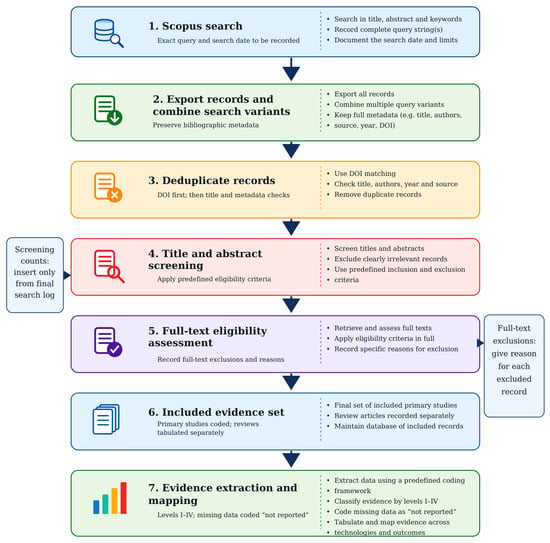
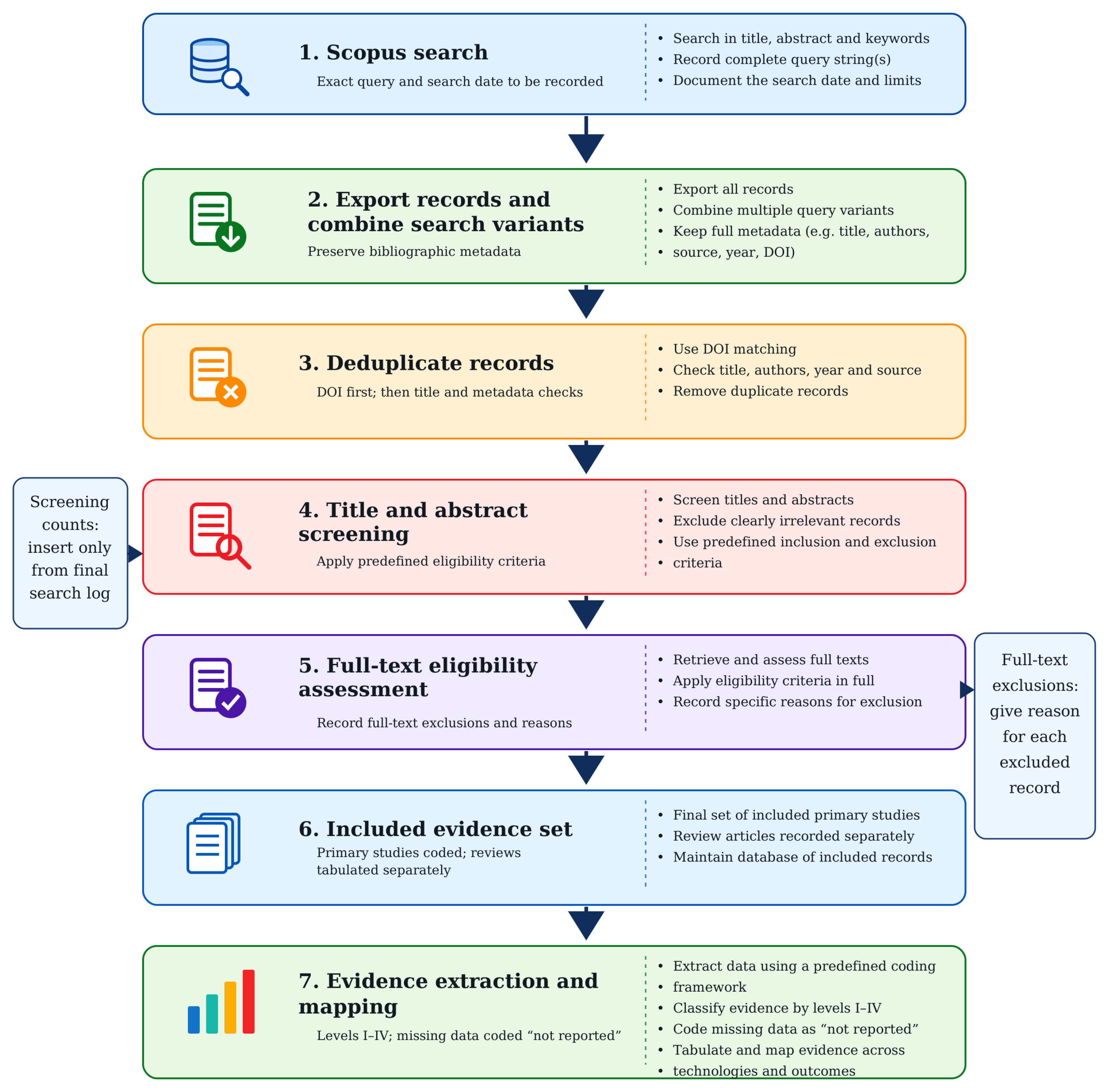
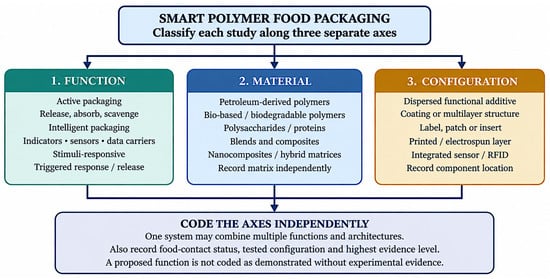
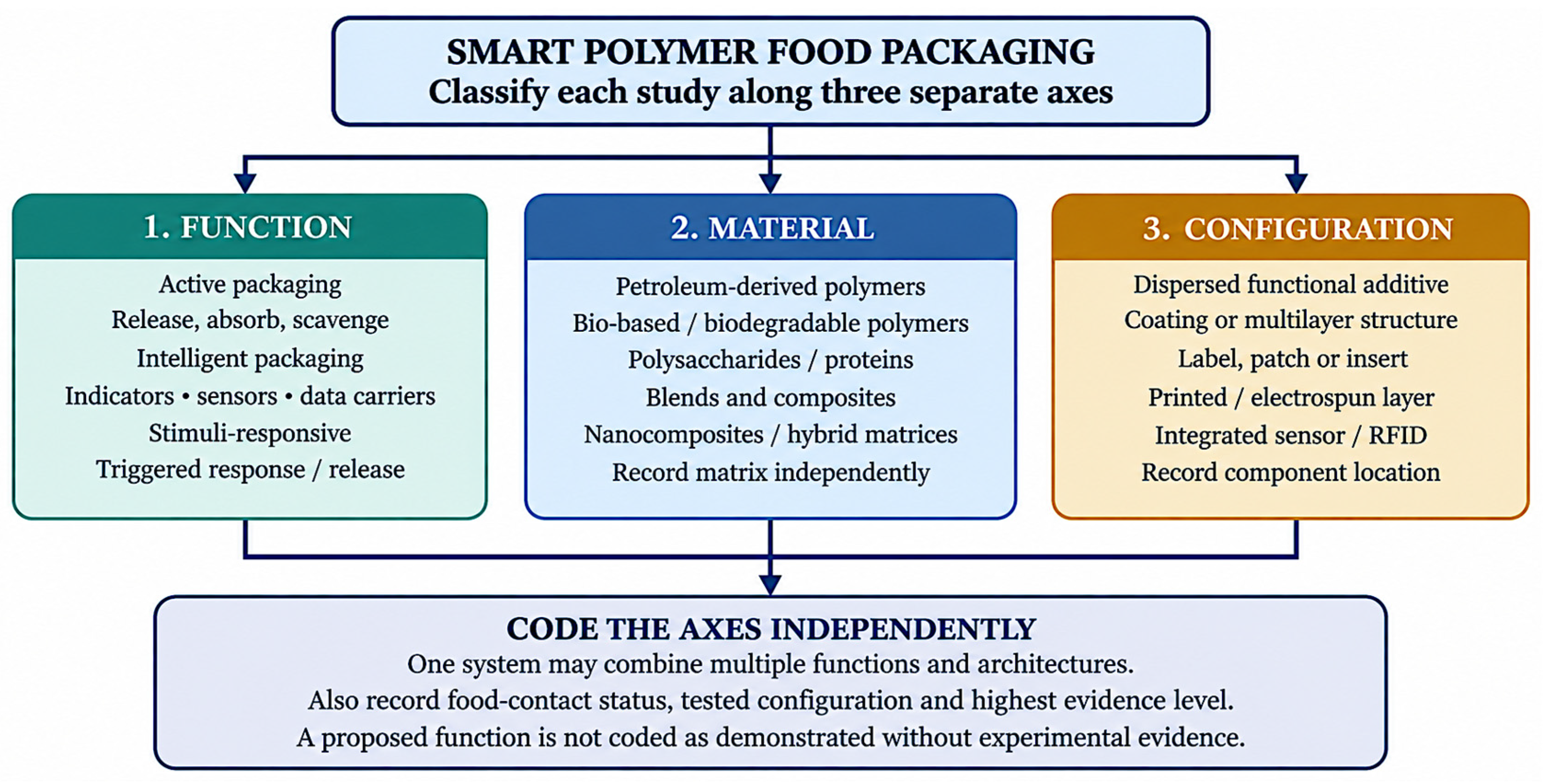
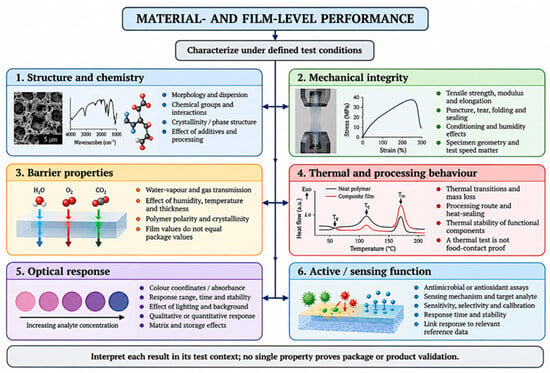
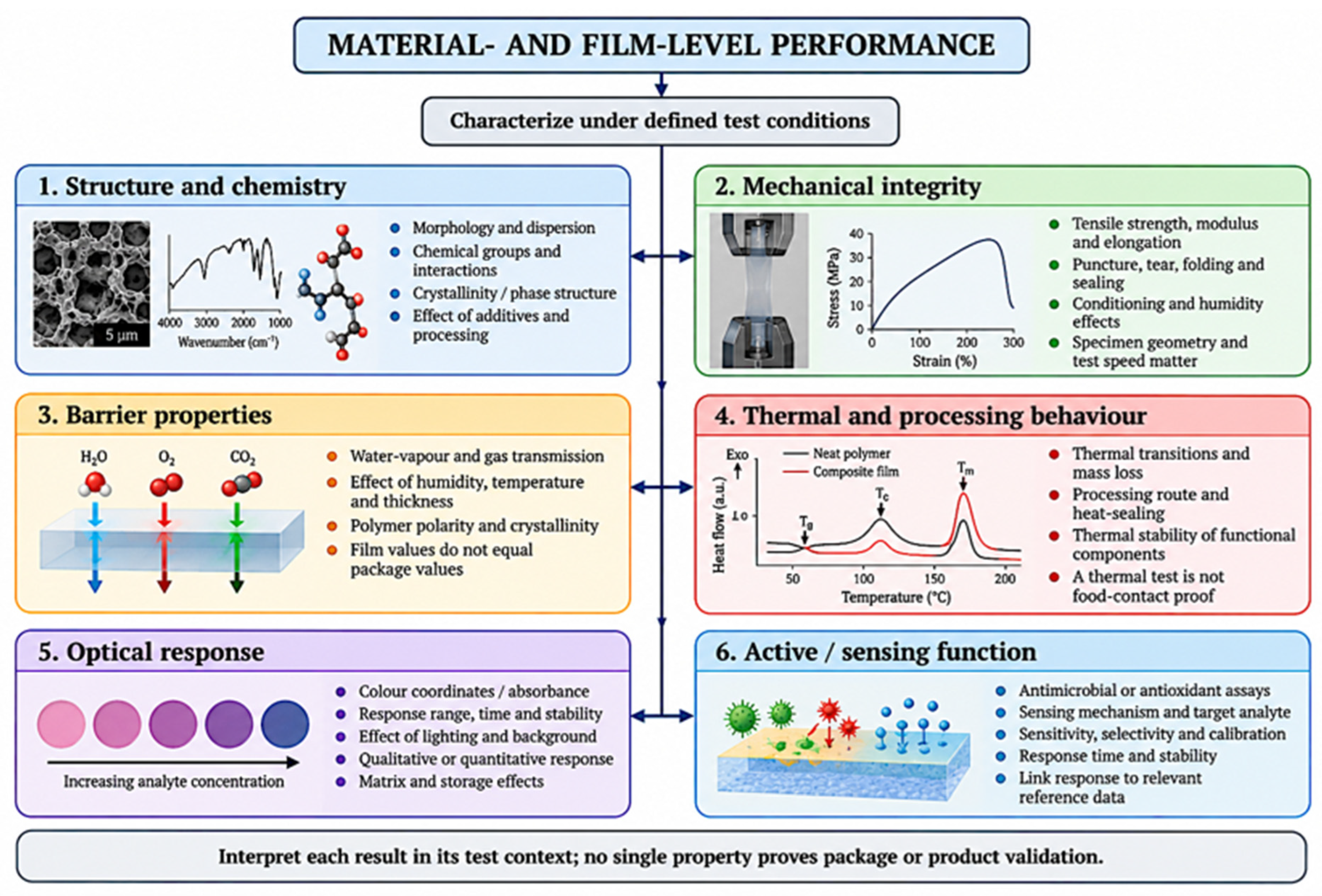
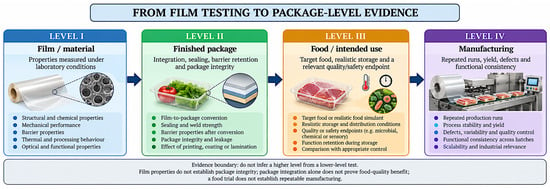
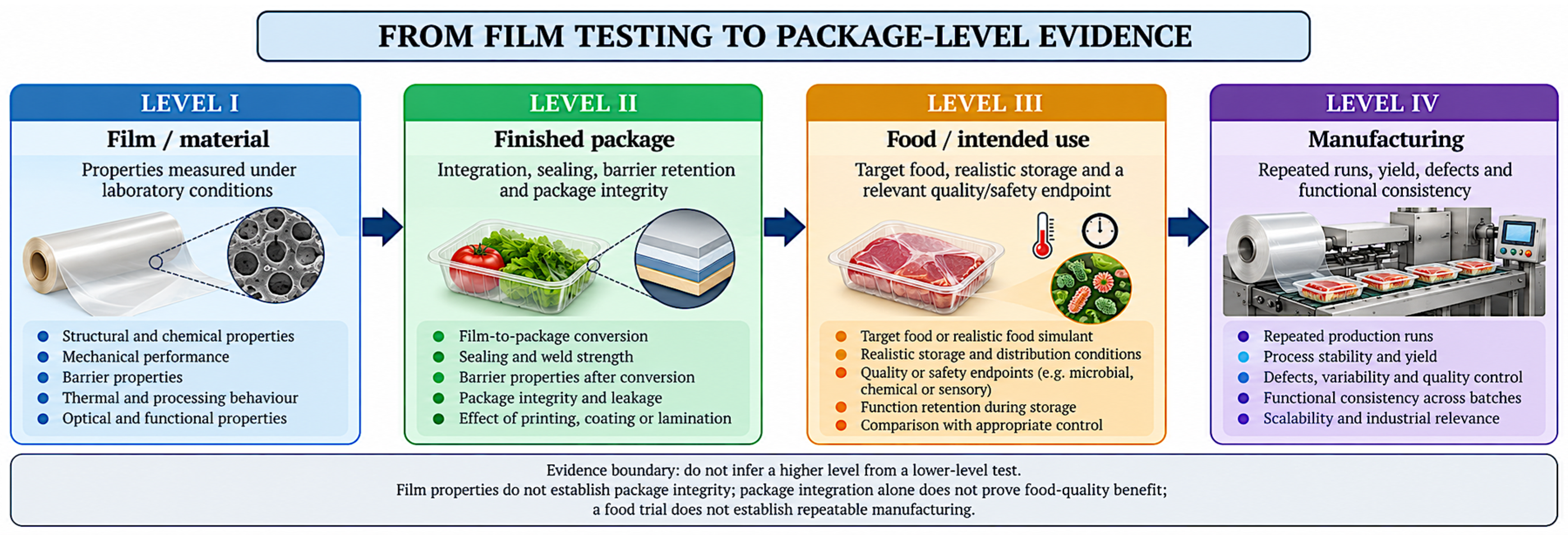
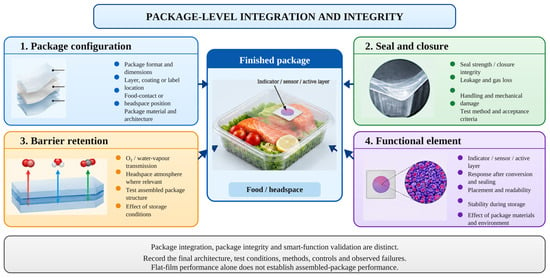
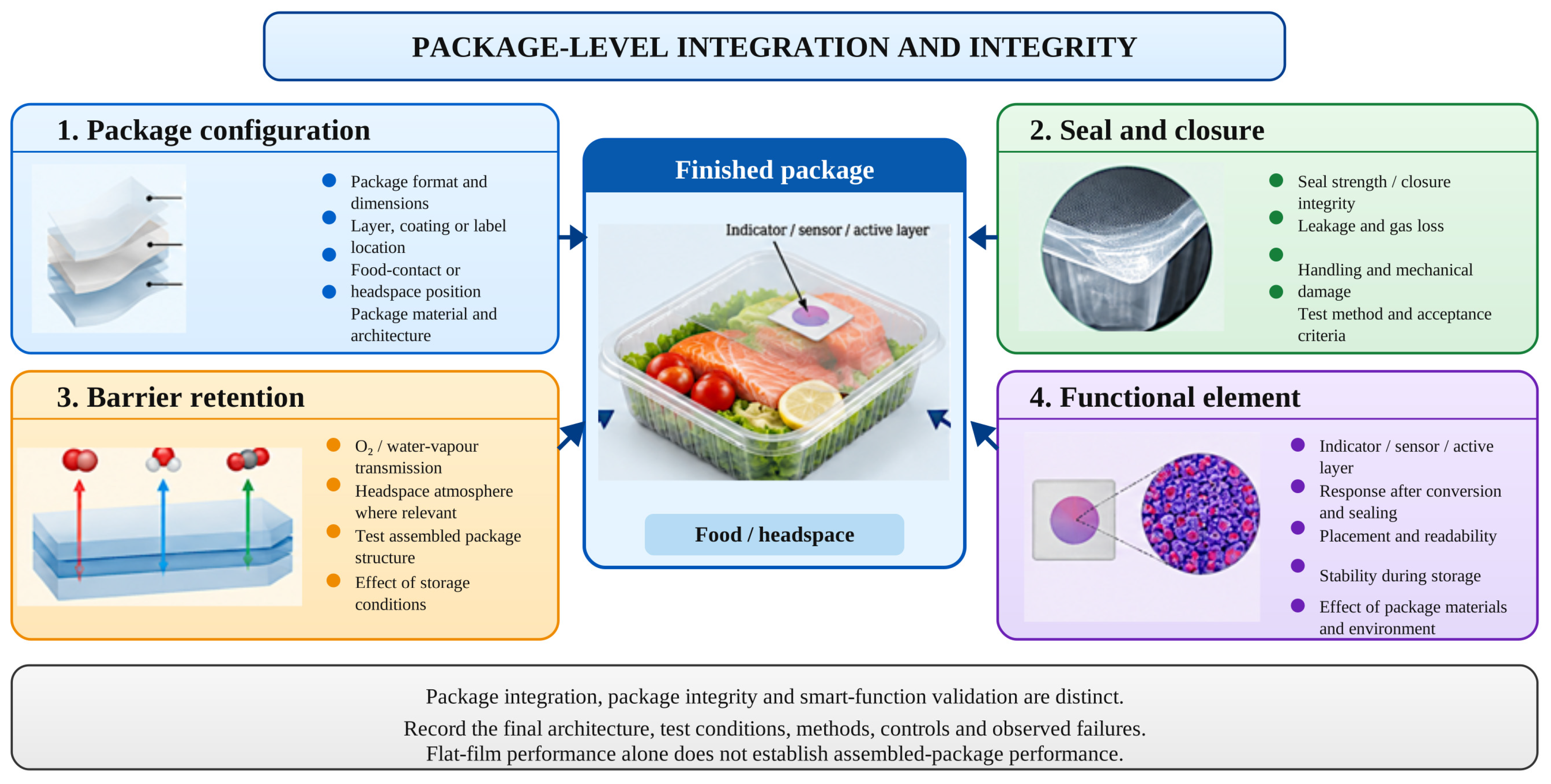
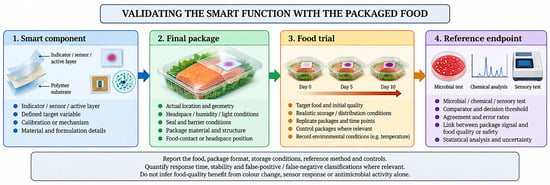
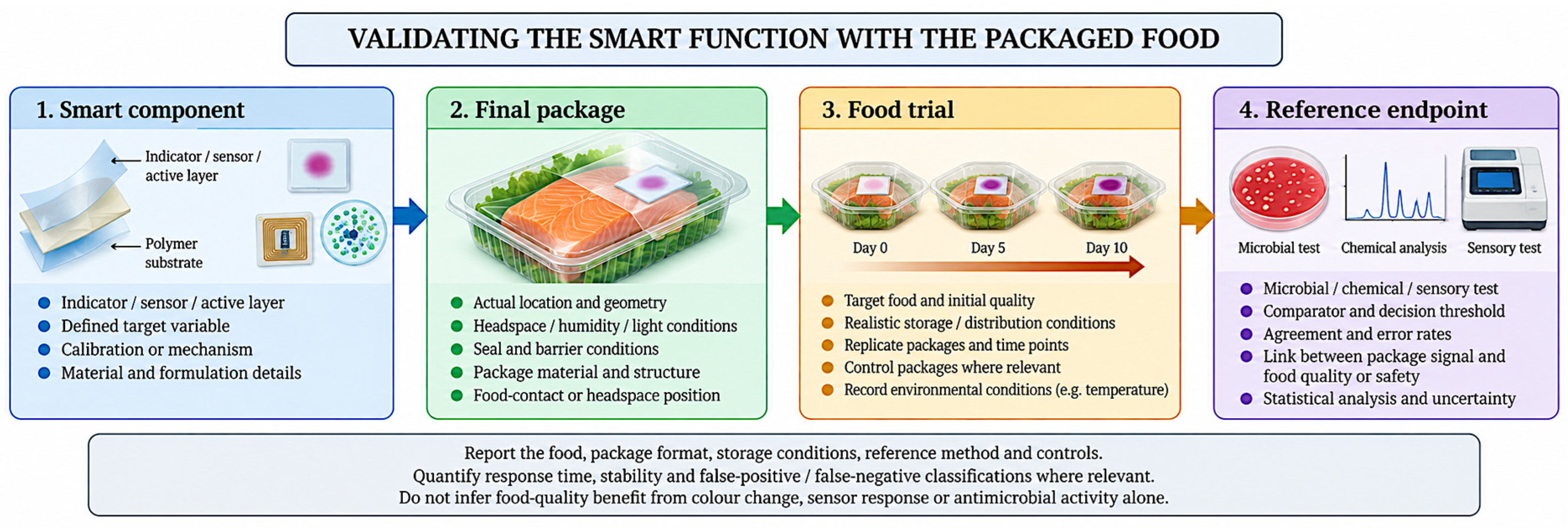
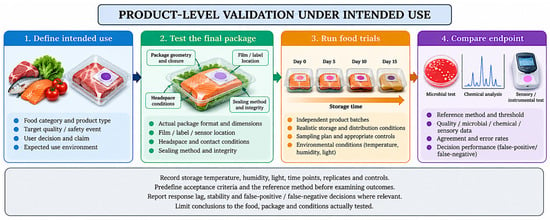
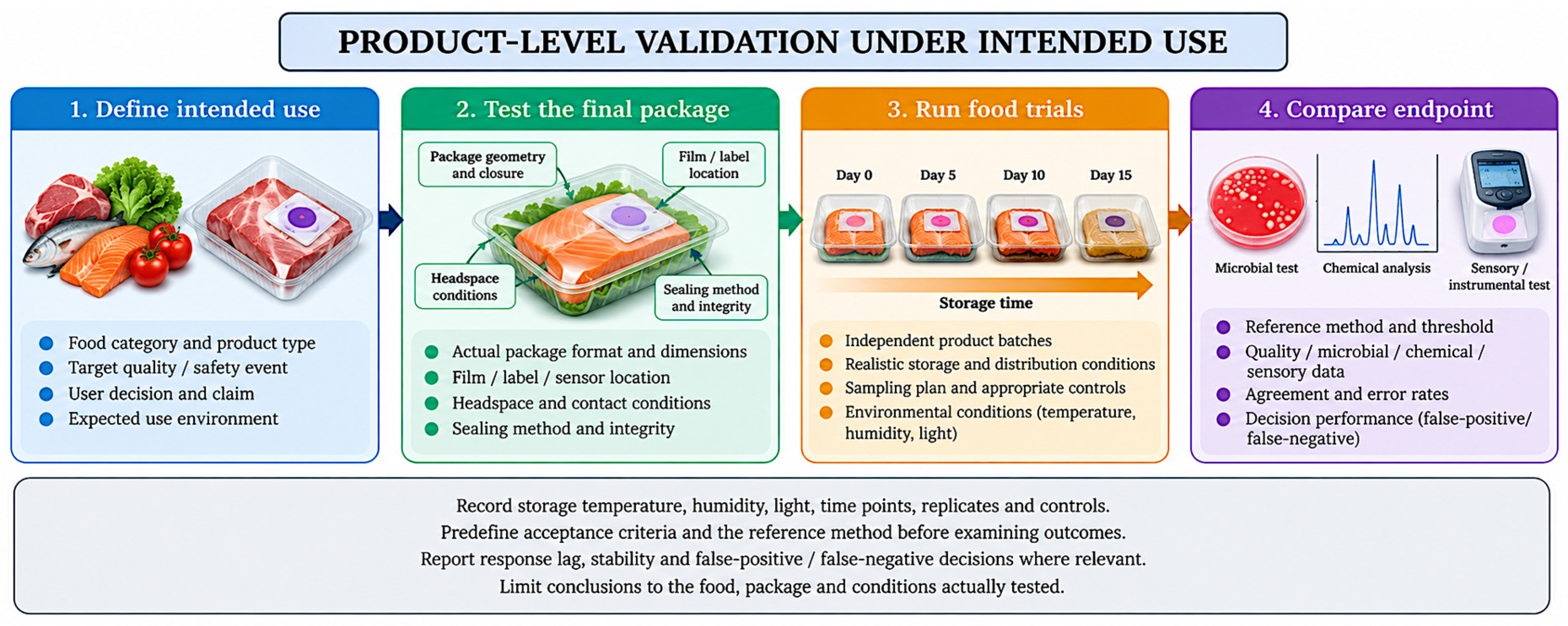
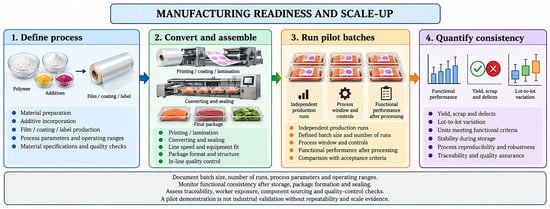
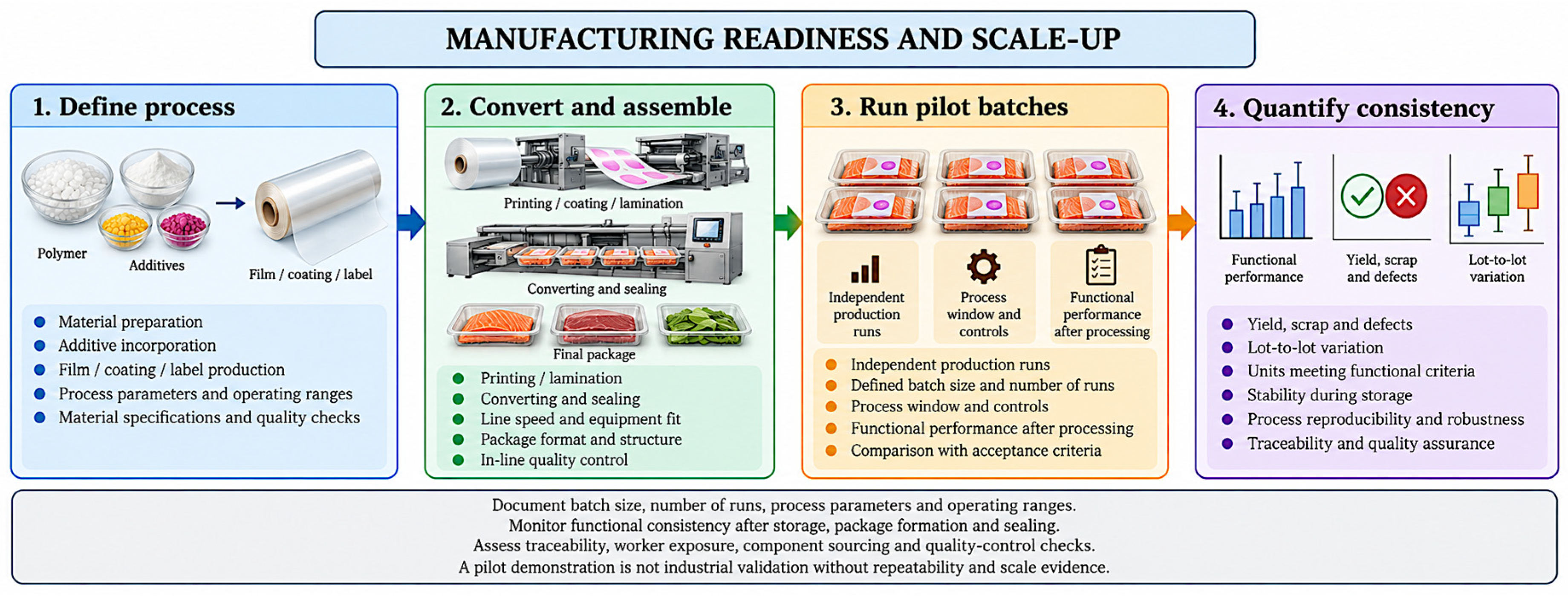

Disclaimer/Publisher’s Note: The statements, opinions and data contained in all publications are solely those of the individual author(s) and contributor(s) and not of MDPI and/or the editor(s). MDPI and/or the editor(s) disclaim responsibility for any injury to people or property resulting from any ideas, methods, instructions or products referred to in the content. |
© 2026 by the authors. Licensee MDPI, Basel, Switzerland. This article is an open access article distributed under the terms and conditions of the Creative Commons Attribution (CC BY) license.