


Abstract
Crystal violet is a cationic dye widely used in biomedical research, industrial dyeing, microbiology, and the textile industry. To remove this toxic dye, which has harmful environmental effects, environmentally friendly composite bioadsorbent spheres were prepared using alginate, a brown seaweed-derived biopolymer, and bioglass. Crystal violet adsorption was performed using a biocomposite adsorbent prepared by adding 14% bioglass to an alginate matrix. The effects of adsorbent amount, dye concentration, contact time, and pH on the adsorption process were investigated. In this study, a maximum removal efficiency of 65.68% was achieved using 40 mg of adsorbent in 20 mL of a 5 mg/L crystal violet solution after 120 min at a stirring speed of 200 rpm. The Langmuir model estimated a theoretical maximum adsorption capacity (qmax) of 5.57 mg/g based on the three investigated initial concentrations (5, 10, and 15 mg/L). The data were analyzed using Response Surface Methodology. ANOVA indicated that contact time had the greatest effect on removal efficiency. Isotherm and kinetic studies revealed that the Langmuir and Dubinin–Radushkevich isotherm models adequately described the adsorption process, and that the second-order kinetic model provided the best fit. These findings suggest that the adsorption is consistent with monolayer adsorption on a relatively homogeneous surface, and that binding may occur via low-energy physical interactions within micropores. The developed bioadsorbents demonstrated promising performance for crystal violet removal.
1. Introduction
The contamination of water resources with dyes and organic compounds originating from industries such as textiles, paper, and leather constitutes a global environmental problem because these pollutants can be toxic and carcinogenic even at very low concen-trations and can cause serious damage to aquatic ecosystems [1,2,3].
Crystal violet, methylene blue, rhodamine B, methyl violet, and malachite green are among the common cationic dyes discharged into water bodies [3,4]. Synthetic dyes prevent sunlight from penetrating water bodies, thereby disrupting photosynthetic activity and aquatic ecosystems and ultimately causing ecological imbalance [5,6]. Crystal violet (CV) is a synthetic cationic dye containing a toxic triphenylmethane group and is widely used in various industries, including food processing, textiles, biomedical applications, industrial dyeing, and personal care products [7]. Exposure to crystal violet can cause serious health problems, including eye irritation, respiratory disorders, kidney damage, visual impairment, and cancer. Because it is resistant to microbial degradation, it can accumulate and persist in the environment. Its vibrant color harms aquatic life by inhibiting photosynthesis, necessitating its removal from aquatic environments [8,9,10,11].
Various methods, including adsorption, flotation, oxidation/ozonation, biodegradation, ion exchange, solvent extraction, electrochemical processes, and membrane technologies such as reverse osmosis and nanofiltration, have been employed for dye removal [12,13,14,15,16]. Among these techniques, adsorption has attracted considerable attention because of its cost-effectiveness, recovery potential, and ease of application. The effectiveness of adsorption depends largely on the properties of the adsorbent. Granular activated carbon is one of the most widely used adsorbents; however, its application is often limited by high costs associated with its production, regeneration, and replacement [17,18]. Numerous studies have investigated lower-cost alternatives such as sugarcane pulp extract, plum kernels, perlite, natural clay, chitin, chitosan, fly ash, rice husks, peat, banana extract, and orange peel [19,20,21]. Furthermore, improving water quality through the development of suitable nano-adsorbents has become an important research focus [22]. Since adsorbents derived from synthetic polymers may have adverse environmental impacts, naturally derived polymers are increasingly preferred. Consequently, inexpensive, renewable, and environmentally friendly marine-derived biosorbents have attracted considerable attention [23].
Alginate, extracted from brown seaweed, is a natural, water-soluble, biocompatible, and biodegradable polysaccharide. Sodium alginate is a naturally occurring anionic straight-chain polysaccharide composed of repeating units of L-guluronic acid and D-mannuronic acid residues linked by 1–4 glycosidic bonds [24]. It is well known for its pH sensitivity, non-toxicity, biodegradability, safety, and excellent biocompatibility, making it a valuable biopolymer for biomedical, food, pharmaceutical, and environmental applications [24,25,26,27,28].
One of its most important advantages is its renewability. Because alginate has relatively low mechanical strength and limited surface area, it is often combined with additives such as activated carbon, graphene oxide, clay, and metal oxides. Due to its ability to form gels in the presence of divalent cations such as Ca2+, alginate is also used in adsorbent production. Incorporating bioglass into an alginate matrix represents an innovative approach [29].
Biomaterials are substances with unique properties, including ceramics, glasses, metals, and polymers. Their mechanical performance can be improved when combined with filler materials such as natural polymers and glass materials [30,31].
Using environmentally friendly inorganic additives like bioglass is an effective way to increase the adsorption efficiency of such materials and make the adsorbent more functional [32]. Bioglass adsorbent is not merely an inorganic additive. It can create adsorption sites through its functional groups and facilitate interaction between the pollutant and the adsorbent by increasing the heterogeneity and roughness of the biopolymer structure. The prepared biocomposite adsorbent can be easily recovered from the environment and reused without requiring complex separation processes after [32,33]. Bioactive glass (bioglass, BG) is a silica-based material containing calcium and, depending on the formulation, phosphorus-rich components that exhibit bone-like behavior and are widely used in biomedical implant applications [34]. Consequently, bioglass is regarded as an advanced biomaterial due to its high level of biocompatibility [35]. In addition to biomedical applications, its porous structure and high surface reactivity indicate considerable potential for environmental applications. Bioglass is available in several forms, including particles, pellets, and powders, and is used as an adsorbent. However, these forms often limit the reusability of adsorbents. Forming composite structures with biopolymers can overcome this limitation. Incorporating bioglass into an alginate matrix increases mechanical strength and produces a synergistic effect by forming new active binding sites. Moreover, simplified synthesis conditions make bioglass production more economical. The Stöber method enables bioglass production using minimal raw materials [36,37]. Structurally, bioglass exhibits small particle dimensions and a high specific surface area (70–130 m2/g), depending on the synthesis conditions [37]. It also is highly biocompatible and thermostable, and it degrades in the environment without causing pollution. Furthermore, its negatively charged surface is suitable for adsorbing cationic dyes, making it a promising adsorbent for their removal [38]. Therefore, composite adsorbents combining renewable alginate and mechanically robust bioglass can enhance adsorption capacity and dye removal performance.
Although alginate-based composites are frequently employed in environmental applications, bioglass-based composites are mostly used for biomedical applications. Moreover, reports on bioglass-based adsorbents remain limited. To the best of our knowledge, the removal of crystal violet using sodium alginate/bioglass composite beads has not previously been reported. Furthermore, the contribution of bioglass-induced surface heterogeneity to adsorption performance has not been adequately discussed in the literature. The present study aims to enhance removal efficiency by creating a synergistic effect through combining a biopolymer and bioglass in the resulting adsorbent, leveraging the biopolymer’s functional groups and the surface heterogeneity provided by the bioglass. Accordingly, this study presents the development of a low-cost, environmentally friendly sodium alginate/bioglass biocomposite adsorbent prepared from minimal raw materials.
In this study, bioglass synthesized using a minimal-material approach was incorporated into an alginate matrix. The adsorption of crystal violet onto the synthesized low-cost biocomposite adsorbent was investigated. The effects of adsorbent dosage, initial dye concentration, and contact time—key parameters influencing adsorption performance—were evaluated. Furthermore, the adsorption data were analyzed using equilibrium isotherm and kinetic models. Experimental data were statistically optimized using Response Surface Methodology (RSM).
The production of petroleum-derived synthetic polymers is energy intensive and generates a substantial carbon footprint owing to greenhouse gas emissions. In contrast, alginate, a natural polymer derived from seaweed, has a relatively low carbon footprint because seaweed sequesters carbon through photosynthesis. While hazardous organic solvents are commonly used in the preparation of synthetic polymer-based adsorbents, alginate can be processed in water, a green solvent. Unlike synthetic polymers, which may persist in the environment for hundreds of years and contribute to microplastic pollution, the alginate/bioglass biocomposite developed in this study is biodegradable, decomposing into non-toxic components. Conventional adsorbents are generally derived from synthetic polymers or activated carbon, contributing to fossil resource depletion. In contrast, the use of renewable alginate eliminates the need for fossil-based materials. Moreover, since the alginate/bioglass biocomposite can be prepared at room temperature, energy consumption and fossil fuel use are reduced [36]. These characteristics highlight the significance of the developed adsorbent from the perspectives of green chemistry and energy efficiency.
2. Materials and Methods
2.1. Materials
Tetraethyl orthosilicate (TEOS, 97.5%), sodium alginate, calcium chloride (97.0%), and calcium nitrate tetrahydrate (99.0%) were obtained from Isolab (Eschau, Germany); ammonium hydroxide, (ammonia solution 30%) was obtained from Carlo Erba Reagents (Milan, Italy); ethanol, HCl (37%), and NaOH were supplied by Merck (Darmstadt, Germany); and crystal violet (0.5%, aqueous solution) was obtained from Kimyalab (Istanbul, Türkiye). Crystal violet (CV) is an industrial dye belonging to the triphenylmethane dye group and contains positively charged functional groups [39]. The properties of crystal violet are summarized in Table S1.
2.2. Preparation of Biocomposite Adsorbents
A solution containing 4.5 mL of ammonium hydroxide, 15 mL of water, and 10 mL of ethanol was stirred for 10 min. Separately, a mixture of 25 mL of ethanol and 3 mL of TEOS was stirred for 10 min. The two solutions were combined and stirred for 30 min; 1.59 g of calcium nitrate tetrahydrate was then added, and the mixture was stirred for another 90 min. The resulting suspension was centrifuged at 3000 rpm for 10 min. The precipitate was washed twice with water and once with ethanol, scraped into a Petri dish, dried overnight in an oven at 60 °C, and finally calcined at 700 °C for 2 h at a heating rate of 2 °C/min [36].
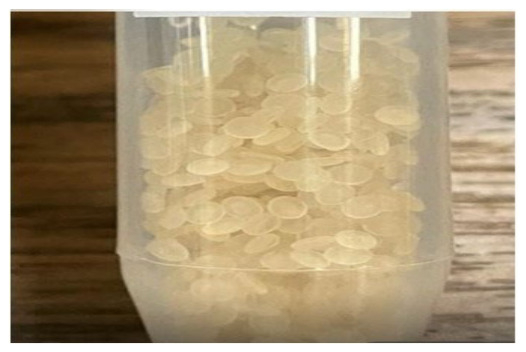
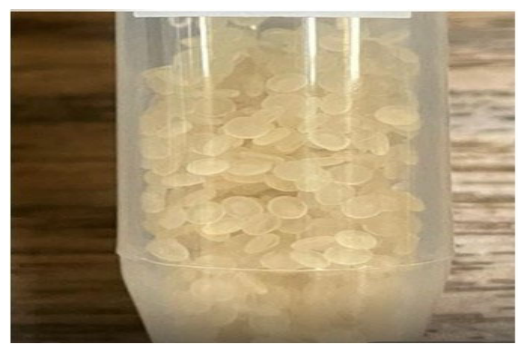
Sodium alginate (5 g) was added to 95 mL of hot water and sonicated in an ultrasonic bath operating at 35 kHz for 30 min to obtain a homogeneous biopolymer solution. Bioglass powder, corresponding to 14 wt% of the sodium alginate content, was dispersed in a small volume of water by ultrasonication and gradually added to the alginate solution by the priming technique. The biocomposite mixture was stirred until a homogeneous suspension was obtained, then transferred to a syringe and added dropwise into a coagulation bath containing 500 mL of 50 mmol CaCl2 solution. The resulting adsorbent spheres were cured in the coagulation bath with stirring for 24 h. After washing with water for neutralization, the beads were dried at room temperature for 3 days. The prepared bioglass-modified adsorbent beads are shown in Figure 1.
Figure 1.
Bioglass-modified adsorbent beads.
2.3. Characterization of Adsorbents
The dye concentration in the adsorption experiments was determined using a UV–Vis spectrophotometer (Shimadzu UV-2600; Shimadzu Corporation, Kyoto, Japan). The solution pH was measured using an Schott CG 840 pH meter (Schott AG, Mainz, Germany). The surface morphology of the biocomposite was examined by scanning electron microscopy (SEM; JEOL JSM-6060LV; JEOL Ltd., Tokyo, Japan). The crystal structure was analyzed using X-ray diffraction (XRD; Rigaku D/MAX/2200/PC; Rigaku Corporation, Tokyo, Japan). The textural characterization of the biocomposite was determined using a surface area and pore size analyzer (Autosorb-1C/MS; Quantachrome Instruments, Boynton Beach, FL, USA) based on N2 adsorption at 77 K. Transmission electron microscopy (TEM) was performed using a high-contrast FEI Tecnai CTEM microscope (FEI Company, Hillsboro, OR, USA).
2.4. Batch Adsorption Studies
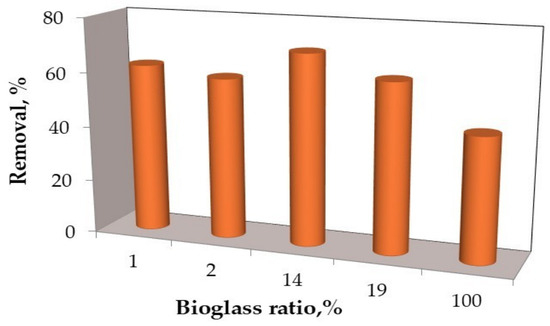
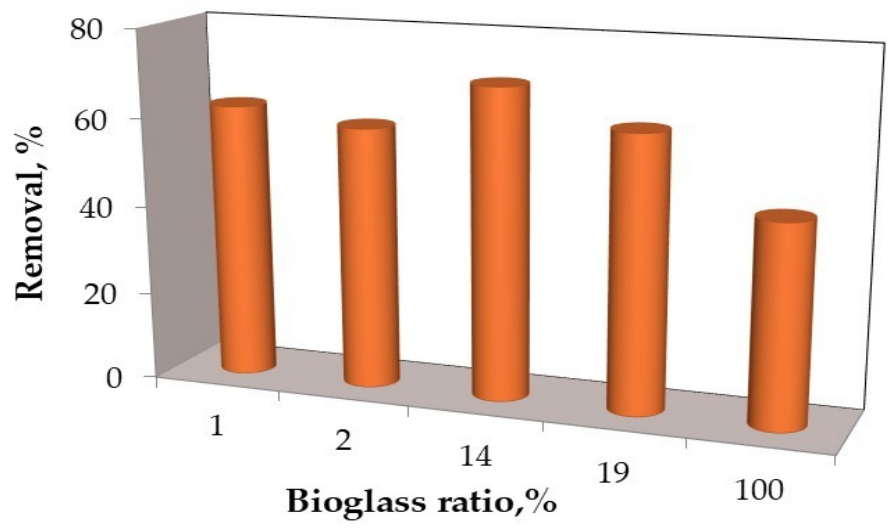
Bioglass was incorporated into alginate at concentrations of 1%, 2%, 14%, 19%, and 100%. As shown in Figure 2, the highest removal efficiency was obtained with 14% bioglass. Therefore, all adsorption experiments were conducted using alginate beads containing 14% bioglass. At this concentration, a suitable balance was established between the active groups and the improved morphological structure provided by bioglass and the functionality of the biopolymer [32]. At this concentration, the sodium alginate matrix may have prevented the aggregation of bioglass nanoparticles [40]. At higher bioglass concentrations, particle agglomeration and reduced accessibility of active groups may have led to decreased adsorptive removal. Furthermore, the low efficiency of bioglass alone as an adsorbent suggests that it may have an effect on removal in synergy with biopolymer [41,42,43].
Figure 2.
The relationship between dye removal efficiency and bioglass ratio.
A 50 mg/L stock solution of crystal violet was prepared for the adsorption experiments. Adsorption experiments were carried out using a temperature-controlled orbital shaker (Unimax 1010, Heidolph, Schwabach, Germany). The dye concentration in the adsorption experiments was determined using a UV–Vis spectrophotometer (UV-2600, Shimadzu Corporation, Kyoto, Japan). UV-Vis analysis showed that the maximum absorption wavelength (λmax) of crystal violet was 590 nm. Adsorption experiments were conducted using dye concentrations of 5, 10, and 15 mg/L and adsorbent amounts of 20, 30, and 40 mg. Adsorption efficiency was calculated using Equation (1), and the adsorption value at equilibrium (qe) from Equation (2).
(Co: the initial dye solution concentrations (mg/L); Ce: the equilibrium dye concentration of dye (mg/L); qe: the amount of dye adsorbed per unit mass of adsorbent at equilibrium (mg/g); V: the solution volume (L); m: the mass of adsorbent (g)).
3. Results and Discussion
3.1. Characterization of Sodium Alginate-Bioglass Adsorbent Spheres
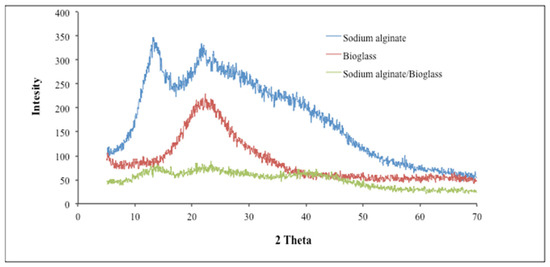
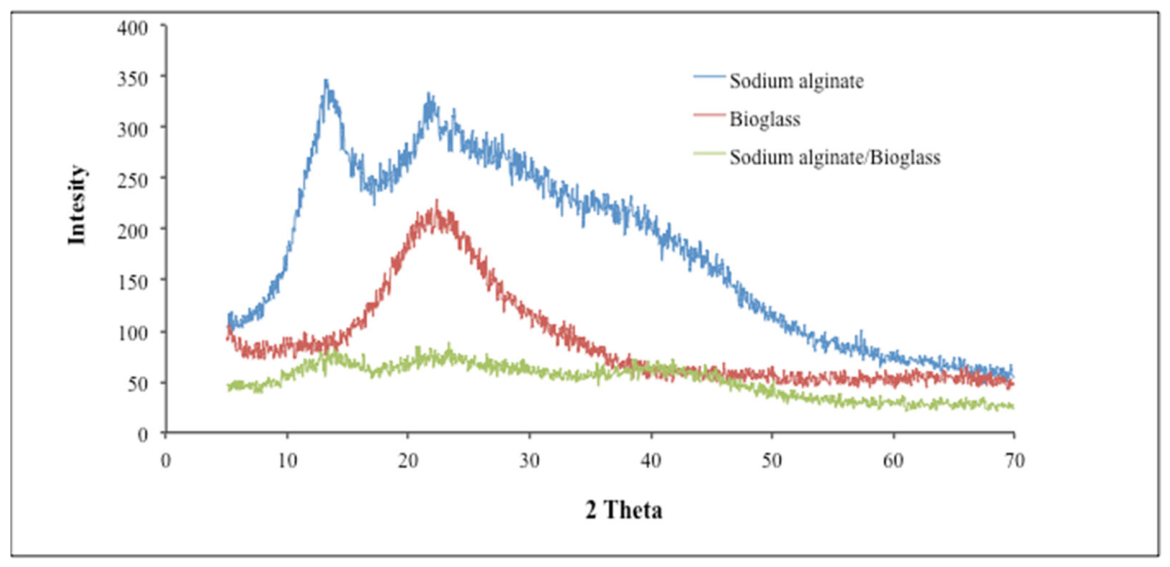
XRD analysis provides information about the crystal structure of the prepared adsorbent. XRD analyses of the adsorbents prepared from SA, bioglass, and their mixture are given in Figure 3. The semi-crystalline nature of sodium alginate is indicated by peaks at 2θ = 13° and 21°, corresponding to polyguluronate and polymannuronate units. The diffraction peak at 2θ = 39° in sodium alginate is characteristic of its amorphous halo. The broad, less sharp diffraction peak at 2θ = 21° in bioglass indicates its amorphous structure. The diffraction peak intensity of the adsorbent (SA/bioglass) at 2θ = 13° has decreased. The semi-crystalline structure in SA became amorphous upon the addition of bioglass [44]. This amorphous structure may enhance surface interactions during adsorption by facilitating ion movement and interactions [45,46].
Figure 3.
Comparison of the XRD patterns of pure bioglass, pure sodium alginate, and sodium alginate containing 14% bioglass.
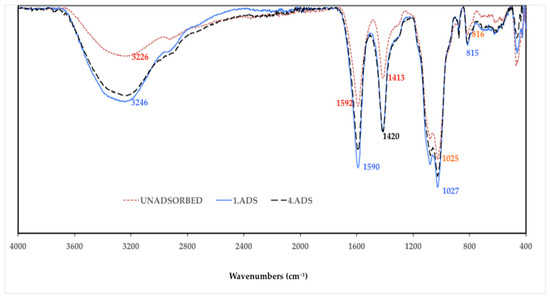
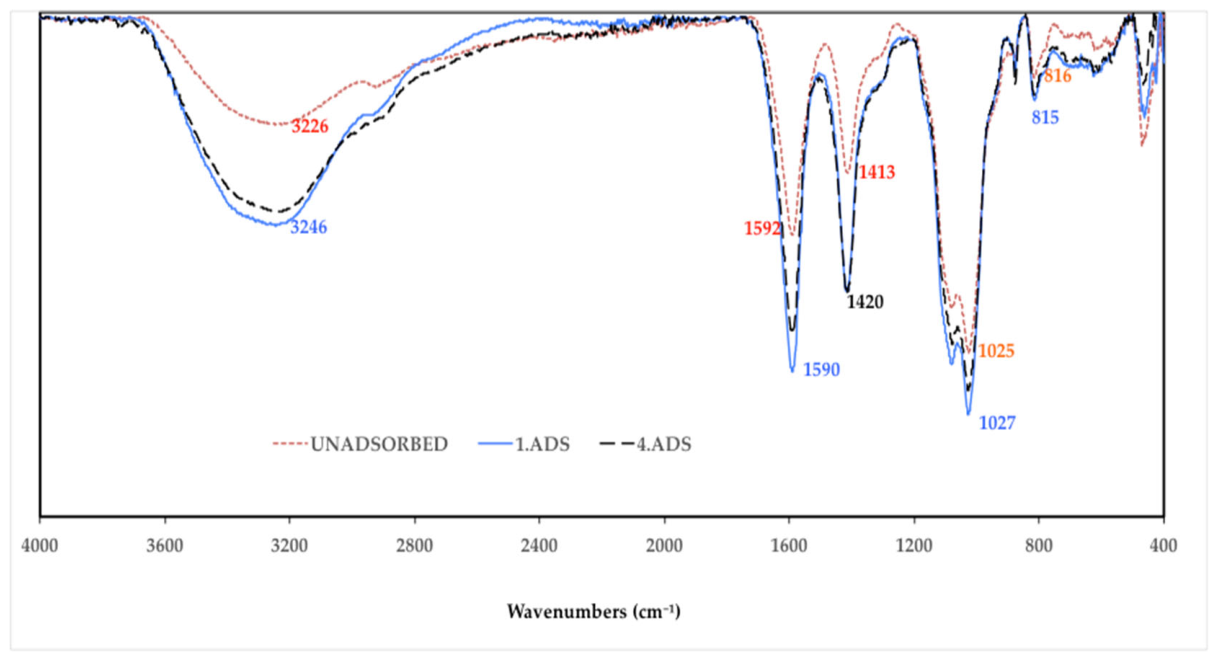
Figure 4 shows the FTIR characterizations of the adsorbent before adsorption, after CV adsorption, and after the fourth desorption. The bands at 1592 cm−1 and 1413 cm−1 observed in the spectra are attributed to the asymmetric and symmetric stretching modes of the C–O–O bond in the alginate molecule, respectively. The peaks at wavelengths of 3226 and 1025 cm−1 are associated with the O-H and C-O groups in the adsorbent structure, respectively. Shifts in wavelengths are observed after adsorption. Compared with the original adsorbent (first used), the adsorbent reused after desorption exhibits a slight decrease in hydroxyl, carboxyl, and C-O functional groups. This suggests that the adsorption process may be physicochemical in nature [47]. The spectra show shifts in the dye-loaded bands. This situation can be attributed to the electrostatic binding of CV molecules to the adsorption sites. It can be interpreted as follows: the band at 3246 cm−1 corresponds to O-H groups participating in adsorption; the band at 1590 cm−1 corresponds to electrostatic interaction with (COO-) groups; the band at 1420 cm−1 corresponds to ionic interactions; and the band at 1027 cm−1 represents interactions of surface groups in the silicate structure.
Figure 4.
FT-IR spectra of fresh adsorbent (unadsorbed (orange)), dye loaded adsorbents (1.ADS (blue) and 4.ADS (black)).
3.2. SEM-EDX Analysis
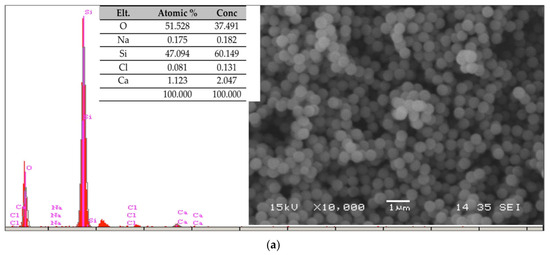
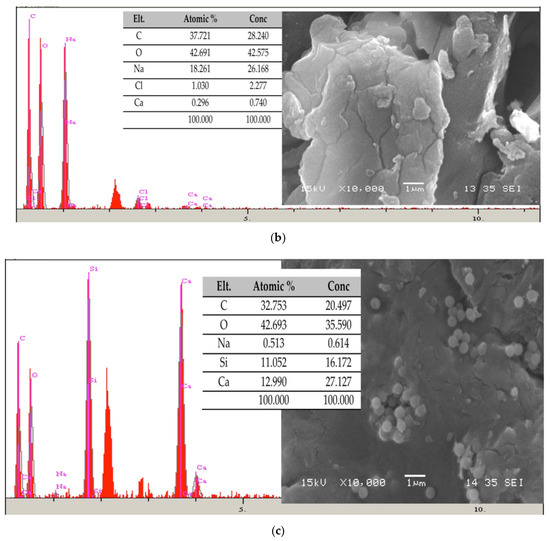
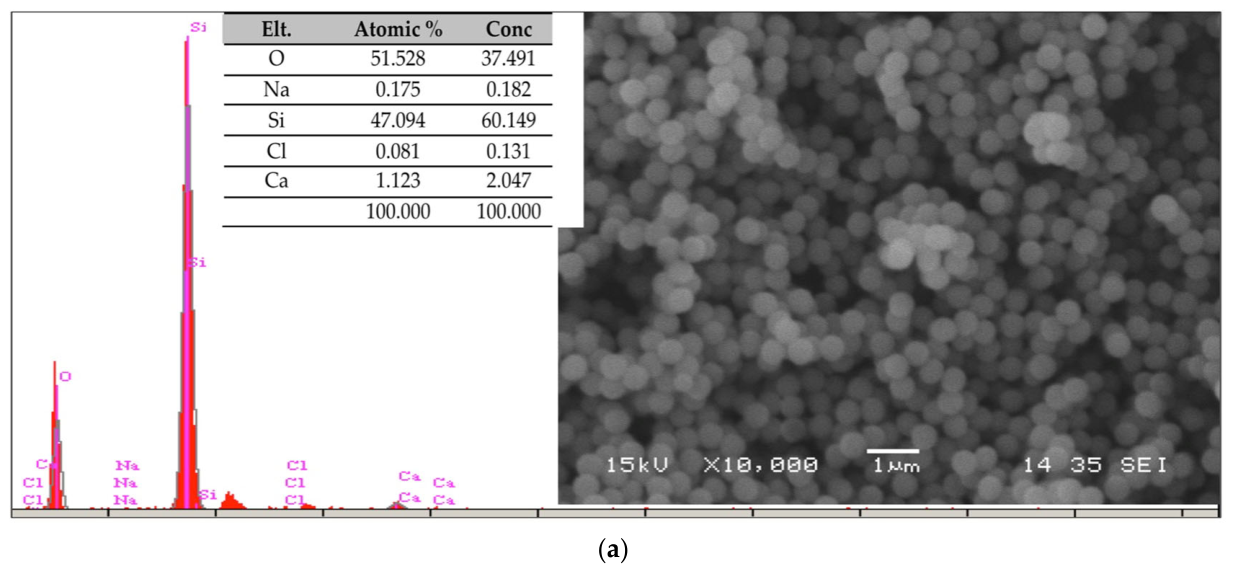
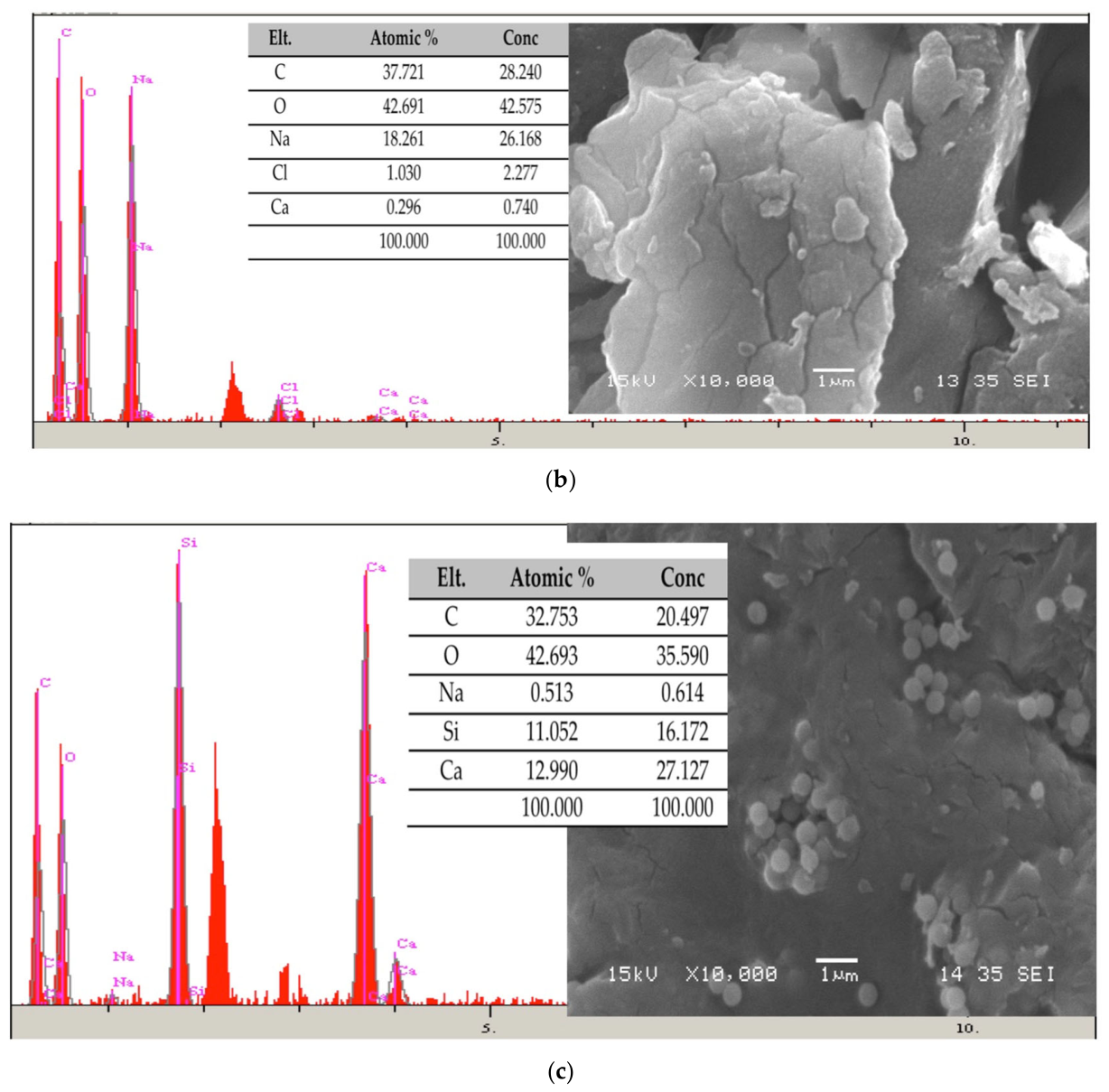
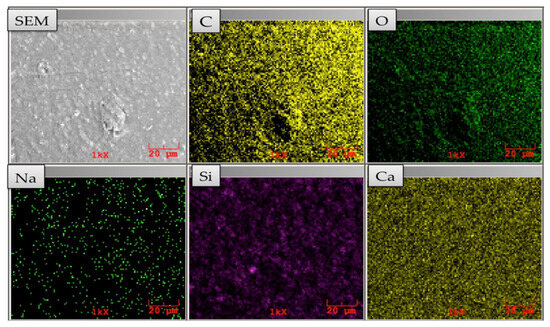
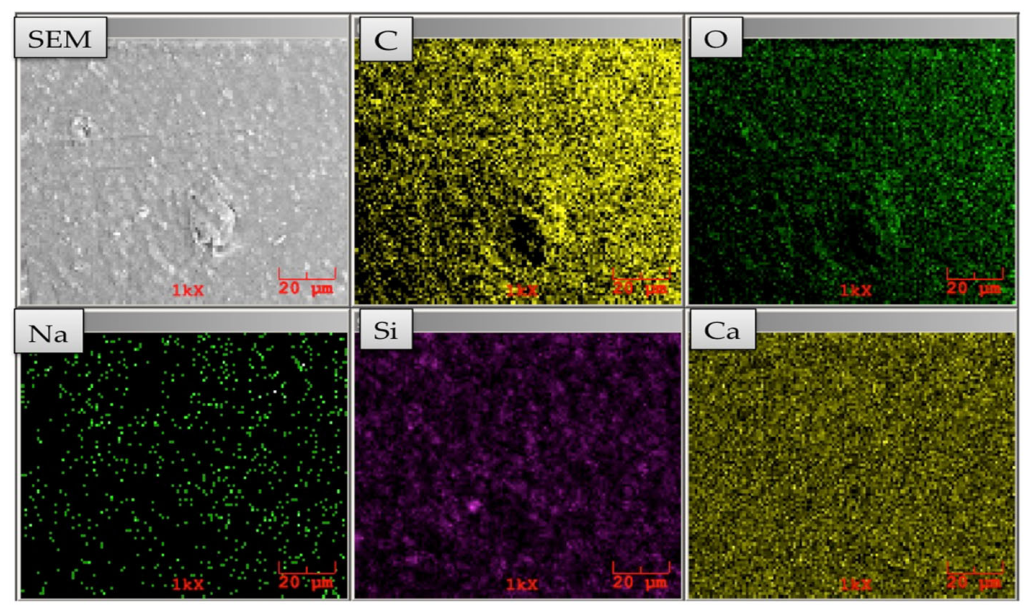
SEM and EDX results of bioglass, sodium alginate, and biocomposite adsorbent are shown in Figure 5. In the SEM image shown in Figure 5a, the pure bioglass sample consists of spherical particles and exhibits high roughness. In addition, agglomerations have been observed in some areas. The close clustering of particles and high surface roughness can increase the surface area available for adsorption [48,49]. The SEM image of pure alginate shown in Figure 5b exhibited an irregular, cracked, heterogeneous morphology. This highly irregular structure can increase the surface area available for interaction between the functional groups of sodium alginate and the contaminant [50,51]. Figure 5c shows that the bioglass is well dispersed within the alginate matrix, without large-scale agglomeration. The presence of Si and Ca, as indicated by EDX analysis, demonstrates that bioglass has been successfully incorporated into the biopolymer [37,52]. EDX analysis shows that the structure contains carbon (20.49%) from the polymer, silicon (16.17%) from the bioglass, and calcium (27.12%). This demonstrates the formation of a hybrid structure, as shown in Figure 5c. Element mapping is shown in Figure 6.
Figure 5.
SEM images and EDX analyses of (a) bioglass, (b) sodium alginate, and (c) the biocomposite adsorbent.
Figure 6.
Elemental mapping of the biocomposite spheres.
3.3. Textural Analysis
The specific surface area and pore structure of the developed SA/Bioglass biocomposite adsorbent were examined based on nitrogen adsorption–desorption measurements. The specific surface area, total pore volume, and average pore diameter (all determined by BJH adsorption) were 7.606 m2/g, 0.01634 cm3/g, and 2.81 nm, respectively. Although the specific surface area was lower than that of conventional activated carbons, the adsorption performance of the biocomposite may depend primarily on the active sites provided by the surface functional groups of sodium alginate (including hydroxyl and carboxyl groups) and by the bioglass particles, rather than exclusively on physical adsorption arising from its porous structure.
The N2 adsorption–desorption isotherm curves shown in Figure S1 exhibit Type IV isotherm behavior with a hysteresis loop, supporting the presence of a mesoporous structure [53,54]. This finding is consistent with the measured average pore diameter of 2.81 nm (range: 2–50 nm). The sharp increase in adsorption at relative pressure of P/P0 = 0.9–1.0 indicates capillary condensation and multilayer adsorption [55]. The pore-size distribution of the developed adsorbent, shown in Figure S2, further indicates that the material is predominantly mesoporous. The sharp peak observed at 3 nm is consistent with the measured pore diameter of 2.81 nm. In addition, the second sharp peak observed at 7 nm indicates the presence of larger mesopores [53,56].
3.4. TEM
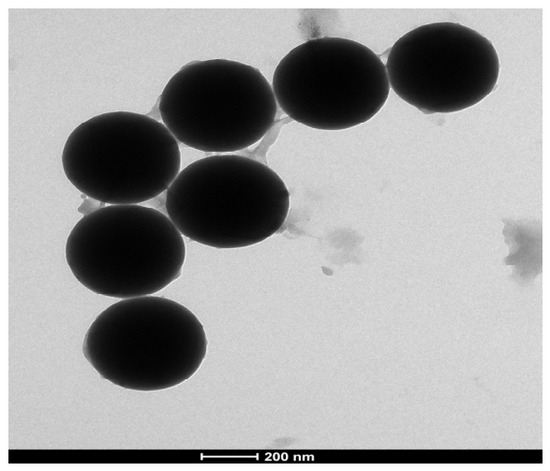
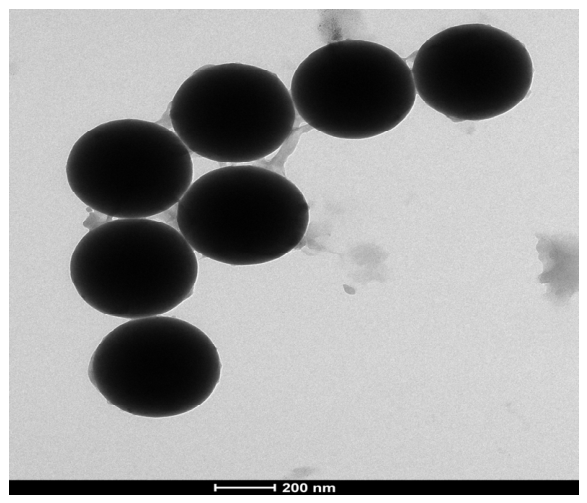
Figure 7 shows a TEM image of the ground, powdered biocomposite. The TEM image reveals nanoscale, uniform, and spherical regions within the biocomposite. In particular, spherical electron-dense regions with a homogeneous size distribution were observed [36]. These dark, electron-dense regions are attributed to bioglass-rich domains within the alginate matrix [29,57,58]. This contrast arises because bioglass contains elements such as Si and Ca, which have higher atomic numbers and electron densities than the elements predominantly present in alginate, resulting in greater electron scattering [59]. The homogeneous distribution of the dark regions indicates that the bioglass was successfully dispersed throughout the composite matrix. Such dispersion may improve the accessibility of the adsorption sites to dye molecules and facilitate the removal of crystal violet from aqueous solutions [36,60].
Figure 7.
Transmission electron microscopy (TEM) image of the sodium alginate/bioglass biocomposites.
3.5. Adsorption Studies
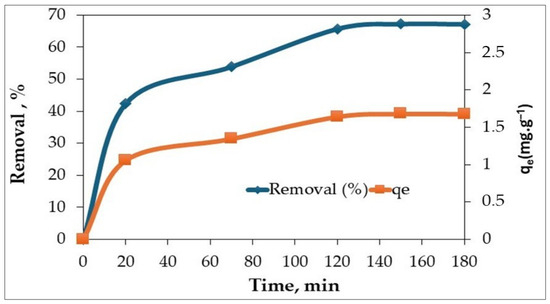
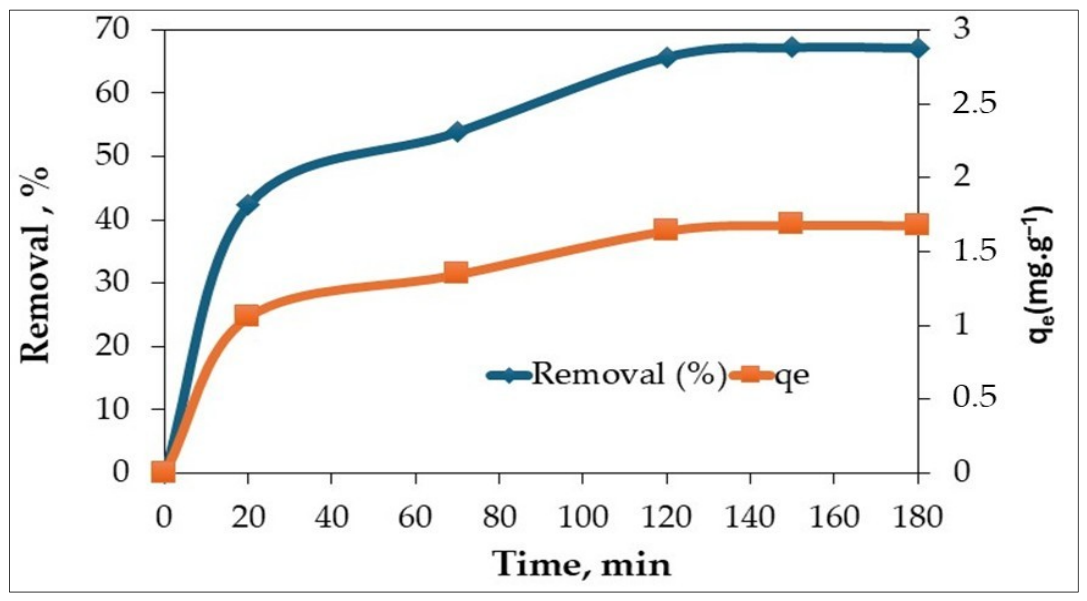
Adsorption of crystal violet onto biocomposite adsorbent spheres was investigated by adding 40 mg of adsorbent to 20 mL of a 5 mg/L dye solution and agitating the mixture for 180 min at 298 K and 200 rpm. Figure 8 shows that the removal efficiency increased with contact time. This initial increase is due to the large number of available adsorption sites [61]. No significant increase in removal efficiency was observed after 120 min. This behavior can be attributed to the system approaching adsorption equilibrium and the progressive saturation of the active sites [62,63]. Therefore, the time required to reach adsorption equilibrium was determined to be approximately 120 min.
Figure 8.
Relationship between contact time, crystal violet removal percentage and adsorption capacity.
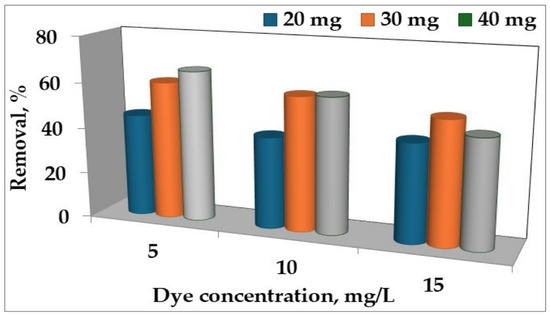
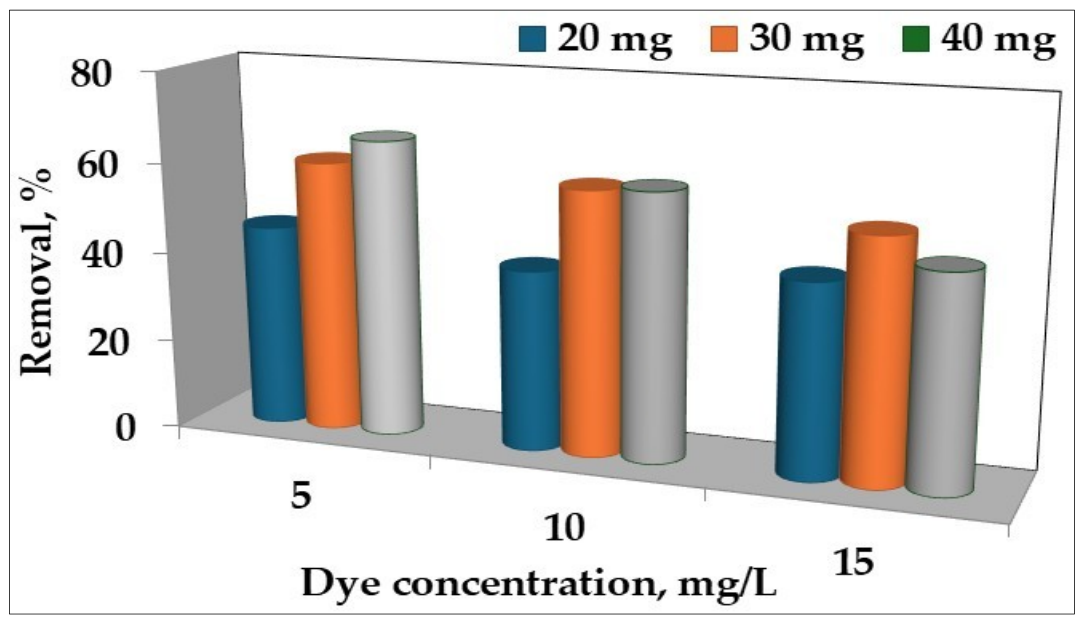
Removal studies were conducted with three adsorbent amounts (20, 30, and 40 mg) in dye solutions at concentrations of 5, 10, and 15 mg/L. Figure 9 shows how removal efficiency changes with dye concentration. As shown in Figure 9, increasing the amount of adsorbent generally increased the removal efficiency. The highest removal efficiency was observed at the lowest dye concentration and the highest adsorbent concentration. This is associated with an increase in the number of active sites and the amount of functional groups available for adsorption as the dosage of adsorbent increases [64,65]. However, when the dye concentration was increased, the number of active sites required for adsorption remained insufficient, despite the increase in the amount of adsorbent [62,63,64,65,66]. Thus, removal rates decreased with increasing solution concentration. This is commonly observed in adsorption systems. Many studies report that adsorbent–adsorbate interaction is more efficient at lower concentrations and that surface saturation is delayed [67].
Figure 9.
Relationship between crystal violet removal percentage and dye concentration.
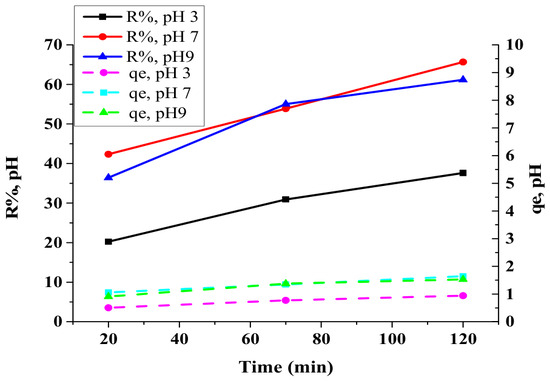
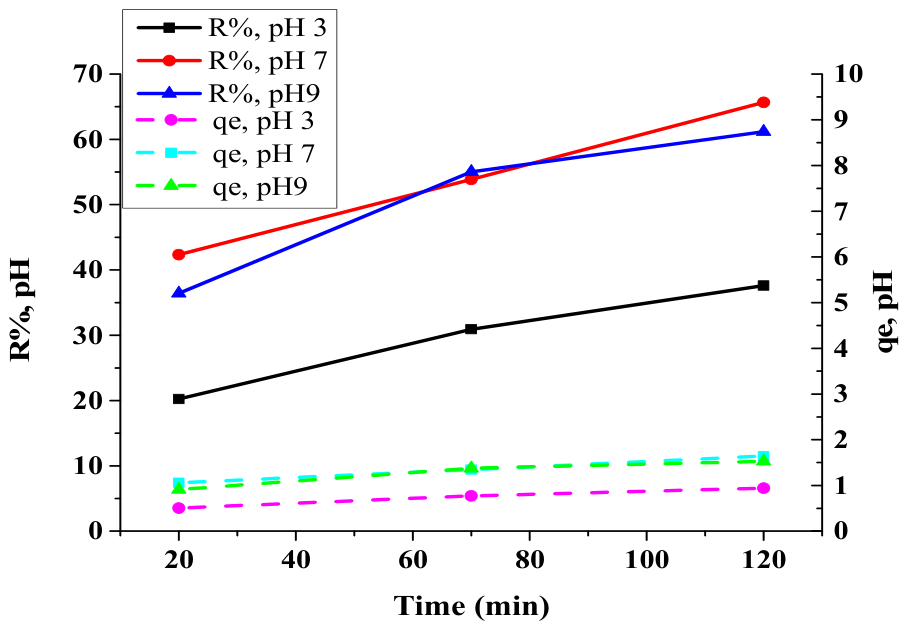
Figure 10 shows the effect of pH on crystal violet removal under optimum conditions. Experiments were conducted using a 5 mg/L dye solution and 40 mg of adsorbent at pH values of 3, 7, and 9. The pH of the solution was adjusted with HCl and NaOH. Removal efficiency was lower at low pH. At low pH, protonation of the adsorbent surface leads to repulsion, as the dye molecules are also positively charged. At higher pH values, the negative charge of the adsorbent increases the attraction between the adsorbent and the positively charged dye molecules [44].
Figure 10.
Dye removal percentage and adsorption capacity as a function of contact time at different pH values.
In our previous study, the point of zero charge of a bioglass-loaded adsorbent used for cationic dye adsorption was found to be approximately pH 6 [44]. The natural pH of the crystal violet solution was approximately 7. Since this value is above the point of zero charge, the adsorbent surface is expected to carry a net negative charge under these conditions. Conducting adsorption at the natural pH of the dye solution may also reduce the need for chemical pH adjustment and thus improve the economic feasibility of the process. Therefore, subsequent adsorption experiments were conducted at pH 7.
For the positively charged crystal violet molecules, adsorption is favored at pH values above the point of zero charge because the adsorbent surface becomes increasingly negatively charged. The developed adsorbent is anionic, whereas crystal violet is cationic. Through electrostatic interaction, negatively charged OH− ions attract positively charged dye ions, resulting in adsorption. At pH values below the point of zero charge, in the acidic pH region, excess H+ ions will repel the positively charged dye ions, thus preventing adsorption [68]. As shown in Figure 10, the low dye removal observed at pH 3 can be attributed to electrostatic repulsion in the acidic region below the point of zero charge. Since the highest dye removal was achieved at pH 7, which is the natural pH of the dye solution, the subsequent experiments were conducted at this pH. The higher dye removal observed at pH 9 compared with pH 3 can be attributed to electrostatic attraction under basic conditions. However, the prepared adsorbents showed a tendency to dissolve in a highly basic environment, such as pH 12 [44]. Therefore, pH values higher than 9 were not investigated in this study.
3.6. Adsorption Mechanism
More than one factor may influence the adsorption of crystal violet onto the developed adsorbent. Electrostatic interaction is considered to be the dominant adsorption mechanism. This interaction is caused by the electrostatic attraction between the anionic adsorbent (alginate and bioglass) and the cationic crystal violet molecules [36,69]. The hydrogen bond interaction between the OH− and COO− surface groups in the alginate structure and the amine groups of the dye may also contribute to the adsorption process [69,70]. In addition, bioglass may contribute to these mechanisms by increasing the surface heterogeneity and roughness of the adsorbent [36].
3.7. Reusability
The reusability of the adsorbent was investigated by adding 40 mg of adsorbent to 20 mL of a 5 mg/L dye solution and stirring the mixture at 298 K and 200 rpm for 120 min. Adsorption efficiency was calculated using Equation (1) in Section 2.4.
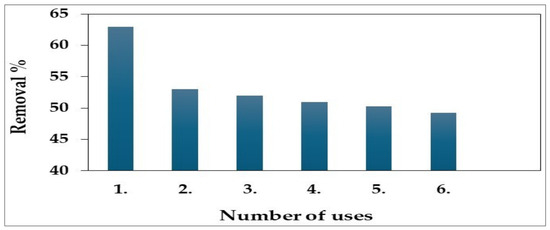
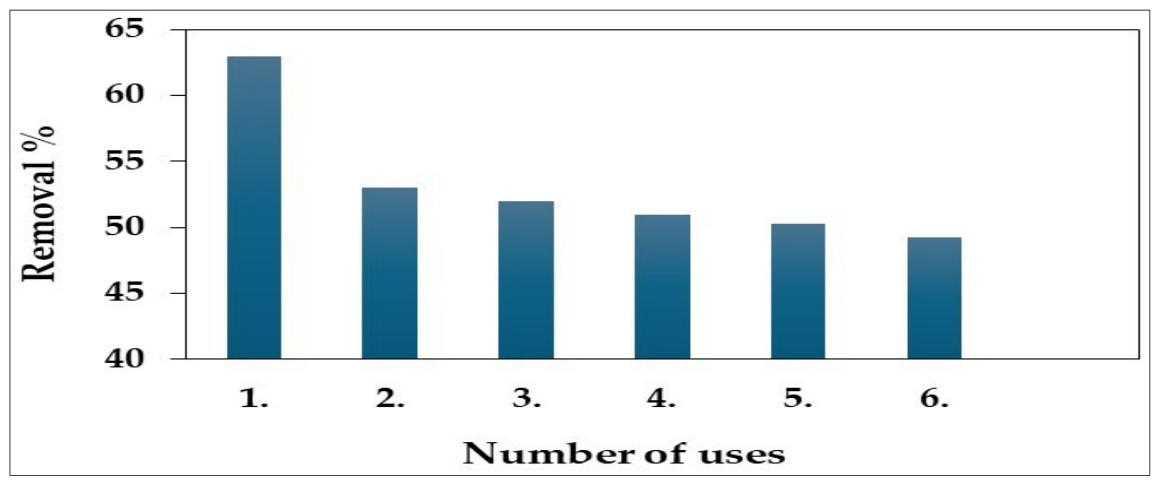
To investigate the reusability of the adsorbent, the desorption process was carried out using an adsorbent-ethanol-water mixture after 120 min of dye adsorption. As shown in Figure 11, the dye removal efficiency remained at approximately 50% after five adsorption–desorption cycles. These results demonstrate that the prepared composite is a recyclable adsorbent with good reusability.
Figure 11.
Reusability of the adsorbent.
3.8. Isotherm
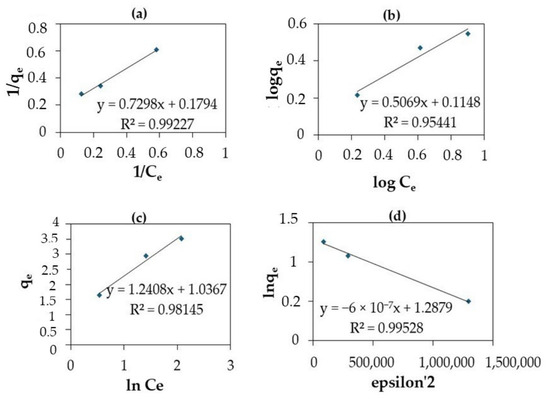
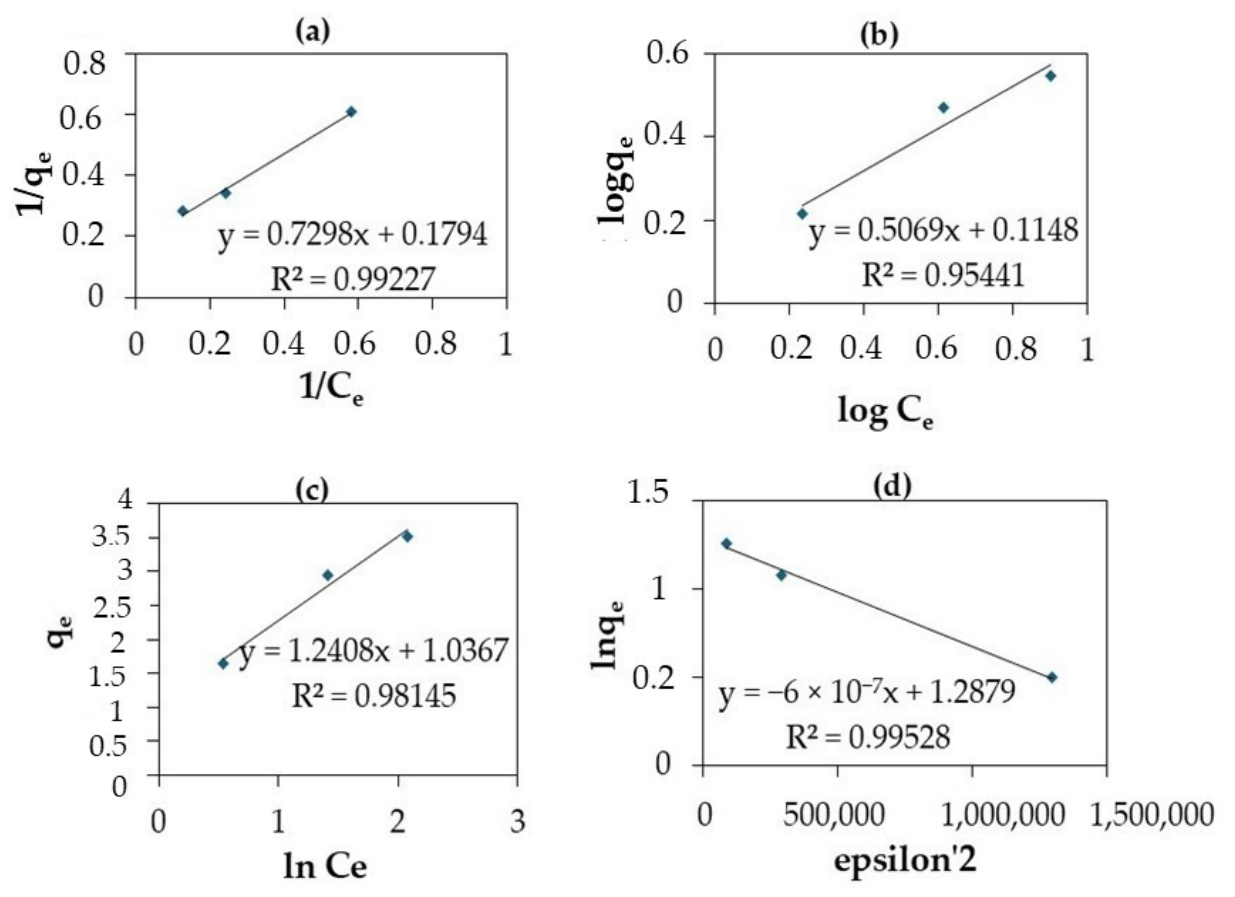
Isotherm studies were conducted at pH 7, with stirring at 200 rpm, using 40 mg of adsorbent and a dye concentration of 5, 10 and 15 mg/L. The adsorption capacity was determined through adsorption isotherm studies. The applicability of the Langmuir, Freundlich, Temkin, and Dubinin–Radushkevich isotherm model for crystal violet adsorption by the prepared adsorbent spheres is presented in Table 1.
Table 1.
Relevant equations, parameters, and regression coefficients of the adsorption isotherm models.
As shown in Table 1 and Figure 12, the high R2 values indicate a good fit between the isotherm models and the experimental data. The Langmuir isotherm assumes monolayer adsorption on a relatively homogeneous surface with a limited number of adsorption sites. The relatively high R2 value obtained for the Langmuir model suggests that it describes the experimental adsorption behavior well within the concentration range studied (5, 10 and 15 mg/L).
Figure 12.
Adsorption isotherm graphs: (a) Langmuir, (b) Freundlich, (c) Temkin, (d) Dubinin–Radushkevich.
The dimensionless separation factor (RL) determines adsorption efficiency; availability is indicated when RL is between 0 and 1. The RL value was calculated as 0.45 using the equations in Table 1. The Freundlich isotherm provides information about multilayer adsorption on a heterogeneous surface. The parameters KF and 1/n represent the relative adsorption capacity and the surface heterogeneity factor, respectively. The Temkin isotherm assumes that the heat of adsorption decreases linearly as the adsorbent active sites are filled with adsorbate. The average adsorption energy (E < 8 kJ/mol) calculated from the Dubinin–Radushkevich isotherm indicates that the adsorption process is predominantly governed by physisorption and that binding occurs through low-energy interactions involving weak van der Waals forces [71].
3.9. Kinetic
The time-dependent changes in adsorption capacity were investigated using kinetic models. The kinetic equations and corresponding parameters are presented in Table 2. The kinetic studies were performed using a solution volume of 20 mL, a solution concentration of 5 mg/L, and a mass of 40 mg of adsorbent.
Table 2.
Kinetic equations and related parameters.
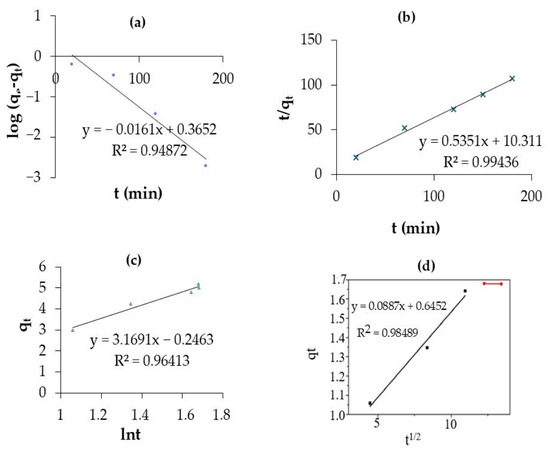
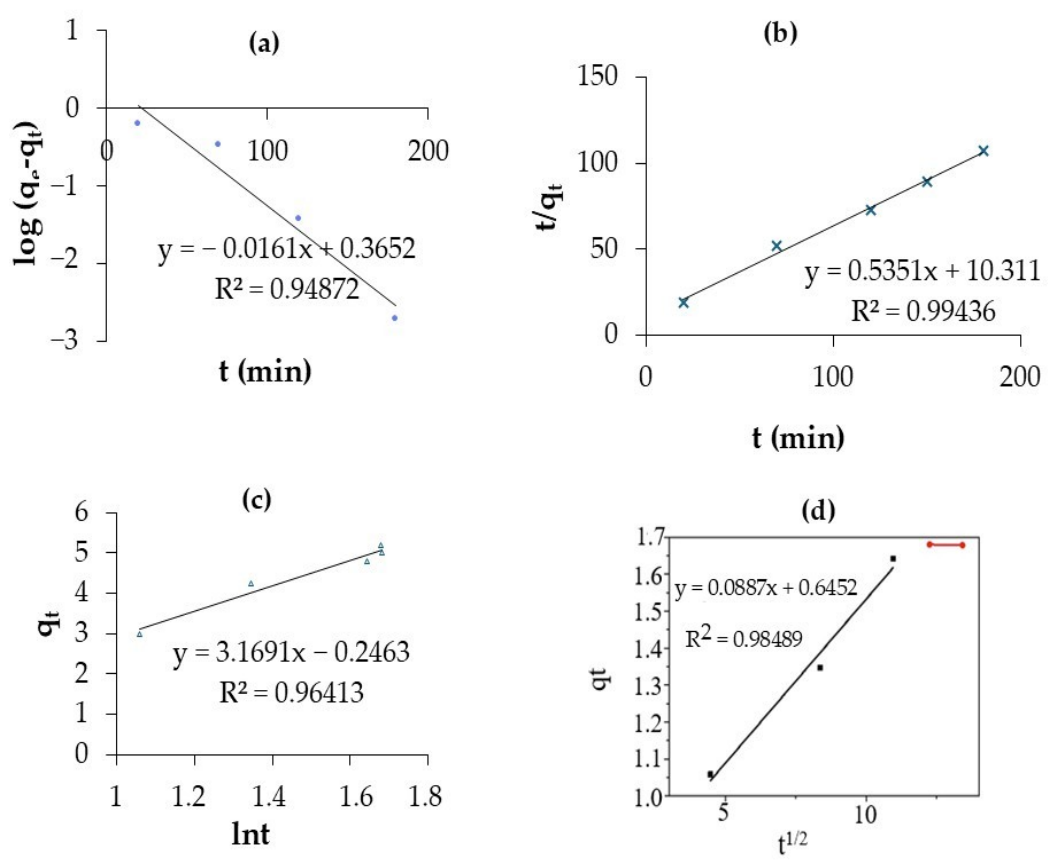
The adsorption kinetics were evaluated using the pseudo-first-order, pseudo-second-order, Elovich, and Weber–Morris intraparticle diffusion models. The highest R2 (0.9944) was obtained for the pseudo-second-order model. Furthermore, the theoretical and experimental qe values obtained from the pseudo-second-order model were in close agreement.
The adsorption kinetics graphs are shown in Figure 13. The qt versus t1/2 for crystal violet adsorption onto the biocomposite shows two distinct linear regions in the Weber–Morris intraparticle diffusion model (Figure 13d). The first region corresponds to external (film) diffusion, representing the transport of crystal violet molecules from the bulk solution to the outer surface of the biocomposite. The second region is associated with intraparticle diffusion, corresponding to the diffusion of dye molecules into the internal pores of the adsorbent. Since it does not pass through the origin, intraparticle diffusion cannot be considered the sole rate-controlling step. Therefore, both external mass transfer and intraparticle diffusion control the adsorption process.
Figure 13.
Adsorption kinetic graphs: (a) pseudo-first order, (b) pseudo-second order, (c) Elovich, (d) Weber–Morris.
3.10. Thermodynamic Studies
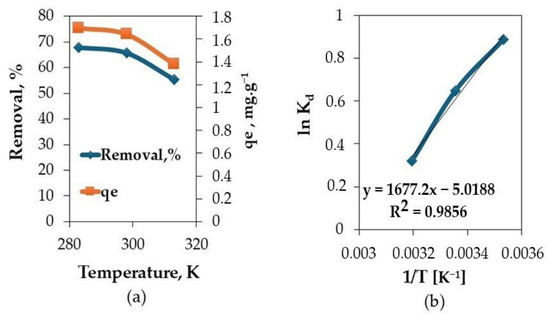
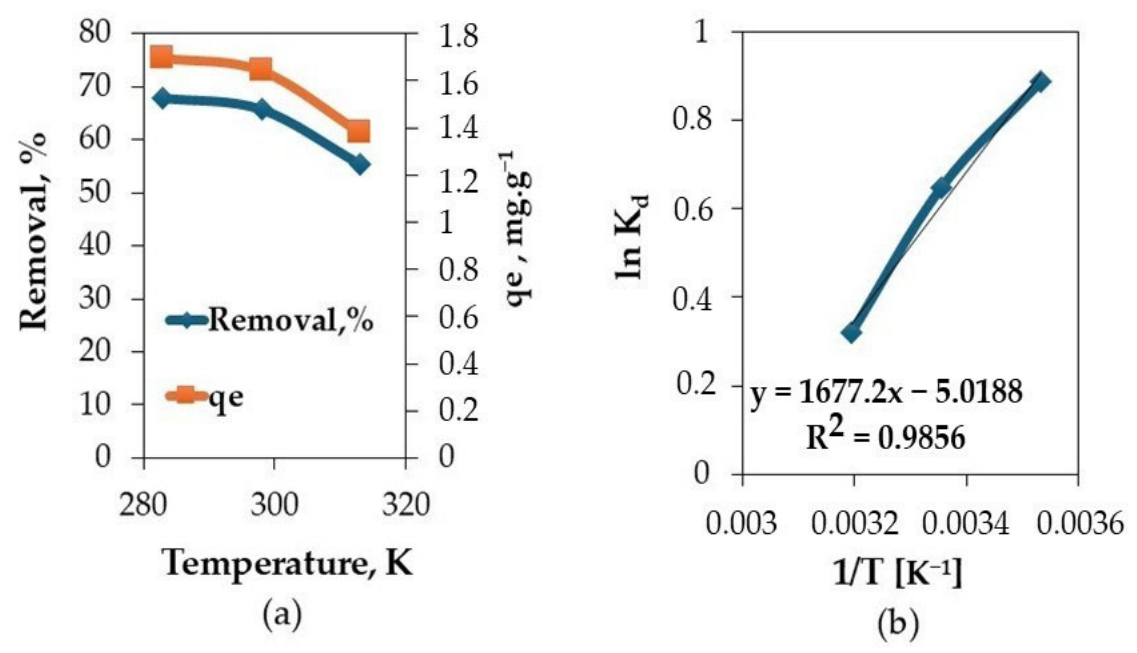
Thermodynamic analyses were performed at 283, 298, and 313 K using a solution volume of 20 mL, an adsorbent amount of 40 mg, and a contact time of 120 min, while maintaining a constant initial dye concentration (Figure 14).
Figure 14.
(a) Effect of temperature on dye removal, (b) Van’t Hoff equation graph.
The thermodynamic feasibility of crystal violet adsorption onto the SA/bioglass adsorbent was evaluated by calculating the Gibbs free energy (ΔG°), entropy change (ΔS°), and enthalpy change (ΔH°). The equations used to calculate these parameters are shown in Table 3.
Table 3.
Thermodynamic values.
ΔS° describes the relationship at the solid–liquid interface, ΔG° indicates whether the adsorption is spontaneous, and ΔH° indicates whether the adsorption is exothermic or endothermic. A negative ΔH° value indicates an exothermic adsorption process, whereas a negative ΔS° value indicates a decrease in disorder at the solid–liquid interface.
A negative ΔG° value indicates that the adsorption process is spontaneous. As shown in Table 3, the ΔG° values became progressively more positive with increasing temperature, indicating that adsorption became less favorable and that the adsorption efficiency decreased. When the graph of ln Kd versus 1/T was plotted, ΔH° was calculated from the slope and ΔS° from the intercept (Figure 14b).
3.11. Model Fit and Optimization with RSM
RSM is a statistical methodology that improves model fitting while minimizing the number of experimental trials required to evaluate the relationship between design factors and responses. Graphical and regression analyses were performed, and a trivariate Box–Behnken design was applied using Design Expert 12 software. Three independent variables (dye concentration, adsorbent amount, and time) were tested at three levels each. The factorial points were coded as −1 and +1 (the lowest and highest parameter levels), and 0 denotes the center point. The experimental design is presented in Table S2.
Based on the removal value obtained from the experiments, the program identified the second-order (quadratic) model as suitable (Table S3) and generated the corresponding formula. Optimization values are determined using this formula. The predicted R2 value (0.8019) in this model is the highest value.
The model fit was evaluated using significance tests for the interactions among variables presented in Table S4. The standard deviation of the second-order model was 1.70, which was lower than those of the other models. In addition, the quadratic model exhibited the highest R2 (0.9876), adjusted R2 (0.9717), and predicted R2 (0.8019), together with the lowest PRESS (324.80). These results indicate that the quadratic model provides the best fit.
The significance of the model and its coefficients was evaluated using the F-values and p-values presented in Table S5. Both p-values of 0 and 0.05 are considered significant [72,73]. As the p-value decreases, the likelihood that a factor significantly affects the response increases. Among the significant factors, the variable with the highest F-value has the greatest influence on the response. Therefore, the p-value was considered first, followed by the highest F-value. A p-value below 0.05 indicates that the model fits the experimental data well. Table S6 shows that time had the greatest effect on the response. For the adsorption-time parameter, the p-value was below 0.05, and the F-value was highest.
The difference between the predicted R2 (0.8019) and the adjusted R2 (0.9717) was less than 0.2 (Table S7), indicating reasonable agreement between these values and suggesting that the model is adequate. Adequate precision was 25.9247. Since values greater than 4 are considered desirable, this result indicates that the model has an adequate signal and is suitable for design purposes.
The response under specific experimental conditions can be predicted using the developed model equations. The significance of each component is determined by comparing the corresponding coefficients. In RSM, regression equations describe the relationship between the independent variables and crystal violet adsorption. The regression equations, expressed in coded and actual values, are given in Equations (3) and (4), respectively.
(Coded) Removal (%) = 48.41 + 5.97 × A − 5.09 × B + 10.14 × C + 0.1975 × A × B + 2.85 × A × C + 3.03 × B × C − 5.90 × A2 + 2.49 × B2 − 3.82 × C2
(Actual) Removal (%) = −2.49160 + 3.69685 × Ads amount − 3.97570 × Dye conc. + 0.124610 × Time + 0.003950 × Ads. amount × Dye conc. + 0.005695 × Ads. amount × Time + 0.012110 × Dye conc. × Time − 0.058962 × Ads.amount.2 + 0.099550 × Dye conc.2 − 0.001526 × Time2
The single-factor coefficients represent the effects of the individual variables, while the multi-factor coefficients indicate the interactions among variables. In Equation (3), a positive coefficient indicates a synergistic effect, whereas a negative coefficient indicates an antagonistic effect [74]. Although both adsorbent amount (A) and time (C) positively affected dye removal, time had a greater effect than adsorbent amount.
Figure S3 presents the normal probability plot of the residuals, the residuals-versus-predicted-values plot, and the residuals-versus-run plot. Ideally, the data should lie close to the red diagonal in Figure S3a and remain within the red boundaries in Figure S3b,c.
The actual versus predicted plot is shown in Figure S4. The experimental and predicted response values lie close to a straight line, indicating good agreement between them. The 3D response surface plots and the corresponding 2D contour plots are presented in Figures S5 and S6, respectively.
3.12. Comparison with Literature
Table 4 presents a comparison of the crystal violet adsorption by the studied adsorbent with that of other alginate-based adsorbents reported in the literature.
Table 4.
Comparison of the developed adsorbent with alginate based adsorbents reported in the liteature.
4. Conclusions
Bioglass was incorporated into a sodium alginate solution to prepare spherical adsorbent beads for the removal of crystal violet dye from aqueous solutions. The adsorption performance of the prepared beads was investigated by evaluating the effects of adsorbent amount, dye concentration, contact time, pH, and adsorption temperature. The high R2 values obtained for the Langmuir and Dubinin–Radushkevich isotherm models indicate good agreement with the experimental data. The Langmuir and Dubinin- Radushkevich isotherm models both showed good agreement with the experimental data within the investigated concentration range. Among the kinetic models, the pseudo-second-order model showed the best agreement with the experimental results. Thermodynamic studies conducted at different temperatures indicated that the adsorption process was exothermic and that adsorption decreased with increasing temperature. Statistical modeling using the Box–Behnken response surface method revealed that time was the most significant variable affecting adsorption. The prepared sodium alginate-bioglass adsorbent beads can be used to remove cationic dyes. These bioadsorbents show promise for the removal of dyes from water. Although the SA/Bioglass biocomposite demonstrated effective crystal violet removal under laboratory conditions, further studies using real textile wastewater are needed to evaluate its performance in complex wastewater matrices containing competing species and various interfering components. Therefore, the current findings provide a promising basis for further development of the biocomposite as an adsorbent for treating dye-containing wastewater. Future studies could further investigate their performance in real wastewater systems and continuous-flow adsorption processes.
Supplementary Materials
The following supporting information can be downloaded at: https://www.mdpi.com/article/10.3390/polym18172155/s1, Figure S1: N2 adsorption-desorption isotherms; Figure S2: BJH pore size distribution curve; Figure S3: Residual graphs: (a) normal plot of residuals, (b) relationship between residuals and predicted value, (c) relationship between residue vs. run; Figure S4: Comparison of the predicted value with the actual value; Figure S5: 3D surface graph; Figure S6: 2D contour graph; Table S1: Characteristics of Crystal Violet; Table S2: Actual and coded variables in Box-Behnken; Table S3: Fit summary; Table S4: Model summary statistics; Table S5: Sequential model sum of squares; Table S6: Determining the magnitude of the effects of adsorption parameters on removal; Table S7: Fit statistics.
Author Contributions
Conceptualization, A.M. and N.D.H.; methodology, N.D.H. and A.M., software, A.M. and N.D.H.; validation, Y.Z., A.M. and G.H.; formal analysis, Y.Z.; investigation, A.M. and N.D.H.; data curation, A.M. and Y.Z.; writing—original draft preparation, A.M. and N.D.H.; writing—review and editing, A.M. and N.D.H.; supervision, A.M. All authors have read and agreed to the published version of the manuscript.
Funding
This study was supported by Kocaeli University Scientific Research Projects Unit under project number FKA-2024-3727, in collaboration with Kocaeli and Sakarya Universities. The APC was funded by Sakarya University.
Institutional Review Board Statement
Not applicable.
Data Availability Statement
The original contributions presented in this study are included in the article/Supplementary Material. Further inquiries can be directed to the corresponding author.
Acknowledgments
The authors thank expert Fuat Kayıs (Department of Metallurgical and Materials Engineering, Sakarya University) for performing the XRD and SEM analyses and METU Central Laboratory (ODTU-MERLAB) for providing the TEM and BET analyses.
Conflicts of Interest
The authors declare no conflicts of interest.
References
- Sana, S.S.; Haldhar, R.; Parameswaranpillai, J.; Chavali, M.; Kim, S.C. Silver nanoparticles-based composite for dye removal: A comprehensive review. Clean. Mater. 2022, 6, 100161. [Google Scholar] [CrossRef] [Scilit]
- Hasan, M.M.; Shenashen, M.A.; Hasan, M.N.; Znad, H.; Salman, M.S.; Awual, M.R. Natural biodegradable polymeric bioadsorbents for efficient cationic dye encapsulation from wastewater. J. Mol. Liq. 2021, 323, 114587. [Google Scholar] [CrossRef] [Scilit]
- Dutta, S.; Gupta, B.; Srivastava, S.K.; Gupta, A.K. Recent advances on the removal of dyes from wastewater using various adsorbents: A critical review. Mater. Adv. 2021, 2, 4497–4531. [Google Scholar] [CrossRef] [Scilit]
- Wu, Z.; Zhong, H.; Yuan, X.; Wang, H.; Wang, L.; Chen, X.; Zeng, G.; Wu, Y. Adsorptive removal of methylene blue by rhamnolipid-functionalized graphene oxide from wastewater. Water Res. 2014, 67, 330–344. [Google Scholar] [CrossRef] [Scilit] [PubMed]
- Thombare, N.; Jha, U.; Mishra, S.; Siddiqui, M.Z. Borax cross-linked guar gum hydrogels as potential adsorbents for water purification. Carbohydr. Polym. 2017, 168, 274–281. [Google Scholar] [CrossRef] [Scilit] [PubMed]
- Mittal, H.; Kumar, V.; Ray, S.S. Adsorption of methyl violet from aqueous solution using gum xanthan/Fe3O4 based nanocomposite hydrogel. Int. J. Biol. Macromol. 2016, 89, 1–11. [Google Scholar] [CrossRef] [Scilit] [PubMed]
- Nike, T.; Kaushal, D.; Chauhand, V.; Shandilyae, P.; Kumar, M. Development of guar gum-sodium alginate based hydrogel for sustainable and efficient removal of crystal violet dye from wastewater. Int. J. Biol. Macromol. 2025, 330, 148122. [Google Scholar] [CrossRef] [Scilit] [PubMed]
- Abu Elella, M.H.; Sabaa, M.W.; Abd ElHafeez, E.; Mohamed, R.R. Crystal violet dye removal using crosslinked grafted xanthan gum. Int. J. Biol. Macromol. 2019, 137, 1086–1101. [Google Scholar] [CrossRef] [Scilit] [PubMed]
- Schönherr, H.; Njuguna, D.G. Xanthan gum hydrogels as high-capacity adsorbents for dye removal. ACS Appl. Polym. Mater. 2021, 3, 3142–3152. [Google Scholar] [CrossRef] [Scilit]
- Ahmad, R.; Mirza, A. Synthesis of Guar gum/bentonite a novel bionanocomposite: Isotherms, kinetics and thermodynamic studies for the removal of Pb (II) and crystal violet dye. J. Mol. Liq. 2018, 249, 805–814. [Google Scholar] [CrossRef] [Scilit]
- Peighambardoust, S.J.; Zardkhaneh, S.I.; Foroughi, M.; Foroutan, R.; Azimi, H.; Ramavandi, B. Effectiveness of polyacrylamide-g-gelatin/ACL/Mg–Fe LDH composite hydrogel as an eliminator of crystal violet dye. Environ. Res. 2024, 258, 119428. [Google Scholar] [CrossRef] [Scilit] [PubMed]
- Singh, S.; Lo, S.L.; Srivastava, V.C.; Hiwarkar, A.D. Comparative study of electrochemical oxidation for dye degradation: Parametric optimization and mechanism identification. J. Environ. Chem. Eng. 2016, 4, 2911–2921. [Google Scholar] [CrossRef] [Scilit]
- Hassan, M.M.; Carr, C.M. A critical review on recent advancements of the removal of reactive dyes from dye house effluent by ion-exchange adsorbents. Chemosphere 2018, 209, 201–219. [Google Scholar] [CrossRef] [Scilit] [PubMed]
- Venkatesh, S.; Venkatesh, K.; Quaff, A.R. Dye decomposition by combined ozonation and anaerobic treatment: Cost effective technology. J. Appl. Res. Technol. 2017, 15, 340–345. [Google Scholar] [CrossRef] [Scilit]
- Abid, M.F.; Zablouk, M.A.; Abid-Alameer, A.M. Experimental study of dye removal from industrial wastewater by membrane technologies of reverse osmosis and nanofiltration. Iran. J. Environ. Health Sci. Eng. 2012, 9, 17. [Google Scholar] [CrossRef] [Scilit] [PubMed]
- Manzak, A.; Demirbaş, O.; Yıldız, Y.; Teker, M. Adsorption and transport of acid dye through polymer inclusion membrane with Aliquat 336 and TBP Water. Air Soil Pollut. 2024, 235, 501. [Google Scholar] [CrossRef] [Scilit]
- Gumiński, A.; Kłos, M.; Gumińska, J. Economic aspects of application of pretreatment systems before granular activated carbon filtration. Archit. Civ. Eng. Environ. 2017, 10, 123–131. [Google Scholar] [CrossRef] [Scilit]
- Alameddine, M.; Liu, Z.; Sauvé, S.; Barbeau, B. Comparative assessment of powdered versus granular activated carbon for pfas removal in drinking water treatment plants. ACS ES&T Water 2025, 5, 851–861. [Google Scholar] [CrossRef] [Scilit]
- Tolkou, A.K.; Tsoutsa, E.K.; Kyzas, G.Z.; Katsoyiannis, I.A. Sustainable use of low-cost adsorbents prepared from waste fruit peels for the removal of selected reactive and basic dyes found in wastewaters. Environ. Sci. Pollut. Res. Int. 2024, 31, 14662–14689. [Google Scholar] [CrossRef] [Scilit] [PubMed]
- Gupta, V.K.; Suhas. Application of low-cost adsorbents for dye removal—A review. J. Environ. Manag. 2009, 90, 2313–2342. [Google Scholar] [CrossRef] [Scilit] [PubMed]
- Karacetin, G.; Sivrikaya, S.; Imamoglu, M. Adsorption of methylene blue from aqueous solutions by activated carbon prepared from hazelnut husk using zinc chloride. J. Anal. Appl. Pyrolysis 2014, 110, 270. [Google Scholar] [CrossRef] [Scilit]
- Yadav, V.; Kumar, P.; Tiwari, D.P.; Bhagat, M. 62% SiO2-32% CaO-6% P2O5 bioglass as adsorbent for the removal of Congo red dye. Int. J. Eng. Technol. Sci. Res. 2017, 4, 364–369. [Google Scholar]
- Yang, N.; Wang, R.; Rao, P.; Yan, L.; Zhang, W.; Wang, J.; Chai, F. The fabrication of calcium alginate beads as a green sorbent for selective recovery of Cu (II) from metal mixtures. Crystals 2019, 9, 255. [Google Scholar] [CrossRef] [Scilit]
- Akbar, M.; Yaqoob, A.; Ahmad, A.; Luque, R. Chapter 1—Sodium alginate: An overview. In Sodium Alginate-Based Nanomaterials for Wastewater Treatment; Elsevier: Amsterdam, The Netherlands, 2023; pp. 1–17. [Google Scholar] [CrossRef] [Scilit]
- Abasalizadeh, F.; Moghaddam, S.V.; Alizadeh, E.; Akbari, E.; Kashani, E.; Fazljou, S.M.B.; Torbati, M.; Akbarzadeh, A. Alginate-based hydrogels as drug delivery vehicles in cancer treatment and their applications in wound dressing and 3D bioprinting. J. Biol. Eng. 2020, 14, 8. [Google Scholar] [CrossRef] [Scilit] [PubMed]
- Hariyadi, D.M.; Islam, N. Current status of alginate in drug delivery. Adv. Pharmacol. Pharm. Sci. 2020, 12, 1–16. [Google Scholar] [CrossRef] [Scilit] [PubMed]
- Lai, J.; Azad, A.K.; Sulaiman, W.M.A.W.; Kumarasamy, V.; Subramaniyan, V.; Alshehade, S.A. Alginate-based encapsulation fabrication technique for drug delivery: An updated review of particle type, formulation technique, pharmaceutical ingredient, and targeted delivery system. Pharmaceutics 2024, 16, 370. [Google Scholar] [CrossRef] [Scilit] [PubMed]
- Sachan, N.K.; Pushkar, S.; Jha, A.; Bhattcharya, A. Sodium alginate: The wonder polymer for controlled drug delivery. J. Pharm. Res. 2009, 2, 1191–1199. [Google Scholar]
- Yao, H.; Luo, J.; Deng, Y.; Li, Z.; Wei, J. Alginate-modified mesoporous bioactive glass and its drug delivery, bioactivity, and osteogenic properties. Front. Bioeng. Biotechnol. 2022, 10, 994925. [Google Scholar] [CrossRef] [Scilit] [PubMed]
- Sergi, R.; Bellucci, D.; Cannillo, V.A. Review of bioactive glass/natural polymer composites: State of the art. Materials 2020, 13, 5560. [Google Scholar] [CrossRef] [Scilit] [PubMed]
- Oktor, K.; Hasirci, G.; Hilmioglu, N. Preparation and characterization of renewable biopolymer based alginate adsorbent for removing of crystal violet dye from water. J. Indian Chem. Soc. 2025, 102, 101766. [Google Scholar] [CrossRef] [Scilit]
- Wang, B.; Wan, Y.; Zheng, Y.; Lee, X.; Liu, T.; Yu, Z.; Huang, J.; Ok, Y.S.; Chen, J.; Gao, B. Alginate-based composites for environmental applications: A critical review. Crit. Rev. Environ. Sci. Technol. 2018, 49, 318. [Google Scholar] [CrossRef] [Scilit] [PubMed]
- Piatti, E.; Miola, M.; Verné, E. Tailoring of bioactive glass and glass-ceramics properties for in vitro and in vivo response optimization: A review. Biomater. Sci. 2024, 12, 4546. [Google Scholar] [CrossRef] [Scilit] [PubMed]
- Chand, P.; Malik, M.; Prasad, T. Bioactive glass for applications in implants: A Review. Chem. 2024, 9, 29. [Google Scholar] [CrossRef] [Scilit]
- Krishnan, V.; Lakshmi, T. Bioglass: A novel biocompatible innovation. J. Adv. Pharm. Technol. Res. 2013, 4, 78–83. [Google Scholar] [CrossRef] [Scilit] [PubMed]
- Türe, H. Adsorption of methylene blue dye onto alginate-bioglass membranes: Response surface method, isotherm, and kinetic studies. Gumusfenbil 2023, 13, 538–552. [Google Scholar] [CrossRef] [Scilit]
- Türe, H. Development of copper-doped bioglass/alginate composite membranes: Preliminary results on their characterization and antimicrobial properties. Mater. Today Commun. 2019, 21, 100583. [Google Scholar] [CrossRef] [Scilit]
- Li, L.; Wang, H.; Zhang, Z.; Chen, X.; Li, Q. Facile synthesis of bioglass nanospheres for the adsorption of cationic and anionic dyes from aqueous solution. J. Dispers. Sci. Technol. 2017, 38, 1711–1718. [Google Scholar] [CrossRef] [Scilit]
- Ashour, M.; Alprol, A.E.; Khedawy, M.; Abualnaja, K.M.; Mansour, A.T. Equilibrium and kinetic modeling of crystal violet dye adsorption by a marine diatom. Skeletonema Costatum. Mater. 2022, 15, 6375. [Google Scholar] [CrossRef] [Scilit] [PubMed]
- Vishwakarma, D.; Rawat, S.; Kannaujiya, D.; Shikha; Shukla, B. Adsorption of malachite green onto sodium alginate/bentonite (SA/Bnt) nanocomposite: Optimization and modeling via RSM-DSD and insight kinetics and mechanism of adsorption. Arab. J. Geosci. 2024, 17, 152. [Google Scholar] [CrossRef] [Scilit]
- Gokkus, K.; Oter, C.; Amlani, M.; Gur, M.; Butun, V. Preparation of versatile polymer particles and their application for elimination of bromophenol blue and phenol from aqueous environment. Desalin. Water Treat. 2024, 318, 100402. [Google Scholar] [CrossRef] [Scilit]
- Menshutina, N.; Tsygankov, P.; Ivanov, S. Synthesis and properties of silica and alginate hybrid aerogel particles with embedded carbon nanotubes (CNTs) for selective sorption. Materials 2019, 12, 52. [Google Scholar] [CrossRef] [Scilit] [PubMed]
- Khademolqorani, S.; Shah, K.J.; Dilamian, M.; Osman, A.I.; Altiok, E.; Azizi, S.; Kamika, I.; Yang, Y.; Yalcinkaya, F.; Yvaz, A.; et al. Innovative integration of layered carbon materials in biopolymer fibrous membranes for sustainable water treatment. Adv. Sustain. Syst. 2025, 9, 2500035. [Google Scholar] [CrossRef] [Scilit]
- Manzak, A.; Hasirci, G.; Kina, S.S.; Durmaz Hilmioglu, N. Development of a novel bionanocomposite adsorbent for adsorptive separation of dyestuff from water. ACS Omega 2025, 10, 27448–27461. [Google Scholar] [CrossRef] [Scilit] [PubMed]
- Darmenbayeva, A.; Rajasekharan, R.; Massalimova, B.; Bektenov, N.; Taubayeva, R.; Bazarbaeva, K.; Kurmanaliev, M.; Mukazhanova, Z.; Nurlybayeva, A.; Bulekbayeva, K. Cellulose-based sorbents: A comprehensive review of current advances in water remediation and future prospects. Molecules 2024, 29, 5969. [Google Scholar] [CrossRef] [Scilit] [PubMed]
- Manchisi, J.; Matinde, E.; Rowson, N.A.; Simmons, M.J.H.; Simate, G.S.; Ndlovu, S.; Mwewa, B. Ironmaking and steelmaking slags as sustainable adsorbents for ındustrial effluents and wastewater treatment: A critical review of properties, performance, challenges and opportunities. Sustainability 2020, 12, 2118. [Google Scholar] [CrossRef] [Scilit]
- Oladipo, A.A.; Gazi, M. Enhanced removal of crystal violet by low cost alginate/acid activated bentonite composite beads: Optimization and modelling using non-linear regression technique. J. Water Process Eng. 2014, 2, 43–52. [Google Scholar] [CrossRef] [Scilit]
- Ighalo, J.O.; Adeniyi, A.G. A mini-review of the morphological properties of biosorbents derived from plant leaves. SN Appl. Sci. 2020, 2, 509. [Google Scholar] [CrossRef] [Scilit]
- Kumar, K.V.; Gadipelli, S.; Wood, B.; Ramisetty, K.A.; Stewart, A.A.; Howard, C.A.; Brett, D.J.L.; Rodriguez-Reinoso, F. Characterization of the adsorption site energies and heterogeneous surfaces of porous materials. J. Mater. Chem. A 2019, 7, 10104–10137. [Google Scholar] [CrossRef] [Scilit]
- Ayarza, J.; Coello, Y.; Nakamatsu, J. SEM–EDS study of ionically cross-linked alginate and alginic acid bead formation. Int. J. Polym. Anal. Charact. 2017, 22, 1–10. [Google Scholar] [CrossRef] [Scilit]
- Lin, Q.J.; Sun, X.; Chen, J.H.; Wang, J.M.; Lin, W.W.; Fang, L.J. Adsorption of dibenzothiophene in gasoline by Si-MCM-41/Sodium alginate porous hybrid membrane. Rev. Chim. 2022, 73, 73–86. [Google Scholar] [CrossRef] [Scilit]
- Megahed, O.N.; Abdelhamid, M.I.; Elwassefy, N.A.; Youssef, A.M.; El-Damarawi, G.; Bakr, N.A. Fabrication and characterization of poly methyl methacrylate (PMMA) matrix modified with strontium nano-rods. Sci. Rep. 2026, 16, 9342. [Google Scholar] [CrossRef] [Scilit] [PubMed]
- Hidayat, A.R.P.; Zulfa, L.L.; Widyanto, A.R.; Abdullah, R.; Kusumawati, Y.; Ediati, R. Selective adsorption of anionic and cationic dyes on mesoporous UiO-66 synthesized using a template-free sonochemistry method: Kinetic, isotherm and thermodynamic studies. RSC Adv. 2023, 13, 12320–12343. [Google Scholar] [CrossRef] [Scilit] [PubMed]
- Baldovino-Medrano, V.G.; Nino-Celis, V.; Giraldo, R.I. Systematic analysis of the nitrogen adsorption—desorption isotherms recorded for a series of materials based on microporous—mesoporous amorphous aluminosilicates using classical methods. J. Chem. Eng. Data. 2023, 68, 2512–2528. [Google Scholar] [CrossRef] [Scilit]
- Dhumal, O.A.; Choudhari, C.S. Comprehensive characterization and analysis of superabsorbent polymers for dehumidification systems: Insights from polynomial regression, BET analysis, and FTIR. Anal. Sci. Technol. 2025, 38, 183–194. [Google Scholar] [CrossRef]
- Sun, S.; Zhu, Y.; Gu, Z.; Chu, H.; Hu, C.; Gao, L.; Zhao, X. Adsorption of crystal violet on activated bamboo fiber powder from water: Preparation, characterization, kinetics and isotherms. RSC Adv. 2023, 13, 6108–6123. [Google Scholar] [CrossRef] [Scilit] [PubMed]
- Klein, N.D.; Hurley, K.R.; Feng, Z.V.; Haynes, C.L. Dark field transmission electron microscopy as a tool for identifying inorganic nanoparticles in biological matrices. Anal. Chem. 2015, 87, 4356–4362. [Google Scholar] [CrossRef] [Scilit] [PubMed]
- Carter, M.; Essner, R.; Goldstein, N.; Iyer, M. Guide to Research Techniques in Neuroscience; Academic Press: London, UK, 2022. [Google Scholar] [CrossRef] [Scilit]
- Roy, M.; Bandyopadhyay, A.; Bose, S. Ceramics in Bone Grafts and Coated Implants; Elsevier Inc.: Amsterdam, The Netherlands, 2017. [Google Scholar] [CrossRef] [Scilit]
- Zhang, M.; Ni, F.; He, J.; Liu, Y. Evaluation of the formation and antifouling properties of a novel adsorptive homogeneous mixed matrix membrane within situgenerated Zr-based nanoparticles. RSC Adv. 2021, 11, 8491–8504. [Google Scholar] [CrossRef] [Scilit] [PubMed]
- Radoor, S.; Jayakumar, A.; Shivanna, J.M.; Karayil, J.; Kim, J.T.; Siengchin, S. Adsorptive removal of crystal violet from aqueous solution by bioadsorbent. Biomass Convers. Biorefinery 2025, 15, 2431–2442. [Google Scholar] [CrossRef] [Scilit]
- Loulidi, I.; Boukhlifi, F.; Ouchabi, M.; Amar, A.; Jabri, M.; Kali, A.; Chraibi, S.; Hadey, C.; Aziz, F. Adsorption of crystal violet onto an agricultural waste residue: Kinetics, isotherm, thermodynamics, and mechanism of adsorption. Sci. World J. 2020, 2020, 5873521. [Google Scholar] [CrossRef] [Scilit] [PubMed]
- Ibrahim, A.G. Removal of crystal violet from water by sulfonated hydrogel: Nonlinear adsorption modeling and thermodynamics. Chemistry 2026, 8, 46. [Google Scholar] [CrossRef] [Scilit]
- Azeem, A.A.; Khalek, M.A.A.; Hamid, E.M.A. A novel approach to modifying eggshell-based adsorbent for the removal of acid red 1 and crystal violet dyes: Kinetics, isotherm, and thermodynamics study. Sci. Rep. 2026, 16, 8721. [Google Scholar] [CrossRef] [Scilit] [PubMed]
- Saidi, M.; Reguig, B.A.; El, M.; Monir, A.; Althagafi, T.M.; Fatmi, M.; Remil, A.; Zehhaf, A. Kinetics thermodynamics and adsorption study of raw treated diatomite as a sustainable adsorbent for crystal violet dye. Sci. Rep. 2025, 15, 21991. [Google Scholar] [CrossRef] [Scilit] [PubMed]
- Maleki, S.; Falaki, F.; Karimi, M. Synthesis of SDS micelles coated Fe3O4 / SiO2 magnetic nanoparticles as an excellent adsorbent for facile removal and concentration of crystal violet from natural water samples. J. Nanostruct. Chem. 2019, 9, 139–149. [Google Scholar] [CrossRef] [Scilit]
- Foo, K.Y.; Hameed, B.H. An overview of dye removal via activated carbon adsorption process. Desalin. Water Treat. 2010, 19, 255–274. [Google Scholar] [CrossRef] [Scilit]
- Parlayici, Ş. Alginate-coated perlite beads for the efficient removal of methylene blue, malachite green, and methyl violet from aqueous solutions: Kinetic, thermodynamic, and equilibrium studies. J. Anal. Sci. Technol. 2019, 10, 4. [Google Scholar] [CrossRef] [Scilit]
- Gomaa, M.; Danial, A.W. Seaweed-based alginate/hydroxyapatite composite for the effective removal of bacteria, cyanobacteria, algae, and crystal violet from water. J. Biol. Eng. 2023, 17, 69. [Google Scholar] [CrossRef] [Scilit] [PubMed]
- Mashkoor, F.; Nasar, A.; Asiri, A.M. Exploring the reusability of synthetically contaminated wastewater containing crystal violet dye using Tectona grandis sawdust as a very low-cost adsorbent. Sci. Rep. 2018, 8, 8314. [Google Scholar] [CrossRef] [Scilit] [PubMed]
- Fraile, C.S.; Bobadilla, M.C.; García, E.S.; Fraguas, I.M. Optimized Zn(II) biosorption using lignocellulosic biomass from vitis vinifera: Kinetics, isotherms, and life cycle assessment overview. Water Air Soil Pollut. 2025, 236, 865. [Google Scholar] [CrossRef] [Scilit]
- Singh, R.; Bhateria, R. Optimization and experimental design of the Pb2+ adsorption process on a nano-Fe3O4 based adsorbent using response surface methodology. ACS Omega 2020, 5, 28305–28318. [Google Scholar] [CrossRef] [Scilit] [PubMed]
- Ekpenyong, M.; Antai, S.; Asitok, A.; Ekpo, B. Response surface modeling and optimization of major medium variables for glycolipopeptide production. Biocatal. Agric. Biotechnol. 2017, 10, 113–121. [Google Scholar] [CrossRef] [Scilit]
- Ani, J.U.; Okoro, U.C.; Aneke, L.E.; Onukwuli, O.D.; Obi, I.O.; Akpomie, K.G.; Ofomatah, A.C. Application of response surface methodology for optimization of dissolved solids adsorption by activated coal. Appl. Water Sci. 2019, 9, 60. [Google Scholar] [CrossRef] [Scilit]
- Tamer, Y.; Berber, H. Effective removal of crystal violet from aqueous solution by graphene oxide incorporated hydrogel beads as a novel bio-adsorbent: Kinetic, isotherm and thermodynamic studies. J. Macromol. Sci. Part A 2022, 59, 315–328. [Google Scholar] [CrossRef] [Scilit]
- Hemlata, R.; Rajeev, C. Decontamination of crystal violet and auramine O dyes from aqueous media using pullulan @ sodium alginate based hydrogel. J. Porous Mater. 2026, 33, 53–74. [Google Scholar] [CrossRef] [Scilit]
- Tang, L.; Liu, C.; Liu, X.; Zhang, L.; Fan, B.; Wang, B.; Wang, F. Efficient adsorption of crystal violet by different temperature pyrolyzed biochar-based sodium alginate microspheres: A green solution for food industry dye removal. Food Chem. X 2025, 26, 102311. [Google Scholar] [CrossRef] [Scilit] [PubMed]
- Amiruddin, A.N.I.; Yaqin, A.A.A.; Siswanta, D.; Kuncaka, A. Sustainable Alginate/PVA/Silica hydrogel composites for efficient removal and regeneration in crystal violet adsorption. Indones. J. Chem. 2026, 26, 4. [Google Scholar] [CrossRef] [Scilit]
- Fabryanty, R.; Valencia, C.; Soetaredjoa, F.E.; Putro, J.N.; Santosoa, S.P.; Kurniawanb, A.; Ju, Y.H.; Ismadjia, S. Removal of crystal violet dye by adsorption using bentonite—Alginate composite. J. Environ. Chem. Engin. 2017, 5, 5677–5687. [Google Scholar] [CrossRef] [Scilit]
- You, Y.; Qu, K.; Huang, Z.; Ma, R.; Shi, C.; Li, X.; Liu, D.; Dong, M.; Guo, Z. Sodium alginate templated hydroxyapatite/calcium silicate composite adsorbents for efficient dye removal from polluted water. Int. J. Biol. Macromol. 2019, 141, 1035–1043. [Google Scholar] [CrossRef] [Scilit] [PubMed]

Disclaimer/Publisher’s Note: The statements, opinions and data contained in all publications are solely those of the individual author(s) and contributor(s) and not of MDPI and/or the editor(s). MDPI and/or the editor(s) disclaim responsibility for any injury to people or property resulting from any ideas, methods, instructions or products referred to in the content. |
© 2026 by the authors. Licensee MDPI, Basel, Switzerland. This article is an open access article distributed under the terms and conditions of the Creative Commons Attribution (CC BY) license.