Zinc Plus Biopolymer Coating Slows Nitrogen Release, Decreases Ammonia Volatilization from Urea and Improves Sunflower Productivity
 , ,
, ,  ,
, 

Abstract
1. Introduction
2. Materials and Methods
2.1. Urea Coating through Fluidized Bed Coater
2.2. Characterization of Urea Granules before and after Coating
2.3. Urea Release Kinetics
2.4. Pot Experiment
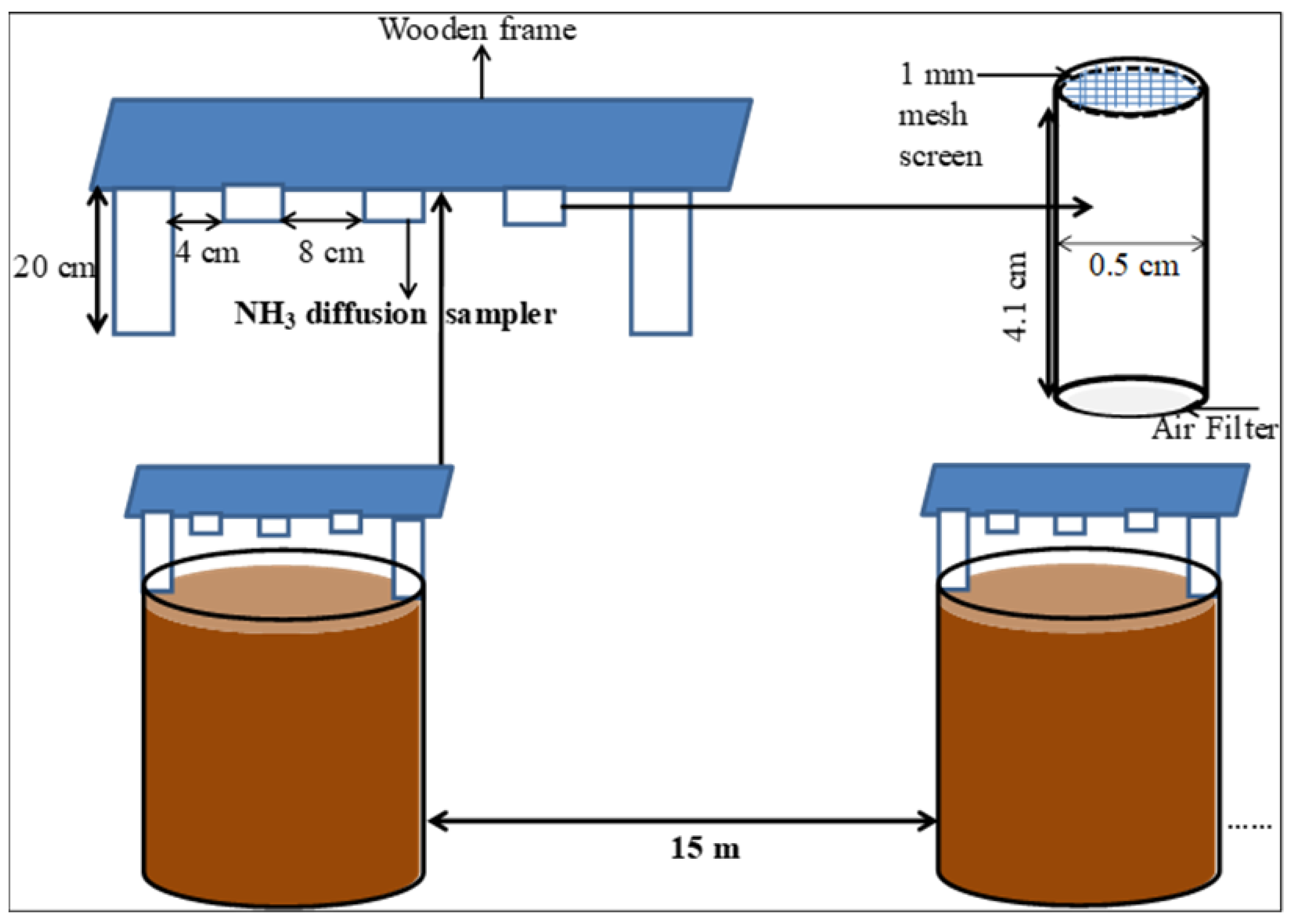
2.4.1. Measurement of Ammonia Emission
2.4.2. Soil Sampling and Analysis
2.4.3. Microbial Biomass Carbon, Nitrogen and Zinc
2.4.4. Plant Growth Attributes
2.5. Statistical Analysis
3. Results
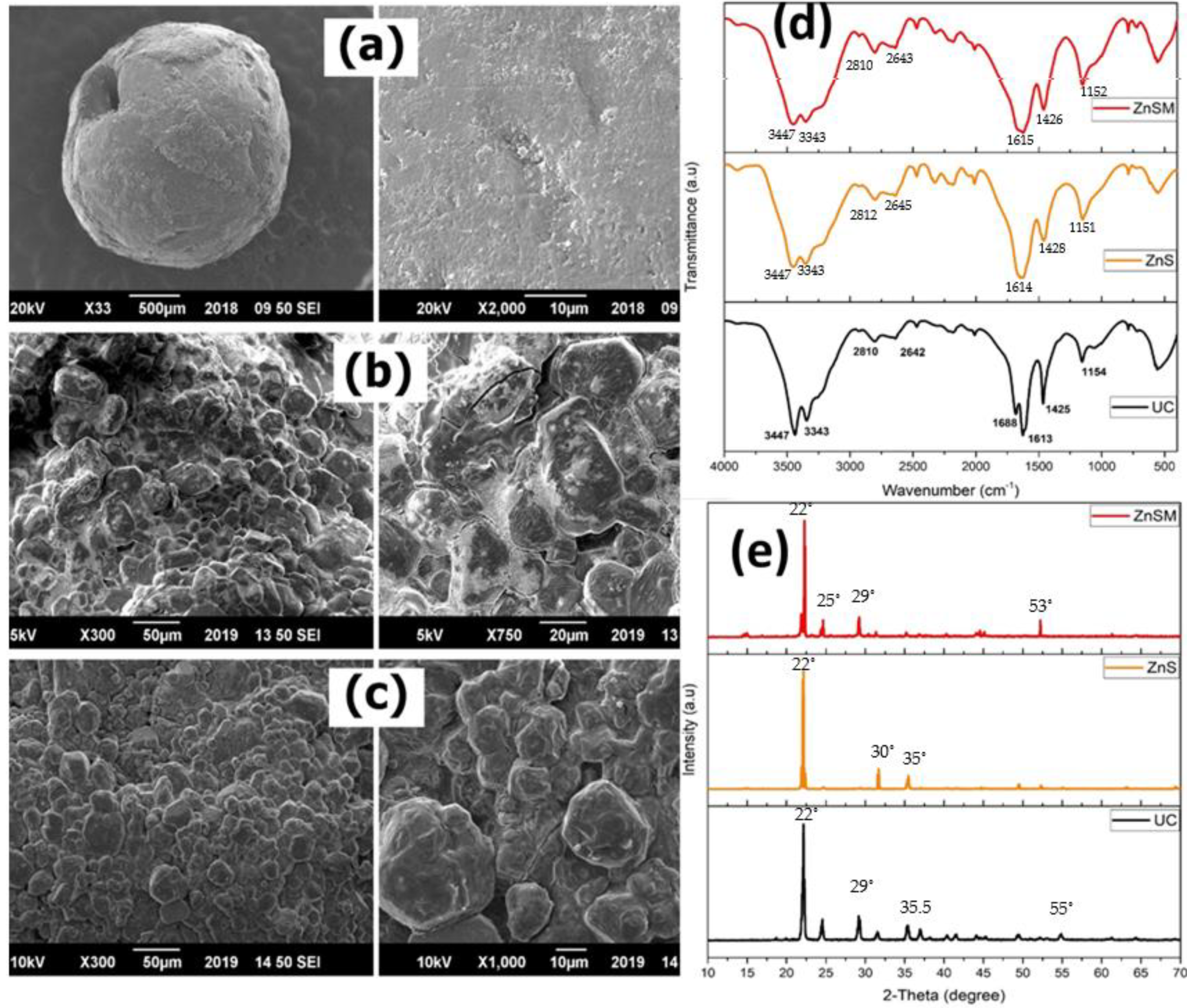
3.1. Surface Morphology and Characterization of Coated and Uncoated Urea Fertilizer
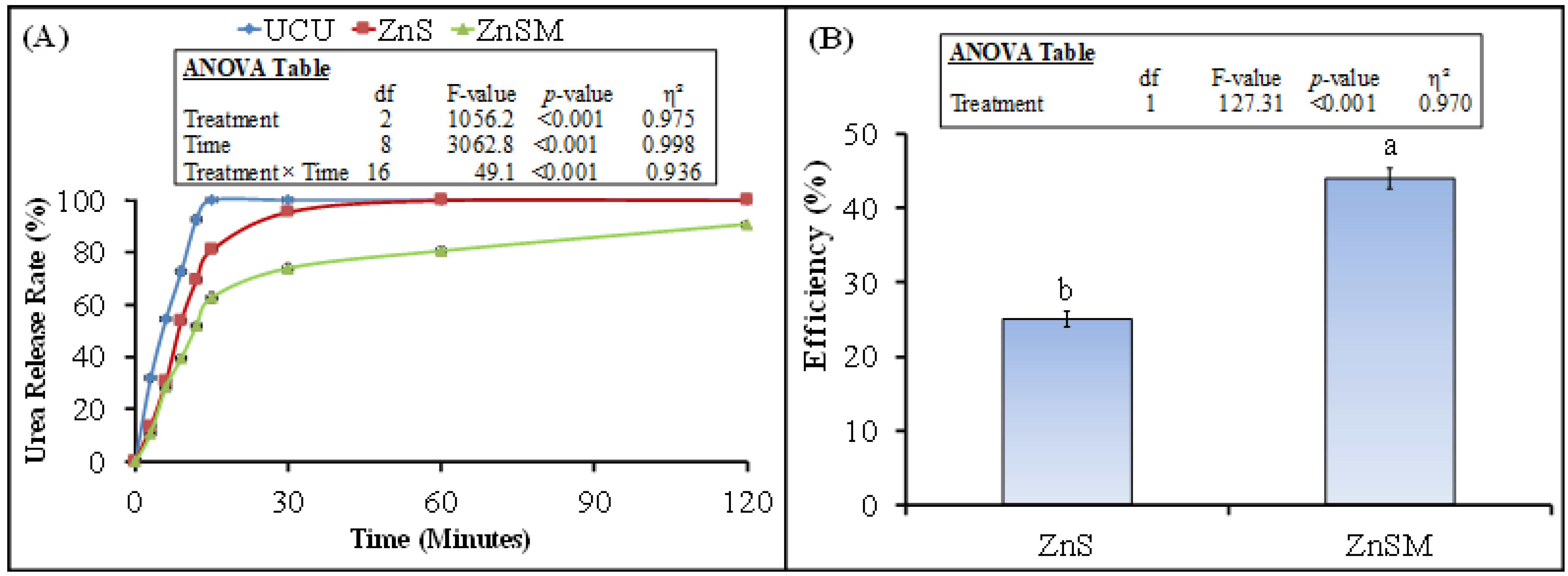
3.2. Effect of Coating on Urea Release and Efficiency
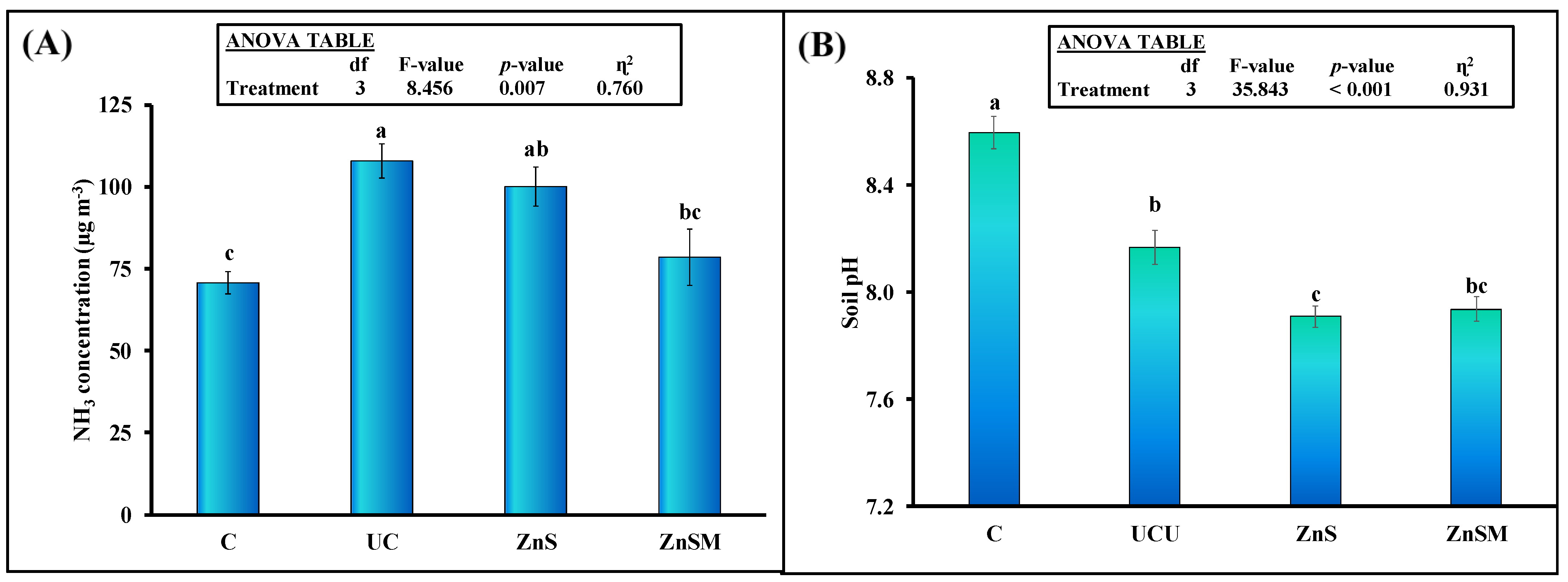
3.3. Ammonia Emission
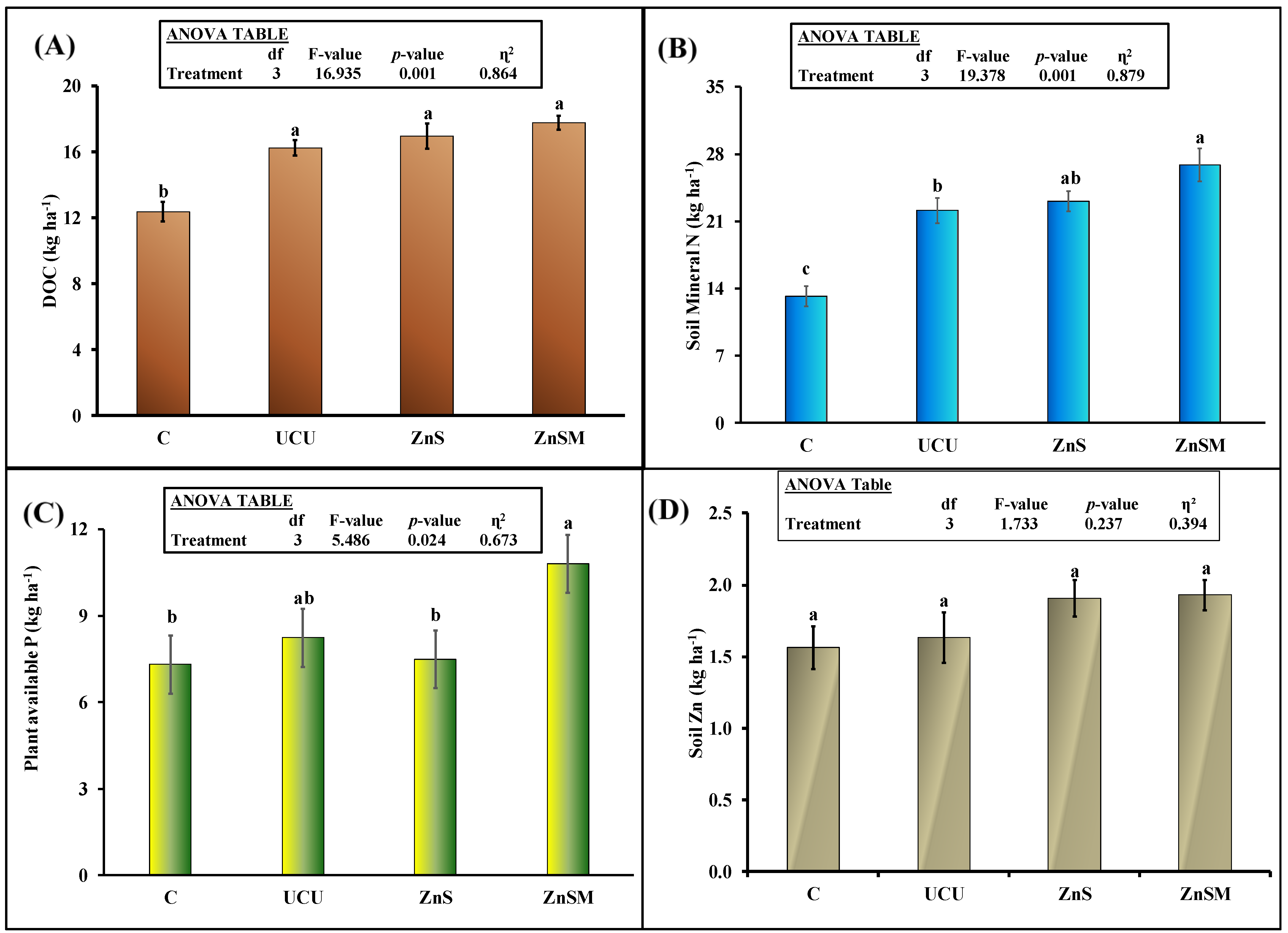
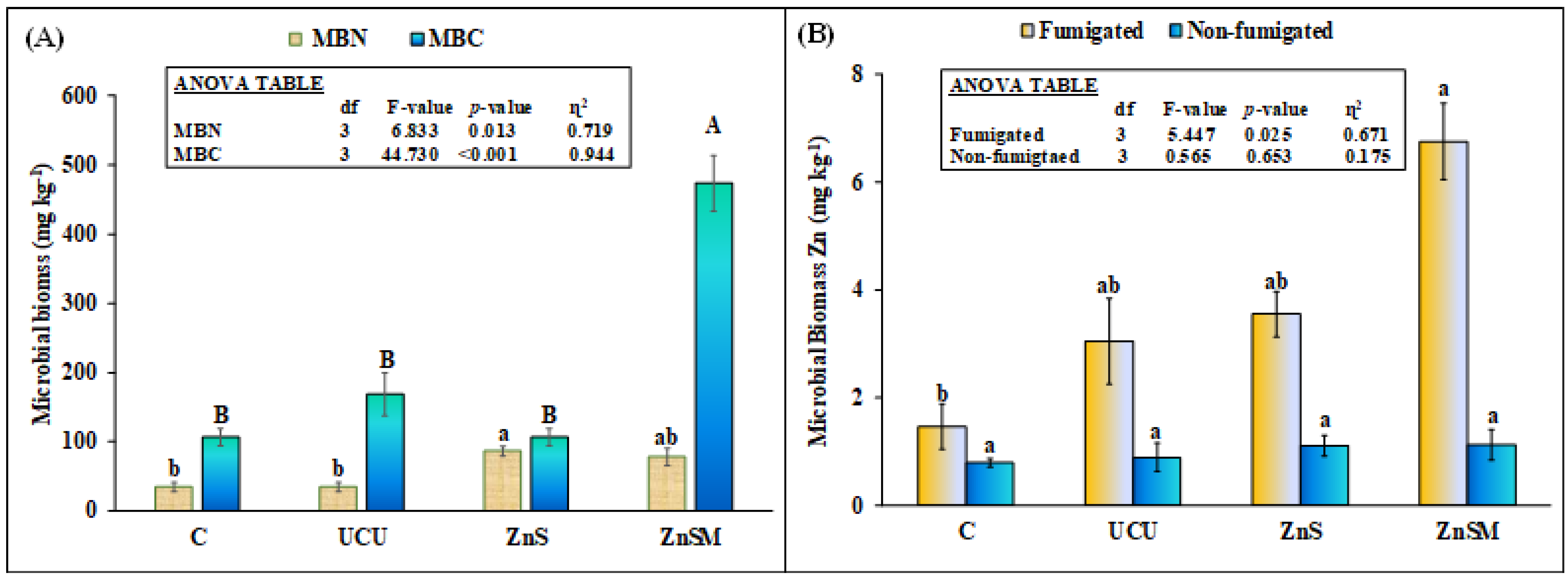
3.4. Soil Parameters
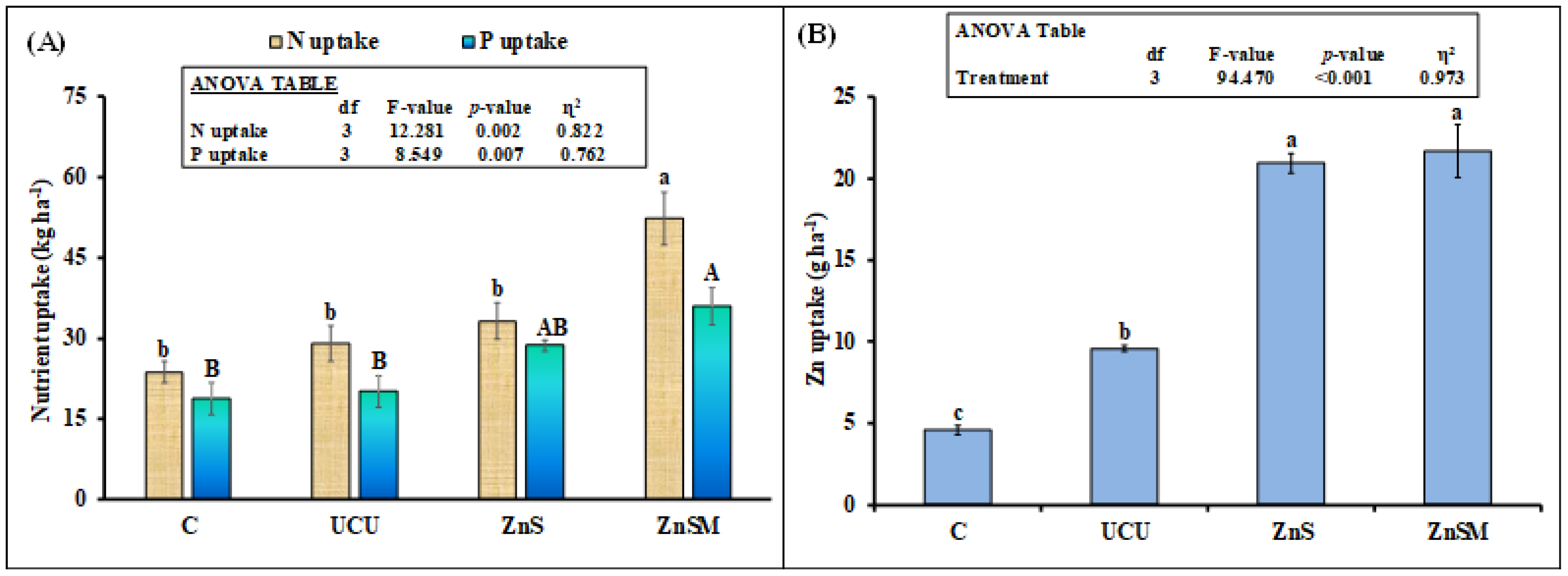
3.5. Plant Growth and Yield Attributes
4. Discussion
5. Conclusions
Author Contributions
Funding
Institutional Review Board Statement
Informed Consent Statement
Data Availability Statement
Conflicts of Interest
References
- Bruinsma, J. World Agriculture: Towards 2015/2030: An FAO Perspective; Earthscan: London, UK, 2003. [Google Scholar]
- FAO. The State of Food Security and Nutrition in the World 2020; International Fund for Agricultural Development, Ed.; Food and Agriculture Organization (FAO): Rome, Italy, 2020. [Google Scholar]
- Erisman, J.W.; Sutton, M.A.; Galloway, J.; Klimont, Z.; Winiwarter, W. How a century of ammonia synthesis changed the world. Nat. Geosci. 2008, 1, 636–639. [Google Scholar] [CrossRef] [Scilit]
- FAO. World Fertilizer Trends and Outlook to 2022; FAO: Rome, Italy, 2019. [Google Scholar]
- Sutton, M.A.; Oenema, O.; Erisman, J.W.; Leip, A.; van Grinsven, H.; Winiwarter, W. Too much of a good thing. Nature 2011, 472, 159–161. [Google Scholar] [CrossRef] [Scilit] [PubMed]
- Pan, B.; Lam, S.K.; Mosier, A.; Luo, Y.; Chen, D. Ammonia volatilization from synthetic fertilizers and its mitigation strategies: A global synthesis. Agric. Ecosyst. Environ. 2016, 232, 283–289. [Google Scholar] [CrossRef] [Scilit]
- Wang, B.; Li, R.; Wan, Y.; Cai, W.; Guo, C.; Qin, X.; Song, C.; Wilkes, A. Air warming and CO2 enrichment cause more ammonia volatilization from rice paddies: An OTC field study. Sci. Total. Environ. 2021, 752, 142071. [Google Scholar] [CrossRef] [Scilit] [PubMed]
- Migliorati, M.D.A.; Parton, W.J.; Bell, M.J.; Wang, W.; Grace, P.R. Soybean fallow and nitrification inhibitors: Strategies to reduce N2O emission intensities and N losses in Australian sugarcane cropping systems. Agric. Ecosyst. Environ. 2021, 306, 107150. [Google Scholar] [CrossRef] [Scilit]
- Peng, W.; Lü, F.; Duan, H.; Zhang, H.; Shao, L.; He, P. Biological denitrification potential as an indicator for measuring digestate stability. Sci. Total. Environ. 2021, 752, 142211. [Google Scholar] [CrossRef] [Scilit] [PubMed]
- Dempsey, R.J.; Slaton, N.A.; Norman, R.J.; Roberts, T.L. Ammonia volatilization, rice yield, and nitrogen uptake responses to simulated rainfall and urease inhibitor. Agron. J. 2017, 109, 363–377. [Google Scholar] [CrossRef] [Scilit]
- Dillon, K.A.; Walker, T.W.; Harrell, D.L.; Krutz, L.J.; Varco, J.J.; Koger, C.H.; Cox, M.S. Nitrogen sources and timing effects on nitrogen loss and uptake in delayed flood rice. Agron. J. 2012, 104, 466–472. [Google Scholar] [CrossRef] [Scilit]
- Beig, B.; Niazi, M.B.K.; Jahan, Z.; Pervaiz, E.; Abbas Shah, G.; Ul Haq, M.; Zafar, M.I.; Zia, M. Slow-release urea prills developed using organic and inorganic blends in fluidized bed coater and their effect on spinach productivity. Sustainability 2020, 12, 5944. [Google Scholar] [CrossRef] [Scilit]
- Beig, B.; Niazi, M.B.K.; Jahan, Z.; Kakar, S.J.; Shah, G.A.; Shahid, M.; Zia, M.; Haq, M.U.; Rashid, M.I. Biodegradable polymer coated granular urea slows down N release kinetics and improves spinach productivity. Polymers 2020, 12, 2623. [Google Scholar] [CrossRef] [Scilit]
- Fertahi, S.; Ilsouk, M.; Zeroual, Y.; Oukarroum, A.; Barakat, A. Recent trends in organic coating based on biopolymers and biomass for controlled and slow release fertilizers. J. Control. Release 2021, 330, 341–361. [Google Scholar] [CrossRef] [Scilit]
- Chauhan, D.; Afreen, S.; Talreja, N.; Ashfaq, M. Multifunctional copper polymer-based nanocomposite for environmental and agricultural applications. In Multifunctional Hybrid Nanomaterials for Sustainable Agri-Food and Ecosystems; Elsevier: Amsterdam, The Netherlands, 2020; pp. 189–211. [Google Scholar]
- Qiao, D.; Liu, H.; Yu, L.; Bao, X.; Simon, G.P.; Petinakis, E.; Chen, L. Preparation and characterization of slow-release fertilizer encapsulated by starch-based superabsorbent polymer. Carbohydr. Polym. 2016, 147, 146–154. [Google Scholar] [CrossRef] [Scilit]
- Salman, O.A. Polyethylene-coated urea. 1. Improved storage and handling properties. Ind. Eng. Chem. Res. 1989, 28, 630–632. [Google Scholar] [CrossRef] [Scilit]
- Al-Zahrani, S. Utilization of polyethylene and paraffin waxes as controlled delivery systems for different fertilizers. Ind. Eng. Chem. Res. 2000, 39, 367–371. [Google Scholar] [CrossRef] [Scilit]
- Babadi, F.E.; Yunus, R.; Rashid, S.A.; Salleh, M.A.M.; Ali, S. New coating formulation for the slow release of urea using a mixture of gypsum and dolomitic limestone. Particuology 2015, 23, 62–67. [Google Scholar] [CrossRef] [Scilit]
- Ibrahim, K.R.M.; Babadi, F.E.; Yunus, R. Comparative performance of different urea coating materials for slow release. Particuology 2014, 17, 165–172. [Google Scholar] [CrossRef] [Scilit]
- Blouin, G.M.; Rindt, D.W.; Moore, O.E. Sulfur-coated fertilizers for controlled release. Pilot-plant production. J. Agric. Food Chem. 1971, 19, 801–808. [Google Scholar] [CrossRef] [Scilit]
- Hanafi, M.; Eltaib, S.; Ahmad, M. Physical and chemical characteristics of controlled release compound fertiliser. Eur. Polym. J. 2000, 36, 2081–2088. [Google Scholar] [CrossRef] [Scilit]
- Jarosiewicz, A.; Tomaszewska, M. Controlled-Release NPK Fertilizer Encapsulated by Polymeric Membranes. J. Agric. Food Chem. 2003, 51, 413–417. [Google Scholar] [CrossRef] [Scilit]
- Trenkel, M.E. Slow-and Controlled-Release and Stabilized Fertilizers: An Option for Enhancing Nutrient Use Efficiency in Agriculture; IFA, International Fertilizer Industry Association: Paris, France, 2010. [Google Scholar]
- Anggoro, D.D. Producing slow release urea by coating with starch/acrylic acid in fluid bed spraying. Int. J. Eng. Technol. 2011, 11, 62–66. [Google Scholar]
- Fernández-Pérez, M.; Garrido-Herrera, F.; González-Pradas, E.; Villafranca-Sánchez, M.; Flores-Céspedes, F. Lignin and ethylcellulose as polymers in controlled release formulations of urea. J. Appl. Polym. Sci. 2008, 108, 3796–3803. [Google Scholar] [CrossRef] [Scilit]
- Junejo, N.; Khanif, M.; Dharejo, K.; Abdu, A.; Abdul-Hamid, H. A field evaluation of coated urea with biodegradable materials and selected urease inhibitors. Afr. J. Biotechnol. 2011, 10, 19729–19736. [Google Scholar] [CrossRef] [Scilit]
- Azeem, B.; KuShaari, K.; Naqvi, M.; Kok Keong, L.; Almesfer, M.K.; Al-Qodah, Z.; Naqvi, S.R.; Elboughdiri, N. Production and Characterization of Controlled Release Urea Using Biopolymer and Geopolymer as Coating Materials. Polymers 2020, 12, 400. [Google Scholar] [CrossRef] [Scilit]
- Beig, B.; Niazi, M.B.K.; Jahan, Z.; Hussain, A.; Zia, M.H.; Mehran, M.T. Coating materials for slow release of nitrogen from urea fertilizer: A review. J. Plant Nutr. 2020, 43, 1510–1533. [Google Scholar] [CrossRef] [Scilit]
- Nezami, Q.-U.-A.; Abbas Shah, G.; Hassan, Z.; Niazi, M.B.K.; Sadiq, M.; Bran, A.; Arthur, K.; Iqbal, Z.; Mahmood, I.; Ali, N.; et al. Potassium Plus Biopolymer Coating Controls Nitrogen Dynamics of Urea in Soil and Increases Wheat Production. Coatings 2021, 11, 804. [Google Scholar] [CrossRef] [Scilit]
- Akhter, M.; Shah, G.A.; Niazi, M.B.K.; Mir, S.; Jahan, Z.; Rashid, M.I. Novel water-soluble polymer coatings control NPK release rate, improve soil quality and maize productivity. J. Appl. Polym. Sci. 2021, 138, 51239. [Google Scholar] [CrossRef] [Scilit]
- Ashori, A.; Marashi, M.; Ghasemian, A.; Afra, E. Utilization of sugarcane molasses as a dry-strength additive for old corrugated container recycled paper. Compos. Part B Eng. 2013, 45, 1595–1600. [Google Scholar] [CrossRef] [Scilit]
- Rindt, D.W.; Blouin, G.M.; Getsinger, J.G. Sulfur coating on nitrogen fertilizer to reduce dissolution rate. J. Agric. Food Chem. 1968, 16, 773–778. [Google Scholar] [CrossRef] [Scilit]
- Yang, Z.-X.; Liu, S.-Q.; Zheng, D.-W.; Feng, S.-D. Effects of cadium, zinc and lead on soil enzyme activities. J. Environ. Sci. 2006, 18, 1135–1141. [Google Scholar] [CrossRef] [Scilit]
- Liu, Y.-M.; Cao, W.-Q.; Chen, X.-X.; Yu, B.-G.; Lang, M.; Chen, X.-P.; Zou, C.-Q. The responses of soil enzyme activities, microbial biomass and microbial community structure to nine years of varied zinc application rates. Sci. Total. Environ. 2020, 737, 140245. [Google Scholar] [CrossRef] [Scilit]
- Noulas, C.; Tziouvalekas, M.; Karyotis, T. Zinc in soils, water and food crops. J. Trace Elem. Med. Biol. 2018, 49, 252–260. [Google Scholar] [CrossRef] [Scilit]
- Hacisalihoglu, G. Zinc (Zn): The Last Nutrient in the Alphabet and Shedding Light on Zn Efficiency for the Future of Crop Production under Suboptimal Zn. Plants 2020, 9, 1471. [Google Scholar] [CrossRef] [Scilit]
- Hotz, C.; Brown, K.H. Assessment of the Risk of Zinc Deficiency in Populations and Options for Its Control; International Food Policy Research Institute: Washington, DC, USA, 2004. [Google Scholar]
- Marschner, H. Mineral Nutrition of Higher Plants, 2nd ed.; Academic Press: Cambridge, MA, USA, 1995. [Google Scholar]
- Irfan, M.; Khan Niazi, M.B.; Hussain, A.; Farooq, W.; Zia, M.H. Synthesis and characterization of zinc-coated urea fertilizer. J. Plant Nutr. 2018, 41, 1625–1635. [Google Scholar] [CrossRef] [Scilit]
- Jiménez-Rosado, M.; Perez-Puyana, V.; Cordobés, F.; Romero, A.; Guerrero, A. Development of superabsorbent soy protein-based bioplastic matrices with incorporated zinc for horticulture. J. Sci. Food Agric. 2019, 99, 4825–4832. [Google Scholar] [CrossRef] [Scilit]
- Shah, G.A.; Shah, G.M.; Rashid, M.I.; Groot, J.C.; Traore, B.; Lantinga, E.A. Bedding additives reduce ammonia emission and improve crop N uptake after soil application of solid cattle manure. J. Environ. Manag. 2018, 209, 195–204. [Google Scholar] [CrossRef] [Scilit] [PubMed]
- Hofschreuder, P.; Heeres, P. Measurement of NH3 in ambient air using a modified palms diffusion tube. In 3rd Version of the Protocol for the Interreg Study; Meteorology and Air Quality Group, Wageningen University: Wageningen, The Netherlands, 2002; Volume 14. [Google Scholar]
- Rashid, M.I.; Shahzad, T.; Shahid, M.; Imran, M.; Dhavamani, J.; Ismail, I.M.; Basahi, J.M.; Almeelbi, T. Toxicity of iron oxide nanoparticles to grass litter decomposition in a sandy soil. Sci. Rep. 2017, 7, 41965. [Google Scholar] [CrossRef] [Scilit]
- Houba, V.; Van der Lee, J.; Novozamsky, I.; Walinga, I. Soil and Plant Analysis, Part 1; Landbouwuniversiteit: Wageningen, The Netherlands, 1989; Volume 5, pp. 4–10. [Google Scholar]
- Jenkinson, D.S.; Brookes, P.C.; Powlson, D.S. Measuring soil microbial biomass. Soil Biol. Biochem. 2004, 1, 5–7. [Google Scholar] [CrossRef] [Scilit]
- Brookes, P.; Landman, A.; Pruden, G.; Jenkinson, D. Chloroform fumigation and the release of soil nitrogen: A rapid direct extraction method to measure microbial biomass nitrogen in soil. Soil Biol. Biochem. 1985, 17, 837–842. [Google Scholar] [CrossRef] [Scilit]
- Joergensen, R.G. The fumigation-extraction method to estimate soil microbial biomass: Calibration of the kEC value. Soil Biol. Biochem. 1996, 28, 25–31. [Google Scholar] [CrossRef] [Scilit]
- Kottegoda, N.; Sandaruwan, C.; Priyadarshana, G.; Siriwardhana, A.; Rathnayake, U.A.; Berugoda Arachchige, D.M.; Kumarasinghe, A.R.; Dahanayake, D.; Karunaratne, V.; Amaratunga, G.A.J. Urea-Hydroxyapatite Nanohybrids for Slow Release of Nitrogen. ACS Nano 2017, 11, 1214–1221. [Google Scholar] [CrossRef] [Scilit]
- Klimczyk, M.; Siczek, A.; Schimmelpfennig, L. Improving the efficiency of urea-based fertilization leading to reduction in ammonia emission. Sci. Total. Environ. 2021, 771, 145483. [Google Scholar] [CrossRef] [Scilit]
- Zhang, W.; Liang, Z.; He, X.; Wang, X.; Shi, X.; Zou, C.; Chen, X. The effects of controlled release urea on maize productivity and reactive nitrogen losses: A meta-analysis. Environ. Pollut. 2019, 246, 559–565. [Google Scholar] [CrossRef] [Scilit]
- Huang, S.; Lv, W.; Bloszies, S.; Shi, Q.; Pan, X.; Zeng, Y. Effects of fertilizer management practices on yield-scaled ammonia emissions from croplands in China: A meta-analysis. Field Crop. Res. 2016, 192, 118–125. [Google Scholar] [CrossRef] [Scilit]
- Xie, Y.; Liu, Y.; Jin, H.; Wang, C.; Zhu, Y.; Guo, T.; He, D. Effects of nitrogen application patterns on ammonia volatilization, summer maize yield and nitrogen use efficiency in sandy loam fluvo-aquic soil. J. Maize Sci. 2015, 23, 124–129. [Google Scholar]
- Slaton, N.A.; Norman, R.J.; Wilson, C.E., Jr. Effect of Zinc Source and Application Time on Zinc Uptake and Grain Yield of Flood-Irrigated Rice. Agron. J. 2005, 97, 272–278. [Google Scholar] [CrossRef] [Scilit]
- Noor Affendi, N.M.; Yusop, M.K.; Othman, R. Efficiency of Coated Urea on Nutrient Uptake and Maize Production. Commun. Soil Sci. Plant Anal. 2018, 49, 1394–1400. [Google Scholar] [CrossRef] [Scilit]
- Montaño, N.M.; García-Oliva, F.; Jaramillo, V.J. Dissolved organic carbon affects soil microbial activity and nitrogen dynamics in a Mexican tropical deciduous forest. Plant Soil 2007, 295, 265–277. [Google Scholar] [CrossRef] [Scilit]
- Li, Y.; Nie, C.; Liu, Y.; Du, W.; He, P. Soil microbial community composition closely associates with specific enzyme activities and soil carbon chemistry in a long-term nitrogen fertilized grassland. Sci. Total. Environ. 2019, 654, 264–274. [Google Scholar] [CrossRef] [Scilit] [PubMed]
- Dimkpa, C.O.; White, J.C.; Elmer, W.H.; Gardea-Torresdey, J. Nanoparticle and Ionic Zn Promote Nutrient Loading of Sorghum Grain under Low NPK Fertilization. J. Agric. Food Chem. 2017, 65, 8552–8559. [Google Scholar] [CrossRef] [Scilit]



| Treatments | Chl | PH | SD | NOL | LAI | FHW | HD | NSH | 100SW | GY | SDMY | RDMY | HI |
|---|---|---|---|---|---|---|---|---|---|---|---|---|---|
| (SPAD) | (cm) | (cm2 cm−2) | (g plant−1) | (cm) | (kg ha−1) | (g) | |||||||
| C | 32 b ± 1.0 | 136 b ± 3.3 | 2 a ± 0.07 | 17 b ± 0.2 | 1 b ± 0.1 | 32 b ± 1.7 | 17 b ± 1.0 | 128 c ± 5 | 4 b ± 0.1 | 2044 a ± 58 | 1526 c ± 47 | 609 b ± 99 | 57 a ± 1.8 |
| UCU | 39 a ± 1.3 | 158 a ± 3.7 | 2 a ± 0.2 | 17 b ± 0.4 | 1 b ± 0.1 | 43 a ± 1 | 23 a ± 1.1 | 159 b ± 6 | 4 b ± 0.1 | 2649 b ± 128 | 1947 bc ± 129 | 647 b ± 50 | 58 a ± 3.8 |
| ZnS | 38 a ± 1.1 | 168.3 a ± 2.7 | 2 a ± 0.06 | 19 a ± 0.3 | 2 a ± 0.2 | 44 a ± 1.1 | 23 a ± 0.9 | 189 a ± 5 | 5 a ± 0.1 | 3594 c ± 68 | 2060 ab ± 120 | 854 ab ± 41 | 60 a ± 1.4 |
| ZnSM | 39 a ± 1.3 | 164 a ± 5.45 | 2 a ± 0.05 | 19 a ± 0.7 | 2 a ± 0.1 | 44 a ± 1.3 | 23 a ± 1.0 | 202 a ± 5 | 6 a ± 0.2 | 4057 d ± 46 | 2167 a ± 12 | 1062 a ± 45 | 60 a ± 3.4 |
Publisher’s Note: MDPI stays neutral with regard to jurisdictional claims in published maps and institutional affiliations. |
© 2021 by the authors. Licensee MDPI, Basel, Switzerland. This article is an open access article distributed under the terms and conditions of the Creative Commons Attribution (CC BY) license (https://creativecommons.org/licenses/by/4.0/).
Share and Cite
Sadiq, M.; Mazhar, U.; Shah, G.A.; Hassan, Z.; Iqbal, Z.; Mahmood, I.; Wattoo, F.M.; Khan Niazi, M.B.; Bran, A.; Arthur, K.; et al. Zinc Plus Biopolymer Coating Slows Nitrogen Release, Decreases Ammonia Volatilization from Urea and Improves Sunflower Productivity. Polymers 2021, 13, 3170. https://doi.org/10.3390/polym13183170
Sadiq M, Mazhar U, Shah GA, Hassan Z, Iqbal Z, Mahmood I, Wattoo FM, Khan Niazi MB, Bran A, Arthur K, et al. Zinc Plus Biopolymer Coating Slows Nitrogen Release, Decreases Ammonia Volatilization from Urea and Improves Sunflower Productivity. Polymers. 2021; 13(18):3170. https://doi.org/10.3390/polym13183170
Chicago/Turabian StyleSadiq, Maqsood, Usama Mazhar, Ghulam Abbas Shah, Zeshan Hassan, Zahid Iqbal, Imran Mahmood, Fahad Masoud Wattoo, Muhammad Bilal Khan Niazi, Atiku Bran, Kamusiime Arthur, and et al. 2021. "Zinc Plus Biopolymer Coating Slows Nitrogen Release, Decreases Ammonia Volatilization from Urea and Improves Sunflower Productivity" Polymers 13, no. 18: 3170. https://doi.org/10.3390/polym13183170
APA StyleSadiq, M., Mazhar, U., Shah, G. A., Hassan, Z., Iqbal, Z., Mahmood, I., Wattoo, F. M., Khan Niazi, M. B., Bran, A., Arthur, K., Ali, N., & Rashid, M. I. (2021). Zinc Plus Biopolymer Coating Slows Nitrogen Release, Decreases Ammonia Volatilization from Urea and Improves Sunflower Productivity. Polymers, 13(18), 3170. https://doi.org/10.3390/polym13183170