Article

Laboratory Investigation of Lignocellulosic Biomass as Performance Improver for Bituminous Materials


1
School of Civil Engineering and Transportation, South China University of Technology, Guangzhou 510000, China
2
Institute of Highway Engineering, RWTH Aachen University, 52074 Aachen, Germany
3
Guangdong Hualu Transport Technology Co. Ltd., Guangzhou 510000, China
*
Author to whom correspondence should be addressed.
Polymers 2019, 11(8), 1253; https://doi.org/10.3390/polym11081253
Submission received: 10 June 2019 / Revised: 20 July 2019 / Accepted: 21 July 2019 / Published: 29 July 2019
(This article belongs to the Special Issue Properties, Applications and Perspectives of Lignin)

Abstract

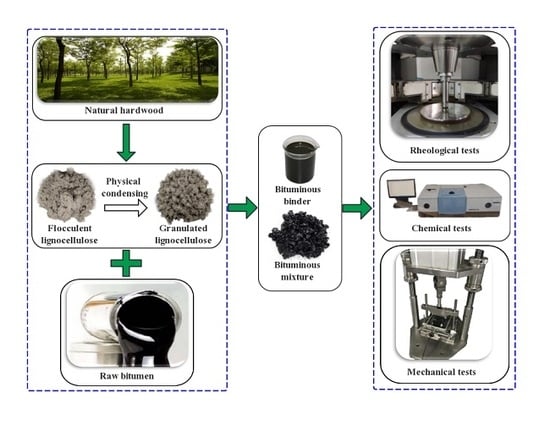
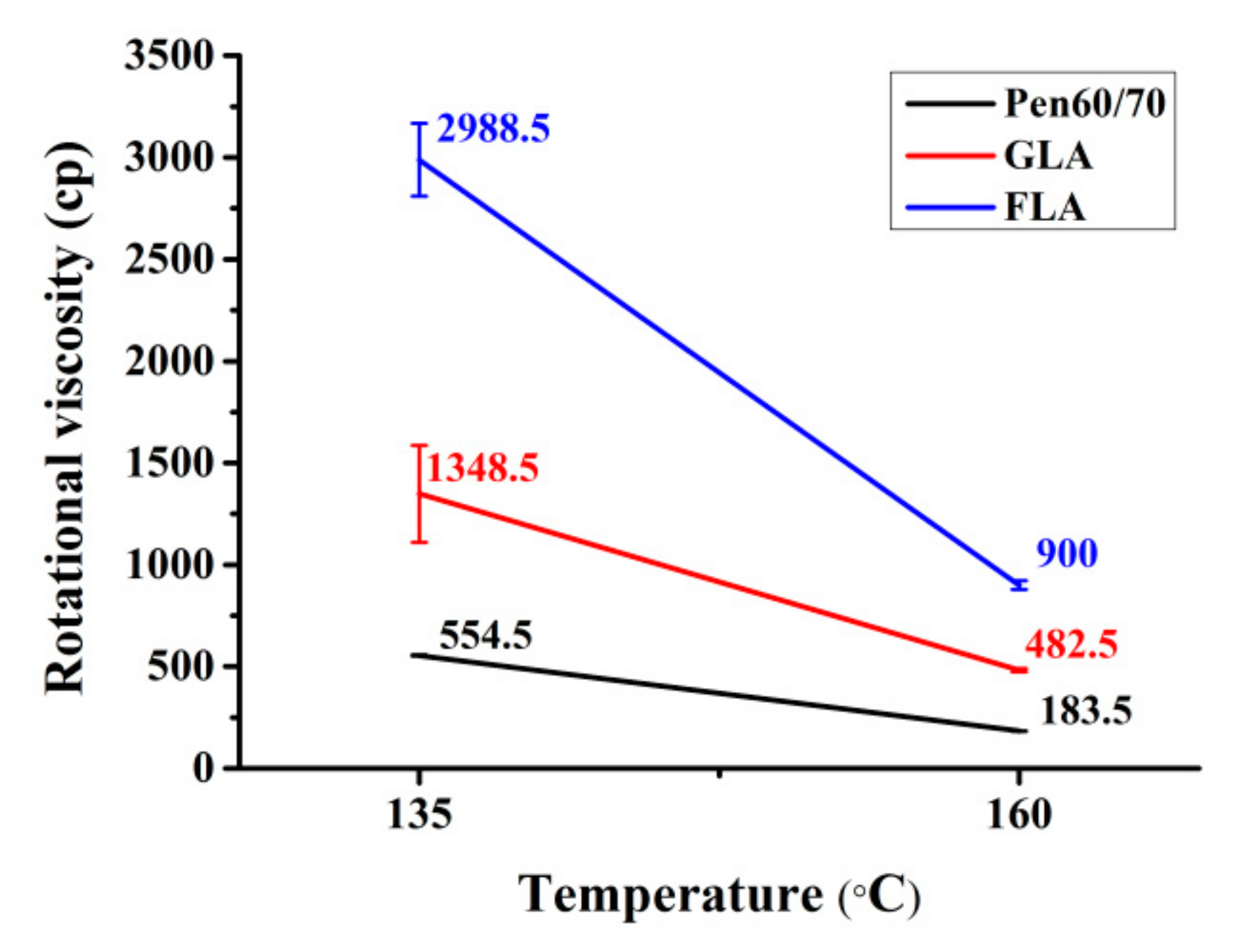
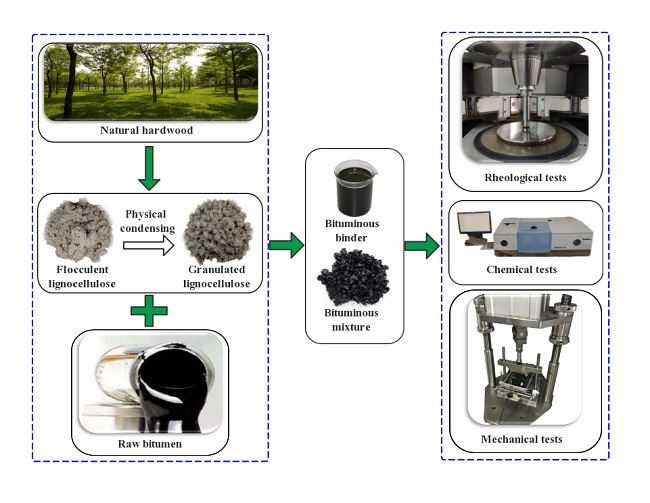
Lignocellulosic biomass has gained increasing attention as a performance modifier for bituminous material due to the vast amount available, its low cost and its potential to improve the durability of pavement. However, a comprehensive study concerning both the binder and mixture performance of modified bituminous material with lignocellulose is still limited. This research aims to evaluate the feasibility of applying lignocellulose as bitumen modifier by rheological, chemical and mechanical tests. To this end, two lignocellulosic biomass modified bituminous binders and corresponding mixtures were prepared and tested. The chemical characterization revealed the interaction between lignocellulosic biomass and bitumen fractions. Rheological test results have shown that lignocellulosic modifiers improve the overall performance of bituminous binder at high, intermediate and low temperatures. The findings obtained by mixture mechanical tests were identical to the binder test results, proving the positive effect of lignocellulosic biomass on overall paving performance of bituminous materials. Although lignocellulosic modifier slightly deteriorates the bitumen workability, the modified bitumen still meets the viscosity requirements mentioned in Superpave specification. This paper suggests that lignocellulosic biomass is a promising modifier for bituminous materials with both engineering and economic merits. Future study will focus on field validation and life cycle assessment of bituminous pavement with lignocellulosic biomass.
Keywords: lignocellulosic biomass; bitumen modifier; workability; rheological tests; mechanical properties lignocellulosic biomass; bitumen modifier; workability; rheological tests; mechanical properties
Graphical Abstract