


Abstract
In order to enhance the strength and wear resistance of pure copper without obvious sacrifice of high electrical conductivity, Al2O3 particle-reinforced copper matrix composites with different volume fractions of Al2O3 were fabricated via the oscillatory hot-pressing sintering process. The effects of Al2O3 content on the densification, microstructure, mechanical properties, electrical conductivity, and wear behaviors of the composites were systematically investigated. The results showed that oscillatory pressure effectively inhibited pore formation, and Al2O3 particles were uniformly distributed within the copper matrix. With the increase in the Al2O3 volume fraction, the densification of the composites decreased slightly, while the hardness, compressive strength and wear resistance were continuously improved. By contrast, the electrical conductivity declined marginally and the friction coefficient rose. The 10 vol.% Cu-Al2O3 composite exhibited the optimal comprehensive wear resistance, with a hardness of 123 HV and an electrical conductivity maintained at 80.2% IACS. The wear mode of the composites gradually shifts from single adhesive wear of pure copper to the combined effect of abrasive wear and oxidative wear.
1. Introduction
Pure copper possesses outstanding electrical and thermal conductivity, together with excellent ductility and formability, making it an indispensable base material for key conductive components widely utilized in rail transit, high-voltage switchgear, aerospace, and other electrical engineering applications [1,2,3]. However, the relatively low strength, hardness, and wear resistance of pure copper significantly restrict its performance under severe service conditions. During exposure to heavy mechanical loading and high-speed sliding electrical contact, pure copper is susceptible to plastic deformation and wear-induced failure, resulting in reduced service reliability and limiting its further engineering applications [4,5]. Therefore, developing copper-based materials with enhanced mechanical load-bearing capacity and wear resistance while maintaining the intrinsic advantages of copper in electrical and thermal conductivity has become a critical research direction in the field of high-performance copper matrix composites.
Previous studies have demonstrated that introducing ceramic reinforcements into copper to construct copper matrix composites is an effective strategy for improving the comprehensive properties of pure copper [6,7,8,9]. Among various reinforcement phases, hard ceramic particles, including oxides (Al2O3 [10], La2O3 [11], ZrO2 [12], etc.), carbides (TiC [13], WC [14], B4C [15], etc.) and borides (TiB2 [16], CrB2 [17], etc.), can significantly enhance the hardness and wear resistance of copper-based materials while exerting relatively limited influence on the electrical conduction network. Compared with other ceramic reinforcements, Al2O3 exhibits excellent chemical compatibility with the copper matrix and a relatively moderate mismatch in thermal expansion coefficient, enabling effective improvement of wear resistance without causing severe deterioration of electrical conductivity. Moreover, the low cost and abundant availability of Al2O3, together with its high hardness and excellent thermal stability, have promoted its widespread application as a reinforcement phase in copper-based dispersion-strengthened composites. Zhang et al. [18] prepared Cu-Al2O3 composites through a combined process involving spray drying, supercritical liquid-phase reduction, and spark plasma sintering. Their results demonstrated that the composite containing 1.0 wt.% Al2O3 simultaneously achieved an electrical conductivity of 86.8% IACS and a tensile strength of 407 MPa, effectively overcoming the conventional trade-off between strength and electrical conductivity. Zhang Xuehui et al. [19] fabricated Al2O3 dispersion-strengthened copper alloys via reactive synthesis combined with spark plasma sintering (SPS). Microstructural analysis revealed that nanoscale γ-Al2O3 particles with an average size of 27.4 nm were uniformly dispersed within the copper matrix, with an interparticle spacing of approximately 50 nm. The obtained bulk material exhibited a relative density of approximately 99%, an electrical conductivity of 72% IACS, and a Rockwell hardness of HRB 91. Nevertheless, the Al2O3 content and its dispersion characteristics within the copper matrix play decisive roles in determining the microstructural evolution and subsequently regulating the densification behavior, mechanical properties, electrical conductivity, and tribological performance of Cu-Al2O3 composites. The corresponding relationships between reinforcement parameters, microstructural characteristics, and strengthening mechanisms remain insufficiently understood and require systematic investigation.
Densification is considered a critical factor governing the overall performance of particle-reinforced copper matrix composites. Cu-Al2O3 composites fabricated by conventional powder metallurgy sintering processes generally suffer from residual pore defects [20,21], which adversely affect both mechanical strength and wear resistance. Recently, oscillatory hot-pressing sintering has emerged as an advanced consolidation technique that introduces periodic alternating pressure during the isothermal sintering process [22,23]. Compared with conventional static pressure-assisted sintering, cyclic oscillatory loading promotes continuous particle rearrangement, facilitates pore closure, and accelerates densification, thereby improving the structural integrity of sintered materials [24]. However, investigations on oscillatory hot-pressed Cu-Al2O3 composites remain limited. In particular, the synergistic effects between oscillation parameters and Al2O3 content on densification behavior, microstructural evolution, and functional properties require further systematic clarification.
Based on the above considerations, Cu-Al2O3 composites containing 5 vol.%, 7 vol.%, and 10 vol.% Al2O3 were fabricated via oscillatory hot-pressing sintering in this work. The effects of Al2O3 content on the microstructure, elemental distribution, relative density, microhardness, compressive mechanical properties, electrical conductivity, and tribological performance of the composites were systematically investigated. Furthermore, the strengthening contribution of Al2O3 particles and the evolution mechanisms governing the tribological behavior were elucidated. This study provides experimental insights and theoretical guidance for optimizing reinforcement content and improving sintering strategies for the development of high-performance Cu-Al2O3 composites in electrical engineering applications.
2. Materials and Methods
2.1. Materials Preparation
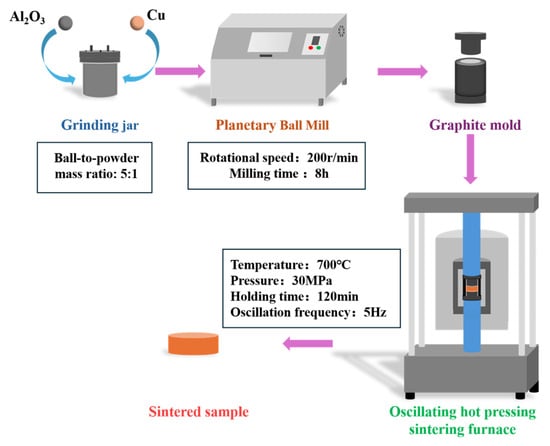
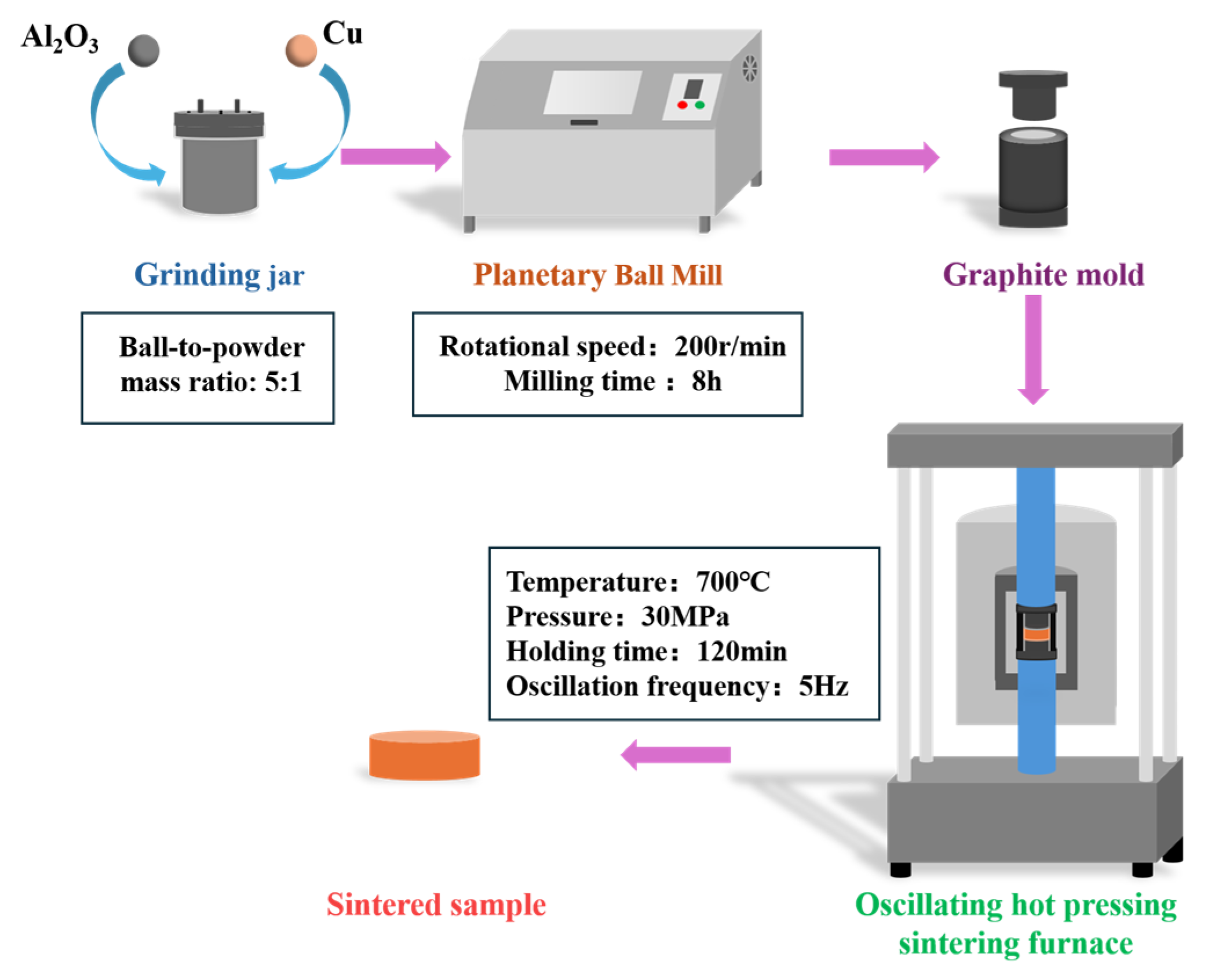
High-purity Cu powder (particle size: 4–7 μm, purity: 99.9%) and Al2O3 powder (average particle size: 1 μm, purity: 99.5%) were selected as the starting materials. The Cu powder was supplied by Beijing Xingrongyuan Technology Co., Ltd. (Beijing, China), while the Al2O3 powder was obtained from Shanghai Yaoge Alloy Materials Co., Ltd. (Shanghai, China).The preparation process of Cu-Al2O3 composite was shown in Figure 1. Powder mixtures with different Al2O3 contents were homogenized for 8 h using a planetary ball mill (Changsha Tianchuang Powder Technology Co., Ltd., Changsha, China) at a rotational speed of 200 r/min. Stainless steel balls were employed as the milling media, with a ball-to-powder mass ratio of 5:1. After mechanical mixing, the blended powders were placed into a graphite die and consolidated under vacuum using a CXZD-50 oscillatory hot-pressing sintering furnace (Ningbo Chenxin Weike Industrial Technology Co., Ltd., Ningbo, China) equipped with graphite resistance heating elements. The sintering process was conducted at 700 °C with a holding time of 120 min under a constant uniaxial static pressure of 30 MPa. During the entire isothermal holding stage, an oscillatory pressure with a frequency of 5 Hz was continuously applied to promote the densification process. After completion of the sintering process, the fabricated specimens were furnace-cooled to room temperature. Based on preliminary experimental investigations and previous studies on particle-reinforced copper matrix composites [25], Cu-Al2O3 composites containing 5 vol.%, 7 vol.%, and 10 vol.% Al2O3 were successfully fabricated in this study.
Figure 1.
Fabrication flowchart of Cu-Al2O3 composite.
2.2. Microstructure Characterization and Property Testing
The microstructure of the as-sintered composites was characterized using a Pro X scanning electron microscope (SEM) (Phenom Scientific Instruments (Shanghai) Co., Ltd., Shanghai, China), and elemental distribution analysis was performed with an energy dispersive spectrometer (EDS) (Phenom Scientific Instruments (Shanghai) Co., Ltd., Shanghai, China) attached to the SEM. The relative density of the specimens was measured via the Archimedes water displacement method. Vickers hardness tests were conducted on an HVST-1000Z semi-automatic Vickers hardness tester (Laizhou Weiyi Experimental Machinery Manufacture Co., Ltd., Laizhou, China) under a test load of 0.1 kg with a dwell time of 15 s. Room-temperature compression tests were carried out using a CMT-5105GL electronic universal testing machine (Zhuzhou Sansi Taijie Electrical Equipment Co., Ltd., Zhuzhou, China). The compression specimens were machined to dimensions of Φ4 mm × 6 mm, and the compression rate was set at 0.5 mm/min. The electrical conductivity was determined by the four-probe method with an RK2514N precision resistance tester (Shenzhen Meiruike Electronic Technology Co., Ltd., Shenzhen, China), and the results were expressed in %IACS (International Annealed Copper Standard) [26]. Dry reciprocating friction and wear tests were performed on an MDW-05 tester (Jinan Yihua Tribology Testing Technology Co., Ltd., Jinan, China), where a 440C steel ball with a diameter of 6.5 mm was used as the friction counterpart. All wear tests were conducted under a normal load of 50 N at a reciprocating frequency of 2 Hz for a total duration of 30 min. The specific wear rate was calculated from the mass loss of the specimens before and after testing, which was weighed using a high-precision analytical balance (Hangzhou Wante Weighing Co., Ltd., Hangzhou, China) [27]. The three-dimensional profile and cross-sectional morphology of the wear tracks were observed using a VHX-5000 super-depth-of-field microscope (KEYENCE (China) Co., Ltd., Shanghai, China).
3. Results and Discussion
3.1. Microstructure and Densification
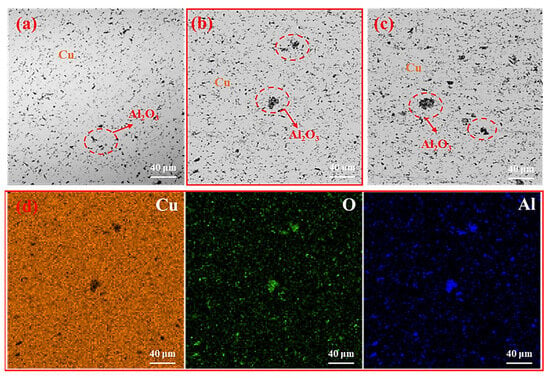
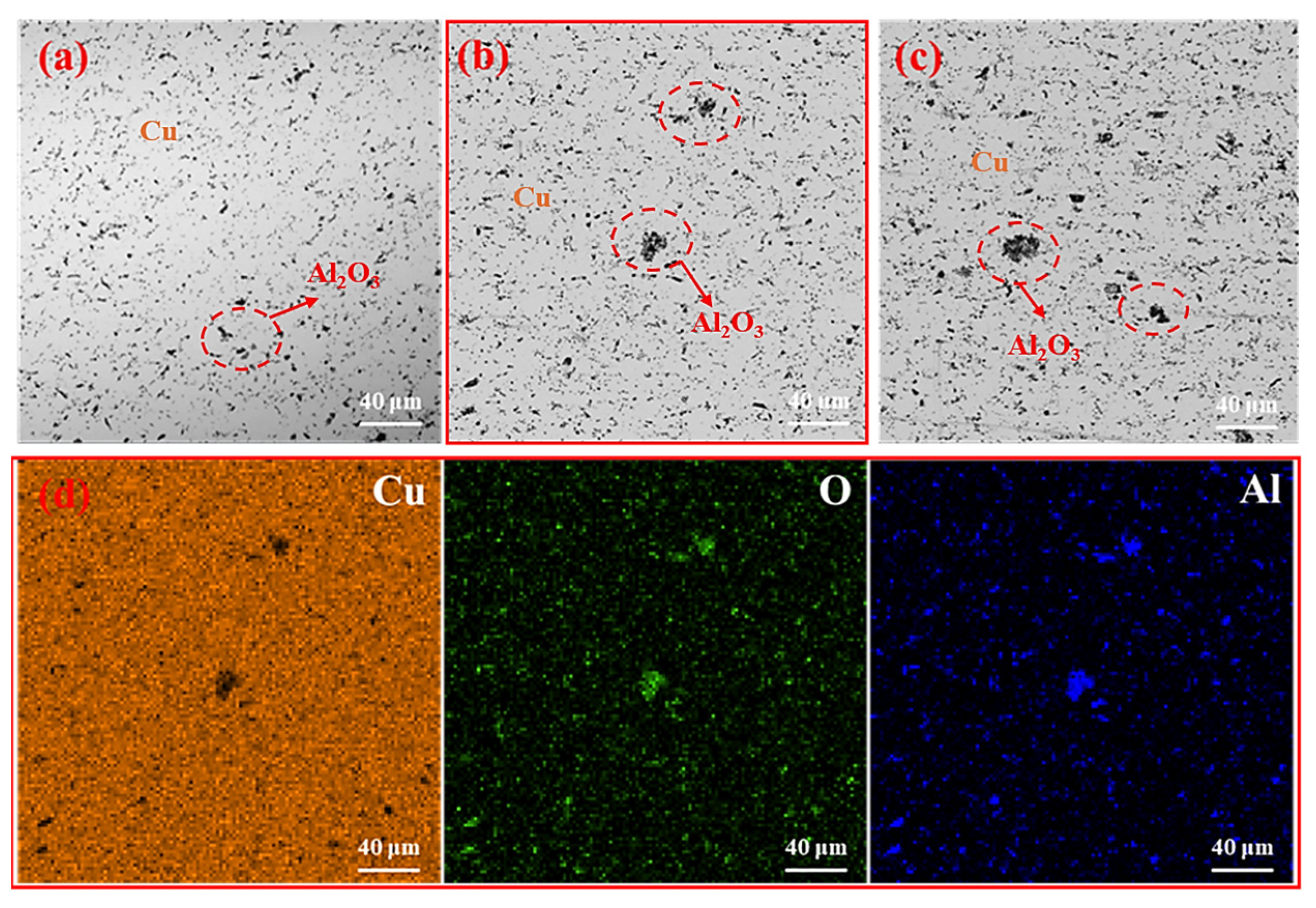
Table 1 summarizes the measured density, theoretical density, and relative density of Cu-Al2O3 composites with different Al2O3 contents. The results indicate that both the measured density and relative density gradually decrease with increasing Al2O3 addition. When the Al2O3 volume fraction remains below 10 vol.%, the reduction in relative density is relatively limited, and all composites exhibit considerably higher relative densities than those prepared by conventional static hot-pressing sintering [28]. This behavior can be mainly attributed to the application of oscillatory pressure during the sintering process. The cyclic loading generated by oscillation promotes particle rearrangement, enhances powder packing efficiency, and facilitates pore elimination, thereby enabling the composites to achieve a highly densified microstructure. Since a high densification level is essential for achieving desirable mechanical and functional properties, the excellent relative densities obtained in this study provide a favorable foundation for subsequent performance enhancement. Specifically, the composite containing 5 vol.% Al2O3 exhibits the highest relative density of 99.57%, while the composite with 10 vol.% Al2O3 still maintains a relative density of 99.01%. However, a further increase in Al2O3 content results in a gradual decline in densification. As shown in the SEM images of composites with different Al2O3 contents (Figure 2), Al2O3 particles are generally uniformly distributed throughout the copper matrix. Nevertheless, localized particle aggregation becomes increasingly evident with increasing reinforcement content. These aggregated Al2O3 particles impede effective contact and diffusion between copper particles during sintering, thereby hindering grain boundary migration and pore closure. Consequently, the deterioration of relative density at higher Al2O3 contents is mainly associated with the aggravated particle agglomeration and the resulting inhibited densification process.
Table 1.
Density and relative density of Cu-Al2O3 composites.
Figure 2.
SEM images of Cu-Al2O3 composites with different Al2O3 contents: (a) 5 vol.%; (b) 7 vol.%; (c) 10 vol.%; (d) EDS elemental mapping distributions of Cu, O and Al in Figure 2b.
3.2. Mechanical Properties
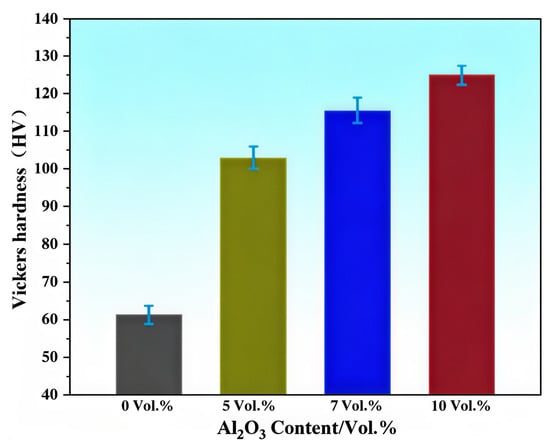
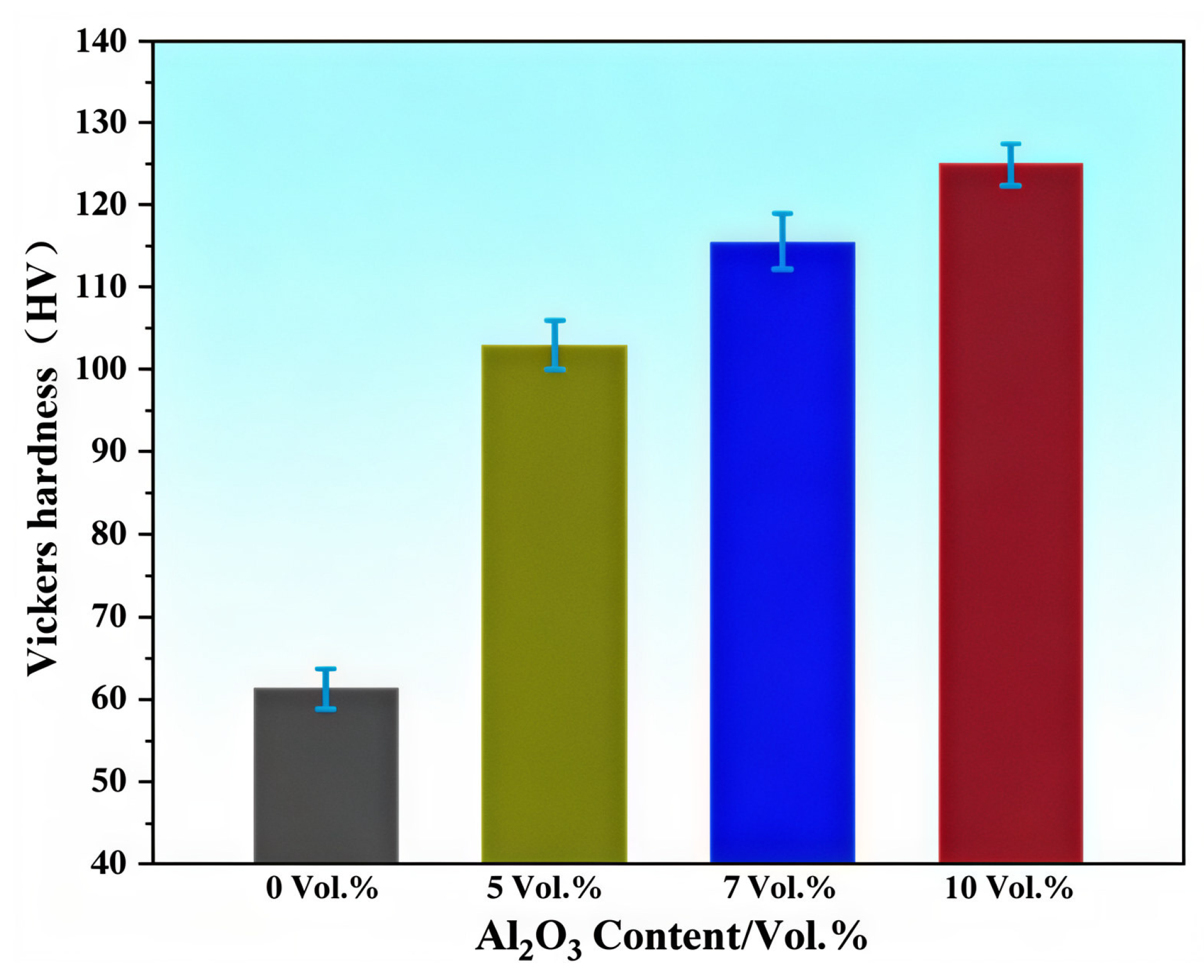
Figure 3 displays the microhardness values of Cu-Al2O3 composites containing different Al2O3 volume fractions. The microhardness exhibits a continuous increasing trend with increasing Al2O3 addition. At an Al2O3 content of 5 vol.%, the composite achieves a hardness value of 104 HV, representing a significant enhancement compared with pure copper. With further addition of Al2O3, the increasing rate of hardness gradually decreases. Among all investigated samples, the 10 vol.% Cu-Al2O3 composite presents the maximum microhardness of 123 HV, which is approximately twice that of pure copper. For comparison, Yehia et al. [29] fabricated Cu-10 wt.% Al2O3 composites by conventional hot pressing at 750 °C for 35 min under a pressure of 1000 MPa. Their results showed that the hardness improvement was approximately 56.5% compared with pure copper. In contrast, the Cu-Al2O3 composites prepared by oscillatory hot-pressing sintering in this work exhibit more pronounced strengthening effects, demonstrating the effectiveness of the proposed sintering strategy. The enhanced hardness can be primarily attributed to the uniformly dispersed Al2O3 particles, which promote grain refinement and increase dislocation density through particle-induced strengthening effects [30]. The improved hardness is expected to contribute positively to the wear resistance of the Cu-Al2O3 composites.
Figure 3.
Microhardness of Cu-Al2O3 composites with different Al2O3 contents.
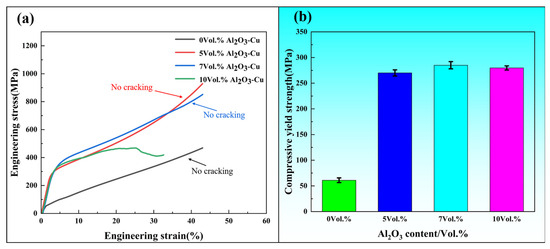
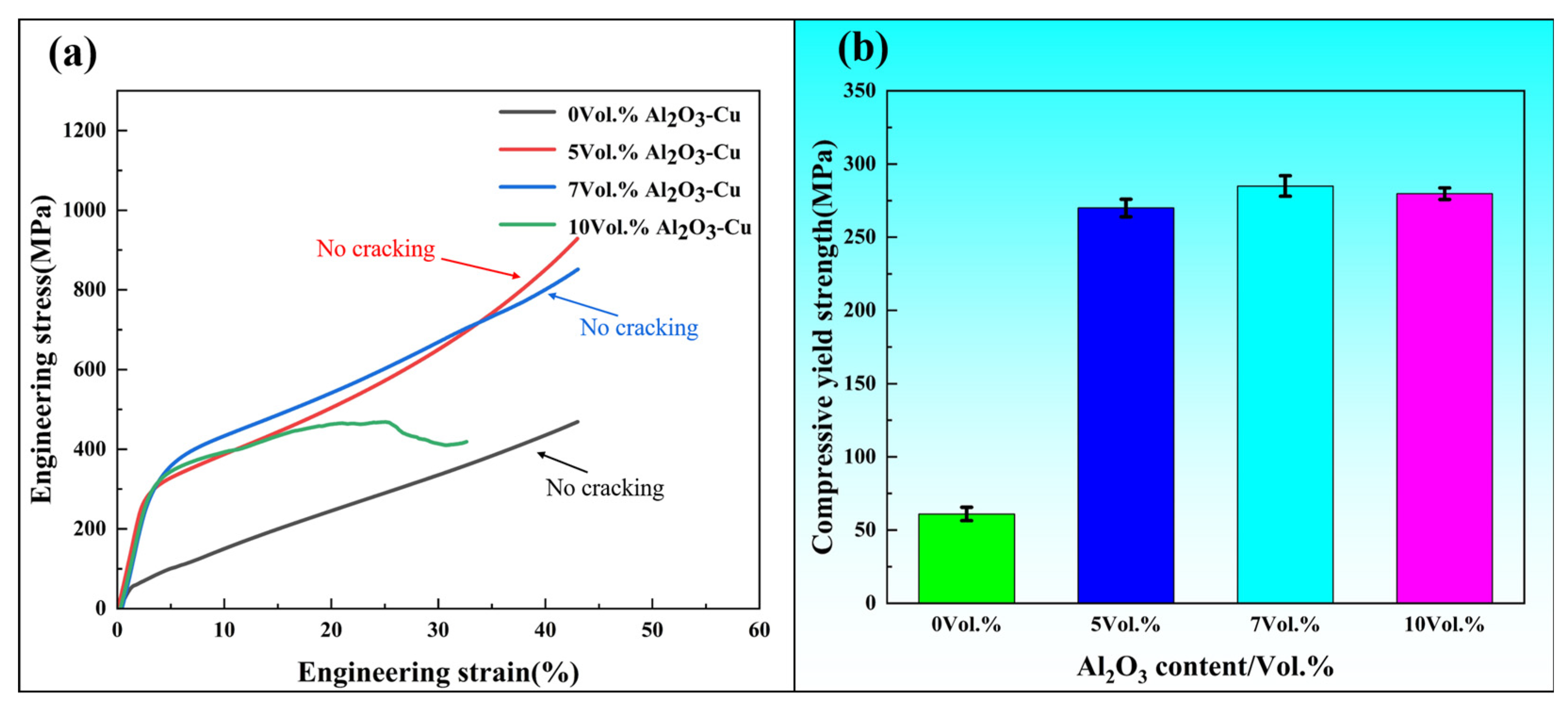
Figure 4 illustrates the compressive mechanical properties of Cu-Al2O3 composites with different Al2O3 volume fractions. The yield strength increases continuously with increasing Al2O3 content from 0 vol.% to 7 vol.%. During compression testing, the samples containing 0 vol.%, 5 vol.%, and 7 vol.% Al2O3 remain intact throughout the entire deformation process without visible cracking. However, when the Al2O3 content reaches 10 vol.%, the plastic deformation capability of the composite decreases significantly. The yield strength becomes slightly lower than that of the 7 vol.% Al2O3 composite, while the ultimate compressive strength reaches approximately 450 MPa. The deformation and fracture mechanisms can be explained by the combined effects of reinforcement strengthening and deformation incompatibility. At relatively low Al2O3 contents (<7 vol.%), the ceramic particles are uniformly dispersed within the copper matrix. Owing to their limited volume fraction, the Al2O3 particles effectively strengthen the matrix while allowing sufficient plastic deformation of the copper phase during compression, preventing premature crack initiation. When the Al2O3 volume fraction increases to 10 vol.%, the compressive deformation behavior changes significantly. On one hand, the dispersed Al2O3 particles effectively hinder dislocation movement through a pinning effect, thereby improving the strength of the composite. On the other hand, excessive ceramic particles tend to generate localized stress concentration and reduce the compatibility of plastic deformation between the Al2O3 phase and copper matrix. The competition between these two mechanisms promotes a transition in the failure mode from relatively uniform plastic deformation to shear-dominated fracture, thereby limiting further improvement in compressive strength [31].
Figure 4.
(a) Compression test results of Cu-Al2O3 composites with different Al2O3 contents; (b) compressive yield strength results of Cu–Al2O3 composites with different Al2O3 contents.
3.3. Electrical Conductivity
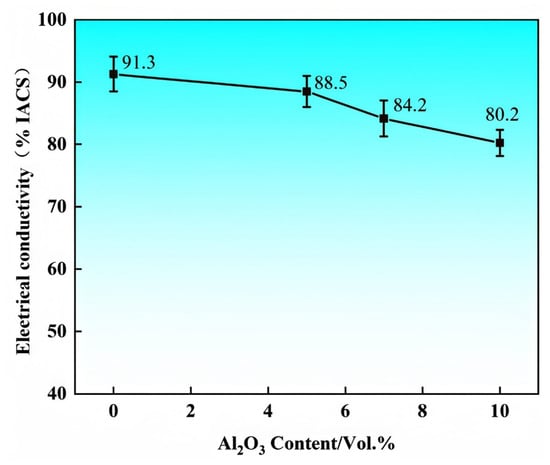
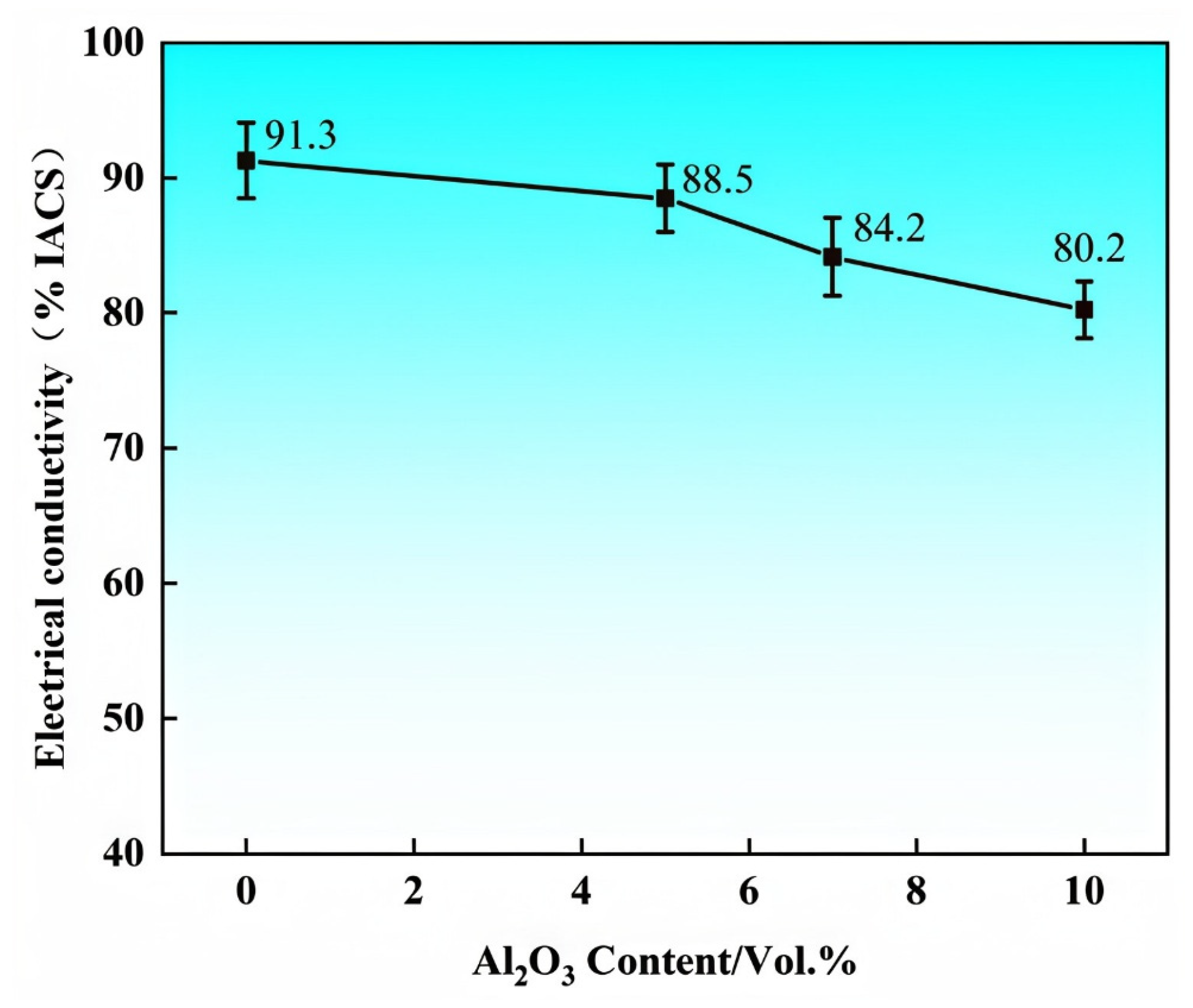
Figure 5 presents the electrical conductivity of Cu-Al2O3 composites with different Al2O3 contents. The results demonstrate that the electrical conductivity gradually decreases with increasing Al2O3 addition; however, the reduction remains relatively limited, indicating that the introduction of ceramic reinforcement does not significantly disrupt the electrical conduction capability of the copper matrix. Compared with Cu-Al2O3 composites fabricated by conventional hot-pressing sintering [32], the composites prepared via oscillatory hot-pressing sintering in this study still exhibit relatively high electrical conductivity. The electrical conductivity of Cu-Al2O3 composites is mainly influenced by the intrinsic conductivity of the copper matrix, grain boundary density, reinforcement distribution, and residual porosity. In the present work, the as-sintered composites maintain favorable electrical conductivity, which can be attributed to the fine particle size and relatively uniform dispersion of Al2O3 particles. The nanoscale interaction between well-dispersed ceramic particles and the copper matrix effectively minimizes the obstruction of electron transport. However, with further increasing Al2O3 content, particle agglomeration becomes increasingly pronounced, resulting in additional electron scattering sites. Meanwhile, the increased grain boundary density caused by microstructural refinement may also contribute to electron scattering. Furthermore, the gradual decrease in relative density at higher Al2O3 contents introduces additional pores, which act as electron scattering centers and further deteriorate the electrical conductivity [33]. Therefore, the reduction in electrical conductivity is mainly associated with the combined effects of increased ceramic particle content, particle agglomeration, and reduced densification.
Figure 5.
Electrical conductivity of Cu-Al2O3 composites with different Al2O3 contents.
3.4. Friction and Wear Properties
3.4.1. Friction Coefficient and Specific Wear Rate
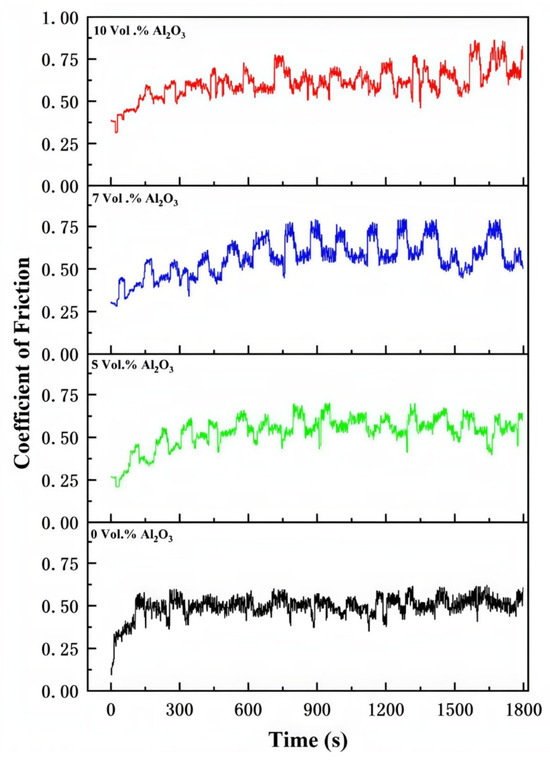
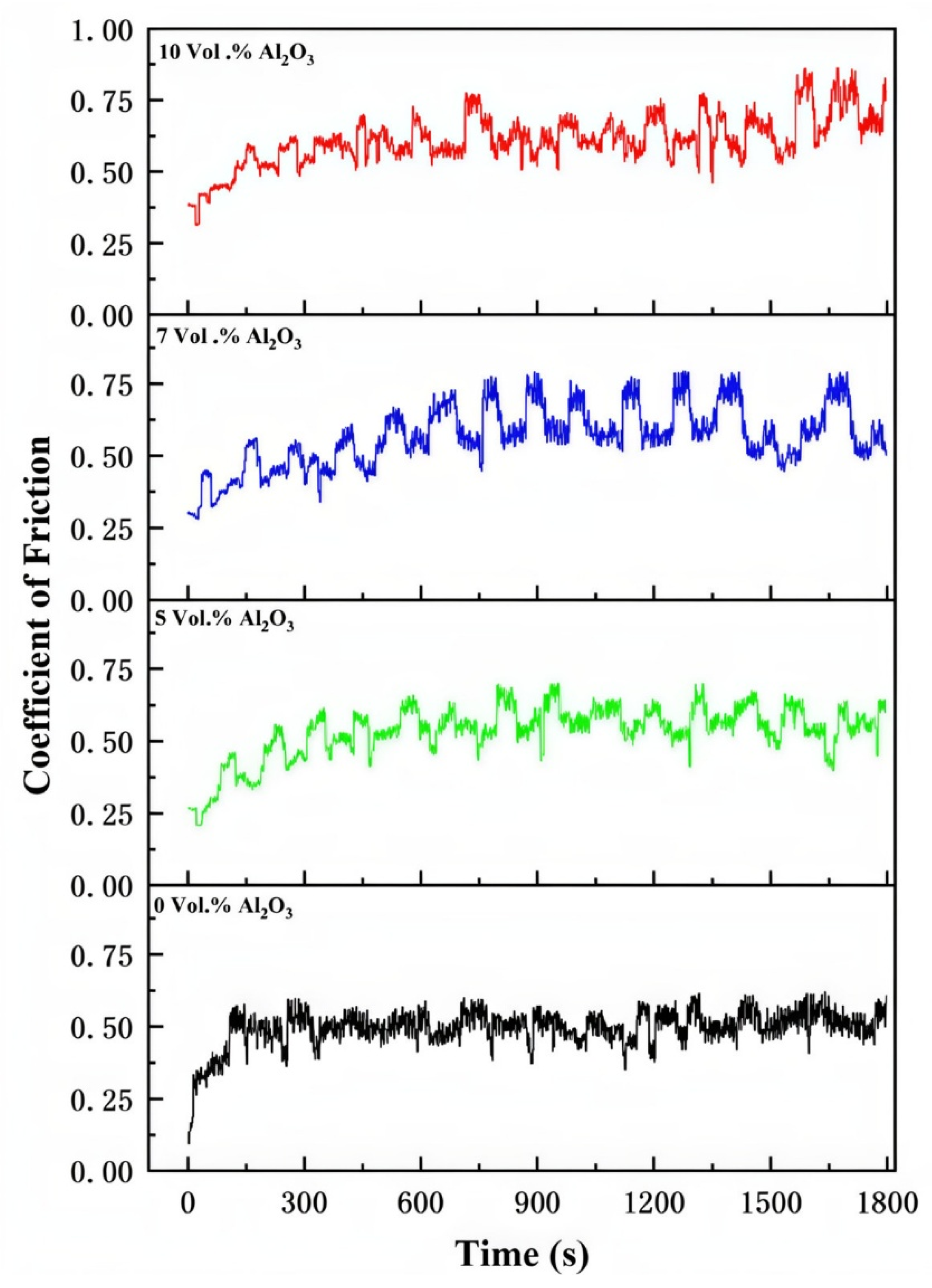
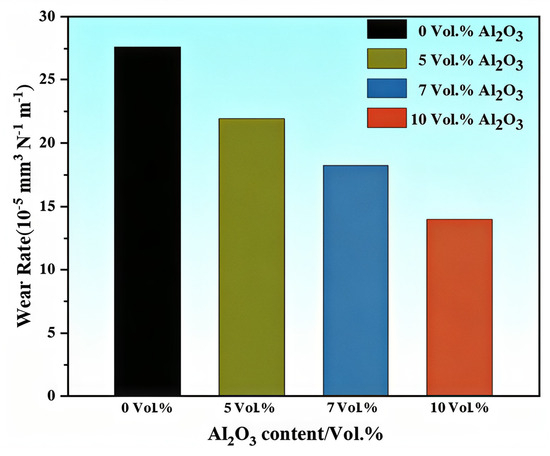
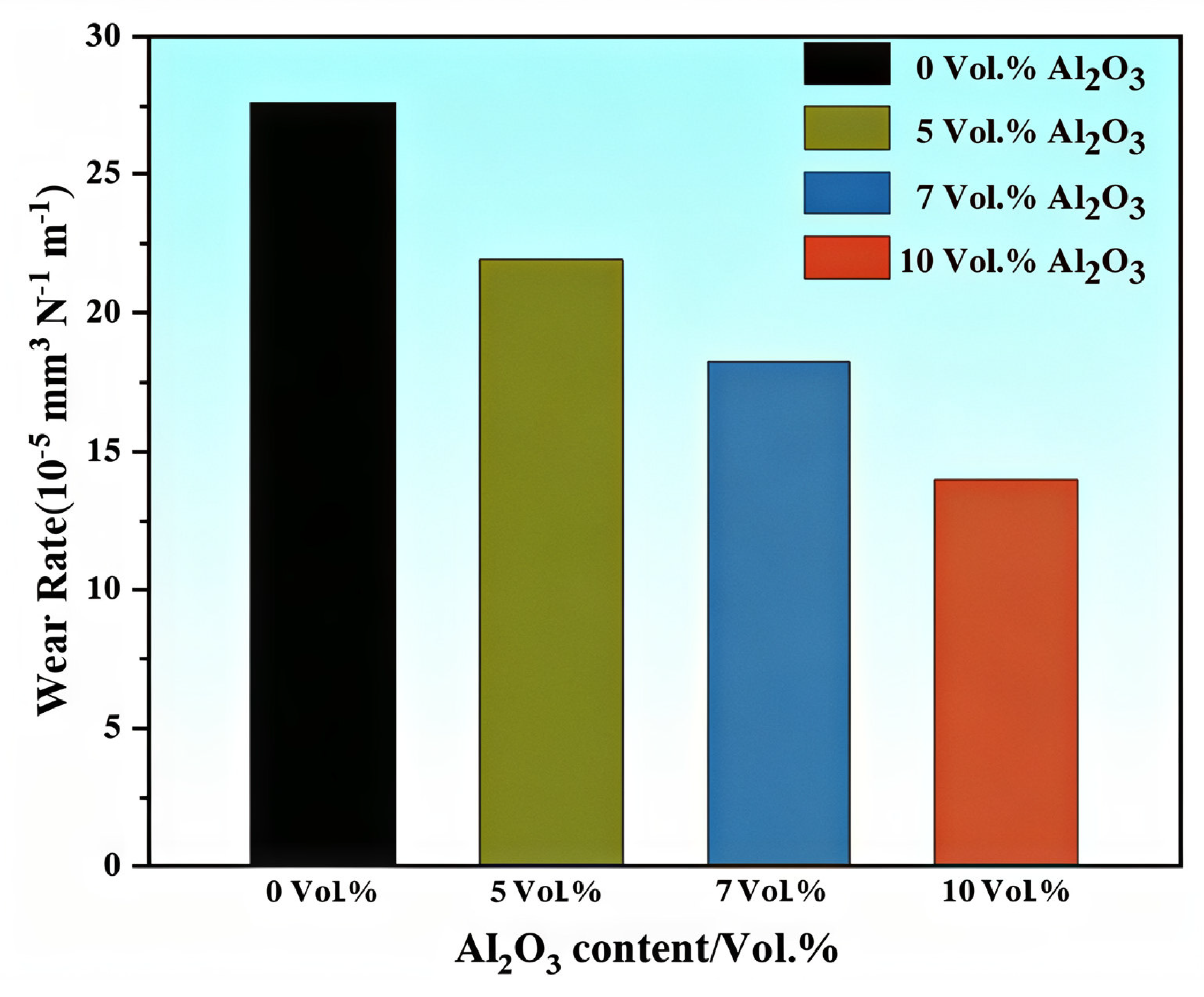
Figure 6 illustrates the evolution of the friction coefficient as a function of sliding time for Cu-Al2O3 composites containing different Al2O3 contents. It can be observed that all specimens exhibit a rapid increase in friction coefficient during the initial running-in stage, followed by a relatively stable friction process with periodic fluctuations. This transient increase is mainly related to the gradual establishment of a stable contact interface between the composite surface and the counterpart material. The fluctuation behavior during the steady-state stage can be attributed to the dynamic evolution of the tribological interface. The hard Al2O3 particles embedded within the copper matrix can effectively support the applied load and inhibit severe plastic deformation of the soft copper phase. During continuous sliding, some Al2O3 particles may detach from the matrix due to repeated tangential stresses and interface weakening. The detached ceramic fragments can act as third-body abrasives, inducing plowing damage and increasing frictional resistance. Meanwhile, partial particle rolling and redistribution at the sliding interface may reduce the actual contact area and decrease friction resistance. The repeated competition between these processes leads to periodic fluctuations in the friction coefficient, producing the characteristic serrated feature of the friction curves [34,35,36]. With increasing Al2O3 content, the average friction coefficient exhibits a gradually increasing trend. The average friction coefficients of pure Cu, 5 vol.% Cu-Al2O3, 7 vol.% Cu-Al2O3, and 10 vol.% Cu- Al2O3 composites are 0.4934, 0.5317, 0.5677, and 0.6149, respectively. This increase is mainly associated with the incorporation of hard Al2O3 ceramic particles. During sliding, the exposed Al2O3 particles on the worn surface participate directly in the contact process and bear part of the applied load. Due to their high hardness and rigidity, these ceramic particles increase the resistance to interfacial shear deformation, thereby contributing to the increase in friction coefficient [37]. Figure 7 presents the variation in the specific wear rate of Cu-Al2O3 composites with different Al2O3 contents. The specific wear rate decreases continuously with increasing Al2O3 addition. The specific wear rates of the 5 vol.%, 7 vol.%, and 10 vol.% Cu-Al2O3 composites are 2.2 × 10⁻⁴, 1.7 × 10⁻⁴, and 1.5 × 10⁻⁴ mm3·N−1·m−1, respectively, which are significantly lower than that of pure Cu. The improved wear resistance can be mainly attributed to the strengthening effect of hard Al2O3 particles. During sliding, the uniformly distributed ceramic particles serve as load-bearing phases, effectively reducing the direct contact between the steel counterpart and the copper matrix. Meanwhile, the enhanced hardness of the composite suppresses plastic deformation, surface tearing, and material removal of the copper matrix, thereby reducing the overall wear loss [38]. Therefore, although the incorporation of Al2O3 increases the friction coefficient to some extent, it simultaneously provides significant improvement in wear resistance.
Figure 6.
Friction coefficient of Cu-Al2O3 composites with different Al2O3 contents.
Figure 7.
Specific wear rate of Cu-Al2O3 composites with different Al2O3 contents.
3.4.2. Wear Track Morphology
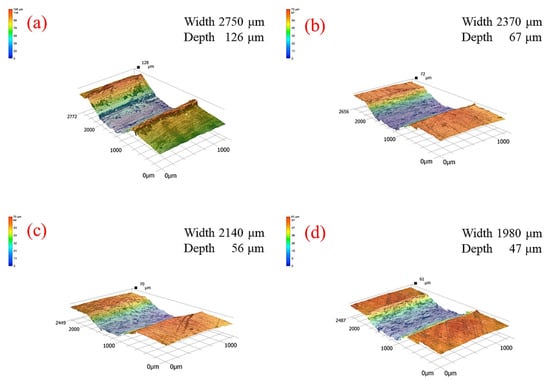
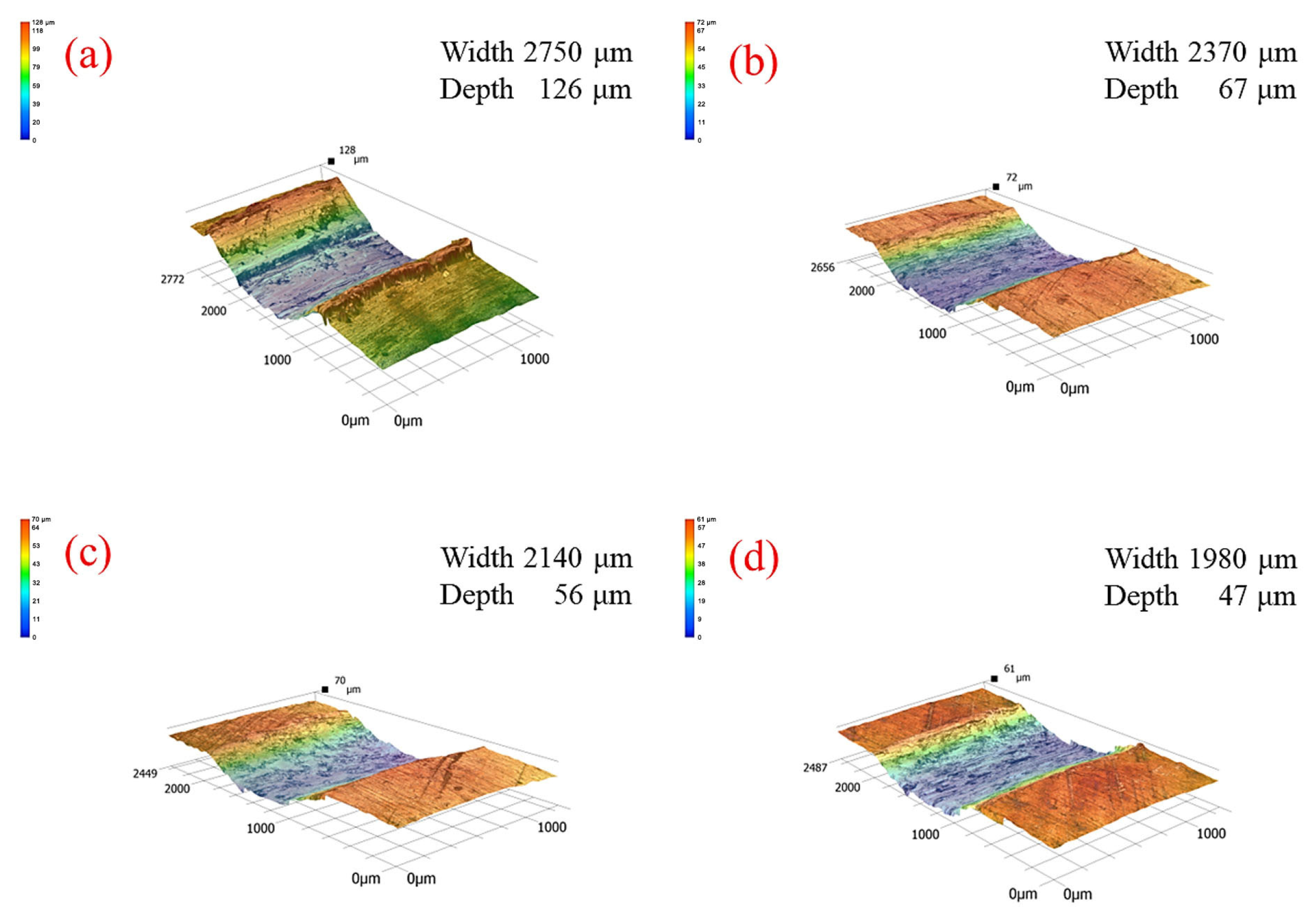
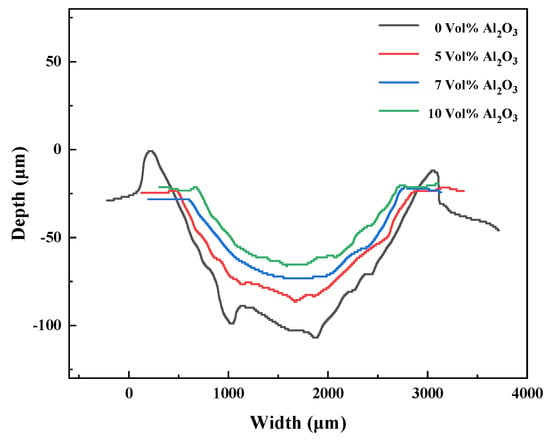
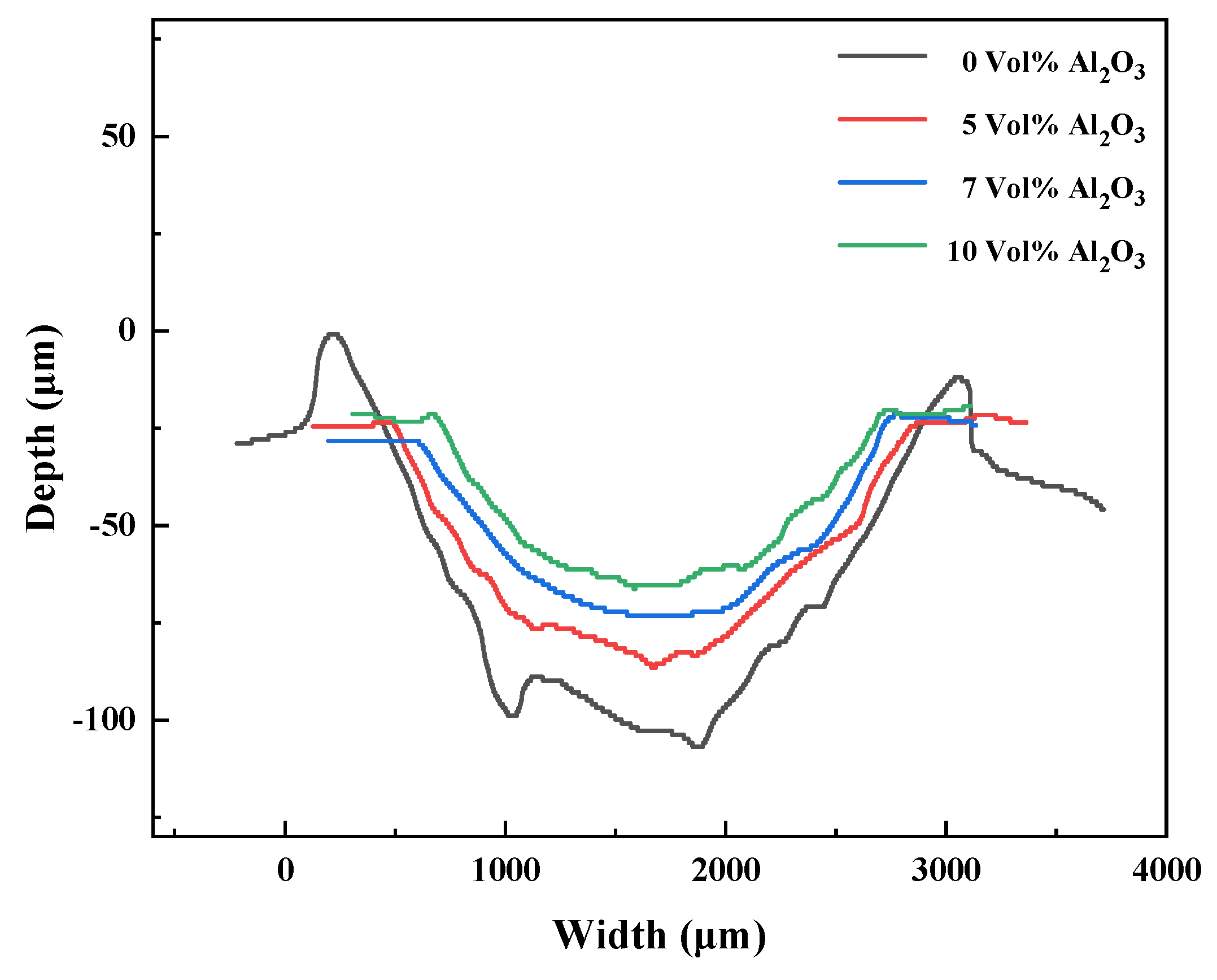
To further investigate the effect of Al2O3 content on the wear behavior of Cu-Al2O3 composites, three-dimensional and cross-sectional profile analyses were performed on the wear tracks, and the results are presented in Figure 8 and Figure 9, respectively. Overall, both the width and depth of wear tracks gradually decrease with increasing Al2O3 addition. Specifically, the wear track width of pure copper is approximately 2750 µm, while that of the composite with 10 vol.% Al2O3 reduces to around 1980 µm. Meanwhile, the wear track depth decreases significantly from 126 µm to 47 µm. These results confirm that the incorporation of Al2O3 particles effectively improves the wear resistance of pure copper. Within a suitable range of Al2O3 content, the composites are expected to achieve a synergistic improvement in wear resistance and mechanical performance.
Figure 8.
3D wear track profiles of Cu-Al2O3 composites with different Al2O3 contents: (a) 0 vol.%; (b) 5 vol.%; (c) 7 vol.%; (d) 10 vol.%.
Figure 9.
Cross-sectional profiles of wear tracks for Cu-Al2O3 composites with different Al2O3 contents.
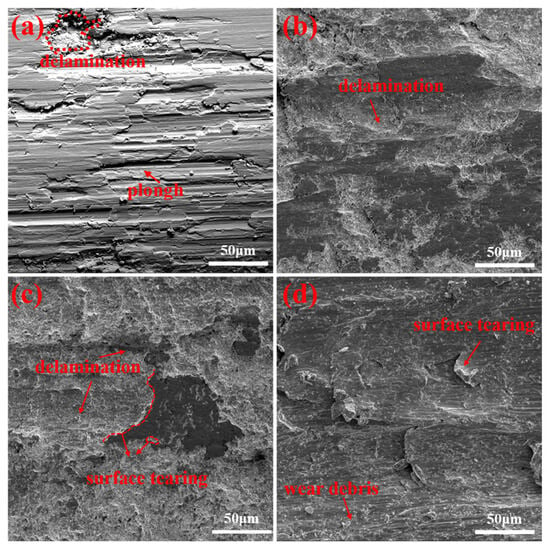
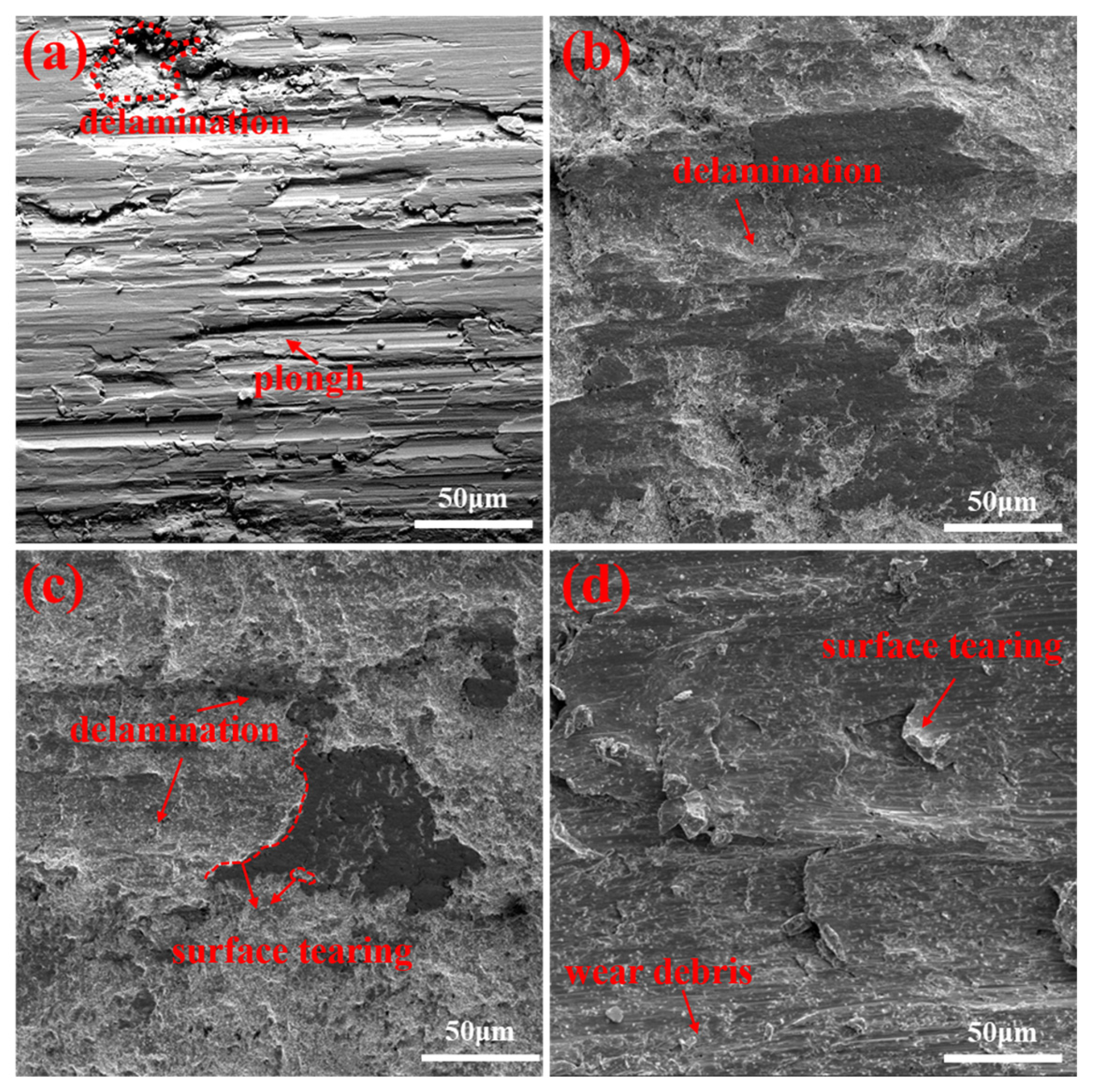
To further clarify the wear mechanisms of Cu-Al2O3 composites with different Al2O3 contents, the worn surfaces were examined by SEM, and the corresponding morphologies are presented in Figure 10. As shown in Figure 10a, pure copper exhibits severe surface damage characterized by wide and deep wear grooves, indicating typical adhesive wear behavior. After introducing Al2O3 particles, the worn surface morphology is significantly improved. The formation of severe plowing grooves is effectively suppressed, while localized spalling pits and delamination regions appear. With increasing Al2O3 content, the size and number of large spalling pits gradually decrease, suggesting a progressive enhancement in wear resistance. For the composite containing 5 vol.% Al2O3 (Figure 10b), numerous delamination flakes are observed on the worn surface, accompanied by a small amount of wear debris and spalling pits. The wear behavior at this stage is dominated by the combined action of adhesive wear and abrasive wear. When the Al2O3 content increases to 7 vol.% (Figure 10c), both the amount of wear debris and the size of spalling pits are significantly reduced, although delamination features remain visible. This behavior is mainly associated with the fracture and detachment of hard Al2O3 particles during sliding. The fractured ceramic fragments participate in the sliding process as abrasive third bodies, generating local scratching and surface tearing. Therefore, abrasive wear and adhesive wear remain the dominant wear mechanisms at this stage. With further increasing Al2O3 content to 10 vol.% (Figure 10d), plowing grooves and delamination regions are substantially reduced. The worn surface becomes relatively smooth, containing only a small quantity of fine wear debris and shallow spalling pits. Such morphological evolution indicates a remarkable improvement in wear resistance, accompanied by a transition of the dominant wear mechanism toward abrasive wear [10,39]. This improvement is closely related to the enhanced hardness resulting from increased Al2O3 incorporation. Nevertheless, hardness should be considered as one of the important factors affecting tribological behavior rather than the sole controlling parameter. Within an appropriate reinforcement range, increased hardness contributes to the optimization of wear resistance by suppressing plastic deformation and material removal during sliding [40].
Figure 10.
SEM images of worn surfaces of Cu-Al2O3 composites tested against steel balls with different Al2O3 contents: (a) 0 vol.%; (b) 5 vol.%; (c) 7 vol.%; (d) 10 vol.%.
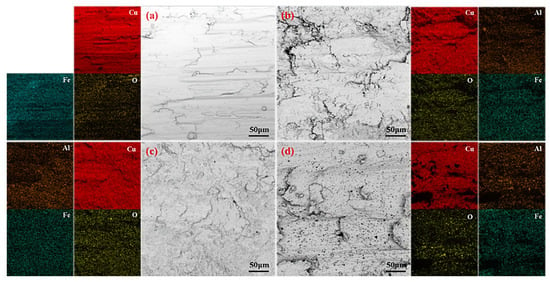
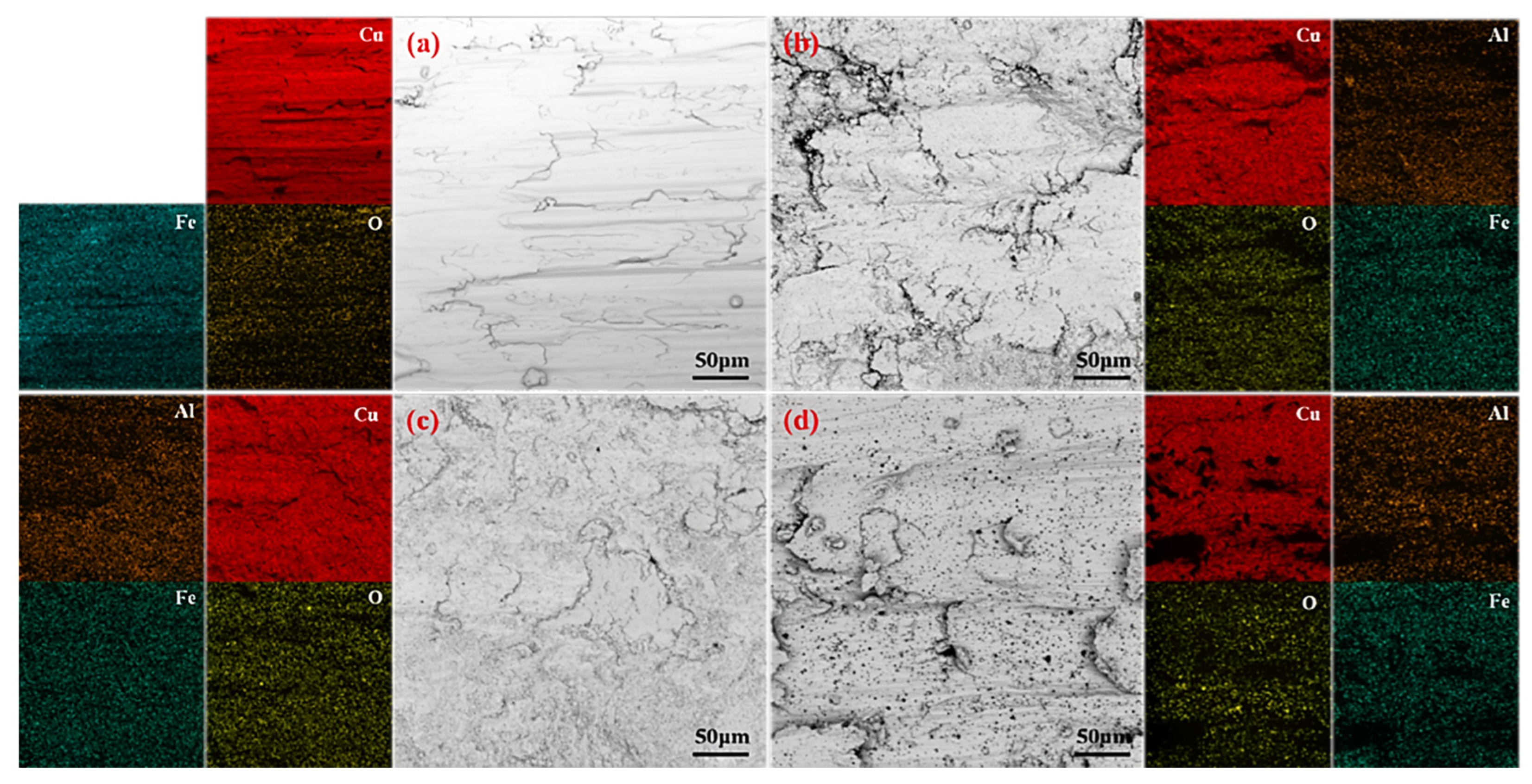
To further understand the friction and wear mechanisms of Cu-Al2O3 composites, EDS elemental mapping was performed on the worn surfaces of all specimens, as shown in Figure 11. It can be observed that the regions enriched in Fe and O elements exhibit a considerable overlap, whereas the remaining oxygen signals are mainly associated with the dispersed Al2O3 particles within the copper matrix. During sliding, the frictional heat generated at the contact interface promotes surface oxidation. Meanwhile, oxidized debris originating from the steel counterpart is transferred onto the composite surface, leading to the formation of a discontinuous tribo-oxide film mainly composed of iron oxides. This oxide layer partially separates direct contact between the steel ball and copper matrix, reduces interfacial shear stress, and contributes to improved wear resistance. The comprehensive analysis indicates that the wear behavior of Cu-Al2O3 composites is governed by the coupled effects of oxidative wear, abrasive wear, and adhesive wear, with their relative contributions varying with Al2O3 content. Pure copper exhibits predominantly adhesive wear due to its low hardness and poor resistance to plastic deformation. After introducing 5 vol.% Al2O3, the dispersed ceramic particles enhance surface hardness and interfacial load-bearing capability, resulting in a slight increase in friction coefficient. However, the wear mechanism remains a combination of adhesive wear, abrasive wear, and oxidative wear. When the Al2O3 content increases to 7 vol.%, fractured ceramic particles and wear debris accumulate at the sliding interface, intensifying abrasive action and leading to a further increase in friction coefficient. The wear process continues to involve the synergistic contribution of adhesive, abrasive, and oxidative wear. For the 10 vol.% Al2O3 composite, a relatively continuous Al2O3-enriched protective region is established at the sliding interface, effectively reducing the depth and width of wear tracks and providing the highest wear resistance among all investigated samples. Under this condition, adhesive interaction between the counterpart and matrix is significantly suppressed, and the dominant wear mechanism evolves into a combination of abrasive wear and oxidative wear. With increasing Al2O3 addition, the contribution of oxidative wear gradually becomes more significant. The pronounced enrichment of oxygen within the worn regions observed in the EDS mapping results supports the formation of tribo-oxide films and highlights the important role of oxidative processes in governing the tribological behavior of Cu-Al2O3 composites.
Figure 11.
EDS analyses on worn surfaces of Cu-Al2O3 composites tested against steel balls with different Al2O3 contents: (a) 0 vol.%; (b) 5 vol.%; (c) 7 vol.%; (d) 10 vol.%.
4. Conclusions
In this study, Cu-Al2O3 composites with different Al2O3 volume fractions were successfully fabricated via oscillatory hot-pressing sintering. The effects of Al2O3 content on microstructure, electrical conductivity, mechanical properties, and tribological behavior were systematically investigated. The main conclusions are summarized as follows:
(1) Al2O3 particles are relatively uniformly distributed within the copper matrix at low reinforcement contents. With increasing Al2O3 addition, localized particle agglomeration gradually occurs, resulting in a slight reduction in relative density. Nevertheless, even the 10 vol.% Al2O3 composite maintains a relative density above 99.01% without obvious pore defects, demonstrating the excellent densification capability of oscillatory hot-pressing sintering.
(2) The electrical conductivity of Cu-Al2O3 composites gradually decreases with increasing Al2O3 content; however, the reduction remains limited. The 5 vol.% Cu-Al2O3 composite achieves an electrical conductivity of 88.5% IACS, while the 10 vol.% composite still maintains 80.2% IACS. These results indicate that Al2O3 reinforcement provides effective strengthening while preserving the favorable electrical conductivity of the copper matrix.
(3) The incorporation of Al2O3 particles significantly improves the mechanical and tribological properties of pure copper. The microhardness continuously increases with increasing Al2O3 content, and the 10 vol.% Cu-Al2O3 composite achieves the highest hardness value of 123 HV together with the lowest specific wear rate. Although Al2O3 addition slightly increases the friction coefficient due to enhanced interfacial resistance, the overall wear resistance is substantially improved. With increasing Al2O3 fraction, the dominant wear mechanism gradually evolves from a combination of adhesive, abrasive, and oxidative wear toward a coupled mechanism dominated by abrasive and oxidative wear.
Author Contributions
Conceptualization, M.H. and Y.T.; Methodology, D.H.; Software, L.W. and Z.C.; Validation, X.J. and Z.C.; Formal analysis, X.J. and B.Y.; Investigation, D.H. and P.W.; Resources, M.H. and J.L.; Data curation, P.W.; Writing—original draft preparation, D.H.; Writing—review and editing, M.H. and Y.T.; Visualization, L.W.; Supervision, B.Y., Y.L. and Y.T.; Project administration, J.L. and Y.L.; Funding acquisition, Y.T. All authors have read and agreed to the published version of the manuscript.
Funding
This work was co-supported by Hunan Provincial Natural Science Foundation of China (No. 2025JJ20046), the Provincial Special Funding for the Chenzhou National Sustainable Development Agenda Innovation Demonstration Zone (No. 2023sfq29), and National Natural Science Foundation of China (No. 52275228).
Data Availability Statement
The original contributions presented in this study are included in the article. Further inquiries can be directed to the corresponding authors.
Acknowledgments
The authors gratefully appreciate the experimental equipment and testing support provided by the College of Mechanical and Vehicle Engineering (Changsha University of Science and Technology), National Engineering Research Center for Remanufacturing (Army Academy of Armored Forces), School of Electromechanical and Automation (Huaqiao University), and School of Materials Science and Engineering (Central South University). No Generative AI tools were utilized during the preparation of this manuscript.
Conflicts of Interest
The authors declare no conflicts of interest.
References
- Liu, X.L.; Li, Z.-H.; Hu, M.-J.; Zhou, C.-W.; Xiao, Q.; Yang, W.-B.; Chen, D.-Y. Research on the wear properties of carbon strips and contact wires at frigid temperatures. Wear 2021, 486, 204122. [Google Scholar] [CrossRef] [Scilit]
- Zhang, S.R.; Kang, H.; Cheng, M.; Jiang, Y.; Cao, F.; Guo, E.; Chen, Z.; Liang, S.; Wang, T. A research on the electrical sliding behavior wear of dual-scale particulate reinforced copper matrix composites. Mater. Charact. 2022, 184, 11708. [Google Scholar] [CrossRef] [Scilit]
- Bahador, A.; Umeda, J.; Yamanoglu, R.; Ghandvar, H.; Issariyapat, A.; Abu Bakar, T.A.; Kondoh, K. Deformation mechanism and enhanced properties of Cu-TiB composites evaluated by the in-situ tensile test and microstructure characterization. J. Alloys Compd. 2020, 847, 156555. [Google Scholar] [CrossRef] [Scilit]
- Islak, S.; Hraam, H.R.H.; Özorak, C.; Koç, V. Electrical conductivity, microstructure and wear properties of Cu-Mo coatings. Res. Eng. Struct. Mater. 2019, 12, 137–146. [Google Scholar] [CrossRef] [Scilit]
- Davis, J.R. Copper and Copper Alloys, Alloying: Understanding the Basics; ASM International: Almere, The Netherlands, 2001; Volume 457–494. [Google Scholar]
- Huang, B.; Hishinuma, Y.; Noto, H.; Muroga, T. Mechanochemical processing of Cu-Y2O3 alloy by MA-HIP for heat sink materials application. Fusion Eng. Des. 2019, 140, 33–40. [Google Scholar] [CrossRef] [Scilit]
- Qin, Y.Q.; Wu, Y.C.; Wang, D.B.; Li, P.; Huang, X.M.; Zheng, Y.C. Influence of SiC particle size on the wear properties of SiC/Cu composites. Adv. Mater. Res. 2011, 311, 635–639. [Google Scholar]
- Zhu, X.Y.; Zhang, J.; Chen, J.; Wu, Y. Structure and properties of W-Cu/AlN composites prepared via a hot press-sintering method. Rare Metal. Mater. Eng. 2015, 44, 2661–2664. [Google Scholar] [CrossRef] [Scilit]
- Qin, Y.Q.; Peng, Y.-Q.; Luo, L.-M.; Zan, X.; Xu, Q.; Wu, Y.-C. Research status and development trend of preparation technology of ceramic particle dispersion strengthened copper-matrix composites. J. Alloys Compd. 2020, 848, 156475. [Google Scholar] [CrossRef] [Scilit]
- Chen, Y.M.; Ud-Din, R.; Yang, T.; Li, T.; Li, C.; Chu, A.; Zhao, Y. Preparing and wear-resisting property of Al2O3/Cu composite material enhanced using novel in situ generated Al2O3 nanoparticles. Materials 2023, 16, 4819. [Google Scholar] [CrossRef] [Scilit] [PubMed]
- Wu, J.Y.; Zhong, M.; Yi, M.; Li, X.; Chen, J.; Xu, W. The ceramic-phase dispersion of La2O3 mediates friction interface architecture in copper matrix composites, enabling tribofilm stabilization under braking conditions. Compos. Struct. 2026, 383, 20179. [Google Scholar] [CrossRef] [Scilit]
- Elamy, M.I.; Elaziz, M.A.; Al-Betar, M.A.; Fathy, A.; Elmahdy, M. Enhanced random vector functional link based on artificial protozoa optimizer to predict wear characteristics of Cu-ZrO2 nanocomposites. Results Eng. 2024, 24, 103007. [Google Scholar] [CrossRef] [Scilit]
- Zhang, X.K.; Zhou, Y.; Wan, H.; Xu, G.; Xu, W.; Zhu, Y.; Lei, Q. Effect of TiC content on the microstructure and properties of Cu matrix composites with enhanced softening and wear resistance. Mater. Charact. 2025, 230, 115798. [Google Scholar] [CrossRef] [Scilit]
- Silva, T.Q.; Marques, A.C.; Vieira, P.S.; Machado, F.R.; Morais, L.M.; Lima, M.J.; Guimarães, R.S.; Filgueira, M.; Gomes, U.U.; Mashhadikarimi, M. Carbide-type-governed microstructural evolution and multifunctional performance of Cu-WC and Cu-NbC composites. J. Alloys Compd. 2026, 1064, 187876. [Google Scholar] [CrossRef] [Scilit]
- Shu, D.Y.; Li, X.Q.; Yang, Q.X. Effect on microstructure and performance of B4C content in B4C/Cu composite. Metals 2021, 11, 1250. [Google Scholar] [CrossRef] [Scilit]
- Li, C.; Li, B.; Gao, Y.; Cao, Z.; Yao, X.; Wu, D.; Bai, P.; Chen, Z. Microstructure, electrical, and tribological properties of copper matrix composites reinforced from dual-scale boride ceramic particles. Wear 2025, 580, 206276. [Google Scholar] [CrossRef] [Scilit]
- Li, C.; Shi, J.; Li, B.; Cao, Z.; Wei, L.; Yu, Z.; Wu, D.; Gao, Y.; Bai, P.; Chen, Z. Influence of CrB2 micro/nanoparticles on the microstructural characteristics, mechanical performances, and lubrication mechanisms of Cu matrix composites. J. Alloys Compd. 2025, 1030, 180949. [Google Scholar] [CrossRef] [Scilit]
- Zhang, L.N.; Zhu, G.S.; Zhong, T.S. Enhanced mechanical-electrical synergy in Cu-Al2O3 composites via spray drying-assisted supercritical liquid reduction. J. Alloys Compd. 2025, 1048, 184860. [Google Scholar] [CrossRef] [Scilit]
- Zhang, X.H.; Lin, C.; Cui, S.; Li, Z. Microstructure and properties of Al2O3 dispersion-strengthened copper fabricated by reactive synthesis process. Rare Met. 2014, 33, 191–195. [Google Scholar] [CrossRef] [Scilit]
- Hu, B.S.; Wang, J.; Zhou, H.; Liu, H. Structure and properties of alumina-reinforced copper matrix composites prepared by powder metallurgy at different sintering temperatures. Mod. Phys. Lett. B 2025, 39, 420181. [Google Scholar] [CrossRef] [Scilit]
- Olmos, L.; Cabezas-Villa, J.L.; Lemus-Ruiz, J.; Vergara-Hernández, H.J.; Garnica, P.; Chávez, J. Effect of alumina particle size on densification kinetics and thermal expansion of Cu–Al2O3 composites processed by powder metallurgy. Mater. Res. Express 2026, 13, 116504. [Google Scholar] [CrossRef] [Scilit]
- Hao, B.Q.; Fan, L.; Li, K.; Fu, Y.; Guo, X.; Guan, L.; Yang, S.; Zhang, M.; Sun, D.; An, L. Hot oscillatory pressing of SiC ceramics with B4C and C as sintering additives. Ceram. Int. 2024, 50, 53628–53634. [Google Scholar] [CrossRef] [Scilit]
- Zou, Q.C.; Wu, D.; Yu, X.; Li, M.; An, X.; Jie, J. Elaborating Cu-network structure of W@20Cu composites with Cu-coated W powders via oscillating pressure sintering. J. Alloys Compd. 2025, 1014, 178629. [Google Scholar] [CrossRef] [Scilit]
- Zhu, T.; Zhang, J.; An, D.; Xie, Z.; Li, Y.; Sang, S.; Dai, J. Oscillatory pressure sintering: A new method for preparing WC-Co cemented carbides. J. Alloys Compd. 2020, 816, 152521. [Google Scholar] [CrossRef] [Scilit]
- Yan, Y.-F.; Kou, S.-Q.; Yang, H.-Y.; Shu, S.-L.; Qiu, F.; Jiang, Q.-C.; Zhang, L.-C. Ceramic particles reinforced copper matrix composites manufactured by advanced powder metallurgy: Preparation, performance, and mechanisms. Int. J. Extrem. Manuf. 2023, 5, 032006. [Google Scholar] [CrossRef] [Scilit]
- Dudina, D.V.; Tokarev, V.G. Copper matrix composites with metallic reinforcements. Trans. Indian Inst. Met. 2025, 78, 113. [Google Scholar] [CrossRef] [Scilit]
- Duan, J.F.; Li, L.; Tong, Y.; Chen, Z.; Deng, D.; Liu, J.; Cai, Z.; Wang, H. Core-shell structured h-BN@Ni reinforced CoCrNi-based self-lubricating composites. Surf. Coat. Technol. 2022, 448, 128939. [Google Scholar] [CrossRef] [Scilit]
- Strojny-Nędza, A.; Pietrzak, K.; Węglewski, W. The influence of Al2O3 powder morphology on the properties of Cu- Al2O3 composites designed for functionally graded materials (FGM). J. Mater. Eng. Perform. 2016, 25, 3173–3184. [Google Scholar] [CrossRef] [Scilit]
- Yehia, H.M.; Ali, A.I.; Abd-Elhameed, E. Effect of exfoliated MoS2 on the microstructure, hardness, and tribological properties of copper matrix nanocomposite fabricated via the hot pressing method. Trans. Indian Inst. Met. 2023, 76, 195–204. [Google Scholar] [CrossRef] [Scilit]
- Liu, S.; Li, S.; Song, K.; Guo, X.; Song, H.; Qi, K.; Chen, F. Effect of cold deformation on the microstructural and property uniformity of Al2O3/Cu composites. Materials 2024, 18, 125. [Google Scholar] [CrossRef] [Scilit] [PubMed]
- Guler, O.; Varol, T.; Alver, Ü.; Kaya, G.; Yıldız, F. Microstructure and wear characterization of Al2O3 reinforced silver coated copper matrix composites by electroless plating and hot pressing methods. Mater. Today Commun. 2021, 27, 102205. [Google Scholar] [CrossRef] [Scilit]
- Thiraviam, R.; Sornakumar, T.; Kumar, A.S. Development of copper: Alumina metal matrix composite by powder metallurgy method. Int. J. Mater. Product. Technol. 2008, 31, 305–313. [Google Scholar] [CrossRef] [Scilit]
- Duan, B.H.; Zhou, Y.; Wang, D.Z. Effect of microwave sintering temperature on microstructures and properties of CNTs/Cu composites. Powder Metall. Technol. 2018, 36, 323–330. [Google Scholar]
- Macit, C.K.; Gürgenç, T.; Aksakal, B.; Aslan, N. Comparative microstructural, mechanical, and tribological evaluation of Cu matrix composites reinforced with B4C, B, Cr, Co, Al2O3, and graphite via powder metallurgy. Lubricants 2026, 14, 243. [Google Scholar] [CrossRef] [Scilit]
- Rajkumar, K.; Aravindan, S. Tribological performance of microwave sintered copper–TiC–graphite hybrid composites. Tribol. Int. 2011, 44, 347–358. [Google Scholar] [CrossRef] [Scilit]
- Zeng, Z. Friction and wear properties Al2O3p/Cu composite. Mater. Mech. Eng. 2011, 35, 78–82. [Google Scholar]
- Wu, J.; Li, Z.; Gao, Z.; Wen, G.; Li, Y. The influence of ceramic powder modification temperature on copper-based composite materials: A perspective on mechanical and frictional behavior. Tribol. Int. 2024, 195, 109642. [Google Scholar] [CrossRef] [Scilit]
- Allahkaram, S.R.; Golroh, S.; Mohammadalipour, M. Properties of Al2O3 nano-particle reinforced copper matrix composite coatings prepared by pulse and direct current electroplating. Mater. Des. 2011, 32, 4478–4484. [Google Scholar] [CrossRef] [Scilit]
- Abd-Elwahed, M.S.; Sadoun, A.M.; Elmahdy, M. Electroless-plating of Ag nanoparticles on Al2O3 for enhanced mechanical and wear properties of Cu–Al2O3 nanocomposites. J. Mater. Res. Technol. 2020, 9, 13749–13758. [Google Scholar] [CrossRef] [Scilit]
- Hussain, M.; Khan, U.; Jangid, R.; Khan, S. Hardness and Wear Analysis of Cu/Al2O3 Composite for Application in EDM Electrode. IOP Conf. Ser. Mater. Sci. Eng. 2018, 310, 012044. [Google Scholar] [CrossRef] [Scilit]

Disclaimer/Publisher’s Note: The statements, opinions and data contained in all publications are solely those of the individual author(s) and contributor(s) and not of MDPI and/or the editor(s). MDPI and/or the editor(s) disclaim responsibility for any injury to people or property resulting from any ideas, methods, instructions or products referred to in the content. |
© 2026 by the authors. Licensee MDPI, Basel, Switzerland. This article is an open access article distributed under the terms and conditions of the Creative Commons Attribution (CC BY) license.