


Abstract
Freeze–thaw cycling can strongly disturb the pore-water environment, soil fabric, and contaminant mobility of heavy-metal-contaminated loess, thereby threatening the long-term effectiveness of stabilization treatments in seasonally frozen regions. This study investigated the coupled hydro-environmental and geotechnical performance of Pb-contaminated loess (untreated control group, CK) treated with microbially induced calcium carbonate precipitation (MICP), graphene (GR)-assisted MICP, and graphene oxide (GO)-assisted MICP under controlled freeze–thaw cycles. One-dimensional consolidation tests, toxicity characteristic leaching procedure (TCLP) tests, zeta-potential measurements, X-ray fluorescence (XRF), and scanning electron microscopy (SEM) were conducted to evaluate compressibility evolution, Pb leaching behavior, interfacial electrochemical characteristics, mineralogical changes, and microstructural mechanisms. After 9 days of mineralization, MICP reduced the Pb leaching concentration from 38.05 to 23.00 mg L−1, achieving a 39.55% reduction compared with untreated Pb-contaminated loess. Freeze–thaw cycling increased the susceptibility of treated loess to structural degradation and pore collapse, especially under medium to high vertical stresses. Nevertheless, the void ratio generally followed the order of CK > MICP > MICP + GR > MICP + GO under comparable loading and freeze–thaw conditions, indicating progressively enhanced resistance to compressive deformation. GR-assisted MICP showed an optimum dosage of approximately 1.0%, beyond which Pb leaching increased because of sheet restacking, agglomeration, and non-uniform biomineralization. In contrast, under up to 13 freeze–thaw cycles, GO-assisted MICP maintained the lowest void ratio and the most stable Pb immobilization performance among all treatments, demonstrating improved resistance against freeze–thaw-induced structural degradation. The results suggest that GO-assisted MICP can simultaneously improve Pb leaching control and soil-fabric stability, providing a promising low-carbon strategy for remediating heavy-metal-contaminated loess exposed to water-mediated freeze–thaw disturbance.
1. Introduction
Heavy-metal contamination in soils has become an increasingly serious environmental problem as a result of industrial activities, urban expansion, mining, smelting, and intensive land use [1,2]. Among toxic metals, lead (Pb) is of particular concern because of its persistence, low biodegradability, potential mobility in soil–water systems, and strong tendency for bioaccumulation through ecological and food-chain pathways [3,4]. Once Pb is introduced into soil, it may partition into various fractions, including pore water, exchangeable sites, carbonate phases, Fe–Mn oxides, organic matter, and residual minerals [5,6,7,8,9]. The mobility and environmental risk of Pb are governed by soil geochemical conditions, water migration, and long-term mineral–water interactions. Therefore, effective remediation of Pb-contaminated soil should not only reduce the total or leachable Pb concentration, but also suppress its release into pore water and maintain long-term stability under changing environmental conditions.
This issue is particularly important in loess regions. Loess is a typical metastable geomaterial characterized by high porosity, weak cementation, water sensitivity, and strong structural collapsibility [10,11,12,13]. These features make loess highly vulnerable to moisture migration, wetting-induced structural degradation, and freeze–thaw disturbance. When loess is contaminated by Pb, remediation becomes more challenging because both contaminant immobilization and geotechnical stability need to be considered simultaneously [6,7]. Previous studies have shown that loess exhibits high porosity, weak cementation, and water sensitivity, which may influence the long-term performance of stabilized contaminated soils [11,12]. Conventional physical remediation methods are often costly and disruptive, while chemical stabilization may reduce short-term Pb mobility but can introduce secondary environmental risks or durability concerns. Biological approaches such as phytoremediation are generally limited by slow treatment rates, low biomass production, and poor nutrient conditions in semi-arid loess areas [14,15,16,17]. Thus, a remediation strategy for Pb-contaminated loess should ideally integrate contaminant immobilization, pore-water risk control, and soil-structure improvement. This requirement highlights the need for emerging remediation technologies that can simultaneously regulate contaminant mobility and improve the engineering performance of loess.
Microbially induced calcium carbonate precipitation (MICP) provides a promising strategy for integrating contaminant immobilization and soil improvement [18,19,20]. During ureolysis-driven MICP, bacteria generate carbonate ions that react with calcium ions to form CaCO3 precipitates. These biominerals can fill pores and enhance interparticle bonding, thereby improving soil structural stability. Meanwhile, MICP can immobilize Pb through adsorption, carbonate precipitation, co-precipitation, and encapsulation mechanisms [21,22,23]. Previous studies have demonstrated the potential of MICP for heavy-metal stabilization and soil reinforcement [19,24,25,26]. However, the effectiveness of MICP may be affected by non-uniform mineral precipitation and long-term environmental disturbances. The coupled evolution of compressibility, pore structure, and Pb leaching behavior in MICP-treated loess remains insufficiently understood.
Durability under freeze–thaw cycling is another key issue for contaminated loess in cold and seasonally frozen regions. Large areas of northwestern China experience repeated seasonal freezing and thawing, during which water migration, ice-crystal growth, thaw settlement, and pore-structure reorganization can significantly alter soil fabric [27,28,29,30,31,32]. For treated contaminated soils, freeze–thaw cycling may damage cemented bonds, enlarge preferential flow paths, change pore-water chemistry, and promote the remobilization of previously immobilized metals. Recent studies have shown that freeze–thaw action can weaken soil aggregates, increase pore connectivity, and reduce the durability of mineralized or chemically stabilized soils [27,28,29,30,31,32]. Therefore, evaluating only the initial remediation efficiency is insufficient; the long-term performance of treated Pb-contaminated loess must be assessed under water-mediated freeze–thaw disturbance.
Graphene-based materials offer a potential means of enhancing MICP-based stabilization. Graphene (GR) and graphene oxide (GO) possess high specific surface areas, strong interfacial activity, and favorable adsorption capacities for heavy-metal ions [33]. In particular, GO contains abundant oxygen-containing functional groups, such as hydroxyl, carboxyl, and epoxy groups, which can complex with Pb2+ and regulate the local distribution of metal and calcium ions. In addition, graphene-based sheets may serve as heterogeneous nucleation templates for CaCO3 precipitation, thereby promoting more uniform biomineral deposition and improving the continuity of the mineralized soil framework. Coupling graphene-based adsorption with MICP mineralization may therefore provide a synergistic route for simultaneously enhancing Pb immobilization and soil-fabric stability [34,35,36,37]. Nevertheless, excessive graphene addition may cause restacking or agglomeration, reducing the effective surface area and leading to non-uniform biomineralization. The dosage-dependent effects of GR and GO on Pb leaching control and freeze–thaw durability therefore require systematic investigation.
In this study, a graphene-assisted MICP strategy was developed to stabilize Pb-contaminated loess subjected to freeze–thaw cycling. Unlike studies that focus primarily on unconfined compressive strength, this work emphasizes consolidation compressibility and Pb leaching behavior, both of which are directly related to the long-term hydro-environmental and geotechnical performance of contaminated sites. The specific objectives were to: (i) evaluate the effect of MICP on pore-water chemistry, Pb leaching, and compressibility of Pb-contaminated loess; (ii) compare the performance of GR-assisted and GO-assisted MICP under different freeze–thaw cycles; and (iii) clarify the underlying mechanisms using zeta-potential analysis, XRF, and SEM observations. The results provide new insight into the coupled regulation of contaminant mobility and soil-fabric stability, and may support the development of green remediation technologies for Pb-contaminated loess in seasonally frozen regions.
2. Materials and Methods
2.1. Materials
2.1.1. Loess Soil
The loess used in this study was collected from a representative loess tableland in Tongchuan, Shaanxi Province, China. The sampling area is located in the transitional zone between the northern Guanzhong Basin and the southern margin of the Chinese Loess Plateau, where Quaternary aeolian loess deposits are widely distributed. This region is characterized by typical loess tablelands and ridges and is affected by seasonal variations in temperature and moisture, making it suitable for investigating the freeze–thaw durability of stabilized contaminated loess. Undisturbed loess blocks were collected from a depth of 0.5–1.0 m below the ground surface from a freshly exposed natural profile. The soil blocks were carefully trimmed, sealed immediately after sampling, and transported to the laboratory to minimize disturbance and moisture variation. Before laboratory testing, the soil was air-dried, gently disaggregated, and passed through a sieve according to procedures adopted in previous studies [34,35,36].
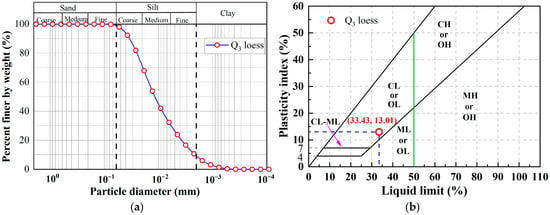
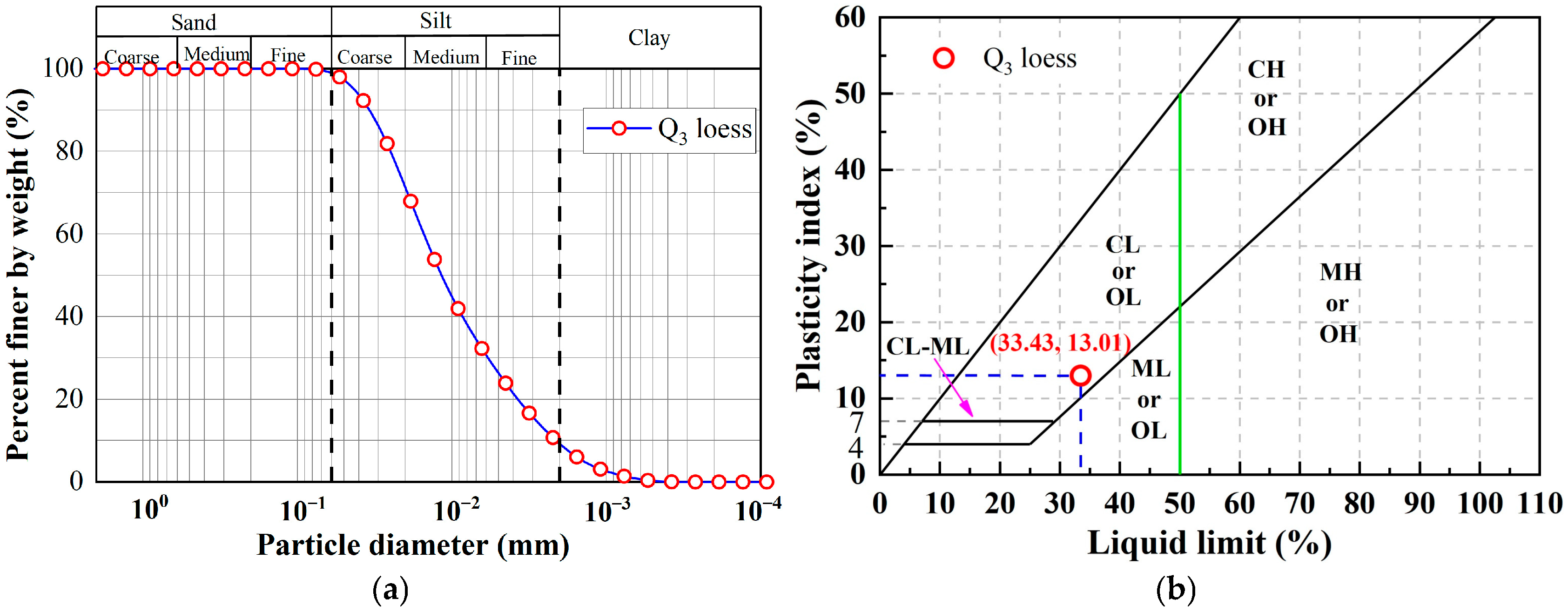
The particle-size distribution was determined using a Mastersizer 2000 laser diffraction analyzer (Malvern Instrument Ltd., Malvern, UK). As shown in Figure 1a, the tested loess was dominated by fine particles, with fines and sand fractions of 94.16% and 5.84%, respectively. The liquid limit and plastic limit were 32.52% and 18.68%, respectively. According to the Atterberg limits and ASTM D2487 [38], the soil was classified as low-plasticity clay (CL), as shown in Figure 1b. The main physicochemical properties of the loess are summarized in Table 1. The high fines content, relatively large void ratio, and water-sensitive structure indicate that the tested soil is representative of collapsible and structurally sensitive loess, and is therefore appropriate for evaluating the coupled hydro-environmental and mechanical performance of Pb-contaminated loess after stabilization.
Figure 1.
Particle-size distribution and plasticity characteristics of the tested loess: (a) particle-size distribution curve and (b) plasticity chart.
Table 1.
Physicochemical properties of the loess.
2.1.2. Bacterial Strain and Cementation Solution for MICP Treatment
MICP was employed as the main biostabilization process. In ureolysis-driven MICP, ureolytic bacteria catalyze urea hydrolysis and generate carbonate ions, which subsequently react with calcium ions to form calcium carbonate precipitates. These biominerals can accumulate on particle surfaces and within pore spaces, thereby filling pores, strengthening interparticle bonding, reducing pore connectivity, and contributing to the immobilization of dissolved Pb species [39,40]. In this study, Sporosarcina pasteurii CGMCC 1.3687 (China General Microbiological Culture Collection Center, Beijing, China) was selected as the ureolytic bacterial strain because of its high urease activity, stable cultivation performance, and environmental adaptability [41,42,43]. The culture medium was prepared according to previous studies [41,44,45] and contained 20 g L−1 urea, 5 g L−1 peptone, 3 g L−1 yeast extract, and 0.01 g L−1 manganese sulfate. The initial pH of the medium was adjusted to 7.0 before sterilization at 121 °C for 20 min. After cooling, the sterilized medium was inoculated with seed culture at a volume ratio of 1:100 and incubated at 30 °C on a rotary shaker at 180 rpm for 48 h. At the end of cultivation, the bacterial suspension reached an optical density at 600 nm (OD600) of approximately 1.70, indicating favorable bacterial growth and urease activity.
The same bacterial strain was cultured under identical conditions for all experiments. The bacterial suspensions used in different batches were prepared following the same protocol and adjusted to the target concentration before inoculation to minimize batch-to-batch variability. The cementation solution consisted of equimolar urea and calcium chloride solutions, both at a concentration of 1.5 mol L−1. The solution was freshly prepared before use to provide sufficient substrate for microbial ureolysis and calcium ions for carbonate precipitation.
2.1.3. Graphene-Based Adsorptive Materials
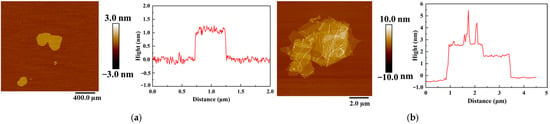
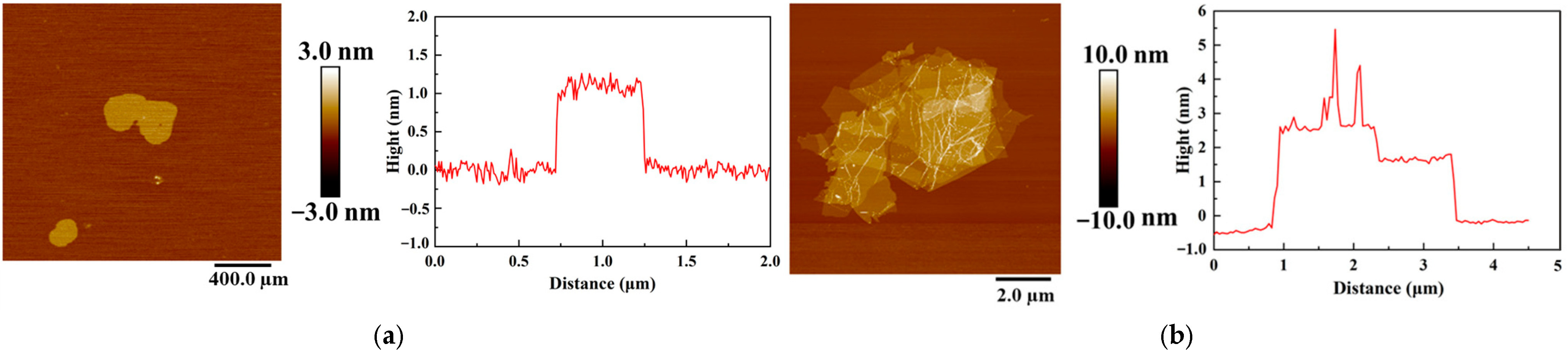
To improve the Pb immobilization efficiency and freeze–thaw durability of the MICP-treated loess, two graphene-based materials were incorporated into the MICP system: single-layer graphene (GR) and multilayer graphene oxide (GO). Two graphene-based materials, single-layer graphene (GR) and multilayer graphene oxide (GO), were incorporated into the MICP system. The surface morphology and layer structures of GR and GO were characterized by atomic force microscopy (AFM), as shown in Figure 2. GR exhibited a relatively intact lamellar structure with a thickness of approximately 1 nm, whereas GO showed more wrinkles and folds with an average thickness of approximately 3.2 nm.
Figure 2.
AFM images and thickness profiles of the graphene-based materials used in this study: (a) single-layer graphene (GR) and (b) multilayer graphene oxide (GO).
2.2. Experimental Methods
2.2.1. Preparation of Pb-Contaminated Loess
Before artificial contamination, the collected loess was oven-dried to constant mass, gently crushed, ground, and sieved to obtain a homogeneous particle composition. Analytical-grade lead nitrate, Pb(NO3)2, was dissolved in deionized water to prepare a Pb2+ stock solution. The required volume of Pb2+ solution was then uniformly sprayed onto the pretreated loess and thoroughly mixed to ensure a homogeneous distribution of Pb throughout the soil matrix. The target initial Pb concentration of the artificially contaminated loess was 500 mg kg−1.
After mixing, the contaminated loess was aged under laboratory ambient conditions for 1 month at approximately 25 °C [6]. This aging period allowed Pb2+ to interact with soil particles through adsorption, ion exchange, complexation, and phase redistribution, thereby producing a more stable and representative contaminated soil matrix for subsequent remediation tests.
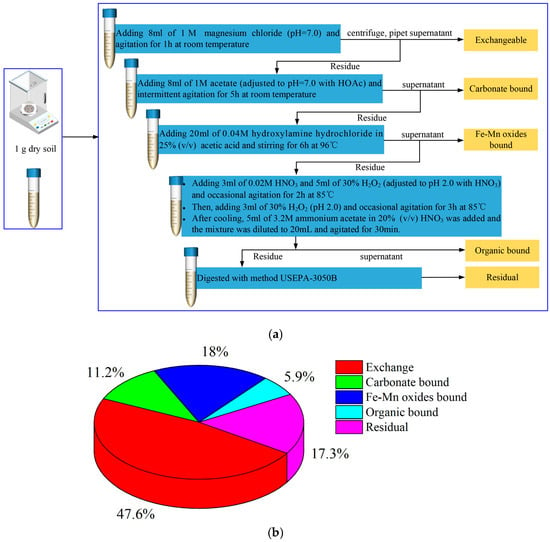
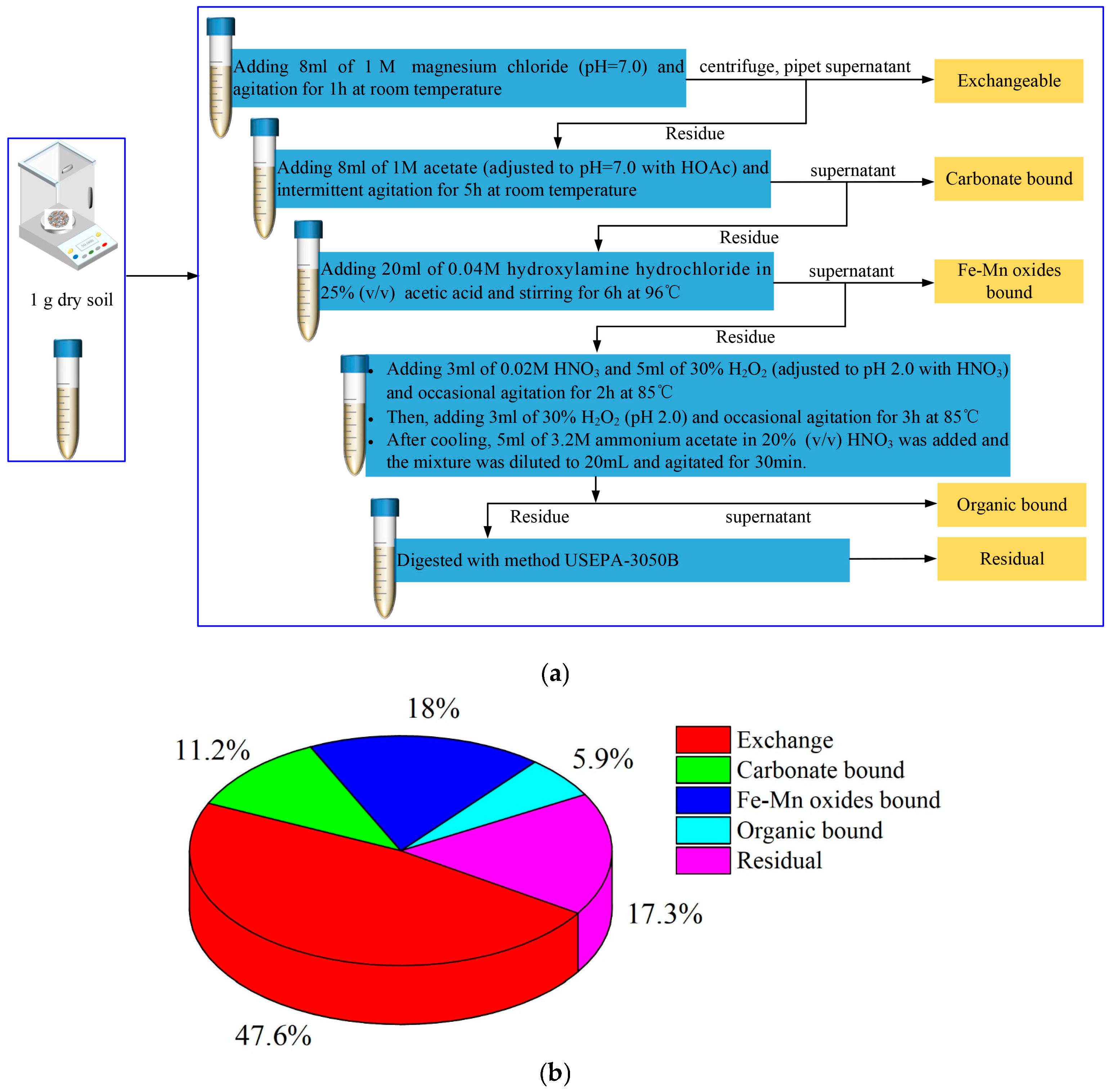
To evaluate the initial environmental risk of Pb in the artificially contaminated loess, a modified BCR sequential extraction procedure was performed together with determination of the residual fraction [6,7]. The extraction scheme is illustrated in Figure 3, and the initial Pb fractionation is shown in Figure 3b. The exchangeable fraction accounted for 47.6% of total Pb, indicating that nearly half of the Pb existed in a highly mobile and bioavailable form. The Fe–Mn oxide-bound, carbonate-bound, organic-bound, and residual fractions accounted for 18.0%, 11.2%, 5.9%, and 17.3%, respectively. These results confirm that the artificially contaminated loess had a high leaching risk and required stabilization to transform labile Pb into less mobile forms.
Figure 3.
Initial Pb fractionation in the artificially contaminated loess: (a) modified BCR sequential extraction scheme and (b) distribution of Pb fractions.
2.2.2. Specimen Preparation and Consolidation Compression Testing
To evaluate the effects of graphene-assisted MICP treatment on the compressibility of Pb-contaminated loess, large biocemented specimens were first prepared, and standard ring-knife specimens were subsequently trimmed for one-dimensional consolidation testing. During specimen preparation, the bacterial suspension was adjusted to an OD600 value of 1.20. Then, 40 mL of the bacterial suspension was added to 150 g of air-dried Pb-contaminated loess and thoroughly mixed [6]. For the graphene-assisted MICP groups, GR or GO was added at dosages of 0.1%, 0.5%, 1.0%, 1.5%, and 2.0% by dry soil mass. Mechanical stirring combined with manual blending was used to promote the uniform distribution of bacterial suspension, soil particles, and graphene-based materials. Each experiment was conducted once following a strictly controlled procedure.
The homogenized mixtures were placed into elastic cylindrical molds and gently compacted to reduce entrapped air and improve specimen uniformity. The molded specimens were then immersed in the cementation solution using a free-infiltration method to initiate MICP treatment. Continuous aeration was supplied during mineralization to maintain microbial activity and promote calcium carbonate precipitation. After the prescribed mineralization period, the specimens were removed from the cementation solution, demolded, and cured under laboratory ambient conditions until testing.
Standard consolidation specimens with a diameter of 61.8 mm and a height of 20 mm were trimmed from the treated specimens using ring knives. Before freeze–thaw cycling, each specimen was wrapped with two layers of impermeable plastic film to reduce moisture loss. The mass of each specimen was measured before and after each freeze–thaw cycle to monitor possible moisture variation. After the freeze–thaw program, the water content of all specimens was adjusted to 18% before consolidation testing, ensuring that the subsequent compressibility comparison was conducted under a consistent initial moisture condition. The specimens were subjected to 1, 5, 9, and 13 freeze–thaw cycles to represent different stages of freeze–thaw-induced deterioration. These cycle numbers were selected based on previous laboratory studies and were intended to evaluate the progressive degradation behavior of stabilized loess under repeated freeze–thaw conditions. It should be noted that laboratory freeze–thaw cycles do not directly correspond to specific field exposure periods due to differences in environmental conditions. Each cycle included freezing at −20 °C for 12 h followed by thawing at 20 °C for 12 h. The freeze–thaw tests were conducted in a programmable environmental chamber, and all specimens were subjected to identical thermal conditions.
One-dimensional consolidation tests were performed using a stepwise loading procedure. The void ratio under each vertical stress level was recorded, and e–logP curves were obtained to characterize the compressibility and structural stability of Pb-contaminated loess after different remediation treatments and freeze–thaw cycles. The comparison among CK, MICP, MICP + GR, and MICP + GO groups was used to evaluate the contribution of graphene-based materials to the freeze–thaw resistance of MICP-treated loess.
2.2.3. Leaching Toxicity Test
The leaching toxicity of Pb-contaminated loess after stabilization was evaluated using a modified toxicity characteristic leaching procedure based on U.S. EPA Method 1311 [46]. The extraction fluid was prepared by mixing 5.7 mL of glacial acetic acid with 64.3 mL of 1 mol L−1 NaOH, followed by dilution to 1 L with deionized water [6]. The pH of the extraction fluid was adjusted to 4.93 ± 0.05. Before leaching testing, the treated soil samples were air-dried, gently ground, and passed through a 2 mm sieve. A 50 g portion of each sample was placed in an extraction vessel, and the extraction fluid was added at a liquid-to-solid ratio of 10:1. The vessels were sealed and shaken at 30 ± 2 rpm for 18 h. After extraction, the supernatant was collected and filtered through a 0.45 μm membrane. The Pb concentration in the filtrate was measured using a Z-8200 polarized Zeeman atomic absorption spectrophotometer (Hitachi Polarized Zeeman AAS, Z-8200, Tokyo, Japan). The measured Pb concentration was used to assess the leaching potential and environmental stability of the treated soil.
2.2.4. Zeta Potential Measurements
Zeta-potential measurements were conducted to characterize the surface charge properties of natural loess, Pb-contaminated loess, GR, and GO. Before testing, the loess samples were oven-dried at 105 °C for 48 h until reaching constant mass, ground, and passed through a 2 mm sieve. A 0.1 g portion of soil was dispersed in 100 mL of deionized water to prepare a 0.1% soil suspension. The suspension was magnetically stirred for 30 min and then ultrasonicated for 10 min to promote particle dispersion [6].
GR and GO suspensions were prepared using the same solvent system at a concentration of 0.05%. The suspensions were ultrasonicated for 30 min to promote sheet exfoliation and obtain stable colloidal dispersions. Zeta-potential measurements were performed using a Zetasizer Nano ZS90 instrument (Nano ZS90, Malvern Instrument, Malvern, UK) based on electrophoretic light scattering at 25 °C. The mean zeta-potential value was used for interpretation. If slight sedimentation occurred before measurement, the suspension was briefly ultrasonicated again to restore dispersion.
2.2.5. X-Ray Fluorescence Analysis
X-ray fluorescence (XRF) analysis was performed to determine the major oxide composition of the soil samples and to evaluate compositional changes associated with MICP treatment and graphene-based modification. Before testing, the samples were air-dried to constant mass, ground, and passed through a 200-mesh sieve with an aperture size of 75 μm to ensure particle-size uniformity and compositional representativeness [6]. The prepared powders were then loaded into sample cups for XRF measurement. The analyzed oxide components included SiO2, Al2O3, Fe2O3, CaO, MgO, K2O, and Na2O. Particular attention was paid to the variation in CaO content because it reflects, to some extent, the accumulation of calcium-bearing mineralization products after MICP treatment. The XRF results were used together with the leaching, zeta-potential, and SEM results to support the mechanistic interpretation of Pb immobilization and soil-fabric improvement.
2.2.6. Scanning Electron Microscopy Analysis
Scanning electron microscopy (SEM) was used to examine the microstructural evolution of Pb-contaminated loess under different stabilization treatments. The observations focused on particle arrangement, pore morphology, interparticle bonding, and the distribution of mineralization products. SEM imaging was conducted using a Gemini Sigma 300 scanning electron microscope (Zeiss, Oberkochen, Germany).
Before SEM observation, representative specimens were selected and oven-dried at 105 °C for 48 h. Fresh fracture surfaces were exposed by gently breaking the specimens, and small pieces were mounted on sample stubs [6,10]. To improve electrical conductivity and reduce charging under the electron beam, the sample surfaces were coated with a thin gold layer before imaging. Micrographs were collected at different magnifications to compare the untreated Pb-contaminated loess, MICP-treated loess, and graphene-assisted MICP-treated loess. The SEM observations were used to identify the formation of calcium carbonate precipitates, particle bonding, pore filling, and graphene-associated mineralized frameworks. These microstructural features provided qualitative evidence for explaining the observed changes in Pb leaching behavior and consolidation compressibility after stabilization and freeze–thaw cycling.
3. Results and Discussion
3.1. Effect of MICP Treatment Alone on Pb-Contaminated Loess
3.1.1. Regulation of Pore-Water Chemistry and Physicochemical Properties
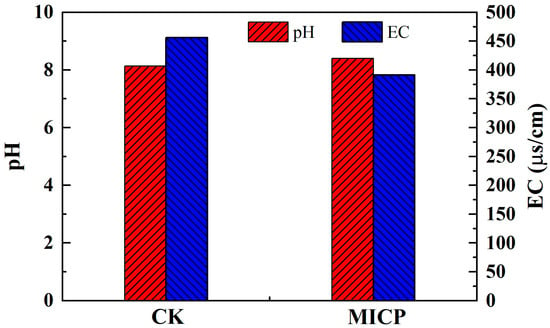
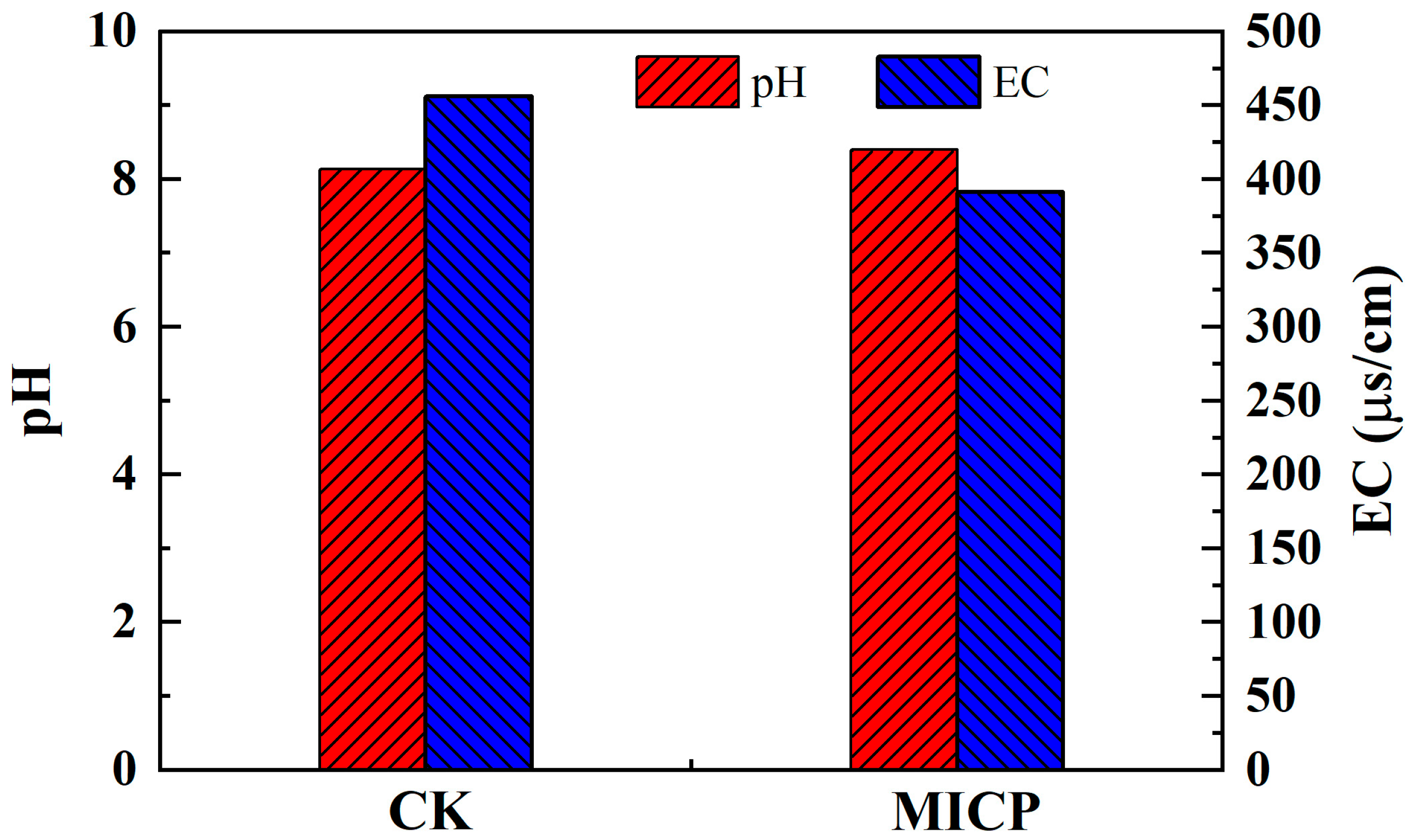
As shown in Figure 4, MICP treatment significantly altered the pore-water chemistry environment of Pb-contaminated loess, as evidenced by the increase in pH and reduction in electrical conductivity (EC). These variations demonstrate that microbial mineralization not only induced carbonate precipitation but also altered the geochemical conditions controlling Pb migration. During ureolysis-driven MICP, urease-producing bacteria hydrolyze urea and generate carbonate ions, resulting in an increase in alkalinity. Subsequently, the reaction between CO32− and Ca2+ promotes calcium carbonate precipitation within the soil matrix [18,19,20]. The increase in pH observed in this study is therefore consistent with previous MICP studies, where alkaline conditions were identified as a prerequisite for carbonate mineral formation and heavy-metal immobilization.
Figure 4.
Variations in pH and electrical conductivity (EC) before and after MICP treatment.
However, compared with most previous MICP investigations conducted on clean sands or coarse-grained soils, Pb-contaminated loess represents a more complex system because its contaminant mobility is strongly influenced by fine particle surfaces, pore-water chemistry, and mineral–water interactions. Loess generally possesses high porosity, weak interparticle bonding, and abundant reactive mineral surfaces, which control the adsorption, desorption, and redistribution of heavy metals [10,11,12,13]. Therefore, the increase in alkalinity caused by MICP in the present study may have contributed to Pb stabilization through multiple pathways, including the formation of Pb-bearing carbonate minerals, adsorption onto newly generated mineral surfaces, and co-precipitation with CaCO3 [6,7,21,22,23].
Recent studies have confirmed the potential of carbonate-based biostabilization for controlling potentially toxic metal migration in loess [47,48,49]. He et al. [50] found that combining MICP with modified biochar enhanced Pb immobilization by coupling carbonate precipitation with supplementary adsorption interfaces. Similar to their results, the increases in pH and the decreases in EC observed in the present study indicate that microbial mineralization changed the pore-water environment and promoted the conversion of dissolved Pb into less mobile forms. However, He et al. [50] primarily emphasized the combined immobilization effect of biochar adsorption and MICP, whereas the present study further distinguishes the effects of microbial alkalization from the interfacial regulation provided by GR and GO. Erceg et al. [51] demonstrated in an abiotic precipitation system that differently charged liposomes altered the precipitation and transformation kinetics of CaCO3. Although their suspension system differs considerably from Pb-contaminated loess, their findings provide independent evidence that interfacial charge can regulate calcium-carbonate precipitation. Therefore, the superior performance of GO observed here cannot be attributed solely to MICP-induced alkalization; it is also associated with the charged and oxygen-containing interfaces provided by GO.
The reduction in EC after MICP treatment further indicates the consumption and redistribution of dissolved ions during mineralization. Previous studies have shown that EC reduction after MICP is mainly associated with the removal of Ca2+ and CO32− from pore water during CaCO3 precipitation and the immobilization of dissolved contaminants through adsorption and precipitation processes [6,21,22,23]. Similar behavior has been observed in heavy-metal-contaminated soils, where microbial carbonate precipitation reduced dissolved metal concentrations by converting soluble metal ions into less mobile mineral-associated phases [24,25,26]. Nevertheless, excessive alkalinity may also induce long-term changes in soil mineral equilibrium, including carbonate redistribution and modification of clay mineral surface chemistry. Therefore, although the alkaline environment generated by MICP promotes short-term Pb immobilization, long-term applications require consideration of pore-water buffering capacity and mineralogical stability.
3.1.2. Improvement of Consolidation Behavior and Soil Structural Stability
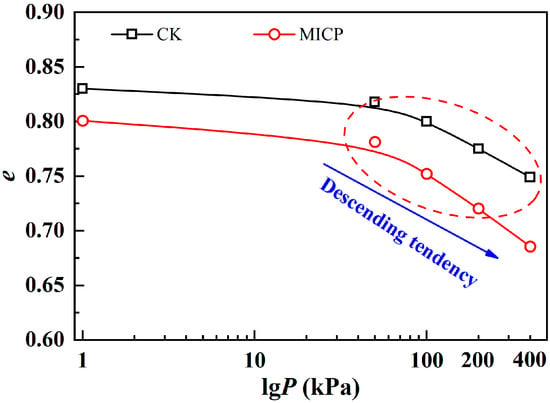
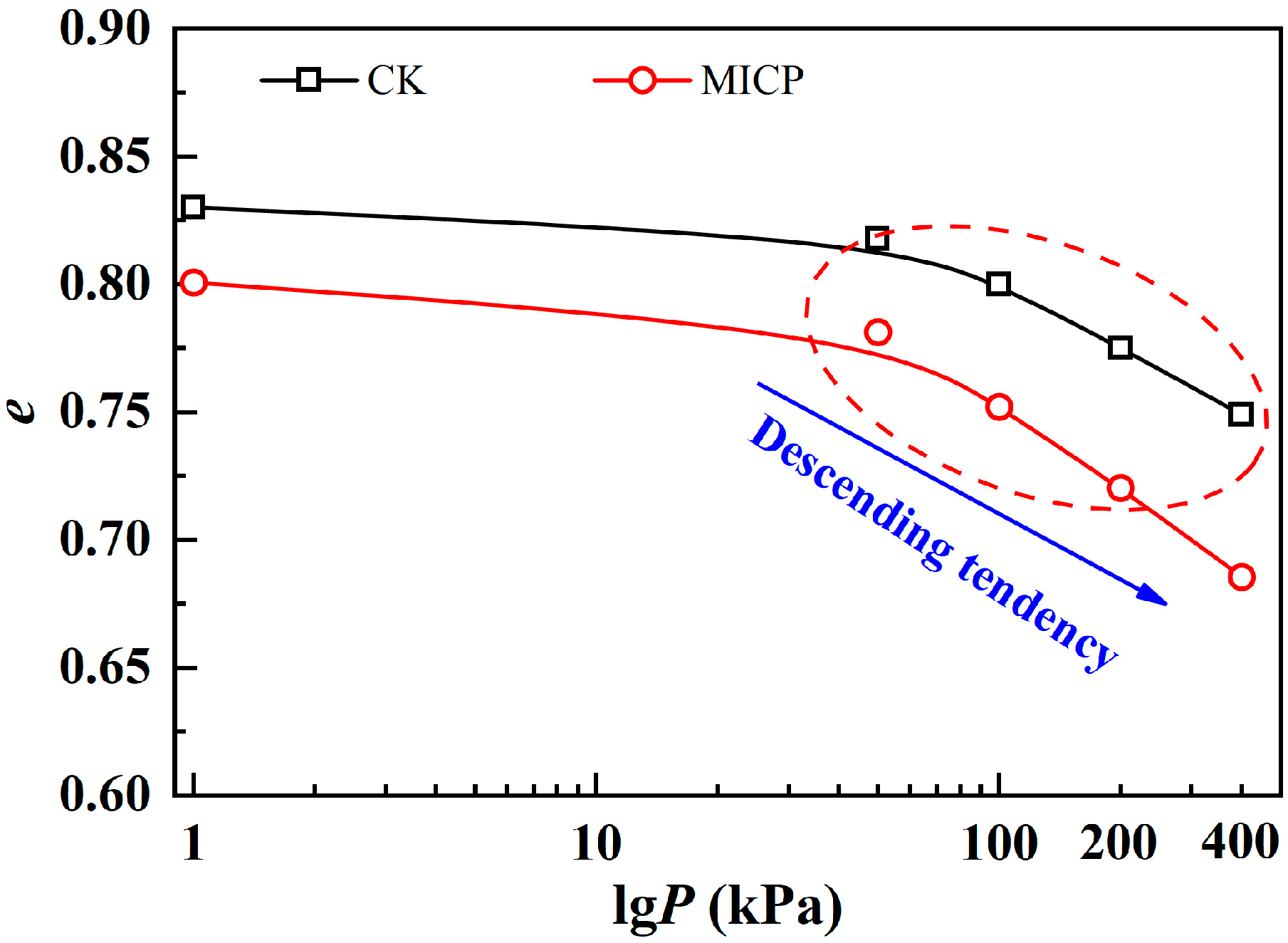
Figure 5 presents the consolidation compression behavior of untreated Pb-contaminated loess (CK) and MICP-treated specimens. For both groups, the void ratio decreased continuously with increasing vertical stress, indicating progressive pore compression and particle rearrangement. However, the MICP-treated specimens consistently exhibited lower void ratios than the untreated group under identical stress conditions, demonstrating that microbial mineralization improved the structural stability and reduced the compressibility of Pb-contaminated loess. The improvement in compression behavior can be attributed to the formation of CaCO3 precipitates and their interaction with the original loess structure. Previous studies have demonstrated that MICP enhances soil mechanical properties by depositing carbonate minerals within pores and generating interparticle cementation bonds [18,19,20,24,25,26]. In granular soils, this improvement is mainly associated with increased particle bonding and frictional resistance. However, the mechanism is more complicated in loess because its mechanical behavior is governed by metastable pore structures, weak natural cementation, and collapse susceptibility under external loading or environmental disturbance [10,11,12,13,52,53]. Therefore, the effectiveness of MICP in loess involves not only strengthening particle contacts but also modifying pore structure and reducing the volume of unstable pores.
Figure 5.
Comparison of the consolidation compression behavior of the control group (CK) and MICP-treated Pb-contaminated loess.
The present results are generally consistent with previous studies on the biological mineralization of contaminated loess but extend them to a different engineering response. He et al. [6] reported that MICP enhanced the internal stability of Zn-contaminated loess under seepage conditions by promoting carbonate precipitation and strengthening interparticle bonding. Similarly, the lower void ratios measured in the present MICP-treated specimens indicate that carbonate mineralization improved particle connections and reduced the volume of compressible pores. However, He et al. [6] focused on seepage-induced internal instability, whereas the present study evaluates one-dimensional compression under progressively increasing vertical stress. Zhang and Zhang [52] demonstrated that EICP without an external calcium source could immobilize Pb in contaminated loess. Their study confirmed the remediation potential of carbonate mineralization but did not systematically examine the consolidation behavior of the treated soil. The present e–logP results therefore extend these earlier findings by showing that carbonate mineralization can improve not only contaminant stability but also the load-dependent compressibility of Pb-contaminated loess. This distinction is important because a treatment that reduces Pb mobility may still be unsuitable for engineering applications if the metastable loess structure undergoes excessive compression under service loads.
Nevertheless, the e–logP curves of the MICP-treated specimens still showed evident compression at higher stress levels. This indicates that the biomineralized structure was not completely resistant to external loading. Previous studies have reported that CaCO3 bonding networks may partially fracture or rearrange under high stress because mineral precipitation improves interparticle connections but does not fundamentally alter the intrinsic compressibility of fine-grained soil particles [24,25,26]. Therefore, MICP treatment improves the initial structural stability of Pb-contaminated loess, but additional reinforcement strategies may be required for applications involving high loading conditions or long-term environmental disturbance. In comparison with previous studies mainly focusing on strength enhancement, the present work demonstrates that MICP can simultaneously improve the compression characteristics and environmental stability of Pb-contaminated loess. This finding expands the application of MICP from conventional soil reinforcement toward the stabilization of contaminated fine-grained geomaterials.
3.1.3. Reduction in Pb Leaching Through MICP Treatment
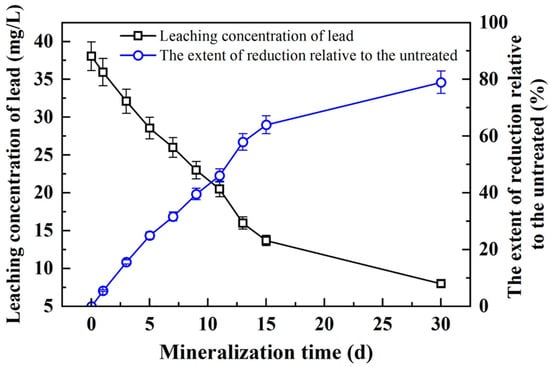
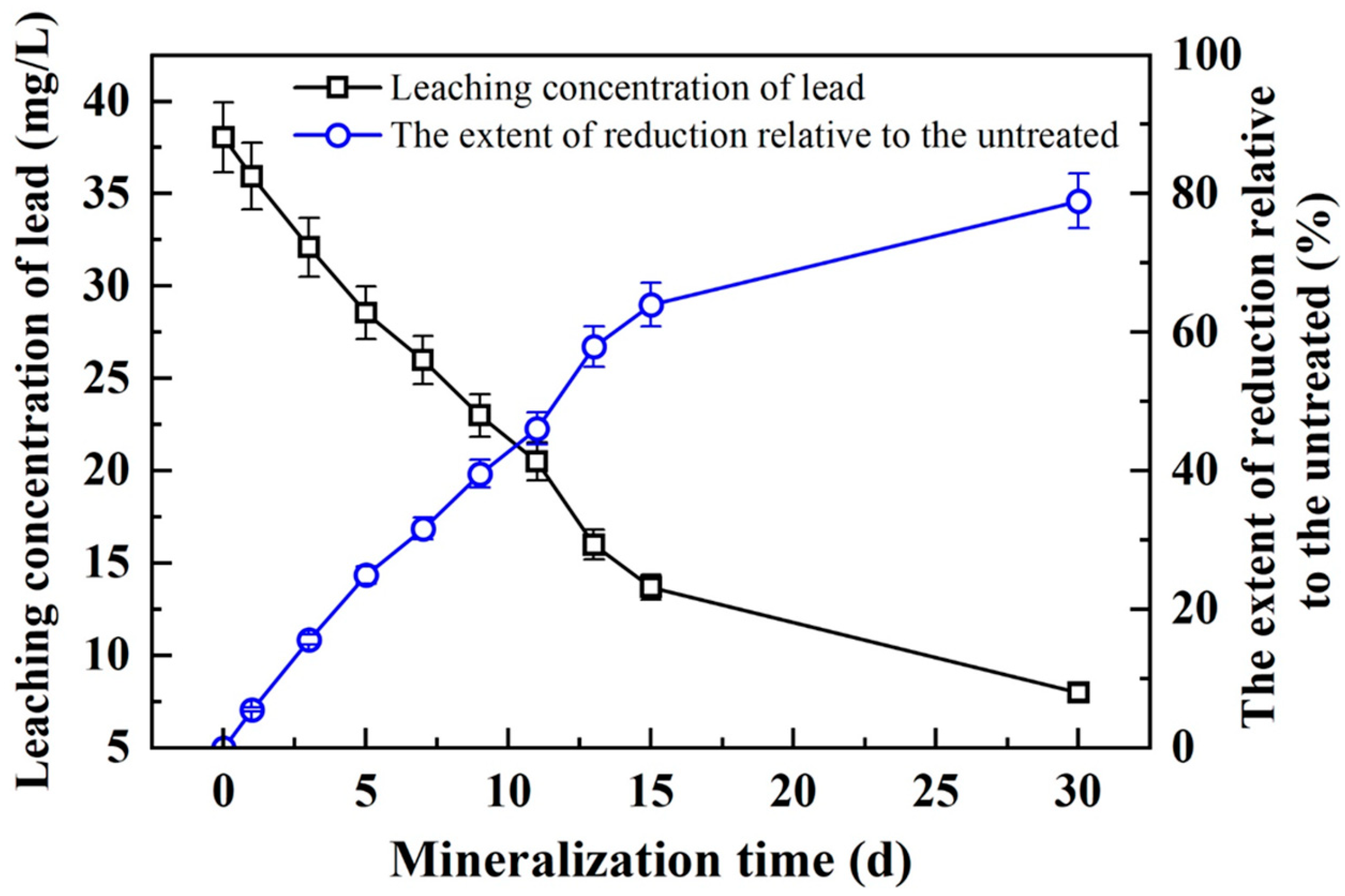
As shown in Figure 6, the Pb leaching concentration continuously decreased with increasing mineralization time, indicating that MICP progressively enhanced Pb immobilization. After 9 days of mineralization, the Pb leaching concentration decreased from 38.05 mg L−1 to 23.00 mg L−1, corresponding to a reduction of 39.55%. This result confirms that MICP can effectively reduce Pb mobility in contaminated loess. The observed Pb immobilization is consistent with previous studies reporting that MICP stabilizes heavy metals through several coupled mechanisms, including carbonate precipitation, adsorption onto microbial cells and mineral surfaces, co-precipitation with CaCO3, and physical encapsulation within mineralized structures [21,22,23,24,25,26]. During MICP, the alkaline environment generated by bacterial ureolysis increases carbonate availability and promotes the transformation of dissolved Pb2+ into less soluble Pb-bearing phases. Meanwhile, newly formed CaCO3 precipitates provide additional active surfaces for Pb adsorption and incorporation.
Figure 6.
Variation in Pb leaching concentration with mineralization time.
The Pb immobilization observed in this study is consistent with the mechanisms summarized by Wang et al. [21] and Xu and Wang [23], who concluded that MICP can stabilize potentially toxic metals through carbonate precipitation, adsorption onto bacterial cells and mineral surfaces, co-precipitation, and physical encapsulation. Sharma et al. [25] further demonstrated that biomediated calcite precipitation could simultaneously immobilize multiple metals and improve soil strength. Consistent with these studies, the Pb leaching concentration in the present work decreased continuously with mineralization time. Nevertheless, the magnitude of improvement was limited: after 9 d, the Pb leaching concentration decreased from 38.05 to 23.00 mg L−1, corresponding to a reduction of 39.55%.
The remaining concentration of 23.00 mg L−1 indicates that MICP alone did not completely eliminate Pb leaching risk under the tested contamination condition. He et al. [50] reported that modified biochar supplied additional adsorption sites and enhanced MICP-based Pb immobilization in loess. Compared with their composite treatment, the moderate reduction obtained using MICP alone in the present study indicates that carbonate production may be insufficient when reactive interfaces are spatially limited. Kim and Lee [7] also showed that the performance of indigenous MICP bacteria in metal-contaminated wastes depended strongly on the chemical and biological treatment conditions. In the present fine-grained loess, the small and poorly connected pores may further restrict bacterial migration and cementation-solution transport, causing localized precipitation and incomplete contact with Pb-bearing domains. These differences explain why the Pb reduction achieved here was lower than would be expected from an ideal, uniformly mineralized system and provide a direct rationale for introducing GR and GO as supplementary reactive interfaces.
3.2. Effects of Graphene-Assisted MICP Treatments on Pb-Contaminated Loess Under Freeze–Thaw Cycling
3.2.1. Changes in Compressibility Under Freeze–Thaw Cycling
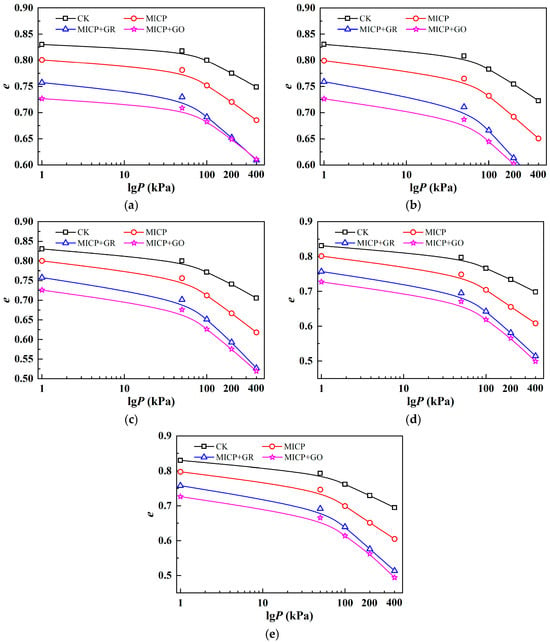
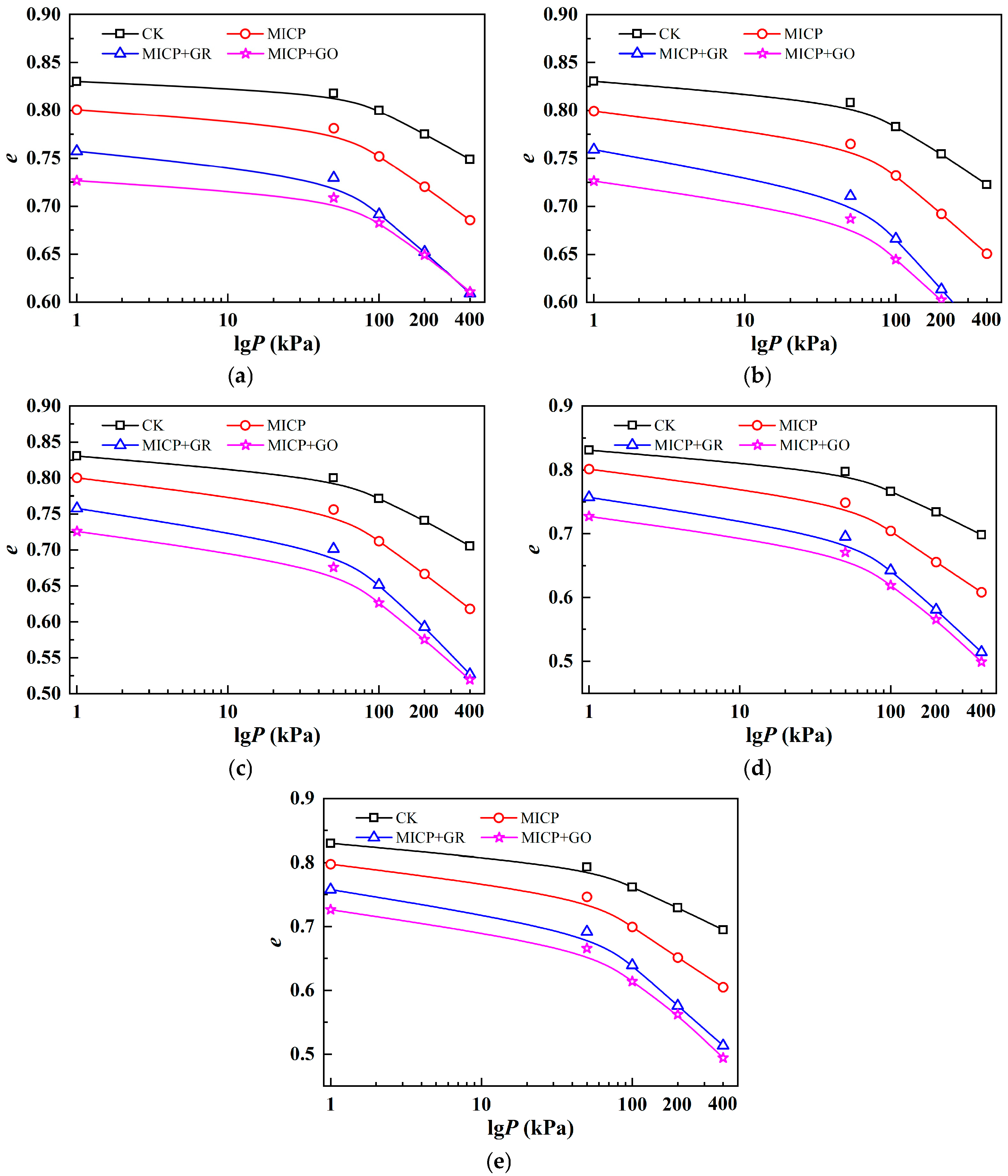
Figure 7 illustrates the consolidation behavior of Pb-contaminated loess subjected to different stabilization treatments and freeze–thaw cycles. For all groups, the void ratio decreased with increasing vertical stress, reflecting progressive pore compression and particle rearrangement. Ahenkorah et al. [33] reported that repeated freezing and thawing deteriorated the mechanical performance of MICP- and EICP-treated sands by damaging carbonate bonding and reorganizing the pore structure. Similarly, the present specimens exhibited progressively greater compressibility with increasing freeze–thaw cycles. However, Ahenkorah et al. [33] primarily evaluated unconfined compressive strength in treated sand, whereas the present study examines one-dimensional compression of fine-grained Pb-contaminated loess. The latter is additionally affected by metastable macropores, water-sensitive bonding, and contaminant–mineral interactions.
Figure 7.
e–lgP relationships of Pb-contaminated loess subjected to different remediation treatments and freeze–thaw cycles: (a) 0 cycles, (b) 1 cycle, (c) 5 cycles, (d) 9 cycles and (e) 13 cycles.
Yan et al. [47] observed progressive bond deterioration and microstructural damage in binder-stabilized red mud during freeze–thaw cycling, while Ma et al. [49] reported simultaneous mechanical degradation and increased Cr leaching from polyurethane-stabilized contaminated soil. These findings agree with the present observation that freeze–thaw cycling can damage artificial bonding networks and reopen connected pores. Nevertheless, the MICP-treated specimens maintained lower void ratios than the untreated CK specimens, indicating that CaCO3 bonding remained partly effective after cycling. The GR- and GO-assisted treatments further reduced compressibility. In particular, GO provided better resistance than GR, suggesting that its oxygen-containing functional groups and stronger interfacial interactions produced a more continuous mineralized framework. Thus, unlike previous studies that mainly examined binder-treated wastes or coarse-grained soils, the present work demonstrates the freeze–thaw durability of a biologically mineralized, collapse-prone contaminated loess under consolidation loading.
Among the graphene-based additives, GO exhibited better performance than GR under freeze–thaw conditions. This difference can be attributed to the oxygen-containing functional groups of GO, which enhance interfacial interactions with Pb ions, bacterial cells, and CaCO3 precursors. In contrast, GR mainly contributes through physical reinforcement, while excessive GR addition may induce sheet aggregation and reduce effective mineralization sites [33,34,35,36,37]. Therefore, GO-assisted MICP provides a more stable mineralized structure by integrating chemical interactions and physical reinforcement.
3.2.2. Pb Leaching Behavior Under Freeze–Thaw Cycling
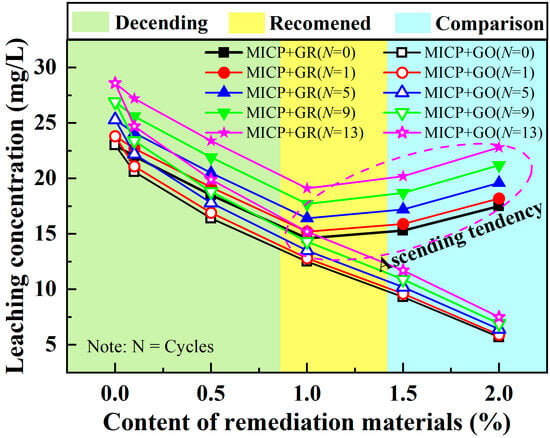
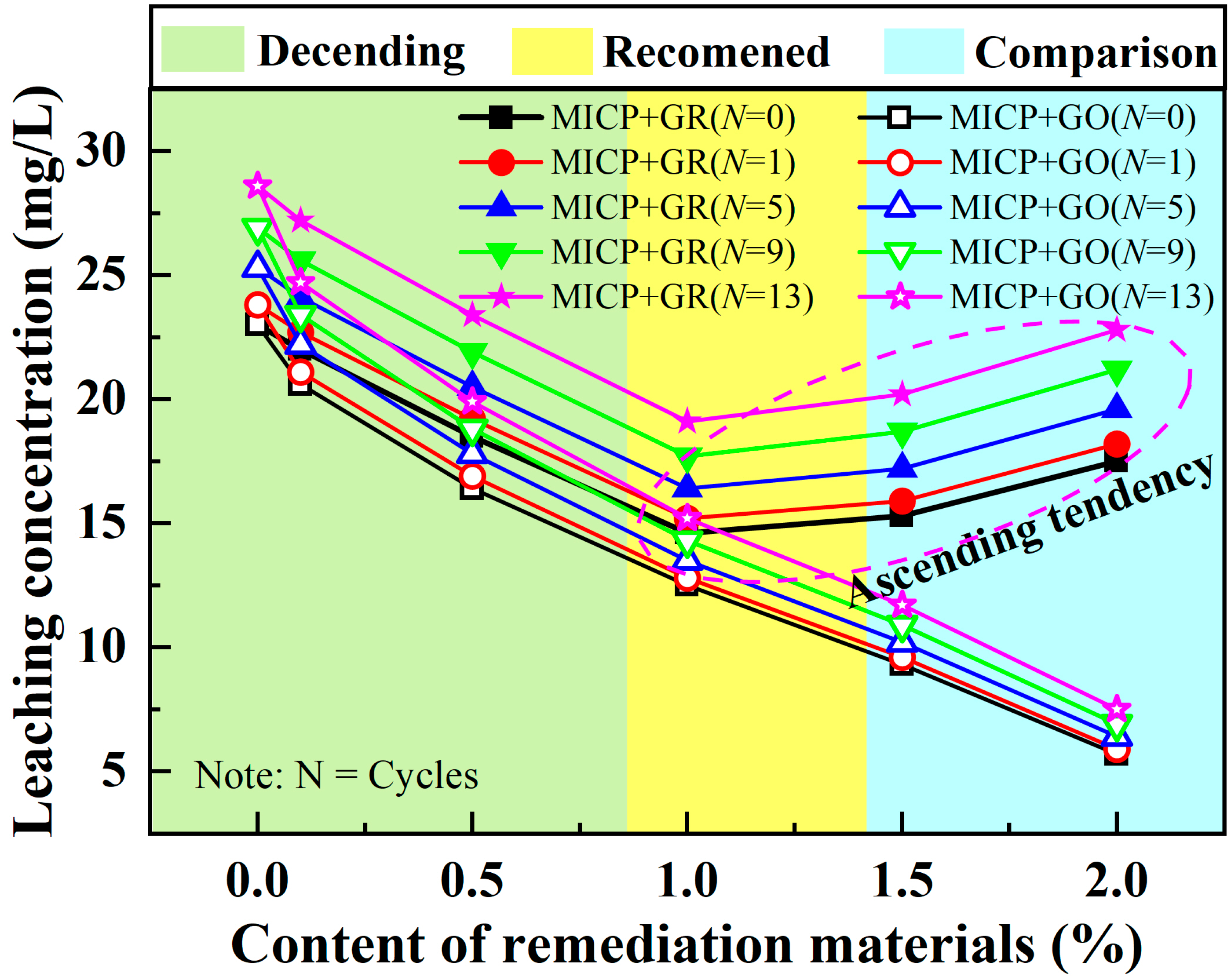
Freeze–thaw cycling significantly affected Pb immobilization, as reflected by the increased Pb leaching concentration with increasing freeze–thaw cycles (Figure 8). Similar observations have been reported in contaminated soils, where freeze–thaw processes modify pore-water migration, mineral–water interactions, and contaminant redistribution pathways [48]. These results indicate that maintaining long-term Pb immobilization requires not only high initial stabilization efficiency but also sufficient resistance against environmental disturbance. Compared with CK, all MICP-treated groups exhibited lower Pb leaching concentrations after freeze–thaw cycling, demonstrating the protective effect of carbonate mineralization. Previous studies have reported that MICP immobilizes Pb through multiple mechanisms, including carbonate precipitation, adsorption, co-precipitation, and encapsulation within CaCO3 matrices [21,22,23,24,25,26]. However, the immobilization efficiency of MICP in fine-grained loess can be limited by heterogeneous mineral distribution and restricted bacterial transport.
Figure 8.
Pb leaching concentration of contaminated loess under different remediation treatments and freeze–thaw cycles.
The improvement produced by graphene addition is consistent with previous functional-material-assisted MICP studies. He et al. [50] found that modified biochar enhanced Pb immobilization in loess by supplying supplementary adsorption interfaces for microbial carbonate precipitation. Similarly, both GR and GO reduced Pb leaching relative to MICP alone in the present study. However, whereas He et al. [50] focused mainly on the initial remediation effect, the present results demonstrate that the benefit of supplementary interfaces can persist during repeated freeze–thaw cycling. Gao et al. [54] reported that positively and negatively charged additives altered bacterial growth, bacterial attachment, carbonate precipitation, and Pb immobilization during MICP treatment of contaminated loess. The superior performance of GO observed here agrees with their conclusion that additive surface properties regulate MICP efficiency. The present study further shows that this interfacial regulation affects not only initial mineralization but also the durability of Pb immobilization under thermal and hydraulic disturbance.
Radford et al. [48] reported that freeze–thaw cycling increased As mobility in a contaminated wetland by modifying pore-water migration and mineral–water interactions. Ma et al. [49] similarly observed progressive leaching and mechanical deterioration in polyurethane-stabilized Cr-contaminated soil during freeze–thaw cycling. Consistent with those studies, Pb leaching increased with the number of freeze–thaw cycles in the present specimens. Nevertheless, GO-assisted MICP exhibited a smaller increase in Pb release than the other treatments. Although Radford et al. [48] and Ma et al. [49] investigated different contaminants and stabilization systems, the common trend indicates that freezing and thawing can reopen preferential transport pathways. The improved performance of GO-assisted MICP therefore reflects the enhanced continuity and durability of the mineralized framework rather than merely a higher initial adsorption capacity.
3.3. Mechanistic Interpretation of Combined MICP and Graphene-Assisted Remediation for Pb-Contaminated Loess
3.3.1. Interaction Between MICP and Pb Ions
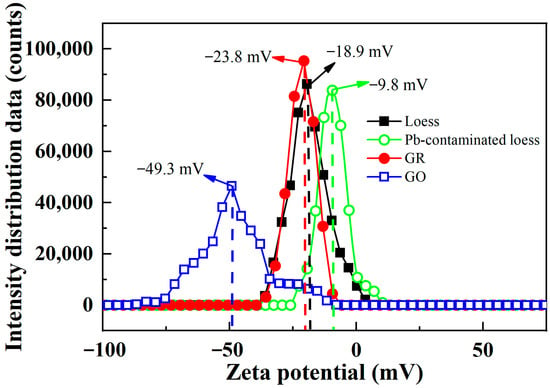
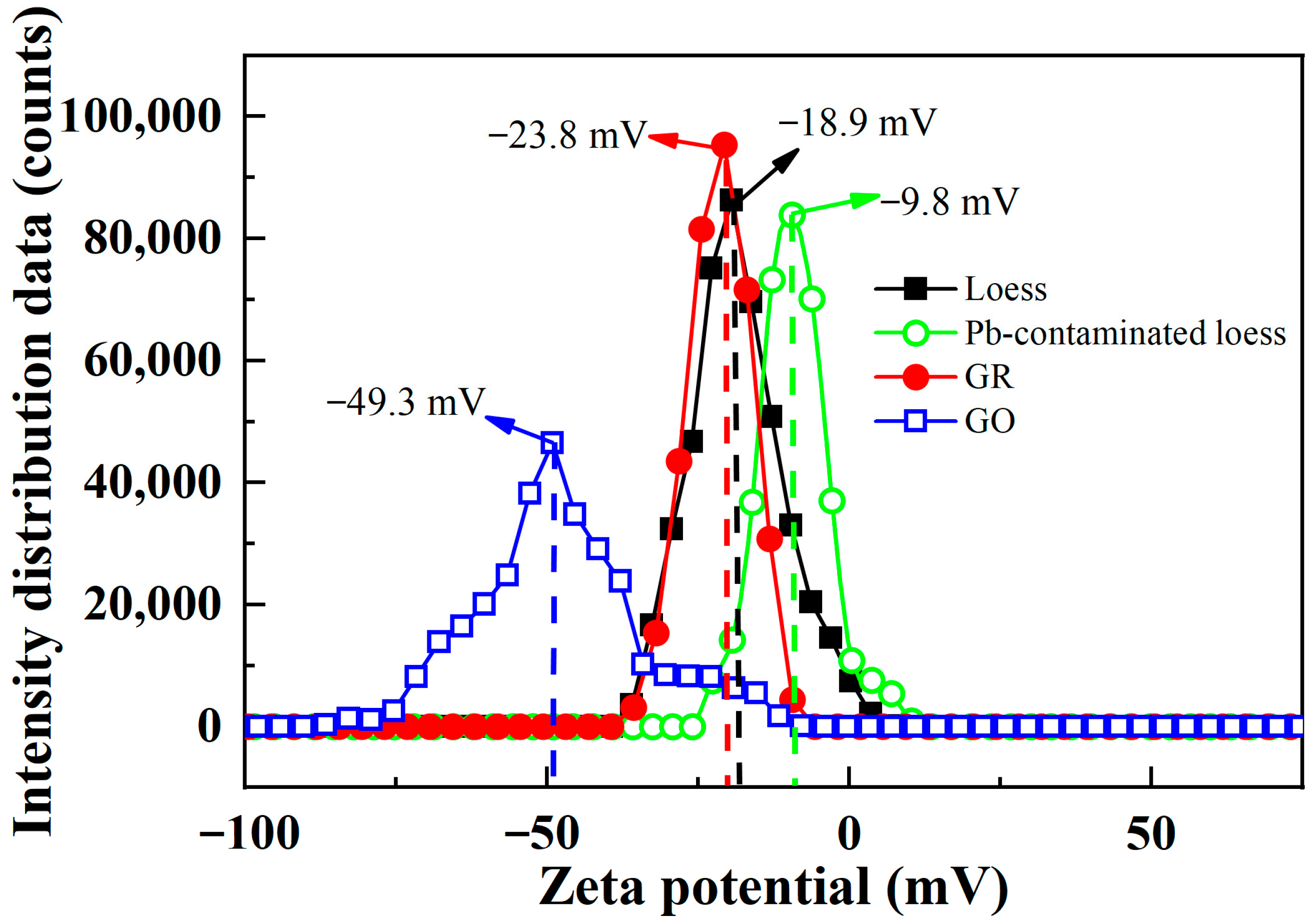
The stabilization of Pb-contaminated loess by MICP is controlled by the coupled effects of microbial mineralization, interfacial adsorption, carbonate precipitation, and pore-structure regulation. As shown in Figure 9, natural loess particles carried a net negative surface charge, with a zeta potential of −18.9 mV. After Pb contamination, the zeta potential increased to −9.8 mV, indicating a marked weakening of surface electronegativity. This change suggests that Pb2+ occupied reactive sites on loess particle surfaces through electrostatic neutralization, surface coordination, and complexation, thereby reducing the net negative charge of the particles and enhancing charge-screening effects.
Figure 9.
Zeta potentials of natural loess, Pb-contaminated loess, graphene (GR) and graphene oxide (GO).
Surface charge determines interactions among soil particles, dissolved Pb species, microorganisms, and mineral precursors. Wang et al. [21] emphasized that potentially toxic metal immobilization during MICP is controlled not only by carbonate precipitation but also by adsorption onto bacterial and mineral surfaces. Similarly, the shift in zeta potential from −18.9 mV for natural loess to −9.8 mV after Pb contamination indicates that Pb2+ occupied negatively charged surface sites and weakened the surface electronegativity of the loess particles. Erceg et al. [51] demonstrated in an abiotic model system that differently charged liposomes altered the precipitation and transformation kinetics of CaCO3. Although their system did not contain soil particles, bacteria, or Pb, it independently confirmed that charged interfaces can regulate calcium-carbonate precipitation. Gao et al. [54] reached a comparable conclusion in Pb-contaminated loess, showing that positively and negatively charged additives modified bacterial attachment, carbonate precipitation, and Pb immobilization. The present results agree with Gao et al. [54] but further reveal a clear difference between GR and GO. GO contains hydroxyl, carboxyl, and epoxy groups that can complex Pb2+ and interact with Ca2+, carbonate species, and bacterial surfaces, whereas GR mainly provides a large physical surface with fewer chemically active groups. GO can therefore couple Pb adsorption with heterogeneous CaCO3 nucleation more effectively than GR.
The role of additive surface properties in regulating MICP has also been reported by Gao et al. [54], who demonstrated that positively and negatively charged additives could modify bacterial attachment, carbonate precipitation behavior, and Pb immobilization efficiency in Pb-contaminated loess. These findings support the hypothesis that graphene materials in the present study function not only as reinforcement agents but also as interfacial regulators controlling microbe–mineral–contaminant interactions.
3.3.2. Interaction Between MICP and Graphene-Based Adsorptive Materials
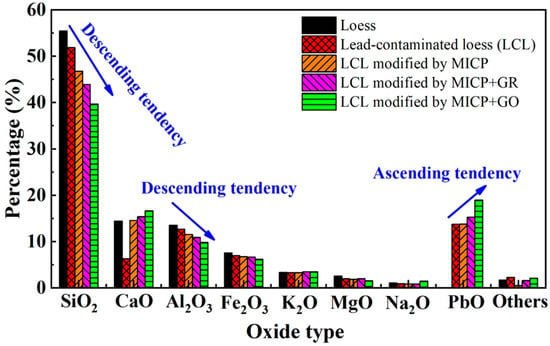
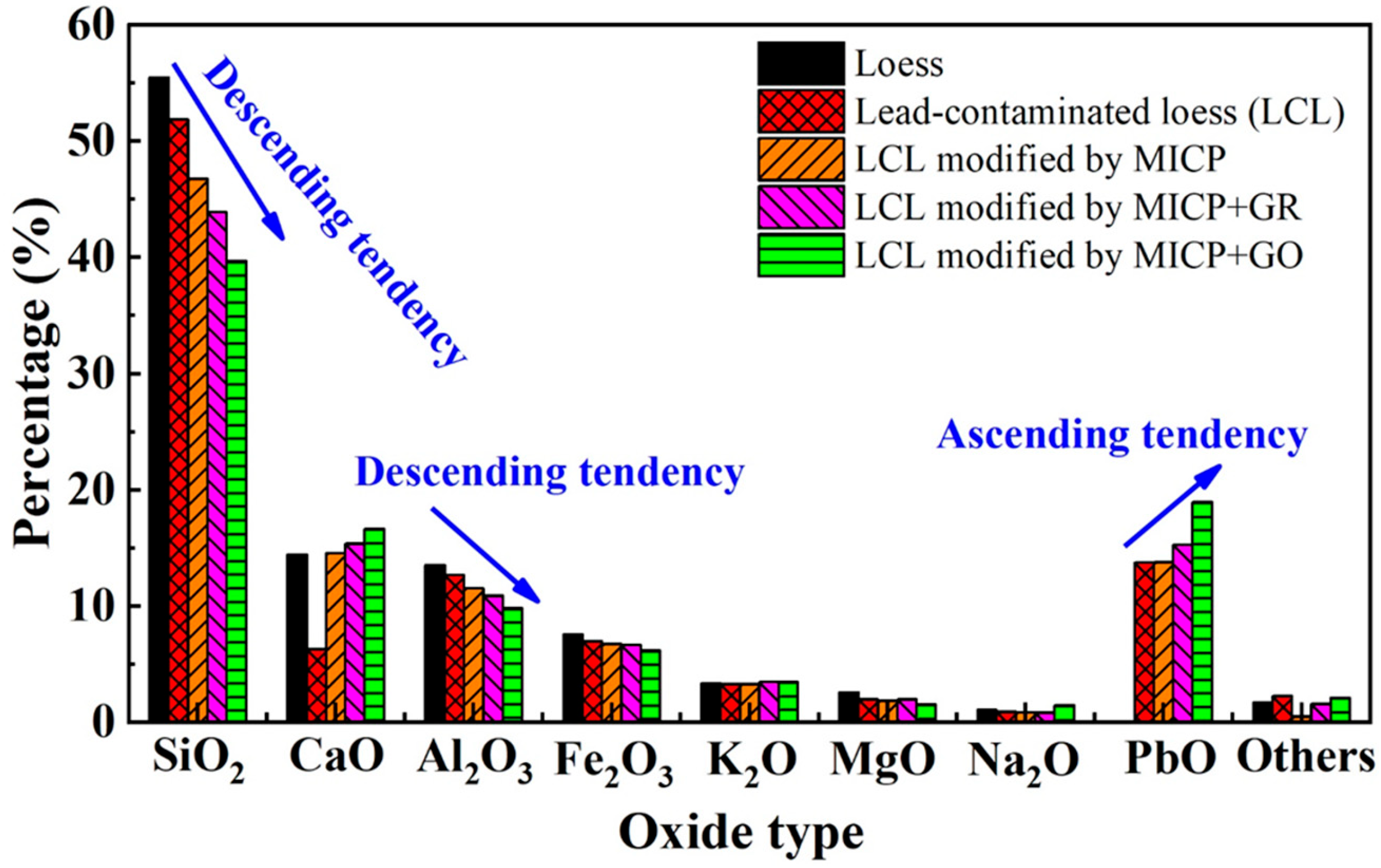
Following interfacial regulation by the graphene materials, MICP-induced carbonate mineralization provides the principal mechanism for Pb immobilization and structural improvement. Bu et al. [39] and Fu et al. [44] concluded that ureolysis-driven MICP promotes CaCO3 precipitation by generating carbonate ions and providing bacterial nucleation surfaces. Consistent with this established mechanism, the increase in calcium-containing components detected by XRF after MICP, MICP + GR, and MICP + GO treatment (Figure 10) suggests the accumulation of Ca-bearing mineral products. However, XRF reports elemental oxide equivalents and cannot identify individual crystalline phases. Therefore, the XRF results support, but do not independently prove, the formation of CaCO3. The mineralization interpretation is instead based on the combined pH and EC trends, established ureolysis chemistry, and SEM-observed pore filling and particle bridging. Erceg et al. [51] showed that the surface charge of foreign interfaces affected CaCO3 precipitation and phase-transformation behavior, while Stanković et al. [55] summarized that pH, ionic strength, additives, temperature, and hydrodynamic conditions can regulate the nucleation, growth, and morphology of bio-inspired calcium minerals. These findings support the differences observed among the MICP, MICP + GR, and MICP + GO groups. Although the same basic cementation solution was used, GR and GO provided interfaces with different functional groups and surface-charge characteristics. Consequently, the three treatments did not necessarily generate identical nucleation densities, mineral morphologies, or spatial distributions.
Figure 10.
Oxide compositions of natural loess, Pb-contaminated loess, and loess treated by MICP, MICP + GR and MICP + GO.
The present results are consistent with previous investigations on contaminated loess. He et al. [50] reported that MICP combined with modified biochar enhanced Pb immobilization in contaminated loess by integrating carbonate precipitation with additional adsorption interfaces. Similarly, Zhang and Zhang [52] demonstrated the feasibility of EICP for Pb-contaminated loess remediation, confirming the potential of carbonate mineralization-based technologies for stabilizing heavy metals in loess environments. However, compared with sandy soils, the fine-grained structure of loess restricts bacterial transport and mineral distribution, which may lead to heterogeneous precipitation. Therefore, graphene-assisted MICP provides an additional advantage by improving the availability of reactive interfaces and promoting more uniform mineral formation. This explains why MICP + GR and especially MICP + GO exhibited better Pb immobilization and compressibility reduction than MICP alone.
3.3.3. Coupled Hydro-Environmental and Geotechnical Stabilization Mechanism
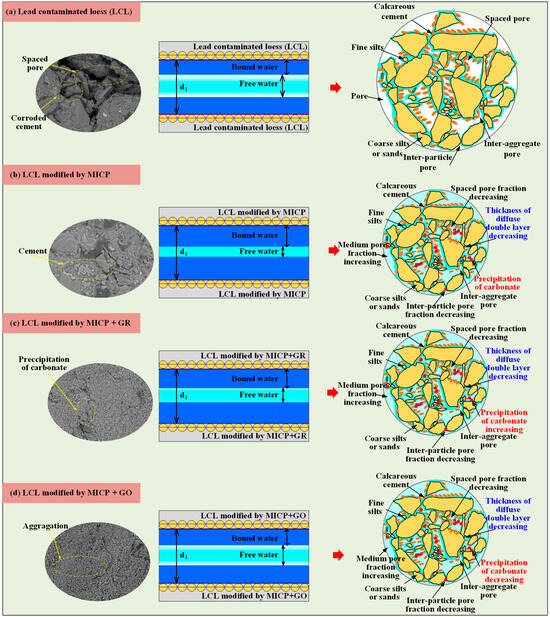
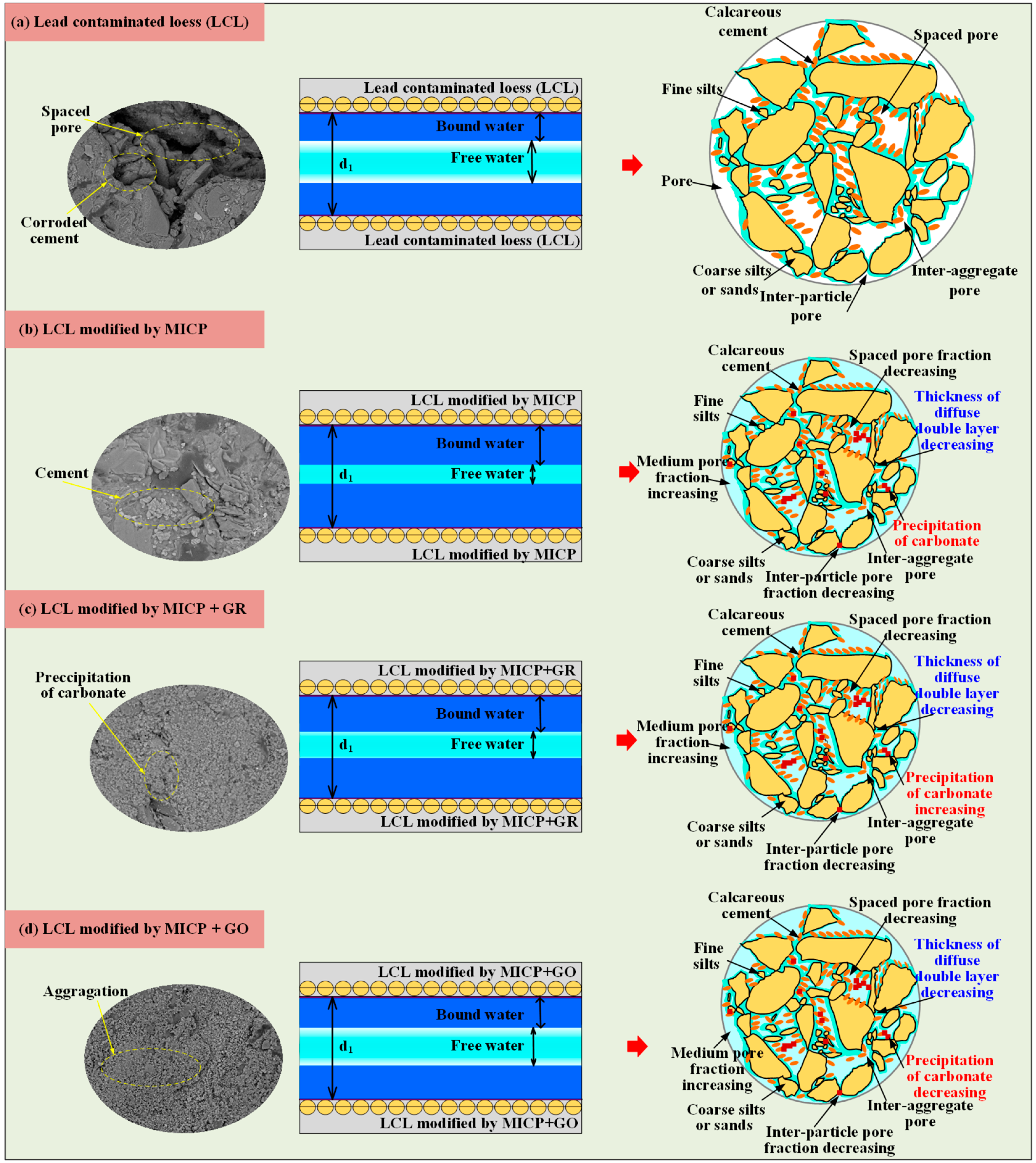
The remediation of Pb-contaminated loess under freeze–thaw environments requires simultaneous control of contaminant migration and preservation of soil structural stability. Based on the results of graphene characterization (Figure 2), Pb fractionation (Figure 3), pore-water chemistry evolution (Figure 4), consolidation behavior (Figure 5 and Figure 7), Pb leaching characteristics (Figure 6 and Figure 8), surface electrochemical properties (Figure 9), and mineral composition changes (Figure 10), a coupled hydro-environmental and geotechnical stabilization mechanism of graphene-assisted MICP is proposed (Figure 11). Unlike conventional MICP applications that mainly rely on CaCO3 precipitation for soil reinforcement, the present study demonstrates that graphene-assisted MICP integrates interfacial regulation, contaminant immobilization, mineral reconstruction, and freeze–thaw resistance.
Figure 11.
Conceptual mechanism of Pb immobilization and compressibility reduction in Pb-contaminated loess treated by MICP, MICP + GR, and MICP + GO.
The initial Pb fractionation results (Figure 3) indicate that a considerable proportion of Pb existed in mobile fractions, highlighting the environmental risk of untreated contaminated loess. This behavior is consistent with previous studies showing that Pb mobility is controlled by soil mineralogy, pore-water chemistry, and interactions between Pb species and reactive surfaces [6,7]. During MICP treatment, ureolysis-induced carbonate production increased pore-water alkalinity and promoted CaCO3 precipitation, as reflected by the pH increase and EC reduction (Figure 4). Previous studies have demonstrated that MICP immobilizes heavy metals through carbonate precipitation, adsorption, co-precipitation, and encapsulation mechanisms [18,19,20,21,22,23,24,25,26]. The continuous reduction in Pb leaching concentration with mineralization time (Figure 6) confirms that MICP transformed mobile Pb into less available forms. However, compared with coarse-grained soils where microbial transport and mineral precipitation are relatively uniform [18,19,20], the low permeability and heterogeneous pore structure of loess may restrict bacterial migration and mineral distribution, resulting in incomplete Pb stabilization. Similar limitations have been reported for MICP-treated Pb-contaminated loess, where additional functional materials were required to enhance adsorption and mineralization efficiency [50].
GR incorporation further improved the stabilization performance by regulating microbe–mineral–contaminant interactions. The morphology differences between GR and GO observed by AFM (Figure 2) and their distinct surface charge characteristics (Figure 9) indicate that graphene materials provide different interfacial environments for Pb adsorption and carbonate nucleation. Previous studies have demonstrated that graphene-based materials can enhance contaminant immobilization through their large specific surface area, adsorption capacity, and heterogeneous nucleation ability [33,34,35,36,37]. Moreover, Gao et al. [54] confirmed that charged additives could regulate microbial activity and carbonate precipitation behavior during MICP remediation of Pb-contaminated loess, emphasizing the importance of additive surface properties in controlling mineralization efficiency. In this study, GO exhibited superior performance compared with GR because its abundant oxygen-containing functional groups promoted Pb adsorption and facilitated interactions with Ca2+ and carbonate species, resulting in more uniform mineral formation.
The mineralogical and mechanical improvements further support this coupled stabilization mechanism. The changes in oxide compositions (Figure 10) indicate enhanced accumulation of calcium-bearing mineral products after MICP-based treatments, confirming the formation of mineralized structures. The reduced compressibility observed after treatment (Figure 5) can therefore be attributed to CaCO3-induced pore filling and interparticle bonding. Similar improvements in contaminated loess stability have been reported for MICP-based treatments, where carbonate precipitation enhanced internal stability and reduced structural vulnerability [53]. Compared with MICP alone, graphene-assisted systems exhibited improved structural continuity because graphene sheets provided additional reinforcement interfaces and promoted more homogeneous mineral deposition.
The freeze–thaw response observed here is consistent with Radford et al. [48], who found that repeated freezing and thawing modified mineral–water interactions and increased contaminant mobility, and with Ma et al. [49], who reported simultaneous bond degradation and contaminant release from stabilized soil. However, the present study differs from these studies in both treatment mechanism and research objective. Radford et al. [48] examined As mobility in wetland soil, whereas Ma et al. [49] investigated polyurethane-stabilized Cr-contaminated soil. In contrast, the present work evaluates biologically generated carbonate bonding in Pb-contaminated loess. The lower compressibility and Pb leaching of the GO-assisted specimens indicate that GO mitigated freeze–thaw damage by improving mineral continuity and interfacial bonding. Therefore, graphene-assisted MICP simultaneously regulates contaminant migration, load-dependent deformation, and freeze–thaw durability, whereas most previous studies considered these environmental and geotechnical responses separately.
3.4. Engineering Implications and Limitations of Graphene-Assisted MICP Stabilization
The results demonstrate that graphene-assisted MICP provides a multifunctional strategy for stabilizing Pb-contaminated loess by simultaneously reducing Pb mobility, improving compressibility behavior, and enhancing freeze–thaw resistance. Compared with conventional MICP treatment, graphene incorporation further improved the stability of the mineralized framework by regulating interfacial interactions and promoting more uniform mineral formation. Among the tested additives, GO exhibited superior performance compared with GR, which was attributed to its abundant oxygen-containing functional groups and stronger interactions with Pb species and mineral precursors.
From an engineering perspective, this study extends MICP from conventional soil reinforcement to contaminated fine-grained soil remediation under seasonal freeze–thaw disturbance. Stanković et al. [55] described bio-inspired mineral synthesis under mild aqueous conditions as a potentially green route for producing functional mineralized materials. The present MICP process follows this general concept, but applies it to the coupled environmental and geotechnical stabilization of Pb-contaminated loess. Compared with previous studies, the present work addresses a different combination of remediation objectives. He et al. [50] investigated the initial Pb immobilization achieved by combining MICP with modified biochar, while Zhang and Zhang [52] examined EICP-based Pb stabilization without an external calcium source. He et al. [6] focused on the seepage-induced internal stability of Zn-contaminated loess, and Gao et al. [54] examined the effects of charged additives on microbial activity and Pb immobilization. In contrast, the present study jointly evaluates Pb leaching, one-dimensional compressibility, interfacial charge, mineral chemistry, and freeze–thaw durability. Its principal contribution is therefore not simply an improvement in initial Pb immobilization, but evidence that GO-mediated interfacial regulation can preserve both environmental and geotechnical functions during repeated freezing and thawing. Nevertheless, the differences between laboratory and field conditions should be recognized. The tests were conducted using artificially contaminated loess under controlled moisture and thermal conditions. Natural groundwater chemistry, irregular freezing and thawing, scale-dependent treatment heterogeneity, graphene cost, and the environmental fate of graphene-based additives may alter field performance. These factors should be systematically evaluated before practical deployment.
4. Conclusions
This study investigated the coupled hydro-environmental and geotechnical performance of Pb-contaminated loess treated by MICP, graphene-assisted MICP, and graphene oxide-assisted MICP under freeze–thaw cycling. The following conclusions can be drawn.
- (1)
- MICP effectively improved the pore-water chemical environment and reduced the Pb leaching risk of contaminated loess. Ureolysis-driven mineralization increased system alkalinity, promoted CaCO3 precipitation, and reduced the concentration of mobile Pb through adsorption, carbonate precipitation, co-precipitation, and encapsulation. After 9 d of mineralization, the Pb leaching concentration decreased from 38.05 to 23.00 mg L−1, corresponding to a reduction of 39.55%. This confirms that MICP can effectively suppress Pb release into pore water and improve the environmental stability of contaminated loess.
- (2)
- MICP and graphene-assisted MICP improved the consolidation behavior of Pb-contaminated loess by reducing pore volume and enhancing interparticle bonding. Compared with untreated contaminated loess, the treated specimens showed lower void ratios under the same vertical stress. Under freeze–thaw conditions, the void ratio generally followed the order of CK > MICP > MICP + GR > MICP + GO, indicating that graphene-based materials further enhanced the compactness and deformation resistance of MICP-treated loess.
- (3)
- Freeze–thaw cycling weakened the structural stability and Pb immobilization capacity of stabilized loess by inducing water migration, ice-crystal growth, pore-structure reorganization, and partial damage of mineralized bonds. These processes increased pore connectivity and created potential pathways for Pb remobilization. Nevertheless, graphene-assisted MICP, especially GO-assisted MICP, maintained better leaching resistance and compressibility performance after repeated freeze–thaw disturbance.
- (4)
- GO-assisted MICP showed the best overall performance among the tested treatments. Compared with GR, GO exhibited stronger surface electronegativity, richer oxygen-containing functional groups, and better dispersibility, which enhanced Pb2+ adsorption, Ca2+ enrichment, heterogeneous CaCO3 nucleation, and mineral–soil–carbon framework formation. In contrast, GR-assisted MICP showed an optimum dosage of approximately 1.0%, while excessive GR addition may cause sheet agglomeration and non-uniform biomineralization. Overall, GO-assisted MICP is a promising low-carbon remediation strategy for Pb-contaminated loess in seasonally frozen regions, although future work should further evaluate field-aged soils, multi-metal contamination, long-term leaching stability, ammonium by-products, and the environmental fate of graphene-based additives.
Author Contributions
Y.J.: Investigation, Formal Analysis, Writing—Reviewing and Editing. L.L.: Conceptualization, Methodology, Resources, Writing—Original draft preparation. S.Z.: Conceptualization, Methodology, Resources, Writing—Original draft preparation. S.H.: Conceptualization, Methodology, Resources, Writing—Original draft preparation. J.Z.: Writing—Original draft preparation. All authors have read and agreed to the published version of the manuscript.
Funding
This research was funded by Henan Provincial Key Research Project for Higher Education Institutions (No. 26A560016), Henan Province Key Science and Technology Research Program (No. 262300422499), Henan Provincial Science and Technology Research Project (No. 262102321139, No. 262102320325), Henan Key Laboratory of Green Building Materials Manufacturing and Intelligent Equipment (No. 2025LGSYS08), Heluo Young Top-notch Talent Program for Science and Technology Innovation (No. 2025038), The 5th Heluo Young Talent Support Project (No. 2026HLTJ11) and Henan Province Science and Technology Research Project (No. 242102320014).
Data Availability Statement
The data used to support the findings of this study are available from the corresponding author upon request.
Conflicts of Interest
The authors declare that there are no conflicts of interest regarding the publication of this paper. All the authors have read and approved this version of the article, and due care has been taken to ensure the integrity of the work. I would like to declare on behalf of my co-authors that the work described was original research that has not been published previously, and not under consideration for publication elsewhere, in whole or in part. We declare that all authors have no actual or potential conflicts of interest, including financial, personal or other relationships with other people or organizations.
References
- Adimalla, N. Heavy metals pollution assessment and its associated human health risk evaluation of urban soils from Indian cities: A review. Environ. Geochem. Health 2020, 42, 173–190. [Google Scholar] [CrossRef] [Scilit] [PubMed]
- Huang, Y.; Li, J.; Ma, Y. Research progress of methods for determining sampling numbers of soil heavy metals survey. Trans. Chin. Soc. Agric. Eng. 2019, 35, 235–245. [Google Scholar]
- Nganje, T.N.; Adamu, C.I.; Ekwere, A.S.; Ibe, K.A.; Edet, A.; Hursthouse, A.S. Environmental geochemical signature of shale in pollution assessment of trace metals in soil and water in parts of southern Benue trough, southeastern Nigeria. Int. J. Environ. Anal. Chem. 2023, 103, 2858–2878. [Google Scholar] [CrossRef] [Scilit]
- Chen, Y.L.; Zuo, M.B.; Yang, D.; He, Y.Q.; Wang, H.M.; Liu, X.X.; Zhao, M.J.; Xu, L.L.; Ji, J.; Liu, Y.; et al. Synergistically effect of heavy metal resistant bacteria and plants on remediation of soil heavy metal pollution. Water Air Soil Pollut. 2024, 235, 296. [Google Scholar] [CrossRef] [Scilit]
- Li, J.; Zheng, Q.W.; Liu, J.Y.; Pei, S.W.; Yang, Z.; Chen, R.T.; Ma, L.; Niu, J.P.; Tian, T. Bacterial-fungal interactions and response to heavy metal contamination of soil in agricultural areas. Front. Microbiol. 2024, 15, 1395154. [Google Scholar] [CrossRef] [Scilit] [PubMed]
- He, P.; Guo, J.; Zhang, S. Feasibility of Microbially Induced Carbonate Precipitation to enhance the internal stability of loess under Zn-contaminated seepage conditions. Buildings 2024, 14, 1230. [Google Scholar] [CrossRef] [Scilit]
- Kim, J.H.; Lee, J.Y. An optimum condition of MICP indigenous bacteria with contaminated wastes of heavy metal. J. Mater. Cycles Waste Manag. 2019, 21, 239–247. [Google Scholar] [CrossRef] [Scilit]
- Xu, L.; Zhao, F.F.; Xing, X.Y.; Peng, J.B.; Wang, J.M.; Ji, M.F.; Li, B.L. Review on remediation technology and the remediation evaluation of heavy metal-contaminated soils. Toxics 2024, 12, 897. [Google Scholar] [CrossRef] [Scilit] [PubMed]
- Xu, L.; Zhao, F.F.; Peng, J.B.; Ji, M.F.; Li, B.L. A comprehensive review of the application and potential of straw biochar in the remediation of heavy metal-contaminated soil. Toxics 2025, 13, 69. [Google Scholar] [CrossRef] [Scilit] [PubMed]
- Liu, H.L.; Xiao, P.; Xiao, Y. State-of–the-art review of biogeotechnology and its engineering applications. J. Civ. Environ. Eng. 2019, 41, 1–14. (In Chinese) [Google Scholar]
- Hu, W.L.; Cheng, W.C.; Wen, S.J.; Rahman, M.M. Effects of chemical contamination on microscale structural characteristics of intact loess and resultant macroscale mechanical properties. CATENA 2021, 203, 105361. [Google Scholar] [CrossRef] [Scilit]
- Hu, W.L.; Cheng, W.C.; Wang, L.; Xue, Z.F. Micro-structural characteristics deterioration of intact loess under acid and saline solutions and resultant macro-mechanical properties. Soil Tillage Res. 2022, 220, 105382. [Google Scholar] [CrossRef] [Scilit]
- Hu, W.L.; Cheng, W.C.; Wen, S.J.; Kang, N.B. Revealing underlying mechanisms affecting electrokinetic remediation of an artificially Cu- and Pb-contaminated loess using the external regulatory system with adsorbent. Front. Mater. 2022, 9, 967871. [Google Scholar] [CrossRef] [Scilit]
- Chan, J.G.Q.J.; Bravo, R.H.; Erika, M.L.G. Sustainable electroremediation: An innovative technique for the remediation of contaminated soils. Trop. Subtrop. Agroecosyst. 2024, 27, 32. [Google Scholar] [CrossRef] [Scilit]
- Lin, M.T.; Ma, S.; Liu, J.; Jiang, X.S.; Dai, D.M. Remediation of arsenic and cadmium co-contaminated soil: A review. Sustainability 2024, 16, 687. [Google Scholar] [CrossRef] [Scilit]
- Li, Z.H.; Li, X.G. Bibliometric analysis and systematic review on the electrokinetic remediation of contaminated soil and sediment. Environ. Geochem. Health 2025, 47, 15. [Google Scholar] [CrossRef] [Scilit] [PubMed]
- Rabbani, A.; Bag, R.; Samui, P.; Kumari, S.; Akash. Remediation of heavy metals from contaminated soil: State of the art review of sources, risk, policies and available remediation techniques. Trans. Indian Natl. Acad. Eng. 2025, 10, 19–31. [Google Scholar] [CrossRef] [Scilit]
- Xu, F.L.; Wang, D.X. Review on soil solidification and heavy metal stabilization by microbial-induced carbonate precipitation (MICP) technology. Geomicrobiol. J. 2023, 40, 503–518. [Google Scholar] [CrossRef] [Scilit]
- Li, C.; Tian, L.; Dong, C.H.; Zhang, Y.F.; Wang, Y.X. Experimental study on zinc-lead composite contaminated soil solidified/stabilized by MICP technology combined with porous silicon adsorption materials. Rock Soil Mech. 2022, 43, 307–316. (In Chinese) [Google Scholar]
- Chang, J.J.; Yang, D.Y.; Lu, C.; Shu, Z.T.; Deng, S.J.; Tan, L.W.; Wen, S.Q.; Hung, K.; Duan, P.C. Application of microbially induced calcium carbonate precipitation (MICP) process in concrete self-healing and environmental restoration to facilitate carbon neutrality: A critical review. Environ. Sci. Pollut. Res. 2024, 31, 38083–38098. [Google Scholar] [CrossRef] [Scilit] [PubMed]
- Wang, S.; Fang, L.Y.; Dapaah, M.F.; Niu, Q.J.; Cheng, L. Bio-remediation of heavy metal-contaminated soil by microbial-induced carbonate precipitation (MICP)-a critical review. Sustainability 2023, 15, 7622. [Google Scholar] [CrossRef] [Scilit]
- Lyu, C.H.; Qin, Y.J.; Chen, T.; Zhao, A.Q.; Liu, X.W. Microbial induced carbonate precipitation contributes to the fates of Cd and Se in Cd-contaminated seleniferous soils. J. Hazard. Mater. 2022, 423, 126977. [Google Scholar] [CrossRef] [Scilit] [PubMed]
- Zhang, J.; Wang, P.; Dong, Y.; Zheng, J.J.; Song, Y.; Liu, H.L.; Zhang, M. Investigation of desiccation cracking of earthen site soils treated by enzyme-induced calcium carbonate precipitation (EICP). Biogeotechnics 2025, 4, 100166. [Google Scholar] [CrossRef] [Scilit]
- Kang, C.; Kwon, Y.J.; So, J. Bioremediation of heavy metals by using bacterial mixtures. Ecol. Eng. 2016, 89, 64–69. [Google Scholar] [CrossRef] [Scilit]
- Sharmam, M.; Satyam, N.; Reddy, K.R. Multiple heavy metal immobilization and strength improvement of contaminated soil using bio-mediated calcite precipitation technique. Environ. Sci. Pollut. Res. Int. 2022, 29, 51827–51846. [Google Scholar] [CrossRef] [Scilit] [PubMed]
- Chen, X.; Achal, V. Effect of simulated acid rain on the stability of calcium carbonate immobilized by microbial carbonate precipitation. J. Environ. Manag. 2020, 264, 110419. [Google Scholar] [CrossRef] [Scilit] [PubMed]
- Zhang, Y.P.; Fu, Y.; Xu, J.Z.; Li, Y.; Wei, S.Y.; Liu, B.J.; Zhang, X.Y.; Lei, H.Z.; Shao, S. Impact of freeze-thaw cycling on the stability and turnover of black soil aggregates. Geoderma 2024, 449, 117004. [Google Scholar] [CrossRef] [Scilit]
- Qin, Y.; He, J.W.; Bai, Y.F.; Teng, H.H. Study on the mechanism of freeze-thaw cycling effects on soil aggregate stability and pore structure evolution. Appl. Sci. 2026, 16, 2589. [Google Scholar] [CrossRef] [Scilit]
- Xiong, L.; Tian, L.Y.; Zhang, X.L.; Wang, M.X.; Ahemaiti, A. Mechanical properties and microstructural analysis of MICP-reinforced coarse-grained saline soils under freeze-thaw cycling. PLoS ONE 2025, 20, e0336266. [Google Scholar] [CrossRef]
- Tao, H.; Jiang, P.P.; Qu, J.L.; Huang, Y.D. The impact of various calcium ion sources on the curing efficacy of MICP. Sci. Rep. 2025, 15, 9149. [Google Scholar] [CrossRef] [Scilit] [PubMed]
- Zhu, R.; Xing, W.; Guo, W.L.; Zhou, F.; Liu, G.; Feng, Y.Q. Performance and mechanism of micp-treated silty soil subjected to freeze-thaw cycles. J. Mater. Civ. Eng. 2025, 37, 04025298. [Google Scholar] [CrossRef] [Scilit]
- Wang, S.J.; Liu, X.X.; Zhang, C.Y.; Hu, W.J.H.; Liu, Y.C.; Fu, X.Z.; Yao, J.; Sun, W. Adsorption and selective mechanism of Pb2+ and Cd2+ on the surface of calcined modified attapulgite. Seperation Purif. Technol. 2025, 353, 128377. [Google Scholar] [CrossRef] [Scilit]
- Ahenkorah, I.; Rahman, M.M.; Karim, M.R.; Beecham, S. Unconfined compressive strength of MICP and EICP treated sands subjected to cycles of wetting-drying, freezing-thawing and elevated temperature: Experimental and EPR modelling. J. Rock Mech. Geotech. Eng. 2023, 5, 1226–1247. [Google Scholar] [CrossRef] [Scilit]
- Hu, W.L.; Cheng, W.C.; Huang, Q.; He, P.L. Enhancement mechanism of electrokinetic remediation of a Cu- and Pb-contaminated loess by constructing a multi-electrode configuration. Chem. Eng. J. 2025, 521, 166880. [Google Scholar] [CrossRef] [Scilit]
- Zhang, X.S.; Wang, H.Y.; Wang, Y.; Wang, J.H.; Cao, J.; Zhang, G. Improved methods, properties, applications and pro-spects of microbial induced carbonate precipitation (MICP) treated soil: A review. Biogeotechnics 2025, 3, 100123. [Google Scholar] [CrossRef] [Scilit]
- Hu, W.L.; Cheng, W.C.; Wang, Y.H.; Wen, S.J. Feasibility study of applying a graphene oxide-alginate composite hydrogel to electrokinetic remediation of Cu-contaminated loess as electrodes. Seperation Purif. Technol. 2023, 322, 124361. [Google Scholar] [CrossRef] [Scilit]
- Xu, P.P.; Qian, H.; Li, W.Q.; Ren, W.H.; Yang, F.X.; Wang, L.B. New insights into the seepage behavior of heavy metal-contaminated loess and its underlying geochemical mechanism. J. Hydrol. 2023, 620, 129476. [Google Scholar] [CrossRef] [Scilit]
- ASTM D2487; Standard Practice for Classification of Soils for Engineering Purposes (Unified Soil Classification System). ASTM (American Society for Testing and Materials): West Conshohocken, PA, USA, 2011.
- Bu, C.M.; Lu, X.Y.; Zhu, D.X.; Liu, L.; Sun, Y.; Wu, Q.T.; Zhang, W.T.; Wei, Q.K. Soil improvement by microbially induced calcite precipitation (MICP): A review about mineralization mechanism, factors, and soil properties. Arab. J. Geosci. 2022, 15, 863. [Google Scholar] [CrossRef] [Scilit]
- Huang, L.; Gao, Y.F.; Paassen, L.A.V.; He, J.; Wang, L.Y.; Li, C. Microbially induced carbonate precipitation for improving the internal stability of silty sand slopes under seepage conditions. Acta Geotech. 2023, 18, 2719–2732. [Google Scholar] [CrossRef] [Scilit]
- Xing, W.; Zhou, F.; Zhu, R.; Wang, X.; Chen, T. Performance and mechanism of Zn-contaminated soil through microbe-induced calcium carbonate precipitation. Buildings 2023, 13, 1974. [Google Scholar] [CrossRef] [Scilit]
- Wang, J.; Long, Y.; Zhao, Y.; Pan, W.; Qu, J.; Yang, T.; Huang, X.; Liu, X.; Xu, N. Numerical simulation of forming MICP horizontal seepage reducing body in confined aquifer for deep excavation. Appl. Sci. 2023, 13, 601. [Google Scholar] [CrossRef] [Scilit]
- Lin, H.; Muhannad, S.; Derick, B.G.; Kavazanjian, J.R. Mechanical behavior of sands treated by microbially induced carbonate precipitation. J. Geotech. Geoenviron. Eng. 2016, 142, 015066. [Google Scholar] [CrossRef] [Scilit]
- Fu, T.Z.; Saracho, A.C.; Haigh, S.K. Microbially induced carbonate precipitation (MICP) for soil strengthening: A comprehensive review. Biogeotechnics 2023, 1, 100002. [Google Scholar] [CrossRef] [Scilit]
- Jiang, N.J.; Soga, K.; Kuo, M. Microbially induced carbonate precipitation for seepage-induced internal erosion control in sand-clay mixtures. J. Geotech. Geoenviron. Eng. 2017, 143, 04016100. [Google Scholar] [CrossRef] [Scilit]
- Hu, W.L.; Cheng, W.C.; Wang, Y.H.; Wen, S.J.; Xue, Z.F. Applying a nanocomposite hydrogel electrode to mitigate electrochemical polarization and focusing effect in electrokinetic remediation of a Cu- and Pb-contaminated loess. Environ. Pollut. 2023, 333, 122039. [Google Scholar] [CrossRef] [Scilit] [PubMed]
- Yan, L.; Yang, J.; Wu, Y.L.F. Deterioration Effects and Microscopic Mechanisms of Solidified/Stabilized Red Mud by CGFPA Binders Under Freeze-Thaw Cycles. Materials 2025, 18, 592. [Google Scholar] [CrossRef] [Scilit] [PubMed]
- Radford, J.; Munford, K.E.; Mykytczuk, N.; Glasauer, S. The Impacts of Ethanol and Freeze–Thaw Cycling on Arsenic Mobility in a Contaminated Boreal Wetland. Soil Syst. 2025, 9, 37. [Google Scholar] [CrossRef] [Scilit]
- Ma, Q.; Zheng, P.; Chen, J.; Lu, X. Solidification/Stabilization of Chromium-Contaminated Soils by Polyurethane during Freeze–Thaw Cycles: Mechanical, Leaching and Microstructure Characterization. Materials 2024, 17, 1347. [Google Scholar] [CrossRef] [Scilit] [PubMed]
- He, P.; Guo, J.; Zhang, S. Investigating the Potential of Microbially Induced Carbonate Precipitation Combined with Modified Biochar for Remediation of Lead-Contaminated Loess. Sustainability 2024, 16, 7550. [Google Scholar] [CrossRef] [Scilit]
- Erceg, I.; Kontrec, J.; Strasser, V.; Selmani, A.; Domazet Jurašin, D.; Ćurlin, M.; Džakula, B.N.; Matijaković Mlinarić, N.; Šegota, S.; Lyons, D.M.; et al. Precipitation of Calcium Phosphates and Calcium Carbonates in the Presence of Differently Charged Liposomes. Minerals 2022, 12, 208. [Google Scholar] [CrossRef] [Scilit]
- Zhang, K.; Zhang, S. Feasibility Study of Applying Enzyme-Induced Carbonate Precipitation (EICP) without Calcium Source for Remediation of Lead-Contaminated Loess. Buildings 2024, 14, 1810. [Google Scholar] [CrossRef] [Scilit]
- Wang, X.W.; Hu, W.L.; Chen, K.; Wang, W.J. Effects of Ion-Regulated Mechanisms on Calcite Precipitation in the Enzyme-Induced Carbonate Precipitation Treatment of Loess. Buildings 2025, 15, 3222. [Google Scholar] [CrossRef] [Scilit]
- Gao, J.; Hu, W.; He, P.; Luo, L.; Zhang, S.; Hui, Z.; Zhang, C.; Wang, K.; Fan, R. Positively and negatively charged additives modulate microbial-induced carbonate precipitation (MICP) for lead-contaminated loess remediation. RSC Adv. 2026, 16, 967. [Google Scholar] [CrossRef] [Scilit] [PubMed]
- Stanković, A.; Medvidović-Kosanović, M.; Kontrec, J.; Džakula, B.N. Green Approach in Synthesis of Bio-Inspired Materials. Crystals 2021, 11, 1243. [Google Scholar] [CrossRef] [Scilit]

Disclaimer/Publisher’s Note: The statements, opinions and data contained in all publications are solely those of the individual author(s) and contributor(s) and not of MDPI and/or the editor(s). MDPI and/or the editor(s) disclaim responsibility for any injury to people or property resulting from any ideas, methods, instructions or products referred to in the content. |
© 2026 by the authors. Licensee MDPI, Basel, Switzerland. This article is an open access article distributed under the terms and conditions of the Creative Commons Attribution (CC BY) license.