


Abstract
In the aircraft industry, with the growing demand for advanced, sustainable structural materials, researchers are increasingly focusing on developing Al-Zn-Mg-Cu alloys, particularly the Al 7075 alloy with micro-alloying elements. However, load and environmental conditions pose problems for the aircraft industry by significantly reducing fleet service life. Thus, researchers are keen to use micro-alloying elements such as Ni, Ce, Ag, Sn, Ti, and Cd with the Al 7xxx base alloy to achieve enhanced mechanical properties, particularly hardness and tensile strength. Besides micro-alloying, the heat treatment (HT) process and cold working also have a favorable effect on the improvement of the mechanical properties. However, the addition of micro-alloying elements improves those properties more than HT and cold working processes. In this review study, several mechanical properties of the alloy have been comprehensively covered, which helps to establish a comparative analysis between the heat-treated base alloy and heat-treated micro-alloyed Al alloy. The base alloy, after micro-alloying, becomes enriched, with a high formability and workability, high conductivity, and good erosion protection that significantly make these alloys sustainable for the aircraft industry. The impact of dynamic changes accompanying the use of this lightweight alloy, after identifying the sensible necessities for the development of techniques, can effectively change the whole concept of the structural design. Hence, the key emphasis of the present review lies in a better understanding of the correlation between the structure and properties of micro-alloyed Al 7xxx alloy, which heralds a new era for aircraft industries.
1. Introduction
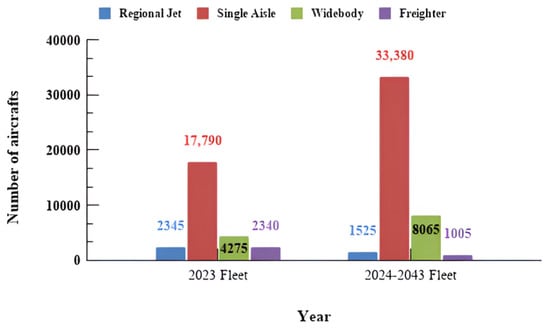
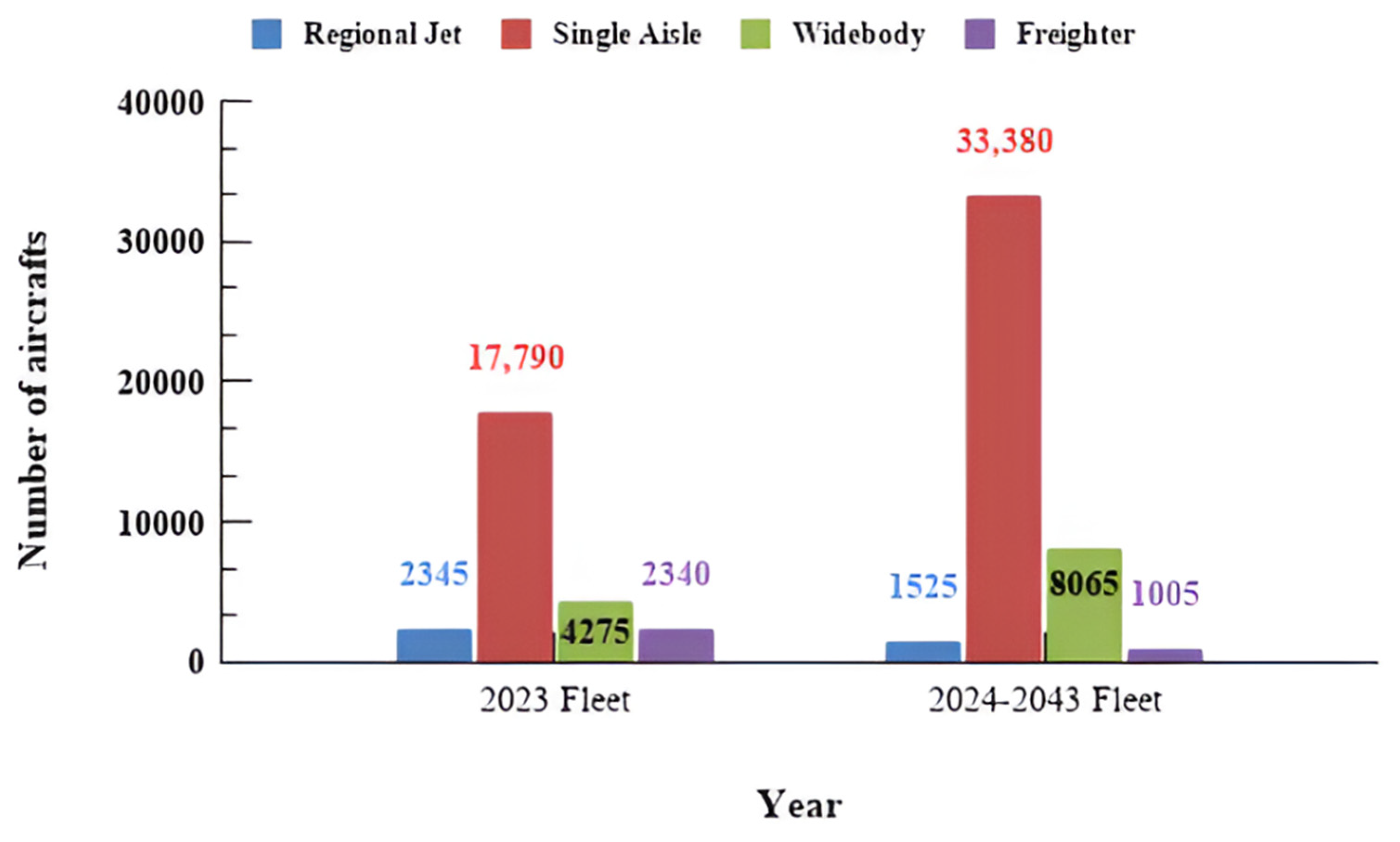
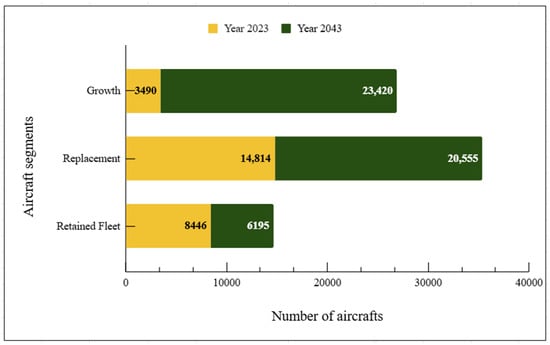
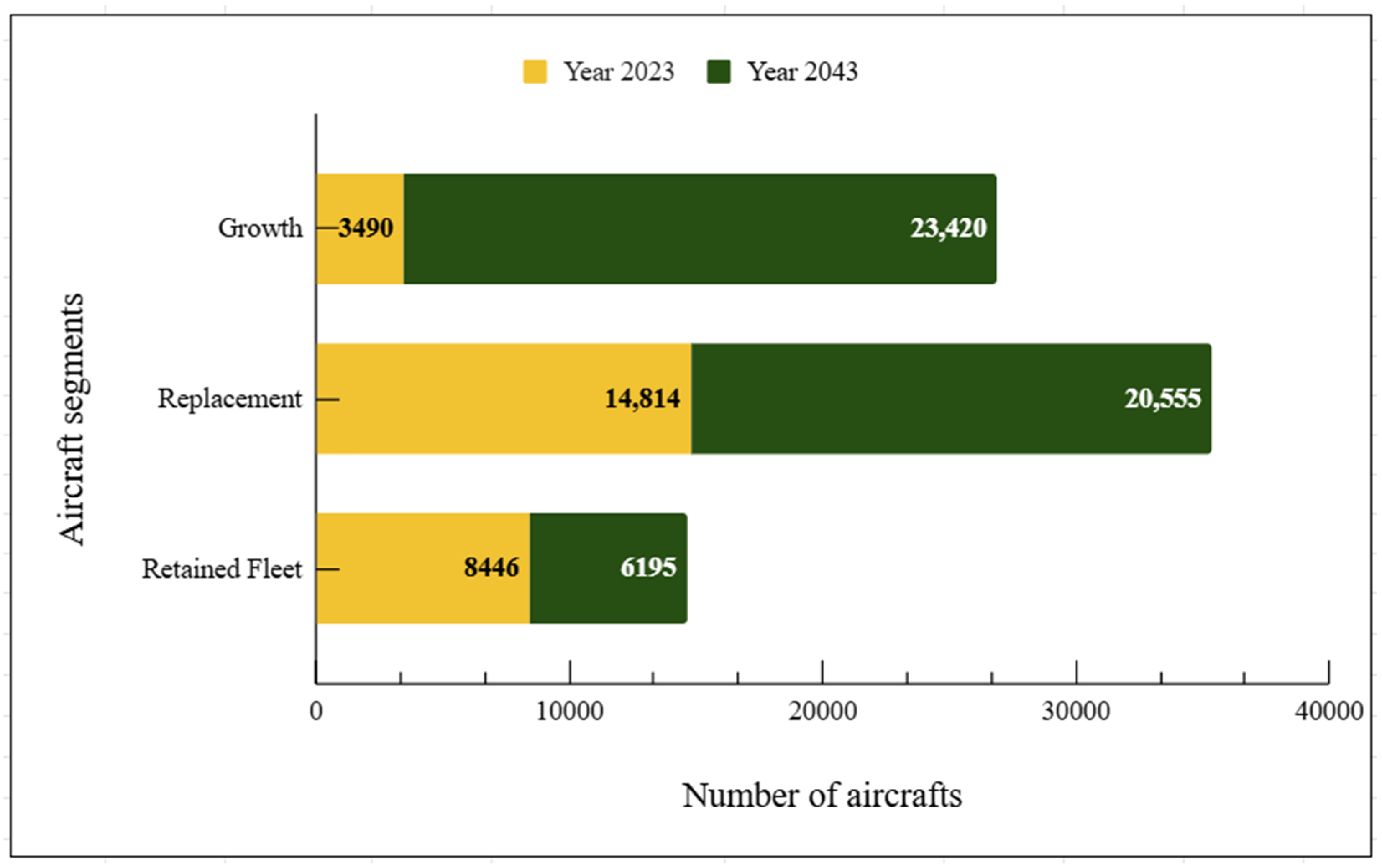
In the modern day, the key motto of research is to mostly rely on structural materials to fulfill the requirements of the aviation industry. Applications require lightweight alloys that exhibit better ductility, reasonable strength, and higher wear resistance and corrosion resistance [1,2,3,4,5,6,7,8,9,10]. In the pandemic year 2020, the usage of passenger aircrafts reduced significantly [11]. However, as per the Boeing Report [12], passenger aircrafts are expected to increase by approximately 3% in the upcoming 20 years. Globally, a total of 44,000 new aircrafts may be introduced, which may eventually increase the total number of aircrafts, doubling it in the period of 2024–2043, as shown in Figure 1 and Figure 2 [12].
Figure 1.
Comparison of existing aircrafts and increment of aircraft requirements as per Boeing forecast report 2024 [13] (reproduced: copyright CC BY license).
Figure 2.
Comparison of aircraft requirements in 2023 and the predicted requirements for 2043 [14] (reproduced: copyright CC BY license).
The forecast report of the Boeing Company indicates that, though the proportion of composite materials and titanium alloys increases day by day as the total number of aircrafts increases, the use of aluminum alloy remains widespread, making it indispensable in the field of aviation. In order to overcome the major industrial requirements, particularly for high-strength, low-weight structural components, precipitation-strengthened aluminum–zinc–copper–magnesium alloys have become a common focus among researchers [14,15,16]. The enhancement of fuel efficiency and the high movement performance of aircraft have been achieved due to high specific strength [17,18,19,20]. Several decades of intense research activities have resulted in the base alloy mentioned in this study becoming the most promising alloy among other aluminum alloys [21,22,23,24]. Its mechanical properties are plagued by pre-strain due to thermo-mechanical treatment, its microstructure, and the composition of cast structural components before final application [25,26,27,28,29]. Thermo-mechanical treatment reduces casting defects, i.e., dendrite structure, inclusions, segregations, gas defects, etc. [30,31,32,33,34,35,36]. Strengthening of the base alloy is achieved by precipitation hardening (or age-hardening) through the homogenized dispersion of small and hard second-phase particles in the alloy matrix, which enhances the strength [37,38,39,40].
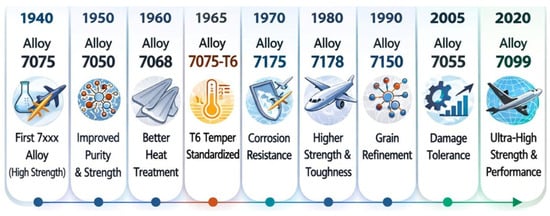
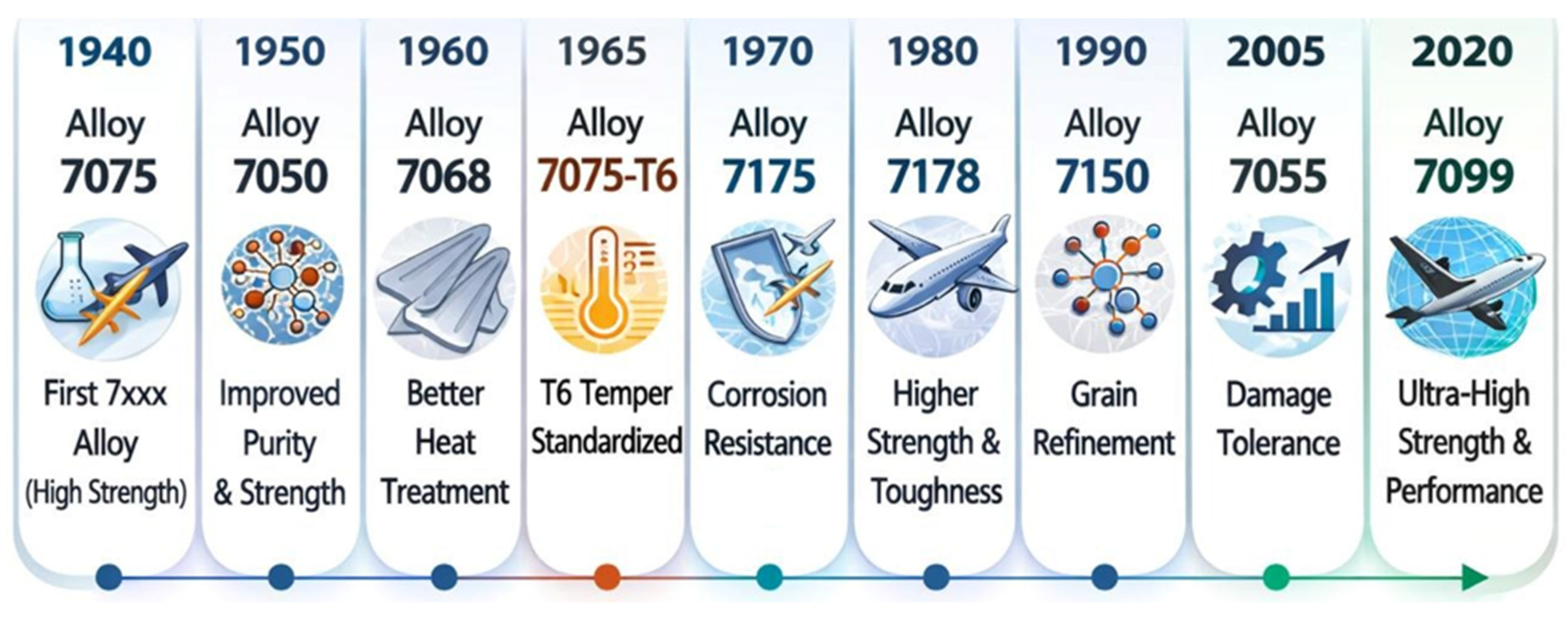
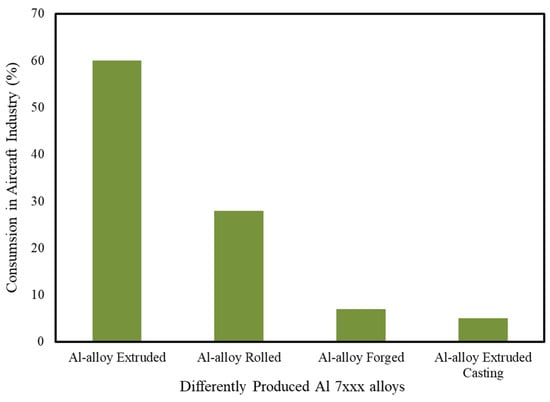
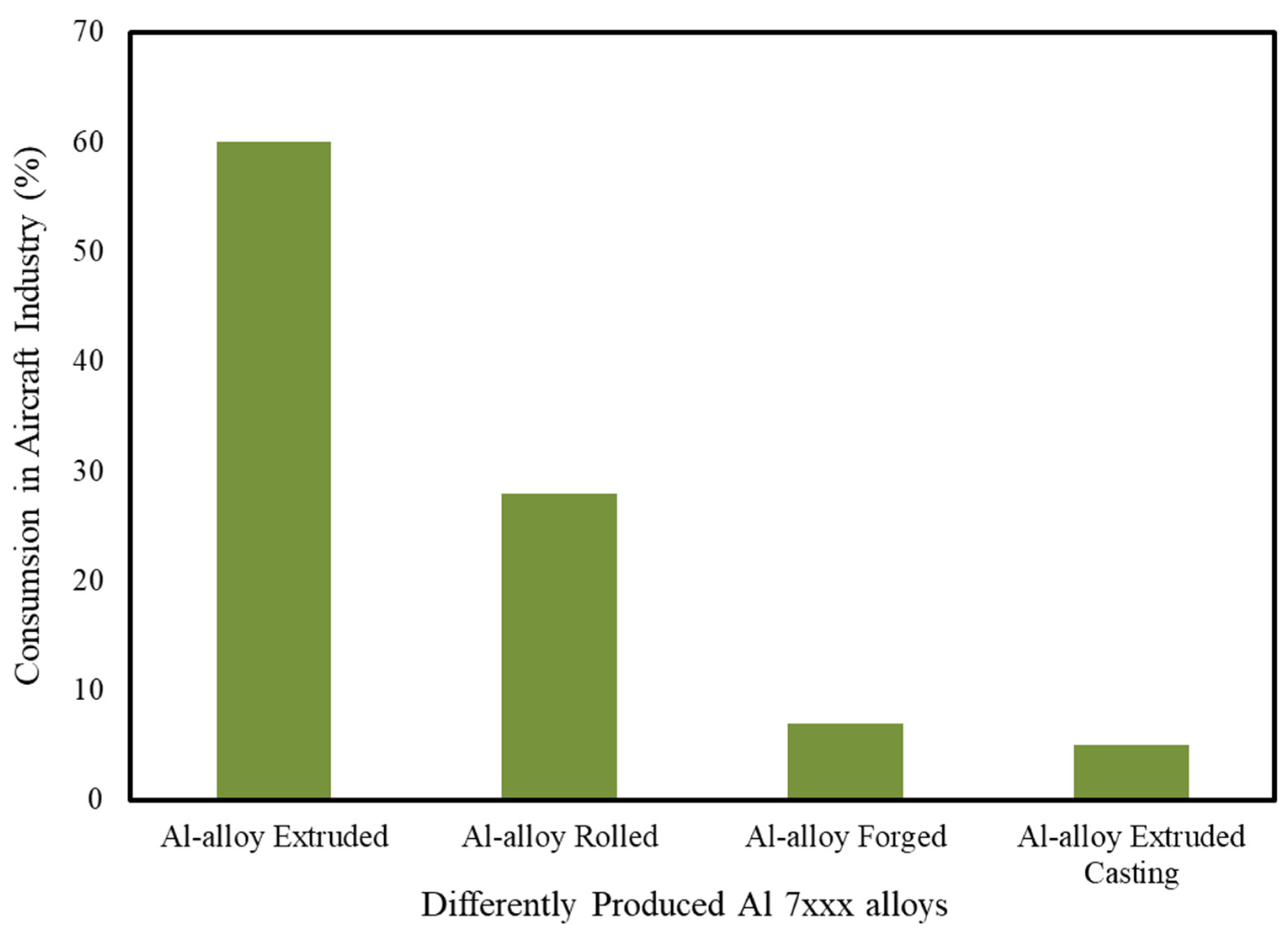
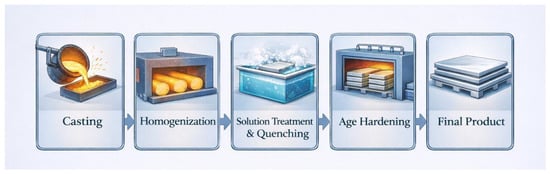
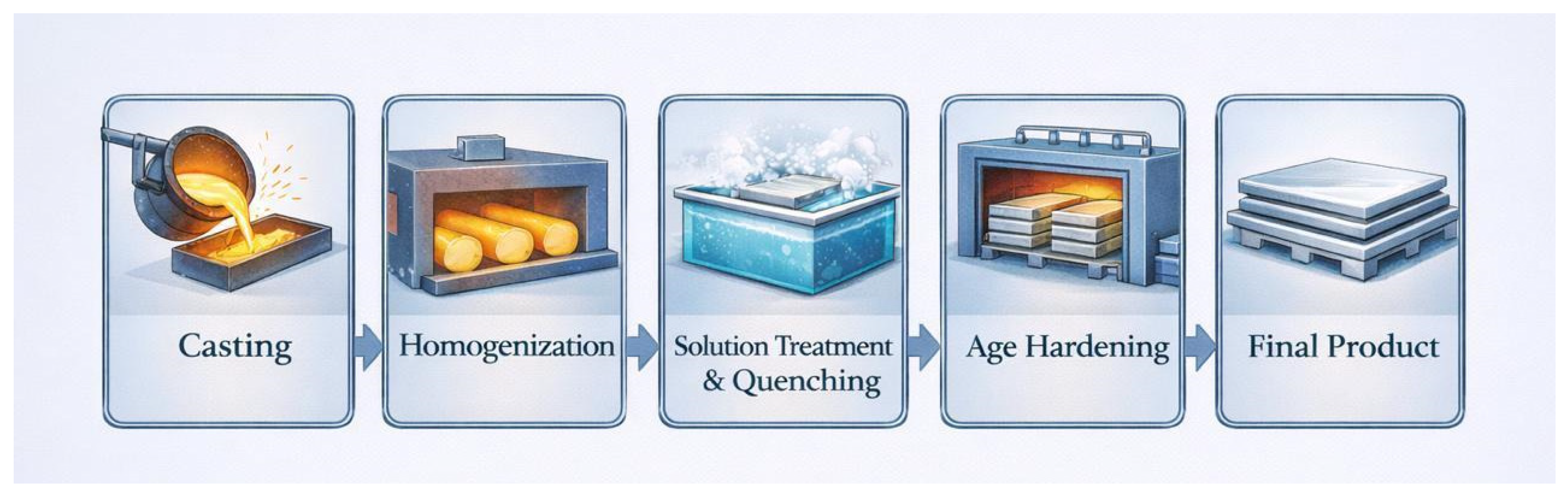
The key problems associated with the Al 7xxx series alloy in the aircraft industry are dealing with the bearing load and overcoming the service environment of the fleet. Figure 3 shows the development of Al 7xxx alloys throughout the decades. In the case of the Al 7xxx series alloys, stress corrosion has become a key issue, and researchers are very keen to discover contingency plans to mitigate this issue [41]. To deal with these issues, heat treatment (HT) of the micro-alloyed Al 7xxx series alloys is a possible method, as it causes materials to become superior, and their properties are improved along with their chemical properties [42]. There are four types of aluminum—extruded, rolled, forged, and extruded casting Al alloy—that are used in the aviation industry, and their usage percentages are shown in Figure 4. Figure 5 describes the production route of the Al alloy in the aviation industry.
Figure 3.
Development of Al 7xxx series alloys through the decades [14] (reproduced: copyright CC BY license).
Figure 4.
Several types of Al 7xxx series alloys used in the aircraft industry [14] (reproduced: copyright CC BY license).
Figure 5.
Schematic diagram of Al 7xxx series alloy production.
In this regard, a recent trend in the advancement of this alloy is the addition of trace (≤0.1 wt.%) elements such as Sc, Ni, Ce, Sn, etc., termed micro-alloying [41,42]. The micro-alloying of this alloy exhibits an exceptionally good combination of hardness, tensile strength (TS), and toughness [43,44,45]. Further HT, such as aging, improves the hardness of micro-alloyed aluminum alloys due to a supersaturated solid solution, as observed by Rout et al. [7]. According to the opinion of Li et al. [8], the supersaturation of the second phase is attributed to the improvement in mechanical properties.
In the aircraft industry, the usefulness of the Al 7xxx series alloy lies in the structural design of aircrafts. The problems associated with the alloy also have been discussed, and, after adding micro-alloy elements to the Al 7xxx series alloy, the potential of new micro-alloyed materials to mitigate those issues has also been discussed. Moreover, HT schedules for both Al-Zn-Cu-Mg alloys and their micro-alloys have also been discussed, in which homogenization, aging, re-aging, and retrogression and re-aging (RRA) processes have also been included. The effects of several types of HT are also discussed in this review article. The study comprehensively draws a comparison between Al 7xxx series alloys and their micro-alloys based on the properties of the alloys and micro-alloys.
This article uniquely incorporates the effects of homogenization, micro-alloying, and aging on the microstructure, precipitation phenomenon, and mechanical behavior of Al 7xxx alloys. In this study, current research gaps are identified and reported for optimized heat treatment strategies in order to develop next-generation lightweight materials, especially for aerospace applications that are high in performance and environmentally sustainable. The previous literature has not identified the absence of a comprehensive framework that can concisely correlate micro-alloying composition with important factors like homogenization parameters, aging behavior, precipitation evolution, mechanical performance, corrosion resistance, and sustainability metrics in Al 7xxx alloys. The development of such an integrated approach can effectively enable the design of next-generation aerospace alloys with superior performance and lower environmental impact.
2. Al 7xxx Series Alloys as an Aircraft Material
In the last few decades, Al-Zn-Mg-Cu alloys have been used in the aircraft industry. However, the materials suffer from issues like unfavorable service conditions, corrosion, and many more, which reduce the lifespan of the aircraft and increase the risk. To mitigate those issues, several measures have been taken, and to improve their properties, different types of HTs have also been performed.
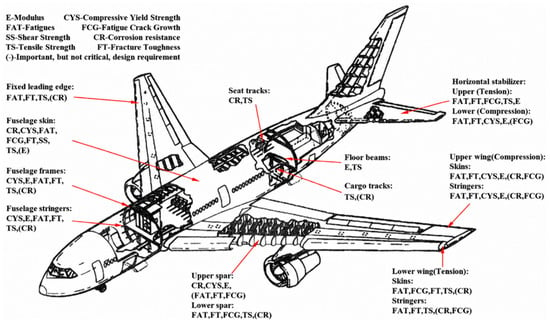
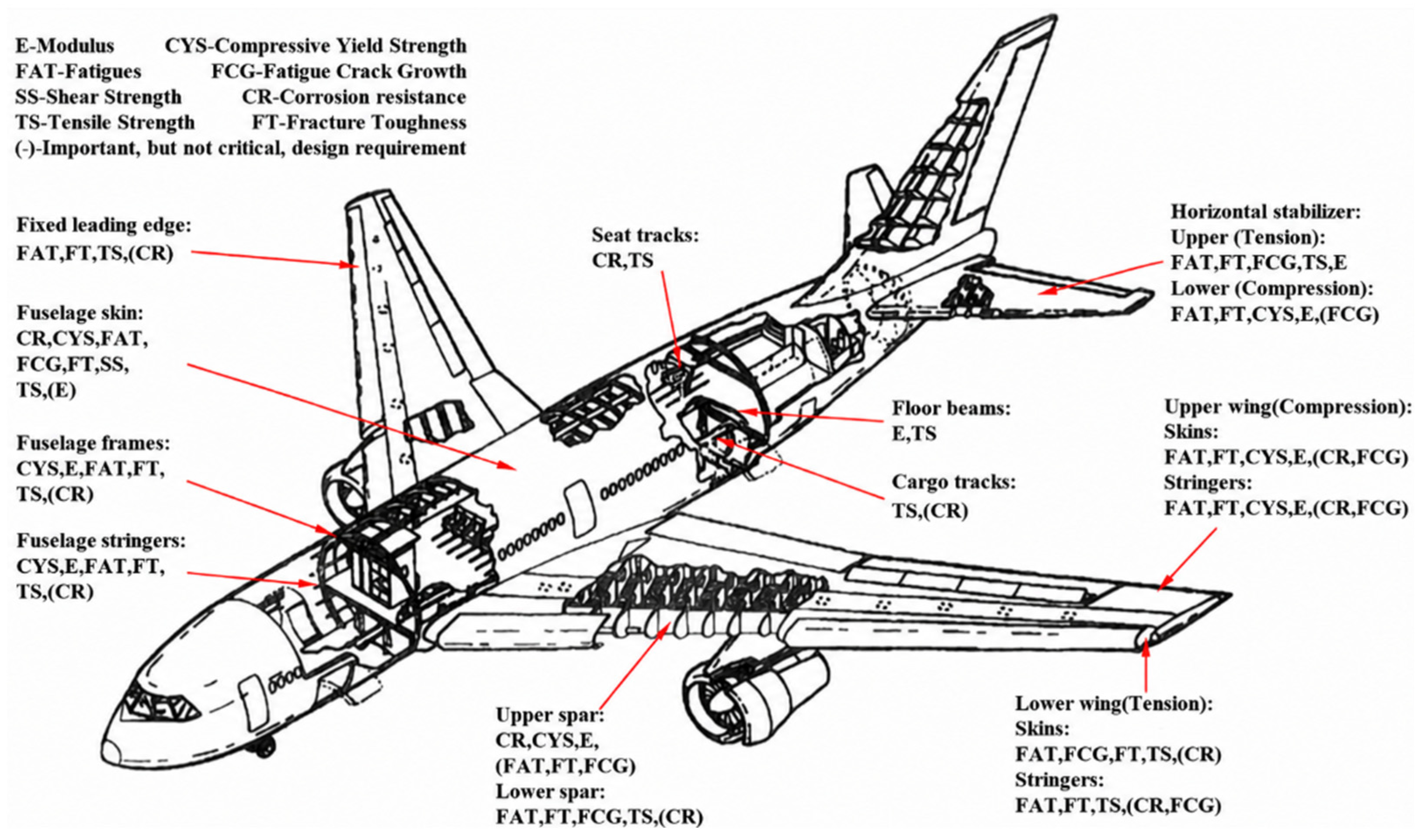
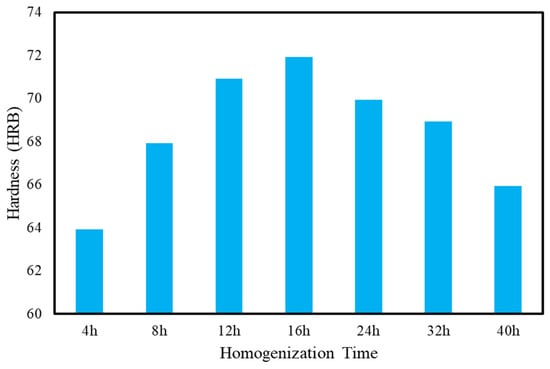
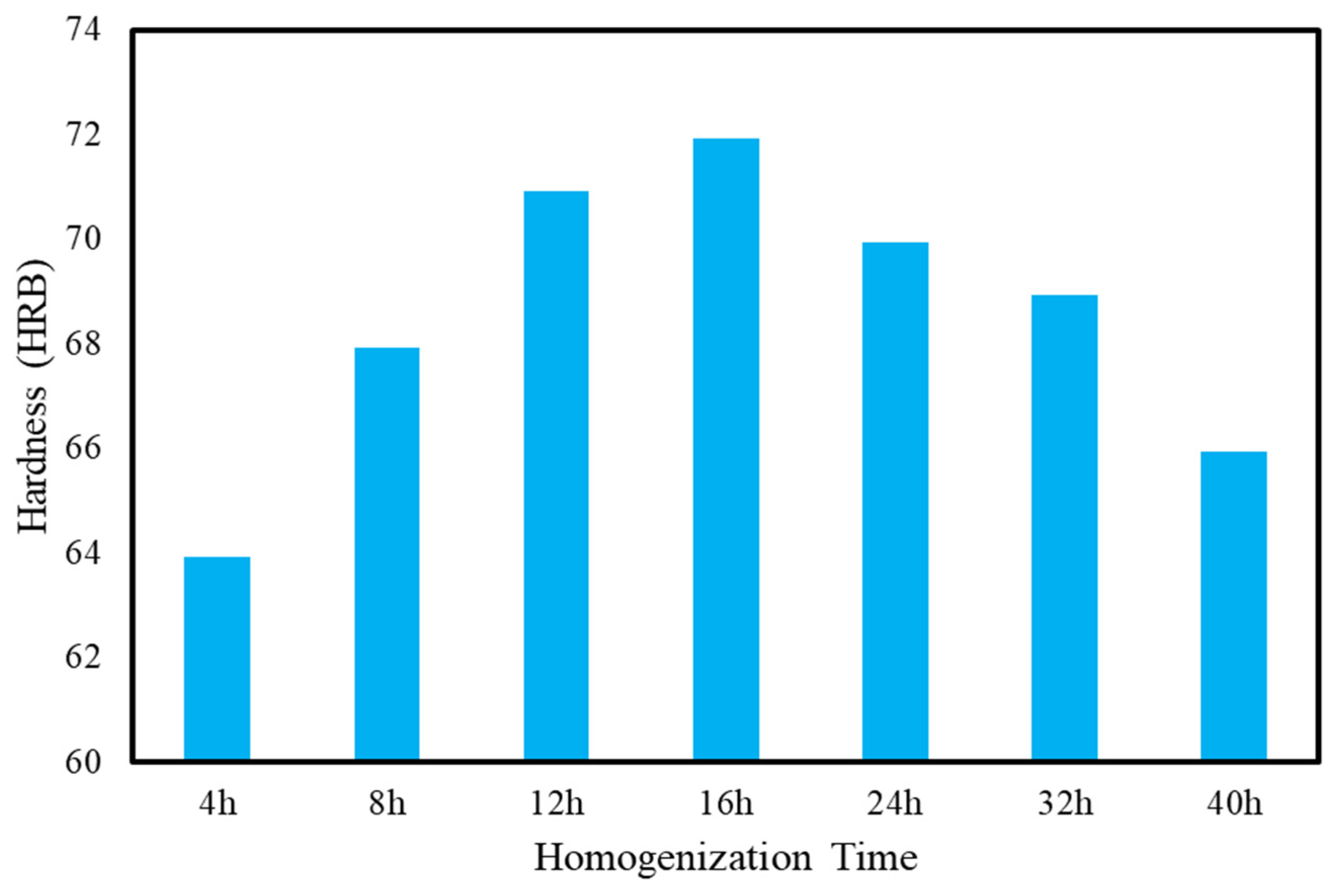
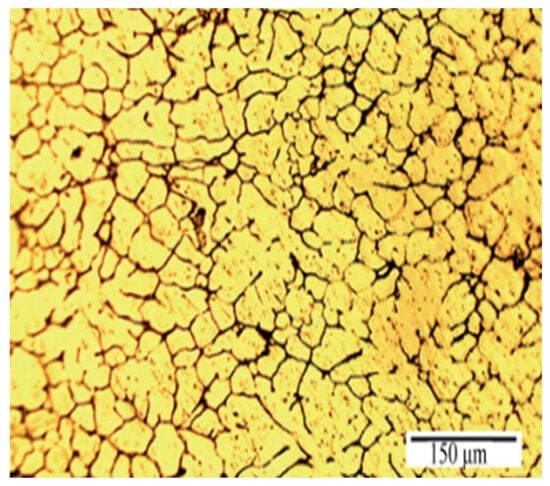
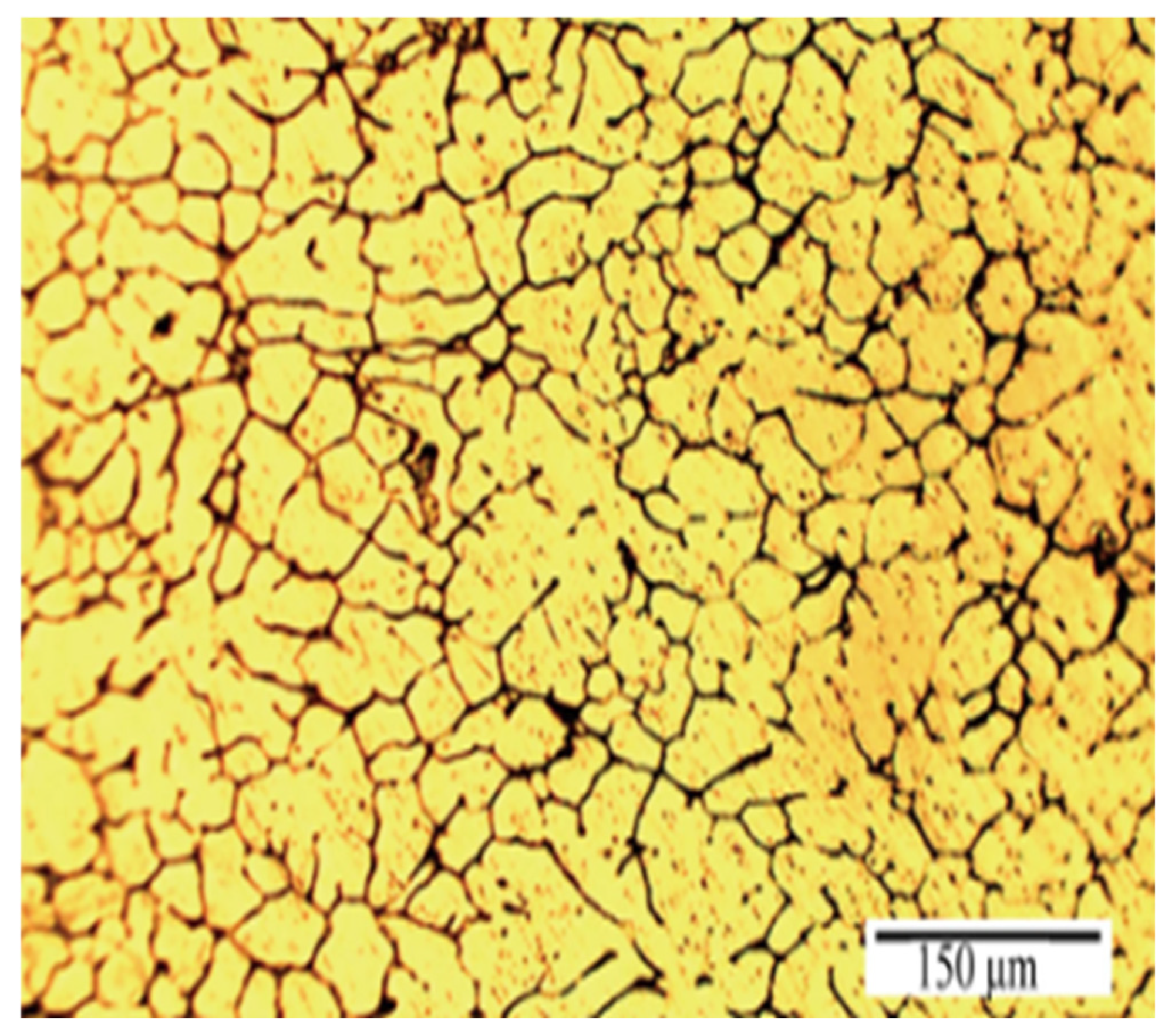
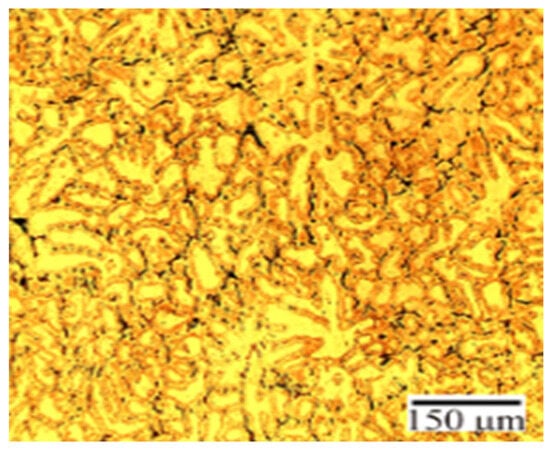
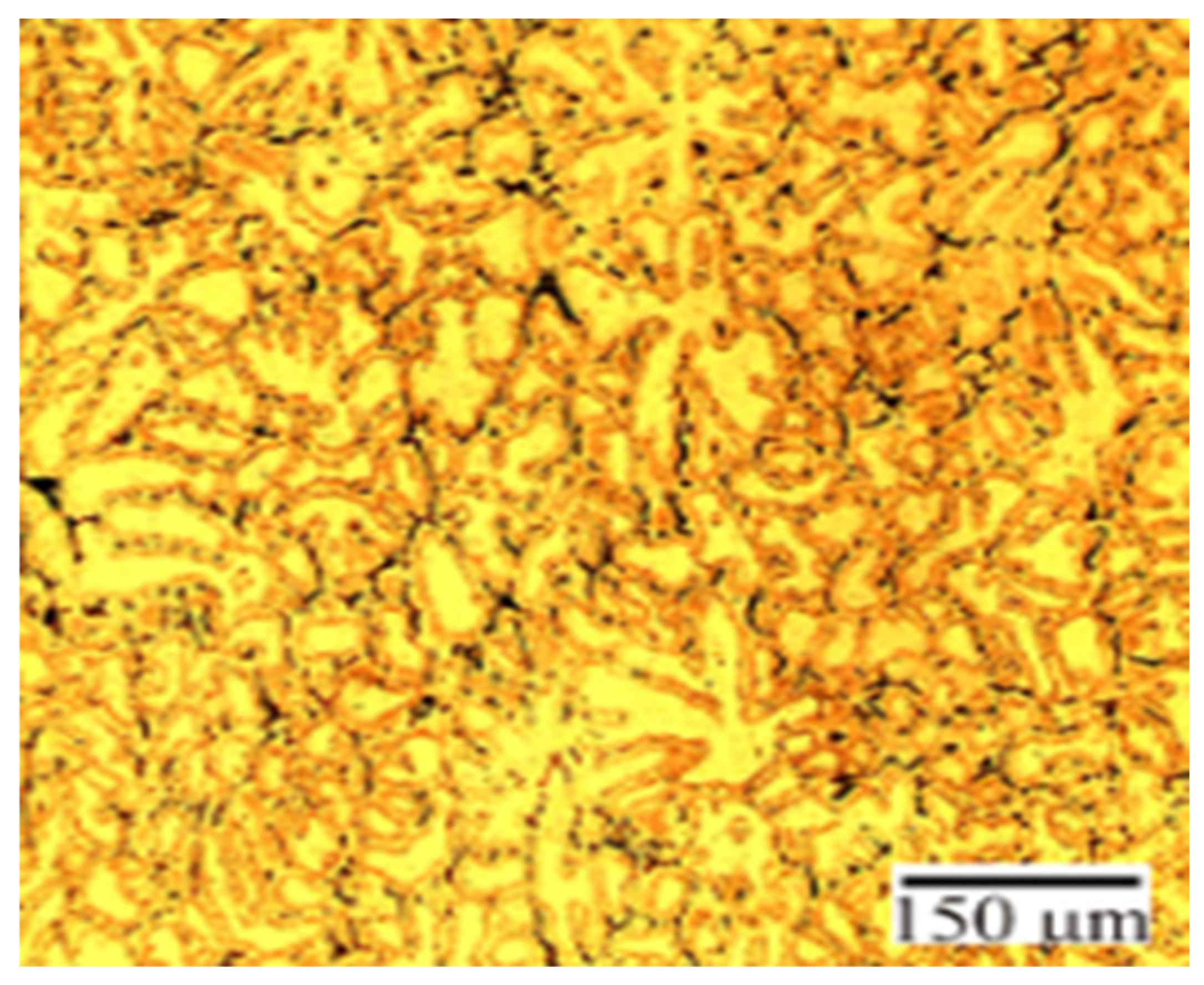
Figure 6 shows different types of stress acting on a fleet during traveling. Samanta and Ghatak [46] examined Al-10Zn-2.2Mg-2.6Cu alloy homogenization at 450 °C for 4, 8, 12, 16, 24, 32, and 40 h; after that, the samples were subjected to water quenching to room temperature and further aging at 120 °C for 24 h. The samples were homogenized for 16 h, followed by the aging process, showing a maximum hardness, as shown in Figure 7, due to grain size refinement and precipitation hardening. On the other hand, Naeem et al. [9], using the micrographs of quenched Al 7xxx alloy, showed that it consists of dendritic structures. Aged samples constituted an eutectic region (darker zone) and an alpha Al phase (bright zone). Moreover, they have also observed a secondary phase that forms a continuous network, as shown by the aging samples in Figure 8. The grain size became shortened, and the secondary eutectic phases became discontinuous. Sanyal et al. [47] examined an Al-5.7Zn-2.4Mg-1.5Cu alloy after homogenization at 480 °C for 1 h, further water quenching, and aging at 120 °C for 5 h. Moreover, they also examined the samples that were further heat-treated at subzero temperature deformation up to 85%.
Figure 6.
Schematic representation of an aircraft and its various parts that must possess several load bearing properties during flying [14] (copyright CC BY license).
Figure 7.
Hardness comparison of various heat-treated Al 7xxx series alloys (reproduced: permission taken from ref. [46], License No.: 6230631167216).
Figure 8.
Optical micrograph of Al 7xxx series alloys at homogenized condition [15] (copyright CC BY license).
Sanyal et al. [47] also reported that, after homogenization, the microstructures indicate coarser grains, while the microstructures of aging samples indicate homogenized surfaces where the bright region consists of secondary phases and black portions show eutectic regions. Aging samples showed maximum hardness due to precipitation hardening, as precipitation acts by pinning the dislocation motion into the matrix.
In homogenized conditions, second-phase particles were precipitated on grain boundary regions, as shown in Figure 8; Figure 9 clearly reveals that, in aging conditions, a network of second-phase particles was formed, which restricted the dislocation movement in the matrix. Hindering the dislocation movement causes the increment in hardness and toughness of the material. It also ensures less delamination of the upper surfaces, which increases the lifespan of the materials. Moreover, the primary phases were also precipitated on grain boundaries, which were dispersed heterogeneously.
Figure 9.
Optical micrograph of Al 7xxx series alloys at aging condition [15] (copyright CC BY license).
3. Micro-Alloyed Al 7xxx Series and Properties
In the last few decades, industry has experienced a significant increase in the development of low-weight metallic alloys for structural applications. High industrial requirements and interest in aircraft-related applications in the last few years have resulted in a focus on the development of lightweight alloys, with the addition of micro-alloying exhibiting enhanced properties [46,47]. Quite a few investigations have been conducted on the influence of micro-alloying on the mechanical properties and microstructure of base alloys. Still, micro-level variations in compositions and different thermal treatments have been found to result in major changes in the alloy’s ductility, strength, hardness, and other properties [48]. Consequently, micro-alloying with various elements, i.e., Ni, Ce, Zr, Ti, and Sn, has been investigated to develop materials with improved properties [49]. The mechanical behavior of Al 7xxx alloys is primarily governed by precipitation hardening. The strengthening sequence of this mechanism is as follows: SSS→GP zones→η′→η. Micro-alloying elements have an important role in the enhancement of mechanical properties through precipitation kinetics and microstructural evolution [50]. Researchers have found that the addition of Zr as a micro-alloying element has a formidable effectiveness because it forms coherent Al3Zr dispersoids which genuinely suppress the recrystallization mechanism, inhibit grain growth, and provide effective grain boundary pinning during thermo-mechanical processing [51]. This is attributed to the formation of a refined grain structure and the homogeneous distribution of strengthening η′ precipitates. In addition, η′ precipitates help to increase mechanical properties such as tensile strength, fatigue life, fracture toughness, and resistance to stress corrosion cracking.
It was reported that Ce as a micro-alloying element refines the solidification microstructure by effectively restricting the growth of dendritic structures and forming stable intermetallic compounds. This can be attributed to pinning grain boundaries and dislocation mechanisms, resulting in improvements in strength, toughness, and fatigue resistance [52]. On the other hand, another micro-alloying element, Ni, owing to its low solubility in aluminum, forms thermally stable Al–Ni intermetallic compounds, which help to improve elevated-temperature strength, wear resistance, and thermal stability by impeding dislocation movement and grain boundary migration. However, the addition of excessive Ni may have adverse effects, as it reduces ductility, as coarse intermetallic particles can act as crack initiation sites. Micro-alloying elements like Zr and Ti provide strengthening to the Al 7xxx alloy through grain refinement and by controlling the recrystallization process, whereas Ni contributes to the alloy mainly through dispersion strengthening [53].
The literature indicates that Sn as a micro-alloying element influences the aging response by interacting with quenched-in vacancies. It also modifies the diffusion-controlled precipitation and effectively stabilizes GP zones and η′ precipitates. Consequently, the addition of Sn particles in Al 7xxx base alloys increases precipitation number density, delays over-aging, increases peak hardness, and can reduce precipitation-free zone width, contributing to enhanced stress corrosion resistance [50]. The authors identified that synergistic combinations of micro-alloying elements, particularly Zr–Ti and Ce–Zr, provide the most balanced improvements by refining grains continuously, controlling recrystallization, and optimizing precipitation behavior [54]. Moreover, the effect of these combined phenomena helps to generate superior strength, fatigue resistance, and microstructural stability, which makes micro-alloying an effective strategy for improving the overall performance of Al 7xxx alloys in demanding aerospace and structural applications.
3.1. Al-Zn-Mg-Cu-0.1Ni Micro-Alloy
3.1.1. Homogenization and Aging Behavior of Al-Zn-Mg-Cu-0.1Ni Micro-Alloy
Various HT processes were performed by Naeem et al. on the alloy Al-6.68Zn-2.75Mg-1.7Cu to observe the effect of 0.1 wt.% Ni on its properties and microstructure [9]. Homogenization, T6 temper or artificial aging, and RRA were performed at 450 °C/2 h + 470 °C/24 h + 480 °C/0.5 h, 120 °C/24 h, and 120 °C/24 h + 180 °C/0.5 h + 120 °C/24 h, respectively. As an effect of HT, the grain size decreased from 39 μm in the as-cast condition to 35 μm, and the precipitation of γ Al(Ni-Fe) and (Al-Cu-Ni) intermetallic compounds at the grain boundary region was reported in the homogenized matrix of the alloy, whereas AlCuNi, AlMgNi, MgZn, and AlNi phases precipitated in RRA and T6-tempered alloys. The formation of Guinier–Preston (GP) zones indicates that metastable nano-precipitates restrained dislocation movement in a heat-treated base alloy. During the RRA process, retrogression partially dissolves pre-existing GP zones and η′ phase and, after the re-aging phase, transfers to the phase. Homogenizing distributed Ni-content inter-metallic compounds effectively acts as an obstacle in grain growth and recrystallization. The maximum hardness is achieved in RRA treatment, UTS, and YS due to the formation of phases. The recrystallization and precipitation hardening of Ni compounds have led to the strengthening of the alloy.
3.1.2. Discussion
Improvements in UTS and hardness after tempering and RRA have been achieved through precipitation strengthening. A fine grain size and Ni-rich phases are attributed to the higher strength in Al 7xxx alloys [55,56,57]. The GP zone with coherent phases helps to improve the mechanical properties of the alloy [58,59]. In the case of the RRA process, a partial dissolution of phases was observed during aging. The η′ phases pin the dislocation mechanism and prevent crack formation in the matrix [60]. The homogeneous distribution of precipitates following the Oswal mechanism [9] bypasses the dislocation loops and leaves those behind, which is attributed to the higher strength.
3.2. Al-Zn-Mg-Cu-0.1Ce Micro-Alloy
3.2.1. Homogenization and Aging Behavior of Al-Zn-Mg-Cu-0.1Ce Micro-Alloy
Chaubey et al. [10] examined the effect of 0.1 wt.% Ce addition on the Al-8.25Zn-2.1Mg-2.35Cu (wt.%) alloy after a process of HT (homogenized at 450 °C/4 h; hot forging in the temperature range of 350–410 °C; solution-treated at 470 °C/24 h and finally aged at 107 and 177 °C/6 h and air-cooled). The addition of Ce in the base alloy refined the grain size (24 μm) and grain boundary segregated by Ce-rich phases. After age-hardening, a small, closely spaced η phase (MgZn2) precipitated on the grain boundary region, and fine (5–10 nm), tightly packed semi-round-shaped precipitates of the GP phase and a semi-coherent η′ phase (MgZn2) were distributed homogeneously in the matrix. YS and UTS increased by 4% with the addition of Ce in the aluminum alloy due to distributed spherical η precipitate block dislocation movement, as reported by Chaubey et al. [10]. The increase in Young’s modulus and the % elongation in the Ce-contained alloy was due to the elasticity of atomic bonds in the Al lattice.
3.2.2. Discussion
The addition of the Ce element contributed to refining the dendritic structure. In the matrix, narrowly spaced GP zones and ultrafine grains at the boundary were present, which led to an improvement in tensile strength. The further addition of Ce (more than 0.3 wt%) does not have much of an effect on properties, as it starts to be saturated after the addition of 0.3 wt% of the Ce element [10,61,62]. According to the opinion of Zhang et al. [63], in the case of the elastic behavior of the alloy, the same pattern is followed as well due to the stretching behavior of atoms and their bonds in the matrix.
3.3. Al-Zn-Mg-Cu-0.08-0.15Zr Micro-Alloy
3.3.1. Homogenization and Aging Behavior of Al-Zn-Mg-Cu-0.08-0.15Zr Micro-Alloy
Al-7.8Zn-1.8Mg-1.5Cu (alloy A) and Al-5.7-6.7Zn-1.9-2.6Mg-2-2.6Cu (alloy B) alloys micro-alloyed with 0.08–0.15 wt.% Zr after various HT processes were investigated by Li et al. [8]. The alloys were heat-treated sequentially through homogenization in the air at 430 °C/18 h, slowly heated up to 467 °C/4 h, hot-extruded, and solution-treated with diverse schemes (470 °C/2 h (S1), 470 °C/4 h (S2), 470 °C/2 h + 485 °C/0.5 h (S3), 470 °C/4 h + 485 °C/0.5 h (S4)). Uniformly dispersed higher-purity and fine particles were seen by the researchers in the matrix of alloy A compared to alloy B. The almost complete dissolution of the Al2CuMg phase and the complete dissolution of the MgZn2 precipitate were achieved due to stepped solution HT. S4 treatment achieved excellent comprehensive properties, i.e., YS, UTS, % elongation, and fracture toughness, for the alloys. Alloy A exhibited better properties than alloy B due to the dissolution of soluble constituents to achieve a supersaturated matrix, resulting in the enhancement of properties.
3.3.2. Discussion
Al 7xxx series alloys with low Cu and Mg content and Zn content are more effective in the formation of the T(AlZnCuMg) phase compared to the S(Al2MgCu) phase, which has led to the formation of intermetallic phases in the matrix. The dissolution of second phases is easily done after stepped heat treatment, which also improves the properties of the alloy [64,65,66]. Stepped treatment during homogenization is more beneficial for achieving uniform dispersion of the precipitates [67]. Elevated-temperature homogenization for a longer period causes atomic disbalance, and crystal atoms move away from their earlier stable position. Thus, the required energy for atom activation also decreases and causes overburning [68,69]. Homogenization with a longer duration and lower temperature leads to gaining enough reaction time to generate low-melting eutectic phases which can easily be dissolved in the matrix.
3.4. Al-Zn-Mg-Cu-0.08-0.1Ce/Ni Micro-Alloys
3.4.1. Homogenization and Aging Behavior of Al-Zn-Mg-Cu-0.08-0.1Ce/Ni Micro-Alloys
Wu et al. [1] investigated the mechanical effect of Al-8.6Zn-2.6Mg-2.4Cu (wt.%) alloy (D alloy) micro-alloyed with 0.1 wt.% Ce (C alloy) and 0.1 wt.% Ni (N alloy). As-cast alloys were homogenized at 450 °C/24 h, followed by furnace cooling to 200 °C and air-cooling to room temperature. Metallographic aspects and properties were studied in these alloys after solution treatment (455 °C/85 min), peak aging (PA, 121 °C/24 h), and RRA (121 °C/24 h + 240 °C/48 s + 121 °C/24 h). After PA tempering, D and N aluminum alloys were partially recrystallized, and many recrystallized grains were observed in the C aluminum alloy. In both PA- and RRA-conditioned alloys (MgZn2), precipitates were observed. A higher density of precipitates was observed on the grain region in the N RRA alloy compared to the D RRA alloy, while the matrix contained exceptionally fine coherent GP zones and precipitates. The authors suggested that Ni content accelerates the precipitation formation process of SSS→GP→η′→η. A larger atomic size difference between the solvent and the solubility limit restricted the effect of the solid-solution strengthening of Ce-contained alloy.
3.4.2. Discussion
The addition of Sc in an adequate percentage (0.2 wt%) is highly effective in microstructure refinement as it forms the Al3(ScZr) phase easily [1]. In the case of retarding recrystallization and achieving improved strength, the second phase is highly appreciated [70,71,72]. On the other hand, the addition of Ni (0.1 wt%) leads to a better UTS. The formation of η′ phases leads to a higher strength, as it helps to pin the dislocation movement and restrict it to failure [73,74,75]. PA tempering reduces slip mechanisms, decreasing localized stress concentration at grain boundaries [76,77]. Moreover, a larger grain size provokes the dislocation mechanism, and hence grain refinement has a major role in strengthening the alloy.
3.5. Al-Zn-Mg-Cu-0.1Ti-(0.1Sn) Micro-Alloy
3.5.1. Homogenization and Aging Behavior of Al-Zn-Mg-Cu-0.1Ti-(0.1Sn) Micro-Alloy
Recently, the effect of Ti (0.1 wt.%) and Ti + Sn (0.1 wt.% each) on the metallographic and mechanical properties of the base alloy was investigated by Yan et al. [11]. The micro-alloys underwent homogenization, hot rolling at 420 °C, and solution treatment at 470 °C for 1 h in a salt bath, followed by water quenching. They were then aged using two methods: single aging at 120 °C for varying times, and double aging at 120 °C/24 h + 175 °C/10 h. During single-stage aging, the addition of Sn-concealed precipitation helps in delaying dissolution, which effectively reduces the coarsening of the phase. During double aging at the grain boundary, a fine-phase and ultrafine grain size, narrow precipitation-free zones (PFZs), and a heterogeneous dispersion of grains were observed. MgZn2 and Mg2Sn second-phase particles were observed in spectrographs of Ti- and Sn-containing base alloys. A homogeneous distribution of fine grains, narrow PFZs, and precipitation in the alloy matrix were responsible for the high fracture toughness and strength of double-aged Ti and Sn-containing base alloys. A fine Mg2Sn second phase improved the fracture toughness of the aluminum alloy.
3.5.2. Discussion
The addition of Sn in the alloy increases the strength significantly, and after double aging, the fracture toughness also increases [11,78,79]. The homogenized dispersion of precipitates and reduced PFZs cause higher fracture toughness and strength [80,81,82,83]. It was also reported that the grain size became finer. The fracture toughness primarily depends on the crack propagation caused by strain localization. It is widely considered that finer grains reduce the tendency of premature crack formation by cutting down the dislocation pile length in the boundary regions, which is attributed to higher fracture toughness [84,85]. Moreover, changes in crystallographic orientation also help to reduce crack growth formation, which tends to reduce crack formation [86,87,88]. On the other hand, PFZs situated along the grain boundary play a pivotal role in fracture toughness. As the soft areas between grain boundaries and the matrix are known as PFZs, in this area, cracks can easily grow, and after double aging, the area of PFZs reduces significantly, which reduces the probability of crack formation and propagation [89,90,91,92]. The addition of Sn effectively suppresses the precipitation and dissolution of delayed phases, which helps to achieve higher strength [93,94]. Finely dispersed second-phase particles also help to achieve higher mechanical properties as well.
3.6. Discussion on Corrosion Behavior, SCC, and Fatigue Resistance of Al 7xxx Micro-Alloy
The use of Al 7xxx micro-alloying materials increases day-by-day due to their exceptional specific strength. However, the existing literature addressing their corrosion behavior, SCC, and fatigue resistance remains comparatively limited, particularly for newly developed micro-alloyed compositions containing trace additions of elements such as Sc, Zr, Ce, Ti, and Ni. The majority of the published studies have focused primarily on improving mechanical strength through precipitation hardening, while comparatively less attention has been devoted to understanding the long-term durability of these alloys under aggressive service environments. On the other hand, localized corrosion, intergranular corrosion, and pitting corrosion remain significant concerns as the coarse grain boundary precipitates, and precipitate-free zones (PFZs) act as preferential sites for electrochemical attack, ultimately reducing structural integrity [50,95]. Similarly, SCC remains the principal failure mechanism that limits the aerospace application of high-strength Al 7xxx alloys, especially under sustained tensile stress in chloride-containing environments [54]. As micro-alloying has been reported to refine grain structures and modify precipitate distributions, systematic investigations correlating these microstructural changes with SCC susceptibility are still scarce [54].
Furthermore, fatigue behavior under simultaneous mechanical loading and corrosive environments (corrosion–fatigue) has received insufficient attention despite representing a realistic service condition for aircraft components subjected to cyclic stresses and atmospheric exposure [96,97]. Existing studies suggest that microstructural refinement may delay crack initiation and improve fatigue life; however, the underlying mechanisms governing crack propagation in micro-alloyed Al 7075 remain inadequately understood [98]. Consequently, significant research gaps exist in establishing comprehensive relationships between alloy chemistry, precipitate evolution, corrosion mechanisms, SCC resistance, and fatigue performance using advanced characterization techniques such as electron backscatter diffraction (EBSD), transmission electron microscopy (TEM), electrochemical impedance spectroscopy (EIS), and synchrotron-based analyses [99]. Addressing these knowledge gaps is essential for developing next-generation Al 7xxx micro-alloys with enhanced durability, reliability, and service life in demanding aerospace environments [50].
4. Comparative Analysis
The sole reason for HT of the base alloy is to optimize several parameters, such as the precipitate-free zone, precipitates at the grain boundary, and, most importantly, matrix precipitates. The aircraft industry must deal with various types of stresses during flying, and, for that, effective optimization of these parameters helps to achieve desirable properties of the materials. In the case of the H0 condition, intra-granular eutectic phases were present at the grain boundary, which were coarse and in a non-equilibrium state. Meanwhile, after HT, a continuous precipitation was observed at the grain boundary, which helps to improve the properties. The properties achieved in the H1 condition are unable to fulfill the requirements of the fleet, as distinct types of stresses act on the fleet, as shown in Figure 6. For this, micro-alloying of the base alloy and, after that, HT and aging were used to achieve the required properties of the fleet. As secondary phases present in micro-alloyed Al 7xxx series alloys tend to form a homogeneous network of intergranular molecules, they can generate more strength than the heat-treated base alloy.
Micro-alloying elements such as Zr, Sc, Ni, and Ce improves the thermal stability of Al 7xxx alloys through the formation of fine and stable dispersoids that retain the grain growth and recrystallisation and precipitate during prolonged thermal exposure. Consequently, it also retains a higher UTS, YS, and hardness than the conventional alloy after long-term thermal exposure or service at elevated temperatures. These dispersoids effectively stabilize the microstructure and also delay the transformation process and coarsening of the strengthening η′ (MgZn2) precipitates. This helps to achieve better mechanical properties and improve the resistance to thermal degradation, fatigue, and creep at elevated temperatures. Table 1 shows a comparative chart of Al 7xxx micro-alloys, with their main features and applications, and Table 2 shows a comparative chart of the mechanical properties of Al 7xxx micro-alloys. Micro-alloying the element Sn results in an anti-corrosive property, which increases the corrosion resistance property of the base alloy. Alternatively, supersaturated solid solutions are also formed in the micro-alloyed Al 7xxx series alloys, which makes them superior compared to the heat-treated base alloy. At the grain boundary, globular or spherical-shaped precipitations can be observed, which hinder dislocation motion and ensure a higher lifespan of the materials.
Table 1.
Comparative chart of Al 7xxx micro-alloys.
Table 2.
Comparative chart of mechanical properties of Al 7xxx micro-alloys [50,99,100,101,102,103,104,105,106,107].
However, the development is not fully maintained under extended thermal exposure and under severe aging processes, as the primary strengthening mechanism of Al 7xxx alloy steel depends on the precipitation of η′ (MgZn2) precipitates. With an increase in exposure time and temperature, the precipitate is transformed into the equilibrium phase (η phase), reducing the strength and precipitation, which causes a gradual decrease in hardness and strength while the productivity increases. The micro-alloying elements delay these deterioration processes. However, they cannot be prevented completely; therefore, after micro-alloying, Al 7xxx alloys exhibit superior, prolonged thermal stability and mechanical properties compared to the Al 7xxx base alloy.
5. Challenges and Future Directions
Despite advancements in aluminum-based alloys for aerospace applications, there are also several challenges. The as-cast base alloy lacks the required strength, necessitating heat treatment and micro-alloying. Optimizing micro-alloying elements (e.g., Ni, Ce, Sc, Zr, Sn, Ti) and controlling precipitation hardening are crucial. Uniform heat treatment and grain refinement are also essential but challenging. Balancing strength and ductility, scalability, and cost-effectiveness are additional hurdles. Understanding the solid-solution strengthening mechanism and predicting microstructure evolution are necessary to optimize properties. Meeting stringent aerospace standards for performance and reliability is the ultimate challenge. Addressing these challenges will enable the widespread adoption of micro-alloyed Al 7xxx series alloys in highly stressed aerospace applications.
Aluminum 7xxx series alloys after micro-alloying followed by heat treatment show a significant improvement in mechanical properties. As both parameters are particularly important for the aviation industry, the material can fulfill the requirements of the industry. However, other factors such as impact and corrosion behavior also need to be assessed deeply to predict the behavior of the materials. The limited research on micro-alloyed Al 7xxx series alloys and their several heat treatment procedures restricts the authors from considering two vital factors: the hardness and tensile strength of the material. In the foreseeable future, research related to those factors can significantly help in the advancement of the material.
In the foreseeable future, research needs to focus on incorporating advanced characterization techniques such as synchrotron-based analyses, transmission electron microscopy (TEM), atom probe tomography (APT), and electron backscatter diffraction (EBSD) for a better understanding of precipitation evolution and degradation mechanisms in micro-alloyed Al 7xxx alloys. On the other hand, machine learning, computational alloy design using CALPHAD, phase-field modeling, and integrated computational materials engineering (ICME) also need to be employed in order to accelerate the advancement process of optimized alloy compositions. Moreover, the compatibility of micro-alloyed Al 7xxx alloys with additive manufacturing (AM) processes requires proper synchronization and systematic investigation, and optimizing heat treatment schedules for AM components is also crucial for maximizing strength, corrosion resistance, fatigue life, and SCC resistance.
6. Summary and Conclusions
At present, aluminum-based alloys exhibit promise in meeting the demand for structural and integral parts for highly stressed applications due to advancements in HT and micro-alloying. Recent developments show the influence of micro-alloying the base alloy on its properties and microstructure. Improvements in fuel efficiency and high movement performance in spacecraft and aerospace have been achieved due to the reasonable strength of the alloy. The alloy, after micro-alloying, is extensively used in highly stressed structural materials like propellers and thin walls of integral parts. However, the as-cast base alloy is unable to produce the required strength. It is apparent that HT and age-hardening, after homogenization of the as-cast aluminum alloy, are necessary, as they affect strengthening mechanisms and help to obtain aluminum alloys with improved metallographic features and properties. Some of the key findings are as follows:
- In the Al 7xxx series base alloy, the solid-solution strengthening mechanism (SSS) plays a major role in the improvement of the properties by following the SSS →GP→η′→η mechanism.
- The addition of micro-alloying elements like Ni, Ce, Sc, Zr, and Sn contributes to higher strength compared to the base alloy due to precipitation hardening.
- The homogeneous dispersion of second-phase precipitates like MgZn2 and Al2CuMg pins dislocation and causes resistance to crack formation and further propagation.
- The release of localized stresses through heat treatment at a low temperature for a longer period helps to achieve improved properties.
- By this, the crystal atomic bond increases and elasticity increases as well.
- Further grain refinement also tends to play a major role in the improvement of the properties of the micro-alloyed Al 7xxx series alloy.
In this article, the authors have found, from the available literature, that micro-alloying has a superior potential to enhance the performance of Al 7xxx alloys through recrystallization, grain growth refinement, controlling the precipitation behavior, and, most importantly, improving the balance between durability, toughness, strength, and thermal stability. After additions of micro-alloying elements such as Sc, Zr, Ni, and Ce, it has shown promise in promoting fine and stable dispersoids, which effectively enhance the mechanical properties of the micro-alloyed 7xxx alloy. It potentially reduces corrosion-prone behavior, SCC, and fatigue. However, in the future, systematic investigations are required in order to establish comprehensible composition–microstructure–property relationships under realistic service conditions in aerospace applications. Future research needs to prioritize multi-element micro-alloying strategies which can be integrated with optimized heat treatments and developed characterization techniques for developing next-generation Al 7xxx alloys with superior durability, reliability, and structural performance for demanding aerospace environments.
Author Contributions
Conceptualization: G.M. (Gurudas Mandal), R.S., A.G. (Amitava Ghatak) and G.M. (Guojun Ma); Investigation: G.M. (Gurudas Mandal) and A.G. (Amitava Ghatak); Methodology: G.M. (Gurudas Mandal), R.S. and A.G. (Amitava Ghatak); Supervision: G.M. (Gurudas Mandal), S.K., A.G. (Amitava Ghatak) and H.M.; Data curation: R.S.; Formal analysis: R.S. and G.M. (Guojun Ma); Writing—original draft: R.S.; Writing—review & editing: A.G. (Amitava Ghatak); Supervision: S.K.; Visualization: S.K.; Validation: A.G. (Aman Gupta); Funding acquisition: A.G. (Aman Gupta) and G.M. (Guojun Ma). All authors have read and agreed to the published version of the manuscript.
Funding
This work was supported and funded by the Postdoctoral Special Funding Program of Wuhan University of Science and Technology, Wuhan 430081, China (Fund no. 101018501).
Data Availability Statement
No new data were created or analyzed in this study. Data sharing is not applicable to this article.
Conflicts of Interest
There are no conflicts of interest from the authors.
References
- Wu, Y.L.; Froes, F.H.; Li, C.; Alvarez, A. Microalloying of Sc, Ni, and Ce in an Advanced C912 (Al-Zn-Mg-Cu) Alloy. Metall. Mater. Trans. A 1999, 30A, 1017–1024. [Google Scholar] [CrossRef] [Scilit]
- Banerjee, S. Mechanical Properties and High-Temperature Deformation Behavior of Al-Cu-Mg Alloys Microalloyed with Sn. Ph.D. Thesis, IIT Guwahati, Guwahati, India, 2010. [Google Scholar]
- Silcock, J.M.; Flower, H.M. Comments on a comparison of early and recent work on the effect of trace additions of Cd, In, or Sn on nucleation and growth of θ′ in Al-Cu alloys. Scr. Mater. 2002, 46, 389–394. [Google Scholar] [CrossRef] [Scilit]
- Ocenasek, V.; Samova, M. Resistance to Recrystallization due to Sc and Zr Addition to Al-Mg Alloys. Mater. Charact. 2001, 47, 157–162. [Google Scholar] [CrossRef] [Scilit]
- Maksimovic, V.; Zec, S.; Radmilovic, V.; Jovanovic, M.T. The effect of microalloying with silicon and germanium on microstructure and hardness of a commercial aluminum alloy. J. Serbian Chem. Soc. 2003, 68, 893–901. [Google Scholar] [CrossRef] [Scilit]
- Schaffer, G.B.; Huo, S.H.; Drennan, J.; Auchterlonie, G.J. The effect of trace elements on the sintering of an Al-Zn-Mg-Cu Alloy. Acta Mater. 2001, 49, 2671–2678. [Google Scholar] [CrossRef] [Scilit]
- Rout, P.K.; Ghosh, M.M.; Ghosh, K.S. Effect of Interrupted Ageing on Stress Corrosion Cracking (SCC) Behavior of an Al-Zn-Mg-Cu Alloy. Procedia Mater. Sci. 2014, 5, 1214–1223. [Google Scholar] [CrossRef] [Scilit]
- Li, C.M.; Chen, Z.Q.; Zeng, S.M.; Cheng, N.P.; Chen, T.X. Intermetallic Phase Formation and Evolution During Homogenization and Solution in Al-Zn-Mg-Cu Alloys. Sci. China Technol. Sci. 2013, 56, 2827–2838. [Google Scholar] [CrossRef] [Scilit]
- Naeem, H.T.; Mohammad, K.S.; Ahmad, K.R. Effect of Micro Alloying of Nickel, RRA Treatment on Microstructure and Mechanical Properties for High Strength Aluminium Alloy. Adv. Mater. Res. 2014, 925, 253–257. [Google Scholar] [CrossRef] [Scilit]
- Chaubey, A.K.; Mohapatra, S.; Jayasankar, K.; Pradhan, S.K.; Satpati, B.; Sahay, S.S.; Mishra, B.K.; Mukherjee, P.S. Effect of Cerium Addition on Microstructure and Mechanical Properties of Al-Zn-Mg-Cu alloy. Trans. Indian Inst. Met. 2009, 62, 539–543. [Google Scholar] [CrossRef] [Scilit]
- Yan, A.; Chen, L.; Liu, H.S.; Xiao, F.F.; Li, X.Q. Study on Strength and Fracture Toughness of Al-Zn-Mg-Cu-Ti(-Sn) Alloys. J. Min. Metall. Sect. B-Metall. 2015, 51, 73–79. [Google Scholar] [CrossRef] [Scilit]
- Boeing. Commercial Market Outlook 2024–2043. Available online: https://www.boeing.com/commercial/market/commercial-market-outlook#interactive-forecast (accessed on 21 November 2024).
- Airbus and Boeing Report December and Full Year 2023 Commercial Aircraft Orders and Deliveries. Available online: https://flightplan.forecastinternational.com/2024/01/15/airbus-and-boeing-report-december-and-full-year-2023-commercial-aircraft-orders-and-deliveries (accessed on 21 November 2024).
- Zhou, B.; Liu, B.; Zhang, S. The Advancement of 7XXX Series Aluminum Alloys for Aircraft Structures: A Review. Metals 2021, 11, 718. [Google Scholar] [CrossRef] [Scilit]
- Naeem, H.T.; Mohammed, K.S. Microstructural Evaluation and Mechanical Properties of an Al-Zn-Mg-Cu-Alloy after Addition of Nickel under RRA Conditions. Mater. Sci. Appl. 2013, 4, 704–711. [Google Scholar] [CrossRef]
- Shi, Y.; Pan, Q.; Li, M.; Huang, X.; Li, B. Effects of Sc and Zr Additions on Corrosion Behaviour of Al-Zn-Mg-Cu Alloys. J. Alloys Compd. 2014, 612, 42–50. [Google Scholar] [CrossRef] [Scilit]
- Li, L.; Tang, J.; Liu, Z.; Wang, Y.; Jiang, Y.; Sha, G. Micro-alloying effects of Ni on the microstructure and mechanical properties of an Al-Zn-Mg-Cu-Sc-Zr alloy. J. Alloys Compd. 2023, 947, 169667. [Google Scholar] [CrossRef] [Scilit]
- Song, R.G.; Dietzel, W.; Zhang, B.J.; Liu, W.J.; Tseng, M.K.; Atrens, A. Stress corrosion cracking and hydrogen embrittlement of an Al–Zn–Mg–Cu alloy. Acta Mater. 2004, 52, 4727–4743. [Google Scholar] [CrossRef] [Scilit]
- Peng, G.; Chen, K.; Chen, S.; Fang, H. Influence of repetitious-RRA treatment on the strength and SCC resistance of Al–Zn–Mg–Cu alloy. Mater. Sci. Eng. A 2011, 528, 4014–4018. [Google Scholar] [CrossRef] [Scilit]
- Ali, M.A.; Rao, V.V.; Naik, B.B. Investigation of Hardness by Experimental and Simulation Studies on Al-12.5% Si Piston Alloys Reinforced by Cu Powder. Int. J. Appl. Eng. Res. 2018, 13, 53–58. [Google Scholar] [CrossRef] [Scilit]
- Venkataraman, B.; Sundararajan, G. Correlation between the characteristics of the mechanically mixed layer and wear behaviour of aluminium, Al-7075 alloy and Al-MMCs. Wear 2000, 245, 22–38. [Google Scholar] [CrossRef] [Scilit]
- Starke, E.A., Jr.; Staley, J.T. Application of Modern Aluminum Alloys to Aircraft. Prog. Aerosp. Sci. 1996, 32, 131–172. [Google Scholar] [CrossRef] [Scilit]
- Dai, Y.; He, M.; Yue, W.V. Achieving enhanced 150 °C mechanical properties in Al–Zn–Mg–Cu alloys via multi-scale precipitation and dislocation strengthening induced by Sc, V, and Ni microalloying. J. Alloys Compd. 2026, 1057, 186900. [Google Scholar] [CrossRef] [Scilit]
- Salman, J.M.; Al-Sultani, S.A.A.A.K.F. Improvement Properties of 7075-T6 Aluminium Alloy by Quenching in 30% Polyethylene Glycol and Addition 0.1%B. Int. J. Mech. Eng. Technol. (IJMET) 2016, 7, 225–235. [Google Scholar] [CrossRef] [Scilit]
- Itkale, S.; Bapat, S.M. Experimental Analysis of Aluminium Alloys for Aerospace Applications. Int. Res. J. Eng. Technol. (IRJET) 2016, 6, 3930–3937. [Google Scholar]
- Slimane, S.A.; Slimane, A.; Guelailia, A.; Boudjemai, A.; Kebdani, S.; Smahat, A.; Mouloud, D. Hypervelocity impact on honeycomb structure reinforced with bi-layer ceramic/aluminum facesheets used for spacecraft shielding. Mech. Adv. Mater. Struct. 2022, 29, 4487–4505. [Google Scholar]
- Krishna, C.S.; Kumar, J.M. The Effect of Nickel on Mechanical Properties of Aluminium Alloy Al—7075. Int. J. Mater. Sci. 2017, 12, 627–633. [Google Scholar]
- Imran, M.; Khan, A.R.A.; Megeri, S.; Sadik, S. Study of hardness and tensile strength of Aluminium-7075 percentage varying reinforced with graphite and bagasse-ash composites. Resour.-Effic. Technol. 2016, 2, 81–88. [Google Scholar] [CrossRef] [Scilit]
- Kaçar, R.; Güleryüz, K. Effect of Quenching Rate and Pre-strain on the Strain Ageing Behaviors of 7075 Aluminium Alloys. Mater. Res. 2015, 18, 328–333. [Google Scholar] [CrossRef] [Scilit]
- Kaya, H.; Uçar, M.; Cengiz, A.; Özyürek, D.; Çalişkanand, A.; Ergün, R.E. The effect of aging on the machinability of AA7075 aluminium alloy. Sci. Res. Essays 2012, 7, 2424–2430. [Google Scholar] [CrossRef] [Scilit]
- Chang, Q.; Deng, Y.; Gu, L.; Chen, F.; Zeng, Q. Improving mechanical properties of extruded Al-Zn-Mg-Cu alloys under secondary aging by Yb-doped microalloying. Mater. Sci. Eng. A 2025, 944, 148900. [Google Scholar] [CrossRef] [Scilit]
- Govindharajan, B.; Manikandan, S.; Mohankumar, P.; Raghul, R. Effect of e-waste Aluminium with Fly ash composite for environment safety. Int. J. Sci. Res. Publ. 2015, 5, 1–6. [Google Scholar]
- Jung, S.-H.; Lee, J.; Kawasaki, M. Effects of Pre-Strain on the Aging Behavior of Al 7075 Alloy for Hot-Stamping Capability. Metals 2018, 8, 137. [Google Scholar] [CrossRef] [Scilit]
- Lin, Y.C.; Zhang, J.-L.; Chen, M.-S. Evolution of precipitates during two-stage stress-aging of an Al-Zn- Mg-Cu alloy. J. Alloys Compd. 2016, 684, 177–187. [Google Scholar] [CrossRef] [Scilit]
- Lin, Y.C.; Jiang, Y.-Q.; Zhang, J.-L.; Chen, X.-M. Influence of Stress-Aging Processing on Precipitates and Mechanical Properties of a 7075 Aluminium Alloy. Adv. Eng. Mater. 2017, 20, 1700583. [Google Scholar] [CrossRef] [Scilit]
- Lin, Y.C.; Li, L.-T.; Xia, Y.-C.; Jiang, Y.-Q. Hot deformation and processing map of a typical Al–Zn–Mg–Cu alloy. J. Alloys Compd. 2013, 550, 438–445. [Google Scholar] [CrossRef] [Scilit]
- Lin, Y.C.; Liang, Y.-J.; Chen, M.-S.; Chen, X.-M. A comparative study on phenomenon and deep belief network models for hot deformation behavior of an Al–Zn–Mg–Cu alloy. Appl. Phys. A 2017, 123, 68. [Google Scholar]
- Lin, Y.C.; Jiang, Y.-Q.; Zhang, X.-C.; Deng, J.; Chen, X.-M. Effect of creep-aging processing on corrosion resistance of an Al–Zn–Mg–Cu alloy. Mater. Des. 2014, 61, 228–238. [Google Scholar] [CrossRef] [Scilit]
- Lin, Y.C.; Zhang, J.-L.; Chen, M.-S.; Zhou, Y.; Ma, X. Electrochemical corrosion behaviors of a stress-aged Al–Zn–Mg–Cu alloy. Camb. J. 2016, 31, 2493–2505. [Google Scholar] [CrossRef] [Scilit]
- Liu, S.; Zhang, Y.; Liu, W.; Deng, Y.; Zhang, X. Effect of step quenching on microstructure of aluminium alloy 7055. Trans. Nonferrous Met. Soc. China 2010, 20, 16. [Google Scholar] [CrossRef] [Scilit]
- Kai, W.; Baiqing, X.; Yongan, Z.; Guojun, W.; Xiwu, L.; Zhihui, L.; Shuhui, H.; Hongwei, L. Microstructure Evolution of a High Zinc Containing Al-Zn-Mg-Cu Alloy during Homogenization. Rare Metal. Mater. Eng. 2017, 46, 928–934. [Google Scholar] [CrossRef] [Scilit]
- You, J.-H.; Liu, S.-D.; Zhang, X.-M.; Zhang, X.-Y. Influence of quench transfer time on microstructure and mechanical properties of 7055 aluminium alloy. J. Cent. South Univ. Technol. 2008, 15, 153–158. [Google Scholar] [CrossRef] [Scilit]
- Srivatsan, T.S.; Sriram, S.; Veeraraghavan, D.; Vasudevan, V.K. Microstructure, tensile deformation and fracture behaviour of aluminium alloy 7055. J. Mater. Sci. 1997, 32, 2883–2894. [Google Scholar] [CrossRef] [Scilit]
- Sun, Y.G.; Su, Y.N.; Du, Z.M.; Chenand, L.H.; Wang, C.S. Fabrication and Properties of Al-Cu-Mg-Zn series Alloy with Low Hot Cracking Tendency for Liquid Forging. IOP Conf. Ser. Mater. Eng. 2017, 230, 012036. [Google Scholar] [CrossRef] [Scilit]
- Ahmed, E.M. Microstructure Properties of Rapidly Solidified Al-Zn-Mg-Cu Alloys. Indian J. Mater. Sci. 2014, 2014, 353698. [Google Scholar] [CrossRef] [Scilit]
- Samanta, R.; Ghatak, A. Tribo-metallurgical behaviour of high Zn content Al-Zn-Mg-Cu alloy in different homogenization conditions. Sādhanā 2024, 49, 178. [Google Scholar] [CrossRef] [Scilit]
- Sanyal, S.; Chakraborty, A.; Sarkar, A.; Pradhan, S.; Madhu, U.; Chabri, S.; Das, A.; Sinha, A. Tribological Characteristics of Thermo-mechanically Processed 7075 Al Alloy Through Nano-scratch Characterization. Proc. IMechE Part J. J. Eng. Tribol. 2020, 236, 225–232. [Google Scholar] [CrossRef] [Scilit]
- Isadare, D.A.; Adeoye, M.O.; Adetunji, A.R.; Oluwasegun, K.M.; Rominiyi, A.L.; Akinluwade, K.J. Effect of As-Cast Cooling on the Microstructure and Mechanical Properties of Age-Hardened 7000 Series Aluminium Alloy. Int. J. Mater. Eng. 2015, 5, 5–9. [Google Scholar] [CrossRef] [Scilit]
- Lityńska-Dobrzyńska, L.; Ochin, P.; Góral, A.; Faryna, M.; Dutkiewicz, J. The microstructure of rapidly solidified Al-Zn-Mg-Cu alloys with Zr addition. Solid State Phenom. 2010, 163, 42–45. [Google Scholar]
- Polmear, I.; StJohn, D.; Nie, J.F.; Qian, M. Light Alloys: Metallurgy of the Light Metals, 5th ed.; Butterworth-Heinemann: Oxford, UK, 2017. [Google Scholar]
- Li, Z.; Li, Y.; Kong, D.; Xu, X. Effect of Zr Microalloying on the Proprieties of Highly-Alloyed Al-10.68 Zn-3Mg-1.06 Cu Alloy. J. Mater. Eng. Perform. 2026. [Google Scholar] [CrossRef] [Scilit]
- Davis, J.R. (Ed.) Aluminum and Aluminum Alloys; ASM International: Almere, The Netherlands, 1993. [Google Scholar]
- Kim, Y.Y.; Euh, K.; Kim, S.H.; Son, H.W. Effects of Ag/Sc microadditions on the precipitation of over-aged Al–Zn–Mg–Cu alloys. J. Mater. Sci. Technol. 2025, 209, 219–229. [Google Scholar] [CrossRef] [Scilit]
- Ringer, S.P.; Hono, K. Microstructural evolution and age hardening in aluminium alloys: Atom probe field-ion microscopy and transmission electron microscopy studies. Mater. Charact. 2000, 44, 101–131. [Google Scholar] [CrossRef] [Scilit]
- Sun, Q.; Chen, K.; Fang, H.; Xu, J.; Dong, P.; Hu, G.; Chen, Q. Effect of Grain Refinement on Electrochemical Behavior of Al–Zn–Mg–Cu Alloys. Int. J. Electrochem. Sci. 2016, 11, 5855–5869. [Google Scholar] [CrossRef] [Scilit]
- Huang, Y.; Xia, L.; Yang, H.; Wang, C.; Wu, Y.; Liu, X. Effect of Trace Sc Addition on Microstructure and Mechanical Properties of Al-Zn-Mg-Cu-Zr Alloy. Materials 2025, 18, 648. [Google Scholar] [CrossRef] [Scilit] [PubMed]
- Rokni, M.R.; Zarei-Hanzaki, A.; Roostaei, A.A.; Abolhasani, A. Constitutive base analysis of a 7075 aluminium alloy during hot compression testing M.R. Mater. Des. 2011, 32, 4955–4960. [Google Scholar] [CrossRef] [Scilit]
- Wei, F.; Zhao, Z.K.; Liu, P.Y.; Zhou, T.T. Research and Development of Al-Zn-Mg-Cu-Li Alloys. In Proceedings of the 9th International Conference on Aluminium Alloys, Brisbane, Australia, 2–5 August 2004; pp. 75–84. [Google Scholar]
- Ben Naser, T.S.; Krallics, G. The constitutive behavior of Al 7075 aluminium alloy under hot compression test. Mater. Sci. Forum 2013, 752, 69–74. [Google Scholar] [CrossRef] [Scilit]
- Qi, T.; Zhu, H.; Yin, J.; Chen, B.; Hu, Z.; Zeng, X. Porosity Development and Cracking Behavior Of Al-Zn-Mg-Cu Alloys Fabricated by Selective Laser Melting. In Proceedings of the 28th Annual International Solid Freeform Fabrication Symposium—An Additive Manufacturing Conference, Austin, TX, USA, 7–9 August 2017. [Google Scholar]
- Zhao, Y.-H.; Liao, X.-Z.; Cheng, S.; Ma, E.; Zhu, Y.T. Simultaneously Increasing the Ductility and Strength of Nanostructured Alloys. Adv. Mater. 2006, 18, 2280–2283. [Google Scholar] [CrossRef] [Scilit]
- Ran, F.; Chen, Z.; Chai, L. Corrosion of high Zn content Al-Zn-Mg-Cu alloy in 3.5 wt.% NaCl solution. Appl. Mech. Mater. 2015, 703, 21–28. [Google Scholar]
- Zhang, W.; Chen, X.; Zhuo, B.; Li, P.; He, L. Effect of strain rate and temperature on dynamic mechanical behavior and microstructure evolution of ultra-high strength aluminum alloy. Mater. Sci. Eng. A 2018, 730, 336–344. [Google Scholar] [CrossRef] [Scilit]
- Chen, Y.; Pedersen, K.; Clausen, A.; Hopperstad, O. An experimental study on the dynamic fracture of extruded AA6xxx and AA7xxx aluminium alloys. Mater. Sci. Eng. A 2009, 523, 253–262. [Google Scholar] [CrossRef] [Scilit]
- Afifi, M.A.; Wang, Y.C.; Pereira, P.H.R.; Huang, Y.; Wang, Y.; Cheng, X.; Li, S.; Langdon, T.G. Effect of heat treatments on the microstructures and tensile properties of an ultrafine-grained Al-Zn-Mg alloy processed by ECAP. J. Alloys Compd. 2018, 749, 567–574. [Google Scholar] [CrossRef] [Scilit]
- Khan, M.A.; Wang, Y.; Yasin, G.; Malik, A.; Nazeer, F.; Khan, W.Q.; Zhang, H.; Ahmed, T. Microstructure characteristic of spray formed 7055 Al alloy subjected to ballistic impact by two different steel core projectiles impact. J. Mater. Res. Technol. 2019, 8, 6177–6190. [Google Scholar] [CrossRef] [Scilit]
- Fras, T.; Colard, L.; Lach, E.; Rusinek, A.; Reck, B. Thick AA7020-T651 plates under ballistic impact of fragment-simulating projectiles. Int. J. Impact. Eng. 2015, 86, 336–353. [Google Scholar] [CrossRef] [Scilit]
- Mishra, B.; Mondal, C.; Goyal, R.; Ghosal, P.; Kumar, K.S.; Madhu, V. Plastic flow behavior of 7017 and 7055 aluminum alloys under different high strain rate test methods. Mater. Sci. Eng. A 2014, 612, 343–353. [Google Scholar] [CrossRef] [Scilit]
- Khan, M.A.; Wang, Y.; Yasin, G.; Nazeer, F.; Malik, A.; Khan, W.Q.; Ahmad, T.; Zhang, H.; Afifig, M.A. The effect of strain rates on the microstructure and the mechanical properties of an over-aged Al-Zn-Mg-Cu alloy. Mater. Charact. 2020, 167, 110472. [Google Scholar] [CrossRef] [Scilit]
- Dursun, T.; Soutis, C. Recent developments in advanced aircraft aluminium Alloys. Mater. Des. 2014, 56, 862–871. [Google Scholar] [CrossRef] [Scilit]
- Sarhan, A.; Zalnezhad, E.; Hamdi, M. The influence of higher surface hardness on fretting fatigue life of hard anodized aerospace AL7075-T6 alloy. Mater. Sci. Eng. A 2013, 560, 377–387. [Google Scholar] [CrossRef] [Scilit]
- Chen, Y.; Yang, Y.; Feng, Z.; Zhao, G.; Huang, B.; Luo, X.; Zhang, Y.; Zhang, W. Microstructure, microtexture and precipitation in the ultrafine-grained surface layer of an Al-Zn-Mg-Cu alloy processed by sliding friction treatment. Mater. Charact. 2017, 123, 189–197. [Google Scholar] [CrossRef] [Scilit]
- Liu, B.; Lei, Q.; Xie, L.; Wang, M.; Li, Z. Microstructure and mechanical properties of high product of strength and elongation Al-Zn-Mg-Cu-Zr alloys fabricated by spray deposition. Mater. Des. 2016, 96, 217–223. [Google Scholar] [CrossRef] [Scilit]
- Rout, P.K.; Ghosh, M.M.; Ghosh, K.S. Microstructural, mechanical and electrochemical behaviour of a 7017 Al-Zn-Mg alloy of different tempers. Mater. Charact. 2015, 104, 49–60. [Google Scholar] [CrossRef] [Scilit]
- Ku, A.Y.; Khan, A.S.; Gnäupel-Herold, T. Quasi-static and dynamic response, and texture evolution of two overaged Al 7056 alloy plates in T761 and T721 tempers: Experiments and modeling. Int. J. Plast. 2020, 130, 102679. [Google Scholar] [CrossRef] [Scilit] [PubMed]
- Du, Z.W.; Sun, Z.M.; Shao, B.L.; Zhou, T.T.; Chen, C.Q. Quantitative evaluation of precipitates in an Al–Zn–Mg–Cu alloy after isothermal aging. Mater. Charact. 2006, 56, 121–128. [Google Scholar] [CrossRef] [Scilit]
- Berg, L.K.; Gjønnes, J.; Hansen, V.; Li, X.Z.; Kuntston-Wedel, M.; Waterloo, G.; Schryvers, D.; Wallenberg, L.R. GP-zones in Al–Zn–Mg–Cu alloys and their role in artificial aging. Acta. Mater. 2001, 49, 3443–3451. [Google Scholar] [CrossRef] [Scilit]
- Lee, S.H.; Jung, J.G.; Baik, S.I.; Seidman, D.N.; Kim, M.S.; Lee, Y.K.; Euh, K. Precipitation strengthening in naturally aged Al–Zn–Mg–Cu alloy. Mater. Sci. Eng. A 2021, 803, 140719. [Google Scholar] [CrossRef] [Scilit]
- Jayaganthan, R.; Brokmeier, H.G.; Schwebke, B.; Panigrahi, S.K. Microstructure and texture evolution in cryorolled Al 7075 alloy. J. Alloys Compd. 2010, 496, 183–188. [Google Scholar] [CrossRef] [Scilit]
- Cepeda-Jiménez, C.M.; García-Infanta, J.M.; Pozuelo, M.; Ruano, O.A.; Carreño, F. Impact toughness improvement of high-strength aluminium alloy by intrinsic and extrinsic fracture mechanisms via hot roll bonding. Scr. Mater. 2009, 61, 407–410. [Google Scholar] [CrossRef] [Scilit]
- Zhang, P.; Li, S.X.; Zhang, Z.F. General relationship between strength and hardness. Mater. Sci. Eng. A 2011, 529, 62–73. [Google Scholar] [CrossRef] [Scilit]
- Tiryakioğlu, M.; Robinson, J.S.; Salazar-Guapuriche, M.A.; Zhao, Y.Y.; Eason, P.D. Hardness–strength relationships in the aluminum alloy 7010. Mater. Sci. Eng. A 2015, 631, 196–200. [Google Scholar] [CrossRef] [Scilit]
- Kuburi, L.S.; Malik, I.A.; Alabi, A.A.; Dauda, M. Effect of corrosion on the microstructure of anodized aluminum. Int. J. Appl. Eng. Res. 2012, 7, 1223–1225. [Google Scholar]
- Liu, P.; Hu, J.; Li, H.; Sun, S.; Zhang, Y. Effect of heat treatment on microstructure, hardness and corrosion resistance of 7075 Al alloys fabricated by SLM. J. Manuf. Process. 2020, 60, 578–585. [Google Scholar] [CrossRef] [Scilit]
- Naeem, H.T.; Ahmad, K.R.; Mohammad, K.S.; Rahmat, A. Evolution of the retrogression and re-aging treatment on microstructure and properties of aluminum alloy (Al-Zn-Mg-Cu). Adv. Mater. Res. 2014, 925, 258–262. [Google Scholar] [CrossRef] [Scilit]
- Oko, O.E.; Mbakaan, C.; Barki, E. Experimental investigation of the effect of processing parameters on densification, microstructure and hardness of selective laser melted 7075 aluminium alloy. Mater. Res. Express 2020, 7, 036512. [Google Scholar] [CrossRef] [Scilit]
- Sun, S.; Liu, P.; Hu, J.; Hong, C.; Qiao, X.; Liu, S.; Zhang, R.; Wu, C. Effect of solid solution plus double aging on microstructural characterization of 7075 Al alloys fabricated by selective laser melting (SLM). Opt. Laser Technol. 2019, 114, 158–163. [Google Scholar] [CrossRef] [Scilit]
- Wang, H.; Jiang, B.; Yi, D.; Wang, B.; Liu, H.; Wu, C.; Shen, F. Microstructure, corrosion behavior and mechanical properties of a non-isothermal ageing treated cast Al–4.5Cu–3.5Zn–0.5Mg alloy. Mater. Res. Express 2020, 7, 016547. [Google Scholar] [CrossRef] [Scilit]
- Yu, Z.; Yuan, T.; Xu, M.; Zhang, H.; Jiang, X.; Chen, S. Microstructure and mechanical properties of Al-Zn-Mg-Cu alloy fabricated by wire arc additive manufacturing. J. Manuf. Process. 2021, 62, 430–439. [Google Scholar] [CrossRef] [Scilit]
- Elhefnawy, M.; Li, L.; Shuai, G.L.; Li, Z.; Nemat-Alla, M.; Zhang, D.T. On improvement of microhardness for Al-Zn-Mg-Cu alloy via cold ECAP. In Proceedings of the 5th International Conference on Control, Robotics and Cybernetics, Wuhan, China, 16–18 October 2020; pp. 266–270. [Google Scholar] [CrossRef] [Scilit]
- Li, S.; Chen, L.; Chu, X.; Tang, J.; Zhao, G.; Zhang, C. Improvement in mechanical properties of Al-Zn-Mg alloy by applying electric pulse during hot extrusion. J. Mater. Res. Technol. 2020, 9, 1210–1220. [Google Scholar] [CrossRef] [Scilit]
- Osamura, K.; Ochiai, S.; Uehara, T. Precipitation behavior and change of yield strength during artificial aging in Al-Zn-Mg-Cu alloys. J. Jpn. Inst. Light Met. 1984, 34, 517–524. [Google Scholar] [CrossRef] [Scilit]
- Morais, P.J.; Gomes, B.; Santos, P.; Gomes, M.; Gradinger, R.; Schnall, M.; Bozorgi, S.; Klein, T.; Fleischhacker, D.; Warczok, P.; et al. Characterisation of a high-performance Al–Zn–Mg–Cu alloy designed for wire arc additive manufacturing. Materials 2020, 13, 1610. [Google Scholar] [CrossRef] [Scilit] [PubMed]
- Kollipara, D.; Bhanu, K.D.; Surendra, R.; Chaitanya, N. Mechanical and wear properties of heat-treated Al 7075. Int. J. Eng. Res. Technol. 2022, 11, 195–202. [Google Scholar] [CrossRef]
- Davis, J.R. Corrosion of Aluminum and Aluminum Alloys; ASM International: Almere, The Netherlands, 1999. [Google Scholar]
- Marquis, E.A.; Seidman, D.N. Nanoscale structural evolution of Al3Sc precipitates in Al–Sc alloys. Acta Mater. 2001, 49, 1909–1919. [Google Scholar] [CrossRef] [Scilit]
- Suresh, S. Fatigue of Materials, 2nd ed.; Cambridge University Press: Cambridge, UK, 1998. [Google Scholar]
- Totten, G.E.; MacKenzie, D.S. Handbook of Aluminum: Volume 1: Physical Metallurgy and Processes; Marcel Dekker: New York, NY, USA, 2003. [Google Scholar]
- Hatch, J.E. Aluminum: Properties and Physical Metallurgy; ASM International: Almere, The Netherlands, 1984. [Google Scholar]
- Mondolfo, L.F. Aluminum Alloys: Structure and Properties; Butterworths: London, UK, 1976. [Google Scholar]
- Dumont, D.; Deschamps, A.; Bréchet, Y. On the relationship between microstructure, strength and toughness in AA7050 aluminium alloy. Mater. Sci. Eng. A 2003, 356, 326–336. [Google Scholar] [CrossRef] [Scilit]
- Deschamps, A.; Bréchet, Y. Influence of quench and ageing on precipitation kinetics and mechanical properties of 7000 series aluminium alloys. Mater. Sci. Eng. A 1999, 251, 200–207. [Google Scholar]
- Robson, J.D.; Prangnell, P.B. Modelling Al3Zr dispersoid precipitation in aluminium alloys. Acta Mater. 2001, 49, 599–613. [Google Scholar] [CrossRef] [Scilit]
- Knipling, K.E.; Dunand, D.C.; Seidman, D.N. Criteria for developing castable creep-resistant aluminum-based alloys. Acta Mater. 2006, 54, 2809–2820. [Google Scholar]
- Røyset, J.; Ryum, N. Scandium in aluminium alloys. Int. Mater. Rev. 2005, 50, 19–44. [Google Scholar] [CrossRef] [Scilit]
- Yang, Y.; Tan, P.; Sui, Y.D.; Jiang, Y.H.; Zhou, R.F. Influence of Zr content on microstructure and mechanical properties of As-cast Al-Zn-Mg-Cu alloy. J. Alloys Compd. 2021, 867, 158920. [Google Scholar] [CrossRef] [Scilit]
- Hu, G.Y.; Zhu, C.J.; Xu, D.F.; Dong, P.X.; Chen, K.H. Effect of cerium on microstructure, mechanical properties and corrosion properties of Al-Zn-Mg alloy. J. Rare Earths 2021, 39, 208–216. [Google Scholar] [CrossRef] [Scilit]

Disclaimer/Publisher’s Note: The statements, opinions and data contained in all publications are solely those of the individual author(s) and contributor(s) and not of MDPI and/or the editor(s). MDPI and/or the editor(s) disclaim responsibility for any injury to people or property resulting from any ideas, methods, instructions or products referred to in the content. |
© 2026 by the authors. Licensee MDPI, Basel, Switzerland. This article is an open access article distributed under the terms and conditions of the Creative Commons Attribution (CC BY) license.