


Abstract
Aluminum metallic foams are lightweight porous materials characterized by low density, high stiffness, and remarkable energy absorption capacity. The mechanical performance of these materials strongly depends on the microstructure of the metallic matrix and the porous structure. In this study, closed-cell A356 aluminum foams were produced by the Alporas melt-foaming method using barite (BaSO4) as a thickening agent and calcium carbonate (CaCO3) as a foaming agent. The effect of grain refinement on the microstructure and energy absorption behavior under quasi-static compression was investigated. Grain refinement was evaluated by adding four concentrations of Al-5Ti-1B master alloy (0.02, 0.05, 0.08, and 0.10 wt.%) to the unrefined foam. The addition of Al-5Ti-1B reduced the secondary dendrite arm spacing (SDAS) from 41.85 µm to a minimum of 32.96 µm at 0.05 wt.%, producing stronger and more homogeneous cell walls that increased the plateau stress from 0.525 to 1.549 MPa and the energy absorption capacity from 0.299 to 0.735 MJ/m3—improvements of 195% and 145%, respectively. The energy absorption efficiency analysis confirmed that any refiner concentration improved the compressive performance compared to the unrefined foam. In addition, the energy absorption efficiency (E) and the ideality energy absorption efficiency (I) confirm that the refinement of the dendritic structure through Al-5Ti-1B addition strengthens the foam cell walls, improving their mechanical behavior and performance as an energy-absorbing material under quasi-static compression.
1. Introduction
The need to increase energy efficiency and reduce emissions in the aerospace and automotive sectors has made the development of lightweight structural materials extremely important over the last decade. Metal foam is a cellular structural material that is lightweight and naturally aesthetic. Beyond their reduced weight, closed-cell metal foams combine several functional advantages relevant to structural applications, including thermal insulation, vibration damping, and a favorable stiffness-to-weight ratio, in addition to their well-known energy absorption capacity. This combination of properties has driven their adoption in the automotive and aerospace sectors [1,2].
Numerous factors, such as cell size and shape, relative density, and most importantly, the microstructure of the metallic matrix, influence the mechanical behavior of metallic foam [2]. The foam properties depend on the intrinsic properties of the cell wall material and the spatial distribution of the cell wall material. If the manufacturing process of metallic foams promotes high porosity, then the only alternative to increase their mechanical properties focuses on increasing the strength of the matrix alloy. In this sense, grain refinement of cast Al-Si alloys improves the mechanical properties by refining the microconstituents, namely α-Al and eutectic silicon particles [3]. As for the hypoeutectic Al-Si alloys, many grain refiners have been developed for grain refinement. A favorable grain refinement performance has been achieved using Al-Ti-B and Al-Ti-C master alloys [4].
Grain refinement is widely recognized as an effective approach to enhance the mechanical performance of aluminum alloys [5]. The Hall-Petch relationship explains this strengthening effect: as grain size decreases, the density of grain boundaries increases, and because these boundaries impede dislocation motion during deformation, the overall strength of the material rises accordingly [6]. In addition, an appropriate level of grain refinement can improve plasticity by increasing the number of grain boundaries and promoting a more homogeneous distribution of dislocations, as well as enhance toughness by hindering crack initiation and propagation [5]. In this context, one microstructural parameter that specifically represents the separation between secondary arms created during solidification is the secondary dendritic arm spacing (SDAS) [7]. A finer and more homogeneous microstructure, indicated by a smaller SDAS, reduces interdendritic segregation and enhances cell wall cohesion, leading to improved mechanical properties.
SDAS refinement can be achieved through the addition of master alloys such as Al-5Ti-1B, which act as grain refiners. During solidification, TiAl3 and TiB2 compounds serve as heterogeneous nucleation sites, increasing the number of nuclei and promoting an equiaxed fine-grained structure [6]. This microstructural refinement results in a more uniform mechanical response and an enhanced ability to dissipate mechanical energy [8].
Despite these benefits, it has been demonstrated that grain refinement efficiency is not monotonic and is governed by an optimum processing window [6,9]. For Al-Si alloys such as A356 and A357, the recommended Ti concentration is ≤0.1 wt.%, and the refinement effect does not change significantly when the Ti(B) content exceeds 0.03 wt.% or when the total refiner addition exceeds 0.2 wt.% [9]. Beyond these levels, excess refiner does not efficiently reduce grain size and may result in deterioration of both mechanical and casting properties [9,10]. This behavior is attributed to three main mechanisms: the saturation of available nucleation sites, the agglomeration of TiB2 particles in the liquid metal which reduces the number of effective heterogeneous nuclei [11,12], and the poisoning effect caused by Ti–Si interaction, which leads to the formation of phases such as (Al,Si)3Ti with poor crystallographic matching with the aluminum matrix, thus reducing refinement efficiency [12,13].
In this study, the Alporas method, developed by the Japanese company Shinko Wire, was employed. This process consists of increasing the viscosity of the aluminum melt by adding a thickening agent, which promotes the formation of intermetallic compounds and oxides that stabilize the melt. Subsequently, a foaming agent is incorporated, which decomposes and releases gas, allowing the metal to expand and form a cellular structure before solidification [14,15]. Among the main fabrication methods for closed-cell aluminum foams, the melt foaming method remains one of the most widely used at the industrial level due to its simplicity, scalability, and reproducibility [15,16].Despite advances in the fabrication and characterization of metallic foams, most studies addressing grain refinement in A356 alloys have focused on wrought or solid cast components, while their effect on the microstructure and energy absorption behavior of closed-cell foams produced by the Alporas method remains largely unexplored. Furthermore, previous works have generally reported grain refinement effects in terms of a single mechanical parameter, without distinguishing between absolute energy absorption capacity and relative absorption efficiency. Therefore, this study aims to analyze the effect of different concentrations of Al-5Ti-1B grain refiner on the microstructure, dendritic arm spacing, and quasi-static compression behavior of A356 aluminum foams, establishing a quantitative correlation between the degree of refinement and both the energy absorption capacity and the relative energy absorption efficiency—an aspect not previously addressed in an integrated manner for foams produced by this route.
2. Materials and Methods
2.1. Materials and Experimental Design
Commercial A356 aluminum alloy ingots and the Al–5Ti–1B master alloy were supplied by Transformación Puebla, S.A. de C.V. (Puebla, Mexico) The chemical composition of the alloy is reported in Table 1. Closed-cell aluminum foams were fabricated by refining the base alloy with the Al–5Ti–1B master alloy at four concentration levels (0.02, 0.05, 0.08, and 0.10 wt.%) and compared with an unrefined foam. The barite–celestine solid solution (Ba0.25Sr0.75SO4, 96% purity, 45 µm), supplied by Representaciones Técnicas, S.A. de C.V. (Mexico City, Mexico), and calcium carbonate (CaCO3, 98.5% purity, 14 µm), supplied by Fermont (Mexico City, Mexico), were employed as thickening and foaming agents, respectively.
Table 1.
Chemical composition of the A356 aluminum alloy.
2.2. Foam Production Process
The production process followed six sequential stages.
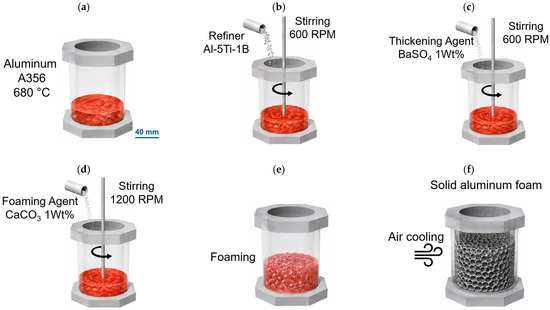
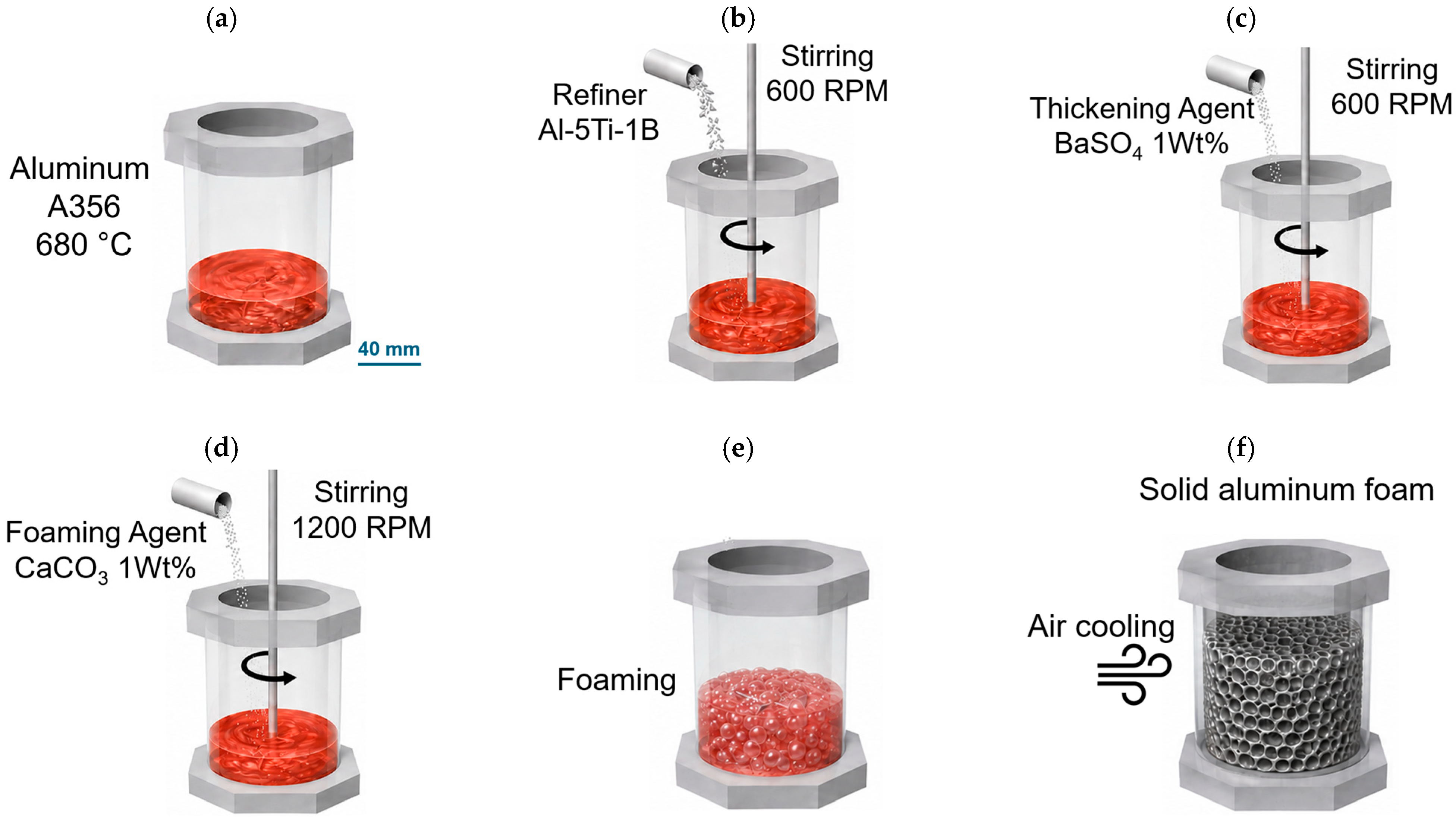
Melt treatment: A mass of 350 g of A356 aluminum alloy was charged into a stainless-steel crucible with an inner diameter of 80 mm and a height of 122 mm. The alloy was melted at 680 °C (a), after which the Al–5Ti–1B master alloy was added at the specified concentration to promote grain refinement. The melt was mechanically stirred at 600 RPM for 2 min, followed by a 2 min holding period to ensure uniform dispersion and complete interaction of the master alloy particles within the molten aluminum (b). All melting and refining operations were carried out under ambient atmosphere.
Foaming: Following grain refinement, the melt temperature was raised to 715 °C based on previous optimization studies [16]. BaSO4 was added at 1 wt.% as a thickening agent, and the melt was stirred continuously at 600 RPM for 1 min to increase viscosity. The stirring speed was then increased to 1200 RPM and maintained for 3 min to ensure a consistent suspension (c). Subsequently, CaCO3 was added at 1 wt.% as a foaming agent, and the mixture was agitated at 1200 RPM for 20 s (d). Immediately after, the impeller was withdrawn and the system was left to rest for 14 s to allow CO2 gas evolution and foam expansion (e). Once expansion occurred, cooling was initiated by forced air convection using a turbofan, ensuring rapid solidification and stabilization of the cellular structure (f). These sequential stages are illustrated in Figure 1.
Figure 1.
Sequential stages of the Alporas melt-foaming process employed to produce closed-cell A356 aluminum foams: (a) melting of the A356 alloy at 680 °C; (b) addition of the Al–5Ti–1B grain refiner under stirring; (c) addition of BaSO4 as thickening agent under stirring; (d) addition of CaCO3 as foaming agent under stirring; (e) foam expansion during the resting period; and (f) forced air cooling and solidification of the cellular structure.
It should be noted that the present foaming experiments were carried out at laboratory scale (80 mm diameter, 122 mm height crucible). Although the melt-foaming route has already reached the commercial production of large-size aluminum foam blocks, the mechanical properties of aluminum foams remain difficult to control within a narrow range, and a gap still exists between laboratory and industrial production; therefore, further optimization of the processing parameters would be required for reproducible large-scale manufacturing [15].
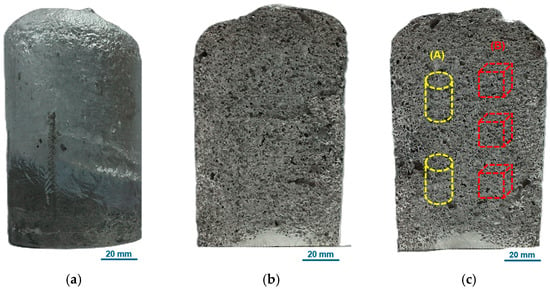
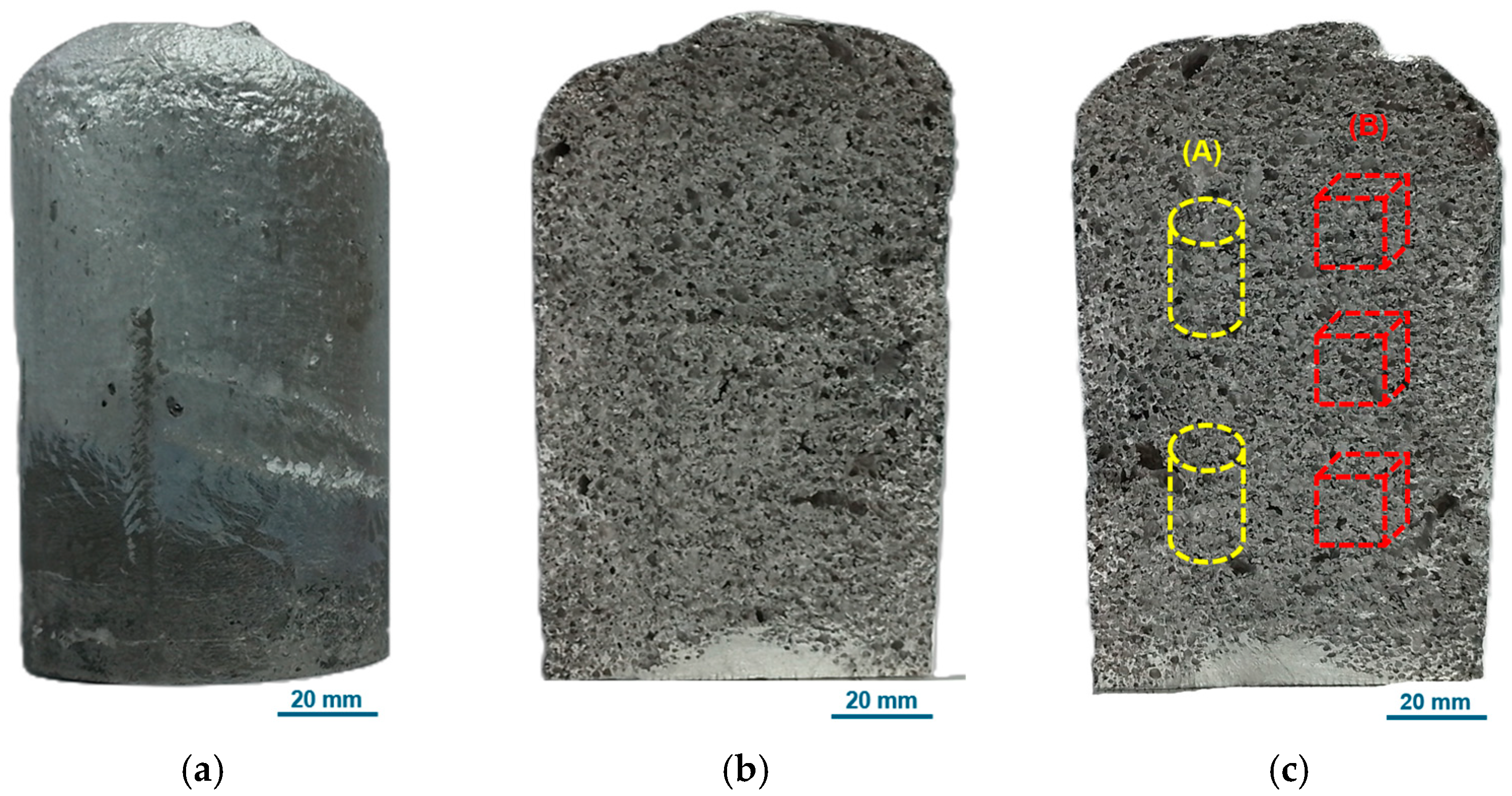
Using the described methodology, closed-cell A356 aluminum foams were successfully produced at four refinement levels and subsequently characterized in terms of relative density, cell size, SDAS, yield stress, plateau stress, and energy absorption capacity. Representative specimens are shown in Figure 2.
Figure 2.
Closed-cell A356 aluminum foams produced by the Alporas melt-foaming method: (a) foam specimen after solidification, (b) transverse cross-section showing the homogeneous cell distribution, and (c) sampling locations, where (A) indicates the cylindrical specimens for compression testing (yellow) and (B) the cubic specimens for optical microscopy (red).
2.3. Foam Characterization
The density of the aluminum foams was determined using the mass–volume relationship of the specimens. Each sample was weighed on a BOECO BPS 51 plus analytical balance (BOECO, Hamburg, Germany) with a readability of 0.01 g, and its volume was calculated from the geometrical dimensions measured with a Mitutoyo CD-8"AX digital caliper (Mitutoyo Corporation, Kawasaki, Japan) with a measuring range of 0–200 mm and a resolution of 0.01 mm. Based on these measurements, the density of each specimen was obtained, and an average density value was calculated for each experimental condition.
The relative density of the foams was calculated by comparing the average foam density (ρFoam) with the density of the solid A356 alloy (ρA356), using the ratio ρfoam/ρA356. For this study, the density of the solid A356 alloy was taken as 2.56 g·cm−3.
The porosity percentage (Pr) of the foams was estimated from the relative density using Equation (1):
where Pr represents the porosity percentage of the aluminum foam.
Microstructural characterization was performed by metallographic analysis in at least six different regions of each cubic specimen, as indicated in red in Figure 2. For metallographic preparation, the cubic specimens were wet-ground on SiC papers down to 1500 grit, polished with 1 µm diamond paste, and etched by immersion in a diluted hydrofluoric acid solution (0.5 mL HF 40% in 100 mL distilled water) for 14 s at room temperature to reveal the dendritic microstructure [17]. Microstructural observations and image acquisition were carried out using an inverted Zeiss Axiovert 40 MAT optical microscope (Carl Zeiss, Jena, Germany), using 5× and 10× objective lenses. Additionally, the microstructure and elemental composition of the cell walls were examined using a JEOL JSM-6300 scanning electron microscope (JEOL Ltd., Tokyo, Japan) equipped with an Oxford Instruments Link-ISIS energy-dispersive X-ray spectroscopy (EDS) system for semi-quantitative elemental characterization (Oxford Instruments, Abingdon, UK). Analyses were performed at an accelerating voltage of 20 kV.
The cell size of the foams was determined from cross-sectional images using the linear intercept method. For each foam condition, images containing approximately 60–130 cells were analyzed using ImageJ software(version 1.54, National Institutes of Health, Bethesda, MD, USA), which was previously calibrated to convert image dimensions from pixels to micrometers.
In each of the six analyzed regions, random measurements of the dendritic spacing were performed, resulting in a total of 30 measurements per specimen. Since cast aluminum alloys exhibit a primary dendritic microstructure, the secondary dendrite arm spacing (SDAS) was selected as a representative parameter to evaluate the effect of the melting and refinement treatments. The SDAS value was calculated using Equation (2).
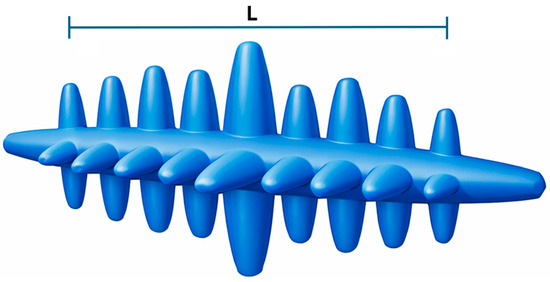
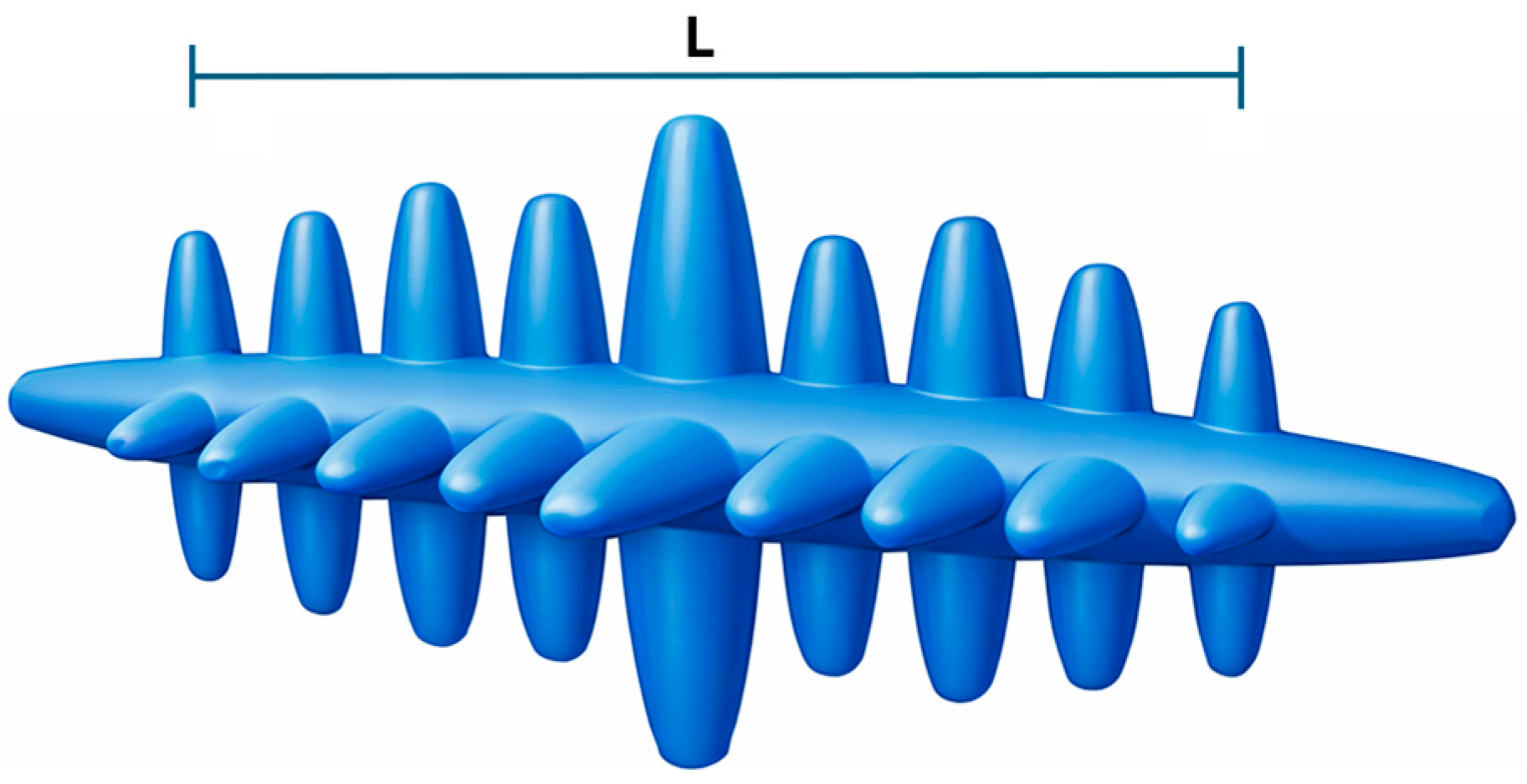
where N is the number of secondary dendrite arms counted along one side of the primary dendrite arm, and L is the distance measured parallel to the primary arm between the centers of the secondary arms considered, following the method D [7], as shown in Figure 3.
Figure 3.
Schematic representation of a primary dendrite arm illustrating the measurement of secondary dendrite arm spacing (SDAS) and the definition of length L used in Equation (2).
For each condition, thirty SDAS measurements were performed, and the results are expressed as mean ± standard deviation. A one-way ANOVA with a Tukey post hoc test was applied to evaluate the effect of the Al–5Ti–1B content on the SDAS [18]. Statistical analyses were performed using MATLAB R2026a with the Statistics and Machine Learning Toolbox (The MathWorks Inc., Natick, MA, USA).
Quasi-static compression tests were performed at room temperature using a Shimadzu AGS-100kNX universal testing machine (Shimadzu Corporation, Kyoto, Japan) with a 100 kN load capacity, operated through Trapezium X software (version 1.5.5, Shimadzu Corporation, Kyoto, Japan). The cylindrical specimens were compressed under displacement control with a constant crosshead speed of 0.5 mm min−1, corresponding to an initial strain rate of 0.02 s−1. At least 3 cylindrical samples of 25 mm height and 13 mm in diameter were obtained from each metallic foam produced for compression tests.
The engineering stress was calculated as the applied load divided by the initial cross-sectional area of the specimen, while the engineering strain was determined from the displacement normalized by the initial specimen height. The mechanical parameters of the metal foams were determined according to ISO 13314:2011 for the compression testing of porous and cellular metals [19]. The energy absorption was calculated as the area under the stress–strain curve up to a given strain level.
As an energy-absorbing material, aluminum foam performance shows that higher strains can be obtained at lower stress levels, making it attractive for impact and crash protection applications [15,20,21]. Therefore, the energy absorption capacity (W), ideality energy absorption efficiency (I), and energy absorption efficiency (E) were evaluated using Equations (3)–(5), respectively, where W represents the total energy absorbed per unit volume prior to densification, E compares the absorbed energy with that of an ideal constant-stress material, and I provides a dimensionless indicator of how close the foam behavior approaches that of a perfect energy absorber [20,22]. The energy absorption parameters (W, I, and E) were calculated by numerical integration of the stress–strain curves using OriginPro 2026 (version 10.3.0.197, OriginLab Corporation, Northampton, MA, USA), which was also used to plot the resulting curves.
3. Results and Discussion
3.1. Microstructural Study
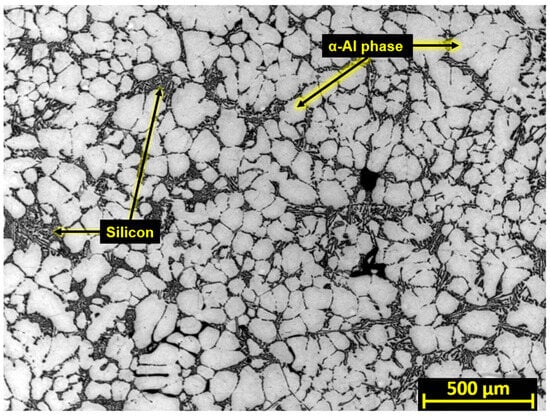
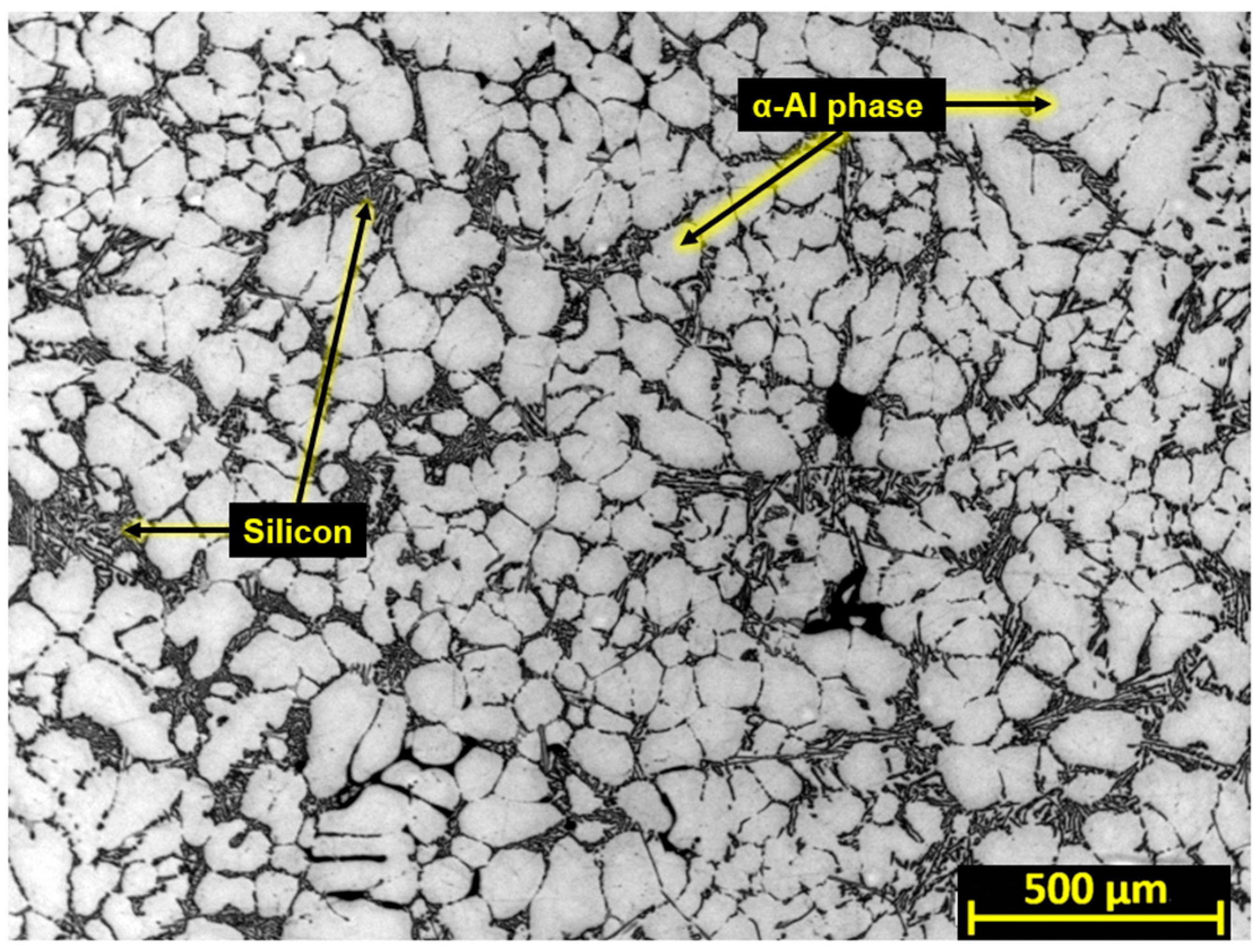
The base alloy microstructure consists of a dendritic aluminum-rich matrix (α-Al phase) and a eutectic structure composed of coarse silicon particles with lamellar morphology, as shown in Figure 4.
Figure 4.
Optical micrograph of the A356 aluminum alloy.
The relative density and porosity percentage of the fabricated foams were calculated from their dimensions and mass. The results are presented in Table 2, where it can be observed that as the Al-5Ti-1B concentration increases, the relative density decreases while the porosity percentage increases, indicating a greater foam expansion during the foaming process.
Table 2.
Density and porosity of A356 aluminum foams at different Al-5Ti-1B concentrations.
The produced foams exhibited relative densities between 0.120 and 0.181 and porosity levels ranging from 82 to 88%, with a slight decrease in relative density as the Al–5Ti–1B content increased.
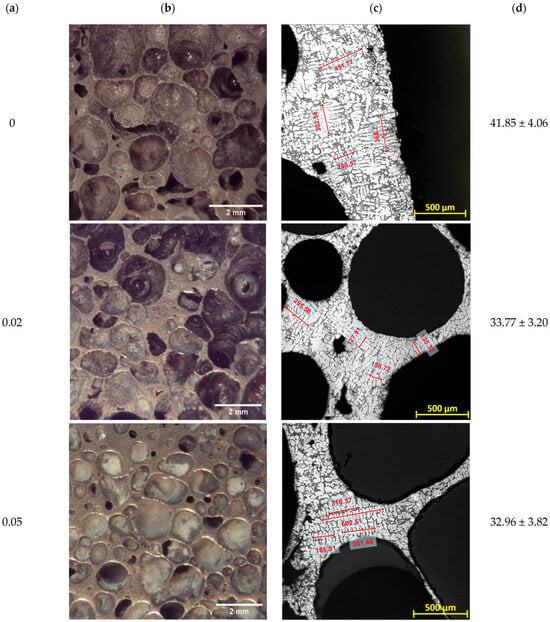
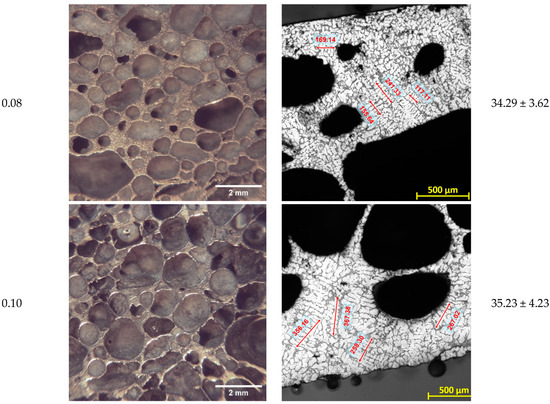
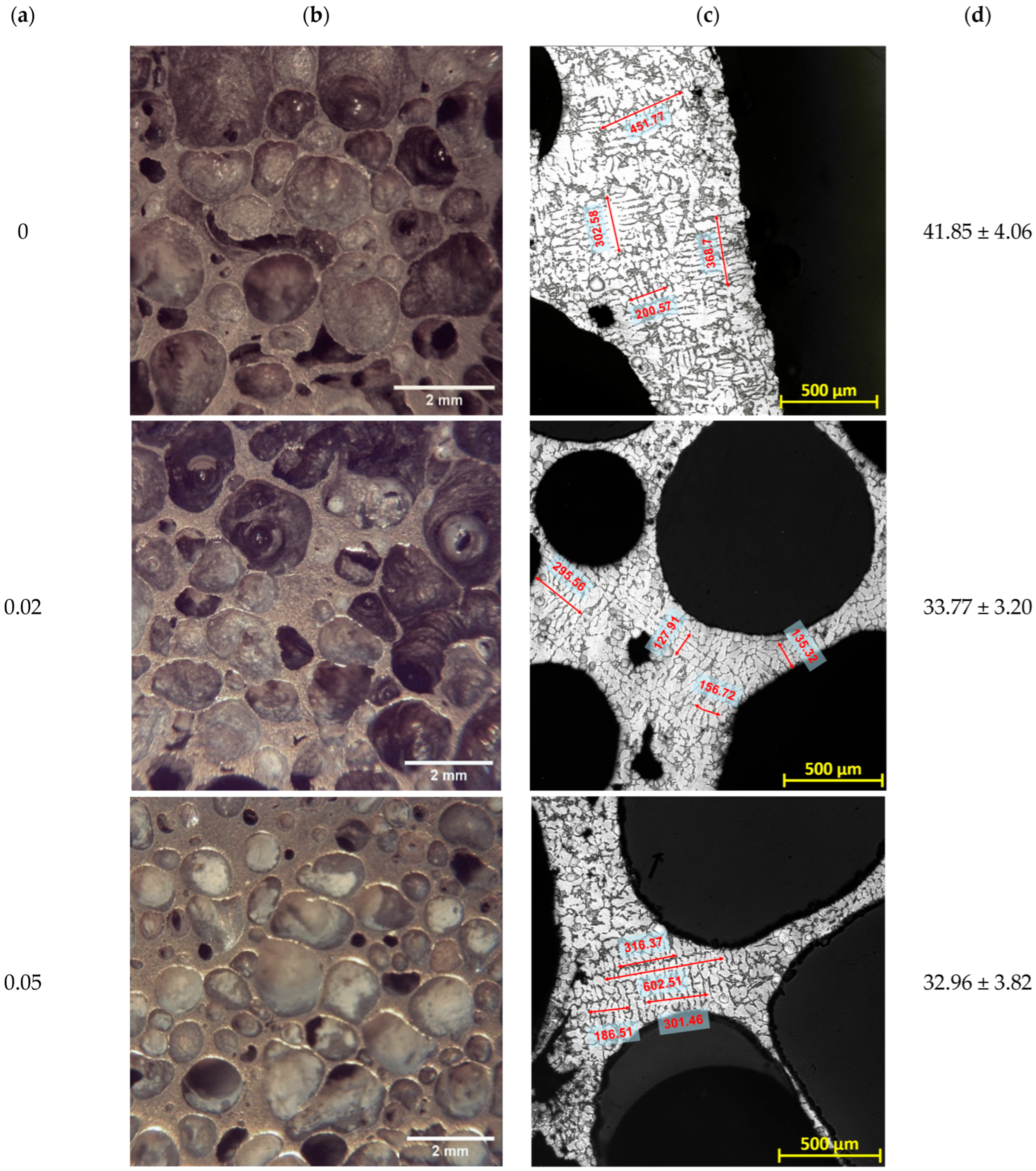
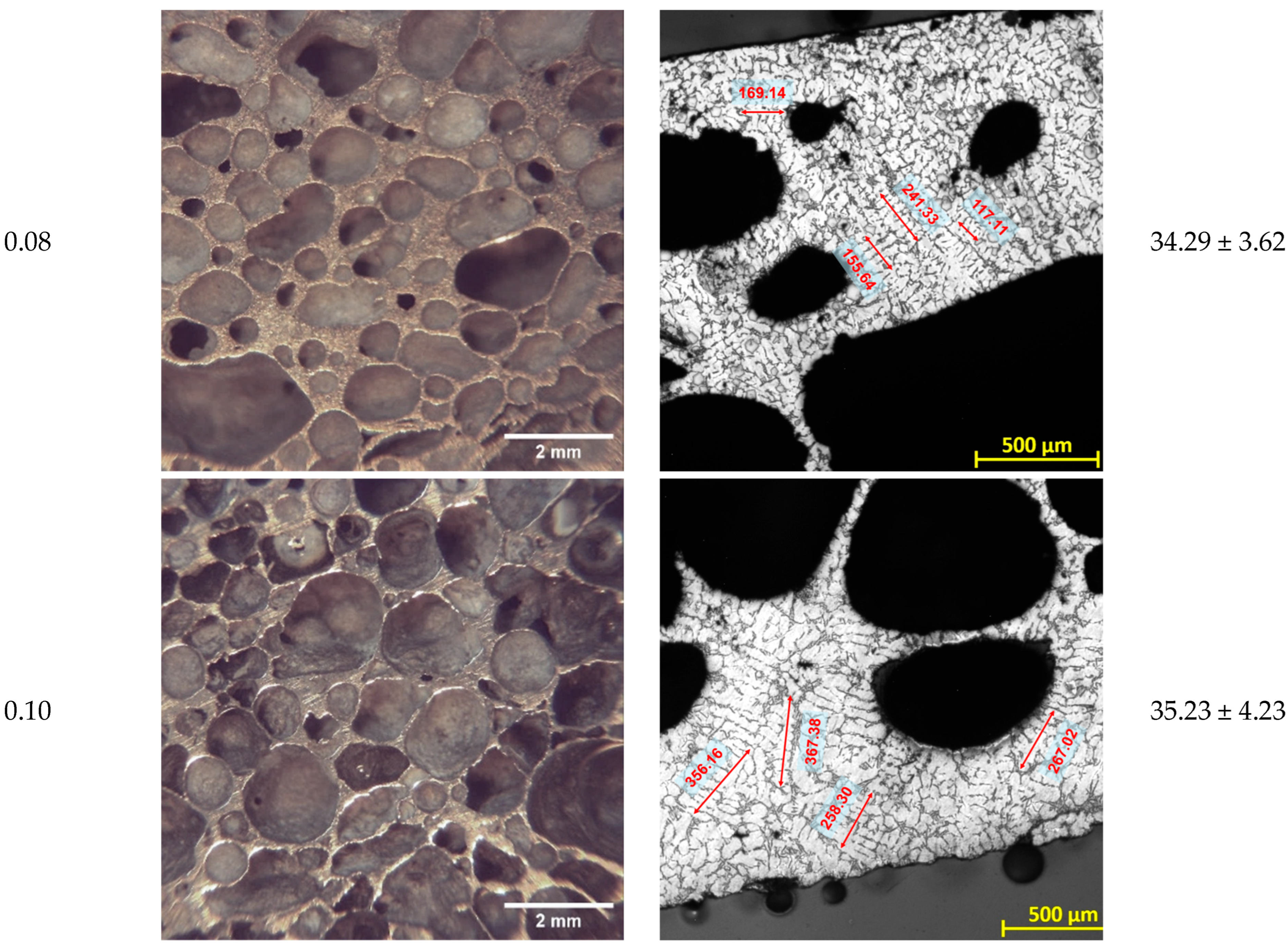
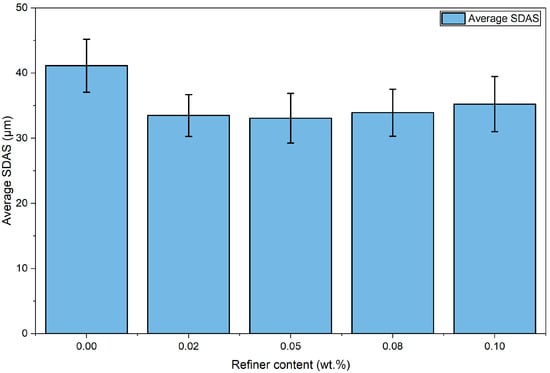
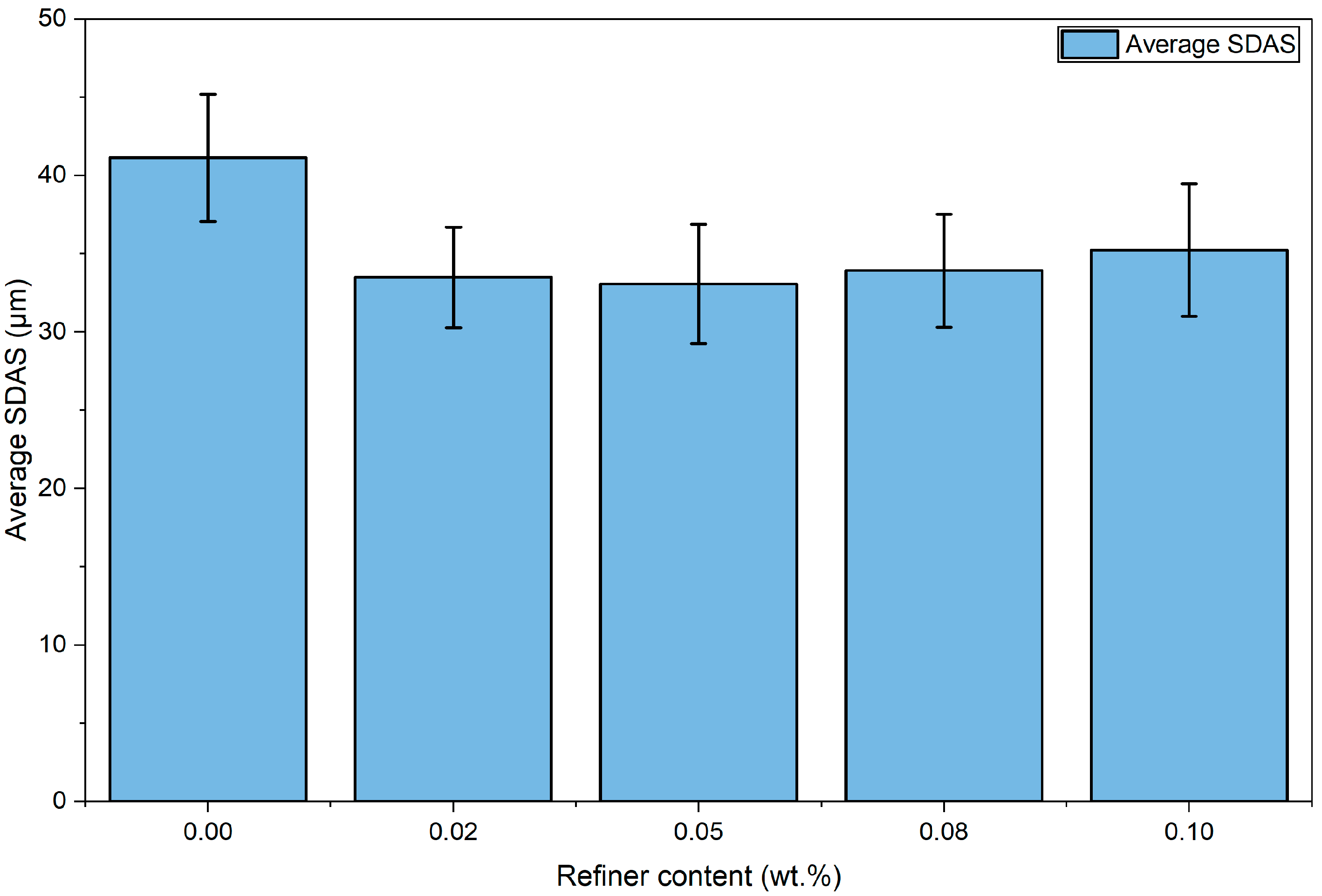
The average cell size ranged from 0.84 to 1.14 mm, with slightly smaller cells observed at intermediate refiner concentrations (0.02–0.08 wt.%). In addition, the effect of different Al–5Ti–1B grain refiner contents on the secondary dendrite arm spacing (SDAS) was evaluated. The measured SDAS values were 41.85 ± 4.06, 33.77 ± 3.20, 32.96 ± 3.82, 34.29 ± 3.62, and 35.23 ± 4.23 µm for the grain refiner additions of 0, 0.02, 0.05, 0.08, and 0.10 wt.%, respectively. A clear reduction in SDAS was observed after the addition of the grain refiner, with the most notable refinement achieved at 0.05 wt.% Al–5Ti–1B. This reduction indicates an effective grain refinement of the aluminum matrix. These results are presented in Figure 5.
Figure 5.
Microstructural evolution of aluminum foams with different Al–5Ti–1B additions: (a) grain refiner content, (b) stereoscopic images of the foam structure, (c) optical micrographs of the dendritic microstructure, and (d) the corresponding average SDAS values.
A significant reduction in SDAS was observed following the addition of the grain refiner (Figure 5). The addition of 0.02 wt.% Al–5Ti–1B produced a reduction of 8.08 µm, while increasing the concentration to 0.05 wt.% yielded the greatest refinement, with an additional reduction of 0.81 µm. At higher concentrations, the SDAS increased slightly (34.29 and 35.23 µm for 0.08 and 0.10 wt.%, respectively), indicating a saturation of the grain refinement effect, where additional nucleating particles no longer contribute to further refinement. A one-way ANOVA confirmed a statistically significant effect of the refiner content on the SDAS (p < 0.001); the Tukey post hoc test showed that all refined foams differ from the unrefined foam but not among themselves (Figure 6).
Figure 6.
Average secondary dendrite arm spacing (SDAS) of A356 aluminum foams as a function of Al–5Ti–1B content. Error bars represent one standard deviation (n = 30).
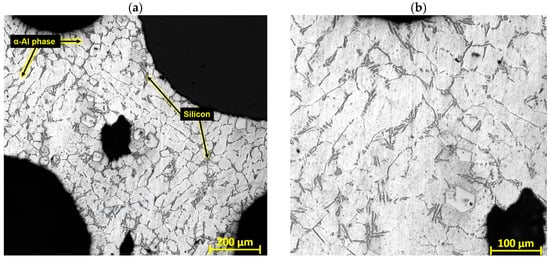
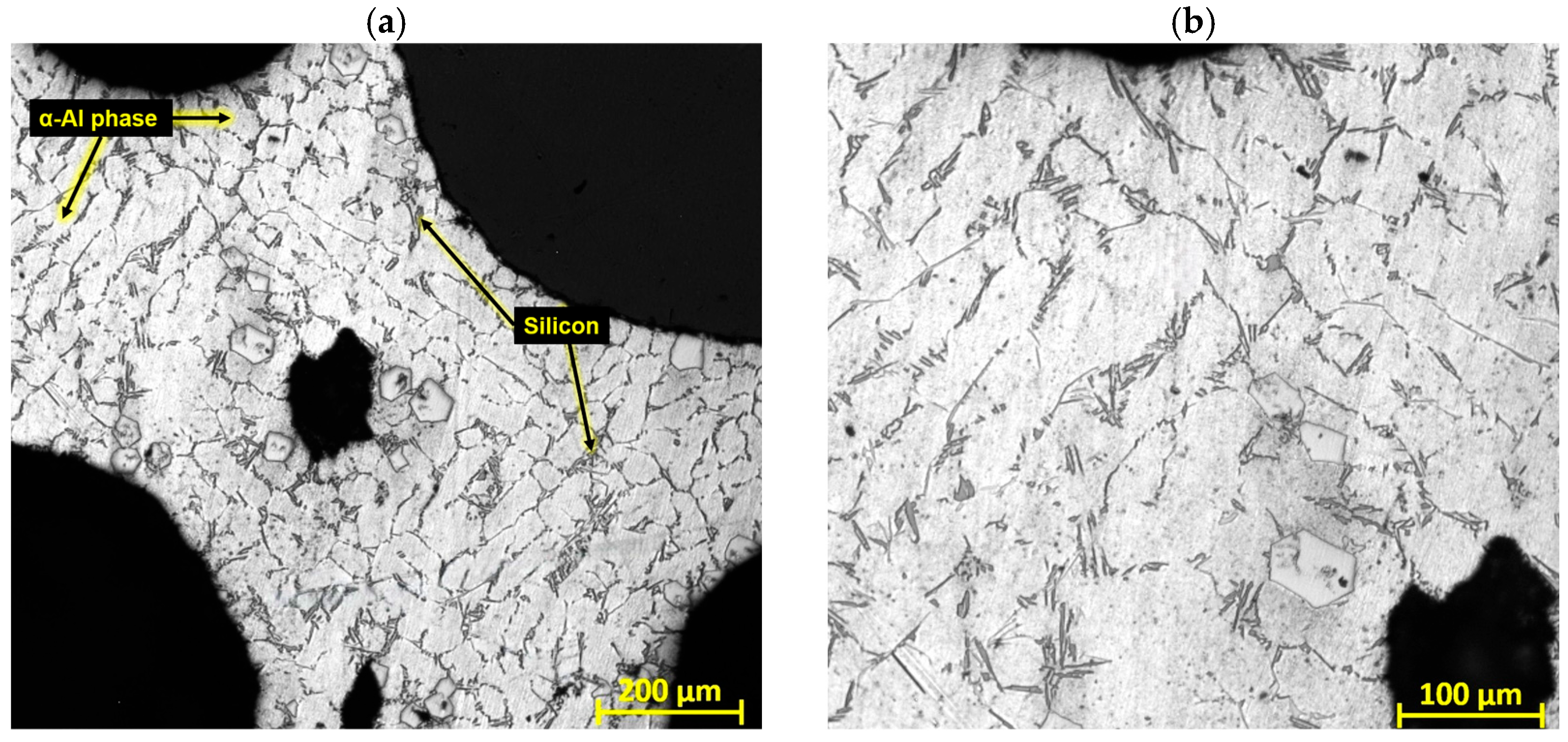
In addition to enabling the measurement of the secondary dendrite arm spacing (SDAS), optical microscopy revealed the microstructural features of the A356 alloy foam matrix. As shown in Figure 7, higher-magnification micrographs revealed the dendritic morphology of the primary α-Al phase, as well as the morphology and distribution of the eutectic silicon in the interdendritic regions.
Figure 7.
Optical micrographs of the A356 alloy foam matrix: (a) 20× magnification and (b) 5× magnification, showing the dendritic α-Al phase and eutectic silicon in the interdendritic regions.
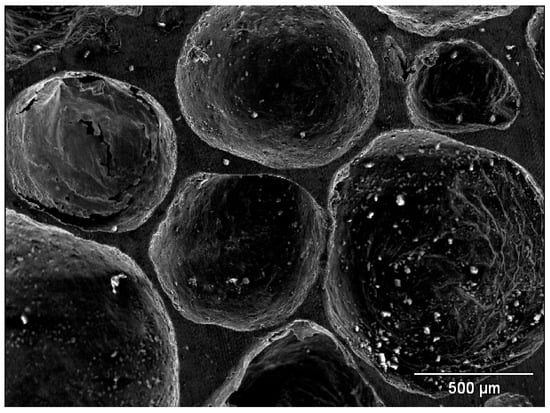
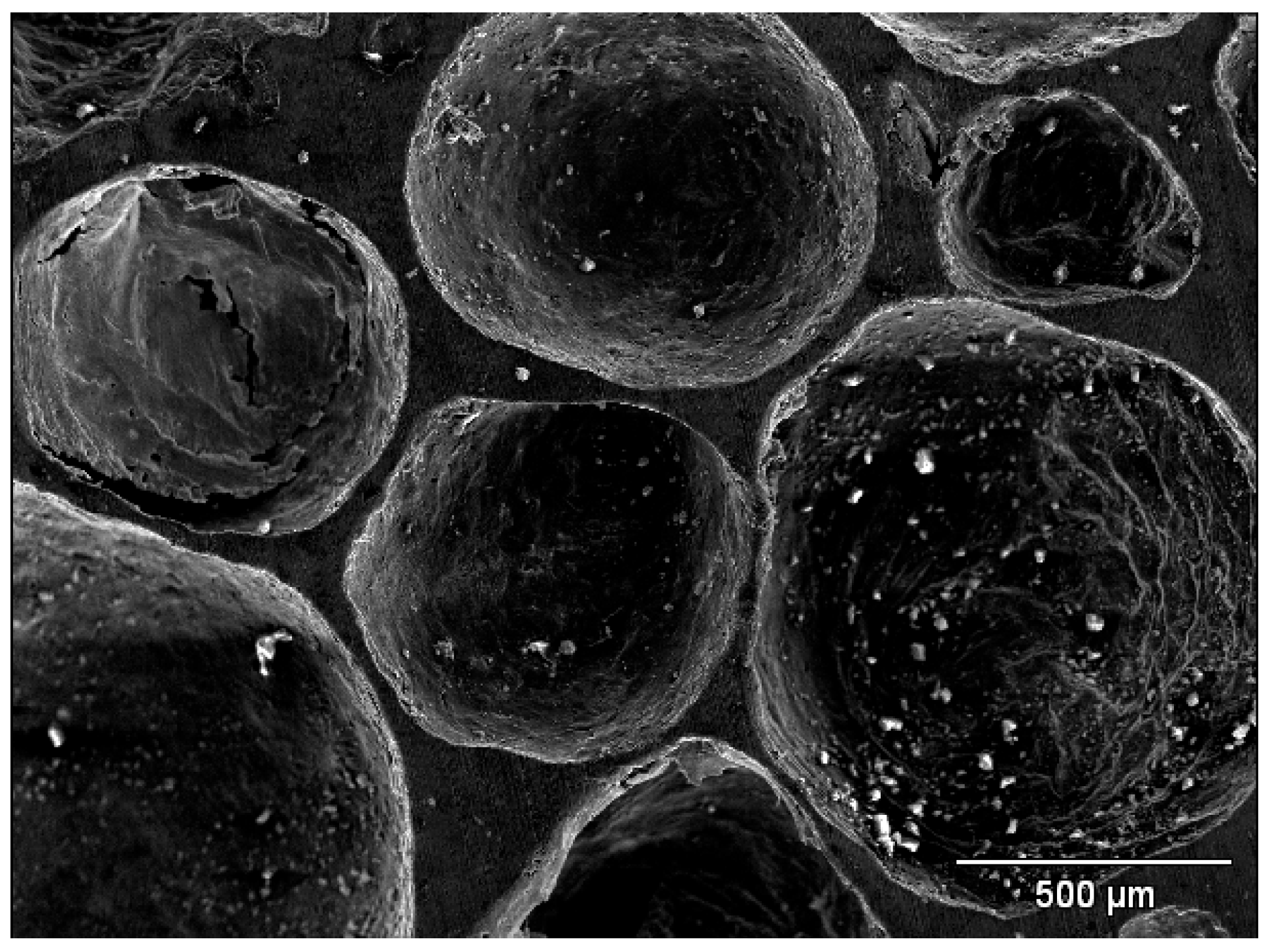
SEM micrographs revealed the pore morphology of the A356 aluminum foam. As shown in Figure 8, cluster-like agglomerates were observed on the pore surfaces, which are attributed to residues associated with the thickening and foaming agents employed during the Alporas foaming process.
Figure 8.
SEM micrograph of the A356 aluminum alloy foam showing the pore morphology and the presence of cluster-like agglomerates on the pore surfaces.
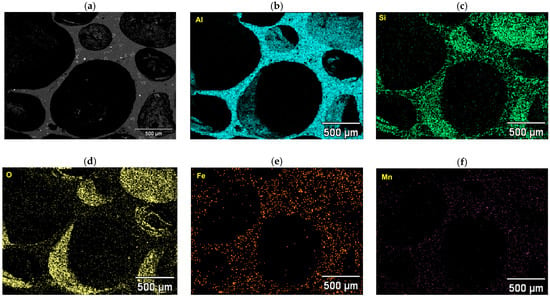
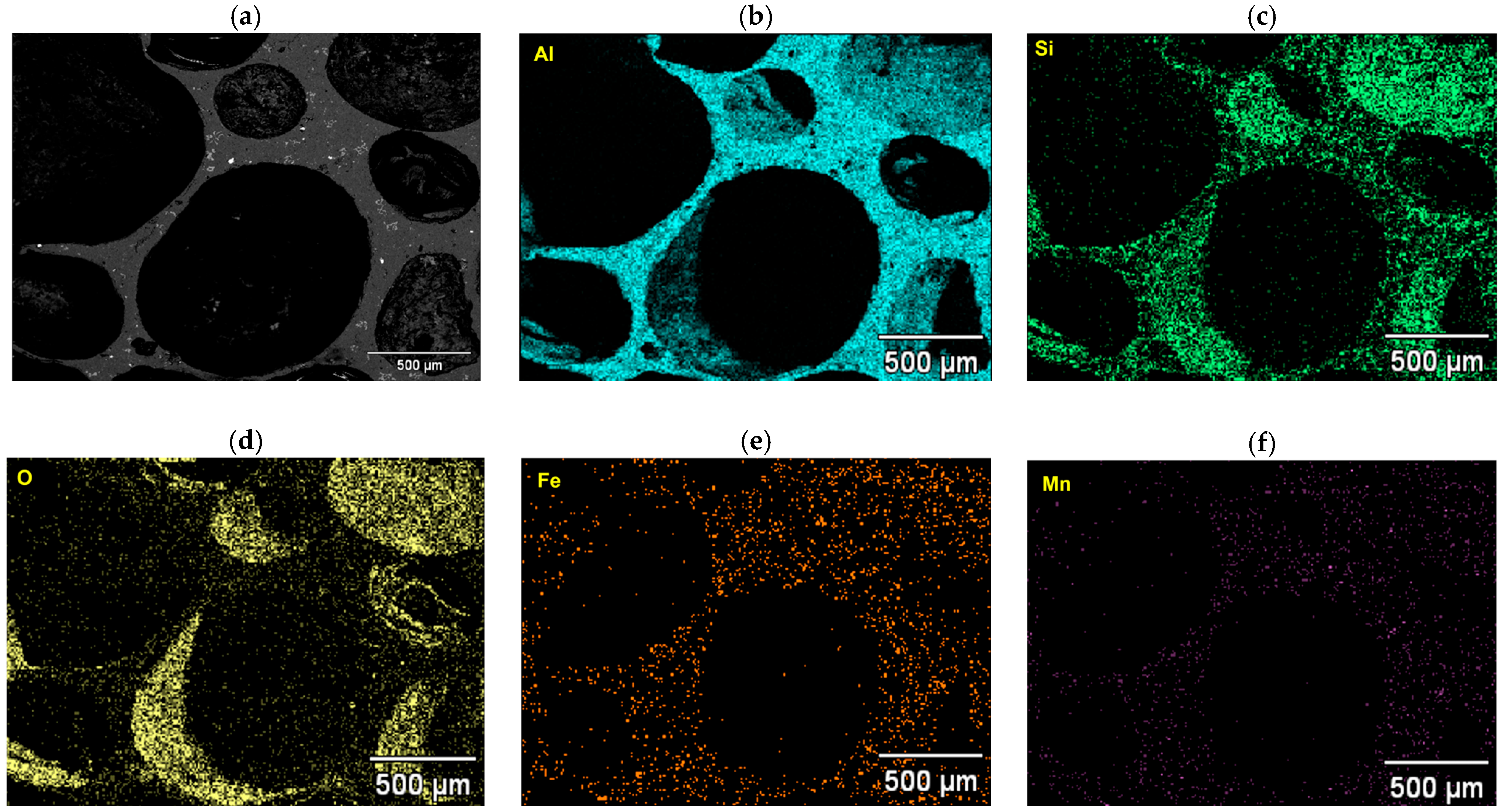
SEM–EDS elemental mapping was performed to analyze the elemental distribution within the metallic matrix of the A356 aluminum alloy foam. As shown in Figure 9, the elemental maps reveal the distribution of the major alloying elements throughout the matrix.
Figure 9.
(a) SEM micrograph of the A356 aluminum alloy foam. Corresponding SEM–EDS elemental maps showing the distribution of (b) Al, (c) Si, (d) O, (e) Fe, and (f) Mn within the metallic matrix.
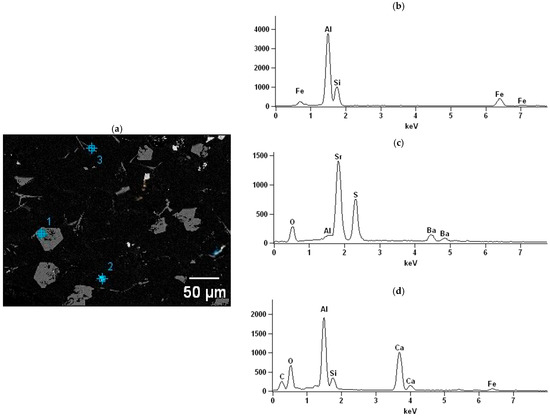
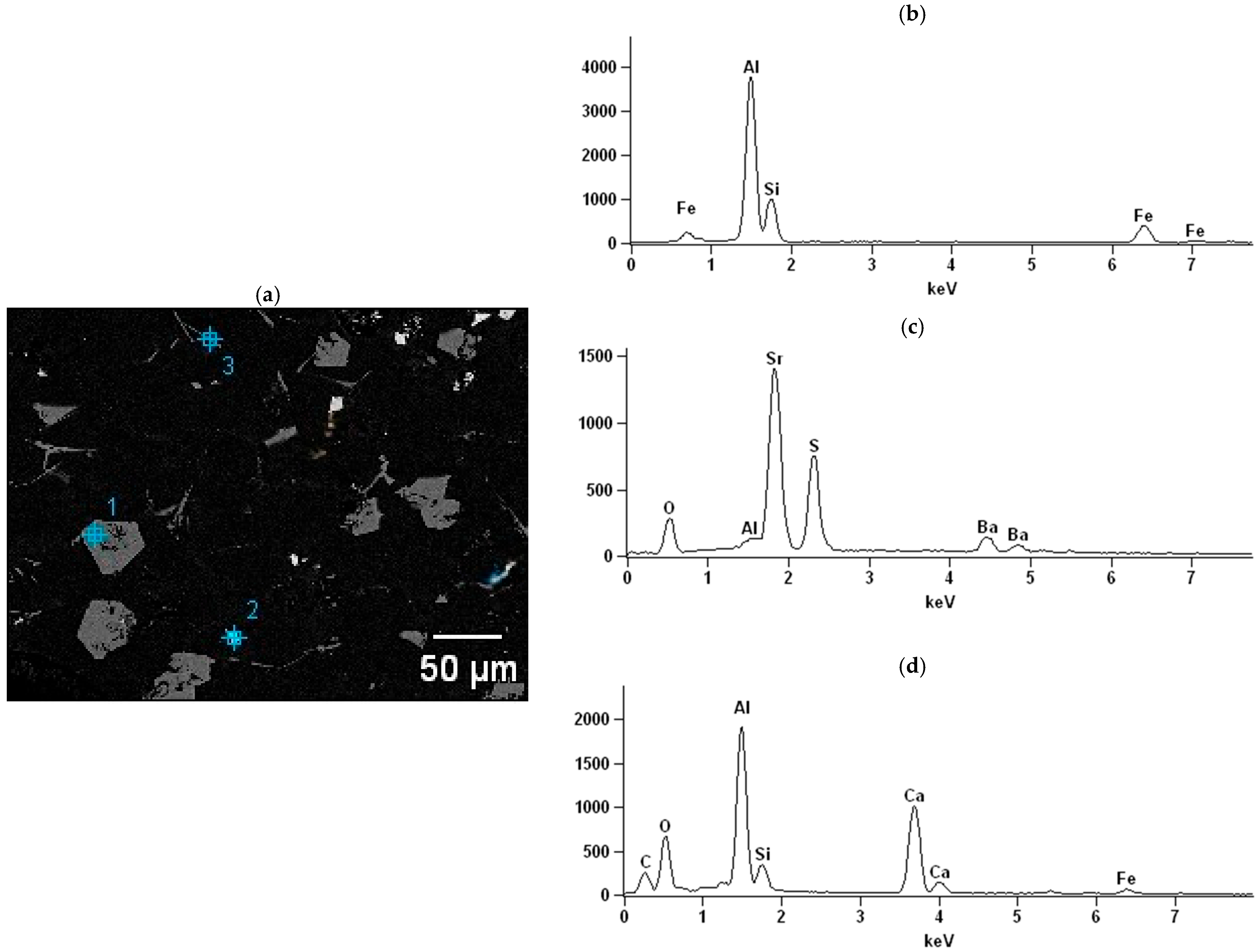
Point SEM–EDS analysis was performed on the particles present within the metallic matrix of the A356 aluminum alloy foam. As shown in Figure 10, the spectra revealed particles enriched in Sr, Ba, and S in addition to the characteristic alloying elements of the A356 alloy. The simultaneous presence of Sr, Ba, and S indicates that these particles represent a barite–celestine solid solution derived from the thickening agent used in the Alporas process. In addition, Ca-rich residues were detected, attributed to the decomposition of the CaCO3 foaming agent. These particles are heterogeneously distributed throughout the metallic matrix in the form of clusters or agglomerates.
Figure 10.
SEM–EDS point analysis in the A356 aluminum alloy foam matrix: (a) analyzed points; (b) point 1, metallic matrix; (c) point 2, barite–celestine solid solution (Sr, Ba, S) from the thickening agent; (d) point 3, Ca-rich residue from the CaCO3 foaming agent.
3.2. Mechanical Properties
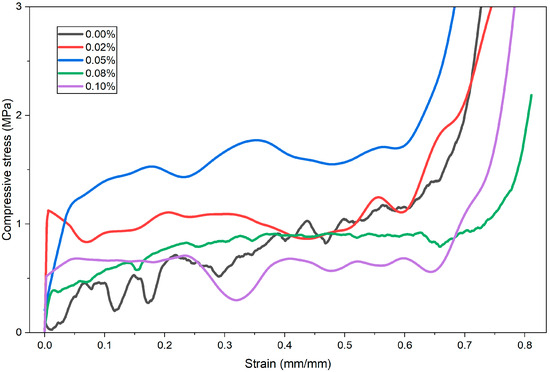
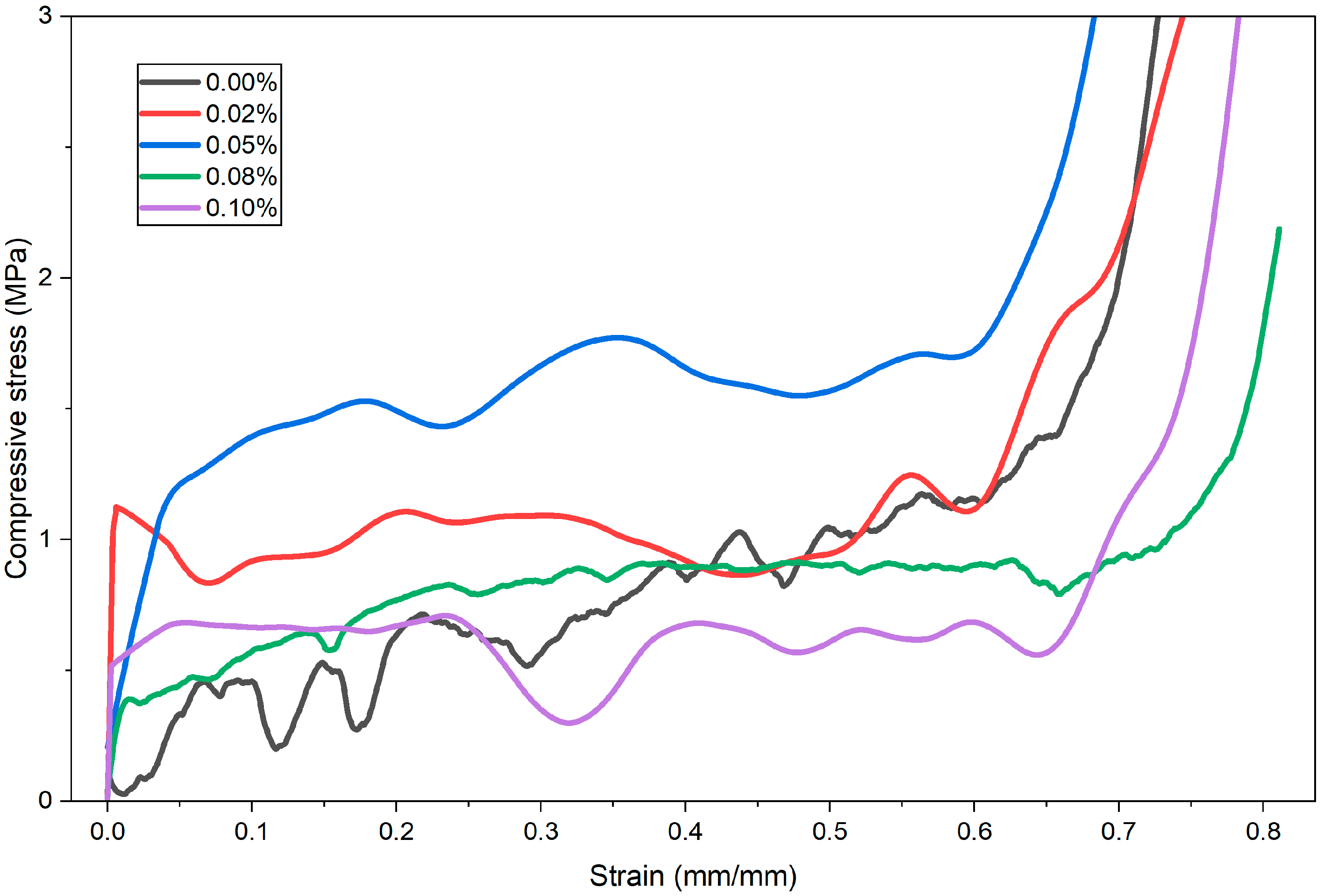
In the engineering stress–strain analysis, the curves obtained from the quasi-static compression tests of the aluminum foams produced with different Al–5Ti–1B contents are shown in Figure 11. All foams exhibited the typical compressive behavior of closed-cell metallic foams, characterized by three distinct regions: an initial elastic region, followed by a relatively stable plateau region, and finally a densification region where the stress increases rapidly as the cell walls collapse and the material compacts. The compression graph in Figure 11 represents the average of three tests, achieving adequate reproducibility.
Figure 11.
Engineering stress–strain curves obtained from the quasi-static compression tests of the aluminum foams produced with different Al–5Ti–1B contents.
The main mechanical parameters obtained from the compression tests, including yield stress (σ0), plateau stress (σPl), and energy absorption (W), are summarized in Table 3. All energy-related parameters were evaluated up to a compressive strain of 0.5 in accordance with the ISO 13314:2011 standard for mechanical testing of porous and cellular metals [19].
Table 3.
Mechanical properties of A356 aluminum foams at different Al–5Ti–1B concentrations.
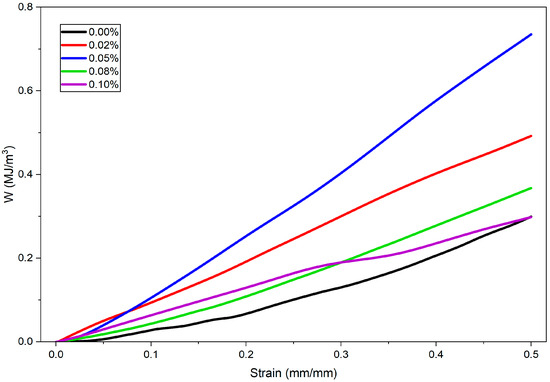
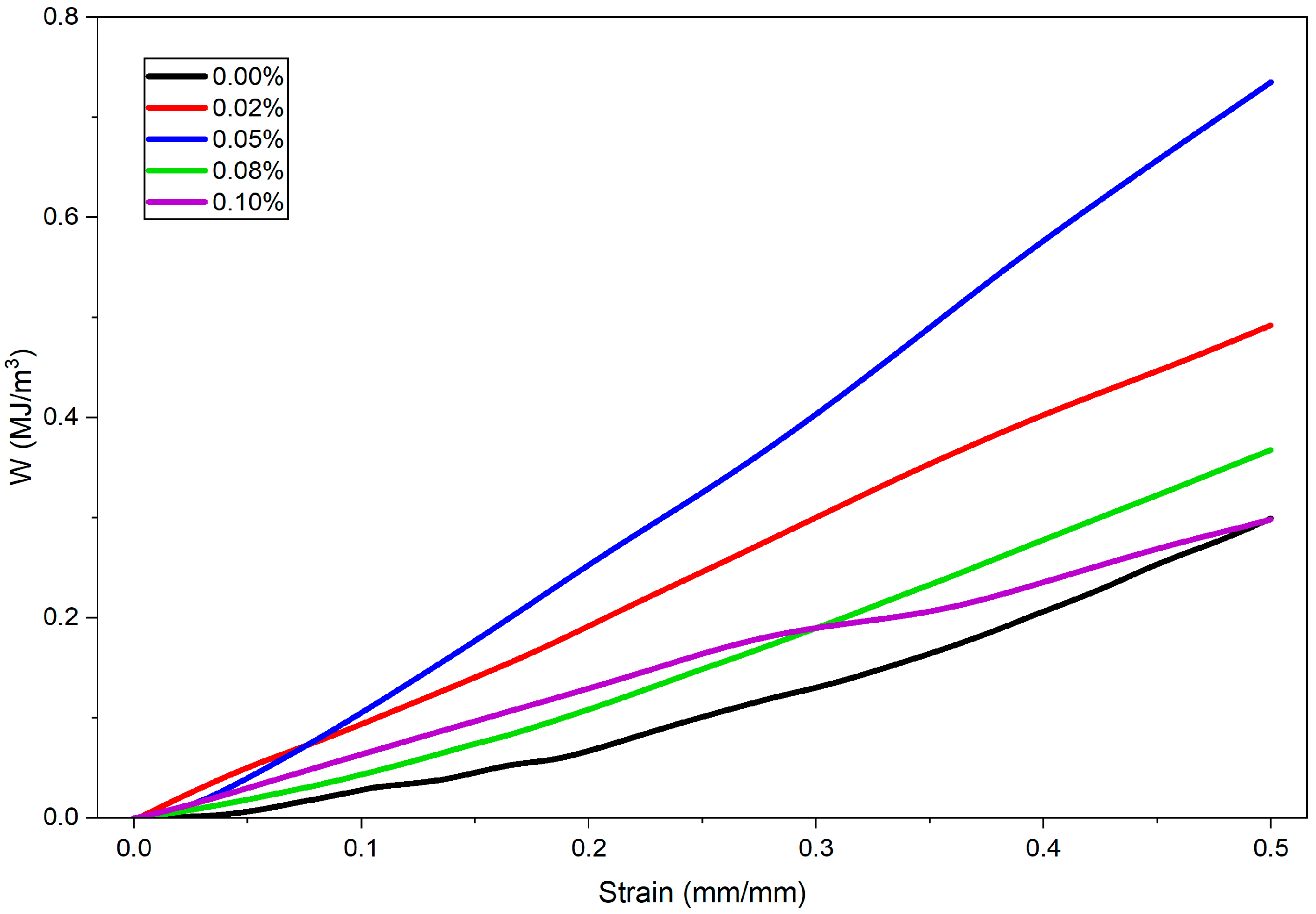
The unrefined foam exhibited the lowest plateau stress (0.525 MPa) and energy absorption (0.299 MJ/m3). The addition of 0.05 wt.% Al–5Ti–1B produced the greatest improvement, with a plateau stress of 1.549 MPa and an energy absorption of 0.735 MJ/m3, representing improvements of approximately 195% and 145% over the unrefined foam, respectively. However, refiner concentrations above 0.05 wt.% resulted in a progressive decrease in both parameters, suggesting a saturation of the grain-refinement effect. To decouple the contribution of the matrix refinement from that of the porosity difference, the plateau stress and energy absorption were normalized by the relative density of each foam. Even after this normalization, the 0.05 wt.% foam retained the highest specific plateau stress (9.28) and specific energy absorption (4.40), well above the unrefined foam (2.90 and 1.65, respectively), confirming that the enhancement in compressive performance is primarily governed by the SDAS refinement of the cell walls rather than by the difference in relative density. Figure 12 shows the evolution of energy absorption capacity as a function of compressive strain for all foam conditions evaluated.
Figure 12.
Energy absorption capacity (W) as a function of compressive strain for A356 aluminum foams produced with different Al–5Ti–1B grain refiner concentrations.
Although the refined foams showed no significant SDAS differences among themselves, their mechanical response varied considerably. This indicates that the SDAS refinement accounts for the improvement of the refined foams over the unrefined condition, whereas the differences among the refined foams are governed by additional factors, namely the variation in relative density and the agglomeration of refiner particles at higher additions, rather than by the SDAS alone.
The improvement in mechanical properties is consistent with the SDAS reduction observed in the microstructural analysis, confirming that a finer dendritic structure produces stronger and more homogeneous cell walls. During compression, the plateau region is governed by progressive cell wall bending and collapse [15,20], and the reduction in SDAS delays this collapse, increasing both the plateau stress and the energy absorption capacity of the foam.
The results show a non-monotonic trend in mechanical properties with respect to refiner content. A progressive improvement is observed from the unrefined condition up to 0.05 wt.%, at which the maximum plateau stress and energy absorption values are obtained. However, higher concentrations (0.08 and 0.10 wt.%) resulted in values lower than those obtained even with 0.02 wt.%. This behavior can be attributed to the fact that, once the optimal refinement level is reached, additional nucleant particles do not effectively contribute to new grain initiation and tend to accumulate in the interdendritic regions, deteriorating the mechanical properties of the cell walls [23].
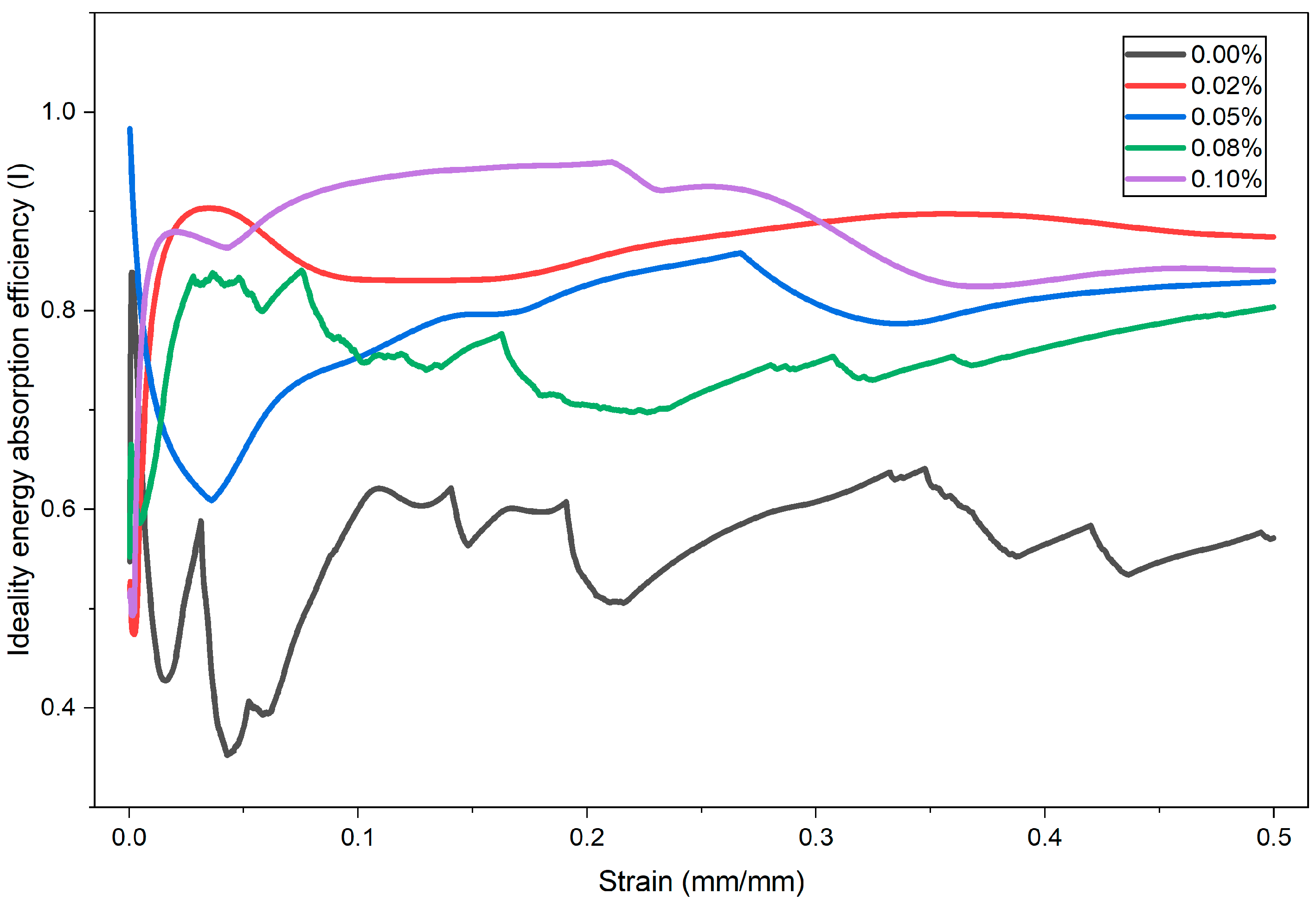
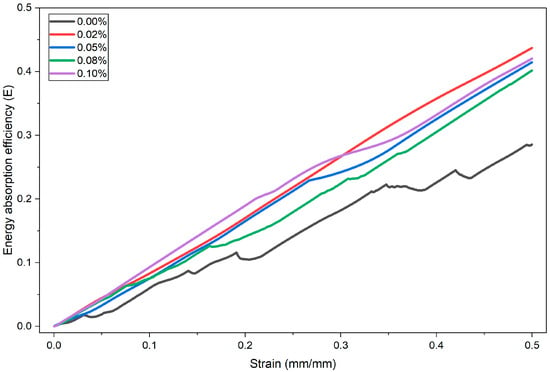
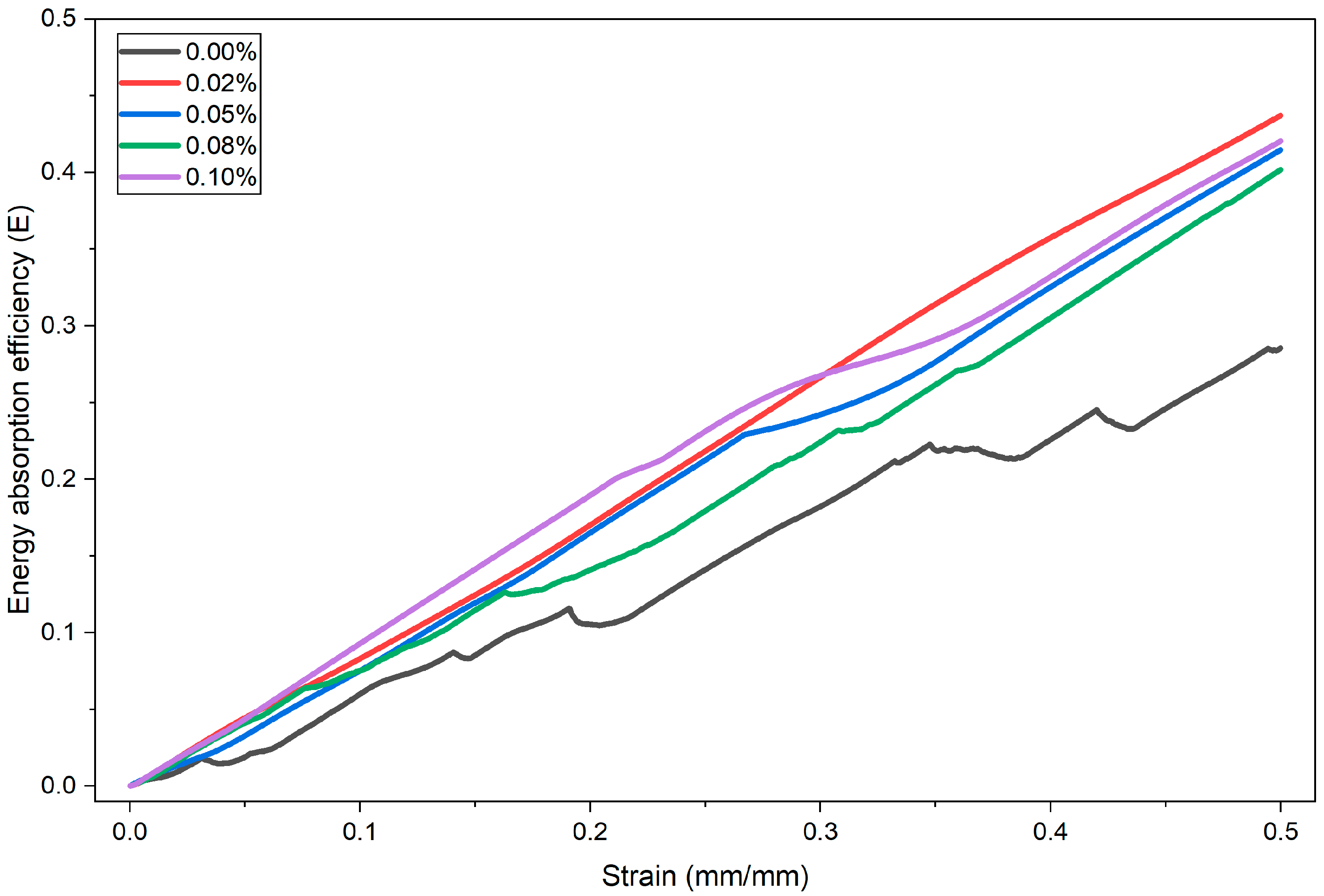
To further complement the mechanical analysis, Figure 13 and Figure 14 show the ideality energy absorption efficiency (I) and the energy absorption efficiency (E) evaluated as a function of compressive strain, respectively.
Figure 13.
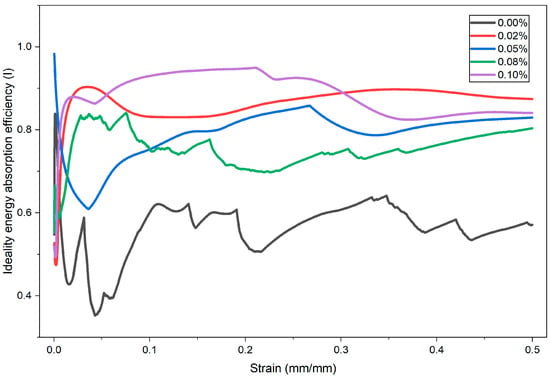
Ideality energy absorption efficiency (I) of A356 aluminum foams at different Al–5Ti–1B concentrations.
Figure 14.
Energy absorption efficiency (E) of A356 aluminum foams at different Al–5Ti–1B concentrations.
The ideality energy absorption efficiency (I) curves show two clearly identifiable stages: an initial rapid rising stage followed by a sustained plateau stage, as shown in Figure 13.
The unrefined foam exhibited the lowest plateau average of 0.579, significantly lower than all refined foams, which ranged from 0.751 to 0.892, evidencing that grain refinement promotes a more progressive and homogeneous collapse of the cellular structure. The foams with 0.10 wt.% and 0.02 wt.% exhibited the highest plateau averages of 0.892 and 0.877, respectively, while 0.08 wt.% showed the lowest value among the refined foams at 0.751.
The stability of the I curves was evaluated using the standard deviation in the plateau region. The values obtained were: 0 wt.% = 0.049, 0.02 wt.% = 0.024, 0.05 wt.% = 0.037, 0.08 wt.% = 0.032 and 0.10 wt.% = 0.046. The unrefined foam exhibited the highest standard deviation with pronounced and aggressive oscillations throughout the plateau, indicating a non-uniform collapse of the cell walls. Although the foam with 0.10 wt.% showed a similar standard deviation (0.046), its oscillations are less pronounced compared to the unrefined foam, suggesting a more gradual collapse of the cell walls. The foam with 0.02 wt.% presented the best balance between efficiency and stability, with the highest average I (0.877) and the lowest standard deviation (0.024), evidencing the most progressive and uniform collapse among all evaluated conditions.
Figure 14 shows the energy absorption efficiency (E) curves as a function of compressive strain.
The unrefined foam exhibited the lowest E value of 0.286, significantly lower than all refined foams. In contrast, all refined foams showed similar E values ranging from 0.402 to 0.437, suggesting that any of the refiner concentrations evaluated improves the energy absorption efficiency in a comparable manner. The foam with 0.02 wt.% exhibited the highest E value of 0.437, while 0.08 wt.% showed the lowest among the refined foams at 0.402. Notably, although the foam with 0.05 wt.% showed the highest energy absorption capacity (W) and plateau stress, its efficiency (E) was not the highest, indicating that greater energy absorption does not necessarily imply higher efficiency relative to the maximum applied stress.
Table 4.
Ideality energy absorption efficiency (I) and energy absorption efficiency (E) of A356 aluminum foams at different Al–5Ti–1B concentrations.
The microstructural and compressive properties evaluated establish a direct relationship between grain refinement and the energy absorption performance of the foams. The reduction in SDAS produced by Al-5Ti-1B addition generates stronger and more homogeneous cell walls, resulting in a higher plateau stress and consequently greater energy absorption capacity (W). However, this same cell wall strengthening effect simultaneously produces an increase in the maximum stress (σm), which acts as the denominator in the calculation of E and I. For this reason, the foam with 0.05 wt.%, which presents the lowest SDAS (33.96 µm) and the highest W (0.735 MJ/m3), also registers the highest σm (1.772 MPa), resulting in lower relative efficiency values (E and I) than those of the 0.02 wt.% foam.
It is important to note that W, E, and I represent complementary but different aspects of energy absorption performance. While W quantifies the absorbed energy in absolute terms, E and I are relative efficiencies that compare each foam’s behavior against its own maximum stress. This explains why the foam with 0.05 wt.% exhibits the highest W (0.735 MJ/m3) but not the highest efficiency—having the highest maximum stress (1.772 MPa), the denominator of E and I is larger, resulting in lower efficiency values than those of 0.02 wt.%. In practical terms, the optimal refiner concentration depends on the parameter of interest: if maximum energy absorption is sought, 0.05 wt.% represents the best option, while if maximum relative efficiency is desired, 0.02 wt.% offers the best performance. Nevertheless, in all cases evaluated, any refiner concentration significantly improved W, E, and I compared to the unrefined foam, confirming the positive effect of grain refinement on the energy absorption performance of A356 aluminum foams.
When compared with the literature, the SDAS and mechanical values obtained in this study are consistent with previously reported closed-cell A356 foams produced by the melt-foaming route. Poot Manzanilla et al. [16] reported a minimum SDAS of approximately 32 µm and a maximum plateau stress and energy absorption of 1.53 MPa and 0.74 MJ/m3, respectively, for A356 foams refined with Al-5Ti-1B, which are in close agreement with the present values (32.96 µm, 1.549 MPa, and 0.735 MJ/m3). Differences in absolute energy absorption values with respect to other studies are mainly attributed to variations in relative density; for instance, González Nava et al. [20] reported higher energy absorption capacities (up to 3.81 MJ/m3) for foams with higher relative densities (0.178), confirming the strong dependence of energy absorption on relative density.
The non-monotonic behavior observed here, in which mechanical performance improves up to an optimal refiner content and then deteriorates, is consistent with independent studies on grain-refined and particle-stabilized aluminum foams. Atturan et al. [24] reported that in A357-xTiB2 composite foams, the energy absorption of the 5 wt.% TiB2 foam was superior to that of the 10 wt.% foam, and X-ray tomography revealed the formation of TiB2 clusters at the gas-metal interface of the higher-content foam. Similarly, Niu et al. [25] and Yu et al. [26] observed that a continuous network of TiB2 particles and intermetallic compounds accumulating at interdendritic regions reduces the ductility of the cell walls and lowers the energy absorption efficiency at higher particle fractions. Although the addition route differs (in situ TiB2 versus Al-5Ti-1B master alloy), the saturation mechanism reported in these independent studies supports the present findings, in which excess refiner particles tend to accumulate at interdendritic regions and degrade the mechanical response of the cell walls.
4. Conclusions
In this work, closed-cell A356 aluminum foams were successfully fabricated and refined using the Alporas melt-foaming method and the addition of Al-5Ti-1B as a grain refiner at four concentrations (0.02, 0.05, 0.08, and 0.10 wt.%). The main results are summarized as follows:
- The addition of 0.05 wt.% of Al-5Ti-1B reduced the SDAS from 41.1 µm in the unrefined condition to 32.96 µm, exhibited the highest plateau stress (1.549 MPa) and energy absorption capacity (0.735 MJ/m3), representing the optimal refinement concentration.
- The foams produced at any refiner concentration significantly improved the energy absorption efficiency (E) and the ideality energy absorption efficiency (I) compared to the unrefined foam.
- The concentration of 0.02 wt.% maximized relative efficiency (E = 0.437, Iavg = 0.877) and presented the most stable behavior with the lowest standard deviation in the plateau region (0.024), while 0.05 wt.% maximized energy absorption in absolute terms (W = 0.735 MJ/m3).
- Particles were observed on the pore surfaces, which are attributed to residues associated with the thickening and foaming agents employed during the foaming process. However, evidence of particles containing Ti and B was not identified by the SEM-EDS technique used due to the very low concentration of the refiner added.
Author Contributions
Conceptualization, A.C.R. and J.E.G.H.; Data curation, J.E.R.S. and J.A.R.S.; Formal analysis, J.E.G.H., A.C.R. and V.H.G.P.; Funding acquisition, A.C.R.; Investigation, J.E.G.H., E.C.G. and J.C.J.L.; Methodology, J.E.G.H., A.C.R. and J.C.J.L.; Resources, A.C.R., J.A.R.S. and M.P.L.; Software, J.E.G.H., J.A.R.S. and V.H.G.P.; Supervision, A.C.R.; Validation, V.H.G.P.; Visualization, V.H.G.P., M.P.L. and J.E.R.S. Writing—original draft, J.E.G.H. and A.C.R.; Writing—review & editing, J.E.G.H. and A.C.R. All authors have read and agreed to the published version of the manuscript.
Funding
This research received no external funding.
Data Availability Statement
Data are contained within the article.
Acknowledgments
The authors wish to thank the institutions SECIHTI, SNI, COFAA, and SIP-Instituto Politécnico Nacional PRORED 2026-0027 for their permanent assistance to the Process Metallurgy Group at ESIQIE-Metallurgy and Materials Department.
Conflicts of Interest
The authors declare no conflicts of interest.
Abbreviations
| SDAS | Secondary dendrite arm spacing |
| W | Energy absorption capacity |
| I | Ideality energy absorption efficiency |
| E | Energy absorption efficiency |
| σm | Maximum compressive stress |
| εm | Compressive strain at maximum stress |
| Pr | Porosity percentage |
| ρ | Density |
| wt.% | Weight percentage |
| RPM | Revolutions per minute |
| ISO | International Organization for Standardization |
References
- Salins, S.S.; Kumar, S.; Shetty, S.; Sachidananda, H.K.; Khan, M.S.A. Characterization of the Aluminum-Based Metal Foam Properties for Automotive Applications. Arab. J. Sci. Eng. 2024, 50, 9247–9260. [Google Scholar] [CrossRef] [Scilit]
- Hu, L.; Li, Y.; Yuan, G.; Zhang, H. Solidification microstructure and grain refinement of closed-cell aluminum foams. J. Mater. Sci. 2022, 57, 11347–11364. [Google Scholar] [CrossRef] [Scilit]
- Guan, R.G.; Tie, D. A Review on Grain Refinement of Aluminum Alloys: Progresses, Challenges and Prospects. Acta Metall. Sin. (Engl. Lett.) 2017, 30, 409–432. [Google Scholar] [CrossRef] [Scilit]
- Li, P.T.; Liu, S.D.; Zhang, L.L.; Liu, X.F. Grain refinement of A356 alloy by Al–Ti–B–C master alloy and its effect on mechanical properties. Mater. Des. 2013, 47, 522–528. [Google Scholar] [CrossRef] [Scilit]
- Zhang, X.; Le, Q.; Zhao, D.; Jiang, Y.; Wang, Y.; Wang, T.; Liao, Q. Research status and prospect of grain refinement in aluminum alloy. J. Mater. Res. Technol. 2025, 34, 1880–1893. [Google Scholar] [CrossRef] [Scilit]
- Zheng, Q.; Wu, J.; Cao, R.; Chen, T.; Wei, W.; Yang, S. Recent advances in grain refinement of aluminum alloys: Nucleant particles and solute effects. J. Mater. Res. Technol. 2025, 39, 5720–5750. [Google Scholar] [CrossRef] [Scilit]
- Vandersluis, E.; Ravindran, C. Comparison of Measurement Methods for Secondary Dendrite Arm Spacing. Metallogr. Microstruct. Anal. 2017, 6, 89–94. [Google Scholar] [CrossRef] [Scilit]
- Xu, M.; Ding, W.W.; Hu, L.W.; Chen, S.H.; Zhang, H.X.; Yu, H.C.; Zhao, W.J. Effects of a novel refiner Al-3Ti-4.35La combined with Sr on microstructure and mechanical properties of as-cast A356 alloy. China Foundry 2024, 21, 641–650. [Google Scholar] [CrossRef] [Scilit]
- Barrirero, J. Eutectic Modification of Al-Si Casting Alloys. Ph.D. Thesis, Linköping University, Linköping, Sweden, 2019. [Google Scholar]
- El-Aziz, K.A.; Ahmed, E.M.; Alghtani, A.H.; Felemban, B.F.; Ali, H.T.; Megahed, M.; Saber, D. Development of Al–Mg–Si alloy performance by addition of grain refiner Al–5Ti–1B alloy. Sci. Prog. 2021, 104, 00368504211029469. [Google Scholar] [CrossRef] [Scilit] [PubMed]
- Rajak, D.K.; Gupta, M. An Insight into Metal Based Foams: Processing, Properties and Applications; Springer: Singapore, 2020. [Google Scholar]
- Gyarmati, G.; Bogoly, L.; Stawarz, M.; Fegyverneki, G.; Kéri, Z.; Tokár, M.; Mende, T. Grain Refiner Settling and Its Effect on the Melt Quality of Aluminum Casting Alloys. Materials 2022, 15, 7679. [Google Scholar] [CrossRef] [Scilit] [PubMed]
- Samuel, E.; Tahiri, H.; Samuel, A.M.; Songmene, V.; Samuel, F.H. A Review on Fundamentals of Grain Refining of Al-Si Cast Alloys. In Recent Advancements in Aluminum Alloys; IntechOpen: London, UK, 2023. [Google Scholar]
- Banhart, J. Manufacturing Routes for Metallic Foams. JOM 2000, 52, 22–27. [Google Scholar] [CrossRef] [Scilit]
- Fu, W.; Li, Y. Fabrication, Processing, Properties, and Applications of Closed-Cell Aluminum Foams: A Review. Materials 2024, 17, 856. [Google Scholar] [CrossRef] [Scilit] [PubMed]
- Poot Manzanilla, A.J.; Cruz Ramírez, A.; Colin García, E.; Romero Serrano, J.A.; Sánchez Alvarado, R.G.; Suárez Rosales, M.Á. Production of Refined and Modified Closed-Cell Aluminum Foams by Melt-Foaming Method. Metals 2023, 13, 622. [Google Scholar]
- Petzow, G. Metallographic Etching: Techniques for Metallography, Ceramography, Plastography, 2nd ed.; ASM International: Materials Park, OH, USA, 1999; pp. 58–63. [Google Scholar]
- Montgomery, D.C. Design and Analysis of Experiments, 10th ed.; John Wiley & Sons: Hoboken, NJ, USA, 2019. [Google Scholar]
- ISO 13314:2011; Mechanical Testing of Metals—Ductility Testing—Compression Test for Porous and Cellular Metals. International Organization for Standardization: Geneva, Switzerland, 2011.
- González Nava, M.; Cruz-Ramírez, A.; Suarez Rosales, M.Á.; Gutiérrez-Pérez, V.H.; Sánchez-Martínez, A. Fabrication of aluminum alloy foams by using alternative thickening agents via melt route. J. Alloys Compd. 2017, 698, 1009–1017. [Google Scholar] [CrossRef] [Scilit]
- Singh, R.; Arora, R.; Panwar, R.S.; Sharma, J.D. Characterization and Quasi-static Compressive Response of Closed Cell Al2024-B4Cp Composite Foams and their Energy Absorption Characteristics. Int. J. Met. 2023, 17, 1229–1242. [Google Scholar]
- Hu, G.; Xu, G.; Gao, Q.; Feng, Z.; Huang, P.; Zu, G. Compressive Properties and Energy Absorption Behavior of 316L Steel Foam Prepared by Space Holder Technique. Materials 2023, 16, 1419. [Google Scholar] [CrossRef] [Scilit] [PubMed]
- Fan, Z.; Gao, F.; Jiang, B.; Que, Z. Impeding Nucleation for More Significant Grain Refinement. Sci. Rep. 2020, 10, 9448. [Google Scholar] [CrossRef] [Scilit] [PubMed]
- Atturan, U.A.; Nandam, S.H.; Murty, B.S.; Sankaran, S. Deformation behaviour of in-situ TiB2 reinforced A357 aluminium alloy composite foams under compressive and impact loading. Mater. Sci. Eng. A 2017, 684, 178–185. [Google Scholar] [CrossRef] [Scilit]
- Niu, Z.; An, Z.; Jiang, Z.; Cao, Z.; Yu, Y. Influences of Increased Pressure Foaming on the Cellular Structure and Compressive Properties of In Situ Al-4.5%Cu-xTiB2 Composite Foams with Different Particle Fraction. Materials 2021, 14, 2612. [Google Scholar] [CrossRef] [Scilit] [PubMed]
- Yu, Y.; Cao, Z.; Wang, J.; Tu, G.; Mu, Y. Compressive Behavior of Al-TiB2 Composite Foams Fabricated under Increased Pressure. Materials 2021, 14, 5112. [Google Scholar] [CrossRef] [Scilit] [PubMed]

Disclaimer/Publisher’s Note: The statements, opinions and data contained in all publications are solely those of the individual author(s) and contributor(s) and not of MDPI and/or the editor(s). MDPI and/or the editor(s) disclaim responsibility for any injury to people or property resulting from any ideas, methods, instructions or products referred to in the content. |
© 2026 by the authors. Licensee MDPI, Basel, Switzerland. This article is an open access article distributed under the terms and conditions of the Creative Commons Attribution (CC BY) license.