


Abstract
Besides filled skutterudites with a high figure of merit, unfilled skutterudites also play an important role as thermoelectric materials; furthermore, they are easier to produce and do not need expensive rare earths as fillers. In the present review, thermoelectric properties (at 300 K and at the highest measured temperature) of more than 600 compositions from more than 230 publications between 1957 and 2025 were collected and evaluated. In various figures, the dependence of the peak ZT on the electrical resistivity, Seebeck coefficient, the power factor and the thermal conductivity is displayed for (i) binary CoSb3, for (ii) CoSb3 substituted at the Co-site, for (iii) substitution at the Sb-site or at both sites as well as for (iv) unfilled skutterudites without Co or Sb or Co and Sb. In most cases, the peak ZT equals the ZT at the highest measured temperature. Thermoelectric data are listed (i) to comply with the periodic chart and publishing year as well as (ii) in the form of a graphical overview of all discussed skutterudites. In this respect, this review will support the search for the ideal TE material for practical use.
1. Introduction
Thermoelectric (TE) materials have the ability to convert any external heat flow into a flow of charge carriers within the material, creating electric power for many potential applications like producing electricity for space crafts, for military equipment, for waste heat recovery, for watches, and so on. The quality of TE materials is given by the figure of merit, ZT = S2T/[(ρ(λe + λph)], with S, T, ρ and λ standing for the Seebeck coefficient, the absolute temperature, the electrical resistivity and the thermal conductivity (consisting of an electronic, λe, and phonon lattice part, λph, respectively), as well as by the conversion efficiency η
where Th and Tc are the temperatures on the hot and the cold side and (ZT)a is the average ZT value in the temperature gradient between Tc and Th.
The power factor (pf) is given by pf = S2/ρ. From the equation for η, it follows that the efficiency of TE materials rises (i) with high S and concomitantly low ρ and λ, as well as (ii) with the temperature gradient between Th and Tc defining (ZT)a as the average ZT value in the temperature gradient.
Skutterudites are a group among various TE materials such as selenides, silicides, tellurides, Zintl phases, oxides, half-Heusler and Heusler alloys, antimonides, organic semiconductors and so on. The term “skutterudite” originally refers to a naturally occurring mineral with the chemical formula Co(Ni)As3, which was mined as a source of cobalt and nickel in Skutterud, Norway. The skutterudite mineral structure was originally characterized in 1928 by I. Oftedal. The structure is body centered cubic (space group: Im-3, No. 204), and each cubic cell comprises 32 atoms with the general formula TX3, where T is generally a group 9 transition element (T = Co, Rh, or Ir) and X is a pnictogen, X = P, As, Sb. N. Mandel and J. Donohue published the refinement of the crystal structure of CoAs3 [1], and J. Ackermann and A. Wold [2] prepared single crystals of CoP3, CoAs3 and CoSb3 and specified the crystallographic parameters and densities but also measured the electrical resistivity below room temperature. G. Nolas et al. [3] present a structural model of an unfilled skutterudite; C. Uher [4] described the crystal structure of binary skutterudites in detail: the framework of corner-connected octahedra TX6 gives room for two icosahedral voids at the Wyckoff sites 2a. These can be occupied at least partially by filler atoms, which are loosely bonded and “rattle” inside their cage, enhancing phonon scattering and, in this way, reducing lattice thermal conductivity. The first filled skutterudite, LaFe4P12 was synthesized by W. Jeitschko and D. Brown [5].
Nowadays, filled skutterudites are known as excellent TE material, described in many individual publications and review articles or tables like [3,4,6,7,8,9,10,11,12,13,14,15,16,17,18,19,20,21,22,23]. Unfilled skutterudites are partially included in some of them; however, no reviews focusing on unfilled skutterudites exist.
TE properties of CoSb3 binary skutterudites were studied already in the 1950s in the Soviet Union by Dudkin and coworkers [24]. ZT of CoSb3 was very poor (no value was published) due to a very high thermal conductivity, which could not be balanced out by a moderately good Seebeck coefficient. These findings led to atom substitutions for further improvement. Dudkin and al. investigated the effect of Ni substitution on the electrical transport properties and found that Ni could be substituted for Co with Ni acting as donor. Later, by trying 13 different elements, they saw that Fe can also substitute Co, whereas Sn and Te can substitute Sb.
Targeted substitution on the Co-site (e.g., Fe or Ni) can modestly enhance ZT. Doping on the Sb-site, particularly with Te or combined with Co-site substitutions, is even more effective at reducing the lattice thermal conductivity and, in this way, enhancing ZT significantly in the mid-to-high temperatures. Also, complex co-doping strategies have been reported.
Focusing on the structural parameters and bonding, C. Uher et al. [4] gave a first overview of binary skutterudites like CoP3, RhP3, IrP3, NiP3, CoAs3, RhAs3, IrAs3, CoSb3, RhSb3 and IrSb3.
In this review, we present an overview of binary skutterudites, mainly CoSb3, as well as on unfilled substituted skutterudites: more than 230 papers, starting from 1957, were studied and the data evaluated. In some cases, ZT was not published because the authors did not measure thermal conductivity [25,26,27,28,29] or the authors even measured various physical properties but did not evaluate ZT [30,31,32,33,34] and/or they focused on one thermoelectric property only, e.g., on the lattice thermal conductivity [31] or on the dependence of the mobility and diffusion thermopower on hole density below room temperature [35]. In some publications, physical properties were measured only below room temperature [36,37,38,39,40].
Also, it was interesting to determine the influence of various preparation methods and measurement techniques on ZTs, such as, e.g., for CoSb3, we observe for the same temperature range a lowest ZT = 0.0001, but a highest ZT = 0.81. Alleno et al. [41] used Co0.97Ni0.03Sb3 for a round robin test, finding that uncertainties of the thermoelectric properties increase with temperature and that the thermal conductivity is the critical parameter in determining the accurate ZT value of a TE material.
Of course, besides the measurements and evaluations of lab-prepared samples, there exist first principles calculations for CoSb3, e.g., [42,43,44,45], as well as a thermodynamic assessment of the Co-Sb system [46]; however, in this review the focus is set on measured physical properties: electrical resistivity, Seebeck effect and thermal conductivity and of course the resulting ZT.
2. Material Synthesis and Processing Methods
Recently, two review papers about sample preparation of TE materials have been published: C. Zhao et al. [47] covered the preparation methods of skutterudites, whereas N. Nandihalli et al. [48] present a detailed description of hydrothermal/solvothermal, microwave-assisted, solution-based, and powder processing methods for various TE materials. R. Bhardwaj et al. [49] used three routes for the preparation of pristine CoSb3, i.e., direct spark plasma sintering (SPS), conventional furnace melting followed by SPS, and arc melting followed by SPS: they presented three different temperature-dependent variations in TE properties resulting in maximum ZTs of~0.004 at 820 K, ZT~0.012 at 640 K and 0.041 at 640 K, respectively. This investigation shows how much the preparation method can influence TE properties and, as a consequence, ZT. In this review, the respective preparation method is indicated in abbreviations in Table 1, Table 2, Table 3, Table 4, Table 5 and Table 6 (for abbreviations, see Abbreviations Section).
For pure CoSb3, as well as for CoSb3 doped at the Co- or Sb- or Co- and Sb-site, the traditional methods like melting, annealing, mechanical grinding or (high-energy) ball-milling followed by hot-pressing or spark plasma sintering were used in many cases, described in detail in, e.g., [47,48,49]; of course, annealing times, temperatures and hot-pressing or SPS conditions can vary. Mechanical, e.g., [44,50] and chemical alloying, e.g., [51,52] in combination with hot-pressing or spark plasma sintering as well as high-pressure sintering, e.g., [53,54,55], and the self-propagating high-temperature synthesis and plasma-activated sintering technique, e.g., [56,57], are also preparation methods that are often used. Melt-spinning [58] plus spark plasma sintering or the high-pressure and high-temperature method, e.g., [59,60], are further options for sample preparation. The following are more exotic techniques: the solid state reaction under high pressure, e.g., [61,62,63], procedures using a microwave oven [29,64], various melting processes like induction melting, e.g., [65], encapsulated induction melting, e.g., [66,67,68], arc melting, e.g., [49,69], pulse plasma sintering, e.g., [70] or pulse plasma liquid sintering [71], pulsed laser deposition [45], the copper mold technique [72], the self-propagating high-temperature synthesis in combination with selective laser melting [73,74], the oscillated cooling method [75], all of them followed by compacting. Various “chemical” processes like the hydrothermal method, e.g., [39], the ethanol sol–gel method, e.g., [76], the solvothermal method, e.g., [26,77,78,79] or the solvohydrothermal method, e.g., [26,80] the molten salt electrolysis method [81], a modified polyol process [82], magnesioreduction [83], intercalation [84], plus various methods of densification are additional methods of sample preparation. T.C. Anusree and A.A. Vargeese [78], in addition, investigated the effects of reactant concentration, solvent, and oxidation kinetics during the syntheses process of CoSb3 under different environments.
For single crystals, the well-known temperature gradient zone melting [85] or the Bridgman method, e.g., [86,87], was utilized. The pulsed laser deposition technique was used to produce thin films [45]. In order to reduce thermal conductivity, severe plastic deformation via high-pressure torsion was additionally employed on a densified sample [88].
3. Results and Discussion
3.1. Binary CoSb3
CoSb3, found in more than 100 publications [36,37,38,39,40,45,49,50,52,53,55,56,57,58,59,61,63,64,66,67,68,69,70,71,80,81,83,89,90,91,92,93,94,95,96,97,98,99,100,101,102,103,104,105,106,107,108,109,110,111,112,113,114,115,116,117,118,119,120,121,122,123,124,125,126,127,128,129,130,131,132,133,134,135,136,137,138,139,140,141,142,143,144,145,146,147,148,149,150,151,152,153,154,155,156,157,158,159,160,161,162,163,164], can be n-type, p-type or even change from n- to p-type because the polarity of the charge carriers mainly depends on the Co and Sb stoichiometry, and even a very slight change in the Co:Sb ratio can lead to a polarity change. T. Caillat et al. [90], for example, added very low amounts of either Pd or Te to get n-type CoSb3. Generally, the carrier type obtained in pure CoSb3 depends on whether the samples are grown under Sb-rich or Sb-deficient conditions. Whereas samples prepared under Sb-rich conditions will be p-type because of a deficiency of Co, which leads to the formation of holes in the valence band, samples synthesized under Sb-deficient conditions will lead to an excess of electrons in the conduction band and n-type behavior. It also can occur that, at higher temperatures, minority charge carrier holes generate and dominate and therefore change the sign of the Seebeck coefficient, S; see, e.g., [49,53,57,58,59,63,64,66,67,69,70,81,83,84,89,98,101,106,109,110,114,117,130,135,136,137,138,145,147,148,150,151,152,156,162,163].
The electrical resistivity, ρ, of any compound is strongly dependent on the density of a sample as well as on temperature, synthesis conditions, impurities and so on. Still, it is astonishing, how wide-spread are the measured values of CoSb3 (Figure 1) for room temperature as well as for T > 450 K. At 300 K, the lowest value of ρ = 372 μΩcm [52] and the highest value ρ = 500,000 μΩcm [28] differ by a factor of ~1300; for 700 K, the values range between ρ = 333 μΩcm [138] and ρ = 300,000 μΩcm [148], which is not so far apart; nevertheless, the highest value is about 900 times higher than the lowest one at the same temperature. The average electrical resistivity at 300 K ρ ~ 23,500 μΩcm, whereas for T > 450 K ρ ~ 3600 μΩcm.
Figure 1.
Electrical resistivity, ρ, vs. temperature, T, of CoSb3. Note: for the y-axis a log scale was used.
As can be seen in Figure 2, more research papers have been published about p-type than about n-type CoSb3. At 300 K and in some cases at 350 or 375 K—the temperatures where researchers started with their measurements—one observes rather high values of negative Seebeck coefficients, even > |−600| μVK−1, whereas at T > 450 K, the range is between −400 μVK−1 and 450 μVK−1 with most data within |±200| μVK−1.
Figure 2.
Seebeck coefficient, S, vs. temperature, T, of CoSb3.
Figure 3 presents the temperature-dependent power factors of CoSb3. Besides two outstanding high values of pf = 3.8 mW/mK2, both at 300 K [146] and at 800 K [61], the power factor mainly is below 1.6 mW/mK2. Temperature-dependent thermal conductivity, as shown in Figure 4, presents for higher temperatures values mostly below 80 mW/cmK; at 300 K, however, values reach ~120 mW/cmK.
Figure 3.
Power factor, pf, vs. temperature, T, of CoSb3.
Figure 4.
Thermal conductivity, λ, vs. temperature, T, of CoSb3.
The influence of the power factor as well as of the thermal conductivity on ZT at 300 K and on ZTmax can be studied in Figure 5 and Figure 6, respectively. ZT at 300 K is below 0.3 for all collected data, even though in some cases the power factor is higher than 2 mW/mK2, but there are also many ZTs in the range of ZT = 0.001 to ZT = 0.01 due to power factors smaller than 0.4 mW/mK2. For higher temperatures, a trend is visible: ZT increases with increasing power factor.
Figure 5.
Dependence of ZT at 300 K of CoSb3 and of ZTmax at T > 450 K on the power factor.
Figure 6.
Dependence of ZT at 300 K of CoSb3 and of ZTmax at T > 450 K on the thermal conductivity.
Somehow, the inverse picture is obvious from Figure 6: CoSb3 alloys with thermal conductivities below 50 mW/cmK display the highest ZTs for T = 300 K and above.
In Figure 7, all ZTs at 300 K and at the highest temperature, at which the TE properties were measured, Tmax, are displayed as a function of temperature (red full dots). These ZTs are not necessarily the highest ones; therefore, for each CoSb3, the highest ZT, ZTmax, at the respective temperature was also added (black open circles). In many cases, these two values are identical, but it is also obvious from Figure 7 that the “big cloud” of red dots is situated at higher temperatures than the “big cloud” of open black circles, indicating that ZTmax appears already at temperatures lower than Tmax. Interestingly, at ~800 K, many red dots are equal to the black circles. The majority of ZTmax values are below 0.2 (see also Table 1); however, there exist higher ZTs with the highest ZT = 0.81 at 800 K, published by B. Duan at al. [61]. All data are listed in detail in Table 1.
Figure 7.
ZTs at 300 K and at the highest measured temperature as well as ZTmax of CoSb3.
For any TE material, thermal stability is an important issue; therefore, the thermal and phase stability of ball-milled and hot-pressed CoSb3 was investigated by a combination of Knudsen effusion mass spectrometry and differential thermal analysis as well as by scanning electron microscopy and high-temperature X-ray powder diffraction as complementary methods [165]. The Knudsen measurements (at 589, 618, 637 °C), supported by the determination of diffusion profiles and by X-ray analysis, revealed for the Sb evaporation a complex kinetic process; however, it also revealed structure stability and a low mass loss of Sb in a vacuum up to 620 °C. Hara et al. [103] studied the aging effects of large-size n-type CoSb3 and found that two-layered films were formed on the sample surface (antimony oxide and a second layer as a cobalt–antimony oxide complex) and even after ten years in atmospheric air at room temperature no compositional change in the inner part of the specimen was found, although the density decreased slightly.
Table 1.
Binary CoSb3 ordered with respect to publication year: preparation method; ZT at T = 300 K; ZT at Tmax; Tmax (in K); ZTmax at T (in K); publication year; references.
3.2. CoSb3, Substituted at the Co-Site
Partial substitution of Co in CoSb3 by transition metals such as Mn, Fe or Ni provides a possibility to tune its electronic and thermoelectric properties because they modify the carrier concentration and through the change in the carrier count enable p- and n-type. In addition, due to the mismatch between the mass and size of Co and the substituting elements, additional scattering reduces the thermal conductivity.
In CoSb3, Co was substituted by Mn [125]; Fe [30,64,66,68,77,85,88,93,113,118,120,121,125,147,166,167,168,169,170,171]; Ni [28,30,31,49,51,83,104,105,120,137,160,172,173,174,175,176,177,178,179,180,181,182]; Pd [183]; Pt [183]; as well as by Fe and Ni [84,115,119,138,181,182] and Pd and Pt [183].
Table 2 gives an overview of the preparation methods, chemical formulae of the compounds and ZTs of unfilled skutterudites CoSb3 substituted at the Co-site for all compounds with available ZTs. It should be mentioned that the formation of solid solutions like CoSb3-Fe0.5Ni0.5Sb3 was intended to enhance ZT (for details see [179]).
Figure 8 and Figure 9 represent the temperature-dependent electrical resistivity and Seebeck coefficient, respectively, for CoSb3 doped at the Co-site. The electrical resistivity (Figure 8) at 300 K as well as at Tmax (550 K to 900 K) is in most cases below 4000 μΩcm: generally, the values for Fe/Co substituted compounds are lower than those for Co/Ni-substituted ones. Figure 9 shows that, as expected, the Seebeck coefficient for all Fe/Co and Mn/Co substituted skutterudites is positive, indicating mainly holes as charge carriers due to the fact than Mn and Fe have fewer valence electrons than cobalt. On the other hand, the substitution of Co by Ni, Pd or Pt generally yields n-type Seebeck coefficients, due to one more valence electron. Whereas all positive Seebeck values are S ≤ 170 μV/K, many absolute values of the Seebeck coefficient of the n-type are much higher, with values even up to |S| = 395 μV/K at 300 K [104].
Figure 8.
Electrical resistivity, ρ, vs. temperature, T, of CoSb3 substituted at the Co-site.
Figure 9.
Seebeck coefficient, S, vs. temperature, T, of CoSb3 substituted at the Co-site.
The power factor, pf = S2/(ρλ), is depicted in Figure 10. Generally, the n-type, i.e., the Co1-xNixSb3 compounds, have higher power factors than the positive counterparts FexCo1−xSb3 and MnxCo1−xSb3. At 300 K, Co0.975Ni0.025Sb3 has a power factor pf = 4.23 mW/mK2 [120]. Furthermore, R. Rose et al. [160] published pf = 5.06 mW/mK2 and pf = 4.64 mW/mK2 for Co0.96Ni0.04Sb3 and Co0.94Ni0.06Sb3, respectively, at 550 K, mainly due to a low resistivity and an optimal carrier concentration. The highest power factor of a p-type is pf = 2.25 mW/mK2 at 800 K for Fe0.25Co0.75Sb3, published by X. Zhang et al. [120]. The temperature-dependent thermal conductivity, λ(T), is presented in Figure 11. At 300 K as well as at temperatures T > 300 K, the values for p- and n-type are spread out from 8 mW/cmK [113] to 90 mW/cmK [104] without showing any trend; however, one could see a “denser cloud” around 800 K between 25 and 50 mW/cmK. Thermal conductivity (Figure 11) shows values from 8 to 90 mW/cmK without any trend with respect to the substitute Fe or Ni; however, Co substituted by Mn has lower values (<30 mW/cmK). For Tmax, there is an accumulation of values between 30 and 50 mW/mK.
Figure 10.
Power factor, pf, vs. temperature, T, of CoSb3 substituted at the Co-site.
Figure 11.
Thermal conductivity, λ, vs. temperature, T, of CoSb3 substituted at the Co-site.
A high power factor together with a low thermal conductivity implies a high ZT. Comparing the ZT values of binary CoSb3 in Figure 7 with the ZTs of CoSb3 substituted at the Co-site in Figure 12, one can see the benefit of doping at the Co-site, i.e., whereas in the temperature range of ~500–920 K, most ZTs of binary CoSb3 are below 0.2, the majority of ZTs for the substituted CoSb3 are in the range of 0.2 < ZT < 0.7.
Figure 12.
ZTs at 300 K and at Tmax (full symbols) as well as ZTmax (open symbols) of CoSb3 substituted at the Co-site.
All ZTs (Figure 12 and Table 2) at 300 K are below 0.5. For several compounds, ZT at Tmax equals ZTmax, but in some cases, as also seen for CoSb3, ZTmax appears at lower temperatures. An outstandingly high ZTmax = 1.74 at 550 K was reached for Co0.96Ni0.04Sb3 [160] due to a very high power factor (see above). CoSb3, substituted by Fe and Ni (Fe0.03Co0.9Ni0.07Sb3), reaches a ZTmax ~ 1 at 700 K [137]. The highest ZTs for the p-type are lower with ZTmax = 0.53 at 823 K for Fe0.2Co0.8Sb3 [170] or with ZTmax = 0.55 at 820 K for Fe0.19Co0.81Sb3 [171].
Table 2.
Fe/Co, Co/Ni, Fe/Co/Ni-substituted CoSb3 ordered with respect to publication year: preparation method; ZT at T = 300 K; ZT at Tmax; Tmax (in K); ZTmax at T (in K); publication year; references.
3.3. CoSb3, Substituted at the Sb-Site
Sb-site doping induces local structure distortions due to differences in atomic size and bonding characteristics between Sb and the dopant atom. Dopants can act as donors or acceptors, dependent on their valence electron count relative to Sb, e.g., Te or Se donate extra electrons, increase the carrier concentration, shift the Fermi level toward the conduction band and imply n-type behavior, whereas lower-valence dopants, e.g., Sn or Ge, introduce holes and enable p-type conduction.
Alloys of CoSb3, substituted at the Sb-site with one element like Sn [66,135,184], As [111], S [61], Se [54,57,135], or Te [56,59,61,74,101,110,137,149,164,185,186,187,188,189,190,191,192,193,194,195,196,197,198,199,200], reveal rather high resistivities at 300 K in comparison to those substituted by two elements like Zn and Se [62], Cd and Se [62], Si and Te [196], Ge and Te [153,159,201,202,203,204,205,206], Sn and Se [62], Sn and Te [34,163,207,208,209,210], S and Te [61,206,211], Se and Te [34,54,185,205,206,211,212,213,214,215] or three elements like Ge and S and Te [206], Ge and Se and Te [205], or S and Se and Te [211], as shown in Figure 13. Due to the fact that Tmax varies from 530 K to 1000 K, a general comparison is not so easy; nevertheless, in the range of ~650 K to 1000 K, the electrical resistivity varies between 700 μΩcm and 9000 μΩcm for substitutions at the Sb-site with one or more elements.
Figure 13.
Electrical resistivity, ρ, vs. temperature, T, of CoSb3 substituted at the Sb-site.
The absolute values of the Seebeck coefficient (Figure 14) are mostly higher for the n-type than for the p-type skutterudites; however, at 300 K for Sb substituted by As, p-type, S = 322 μVK−1 [111] or for Sb substituted by Ge and Te, the Seebeck coefficient yields S = 300 μVK−1 [204], whereas for the n-type, independent of one or more substitutions, many skutterudites have |S| ~ 100–350 μVK−1. At the highest measured temperatures for the p-type, S < 135 μVK−1, whereas for the n-type, |S| ~ 100–300 μVK−1.
Figure 14.
Seebeck coefficient, S, vs. temperature, T, of CoSb3 substituted at the Sb-site.
The power factor, depicted in Figure 15, is ≤3 mW/mK2 at 300 K; however, above 400 K, values reach almost 5 mW/mK2.
Figure 15.
Power factor, pf, vs. temperature, T, of CoSb3 substituted at the Sb-site.
The thermal conductivity of Sb substituted by two or three elements is generally lower than for Sb substituted by one element. For higher temperatures for the majority of all shown skutterudites in Figure 16, the thermal conductivity is in the range of 10 mW/cmK to 50 mW/cmK.
Figure 16.
Thermal conductivity, λ, vs. temperature, T, of CoSb3 substituted at the Sb-site.
Comparing Figure 7, Figure 12 and Figure 17, it is obvious that peak ZTs in this sequence are increasing. Although (Figure 17) the temperature-dependent ZTs at 300 K are lower than 0.35, ZTs at Tmax as well as the peak ZTs reach high values. One can see in Figure 17 and Table 3 that in many cases the ZTmax does not equal the ZT at Tmax but it turns up at lower temperatures than Tmax. The highest peak ZTs for CoSb3 substituted at the Sb-site are ZT = 1.64 at 773 K for Sb substituted by Si and Te and ZT = 1.43 at 773 K for Sb substituted by Te (both published by A. Kahn et al. [196], who got these high ZTs due to a lattice thermal conductivity, which reaches the phonon glass limit because of nano-to-micrometer-sized irregularly shaped pores, scattering a wide spectrum of phonons), ZT = 1.3 at 750 K for Sb substituted by Ge and Te [204] and ZT = 1.3 at 778 K for Sb substituted by Se and Te [54] (see also Table 3). Besides that, one can see in Figure 17 that many skutterudites exhibit ZTs ≥ 1.
Table 3.
CoSb3 substituted at the Sb-site, ordered with respect to publication year: preparation method; ZT at T = 300 K; ZT at Tmax; Tmax (in K); ZTmax at T (in K); publication year; references.
Figure 17.
ZTs at 300 K and at Tmax (full symbols) as well as ZTmax (open symbols) of CoSb3 substituted at the Sb-site.
3.4. CoSb3, Substituted at the Co-Site as Well as at the Sb-Site
Substituting simultaneously at the Co- and Sb-site (Mn/Co and Sn/Sb [125], Fe/Co and Sb/Bi [216], Fe/Co and Sb/Se [147], Fe/Co and Sb/Te [88], Co/Ni and Sn/Sb [182,217,218], Co/Ni and Sb/Te [177,186], Co/Ni and Sb/(Se,Te) [212,213] should further increase ZT by “adding up” the benefits from substituting on the Co-site and those from substituting at the Sb-site. The results are summarized in Figure 18, Figure 19, Figure 20, Figure 21 and Figure 22.
Figure 18.
Electrical resistivity, ρ, vs. temperature, T, of CoSb3 substituted at the Co- and Sb-site.
Figure 19.
Seebeck coefficient, S, vs. temperature, T, of CoSb3 substituted at the Co- and Sb-site.
Figure 20.
Power factor, pf, vs. temperature, T, of CoSb3 substituted at the Co- and Sb-site.
Figure 21.
Thermal conductivity, λ, vs. temperature, T, of CoSb3 substituted at the Co- and Sb-site.
Figure 22.
ZTs at 300 K and at Tmax (full symbols) as well as ZTmax (open symbols) of CoSb3 substituted at the Co- and Sb-site.
The electrical resistivity (Figure 18), indeed, is in a lower range than for substitutions at either the Co- or the Sb-site, whereas the absolute values of the Seebeck coefficient (Figure 19) are more or less in the same range, which results generally in slightly higher power factor values (Figure 20). The highest power factors are published for Fe0.05Co0.95Sb2.875Te0.125 [88] and Co0.975Ni0.025Sb2.875Se0.025Te0.1 [213] pf ~ 4.4 mW/mK2.
The thermal conductivity of CoSb3 substituted at the Co- and Sb-site (Figure 21) shows that Co/Ni-substituted compounds have generally higher thermal conductivities than Fe/Co or Mn/Co substituted ones (around 20 mW/cmK).
ZTs (Figure 22 and Table 4) of Co/Ni-substituted skutterudites are in many cases higher than those with Fe/Co substitutions, although the highest value in this group is a p-type, Fe0.05Co0.95Sb2.875Te0.125, after processing the sample with HPT yielding a ZT = 1.32 at 820 K by R.C. Mallik [88].
Table 4.
CoSb3 substituted at the Co- as well as at the Sb-site, ordered with respect to publication year: preparation method; ZT at T = 300 K; ZT at Tmax; Tmax (in K); ZTmax at T (in K); publication year; references.
3.5. CoSb3 with Additions and CoSb3 Substituted at the Sb-Site with Additions
Additions provide an alternative strategy to traditional doping, relying on nano-structuring and composite effects to decouple electrical and thermal transport and, in this way, to enhance overall thermoelectric performance. Additions usually remain as dispersed inclusions or grain boundary phases and influence the thermoelectric performance via phonon scattering, carrier filtering and/or interfacial effects.
Various additions can promote individual features, which finally lead to a better thermoelectric performance, in most cases due to a reduction in the lattice thermal conductivity (Table 5). In many cases, elements like Pd and Te [219], In [157], or Au [87] introduce finely dispersed phases and lower the thermal conductivity. PbTe-CoSb3 [128] or TiO2 [193], W2O3 [134] or MoO2 [95] form agglomerates at the grain boundaries, which lead to a reduction in the thermal conductivity without disturbing the electrical conductivity, whereas Al2O3 [130], which is an insulator, reduces the electrical conductivity but serves as phonon scattering and microstructure stabilizing agent. Bronze [220], cupronickel [221] or brass [222] build various secondary phases mainly at the grain boundaries, leading to an enhanced power factor and a lower thermal conductivity. TiN [191,223] or WTe2 [139] can enhance electrical conductivity by providing additional conductive pathways and can promote energy-dependent carrier scattering, which improves the Seebeck coefficient and lowers the electrical resistivity C60 [99,107], carbon nano tubes, CNTs [60], graphene [129] or reduced graphene oxide, rGO [161], all basically introduce nanoscale inclusions at the grain boundaries or even within the matrix; they are responsible for disorder in the lattice orientation and/or additionally introduce defects, which lower the thermal conductivity via scattering effects. Adding In to the CoSb3-Te substituted skutterudite [200] produced a multiscale size distribution, resulting in lower thermal conductivity; the addition of Sb [114] enhanced ZT via grain growth and an antimony liquid phase.
S. Katsuyama et al. [96] prepared a CoSb3–FeSb2 sinter-composite as well as a CoSb3–NiSb [92,105] composite where the FeSb2 or NiSb particles are dispersed in the CoSb3 matrix. A decrease in thermal conductivity and a lesser increase in electrical resistivity, ascribed to the enhancement of phonon scattering, lead to an enhanced ZT.
Besides an enormous electrical resistivity of ~90,000 μΩcm at 300 K for CoSb3 with 6 at.% Sb [114], electrical resistivities are mainly in the range of 500 μΩcm to 5000 μΩcm at T > 400 K (see Figure 23). From Figure 23, it is also obvious that samples substituted at the Sb-site generally do not exhibit high resistivities.
Figure 23.
Electrical resistivity, ρ, vs. temperature, T, of CoSb3 and of CoSb3 substituted at the Sb-site with various additions.
Dependent on CoSb3 and the chosen additive, the composites can be p- or n-type with an absolute value of the Seebeck coefficient above 400 K in the range of 70 μVK−1 to 200 μVK−1, for Sb-substituted compounds in the range of ~150 μVK−1 at 300 K and ~190 μVK−1 at about 800 K (Figure 24).
Figure 24.
Seebeck coefficient, S, vs. temperature, T, of CoSb3 and of CoSb3 substituted at the Sb-site with various additions.
The power factors of CoSb3 with various additions are depicted in Figure 25. The highest values for temperatures > 400 K are pf = 3.84 mW/mK2 at 873 K for CoSb3 plus 1 at.% Pd and 1 at.% Te [219] and pf = 3.78 mW/mK2 at 723 K for CoSb3 plus 1 wt.% In [157]. Among all the substituted compounds, CoSb2.825Te0.145Se0.03 + 1 vol.% TiN exhibits the highest power factor: pf = 3.63 mW/mK2 at 800 K [223].
Figure 25.
Power factor, pf, vs. temperature, T, of CoSb3 and of CoSb3 substituted at the Sb-site with various additions.
The respective temperature-dependent thermal conductivities are presented in Figure 26. Thermal conductivity, λ, mainly decreasing with increasing temperature, shows generally higher values at 300 K than at temperatures higher than 400 K. As additions usually decrease the thermal conductivity, the values are mostly below 60 mW/cmK, with very low thermal conductivities for, e.g., λ = 7.7 mW/cmK or λ = 8.2 mW/cmK at 575 K for CoSb3 plus 3 wt.% or 6 wt.% WTe2, respectively [139]; λ = 9.0 mW/cmK at 800 K for CoSb3 plus 2 or 4 wt.% rGO [161]; λ = 10.0 mW/cmK at 873 K for CoSb3 plus graphene [129]; or λ = 14 mW/cmK at 700 K for CoSb2.825Te0.145Se0.03 + 1 vol.% TiN [193]. As a high power factor and a low thermal conductivity are responsible for a high ZT, and thermal conductivities of the Sb-substituted skutterudites are mostly in a low range, high ZTs are expected.
Figure 26.
Thermal conductivity, λ, vs. temperature, T, of CoSb3 and of CoSb3 substituted at the Sb-site with various additions.
Table 5.
Binary and various substituted CoSb3 compounds with additions, ordered with respect to publication year: preparation method; ZT at T = 300 K; ZT at Tmax; Tmax (in K); ZTmax at T (in K); publication year; references.
In Figure 27 and Table 5, two features immediately appear: ZTs at 300 K are rather low and, whereas for ZTs > 1 all of the peak ZTs are those at Tmax, for many ZTs < 1 this is not the case, as the peak ZTs appear at lower temperatures. The highest ZTs with 1.14 ≤ ZT = ZTmax ≤ 1.32 were published by H. Sun et al. [60] for CoSb2.875Te0.125 with 0.25% CNTs processed with 2.5, 3 and 3.5 GPa. P. Wen et al. [223] listed ZT = 1.06 at 800 K for CoSb2.825Te0.145Se0.03 plus 1 vol.% TiN, and W. Xie et al. [157] reported ZT = 1.03 at 723 K for CoSb3 plus 2 wt.% In, which shows that Sb-substituted samples outnumber those with CoSb3 only.
Figure 27.
ZTs at 300 K and at the highest measured temperature (full symbols) as well as ZTmax (open symbols) of CoSb3 and of CoSb3 substituted at the Sb-site with various additions.
3.6. Unfilled Skutterudites with No Co or No Sb or Without Co and Without Sb
Unfilled skutterudites without Co or without Sb or even without Co and Sb are rare (see Table 6 and [84,163,218,224,225,226,227,228,229,230,231]). Among the first investigations about RhSb3 and IrSb3 is a publication by T. Caillat et al. [225] in 1994. G.A. Slack et al. [226] in the same year even measured physical properties and published ZT = 0.21 at 700 K for IrSb3. J.W. Vandersande [227] also published various properties of CoSb3 and IrSb3 as well as of the solid solution CoSb3-IrSb3.
The electrical resistivity (Figure 28) of various unfilled skutterudites without Co or without Sb or with neither Co nor Sb is for 300 K as well as for temperatures higher than 500 K mainly below 6000 μΩcm. The goal is a low resistivity, as published by J. Mackey et al. [218] with ρ = 250 μΩcm for NiSb1.75Sn1.25 or by W. Paschinger et al. [228] with ρ = 205 μΩcm for NiSb2.05Sn0.95; however, there also exist high values like ρ = 10,500 μΩcm for IrSn1.5Te1.5 or ρ = 10,000 μΩcm for CoSn1.5Te1.5 published independently by two groups [163,229]. The corresponding Seebeck coefficients are presented in Figure 29. There are a few more n-type than p-type skutterudites, with absolute Seebeck values in the range of 35 to 235 μVK−1 at temperatures above 500 K. The highest published Seebeck value is S = 230 μVK−1 at 1000 K for CoSn1.5Te1.5 [230].
Figure 28.
Temperature-dependent electrical resistivity, ρ, of various unfilled skutterudites without Co or without Sb or with neither Co nor Sb.
Figure 29.
Temperature-dependent Seebeck coefficient, S, of various unfilled skutterudites without Co or without Sb or with neither Co nor Sb.
Whereas the highest power factor at 300 K reaches only 1 mW/mK2 (Figure 30), at 800 K the power factor is almost 2 mW/mK2 for FeSb2.2Te0.8 + 3 mol% InSb [230], which is still low in comparison to CoSb3 or CoSb3 with substitutions and/or additions (see Figure 3, Figure 10, Figure 15 and Figure 20).
Figure 30.
Temperature-dependent power factor, pf, of various unfilled skutterudites without Co or without Sb or with neither Co nor Sb. Insert: thermal conductivity vs. temperature.
Thermal conductivity (insert in Figure 30) is in the same range as for skutterudites with CoSb3; therefore, in addition to rather low power factors, no high ZTs can be expected. ZTs (Table 6) are displayed in Figure 31. The highest ZTs are: ZTmax = 0.78 at 800 K for FeSb2.2Te0.8 + 3 mol% InSb, followed by ZTmax = 0.73 for FeSb2.2Te0.8 + 6 mol% InSb and ZTmax = 0.66 at 800 K for FeSb2.2Te0.8 [230].
Figure 31.
ZTs at 300 K and at the highest measured temperature (full symbols) as well as ZTmax (open symbols) of various unfilled skutterudites without Co or without Sb or with neither Co nor Sb.
Table 6.
Various Co-free, Sb-free and Co- as well as Sb-free unfilled skutterudites ordered with respect to publication year: preparation method; ZT at T = 300 K; ZT at Tmax; Tmax (in K); ZTmax at T (in K); publication year; references.
4. Conclusions
Figure 32 gives a graphical overview of ZTmax of all skutterudites discussed in this work, which makes it possible to see immediately whether or not there are substitutions and/or additions and which kinds are helpful to enhance the ZT of unfilled skutterudites. Several conclusions can be directly drawn:
Figure 32.
ZTmax values for CoSb3; CoSb3 substituted at the Co-site, at the Sb-site, at the Co and Sb-site; CoSb3 with additions, CoSb3 substituted and with additions and Co-, Sb-, Co- and Sb-free unfilled skutterudites. Compounds and Refs. see Table 1, Table 2, Table 3, Table 4, Table 5 and Table 6 respectively.
- (1)
- ZTs for all binary alloys CoSb3 and unfilled skutterudites without Co or Sb or without Co and Sb do not surpass ZT = 0.8.
- (2)
- Ni was found to be an excellent substitute, i.e., Co1−xNixSb3 reaches ZT = 1.74.
- (3)
- Rather high ZTs up to ZT = 1.64 are found in the group of CoSb3 with Te substitution at the Sb-site (either Te or Te plus one more element).
- (4)
- Skutterudites with substitutions at the Co- as well as at the Sb-site show ZT > 1 up to 1.32, but again with tellurium at the Sb-site.
- (5)
- Metals as additions to CoSb3 do not increase ZT to more than ZT = 1.1.
- (6)
- Additions of any kind to binary CoSb3 do not help to significantly improve ZT: for almost all cases, ZT ≤ 0.8.
- (7)
- For CoSb3, however, substituted at the Sb-site by Ti or Te, additions are a benefit, with ZT = 1.04 or ZT = 1.32, respectively.
- (8)
- Calculating the average of the ZTmax values for each group (CoSb3: 0.14, CoSb3 substituted at the Co-site: 0.32, CoSb3 substituted at the Sb-site: 0.68, CoSb3 substituted at the Co-site and at the Sb-site: 0.52, CoSb3 with additions: 0.39, CoSb3 substituted at the Sb-site and additions: 0.80, unfilled skutterudites without Co and/or Sb: 0.42), one can conclude that substituting CoSb3 at the Sb-site with additions is the most successful variation.
Author Contributions
Both authors (G.R. and P.R.) contributed equally to the manuscript. All authors have read and agreed to the published version of the manuscript.
Funding
This research received no external public funding.
Data Availability Statement
The data presented in this study are available on request from the corresponding author.
Acknowledgments
The authors thank A. Grytsiv for help with the literature search.
Conflicts of Interest
The authors declare no conflicts of interest.
Abbreviations
| A | annealing |
| AM | arc melting |
| BM | ball-milling |
| CA | chemical alloying |
| CP | cold pressing |
| C60 | fullerene |
| EIM | encapsulated induction melting |
| EVEH | evacuated encapsulated heating |
| HBM | high-energy ball-milling |
| HP | hot-pressing |
| HPS | high-pressure sintering |
| HPT | high-pressure torsion |
| HTHP | high-temperature high-pressure synthesis |
| HTM | hydrothermal method |
| ICAL | intercalation |
| IM | induction melting |
| M | melting |
| MA | mechanical alloying |
| MAGR | magnesioreduction |
| MG | mechanical grinding |
| MS | melt-spinning |
| MSE | molten salt electrolysis |
| MW | micro wave |
| MWS | micro wave sintering |
| PAS | plasma-activated sintering |
| PLD | pulse laser deposition |
| POM | polyol method |
| PPL | pulse plasma liquid synthesis |
| PPS | pulse plasma sintering |
| rGO | reduced graphene oxide |
| S | sintering |
| SC | single crystal |
| SGM | sol–gel method |
| SHS | self-propagating high-temperature synthesis |
| SHTM | solvohydrothermal method |
| SLM | selective laser method |
| SPS | spark plasma sintering |
| SSR | solid state reaction |
| STM | solvothermal method |
| TE | thermoelectric |
| TGZM | temperature gradient zone melting |
References
- Mandel, N.; Donohue, J. The refinement of the crystal structure of skutterudite, CoAs3. Acta Crystallogr. 1971, B27, 2288–2289. [Google Scholar] [CrossRef] [Scilit]
- Ackermann, J.; Wold, A. The preparation and characterization of the cobalt skutterudites CoP, CoAs and CoSb. J. Phys. Chem. Solids 1977, 38, 1013–1016. [Google Scholar] [CrossRef] [Scilit]
- Nolas, G.S.; Morelli, D.T.; Tritt, T.M. Skutterudites: A Phonon-Glass-Electron Crystal approach to advanced thermoelectric energy conversion applications. Annu. Rev. Mater. Sci. 1999, 29, 89–116. [Google Scholar] [CrossRef] [Scilit]
- Uher, C. Skutterudites: Prospective novel thermoelectrics. In Semiconductors and Semimetals; Elsevier: Amsterdam, The Netherlands, 2001; Volume 69, pp. 139–253. [Google Scholar]
- Jeitschko, W.; Braun, D. LaFe4P12 with filled CoAs3-type structure and isotypic lanthanoid-transition metal polyphosphides. Struct. Sci. 1977, 33, 3401–3406. [Google Scholar] [CrossRef] [Scilit]
- Rowe, D.M.; Bhandari, C.M. Modern Thermoelectrics, 1st ed.; Reston Publishing Company: Reston, VA, USA, 1983; pp. 1–157. [Google Scholar]
- Rowe, D.M. Thermoelectrics Handbook Macro to Nano, 1st ed.; CRC Press: Boca Raton, FL, USA, 2006; pp. 1–1022. [Google Scholar]
- Snyder, G.J.; Toberer, E.S. Complex thermoelectric materials. Nat. Mater. 2008, 7, 105–114. [Google Scholar] [CrossRef] [Scilit] [PubMed]
- Minnich, A.J.; Dresselhaus, M.S.; Ren, Z.F.; Chen, G. Bulk nanostructured thermoelectric materials: Current research and future prospects. Energy Environ. Sci. 2009, 2, 466–479. [Google Scholar] [CrossRef] [Scilit]
- Goldsmid, H.J. Introduction to Thermoelectricity, 2nd ed.; Springer Series in Materials Science; Springer Verlag: Berlin/Heidelberg, Germany, 2010; Volume 121, pp. 1–242. [Google Scholar]
- Gaultois, M.W.; Sparks, T.D.; Borg, C.K.H.; Seshadri, R.; Bonificio, W.D.; Clarke, D.R. Data-driven review of thermoelectric materials: Performance and resource considerations. Chem. Mater. 2013, 25, 2911−2920. [Google Scholar] [CrossRef] [Scilit]
- Kuomoto, K.; Mori, T. Thermoelectric Nanomaterials, 1st ed.; Springer Series in Materials Science; Springer Verlag: Berlin/Heidelberg, Germany, 2013; Volume 182, pp. 1–387. [Google Scholar]
- Rull-Bravo, M.; Moure, A.; Fernández, J.F.; Martín-González, S. Skutterudites as thermoelectric material: Revisited. RSC Adv. 2015, 5, 41653. [Google Scholar] [CrossRef] [Scilit]
- Schierning, G.; Chavez, R.; Schmechel, R.; Balke, B.; Rogl, G.; Rogl, P. Concepts for medium-high to high temperature thermoelectric heat-to-electricity conversion: A review of selected materials and basic considerations of module design. Transl. Mater. Res. 2015, 2, 025001. [Google Scholar] [CrossRef] [Scilit]
- Fitriani, R.; Ovik, B.D.; Long, M.C.; Barma, M.; Riaz, M.F.M.; Sabri, S.M.; Saidur, S.R. A review on nanostructures of high-temperature thermoelectric materials for waste heat recovery. Renew. Sustain. Energy Rev. 2016, 64, 635–659. [Google Scholar] [CrossRef] [Scilit]
- Rogl, G.; Rogl, P. Skutterudites, a most promising group of thermoelectric materials. In Current Opinion in Green and Sustainable Chemistry; Schorr, S., Ed.; Elsevier: Amsterdam, The Netherlands, 2017; Volume 4, pp. 50–57. [Google Scholar]
- Rogl, G.; Grytsiv, A.; Bauer, E.; Rogl, P. Thermoelectric Sb-based skutterudites for medium temperatures. In Advanced Thermoelectrics: Materials, Contacts, Devices and Systems; Ren, Z., Lan, Y., Zhang, Q., Eds.; CRC Press: Boca Raton, FL, USA, 2018; pp. 193–230. [Google Scholar]
- Beretta, D.; Neophytou, N.; Hodges, J.M.; Kanatzidis, M.G.; Narducci, D.; Martin-Gonzalez, M.; Beekman, M.; Balke, B.; Tremel, G.W.; Zevalkink, A.; et al. Thermoelectrics: From history, a window to the future. Mater. Sci. Eng. R Reports 2019, 138, 100501. [Google Scholar] [CrossRef] [Scilit]
- Hasan, N.; Wahid, H.; Nayan, N.; Mohamed Ali, M.S. Inorganic thermoelectric materials: A review. Int. J. Energy Res. 2020, 44, 6170–6222. [Google Scholar] [CrossRef] [Scilit]
- Freer, R.; Ekren, D.; Ghosh, T.; Biswas, K.; Qiu, P.; Wan, S.; Chen, L.; Han, S.; Fu, C.; Zhu, T.; et al. Key properties of inorganic thermoelectric materials—Tables. J. Phys. Energy 2022, 4, 022002. [Google Scholar] [CrossRef] [Scilit]
- Rogl, G.; Rogl, P. Skutterudites: Progress and challenges. In Novel Thermoelectric Materials and Device Design Concepts; Skipidarov, S., Nikitin, M., Eds.; Springer: Berlin/Heidelberg, Germany, 2019; pp. 177–203. [Google Scholar]
- Rogl, G.; Rogl, P. Filled Sb-based skutterudites from 1996–2022 (Review). Crystals 2022, 12, 1843. [Google Scholar] [CrossRef] [Scilit]
- Klinton Brito, K.; Shobana Priyanka, D.; Srinivasan, M.; Sudharsan, J.B.; Fujiwara, K.; Ramasamy, P. Skutterudites as sustainable thermoelectric material—A critical review. Solid States Sci. 2024, 157, 107721. [Google Scholar]
- Dudkin, L.D. Abrikosov NKh Effect of nickel on the semiconducting compound CoSb3. J. Inorg. Chem 1957, II, 212–221. [Google Scholar]
- Mandrus, D.; Migliori, A.; Darling, T.W.; Hundley, M.F.; Peterson, E.J.; Thompson, J.D. Electronic transport in lightly doped CoSb3. Phys. Rev. B 1995, 52, 4926–4931. [Google Scholar] [CrossRef] [Scilit]
- Mi, J.L.; Zhao, X.B.; Zhu, T.J.; Tu, J.P.; Cao, G.S. Solvothermal synthesis and electrical transport properties of skutterudite CoSb3. J. Alloys Compd. 2006, 417, 269–272. [Google Scholar] [CrossRef] [Scilit]
- Mei, C.; Li, Y.; Li, G.; Li, M.; Zhai, P. The effect of high-pressure sintering process on the microstructure and thermoelectric properties of CoSb3. J. Electron. Mater. 2009, 38, 1194–1199. [Google Scholar] [CrossRef] [Scilit]
- Battabyal, M.; Ns, K.; Gopalan, P.R.; Gopalan, R. Pressure induced enhancement in the thermoelectric and mechanical properties of Ni doped skutterudites during spark plasma sintering. Mater. Res. Innov. 2021, 25, 227–232. [Google Scholar] [CrossRef] [Scilit]
- Kumar, M.U.; Swetha, R.; Sahana, B.V.; Kuri, R.S.; Poornesh, P.; Rao, A.; Malik, V.R.; Kumari, L. Substantial enhancement of thermoelectric power factor of undoped CoSb3 skutterudites processed by microwave sintering. Appl. Phys. A 2024, 130, 656. [Google Scholar] [CrossRef] [Scilit]
- Uher, C.; Dyck, J.S.; Chen, W.; Meisner, G.P.; Yang, J. The influence of Ni on the transport properties of CoSb3. MRS Online Proc. Libr. 2000, 626, z10-3-11. [Google Scholar] [CrossRef] [Scilit]
- Yang, J.; Morelli, D.T.; Meisner, G.P.; Chen, W.; Dyck, J.S.; Uher, C. Influence of electron-phonon interaction on the lattice thermal conductivity of Co1-xNixSb3. Phys. Rev. B 2002, 65, 094115. [Google Scholar] [CrossRef] [Scilit]
- Savchuk, V.; Boulouz, A.; Chakraborty, S.; Schumann, J.; Vinzelberg, H. Transport and structural properties of binary skutterudite CoSb3 thin films grown by DC magnetron sputtering technique. J. Appl. Phys. 2002, 92, 5319–5326. [Google Scholar] [CrossRef] [Scilit]
- Sun, H.; Jia, X.; Deng, L.; Wang, C.; Lv, P.; Guo, X.; Sun, B.; Zhang, Y.; Liu, B.; Maa, H. Beneficial effect of high pressure and double-atom-doped skutterudite compounds Co4Sb11.5-xTe0.5Snx by HPHT. J. Alloys Compd. 2014, 612, 16–19. [Google Scholar] [CrossRef] [Scilit]
- Sun, H.; Jia, X.; Deng, L.; Lv, P.; Guo, X.; Sun, B.; Zhang, Y.; Liu, B.; Maa, H. Impacts of both high pressure and Te–Se double-substituted skutterudite on the thermoelectric properties prepared by HTHP. J. Alloys Compd. 2014, 615, 1056–1059. [Google Scholar] [CrossRef] [Scilit]
- Morelli, D.T.; Caillat, T.; Fleurial, J.-P.; Borshchevsky, A.; Vandersande, J.; Chen, B.; Uher, C. Low-temperature transport properties of p-type CoSb3. Phys. Rev. B 1995, 51, 9622–9628. [Google Scholar] [CrossRef] [Scilit] [PubMed]
- Fleurial, J.-P.; Borshchevsky, A.; Caillat, T. High figure of merit in Ce-filled skutterudites. In Proceedings of the Fifteenth International Conference on Thermoelectrics, ICT’96, Pasadena, CA, USA, 26–29 March 1996; pp. 91–95, ICT 0-7803-1996, 3221-0/96. [Google Scholar]
- Nakagawa, H.; Tanaka, H.; Kasama, A.; Anno, H.; Matsubara, K. Grain size effects on thermoelectric properties of hot-pressed CoSb3. In Proceedings of the 16th International Conference on Thermoelectrics, ICT’97, Dresden, Germany, 26–29 August 1997; pp. 351–355, 0-7803-4057-4/9. [Google Scholar]
- Alboni, P.N.; Ji, X.; He, J.; Gothard, N.; Hubbard, J.; Tritt, T.M. Synthesis and thermoelectric properties of ‘‘Nano-Engineered’’ CoSb3 skutterudite materials. J. Electron. Mater. 2007, 36, 711–715. [Google Scholar] [CrossRef] [Scilit]
- Gharleghi, A.; Pai, Y.-H.; Lin, F.-H.; Liu, C.-J. Low thermal conductivity and rapid synthesis of n-type cobalt skutterudite via a hydrothermal method. J. Mater. Chem. C 2014, 2, 4213–4220. [Google Scholar] [CrossRef] [Scilit]
- Awaji, K.; Nishimura, K.; Suwa, K.; Hayashi, J.-I.; Kawamura, Y.; Takeda, K.; Gotou, H.; Sekine, C. Significant changes in thermoelectric properties of unfilled skutterudite compounds MSb3 (M = Co and Rh) by self-insertion reaction. Mater. Today Commun. 2023, 36, 106825. [Google Scholar] [CrossRef] [Scilit]
- Alleno, E.; Bérardan, D.; Byl, C.; Candolfi, C.; Daou, R.; Decourt, R.; Guilmeau, E.; Hébert, S.; Hejtmanek, J.; Lenoir, B.; et al. A round robin test of the uncertainty on the measurement of the thermoelectric dimensionless figure of merit of Co0.97Ni0.03Sb3. Rev. Sci. Instr. 2015, 86, 011301. [Google Scholar] [CrossRef] [Scilit]
- Feldman, J.L.; Singh, D.J. Lattice dynamics of skutterudites: First-principles and model calculations for CoSb3. Phys. Rev. B 1996, 53, 6273–6282. [Google Scholar] [CrossRef] [Scilit] [PubMed]
- Hammerschmidt, L.; Paulus, B. Electronic structure and transport properties of filled CoSb3 skutterudites by first principles. Phys. Status Solidi A 2016, 213, 750–757. [Google Scholar] [CrossRef] [Scilit]
- Wojciechowski, K.T.; Tobola, J.; Leszczynski, J. Thermoelectric properties and electronic structure of CoSb3 doped with Se and T. J. Alloys Compd. 2003, 361, 19–27. [Google Scholar] [CrossRef] [Scilit]
- Li, D.; Shi, X.-L.; Zhu, J.; Li, M.; Wang, J.; Liu, W.-D.; Zhao, Q.; Zhong, H.; Li, S.; Chen, Z.-G. Ce-filled Ni1.5Co2.5Sb12 skutterudite thin films with record-high figure of merit and device performance. Adv. Energy Mater. 2023, 13, 2301525. [Google Scholar] [CrossRef] [Scilit]
- Zhang, Y.; Li, C.; Du, Z.; Geng, T. The thermodynamic assessment of the Co–Sb system. Calphad 2008, 32, 56–63. [Google Scholar] [CrossRef] [Scilit]
- Zhao, C.; Wang, M.; Liu, Z. Research progress on preparation methods of skutterudite thermoelectric materials. Inorganics 2002, 10, 106. [Google Scholar] [CrossRef] [Scilit]
- Nandihalli, N.; Gregory, D.H.; Mori, T. Energy-saving pathways for thermoelectric nanomaterial synthesis: Hydrothermal/solvothermal: Microwave-assisted, solution-based, and powder processing. Adv. Sci. 2022, 9, e2106052. [Google Scholar] [CrossRef] [Scilit]
- Bhardwaj, R.; Tyagi, K.; Bathula, S.; Gahtori, B. Exploration of synthesis route and effect of Ni-doping on thermoelectric performance of CoSb3. J. Phys. Chem. Solids 2024, 186, 111835. [Google Scholar] [CrossRef] [Scilit]
- Yang, J.; Chen, Y.; Peng, J.; Song, X.; Zhu, W.; Su, J.; Chen, R. Synthesis of CoSb3 skutterudite by mechanical alloying. J. Alloys Compd. 2004, 375, 229–232. [Google Scholar] [CrossRef] [Scilit]
- Bertini, L.; Stiewe, C.; Toprak, M.; Williams, S.; Platzek, D.; Mrotzek, A.; Zhang, Y.; Gatti, C.; Muhammed, M.; Rowe, M.; et al. Nanostructured Co1-xNixSb3 skutterudites: Synthesis, thermoelectric properties, and theoretical modelling. J. Appl. Phys. 2003, 9, 438–447. [Google Scholar] [CrossRef] [Scilit]
- He, Z.; Stiewe, C.; Platzek, D.; Karpinski, G.; Müller, E. Thermoelectric properties of hot-pressed skutterudite CoSb3. J. Appl. Phys. 2007, 101, 05731. [Google Scholar] [CrossRef] [Scilit]
- Zhang, J.; Xu, B.; Yu, F.; Yu, D.; Liu, Z.; He, J.; Tian, Y. Thermoelectric properties of n-type CoSb3 fabricated with high pressure sintering. J. Alloys Compd. 2010, 503, 490–493. [Google Scholar] [CrossRef] [Scilit]
- Dong, J.; Yang, K.; Xu, B.; Zhang, L.; Zhang, Q.; Tian, Y. Structure and thermoelectric properties of Se- and Se/Te-doped CoSb3 skutterudites synthesized by high-pressure technique. J. Alloys Compd. 2015, 647, 295–302. [Google Scholar] [CrossRef] [Scilit]
- Kang, Y.; Yu, F.; Chen, C.; Zhang, Q.; Sun, H.; Zhang, L.; Yu, D.; Tian, Y.; Xu, B. High pressure synthesis and thermoelectric properties of Ba-filled CoSb3 skutterudites. J. Mater. Sci. Mater. Electron. 2017, 28, 8771–8776. [Google Scholar] [CrossRef] [Scilit]
- Liang, T.; Su, X.; Yan, Y.; Zheng, G.; Zhang, Q.; Chi, H.; Tang, X.; Uher, C. Ultra-fast synthesis and thermoelectric properties of Te doped skutterudites. J. Mater. Chem. A 2014, 2, 17914–17918. [Google Scholar] [CrossRef] [Scilit]
- Kruszewski, M.J.; Kot, M.; Cymerman, K.; Chmielewski, M.; Moszczynska, D.; Małek, M.; Ciupinski, Ł. Rapid fabrication of Se-modified skutterudites obtained via self-propagating high-temperature synthesis and pulse plasma sintering route. Ceram. Int. 2023, 49, 9560–9565. [Google Scholar] [CrossRef] [Scilit]
- Ikeda, M.; Tomes, P.; Prochaska, L.; Eilertsen, J.; Populoh, S.; Löffler, S.; Svagera, R.; Waas, M.; Sassik, H.; Weidenkaff, A.; et al. Multiband Transport in CoSb3 prepared by rapid solidification. Z. Anorg. Allg. Chem. 2015, 641, 2020–2028. [Google Scholar] [CrossRef] [Scilit]
- Deng, L.; Ma, H.A.; Su, T.C.; Yu, F.R.; Tian, Y.J.; Jiang, Y.P.; Dong, N.; Zheng, S.Z.; Jia, X. Enhanced thermoelectric properties in Co4Sb12−xTex alloys prepared by HPHT. Mater. Lett. 2009, 63, 2139–2141. [Google Scholar] [CrossRef] [Scilit]
- Sun, H.; Jia, X.; Lv, P.; Deng, L.; Guo, X.; Zhang, Y.; Sun, B.; Liua, B.; Ma, H. Improved thermoelectric performance of Te-doped and CNT dispersed CoSb3 skutterudite bulk materials via HTHP. RSC Adv. 2015, 5, 61324–61329. [Google Scholar] [CrossRef] [Scilit]
- Duan, B.; Zhai, P.; Xu, C.; Ding, S.; Li, P.; Zhang, Q. Thermoelectric performance of tellurium and sulfur double-substituted skutterudite materials. J. Mater. Sci. 2014, 49, 4445–4452. [Google Scholar] [CrossRef] [Scilit]
- Karthikeyan, N.; Ghanta, S.; Jaiganesh, G.; Anbarasu, V.; Jana, P.P.; Sivakumar, K. Thermoelectric properties of Se and Zn/Cd/Sn double substituted Co4Sb12 skutterudite compounds. Phys. Chem. Chem. Phys. 2017, 19, 28116–28126. [Google Scholar]
- Rodrigues, J.E.F.; Gainza, J.; Serrano-Sánchez, F.; Nemes, N.M.; Dura, O.J.; Martínez, J.L.; Alonso, J.A. A novel crystallographic location of rattling atoms in filled EuxCo4Sb12 skutterudites prepared under high-pressure conditions. Z. Krist.-Cryst. Mater. 2023, 238, 47–56. [Google Scholar] [CrossRef] [Scilit]
- Ioannidou, A.A.; Rull, M.; Martin-Gonzalez, M.; Moure, A.; Jacquot, A.; Niarchos, D. Microwave synthesis characterization of the series Co1−xFexSb3 high temperature thermoelectric materials. J. Electron. Mater. 2014, 43, 2637–2643. [Google Scholar] [CrossRef] [Scilit]
- Khovaylo, V.V.; Korolkov, T.A.; Voronin, A.I.; Gorshenkov, M.V.; Burkov, A.T. Rapid preparation of InxCo4Sb12 with a record- breaking ZT = 1.5: The role of the In overfilling fraction limit Sb over stoichiometry. J. Mater. Chem. A 2017, 5, 3541–3546. [Google Scholar] [CrossRef] [Scilit]
- Kim, I.-H.; Park, K.-H.; Ur, S.-C. Thermoelectric properties of Sn-doped CoSb3 prepared by encapsulated induction melting. J. Alloys Compd. 2007, 442, 351–354. [Google Scholar] [CrossRef] [Scilit]
- Mallik, R.C.; Jung, J.-Y.; Das, V.D.; Ur, S.-C.; Kim, I.-H. Thermoelectric properties of SnzCo8Sb24 skutterudites. Solid State Commun. 2007, 141, 233–237. [Google Scholar] [CrossRef] [Scilit]
- Park, K.-H.; Lee, J.-I.; Ur, S.-C.; Kim, I.-H. Thermoelectric properties of Fe-doped CoSb3 prepared by encapsulated induction melting and hot pressing. Mater. Sci. Forum 2007, 534–536, 1557–1560. [Google Scholar] [CrossRef] [Scilit]
- Liu, W.-S.; Zhang, B.-P.; Li, J.-F.; Zhao, L.-D. Thermoelectric property of fine-grained CoSb3 skutterudite compound fabricated by mechanical alloying and spark plasma sintering. J. Phys. D Appl. Phys. 2007, 40, 566–572. [Google Scholar] [CrossRef] [Scilit]
- Kruszewski, M.J.; Zybała, R.; Ciupiński, Ł.; Chmielewski, M.; Adamczyk-Cieślak, B.; Michalski, A.; Rajska, M.; Kurzydłowski, K.J. Microstructure and thermoelectric properties of bulk cobalt antimonide (CoSb3) Skutterudites obtained by pulse plasma sintering. J. Electron. Mater. 2016, 45, 1369–1376. [Google Scholar] [CrossRef] [Scilit]
- Zybała, R.; Schmidt, M.; Kamińska, P.; Kruszewski, M.J.; Grzonka, J.; Pietrzak, K.; Ciupiński, Ł. Skutterudite (CoSb3) thermoelectric nanomaterials fabricated by pulse plasma in liquid. Mater. Today Proc. 2018, 5, 10316–10322. [Google Scholar] [CrossRef] [Scilit]
- Nakagawa, H.; Tanaka, H.; Kasamal, A.; Miyamura, K.; Masumoto, H.; Matsubara, K. Thermoelectric properties of CoSb3, prepared by copper mold quenching technique. In Proceedings of the Fifteenth International Conference on Thermoelectrics, ICT’96, Pasadena, CA, USA, 26–29 March 1996; pp. 117–121, 0-7803-3221-0/96. [Google Scholar]
- Prado-Gonjal, J.; Serrano-Sánchez, F.; Nemes, N.M.; Dura, O.J.; Martínez, J.L.; Fernández-Díaz, M.T.; Fauth, F.; Alonso, J.A. Extra-low thermal conductivity in unfilled CoSb3-δ skutterudite synthesized under high-pressure conditions. Appl. Phys. Lett. 2017, 111, 083902. [Google Scholar] [CrossRef] [Scilit]
- Yan, Y.; Ke, H.; Yang, J.; Uher, C.; Tang, X. Fabrication and thermoelectric properties of n-type CoSb2.85Te0.15 using selective laser melting. ACS Appl. Mater. Interfaces 2018, 10, 13669−13674. [Google Scholar] [CrossRef] [Scilit]
- Alinejad, B.; Castellero, A.; Baricco, M. Full dense CoSb3 single phase with high thermoelectric performance prepared by oscillated cooling method. Scr. Mater. 2016, 113, 110–113. [Google Scholar] [CrossRef] [Scilit]
- Chu, Y.; Tang, X.; Zhao, W.; Zhang, Q. Synthesis and growth of rodlike and spherical nanostructures CoSb3 via ethanol sol-gel method. Cryst. Growth Des. 2008, 8, 208–210. [Google Scholar] [CrossRef] [Scilit]
- Li, J.Q.; Feng, X.W.; Sun, W.A.; Ao, W.Q.; Liu, F.S.; Du, Y. Solvothermal synthesis of nano-sized skutterudite Co4−xFexSb12 powders. Mater. Chem. Phys. 2008, 112, 57–62. [Google Scholar] [CrossRef] [Scilit]
- Anusree, T.C.; Vargeese Anuj, A. High-temperature oxidation kinetics of nanostructured thermoelectric skutterudite CoSb3 under different environments. RSC Adv. 2024, 14, 39219–39229. [Google Scholar] [CrossRef] [Scilit]
- Xie, J.; Zhao, X.-B.; Mi, J.-L.; Cao, G.-S. TUJ-P Solvothermal synthesis of nanosized CoSb3 skutterudite. J. Zhejiang Univ. Sci. 2004, 5, 1504–1508. [Google Scholar] [CrossRef] [Scilit]
- Kumar, M.U.; Swetha, R.; Sahana, B.V.; Kuri, R.S.; Popescu, B.; Assahsahi, I.; Kumari, L. Influence of synthesis method and processing on the thermoelectric properties of CoSb3 skutterudites. J. Mater. Sci. Mater. Electron 2024, 35, 514. [Google Scholar] [CrossRef] [Scilit]
- Xue, H.; Wei, W.; Sun, L.; Chen, N.; Yang, H.; Che, P. The formation mechanism and thermolelectric performance of CoSb3 skutterudite with tailored morphologies prepared by molten salt electrolysis. J. Alloys Compd. 2022, 904, 163820. [Google Scholar] [CrossRef] [Scilit]
- Yang, L.; Hng, H.H.; Cheng, H.; Sun, T.; Ma, J. Synthesis of CoSb3 by a modified polyol process. Mater. Lett. 2008, 62, 2483–2485. [Google Scholar] [CrossRef] [Scilit]
- Le Tonquesse, S.; Alleno, E.; Demange, V.; Dorcet, V.; Joanny, L.; Prestipino, C.; Rouleau, O.; Pasturel, M. Innovative synthesis of mesostructured CoSb3-based skutterudites by magnesioreduction. J. Alloys Compd. 2019, 796, 176–184. [Google Scholar] [CrossRef] [Scilit]
- Prado-Gonjal, J.; Vaqueiro, P.; Kowalczyk, R.M.; Smith, R.I.; Powell, A.V. Lithium-filled skutterudites by intercalation at ambient-temperature. Z. Anorg. Allg. Chem. 2023, 649, e202300087. [Google Scholar] [CrossRef] [Scilit]
- Li, X.-G.; Liu, W.-D.; Li, S.-M.; Li, D.; Zhu, J.-X.; Feng, Z.-Y.; Yang, B.; Zhong, H.; Shi, X.-L.; Chen, Z.-G. Ce filling limit and its influence on thermoelectric performance of Fe3CoSb12-based skutterudite grown by a temperature gradient zone melting method. Materials 2021, 14, 6810. [Google Scholar] [CrossRef] [Scilit]
- Caillat, T.; Fleurial, J.-P.; Borshchevsky, A. Bridgman-solution crystal growth and characterization of the skutterudite compounds CoSb3 and RhSb3. J. Cryst. Growth 1996, 166, 722–726. [Google Scholar] [CrossRef] [Scilit]
- Furuyama, S.; Iida, T.; Matsui, S.; Akasaka, M.; Nishio, K.; Takanashi, Y. Thermoelectric properties of undoped p-type CoSb3 prepared by vertical Bridgman crystal growth and spark plasma sintering. J. Alloys Compd. 2006, 415, 251–256. [Google Scholar] [CrossRef] [Scilit]
- Mallik, R.C.; Anbalagan, R.; Rogl, G.; Royanian, E.; Heinrich, P.; Bauer, E.; Rogl, P.; Suwas, S. Thermoelectric properties of Fe0.2Co3.8Sb12−xTex skutterudites. Acta Mater. 2013, 61, 6698–6711. [Google Scholar] [CrossRef] [Scilit]
- Sharp, J.W.; Jones, E.C.; Williams, R.K.; Martin, P.M.; Sales, B.C. Thermoellectric properties of CoSb3 and related alloys. J. Appl. Phys. 1995, 78, 1013–1018. [Google Scholar] [CrossRef] [Scilit]
- Caillat, T.; Fleurial, J.-P.; Borshchevsky, A. Properties of single crystalline semiconducting CoSb3. J. Appl. Phys. 1996, 80, 4442–4449. [Google Scholar] [CrossRef] [Scilit]
- Anno, H.; Hatada, K.; Shimizu, H.; Matsubara, K.; Notohara, Y.; Sakakibara, T.; Tashiro, H.; Motoya, K. Structural and electronic transport properties of polycrystalline p-type CoSb3. J. Appl. Phys. 1998, 83, 5270–5276. [Google Scholar] [CrossRef] [Scilit]
- Katsuyama, S.; Kanayama, Y.; Ito, M.; Majima, K.; Nagai, H. Effect of mechanical grinding on the thermoelectric properties of CoSb3-FeSb2, composite. In Proceedings of the 17th lntemational Conference on Thermoelectrics (1998), Nagoya, Japan, 24–28 May 1998; pp. 342–345, 0-7803-4907-5198. [Google Scholar]
- Katsuyama, S.; Shichijo, Y.; Ito, M.; Majima, K.; Nagai, H. Thermoelectric properties of the skutterudite Co1−xFexSb3 system. J. Appl. Phys. 1998, 84, 6708–6712. [Google Scholar] [CrossRef] [Scilit]
- Nagamoto, Y.; Tanaka, K.; Koyanagi, T. Transport properties of heavily doped n-type CoSb3. In Proceedings of the Seventeenth International Conference on Thermoelectrics, ICT’98, Nagoya, Japan, 28 May 1998; pp. 302–305, 0-7803-4907-998. [Google Scholar]
- Katsuyama, S.; Kusaka, H.; Ito, M.; Majima, K.; Nagai, H. Thermoelectric properties of CoSb3 with oxide particles dispersion. In Proceedings of the Proceedings of the 18th International Conference on Thermoelectrics, ICT’1999, Baltimore, MD, USA, 29 August–2 September 1999; pp. 348–351, 0-7803-5451-6/00. [Google Scholar]
- Katsuyama, S.; Kanayama, Y.; Ito, M.; Majima, K.; Nagai, H. Thermoelectric properties of CoSb3 with dispersed FeSb2 particles. J. Appl. Phys. 2000, 88, 3484–3489. [Google Scholar] [CrossRef] [Scilit]
- Watcharapasorn, A.; DeMattei, R.C.; Feigelson, R.S. Thermoelectric properties of some cobalt phosphide-arsenide compounds. MRS Online Proc. Libr. 2000, 626, Z1.4.1–Z1.4.4. [Google Scholar] [CrossRef] [Scilit]
- Kawaharada, Y.; Kurosaki, K.; Uno, M.; Yamanaka, S. Thermoelectric properties of CoSb3. J. Alloys Compd. 2001, 315, 193–197. [Google Scholar] [CrossRef] [Scilit]
- Shi, X.; Chen, L.D.; Bail, S.Q.; Huang, X.Y.; Tang, X.F. Effect of Ca particle dispersion on the thermoelectric performance of CoSb3. In Proceedings of the 21st International Conference on Thermoelectrics, ICT’22, Sendai, Japan, 26–30 June 2022; pp. 68–71. [Google Scholar]
- Lu, Q.M.; Zhang, J.X.; Zhang, X.; Wie, Q. Synthesis and thermoelectric properties of nano/micro-meter CoSb3-based bulks processed by in-situ spark plasma sintering. In Proceedings of the 25th International Conference on Thermoelectrics, Vienna, Austria, 6–10 August 2006; pp. 148–151. [Google Scholar]
- Wojciechowski, K.T. Effect of tellurium doping on the thermoelectric properties of CoSb3. Mater. Res. Bull. 2002, 37, 2023–2033. [Google Scholar] [CrossRef] [Scilit]
- Bertini, L.; Biliquist, K.; Christensen, M.; Gatti, C.; Holmgren, L.; Iversen, B.; Mueller, E.; Muhammed, M.; Noriega, G.; Palmqvist, A.; et al. Grain size dependence of transport properties of nano-engineered thermoelectric CoSb3. In Proceedings of the 22nd International Conference on Thermoelectrics, ICT’03, La Grande Motte, France, 17–21 August 2003; pp. 93–96. [Google Scholar]
- Hara, R.; Inoue, S.; Kaibe, H.T.; Sano, S. Aging effects of large-size n-type CoSb3 prepared by spark plasma sintering. J. Alloys Compd. 2003, 349, 297–301. [Google Scholar] [CrossRef] [Scilit]
- Kim, M.-J.; Lee, J.-I.; Ur, S.-C.; Kim, I.-H. Thermoelectric properties of Ni-doped CoSb3 prepared by encapsulated induction melting and hot pressing. Mater. Sci. Forum 2007, 15, 587–591. [Google Scholar]
- Katsuyama, S.; Watanabe, M.; Kuroki, M.; Maehata, T.; Ito, M. Effect of NiSb on the thermoelectric properties of skutterudite CoSb3. J. Appl. Phys. 2003, 93, 2758–2764. [Google Scholar] [CrossRef] [Scilit]
- Puyet, M.; Lenoir, B.; Dauscher, A.; Dehmas, M.; Stiewe, C.; Müller, E. High temperature transport properties of partially filled CaxCo4Sb12 skutterudites. J. Appl. Phys. 2004, 95, 4852–4855. [Google Scholar] [CrossRef] [Scilit]
- Shi, X.; Chen, L.; Yanga, J.; Meisner, G.P. Enhanced thermoelectric figure of merit of CoSb3 via large-defect scattering. Appl. Phys. Lett. 2004, 84, 2301–2303. [Google Scholar] [CrossRef] [Scilit]
- Toprak, M.S.; Stiewe, C.; Platzek, D.; Williams, S.; Bertini, L.; Müller, E.; Gatti, C.; Zhang, Y.; Rowe, M.; Muhammed, M. The impact of nanostructuring on the thermal conductivity of thermoelectric CoSb3. Adv. Funct. Mater. 2004, 14, 1189–1196. [Google Scholar] [CrossRef] [Scilit]
- Zhang, J.X.; Lu, Q.M.; Liu, K.G.; Zhang, L.; Zhou, M.L. Synthesis and thermoelectric properties of CoSb3 compounds by spark plasma sintering. Mater. Lett. 2004, 58, 1981–1984. [Google Scholar] [CrossRef] [Scilit]
- Li, X.Y.; Chen, L.D.; Fan, J.F.; Zhang, W.B. Thermoelectric properties of Te-doped CoSb3 by spark plasma sintering. J. Appl. Phys. 2005, 98, 083702. [Google Scholar] [CrossRef] [Scilit]
- Zhou, Z.; Uher, C.; Jewell, A.; Caillat, T. Influence of point-defect scattering on the lattice thermal conductivity of solid solution Co(Sb1−xAsx)3. Phys. Rev. B 2005, 71, 235209. [Google Scholar] [CrossRef] [Scilit]
- Pei, Y.Z.; Chen, L.D.; Zhang, W.; Shi, X.; Bai, S.Q.; Zhao, X.Y.; Mei, Z.G.; Li, X.Y. Synthesis and thermoelectric properties of KyCo4Sb12. Appl. Phys. Lett. 2006, 89, 229107. [Google Scholar] [CrossRef] [Scilit]
- Peng, J.; Yang, J.; Song, X.; Chen, Y.; Zhang, T. Effect of Fe substitution on the thermoelectric transport properties of CoSb3-based skutterudite compound. J. Alloys Compd. 2006, 426, 7–11. [Google Scholar] [CrossRef] [Scilit]
- Liu, W.-S.; Zhang, B.-P.; Li, J.-F.; Zhao, L.-D. Effects of Sb compensation on microstructure, thermoelectric properties and point defect of CoSb3 compound. J. Phys. D Appl. Phys. 2007, 40, 6784–6790. [Google Scholar] [CrossRef] [Scilit]
- Mi, J.L.; Zhao, X.B.; Zhu, T.J. Thermoelelctric properties of nanostructured skutterudite-related compounds. In Proceedings of the 26th International Conference on Thermoelectrics, Jeju, Republic of Korea, 3–7 June 2007; pp. 16–20, 978-1-4244-2263-0. [Google Scholar]
- Mi, J.L.; Zhu, T.J.; Zhao, X.B.; Ma, J. Nanostructuring and thermoelectric properties of bulk skutterudite compound CoSb3. J. Appl. Phys. 2007, 101, 054314. [Google Scholar] [CrossRef] [Scilit]
- Mi, J.L.; Zhao, X.B.; Zhu, T.J.; Tu, J.P. Improved thermoelectric figure of merit in n-type CoSb3 based nanocomposites. Appl. Phys. Lett. 2007, 91, 172116. [Google Scholar] [CrossRef] [Scilit]
- Ur, S.-C.; Kwon, J.-C.; Kim, I.-H. Thermoelectric properties of Fe-doped CoSb3 prepared by mechanical alloying and vacuum hot pressing. J. Alloys Compd. 2007, 442, 358–361. [Google Scholar] [CrossRef] [Scilit]
- Mi, J.L.; Zhao, X.B.; Zhu, T.J.; Ma, J. Thermoelectric properties of skutterudites FexNiyCo1−x−ySb3 (x = y). J. Alloys Compd. 2008, 452, 225–229. [Google Scholar] [CrossRef] [Scilit]
- Zhang, X.; Lu, Q.M.; Zhang, J.X.; Wei, Q.; Liu, D.M.; Liu, Y.Q. In situ synthesis and thermoelectric properties of (Fe/Ni)xCo4−xSb12 compounds by SPS. J. Alloys Compd. 2008, 457, 368–371. [Google Scholar] [CrossRef] [Scilit]
- Dong, N.; Jia, X.; Su, T.C.; Yu, F.R.; Tian, Y.J.; Jiang, Y.P.; Deng, L.; Ma, H.A. HPHT synthesis and thermoelectric properties of CoSb3 and Fe0.6Co3.4Sb12 skutterudites. J. Alloys Compd. 2009, 480, 882–884. [Google Scholar] [CrossRef] [Scilit]
- Li, D.; Yang, K.; Hng, H.H.; Yan, Q.Y.; Ma, J.; Zhu, T.J.; Zhao, X.B. Synthesis and high temperature thermoelectric properties of calcium and cerium double-filled skutterudites Ca0.1CexCo4Sb12. J. Phys. D Appl. Phys. 2009, 42, 105408. [Google Scholar] [CrossRef] [Scilit]
- Yang, L.; Hng, H.H.; Li, D.; Yan, Q.Y.; Ma, J.; Zhu, T.J.; Zhao, X.B.; Huang, H. Thermoelectric properties of p-type CoSb3 nanocomposites with dispersed CoSb3 nanoparticles. J. Appl. Phys. 2009, 106, 013705. [Google Scholar] [CrossRef] [Scilit]
- Jiang, Y.P.; Ji, X.P.; Su, T.C.; Dong, N.; Yu, F.R.; Tian, Y.J.; Guo, W.; Xu, H.W.; Deng, L.; Ma, H.A. Thermoelectric properties of SmxCo4Sb12 prepared by high pressure and high temperature. J. Alloys Compd. 2010, 493, 535–538. [Google Scholar] [CrossRef] [Scilit]
- Park, K.-H.; Kim, I.-H. Thermoelectric Properties of Co4-xMnxSb12-ySny skutterudites. Electron. Mater. Lett. 2011, 7, 39–43. [Google Scholar] [CrossRef] [Scilit]
- Katsuyama, S.; Maezawa, F.; Tanaka, T. Synthesis and thermoelectric properties of sintered skutterudite CoSb3 with a bimodal distribution of crystal grains. J. Phys. Conf. Ser. 2012, 379, 012004. [Google Scholar] [CrossRef] [Scilit]
- Zhang, J.; Xu, B.o.; Wang, L.-M.; Yu, D.; Yang, J.; Yu, F.; Liu, Z.; He, J.; Wen, B.; Tian, Y. High-pressure synthesis of phonon-glass electron-crystal featured thermoelectric LixCo4Sb12. Acta Mater. 2012, 60, 1246–1251. [Google Scholar] [CrossRef] [Scilit]
- Chubilleau, C.; Lenoir, B.; Masschelein, P.; Dauscher, A.; Candolfi, C.; Guilmeau, E.; Godart, C. High temperature thermoelectric properties of CoSb3 skutterudites with PbTe inclusions. J. Mater. Sci. 2013, 48, 2761–2766. [Google Scholar] [CrossRef] [Scilit]
- Feng, B.; Xie, J.; Cao, G.; Zhua, T.; Zhao, X. Enhanced thermoelectric properties of p-type CoSb3/graphene nanocomposite. J. Mater. Chem. A 2013, 1, 13111–13119. [Google Scholar] [CrossRef] [Scilit]
- Mallik, R.C.; Anbalagan, R.; Raut, K.K.; Bali, A.; Royanian, E.; Bauer, E.; Rogl, G.; Rogl, P. Thermoelectric properties of Bi-added Co4Sb12 skutterudites. J. Phys. Condens. Matter 2013, 25, 105701. [Google Scholar] [CrossRef] [Scilit]
- Wen, P.; Mei, H.; Zhai, P.; Duan, B. Effects of Nano-a-Al2O3 dispersion on the thermoelectric and mechanical properties of CoSb3 composite. J. Mater. Eng. Perform. 2013, 22, 3561–3565. [Google Scholar] [CrossRef] [Scilit]
- Yang, J.; Xu, B.; Zhang, L.; Liu, Y.; Yu, D.; Liu, Z.; He, J.; Tian, Y. Gadolinium filled CoSb3: High pressure synthesis and thermoelectric properties. Mater. Lett. 2013, 98, 171–173. [Google Scholar] [CrossRef] [Scilit]
- Yang, J.; Zhang, L.; Liu, Y.; Chen, C.; Li, J.; Yu, D.; He, J.; Liu, Z.; Tian, Y.; Xua, B. Investigation of skutterudite MgyCo4Sb12: High pressure synthesis and thermoelectric properties. J. Appl. Phys. 2013, 113, 113703. [Google Scholar] [CrossRef] [Scilit]
- Zhao, D.; Zuo, M.; Leng, J.; Geng, H. Synthesis and thermoelectric properties of CoSb3/WO3 thermoelectric composites. Intermetallics 2013, 40, 71–75. [Google Scholar] [CrossRef] [Scilit]
- Hui, S.; Nielsen, M.D.; Homer, M.R.; Medlin, D.L.; Tobola, J.; Salvador, J.R.; Heremans, J.P.; Pipe, K.P.; Uher, C. Influence of substituting Sn for Sb on the thermoelectric transport properties of CoSb3-based skutterudites. J. Appl. Phys. 2014, 115, 103704. [Google Scholar] [CrossRef] [Scilit]
- Zhang, Q.; Chen, C.; Kang, Y.; Li, X.; Zhang, L.; Yu, D.; Tian, Y.; Xu, B. Structural and thermoelectric characterizations of samarium filled CoSb3 skutterudites. Mater. Lett. 2013, 143, 41–43. [Google Scholar] [CrossRef] [Scilit]
- Zhang, Q.; Li, X.; Kang, Y.; Zhang, L.; Yu, D.; He, J.; Liu, Z.; Tian, Y.; Xu, B. High pressure synthesis of Te-doped CoSb3 with enhanced thermoelectric performance. J. Mater. Sci. Mater. Electron. 2015, 26, 385–391. [Google Scholar] [CrossRef] [Scilit]
- Gharleghi, A.; Chu, Y.-H.; Lin, F.-H.; Yang, Z.-R.; Pai, Y.-H.; Liu, C.-J. Optimization and analysis of thermoelectric properties of unfilled Co1−x−yNixFeySb3 synthesized via a rapid hydrothermal procedure. ACS Appl. Mater. Interfaces 2016, 8, 5205–5215. [Google Scholar] [CrossRef] [Scilit]
- Gharleghi, A.; Liu, Y.; Zhou, M.; He, J.; Tritt, T.M.; Liu, C.-J. Enhancing the thermoelectric performance of nanosized CoSb3 via short-range percolation of electrically conductive WTe2 inclusions. J. Mater. Chem. A 2016, 4, 13874–13880. [Google Scholar] [CrossRef] [Scilit]
- Li, X.; Zhang, Q.; Kang, Y.; Chen, C.; Zhang, L.; Yu, D.; Tian, Y.; Xu, B. High pressure synthesized Ca-filled CoSb3 skutterudites with enhanced thermoelectric properties. J. Alloys Compd. 2016, 677, 61–65. [Google Scholar] [CrossRef] [Scilit]
- Chen, C.; Zhang, L.; Li, J.; Yu, F.; Yu, D.; Tian, Y.; Xu, B. Enhanced thermoelectric performance of lanthanum filled CoSb3 synthesized under high pressure. J. Alloys Compd. 2017, 699, 751–755. [Google Scholar] [CrossRef] [Scilit]
- Litvinova, K.I.; Voronin, A.I.; Gorshenkov, M.V.; Karpenkov, D.Y.; Novitskii, A.P.; Khovaylo, V.V. Thermoelectric properties of CexNdyCo4Sb12 Skutterudites. Semiconductors 2017, 51, 928–931. [Google Scholar] [CrossRef] [Scilit]
- Kong, L.; Jia, X.; Zhang, Y.; Sun, B.; Liu, B.; Liu, H.; Wang, C.; Liu, B.; Chen, J.; Ma, H. N-type Ba0.3Ni0.15Co3.85Sb12 Skutterudite: High pressure processing technique and thermoelectric properties. J. Alloys Compd. 2018, 734, 36–42. [Google Scholar] [CrossRef] [Scilit]
- Mona, Y.; Hayashi, J.-I.; Kawamura, Y.; Kihou, K.; Nishiate, H.; Lee, C.-H.; Sekine, C. Thermoelectric properties of partially filled skutterudites RxCo4Sb12 (R = Ce and Nd) synthesized under high pressures. Jap. J. Appl. Phys. 2018, 57, 125506. [Google Scholar] [CrossRef] [Scilit]
- Serrano-Sánchez, F.; Prado-Gonjal, J.; Nemes, N.M.; Biskup, N.; Varela, M.; Dura, O.J.; Martínez, J.L.; Fernández-Díaz, M.T.; Fauth, F.; Alonso, J.A. Low thermal conductivity in La-filled cobalt antimonide Skutterudites with inhomogeneous filling factor prepared under high-pressure conditions. J. Mater. Chem. A 2018, 6, 118–126. [Google Scholar] [CrossRef] [Scilit]
- Wan, S.; Qiu, P.I.; Huang, X.; Song, Q.; Bai, S.; Shi, X.; Chen, L. Synthesis and thermoelectric properties of charge-compensated SyPdxCo4−xSb12 Skutterudites. ACS Appl. Mater. Interfaces 2018, 10, 625–634. [Google Scholar] [CrossRef] [Scilit] [PubMed]
- Bhardwaj, R.; Gahtori, B.; Johari, K.K.; Bathula, S.; Chauhan, N.S.; Vishwakarma, A.; Dhakate, S.R.; Auluck, S.; Dhar, A. Collective effect of Fe and Se to improve the thermoelectric performance of unfilled p-type CoSb3 skutterudites. ACS Appl. Energy Mater. 2019, 2, 1067−1076. [Google Scholar] [CrossRef] [Scilit]
- Gainza, J.; Serrano-Sánchez, F.; Prado-Gonjal, J.; Nemes, N.M.; Biskup, N.; Dura, O.J.; Martínez, J.L.; Fauth, F.; Alonso, J.A. Substantial thermal conductivity reduction in mischmetal skutterudites MmxCo4Sb12 prepared under high-pressure conditions, due to uneven distribution of the rare-earth elements. J. Mater. Chem. C 2019, 7, 4124–4131. [Google Scholar] [CrossRef] [Scilit]
- Lei, Y.; Gao, W.; Zheng, R.; Li, Y.; Chen, W.; Zhang, L.; Wan, R.; Zhou, H.; Liu, Z.; Chu, P.K. Ultrafast synthesis of Te-doped CoSb3 with excellent thermoelectric properties. ACS Appl. Energy Mater. 2019, 2, 4477–4485. [Google Scholar] [CrossRef] [Scilit]
- Jing, H.; Tong, X.; Zhu, J.; Yang, T.; Xia, A.; Liu, Z.; Jin, C. Microstructural analysis and thermoelectric properties of skutterudite CoSb3 materials produced by melt spinning and spark plasma sintering. Ceram. Int. 2021, 47, 24916–24923. [Google Scholar] [CrossRef] [Scilit]
- Zong, P.; Mao, Z.; Ou, Y.; Shi, T.; Wang, Z.; Zhang, Q.; Zhang, P.; Wan, C. Enhanced thermoelectric properties of binary CoSb3 by embedding FeCl3-intercalated graphene nanosheets. J. Eur. Ceram. Soc. 2021, 41, 6523–6530. [Google Scholar] [CrossRef] [Scilit]
- Bai, Z.; Ji, Y.; Li, Y.; Qin, B. Effect of forming pressure on thermoelectric properties of CoSb3-based skutterudite prepared by solid-state reaction. Solid State Sci. 2022, 132, 106999. [Google Scholar] [CrossRef] [Scilit]
- Valiyaveettil, S.M.; Nguyen, D.-L.; Wong, D.P.; Hsing, C.-R.; Paradis-Fortin, L.; Qorbani, M.; Sabbah, A.; Chou, T.-L.; Wu, K.-K.; Rathinam, V.; et al. Enhanced thermoelectric performance in ternary skutterudite Co(Ge0.5Te0.5)3 via band engineering. Inorg. Chem. 2022, 61, 4442–4452. [Google Scholar] [CrossRef] [Scilit]
- Xiao, C.; Li, J.; Duan, B.; Yang, H.; Wang, H.; Zhou, L.; Li, G.; Zhai, P. Microstructure and thermoelectric properties of chlorine-filled CoSb3 skutterudites synthesized by HPHT process. Ceram. Int. 2022, 48, 4270–4275. [Google Scholar] [CrossRef] [Scilit]
- Bourgeès, C.; Zhang, W.; Raut, K.K.; Owada, Y.; Kawamoto, N.; Mitome, M.; Kobayashi, K.; Halet, J.-F.; Berthebaud, D.; Mori, T. Investigation of Mn single and Co-doping in thermoelectric CoSb3-Skutterudite: A way toward a beneficial composite effect. ACS Appl. Energy Mater. 2023, 6, 9646–9656. [Google Scholar] [CrossRef] [Scilit]
- Dadhich, A.; Saminathan, M.; Muthiah, S.; Bhui, A.; Perumal, S.; Ramachandra Rao, M.S.; Sethupathi, K. Enhancement in thermoelectric performance in Ti-doped Yb0.4Co4Sb12 skutterudites via carrier optimization and phonon anharmonicity. ACS Appl. Mater. Interfaces 2023, 15, 52368–52380. [Google Scholar] [CrossRef] [Scilit]
- Xie, W.; Zheng, Y.; Zhu, B.; Cheng, X.; Wang, Z.; Xiong, R. Enhanced thermoelectric properties of n-type CoSb3-based composites by incorporating In particles. Ceram. Int. 2023, 49, 20556–20563. [Google Scholar] [CrossRef] [Scilit]
- Hossain, R.; Ahmed, A.J.; Islam, R.; Raad, R.; Wang, X. Figure of merit optimization to improve energy efficiency in p-type CoSb3/graphene composite. IEEE Trans. Appl. Supercond. 2024, 34, 400405. [Google Scholar] [CrossRef] [Scilit]
- Jiang, Y.; Fan, X.; Chen, Q.; Ma, H.; Jia, X. High-pressure synthesis of Te-Ge double-substituted Skutterudite with enhanced thermoelectric properties. ACS Appl. Mater. Interfaces 2024, 16, 61322–61330. [Google Scholar] [CrossRef] [Scilit]
- Rose, R.A.V.; Sidharth, D.; Arivanandhan, M.; Jayavel, R. Enhanced power factor and suppressed lattice thermal conductivity of CoSb3 skutterudite via Ni substitution and nanostructuring for high thermoelectric performance. New J. Chem. 2024, 48, 11506–11517. [Google Scholar] [CrossRef] [Scilit]
- Wu, Z.; Yin, K.; Guan, C.; Zhang, S.; Zhao, Z.; Zhao, X.; Shi, L.; Liu, J.; Tian, Y. Microwave solvothermal synthesis and HTHP sintering of CoSb3/rGO composites: In-situ synthesis and enhanced thermoelectric properties. J. Alloys Compd. 2024, 1003, 175542. [Google Scholar] [CrossRef] [Scilit]
- Dadhich, A.; Srinivasan, B.; Perumal, S.; Ramachandra Rao, M.S.; Sethupathi, K. Dual doping strategy for enhancing the thermoelectric performance of Yb0.4Co4Sb12. J. Mater. Chem. C 2025, 13, 7368–7379. [Google Scholar] [CrossRef] [Scilit]
- Geng, H.; Zhu, H.; Deng, Z.; Qu, Y. Phase boundary mapping of Co4Sb12-xSnxTex pnictogen-substituted skutterudites. J. Alloys Compd. 2025, 1010, 178262. [Google Scholar] [CrossRef] [Scilit]
- Chaklathy, S.D.; Choudhary, T.; Venkatesan, G.; Suwas, S.; Biswas, R.K.; Mallik, R.C. Exploring the role of interstitial occupation of cobalt on the thermoelectric properties of Co-Excess Te-substituted skutterudite CoSb3. ACS Appl. Energy Mater. 2026, 9, 3586–3600. [Google Scholar] [CrossRef] [Scilit]
- Brož, P.; Zelenka, F.; Kohoutek, Z.; Vřešťál, J.; Vykoukal, V.; Buršík, J.; Zemanová, A.; Rogl, G.; Rogl, P. Study of thermal stability of CoSb3 skutterudite by Knudsen effusion mass spectrometry. Calphad 2019, 65, 1–7. [Google Scholar] [CrossRef] [Scilit]
- Yang, J.; Meisner, G.P.; Morelli, D.T.; Uher, C. Iron valence in skutterudites: Transport and magnetic properties of Co1-xFexSb3. Phys. Rev. B 2001, 63, 014410. [Google Scholar] [CrossRef] [Scilit]
- Kim, I.-H.; Ur, S.-C. Electronic transport properties of Fe-doped CoSb3 prepared by encapsulated induction melting. Mater. Lett. 2007, 61, 2446–2450. [Google Scholar] [CrossRef] [Scilit]
- Park, K.-H.; Jung, J.-Y.; Ur, S.-C.; Kim, I.-H. Electronic transport properties of Fe-doped CoSb3 prepared by hot pressing. Phys. Scr. 2010, T139, 014009. [Google Scholar] [CrossRef] [Scilit]
- Tafti, M.Y.; Saleemi, M.; Toprak, M.S.; Johnsson, M.; Jacquot, A.; Jagle, M.; Muhammed, M. Fabrication and characterization of nanostructured thermoelectric FexCo1-xSb3. Open Chem. 2015, 13, 629–635. [Google Scholar] [CrossRef] [Scilit]
- Liu, Y.; Li, X.; Zhang, Q.; Chen, C.; Li, J.; Zhang, L.; Yu, D.; Tian, Y.; Xu, B. High pressure synthesis of p-type Fe-substituted CoSb3 Skutterudites. J. Mater. Sci. Mater. Electron. 2016, 27, 6433–6437. [Google Scholar] [CrossRef] [Scilit]
- Zhao, P.; Sun, H.; Yu, F.; Wang, B.; Zhao, H.; Wang, D.; Yu, D.; Tian, Y.; Xu, B. Thermoelectric performance of p-type CaxFe1.3Co2.7Sb12 skutterudites from high pressure synthesis. J. Alloys Compd. 2021, 851, 156928. [Google Scholar] [CrossRef] [Scilit]
- Kitagawa, H.; Wakatsuki, M.; Nagaoka, H.; Noguchi, H.; Isoda, Y.; Hasezaki, K.; Noda, Y. Temperature dependence of thermoelectric properties of Ni-doped CoSb3. J. Phys. Chem. Solids 2005, 66, 1635–1639. [Google Scholar] [CrossRef] [Scilit]
- Kim, I.-H.; Ur, S.-C. Electronic transport properties of Ni-doped CoSb3 prepared by encapsulated induction melting. Met. Mater. Int. 2007, 13, 53–58. [Google Scholar] [CrossRef] [Scilit]
- He, Q.; Hao, Q.; Wang, X.; Yang, J.; Lan, Y.; Yan, X.; Yu, B.; Ma, Y.; Poudel, B.; Joshi, G.; et al. Nanostructured thermoelectric skutterudite Co1−xNixSb3. J. Nanosci. Nanotechnol. 2008, 8, 4003–4006. [Google Scholar] [CrossRef] [Scilit] [PubMed]
- He, Q.; Hu, S.; Tang, X.; Lan, Y.; Yang, J.; Wang, X.; Ren, Z.; Hao, Q.; Chen, G. The great improvement effect of pores on ZT in Co1−xNixSb3 system. Appl. Phys. Lett. 2008, 93, 042108. [Google Scholar] [CrossRef] [Scilit]
- Ur, S.-C.; Kim, I.-H. Electronic transport properties of Ni-doped CoSb3 prepared by hot pressing. J. Korean Phys. Soc. 2009, 55, 942–946. [Google Scholar] [CrossRef] [Scilit]
- Bhardwaj, R.; Raghuvanshi, P.R.; Dhakate, S.R.; Bathula, S.; Bhattacharya, A.; Gahtori, B. Synergistic optimization of electronic and thermal transport properties for achieving high ZT in Ni and Te Co-substituted CoSb3. ACS Appl. Energy Mater. 2021, 4, 14210–14219. [Google Scholar] [CrossRef] [Scilit]
- Wang, B.; Fang, D.; Yi, W.; Zhao, S.; Li, J.; Li, J.; Zhao, Y.; Jin, H. Synthesis and thermoelectric performance of Ni0.3Co3.7Sb12 skutterudite filled with electronegative guest Se. Ceram. Int. 2021, 47, 17753–17759. [Google Scholar]
- Borshchevsky, A.; Caillat, T.; Fleurial, J.-P. Solid solution formation: Improving the thermoelectric properties of skutterudites. In Proceedings of the Fifteenth International Conference on Thermoelectrics, ICT’96, Pasadena, CA, USA, 26–29 March 1996; pp. 112–116, 0-7803-3221-0. [Google Scholar]
- Zhao, Y.; Liu, Y.; Ma, H.; Deng, S.; Wang, H.; Xiong, R.; Huang, S. Enhancing the thermoelectric performance of CoSb3-based skutterudite by decoupling the electrical and thermal properties by embedding Cu nanoparticles. Ceram. Int. 2021, 47, 28268–28273. [Google Scholar] [CrossRef] [Scilit]
- Liu, K.; Zhang, J. Thermoelectrical properties of (FeNi)xCo4−xSb12 prepared by MA-SPS. J. Univ. Sci. Tech. Beijing 2008, 15, 272–275. [Google Scholar] [CrossRef] [Scilit]
- Kong, L.; Ma, H.; Zhang, Y.; Guo, X.; Sun, B.; Liu, B.; Liu, H.; Liu, B.; Chen, J.; Jia, X. Thermoelectric properties of Ni0.15Co3.85Sb12 and Fe0.2Ni0.15Co3.65Sb12 skutterudites prepared by HPHT method. Mater. Sci. 2017, 35, 496–500. [Google Scholar] [CrossRef] [Scilit]
- Anno, H.; Matsubara, K.; Notohara, Y.; Sakakibara, T.; Tashiro, H. Effects of doping on the transport properties of CoSb3. J. Appl. Phys. 1999, 86, 3780–3786. [Google Scholar] [CrossRef] [Scilit]
- Park, K.-H.; Ur, S.-C.; Kim, I.-H.; Choi, S.-M.; Seo, W.-S. Transport properties of Sn-doped CoSb3 skutterudites. J. Korean Phys. Soc. 2010, 57, 1000–1004. [Google Scholar]
- Duan, B.; Zhai, P.; Liu, L.; Zhang, Q.; Ruan, X. Beneficial effect of Se substitution on thermoelectric properties of Co4Sb11.9-xTexSe0.1 skutterudites. J. Solid State Chem. 2012, 193, 8–12. [Google Scholar] [CrossRef] [Scilit]
- Stiewe, C.; Bertini, L.; Toprak, M.; Platzek, D.; Williams, S.; Gatti, C.; Müller, E.; Iversen Bo, B.; Muhammed, M.; Rowe, M. Nanostructured Co1−xNix(Sb1−yTey)3 skutterudites: Theoretical modelling, synthesis and thermoelectric properties. J. Appl. Phys. 2005, 97, 44317. [Google Scholar] [CrossRef] [Scilit]
- Liu, W.-S.; Zhang, B.-P.; Li, J.-F.; Zhang, H.-L.; Zhao, L.-D. Enhanced thermoelectric properties in CoSb3-xTex alloys prepared by mechanical alloying and spark plasma sintering. J. Appl. Phys. 2007, 102, 103717. [Google Scholar] [CrossRef] [Scilit]
- Mallik, R.C.; Jung, J.-Y.; Ur, S.-C.; Kim, I.-H. Transport properties of Sn-filled and Te-doped CoSb3 skutterudites. Met. Mater. Int. 2008, 14, 615–620. [Google Scholar] [CrossRef] [Scilit]
- Ur, S.-C.; Kim, I.-H. Synthesis and electronic transport properties of CoSb3−yTey skutterudite. J. Cream. Proc. Res. 2008, 9, 372–375. [Google Scholar]
- Jung, J.-Y.; Ur, S.-C.; Kim, I.-H. Thermoelectric properties of SnzCo4Sb11.2Te0.8 skutterudites. J. Ceram. Proc. Res. 2009, 10, 158–161. [Google Scholar]
- Duan, B.; Zhai, P.; Wen, P.; Zhang, S.; Liu, L.; Zhang, Q. Enhanced thermoelectric and mechanical properties of Te-substituted skutterudite via nano-TiN dispersion. Scr. Mater. 2012, 67, 372–375. [Google Scholar] [CrossRef] [Scilit]
- Duan, B.; Zhai, P.C.; Liu, L.S.; Zhang, Q.J.; Ruan, X.F. Synthesis and high temperature transport properties of Te-doped skutterudite compounds. J. Mater. Sci. Mater. Electron. 2012, 23, 1817–1822. [Google Scholar] [CrossRef] [Scilit]
- Zhu, Y.; Shen, H.; Chen, H. Effect of nano TiO2 dispersion on thermoelectric properties Co4Sb11.7Te0.3 composites. Rare Met. 2012, 31, 43–47. [Google Scholar] [CrossRef] [Scilit]
- Duan, B.; Zhai, P.; Ding, S.; Xu, C.; Li, G.; Liu, L.; Li, P.; Zhang, Q. Effects of nanoparticle size on the thermoelectric and mechanical properties of Skutterudite nanocomposites. J. Electron. Mater. 2014, 43, 2115–2120. [Google Scholar] [CrossRef] [Scilit]
- Duan, B.; Yang, J.; Salvador, J.R.; He, Y.; Zhao, B.; Wang, S.; Wei, P.; Ohuchi, F.S.; Zhang, W.; Hermann, R.P.; et al. Electronegative guests in CoSb3. Energy Environ. Sci. 2016, 9, 2090–2098. [Google Scholar] [CrossRef] [Scilit]
- Khan, A.U.; Kobayashi, K.; Tang, D.-M.; Yamauchi, Y.; Hasegawa, K.; Mitome, M.; Xue, Y.; Jiang, B.; Tsuchiy, K.; Golberg, D.; et al. Nano-micro-porous skutterudites with 100% enhancement in ZT for high performance thermoelectricity. Nano Energy 2017, 31, 152–159. [Google Scholar] [CrossRef] [Scilit]
- Deng, L.; Ni, J.; Qin, J.M.; Ma, H.A.; Jia, X.P. Low thermal conductivity CoSb3 materials prepared by rapid synthesis process. J. Solid State Chem. 2018, 258, 397–400. [Google Scholar] [CrossRef] [Scilit]
- Zheng, Y.J.; Wang, A.Q.; Jia, X.P.; Wang, F.B.; Yang, A.L.; Huang, H.L.; Zuo, G.H.; Wang, L.B.; Deng, L. Optimization of thermoelectric properties of CoSb3 materials by increasing the complexity of chemical structure. J. Alloys Compd. 2020, 843, 156063. [Google Scholar] [CrossRef] [Scilit]
- Qin, B.K.; Ji, Y.H.; Bai, Z.L.; Huang, R.; Zhang, J.Z. Transport properties of CuxCo4Sb11.7Te0.3 prepared by solid-state reaction. J. Electroceramics 2022, 49, 1–5. [Google Scholar] [CrossRef] [Scilit]
- Kumar, M.U.; Swetha, R.; Sahana, B.V.; Kuri, R.S.; Popescu, B.; Assahsahi, I.; Kumari, L. Possible reduction of lattice thermal conductivity in n-type CoSb2.875Te0.125 skutterudite originating from collaborative adjustment between indium micro and α-WC nano inclusions. J. Mater. Sci. Mater. Electron. 2024, 35, 1960. [Google Scholar] [CrossRef] [Scilit]
- Duan, B.; Zhai, P.C.; Liu, L.S.; Zhang, Q.J. Effects of double substitution with Ge and Te on thermoelectric properties of a skutterudite compound. J. Electron. Mater. 2010, 40, 932–936. [Google Scholar] [CrossRef] [Scilit]
- Su, X.; Li, H.; Wang, G.; Chi, H.; Zhou, X.; Tang, X.; Zhang, Q.; Uher, C. Structure and transport properties of double-doped CoSb2.75Ge0.25-xTex (x = 0.125–0.20) with in situ nanostructure. Chem. Mater. 2011, 23, 2948–2955. [Google Scholar] [CrossRef] [Scilit]
- Su, X.; Li, H.; Guo, Q.; Tang, X.; Zhang, Q.; Uher, C. Structure and thermoelectric properties of Te- and Ge-doped skutterudites CoSb2.875-xGe0.125Tex. J. Electron. Mater. 2011, 40, 1286–1291. [Google Scholar] [CrossRef] [Scilit]
- Su, X.; Li, H.; Yan, Y.; Wang, G.; Chi, H.; Zhou, X.; Tang, X.; Zhang, Q.; Uher, C. Microstructure and thermoelectric properties of CoSb2.75Ge0.25-xTex prepared by rapid solidification. Acta Mater. 2012, 60, 3536–3544. [Google Scholar] [CrossRef] [Scilit]
- Duan, B.; Zhai, P.; Liu, L.; Zhang, Q. Thermoelectric properties of trisubstituted Skutterudite Co4Sb11Ge1-x-yTexSey compounds. J. Electron. Mater. 2012, 41, 1120–1124. [Google Scholar] [CrossRef] [Scilit]
- Duan, B.; Zhai, P.; Liu, L.; Chen, G.; Li, P.; Zhang, Q. Thermoelectric performance of multiple-doped Co4Sb12-x-y-zGexTeySz Skutterudite compounds. J. Electron. Mater. 2013, 42, 1454–1457. [Google Scholar] [CrossRef] [Scilit]
- Liu, W.-S.; Zhang, B.-P.; Zhao, L.-D.; Li, J.-F. Improvement of thermoelectric performance of CoSb3-xTex skutterudite compounds by additional substitution of IVB-group elements for Sb. Chem. Mater. 2008, 20, 7526–7531. [Google Scholar] [CrossRef] [Scilit]
- Dahal, T.; Lan, Y.; Jie, Q.; Liu, W.; Dahal, K.; Tang, L.; Goo, C.; Ren, Z. Substitution of antimony by tin and tellurium in n-type skutterudites CoSb2.8SnxTe0.2-x. JOM 2014, 66, 2282–2287. [Google Scholar] [CrossRef] [Scilit]
- Sun, H.; Jia, X.; Deng, L.; Lv, P.; Guo, X.; Zhang, Y.; Sun, B.; Liu, B.; Ma, H. Effect of HPHT processing on the structure, and thermoelectric properties of Co4Sb12 co-doped with Te and Sn. J. Mater. Chem. A 2015, 3, 4637–4641. [Google Scholar] [CrossRef] [Scilit]
- Jiang, Y.; Na, L.; Ma, H. HPHT synthesis and enhanced thermoelectric transport properties of double-doped Co4Sb11TexSn1-x skutterudites. J. Alloys Compd. 2022, 894, 162426. [Google Scholar] [CrossRef] [Scilit]
- Ye, X.; Chen, G.; Duan, B.; Zhai, P. Effect of Te-Se-S triple doping on the thermoelectric properties of CoSb3 skutterudites. J. Electron. Mater. 2015, 44, 1674–1678. [Google Scholar] [CrossRef] [Scilit]
- Xu, C.; Duan, B.; Ding, S.; Zhai, P.; Li, P. Thermoelectric transport properties of nickel-doped Co4−xNixSb11.6Te0.2Se0.2 skutterudites. Physica B Condens. Matter 2013, 425, 34–37. [Google Scholar] [CrossRef] [Scilit]
- Xu, C.; Duan, B.; Ding, S.; Zhai, P.; Zhang, Q. Thermoelectric properties of skutterudites Co4-xNixSb11.9-yTeySe0.1. J. Electron. Mater. 2014, 43, 2224–2228. [Google Scholar] [CrossRef] [Scilit]
- Lei, Y.; Gao, W.; Zheng, R.; Li, Y.; Wan, R.; Chen, W.; Ma, L.; Zhou, H.; Chu, P.K. Rapid synthesis microstructure thermoelectric properties of skutterudites. J. Alloys Compd. 2019, 806, 537–542. [Google Scholar] [CrossRef] [Scilit]
- Kruszewski, M.J.; Cymerman, K.; Zybała, R.; Chmielewski, M.; Kowalczyk, M.; Zdunek, J.; Ciupiński, Ł. High homogeneity ultralow lattice thermal conductivity in Se/Te-doped skutterudites obtained by self-propagating high-temperature synthesis pulse plasma sintering. J. Alloys Compd. 2022, 909, 164796. [Google Scholar] [CrossRef] [Scilit]
- Bhardwaj, R.; Johari, K.K.; Gahtori, B.; Chauhan, N.S.; Bathula, S.; Dhakate, S.R.; Auluck, S.; Dhar, A. Optimization of electrical and thermal transport properties of Fe0.25Co0.75Sb3 skutterudite employing the isoelectronic Bi-doping. Intermetallics 2020, 123, 106796. [Google Scholar] [CrossRef] [Scilit]
- Liu, H.-Q.; Zhang, S.-N.; Zhu, T.-J.; Zhao, X.-B.; Gu, Y.-J.; Cui, H.Z. Enhanced thermoelectric properties of Co1−x−yNix+ySb3−xSnx materials. Int. J. Miner. Metall. Mater. 2012, 19, 240–244. [Google Scholar] [CrossRef] [Scilit]
- Mackey, J.; Dynys, F.; Hudak, B.M.; Guiton, B.S.; Sehirlioglu, A. CoxNi4-xSb12-ySny Skutterudites: Processing and thermoelectric properties. J. Mater. Sci. 2016, 51, 6117–6132. [Google Scholar] [CrossRef] [Scilit]
- Chitroub, M.; Besse, F.; Scherrer, H. Thermoelectric properties of semi-conducting compound CoSb3 doped with Pd and Te. J. Alloys Compd. 2009, 467, 31–34. [Google Scholar] [CrossRef] [Scilit]
- Ji, Y.; Zhao, D.; Zhu, R.; Lv, X.; Qin, B. Thermoelectric transport performance study of nanostructured bronze doped CoSb3-based materials prepared by solid-state reaction. Ceram. Int. 2025, 51, 56812–56818. [Google Scholar] [CrossRef] [Scilit]
- Zhao, D.; Ji, Y.; Qin, B.; Lv, X.; Huang, R. Thermoelectric properties of cupronickel and Te co-doped CoSb3; prepared by solid-state reaction. J. Mater. Sci. Mater. Electron. 2025, 36, 1528. [Google Scholar] [CrossRef] [Scilit]
- Zhao, D.; Ji, Y.; Qin, B.; Fan, J.; Lv, X.; Huang, R. Unveiling brass-doped CoSb3-based thermoelectric materials using solid-state reaction. Materials 2025, 18, 3928. [Google Scholar] [CrossRef] [Scilit]
- Wen, P.; Zhai, P.; Ding, S.; Duan, B.; Li, Y. The Thermoelectric properties and flexural strength of nano-TiN/Co4Sb11.3Te0.58Se0.12 composites affected by annealing treatment. J. Electron. Mater. 2016, 46, 2807–2811. [Google Scholar]
- Wong-Ng, W.; Kaduk, J.A.; Tan, G.; Yan, Y.; Tang, X. X-ray powder reference patterns of the Fe(Sb2+xTe1−x) skutterudites for thermoelectric applications. Powder Diffr. 2014, 29, 260–264. [Google Scholar] [CrossRef] [Scilit]
- Caillat, T.; Borshchevsky, A.; Fleurial, J.-P. Thermal expansion and some properties of CoSb3, RhSb3 and IrSb3. AIP Conf. Proc. 1994, 301, 517–520. [Google Scholar]
- Slack, G.A.; Tsoukala, V.G. Some properties of semiconducting IrSb3. J. Appl. Phys. 1994, 76, 1665–1671. [Google Scholar] [CrossRef] [Scilit]
- Vandersande, J.W.; Allevato, C.; Caillat, T. Thermoelectric Material Development, JPL Report; Jet Propulsion Lab, California Institute of Technology: Pasadena, CA, USA, 1994. [Google Scholar]
- Paschinger, W.; Rogl, G.; Grytsiv, A.; Michor, H.; Heinrich, P.R.; Müller, H.; Puchegger, S.; Klobes, B.; Hermann, R.P.; Reinecker, M.; et al. Ba-filled Ni–Sb–Sn based skutterudites with anomalously high lattice thermal conductivity. Dalton Trans. 2016, 45, 11071–11100. [Google Scholar] [CrossRef] [Scilit]
- Zevalkink, A.l.; Star, K.; Aydemir, U.; Snyder, G.J.; Fleurial, J.-P.; Bux, S.; Vo, T.; von Allmen, P. Electronic structure and thermoelectric properties of pnictogen-substituted ASn1.5Te1.5 (A = Co, Rh, Ir) skutterudites. J. Appl. Phys. 2015, 118, 035107. [Google Scholar] [CrossRef] [Scilit]
- Tan, G.; Chi, H.; Liu, W.; Zheng, Y.; Tang, X.; He, J.; Uher, C. Toward high thermoelectric performance p-type FeSb2.2Te0.8 via in situ formation of InSb nanoinclusions. J. Mater. Chem. C 2015, 3, 8372–8380. [Google Scholar] [CrossRef] [Scilit]
- Navrátil, J.; Plecháček, T.; Drašar, Č.; Kucek, V.; Laufek, F.; Černošková, E.; Beneš, L.; Vlček, M. The influence of Sn additions on the thermoelectric and transport properties of FeSb2Te-based ternary Skutterudites. J. Electron. Mater. 2016, 45, 2904–2913. [Google Scholar] [CrossRef] [Scilit]
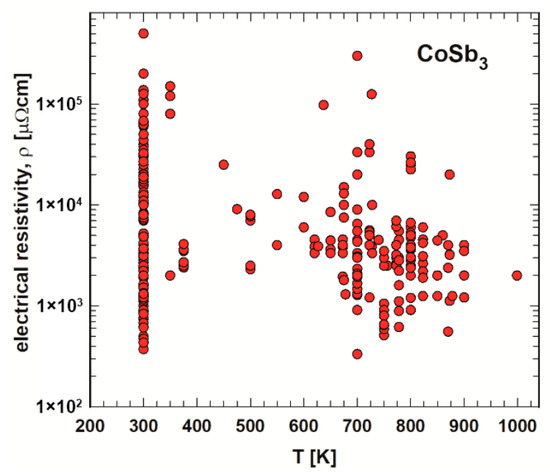
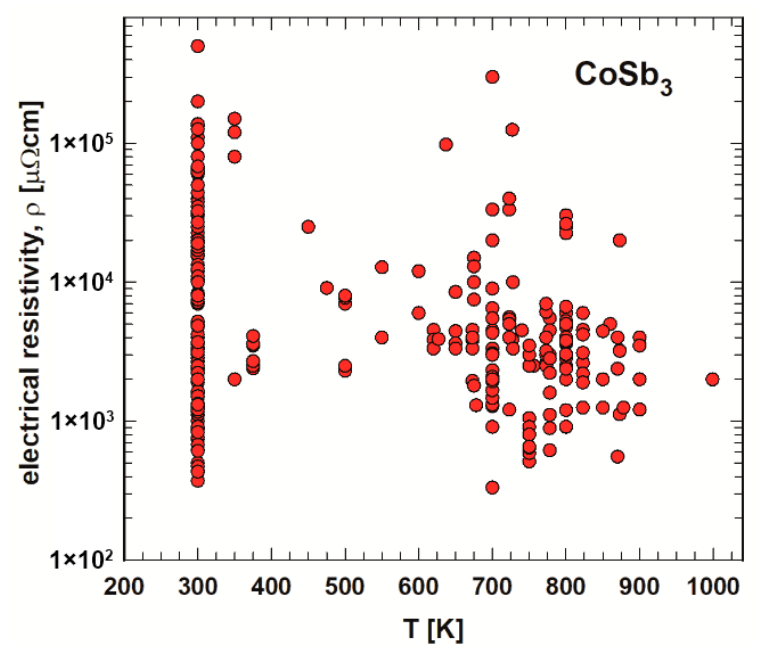
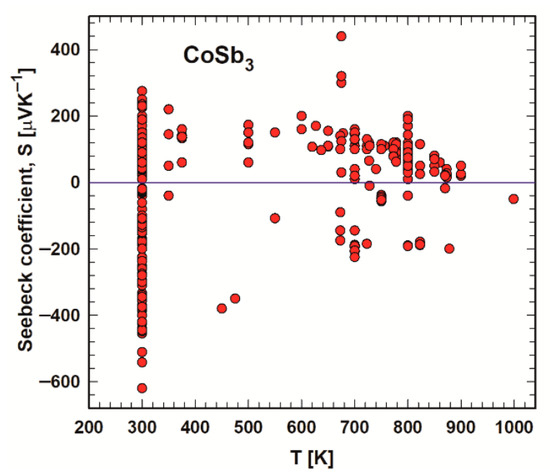
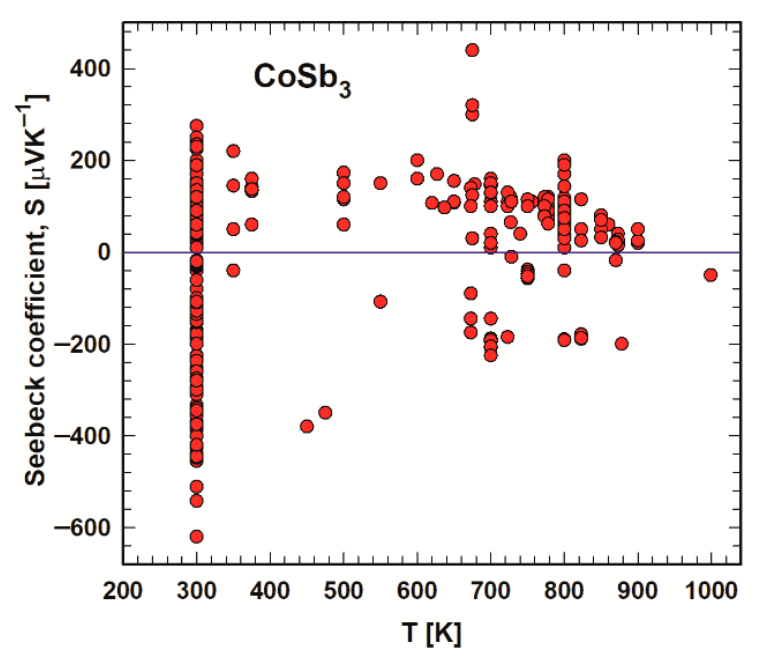
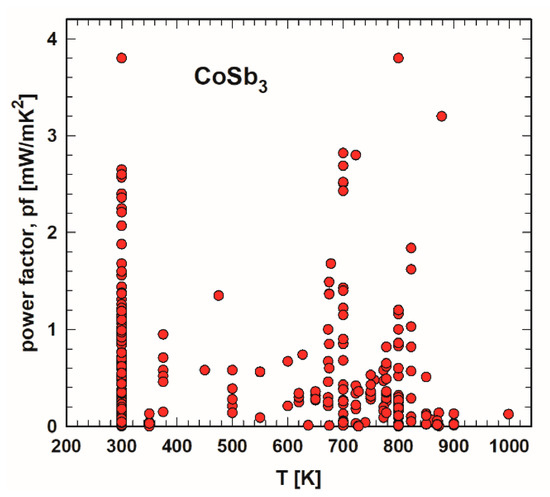
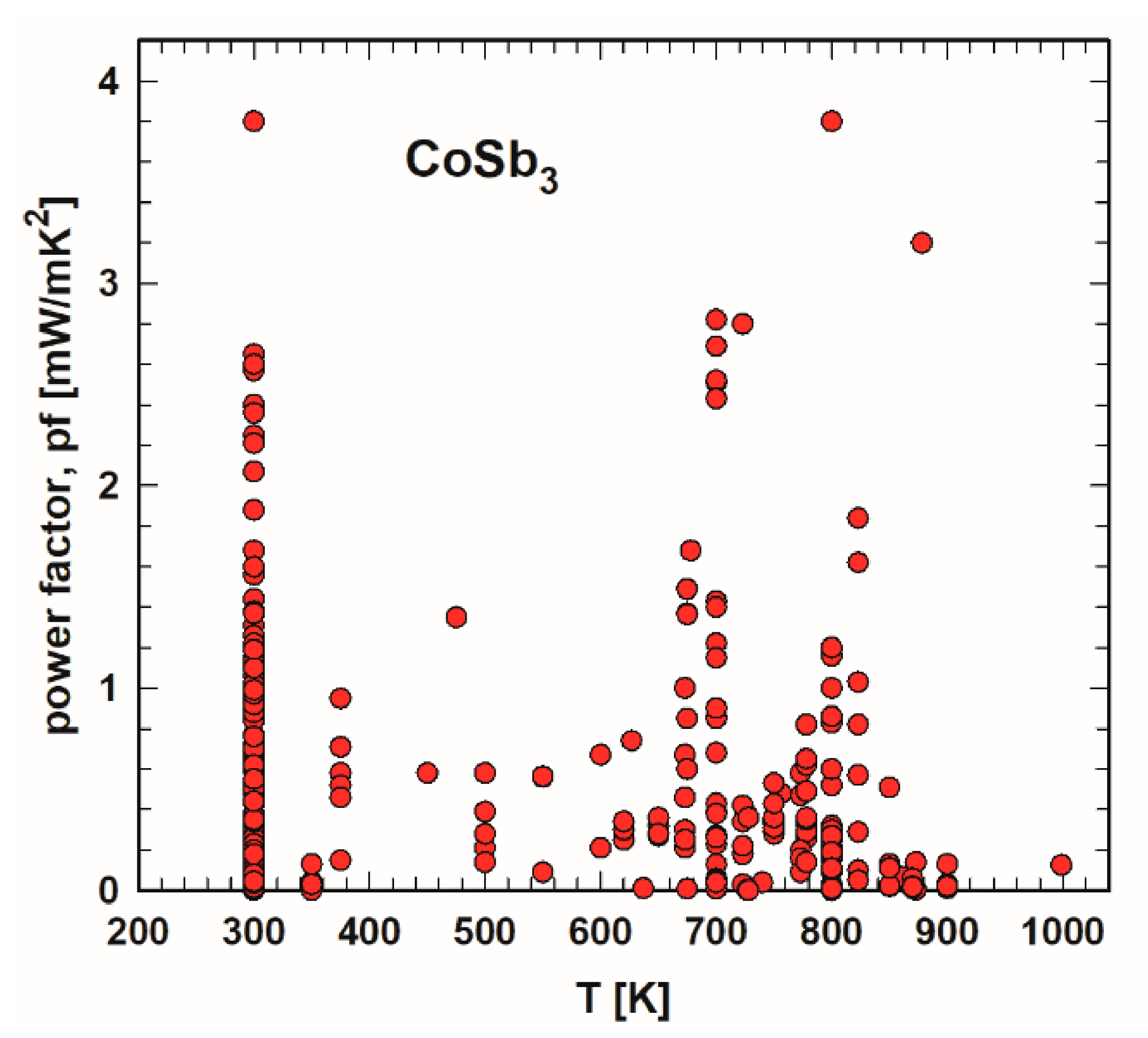
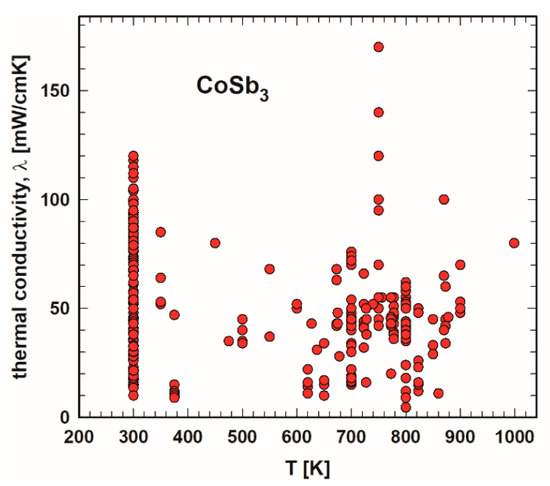
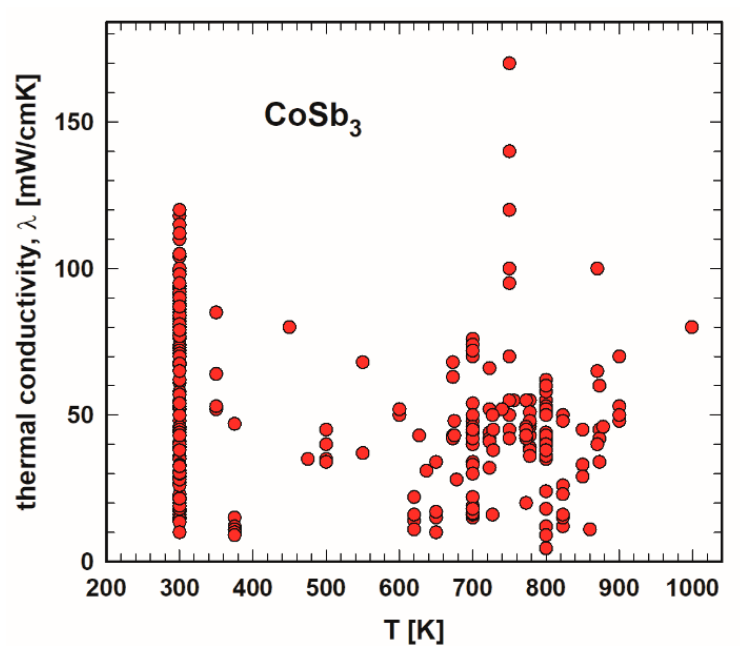
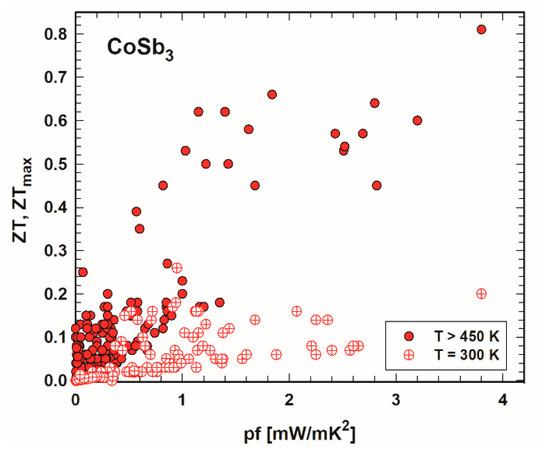
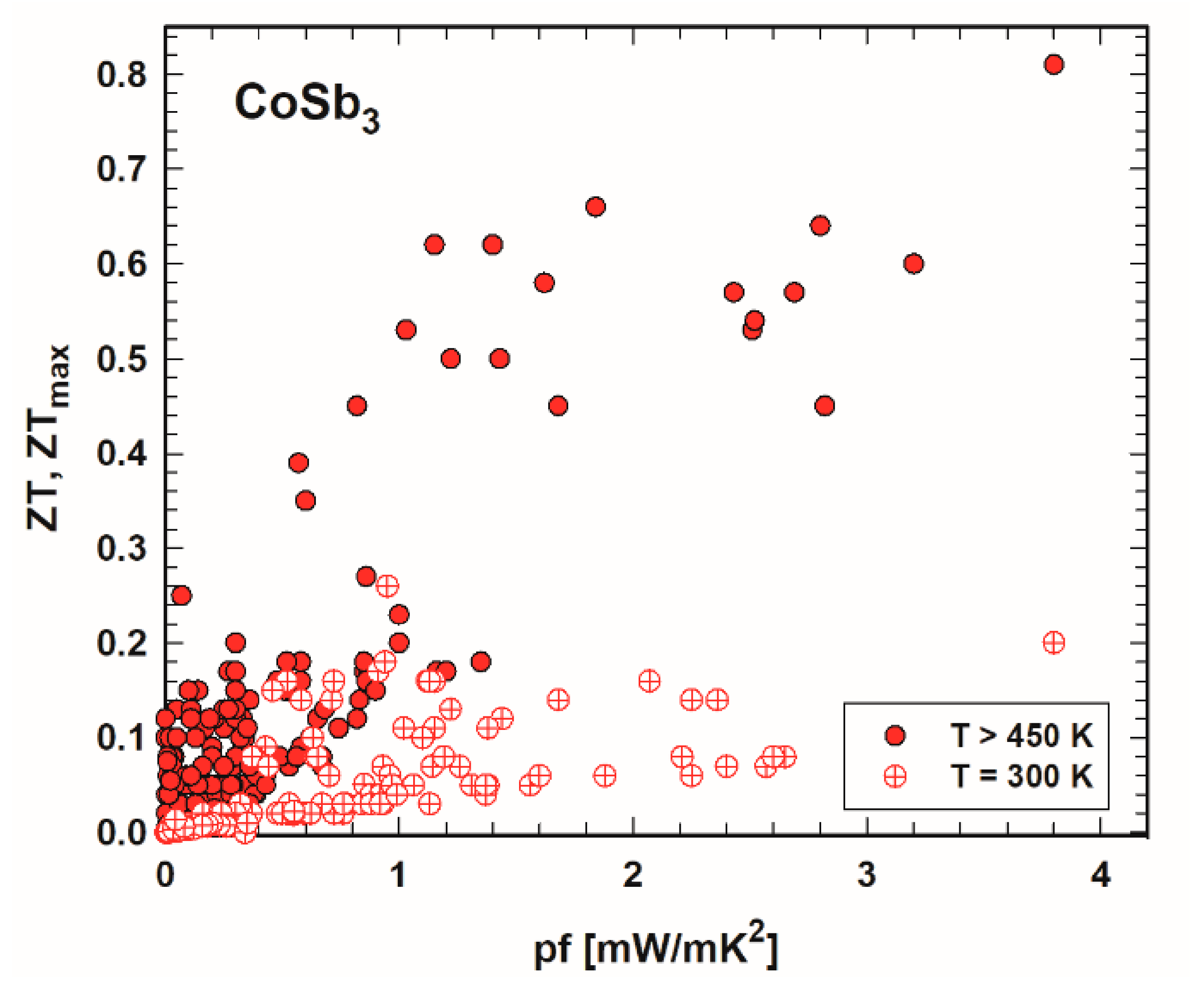
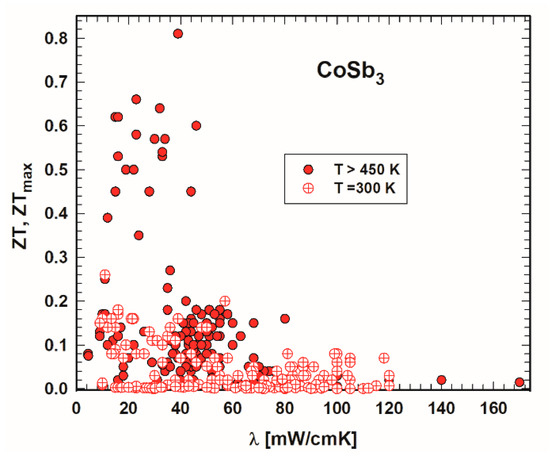
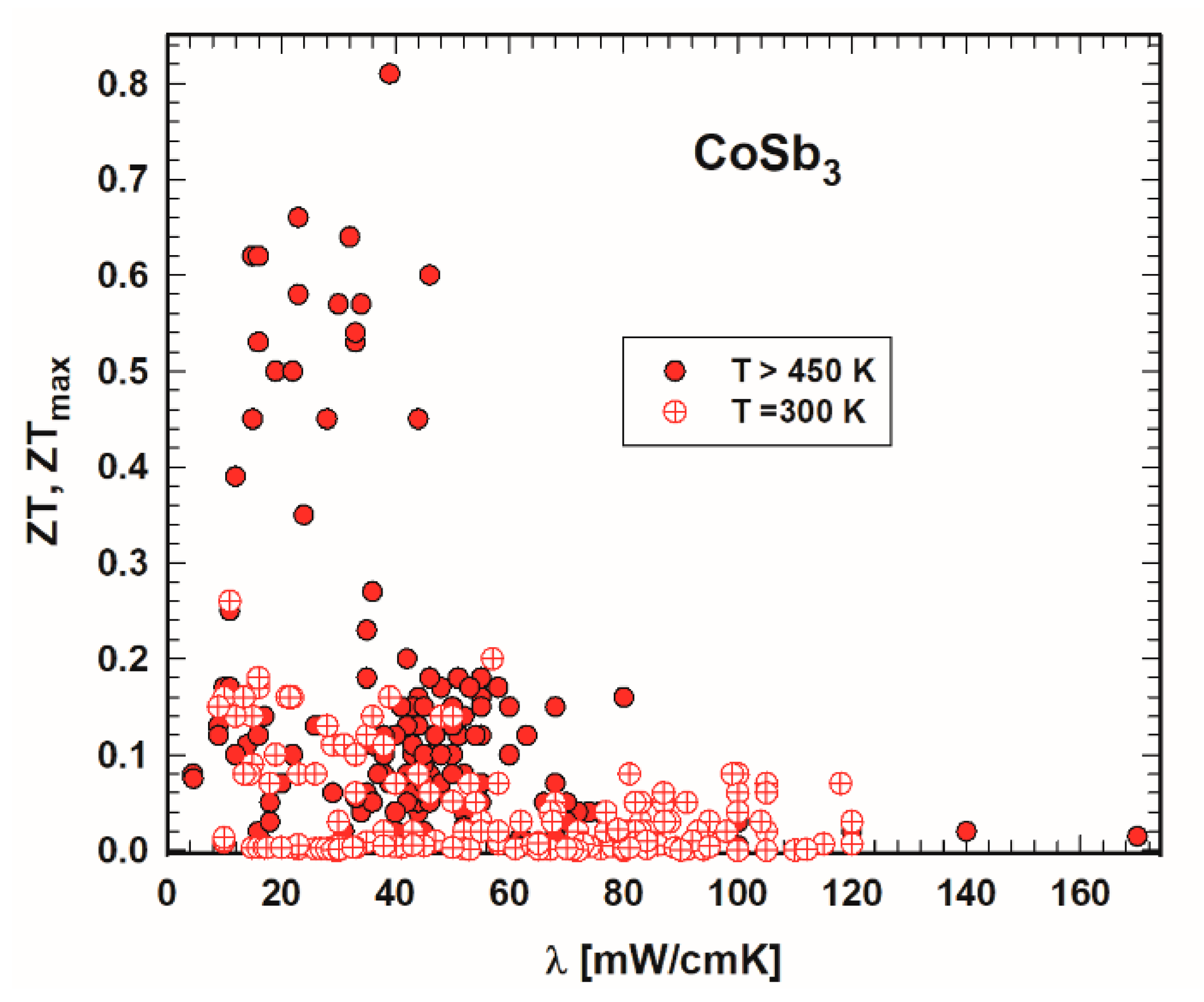
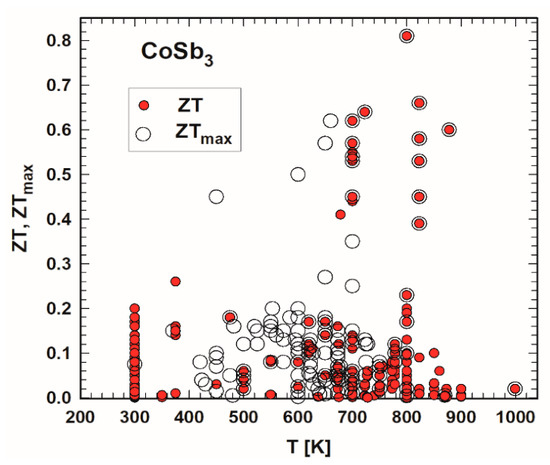
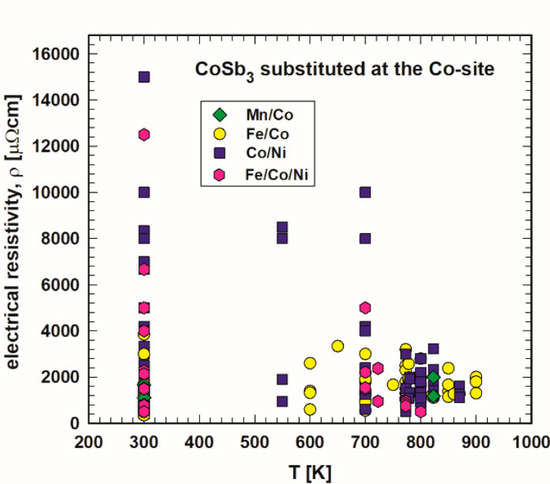
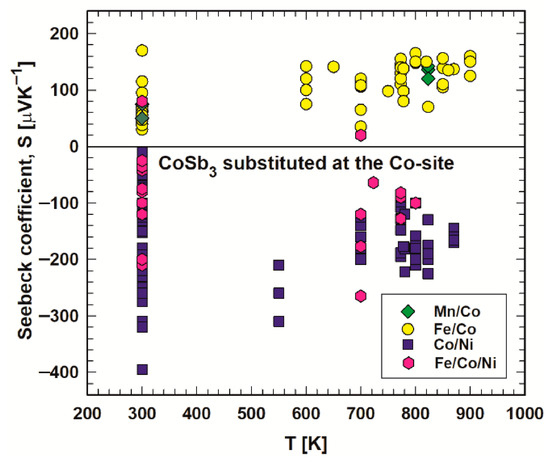
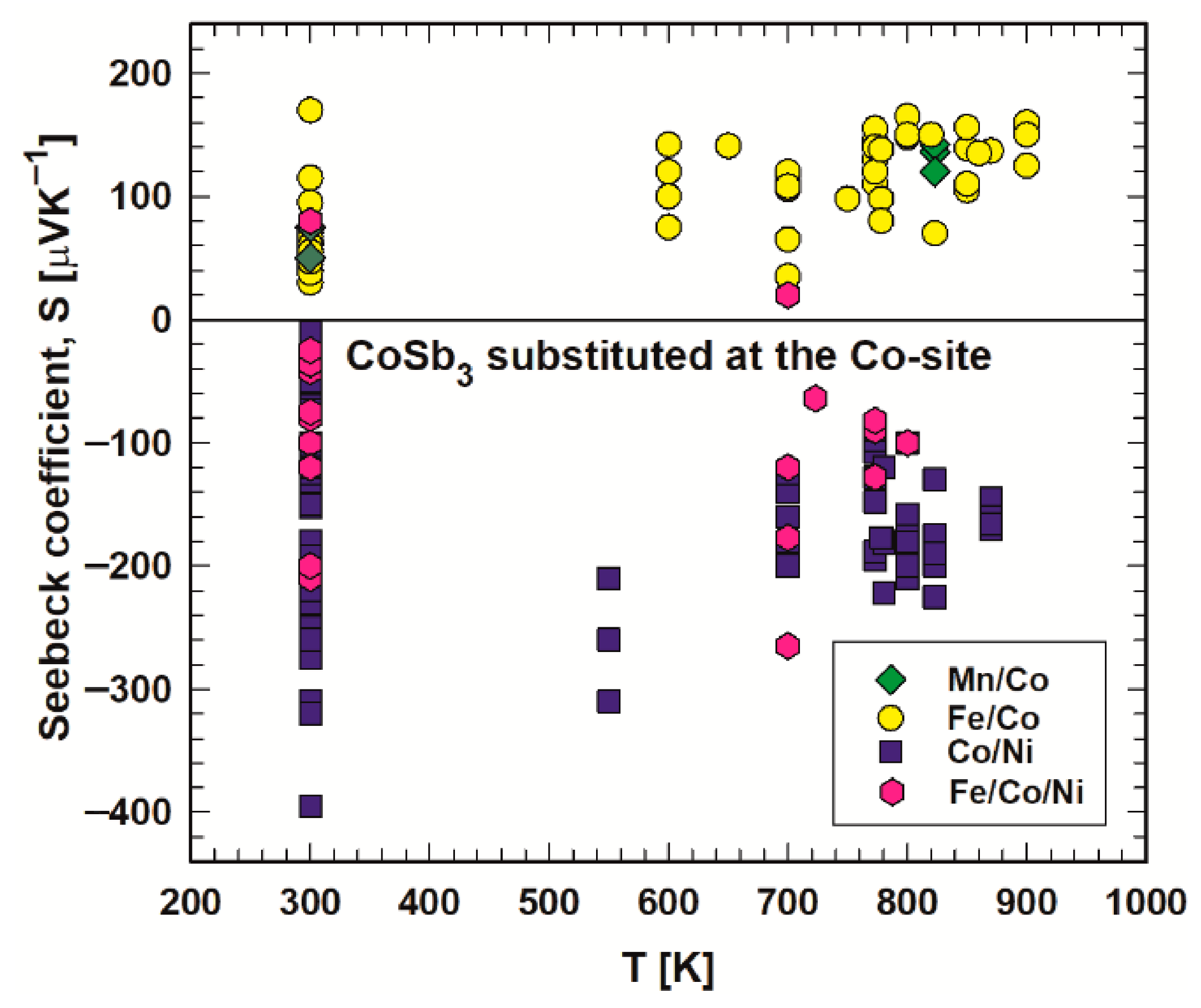
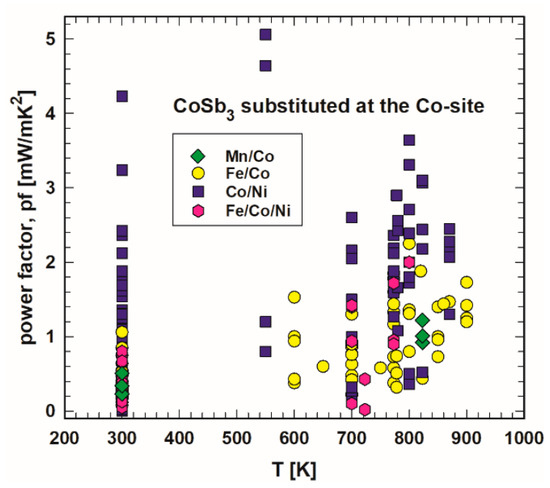
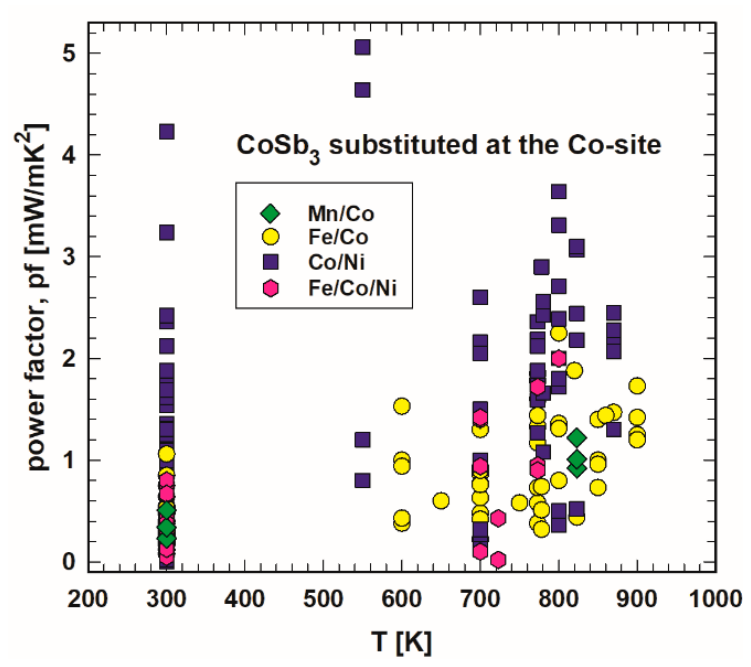
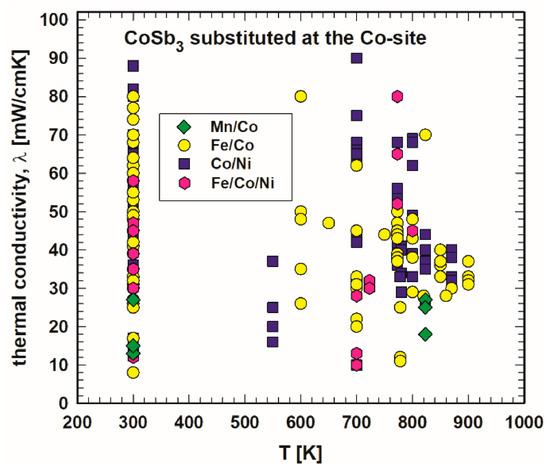
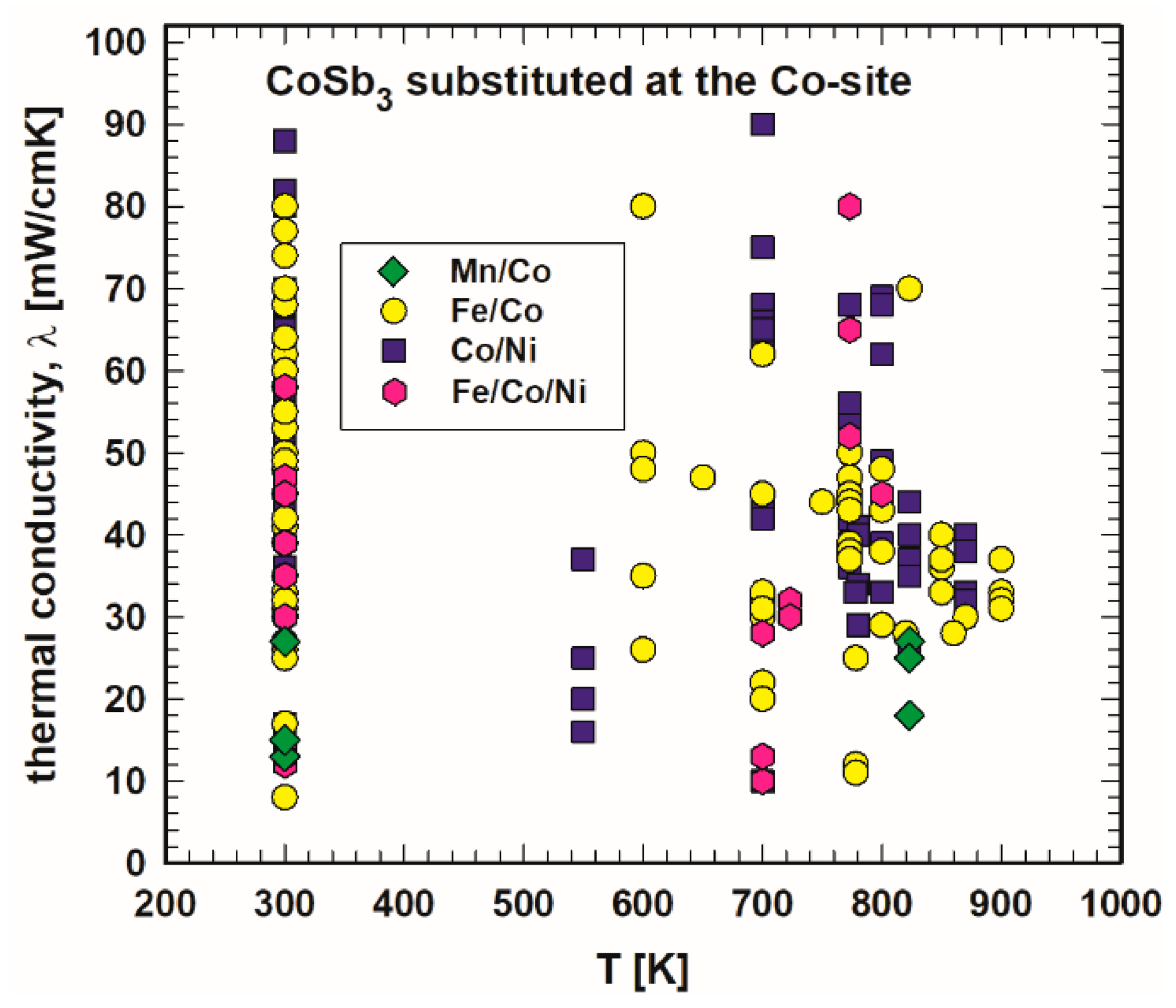
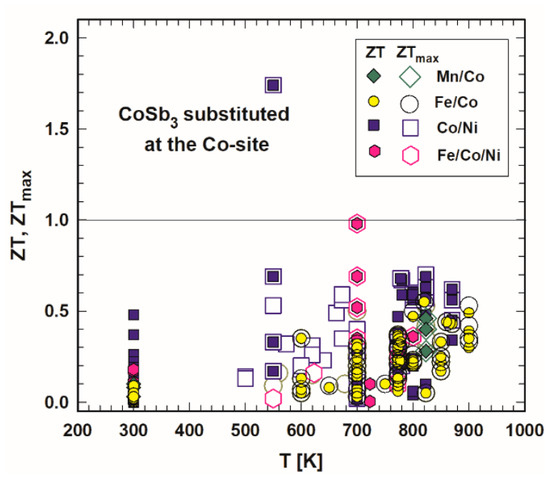
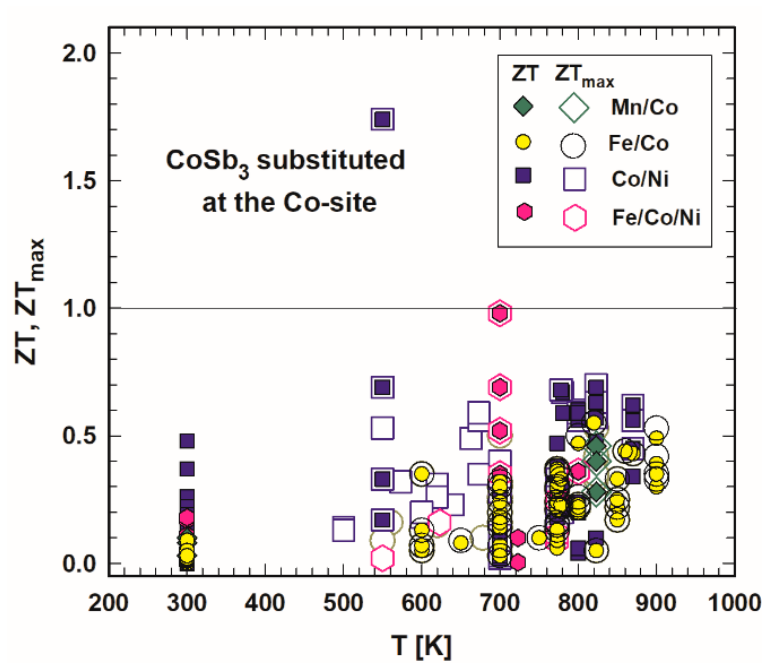
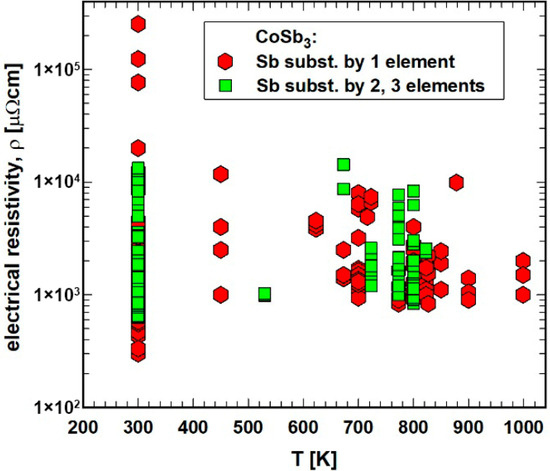
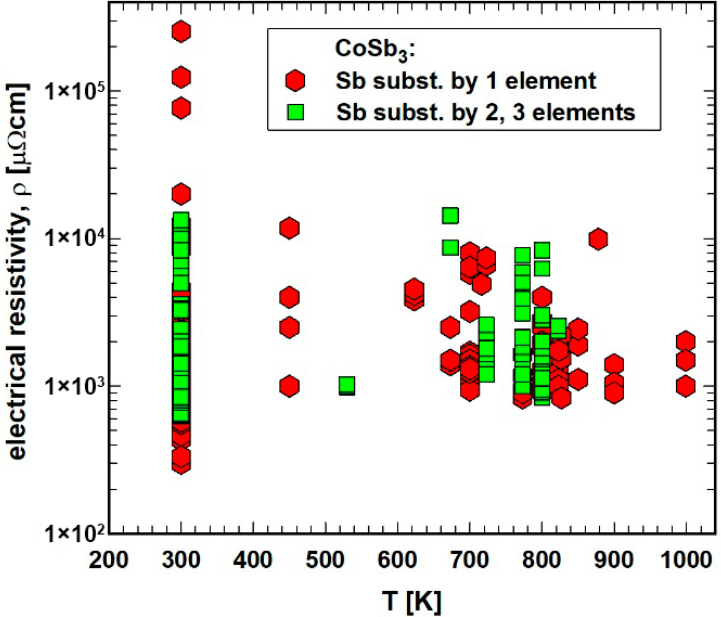
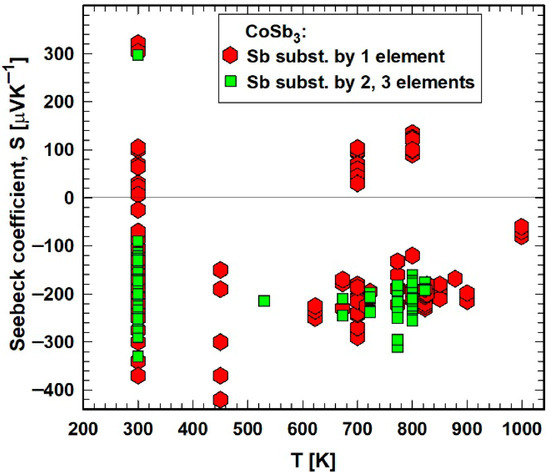
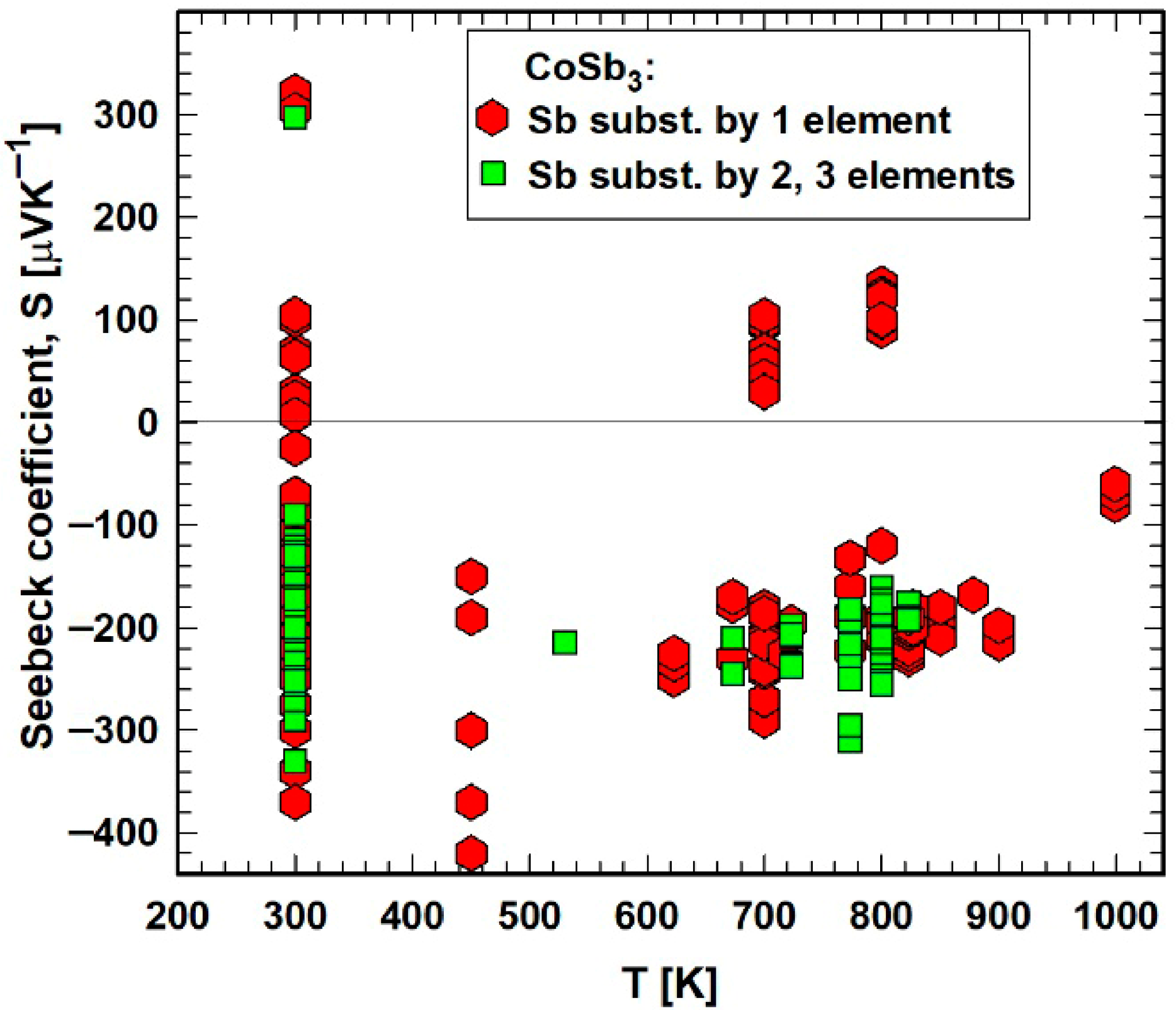
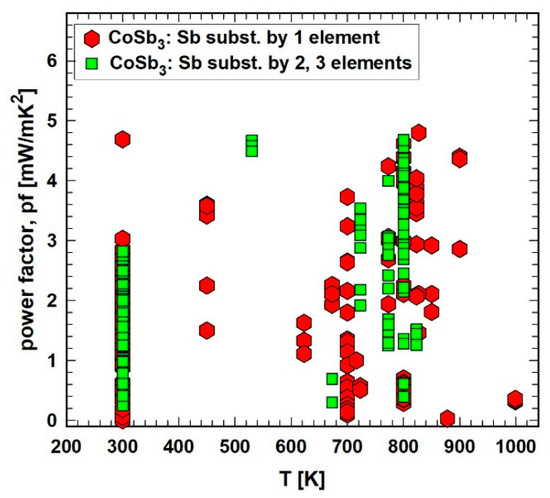
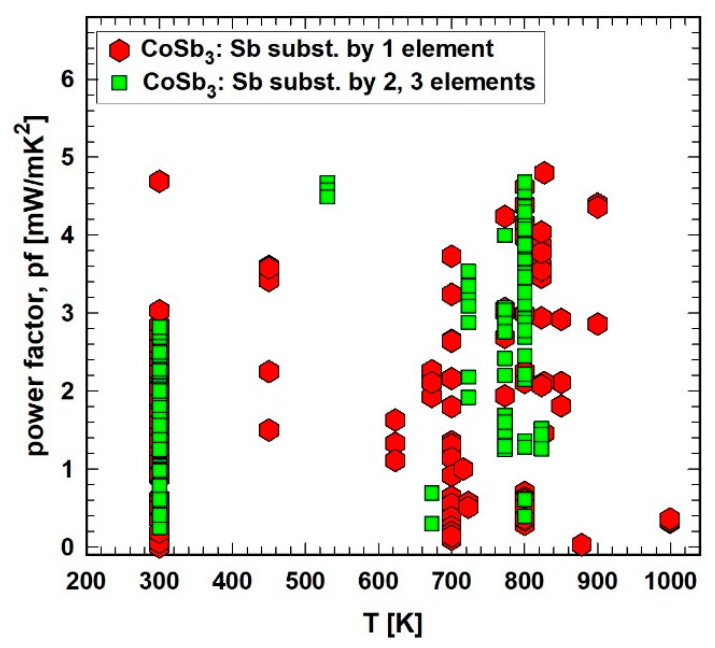
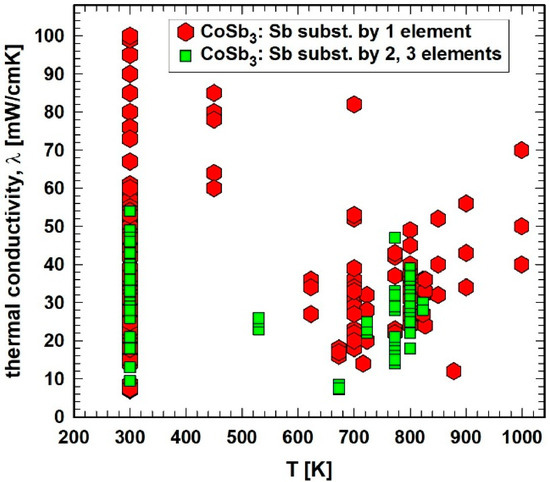
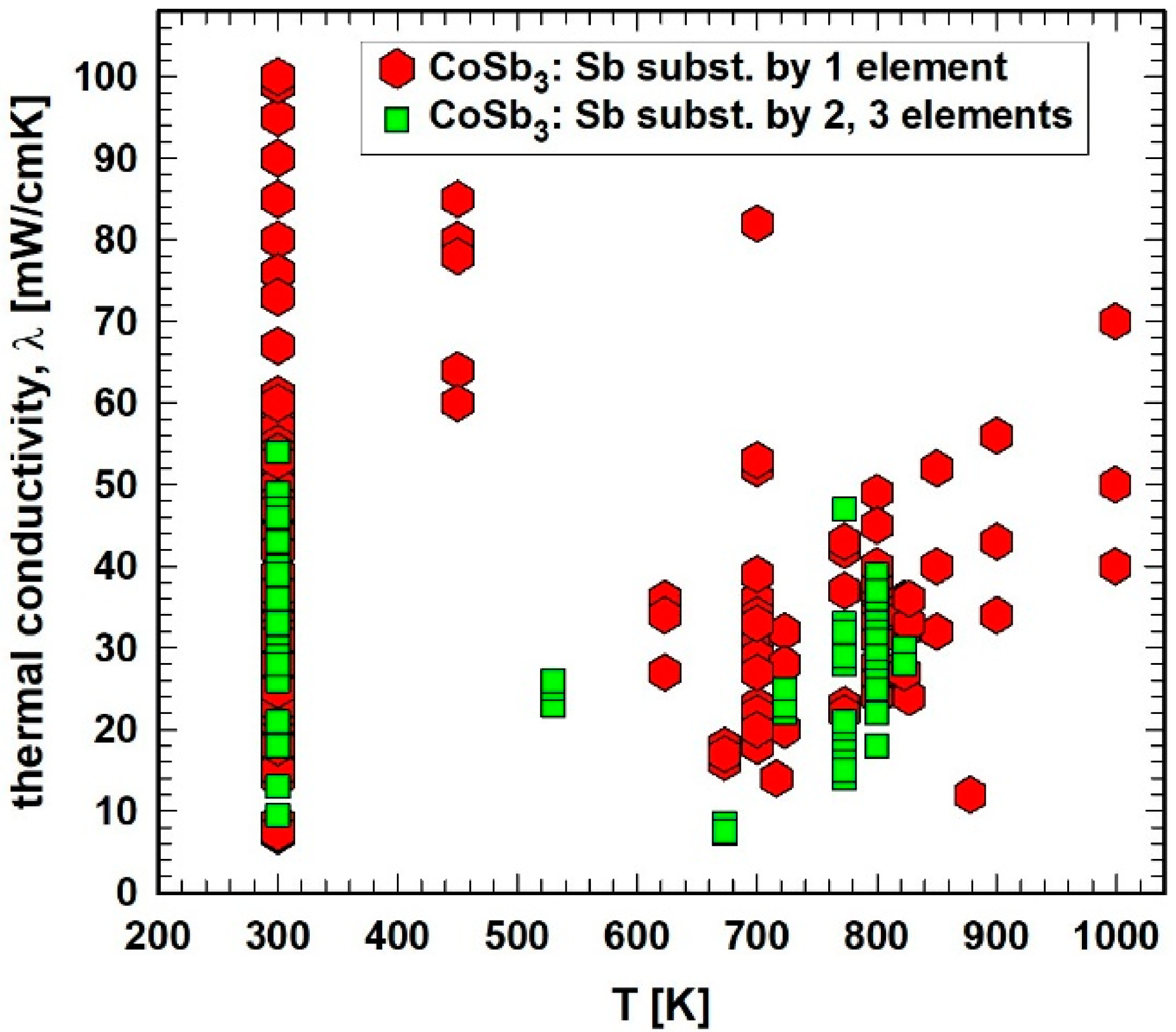
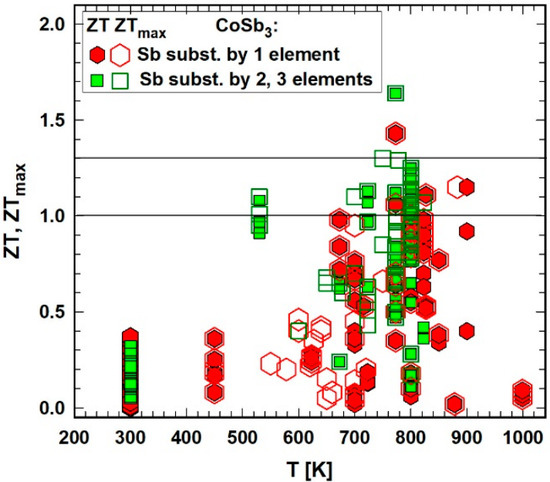
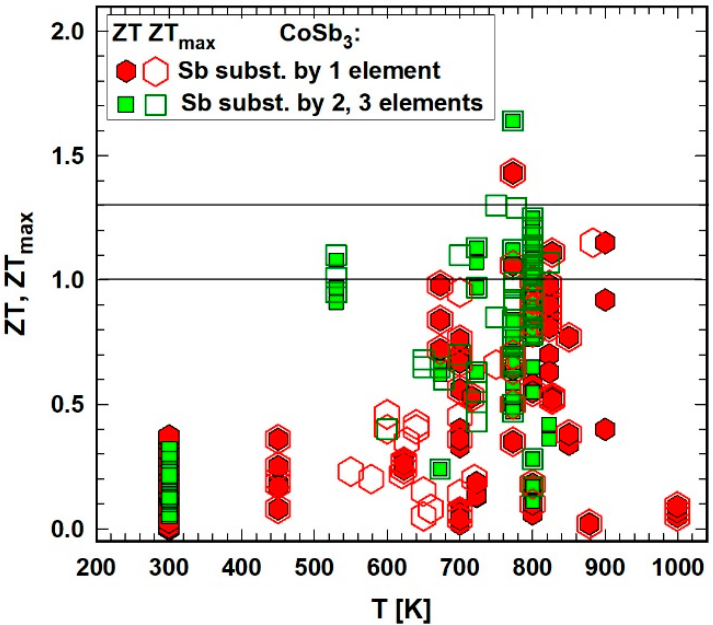
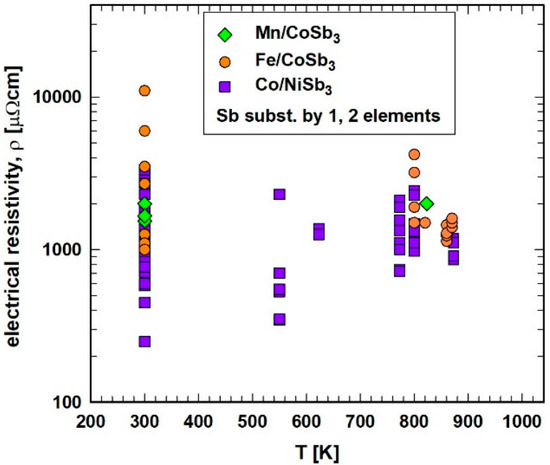
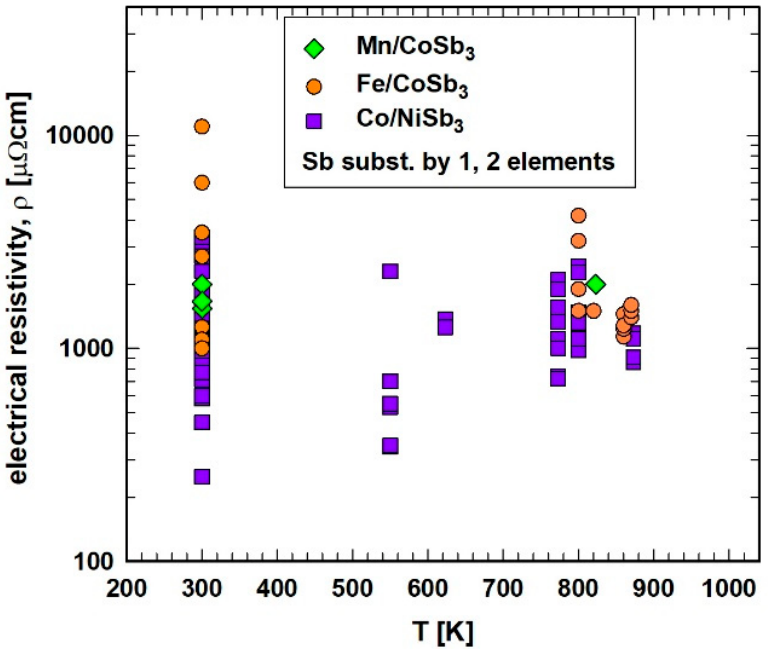
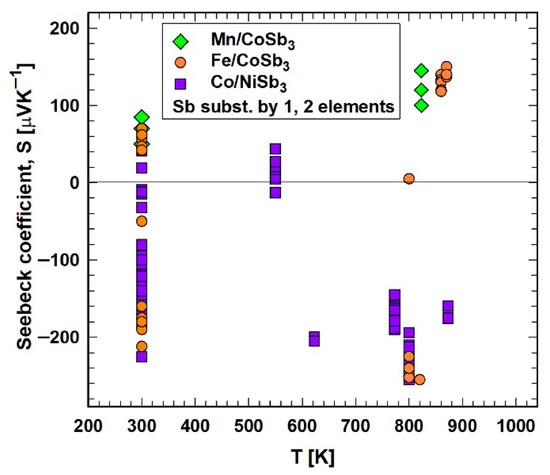
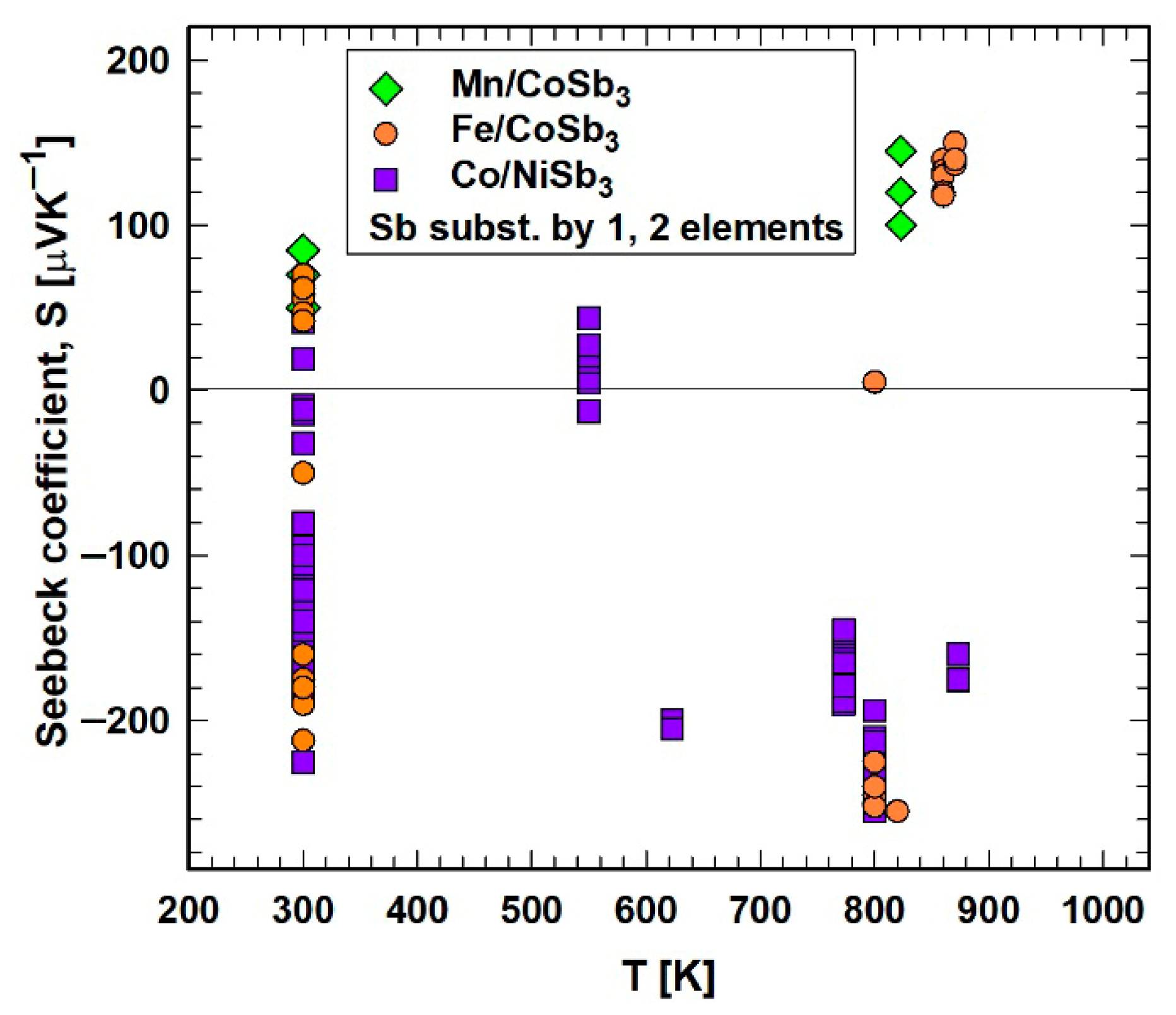
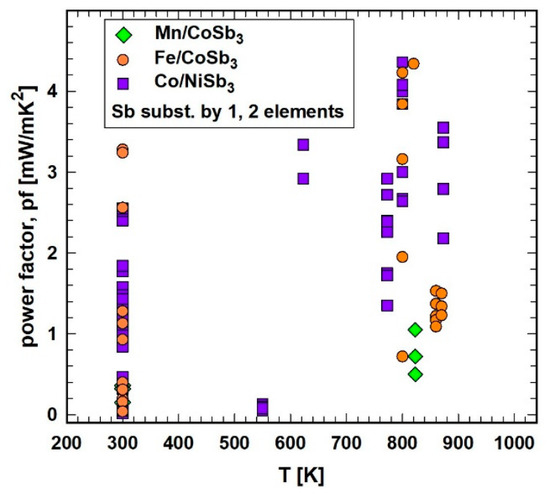
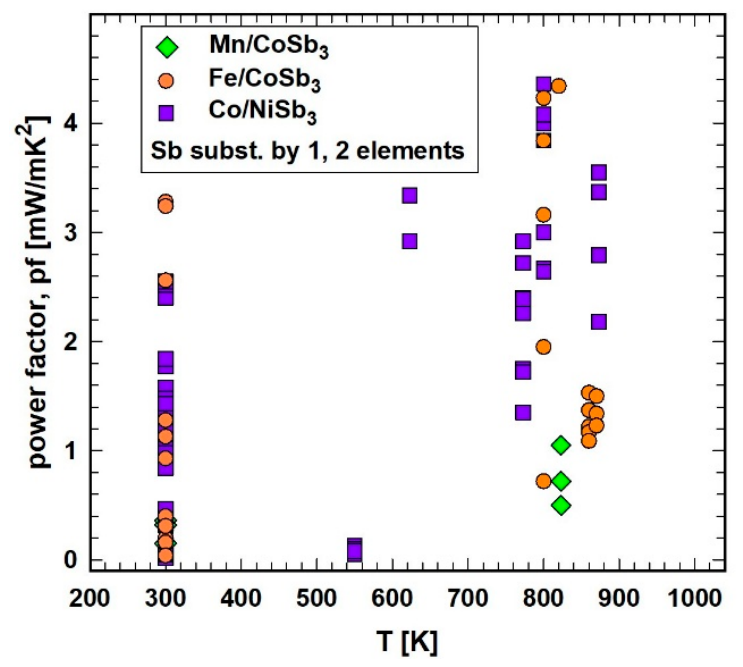
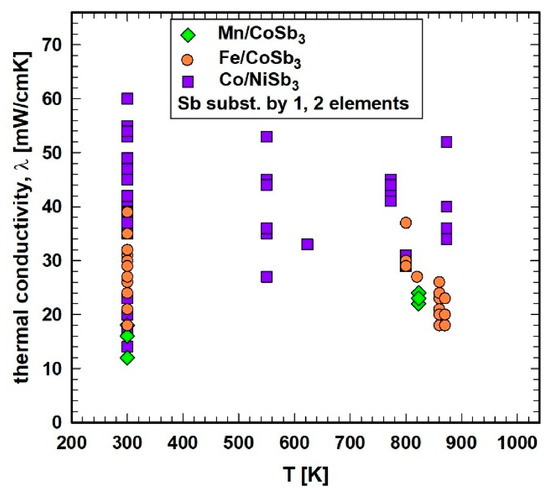
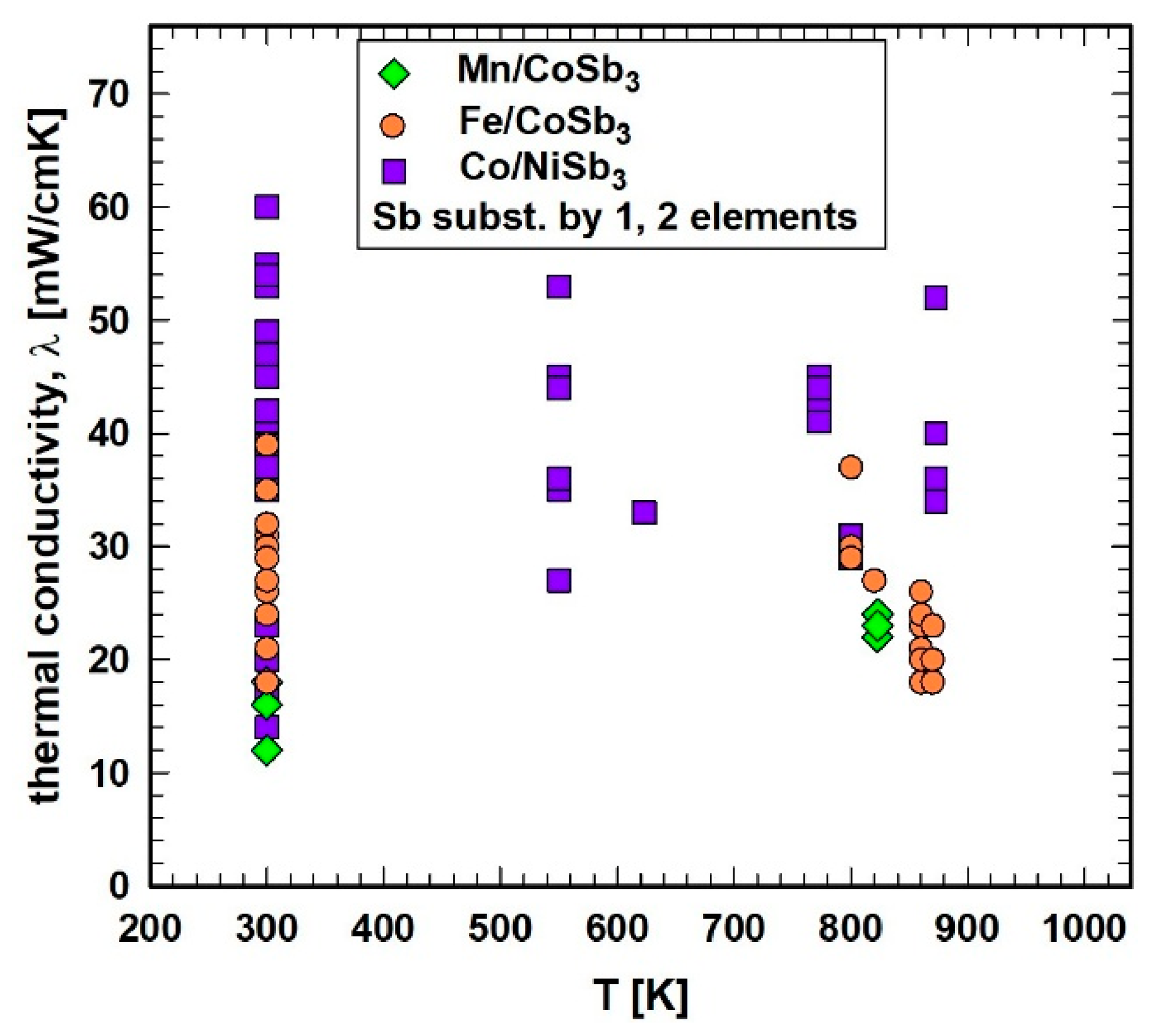
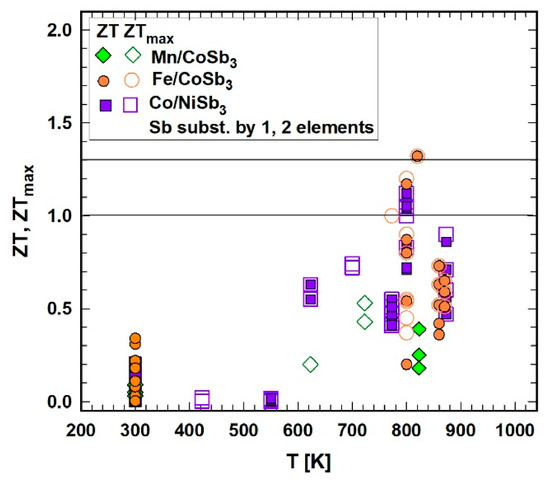
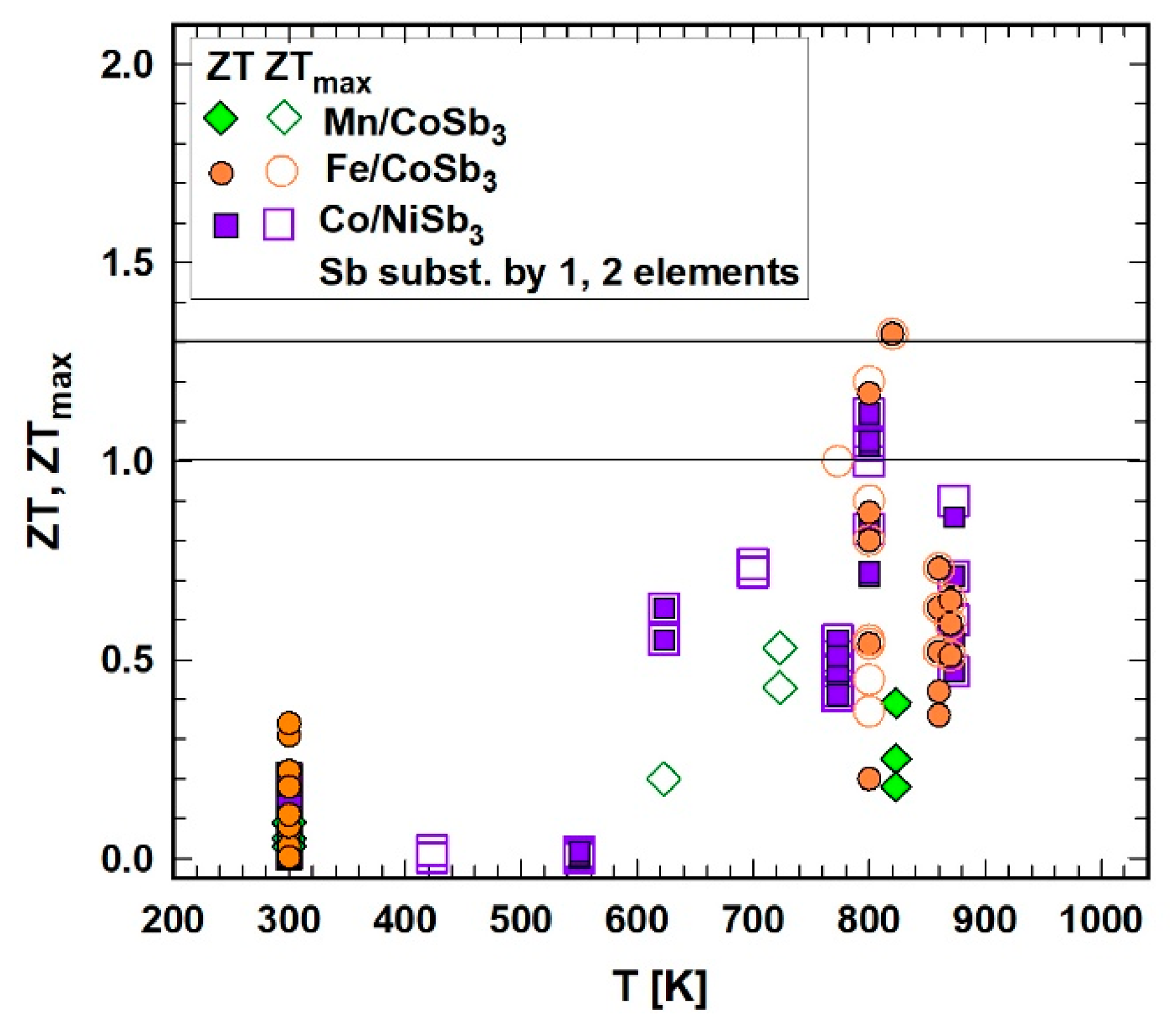
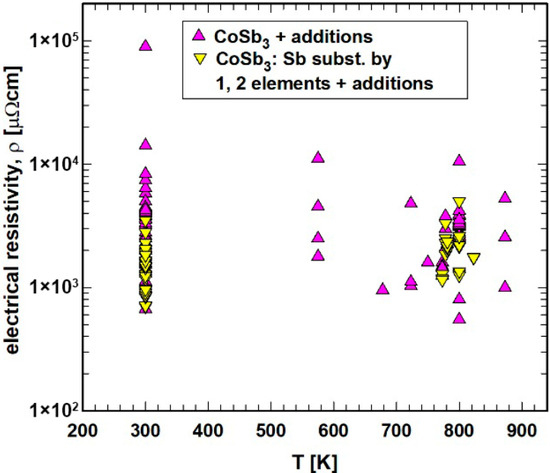
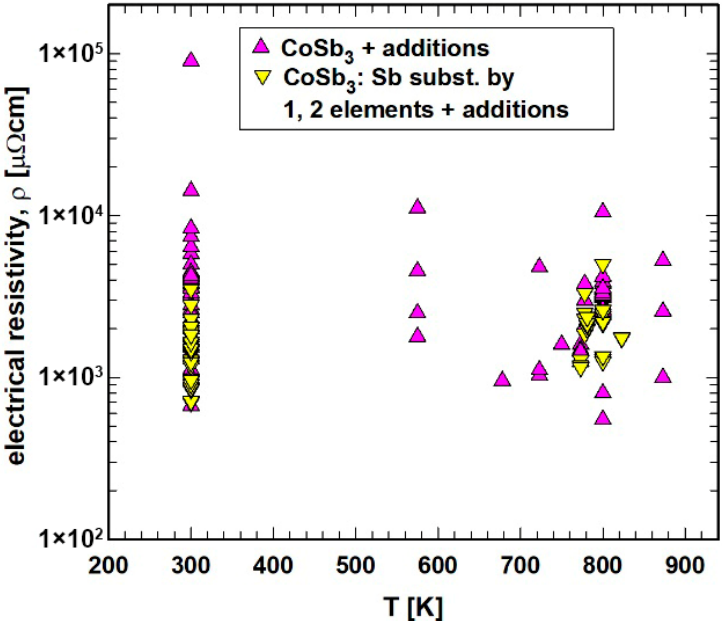
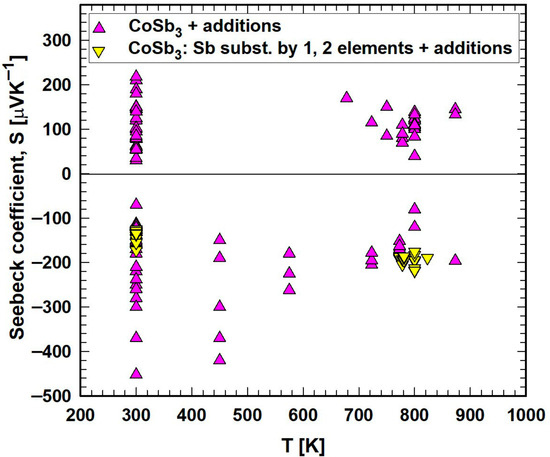
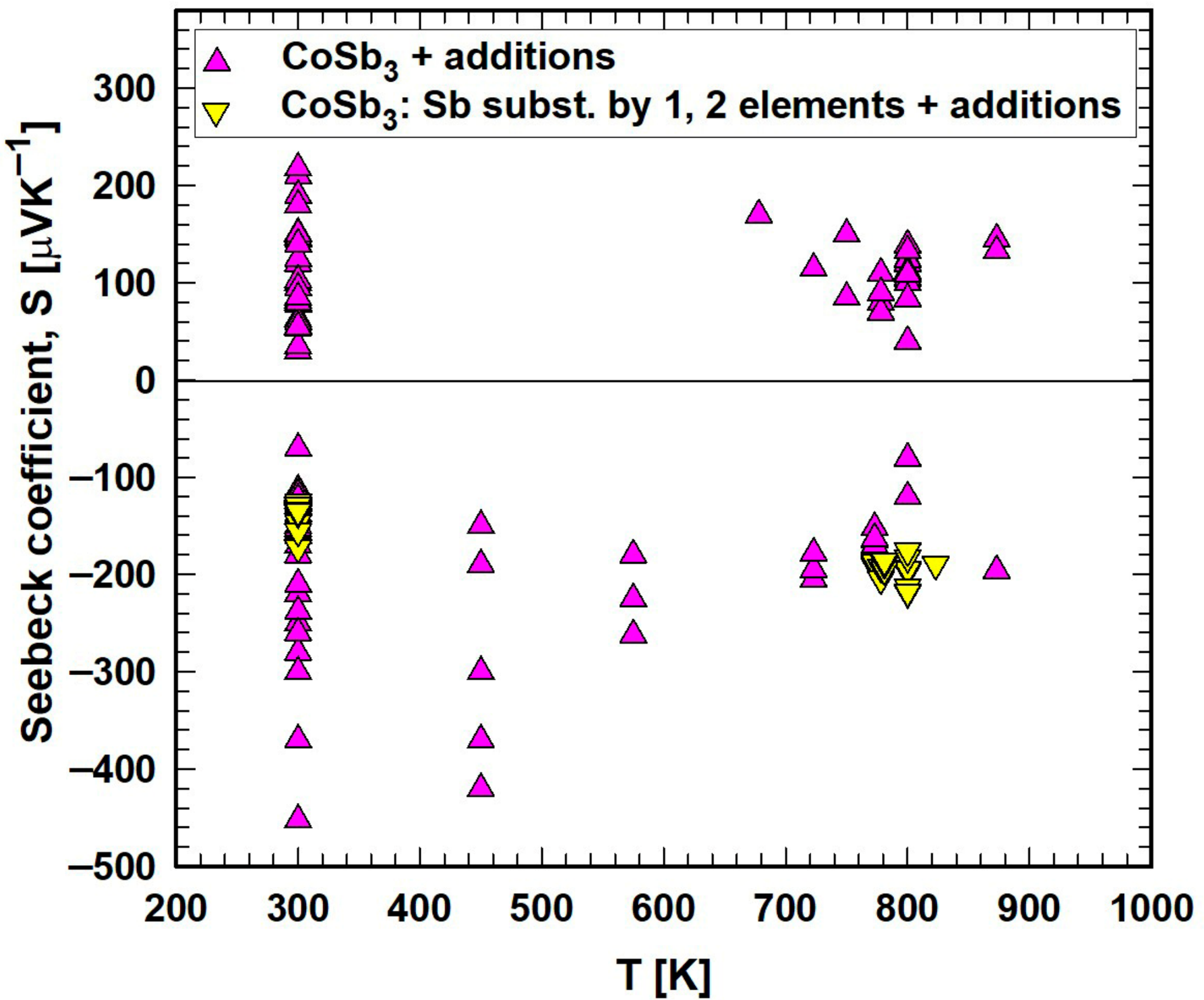
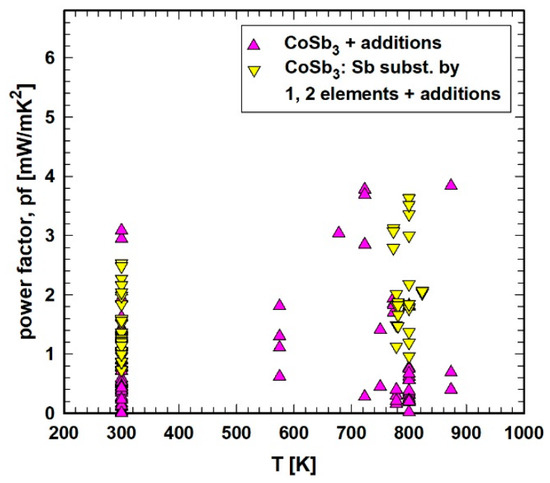
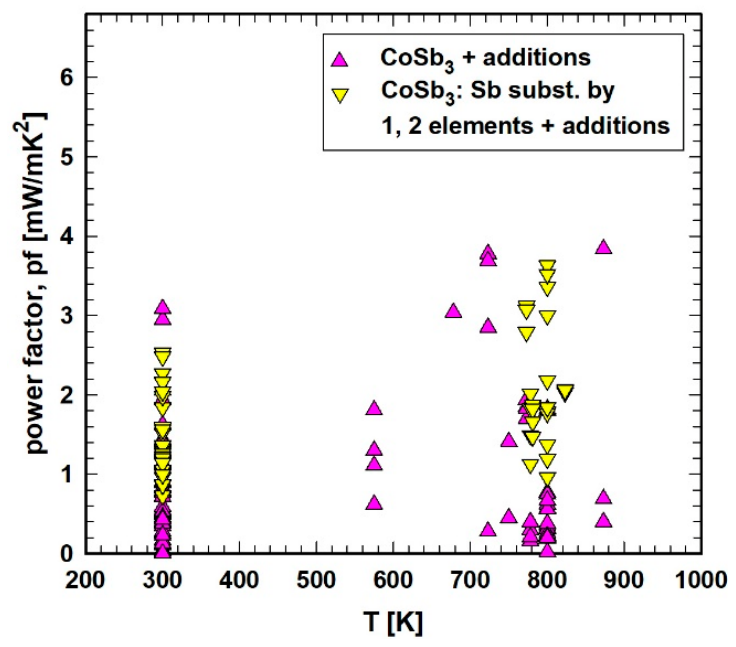
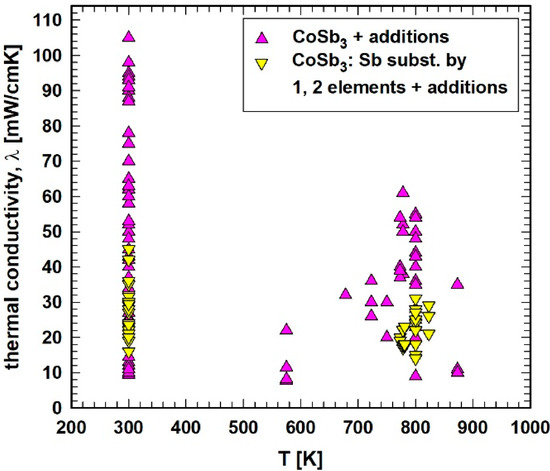
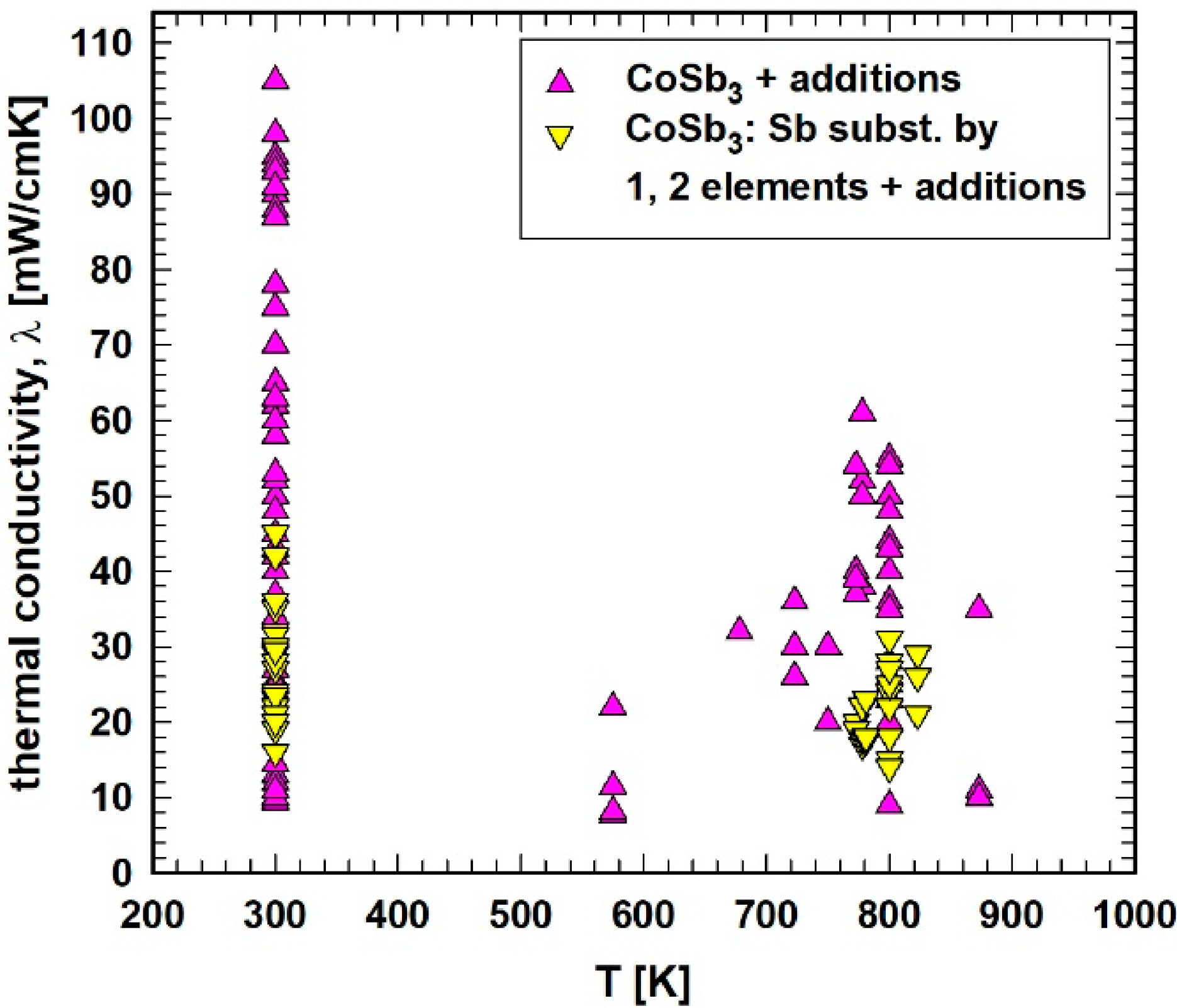
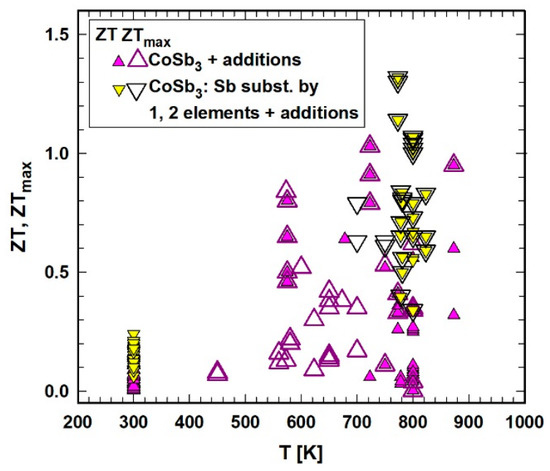
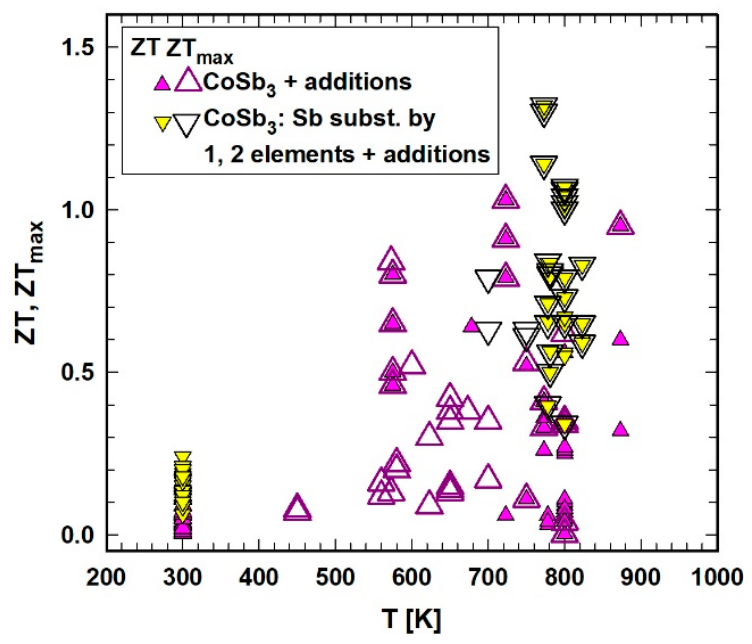
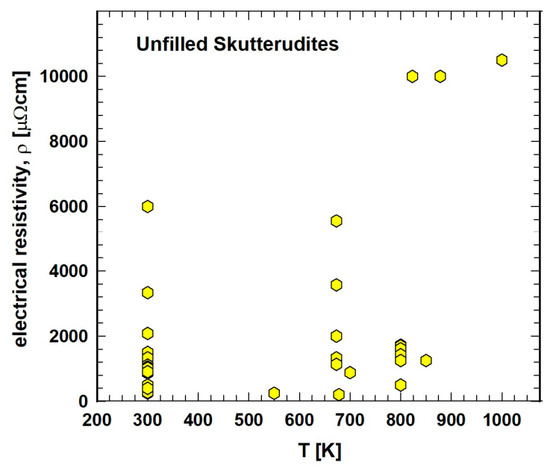
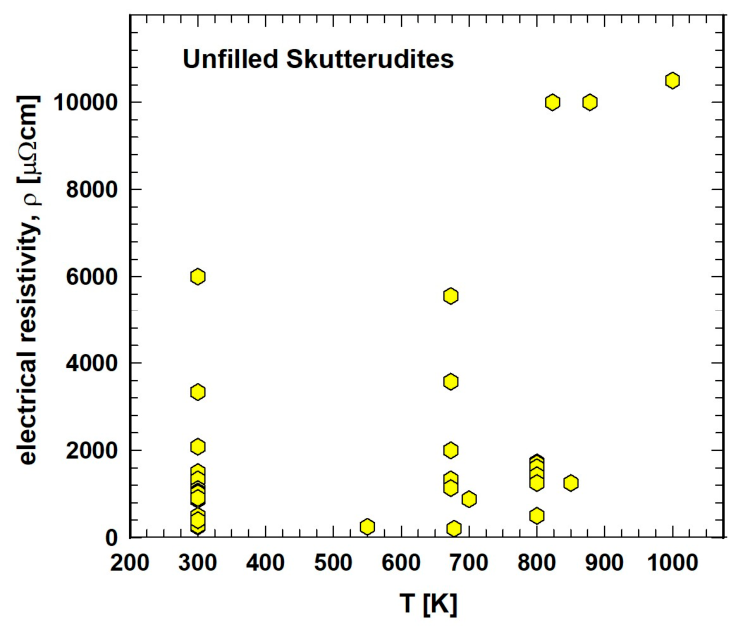
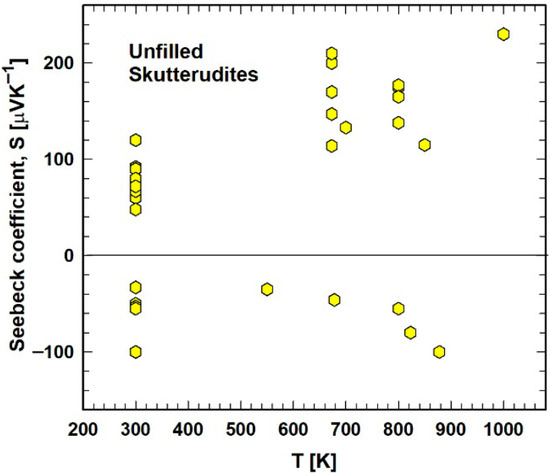
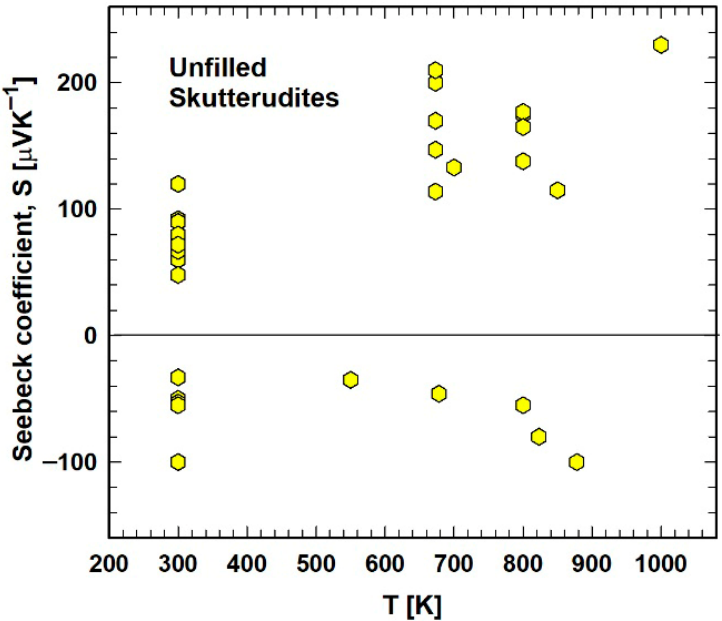
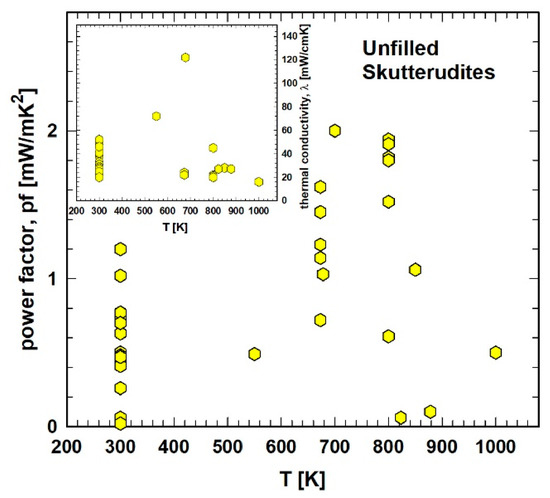
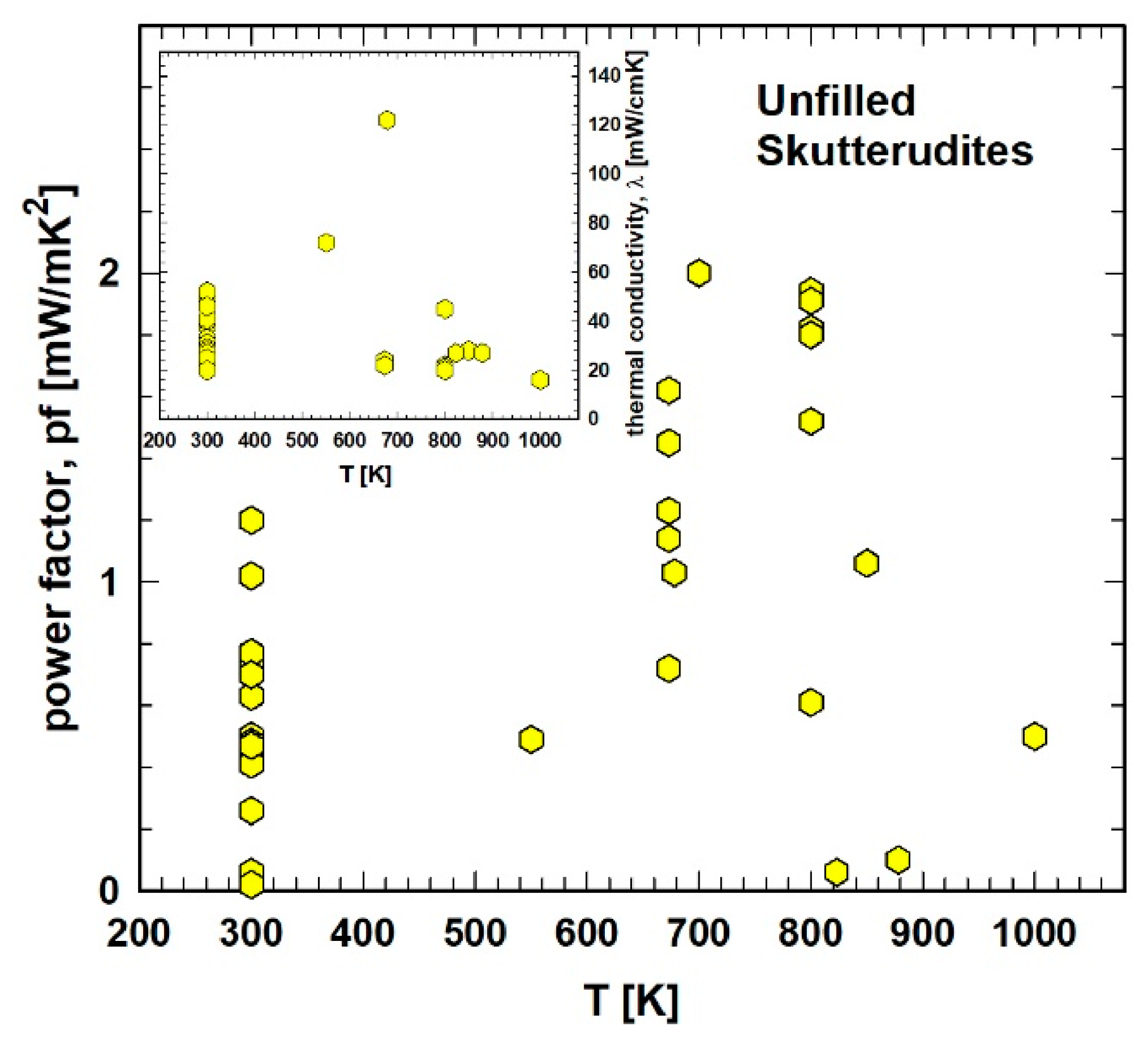
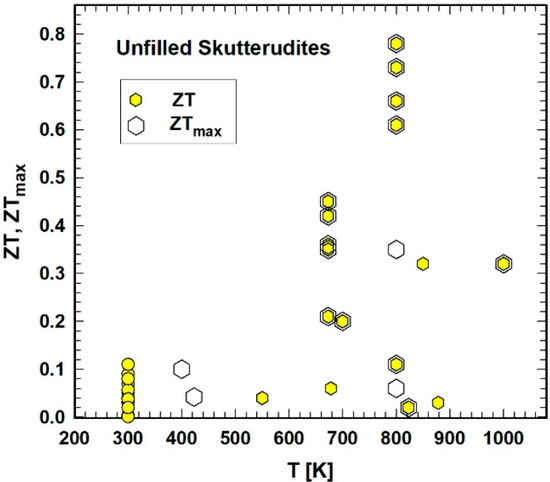
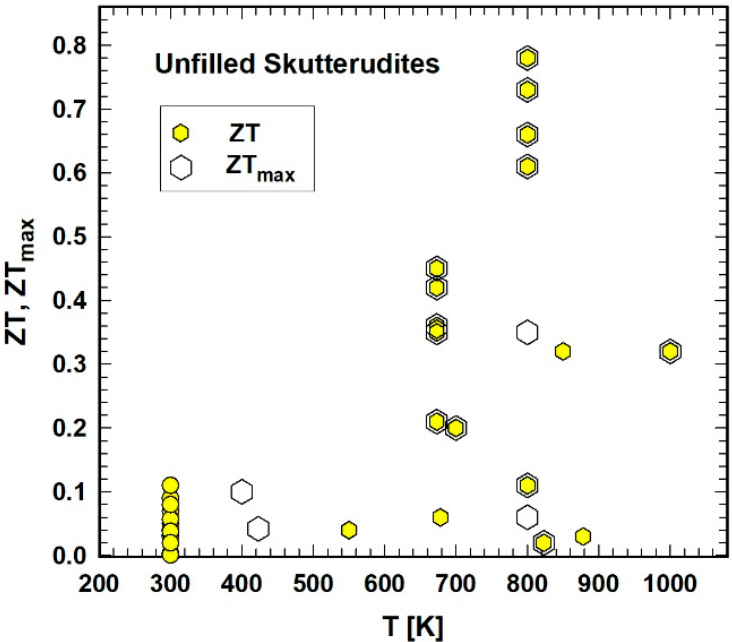
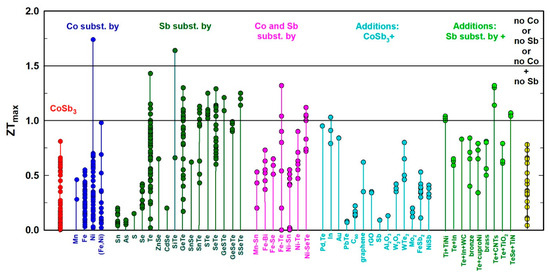
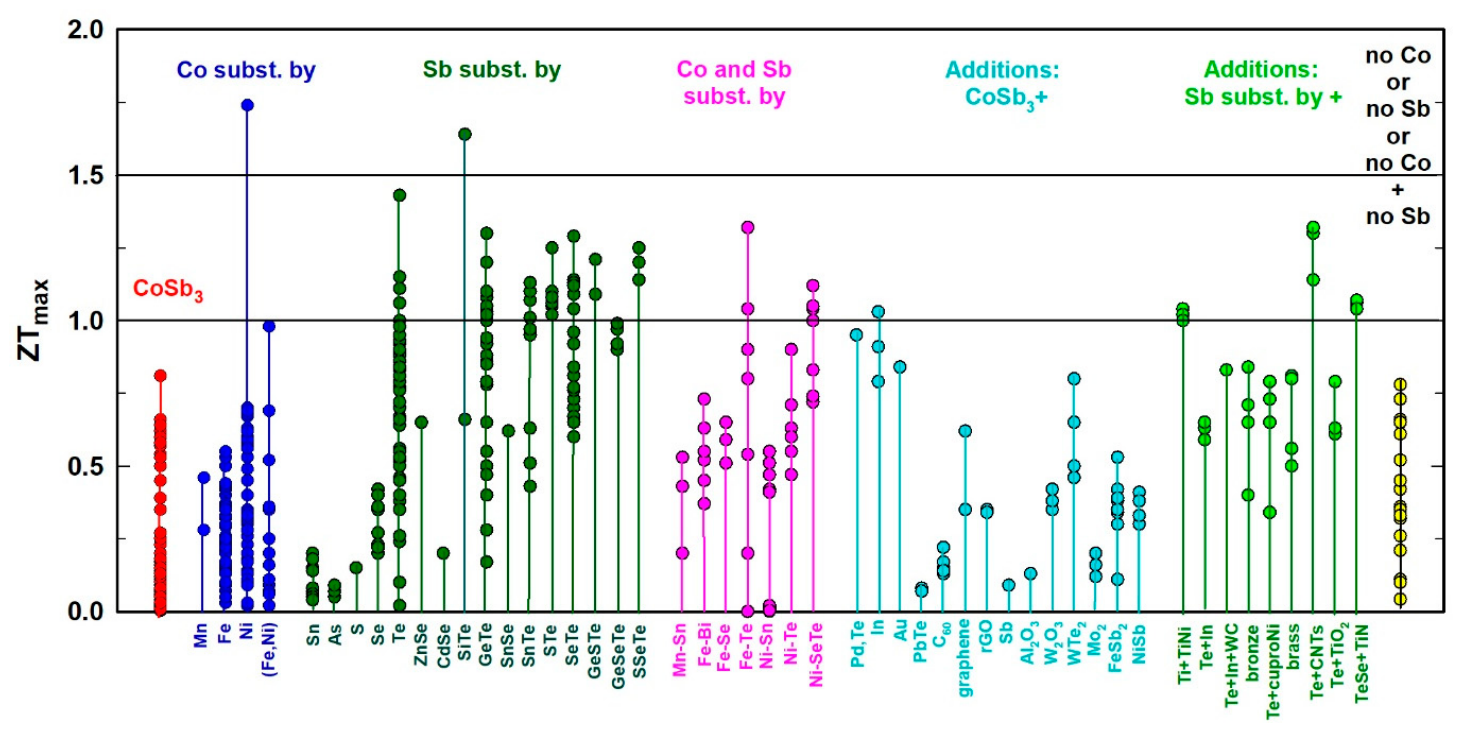
Disclaimer/Publisher’s Note: The statements, opinions and data contained in all publications are solely those of the individual author(s) and contributor(s) and not of MDPI and/or the editor(s). MDPI and/or the editor(s) disclaim responsibility for any injury to people or property resulting from any ideas, methods, instructions or products referred to in the content. |
© 2026 by the authors. Licensee MDPI, Basel, Switzerland. This article is an open access article distributed under the terms and conditions of the Creative Commons Attribution (CC BY) license.