
Coordination Flexibility of Zn(II) in Trimesate-Based Metal–Organic Frameworks: Formation of Distinct Secondary Building Units


Abstract
1. Introduction
2. Materials and Methods
3. Results
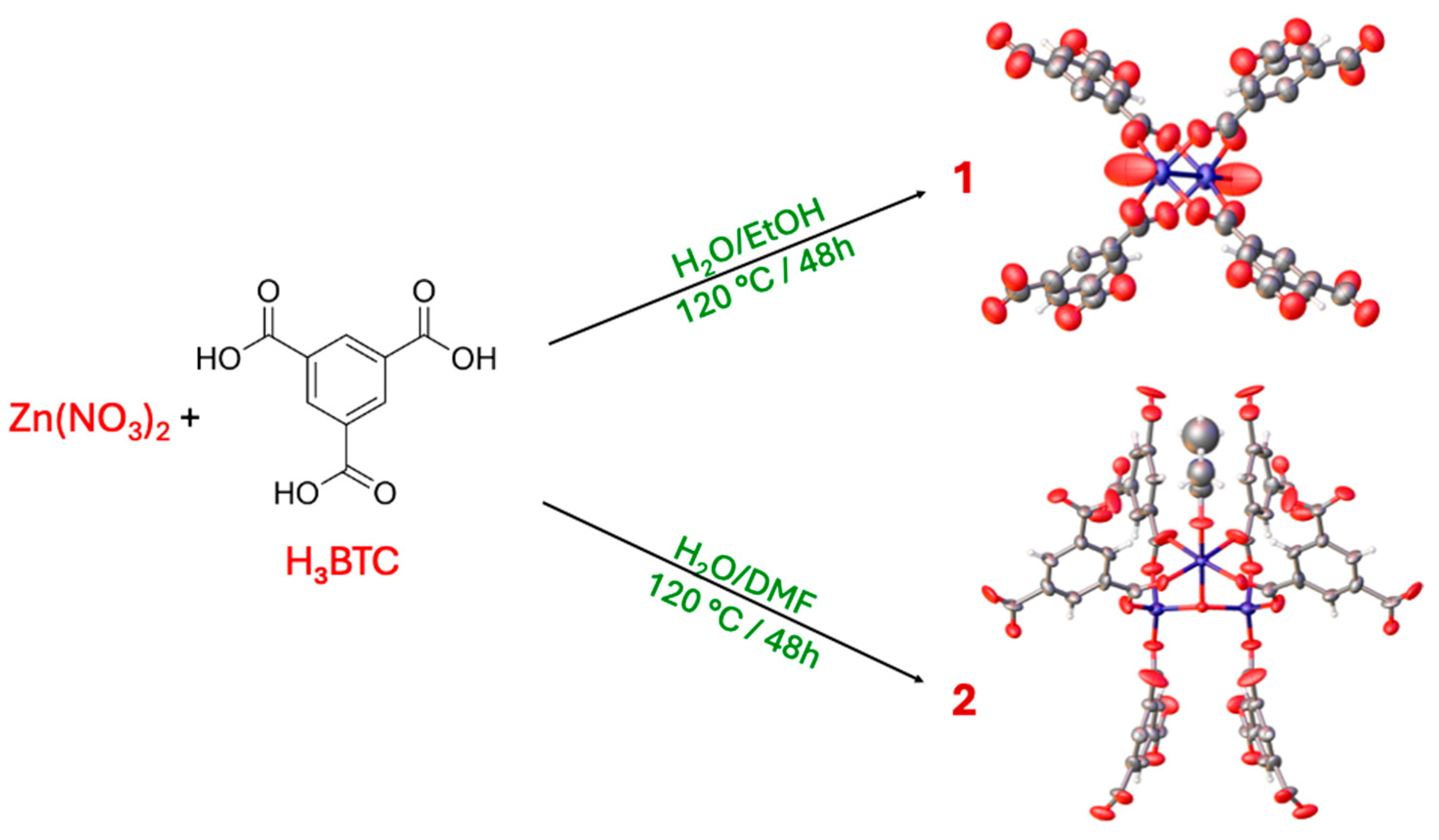
3.1. Synthesis and Crystallization
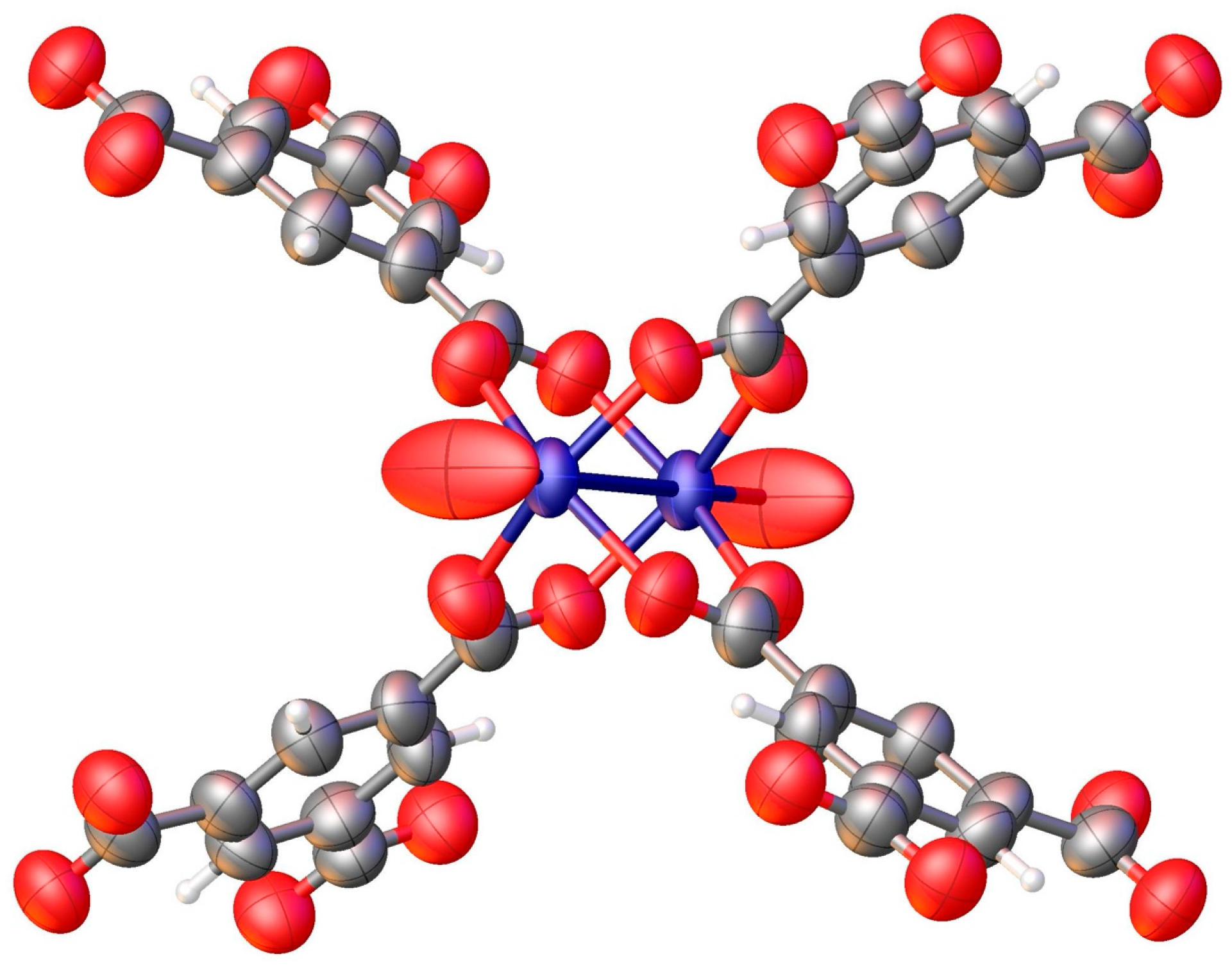
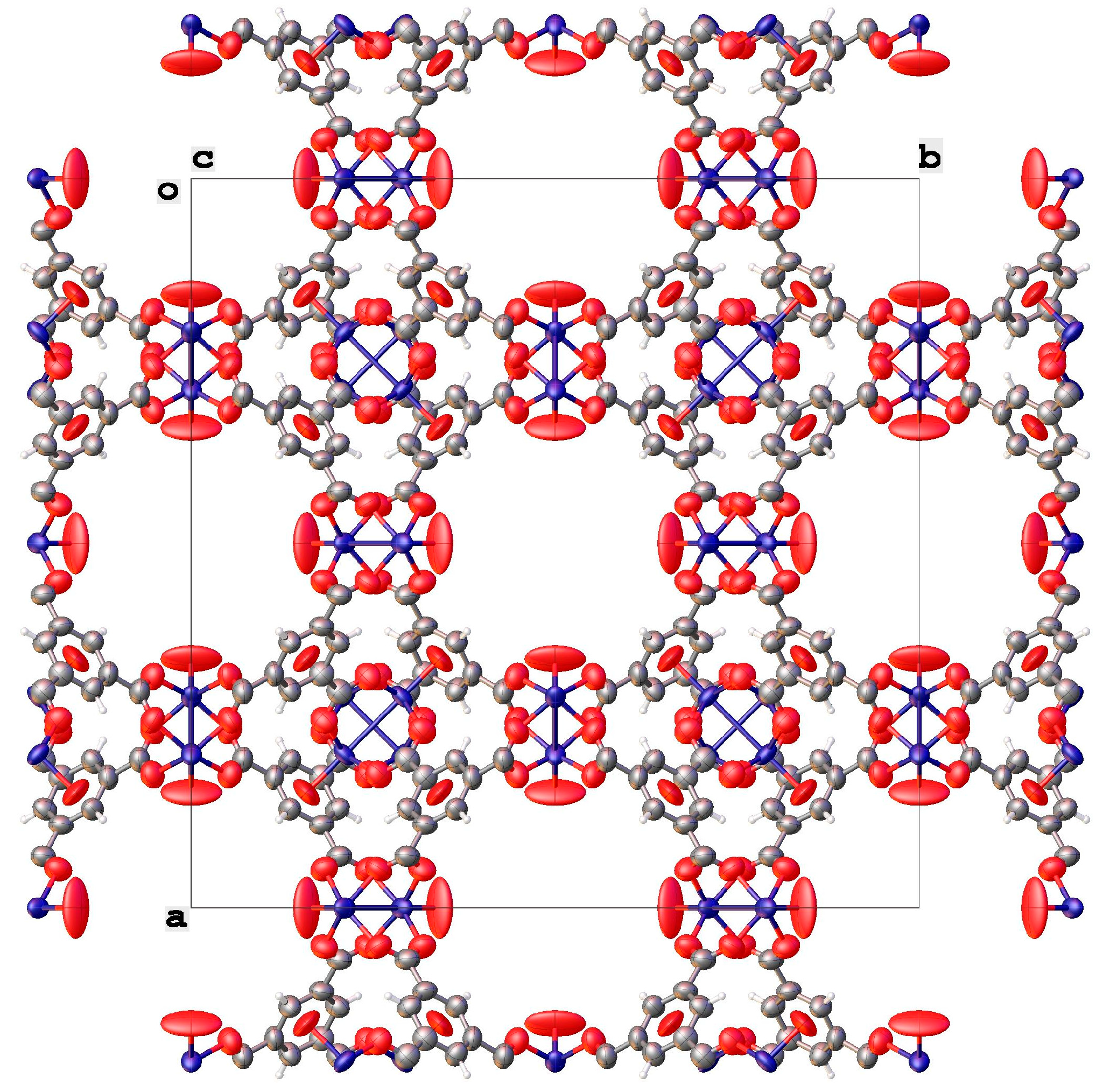
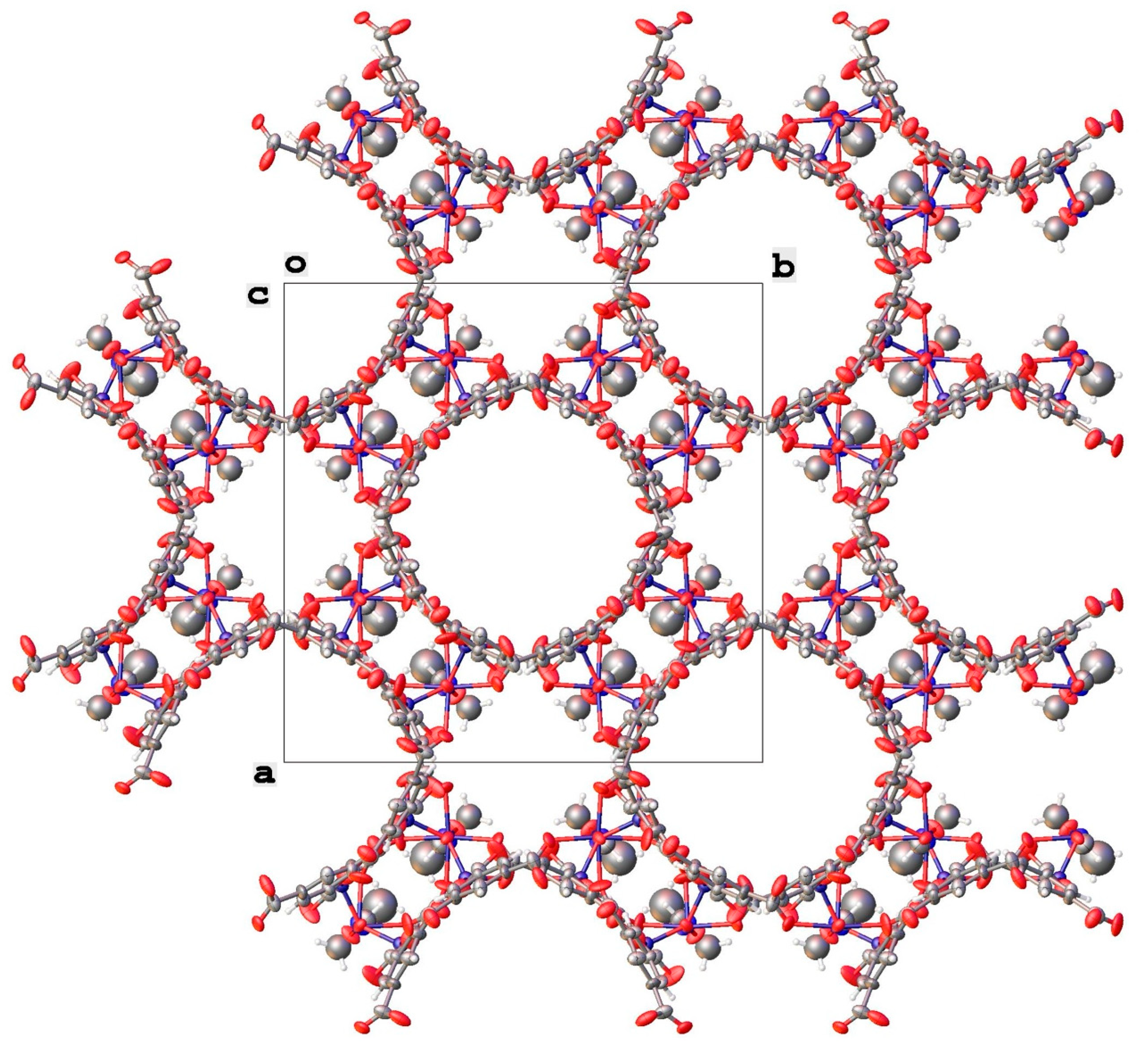
3.2. Crystal Structure of the Zn–BTC Framework of Compound 1
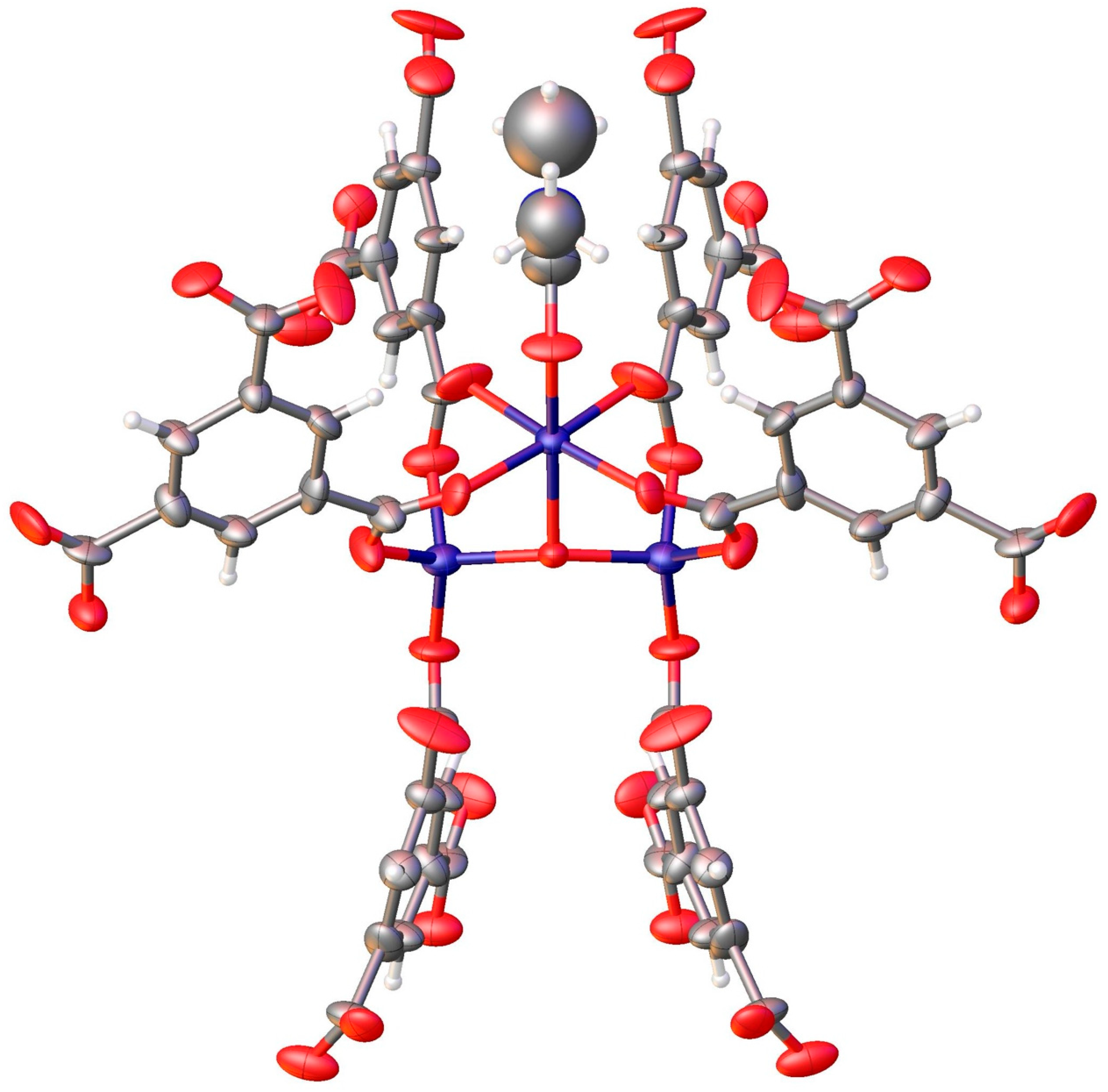
3.3. Crystal Structure of the Zn–BTC Framework of Compound 2
3.4. Comparison of SBUs and Framework Architectures
3.5. Pore Structure Analysis
3.6. Implications for SBU Selection in Zn–BTC Systems
4. Conclusions
Supplementary Materials
Author Contributions
Funding
Data Availability Statement
Conflicts of Interest
References
- Kunnummal, A.; Parambil, R.A.; Maniappan, S.; Kumar, J. Upconverted Chiral Emission in Hybrid Photonic Nanomaterials: Toward Amplified Circularly Polarized Luminescence with Tunable Chirality. ACS Appl. Opt. Mater. 2024, 2, 2451–2458. [Google Scholar] [CrossRef]
- Keerthana, L.; Zhang, Y.; Yang, B.; Ji, J.; Bi, J.; Gong, H. Review of Photon Upconversion Nanomaterials for High-Throughput Applications. ACS Appl. Nano Mater. 2026, 9, 5246–5267. [Google Scholar] [CrossRef]
- Lu, W.; Zhang, J.; Li, Y.S.; Chen, Q.; Wang, X.; Hassanien, A.; Chen, L. Contactless Characterization of Electronic Properties of Nanomaterials Using Dielectric Force Microscopy. J. Phys. Chem. C 2012, 116, 7158–7163. [Google Scholar] [CrossRef]
- Wu, D.; Kusada, K.; Nanba, Y.; Koyama, M.; Yamamoto, T.; Toriyama, T.; Matsumura, S.; Seo, O.; Gueye, I.; Kim, J.; et al. Noble-Metal High-Entropy-Alloy Nanoparticles: Atomic-Level Insight into the Electronic Structure. J. Am. Chem. Soc. 2022, 144, 3365–3369. [Google Scholar] [CrossRef]
- Ma, Z.; Mohapatra, J.; Wei, K.; Liu, J.P.; Sun, S. Magnetic Nanoparticles: Synthesis, Anisotropy, and Applications. Chem. Rev. 2023, 123, 3904–3943. [Google Scholar] [CrossRef]
- Razzhivina, M.E.; Rukhlenko, I.D.; Tepliakov, N.V. Chiral Optical Properties of Möbius Graphene Nanostrips. J. Phys. Chem. Lett. 2023, 14, 4426–4432. [Google Scholar] [CrossRef] [PubMed]
- Kumar, V.; Páez, J.L.; Míguez-Lago, S.; Cuerva, J.M.; Cruz, C.M.; Campaña, A.G. Chiral nanographenes exhibiting circularly polarized luminescence. Chem. Soc. Rev. 2025, 54, 4922–4947. [Google Scholar] [CrossRef] [PubMed]
- Bella, G.; Bruno, G.; Santoro, A. Ball Pivoting Algorithm and discrete gaussian curvature: A direct way to curved nanographene circularly polarized luminescence spectral simulation. FlatChem 2023, 42, 100567. [Google Scholar] [CrossRef]
- Bella, G.; Bruno, G.; Santoro, A. Circular dichroism simulations of chiral buckybowls by means curvature analyses. FlatChem 2023, 40, 100509. [Google Scholar] [CrossRef]
- Bella, G.; Milone, M.; Bruno, G.; Santoro, A. Triphasic circularly polarized luminescence switch quantum simulation of a topologically chiral catenane. J. Mater. Chem. C 2024, 12, 3005–3012. [Google Scholar] [CrossRef]
- Yaghi, O.M.; O’Keeffe, M.; Ockwig, N.W.; Chae, H.K.; Eddaoudi, M.; Kim, J. Reticular synthesis and the design of new materials. Nature 2003, 423, 705–714. [Google Scholar] [CrossRef]
- Furukawa, H.; Cordova, K.E.; O’Keeffe, M.; Yaghi, O.M. The Chemistry and Applications of Metal-Organic Frameworks. Science 2013, 341, 1230444. [Google Scholar] [CrossRef]
- Kitagawa, S.; Kitaura, R.; Noro, S.-i. Functional Porous Coordination Polymers. Angew. Chem. Int. Ed. 2004, 43, 2334–2375. [Google Scholar] [CrossRef]
- Zhou, H.-C.J.; Kitagawa, S. Metal–Organic Frameworks (MOFs). Chem. Soc. Rev. 2014, 43, 5415–5418. [Google Scholar] [CrossRef] [PubMed]
- Li, J.-R.; Kuppler, R.J.; Zhou, H.-C. Selective gas adsorption and separation in metal–organic frameworks. Chem. Soc. Rev. 2009, 38, 1477–1504. [Google Scholar] [CrossRef]
- Stock, N.; Biswas, S. Synthesis of Metal-Organic Frameworks (MOFs): Routes to Various MOF Topologies, Morphologies, and Composites. Chem. Rev. 2012, 112, 933–969. [Google Scholar] [CrossRef]
- Férey, G. Hybrid porous solids: Past, present, future. Chem. Soc. Rev. 2008, 37, 191–214. [Google Scholar] [CrossRef] [PubMed]
- Ibrahim, Y.; Mahmood, F.; Sinopoli, A.; Moursi, A.; Mahmoud, K.A.; Al-Ansari, T. Advancements of metal-organic frameworks for atmospheric water harvesting and climate control. J. Water Process Eng. 2024, 67, 106249. [Google Scholar] [CrossRef]
- Chui, S.S.-Y.; Lo, S.M.-F.; Charmant, J.P.H.; Orpen, A.G.; Williams, I.D. A Chemically Functionalizable Nanoporous Material. Science 1999, 283, 1148–1150. [Google Scholar] [CrossRef]
- Li, H.; Eddaoudi, M.; O’Keeffe, M.; Yaghi, O.M. Design and synthesis of an exceptionally stable and highly porous metal-organic framework. Nature 1999, 402, 276–279. [Google Scholar] [CrossRef]
- Rowsell, J.L.C.; Yaghi, O.M. Metal–organic frameworks: A new class of porous materials. Microporous Mesoporous Mater. 2004, 73, 3–14. [Google Scholar] [CrossRef]
- Pettinari, C.; Tăbăcaru, A.; Galli, S. Coordination polymers and metal–organic frameworks based on poly(pyrazole)-containing ligands. Coord. Chem. Rev. 2016, 307, 1–31. [Google Scholar] [CrossRef]
- Robin, A.Y.; Fromm, K.M. Coordination polymer networks with O- and N-donors: What they are, why and how they are made. Coord. Chem. Rev. 2006, 250, 2127–2157. [Google Scholar] [CrossRef]
- Santoro, A.; Holub, J.; Fik-Jaskółka, M.A.; Vantomme, G.; Lehn, J.-M. Dynamic Helicates Self-Assembly from Homo- and Heterotopic Dynamic Covalent Ligand Strands. Chem.-A Eur. J. 2020, 26, 15664–15671. [Google Scholar] [CrossRef] [PubMed]
- Holub, J.; Santoro, A.; Lehn, J.-M. Electronic absorption and emission properties of bishydrazone [2 × 2] metallosupramolecular grid-type architectures. Inorganica Chim. Acta 2019, 494, 223–231. [Google Scholar] [CrossRef]
- Eddaoudi, M.; Kim, J.; Rosi, N.; Vodak, D.; Wachter, J.; O’Keeffe, M.; Yaghi, O.M. Systematic Design of Pore Size and Functionality in Isoreticular MOFs and Their Application in Methane Storage. Science 2002, 295, 469–472. [Google Scholar] [CrossRef]
- Zhou, H.-C.; Long, J.R.; Yaghi, O.M. Introduction to Metal–Organic Frameworks. Chem. Rev. 2012, 112, 673–674. [Google Scholar] [CrossRef]
- Eddaoudi, M.; Moler, D.B.; Li, H.; Chen, B.; Reineke, T.M.; O’Keeffe, M.; Yaghi, O.M. Modular Chemistry: Secondary Building Units as a Basis for the Design of Highly Porous and Robust Metal–Organic Carboxylate Frameworks. Acc. Chem. Res. 2001, 34, 319–330. [Google Scholar] [CrossRef]
- O’Keeffe, M.; Yaghi, O.M. Deconstructing the Crystal Structures of Metal–Organic Frameworks and Related Materials into Their Underlying Nets. Chem. Rev. 2012, 112, 675–702. [Google Scholar] [CrossRef] [PubMed]
- Rowsell, J.L.C.; Yaghi, O.M. Strategies for Hydrogen Storage in Metal–Organic Frameworks. Angew. Chem. Int. Ed. 2005, 44, 4670–4679. [Google Scholar] [CrossRef]
- Batten, S.R.; Robson, R. Interpenetrating Nets: Ordered, Periodic Entanglement. Angew. Chem. Int. Ed. 1998, 37, 1460–1494. [Google Scholar] [CrossRef]
- Moulton, B.; Zaworotko, M.J. From Molecules to Crystal Engineering: Supramolecular Isomerism and Polymorphism in Network Solids. Chem. Rev. 2001, 101, 1629–1658. [Google Scholar] [CrossRef]
- Friščić, T.; MacGillivray, L.R. Engineering cocrystal and polymorph architecture via pseudoseeding. Chem. Commun. 2009, 7, 773–775. [Google Scholar] [CrossRef]
- Qin, L.; Li, Y.; Ma, D.; Liang, F.; Chen, L.; Xie, C.; Lin, J.; Pan, Y.; Li, G.; Chen, F.; et al. Two transition metal-organic frameworks based on 5-phenyl-isophthalate and N-donor mixed ligands: Structure, magnetic, drug delivery and catalytic properties. J. Solid State Chem. 2022, 312, 123175. [Google Scholar] [CrossRef]
- Liang, F.; Ma, D. Luminescence and catalytic properties of two nickel(II)-organic frameworks constructed by 5-substituted isophthalate and N-donor mixed ligands. J. Mol. Struct. 2020, 1208, 127814. [Google Scholar] [CrossRef]
- Yan, P.; Chen, Z.; Li, X.; Liang, F.; Tan, Y.; Lin, Y.; Yang, K.; Xiao, C.; Wu, J.; Ma, D. Tuning the CO2 selective adsorption performance in MOFs by incorporating functional groups on the isophthalate skeleton. J. Solid State Chem. 2024, 330, 124461. [Google Scholar] [CrossRef]
- Zhao, H.; Li, L.; Li, J.; Yan, F.; Wang, W.; Zhao, M. A Novel Zn-Cu Bimetallic Mixed-Component MOFs Composite for Efficient CO2 Capture. Nanomaterials 2025, 15, 1777. [Google Scholar] [CrossRef]
- Manos, M.J.; Moushi, E.E.; Papaefstathiou, G.S.; Tasiopoulos, A.J. New Zn2+ Metal Organic Frameworks with Unique Network Topologies from the Combination of Trimesic Acid and Amino-Alcohols. Cryst. Growth Des. 2012, 12, 5471–5480. [Google Scholar] [CrossRef]
- Huang, X.-C.; Lin, Y.-Y.; Zhang, J.-P.; Chen, X.-M. Ligand-Directed Strategy for Zeolite-Type Metal–Organic Frameworks: Zinc(II) Imidazolates with Unusual Zeolitic Topologies. Angew. Chem. Int. Ed. 2006, 45, 1557–1559. [Google Scholar] [CrossRef]
- Ma, S.; Zhou, H.-C. Gas storage in porous metal–organic frameworks for clean energy applications. Chem. Commun. 2010, 46, 44–53. [Google Scholar] [CrossRef]
- Suh, M.P.; Park, H.J.; Prasad, T.K.; Lim, D.-W. Hydrogen Storage in Metal–Organic Frameworks. Chem. Rev. 2012, 112, 782–835. [Google Scholar] [CrossRef]
- Moloto, W.; Mbule, P.; Nxumalo, E.; Ntsendwana, B. Stabilizing effects of zinc(II)-benzene-1,3,5-tricarboxylate metal organic frameworks on the performance of TiO2 photoanodes for use in dye-sensitized solar cells. J. Photochem. Photobiol. A Chem. 2021, 407, 113063. [Google Scholar] [CrossRef]
- Scatena, R.; Guntern, Y.T.; Macchi, P. Electron Density and Dielectric Properties of Highly Porous MOFs: Binding and Mobility of Guest Molecules in Cu3(BTC)2 and Zn3(BTC)2. J. Am. Chem. Soc. 2019, 141, 9382–9390. [Google Scholar] [CrossRef]
- Degaga, G.D.; Pandey, R.; Gupta, C.; Bharadwaj, L. Tailoring of the electronic property of Zn-BTC metal–organic framework via ligand functionalization: An ab initio investigation. RSC Adv. 2019, 9, 14260–14267. [Google Scholar] [CrossRef]
- Lalawmpuia, R.; Lalhruaitluangi, M.; Lalhmunsiama; Tiwari, D. Metal organic framework (MOF): Synthesis and fabrication for the application of electrochemical sensing. Environ. Eng. Res. 2024, 29, 230636. [Google Scholar] [CrossRef]
- Friščić, T.; Jones, W. Recent Advances in Understanding the Mechanism of Cocrystal Formation via Grinding. Cryst. Growth Des. 2009, 9, 1621–1637. [Google Scholar] [CrossRef]
- Timofeeva, M.V.; Yankin, A.N. Synthesis and characterization of ZnBTC-based MOFs: Effect of solvents and salt. Chim. Techno Acta 2022, 10, 202310105. [Google Scholar] [CrossRef]
- Spek, A. Structure validation in chemical crystallography. Acta Crystallogr. Sect. D 2009, 65, 148–155. [Google Scholar] [CrossRef]
- Spek, A. PLATON SQUEEZE: A tool for the calculation of the disordered solvent contribution to the calculated structure factors. Acta Crystallogr. Sect. C 2015, 71, 9–18. [Google Scholar] [CrossRef]
- Sylvain, R.; Vendier, L.; Bijani, C.; Santoro, A.; Puntoriero, F.; Campagna, S.; Sutra, P.; Igau, A. Evidence of the unprecedented conversion of intermolecular proton to water bridging of two phosphoryl ruthenium complexes. New J. Chem. 2013, 37, 3543–3548. [Google Scholar] [CrossRef]
- Sheldrick, G. SHELXT—Integrated space-group and crystal-structure determination. Acta Crystallogr. Sect. A 2015, 71, 3–8. [Google Scholar] [CrossRef]
- Sheldrick, G. Crystal structure refinement with SHELXL. Acta Crystallogr. Sect. C 2015, 71, 3–8. [Google Scholar] [CrossRef] [PubMed]
- Blatov, V.A.; Shevchenko, A.P.; Proserpio, D.M. Applied Topological Analysis of Crystal Structures with the Program Package ToposPro. Cryst. Growth Des. 2014, 14, 3576–3586. [Google Scholar] [CrossRef]
- Bruker, A. SAINT-Plus and SADABS; Bruker AXS Inc.: Madison, WI, USA, 2004. [Google Scholar]
- Bruker, A. APEX2, SADABS and SAINT; Bruker AXS Inc.: Madison, WI, USA, 2010. [Google Scholar]
- Dolomanov, O.V.; Bourhis, L.J.; Gildea, R.J.; Howard, J.A.K.; Puschmann, H. OLEX2: A complete structure solution, refinement and analysis program. J. Appl. Crystallogr. 2009, 42, 339–341. [Google Scholar] [CrossRef]



| Feature | 1 | 2 |
|---|---|---|
| CCDC code | 2539925 | 2539926 |
| Crystal system | Cubic | Tetragonal |
| Space group | Fmm | I4cm |
| Unit cell parameters (Å) | a = b = c = 26.582(2) | a = b = 20.586(4); c = 17.797(5) |
| Unit cell volume (Å3) | 18782(5) | 7542(3) |
| Molecular unit (ASU + solvent) | C6H4O5Zn | C21H13NO14Zn3 |
| Z | 48 | 8 |
| Crystal model quality Final R indexes [I 2σ (I)] | R1 = 0.0382, wR2 = 0.0986 GooF (F2) = 0.956 | R1 = 0.0533, wR2 = 0.1526 GooF (F2) = 1.063 |
| Crystallographically independent Zn sites | 1 | 2 |
| Zn coordination environments | Equivalent Zn(II) centers | Non-equivalent Zn(II) centers |
| Zn coordination number(s) | 5 (4 equatorial + 1 axial) | 4 (tetrahedral) and 6 (octahedral) |
| Zn–Zn interaction (Å) | 2.968(1) | Not observed |
| Secondary building unit (SBU) | Binuclear Zn2(O2CR)4 | Mixed-coordination Zn–based SBU |
| SBU nuclearity | Binuclear | Polynuclear/extended |
| Carboxylate coordination mode | μ2-bridging (equatorial) | Bridging and chelating modes |
| Axial/terminal ligands | Coordinated solvent (H2O) | Coordinated solvent (DMF) |
| Role of solvent | Axial ligand stabilizing Zn2 SBU | Coordination and stabilization of mixed Zn environments |
| Framework dimensionality | 3D | 3D |
| Overall framework symmetry | High | Lower |
Disclaimer/Publisher’s Note: The statements, opinions and data contained in all publications are solely those of the individual author(s) and contributor(s) and not of MDPI and/or the editor(s). MDPI and/or the editor(s) disclaim responsibility for any injury to people or property resulting from any ideas, methods, instructions or products referred to in the content. |
© 2026 by the authors. Licensee MDPI, Basel, Switzerland. This article is an open access article distributed under the terms and conditions of the Creative Commons Attribution (CC BY) license.
Share and Cite
Bella, G.; Nicolò, F.; Bruno, G.; Assel, A.; Santoro, A. Coordination Flexibility of Zn(II) in Trimesate-Based Metal–Organic Frameworks: Formation of Distinct Secondary Building Units. Crystals 2026, 16, 290. https://doi.org/10.3390/cryst16050290
Bella G, Nicolò F, Bruno G, Assel A, Santoro A. Coordination Flexibility of Zn(II) in Trimesate-Based Metal–Organic Frameworks: Formation of Distinct Secondary Building Units. Crystals. 2026; 16(5):290. https://doi.org/10.3390/cryst16050290
Chicago/Turabian StyleBella, Giovanni, Francesco Nicolò, Giuseppe Bruno, Amine Assel, and Antonio Santoro. 2026. "Coordination Flexibility of Zn(II) in Trimesate-Based Metal–Organic Frameworks: Formation of Distinct Secondary Building Units" Crystals 16, no. 5: 290. https://doi.org/10.3390/cryst16050290
APA StyleBella, G., Nicolò, F., Bruno, G., Assel, A., & Santoro, A. (2026). Coordination Flexibility of Zn(II) in Trimesate-Based Metal–Organic Frameworks: Formation of Distinct Secondary Building Units. Crystals, 16(5), 290. https://doi.org/10.3390/cryst16050290