1. Introduction
The massive generation of slag by steel mills poses two problems: first, it poses a serious threat to the environment, and second, it offers a chance to collect and value valuable resources. Slag is a byproduct of the steel industry that is a major pollutant and has an effect on the environment [
1]. Iron (Fe), manganese (Mn), and calcium (Ca) are just a few of the rich elements found in steel slag, which makes it a possible secondary resource for a variety of industrial uses [
2]. The blast furnace slag (BFS) and steel slag (SS) include calcium (Ca), magnesium (Mg), phosphorus (P), and silicon (Si), leading to concerns about attempts to utilize them as silicon- and phosphorus-based fertilizers, for the production of calcium-magnesium-phosphorus fertilizers, or as soil supplements in agriculture [
3]. Use in building roads, pavements, bricks, concrete, cement, soil treatment, and recovering strategic metals are all part of the endeavor to increase its value. Because they are very porous and have a lot of surface area, slags could be good for the marine environment. They could be used to repair coral reefs (for example, to stop coral bleaching) and replace them (for example, by creating an artificial reef to help green marine plants and seagrass grow) [
4]. Sustainable consumption and production are at the heart of SDG 12, one of the global sustainable development objectives [
5].
Limited data is known about the elemental and microstructural heterogeneity present in the various slag streams generated by steelmaking processes, which is a major obstacle to slag valorization [
6]. As the raw materials and steelmaking process (e.g., basic oxygen furnace, electric arc furnace, ladle furnace, continuous casting) greatly influence slag characteristics, it is essential to conduct thorough characterization before attempting recycling or reuse. The microstructural level frequently reveals the heterogeneity of steel slag, which is acknowledged as a complex solid [
7]. A material’s processing, reactivity, and any changes caused by environmental variables like corrosion or weathering can be understood by examining its physical and chemical properties, which are in turn determined by the number, spatial distribution, and composition of various phases. Slag use optimization and the promotion of a circular economy in the steel sector are critically dependent on resolving this heterogeneity [
8].
The average chemical and mineralogical compositions can be obtained by using bulk analytical techniques like X-ray fluorescence (XRF) or X-ray diffraction (XRD). However, these methods tend to obscure the micro-heterogeneity and localized variations that are present in multiphase materials, such as slag [
9]. Elemental and phase distributions, as well as their arrangements and intergrowths, can be seen by SEM-EDS, particularly when equipped with high-resolution mapping capabilities (e.g., through the use of specialized software like PARC) [
10]. The explanation of process-driven variability and identification of individual phases contributing to desired (or undesired) qualities requires such granularity. Through scanning electron microscopy and energy dispersive spectroscopy, individual phases can be mapped for trace elements. For example, chromium (Cr) in wüstite and brownmillerite, or vanadium (V) in dicalcium silicate (C2S) and brownmillerite, can be identified. Also, MgFeOx may discriminate between wüstite and magnetite, two phases with comparable bulk chemical compositions but differing microstructural properties [
11]. An in-depth understanding of the material’s phase composition and elemental distribution is crucial for making predictions about its hydraulic reactivity [
12], heavy metal leaching potential, and metal recovery suitability, among other uses. Properties and information about the material’s creation during steelmaking and processing or alteration can be gleaned from the spatial distribution and composition of phases. For example, it can show whether milling techniques have introduced amorphous material, which could be more reactive. Because of its high phosphorus (P) content and other plant nutrients (such as S, Ca, Mg, and Si), slag has a long history of usage as a soil amendment in agricultural practices. For acidic soils, slags can also serve as a liming agent. Separating the P and Fe phases in slag on an industrial scale would boost the utilization of steel for soil application. The iron-rich fraction can be recycled in sinter plants, whereas the phosphorus-rich fraction has fertilizer and soil amendment applications [
13]. Having a detailed grasp of the slag’s properties allows for the optimization of recycling strategies and valorization processes.
There are interpretive benefits to conducting an experimental study that differentiates between slag types rich in calcium-fluorine-oxygen (Ca-F-O) or slag types rich in manganese-silicon-oxygen (Mn-Si-O). The various slag kinds produced by steelmaking processes have different levels of elemental enrichment. One example is ladle furnace slag (LFS), which is Ca-F-O rich because it contains high amounts of CaO and SiO
2 2 due to the addition of CaF
2. For example, Ca
2Fe
2O
5 enables thermodynamically favorable direct CO
2 capture in sludge gasification [
14]. On the other hand, slags from different processes, such as Hadfield steel manufacturing, can contain a high concentration of Mn-Si-O [
15]. By narrowing down on these particular compositions, it is possible to study the process parameters that cause these distinct elemental fingerprints and the microstructural changes they cause with great precision. By comparing the microstructure of different types of slag, we may see how process-driven variability differs from bulk averages.
Predicting responsiveness and performance relies heavily on having fine-grained information about the spatial distribution of components within and across phases, which high-resolution mapping delivers [
16]. Knowledge of the concentration of manganese and silicon in particular mineral phases, for instance, can direct strategies for their extraction or management of their environmental discharge. Manganese ferroalloys, including silicomanganese slag, are crucial in steel manufacturing due to the beneficial effects of manganese on the physical qualities of steel. The incorporation of manganese and ferro-manganese in steel metallurgy serves as a deoxidizing and desulfurizing agent [
17]. Sara et al. [
18] determined that the interaction between CaO and the stabilizer predominantly influences the CO
2 capture efficacy of CaO-based sorbents, and the Ca/Si ratio in the BFS-derived sorbent must be meticulously regulated to optimize the material’s CO
2 capture efficiency. Similarly, methods for using or stabilizing Ca-rich phase slags can be informed by studying the distribution of fluorine in these phases. To improve recycling efficiency and lessen environmental impact, it is essential to have precise micro-level knowledge to develop valorization strategies that are optimal for the diverse nature of industrial slags [
19].
Slags obtained from different steelmaking processes vary both in their bulk chemistry and in the micro-scale phase distribution due to differences in feedstocks, alloys, and fluxes. For process control and re-use assessment, accurate and rapid identification of such variations is important. This study applies X-ray fluorescence XRF for bulk chemistry analysis, phase identification, and automated SEM–EDS phase mapping for micro-scale characterization of steelmaking slags. By integrating XRF data into the mapping results, the different process-based slags were further classified. Dominant phase classes were identified, their proportions determined, and the area distribution across the individual slag images evaluated. By combining the bulk chemistry and phase mapping results, the observed bulk chemical phase associations with the process-based slags were validated. The combined XRF and SEM–EDS characterization methodology enables a clear differentiation of different process-based slags, and provides a solid platform for further, detailed mineralogical studies aimed at the assessment of the potential for valorization of these slag streams.
2. Materials and Methods
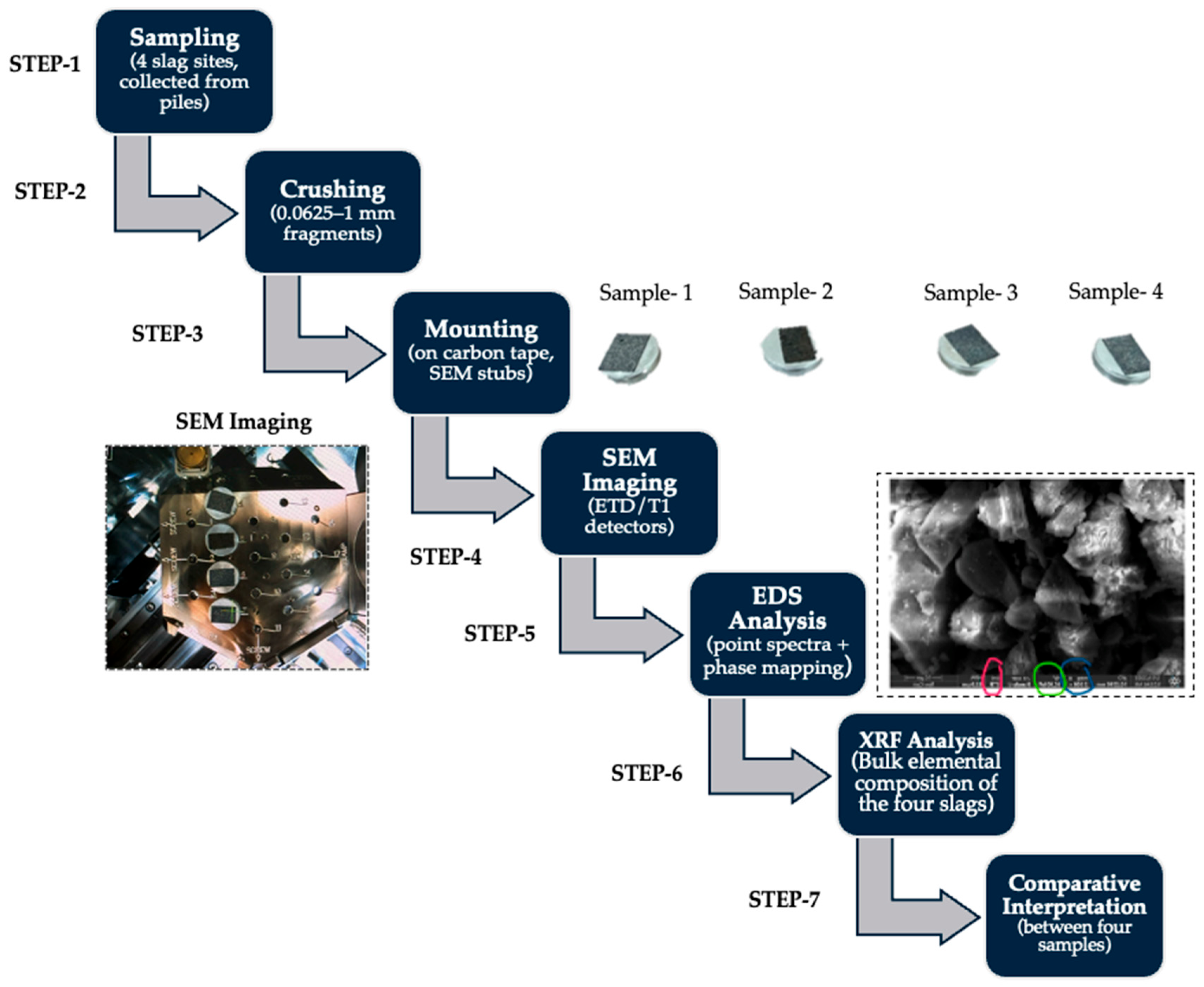
The comprehensive approach of this investigation is presented in
Figure 1. The process commences with the acquisition of four representative slag samples from separate slag heaps at the steel plant (Step 1), succeeded by hand crushing (Step 2). The produced fragments were subsequently affixed to high-performance double-sided carbon conductive tape, i.e., a special electron microscope consumable for SEM (5 mm Width Blue color) from Sinm, adhered to SEM stubs (Step 3), resulting in four mounted specimens that were representative of the various slag types. Following SEM photography using ETD and T1 detectors to document surface morphology (Step 4), EDS analysis was conducted to acquire point spectra and automated phase maps (Step 5). The resultant spectra and maps were analyzed to ascertain elemental compositions and relative phase fractions using bulk elemental analysis through XRF (Step 6). The results from all four samples were ultimately pooled and analyzed together to discern significant changes in slag chemistry and microstructural assemblages (Step 7). This incremental strategy guaranteed a systematic assessment of slag variability while preserving methodological uniformity across all samples.
2.1. Sampling and Sample Origin
Steel slags were obtained from four different production lines at the Navoi Machine Building Plant (NMBP), Uzbekistan. The plant processes multiple steel grades, and slag composition is expected to vary depending on the alloying additions and fluxes employed. To capture this variability, four representative slag samples were collected from distinct slag disposal sites that correspond to different steelmaking operations. Information regarding the steel grade family, fluxing practice, and sampling location was obtained from plant operational records and is summarized in
Table 1.
2.2. Sample Preparation for Microscopy
Each slag was crushed using a steel mortar and pestle to obtain fragments between 0.0625 mm and 1 mm in size. The target size range was selected to ensure stable placement on the sample holder, while still retaining surface features suitable for microscopic observation. The powdered slag fractions were mounted on conductive carbon tape affixed to standard aluminum SEM stubs. This method provided good adhesion of the particles and avoided charging during electron beam exposure. The samples were analyzed without additional sputter coating, as the conductive carbon tape and the relatively coarse grain size provided adequate grounding.
2.3. SEM, EDS Acquisition, and XRF Analysis
Analyses were carried out using a Thermo/FEI Apreo 2 (Thermo Electron and Fisher Scientific, Waltham, MA, USA) scanning electron microscope (SEM) equipped with secondary electron (ETD) and backscattered electron (T1) detectors, and coupled with an energy-dispersive spectroscopy (EDS) system. Both point analyses and automated phase-mapping functions were employed.
Microstructural characterization and chemical phase mapping of the four steel slag samples were carried out using scanning electron microscopy (SEM) coupled with (EDS). All analyses were performed on a FEI/Thermo Fisher SEM equipped with an Oxford Instruments EDS detector (Thermo Electron and Fisher Scientific, Waltham, MA, USA), operated through Oxford Instruments AZtec software (version 6.2.). Imaging was performed using the Everhart–Thornley detector (ETD) (Thermo Electron and Fisher Scientific, Waltham, MA, USA) in secondary electron mode at an accelerating voltage of 20.00 kV. Working distances ranged from approximately 10.14 mm to 10.26 mm across the four samples, and the primary mapping magnification was 500× (horizontal field width of 414 µm), with one additional overview image acquired at 350× (horizontal field width of 592 µm) for Sample 2.
EDS elemental mapping and phase identification were performed over one mapped field per sample at a consistent map resolution of 1024 × 704 pixels (720,896 pixels total). The number of identified phases ranged from four (Sample 2) to nine (Sample 4). Point EDS analyses were acquired at selected locations within each map: one point spectrum was collected for Samples 1, 2, and 3, with Sample 2 also yielding a Map Sum Spectrum; Sample 4 yielded seven individual point spectra (Spectra 5–11). X-ray intensities were quantified using ZAF/φρz matrix correction with factory-supplied reference standards, including CaF2 (F), SiO2 (O, Si), Wollastonite (Ca), MgO (Mg), Al2O3 (Al), FeS2 (S), KBr (K), Albite (Na), Mn, Fe, Cr, Cu, GaP (P), Zn, and W (L-series). All quantification results are reported as weight per cent (wt%). Beam current and EDS live time/dwell time were not captured in the exported report files and were obtained directly from the original AZtec project files.
For each sample, several representative particles were selected and imaged under magnifications between 500× and 2000× to capture morphological details. EDS point analyses were then performed on selected regions of interest (ROIs) to determine local elemental compositions. In addition, full-field phase maps were generated, where each pixel in the imaged area was assigned to a specific phase class based on its EDS signature. EDS point analyses were performed on selected regions of interest across the slag particles to obtain representative semi-quantitative elemental compositions. For each sample, several particles were examined, and multiple regions of interest were selected based on distinct microstructural features observed in the SEM images. These regions included matrix areas, phase boundaries, and visually distinguishable inclusions or secondary phases. Approximately 10 to 15 point analyses were conducted for each slag sample to capture compositional variability across different microstructural domains. The selected regions of interest were distributed across different particles to ensure that the obtained elemental data represented the overall heterogeneity of the slag material. Phase identification relied on comparison with a library of factory-calibrated standards provided by the instrument (including CaF2, SiO2, MgO, Al2O3, Fe, Mn, Cu, Zn, FeS2, KBr, and wollastonite). While the EDS results are semi-quantitative, the use of standards allowed consistent assignment of elemental peaks and minimized errors arising from spectral overlaps.
The bulk elemental composition of the studied slag samples was determined using X-ray fluorescence (XRF) (Rigaku Nex DE VS, Tokyo, Japan) analysis. The analyses were performed by an energy-dispersive XRF spectrometer operating under atmospheric conditions using a multi-condition excitation (MCE) mode to enable detection of low-, mid-, and high-Z elements. The analyses were conducted on the solid samples in non-rotated mode, and appropriate tube voltage and current settings were selected to obtain satisfactory sensitivity for the analysis of all elements in the samples. The quantification was performed by the fundamental parameter (FP) method. The obtained bulk slag compositions were presented in mass percent and included major elements as well as trace elements greater than the detection limits. The results provided in this paper form a bulk chemistry complement to localized SEM–EDS results to enable comprehensive interpretation of chemical properties of the studied slags.
2.4. Data Treatment and Interpretation
The EDS point spectra were processed to yield elemental weight percentages (wt%), with uncertainties (σ) automatically reported by the system. The results were evaluated for consistency across multiple spectra within the same sample.
Phase maps were analyzed by calculating the fraction of pixels assigned to each identified phase. This approach allowed the estimation of the relative abundance of Ca–F–O, Mn–Si–O, and other phase classes within each slag. The phase-fraction data were then compared across the four samples to highlight differences in chemistry and microstructural makeup. Finally, the results from point analyses and phase mapping were integrated to develop a comprehensive description of each slag type. The workflow ensured that the comparison among the four samples was systematic, allowing process-related differences in slag chemistry to be linked to steelmaking practices.
3. Results
3.1. Overview of Slag Microstructures
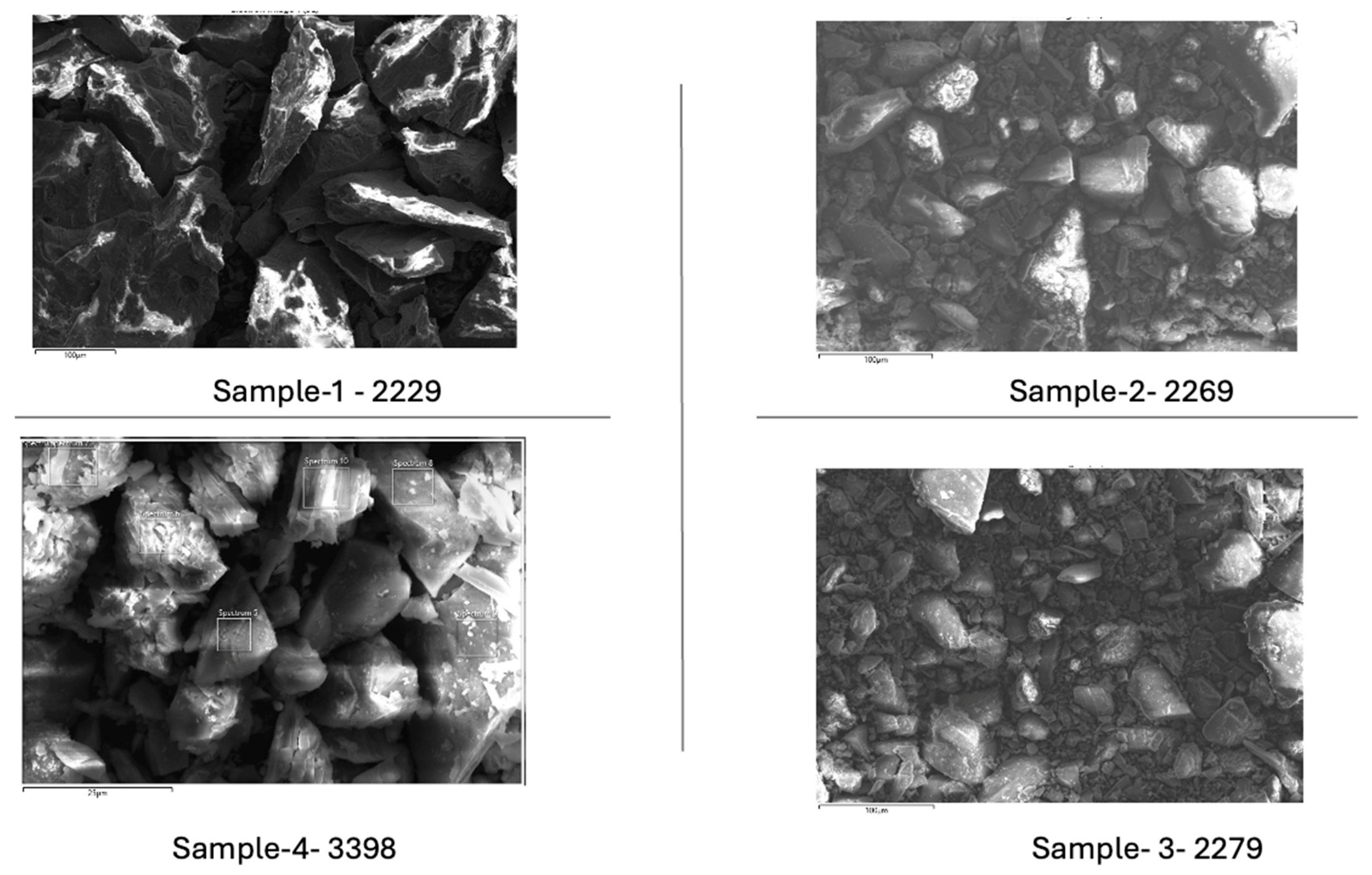
The SEM–EDS analyses provided both qualitative and quantitative insights into the four slag samples. All samples exhibited heterogeneous microstructures with variable textures ranging from crystalline to partially glassy regions. The combination of point spectra and automated phase mapping allowed the identification of dominant chemical assemblages within each sample, expressed both in terms of elemental concentrations (wt%) and phase fractions (% of pixels). This dual approach ensured that the localized point analyses could be cross-validated with broader statistical data from mapping, as shown in
Figure 2.
3.2. Sample 1 (Mn–Si–O Dominated Slag)
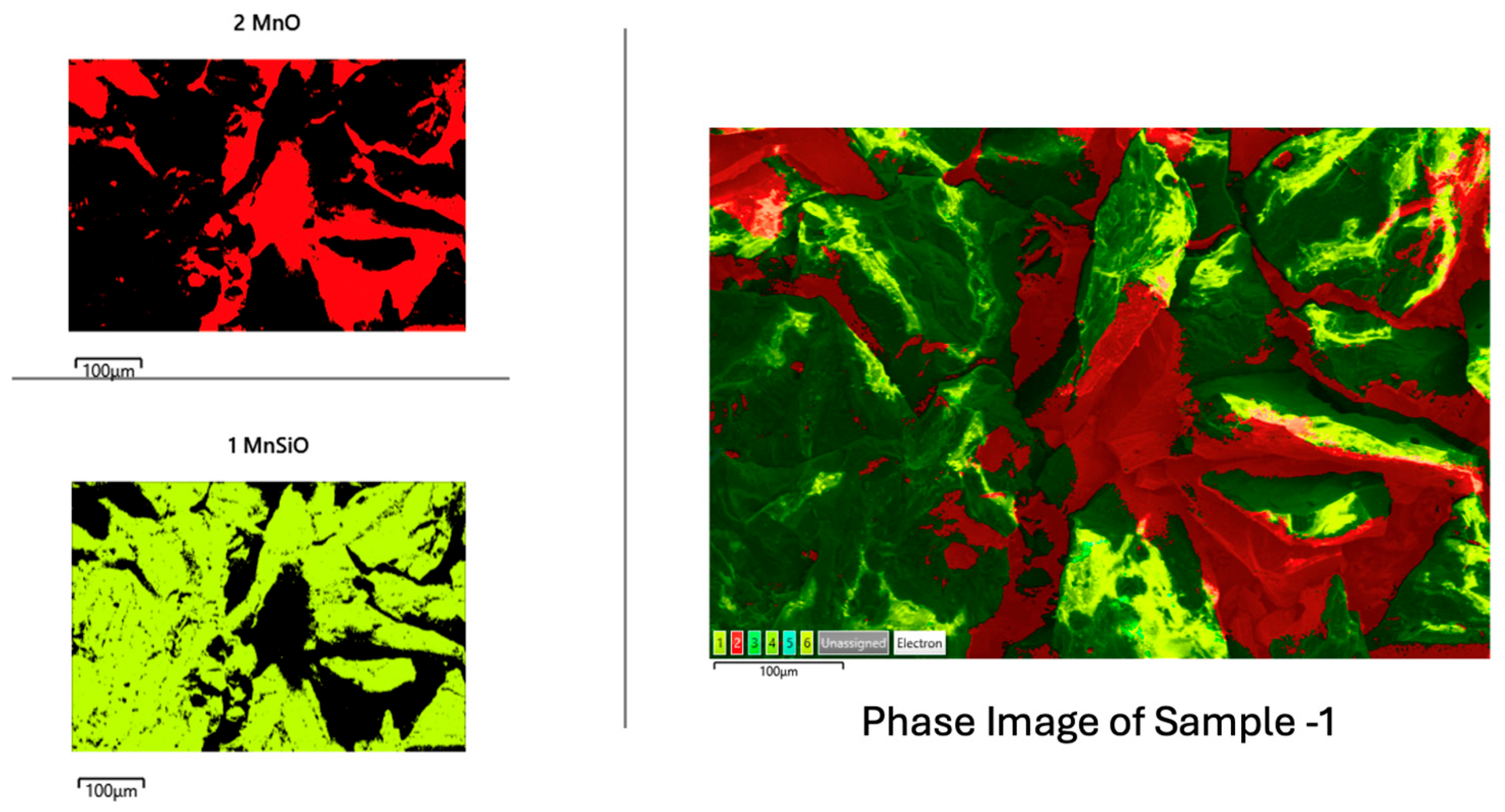
Sample 1 was distinct from the other three slags in that it was strongly enriched in manganese-bearing phases as shown in
Figure 3. Phase mapping revealed that MnSiO (66.9%) and MnO (29.4%) were the dominant components, with minor contributions from MnCaO (2.5%), CrMnAlO (0.4%), and trace FeSiO (0.0%). Point EDS analyses confirmed elevated Mn (~25 wt%), O (~34 wt%), Si (~11 wt%), Fe (~6 wt%), and Mg (~5 wt%), while Ca was comparatively low (~8 wt%). These results and elemental compositions mentioned in
Table 2 suggest that the slag originated from Mn-alloyed steel production (likely Hadfield steel), leading to the transfer of manganese-rich oxides into the slag matrix. The combination of MnSiO and MnO phases points toward a partially crystalline slag dominated by manganese silicates.
3.3. Sample 2 (Ca–F–O Enriched Slag, Type I)
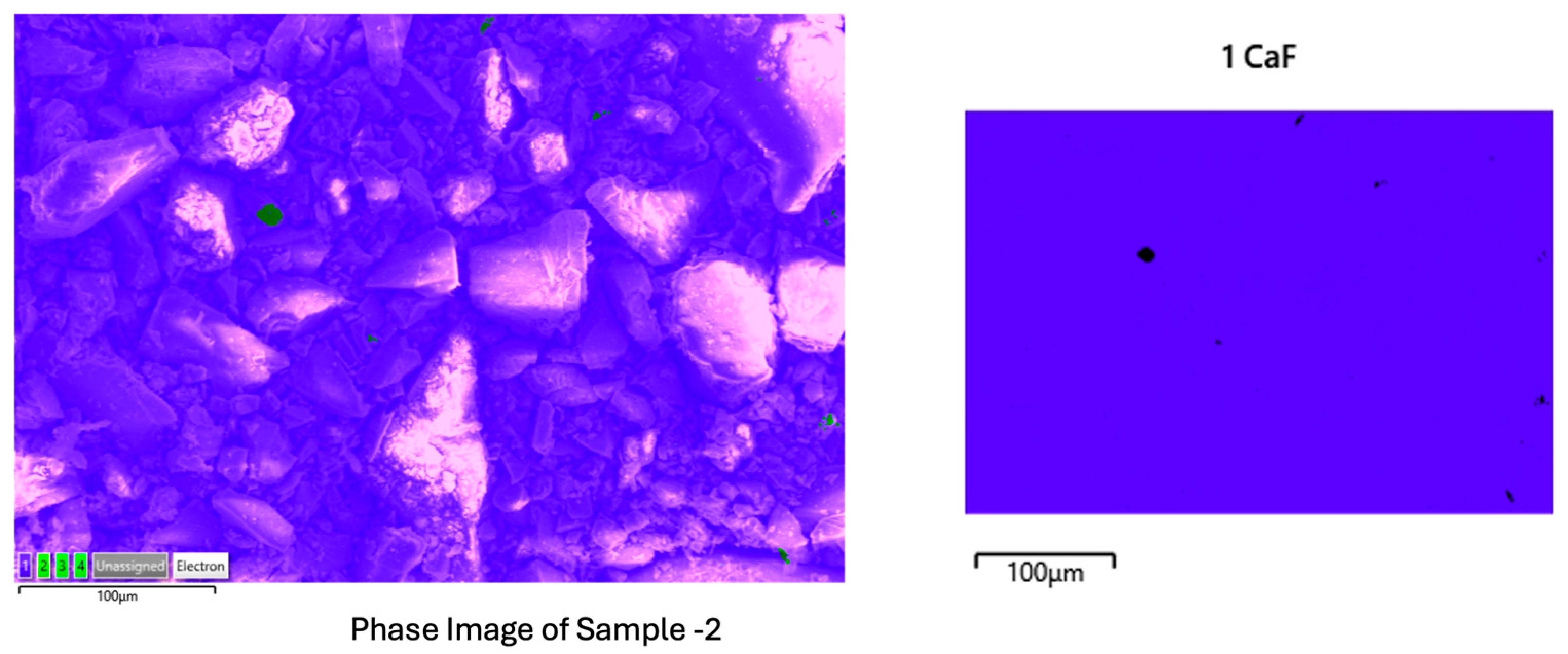
Sample 2 was overwhelmingly dominated by Ca–F–O phases as shown in
Figure 4. Automated phase mapping indicated CaF (99.3%), with only minor SiFO and trace MnO/MgMnCaO. The EDS analyses confirmed this result, showing high Ca (~47 wt%), F (~42 wt%), and O (~9 wt%), while other elements were also negligible, as noted in
Table 3. This slag represents a fluorite-rich composition, consistent with the intentional addition of CaF
2 as a fluxing agent during steelmaking. The nearly monomineralic composition suggests that this slag is less heterogeneous than the Mn-rich sample and is more uniform in its chemical makeup.
3.4. Sample 3 (Ca–F–O Enriched Slag, Type II)
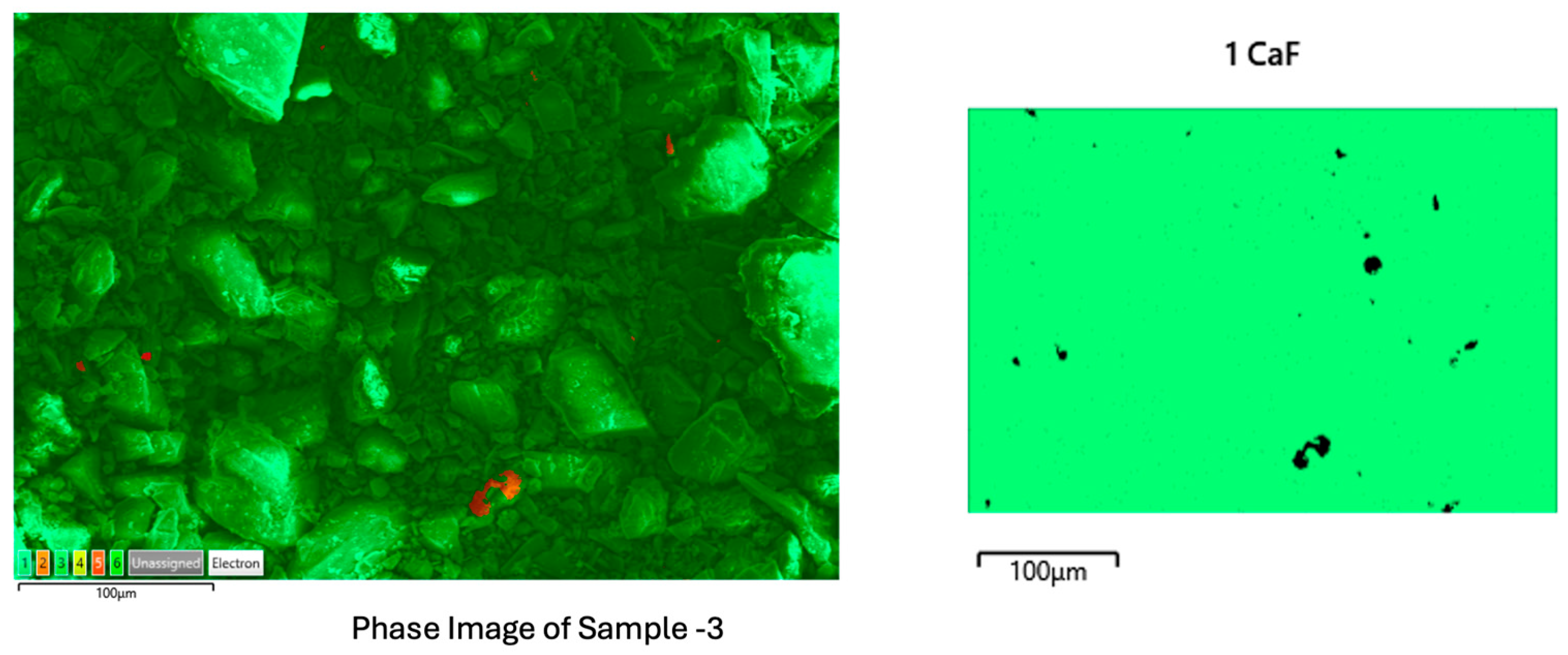
Sample 3 displayed a chemical composition similar to Sample 2 but with slightly more variability. Phase mapping as shown in
Figure 5 displays CaF (98.9%) as the dominant phase, followed by minor SiAlO (0.3%), FeO (0.1%), and MgMnCaFO (0.1%). Point EDS analyses confirmed very high Ca (~48 wt%), F (~45 wt%), and O (~6 wt%), with trace Al, Si, and Mn. The minor presence of Al- and Si-containing phases distinguishes Sample 3 slightly from Sample 2, though the bulk composition still points to a strongly fluorite-rich slag as noted in
Table 4. This suggests differences in flux usage or incorporation of refractory linings into the slag.
3.5. Sample 4 (Heterogeneous Ca–F–O Slag with Minor Metals)
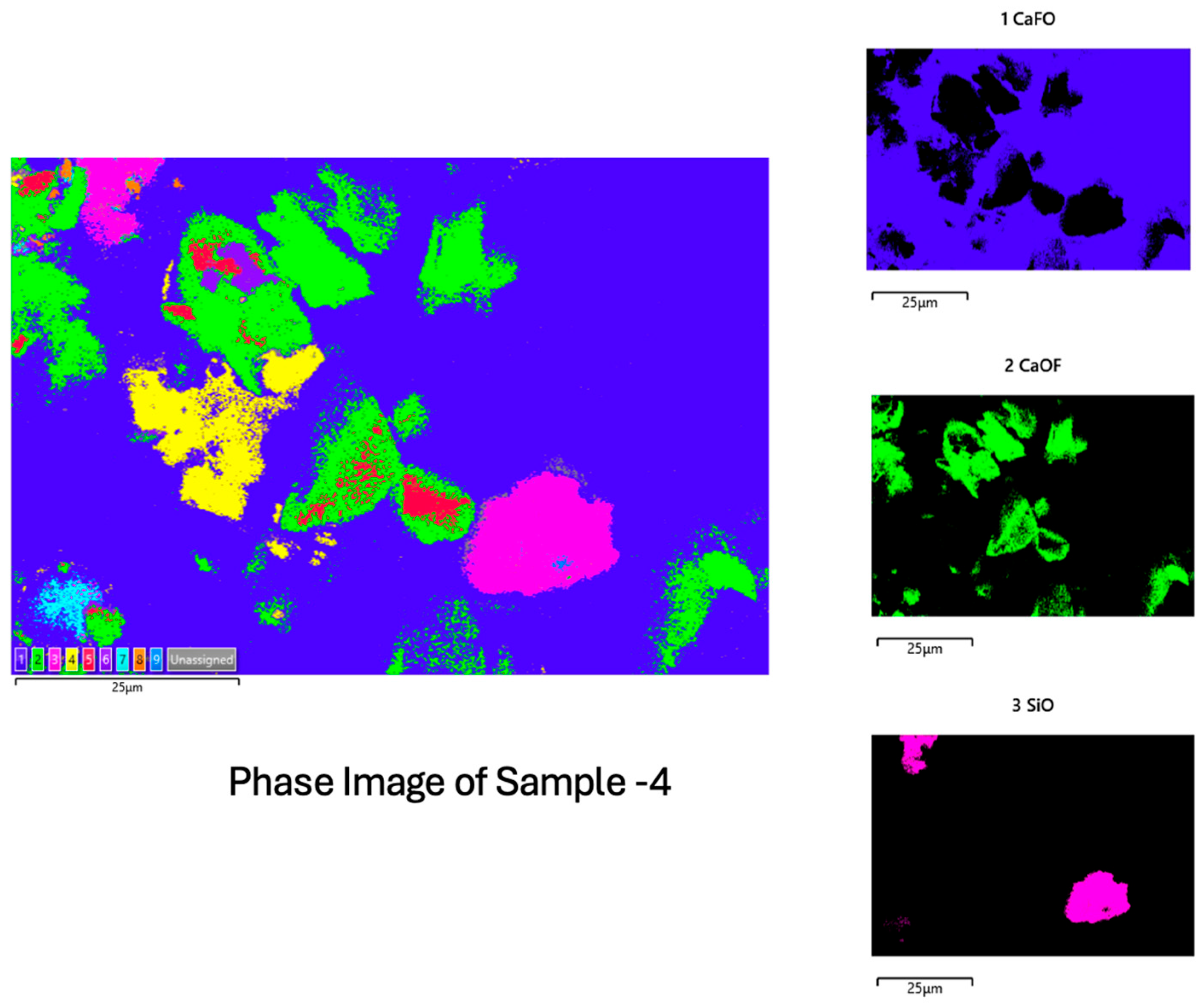
Sample 4 showed the highest degree of heterogeneity among the four samples as displayed in
Figure 6. Phase mapping revealed that (Ca F-rich phase class with O signal) -type phases accounted for 73%, followed by (Ca O-rich mixed pixels in CaF) (15%), SiO (4.4%), MnCaFO (3.7%), and ZnCaFO (2.0%). Unlike the nearly monomineralic CaF slags, this sample contained localized enrichments of Mn, Zn, and Cu, suggesting process variability and partial incorporation of alloying metals into the slag.
EDS spectra confirmed the dominance of Ca, F, and O (40–69 wt% each, depending on location), with localized peaks of Mn (up to ~7 wt%), Zn (~3 wt%), and Cu (~1–2 wt%) as noted in
Table 5. The combination of multiple Ca–F–O variants with metallic inclusions suggests that this slag was subjected to less uniform fluxing conditions, making it chemically more complex.
3.6. Bulk Elemental Composition Analysis by XRF
To complement the local SEM–EDS observations, bulk elemental analysis was carried out by XRF for all four slag samples. The XRF results confirmed that the four slags fall into two clearly different compositional groups. Sample 1 showed a manganese-rich bulk composition, with Mn as the dominant element at 58.7 mass%, followed by Si at 15.2 mass%, Ca at 14.1 mass%, and Fe at 6.38 mass%. Minor but measurable P and S contents, each close to 2 mass%, were also detected, together with small amounts of Cr and Ti. This composition is fully consistent with the SEM–EDS phase-mapping result in which MnSiO and MnO were the major phase classes, and it confirms that Sample 1 is fundamentally different from the Ca-rich slags.
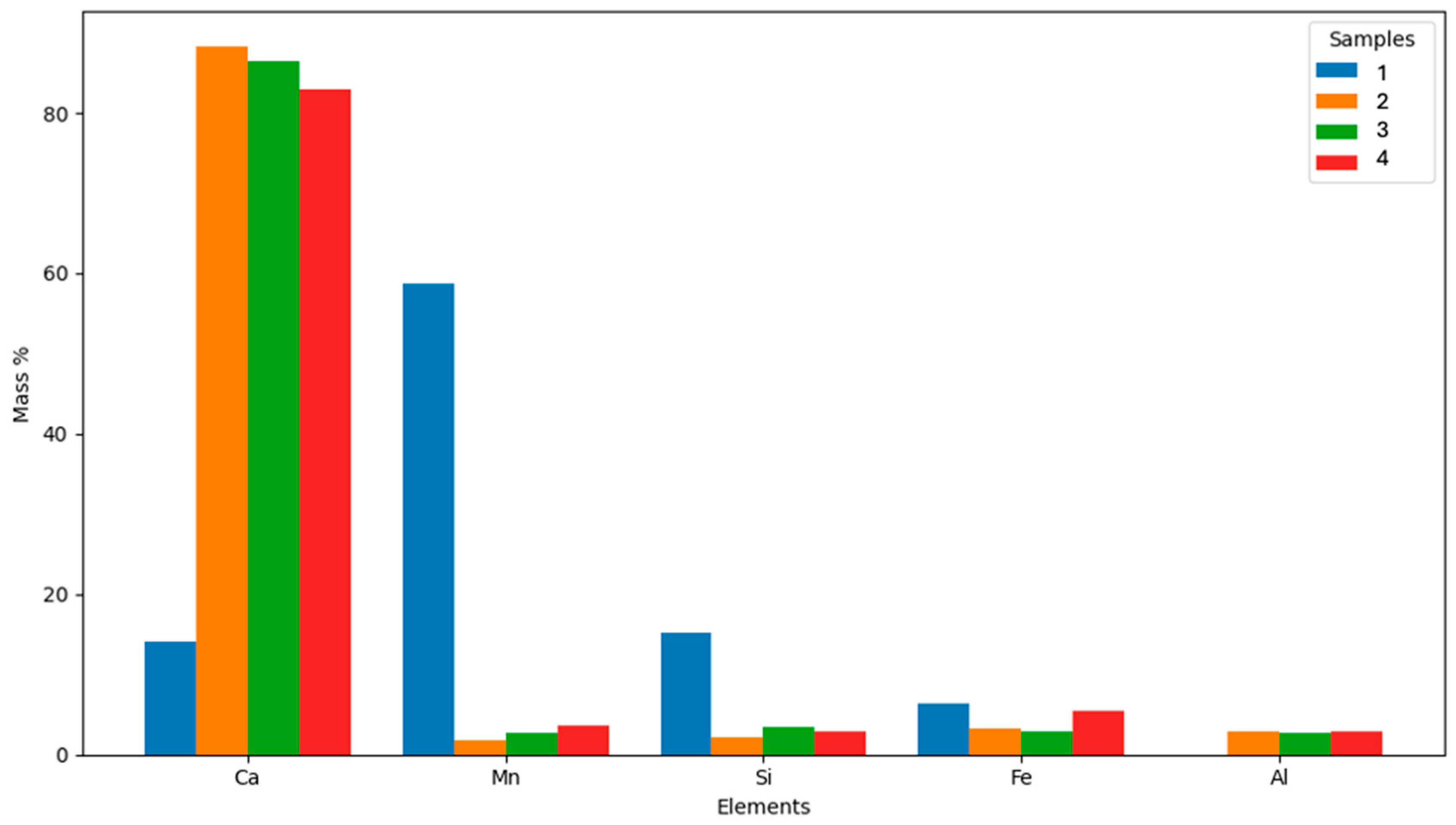
In contrast, as shown in
Figure 7, Samples 2,3, and 4 were all strongly calcium-dominated in the bulk XRF analysis. Sample 2 contained 88.2 mass% Ca, with much lower levels of Fe at 3.29 mass%, Al at 2.80 mass%, Si at 2.10 mass%, and Mn at 1.85 mass%. Sample 3 showed a very similar pattern, with 86.4 mass% Ca, 3.42 mass% Si, 2.83 mass% Fe, 2.78 mass% Mn, and 2.77 mass% Al. Sample 4 also remained Ca-rich at 83.0 mass%, but it contained relatively higher Fe at 5.37 mass% and Mn at 3.71 mass%, together with Al at 2.90 mass% and Si at 2.93 mass%. These results support the earlier SEM–EDS interpretation that Samples 2 and 3 are compositionally close to each other and are dominated by Ca-bearing phases, while Sample 4 is still Ca-based but chemically more heterogeneous.
A second important outcome of the XRF analysis is the repeated presence of low-level accessory elements across the Ca-rich slags. All three Ca-dominated samples contained minor P and S, trace Cr, Cu, Zn, Sr, Zr, and Pb, and a small Cl signal of about 0.12 mass% in Samples 2 and 3. Sample 4 also contained Zn, Pb, Mo, and Ti, though at trace levels. These low-concentration elements do not control the bulk chemistry, but they are relevant when discussing slag heterogeneity, possible process carryover, and future valorization constraints. The XRF data, therefore, strengthen the interpretation derived from SEM–EDS by showing that the microstructural differences observed at particle scale are reflected in the overall bulk composition of each slag stream.
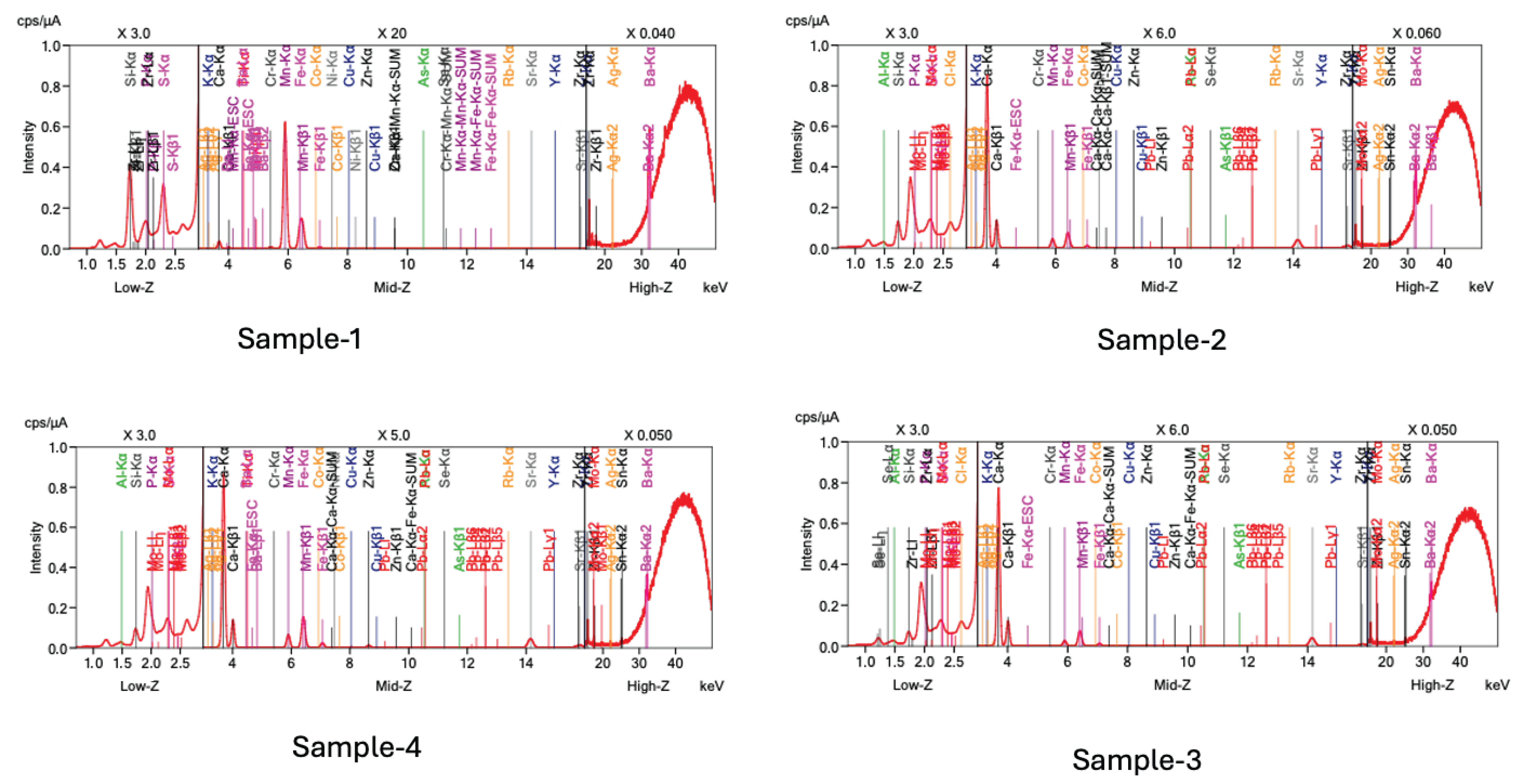
Figure 8 displays the XRF spectra for the four investigated slag samples across a broad energy range. As is the case for the qualitative and quantitative XRF analysis results presented above, the spectra clearly distinguish between a Mn-rich sample (1) and Ca-rich samples (2, 3, 4). While the most dominant peak is due to Mn for Sample 1, very strong Ca-related signals can be observed for samples 2, 3, and 4. The intensity of the signals for the elements Fe, Mn, Si, and Al varies within the group of the Ca-rich samples. Specifically, sample 4 shows relatively strong signals for Fe and Mn, which are reflected in its more inhomogeneous bulk composition compared to the other two Ca-rich samples. Furthermore, minor signals due to trace elements, like, for example, Sr, Zn, Pb, and Zr, can be observed.
3.7. Cross-Sample Comparison
When comparing across the four samples, two major trends emerge:
Mn-rich vs. Ca–F–O rich slags—Sample 1 stands apart as a manganese silicate slag, while Samples 2, 3, and 4 are strongly Ca–F–O dominated.
Uniform vs. heterogeneous slags—Samples 2 and 3 are nearly monomineralic (CaF > 98%), while Sample 4 shows mixed Ca–F–O phases with additional Zn, Mn, and Cu inclusions.
These results demonstrate that slag composition is closely tied to steel grade and fluxing practice. Mn-rich slags are associated with alloyed steel production, whereas fluorite-rich slags reflect deliberate CaF2 additions. The heterogeneity observed in Sample 4 suggests inconsistent flux incorporation or contamination from process equipment.
Taken together, the XRF results provide an important validation layer for the microscopy-based findings. Sample 1 is confirmed as a Mn–Si-rich slag with a markedly different chemical signature, whereas Samples 2,3, and 4 form a Ca-rich group with varying degrees of secondary enrichment in Fe, Mn, Al, and Si. Among these, 2 and 3 are the most similar, while 4 shows the highest bulk deviation from the two highly Ca-dominant samples. This bulk-scale confirmation is important because it shows that the phase classes derived from SEM–EDS were not isolated local features, but part of broader compositional trends within the studied slag samples.
6. Conclusions
This study aimed to evaluate four steel slag samples by SEM–EDS and automated phase mapping with XRF to comprehend their microstructural heterogeneity and potential implications for reuse. The analyses indicated distinct differences among the samples: one slag was primarily composed of manganese silicate and oxide phases, two were predominantly monomineralic and significantly enriched in Ca–F–O phases indicative of extensive fluorite flux utilization, and one displayed a heterogeneous mixture of Ca–F–O phases with localized enrichments of Mn, Zn, and Cu. Collectively, these findings indicate that slag composition is significantly influenced by the production process, determined by both the steel grade and the flux additives employed during manufacturing. The industrial implications are dual: Ca–F–O slags, though seemingly uniform and potentially appropriate for controlled recycling or flux recovery, present environmental concerns due to their elevated fluorine content. Bulk XRF analysis provided compositional confirmation for the slag classification based on micro-scale SEM–EDS analyses. One sample was Mn–Si dominated with high manganese content, while three samples were Ca-rich and flux-controlled, with very consistent composition between two of the samples, with the third having higher Fe and Mn. Minor and trace elements, including P, S, Zn, and Pb, were also detected. The XRF results support the findings of the multi-scale characterization and confirm that the phase distributions observed at the micro-scale are representative of the bulk slag chemistry, providing a basis for assessment of potential reuse options as well as environmental implications. The key takeaway is that steel slags are not a homogeneous by-product but rather a range of components, and their safe and effective valorization relies on acknowledging their chemical and phase variety.




 ,
,