Effects of Recycled Fine Aggregates and Inorganic Crystalline Materials on the Strength and Pore Structures of Cement-Based Composites


Abstract
1. Introduction
2. Materials and Methods
2.1. Materials
2.1.1. Cement
2.1.2. Natural Fine Aggregates
2.1.3. Recycled Fine Aggregates
2.2. Mix Design and Test Methods
3. Results and Discussion
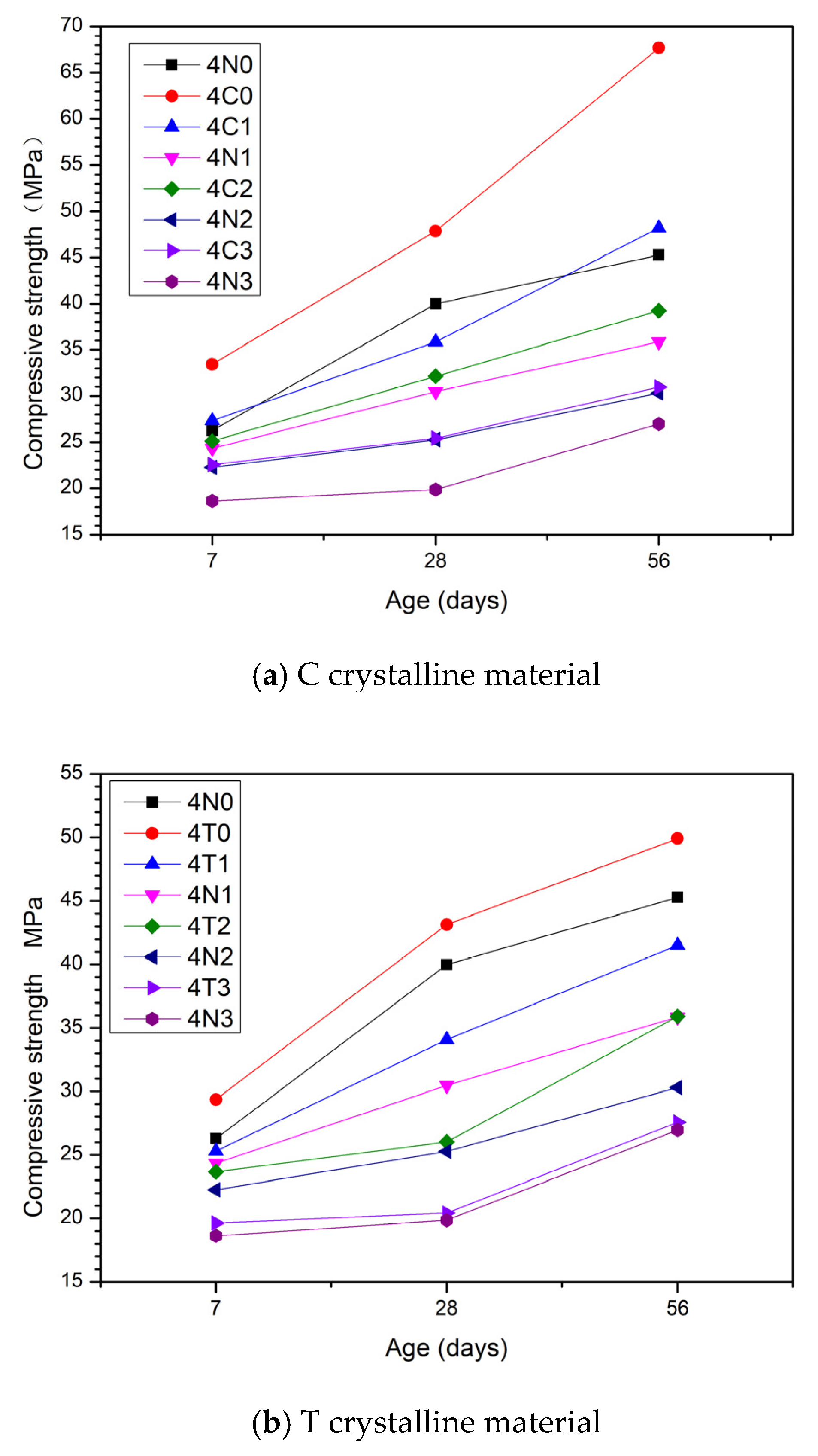
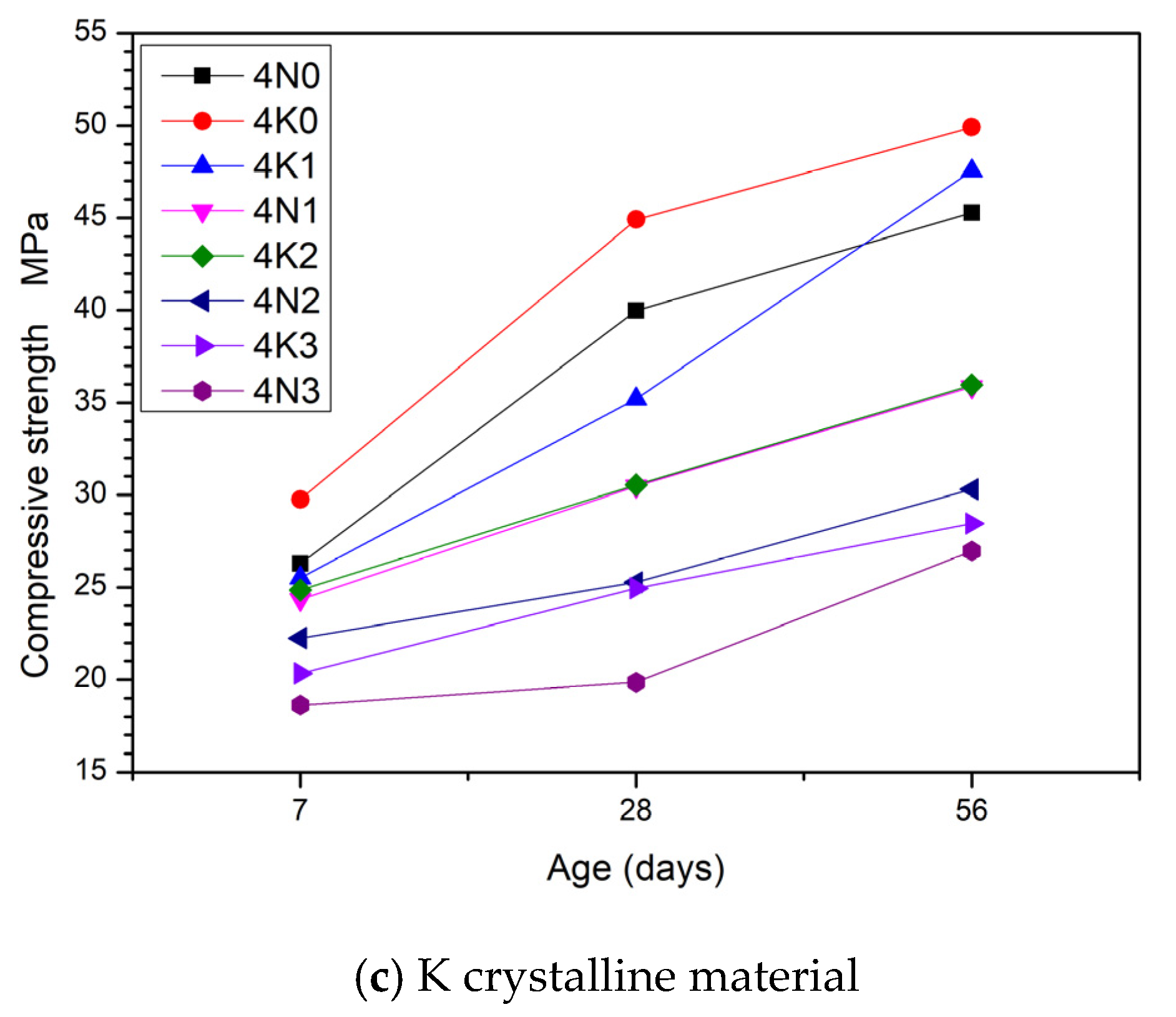
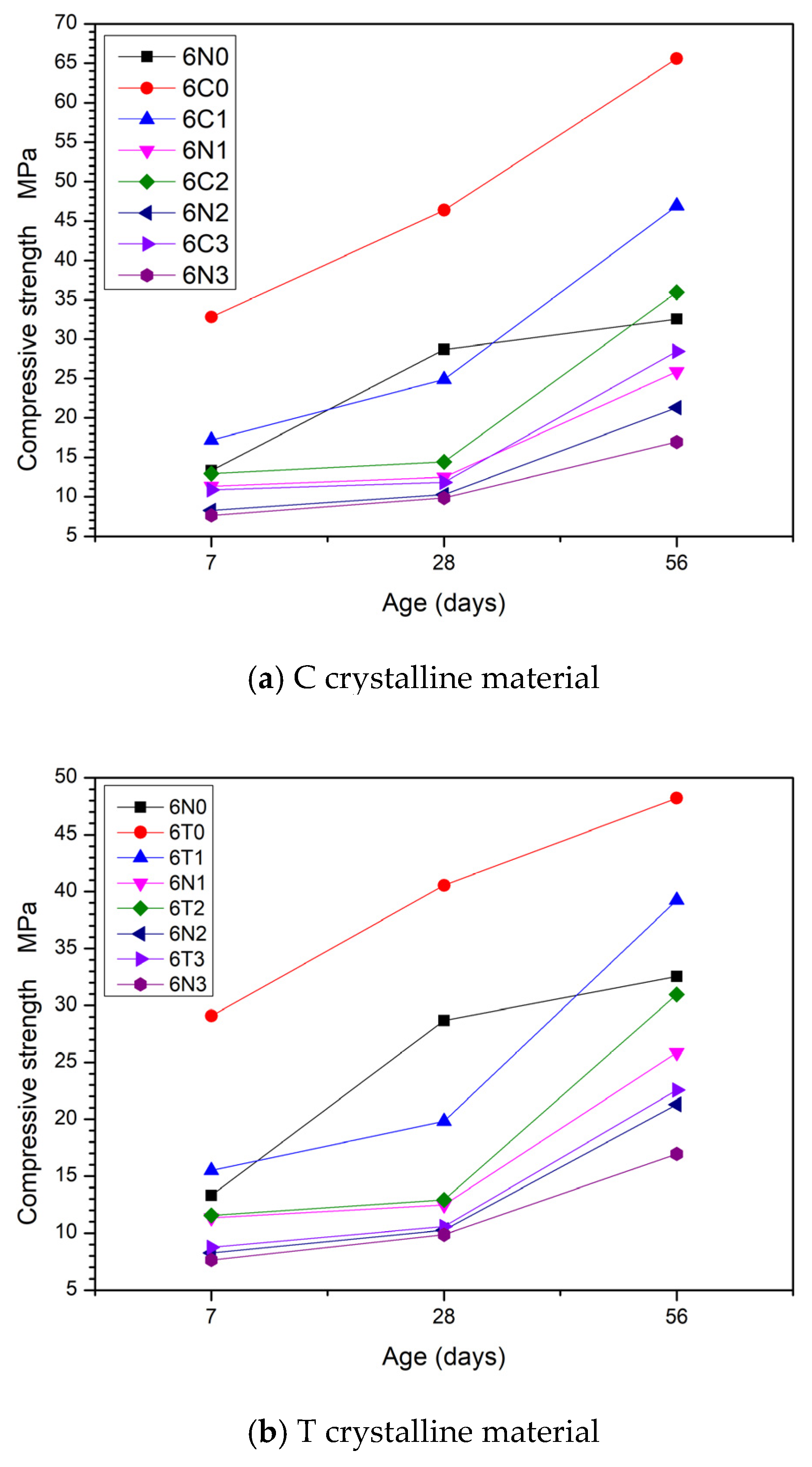
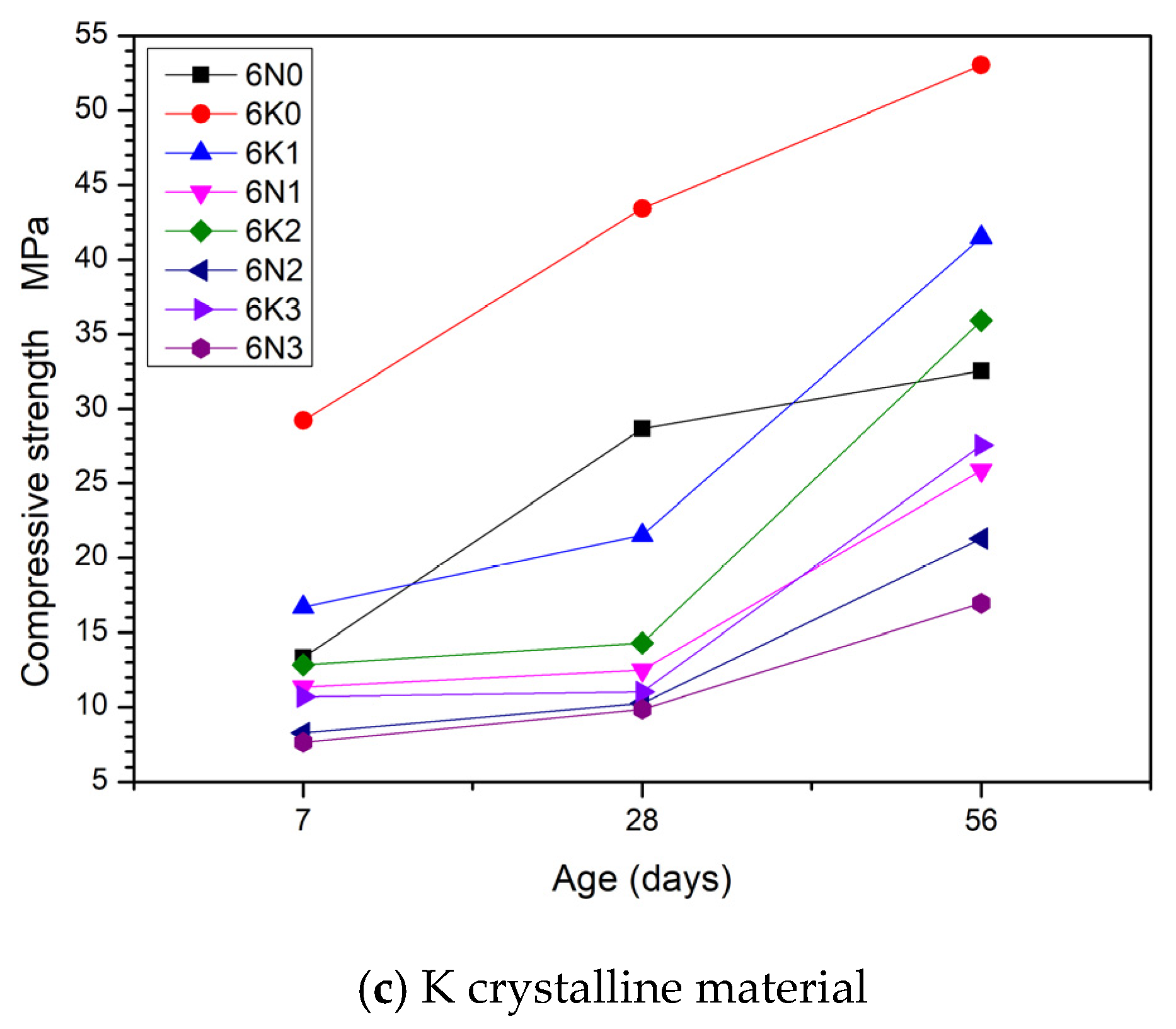
3.1. Compressive Strength
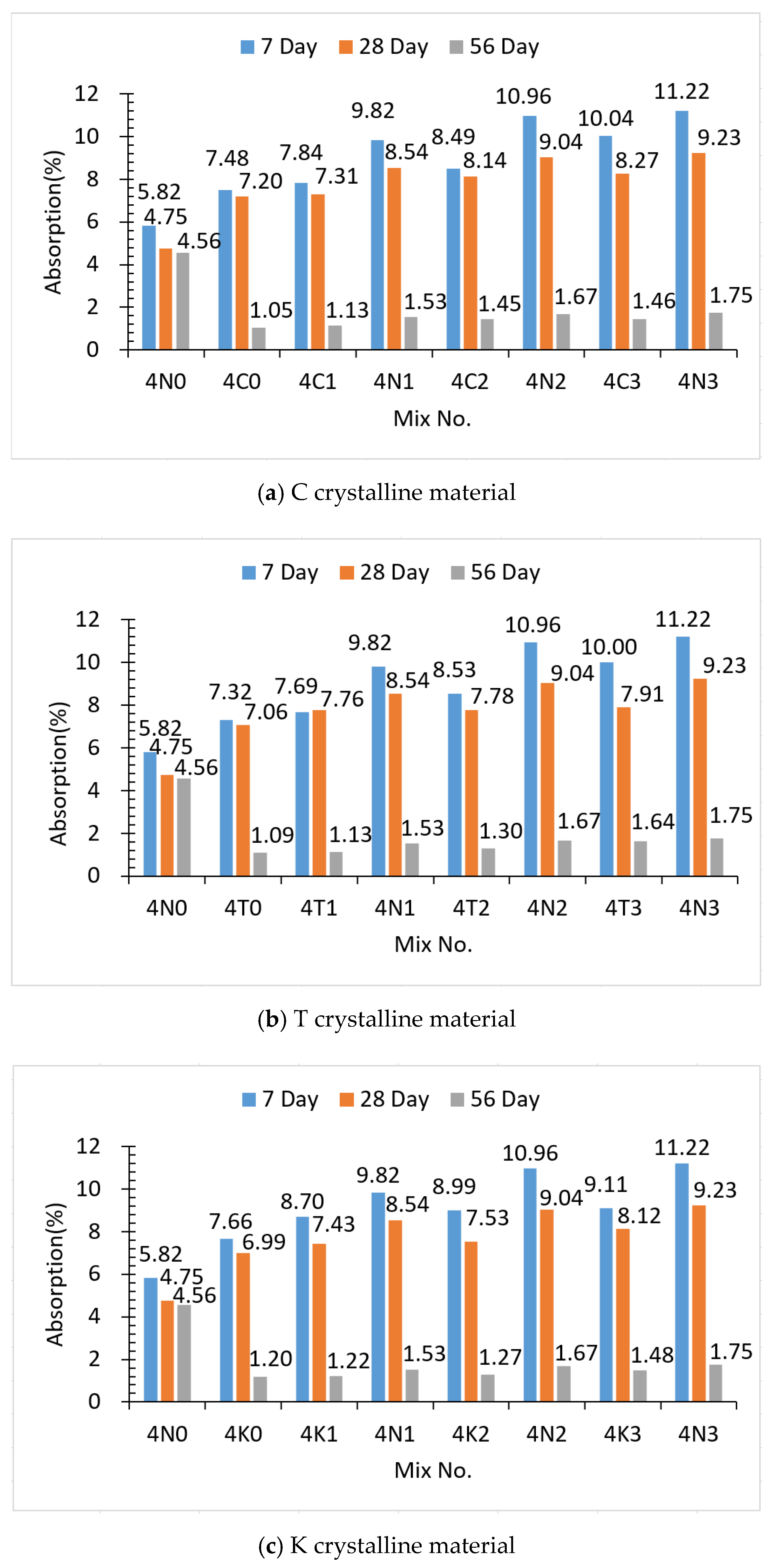
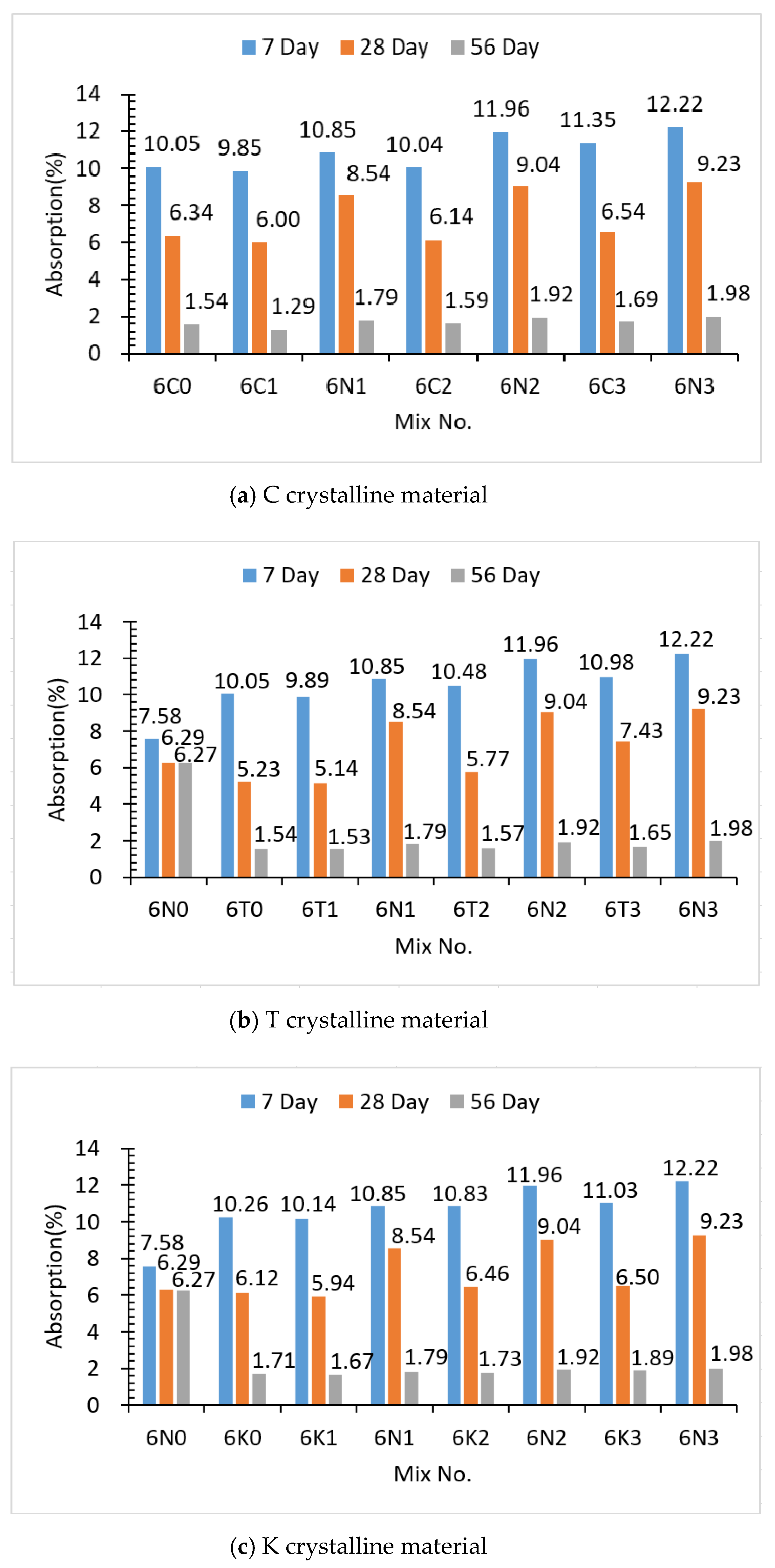
3.2. Absorption Test
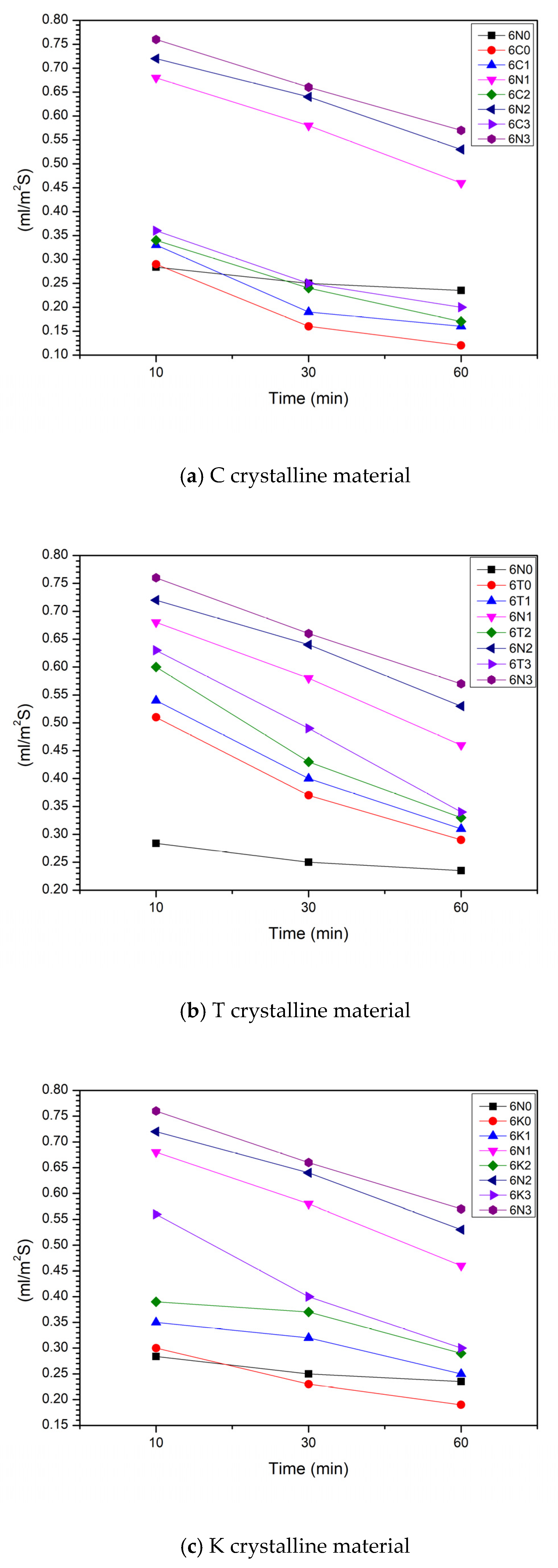
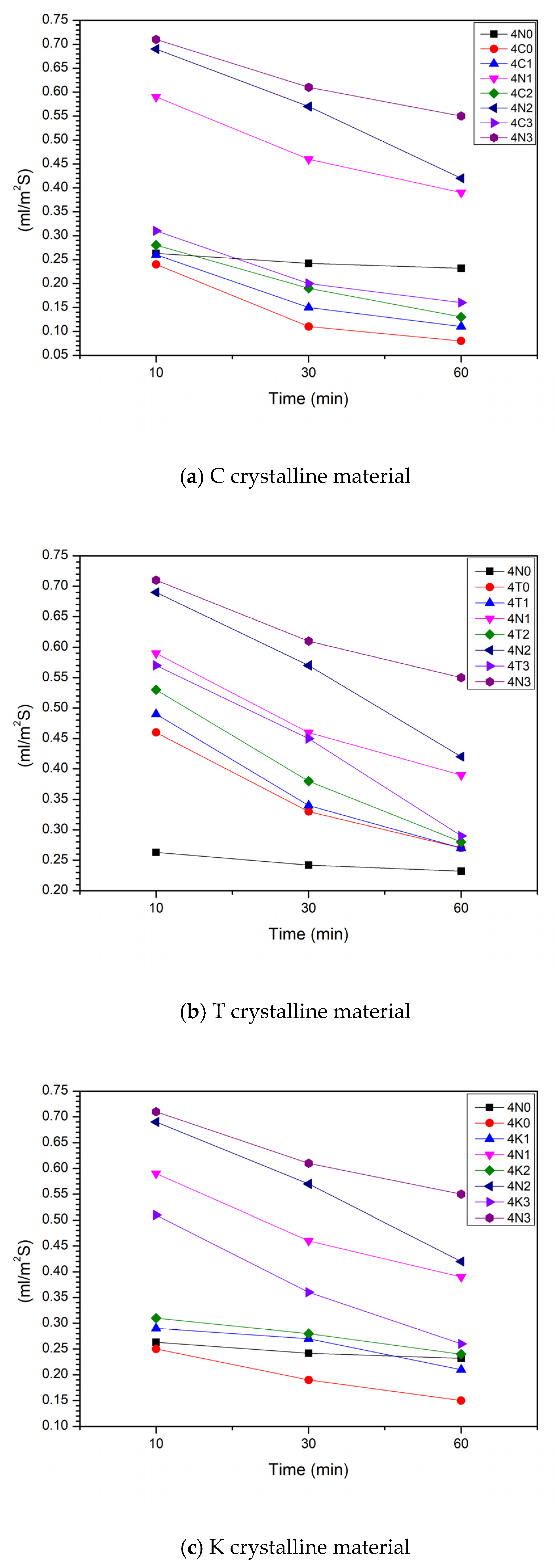
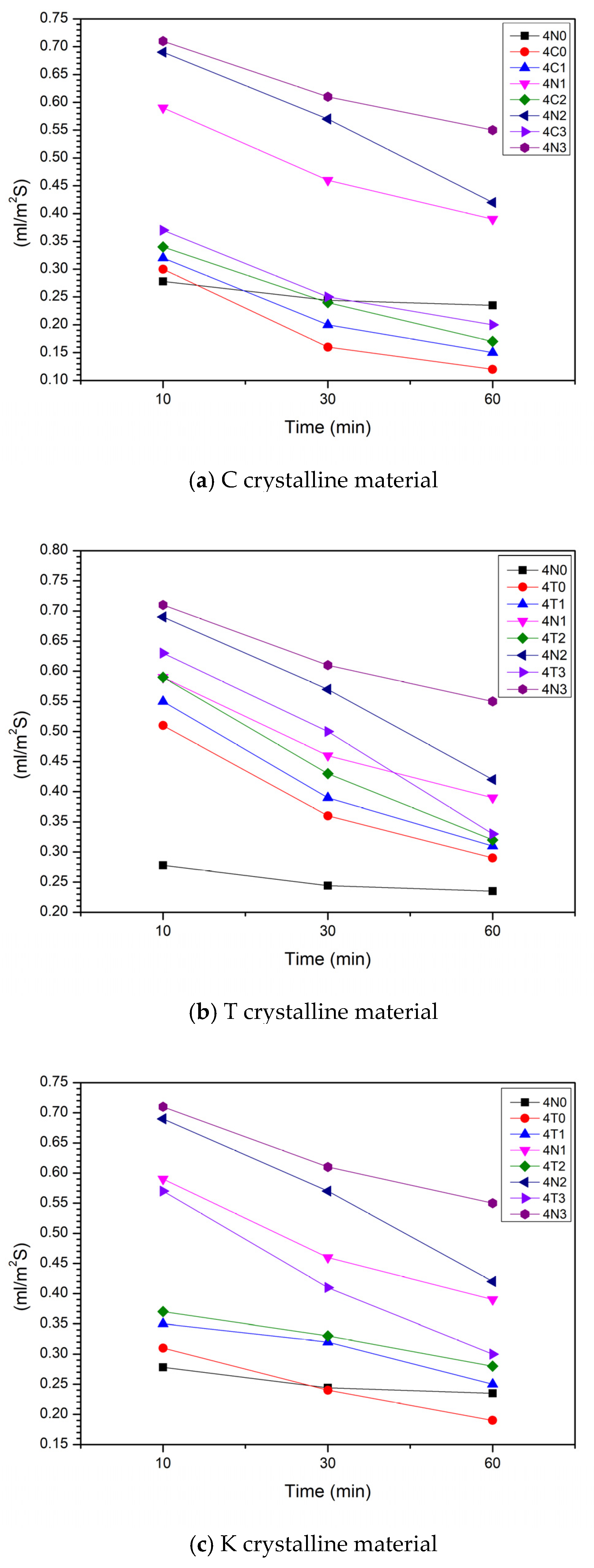
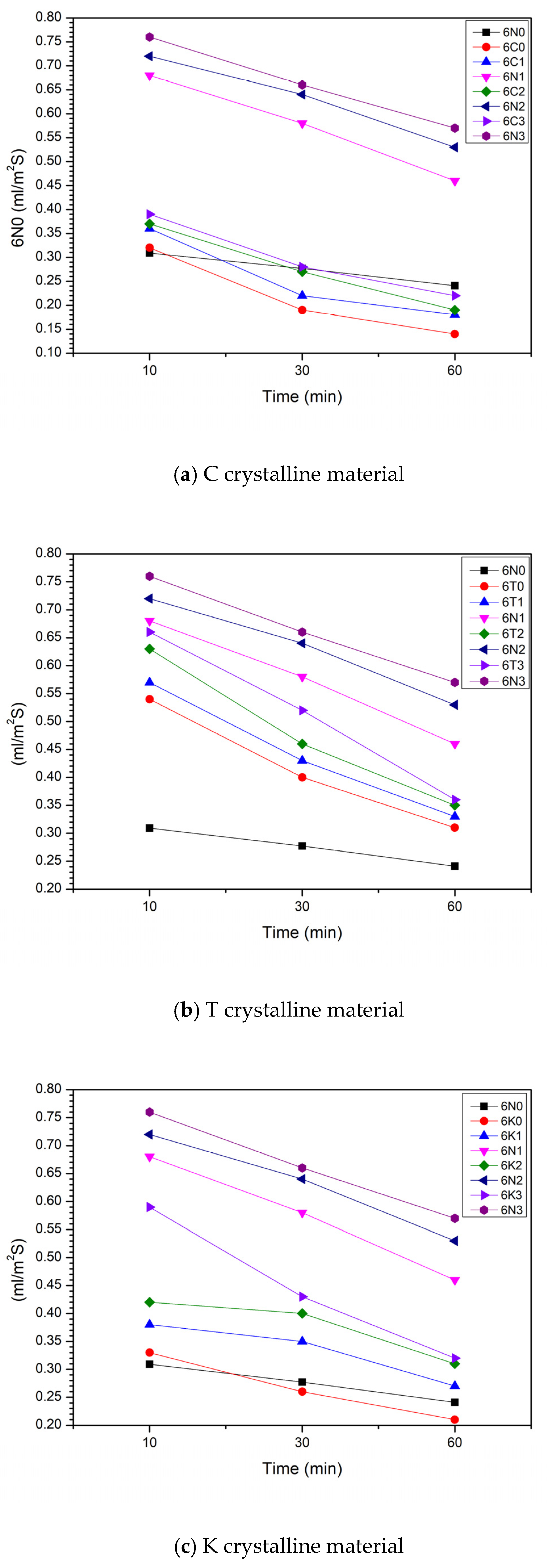
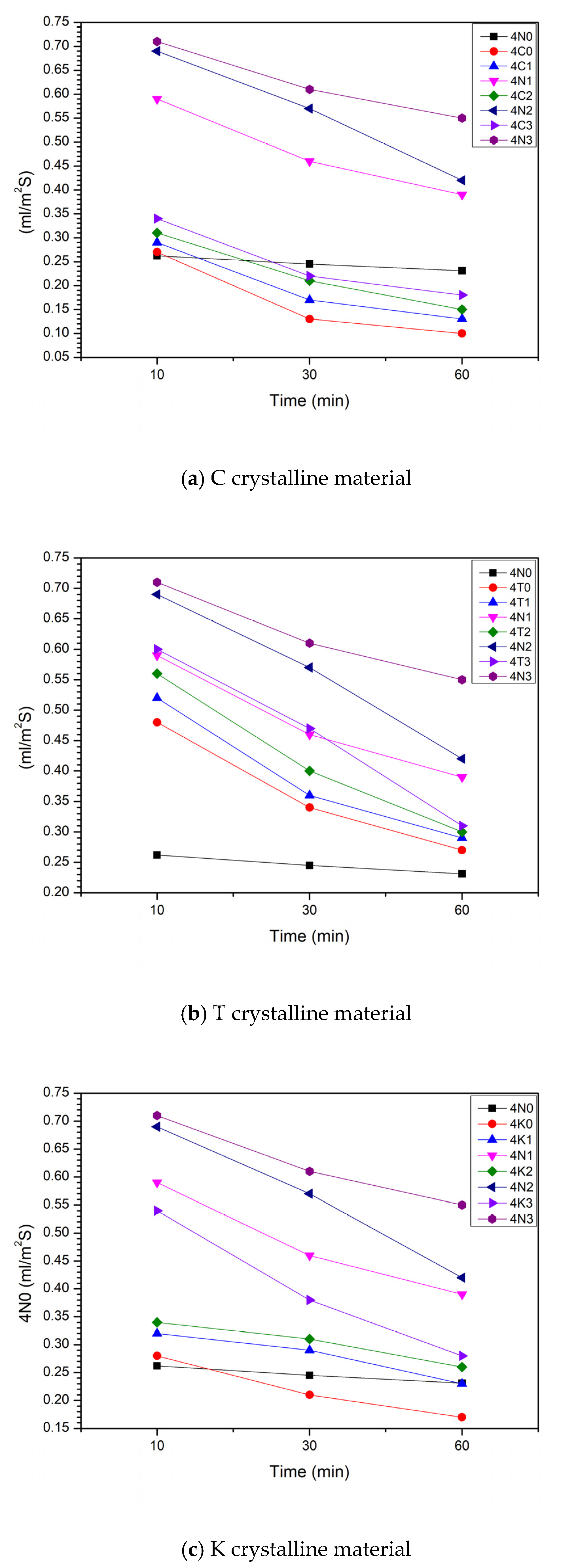
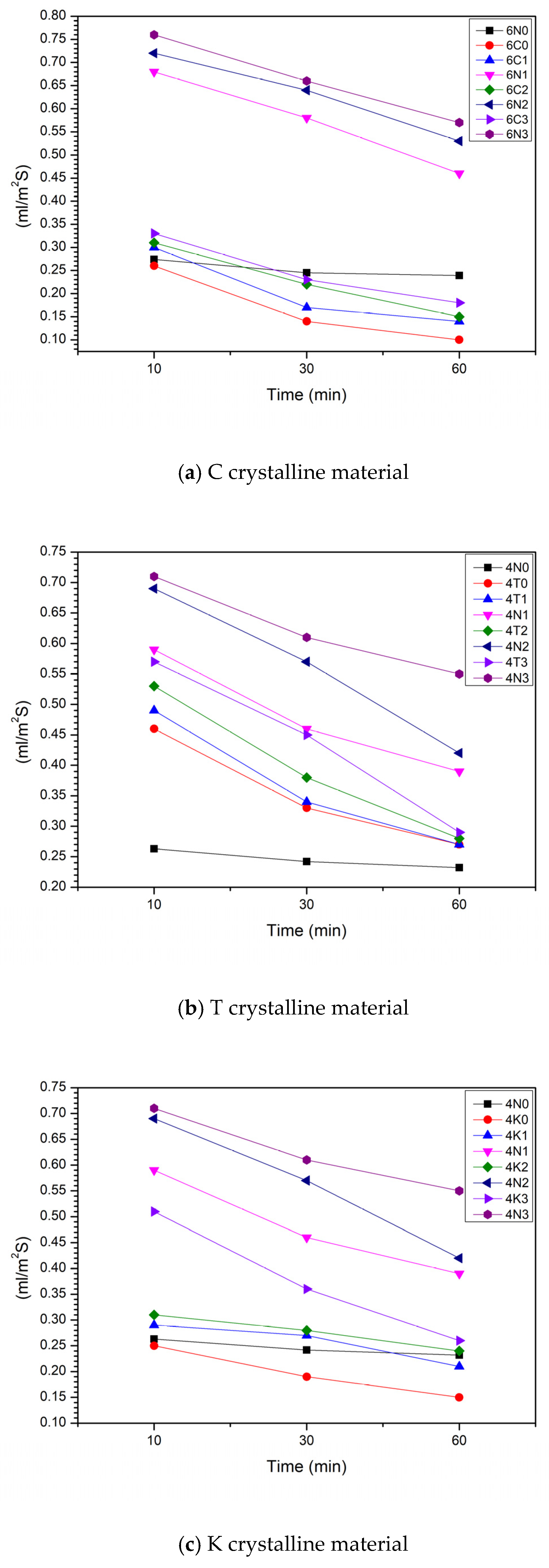
3.3. Initial Surface Water Absorption Test
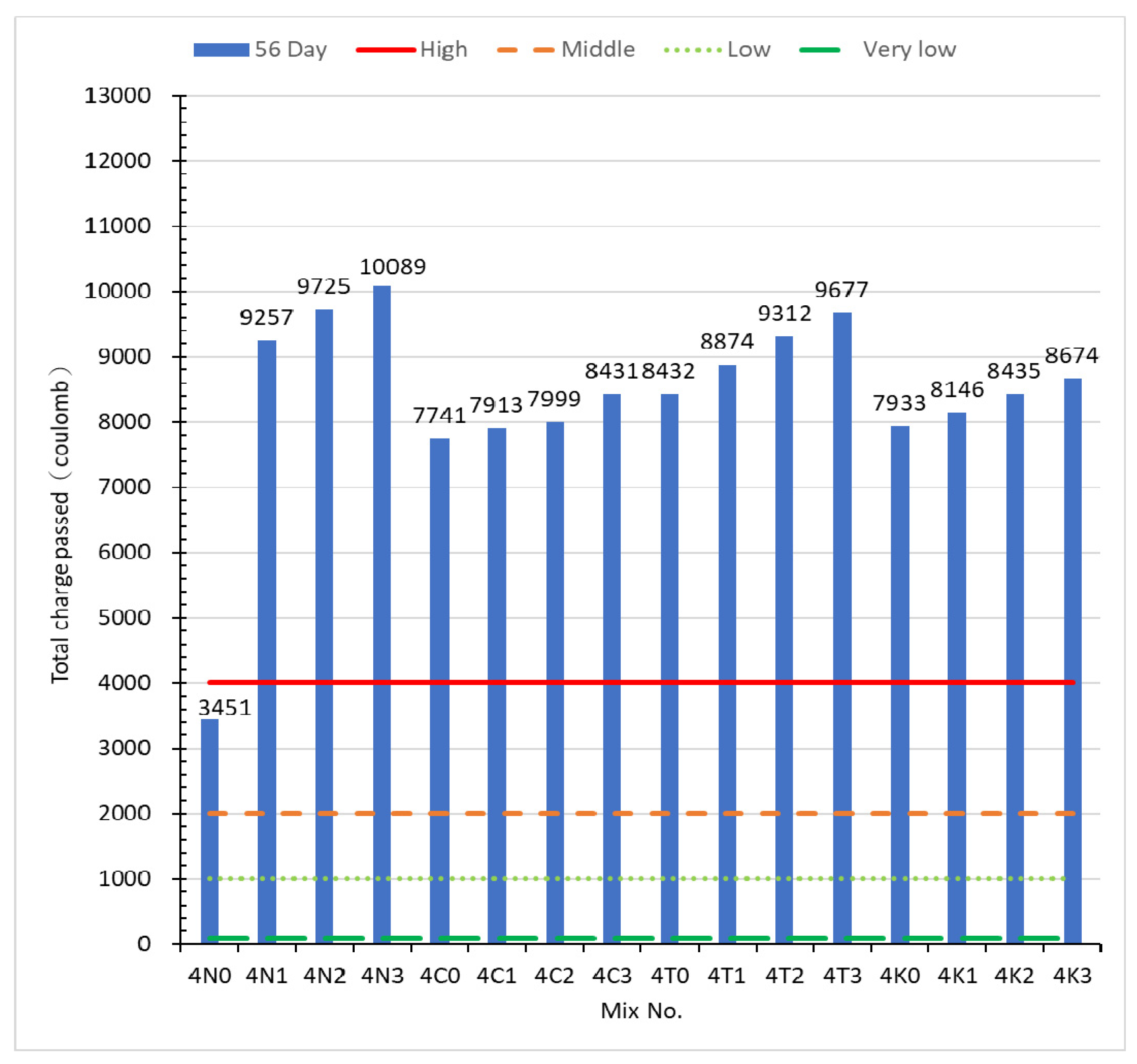
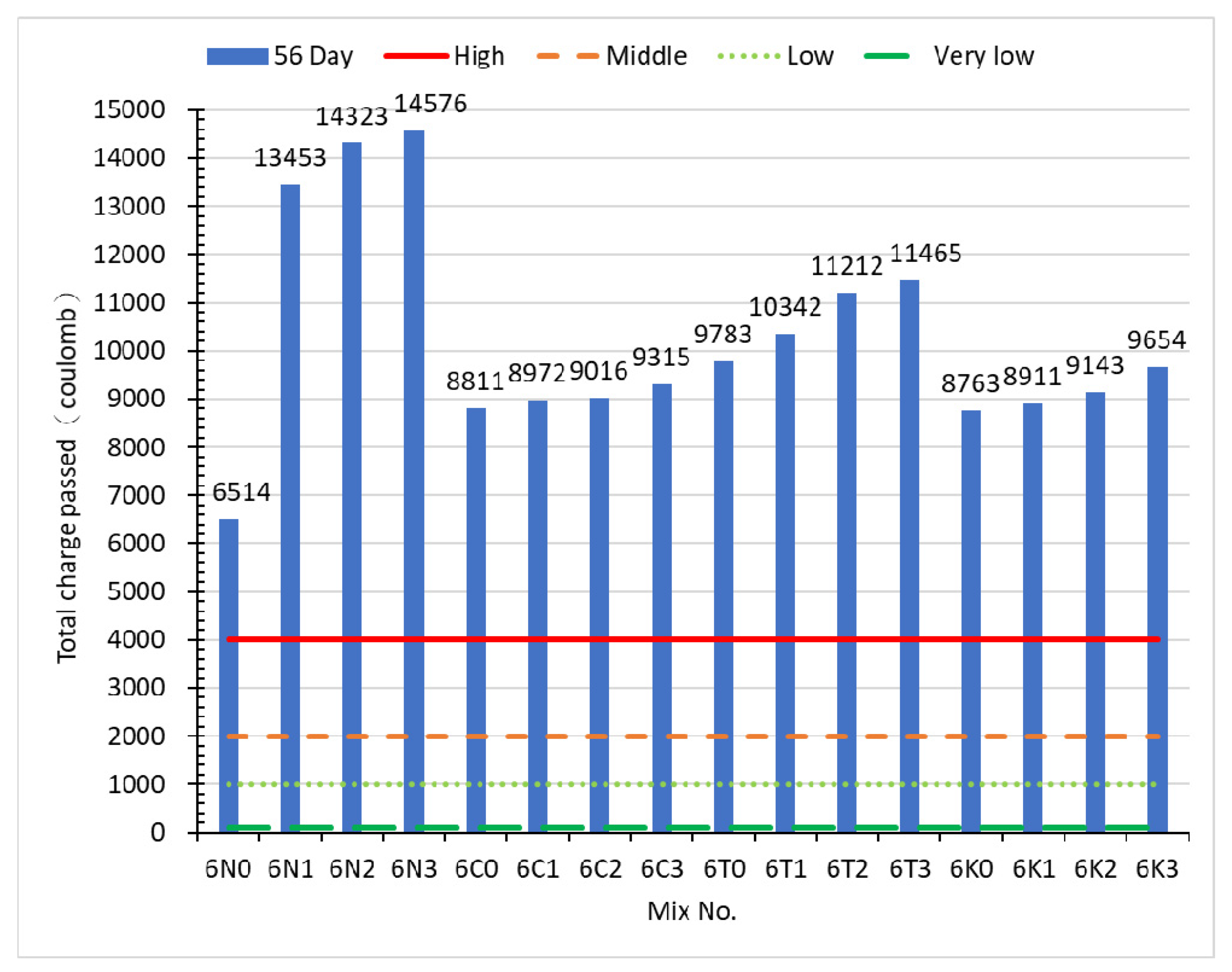
3.4. Rapid Chloride Penetration Test
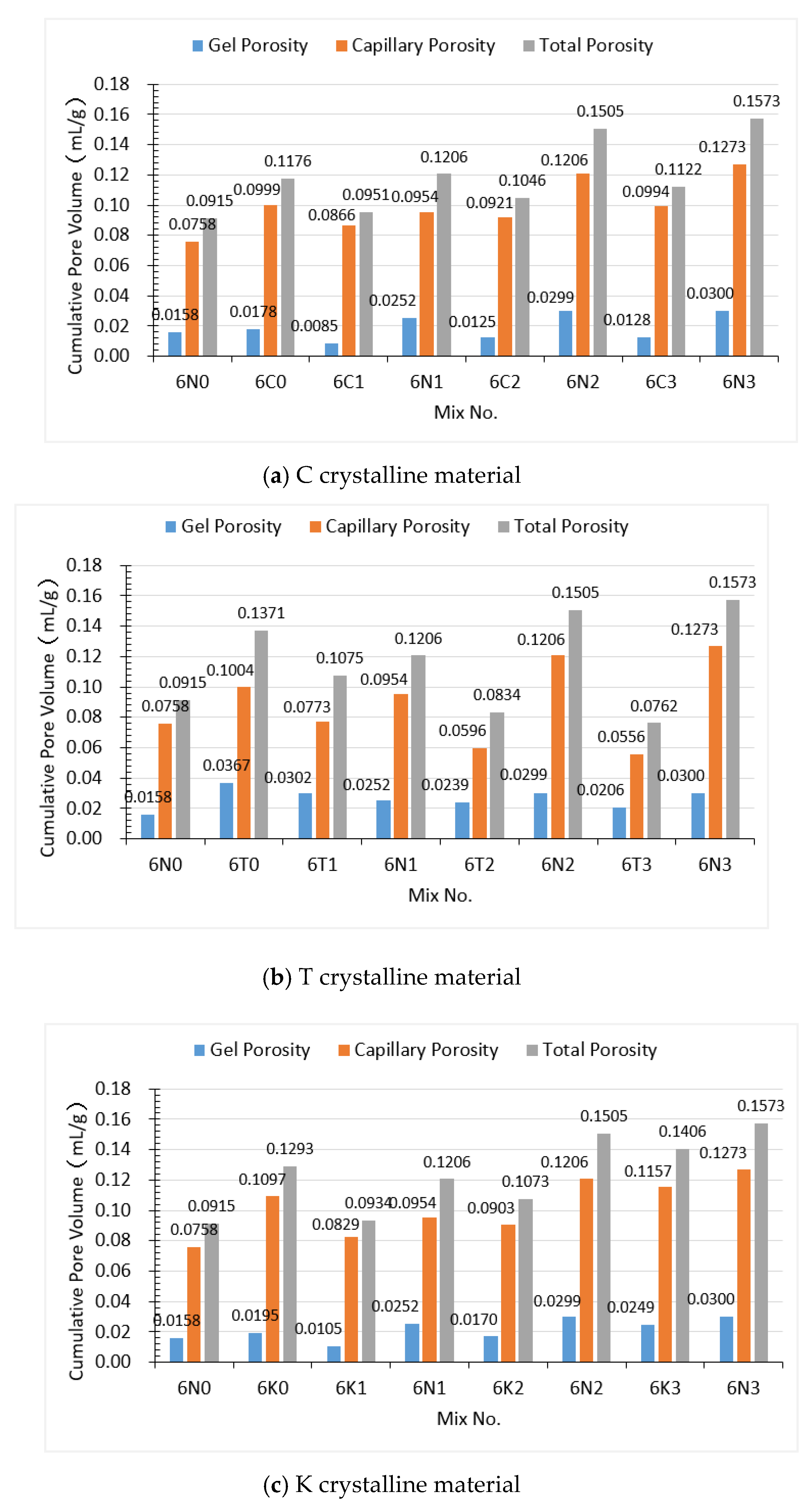
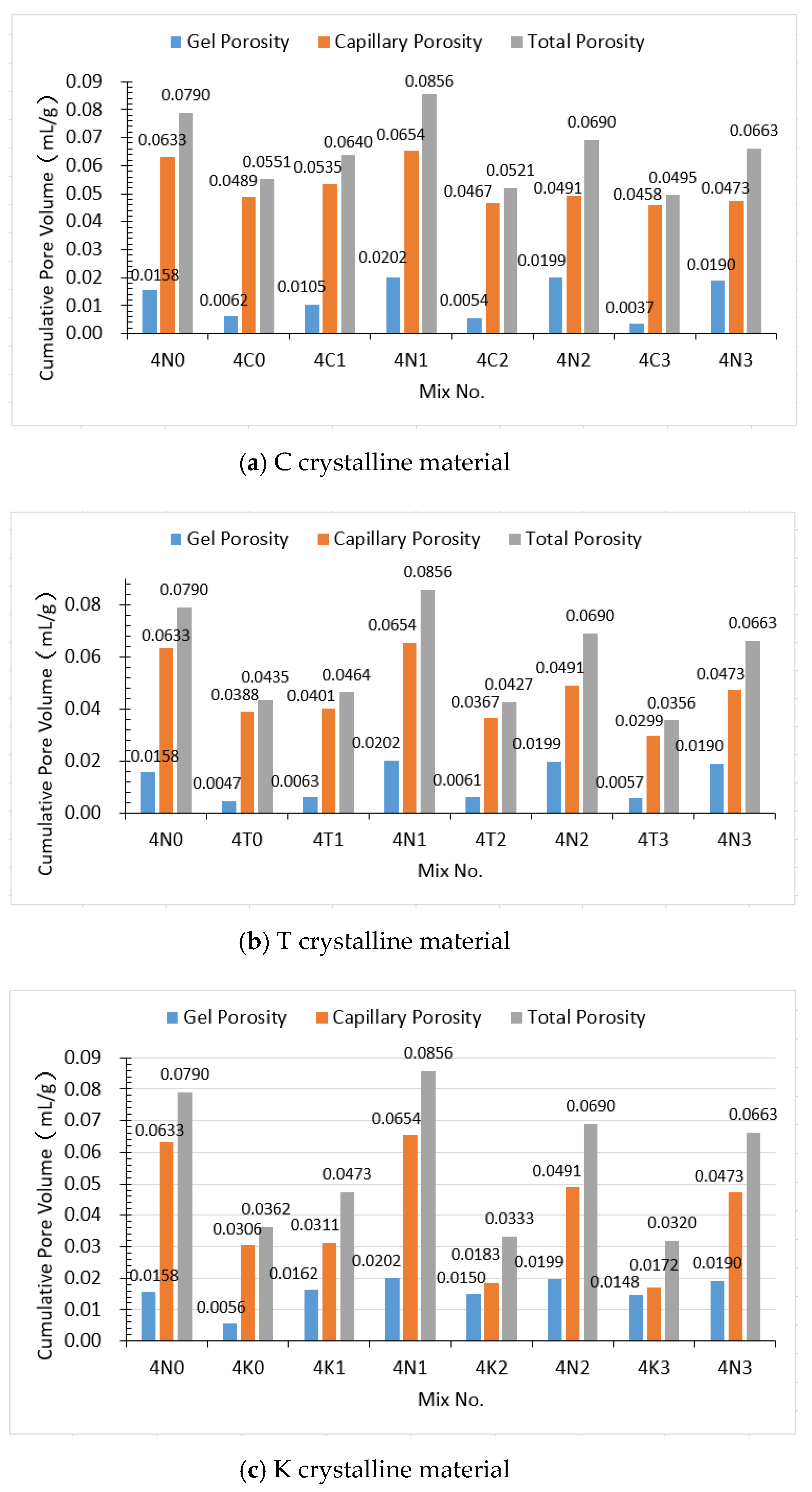
3.5. MIP Test
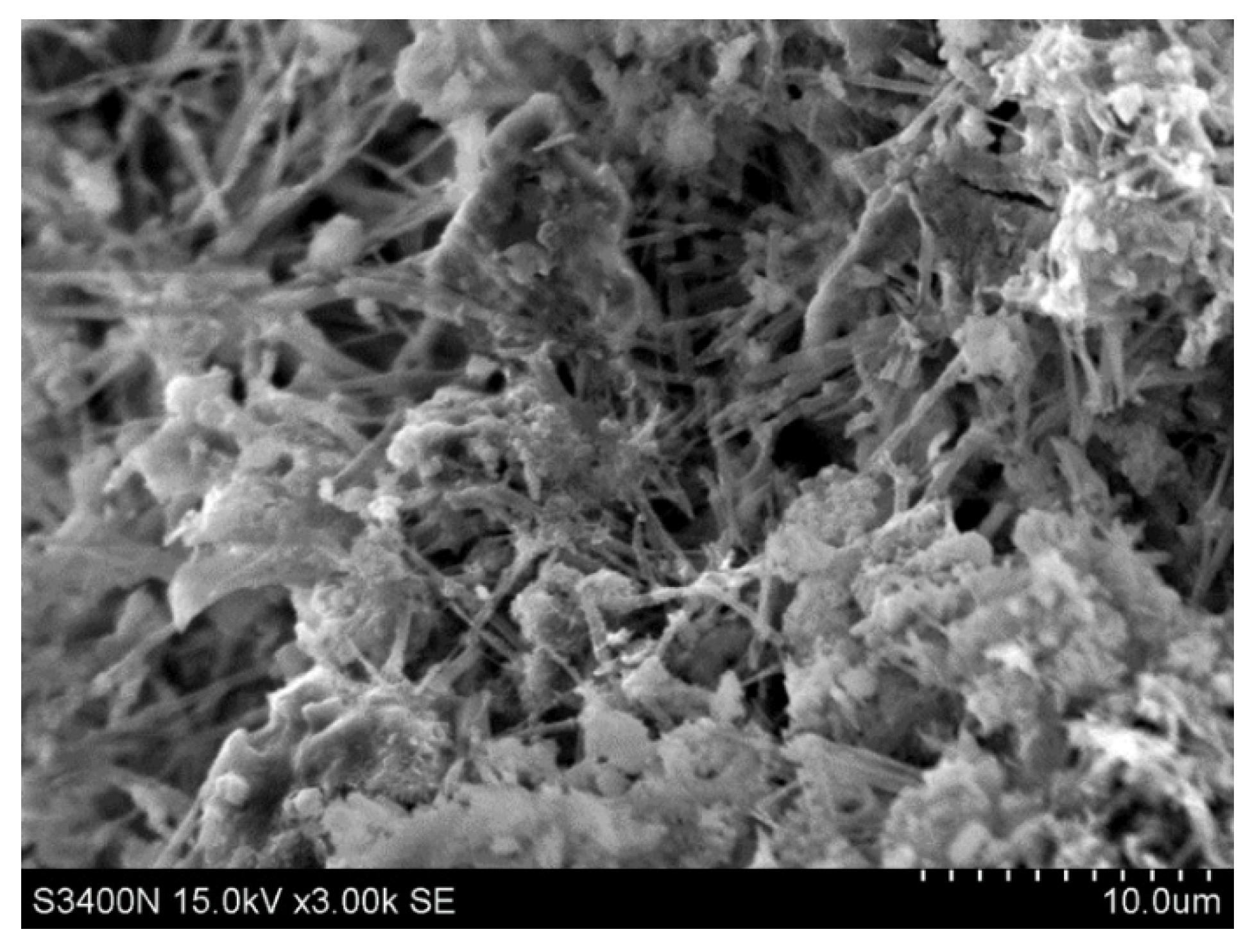
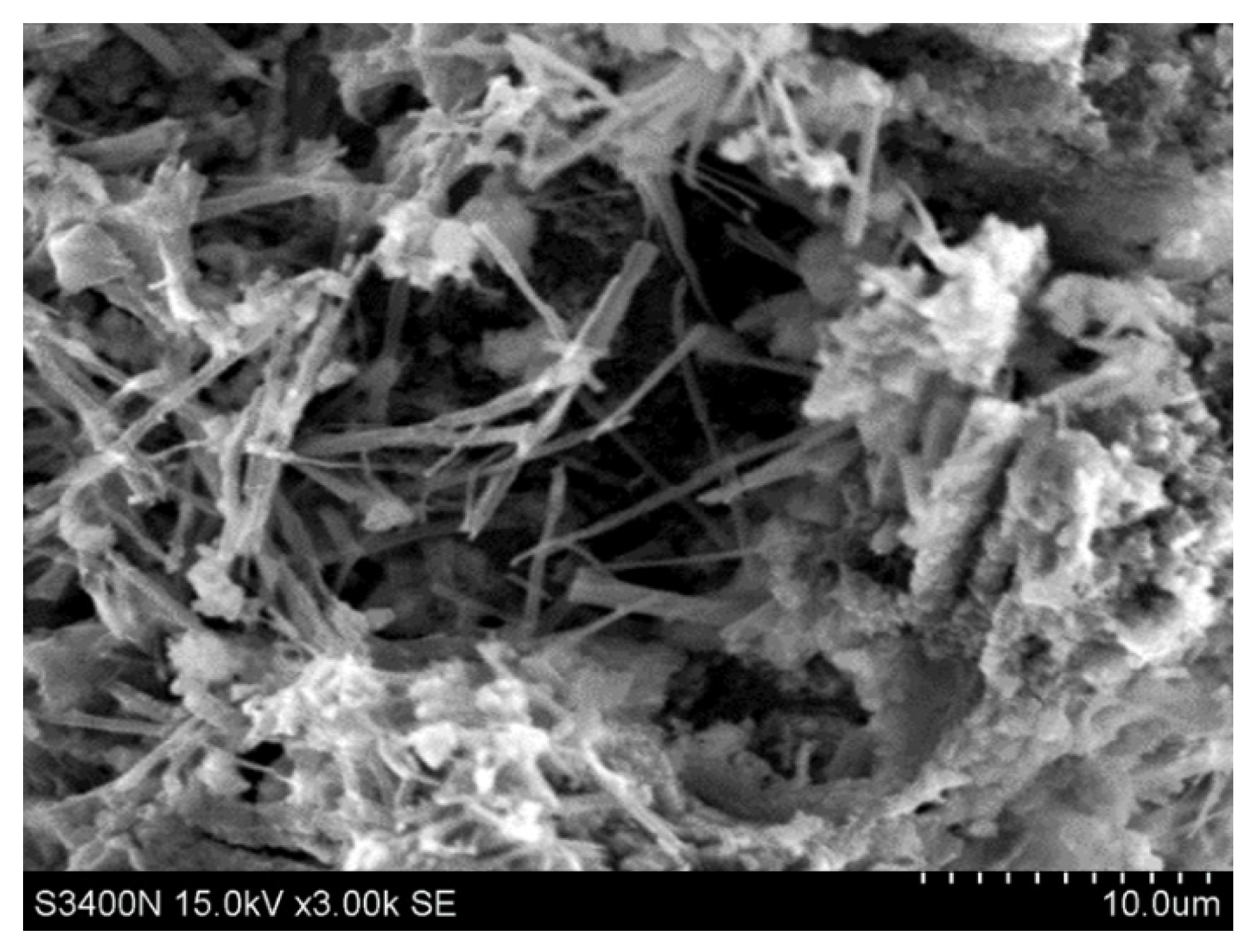
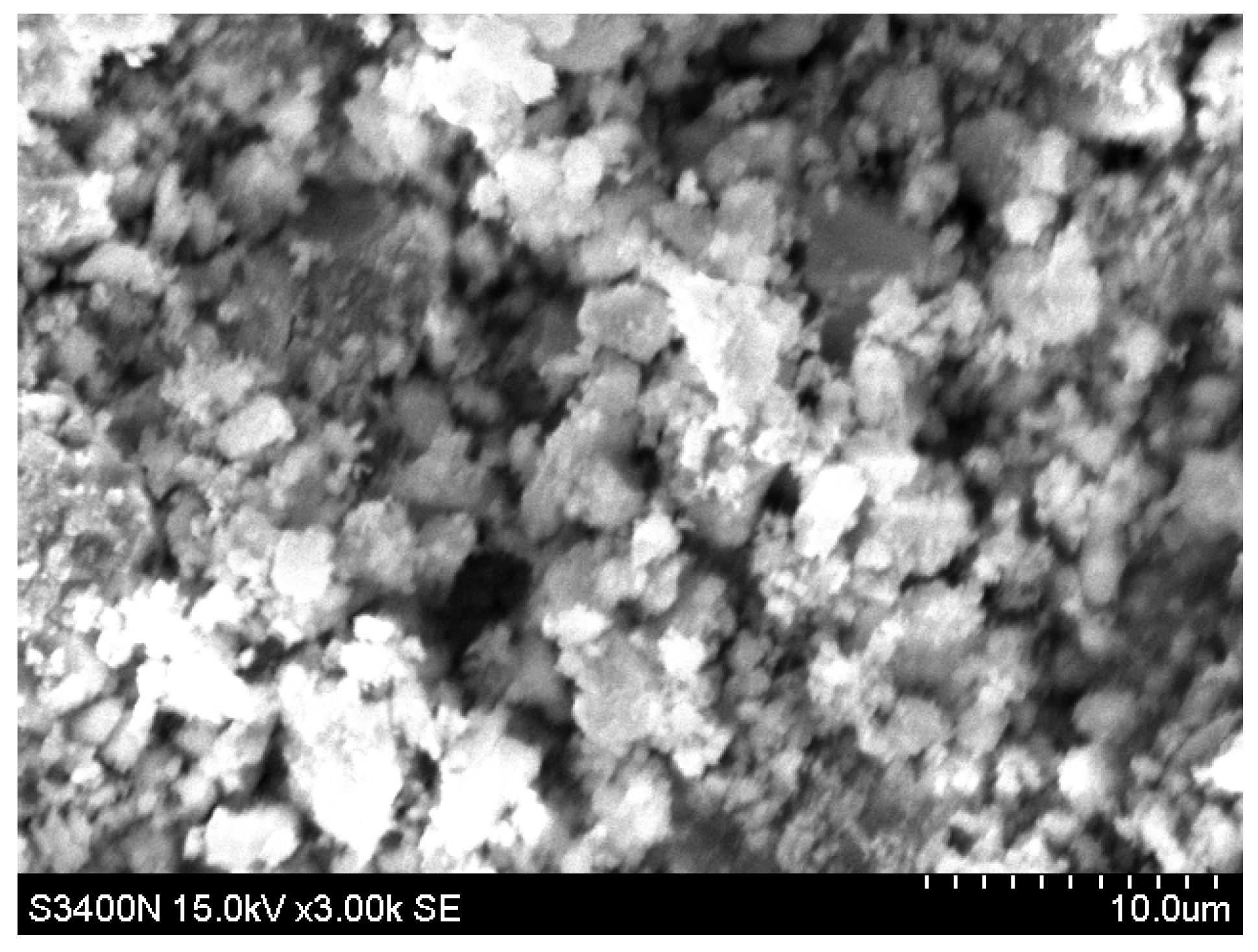
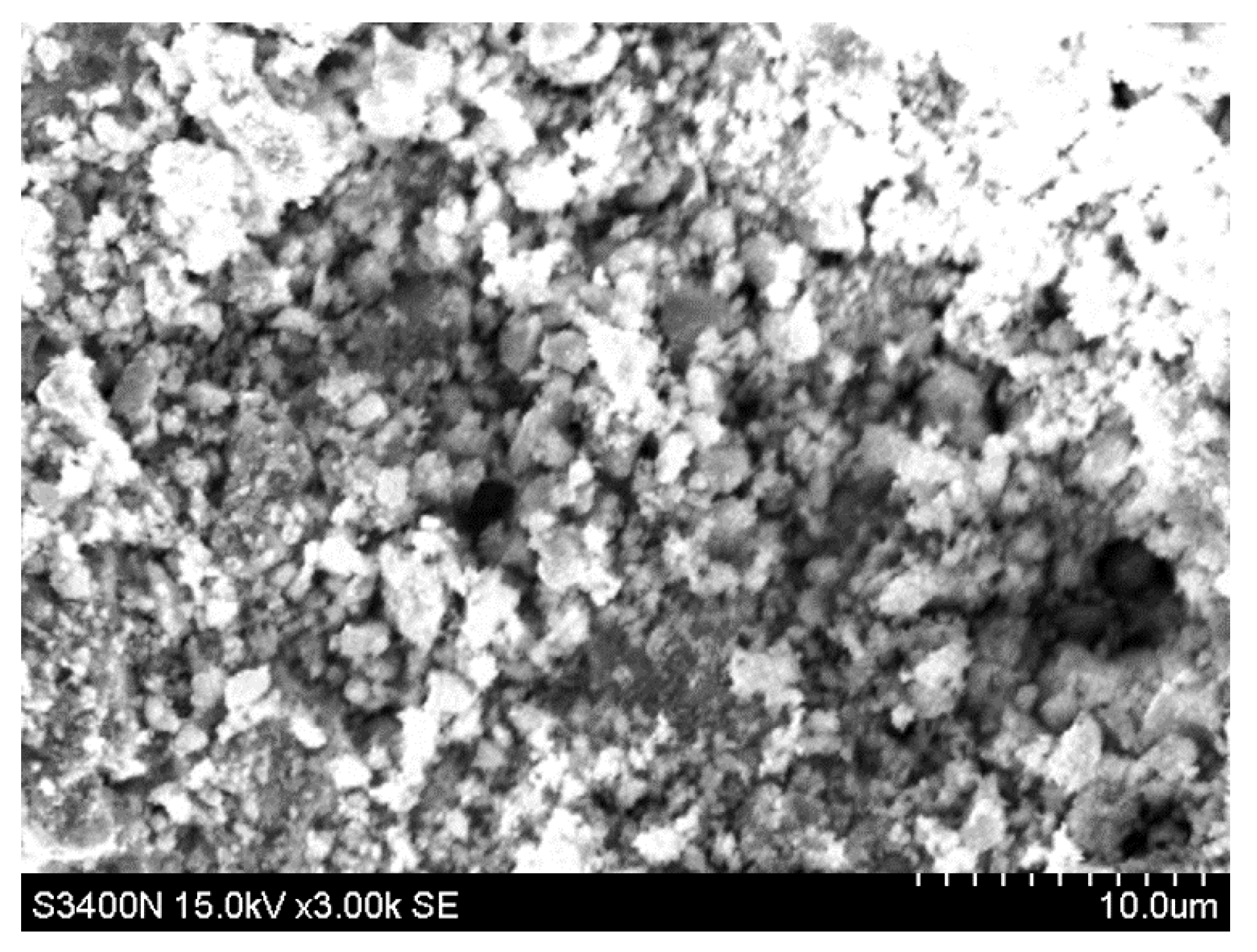
3.6. Scanning Electron Microscopy
4. Conclusions
Author Contributions
Funding
Institutional Review Board Statement
Informed Consent Statement
Data Availability Statement
Conflicts of Interest
References
- Zhang, M.H.; Gjorv, O.E. Effect of silica fume on pore structure and chloride diffusivity of low porosity cement pastes. Cem. Concr. Res. 1991, 21, 1006–1014. [Google Scholar] [CrossRef] [Scilit]
- Mindess, S.; Young, J.F.; Darwin, D. Concrete; Prentice Hall: Upper Saddle River, NJ, USA, 2003; pp. 477–504. [Google Scholar]
- Sakai, Y. Correlations between air permeability coefficients and pore structure indicators of cementitious materials. Constr. Build. Mater. 2019, 209, 541–547. [Google Scholar] [CrossRef] [Scilit]
- Ballester, P.; Hidalgo, A.; Mármol, I.; Morales, J.; Sánchez, L. Effect of brief heat-curing on microstructure and mechanical properties in fresh cement based mortars. Cem. Concr. Res. 2009, 39, 573–579. [Google Scholar] [CrossRef] [Scilit]
- Wang, X.F.; Zhang, J.H.; Zhao, W.; Han, R.; Han, N.X.; Xing, F. Permeability and pore structure of microcapsule-based self-healing cementitious composite. Constr. Build. Mater. 2018, 165, 149–162. [Google Scholar] [CrossRef] [Scilit]
- Zhang, M. Pore-scale modelling of relative permeability of cementitious materials using X-ray computed microtomography images. Cem. Concr. Res. 2017, 95, 18–29. [Google Scholar] [CrossRef] [Scilit]
- Zhang, M. Relationship between pore structure and chloride diffusion in cementitious materials. Constr. Build. Mater. 2019, 229, 1–7. [Google Scholar] [CrossRef] [Scilit]
- Karimaei, M.; Dabbaghi, F.; Sadeghi-Nik, A.; Dehestani, M. Mechanical performance of green concrete produced with untreated coal waste aggregates. Constr. Build. Mater. 2020, 233, 1–11. [Google Scholar] [CrossRef] [Scilit]
- Wang, Y.; Tan, Y.; Wang, Y.; Liu, C. Mechanical properties and chloride permeability of green concrete mixed with fly ash and coal gangue. Constr. Build. Mater. 2020, 233, 1–14. [Google Scholar] [CrossRef] [Scilit]
- Ouldkhaoua, Y.; Benabed, B.; Abousnina, R.; Kadri, E.-H.; Khatib, J. Effect of using metakaolin as supplementary cementitious material and recycled CRT funnel glass as fine aggregate on the durability of green self-compacting concrete. Constr. Build. Mater. 2020, 235, 1–11. [Google Scholar] [CrossRef] [Scilit]
- Mao, X.; Qu, W.; Zhu, P.; Xiao, J. Influence of recycled powder on chloride penetration resistance of green reactive powder concrete. Constr. Build. Mater. 2020, 251, 1–8. [Google Scholar] [CrossRef] [Scilit]
- Liew, K.M.; Sojobi, A.O.; Zhang, L.W. Green concrete: Prospects and challenges. Constr. Build. Mater. 2017, 156, 1063–1095. [Google Scholar] [CrossRef] [Scilit]
- Huang, R.-Y.; Syu, W.-T.; He, K.-S.; Yu, C.-H. Benefit/Cost Analysis for Recycling Building Concrete Waste; Architecture and Building Research Institute, Ministry of Interior: Taipei, Taiwan, 2003.
- Gholizadeh-Vayghan, A.; Bellinkx, A.; Snellings, R.; Vandoren, B.; Quaghebeur, M. The effects of carbonation conditions on the physical and microstructural properties of recycled concrete coarse aggregates. Constr. Build. Mater. 2020, 257, 1–11. [Google Scholar] [CrossRef] [Scilit]
- Chen, Q. Research on the Effect of Polycrystalline Silicon Powder on the Properties of Recycled Cement Matrix Materials. Master’s Thesis, Institute of Civil Engineering, National Ilan University, Ilan, Taiwan, 2017. [Google Scholar]
- Sim, J.; Park, C. Compressive strength and resistance to chloride ion penetration and carbonation of recycled aggregate concrete with varying amount of fly ash and fine recycled aggregate. Waste Manag. 2011, 31, 2352–2360. [Google Scholar] [CrossRef] [Scilit] [PubMed]
- Zega, C.J.; Di Maio, Á.A. Use of recycled fine aggregate in concretes with durable requirements. Waste Manag. 2011, 31, 2336–2340. [Google Scholar] [CrossRef] [Scilit]
- Geng, J.; Sun, J. Characteristics of the carbonation resistance of recycled fine aggregate concrete. Constr. Build. Mater. 2013, 49, 814–820. [Google Scholar] [CrossRef] [Scilit]
- Song, M.; Jiaping, L.; Wei, L.; Yaocheng, W.; Jianzhong, L.; Liang, S.; Qian, J. Property and microstructure of aluminosilicate inorganic coating for concrete: Role of water to solid ratio. Constr. Build. Mater. 2017, 148, 846–856. [Google Scholar]
- Cementitious Capillary Crystalline Waterproof Material; National Standards of the People’s Republic of China: Beijing, China, 2012; GB 18445-2012.
- Kameche, Z.A.; Ghomari, F.; Choinska, M.; Khelidj, A. Assessment of liquid water and gas permeabilities of partially saturated ordinary concrete. Constr. Build. Mater. 2014, 65, 551–565. [Google Scholar] [CrossRef] [Scilit]
- Shi, L.; Liu, J.Z.; Liu, J.P. Effect of polymer coating on the properties of surface layer concrete. Procedia Eng. 2012, 27, 291–300. [Google Scholar] [CrossRef] [Scilit]
- Freitag, S.A.; Bruce, S.M. The Influence of Surface Treatments on the Service Lives of Concrete Bridges; NZ Transport Agency Research Report 403: Wellington, New Zealand, 2010.
- Du, H. Using Mercury Porosimeter to Explore the Pore Structure of Cementitious Materials. Master’s Thesis, Institute of Civil Engineering and Disaster Prevention, China Institute of Technology, Sanhe, China, 2009. [Google Scholar]
- Power, T.C. The Physical Structure of Portland Cement Paste. Chem. Cem. 1964, 1, 391–416. [Google Scholar]
- Almusallam, A.A.; Khan, F.M.; Dulaijan, S.U.; Al-Amoudi, O.S.B. Effectiveness of surface coatings in improving concrete durability. Cem. Concr. Compos. 2003, 25, 473–481. [Google Scholar] [CrossRef] [Scilit]
- Li, J. Research on Pore Structure and Corrosion Behavior of Cementitious Composites with Silica Fume and Fly Ash. Ph.D. Dissertation, Institute of Materials Engineering, National Taiwan Ocean University, Keelung, Taiwan, 2013. [Google Scholar]
- Zhang, P.; Folker, H.W.; Vogel, M.; Harald, S.M.; Zhao, T. Influence of freeze-thaw cycles on capillary absorption and chloride penetration into concrete. Cem. Concr. Res. 2017, 100, 60–67. [Google Scholar] [CrossRef] [Scilit]
- Cosoli, G.; Mobili, A.; Giulietti, N.; Chiariotti, P.; Pandarese, G.; Tittarelli, F.; Bellezze, T.; Mikanovic, N.; Revel, G.M. Performance of concretes manufactured with newly developed low-clinker cements exposed to water and chlorides: Characterization by means of electrical impedance measurements. Constr. Build. Mater. 2021, 271, 1–12. [Google Scholar] [CrossRef] [Scilit]
- Ho, H.-L.; Huang, R.; Lin, W.-T.; Cheng, A. Pore-structures and durability of concrete containing pre-coated fine recycled mixed aggregates using pozzolan and polyvinyl alcohol materials. Constr. Build. Mater. 2018, 160, 278–292. [Google Scholar] [CrossRef] [Scilit]
- Jalilifar, H.; Sajedi, F. Micro-structural analysis of recycled concretes made with recycled coarse concrete aggregates. Constr. Build. Mater. 2021, 267, 1–10. [Google Scholar] [CrossRef] [Scilit]
- Danish, A.; Mosaberpanah, M.A. Influence of cenospheres and fly ash on the mechanical and durability properties of high-performance cement mortar under different curing regimes. Constr. Build. Mater. 2021, 279, 1–20. [Google Scholar] [CrossRef] [Scilit]
- Chen, S.-C.; Huang, R.; Hsu, H.-M.; Zou, S.-Y.; Teng, L.W. Evaluation of Penetration Depth and Protective Effec-Tiveness of Concrete-Penetrating Sealer Materials. J. Mar. Sci. Technol. 2016, 24, 244–249. [Google Scholar] [CrossRef] [Scilit]
- Zou, S. Evaluation of Protective Effectiveness and Crystalline Mechanism of Concrete Surface Penetrating Sealer. Ph.D. Dissertation, Department of Harbor and River Engineering, National Taiwan Ocean University, Keelung, Taiwan, 2012. [Google Scholar]
- Standard Specification for Concrete Aggregates; ASTM International: West Conshohocken, PA, USA, 2018; ASTM C33/C33M-18.
- Standard Test Method for Relative Density (Specific Gravity) and Absorption of Fine Aggregate; ASTM International: West Conshohocken, PA, USA, 2015; ASTM C128-15.
- Standard Test Method for Compressive Strength of Cylindrical Concrete Specimens; American Society for Testing and Materials: West Conshohocken, PA, USA, 2013; ASTM C39/C39M–12a.
- Standard Test Method for Density, Absorption, and Voids in Hardened Concrete; ASTM International: West Conshohocken, PA, USA, 2013; ASTM C642-13.
- Testing Concrete—Part 208: Recommendations for the Determination of the Initial Surface Absorption of Concrete; The British Standards Institution: London, UK, 1996; BS 1881-208.
- Standard Test Method for Electrical Indication of Concrete’s Ability to Resist Chloride Ion Penetration; American Society for Testing and Materials: West Conshohocken, PA, USA, 2012; ASTM C1202-12.
- Standard Test Method for Determination of Pore Volume and Pore Volume Distribution of Soil and Rock by Mercury Intrusion Porosimetry; American Society for Testing and Materials: West Conshohocken, PA, USA, 2010; ASTM D4404–10.
- Diamanti, M.V.; Brenna, A.; Bolzoni, F.; Berra, M.; Pastore, T.; Ormellese, M. Effect of polymer modified cementitious coatings on water and chloride permeability in concrete. Constr. Build. Mater. 2013, 49, 720–728. [Google Scholar] [CrossRef] [Scilit]




| Purpose | Causes of Surface Coating Treatment | Application or Location |
|---|---|---|
| Preventing direct deterioration | Chemical action | Corrosive chemicals |
| Physical action | Freeze–thaw damage and erosion wear | |
| Preventing steel corrosion caused indirectly | Decrease in the pH value of concrete | Concrete neutralization |
| Loss of protection by passive protection film | Coastal environment and chloride erosion | |
| Limiting surface contact | Waterproof measures | Poor structural design |
| Gas barriers | Water vapor or sulfur dioxide | |
| Easy to clean and decontaminate | Factory or hospital floors and walls | |
| Maintaining appearance | Color | Building facades |
| Reflection processing | Tunnels and car parks | |
| Prevention of mold growth | Walls and floors | |
| Anti-graffiti coating or treatment | Help with graffiti removal | |
| Uniformity after repair | Recovery processing | |
| Improving security | Skid resistance | Floor and road use |
| Prevention of static electricity | On manufacturing floors | |
| Road marking | Indication or road marking |
| Type | Species | Characteristics |
|---|---|---|
| Coatings or sealers | Acrylic Butadiene copolymer Epoxy resin Polyester resin Polyethylene copolymer Polyurethane | They can modify appearances They can be isolated from liquid and gas invasion They are often used to protect the outermost layer Their subsequent maintenance is difficult Their wear resistance is poor |
| Pore-lining treatment | Silicones Siloxane Silane Silicone resins | They are unfavorable in high-temperature environments It can prevent erosion through water or chloride ions It can be used in road structure protection. Corrosion and wear resistance are poor in this treatment It does not affect the appearance of the concrete surface |
| Pore-blocking treatment | Silicate Silicofluoride Crystal growth materials | It enables resistance to liquid, gas, chemical attack, and abrasion The protective effect depends on the porosity of concrete The pore has good adhesion and long-term effect. Such coatings are the first protective layer of the concrete substrate. |
| Rendering | Plain and polymer-modified cement-based mortars | The coating provides a barrier effect of certain thickness. It can reduce the passing rate of moisture It allows the development of resistance to sulfate attack It has a wide range of applications |
| Type | Characteristic |
|---|---|
| T crystalline material | Flexibility greater than 900% Can be used for waterproofing balconies and roofs Unaffected by stagnant water |
| K crystalline material | Crack self-repairing function Restrains chloride ions and protects steel bars Can be used in drinking water facilities and is gray and nontoxic |
| C crystalline material | Remarkable waterproofing effect of the deep basement and continuous wall Waterproof valve foundation can effectively block moisture and maintain dryness Simple construction, can be painted or sprayed, and nontoxic nature |
| Type | Variables |
|---|---|
| W/C | 0.4 and 0.6 |
| Crystalline material | T, K, C, and N |
| Amount of recycled aggregate replacing natural aggregate (%) | 0%, 10%, 20%, 30% |
| Maintenance conditions | Curing with saturated lime water |
| Mix No. | w/c | Cement | Fine Aggregates | Recycled Fine Aggregate | T | K | C |
|---|---|---|---|---|---|---|---|
| 4T0 | 0.4 | 1 | 1 | 0 | V | ||
| 4T1 | 0.4 | 1 | 0.9 | 0.1 | V | ||
| 4T2 | 0.4 | 1 | 0.8 | 0.2 | V | ||
| 4T3 | 0.4 | 1 | 0.7 | 0.3 | V | ||
| 4K0 | 0.4 | 1 | 1 | 0 | V | ||
| 4K1 | 0.4 | 1 | 0.9 | 0.1 | V | ||
| 4K2 | 0.4 | 1 | 0.8 | 0.2 | V | ||
| 4K3 | 0.4 | 1 | 0.7 | 0.3 | V | ||
| 4C0 | 0.4 | 1 | 1 | 0 | V | ||
| 4C1 | 0.4 | 1 | 0.9 | 0.1 | V | ||
| 4C2 | 0.4 | 1 | 0.8 | 0.2 | V | ||
| 4C3 | 0.4 | 1 | 0.7 | 0.3 | V | ||
| 4N0 | 0.4 | 1 | 1 | 0 | |||
| 4N1 | 0.4 | 1 | 0.9 | 0.1 | |||
| 4N2 | 0.4 | 1 | 0.8 | 0.2 | |||
| 4N3 | 0.4 | 1 | 0..7 | 0.3 | |||
| 6T0 | 0.6 | 1 | 1 | 0 | V | ||
| 6T1 | 0.6 | 1 | 0.9 | 0.1 | V | ||
| 6T2 | 0.6 | 1 | 0.8 | 0.2 | V | ||
| 6T3 | 0.6 | 1 | 0.7 | 0.3 | V | ||
| 6K0 | 0.6 | 1 | 1 | 0 | V | ||
| 6K1 | 0.6 | 1 | 0.9 | 0.1 | V | ||
| 6K2 | 0.6 | 1 | 0.8 | 0.2 | V | ||
| 6K3 | 0.6 | 1 | 0.7 | 0.3 | V | ||
| 6C0 | 0.6 | 1 | 1 | 0 | V | ||
| 6C1 | 0.6 | 1 | 0.9 | 0.1 | V | ||
| 6C2 | 0.6 | 1 | 0.8 | 0.2 | V | ||
| 6C3 | 0.6 | 1 | 0.7 | 0.3 | V | ||
| 6N0 | 0.6 | 1 | 1 | 0 | |||
| 6N1 | 0.6 | 1 | 0.9 | 0.1 | |||
| 6N2 | 0.6 | 1 | 0.8 | 0.2 | |||
| 6N3 | 0.6 | 1 | 0..7 | 0.3 |
Publisher’s Note: MDPI stays neutral with regard to jurisdictional claims in published maps and institutional affiliations. |
© 2021 by the authors. Licensee MDPI, Basel, Switzerland. This article is an open access article distributed under the terms and conditions of the Creative Commons Attribution (CC BY) license (https://creativecommons.org/licenses/by/4.0/).
Share and Cite
Chen, S.-C.; Zou, S.-Y.; Hsu, H.-M. Effects of Recycled Fine Aggregates and Inorganic Crystalline Materials on the Strength and Pore Structures of Cement-Based Composites. Crystals 2021, 11, 587. https://doi.org/10.3390/cryst11060587
Chen S-C, Zou S-Y, Hsu H-M. Effects of Recycled Fine Aggregates and Inorganic Crystalline Materials on the Strength and Pore Structures of Cement-Based Composites. Crystals. 2021; 11(6):587. https://doi.org/10.3390/cryst11060587
Chicago/Turabian StyleChen, Sung-Ching, Si-Yu Zou, and Hui-Mi Hsu. 2021. "Effects of Recycled Fine Aggregates and Inorganic Crystalline Materials on the Strength and Pore Structures of Cement-Based Composites" Crystals 11, no. 6: 587. https://doi.org/10.3390/cryst11060587
APA StyleChen, S.-C., Zou, S.-Y., & Hsu, H.-M. (2021). Effects of Recycled Fine Aggregates and Inorganic Crystalline Materials on the Strength and Pore Structures of Cement-Based Composites. Crystals, 11(6), 587. https://doi.org/10.3390/cryst11060587