


Abstract
Pharmaceutical residues, particularly anticancer compounds, are persistent aquatic contaminants that require efficient treatment strategies. This study developed a UV-LED-assisted peroxymonosulfate (PMS)/zero-valent iron (ZVI) advanced oxidation system for the degradation and toxicity reduction of daunorubicin in aqueous solution. The effects of key operational parameters were optimized using response surface methodology. Under optimal conditions (pH 3, PMS 1.5 mM, ZVI 0.3 g/L, and daunorubicin 10 mg/L), nearly complete degradation was achieved within 15 min, following pseudo-first-order kinetics (R2 > 0.95). LC–MS analysis revealed the formation of transformation products and suggested oxidative fragmentation pathways of daunorubicin. The process achieved 65% total organic carbon removal after 6 h, indicating substantial but incomplete mineralization. Fe2+ evolution and ESR analysis demonstrated that ZVI-mediated PMS activation generated reactive species, with sulfate radicals playing a major role and hydroxyl radicals contributing to oxidation. Toxicity and mutagenicity assays confirmed significant reductions in biological effects after treatment. These findings demonstrate that the UV-LED/PMS/ZVI system is a promising approach for the treatment of daunorubicin-containing wastewater.
1. Introduction
Pharmaceutical residues have attracted increasing environmental attention because conventional wastewater treatment plants (WWTPs) often fail to completely remove many biologically active compounds from wastewater streams [1,2,3]. Among pharmaceutical contaminants, antineoplastic agents are of particular concern because of their potential carcinogenic, mutagenic, and genotoxic effects even at trace concentrations [4,5]. Daunorubicin, an anthracycline antineoplastic drug widely used in leukemia treatment [6] may enter aquatic environments through hospital effluents, pharmaceutical manufacturing wastewater, and municipal wastewater after excretion or improper disposal [7]. Due to its complex aromatic structure, biological activity, and persistence, the effective removal of daunorubicin from aqueous environments remains an important challenge [8,9,10]. Conventional biological wastewater treatment processes are generally insufficient for the complete elimination of persistent pharmaceutical compounds because many of these molecules exhibit high chemical stability and biological activity [11,12,13]. Therefore, advanced oxidation processes (AOPs) have been extensively investigated as promising treatment technologies for degrading refractory organic contaminants through the generation of highly reactive oxidizing species. Conventional AOPs, including UV/H2O2 [14], UV/Fe2+/H2O2 [15], and UV/TiO2 [16] have demonstrated effectiveness for pharmaceutical degradation. However, limitations such as catalyst recovery, oxidant consumption, energy demand, and formation of transformation products have stimulated interest in alternative oxidation systems. Sulfate radical-based advanced oxidation processes (SR-AOPs) have emerged as effective alternatives for the treatment of persistent organic pollutants [17,18] because sulfate radicals (SO4•−) possess high oxidation potential (approximately 2.5–3.1 V) and can efficiently oxidize a broad range of organic compounds [19]. Peroxymonosulfate (PMS, HSO5−) is one of the most commonly applied sulfate radical precursors [20] and can be activated through various approaches, including transition metals [21], ultraviolet irradiation [19,22], ultrasound [23] and heterogeneous catalysts [24,25,26].
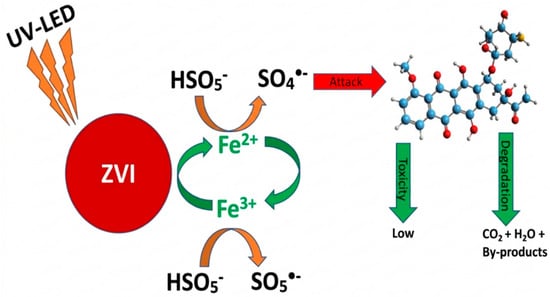
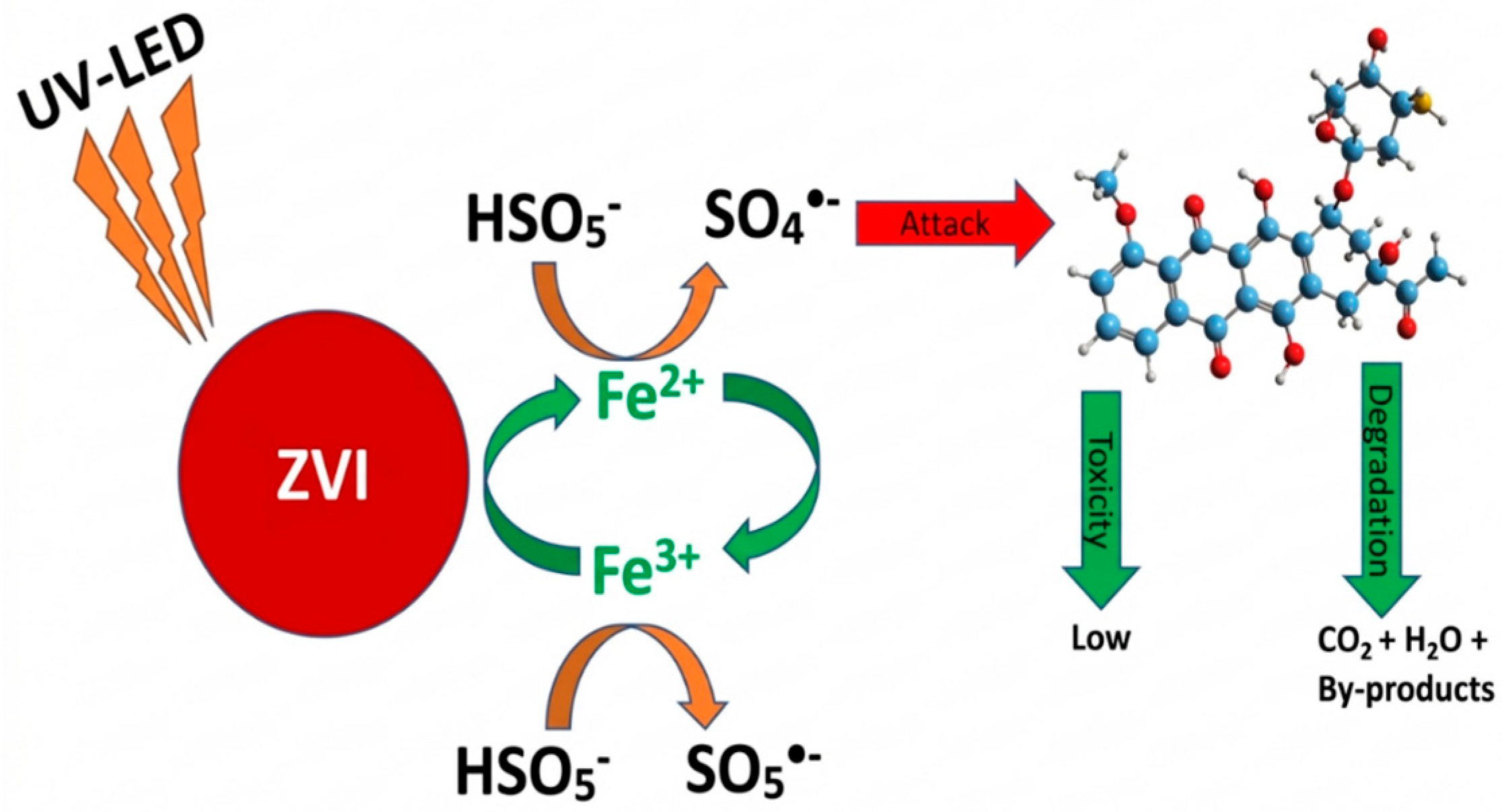
Among different metal activators, iron-based materials have attracted considerable attention because of their abundance, relatively low cost, and effective redox activity [27,28]. Zero-valent iron (ZVI) is widely applied in environmental remediation due to its ability to provide electrons and continuously generate Fe2+ through corrosion reactions [29,30,31]. In ZVI/PMS systems, the released Fe2+ activates PMS to produce sulfate radicals through Fe2+/Fe3+ cycling, thereby promoting pollutant oxidation (Equations (1)–(6)) [32,33]. However, the accumulation of Fe3+ may decrease PMS activation efficiency because Fe3+ preferentially promotes alternative PMS decomposition pathways and may hinder Fe2+ regeneration [34,35]. Therefore, strategies capable of enhancing iron cycling and improving PMS activation efficiency are required.
Fe0 → Fe2+ + 2e−
Fe0 + HSO5− + 2H+ → Fe2+ + HSO4− + H2O
Fe2+ + HSO5− → Fe3+ + SO4•− + OH−
Fe3+ + HSO5− → Fe2+ + SO5•− + H+
Fe3+ + H2O ⇌ [Fe (OH)]2+ + H+
[Fe (OH)]2+ + hν → Fe2+ + •OH
Ultraviolet irradiation has been widely incorporated into AOP systems because it can directly activate oxidants and promote photochemical regeneration reactions. Conventional mercury-based UV lamps, however, suffer from limitations including relatively high energy consumption, limited operational lifetime, and mercury-related environmental concerns [36]. UV-LEDs have emerged as promising alternatives because they provide monochromatic emission, lower heat generation, compact design, and longer service life compared with conventional UV sources [37,38]. Recent studies have demonstrated that UV-LED-assisted AOPs can effectively enhance the degradation of emerging contaminants, including pharmaceutical compounds, by promoting reactive oxygen species generation and improving oxidant activation efficiency. In particular, UV-LED/PMS systems have shown potential for pharmaceutical wastewater treatment due to efficient sulfate radical production and improved process flexibility [39]. However, most reported UV-LED-based systems have focused on PMS activation by irradiation alone or in combination with other catalytic materials, while the synergistic interaction between UV-LED irradiation and ZVI-mediated PMS activation remains insufficiently investigated for pharmaceutical contaminants [2]. Moreover, although several studies have evaluated UV-LED-assisted oxidation processes for pharmaceutical removal, limited information is available regarding the degradation pathways, mineralization behavior, and biological effects of anthracycline pharmaceuticals treated by PMS/ZVI/UV-LED systems [40]. Understanding these aspects is essential because rapid disappearance of the parent compound does not necessarily indicate complete oxidation or reduced toxicity of transformation products. Therefore, comprehensive evaluation involving degradation kinetics, transformation-product identification, mineralization analysis, and toxicity assessment is necessary to determine the practical effectiveness of such systems [41].
In this study, a UV-LED-assisted PMS/ZVI oxidation system was developed for the degradation of daunorubicin in aqueous solution. The effects of key operational parameters, including pH, PMS concentration, ZVI dosage, and initial daunorubicin concentration, were systematically evaluated and optimized using response surface methodology. The degradation kinetics and transformation behavior were investigated through UV–Vis and LC–MS analyses, while mineralization performance was evaluated by total organic carbon (TOC) measurements. Furthermore, Fe2+ evolution, ESR analysis, and biological assays (brine shrimp lethality and Ames mutagenicity tests) were employed to elucidate the reaction mechanism and evaluate changes in biological effects after treatment. This study provides insights into the potential application of UV-LED-assisted PMS/ZVI oxidation for the treatment of pharmaceutical contaminants.
2. Results and Discussion
2.1. Zerovalent Iron System Kinetic Evaluation
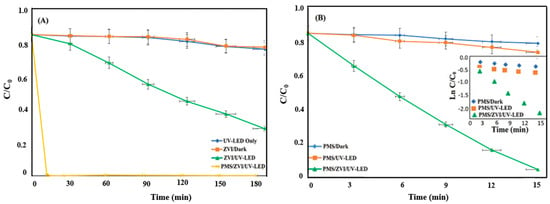
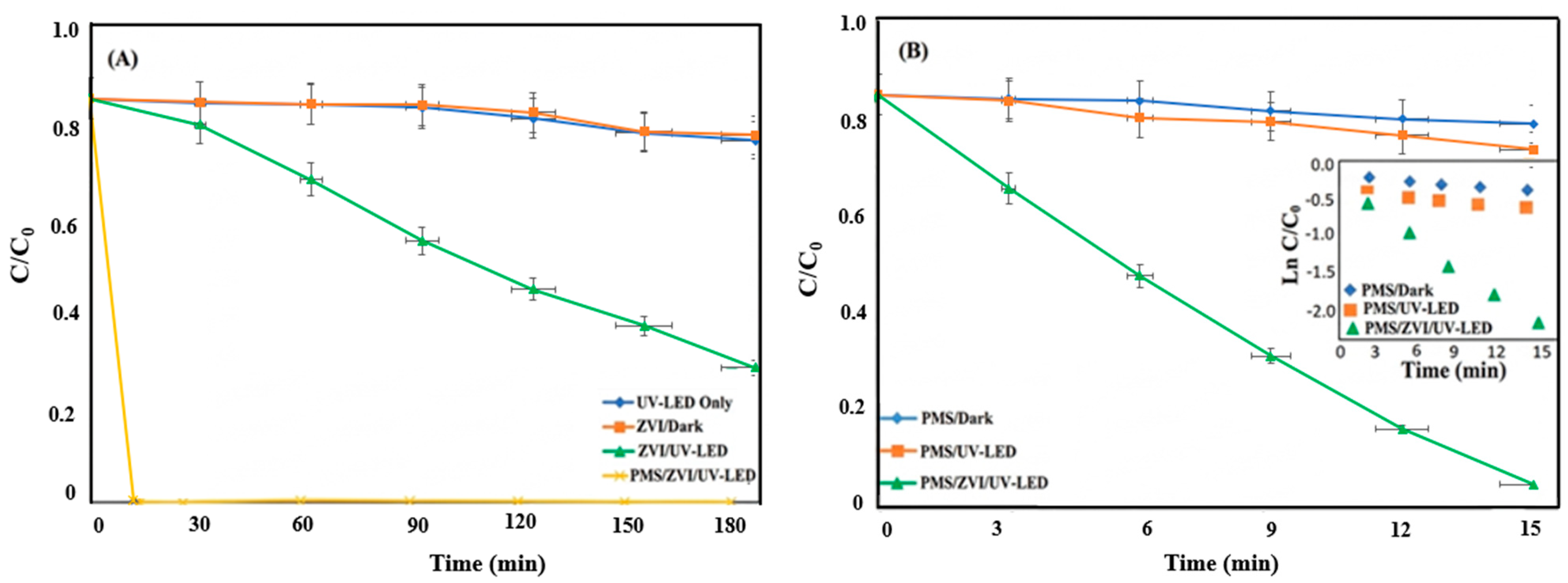
Control experiments were performed using different reaction systems, including ZVI/dark, UV-LED alone, ZVI/UV-LED, PMS/dark, PMS/UV-LED, and PMS/ZVI/UV-LED, to elucidate the contribution of each component to daunorubicin degradation (Figure 1). The ZVI/dark and UV-LED-alone systems showed negligible degradation after 3 h, indicating that adsorption onto ZVI and direct photolysis by 365 nm UV-LED irradiation were insufficient for effective removal of daunorubicin under the investigated conditions. The ZVI/UV-LED system achieved approximately 60% degradation after 3 h, demonstrating that irradiation could enhance the oxidation capability of the iron-based system; however, the degradation efficiency remained limited in the absence of PMS. A significant improvement was observed when PMS was introduced into the system. The PMS/ZVI/UV-LED process achieved complete degradation of daunorubicin within 15 min, whereas systems containing only PMS/UV-LED or PMS/dark exhibited slower removal efficiency. The enhanced performance of the combined system can be attributed to the synergistic interaction between UV-LED irradiation and ZVI-mediated PMS activation. In this process, Fe2+ generated from ZVI corrosion participates in PMS activation, promoting the formation of reactive oxidizing species, particularly sulfate radicals (SO4•−), which are widely recognized as important oxidants in PMS-based advanced oxidation processes (AOPs) [42,43].
Figure 1.
Degradation kinetics of daunorubicin ([Daunorubicin]0 = 10 ppm, [PMS]0 = 1.5 mM) at different ZVI dosages: (A) [ZVI]0 = 0.4 g/L and (B) [ZVI]0 = 0.3 g/L.
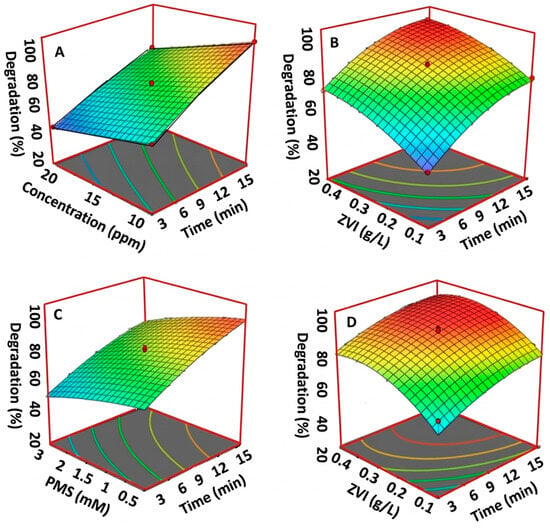
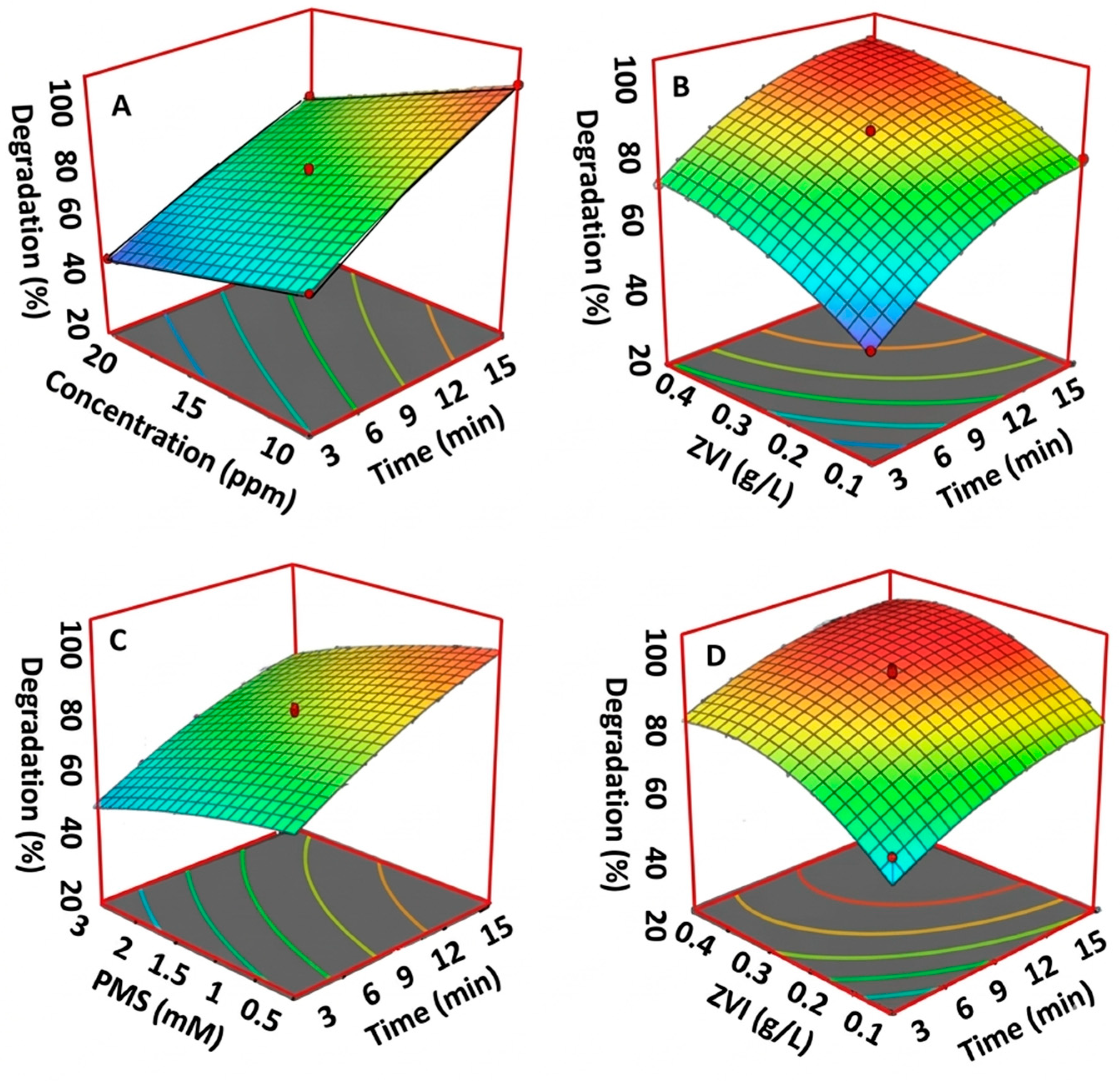
UV irradiation may further contribute to PMS activation and Fe3+/Fe2+ cycling, thereby improving oxidant utilization efficiency [44]. LC–MS analysis further confirmed the transformation of the parent daunorubicin molecule through the detection of transformation products, supporting the occurrence of oxidative degradation rather than simple adsorption or photolysis. The optimized operating parameters obtained from response surface methodology (RSM) were a daunorubicin concentration of 10 ppm, ZVI dosage of 0.3 g L−1, PMS concentration of 1.5 mM, and initial pH of 3 (Figure 2 and Table 1). Under these conditions, the predicted degradation efficiency was 99.8%, while the experimentally obtained degradation efficiency was 98.9%. The close agreement between predicted and experimental values indicates that the quadratic model provided a suitable description of the relationship between the investigated variables and daunorubicin degradation efficiency. The degradation kinetics of daunorubicin in the PMS/ZVI/UV-LED system were evaluated using the pseudo-first-order kinetic model, which is commonly applied for heterogeneous AOP systems when oxidant concentration is maintained in excess relative to the target pollutant [45]. The kinetic relationship can be expressed as Equations (7) and (8).
where C0 and Ct represent the initial concentration and concentration at reaction time t (min), respectively, and kapp represents the apparent pseudo-first-order rate constant (min−1). The linear correlation obtained from plotting ln (C0/Ct) against irradiation time confirms that daunorubicin degradation in the PMS/ZVI/UV-LED system follows pseudo-first-order kinetics under the investigated conditions.
−dCt/dt = kappCt
ln(C0/Ct) = kappt
Figure 2.
Response-surface plots for percentage degradation of daunorubicin under UV-LED (A), ZVI/UV-LED (B), PMS/UV-LED (C), and PMS/ZVI/UV-LED (D) conditions.
Table 1.
Analysis of variance (ANOVA) for the quadratic model of daunorubicin degradation efficiency.
2.2. Effect of pH
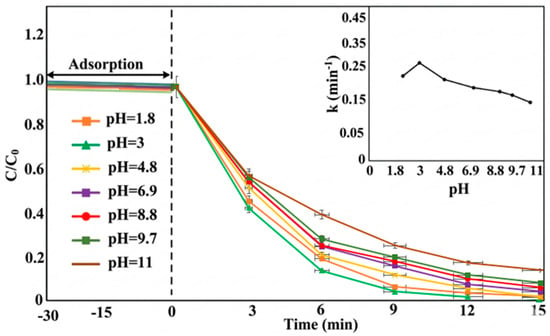
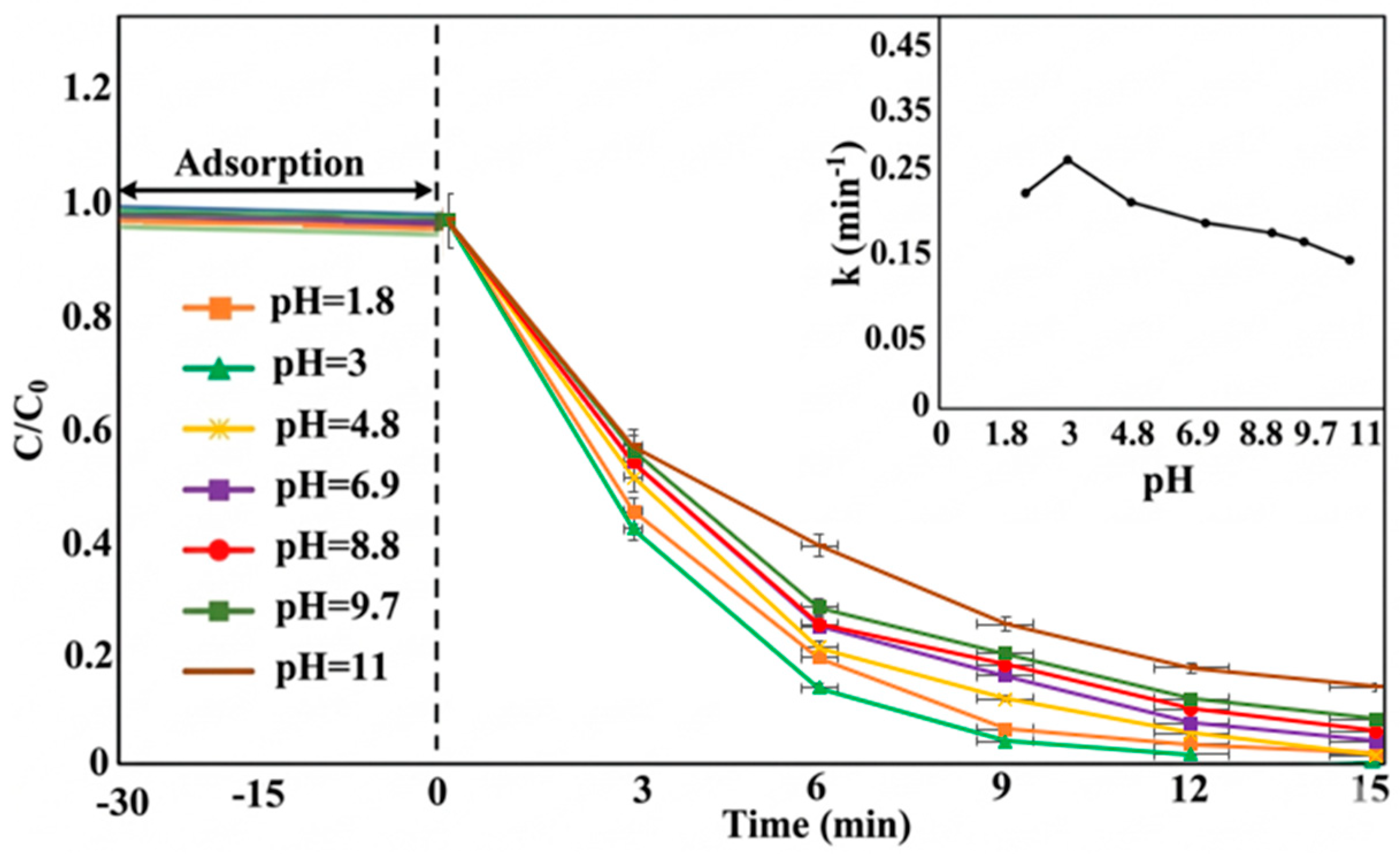
Solution pH is an important operational parameter in advanced oxidation processes because it affects oxidant speciation, catalyst surface properties, iron dissolution behavior, and the generation and stability of reactive species [46,47]. Therefore, the influence of initial pH on daunorubicin degradation by the PMS/ZVI/UV-LED system was investigated over a broad pH range of 1.8–11.0. The variation in pH before and after the reaction was also monitored to evaluate possible changes during the treatment process (Figure 3).
Figure 3.
Effect of pH on daunorubicin degradation ([Daunorubicin]0 = 10 ppm, [ZVI]0 = 0.3 g/L, [PMS]0 = 1.5 mM).
The adsorption of daunorubicin onto the ZVI surface was negligible throughout the investigated pH range, indicating that the observed removal was mainly associated with oxidative transformation rather than adsorption. As shown in Figure 3, degradation efficiency decreased progressively with increasing pH, and the highest degradation performance was achieved under acidic conditions, with complete removal obtained at an initial pH of 3. The enhanced degradation under acidic conditions can be related to the favorable activity of iron-based PMS activation systems. Under acidic conditions, ZVI corrosion promotes the generation of dissolved Fe2+, which can activate PMS and facilitate the formation of reactive oxidizing species [48]. In contrast, increasing the solution pH promotes the hydrolysis and precipitation of dissolved iron species as iron hydroxides/oxyhydroxides, which may reduce the availability of catalytically active iron species and inhibit electron-transfer processes between iron and PMS [45]. The formation of surface iron oxide/hydroxide layers on ZVI may also decrease the accessibility of reactive sites and reduce PMS activation efficiency. At strongly alkaline pH values, the decline in degradation efficiency may additionally be associated with changes in PMS speciation. PMS exists predominantly as HSO5− under acidic conditions, whereas deprotonated PMS species become increasingly important at higher pH values. These changes can influence the efficiency of PMS activation and reactive-species formation, resulting in lower oxidation performance under alkaline conditions [49]. Although the degradation efficiency remained high at pH values close to neutral, a gradual reduction was observed compared with acidic conditions. This behavior may result from reduced iron availability and decreased catalytic activity caused by iron hydroxide formation. At the lowest investigated pH (1.8), the slightly lower degradation efficiency compared with pH 3 may be related to excessive proton concentration, which can affect PMS activation pathways and reactive-species availability. Proton scavenging of sulfate radicals has previously been proposed under strongly acidic conditions (Equation (9)) [50].
SO4•− + H+ + e− → HSO4−
Overall, the results demonstrate that acidic conditions, particularly pH 3, provide a favorable environment for the PMS/ZVI/UV-LED system by maintaining active iron species and promoting efficient PMS activation [51,52]. Therefore, an initial pH of 3 was selected as the optimal condition for subsequent experiments.
2.3. Effect of PMS Dosage
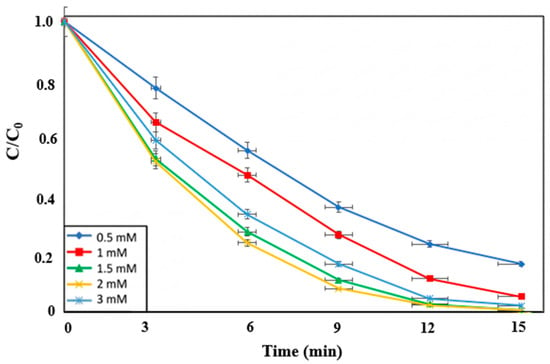
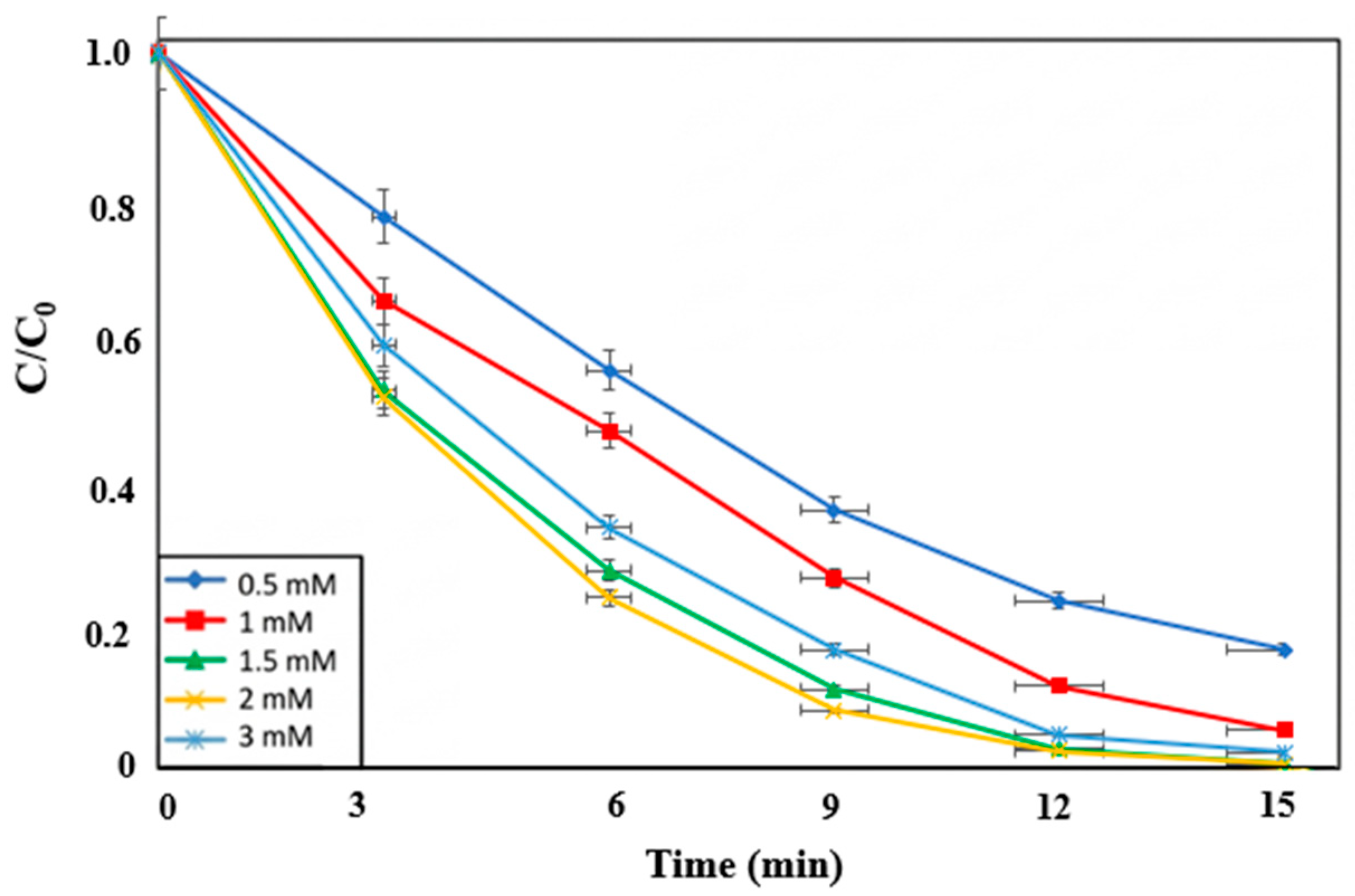
The concentration of PMS is a critical factor influencing the oxidation efficiency of PMS-based advanced oxidation processes because it determines the availability of ox-idant for reactive-species generation. Therefore, the effect of PMS concentration on daunorubicin degradation was evaluated by varying PMS dosage from 0.5 to 3 mM under UV-LED irradiation in the presence of ZVI (Figure 4). The degradation efficiency increased significantly with increasing PMS concentration from 0.5 to 1.5 mM, and complete degradation of daunorubicin was achieved at 1.5 mM PMS. This enhance-ment can be attributed to the increased availability of PMS molecules for activation by ZVI-mediated iron redox cycling and UV irradiation, resulting in greater formation of reactive oxidizing species responsible for daunorubicin transformation [48]. Further increasing the PMS concentration to 2 mM did not produce a significant improvement compared with 1.5 mM, indicating that the available reactive species were sufficient to achieve near-complete degradation under these conditions. However, a decrease in degradation efficiency was observed at 3 mM PMS, with only 88.1% degradation achieved.
Figure 4.
Effect of PMS dosage on daunorubicin degradation ([Daunorubicin]0 = 10 ppm, [ZVI]0 = 0.3 g/L).
The inhibitory effect at excessive PMS concentration may be related to inefficient oxidant utilization and scavenging reactions between excess PMS and reactive radicals. As shown in Equation (10), PMS can react with sulfate radicals to generate SO5•− species, which generally exhibit lower oxidation activity toward many organic contaminants compared with SO4•− [53,54].
HSO5− + SO4•− → SO42− + SO5•− + H+
In addition, excessive PMS may introduce competitive reactions that consume reactive species without contributing effectively to pollutant degradation, thereby reducing the apparent oxidation efficiency. Therefore, increasing PMS dosage beyond the optimum concentration does not necessarily improve treatment performance. UV-LED irradiation can contribute to PMS activation through peroxide bond cleavage, while ZVI provides continuous Fe2+ generation to promote PMS decomposition and reactive-species formation. Previous studies have demonstrated that PMS activation by iron-based systems can generate sulfate radicals together with other reactive oxygen species, including hydroxyl radicals, depending on the reaction environment (Equation (11)) [48,49].
HSO5− + hν → •OH + SO4•−
However, the relative contribution of individual reactive species requires direct verification using complementary techniques such as radical scavenging experiments or electron spin resonance analysis. Based on the obtained results, 1.5 mM PMS was selected as the optimal concentration for subsequent experiments because it provided efficient daunorubicin degradation while avoiding excessive oxidant consumption.
2.4. Effect of ZVI Dosage
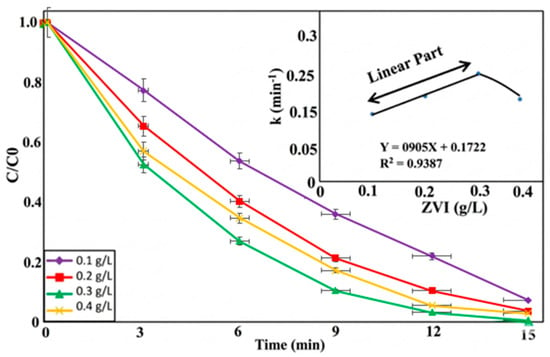
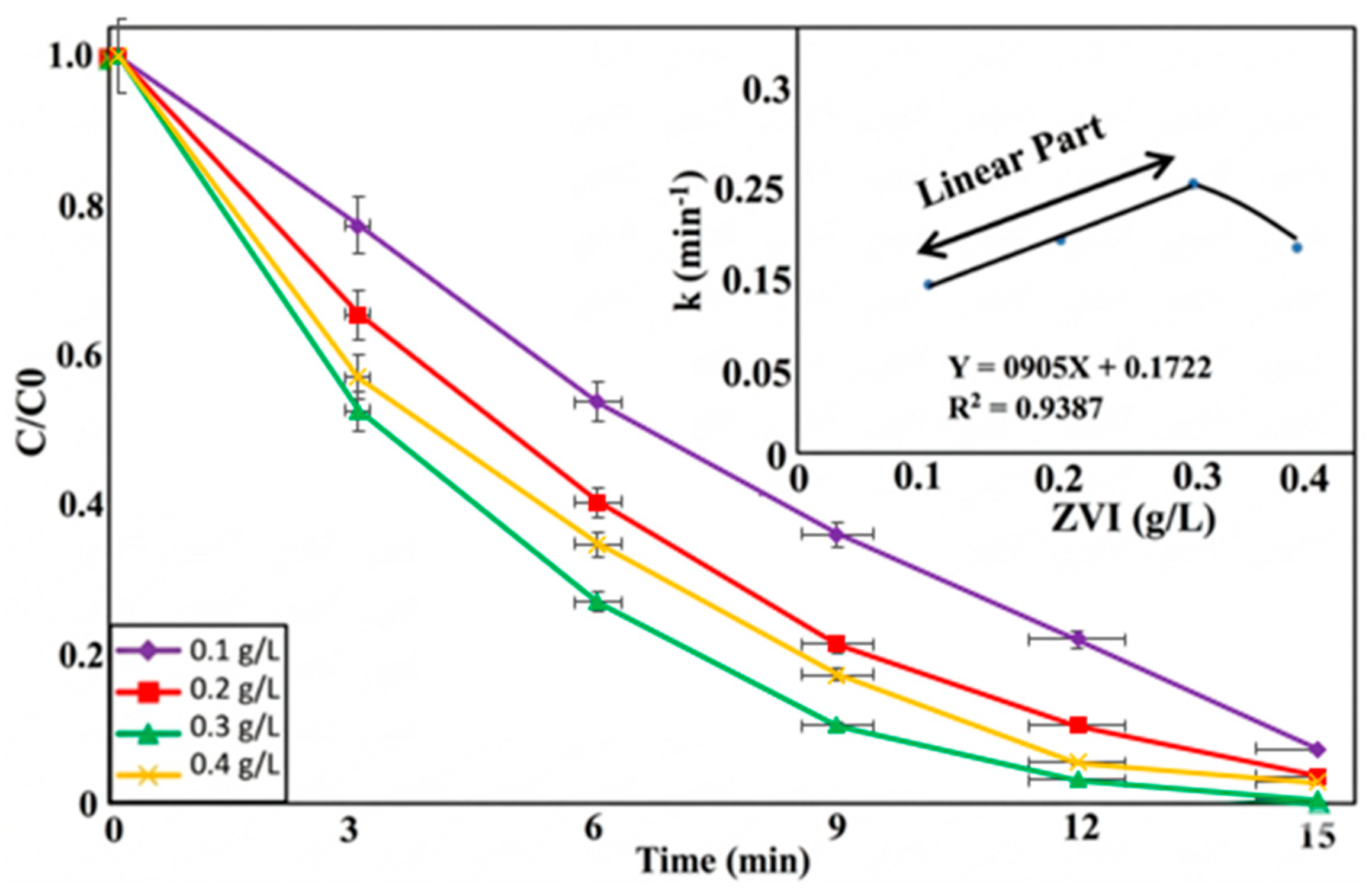
The amount of ZVI is an important operational parameter in PMS-based oxidation systems because it influences iron-mediated PMS activation, electron-transfer processes, and the availability of reactive species. Therefore, the effect of initial ZVI dosage on daunorubicin degradation was investigated by varying the ZVI concentration from 0.1 to 0.4 g/L under UV-LED irradiation in the presence of PMS (Figure 5). The degradation efficiency increased progressively with increasing ZVI dosage up to 0.3 g/L. After 15 min of irradiation, daunorubicin removal efficiencies of approximately 90%, 95%, and 100% were achieved at ZVI dosages of 0.1, 0.2, and 0.3 g/L, respectively. The enhanced degradation performance with increasing ZVI dosage can be associated with the increased availability of iron active sites and accelerated Fe2+ generation through ZVI corrosion, which facilitates PMS activation and promotes the formation of reactive oxidizing species. However, further increasing the ZVI dosage to 0.4 g/L resulted in a slight decline in degradation efficiency. Excessive ZVI addition may not proportionally enhance oxidation performance because an overabundance of dissolved Fe2+ can consume reactive radicals through scavenging reactions, as described in Equation (12) [55].
Fe2+ + SO4•− → Fe3+ + SO42−
Figure 5.
Effect of ZVI dosage on daunorubicin degradation ([Daunorubicin]0 = 10 ppm, [PMS]0 = 1.5 mM).
In addition, excessive ZVI particles may promote the formation of iron hydroxide/oxyhydroxide layers on the iron surface, which can reduce the accessibility of active sites and hinder further electron transfer between ZVI and PMS. The aggregation of excessive iron particles may also decrease the effective surface area available for catalytic reactions. Therefore, an excessively high ZVI dosage does not necessarily improve degradation efficiency and may increase reagent consumption without providing additional treatment benefits. Based on these results, 0.3 g/L ZVI was selected as the optimal dosage for subsequent experiments because it provided efficient daunorubicin degradation while maintaining effective utilization of the catalyst.
2.5. Effect of Initial Drug Concentration
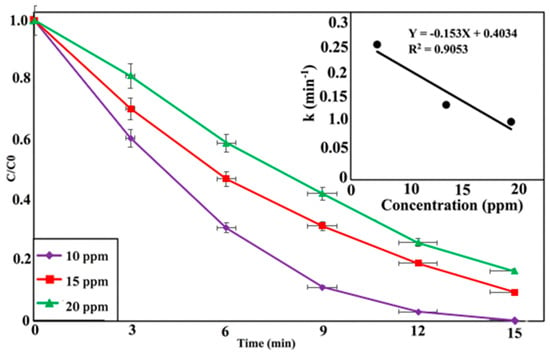
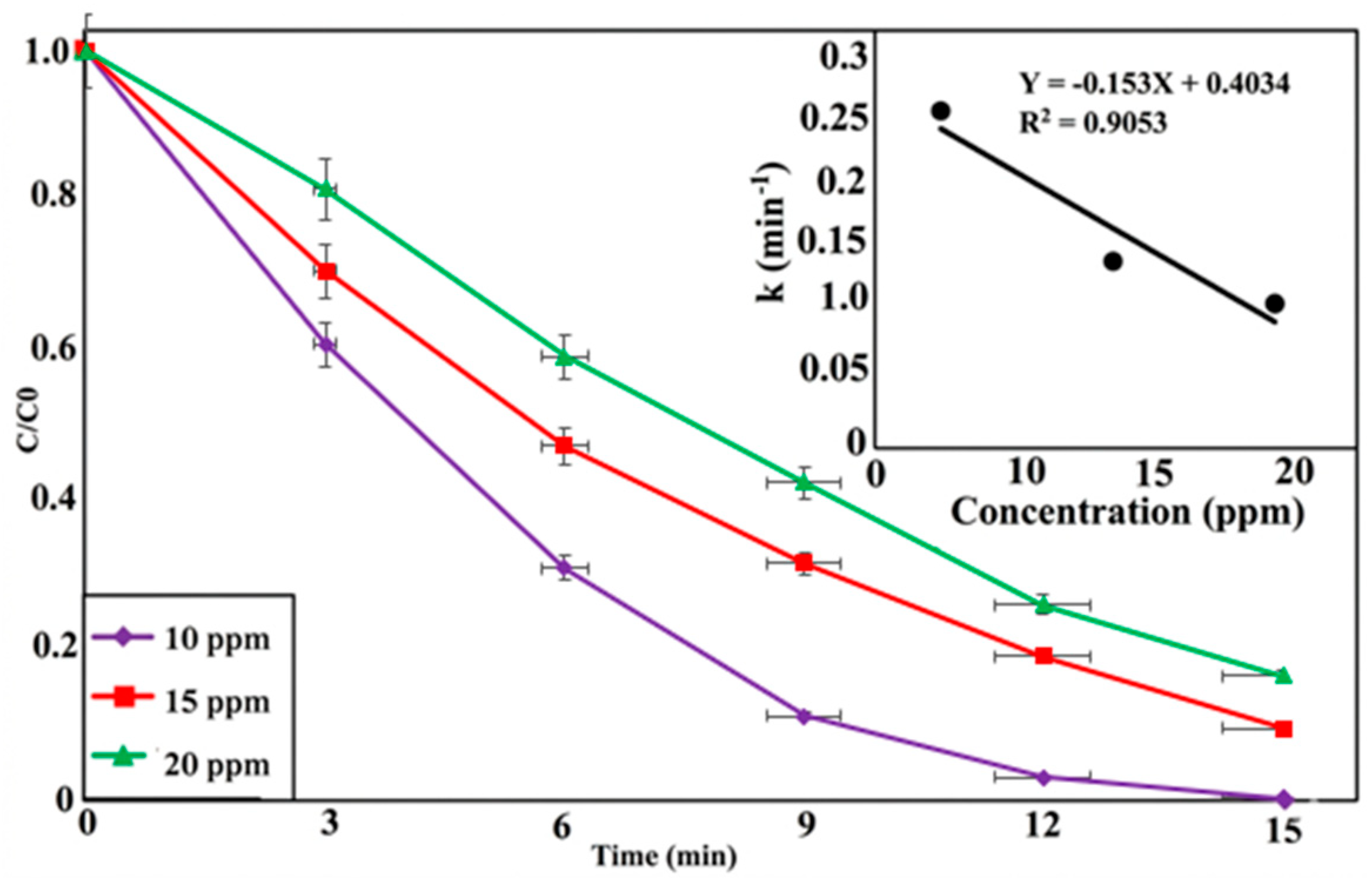
The initial concentration of an organic contaminant is an important parameter affecting the efficiency of advanced oxidation processes because it determines the ratio between pollutant molecules and the reactive species generated during treatment. Therefore, the effect of initial daunorubicin concentration on degradation performance was investigated by varying the concentration from 10 to 20 ppm under optimized PMS/ZVI/UV-LED conditions (Figure 6). The degradation efficiency decreased with increasing daunorubicin concentration, and the highest removal efficiency was obtained at an initial concentration of 10 ppm. Increasing the daunorubicin concentration resulted in a higher organic load, while the amount of PMS and ZVI remained constant. Consequently, the available reactive species became insufficient for complete oxidation of the increased pollutant concentration, leading to a lower apparent degradation rate. In addition, higher daunorubicin concentrations may reduce the penetration of UV irradiation within the reaction medium due to increased absorption of light by the anthracycline chromophore, thereby limiting UV-assisted PMS activation and subsequent reactive-species generation [56]. Furthermore, a greater number of daunorubicin molecules may compete for access to reactive sites on the ZVI surface or consume oxidizing species before complete transformation, which can further decrease degradation efficiency [57]. Therefore, maintaining an appropriate pollutant-to-oxidant ratio is essential for achieving efficient treatment performance. Based on these results, an initial daunorubicin concentration of 10 ppm was selected for subsequent experiments.
Figure 6.
Effect of daunorubicin initial concentration ([ZVI]0 = 0.3 g/L, [PMS]0 = 1.5 mM).
2.6. Effect of Inorganic Anions
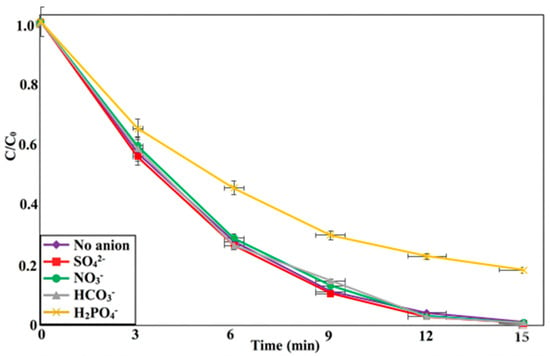
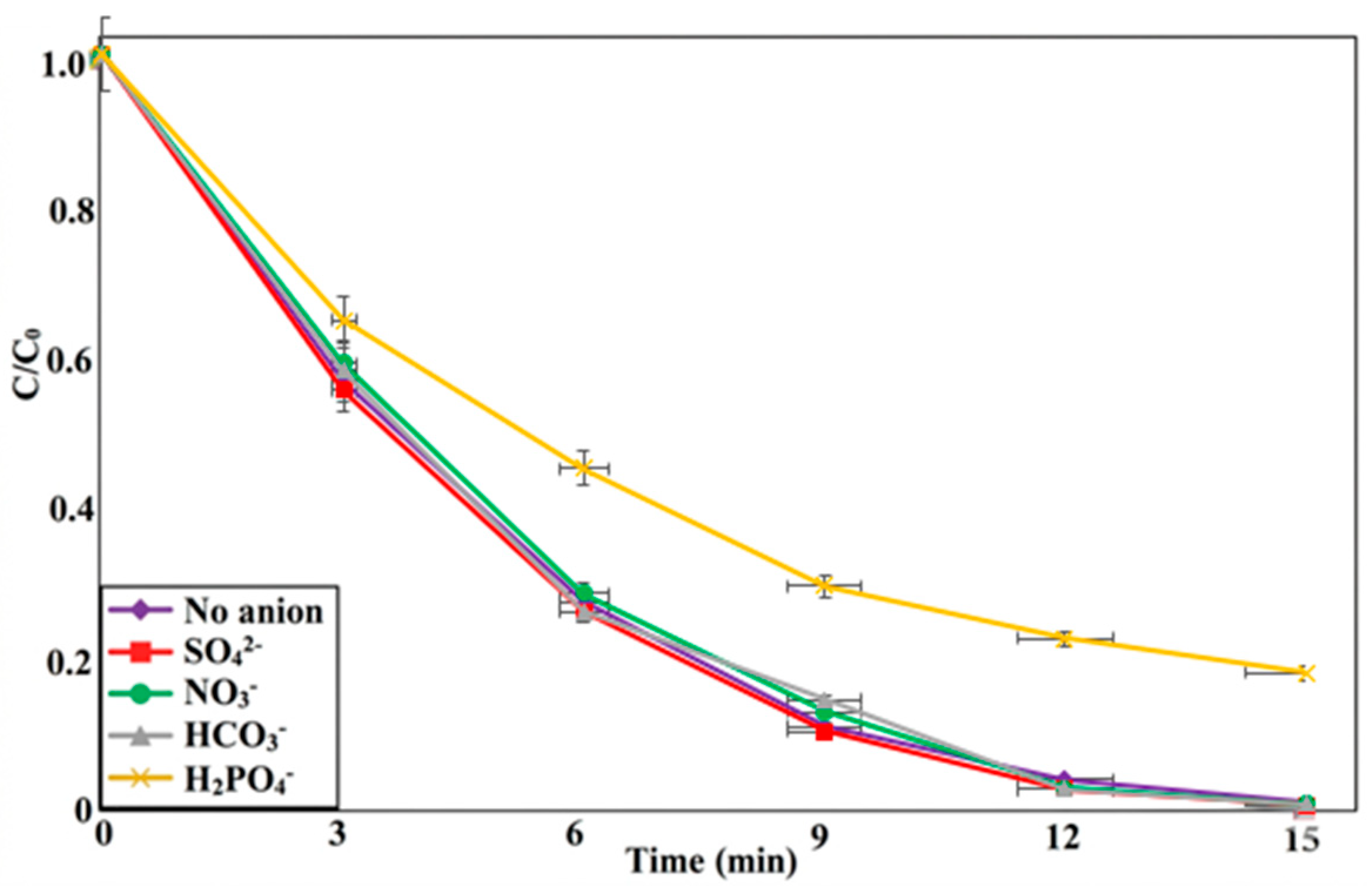
Natural water matrices commonly contain inorganic anions that may influence the efficiency of advanced oxidation processes by interacting with reactive species, altering catalyst surface properties, or affecting oxidant activation pathways. Therefore, the effects of representative anions commonly present in aquatic environments, including NO3−, SO42−, HCO3−, and H2PO4−, on daunorubicin degradation were investigated in the PMS/ZVI/UV-LED system (Figure 7). As shown in Figure 7, the presence of NO3−, SO42−, and HCO3− produced no significant variation in daunorubicin degradation efficiency under the investigated conditions, whereas H2PO4− resulted in an approximately 20% decrease in degradation performance. The limited influence of NO3− and SO42− suggests that these anions did not substantially interfere with the generation or utilization of reactive species during the treatment process.
Figure 7.
Effect of inorganic anions on Daunorubicin degradation ([Daunorubicin]0 = 10 ppm, [ZVI]0 = 0.3 g/L, [PMS]0 = 1.5 mM).
Although bicarbonate is widely recognized as a scavenger of sulfate radicals and hydroxyl radicals through the formation of carbonate radicals (Equations (13) and (14)) [58] only minor inhibition was observed in the present system. This behavior may be related to the relatively rapid PMS activation and continuous generation of reactive species by the coupled ZVI/UV-LED system, which could compensate for partial radical consumption. However, the contribution of bicarbonate-induced pH variation and radical scavenging cannot be distinguished based on the current experiments because these effects were not independently controlled. Therefore, the limited effect of HCO3− should be interpreted cautiously.
SO4•− + HCO3− → HCO3• + SO42−
•OH + HCO3− → CO3•− + H2O
The inhibitory effect of H2PO4− may be associated with interactions between phosphate species and iron species generated during ZVI corrosion. Phosphate-containing species can potentially adsorb onto iron surfaces or form iron–phosphate complexes, which may reduce the availability of catalytically active iron sites and consequently affect PMS activation. However, further spectroscopic or surface characterization studies would be required to confirm the specific interactions responsible for the observed inhibition.
2.7. Mineralization
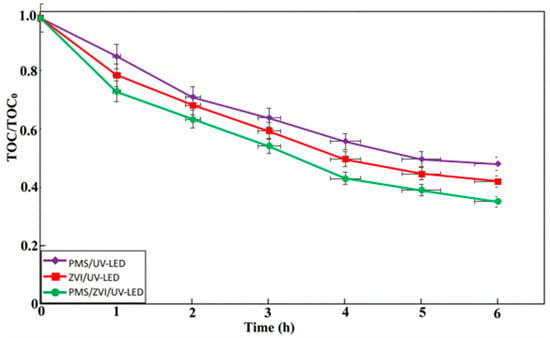
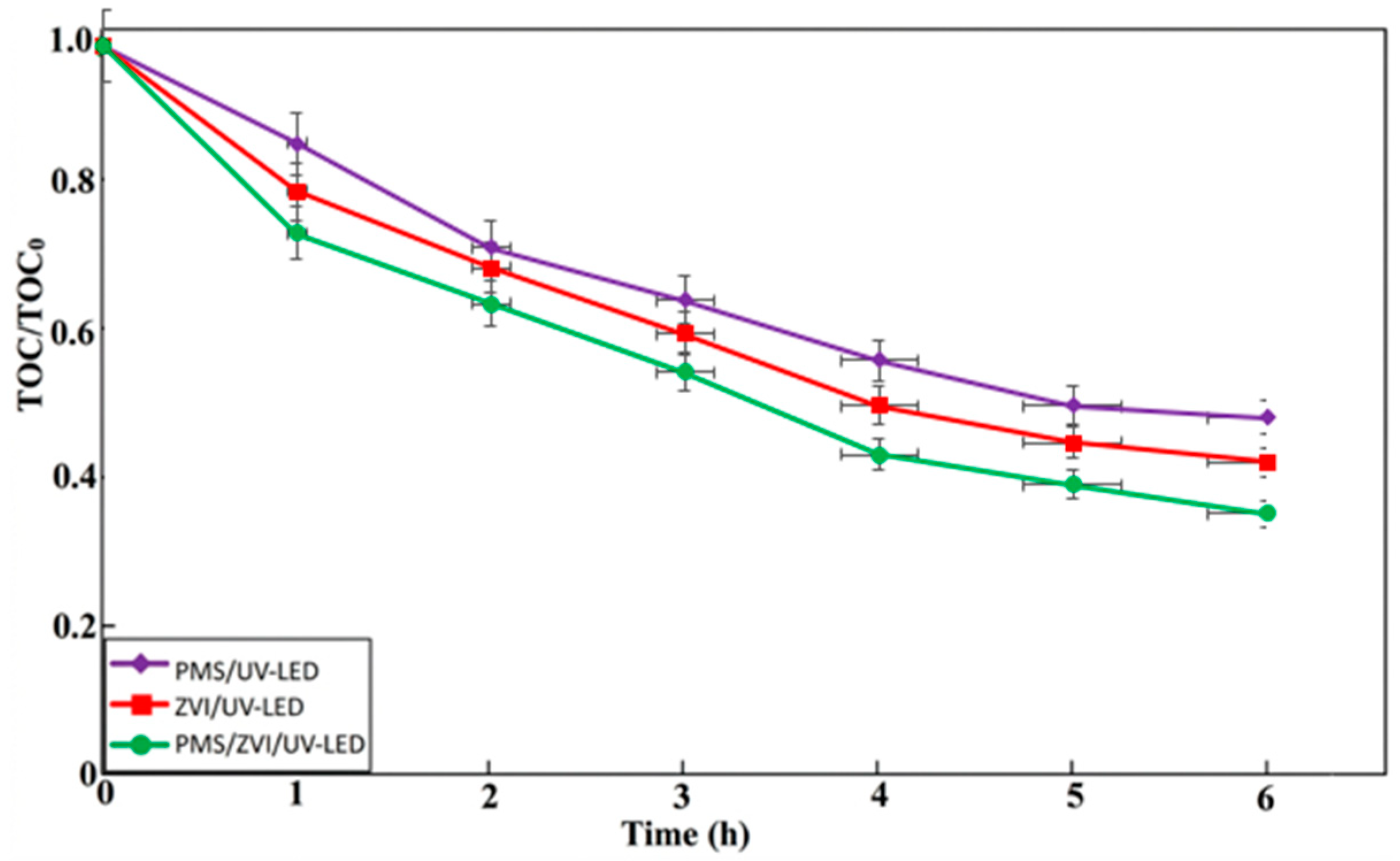
Total organic carbon (TOC) analysis is widely applied to evaluate the mineralization degree of organic contaminants by measuring the conversion of organic carbon into inorganic carbon species, mainly CO2 [55,57]. Therefore, TOC measurements were performed to assess the extent of mineralization following daunorubicin degradation, while UV–Vis and LC–MS analyses were used to monitor the disappearance of the parent compound and the formation of transformation products. Mineralization experiments were conducted over 6 h to evaluate the long-term oxidation performance of the treatment systems. Figure 8 compares TOC removal efficiencies under three different conditions: (1) PMS/UV-LED, (2) ZVI/UV-LED, and (3) PMS/ZVI/UV-LED. Among the investigated systems, the coupled PMS/ZVI/UV-LED process exhibited the highest mineralization efficiency, achieving 65% TOC removal after 6 h of irradiation, followed by ZVI/UV-LED and PMS/UV-LED, which achieved lower TOC removal efficiencies. The enhanced TOC removal in the combined system can be attributed to the synergistic contribution of ZVI-mediated PMS activation and UV-assisted oxidant activation, resulting in sustained generation of reactive species capable of further oxidizing organic transformation products.
Figure 8.
TOC removal in the PMS/ZVI/UV-LED process ([ZVI]0 = 0.3 g/L, [PMS]0 = 1.5 mM).
The higher TOC removal observed in comparison with the individual processes indicates that the integration of ZVI and UV-LED irradiation improved the oxidation of daunorubicin-derived intermediates. However, the lower TOC removal compared with the rapid disappearance of the parent daunorubicin molecule demonstrates that degradation and mineralization occurred through different oxidation stages. The initial degradation of daunorubicin primarily involves structural transformation of the parent molecule, whereas the resulting intermediates may require additional oxidation steps before complete conversion into CO2 and H2O [59]. The initial oxidation of daunorubicin likely involves transformation of susceptible functional groups and cleavage of molecular structures, whereas subsequent oxidation of intermediate products is required for further carbon removal. Although LC–MS analysis confirmed the formation of transformation products, the detailed structures and sequential oxidation pathways of these intermediates require further investigation. The observed 65% TOC removal after 6 h indicates substantial mineralization of daunorubicin-derived organic matter, although complete mineralization was not achieved under the investigated conditions. Similar incomplete mineralization has been observed in persulfate-based treatment of pharmaceutical wastewater, where high contaminant removal efficiency is achieved while residual organic carbon remains due to persistent intermediates and short-chain oxidation products [60]. From the perspective of practical application, energy consumption and reagent utilization are important parameters for evaluating the sustainability of oxidation processes. Although the present study demonstrated effective degradation, mineralization, and detoxification of daunorubicin at laboratory scale, parameters including electrical energy per order (EEO), energy consumption per mass of contaminant removed, PMS utilization efficiency, and iron consumption were not evaluated. These parameters require additional scale-up experiments and detailed techno-economic analysis. Therefore, future studies should include comprehensive sustainability assessment and comparison with other advanced oxidation processes, including UV/PMS, ZVI/PMS, UV/H2O2, and Fenton/photo-Fenton systems [61].
2.8. Cytotoxicity of Daunorubicin
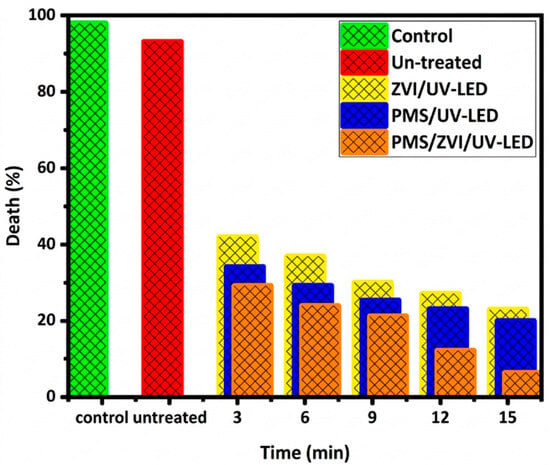
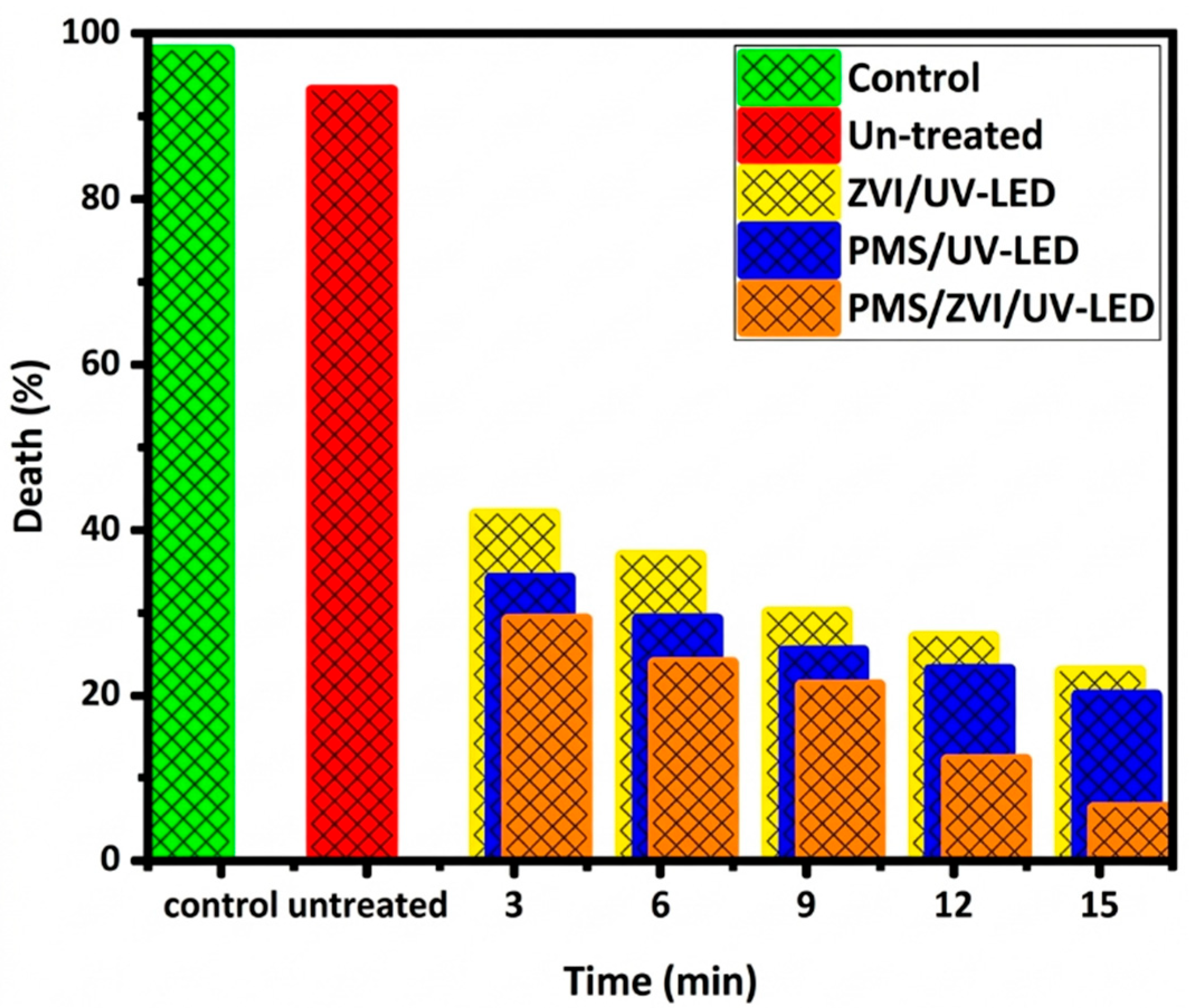
The formation of transformation products during advanced oxidation treatment requires evaluation of their potential biological effects because degradation of the parent contaminant does not necessarily guarantee reduced toxicity. Therefore, the cytotoxicity and mutagenicity of untreated and PMS/ZVI/UV-LED-treated daunorubicin solutions were evaluated using the brine shrimp lethality assay and Ames test, respectively. Before biological analysis, treated samples were quenched with sodium thiosulfate to minimize possible interference from residual oxidizing species generated during PMS activation. The obtained results are summarized in Table 2 and Table 3. The cytotoxicity variation was evaluated using the brine shrimp (Artemia salina) lethality assay, which is widely applied as a preliminary screening method for assessing the biological effects of chemical contaminants and their transformation products [10,62,63,64,65]. Untreated daunorubicin solution exhibited high toxicity, with a lethality value of 93.31 ± 1.02%, confirming the strong biological activity of the parent compound. After oxidative treatment, the lethality of the samples decreased progressively with increasing reaction time for all investigated systems (Table 2). Among the tested processes, PMS/ZVI/UV-LED showed the greatest reduction in toxicity, decreasing lethality to 6.61 ± 1.02% after 15 min, corresponding to a toxicity reduction of 92.91%. In comparison, ZVI/UV-LED and PMS/UV-LED treatments achieved toxicity reductions of 75.29% and 78.39%, respectively (Figure 9). The enhanced toxicity reduction observed in the PMS/ZVI/UV-LED system is consistent with its higher degradation efficiency and improved transformation capability. The reduction in biological effects may be associated with the oxidative transformation of daunorubicin into products with lower biological activity; however, the toxicity contribution of individual transformation products cannot be completely excluded without further identification and assessment of isolated intermediates.
Table 2.
Lethality (%) in the brine shrimp assay before and after UV-LED-based treatment. PC and NC denote positive and negative controls, respectively.
Table 3.
Ames test results showing changes in mutagenicity after UV-LED-based treatment with ZVI, PMS, and PMS/ZVI systems.
Figure 9.
Effect of ZVI/UV-LED, PMS/UV-LED, and PMS/ZVI/UV-LED treatment on daunorubicin cytotoxicity assessed by the brine shrimp lethality assay.
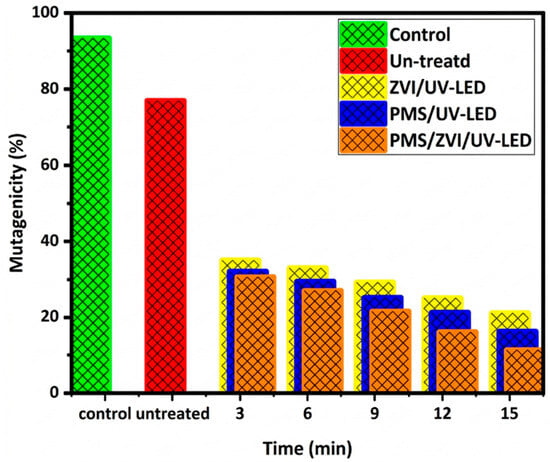
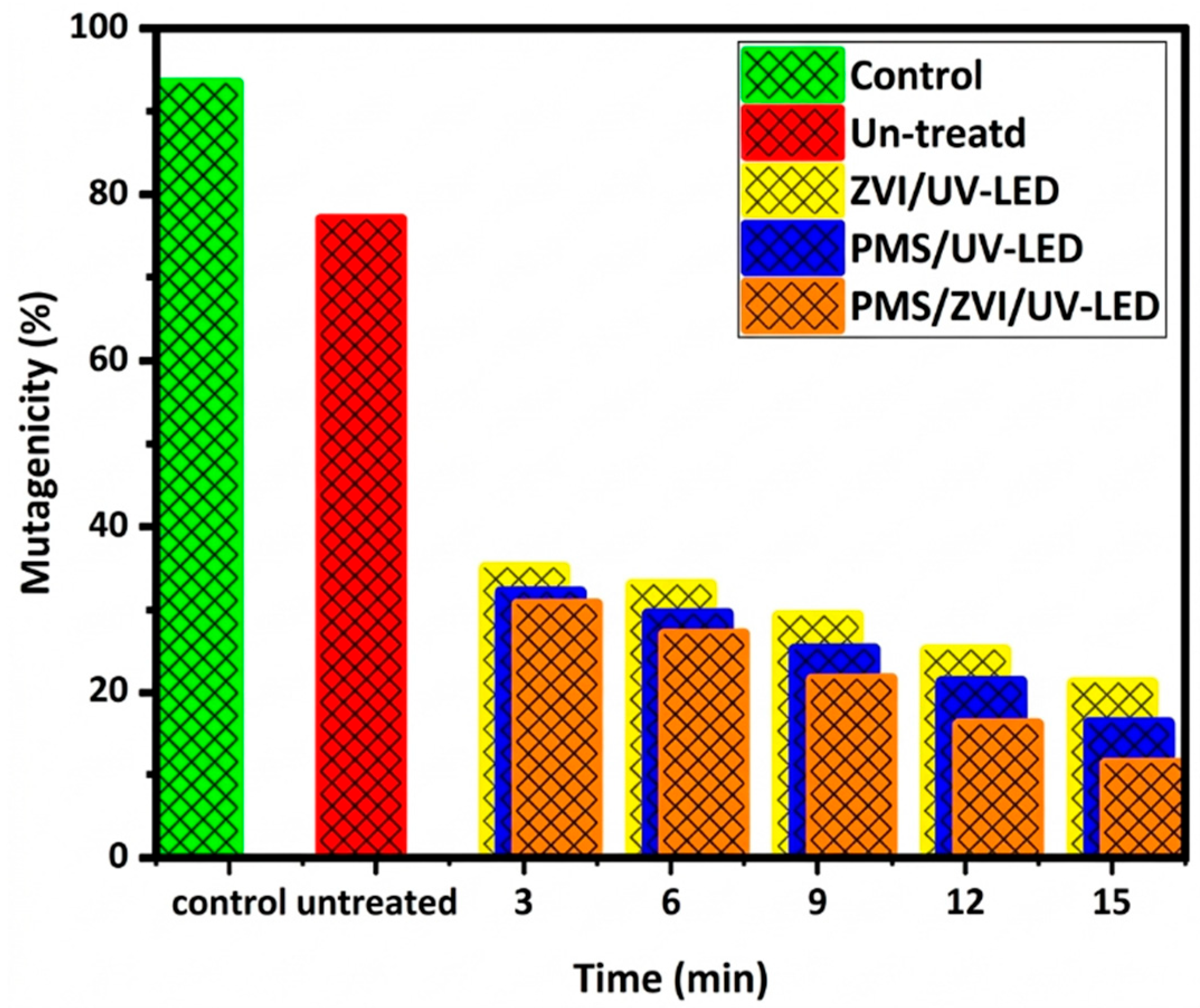
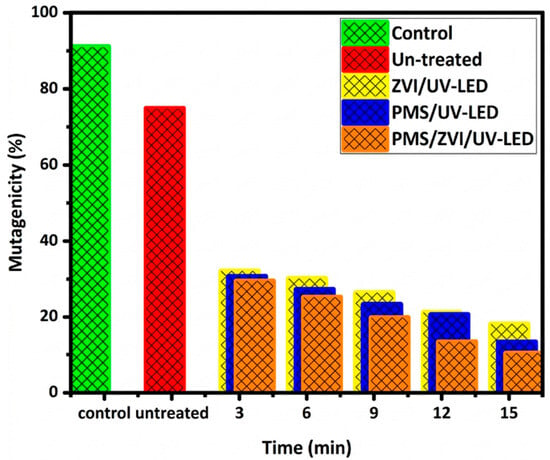
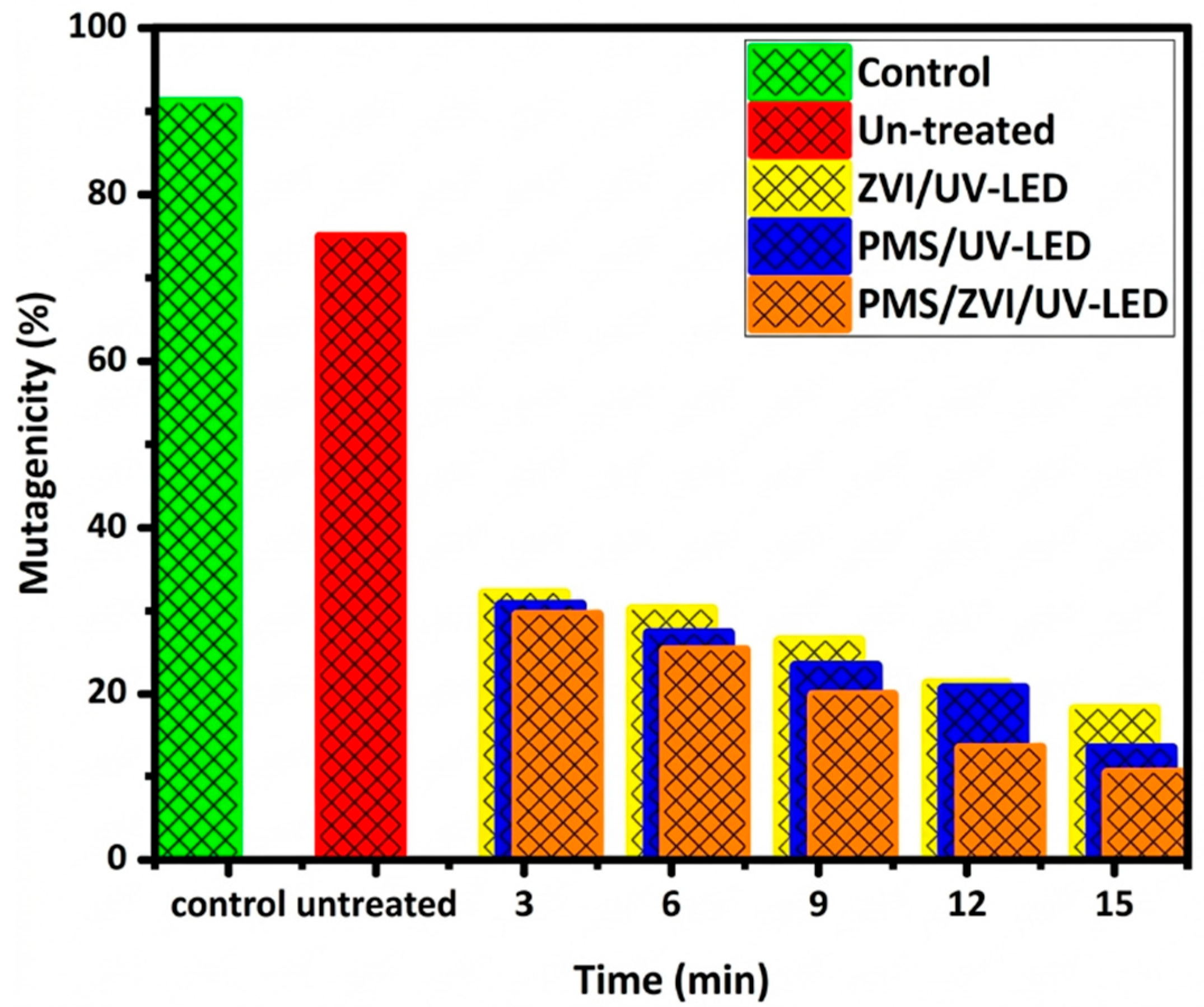
The mutagenic potential of untreated and treated samples was further investigated using the Ames test with Salmonella typhimurium TA98 and TA100 strains according to the reported method [66]. Untreated daunorubicin exhibited a strong mutagenic response in both bacterial strains, whereas all oxidative treatment systems resulted in decreased mutagenicity over the reaction period (Table 3). After 15 min of treatment, the PMS/ZVI/UV-LED system achieved the highest reduction in mutagenic response, reaching reductions of 84.99% and 85.84% for TA98 and TA100 strains, respectively (Figure 10 and Figure 11). The improved reduction in mutagenicity after PMS/ZVI/UV-LED treatment suggests that the integrated oxidation process effectively transformed daunorubicin into products with substantially lower mutagenic activity. This behavior agrees with the LC–MS results showing transformation of the parent molecule during treatment [67]. Nevertheless, because LC–MS analysis identifies transformation signals rather than complete toxicological profiles of all intermediates, further studies using advanced toxicity assessment methods and individual intermediate evaluation are recommended.
Figure 10.
Effect of ZVI/UV-LED, PMS/UV-LED, and PMS/ZVI/UV-LED treatment on daunorubicin mutagenicity using the TA98 bacterial strain.
Figure 11.
Effect of ZVI/UV-LED, PMS/UV-LED, and PMS/ZVI/UV-LED treatment on daunorubicin mutagenicity using the TA100 bacterial strain.
2.9. Fragmentation Pathways
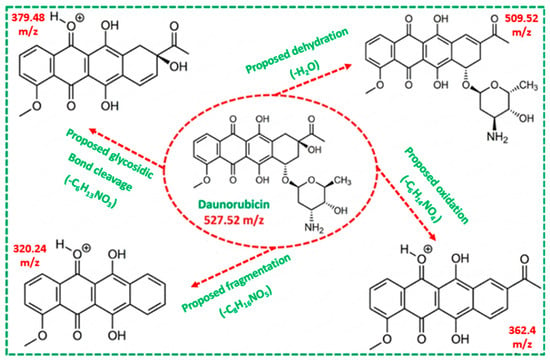
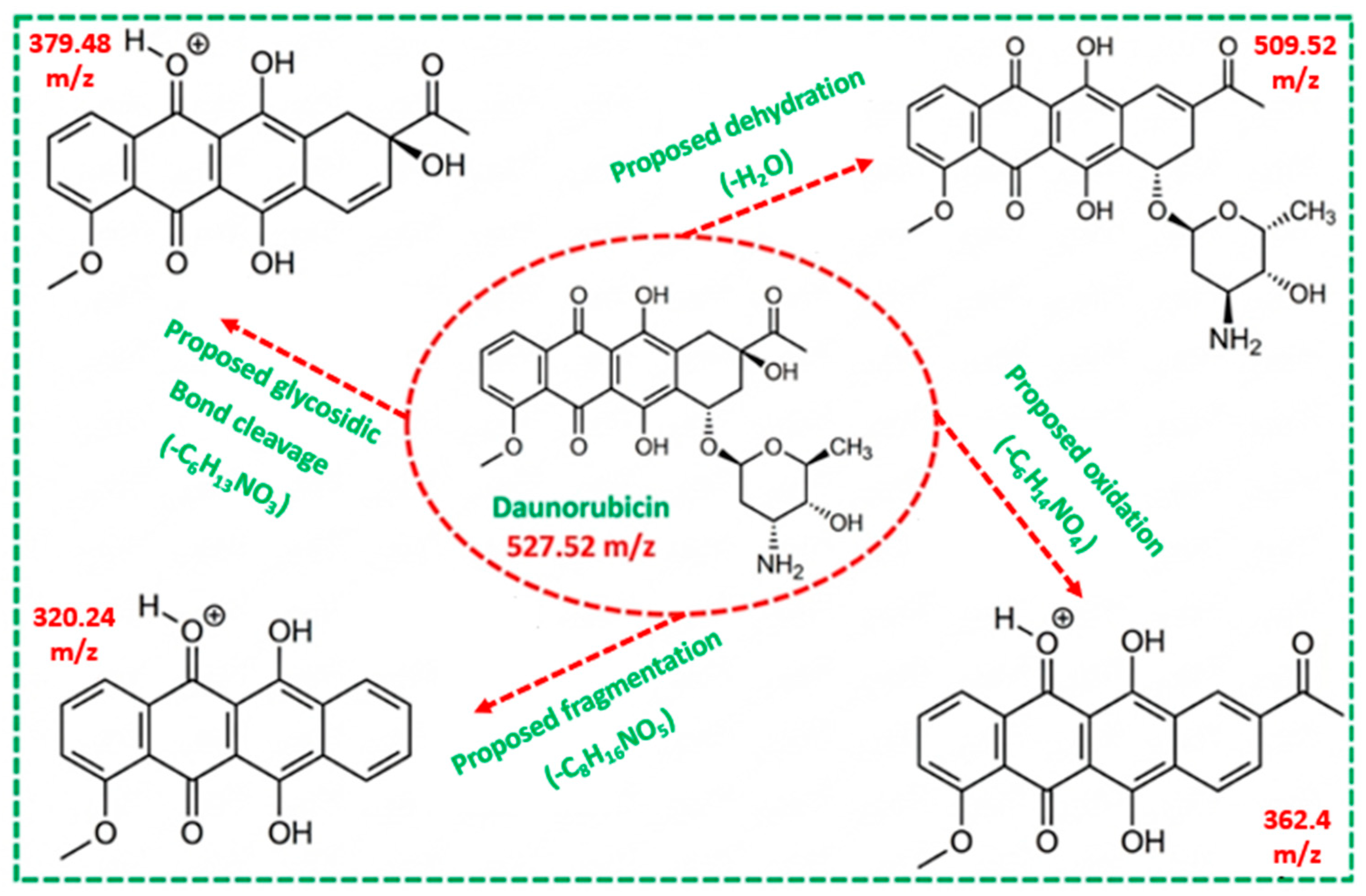
The transformation behavior of daunorubicin during PMS/ZVI/UV-LED treatment was investigated by LC–MS analysis under optimized conditions (0.3 g/L ZVI and 1.5 mM PMS). The analysis was performed in positive electrospray ionization (ESI) mode using data-dependent acquisition. Several transformation-related signals were detected after oxidative treatment, and their tentative assignments were proposed based on the observed mass-to-charge ratios (m/z), mass differences, and previously reported transformation behavior of anthracycline compounds (Scheme 1). Because detailed high-resolution MS/MS spectra and authentic standards were not available, these signals are considered plausible transformation products rather than definitively identified molecular structures. The parent daunorubicin molecule was detected at m/z 527.52, corresponding to the protonated molecular ion ([M + H]+) under positive ESI conditions. A transformation signal at m/z 509.52 was tentatively assigned to a dehydration product associated with the loss of H2O from the parent molecule. Similar dehydration reactions have been reported during oxidative transformation of anthracycline compounds, which contain multiple oxygenated functional groups susceptible to structural modification under oxidative conditions [67]. The signal detected at m/z 379.48 was tentatively attributed to a transformation pathway involving modification or cleavage of the glycosidic linkage connecting the daunosamine moiety and the anthracycline core. Cleavage or alteration of this linkage has been frequently reported as an important transformation step for anthracycline antibiotics because the sugar moiety represents a structurally vulnerable region during oxidative degradation [68]. However, the exact molecular structure corresponding to this signal cannot be confirmed solely from the obtained LC–MS data.
Scheme 1.
Proposed tentative fragments of daunorubicin generated during PMS/ZVI/UV-LED treatment ([Daunorubicin]0 = 10 ppm, [ZVI]0 = 0.3 g/L, [PMS]0 = 1.5 mM).
Additional transformation signals at m/z 362.40 and 320.24 were assigned as lower-molecular-weight products potentially generated through further oxidation and fragmentation of the anthracycline framework. These products may result from progressive oxidation of functional groups and structural rearrangement; however, specific reaction pathways, including hydroxylation, side-chain modification, or aromatic-ring cleavage, require further confirmation using advanced MS/MS analysis. Moreover, LC–MS signals may represent both solution-phase transformation products and in-source fragmentation products generated during electrospray ionization; therefore, the proposed assignments should be interpreted cautiously. Previous studies on structurally related anthracycline compounds, particularly doxorubicin, have demonstrated that advanced oxidation and photocatalytic processes commonly involve sequential reactions including oxidation of functional groups, modification of side chains, and loss of the sugar moiety, leading to progressively smaller transformation products [69]. Therefore, based on the detected LC–MS signals, the degradation of daunorubicin in the PMS/ZVI/UV-LED system was proposed to proceed through a series of oxidative transformations, including dehydration, structural modification of the glycosidic region, and subsequent fragmentation of the anthracycline skeleton. The formation of these intermediate products is consistent with the difference observed between the rapid disappearance of the parent daunorubicin molecule and slower mineralization. Although complete degradation of the parent compound occurred rapidly, further oxidation of the generated intermediates was required for additional carbon removal, resulting in partial mineralization rather than immediate conversion into inorganic carbon species. This behavior agrees with the observed TOC reduction of 65% after 6 h of irradiation, indicating substantial but incomplete oxidation of daunorubicin-derived organic matter. Further studies using high-resolution tandem mass spectrometry and toxicity evaluation of individual intermediates are necessary to establish the detailed transformation pathways and environmental relevance of the identified products.
2.10. Fe2+ Evaluation and Iron Leaching During PMS/ZVI/UV-LED Treatment
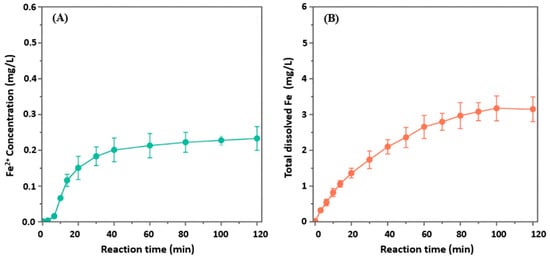
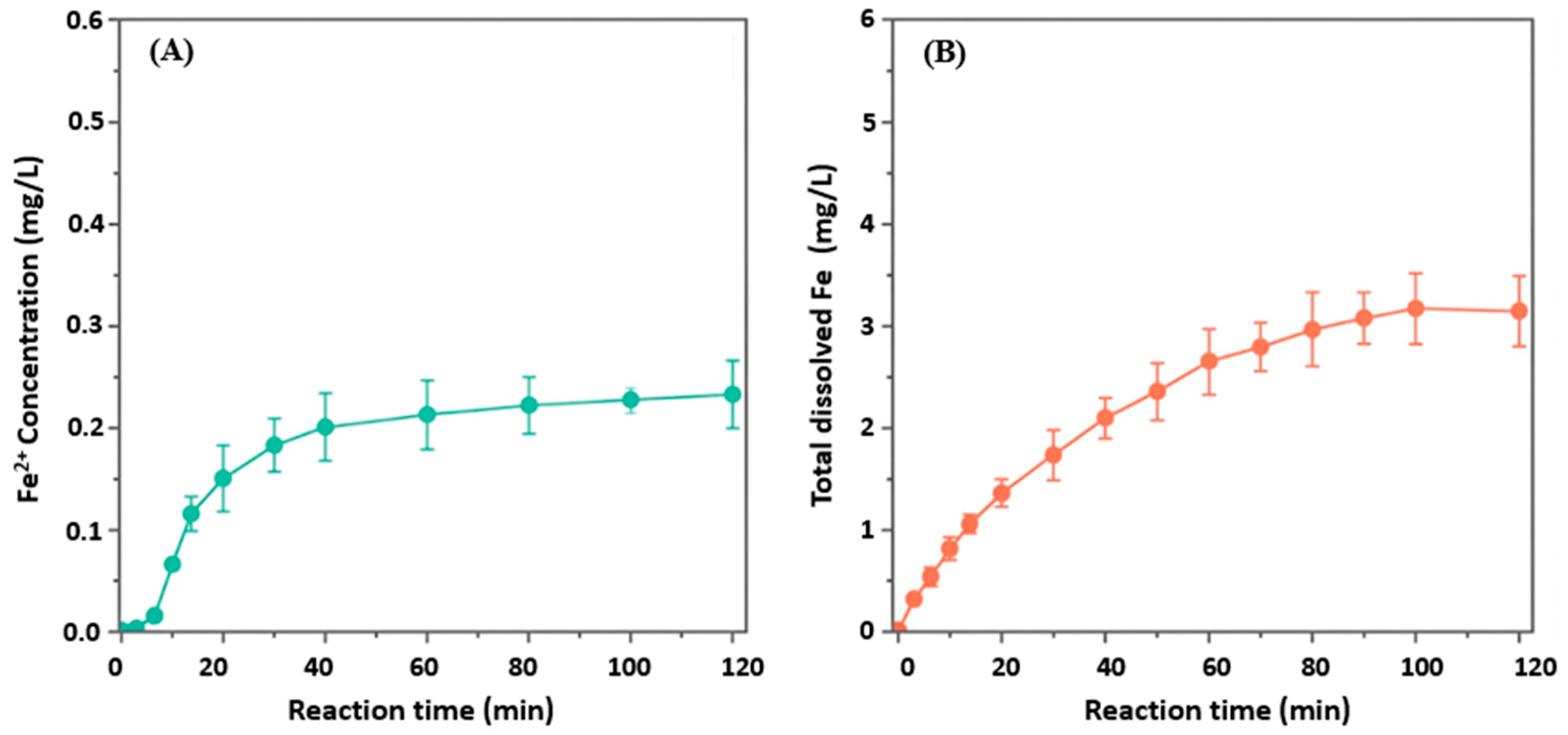
To evaluate the role of iron species in the PMS/ZVI/UV-LED system, the concentrations of dissolved Fe2+ and total dissolved iron were monitored during the reaction (Figure 12). The Fe2+ concentration increased rapidly during the initial stage of treatment and gradually reached a relatively stable level after approximately 30 min (Figure 12A). This behavior indicates continuous Fe2+ generation through ZVI corrosion and electron-transfer reactions (Equation (15)), which is a characteristic feature of ZVI-assisted persulfate/peroxymonosulfate activation systems [70]:
Fe0 → Fe2+ + 2e−
Figure 12.
Evolution of Fe2+ concentration (A) and dissolved iron (B) during PMS/ZVI/UV-LED treatment.
The generation of dissolved Fe2+ is important because Fe2+ can activate PMS through electron transfer, resulting in the formation of reactive oxidizing species such as sulfate radicals and hydroxyl radicals [70]. The subsequent stabilization of Fe2+ concentration suggests that Fe2+ production from ZVI oxidation was accompanied by simultaneous consumption through PMS activation and oxidation to Fe3+. Therefore, the measured Fe2+ concentration represents a dynamic balance between iron dissolution, Fe2+ oxidation, and iron-mediated PMS activation processes rather than only the dissolution rate of ZVI [35]. The total dissolved iron concentration gradually increased throughout the reaction and approached a stable value at longer reaction times (Figure 12B), confirming the progressive dissolution and transformation of iron species during the oxidation process. The relatively limited increase in dissolved iron compared with the initial amount of ZVI indicates that only a fraction of the iron material participated in solution-phase reactions during the treatment period. Previous studies have shown that ZVI-based PMS activation involves both heterogeneous surface reactions and homogeneous reactions mediated by released Fe2+, with the contribution of each pathway depending on pH, surface properties, and iron cycling efficiency [35,71]. The coexistence of dissolved and solid-phase iron species may therefore contribute to PMS activation through complementary pathways. However, excessive oxidation of Fe2+ to Fe3+ may reduce catalytic efficiency because Fe3+ regeneration is relatively slower and can promote the formation of iron hydroxide/oxyhydroxide species, which may passivate the ZVI surface and hinder electron transfer processes [72].
2.11. Reactive Species Identification
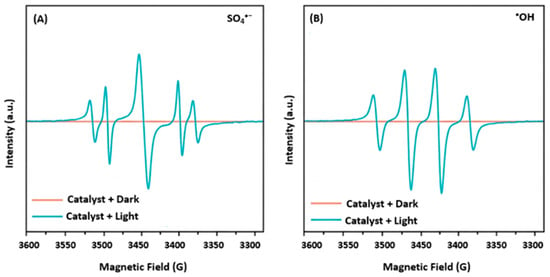
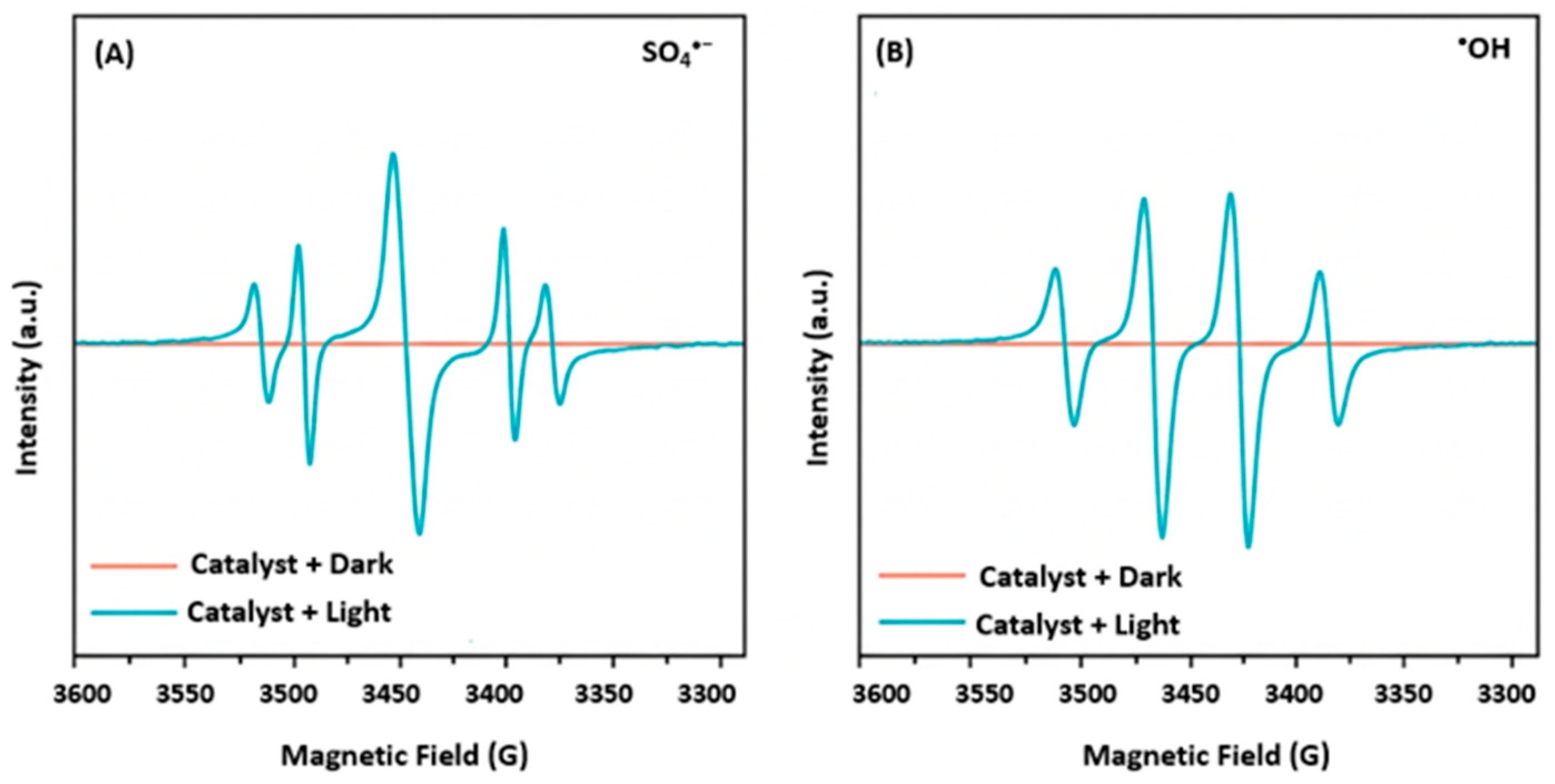
To investigate the reactive species involved in daunorubicin degradation, electron spin resonance (ESR) spectroscopy was performed using 5,5-dimethyl-1-pyrroline N-oxide (DMPO) as a spin-trapping agent. ESR analysis was conducted under the optimized PMS/ZVI/UV-LED conditions to provide direct evidence of short-lived radical species generated during the oxidation process. DMPO-based ESR analysis is widely used for identifying sulfate radicals (SO4•−) and hydroxyl radicals (•OH) in PMS-based advanced oxidation systems [73]. As shown in Figure 13, characteristic DMPO adduct signals corresponding to sulfate radicals (DMPO–SO4•−) and hydroxyl radicals (DMPO–•OH) were detected in the PMS/ZVI/UV-LED system. The formation of these radical species confirms the activation of PMS during the coupled oxidation process. In iron-based PMS activation systems, dissolved Fe2+ released from ZVI corrosion can transfer electrons to PMS, resulting in the generation of SO4•− and other reactive oxygen species through Fe2+/Fe3+ cycling [35]. UV-LED irradiation may further enhance PMS activation and facilitate iron redox regeneration, contributing to sustained reactive-species formation [73].
Figure 13.
ESR spectra of (A) sulfate radicals and (B) hydroxyl radicals trapped by DMPO.
The detection of DMPO–•OH signals indicate that hydroxyl radicals were also generated during treatment. The formation of •OH may occur through secondary conversion reactions of sulfate radicals with water molecules, iron-mediated pathways, or photo-assisted reactions during PMS activation. Previous studies have demonstrated that PMS-based oxidation systems can generate both SO4•− and •OH depending on the catalyst composition, solution conditions, and activation pathway [61]. However, ESR signal intensity is influenced by several factors, including radical lifetime, spin-trapping efficiency, and reaction conditions. Therefore, ESR analysis provides evidence for the presence of reactive species but does not directly quantify the relative contribution of each radical toward pollutant degradation. Additional approaches, such as radical scavenging experiments, kinetic analysis, or isotope-labeling studies, are required for a more accurate evaluation of individual reactive species contributions [35,43]. The ESR results are consistent with the high degradation efficiency observed in the PMS/ZVI/UV-LED system and support the involvement of radical-mediated oxidation pathways during daunorubicin transformation (Scheme 2). The coexistence of sulfate and hydroxyl radicals suggests that multiple reactive species participate in the oxidation process. Among them, sulfate radicals are considered important oxidizing species in PMS-based systems because of their high oxidation potential and ability to effectively degrade various refractory organic contaminants [35].
Scheme 2.
Possible degradation mechanism.
3. Materials and Methods
3.1. Chemicals
Daunorubicin (99% purity) was obtained from Pharmedic Laboratories (Pvt), Pakistan, and used without further purification. Commercial Oxone salt (KHSO5·0.5KHSO4·0.5K2SO4), used as the source of peroxymonosulfate (PMS), and zero-valent iron powder (ZVI, Fe0; particle size: 10 μm) were purchased from Merck, Darmstadt, Germany. Acetonitrile (HPLC grade) and formic acid were supplied by Tedia Company (Fairfield, OH, USA) for LC–MS analysis. Hydrochloric acid (37%) and sodium hydroxide (≥95%) were used for pH adjustment. Methanol (≥99.8%) and sodium thiosulfate (95.5%) were purchased from Sigma–Aldrich and used for LC–MS preparation and quenching of residual oxidizing species before analytical measurements, respectively. Sodium salts, including NaH2PO4, Na2SO4, NaHCO3, and NaNO3 (≥99.8%, Sigma-Aldrich, St. Louis, MO, USA), were used to evaluate the effects of common inorganic anions on the degradation process. 5,5-Dimethyl-1-pyrroline N-oxide (DMPO) was used as a spin-trapping agent for electron spin resonance (ESR) analysis. All solutions were prepared using ultrapure water.
3.2. UV-LED and Experimental Design
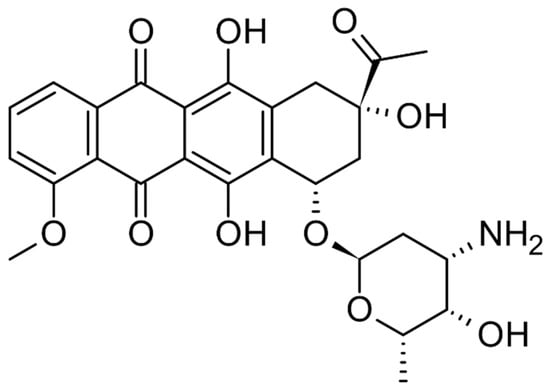
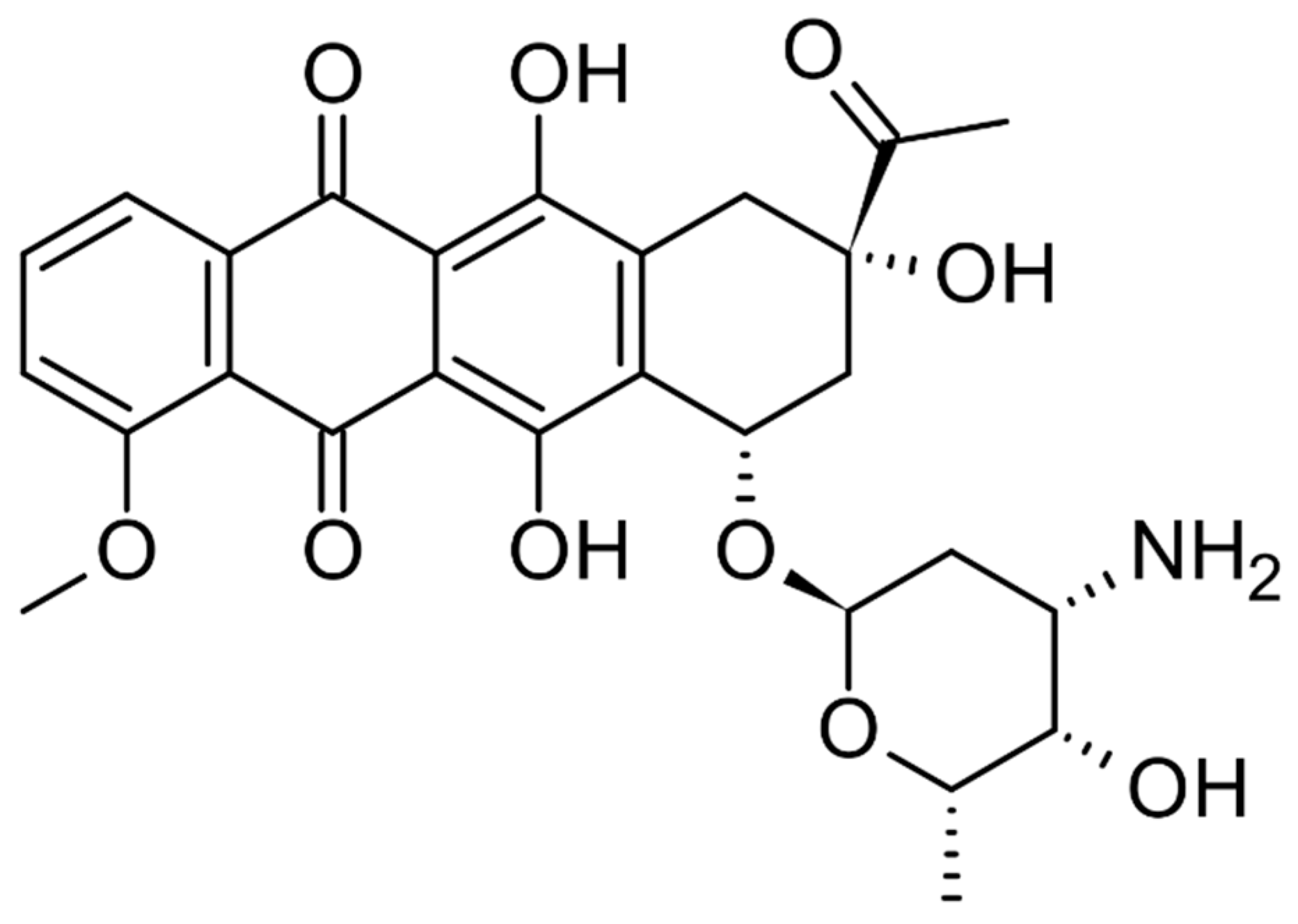
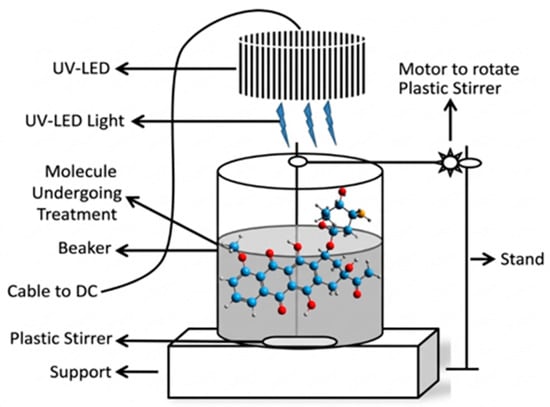
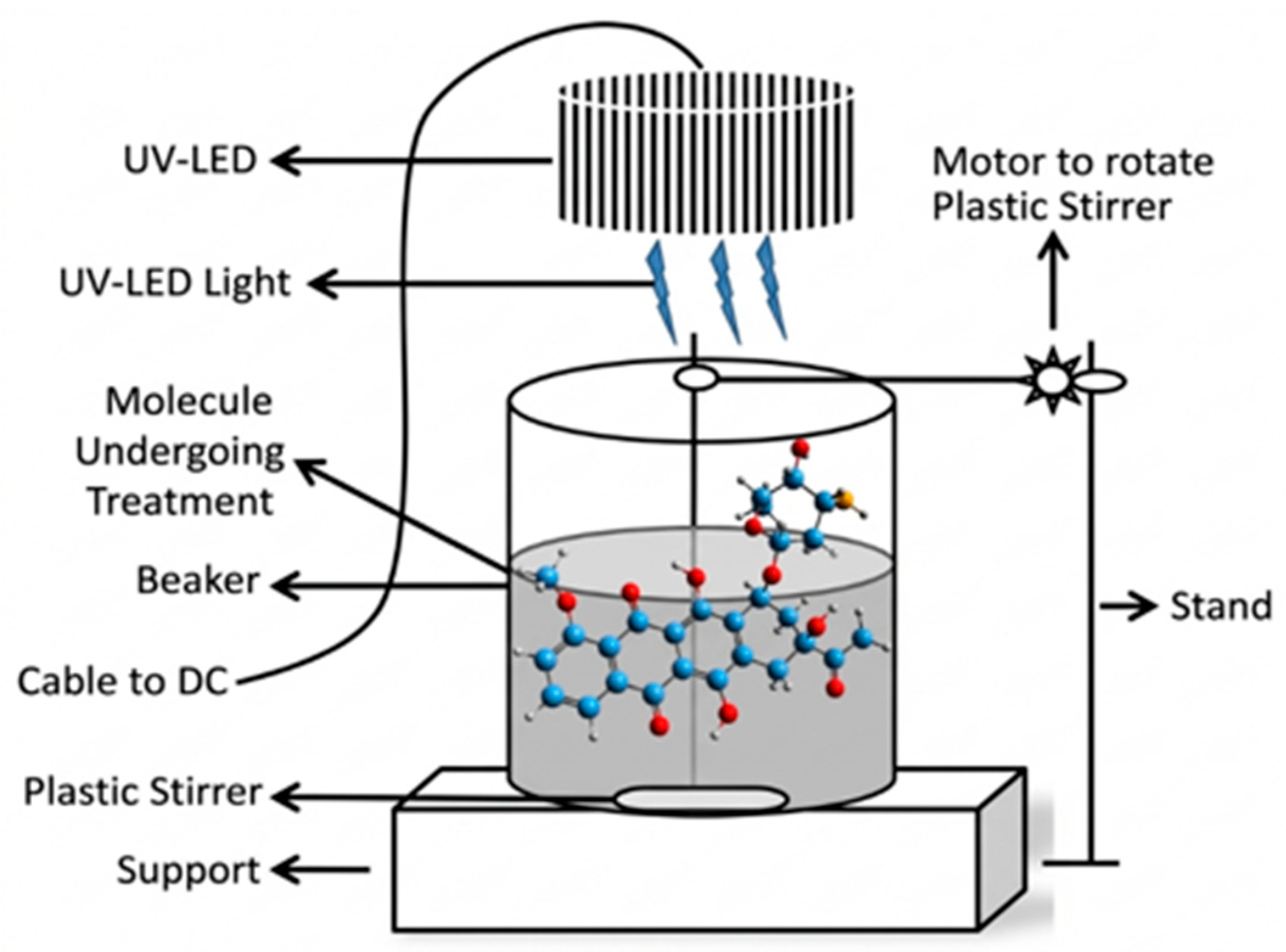
A 100 W UV-LED lamp emitting at 365 nm (TAOYUAN Electron [HK] Limited, Hong Kong) was used as the irradiation source for PMS/ZVI-assisted daunorubicin degradation. The selected wavelength was based on previous reports demonstrating that 365 nm UV irradiation can promote PMS activation and enhance reactive-species generation in photo-assisted oxidation processes [74,75]. For each experiment, a predetermined amount of ZVI and daunorubicin (Figure 14) solution was transferred into a 150 mL quartz beaker and stirred in the dark for 30 min to establish adsorption–desorption equilibrium between daunorubicin and the ZVI surface (Figure 15). Before initiating the oxidation reaction, the UV-LED lamp was switched on for 30 min to ensure stable light emission. The reaction was initiated by adding PMS to the suspension followed by exposure to UV-LED irradiation. The reaction mixture was continuously stirred to maintain a uniform suspension of ZVI particles throughout the treatment process. At selected reaction intervals, 1 mL aliquots were withdrawn, immediately filtered, and treated with sodium thiosulfate to quench residual oxidizing species before subsequent analysis. The UV-LED lamp was positioned 8 cm above the solution surface. The initial pH of the reaction solution was adjusted using 1 M HCl or 1 M NaOH. All experiments were conducted in an air-conditioned laboratory at 23 ± 2 °C to minimize temperature variations.
Figure 14.
Chemical structure of daunorubicin.
Figure 15.
Experimental setup.
3.3. Analytical Procedures
The residual concentration of daunorubicin during PMS/ZVI/UV-LED treatment was monitored using a UV–Vis spectrophotometer (Biochrom, Libra S35) by measuring the characteristic absorption band of the anthracycline chromophore at 480 nm. The apparent degradation efficiency was calculated based on the decrease in absorbance intensity according to Equation (16). The reduction in the characteristic absorption band at 480 nm was used to monitor the disappearance of the parent daunorubicin chromophore during treatment. Liquid chromatography–mass spectrometry (LC–MS) analysis was subsequently employed to investigate the transformation behavior of daunorubicin and identify the corresponding transformation signals.
where C0 is the initial concentration of daunorubicin (ppm), and Ct represents the concentration at reaction time t (min) [76,77]. The solution pH was measured using a digital pH meter (HANNA Instruments, HI 253, Woonsocket, RI, USA). The extent of mineralization was evaluated by measuring total organic carbon (TOC) using a TOC-L analyzer (Shimadzu Corporation, Kyoto, Japan). LC–MS analysis was performed using a Thermo LCQ Deca-MS spectrometer (Thermo Fisher Scientific, San Jose, CA, USA), equipped with a Shiseido Capcell Pak MG III C18 column (Shiseido Co., Ltd., Tokyo, Japan) (2.0 mm internal diameter × 50 mm length, 3 μm particle size) and a Phenomenex guard column (Torrance, CA, USA) [78]. The mobile phase consisted of solvent A (water containing formic acid) and solvent B (methanol containing formic acid).
Degradation (%) = [(C0 − Ct)/C0] × 100
3.4. Determination of Fe2+ Concentration and Iron Leaching
The concentration of dissolved Fe2+ during PMS/ZVI/UV-LED treatment was monitored using the 1,10-phenanthroline colorimetric method. Fe2+ release and Fe2+/Fe3+ cycling are important factors influencing PMS activation efficiency in iron-based oxidation systems because dissolved Fe2+ can participate in PMS activation and reactive species generation [70]. At selected reaction times, aliquots were collected and filtered through a 0.22 μm membrane filter to remove suspended ZVI particles. The filtrates were then reacted with 1,10-phenanthroline reagent, and the absorbance of the Fe2+–phenanthroline complex was measured at 510 nm using a UV–Vis spectrophotometer. The Fe2+ concentration was quantified using a calibration curve prepared from Fe2+ standard solutions. The release of dissolved iron species during PMS activation was evaluated by measuring the total dissolved Fe concentration in the filtered reaction samples using inductively coupled plasma optical emission spectrometry (ICP-OES). The measured dissolved iron concentration was used to assess the extent of iron dissolution and Fe species transformation during the oxidation process [29].
3.5. Toxicity and Mutagenicity Evaluation
The biological effects of daunorubicin before and after PMS/ZVI/UV-LED treatment were evaluated using the brine shrimp lethality assay and Ames mutagenicity test. The brine shrimp lethality assay was performed according to the method reported by Muneer et al. [2]. After oxidative treatment, samples were collected and treated with sodium thiosulfate to quench residual oxidizing species before biological analysis. This pretreatment was applied to reduce potential interference from remaining PMS-derived oxidants during toxicity evaluation. Brine shrimp eggs were hatched in saline water, and a 100 μL suspension of nauplii was exposed to untreated or treated samples for 24 h at 25 °C. The number of dead nauplii was determined using a binocular microscope, and lethality was calculated according to Equation (17).
Lethality (%) = (number of dead nauplii/total number of nauplii) × 100
The mutagenic potential of untreated and treated samples was evaluated using the Ames test with Salmonella typhimurium TA98 and TA100 strains according to the reported method [47]. Blank and control experiments were performed to verify the reliability of the assay and evaluate possible contributions from the treatment matrix. The mutagenic response of treated samples was compared with that of untreated daunorubicin solutions to assess changes in biological activity after PMS/ZVI/UV-LED treatment. All toxicity and mutagenicity experiments were conducted in triplicate, and the results were expressed as mean values [79].
3.6. Statistical Analysis
Response surface methodology (RSM) based on a quadratic polynomial model was employed to evaluate the effects of individual operating parameters and their interactions on daunorubicin degradation efficiency. Design-Expert software (version 13) was used for experimental design, model fitting, regression analysis, statistical assessment, and optimization of the reaction conditions. The adequacy and significance of the developed model were evaluated by analysis of variance (ANOVA), including the model F-value, p-value, lack-of-fit test, coefficient of determination (R2), adjusted R2, and predicted R2 values. The optimal operating conditions predicted by the RSM model were subsequently verified through independent degradation experiments to evaluate the agreement between predicted and experimental responses [78].
4. Conclusions
This study demonstrated that the UV-LED-assisted PMS/ZVI system is an effective approach for the degradation and detoxification of daunorubicin in aqueous environments. Under optimized conditions (pH 3, PMS 1.5 mM, ZVI 0.3 g/L, and daunorubicin 10 ppm), nearly complete degradation was achieved within 15 min, following pseudo-first-order kinetics. LC–MS analysis revealed the formation of transformation products, suggesting sequential oxidative modification and fragmentation of the daunorubicin structure. The process achieved 65% TOC removal after 6 h, indicating substantial but incomplete mineralization. Toxicity and mutagenicity assessments confirmed a significant reduction in biological effects after treatment. Mechanistic investigations demonstrated the involvement of ZVI-mediated PMS activation and reactive species generation, particularly sulfate radicals, in daunorubicin degradation. Overall, the PMS/ZVI/UV-LED system represents a promising strategy for treating pharmaceutical contaminants; however, further studies using real wastewater matrices and comprehensive energy and toxicity assessments are required for practical application.
Author Contributions
Writing—review and editing, S.K.A. and L.M.; Writing—original draft, M.I.K.; Supervision, M.I.A.; Visualization, Y.H. and L.M.; Supervision. M.S.; Investigation, F.A.M.A.; Conceptualization, H.J.A.; Project administration, L.M. All authors have read and agreed to the published version of the manuscript.
Funding
This article is derived from a research grant funded by the Research, Development, and Innovation Authority (RDIA)—Kingdom of Saudi Arabia—with grant number (12894-JAZZAN-2023-JZU-R-2-1-SE).
Data Availability Statement
The datasets used and analyzed during the current study are available from the corresponding authors upon reasonable request.
Acknowledgments
This article is derived from a research grant funded by the Research, Development, and Innovation Authority (RDIA)—Kingdom of Saudi Arabia—with grant number (12894-JAZZAN-2023-JZU-R-2-1-SE). During the preparation of this manuscript, the authors used AI-assisted language tools to improve the clarity, grammar, readability, and phrasing of the text. The tool was not used to generate original scientific data, perform data analysis, create figures, interpret results, select references, or formulate scientific conclusions. After using the tool, the authors carefully reviewed, edited, and verified the manuscript content and take full responsibility for the accuracy, originality, integrity, and scientific validity of the work.
Conflicts of Interest
The authors declare no conflicts of interest.
References
- Akram, M.; Muneer, M.; Kanjal, M.I.; Jamal, M.A.; ul Haq, E.; Bano, A.; Ullah, S.; Ibrahim, A.B. Assessment of toxicity and mutagenicity following doxorubicin degradation via advanced oxidation processes (AOPs). Radiat. Phys. Chem. 2025, 236, 112943. [Google Scholar] [CrossRef] [Scilit]
- Muneer, M.; Kanjal, M.I.; Saeed, M.; Jamal, M.A.; Haq, A.U.; Iqbal, M.; Haq, E.U.; Ali, S. Degradation of moxifloxacin by ionizing radiation and toxicity assessment. Z. Phys. Chem. 2021, 235, 1629–1643. [Google Scholar] [CrossRef] [Scilit]
- Kanjal, M.I.; Muneer, M.; Bhatti, I.A.; Saeed, M.; Den, N.Z.U.; ul Haq, E.; Nisar, J.; Iqbal, M. Gamma and UV radiation induced degradation of methotrexate (anti-rheumatic drug) in aqueous solution and conditions optimization. Desalin. Water Treat. 2020, 191, 332–341. [Google Scholar] [CrossRef] [Scilit]
- Sahu, U.K.; Ji, W.; Liang, Y.; Ma, H.; Pu, S. Mechanism enhanced active biochar support magnetic nano zero-valent iron for efficient removal of Cr (VI) from simulated polluted water. J. Environ. Chem. Eng. 2022, 10, 107077. [Google Scholar] [CrossRef] [Scilit]
- Feng, C.; Wang, Y.; Xu, J.; Zheng, Y.; Zhou, W.; Wang, Y.; Luo, C. Precisely tailoring molecular structure of doxorubicin prodrugs to enable stable nanoassembly, rapid activation, and potent antitumor effect. Pharmaceutics 2024, 16, 1582. [Google Scholar] [CrossRef] [Scilit] [PubMed]
- Mello Souza, D.; Reichert, J.F.; Ramos do Nascimento, V.; Figueiredo Martins, A. Ozonation and UV photolysis for removing anticancer drug residues from hospital wastewater. J. Environ. Sci. Health Part A 2022, 57, 635–644. [Google Scholar] [CrossRef] [Scilit] [PubMed]
- Berbentea, A.; Ciopec, M.; Duteanu, N.; Negrea, A.; Negrea, P.; Nemeş, N.S.; Pascu, B.; Svera, P.; Ianăşi, C.; Duda Seiman, D.M. Advanced Photocatalytic Degradation of Cytarabine from Pharmaceutical Wastewaters. Toxics 2024, 12, 405. [Google Scholar] [CrossRef] [Scilit] [PubMed]
- Ullah, S.; Habib, M.A.; Muneer, M.; Kanjal, M.I.; Ahmad, G.; Ibrahim, A.B.M.; Zulqarnain, R.M.; Mouni, L. A Comprehensive Study on Radiation-Assisted Detoxification of Hazardous Industrial Effluents: A Statistical Approach. Water Air Soil Pollut. 2026, 237, 370. [Google Scholar] [CrossRef] [Scilit]
- Tebbi, S.O.; Amrane, A.; Boudraa, R.; Bollinger, J.-C.; Salvestrini, S.; Kanjal, M.I.; Tiri, A.; Belkhiri, L.; Alharthi, M.N.; Mouni, L. Green synthesis of sustainable and cost-effective TiO2-SiO2-Fe2O3 heterojunction nanocomposites for Rhodamine B dye degradation under sunlight. Water 2025, 17, 168. [Google Scholar] [CrossRef] [Scilit]
- Tang, S.; Xu, L.; Yu, X.; Chen, S.; Li, H.; Huang, Y.; Niu, J. Degradation of anticancer drug capecitabine in aquatic media by three advanced oxidation processes: Mechanisms, toxicity changes and energy cost evaluation. Chem. Eng. J. 2021, 413, 127489. [Google Scholar] [CrossRef] [Scilit]
- Khan, M.A.; Habib, M.A.; Kanjal, M.I.; Muneer, M.; Jamal, M.A.; Bokhari, T.H.; Irshad, U.; Ibrahim, A.B.M. Synergistic Degradation and Cytotoxicity Mitigation of Meloxicam Using UV/Perovskite/H2O2 and Gamma/H2O2: A Comparative Study. Water Air Soil Pollut. 2026, 237, 573. [Google Scholar] [CrossRef] [Scilit]
- Kanjal, M.I.; Muneer, M.; Ullah, S.; Sabir, S.; Boudraa, R.; Amrane, A.; Mouni, L. UV radiation-induced degradation of moxifloxacin: Toxicity evaluation and conditions optimization. Euro-Mediterr. J. Environ. Integr. 2025, 10, 2231–2243. [Google Scholar] [CrossRef] [Scilit]
- Ma, Y.; Wan, J.; Tang, H.; Zhang, Y.; Chen, Z.; Chen, X.; Wei, K.; Shi, Z.; Ma, W. Green physical metallurgy approach for capturing silver from waste silicon photovoltaic cells using a tin-bismuth melt. Chem. Eng. J. 2026, 545, 179598. [Google Scholar] [CrossRef] [Scilit]
- Roslan, N.N.; Lau, H.L.H.; Suhaimi, N.A.A.; Shahri, N.N.M.; Verinda, S.B.; Nur, M. Recent advances in advanced oxidation processes for degrading pharmaceuticals in wastewater—A review. Catalysts 2024, 14, 189. [Google Scholar] [CrossRef] [Scilit]
- Lutterbeck, C.A.; Machado, Ê.L.; Kümmerer, K. Photodegradation of the antineoplastic cyclophosphamide: A comparative study of the efficiencies of UV/H2O2, UV/Fe2+/H2O2 and UV/TiO2 processes. Chemosphere 2015, 120, 538–546. [Google Scholar] [CrossRef] [Scilit] [PubMed]
- Kanjal, M.I.; Afzal, M.W.; Sabir, S.; Yasmin, I.; Li, H.-Y.; Luo, H.; Song, L.-J.; Pang, J.-Y.; Bai, Y.; Dang, D.-B. Dual-step construction of oxygen-vacancy-rich TiO2 for efficient visible-light desulfurization. Sep. Purif. Technol. 2025, 377, 134268. [Google Scholar] [CrossRef] [Scilit]
- Lee, W.; Goh, P.; Lau, W.; Ismail, A. Removal of pharmaceutical contaminants from aqueous medium: A state-of-the-art review based on paracetamol. Arab. J. Sci. Eng. 2020, 45, 7109–7135. [Google Scholar] [CrossRef] [Scilit]
- Chen, J.; Luo, H.; Luo, D.; Chen, Y.; Tang, J.; Ma, H.; Pu, S. New insights into the degradation of nitrobenzene by activated persulfate with sulfidated nanoscale zero-valent iron: Synergistic effects of reduction and reactive oxygen species oxidation. Sep. Purif. Technol. 2023, 322, 124252. [Google Scholar] [CrossRef] [Scilit]
- Kanjal, M.I.; Muneer, M.; Abdelhaleem, A.; Chu, W. Degradation of methotrexate by UV/peroxymonosulfate: Kinetics, effect of operational parameters and mechanism. Chin. J. Chem. Eng. 2020, 28, 2658–2667. [Google Scholar] [CrossRef] [Scilit]
- Kanjal, M.I.; Muneer, M.; Saeed, M.; Chu, W.; Alwadai, N.; Iqbal, M.; Abdelhaleem, A. Oxone-activated TiO2 in the presence of UV-LED light for the degradation of moxifloxacin: A mechanistic study. Arab. J. Chem. 2022, 15, 104061. [Google Scholar] [CrossRef] [Scilit]
- Hayati, F.; Moradi, S.; Saei, S.F.; Madani, Z.; Giannakis, S.; Isari, A.A.; Kakavandi, B. A novel Z-scheme ZnO@AC@FeO photocatalyst, suitable for the intensification of photo-mediated peroxymonosulfate activation: Performance, reactivity and bisphenol A degradation pathways. J. Environ. Manag. 2022, 321, 115851. [Google Scholar] [CrossRef] [Scilit] [PubMed]
- Shu, Y.; Zhang, H.; Shen, X.; Chen, M.; Zhang, Y.; Yi, L.; Li, G.; Jiang, T. New insights into the H2/CO Functional gap in Vanadium-Titanomagnetite Reduction: Linking microstructural evolution to kinetics mechanism. Miner. Eng. 2026, 248, 110595. [Google Scholar] [CrossRef] [Scilit]
- Zhang, S.; Xie, Y.; Manoli, K.; Ji, Y.; Yu, X.; Feng, M. Degradation of methotrexate by unactivated and solar-activated peroxymonosulfate in water: Moiety-specific reaction kinetics and transformation product-associated risks. Water Res. 2023, 246, 120741. [Google Scholar] [CrossRef] [Scilit] [PubMed]
- Liu, W.; Zhou, J.; Zhou, Y.; Liu, D. Peroxymonosulfate-assisted g-C3N4@Bi2MoO6 photocatalytic system for degradation of nimesulide through phenyl ether bond cleavage under visible light irradiation. Sep. Purif. Technol. 2021, 264, 118288. [Google Scholar] [CrossRef] [Scilit]
- Abdelhaleem, A.; Chu, W. Monuron photodegradation using peroxymonosulfate activated by non-metal-doped TiO2 under visible LED and the modeling via a parallel-serial kinetic approach. Chem. Eng. J. 2018, 338, 411–421. [Google Scholar] [CrossRef] [Scilit]
- Ye, Q.; Li, L.; Zhang, J.; Teng, M.; Wu, F.; Han, D. Synthesis and Properties of Highly Efficient Luminescent Zn-Tb and Zn-Eu Multimetal Complexes. Appl. Organomet. Chem. 2025, 39, e70374. [Google Scholar] [CrossRef] [Scilit]
- Zhao, X.; Jia, X.; Li, H.; Zhang, H.; Zhou, X.; Zhou, Y.; Wang, H.; Yin, L.; Wågberg, T.; Hu, G. Efficient degradation of health-threatening organic pollutants in water by atomically dispersed Cobalt-Activated peroxymonosulfate. Chem. Eng. J. 2022, 450, 138098. [Google Scholar] [CrossRef] [Scilit]
- Xiong, Q.; Yuan, Z.; Zhang, Y.; Chen, Z.; Wei, K.; Ma, W. A new approach for separating copper, tin, and lead from photovoltaic ribbon wastes. Sol. Energy 2025, 299, 113810. [Google Scholar] [CrossRef] [Scilit]
- Wei, T.; Zhu, X.-S.; Wang, Q.-X.; Xu, K.-K.; Tang, F.-K.; Zhang, M.-Z.; Lv, S.-W.; Ge, F. Prussian blue analogues-derived zero-valent iron to efficiently activate peroxymonosulfate for phenol degradation triggered via reactive oxygen species and high-valent iron-oxo complexes. Environ. Res. 2023, 237, 116962. [Google Scholar] [CrossRef] [Scilit] [PubMed]
- Sadek, A.H.; Asker, M.S.; Abdelhamid, S.A. Bacteriostatic impact of nanoscale zero-valent iron against pathogenic bacteria in municipal wastewater. Biologia 2021, 76, 2785–2809. [Google Scholar] [CrossRef] [Scilit] [PubMed]
- Kanjal, M.I.; Muneer, M.; Ullah, S.; Fayyaz, M.; Nadeem, R.; Ahamad, M.I.; Zulqarnain, R.M.; Habib, M.A.; Ibrahim, A. Kinetic modeling and toxicological assessment of Eriochrome Black T dye: Enhanced adsorptive approach using novel ZrO2/Pisum Sativum nanocomposites. J. Iran. Chem. Soc. 2025, 22, 1991–2004. [Google Scholar] [CrossRef] [Scilit]
- Gohar, F.; Sayed, M.; Shah, N.S.; Rehman, F.; Gul, I.; Hussain, S.; Iqbal, J.; Gul, S.; Khan, Q. Catalytic degradation of carbamazepine by surface-modified zero-valent copper via the activation of peroxymonosulphate: Mechanism, degradation pathways and ecotoxicity. Environ. Technol. 2024, 45, 3586–3599. [Google Scholar] [CrossRef] [Scilit] [PubMed]
- Liu, X.; Zhang, T.; Zhou, Y.; Fang, L.; Shao, Y. Degradation of atenolol by UV/peroxymonosulfate: Kinetics, effect of operational parameters and mechanism. Chemosphere 2013, 93, 2717–2724. [Google Scholar] [CrossRef] [Scilit] [PubMed]
- Wang, S.; Zhang, Y. Zero-valent iron-electro-Fenton-peroxymonosulfate (ZVI-E-Fenton-PMS) process for industrial wastewater treatment. RSC Adv. 2023, 13, 15063–15076. [Google Scholar] [CrossRef] [Scilit] [PubMed]
- Xiao, S.; Cheng, M.; Zhong, H.; Liu, Z.; Liu, Y.; Yang, X.; Liang, Q. Iron-mediated activation of persulfate and peroxymonosulfate in both homogeneous and heterogeneous ways: A review. Chem. Eng. J. 2020, 384, 123265. [Google Scholar] [CrossRef] [Scilit]
- Mahmoudi, S.; Fadaei, S.; Taheri, E.; Fatehizadeh, A.; Aminabhavi, T.M. Direct red 89 dye degradation by advanced oxidation process using sulfite and zero-valent under ultraviolet irradiation: Toxicity assessment and adaptive neuro-fuzzy inference systems modeling. Environ. Res. 2022, 211, 113059. [Google Scholar] [CrossRef] [Scilit] [PubMed]
- Saien, J.; Abbas, H.K.; Jafari, F. Mild and economical homogeneous UV-LED/persulfate process for degradation of fluoxetine model drug. Arab. J. Chem. 2023, 16, 105237. [Google Scholar] [CrossRef] [Scilit]
- Wang, Z.; Srivastava, V.; Ambat, I.; Safaei, Z.; Sillanpää, M. Degradation of Ibuprofen by UV-LED/catalytic advanced oxidation process. J. Water Process Eng. 2019, 31, 100808. [Google Scholar] [CrossRef] [Scilit]
- Song, T.; Li, G.; Hu, R.; Liu, Y.; Liu, H.; Gao, Y. Degradation of antibiotics via UV-activated peroxodisulfate or peroxymonosulfate: A review. Catalysts 2022, 12, 1025. [Google Scholar] [CrossRef] [Scilit]
- Anjorin, E.O.; Alfred, M.O.; Sotunde, B.; Nnamani, E.A.; Bayode, A.A.; Unuabonah, E.I.; Helmreich, B.; Omorogie, M.O. Overview of the mechanism of degradation of pharmaceuticals by persulfate/peroxysulfate catalysts. ChemBioEng Rev. 2024, 11, e202300079. [Google Scholar] [CrossRef] [Scilit]
- Adeoye, J.B.; Tan, Y.H.; Lau, S.Y.; Tan, Y.Y.; Chiong, T.; Mubarak, N.M.; Khalid, M. Advanced oxidation and biological integrated processes for pharmaceutical wastewater treatment: A review. J. Environ. Manag. 2024, 353, 120170. [Google Scholar] [CrossRef] [Scilit] [PubMed]
- Wang, J.; Wang, S. Reactive species in advanced oxidation processes: Formation, identification and reaction mechanism. Chem. Eng. J. 2020, 401, 126158. [Google Scholar] [CrossRef] [Scilit]
- Lee, J.; Von Gunten, U.; Kim, J.-H. Persulfate-based advanced oxidation: Critical assessment of opportunities and roadblocks. Environ. Sci. Technol. 2020, 54, 3064–3081. [Google Scholar] [CrossRef] [Scilit] [PubMed]
- Tolêdo, C.S.; Bila, D.M.; Campos, J.C. Sulfate radical-based oxidation processes for emerging contaminants: Advances and perspectives on degradation of hormones. Processes 2025, 13, 1949. [Google Scholar] [CrossRef] [Scilit]
- Lian, L.; Yao, B.; Hou, S.; Fang, J.; Yan, S.; Song, W. Kinetic study of hydroxyl and sulfate radical-mediated oxidation of pharmaceuticals in wastewater effluents. Environ. Sci. Technol. 2017, 51, 2954–2962. [Google Scholar] [CrossRef] [Scilit] [PubMed]
- Rayaroth, M.P.; Aravind, U.K.; Aravindakumar, C.T. Degradation of pharmaceuticals by ultrasound-based advanced oxidation process. Environ. Chem. Lett. 2016, 14, 259–290. [Google Scholar] [CrossRef] [Scilit]
- Muneer, M.; Kanjal, M.I.; Iqbal, M.; Saeed, M.; Khosa, M.K.; Den, N.Z.U.; Ali, S.; Nazir, A. Gamma and UV radiation-induced treatment of anti-cancer methotrexate drug in aqueous medium: Effect of process variables on radiation efficiency evaluated using bioassays. Appl. Radiat. Isot. 2020, 166, 109371. [Google Scholar] [CrossRef] [Scilit] [PubMed]
- Verma, S.; Nakamura, S.; Sillanpää, M. Application of UV-C LED-activated PMS for the degradation of anatoxin-a. Chem. Eng. J. 2016, 284, 122–129. [Google Scholar] [CrossRef] [Scilit]
- Gao, Y.-q.; Zeng, Q.; Li, K.-x.; Chen, J.-x.; Deng, X.-j.; Wu, T.; Li, C. UV-LED cocatalytic Fe3+/peroxymonosulfate process for the degradation of sulfamethoxypyridazine: Performance, mechanism and DBP formation during postchlorination. J. Water Process Eng. 2024, 57, 104730. [Google Scholar] [CrossRef] [Scilit]
- Zhang, T.-Y.; Lu, Y.-S.; Luo, Z.-N.; Sun, W.-J.; Xu, B.; Hu, C.-Y.; Tang, Y.-L.; Dong, Z.-Y.; Ren, X.-M. Micropollutant removal and disinfection byproduct control by sequential peroxymonosulfate-UV treatment in water: A case study with sulfamethoxazole. J. Environ. Sci. 2022, 117, 141–150. [Google Scholar] [CrossRef] [Scilit] [PubMed]
- Karimian, S.; Moussavi, G.; Fanaei, F.; Mohammadi, S.; Shekoohiyan, S.; Giannakis, S. Shedding light on the catalytic synergies between Fe(II) and PMS in vacuum UV (VUV/Fe/PMS) photoreactors for accelerated elimination of pharmaceuticals: The case of metformin. Chem. Eng. J. 2020, 400, 125896. [Google Scholar] [CrossRef] [Scilit]
- Bai, L.; Liu, Z.; Wang, H.; Li, G.; Liang, H. Fe (II)-activated peroxymonosulfate coupled with nanofiltration removes natural organic matter and sulfamethoxazole in natural surface water: Performance and mechanisms. Sep. Purif. Technol. 2021, 274, 119088. [Google Scholar] [CrossRef] [Scilit]
- Roy, D.; Poddar, N.; Singh, M.; Neogi, S.; De, S. Photocatalytic degradation of rhodamine-B by visible light-assisted peroxymonosulfate activation using the Z-scheme MIL-100(Fe)/Bi2S3 composite: A combined experimental and theoretical approach. New J. Chem. 2022, 46, 10728–10745. [Google Scholar] [CrossRef] [Scilit]
- Moazeni, M.; Hashemian, S.M.; Sillanpää, M.; Ebrahimi, A.; Kim, K.-H. A heterogeneous peroxymonosulfate catalyst built by Fe-based metal-organic framework for dye degradation. J. Environ. Manag. 2022, 303, 113897. [Google Scholar] [CrossRef] [Scilit]
- Yu, F.; Gu, J.; Hao, H.; Xiao, Y.; Gou, J. Removal of levofloxacin by H2O2 and PMS co-activation by sulfide-supported oxalate zero-valent iron enhanced with simultaneous catalysis of SO4-• and 1O2: Major free radicals, synergistic effects and mechanism exploration. Sep. Purif. Technol. 2024, 354, 129486. [Google Scholar] [CrossRef] [Scilit]
- Wu, Y.; Bai, J.-W.; Zhu, J.-Y.; Li, Z.-H.; Shao, Y.-F.; Xiao, Q.-Q. Unveiling the traits of dry and wet pre-magnetized zero-valent iron-activated peroxymonosulfate: Degradation of oxytetracycline. Chemosphere 2023, 344, 140348. [Google Scholar] [CrossRef] [Scilit] [PubMed]
- Wu, Y.; Zhu, J.-Y.; Bai, J.-W.; Lin, L.-F.; Yu, C.-P. The ability of pre-magnetized zero-valent iron for peroxymonosulfate activation to remove ofloxacin. Chem. Eng. J. 2023, 461, 141825. [Google Scholar] [CrossRef] [Scilit]
- Yu, X.; Jin, X.; Li, M.; Yu, Y.; Zhu, M.; Tang, S.; Zhou, H.; Wang, K.; Dou, R.; Sun, J. Degradation mechanism of tetracycline using sulfidated nanoscale zero-valent iron-driven peroxymonosulfate and metabolomic insights into environmental risk of intermediate products. Chem. Eng. J. 2022, 430, 133141. [Google Scholar] [CrossRef] [Scilit]
- Tian, K.; Hu, L.; Li, L.; Zheng, Q.; Xin, Y.; Zhang, G. Recent advances in persulfate-based advanced oxidation processes for organic wastewater treatment. Chin. Chem. Lett. 2022, 33, 4461–4477. [Google Scholar] [CrossRef] [Scilit]
- Scaria, J.; Nidheesh, P. Pre-treatment of real pharmaceutical wastewater by heterogeneous Fenton and persulfate oxidation processes. Environ. Res. 2023, 217, 114786. [Google Scholar] [CrossRef] [Scilit] [PubMed]
- Hassani, A.; Scaria, J.; Ghanbari, F.; Nidheesh, P. Sulfate radicals-based advanced oxidation processes for the degradation of pharmaceuticals and personal care products: A review on relevant activation mechanisms, performance, and perspectives. Environ. Res. 2023, 217, 114789. [Google Scholar] [CrossRef] [Scilit] [PubMed]
- Sharma, A.; Ahmad, J.; Flora, S. Application of advanced oxidation processes and toxicity assessment of transformation products. Environ. Res. 2018, 167, 223–233. [Google Scholar] [CrossRef] [Scilit] [PubMed]
- Xu, T.; Xiao, X.-M.; Liu, H.-Y. Advanced oxidation degradation of dichlorobenzene in water by the UV/H2O2 process. J. Environ. Sci. Health 2005, 40, 751–765. [Google Scholar] [CrossRef] [Scilit] [PubMed]
- Yu, H.; Nie, E.; Xu, J.; Yan, S.; Cooper, W.J.; Song, W. Degradation of diclofenac by advanced oxidation and reduction processes: Kinetic studies, degradation pathways and toxicity assessments. Water Res. 2013, 47, 1909–1918. [Google Scholar] [CrossRef] [Scilit] [PubMed]
- Abbas, M.; Ali, A.; Arshad, M.; Atta, A.; Mehmood, Z.; Tahir, I.M.; Iqbal, M. Mutagenicity, cytotoxic and antioxidant activities of Ricinus communis different parts. Chem. Cent. J. 2018, 12, 3. [Google Scholar] [CrossRef] [Scilit] [PubMed]
- Maron, D.M.; Ames, B.N. Revised methods for the Salmonella mutagenicity test. Mutat. Res./Environ. Mutagen. Relat. Subj. 1983, 113, 173–215. [Google Scholar] [CrossRef] [Scilit]
- Borbély, A.; Pethő, L.; Szabó, I.; Al-Majidi, M.; Steckel, A.; Nagy, T.; Kéki, S.; Kalló, G.; Csősz, É.; Mező, G. Structural characterization of daunomycin-peptide conjugates by various tandem mass spectrometric techniques. Int. J. Mol. Sci. 2021, 22, 1648. [Google Scholar] [CrossRef] [Scilit] [PubMed]
- Calza, P.; Medana, C.; Sarro, M.; Rosato, V.; Aigotti, R.; Baiocchi, C.; Minero, C. Photocatalytic degradation of selected anticancer drugs and identification of their transformation products in water by liquid chromatography–high resolution mass spectrometry. J. Chromatogr. A 2014, 1362, 135–144. [Google Scholar] [CrossRef] [Scilit] [PubMed]
- Wang, X.; Hui, R.; Chen, Y.; Wang, W.; Chen, Y.; Gong, X.; Jin, J. Discovery of novel doxorubicin metabolites in MCF7 doxorubicin-resistant cells. Front. Pharmacol. 2019, 10, 1434. [Google Scholar] [CrossRef] [Scilit] [PubMed]
- Liang, J.; Zhang, J.; Zhang, L.; Yang, J.; Sun, S.; Zhou, Y. In Situ Peroxymonosulfate Activation Generates Reactive Species in Iron-Containing Sludge Systems for Efficient Sludge Dewatering and Emerging Organic Contaminant Degradation. Environ. Sci. Technol. 2026, 60, 8848–8858. [Google Scholar] [CrossRef] [Scilit] [PubMed]
- Liu, M.; Ye, Y.; Xu, L.; Gao, T.; Zhong, A.; Song, Z. Recent advances in nanoscale zero-valent iron (nZVI)-based advanced oxidation processes (AOPs): Applications, mechanisms, and future prospects. Nanomaterials 2023, 13, 2830. [Google Scholar] [CrossRef] [Scilit] [PubMed]
- Zhou, Z.; Liu, X.; Sun, K.; Lin, C.; Ma, J.; He, M.; Ouyang, W. Persulfate-based advanced oxidation processes (AOPs) for organic-contaminated soil remediation: A review. Chem. Eng. J. 2019, 372, 836–851. [Google Scholar] [CrossRef] [Scilit]
- Ghanbari, F.; Moradi, M. Application of peroxymonosulfate and its activation methods for degradation of environmental organic pollutants. Chem. Eng. J. 2017, 310, 41–62. [Google Scholar] [CrossRef] [Scilit]
- Fattahi, A.; Arlos, M.J.; Bragg, L.M.; Liang, R.; Zhou, N.; Servos, M.R. Degradation of natural organic matter using Ag-P25 photocatalyst under continuous and periodic irradiation of 405 and 365 nm UV-LEDs. J. Environ. Chem. Eng. 2021, 9, 104844. [Google Scholar] [CrossRef] [Scilit]
- Náfrádi, M.; Alapi, T.; Bencsik, G.; Janáky, C. Impact of reaction parameters and water matrices on the removal of organic pollutants by TiO2/LED and ZnO/LED heterogeneous photocatalysis using 365 and 398 nm radiation. Nanomaterials 2021, 12, 5. [Google Scholar] [CrossRef] [Scilit] [PubMed]
- Phan, H.T.B.; Nguyen, A.Q.K.; Ahn, Y.-Y.; Kim, K.; Kim, S.; Kim, J. Visible light-induced degradation of propranolol with peroxymonosulfate as an oxidant and a radical precursor. Sep. Purif. Technol. 2022, 289, 120764. [Google Scholar] [CrossRef] [Scilit]
- Kanjal, M.I.; Muneer, M.; Jamal, M.A.; Bokhari, T.H.; Wahid, A.; Ullah, S.; Amrane, A.; Hadadi, A.; Tahraoui, H.; Mouni, L. A study of treatment of reactive red 45 dye by advanced oxidation processes and toxicity evaluation using bioassays. Sustainability 2023, 15, 7256. [Google Scholar] [CrossRef] [Scilit]
- Kanjal, M.I.; Muneer, M.; Ullah, S.; Hussain, M.; Abbas, S.; Afzal, M.W.; Amrane, A.; Mouni, L. Toxicological assessment of reactive blue 19 dye aqueous solutions under UV-LED light. Int. J. Chem. React. Eng. 2024, 22, 1133–1146. [Google Scholar] [CrossRef] [Scilit]
- Muneer, M.; Kanjal, M.I.; Saeed, M.; Javed, T.; Haq, A.U.; Den, N.Z.U.; Jamal, M.A.; Ali, S.; Iqbal, M. High energy radiation induced degradation of reactive yellow 145 dye: A mechanistic study. Radiat. Phys. Chem. 2020, 177, 109115. [Google Scholar] [CrossRef] [Scilit]

Disclaimer/Publisher’s Note: The statements, opinions and data contained in all publications are solely those of the individual author(s) and contributor(s) and not of MDPI and/or the editor(s). MDPI and/or the editor(s) disclaim responsibility for any injury to people or property resulting from any ideas, methods, instructions or products referred to in the content. |
© 2026 by the authors. Licensee MDPI, Basel, Switzerland. This article is an open access article distributed under the terms and conditions of the Creative Commons Attribution (CC BY) license.