


Abstract
Tetrafluoromethane (CF4) is one of the most stable perfluorinated compounds because of its highly symmetric molecular structure and extremely strong C–F bonds. Catalytic hydrolysis provides a promising route for CF4 abatement, yet the development of efficient catalysts capable of activating C–F bonds at reduced temperatures remains challenging. Herein, Pt-modified Al2O3 catalysts were prepared to promote CF4 decomposition through the regulation of surface acidity, CF4 adsorption, and hydroxyl formation. NH3 temperature-programmed desorption revealed that Pt introduction significantly enhanced the surface acidity of Al2O3, while CF4 temperature-programmed desorption demonstrated strengthened CF4 adsorption over Pt/Al2O3. In situ infrared spectroscopy further showed that Pt incorporation promoted the generation of surface hydroxyl groups under reaction-relevant conditions. These hydroxyl species are proposed to participate in C–F bond activation during CF4 hydrolysis. As a result, Pt/Al2O3 achieved complete CF4 decomposition at 600 °C and maintained excellent stability during the long-term test, clearly outperforming pristine Al2O3. This work demonstrates that Pt/Al2O3 is an effective catalyst for CF4 decomposition by coupling enhanced acidity, improved CF4 adsorption, and hydroxyl-assisted C–F bond activation.
1. Introduction
Perfluorinated compounds have attracted increasing concern because of their chemical inertness, environmental persistence, and strong greenhouse effects. Among them, CF4 is particularly difficult to decompose due to its tetrahedral structure and highly stable C–F bonds. The carbon–fluorine bond has a bond energy as high as 543 kJ mol−1 [1,2,3,4]. Conventional thermal decomposition usually requires extremely high temperatures, which leads to high energy consumption and limited practical applicability [5]. Catalytic hydrolysis has therefore been considered a more feasible strategy for CF4 abatement, as it can convert CF4 into hydrolysis products at significantly lower temperatures.
Alumina-based catalysts have been widely investigated for CF4 hydrolysis because of their thermal stability and abundant surface acid sites [6,7,8,9]. Previous studies have shown that Lewis acidic Al sites on γ-Al2O3 can adsorb CF4 and initiate C–F bond activation [10,11,12,13]. However, pristine Al2O3 still suffers from insufficient intrinsic activity and limited long-term stability. Adjusting the surface acidity and introducing additional structures are effective ways to improve Al2O3 catalysts for catalyzing CF4 hydrolysis. Previous researchers mostly tried to improve the catalytic hydrolysis ability of aluminum oxide for carbon tetrafluoride by modifying the structure of aluminum oxide itself [14]. However, this usually requires a large amount of doping, which can affect the properties of the aluminum oxide catalyst and is also costly, limiting its large-scale production.
Noble metal species, especially Pt-based sites, can modify the electronic and acidic properties of oxide supports and promote the activation of strongly bonded molecules. In this work, Pt was introduced onto γ-Al2O3 to construct Pt0.5/Al2O3 catalysts. Our research shows that introducing Pt not only boosts the adsorption of CF4 at active Al sites but also significantly increases the surface acidity. In-situ infrared indicates that adding Pt greatly enhances the ability of alumina catalysts to break down water into hydroxyl groups. The structural evolution, acidity, CF4 adsorption behavior, hydroxyl formation, and catalytic performance were systematically investigated. The results reveal that Pt species, mainly present as platinum oxide-related particles or domains, act as functional active components that enhance the surface acid properties and promote the formation of reactive hydroxyl groups. These effects jointly facilitate CF4 adsorption and C–F bond cleavage, leading to efficient CF4 decomposition at 600 °C.
2. Results and Discussion
2.1. Structural Characterization of Pt/Al2O3 Catalysts
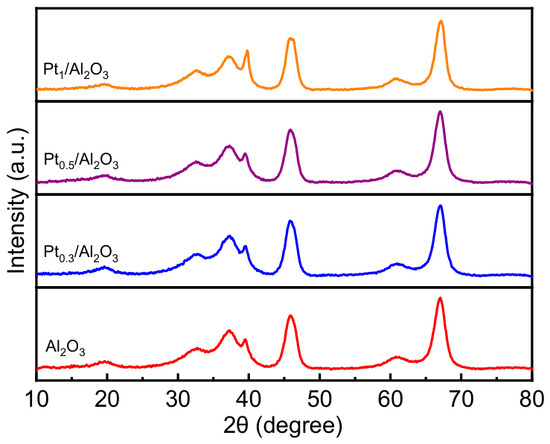
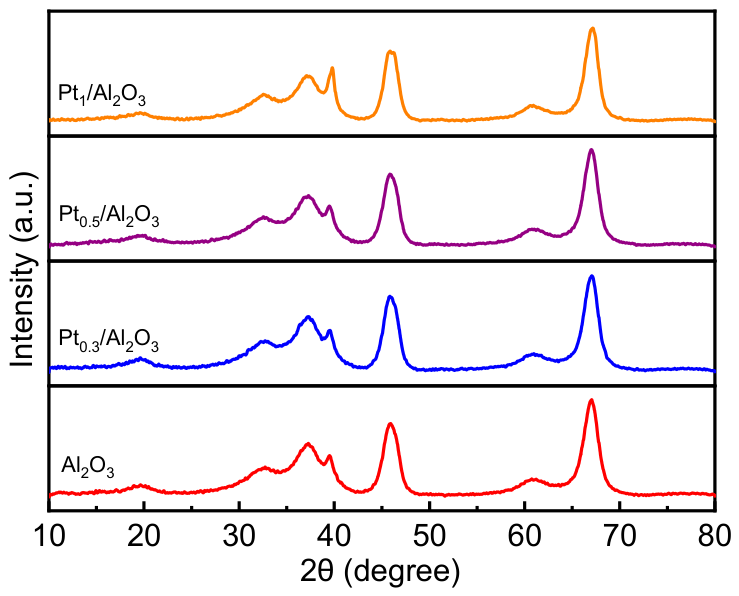
The Pt/Al2O3 catalyst was made using the classic equal-volume impregnation method [15]. The actual Pt loadings determined by inductively coupled plasma optical emission spectroscopy (ICP-OES) are summarized in Table 1. And through BET analysis of specific surface area and pore size, it was found that adding Pt reduced the catalyst’s surface area, ruling out the effect of increased surface area on the catalyst’s performance (Table 2). The crystal structures of Al2O3 and Pt0.5/Al2O3 catalysts with different Pt contents were first examined by X-ray diffraction (XRD). The pristine Al2O3 sample displayed characteristic diffraction peaks of γ-Al2O3 [Figure 1], indicating that the support maintained its typical alumina phase. After Pt introduction, the main diffraction features of γ-Al2O3 were still preserved, suggesting that Pt loading did not destroy the crystalline framework of the support [16,17].
Table 1.
Elemental composition of Al2O3 and Pt0.5/Al2O3 catalysts.
Table 2.
BET analysis of Al2O3 and Pt0.5/Al2O3 catalysts.
Figure 1.
XRD pattern of catalysts as prepared (Al2O3, Pt0.3/Al2O3, Pt0.5/Al2O3, Pt1/Al2O3).
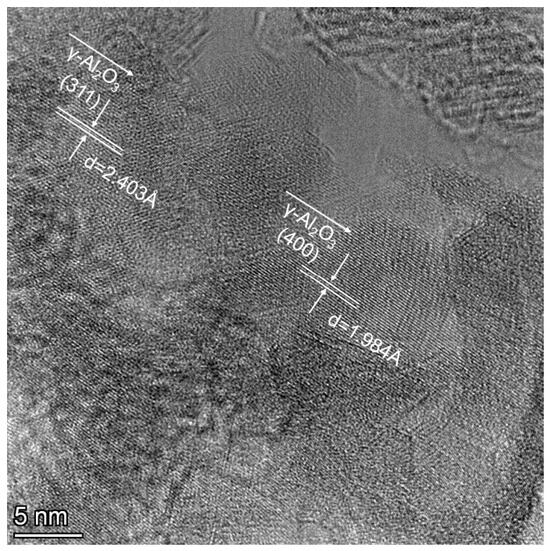
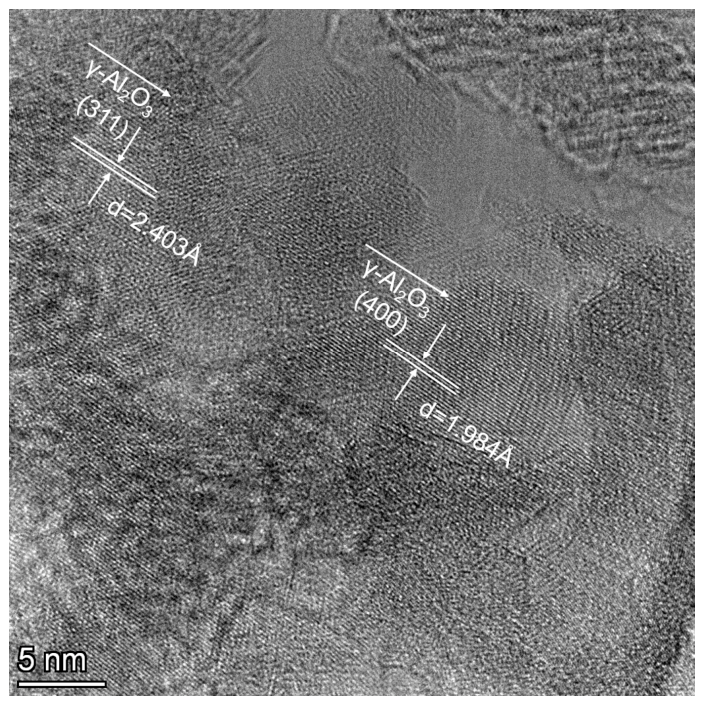
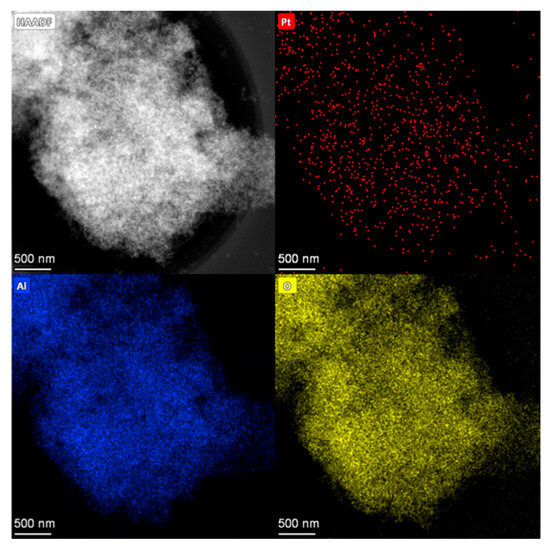
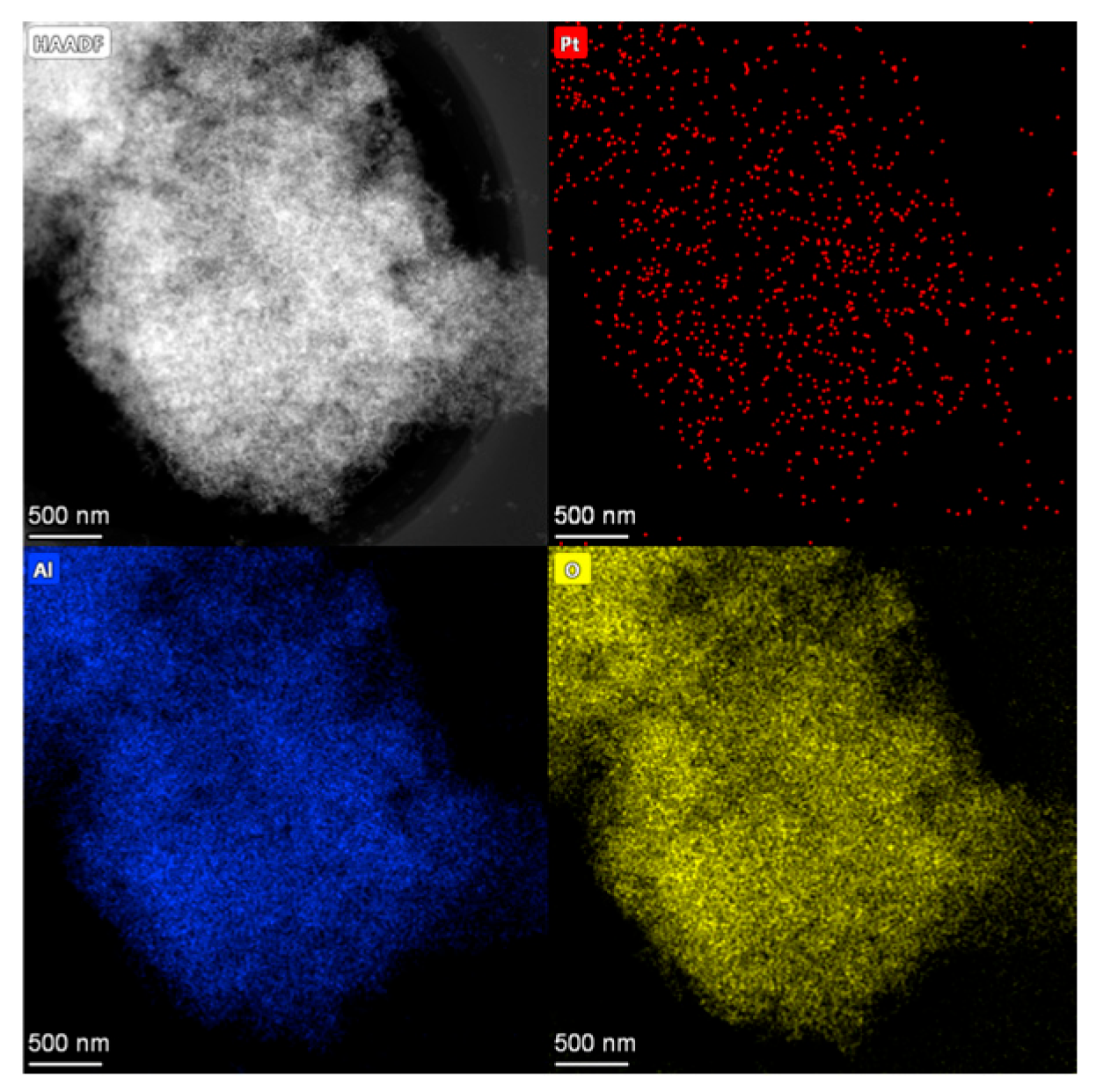
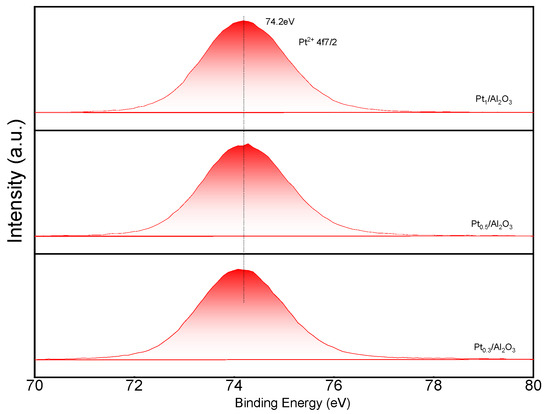
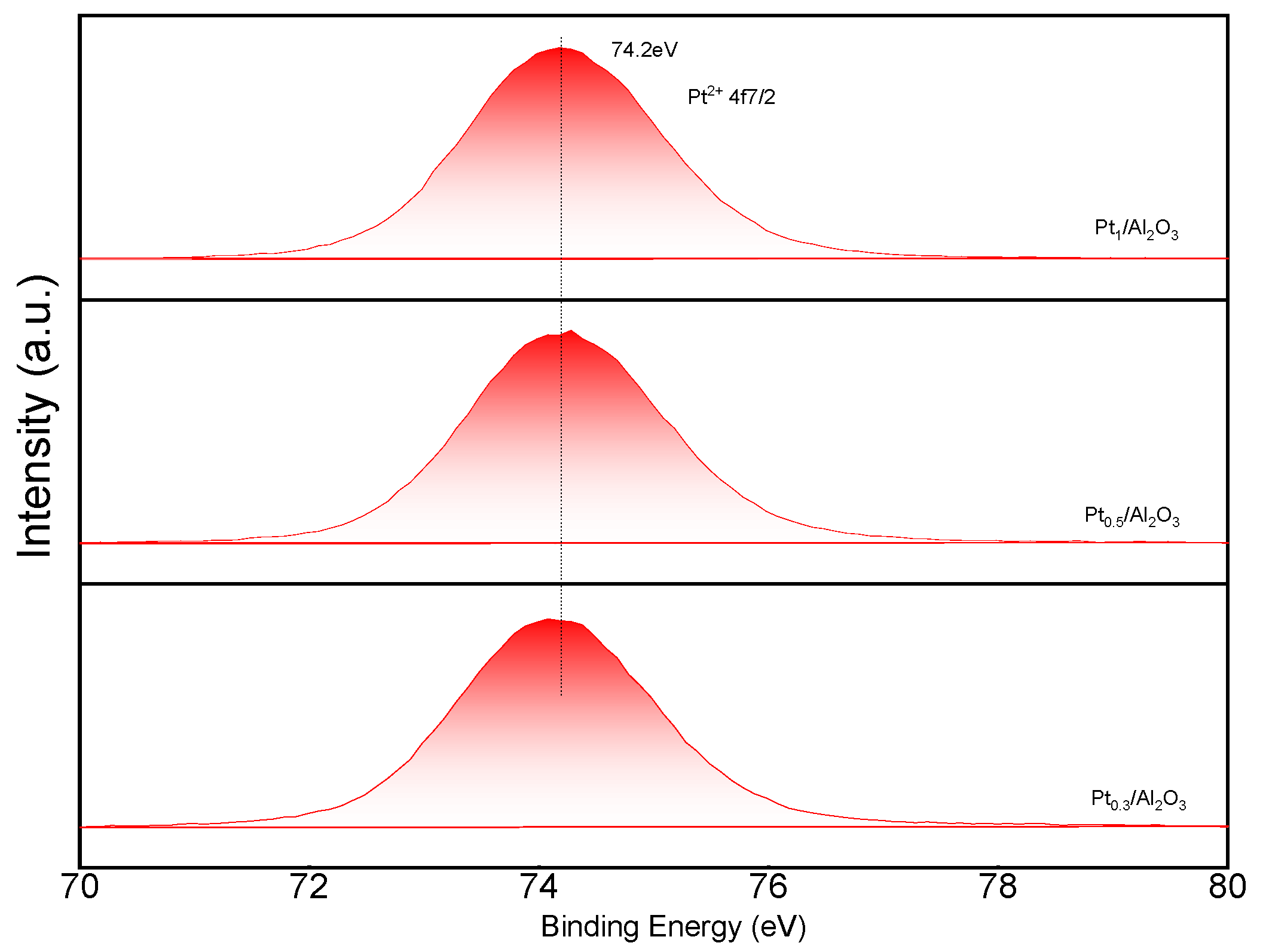
Transmission electron microscopy (TEM) was further used to examine the morphology and microstructure of the Pt0.5/Al2O3 catalyst. The high-resolution TEM image showed clear lattice fringes with interplanar spacings of approximately 2.40 and 1.97 Å, which can be attributed to the γ-Al2O3 lattice planes (Figure 2). This result confirms that the support retained the γ-Al2O3 phase after Pt modification. In addition, no severe structural collapse or sintering was observed, indicating that the catalyst possessed good structural integrity. Elemental mapping demonstrated that Pt, Al, and O were uniformly distributed throughout the observed region (Figure 3). The homogeneous Pt distribution implies strong dispersion of Pt species over the Al2O3 surface, which is favorable for exposing accessible Pt-containing active sites during CF4 hydrolysis. The electronic structure of Pt was analyzed using XPS (Figure 4). The results show that Pt is mainly loaded on the Al2O3 surface in the +2 oxidation state, with Pt 4f characteristic peaks at around 74.2 eV, indicating that the Pt species exist in this form rather than as metallic Pt0 particles. The formation of Pt2+ species likely comes from coordination between Pt and surface hydroxyl or oxygen species on Al2O3. In this process, electron transfer between Pt and the support leads to an electron-deficient state at the Pt center, enhancing its ability as a Lewis acid site. Additionally, introducing Pt species may change the electronic environment of nearby Al sites, increasing the polarization of Al–O bonds and promoting the formation of surface acid sites [18].
Figure 2.
TEM pattern of Pt0.5/Al2O3 as prepared.
Figure 3.
EDS-mapping pattern of Pt0.5/Al2O3 as prepared.
Figure 4.
X-ray photo electron spectroscopy (XPS) spectra of catalyst (Pt 4f).
2.2. Effect of Pt Introduction on Surface Acidity and CF4 Adsorption
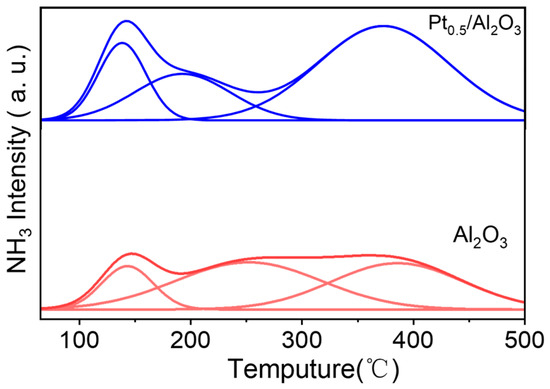
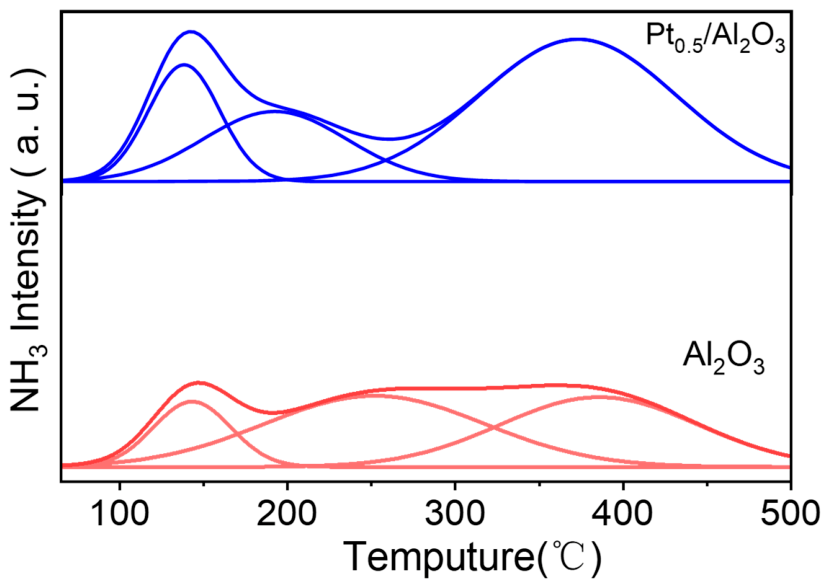
Surface acidity plays a critical role in CF4 hydrolysis because acid sites can provide adsorption and activation centers for CF4 molecules. NH3-TPD (Temperature Programmed Desorption) was therefore conducted to evaluate the acidity of pristine Al2O3 and Pt0.5/Al2O3 [17,18,19]. As shown in Figure 5, pristine Al2O3 exhibited NH3 desorption signals mainly in the low- and medium-temperature regions, corresponding to weak and moderate acid sites. After Pt incorporation, the total NH3 desorption intensity increased significantly. In particular, the Pt0.5/Al2O3 catalyst showed enhanced desorption signals over a broader temperature range, indicating an increase in both the amount and strength of acid sites [20,21].
Figure 5.
NH3-TPD pattern of Al2O3 and Pt0.5/Al2O3.
The enhanced acidity can be attributed to the interaction between Pt species and the Al2O3 support. The introduction of Pt species may modify the local electronic environment of surface Al–O sites and generate additional acidic centers. These newly formed or strengthened acid sites can improve the interaction between the catalyst surface and CF4 molecules, thereby facilitating the initial adsorption step during hydrolysis.
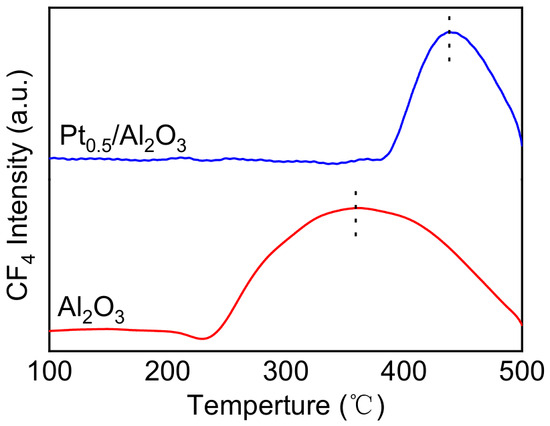
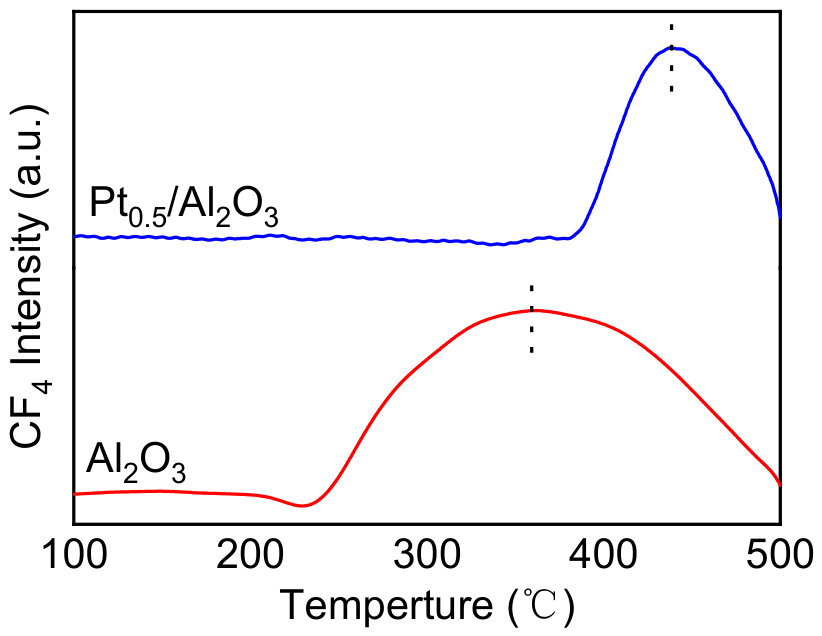
To verify this assumption, CF4-TPD measurements were performed [22,23]. The CF4 desorption signal of Pt/Al2O3 was much stronger than that of pristine Al2O3 [Figure 6]. Moreover, the main CF4 desorption peak shifted to a higher temperature after Pt introduction, indicating stronger CF4 adsorption on Pt/Al2O3. This result demonstrates that Pt modification not only increases the number of adsorption sites but also strengthens the interaction between CF4 and the catalyst surface [24]. The improved CF4 adsorption is beneficial for subsequent C–F bond activation, which is generally considered the key step in CF4 decomposition [25,26].
Figure 6.
CF4-TPD pattern of Al2O3 and Pt0.5/Al2O3.
2.3. Identification of Active Pt-Containing Particles and Hydroxyl Formation
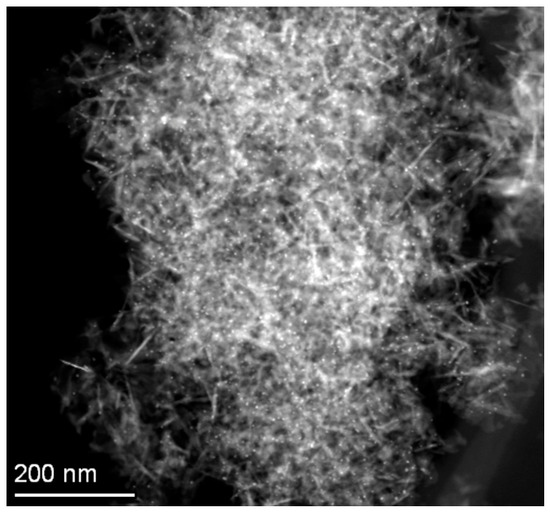
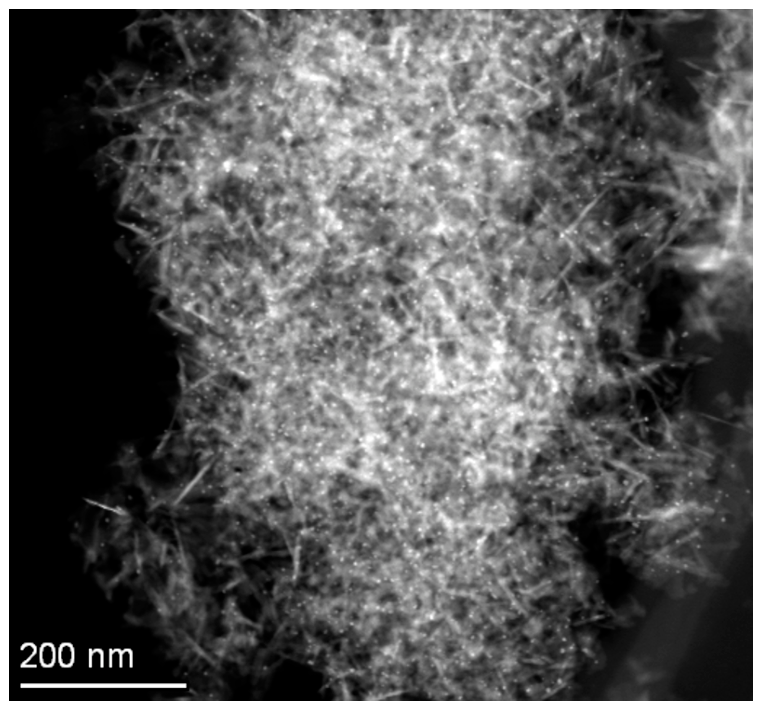
The role of Pt species was further evaluated by combining microscopic characterization and in situ infrared spectroscopy. The STEM image of Pt0.5/Al2O3 showed a highly dispersed Pt-containing structure on the alumina support (Figure 7). These Pt-containing particles or domains are proposed to act as the primary functional components responsible for the improved catalytic behavior. Rather than serving only as passive additives, Pt species alter the surface chemical environment of Al2O3 and participate in the activation process through their interaction with adsorbed reactants and surface hydroxyl groups [27,28].
Figure 7.
TEM pattern of Pt0.5/Al2O3 as prepared (200 nm).
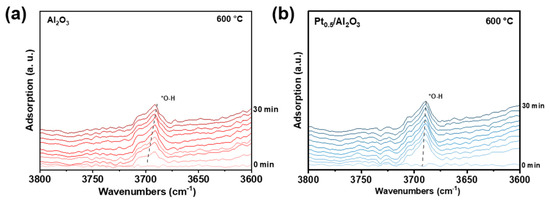
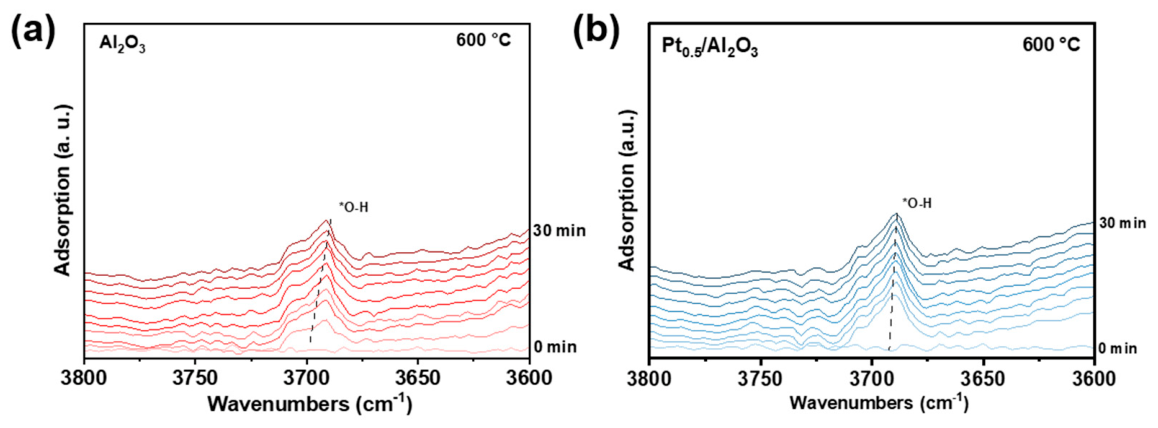
In situ infrared spectroscopy was then used to monitor the evolution of hydroxyl species over Pt/Al2O3 and pristine Al2O3 at 600 °C. For both catalysts, hydroxyl-related bands appeared in the range of 3600–3800 cm−1 and gradually intensified with time, indicating the formation of surface hydroxyl groups during water activation. However, the OH signal over Pt0.5/Al2O3 was more pronounced than that over pristine Al2O3, suggesting that Pt introduction promoted the generation of surface hydroxyl species (Figure 8a,b).
Figure 8.
In situ H2O-DRIFTS (Diffuse Reflectance Infrared Fourier Transform Spectroscopy) spectra on (a) Al2O3 (b) Pt0.5Al2O3. Experimental process: Prior to experimentation, the samples underwent a pretreatment process involving heating at 600 °C for 2 h under an Ar flow. At this temperature, background spectra were recorded. Following this, the samples were exposed to a controlled atmosphere of H2O/Ar at 600 °C for 0.5 h. The recording interval is once every 3 min and 20 s.
The enhanced hydroxyl formation is highly relevant to CF4 hydrolysis. Surface hydroxyl groups can act as reactive proton-donating or nucleophilic species that interact with adsorbed CF4-derived intermediates, thereby weakening and cleaving C–F bonds. Therefore, the superior activity of Pt0.5/Al2O3 can be rationalized by the synergistic effect between enhanced acid sites, stronger CF4 adsorption, and Pt-promoted hydroxyl formation. In this process, acid sites are responsible for anchoring and polarizing CF4, while surface hydroxyl groups participate in the cleavage of C–F bonds. Pt-containing particles further promote this process by increasing the availability and reactivity of these surface species [29].
2.4. Catalytic Performance for CF4 Decomposition
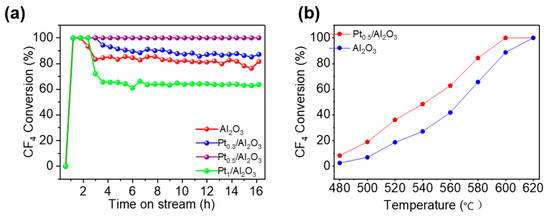
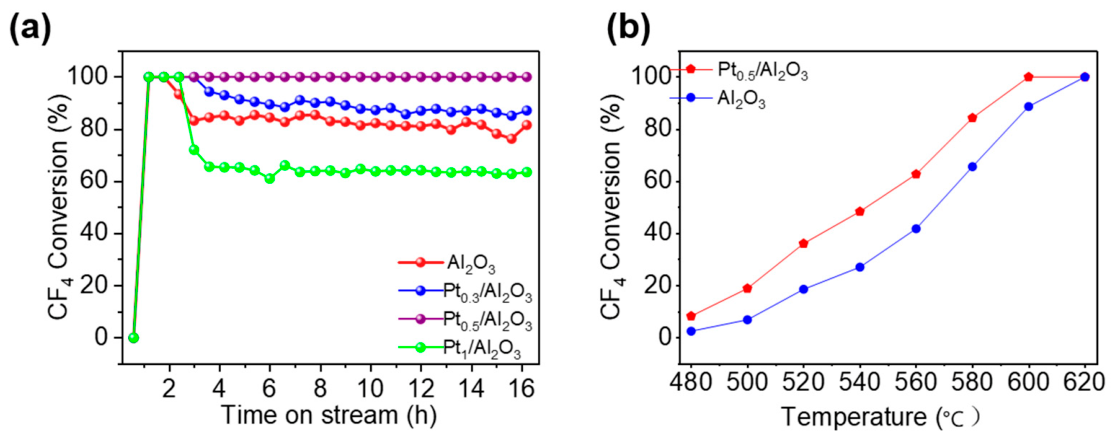
To prove that introducing Pt can promote CF4 decomposition, CF4 decomposition performance tests were carried out with different Pt loadings [Figure 9a]. It was found that CF4 decomposition shows a clear volcano-shaped trend, with the optimal loading being a 0.5% molar ratio. Lower loadings might not provide enough hydroxyl groups due to insufficient Pt water dissociation active sites, while higher loadings could cause Pt aggregation that covers the active Al sites. The catalytic performance of Pt0.5/Al2O3 and pristine Al2O3 was evaluated for CF4 hydrolytic decomposition. The CF4 decomposition efficiency increased with reaction temperature for both catalysts [Figure 9b]. However, Pt0.5/Al2O3 consistently showed higher activity than pristine Al2O3 over the entire temperature range. At relatively low temperatures, Pt0.5/Al2O3 already exhibited measurable CF4 conversion, whereas pristine Al2O3 showed much lower activity. With increasing temperature, the activity gap between the two catalysts remained evident.
Figure 9.
(a) Catalytic decomposition rate of CF4 on Al2O3 with different Pt loadings. (b) CF4 conversion reaction over Al2O3 and Pt0.5/Al2O3.
Notably, Pt0.5/Al2O3 achieved complete CF4 decomposition at 600 °C. In contrast, pristine Al2O3 required a higher temperature to reach full conversion (620 °C), this may be due to F poisoning caused by insufficient supply of surface-active species. This activity enhancement confirms the positive role of Pt modification in promoting CF4 hydrolysis. The superior performance of Pt0.5/Al2O3 can be attributed to the combined effects demonstrated above: Pt introduction increases surface acidity, strengthens CF4 adsorption, and promotes hydroxyl generation. These properties jointly facilitate C–F bond activation and accelerate CF4 decomposition.
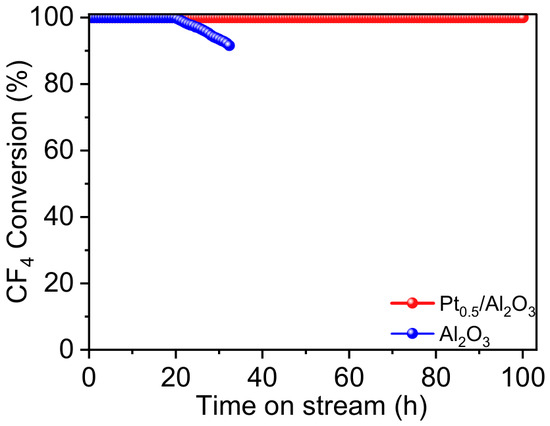
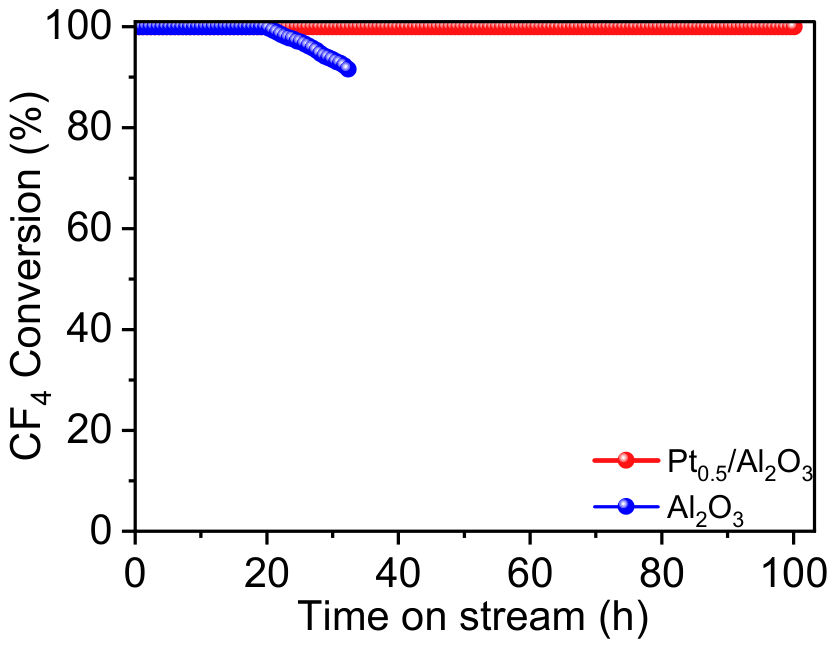
Long-term stability is another critical criterion for practical CF4 abatement catalysts [30]. Pt0.5/Al2O3 maintained nearly 100% CF4 decomposition during the stability test, indicating excellent durability under high-temperature reaction conditions [Figure 10]. In comparison, pristine Al2O3 gradually lost activity with time on stream. The stable performance of Pt0.5/Al2O3 suggests that Pt-containing active sites and the γ-Al2O3 framework remain effective during prolonged operation. The improved stability may also be related to the stronger activation of water and continuous generation of hydroxyl species, which can help maintain surface reactivity during CF4 hydrolysis.
Figure 10.
Stability test of Pt0.5/Al2O3 and Al2O3 catalysts at T100 (decomposition reaction conditions: 2500 ppm CF4, Ar as balance gas and 8.16 mL min−1 of water vapor under atmospheric pressure, gas hourly space velocity (GHSV) = 1000 h−1).
2.5. Proposed Mechanism
Based on the above characterization and catalytic results, a plausible mechanism for CF4 decomposition over Pt0.5/Al2O3 is proposed. First, CF4 molecules are adsorbed and polarized on the enhanced acid sites of Pt0.5/Al2O3. The stronger CF4 adsorption observed in CF4-TPD indicates that Pt modification improves the ability of the catalyst to capture CF4. Second, water molecules are activated on the catalyst surface to generate hydroxyl species. In situ infrared spectroscopy confirms that Pt0.5/Al2O3 produces more surface OH groups than pristine Al2O3 under reaction-relevant conditions. Third, the adsorbed CF4 species interact with adjacent hydroxyl groups, leading to C–F bond weakening and cleavage. Pt-containing particles serve as active components that promote both surface acidity and hydroxyl formation, thereby accelerating the overall hydrolysis process. This synergistic pathway enables Pt0.5/Al2O3 to achieve complete CF4 decomposition at 600 °C with high stability.
3. Materials and Methods
3.1. Chemicals
γ-Al2O3 and chloroplatinic acid were purchased from Shanghai Aladdin Reagent Co., Ltd. (Shanghai, China). All chemicals were used as received, without any further purification.
3.2. Synthesis of Pt/Al2O3
A Pt/Al2O3 catalyst was prepared using the wet impregnation method. Typically, 5 g of Al2O3 are dispersed in 300 mL of deionized water and sonicated for 60 min. Then, aqueous solutions of chloroplatinic acid at 1 mmol/mL are added dropwise 222 μL, 333 μL, 666 μL for preparing Pt0.3/Al2O3, Pt0.5/Al2O3, Pt1/Al2O3 catalysts. After sonication for another 30 min, the suspension is evaporated at 85 °C for 2 h using a rotary evaporator. Finally, the sample is calcined in a tube furnace at 600 °C for 5 h.
3.3. Catalytic Reaction
The CF4 hydrolysis reaction was conducted in a continuous flow reaction system with a quartz fixed-bed reactor (20 mm i.d.) under atmospheric pressure. A 33.3 mL min−1 of gas flow (0.25% CF4 in Ar) controlled by a mass flow controller, while a micro feeder delivered 0.006 (liquid) or 8.16 (vapor) ml min−1 of water over 2.0 g of catalyst.
According to the following equations, the CF4 decomposition is calculated:
where [CF4]in and [CF4]out indicate the input and output relative gas concentrations, respectively.
3.4. Characterization of Catalysts
The X-ray diffraction (XRD) patterns were obtained with Ni-filtered Cu-Ka (λ = 1.540598 Å) (40 kV, 40 mA) radiation in the 2θ range of 10° to 90° with a scan rate of 1 °/min. The XRD is made by Japan’s Rigaku Smart Lab SE (Rigaku Corporation, Tokyo, Japan). The morphologies of the samples were determined by TESCAN MIRA3 field emission scanning electron microscope (LMH, Brno, Czech Republic) and high resolution transmission electron microscopy with a spherical aberration corrector (HRTEM, Titan G2 60-300) equipped with energy dispersive X ray spectroscopy (EDS) mapping. The HRTEM is made by Japan’s JEOL, model JEM-F200 (Tokyo, Japan). NH3-TPD and CF4-TPD were performed by using a PCA-1200 on a chemisorption analyzer equipped with a thermal conductivity detector (TCD). The chemisorption analyzer was carried out on the PCA-1200 from Beijing Builder electronic technology Co., Ltd. (Beijing, China).
4. Conclusions
In summary, Pt-modified γ-Al2O3 catalysts were developed for efficient CF4 hydrolytic decomposition. XRD and TEM results confirmed that the γ-Al2O3 structure was maintained after Pt introduction, while platinum oxide-related species gradually formed with increasing Pt loading. Elemental mapping demonstrated the homogeneous distribution of Pt on the Al2O3 support. NH3-TPD and CF4-TPD results revealed that Pt incorporation enhanced the surface acidity and strengthened CF4 adsorption. In situ infrared spectroscopy further showed that Pt/Al2O3 generated more surface hydroxyl groups than pristine Al2O3, indicating improved water activation capability. These hydroxyl species, together with enhanced acid sites and Pt-containing active particles, promoted C–F bond activation during CF4 hydrolysis. Consequently, Pt/Al2O3 achieved complete CF4 decomposition at 600 °C and exhibited excellent long-term stability. This work provides an effective strategy for designing alumina-based catalysts for perfluorinated compound decomposition through Pt-induced regulation of acidity, adsorption, and hydroxyl-mediated activation.
Author Contributions
All authors contributed to the study conception and design. Z.W., X.H. developed and designed the methodology of this experiment. M.X., R.C. and T.Y. prepared the original draft. J.L. and W.L. supervised the project and had leadership responsibility for the research. R.C. is in charge of various tests as well as the related data processing and analysis. W.L. is in charge of coming up with new ideas, organizing the thinking, and editing the paper. All authors have read and agreed to the published version of the manuscript.
Funding
The works was financially supported by Hunan Provincial Natural Science 250 Foundation of China (No. 2023JJ30499); the Scientific Research Starting Foundation for 251 High-Level Talents of the University of South China (211RGC010).
Data Availability Statement
Data is contained within the article.
Conflicts of Interest
The authors declare no competing interests.
References
- Mühle, J.; Ganesan, A.L.; Miller, B.R.; Salameh, P.K.; Harth, C.M.; Greally, B.R.; Rigby, M.; Porter, L.W.; Steele, L.P.; Trudinger, C.M.; et al. Perfluorocarbons in the global atmosphere: Tetrafluoromethane, hexafluoroethane, and octafluoropropane. Atmos. Chem. Phys. 2010, 10, 5145–5164. [Google Scholar] [CrossRef] [Scilit]
- O’Hagan, D. Understanding organofluorine chemistry. An introduction to the C–F bond. Chem. Soc. Rev. 2008, 37, 308–319. [Google Scholar] [CrossRef] [Scilit] [PubMed]
- Anus, A.; Sheraz, M.; Jeong, S.; Kim, E.-K.; Kim, S. Catalytic thermal decomposition of tetrafluoromethane (CF4): A review. J. Anal. Appl. Pyrolysis 2021, 156, 105126. [Google Scholar] [CrossRef] [Scilit]
- Takita, Y.; Ninomiya, M.; Miyake, H.; Wakamatsu, H.; Yoshinaga, Y.; Ishihara, T. Catalytic decomposition of perfluorocarbons Part II. Decomposition of CF4 over AlPO4-rare earth phosphate catalysts. Phys. Chem. Chem. Phys. 1999, 1, 4501–4504. [Google Scholar] [CrossRef] [Scilit]
- Winchell, L.J.; Ross, J.J.; Wells, M.J.M.; Fonoll, X.; Norton, J.W., Jr.; Bell, K.Y. Per- and polyfluoroalkyl substances thermal destruction at water resource recovery facilities: A state of the science review. Water Environ. Res. 2021, 6, 826–843. [Google Scholar] [CrossRef] [Scilit] [PubMed]
- Jeon, J.Y.; Xu, X.-F.; Choi, M.H.; Kim, H.Y.; Park, Y.-K. Hydrolytic decomposition of PFCs over AlPO4–Al2O3 catalyst. Chem. Commun. 2003, 39, 1244–1245. [Google Scholar] [CrossRef] [Scilit] [PubMed]
- El-Bahy, Z.M.; Ohnishi, R.; Ichikawa, M. Hydrolytic decomposition of CF4 over alumina-based binary metal oxide catalysts: High catalytic activity of gallia-alumina catalyst. Catal. Today 2004, 90, 283–290. [Google Scholar] [CrossRef] [Scilit]
- El-Bahy, Z.M.; Ohnishi, R.; Ichikawa, M. Hydrolysis of CF4 over alumina-based binary metal oxide catalysts. Appl. Catal. B Environ. 2003, 40, 81–91. [Google Scholar] [CrossRef] [Scilit]
- Xu, X.-F.; Jeon, J.Y.; Choi, M.H.; Kim, H.Y.; Choi, W.C.; Park, Y.-K. A Strategy to Protect Al2O3-based PFC Decomposition Catalyst from Deactivation. Chem. Lett. 2005, 34, 364–365. [Google Scholar] [CrossRef] [Scilit]
- Xu, X.-F.; Jeon, J.Y.; Choi, M.H.; Kim, H.Y.; Choi, W.C.; Park, Y.-K. The modification and stability of γ-Al2O3 based catalysts for hydrolytic decomposition of CF4. J. Mol. Catal. A Chem. 2007, 266, 131–138. [Google Scholar] [CrossRef] [Scilit]
- Song, J.-Y.; Chung, S.-H.; Kim, M.-S.; Seo, M.-G.; Lee, Y.-H.; Lee, K.-Y.; Kim, J.-S. The catalytic decomposition of CF4 over Ce/Al2O3 modified by a cerium sulfate precursor. J. Mol. Catal. A Chem. 2013, 370, 50–55. [Google Scholar] [CrossRef] [Scilit]
- Pan, K.L.; Chen, Y.S.; Chang, M.B. Effective Removal of CF4 by Combining Nonthermal Plasma with γ-Al2O3. Plasma Chem. Plasma Process. 2019, 39, 877–896. [Google Scholar] [CrossRef] [Scilit]
- Zhang, H.; Luo, T.; Long, Y.; Chen, Y.; Fu, J.; Liu, H.; Hu, J.; Lin, Z.; Chai, L.; Liu, M. Identification of the active site during CF4 hydrolytic decomposition over γ-Al2O3. Environ. Sci. Nano 2022, 9, 954–963. [Google Scholar] [CrossRef] [Scilit]
- Chi, S.; Jeon, H.; Baik, Y.; Oh, D.; Seok, J.; Choi, W.; Lee, S.; Choi, M. Entropy-Stabilized Aluminate Catalysts That Break the Activity–Stability Tradeoff in CF4 Hydrolysis. Angew. Chem. Int. Ed. 2026, 65, e6752036. [Google Scholar] [CrossRef] [Scilit] [PubMed]
- Zheng, X.; Xiang, K.; Shen, F.; Liu, H. The Zr Modified γ-Al2O3 Catalysts for Stable Hydrolytic Decomposition of CF4 at Low Temperature. Catalysts 2022, 12, 313. [Google Scholar] [CrossRef] [Scilit]
- Zhang, H.; Luo, T.; Chen, Y.; Liu, K.; Li, H.; Pensa, E.; Fu, J.; Lin, Z.; Chai, L.; Cortés, E.; et al. Highly Efficient Decomposition of Perfluorocarbons for over 1000 Hours via Active Site Regeneration. Angew. Chem. Int. Ed. 2023, 62, e202305651. [Google Scholar] [CrossRef] [Scilit] [PubMed]
- Chen, H.; Zhang, H.; Wang, X.; Luo, W.; Zheng, J.; Liu, K.; Fu, J.; Li, H.; Lin, Z.; Chai, L.; et al. Enhancing the proportion of three-coordinated Al active sites on Co/Al2O3 for efficient CF4 decomposition. Environ. Sci. Nano 2025, 12, 3530–3538. [Google Scholar] [CrossRef] [Scilit]
- Luo, T.; Zhang, H.; Chen, Y.; Chen, S.; Pan, Y.; Liu, K.; Fu, J.; Chai, L.; Lin, Z.; Coote, M.L.; et al. Unveiling Tetrafluoromethane Decomposition over Alumina Catalysts. J. Am. Chem. Soc. 2024, 146, 35057–35063. [Google Scholar] [CrossRef] [Scilit] [PubMed]
- Luo, W.; Xie, M.; Wang, Z.; Zhang, H.; Liu, K.; Liu, J.; Lin, Z.; Chai, L.; Liu, M. Dual-Site Synergistic C–F Bond Activation over Fe1/Al2O3 for Efficient CF4 Decomposition. ACS ES T Eng. 2026, 6, 1675–1681. [Google Scholar] [CrossRef] [Scilit]
- Luo, T.; Chen, Y.; Liu, K.; Fu, J.; Zhang, H.; Chen, S.; Wang, Q.; Chen, K.; Wang, J.; Liao, W.; et al. Rational design of active sites in alumina-based catalysts to optimize antibonding-orbital occupancy for tetrafluoromethane decomposition. Environ. Sci. Nano 2023, 10, 3307–3316. [Google Scholar] [CrossRef] [Scilit]
- Chen, Y.; Kao, C.-W.; Luo, T.; Zhang, H.; Long, Y.; Fu, J.; Lin, Z.; Chai, L.; Chan, T.-S.; Liu, M. Enhanced surface Lewis acidity of ZrO2 by –HSO4 for efficient CF4 decomposition. Environ. Sci. Nano 2024, 11, 881–888. [Google Scholar] [CrossRef] [Scilit]
- Wang, X.; Fu, J.; Zhang, H.; Zheng, J.; Chen, H.; Liu, K.; Jing, L.; Xing, X.; Lin, Z.; Chai, L.; et al. Detoxification of Carbonaceous Species for Efficient Perfluorocarbon Hydrolysis. Environ. Sci. Technol. 2025, 59, 3309–3315. [Google Scholar] [CrossRef] [Scilit] [PubMed]
- Chen, Y.; Qu, W.; Luo, T.; Zhang, H.; Fu, J.; Li, H.; Liu, C.; Zhang, D.; Liu, M. Promoting C–F bond activation via proton donor for CF4 decomposition. Proc. Natl. Acad. Sci. USA 2023, 120, e2312480120. [Google Scholar] [CrossRef] [Scilit] [PubMed]
- Wang, X.; Zhang, H.; Chen, Y.; Zheng, J.; Chen, H.; Liu, K.; Fu, J.; Lin, Z.; Chai, L.; Liu, M. Promoted CF4 Decomposition via Enhanced Tricoordinated Al Active Sites. ACS ES T Eng. 2024, 4, 1142–1148. [Google Scholar] [CrossRef] [Scilit]
- Luo, W.; Liu, K.; Luo, T.; Fu, J.; Zhang, H.; Ma, C.; Chan, T.-S.; Kao, C.-W.; Lin, Z.; Chai, L.; et al. Promoting C–F Bond Activation for Perfluorinated Compounds Decomposition via Atomically Synergistic Lewis and Brønsted Acid Sites. J. Am. Chem. Soc. 2025, 147, 7391–7399. [Google Scholar] [CrossRef] [Scilit] [PubMed]
- Zhang, H.; Luo, T.; Chen, Y.; Wang, X.; Mariani, E.; Liu, K.; Fu, J.; Liu, C.; Liu, H.; Lin, Z.; et al. Efficient and stable catalytic hydrolysis of perfluorocarbon enabled by SO2-mediated proton supply. Nat. Commun. 2026, 17, 597. [Google Scholar] [CrossRef] [Scilit] [PubMed]
- Luo, W.; Liu, K.; Guo, Y.; Mei, Z.; Zhang, H.; Luo, T.; Wang, X.; Yang, M.; Zheng, J.; Chan, T.-S.; et al. Heteroatom-Engineered Atomic Electric Fields Activate C–F Bond for Efficient Perfluorocarbon Decomposition. J. Am. Chem. Soc. 2026, 148, 10061–10069. [Google Scholar] [CrossRef] [Scilit] [PubMed]
- Hak Oh, S.; Chul Kim, J.; Lee, J.H.; Baek, K.; Chang, J.-S.; Kyu Kwak, S. A mechanistic study of the hydrolysis of tetrafluoromethane on γ-alumina. Chem. Eng. J. 2024, 494, 152880. [Google Scholar] [CrossRef] [Scilit]
- Peng, S.; Li, S.; Nie, R.; Wen, J.; Xia, J.; Cao, Z.; Yin, L.; Chen, J.; Zhang, Q.; Ning, P. Surface hydroxyls enhanced CF4 hydrolysis activity and fluorine poisoning resistance on Al2O3 catalysts. Sep. Purif. Technol. 2026, 384, 136296. [Google Scholar] [CrossRef] [Scilit]
- Aitbekova, A.; Zhou, C.; Stone, M.L.; Lezama-Pacheco, J.S.; Yang, A.-C.; Hoffman, A.S.; Goodman, E.D.; Huber, P.; Stebbins, J.F.; Bustillo, K.C.; et al. Templated encapsulation of platinum-based catalysts promotes high-temperature stability to 1,100 °C. Nat. Mater. 2022, 21, 1290–1297. [Google Scholar] [CrossRef] [Scilit] [PubMed]

Disclaimer/Publisher’s Note: The statements, opinions and data contained in all publications are solely those of the individual author(s) and contributor(s) and not of MDPI and/or the editor(s). MDPI and/or the editor(s) disclaim responsibility for any injury to people or property resulting from any ideas, methods, instructions or products referred to in the content. |
© 2026 by the authors. Licensee MDPI, Basel, Switzerland. This article is an open access article distributed under the terms and conditions of the Creative Commons Attribution (CC BY) license.