


Abstract
The removal of recalcitrant industrial dyes from wastewater has emerged as a critical environmental challenge, particularly in the context of the accelerating decline of global freshwater reserves. Given that these contaminants originate predominantly from the effluents of textile, chemical, and related manufacturing sectors, the deployment of advanced treatment technologies prior to discharge is imperative to mitigate their ecological impact. This study investigates the photocatalytic degradation of indigo carmine using a synthesized MgAl–LDH material. LDH is shown to act as an active photocatalytic component rather than a support, with its remarkably simple synthesis offering a practical alternative to the complex catalysts dominating the current literature. The catalyst’s structural, morphological, and surface characteristics were comprehensively validated through XRD, SEM, EDX, and BET analyses. The catalyst was evaluated under varying hydrogen peroxide doses and across an initial dye concentration range of 5 × 10⁻⁵ to 5 × 10⁻⁴ M. Increasing the H2O2 volume (3.5–20 mL, corresponding to H2O2 excess ratios of 17.5–100) significantly enhanced the oxidation rate, whereas higher dye concentrations reduced efficiency due to photon competition and partial saturation of catalytic sites. These experiments provided the basis for extracting kinetic parameters and assessing the mechanistic pathways governing the photocatalytic process. The kinetic behavior of indigo carmine degradation was evaluated by fitting the experimental data to zero-order, first-order, and second-order empirical models to identify the rate law that best describes the reaction. Reusability tests showed that MgAl–LDH maintains high activity over multiple cycles, with only a moderate decline, demonstrating its stability and suitability for practical wastewater treatment applications.
1. Introduction
The continuous release of refractory organic pollutants into aquatic ecosystems has become a major global concern, particularly as the availability of freshwater resources continues to decline. Among these contaminants, synthetic dyes represent one of the most persistent and environmentally problematic classes of industrial chemicals. Their complex aromatic structures confer high chemical stability, resistance to biodegradation, and strong chromophoric properties, making them difficult to remove through conventional wastewater treatment processes [1]. As a result, dye-laden effluents discharged into natural water bodies significantly reduce light penetration, reduce photosynthetic capacity, and generate toxic, mutagenic, or bioaccumulative species into aquatic ecosystems through their incomplete degradation [2].
Dyes are extensively employed across a wide range of industrial sectors, including textile manufacturing, paper production, leather processing, plastics, cosmetics, and food technology. The global scale of these industries has led to a substantial increase in the volume of colored wastewater generated annually [3]. Because many of these dyes are classified as recalcitrant organic pollutants, their complete mineralization prior to environmental discharge is essential to mitigate long-term ecological and human health risks [4,5].
Indigo carmine, a widely used indigoid dye, is frequently detected in industrial effluents and is known for its strong color, high solubility, and resistance to biodegradation, making it an ideal model pollutant for evaluating photocatalytic efficiency [3]. It is employed across multiple industrial sectors, including the food and cosmetic industries, the textile industry for dyeing denim and polyester fibers, and the pharmaceutical field as a diagnostic agent. It is also used as a redox indicator in analytical chemistry and as a biological stain in microscopy [6]. Indigo carmine has been reported to exert measurable toxic effects in both environmental and biological systems. Experimental studies indicate that exposure to elevated concentrations of the dye can induce oxidative stress, disrupt cellular membrane integrity, and interfere with mitochondrial respiration in aquatic organisms [7]. These effects often manifest as reduced enzymatic activity, impaired metabolic function, and decreased organismal viability. In mammalian systems, high doses of indigo carmine have been associated with hypersensitivity reactions, transient cardiovascular disturbances, and gastrointestinal irritation, although such outcomes typically occur only under conditions of excessive or accidental exposure [3]. Due to its environmental persistence, biological activity, and tendency to accumulate in wastewater effluents, indigo carmine is regarded as a contaminant of concern in ecotoxicological evaluations and wastewater treatment research, with regulatory assessments indicating a tolerable daily intake limit of 500 mg per kilogram of body weight [8].
Advanced oxidation processes (AOPs) have emerged as highly effective treatment technologies for the degradation of persistent organic contaminants [9,10]. These processes rely on the in situ generation of highly reactive oxygen species—particularly hydroxyl radicals (•OH)—capable of non-selectively oxidizing complex organic molecules into smaller, less harmful intermediates and ultimately into carbon dioxide, water, and inorganic ions [11]. Among the various AOPs, photocatalysis has attracted considerable attention due to its operational simplicity, potential for solar activation, and ability to achieve deep mineralization under mild conditions [12]. The photocatalytic degradation of indigo carmine represents an important model reaction for evaluating the efficiency of semiconductor-based advanced oxidation processes. Under UV or visible irradiation, photocatalysts such as TiO2 [13], SnO2 [14], ZnO [15], Fe3O4 [16] or NiO [17] generate electron–hole pairs that subsequently form highly reactive oxygen species capable of attacking the dye’s conjugated aromatic framework. This leads to progressive decolorization, cleavage of chromophore groups, and eventual mineralization into inorganic end products. The degradation kinetics are strongly influenced by operational parameters including pH, catalyst loading, light intensity, and the presence of competing ions. Owing to its efficiency, low energy requirements, and environmental compatibility, photocatalytic oxidation is considered a promising strategy for the remediation of wastewater contaminated with indigo carmine and other recalcitrant dyes.
Recent studies have demonstrated that LDH (layered double hydroxide)-based photocatalysts can achieve high degradation efficiencies when combined with secondary semiconductors such as ZnO [18], CuO [19], BiVO4 [20] or red phosphorus [21], which enhance charge separation, tune the band structure and create efficient Z- or S-scheme heterojunctions. Although these multi-component systems show excellent performance, their complexity makes it difficult to distinguish the intrinsic photocatalytic contribution of the LDH host from the effects introduced by the added semiconductor. For this reason, in the present work we deliberately selected a simple LDH material, allowing us to evaluate its fundamental surface reactivity and photocatalytic behavior without the influence of additional semiconducting phases or engineered heterojunctions.
Layered double hydroxides constitute a broad class of natural and synthetic lamellar clay materials that have attracted significant research interest due to their tunable composition, structural versatility, high anion-exchange capacity, and unique physicochemical properties [22]. The lamellar architecture of these clays enables the interlayer intercalation of metal ions [23] and bulky inorganic anionic [24,25] or organic [26,27] pollutants—such as pesticides, pharmaceutical residues, or polymeric contaminants—thus enhancing their capacity to capture, immobilize, and remove hazardous species from the environment. Recent research increasingly highlights the use of LDH-based materials in the degradation of persistent organic contaminants, including antibiotics [28], synthetic dyes [29], and bisphenol derivatives [30]. In particular, MgAl–LDH catalysts have demonstrated favorable optical and surface properties that enhance their photocatalytic performance in dye degradation applications [31,32].
In this context, the present study investigates the photocatalytic degradation of indigo carmine using a MgAl–LDH catalyst, with a specific focus on elucidating the kinetic behavior of the degradation process. The originality of this work lies in the combined evaluation of MgAl–LDH as a photocatalyst through a fully integrated approach that links material characterization, oxidant-dose optimization, and concentration-dependent degradation behavior. Unlike previous studies, this research systematically investigates indigo carmine removal across a wide concentration range (5 × 10⁻⁵–5 × 10⁻⁴ M) while correlating the effect of hydrogen peroxide molar ratios with kinetic and mechanistic insights. Additionally, the inclusion of a multi-cycle reusability assessment provides new evidence of the catalyst’s long-term stability, reinforcing its potential for practical wastewater treatment applications.
2. Results and Discussion
2.1. Characterization of the MgAl–LDH Catalyst
The structural and physicochemical properties of the synthesized catalyst were investigated using a suite of complementary characterization techniques. X-ray diffraction (XRD) was employed to determine the crystalline phases and assess the degree of structural ordering within the material. The surface morphology and particle architecture were examined by scanning electron microscopy (SEM), while the elemental composition and spatial distribution of constituent elements were analyzed through energy-dispersive X-ray spectroscopy (EDX). Additionally, the specific surface area, pore volume, and textural characteristics were quantified using Brunauer–Emmett–Teller (BET) nitrogen adsorption–desorption analysis. The point of zero charge (pHpzc) of the material was determined to evaluate its surface charge characteristics under varying pH conditions. Together, these techniques provide a comprehensive understanding of the material’s structure, composition, and surface properties, which are essential for evaluating its adsorption performance.
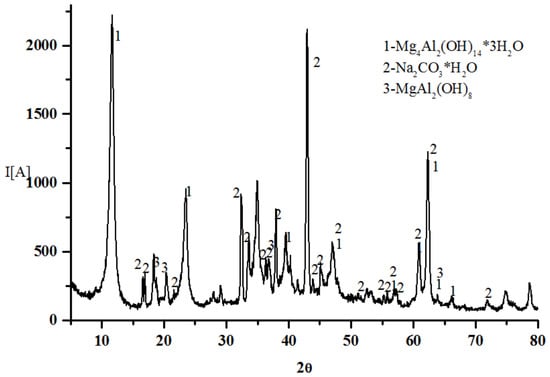
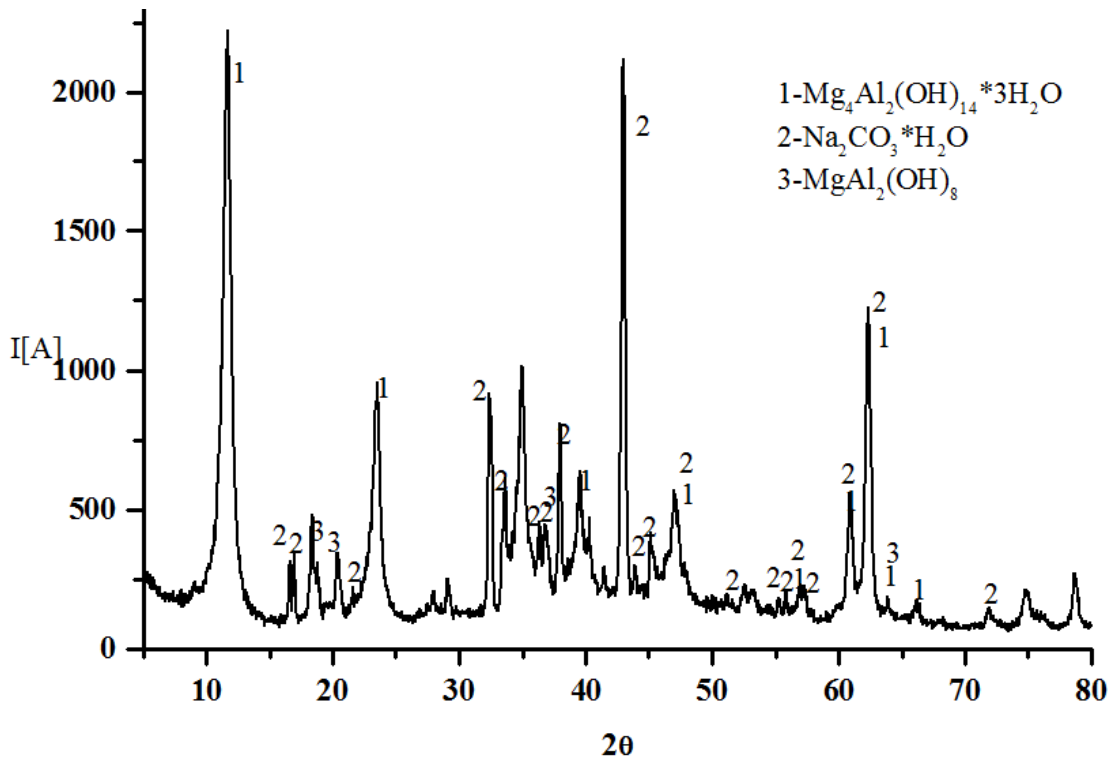
The XRD pattern of the synthesized catalyst prior to adsorption, shown in Figure 1, displays sharp and symmetrical diffraction peaks along with several asymmetric reflections at higher angles, confirming the formation of a well-crystallized Mg/Al layered double hydroxide (LDH) structure. As illustrated in Figure 1, the detected crystalline phases include Na2CO3·H2O (36%), crystallizing in the orthorhombic system; Mg4Al2(OH)14·3H2O (33%), crystallizing in the rhombohedral system; and MgAl2(OH)8 (31%), crystallizing in the monoclinic system.
Figure 1.
XRD pattern of the MgAl–LDH catalyst before indigo carmine adsorption.
The XRD pattern confirms the formation of a well-crystallized Mg–Al layered double hydroxide. The characteristic basal reflections of the LDH structure appear at low diffraction angles, with the (003) reflection typically located around 2θ ≈ 11–12°, followed by the (006) and (009) peaks near 23–24° and 34–35°, respectively. These intense and well-defined peaks correspond to the hydrated LDH-phase Mg4Al2(OH)14·3H2O, indicating a highly ordered lamellar structure with interlayer water and carbonate species. Additional reflections assigned to MgAl2(OH)8, generally appearing at similar but slightly shifted 2θ positions, suggest the coexistence of a less hydrated or partially dehydrated LDH fraction, which is commonly observed after drying. Peaks attributed to Na2CO3·H2O, typically found in the higher-angle region between 2θ ≈ 30–50°, reveal the presence of a secondary crystalline phase, most likely residual sodium carbonate remaining from the synthesis medium rather than being incorporated into the LDH interlayer. Overall, the simultaneous presence of hydrated and partially dehydrated MgAl–LDH phases, together with minor Na2CO3·H2O impurities, reflects a highly crystalline material with well-defined structural ordering characteristic of MgAl–LDH systems. The diffraction peaks observed for this material are consistent with the characteristic reflections reported in the literature for Mg–Al layered double hydroxides [33,34,35]. The positions and relative intensities of the basal and non-basal reflections match well with previously published data, including the structural descriptions provided by Rives [36], who detail the typical (003), (006), (009), and higher-order reflections associated with well-ordered hydrotalcite-like phases. This agreement confirms that the synthesized material exhibits the expected layered structure and crystallographic features of MgAl–LDH systems documented in authoritative studies.
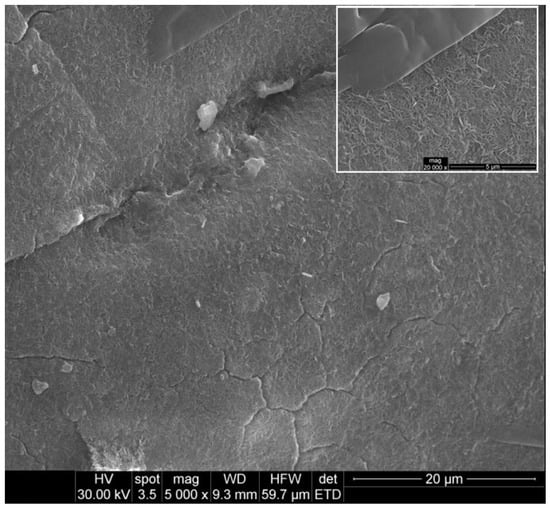
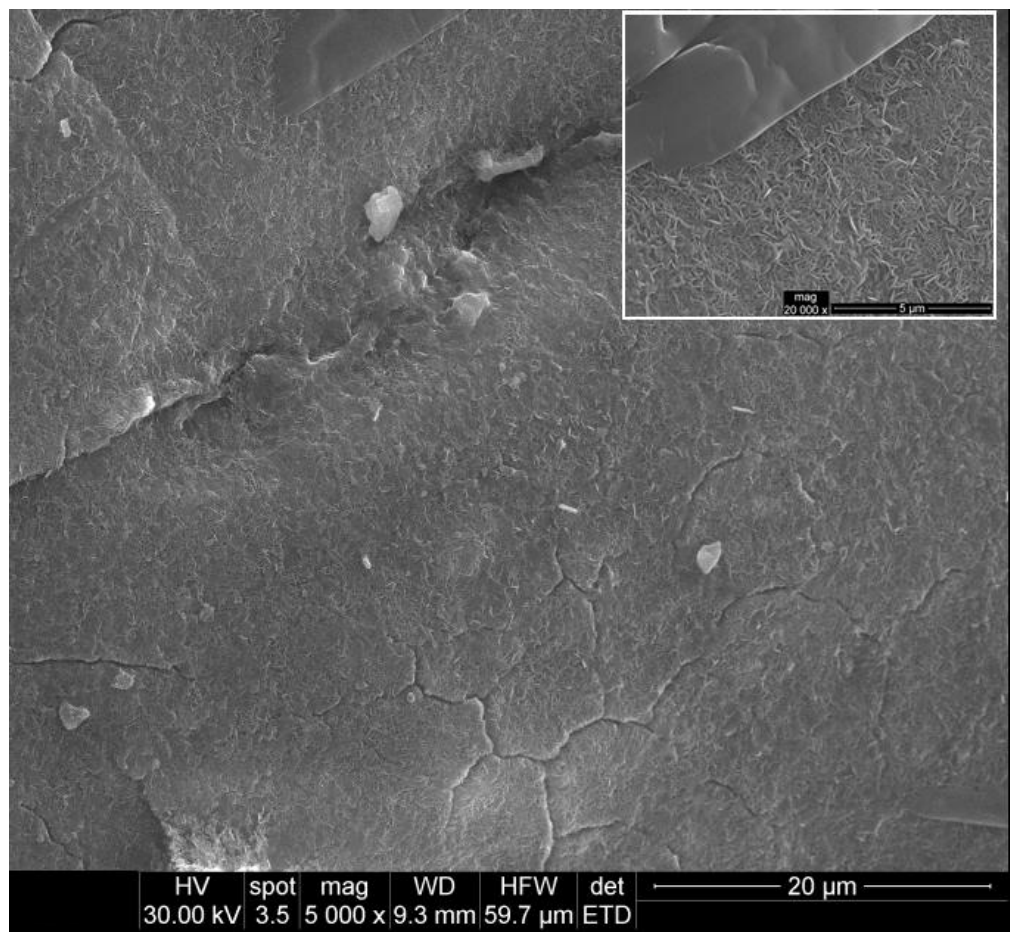
The surface morphology of the synthesized catalyst was examined by scanning electron microscopy (SEM) at a magnification of 5000× (Figure 2), revealing the textural features and particle aggregation characteristic of the material.
Figure 2.
SEM micrograph of the MgAl–LDH sample.
The SEM analysis of the MgAl–LDH sample reveals a morphology dominated by aggregated lamellar structures, a feature characteristic of hydrotalcite-type layered double hydroxides. At lower magnification, the surface appears rough and fractured, with compact clusters formed through the stacking and partial overlapping of plate-like crystallites during synthesis and drying. The higher-magnification inset highlights a dense network of thin, sheet-like or rod-like nanostructures, confirming the presence of the brucite-like layers that define the LDH architecture [37]. This combination of platelet aggregation, surface roughness, and nanoscale lamellar features is fully consistent with the typical microstructural signatures reported in MgAl–LDH materials [38,39].
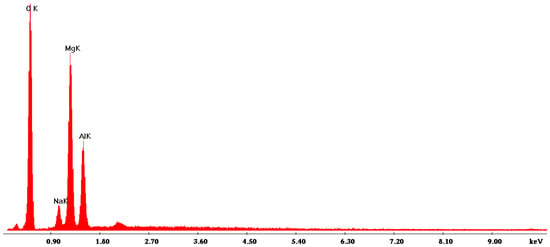
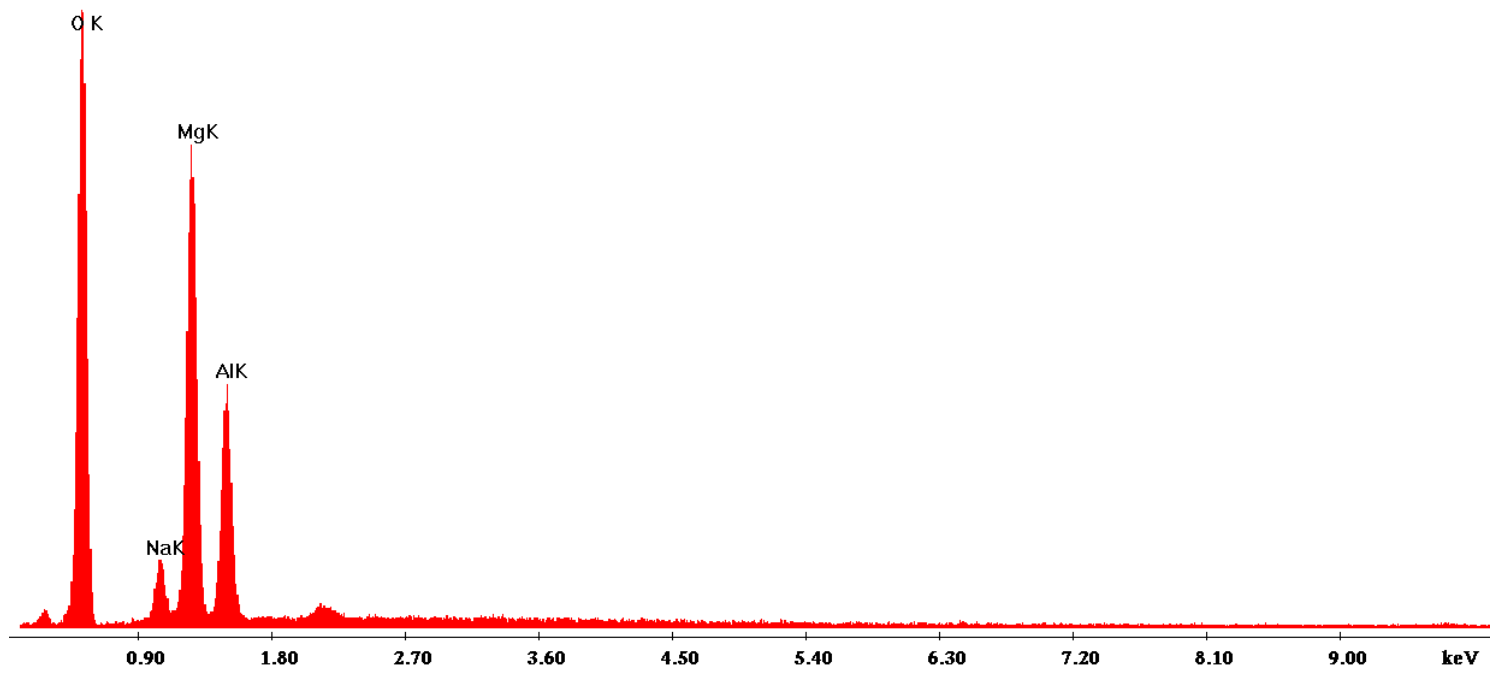
Energy-dispersive X-ray spectroscopy (EDX) was employed to determine the elemental composition of the synthesized LDH materials and to confirm the presence of the metal cations incorporated into the layered structure. This technique provides qualitative and semi-quantitative information by detecting the characteristic X-ray emissions generated when the sample is irradiated with an electron beam. The resulting spectra allow verification of the Mg–Al framework and the distribution of the constituent elements, offering essential compositional support to the morphological observations obtained from SEM analysis. The EDX spectrum (Figure 3) confirms the presence of the main constituent elements of the synthesized LDH material, namely Mg, Al and O, together with a detectable amount of Na. The semi-quantitative analysis indicates elemental proportions of Na (4.52%), Mg (26.50%), Al (16.67%) and O (52.31%), suggesting a non-uniform elemental distribution within the analyzed region. Such compositional variability is commonly observed in LDH materials due to the intrinsic heterogeneity of agglomerated lamellar structures and the localized sampling nature of EDX, which probes only a small micro-area of the surface. The presence of residual Na may originate from incomplete removal of precursor salts during synthesis, a phenomenon frequently reported for co-precipitated LDHs [37]. Overall, the detected Mg/Al ratio and oxygen content are consistent with the formation of hydrotalcite-like layered double hydroxides, as described in previous studies [33,36].
Figure 3.
EDX elemental analysis of the synthesized MgAl–LDH sample showing the characteristic X-ray peaks.
The apparent discrepancy between the XRD (36% Na2CO3·H2O phase) and EDX (4.52% Na) results is expected, as XRD quantifies crystalline phase fractions, whereas EDX measures elemental surface composition. Since Na represents only a small portion of the Na2CO3·H2O mass and the compound is partially soluble, the two values are not directly comparable.
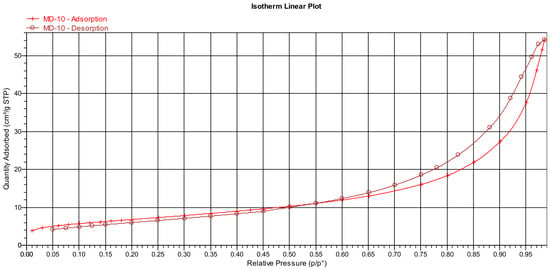
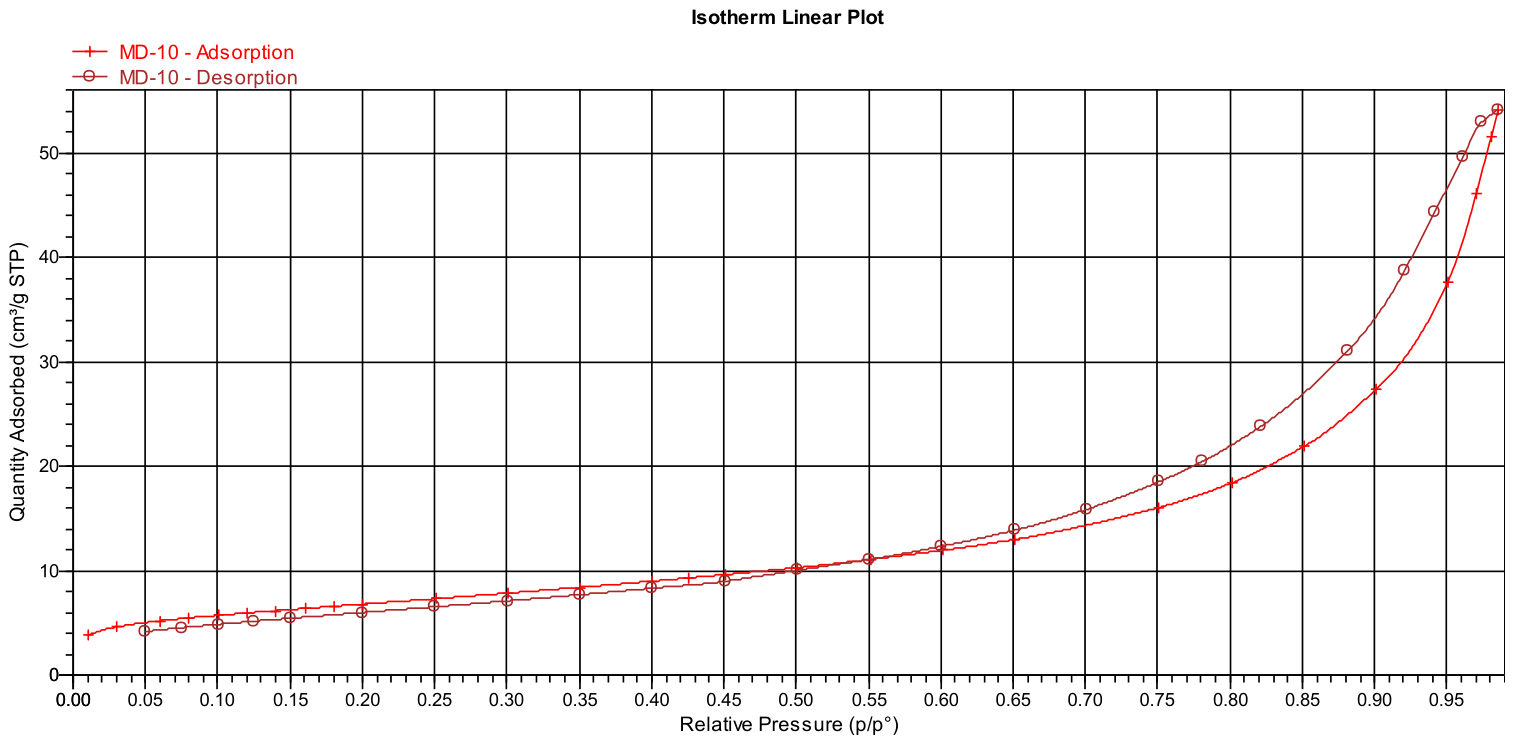
The specific surface area of the LDH material was determined by nitrogen adsorption measurements using the Brunauer–Emmett–Teller (BET) method. The MgAl–LDH sample exhibits a mesoporous structure, with an average pore diameter of approximately 13.8 nm, a pore volume of 0.082 cm3/g, and a BET specific surface area of 24.3 m2/g. As shown in Figure 4, the adsorption and desorption branches follow a similar trend up to a relative pressure (p/p0) of about 0.55, after which a slight divergence becomes evident. The shape of the isotherm corresponds to a type V adsorption profile accompanied by an H3 hysteresis loop, which is characteristic for aggregates of plate-like particles forming slit-shaped mesopores [33,39].
Figure 4.
BET surface area analysis of the MgAl–LDH sample showing the nitrogen adsorption–desorption isotherm.
Overall, the combined characterization results confirm the successful synthesis of the MgAl–LDH material and provide a coherent picture of its structural, morphological and textural properties. XRD analysis demonstrated the formation of a well-defined hydrotalcite-like layered structure, while SEM observations revealed the typical lamellar morphology and aggregation of plate-like particles. The EDX data verified an elemental composition consistent with the Mg–Al framework, supporting the structural findings. BET surface area and nitrogen adsorption–desorption measurements further indicated a mesoporous texture with slit-shaped pores formed between the lamellar aggregates. Together, these complementary techniques validate the formation of the expected LDH structure and highlight the material’s microstructural features relevant for its adsorption performance.
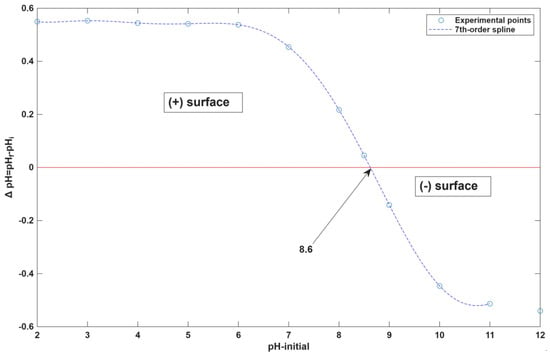
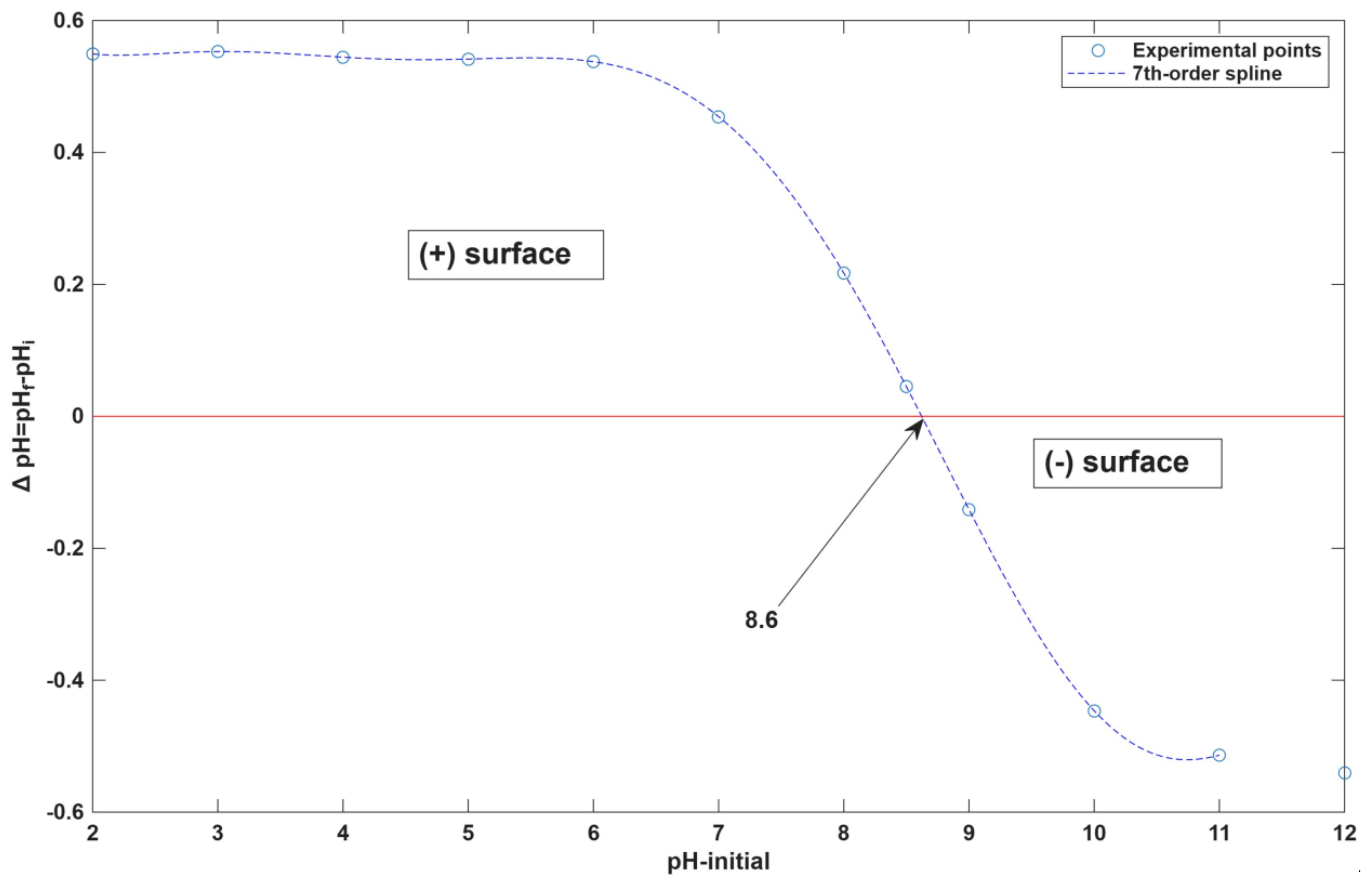
The point of zero charge of the material was determined in accordance with the procedure described in the methodology reported by Cârjilă et al. (2025) [40] in order to evaluate the surface charge behavior of the catalyst under varying pH conditions. The point of zero charge of the material was determined to be approximately 8.6 (Figure 5). Below this value, the MgAl–LDH surface is positively charged, which favors electrostatic attraction toward anionic molecules. Conversely, at pH values above the point of zero charge, the surface becomes negatively charged, leading to electrostatic repulsion with anionic species. Since indigo carmine is an anionic dye and the degradation experiments were conducted at pH values below the point of zero charge (pH = 7.5), the favorable electrostatic interaction enhances dye adsorption onto the catalyst surface and supports subsequent photocatalytic degradation.
Figure 5.
Evaluation of the point of zero charge based on the ΔpH versus the initial pH plot.
2.2. Photocatalytic Degradation of Indigo Carmine
The catalytic experiments were designed to establish the optimal working conditions by defining the initial concentration of the reactant solutions and developing an experimental plan that accounts for key operational parameters, including reaction time, catalyst dosage, and pH. Based on the structural, morphological and textural properties established through XRD, SEM, EDX and BET analyses, the catalytic performance of the MgAl–LDH material was subsequently evaluated to assess how these characteristics influence its reactivity under the selected experimental conditions.
The catalytic experiments were conducted under controlled conditions using 1.15 g of the MgAl–LDH catalyst, which was introduced into the reaction system to ensure a consistent and reproducible evaluation of its activity. The experimental setup was designed to monitor the evolution of the process as a function of key operational parameters, including reaction time, pH, initial pollutant concentration, and the nature of the applied treatment process. These conditions provided the framework for assessing the catalytic performance and identifying the factors that most significantly influence reaction efficiency.
The consistency of the experimental results was ensured by performing all measurements in triplicate. The replicate analyses confirmed the reproducibility of the data, as the variation between measurements obtained under identical conditions remained below 10%. This level of agreement minimizes random experimental variability and strengthens the reliability of the reported values.
2.2.1. Effect of Reaction Time
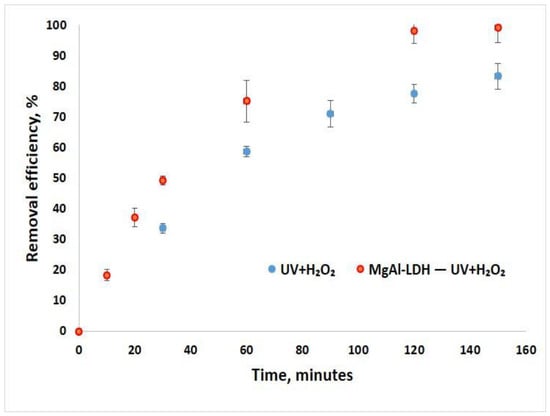
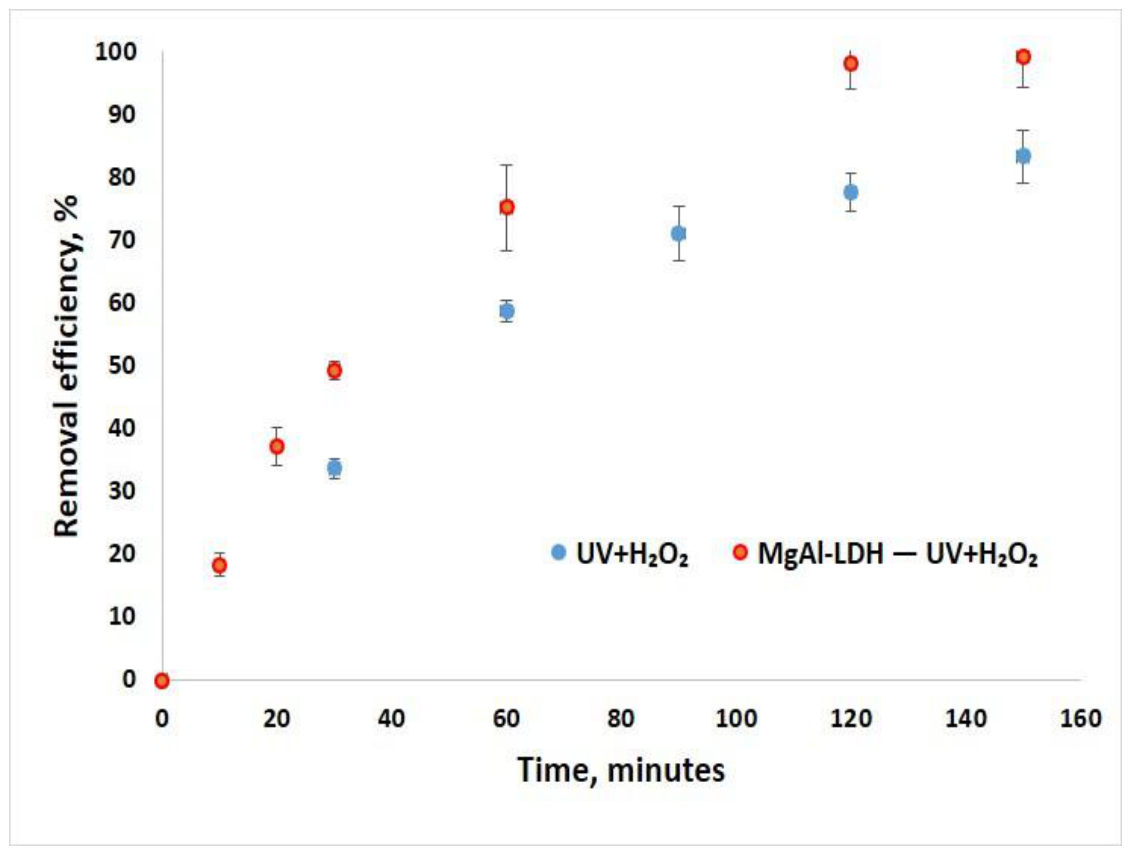
Reaction time plays a decisive role in the efficiency of advanced oxidation processes. Short exposure periods favor rapid degradation driven by oxidizing the highly reactive species, whereas longer reaction times enable the breakdown of more stable intermediates and push the system toward higher overall removal. Understanding this influence is essential for optimizing pollutant degradation and balancing treatment performance with operational costs. To clearly assess the catalyst effect, the experimental data was collected under two conditions: in the presence of the catalyst and in its absence (Figure 6). This comparative evaluation allows the distinction between the intrinsic reaction behavior and the enhancement produced specifically by the catalyst. At short reaction times (0–60 min), the effluent exhibits a high oxidation rate, whereas at longer reaction times (60–150 min) the oxidation rate decreases substantially. This behavior is attributed to the nature and reactivity of the intermediate species formed during the initial stages of oxidation. Photo-assisted oxidative degradation shows distinct kinetics. In the MgAl–LDH + H2O2 + UV system, faster degradation occurs within the first 60 min, achieving more than 80% removal efficiency, while the H2O2 + UV system yields less than 50% degradation over the same interval. At extended reaction times (60–150 min), the degradation efficiency increases markedly. After 150 min, the MgAl–LDH + H2O2 + UV process reaches 99.25% efficiency, compared to 83.26% for the H2O2 + UV system. These results highlight the critical influence of reaction time on the degradation of organic compounds in the effluent. However, it should also be noted that prolonged operation increases reagent and energy consumption, potentially limiting the economic feasibility.
Figure 6.
Effect of reaction time on oxidation performance.
2.2.2. Influence of H2O2 Concentration on the Photo-Oxidation Process
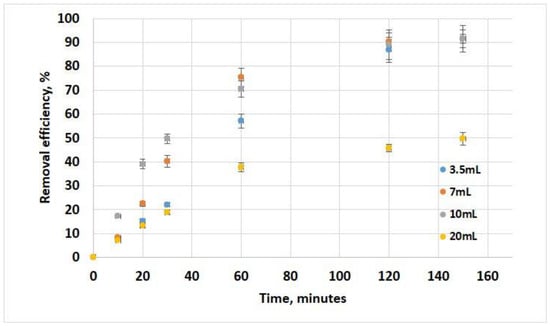
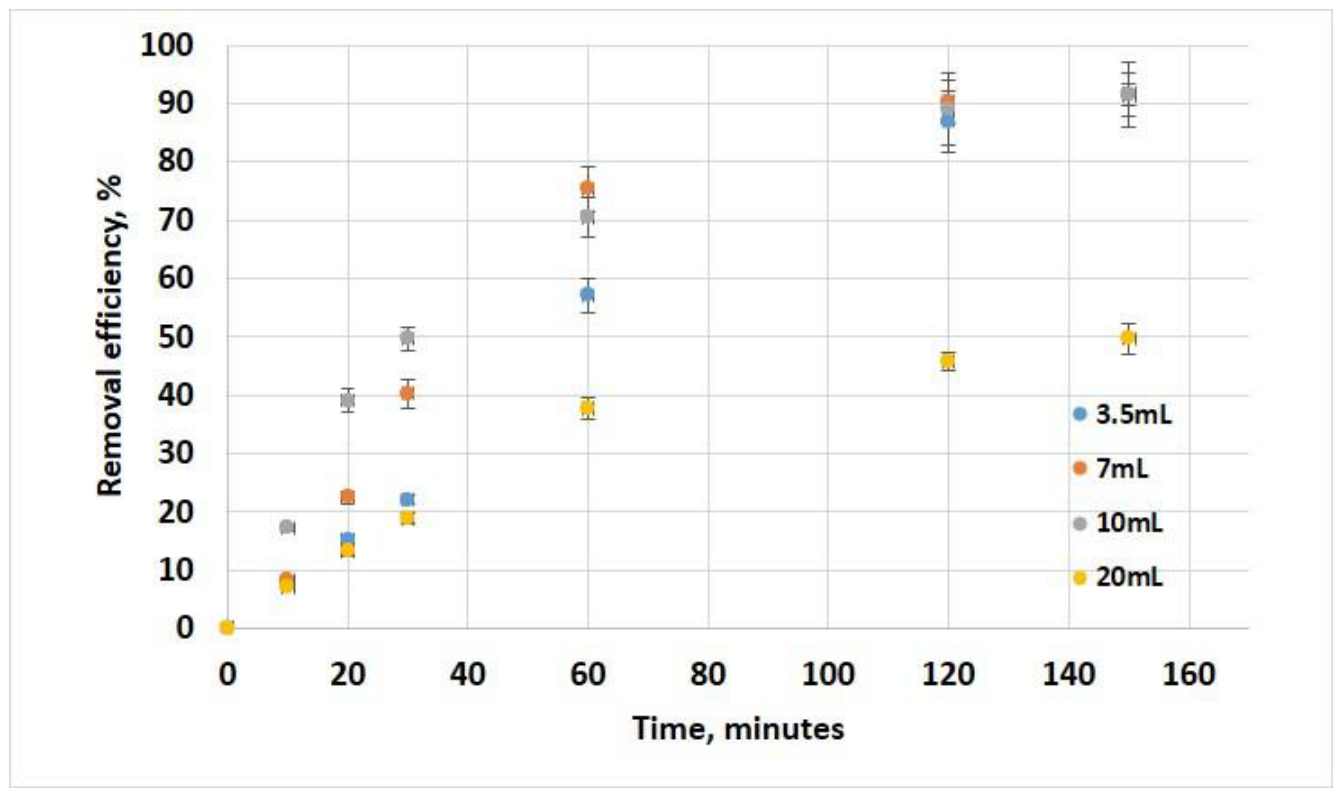
At high concentrations of hydrogen peroxide, a scavenger effect may occur, whereby excess H2O2 reacts with the hydroxyl radicals generated in the system. Instead of contributing to pollutant degradation, these radicals are consumed through side reactions that form less reactive species such as HO2•. This undesired quenching reduces the availability of highly oxidative radicals and consequently limits the overall efficiency of the oxidation process [41]. To further examine this behavior, the influence of H2O2 concentration was evaluated by monitoring the oxidation processes as a function of reaction time. The volumes of hydrogen peroxide investigated were 3.5, 7, 10 mL and 20 mL (Figure 7). The use of increasingly higher doses is relevant for illustrating how excessive H2O2 can intensify the scavenging effect, thereby inhibiting radical generation and diminishing the oxidative performance of the system.
Figure 7.
Dye removal efficiency as a function of varying hydrogen peroxide concentrations (C0 = 23 mg/L; catalyst loading: 0.15 g).
Figure 6 clearly illustrates how the volume of H2O2 influences the kinetics of the dye removal process. Increasing the amount of hydrogen peroxide leads to a noticeably faster oxidation rate, as reflected by the steeper rise in dye removal over time. Based on the initial dye concentration of 23 mg/L, the stoichiometric mineralization ratio of 27:1 (H2O2:indigo carmine) requires only a very small amount of the oxidant. For a reaction volume of 1.5 L, this corresponds to approximately 0.20 mL of 30% hydrogen peroxide, which represents the theoretical amount needed for complete oxidation of the dye. The added volumes of 3.5, 7, 10 mL and 20 mL of 30% hydrogen peroxide correspond to hydrogen peroxide excesses of 17.5, 35, 50 and 100, respectively. These increasing volumes reflect progressively higher oxidant excesses, allowing the system to move from near-stoichiometric conditions toward strongly oxidizing regimes that can enhance degradation efficiency. The 10 mL dose achieves the most rapid and efficient decolorization, followed by the 7 mL dose, while the 3.5 mL dose shows the slowest progression throughout the reaction period. This behavior confirms that higher H2O2 concentrations enhance the generation of reactive radicals, which accelerates the degradation of the dye. At the same time, the differences between the curves also suggest that excessively high H2O2 concentrations (20 mL) may approach conditions where the scavenger effect becomes relevant, potentially limiting radical availability and preventing a proportional increase in oxidation efficiency. Overall, the figure demonstrates the strong dependence of the oxidation process on the oxidant dose and highlights the importance of optimizing H2O2 concentration for effective treatment performance.
Moreover, hydrogen peroxide is known to exert toxic effects on many organisms [42,43], which means that its presence prior to the biological treatment stage can significantly influence overall degradation efficiency when photocatalytic oxidation is applied.
2.2.3. Influence of Initial Dye Concentration
The initial concentration of indigo carmine plays a decisive role in determining the efficiency of its photooxidation when MgAl–LDH materials are employed as catalysts. At lower concentrations, the reduced number of dye molecules allows more effective interaction with photogenerated reactive oxygen species, promoting faster degradation kinetics and improved mineralization. Conversely, higher initial concentrations can hinder the process by increasing light absorption by the dye itself, limiting photon penetration and partially blocking the active sites on the MgAl–LDH surface. Understanding how the initial dye concentration influences these competing effects is essential for optimizing photocatalytic conditions and elucidating the mechanistic pathways governing the removal of indigo carmine.
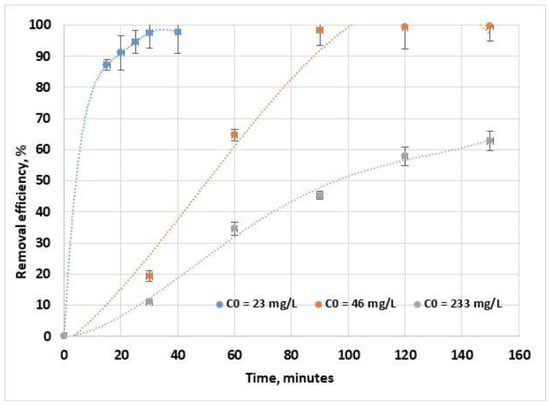
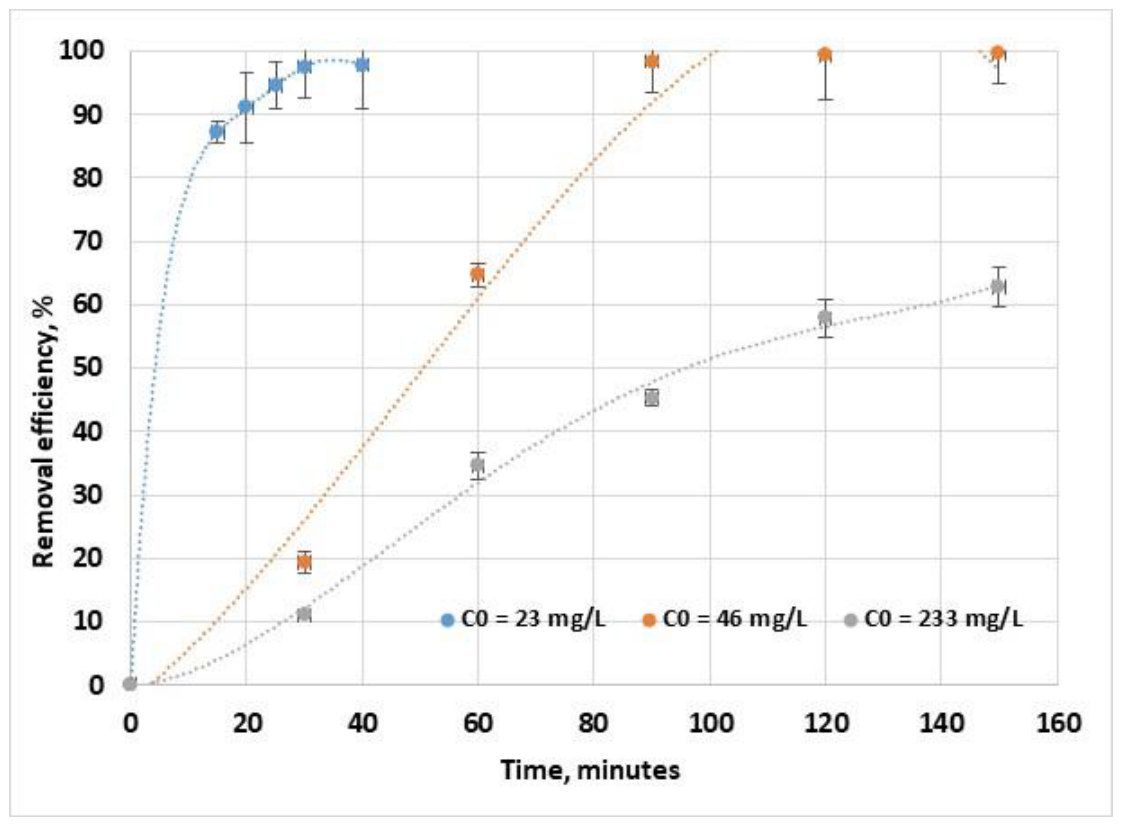
Figure 8 shows a clear dependence of photooxidation efficiency on the initial concentration of indigo carmine. At the lowest concentration, 23 mg/L, the removal process proceeds very rapidly, reaching almost complete degradation within the first 50 min. This behavior suggests that the catalytic surface of MgAl–LDH is readily accessible and that the number of dye molecules is sufficiently low to allow efficient interaction with the reactive species generated under irradiation.
Figure 8.
Dye removal efficiency as a function of initial dye concentration (VH2O2 = 7 mL).
When the initial concentration increases to 46 mg/L, degradation becomes noticeably slower. The system requires nearly 120 min to approach full removal, indicating that a higher number of dye molecules compete for both light absorption and reactive oxygen species. As a result, the photocatalytic process becomes progressively less efficient. At the highest concentration, 233 mg/L, the removal efficiency rises only gradually and reaches about 60% even after 140 min. In this case, the solution absorbs a significant portion of the incident light, reducing the photons available for activating the catalyst. Additionally, the catalytic sites become partially saturated, and the generated oxidizing species are insufficient to degrade all dye molecules within the studied timeframe. Overall, the figure demonstrates that increasing the initial concentration of indigo carmine slows down the photooxidation process and reduces the maximum achievable removal efficiency [44], primarily due to light-screening effects, competition for reactive species, and partial saturation of the catalyst surface.
2.2.4. Influence of Catalyst Loading on Photocatalytic Performance
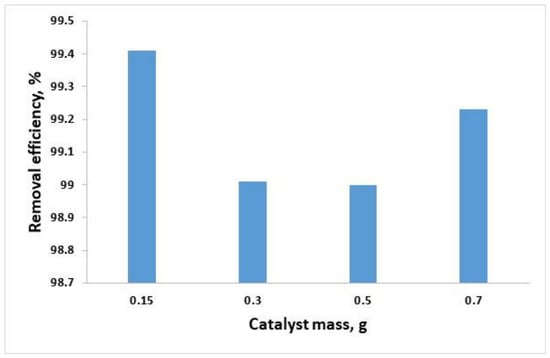
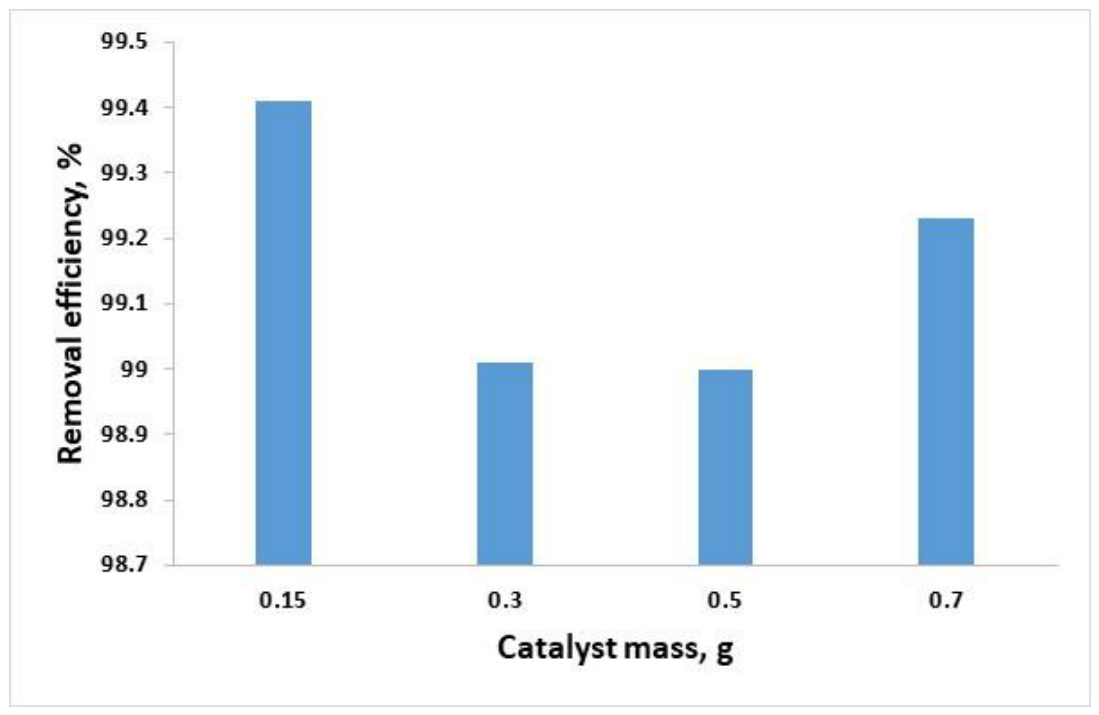
The amount of catalyst used in the photocatalytic system directly influences light absorption and the availability of active sites, which in turn affects the efficiency of dye removal. Evaluating different catalyst masses helps identify the loading that ensures high performance without causing light scattering or particle agglomeration.
The graph presented in Figure 9 shows that increasing the mass of the catalyst does not lead to a proportional increase in dye removal efficiency. In fact, the highest removal efficiency is obtained at the lowest catalyst mass, 0.15 g, where the system reaches approximately 99.4%. This suggests that, at this loading, the catalyst is well dispersed and fully accessible to light, allowing efficient generation of reactive species. As the catalyst mass increases to 0.3 g and 0.5 g, the removal efficiency decreases slightly, indicating that additional catalyst does not enhance the process and may even hinder it through particle agglomeration, light scattering, or partial shielding of active sites. At 0.7 g, the efficiency increases again but does not return to the level observed at the lowest mass, confirming that the system is not limited by catalyst quantity but rather by optical and physical effects within the suspension.
Figure 9.
Effect of catalyst mass on dye removal efficiency (VH2O2 = 7 mL and C0 = 23 mg/L).
The catalyst mass of 0.15 g for 1.5 L of solution was selected because it provides an optimal balance between light penetration, particle dispersion, and availability of active sites. At this loading, the suspension remains sufficiently transparent to allow efficient irradiation of the catalyst while avoiding excessive particle agglomeration and light scattering that typically occur at higher catalyst concentrations. Experimental results confirmed that this amount delivers the highest dye removal efficiency within the tested range, indicating that it represents an effective and well-dispersed catalyst dosage for the photocatalytic system. Studies commonly employ catalyst loadings in the range of 0.05–1.0 g/L, and the chosen ratio (0.1 g/L) falls well within this interval, confirming its suitability for photocatalytic experiments [45].
2.3. Kinetic Analysis of the Photocatalytic Degradation Process
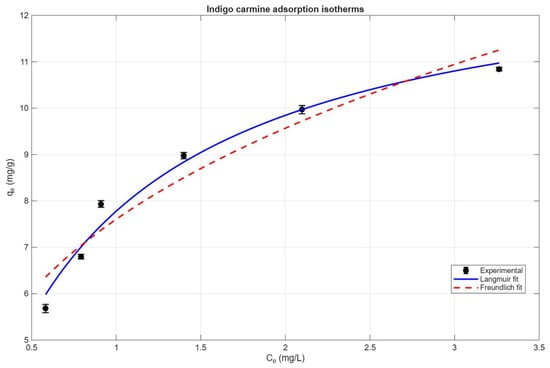
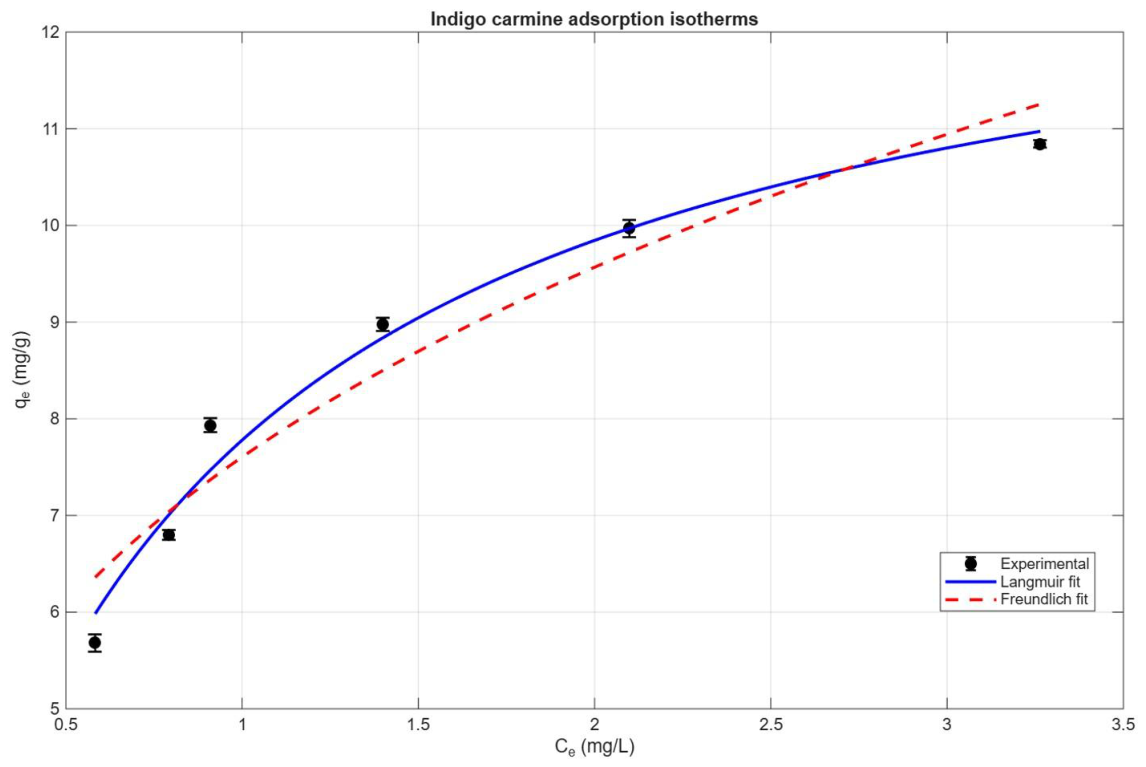
Although the material was designed as a catalyst, adsorption studies were carried out to evaluate its ability to capture dye molecules prior to photocatalytic degradation. Understanding the adsorption behavior is essential because the initial uptake of pollutants on the catalyst surface strongly influences the overall degradation efficiency. By assessing the equilibrium adsorption capacity and affinity, we can determine how effectively the catalyst concentrates the dye at its active sites, which is a critical prerequisite for efficient photocatalytic performance. To evaluate the adsorption behavior of indigo carmine on the photocatalyst surface prior to photodegradation, equilibrium data were fitted using the Langmuir and Freundlich isotherm models (Figure 10). Adsorption studies were performed in batch mode by mixing a defined amount of adsorbent (0.1 g) with a measured volume of the indigo carmine solution (25 mL) and maintaining the suspensions under constant stirring until equilibrium conditions were achieved (24 h).
Figure 10.
Equilibrium adsorption isotherms of indigo carmine fitted with the Langmuir and Freundlich models.
The mathematical expressions of the Langmuir and Freundlich isotherms are well established in the adsorption literature and can be found in previous studies [40,46]; therefore, they are not reproduced here in detail. In this work, the experimental equilibrium data were fitted using the nonlinear forms of both models in order to obtain the corresponding adsorption parameters with higher accuracy. This approach ensures a more reliable representation of the adsorption behavior compared to linearized transformations, which are known to introduce systematic errors.
The adsorption parameters obtained from fitting the equilibrium data to the Langmuir and Freundlich models, together with the associated statistical indicators, are summarized in Table 1. This table provides a direct comparison of the two isotherm models, highlighting both the estimated constants and the quality of fit metrics used to evaluate their performance.
Table 1.
Adsorption isotherm parameters obtained from fitting the equilibrium data to the Langmuir and Freundlich models.
The equilibrium data show that the Langmuir model provides a markedly superior fit compared to the Freundlich model, as evidenced by its higher R2 value (0.98), lower RMSE and SSE, and more favorable AIC/BIC scores. The Langmuir parameters indicate a well-defined monolayer adsorption process with a relatively high maximum capacity (qₘₐₓ = 13.404 mg/g) and strong affinity (KL = 1.3831 L/mg). In contrast, the Freundlich model exhibits higher fitting errors and weaker statistical performance, suggesting that surface heterogeneity plays a minor role in this system. Overall, the results confirm that adsorption of indigo carmine on the studied material is best described by a homogeneous monolayer mechanism.
Kinetic evaluation is essential for understanding how efficiently indigo carmine is degraded and for identifying the fundamental processes that control the reaction rate in the MgAl–LDH/H2O2 system. By examining the temporal evolution of the dye concentration and fitting the experimental data to zero-order, first-order, and second-order kinetic models, it becomes possible to determine the reaction order, quantify the rate constants, and assess how the degradation pathway responds to changes in concentration. This approach provides insight into whether the process is governed by surface-limited or bulk-solution mechanisms and clarifies how the availability of reactive oxygen species influences the overall reaction dynamics. The kinetic analysis therefore plays a central role in elucidating the degradation mechanism of indigo carmine and in guiding the optimization of operational conditions for improved treatment performance. The kinetic behavior of indigo carmine degradation was evaluated using three empirical rate models commonly applied to heterogeneous oxidation processes: zero-order, first-order, and second-order kinetics. The zero-order model assumes that the reaction rate is independent of dye concentration, typically reflecting conditions where the catalytic surface is saturated or the generation of reactive species is rate-limiting. The first-order model describes systems in which the degradation rate is directly proportional to the dye concentration, a behavior frequently observed in oxidative processes dominated by radical attacks in dilute solutions. In contrast, the second-order model accounts for situations where the reaction rate depends on the interaction between two concentration-dependent species, such as dye molecules and reactive oxidizing species. By fitting the experimental data to these empirical models, it becomes possible to identify the rate law that best captures the degradation dynamics and to extract meaningful kinetic parameters to compare reaction efficiency under different conditions.
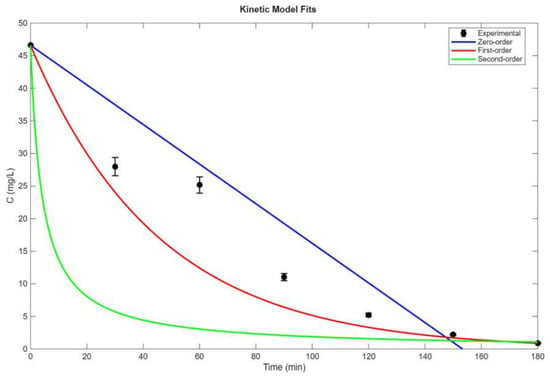
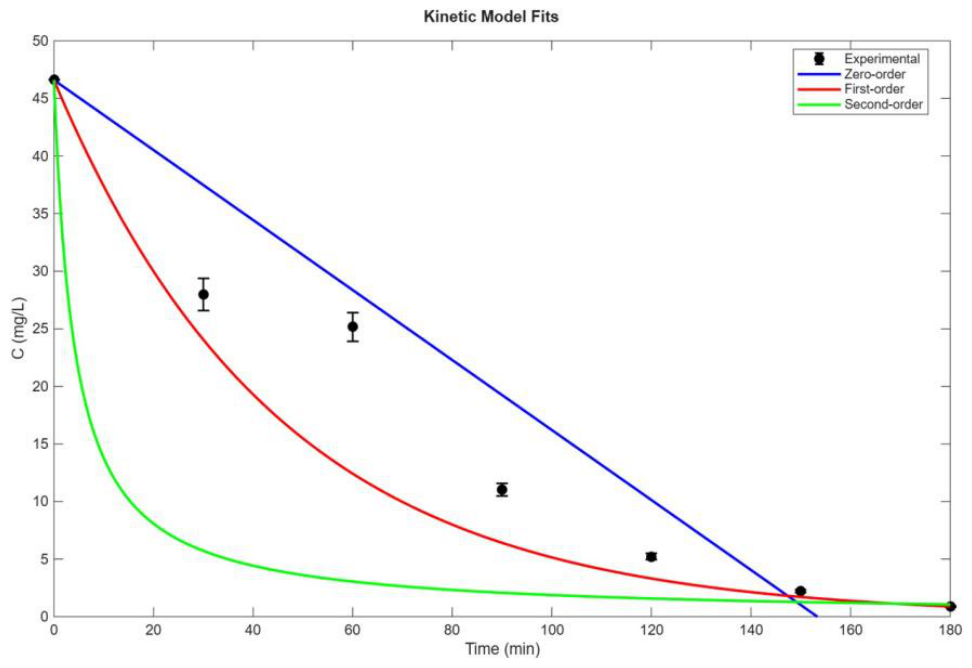
The mathematical expressions of these kinetic models have been extensively presented in previous studies and will not be reiterated here [40,46]; instead, the focus is placed on their applicability to the present system and on the extraction of meaningful kinetic parameters from the experimental data. Figure 11 presents the experimental degradation profile of indigo carmine together with the fitted curves corresponding to the zero-, first-, and second-order kinetic models.
Figure 11.
Comparison between the experimental degradation profile of indigo carmine and the fitted zero-order, first-order, and second-order kinetic models (VH2O2 = 7 mL and C0 = 46 mg/L).
The kinetic equations were solved by fitting the experimental concentration–time data to the zero-, first-, and second-order rate expressions using nonlinear regression, allowing the rate constants and statistical indicators to be extracted directly from the optimized model curves. Table 2 presents the kinetic parameters together with the corresponding statistical metrics for the three empirical models evaluated in this study. The comparison of the three empirical kinetic models shows clear differences in their ability to describe the degradation behavior of indigo carmine. Among the tested models, the first-order kinetic model provides the best overall fit, as indicated by the highest coefficient of determination (R2 = 0.882) and the lowest values for RMSE (5.39) and SSE (203.1). These metrics demonstrate that the first-order expression captures the experimental trend more accurately than the zero- and second-order models. The relatively low MAPE (23.9%) and Chi-square value further support the suitability of this model for representing the reaction dynamics. The zero-order model shows a moderate fit (R2 = 0.840), with higher RMSE and SSE compared to the first-order model. Its very high MAPE (183.8%) indicates substantial deviations at low concentrations, where zero-order kinetics typically fail to describe the rapid decline in dye concentration. Although the AIC and BIC values are slightly higher than those of the first-order model, they still suggest that zero-order behavior may partially describe the early stages of the reaction, when the concentration decrease is nearly linear. In contrast, the second-order model performs poorly, with a very low R2 (0.371) and the highest RMSE (12.4) and SSE (1078.8). The large Chi-square value (295.3) and elevated MAPE (54.5%) confirm that this model does not adequately represent the degradation mechanism. The high AIC and BIC values further indicate that the second-order expression is statistically inferior to the other two models. The mathematical expressions used to compute the statistical parameters are not reproduced here, as they are comprehensively presented in the cited literature.
Table 2.
Kinetic rate constants and statistical performance indicators for the zero-, first-, and second-order models applied to the degradation of indigo carmine.
The Langmuir–Hinshelwood (LH) model was also tested, but the fitted kinetic constant k was nearly identical to the pseudo-first-order (PFO) rate constant, indicating no meaningful deviation from first-order behavior. In addition, the adsorption constant K was much smaller than one, showing that adsorption on the catalyst surface is weak and does not significantly influence the reaction rate. Therefore, although LH was evaluated, its parameters confirm that it does not improve the kinetic description compared to the PFO model.
Overall, the statistical indicators consistently show that first-order kinetics best describe the degradation of indigo carmine under the studied conditions, suggesting that the reaction rate is proportional to the dye concentration and is likely governed by radical-driven oxidation processes typical in advanced oxidation systems.
A simplified kinetic treatment was applied in this study, based on the assumption that the reaction medium behaves ideally and that mass-transfer or reactor-scale effects are negligible. Because no detailed reactor model was incorporated, the kinetic constants were derived solely from concentration–time data, assuming uniform irradiation, perfect mixing, and negligible diffusion limitations. Under these assumptions, the obtained rate constants represent apparent kinetics, not intrinsic ones, since they reflect the overall behavior of the experimental system rather than the true surface reaction rate.
To contextualize the photocatalytic performance of the synthesized LDH materials, Table 3 compares the apparent pseudo-first-order rate constants (k) reported in this study with values available in the literature for indigo carmine degradation using various photocatalysts. This comparison highlights the relative efficiency of LDH-based systems and situates their activity within the broader range of materials commonly employed for dye photooxidation.
Table 3.
Comparison of pseudo-first-order kinetic constants (k) reported for the photocatalytic degradation of indigo carmine using LDH-based materials and other representative photocatalysts.
2.4. Reusability Assessment of the Photocatalyst
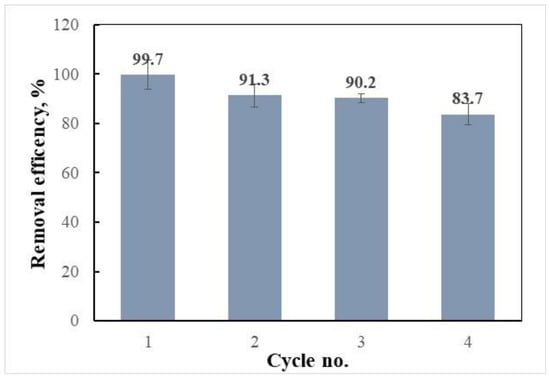
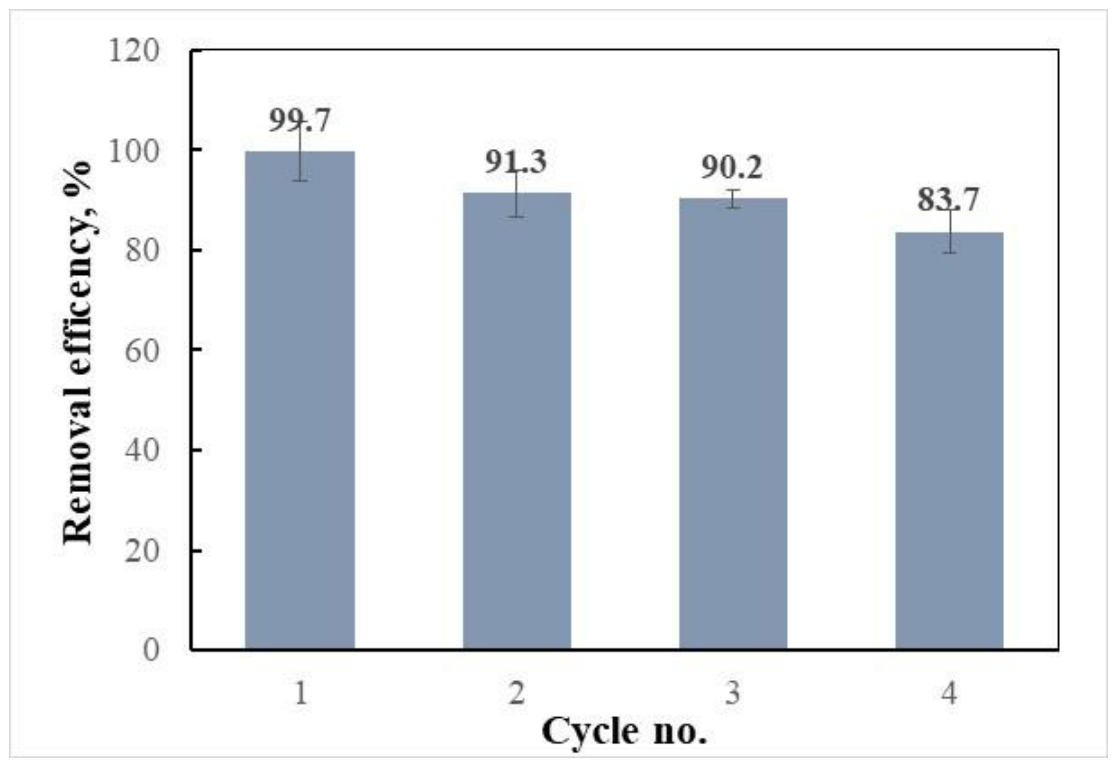
The regeneration and reuse of the photocatalyst are essential parameters for evaluating its long-term stability and practical applicability. Assessing how the catalyst performs over successive cycles provides insight into its structural robustness, resistance to deactivation, and overall suitability for real wastewater treatment scenarios. Figure 12 presents the catalyst reusability results, illustrating its performance over successive adsorption–desorption cycles.
Figure 12.
Reusability of the catalyst over four consecutive adsorption–desorption cycles (VH2O2 = 7 mL and C0 = 23 mg/L).
The figure illustrates the regeneration and reuse performance of the MgAl–LDH catalyst during the photo-oxidation of indigo carmine. In the first cycle, the removal efficiency is nearly complete (99.7%), confirming the catalyst’s excellent initial activity. During the second and third cycles, the efficiency decreases slightly to 91.3% and 90.2%, respectively, indicating good stability with only moderate loss of activity upon reuse. In the fourth cycle, the efficiency drops more noticeably to 83.7%, suggesting the onset of more significant deactivation, possibly due to a partial blockage of active sites, material loss, or structural changes [56,57]. Overall, the figure demonstrates that MgAl–LDH can be regenerated and reused multiple times while maintaining removal efficiencies above 80%, making it a promising catalyst for practical applications, although further optimization of the regeneration process could help minimize progressive deactivation.
3. Materials and Methods
3.1. Synthesis of the MgAl–LDH Catalyst
Magnesium nitrate hexahydrate (Mg(NO3)2·6H2O), aluminum nitrate nonahydrate (Al(NO3)3·9H2O), manganese dioxide (MnO2), sodium carbonate (Na2CO3), sodium hydroxide (NaOH), and hydrogen peroxide were supplied by Sigma-Aldrich (Burlington, MA, USA). All chemicals were of analytical grade, and distilled water was employed throughout the experiments.
The MgAl–LDH material was synthesized via a conventional chemical co-precipitation route [58]. Stoichiometric quantities of Mg(NO3)2·6H2O, Al(NO3)3·9H2O, Na2CO3, and NaOH were individually dissolved in distilled water, after which the precursor solutions were combined under vigorous stirring (200 rpm). Subsequently, the synthesis step was carried out following the same procedure described by Li et al. (2023) [58], with the mixed Mg and Al salt solutions being slowly introduced into a 1 mol/L Na2CO3 solution at 40 °C under continuous stirring for 4 h. Throughout the precipitation process, the pH was maintained at 10 by controlled addition of 10 mol/L NaOH. The resulting suspensions were then aged in a shaker at 25 °C for 24 h. The solid products were recovered by centrifugation, thoroughly washed with distilled water to remove residual ions, and dried at 70 °C under low-humidity conditions.
3.2. Characterization Techniques
The crystalline phase composition of the catalyst was determined by X-ray diffraction (XRD) using a Shimadzu-6000 diffractometer (Duisburg, Germany) configured in Bragg–Brentano θ–2θ geometry with CuKα radiation. The CuKβ component was suppressed using a Ni filter. Diffraction patterns were recorded digitally in step-scan mode over the 2θ range of 10–90°. Structural features of the MgAl–LDH nanoparticles and the effects of magnesium adsorption were evaluated based on the corresponding XRD profiles.
Scanning electron microscopy (SEM) and energy-dispersive X-ray spectroscopy (EDX) analyses were carried out using a Hitachi S-2600N scanning electron microscope (Berkshire, United Kingdom). Qualitative and quantitative elemental microanalyses were performed with a Röntec energy-dispersive X-ray detection system.
The textural properties were determined using a Micromeritics ASAP 2020 analyzer (Unterschleissheim, Germany) by nitrogen adsorption at its liquefaction temperature (77 K). Prior to analysis, the samples were degassed at 150 °C under a vacuum of 0.1 Pa for 2 h. The specific surface area, total pore volume, and average pore diameter were subsequently evaluated from the adsorption–desorption isotherms.
3.3. Experimental Procedure
The photocatalytic experiments were conducted by dispersing 0.15 g of the catalyst in 1.5 L of the aqueous dye solution with concentrations ranging from 5 × 10⁻⁵ to 5 × 10⁻⁴ M. Aliquots were withdrawn at predetermined intervals (15, 30, 60, 90, and 120 min) and analyzed spectrophotometrically at λ = 610 nm.
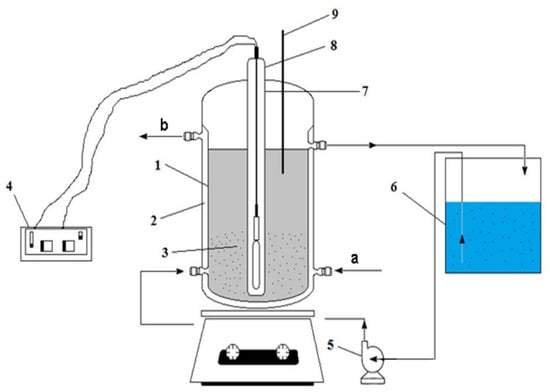
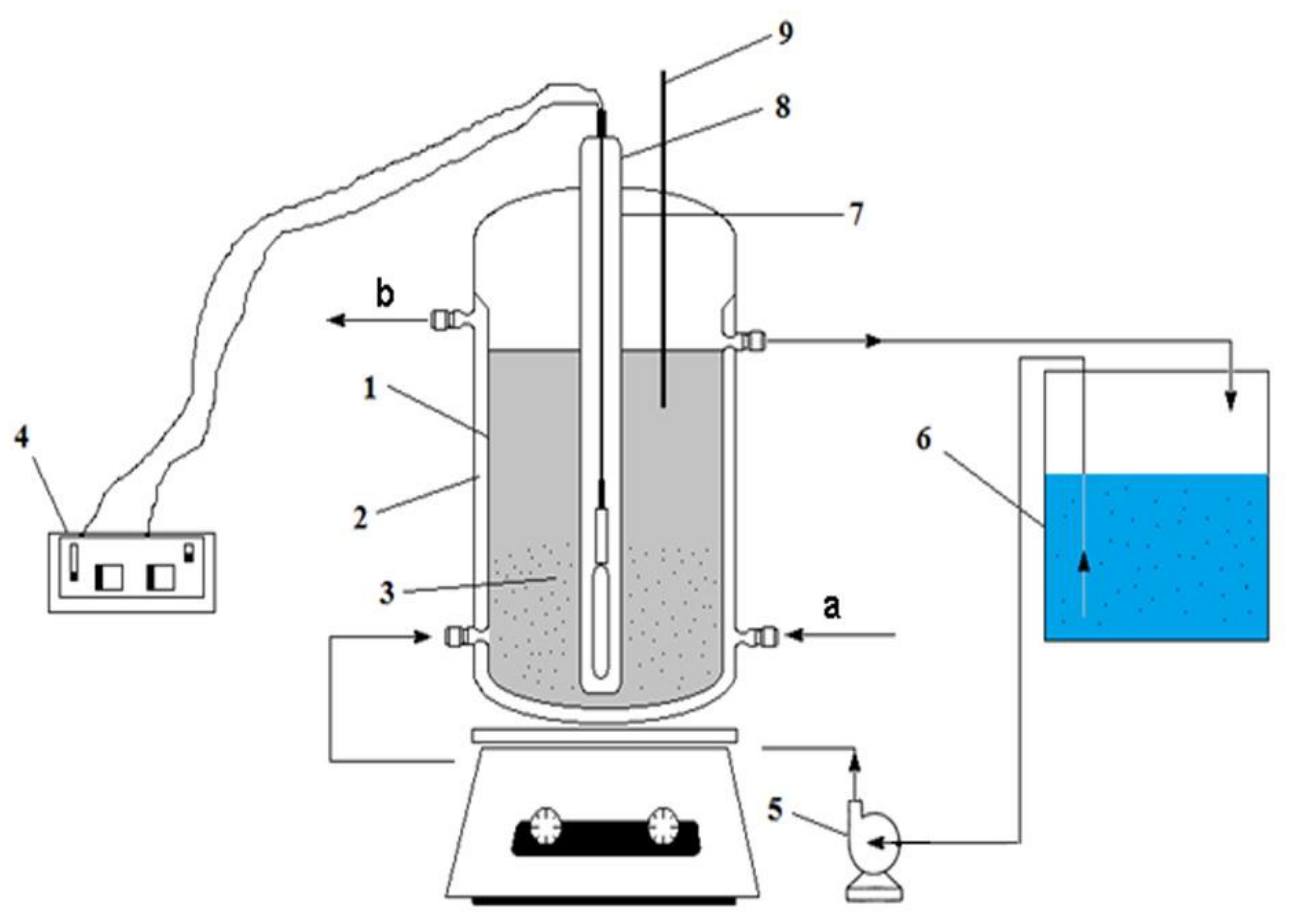
The experiments were performed in a photocatalytic reactor (Figure 13) with the following specifications: inner reactor diameter: 80 mm, quartz tube outer diameter: 35 mm, and an inter-tubular irradiation gap of 23 mm. The reactor had a useful reaction volume of 1.5 L and a total volume of 2 L. The recirculation pump operated at 1 L/min, corresponding to a hydraulic residence time of 1.5 min.
Figure 13.
Schematic representation of the laboratory photocatalytic reactor and experimental setup: (1) photocatalytic reactor vessel; (2) cooling jacket (inlet/outlet); (3) MgAl–LDH catalyst; (4) UV lamp housing; (5) recirculation pump; (6) recirculation reservoir; (7) UV irradiation source; (8) quartz immersion tube; (9) temperature probe; (a)–thermal jacket inlet, (b)–thermal jacket outlet.
The degradation of the organic compounds was carried out in a laboratory installation operating with continuous recirculation, using a cylindrical reactor equipped with a reaction chamber (1) and a cooling jacket through which water circulated (2). The photocatalytic reactor included a UV radiation source (4), specifically a mercury-vapor quartz lamp (8), positioned axially in a quartz tube to create an annular reaction zone (7). The MgAl–LDH material (3) was placed around the quartz tube. Wastewater was fed into the reactor from a storage tank (6) using a pump (5). The temperature of the synthetic wastewater was maintained at 20 °C using a recirculating chiller equipped with an integrated temperature control system, ensuring stable thermal conditions throughout the experiment. Temperature stability was verified using a calibrated laboratory thermometer (9).
A high-pressure mercury lamp (120 W) was used as the irradiation source, delivering a peak irradiance of 1.5 mW/cm2. Under these conditions, the energy density accumulated during 2 h of exposure was 10.8 J/cm2. The high-pressure mercury lamp exhibited an emission spectral range of 350–575 nm, covering both UV-A and visible wavelengths relevant for photocatalytic activation.
The samples were analyzed spectrophotometrically at a wavelength of 610 nm using a Shimadzu 9100 UV-VIS spectrophotometer (Kyoto, Japan). Samples collected from the reactor at different reaction times were stabilized by adding MnO2 to ensure rapid decomposition of any unreacted H2O2. MnO2 remains in the solid state when introduced into aqueous solutions containing hydrogen peroxide. Upon addition, the material acts as a heterogeneous catalyst, promoting the decomposition of H2O2 into water and oxygen without undergoing dissolution or structural transformation. The solid particles persist as a suspended phase throughout the reaction, while oxygen evolution is observed at their surface. The effect of adding manganese dioxide for the neutralization of excess hydrogen peroxide was assessed using test solutions with known concentrations of indigo carmine. Experimental results confirmed that manganese dioxide does not interfere with the quantification of indigo carmine, either through adsorption processes or through catalytic transformation of the dye into other species. Following neutralization, the samples were filtered, and their absorbance was subsequently measured using a UV–VIS spectrophotometer.
To complement the decolorization measurements at λ = 610 nm and to provide evidence of actual dye mineralization rather than mere chromophore removal, Total Organic Carbon (TOC) analysis was performed [59]. TOC offers a comprehensive evaluation of the overall organic load in the system, accounting for both dissolved and particulate organic species. The TOC results confirmed the extent to which the organic dye structure was effectively degraded during the photocatalytic process.
Experiments were also carried out in the presence of the MgAl–LDH catalyst (MgAl–LDH + H2O2 + UV) only, serving as a blank test to provide a reference for the photo-assisted processes.
pH was measured using a Jenway 370 pH meter (Stone, United Kingdom).
All calculations were completed using MATLAB 2026a, where the numerical routines and analysis tools were implemented.
4. Conclusions
The characterization results confirm the successful synthesis of the MgAl–LDH material, with XRD evidencing the formation of the layered structure, SEM revealing the typical plate-like morphology, EDX validating the expected elemental composition, and BET indicating a mesoporous texture relevant for catalytic and adsorption applications.
Increasing the hydrogen peroxide dose clearly accelerates the oxidation of indigo carmine, with higher volumes producing faster and more efficient decolorization. The tested additions of 3.5, 7, 10 and 20 mL of 30% H2O2—corresponding to a H2O2 excess ration of 17.5–100—show a consistent improvement in reaction rate, with the highest dose giving the most rapid removal. Although greater oxidant amounts enhance radical generation, the trends also indicate that very high concentrations (dose 20 mL) may approach conditions where radical scavenging becomes relevant. Overall, the results highlight the strong dependence of the process on oxidant dosage and the need to balance efficiency with optimal radical availability.
At higher initial dye concentrations, the oxidation process becomes progressively less efficient due to increased competition for photons and reactive species, confirming that indigo carmine degradation is strongly limited by both light absorption and catalyst site availability.
Adsorption measurements indicated a measurable but limited affinity of the catalyst for indigo carmine, with the Langmuir model providing the best fit and confirming a well-defined monolayer interaction consistent with its surface properties, although adsorption plays only a minor role compared to the photocatalytic pathway. The kinetic evaluation shows that the degradation of indigo carmine follows predominantly first-order behavior, as evidenced by the highest R2 value and the lowest error indicators among the tested models. The zero-order model provides only a partial description of the reaction, while the second-order model fails to capture the experimental trend. Overall, the results confirm that the reaction rate is proportional to the dye concentration, supporting a degradation mechanism characteristic of radical-driven oxidation processes.
Under our experimental conditions (0.15 g catalyst in 1.5 L solution), the Langmuir capacity of 13.4 mg/g corresponds to a maximum dark adsorption of only ~3% of the initial dye (46 mg/L). Adsorption is therefore negligible, and the observed removal under irradiation—described by a pseudo-first-order rate constant of 0.022 1/min—can be attributed almost entirely to photocatalytic degradation.
The reutilization study demonstrates that the MgAl–LDH catalyst maintains a high photooxidative performance over multiple cycles, with only a gradual decline in efficiency. Although the removal rate decreases from 99.7% in the first cycle to 83.7% in the fourth, the catalyst still preserves strong activity, confirming its structural robustness and practical applicability. The moderate loss of efficiency suggests partial deactivation, likely associated with surface fouling or minor structural changes accumulated during repeated use. Overall, the results indicate that MgAl–LDH is a promising and reusable catalyst for indigo carmine photooxidation, with potential for further optimization to enhance long-term stability.
Author Contributions
Conceptualization, C.M. and O.D.O.; methodology, C.M.; software, M.B.; validation, D.D., M.I.H.S. and T.A.; investigation, C.M. and O.D.O.; resources, C.M.; data curation, M.B.; writing—original draft preparation, C.M., M.B., D.D., M.I.H.S. and T.A.; writing—review and editing, M.B.; visualization, O.D.O.; supervision, C.M.; project administration, C.M. All authors have read and agreed to the published version of the manuscript.
Funding
This research received no external funding.
Data Availability Statement
All data supporting the findings of this study are included within the manuscript.
Conflicts of Interest
The authors declare no conflicts of interest.
References
- Bal, G.; Thakur, A. Distinct approaches of removal of dyes from wastewater: A review. Mater. Today Proc. 2022, 50, 1575–1579. [Google Scholar] [CrossRef] [Scilit]
- Al-Tohamy, R.; Ali, S.S.; Li, F.; Okasha, K.M.; Mahmoud, Y.A.-G.; Elsamahy, T.; Jiao, H.; Fu, Y.; Sun, J. A critical review on the treatment of dye-containing wastewater: Ecotoxicological and health concerns of textile dyes and possible remediation approaches for environmental safety. Ecotoxicol. Environ. Saf. 2022, 231, 113160. [Google Scholar] [CrossRef] [Scilit] [PubMed]
- Ristea, M.-E.; Zarnescu, O. Indigo Carmine: Between Necessity and Concern. J. Xenobiot. 2023, 13, 509–528. [Google Scholar] [CrossRef] [Scilit] [PubMed]
- Kavitha, G.; Govindhan, M.; Premkumar, S. Dye pollution and its implications for human health, aquatic ecosystems, and sustainable wastewater treatment: A comprehensive review. J. Water Process Eng. 2025, 80, 109071. [Google Scholar] [CrossRef] [Scilit]
- Hublikar, L.V.; Nivedhitha, K.S.; Chikkatti, B.S.; Sajjan, A.M.; Banapurmath, N.R.; Palaniswamy, D.; Beena, T.; Hegde, P.; Mishra, S.K.; Ravulapati, K. Functionalized biochar–metal oxide nanocomposites for the catalytic degradation of recalcitrant pollutants in wastewater treatment. RSC Adv. 2026, 16, 12186. [Google Scholar] [CrossRef] [Scilit] [PubMed]
- Chowdhury, M.F.; Khandaker, S.; Sarker, F.; Islam, A.; Rahman, M.T.; Awual, M.R. Current treatment technologies and mechanisms for removal of indigo carmine dyes from wastewater: A review. J. Mol. Liq. 2020, 318, 114061. [Google Scholar] [CrossRef] [Scilit]
- Ristea, M.-E.; Zarnescu, O. Effects of Indigo Carmine on Growth, Cell Division, and Morphology of Allium cepa L. Root Tip. Toxics 2024, 12, 194. [Google Scholar] [CrossRef] [Scilit] [PubMed]
- Younes, M.; Aquilina, G.; Degen, G.; Engel, K.H.; Fowler, P.; Frutos Fernandez, M.J.; Furst, P.; Gurtler, R.; Husøy, T.; Manco, M.; et al. Follow-up of the re-evaluation of indigo carmine (E 132) as a food additive. EFSA J. 2023, 21, 8103. [Google Scholar] [CrossRef] [Scilit] [PubMed]
- Vatanpour, V.; Ozgun, H.; Shitreh, S.; Ersahin, M.E.; Eryildiz-Yesir, B.; Koyuncu, I. Integration of advanced oxidation processes (AOPs) and membrane bioreactors (MBRs) for wastewater treatment: A review. Sep. Purif. Technol. 2026, 394, 137411. [Google Scholar] [CrossRef] [Scilit]
- Sadiq, F.K.; Sadiq, A.A.; Matsika, T.A.; Momoh, B.A. Sustainable remediation of persistent organic Pollutants: A review on Recent innovative technologies. Curr. Res. Biotechnol. 2025, 9, 100293. [Google Scholar] [CrossRef] [Scilit]
- Attia, M.S.; Abdel-Wahed, M.S.; Algethami, F.K.; El-Kalliny, A.S. Advanced oxidation processes (AOPs) for drinking water treatment: A state-of-the-art review on applications, efficacy, and implementation challenges. RSC Adv. 2026, 16, 22186. [Google Scholar] [CrossRef] [Scilit] [PubMed]
- Mahendiran, M.; Mathen, J.J.; Bharathi Bernadsha, S.; Mohamed Racik, K.; Madhavan, J.; Joe Raja Ruban, M.; Victor Antony Raj, M. Aqueous Adulterants Removal by Photocatalysis CdO/CuO Metal Oxide Nanocomposite. U.P.B. Sci. Bull. Ser. B 2022, 84, 55–66. [Google Scholar]
- Ramya, B.S.; Krishnamurthy, G. Fabrication of BaO-CeO2/TiO2 ternary nanocomposite: An efficient photocatalyst for removal of indigo carmine and rhodamine B. Sustain. Chem. One World 2025, 7, 100088. [Google Scholar] [CrossRef] [Scilit]
- AbouSeada, N.; Ahmed, M.A.; Elmahgary, M.G. Synthesis and characterization of novel magnetic nanoparticles for photocatalytic degradation of indigo carmine dye. Mater. Sci. Energy Technol. 2022, 5, 116–124. [Google Scholar] [CrossRef] [Scilit]
- Pandey, S.; Chauhan, S.K.; Srivastava, A.; Shukla, R.K. Synergy of Fe dopant and graphite oxide in ZnO based nanocomposites for efficient photocatalytic degradation of indigo carmine dye. Ceram. Int. 2025, 51, 4929–4945. [Google Scholar] [CrossRef] [Scilit]
- Mbuyazi, T.B.; Ajibade, P.A. Photocatalytic Degradation of Organic Dyes by Magnetite Nanoparticles Prepared by Co-Precipitation. Int. J. Mol. Sci. 2024, 25, 7876. [Google Scholar] [CrossRef] [Scilit] [PubMed]
- Al-Wasidi, A.S.; Ahmed, M.A.; Ahmed, H.A.; Mahmoud, S.A.; Mohamed, A.A.; Ahmed, M.A. Enhanced indigo carmine dye removal via chitosan-modified NiO-g-C3N4 catalyst: Adsorption and photocatalysis studies. Int. J. Biol. Macromol. 2025, 320, 145669. [Google Scholar] [CrossRef] [Scilit] [PubMed]
- Saleem, R.; Shaikh, H.; Barhaam, M.S.; Thebo, G.M.; Abbasi, M.A.; Shaikh, N.M.; Bhatti, M.A.; Dawi, E.; Tahira, A.; Nafady, A.; et al. Facile synthesis of ZnO@NiFe-LDH nanocomposites for efficient photocatalytic degradation of methylene blue under natural sunlight irradiation. J. Sol-Gel Sci. Technol. 2025, 116, 179–192. [Google Scholar] [CrossRef] [Scilit]
- Trakulmututa, J.; Chuaicham, C.; Shenoy, S.; Srikhaow, A.; Sasaki, K.; Smith, S.M. Effect of transformation temperature toward optical properties of derived CuO/ZnO composite from Cu–Zn hydroxide nitrate for photocatalytic ciprofloxacin degradation. Opt. Mater. 2022, 133, 112941. [Google Scholar] [CrossRef] [Scilit]
- Zhang, L.; Meng, Y.; Dai, T.; Yao, Y.; Shen, H.; Xie, B.; Ni, Z.; Xia, S. Fabrication of a coated BiVO4@LDHs Z-scheme heterojunction and photocatalytic degradation of norfloxacin. Appl. Clay Sci. 2022, 219, 106435. [Google Scholar] [CrossRef] [Scilit]
- Zheng, J.; Fan, C.; Li, X.; Yang, Q.; Wang, D.; Duan, A.; Pan, S.; Zhang, B.; Ding, J.; Liu, J. Efficient photocatalytic degradation of antibiotics by visible light-driven red phosphorus/ZnAl-LDH heterostructures: Mineralization activity and actual farming wastewater treatment. J. Clean. Prod. 2023, 407, 137112. [Google Scholar] [CrossRef] [Scilit]
- Atakpa, E.O.; Suanon, F.; Li, J.; Okoye, C.O.; Arshad, I.; Zhenzhen, L.; Zhou, L.; Tingting, H.; Dong, F.; Han, Y. Hybrid layered double hydroxide–bacteria systems for wastewater treatment: Toward tunable bio-inorganic interfaces and environmental remediation. Sci. Total Environ. 2025, 1002, 180575. [Google Scholar] [CrossRef] [Scilit] [PubMed]
- Elamin, N.Y.; Mubarak, M.F.; Bendary, H.I.; Mohamed, E.A.; Elamin, M.R.; Altalhi, A.A. Synergistic alginate/MgAl–LDH/polypyrrole interpenetrating network hydrogel for selective Pb(II) and rhodamine B removal: Mechanistic, kinetic and thermodynamic evaluation. Surf. Interfaces 2026, 87, 109021. [Google Scholar] [CrossRef] [Scilit]
- Orbuleţ, O.D.; Bobirică, L.; Enache, M.; Pațac, R.C.; Bosomoiu, M.; Modrogan, C. Adsorption of Phosphates from Wastewater Using MgAlFe-Layered Double Hydroxides. Environments 2025, 12, 316. [Google Scholar] [CrossRef] [Scilit]
- Laipan, M.; Fu, H.; Zhu, R.; Sun, L.; Steel, R.M.; Ye, S.; Zhu, J.; He, H. Calcined Mg/Al-LDH for acidic wastewater treatment: Simultaneous neutralization and contaminant removal. Appl. Clay Sci. 2018, 153, 46–53. [Google Scholar] [CrossRef] [Scilit]
- Bhuyan, C.; Bora, P.; Rajguru, P.; Hazarika, S. Thin film nanocomposite membrane ornamented with Z-scheme heterojunction carbon dot/NiFe–LDH for removal of organic contaminants from industrial wastewater. Sep. Purif. Technol. 2025, 356, 129791. [Google Scholar] [CrossRef] [Scilit]
- Omrani, E.; Ahmadpour, A.; Heravi, M.; Bastami, T.R. Novel ZnTi LDH/h-BN nanocomposites for removal of two different organic contaminants: Simultaneous visible light photodegradation of Amaranth and Diazepam. J. Water Process Eng. 2022, 47, 102581. [Google Scholar] [CrossRef] [Scilit]
- Zhang, S.; Chang, C.; Xu, T.; Zhang, Q.; Zhao, W.; Cai, X.; Li, Z.; Zhu, B. S-scheme BiOBr/CoFe-LDH heterojunction with modulated Fe d-band center for synergistic photocatalysis-peroxymonosulfate activation toward ciprofloxacin degradation. Sep. Purif. Technol. 2026, 399, 138267. [Google Scholar] [CrossRef] [Scilit]
- Wang, S.; He, J.; Liang, B.; Cui, J.; Cui, J.; Cai, J.; Sun, P. Research on the synergistic effect and performance of high-concentration Congo Red degradation via adsorption and photocatalysis based on ZnNiAl-LDHs@ZnO/g-C3N4 composite heterojunctions. Surf. Interfaces 2025, 72, 107433. [Google Scholar] [CrossRef] [Scilit]
- Shen, J.; Shi, A.; Lu, J.; Lu, X.; Zhang, H.; Jiang, Z. Optimized fabrication of Cu-doped ZnO/calcined CoFe–LDH composite for efficient degradation of bisphenol a through synergistic visible-light photocatalysis and persulfate activation: Performance and mechanisms. Environ. Pollut. 2023, 323, 121186. [Google Scholar] [CrossRef] [Scilit] [PubMed]
- Gautam, R.K.; Singh, A.K.; Tiwari, I. Nanoscale layered double hydroxide modified hybrid nanomaterials for wastewater treatment: A review. J. Mol. Liq. 2022, 350, 118505. [Google Scholar] [CrossRef] [Scilit]
- Zhang, F.; Li, W.; Liu, X.; Wu, L. Mechanistic insights into selective removal of Cu(II) and gentian violet by tea residue-modified LDHs. Process Saf. Environ. Prot. 2026, 207, 108390. [Google Scholar] [CrossRef] [Scilit]
- Cavani, F.; Trifirò, F.; Vaccari, A. Hydrotalcite-type anionic clays: Preparation, properties and applications. Catal. Today 1991, 11, 173–301. [Google Scholar] [CrossRef] [Scilit]
- Miyata, S. Anion-exchange properties of hydrotalcite-like compounds. Clays Clay Miner. 1983, 31, 305–311. [Google Scholar] [CrossRef] [Scilit]
- Xu, Z.P.; Zeng, H.C. Decomposition Pathways of Hydrotalcite-like Compounds Mg1-xAlx(OH)2(NO3)x·nH2O as a Continuous Function of Nitrate Anions. Chem. Mater. 2001, 13, 4564–4572. [Google Scholar] [CrossRef] [Scilit]
- Rives, V. Layered Double Hydroxides: Present and Future; Nova Science Publishers: New York, NY, USA, 2001; pp. 19–35. [Google Scholar]
- Radha, S.; Kamath, P.V. Aging of hydrotalcite-like compounds: A study by X-ray diffraction and infrared spectroscopy. Bull. Mater. Sci. 2003, 26, 661–666. [Google Scholar]
- He, J.; Wei, M.; Li, B.; Kang, Y.; Evans, D.G.; Duan, X. Preparation of Layered Double Hydroxides. In Layered Double Hydroxides; Structure and Bonding; Duan, X., Evans, D.G., Eds.; Springer: Berlin/Heidelberg, Germany, 2005; Volume 119, pp. 193–223. [Google Scholar] [CrossRef] [Scilit]
- Forano, C.; Hibino, T.; Leroux, F.; Taviot-Guého, C. Layered Double Hydroxides. In Handbook of Clay Science; Bergaya, F., Theng, B.K.G., Lagaly, G., Eds.; Elsevier: Amsterdam, The Netherlands, 2006; pp. 1021–1095. [Google Scholar] [CrossRef] [Scilit]
- Cârjilă, E.R.; Orbuleț, O.D.; Bosomoiu, M.; Modrogan, C.; Tanasă, E.; Dăncilă, A.M.; Gârleanu, G. Agrifood Waste Valorization: Development of Biochar from Peach Kernel or Grape Pits for Cr6+ Removal from Plating Wastewater. Materials 2025, 18, 4151. [Google Scholar] [CrossRef] [Scilit] [PubMed]
- Wang, L.; Li, B.; Dionysiou, D.D.; Chen, B.; Yang, J.; Li, J. Overlooked Formation of H2O2 during the Hydroxyl Radical-Scavenging Process When Using Alcohols as Scavengers. Environ. Sci. Technol. 2022, 56, 3386–3396. [Google Scholar] [CrossRef] [Scilit] [PubMed]
- Abdollahi, M.; Hosseini, A. Hydrogen Peroxide. In Encyclopedia of Toxicology, 3rd ed.; Wexler, P., Ed.; Elsevier: Amsterdam, The Netherlands, 2014; pp. 967–970. [Google Scholar] [CrossRef] [Scilit]
- Ngan, N.N.T.; Tuan, L.V.; Lieu, P.K.; Hieu, D.V.; Nhu Y, H.T.; Hoai Thuong, L.T.; Fujii, S.; Tung, T.Q. Hydrogen Peroxide as an Extra Oxygen Source for Activated Sludge. J. Sci. Technol. 2015, 53, 97–102. [Google Scholar]
- Rojviroon, T.; Rojviroon, O.; Sirivithayapakorn, S.; Angthong, S. Application of TiO2 nanotubes as photocatalysts for decolorization of synthetic dye wastewater. Water Resour. Ind. 2021, 26, 100163. [Google Scholar] [CrossRef] [Scilit]
- Ajmal, A.; Majeed, I.; Malik, R.N.; Idriss, H.; Nadeem, M.A. Principles and mechanisms of photocatalytic dye degradation on TiO2 based photocatalysts: A comparative overview. RSC Adv. 2014, 4, 37003–37026. [Google Scholar] [CrossRef] [Scilit]
- Mchich, Z.; Stefan, D.S.; Mamouni, R.; Saffaj, N.; Bosomoiu, M. Eco-Friendly Hydrogel Beads from Seashell Waste for Efficient Removal of Heavy Metals from Water. Polymers 2024, 16, 3257. [Google Scholar] [CrossRef] [Scilit] [PubMed]
- Montgomery, D.C.; Runger, G.C. Applied Statistics and Probability for Engineers, 6th ed.; Wiley: Hoboken, NJ, USA, 2014. [Google Scholar]
- Hyndman, R.J.; Koehler, A.B. Another look at measures of forecast accuracy. Int. J. Forecast. 2006, 22, 679–688. [Google Scholar] [CrossRef] [Scilit]
- Bevington, P.R.; Robinson, D.K. Data Reduction and Error Analysis for the Physical Sciences, 3rd ed.; McGraw-Hill: Columbus, OH, USA, 2003; pp. 104–106. [Google Scholar]
- Akaike, H. A new look at the statistical model identification. IEEE Trans. Autom. Control 1974, 19, 716–723. [Google Scholar] [CrossRef] [Scilit]
- Schwarz, G. Estimating the dimension of a model. Ann. Stat. 1978, 6, 461–464. [Google Scholar] [CrossRef] [Scilit]
- Salamaat, H.; Ghafuri, H.; Ghanbari, N. Design and synthesis of LDH nano composite functionalized with trimesic acid and its environmental application in adsorbing organic dyes indigo carmine and methylene blue. Heliyon 2024, 10, e33656. [Google Scholar] [CrossRef] [Scilit] [PubMed]
- Abderrazek, K.; Uheida, A.; Seffen, M.; Muhammed, M.; Frini Srasra, N.; Srasra, E. Photocatalytic degradation of indigo carmine using [Zn-Al] LDH supported on PAN nanofibers. Clay Miner. 2015, 50, 185–197. [Google Scholar] [CrossRef] [Scilit]
- Aldaghri, O. Efficient photocatalytic degradation of indigo carmine dye by CoFe2O4@g-C3N4 nanocomposite. J. Sci. Adv. Mater. Devices 2025, 10, 100988. [Google Scholar] [CrossRef] [Scilit]
- Bhapkar, A.R.; Geetha, M.; Jaspal, D.; Gheisari, K.; Laad, M.; Cabibihan, J.J.; Sadasivuni, K.K.; Bhame, S. Aluminium doped ZnO nanostructures for efficient photodegradation of indigo carmine and azo carmine G in solar irradiation. Appl. Nanosci. 2023, 13, 5777–5793. [Google Scholar] [CrossRef] [Scilit]
- Pavel, O.D.; Stamate, A.E.; Zăvoianu, R.; Cruceanu, A.; Tirsoaga, A.; Bîrjega, R.; Brezeștean, I.A.; Ciorîță, A.; Culiță, D.C.; Dias, A.P.S. Mo-LDH-GO Hybrid Catalysts for Indigo Carmine Advanced Oxidation. Materials 2023, 16, 3025. [Google Scholar] [CrossRef] [Scilit] [PubMed]
- Gevers, B.R.; Roduner, E.; Labuschagné, F.J.W.J. Towards understanding photon absorption and emission in MgAl layered double hydroxide. Mater. Adv. 2022, 3, 962–977. [Google Scholar] [CrossRef] [Scilit]
- Li, Y.J.; Xue, L.D.; Zhang, Y.D.; Zhang, L.L.; Chu, G.W.; Sun, B.C.; Chen, J.F. Synthesis of Ni-Al layered double hydroxide via coprecipitation: Formation mechanism, synthesis intensification, and catalytic application. AIChE J. 2023, 69, e18006. [Google Scholar] [CrossRef] [Scilit]
- ISO 8245:1999; Water Quality—Guidelines for the Determination of Total Organic Carbon (TOC) and Dissolved Organic Carbon (DOC). International Organization for Standardization: Geneva, Switzerland, 1999.

Disclaimer/Publisher’s Note: The statements, opinions and data contained in all publications are solely those of the individual author(s) and contributor(s) and not of MDPI and/or the editor(s). MDPI and/or the editor(s) disclaim responsibility for any injury to people or property resulting from any ideas, methods, instructions or products referred to in the content. |
© 2026 by the authors. Licensee MDPI, Basel, Switzerland. This article is an open access article distributed under the terms and conditions of the Creative Commons Attribution (CC BY) license.