


Abstract
This review presents a mechanistically focused overview of the role of conductive materials in promoting direct interspecies electron transfer (DIET) during anaerobic digestion. A central interpretative issue addressed in this review is whether the improved process performance observed after material addition reflects enhanced DIET or overlapping physicochemical and biological effects. The review systematises the current state of knowledge on the relationships between material properties, the structure of anaerobic consortia, process response, and the strength of evidence supporting DIET involvement. It discusses indirect and direct electron transfer and the criteria used to interpret the process, microbiological, electrochemical, structural, and molecular data. It also addresses functional interactions at the material–microorganism interface and non-DIET pathways of process improvement, including biomass immobilisation, inhibitor adsorption, buffering, micronutrient effects, and biofilm reorganisation. Conductive materials are also systematised into carbon-based, iron-based, composite and engineered, and organic conductive groups, with their roles related to process limitations, practical constraints, and their applicability in reactor-oriented systems. The distinctive contribution of this review lies in moving beyond simple cataloguing of materials and technological effects towards a framework for mechanistic evaluation, evidence grading, and process translation in conductive-material-assisted anaerobic digestion.
1. Introduction
Anaerobic digestion (AD) is a mature technology for the biological conversion of organic wastes. Its performance, however, still depends strongly on the efficiency of interactions within complex syntrophic microbial systems. In such systems, the product of one trophic group becomes the substrate for the next. Therefore, disruption at a single stage can rapidly affect the entire process. In practice, the efficiency of AD is determined not only by substrate composition, temperature, pH, or organic loading rate. It is also governed by the capacity of the microbial community to sustain efficient electron flow between fermentative bacteria, acetogens, and methanogenic archaea. For this reason, electron transfer is now regarded as one of the principal factors limiting the rate and stability of anaerobic bioconversion of organic matter to methane. This view is reflected both in studies addressing the general principles of direct interspecies electron transfer (DIET) in AD and in more recent reviews on conductive materials and their effects on methanogenic syntrophy [1,2,3].
The classical model of AD assumes that electrons are exchanged indirectly between syntrophic partners, mainly through hydrogen and formate. This mechanism, described as indirect interspecies electron transfer, explains well the high sensitivity of the process to rising hydrogen partial pressure, volatile fatty acid accumulation, and increased distance between cells [1,4]. As a result, the oxidation of propionate, butyrate, and other reduced intermediates becomes thermodynamically difficult and requires rapid electron uptake by methanogens. When this condition is not met, the system tends towards acidification, weakened methanogenic activity, and reduced methane productivity. This problem is especially evident with readily fermentable substrates, including food waste. In such systems, volatile fatty acid accumulation, pH decline, and organic overloading are frequently observed. Baek et al. (2018) [4], Pilarska et al. (2023) [5], and He et al. (2024) [6] emphasised that the actual limitations of AD are not solely operational, but also bioelectrochemical in nature.
A major shift in the understanding of anaerobic syntrophy occurred when it was shown that electrons may be transferred directly between microorganisms without the involvement of diffusing mediators. Summers et al. (2010) [7] demonstrated direct electron exchange within aggregates of an evolved syntrophic co-culture of anaerobic bacteria. This finding established the basis for a new interpretation of syntrophic metabolism. Subsequent studies confirmed that DIET may also occur in methanogenic systems, including those involving Geobacter metallireducens and Methanosarcina barkeri. They further indicated that biological electron conduction may be associated with conductive pili and c-type cytochromes [8,9]. From a technological perspective, the distinction between indirect transfer and DIET is fundamental. DIET is often considered energetically more favourable, less dependent on local hydrogen concentration, and potentially faster than indirect transfer. Yet its contribution in real anaerobic digestion systems requires cautious interpretation. Similar process responses may also result from changes in biofilm structure, inhibitor adsorption, buffering, biomass immobilisation, or micronutrient supply. This interpretative problem remains one of the central issues in the current literature [3,10,11].
In view of these limitations, conductive materials have gained recognition as one of the most intensively studied tools for enhancing AD. This group includes, among others, magnetite, granular activated carbon, biochar, carbon cloth, carbon fibres, graphene, carbon nanotubes, and composite systems based on these materials. Such materials may increase the conductivity of the microbial environment, shorten the distance between syntrophic partners, provide colonisation surfaces, and support the formation of conductive biofilms or aggregates. At the same time, their effects are multifunctional and cannot be reduced solely to DIET promotion [12]. Hassanein et al. (2021) [13] and Kong and Zhang (2023) [14] stressed that system response depends not only on conductivity itself. It also depends on porosity, specific surface area, surface functional groups, particle size, redox properties, and the ability to retain microbial biomass. Moreover, studies involving an externally applied potential have shown that not every bioelectrochemical intervention improves the process [13,14,15]. Liu et al. (2020) [16] demonstrated that applying a potential to conductive materials under high loading conditions could impair system performance. This occurred despite the enrichment of microbial populations commonly associated with DIET. Such findings reinforce the need to distinguish carefully between technological benefit and mechanistic attribution [2,16,17].
These limitations define the rationale for the present review. The novelty of this review lies in its mechanistic and translational interpretation of conductive-material-assisted anaerobic digestion. Unlike recent reviews that primarily summarise material types, reactor performance, or DIET-related microbial groups, this review separates process enhancement from mechanistic confirmation. It examines when improved methane production can be linked to DIET. It also considers when alternative mechanisms, such as biofilm formation, adsorption, buffering, biomass immobilisation, or micronutrient effects, should be taken into account. The review also evaluates conductive materials according to their functional roles at the material–microorganism interface. These roles include microbial colonisation, conductive biofilm formation, extracellular electron transfer, and reactor-oriented applicability. The aim of this review is to systematise current knowledge and provide a critical framework for assessing DIET evidence. It also links material properties with microbial response and supports the translation of mechanistic findings into anaerobic digestion practice.
In this context, the review addresses four practical questions that are central to the interpretation and application of conductive materials in AD. First, how can DIET be confirmed in complex anaerobic systems rather than only inferred from improved methane production? Second, which types of data are sufficient to support weak, moderate, or strong mechanistic evidence? Third, which material properties are most relevant to specific process limitations, such as acidification, poor biomass retention, inhibition, or limited syntrophic contact? Fourth, when does the addition of conductive materials offer a real advantage over simpler operational strategies, including mixing, recirculation, or feeding modification? The questions formulated in this way define the structure of the review and its critical focus.
2. Review Method
This review was prepared as a narrative and mechanistically oriented literature review focused on the role of conductive materials in promoting, supporting, or mimicking direct interspecies electron transfer in anaerobic digestion. The aim was not to conduct a quantitative meta-analysis. Instead, it was to critically synthesise evidence linking material properties, microbial community response, electron-transfer mechanisms, process performance, and translational relevance.
2.1. Literature Search Strategy
The literature search was conducted using major scientific databases, including Web of Science, Scopus, ScienceDirect, PubMed, and Google Scholar. It was last updated on 14 May 2026 and covered peer-reviewed publications available up to that date. Particular attention was given to studies published during the last decade, when research on conductive-material-assisted DIET in anaerobic digestion expanded rapidly. Earlier foundational studies were also included when they provided essential mechanistic evidence for direct electron transfer, conductive pili, extracellular cytochromes, or syntrophic methanogenesis.
The search strategy combined terms related to anaerobic digestion, interspecies electron transfer, conductive materials, and methanogenic syntrophy. The principal search terms included: “direct interspecies electron transfer”, “DIET”, “anaerobic digestion”, “conductive materials”, “biochar”, “granular activated carbon”, “activated carbon”, “magnetite”, “Fe3O4”, “zero-valent iron”, “carbon cloth”, “carbon felt”, “carbon nanotubes”, “graphene”, “conductive biofilm”, “extracellular electron transfer”, “methanogenesis”, “Geobacter”, “Methanosarcina”, and “Methanothrix”. These terms were used individually and in combined forms to identify both material-oriented and mechanism-oriented studies.
The literature screening resulted in a final set of 115 peer-reviewed publications. These publications were included in the reference list and used for qualitative synthesis. They were selected according to their relevance to conductive materials, DIET interpretation, anaerobic digestion performance, extracellular electron transfer, microbial syntrophy, material–microorganism interfaces, and process translation.
2.2. Selection Criteria
Studies were considered relevant when they addressed conductive material addition in anaerobic digestion, direct or indirect interspecies electron transfer, methanogenic syntrophy, or microbial community changes associated with extracellular electron transfer. The selection also included papers providing electrochemical or structural evidence supporting DIET. It also covered studies characterising material properties relevant to conductivity, colonisation, adsorption, buffering, or redox activity, as well as papers discussing reactor-oriented implications of conductive material application.
Priority was given to peer-reviewed research articles and review papers that provided mechanistic interpretation rather than only reporting process enhancement. Experimental studies were included when they reported process data together with microbiological, electrochemical, material-characterisation, or molecular evidence. Review papers were used to identify consensus, methodological limitations, and broader research trends. Studies based solely on methane yield improvement were considered only when they were useful for illustrating interpretative limitations. This applied when such studies did not provide sufficient discussion of the underlying mechanism.
Publications were excluded when they were unrelated to anaerobic digestion, did not address electron transfer or conductive materials, or lacked sufficient methodological information. Papers were also excluded when they described process enhancement without relevance to DIET, extracellular electron transfer, microbial syntrophy, or material-assisted methanogenesis. Studies concerning microbial electrochemical systems were included only when they provided information directly relevant to conductive interfaces, biofilm-mediated electron transfer, or anaerobic digestion coupled with conductive materials.
2.3. Evidence Assessment and Synthesis
The selected literature was analysed according to the strength of evidence supporting DIET involvement. Process indicators, such as increased methane yield, shortened lag phase, improved volatile fatty acid conversion, or enhanced process stability, were treated as preliminary evidence only. Microbiological indicators were interpreted as supportive evidence when they were consistent with process response. These indicators included enrichment of Geobacter, Methanosarcina, Methanothrix, or other extracellular-electron-transfer-associated populations.
Stronger mechanistic support was assigned to studies combining process performance, microbial community analysis, electrochemical measurements, and material characterisation. Additional support was provided by structural observations of biofilms or aggregates. It was also provided by molecular indicators, such as genes or proteins associated with conductive pili, cytochromes, or extracellular electron transfer.
Particular attention was given to whether studies distinguished DIET from alternative mechanisms of process improvement. These mechanisms included biomass immobilisation, adsorption of inhibitory compounds, buffering effects, micronutrient release, redox stimulation, and changes in biofilm architecture. The synthesis, therefore, did not classify conductive materials only by chemical type. Instead, materials were interpreted according to their functional role in the anaerobic digestion system. This included their capacity to support microbial colonisation, form conductive interfaces, alter extracellular electron transfer, influence community organisation, and provide practical advantages or limitations under reactor conditions.
2.4. Scope and Limitations of the Review Method
Because the review focuses on mechanistic interpretation and process translation, the analysis was qualitative rather than statistical. Differences in substrate type, reactor configuration, material dose, particle size, operational conditions, and analytical methods limited direct quantitative comparison among studies. For this reason, the review emphasises the convergence of evidence rather than the numerical ranking of materials. This approach is particularly important in DIET research. In this field, mechanistic interpretation requires convergence between process, microbiological, electrochemical, structural, and molecular evidence. The methodological structure adopted in this review was therefore designed to support critical interpretation of the literature. It also helps distinguish technological process improvement from mechanistic confirmation of DIET.
3. The Role of Conductive Materials in DIET Promotion
Conductive materials are currently regarded as one of the most extensively studied strategies for intensifying anaerobic digestion. Their addition may shorten the lag phase, increase methane yield, and improve process stability. At the same time, the literature increasingly shows that a favourable technological effect cannot automatically be equated with DIET involvement. Improved reactor performance may arise from several overlapping mechanisms, each with different mechanistic significance. Chen et al. (2022) [2] emphasised the need to distinguish a process effect from its mechanistic interpretation. Similarly, Martins et al. (2018) [18] and Wang et al. (2021) [19] pointed out that many studies infer DIET from indirect indicators without sufficient microbiological and electrochemical verification. For this reason, the central question is no longer whether conductive materials work. Rather, it is how their effects should be interpreted and under which conditions DIET can be assigned with confidence.
3.1. Process Enhancement Versus DIET Promotion
From a technological perspective, process enhancement primarily denotes an increase in methane production, a shorter start-up period, reduced accumulation of volatile fatty acids, greater resistance to overload, and improved operational stability. Effects of this kind following the addition of conductive materials have been repeatedly reported by Hassanein et al. (2021) [13], Chen et al. (2022) [2], and Kong and Zhang (2023) [14]. This does not mean, however, that every such effect should be interpreted as direct evidence of DIET promotion. In their critical analysis, Martins et al. (2018) [18] clearly indicated that the literature often overestimates the significance of conductivity itself. This may lead to overlooking the fact that improved methanogenesis can result from several parallel physicochemical and biological interactions. A similar line of interpretation was adopted by Wang et al. (2021) [19]. They showed that the potential role of DIET in accelerating anaerobic digestion is important, but that its actual contribution depends on substrate type, microbiome composition, and operating conditions.
At the theoretical level, the distinction between process enhancement and DIET promotion concerns the level of inference. The former term describes the observed process outcome. The latter refers to the assignment of a specific electron transfer pathway. Chen et al. (2022) [2] noted that even a clear improvement in digestion performance may reflect a general enhancement of syntrophic conditions, rather than a transition from indirect to direct transfer. Martins et al. (2018) [18] argued that a simple correlation between the addition of a conductive material and increased methane production is not sufficient to confirm DIET. Wang et al. (2021) [19] likewise pointed out that the distinction between process improvement and an actual mechanistic shift is of central importance for data interpretation. It is also important for the design of engineering applications. For this reason, evaluation of the role of a conductive material should always address not only whether the process improved. It should also explain why it improved and which mode of electron exchange was dominant.
To clarify the principal mechanistic pathways considered in AD and the position of conductive materials within these interactions, Figure 1 presents a schematic comparison of indirect interspecies electron transfer, direct interspecies electron transfer, and material-assisted electron transfer.
Figure 1.
Conceptual pathways of interspecies electron transfer in anaerobic digestion (author’s original figure).
As shown in Figure 1, the distinction between these pathways depends on whether electron exchange is mediated by diffusible carriers, direct biological connections, or conductive materials. These materials may facilitate interspecies electron flow.
Experimental data illustrate this distinction well. Li et al. (2022) [20] showed that, during the co-digestion of corn straw and sewage sludge, the addition of Fe3O4 increased cumulative methane yield by 60.47% relative to the control. In the same study, biochar shortened the lag phase from 5.46 to 3.82 days. The authors associated the Fe3O4-mediated effect with higher acetic acid concentration, lower propionate concentration, and selective enrichment of Geobacter and Methanosarcina on the Fe3O4 surface. These findings support the possible involvement of DIET. At the same time, the same study shows that different additives with different properties produce different process responses. This occurs even when all of them can formally be classified as materials favourable to conductivity. This means that the improvement in performance is material-specific and cannot be interpreted in a generalised manner [21].
Negative or contrasting results are equally informative because they show the limits of a direct association between conductive material addition and DIET. Liu et al. (2020) [16] conducted experiments in continuous reactors equipped with carbon cloth electrodes that were positively polarised, negatively polarised, or operated without any applied potential. The authors found that, despite the enrichment of exoelectrogens and methanogens capable of DIET, the polarised reactors performed worse than the control system. Volatile fatty acids also accumulated more rapidly, especially in the positively polarised variant. This result indicates that neither the presence of microorganisms associated with DIET nor the intensification of conductive conditions alone guarantees process improvement. DIET promotion should therefore not be assumed for every form of bioelectrochemical intervention in a digestive system.
Reliable interpretation therefore requires simultaneous consideration of process response, microbial community structure, material properties, and the operational context of the system under study [21,22].
3.2. Mechanistic Criteria for Assigning DIET Involvement
A key interpretative challenge remains establishing when an observed effect may justifiably be attributed to DIET. The literature indicates that such a conclusion should be based on a combination of process, microbiological, and electrochemical premises. Chen et al. (2022) [2] considered that reliable recognition of DIET requires more than improved methane production. It also requires evidence covering enrichment of microorganisms capable of extracellular electron transfer, changes in the expression of conductive structures, and increased conductivity of aggregates or biofilms. Ideally, it should also include observations indicating a reduced role of classical indirect transfer. Wang et al. (2021) [19] emphasised that interpretation should rely on agreement among several independent indicators rather than on a single operational parameter.
The first group of criteria consists of process-related evidence. These include, above all, a shortened lag phase, accelerated conversion of propionate and butyrate, reduced accumulation of volatile fatty acids, and greater stability of methanogenesis under high loading or in the presence of inhibitors. Baek et al. (2018) [4] indicated that DIET may be thermodynamically more favourable than indirect transfer because it does not require the maintenance of very low hydrogen partial pressure. Chen et al. (2022) [2] added that rapid recovery of methanogenic activity after process stress and increased tolerance to overload are often observed in systems suspected of active DIET. Process indicators alone do not, however, resolve the mechanism. They only suggest that the system has shifted towards a more efficient mode of syntrophic cooperation.
The second group of criteria consists of microbiological data. Summers et al. (2010) [7] provided the basis for viewing direct electron exchange as a real phenomenon in anaerobic consortia. Subsequent studies by Rotaru et al. (2014) [8] demonstrated the involvement of Geobacter metallireducens and Methanosarcina barkeri in methanogenic systems based on direct electron flow. Chen et al. (2022) [2] noted that, in systems amended with conductive materials, selective enrichment of microorganisms capable of extracellular electron transfer is particularly important. This includes representatives of the genus Geobacter, as well as methanogens known to accept electrons within DIET, especially Methanosarcina and Methanothrix. Li et al. (2022) [20] obtained precisely such a community profile on the surface of Fe3O4. Together with the process response, this strengthened the hypothesis of DIET involvement. This criterion is, nevertheless, not sufficient on its own, because the mere presence of these groups does not yet determine the dominant mechanism of electron exchange.
The third group includes electrochemical and structural evidence. Mostafa et al. (2020) [1] concluded that increased conductivity of biofilm or sludge, the presence of conductive microorganism-material interfaces, and observations suggesting an alternative to hydrogen as a mediator constitute important arguments supporting DIET. Madondo et al. (2023) [23] showed that combining bioelectrochemical systems with additives such as magnetite may alter local redox conditions at the electrode–biofilm interface. This may promote both DIET and other electron-transfer pathways. This distinction is highly important because increased electrochemical activity does not always mean that the dominant mechanism is direct transfer between microorganisms in the liquid phase. Liu et al. (2020) [16] even showed that bioelectrochemical stimulation may produce the opposite of the intended effect, despite an increase in populations potentially associated with DIET. In practice, this means that assigning DIET requires careful integration of data from different levels of system organisation.
Analysis of the available studies, therefore, indicates that the most convincing assignment of DIET emerges when four elements occur together. First, a clear process effect is observed. Second, there is a logical microbiological response, involving enrichment of partners capable of extracellular electron transfer. Third, the material displays properties that can genuinely support conductivity and colonisation. Fourth, it becomes possible to weaken alternative explanations, including adsorption, buffering, or micronutrient effects. This approach appears to be the most justified current framework for evaluating DIET in anaerobic digestion systems and for grading the strength of evidence supporting its involvement [18,19].
Process response alone should be treated as weak evidence because it indicates improved reactor performance but does not identify the electron-transfer route. Process and microbiological data together provide moderate evidence when improved methanogenesis is accompanied by enrichment of extracellular-electron-transfer-associated bacteria and compatible methanogens. This level increases the plausibility of DIET, but remains indirect without electrochemical, structural, or molecular confirmation. Strong evidence requires convergence between process performance, community response, electrochemical behaviour, biofilm or aggregate structure, and molecular indicators related to conductive pili, c-type cytochromes, or extracellular electron transfer pathways. Such convergence does not eliminate uncertainty in mixed-culture systems, but it provides the most defensible basis for mechanistic interpretation. In practice, this means that reliable assignment of DIET requires evaluation not of the presence of a single effect. Rather, it requires assessment of the degree of agreement among independent lines of evidence indicating that direct electron transfer genuinely co-determines the course of AD.
The main criteria and evidence levels for assigning DIET involvement in anaerobic digestion, as discussed in this subsection, are synthesised in Table 1.
Table 1.
Evidence levels and criteria for assigning DIET involvement in anaerobic digestion (author’s own elaboration).
3.3. Non-DIET Pathways Behind Performance Improvement
One of the most consistent conclusions emerging from the current literature is the multifunctional nature of conductive materials. This means that process improvement following their application may result both from mechanisms other than DIET and from the overlap of several interacting pathways [27]. Martins et al. (2018) [18] regarded this issue as fundamental to sound data interpretation. Chen et al. (2022) [2] likewise emphasised that the influence of conductive materials on anaerobic digestion is not limited to the role of an electrical bridge between syntrophic partners. The analytical distinction between DIET- and non-DIET-related pathways is therefore not merely an organisational device. It is also a prerequisite for balanced scientific inference and credible mechanistic assignment.
Among the mechanisms most frequently indicated as not directly related to DIET are biomass immobilisation and biofilm development. Materials such as biochar, GAC, and carbon cloth provide a large specific surface area and well-developed porosity, which favour cell attachment and shorten the distance between syntrophic partners. Such an effect may improve classical indirect transfer without the need for a full transition to DIET. Li et al. (2022) [20] noted that biochar provided a favourable environment for microorganisms, whereas Fe3O4 produced a more beneficial methanogenic effect. This suggests that surface colonisation alone does not explain all observed responses. Similarly, Hassanein et al. (2021) [13] indicated that conductive nanoparticles may affect biofilm development, community structure, and metabolic activity. However, these effects depend on the type, size, and dose of the material.
Another important pathway involves adsorption and buffering effects. Chen et al. (2022) [2] recalled that many conductive materials are characterised by a large surface area, the presence of redox groups, and sorptive properties. These features may limit inhibitor concentrations or mitigate abrupt environmental changes. In practice, this may involve adsorption of ammonia, certain intermediate metabolites, or toxic compounds, thereby improving methanogen survival and activity without direct evidence of a shift in the electron transfer pathway. In the case of food waste, where He et al. (2024) [6] described high susceptibility of the system to acidification, foaming, and instability, such a protective effect may be as important as the acceleration of syntrophy itself. For this reason, a positive process outcome in systems amended with biochar or GAC should not automatically be interpreted as evidence of DIET dominance.
The final mechanism to be considered is associated with micronutrient and cofactor supply, particularly in the case of iron-based materials and metal nanoparticles. Hassanein et al. (2021) [13] emphasised that Fe, Co, Ni, Zn, and Mo perform nutritional and enzymatic functions in AD. Their presence may therefore intensify the degradation of organic compounds and increase methane production independently of DIET. Li et al. (2022) [20] also noted that Fe3O4 releases Fe2+ and Fe3+, which are important for enzymes, cytochromes, and coenzymes involved in methanogenesis. In this context, process improvement may result from nutritional support of the system and enzymatic activation. It may therefore only secondarily coincide with more intense electron transfer. This is precisely why metallic materials, especially at the nanoscale, require particularly cautious interpretation, because their conductive and biochemical effects are difficult to separate unambiguously.
In some studies, improved outcomes may also result from a shift in metabolic pathways rather than from the mode of electron transfer itself. Hassanein et al. (2021) [13] indicated that nano-additives may steer transformations towards more favourable utilisation of intermediate metabolites, changes in microbial community structure, and increased enzymatic activity. Mostafa et al. (2020) [1] and Madondo et al. (2023) [23], in turn, reported that bioelectrochemical systems with conductive additives may activate several pathways simultaneously. These include electrode processes, interfacial interactions, and local changes in redox potential. In such systems, DIET may be only one part of a broader reorganisation of metabolism and biofilm architecture. From the perspective of mechanistic evaluation, this means that excessive simplification must be avoided. A conductive material is not merely a passive conductor. Rather, it is an active element of the reaction environment that may exert physical, chemical, and biological effects [25,26].
In summary, the role of conductive materials in promoting DIET should be defined by the quality and convergence of evidence indicating that direct electron transfer has become a dominant or co-dominant mechanism. The literature provides strong arguments that DIET is an important and promising route for intensifying anaerobic digestion. At the same time, it shows equally clearly that conductive materials may improve the process through biomass immobilisation, inhibitor adsorption, buffering, micronutrient supply, and reorganisation of community metabolism [13,26,27]. The most valuable studies are therefore those that do not stop at reporting increased methane yield. Instead, they examine the mechanisms underlying that increase. This approach moves the interpretation from a simple description of the effect to a credible mechanistic assignment. It also supports the further development of anaerobic digestion assisted by conductive materials.
4. Functional Interactions Between Conductive Materials and Anaerobic Consortia
The interaction between conductive materials and anaerobic consortia is not limited to the passive enhancement of conductivity within the reaction environment. In practice, these additives co-shape aggregate architecture, biofilm organisation, and spatial relationships between syntrophic bacteria and methanogens. Kang et al. (2021) [10] emphasised that, in anaerobic digestion systems, conductive materials should be regarded not only as mediators of electron flow. They also restructure the molecular and microbiological microenvironment that determines the rate and direction of methanogenesis. From the perspective of this review, the function of a conductive material cannot be assessed only through its physicochemical properties. It also needs to be evaluated through its role in reorganising the biological system of AD.
Figure 2 indicates that the effect of conductive materials depends not only on their physicochemical properties, but also on how they reorganise microbial interactions and how these changes are subsequently interpreted at the process level.
Figure 2.
Functional interactions linking conductive materials, microbial response, and process effects in anaerobic digestion (author’s original figure).
4.1. Conductive Materials as Microbial Colonisation Platforms
One of the fundamental functions of conductive materials in anaerobic digestion is to provide colonisation surfaces for microorganisms. This is not a secondary role. In many systems, material colonisation, stable biofilm formation, and reduced distance between syntrophic partners are prerequisites for the subsequent intensification of electron exchange. For carbon-based materials, this function is closely linked to their generally favourable biocompatibility. In this context, biocompatibility refers to the ability of a material to support microbial attachment, biofilm maturation, and stable cell–surface contact without imposing strong toxic stress under relevant operating conditions. Baek et al. (2018) [4] indicated that materials such as activated carbon, biochar, carbon fibres, and carbon cloth enable the formation of conductive biofilms or compact aggregates. Within these structures, metabolic partners remain in close spatial contact. Chen et al. (2022) [2] developed this view further, emphasising the importance of specific surface area, porosity, and surface properties for biomass immobilisation and the stabilisation of syntrophic contacts. This property is mechanistically important because DIET requires not only suitable electron-donating and electron-accepting partners. It also requires a spatial arrangement that allows electron exchange to occur over short and biologically relevant distances. Carbon-based materials may therefore favour the retention of fermentative bacteria, electroactive bacteria, and methanogens on the same surface. This creates conditions for the enrichment of extracellular-electron-transfer-associated populations and the formation of conductive biofilms.
From a more molecular perspective, Kang et al. (2021) [10] interpreted this phenomenon as a reorganisation of local microbiological interactions at the material surface. They pointed out that a conductive material is not merely a colonisation scaffold. Rather, it acts as a platform on which local microbiological interactions are reorganised. This means that cell attachment to the material surface may modify not only biomass density. It may also affect the expression of surface structures responsible for electron transfer and the way in which available substrates are utilised. In this sense, a colonisation material becomes an active component of the biological system [28]. This is well illustrated by the work of Rotaru et al. (2014) [8], who demonstrated that cocultures of Geobacter metallireducens and Methanosarcina barkeri formed aggregates of approximately 100–200 µm in diameter. Within these aggregates, both organisms remained tightly interwoven in space. Importantly, such an arrangement did not occur in cocultures based on hydrogen transfer. The authors thus demonstrated that, in the case of DIET, close physical contact is not merely an accompanying phenomenon. It is one of the organisational features that conditions effective electron flow. When granular activated carbon was introduced into the system, the material could replace biological conductive structures as an electrical conduit between the partners. At the same time, it served as a surface colonised by both microorganisms.
A similar line of observation emerges from the study by Li et al. (2022) [20], who compared biochar, magnetic biochar, and Fe3O4 in the co-digestion of corn straw and sewage sludge. The authors showed that biochar, owing to its porous structure, provided a favourable environment for microbial colonisation. By contrast, Fe3O4 produced the highest increase in methane yield and selectively enriched Geobacter and Methanosarcina populations on its surface. This finding is important because it shows that colonisation capacity alone does not explain the whole effect. The material surface must also enable the organisation of a spatial arrangement that favours further redox communication.
More recent approaches have also drawn attention to a more subtle aspect of colonisation. Liu et al. (2024) [29] indicated that conductive materials may induce spatial optimisation of methanogenic consortia by altering surface interactions and reorganising local aggregate architecture. This means that the material surface not only collects cells. It also influences how they are packed and positioned in relation to one another. From the perspective of anaerobic digestion, this is a critical phenomenon because it determines whether the system develops towards loose microbial coexistence or towards a strongly coupled syntrophic consortium.
Consequently, the role of the material as a colonisation platform should be interpreted not as an auxiliary effect. Rather, it should be regarded as one of the fundamental organisational conditions favouring efficient syntrophic cooperation in AD.
4.2. Electron-Conducting Interfaces and Syntrophic Connectivity
The mere presence of a colonisation surface does not yet determine whether a material will function as an effective conductive interface. The condition for genuine syntrophic connectivity is the establishment of a microorganism–material–microorganism contact configuration that allows a transition from simple adhesion to functional redox coupling. Kang et al. (2021) [10] stressed that this level of organisation should be regarded as central to understanding DIET supported by conductive materials. In their view, a material becomes a conductive interface only when it helps link electron donors and acceptors into a coherent metabolic network.
The theoretical basis for this transition from adhesion to functional redox coupling was established in earlier studies of biological conductive structures. Rotaru et al. (2014) [8] showed that cocultures of G. metallireducens and M. barkeri could not be established using a pilA-deficient strain, which indicated the importance of long-range electron transfer along pili. However, the addition of granular activated carbon restored the ability to exchange electrons, even when pili or a surface cytochrome were lacking in the bacterial partner. The authors thus showed that a conductive material may replace part of the biological electron transfer infrastructure. In this way, it can become a functional channel linking the two organisms. This was one of the first strong demonstrations that syntrophic connectivity may be supported not only by cellular structures, but also by conductive abiotic elements.
Subsequent studies extended this understanding to more complex systems. Holmes et al. (2017) [9] demonstrated, in rice paddy soils, a high abundance and active transcription of e-pilin genes associated mainly with the genus Geobacter, together with high expression of genes encoding OmcS. At the same time, Methanothrix showed intense expression of genes involved in the reduction of CO2 to methane. The authors considered these results consistent with a model in which Geobacter supplies electrons to Methanothrix through electrical connections based on e-pili. From the perspective of the present section, it is important that syntrophic connectivity was not described as an abstract electron transfer process. Instead, it was presented as a real and actively formed molecular network involving pili, cytochromes, and probably other conductive surfaces [9,28,30]. Chen et al. (2022) [2] summarised that conductive materials may perform two principal roles in this network. First, they may replace the function of e-pili or cytochromes as conductors between syntrophic partners. Second, they may act as an extension of existing biological structures, facilitating electron transport over greater distances or through more complex biofilm arrangements. Wang et al. (2021) [19] also pointed out that the potential advantage of DIET over indirect transfer does not arise solely from the presence of a material itself. It depends on the ability of that material to overcome the thermodynamic and diffusional constraints typical of hydrogen- and formate-based relationships. This means that the electron-conducting interface should be understood as an element organising energy flow across the entire consortium. It should not be viewed merely as a local bridge between two cells [30].
Building on this evidence, later studies indicated that conductive interfaces may also be deliberately designed and modified. Wang et al. (2023) developed composite materials CF@ITO and CF@ZVI, achieving intensified methanogenesis and strengthened DIET-like mutualism between Geobacter and methanogens [31]. Liu et al. (2024) [29], in turn, emphasised that conductive materials may spatially optimise methanogenic aggregates by altering surface interactions and the local microenvironment.. Yan et al. (2023) [32] likewise showed that DIET-like mutualism between Geobacter and methanogens may be regulated by the electrochemical conditions of the interface. This further supports the view that syntrophic connectivity is controllable and context-dependent. This indicates that syntrophic connectivity is not a fixed phenomenon. It is plastic, dependent on material properties, and amenable to engineering control [29,31,33]. This opens new possibilities, but at the same time requires greater interpretative caution. An increase in system conductivity does not always reflect the same biological process [34,35]. The functional importance of a material is therefore determined not by conductivity alone, but by its capacity to become integrated into a biologically active electron exchange network.
For carbon-based materials, this integration may occur through more than one electron-transfer route. In oxygen-rich or partially oxidised carbon materials, surface functional groups, including quinone-like, phenolic, carboxyl, and carbonyl moieties, may act as redox-active sites. These groups can participate in reversible electron exchange and may accelerate extracellular electron transfer at the material–microorganism interface. In such cases, the material does not act only as a physical conductor. It also functions as a surface with redox-buffering capacity. This mechanism is especially relevant for biochars and activated carbons, whose surface chemistry depends strongly on feedstock, pyrolysis temperature, activation procedure, and post-treatment [2,13,14]. In carbon materials with fewer oxygen-containing groups but higher structural conductivity, a different mechanism may dominate. Graphitised domains, carbon cloth, carbon felt, carbon fibres, graphene-based materials, and carbon nanotubes may support long-range electron transport through conductive carbon networks. In these systems, the contribution of oxygen-containing surface groups may be less decisive than the continuity of the conductive phase and the quality of contact between cells and the material. Carbon-based materials should therefore not be interpreted through an either/or mechanism. Redox-active surface chemistry and long-range electrical conductivity may both contribute to electron transfer. Their relative importance, however, depends on material structure, surface chemistry, degree of graphitisation, porosity, and biofilm organisation [31,32,33].
Beyond the conductive material itself, the surrounding EPS matrix is also part of the electron-conducting interface. It links material properties with microbial attachment, biofilm cohesion, and extracellular electron transfer. Conductive materials may influence not only the amount of EPS, but also its composition and redox activity. EPS should therefore not be regarded only as a structural matrix stabilising aggregates. It may also form a reactive interfacial zone in which cells, conductive surfaces, and extracellular redox compounds remain in close contact. This is relevant for conductive biofilms because EPS affects cell adhesion, aggregate cohesion, local diffusion gradients, and the spatial organisation of electron-donating and electron-accepting partners. The redox function of EPS is particularly important because EPS may contain or retain humic-like substances, cytochromes, and other redox-active moieties involved in extracellular electron exchange. These compounds can act as local electron shuttles or as components of a redox-active matrix at the material–microorganism interface. Therefore, electron transfer in conductive biofilms should not be reduced to a direct cell–material–cell pathway. It may also include EPS-mediated redox exchange, particularly when conductive materials stimulate EPS production or reorganise the biofilm microenvironment. This mechanism provides an important link between conductive materials, microbial community restructuring, and extracellular electron transfer in AD [29,34,35].
The same interfacial logic is relevant for organic conductive materials, particularly conductive polymers and polymer-based composites. After considering carbon surfaces and EPS-rich biofilms, this material class is important because it introduces electronically active organic matrices with tunable surface chemistry, redox behaviour, and biofilm-contact properties. Unlike mineral additives or structurally conductive carbon materials, conductive polymers may be designed to influence both electron transfer and microbial attachment at the same interface. The example of g-C3N4/polyaniline composites shows that an organic conductive phase can enhance methane production by facilitating interfacial bio-electron transfer rather than by acting only as an inert support [33]. Such materials therefore broaden the concept of a conductive interface from a simple abiotic bridge to a chemically adjustable organic layer. This layer can participate in the organisation of biofilm-based electron exchange.
4.3. Community Shifts Associated with DIET-Oriented Digestion
One of the most frequently reported consequences of conductive material addition is a change in microbial community composition. Not every such change, however, indicates the development of a DIET-oriented system. High-level scientific interpretation requires distinguishing a simple shift in community composition from a consortium reorganisation that corresponds to an increased share of partners capable of extracellular electron transfer and methanogenesis coupled to direct electron flow. Chen et al. (2022) [2] and Akram et al. (2024) [36] emphasised that community shifts are important auxiliary indicators, but acquire diagnostic significance only when they are consistent with process and molecular data.. This point is particularly important for materials that modify the biofilm microenvironment rather than only increase bulk conductivity. Organic conductive materials may affect community structure through surface chemistry, redox-active polymer domains, and altered cell–surface interactions. Their effect should therefore be interpreted not only as stimulation of selected DIET-associated taxa. It should also be viewed as a reorganisation of local extracellular electron transfer networks within the biofilm [29,35].
The most classical picture of DIET-oriented digestion includes enrichment of Geobacter on the electron donor side and Methanosarcina or Methanothrix on the electron acceptor side. Rotaru et al. (2014) [8] showed that M. barkeri may participate in DIET with G. metallireducens, and that the physical intertwining of cells within aggregates corresponded to active, direct electron flow. Holmes et al. (2017) [9], in turn, provided metatranscriptomic evidence showing that, in rice paddy soils, Geobacter and Methanothrix were not only present, but also metabolically active and expressing genes consistent with participation in DIET. Particularly important was the high expression of e-pili and OmcS genes on the Geobacter side, together with genes related to CO2 reduction to methane on the Methanothrix side. This set of data goes beyond simple taxonomic observation and shows that the community shift has a functional dimension.
Kang et al. (2021) [10] further showed that community shifts should be interpreted at the molecular level rather than solely at the taxonomic level. Their review showed that DIET via conductive materials is often associated with the selection of populations capable of building redox interfaces, rather than simply with an increase in methanogen abundance. This means that some changes in community structure are qualitative in character, because they reorganise metabolic relationships among consortium members. The authors also clearly emphasised that this pattern is not universal for all substrates and all materials, which explains part of the inconsistency observed in the literature. The study by Li et al. (2022) [20] provides a good example of such selective reorganisation. The authors showed that the surface of Fe3O4 was preferentially colonised by Geobacter and Methanosarcina. This effect was accompanied by both increased methane yield and changes in the profile of intermediate metabolites. Not all additives behaved similarly. Biochar and magnetic biochar also exerted a beneficial effect on the process. However, Fe3O4 produced the strongest response in terms of both performance and community composition. This suggests that the community shift associated with DIET-oriented digestion depends on whether the material creates favourable conditions for specific syntrophic partners. It does not depend solely on its nominal classification as a conductive material.
At the same time, a growing body of evidence indicates that enrichment of the classical DIET partners does not exhaust the whole picture. Holmes et al. (2017) [9] also detected e-pilin transcripts associated with other genera, including Geoalkalibacter, Deferribacter, and Desulfobacterium. The authors noted that the capacity of these microorganisms to participate in DIET has not yet been fully assessed, but their presence suggests that conductivity-based syntrophic networks may be more diverse than the classical Geobacter–methanogen model. Evidence that Syntrophus, traditionally regarded as a hydrogen/formate-linked syntroph, may also possess conductive pili and a direct electron transfer option further supports this broader interpretation [37]. More recent reviews likewise suggest that DIET-oriented digestion may involve not only the selection of individual well-known taxa, but also the reorganisation of entire multispecies networks of extracellular electron transfer [36,38]. This issue is further complicated by the fact that some shifts in community composition may mimic the pattern typical of DIET, even though the dominant mechanism remains mixed or ambiguous. Liu et al. (2020) [16] demonstrated enrichment of exoelectrogens and methanogens capable of DIET in reactors operated under an applied potential. However, process performance was poorer than in the control. This finding shows that a community shift cannot be interpreted in isolation from the functional response of the system. Madondo et al. (2023) [23] likewise noted that, in systems combining electrodes and conductive additives, several electron transfer pathways may be activated simultaneously. For this reason, community shifts associated with DIET-oriented digestion should be understood not as a simple increase in selected taxa. They should be interpreted as changes in functional relationships within the entire consortium [38].
In summary, the functional interactions between conductive materials and anaerobic consortia should be analysed at three interdependent levels. First, these materials create colonisation surfaces that organise the architecture of aggregates and biofilms. Second, they may become conductive interfaces that strengthen or replace biological electron transfer structures. Third, their presence leads to reorganisation of the microbial community. This reorganisation is meaningful only when it remains functionally consistent with the organisation of syntrophy and the nature of electron flow. Such an integrated perspective best reflects the current state of knowledge. It also makes it possible to move from a simple description of material addition to an understanding of how the material co-creates the methanogenic biological system.
Representative examples of these interactions across different substrates and reactor configurations are synthesised in Table 2.
Table 2.
Representative applications of conductive materials across substrates and reactor conditions in anaerobic digestion (author’s own elaboration).
5. Functional Categories of Conductive Materials in Biocatalytic Anaerobic Digestion
As demonstrated in the preceding sections, conductive materials in AD do not function solely as passive additives that improve process performance. Their importance arises from the fact that they simultaneously shape the redox microenvironment, biofilm organisation, the availability of colonisation surfaces, and the way in which syntrophic partners exchange electrons. For this reason, the most useful classification of these materials should be functional in character. The issue is not solely their chemical composition. The key question is which process limitations they can alleviate and which material properties are responsible for this effect. Liu et al. (2020) [16] showed that single and composite additives differ not only in conductivity, but also in surface availability, stability, recoverability, and suitability for a given reactor configuration. Similarly, Kundu et al. (2023) [45] and Velasquez-Pinas et al. (2025) [46] emphasised that material performance depends on a combination of features and cannot be explained by conductivity alone.
In research practice, four principal functional groups of materials can be distinguished. The first comprises carbon-based materials, which are the most extensively studied and the most structurally diverse [47]. The second consists of iron-based materials, which combine conductive functions with redox activity and a micronutrient role. The third group includes composite and engineered materials, developed to combine the advantages of the two former classes or to give the material a more specialised process function [48,49]. The fourth group comprises organic conductive materials, including conductive polymers and polymer-based composites. Although they remain less frequently evaluated in AD, they are mechanistically important because of their tunable redox properties and their potential to form electronically active biofilm interfaces [33]. This classification is more useful than a simple catalogue of material names. It makes it possible to relate material structure directly to the direction of its impact on the biocatalytic AD system [50].
To frame the functional logic of the material groups discussed in this chapter, Figure 3 illustrates the links between material properties, microbial response, process effects, and interpretative implications.
Figure 3.
Functional map of conductive materials in anaerobic digestion (author’s original figure).
5.1. Carbon-Based Conductive Materials
Carbon-based materials remain the most important class of conductive additives used in AD. They include biochar, granular activated carbon, activated carbon, carbon cloth, carbon felt, carbon fibres, graphene, and carbon nanotubes. This class is distinguished by a combination of biological compatibility, surface availability, redox activity, and electrical conductivity. Carbon materials can provide colonisation surfaces for biofilm development, contain redox-active functional groups, conduct electrons through carbon networks, adsorb inhibitory compounds, and stabilise local reaction conditions. For this reason, they are particularly attractive in systems where it is necessary to improve syntrophic contact, mitigate inhibition, and increase resistance to overload at the same time [51,52]. Liu et al. (2021) [53] assessed carbon-based materials as the most universal group of additives for AD, and more recent reviews confirm that they dominate both fundamental and applied studies. This broad applicability does not mean that all carbon-based materials act through the same dominant mechanism. In biochar and activated carbon, surface area, porosity, mineral fraction, and oxygen-containing functional groups may be particularly important for colonisation, adsorption, buffering, and redox exchange [51,53]. In carbon cloth, carbon felt, carbon fibres, graphene, and carbon nanotubes, the continuity of the conductive carbon phase may play a larger role in long-range electron transport across biofilms or microbial aggregates. These mechanisms should not be treated as mutually exclusive. A given material may support DIET-oriented syntrophy through redox-active surface chemistry, long-range electrical conductivity, conductive biofilm organisation, or a combined contribution of these features. Carbon-based materials should therefore be compared according to their functional property profile and not treated as a uniform material class.
Among carbon-based materials, biochar occupies a particularly important position. Its significance derives not only from its availability and low production cost, but above all from the exceptional variability of its properties. Kundu et al. (2023) [45] indicated that biochar may support AD through several parallel routes, including improved surface colonisation, mitigation of ammonium inhibition, limitation of VFA accumulation, enhanced pH stability, and a possible contribution to DIET. Velasquez-Pinas et al. (2025) [46] demonstrated, however, that the effectiveness of biochar cannot be considered independently of its characterisation. Temperature of pyrolysis, pore structure, ash content, the contribution of mineral phases, hydrophobicity, surface chemistry, and conductivity are all important. This means that the term biochar encompasses materials with entirely different technological potential, making this group both highly promising and difficult to compare unambiguously across studies.
Recent data show increasingly clearly that there is no single best biochar for all systems. In systems associated with the food processing industry, the most favourable biochars may not necessarily be those with the highest conductivity. More important may be a balanced profile combining moderate conductivity, buffering capacity, suitable surface chemistry, adequate pore structure, and structural stability [46,54,55]. Reviews devoted to sludge-derived, functional, and reactor-oriented biochar indicate that modification of the feedstock, pyrolysis parameters, and post-treatment strategy may deliberately shift the material towards improved inhibitor adsorption, stronger buffering capacity, or more effective support for electron transfer [56,57]. As a result, biochar is no longer regarded simply as a waste-derived carbon additive. It is increasingly understood as a designable material. This direction of development is important because it allows the discussion to move from the question of whether biochar works to the question of which biochar property profile best corresponds to a given substrate and a given bottleneck in AD [58,59]. In this context, biochar should be seen not only as a conductive support, but also as a biocatalytic modulator of the local reaction environment.
Granular activated carbon and activated carbon are generally described as more conductive and more homogeneous than biochar. Their principal advantage lies in their highly developed specific surface area and strong adsorption properties [60]. In model DIET systems, GAC served as an electrical conductor, replacing biological conductive structures. This constituted one of the strongest arguments in favour of material-assisted DIET [61]. At the same time, from a practical point of view, GAC may also be valuable when the DIET effect is difficult to distinguish from toxin adsorption and improvement of biofilm architecture [60,62]. This makes it particularly useful in systems with highly variable substrate quality or with the presence of inhibitory compounds [63]. This multifunctionality is an advantage from a technological perspective, yet it complicates mechanistic interpretation.
A separate category within carbon-based materials is formed by carbon fabrics, mats, and felts, as well as nanoengineered carbon materials. Carbon cloth and carbon felt are particularly important in studies on conductive biofilms and in configurations combining AD with bioelectrochemical elements. They enable more ordered biofilm growth and better control of microorganism–surface contact geometry than powdered materials [64]. Graphene and carbon nanotubes, in turn, display very high conductive parameters and may have a substantial influence on the reorganisation of redox microniches [65]. Their practical application, however, is limited by cost, complexity of synthesis, and uncertainty regarding environmental safety [66]. He et al. (2026) [67] emphasised that, in the future, preference will likely be given to materials that offer a balance between effectiveness and practical implementability and not to materials with maximum laboratory performance.
From an application perspective, carbon-based materials appear particularly useful in three situations. First, they are advantageous in substrates prone to rapid acidification, where adsorption of intermediate metabolites and improved buffering are especially important [68]. Second, they are useful in systems with poor biomass retention, where the material may serve as a durable platform for biofilm development [69]. Third, they are suitable in systems requiring a multifunctional additive that simultaneously improves microbiological organisation and the physicochemical conditions of the process [70]. This is precisely why biochar and GAC so often remain reference points in comparative studies. Their effectiveness does not result from one dominant feature, but from a broad spectrum of interactions that together stabilise the biocatalytic AD system. The overall comparison of these properties indicates that the advantage of carbon-based materials lies primarily in their functional multiplicity. In DIET-oriented anaerobic digestion, this multiplicity should be understood as a continuum of possible contributions, including redox-active surface chemistry, long-range electrical conductivity, conductive biofilm organisation, and combined interfacial effects. This distinction is important because similar process outcomes may arise from different dominant material functions in biochar, activated carbon, carbon fabrics, and nanoengineered carbon materials.
5.2. Iron-Based Conductive Materials
Iron-based materials form the second key group of conductive additives used in AD. They include, above all, magnetite, Fe3O4, zero-valent iron, and various iron oxides and nanoparticles. Unlike most carbon-based materials, they do not act solely as conductive scaffolds or colonisation surfaces. The significance of this group results from the combination of redox function, conductivity, and biochemical support of methanogenic metabolism. Liu et al. (2021) [53] indicated that this group of materials is particularly promising in systems requiring stronger control of redox potential and enhanced enzymatic activity associated with methanogenesis. Feng et al. (2023) [71] also emphasised that the role of conductive materials in AD extends beyond conductivity itself and includes regulation of microbial metabolism. This point is particularly relevant for redox-active iron-based materials.
The best characterised material in this group remains magnetite. Lei et al. (2018) [72] demonstrated that magnetite significantly increased the performance of AD and methanogenesis in fresh leachate from a municipal solid waste incineration plantF. Particularly important was the fact that the study concerned a difficult, real substrate and not a simplified model system. The authors associated the improvement in process performance with intensified biofilm formation, improved granulation, and reorganisation of the microbial community. This type of result is of considerable practical importance. It suggests that magnetite may be useful not only under laboratory conditions, but also in systems exposed to environmental stress and substrate complexity [72,73].
An important consideration in the case of iron-based materials is that a single mechanism cannot fully explain their effectiveness. Hassanein et al. (2021) [13] reviewed evidence showing that conductive metal-based nanoparticles may stimulate AD by affecting biofilm development, microbial population dynamics, enzyme activation, and the direction of metabolic transformations.. In the case of iron, the supply of Fe2+ and Fe3+ is also highly important, since these ions are essential for cytochromes, coenzymes, and enzymes involved in methanogenesis. This means that, unlike some carbon-based materials, where surface and adsorption functions are dominant, iron-based materials more often affect the deeper biochemistry of the process. As a result, they can generate a strong performance effect. Mechanistic interpretation, however, becomes more complex. The value of this group is well illustrated by comparative studies. Li et al. (2022) [20] demonstrated that Fe3O4 was more effective than biochar and magnetic biochar in the co-digestion of corn straw and sewage sludge. The Fe3O4 additive increased methane yield more markedly than carbon-based additives and led to selective enrichment of Geobacter and Methanosarcina. A similar direction is shown by studies on composite Fe3O4-loaded systems, in which the contribution of the iron phase enhanced methane productivity [44]. These results suggest that iron-based materials are particularly valuable where, in addition to improving syntrophic contact, clear stimulation of redox pathways and acetoclastic or hydrogenotrophic methanogenesis is required. In this respect, the role of this material group may be described not only in terms of conductivity. Its importance also lies in the capacity to reshape the biocatalytic balance of the system.
This does not mean, however, that iron-based materials always outperform carbon-based materials [74]. Their application raises questions regarding optimal dosage, durability of the effect, the possibility of excessive iron ion loading, and the economics of recovery [75]. Under long-term conditions, part of the benefit may decline if the material becomes passivated. A decline may also occur if the main effect is linked to initial stimulation of enzymatic activity instead of durable reorganisation of electron transfer [76]. For this reason, evaluation of this group of materials should include not only short-term increases in methane yield. The durability of the system response and its behaviour under variable loading conditions are equally important [77]. This aspect remains less well recognised than the initial effect itself. Iron-based materials should therefore be assessed not only through the prism of intensification potential. Evaluation also needs to account for the durability and selectivity of the biological response induced by this material group [76,77].
5.3. Composite and Engineered Conductive Materials
The most dynamically developing category is that of composite and engineered materials. These materials are based on the assumption that a single material rarely fulfils all desired functions at the same time [78]. Carbon-based materials offer good colonisation, a large surface area, and moderate to high conductivity, whereas iron-based materials contribute redox activity, a micronutrient function, and often a stronger effect on methanogenesis [79]. Composites are intended to combine these advantages. Liu et al. (2021) [53] recognised single and composite conductive additives as one of the most important directions of development in the field because they make it possible to move from random material selection towards more deliberate design for a specific process function. This group includes, among others, magnetic biochar, Fe3O4–biochar, GAC modified with magnetite, and more advanced carbon–metal hybrids. It is crucial to recognise that a composite should not be understood as a simple sum of two materials. Its effectiveness depends on the organisation of phases, the way in which the metallic component is embedded, particle size, the accessibility of the active surface, and the behaviour of the material under real sludge conditions. Li et al. (2022) [20] showed that magnetic biochar was beneficial, but did not outperform pure Fe3O4. Thus, merely combining two promising components does not guarantee the best effect. Similar conclusions arise from studies on GAC impregnated with Fe3O4, where the highest methane productivity was obtained only at specific modification levels.
A noteworthy example is provided by magnetite-loaded biochars at the micro- and nanoscale [44]. Studies on such materials have shown that combining a porous, colonisable biochar matrix with an active Fe3O4 phase may enhance both electron transfer and the development of methanogenic metabolism [44]. Micro–nano magnetite-loaded biochar generated by gasification has been described as an additive capable of increasing methane production through the synergy of conductivity, redox effect, and colonisation surface [80]. This observation is important because it suggests that the future of composites may depend less on increasingly complex material chemistry. It may depend more on the precise combination of a limited number of functions that correspond to real process constraints [53].
More advanced engineered materials are also being developed, including composites based on carbon cloth, expanded graphite, CNT-modified electrodes, and materials designed for cooperation with BES–AD systems [23,31,32,33,81]. Their greatest advantage lies in the possibility of controlling interface geometry, local redox potential, and selective biofilm organisation. At the same time, these materials reveal most quickly the boundary between laboratory potential and technological implementation [81,82]. The more specialised the material, the greater the importance of cost, synthesis complexity, durability, regenerability, and compatibility with full-scale conditions [83]. He et al. (2026) [67] emphasised that the future does not belong to the most spectacular laboratory materials, but to those that combine effectiveness with simplicity of implementation. This issue is particularly important for graphene, carbon nanotubes, nanoparticles, and highly engineered composites. These materials may provide high conductivity, strong interfacial activity, and precise control of biofilm–material contact under laboratory conditions. Their practical value, however, depends on more than short-term methane improvement. Graphene and carbon nanotubes remain limited by high production cost, synthesis complexity, uncertain recovery from digestate, and potential environmental persistence. Nanoparticles pose additional challenges because their behaviour may change during long-term operation. Aggregation, surface passivation, dissolution, interaction with EPS, or retention in sludge may reduce their initial activity and complicate environmental risk assessment. Engineered composites face a similar constraint. Their multifunctionality is useful only when the performance gain compensates for higher preparation cost, more difficult regeneration, possible material loss, and greater operational complexity. Therefore, these materials should be evaluated not only by their capacity to intensify AD. Long-term stability, recoverability, environmental safety, and performance under continuous reactor conditions are equally important.
From an application perspective, composites are particularly attractive when the system requires several effects at the same time [53,71]. They may be useful in systems with difficult substrates, with a high risk of acidification, with a need for material recovery, or where biochar or magnetite alone do not provide sufficient stability [84]. Their advantage, however, must be demonstrated not only through increased methane yield, but also through effect durability, the possibility of recirculation, and a reasonable cost balance [83,84]. This shifts the evaluation of composites from the level of materials science to the level of process performance [53]. It is not sufficient to show that a material works. It is also necessary to demonstrate that it outperforms simpler alternatives and retains its usefulness over a longer operational horizon [82]. In this regard, composite materials represent one of the clearest interfaces between material design and biocatalysis-oriented process engineering [81].
5.4. Organic Conductive Materials
Organic materials constitute a separate but still underrepresented class of additives for conductive-material-assisted AD. This group includes conductive polymers and polymer-based organic composites, particularly materials containing polyaniline or other conjugated organic phases. Their relevance does not result only from bulk electrical conductivity. It also arises from conjugated molecular structures, redox-active domains, adjustable surface chemistry, and the possibility of forming close contact with microbial biofilms. This distinguishes them from carbon powders, iron oxides, and conventional carbon–metal composites. In functional terms, they should be regarded primarily as interface-oriented materials. The clearest example of this approach is provided by Lu et al. (2024) [33], who showed that heterogeneous g-C3N4/polyaniline composites enhanced methane production by facilitating interfacial bio-electron transfer. This study is important because it links process improvement with the formation of an electronically active organic interface. The conductive polymer phase did not act only as a passive support for microbial attachment. It also contributed to electron transfer at the biofilm–material boundary, where microbial cells, extracellular redox compounds, and the conductive matrix remain in close contact.
At the mechanistic level, organic conductive materials may support AD through three closely related functions. First, they can improve contact between microorganisms and the conductive phase. Second, redox-active polymer domains may participate in interfacial electron exchange. Third, their surface chemistry may influence biofilm organisation and local microbial interactions. These functions are consistent with the broader interpretation of conductive interfaces discussed by Liu et al. (2024) [29], Wang et al. (2023) [31], and Yan et al. (2023) [32]. Collectively, their findings show that electron transfer depends not only on conductivity. It also depends on interface geometry, local redox conditions, and the spatial organisation of methanogenic consortia.
This functional potential does not remove the need for cautious interpretation. The available AD-specific evidence is still limited, and organic conductive materials may improve process performance through several overlapping effects. These include interfacial electron transfer, biofilm stabilisation, altered local redox conditions, and changes in microbial metabolic activity. As in the case of carbon-based and iron-based materials, their interpretation should follow the same evidence hierarchy proposed in Section 3.2. A stronger interpretation requires agreement between process performance, microbial community response, electrochemical properties, biofilm structure, and material stability.
From an application perspective, organic conductive materials are promising but not yet mature. Their main advantage is the possibility of tailoring redox behaviour and surface properties more precisely than in many natural carbon materials. Their main limitations are synthesis complexity, uncertain long-term stability under anaerobic conditions, recoverability, cost, and environmental safety. Vannarath et al. (2025) [82] and Al Hasani et al. (2025) [83] emphasised that the practical value of conductive or exogenous additives in AD depends not only on their initial effect on methane production. It also depends on operational stability, material recovery, economic feasibility, and compatibility with reactor conditions. Organic conductive materials should therefore be regarded as developing interface-oriented additives and not as direct replacements for biochar, activated carbon, or magnetite. Their greatest potential lies in systems where deliberate control of the biofilm–material interface is required.
Overall, the analysis of functional categories shows that the usefulness of conductive materials in AD depends on the fit between material properties and process limitations. Carbon-based materials are most relevant where multifunctional support is needed, including biofilm development, adsorption, buffering, and interfacial electron transfer [53,71]. Iron-based materials are more strongly associated with redox activity, micronutrient effects, and stimulation of methanogenic pathways [71]. Composite and engineered materials provide greater functional flexibility, but their value depends on genuine synergy between components and practical implementability [81,83]. Organic conductive materials extend this classification towards interface-oriented additives with tunable redox behaviour and biofilm-contact properties, although their application still requires further validation under realistic AD conditions [82,83]. These differences indicate that no single material is optimal for all AD configurations. Material selection should instead consider substrate type, dominant process limitation, reactor configuration, operational stability, recoverability, and compatibility with technological requirements [46,53,85].
These functional differences are presented in Table 3. The comparison highlights that the effectiveness of conductive materials in AD depends on matching material properties with process limitations, operational conditions and technological requirements.
Table 3.
Functional comparison of conductive materials used in anaerobic digestion (author’s own elaboration).
6. Challenges in Mechanistic Interpretation and Process Translation
As demonstrated in the preceding sections, conductive materials can substantially reshape syntrophic relationships, biofilm organisation, and the architecture of the microenvironment in AD. At the same time, as the literature increasingly moves from description of beneficial effects towards mechanistic interpretation, attention is shifting from whether process improvement occurs to how it arises. It is also shifting towards how confidently this improvement can be linked to DIET. The present discussion therefore centres on the conditions under which anaerobic digestion enhancement can be interpreted mechanistically. It also considers how such interpretation can be translated into reactor-oriented thinking.
6.1. Limitations in Linking Material Addition to DIET
An important interpretative limitation lies in the fact that many studies still rely on indirect reasoning [90,91]. Increased methane yield, a shortened lag phase, lower VFA concentrations, enrichment of Geobacter, Methanosarcina, or Methanothrix, and improved process stability are often treated as sufficient premises for concluding DIET involvement [92,93]. Chen et al. (2022) [2], however, clearly stated that such an approach does not adequately distinguish mechanism from outcome. Feng et al. (2023) [94] further showed that, even in systems where DIET is highly probable, stimulation of methanogenesis cannot readily be attributed to this pathway alone. Adsorption of inhibitors, buffering, changes in enzymatic activity, redox shifts, and biomass immobilisation may act simultaneously [95]. The multifunctionality of conductive materials, therefore, remains a major source of interpretative uncertainty in the literature [96,97].
A good example of the limitations of such reasoning is the comparison between magnetite-mediated DIET and classical mixing-driven interspecies hydrogen transfer. Hou et al. (2024) [87] showed that, in the AD of swine slurry, magnetite increased CH4 yield by 19.3%, whereas biogas recirculation increased it by 25.9%. The combination of both strategies produced only a slightly higher effect than recirculation alone. The authors also showed that magnetite mainly promoted acidification-associated syntrophs and Methanosarcina, whereas mixing more strongly supported hydrolytic Clostridium-related bacteria and hydrogenotrophic methanogens. The conclusion was particularly important. In an environment without clear process stress, magnetite-mediated DIET was not more effective than a simple mixing strategy commonly applied in practice. This means that the value of DIET depends not only on its own electron transfer efficiency. It also depends on whether DIET-based strategies offer a real advantage over simpler and less expensive methods for improving mass transfer and maintaining low hydrogen partial pressure [98,99].
A further point to consider is that DIET is often treated as a mechanism competing with interspecies hydrogen transfer (IHT). In real reactors, however, both modes may coexist, overlap, or become dominant depending on the microenvironment, substrate composition, and process phase [100,101]. Khalid et al. (2025) [3] and Feng et al. (2023) [94] consistently showed that the current state of knowledge still does not allow a reliable quantitative separation of the contributions of DIET and indirect interspecies electron transfer in many complex AD systems. For this reason, DIET should not be considered as a simple present-or-absent mechanism. It may be more useful to consider conductivity gradients, in which conductive materials shift the system towards more direct electron transfer without creating a pure pathway [21,99].
A final limitation concerns the biological scale. The literature is based to a large extent on model systems involving Geobacter and a few classical methanogenic partners [2,10,90]. Chen et al. (2022) [2] and Kang et al. (2021) [10] showed that this research tradition has been extremely valuable from a cognitive point of view. At the same time, it has narrowed thinking about DIET to systems that are experimentally convenient. He et al. (2026) [67] and Khalid et al. (2025) [3], by contrast, suggest that in real AD systems the role of DIET may be distributed among a wider range of populations. It may therefore not be concentrated exclusively around the classical Geobacter–methanogen model. This opens an important research gap. Defined co-cultures remain essential for identifying possible electron-transfer routes, but they do not reproduce the ecological redundancy of real AD. Liu et al. (2025) showed that co-culturing two Methanosarcina species with Geobacter metallireducens intensified DIET-oriented methanogenesis under controlled conditions. This confirms the value of simplified systems for mechanistic discovery [102]. At the same time, such systems represent a restricted biological arrangement and not an open reactor community. In pilot- or full-scale digesters, electron-donating and electron-accepting functions may be distributed among several taxa. Hydrogen/formate transfer, conductive-particle-mediated transfer, EPS-mediated redox exchange, and conventional syntrophic pathways may also coexist. Some conductive materials may therefore not so much promote DIET sensu stricto as reshape entire networks of extracellular electron exchange that remain difficult to define or measure directly [21,101]. As a result, one of the central challenges is not only to demonstrate that DIET can occur. It is also to determine its in situ contribution within a dynamic microbial network. It is in this area that one of the most important conceptual gaps in contemporary studies on AD supported by conductive materials becomes apparent [103].
6.2. Gaps in Experimental Standardization
Another important issue concerns gaps in standardization. The literature on conductive materials in AD has developed rapidly, but often in a more exploratory than comparative manner [91,93]. Studies differ in substrate type, reactor configuration, material dose, particle size, mixing conditions, the presence of electrodes, retention time, organic loading, microbial community analysis, and the criteria used to interpret DIET [82,83]. As a result, even when two papers use the same material, direct comparison of their results may remain difficult [104,105]. Liu et al. (2021) [53] already noted in their review that the field requires not only new materials, but also a common language of evaluation. He et al. (2026) [67] maintained this diagnosis, extending it to the level of metabolic regulation and mechanisms of process intensification.
The lack of standardization is particularly evident in relation to material characterization. In many studies, a material is designated only in general terms as biochar, activated carbon, magnetite, or carbon cloth, while its physicochemical properties may differ radically [104,105]. Velasquez-Pinas et al. (2025) [46] showed, in relation to biochar, that pyrolysis temperature, ash content, porosity, specific surface area, and surface chemistry have a direct effect on process response. Similarly, Al Hasani et al. (2025) [83] pointed out that material type, surface morphology, porosity, and conductivity determine the formation of symbiotic microbial communities and the actual effect of the material on methanogenesis. Without full characterization of these parameters, robust comparisons across studies cannot be constructed [104,106].
An equally important gap concerns the way in which DIET is confirmed. Khalid et al. (2025) [3] concluded that no single indicator is sufficient for reliable confirmation of DIET in AD. They pointed to the need to combine process data, electrochemical techniques, community analyses, gene expression, metabolic flux analysis, and stable isotope labeling [106]. Feng et al. (2023) [94] also stressed that the development of characterization technology is a condition for further progress in the field. Future standardization should therefore not rely on a single DIET marker. It should instead be based on a hierarchy of evidence [92,102]. Studies should clearly distinguish the level of presumption, the level of strong support, and the level of multimethod confirmation of the mechanism [3,94].
A related constraint is engineering in nature, although it originates in the methodology of basic studies. A substantial proportion of experiments are still conducted in batch systems, with simplified model substrates and under relatively mild process conditions [82,85]. Hou et al. (2024) [87] showed, however, that the significance of magnetite in well-mixed systems may be lower than earlier studies suggested. Liu et al. (2020) [16] further demonstrated that applying a potential to conductive materials in continuous reactors under high OLR may worsen system performance despite enrichment of populations associated with DIET. This means that the lack of standardization does not concern analytical techniques alone. It also concerns the choice of experimental conditions [94,105]. If the translational potential of conductive materials is to be properly assessed, research needs to move from convenient model systems towards conditions that reflect real technological limitations [85,104]. Recent pilot-oriented studies support this direction. Li et al. (2024) [107] incorporated riboflavin-modified carbon cloth into a pilot-scale food waste anaerobic reactor. This strategy increased the maximum OLR and daily methane production under high-load conditions. Sun et al. (2025) [108] further evaluated riboflavin-functionalised carbon-based conductive materials in pilot-scale UASB reactors treating cattle manure wastewater. They linked stable operation under high OLR with enhanced methanogenic activity and increased sludge conductivity [108]. These studies indicate that mechanistic concepts developed in laboratory systems should increasingly be tested under continuous, reactor-relevant conditions. Variable loading, biomass retention, material ageing, and recovery constraints may alter the apparent contribution of DIET compared with simplified batch assays.
The evidence levels defined earlier in Table 1 further explain why mechanistic confirmation of DIET remains a methodological bottleneck. Process-level indicators provide only weak evidence, whereas process data supported by microbial community shifts provide moderate evidence. A stronger interpretation requires convergence between process response, microbiological data, electrochemical behaviour, biofilm or aggregate structure, and molecular indicators of extracellular electron transfer. In mixed-culture AD systems, however, these lines of evidence are difficult to align unambiguously because several mechanisms may operate at the same time. These include indirect electron transfer, adsorption, buffering, biomass retention, micronutrient stimulation, and changes in biofilm architecture. Therefore, the limitations listed in Table 1 should be read not as separate technical weaknesses. They should be understood as interconnected constraints that restrict the transition from correlative observations to mechanistic confirmation of DIET.
The interpretative, methodological, and application-related issues discussed in this chapter are brought together in Table 4, with particular attention to their implications for evidence assessment and reactor-oriented translation.
Table 4.
Mechanistic interpretation and process translation in conductive-material-assisted anaerobic digestion (author’s own elaboration).
6.3. Implications for Reactor Design and Application
A meaningful test of maturity in this area lies not in the number of new materials reported, but in whether they can be translated reliably into reactor design [50,109]. Many reviews end with a general statement that conductive materials have implementation potential [82,83]. Far less attention is paid, however, to the reactor type, substrate, and hydraulic regime under which this potential is actually expressed [109,110]. Khalid et al. (2025) [3] and Al Hasani et al. (2025) [83] emphasised that practical challenges include material cost, recovery, long-term stability, and integration with existing AD infrastructure [111]. This means that reactor translation requires systems thinking and not an exclusively microbiological perspective [110,111].
Current data suggest at least three design scenarios [112,113]. The first consists of reactors in which the conductive material acts as a dispersed additive within the sludge matrix [82,89]. This model is the simplest, but it creates problems with material recovery, washout, and non-uniform distribution [83,108]. The second consists of packed-bed or fixed-bed configurations, in which the material is intended to promote syntrophic contact and electron conduction continuously [114]. Chen et al. (2022) [2] noted, however, that such solutions may increase construction and maintenance costs. The third scenario includes hybrid systems with bioelectrochemical elements, where the conductive material cooperates with electrodes [23,85,112,113]. Madondo et al. (2023) [23] and Khalid et al. (2025) [3] showed that this direction is promising, yet still highly sensitive to the choice of potential, external resistance, geometry, and operating conditions [109,110]. In this context, the relationship between DIET and classical process intensification strategies becomes particularly important [87,98]. Hou et al. (2024) [87] showed that magnetite-mediated DIET does not always provide a greater benefit than biogas-mixing-driven IHT. This is a very important signal for process engineering. Conductive materials should therefore not be evaluated in isolation. They need to be compared with simpler operational methods that improve hydrolysis, reduce diffusional resistance, and stabilise syntrophy [87,106]. From a practical point of view, modification of mixing, recirculation, or feeding strategy may sometimes be more cost-effective than introducing an expensive material with uncertain recoverability [98,108]. This comparative perspective remains insufficiently developed in the literature [82,83].
An equally important design implication is the need to match the material to the type of limitation, not only to the general AD category [53,106]. Carbon-based materials may be more favourable where the dominant problem is acidification, poor biomass retention, and the need for biofilm development [51,53,86]. Iron-based materials may be more suitable where stronger redox stimulation and support of enzymatic activity are required [13,67,87]. Composite and engineered materials may be justified only when their additional complexity translates into a clear functional advantage [71,80,81]. Liu et al. (2021) [53] and He et al. (2026) [67] suggest that the future lies not in the search for one universally best material, but in fitting the material to the specific bottleneck of a given process. This shifts the discussion from materials screening to process-specific material design [104,109].
It is here that one of the most promising directions for further work becomes visible. The future of this area is likely to depend less on the simple addition of ever more materials to ever more substrates. It is more likely to depend on a transition from materials-for-methane to interfaces-for-function, that is, from material as an additive to material as a deliberately designed element regulating syntrophy, community selection, and electron distribution [21,67,103]. Such a perspective brings together DIET, biocatalysis, and, more broadly, the catalysis of microbiological processes within one coherent process-engineering framework [109,115]. In practice, this means designing studies that simultaneously assess process effect, community structure, electron transfer pathway, and the feasibility of translation into reactor systems [112,113].
7. Conclusions
This review demonstrates that the significance of conductive materials in anaerobic digestion extends beyond a simple increase in methane production or process stability. Its central message is that the scientific value of these materials depends on how convincingly observed process improvement can be linked to DIET. It also depends on whether this improvement can be separated from concurrent physicochemical and biological effects.
- Conductive materials act as multifunctional regulators of the anaerobic microenvironment. Their effects may involve facilitation of electron transfer, biofilm formation, biomass immobilisation, inhibitor adsorption, buffering, and micronutrient or redox interactions. These effects need to be interpreted within the evidence hierarchy proposed in this review.
- Reliable interpretation of DIET involvement requires graded evidence, not a single indicator. Process improvement alone provides weak evidence. Process data combined with microbial community shifts provide moderate evidence. The strongest mechanistic interpretation requires convergence of process, microbiological, electrochemical, structural, and molecular data. Higher methane yield, shorter lag phase, lower volatile fatty acid accumulation, and enrichment of DIET-associated taxa are informative. On their own, however, they are not decisive.
- The role of conductive materials depends not only on conductivity itself. It also depends on their ability to form functional interfaces with anaerobic consortia. These materials may reshape aggregate architecture, syntrophic connectivity, EPS-rich redox-active interfaces, and local redox organisation. As a result, they can influence both process efficiency and the prevailing mode of electron transfer.
- Current research is shifting from simple material-by-material comparison towards functional evaluation in relation to process constraints. Carbon-based materials are especially relevant where biomass retention, buffering, conductive biofilm development, and inhibition control are required. Iron-based materials provide stronger redox and micronutrient-related stimulation. Composite and engineered materials offer broader functional flexibility. Their added complexity is justified only when it brings a clear process benefit. Cost, recovery requirements, long-term stability, and scale-up limitations also need to be considered. Organic conductive materials extend this classification towards interface-oriented additives with tunable redox behaviour and biofilm-contact properties. Their application still requires validation under realistic AD conditions.
- Progress in this area remains limited by insufficient experimental standardisation. Further development requires more consistent material characterisation, clearer criteria for grading evidence, and better comparability across substrates, reactor types, and operating conditions.
- Practical application needs to be assessed against simpler engineering strategies, such as mixing, recirculation, or feeding modification. Conductive materials are most strongly justified when they provide a clear advantage under defined reactor conditions. Cost, stability, recoverability, and scale-up also need to be addressed.
Current research is moving beyond simple demonstration of methane enhancement. It now focuses on how conductive materials reshape syntrophic organisation, electron-transfer pathways, and the functional architecture of anaerobic consortia. The next stage of development cannot rely only on more positive case studies. It requires stronger evidence frameworks, clearer standards of material and process characterisation, and criteria that distinguish genuine DIET involvement from other overlapping modes of AD enhancement.
From an application perspective, the future value of conductive materials will depend on reproducible and functionally meaningful benefits under realistic reactor conditions. Material implementation needs to reflect the dominant process limitation, substrate type, reactor configuration, long-term stability, recoverability, environmental risk, and economic feasibility. Future studies also need to validate material-assisted electron transfer under continuous, pilot-scale, and temporally variable operation. Under such conditions, conductive materials are not universal additives for methane intensification. They are purpose-oriented tools for regulating electron flow, syntrophic cooperation, and methanogenic performance in complex anaerobic systems.
Funding
This research received no external funding.
Data Availability Statement
No new data were created or analyzed in this study. Data sharing is not applicable to this article.
Conflicts of Interest
The authors declare no conflicts of interest.
References
- Mostafa, A.; Im, S.; Song, Y.-C.; Ahn, Y.; Kim, D.-H. Enhanced Anaerobic Digestion by Stimulating DIET Reaction. Processes 2020, 8, 424. [Google Scholar] [CrossRef] [Scilit]
- Chen, L.; Fang, W.; Chang, J.; Liang, J.; Zhang, P.; Zhang, G. Improvement of Direct Interspecies Electron Transfer via Adding Conductive Materials in Anaerobic Digestion: Mechanisms, Performances, and Challenges. Front. Microbiol. 2022, 13, 860749. [Google Scholar] [CrossRef] [Scilit]
- Khalid, H.; Valentin, M.; Białowiec, A. Evidence on the occurrence of direct interspecies electron transfer (DIET) during anaerobic digestion for the production of biomethane: A review. Sci. Total Environ. 2025, 1005, 180790. [Google Scholar] [CrossRef] [Scilit]
- Baek, G.; Kim, J.; Kim, J.; Lee, C. Role and Potential of Direct Interspecies Electron Transfer in Anaerobic Digestion. Energies 2018, 11, 107. [Google Scholar] [CrossRef] [Scilit]
- Pilarska, A.A.; Kulupa, T.; Kubiak, A.; Wolna-Maruwka, A.; Pilarski, K.; Niewiadomska, A. Anaerobic Digestion of Food Waste—A Short Review. Energies 2023, 16, 5742. [Google Scholar] [CrossRef] [Scilit]
- He, K.; Liu, Y.; Tian, L.; He, W.; Cheng, Q. Review in anaerobic digestion of food waste. Heliyon 2024, 10, e28200. [Google Scholar] [CrossRef] [Scilit] [PubMed]
- Summers, Z.M.; Fogarty, H.E.; Leang, C.; Franks, A.E.; Malvankar, N.S.; Lovley, D.R. Direct exchange of electrons within aggregates of an evolved syntrophic coculture of anaerobic bacteria. Science 2010, 330, 1413–1415. [Google Scholar] [CrossRef] [Scilit]
- Rotaru, A.-E.; Shrestha, P.M.; Liu, F.; Markovaite, B.; Chen, S.; Nevin, K.P.; Lovley, D.R. Direct Interspecies Electron Transfer between Geobacter metallireducens and Methanosarcina barkeri. Appl. Environ. Microbiol. 2014, 80, 4599–4605. [Google Scholar] [CrossRef] [Scilit]
- Holmes, D.E.; Shrestha, P.M.; Walker, D.J.F.; Dang, Y.; Nevin, K.P.; Woodard, T.L.; Lovley, D.R. Metatranscriptomic Evidence for Direct Interspecies Electron Transfer Between Geobacter and Methanothrix Species in Methanogenic Rice Paddy Soils. Appl. Environ. Microbiol. 2017, 83, e00223-17. [Google Scholar] [CrossRef] [Scilit]
- Kang, H.-J.; Lee, S.-H.; Lim, T.-G.; Park, J.-H.; Kim, B.; Buffière, P.; Park, H.-D. Recent advances in methanogenesis through direct interspecies electron transfer via conductive materials: A molecular microbiological perspective. Bioresour. Technol. 2021, 322, 124587. [Google Scholar] [CrossRef] [Scilit]
- Su, K.; Li, L.; Wang, Q.; Cao, R. A Review on the Interspecies Electron Transfer of Methane Production in Anaerobic Digestion System. Fermentation 2023, 9, 467. [Google Scholar] [CrossRef] [Scilit]
- Yamada, C.; Kato, S.; Ueno, Y.; Ishii, M.; Igarashi, Y. Conductive iron oxides accelerate thermophilic methanogenesis from acetate and propionate. J. Biosci. Bioeng. 2015, 119, 678–682. [Google Scholar] [CrossRef] [Scilit] [PubMed]
- Hassanein, A.; Kumar, A.N.; Lansing, S. Impact of electro-conductive nanoparticles additives on anaerobic digestion performance—A review. Bioresour. Technol. 2021, 342, 126023. [Google Scholar] [CrossRef] [Scilit] [PubMed]
- Kong, T.; Zhang, W. Enhanced Anaerobic Digestion Using Conductive Materials through Mediation of Direct Microbial Interspecies Electron Transfer: A Review. Fermentation 2023, 9, 884. [Google Scholar] [CrossRef] [Scilit]
- Madondo, N.I.; Kweinor Tetteh, E.; Rathilal, S.; Bakare, B.F. Application of Bioelectrochemical System and Magnetite Nanoparticles on the Anaerobic Digestion of Sewage Sludge: Effect of Electrode Configuration. Catalysts 2022, 12, 642. [Google Scholar] [CrossRef] [Scilit]
- Liu, X.; Chen, Q.; Sun, D.; Wang, Y.; Dong, H.; Dang, Y.; Holmes, D.E. Applying potentials to conductive materials impairs High-loading anaerobic digestion performance by affecting direct interspecies electron transfer. Bioresour. Technol. 2020, 297, 122422. [Google Scholar] [CrossRef] [Scilit]
- Park, J.-H.; Kang, H.-J.; Park, K.-H.; Park, H.-D. Direct interspecies electron transfer via conductive materials: A perspective for anaerobic digestion applications. Bioresour. Technol. 2018, 254, 300–311. [Google Scholar] [CrossRef] [Scilit] [PubMed]
- Martins, G.; Salvador, A.F.; Pereira, L.; Alves, M.M. Methane Production and Conductive Materials: A Critical Review. Environ. Sci. Technol. 2018, 52, 10241–10253. [Google Scholar] [CrossRef] [Scilit]
- Wang, W.; Lee, D.-J. Direct interspecies electron transfer mechanism in enhanced methanogenesis: A mini-review. Bioresour. Technol. 2021, 330, 124980. [Google Scholar] [CrossRef] [Scilit]
- Li, P.; Wang, Q.; He, X.; Yu, R.; He, C.; Shen, D.; Jiao, Y. Investigation on the effect of different additives on anaerobic co-digestion of corn straw and sewage sludge: Comparison of biochar, Fe3O4, and magnetic biochar. Bioresour. Technol. 2022, 345, 126532. [Google Scholar] [CrossRef] [Scilit]
- Giangeri, G.; Tsapekos, P.; Pitsikoglou, D.; Ghiotto, G.; Lin, M.K.T.H.; Treu, L.; Campanaro, S.; Angelidaki, I. Deciphering Direct Interspecies Electron Transfer Activity in Microbial Interactions: The Influence of Conductive Materials in Anoxic Ecosystems. Chem. Eng. J. 2025, 503, 158716. [Google Scholar] [CrossRef] [Scilit]
- Yan, X.; Peng, P.; Li, X.; Zhou, X.; Chen, L.; Zhao, F. Unlocking Anaerobic Digestion Potential via Extracellular Electron Transfer by Exogenous Materials: Current Status and Perspectives. Bioresour. Technol. 2025, 416, 131734. [Google Scholar] [CrossRef] [Scilit] [PubMed]
- Madondo, N.I.; Rathilal, S.; Bakare, B.F.; Tetteh, E.K. Application of Bioelectrochemical Systems and Anaerobic Additives in Wastewater Treatment: A Conceptual Review. Int. J. Mol. Sci. 2023, 24, 4753. [Google Scholar] [CrossRef] [Scilit] [PubMed]
- Zheng, S.; Liu, F.; Wang, B.; Zhang, Y.; Lovley, D.R. Methanobacterium Capable of Direct Interspecies Electron Transfer. Environ. Sci. Technol. 2020, 54, 15347–15354. [Google Scholar] [CrossRef] [Scilit]
- Liu, X.; Zhan, J.; Liu, L.; Gan, F.; Ye, J.; Nealson, K.H.; Rensing, C.; Zhou, S. In Situ Spectroelectrochemical Characterization Reveals Cytochrome-Mediated Electric Syntrophy in Geobacter Coculture. Environ. Sci. Technol. 2021, 55, 10142–10151. [Google Scholar] [CrossRef] [Scilit] [PubMed]
- Shi, Z.; Campanaro, S.; Usman, M.; Treu, L.; Basile, A.; Angelidaki, I.; Zhang, S.; Luo, G. Genome-Centric Metatranscriptomics Analysis Reveals the Role of Hydrochar in Anaerobic Digestion of Waste Activated Sludge. Environ. Sci. Technol. 2021, 55, 8351–8361. [Google Scholar] [CrossRef] [Scilit]
- Lü, C.; Shen, Y.; Li, C.; Zhu, N.; Yuan, H. Redox-Active Biochar and Conductive Graphite Stimulate Methanogenic Metabolism in Anaerobic Digestion of Waste-Activated Sludge: Beyond Direct Interspecies Electron Transfer. ACS Sustain. Chem. Eng. 2020, 8, 12626–12636. [Google Scholar] [CrossRef] [Scilit]
- Rotaru, A.-E.; Yee, M.O.; Musat, F. Microbes Trading Electricity in Consortia of Environmental and Biotechnological Significance. Curr. Opin. Biotechnol. 2021, 67, 119–129. [Google Scholar] [CrossRef] [Scilit]
- Liu, H.; Xu, Y.; Dai, X. Electron-transfer-driven spatial optimisation of anaerobic consortia for efficient methanogenesis: Neglected inductive effect of conductive materials. Bioresour. Technol. 2024, 403, 130856. [Google Scholar] [CrossRef] [Scilit]
- Walker, D.J.F.; Adhikari, R.Y.; Holmes, D.E.; Ward, J.E.; Woodard, T.L.; Nevin, K.P.; Lovley, D.R. Electrically Conductive Pili from Pilin Genes of Phylogenetically Diverse Microorganisms. ISME J. 2018, 12, 48–58. [Google Scholar] [CrossRef] [Scilit]
- Wang, Z.-W.; Wei, C.-H.; Yu, H.-R.; Qu, F.-S.; Rong, H.-W.; He, J.-G.; Liu, G.-L.; Huang, X.; Ngo, H.H. Preparation and mechanism of carbon felt supported iron trioxide and zero-valent iron for enhancing anaerobic digestion performance. Chem. Eng. J. 2023, 468, 143565. [Google Scholar] [CrossRef] [Scilit]
- Yan, Y.; Zhang, J.; Tian, L.; Yan, X.; Du, L.; Leininger, A.; Zhang, M.; Li, N.; Ren, Z.J.; Wang, X. DIET-Like Mutualism of Geobacter and Methanogens at Specific Electrode Potential Boosts Production of Both Methane and Hydrogen from Propionate. Water Res. 2023, 235, 119911. [Google Scholar] [CrossRef] [Scilit]
- Lu, Q.; Guo, H.; Qiu, B.; Wang, Z.; Zhou, J. Heterogeneous g-C3N4/polyaniline composites enhanced methane production from anaerobic digestion by facilitating interface bio-electron transfer. Environ. Res. 2024, 249, 118289. [Google Scholar] [CrossRef] [Scilit]
- Hoffmann, N.; Braga, C.S.N.; Rubilar, O.; Ciudad, G.; Tortella, G.; Hermosilla, E.; Duarte, M.S.; Pereira, L.; Salvador, A.F.; Martins, G. Challenging the conductive paradigm: The unexpected role of sand in anaerobic digestion. Bioresour. Technol. 2025, 438, 133163. [Google Scholar] [CrossRef] [Scilit] [PubMed]
- Shekhurdina, S.; Zhuravleva, E.; Laikova, A.; Andreev, E.; Loiko, N.; Ivanenko, A.; Popova, N.; Kryukov, E.; Kovalev, A.; Kovalev, D.; et al. Methanogenic degradation of volatile fatty acids can be enhanced by using highly conductive materials or by forming electroactive biofilms on non-conductive materials. Sci. Total Environ. 2025, 1002, 180642. [Google Scholar] [CrossRef] [Scilit] [PubMed]
- Akram, J.; Song, C.; El-Mashad, H.M.; Chen, C.; Zhang, R.; Liu, G. Advances in microbial community, mechanisms and stimulation effects of direct interspecies electron transfer in anaerobic digestion. Biotechnol. Adv. 2024, 76, 108398. [Google Scholar] [CrossRef] [Scilit] [PubMed]
- Walker, D.J.F.; Nevin, K.P.; Holmes, D.E.; Rotaru, A.-E.; Ward, J.E.; Woodard, T.L.; Zhu, J.; Ueki, T.; Nonnenmann, S.S.; McInerney, M.J.; et al. Syntrophus conductive pili demonstrate that common hydrogen-donating syntrophs can have a direct electron transfer option. ISME J. 2020, 14, 837–846. [Google Scholar] [CrossRef] [Scilit]
- Zhao, Z.; Li, Y.; Zhang, Y.; Lovley, D.R. Sparking Anaerobic Digestion: Promoting Direct Interspecies Electron Transfer to Enhance Methane Production. iScience 2020, 23, 101794. [Google Scholar] [CrossRef] [Scilit]
- Yang, J.; Shen, K.; He, C.; Xu, L.; Shen, H.; Xu, C.; Hu, Z.-H.; Wang, W. Impact of Carbon-Based Conductive Materials on Performance and Microbial Community Composition during Anaerobic Digestion of Butanol-Octanol Wastewater. Bioresour. Technol. 2025, 417, 131880. [Google Scholar] [CrossRef] [Scilit]
- Xu, H.; Wang, M.; Hei, S.; Qi, X.; Zhang, X.; Liang, P.; Fu, W.; Pan, B.; Huang, X. Neglected Role of Iron Redox Cycle in Direct Interspecies Electron Transfer in Anaerobic Methanogenesis: Inspired from Biogeochemical Processes. Water Res. 2024, 262, 122125. [Google Scholar] [CrossRef] [Scilit]
- Shi, Z.; Zhang, C.; Sun, M.; Usman, M.; Cui, Y.; Zhang, S.; Ni, B.; Luo, G. Syntrophic Propionate Degradation in Anaerobic Digestion Facilitated by Hydrochar: Microbial Insights as Revealed by Genome-Centric Metatranscriptomics. Environ. Res. 2024, 261, 119717. [Google Scholar] [CrossRef] [Scilit]
- Sun, Z.-F.; Wu, S.-T.; Chen, C.; Wang, Z.-H.; Tan, J.-Y.; Zhang, Y.-T.; Wang, X.-T.; Yang, S.-S.; Xing, D.-F.; Liu, D.-M.; et al. Biochar-Enhanced Anaerobic Digestion of Sewage Sludge: Comparative Performance and Mechanistic Insights. Water Res. X 2025, 29, 100423. [Google Scholar] [CrossRef] [Scilit]
- Han, S.; Lee, Y.; Kang, J.; Yang, S.; Kang, S. Long-Term Enhancement of Biogas Production Rate in Anaerobic Digestion of Food Waste Using Conductive Carbon Nanotubes Media (CCM) at Different Organic Loading Rates. Bioresour. Technol. 2026, 441, 133538. [Google Scholar] [CrossRef] [Scilit] [PubMed]
- Jin, H.-Y.; Ren, Y.-X.; Tang, C.-C.; Zhang, S.; Wang, J.; Zhou, A.-J.; Liang, B.; Liu, W.; Wang, A.; He, Z.-W. Deciphering the Synergistic Effects and Mechanisms of Biochar and Magnetite Contained in Magnetic Biochar for Enhancing Methane Production in Anaerobic Digestion of Waste Activated Sludge. Water Res. 2025, 282, 123734. [Google Scholar] [CrossRef] [Scilit]
- Kundu, R.; Kunnoth, B.; Pilli, S.; Polisetty, V.R.; Tyagi, R.D. Biochar Symbiosis in Anaerobic Digestion to Enhance Biogas Production: A Comprehensive Review. J. Environ. Manag. 2023, 344, 118743. [Google Scholar] [CrossRef] [Scilit] [PubMed]
- Velasquez-Pinas, J.A.; Ghofrani-Isfahani, P.; Maya, D.Y.; Costa, J.M.; Forster-Carneiro, T.; Angelidaki, I. Understanding the Effect of Biochar Characteristics on Anaerobic Digestion with Focus in Food Processing Industry. Biomass Bioenergy 2025, 201, 108154. [Google Scholar] [CrossRef] [Scilit]
- Adams, M. Carbon-Based Conductive Material-Assisted Anaerobic Digestion: Meta-Analysis, Mechanisms and Perspectives. Sci. Total Environ. 2025, 1008, 181004. [Google Scholar] [CrossRef] [Scilit]
- Usevičiūtė, L.; Januševičius, T.; Danila, V.; Pranskevičius, M.; Mažeikienė, A.; Zagorskis, A.; Marčiulaitienė, E. Effects of Iron-Based Materials on Anaerobic Digestion of Thermally Hydrolyzed Sewage Sludge: Methane Production and Speciation of Potentially Toxic Elements. Bioprocess Biosyst. Eng. 2026, 49, 667–690. [Google Scholar] [CrossRef] [Scilit]
- Feng, Y.; Han, Y.; Fan, L.; Lu, X.; Wu, X.; Chen, G.; Zan, F. Making Waves: Conductive Materials in Anaerobic Digestion: A Sustainable Pathway or a Hidden Carbon Burden? Water Res. 2026, 288, 124718. [Google Scholar] [CrossRef] [Scilit]
- Ramesh, G.; Logan, M. Unlocking the Potential of Conductive Materials for Advancing the Frontiers in Anaerobic Digestion. Fuel 2026, 406, 136755. [Google Scholar] [CrossRef] [Scilit]
- Dang, Y.; Holmes, D.E.; Zhao, Z.; Woodard, T.L.; Zhang, Y.; Sun, D.; Wang, L.-Y.; Nevin, K.P.; Lovley, D.R. Enhancing Anaerobic Digestion of Complex Organic Waste with Carbon-Based Conductive Materials. Bioresour. Technol. 2016, 220, 516–522. [Google Scholar] [CrossRef] [Scilit] [PubMed]
- Barua, S.; Zakaria, B.S.; Dhar, B.R. Enhanced Methanogenic Co-Degradation of Propionate and Butyrate by Anaerobic Microbiome Enriched on Conductive Carbon Fibers. Bioresour. Technol. 2018, 266, 259–266. [Google Scholar] [CrossRef] [Scilit]
- Liu, H.; Xu, Y.; Li, L.; Dai, X.; Dai, L. A Review on Application of Single and Composite Conductive Additives for Anaerobic Digestion: Advances, Challenges and Prospects. Resour. Conserv. Recycl. 2021, 174, 105844. [Google Scholar] [CrossRef] [Scilit]
- Nie, W.; He, S.; Lin, Y.; Cheng, J.J.; Yang, C. Functional Biochar in Enhanced Anaerobic Digestion: Synthesis, Performances, and Mechanisms. Sci. Total Environ. 2024, 906, 167681. [Google Scholar] [CrossRef] [Scilit] [PubMed]
- Xiao, L.; Lichtfouse, E.; Kumar, P.S.; Wang, Q.; Liu, F. Biochar Promotes Methane Production during Anaerobic Digestion of Organic Waste. Environ. Chem. Lett. 2021, 19, 3557–3564. [Google Scholar] [CrossRef] [Scilit]
- Chen, B.; Zeng, H.; Yang, F.; Yang, Y.; Qiao, Z.; Zhao, X.; Wang, L.; Wu, F. Functional Biochar as Sustainable Precursors to Boost the Anaerobic Digestion of Waste Activated Sludge from a Circular Economy Perspective: A Review. Biochar 2024, 6, 60. [Google Scholar] [CrossRef] [Scilit]
- Paritosh, K.; Kesharwani, N. Biochar Mediated High-Rate Anaerobic Bioreactors: A Critical Review on High-Strength Wastewater Treatment and Management. J. Environ. Manag. 2024, 355, 120348. [Google Scholar] [CrossRef] [Scilit]
- Leovac Maćerak, A.S.; Žmukić, D.S.; Duduković, N.S.; Slijepčević, N.S.; Kulić Mandić, A.Z.; Tomašević Pilipović, D.D.; Kerkez, Đ.V. Advances in Biochar-Assisted Anaerobic Digestion: Effects on Process Stability, Methanogenic Pathways, and Digestate Properties. Separations 2026, 13, 18. [Google Scholar] [CrossRef] [Scilit]
- Suo, M.; Liu, L.; Li, Y.; Fan, H.; Ye, D.; Ouyang, K.; Hrynsphan, D.; Tatsiana, S.; Wang, Z.; Chen, J. Biochar for Next-Generation Anaerobic Digestion: Global Trends, Multi-Mechanism Enhancement, and AI-Driven Prospects. J. Environ. Manag. 2026, 401, 128945. [Google Scholar] [CrossRef] [Scilit]
- Xiao, L.; Liu, J.; Kumar, P.S.; Zhou, M.; Yu, J.; Lichtfouse, E. Enhanced Methane Production by Granular Activated Carbon: A Review. Fuel 2022, 320, 123903. [Google Scholar] [CrossRef] [Scilit]
- Liu, F.; Rotaru, A.-E.; Shrestha, P.M.; Malvankar, N.S.; Nevin, K.P.; Lovley, D.R. Promoting Direct Interspecies Electron Transfer with Activated Carbon. Energy Environ. Sci. 2012, 5, 8982–8989. [Google Scholar] [CrossRef] [Scilit]
- Ma, J.; Wei, H.; Su, Y.; Gu, W.; Wang, B.; Xie, B. Powdered Activated Carbon Facilitates Methane Productivity of Anaerobic Co-Digestion via Acidification Alleviating: Microbial and Metabolic Insights. Bioresour. Technol. 2020, 313, 123706. [Google Scholar] [CrossRef] [Scilit]
- Tan, L.C.; Lin, R.; Murphy, J.D.; Lens, P.N.L. Granular Activated Carbon Supplementation Enhances Anaerobic Digestion of Lipid-Rich Wastewaters. Renew. Energy 2021, 171, 958–970. [Google Scholar] [CrossRef] [Scilit]
- Zhuravleva, E.; Kovalev, A.; Kovalev, D.; Kotova, I.; Shekhurdina, S.; Laikova, A.; Krasnovsky, A.; Pygamov, T.; Vivekanand, V.; Li, L.; et al. Does Carbon Cloth Really Improve Thermophilic Anaerobic Digestion Performance on a Larger Scale? Focusing on Statistical Analysis and Microbial Community Dynamics. J. Environ. Manag. 2023, 341, 118124. [Google Scholar] [CrossRef] [Scilit]
- Usevičiūtė, L.; Januševičius, T.; Mažeikienė, A.; Danila, V.; Pranskevičius, M.; Baltrėnas, P.; Marčiulaitienė, E. Effects of Graphene-Based Nanomaterials on Anaerobic Digestion and Digestate Agrochemical Properties. Materials 2025, 18, 3561. [Google Scholar] [CrossRef] [Scilit]
- Ponzelli, M.; Koch, K.; Drewes, J.E.; Radjenovic, J.; Vinardell, S. The Ambivalent Role of Graphene Oxide in Anaerobic Digestion: A Review. Bioresour. Technol. 2024, 414, 131663. [Google Scholar] [CrossRef] [Scilit] [PubMed]
- He, Y.; He, S.; Zou, J.; Wang, D.; Li, X.; Niu, Q.; Yang, C. Conductive materials in anaerobic digestion: Mechanisms of process intensification and regulations of microbial metabolisms. J. Environ. Chem. Eng. 2026, 14, 121305. [Google Scholar] [CrossRef] [Scilit]
- Ning, J.; Kamali, M.; Crauwels, S.; Appels, L. The Triple Action of Pinewood Biochar-Based Materials to Improve Biogas Yields: pH Regulation, DIET, and Colonization. J. Environ. Manag. 2025, 380, 125185. [Google Scholar] [CrossRef] [Scilit] [PubMed]
- Zhao, B.; Chen, L.; Zhang, M.; Nie, C.; Yang, Q.; Yu, K.; Zhou, J.; Xia, Y. Electric-inducive microbial interactions in a thermophilic anaerobic digester revealed by high-throughput sequencing of micron-scale single flocs. Environ. Sci. Technol. 2023, 57, 4367–4378. [Google Scholar] [CrossRef] [Scilit]
- Zhang, Y.; Liu, Y. Harnessing Carbonaceous Materials’ Multifaceted Roles for Enhanced Anaerobic Digestion Performance. Chem. Eng. J. 2023, 477, 146931. [Google Scholar] [CrossRef] [Scilit]
- Feng, L.; Gao, Z.; Hu, T.; He, S.; Liu, Y.; Jiang, J.; Zhao, Q.; Wei, L. A review of application of combined biochar and iron-based materials in anaerobic digestion for enhancing biogas productivity: Mechanisms, approaches and performance. Environ. Res. 2023, 234, 116589. [Google Scholar] [CrossRef] [Scilit]
- Lei, Y.; Wei, L.; Liu, T.; Xiao, Y.; Dang, Y.; Sun, D.; Holmes, D.E. Magnetite Enhances Anaerobic Digestion and Methanogenesis of Fresh Leachate from a Municipal Solid Waste Incineration Plant. Chem. Eng. J. 2018, 348, 992–999. [Google Scholar] [CrossRef] [Scilit]
- Baek, G.; Jung, H.; Kim, J.; Lee, C. A Long-Term Study on the Effect of Magnetite Supplementation in Continuous Anaerobic Digestion of Dairy Effluent—Magnetic Separation and Recycling of Magnetite. Bioresour. Technol. 2017, 241, 830–840. [Google Scholar] [CrossRef] [Scilit]
- Ai, Z.; Zheng, S.; Liu, D.; Wang, S.; Wang, H.; Huang, W.; Lei, Z.; Zhang, Z.; Yang, F.; Huang, W. Zero-valent iron is not always effective in enhancing anaerobic digestion performance. Chemosphere 2022, 306, 135544. [Google Scholar] [CrossRef] [Scilit]
- Puyol, D.; Flores-Alsina, X.; Segura, Y.; Molina, R.; Padrino, B.; Fierro, J.L.G.; Gernaey, K.V.; Melero, J.A.; Martinez, F. Exploring the effects of ZVI addition on resource recovery in the anaerobic digestion process. Chem. Eng. J. 2018, 335, 703–711. [Google Scholar] [CrossRef] [Scilit]
- Su, R.; Fu, H.; Ding, L.; Fu, B.; He, S.; Ma, H.; Hu, H.; Ren, H. Long-term impact of nano zero-valent iron on methanogenic activity, microbial community structure, and transcription activity in anaerobic wastewater treatment system. Bioresour. Technol. 2024, 393, 130028. [Google Scholar] [CrossRef] [Scilit]
- Kim, M.; Song, M.; Kang, S.; Jung, S.; Rhie, M.N.; Rhee, C.; Shin, S.G.; Lee, J. Magnetite particles enhance recovery of methanogenic efficiency in propionate and acetate-overloaded anaerobic digesters: Insights into microbial community dynamics. J. Environ. Manag. 2025, 395, 128005. [Google Scholar] [CrossRef] [Scilit]
- Zhong, Y.; He, J.; Duan, S.; Pan, X.; Zou, X.; Zhang, J.; Su, Q.; Ng, H.Y. Nitrogen-doped biochar supported magnetite enhances hydrolysis and methanogenesis during anaerobic digestion of waste activated sludge in continuously operated reactors: Metagenomic approach. Bioresour. Technol. 2025, 436, 133174. [Google Scholar] [CrossRef] [Scilit]
- Liu, H.; Xu, Y.; Li, L.; Yuan, S.; Geng, H.; Tang, Y.; Dai, X. A novel green composite conductive material enhancing anaerobic digestion of waste activated sludge via improving electron transfer and metabolic activity. Water Res. 2022, 220, 118687. [Google Scholar] [CrossRef] [Scilit]
- Chen, J.; Zhang, P.; Zhang, J.; He, Y.; Tong, Y.W. Micro-nano magnetite-loaded biochar enhances interspecies electron transfer and viability of functional microorganisms in anaerobic digestion. ACS Sustain. Chem. Eng. 2022, 10, 2811–2821. [Google Scholar] [CrossRef] [Scilit]
- Wang, X.; Liu, L.; Fan, W.; Liu, R.; Yuan, H.; Li, X. Enhanced anaerobic digestion performance of food waste by Fe-Mn MOF-derived carbon composite: Methane production, microbial response, and intrinsic mechanisms. Bioresour. Technol. 2026, 442, 133667. [Google Scholar] [CrossRef] [Scilit]
- Vannarath, A.; Ahmad, Y.H.; Farhat, T.M.; Chae, K.-J.; Aljaber, A.S.; Al-Qaradawi, S.Y. Insights into the addition of exogenous materials to enhance anaerobic digestion. Energy Convers. Manag. X 2025, 27, 101078. [Google Scholar] [CrossRef] [Scilit]
- Al Hasani, Z.; Nayak, J.K.; Al Balushi, N.J.; Al-Mamun, A.; Samal, K. Prospect of conductive materials in the anaerobic digester matrix for methane production: Electron transfer and microbial communication. Water 2025, 17, 1321. [Google Scholar] [CrossRef] [Scilit]
- Xing, B.S.; Feng, Y.N.; Liu, J.Y.; Zhang, Y.; Zhen, G.; Gadow, S.I.; Chen, R.; Wang, X.C.; Li, Y.Y. Magnetic biochar combined with digestate bioaugmentation synergistically accelerates the recovery of a collapsed anaerobic digestion system. Chem. Eng. J. 2026, 535, 175462. [Google Scholar] [CrossRef] [Scilit]
- Callegari, A.; Capodaglio, A.G.; Carraro, E.; Lopez, M.V.; Tedesco, M.; Perazzolo, F.; Vianello, A.; Sartori, L. Anaerobic sludge digestion enhancement with bioelectrochemical systems: A new frontier for optimized biogas production and wastewater treatment. Chemosphere 2025, 370, 143365. [Google Scholar] [CrossRef] [Scilit]
- Li, S.; Wang, S.; Wang, X.; Wang, Z.; Li, S.; Yang, S.; Xue, F.; Cai, Y.; Ying, H. Carbon-based materials in anaerobic digestion for methane production: Unraveling the multi-faceted mechanisms and shaping future perspectives. Sustain. Energy Fuels 2026, 10, 1557. [Google Scholar] [CrossRef] [Scilit]
- Hou, Y.; Qiu, Q.; Liu, Y.; Huang, W.; Yi, X.; Yang, F.; Lei, Z.; Huang, W. Comparing the effects of magnetite-mediated direct interspecies electron transfer with biogas mixing-driven interspecies hydrogen transfer on anaerobic digestion. Chemosphere 2024, 361, 142416. [Google Scholar] [CrossRef] [Scilit]
- Di, L.; Zhang, Q.; Wang, F.; Wang, H.; Liu, H.; Yi, W.; Zhang, Z.; Zhang, D. Effect of nano-Fe3O4 biochar on anaerobic digestion of chicken manure under high ammonia nitrogen concentration. J. Clean. Prod. 2022, 375, 134107. [Google Scholar] [CrossRef] [Scilit]
- Pilarska, A.A.; Pilarski, K.; Kulupa, T.; Kubiak, A.; Wolna-Maruwka, A.; Niewiadomska, A.; Dach, J. Additives improving the efficiency of biogas production as an alternative energy source—A review. Energies 2024, 17, 4506. [Google Scholar] [CrossRef] [Scilit]
- Yin, Q.; Wu, G. Advances in direct interspecies electron transfer and conductive materials: Electron flux, organic degradation and microbial interaction. Biotechnol. Adv. 2019, 37, 107443. [Google Scholar] [CrossRef] [Scilit]
- Gahlot, P.; Ahmed, B.; Tiwari, S.B.; Aryal, N.; Khursheed, A.; Kazmi, A.A.; Tyagi, V.K. Conductive material engineered direct interspecies electron transfer (DIET) in anaerobic digestion: Mechanism and application. Environ. Technol. Innov. 2020, 20, 101056. [Google Scholar] [CrossRef] [Scilit]
- Tan, G.; Yu, H.-Q. Benefits of conductive additive for direct interspecies electron transfer in anaerobic digestion. Front. Environ. Sci. Eng. 2025, 19, 12. [Google Scholar] [CrossRef] [Scilit]
- Wu, Y.; Wang, S.; Liang, D.; Li, N. Conductive materials in anaerobic digestion: From mechanism to application. Bioresour. Technol. 2020, 298, 122403. [Google Scholar] [CrossRef] [Scilit]
- Feng, L.; He, S.; Gao, Z.; Zhao, W.; Jiang, J.; Zhao, Q.; Wei, L. Mechanisms, performance, and the impact on microbial structure of direct interspecies electron transfer for enhancing anaerobic digestion: A review. Sci. Total Environ. 2023, 862, 160813. [Google Scholar] [CrossRef] [Scilit]
- Ren, S.; Usman, M.; Tsang, D.C.W.; O-Thong, S.; Angelidaki, I.; Zhu, X.; Zhang, S.; Luo, G. Hydrochar-facilitated anaerobic digestion: Evidence for direct interspecies electron transfer mediated through surface oxygen-containing functional groups. Environ. Sci. Technol. 2020, 54, 5755–5766. [Google Scholar] [CrossRef] [Scilit]
- Zhang, H.; Guo, J.; Zhang, K.; Zhang, Y.; Liu, Z.; Zhang, X. Biogas production enhancement from anaerobic digestion by conductive materials: Mechanisms and perspectives. J. Environ. Manag. 2025, 382, 125357. [Google Scholar] [CrossRef] [Scilit]
- Nguyen, L.N.; Kumar, J.; Vu, M.T.; Mohammed, J.A.H.; Pathak, N.; Commault, A.S.; Sutherland, D.; Zdarta, J.; Tyagi, V.K.; Nghiem, L.D. Promotion of direct interspecies electron transfer and potential impact of conductive materials in anaerobic digestion and its downstream processing—A critical review. Bioresour. Technol. 2021, 341, 125847. [Google Scholar] [CrossRef] [Scilit]
- Fountoulakis, M.S.; Frkova, Z.; Lemaigre, S.; Goux, X.; Chen, H. Enhancement of anaerobic digestion of dairy wastewater by addition of conductive materials with or without the combination of external voltage application. J. Chem. Technol. Biotechnol. 2024, 99, 1885–1895. [Google Scholar] [CrossRef] [Scilit]
- Liang, Z.; Ding, W.; Zhang, X.; Chen, Y.; Shen, N. Magnetite-mediating direct interspecies electron transfer is not pivotal role in directing electrons toward methane production from sulfate containing wastewater. Bioresour. Technol. 2025, 416, 131809. [Google Scholar] [CrossRef] [Scilit]
- Feng, D.; Guo, X.; Lin, R.; Xia, A.; Huang, Y.; Liao, Q.; Zhu, X.; Murphy, J.D. How can ethanol enhance direct interspecies electron transfer in anaerobic digestion? Biotechnol. Adv. 2021, 52, 107812. [Google Scholar] [CrossRef] [Scilit]
- Braga, C.S.N.; Sequeira, J.C.; Duarte, M.S.; Martins, G.; Pereira, I.A.C.; Pereira, L.; Alves, M.M.; Salvador, A.F. Conductive materials change the composition and activity of butyrate-degrading enrichment cultures with hydrogen as the main electron shuttle. J. Environ. Sci. 2026, 159, 624–634. [Google Scholar] [CrossRef] [Scilit] [PubMed]
- Liu, L.; Li, P.; Dong, H.; Liu, C.; Li, H.; Ma, Z.; Li, R.; Dang, Y. Enhancement of direct interspecies electron transfer and methane production by co-culture of dual Methanosarcina species and Geobacter metallireducens. Front. Microbiol. 2025, 16, 1604265. [Google Scholar] [CrossRef] [Scilit]
- Lv, L.; Wang, X.; Zhang, D.; Liu, X.; Liang, J.; Liu, X.; Gao, W.; Sun, L.; Ren, Z.; Zhang, G. Strategies and applications of enhancing extracellular electron transfer in anaerobic digestion for wastewater resource recovery: A critical review. Environ. Funct. Mater. 2024, 13, 156–170. [Google Scholar] [CrossRef] [Scilit]
- García-Prats, M.; Ruiz-Fernández, J.; García-González, M.C.; Fernández, B. Current trends and future prospects of biochar use to enhance anaerobic digestion. Molecules 2026, 31, 503. [Google Scholar] [CrossRef] [Scilit] [PubMed]
- Khan, M.; Surendra, K.C.; Baniya, S.; Rhymer, J.H.; Khanal, S.K. Biochar-augmented anaerobic digestion system: Insights from an interpretable stacking ensemble deep learning. Environ. Sci. Technol. 2025, 59, 15236–15250. [Google Scholar] [CrossRef] [Scilit]
- García-Prats, M.; García-González, M.C.; Fernández, B. Characterization of biochars of different origin and their application in anaerobic digestion. Front. Chem. Eng. 2024, 6, 1384495. [Google Scholar] [CrossRef] [Scilit]
- Li, Y.; Huang, Y.; Li, H.; Gou, M.; Xu, H.; Wu, H.; Sun, D.; Qiu, B.; Dang, Y. Riboflavin modified carbon cloth enhances anaerobic digestion treating food waste in a pilot-scale system. Front. Bioeng. Biotechnol. 2024, 12, 1395810. [Google Scholar] [CrossRef] [Scilit]
- Sun, G.; Zeng, Y.; Deng, Q.; Ma, J.; Dong, H.; Zhang, H.; He, H.; Xu, H.; Wu, H.; Dang, Y. Riboflavin-Functionalized Conductive Material Enhances a Pilot-Scaled Anaerobic Digester Fed with Cattle Manure Wastewater: Synergies on Methanogenesis and Methanosarcina barkeri Enrichment. Water 2025, 17, 2967. [Google Scholar] [CrossRef] [Scilit]
- Pilarski, K.; Pilarska, A.A. Kinetics and energy yield in anaerobic digestion: Effects of substrate composition and fundamental operating conditions. Energies 2025, 18, 6262. [Google Scholar] [CrossRef] [Scilit]
- Pilarski, K.; Pilarska, A.A.; Pietrzak, M.B. Biogas production in agriculture: Technological, environmental, and socio-economic aspects. Energies 2025, 18, 5844. [Google Scholar] [CrossRef] [Scilit]
- Pilarski, K.; Pilarska, A.A.; Warszewska, A.; Pietrzak, M.B. Economic balance and investment profitability of the case-study agricultural biogas plant (0.499 MW) in Poland. Econ. Environ. 2025, 94, 1131. [Google Scholar] [CrossRef] [Scilit]
- Mur-Gorgas, A.; García-Triviño, A.V.; Mateos, R.; Escapa, A.; Morán, A. Influence of adding conductive materials and integrating bio electrochemical systems on the efficiency of anaerobic digestion. Appl. Sci. 2025, 15, 143. [Google Scholar] [CrossRef] [Scilit]
- Park, J.G.; Lee, B.; Shi, K.; Jun, H.B. Towards the practical application of bioelectrochemical anaerobic digestion (BEAD): Insights into electrode materials, reactor configurations, and process designs. Water Res. 2020, 184, 116169. [Google Scholar] [CrossRef] [Scilit] [PubMed]
- Andlar, M.; Belskaya, H.; Morzak, G.; Ivančić Šantek, M.; Rezić, T.; Petravić Tominac, V.; Šantek, B. Biogas production systems and upgrading technologies: A review. Food Technol. Biotechnol. 2021, 59, 387–412. [Google Scholar] [CrossRef] [Scilit] [PubMed]
- Corona-Martínez, D.A.; Ramírez-Vargas, C.A.; Buitrón, G. Recent advances in scaling up bioelectrochemical systems: A review. BioTech 2025, 14, 8. [Google Scholar] [CrossRef] [Scilit] [PubMed]
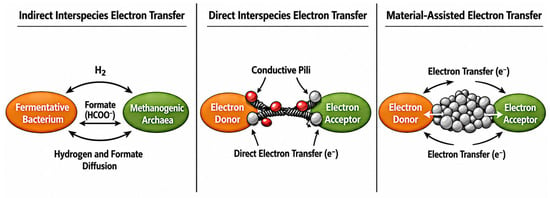
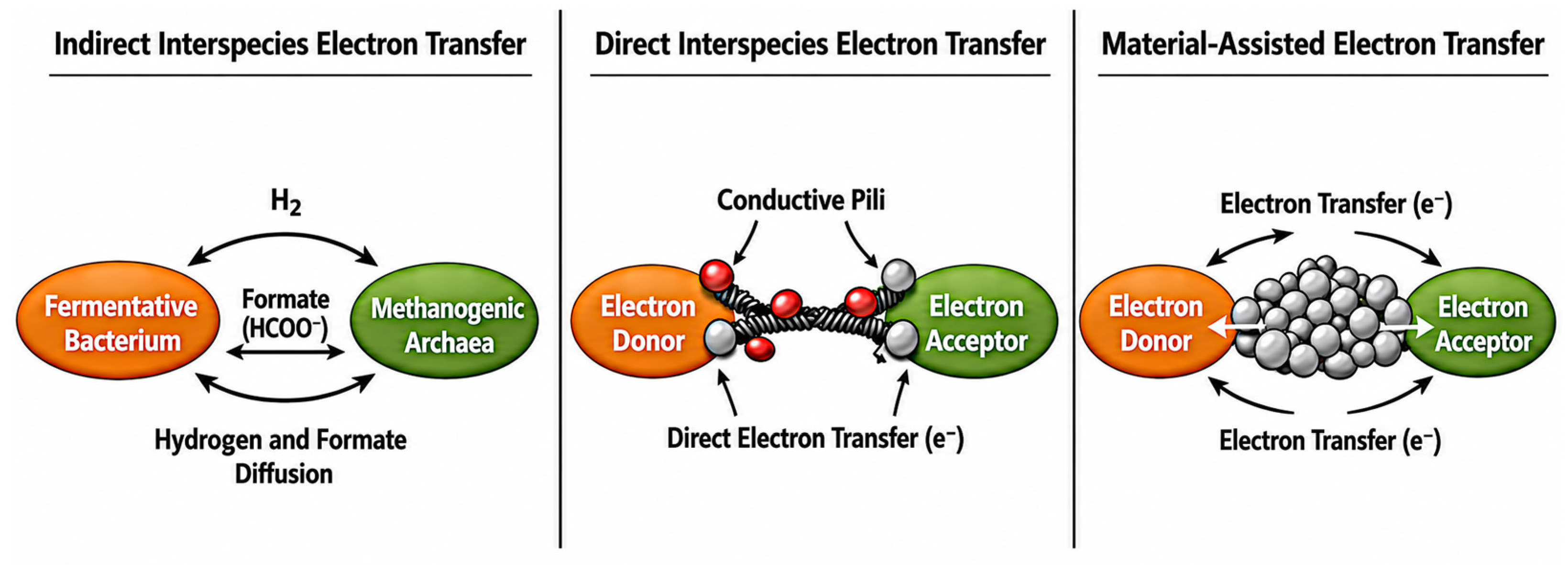
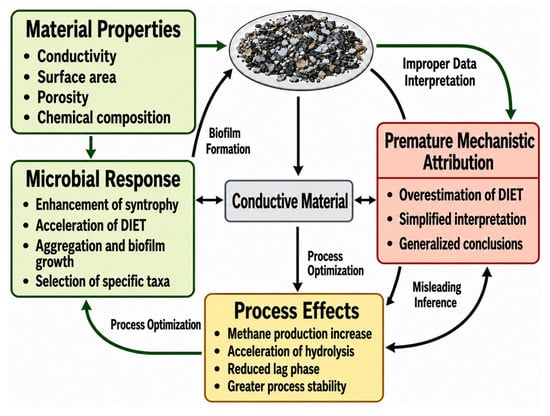
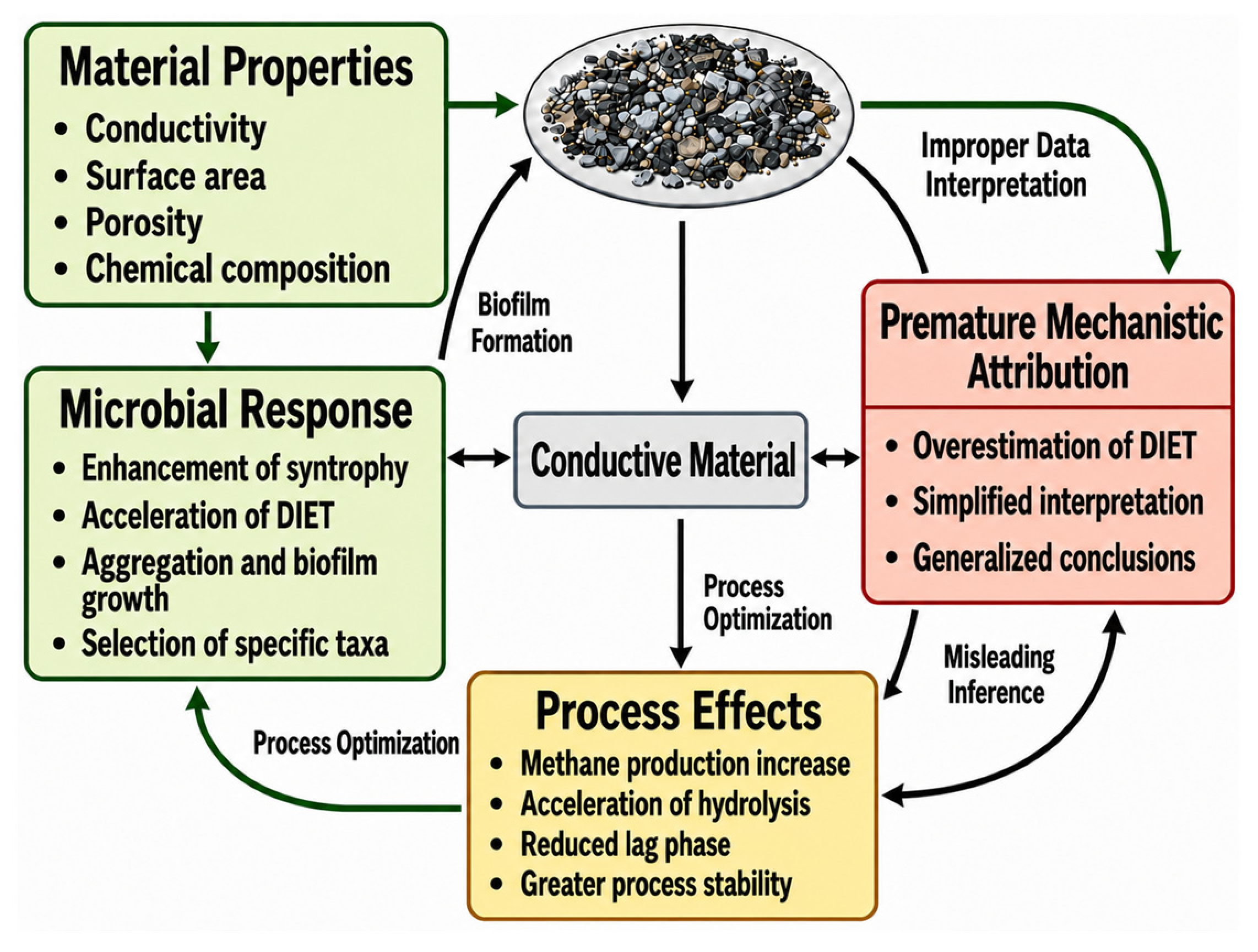
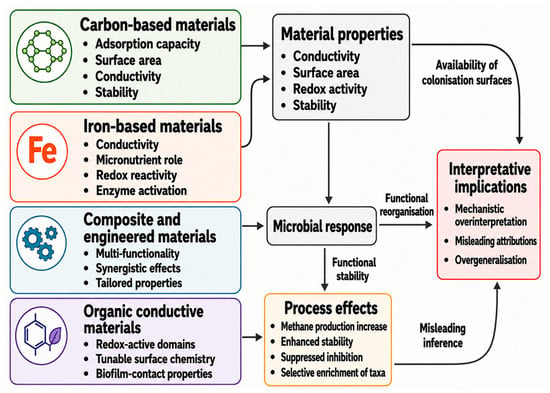
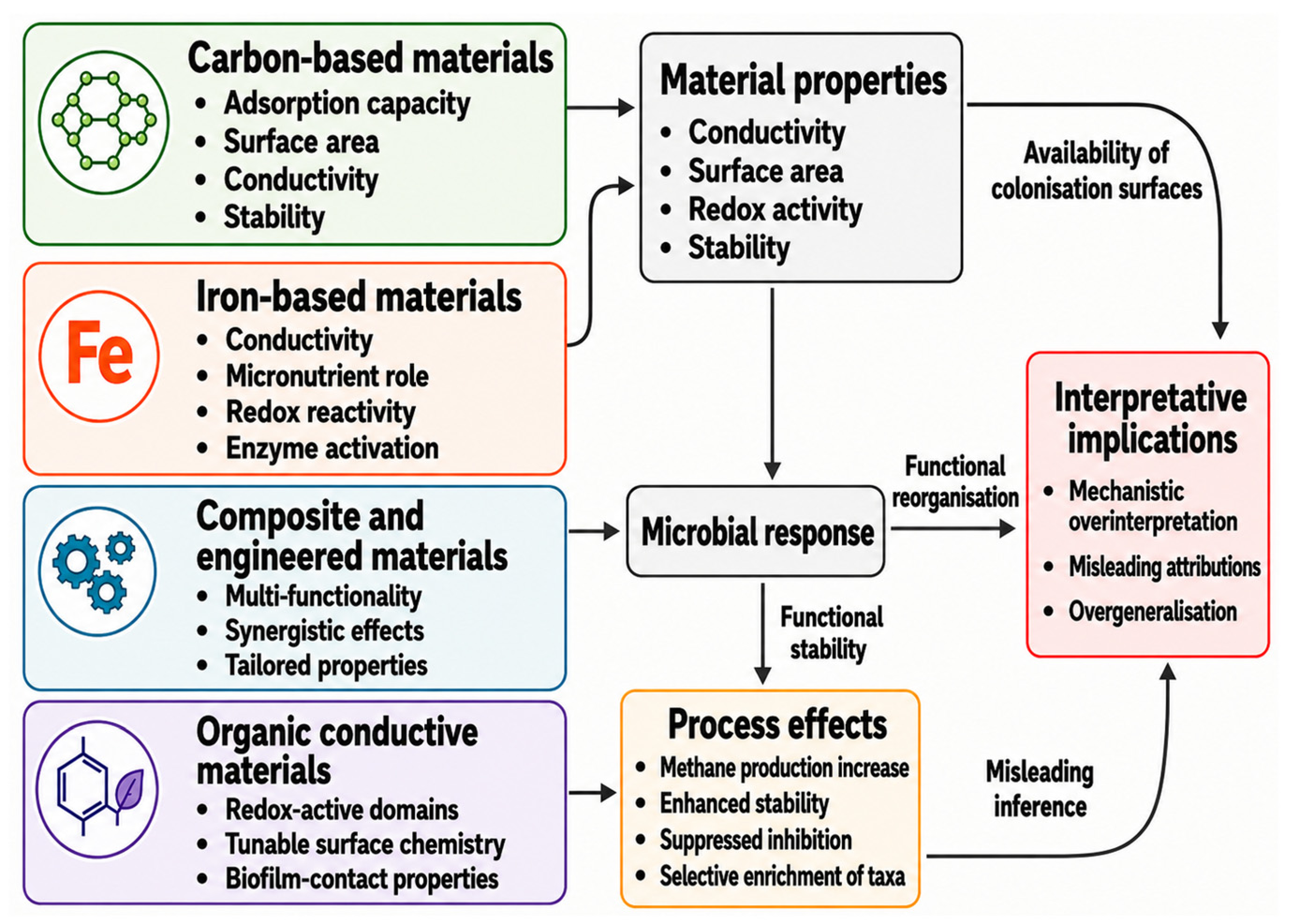

Disclaimer/Publisher’s Note: The statements, opinions and data contained in all publications are solely those of the individual author(s) and contributor(s) and not of MDPI and/or the editor(s). MDPI and/or the editor(s) disclaim responsibility for any injury to people or property resulting from any ideas, methods, instructions or products referred to in the content. |
© 2026 by the author. Licensee MDPI, Basel, Switzerland. This article is an open access article distributed under the terms and conditions of the Creative Commons Attribution (CC BY) license.