Article

Synergistic Dual Atomically Dispersed PdCu Immobilized on Peroxide-Modified Attapulgite for Low-Temperature Catalytic Oxidation of VOCs

1
Institute of Urban & Rural Mining, Changzhou University, Changzhou 213164, China
2
Department of Materials Science and Engineering, University of Maryland, Baltimore County, Baltimore, MD 21250, USA
*
Authors to whom correspondence should be addressed.
Catalysts 2026, 16(6), 501; https://doi.org/10.3390/catal16060501 (registering DOI)
Submission received: 2 March 2026 / Revised: 25 March 2026 / Accepted: 13 May 2026 / Published: 30 May 2026
(This article belongs to the Section Environmental Catalysis)

Abstract

Volatile organic compounds (VOCs) represent a significant threat to both environmental quality and public health, driving the need for efficient abatement technologies. Herein, a series of PdCu dual single-atom catalysts supported on peroxide-modified attapulgite (ATP) were synthesized via a microwave-assisted solvothermal approach, and the effect of the Pd/Cu ratio on the catalytic oxidation of toluene was investigated. Results showed that the Pd1Cu1/ATP catalyst exhibited exceptional catalytic performance, achieving 99% toluene conversion at 240 °C under a high weight hourly space velocity of 20,000 mL·g−1·h−1. This high efficiency is attributed to the modification of ATP with hydrogen peroxide solution, which exposes abundant Si-OH, facilitating the immobilization of atomically dispersed atoms and enhancing the adsorption of toluene molecules. In addition, the strong metal–support interaction between the PdCu dual atoms and the ATP support significantly lowers the energy barrier of the reaction, thereby enhancing the low-temperature catalytic activity. In situ DRIFTS further elucidated the reaction pathway and intermediate evolution during toluene oxidation. This work offers an effective strategy for designing highly efficient dual single-atom catalysts for VOCs removal.

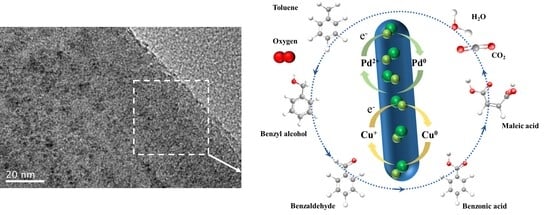
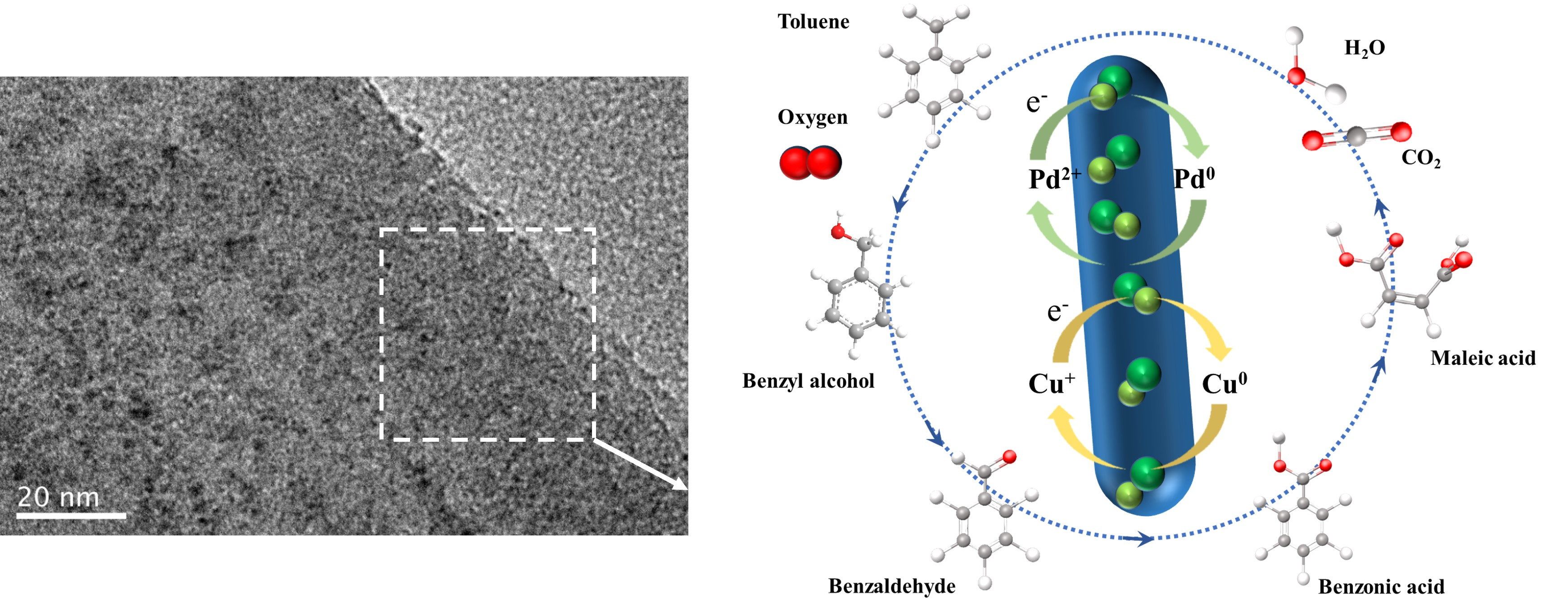
Graphical Abstract

1. Introduction

Volatile organic compounds (VOCs), particularly toluene, are one of the major sources of air pollution, posing serious hazards to both the environment and human health [1,2]. Therefore, developing efficient and cost-effective technologies for toluene degradation is of great significance for improving air quality and protecting the ecological environment. Among various VOCs treatment technologies, catalytic oxidation has become one of the most effective methods in the VOCs control industry due to its advantages such as low energy consumption, high removal efficiency, and strong applicability [3]. Currently, catalysts for catalytic oxidation can be divided into noble metal-based catalysts [4] and non-noble metal-based catalysts [5]. Supported noble metal catalysts primarily involve systems based on gold, ruthenium, platinum, and rhodium [6,7], with commonly used supports including CeO2, activated carbon, molecular sieves, Al2O3, CuO, and TiO2 [8]. Transition metal oxide catalysts, such as CuOx [9], TiO2 [10], Co3O4 [11], MnOx [12], and Fe2O3 [13], offer advantages including excellent electron mobility, strong oxidative capacity, and superior catalytic activity.
In recent years, owing to their unique structural and performance advantages, dual single-atom catalysts demonstrate significant potential in catalytic activity, selectivity, and stability [14,15]. First, by incorporating two different metal single atoms, dual single-atom catalysts can create a bimetallic synergistic effect that optimizes the electronic structure of active sites, thereby markedly enhancing catalytic performance [16]. For instance, in a Pd and Cu dual single-atom catalyst, Pd provides outstanding redox capability. Cu modulates the electron density of Pd, enhancing the catalyst’s stability and resistance to poisoning [17,18]. Second, dual single-atom catalysts achieve extremely high atomic utilization, with metal atoms atomically dispersed on the support surface, maximizing the exposure of active sites and reducing the usage of noble metals [19]. Furthermore, the interaction between the two metals enhances the anchoring of metal atoms, suppressing their migration and aggregation, which improves the long-term stability of the catalyst [20]. For example, Chu et al. [21] constructed a Pd1V1/CeO2 dual single-atom catalyst, and the coexistence of Pd and V single atoms enhanced reactant adsorption and regulated lattice oxygen mobility, thereby promoting VOC oxidation. Ma et al. [22] developed a Pt1Co1/CeO2 catalyst where the synergistic interaction between Pt and Co active sites not only enhanced the adsorption efficiency of reactant molecules but also effectively dissociated and activated oxygen molecules.
ATP, a magnesium-aluminum-rich silicate clay mineral with abundant surface-active sites, is often used as a catalyst support [23,24] for preparing composite materials aimed at catalytic oxidation of VOCs. Huang et al. [25] synthesized CeO2:Yb3+, Er3+/ATP nanocomposites with different doping and loading levels via a one-step precipitation method, enhancing the photothermal synergistic catalysis of toluene. Liu et al. [26] prepared MnCo2O4.5/ATP composites using a sol–gel method, which demonstrated good photo-induced thermal catalytic degradation of toluene. Interestingly, the microwave-assisted solvothermal method offers multiple advantages, including rapid and uniform heating, as well as high energy efficiency [27]. By coupling microwave fields in a sealed reactor, crystallographic phases that traditionally require dozens of hours in conventional solvothermal processes can be achieved within minutes to hours, with significantly improved hydrothermal stability and catalytic activity of the products. To date, there have been no reports on the construction of dual single-atom PdCu/ATP composites via microwave-assisted solvothermal methods for catalytic oxidation of VOCs.
In this work, ATP was modified with a hydrogen peroxide solution and then loaded with CuPd dual single atoms via a microwave-assisted solvothermal method. The morphology, valence state of reactive oxygen species, and redox properties of the catalysts were analyzed through various characterization techniques. Their performance in catalytic degradation of VOCs was evaluated, and the effects of different Pd/Cu atomic ratios on toluene degradation were investigated. This work provides a highly active dual single-atom catalyst for the catalytic oxidation of VOCs.

2. Results and Discussion

2.1. XRD Analysis

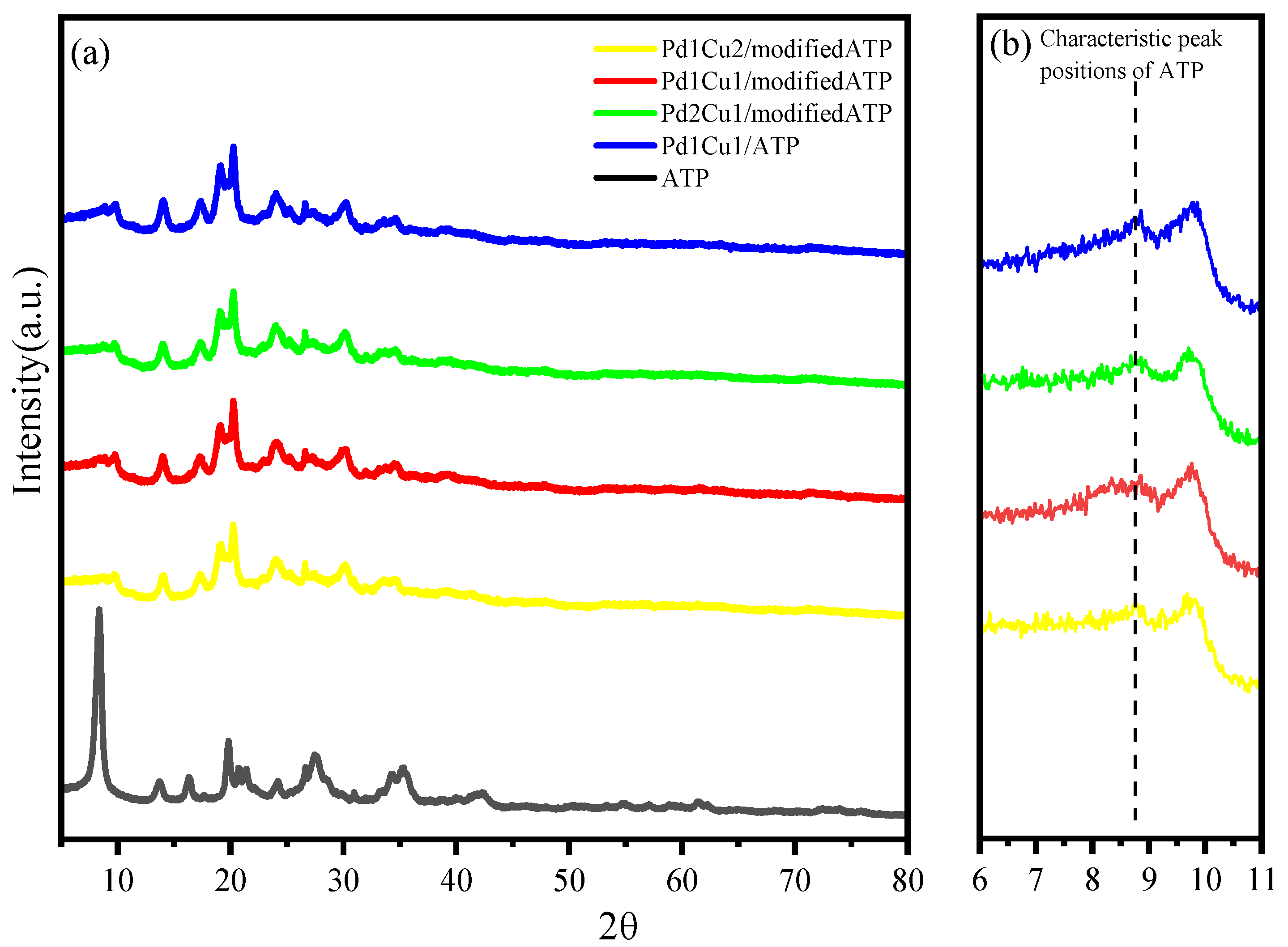
The XRD patterns of various PdCu/modified ATP are shown in Figure 1a. The modified ATP support exhibits characteristic diffraction peaks at 2θ = 8.49°, 13.90°, and 19.85°, corresponding to the (1 1 0), (2 0 0), and (0 4 0) crystal planes, respectively, which match well with the standard crystal structure of ATP (JCPDS#21-0958). Notably, no characteristic diffraction peaks corresponding to metallic Pd (1 1 1) or Cu (1 1 1) are observed in the patterns of the PdCu-loaded catalyst. This suggests that both Pd and Cu species are highly dispersed on the support surface, with particle sizes likely below the detection limit of XRD (typically 3–5 nm) [28]. Compared with PdCu/ATP without modification, the characteristic diffraction peak intensity of ATP in PdCu/modified ATP shows a measurable decrease after peak area quantification (Figure 1b), suggesting a possible enhanced interaction between the PdCu species and the modified ATP support. Such a highly dispersed state is conducive to increasing the exposure of active sites, which is beneficial for enhancing catalytic activity.

2.2. HAADF-STEM Analysis

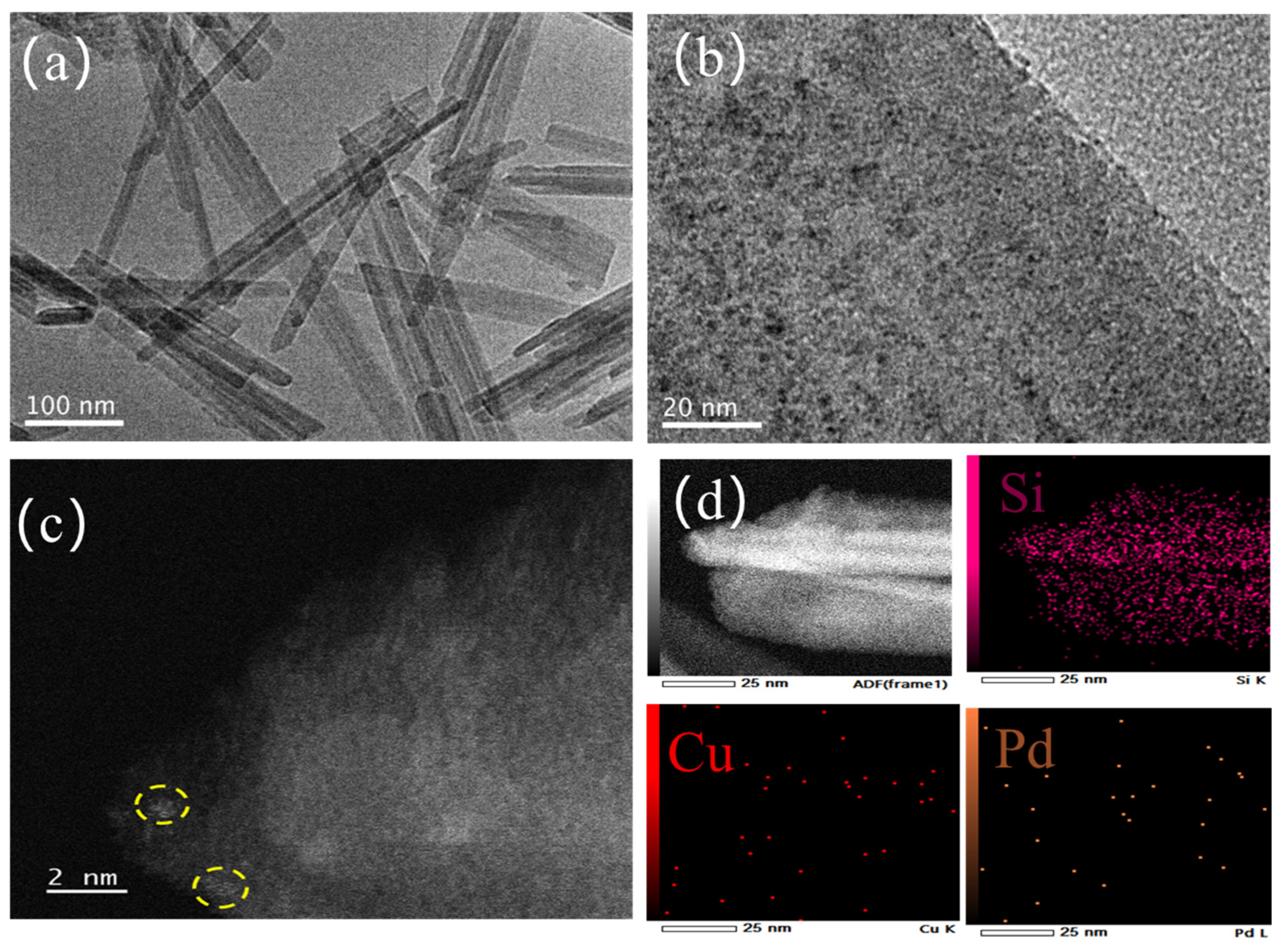
TEM is employed to investigate the microstructure and morphology of the dual atomically dispersed PdCu/ATP catalyst. As shown in Figure 2a, ATP exhibits an irregularly stacked rod-like morphology with an average diameter of approximately 30–40 nm and a relatively rough surface, which provides abundant adsorption sites for the active components [29]. Figure 2b indicates that atomically dispersed PdCu atoms are uniformly dispersed on the ATP surface with high distribution homogeneity and fine particle size. The HAADF-STEM image of the PdCu/ATP sample is shown in Figure 2c. It can be observed that the as-prepared PdCu atoms are evenly loaded on the ATP support, demonstrating an atomic-level dispersion, which is verified by the in situ CO-DRIFTS as shown in Figure S1. The spectra obtained after CO adsorption show a ν (CO) absorption band in the range of 2095–2140 cm−1 attributed to the linear adsorption of CO on highly dispersed PdCu atom species [30]. Furthermore, EDS mapping results in Figure 2d verify that both Pd and Cu are distributed at the atomic scale and are uniformly co-located.

2.3. FT-IR and Raman Analysis

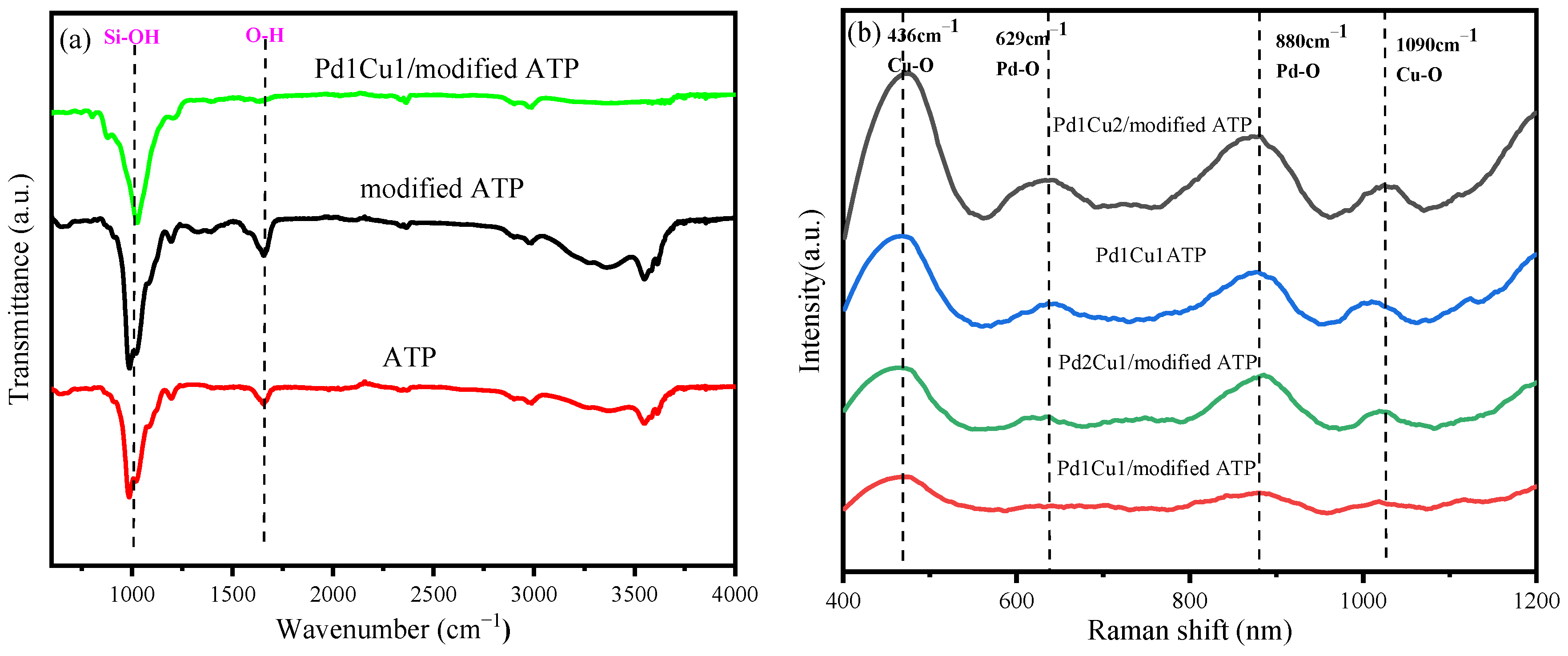
FT-IR spectroscopy is employed to investigate the surface chemical bonding states and functional group evolution of the catalysts. As shown in Figure 3a, the absorption peak in the range of 1600–1700 cm−1 is attributed to the stretching vibration of surface-adsorbed water or hydroxyl groups (–OH). Notably, three characteristic peaks are observed in the range of 950–1100 cm−1 for the ATP, modified ATP, and Pd1Cu1/modified ATP samples: the peak at 1060 cm−1 corresponds to the asymmetric stretching vibration of Si–O–Si bonds, the peak at 990 cm−1 is assigned to the symmetric stretching vibration of Si–OH groups, and the peak near 1100 cm−1 is associated with the bending vibration mode of Si–O–Si bonds. Compared with raw ATP, the intensity of the Si–OH peak is significantly enhanced in both modified ATP and Pd1Cu1/modified ATP. This suggests that the hydrogen peroxide modification process exposes more silanol groups through etching, which can serve as anchoring sites for coordinating with Pd and Cu species, forming Si–O–Pd and Si–O–Cu bonds. After loading the dual single atoms, the intensity of the corresponding peaks in Pd1Cu1/modified ATP decreases, indicating a strong interaction between the metal sites and the ATP support.
To further elucidate the metal–support interaction mechanism, Raman spectroscopy is conducted. As displayed in Figure 3b, the characteristic peaks observed at 436 cm−1 and 1090 cm−1 are assigned to the bending and stretching vibrations of Cu–O bonds, respectively, while the peaks at 629 cm−1 and 880 cm−1 correspond to the symmetric stretching vibrations of Pd–O bonds [30]. Among the catalysts with different Pd/Cu ratios, Pd1Cu1/modified ATP exhibits the highest peak intensities for both Pd–O (880 cm−1) and Cu–O (1090 cm−1) vibrations, indicating stronger metal–support interactions at this specific ratio. These findings are consistent with the trends observed in the FT-IR analysis regarding changes in Si–OH groups, confirming that hydrogen peroxide modification optimizes the anchoring of Pd–Cu dual single-atom sites by regulating the surface hydroxyl groups of the support.

2.4. XPS Analysis

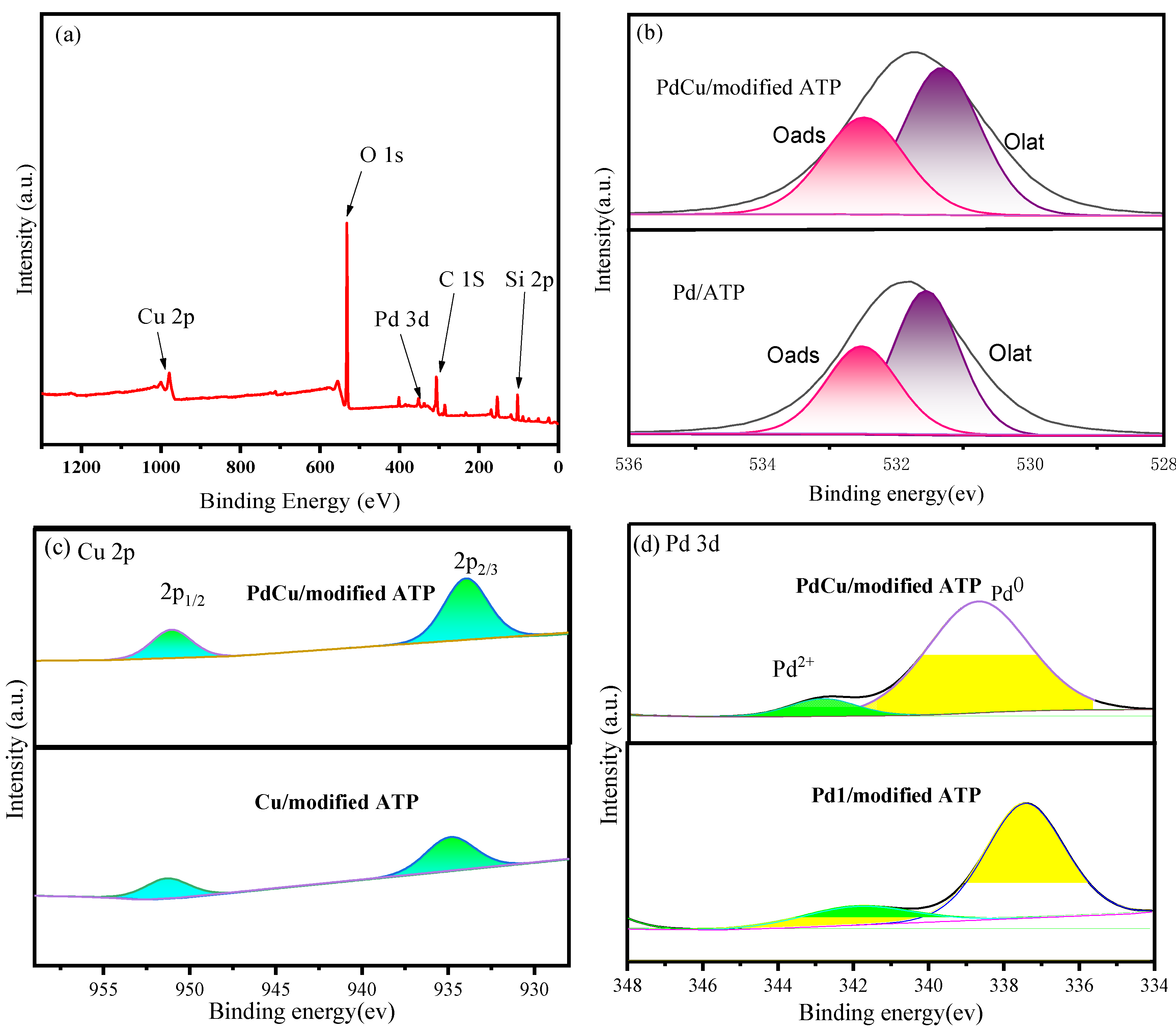
The surface chemical states and electronic structure of the Pd1Cu1/modified ATP catalyst are investigated by XPS. The survey spectrum (Figure 4a) confirms the presence of Pd, Cu, O, Si, and a trace amount of C, where the C 1s signal at 284.8 eV originates from surface-adsorbed carbon contaminants. Deconvolution of the O 1s high-resolution spectrum (Figure 4b) reveals a dominant peak at 531.2 eV, attributed to chemisorbed oxygen species (Oads). Notably, the relative concentration of Oads in Pd1Cu1/modified ATP is significantly higher than that in Pd/ATP, indicating that modification with hydrogen peroxide introduces abundant hydroxyl groups, which is consistent with the enhanced metal–support interaction observed in both FT-IR and Raman analyses.
The chemical states of the metal elements are further examined (Figure 4c,d). The Cu 2p3/2 spectrum exhibits a main peak at a binding energy of 935.2 eV. The absence of a satellite peak around 944 eV suggests the presence of Cu in either the +1 oxidation state or metallic form. The Pd 3d5/2 spectrum shows a main peak at 337.1 eV, which is positively shifted by 0.6 eV compared to that of the monometallic Pd catalyst (336.5 eV). In contrast, the Cu 2p3/2 binding energy is negatively shifted by 1.3 eV relative to that of the single-atom Cu catalyst (936.5 eV). This synergistic “positive shift in Pd, negative shift in Cu” suggests electronic interaction between the two metals: Pd acts as an electron acceptor, gaining electrons from Cu, while Cu serves as an electron donor, exhibiting a partially oxidized character. This phenomenon can be explained by intermetallic charge transfer driven by the difference in work function between Pd and Cu, namely, the work function of Pd is higher than that of Cu. When the two metals form a closely contacted heterostructure or alloy, electrons spontaneously transfer from Cu to Pd to align the Fermi levels. Consequently, the observed XPS chemical shifts are consistent with this thermodynamic trend, confirming the presence of work-function-driven electronic redistribution at the interface, resulting in the formation of an electronically coupled Pd–Cu structure [31]. Such an optimized electronic configuration not only enhances the stability of the metal–support interface but may also improve the adsorption and activation capabilities of the active sites toward reaction intermediates.

2.5. EPR Analysis

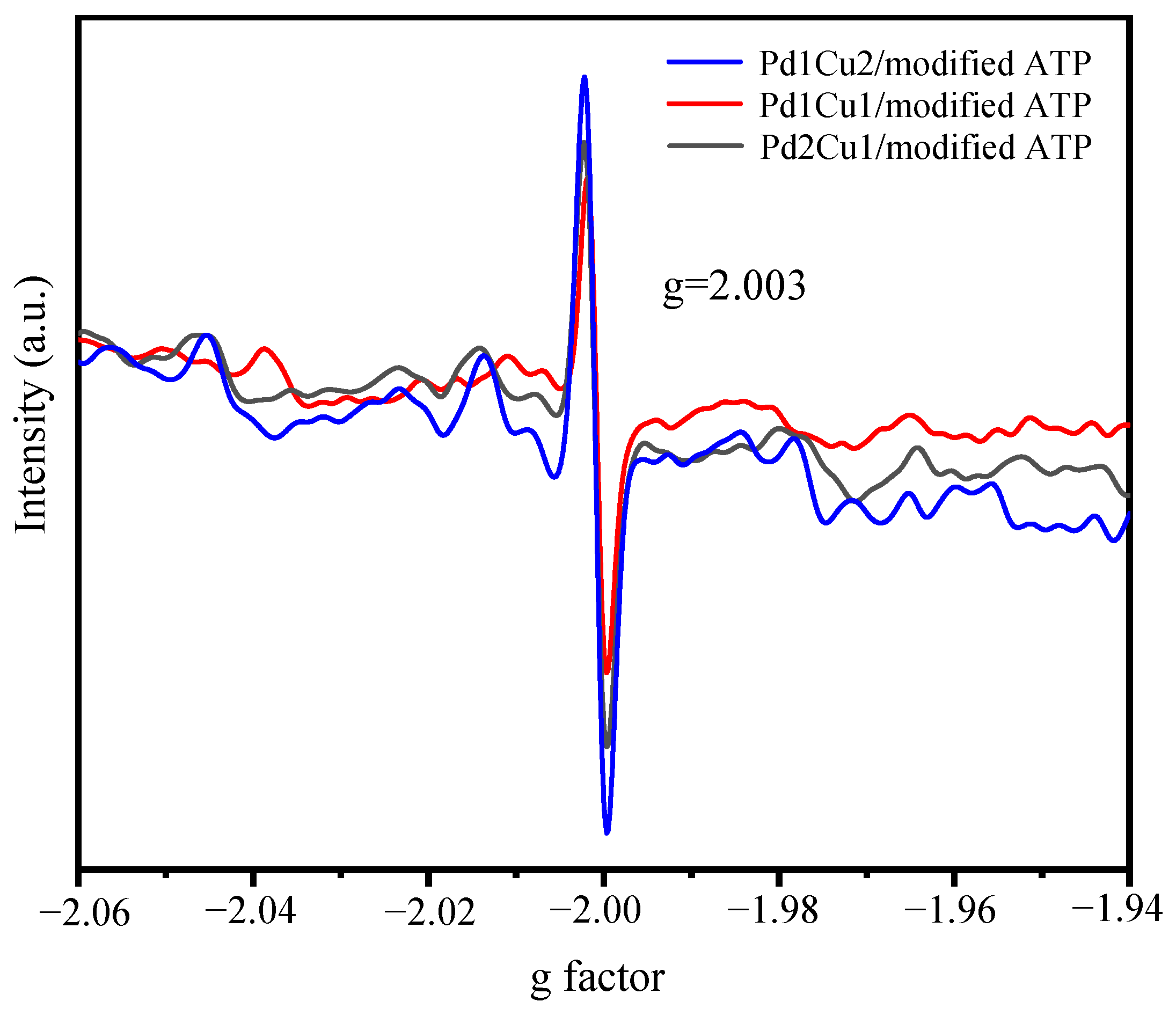
To elucidate the role of modified ATP in regulating the unpaired electrons and redox properties of the CuPd catalysts, EPR spectroscopy is employed to characterize the series of catalysts. As shown in Figure 5, all PdCu/modified ATP samples exhibit a characteristic EPR signal at g = 2.003, which is attributed to the paramagnetic response of unpaired electrons located at the single-atom active sites. Notably, the Pd1Cu1/modified ATP catalyst demonstrates the highest EPR signal intensity among the compared samples, indicating the highest concentration of unpaired electrons. These unpaired electrons contribute to enhanced catalytic performance by increasing the reactivity of active sites, facilitating electron transfer, and optimizing the adsorption of reaction intermediates [32].

2.6. H2-TPR Analysis

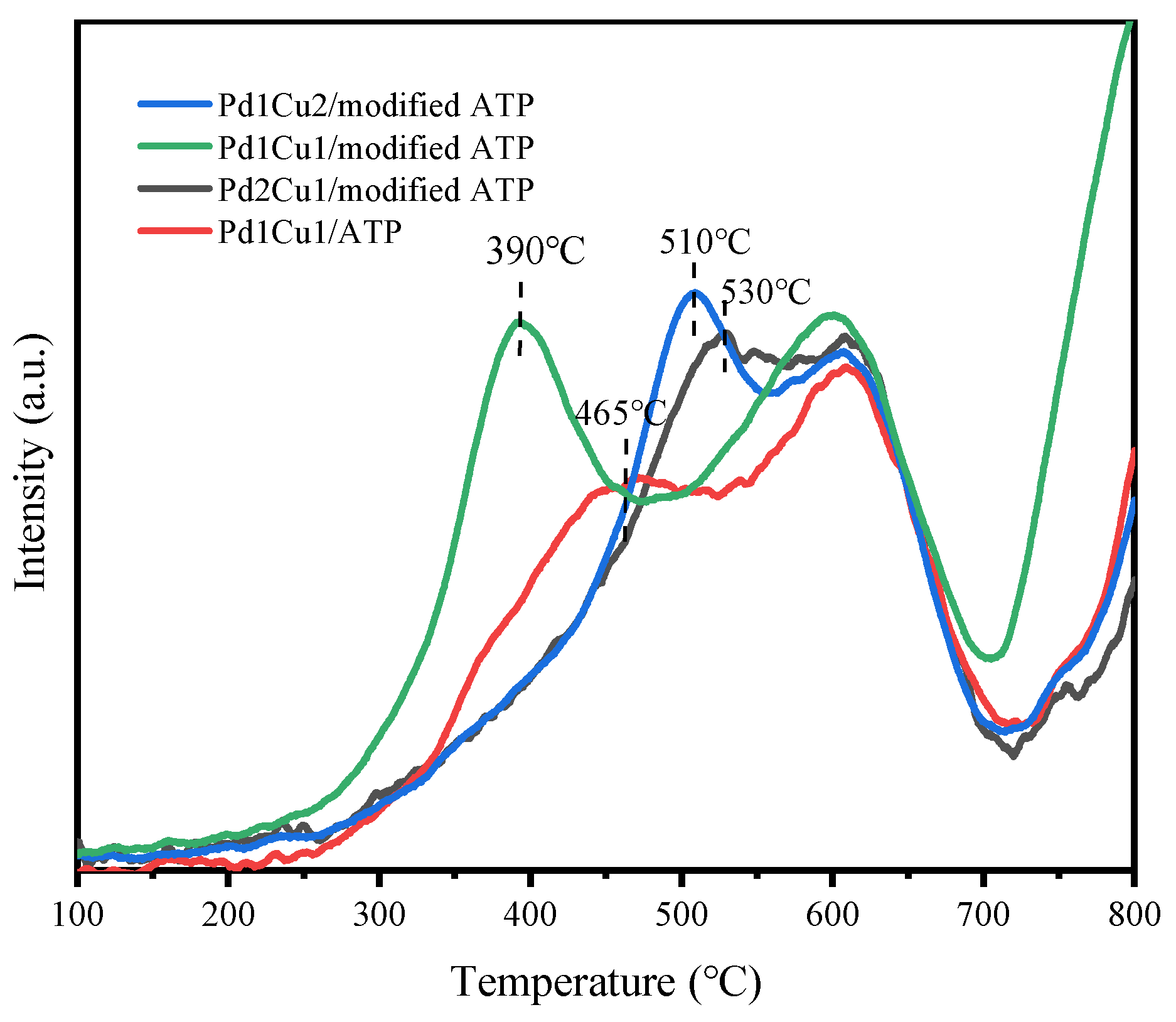
The reducibility of the catalysts is further investigated by H2-TPR. As shown in Figure 6, all samples exhibit two reduction peaks in the temperature range of 300–700 °C: the low-temperature peak (390–530 °C) corresponds to the stepwise reduction of Cu+ to Cu0, while the high-temperature peak (550–680 °C) is assigned to the reduction of Pd2+ to Pd0. The reduction temperatures of the peaks follow the order: Pd1Cu1/modified ATP > Pd2Cu1/modified ATP > Pd1Cu2/modified ATP > Pd1Cu1/ATP. Notably, Pd1Cu1/modified ATP exhibits a unique reduction behavior. The reduction peak for Cu+ (390 °C) shifts significantly to lower temperatures compared to the other samples, and the H2 consumption, represented by the peak area, reaches the maximum value. These results indicate that the strongest metal–support interaction occurs at a Pd-to-Cu molar ratio of 1:1. The degree of reducibility was quantitatively evaluated by calculating the H2 consumption normalized to the actual metal loadings. The Pd1Cu1/modified ATP catalyst exhibits the highest reducibility percentage (89%), further confirming that the optimized Pd/Cu ratio and the peroxide-modified support synergistically enhance the redox properties of the catalyst.

2.7. Catalytic Oxidation of Toluene Performance

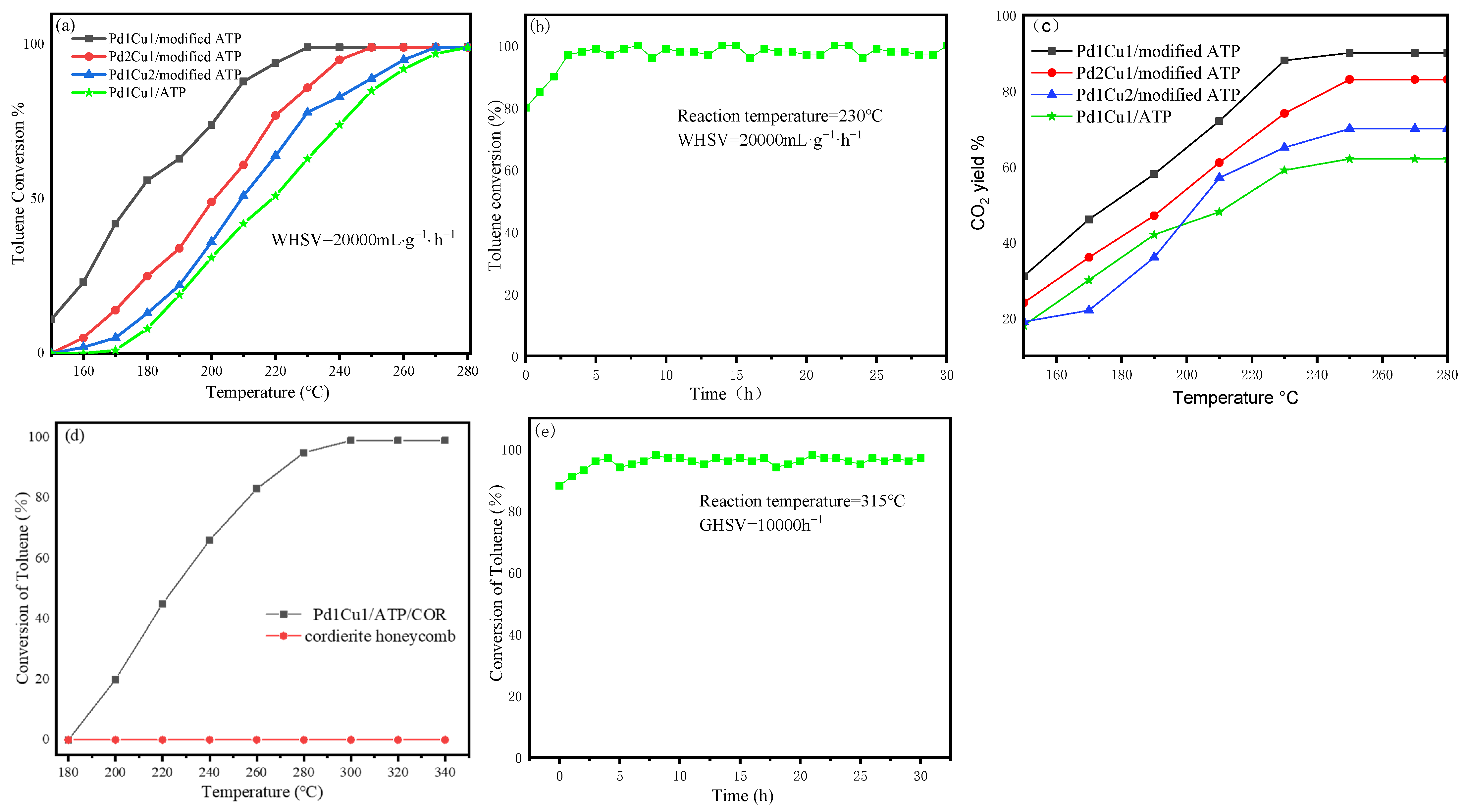
Catalytic oxidation of toluene using various PdCu/ATP is performed. The Actual Pd and Cu loadings can be found in Table S1, almost consistent with the adding ratio. As shown in Figure 7a, the T99 (temperature at 99% degradation) for toluene degradation increased in the following order: Pd1Cu1/modified ATP < Pd2Cu1/modified ATP < Pd1Cu2/modified ATP < Pd1Cu1/ATP, which is consistent with the apparent activation energy (Ea) results shown in Figure S2. Pd1Cu1/modified ATP exhibited remarkably low-temperature catalytic activity, achieving T99 as low as 240 °C, which is 20–30 °C lower than that of Pd1Cu2/modified ATP and Pd2Cu1/modified ATP. This significant performance enhancement can be attributed to several factors: the enriched Si–OH groups on the modified ATP surface enhance toluene adsorption via hydrogen bonding, the strong electronic coupling between equimolar Pd and Cu optimizes the activation of C–H bonds in toluene molecules, and the facilitated dissociation and migration of gaseous oxygen promote a dynamic reactive oxygen species cycle. To further assess the stability of the catalyst, a continuous 15 h test is conducted under conditions of a weight hourly space velocity (WHSV) of 20,000 mL·g−1·h−1, toluene concentration of 1500 ppm, and temperature of 230 °C. As shown in Figure 7b, Pd1Cu1/modified ATP maintained a toluene degradation efficiency above 95% throughout the test without significant deactivation. In Figure 7c, the corresponding CO2 yield of Pd1Cu1/modified ATP reached as high as 90%, suggesting high CO2 selectivity. Figure 7d shows the toluene conversion as a function of reaction temperature for Pd1Cu1/modified ATP coated on a cordierite honeycomb (COR) monolith under a toluene concentration of 1500 ppm and a gas hourly space velocity (GHSV) of 10,000 h−1. The bare cordierite honeycomb showed negligible catalytic reactivity between 180 and 320 °C. In contrast, the Pd1Cu1/modified ATP/COR catalyst achieved nearly complete toluene conversion at 315 °C, demonstrating the promoting effect of the PdCu dual-atom sites. As illustrated in Figure 7e, the Pd1Cu1/modified ATP/COR catalyst maintained high catalytic activity during a 30 h stability test at 315 °C. These results confirm that the Pd1Cu1/modified ATP catalyst retains excellent performance even in a structured monolith configuration.

2.8. In Situ DRIFTS Analysis

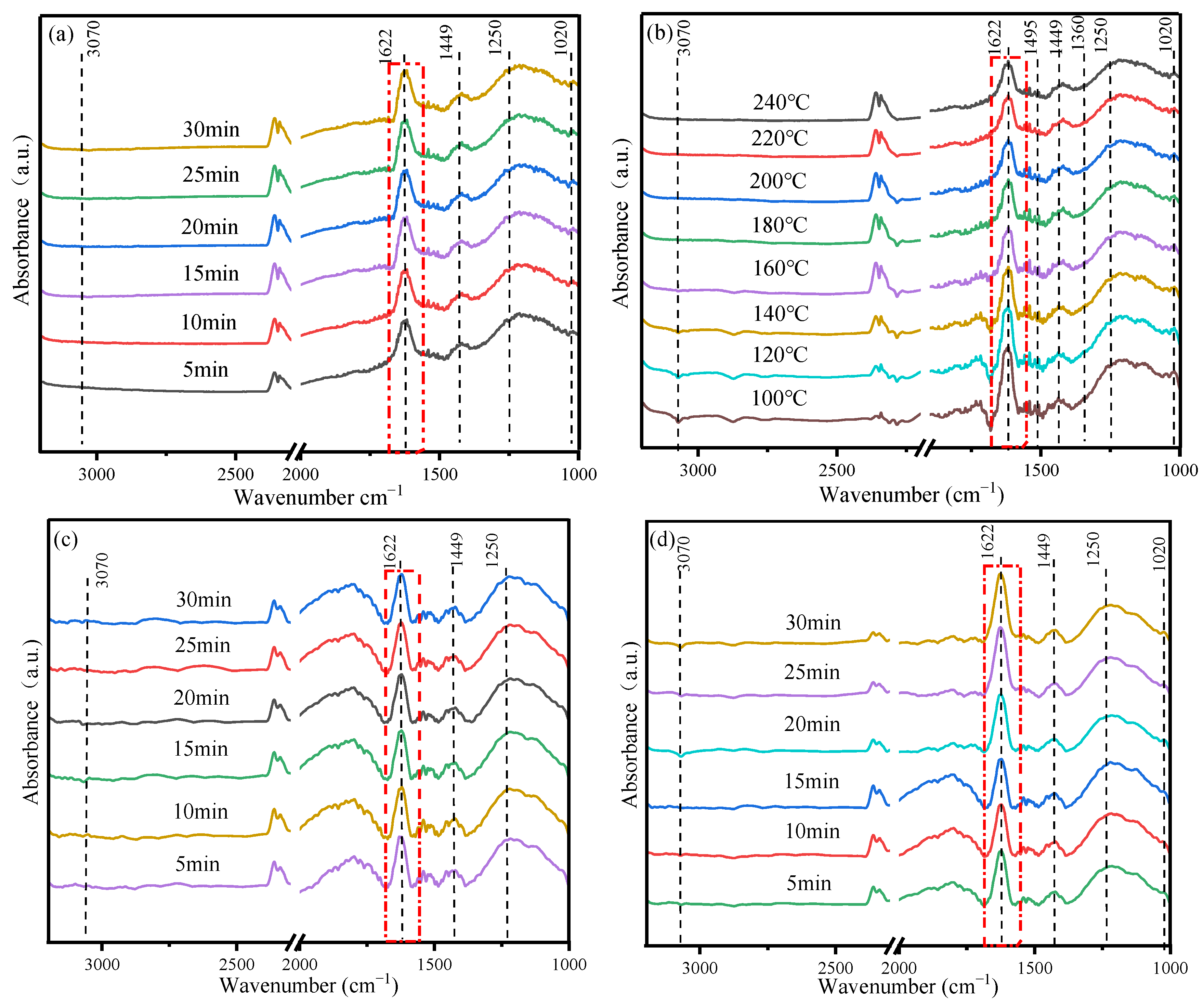
In situ DRIFTS is employed to dynamically monitor the process of catalytic toluene degradation and to elucidate the evolution of surface intermediate species and reaction pathways over the Pd1Cu1/modified ATP catalyst. As shown in Figure 8a, during toluene adsorption, distinct characteristic signals are detected on the catalyst surface: aromatic ring skeletal vibrations (1499 cm−1), methyl C–H stretching vibrations (3070 cm−1), and CO2 characteristic peaks (2333 and 2300 cm−1) [33]. Compared with the control catalysts, the peak intensities are significantly enhanced on Pd1Cu1/modified ATP, confirming its superior toluene adsorption capacity and ability to stabilize reaction intermediates. Upon heating to reaction temperature (Figure 8b), further evolution of intermediate species is observed. The attenuation of aromatic C–H stretching (3070 cm−1) and skeletal C = C vibrations (1596, 1495, and 1449 cm−1) indicated gradual dissociation of the aromatic ring. Simultaneously, the emergence of new IR features revealed stepwise oxidation pathways: C–O stretching vibrations of alcohols (1250 and 1020 cm−1), C = O vibration of benzaldehyde (1462 cm−1), and asymmetric/symmetric vibrations of carboxylate groups (1544 and 1392 cm−1), collectively evidencing the presence of benzoate as a key intermediate. Additionally, C = O vibrations of anhydride species (1360 and 1302 cm−1) suggested the formation of acetic anhydride and maleic anhydride. During the dynamic oxidation stage [Figure 8c,d], when the atmosphere is switched to air at 240 °C, the intensities of the intermediate characteristic peaks increased notably. In particular, carboxylate (1544 and 1392 cm−1) and anhydride species (1360 and 1302 cm−1) are significantly enriched, indicating effective activation of deep oxidation at this temperature. Therefore, the toluene oxidation pathway over the Pd1Cu1/modified ATP catalyst is proposed as follows: toluene is successively oxidized to benzyl alcohol → benzaldehyde → benzoic acid → oxalic acid, and eventually completely converted into CO2 and H2O [34].

2.9. Mechanism for Catalytic Oxidation of Toluene

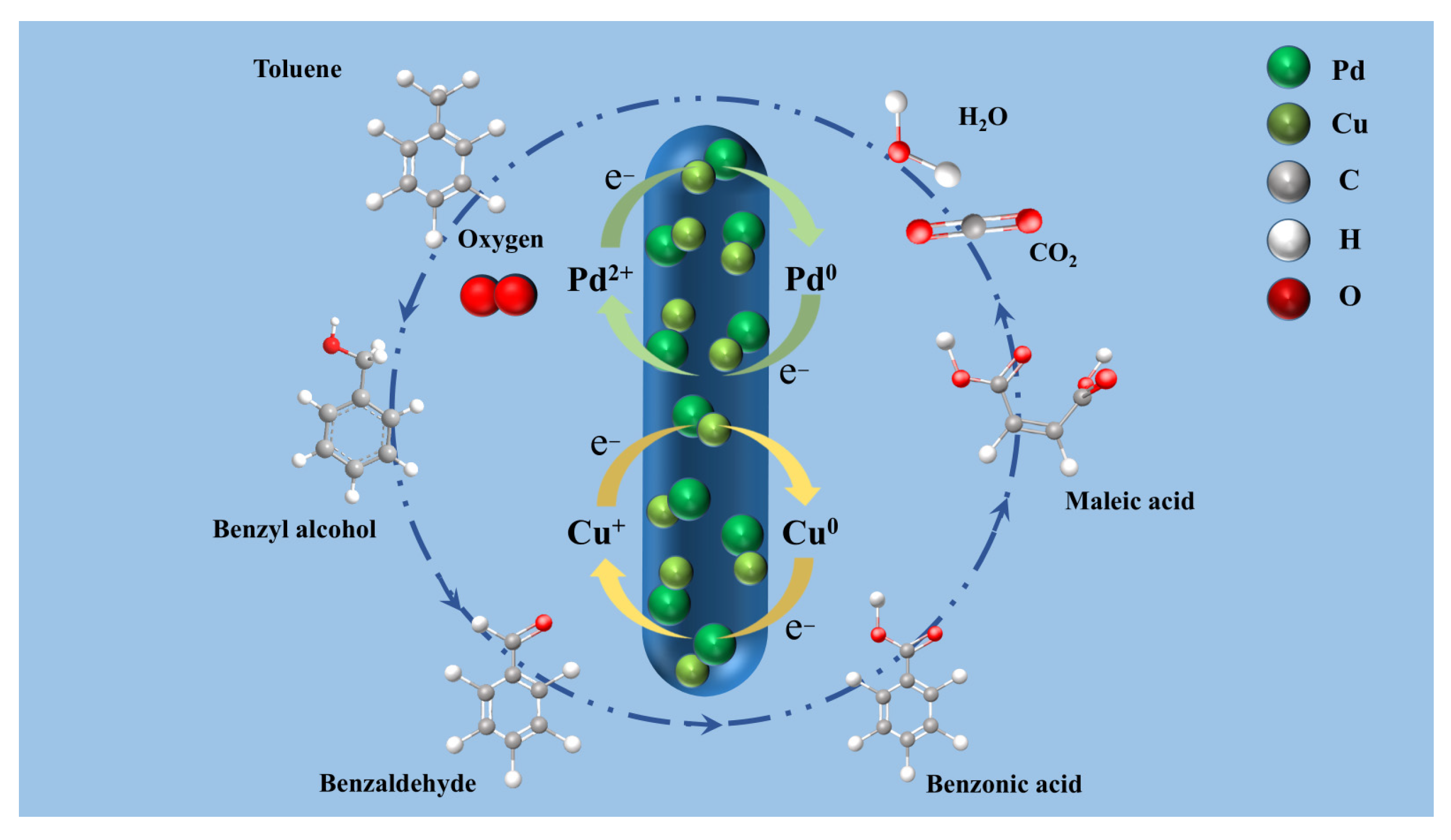
Based on the dynamic evolution of reaction intermediates observed via in situ DRIFTS, a reaction mechanism for toluene oxidation over the Pd1Cu1/modified ATP catalyst is proposed, as illustrated in Figure 9. The H2O2-modified ATP support enhances the adsorption of toluene molecules onto the catalyst surface. The Pd single atoms, with their unpaired electrons, preferentially adsorb and activate the C–H bonds in toluene [35], converting it into intermediates such as benzyl alcohol and benzaldehyde. Simultaneously, Cu single atoms modulate the electronic structure, improving the adsorption and activation of oxygen species. Subsequently, supplemental gaseous oxygen is transformed into surface active oxygen species, further oxidizing toluene and ultimately mineralizing it into CO2 and H2O.
The valence change of Pd during the catalytic process involves the reduction of Pd2+ to Pd0 upon toluene oxidation, followed by reoxidation to Pd2+ by active oxygen species generated from O2 adsorbed and dissociated on Cu+ sites, completing the catalytic redox cycle [36]. Furthermore, the abundant hydroxyl groups on the PdCu/modified ATP surface enhance both toluene adsorption/activation and the efficiency of molecular oxygen activation and migration. These synergistic effects contribute to the exceptional performance of the catalyst in the catalytic degradation of toluene.

3. Experimental Section

3.1. Chemicals

Copper nitrate trihydrate (Cu(NO3)2·3H2O), palladium nitrate dihydrate (Pd(NO3)2·2H2O), and ethylene glycol (C2H6O2) were purchased from Sinopharm Chemical Reagent Co, Ltd. (Shanghai, China). ATP clay (Mg5Si8O20(OH)2(OH2)4·4H2O) was supplied by Jiangsu Nanda Zijin Technology Co, Ltd. (Nanjing, Jiangsu, China).

3.2. Preparation of PdCu/ATP Composites

Initially, ATP was weighed and dissolved in 100 mL of 30% hydrogen peroxide solution. The mixture was placed in a water bath maintained at 25 °C and stirred continuously for 1 h. After the treatment, the product was filtered under suction, thoroughly washed, and dried to obtain the modified ATP material. Palladium nitrate, copper nitrate, and ethylene glycol were dissolved in deionized water to form a homogeneous solution. Pd:Cu molar ratios of 1:1, 1:2, and 2:1 were adjusted. To each solution, 40 mL of ethylene glycol and 1.5 g of modified ATP were added. After stirring thoroughly until a uniform suspension was obtained, the mixture was transferred to a microwave chemical reactor and subjected to a microwave-assisted solvothermal reaction at 100 °C for 45 min. After cooling to room temperature, the product was collected by centrifugation, dried at 80 °C for 12 h, and finally calcined in a muffle furnace at 500 °C for 4 h. The resulting solid was ground into a fine powder to obtain the dual single-atom PdCu/ATP catalysts, denoted as Pd1Cu1/modified ATP, Pd1Cu2/modified ATP, and Pd2Cu1/modified ATP, respectively. For comparison, a reference sample labeled Pd1Cu1/ATP was synthesized following the same procedure but using unmodified ATP.

3.3. Preparation of CuPd/ATP/Cordierite Honeycomb Catalyst

The as-prepared CuPd/ATP powder catalyst was dissolved in 50 mL of deionized water, followed by the addition of 1 wt% polyvinyl alcohol to form a mixed slurry. The slurry was thoroughly stirred to ensure uniformity. The cordierite honeycomb support was immersed in the slurry for 10 min, then removed and dried in an oven for 1 h. This immersion and drying procedure was repeated three times. The dried cordierite honeycomb catalyst precursor was subsequently calcined in a muffle furnace at 400 °C for 4 h. Finally, the supported CuPd/ATP/cordierite honeycomb catalyst was obtained.

3.4. Materials Characterization

The crystal structure of the samples was characterized by X-ray diffraction (XRD) using a Rigaku D/MAX-2500PC diffractometer (Rigaku Corporation, Tokyo, Japan). Microstructural and morphological observations were carried out with a high-resolution transmission electron microscope (HRTEM, JEOL JEM-2100F, Tokyo, Japan). Surface chemical bonding states and functional group evolution of the catalysts were analyzed by Fourier transform infrared (FTIR) spectroscopy on a Thermo IS20 spectrometer (Thermo Fisher Scientific, Madison, WI, USA). Raman spectroscopy was performed using a LabRAM instrument (UV-VIS-NIR, 200–2100 nm, Horiba Scientific, Palaiseau, Ile-de-France, France) to investigate the metal–support interaction mechanisms. X-ray photoelectron spectroscopy (XPS) measurements were conducted on a Thermo Scientific K-Alpha+ spectrometer (Thermo Fisher Scientific, Madison, WI, USA)equipped with an Al-Kα radiation source. Electron spin resonance (ESR) spectroscopy was carried out on a Bruker EMXplus-6/1 spectrometer (Rheinstetten, Germany) to probe the concentration of oxygen vacancies and the redox properties modulated by the modified ATP support. The actual loadings of Pd and Cu were measured by Inductively Coupled Plasma (ICP) using a ICP-MS Nexion (PerkinElmer, Inc., Waltham, MA, USA).

3.5. Catalytic Oxidation of Toluene

A mixture of 0.75 g catalyst (40–60 mesh) and 3 g quartz sand with the same particle size range was uniformly packed into a quartz reactor tube. A gas mixture with gradient concentrations was introduced, and the concentration of toluene was determined using gas chromatography combined with a gas kinetic model. The reaction parameters (temperature and gas flow rate) were precisely controlled via computer. The testing procedure consisted of the following steps: the initial concentration of the feedstock gas was first measured in a gas cell; then, the valve was switched to direct the gas flow through the catalytic bed, and the outlet concentration was analyzed. The temperature was increased stepwise from 150 to 350 °C in increments of 5 °C. Each temperature was held for 5 min to ensure the system reached a steady state.

3.6. In Situ DRIFTS Characterization

In situ DRIFTS experiments were conducted using an in situ FT-IR spectrometer (Nicolet iS20 FT-IR, Thermo Fisher Scientific, Madison, WI, USA) equipped with an MCT detector, employing 120 scans and a resolution of 4cm−1. The temperature of the sample was regulated with a thermocouple attached to the DRIFT cell. At the beginning, the pre-reduced catalysts underwent activation at 200 °C for 30 min in a pure N2 flow. Next, high-purity toluene was passed through a water bubbler at a rate of 30 mL min−1 to transport the toluene and N2 mixture into the chamber.

4. Conclusions

In conclusion, various dual single-atom PdCu/modified ATP composites were successfully synthesized via a microwave-assisted solvothermal method and were employed for the catalytic degradation of toluene. Modification of ATP with hydrogen peroxide increased the number of surface hydroxyl groups on the ATP, facilitating the anchoring of single atoms and the formation of active sites. Under microwave-assisted solvothermal conditions, Pd and Cu single atoms were grown in situ on the ATP surface with minimal metal aggregation, leading to the dominance of atomically dispersed metal species and favoring the formation of a dual single-atom catalyst. Moreover, the strong metal–support interaction between the PdCu dual single atoms and the ATP enhanced the catalytic oxidation of toluene, while the unique dual-atom structure promoted toluene adsorption and dissociation. The Pd1Cu1/ATP catalyst achieved a toluene removal rate of 99% at 240 °C, and exhibited excellent stability over 15 h of continuous operation. This study provides a new strategy for the fabrication of noble metal-based catalysts toward the efficient degradation of VOCs.

Supplementary Materials

The following supporting information can be downloaded at: https://www.mdpi.com/article/10.3390/catal16060501/s1, Figure S1: In-situ CO-DRIFTS of PdCu/modified ATP; Figure S2: Arrhenius plot of Pd1Cu1/modified ATP, Pd2Cu1/modified ATP, Pd1Cu2/modifiedATP and Pd1Cu1/ATP; Table S1: ICP results of Pd1Cu1/modifiedATP, Pd1Cu2/modifiedATP and Pd2Cu1/modifiedATP.

Author Contributions

Writing—original draft, Z.L.; methodology, C.H.; validation, W.D.; Investigation, C.Y.; resources, X.L.; supervision, X.L. All authors have read and agreed to the published version of the manuscript.

Funding

This research was funded by the Changzhou International Cooperation Project (CZ20230018) and the International Joint Laboratory of the Jiangsu Education Department.

Data Availability Statement

The raw data supporting the conclusions of this article will be made available by the authors on request.

Acknowledgments

We thank the Analysis and Testing Center of Changzhou University for the characterization.

Conflicts of Interest

The authors declare no conflicts of interest.

References

  1. Zhang, H.; Shi, J.; Han, C.; Song, Z.; Xiao, Y.; Li, X. Ultrasound-Induced Construction of CuxCo3−xO4/Attapulgite for Catalytic Degradation of Toluene. Catalysts 2025, 15, 252. [Google Scholar] [CrossRef]
  2. Kamal, M.S.; Razzak, S.A. Catalytic oxidation of volatile organic compounds (VOCs)—A review. Atmos. Environ. 2016, 140, 117–134. [Google Scholar] [CrossRef]
  3. Zhu, T.; Song, X.; Li, T.; Hu, J.; Qi, K.; Gao, P.; Cui, R.; Tang, Z. Simultaneous catalytic removal of complex sulfur-containing VOCs over Mn-based hydrotalcite-like compounds: Active sites and oxidation mechanism. Sep. Purif. Technol. 2024, 339, 126694. [Google Scholar] [CrossRef]
  4. Guo, L.; Zhang, X.; Xia, W.; Liu, L.; Zhang, X.; Xu, C.; Huang, Z.; Wu, X.; Zhao, H.; Jing, G.; et al. Synergistic effects of Ag-MnOx/CeO2 for improved benzene oxidation and chlorine tolerance. J. Hazard. Mater. 2025, 491, 138001. [Google Scholar] [CrossRef]
  5. Gan, L.; Ye, P.; Wu, Q.; Yue, Y.; Mi, J.; Xiong, S.; Chen, J.; Li, J. Surface lattice oxygen activation and oxygen vacancies formation in Cu-doped CeO2 for boosting catalytic oxidation of toluene. Appl. Surf. Sci. 2025, 710, 163999. [Google Scholar] [CrossRef]
  6. Yi, J.; Liu, J.; Gao, B.; Bo, L.; Cao, L.; Sillanpää, M. The comprehensive review of catalysts for catalytic oxidation of volatile organic compounds. J. Environ. Chem. Eng. 2025, 13, 115691. [Google Scholar] [CrossRef]
  7. Liu, S.; Lin, C.; Chen, J.; Liu, H.; Shi, W.; Hu, R.; Liu, H.; Lian, J.; Guo, J.; Yao, Y. Finely Tailoring Metal–Support Interactions via Transient High-Temperature Pulses. ACS Appl. Mater. Interfaces 2025, 17, 12328–12338. [Google Scholar] [CrossRef]
  8. Zhao, H.; Wang, J. Supported nano-sized precious metal catalysts for oxidation of catalytic volatile organic compounds. Phys. Chem. Chem. Phys. 2024, 26, 15804–15817. [Google Scholar] [CrossRef]
  9. Wu, L.; Deng, J.; Liu, Y.; Jing, L.; Yu, X.; Tao, J.; Gao, R.; Feng, Y.; Dai, H. Enhanced removal efficiency of multicomponent VOCs over the Sn-doped Silicalite-1-supported Ru single-atom catalysts by constructing tightly coupled redox and acidic sites. Appl. Catal. B 2024, 351, 123910. [Google Scholar] [CrossRef]
  10. Xing, J.; Long, J.; Bai, L.; Wang, G.; Fan, Y.; Liu, H.; Chen, J.; Li, J. Revealing the potassium poisoning mechanism of V2O5-MoO3/TiO2 catalyst for chlorobenzene catalytic oxidation. Fuel 2025, 390, 134766. [Google Scholar] [CrossRef]
  11. Wang, S.; Zhang, P.; Zhang, X.; Xia, D.; Zhao, P.; Meng, J.; Feng, N.; Wan, H.; Guan, G. Tuning the water resistance of Co3O4 catalysts via Ce incorporation for enhanced catalytic oxidation of toluene. Appl. Surf. Sci. 2025, 692, 162721. [Google Scholar] [CrossRef]
  12. Suárez-Vázquez, S.I.; Ramírez-Lomán, J.F.; Cruz-López, A.; Gil, S. Elucidation of the surface pathways over MnOX based 3D printed monoliths for the catalytic oxidation of toluene: In-situ DRIFTS measurements. Appl. Catal. A 2025, 697, 120209. [Google Scholar] [CrossRef]
  13. Wang, P.; Li, X.; Zou, Y.; Tian, M.; Liu, X.; Zhu, T. Fe2O3 catalyst doped with MnOx for low-temperature CO oxidation. Process Saf. Environ. Prot. 2025, 195, 106783. [Google Scholar] [CrossRef]
  14. Ma, P.; Xue, J.; Li, J.; Cao, H.; Wang, R.; Zuo, M.; Zhang, Z.; Bao, J. Site-specific synergy in heterogeneous single atoms for efficient oxygen evolution. Nat. Commun. 2025, 16, 2573. [Google Scholar] [CrossRef]
  15. Hassan, H.M.; Alhumaimess, M.S.; Alshammari, K.; Al-Shammari, S.A.; Barnawi, A.A.; El-Aassar, M.R. Hydrothermal tailoring of MnFe2O4 nanospinel integrated with biodegradable polymers for improved CO oxidation efficiency. Colloids Surf. A 2024, 703, 135221. [Google Scholar] [CrossRef]
  16. Yang, K.; Li, C.; Liu, X.; Du, X.; Zhu, Y.; Zhang, Y.; Zhao, J.; Huang, L.; Zhang, Z.; Hu, M. Revealing the synergistic promotion of metal-metal and metal-support interactions in VOCs oxidation on bimetallic supported catalysts. J. Environ. Chem. Eng. 2025, 13, 117100. [Google Scholar] [CrossRef]
  17. Yan, K.; Ge, X.; Cao, Y.; Yuwen, Q.; Zhang, J.; Dai, S.; Qian, G.; Chen, D.; Zhou, X.; Yuan, W.; et al. Pd Ensemble Sites Tuned Local Environment of Cu Catalysts for Matching Propyne Semi-Hydrogenation. Angew. Chem. Int. Ed. 2025, 64, e202503263. [Google Scholar] [CrossRef] [PubMed]
  18. Zhao, Q.; Zhao, X.; Liu, Z.; Ge, Y.; Ruan, J.; Cai, H.; Zhang, S.; Ye, C.; Xiong, Y.; Chen, W.; et al. Constructing Pd and Cu Crowding Single Atoms by Protein Confinement to Promote Sonogashira Reaction. Adv. Mater. 2024, 36, 2402971. [Google Scholar] [CrossRef]
  19. Liu, S.; Chen, Y.; Chen, C.; Wu, Y.; Du, J.; Feng, X.; Wu, Q.; Qi, P.; Wang, H.; Ren, N.; et al. From single-atom catalysis to dual-atom catalysis: A comprehensive review of their application in advanced oxidation processes. Sep. Purif. Technol. 2024, 351, 127989. [Google Scholar] [CrossRef]
  20. Li, L.; Yuan, K.; Chen, Y. Breaking the Scaling Relationship Limit: From Single-Atom to Dual-Atom Catalysts. Acc. Mater. Res. 2022, 3, 584–596. [Google Scholar] [CrossRef]
  21. Chu, P.; Zhang, L.; Wang, Z.; Wei, L.; Liu, Y.; Dai, H.; Guo, G.; Duan, E.; Zhao, Z.; Deng, J. Regulation Lattice Oxygen Mobility via Dual Single Atoms for Simultaneously Enhancing VOC Oxidation and NOx Reduction. Environ. Sci. Technol. 2024, 58, 17475–17484. [Google Scholar] [CrossRef] [PubMed]
  22. Ma, S.; Feng, C.; Dong, F.; Wu, S.; Han, W.; Han, W.; Tang, Z. A Pt1Co1/CeO2 bimetallic single-atom catalyst with a strong Pt-Co synergistic effect for efficient oxidation of benzene. Appl. Catal. B 2025, 374, 125369. [Google Scholar] [CrossRef]
  23. Li, X.; Wang, Z.; Shi, H.; Dai, D.; Zuo, S.; Yao, C.; Ni, C. Full spectrum driven SCR removal of NO over hierarchical CeVO4/attapulgite nanocomposite with high resistance to SO2 and H2O. J. Hazard. Mater. 2020, 386, 121977. [Google Scholar] [CrossRef]
  24. Li, X.; Shi, H.; Zuo, S.; Gao, B.; Han, C.; Wang, T.; Yao, C.; Ni, C. Lattice reconstruction of one-dimensional mineral to achieve dendritic heterojunction for cost-effective nitrogen photofixation. Chem. Eng. J. 2021, 414, 128797. [Google Scholar] [CrossRef]
  25. Huang, J.; Ye, X.; Li, W.; Shi, A.; Chu, X.; Cao, Z.; Yao, C.; Li, X. Infrared-to-visible upconversion enhanced photothermal catalytic degradation of toluene over Yb3+, Er3+: CeO2/attapulgite nanocomposite: Effect of rare earth doping. J. Ind. Eng. Chem. 2022, 116, 504–514. [Google Scholar] [CrossRef]
  26. Liu, T.; Zhang, Y.; Huhe, T.; Yao, C.; Li, X. Development of spinel oxide/attapulgite composite for photothermal catalytic degradation of toluene. J. Environ. Chem. Eng. 2025, 13, 115572. [Google Scholar] [CrossRef]
  27. Lei, T.; Su, J.; Chang, L.; He, R.; Shan, G.; Jiang, X.; Lei, Y.; Guo, X. Artificial humic acid produced from wet distillers grains in a microwave-assisted hydrothermal process: Physicochemical characteristics and stimulation to plant growth. Chemosphere 2024, 364, 142979. [Google Scholar] [CrossRef]
  28. Ge, L.; Qiu, M.; Zhu, Y.; Yang, S.; Li, W.; Li, W.; Jiang, Z.; Chen, X. Synergistic catalysis of Ru single-atoms and zeolite boosts high-efficiency hydrogen storage. Appl. Catal. B 2022, 319, 121958. [Google Scholar] [CrossRef]
  29. Shi, J.; Xiao, Y.; Yu, M.; Li, X. Oxygen Vacancy-Engineered Ni:Co3O4/Attapulgite Photothermal Catalyst from Recycled Spent Lithium-Ion Batteries for Efficient CO2 Reduction. Catalysts 2025, 15, 732. [Google Scholar] [CrossRef]
  30. Li, X.; Lu, X.; Zhou, S.; Yao, C.; Chen, Y. Engineering atomically dispersed Pd on nanomineral supported CeO2 via photo-deposition for low-temperature catalytic oxidation of VOCs. Chem. Eng. J. 2026, 530, 173431. [Google Scholar] [CrossRef]
  31. Huang, F.; Peng, M.; Chen, Y.; Cai, X.; Qin, X.; Wang, N.; Xiao, D.; Jin, L.; Wang, G.; Wen, X.D.; et al. Low-Temperature Acetylene Semi-Hydrogenation over the Pd1–Cu1 Dual-Atom Catalyst. J. Am. Chem. Soc. 2022, 144, 18485–18493. [Google Scholar] [CrossRef] [PubMed]
  32. Zhuo, H.-Y.; Zhang, X.; Liang, J.X.; Yu, Q.; Xiao, H.; Li, J. Theoretical Understandings of Graphene-based Metal Single-Atom Catalysts: Stability and Catalytic Performance. Chem. Rev. 2020, 120, 12315–12341. [Google Scholar] [CrossRef] [PubMed]
  33. Wang, B.; Yang, Q.; Li, B.; Ma, H.; Xuan, Y.; Gao, C.; Liang, Y.; Zhang, K.; Chang, Q.; Broesicke, O.; et al. Heterostructure-strengthened metal-support interaction of single-atom Pd catalysts enabling efficient oxygen activation for CO and VOC oxidation. Appl. Catal. B 2023, 332, 122753. [Google Scholar] [CrossRef]
  34. Wang, Y.; Dai, J.; Wang, M.; Qi, F.; Jin, X.; Zhang, L. Enhanced toluene oxidation by photothermal synergetic catalysis on manganese oxide embedded with Pt single-atoms. J. Colloid Interface Sci. 2023, 636, 577–587. [Google Scholar] [CrossRef] [PubMed]
  35. Zhang, X.; Bi, F.; Zhao, Z.; Yang, Y.; Li, Y.; Song, L.; Liu, N.; Xu, J.; Cui, L. Boosting toluene oxidation by the regulation of Pd species on UiO-66: Synergistic effect of Pd species. J. Catal. 2022, 413, 59–75. [Google Scholar] [CrossRef]
  36. Islam, M.J.; Mesa, M.G.; Osatiashtiani, A.; Manayil, J.C.; Isaacs, M.A.; Taylor, M.J.; Tsatsos, S.; Kyriakou, G. PdCu single atom alloys supported on alumina for the selective hydrogenation of furfural. Appl. Catal. B 2021, 299, 120652. [Google Scholar] [CrossRef]
Figure 1. (a) XRD patterns of PdCu/modified ATP with different Pd/Cu ratios, (b) Enlarged XRD patterns of PdCu/modified ATP.
Catalysts 16 00501 g001
Figure 2. (a) TEM image of raw ATP, (b) TEM image of PdCu/ATP, (c) HAADF-STEM image of PdCu/modified ATP, (d) EDS elemental mappings of PdCu/modified ATP.
Catalysts 16 00501 g002
Figure 3. (a) FT-IR spectra of raw ATP, modified ATP, and Pd1Cu1/ATP, (b) Raman spectra of Pd1Cu1/modified ATP, Pd1Cu2/modified ATP, Pd2Cu1/modified ATP, and Pd1Cu1/ATP.
Catalysts 16 00501 g003
Figure 4. (a) XPS survey spectrum of PdCu/ATP, (b) O 1s high-resolution spectra of PdCu/modified ATP and Pd/ATP, (c) Cu 2p spectra of PdCu/ATP and Cu/ATP, (d) Pd 3d spectra of PdCu/ATP and Pd/ATP.
Catalysts 16 00501 g004
Figure 5. EPR spectra of Pd1Cu1/modified ATP, Pd1Cu2/modified ATP, and Pd2Cu1/modified ATP.
Catalysts 16 00501 g005
Figure 6. H2-TPR profiles of Pd1Cu1/modified ATP, Pd1Cu2/modified ATP, Pd2Cu1/modified ATP, and Pd1Cu1/ATP.
Catalysts 16 00501 g006
Figure 7. (a) Toluene catalytic oxidation performance of Pd1Cu1/modified ATP, Pd1Cu2/modified ATP, Pd2Cu1/modified ATP, and Pd1Cu1/ATP; (b) catalytic cycling stability test of Pd1Cu1/modified ATP for toluene at 230 °C; (c) CO2 yield; (d) catalytic performance of the monolithic catalyst for toluene; (e) cycling stability test of the monolithic catalyst.
Catalysts 16 00501 g007
Figure 8. In situ DRIFTS spectra of Pd1Cu1/modified ATP during (a) toluene adsorption within 30 min; (b) catalytic oxidation at different temperatures; (c) catalytic oxidation under N2 atmosphere with toluene at 250 °C; (d) catalytic oxidation under a mixture of N2 and O2 with toluene at 250 °C.
Catalysts 16 00501 g008
Figure 9. Proposed reaction mechanism for the catalytic oxidation of toluene over PdCu/modified ATP.
Catalysts 16 00501 g009
Disclaimer/Publisher’s Note: The statements, opinions and data contained in all publications are solely those of the individual author(s) and contributor(s) and not of MDPI and/or the editor(s). MDPI and/or the editor(s) disclaim responsibility for any injury to people or property resulting from any ideas, methods, instructions or products referred to in the content.