


Abstract
The rational design of oxygen carriers (OCs) is critical for enhancing biomass chemical looping gasification (BCLG) performance. This work systematically investigated the effects of different supports (Al2O3, ZrO2, TiO2, SiO2) on the performance of NiFe-based OCs with oxidation and catalytic reforming functions. The gasification reactivity and support-active phase interaction of OCs in both oxidized and reduced states were evaluated. XRD, H2-TPR, XPS, and SEM techniques were employed to characterize the phase composition, synergistic interactions, and surface morphology. The results showed that NiFeAl exhibited the optimal gasification performance in both oxidized and reduced states, achieving a syngas (H2 + CO) yield of approximately 1.4 m3/kg (dry walnut shell). NiFeAl featured a higher Fe binding energy, abundant cavity structures, and the uniform dispersion of Ni and Fe on Al2O3, which confirm the formation of an appropriately strong Ni-Fe-Al ternary system. In contrast, NiFeZr suffered from the higher CO2 yield, attributed to the over-oxidation caused by the weak interactions. NiFeTi and NiFeSi had lower syngas yields due to their poor reducibility induced by excessively strong interactions. This work verifies that moderate support-active phase interactions in OCs are optimal for BCLG.
1. Introduction
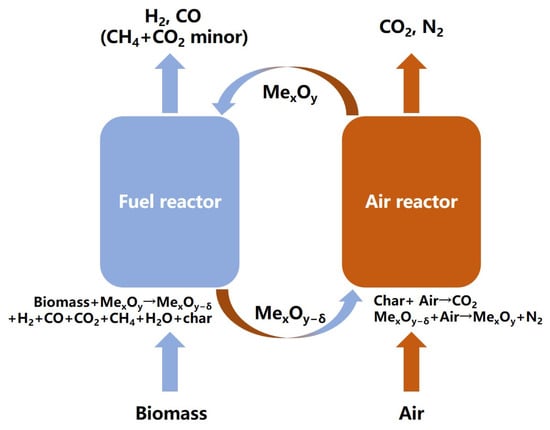
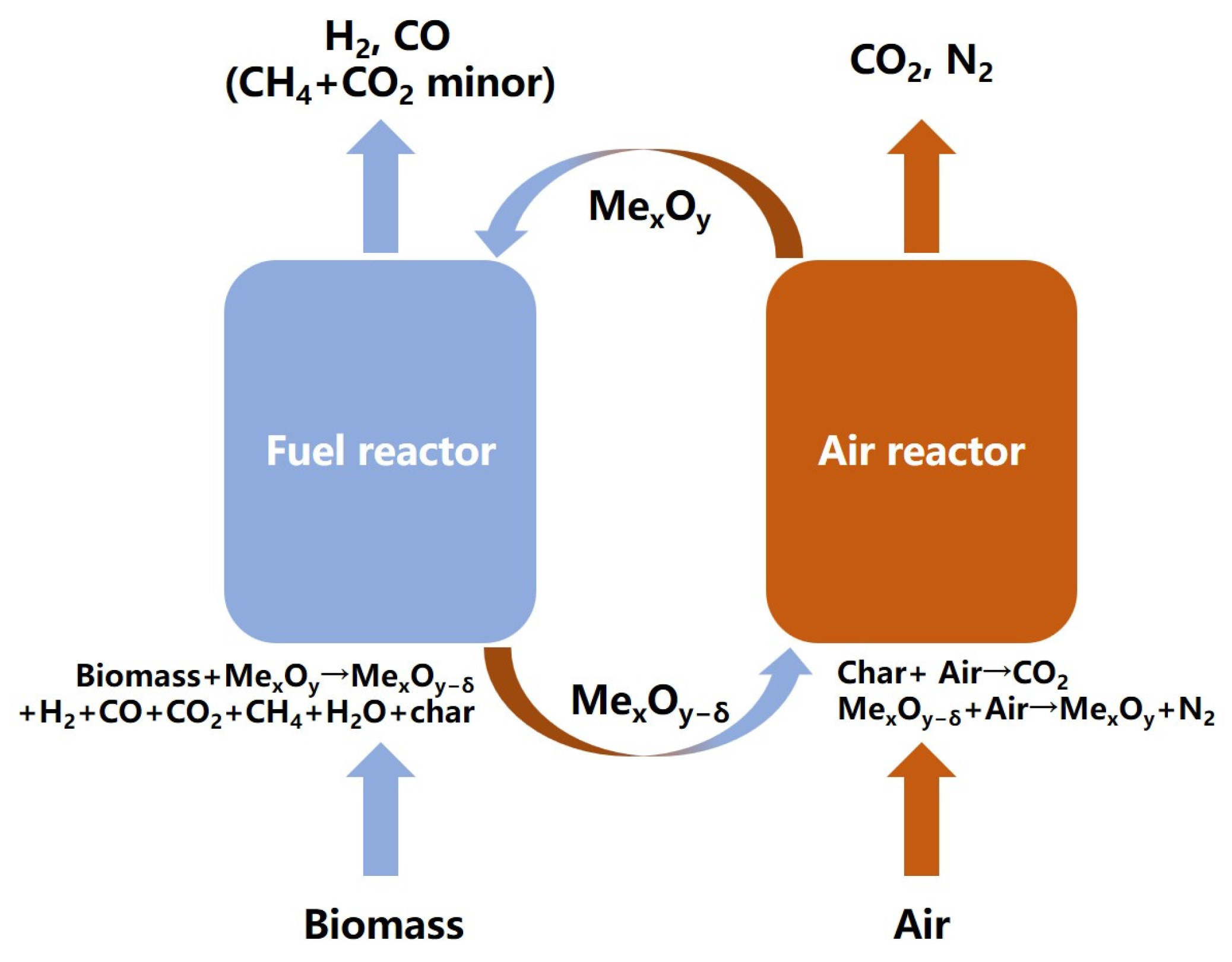
Biomass is a carbon-neutral renewable resource with abundant sources, and its utilization can not only reduce CO2 emissions but also enhance energy security [1]. Syngas from biomass gasification is a critical feedstock for green methanol and bio-jet fuel synthesis, and plays a vital role in carbon emission reduction for the shipping and aviation industries. However, existing biomass gasification technologies face several challenges, including the high cost of air separation units and elevated tar and CO2 contents. Biomass chemical looping gasification (BCLG) has emerged as a promising alternative, adopting a dual-reactor configuration (fuel reactor and air reactor), as shown in Figure 1. In this system, oxygen carriers (OCs) circulate between the two reactors to deliver oxygen, enabling the production of high-quality syngas using only air. As the circulating medium, OCs perform three key functions: replacing pure oxygen supply, regulating thermal management, and promoting tar conversion [2]. Notably, the performance of OCs, including redox activity, catalytic performance, and long-term stability, is a core factor affecting the overall efficiency of BCLG. In the fuel reactor (FR), the reduced OC does not immediately return to the air reactor (AR) but remains to participate in biomass gasification, mainly exerting catalytic functions such as cracking and reforming. Hence, the OC should exhibit good gasification performance even in its reduced form.
Figure 1.
Schematic diagram of biomass chemical looping gasification technology.
Artificially synthesized OCs are generally composed of active phases and inert supports. The choice of support material imposes a profound influence on OCs’ performance [3]. Commonly used inert supports include Al2O3, ZrO2, TiO2, SiO2, MgAl2O4, etc. Wang et al. [4] found that MnFe2O4 reacts with SiO2 during redox cycles, forming MnSiO3/Mn2SiO4 and leading to OC deactivation. Interactions between ferrites and iron silicates, formed by local reactions between coal ash and Fe oxides, also directly affect the redox kinetics of OCs [5]. TiO2 may react with Ni to form highly stable NiTiO3 with sluggish reaction kinetics [6,7]. ZrO2 undergoes a monoclinic-to-cubic phase transition at about 1170 °C, which may deteriorate the structural stability of OCs rather than reinforce it [3]. DFT calculations by Feng et al. [8] suggest that Ni-ZrO2 interactions can weaken the Ni-O bond strength. Furthermore, Al2O3-supported Cu-based OCs exhibit good anti-sintering behavior but reduced oxygen transport capacity [9,10]. NiAl2O4 formed from NiO-Al2O3 effectively suppresses Ni sintering, and the resulting metallic Ni0 shows enhanced catalytic activity [11,12]. Hu et al. [13] investigated Fe2O3 supported on Al2O3, ZrO2, TiO2, and SiO2, and found that Fe2O3/Al2O3 achieved the highest gas yield, syngas purity, and carbon conversion efficiency. Fe2O3/TiO2 and Fe2O3/ZrO2 showed favorable CO productivity, whereas Fe2O3/SiO2 exhibited higher carbon conversion. Overall, support-active phase interactions can enhance catalytic activity and mitigate sintering, but may also negatively affect redox kinetics and oxygen transfer efficiency.
The design of OCs also has a significant impact on tar formation during the BCLG process. Extensive efforts have therefore been devoted to tar mitigation. Steam-assisted chemical looping co-gasification was explored to lower tar yield and promote the production of H2-rich syngas (CO + H2) [14,15]. Yan et al. [16] modified LaCoO3 perovskite at A/B sites with Sr/Fe, obtaining effective gas yields of 1.304 and 1.188 Nm3/kg with CO2 concentrations of ~18%. Xia et al. [17] introduced A-site deficiencies into LaFeO3, achieving an effective gas yield of ~1.22 Nm3/kg and a CO2 concentration of ~15% via chemical looping steam gasification (CLSG). Nevertheless, these routes commonly suffer from undesirably high CO2 selectivity, mainly caused by the promoted water-gas shift (WGS) reaction.
In contrast, catalytic in situ tar removal is recognized as an effective strategy for BCLG. Ni-based OCs are widely used for tar catalytic conversion [18,19,20]. Soheil et al. [21] found that Ni supported on CaZrxTi1−xO3 perovskite exhibited better Ni dispersion and stronger metal-support interaction than conventional Ni-Al2O3 systems, thus enhancing catalytic activity and oxygen mobility. Ni promotes C-H bond cleavage in tar, favoring H2 production. Fe doping further improves tar cracking activity and hydrogen yield [22], while Ni facilitates lattice oxygen migration to enhance redox performance [23]. However, carbon deposition and Ni sintering still present critical challenges to OCs’ stability [24]. Oxidation-reforming bifunctional OCs have been recognized as a promising strategy for high-efficiency biomass-to-syngas conversion [25]. In our previous work, we also developed a NiFeAl bifunctional OC by supporting Ni-Fe oxides on Al2O3, achieving an effective gas yield of 1.2–1.3 Nm3/kg with gas purity exceeding 95% [26]. However, the influence of different supports on the oxidation and reforming dual functionalities of OCs has not been systematically investigated.
Moreover, as mentioned above, dual-bed reactors (FR and AR) are commonly used in BCLG. After regeneration in the AR, OCs enter the FR and are gradually converted from the oxidized state to the reduced state. Accordingly, OCs exist as a mixture of oxidized and reduced phases in the FR. This is distinctly different from conventional reforming catalysts, which usually require pre-reduction. It thus imposes a strict requirement: OCs must rapidly exhibit excellent reforming activity even in the oxidized state upon entering the FR, ensuring high gasification reactivity in both states. However, studies focusing on the performance differences between oxidized and reduced oxygen carriers remain insufficient.
In this work, a series of supported NiFe-based bifunctional OCs with oxidation-reforming capabilities were synthesized, and the effects of different supports (Al2O3, ZrO2, TiO2, SiO2) on their performances under both oxidized and reduced states were systematically investigated. XRD, H2-TPR, XPS and SEM were also employed to characterize the synergistic interactions within the Ni-Fe-support systems. The results can provide valuable guidance for the rational design of OCs with favorable oxidation and catalytic reforming functionalities.
2. Results and Discussion
2.1. Effect of Supports on the Gasification Performance
2.1.1. Oxidized OCs
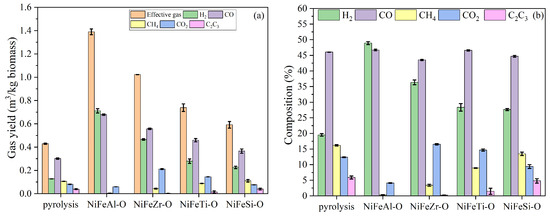
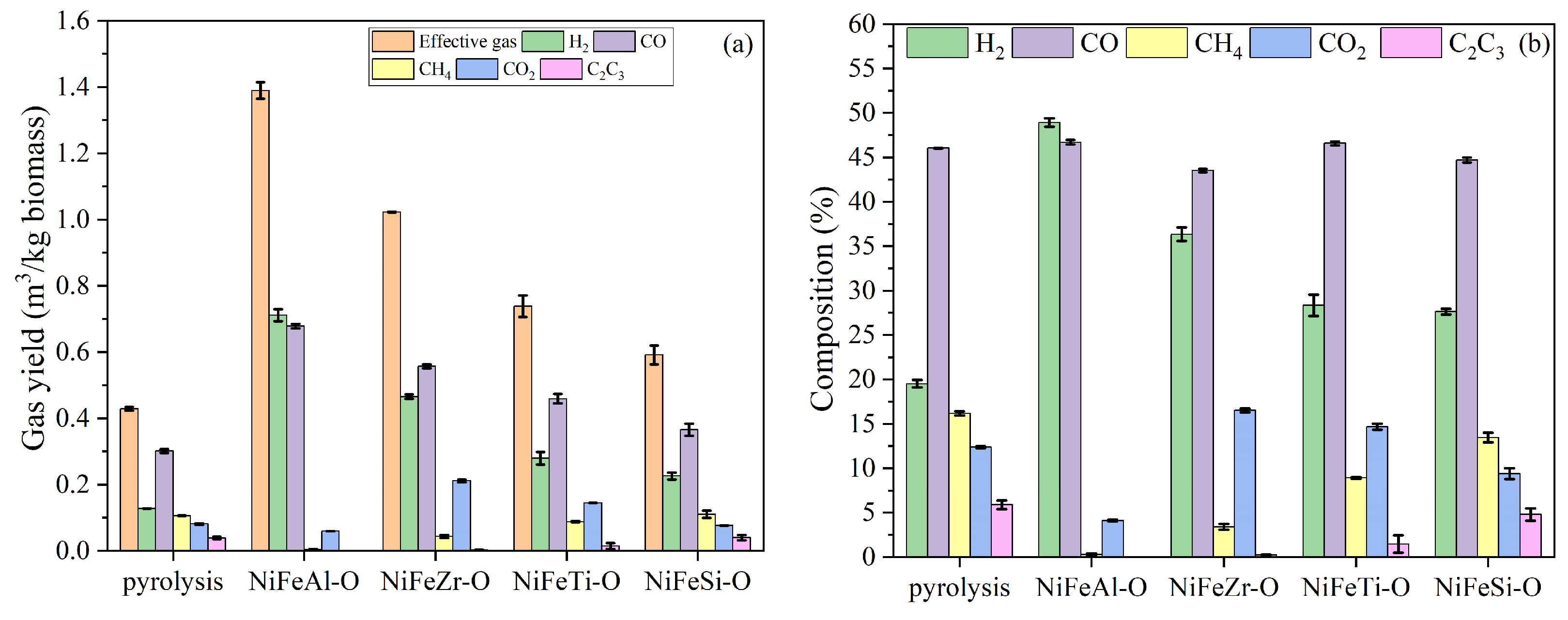
Figure 2 illustrates the gasification performance of various oxidized OCs and the pyrolysis results of individual walnut shell samples at 900 °C. From Figure 2a, NiFeAl-O exhibits the highest effective gas yield (1.39 m3/kg), indicating its excellent gasification performance. Meanwhile, NiFeAl-O has the lowest production of CH4, CO2, and C2–C3 hydrocarbons, which are significantly lower than that obtained under pyrolysis conditions. The results reveal that NiFeAl-O possesses a higher reforming agent (CO2/H2O) utilization efficiency, which enhances the tar and CH4 reforming reactions and promotes the conversion of carbon and hydrogen into effective syngas. This confirms that NiFeAl-O exhibits remarkable synergistic effects during the coupled oxidation-reforming process.
Figure 2.
Gasification performance of oxidized NiFeX. (a) Gas yield; (b) gas composition.
The CH4 yield of NiFeZr-O is lower than that under pyrolysis, indicating that it has slight reforming capability. However, its significantly higher CO2 yield relative to pyrolysis implies over-oxidation, which arises from its high lattice oxygen activity and poor selectivity. NiFeTi-O shows a lower effective gas yield and higher CO2 yield. Notably, NiFeTi-O produces a higher CH4 yield but a lower H2 yield than that of NiFeAl-O, indicating inferior reforming activity. This can be attributed to the poor reducibility of NiFeTi-O, which hinders the effective exposure of Ni0 active sites and thus limits efficient catalysis of the reforming reaction shown in Equation (1). The CH4, CO2, and C2–C3 hydrocarbons yields of NiFeSi-O are similar to pyrolysis, confirming negligible oxidation and reforming functionalities.
CH4/Tar + CO2/H2O → CO + H2
As shown in Figure 2b, the concentration of effective gas produced by NiFeAl-O exceeds 95%, whereas the concentrations of CO2 and CH4 are below 5% and 1%, respectively. For the other OCs, the CH4 concentration ranges from 3% to 15%, and the CO2 concentration ranges from 8% to 17%. As can be seen from Figure 2a,b, the H2 yields and concentration differ significantly among the various oxygen carriers, with NiFeAl exhibiting the best performance. Combined with the previous analysis of CH4, CO2, and C2–C3 hydrocarbons, it can be inferred that this is mainly due to the superior reforming ability of NiFeAl.
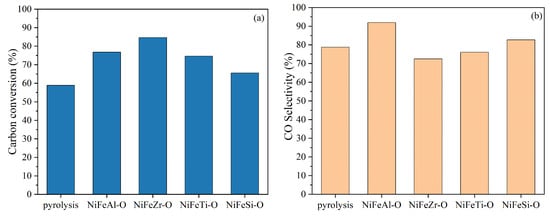
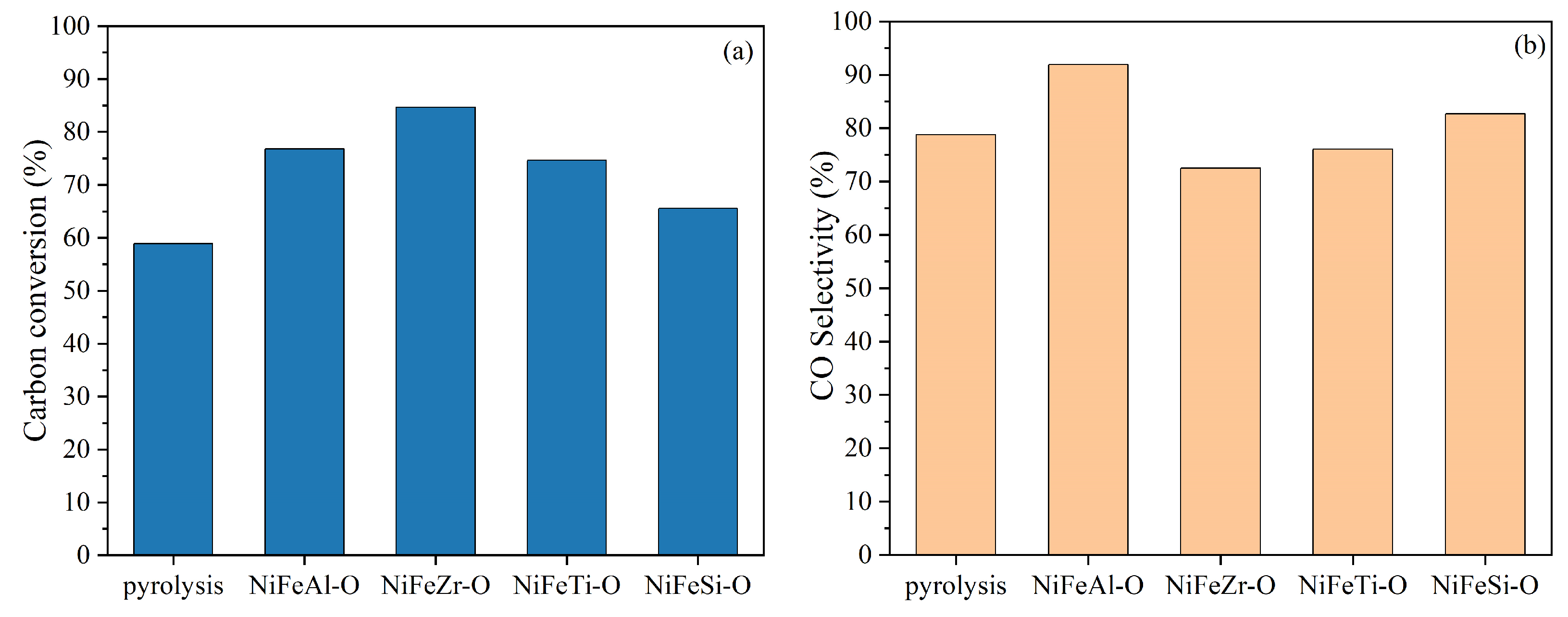
Figure 3 shows the carbon conversion and CO selectivity of various oxidized OCs and pyrolysis. As shown in Figure 3a, the carbon conversion of all oxidized OCs is consistently higher than that under pyrolysis, indicating that these OCs promote the conversion of carbonaceous macromolecules into low-carbon compounds. Among them, NiFeZr-O exhibits the highest carbon conversion, which can be attributed to the over-oxidation reaction shown in Equation (2). From Figure 3b, NiFeAl-O displays the highest CO selectivity, while NiFeZr-O shows the lowest, indicating that NiFeAl-O has the optimal partial oxidation performance.
H2/CO/CH4/Tar + O* → CO2 + H2O
Figure 3.
Carbon conversion and CO selectivity of oxidized NiFeX. (a) Carbon conversion; (b) CO selectivity.
2.1.2. Reduced OCs
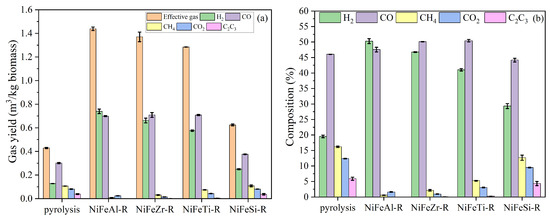
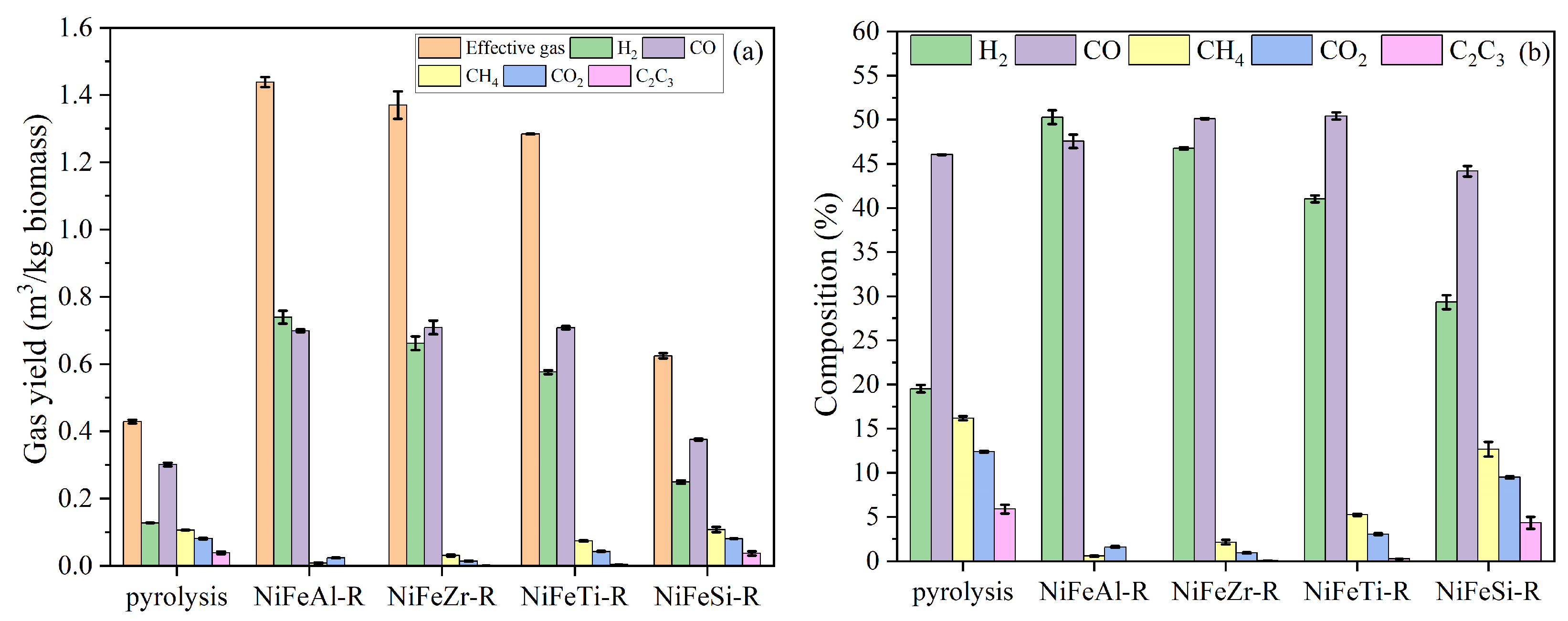
As mentioned in the introduction, in the BCLG process, both oxidized and reduced OCs coexist in the FR. Therefore, besides the performance of the oxidized state, the reactivity of the reduced state is also important. Moreover, as shown in Section 2.1.1, the oxidized forms of NiFeZr, NiFeTi, and NiFeSi exhibited poor gasification performance and limited reforming activity. To further investigate whether the inferior reforming performance is associated with the presence of lattice oxygen, the OCs were pre-reduced and their performance was evaluated. The gasification performance of various reduced OCs at 900 °C is shown in Figure 4. According to Figure 4a, the effective gas yields of NiFeAl-R, NiFeZr-R, and NiFeTi-R reached 1.44, 1.37, and 1.28 m3/kg, respectively. The observed results can be attributed to the excellent reforming activity of the pre-reduced OCs, for the following reasons: (1) The effective gas yield increases significantly, accompanied by a pronounced decrease in the yields of CH4, CO2, and C2–C3 hydrocarbons. (2) The pre-reduction treatment eliminates lattice oxygen involvement in the gasification reactions and the influence of oxidation reaction can thus be excluded. (3) Biomass-derived methoxy (–OCH3) and carboxyl (–COOH) groups typically decompose into CO2 during the cracking reaction shown in Equation (3) [27]. However, present experimental data shows no increase in CO2 yield relative to pyrolysis, indicating that cracking reaction is also weak.
Tar → H2 + CO + CO2 + hydrocarbons (CH4, C2H6, C2H4, etc.) + C
Figure 4.
Gasification performance of reduced NiFeX. (a) Gas yield; (b) gas composition.
The H2 yield of NiFeTi-R is lower than that of NiFeAl-R and NiFeZr-R, while the CH4 yield remains relatively higher, indicating insufficient reforming activity of NiFeTi-R. This can be attributed to the inadequate exposure of Ni0 active sites. Notably, the effective gas yield of NiFeSi-R is relatively low, and the yields of CH4, CO2, and C2–C3 hydrocarbons are comparable to those under pyrolysis, confirming that NiFeSi-R exhibits no significant reforming activity. Figure 4a,b show that while the CO yields of NiFeAl, NiFeZr, and NiFeTi are comparable, the H2 yields decrease gradually and the CH4 yields increase, confirming that NiFeAl has better reforming activity.
Table 1 summarizes the gasification performance of oxidized and reduced OCs at 900 °C, including gas yield, carbon conversion, and CO selectivity. The data in Table 1 show that the effective gas yield of NiFeAl remains approximately 1.4 m3/kg in both the oxidized (NiFeAl-O) and reduced (NiFeAl-R) states, demonstrating its excellent and stable performance regardless of state. The slightly higher CO2 yield of NiFeAl-O confirms that lattice oxygen participates in the gasification reaction. However, no obvious over-oxidation reaction is observed relative to pyrolysis, indicating moderate and well-controlled oxygen activity in NiFeAl.
Table 1.
Gasification performance results of NiFeX at 900 °C.
By contrast, the effective gas yield of NiFeZr-R increases by 38% compared with NiFeZr-O, accompanied by a sharp decrease in CO2 yield. This reveals that the lattice oxygen in NiFeZr-O is overly active and tends to cause over-oxidation via Equation (2). Only when lattice oxygen is depleted (i.e., NiFeZr-R) does the sample favor reforming reactions, highlighting that NiFeZr only performs well in its reduced state, with unsatisfactory partial oxidation behavior. For NiFeTi-R, although the syngas yield is improved, the CH4 yield is not effectively suppressed, indicating incomplete reforming reactions and still-inferior catalytic performance. In the case of NiFeSi, the gas yields barely differ between NiFeSi-O and NiFeSi-R, confirming that NiFeSi is inefficient in both oxidation and reforming reactions.
2.2. XRD Characterization
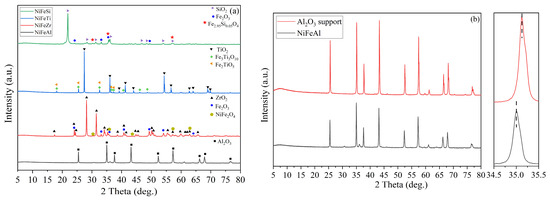
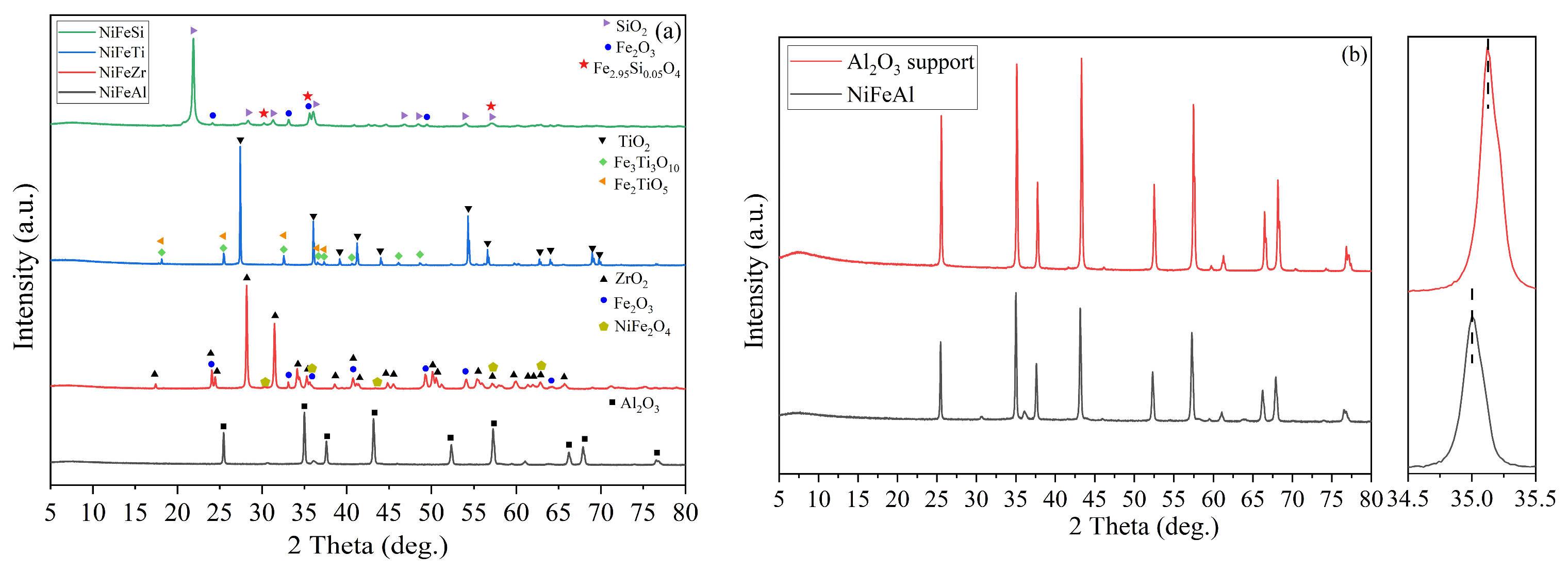
Figure 5a shows the XRD patterns of fresh NiFeX samples. It reveals that NiFeAl exhibits only a distinct α-Al2O3 phase, corresponding to PDF#10-0173 with a hexagonal crystal structure. No obvious nickel-containing species are detected, which is likely attributed to the low NiO loading (1 wt.%). Interestingly, no distinct iron-containing species are observed either, even with a Fe2O3 loading of 10 wt.%. This indicates that iron species may be incorporated into the Al2O3 lattice to form a solid solution.
Figure 5.
XRD patterns of different materials. (a) Fresh NiFeX; (b) comparison of NiFeAl and Al2O3 support.
To explore the absence of Fe2O3 diffraction peaks in fresh NiFeAl, the XRD patterns of fresh NiFeAl and Al2O3 are compared in Figure 5b. The Al2O3 diffraction peaks in NiFeAl shift slightly toward lower angles relative to pure Al2O3, which can be ascribed to the incorporation of Ni and Fe species into the Al2O3 lattice. Given that the ionic radii of Ni2+ (0.069 nm) and Fe3+ (0.055 nm) are larger than that of Al3+ (0.0535 nm), the diffraction angle θ decreases according to Bragg’s law. The unit cell parameters of Al2O3 and NiFeAl are also calculated accordingly. For pure Al2O3, the parameters are determined as a = 4.76142 Å, b = 4.76142 Å, c = 13.00108 Å, with a unit cell volume of 255.26 Å3. After Ni and Fe doping, the unit cell parameters of the Al2O3 phase in NiFeAl-O changed to a = 4.77942 Å, b = 4.77942 Å, c = 13.0447 Å, and the unit cell volume increases to 258.06 Å3. This confirms that a portion of Ni and Fe ions enter the Al2O3 unit cells, resulting in lattice expansion.
From Figure 5a, the fresh NiFeZr displays diffraction peaks assigned to ZrO2 (PDF#37-1484) and Fe2O3 (PDF#33-0664), respectively. However, no Fe-Zr composite crystalline phase is detected, suggesting that Fe does not combine with ZrO2 to form a new phase. Accordingly, the Fe-O-Zr interaction may be relatively weak. The fresh NiFeTi shows characteristic peaks of TiO2 (PDF#21-1276) and Fe-Ti composite oxides. The standard PDF patterns for Fe3Ti3O10 and Fe2TiO5 overlap considerably and are difficult to distinguish. The formation of Fe-Ti composite oxides indicates a strong interaction between Fe and Ti species. Fresh NiFeSi exhibits diffraction peaks corresponding to SiO2, Fe2O3, and Fe2.95Si0.05O4. Notably, Fe2O3 exists in two distinct crystal systems: rhombohedral (PDF#33-0664) and hexagonal (PDF#39-1346). The presence of Fe2.95Si0.05O4 verifies a strong interaction between Fe and Si species.
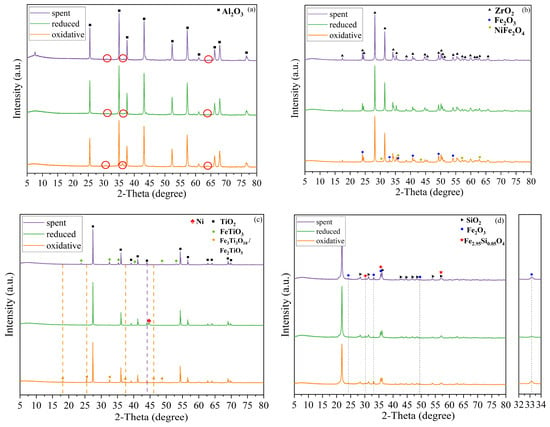
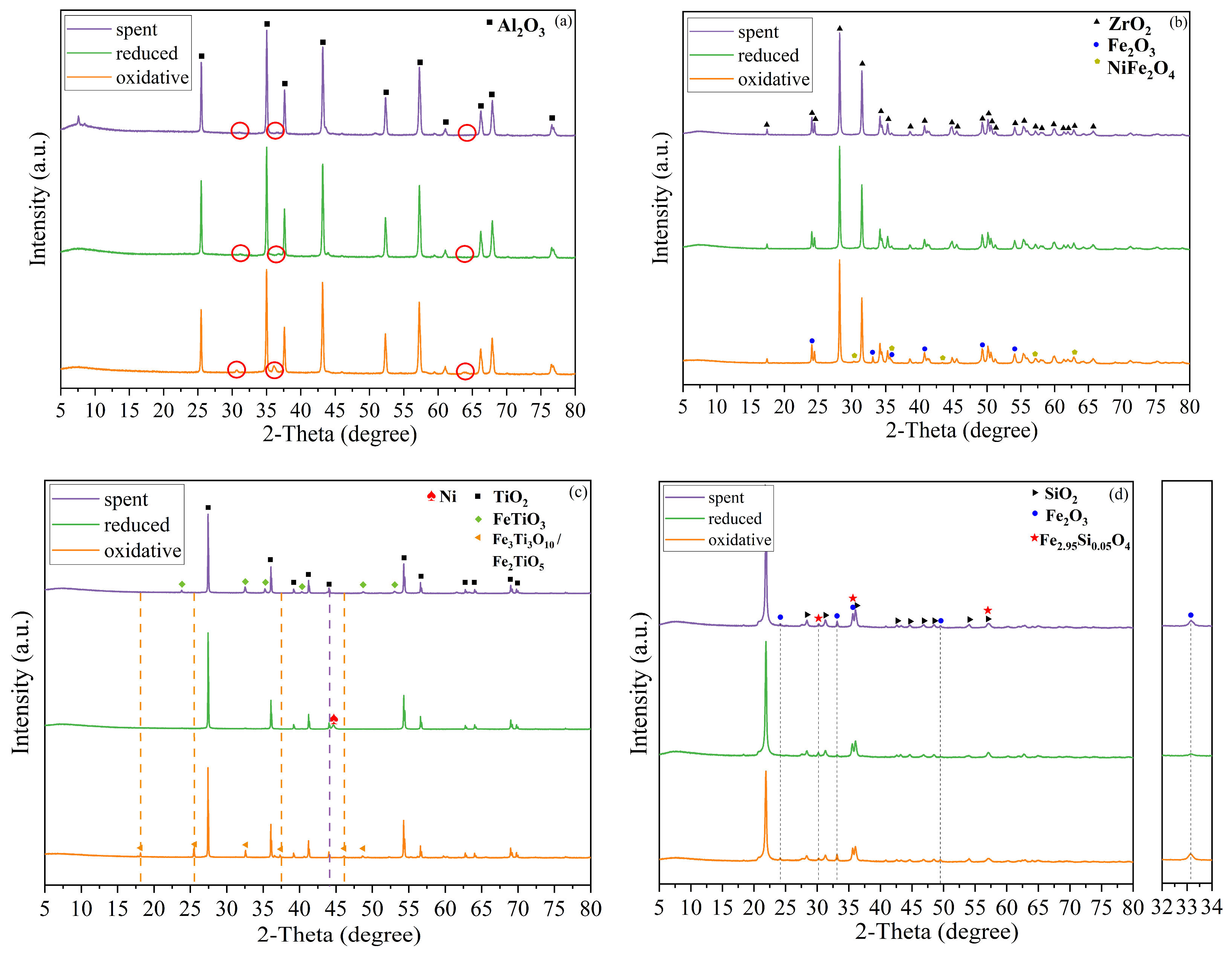
The XRD patterns of NiFeX in the oxidized, reduced, and spent states are shown in Figure 6. From Figure 6a, the intensity of the Al2O3 peaks for NiFeAl exhibits no obvious variation among the oxidized, reduced, and spent states. However, the oxidized NiFeAl shows distinct diffraction peaks at 30.66°, 36.10°, and 63.96° (marked by red circles), while these peaks are absent in the reduced and spent samples. This can be attributed to the phase transformation induced by the reduction of Ni/Fe oxides.
Figure 6.
XRD patterns of NiFeX in different states. (a) NiFeAl; (b) NiFeZr; (c) NiFeTi; (d) NiFeSi.
As shown in Figure 6b, no Fe2O3 or NiFe2O4 phases are detected in the reduced and spent NiFeZr samples. This can be attributed to the reduction of the oxygen carrier by reducing gases such as H2, CO, and CH4, which confirms the excellent reducibility of NiFeZr. From Figure 6c, Ni0 is observed in reduced NiFeTi, whereas no iron oxides are observed. In spent NiFeTi, the FeTiO3 phase (PDF#29-0733) is present while Ni0 is absent. This indicates that the gasification process induced the conversion of Fe3+ to Fe2+ but failed to achieve deep reduction of NiFeTi. As shown in Figure 6d, both oxidized and spent NiFeSi contain three phases: SiO2, Fe2O3, and Fe2.95Si0.05O4, whereas the reduced NiFeSi only exhibits two phases: SiO2 and Fe2.95Si0.05O4. This indicates that its reduction requires relatively harsh conditions. Such strong interactions suppress the gasification performance, which is consistent with the lower effective gas yield achieved over NiFeSi.
From the viewpoint of crystal phase evolution, when Fe species combine with the support to form new phases that cannot be effectively reduced during gasification, the material exhibits inferior gasification performance. This confirms that an excessively strong Fe-support interaction of OCs is unfavorable in the BCLG process.
2.3. H2-TPR Characterization
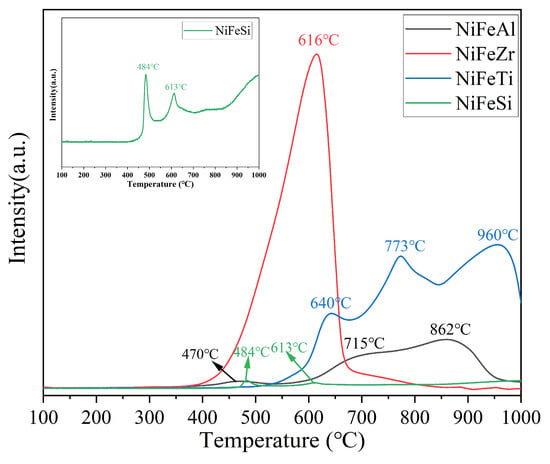
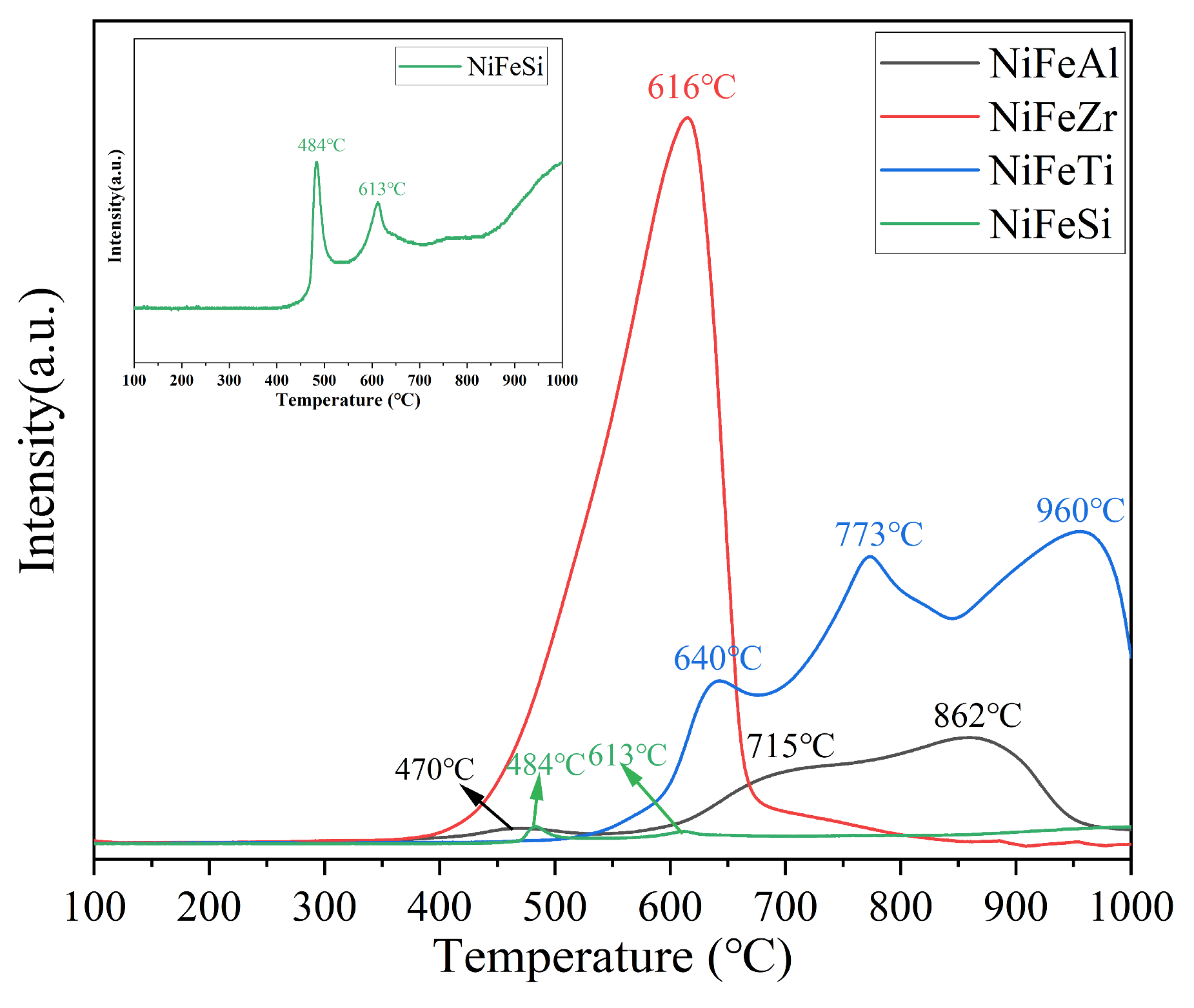
The H2-TPR profiles of fresh NiFeX samples are presented in Figure 7. The main reduction peaks of NiFeAl appear at 862 °C, and the peak area is smaller than those of NiFeZr and NiFeTi. As shown by the hydrogen consumption data in Table 2, the amount of reducible lattice oxygen is limited, suggesting that its lattice oxygen activity is moderate and resistant to over-oxidation. NiFeZr shows a single reduction peak at 616 °C, indicating high lattice oxygen activity. The reduction process is nearly complete at approximately 700 °C, and its hydrogen consumption is about three times that of NiFeAl, implying that most lattice oxygen can participate in gasification at 900 °C. Although this favors the exposure of reforming sites, it promotes the over-oxidation reaction shown in Equation (2) to produce excessive CO2, which is consistent with the gasification results in Section 2.1.
Figure 7.
H2-TPR profiles of fresh NiFeX samples.
Table 2.
Total H2 consumption of different OCs in H2-TPR experiments.
As shown in Figure 7, NiFeTi exhibits three distinct reduction peaks corresponding to different lattice oxygen active sites. Since the gasification experiments is conducted at 900 °C, the lattice oxygen in the high-temperature region of NiFeTi cannot participate in the reaction, whereas the reducible oxygen species at medium and low temperatures tend to induce over-oxidation. Consequently, due to insufficient exposure of Ni0 sites, the generated H2O and CO2 cannot be efficiently consumed for tar reforming. This phenomenon is clearly supported by the gasification results in Section 2.1, where higher CH4 and CO2 yields and a lower effective gas yield are observed. NiFeSi shows no obvious reduction peak and has the lowest hydrogen consumption, indicating that NiFeSi is the most difficult to reduce among the four OCs. This result is consistent with the XRD observation that the Fe2.95Si0.05O4 phase in NiFeSi remains stable before and after the reaction. Its lattice oxygen is hardly released, and the reforming sites cannot be exposed, thus restricting both its oxidation capacity and reforming performance.
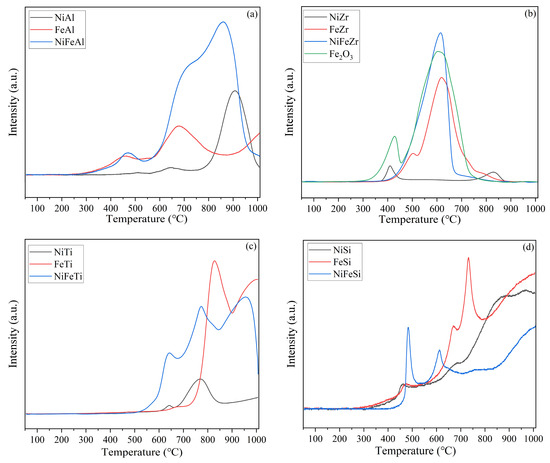
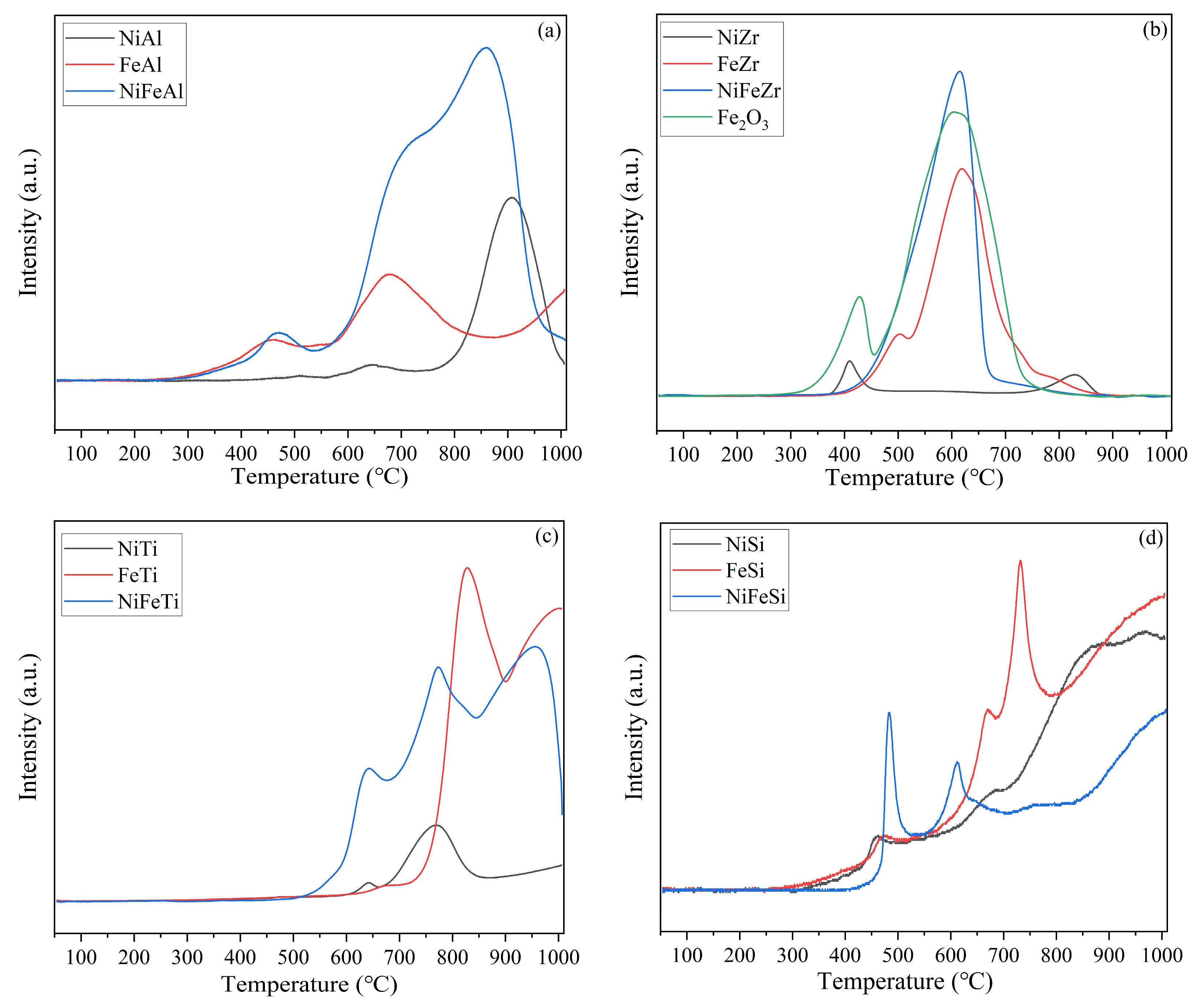
To further investigate the interactions between Ni-Fe species and the supports, monometallic NiAl, FeAl, NiZr, FeZr, NiTi, FeTi, NiSi, and FeSi samples are synthesized and characterized by H2-TPR, as illustrated in Figure 8. According to Figure 8a, NiAl exhibits a weak reduction peak at approximately 500 °C, corresponding to the reduction of NiO, indicating that only a small fraction of NiO exists in a free form. As is well known, for supported metal oxide catalysts, the low-temperature and high-temperature TPR peaks correspond to weak and strong interactions among components, respectively [28]. Thus, the peaks at 646 °C and 907 °C represent weak and strong Ni–O–Al bonding, respectively. Notably, the peak area at 907 °C is significantly larger than that at 646 °C, suggesting that a great amount of NiO species interact strongly with Al2O3. FeAl shows reduction peaks at 450 °C, 677 °C, and 1000 °C. The peak at 450 °C corresponds to the reduction of Fe2O3 to Fe3O4 [29,30], while the peaks at and above 600 °C are attributed to the stepwise reduction of Fe3O4 → FeO → Fe [31,32]. Accordingly, the peaks at 677 °C and 1000 °C can be assigned to weak and strong Fe-O-Al bonding, respectively.
Figure 8.
H2-TPR profiles of OCs in different systems: (a) Ni-Fe-Al; (b) Ni-Fe-Zr; (c) Ni-Fe-Ti; (d) Ni-Fe-Si.
NiFeAl displays reduction peaks at 470 °C, 719 °C, and 860 °C. Compared with FeAl, the medium-temperature reduction peak of NiFeAl shifted upward from 677 °C to 715 °C, while the high-temperature reduction peak shifted downward from 1000 °C to 862 °C. This indicates that the addition of Ni enhances the weak Fe-O-Al bonding but suppresses the formation of FeAl2O4. Similarly, compared with NiAl, the high-temperature reduction peaks of NiFeAl appear at lower temperatures, suggesting that the incorporation of Fe weakens the Ni species–Al support interactions [33], thus making part of Ni more easily reducible. This leads to a larger total amount of reducible Ni/Fe oxides, thereby improving the overall redox behavior of the material. As shown in Table 2, the H2 consumption of NiFeAl exceeds the sum of that for NiAl and FeAl. It enables more lattice oxygen in the OC to participate in the gasification process.
From Figure 8b, NiZr exhibits two reduction peaks at 410 °C and 830 °C, which can be assigned to the reduction of NiO and the strong Ni-O-Zr bonding, respectively. FeZr shows two reduction peaks at 503 °C and 620 °C. The peak at 503 °C is attributed to weak Fe-O-Zr bonding, while the peak at 620 °C corresponds to the stepwise reduction of Fe3O4 → FeO → Fe. No strong Fe-Zr interactions are observed. NiFeZr exhibits only one reduction peak at 616 °C. Although the maximum reduction temperatures of FeZr and NiFeZr are similar, the addition of Ni clearly narrows the temperature range of FeZr reduction peaks and enhances the peak intensity. This indicates that Ni improves the lattice oxygen activity and thus accelerates the reduction of Fe3O4 → FeO → Fe. The highly active lattice oxygen may cause over-oxidation during gasification and promote the formation of CO2, which is consistent with the gasification performance results.
As shown in Figure 8c, the reduction peaks of NiTi at 642 °C and 767 °C correspond to the weak and strong Ni-O-Ti bonding, respectively. For FeTi, a small reduction peak appears at 674 °C, with the main peak at 827 °C and an incomplete peak at 1000 °C. Unlike FeAl and FeZr, FeTi shows no discernible low-temperature reduction peak, suggesting that the conversion of Fe2O3 to Fe3O4 is not significant. Overall, the reduction peaks of FeTi are shifted to higher temperatures, indicating strong interactions between Fe and Ti oxides, which may facilitate the formation of new phases.
NiFeTi exhibits reduction peaks at 642 °C, 774 °C, and 955 °C. The peak at 642 °C is associated with the weak Ni-O-Ti bonding. However, its intensity deviates from expectations, suggesting that this peak may partially originate from the reduction of Fe oxides. Although both FeTi and NiFeTi also display three reduction peaks, those of NiFeTi are located at lower temperatures. Specifically, significant reduction of FeTi initiates at approximately 720 °C, whereas reduction of NiFeTi begins at around 520 °C. This indicates that the addition of Ni weakens the Fe-O-Ti bonding, thereby promoting the reduction of Fe oxides. In terms of hydrogen consumption shown in Table 2, the value for NiFeTi is approximately equal to the sum of those for FeTi and NiTi. It indicates that while Ni lowers the reduction temperature of Fe oxides, it does not increase the total amount of reducible Fe species. Compared with the H2-TPR results of NiFeAl, NiFeTi shows a significant reduction peak above 900 °C, indicating incomplete reduction under the reaction conditions of this work. This incomplete reduction hinders the participation of lattice oxygen and suppresses the formation of Ni0 reforming active sites, resulting in the inferior gas production performance of NiFeTi relative to NiFeAl.
Figure 8d indicates that the reduction peak of NiSi at 458 °C corresponds to free NiO. Similar to NiAl and NiTi, the reduction peak at 682 °C is attributed to the weak Ni-O-Si bonding, while the strong Ni-O-Si bonding is reflected in the reduction peak at about 800 °C. Consistent with the above analyses of FeAl, FeZr, and FeTi, the reduction peak of FeSi at 473 °C corresponds to the reduction of Fe2O3 to Fe3O4, while the reduction peaks at 670 °C, 732 °C, and 1000 °C are attributed to the Fe-O-Si bonding. The high-temperature reduction peak of FeSi indicates a strong interaction between Fe and Si, which may suggest the formation of new phases such as Fe2.95Si0.05O4, as observed in the XRD results.
The reduction peak of NiFeSi at 483 °C is related to the reduction of free NiO and the transformation of Fe2O3 to Fe3O4. By comparing the profiles of FeSi and NiSi, it can be seen that the addition of Ni significantly decreases the high-temperatures reduction peak area of FeSi, suggesting that the reduction of part of the Fe oxides is inhibited, possibly due to interactions with SiO2. However, no significant shift in the reduction peaks to higher temperatures is observed. From the comparison of hydrogen consumption in Table 2, it is evident that Ni significantly suppresses the reduction behavior of Fe oxides in NiFeSi.
Combined with the H2-TPR profiles and gasification performance, excessively strong internal interactions within OCs will impair their reducibility. This not only hinders the effective release of lattice oxygen but also suppresses the formation of reforming active sites. Conversely, weak internal interactions lead to highly active lattice oxygen, which easily induces over-oxidation and thus is also unfavorable for effective gas production. Notably, when the reduction peaks of OCs fall within the range of 600–900 °C, moderate interactions between components are more conducive to the BCLG reaction.
2.4. XPS Characterization
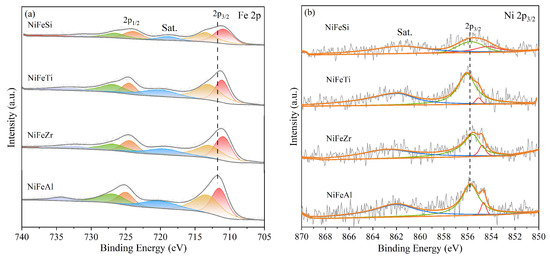
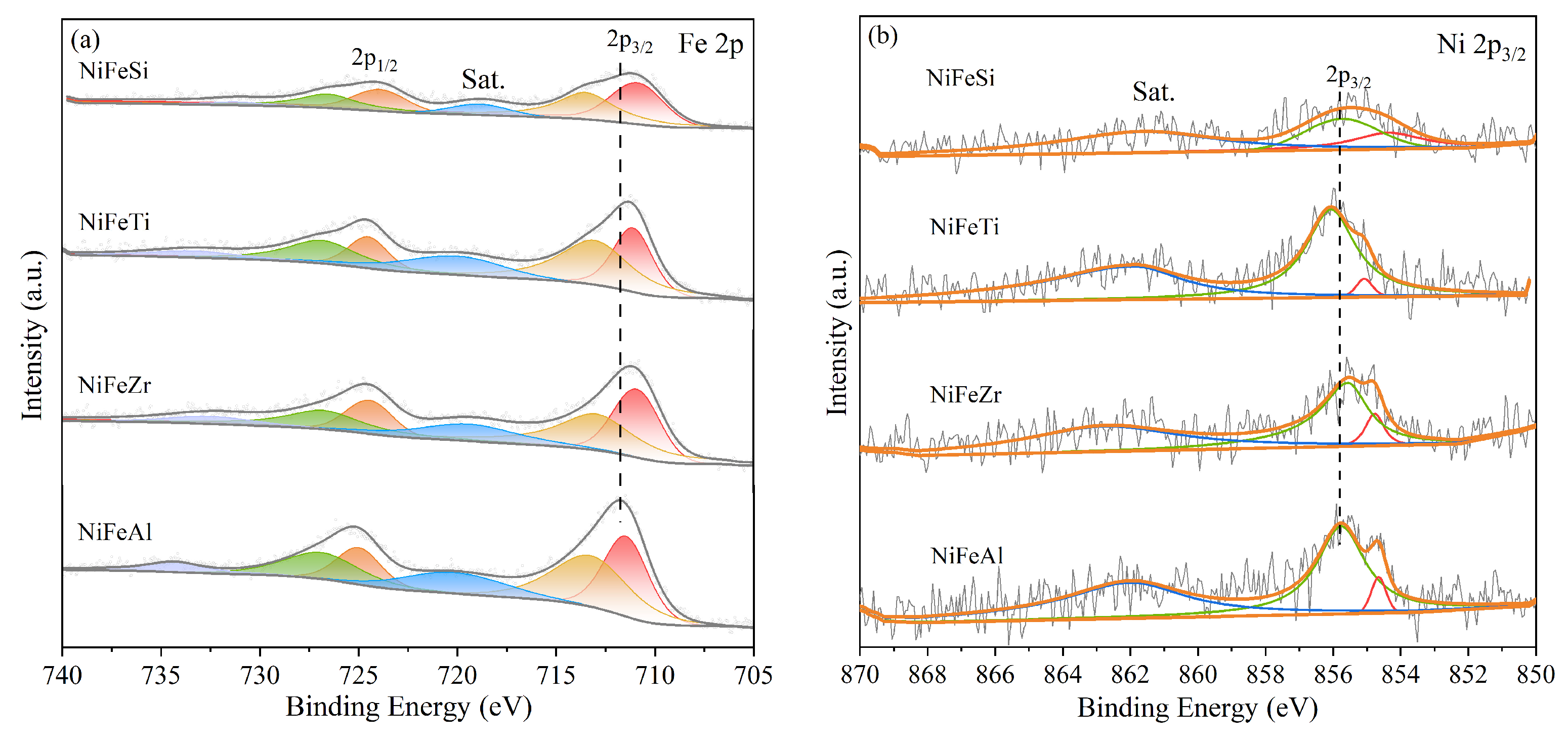
Figure 9 displays the XPS results of various OCs. As shown in Figure 9a, distinct variations in Fe 2p peak intensity are observed among the four OCs. These variations may be attributed to the following two reasons: (1) differences in the surface Fe concentration or dispersion; (2) photoelectron escape attenuation and electrical conductivity changes induced by the support materials. Besides the Fe 2p3/2 and Fe 2p1/2 peaks centered at 711–712 eV and 724 eV, respectively, the characteristic satellite peaks at ~719 eV and ~734 eV indicate the dominant presence of Fe3+ species [34,35]. The peak at ~712 eV can be deconvoluted into two peaks at ~711 eV and ~713 eV, corresponding to composite Fe3+ (affected by Ni species [36]) and Fe-Al interactions, respectively. Notably, NiFeAl exhibits a higher Fe 2p3/2 binding energy (BE), suggesting a lower electron cloud density around Fe atoms and significant electron transfer. This electronic state benefits the gasification reaction by facilitating H2O adsorption and boosting the steam reforming of tar (e.g., toluene) [37], which ultimately improves the yield of effective syngas.
Figure 9.
XPS spectra of fresh NiFeX: (a) Fe 2p; (b) Ni 2p3/2.
From Figure 9b, the Ni 2p3/2 spectra show a main peak at 855–856 eV, which is attributed to Ni2+ and accompanied by a satellite peak at ~862 eV. The peak at 855 eV can be deconvoluted into two components at ~854.6 eV and 855.5 eV, corresponding to Ni-Fe interactions and Ni-support interactions, respectively [38,39,40,41]. Both Ni and Fe in NiFeAl display higher BEs, implying lower electron cloud density and greater electron transfer from the active metals to the support. This confirms the presence of stronger synergistic interactions among Ni, Fe, and Al in NiFeAl. It also illustrates the corresponding relationship between the synergistic effect and gasification performance, and further validates the superiority of NiFeAl.
2.5. SEM Characterization
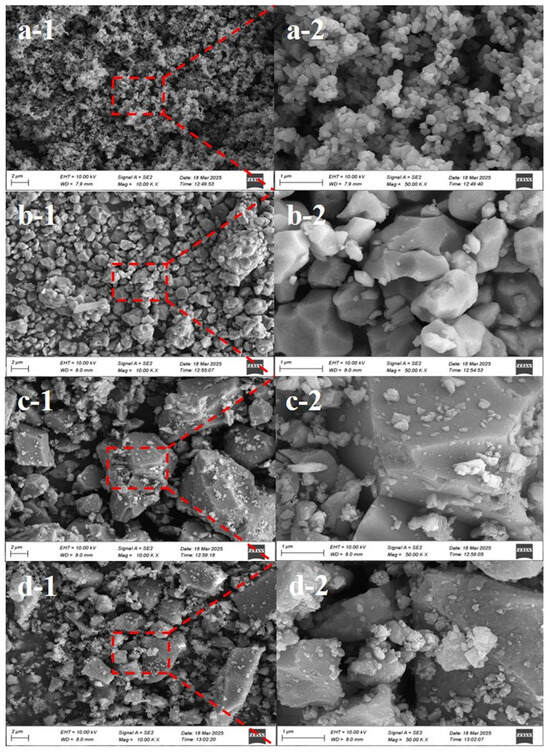
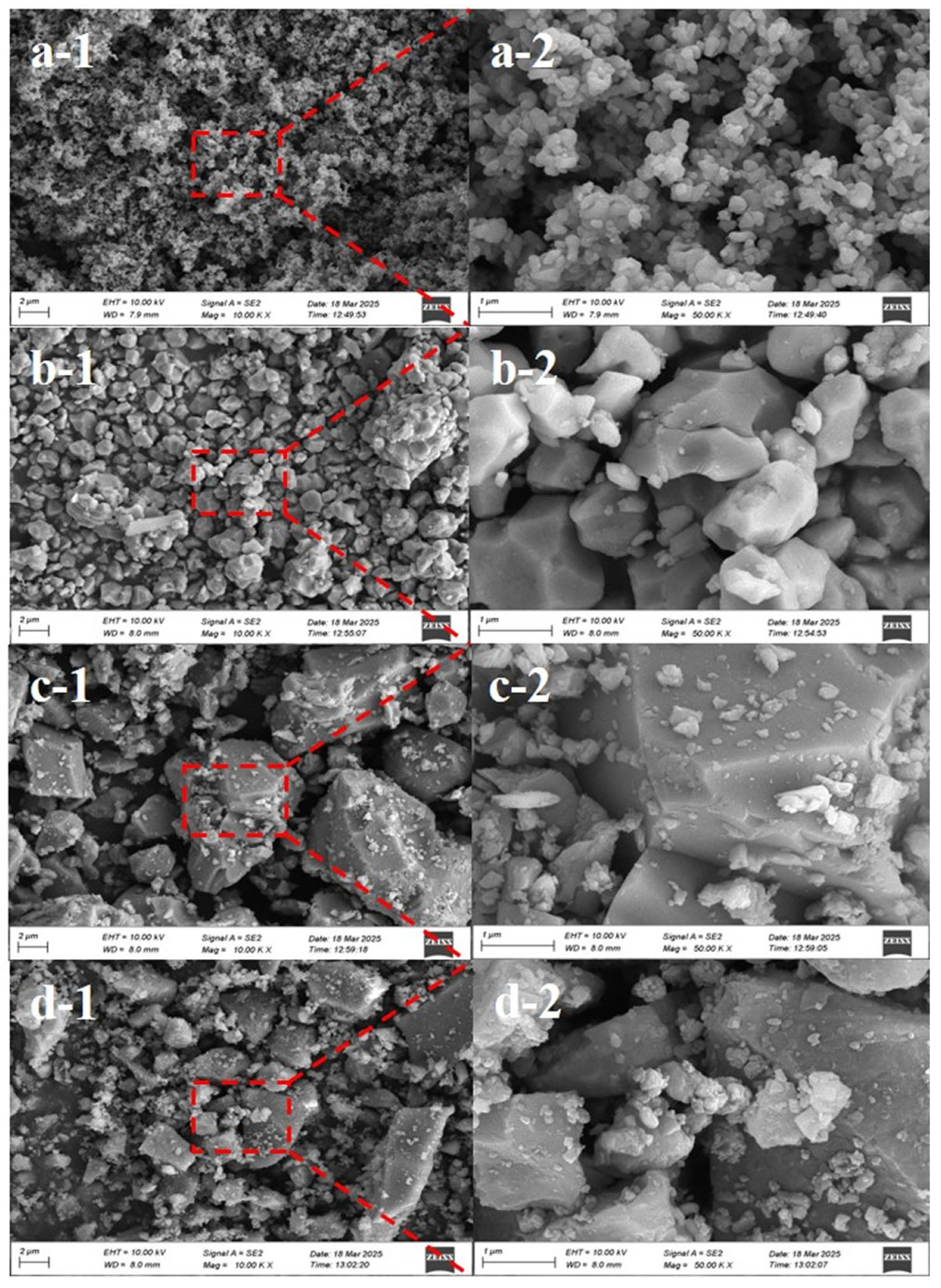
The surface morphology of the fresh NiFeX is analyzed by SEM, as shown in Figure 10. The four OCs exhibit distinct surface characteristics. NiFeAl displays agglomerated irregular nanoparticles. Although particle agglomeration is observed, it possesses a dense array of mesoscale cavities, which enhance the diffusion efficiency of reactants and products, and then improve overall mass transfer efficiency. However, NiFeZr, NiFeTi, and NiFeSi present micrometer-sized particles that reflect the characteristic dimensions of the support. Small agglomerates, likely Ni/Fe oxides, are distributed on the support surface. The pore structure of these three OCs is significantly less developed than that of NiFeAl.
Figure 10.
SEM images of fresh NiFeX: (a-1) NiFeAl; (a-2) enlarged area of NiFeAl; (b-1) NiFeZr; (b-2) enlarged area of NiFeZr; (c-1) NiFeTi; (c-2) enlarged area of NiFeTi; (d-1) NiFeSi; (d-2) enlarged area of NiFeSi.
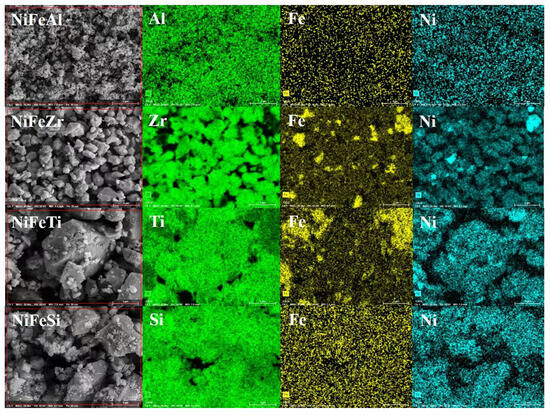
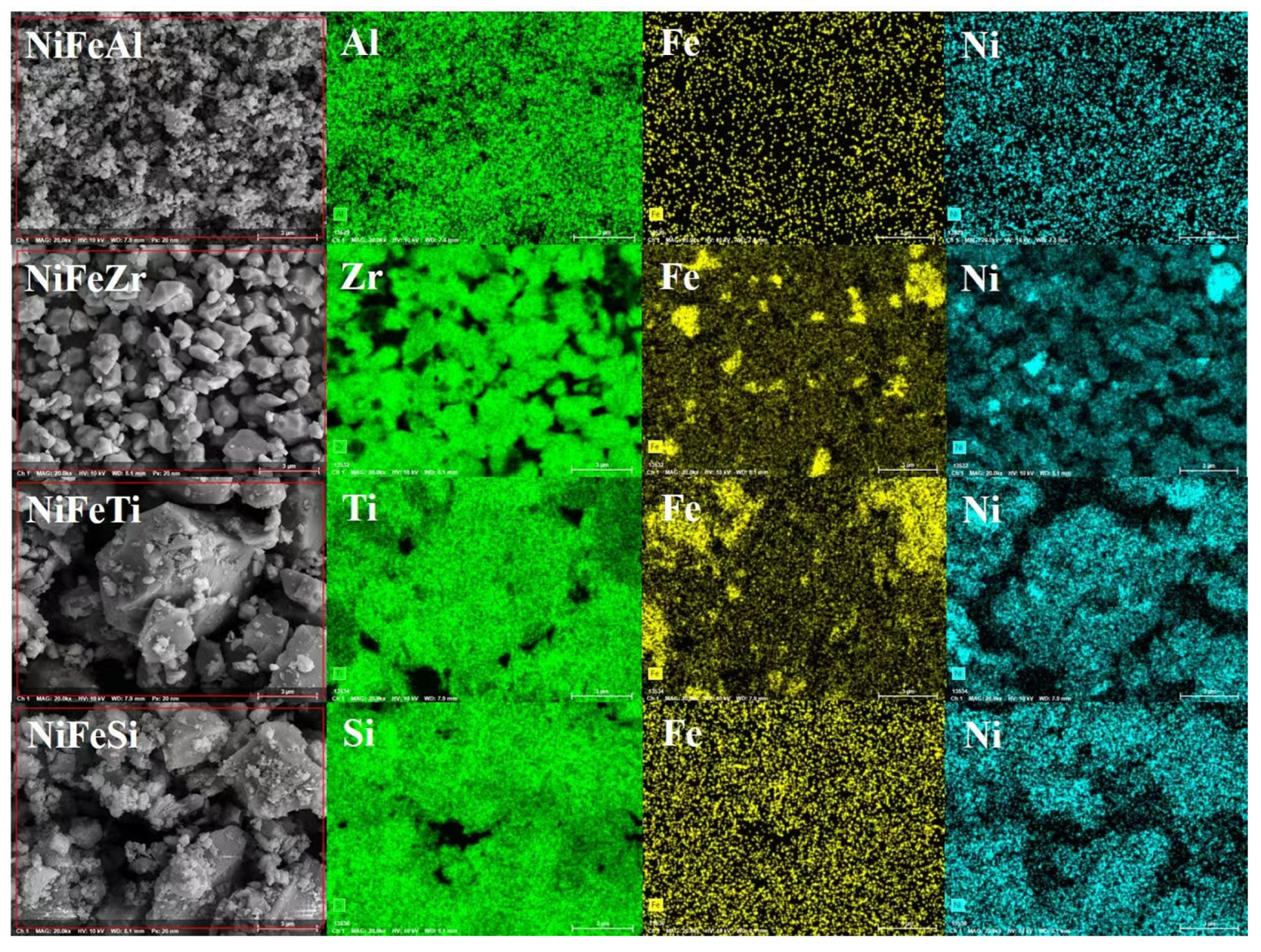
EDS-mapping characterization is used to further analyze the elemental distribution of each component, as shown in Figure 11. The results demonstrate a uniform distribution of Ni and Fe in NiFeAl, suggesting strong interactions among Ni, Fe, and Al. This can be attributed to the solid-solution dispersion of Ni and Fe species, which is consistent with the XRD results. In contrast, Ni and Fe in NiFeZr and NiFeTi exhibit an uneven distribution with obvious element aggregation, which correlates well with the existence of multiple crystalline phases observed in the XRD patterns. Additionally, Ni and Fe show a relatively uniform distribution on the SiO2 surface in NiFeSi.
Figure 11.
SEM-EDS mapping of fresh NiFeX.
The spent OCs were also examined by SEM and elemental mapping (Figures S1 and S2, respectively). As shown in the SEM images, all OCs largely retained their original morphology. NiFeAl maintained a well-preserved nanoparticle-aggregated structure with medium-sized cavities and a particle size of approximately 300 nm. NiFeZr, NiFeTi, and NiFeSi still mainly presented micrometer-sized support particles, with NiFeTi and NiFeSi showing irregular small particles on the support surface. The corresponding mapping results (Figure S2) demonstrate that the Ni and Fe elements remained uniformly dispersed in spent NiFeAl, while spent NiFeZr, NiFeTi, and NiFeSi showed non-uniform distributions.
2.6. Reaction Mechanism
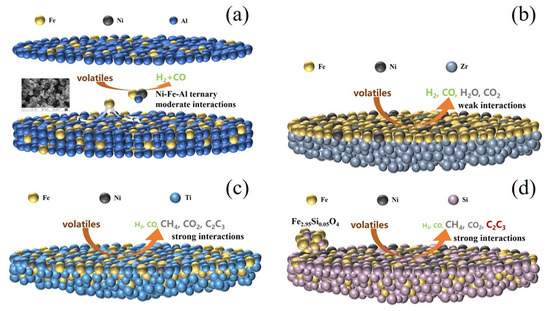
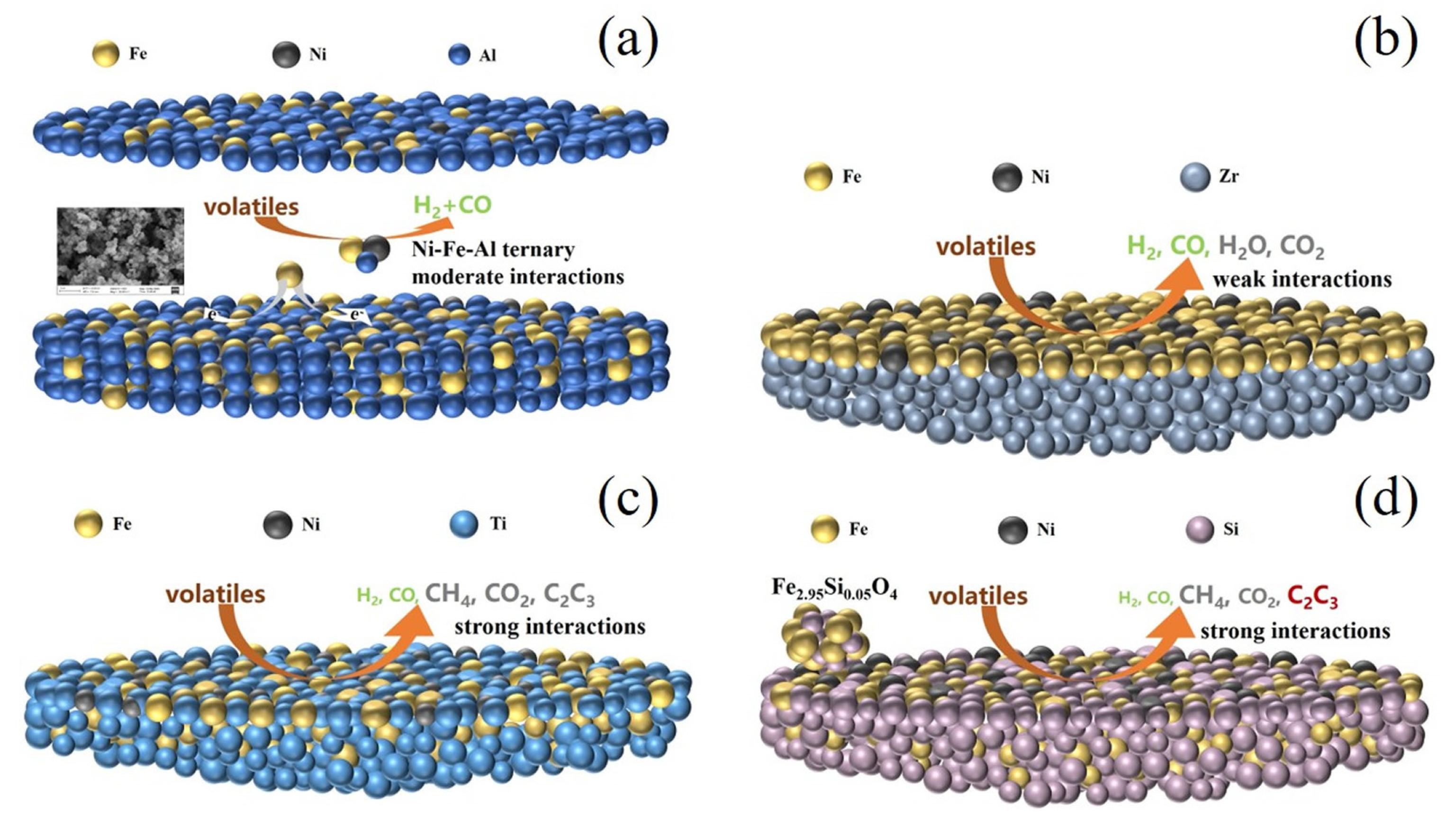
Based on the gasification performance evaluation and characterization results, this study proposes the reaction mechanism of NiFeX, as illustrated in Figure 12. As shown in Figure 12a, Ni and Fe species are uniformly dispersed within the Al2O3 support, giving rise to a moderate ternary interaction among the components. The oxygen activity is thus well balanced, effectively avoiding over-oxidation of H2 and CO. Moreover, the Fe species exhibits a relatively stronger electron-deficient state, which promotes water vapor adsorption and enhances the reforming reaction between tar (e.g., toluene) and steam [37], leading to high-quality syngas. Figure 12b shows that the interaction between ZrO2 and the NiFe species is relatively weak, resulting in high oxygen activity. This favors complete oxidation, producing more CO2 and H2O and consequently lowering the utilization efficiency of carbon and hydrogen atoms. Figure 12c indicates that the Ni and Fe species interact more strongly with the TiO2 support, which leads to poor reducibility and inferior reforming activity. As a result, a significant amount of CH4 and a small amount of C2–C3 hydrocarbons are detected. Figure 12d reveals that Fe species form a stable Fe2.95Si0.05O4 phase with the SiO2 support, making the oxygen carrier difficult to reduce. Consequently, both oxidation and reforming activities are poor, resulting in a high yield of C2–C3 hydrocarbons.
Figure 12.
Schematic diagram of the reaction mechanism of NiFeX: (a) NiFeAl; (b) NiFeZr; (c) NiFeTi; (d) NiFeSi.
3. Experiments and Methods
3.1. Materials
Walnut shell (obtained from Zishu Mineral Products Co., Ltd., Shijiazhuang, China) was used as a typical biomass sample, and its proximate and ultimate analyses are listed in Table 3. The raw walnut shell particles were crushed in a grinder (sourced from Taisite Instrument Co., Ltd., Tianjin, China) and sieved to obtain the 20–40 mesh fraction. The sample was then dried at 105 °C for 24 h to obtain dry biomass.
Table 3.
The ultimate and proximate analyses of the walnut shell.
NiFe-based bifunctional OCs supported on different inert materials (Al2O3, ZrO2, TiO2, SiO2) were synthesized via the equal-volume impregnation method. The properties of the supports are as follows: Al2O3 (industrial grade, specific surface area 145.17 m2/g, sourced from a local supplier in Zibo, China); SiO2 (purity > 98%, specific surface area 300–400 m2/g, sourced from a local supplier in Qingdao, China); ZrO2 (purity 99%, Shanghai Macklin Biochemical Technology Co., Ltd., Shanghai, China); TiO2 (purity ≥ 98%, Sinopharm Chemical Reagent Co., Ltd., Shanghai, China). Firstly, the water absorption capacity of different supports was assessed. Secondly, the corresponding amounts of Ni(NO3)2·6H2O (purity ≥ 98%, Sinopharm Chemical Reagent Co., Ltd., Shanghai, China) and Fe(NO3)3·9H2O (purity ≥ 98.5%, Sinopharm Chemical Reagent Co., Ltd., Shanghai, China) were dissolved in deionized water and the resulting solution was impregnated onto the supports. The samples were then aged for 12 h, dried at 80 °C for 6 h, and calcined at 1200 °C for 6 h with a heating rate of 2 °C/min in a muffle furnace (Hefei Kejing Materials Technology Co., Ltd., Hefei, China). The detailed preparation procedure has been reported in our previous work [26]. The prepared NiFe-based OCs were denoted as NiFeX, where X represents the inert support (e.g., NiFeAl). To differentiate between oxidized and reduced states, the oxidized and reduced samples were labeled NiFeX-O and NiFeX-R, respectively. Additionally, monometallic OCs including NiAl, FeAl, NiZr, FeZr, NiTi, FeTi, NiSi, and FeSi were prepared by the same method to better clarify the interactions between different components.
3.2. Experimental Methods
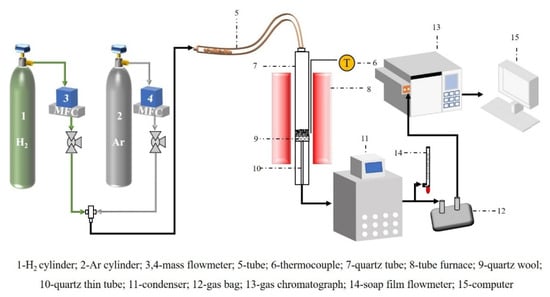
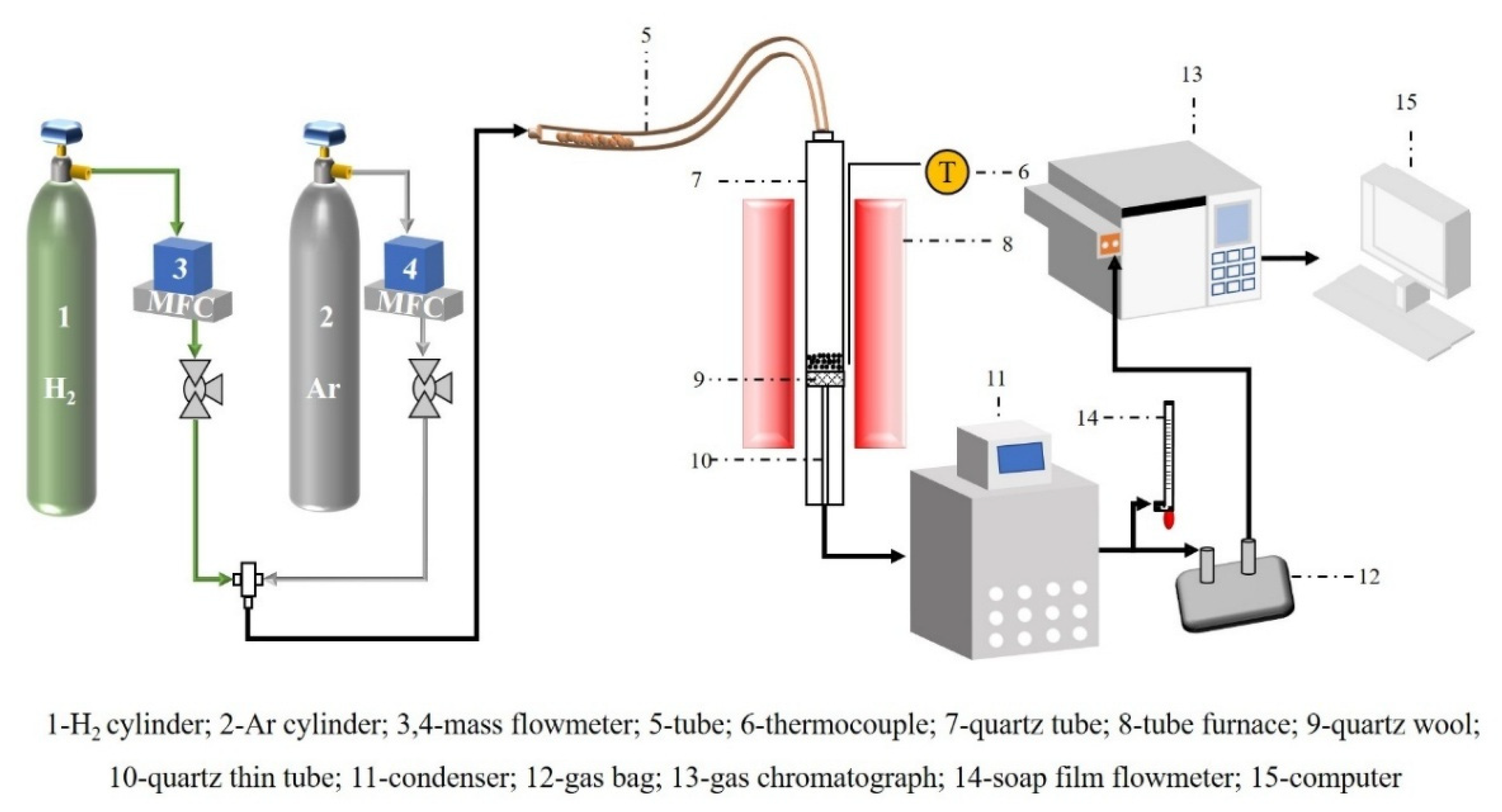
The gasification experiments were carried out in a fixed-bed reactor, as illustrated in Figure 13. Initially, the OCs (4.4 g) were placed into a quartz tube (bed height ca. 3–5 cm), and walnut shell samples (0.43 g) were loaded into the feeder at the top of the tube. The furnace was then heated to 900 °C at a rate of 10 °C/min. Argon was used as the carrier and purge gas, flowing through the system at 32 mL/min. For experiments evaluating the performance of reduced OCs, the sample was firstly reduced in 30% H2 during the heating process and held at 900 °C for 30 min. After the system stabilized, the walnut shell was added into the quartz tube and placed above the oxygen carrier. The walnut shell was first pyrolyzed, and the resulting pyrolysis gas then came into contact with the oxygen carrier and underwent oxidation and reforming reactions. Due to the limited solid–solid contact and slow solid–solid reaction rate, it can be assumed that the pyrolysis char did not participate in the reaction with the oxygen carrier, and only the pyrolysis gas was involved. The product gas was collected for 10 min under continuous Ar flow (32 mL/min). The syngas composition was analyzed using a gas chromatograph (GC8850, Lunan Ruihong, Tengzhou, China). To further compare and evaluate the reforming performance of the OCs, pyrolysis experiments of walnut shell samples were also performed under the same procedure. In contrast to gasification, no OCs were used during the pyrolysis experiments, while all other experimental conditions remained identical. Each gasification experiment was performed in two independent replicate runs. The error bars in Figure 2 and Figure 4 represent the deviation of gas yields between two independent repeated experiments.
Figure 13.
Fixed-bed gasification experimental system diagram.
The crystal phase structure of the OCs in oxidized, reduced, and post-reaction states were analyzed using XRD (SmartLab9kW, Rigaku Corporation, Tokyo, Japan). The reducibility and intercomponent interaction of the samples were investigated by H2-TPR (BELCAT II, MicrotracBEL Corp., Osaka, Japan). XPS (Thermo Scientific ESCALAB QXi, Waltham, MA, USA) was employed to characterize the elemental valence states and chemical environments of the samples. All powder samples were prepared under ambient conditions and then rapidly transferred into the XPS vacuum load-lock chamber. After the sample chamber was evacuated to high vacuum, the samples were immediately introduced into the XPS analysis chamber to avoid any further air exposure, where most of the physically adsorbed CO2 and H2O were removed. SEM (Merlin Compact, Carl Zeiss AG, Oberkochen, Germany) was used to observe the microscopic morphology of the prepared OCs, while EDS (Oxford X-Max, Oxford Instruments, Oxfordshire, UK) was used to evaluate the dispersion of the active elements on the supports.
3.3. Definition and Calculation
The total syngas yield per unit mass of dry walnut shell was defined by Equation (4):
where was total syngas yield (m3/kg, at 25 °C, 1 atm), was the flow rate of argon (32 mL/min), was argon concentration in syngas (vol %), t was gas collection time (10 min), m was the mass of dry walnut shell (0.43 g).
The volume concentration of different components in syngas was defined as Equation (5):
where was the volume concentration (%), i was the detected components in syngas (H2, CH4, CO, CO2, C2H6, C2H4, C3H8, and C3H6), was the original gas concentration measured by GC8850 (vol %).
The components yield, effective gas yield, CO selectivity, and carbon conversion were defined by Equations (6)–(9):
where was the yield of each gas component (m3/kg), was the effective gas yield (m3/kg), and were the CO selectivity and carbon conversion, respectively (%). G1 represented the yields of CH4, CO, CO2 (m3/kg), G2 corresponded to the yields of C2H6 and C2H4 (m3/kg), G3 denoted the yields of C3H8 and C3H6 (m3/kg); M and Vm were the molar mass of carbon and molar volume of the gas, respectively. Cw was the mass of carbon contained in the dry walnut shell samples (kg).
4. Conclusions
In this study, the effects of different supports (Al2O3, ZrO2, TiO2, SiO2) on the performance of NiFe-based bifunctional OCs were investigated. The biomass gasification reactivity and support-active phase interaction of various OCs in both oxidized and reduced states were evaluated. The main conclusions are as follows:
- (1)
- NiFeAl exhibits the optimal gasification performance in both oxidized and reduced states, with effective gas (CO + H2) yields of 1.39 m3/kg and 1.43 m3/kg (95% and 97% concentrations, respectively). NiFeZr shows good reforming reactivity in the reduced state but severe over-oxidation in the oxidized state. NiFeTi has inferior catalytic reforming performance in oxidized states while NiFeSi is inefficient in both oxidized and reduced states.
- (2)
- No detectable Fe-Zr oxides generate in NiFeZr, with iron oxides retained as Fe2O3 and NiFe2O4 phases. These weak interactions lead to highly active lattice oxygen and subsequently over-oxidation. Complex Fe-Ti and Fe-Si oxides generate in NiFeTi and NiFeSi, respectively. These excessively strong interactions impair their reducibility and result in poor oxidation and reforming performance.
- (3)
- NiFeAl has abundant cavity structures, and enhanced binding energies of Ni and Fe, along with a uniform dispersion of Ni and Fe species on Al2O3. Partial incorporation of Ni and Fe into the Al2O3 lattice also suppresses iron oxide segregation. The results verify the robust Ni-Fe-Al ternary interactions and further confirm that moderate interactions between the support and active phase in OCs are optimal for biomass chemical looping gasification.
Supplementary Materials
The following supporting information can be downloaded at: https://www.mdpi.com/article/10.3390/catal16050375/s1, Figure S1: SEM images of spent NiFeX: (a) NiFeAl; (b) NiFeZr; (c) NiFeTi; (d) NiFeSi; Figure S2: SEM-EDS mapping of spent NiFeX; Figure S3: TGA curves of spent OCs during air regeneration.
Author Contributions
Conceptualization, J.W.; methodology, J.L. and R.Z.; validation, T.H. and J.L.; formal analysis, W.C.; investigation, W.C., X.G., Z.W., J.Z. and R.Z.; resources, T.H.; data curation, W.C., Z.Z. and Z.L.; writing—original draft preparation, W.C.; writing—review and editing, J.L. and R.Z.; visualization, W.C.; supervision, J.W.; funding acquisition, R.Z. and J.Z. All authors have read and agreed to the published version of the manuscript.
Funding
This research was funded by the Shandong Provincial Key Research and Development Program, China (Grant No. 2025CXPT181) and the National Natural Science Foundation of China (Grant No. 22308366).
Data Availability Statement
The original contributions presented in this study are included in the article. Further inquiries can be directed toward the corresponding authors.
Conflicts of Interest
The authors declare no conflicts of interest.
References
- Asadullah, M. Barriers of commercial power generation using biomass gasification gas: A review. Renew. Sustain. Energy Rev. 2014, 29, 201–215. [Google Scholar] [CrossRef] [Scilit]
- Zhao, X.; Zhou, H.; Sikarwar, V.S.; Zhao, M.; Park, A.; Fennell, P.; Shen, L.; Fan, L.S. Biomass-based chemical looping technologies: The good, the bad and the future. Energy Environ. Sci. 2017, 10, 1885–1910. [Google Scholar] [CrossRef] [Scilit]
- De Vos, Y.; Jacobs, M.; Van Der Voort, P.; Van Driessche, I.; Snijkers, F.; Verberckmoes, A. Development of Stable Oxygen Carrier Materials for Chemical Looping Processes—A Review. Catalysts 2020, 10, 926. [Google Scholar] [CrossRef] [Scilit]
- Wang, B.; Gao, C.; Wang, W.; Zhao, H.; Zheng, C. Sulfur evolution in chemical looping combustion of coal with MnFe2O4 oxygen carrier. J. Environ. Sci. 2014, 26, 1062–1070. [Google Scholar] [CrossRef] [Scilit]
- Ilyushechkin, A.Y.; Kochanek, M.; Lim, S. Interactions between oxygen carriers used for chemical looping combustion and ash from brown coals. Fuel Process. Technol. 2016, 147, 71–82. [Google Scholar] [CrossRef] [Scilit]
- Nandy, A.; Loha, C.; Gu, S.; Sarkar, P.; Karmakar, M.K.; Chatterjee, P.K. Present status and overview of Chemical Looping Combustion technology. Renew. Sustain. Energy Rev. 2016, 59, 597–619. [Google Scholar] [CrossRef] [Scilit]
- Son, S.R.; Kim, S.D. Chemical-Looping Combustion with NiO and Fe2O3 in a Thermobalance and Circulating Fluidized Bed Reactor with Double Loops. Ind. Eng. Chem. Res. 2006, 45, 2689–2696. [Google Scholar] [CrossRef] [Scilit]
- Feng, Y.; Wang, N.; Guo, X. Influence mechanism of supports on the reactivity of Ni-based oxygen carriers for chemical looping reforming: A DFT study. Fuel 2018, 229, 88–94. [Google Scholar] [CrossRef] [Scilit]
- Forero, C.R.; Gayán, P.; García-Labiano, F.; de Diego, L.F.; Abad, A.; Adánez, J. High temperature behaviour of a CuO/γAl2O3 oxygen carrier for chemical-looping combustion. Int. J. Greenh. Gas Control. 2011, 5, 659–667. [Google Scholar] [CrossRef] [Scilit]
- Imtiaz, Q.; Broda, M.; Müller, C.R. Structure–property relationship of co-precipitated Cu-rich, Al2O3- or MgAl2O4-stabilized oxygen carriers for chemical looping with oxygen uncoupling (CLOU). Appl. Energy 2014, 119, 557–565. [Google Scholar] [CrossRef] [Scilit]
- Gayán, P.; Cabello, A.; García-Labiano, F.; Abad, A.; de Diego, L.F.; Adánez, J. Performance of a low Ni content oxygen carrier for fuel gas combustion in a continuous CLC unit using a CaO/Al2O3 system as support. Int. J. Greenh. Gas Control. 2013, 14, 209–219. [Google Scholar] [CrossRef] [Scilit]
- Kwon, Y.; Eichler, J.E.; Mullins, C.B. NiAl2O4 as a beneficial precursor for Ni/Al2O3 catalysts for the dry reforming of methane. J. CO2 Util. 2022, 63, 102112. [Google Scholar] [CrossRef] [Scilit]
- Hu, J.; Li, C.; Guo, Q.; Dang, J.; Zhang, Q.; Lee, D.J.; Yang, Y. Syngas production by chemical-looping gasification of wheat straw with Fe-based oxygen carrier. Bioresour. Technol. 2018, 263, 273–279. [Google Scholar] [CrossRef] [Scilit] [PubMed]
- Hu, Q.; Wang, C.H. Insight into the Fe2O3/CaO-based chemical looping process for biomass conversion. Bioresour. Technol. 2020, 310, 123384. [Google Scholar] [CrossRef] [Scilit]
- Cao, Y.; Wen, X.; Guo, Z.; Zhang, S.; Shen, F.; Wang, F.; Chen, G.; Song, J. Experimental study on the chemical looping steam gasification of agricultural woven bag and corncob on NiX-Ca2Fe2O5 for hydrogen-rich syngas production. Int. J. Hydrogen Energy 2025, 150, 150173. [Google Scholar] [CrossRef] [Scilit]
- Yan, J.; Lai, J.; Yan, Y.; Liu, W.; Shen, L.; Yang, L. Insights into the role of A/B-site substitution in chemical looping gasification of cotton stalk for enhanced syngas production over La-Co-O based perovskite oxygen carriers. Renew. Energy 2024, 236, 121428. [Google Scholar] [CrossRef] [Scilit]
- Xia, Y.; Pu, G.; Wu, J.; Yang, Q.; Zhou, R.; Wang, J.; Gao, J. Enhanced syngas selectivity over LaFeO3 oxygen carriers by A-site defect engineering in biomass chemical looping gasification. J. Environ. Chem. Eng. 2025, 13, 116425. [Google Scholar] [CrossRef] [Scilit]
- Zhang, J.; Zou, H.; Gao, X.; Wu, J.; Wang, Z.; Wu, J. In Situ Tar Removal in Biomass Gasification Using Ni-Perovskite-Based Oxygen Carriers. Energy Fuels 2025, 39, 12569–12580. [Google Scholar] [CrossRef] [Scilit]
- Yang, H.; Ye, C.; Wang, J.; Jin, H.; Zhang, J.; Wang, X.; Dong, C.; Li, G.; Tang, Y.; Luo, G.; et al. Mechanism study of toluene removal using iron/nickel bimetallic catalysts supported on biochar. Sci. Total Environ. 2024, 925, 171732. [Google Scholar] [CrossRef] [Scilit]
- Xu, T.; Wang, X.; Xiao, B.; Liu, W. Single-step production of hydrogen-rich syngas from toluene using multifunctional Ni-dolomite catalysts. Chem. Eng. J. 2021, 425, 131522. [Google Scholar] [CrossRef] [Scilit]
- Valizadeh, S.; Khani, Y.; Farooq, A.; Kumar, G.; Show, P.L.; Chen, W.-H.; Lee, S.H.; Park, Y.-K. Microalgae gasification over Ni loaded perovskites for enhanced biohydrogen generation. Bioresour. Technol. 2023, 372, 128638. [Google Scholar] [CrossRef] [Scilit]
- Oemar, U.; Ang, P.S.; Hidajat, K.; Kawi, S. Promotional effect of Fe on perovskite LaNixFe1−xO3 catalyst for hydrogen production via steam reforming of toluene. Int. J. Hydrogen Energy 2013, 38, 5525–5534. [Google Scholar] [CrossRef] [Scilit]
- Chen, J.; Wang, X.; Gai, D.; Wang, J. B-site semi-doped LaFeO3 perovskite oxygen carrier for biomass chemical looping steam gasification to produce hydrogen-rich syngas. Int. J. Hydrogen Energy 2025, 103, 446–455. [Google Scholar] [CrossRef] [Scilit]
- Gu, H.; Yang, J.; Song, G.; Cui, X.; Niu, M.; Zhao, S. LaFe1-xNix as a Robust Catalytic Oxygen Carrier for Chemical Looping Conversion of Toluene. Appl. Sci. 2021, 12, 391. [Google Scholar] [CrossRef] [Scilit]
- Chen, W.; He, T.; Gu, S.; Wu, J.; Wang, Z.; Wu, J. Study on Cracking/Oxidation/Integrated Reforming Reaction for Efficient Conversion of Biomass to High-Quality Syngas. Chem. Eng. Technol. 2024, 47, e202400039. [Google Scholar] [CrossRef] [Scilit]
- He, T.; Zhang, D.; Chen, W.; Liu, Z.; Zhao, R.; Li, J.; Wu, J.; Wang, Z.; Wu, J. Synergistic oxidation-reforming of biomass for high quality syngas production based on a bifunctional catalyst. Green Carbon 2024, 2, 118–123. [Google Scholar] [CrossRef] [Scilit]
- He, T.; Zhang, Y.; Yanan, Z.; Wen, W.; Pan, Y.; Wu, J.; Wu, J. Pyrolysis Mechanism Study of Lignin Model Compounds by Synchrotron Vacuum Ultraviolet Photoionization Mass Spectrometry. Energy Fuels 2016, 30, 2204–2208. [Google Scholar] [CrossRef] [Scilit]
- Davis, B.H.; Keogh, R.A.; Alerasool, S.; Zalewski, D.J.; Day, D.E.; Doolin, P.K. Infrared Study of Pyridine Adsorbed on Unpromoted and Promoted Sulfated Zirconia. J. Catal. 1999, 183, 45–52. [Google Scholar] [CrossRef] [Scilit]
- Chen, Q.; Hu, S.; Xiang, J.; Su, S.; Sun, L.; Wang, Y.; Zhang, L.; Chi, H. Isomorphous replacement in Fe2O3–NiO/Al2O3 particles and its effect on oxygen carrier performance. Fuel Process. Technol. 2016, 146, 56–61. [Google Scholar] [CrossRef] [Scilit]
- Biabani-Ravandi, A.; Rezaei, M.; Fattah, Z. Low-temperature CO oxidation over nanosized Fe–Co mixed oxide catalysts: Effect of calcination temperature and operational conditions. Chem. Eng. Sci. 2013, 94, 237–244. [Google Scholar] [CrossRef] [Scilit]
- Biabani-Ravandi, A.; Rezaei, M.; Fattah, Z. Catalytic performance of Ag/Fe2O3 for the low temperature oxidation of carbon monoxide. Chem. Eng. J. 2013, 219, 124–130. [Google Scholar] [CrossRef] [Scilit]
- Meshkani, F.; Rezaei, M. Mesoporous Ba-promoted chromium free Fe2O3–Al2O3–NiO catalyst with low methanation activity for high temperature water gas shift reaction. Catal. Commun. 2015, 58, 26–29. [Google Scholar] [CrossRef] [Scilit]
- He, L.; Hu, S.; Yin, X.; Xu, J.; Han, H.; Li, H.; Ren, Q.; Su, S.; Wang, Y.; Xiang, J. Promoting effects of Fe-Ni alloy on co-production of H2 and carbon nanotubes during steam reforming of biomass tar over Ni-Fe/α-Al2O3. Fuel 2020, 276, 118116. [Google Scholar] [CrossRef] [Scilit]
- Liu, G.; Wang, H.; Deplazes, S.; Veksha, A.; Wirz-Töndury, C.; Giannis, A.; Lim, T.T.; Lisak, G. Ba–Al-decorated iron ore as bifunctional oxygen carrier and HCl sorbent for chemical looping combustion of syngas. Combust. Flame 2021, 223, 230–242. [Google Scholar] [CrossRef] [Scilit]
- Zhang, X.; Yip, A.C.K.; Rosas, S.; Nusheh, M.; Pang, S. Redox reactivity evaluation of cement chemically and physically bonded hematite oxygen carrier during biomass chemical looping gasification. Fuel 2025, 381, 133614. [Google Scholar] [CrossRef] [Scilit]
- Briggs, D. Handbook of X-ray Photoelectron Spectroscopy C. D. Wanger, W.M. Riggs, L.E. Davis, J.F. Moulder and G. E.Muilenberg Perkin-Elmer Corp., Physical Electronics Division, Eden Prairie, Minnesota, USA, 1979. 190 pp. $195. Surf. Interface Anal. 1981, 3, v. [Google Scholar] [CrossRef] [Scilit]
- An, T.; Zhang, Z.; Ren, X.; Wang, K.; Li, Z.; Li, M. Fe doping promotes water splitting activity of nickel-based catalysts in steam reforming of tar model compound. Appl. Catal. A Gen. 2025, 705, 120424. [Google Scholar] [CrossRef] [Scilit]
- Basahel, S.N.; Mokhtar, M.; Ali, T.T.; Narasimharao, K. Porous Fe2O3-ZrO2 and NiO-ZrO2 nanocomposites for catalytic N2O decomposition. Catal. Today 2020, 348, 166–176. [Google Scholar] [CrossRef] [Scilit]
- Huang, Z.; Gao, N.; Lin, Y.; Wei, G.; Zhao, K.; Zheng, A.; Zhao, Z.; Yuan, H.; Li, H. Exploring the migration and transformation of lattice oxygen during chemical looping with NiFe2O4 oxygen carrier. Chem. Eng. J. 2022, 429, 132064. [Google Scholar] [CrossRef] [Scilit]
- Cheng, C.; Shen, D.; Xiao, R.; Wu, C. Methanation of syngas (H2/CO) over the different Ni-based catalysts. Fuel 2017, 189, 419–427. [Google Scholar] [CrossRef] [Scilit]
- Kim, Y.; Lim, H.S.; Lee, M.; Lee, J.W. Ni-Fe-Al mixed oxide for combined dry reforming and decomposition of methane with CO2 utilization. Catal. Today 2021, 368, 86–95. [Google Scholar] [CrossRef] [Scilit]

Disclaimer/Publisher’s Note: The statements, opinions and data contained in all publications are solely those of the individual author(s) and contributor(s) and not of MDPI and/or the editor(s). MDPI and/or the editor(s) disclaim responsibility for any injury to people or property resulting from any ideas, methods, instructions or products referred to in the content. |
© 2026 by the authors. Licensee MDPI, Basel, Switzerland. This article is an open access article distributed under the terms and conditions of the Creative Commons Attribution (CC BY) license.