


Abstract
Nano–bio hybrid catalysts have emerged as a promising platform for sustainable energy conversion by integrating the high selectivity of enzymes with the structural robustness and conductivity of nanomaterials. In recent years, the growing demand for clean energy technologies has driven the development of biohybrid systems capable of efficient electron transfer, enhanced catalytic activity, and improved operational stability. This review comprehensively discusses the design principles, mechanistic foundations, and performance metrics of enzyme–nanomaterial interfaces for energy-related applications. We first outline the fundamentals of enzymatic redox catalysis and the limitations of free enzymes in practical systems. Subsequently, we examine the functional roles of nanomaterials including carbon-based materials, metal and metal oxide nanoparticles, and two-dimensional platforms such as MXenes in facilitating enzyme immobilization and promoting direct or mediated electron transfer. Special emphasis is placed on engineering strategies at the bio–nano interface, including immobilization techniques, surface functionalization, and structural tuning to optimize catalytic efficiency. The review further highlights representative hybrid systems based on laccase, glucose oxidase, peroxidase, and hydrogenase enzymes, and evaluates their applications in biofuel cells, solar–bio hybrid systems, green oxidation reactions, and self-powered biosystems. Stability challenges, deactivation mechanisms, and enhancement strategies such as polymer coatings, cross-linking, and nanoconfinement are critically analyzed. Finally, emerging directions including artificial enzymes, AI-guided catalyst design, and self-healing bioelectrodes are discussed to provide a forward-looking perspective on next-generation sustainable bioelectrocatalytic systems.
1. Introduction
The accelerating global demand for energy driven by population growth and industrialization continues to strain existing systems and intensify climate change. A central challenge for energy sustainability is reducing dependence on fossil fuels and associated greenhouse gas emissions. In contrast, they are primary drivers of climate disruption. Conventional fuels such as coal and crude oil contribute significantly to CO2 emissions, air pollution, and resource depletion, underscoring the urgent need for alternative energy carriers that are renewable, efficient, and environmentally benign [1]. Moreover, the increasing electrification of transport and industry, coupled with ambitious net-zero commitments, places additional pressure on current catalytic technologies to deliver clean energy conversion at scale while maintaining economic viability. Catalysis, integral to fuel synthesis, chemical production, and environmental remediation, must therefore evolve to address both efficiency and sustainability criteria simultaneously, making it a cornerstone of energy transition strategies worldwide [2].
Though catalysis is foundational to chemical transformation processes, traditional catalysts possess face limitations in sustainable energy systems. Homogeneous catalysts often deliver high activity but suffer from difficult recovery, while heterogeneous catalysts, though easier to recycle, can show reduced activity or deactivation over time due to sintering, poisoning, or surface fouling [2].
These challenges are magnified in energy applications such as biodiesel production, hydrogen generation, and CO2 conversion, where high turnover, selectivity, and long-term operational stability are crucial for industrial competitiveness. Additionally, many conventional catalytic systems rely on precious or scarce metals, whose extraction, use, and eventual disposal cause significant economic and ecological impacts, limiting large-scale adoption in low-carbon pathways [3].
Given the trade-offs among activity, stability, and sustainability, next-generation catalysts must transcend traditional design paradigms to enhance performance sustainably. For example, electrocatalytic CO2 reduction and water splitting systems face persistent hurdles related to overpotential, selectivity, and catalyst degradation issues that reflect broader material challenges affecting the transition to renewable energy carriers [4].
In contrast to many abiotic systems, biocatalysis mediated by enzymes and biological catalysts offers high selectivity, efficiency under mild and environmentally friendly, and reduced environmental impact [5].
Enzymes are highly selective, operate near ambient temperatures and pressures, and often avoid the need for toxic reagents or harsh conditions, making them suitable for sustainable applications chemical transformations and bioenergy generation. Applications of biocatalysis span greenhouse gas utilization, biomass conversion to fuels, and biodegradation pathways, harnessing nature’s catalytic toolbox to meet technological demands with minimal ecological footprint. However, the intrinsic fragility of enzymes (sensitivity to temperature, pH, and solvents) and narrow substrate scopes restrict their broader industrial deployment without structural modification, immobilisation strategies, or supportive frameworks [6].
In parallel with biocatalysis, nanocatalysis has emerged as a powerful strategy that exploits size-dependent properties at the nanoscale to achieve high surface area and enhanced catalytic performance, tunable active sites, and superior reactivity. Nano catalysts can offer enhanced activity and selectivity and enable facile separation and recyclability. In renewable energy contexts, nano catalysts have been shown to improve biofuel yields, enhance photocatalytic hydrogen generation, and catalyze complex biomass conversion processes with greater efficiency than bulk counterparts [7].
Despite their promise, nano catalysts also present challenges such as stability and environmental concerns regarding nanoparticle release, In contrast, necessitate careful design, functionalization, and life-cycle assessment for sustainable use [8]. To overcome the limitations of pure biocatalytic or nanocatalytic systems, the field has converged on hybrid approaches that integrate biological and nanomaterial platforms, giving rise to nano-bio hybrid catalysis. These systems combine the advantages of biological and nanomaterial catalysts [9].
Nano biocatalysts enzyme–nanomaterial conjugates or nanozymes, nanostructured enzyme mimics, represent pioneering examples where the individual strengths of biological and synthetic catalysts are combined to expand functional performance and operational stability under demanding conditions [10]. Integrating enzymes with nanoscale carriers. enhances enzyme stability and reusability while preserving catalytic performance, making such systems suitable for biofuel production, pollutant degradation, and green chemical synthesis. These hybrid catalysts leverage engineered interfaces, surface functionalization, and precise structural control to achieve high activity, tunable selectivity, and resilience in complex systems, addressing persistent barriers faced by conventional catalysts. The emergence of nano-bio hybrids, therefore, reflects a broader trend in catalysis research toward interdisciplinary design principles that prioritise sustainability, efficiency, and scalability [10]. This review examines biocatalysis, nanocatalysis, and hybrid systems for sustainable energy applications.
2. Fundamentals of Enzyme Catalysis in Energy Systems
Enzyme catalysis plays a key role in sustainable energy conversion, enabling selective reactions, and demonstrating superior efficiency and specificity compared to numerous synthetic catalysts. Enzymes are employed in systems such as enzymatic biofuel cells and bio photoelectrochemical cells to drive processes including hydrogen evolution, oxygen reduction, and CO2 fixation, all of which require minimal energy input [11,12]. Despite the high selectivity and efficiency of enzymatic systems, their practical application remains limited by intrinsic instability and sensitivity to environmental conditions. While mechanistic understanding of electron transfer has advanced significantly, translating these insights into robust, scalable systems is still challenging. This highlights the need for integrated nano-bio strategies to overcome these limitations.
2.1. Redox Enzymes Used in Energy Conversion
Redox enzymes mediate multi-electron transfer while minimizing harmful byproducts. NiFe and FeFe instability, for instance, catalyze H2 oxidation or production with operate with low overpotential, demonstrating superior performance compared to platinum by functioning efficiently within a under mild pH and temperature conditions and metal clusters, like 4Fe4S and NiFe centres, are characteristic of these enzymes. These clusters are crucial for proton-coupled electron transfer (PCET), a process that is essential for achieving high current densities in the anode compartments of biofuel cells [13,14].
Laccases and bilirubin oxidases facilitate the four-electron reduction of oxygen to water, thereby emulating cytochrome c oxidase with 99% selectivity and circumventing the intermediates characteristic of metal catalysts. Format dehydrogenases, in contrast, catalyse a reversible reaction, and convert carbon dioxide into formate. This process helps close carbon cycles in hybrid solar-fuel devices.
The stability of these enzymes during their catalytic cycle is supported by their molybdenum-tungsten cofactors. Recent advancements in protein engineering have yielded O2-tolerant hydrogenases, resulting in a five-fold increase in activity for air-breathing cathodes. Furthermore, cytochrome P450 oxygenases, In contrast, add oxygen to C-H bonds, are used in biomass upgrading and are included in cascade reactions to produce biofuels [15,16,17].
2.2. Electron Transfer in Enzymatic Reactions
Electron transfer (ET) is a fundamental process in enzymatic energy-conversion systems because it directly governs how efficiently redox enzymes communicate with conductive supports and electrode interfaces. In the context of nano-bio hybrid catalysts, ET is not only a molecular event within the enzyme itself but also a key determinant of catalytic performance at the enzyme-nanomaterial interface. According to Marcus’s theory, ET rates decrease exponentially as the donor–acceptor distance increases, which makes spatial organization highly relevant in immobilized enzymatic systems. Likewise, intramolecular ET chains formed by redox cofactors separated by short distances can facilitate rapid charge transport from buried active sites toward the interface. In hydrogenases, PCET can further reduce reorganization energy and thereby support demanding redox reactions such as H2 evolution [18,19].
The efficiency of ET is further influenced by the surrounding protein microenvironment. Fluctuations in hydrogen-bonding arrangements, the architecture of water channels, and conformational behavior can modify redox potential, thereby affecting the direction and velocity of charge transport. These factors are especially significant in hybrid catalytic assemblies, where the enzyme’s structure and its orientation at the interface dictate the success of electronic coupling following immobilization. In multicopper oxidases, for example, electrons are relayed through distinct copper centers in a highly organized manner, whereas in hydrogenases conformational rearrangements may accelerate ET after substrate binding. These mechanistic features are highly relevant to the design of TiO2-enzyme and related nano–bio hybrid systems intended for efficient energy conversion [20,21,22].
Enzyme populations are also subject to heterogeneity, as not every immobilized molecule maintains identical folding configurations or exhibits equivalent electronic interactions with the supporting material. Investigations at the single-molecule level indicate that a fraction of enzyme molecules might exhibit atypical ET properties, thus highlighting the importance of meticulous immobilization methodologies and interface engineering. Furthermore, long-range ET pathways, exemplified by those observed in bilirubin oxidase, demonstrate the potential for utilizing biological charge-transfer systems in conjunction with conductive nanomaterials [23,24]. As illustrated in Figure 1, biological electron-transfer systems provide a model for efficient and directional charge transport. These principles are applied in nano-bio hybrid catalysts to enhance electron flow between enzymes and conductive nanomaterials for improved energy-conversion performance.
Figure 1.
Overview of the mitochondrial electron transport chain showing electron flow from NADH through respiratory complexes, proton translocation across the inner membrane, and ATP production via ATP synthase (Created by Biorender.com).
2.3. Stability and Activity Limitations of Free Enzymes
Free enzymes are thermally unstable, unfolding above 50 °C as hydrophobic cores destabilize. Denaturation rates increase by a factor of two for every 10 °C increase, following Arrhenius kinetics. The operation of biofuel cells is limited to less than 24 h at 37 °C because catalytic loops become unstable. This denaturation exposes residues, which promote aggregation and reduce activity by half. Positive cooperativity, with a ΔΔG of about 0.5 kcal/mol, favors flexible active sites over rigid structures, reflecting evolutionary adaptation [24]. Changes in pH can protonate important histidines, shifting the pKa by 1–2 units and slowing proton-coupled electron transfer. pH is sensitive to environmental conditions. [25,26].
Low enzyme loading, which ranges from 1 to 10 sites per 100 kDa protein, restricts currents to approximately 10 mA per square centimetre, and diffusion becomes the limiting factor in the absence of confinement. Mechanical shear within flow cells induces the unfolding of surface domains, thereby diminishing activity by a factor of ten due to interfacial tension. Furthermore, leaching from electrodes results in a loss of roughly 50% per week in the absence of covalent attachment, a process exacerbated by microbial proteases during purification. Conformational entropy, as demonstrated in single-turnover studies, favours dynamic states over rigid stability [27,28].
Entropy-enthalpy compensation balances activity and stability. For example, mutations that make an enzyme more rigid can increase its half-life by a factor of 100, but they also reduce its catalytic efficiency by 90%. Moreover, the ability to increase production at the kilogram scale is limited because batch quality can vary. This highlights the importance of using free enzymes as the basis for nano-bio hybrid systems [29,30].
3. Nanomaterials as Functional Platforms for Biohybrid Catalysts
Nanomaterials are well-suited for use in biohybrid catalysts because they have a large surface area and good electrical conductivity. These properties help enzymes remain stable and improve the efficiency with which electrons move. This is important for sustainable energy applications, such as fuel cells and hydrogen production [31]. Although nanomaterials significantly enhance electron transfer and catalytic surface properties, their performance is often limited by aggregation, structural instability, and potential environmental concerns. These limitations highlight the need for more controlled surface engineering and long-term stability assessment in practical energy applications.
3.1. Carbon-Based Nanomaterials
Graphene’s remarkable conductivity and extensive surface area facilitate effective enzyme immobilization within biohybrid systems utilized in microbial fuel cells. Furthermore, its incorporation with biochar mitigates expenses in contrast, preserving the efficacy of the oxygen reduction reaction, thereby optimizing energy recovery.
Carbon nanotubes (CNTs) promote direct electron transfer from enzymes, consequently augmenting biofuel cell outputs within neutral media. Biochar, produced from discarded biomass, offers a porous architecture that promotes enzyme adsorption, thus enhancing the reusability of biocatalysts in energy conversion. Moreover, graphene-enzyme hybrids can streamline cascade reactions, which allows for the continuous production of fuel with improved selectivity [31,32,33].
When CNTs are used in enzyme-CNT composites, they serve as structural supports that enhance enzyme immobilization and facilitate interfacial electron transfer in biohybrid catalytic systems. This setup enables efficient enzymatic oxidation of glucose by improving electron transfer pathways at the enzyme-nanomaterial interface. The functional groups present in biochar facilitate covalent enzyme binding, thereby enhancing stability in biofuel production processes. Furthermore, multilayer graphene serves as a support for lipases, which then help create metal nanoparticles, thereby enabling multifunctional catalysis. These materials help prevent enzyme degradation by creating beneficial interfaces. Moreover, graphene hybrids combined with g-C3N4 exhibit improved hydrogen production performance, which is important for the development of clean energy technologies [34,35,36].
Carbon-based nanomaterials serve as multifunctional scaffolds that facilitate enzyme immobilization, enhance direct electron transfer (DET), and improve catalytic stability in biohybrid energy systems. As shown in Figure 2, carbon-based nanomaterials such as graphene, carbon nanotubes, and biochar act as multifunctional platforms that facilitate enzyme immobilization and enhance interfacial electron transfer. These properties improve catalytic efficiency, stability, and power output, highlighting their central role in advancing biohybrid energy conversion systems.
Figure 2.
Carbon-based nanomaterials as functional platforms for biohybrid catalysts. Graphene, carbon nanotubes (CNTs), and biochar provide high conductivity, large surface area, and porous structures that facilitate enzyme immobilization via adsorption and covalent binding (Created by Biorender.com).
3.2. Metal and Metal Oxide Nanoparticles
Metal nanoparticles, like palladium and copper, act as bifunctional catalysts when combined with enzyme matrices. This combination is useful in tandem reduction reactions, particularly in energy systems. These catalysts facilitate electron transfer within bioelectrocatalysis, thus eliminating the need for mediators. Furthermore, metal oxides exhibit peroxidase-like behavior in the oxidation of biofuels.
Copper nanomaterials facilitate cofactor regeneration during xylose conversion, while Pd–Cu alloys incorporated into graphene–enzyme platforms enhance regioselectivity. The stability of nanozyme hybrids used in energy applications is further enhanced by the addition of Fe3O4 nanoparticles [37,38,39].
These nanoparticles function to safeguard enzyme architectures while concurrently enhancing substrate diffusion. Bimetallic systems exhibit enhanced efficacy relative to monometallic counterparts in dynamic kinetic resolutions, especially concerning chiral fuels. Moreover, oxide surfaces provide adjustable redox sites, consequently promoting hybrid photocatalysis. Immobilization techniques are utilized to spatially segregate metals from enzymes, thereby mitigating deactivation [40,41].
3.3. Two-Dimensional Materials
MoS2 nanosheets, particularly at their edges, support enzymatic redox reactions by improving electron transfer efficiency and stabilizing enzyme-nanomaterial interactions. MXenes, such as Ti3C2, exhibit improved conductivity, which aids enzyme adsorption in fuel cells. Moreover, MoS2-MXene-CNT hybrids prevent restacking, thus improving the stability of immobilized enzymes during prolonged catalytic operation, Ti3C2 outperforms hydroxylated variants in preserving peroxidase structure, a consequence of van der Waals interactions. These two-dimensional materials help create microenvironments that support electron transfer in enzymatic processes [42,43]. MoS2 pollen composites inactivate contaminants while supporting energy conversion. The stability of biohybrids over time depends on the terminations present on MXenes, specifically whether they are oxygen or hydroxyl groups. Moreover, the presence of dual-phase MoS2 on MXene exposes active edges, which leads to improved performance [44,45].
3.4. Surface Properties Governing Bio–Nano Interactions
The surface chemistry of MXenes, particularly the presence of oxygen-containing groups, significantly affects both the adsorption of energy and enzyme stability. Surface functionalization prevents aggregation and improves enzyme stability, orientation, and catalytic turnover at the interface. Reducing entropy in denatured states increases robustness when enzymes are immobilized on nanosheets. His-tags enable metal coordination, bringing components closer for efficient electron transfer. Confinement within porous frameworks spatially separates enzymes from nanoparticles, improving overall stability and function [44,46].
Electrostatic and van der Waals interactions are fundamental to the behaviour of bio-nano interfaces. Biophilic pads, derived from proteins, enhance the efficiency with which enzymes bind, whereas ligand modifications enable precise adjustment of nanoparticle dispersibility in aqueous environments. These synergistic characteristics facilitate coordinated multi-step enzymatic reactions through improved interfacial organization, thereby promoting CO2 reduction alongside improved stability and electron transfer capabilities [47,48]. A comparative summary of the major nanomaterial classes and their functional roles in biohybrid energy systems is presented in Table 1.
Table 1.
Functional roles and applications of nanomaterial classes in biohybrid energy systems.
4. Engineering the Enzyme–Nanomaterial Interface
The field of enzyme-nanomaterial interfaces is experiencing rapid advancement within biocatalysis and sustainable energy conversion systems. Through the strategic engineering of contact points between enzymes and nanoscale supports, enhanced control over catalytic activity, stability, and reusability can be attained. Enzyme immobilization onto nanomaterials, including gold and metal nanoparticles that support enzyme immobilization and interfacial electron transfer, carbon-based materials like graphene, metal–organic frameworks, covalent organic frameworks, mesoporous silica, and polymeric nanocarriers, presents considerable benefits stemming from their expansive surface area, adaptable surface chemistry, and distinctive physicochemical characteristics. These attributes are crucial in modulating enzyme–surface interactions and improving catalytic performance within nano-bio hybrid systems [59,60]. As illustrated in Figure 3, the immobilization of enzymes onto carbon-based nanomaterials such as graphene, carbon nanotubes, and biochar enables efficient interfacial interactions through adsorption and covalent binding mechanisms. These interactions enhance electron transfer pathways, improve catalytic stability, and reduce enzyme degradation, ultimately leading to superior biohybrid energy conversion performance.
Figure 3.
Schematic representation of enzyme immobilization on carbon-based nanomaterials (graphene, CNTs, and biochar), illustrating adsorption and covalent binding mechanisms that enhance electron transfer, stability, and overall biohybrid energy conversion (Created by Biorender.com).
4.1. Enzyme Immobilization Strategies
Physical adsorption is a widely used method for creating interfaces between enzymes and nanomaterials. This approach utilizes noncovalent interactions, including electrostatic attractions, van der Waals forces, hydrophobic interactions, and hydrogen bonding, to promote enzyme attachment to support surfaces. Because this process generally occurs under mild conditions, it can help maintain the enzyme’s structure and catalytic activity while also reducing chemical alterations to both the enzyme and the support material. Moreover, the reversible nature of adsorption directly influences interfacial behavior, affecting enzyme stability, loading capacity, and orientation on the nanomaterial surface. In certain cases, carefully designed hydrophobic surfaces can also improve catalytic performance through interfacial activation, particularly with lipases [61,62].
The effectiveness of physical adsorption depends strongly on interfacial parameters that govern enzyme-surface interactions. Surface charge affects both enzyme orientation and binding strength, whereas pH and ionic strength can alter electrostatic interactions and thereby influence adsorption stability or desorption. Hydrophobic interactions also play an important role in adsorption onto reduced graphene oxide, alkyl-functionalized silica, and other nonpolar supports, where conformational changes may increase apparent enzyme activity [63]. Mesoporous silicas, including SBA-15 and MCM-41, graphene and graphitic oxides, multiwalled carbon nanotubes, and magnetic iron oxide nanoparticles, are frequently employed as supports for physical adsorption of nanomaterials. The enhanced specific surface area and adaptable surface chemistry of these materials can facilitate improved enzyme loading and promote advantageous interfacial characteristics [62,64].
Despite its advantages, physical adsorption remains limited in demanding industrial settings because the weak noncovalent interactions between the enzyme and the support may lead to enzyme leaching during washing or under changes in pH, ionic strength, or temperature. Such instability restricts reuse and continuous operation and requires careful design of the enzyme–support interface to maintain binding and catalytic performance [63,65]. Nevertheless, physical adsorption remains attractive in applications that require mild immobilization conditions, rapid screening of support materials, facile enzyme recovery, and preservation of enzyme activity, particularly in early-stage biocatalytic and bioelectrochemical system design [61,66].
Covalent attachment constitutes a fundamental method for constructing robust enzyme–nanomaterial interfaces, as it establishes durable, frequently irreversible bonds between enzyme functional groups and activated support surfaces. This process mitigates enzyme leaching and enhances prolonged operational reuse, particularly in challenging environments. Typically, this strategy focuses on nucleophilic amino acid residues, encompassing lysine ε-amino groups, aspartate and glutamate carboxyl groups, cysteine thiols, and serine or threonine hydroxyl groups. Several coupling chemistries are employed in interface construction, encompassing carbodiimide-mediated coupling (such as EDC/NHS), glutaraldehyde cross-linking, epoxy-functionalized supports, silane-based surface derivatization, and bio-orthogonal click reactions, all of which facilitate more precise enzyme immobilization. These chemistries, when applied at the interface, augment anchoring stability and potentially enhance reusability; however, excessive or improperly positioned covalent modification may compromise enzyme conformation and catalytic activity [67,68].
The principal advantage of covalent immobilization lies in its ability to create strong and stable enzyme support anchoring, thereby minimizing enzyme leaching during washing, continuous operation, or exposure to organic solvents and extreme pH. Covalent attachment at multiple sites, occurring at the juncture of enzymes and nanomaterials, can bolster enzyme structural integrity and enhance both thermal and operational stability, thereby offering advantages that exceed those of physical adsorption. These characteristics render covalent immobilization especially advantageous for applications necessitating robust and reusable catalytic interfaces, including industrial biocatalysis, biosensor platforms, and continuous-flow systems [68,69]. Conversely, covalent strategies entail considerable compromises, given that unselective or excessive modification of residues neighboring the active site can compromise catalytic performance. Therefore, the fine-tuning of coupling parameters, linker properties, and enzyme orientation is essential for preserving activity while concurrently ensuring interfacial stability [67].
Covalent immobilization is a common method used with functionalized silica, metal oxides, polymeric resins, magnetic nanoparticles, and covalent organic frameworks (COFs). These materials provide strong platforms for biocatalysts that can be reused. Compared with physical adsorption, covalent strategies offer stronger and more durable anchoring at the interface, although with less reversibility and greater synthetic complexity. For this reason, they are particularly valuable in enzyme–nanomaterial systems that require prolonged operation, improved resistance to process conditions, and stable catalytic performance [68].
Encapsulation and entrapment are relevant immobilization strategies in nano-bio hybrid catalysis because they confine enzymes within protective micro- or nanostructured environments while preserving catalytic function. Rather than serving as general delivery platforms, in this context these approaches are valuable for stabilizing fragile biocatalysts, limiting denaturation, reducing leaching, and maintaining activity under operational conditions relevant to sustainable energy conversion [70,71,72].
Encapsulation usually involves placing the enzyme within a specific carrier structure, such as liposomes, polymer nanoparticles, hollow capsules, or core–shell systems made from hydrogels. The main advantage of these structures is that they create a localized environment around the enzyme. This environment can help to reduce changes in pH, protect against inhibitors, and improve how long the enzyme works. Therefore, the choice of encapsulation method depends on the carrier’s chemical properties and how it is made, as well as how easily the substrate can reach the enzyme, how far electrons need to travel, and how well the nanomaterial it is attached to conducts electricity [70,71,73].
Entrapment, by contrast, immobilizes enzymes within porous or gel-like matrices such as hydrogels, polysaccharide networks, protein assemblies, or hybrid organic–inorganic frameworks. In nano-biocatalytic systems, entrapment is particularly useful when spatial confinement is needed to retain enzyme structure while still permitting diffusion of substrates, products, cofactors, or ions. However, excessive confinement may also introduce mass-transfer limitations, making pore structure, matrix thickness, and interfacial permeability critical design variables [74].
Both strategies should therefore be evaluated not simply by loading efficiency, but by how effectively they preserve enzyme conformation, maintain nanomaterial contact, and support controlled transport at the interface. Stimuli-responsive release is less important here than interfacial stability, electron communication, and retention of catalytic turnover under realistic operating conditions. From a bioelectrocatalytic perspective, the most useful encapsulation or entrapment platform is one that balances protection with accessibility and can be integrated reproducibly into hybrid catalytic architectures [70,72,74].
Self-assembled materials are made when tiny building blocks naturally organize themselves through forces like hydrogen bonding, van der Waals interactions, or surface effects, creating ordered networks. These networks let ions and electrons move efficiently and are especially useful in energy storage because they balance transport, active-site access, and structural strength, boosting capacity, speed, and lifespan. Common types include hierarchical structures that combine nano- and microscale pores to help ions move and pack efficiently, and ordered arrangements like stacked 2D layers that control spacing and keep the structure stable [75]. Self-assembly, in essence, allows for the strategic arrangement of conductive or redox-active elements within structured networks, thereby promoting charge transport across the interface. Consider, for instance, hybrid assemblies incorporating carbon nanostructures, metal oxides, graphene derivatives, or framework materials; these can diminish interparticle resistance while simultaneously generating accessible anchoring sites for enzymes. Layered and cross-linked assemblies may also stabilize soft biological components against structural collapse while preserving interfacial connectivity [76,77]. When properly designed, these architectures enhance enzyme loading, improve electronic coupling, and reduce diffusional barriers. Thus, within nano–bio hybrid catalysts, self-assembly is not merely a structural phenomenon, but a practical interfacial engineering strategy for improving catalytic stability and performance [77].
4.2. Electron Transfer Pathways
In nano-bio hybrid catalysts, electron transfer occurs either through direct conductive communication between the enzyme and the nanomaterial or through redox-mediated pathways that bridge spatial or energetic gaps. These processes are central to catalytic efficiency because their rates depend on distance, interfacial organization, local dielectric properties, and the alignment of redox states between the biocatalyst and the support. Electron transfer can happen through bonds, in open space, or by moving between nearby redox centers. The nanoscale structure and the interactions at interfaces significantly influence these processes [75,78].
Direct electron transfer describes the process where electrons move directly from an enzyme’s redox center to a conductive support, without needing a soluble mediator. This requires the enzyme to be close, properly oriented, and able to communicate electronically well at the interface. In nanostructured systems, conductive nanomaterials help facilitate DET. These materials reduce the distance between the active site and the support, which creates continuous pathways for charge transport. Strong coupling at the interface can improve the rate of reaction, reduce energy losses, and enhance the catalytic response. Materials such as carbon nanotubes, graphene-based supports, and conductive hybrid frameworks are especially useful because they combine high surface area with electrical conductivity and can position enzymes in conformations favorable for interfacial charge transfer [79,80,81].
Mediated electron transfer (MET) facilitates electron movement between enzyme active sites and conductive nanomaterial supports through redox-active molecules or conductive elements, particularly when direct electronic communication is impeded. These mediators may include small redox-active molecules, immobilized redox centers, integrated units within a framework, or conductive polymers. MET can occur via redox self-exchange, electron hopping, or coupled ion-electron processes, thus increasing the effective electron-transfer distance within confined interfacial settings. By connecting interfaces with weak connectivity and offering intermediate redox states, mediators facilitate charge communication, maintain catalytic turnover, and enhance the performance of nano-bio hybrid systems during operational conditions [79,80,82].
4.3. Interfacial Factors Influencing Catalytic Performance
The catalytic efficacy observed at the enzyme-nanomaterial interface is significantly influenced by surface charge, functional groups, polarity, defect density, and local structural heterogeneity. These characteristics collectively define the microenvironment enveloping the immobilized enzyme, thereby governing the interaction of substrates, cofactors, and ions with the catalytic site. Surface charge, for instance, can either attract or repel reactive species, consequently altering the local electrostatic field. Moreover, functional groups act as attachment points, which influence how strongly an enzyme binds, its orientation, and its overall stability. As a result, the chemistry at the interface directly affects how quickly the catalyst works, how well electrons move, and how stable it is during use [83].
Oxygen-containing functional groups, vacancies, and associated surface imperfections can enhance interfacial performance by modifying polarity, augmenting adsorption capacity, and influencing the local electronic structure. In nano-bio hybrid catalysts, these characteristics can potentially improve enzyme immobilization and promote charge transfer, provided they are appropriately managed. Conversely, excessive defect creation or overly reactive surfaces might destabilize protein structure or encourage nonproductive adsorption. Similarly, the introduction of heteroatoms, like nitrogen or sulfur, into carbon-based supports can modify electron density and create localized sites that influence enzyme binding and interfacial redox reactions. These benefits are only realized when the modified surface preserves the enzyme’s functional capacity [84,85].
Interfacial charge redistribution at hybrid junctions can further tune catalytic response by changing the energetic environment experienced by the immobilized enzyme. Consequently, alterations in surface chemistry, defect density, and local polarity can influence substrate accessibility, binding strength, and electron-transfer kinetics. The rational design of enzyme-nanomaterial interfaces should, therefore, prioritize a balance between conductivity and biocompatibility, as well as reactivity and structural stability. From a catalytic standpoint, the most effective interfaces are those that preserve enzyme integrity while facilitating efficient electronic communication and controlled mass transport during operational conditions [85,86].
Defects in nanomaterials may include vacancies, exposed edges, grain boundaries, or intentionally introduced heteroatoms, and these features can significantly influence enzyme-surface interactions. In nano-bio hybrid catalysts, such structural irregularities are important not simply because they alter catalytic surfaces in a general sense, but because they modify the local interfacial environment experienced by the immobilized enzyme. Properly controlled defects may increase anchoring opportunities, tune local charge distribution, and improve electronic coupling between the enzyme and the support. However, defect engineering is beneficial only when these changes remain compatible with protein stability and do not promote denaturation, excessive nonspecific adsorption, or loss of catalytic accessibility [83,87].
The introduction of heteroatoms can alter the surface electronic characteristics of carbon- or metal-based nanomaterials, subsequently influencing enzyme binding, redox interactions, and interfacial polarity. These changes could enhance charge-transfer efficiency and stabilize beneficial enzyme shapes, provided the doped surface achieves a good balance between conductivity and biocompatibility. Conversely, surfaces that are either overly reactive or inadequately controlled could compromise enzyme structure or facilitate nonproductive binding mechanisms. For this reason, defect and doping strategies in nano-bio systems should be evaluated according to their effects on enzyme orientation, structural preservation, and catalytic turnover rather than on bulk electrochemical performance alone [84,87].
The spatial arrangement of enzyme redox centers in relation to the nanomaterial surface is a crucial factor in determining how they function at the interface. Electron transfer efficiency depends strongly on the distance between the active site and the conductive support, as well as on the orientation adopted after immobilization. When the redox center is favorably positioned toward the support, electronic communication is enhanced and catalytic turnover can proceed more efficiently. By contrast, random or unfavorable orientation may increase electron-transfer distance, limit substrate accessibility, or promote partially inactive conformations. Thus, orientation control is a central design parameter in enzyme-nanomaterial interface engineering [86]. The spatial arrangement is directly influenced by the immobilization method. Covalent attachment can provide better control over positioning and reduce the loss of the enzyme. However, its effectiveness depends on the specific linker used and where the attachment points are in relation to the areas that are critical for the enzyme’s activity. Electrostatic adsorption, while providing gentle and reversible binding, can potentially induce increased orientational heterogeneity when solution conditions fluctuate. Entrapment can maintain local enzyme concentration and structural stability; however, excessive confinement might impede substrate diffusion or delay product release. Consequently, the selection of an immobilization technique should be determined by its efficacy in preserving enzyme accessibility, facilitating interfacial charge transfer, and sustaining catalytic activity throughout the operational parameters [86].
Wettability and local mass-transport dynamics are significant factors at the enzyme–nanomaterial interface. Surfaces with hydrophilic characteristics typically promote aqueous contact, facilitate the infiltration of substrates and ions within porous structures, and foster the development of interfacial environments conducive to enzymatic activity. These attributes can improve volumetric accessibility and diminish diffusional resistance within hydrated catalytic layers. Conversely, inadequate wetting can impede transport into internal pores, segregate active regions, and diminish the efficacy of immobilized enzymes, especially within confined architectures [86,88].
At the same time, interfacial hydrophobicity should not be regarded as universally detrimental, because a moderate hydrophobic character may stabilize favorable enzyme conformations or enhance adsorption on appropriately engineered supports. The key issue is therefore not whether the interface is simply hydrophilic or hydrophobic, but whether its local physicochemical balance preserves enzyme integrity, facilitates substrate transport, and enables productive interfacial electron transfer. Accordingly, rational interface design should integrate wettability, porosity, and surface chemistry to optimize both catalytic communication and molecular accessibility within nano-bio hybrid systems [87,89,90].
The performance of enzyme-nanomaterial interfaces arises from the combined effects of surface chemistry, structural heterogeneity, enzyme orientation, and mass-transport behavior. The most effective nano-bio hybrid systems are therefore not those defined only by high conductivity or strong surface reactivity, but those in which nanomaterial properties are carefully tuned to preserve enzyme structure while promoting efficient interfacial communication. This interconnectedness highlights the continued importance of interface engineering in creating strong and selective nanobiocatalysts for advanced catalytic applications [51,87].
5. Types of Nano–Bio Hybrid Catalyst Systems
Nano-bio hybrid catalysts, which combine enzymes with nanomaterials, offer a promising way to improve sustainable energy conversion. This is achieved by leveraging the advantages of biological precision and the strength of nanomaterials. Hybrid systems show improved performance in fuel cells and biofuel applications. They facilitate better electron flow and maintain stability under difficult conditions. By combining enzymes with nanomaterials, researchers can control key reactions, such as oxidation and reduction. Therefore, this approach supports the development of more sustainable and environmentally friendly energy technologies [91,92].
Although diverse nano–bio hybrid systems demonstrate promising catalytic performance, direct comparison across studies remains difficult due to variations in design strategies and experimental conditions. This lack of standardization limits the ability to identify universally optimal configurations for energy applications. To provide a comprehensive comparison of the discussed nano–bio hybrid catalytic systems, their key performance parameters, immobilization strategies, and associated limitations are summarized in Table 2.
Table 2.
Comparative analysis of nano–bio hybrid catalysts for energy applications.
5.1. Laccase-Based Hybrids
Laccase-based hybrids, which integrate the multi-copper oxidase enzyme with carbon nanotubes or graphene oxides, are utilised to promote oxygen reactions in biofuel cells. The inclusion of nanomaterials, such as nitrogen-doped graphene, improves the orientation and electrical connectivity of laccase, thereby enabling high current densities exceeding 5 mA/cm2. Moreover, recent advancements have led to the development of polymer-encapsulated laccase-gold hybrids, which exhibit an 80% activity retention after 100 cycles, rendering them especially well-suited for use in microbial fuel cells [91,98].
These systems efficiently convert oxygen to water at a neutral pH, mimicking natural catalysis without using mediators. A 2022 study showed that laccase-CNT hybrids produced an open-circuit voltage of 1.2 V in glucose-oxygen fuel cells. The stability of these systems is improved by covalently anchoring the enzyme, which prevents it from leaching during continuous operation [99].
Laccase immobilization, or its incorporation with MOFs, improves catalytic stability and protects the enzymes. In addition, MOF-based nanozymes mimic enzyme activity, offering better durability and reusability. These combined systems show promise for advanced bioelectrodes and biofuel cell cathodes, potentially outperforming native enzymes [100].
5.2. Glucose Oxidase-Based Systems (GOx)
GOx-based systems, which utilize glucose oxidase, combine the flavin-dependent enzyme with metallic nanoparticles or MOFs to facilitate anodic glucose oxidation within implantable biofuel cells. The incorporation of gold nanorods promotes direct electron transfer, yielding currents twice as high as those observed with free GOx. Furthermore, a 2021 platform incorporated GOx with Prussian blue nanozymes, thereby mitigating the accumulation of H2O2 and enabling sustained power output of 200 µW/cm2 [91,101,102].
Graphene oxide and other carbon nanomaterials are used to immobilize GOx, improving electron transfer, biocompatibility, and mass transport in bioelectrodes for glucose oxidation to gluconolactone and current generation. Hybrid GOx-platinum nanostructures also enable glucose-powered nanomotors for enhanced drug delivery [103,104].
Bifunctional GOx-nanozyme cascades, when combined with MOFs, facilitate the breakdown of byproducts such as H2O2, thereby improving enzyme stability and prolonging operational duration to several weeks. GOx-MOF hybrids have shown the capacity to enable efficient glucose oxidation and sustained catalytic performance in bioelectrochemical systems approximately 0.5 µM, approximately 0.5 µM, while simultaneously powering biosensors. This underscores their applicability in self-sustaining wearable technologies and the monitoring of physiological fluids [105,106].
5.3. Peroxidase and Oxidase Hybrids
Peroxidase-oxidase hybrids, which integrate heme-containing peroxidases such as horseradish peroxidase (HRP) with oxidase-mimicking nanozymes, are designed to replicate natural cascade reactions. These reactions govern the oxidation of hydrogen peroxide (H2O2) and substrates, thereby enhancing catalytic stability. The immobilization of HRP onto iron oxide or similar nano-supports significantly boosts peroxidase activity and longevity when contrasted with the free enzyme. Consequently, these hybrid constructs present a compelling option for the development of more robust enzymatic fuel cells and biosensors [107,108].
Multi-enzyme hybrids such as GOx–HRP co-immobilized on silica or hybrid nanostructures enable sequential glucose oxidation and colorimetric readout by placing glucose oxidase and horseradish peroxidase in proximity, which minimizes H2O2 diffusion and enhances cascade efficiency in biosensors. Immobilised systems on silica nanoparticles show sensitive glucose detection with low limits and a broad linear range. Moreover, nanozymes with both peroxidase and oxidase activities broaden the range of cascade oxidation processes for various substances, which supports their use in sensing applications [109,110].
Graphitic carbon nitride (g-C3N4) hybrids act as metal-free photocatalysts that harvest visible light for redox reactions and reactive oxygen species management, enabling solar-driven energy conversion and improved electron–hole separation in fuel-cell and photocatalytic energy devices [111].
5.4. Hydrogenase and Dehydrogenase Systems
Hydrogenase-dehydrogenase hybrids combine (NiFe)-hydrogenases with metallic nanoparticles for reversible H2 evolution and oxidation in proton exchange membrane fuel cells. Carbon-supported hydrogenase hybrids achieve turnover frequencies of 100 s−1, comparable to those of platinum catalysts. Biomineralized designs from 2021 maintained 85% activity following thermal stress [112].
Hybrid electrodes, which integrate alcohol dehydrogenase (ADH) immobilized on graphene or carbon substrates with nanometal co-catalysts, exhibit efficient ethanol oxidation. Furthermore, these electrodes mitigate enzyme dimerization and facilitate connections with hydrogenase cathodes. As a result, this design fosters H2 production, thus improving green hydrogen generation within bioelectrochemical systems [113].
O2-tolerant hydrogenase-nanomaterial interfaces are essential for the air-stable operation of practical devices. Palladium-graphene hybrids enhance electron tunnelling, resulting in cell voltages of 1.5 V. Consequently, these systems position nano-bio hybrids as potential alternatives to platinum for sustainable energy applications [33].
The major classes of nano–bio hybrid catalyst systems and their mechanistic roles in sustainable energy conversion are illustrated in Figure 4, while their comparative catalytic performance, interface engineering strategies, and emerging applications are systematically summarized in Table 3.
Figure 4.
Schematic representation of major nano–bio hybrid catalyst systems for sustainable energy conversion (Created by Biorender.com).
Table 3.
Comparative overview of representative nano–bio hybrid catalyst classes, summarizing catalytic performance parameters, interface engineering strategies, and potential applications in sustainable energy systems, including biofuel cells, bioelectrocatalytic systems, and green hydrogen production.
5.5. Lipase-Based Nano–Bio Hybrid Systems for Biodiesel Production
Lipase-based nano–bio hybrid systems have been widely explored for biodiesel production due to their ability to catalyze transesterification reactions under mild conditions [121]. Immobilization strategies, particularly cross-linked enzyme aggregates (CLEAs), have demonstrated enhanced enzyme stability, reusability, and resistance to denaturation. CLEAs are formed through the precipitation of enzyme molecules followed by cross-linking, creating carrier-free immobilized biocatalysts with high catalytic activity and improved operational stability. These systems enable efficient conversion of triglycerides into fatty acid methyl esters while minimizing by-product formation. Previous studies have shown that CLEA-based lipases exhibit improved catalytic efficiency and recyclability in biodiesel production processes, making them attractive for industrial biocatalysis [122]. Furthermore, integration with nanomaterial supports can enhance mass transfer, increase surface area, and improve catalytic performance, thereby facilitating higher biodiesel yields and process sustainability [123]. These systems enable efficient conversion of triglycerides into fatty acid methyl esters while minimizing byproduct formation. Furthermore, integration with nanomaterial support can improve mass transfer and catalytic performance, highlighting their potential for sustainable biofuel production [124].
6. Applications for Sustainable Energy Conversion
Sustainable energy conversion is harnessing the Earth’s renewable energy sources to generate electricity, fuels or chemicals while minimizing their environmental footprint. Biological and hybrid processes, such as biofuel cells and solar-bio devices, provide a means of transforming energy in a selective and mild way. All of these sustainable energy transformations use enzymes, microorganisms and nanomaterials in a combined manner to create new, efficient and environmentally friendly pathways for the development of next-generation energy technologies [125].
Despite notable progress in applying nano–bio hybrid catalysts in energy systems, most reported performances are achieved under controlled laboratory conditions. Scaling these technologies to real-world applications remains constrained by stability, cost, and system integration challenges. As shown in Figure 5, nanobiohybrid catalysts play a central role in enabling diverse sustainable energy applications by enhancing electron transfer and catalytic stability. These systems support efficient electricity generation in biofuel cells, hydrogen production in solar–bio hybrid platforms, selective fuel synthesis via green oxidation pathways, and the development of self-powered biosystems for autonomous energy harvesting.
Figure 5.
Overview of key applications of nano–bio hybrid catalysts in sustainable energy conversion. These systems enhance interfacial electron transfer, catalytic efficiency, and stability, enabling their integration into diverse platforms, including biofuel cells for electricity generation, solar–bio hybrid systems for hydrogen production, green oxidation pathways for fuel synthesis, and self-powered biosystems for autonomous energy generation from biological or environmental substrates (Created by Biorender.com).
6.1. Biofuel Cells
Biofuel cells are devices that use biochemical processes to generate electricity by enzymatic or microbial oxidation of a fuel at the anode and reduction of oxygen (or another oxidant) at the cathode. Enzymatic biofuel cells use isolated enzymes as catalysts to rapidly and selectively oxidise a fuel, while microbial fuel cells rely on whole cells or cell consortia that use their metabolic processes to transfer electrons directly via their cellular pathways to the electrode interfaces via electron mediators. The mechanisms of electron transfer and electrode interfaces determine the performance of biofuel cells. Biocatalyst, electrode interface, and electrolyte; the integration of these three components determines the efficiency and longevity of the devices [126]. Biocatalysts, whether enzymes or microbes, control which substrates react and how selectively. Electrodes made from carbon, metals, or composite materials allow electrons to move either directly or via mediators, while aqueous, often buffered electrolytes keep the biocatalysts active. These systems offer several advantages, including the use of renewable fuels such as sugars or waste organics, operation under mild and environmentally friendly at room temperature and neutral pH, and environmental friendliness due to biodegradable catalysts and minimal toxic byproducts. Incorporating nanomaterials further boosts conductivity, increases surface area, and improves enzyme immobilization, enhancing both activity and stability in bioelectrochemical cells [126,127]. Recent studies highlight the use of nanomaterial-based electrodes, nanozyme enhancements, and printable platforms for wearable devices. Methods for immobilizing enzymes, such as redox polymers, carbon nanotube hybrids, and nanozymes, improve electron transfer and stability. For example, screen-printable nanocomposite inks can produce flexible glucose sensors with an open-circuit voltage of 0.45 V and a peak power of 266 µW/cm2. Nanozyme-assisted glucose/O2 systems reach 0.62 V and 139 µW/cm2 for bio-photoelectrochemical energy harvesting, while tandem photobiofuel cells can achieve around 1.0 V for solar-driven biofuel electricity generation [128].
6.2. Solar–Bio Hybrid Energy Systems
Solar-bio hybrid systems pair light-harvesting materials or photoelectrodes with biological catalysts to channel photogenerated electrons into specific biochemical reactions or to use enzymatic turnover to drive photoelectrochemical electrodes. This approach combines photosynthetic components, dyes, or semiconductors with enzymes, organelles, or whole microbes to guide electron flow and energy conversion. Photobioelectrochemical cells that incorporate photosynthetic catalysts, whether whole cells, organelles, or isolated enzymes, are a clear example of this interdisciplinary strategy [126].
Solar-bio hybrid systems take the form of photosynthetic biofuel cells, photoelectrochemical cells linked to enzymes or microbes, and tandem setups that harvest both light and chemical fuels. For example, a tandem solar biofuel cell combining a BiFeO3 photobiocathode and a quantum-dot-sensitised TiO2 photobioanode with glucose-oxidising enzymes reached an open-circuit voltage of nearly 1 V under illumination [127,128].
Light harvesting is achieved using semiconductors, dyes, quantum dots, or natural photosystems, which generate electron-hole pairs. These charges are then passed to biocatalysts through redox polymers, mediators, or direct electron transfer, allowing selective oxidation or reactions. Approaches include attaching enzymes or whole cells to photoelectrodes, using redox polymers to electrically connect active sites, and separating dark bio-metabolism from light-driven electrochemistry to accommodate intermittent illumination [126].
Hybrid systems combine sunlight and chemical fuel to capture energy in two ways, offering the added benefit of biocatalysis for higher selectivity and semi-artificial routes to electricity or fuels. Research in bioelectrocatalysis highlights these advantages while acknowledging challenges in scaling up. Notable developments from 2021 to 2024 include the 2021 tandem photobiofuel cell, nanozyme-enhanced glucose/O2 bio-photoelectrochemical systems with higher power output, and flexible, screen-printable enzymatic biofuel cells for wearable energy applications [127,129].
6.3. Green Oxidation Reactions for Fuel Production
Biocatalytic and electrochemical oxidation reactions convert small organic molecules, biomass, or redox-active species into fuels or chemical feedstocks under mild conditions, using renewable electricity and highly selective catalysts. Important reaction types for fuel production include alcohol oxidation, which turns bioalcohols into aldehydes or acids for downstream fuel synthesis with precise selectivity under enzyme or electrocatalyst control; biomass conversion, which uses oxidative cleavage or functionalization of lignocellulose-derived molecules to upgrade fuels while minimizing degradation; and CO2 reduction coupled with oxidation, where CO2-to-fuel cathodic conversion is paired with anodic organic oxidation to enhance overall efficiency [126,127].
Mechanistic and systems-level advantages appear when enzymes are combined with electrodes to create bioelectrocatalytic platforms that leverage both biological selectivity and electrical energy. Using nanomaterial-enhanced electrodes, nanozymes, and immobilized enzymes increases electron transfer rates, surface area, and stability in oxidation-based fuel systems. These strategies also support flexible device designs and higher power output [128]. A tandem solar-biofuel cell using glucose oxidase interfaces achieved an open-circuit voltage of nearly 1 V, demonstrating the combined conversion of light and biofuel energy.
Nanozyme-enhanced glucose/O2 bio-photoelectrochemical systems reached a peak power density of 139.17 µW/cm2, highlighting the performance benefits of inorganic enzyme mimics. Meanwhile, screen-printable nanocomposite inks for single-enzyme biofuel devices achieved up to 266 µW/cm2, showing practical progress toward manufacturable, enzyme-based energy harvesters [127,128].
6.4. Self-Powered Biosystems
Self-powered biosystems turn local biochemical or environmental inputs into electricity, supporting autonomous sensing and actuation while emphasizing sustainability. These systems couple biocatalysts with electrodes to drive redox reactions that produce usable current. They are particularly suited for low-power electronics, where intermittent or low-density energy sources are sufficient. The scientific basis comes from bio- and photoelectrocatalysis, which allow selective energy conversion under mild and environmentally friendly using enzymes, whole cells, or photosystems. Photobioelectrochemical designs can even combine light harvesting with chemical fuel conversion to achieve higher open-circuit voltages [126,127,128].
Self-powered biosystems come in various forms, including implantable biosensors, wearable electronics, and environmental monitoring nodes, each designed to match available fuels or stimuli. Flexible, single-enzyme printed devices show how glucose from the body can be harvested for wearable sensing, demonstrating practical device translation. Key energy-harvesting mechanisms include enzymatic biofuel cells, which convert substrates like glucose into electricity through enzyme-catalyzed oxidation and oxygen reduction; microbial fuel cells, where living microbes transfer electrons to electrodes for environmental or wastewater monitoring; and photobioelectrochemical systems, which combine photosynthetic proteins or organelles with electrodes to capture both light and chemical energy [126,129].
Integration strategies use redox polymers, nanomaterial-enhanced electrodes, flexible printable inks, and compact power-management circuits to increase power output and operational stability. Notable examples from 2021 to 2024 include a tandem solar biofuel cell reaching nearly 1 V open-circuit voltage under light and glucose fuel, nanozyme-enhanced bio-photoelectrochemical systems generating microwatts per square centimetre, and screen-printable wearable enzymatic biofuel cells capable of powering wireless sweat-glucose sensors [128,130].
7. Performance Evaluation and Comparison
Enzyme–nanomaterial interfaces raise effective electrode area and electrical connectivity, increasing current densities and peak power in bioelectrochemical systems. This section summarises reported performance metrics, contrasts with common nanomaterial platforms, and highlights recent device-level achievements. Different nanostructured platforms have been strategically engineered to enhance DET, enzyme loading efficiency, and overall bioelectrocatalytic performance. While performance metrics indicate significant improvements in power density and catalytic efficiency, inconsistencies in testing conditions and reporting standards hinder meaningful comparison across studies. Standardized evaluation protocols are essential for advancing these systems toward practical deployment.
Reported device metrics illustrate orders-of-magnitude variability depending on architecture and fuels: a mediator-free multi-ply GOx/ITO/CNT–Au electrode reached ≈10.4 mW cm−2 peak power with sustained output after long-term operation [131]. while a CNT-membrane wearable lactate/air cell produced 1.6 mW cm−2 [132]. Porous carbon electrodes with tuned pore sizes generated catalytic currents of ≈1.1 mA cm−2 for immobilized FAD-GDH networks, showing microstructure controls mass transport and current density [133]. Pseudocapacitive redox-mediator strategies combined with porous carbon achieved pulse-mode peak power of 5.01 mW cm−2 with strong cycle retention, demonstrating hybrid energy conversion and storage benefits [134].
Direct electron transfer occurs when redox centres communicate electrically with the electrode without soluble mediators, whereas mediated electron transfer (MET) uses diffusible or immobilised redox shuttles to bridge the enzyme and electrode. Improvements in DET have been achieved by oriented adsorption and anchoring chemistries; for example, 1-pyrene carboxylic acid functionalization of multi-walled CNTs enhanced DET-type bienzymatic ethanol oxidation by ADH/AlDH and supported a biofuel-cell peak power of 0.48 mW cm−2 for the ethanol/air cell, indicating effective interfacial wiring [135].
MET configurations show high catalytic currents when redox polymers or small mediators are confined in porous electrodes; a crosslinked FAD-GDH/thionine network on MgO-templated porous carbon produced 1.1 mA cm−2 catalytic current at optimized 100 nm pores, illustrating mediator-enabled current amplification via nanoscale confinement [133].
Pseudocapacitive mediators such as TTF and ABTS can simultaneously mediate ET and serve as charge-storage elements, yielding a peak pulse power of 5.01 mW cm−2 while maintaining >93% voltage over 100 cycles, demonstrating MET-based enhancements in transient ET delivery [134]. Factors that govern electron-transfer kinetics include enzyme–electrode distance, electronic coupling enhanced by pyrene anchors or metallic NPs, local enzyme packing density, and electrode porosity, all of which have been correlated with increased catalytic currents and cell power in the cited works [133,134,135].
Quantitative operational data from advanced assemblies show meaningful longevity improvements: a mediator-free multi-ply GOx/ITO NP/CNT–Au fibre electrode delivered ≈10.4 mW cm−2 initial peak power and retained an operating output reported as 2.1 mW cm−2 (≈49% metric reported) after 60 days of continuous operation, documenting extended continuous use under device conditions [131].
Pulse-mode pseudocapacitive devices with TTF/GOx on porous carbon sustained 93.7% of cell voltage after 100 pulse discharge/self-charge cycles while delivering a peak pulse power of 5.01 mW cm−2, indicating robust cycling performance for hybrid conversion/storage electrodes [134]. Porous electrode platforms also improved stability relative to non-porous glassy carbon for immobilized enzyme–mediator networks, with pore-size tuning enhancing both current and retention of activity [133]. Strategies that underpin these gains include covalent or point-contact assembly of enzymes with shaped conductive NPs to reduce leaching, entrapment within crosslinked mediator matrices to prevent mediator loss, and utilization of porous scaffolds that maintain substrate access while protecting enzyme conformations [131,133,134].
Reported degradation mechanisms in the corpus are described qualitatively as loss of activity due to enzyme desorption, denaturation, or mediator depletion, rather than with detailed kinetic decay constants; specific quantitative temperature, pH, and mechanical-stress failure thresholds are not provided in the supplied sources, so detailed numerical lifetime models are insufficient evidence.
Enzyme–nanomaterial systems have demonstrated peak power densities in the milliwatt-per-square-centimetre range (examples: ≈10.4 mW cm−2 multi-ply enzymatic BFC, 5.01 mW cm−2 pulse-mode pseudocapacitive device), showing competitive outputs for small, low-power applications such as wearables and implantables [131,134]. The supplied corpus does not provide direct head-to-head numeric comparisons with platinum in identical cell configurations, so direct performance-parity claims are insufficient evidence. Advantages of enzyme–nanomaterial systems documented here include high substrate selectivity, operation at mild temperatures, and the potential to use abundant carbon-based scaffolds and nonprecious nanoparticle assemblies to reduce reliance on scarce metals [134,136]. Limitations remain: enzyme durability and operational lifetime constraints require engineered immobilization (covalent assembly, crosslinking, porous entrapment) and may mandate mediator or scaffold redesign to approach metal catalyst lifetimes [131,133].
Cost-effectiveness and sustainability outlooks are promising because carbon nanomaterials and biocatalysts can lower platinum demand, but the corpus lacks comprehensive lifecycle or cost-per-watt analyses, so detailed economic conclusions are insufficient to support. Future prospects are favourable: interfacial assembly strategies and hybrid pseudocapacitive/multi-ply electrode designs have demonstrably increased power and stability, indicating clear pathways to close the gap with conventional catalysts for niche low-power applications [131,134].
8. Stability, Durability, and Deactivation Mechanisms
The practical application of enzymes and nano-biocatalysts in energy and chemical processes is fundamentally limited by their stability and durability under operational conditions. Unlike synthetic heterogeneous catalysts, biocatalysts such as enzymes are structurally delicate proteins that readily lose function when subjected to adverse environments, including high temperatures, extreme pH, organic solvents, or shear stress. This enzyme denaturation involves the irreversible unfolding of the tertiary and quaternary protein structure that destroys the active site geometry essential for catalysis, leading to rapid loss of activity in many industrial processes [137]. Such denaturation is one of the primary deactivation mechanisms impacting biocatalyst longevity and performance in both free and immobilized forms.
Beyond protein denaturation, leaching and structural degradation pose significant challenges for immobilized and hybrid catalyst systems. Supporting enzymes on solid carriers is a common strategy to enhance stability and recyclability, but weak interactions such as physical adsorption or electrostatic attraction can result in enzyme leaching from the support during repeated cycles or under process stresses, diminishing activity and complicating recovery [138]. Likewise, nano catalysts and hybrid nano–bio systems can undergo structural changes, such as nanoparticle aggregation, corrosion, or surface reconstruction, in operational environments, which directly affect active-site accessibility and durability. Nanomaterials with high surface area and enhanced catalytic performance are particularly prone to such structural degradation and sintering, which compromise catalytic turnover and cycling stability [8].
In addition, environmental sensitivity depends on the catalytic function of ambient conditions, which further governs catalyst stability. Biomolecules like enzymes are highly sensitive to pH shifts, ionic strength changes, and temperature fluctuations, which can trigger conformational changes that reduce specific activity or promote misfolding. Even immobilized enzymes can suffer from altered microenvironments that accelerate deactivation if the support matrix does not adequately buffer external stresses [139]. These sensitivities underscore the necessity of engineering stability into catalysts from the molecules to the macroscale to sustain long-term performance, especially in continuous or harsh industrial settings [140].
Although multiple strategies have been developed to enhance catalyst stability, long-term durability under operational conditions remains a critical limitation. Addressing enzyme deactivation and structural degradation is essential for ensuring reliable performance in continuous energy systems.
Strategies for Stability Enhancement
To counteract these deactivation pathways, multiple stability enhancement strategies have been developed that focus on protecting the enzyme structure, strengthening enzyme–carrier interactions, and creating robust microenvironments. One foundational approach is the use of polymer coatings, which encapsulate enzymes or catalytic nanostructures within a polymeric shell that shields against denaturing stresses and limits direct exposure to harmful solvents or temperature fluctuations. Zwitterionic polymer nanogels, for example, have been shown to enhance enzyme resilience against organic solvents and heat by maintaining a hydrated microenvironment and reducing protein aggregation, thus prolonging catalytic function compared with unprotected enzymes [140]. Similarly, polymers such as chitosan, alginate, and PEG-derived hydrogels provide physical barriers that retard enzyme unfolding and reduce leaching, enabling more durable catalyst systems under repeated use [7].
Another widely used technique for stability reinforcement is cross-linking, where chemical agents like glutaraldehyde or other bifunctional crosslinkers covalently bind enzyme molecules to one another or to a carrier network. Cross-linked enzyme aggregates (CLEAs) and covalently immobilized enzyme networks exhibit enhanced rigidity and resistance to denaturation, maintaining catalytic structures under more extreme conditions than free enzymes [140]. By forming a three-dimensional network, cross-links reduce conformational flexibility that leads to loss of tertiary structure and increase mechanical robustness, which translates into improved thermal and operational durability with minimal enzyme leaching. While excessive cross-linking can introduce steric constraints that reduce catalytic rates, optimized cross-linking continues to be a cornerstone method to extend enzyme half-life in harsh environments.
In addition to coatings and cross-linking, nanoconfinement strategies exploit the confinement of enzymes within nanoscale architectures, including mesoporous silica, MOFs, and tailored nanoporous supports. These nanostructured hosts can provide steric protection and a favorable microenvironment that mimics natural intracellular conditions, enhancing stability against pH and thermal stress while preserving substrate accessibility to active sites [141]. MOFs, in particular, offer highly tunable pore structures that can encapsulate enzymes or nanozymes, protecting them from deactivation while enabling efficient mass transfer and long-term reuse [142]. Nanoconfinement thus leverages precise geometrical control to produce stable, high-performance catalytic systems in both bio- and hybrid catalytic applications.
Collectively, these strategies polymer coatings, cross-linking, and nanoconfinement represent a multifaceted toolkit to enhance catalyst stability and durability, directly addressing enzyme denaturation, leaching, and environmental sensitivities that undermine long-term usage. Future directions in this domain are increasingly focused on smart polymer composites, adaptive nanostructured hosts, and interface engineering to deliver catalysts with prolonged lifetimes, sustained activity, and operation under demanding process conditions.
9. Mechanistic and Computational Insights
Spectroscopic and electrochemical techniques together reveal how enzymes bind to nanomaterials, how protein structure adapts, and how electrons flow across the interface. Representative studies combine UV-Vis, FTIR/ATR, Raman, fluorescence and XPS with cyclic voltammetry (CV), electrochemical impedance spectroscopy (EIS) and chronoamperometry to connect structural change to catalytic and electron-transfer function. FTIR and ATR-FTIR detect secondary-structure shifts such as loss of α-helices and increases in random coil content upon nanoparticle conjugation; for example, ATR-FTIR showed near-complete α-helix loss in α-chymotrypsin conjugated to gold-coated iron-oxide MNPs under low-frequency magnetic field exposure [143].
Raman and fluorescence map local residue environments and quenching: Raman indicated increased hydrophobicity around tryptophans and reduced phenylalanine signal upon lipase adsorption on Ca2Fe2O5 NPs, while intrinsic fluorescence patterns varied with pH and ionic strength, implicating ionic and hydrophobic binding contributions [144]. Steady-state fluorescence quenching and thermodynamic analysis confirmed spontaneous, electrostatically driven binding of AgNPs to catechol O-methyltransferase, with a single nanoparticle binding site and spectroscopic evidence for β-sheet relaxation. Electrochemical probes quantify interfacial electron transfer: CV and surface-confined redox features (E° = −0.20 V vs. Ag/AgCl; surface excess 21.3 nmol·cm−2) correlated cytochrome c wiring and catalytic H2O2 reduction to π–π-mediated molecular wiring on graphitic surfaces, as shown by CV and amperometry complemented by RC-SECM imaging [145].
Molecular dynamics coupled to electrochemistry reported that graphene–CNT composites enhanced the DET efficiency of glucose oxidase by 4.61- and 2.45-fold relative to single-carbon supports, linking orientation and proximity to improved DET kinetics [146]. A combination of spectroscopic and electrochemical techniques has been employed to elucidate structural perturbations, adsorption behaviour, and interfacial electron-transfer kinetics at bio–nano interfaces.
Molecular dynamics (MD) and docking link atomic-scale enzyme orientation, binding sites, and stability to experimentally observed activity and electron transfer. MD and docking are used to predict preferred adsorption pockets, calculate interaction energies qualitatively, assess secondary-structure retention, and optimize enzyme orientation for direct electron transfer or mediator access. Large-scale MD/docking work on graphene-based nanomaterials compared RNase A and exonuclease III adsorption on C60, SWCNT, pristine graphene and graphene oxide and reported a simulation–experiment alignment with prediction accuracy up to 0.98 for protein bioactivity changes following adsorption [147].
MD plus electrochemistry for GOx on graphene–CNT composites visualized orientations that produce 4.61- and 2.45-fold increases in direct electron efficiency versus single-carbon supports, attributing gains to closer cofactor–surface distances and favorable docking poses [146]. Docking and MD also resolved inhibitory binding: pristine SWCNTs occupy the substrate pocket of α-chymotrypsin (clogging the active site) without perturbing the catalytic triad, explaining dramatic activity loss [148]. MD-guided spectroscopic studies of enzymes on MNPs showed substrate-binding site shrinkage under applied mechanical forces, while kcat remained unchanged and Km altered, linking conformational shifts to kinetic modulation [143].
Density functional theory (DFT) is referenced as part of multiscale workflows to probe electronic structure, charge transfer, and binding energetics at bio-nano interfaces, but the supplied corpus contains limited detailed DFT reports. Meeting abstracts and review-style work highlight the use of DFT alongside docking and MD to examine how redox polymers and mediator chemistry modulate enzyme interactions and electron transfer, yet specific computational parameters and broad numerical DFT predictions are largely absent from the provided abstracts [149].
Where DFT is invoked in the available material, it serves to estimate redox mediator energetics and to rationalize trends in electron-relay efficiency when paired with MD/docking and electrochemical measurements, rather than to provide extensive basis-set or functional benchmarking in the published abstracts [149]. Because the corpus does not report detailed functionals, basis sets, or consistent binding-energy tables, it is not possible from these sources to prescribe best-practice DFT settings or to compare predicted charge-transfer values quantitatively across nanomaterials without additional primary data. Insufficient evidence.
While computational and spectroscopic approaches provide valuable insights into enzyme–nanomaterial interactions, their predictive capabilities remain limited by the complexity of real-world systems. Bridging the gap between theoretical models and experimental validation is crucial for rational catalyst design.
10. Challenges and Limitations
Nanoscale catalysis has become a crucial approach for improving sustainable energy conversion. This method uses specially designed nanomaterials to enhance reaction efficiency and selectivity. However, leveraging these advantages in real-world applications remains constrained by scientific and technological challenges. These include controlling catalyst interfaces, ensuring stability, and integrating them on a large scale into practical energy devices [149]. A significant hurdle in advancing nano-bio hybrid catalysts for sustainable energy applications is establishing uniform enzyme-nanomaterial interfaces. Variations in nanomaterial surface chemistry, exemplified by the presence of disparate functional groups on carbon supports, result in unpredictable enzyme orientation and binding characteristics [150]. Consequently, this intrinsic variability engenders performance discrepancies in catalytic activity among distinct batches, as enzyme activity demonstrates a 30–50% variation attributable to heterogeneous nucleation during immobilization. Moreover, the lack of standardized procedures for the meticulous regulation of interface geometry persists in hindering dependable electron transfer within biofuel cells, thus undermining reproducibility [150]. Standardization endeavors are rendered complex by the nanoscale heterogeneity inherent in supports such as graphene oxide, wherein defects exert a nonuniform influence on enzyme adsorption. Although covalent attachment strategies show potential, they frequently elicit conformational alterations, thereby diminishing the reproducibility of peroxidase-mimicking hybrids designed for H2O2 reduction. Recent investigations underscore the necessity of employing sophisticated surface analytical techniques, including atomic force microscopy, to quantify these inconsistencies; however, a universally accepted metric for interface fidelity remains elusive [151]. Scaling up nano-bio hybrid catalysts from the laboratory to industrial settings presents considerable challenges, particularly in achieving consistent production. The economic feasibility of large-scale energy devices is constrained by the high costs and low yields associated with the synthesis of enzyme-functionalized nanoparticles. Furthermore, maintaining a uniform size distribution and controlling morphology during mass production proves difficult, as aggregation within reactors diminishes the availability of catalytic sites essential for oxygen reduction reactions. Consequently, deficiencies in continuous-flow immobilization techniques impede the transition from benchtop experiments to pilot plant operations [152].
The economic feasibility of hybrid nanomaterials is constrained by elevated material expenses, whereas traditional bulk synthesis encounters scalability issues stemming from diffusion limitations. Significant knowledge deficits persist in the optimization of reactors for enzyme loading, a crucial factor for biofuel production, without compromising enzymatic activity. Although plant-based green synthesis has made strides, dependable data regarding the scalability of these methodologies for energy applications are still lacking [152]. Maintaining stable interfaces between enzymes and nanomaterials during use is a major challenge in energy conversion. Enzyme leaching from supports like metal–organic frameworks, caused by weak non-covalent bonds, significantly shortens their lifespan, often to just a few weeks. In addition, shear forces and changes in pH can lead to a 40–60% decrease in activity after 100 h. Moreover, the specific ways that biofouling happens during long-term reactions involving hydrogen and oxygen are still not fully understood [153]. Protective matrices, while mitigating certain degradation processes, introduce mass transfer resistance, thereby diminishing fuel cell efficiency. Microbial contamination accelerates the deterioration of hybrid systems, even as antimicrobial coatings remain in the early stages of development. Future investigations should focus on optimizing enzyme variants to improve nanomaterial synergy, with the aim of extending operational lifetimes beyond the current timeframe of several months [153].
Integrating nano-bio hybrids into devices like enzymatic fuel cells presents significant challenges. Electrode incompatibility reduces electron transfer, which can decrease power output by up to 50%. Additionally, problems with encapsulation lead to delamination during humidity cycles. Moreover, the lack of standardized interfaces for hybrid devices continues to hinder commercial progress [150]. Real-world trials reveal weaknesses in hydrogen evolution systems, as impurities in fuels can poison the active sites. Furthermore, modular assembly protocols are often incomplete, making it difficult to integrate these systems into stacks or membranes. While the advent of 3D printing for hybrid structures shows promise, their long-term durability when subjected to vibrations in automotive environments is still untested [151]. Despite clear identification of current limitations, many challenges remain unresolved due to the complexity of nano–bio interfaces and system integration. Addressing these issues requires interdisciplinary approaches combining materials science, biotechnology, and engineering.
11. Future Perspectives
As catalysis research continues to address global challenges in sustainability, energy, and health, several frontier directions promise to reshape the way artificial enzymes and hybrid catalytic systems are designed and applied. Among these, the development of artificial enzymes and nanozymes stands out as a pivotal innovation that bridges biological specificity with material robustness. Nanozymes nanomaterials that mimic enzyme active sites and functions have demonstrated superior stability, tunability, and cost-effectiveness compared with natural enzymes, enabling applications ranging from biomedical therapeutics to environmental catalysis. These artificial catalysts can emulate peroxidase, oxidase, and other enzyme classes while withstanding harsher conditions than their protein counterparts, addressing longstanding limitations in enzyme deployment. Their continued evolution is central to future catalyst design aimed at sustainable and scalable technologies [152].
Another key area of future exploration is enzyme cascade systems, where sequential catalytic steps occur with high efficiency and selectivity. Inspired by natural metabolic pathways, multi-enzyme or multi-nanozyme cascades facilitate the conversion of complex substrates through tightly orchestrated enzymatic steps, reducing intermediate diffusion losses and improving overall conversion yields. Recent advances in immobilized multi-enzyme/nanozyme systems showcase how such cascades can be engineered on solid support for high stability and biomimetic performance, with success in biosensing and therapeutic contexts. These cascade systems harness synergistic effects between individual catalysts, enabling more efficient chemical transformations that could underpin next generation biocatalytic reactors and diagnostic platforms [153].
Cascade catalytic nanozymes combine multiple active catalytic sites within a single nanostructure to achieve spatial substrate channeling and sequential reactions that mimic natural biochemical networks. These integrated platforms show promise in biomedical applications, including cancer therapy and metabolic regulation, by aligning catalytic activity with specific biological pathways. Their design involves careful spatial organization of active centers and microenvironment tuning to facilitate sequential reactions without external intervention, offering compact and efficient catalytic networks that rival natural enzyme cascades in effectiveness. This strategy opens avenues for catalytic systems that integrate detection, conversion, and therapeutic action within a single construct [153].
Artificial intelligence (AI) and AI-guided catalyst design are rapidly emerging as transformative tools for accelerating the discovery and optimization of both nanozymes and conventional catalysts. Traditional trial-and-error approaches are increasingly supplemented or replaced by data-driven models, machine learning algorithms, and predictive platforms that can identify promising catalyst structures and reaction conditions with greater speed and precision. For example, AI platforms such as the recently developed AI-ZYMES database and predictive tools integrate curated kinetic and structural data to forecast enzyme-like activities, significantly reducing the experimental burden and guiding synthetic decisions. These computational frameworks can also predict key performance metrics such as catalytic rate constants, guiding the rational selection of catalyst compositions and morphologies for targeted applications. By merging high-throughput computational screening with experimental validation, AI-enabled design promises to accelerate innovation cycles and unlock complex property–structure relationships that would otherwise remain inaccessible [154].
Looking beyond static catalysts, self-healing bioelectrodes and catalytic interfaces represent a cutting-edge direction that combines catalysis with dynamic material functionality. In bio electrochemical systems such as enzymatic biofuel cells, biosensors, and implantable devices, catalyst and electrode interfaces can degrade over time due to fouling, mechanical stress, or biological interactions. Self-healing materials engineered to autonomously repair structural and functional defects offer a way to overcome such limitations, extending device lifetimes and ensuring stable catalytic performance. While research on self-healing electrodes remains nascent, integrating catalytic nanozymes or enzyme mimics into adaptive materials that can regenerate activity under operational conditions could revolutionize long-term bioelectronic and energy devices, especially where continuous real-time activity is essential. Although emerging strategies such as AI-driven design and nanozyme development offer promising directions, their practical impact will depend on successful integration with scalable manufacturing and long-term stability considerations.
12. Conclusions
Nano-bio hybrids are a cutting-edge alternative for creating sustainable energy through the combination of the molecular selectivity of enzymes and the structural integrity and electronic conductivity of nanotechnology. In this review we demonstrate several ways that proper engineering of the enzyme-nanotechnology interface can be utilized to enhance both electron transfer and catalytic activity as well as extend the operational life of the enzyme compared to the use of free enzymes or traditional catalysts alone. The synergistic relationship created between biological redox systems and carbon-based, metal, metal oxide nanoparticles, or 2D materials provides a strong foundation for developing advanced bio-electrocatalytic devices. An understanding of how enzymes carry out redox processes and how they transfer electrons to one another by means of either direct (DET) or mediated (MET) redox chemistry, will support the development of optimal interfaces between bio- and nanomaterials for maximizing the efficiency of redox reactions. Methods of immobilizing enzymes, including covalent fixation, encapsulation, and self-assembly, will play an important role in maintaining enzyme conformation while optimizing its orientation and minimizing transport resistance when converting electrons from the enzyme to the electrode at the interfacial region. The properties of the interface such as surface charge, defect density, balance hydrophilic/hydrophobic interactions, and distance from the enzyme to the electrode will all have significant impacts on the overall performance of the hybrid electrocatalyst. Applications of nano-bio hybrid electrocatalysts in biofuels, solar-bio hybrids, and green oxidations will create opportunities for developing sustainable technologies.
Author Contributions
Conceptualization, G.M. and D.S.R.K.; methodology, G.M., Y.B., S.K., M.F. and M.A.; validation, D.S.R.K. and M.A.; investigation, D.S.R.K. and M.F.; resources, Y.B., A.R.A. and M.H.I.; writing—original draft preparation, D.S.R.K., G.M., Y.B., A.R.A., M.H.I., S.K., M.F. and M.A.; writing—review and editing, D.S.R.K. and G.M.; visualization, D.S.R.K., M.A. and M.F.; supervision, G.M. and D.S.R.K.; project administration, D.S.R.K. and G.M. All authors have read and agreed to the published version of the manuscript.
Funding
This work was supported by the Deanship of Scientific Research, Vice Presidency for Graduate Studies and Scientific Research, King Faisal University, Saudi Arabia [Grant No. KFU261673].
Data Availability Statement
No new data were created or analyzed in this study.
Conflicts of Interest
The authors declare no conflicts of interest.
References
- Ullah, H.; Humayun, M.; Shah, S.A. Advances in Catalysis for Sustainable Energy and Environmental Remediation. Catalysts 2026, 16, 100. [Google Scholar] [CrossRef] [Scilit]
- Habib, U.; Ahmad, F.; Awais, M.; Naz, N.; Aslam, M.; Urooj, M.; Moqeem, A.; Tahseen, H.; Waqar, A.; Sajid, M.; et al. Sustainable Catalysis: Navigating Challenges and Embracing Opportunities for a Greener Future. J. Chem. Environ. 2023, 2, 14–53. [Google Scholar] [CrossRef] [Scilit]
- Mustapha, S.I.; Anekwe, I.M.S.; Muritala, K.B.; Isa, Y.M. Advances in Nanocatalysts for Biofuel Production: Mechanisms, Performance, and Future Perspectives. Mater. Today Sustain. 2025, 32, 101246. [Google Scholar] [CrossRef] [Scilit]
- Golekar, S.M. Electrocatalysis in Green Energy Systems: From Hydrogen Production to CO2 Reduction. Int. J. Adv. Acad. Stud. 2025, 7, 125–131. [Google Scholar] [CrossRef] [Scilit]
- Li, A.; Cao, X.; Fu, R.; Guo, S.; Fei, Q. Biocatalysis of CO2 and CH4: Key Enzymes and Challenges. Biotechnol. Adv. 2024, 72, 108347. [Google Scholar] [CrossRef] [Scilit]
- Upadhyay, M.K. Biocatalysts vs. Metal Catalysts: A Meta-Analysis of Green Chemistry Efficiency, Sustainability, and Industrial Applications. Int. J. Chem. Stud. 2025, 13, 16–20. [Google Scholar] [CrossRef] [Scilit]
- Pramanik, A.; Chaudhary, A.A.; Sinha, A.; Chaubey, K.K.; Ashraf, M.S.; Basher, N.S.; Rudayni, H.A.; Dayal, D.; Kumar, S. Nanocatalyst-Based Biofuel Generation: An Update, Challenges and Future Possibilities. Sustainability 2023, 15, 6180. [Google Scholar] [CrossRef] [Scilit]
- Taqi, F.A. Impact of Green Catalysis on Reducing Industrial Pollution. Int. J. Chem. 2025, 17, 26. [Google Scholar] [CrossRef] [Scilit]
- Wu, Y.; Xu, W.; Jiao, L.; Gu, W.; Du, D.; Hu, L.; Lin, Y.; Zhu, C. Nanobiocatalysis: A Materials Science Road to Biocatalysis. Chem. Soc. Rev. 2022, 51, 6948–6964. [Google Scholar] [CrossRef] [Scilit]
- Fahim, Y.A.; Ragab, W.M.; Hasani, I.W.; El-Khawaga, A.M. Biomedical and Environmental Applications via Nanobiocatalysts and Enzyme Immobilization. Eur. J. Med. Res. 2025, 30, 505. [Google Scholar] [CrossRef] [Scilit]
- Bierbaumer, S.; Nattermann, M.; Schulz, L.; Zschoche, R.; Erb, T.J.; Winkler, C.K.; Tinzl, M.; Glueck, S.M. Enzymatic Conversion of CO2: From Natural to Artificial Utilization. Chem. Rev. 2023, 123, 5702–5754. [Google Scholar] [CrossRef] [Scilit]
- Yuan, L.; Bonku, E.M.; Yang, Z.-H. Biocatalysis-Driven CO2 Valorization: Innovations and Sustainable Strategies in Conversion and Utilization. Carbon Capture Sci. Technol. 2025, 15, 100437. [Google Scholar] [CrossRef] [Scilit]
- Hou, Q.; Rooman, M.; Pucci, F. Enzyme Stability-Activity Trade-Off: New Insights from Protein Stability Weaknesses and Evolutionary Conservation. J. Chem. Theory Comput. 2023, 19, 3664–3671. [Google Scholar] [CrossRef] [Scilit] [PubMed]
- Leone, L.; Sgueglia, G.; La Gatta, S.; Chino, M.; Nastri, F.; Lombardi, A. Enzymatic and Bioinspired Systems for Hydrogen Production. Int. J. Mol. Sci. 2023, 24, 8605. [Google Scholar] [CrossRef] [Scilit]
- Paul, N.; Moura, I.; Maia, L.B.; Cordas, C.M.; Moura, J.J.G. Electroenzymatic CO2 Reduction Using Formate Dehydrogenase: Direct and Mediated Catalysis. ChemElectroChem 2025, 12, e202500100. [Google Scholar] [CrossRef] [Scilit]
- Zhang, R.; Yan, X.; Gao, L.; Fan, K. Nanozymes Expanding the Boundaries of Biocatalysis. Nat. Commun. 2025, 16, 6817. [Google Scholar] [CrossRef] [Scilit]
- Mostajabi Sarhangi, S.; Matyushov, D.V. Electron Tunneling in Biology: When Does It Matter? ACS Omega 2023, 8, 27355–27365. [Google Scholar] [CrossRef] [Scilit]
- Tyburski, R.; Liu, T.; Glover, S.D.; Hammarström, L. Proton-Coupled Electron Transfer Guidelines, Fair and Square. J. Am. Chem. Soc. 2021, 143, 560–576. [Google Scholar] [CrossRef] [Scilit]
- Chen, H.; Simoska, O.; Lim, K.; Grattieri, M.; Yuan, M.; Dong, F.; Lee, Y.S.; Beaver, K.; Weliwatte, S.; Gaffney, E.M.; et al. Fundamentals, Applications, and Future Directions of Bioelectrocatalysis. Chem. Rev. 2020, 120, 12903–12993. [Google Scholar] [CrossRef] [Scilit] [PubMed]
- Moro, G.; Brissos, V.; Zanardi, C.; Martins, L.O.; Conzuelo, F. Electrochemical Investigations of the Multicopper Oxidase from Aquifex Aeolicus under Direct Electron Transfer with Carbon Electrodes. Electrochim. Acta 2023, 468, 143199. [Google Scholar] [CrossRef] [Scilit]
- Sujitha, P.; Shanthi, C. Importance of Enzyme Specificity and Stability for the Application of Proteases in Greener Industrial Processing- a Review. J. Clean. Prod. 2023, 425, 138915. [Google Scholar] [CrossRef] [Scilit]
- Pan, J.; Qian, H.; Sun, Y.; Miao, Y.; Zhang, J.; Li, Y. Microbially Synthesized Nanomaterials: Advances and Applications in Biomedicine. Precis. Med. Eng. 2025, 2, 100019. [Google Scholar] [CrossRef] [Scilit]
- Patti, S.; Magrini Alunno, I.; Pedroni, S.; Riva, S.; Ferrandi, E.E.; Monti, D. Advances and Challenges in the Development of Immobilized Enzymes for Batch and Flow Biocatalyzed Processes. ChemSusChem 2025, 18, e202402007. [Google Scholar] [CrossRef] [Scilit] [PubMed]
- Kokkonen, P.; Beier, A.; Mazurenko, S.; Damborsky, J.; Bednar, D.; Prokop, Z. Substrate Inhibition by the Blockage of Product Release and Its Control by Tunnel Engineering. RSC Chem. Biol. 2021, 2, 645–655. [Google Scholar] [CrossRef] [Scilit]
- Le, J.M.; Bren, K.L. Engineered Enzymes and Bioinspired Catalysts for Energy Conversion. ACS Energy Lett. 2019, 4, 2168–2180. [Google Scholar] [CrossRef] [Scilit]
- Shen, F.; Arshi, S.; Magner, E.; Ulstrup, J.; Xiao, X. One-Step Electrochemical Approach of Enzyme Immobilization for Bioelectrochemical Applications. Synth. Met. 2022, 291, 117205. [Google Scholar] [CrossRef] [Scilit]
- Sun, G.; Wei, X.; Zhang, D.; Huang, L.; Liu, H.; Fang, H. Immobilization of Enzyme Electrochemical Biosensors and Their Application to Food Bioprocess Monitoring. Biosensors 2023, 13, 886. [Google Scholar] [CrossRef] [Scilit]
- Farhan, M.; Hasani, I.W.; Khafaga, D.S.R.; Ragab, W.M.; Ahmed Kazi, R.N.; Aatif, M.; Muteeb, G.; Fahim, Y.A. Enzymes as Catalysts in Industrial Biocatalysis: Advances in Engineering, Applications, and Sustainable Integration. Catalysts 2025, 15, 891. [Google Scholar] [CrossRef] [Scilit]
- Georgelin, R.; Jackson, C.J. Entropy, Enthalpy, and Evolution: Adaptive Trade-Offs in Protein Binding Thermodynamics. Curr. Opin. Struct. Biol. 2025, 94, 103080. [Google Scholar] [CrossRef] [Scilit]
- Dhanda, A.; Raj, R.; Sathe, S.M.; Dubey, B.K.; Ghangrekar, M.M. Graphene and Biochar-Based Cathode Catalysts for Microbial Fuel Cell: Performance Evaluation, Economic Comparison, Environmental and Future Perspectives. Environ. Res. 2023, 231, 116143. [Google Scholar] [CrossRef] [Scilit]
- Kaur, N.; Bhardwaj, P.; Singh, G.; Arya, S.K. Applicative Insights on Nascent Role of Biochar Production, Tailoring and Immobilization in Enzyme Industry -A Review. Process Biochem. 2021, 107, 153–163. [Google Scholar] [CrossRef] [Scilit]
- Losada-Garcia, N.; Urriolabeitia, E.; Palomo, J.M. Enzyme-Graphene Nanometal Biohybrid Architectures as Highly Efficient Multifunctional Catalysts for Cascade Reactions. ChemRxiv 2022. [Google Scholar] [CrossRef] [Scilit]
- Karthik, K.; Keerthi; Nambiar, D.P. Rationally Engineered Graphene Hybrid Catalyst for Efficient Hydrogen Production. Int. J. Hydrogen Energy 2025, 173, 151301. [Google Scholar] [CrossRef] [Scilit]
- Pandey, D.; Daverey, A.; Arunachalam, K. Biochar: Production, Properties and Emerging Role as a Support for Enzyme Immobilization. J. Clean. Prod. 2020, 255, 120267. [Google Scholar] [CrossRef] [Scilit]
- Puglia, M.K.; Malhotra, M.; Kumar, C.V. Engineering Functional Inorganic Nanobiomaterials: Controlling Interactions between 2D-Nanosheets and Enzymes. Dalton Trans. 2020, 49, 3917–3933. [Google Scholar] [CrossRef] [Scilit] [PubMed]
- Li, M.; Wu, R.; Song, H.; Li, F.; Wang, Y.; Wang, Y.; Ma, L.; Zhu, Z. Construction of a Bioelectrocatalytic System with Bacterial Surface Displayed Enzyme-Nanomaterial Hybrids. Bioelectrochemistry 2024, 160, 108777. [Google Scholar] [CrossRef] [Scilit]
- Li, S.; Zhu, X.; Liu, H.; Sun, B. Recent Advances of Covalent Organic Framework-Based Nanozymes for Energy Conversion. Coord. Chem. Rev. 2024, 518, 216046. [Google Scholar] [CrossRef] [Scilit]
- Losada-Garcia, N.; Urriolabeitia, E.P.; Palomo, J.M. Metal Nanoparticles Incorporated within Graphene-Enzyme Preparations for Synergistic Multiactive Catalysts. ACS Appl. Nano Mater. 2023, 6, 704–713. [Google Scholar] [CrossRef] [Scilit]
- Banerjee, P.; Samruddhi, S.; Gujar, R.J.; Salode, V.L. First Hybrid Enzyme–Photocatalyst Synergy for Sustainable Biomass Conversion. RSC Adv. 2025, 15, 50714–50733. [Google Scholar] [CrossRef] [Scilit] [PubMed]
- Zhao, H.; Liu, G.; Liu, Y.; Liu, X.; Wang, H.; Chen, H.; Gao, J.; Jiang, Y. Metal Nanoparticles@Covalent Organic Framework@Enzymes: A Universal Platform for Fabricating a Metal–Enzyme Integrated Nanocatalyst. ACS Appl. Mater. Interfaces 2022, 14, 2881–2892. [Google Scholar] [CrossRef] [Scilit] [PubMed]
- Cao, Y. Roadmap and Direction toward High-Performance MoS2 Hydrogen Evolution Catalysts. ACS Nano 2021, 15, 11014–11039. [Google Scholar] [CrossRef] [Scilit]
- Razavi, L.; Raissi, H.; Farzad, F. Efficient Immobilization of Horseradish Peroxidase Enzyme on Transition Metal Carbides. J. Mol. Liq. 2023, 386, 122558. [Google Scholar] [CrossRef] [Scilit]
- Ramezani Farani, M.; Mirzaee, D.; Hatami, A.; Kumar, K.; Ghoreishian, S.M.; Huh, Y.S. Biocompatibility and Immunomodulation of MXenes for Targeted Delivery of Bioactive Agents and Drugs. Bioact. Mater. 2026, 55, 546–567. [Google Scholar] [CrossRef] [Scilit]
- Xiao, K.; Wang, T.; Sun, M.; Hanif, A.; Gu, Q.; Tian, B.; Jiang, Z.; Wang, B.; Sun, H.; Shang, J.; et al. Photocatalytic Bacterial Inactivation by a Rape Pollen-MoS2 Biohybrid Catalyst: Synergetic Effects and Inactivation Mechanisms. Environ. Sci. Technol. 2020, 54, 537–549. [Google Scholar] [CrossRef] [Scilit]
- Hooe, S.L.; Breger, J.C.; Medintz, I.L. Enhancing Enzymatic Activity with Nanoparticle Display—An Updated Compendium and Engineering Outlook. Mol. Syst. Des. Eng. 2024, 9, 679–704. [Google Scholar] [CrossRef] [Scilit]
- Abarca-Cabrera, L.; Fraga-García, P.; Berensmeier, S. Bio-Nano Interactions: Binding Proteins, Polysaccharides, Lipids and Nucleic Acids onto Magnetic Nanoparticles. Biomater. Res. 2021, 25, 12. [Google Scholar] [CrossRef] [Scilit] [PubMed]
- Ji, W.; Liu, J.; Sha, C.; Yong, Y.-C.; Jiang, Y.; Fang, Z. Nanomaterial-Biological Hybrid Systems: Advancements in Solar-Driven CO2-to-Chemical Conversion. Green Carbon 2024, 2, 322–336. [Google Scholar] [CrossRef] [Scilit]
- Bilal, M.; Anh Nguyen, T.; Iqbal, H.M.N. Multifunctional Carbon Nanotubes and Their Derived Nano-Constructs for Enzyme Immobilization—A Paradigm Shift in Biocatalyst Design. Coord. Chem. Rev. 2020, 422, 213475. [Google Scholar] [CrossRef] [Scilit]
- Cao, L.; Chen, J.; Pang, J.; Qu, H.; Liu, J.; Gao, J. Research Progress in Enzyme Biofuel Cells Modified Using Nanomaterials and Their Implementation as Self-Powered Sensors. Molecules 2024, 29, 257. [Google Scholar] [CrossRef] [Scilit]
- Khafaga, D.S.R.; Muteeb, G.; Elgarawany, A.; Aatif, M.; Farhan, M.; Allam, S.; Almatar, B.A.; Radwan, M.G. Green Nanobiocatalysts: Enhancing Enzyme Immobilization for Industrial and Biomedical Applications. PeerJ 2024, 12, e17589. [Google Scholar] [CrossRef] [Scilit]
- Ma, X.; Pronay, T.S.; Gao, B.; Zhao, J. Nanoengineered Enzyme Immobilization: Toward Biomedical, Orthopedic, and Biofuel Applications. ACS Omega 2025, 10, 35434–35450. [Google Scholar] [CrossRef] [Scilit] [PubMed]
- Bilal, M.; Singh, A.K.; Iqbal, H.M.N.; Boczkaj, G. Enzyme-Conjugated MXene Nanocomposites for Biocatalysis and Biosensing. Chem. Eng. J. 2023, 474, 145020. [Google Scholar] [CrossRef] [Scilit]
- Mussa, N.-S.; Askaruly, K.; Bexeitova, K.; Azat, S.; Toshtay, K. Recent Advancements in MXene-Based Catalysts: Synthesis, Characterization, and Applications in Sustainable Energy Production. Carbon Trends 2025, 20, 100551. [Google Scholar] [CrossRef] [Scilit]
- Singh, R.V.; Singh, B.; Kumar, A.; Sambyal, K.; Karuppanan, K.K.; Lee, J.-K. Enzyme Immobilization on Nanomaterials and Their Applications. Materials 2025, 18, 4106. [Google Scholar] [CrossRef] [Scilit]
- Zamora-Ledezma, C. Electrospun Fibers Based on Chitosan-Carbon Materials for Electrochemical Enzyme Biosensor: Advances and Prospects to Commercialization. BioNatura J. Ibero-Am. J. Biotechnol. Life Sci. 2025, 2, 14. [Google Scholar] [CrossRef] [Scilit]
- Oke, M.A.; Ojo, S.A.; Fasiku, S.A.; Adebayo, E.A. Nanotechnology and Enzyme Immobilization: A Review. Nanotechnology 2023, 34, 385101. [Google Scholar] [CrossRef] [Scilit]
- Tadesse, M.; Liu, Y. Recent Advances in Enzyme Immobilization: The Role of Artificial Intelligence, Novel Nanomaterials, and Dynamic Carrier Systems. Catalysts 2025, 15, 571. [Google Scholar] [CrossRef] [Scilit]
- Gogoi, S.; Baruah, J.M.; Baruah, G.; Sarmah, J.K. Different Methods for Nanomaterial-Based Immobilization of Enzymes. In Antimicrobial Dressings; Elsevier: Amsterdam, The Netherlands, 2023; pp. 113–131. [Google Scholar]
- Hao, X.; Liu, P.; Chu, X. Recent Advances in the Strategies of Simultaneous Enzyme Immobilization Accompanied by Nanocarrier Synthesis. Appl. Sci. 2024, 14, 3702. [Google Scholar] [CrossRef] [Scilit]
- Silva Almeida, C.; Simão Neto, F.; Da Silva Sousa, P.; Da Silva Aires, F.I.; De Matos Filho, J.R.; Gama Cavalcante, A.L.; Sousa Junior, P.G.D.; Melo, R.L.F.; Dos Santos, J.C.S. Enhancing Lipase Immobilization via Physical Adsorption: Advancements in Stability, Reusability, and Industrial Applications for Sustainable Biotechnological Processes. ACS Omega 2024, 9, 46698–46732. [Google Scholar] [CrossRef] [Scilit]
- Valls-Chivas, Á.; Gómez, J.; Garcia-Peiro, J.I.; Hornos, F.; Hueso, J.L. Enzyme–Iron Oxide Nanoassemblies: A Review of Immobilization and Biocatalytic Applications. Catalysts 2023, 13, 980. [Google Scholar] [CrossRef] [Scilit]
- Zhang, J.; Wang, Z.; Zhuang, W.; Rabiee, H.; Zhu, C.; Deng, J.; Ge, L.; Ying, H. Amphiphilic Nanointerface: Inducing the Interfacial Activation for Lipase. ACS Appl. Mater. Interfaces 2022, 14, 39622–39636. [Google Scholar] [CrossRef] [Scilit]
- Araújo, R.G.; González-González, R.B.; Martinez-Ruiz, M.; Coronado-Apodaca, K.G.; Reyes-Pardo, H.; Morreeuw, Z.P.; Oyervides-Muñoz, M.A.; Sosa-Hernández, J.E.; Barceló, D.; Parra-Saldívar, R.; et al. Expanding the Scope of Nanobiocatalysis and Nanosensing: Applications of Nanomaterial Constructs. ACS Omega 2022, 7, 32863–32876. [Google Scholar] [CrossRef] [Scilit]
- Lahiji, S.; Hemmati, R.; Homaei, A.; Saffar, B.; Ghorbani, M. Improved Thermal Stability of Phytase from Yersinia Intermedia by Physical Adsorption Immobilization on Amino-Multiwalled Carbon Nanotubes. Bioprocess Biosyst. Eng. 2021, 44, 2217–2228. [Google Scholar] [CrossRef] [Scilit]
- Machado, N.B.; Sabi, G.J.; Hirata, D.B.; Mendes, A.A. Enzymatic Production of Wax Esters by Esterification Using Lipase Immobilized via Physical Adsorption on Functionalized Rice Husk Silica as Biocatalyst. Biotechnol. Appl. Biochem. 2023, 70, 1291–1301. [Google Scholar] [CrossRef] [Scilit]
- Prabhakar, T.; Giaretta, J.; Zulli, R.; Rath, R.J.; Farajikhah, S.; Talebian, S.; Dehghani, F. Covalent Immobilization: A Review from an Enzyme Perspective. Chem. Eng. J. 2025, 503, 158054. [Google Scholar] [CrossRef] [Scilit]
- Rodrigues, R.C.; Berenguer-Murcia, Á.; Carballares, D.; Morellon-Sterling, R.; Fernandez-Lafuente, R. Stabilization of Enzymes via Immobilization: Multipoint Covalent Attachment and Other Stabilization Strategies. Biotechnol. Adv. 2021, 52, 107821. [Google Scholar] [CrossRef] [Scilit]
- Santiago-Arcos, J.; Velasco-Lozano, S.; López-Gallego, F. Multienzyme Coimmobilization on Triheterofunctional Supports. Biomacromolecules 2023, 24, 929–942. [Google Scholar] [CrossRef] [Scilit] [PubMed]
- Masterson, D.; Areskoug Josefsson, K.; Robert, G.; Nylander, E.; Kjellström, S. Mapping Definitions of Co-production and Co-design in Health and Social Care: A Systematic Scoping Review Providing Lessons for the Future. Health Expect. 2022, 25, 902–913. [Google Scholar] [CrossRef] [Scilit] [PubMed]
- Singh, B.J.; Chakraborty, A.; Sehgal, R. A Systematic Review of Industrial Wastewater Management: Evaluating Challenges and Enablers. J. Environ. Manag. 2023, 348, 119230. [Google Scholar] [CrossRef] [Scilit] [PubMed]
- Van Zyl, L.E.; Gaffaney, J.; Van Der Vaart, L.; Dik, B.J.; Donaldson, S.I. The Critiques and Criticisms of Positive Psychology: A Systematic Review. J. Posit. Psychol. 2024, 19, 206–235. [Google Scholar] [CrossRef] [Scilit]
- Gordon, M.; Daniel, M.; Ajiboye, A.; Uraiby, H.; Xu, N.Y.; Bartlett, R.; Hanson, J.; Haas, M.; Spadafore, M.; Grafton-Clarke, C.; et al. A Scoping Review of Artificial Intelligence in Medical Education: BEME Guide No. 84. Med. Teach. 2024, 46, 446–470. [Google Scholar] [CrossRef] [Scilit]
- Ghaleb, H.; Alhajlah, H.H.; Bin Abdullah, A.A.; Kassem, M.A.; Al-Sharafi, M.A. A Scientometric Analysis and Systematic Literature Review for Construction Project Complexity. Buildings 2022, 12, 482. [Google Scholar] [CrossRef] [Scilit]
- Travin, S.O.; Duca, G. Electron and Proton Transfer Mechanisms from Marcus to Supramolecular Constructions. In Advances in Chemical and Materials Engineering; Duca, G., Vaseashta, A., Eds.; IGI Global: Hershey, PA, USA, 2023; pp. 1–26. [Google Scholar]
- Song, Y.; Bae, W.; Ahn, J.; Son, Y.; Kwon, M.; Kwon, C.H.; Kim, Y.; Ko, Y.; Cho, J. Carbon Nanocluster-Mediated Nanoblending Assembly for Binder-Free Energy Storage Electrodes with High Capacities and Enhanced Charge Transfer Kinetics. Adv. Sci. 2023, 10, 2301248. [Google Scholar] [CrossRef] [Scilit]
- Zhuo, Y.; Prestat, E.; Kinloch, I.A.; Bissett, M.A. Self-Assembled 1T-MoS2/Functionalized Graphene Composite Electrodes for Supercapacitor Devices. ACS Appl. Energy Mater. 2022, 5, 61–70. [Google Scholar] [CrossRef] [Scilit]
- Song, Y.; Lee, S.; Ko, Y.; Huh, J.; Kim, Y.; Yeom, B.; Moon, J.H.; Cho, J. Charge-Transfer Effects of Organic Ligands on Energy Storage Performance of Oxide Nanoparticle-Based Electrodes (Adv. Funct. Mater. 2/2022). Adv. Funct. Mater. 2022, 32, 2270008. [Google Scholar] [CrossRef] [Scilit]
- Beladi-Mousavi, S.M.; Sadaf, S.; Hennecke, A.; Klein, J.; Mahmood, A.M.; Rüttiger, C.; Gallei, M.; Fu, F.; Fouquet, E.; Ruiz, J.; et al. The Metallocene Battery: Ultrafast Electron Transfer Self Exchange Rate Accompanied by a Harmonic Height Breathing. Angew. Chem. Int. Ed. 2021, 60, 13554–13558. [Google Scholar] [CrossRef] [Scilit]
- Sundriyal, S.; Shrivastav, V.; Dubey, P.; Mansi; Kvasnička, V.; Khandelwal, M.; Poulose, A.C.; Zbořil, R.; Bakandritsos, A. Tuning the Interfacial Chemistry in Metal Organic Framework/Graphene Electrodes for Boosting Energy Storage. J. Mater. Chem. A 2025, 13, 16785–16796. [Google Scholar] [CrossRef] [Scilit]
- Bhattacharjee, N.; Alonso-Cotchico, L.; Lucas, M.F. Enzyme Immobilization Studied through Molecular Dynamic Simulations. Front. Bioeng. Biotechnol. 2023, 11, 1200293. [Google Scholar] [CrossRef] [Scilit] [PubMed]
- Meng, T.; Bai, R.; Wang, W.; Yang, X.; Guo, T.; Wang, Y. Enzyme-Loaded Mesoporous Silica Particles with Tuning Wettability as a Pickering Catalyst for Enhancing Biocatalysis. Catalysts 2019, 9, 78. [Google Scholar] [CrossRef] [Scilit]
- Bolivar, J.M.; Woodley, J.M.; Fernandez-Lafuente, R. Is Enzyme Immobilization a Mature Discipline? Some Critical Considerations to Capitalize on the Benefits of Immobilization. Chem. Soc. Rev. 2022, 51, 6251–6290. [Google Scholar] [CrossRef] [Scilit]
- Medina-Castillo, A.L.; Ruzic, L.; Nidetzky, B.; Bolivar, J.M. Hydrophilic Nonwoven Nanofiber Membranes as Nanostructured Supports for Enzyme Immobilization. ACS Appl. Polym. Mater. 2022, 4, 6054–6066. [Google Scholar] [CrossRef] [Scilit]
- Le, P.G.; Kim, M.I. Research Progress and Prospects of Nanozyme-Based Glucose Biofuel Cells. Nanomaterials 2021, 11, 2116. [Google Scholar] [CrossRef] [Scilit]
- Tan, W.Y.; Gopinath, S.C.B.; Anbu, P.; Yaakub, A.R.W.; Subramaniam, S.; Chen, Y.; Sasidharan, S. Bio-Enzyme Hybrid with Nanomaterials: A Potential Cargo as Sustainable Biocatalyst. Sustainability 2023, 15, 7511. [Google Scholar] [CrossRef] [Scilit]
- Fredj, Z.; Rong, G.; Sawan, M. Recent Advances in Enzymatic Biofuel Cells to Power Up Wearable and Implantable Biosensors. Biosensors 2025, 15, 218. [Google Scholar] [CrossRef] [Scilit]
- Abdel-Mageed, H.M. Frontiers in Nanoparticles Redefining Enzyme Immobilization: A Review Addressing Challenges, Innovations, and Unlocking Sustainable Future Potentials. Micro Nano Syst. Lett. 2025, 13, 7. [Google Scholar] [CrossRef] [Scilit]
- Pak, J.; Chang, W.; Kwon, C.H.; Cho, J. Recent Advances in Enzyme-based Biofuel Cells Using Glucose Fuel: Achieving High Power Output and Enhanced Operational Stability. Adv. Funct. Mater. 2025, 35, 2415933. [Google Scholar] [CrossRef] [Scilit]
- Shruthi Keerthi, D.; Vani, M.M.; Likith, G.; Sai Nikhil, B.; Krishnamurthy, B. Nature-Powered Bio-Cathodes: Synergistic Effects of Laccase Immobilization and Green Nanoparticles on Enhanced PGEs for Sustainable Biofuel Cells. Bioelectrochemistry 2025, 165, 108996. [Google Scholar] [CrossRef] [Scilit]
- Zuo, L.; Hossain, M.A.; Pokhrel, B.; Chang, W.-S.; Shen, H. Catalysis Driven by Biohybrid Nanozyme. Adv. Sens. Energy Mater. 2022, 1, 100024. [Google Scholar] [CrossRef] [Scilit]
- Alvarado-Ramírez, L.; Machorro-García, G.; López-Legarrea, A.; Trejo-Ayala, D.; Rostro-Alanis, M.D.J.; Sánchez-Sánchez, M.; Blanco, R.M.; Rodríguez-Rodríguez, J.; Parra-Saldívar, R. Metal-Organic Frameworks for Enzyme Immobilization and Nanozymes: A Laccase-Focused Review. Biotechnol. Adv. 2024, 70, 108299. [Google Scholar] [CrossRef] [Scilit] [PubMed]
- Chen, J.; Ma, Q.; Li, M.; Chao, D.; Huang, L.; Wu, W.; Fang, Y.; Dong, S. Glucose-Oxidase like Catalytic Mechanism of Noble Metal Nanozymes. Nat. Commun. 2021, 12, 3375. [Google Scholar] [CrossRef] [Scilit] [PubMed]
- Rasitanon, N.; Veenuttranon, K.; Thandar Lwin, H.; Kaewpradub, K.; Phairatana, T.; Jeerapan, I. Redox-Mediated Gold Nanoparticles with Glucose Oxidase and Egg White Proteins for Printed Biosensors and Biofuel Cells. Int. J. Mol. Sci. 2023, 24, 4657. [Google Scholar] [CrossRef] [Scilit]
- Babadi, A.A.; Fakhlaei, R.; Rahmati, S.; Wang, S.; Basirun, W.J. A High-Power Hybrid Carbon Nanotube/Three-Dimensional Reduced Graphene Oxide Glucose/O2 Enzymatic Biofuel Cell. Electrochim. Acta 2024, 506, 145054. [Google Scholar] [CrossRef] [Scilit]
- Yuwen, T.; Shu, D.; Zou, H.; Yang, X.; Wang, S.; Zhang, S.; Liu, Q.; Wang, X.; Wang, G.; Zhang, Y.; et al. Carbon Nanotubes: A Powerful Bridge for Conductivity and Flexibility in Electrochemical Glucose Sensors. J. Nanobiotechnol. 2023, 21, 320. [Google Scholar] [CrossRef] [Scilit] [PubMed]
- Jing, W.; Kong, F.; Tian, S.; Yu, M.; Li, Y.; Fan, L.; Li, X. Glucose Oxidase Decorated Fluorescent Metal–Organic Frameworks as Biomimetic Cascade Nanozymes for Glucose Detection through the Inner Filter Effect. Analyst 2021, 146, 4188–4194. [Google Scholar] [CrossRef] [Scilit]
- Xu, W.; Jiao, L.; Yan, H.; Wu, Y.; Chen, L.; Gu, W.; Du, D.; Lin, Y.; Zhu, C. Glucose Oxidase-Integrated Metal–Organic Framework Hybrids as Biomimetic Cascade Nanozymes for Ultrasensitive Glucose Biosensing. ACS Appl. Mater. Interfaces 2019, 11, 22096–22101. [Google Scholar] [CrossRef] [Scilit]
- Demkiv, O.; Nogala, W.; Stasyuk, N.; Grynchyshyn, N.; Vus, B.; Gonchar, M. The Peroxidase-like Nanocomposites as Hydrogen Peroxide-Sensitive Elements in Cholesterol Oxidase-Based Biosensors for Cholesterol Assay. J. Funct. Biomater. 2023, 14, 315. [Google Scholar] [CrossRef] [Scilit] [PubMed]
- Keshta, B.E.; Gemeay, A.H.; Khamis, A.A. Impacts of Horseradish Peroxidase Immobilization onto Functionalized Superparamagnetic Iron Oxide Nanoparticles as a Biocatalyst for Dye Degradation. Environ. Sci. Pollut. Res. 2022, 29, 6633–6645. [Google Scholar] [CrossRef] [Scilit]
- Sun, J.; Ge, J.; Liu, W.; Lan, M.; Zhang, H.; Wang, P.; Wang, Y.; Niu, Z. Multi-Enzyme Co-Embedded Organic–Inorganic Hybrid Nanoflowers: Synthesis and Application as a Colorimetric Sensor. Nanoscale 2014, 6, 255–262. [Google Scholar] [CrossRef] [Scilit] [PubMed]
- Zhang, J.; Lovell, J.F.; Shi, J.; Zhang, Y. Nanomaterials for Co-immobilization of Multiple Enzymes. BMEMat 2025, 3, e12080. [Google Scholar] [CrossRef] [Scilit]
- Ravichandran, B.; Zhang, W.; Liu, H.; Khotseng, L.; Su, H. Graphitic Carbon Nitride (g-C3N4) in Fuel Cells: A Comprehensive Review of Synthesis, Functionalization, and Multifaceted Electrocatalytic Roles. J. Alloys Compd. 2025, 1042, 183989. [Google Scholar] [CrossRef] [Scilit]
- Tavernini, L.; Romero, O.; Aburto, C.; López-Gallego, F.; Illanes, A.; Wilson, L. Development of a Hybrid Bioinorganic Nanobiocatalyst: Remarkable Impact of the Immobilization Conditions on Activity and Stability of β-Galactosidase. Molecules 2021, 26, 4152. [Google Scholar] [CrossRef] [Scilit]
- Estrada-Osorio, D.V.; Escalona-Villalpando, R.A.; Gurrola, M.P.; Chaparro-Sánchez, R.; Rodríguez-Morales, J.A.; Arriaga, L.G.; Ledesma-García, J. Abiotic, Hybrid, and Biological Electrocatalytic Materials Applied in Microfluidic Fuel Cells: A Comprehensive Review. ACS Meas. Sci. Au 2024, 4, 25–41. [Google Scholar] [CrossRef] [Scilit]
- Arvizu, I.C.; García-Reyes, R.B.; Pech-Canul, M.A.; García-González, A. Evaluating the Role of Laccase Immobilized TiO2 for Potential Use as Biocathode in a Microbial Electrolysis Cell. Biochem. Eng. J. 2023, 194, 108883. [Google Scholar] [CrossRef] [Scilit]
- Liu, N.; Dai, Z.; Ouyang, D.; Li, B.; Zhao, X. Laccase-Mediated Oxygen Reduction in Liquid Flow Fuel Cells for Efficient Oxidation of Biomass-Derived Aldehydes with Co-Generation of Electricity. ACS Sustain. Chem. Eng. 2024, 12, 1714–1727. [Google Scholar] [CrossRef] [Scilit]
- Iranmanesh, S.; Badoei-Dalfard, A.; Karami, Z. Synthesis and Characterization of Glucose Oxidase Bimetallic Hybrid Magnetic Nanoflowers for a Sensitive Glucose Biosensor and an Effective Antibacterial Agent. Biochem. Eng. J. 2025, 214, 109583. [Google Scholar] [CrossRef] [Scilit]
- Cheng, X.; Liu, S.; Hu, Y. Recent Advances in Nanozyme Sensors Based on Metal–Organic Frameworks and Covalent–Organic Frameworks. Biosensors 2024, 14, 520. [Google Scholar] [CrossRef] [Scilit] [PubMed]
- Wu, P.; Gong, F.; Feng, X.; Xia, Y.; Xia, L.; Kai, T.; Ding, P. Multimetallic Nanoparticles Decorated Metal-Organic Framework for Boosting Peroxidase-like Catalytic Activity and Its Application in Point-of-Care Testing. J. Nanobiotechnol. 2023, 21, 185. [Google Scholar] [CrossRef] [Scilit] [PubMed]
- Jiang, Q.; Li, T.; Yang, J.; Aitchison, C.M.; Huang, J.; Chen, Y.; Huang, F.; Wang, Q.; Cooper, A.I.; Liu, L.-N. Synthetic Engineering of a New Biocatalyst Encapsulating [NiFe]-Hydrogenases for Enhanced Hydrogen Production. J. Mater. Chem. B 2023, 11, 2684–2692. [Google Scholar] [CrossRef] [Scilit]
- Song, N.; Guo, Z.; Wang, S.; Li, Y.; Liu, Y.; Zou, M.; Liang, M. A Functional Hydrogenase Mimic That Catalyzes Robust H2 Evolution Spontaneously in Aqueous Environment. Nano Res. 2024, 17, 3942–3949. [Google Scholar] [CrossRef] [Scilit]
- Zhang, Y.; Feng, Y.; Ren, Z.; Zuo, R.; Zhang, T.; Li, Y.; Wang, Y.; Liu, Z.; Sun, Z.; Han, Y.; et al. Tree-Based Machine Learning Model for Visualizing Complex Relationships between Biochar Properties and Anaerobic Digestion. Bioresour. Technol. 2023, 374, 128746. [Google Scholar] [CrossRef] [Scilit]
- Zheng, J.; Xu, L.; Liu, Y.; Zhang, X.; Yan, Y. Lipase-Coated K2SO4 Micro-Crystals: Preparation, Characterization, and Application in Biodiesel Production Using Various Oil Feedstocks. Bioresour. Technol. 2012, 110, 224–231. [Google Scholar] [CrossRef] [Scilit]
- Rodríguez-Mejía, Y.; Bogireddy, N.K.R.; Romero-Romero, F.; Basavanag-Unnamatla, M.V.; Agarwal, V.; Varela-Guerrero, V. In Situ Fabrication of ZIF-8 Decorated Tezontle for Enzyme Immobilization towards Biodiesel Production. RSC Adv. 2025, 15, 26632–26646. [Google Scholar] [CrossRef] [Scilit]
- Iost, R.M.; Lanceros-Méndez, S.; Crespilho, F.N. Bioelectrocatalysis for Solar Fuels and Sustainable Energy. Catal. Sci. Technol. 2025, 15, 3793–3805. [Google Scholar] [CrossRef] [Scilit]
- El-Araby, R. Biofuel Production: Exploring Renewable Energy Solutions for a Greener Future. Biotechnol. Biofuels Bioprod. 2024, 17, 129. [Google Scholar] [CrossRef] [Scilit]
- Xu, J.; Wang, Y.-H.; Wei, Z.; Wang, F.-T.; Huang, K.-J. Significantly Improving the Performance of Self-Powered Biosensor by Effectively Combining with High-Energy Enzyme Biofuel Cells, N-Doped Graphene, and Ultrathin Hollow Carbon Shell. Sens. Actuators B Chem. 2021, 327, 128933. [Google Scholar] [CrossRef] [Scilit]
- Riedel, M.; Höfs, S.; Ruff, A.; Schuhmann, W.; Lisdat, F. A Tandem Solar Biofuel Cell: Harnessing Energy from Light and Biofuels. Angew. Chem. Int. Ed. 2021, 60, 2078–2083. [Google Scholar] [CrossRef] [Scilit] [PubMed]
- Veenuttranon, K.; Kaewpradub, K.; Jeerapan, I. Screen-Printable Functional Nanomaterials for Flexible and Wearable Single-Enzyme-Based Energy-Harvesting and Self-Powered Biosensing Devices. Nano-Micro Lett. 2023, 15, 85. [Google Scholar] [CrossRef] [Scilit]
- Gupta, A.K.; Krasnoslobodtsev, A.V. Fueling the Future: The Emergence of Self-Powered Enzymatic Biofuel Cell Biosensors. Biosensors 2024, 14, 316. [Google Scholar] [CrossRef] [Scilit]
- Kornecki, J.F.; Carballares, D.; Tardioli, P.W.; Rodrigues, R.C.; Berenguer-Murcia, Á.; Alcántara, A.R.; Fernandez-Lafuente, R. Enzyme Production of D-Gluconic Acid and Glucose Oxidase: Successful Tales of Cascade Reactions. Catal. Sci. Technol. 2020, 10, 5740–5771. [Google Scholar] [CrossRef] [Scilit]
- Rozhin, P.; Abdel Monem Gamal, J.; Giordani, S.; Marchesan, S. Carbon Nanomaterials (CNMs) and Enzymes: From Nanozymes to CNM-Enzyme Conjugates and Biodegradation. Materials 2022, 15, 1037. [Google Scholar] [CrossRef] [Scilit]
- Holzinger, M.; Buzzetti, P.H.M.; Cosnier, S. Polymers and Nano-Objects, a Rational Combination for Developing Health Monitoring Biosensors. Sens. Actuators B Chem. 2021, 348, 130700. [Google Scholar] [CrossRef] [Scilit]
- Kang, M.; Nam, D.; Ahn, J.; Chung, Y.J.; Lee, S.W.; Choi, Y.; Kwon, C.H.; Cho, J. A Mediator-Free Multi-Ply Biofuel Cell Using an Interfacial Assembly between Hydrophilic Enzymes and Hydrophobic Conductive Oxide Nanoparticles with Pointed Apexes (Adv. Mater. 51/2023). Adv. Mater. 2023, 35, 2370368. [Google Scholar] [CrossRef] [Scilit]
- Jin, G.C.; Yu, H.M.; Jung, E.G.; Choi, S.-K.; Ko, Y.; Kwon, C.H. Enhancement of Electron Transfer Efficiency in Biofuel Cell Anodes Using Biocompatible Redox-Active Ferritin and Enzyme Assemblies. J. Mater. Chem. A 2025, 13, 1808–1819. [Google Scholar] [CrossRef] [Scilit]
- Hossain, M.M.; Tsujimura, S. Effect of Pore Size of MgO-Templated Porous Carbon Electrode on Immobilized Crosslinked Enzyme–Mediator Redox Network. J. Power Sources 2024, 594, 233992. [Google Scholar] [CrossRef] [Scilit]
- Kazi, R.N.A.; Hasani, I.W.; Khafaga, D.S.R.; Kabba, S.; Farhan, M.; Aatif, M.; Muteeb, G.; Fahim, Y.A. Nanomedicine: The Effective Role of Nanomaterials in Healthcare from Diagnosis to Therapy. Pharmaceutics 2025, 17, 987. [Google Scholar] [CrossRef] [Scilit] [PubMed]
- Huang, X.; Li, J.; Araki, Y.; Wada, T.; Xu, Y.; Takai, M. Enzyme Stability in Polymer Hydrogel–Enzyme Hybrid Nanocarrier Containing Phosphorylcholine Group. RSC Adv. 2024, 14, 18807–18814. [Google Scholar] [CrossRef] [Scilit]
- Jain, P.; Minhas, A.K.; Kaur, P.; Manna, P.K.; Puri, M.; Barrow, C.J.; Mandal, S. Silica Nanobiocatalyst: Advancements toward Sustainable and Innovative Applications. Next Nanotechnol. 2024, 6, 100068. [Google Scholar] [CrossRef] [Scilit]
- Rogacka, J.; Labus, K. Metal–Organic Frameworks as Highly Effective Platforms for Enzyme Immobilization–Current Developments and Future Perspectives. Braz. J. Chem. Eng. 2024, 42, 1273–1301. [Google Scholar] [CrossRef] [Scilit]
- Ye, J.; Fan, M.; Zhan, J.; Zhang, X.; Lu, S.; Chai, M.; Zhang, Y.; Zhao, X.; Li, S.; Zhang, D. In Silico Bioactivity Prediction of Proteins Interacting with Graphene-Based Nanomaterials Guides Rational Design of Biosensor. Talanta 2024, 277, 126397. [Google Scholar] [CrossRef] [Scilit]
- Mtemeri, L.; Calabrese Barton, S.; Hickey, D.P. (Invited) Using Molecular Dynamics Simulations to Design Mediated Bioelectrochemical Interfaces. ECS Meet. Abstr. 2024, MA2024-02, 3672. [Google Scholar] [CrossRef] [Scilit]
- Xiao, Q.; Cao, H.; Tu, X.; Pan, C.; Fang, Y.; Huang, S. The Influence of Near-Infrared Carbon Dots on the Conformational Variation and Enzymatic Activity of Glucose Oxidase: A Multi-Spectroscopic and Biochemical Study with Molecular Docking. Int. J. Biol. Macromol. 2024, 273, 133198. [Google Scholar] [CrossRef] [Scilit]
- Gupta, J.; Das, K.; Rajamani, P. Size-Responsive Differential Modulation in α-Amylase by MPA-CdSe QDs: Multispectroscopy and Molecular Docking Study. J. Nanopart. Res. 2021, 23, 190. [Google Scholar] [CrossRef] [Scilit]
- Di Giosia, M.; Marforio, T.D.; Cantelli, A.; Valle, F.; Zerbetto, F.; Su, Q.; Wang, H.; Calvaresi, M. Inhibition of α-Chymotrypsin by Pristine Single-Wall Carbon Nanotubes: Clogging up the Active Site. J. Colloid Interface Sci. 2020, 571, 174–184. [Google Scholar] [CrossRef] [Scilit] [PubMed]
- Usman, A.; Lobb, K.; Pletschke, B.I.; Whiteley, C.G.; Wilhelmi, B.S. Interaction of Silver Nanoparticles with Catechol O-Methyltransferase: Spectroscopic and Simulation Analyses. Biochem. Biophys. Rep. 2021, 26, 101013. [Google Scholar] [CrossRef] [Scilit] [PubMed]
- Morales, A.H.; Hero, J.S.; Ledesma, A.E.; Perez, H.A.; Navarro, M.C.; Gómez, M.I.; Romero, C.M. Interfacial Hyperactivation of Candida rugosa Lipase onto Ca2 Fe2 O5 Nanoparticles: pH and Ionic Strength Fine-Tuning to Modulate Protein-Support Interactions. Langmuir 2023, 39, 12004–12019. [Google Scholar] [CrossRef] [Scilit]
- Shoaib Khalid, M.; Li, G.; Azam, T.; Asad, M.; Zhao, Z. Recent Advances in Sustainable Nanomaterials for Energy Conversion and Environmental Remediation via Photocatalysis. Clean Energy Sci. Technol. 2024, 2, 176. [Google Scholar] [CrossRef] [Scilit]
- Anwar, A.; Imran, M.; Iqbal, H.M.N. Smart Chemistry and Applied Perceptions of Enzyme-Coupled Nano-Engineered Assemblies to Meet Future Biocatalytic Challenges. Coord. Chem. Rev. 2023, 493, 215329. [Google Scholar] [CrossRef] [Scilit]
- Muteeb, G.; Khafaga, D.S.R.; El-Morsy, M.T.; Farhan, M.; Aatif, M.; Hosney, M. Targeting Tumor-Associated Macrophages with Nanocarrier-Based Treatment for Breast Cancer: A Step toward Developing Innovative Anti-Cancer Therapeutics. Heliyon 2024, 10, e37217. [Google Scholar] [CrossRef] [Scilit]
- Le, P.G.; Kim, D.; Chung, J.-P.; Cho, S. Peroxidase-Mimicking Nanozymes of Nitrogen Heteroatom-Containing Graphene Oxide for Biomedical Applications. Biosensors 2025, 15, 435. [Google Scholar] [CrossRef] [Scilit]
- Priyadarshi, N.; Singhal, N.K. Methods, Applications, and Challenges of Enzyme Immobilization on Nanomaterials. In Enzyme Immobilization with Nanomaterials: Applications and Challenges; Pathania, D., Kothari, R., Singh, A., Kotwal, N., Eds.; ACS Symposium Series; American Chemical Society: Washington, DC, USA, 2025; Volume 1508, pp. 1–28. [Google Scholar]
- Afolabi, R.O. A Comprehensive Review of Nanosystems’ Multifaceted Applications in Catalysis, Energy, and the Environment. J. Mol. Liq. 2024, 397, 124190. [Google Scholar] [CrossRef] [Scilit]
- Harshita; Sastry, M.; Samudrala, S.P. Nanozymes for Clean Energy Catalysis: Unlocking Potential, Progress and Perspectives. Nanoscale 2026, 18, 1121–1156. [Google Scholar] [CrossRef] [Scilit]
- Chang, J.-H.; Kumar, M.; Selvaraj, S.; Samuel, M.S.; Ethiraj, S.; Senthilkumar, A.; Dong, C.-D.; Shkir, M. Green Energy Breakthroughs: Harnessing Nano-Catalysts and Enzymatic Catalysts for Bioenergy Generation. Ind. Crops Prod. 2024, 215, 118527. [Google Scholar] [CrossRef] [Scilit]
- Pathania, D.; Kothari, R.; Singh, A.; Kotwal, N. (Eds.) Title, Copyright, Foreword. In Enzyme Immobilization with Nanomaterials: Applications and Challenges; ACS Symposium Series; American Chemical Society: Washington, DC, USA, 2025; Volume 1508, pp. i–v. [Google Scholar]
- Liang, J.; Liang, K. Nanobiohybrids: Synthesis Strategies and Environmental Applications from Micropollutants Sensing and Removal to Global Warming Mitigation. Environ. Res. 2023, 232, 116317. [Google Scholar] [CrossRef] [Scilit] [PubMed]
- Goria, K.; Vashishth, V.K.; Mathur, A.; Singh, A.; Saini, J.K.; Shankarayan, R. Synergism in Enzyme-Nanomaterial Constructs for Applications in Food and the Environment. In Enzyme Immobilization with Nanomaterials: Applications and Challenges; Pathania, D., Kothari, R., Singh, A., Kotwal, N., Eds.; ACS Symposium Series; American Chemical Society: Washington, DC, USA, 2025; Volume 1508, pp. 209–238. [Google Scholar]
- Senthamizh, R.; Bhat, S.; Nofal, G.; Gangar, T.; Patra, S. Nanomaterials and Their Integration with Enzymes for Enhanced Biotechnology Application. In Enzyme Immobilization with Nanomaterials: Applications and Challenges; Pathania, D., Kothari, R., Singh, A., Kotwal, N., Eds.; ACS Symposium Series; American Chemical Society: Washington, DC, USA, 2025; Volume 1508, pp. 51–79. [Google Scholar]
- Mesecke, L.; Meyer, I.; Oel, M.; Lachmayer, R. Challenges and Potentials for Additive Manufacturing of Hydrogen Energy Components: A Review. Int. J. Hydrogen Energy 2025, 113, 198–219. [Google Scholar] [CrossRef] [Scilit]
- Chen, Z.; Yu, Y.; Gao, Y.; Zhu, Z. Rational Design Strategies for Nanozymes. ACS Nano 2023, 17, 13062–13080. [Google Scholar] [CrossRef] [Scilit] [PubMed]
- Cai, X.; Huang, Y.; Zhu, C. Immobilized Multi-Enzyme/Nanozyme Biomimetic Cascade Catalysis for Biosensing Applications. Adv. Healthc. Mater. 2025, 14, 2401834. [Google Scholar] [CrossRef] [Scilit]
- Wang, S.; Wang, L.; Yan, X.; Jiang, B. Cascade Catalytic Nanozymes: Design, Classification, and Biomedical Applications. ACS Appl. Mater. Interfaces 2025, 17, 45354–45381. [Google Scholar] [CrossRef] [Scilit]
- Xuan, W.; Li, X.; Gao, H.; Zhang, L.; Hu, J.; Sun, L.; Kan, H. Artificial Intelligence Driven Platform for Rapid Catalytic Performance Assessment of Nanozymes. Sci. Rep. 2025, 15, 13305. [Google Scholar] [CrossRef] [Scilit]
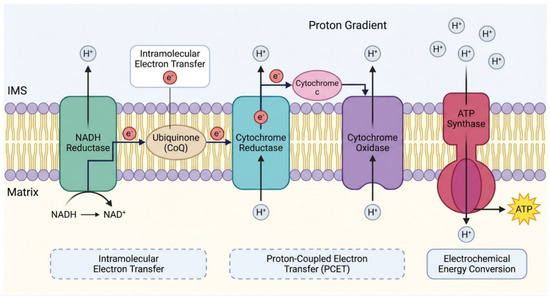
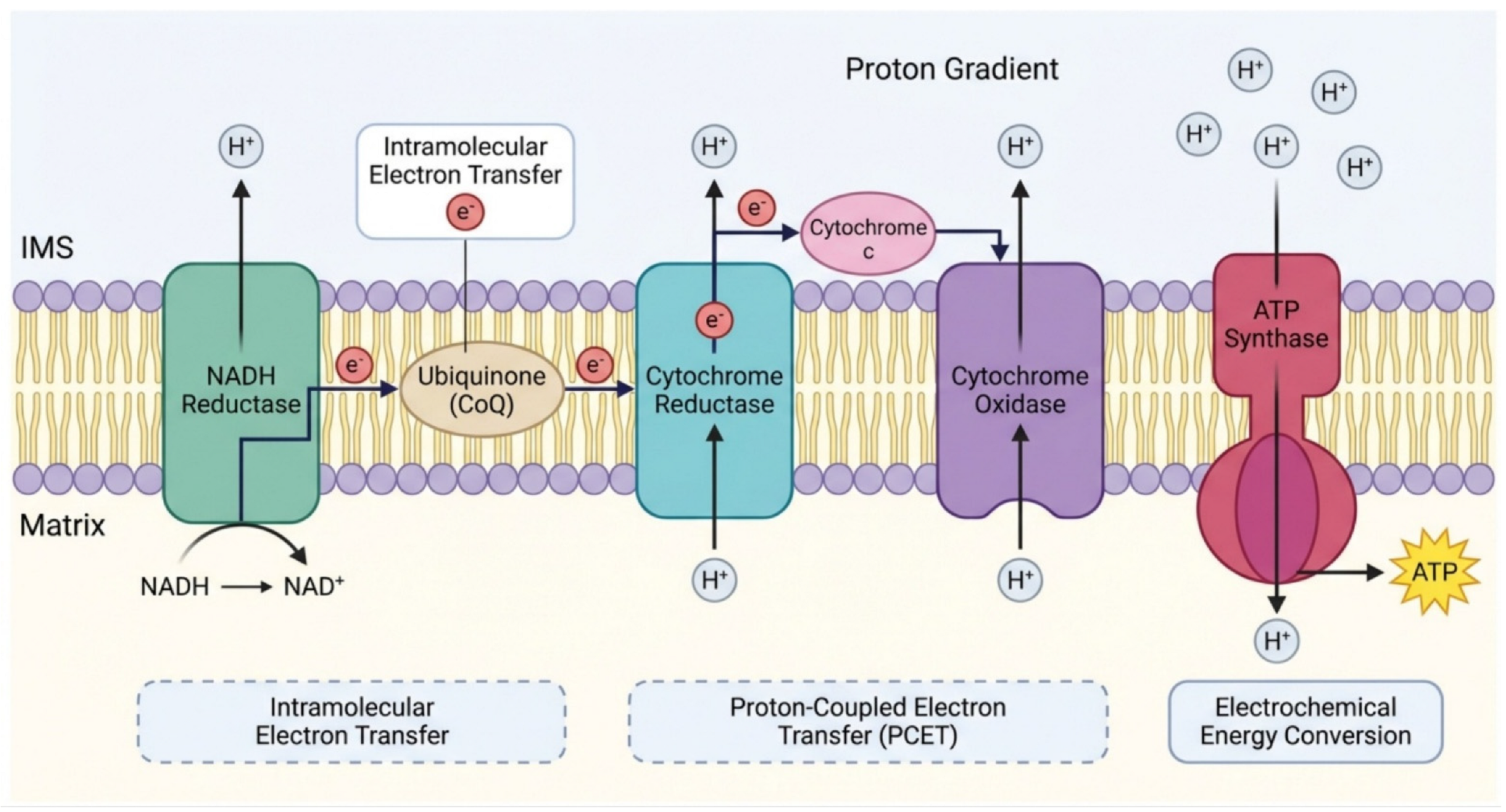
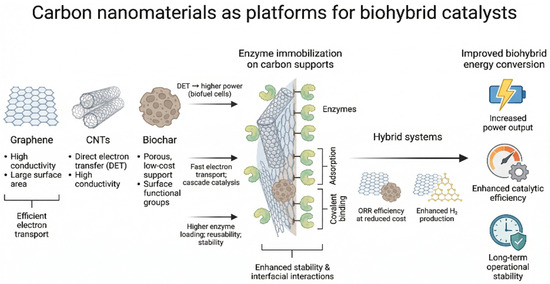
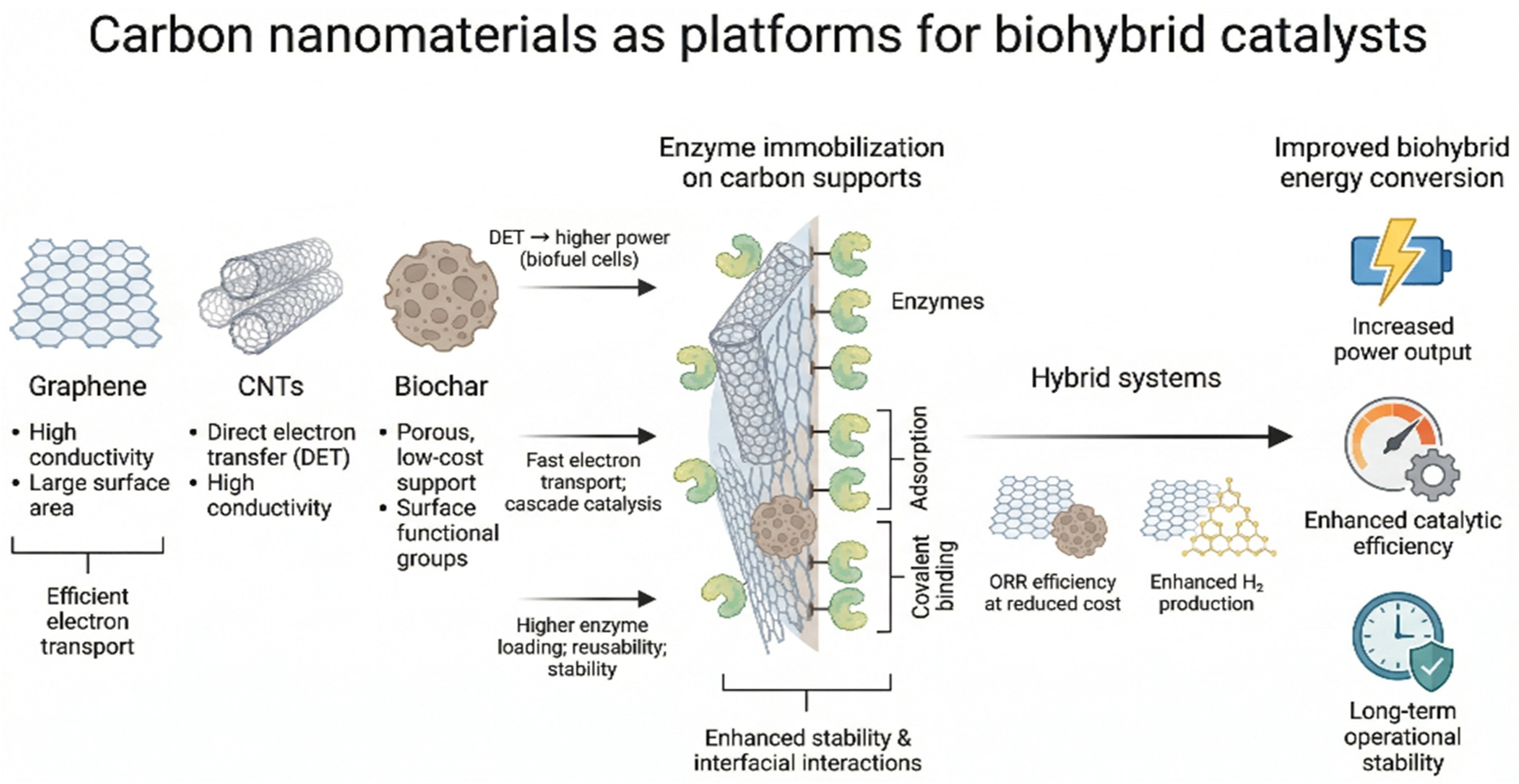
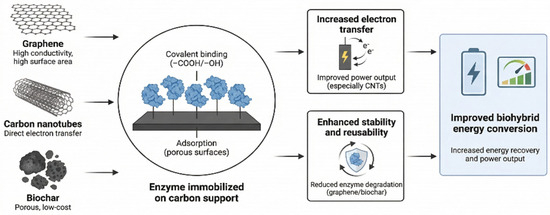
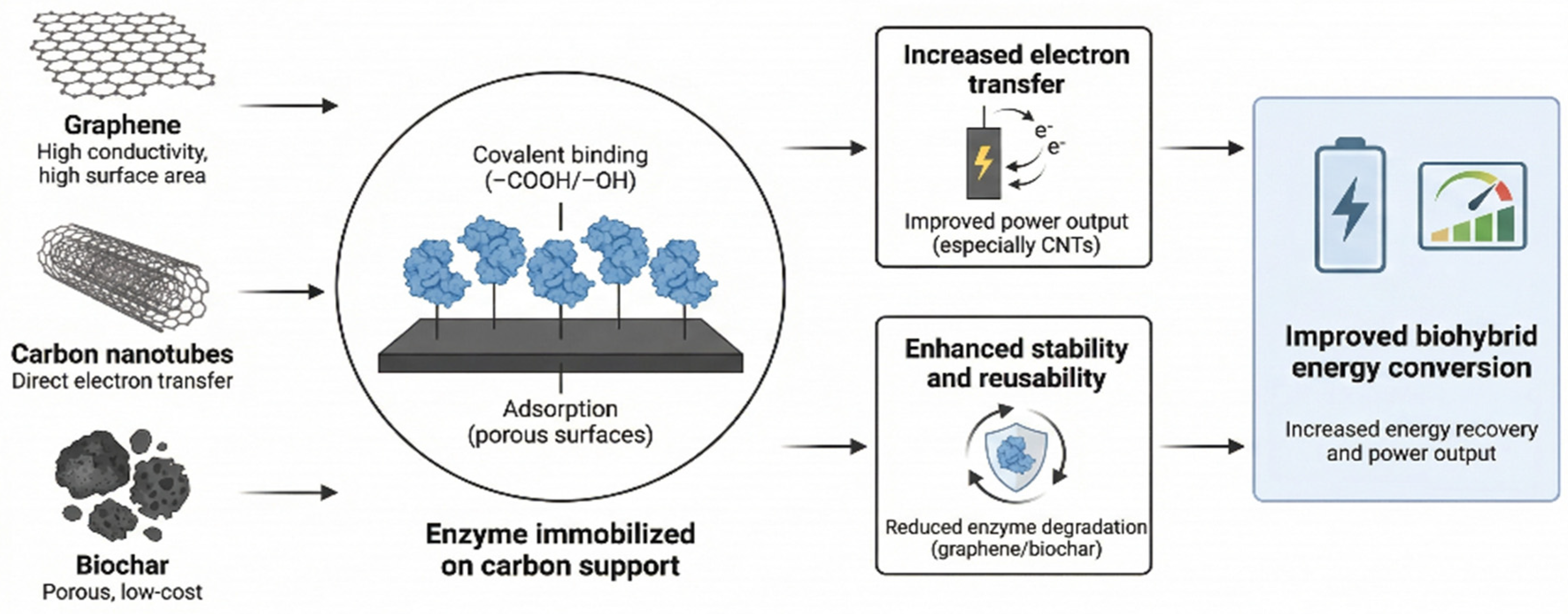
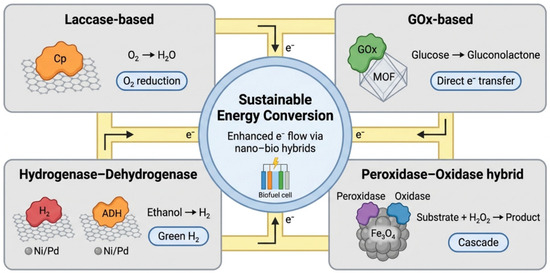
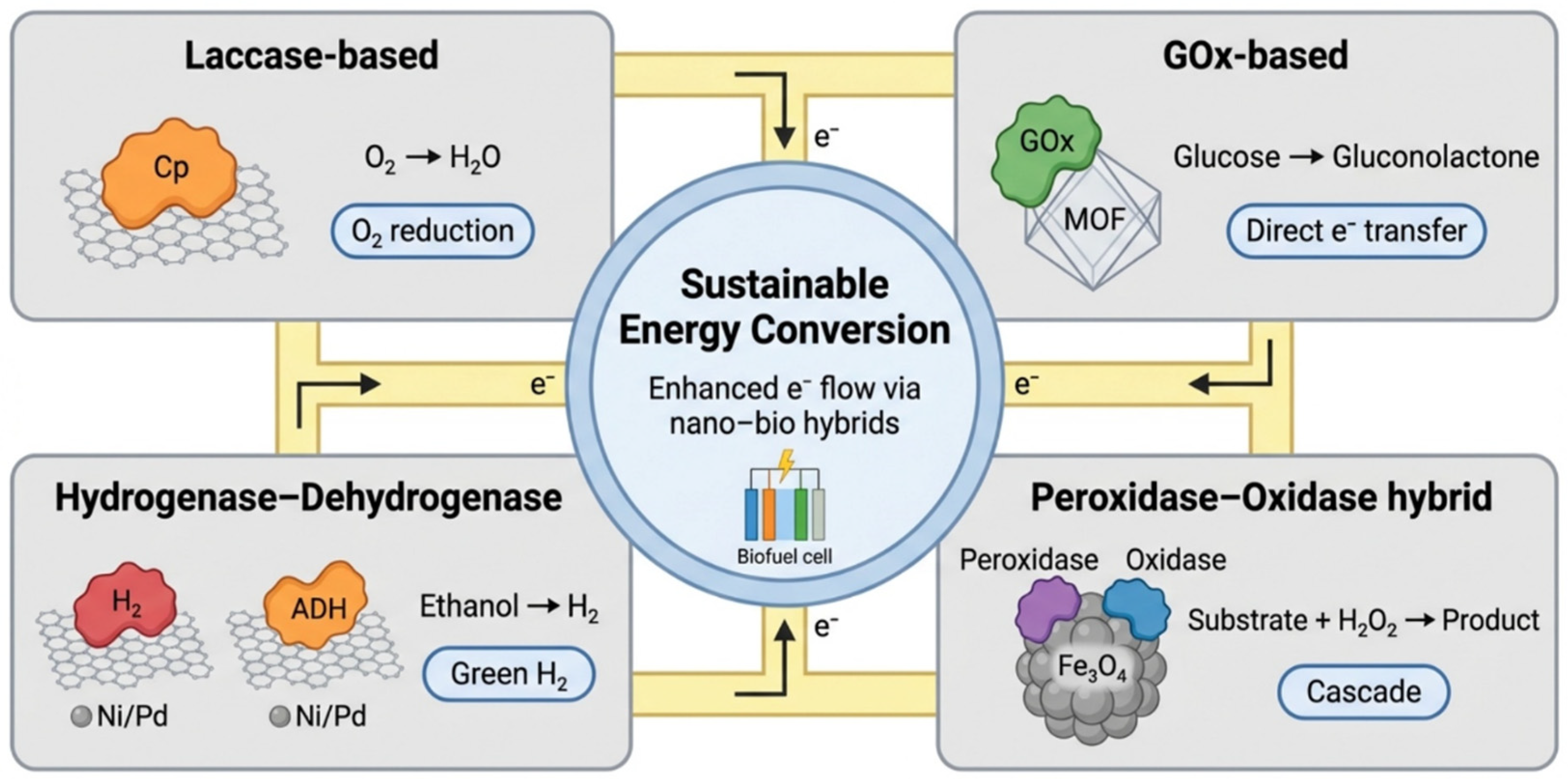
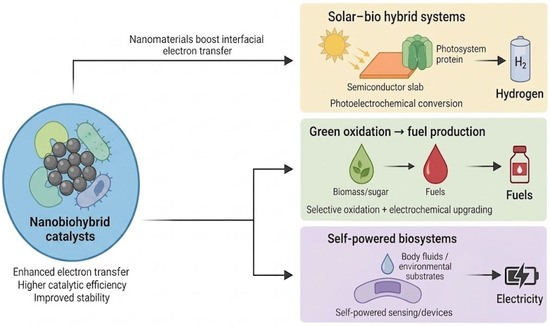
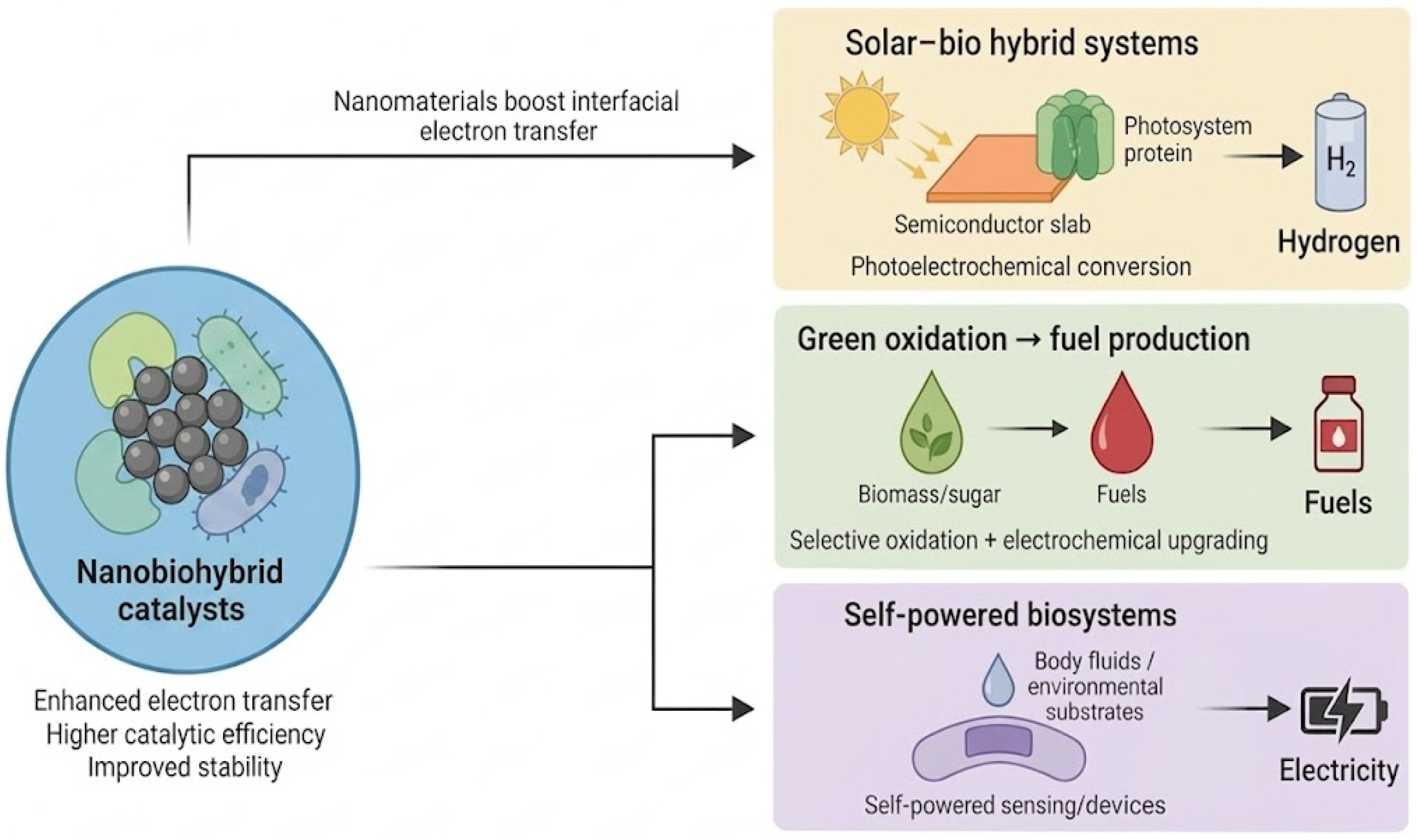

Disclaimer/Publisher’s Note: The statements, opinions and data contained in all publications are solely those of the individual author(s) and contributor(s) and not of MDPI and/or the editor(s). MDPI and/or the editor(s) disclaim responsibility for any injury to people or property resulting from any ideas, methods, instructions or products referred to in the content. |
© 2026 by the authors. Licensee MDPI, Basel, Switzerland. This article is an open access article distributed under the terms and conditions of the Creative Commons Attribution (CC BY) license.