


Abstract
The rapid growth of polyethylene terephthalate (PET) waste and the limitations of conventional recycling methods for mixed waste streams emphasize the need for chemical recycling routes that deliver high-value monomers in a sustainable, resource-efficient manner. This work explores N-heterocyclic carbenes (NHCs) as organocatalysts for the glycolysis of PET with ethylene glycol to bis(hydroxyethyl)terephthalate (BHET), aiming for milder conditions and higher activity. A systematic catalyst screening links steric and electronic properties (percent buried volume, Tolman electronic parameter) of the NHCs to performance in the glycolysis process, resulting in a catalyst system with high PET conversion (up to 97%) and BHET yield (up to 65%). Mechanistic investigations (experimental and computational) support an anionic activation pathway for glycolysis. To lower the reaction temperature, selective cosolvent systems were explored, albeit with some loss of catalytic activity. Cooperative catalysis combining NHCs with Lewis acids enhances activity, leading to a high conversion (up to 90%) while maintaining lower temperatures than state-of-the-art glycolysis methods. The process was successfully transferred to post-consumer waste streams to validate the practicality.
1. Introduction
1.1. PET Depolymerization
Plastics have revolutionized the world of consumer goods. Their outstanding properties allow us to improve performance and/or reduce the costs of materials in almost all sectors of industrial production. Therefore, plastic production has grown heavily throughout the last 70 years and was calculated at 400.3 million tons in 2022 [1]. Polyethylene terephthalate (PET) is one of the most produced plastics worldwide, with an annual production of over 70 million tons per year. The main applications of PET are packaging materials and textiles [2]. Both products, especially packaging materials, often have short lifetimes. This leads to an accumulation of PET waste [3]. Solely in the EU, five million tons of PET from packaging materials were disposed of in 2022. Only about two million tons have been recycled [4]. The transformation to a circular economy remains one of the main challenges [5,6,7]. Currently, primary and secondary recycling technologies are used [8], but they suffer from deterioration of their mechanical properties [9]. Therefore, innovative recycling technologies are required to enable the material recycling of heterogeneous post-consumer waste streams.
Chemical recycling can be a complementary technique. It depolymerizes the plastic waste into intermediates that can either be used to synthesize the same plastic with virgin-like material properties (closed-loop recycling) or to convert them into other materials (open-loop recycling) [8]. Different chemical recycling technologies are available for PET [10]. The present work focuses on the glycolysis of PET. This process uses ethylene glycol as a nucleophile to cleave the ester bond of PET and convert it to bis(hydroxyethyl)terephthalate (BHET) as its constituent monomer [11]. This is a robust and simple process. It benefits from a simple purification of the monomer BHET, which, in comparison to other depolymerization technologies, can be directly submitted to a polycondensation reaction to form recycled PET [12,13].
However, the glycolysis of PET still suffers from a high energy consumption [13]. Consequently, catalysts such as metal salts, notably metal acetates, are used. Zinc acetate is regarded as the state-of-the-art catalyst with a PET conversion of 66% within 3 h [14]. A key limitation for these catalysts is the solubility of the metal salts [15]. In addition, metal salts are often difficult to remove from the product and can hinder the repolymerization step by interacting with the polymerization catalysts [14,16]. Therefore, organocatalysts have been investigated as an alternative. In particular, Lewis bases like Triazabicyclodecene (TBD) [17] or Diazabicycloundecene (DBU) [18] may be employed for a nucleophilic activation of ethylene glycol [19,20]. Organocatalysts exhibit high selectivity and simple accessibility. Holbrey et al. observed complete PET conversion with TBD as a catalyst [17]. However, homogeneous organocatalysts often degrade at elevated temperatures and are therefore difficult to recycle after glycolysis [21,22]. Heterogeneous catalysts, on the other hand, can be more easily recovered. Various interesting examples for heterogeneous catalysts can be found in the literature, like zeolites [23], metal-doped zeolites [24], metal organic frameworks [25], or nanoparticles [26], all leading to excellent PET conversion. Unfortunately, these catalysts often require high catalyst loadings [24], high nucleophile loadings [25,26], high reaction temperatures and pressure, or long reaction times [23]. Therefore, immobilization of a stable organocatalyst on a heterogeneous catalyst is of great interest for ongoing research [10,27].
1.2. N-Heterocyclic Carbenes and Their Properties
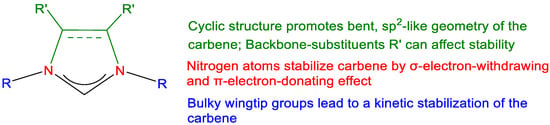
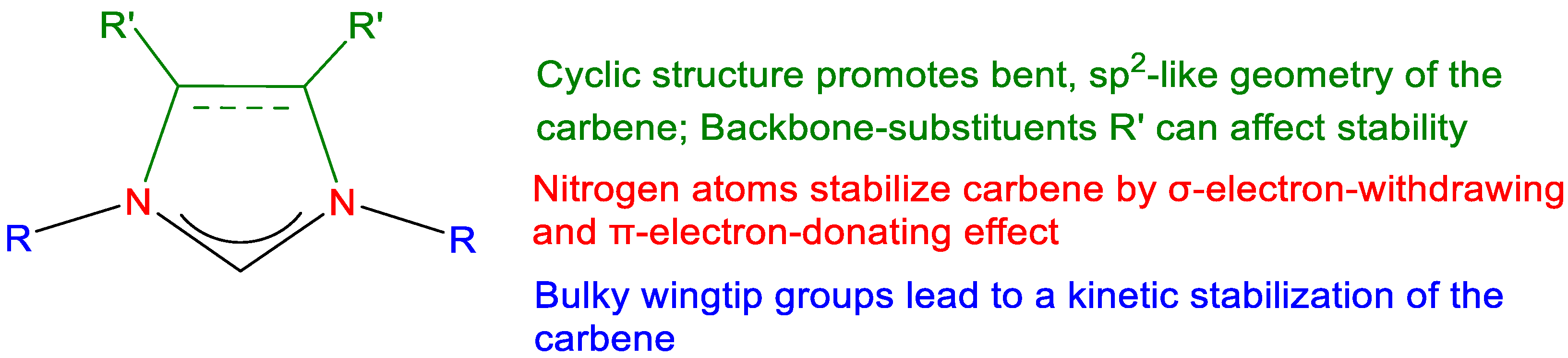
N-heterocyclic carbenes (NHCs) are a special class of carbenes with enhanced stability compared to other representatives [28]. The general structure of an NHC is shown in Figure 1. The electronic and steric properties of NHCs can be fine-tuned by varying the geometry and substituents of the ring, which makes NHCs an interesting class of molecules for organic synthesis and catalysis [28]. The electronic properties are mainly influenced by ring structure, the number and type of heteroatoms, and the backbone substituents. They can be quantified using the Tolman electronic parameter (TEP). Low TEP values correspond to a strong electron-donating effect of the NHC [29].
Figure 1.
General structure of an N-heterocyclic carbene (NHC), highlighting the unique properties leading to enhanced stability [28].
The steric properties of NHCs are mainly influenced by the ring size and geometry, as well as the nitrogen substituents. The steric properties can be quantified using the percent buried volume (%Vbur) that refers to the percentage of a sphere occupied by the ligand of interest upon coordination to a metal (e.g., gold) at the center of the sphere (radius of the sphere of 3.5 Å; fixed metal–carbene bond length of 2 Å). Higher %Vbur values correspond to higher steric demand of the NHC [30].
1.3. NHCs as Organocatalysts
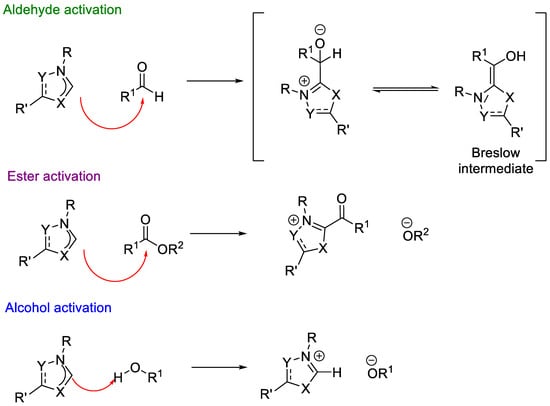
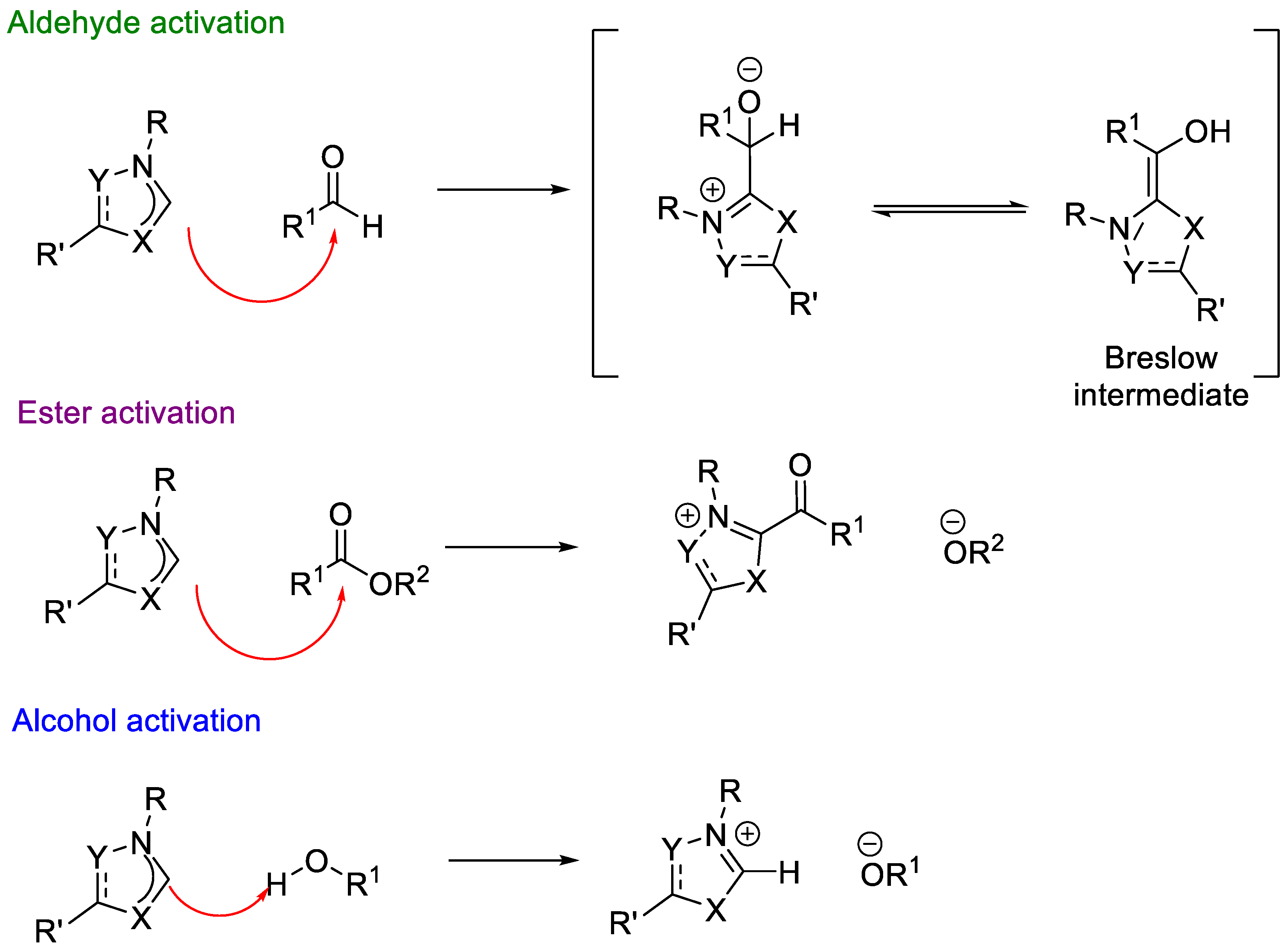
Due to their interesting properties and good modifiability, NHCs find wide application in catalysis as organocatalysts or as ligands for transition metals or p-block elements. In organocatalysis, their Lewis-basic and Brønsted-basic character is important [31,32]. Some of the general activation mechanisms are shown in Figure 2. They can be transferred towards various organic reactions and polymerization processes [33,34].
Figure 2.
Different activation mechanisms using NHCs as catalysts [33].
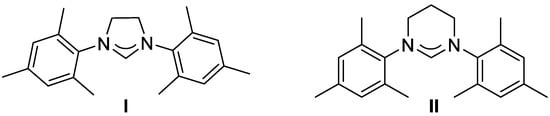
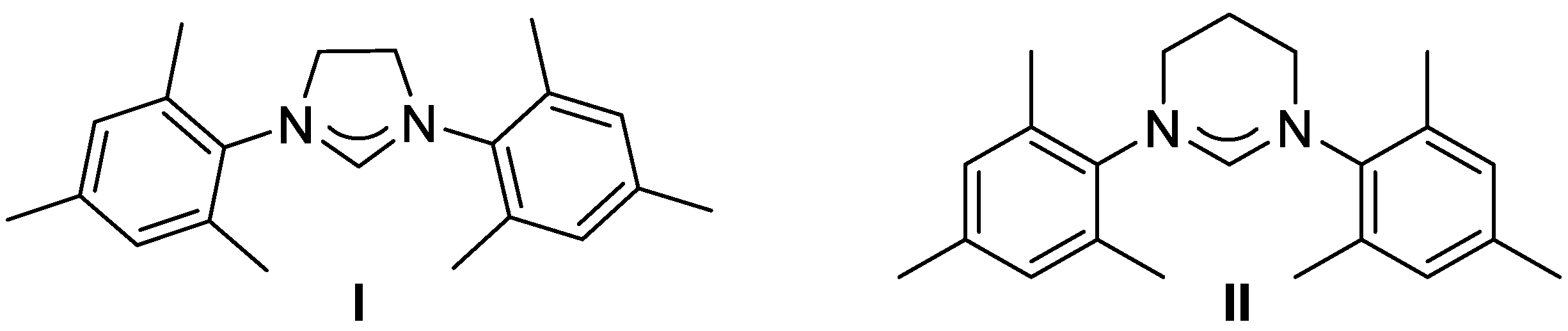
One example is the ROP of lactones in the presence of NHC-catalysts and an alcohol initiator reported by Naumann et al. [35,36]. They found that the combination of NHCs with metal halides, e.g., MgCl2 and ZnCl2, as Lewis acids in a cooperative catalysis can increase reactivity. For the polymerization of ε-caprolactone, they achieved a conversion of 100% and molecular weights up to 16,000 g/mol using NHC-catalysts I and II (Figure 3).
Figure 3.
NHC-catalysts investigated by Naumann et al. for the ROP of ε-caprolactone [35].
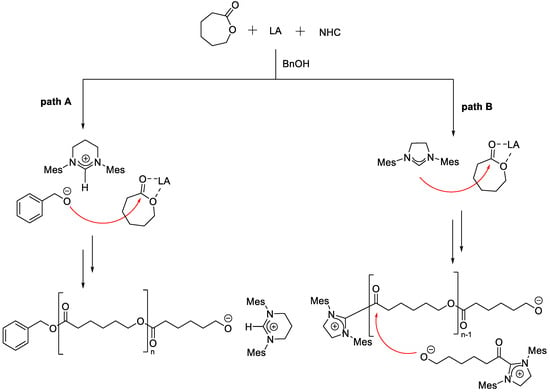
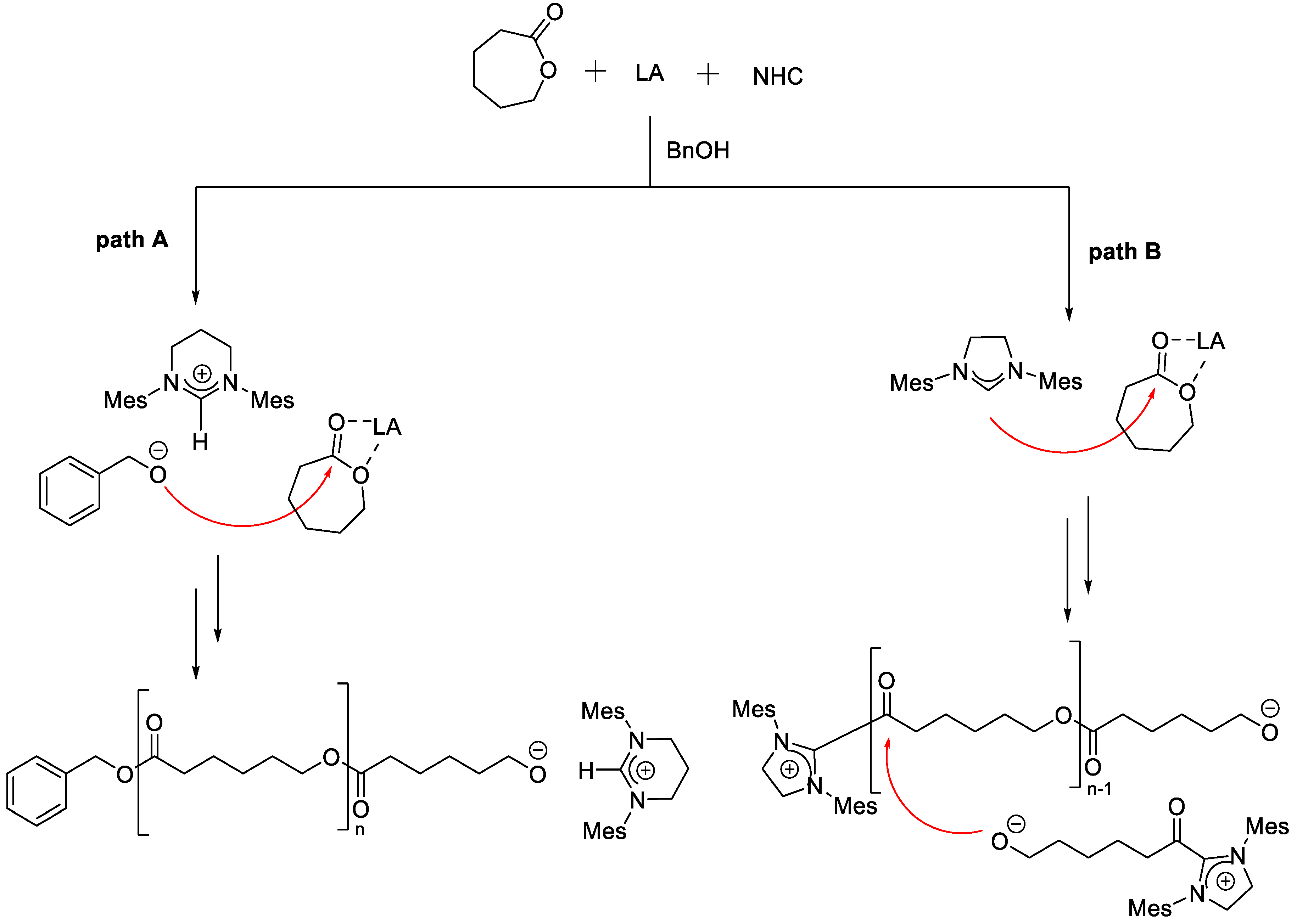
The properties of the NHC determine the activation mechanism. NHCs with strong Brønsted basicity tend to deprotonate the alcohol initiator (e.g., benzyl alcohol). The formed alcoholate undergoes a nucleophilic attack at the ester bond of the caprolactone (Figure 4, path A, anionic pathway). On the other hand, an NHC with strong Lewis basicity can act as a nucleophile itself and attack the ester bond of the caprolactone, resulting in the formation of an alkoxide that can later substitute the NHC and regenerate the catalyst (Figure 4, path B, zwitterionic pathway). Additionally, Lewis acids (LA) can activate the ester by coordinating to the oxygen atoms in both cases [33,36,37].
Figure 4.
Possible reaction pathways for NHC-catalyzed ROP of ε-caprolactone (LA refers to a generic Lewis acid). The predominant pathway is determined by the properties of the NHC [35,36,37].
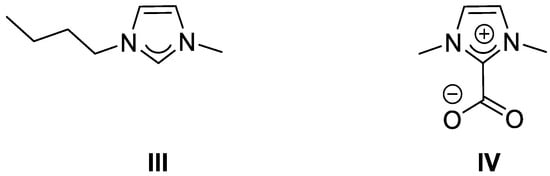
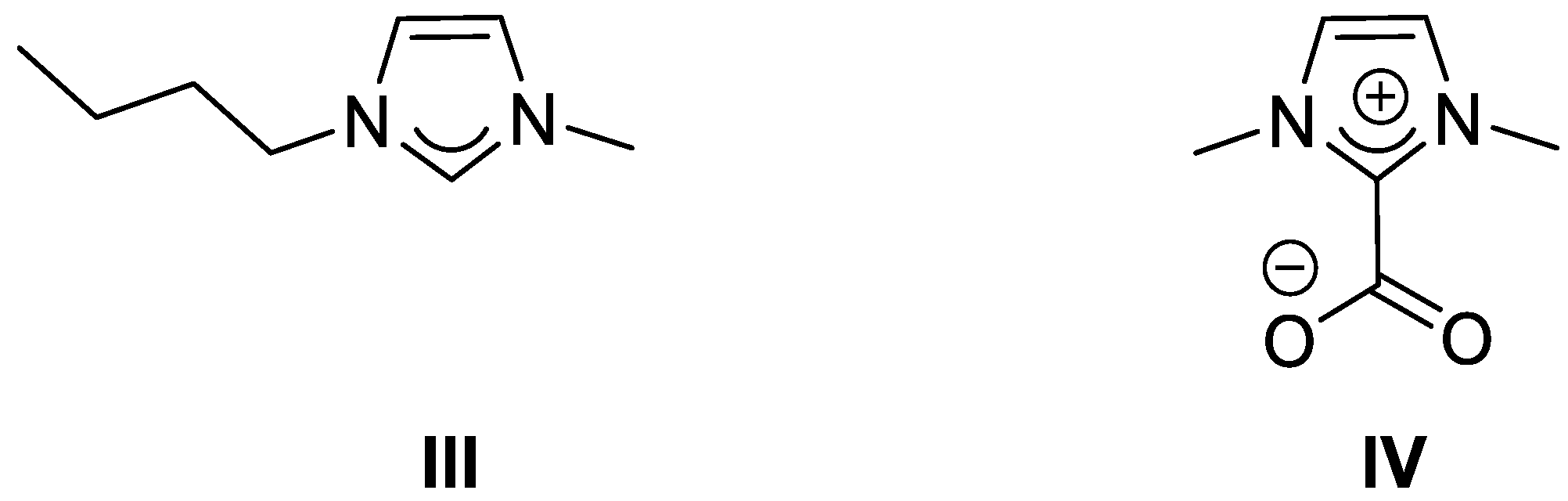
The glycolysis of PET is a similar transesterification reaction. Hedrick et al. investigated NHC III in the glycolysis of PET at a reaction time of one hour by using tetrahydrofuran as a cosolvent [38]. Holbrey et al. used an imidazolium carboxylate IV for the depolymerization reaction. They found complete conversion and yields up to 60% BHET for a reaction time of one hour at 185 °C [39] (Figure 5).
Figure 5.
NHC-catalysts investigated for the glycolysis of PET [38,39].
In this work, a systematic approach for the investigation of NHC-catalysts in the glycolysis of PET is presented. Different NHCs with varying electronic and steric properties were used as catalysts in the glycolysis of PET with the aim of deriving the ideal properties for this type of reaction.
2. Results and Discussion
2.1. Screening of NHC-Catalysts
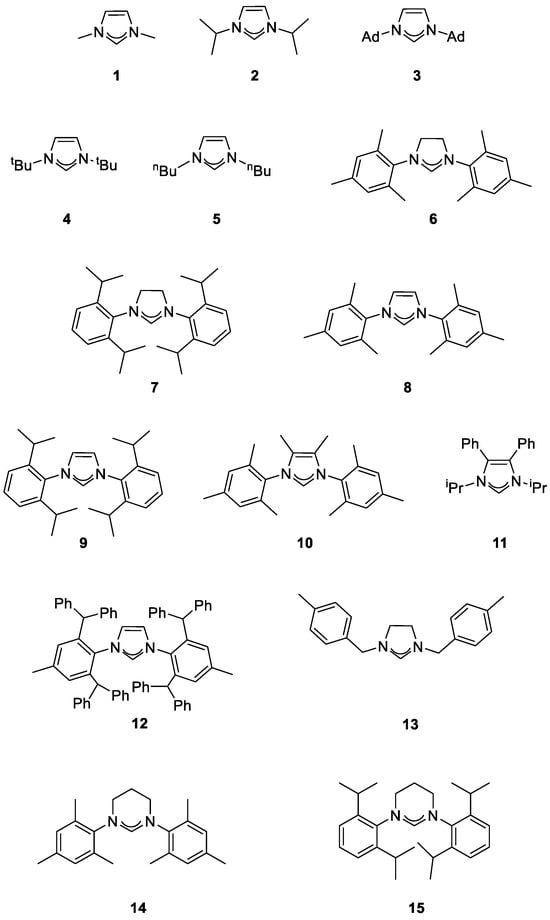
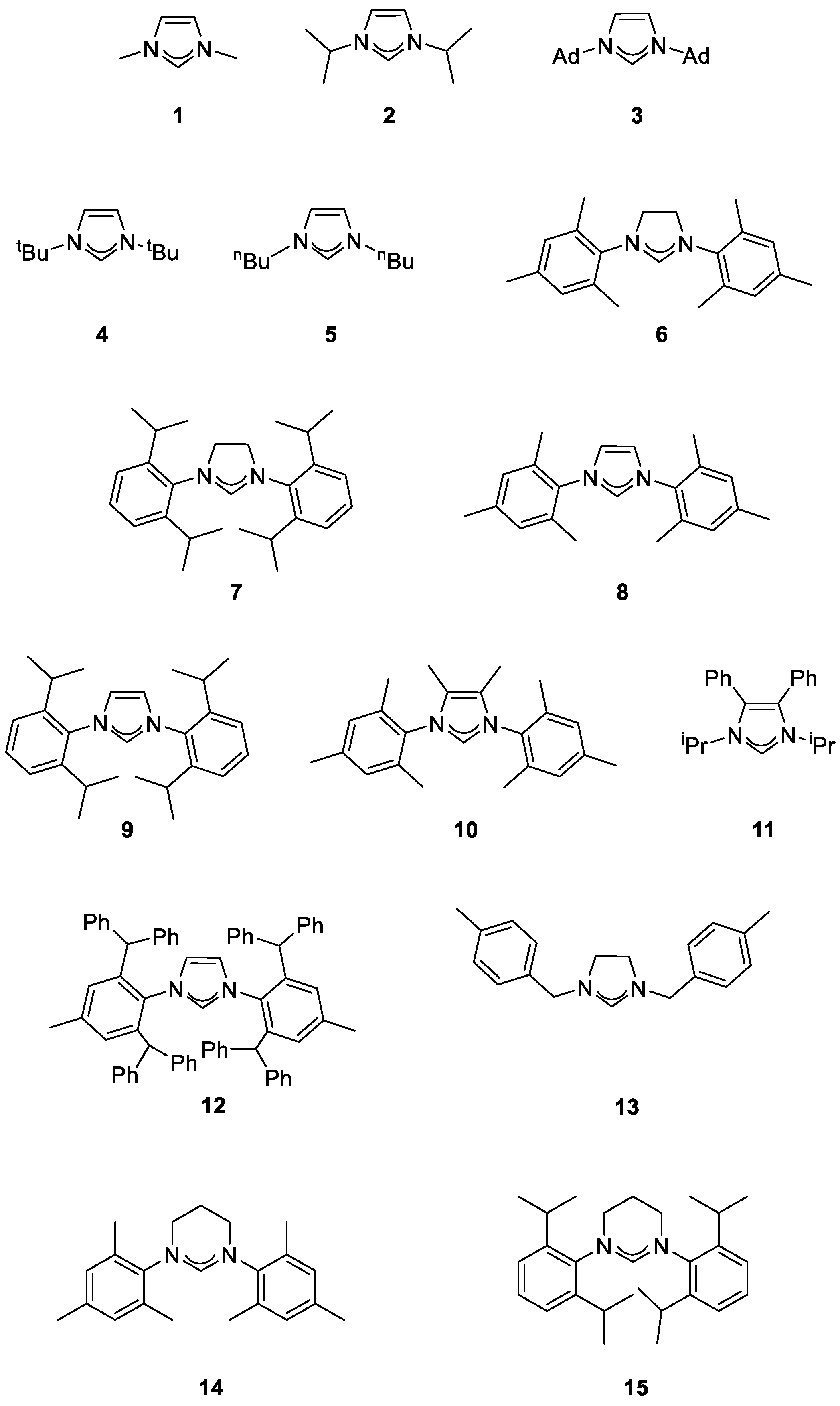
Electronic and steric properties of NHCs can have a significant effect on their catalytic activity. Therefore, a representative selection of NHC precursors (NHC halide salts, NHC-HX) with different properties (Table 1) was synthesized (synthetic procedure in the Supplementary Information, Section S1 and Figure 6 [35,40,41,42,43,44,45,46,47,48,49,50,51,52,53,54,55,56,57]). The corresponding NHCs (Figure 7) were activated in situ by first heating the NHC precursor and potassium tert-butoxide in ethylene glycol to the reaction temperature, followed by the addition of PET flakes at the reaction temperature. After 2 h, the unreacted PET was isolated by filtration and weighed to determine the conversion of PET. BHET was isolated and purified by crystallization from water to determine the yield of the reaction. Reaction conditions for the glycolysis of PET were selected based on a previous publication [58].
Figure 6.
Reaction equation for the glycolysis of PET to form BHET [58].
Figure 7.
Selected NHCs for the catalyst screening in the glycolysis of PET.
The results for the different catalysts are shown in Table 1. Two separate trials were conducted for each catalyst, and the average values of these two trials are presented. NHCs 6, 7, and 10 showed the highest conversion of PET and yield of BHET. Graphic representations (Figure 8, Figure 9 and Figure 10) were generated to identify relevant trends between the electronic and steric properties of the NHC and the catalytic performance. The results obtained for catalyst NHC 4 did not fit the overall trend and were therefore excluded from the trend lines in Figure 8 and Figure 9 and from the 3D plot in Figure 10.
Table 1.
Steric [30] and electronic [29] properties of the selected NHCs and experimental results for the conversion and yield in the catalytic glycolysis of PET. Potassium tert-butoxide (6 mol%) was used for an in situ activation of the NHC salt (5 mol%). The percent buried volume values were derived from the sphere (radius = 3.5 Å) of a gold–NHC complex ([AuCl(NHC)]) with a fixed metal–NHC bond length of 2.00 Å.
Figure 8.
Correlation between steric properties of NHC catalysts and conversion in the glycolysis of PET. NHC 4 was excluded from the trend line (empty rhombus).
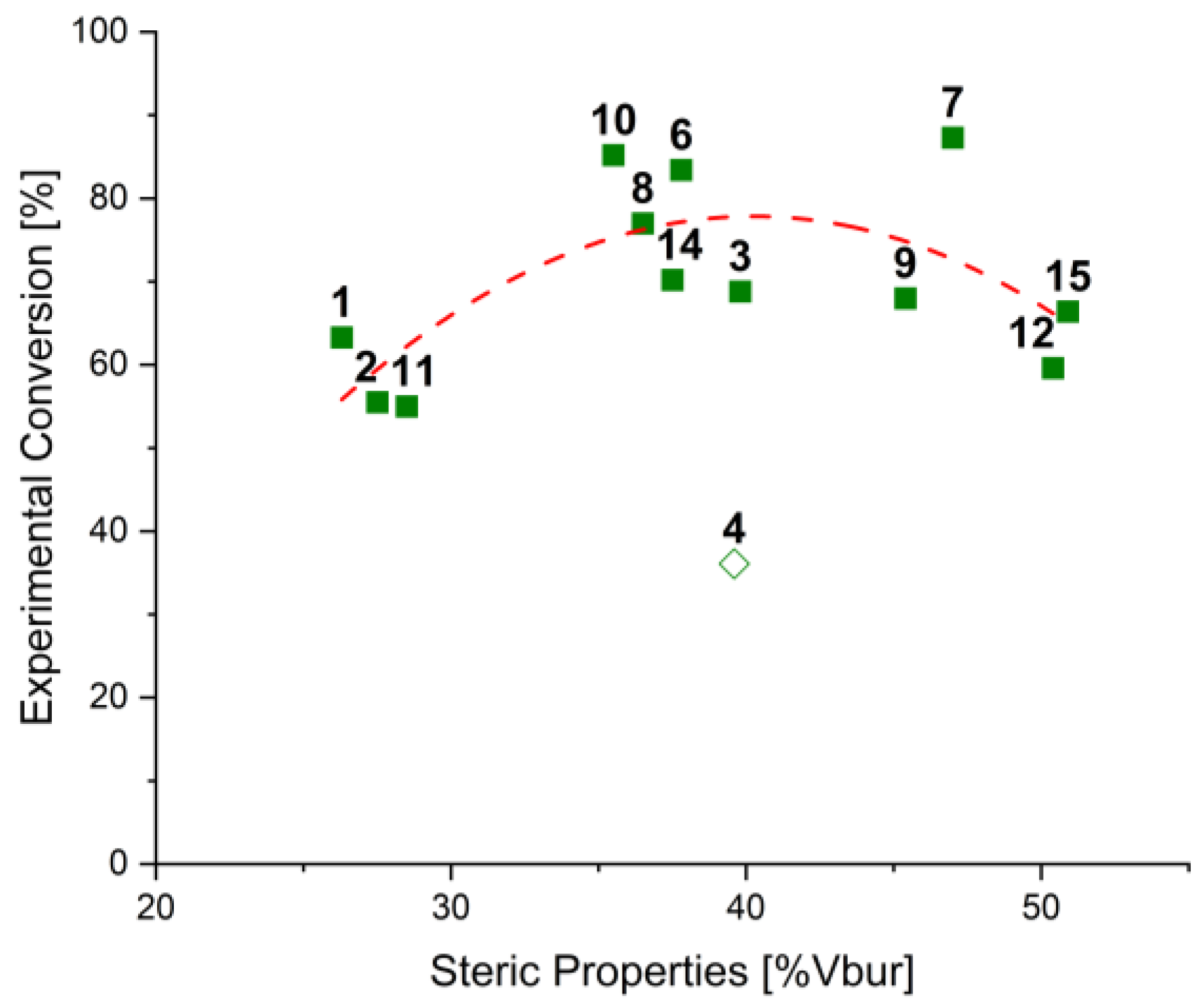
Figure 8 shows that for the steric properties of the NHC catalysts, there appears to be an optimum at around 40%Vbur, while both very low and very high steric demand are not desirable. It is assumed that a certain steric demand is necessary to prevent a direct nucleophilic attack of the NHC at the carbonyl carbon of PET (which might happen for NHC 1, 2, and 11). This would support the idea of an anionic reaction mechanism (path A in Figure 4) via NHC-catalyzed activation of ethylene glycol. On the other hand, a very high steric demand (NHC 12 and 15) might prevent the activation of ethylene glycol or the nucleophilic attack of the activated alcoholate (NHCH+ RO−) and therefore reduce the reactivity.
Figure 9.
Correlation between electronic properties of NHC catalysts and conversion in the glycolysis of PET. NHC 4 was excluded from the trend line (empty rhombus).
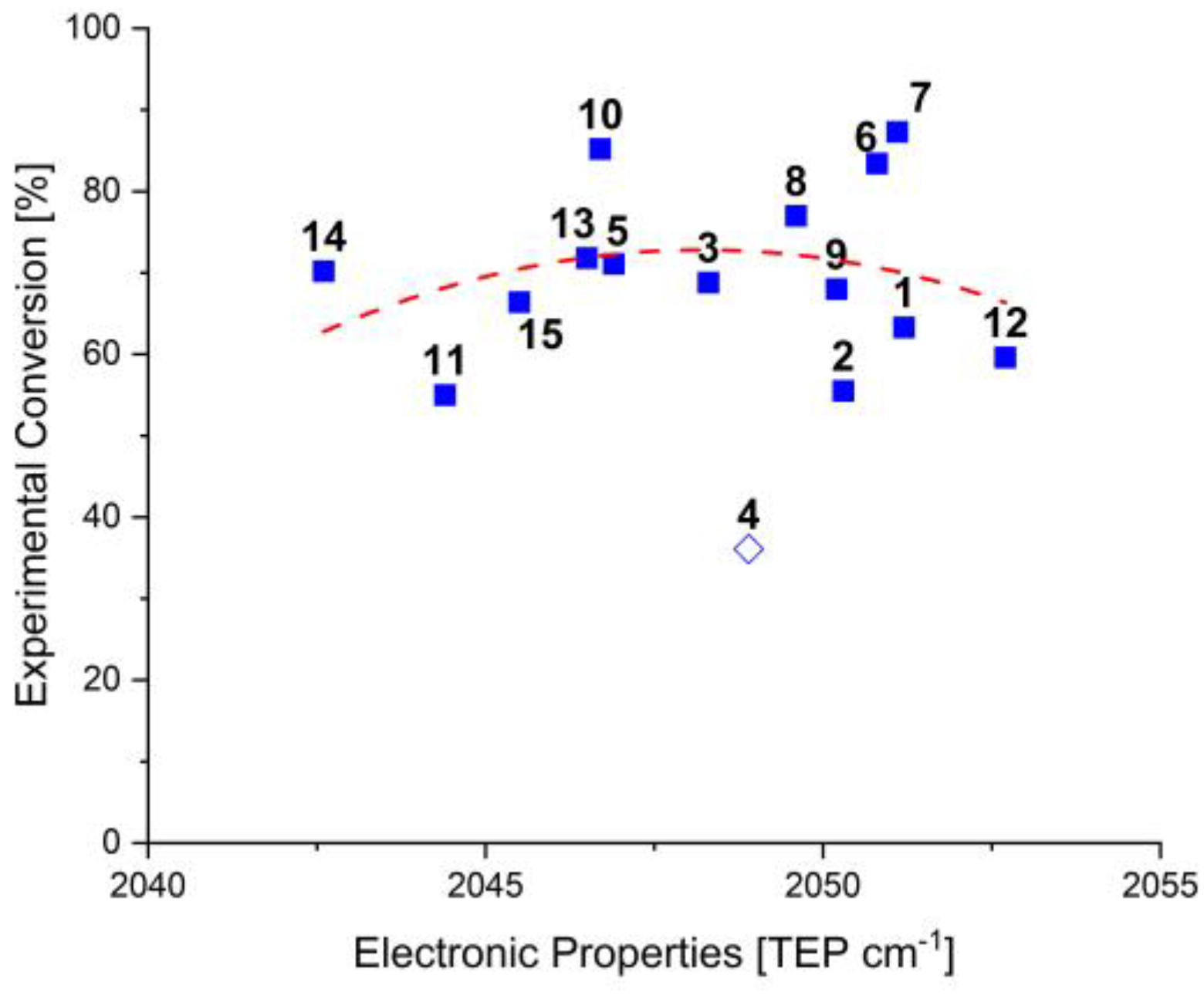
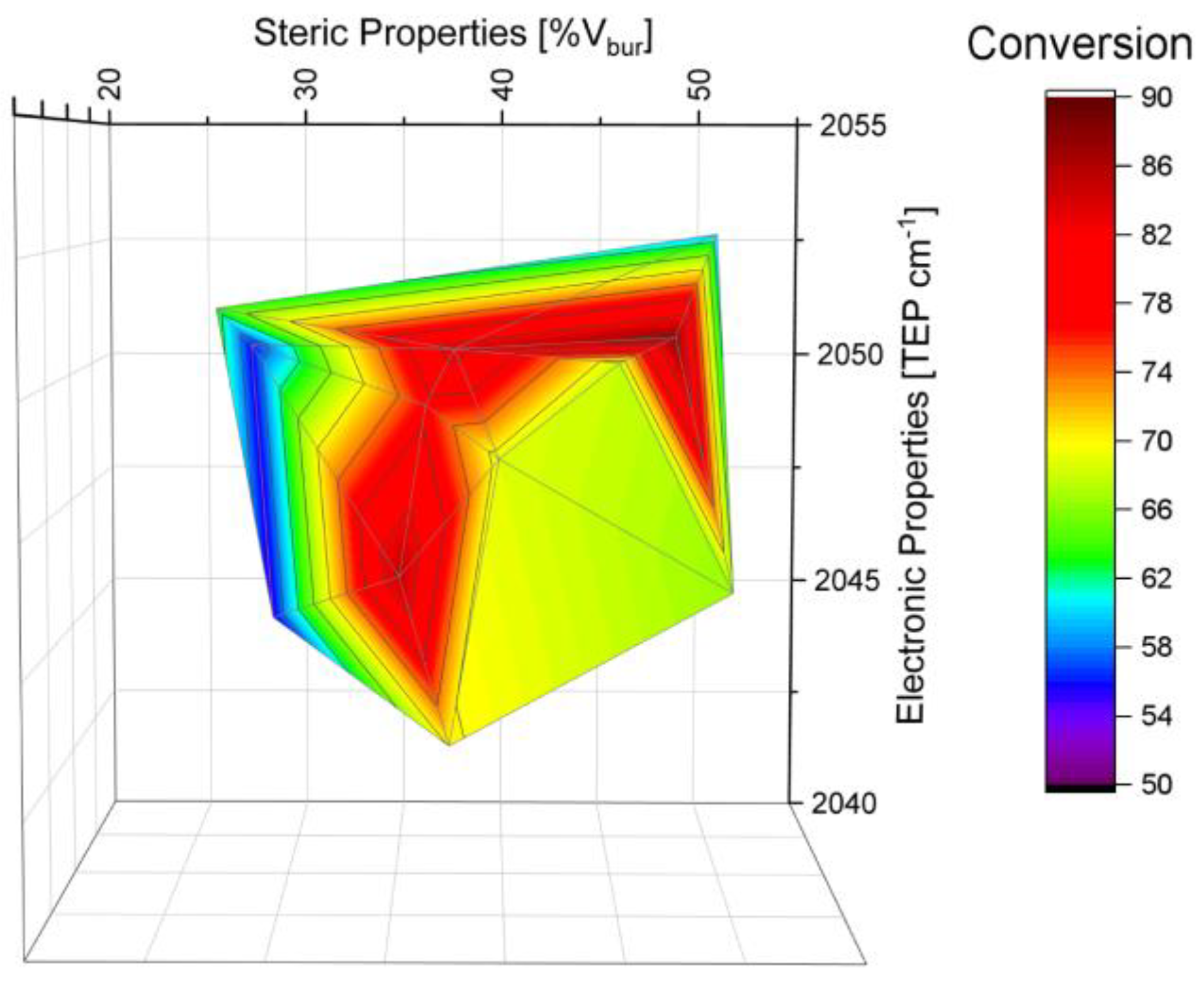
No relevant trend is observable from Figure 9. A low TEP value corresponds to a high basicity and should therefore enhance the reactivity of the NHC via anionic activation [29]. Figure 9 shows that this is only partly true. Other effects, like steric properties, can influence this anionic activation [31,59]. In addition, other reaction pathways, like nucleophilic activation (Figure 4), need to be considered and might compete with the anionic activation. To gain a better overview, a 3D plot of the electronic and steric properties correlated to the experimental results was generated (Figure 10). A high conversion was achieved for either high steric demand (~50%Vbur) and low electron density at the carbene carbon or for moderate steric demand (~35%Vbur) and moderate to high electron density at the carbene carbon.
Figure 10.
Three-dimensional graph (generated using Origin®2023b) of the correlation between electronic and steric properties of NHC catalysts and conversion in the glycolysis of PET. NHC 4 was excluded from the graph.
2.2. Mechanistic Studies
According to the literature, NHC-catalyzed transesterification using an alcoholic initiator can proceed via two different reaction mechanisms: an anionic pathway and a zwitterionic pathway (Figure 4) [33,37,60]. We therefore investigated the mechanism of the NHC-catalyzed depolymerization of PET in more detail using experimental and computational methods.
2.2.1. Experimental Investigations
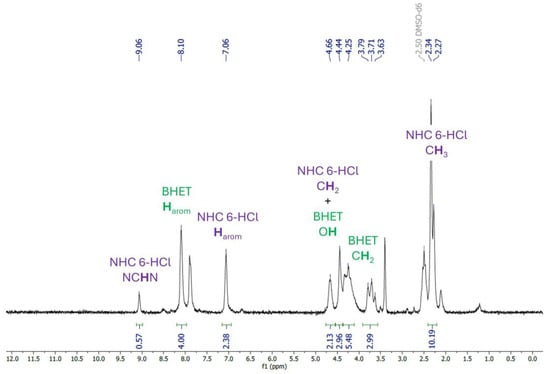
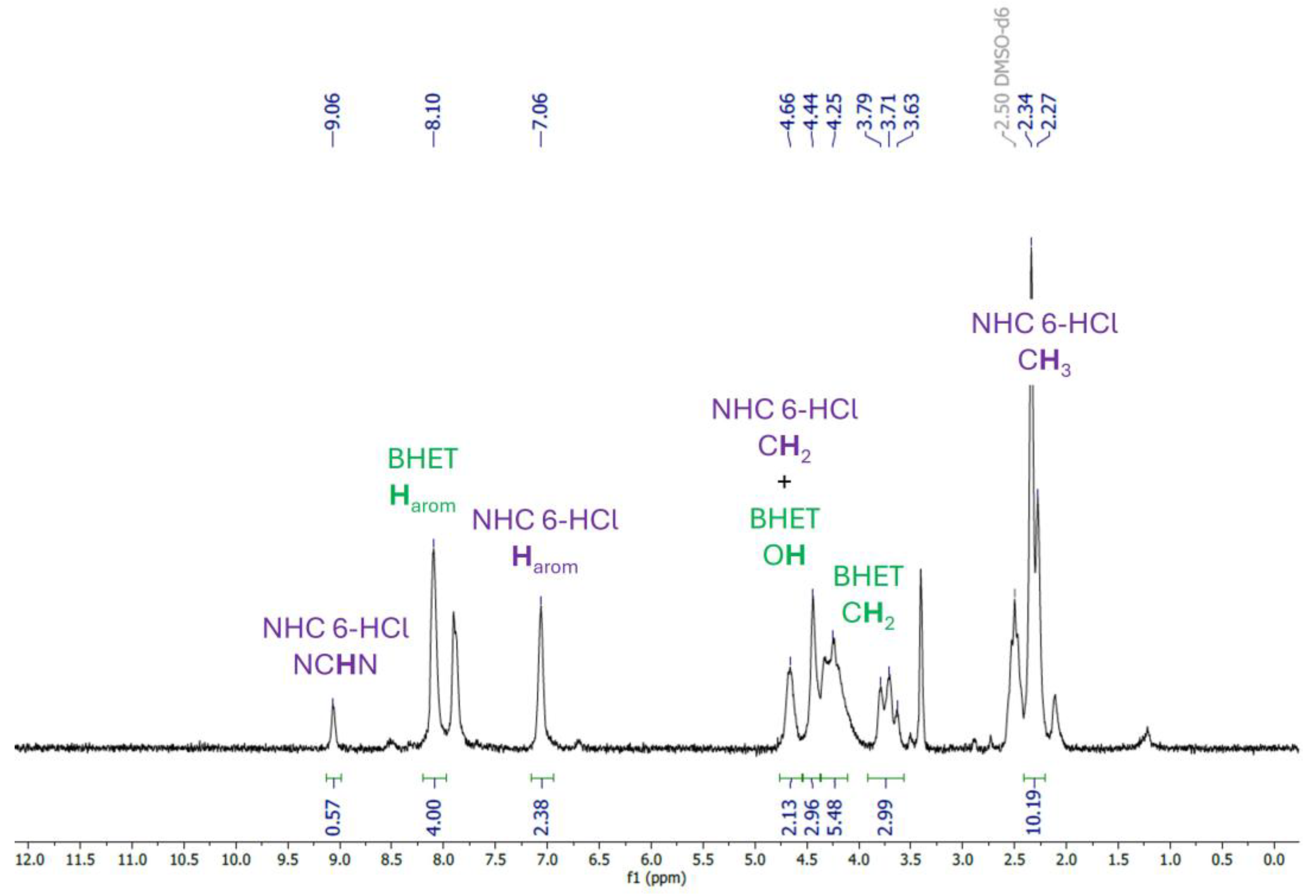
In a first experiment with NHC 6 as a catalyst, 1H NMR spectra were recorded at different stages of the glycolysis reaction (t = 0 min, 30 min, 60 min, 120 min) using 1,3,5-trimethoxybenzene as an internal standard for quantification (see Supplementary Information, Figure S1). Characteristic signals of BHET and NHC 6 can be identified. Throughout the reaction, the concentration of BHET increased, while the concentration of NHC 6 remained constant. The peaks for NHC 6 could also be observed in the residual solution after separation of the product. This leads to the assumption that no degradation of the NHC occurs during the reaction, and the catalyst should be recoverable after the reaction. Therefore, the residual solution was dried under reduced pressure and analyzed using 1H NMR (Figure 11), 1H-1H-COSY NMR spectroscopy (see Supplementary Information, Figure S3), and liquid chromatography mass spectrometry (LC-MS, see Supplementary Information, Figure S4). A mixture of BHET and NHC precursor 6-HCl with a ratio of approximately 2:1 was found.
Figure 11.
1H NMR spectrum (60 MHz, DMSO-d6) of the solid residue from the NHC-catalyzed glycolysis of PET after product separation. The peaks of residual product (BHET) are highlighted in green, the peaks of the recovered NHC salt 6-HCl in purple.
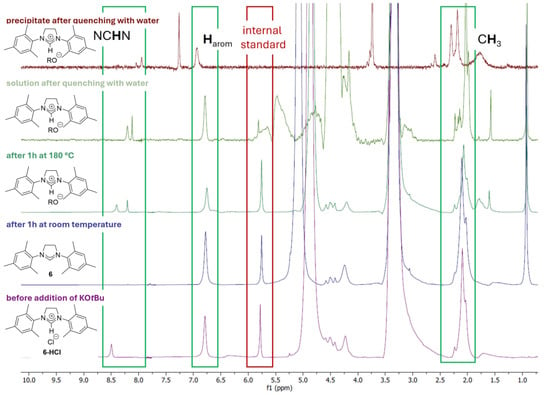
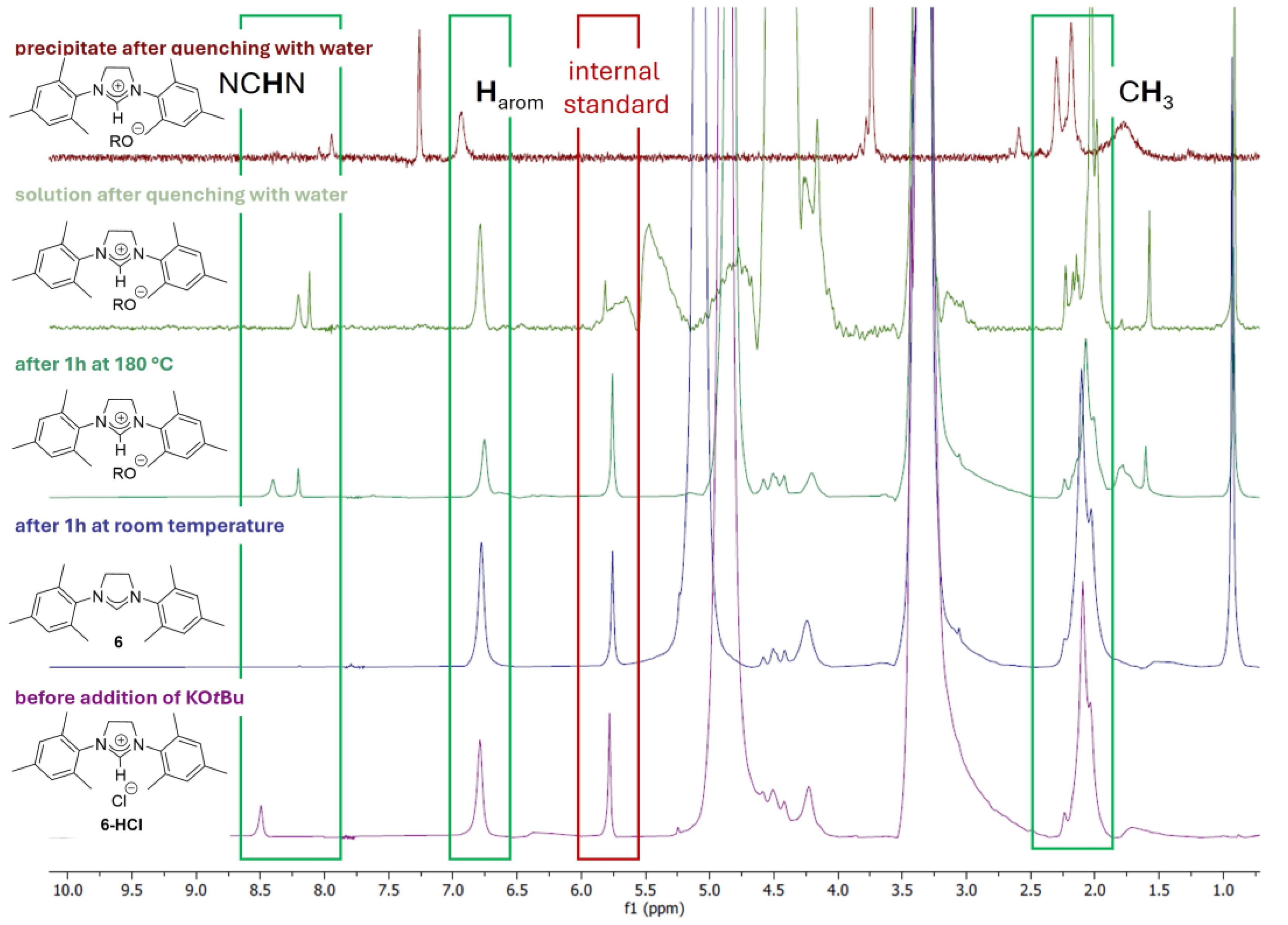
To determine the activation pathway, the interaction between the activated NHC catalyst and ethylene glycol was investigated by mixing NHC precursor 6-HCl, potassium tert-butoxide, and ethylene glycol in the same molar ratio as in the glycolysis itself (1:1.1:200). The mixture was analyzed by 1H NMR spectroscopy using an internal standard (1,3,5-trimethoxybenzene) after one hour at room temperature, after an additional hour at 180 °C, and after quenching with water (Figure 12). One hour after mixing, NHC 6 can be identified by the characteristic peaks for its aromatic protons (6.8 ppm) and its methyl groups (2.1 ppm) and by the missing peak of the azolium proton from the NHC precursor (8.5 ppm). Heating to 180 °C results in a proton transfer, visible by the azolium peak in the 1H NMR spectrum (8.5 ppm). Besides the protonated NHC salt 6-HOR (−OR represents the alcoholic counter anion), one other unidentified species can be observed. Both compounds can still be observed after quenching the reaction with water. The quenching step results in the precipitation of NHC salt 6-HCl or 6-HOR, which can be isolated by filtration (see 1H NMR at the top in Figure 12). No significant decomposition of NHC 6 can be observed throughout the process. This leads to the assumption that NHC 6 is stable for at least three hours without an inert atmosphere. However, a proton transfer occurs, most likely between ethylene glycol and the NHC 6, which is relevant for the mechanistic pathway.
Figure 12.
1H NMR spectra (60 MHz) for the investigation of the interactions between the NHC catalyst and ethylene glycol. The four spectra at the bottom are recorded in ethylene glycol without any deuterated solvent; the spectrum at the top is recorded in CDCl3.
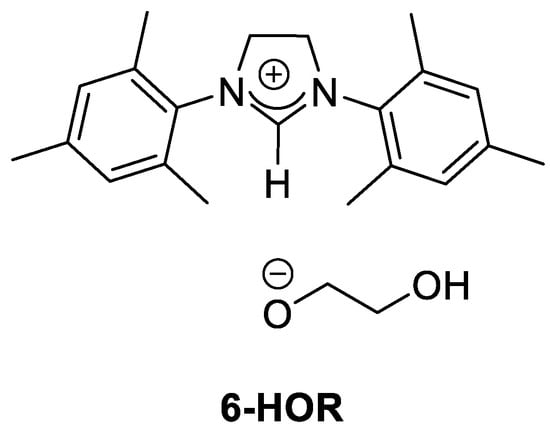
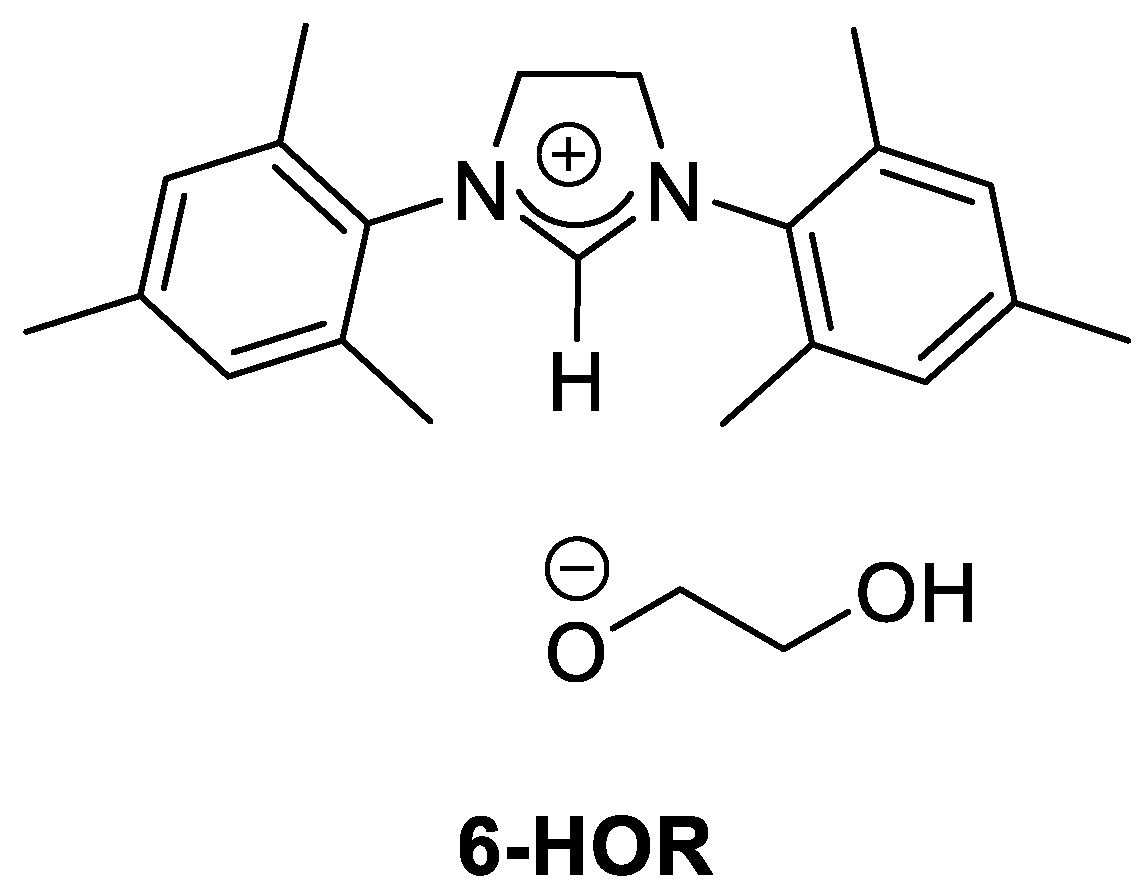
The observations for the interaction of the free carbene and ethylene glycol suggest the formation of intermediate 6-HOR (Figure 13). This ionic intermediate would strongly support the concept of an anionic reaction mechanism. Therefore, MALDI-MS was used to verify the formation of this intermediate in two different reaction setups. First, precursor 6-HCl, KOtBu, and ethylene glycol were mixed at the reaction temperature of 180 °C without the addition of PET. After one hour, 6-HOR can be observed as the major component in the mass spectrum at m/z 369.2544 (expected m/z 369.2537). In the second setup, PET was added to the solution of 6-HCl, KOtBu, and ethylene glycol at 180 °C. In the mass spectrum, 6-HOR can still be observed, but only to a very low extent. These measurements suggest that the free carbene 6 can deprotonate ethylene glycol to form the reactive intermediate 6-HOR. In the presence of PET, this intermediate reacts immediately and can only be observed to a small extent.
Figure 13.
Suspected reactive intermediate 6-HOR for the glycolysis reaction of PET.
2.2.2. Computational Investigations
In addition to the experiments in Section 2.2.1, computational investigations using the software ORCA version 6.1.0 were conducted. PET is a large molecule, and the calculation of the mechanism for glycolysis is therefore complicated and computationally intensive. Hence, the glycolysis of methyl benzoate in the presence of the catalyst NHC 6 was investigated as a model system (Figure 14).
Figure 14.
Catalyzed glycolysis of methyl benzoate used to model the glycolysis of PET in computational studies.
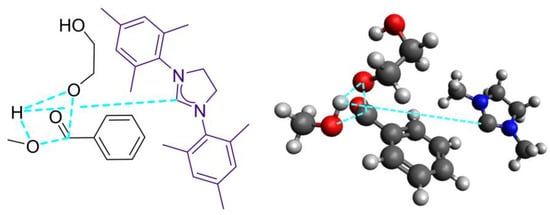
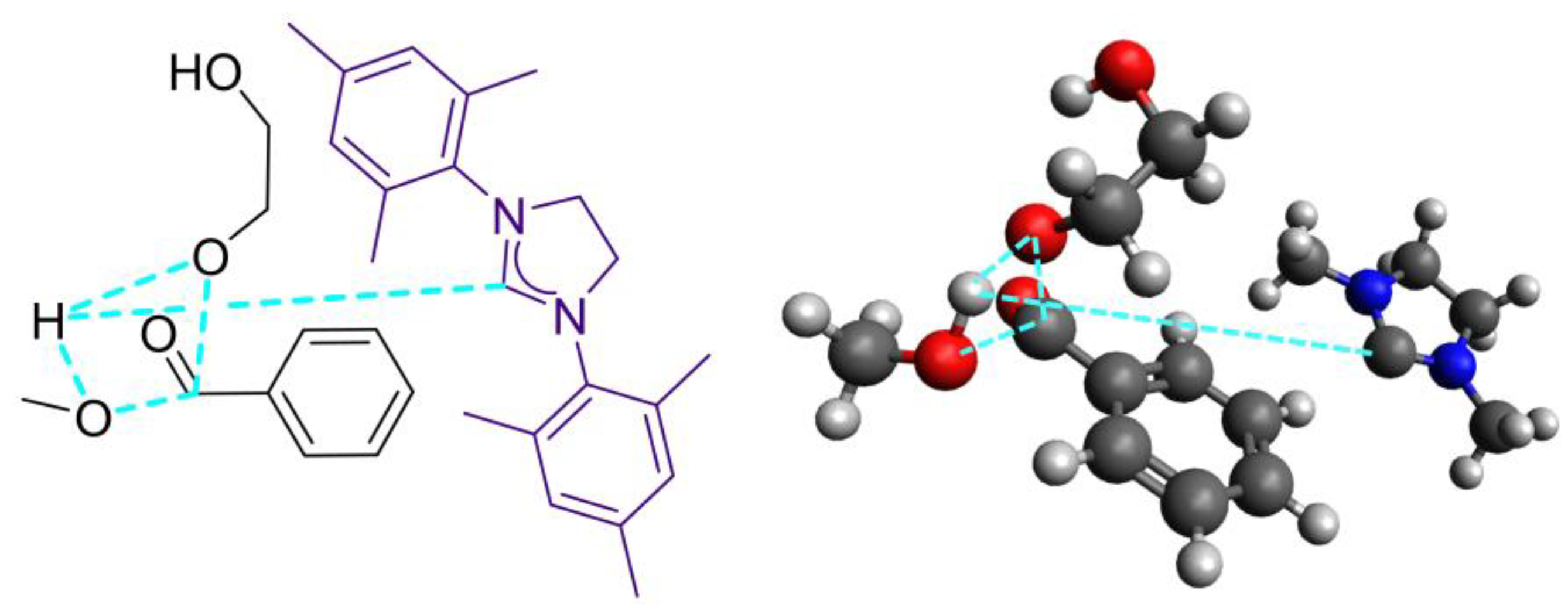
For the reaction in Figure 14, the minimum energy pathway and the transition state were calculated, revealing that the reaction mechanism is most likely following an anionic reaction pathway. The calculated transition state was visualized using the software Avogadro® (version 1.2.0) and can be seen in Figure 15. The intermolecular interactions highlight the NHC-catalyzed proton transfer from ethylene glycol to the leaving group (methanol). The activation energy was calculated to EA = 158 kJ/mol, which is lower compared to other state-of-the-art metal-based catalysts (e.g., zinc chloride: EA = 198 kJ/mol; except for zinc acetate: EA = 158 kJ/mol) and typical organocatalysts (TBD: EA = 170 kJ/mol, DBU: EA = 194 kJ/mol) [58].
Figure 15.
Transition state for the transesterification of methyl benzoate with ethylene glycol calculated using the software ORCA and visualized using the software Avogadro® (version 1.2.0). The intermolecular interactions are illustrated with blue dashed lines. In the structure on the right side, the mesityl substituents are simplified to methyl groups for visibility reasons; the calculation, however, was conducted using mesityl substituents (two xyz-files can be found in the Supplementary Materials).
2.2.3. Proposed Mechanism
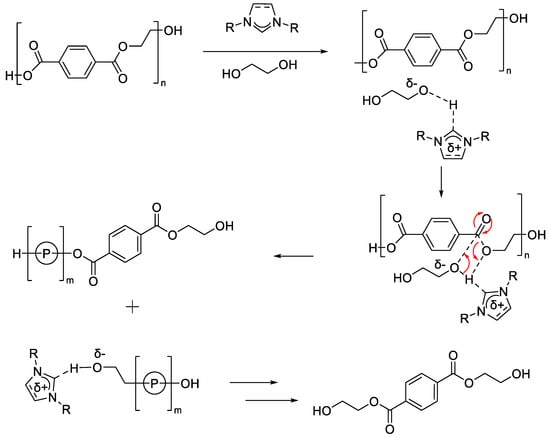
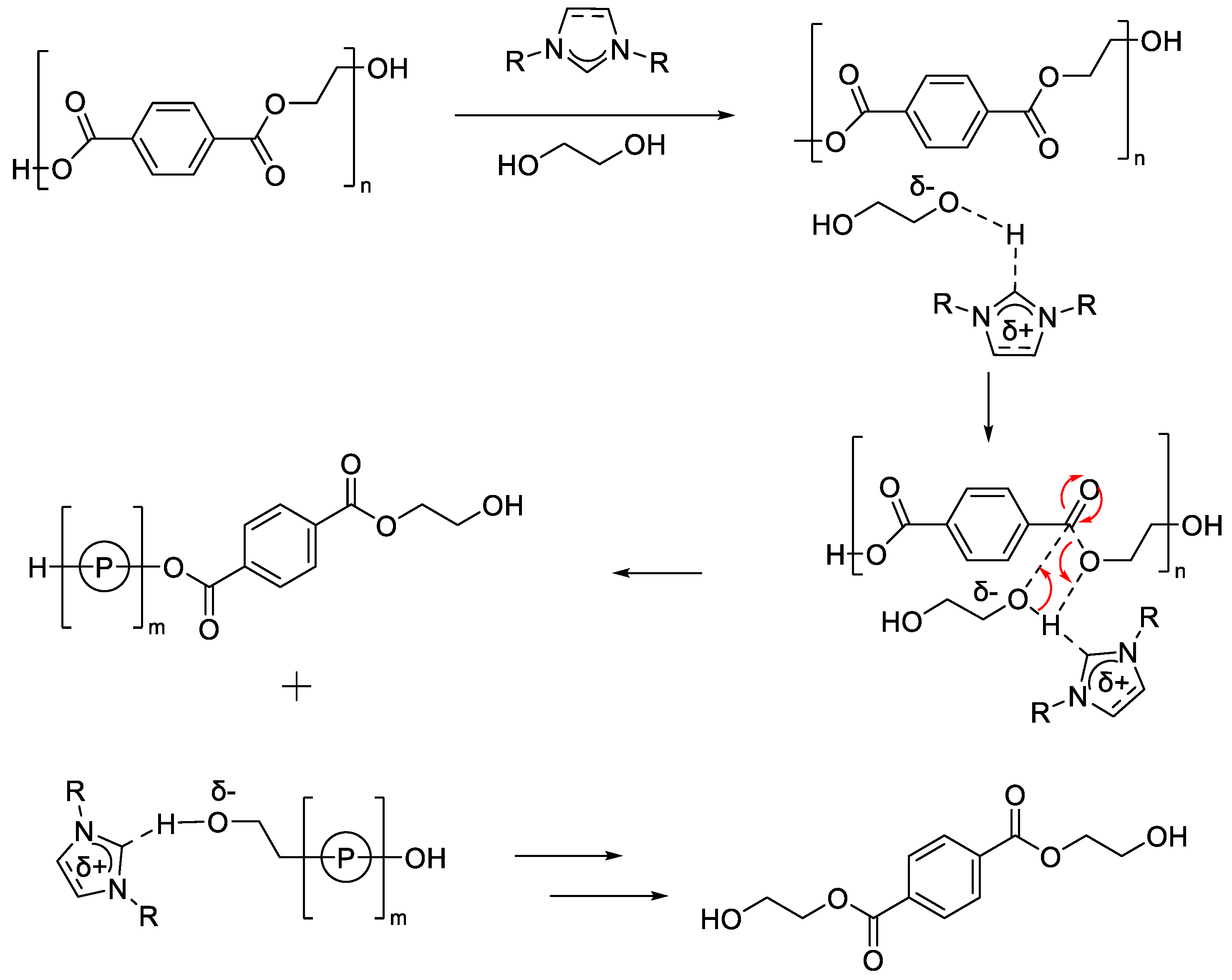
Based on the experimental (Section 2.2.1) and computational (Section 2.2.2) results, the reaction follows an anionic pathway. It is postulated that deprotonation occurs between the NHC and ethylene glycol, but in the presence of PET as a substrate, this intermediate is highly reactive and therefore cannot be observed, but directly reacts in the transesterification step. A transition state with a protonated NHC and a deprotonated ethylene glycol, stabilized by hydrogen bonds, can be formulated (Figure 16).
Figure 16.
Postulated mechanism for the NHC-catalyzed glycolysis of PET by an anionic reaction pathway.
2.3. Optimization of Reaction Conditions
NHC 6 was selected to optimize the reaction conditions of the glycolysis of PET. The scale of the reaction was adjusted to 1 g of PET flakes. The optimization trials were evaluated by the conversion of PET. First, different catalyst loadings were tested, with 5 mol% being the best feasible catalyst ratio (Table 2, entry 3). The PET:ethylene glycol molar ratio was optimized to 1:10 (Table 2, entry 4). Lowering the ratio even further was not possible in this lab setup due to a lack of proper mixing with a low ethylene glycol ratio.
Table 2.
Optimization of the catalyst loading and the PET:ethylene glycol ratio for the glycolysis reaction using an in situ activation of NHC salt 6-HCl with KOtBu for the catalyst at a temperature of 180 °C, a stirring speed of 250 rpm, and a reaction time of 2 h.
The solubility of the polymer can be the rate-determining step of the depolymerization [61]. An additional solvent with a high solubility for the polymer can significantly increase the reaction speed and enable lower temperatures. Despite the use of an additional solvent, this can result in an overall lower energy consumption and lower carbon footprint of the reaction compared to the glycolysis without an additional solvent at high temperatures [62]. The solvent selection was based on Hansen solubility parameters (HSPs) [63,64,65] and previous literature data [62] and can be seen in Table 3 (including the corresponding RED-values of the solvents for the dissolution of PET). The screening of additional solvents was conducted at the boiling point of the corresponding solvent, but at a maximum temperature of 140 °C, since a lower reaction temperature is desired to vindicate the use of additional solvents. The best results were observed for the solvents cyclohexanone (Table 3, entry 8) and 1,4-dioxane (Table 3, entry 12). Solvents with a keto-group (acetophenone, cyclohexanone, isophorone) or an ether-group (THF, 1,4-dioxane) performed better compared to aliphatic solvents (xylene, toluene, limonene) or solvents with ester-groups (methyl acetate, ethyl acetate).
Table 3.
Investigation of different additional solvents in the glycolysis reaction (1 g PET, 10 equiv. ethylene glycol, 250 rpm, 2 h).
Even though milder temperatures can be achieved using additional solvents, the conversion was low. However, the use of additional solvents is a promising option to reduce temperature; therefore, further optimization steps were taken using cyclohexanone. Table 4 shows the results for different ratios of cyclohexanone and ethylene glycol. The best result was observed for a ratio of 14:6 (Table 4, entry 6). This leads to a reduction of solvent consumption compared to previous experiments (Table 3) by approximately 50%.
Table 4.
Investigation of different solvent:ethylene glycol ratios (1 g PET, 140 °C, 250 rpm, 2 h).
It was assumed that mass transfer is critical for the reaction speed and can hopefully be accelerated by increasing the stirring speed. Optimization of the stirring speed (Table 5) shows that both increasing and decreasing the stirring speed led to lower conversion. Increasing the temperature of the reaction beyond the boiling point of the solvent (Table 5, entry 4) using a pressure-resistant autoclave resulted in an excellent PET conversion of 99.9%. However, increasing the temperature supersedes the purpose of the additional solvent to lower the reaction temperature and was therefore not of further interest for this work.
Table 5.
Investigation of different stirring speeds and temperatures (1 g PET, cyclohexanone:ethylene glycol (14:6), 2 h). * was conducted in an autoclave with an initial pressure of 13 bar.
Another way to increase mass transfer is to use PET with a smaller particle size (Table 6). Even though this leads to increased conversion, the effort for the additional shredding process is too high [66,67].
Table 6.
Investigation of different PET particle sizes (1 g PET, cyclohexanone:ethylene glycol (14:6), 140 °C, 250 rpm, 2 h).
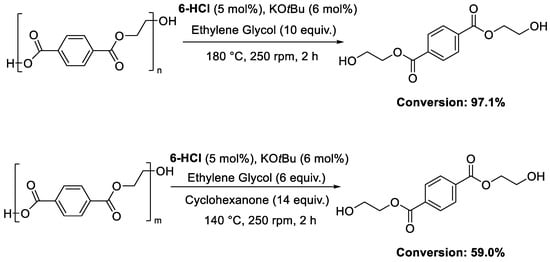
The results of the optimization are summarized in Figure 17. The process without additional solvent gives the best results but requires higher reaction temperatures. While using an additional solvent like cyclohexanone allows a reduced reaction temperature, it also leads to a reduction in catalytic performance. Longer reaction time (t = 4 h) for the glycolysis using cyclohexanone did not increase the PET conversion (conversion: 54.8%).
Figure 17.
Results for the optimization of the reaction conditions for glycolysis of PET using NHC 6 as a catalyst.
2.4. Cooperative Catalysis Combining NHCs and Lewis Acids
A low reaction temperature while maintaining high catalytic activity is desirable. Therefore, the reaction conditions from Figure 17 (bottom scheme) were investigated with different catalyst combinations. In a previous publication, it was shown that the equimolar combination of a Lewis base and Lewis acid can increase the catalytic activity [58]. The catalysts NHC 6 and 7 as Lewis bases (5 mol%) were combined with different Lewis acids (5 mol%) using the reaction conditions from Figure 17 (Table 7). For all combinations, an increasing conversion was observed, with zinc acetate showing the best improvement.
Table 7.
Results for the glycolysis of PET using NHCs 6-HCl/7-HCl (5 mol%) + KOtBu (6 mol%) as a catalyst in combination with different Lewis acids. Reaction conditions: 1 g PET, 6 equiv. ethylene glycol, 14 equiv. cyclohexanone, 140 °C, 250 rpm, 2 h.
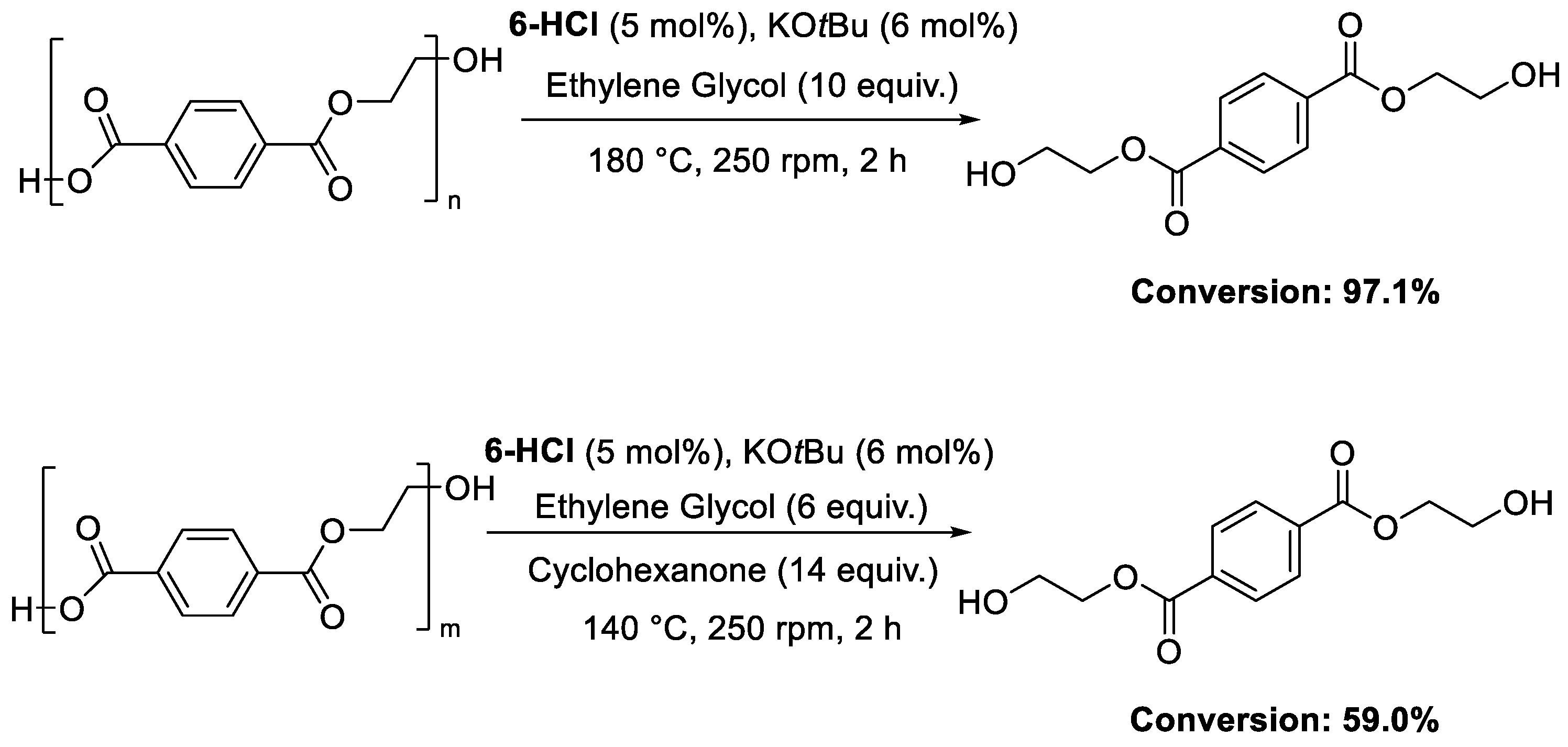
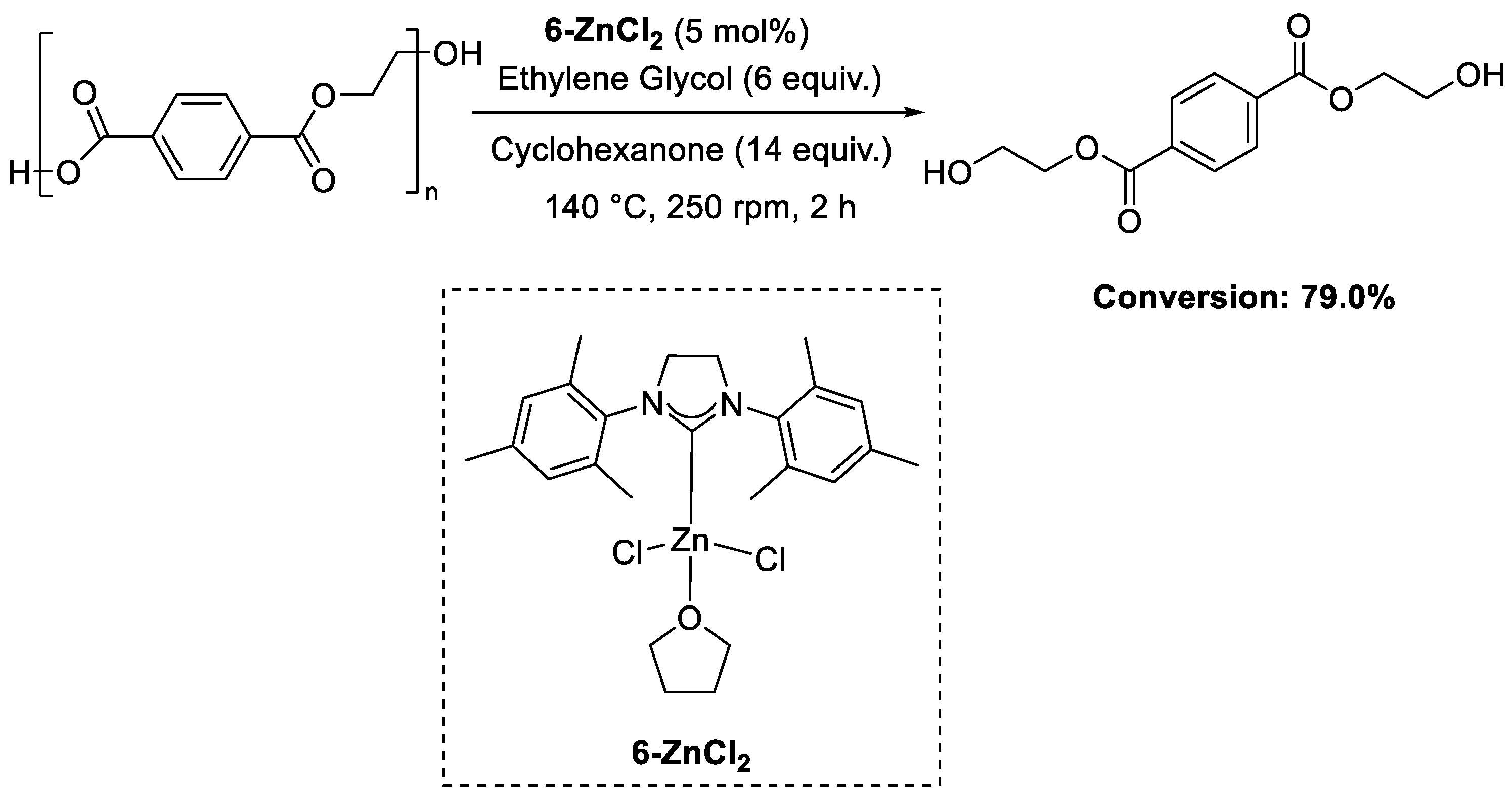
For polymerization reactions, it was shown that the combination of an NHC and a metal halide is possible in an NHC–metal halide adduct as a single catalyst molecule. By treating this catalyst molecule with heat, the adduct bond is cleaved, and the free NHC and metal halide are obtained. This is an elegant way of using cooperative Lewis base/Lewis acid catalysis with NHCs but without the use of an additional base like potassium tert-butoxide [35]. Within this work, the zinc chloride adduct of NHC 6 was synthesized and used as a catalyst in the glycolysis of PET (Figure 18). Interestingly, the results are better compared to the catalyst combination of NHC precursor 6-HCl and zinc chloride added as two separate catalysts (Table 7, entry 4). Even though the adduct 6-ZnCl2 cannot compete with the combination of 6-HCl or 7-HCl with zinc acetate, it is still an interesting alternative. Considering the advantage of having to add only one catalyst to the reaction, the adduct 6-ZnCl2 is a very promising opportunity and can compete with other well-established catalysts [14,17,18].
Figure 18.
Results for the glycolysis of PET (1 g) using the metal halide adduct 6-ZnCl2 as a catalyst.
The analogous adduct of NHC 6 and zinc acetate 6-Zn(OAc)2 could only be isolated as a dimer (see Supplementary Information) and gave a conversion of 76.3% in the PET glycolysis. The lower reactivity of 6-Zn(OAc)2 compared to 6-ZnCl2 can be explained by its partly dimeric structure, and the observations align with the ones reported for polymerization reactions in the literature [40].
2.5. Transfer to Post-Consumer Waste Streams
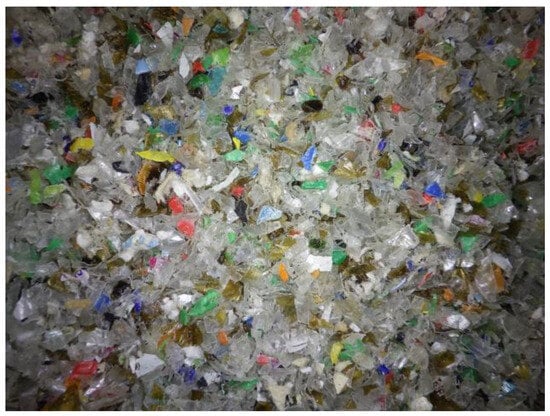
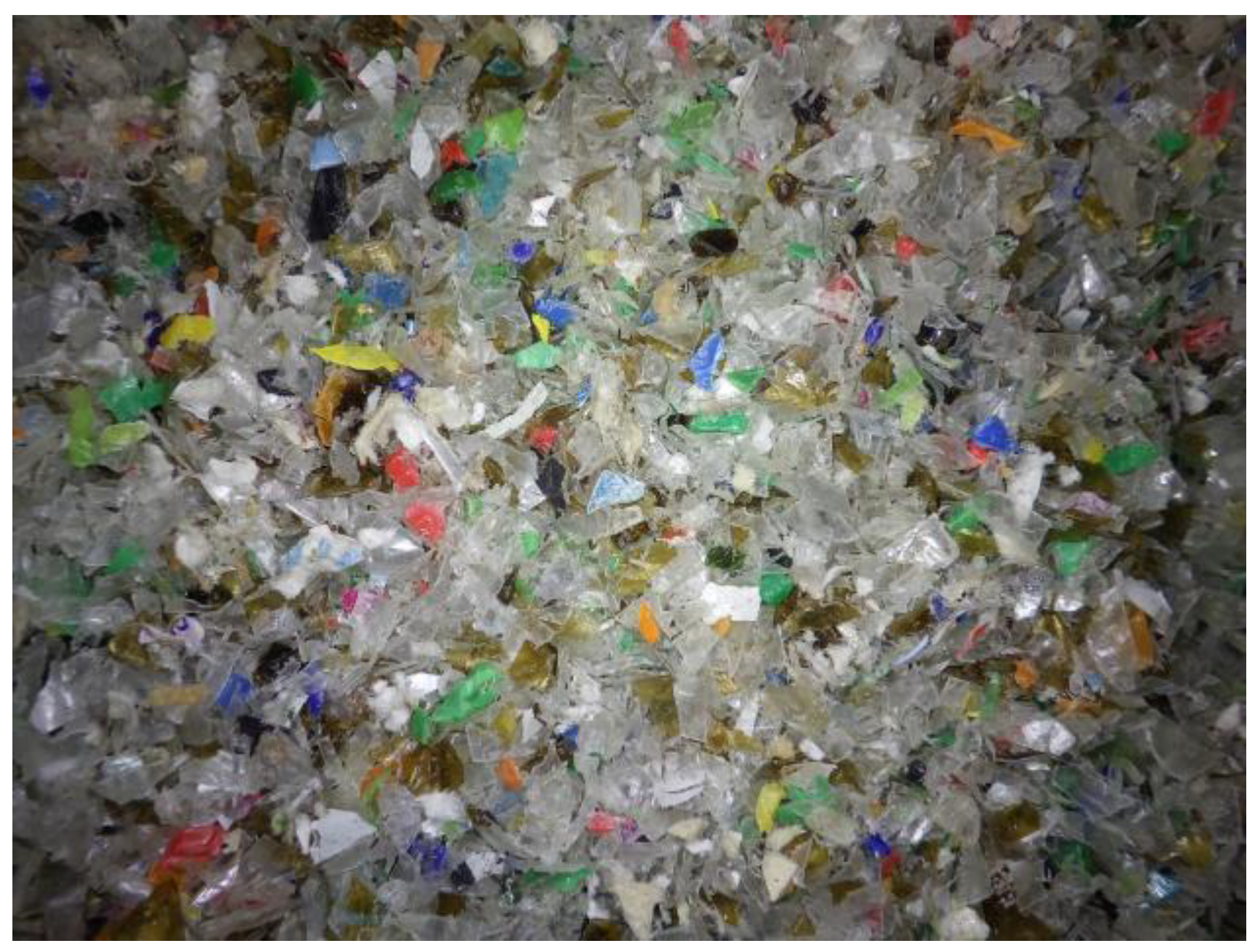
To verify the applicability of the investigated process and catalyst system, the glycolysis reaction was transferred to a heterogeneous post-consumer waste stream. Packaging waste was identified as a suitable fraction. This waste material mainly contains food trays, plastic foils, and multilayer packaging material. After a commercially available sorting process, the fraction contains 87% of PET. This material was washed and shredded to a particle size < 5 mm (Figure 19).
Figure 19.
Shredded post-consumer packaging waste containing about 87% PET.
This post-consumer waste was depolymerized in three approaches using different catalyst systems (Table 8). In all cases, an excellent conversion of PET (up to 98%) and a good yield of BHET (up to 72%) were achieved. Again, the adduct 6-ZnCl2 cannot compete with the combinations of NHCs and zinc acetate, but is still an interesting alternative approach due to the reduced substances that need to be added to the reaction. Overall, this demonstrates that using the new innovative catalyst system, even PET from heterogeneous post-consumer waste can be successfully depolymerized to yield the monomer BHET in high quality. The investigated catalyst system is presumably too expensive for an industrial application but can still be an interesting supplement to established catalysts.
Table 8.
Results for glycolysis of PET from post-consumer packaging waste. The reaction was conducted using ethylene glycol (6 equiv.) and cyclohexanone (14 equiv.) at a temperature of 140 °C and with a stirring speed of 250 rpm for 2 h.
3. Materials and Methods
3.1. Materials
PET from two different waste streams was used for the experiments within this work. The catalyst screening and the process optimization trials were conducted using clear PET flakes from post-consumer beverage bottles. The bottles were washed with water, dried, and shredded to a particle size of 5 mm. For the process transfer, a sorted fraction from post-consumer packaging waste (food trays, plastic foils, etc.) was used, which contained a PET proportion of 87%. This material was also washed with water, dried, and shredded to a particle size of 5 mm.
All the other materials and chemicals were bought commercially and, if not otherwise specified, used without any further purification.
3.2. Instruments
Attenuated total reflection Fourier transform infrared spectroscopy (ATR-FTIR spectroscopy) was run on a Nicolet 6700 spectrometer from ThermoScientfic (Waltham, MA, USA) with a Durascope diamond ATR unit. All samples were measured in a range of 450 cm−1 to 4000 cm−1 and with a resolution of 4 cm−1.
1H NMR spectra were recorded on a Nanalysis 60PRO® Benchtop NMR spectrometer (Calgary, AB, Canada) at a frequency of 60 MHz and using deuterated dimethyl sulfoxide (DMSO-d6) or deuterated chloroform (CDCl3) as a solvent. The recorded spectra were analyzed using the software MestReNova 14.3.2.
Liquid chromatography mass spectrometry (LC-MS) was run on an Agilent high-pressure liquid chromatography instrument (HPLC 1200 SL, 600 bar, Santa Clara, CA, USA) equipped with a degasser and a binary pump. The analysis was conducted using a Kinetex C8 3.0 × 100 mm column (Phenomenex, Torrance, CA, USA), a mixture of acetic acid (0.05% (v/v)) and acetonitrile as the eluent, a flow rate of 0.4 mL/min, and a temperature of 45 °C. A diode array detector at a wavelength of 280 ± 5 nm and a mass spectrometer with an ion trap (MS-Ion-Trap XCT+ 6330 from Agilent, Santa Clara, CA, USA) were used for the detection. The mass spectrometer was set up using an electrospray ionization (ESI) with a nebulizer operating at 35.0 psi and a dry temperature of 350 °C, and an ion trap for detection with a scan range of 100–750 m/z.
Matrix-assisted laser desorption/ionization mass spectrometry (MALDI-MS) was measured on a Bruker timsTOF flex instrument (Billerica, MA, USA). The observation was conducted in a range of 80–1200 m/z using a positive ion polarity. The laser power was set to 30% with 200 shots per position. The measurement was operated as a tandem mass-spectrometry with a collision offset current of 35 V, leading to an ion energy of 35 eV for the collision-induced dissociation (CID). Data analysis was accomplished using the software Bruker Compass DataAnalysis 6.1.
3.3. Typical Procedure for the Glycolysis Reaction (Catalyst Screening)
In a 100 mL three-neck flask equipped with an overhead stirrer and a reflux condenser NHC salt (1.30 mmol, 0.05 equiv.) and potassium tert-butoxide (0.18 g, 1.56 mmol, 0.06 equiv.) were dissolved in ethylene glycol (29.00 mL, 520.37 mmol, 20.00 equiv.). The solution was warmed to 180 °C, followed by the addition of PET flakes (5.00 g, 26.02 mmol, 1.00 equiv.). The reaction was treated for 2 h at 180 °C with a stirring speed of 250 rpm. After termination of the reaction, the unreacted particles were filtered off while still hot. The solids were rinsed with acetone, dried at a pressure of 5 mbar and a temperature of 70 °C, and weighed to quantify the PET conversion. The filtered solution was mixed with 150 mL of water and agitated for 30 min at 60 °C. For oligomer removal, the suspension was filtered at 60 °C. The filtrate was kept in a refrigerator at 4 °C overnight for crystallization. The formed white crystalline needles of bis(hydroxyethyl)terephthalate (BHET) were isolated by filtration. The products (oligomers and BHET) were dried at a pressure of 5 mbar and a temperature of 70 °C and were analyzed by FTIR or 1H NMR spectroscopy [58].
3.4. Typical Procedure for the Glycolysis Reaction (Reaction Optimization)
In a 50 mL round-bottom flask equipped with a magnetic stir bar and a reflux condenser NHC salt (0.26 mmol, 0.05 equiv.) and potassium tert-butoxide (0.03 g, 0.31 mmol, 0.06 equiv.) were dissolved in ethylene glycol and eventually an additional solvent. The solution was heated to the desired reaction temperature, followed by the addition of PET flakes (1.00 g, 5.20 mmol, 1.00 equiv.). For some trials, an additional catalyst was added. The reaction was agitated at the desired temperature for 2 h and was hot filtered to remove the unreacted particles. These solids were rinsed with acetone, dried at a pressure of 5 mbar and a temperature of 70 °C, and weighed to quantify the PET conversion. The obtained solution was stored in a sample bottle.
3.5. Computational Details
All computations were calculated using the software ORCA version 6.1.0 [68,69,70,71,72,73,74,75,76]. All calculations were carried out as parallel processes using the Nudged Elastic Band implementation [77]. All computations were calculated using the B3LYP level of theory with the basis set def2-QZVP [78] and the auxiliary basis def2/J [79,80]. It automatically applies the geometrical counterpoise [81] and D4 corrections [82,83], which compensate for the basis set superposition error and dispersion interactions, respectively.
4. Conclusions
Within this work, the depolymerization of PET was investigated as an advanced recycling method for especially heterogeneous waste fractions (e.g., packaging waste, textile waste). The presented approach uses ethylene glycol in the presence of a catalyst to cleave the ester bond and yield BHET as a monomer that can be repolymerized to new PET material. We investigated NHCs as innovative organocatalysts for this glycolysis process. Organocatalysts have the advantage of not relying on critical metal resources and tend to be less problematic if they remain in the recycled material or are released into the environment. Different NHCs were investigated for the process and were evaluated according to their steric and electronic properties. NHCs 6 and 7, with high steric demand and low electron density at the carbene carbon, show high catalytic activity with a PET conversion up to 87% and a BHET yield up to 65%. Using experimental and computational investigations, an anionic reaction pathway was postulated for glycolysis with an NHC-catalyzed activation of the ethylene glycol.
Systematic optimization of the reaction conditions increased the conversion up to 97%. Using cyclohexanone as an additional solvent enables a lower reaction temperature of 140 °C compared to the state-of-the-art (180 °C) while maintaining a conversion of 59%. Combining the NHC with metal halides in a cooperative catalyst system allows us to keep the low reaction temperature and still obtain a high PET conversion of 90%. These reaction conditions were transferred to a post-consumer packaging waste stream, and, using the same catalyst system, a remarkably high PET conversion of up to 98% was achieved.
These results increase the attractiveness of an application of the developed process; however, the energy demand remains high and needs to be further optimized to enable industrial viability. In addition, the catalyst requires an elaborate and expensive synthesis and is still difficult to recover after the reaction and therefore cannot compete with commercially available catalysts like metal salts or heterogeneous catalysts. The developed process still remains an innovative and promising approach for selective PET depolymerization and can enable a systematic comparison of different catalyst systems.
Further optimizations of this catalyst system, like the immobilization on heterogeneous materials to facilitate recovery after the reaction, may be of interest. Unlike other organocatalysts, NHCs can be immobilized without blocking the active site of the catalyst.
Supplementary Materials
The following supporting information can be downloaded at: https://www.mdpi.com/article/10.3390/catal16030273/s1.
Author Contributions
Conceptualization, L.K., R.H.-S., M.R., R.D., and A.S.K.H.; methodology, L.K.; software, L.K.; validation, L.K.; formal analysis, L.K. and T.O.; investigation, L.K.; resources, L.K. and R.H.-S.; data curation, L.K.; writing—original draft preparation, L.K.; writing—review and editing, R.H.-S., M.R., R.D., and A.S.K.H.; visualization, L.K.; supervision, R.H.-S., R.D., and A.S.K.H.; project administration, L.K.; funding acquisition, L.K. and R.H.-S. All authors have read and agreed to the published version of the manuscript.
Funding
The work presented in this paper stems from the research conducted between 2022 and 2025 for an ongoing project titled “Fraunhofer Cluster Circular Plastics Economy CCPE”, funded by the “Fraunhofer-Gesellschaft zur Förderung der angewandten Forschung e. V.”.
Data Availability Statement
The data presented in this study are available on request from the corresponding author due to legal restrictions.
Acknowledgments
The authors would like to acknowledge Philipp Schächtele and Anton Lipovoj (both Fraunhofer ICT) for their extensive support in experimental investigations, Ansilla Bayha (Fraunhofer ICT) for her support in the mechanical pretreatment of the waste streams as well as Yvonne Kasimir (Fraunhofer ICT) for the measurements of the presented LC-MS data. We also want to thank Jürgen H. Gross for the helpful discussion regarding the MALDI measurements.
Conflicts of Interest
The authors declare no conflicts of interest.
Abbreviations
The following abbreviations are used in this manuscript:
| PET | Polyethylene terephthalate |
| NHC | N-Heterocyclic carbene |
| BHET | Bis(hydroxyethyl)terephthalate |
| TBD | Triazabicyclodecene |
| DBU | Diazabicycloundecene |
| HOMO | Highest occupied molecular orbital |
| LUMO | Lowest unoccupied molecular orbital |
| TEP | Tolman electronic parameter |
| %Vbur | Percent buried volume |
| ROP | Ring-opening polymerization |
| LA | Lewis acid |
| NMR | Nuclear magnetic resonance |
| LC-MS | Liquid chromatography–mass spectrometry |
| HPLC | High pressure liquid chromatography |
| ESI | Electrospray ionization |
| COSY | Correlation spectroscopy |
| MALDI-MS | Matrix-assisted laser desorption/ionization mass spectrometry |
| CID | Collision-induced dissociation |
| HSP | Hansen solubility parameter |
| RED | Relative energy difference |
References
- Nayanathara Thathsarani Pilapitiya, P.; Ratnayake, A.S. The world of plastic waste: A review. Clean. Mater. 2024, 11, 100220. [Google Scholar] [CrossRef] [Scilit]
- McNeeley, A.; Liu, Y.A. Assessment of PET Depolymerization Processes for Circular Economy. 1. Thermodynamics, Chemistry, Purification, and Process Design. Ind. Eng. Chem. Res. 2024, 63, 3355–3399. [Google Scholar] [CrossRef] [Scilit]
- Damayanti; Wu, H.-S. Strategic Possibility Routes of Recycled PET. Polymers 2021, 13, 1475. [Google Scholar] [CrossRef] [Scilit] [PubMed]
- Independent Commodity Intelligence Services. PET Market in Europe—State of Play: Production, Collection & Recycling Data 2022; Independent Commodity Intelligence Services: London, UK, 2022. [Google Scholar]
- Rochman, C.M.; Browne, M.A.; Halpern, B.S.; Hentschel, B.T.; Hoh, E.; Karapanagioti, H.K.; Rios-Mendoza, L.M.; Takada, H.; Teh, S.; Thompson, R.C. Policy: Classify plastic waste as hazardous. Nature 2013, 494, 169–171. [Google Scholar] [CrossRef] [Scilit]
- Suchek, N.; Fernandes, C.I.; Kraus, S.; Filser, M.; Sjögrén, H. Innovation and the circular economy: A systematic literature review. Bus. Strat. Env. 2021, 30, 3686–3702. [Google Scholar] [CrossRef] [Scilit]
- Fetting, C. The European Green Deal; ESDN Report; ESDN Office: Vienna, Austria, 2020. [Google Scholar]
- Ellis, L.D.; Rorrer, N.A.; Sullivan, K.P.; Otto, M.; McGeehan, J.E.; Román-Leshkov, Y.; Wierckx, N.; Beckham, G.T. Chemical and biological catalysis for plastics recycling and upcycling. Nat. Catal. 2021, 4, 539–556. [Google Scholar] [CrossRef] [Scilit]
- Rahimi, A.; García, J.M. Chemical recycling of waste plastics for new materials production. Nat. Rev. Chem. 2017, 1, 0046. [Google Scholar] [CrossRef] [Scilit]
- Kosloski-Oh, S.C.; Wood, Z.A.; Manjarrez, Y.; Los Rios, J.P.d.; Fieser, M.E. Catalytic methods for chemical recycling or upcycling of commercial polymers. Mater. Horiz. 2021, 8, 1084–1129. [Google Scholar] [CrossRef] [Scilit]
- Thiounn, T.; Smith, R.C. Advances and approaches for chemical recycling of plastic waste. J. Polym. Sci. 2020, 58, 1347–1364. [Google Scholar] [CrossRef] [Scilit]
- Viana, M.E.; Riul, A.; Carvalho, G.M.; Rubira, A.F.; Muniz, E.C. Chemical recycling of PET by catalyzed glycolysis: Kinetics of the heterogeneous reaction. Chem. Eng. J. 2011, 173, 210–219. [Google Scholar] [CrossRef] [Scilit]
- Troev, K.; Grancharov, G.; Tsevi, R.; Gitsov, I. A novel catalyst for the glycolysis of poly(ethylene terephthalate). J. Appl. Polym. Sci. 2003, 90, 1148–1152. [Google Scholar] [CrossRef] [Scilit]
- López-Fonseca, R.; Duque-Ingunza, I.; Rivas, B.d.; Arnaiz, S.; Gutiérrez-Ortiz, J.I. Chemical recycling of post-consumer PET wastes by glycolysis in the presence of metal salts. Polym. Degrad. Stab. 2010, 95, 1022–1028. [Google Scholar] [CrossRef] [Scilit]
- Liu, B.; Lu, X.; Ju, Z.; Sun, P.; Xin, J.; Yao, X.; Zhou, Q.; Zhang, S. Ultrafast Homogeneous Glycolysis of Waste Polyethylene Terephthalate via a Dissolution-Degradation Strategy. Ind. Eng. Chem. Res. 2018, 57, 16239–16245. [Google Scholar] [CrossRef] [Scilit]
- Karlsson, T.; Forsgren, C.; Steenari, B.-M. Recovery of Antimony: A Laboratory Study on the Thermal Decomposition and Carbothermal Reduction of Sb(III), Bi(III), Zn(II) Oxides, and Antimony Compounds from Metal Oxide Varistors. J. Sustain. Metall. 2018, 4, 194–204. [Google Scholar] [CrossRef] [Scilit]
- Fukushima, K.; Coulembier, O.; Lecuyer, J.M.; Almegren, H.A.; Alabdulrahman, A.M.; Alsewailem, F.D.; Mcneil, M.A.; Dubois, P.; Waymouth, R.M.; Horn, H.W.; et al. Organocatalytic depolymerization of poly(ethylene terephthalate). J. Polym. Sci. A Polym. Chem. 2011, 49, 1273–1281. [Google Scholar] [CrossRef] [Scilit]
- Fukushima, K.; Coady, D.J.; Jones, G.O.; Almegren, H.A.; Alabdulrahman, A.M.; Alsewailem, F.D.; Horn, H.W.; Rice, J.E.; Hedrick, J.L. Unexpected efficiency of cyclic amidine catalysts in depolymerizing poly(ethylene terephthalate). J. Polym. Sci. A Polym. Chem. 2013, 51, 1606–1611. [Google Scholar] [CrossRef] [Scilit]
- Chuma, A.; Horn, H.W.; Swope, W.C.; Pratt, R.C.; Zhang, L.; Lohmeijer, B.G.G.; Wade, C.G.; Waymouth, R.M.; Hedrick, J.L.; Rice, J.E. The reaction mechanism for the organocatalytic ring-opening polymerization of l-lactide using a guanidine-based catalyst: Hydrogen-bonded or covalently bound? J. Am. Chem. Soc. 2008, 130, 6749–6754. [Google Scholar] [CrossRef] [Scilit]
- Simón, L.; Goodman, J.M. The mechanism of TBD-catalyzed ring-opening polymerization of cyclic esters. J. Org. Chem. 2007, 72, 9656–9662. [Google Scholar] [CrossRef] [Scilit]
- Jehanno, C.; Flores, I.; Dove, A.P.; Müller, A.J.; Ruipérez, F.; Sardon, H. Organocatalysed depolymerisation of PET in a fully sustainable cycle using thermally stable protic ionic salt. Green Chem. 2018, 20, 1205–1212. [Google Scholar] [CrossRef] [Scilit]
- Worch, J.C.; Dove, A.P. 100th Anniversary of Macromolecular Science Viewpoint: Toward Catalytic Chemical Recycling of Waste (and Future) Plastics. ACS Macro Lett. 2020, 9, 1494–1506. [Google Scholar] [CrossRef] [Scilit]
- Shukla, S.R.; Palekar, V.; Pingale, N. Zeolite catalyzed glycolysis of poly(ethylene terephthalate) bottle waste. J. Appl. Polym. Sci. 2008, 110, 501–506. [Google Scholar] [CrossRef] [Scilit]
- Dai, C.; Liu, Y.; Wang, Z.; Yu, G. Efficient glycolysis of waste polyethylene terephthalate textiles over Zn-MCM-41 catalysts. Catal. Today 2024, 440, 114827. [Google Scholar] [CrossRef] [Scilit]
- Pham, D.D.; Vo, D.-N.; Phong, M.T.; Nguyen, H.H.; Nguyen-Thoi, T.; Pham, T.-P.T.; Le Ha Phuong, D.; Le Pham, K.H.; Da Won, H.; Le Nguyen, D.T.; et al. A new circulation in glycolysis of polyethylene terephthalate using MOF-based catalysts for environmental sustainability of plastic. Chem. Eng. J. 2024, 490, 151667. [Google Scholar] [CrossRef] [Scilit]
- Yun, L.-X.; Wu, H.; Shen, Z.-G.; Fu, J.-W.; Wang, J.-X. Ultrasmall CeO 2 Nanoparticles with Rich Oxygen Defects as Novel Catalysts for Efficient Glycolysis of Polyethylene Terephthalate. ACS Sustain. Chem. Eng. 2022, 10, 5278–5287. [Google Scholar] [CrossRef] [Scilit]
- Fehér, Z.; Kiss, J.; Kisszékelyi, P.; Molnár, J.; Huszthy, P.; Kárpáti, L.; Kupai, J. Optimisation of PET glycolysis by applying recyclable heterogeneous organocatalysts. Green Chem. 2022, 24, 8447–8459. [Google Scholar] [CrossRef] [Scilit]
- Hopkinson, M.N.; Richter, C.; Schedler, M.; Glorius, F. An overview of N-heterocyclic carbenes. Nature 2014, 510, 485–496. [Google Scholar] [CrossRef] [Scilit]
- Nelson, D.J.; Nolan, S.P. Quantifying and understanding the electronic properties of N-heterocyclic carbenes. Chem. Soc. Rev. 2013, 42, 6723–6753. [Google Scholar] [CrossRef] [Scilit]
- Gómez-Suárez, A.; Nelson, D.J.; Nolan, S.P. Quantifying and understanding the steric properties of N-heterocyclic carbenes. Chem. Commun. 2017, 53, 2650–2660. [Google Scholar] [CrossRef] [Scilit]
- Maji, B.; Breugst, M.; Mayr, H. N-heterocyclic carbenes: Organocatalysts with moderate nucleophilicity but extraordinarily high Lewis basicity. Angew. Chem. (Int. Ed. Engl.) 2011, 50, 6915–6919. [Google Scholar] [CrossRef] [Scilit]
- Magill, A.M.; Cavell, K.J.; Yates, B.F. Basicity of nucleophilic carbenes in aqueous and nonaqueous solvents-theoretical predictions. J. Am. Chem. Soc. 2004, 126, 8717–8724. [Google Scholar] [CrossRef] [Scilit]
- Fèvre, M.; Pinaud, J.; Gnanou, Y.; Vignolle, J.; Taton, D. N-Heterocyclic carbenes (NHCs) as organocatalysts and structural components in metal-free polymer synthesis. Chem. Soc. Rev. 2013, 42, 2142–2172. [Google Scholar] [CrossRef] [Scilit] [PubMed]
- Naumann, S.; Dove, A.P. N-Heterocyclic carbenes for metal-free polymerization catalysis: An update. Polym. Int. 2016, 65, 16–27. [Google Scholar] [CrossRef] [Scilit]
- Naumann, S.; Schmidt, F.G.; Frey, W.; Buchmeiser, M.R. Protected N-heterocyclic carbenes as latent pre-catalysts for the polymerization of ε-caprolactone. Polym. Chem. 2013, 4, 4172. [Google Scholar] [CrossRef] [Scilit]
- Naumann, S.; Scholten, P.B.V.; Wilson, J.A.; Dove, A.P. Dual Catalysis for Selective Ring-Opening Polymerization of Lactones: Evolution toward Simplicity. J. Am. Chem. Soc. 2015, 137, 14439–14445. [Google Scholar] [CrossRef] [Scilit]
- Naumann, S.; Dove, A.P. N-Heterocyclic carbenes as organocatalysts for polymerizations: Trends and frontiers. Polym. Chem. 2015, 6, 3185–3200. [Google Scholar] [CrossRef] [Scilit]
- Kamber, N.E.; Tsujii, Y.; Keets, K.; Waymouth, R.M.; Pratt, R.C.; Nyce, G.W.; Hedrick, J.L. The Depolymerization of Poly(ethylene terephthalate) (PET) Using N-Heterocyclic Carbenes from Ionic Liquids. J. Chem. Educ. 2010, 87, 519–521. [Google Scholar] [CrossRef] [Scilit]
- Wang, L.; Nelson, G.A.; Toland, J.; Holbrey, J.D. Glycolysis of PET Using 1,3-Dimethylimidazolium-2-Carboxylate as an Organocatalyst. ACS Sustain. Chem. Eng. 2020, 8, 13362–13368. [Google Scholar] [CrossRef] [Scilit]
- Wang, D.; Wurst, K.; Buchmeiser, M.R. N-heterocyclic carbene complexes of Zn(II): Synthesis, X-ray structures and reactivity. J. Organomet. Chem. 2004, 689, 2123–2130. [Google Scholar] [CrossRef]
- Rojas, A.; Martínez-Morales, E.; Zicovich-Wilson, C.M.; Camblor, M.A. Zeolite synthesis in fluoride media: Structure direction toward ITW by small methylimidazolium cations. J. Am. Chem. Soc. 2012, 134, 2255–2263. [Google Scholar] [CrossRef] [Scilit]
- Schaub, T.; Backes, M.; Radius, U. Nickel(0) Complexes of N-Alkyl-Substituted N-Heterocyclic Carbenes and Their Use in the Catalytic Carbon−Carbon Bond Activation of Biphenylene. Organometallics 2006, 25, 4196–4206. [Google Scholar] [CrossRef] [Scilit]
- Serpell, C.J.; Cookson, J.; Thompson, A.L.; Brown, C.M.; Beer, P.D. Haloaurate and halopalladate imidazolium salts: Structures, properties, and use as precursors for catalytic metal nanoparticles. Dalton Trans. 2013, 42, 1385–1393. [Google Scholar] [CrossRef] [Scilit] [PubMed]
- Dzyuba, S.V.; Bartsch, R.A. New room-temperature ionic liquids with C2-symmetrical imidazolium cations. Chem. Commun. 2001, 1466–1467. [Google Scholar] [CrossRef] [Scilit]
- Buckley, B.R.; Neary, S.P. Thiadiazolidine 1-oxide systems for phosphine-free palladium-mediated catalysis. Tetrahedron 2010, 66, 7988–7994. [Google Scholar] [CrossRef] [Scilit]
- Roche, S.P.; Teyssot, M.-L.; Gautier, A. Synthesis of 1,2 diamines under environmentally benign conditions: Application for the preparation of imidazolidiniums. Tetrahedron Lett. 2010, 51, 1265–1268. [Google Scholar] [CrossRef] [Scilit]
- Kliegman, J.M.; Barnes, R.K. Glyoxal derivatives—I. Tetrahedron 1970, 26, 2555–2560. [Google Scholar] [CrossRef] [Scilit]
- Medvedko, S.; Ströbele, M.; Wagner, J.P. Synthesis of Sterically Encumbered Thiourea S-Oxides through Direct Thiourea Oxidation. Chemistry 2023, 29, e202203005. [Google Scholar] [CrossRef] [Scilit]
- Gadekar, S.C.; Dhayalan, V.; Nandi, A.; Zak, I.L.; Mizrachi, M.S.; Kozuch, S.; Milo, A. Rerouting the Organocatalytic Benzoin Reaction toward Aldehyde Deuteration. ACS Catal. 2021, 11, 14561–14569. [Google Scholar] [CrossRef] [Scilit]
- Chapman, M.R.; Shafi, Y.M.; Kapur, N.; Nguyen, B.N.; Willans, C.E. Electrochemical flow-reactor for expedient synthesis of copper-N-heterocyclic carbene complexes. Chem. Commun. 2015, 51, 1282–1284. [Google Scholar] [CrossRef] [Scilit]
- Bantreil, X.; Nolan, S.P. Synthesis of N-heterocyclic carbene ligands and derived ruthenium olefin metathesis catalysts. Nat. Protoc. 2011, 6, 69–77. [Google Scholar] [CrossRef] [Scilit]
- van Ausdall, B.R.; Glass, J.L.; Wiggins, K.M.; Aarif, A.M.; Louie, J. A systematic investigation of factors influencing the decarboxylation of imidazolium carboxylates. J. Org. Chem. 2009, 74, 7935–7942. [Google Scholar] [CrossRef] [Scilit]
- O’Beirne, C.; Althani, H.T.; Dada, O.; Cassidy, J.; Kavanagh, K.; Müller-Bunz, H.; Ortin, Y.; Zhu, X.; Tacke, M. Novel derivatives of the antibiotic NHC–Ag(I) drug candidate SBC3: Synthesis, biological evaluation and 109Ag NMR studies. Polyhedron 2018, 149, 95–103. [Google Scholar] [CrossRef] [Scilit]
- Gürbüz, N.; Özcan, E.Ö.; Özdemir, İ.; Çetinkaya, B.; Şahin, O.; Büyükgüngör, O. Preparation of a series of Ru(II) complexes with N-heterocyclic carbene ligands for the catalytic transfer hydrogenation of aromatic ketones. Dalton Trans. 2012, 41, 2330–2339. [Google Scholar] [CrossRef] [Scilit] [PubMed]
- Hirano, K.; Urban, S.; Wang, C.; Glorius, F. A modular synthesis of highly substituted imidazolium salts. Org. Lett. 2009, 11, 1019–1022. [Google Scholar] [CrossRef] [Scilit] [PubMed]
- Iglesias, M.; Beetstra, D.J.; Knight, J.C.; Ooi, L.-L.; Stasch, A.; Coles, S.; Male, L.; Hursthouse, M.B.; Cavell, K.J.; Dervisi, A.; et al. Novel Expanded Ring N-Heterocyclic Carbenes: Free Carbenes, Silver Complexes, And Structures. Organometallics 2008, 27, 3279–3289. [Google Scholar] [CrossRef] [Scilit]
- Le Pham, D.; Smith-Sweetser, R.O.; Krupinsky, B.; Dewey, C.E.; Lamb, J.R. Switchable Organocatalysis from N-heterocyclic Carbene-Carbodiimide Adducts with Tunable Release Temperature. Angew. Chem. (Int. Ed. Engl.) 2023, 62, e202314376. [Google Scholar] [CrossRef] [Scilit]
- Killinger, L.; Hanich-Spahn, R.; Flick, K.; Hashmi, A.K. Lewis-pair-catalytic depolymerization of post-consumer polyethylene terephthalate (PET) waste. Polym. Degrad. Stab. 2025, 233, 111163. [Google Scholar] [CrossRef] [Scilit]
- Li, Z.; Ji, P.; Cheng, J.-P. Brönsted Basicities and Nucleophilicities of N-Heterocyclic Olefins in Solution: N-Heterocyclic Carbene versus N-Heterocyclic Olefin. Which Is More Basic, and Which Is More Nucleophilic? J. Org. Chem. 2021, 86, 2974–2985. [Google Scholar] [CrossRef] [Scilit]
- Lai, C.-L.; Lee, H.M.; Hu, C.-H. Theoretical study on the mechanism of N-heterocyclic carbene catalyzed transesterification reactions. Tetrahedron Lett. 2005, 46, 6265–6270. [Google Scholar] [CrossRef] [Scilit]
- Majgaonkar, P.; Hanich, R.; Malz, F.; Brüll, R. Chemical Recycling of Post-Consumer PLA Waste for Sustainable Production of Ethyl Lactate. Chem. Eng. J. 2021, 423, 129952. [Google Scholar] [CrossRef] [Scilit]
- Luna, E.; Olazabal, I.; Roosen, M.; Müller, A.; Jehanno, C.; Ximenis, M.; Meester, S.d.; Sardon, H. Towards a better understanding of the cosolvent effect on the low-temperature glycolysis of Polyethylene Terephthalate (PET). Chem. Eng. J. 2024, 482, 148861. [Google Scholar] [CrossRef] [Scilit]
- Hansen, C.M. Hansen Solubility Parameters: A User’s Handbook, 2nd ed.; CRC Press: Boca Raton, FL, USA, 2007. [Google Scholar]
- Díaz de los Ríos, M.; Hernández Ramos, E. Determination of the Hansen solubility parameters and the Hansen sphere radius with the aid of the solver add-in of Microsoft Excel. SN Appl. Sci. 2020, 2, 676. [Google Scholar] [CrossRef] [Scilit]
- Stefanis, E.; Panayiotou, C. Prediction of Hansen Solubility Parameters with a New Group-Contribution Method. Int. J. Thermophys. 2008, 29, 568–585. [Google Scholar] [CrossRef] [Scilit]
- Mishchuk, Y.; Nazarenko, I. Analysis of the energy laws of material destruction. Strength Mater. Theory Struct. 2023, 110, 294–315. [Google Scholar] [CrossRef] [Scilit]
- Fomina, N.; Khozin, V.; Strakhov, A.; Ismagilov, A. Shredding of polyethylene terephthalate waste. E3S Web Conf. 2021, 263, 1018. [Google Scholar] [CrossRef] [Scilit]
- Neese, F. Software Update: The ORCA Program System—Version 6.0. WIREs Comput. Mol. Sci. 2025, 15, e70019. [Google Scholar] [CrossRef] [Scilit]
- Neese, F. An improvement of the resolution of the identity approximation for the formation of the Coulomb matrix. J. Comput. Chem. 2003, 24, 1740–1747. [Google Scholar] [CrossRef] [Scilit]
- Caldeweyher, E.; Bannwarth, C.; Grimme, S. Extension of the D3 dispersion coefficient model. J. Chem. Phys. 2017, 147, 34112. [Google Scholar] [CrossRef] [Scilit]
- Lehtola, S.; Steigemann, C.; Oliveira, M.J.; Marques, M.A. Recent developments in libxc—A comprehensive library of functionals for density functional theory. SoftwareX 2018, 7, 1–5. [Google Scholar] [CrossRef] [Scilit]
- Neese, F. The SHARK integral generation and digestion system. J. Comput. Chem. 2023, 44, 381–396. [Google Scholar] [CrossRef] [Scilit]
- Schmerwitz, Y.L.A.; Ásgeirsson, V.; Jónsson, H. Improved Initialization of Optimal Path Calculations Using Sequential Traversal over the Image-Dependent Pair Potential Surface. J. Chem. Theory Comput. 2024, 20, 155–163. [Google Scholar] [CrossRef] [Scilit]
- Wittmann, L.; Gordiy, I.; Friede, M.; Helmich-Paris, B.; Grimme, S.; Hansen, A.; Bursch, M. Extension of the D3 and D4 London dispersion corrections to the full actinides series. Phys. Chem. Chem. Phys. PCCP 2024, 26, 21379–21394. [Google Scholar] [CrossRef] [Scilit] [PubMed]
- Neese, F.; Wennmohs, F.; Hansen, A.; Becker, U. Efficient, approximate and parallel Hartree–Fock and hybrid DFT calculations. A ‘chain-of-spheres’ algorithm for the Hartree–Fock exchange. Chem. Phys. 2009, 356, 98–109. [Google Scholar] [CrossRef] [Scilit]
- Helmich-Paris, B.; Souza, B.d.; Neese, F.; Izsák, R. An improved chain of spheres for exchange algorithm. J. Chem. Phys. 2021, 155, 104109. [Google Scholar] [CrossRef] [Scilit] [PubMed]
- Ásgeirsson, V.; Birgisson, B.O.; Bjornsson, R.; Becker, U.; Neese, F.; Riplinger, C.; Jónsson, H. Nudged Elastic Band Method for Molecular Reactions Using Energy-Weighted Springs Combined with Eigenvector Following. J. Chem. Theory Comput. 2021, 17, 4929–4945. [Google Scholar] [CrossRef] [Scilit]
- Weigend, F.; Ahlrichs, R. Balanced basis sets of split valence, triple zeta valence and quadruple zeta valence quality for H to Rn: Design and assessment of accuracy. Phys. Chem. Chem. Phys. PCCP 2005, 7, 3297–3305. [Google Scholar] [CrossRef] [Scilit]
- Weigend, F. Accurate Coulomb-fitting basis sets for H to Rn. Phys. Chem. Chem. Phys. PCCP 2006, 8, 1057–1065. [Google Scholar] [CrossRef] [Scilit]
- Eichkorn, K.; Weigend, F.; Treutler, O.; Ahlrichs, R. Auxiliary basis sets for main row atoms and transition metals and their use to approximate Coulomb potentials. Theor. Chem. Acc. Theory Comput. Model. (Theor. Chim. Acta) 1997, 97, 119–124. [Google Scholar] [CrossRef] [Scilit]
- Kruse, H.; Grimme, S. A geometrical correction for the inter- and intra-molecular basis set superposition error in Hartree-Fock and density functional theory calculations for large systems. J. Chem. Phys. 2012, 136, 154101. [Google Scholar] [CrossRef] [Scilit]
- Caldeweyher, E.; Ehlert, S.; Hansen, A.; Neugebauer, H.; Spicher, S.; Bannwarth, C.; Grimme, S. A generally applicable atomic-charge dependent London dispersion correction. J. Chem. Phys. 2019, 150, 154122. [Google Scholar] [CrossRef] [Scilit]
- Caldeweyher, E.; Mewes, J.-M.; Ehlert, S.; Grimme, S. Extension and evaluation of the D4 London-dispersion model for periodic systems. Phys. Chem. Chem. Phys. PCCP 2020, 22, 8499–8512. [Google Scholar] [CrossRef] [Scilit]





Disclaimer/Publisher’s Note: The statements, opinions and data contained in all publications are solely those of the individual author(s) and contributor(s) and not of MDPI and/or the editor(s). MDPI and/or the editor(s) disclaim responsibility for any injury to people or property resulting from any ideas, methods, instructions or products referred to in the content. |
© 2026 by the authors. Licensee MDPI, Basel, Switzerland. This article is an open access article distributed under the terms and conditions of the Creative Commons Attribution (CC BY) license.