


Abstract
Perovskite possess tunable crystal structures that enable the creation of active sites favorable for CO2 adsorption and activation through appropriate doping, while their electronic structures facilitate electron transfer during catalytic reactions. In this study, BaSnO3 was modified by substituting 4% of Ba with Mg to obtain Ba0.96Mg0.04SnO3 via a co-precipitation method. Structural and physicochemical characterization (ICP, XRD, SEM-EDS, BET) revealed that Mg doping reduced particle size, increased specific surface area by 26%, and enhanced oxygen storage capacity by 6.1%. The doped catalyst also exhibited improved thermal stability, with smaller losses in surface area and oxygen storage after 1200 °C thermal aging. CO2 adsorption tests showed higher adsorption rates and capacities, while catalytic reduction experiments demonstrated that Mg doping prolonged the catalyst’s lifetime from 24 to 40 cycles and increased maximum carbon deposition from 12.68% to 22.54%. These results indicate that Mg doping effectively enhances BaSnO3’s catalytic activity, structural stability, and durability, making Ba0.96Mg0.04SnO3 a promising candidate for CO2 thermal reduction applications.
1. Introduction
Reducing CO2 emissions from marine propulsion remains a critical challenge as shipping moves toward low-carbon operation. Post-combustion carbon capture—including absorption, adsorption, membrane separation, and cryogenic routes—has seen substantial technological progress, yet on-board deployment still faces penalties in footprint, mass, energy demand, and operational complexity, which are especially acute for near-shore and inland vessels with limited capacity and short duty cycles [1,2,3,4]. As a complementary strategy, catalytic conversion of CO2 to elemental carbon has advanced across photocatalytic, electrocatalytic, biocatalytic, and thermal pathways [5]. Fundamentally, activating the linear and thermodynamically stable CO2 molecule requires tailored electron transfer and reaction environments to lower kinetic barriers and direct selectivity [6]. Among available options, thermal catalytic decomposition of CO2 to C is attractive for exhaust after-treatment if robust high-temperature catalysts can be developed.
Perovskite was attractive because A/B-site tunability, oxygen-vacancy chemistry, and mobile lattice oxygen jointly governed adsorption/activation and redox cycling under reaction conditions [7,8]. Within this family, BaSnO3 offered favorable textural features and accessible active sites for surface reactions relevant to CO2 conversion, as being discussed by Ye et al. [9]. Building on this foundation, Wang et al. demonstrated that A-site substitution in La1−xKxCoO3 enabled highly active soot/NOx removal under loose-contact conditions, illustrating how cation choice tunes redox and oxygen mobility in perovskites [7].
Zooming on defect engineering, Balamurugan et al. showed that Fe doping in BaSnO3 created oxygen vacancies trapping electrons (F-centers), whereas W co-doping donated electrons and suppressed vacancy formation that it was direct evidence that B-site chemistry governed vacancy populations and electronic states in the stannate lattice [10].
In a complementary context, Lee et al. markedly improved reliability for Mg-doped BaTiO3 during highly accelerated life testing, highlighting the importance of dopant identity and precursor chemistry [11].
Using DFT on iron oxides, Hao et al. found that Mg-doped γ-Fe2O3 donated electrons, redistributed surface charge, and modified acidity to facilitate the NH3 + NO → N2 + H2O route—an example of dopant-controlled reaction pathways [12].
At the scale of double perovskites, Zhong et al. prepared La2NiB′O6 (B′ = Co/Mn/Fe) and showed that La2NiCoO6 reached 91.3% CO2 methanation at 400 °C after simple reduction, owing to higher oxygen-vacancy density, better reducibility, and excellent Ni dispersion arising from Ni–B′ synergy [13].
These exemplars collectively motivate A-site Mg substitution in BaSnO3 as a means to enrich oxygen vacancies, modulate redox properties, and stabilize the lattice under high-temperature cycling, thereby improving CO2 adsorption/activation and durability. In perovskite like catalyst systems, the doping strategy of A-site can effectively regulate the crystal structure, which may be accompanied by the generation of oxygen vacancies, thereby affecting the redox state of active ions occupying B-site. This dynamic regulation helps promote the formation of AO layer and significantly enhance the overall activity of the catalyst. B-site doping, as a key strategy, directly acts on the activation site and adsorption interface to significantly regulate the activity of the catalyst.
Nevertheless, In the above references, Mg-doped BaSnO3 for CO2 thermal reduction has not been systematically evaluated. To solve this problem of systematically evaluating the thermal reducibility of Mg-doped BaSnO3 for CO2, the work of this paper tests the hypothesis that 4% A-site Mg substitution in BaSnO3, combined with reduction-induced oxygen deficiency to strengthen CO2 adsorption/activation and durability under high-temperature cycling. Further Ba0.96Mg0.04SnO3 was synthesized via co-precipitation and its structure–property–performance relationships was assessed through comprehensive physicochemical characterization and CO2 adsorption/kinetic tests.
2. Preparation of Catalyst
Perovskite can be synthesized by diverse routes—including sol–gel for single-metal and high-entropy compositions [14], microwave-assisted solvothermal/calcination for hollow architectures [15], co-precipitation/impregnation for composites [16], classical solid-state reaction [17], and template-assisted strategies to tailor porosity and reducibility [18]—while A/B-site substitutions are widely explored in related electro(cata)lytic systems [19,20,21,22]. For BaSnO3, early studies highlighted the coupling between synthesis parameters and microstructure [23]. Guided by these precedents, and to favor uniform A-site Mg incorporation with controlled particle size/surface area, we adopted a co-precipitation route to prepare BaSnO3 and Ba0.96Mg0.04SnO3, followed by mild H2 reduction to generate oxygen-deficient phases for CO2 conversion [24].
Besides, Sergey A. et al. investigated how the shapes and sizes of the metal and oxide parts of the Ni/MeOx catalyst affected its activity and selectivity in the Sabatier reaction [25].
2.1. Preparation of BaSnO3 and Ba0.96Mg0.04SnO3
The sources and purity of all the chemicals used in this work are listed in Table 1.
Table 1.
The sources and purity of all the chemicals.
Stoichiometric BaCl2·2H2O (234 g) and SnCl4·5H2O (351 g)—and, for the doped sample, Mg(NO3)2·6H2O corresponding to 4% A-site Mg substitution (10 g)—were dissolved separately in deionized water (1 L) to form clear solutions and then combined. Citric acid monohydrate (C6H8O7·H2O) was added as a chelating agent at 1.5× the total molar amount of metal ions, and the mixture was stirred for 30 min to afford a homogeneous complex. Under magnetic stirring, 4 mol·L−1 NaOH was added dropwise to adjust pH = 12, promoting co-precipitation; stirring then continued for an additional 2 h. The suspension was allowed to settle, centrifuged, and washed repeatedly with deionized water until the filtrate conductivity was <10 μS·cm−1. The precipitate was vacuum-dried at 80 °C for 12 h and calcined in air at 900 °C for 6 h (5 °C·min−1 heating rate) to obtain the perovskite phase. Tight control of stoichiometry, pH, and thermal treatment favors the uniform incorporation of Mg2+ at Ba2+ sites and yields high crystallinity.
2.2. Preparation of BaSnO3−δ and Ba0.96Mg0.04SnO3−δ
Following the optimized window reported in [24], oxygen vacancies were introduced by in-situ H2 reduction in a temperature-controlled reactor. Specifically, BaSnO3 was reduced at 310 °C and Ba0.96Mg0.04SnO3 at 320 °C under H2 = 40 mL·min−1 for 3 h. Upon completion, the reactor was evacuated for 20 min, purged with Ar for 20 min, and evacuated again for 10 min prior to CO2 experiments. These conditions reproducibly yielded BaSnO3−δ and Ba0.96Mg0.04SnO3−δ suitable for adsorption and cyclic decomposition tests (see Equations (1) and (2) for the stoichiometric representations).
3. Characterization of Catalysts
3.1. Composition Analysis
Inductively coupled plasma analysis (Table 2) shows that the measured compositions closely match the targets: BaSnO3 exhibits Ba:Sn = 0.97:0.99 versus 1:1 (design), and Ba0.96Mg0.04SnO3 exhibits Ba:Sn:Mg = 0.97:0.99:0.041 versus 0.96:1:0.04, with deviations within ±5%. These results indicate accurate batching and minimal elemental loss under the chosen synthesis conditions.
Table 2.
ICP test results of sample.
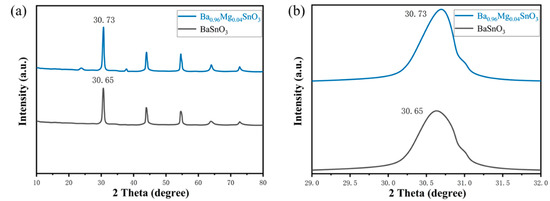
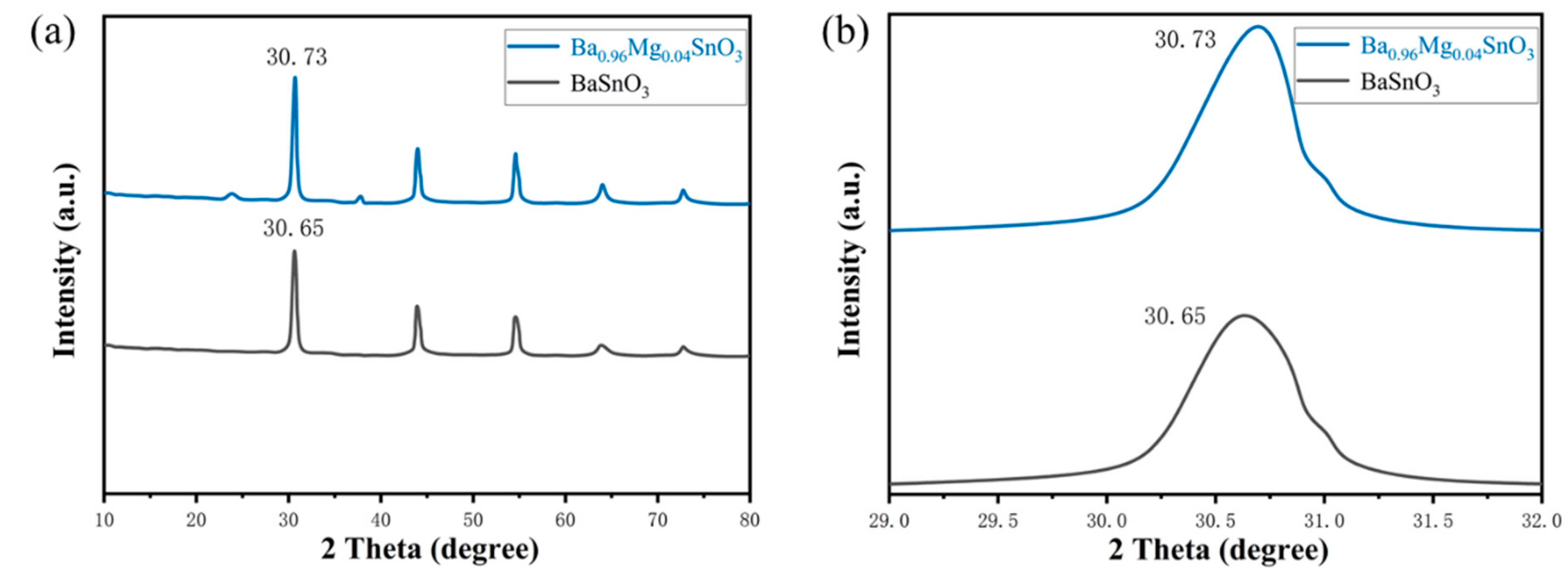
To determine the phase composition of the prepared catalysts, X-ray diffraction (XRD) analysis was performed, and the results were compared with standard reference patterns. As shown in Figure 1, most diffraction peaks of Ba0.96Mg0.04SnO3 match those of BaSnO3, while the remaining peaks correspond to MgO. After Mg doping, both the positions and intensities of the diffraction peaks changed noticeably, yet all main peaks could still be indexed to the perovskite phase. The XRD peak shifted to the right, and the most common reason for this shift is lattice defects in the sample. The sharper characteristic peaks of the doped sample indicate improved crystallinity and confirm that Mg was successfully incorporated into the perovskite lattice.
Figure 1.
XRD of BaSnO3 and Ba0.96Mg0.04SnO3: (a) full spectra and (b) magnified views.
The strongest diffraction peak of Ba0.96Mg0.04SnO3 appears at 2θ = 30.73°, shifted toward a higher angle compared with the strongest peak of BaSnO3 at 2θ = 30.65°. This shift is attributed to the smaller ionic radius of Mg2+ relative to Ba2+, whereby partial substitution decreases the interplanar spacing, resulting in a higher 2θ value [26]. The presence of MgO peaks suggests that excessive Mg2+ did not disrupt the perovskite lattice but rather formed a separate MgO phase, which may contribute to the enhanced CO2 selectivity of Ba0.96Mg0.04SnO3.
3.2. Structural Characterization Analysis
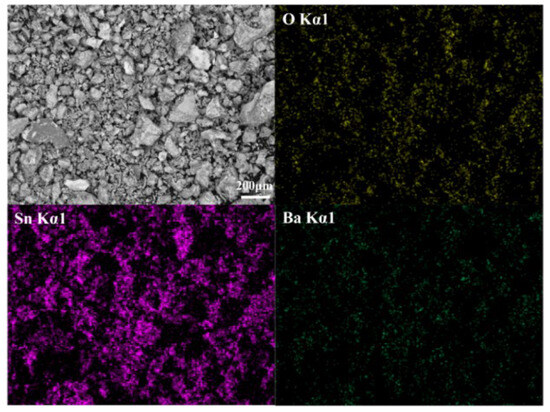
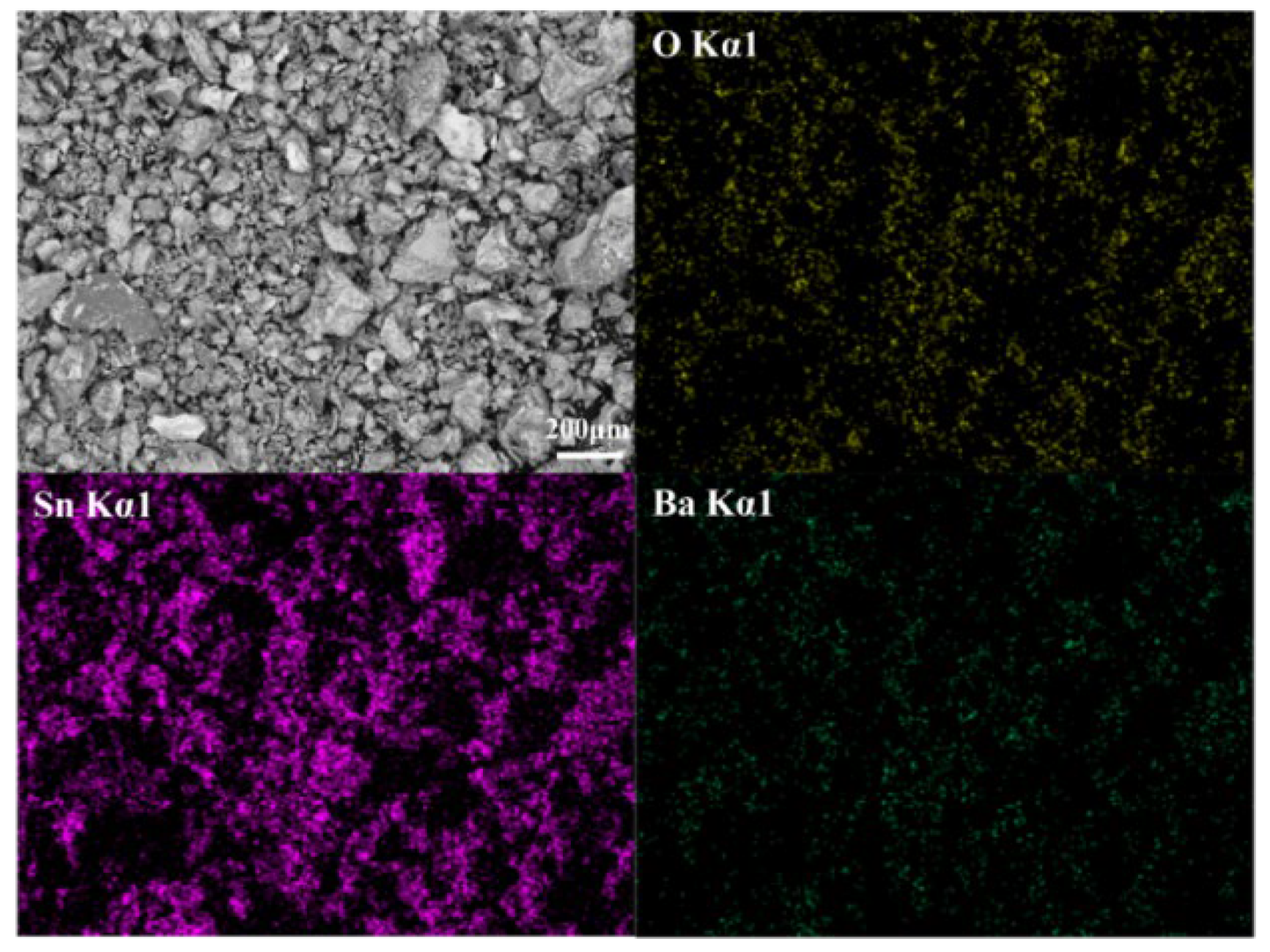
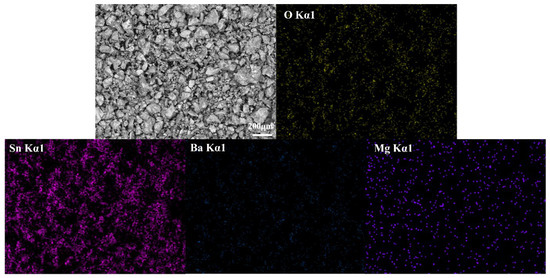
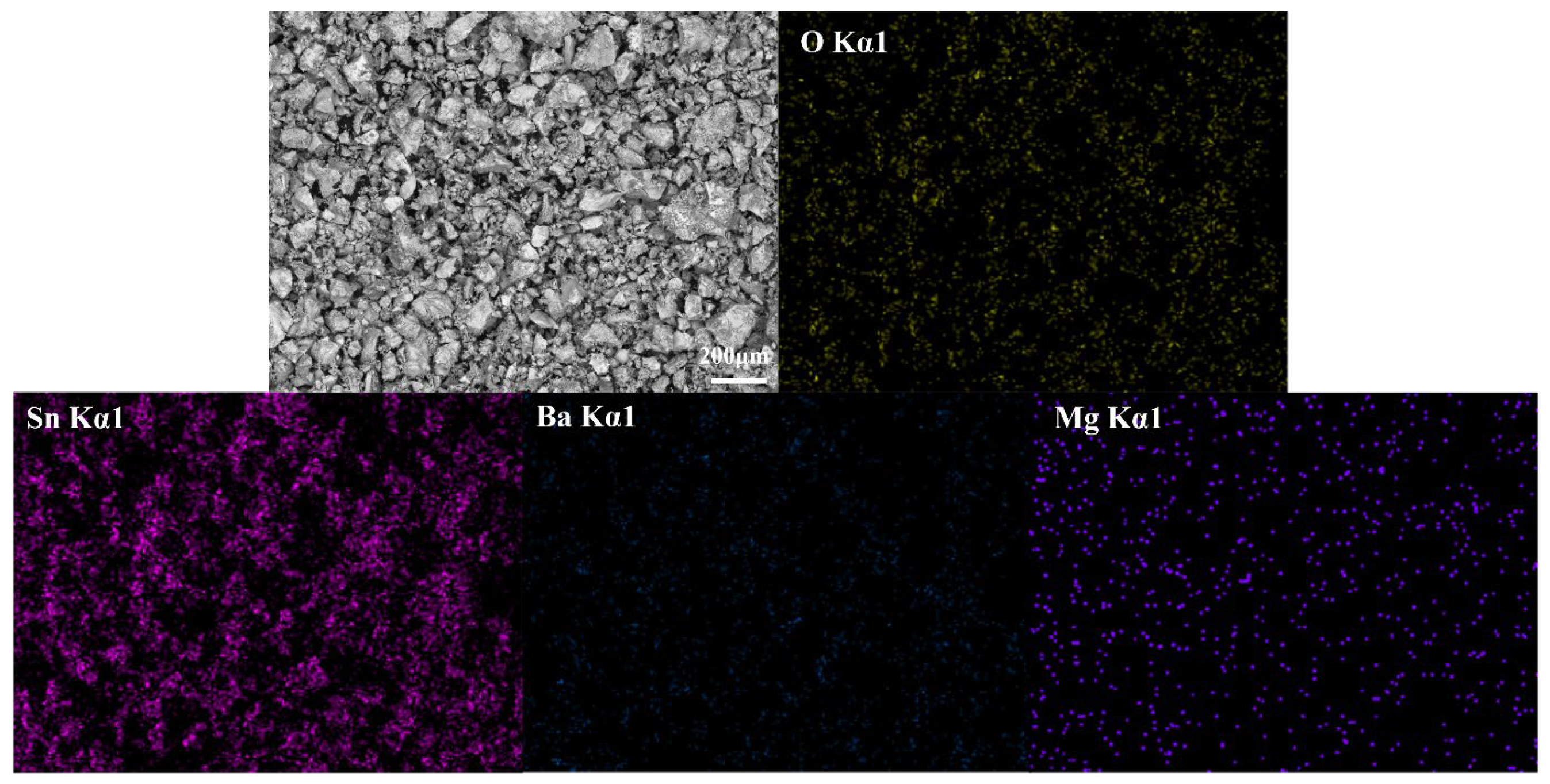
As shown in Figure 2 and Figure 3, by comparing the SEM images of BaSnO3 and Ba0.96Mg0.04SnO3, it was found that the morphology before and after doping was the same, both in the form of particles. However, BaSnO3 exhibits a relatively rough surface structure, with particles of varying sizes and dense distribution, and agglomeration phenomena in some areas. However, Ba0.96Mg0.04SnO3 exhibits relatively uniform particle distribution, consistent particle size, and clear gaps between particles, indicating that Mg doping may suppress excessive growth and agglomeration of particles to some extent, making the microstructure of the material more regular.
Figure 2.
SEM and EDS images of BaSnO3.
Figure 3.
SEM and EDS images of Ba0.96Mg0.04SnO3.
EDS maps corroborate these observations, the distribution of O, Sn, and Ba elements was relatively wide, presenting a relatively uniform element distribution state overall, which was consistent with the expected composition of BaSnO3. In the EDS image of Ba0.96Mg0.04SnO3, in addition to O, Sn, and Ba elements, Mg element also appeared, and the distribution of Mg element showed a certain point like feature, Ba0.96Mg0.04SnO3 be demonstrated to have a Mg doped structure from Figure 3. The relatively content of MgO is 0.04%, which indicates that most Mg2+ ions are incorporated into the BaSnO3 lattice rather than forming a separate MgO phase. This minor amount of MgO may slightly influence the catalytic activity of Ba0.96Mg0.04SnO3 but does not change the overall perovskite structure. This indicated that Mg had been successfully doped into the lattice of BaSnO3, but its distribution may not be completely uniform, and it might form enriched regions or exist in the form of a second phase in some areas. This was consistent with the XRD detection finding of MgO characteristic peaks.
In this experiment, the particle size was measured using the direct method, the geometric size of the particles was directly observed through electron microscopes, and the “representative size” was obtained.
From Table 3, it can be seen that Mg doping has improved the physical properties of BaSnO3, resulting in a reduction in overall particle size and an increase in specific surface area. The average particle size of D50 decreased by 16%, and the specific surface area increased by nearly 26%. It can be inferred that Mg doping can optimize the physicochemical properties of BaSnO3 and enhance its catalytic performance.
Table 3.
Particle size and specific surface area of catalysts in fresh state.
4. Discussion
Compared with pure BaSnO3, the specific surface area, oxygen storage, thermal stability and structural stability of Mg doped BaSnO3 have been improved, further inhibiting the sintering agglomeration of BaSnO3 surface under high temperature environment, and the anti-aging performance of the catalyst has also been improved accordingly. Although BaSnO3 outperforms in terms of specific surface area and oxygen storage capacity, Ba0.96Mg0.04SnO3 performs better in catalytic activity testing. Compared to BaSnO3, Ba0.96Mg0.04SnO3 has significantly improved cyclic reaction performance due to its better structural and thermal stability. The lifetime and carbon deposition of cyclic reactions have also been significantly enhanced. Among them, the cyclic reaction times of Ba0.96Mg0.04SnO3 can reach more than 40 times, and the highest carbon deposition can reach 22.54%, whereas the undoped BaSnO3 catalyst completed only 24 cycles with a maximum carbon deposition rate of 12.68%.
5. Experimental Section
5.1. Oxygen Storage Performance and Anti-Aging Performance Test
5.1.1. Oxygen Storage Performance Test of Catalyst in Fresh State
Oxygen storage performance detection steps are as follows:
Place the sample to be tested in the reactor, introduce H2 to raise the temperature to 550 °C, and reduce the powder sample product about 3 h, then switch to N2 blowing, cool the sample to 200 °C, pulse O2 at constant temperature, and measure the oxygen storage capacity (OSC) according to calculate the sample oxygen storage capacity based on the oxygen adsorption capacity.
The oxygen storage performance test data of the catalysts in fresh state are shown in Table 4.
Table 4.
The oxygen storage capacity of the catalysts in fresh state.
According to the test data, the measured oxygen storage capacity of Ba0.96Mg0.04SnO3 is 433 μmol/g, which is 6.1% higher than that of undoped BaSnO3. This proves that Mg doping can enhance the oxygen storage capacity of perovskite BaSnO3.
In Mg doping in the presence of impurities, the specific surface area of the catalyst significantly increases, resulting in the contact surface between the catalytic material and the gas reactants correspondingly expands, thereby enhancing its adsorption capacity. Introducing impurity ions into the lattice structure to induce lattice defects by generating and increasing the number of oxygen vacancies, the fluidity of lattice oxygen is improved, significantly enhancing the material’s oxygen storage capacity.
5.1.2. Anti-Aging Performance Test
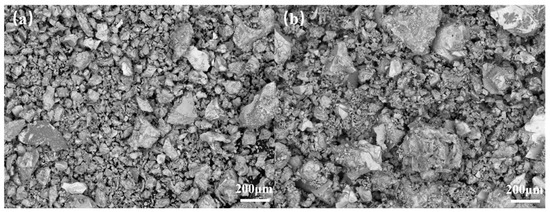
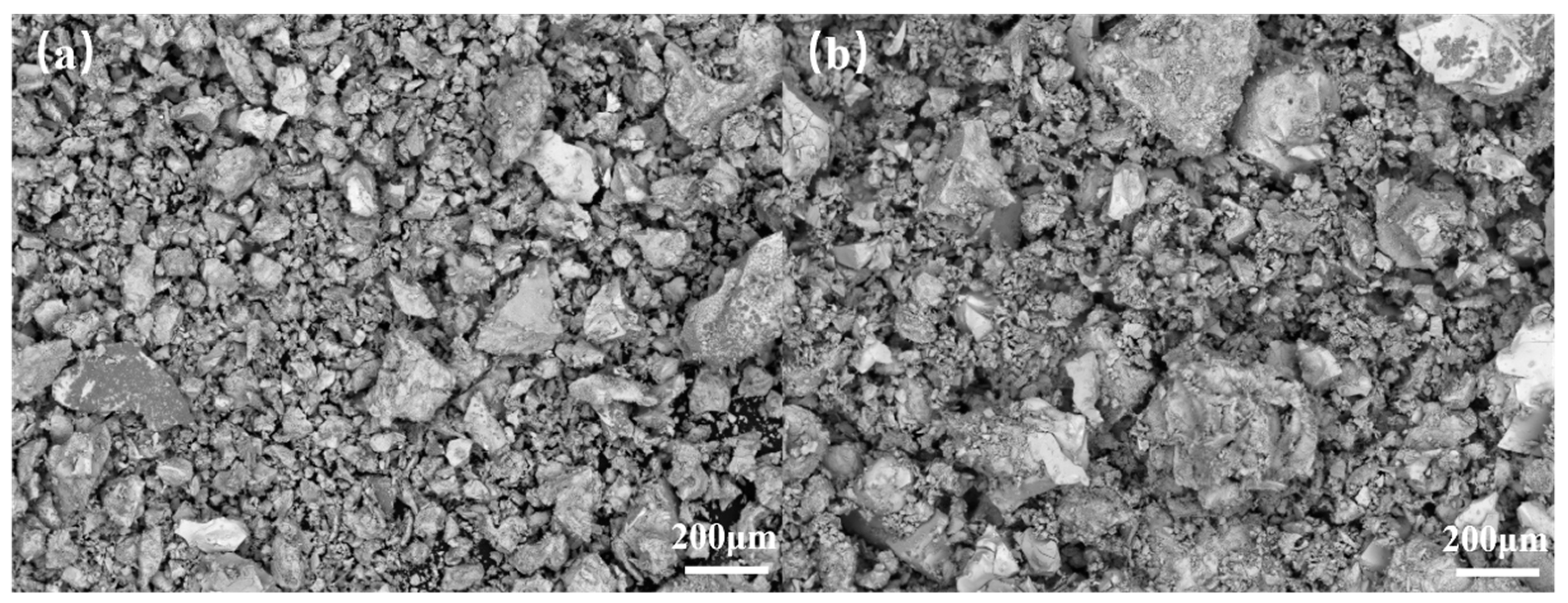
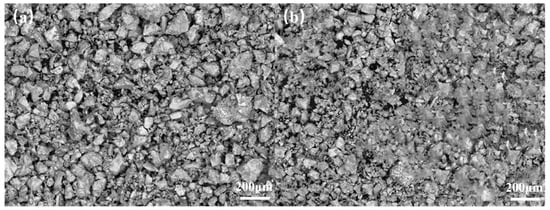
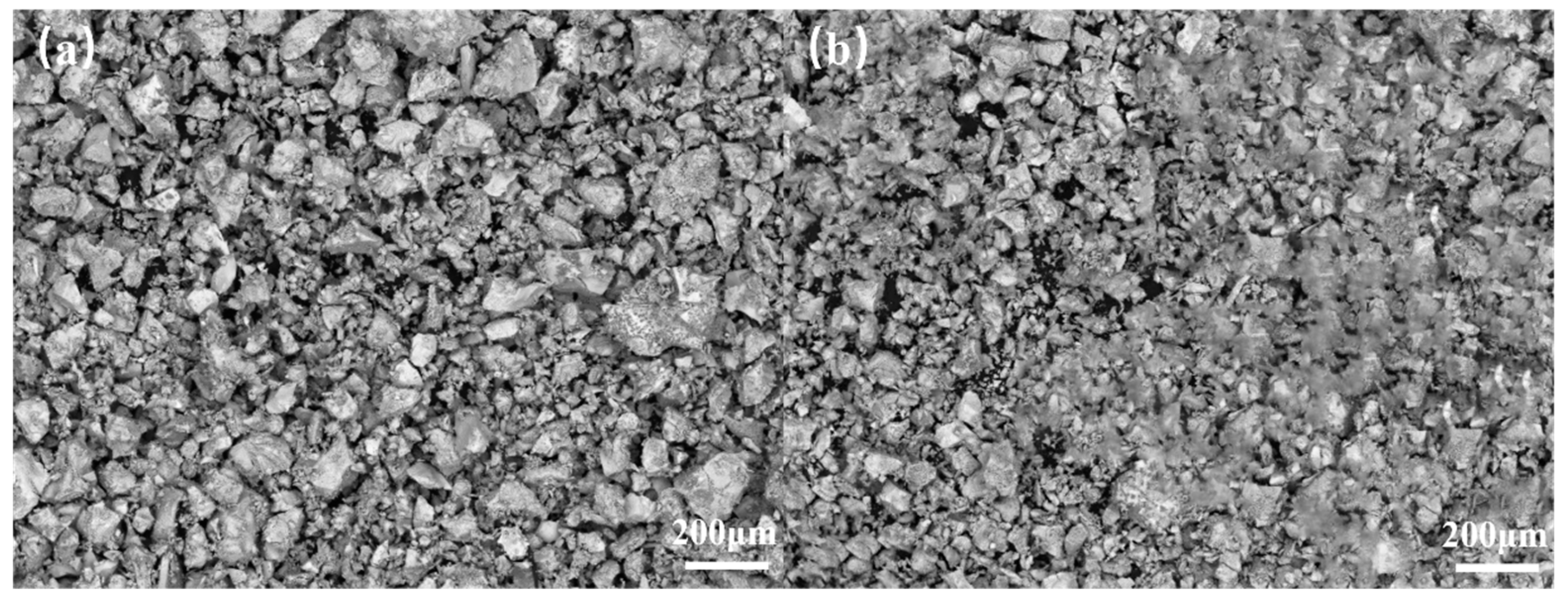
In the anti-aging performance test, a small amount of catalyst powder was selected to be thermally aged at 1200 °C for 4 h, and then cooled at room temperature after thermal aging. Then the catalyst after thermal aging was analyzed by SEM, and the specific surface area and oxygen storage capacity were measured to analyze its anti-aging performance. The test results are shown in Figure 4 and Figure 5 and Table 5.
Figure 4.
SEM images of BaSnO3 before and after thermal aging. (a) Before thermal aging of BaSnO3; (b) After thermal aging of BaSnO3.
Figure 5.
SEM images of Ba0.96Mg0.04SnO3 before and after thermal aging. (a) Before thermal aging of Ba0.96Mg0.04SnO3; (b) After thermal aging of Ba0.96Mg0.04SnO3.
Table 5.
Specific surface area and oxygen storage capacity of catalyst after thermal aging.
- (1)
- SEM analysis of catalyst after thermal aging
By comparing Figure 4a,b, it was found that after thermal aging treatment, the particles underwent sintering and the particle size significantly increased, with a small number of small particles. However, by comparing Figure 5a,b, it could be seen that although sintering occurred in the aged particles, there was no obvious agglomeration phenomenon, and the particle size was basically the same as before aging. This may be because Mg doping enhanced the dispersion of other components, thus avoiding the agglomeration between grains, that is, Mg doping improved the anti-aging performance of perovskite BaSnO3.
- (2)
- Specific surface area and oxygen storage capacity of catalyst after thermal aging
From the data in Table 5, it could be seen that after the 1200 °C thermal aging experiment, the specific surface area and oxygen storage capacity of the sample decreased due to the sintering phenomenon at high temperatures. In the absence of doping, the specific surface area decreased from 46.42 m2/g to 19.65 m2/g, with a reduction rate of 57.7%. In the case of Mg doping, the specific surface area decreased from 58.35 m2/g to 28.71 m2/g, with a reduction rate of 50.8%; At the same time, the reduction rate of oxygen storage under doping was significantly lower than that without doping, and the reduction rate of Mg doping was only 21.2%, which was much lower than that of undoped 37.3%. Therefore, Mg doping can enhance the thermal aging resistance of BaSnO3.
5.2. Adsorption Performance and Catalytic Activity Testing
5.2.1. Gas Adsorption Performance Test
In multiphase catalytic reactions, the adsorption and activation of gaseous reactants on the surface of catalyst powder is a prerequisite for the start of the catalytic reaction, forming an activated adsorption state, reducing the activation energy of the reaction process, and thus promoting the progress of the reaction.
After pretreatment of the catalyst powder, a programmed temperature fixed reactor was used as the adsorption test platform to determine its adsorption performance for CO2. The specific operation was as follows: 20 g of ground catalyst was weighed, evenly spread on a stainless-steel plate, and placed in a temperature-controlled reactor. Firstly, Argon (Ar) was blown into the chamber at 400 °C for 1 h to remove the gas and moisture adsorbed on the surface of the catalyst powder. Subsequently, the temperature was lowered to 200 °C in an Ar atmosphere, then CO2 was blown into the chamber. When CO2 concentration was 1000 ppm (with Ar as the equilibrium gas), the temperature was programmed to 500 °C, at the same time CO2 concentration values was measured every minute.
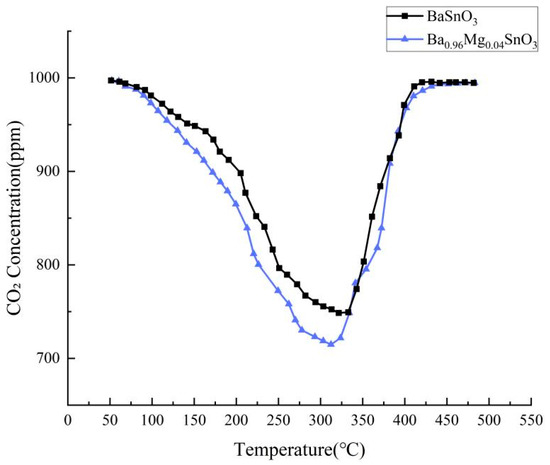
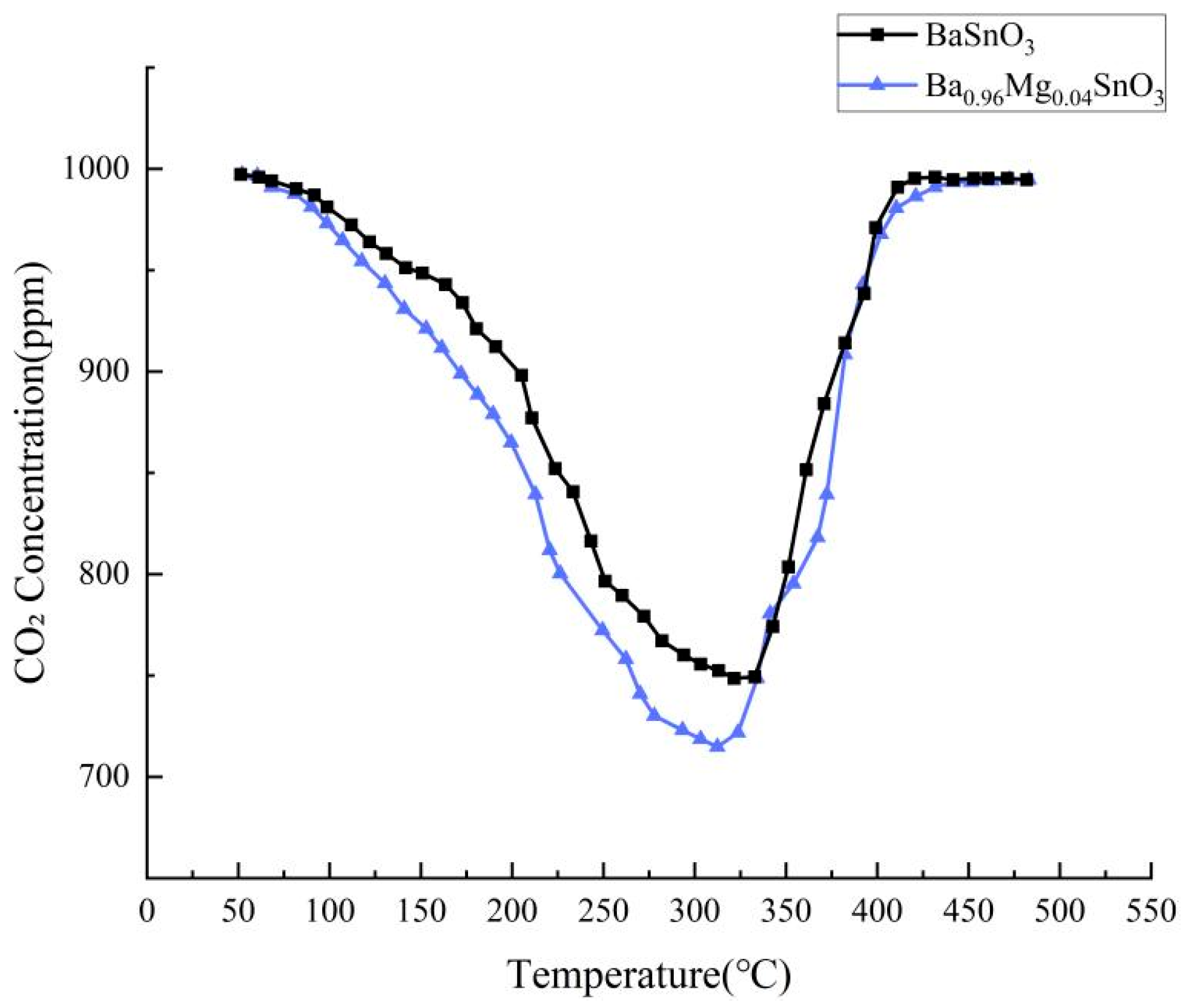
Figure 6 shows the CO2 concentration change curve of the catalyst before and after Mg doping in the CO2 adsorption experiment. The simulated gas composition is a mixture of CO2+Ar, with a CO2 concentration of 1000 ppm. When the concentration of CO2 decreases, it indicates the adsorption capacity of CO2 on the catalyst surface.
Figure 6.
CO2 adsorption curves before and after Mg doping.
From Figure 6, it can be seen that there are two obvious concave regions in the concentration change curve. The adsorption curve of Ba0.96Mg0.04SnO3 has a higher degree of concave at around 130 °C compared to BaSnO3. The main reason for this is that the doped catalyst has an increased specific surface area, improved contact state, and thus better physical adsorption performance.
As the temperature increases, the catalyst is mainly activated through chemical adsorption. The CO2 adsorption rate accelerates and the adsorption amount increases accordingly. The intermolecular forces drive the CO2 gas to adsorb in the oxygen vacancy of the catalyst. Compared with the adsorption curve of BaSnO3, the slope of the adsorption curve of Ba0.96Mg0.04SnO3 is larger at around 200 °C, and it shows a significant downward shift, and indicates a faster CO2 adsorption rate and a higher CO2 adsorption capacity at the same temperature. The adsorption peak shifts significantly downwards, and the CO2 adsorption rate at the highest peak is about 28.3%. At all high temperature stages, its decreasing slope and adsorption amount are greater than those of BaSnO3, it indicates that Mg doping improves the CO2 adsorption rate and adsorption amount of BaSnO3.
5.2.2. Catalytic Activity Testing
A temperature-controlled reactor was employed as the catalytic reaction platform to evaluate catalyst activity. 20 g of catalyst were loaded into the reactor, and oxygen-deficient catalysts (BaSnO3−δ, Ba0.96Mg0.04SnO3−δ) were generated in situ under a hydrogen atmosphere at a reduction temperature of 320 °C, with a hydrogen flow rate of 40 m·min−1 for 3 h. Upon completion of the reduction, the reactor was evacuated for 20 min using a vacuum pump, purged with argon for 20 min, and evacuated again for 10 min. CO2 was then introduced into the reactor for the catalytic activity test until the pressure reached 0.1 MPa, and the pressure-time (P-t) data were recorded immediately. The total reaction time for each cycle was 2–4 h. When the number of reaction cycles reached a certain threshold, complete CO2 reduction could no longer be achieved. Before initiating the next cycle, the residual gas in the reactor was evacuated, and hydrogen was reintroduced to regenerate the catalyst. After all cyclic reactions were completed, the samples were cooled to room temperature, and carbon deposition was quantified using an elemental analyzer. The reaction equations involved in the process were as follows:
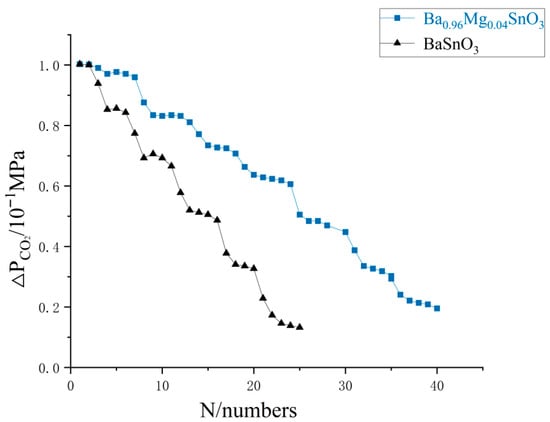
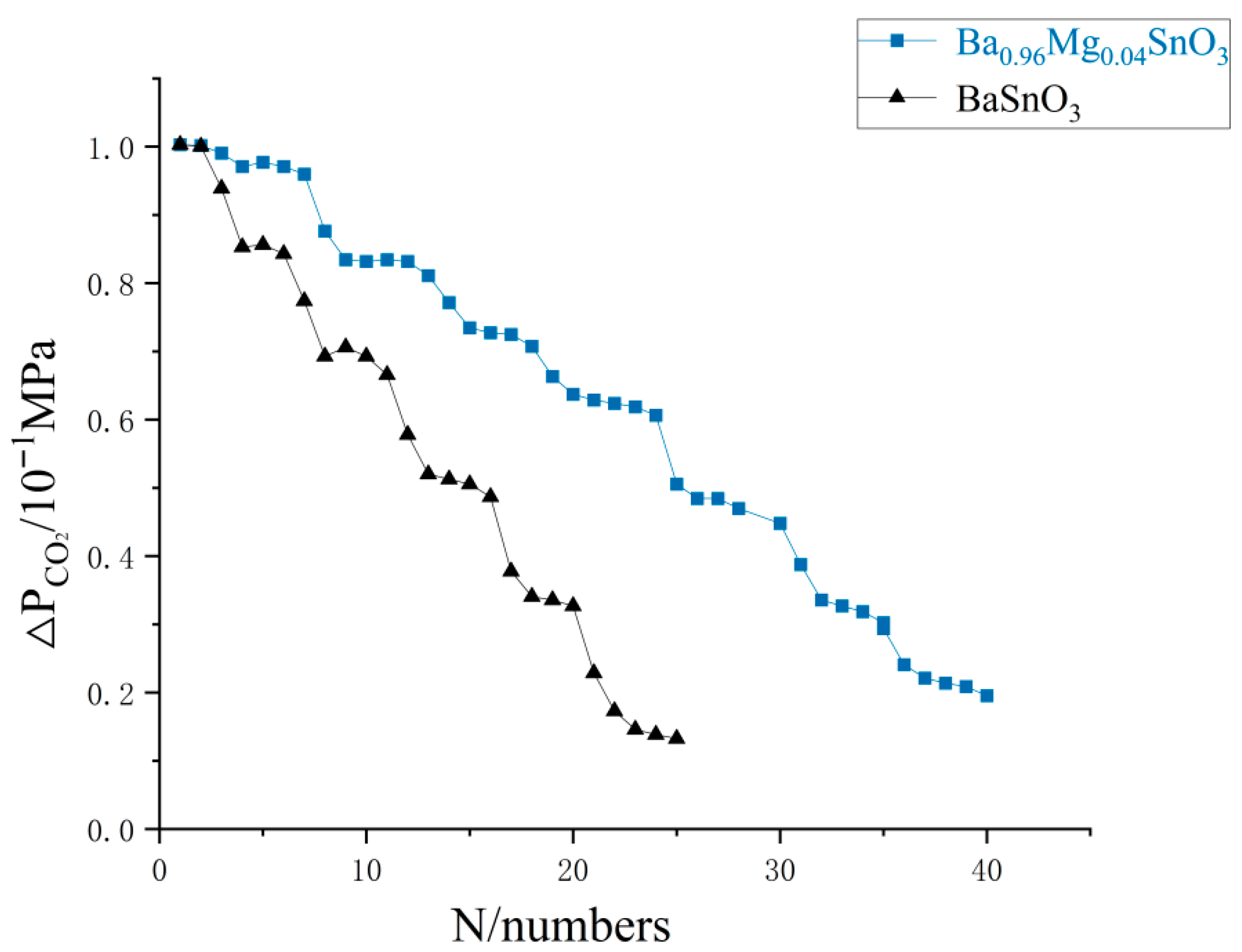
As shown in Figure 7, the CO2 pressure drop in the first two reaction cycles of BaSnO3 was close to 1. With increasing cycle number, the pressure drop decreased in a stepwise manner. By the 11th cycle, BaSnO3 maintained a decomposition rate above 60%. From the 13th to the 16th cycle, the CO2 conversion rate plateaued at approximately 50%. Between the 18th and 20th cycles, the conversion rate stabilized at around 33%, indicating that the catalyst still retained some CO2 reduction capability. At the 21st cycle, the conversion rate sharply declined to 20%, and by the 24th cycle, it dropped to about 10%, rendering CO2 decomposition nearly impossible.
Figure 7.
CO2 pressure drops variation curve with the number of cycles.
For Ba0.96Mg0.04SnO3, the CO2 pressure drop also decreased progressively with increasing cycle number; however, the decline in conversion rate was markedly slower than that of BaSnO3, indicating superior retention of catalytic activity. As summarized in Table 6, 4% Mg doping substantially enhanced the cyclic reaction performance, operational lifetime, and carbon deposition capacity. The Ba0.96Mg0.04SnO3 catalyst achieved up to 40 reaction cycles with a peak carbon deposition rate of 22.54%, whereas the undoped BaSnO3 catalyst completed only 24 cycles with a maximum carbon deposition rate of 12.68%.
Table 6.
The number of cyclic reactions and carbon deposition of catalysts.
From the data in Table 5, it could be seen that after 4% Mg doping, the cyclic reaction performance, lifetime, and carbon deposition of BaSnO3 have been greatly improved and enhanced. The maximum number of cyclic reactions for Ba0.96Mg0.04SnO3 was 40, with a maximum carbon deposition rate of 22.54%, while the maximum number of cyclic reactions for BaSnO3 was 24, with a maximum carbon deposition rate of 12.68%. Although doping makes the structure more stable, with the increase of doping amount, the degree of oxygen vacancy δ is positively correlated with CO2 decomposition activity [27], making it easier for CO2 to adsorb on its surface.
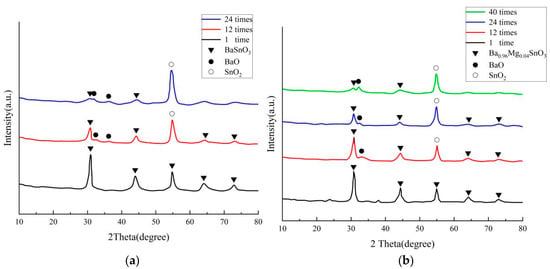
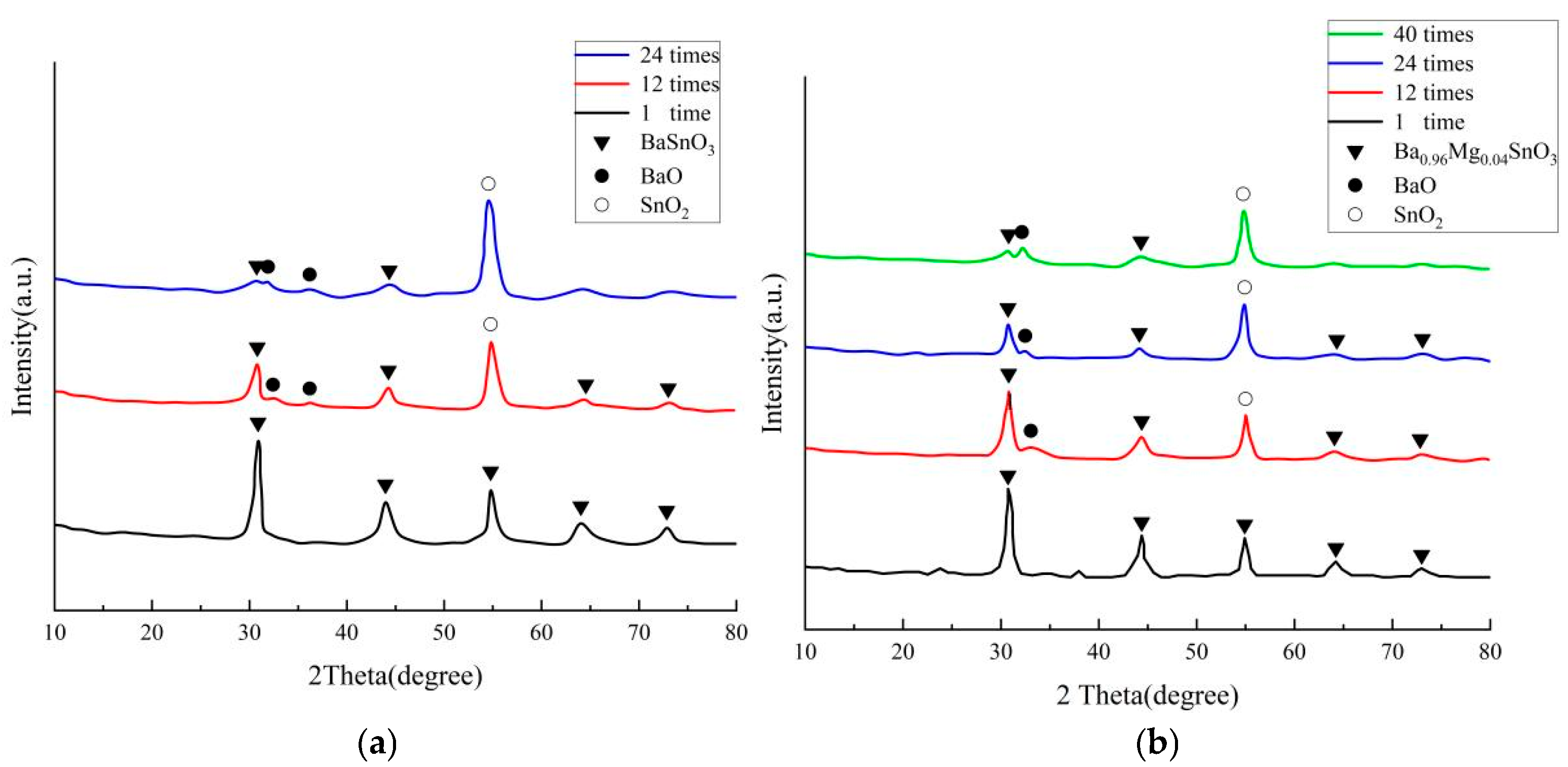
Figure 8a,b presents the XRD patterns of BaSnO3 and Ba0.96Mg0.04SnO3 after different numbers of reaction cycles. With increasing cycle number, the characteristic diffraction peaks of both catalysts gradually weakened, accompanied by the emergence of strong SnO2 peaks and weak BaO peaks. This indicates a progressive reduction in the proportion of the perovskite phase, with increasing SnO2 content and decreasing BaO content, until BaSnO3 was completely decomposed in the system. Notably, under the same number of cycles, Ba0.96Mg0.04SnO3 retained stronger perovskite peaks than BaSnO3, confirming that Mg doping enhances structural stability. The doped catalyst’s oxygen-deficient lattice was less prone to collapse, thereby slowing the disintegration of the crystal structure, extending the cyclic reaction lifetime, and promoting higher carbon deposition.
Figure 8.
XRD diffraction patterns of (a) BaSnO3, (b) Ba0.96Mg0.04SnO3 under different cycle reaction times.
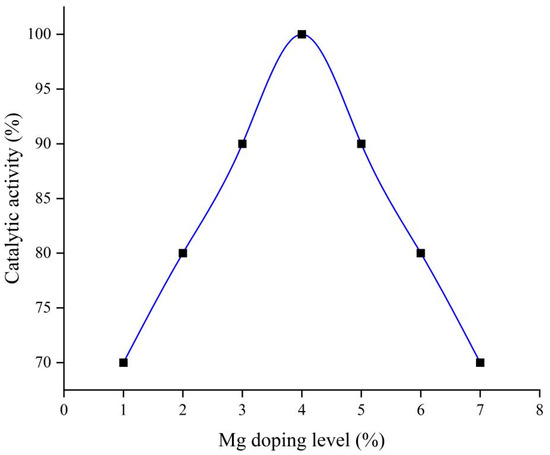
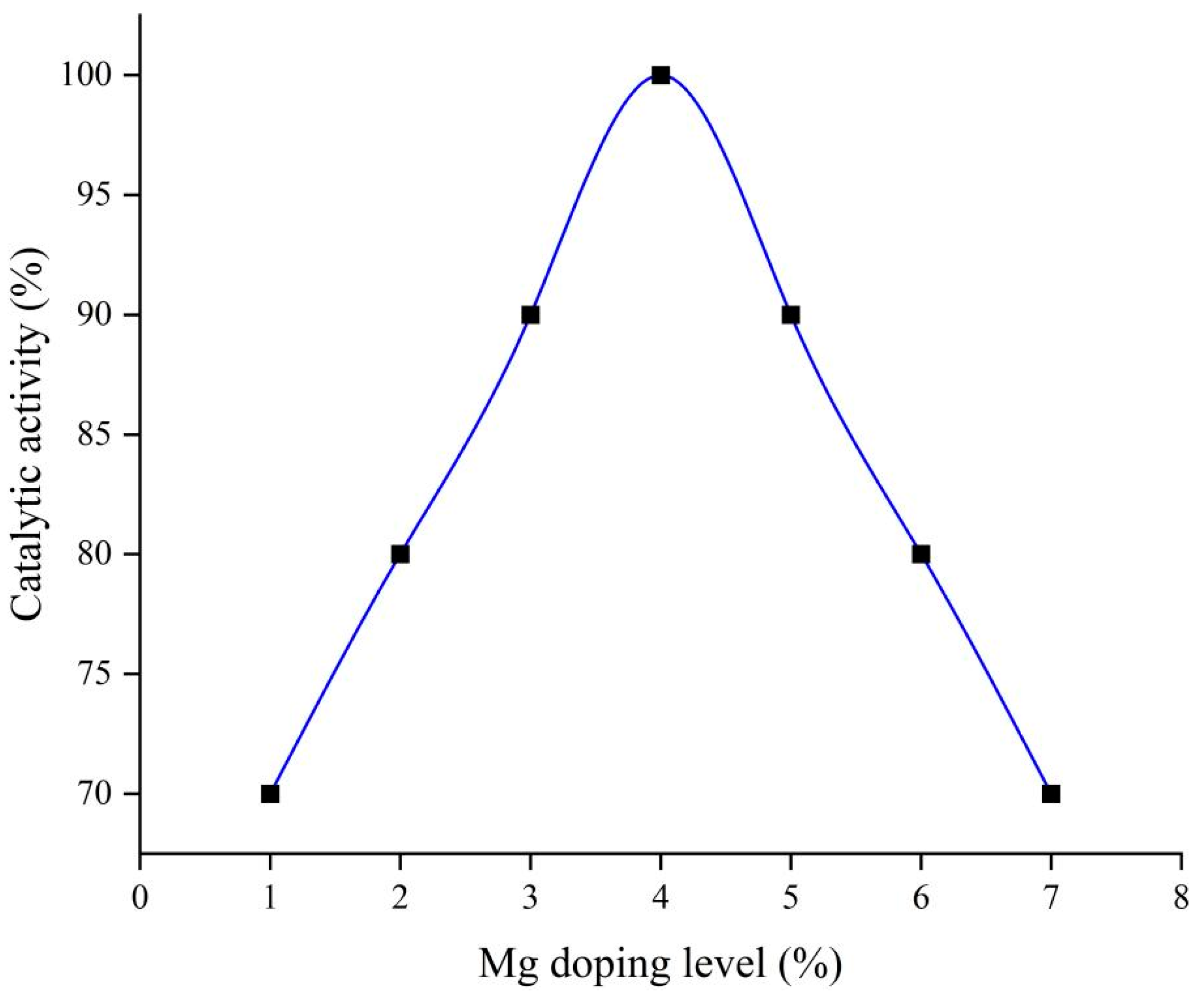
As shown in Figure 9, it has been experimentally proven that the activity of catalyst Ba0.96Mg0.04SnO3 gradually increases with the increase of Mg doping ratio starting from 1%, and reaches its highest point at 4%. Subsequently, as the Mg doping ratio increased, the activity of the catalyst actually decreased, which was attributed to the decrease in Ba element content leading to a decrease in catalyst activity.
Figure 9.
Catalytic activity change with the doping level of Mg.
6. Conclusions
The research objective of this paper is to reduce CO2 emissions from marine diesel engines. It innovatively proposes the use of perovskite catalysts to decompose CO2 from diesel engine. The research methods used are to modifies BaSnO3 catalyst by partially replacing Ba with 4% Mg doped BaSnO3. The physicochemical properties of BaSnO3 and Ba0.96Mg0.04SnO3 catalyst were characterized using ICP, OSC, SEM, and EDS techniques, while their CO2 adsorption and catalytic performance were systematically evaluated.
The results show that Mg doping effectively enhances the specific surface area, oxygen storage capacity, structural stability, and thermal stability of BaSnO3. These improvements suppress surface sintering and agglomeration at high temperature and significantly strengthen the catalyst’s anti-aging capability. Consequently, Ba0.96Mg0.04SnO3 exhibits higher catalytic activity and better cyclic stability than undoped BaSnO3. Its cyclic reaction lifetime and carbon deposition performance are also improved, with stable operation for more than 40 cycles and a maximum carbon deposition ratio of 22.54%.
Author Contributions
Writing—original draft, L.G.; Writing—review & editing, J.G.; Funding acquisition, J.G. All authors have read and agreed to the published version of the manuscript.
Funding
This work was supported by the National Natural Science Foundation of China. Grant number is 11272213.
Data Availability Statement
All data, models, and code generated or used during the study appear in the submitted article.
Acknowledgments
In writing this paper, I have benefited from the presence of my colleagues. They generously helped me collect the materials and offered many invaluable suggestions. I hereby extend my grateful thanks to them for their kind help, without which the paper would not have been what it is.
Conflicts of Interest
The author declares that there is no conflict of interest regarding the publication of this paper.
References
- Zhang, X.; Li, Y.; Ma, Q.; Liu, L. Development of Carbon Capture, Utilization and Storage Technology in China. Chin. Eng. Sci. 2021, 23, 70–80. [Google Scholar] [CrossRef] [Scilit]
- Lu, M.; Dong, S.; Yan, X.; Li, K.; Li, X.; Zhou, X. Review on ship-based carbon capture, utilization and sequestration technology. J. Traffic Transp. Eng. 2024, 24, 1–19. [Google Scholar]
- Zhang, G.; Zhu, Q.; Yu, J. Application analysis and prospects of CO2 capture technology in ship carbon reduction. Qingdao Yuan Yang Chuan Yuan Zhi Ye Xue Yuan Xue Bao 2024, 45, 31–36. [Google Scholar]
- Wu, L.; Li, R.; Zheng, Z.; Dai, J. Application and Prospect of CO2 Emission Reduction Technology in the Shipbuilding Industry. Ship Stand. Eng. 2023, 56, 22–26. [Google Scholar]
- Ding, C.; Li, K.; Yan, Y.; Wang, D.; Xiao, Z.; Liu, F.; Zhang, X.; Li, Q.; Guo, X.; Zhang, Z. Research progress on different catalytic techniques for carbon dioxide reduction reaction. Metrol. Sci. Technol. 2025, 69, 28–36. [Google Scholar]
- Bao, J.; Yang, G.; Yoneyama, Y.; Tsubaki, N. Significant advances in C1 catalysis: Highly efficient catalysts and catalytic reactions. ACS Catal. 2019, 9, 3026–3053. [Google Scholar] [CrossRef] [Scilit]
- Wang, H.; Zhao, Z.; Liang, P. Highly active La1-XKXCoO3 perovskite-type complex oxide catalysts for the simultaneous removal of diesel soot and nitrogen oxides under loose contact conditions. Catal. Lett. 2008, 124, 91–99. [Google Scholar] [CrossRef] [Scilit]
- Peng, M.; Yan, Z.; Yin, X.; Du, H. Progress in perovskite oxide catalysis. Appl. Chem. Ind. 2020, 49, 212–216. [Google Scholar]
- Ye, Q.; Li, X.; Ma, X.; Li, P.; Liu, W.; He, D.; She, L. Mechanism study on photocatalytic degradation of diethyl phthalate by BaSnO3 perovskite. China Environ. Sci. 2023, 43, 1208–1215. [Google Scholar]
- Balamurugan, K.; Kumar, N.H.; Chelvane, J.A.; Santhosh, P.N. Effect of W co-doping on the optical, magnetic and electrical properties of Fe-doped BaSnO3. Phys. B Condens. Matter 2012, 407, 2519–2523. [Google Scholar] [CrossRef] [Scilit]
- Lee, G.Y.; Lee, G.G.; Lim, Y.S.; Yoon, S.H. Significantly enhanced reliability in highly accelerated life tests of Mg-doped BaTiO3 ceramics using a water-soluble Mg dopant. Ceram. Int. 2025, 51, 11627–11633. [Google Scholar] [CrossRef] [Scilit]
- Hao, W.; Ren, D.; Luo, S.; Zuo, Z. Mechanism of NO removal in selective catalytic reduction based on γ-Fe2O3 catalyst doped with Mg element. Can. J. Chem. Eng. 2023, 101, 4683–4691. [Google Scholar] [CrossRef] [Scilit]
- Zhong, D.; Liu, L.; Li, W.; Liu, L.; Nan, J.; Li, Q. Synergistic effect of Ni and B’ Sites on Perovskite type La2NiB’O6 catalyst and its effect on catalytic performance for carbon dioxide methanation. J. Mol. Sci. 2024, 40, 70–76. [Google Scholar]
- Chen, Y. High-Entropy Perovskite Oxide Materials: Synthesis and Investigation of Their Electro-Chemical Performance. Ph.D. Thesis, University of Electronic Science and Technology of China, Chengdu, China, 2022. [Google Scholar]
- Zhang, S.; Lou, C.; Li, W.; Su, X. Hollow spherical high-entropy perovskite oxide for supercapacitor and OER applications. J. Chin. Ceram. Soc. 2024, 19, 1–43. [Google Scholar]
- Wu, K.; Li, W. Preparation of CuO/LaMnO3 catalyst and its CO oxidation performance. Ind. Catal. 2024, 32, 53–57. [Google Scholar]
- Wang, Q.; Wang, X.; Xu, K.; Zhou, T.; Qu, J.; Yu, Y. Preparation and characterization of layered perovskite type oxide NaGdTiO4. Shangdong Chem. Ind. 2024, 53, 1–3. [Google Scholar]
- Peng, L. Synthesis of Three-Dimensionally Ordered Macroporous Perovskite for the Catalytic Hydrodeoxygenation. Master’s Thesis, Xiangtan University, Xiangtan, China, 2024. [Google Scholar]
- Zhu, S. Synthesis and Electrocatalytic Oxygen Evolution Performance Study of Fe-Based Perovskite Oxides. Master’s Thesis, Henan University, Kaifeng, China, 2024. [Google Scholar]
- Yang, L. Preparation of Iridium-Containing Perovskite Oxides and Study on the Properties of Overall Water Splitting. Master’s Thesis, Henan University, Kaifeng, China, 2024. [Google Scholar]
- Zhang, H. Study on the Preparation and Electrochemical Performances of Manganese Based Perovskite Oxides for Water Splitting. Master’s Thesis, Henan University, Kaifeng, China, 2024. [Google Scholar]
- Dai, X. Preparation and Electrocatalytic Properties of LaCoO3 Perovskite Materials. Master’s Thesis, Hubei University, Wuhan, China, 2024. [Google Scholar]
- Ye, S. Preparation and characterization of nanoparticles of BaSnO3. Chem. Intermed. 2013, 10, 56–60. [Google Scholar]
- Fu, M.; Chen, L.; Chen, S. Preparation, Structure, and Catalytic Decomposition Performance of Doped Iron Salts for CO2 to C. Chem. J. Chin. Univ. 2005, 2279–2283, 2192. [Google Scholar]
- Malyshev, S.A.; Shlyakhtin, O.A.; Lazarenko, D.A.; Beresnev, K.A.; Valeev, R.G.; Petukhov, D.I.; Kustov, A.L. Synthesis and complete reduction of Nd1.5Ca0.5NiO4: A route to composite Ni-based CO2 hydrogenation catalysts with tunable microstructure. Int. J. Hydrogen Energy 2025, 151, 150159. [Google Scholar] [CrossRef] [Scilit]
- Zhao, L.; Han, T.; Wang, H. Ni-Co alloy catalyst from LaNi1−XCoXO3 perovskite supported on zirconia for steam reforming of ethanol. Appl. Catal. B Environ. 2016, 187, 19–29. [Google Scholar] [CrossRef] [Scilit]
- Zhang, C.; Wu, T.; Yang, H.; Jiang, Y. Research on the conversion of CO2 to C in magnetite type compounds with oxygen deficiency. J. Inorg. Chem. 1996, 12, 61–66. [Google Scholar]

Disclaimer/Publisher’s Note: The statements, opinions and data contained in all publications are solely those of the individual author(s) and contributor(s) and not of MDPI and/or the editor(s). MDPI and/or the editor(s) disclaim responsibility for any injury to people or property resulting from any ideas, methods, instructions or products referred to in the content. |
© 2026 by the authors. Licensee MDPI, Basel, Switzerland. This article is an open access article distributed under the terms and conditions of the Creative Commons Attribution (CC BY) license.