


Abstract
Direct conversion of CO2 into fuels or chemicals using solar energy has long been a topic of interest among researchers. However, the severe recombination of photogenerated carriers in photocatalysts often results in low conversion efficiency. To synergistically utilize both the light and thermal energy components of sunlight, this study designed a structurally simple Zn-Co bimetallic catalyst to enhance photocatalytic efficiency while lowering the temperature required for the thermal catalytic reaction. Through screening different precipitants, it was found that the Zn-Co catalyst prepared with NH3 as the precipitant exhibits outstanding activity for CO2 hydrogenation to methane at 240 °C, with CH4 selectivity exceeding 93%. Under the same conditions, the photothermal synergistic effect leads to an approximately 10% increase in turnover frequency (TOF). Structural characterization revealed that the NH3 precipitant effectively modulates the crystal phase, surface active sites, and electron transfer efficiency of the catalyst, thereby influencing the formation and desorption rates of key intermediates such as CO*, HCOO*, and *OCH3 during CO2 hydrogenation. The optimal photothermal synergy observed in this system further highlights the potential of catalyst design for achieving targeted product control.
1. Introduction
The escalating emission of carbon dioxide (CO2) from the combustion of fossil fuels has become a paramount global challenge, exacerbating the greenhouse effect and threatening ecological balance and energy sustainability [1,2]. Amidst various carbon capture, utilization, and storage (CCUS) technologies, the hydrogenation of CO2 to value-added fuels (e.g., methane (CH4) and carbon monoxide (CO)) has emerged as a promising strategy to mitigate CO2 accumulation while addressing the growing demand for renewable energy [3]. CH4, as a high-energy-density fuel, can be directly integrated into existing natural gas infrastructure, while CO serves as a critical feedstock for Fischer-Tropsch synthesis to produce liquid hydrocarbons [4,5]. However, the inherent chemical inertness of CO2, attributed to its stable C=O double bond (bond energy ≈ 750 kJ/mol), necessitates efficient catalytic systems to lower the activation energy barrier and achieve selective conversion under mild conditions [6].
Catalytic CO2 hydrogenation has been extensively investigated under thermal, photocatalytic, and photothermal catalytic conditions [7]. Traditional thermal catalysis typically operates at high temperatures (300–500 °C) and pressures (4–30 bar), resulting in substantial energy consumption and limited applicability for distributed energy system [7]. Photocatalysis, leveraging solar energy to drive CO2 reduction at room temperature, is regarded as an eco-friendly alternative [7]. Nevertheless, its practical implementation is hindered by rapid recombination of photo-generated electron-hole (e−/h+) pairs, low quantum yields, and poor light absorption in the visible and near-infrared (NIR) region [8]. In recent years, photothermal catalysis has emerged as a breakthrough technology that synergistically integrates the advantages of photocatalysis and thermal catalysis [9]. By converting light energy into thermal energy via photothermal materials, photothermal catalysis not only enhances light utilization efficiency but also provides moderate thermal energy to accelerate reactant activation, charge transfer, and mass transport, thereby boosting catalytic activity and product selectivity. This hybrid approach has demonstrated great potential in overcoming the limitations of single catalytic modes, enabling efficient CO2 hydrogenation under relatively mild conditions.
Transition metal-based catalysts, particularly bimetallic systems, have attracted significant attention for CO2 hydrogenation due to their adjustable electronic structures, synergistic metal interactions, and cost-effectiveness compared to noble metal catalysts [10]. Among these, zinc-cobalt (Zn-Co) bimetallic catalysts have garnered increasing interest owing to their unique physicochemical properties [4]. Zn, as a relatively inert metal, can modulate the electronic state and dispersion of Co active sites, while Co exhibits excellent catalytic activity for CO2 activation and H2 dissociation [4]. The synergistic effect between Zn and Co not only enhances the adsorption and activation of CO2 but also regulates the reaction pathway, thereby influencing the selectivity toward CH4 or CO. Previous studies have shown that Zn-Co catalysts can be tailored to favor either the methanation reaction (CO2 + 4H2 → CH4 + 2H2O) or the reverse water–gas shift (RWGS) reaction (CO2 + H2 → CO + H2O) by adjusting structural parameters such as metal ratio, crystal phase, and surface properties [11]. However, the performance of Zn-Co catalysts is highly dependent on their synthesis method and preparation conditions, which directly affect their structural characteristics and catalytic behavior.
Several studies have demonstrated the potential of bimetallic catalysts and photothermal materials in CO2 hydrogenation. For example, MXene-derived heterojunctions (e.g., Bi2WO6/Ti3C2Tx@Ag) have shown enhanced CO2 reduction activity and tunable CH4 selectivity due to their excellent photothermal conversion efficiency and efficient charge separation [12]. Similarly, Ni-based catalysts supported on V2C MXene (Ni@NiO/VC) have exhibited high CO2 conversion and CH4 selectivity under photothermal conditions, attributed to the synergistic effect of Ni/NiO and the superior photothermal properties of MXene [13]. These studies highlight the importance of catalyst structure engineering and photothermal material integration in improving CO2 hydrogenation performance. However, the application of Zn-Co bimetallic catalysts in photothermal CO2 hydrogenation, especially the effect of precipitants on their photothermal catalytic behavior, has not been fully explored.
In this work, Zn-Co bimetallic catalysts were synthesized via a co-precipitation method using Na2CO3, NaOH, and NH4OH as precipitants, denoted as Zn-Co(Na2CO3), Zn-Co(NaOH), and Zn-Co(NH4OH), respectively. The structural properties of the catalysts were systematically characterized using X-ray diffraction (XRD), scanning electron microscopy (SEM), energy-dispersive X-ray spectroscopy (EDS), X-ray photoelectron spectroscopy (XPS), Raman spectroscopy, hydrogen temperature-programmed reduction (H2-TPR), CO2 temperature-programmed desorption (CO2-TPD), and ultraviolet-visible diffuse reflectance spectroscopy (UV-vis DRS). The catalytic performance for CO2 hydrogenation to CH4/CO was evaluated under both thermal and photothermal conditions. The objectives of this study are (1) to investigate the effect of precipitants on the microstructure, crystal phase, surface chemical state, and electronic properties of Zn-Co catalysts; (2) to explore the catalytic activity, selectivity, and stability of Zn-Co catalysts under thermal and photothermal conditions; (3) to reveal the structure-performance relationship and the mechanism of CO2 hydrogenation over Zn-Co catalysts; and (4) to elucidate the synergistic effect of light and heat in photothermal catalytic CO2 hydrogenation. The findings of this work are expected to provide valuable insights into the rational design of efficient bimetallic catalysts for selective CO2 hydrogenation and promote the development of photothermal catalysis for sustainable energy production.
2. Results and Discussions
2.1. Catalyst Characterizations
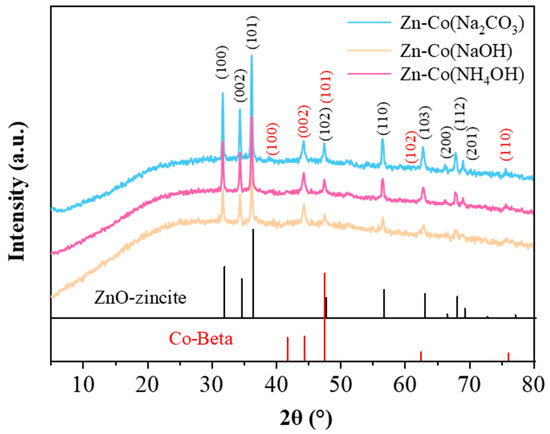
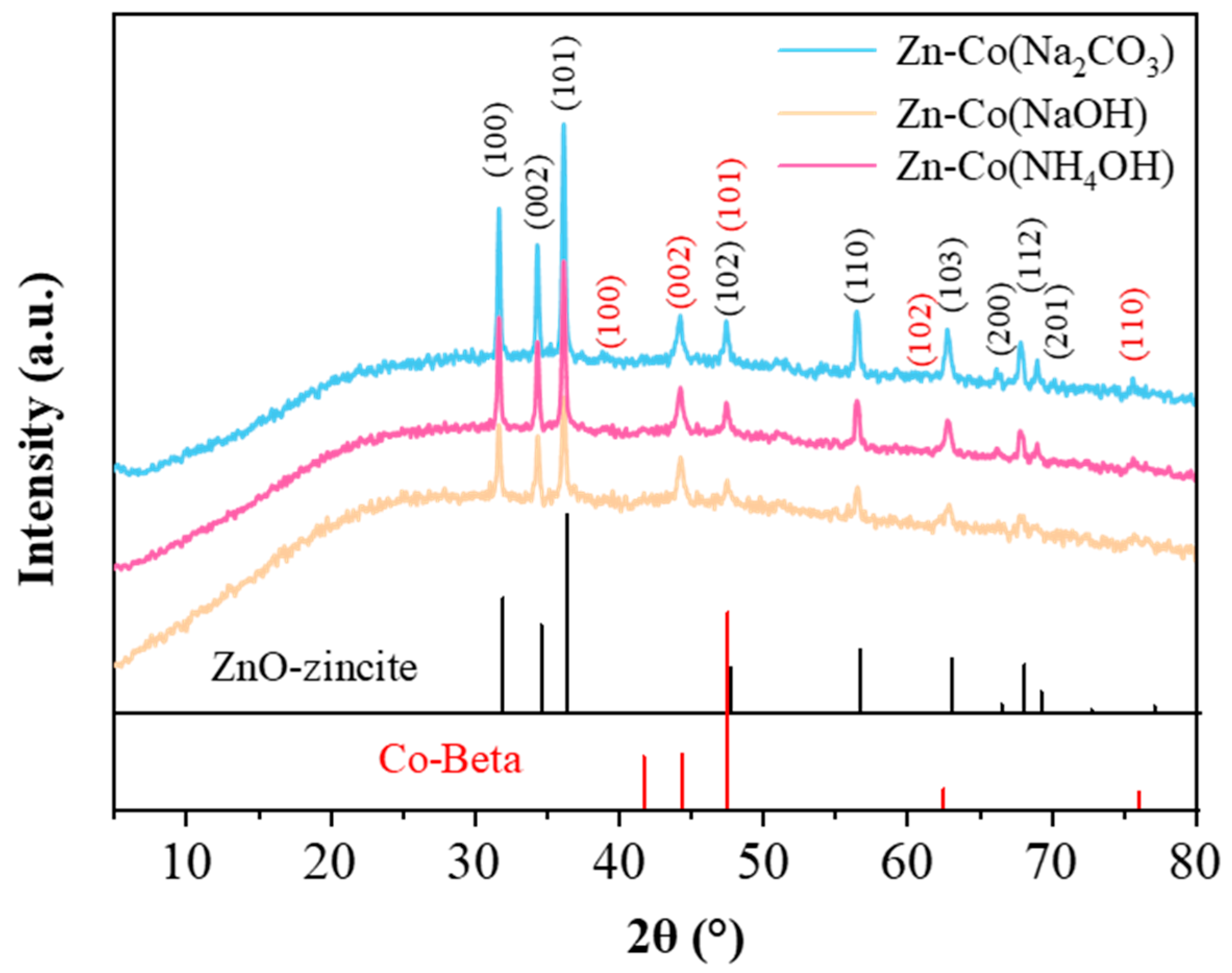
Figure 1 presents the XRD patterns of Zn-Co(Na2CO3), Zn-Co(NaOH), and Zn-Co(NH4OH) catalysts. All three samples exhibit similar crystalline phases. The characteristic peaks observed at 2θ = 31.77°, 34.42°, 36.25°, 47.54°, 56.60°, 62.86°, 66.38°, 67.96°, and 69.10° correspond to the hexagonal wurtzite structure of ZnO (JCPDS File No. 36-1451). Meanwhile, peaks at 41.68°, 44.76°, 47.57°, and 76.38° can be indexed to the (100), (002), (101), and (110) planes of Co species (JCPDS File No. 05-0727), respectively. Notably, the crystallinity of the catalysts decreases in the order of Zn-Co(Na2CO3) > Zn-Co(NH4OH) > Zn-Co(NaOH), which may be attributed to the different basicity of the precipitating agents and could also affect the CO2 hydrogenation performance [14]. These results indicate that the co-precipitation method successfully yields Zn-Co composite catalysts with well-defined ZnO and Co crystalline features.
Figure 1.
XRD Patterns of Zn-Co(Na2CO3), Zn-Co(NaOH), and Zn-Co(NH4OH) Catalysts.
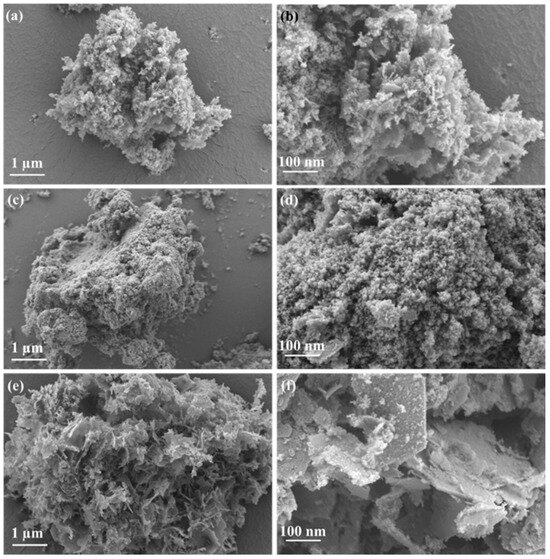
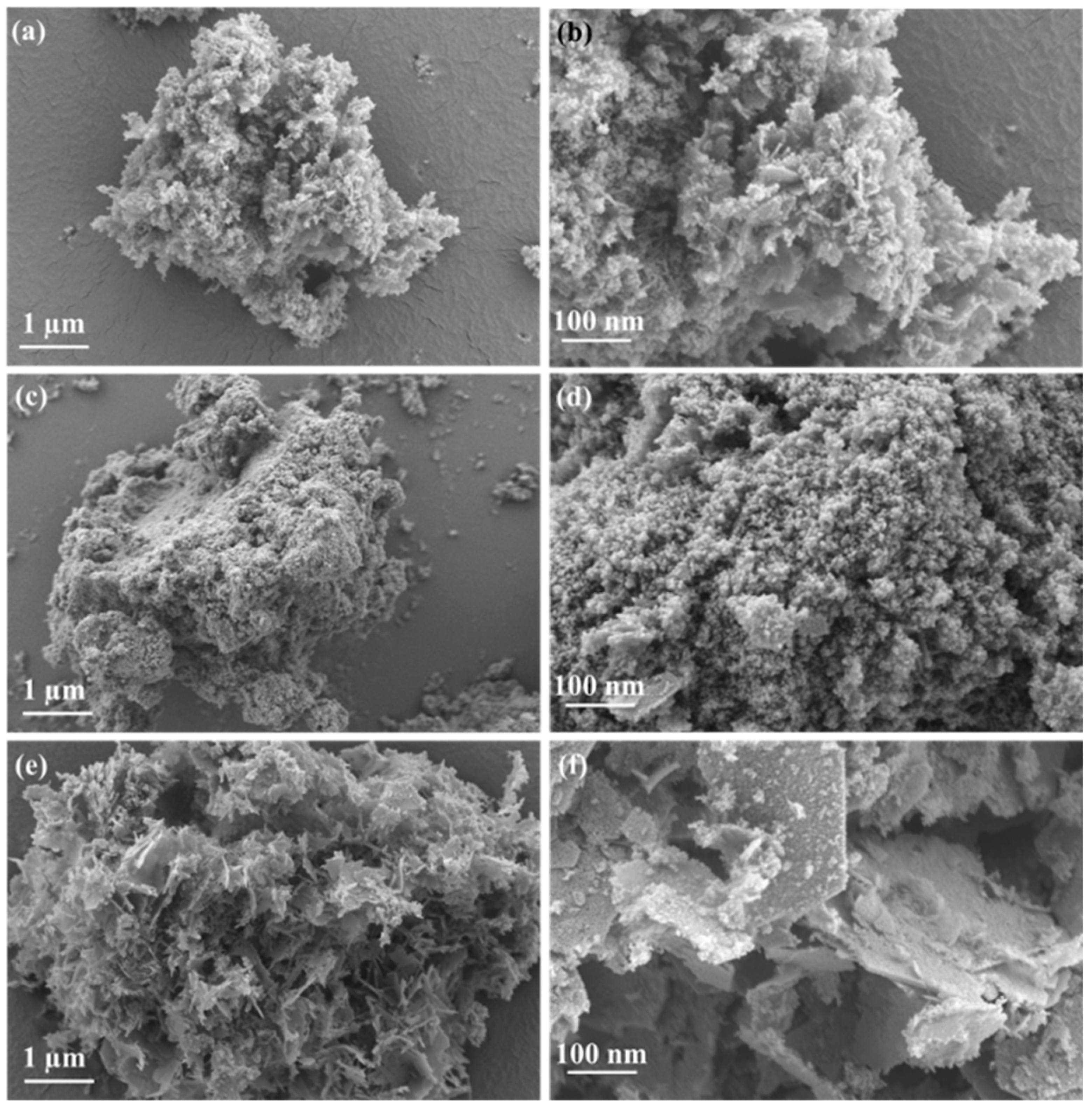
To further investigate the microstructure of the catalysts, Figure 2 displays the SEM images of the Zn-Co(Na2CO3), Zn-Co(NaOH), and Zn-Co(NH4OH) catalysts. As shown in Figure 2a,b, Zn-Co(Na2CO3) exhibits a densely packed, fragmented sheet-like structure. Figure 2c,d reveal that Zn-Co(NaOH) displays a densely packed granular morphology composed of fine particles. Meanwhile, Figure 2e,f illustrate that Zn-Co(NH4OH) adopts a loosely stacked, well-defined sheet-like structure. These observations indicate that the choice of precipitating agent significantly influences the micromorphology of the Zn-Co catalysts.
Figure 2.
SEM images of (a,b) Zn-Co(Na2CO3), (c,d) Zn-Co(NaOH), and (e,f) Zn-Co(NH4OH).
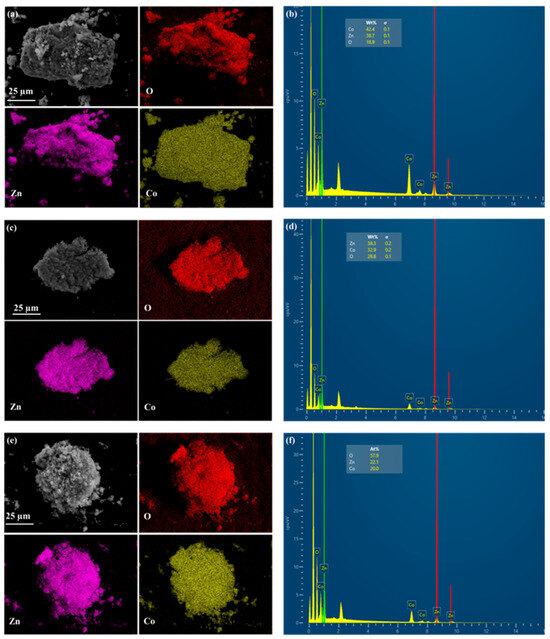
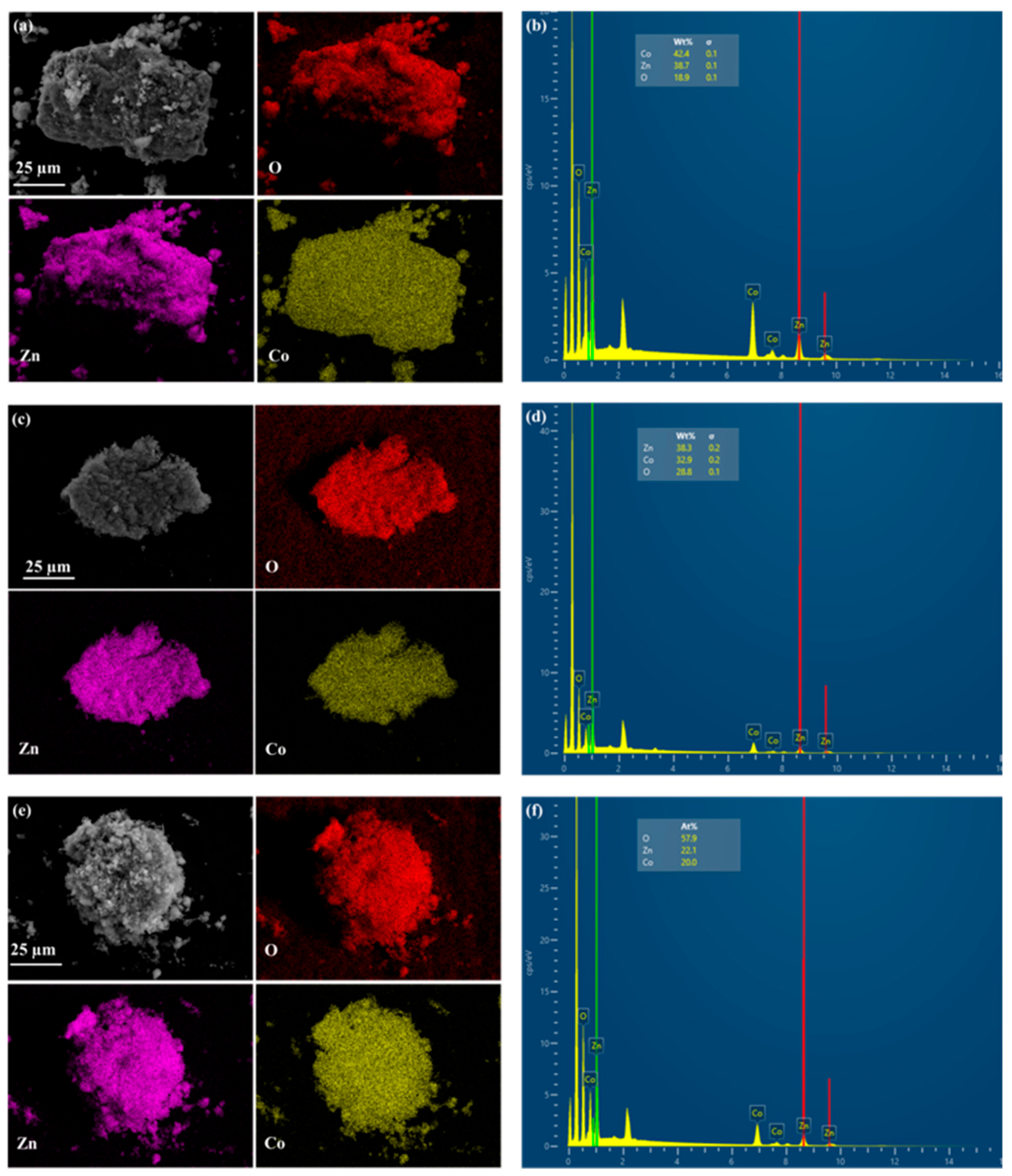
Figure 3a illustrates the uniform distribution of Zn, Co, and O elements in Zn-Co(Na2CO3), with corresponding weight percentages of 42.4%, 38.7%, and 18.9%, respectively (Figure 3b, Table 1). Figure 3c,d show that the elemental composition of Zn-Co(NaOH) comprises 38.3% Zn, 32.9% Co, and 28.8% O (Table 1). Similarly, Figure 3e,f indicate that Zn-Co(NH4OH) contains 22.1% Zn, 20.0% Co, and 57.9% O (Table 1). These results demonstrate a progressive increase in oxygen content as the precipitating agent changes from Na2CO3 to NaOH, and then to NH4OH. The variation in active oxygen species associated with this trend may play a significant role in modulating the catalytic activity.
Figure 3.
(a,c,e) EDS elemental mapping and (b,d,f) content analysis of (a,b) Zn-Co(Na2CO3), (c,d) Zn-Co(NaOH), and (e,f) Zn-Co(NH4OH).
Table 1.
Elemental composition (wt %) of Zn, Co, and O in Zn-Co(Na2CO3), Zn-Co(NaOH), and Zn-Co(NH4OH) catalysts obtained by EDS mapping analysis.
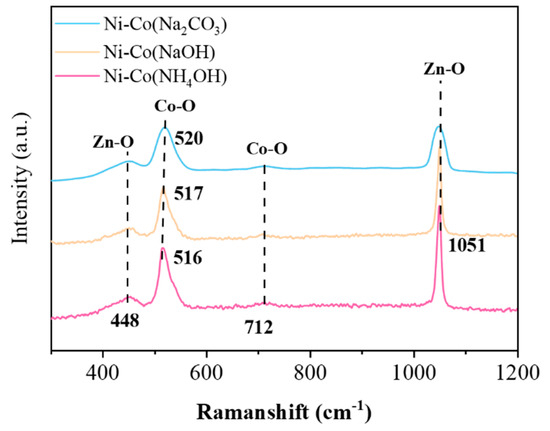
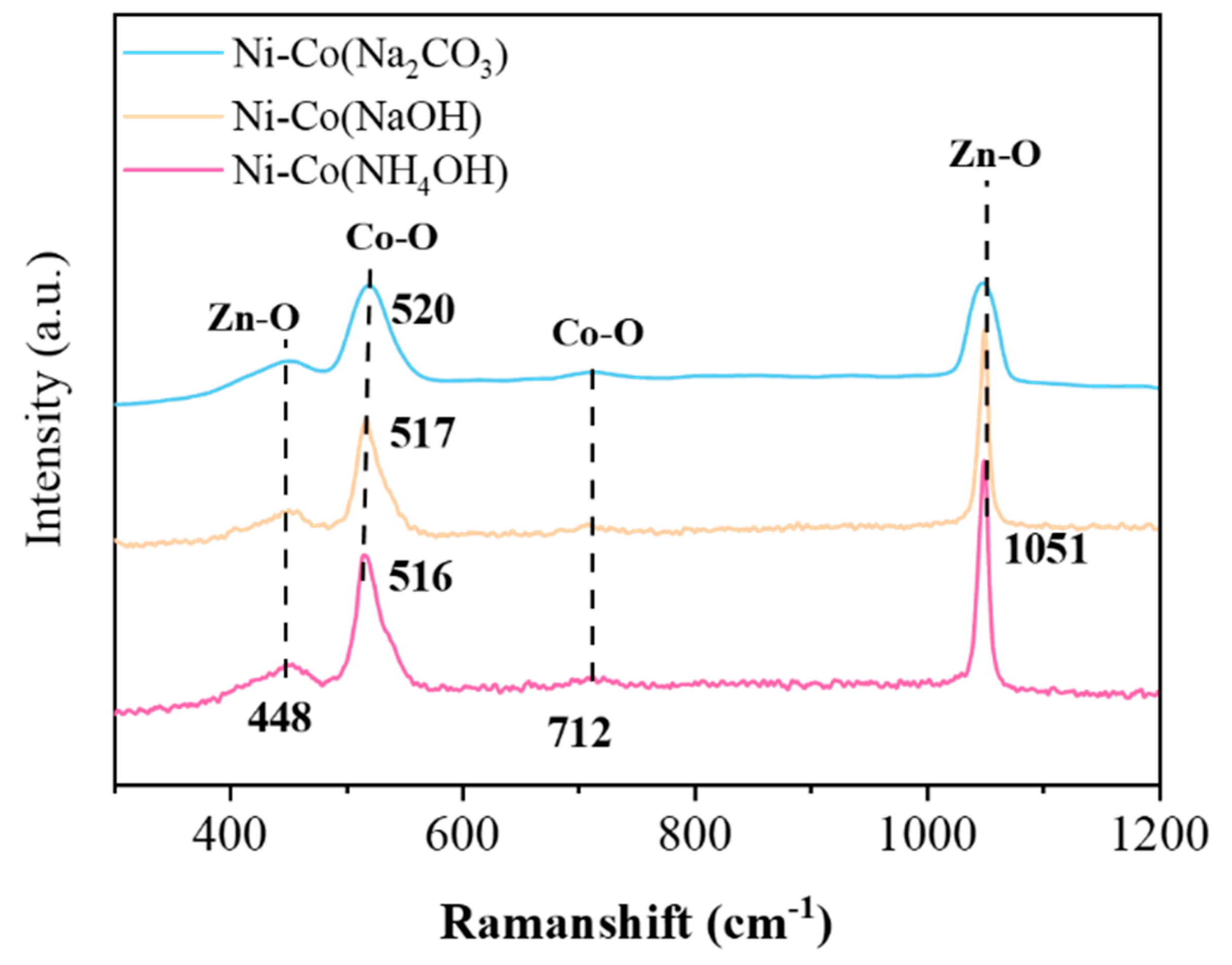
To further investigate the effect of varying oxygen contents on the bonding characteristics of Zn-Co catalysts, Figure 4 presents their Raman spectra. Characteristic peaks are observed for all three catalysts at 448, 520, 712 and 1051 cm−1, with the peaks at 448 and 1051 cm−1 assigned to the E2 high vibration mode characteristic and the E1(LO) mode of ZnO [15,16], corresponding to the Zn-O bond, respectively. In contrast, the peaks at 520 and 712 cm−1 are attributed to the F2g and A1g vibration modes of the Co-O bond in cobalt-based oxides [17]. Notably, the characteristic peak corresponding to the F2g vibration mode undergoes a red shift for Zn-Co(Na2CO3) (520 cm−1), Zn-Co(NaOH) (517 cm−1) and Zn-Co(NH4OH) (516 cm−1). In accordance with Hooke’s law [18], a lower Raman shift for the F2g vibration mode of the Co-O bond indicates a weaker bond strength, which is likely to induce an elongation of the Co-O bond and thus enhance the catalytic reaction activity.
Figure 4.
Raman patterns of Zn-Co(Na2CO3), Zn-Co(NaOH), and Zn-Co(NH4OH) catalysts.
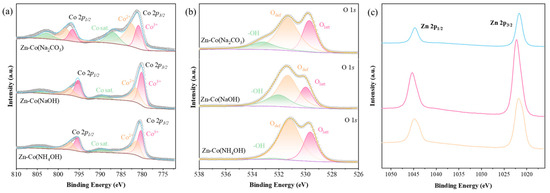
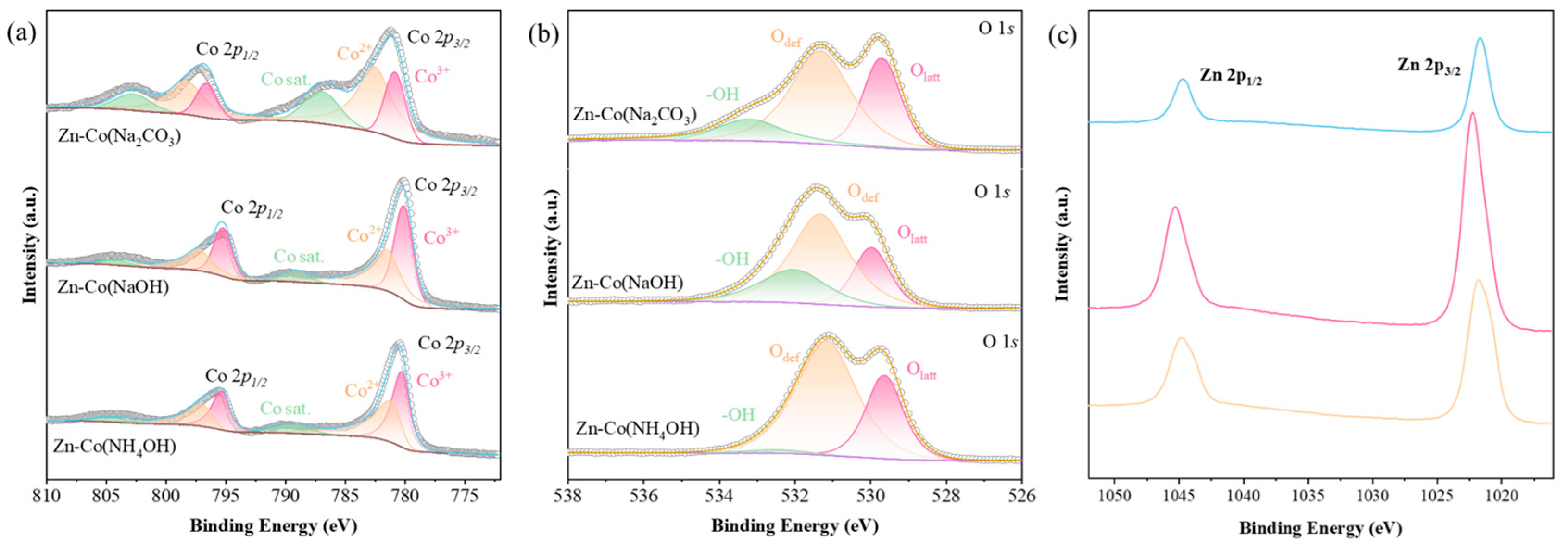
To further elucidate the effects of variations in oxygen content and Co-O bonding on the valence states of the Zn-Co catalysts, Figure 5 and Table 2 present the Co 2p, O 1s and Zn 2p XPS spectra of the three catalysts. Figure 5a reveals the appearance of characteristic peaks assigned to Co3+, Co2+ and Co sat. at 780.00, 781.40 and 788.95 eV, respectively. Specifically, the Zn-Co(Na2CO3) catalyst has a Co3+ content of 29.87% with Co2+ accounting for 70.13%, while Zn-Co(NaOH) and Zn-Co(NH4OH) show Co3+ fractions of 51.46% and 50.74%, corresponding to Co2+ contents of 48.54% and 49.26%, respectively [19]. These results demonstrate that the use of NaOH and NH4OH as precipitants favors the formation of a higher abundance of Co2+ species. Figure 5b and Table 2 show the characteristic peaks of Olatt, Odef and -OH at 529.60, 531.14 and 532.41 eV, respectively [20]. For Zn-Co(Na2CO3), the relative contents of Olatt, Odef and -OH are 31.09%, 53.28% and 15.63%, respectively, whereas Zn-Co(NaOH) shows 21.86% Olatt, 54.83% Odef and 23.31% -OH, and Zn-Co(NH4OH) displays 30.19% Olatt, 68.02% Odef and only 1.79% -OH. All characteristic peaks of Zn 2p in Figure 5c are attributable to ZnO species [21]. Collectively, these findings indicate that the employment of NaOH and NH4OH as precipitants yields more Co2+ sites with lower valence states and more Odef species, which is more conducive to facilitating the catalytic reaction [22,23].
Figure 5.
XPS spectra of (a) Co 2p, (b) O 1s and (c) Zn 2p for the Zn-Co(Na2CO3) (blue line in (c)), Zn-Co(NaOH) (red line in (c)) and Zn-Co(NH4OH) (orange line in (c)) catalysts.
Table 2.
Contents of Co2+, Co3+, Olatt, Odef and -OH over the Zn-Co(Na2CO3), Zn-Co(NaOH) and Zn-Co(NH4OH) catalysts.
2.2. Catalyst Performance
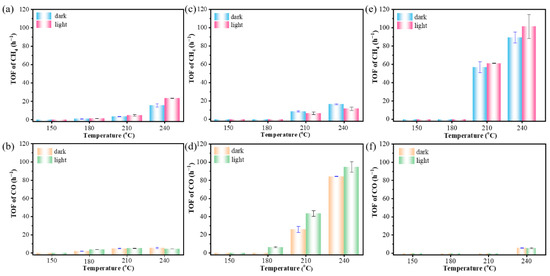
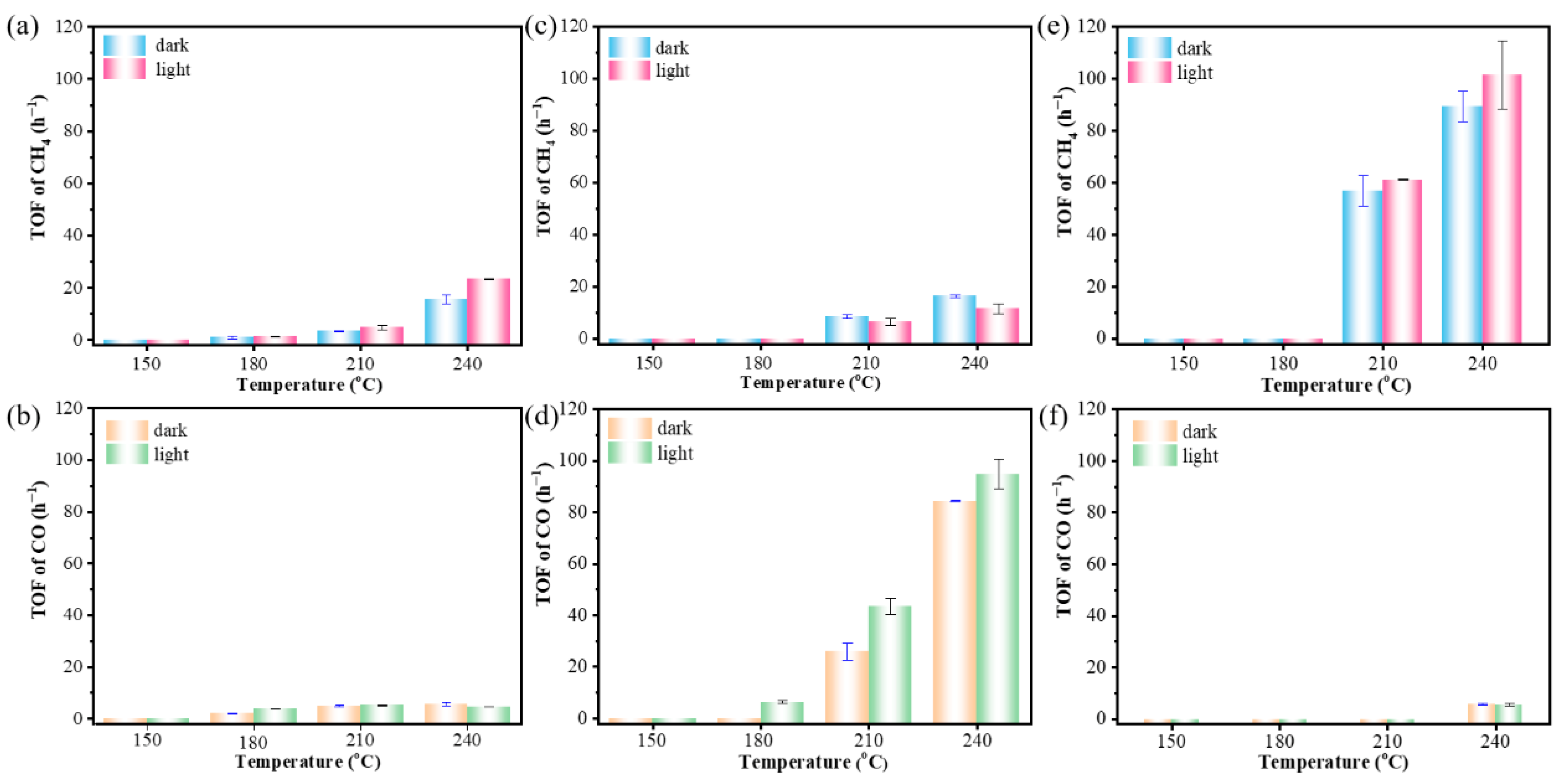
To illustrate the differences in the thermal catalytic and photothermal catalytic performance of Zn-Co catalysts synthesized with different precipitants, Figure 6 presents the catalytic performance for CO2 hydrogenation to CH4 and CO tested under dark and light conditions, respectively. Figure 6a shows the TOF of CH4 formation over the Zn-Co(Na2CO3) catalyst: under dark conditions, the catalyst became active at 210 °C with a TOF of 3.35 h−1, reaching 15.61 h−1 at 240 °C; under light conditions, the TOF was 4.88 h−1 at 210 °C and increased to 23.34 h−1 at 240 °C. Figure 6b displays the TOF of CO formation over the Zn-Co(Na2CO3) catalyst: under dark conditions, the TOF values were 2.04, 4.91 and 5.55 h−1 at 180, 210 and 240 °C, respectively; under light conditions, the corresponding TOF values were 3.94, 5.19 and 4.59 h−1 at the same temperatures. It can be seen that the TOF of CH4 over the Zn-Co(Na2CO3) catalyst increased with rising temperature, with the photothermal catalytic performance being superior to the thermal catalytic performance. In contrast, the TOF of CO indicated a lower activation temperature for the reaction, yet showed little variation with increasing temperature, and there was no significant difference between the photothermal and thermal catalytic performance for CO formation. Meanwhile, Table 3 and Table 4 show that the total TOF of CO and CH4 formation via photothermal catalysis (27.93 h−1) and photocatalysis (21.16 h−1) at 240 °C was relatively low, demonstrating that this catalyst lacked efficient CO2 hydrogenation activity. This phenomenon can be attributed to its low contents of Co2+ species and active oxygen species.
Figure 6.
TOF values of (a,c,e) CH4 and (b,d,f) CO over the (a,b) Zn-Co(Na2CO3), (c,d) Zn-Co(NaOH) and (e,f) Zn-Co(NH4OH) catalysts under thermal catalytic and photothermal catalytic conditions.
Table 3.
Thermal catalytic TOF of CO and CH4, total TOF, and CO/CH4 selectivity over the Zn-Co(Na2CO3), Zn-Co(NaOH) and Zn-Co(NH4OH) catalysts at 240 °C.
Table 4.
Photothermal catalytic TOF of CO and CH4, total TOF, and CO/CH4 selectivity over the Zn-Co(Na2CO3), Zn-Co(NaOH) and Zn-Co(NH4OH) catalysts at 240 °C.
Figure 6c depicts the TOF for CH4 formation over the Zn-Co(NaOH) catalyst: under dark conditions, the catalyst-initiated activity at 210 °C with a TOF of 8.41 h−1, which rose to 16.30 h−1 at 240 °C; under light irradiation, the TOF was 6.52 h−1 at 210 °C, peaking at 11.51 h−1 at 240 °C. For CO formation over the same catalyst (Figure 6d), the TOF values under dark conditions were 25.88 h−1 and 84.35 h−1 at 210 °C and 240 °C, respectively; under light conditions, the catalyst exhibited TOF values of 6.38 h−1, 43.49 h−1 and 94.74 h−1 at 180 °C, 210 °C and 240 °C, respectively. These results reveal that the TOF for CH4 over Zn-Co(NaOH) increased slightly with increasing temperature, and its photothermal catalytic performance for CH4 production was inferior to the thermal catalytic performance. In contrast, the CO formation reaction showed a reduced activation temperature over this catalyst, with the TOF rising sharply as the temperature increased; notably, the photothermal catalytic performance for CO production was significantly superior to the thermal catalytic performance. Additionally, as shown in Table 3 and Table 4, the total TOF for CO and CH4 formation over Zn-Co(NaOH) at 240 °C reached 106.26 h−1 under photothermal conditions and 100.65 h−1 under thermal catalytic conditions, which is markedly higher than that over the Zn-Co(Na2CO3) catalyst. This confirms the excellent CO2 hydrogenation performance of Zn-Co(NaOH), with the selectivity for the CO product being far higher than that for CH4.
Figure 6e illustrates the TOF for CH4 formation over the Zn-Co(NH4OH) catalyst: under dark conditions, catalytic activity was initiated at 210 °C with a TOF of 57.02 h−1, increasing substantially to 89.28 h−1 at 240 °C; under light conditions, the TOF stood at 61.19 h−1 at 210 °C and climbed to 101.47 h−1 at 240 °C. For CO formation over this catalyst (Figure 6f), detectable TOF values were only observed at 240 °C, with values of 5.79 h−1 and 5.54 h−1 recorded under dark and light conditions, respectively. These findings indicate that the TOF for CH4 production over Zn-Co(NH4OH) increased remarkably with elevating temperature, and its photothermal catalytic performance for CH4 formation outperformed the thermal catalytic performance. In sharp contrast, the CO formation reaction exhibited a notably high activation temperature of 240 °C, with negligible differences between the photothermal and thermal catalytic performance for CO production. Furthermore, Table 3 and Table 4 reveal that the total TOF for CO and CH4 formation at 240 °C reached 95.07 h−1 under photothermal conditions and 107.71 h−1 under thermal catalytic conditions over Zn-Co(NH4OH), which is considerably higher than that over the Zn-Co(Na2CO3) catalyst. This verifies the excellent CO2 hydrogenation performance of the Zn-Co(NH4OH) catalyst, which exhibited a far higher selectivity for CH4 over CO, which shows an observation that stands in stark contrast to the catalytic behavior of the Zn-Co(NaOH) catalyst.
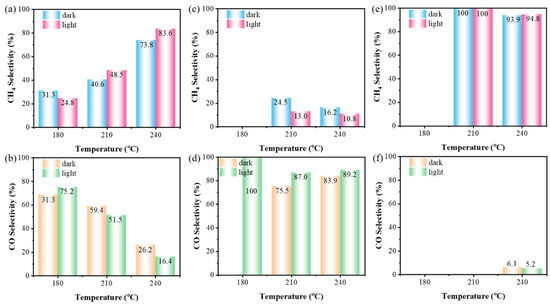
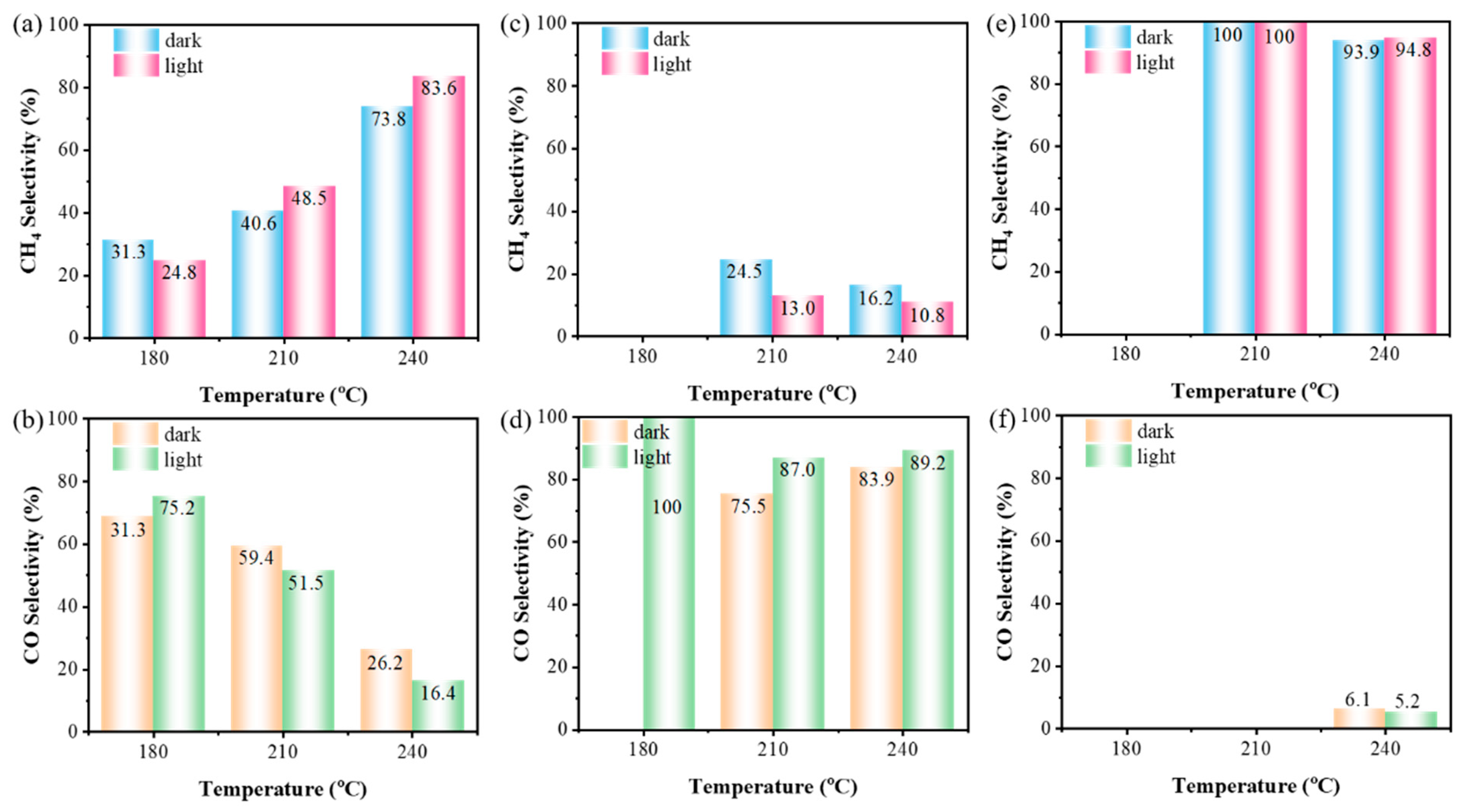
Figure 6 illustrates the distinct CO2 hydrogenation performance toward CH4/CO over Zn-Co catalysts synthesized with different precipitating agents, along with notable variations in selectivity for CH4 and CO. As shown in Figure 7, the Zn-Co(Na2CO3) catalyst exhibits high CO selectivity at low temperatures, while CH4 selectivity gradually increases with rising temperature. At 240 °C, the selectivity toward CH4 under thermal catalytic and photothermal catalytic conditions reaches 73.8% and 83.6%, respectively, whereas CO selectivity is 26.2% and 16.4%, albeit with overall low activity (Table 3 and Table 4). In contrast, Zn-Co(NaOH) demonstrates low CH4 selectivity under both thermal and photothermal conditions, with CO being the dominant product. At 240 °C, the CH4 selectivity for thermal and photothermal catalysis is only 16.2% and 10.8%, respectively, while CO selectivity reaches 83.9% and 89.2%. This catalyst exhibits high overall yield, favoring the selective production of CO (Table 3 and Table 4). On the other hand, Zn-Co(NH4OH) primarily generates CH4 under both thermal and photothermal environments. At 240 °C, the selectivity toward CH4 reaches 93.9% and 94.8% for thermal and photothermal catalysis, respectively, with CO selectivity as low as 6.1% and 5.2%. This catalyst shows exceptionally high overall activity, promoting the targeted formation of CH4 (Table 3 and Table 4).
Figure 7.
Selectivity of (a,c,e) CH4 and (b,d,f) CO over the (a,b) Zn-Co(Na2CO3), (c,d) Zn-Co(NaOH) and (e,f) Zn-Co(NH4OH) catalysts under thermal catalytic and photothermal catalytic conditions.
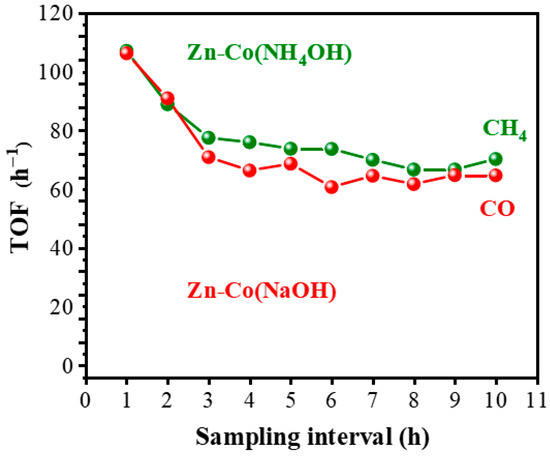
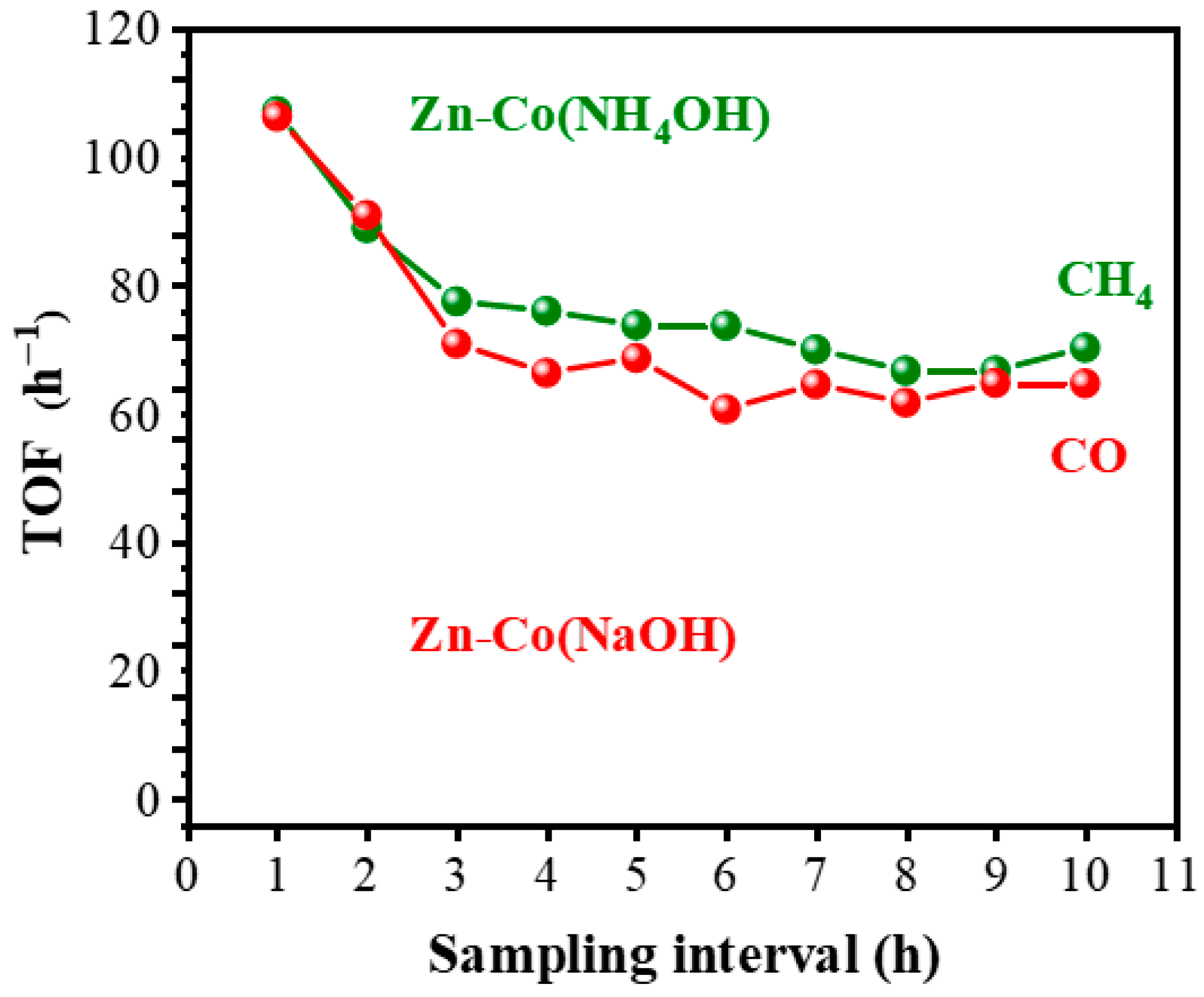
The Zn-Co(NH4OH) and Zn-Co(NaOH) catalysts exhibit both high yield and high selectivity for CH4 and CO under photothermal catalysis at 240 °C. To further investigate their stability, we performed a 10 h stability test. As shown in Figure 8, the TOF of CH4 for the Zn-Co(NH4OH) catalyst shows a slight decline within the initial 3 h, after which it stabilizes around 80 h−1. Similarly, the TOF of CO for the Zn-Co(NaOH) catalyst experiences a minor decrease in the first 3 h, then remains steady at approximately 70 h−1. These results indicate that both catalysts possess excellent stability under photothermal catalytic conditions.
Figure 8.
Photothermal experiments stability test of TOF of CH4 for Zn-Co (NH4OH) and TOF of CO for Zn-Co (NaOH) catalysts.
2.3. Electronic Properties of Catalysts
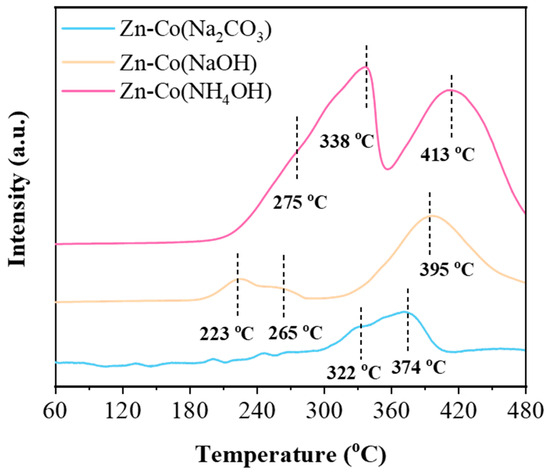
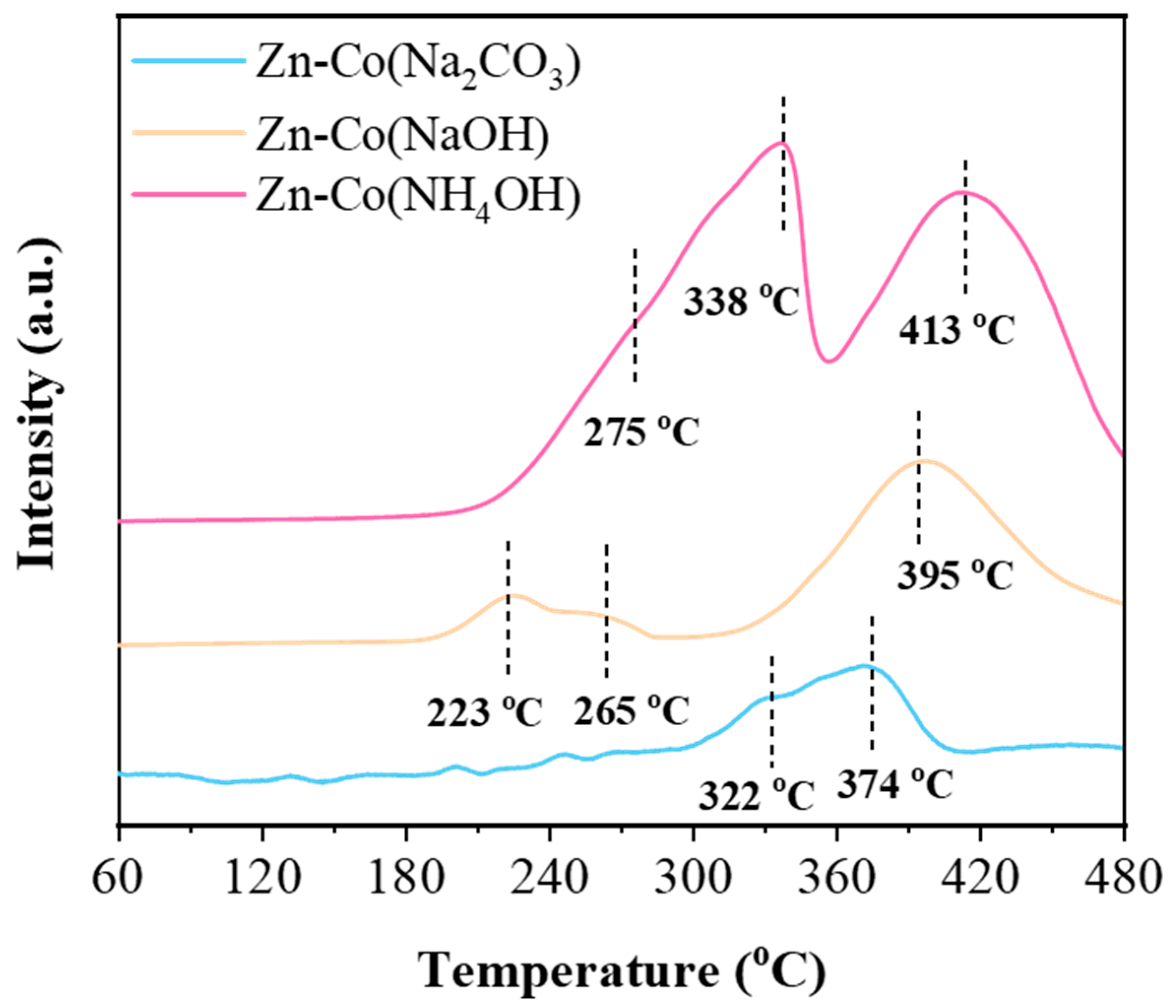
To investigate the electronic properties of the catalysts, temperature-programmed reduction with hydrogen (H2-TPR) measurements were conducted on Zn-Co(Na2CO3), Zn-Co(NaOH), and Zn-Co(NH4OH) catalysts. As illustrated in Figure 9, the Zn-Co(Na2CO3) catalyst exhibits only two characteristic peaks at 322 °C and 374 °C, which are assigned to the reduction of Co3+ to Co2+ [24,25]. For the Zn-Co(NaOH) catalyst, two low-temperature reduction peaks appear at 223 °C and 265 °C (corresponding to the Co3+→Co2+ reduction), accompanied by a more intense peak at 395 °C attributed to the reduction of Co2+ to Co0. Meanwhile, the Zn-Co(NH4OH) catalyst shows two low-temperature reduction peaks at 275 °C and 338 °C (assigned to Co3+→Co2+) and a prominent peak at 413 °C corresponding to Co2+→Co0 reduction.
Figure 9.
H2-TPR of Zn-Co(Na2CO3), Zn-Co(NaOH), and Zn-Co(NH4OH) catalysts.
Comparison of the reduction peak intensities reveals the order: Zn-Co(Na2CO3) < Zn-Co(NaOH) < Zn-Co(NH4OH). Furthermore, the reduction temperatures of Zn-Co(NaOH) and Zn-Co(NH4OH) are significantly lower than that of Zn-Co(Na2CO3). These findings indicate that Zn-Co(NaOH) and Zn-Co(NH4OH) possess superior reducibility, which contributes to their enhanced catalytic performance in CO2 hydrogenation.
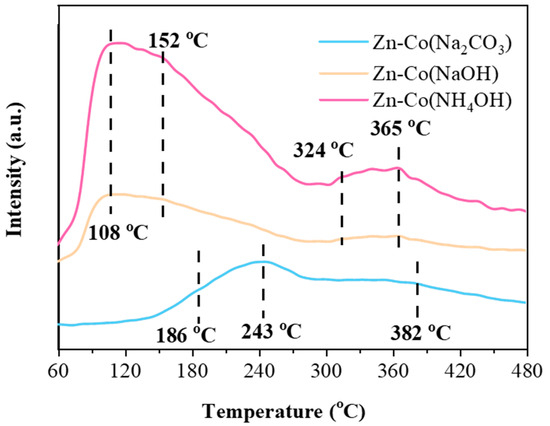
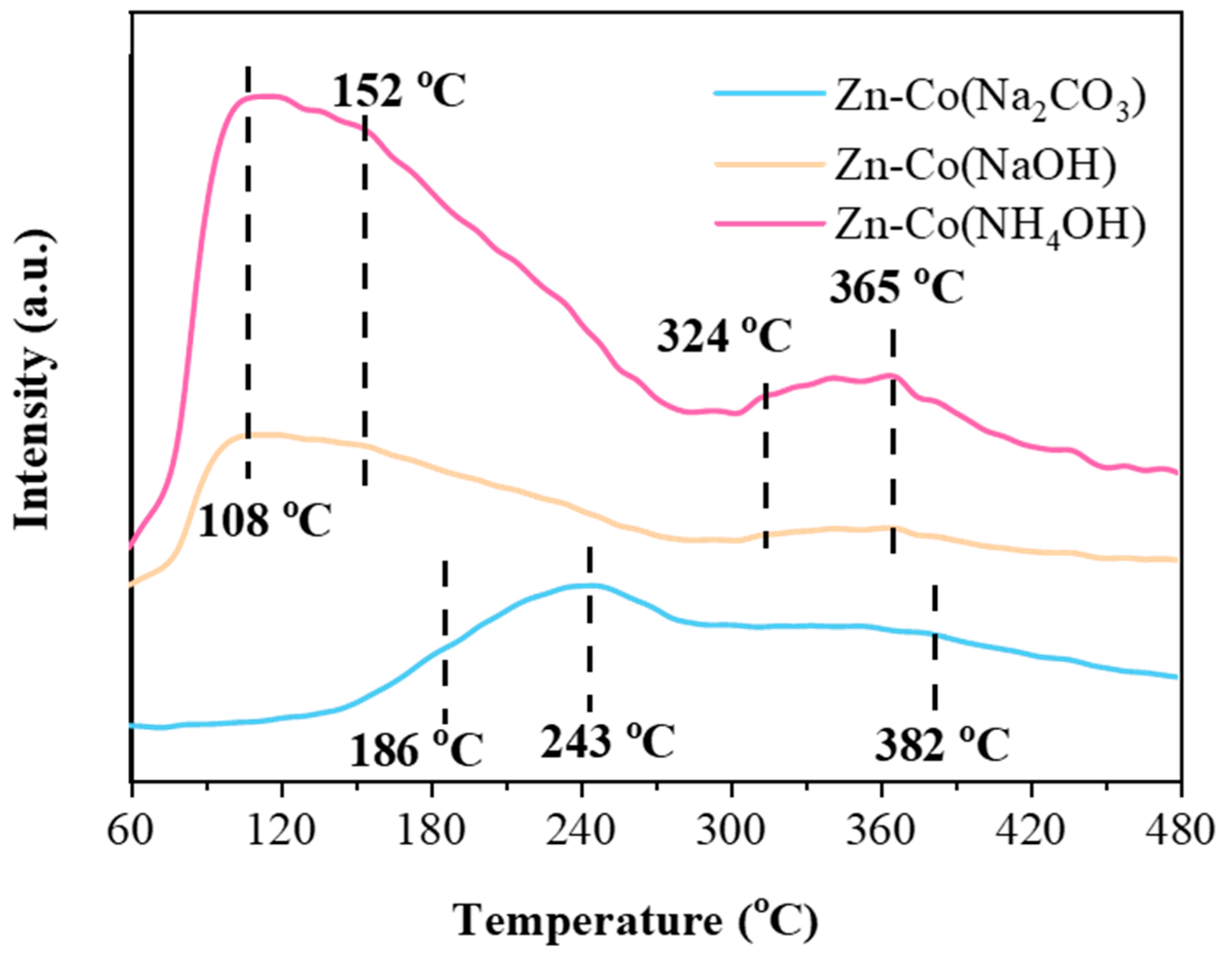
To investigate the CO2 adsorption properties of the catalysts, CO2-TPD measurements were performed on Zn-Co(Na2CO3), Zn-Co(NaOH), and Zn-Co(NH4OH) catalysts. As shown in Figure 10, Zn-Co(Na2CO3) exhibits only two characteristic peaks at 186 and 243 °C, attributed to physiosorbed CO2 and weakly bound carbonate species, respectively, along with a weak desorption peak at 382 °C corresponding to the decomposition of carbonate species [26]. In contrast, Zn-Co(NaOH) and Zn-Co(NH4OH) display two low-temperature desorption peaks at 108 and 152 °C, ascribed to physisorbed CO2, and two further high-temperature desorption peaks at 324 and 365 °C, originating from the decomposition of surface carbonates. Comparison of the desorption peak intensities reveals that the number of basic sites follows the order: Zn-Co(NH4OH) > Zn-Co(NaOH) > Zn-Co(Na2CO3), with the peak intensities of the former two being significantly higher than that of Zn-Co(Na2CO3). These results indicate that Zn-Co(NaOH) and Zn-Co(NH4OH) possess superior CO2 adsorption and activation capabilities.
Figure 10.
CO2-TPD of Zn-Co(Na2CO3), Zn-Co(NaOH), and Zn-Co(NH4OH) catalysts.
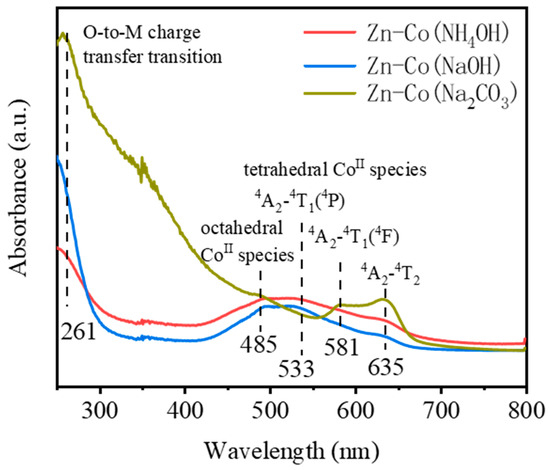
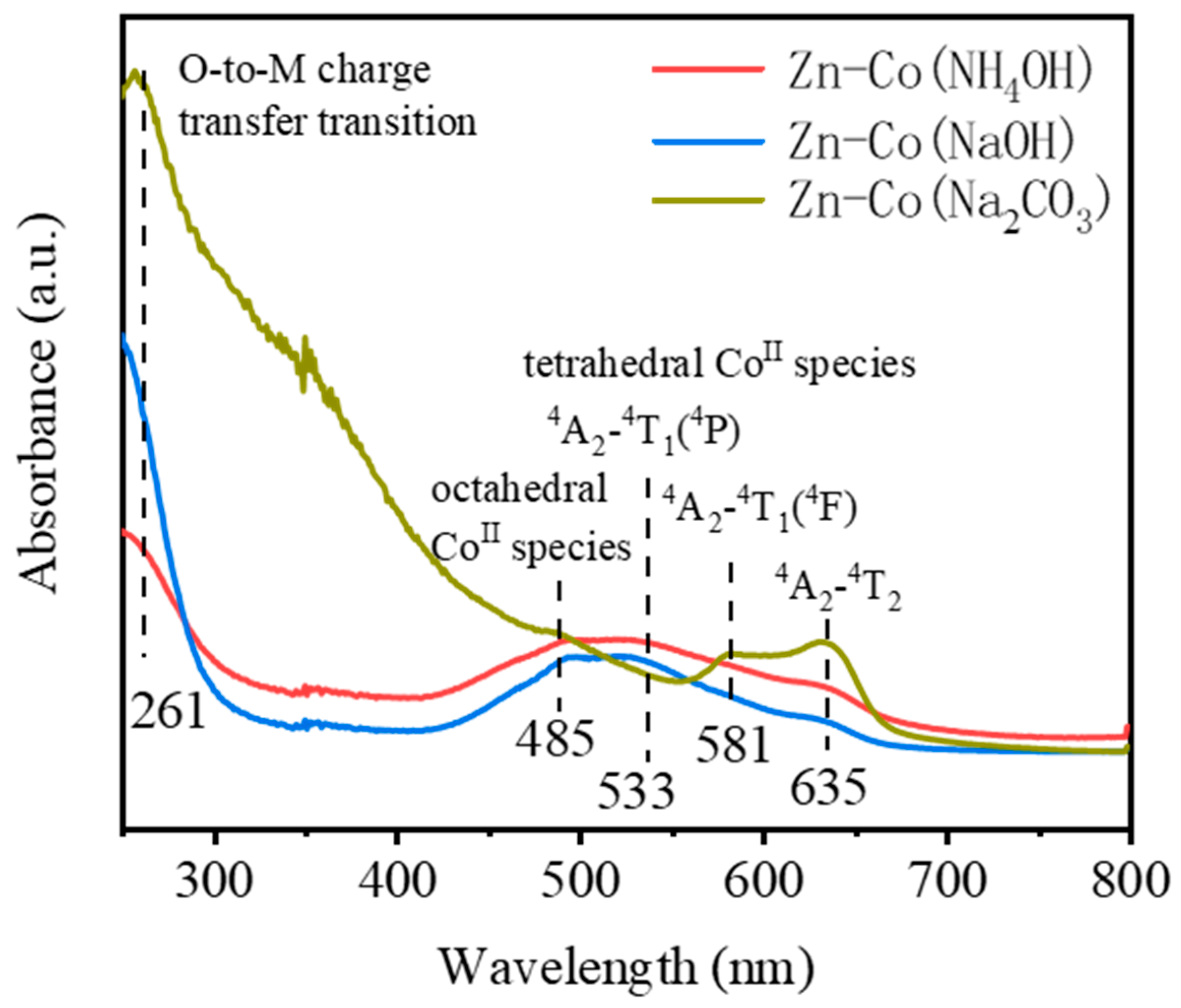
To systematically characterize the electronic properties of the catalysts, ultraviolet-visible diffuse reflectance spectroscopy (UV-vis DRS) measurements were performed on Zn-Co(Na2CO3), Zn-Co(NaOH), and Zn-Co(NH4OH) catalysts. As shown in Figure 11, the absorption peak at 261 nm for all three catalysts is attributed to the oxygen-to-metal (O→M) charge transfer; the absorption peak at 485 nm corresponds to the characteristic transition of octahedral CoII species; while the absorption peaks at 533 nm, 581 nm, and 635 nm originate from isolated tetrahedral CoII species, which are assigned to the 4A2→4T1(4P), 4A2→4T1(4F), and 4A2→4T2 electronic transition processes, respectively [27,28,29]. The DRS data were transformed and analyzed using the Kubelka-Munk function, and the results indicate that the Zn-Co(Na2CO3) catalyst exhibits a single direct band gap at 1.76 eV. This feature usually reflects a relatively simple electronic structure that has not been effectively optimized, which is directly associated with its low overall catalytic activity. It is speculated that the underlying reason lies in the low generation efficiency and fast recombination rate of charge carriers under light irradiation, making it difficult to efficiently drive the CO2 reduction reaction. In contrast, the Zn-Co(NaOH) catalyst shows dual direct band gaps at 1.88 eV and 2.71 eV, while the Zn-Co(NH4OH) catalyst forms dual direct band gaps at 1.66 eV and 2.46 eV. These results demonstrate the successful construction of tightly bonded heterojunction structures inside both catalysts. Such engineered interfacial structures play a crucial role in the spatial separation of photogenerated electron-hole pairs, thereby explaining the significantly enhanced and stable catalytic activity of the two catalysts in long-term catalytic tests. Notably, the higher-energy band gap of the Zn-Co(NH4OH) catalyst (~2.46 eV) is narrower than that of the Zn-Co(NaOH) catalyst (~2.71 eV), implying a more negative conduction band position. This electronic structure characteristic endows photogenerated electrons with stronger reducing ability, which is thermodynamically more favorable for driving the multi-electron deep reduction pathway required for CH4 formation rather than promoting the desorption of CO intermediates, ultimately resulting in superior CH4 selectivity.
Figure 11.
UV-VIS of Zn-Co(Na2CO3), Zn-Co(NaOH), and Zn-Co(NH4OH) catalysts.
2.4. Study on the Catalytic Mechanism
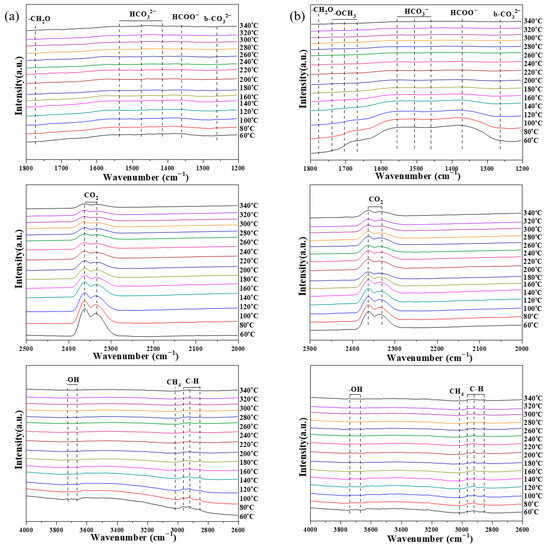
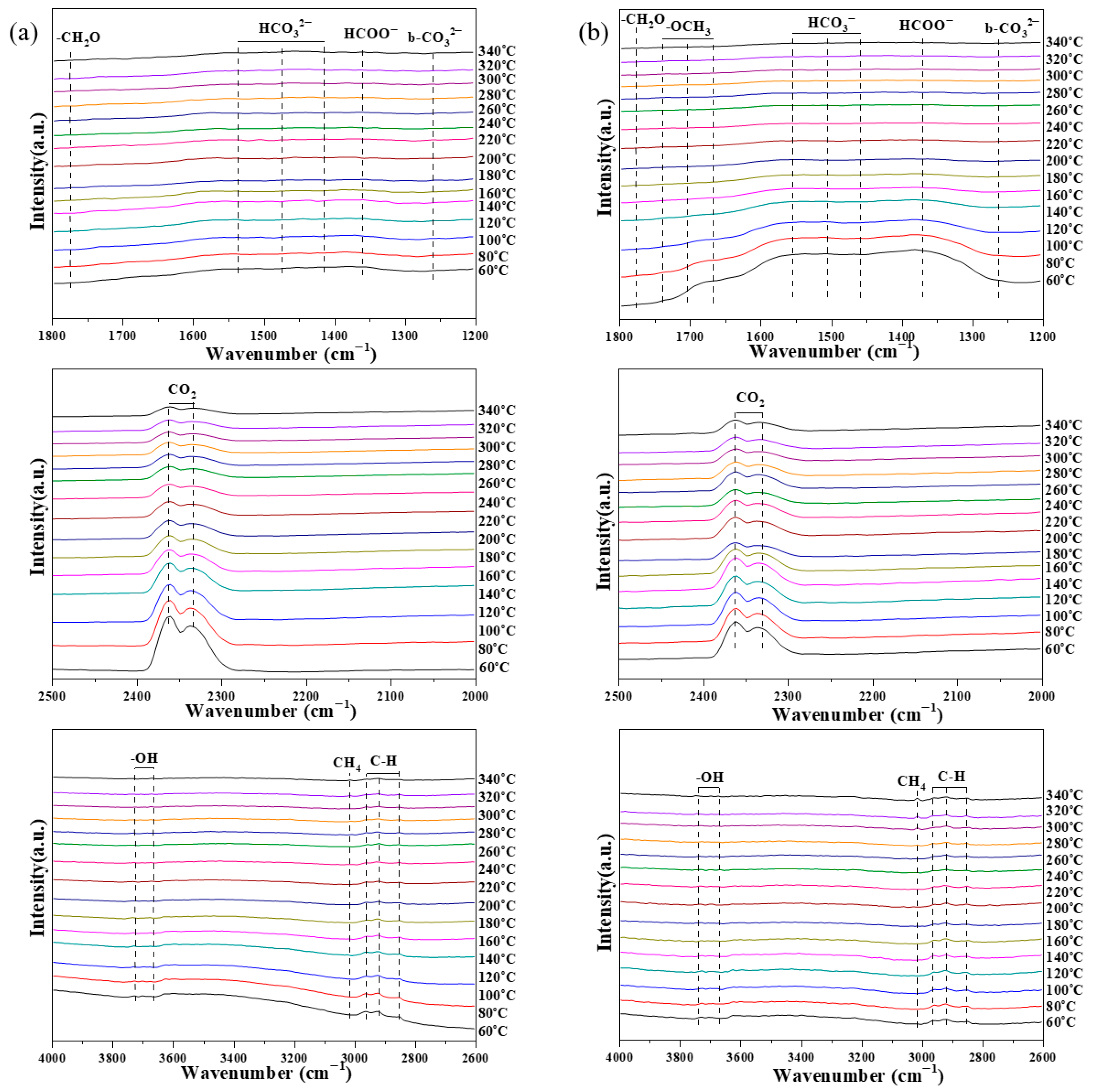
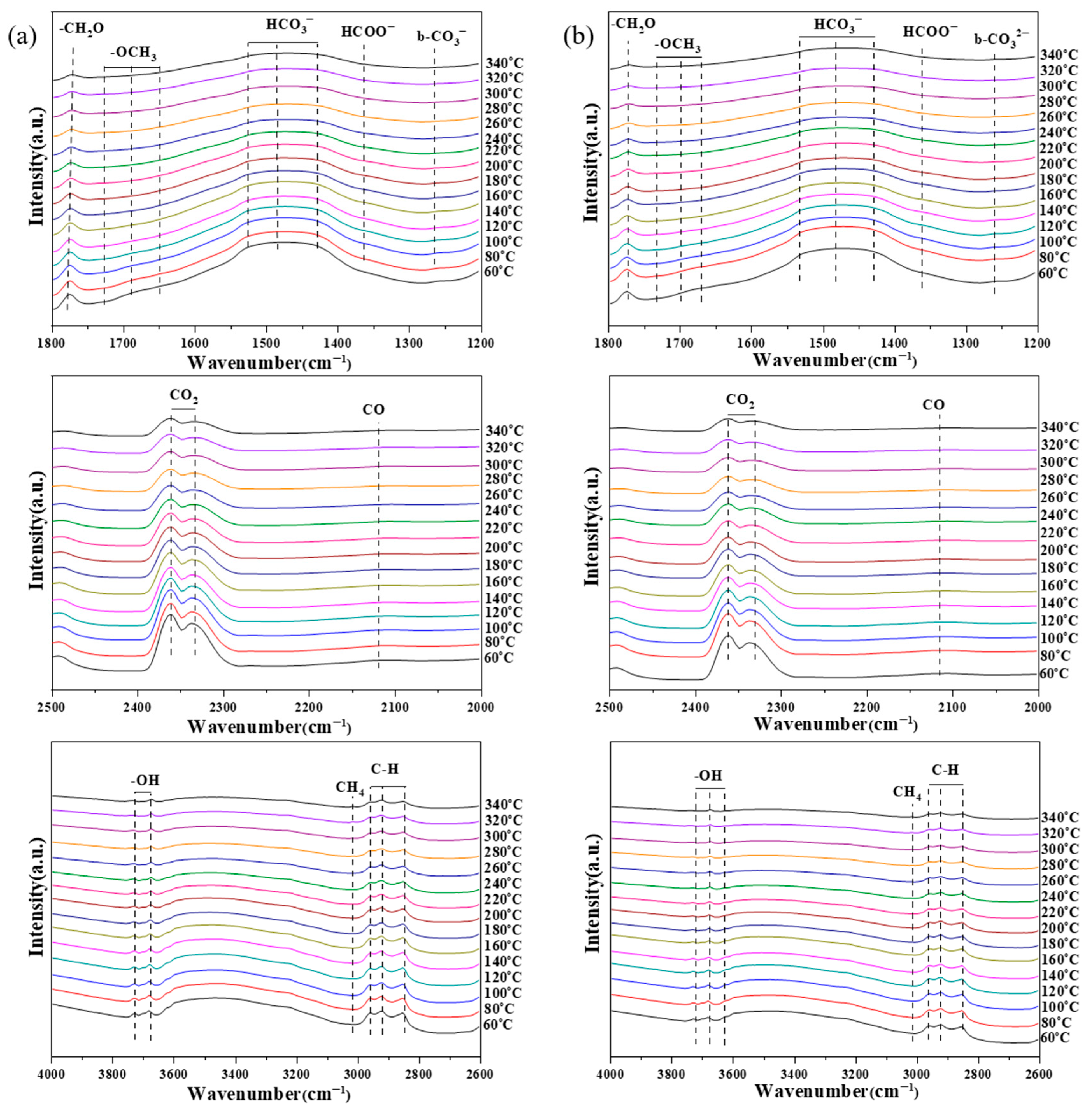
To gain profound insights into the reaction mechanism of CO2 hydrogenation over the Zn-Co(Na2CO3), Zn-Co(NaOH), and Zn-Co(NH4OH) catalysts, temperature-programmed in situ diffuse reflectance infrared Fourier transform spectroscopy (in situ DRIFTS) measurements were performed under both dark (thermal catalysis) and light (photothermal catalysis) environments. As illustrated in Figure 12a, under dark conditions, the Zn-Co(Na2CO3) catalyst exhibits weak characteristic peaks of -CH2O, HCO32−, HCOO−, and bidentate carbonate (b-CO32-) species in the wavenumber range of 1200–1800 cm−1. A strong characteristic peak corresponding to CO2 species is observed in the range of 2000–2500 cm−1, while characteristic peaks of -OH, CH4, and C-H species are also detected in the range of 2600–4000 cm−1 [30,31,32]. Figure 12b shows that under light irradiation, the intensities of the characteristic peaks for -CH2O, HCO3−, HCOO−, b-CO32−, and CO2 over this catalyst are significantly enhanced, with an additional characteristic peak of -OCH3 species appearing. This indicates that photothermal catalysis is more favorable for CH4 formation compared to thermal catalysis, which is consistent with the catalytic performance results presented in Figure 6a. However, the overall intensities of the characteristic peaks for all intermediate species over this catalyst are relatively weak in both dark and light environments, which is in line with its low CO2 hydrogenation activity.
Figure 12.
In situ DRIFT spectra of Zn-Co(Na2CO3) catalyst for CO2 hydrogenation under (a) thermal and (b) photothermal conditions during temperature-programmed reaction.
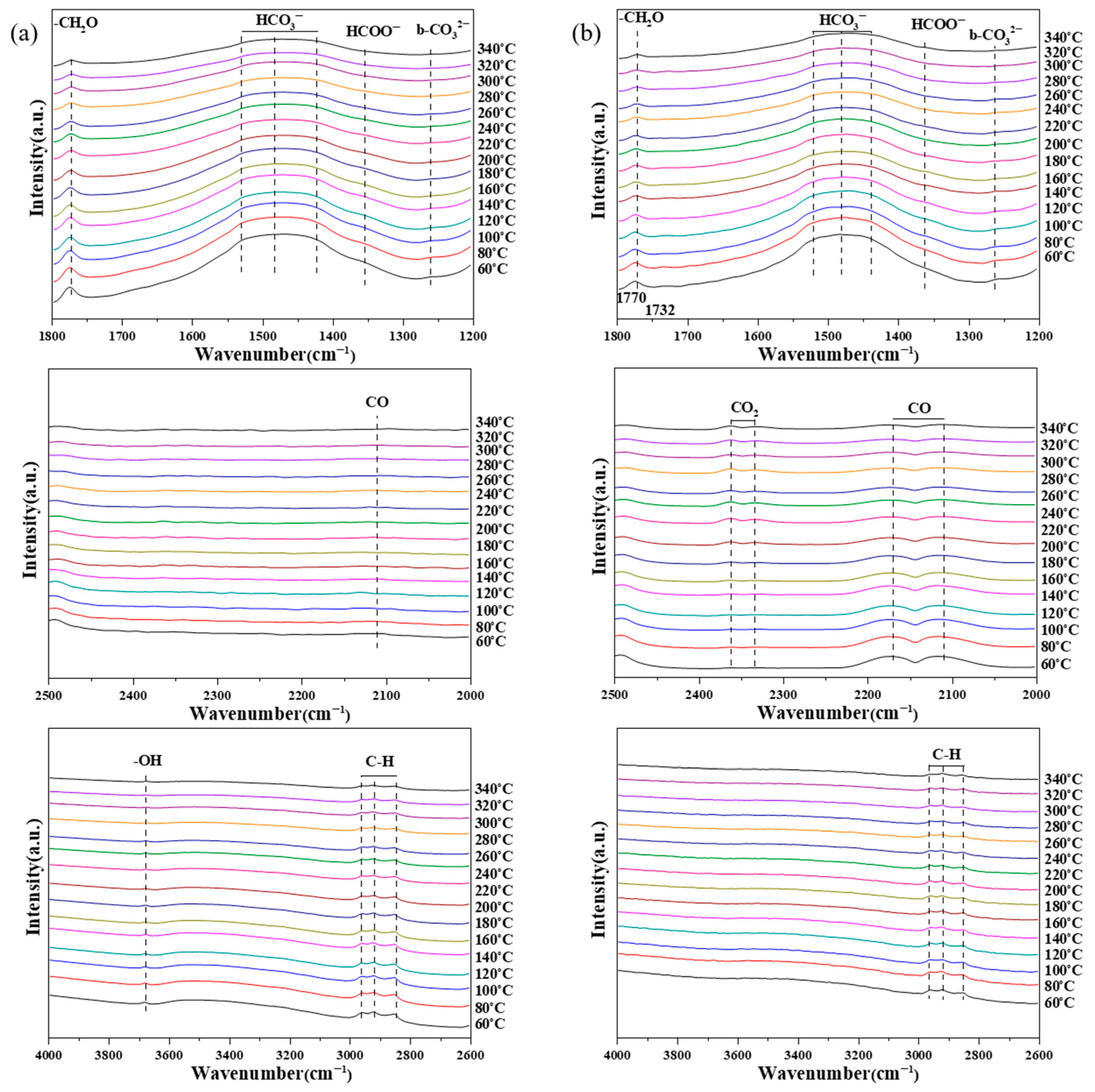
Figure 13a reveals that under dark conditions, the Zn-Co(NaOH) catalyst not only exhibits characteristic peaks of -CH2O, HCO3−, HCOO−, b-CO32−, -OH, and C-H species but also a distinct desorption peak of CO, with no detectable characteristic peaks of -OCH3 or CH4. This suggests that the catalyst prefers to produce CO rather than CH4 during thermal catalytic CO2 hydrogenation, which is consistent with the experimental results in Figure 6d. Under light irradiation (Figure 13b), the types of intermediate species on the catalyst surface are the same as those under dark conditions, but the intensity of the CO characteristic peak is further enhanced, which is also consistent with the higher CO selectivity under photothermal catalytic conditions.
Figure 13.
In situ DRIFT spectra of Zn-Co(NaOH) catalyst for CO2 hydrogenation under (a) thermal and (b) photothermal conditions during temperature-programmed reaction.
Figure 14 demonstrates that the Zn-Co(NH4OH) catalyst exhibits significantly stronger characteristic peaks of -CH2O, -OCH3, HCO32−, HCOO−, b-CO32−, -OH, CH4, and C-H species in both dark and light environments, while the characteristic peak of CO is extremely weak. This indicates that the catalyst can effectively promote the reaction between CO2 and H2 under both thermal and photothermal catalytic conditions. From the distribution of intermediate species, the reaction is more inclined to generate CH4 rather than CO, which is perfectly consistent with the experimental phenomena in Figure 6e.
Figure 14.
In situ DRIFT spectra of Zn-Co(NH4OH) catalyst for CO2 hydrogenation under (a) thermal and (b) photothermal conditions during temperature-programmed reaction.
Combining the in situ DRIFTS results from Figure 12, Figure 13 and Figure 14, it can be concluded that: compared with the Zn-Co(NaOH) and Zn-Co(NH4OH) catalysts, the characteristic peaks of various intermediate species on the Zn-Co(Na2CO3) catalyst are significantly weaker. This is mutually corroborated by the low intensities of the desorption peaks for CO2 and carbonate species in the CO2-TPD test, which is also the core reason for its low CH4/CO yields. In contrast, the characteristic peaks of intermediate species on both Zn-Co(NaOH) and Zn-Co(NH4OH) catalysts are significantly enhanced, but there are differences in product selectivity between the two. For the Zn-Co(NaOH) catalyst, the characteristic peaks of -OCH3 and CH4 are weak while the CO desorption peak is stronger, which is the key to its high CO yield and selectivity. For the Zn-Co(NH4OH) catalyst, no obvious CO characteristic peak is detected, and the intensities of the C-H, -OCH3, and CH4 characteristic peaks are higher, thus facilitating the selective formation of CH4.
The Zn-Co(NaOH) and Zn-Co(NH4OH) catalysts exhibit distinctly different selectivity in the CO2 hydrogenation reaction. Zn-Co(NaOH) predominantly produces CO with a selectivity of 89.2%, whereas Zn-Co(NH4OH) mainly generates CH4 with a selectivity of 94.8%. This difference stems primarily from the profound influence of precipitants on the catalyst structure, electronic properties, and the regulatory mechanism of reaction intermediates. XPS analysis reveals that both precipitants can increase the contents of Co2+ species and oxygen vacancies, which is conducive to the adsorption and activation of CO2. Among them, Zn-Co(NH4OH) possesses the highest oxygen vacancy content. The CO2-TPD results also confirm the excellent CO2 adsorption capacities of the two catalysts. The key lies in the difference in electronic structure revealed by UV-Vis DRS analysis, the narrower band gap and more negative conduction band position of the Zn-Co(NH4OH) catalyst endow the photogenerated electrons with stronger reducibility, which thermodynamically favors the multi-electron deep reduction pathway required for CH4 formation. In situ DRIFTS results further verify that the Zn-Co(NaOH) catalyst inhibits the formation of -OCH3 and CH4 by promoting the desorption of CO intermediates, leading to high CO selectivity. In contrast, the Zn-Co(NH4OH) catalyst enhances the signals of intermediates such as -CH2O, -OCH3, CH4, and C-H bonds, while the characteristic peak of CO is extremely weak, thereby facilitating the selective generation of CH4.
Therefore, the selection of precipitants ultimately determines the selectivity of CH4 and CO products in the CO2 hydrogenation reaction by regulating the electronic structure of the catalyst and influencing the generation and desorption rates of key reaction intermediates.
3. Experimental Section
3.1. Catalyst Synthesis
All catalysts were prepared via a co-precipitation method. In a typical synthesis, 1 g of Zn(NO3)2 and 1 g of Co(NO3)2 were dispersed in 20 mL of deionized water under ultrasonication to obtain solution A. Separately, 1.23 g of Na2CO3, 1 g of NaOH, or 5 mL of NH4OH were dissolved in 20 mL of deionized water to prepare three different precipitating solutions (solution B). Each solution B was then added dropwise into three parallel batches of solution A under continuous stirring. The resulting solid products were collected by centrifugation, washed thoroughly with deionized water and absolute ethanol, and dried overnight under vacuum at room temperature. Finally, the samples were calcined at 400 °C for 3 h with a heating rate of 2 °C/min to obtain ZnO/Co catalysts, designated as Zn-Co(Na2CO3), Zn-Co(NaOH), and Zn-Co(NH4OH), respectively.
3.2. Catalyst Characterization
X-ray diffraction (XRD) patterns were collected on a D/MAX-RB diffractometer (Rigaku, Tokyo, Japan) with Cu-Kα radiation (40 kV, 40 mA), scanning a 2θ range from 5 ° to 80 ° at a rate of 8 °/min. UV-Vis spectra were recorded using an Agilent Cary 5000 spectrophotometer (Agilent Technologies, Santa Clara, CA, USA). H2 temperature-programmed reduction (H2-TPR) experiments were conducted on a Micromeritics AutoChem 2920 II analyzer (Norcross, GA, USA) equipped with a thermal conductivity detector (TCD). CO2 temperature-programmed desorption (CO2-TPD) was performed on the same apparatus, with the signal monitored in real-time. X-ray photoelectron spectroscopy (XPS) analysis was carried out using a R3000 spectrometer (VG SCIENTA, Uppsala, Sweden) with Al Kα radiation, and binding energies were calibrated using the C 1s peak of adventitious carbon at 284.8 eV. Scanning electron microscopy (SEM) images were acquired on a ZEISS SIGMA-300 field-emission scanning electron microscope (Carl Zeiss AG, Oberkochen, Germany). Raman spectra were collected using a LabRAM HR Evolution spectrometer (Horiba, Paris, France). In situ diffuse reflectance infrared Fourier transform spectroscopy (DRIFTS) studies were performed on a Thermo Fisher Nicolet iS50 FT-IR spectrometer (Thermo Fisher Scientific Inc., Waltham, MA, USA).
3.3. Catalytic Performance Evaluation
In a typical batch-mode test, 100 mg of catalyst was uniformly dispersed on a quartz fiber filter to form a thin film with an irradiation area of approximately 3.14 cm2. The catalyst-loaded film was placed at the center of the reactor bottom. After sealing, the reactor was purged with the reactant gas mixture (CO2/H2/N2 = 3:9:1). A 300 W xenon lamp with an emission wavelength of 300–800 nm was used as the photocatalytic light source for the reaction. The reaction was conducted under 2.8 W cm−2 light irradiation at 0.2 MPa for 2 h. The temperature of the catalyst bed was monitored using thermocouples during the reaction. After completion, the reactor was heated to 220 °C to vaporize liquid products, which were then transferred via a 200 °C heated line to a gas chromatograph (Panna 91 Plus) equipped with TCD and FID detectors for analysis. Reference dark-reaction experiments were performed under identical conditions but without light irradiation.
According to the XPS elemental analysis, the Co contents of Zn-Co(Na2CO3), Zn-Co(NaOH), and Zn-Co(NH4OH) catalysts are 25.12%, 24.43%, and 25.10%, respectively. It can be seen that there is almost no difference in Co content among the three catalysts. Therefore, the number of Co active sites N(Co) can be calculated based on the catalyst dosage and Co content. Turnover frequency (TOF) and selectivity were calculated using the following equations:
4. Conclusions
This study systematically investigates the thermal and photothermal catalytic CO2 hydrogenation performance of Zn-Co bimetallic catalysts synthesized via co-precipitation with Na2CO3, NaOH, and NH4OH as precipitants. The results demonstrate that precipitant engineering is a pivotal strategy to tailor the catalytic behavior, with product yield and selectivity strongly dependent on the precipitant type. Zn-Co(Na2CO3) exhibits inferior activity in both catalytic modes, attributed to its low Co2+ and defect oxygen contents, weak CO2 adsorption/activation capability, and inefficient charge separation. In contrast, Zn-Co(NaOH) achieves excellent CO yield and ultra-high selectivity (up to 89.2% under photothermal conditions), benefiting from enhanced CO desorption peaks and weak -OCH3/CH4 reaction intermediate species, which favor the reverse water–gas shift pathway. Zn-Co(NH4OH) stands out with outstanding CH4 turnover frequency and selectivity exceeding 93%, enabled by strengthened C-H/-OCH3/CH4 intermediate signals, negligible CO formation, and favorable photothermal conversion efficiency. Structural characterizations confirm that precipitants regulate the catalyst’s crystal phase, surface active sites, and electron transfer efficiency, thereby modulating the generation and desorption of key intermediates (e.g., CO*, HCOO−, -OCH3) and directing product formation. This work highlights the critical role of precipitant selection in optimizing Zn-Co catalysts for selective CO2 hydrogenation, offering a feasible and cost-effective approach to design efficient catalysts tailored for targeted CH4 or CO production, which holds significant implications for advancing sustainable energy conversion technologies.
Author Contributions
Conceptualization, J.H., P.Z. and L.H.; methodology, J.H.; software, J.H.; validation, J.H. and L.H.; formal analysis, J.H.; data curation, J.H.; writing—original draft preparation, J.H.; writing—review and editing, J.H. and L.H.; supervision, J.H. and L.H.; project administration, J.H.; funding acquisition, J.H., P.Z. and L.H. All authors have read and agreed to the published version of the manuscript.
Funding
This research was funded by the China Postdoctoral Science Foundation (2024M752806), the “Tianchi Talents” Introduction Plan and the Natural Science Foundation of Xinjiang Uygur Autonomous Region (2023D01C170).
Data Availability Statement
The data that support the findings of this study are available from the corresponding author upon reasonable request.
Acknowledgments
The authors acknowledge the support provided by the Carbon Neutrality Innovation Research Center of Shanghai University.
Conflicts of Interest
The authors declare no conflicts of interest.
References
- Yang, B.; Deng, W.; Guo, L.; Ishihara, T. Copper-ceria solid solution with improved catalytic activity for hydrogenation of CO2 to CH3OH. Chin. J. Catal. 2020, 41, 1348–1359. [Google Scholar] [CrossRef] [Scilit]
- Bahmanpour, A.M.; Signorile, M.; Kröcher, O. Recent progress in syngas production via catalytic CO2 hydrogenation reaction. Appl. Catal. B Environ. 2021, 295, 120319. [Google Scholar] [CrossRef] [Scilit]
- Kim, Y.; Kim, Y.; Yeom, H.; Na, K. Consequence of controlled hydrogen spillover on FeK/CuAl2O4 in CO2 hydrogenation. Chem. Eng. J. 2024, 493, 152614. [Google Scholar] [CrossRef] [Scilit]
- Guan, B.; Chen, J.; Zhu, L.; Zhuang, Z.; Hu, X.; Zhu, C.; Zhao, S.; Shu, K.; Dang, H.; Gao, J.; et al. Tuning Co–Zn bimetallic synergy in ZIF-67@ZIF-8 catalysts for selective photothermal CO2 reduction: Mechanistic insights and performance optimization. Catal. Sci. Technol. 2025, 15, 4550–4566. [Google Scholar] [CrossRef] [Scilit]
- Yusuf, M.; Kumar, R.; Ali Khan, M.; Ahmed, M.J.; Otero, M.; Muthu Prabhu, S.; Son, M.; Hwang, J.-H.; Hyoung Lee, W.; Jeon, B.-H. Metal-organic framework-based composites for biogas and natural gas uptake: An overview of adsorption and storage mechanisms of gaseous fuels. Chem. Eng. J. 2023, 478, 147302. [Google Scholar] [CrossRef] [Scilit]
- Wu, H.; Pan, H.; Li, Z.; Liu, T.; Liu, F.; Xiu, S.; Wang, J.; Wang, H.; Hou, Y.; Yang, B.; et al. Efficient production of lycopene from CO2 via microbial electrosynthesis. Chem. Eng. J. 2022, 430, 132943. [Google Scholar] [CrossRef] [Scilit]
- Shi, Z.; Yang, L.; Lu, Z.; Han, Q.; Wu, L.; Wang, L.; Xiong, Y.; Ye, J.; Zou, Z.; Zhou, Y. Comprehensive insight into indium oxide-based catalysts for CO2 hydrogenation: Thermal, photo, and photothermal catalysis. Adv. Funct. Mater. 2024, 34, 2409904. [Google Scholar] [CrossRef] [Scilit]
- Fan, W.K.; Tahir, M. Recent developments in photothermal reactors with understanding on the role of light/heat for CO2 hydrogenation to fuels: A review. Chem. Eng. J. 2022, 427, 131617. [Google Scholar] [CrossRef] [Scilit]
- Li, Z.; Zhang, Z.; Han, X.; Zhao, J.; Li, L.; Lin, R.; Liu, J.; Zhang, N. Harnessing solar energy: Transition metal-catalyzed photothermal CO2 hydrogenation toward C1 products. J. Energy Chem. 2025, 110, 507–534. [Google Scholar] [CrossRef] [Scilit]
- Zou, S.; Wang, L.; Wang, H.; Zhang, X.; Sun, H.; Liao, X.; Huang, J.; Masri, A.R. Structure-performance correlation on bimetallic catalysts for selective CO2 hydrogenation. Energy Environ. Sci. 2023, 16, 5513–5524. [Google Scholar] [CrossRef] [Scilit]
- Xie, S.; Ye, K.; Du, J.S.; Zhang, X.; Kim, D.; Loukusa, J.; Ma, L.; Ehrlich, S.N.; Marinkovic, N.S.; Yoreo, J.J.D.; et al. Ru/MgO catalyst with dual Ru structure sites for efficient CO production from CO2 hydrogenation. Chem. Eng. J. 2024, 487, 150486. [Google Scholar] [CrossRef] [Scilit]
- Zhao, Y.; Wang, Z.; Chen, W.; Wang, X.; Tang, Y.; Li, L.; Wang, J. A photothermal MXene-derived heterojunction for boosted CO2 reduction and tunable CH4 selectivity. J. Colloid Interface Sci. 2025, 683, 934–941. [Google Scholar] [CrossRef] [Scilit] [PubMed]
- Zhang, F.; Zhang, X.; Hu, S.; Hu, H.; Ye, J.; Wang, D. Selective photothermal reduction of CO2 to CH4 via the synergistic effect of Ni-nanoparticle@NiO-nanosheet/V2C-MXene catalyst. Mater. Today Energy 2024, 39, 101470. [Google Scholar] [CrossRef] [Scilit]
- Guo, T.; Wang, L.; Zhai, D.; Yuan, Y.; Guo, Q. Systematic investigation of Cu-ZnO-MnOX catalysts for CO2 hydrogenation to methanol. ChemCatChem 2025, 17, e202500103. [Google Scholar] [CrossRef] [Scilit]
- Zamudio-Ojeda, A.; Guevara-Martínez, S.J.; Rodríguez-Zavala, J.G.; Guirado-López, R.A. Fullerene-enhanced Raman scattering: ZnO-covered C60 as ultrasensitive CO gas sensor. Phys. Chem. Chem. Phys. 2025, 27, 14113–14127. [Google Scholar] [CrossRef] [Scilit]
- Demircan, G.; Yalcin, S.; Alivi, K.; Ceyhan, G.; Acikgoz, A.; Balak, M.V.; Aktas, B.; Das, R. The effect of Co and Mn Co-Doping on structural and optical properties of ZnO thin flms. Opt. Mater. 2022, 126, 112163. [Google Scholar] [CrossRef] [Scilit]
- Hadžić, B.; Romčević, N.; Sibera, D.; Narkiewicz, U.; Kuryliszyn-Kudelska, I.; Dobrowolski, W.; Romčević, M. Laser power influence on Raman spectra of ZnO(Co) nanoparticles. J. Phys. Chem. Solids. 2016, 91, 80–85. [Google Scholar] [CrossRef] [Scilit]
- He, J.; Deng, J.; Lan, T.; Liu, X.; Shen, Y.; Han, L.; Wang, J.; Zhang, D. Strong metal oxide-zeolite interactions during selective catalytic reduction of nitrogen oxides. J Hazard Mater. 2024, 465, 133164. [Google Scholar] [CrossRef] [Scilit] [PubMed]
- Zhang, Y.-T.; Li, S.-Y.; Zhang, N.-N.; Lin, G.; Wang, R.-Q.; Yang, M.-N.; Li, K.-K. A carbon catalyst doped with Co and N derived from the metal-organic framework hybrid (ZIF-8@ZIF-67) for efficient oxygen reduction reaction. New Carbon Mater. 2023, 38, 200–209. [Google Scholar] [CrossRef] [Scilit]
- Luo, C.; Zhou, Q.S.; Wang, K.L.; Wang, X.J.; He, J.D.; Gao, P.; Zhan, C.L.; Bi, Z.Y.; Li, W.P.; Ma, Y.Z.; et al. Engineering bonding sites Enables uniform and robust self-assembled monolayer for stable perovskite solar cells. Nat. Mater. 2025, 24, 1265–1272. [Google Scholar] [CrossRef] [Scilit] [PubMed]
- Le, Y.; Zhong, H.; Yang, Y.; He, R.; Yao, G.; Jin, F. Mechanism study of reduction of CO2 into formic acid by in-situ hydrogen produced from water splitting with Zn: Zn/ZnO interface autocatalytic role. J. Energy Chem. 2017, 26, 936–941. [Google Scholar] [CrossRef] [Scilit]
- Ye, J.; Liu, C.; Mei, D.; Ge, Q. Active oxygen vacancy site for methanol synthesis from CO2 hydrogenation on In2O3(110): A DFT study. ACS Catal. 2013, 3, 1296–1306. [Google Scholar] [CrossRef] [Scilit]
- Zhao, K.; Calizzi, M.; Moioli, E.; Li, M.; Borsay, A.; Lombardo, L.; Mutschler, R.; Luo, W.; Züttel, A. Unraveling and optimizing the metal-metal oxide synergistic effect in a highly active Cox(CoO)1−x catalyst for CO2 hydrogenation. J. Energy Chem. 2021, 53, 241–250. [Google Scholar] [CrossRef] [Scilit]
- Li, W.; Guo, Y.; Liu, Y.; Zhao, Y.; Hu, J.; Zhang, K.; Yang, W. In situ surface etching strategy for bimetallic MOFs-derived oxides and their catalytic properties. Vacuum 2024, 225, 113265. [Google Scholar] [CrossRef] [Scilit]
- Jabłońska, M.; Arán, M.A.; Beale, A.M.; Delahay, G.; Petitto, C.; Nocuń, M.; Palkovits, R. Understanding the origins of N2O decomposition activity in Mn(Fe)CoAlO hydrotalcite derived mixed metal oxides. Appl. Catal. B Environ. 2019, 243, 66–75. [Google Scholar] [CrossRef] [Scilit]
- Suksumrit, K.; Kleiber, S.; Lux, S. The role of carbonate formation during CO2 hydrogenation over MgO-supported catalysts: A review on methane and methanol synthesis. Energies 2023, 16, 2973. [Google Scholar] [CrossRef] [Scilit]
- Janas, J.; Shishido, T.; Che, M.; Dzwigaj, S. Role of tetrahedral Co(II) sites of CoSiBEA zeolite in the selective catalytic reduction of NO: XRD, UV–vis, XAS and catalysis study. Appl. Catal. B Environ. 2009, 89, 196–203. [Google Scholar] [CrossRef] [Scilit]
- Xu, Z.; Zhang, Y.; Wu, X.; Zhu, H. Co(II) sites embedded within Beta zeolite as efficient catalyst for propane dehydrogenation. Chem. Eng. J. 2025, 513, 162612. [Google Scholar] [CrossRef] [Scilit]
- Muthuraman, G.; Ramu, A.G.; Moon, I.S. Gaseous trichloroethylene removal using an electrochemically generated homogeneous low-valent ligand-free Co(I) electrocatalyst by electro-scrubbing. J. Hazard. Mater. 2016, 311, 210–217. [Google Scholar] [PubMed]
- Wang, K.; Cheng, M.; Xia, F.; Cao, N.; Zhang, F.; Ni, W.; Yue, X.; Yan, K.; He, Y.; Shi, Y.; et al. Atomically dispersed electron traps in Cu doped BiOBr boosting CO2 reduction to methanol by pure H2O. Small 2023, 19, 2207581. [Google Scholar] [CrossRef] [Scilit] [PubMed]
- Wang, Z.; Yuan, H.; Chen, S.; Jia, Y.; Guo, L.; Wang, H.; Dai, W. Photoreduction of CO2 on Pd-In2O3: Synergistic optimization of progressive electron transfer via amorphous/crystalline Pd and oxygen vacancies. Chem. Eng. J. 2024, 492, 152394. [Google Scholar] [CrossRef] [Scilit]
- Wang, Z.; Huang, X.; Yang, S.; Jia, Y.; Guo, L.; Wang, H.; Dai, W. Spatial confinement created by dual O-type heterojunctions in Cu/Fe bimetal-doped oxygen-deficient In2O3 for enhanced CO2 photoreduction. J. Catal. 2026, 453, 116557. [Google Scholar] [CrossRef] [Scilit]

Disclaimer/Publisher’s Note: The statements, opinions and data contained in all publications are solely those of the individual author(s) and contributor(s) and not of MDPI and/or the editor(s). MDPI and/or the editor(s) disclaim responsibility for any injury to people or property resulting from any ideas, methods, instructions or products referred to in the content. |
© 2026 by the authors. Licensee MDPI, Basel, Switzerland. This article is an open access article distributed under the terms and conditions of the Creative Commons Attribution (CC BY) license.