


Abstract
The development of photocatalysts for water treatment generally focuses on maximizing removal efficiency, whereas the role of material–pollutant interactions in determining pollutant-dependent removal behaviour remains comparatively underexplored. Herein, pristine Co3O4 and a CuCo2O4-based mixed oxide were comparatively investigated with two chemically distinct anionic dyes, methyl orange (MO) and Congo red (CR). Physicochemical characterization revealed differences between the materials, which were associated with distinct removal behaviours. Under solar irradiation, Co3O4 achieved 94% MO removal within 180 min at acidic pH, whereas CR removal showed a stronger adsorption contribution. Conversely, the CuCo2O4-based oxide exhibited near-complete CR removal through adsorption but limited photocatalytic contribution toward MO. After regeneration, substantial recovery of both photocatalytic and adsorption performance was observed. These complementary behaviours were exploited in sequential treatment of a binary MO/CR mixture, combining CR removal by adsorption over the CuCo2O4-based material with photocatalytic removal of the residual MO by Co3O4. A simultaneous one-pot configuration achieved comparably high final removal of both dyes, showing that temporal separation was not required for high overall removal under the investigated conditions. Overall, matching material functionalities to pollutant characteristics enables pollutant-oriented treatment strategies integrating complementary adsorption and photocatalytic functions.
1. Introduction
The continuous discharge of dye-containing wastewater from the textile, leather, paper, and printing industries represents a persistent environmental concern due to the high chemical stability, poor biodegradability, and potential toxicity of many synthetic dyes [1,2]. Besides their direct ecological impact, these compounds reduce light penetration in aquatic environments and may generate hazardous transformation products, posing additional risks to ecosystems and human health [3,4,5]. Industrial effluents may also contain dyes with different molecular structures, charge distributions, and functional groups, making their simultaneous removal more challenging than the treatment of individual model pollutants [6,7,8,9]. Among the wide variety of azo dyes released into industrial effluents, methyl orange (MO) and Congo red (CR) are frequently adopted as model contaminants because they exhibit different molecular structures and surface-interaction behaviours despite both being classified as anionic dyes [10,11]. MO is a monoazo dye (MW ≈ 327 g·mol−1) containing a single sulfonate group and exhibiting a pKa of ca. 3.4, resulting in pronounced pH-dependent changes in molecular structure and electrostatic interactions with catalyst surfaces [12,13]. In contrast, CR is a larger diazo molecule (MW ≈ 697 g·mol−1) containing two azo linkages, two sulfonate groups, and an extended aromatic backbone, which generally favours stronger adsorption through multiple electrostatic and π-related interactions [14,15]. These differences can affect adsorption affinity, photocatalytic reactivity, and competition for surface active sites [16].
Nevertheless, most photocatalytic studies still investigate single model pollutants, while treatment strategies specifically addressing mixed dye systems remain comparatively scarce [8,17].
Among the various technologies proposed for wastewater remediation, heterogeneous photocatalysis has emerged as a promising advanced oxidation process for the removal of organic contaminants under relatively mild operating conditions using solar or artificial light [17,18]. Considerable efforts have therefore been devoted to developing visible-light-responsive photocatalysts through crystal engineering, heterojunction construction, morphology control, elemental doping, and defect engineering [19,20]. Representative semiconductor families include TiO2-based photocatalysts [21,22,23], graphitic carbon nitride [24,25], ZnO [26,27], WO3 [28,29,30], Bi-based oxyhalides [31,32,33], spinel ferrites [34,35] and numerous heterostructured systems [36,37]. These strategies can improve light absorption, charge separation and overall photocatalytic performance [38], although the resulting activity remains strongly dependent on the target pollutant, solution chemistry, pH, and operating conditions [8,17].
Alongside photocatalysis, adsorption represents one of the most widely applied technologies for dye removal owing to its operational simplicity, relatively low energy demand and high removal efficiency [39,40,41]. Activated carbon, biochar, zeolites, clays and porous carbonaceous materials have been extensively investigated because of their large surface area and high adsorption capacity [42,43,44,45]. However, adsorption transfers contaminants from the aqueous to the solid phase rather than destroying them, making regeneration, disposal, and long-term stability important considerations [17,46,47]. Importantly, adsorption and photocatalysis need not be regarded as competing processes, since both are influenced by the interfacial interactions established between the material and the target pollutant [48].
In heterogeneous photocatalysis, pollutant–surface interactions can influence the overall removal process by controlling pollutant proximity to photogenerated charge carriers and reactive species [17,49]. Surface hydroxylation, surface charge, oxygen vacancies, exposed crystal facets, and the chemical nature of accessible sites can affect these interactions [50,51], while pollutant charge, molecular size, aromatic structure, and functional groups determine surface affinity and may influence subsequent photocatalytic oxidation [8]. Thus, similar concentration decreases may arise from different contributions of adsorption and photocatalytic conversion, which cannot be resolved when material performance is evaluated solely in terms of overall removal efficiency.
This distinction becomes particularly relevant in contaminant mixtures, where chemically different molecules coexist and compete for accessible surface sites [52,53]. Yet, catalyst modification is commonly pursued primarily to enhance overall activity, whereas comparatively less attention has been devoted to whether related materials can develop distinct pollutant-dependent functions. For Co-based materials in particular, systematic relationships between physicochemical properties, pollutant chemistry, and the relative contributions of adsorption and photocatalytic removal remain insufficiently explored [54,55,56,57]. Such understanding could support an alternative design strategy in which materials with complementary pollutant-dependent functions are deliberately combined in sequential treatment schemes.
Among visible-light-active transition metal oxides, spinel Co3O4 has attracted considerable attention owing to its narrow band gap, favourable redox properties arising from the coexistence of Co2+ and Co3+ species, chemical stability, low cost, and earth abundance [54,55,56,57]. These characteristics have promoted its application in environmental photocatalysis, electrocatalysis, energy conversion, and heterogeneous oxidation processes [58,59,60]. Its mixed-valence chemistry also provides a versatile platform for compositional modification and for investigating how changes in material properties affect pollutant-dependent removal behaviour [61]. Partial substitution with other transition metals has been explored to tailor the physicochemical properties of cobalt-based spinels [62,63]. In particular, CuCo2O4-based mixed oxides are promising because compositional modification can alter phase composition, electronic and surface properties, and charge-transfer characteristics, potentially affecting both photocatalytic activity and pollutant–surface interactions [64].
On this basis, the present work comparatively investigates pristine Co3O4 and a CuCo2O4-based mixed oxide to examine how their different compositions and physicochemical properties are associated with pollutant-dependent removal behaviour. Structural, morphological, textural, optical, electronic, and surface properties are correlated with the removal of two structurally distinct anionic dyes, MO and CR. Independent adsorption and photocatalytic experiments are used to distinguish the relative contributions of the two removal pathways, and the complementary behaviours identified for the two materials are subsequently exploited in the sequential treatment of a binary dye mixture. A simultaneous one-pot configuration is also investigated to directly compare the combined use of the two materials with their sequential application. This work examines how structurally related Co-based oxides can provide complementary functions that may be translated into pollutant-oriented treatment strategies based on different operational configurations.
2. Results and Discussion
In this work, pristine Co3O4 and a CuCo2O4-based material were investigated to elucidate how differences in their physicochemical properties correlate with the removal pathways of anionic dyes. The materials were first characterized in terms of crystal structure, morphology, texture, surface chemistry, and optical and electronic properties, and their removal behaviour toward MO and CR was subsequently evaluated under different operating conditions. Finally, their complementary functions were evaluated in a binary dye mixture using sequential and simultaneous one-pot treatment configurations.
2.1. Physicochemical Properties of the Cobalt-Based Materials
The main physicochemical properties of the synthesized materials are summarized in Table 1, whereas the corresponding structural and morphological characterization is reported in Figure 1.
Figure 1.
(a) XRD patterns of the Co3O4 and CuCo2O4-based samples compared to the related reference diffraction patterns (● and ◊ indicate reflections assigned to CuCo2O4 and CuO, respectively). (b,c) FESEM images of the Co3O4 and CuCo2O4-based samples, respectively. (d) N2 adsorption/desorption isotherms at −196 °C of the Co3O4 and CuCo2O4-based samples.
The phase composition of the synthesized materials was first investigated by X-ray diffraction (XRD), and the corresponding diffraction patterns are shown in Figure 1a. The diffraction pattern of pristine Co3O4 can be indexed to the cubic spinel structure (PDF 00-042-1467), with the characteristic reflections at 2θ ≈ 19.0°, 31.3°, 36.9°, 44.8°, 59.4°, and 65.2°, corresponding to the (111), (220), (311), (400), (511), and (440) crystallographic planes, respectively. No additional diffraction peaks ascribable to secondary cobalt oxide phases were detected, indicating the successful formation of phase-pure spinel Co3O4, in agreement with the literature [65,66]. For the CuCo2O4-based material, the diffraction profile shows the characteristic reflections of the Cu-Co spinel (PDF 00-025-0270), together with additional peaks centered at approximately 2θ ≈ 32.5°, 35.5°, 38.7°, 48.8°, 58.3°, 61.5°, and 66.2°, which can be assigned to monoclinic CuO (PDF 00-048-1548) [67]. Rietveld refinement of the XRD patterns indicates an approximately 70:30 wt.% ratio between the Cu-Co spinel and CuO phases, respectively, with comparable phase ratios obtained across the independently synthetized batches. To further assess whether the optical response of the CuCo2O4-based material could be reproduced by a simple physical combination of cobalt and copper oxides, its diffuse reflectance spectrum was compared with those of pristine Co3O4 and CuO, as well as with that of a physical Co3O4/CuO mixture prepared at a 70:30 wt.% ratio (Figure S1a). The spectrum of the CuCo2O4-based material differed from that of the corresponding physical mixture, indicating that its optical response cannot be reproduced by a simple physical combination of Co3O4 and CuO at the investigated ratio. Accordingly, the material is hereafter referred to as CuCo2O4-based rather than as phase-pure CuCo2O4. The coexistence of CuO and CuCo2O4 has previously been reported for Cu–Co mixed oxides prepared by co-precipitation followed by calcination. The phase composition of the Cu–Co–O system depends on both Cu content and thermal treatment, with increasing Cu content reported to favour CuO coexistence with the spinel phase and to affect its thermal stability [68,69,70].
FTIR-ATR spectroscopy (Figure S1b,c) indicates that both materials display the characteristic vibrational features of the spinel structure [71]. The spectrum of pristine Co3O4 shows bands at approximately 655, 550 and 390 cm−1, assigned to ν1, ν2, and ν3 modes (T1u symmetry), respectively, corresponding to Co–O stretching vibrations [72]. Additionally, weak shoulders are observed at around 675 and 585 cm−1, consistent with the TO–LO splitting reported for nanostructured spinel oxides [73]. In the spectrum of the CuCo2O4-based material, similar spinel-related vibrational features are observed, although slightly shifted toward lower wavenumbers, indicating a different local chemical environment of the Cu-containing spinel [72]. Notably, the ν2 band exhibits a pronounced asymmetry, with an intense shoulder at approximately 480 cm−1, attributable to the coexistence of the CuO secondary phase [74], in agreement with XRD data.
Analysis of the entire spectral range reveals further differences between the samples. The spectrum of Co3O4 exhibits broad bands centered at around 3350 and 1630 cm−1 attributed to the stretching and bending vibrations of adsorbed water molecules interacting via hydrogen bonding. Additionally, the multiple bands between 1600 and 1300 cm−1 can be associated with surface oxygen-containing species [75]. These bands are absent in the spectrum of the CuCo2O4-based material, which instead displays signals attributable to hydrocarbon species (C–H stretching modes around 2900 cm−1 and their corresponding bending modes). Weak signals at 3630 and 3560 cm−1 may be assigned to terminal hydroxyl species.
Overall, XRD and ATR confirm the spinel nature of pristine Co3O4 and the coexistence of Cu–Co spinel and crystalline CuO in the CuCo2O4-based material, together with differences in their local and surface chemical environments.
The morphology of the synthesized materials was subsequently investigated by FESEM (Figure 1b,c, Figures S2 and S3). Pristine Co3O4 consists of loosely aggregated nanoparticles forming a relatively homogeneous porous network (Figure 1b). At higher magnification, these aggregates are composed of nearly spherical or slightly elongated (i.e., rod-like) primary particles a few tens of nanometers in size, consistent with the nanoscale morphology typically reported for precipitation-derived Co3O4 spinels [76]. The CuCo2O4-based sample displays a different particle morphology, characterized by larger, more compact agglomerates of interconnected flake-like crystallites and a rougher, more heterogeneous surface texture (Figure 1c). The larger flakes are elongated in one preferential direction and are very thin (average thickness ca. 10 nm). Numerous small, approximately spherical nanoparticles (average diameter of ca. 20–25 nm) are also observed (Figure S3a). These observations show that the two materials differ substantially in particle morphology and aggregation, consistent with morphological variations previously reported for Cu–Co mixed oxides prepared by co-precipitation [70].
The corresponding EDS elemental maps (Figures S2 and S3) show a homogeneous distribution of the constituent elements at the investigated scale. Co and O are uniformly distributed in pristine Co3O4, whereas Co, Cu and O exhibit no evident elemental segregation in the CuCo2O4-based sample. No distinct Cu-rich domains are resolved, indicating an overall homogeneous Cu distribution at the FESEM-EDS scale, despite the coexistence of Cu–Co spinel and crystalline CuO established by XRD.
Following the structural and morphological characterization, the textural properties of the two materials were investigated by N2 adsorption–desorption measurements (Figure 1d). Both samples exhibit type IV isotherms [77] with a hysteresis loop at high relative pressures, indicative of mesoporous solids formed by the aggregation of nanosized particles. Such behaviour is consistent with the morphologies observed by FESEM and is commonly reported for precipitation-derived cobalt oxide materials [70].
The surface area value increases from 9 m2·g−1 for pristine Co3O4 to 17 m2·g−1 for the CuCo2O4-based sample (Table 1), which also exhibits a larger adsorbed nitrogen volume over the entire relative pressure range (Figure 1d).
The pore size distribution, obtained by the BJH method (Figure S4), further confirms that both materials are predominantly mesoporous, with most of the pore volume associated with pores between 2 and 5 nm. The CuCo2O4-based sample exhibits a broader pore size distribution and a greater contribution from larger mesopores, in agreement with its different particle morphology and aggregation.
Overall, despite their relatively low surface areas (Table 1), the two materials exhibit distinct textural properties, with the CuCo2O4-based sample showing an approximately twofold higher surface area and a broader pore-size distribution than pristine Co3O4.
These differences may affect the accessibility of surface sites and should therefore be considered when interpreting their adsorption behaviour.
Table 1.
Main properties of Co3O4 and CuCo2O4-based samples.
The surface charge properties of the two materials were then evaluated by determining their point of zero charge (pHpzc), and the corresponding results are reported in Figure 2a,b. Both materials exhibit pHpzc values within the mildly acidic region, equal to 5.8 for pristine Co3O4 and 6.4 for the CuCo2O4-based sample (Table 1). The slightly higher pHpzc of the CuCo2O4-based material indicates a shift in its acid–base surface properties compared with pristine Co3O4, consistent with differences in the nature and distribution of surface functional groups. Similar shifts toward higher pHpzc values have been reported for Cu-containing cobalt spinels and are generally associated with changes in surface composition and chemical environment [79].
Figure 2.
(a,b) Point of zero charge of the Co3O4 and CuCo2O4-based samples, respectively. (c) Nyquist plots of Co3O4 electrode recorded in Na2SO4 0.1 M. Experimental conditions: Co3O4-ITO (0.25 cm2) as working electrode, Pt (1 cm2) as counter electrode, SCE as reference electrode. Marks indicate experimental data, while lines represent the corresponding fitted curves.
Under the investigated conditions, these pHpzc values determine the prevailing surface-charge regime: below the pHpzc, the material surface is predominantly positively charged, whereas above it the surface progressively acquires a negative charge [45,80]. Since both MO and CR are anionic azo dyes [8,81], electrostatic attraction toward positively charged surface sites may therefore contribute to their interaction with both materials under acidic conditions. However, the surface-charge regime alone cannot predict either the extent of dye uptake or the selectivity between structurally different anionic molecules.
The optical properties of the synthesized materials were investigated by UV–vis diffuse reflectance spectroscopy (UV–DRS), and the corresponding Tauc plots are reported in Figure S5. The estimated optical transition energies are summarized in Table 1. Pristine Co3O4 exhibits two characteristic optical transitions at ca. 1.18 and 1.90 eV, according to the literature [82,83]. These transitions are generally associated with charge-transfer processes involving Co2+ and Co3+ cations in the spinel lattice [82,83]. For the CuCo2O4-based material, an optical transition at approximately 1.90 eV is retained, together with an additional contribution at approximately 1.70 eV (Figure S5b, Table 1). The latter may be related to the CuO phase identified by XRD, which typically exhibits a narrower optical band gap and may contribute to visible-light absorption [82,83,84,85].
Therefore, the UV–DRS results are consistent with the multiphase composition identified by XRD, with an additional lower-energy contribution observed for the CuCo2O4-based material.
The recombination behaviour of photogenerated charge carriers was investigated by photoluminescence (PL) spectroscopy, and the corresponding spectra are reported in Figure S6. Independently of the excitation wavelength (290 and 340 nm), both materials exhibit similar emission profiles, with no additional bands or significant spectral shifts. A slightly higher emission intensity is observed for the CuCo2O4-based sample over the investigated spectral range. Since PL intensity is commonly used as a qualitative indicator of radiative electron–hole recombination [86], these results suggest broadly comparable radiative recombination behaviour in the two materials, with only a limited difference under the investigated conditions. Accordingly, the PL results do not indicate a sufficiently pronounced difference in radiative charge-carrier recombination to account, by themselves, for the different photocatalytic behaviours subsequently observed for the two materials. The PL data are therefore considered as complementary information on radiative recombination rather than as a direct predictor of photocatalytic performance.
The surface chemical composition and oxidation states were investigated by X-ray photoelectron spectroscopy (XPS). The corresponding survey and high-resolution spectra are reported in Figure 3 for pristine Co3O4 and Figure S7 for the CuCo2O4-based sample. The survey spectra (Figure 3a and Figure S7a) confirm the presence of the expected elements, C, O, Co, and Cu in the CuCo2O4-based sample, with no additional elements detected within the sensitivity of the analysis. The quantitative surface atomic composition (Table 1) confirms the presence of Cu at the outermost surface of the CuCo2O4-based material, with Co remaining the more abundant transition metal.
Figure 3.
Survey (a) and HR XP spectra of C 1s (b), O 1s (c), and Co 2p (d) for pristine Co3O4. Deconvolutions in sub-bands and the resulting fitted spectra (black lines) are also reported.
The high-resolution (HR) C 1s spectra (Figure 3b and Figure S7b) are mainly dominated by the adventitious carbon component centered at 284.6 eV, which was used as the reference for charge correction and is commonly assigned to C–C/C–H species [87,88]. For pristine Co3O4, the second contribution centered at ca. 287.3 eV can be attributed to oxygenated carbon species, such as carbonyl or O–C–O groups, originating from surface-adsorbed contaminants [87]. In the CuCo2O4-based sample, the C 1s envelope requires an additional component at about 286.0 eV, commonly assigned to C–O species, together with the higher-binding-energy contribution located at 287.3 eV [89,90,91]. These contributions are attributed to adventitious surface carbon species adsorbed upon air exposure.
The HR O 1s spectra (Figure 3c and Figure S7c) can be deconvoluted into three contributions. The main component located at 529.5–530.0 eV is assigned to lattice oxygen (O2−) belonging to the oxide framework, whereas the peaks centered around 531.0–531.7 eV and 532.4–532.6 eV are commonly associated with surface hydroxyl groups, oxygen-deficient environments and chemisorbed oxygen species [87]. These contributions indicate differences in the surface oxygen environment of the two cobalt-based materials and are consistent with their different surface chemical characteristics.
The HR Co 2p spectra (Figure 3d and Figure S7d) exhibit the characteristic spin–orbit doublet together with well-defined shake-up satellite features, confirming the mixed-valence nature of cobalt in both materials [92]. The Co 2p3/2 envelope can be deconvoluted into components centered at ca. 779.4–779.9 eV and 780.9–781.8 eV, assigned to Co3+ and Co2+ species [92], respectively, whereas the corresponding Co 2p1/2 contributions are detected at ca. 794.1–794.3 eV and 796.1–797.1 eV. The satellite peaks observed at higher binding energies (around 789–790 eV and 805–806 eV) are typical of Co3O4-type spinel electronic structures containing both Co2+ and Co3+ species [87,89,92]. No pronounced shifts in the binding energies of the Co components are observed between the two materials, indicating broadly comparable Co2+/Co3+ chemical environments within the resolution of the analysis.
For the CuCo2O4-based material, the HR Cu 2p spectrum (Figure S7e) displays the characteristic Cu 2p3/2 and Cu 2p1/2 peaks centered at ca. 933.1 eV and 952.9 eV, respectively, together with shake-up satellite features located at ca. 942.7 eV and 961.8 eV. These satellite features are characteristic of Cu2+ species [93,94,95]. This is consistent with the XRD evidence of crystalline CuO coexisting with the Cu–Co spinel phase, although the Cu 2p spectrum alone does not allow the different Cu-containing phases to be quantitatively distinguished.
Overall, XPS analysis reveals broadly comparable Co2+/Co3+ chemical environments in the two materials, while confirming surface Cu2+ species and a different surface oxygen environment in the CuCo2O4-based sample. Together with the pHpzc and ATR results, these observations establish distinct surface chemical characteristics for the two materials.
Since pristine Co3O4 showed the clearest photocatalytic contribution to MO removal, electrochemical impedance spectroscopy (EIS) was performed exclusively on this material under dark and illuminated conditions to further investigate its photoinduced charge-transfer behaviour. The Nyquist plots (Figure 2c) exhibit a depressed semicircle followed by a low-frequency contribution, indicating that the impedance response deviates from ideal RC behaviour and originates from distributed electrochemical processes occurring at the oxide/electrolyte interface [96]. This interpretation is further supported by the corresponding Bode plots (Figure S8), which display broad phase maxima rather than sharp peaks, consistent with a distribution of relaxation times commonly associated with heterogeneous and non-ideal electrode interfaces [97].
To quantitatively analyze the impedance response, the experimental spectra were fitted using an equivalent circuit consisting of two R–CPE branches connected in series (inset of Figure 2c), consistent with two distributed relaxation processes. The corresponding fitting parameters are summarized in Table S1. The higher-frequency contribution is assigned to an interfacial charge-transfer process, whereas the lower-frequency contribution is associated with slower interfacial polarization and transport phenomena. Constant phase elements (CPEs) account for the non-ideal capacitive response associated with surface heterogeneity and distributed electrochemical sites [98]. Under illumination, the resistance associated with the high-frequency process decreases from 10.54 to 8.77 kΩ, consistent with facilitated interfacial charge transfer upon photoexcitation [99]. In contrast, the CPE exponent of the high-frequency process remains nearly unchanged (n1 = 0.820 in the dark and 0.828 under illumination), suggesting that illumination does not appreciably alter the degree of non-ideal capacitive behaviour associated with this process. The low-frequency process exhibits a CPE exponent close to 0.5 under both conditions, indicating a strongly distributed response with a significant transport-related contribution [100]. The resistance associated with this low-frequency process could not be reliably resolved under illumination and was therefore not considered for quantitative comparison.
Overall, the characterization establishes clear differences between the two materials in phase composition, morphology, texture, surface properties, and optical response. For pristine Co3O4, EIS additionally shows a decrease in interfacial charge-transfer resistance under illumination, supporting a photoresponsive interfacial behaviour.
2.2. Influence of pH on Methyl Orange Removal over Co3O4
The photocatalytic performance of pristine Co3O4 toward MO was first investigated under different pH conditions to assess the influence of interfacial interactions on the removal process. The pH-dependent surface charge is expected to play an important role because MO is predominantly present in an anionic form over much of the investigated pH range. Since the pHpzc of Co3O4 was determined to be 5.8 (Table 1, Figure 2a), changes in solution pH modify the electrostatic interactions between the catalyst surface and the dye [7]. In addition, MO undergoes acid–base speciation around its pKa (~3.4), which may also affect its interaction with the catalyst under the most acidic conditions investigated.
Before discussing the removal results, it should be clarified that throughout this study the term “removal” refers to the decrease in the analytical signal of the parent dye measured by UV–vis spectroscopy and, where applicable, supported by HPLC analysis. Since TOC measurements could not be reliably quantified at the investigated dye concentration, the present data do not allow chromophore bleaching, transformation of the parent dye, and mineralization to be quantitatively distinguished. Accordingly, removal observed under irradiation should not be interpreted as direct evidence of complete degradation or mineralization. The terms ‘photocatalytic removal’ and ‘photocatalytic contribution’ are used here in an operational sense to describe the additional dye removal observed in the presence of the catalyst under irradiation relative to the corresponding dark and photolysis controls, rather than to imply complete degradation or mineralization.
Figure 4a reports the temporal evolution of MO concentration during photolysis, adsorption and photocatalysis at pH 3. Under dark conditions (red line), Co3O4 removes ca. 33% MO during the 30 min dark equilibration period. Under the adopted experimental conditions (10 mg·L−1 MO and 0.5 g·L−1 catalyst), complete dye removal would correspond to an apparent uptake of 20 mg·g−1; thus, the 33% dark removal corresponds to ca. 6.6 mg·g−1. These values refer specifically to the investigated concentration and solid loading and should not be interpreted as equilibrium or maximum adsorption capacities. Photolysis results in only ca. 16% removal after 180 min of irradiation (black line). When Co3O4 is irradiated under simulated solar light (green line), MO concentration progressively decreases after the dark equilibration period, reaching 94% removal after 180 min of irradiation. Thus, the removal observed under irradiation substantially exceeds that attributable to dark adsorption or direct photolysis under the investigated conditions.
Figure 4.
(a) MO abatement in UW at initial dye solution pH = 3 on Co3O4 by adsorption, and photocatalysis. (b) Effect of initial solution pH on the MO abatement by photolysis, adsorption and photocatalysis on Co3O4 at the end of the tests (210 min). Experimental conditions: MO concentration = 10 mg·L−1; catalyst dosage (when used) = 0.5 g·L−1; irradiance (when used) = 35 W·m−2.
The corresponding pseudo-first-order kinetic fitting (Figure S9) shows good linearity (R2 = 0.997), with a reaction rate constant (k) of 0.011 min−1. This kinetic parameter describes the disappearance of MO under the adopted analytical conditions and should not be interpreted as a mineralization rate constant.
Qualitative HPLC analysis did not reveal additional chromatographic peaks of appreciable intensity; however, this observation does not exclude the formation of transformation products (TPs) outside the detection conditions of the adopted method. Moreover, total organic carbon (TOC) measurements could not be reliably performed because the initial MO concentration (10 mg·L−1) was below the quantification limit of the available instrument. Accordingly, the present results demonstrate MO removal but do not allow its mineralization or complete degradation to be established.
The effect of solution pH on the MO removal is summarized in Figure 4b. Photocatalytic removal is highest at pH 3 (94% after 180 min of irradiation), while substantially lower values are obtained at the natural solution pH (pH ≈ 5.5, ca 23%). At pH 11, no appreciable MO removal was observed under the investigated conditions. Dark removal follows the same general pH dependence decreasing from 33% at pH 3 to ca. 21% at pH ≈ 5.5 and becoming negligible at pH 11. This behaviour is consistent with the experimentally determined pHpzc of Co3O4. Below the pHpzc, the positively charged oxide surface favours interactions with negatively charged MO species, whereas these attractive interactions progressively weaken as the pH approaches the pHpzc and electrostatic repulsion is expected above it. Similar pH-dependent behaviour has been reported for anionic dyes interacting with metal oxide photocatalysts [101,102,103]. At pH 3, however, the proximity to the pKa of MO should also be considered, and the observed behaviour therefore cannot be attributed exclusively to catalyst surface charge.
Importantly, the pH dependence of dark removal and photocatalytic removal is not identical. Although favourable dye–surface interactions under acidic conditions can increase the amount of MO associated with the catalyst surface, the substantially larger decrease observed under irradiation indicates an additional photocatalytic contribution. Enhanced interfacial availability of MO may facilitate its interaction with photogenerated charge carriers and/or short-lived reactive species. The relative involvement of these species was therefore further investigated by scavenging experiments under the acidic conditions showing the highest MO removal. The proposed interpretation of the pH-dependent interfacial behaviour is summarized in Figure 5. Under acidic conditions (pH < pHpzc), favourable dye–surface interactions promote MO–Co3O4 contact, whereas these interactions weaken close to the pHpzc and become unfavourable under alkaline conditions. MO speciation may additionally contribute at pH 3. Overall, the results identify acidic conditions as the most favourable for MO removal over Co3O4 and support a contribution of pH-dependent interfacial interactions to the observed photocatalytic response.
Figure 5.
Schematic representation of the proposed pH-dependent interfacial behaviour of MO over Co3O4 under simulated solar irradiation.
To further investigate the reactive species involved in the photoinduced removal of MO over Co3O4, scavenging experiments were performed at pH 3 using IPA, BQ, and EDTA as probes for ·OH, O2·−, and photogenerated holes (h+), respectively (Figure S10). In the absence of scavengers, MO removal reached ca. 94%. The addition of EDTA decreased MO removal to ca. 33%, whereas substantially smaller effects were observed in the presence of IPA and BQ, with final MO removal remaining at ca. 90 and 85%, respectively. These results indicate that photogenerated holes play a major role in the photoinduced removal of MO over Co3O4 under the investigated acidic conditions, whereas ·OH and O2·− appear to provide comparatively smaller contributions. Scavenging experiments have also been employed to investigate the reactive species involved in MO photooxidation over Co3O4-based photocatalytic systems using EDTA, IPA, and BQ as probes [104], while other Co3O4-containing systems have shown the involvement of multiple reactive species [105]. These findings highlight that the relative involvement of reactive species may depend on the specific catalyst composition and reaction conditions. Together with the photoinduced electrical response independently evidenced by EIS, these results support the involvement of photogenerated charge carriers in MO removal over Co3O4 under irradiation. Nevertheless, the scavenging experiments provide indirect mechanistic evidence and should not be interpreted as establishing a complete photocatalytic mechanism or as completely excluding possible contributions from dye photosensitization or light-induced changes in adsorption behaviour.
2.3. Influence of Pollutant Chemistry on the Removal Pathways over Co3O4
The influence of pollutant chemistry on the removal pathway was investigated by comparing MO and CR over pristine Co3O4 under the same operating conditions. Based on the results described in the previous section, the comparison was performed at pH 3, where favourable dye-surface interactions and the highest MO removal were observed.
The results are summarized in Figure 6a. Despite belonging to the same class of anionic azo dyes, MO and CR exhibit distinct removal behaviours under the investigated conditions. MO reaches ca. 94% removal after 180 min of irradiation, compared with ca. 33% during the 30 min dark equilibration period. In contrast, CR shows ca. 68% removal already under dark conditions, with irradiation producing only a limited additional decrease in concentration. Under the adopted experimental conditions (10 mg·L−1 dye and 0.5 g·L−1 material), the dark removal of MO and CR corresponds to apparent uptakes of approximately 6.6 and 13.6 mg·g−1, respectively. As discussed in Section 2.2, these values refer specifically to the investigated concentration and solid loading and should not be interpreted as equilibrium or maximum adsorption capacities. Thus, while MO exhibits a substantial additional photocatalytic contribution under irradiation, CR removal is predominantly associated with adsorption under the investigated conditions.
Figure 6.
(a) Dyes removal in UW by photolysis and adsorption and photocatalysis on Co3O4 at the end of the test (210 min). Experimental conditions: dye concentration = 10 mg·L−1; catalyst dosage (when used) = 0.5 g·L−1; irradiance (when used) = 35 W·m−2. (b) Schematic representation of the different potential interfacial interactions of MO and CR with positively charged Co3O4 at pH (pH < pHpzc = 5.8).
The different behaviour of the two dyes can be related, at least in part, to their different molecular structures (Figure 6b). Although both molecules belong to the class of anionic azo dyes, CR possesses a larger molecular structure containing two azo bridges, two sulfonate groups and a more extended aromatic conjugated system than MO. These features provide a greater number of potential interaction sites and may favour more extensive interactions with the Co3O4 surface. Thus, although the positively charged surface expected at pH 3 provides favourable electrostatic conditions for both anionic dyes, it does not imply comparable surface uptake. MO speciation may also contribute under these conditions, since pH 3 lies close to its reported pKa (~3.4). In addition to electrostatic attractions, hydrogen bonding and interactions involving the aromatic framework may contribute to surface affinity [106,107,108,109], consistent with the higher dark removal observed for CR.
The greater dark removal of CR, however, is not accompanied by a comparable increase under irradiation. The limited additional CR removal suggests that strong surface affinity alone does not necessarily favour subsequent photocatalytic conversion. Molecular size, adsorption configuration, and accessibility of surface-bound molecules to photogenerated charge carriers and/or short-lived reactive species may contribute to this behaviour, although their individual roles cannot be resolved from the present experiments. Similar effects have been reported for bulky aromatic dyes interacting with metal oxide photocatalysts [110,111]. By contrast, the substantially larger additional removal of MO upon irradiation indicates a more pronounced photocatalytic contribution under otherwise identical conditions [7]. Thus, the comparison shows that adsorption affinity and photocatalytic response do not necessarily follow the same trend for different pollutants over Co3O4.
2.4. Comparative Assessment of Dye-Removal Behaviour over Co-Based Materials
It is important to stress that the two materials are not simply two independent oxides with unrelated properties selected for their individual performance. CuCo2O4 represents a Cu-containing Co-based spinel system synthesized through a precipitation route related to that used for pristine Co3O4. As shown by XRD, however, the Cu-containing material also contains crystalline CuO and should therefore not be regarded as a single-phase CuCo2O4 spinel. The comparison provides a chemically meaningful basis for assessing how the compositional and physicochemical differences introduced in the Cu-containing system correlate with the different removal behaviours observed for the two dyes.
Having investigated the removal pathways of MO and CR over pristine Co3O4, the behaviour of the Cu-containing system was then examined to determine how the physicochemical differences identified between the two materials are reflected in the balance between adsorption and photocatalytic removal.
Figure 7 summarizes the removal behaviour of both dyes over the CuCo2O4-based sample under photolysis, adsorption and photocatalytic conditions, together with a direct comparison with the pristine Co3O4.
Figure 7.
(a) MO and CR abatement in UW by photolysis, adsorption and photocatalysis on the CuCo2O4-based sample. (b) Comparison of the adsorption and photocatalytic performances of the Co3O4 and CuCo2O4-based samples toward MO and CR. Experimental conditions: MO concentration = 10 mg·L−1; initial dye solution pH = 3; catalyst dosage (when used) = 0.5 g·L−1; irradiance (when used) = 35 W·m−2.
A marked change in removal behaviour is observed for the CuCo2O4-based material (Figure 7a). Unlike pristine Co3O4, which exhibited high photocatalytic MO removal under acidic conditions (Figure 4), the CuCo2O4-based sample displays only limited MO removal. After the initial 30 min dark equilibration, adsorption remains below 5%, while 180 min of irradiation provides only a marginal additional contribution, resulting in a final removal below 15%. These results indicate that the pronounced photocatalytic contribution observed for pristine Co3O4 is not retained in the CuCo2O4-based material.
A different scenario emerges for CR, where the adsorption and photocatalytic profiles nearly overlap throughout the experiment, indicating that irradiation provides only a negligible contribution to the overall CR removal. Therefore, as already observed over pristine Co3O4 but to a substantially greater extent, CR removal over the CuCo2O4-based sample is governed predominantly by adsorption.
The comparison between the two materials (Figure 7b) clearly highlights their contrasting functional behaviours. Whereas pristine Co3O4 shows a pronounced photocatalytic contribution toward MO and moderate adsorption of CR, the CuCo2O4-based material exhibits substantially greater CR removal by adsorption under the investigated conditions. Thus, the compositional modification of the Co-based oxide system does not result in a uniform improvement in removal performance but shifts the relative contributions of adsorption and photocatalysis in a pollutant-dependent manner.
The origin of this behaviour must be interpreted considering the simultaneous physicochemical differences between the materials. XRD and ATR confirmed the presence of characteristic spinel features in both materials, while XRD additionally demonstrated the coexistence of crystalline CuO with the Cu–Co spinel phase in the CuCo2O4-based sample. UV–DRS likewise revealed a different optical response, including a lower-energy contribution potentially associated with CuO. PL spectroscopy, conversely, showed broadly similar emission profiles and only a limited difference in intensity, providing no evidence for a major difference in radiative recombination behaviour under the investigated conditions (Figure S6). Importantly, this modest PL difference contrasts with the pronounced difference in MO removal, which reaches approximately 94% over Co3O4 but remains below 15% over the CuCo2O4-based material. Therefore, the different photocatalytic responses cannot be rationalized solely in terms of the radiative recombination behaviour inferred from steady-state PL. Instead, they likely reflect the combined influence of the different phase composition, optical response, surface properties and interfacial processes of the two materials.
Differences relevant to adsorption are particularly evident in the textural and surface properties. The surface area increases from 9 m2·g−1 for Co3O4 to 17 m2·g−1 for the CuCo2O4-based material, providing almost twice the accessible surface area and therefore representing an important contribution that must be considered when comparing their adsorption performances. In parallel, the pHpzc shifts from 5.8 to 6.4 (Table 1), while XPS reveals surface Cu2+ species and differences in the surface oxygen environment (Figure S7). The substantially greater CR removal observed for the CuCo2O4-based material under the investigated conditions is consistent with its almost twofold larger specific surface area, which likely represents an important contribution to the higher apparent uptake. Differences in pHpzc and surface chemical environment may also influence dye–surface interactions; however, their individual contribution cannot be separated from the effect of surface area on the basis of the present dataset. Moreover, because adsorption was evaluated at a single initial dye concentration and material loading, these experiments do not allow the equilibrium adsorption capacity of the material to be determined or the near-complete CR removal to be attributed specifically to a high intrinsic adsorption capacity. The time-resolved dark profiles indicate rapid CR uptake under the investigated loading conditions, but they do not by themselves distinguish adsorption kinetics from adsorption capacity. The available characterization therefore does not permit the respective contributions of accessible surface area, surface chemistry, and dye-specific interactions to be quantitatively separated, nor does it allow the higher CR removal to be assigned to a specific adsorption site or mechanism. Accordingly, the limited MO photocatalytic response of the CuCo2O4-based material cannot be unambiguously attributed to a single electronic or interfacial factor. EIS analysis of pristine Co3O4 show a modification of its interfacial electrical response under illumination (Figure 2). These results are therefore discussed specifically in relation to pristine Co3O4 and are not used to infer differences in interfacial charge-transfer properties between the two materials. The different photocatalytic behaviours of the two materials are therefore discussed in the context of their overall differences in phase composition, optical response, surface chemistry, and textural properties rather than attributed to a single charge-transfer parameter.
The asymmetry between MO and CR removal over the CuCo2O4-based material is particularly informative in this respect. At pH 3, the solution pH lies below the measured pHpzc of the material (6.4), and its surface is therefore expected to be predominantly positively charged. Nevertheless, MO adsorption remains below 5%, whereas CR is almost completely removed under dark conditions. This observation demonstrates that favourable electrostatic conditions alone are insufficient to account for the experimentally observed dye-dependent behaviour. MO and CR differ substantially in molecular size, structure and number of functional groups: MO is a relatively small azo dye containing one sulfonate group [8,107], whereas CR possesses two sulfonate groups and a much larger conjugated aromatic framework, providing multiple potential interaction sites with the oxide surface [112]. Such structural differences may favour multipoint interactions of CR with the heterogeneous CuCo2O4-based surface, involving electrostatic and additional non-electrostatic contributions. MO speciation may also contribute under the investigated conditions, since pH 3 lies close to its reported pKa (~3.4). The different uptake of the two dyes should therefore be interpreted as the result of their different molecular and interfacial behaviours rather than as a direct consequence of surface charge alone. The present dataset does not allow the individual contributions of molecular structure, speciation, surface chemistry and texture to be quantitatively separated or a specific adsorption mechanism to be assigned. Because adsorption was evaluated at a single initial dye concentration (10 mg·L−1) and material loading (0.5 g·L−1), corresponding to a maximum theoretical uptake of approximately 20 mg·g−1, these results should be interpreted as a comparison of removal behaviour under the investigated conditions rather than as a quantitative assessment of adsorption capacity.
Overall, the comparison shows that pristine Co3O4 and the CuCo2O4-based material favour different removal pathways under the investigated conditions. Co3O4 provides a substantial photocatalytic contribution toward MO removal, whereas the Cu-containing material shows limited MO removal but substantially greater CR removal by adsorption under the investigated conditions. The latter behaviour occurs together with an almost twofold increase in specific surface area and changes in surface chemistry; the present dataset does not allow their individual contributions to be separated or an intrinsic adsorption capacity to be established.
2.5. Reusability and Regeneration of Co-Based Materials
Since the two cobalt-based materials exhibited different removal pathways, their reusability and regeneration behaviour were investigated to assess whether these distinct functional roles could be preserved during repeated operation.
The obtained results are summarized in Figure 8, where the left panels report the concentration profiles recorded during consecutive reuse cycles, while the right panels compare the performance of the fresh and regenerated materials. The regeneration efficiency (RE %) was calculated as reported in the Experimental Section, using the removal efficiencies associated with photocatalysis or adsorption, respectively, to quantify the recovery of the initial removal performance after the UV regeneration treatment.
Figure 8.
Reuse and regeneration results: profiles of C/C0 versus time of consecutive reuse cycles (left) and comparison of the removal efficiencies achieved during the material’s first use and after post-use UV regeneration of the recovered material for 4 h. (a,b) Co3O4 during MO photocatalytic removal; (c,d) Co3O4 during CR adsorption; (e,f) CuCo2O4-based sample during CR adsorption. Data are reported as mean values from at least three independent experiments; error bars represent the standard deviation. Experimental conditions: dye concentration = 10 mg·L−1; initial dye solution pH = 3; catalyst dosage = 0.5 g·L−1; irradiance (when used) = 35 W·m−2.
The reuse behaviour of pristine Co3O4 during MO photocatalytic removal is reported in Figure 8a. The material maintains photocatalytic activity over three consecutive cycles, although a progressive decrease in performance is observed. While 94% MO removal is achieved after 180 min of irradiation in the first cycle, increasingly longer irradiation times are required in the following runs to reach comparable removal levels. In the absence of post-cycle structural characterization, the origin of this gradual activity loss cannot be unambiguously established. The partial recovery of photocatalytic performance after the regeneration treatment, discussed below, nevertheless indicates that at least part of the observed activity loss is reversible. No specific deactivation mechanism can be assigned on the basis of the available data.
To assess the recoverability of the photocatalytic function, the spent material was regenerated under UV irradiation for 4 h and reused under the same operating conditions (Figure 8b). The regenerated catalyst recovers most of its original activity, yielding a regeneration efficiency of approximately 77%. Although the regeneration is not complete, this result confirms a substantial functional recovery after UV treatment. Although recovery of activity alone does not demonstrate structural stability of the materials, ICP-OES analysis of the liquid phase collected after the catalytic tests showed Co concentrations below the corresponding detection limit (LOD = 0.010 mg·L−1) for pristine Co3O4. For the CuCo2O4-based material, both Co and Cu concentrations were below their respective detection limits (0.010 and 0.005 mg·L−1, respectively). These results indicate that metal release, if present, remained below the detection capability of the adopted analytical method under the investigated conditions, although post-use structural characterization would be required to assess possible changes in the solid-state properties of the materials.
A different behaviour is observed when pristine Co3O4 is employed for CR removal through adsorption (Figure 8c). In this case, the adsorption performance decreases much more rapidly during reuse, with the second cycle exhibiting a drastically lower removal efficiency than the fresh material. Unlike photocatalysis, adsorption directly depends on the availability of accessible surface sites [48]. Therefore, retention of CR on the material after the first cycle is expected to reduce the number of sites available for subsequent adsorption, providing a plausible explanation for the pronounced decrease observed upon direct reuse. Under the conditions adopted here (10 mg·L−1 CR and 0.5 g·L−1 material), the maximum apparent uptake corresponding to complete removal would be 20 mg·g−1; accordingly, these experiments should be interpreted as reuse tests under a fixed pollutant loading rather than as measurements of the adsorption capacity of the material.
Following the same UV regeneration treatment, the adsorption performance is largely restored (Figure 8d). The regenerated material exhibits a regeneration efficiency of about 92%, calculated as detailed in the Experimental Section. This result indicates that the CR-removal function of Co3O4 can be effectively recovered under the adopted regeneration conditions. Since UV regeneration was performed on the recovered dry material in the absence of an aqueous phase, the treatment should be regarded as a post-use photoinduced surface treatment rather than as a desorption step in solution. However, the present data do not establish whether the recovery of performance results from photochemical transformation of residual adsorbed species or from other UV-induced surface-cleaning processes.
The regeneration behaviour of the CuCo2O4-based sample was finally evaluated for CR adsorption (Figure 8e). Here, the adsorption performance decreases upon direct reuse, again indicating a reduced removal capability after the first adsorption cycle. However, after UV regeneration the original performance is recovered within the experimental resolution (Figure 8f), corresponding to a full regeneration efficiency. As for Co3O4, this recovery should be interpreted as functional regeneration of the dry recovered material, without assigning a specific regeneration mechanism.
Moreover, Co and Cu concentrations remained below their respective ICP-OES detection limits after treatment, indicating that the recovery of adsorption performance was not accompanied by detectable metal release under the investigated conditions.
Overall, the reuse experiments show that direct operation progressively decreases the removal performance of the investigated materials, whereas UV regeneration allows substantial functional recovery. RE values of approximately 77%, 92%, and 100% were obtained for MO photocatalytic removal over Co3O4, CR adsorption over Co3O4, and CR adsorption over the CuCo2O4-based material, respectively. These results support the reversibility of a substantial fraction of the performance loss under the investigated conditions, while structural stability and the mechanisms responsible for regeneration remain to be independently established.
2.6. Comparison with Literature on Co-Based Materials for Dye Removal
To position the obtained results within the context of Co-based materials for dye removal, representative literature data are compared in Table 2. Direct ranking of the reported performances should be approached with caution, since the experimental conditions vary considerably among studies in terms of dye concentration, material dosage, solution pH, irradiation source and treatment time. Nevertheless, the comparison provides a useful overview of the different functional roles reported for Co3O4 and CuCo2O4-based materials and highlights how the present results relate to the existing literature.
Table 2.
Literature comparison of representative Co-based materials reported for dye removal.
As shown in Table 2, Co3O4 has been successfully employed both as an adsorbent and as a photocatalyst. For MO adsorption, a capacity of 46.08 mg·g−1 was reported at a relatively high material dosage of 10 g·L−1 [113], whereas photocatalytic studies have achieved removal efficiencies ranging from approximately 81% to 96% for different dyes and modified Co3O4 systems [114,115,116,117]. High photocatalytic removal has also been reported for CR using biogenic Co3O4 nanoparticles [118]. Similarly, CuCo2O4-containing materials have shown high adsorption or photocatalytic performances depending on their formulation and target dye [119,120,121]. For example, CuCo2O4-based adsorbents achieved approximately 97% removal of basic fuchsine and celestine blue [119,120], while photocatalytic removal approaching 99% has been reported for MO and CR over CuCo2O4 nanosheets under sunlight [121]. These results confirm the versatility of Co-based oxides for dye removal but also illustrate the strong dependence of the reported performance on material formulation and experimental conditions.
Under the conditions adopted in our work, pristine Co3O4 achieved 94% MO removal under simulated solar irradiation at a material dosage of 0.5 g·L−1, while the CuCo2O4-based material provided near-complete CR removal through adsorption at the same dosage and pH. These values fall within the high-performance range reported for Co-based systems, despite the substantial differences in experimental conditions that preclude a strict numerical comparison. More importantly, however, the present results show that high removal efficiencies can originate from different functional pathways. Whereas pristine Co3O4 provides a substantial photocatalytic contribution toward MO removal, the CuCo2O4-based material behaves predominantly as an adsorbent toward CR under the investigated conditions.
A particularly relevant comparison is provided by Chen et al. [121], since CuCo2O4 nanosheets were reported to achieve ca. 99% removal of both MO and CR under sunlight. However, the two dyes were investigated separately rather than as components of a competitive binary mixture, and the material and operating conditions differed substantially from those adopted here. The CuCo2O4 nanosheets reported by Chen et al. [121] were prepared using a deep eutectic solvent, exhibited a BET surface area of 42 m2·g−1, displayed an ultrathin leaf-like morphology, and were characterized by XPS contributions assigned by the authors to lattice oxygen, oxygen-vacancy-related species, and chemisorbed oxygen. These features were discussed by Chen et al. [121] in relation to the availability of surface active sites and dye-removal performance. Moreover, the material exhibited a substantially different surface-charge behaviour (point of zero charge of 11.8) and appreciable dark adsorption of both MO and CR. In contrast, the CuCo2O4-based material investigated in the present work has a lower BET surface area (17 m2·g−1), contains crystalline CuO in addition to the Cu–Co spinel phase, and exhibits different morphological and surface characteristics, while showing limited MO removal under irradiation and near-complete CR removal predominantly through adsorption at pH 3. These differences are also consistent with the distinct synthesis routes adopted in the two studies and may affect the amount and nature of accessible surface sites, dye–surface interactions, and photoinduced interfacial processes. The different behaviour of these nominally related Cu–Co oxide systems therefore further illustrates that dye-removal performance and the relative contributions of adsorption and photocatalysis cannot be inferred from nominal composition alone, but depend strongly on phase composition, morphology, textural and surface properties, and operating conditions. At the same time, the present characterization does not allow the individual contributions of these factors to be isolated or differences in facet exposure or defect concentration between the two materials to be directly established.
The present study should also be distinguished from previous work in which pollutant-dependent behaviour was deliberately exploited. In a recent work of some of the authors [7], a two-step, pH-driven adsorption process combining PANI-modified loofah and pristine loofah was developed for the selective removal of anionic and cationic dyes from a multicomponent solution. Similarly, a successive study [8] demonstrated that a single floating BiOBr/biochar photocatalytic platform can exhibit different removal behaviour toward structurally distinct pollutants, including under competitive multi-pollutant conditions. Thus, neither pollutant-dependent removal nor sequential treatment is, by itself, unique to the present work. Here, these concepts are extended to structurally related Co-based oxides investigated under the same experimental conditions, for which different dominant functions are identified toward the same pair of anionic dyes. Independent dark and irradiation experiments allow the relative contributions of adsorption and photoinduced removal to be distinguished, while binary-mixture experiments establish whether the complementary behaviour identified in single-dye systems is retained under competitive conditions.
In this respect, the physicochemical characterization discussed above indicates that the different functional behaviours arise from the combined influence of phase composition, accessible surface area, surface charge and surface chemical environment, together with the molecular characteristics of the target dye, rather than from a single material descriptor. However, these factors should be regarded as concurrent descriptors of the observed behaviour rather than as independently established mechanistic determinants, since their individual contributions cannot be quantitatively separated from the present dataset. The comparison between pristine Co3O4 and the CuCo2O4-based material therefore provides information that would remain obscured if the two systems were evaluated exclusively on the basis of their final removal percentages.
Reuse and regeneration further complement this comparison. Although several literature studies report repeated photocatalytic operation, regeneration of the specific functional response is less consistently addressed (Table 2). Here, UV regeneration recovered approximately 77% of the initial MO photocatalytic performance of Co3O4 and 92% and 100% of the CR adsorption performance of Co3O4 and the CuCo2O4-based material, respectively. Thus, the experimentally identified photocatalytic and adsorption functions are not only pollutant-dependent but can also be substantially restored after use.
Overall, the literature comparison indicates that the significance of the present results does not lie in establishing a new maximum dye-removal efficiency for Co-based materials, nor in introducing sequential treatment as a concept in itself. Rather, the present study comparatively identifies, under a common experimental framework, distinct pollutant-dependent functions in structurally related Co-based oxides and evaluates whether these functions are retained when the materials are applied to a competitive binary dye mixture. The additional comparison between sequential and simultaneous one-pot configurations further shows that temporal separation of the two material functions is not required to achieve high final removal under the investigated conditions. The sequential configuration should therefore not be regarded as intrinsically superior in terms of removal efficiency, but as an alternative operational arrangement that physically separates the adsorption and photoinduced-removal stages, allowing independent material recovery and potentially facilitating separate regeneration. Taken together, these results shift the comparison from maximum removal efficiency toward the identification and operational use of complementary material functions according to pollutant-dependent behaviour.
2.7. Exploiting the Complementary Behaviour of Co-Based Materials in Binary Dye Treatment
The complementary behaviours observed for the two Co-based materials provided the rationale for their combination in a sequential treatment strategy for a binary MO/CR mixture. While pristine Co3O4 showed high photocatalytic removal of MO under acidic conditions, the CuCo2O4-based material exhibited near-complete CR removal by adsorption under the investigated conditions. Accordingly, the binary mixture was first treated with the CuCo2O4-based material under dark conditions to remove CR by adsorption. After solid separation, the resulting MO-enriched solution was treated with pristine Co3O4 under simulated solar irradiation (Figure S11).
As shown in Figure 9a, CR was rapidly and almost completely removed during the first stage, whereas the MO concentration remained essentially unchanged. The preferential adsorption of CR by the CuCo2O4-based material is therefore retained in the presence of a competing anionic dye, extending the behaviour observed in the single-dye experiments to a binary system. The larger aromatic framework and the presence of two sulfonate groups in CR may contribute to its stronger interaction with the material surface compared with MO, although the present results do not allow this selectivity to be assigned to a specific adsorption site or interaction mechanism. After removal of the CuCo2O4-based material, the residual MO was progressively removed upon irradiation in the presence of pristine Co3O4, resulting in near-complete removal of both dyes at the end of the sequential treatment (Figure 9a).
Figure 9.
Comparison of sequential and simultaneous one-pot treatment of a binary MO/CR mixture in UW. (a) C/C0 vs. time profiles during the sequential two-step treatment (i) step 1, CR adsorption by the CuCo2O4-based material under dark conditions, (ii) step 2, photocatalytic removal of the remaining MO by Co3O4 under solar irradiation. (b) C/C0 vs. time profiles during simultaneous one-pot treatment in the presence of both Co3O4 and the CuCo2O4-based material. Experimental conditions: initial total dye concentration = 20 mg·L−1 (10 mg·L−1 each) at pH = 3; material dosage = 0.5 g·L−1 for each material (total solid loading = 1.0 g·L−1 in the one-pot configuration); irradiance (when used) = 35 W·m−2.
To directly assess whether the sequential configuration provided an advantage over the simultaneous use of the two materials, an additional one-pot experiment was performed by introducing Co3O4 and the CuCo2O4-based material simultaneously into the binary MO/CR mixture (Figure 9b). During the dark period, CR was again almost completely removed, whereas MO remained essentially unaffected. Upon simulated solar irradiation, MO concentration progressively decreased, ultimately resulting in near-complete removal of both dyes. The simultaneous one-pot and sequential configurations therefore achieved comparable final removal efficiencies under the investigated conditions.
These results show that temporal separation of the two material functions is not required to achieve high overall removal efficiency under the investigated conditions. Rather, the sequential configuration provides a different operational arrangement in which CR adsorption and MO photoinduced removal are assigned to physically separated treatment stages. This allows the two materials to be independently recovered after their respective treatment stages and may facilitate their separate regeneration, while preserving the complementary pollutant-dependent functions identified in the individual dye experiments.
Overall, the comparison between sequential and simultaneous treatment confirms that the material–pollutant complementarity identified from the individual dye tests is retained in a competitive binary system. The sequential configuration should therefore not be regarded as intrinsically superior to the one-pot treatment in terms of final removal efficiency, but as an approach that enables controlled separation of the adsorption and photoinduced-removal functions. These findings are currently limited to the controlled experimental conditions investigated here and should not be extrapolated to treatment performance in realistic wastewater matrices. Further experiments over broader concentration ranges and mixture compositions, and particularly in the presence of variable ionic strength, competing inorganic ions, natural organic matter, and real wastewater matrices, will therefore be required to establish the robustness and practical applicability of this behaviour.
3. Materials and Methods
3.1. Materials
Cobalt(II) nitrate hexahydrate (Co(NO3)2·6H2O, 98%) and copper(II) nitrate trihydrate (Cu(NO3)2·3H2O, 99–104%) were of analytical grade and purchased from Merck (Darmstadt, Germany).
For the physicochemical characterization of the materials, liquid nitrogen (N2, >99.0%, Sapio, Monza, Italy), nitric acid (HNO3, 65.0%, Carlo Erba, Milano, Italy), sodium hydroxide (NaOH, >99%, Carlo Erba, Milano, Italy), hydrochloric acid (HCl, 37%, Carlo Erba, Milano, Italy), sodium nitrate (NaNO3, >99%, Merck, Darmstadt, Germany), barium sulfate (BaSO4, >99.0%, Nacalai Tescue, Kyoto, Japan), and sodium sulfate (Na2SO4, >99%, Merck, Darmstadt, Germany) were used.
For the abatement tests, methyl orange (C14H14N3NaO3S, ACS reagent 85%) and Congo red (C32H22N6Na2O6S2, ACS reagent 85%) were supplied by Merck (Darmstadt, Germany) and used as model pollutants. Isopropyl alcohol (IPA, ACS reagent, ≥99.5%), p-benzoquinone (BQ, reagent grade, ≥98%), and ethylenediaminetetraacetic acid disodium salt dihydrate (EDTA, reagent grade, 98.5–101.5%) were supplied by Merck (Darmstadt, Germany) and used in the scavenging experiments. Acetonitrile (CH3CN, HPLC grade, Carlo Erba, Milano, Italy), water (H2O, HPLC grade, Carlo Erba, Milano, Italy), and formic acid (HCOOH, 98%, Sigma-Aldrich, Saint Louis, MO, USA) were used for analytical measurements.
Ultra-pure water was obtained using a Milli-Q® system (Merck Millipore, Darmstadt, Germany).
3.2. Materials Preparation
Co3O4 and the CuCo2O4-based sample were prepared by precipitation of metal hydroxides followed by thermal treatment according to a procedure adapted from Ref. [115].
Co3O4 was prepared by dissolving ca. 2.90 g of Co(NO3)2·6H2O in 100 mL of ultrapure water to obtain a 0.1 M solution into a 250 mL necked flask. The system was stirred at room temperature at 250 rpm for 30 min. Then, 50 mL of a NaOH solution (0.2 M) was added dropwise under vigorous stirring. The resulting suspension was heated to 100 °C in an oil bath and maintained under stirring at 250 rpm for 30 min, leading to the formation of a precipitate. The solid was recovered by centrifugation at 5000 rpm for 15 min, washed several times with ultrapure water, and dried at 100 °C for 3 h. The dried powder was finally calcined at 500 °C for 2 h in static air, using a heating rate of 8 °C·min−1.
The CuCo2O4-based sample was prepared by co-precipitation of cobalt and copper precursors. Co(NO3)2·6H2O (8.73 g) and Cu(NO3)2·3H2O (3.62 g) were dissolved together in 100 mL of 0.4 M HCl to obtain initial Co2+ and Cu2+ concentrations of 0.3 and 0.15 M, respectively, corresponding to an initial Co/Cu atomic ratio of 2. The resulting solution was stirred at 80 °C for 20 min. Subsequently, 150 mL of an aqueous NaOH solution (1.5 M) was rapidly added, resulting in a final suspension pH of about 13, and the suspension was vigorously stirred at 250 rpm for 2 h. The resulting solid was recovered by centrifugation, thoroughly washed with ultrapure water until a neutral pH was reached, and dried overnight at 70 °C. The dried powder was then calcined at 500 °C for 2 h in static air, using a heating rate of 8° C·min−1.
3.3. Physicochemical Characterization of the Materials
The crystal structure and phase composition of the samples were analyzed by X-ray powder diffraction (XRD) using a PANanalytical X’Pert PRO diffractometer (Malvern Panalytical, Malvern, UK) equipped with a Cu Kα radiation (λ = 1.54060 Å) and operating at 40 kV and 40 mA. Diffraction patterns were collected over a 2θ range of 10–70°, with a step size of 0.02° and ranging from 5 to 96 s per step. Phase identification was performed by comparison with reference patterns from the International Center for Diffraction Data (ICDD) database. Quantitative phase analysis was carried out by Rietveld refinement of the powder XRD pattern using the MAUD software (v. 2.98) [122], without the use of an internal standard. Phase weight fractions were refined directly as independent parameters via MAUD’s layer-based refinement scheme, which provides a quantification equivalent to the conventional scale-factor approach (Hill–Howard relation) while directly optimizing the phase weight fractions during the least-squares refinement. The two crystalline phases were modelled as CuO (tenorite, space group Cc) and a Co–Cu mixed spinel (Cu0.72Co2.28O4, space group Fd-3m). Lattice parameters, crystallite size, and microstrain were refined isotropically for both phases, together with the instrumental and background parameters. The refinement converged to a spinel:CuO weight ratio of 70.8(7):29.2(7) wt%, with fit quality indices of Rwp = 1.54%, Rp = 1.20%, Rexp = 1.37%, and χ2 (GOF) = 1.28, indicating a satisfactory agreement between the observed and calculated patterns (Table S2, Figure S12). As no internal standard was employed, the reported weight fractions refer to the crystalline phases identified by XRD and do not account for possible amorphous content.
FTIR-ATR (Attenuated Total Reflection) spectra were obtained with a Bruker Vertex70 spectrometer (Bruker, Billerica, MA, USA) equipped with Platinum ATR-QL diamond cell and DTGS detector (4 cm−1 resolution, 32 scans).
Morphology and elemental distribution were investigated by field-emission scanning electron microscopy (FESEM) using a TESCAN S9000G microscope (TESCAN ORSAY HOLDING, Brno, Czech Republic) equipped with a Schottky field emission gun (nominal resolution: 0.7 nm at 15 keV in In-Beam SE mode) and an Oxford Ultim Max EDS detector (Oxford Instruments, High Wycombe, UK). Samples were mounted on aluminum stubs using conductive carbon tape and coated with a thin chromium layer to improve surface conductivity.
Textural properties were determined by N2 adsorption–desorption isotherms at −196 °C using a Micromeritics Tristar 3Flex analyzer (Micromeritics, Norcross, GA, USA). Prior to analysis, ca. 1 g of each sample was dried at 120 °C overnight and subsequently degassed at 150 °C for 4 h under nitrogen flow (Air Liquide Alphagaz, Paris, France) to remove physisorbed species. The surface area was calculated using the Brunauer–Emmet–Teller (BET) equation (2-parameters) in the relative pressure range 0.05 < p/p0 < 0.30, assuming a nitrogen cross-sectional area of 16.2 Ǻ2 [123]. The pore size distribution was determined using the Barrett–Joyner–Halenda (BJH) model from the desorption branch of the isotherms over the relative-pressure range 0.3 < p/p0 < 0.95.
The point of zero charge (pHpzc) was determined using the pH drift method [78]. A series of 0.1 M NaNO3 solutions with initial pH values adjusted between 4.0 and 10.0 was prepared. For each measurement, 50 mg of sample was dispersed in 20 mL NaNO3 solution, and the resulting suspensions were stirred for 24 h. The suspensions were then centrifuged, and the final pH was measured. The pHpzc was identified as the pH at which ΔpH (pHfinal − pHinitial) equaled zero.
Optical properties were investigated by UV–vis diffuse reflectance spectroscopy (UV–vis DRS) in the 200–800 nm range using a Shimadzu UV-2600i UV–vis spectrophotometer (Shimadzu, Kyoto, Japan) equipped with an integrating sphere. Samples were finely ground and pressed into disks (ca. 4 cm in diameter), and BaSO4 was used as the reflectance standard. The reflectance data were converted using the Kubelka-Munk function, and Tauc plots were constructed to estimate the optical transition energies.
The photoluminescence data were recorded using a Fluorolog F2 Horiba/Jobin-Yvon spectrofluorimeter (Horiba, Kyoto, Japan), on pure samples.
Surface composition and chemical states were analyzed by X-ray photoelectron spectroscopy (XPS) using an M-PROBE Surface Spectrometer (Surface Science Instruments SSI, Mountain View, CA, USA) equipped with an Al Kα source. Measurements were performed under ultra-high vacuum (10−7–10−8 Torr), using a spot size of 800 µm. Survey spectra were collected over a binding-energy range of 0–1100 eV using a dwell time of 100 ms. High-resolution (HR) spectra were acquired using a pass energy of 40 eV, a step size of 0.1 eV, and a dwell time of 200 ms. Binding energies (BE) were calibrated by setting the C 1s peak assigned to C-C/C-H at 284.6 eV [90,94]. Data processing was carried out using ESCA Hawk software (version 7.04.04).
The semiconductive properties of Co3O4 were investigated by electrochemical impedance spectroscopy (EIS) using a single-compartment three-electrode glass cell. Powdered Co3O4 was immobilized on an indium tin oxide (ITO)-coated glass sheet (exposed geometric area: 0.25 cm2) by depositing 20 μL of a well-dispersed catalyst suspension prepared by dispersing 10 mg Co3O4 powder in 500 μL of acetone followed by ultrasonication [8]. A saturated calomel electrode (SCE) and a platinum foil (1 cm2) were used as reference and counter electrodes, respectively. All electrochemical measurements were performed using a Metrohm Autolab PGSTAT204 potentiostat/galvanostat (Metrohm, Herisau, Switzerland).
Impedance spectra were recorded in potentiostatic mode in 0.1 M Na2SO4 aqueous solution over the frequency range from 100 kHz to 0.1 Hz using an AC perturbation amplitude of 10 mV. Measurements were carried out under both dark and illuminated conditions (simulated solar lamp, OSRAM ULTRAVITALUX 300 W, OSRAM GmbH, Munich, Germany, irradiance of 35 W·m−2) to evaluate the influence of light irradiation on the electrical response of the investigated oxides. The experimental impedance spectra were analyzed as Nyquist and Bode plots and fitted using the NOVA software (Metrohm Autolab B.V., version 2.1.9, Utrecht, The Netherlands). The fitting quality was evaluated using the root mean square error (RMSE).
3.4. Adsorption, Photolysis and Photocatalytic Tests
Methyl orange (MO) and Congo red (CR) were selected as model dyes for the adsorption, photolysis, and photocatalytic removal experiments. Tests were carried out both in the dark and under simulated solar irradiation.
Photocatalytic experiments were performed under atmospheric conditions in a 250 mL cylindrical glass batch reactor placed inside a custom-made box with dark walls to minimize interference from external light. An OSRAM Ultra Vitalux 300 W lamp, providing an irradiance of 35 W·m−2, was positioned 25 cm above the reactor and maintained at a fixed distance throughout all experiments.
In a typical experiment, the material was dispersed at a concentration of 0.5 g·L−1 in 100 mL dye solution prepared in ultrapure water (UW). The initial pH was either left at its natural value (ca. 6, independently of the dye) or adjusted to acidic or basic conditions (3 and 11, respectively) by adding diluted HNO3 or NaOH solutions (1 M), respectively. Before irradiation, the suspension was stirred in the dark for 30 min to assess the initial adsorption contribution. Photocatalytic tests were then carried out under continuous stirring at 250 rpm for 180 min.
Dye removal was monitored over a total experimental time of 210 min by withdrawing 2 mL aliquots at predetermined intervals, namely every 15 min during the first 30 min, and every 30 min thereafter. Before analysis, the aliquots were centrifuged at 5000 rpm for 10 min to remove suspended particles of the materials.
The collected aliquots were analyzed by UV–vis spectroscopy or HPLC-UV, depending on the dye and experimental configuration.
UV–vis measurements were performed using a Shimadzu UV-2600i UV–vis spectrophotometer (Shimadzu, Kyoto, Japan). MO concentration was monitored at 463 nm under neutral/basic conditions and at 508 nm under acidic conditions, whereas CR concentration was monitored at 566 nm (typically under acidic conditions). For single-dye experiments, dye concentrations were determined from the corresponding UV–vis calibration curves. In binary MO/CR mixtures, the two dyes were quantified independently using complementary analytical methods to avoid spectral overlap: MO was quantified by HPLC/UV, whereas CR was quantified by UV–vis spectrophotometry at 566 nm using its corresponding calibration curve. HPLC-UV analyses of MO were performed using an Agilent 1100 system equipped with a C18 Supelco column (25 cm × 4 mm, 5 μm) and a 20 μL injection loop. The mobile phase consisted of 49.9% water, 49.9% acetonitrile, and 0.2% formic acid, and was delivered at a flow rate of 1 mL·min−1. The MO peak was monitored at 463 nm.
The dye abatement was computed by the equation:
where C0 is the initial dye concentration and C is the dye concentration at time t. The results are reported as C/C0 versus time profiles.
Metal leaching was evaluated at the end of the tests by analyzing the recovered liquid phase by Inductively Coupled Plasma Optical Emission Spectroscopy (ICP-OES). Co was quantified for pristine Co3O4, whereas both Co and Cu were quantified for the CuCo2O4-based material. An “Activa” Jobin Yvon ICP-OES instrument (HORIBA, Kyoto, Japan) was used. The limits of detection (LOD) were 0.010 mg·L−1 for Co and 0.005 mg·L−1 for Cu.
Single-dye experiments were carried out at an initial concentration of 10 mg·L−1. For binary-mixture experiments, a total dye concentration of 20 mg·L−1 was used, corresponding to 10 mg·L−1 of each dye, mainly for analytical consistency.
Adsorption tests were performed under otherwise identical conditions, with the systems maintained in the dark for the entire experiment.
For the photocatalytic removal of MO, the rate constant was determined by fitting the irradiation-stage data to a pseudo-first-order model:
where C0 is the MO concentration at the beginning of the irradiation stage, C is the concentration at irradiation time t, and k is the pseudo-first-order rate constant. The obtained fitting showed correlation coefficients (R2) higher than 0.98.
Scavenging tests were performed to investigate the involvement of reactive species in the photoinduced removal of MO over Co3O4 under acidic conditions. Isopropyl alcohol (IPA), p-benzoquinone (BQ), and disodium ethylenediaminetetraacetate (EDTA) were used as scavengers for hydroxyl radicals (·OH), superoxide radicals (O2·−), and photogenerated holes (h+), respectively [104]. The experiments were carried out using an initial MO concentration of 10 mg·L−1, an initial solution pH of 3, and a Co3O4 dosage of 0.5 g·L−1. After the 30 min dark-equilibration period, immediately before simulated-solar irradiation, each scavenger was added at 3 mmol per 100 mL of dye solution, corresponding to a final concentration of 30 mm. The same irradiation conditions described above were then applied.
Reusability tests were performed under the same operating conditions used for the single-dye experiments. After each treatment cycle, the material was recovered by centrifugation, washed with ultrapure water, and reused without additional treatment. For regeneration experiments, the material was recovered, dried, and successively exposed to UV-A irradiation (Jelosil, HG 500; 500 W nominal power; emission range: 315–400 nm, maximum emission at 365 nm, Vimodrone, Italy) at an irradiance of 20 W·m−2 for 4 h. The regenerated material was then reused under the same experimental conditions adopted for the corresponding removal test.
For photocatalytic tests, regeneration efficiency was calculated as:
For adsorption-driven tests, regeneration efficiency was calculated from the removal efficiency obtained at the end of the test:
where ηfresh and ηregenerated are the final removal efficiencies obtained with the fresh and regenerated materials, respectively.
Based on the results obtained in the single-dye experiments, a sequential treatment of a binary MO/CR mixture was performed. The mixture contained 20 mg·L−1 of total dyes, corresponding to 10 mg·L−1 of each dye, in UW (100 mL final volume) at an initial pH of 3. In the first step, the CuCo2O4-based sample was added at a dosage of 0.5 g·L−1, and the suspension was stirred in the dark for 210 min to remove CR by adsorption. The solid was then removed by filtration, and the resulting MO-enriched solution was treated in a second step with Co3O4 at a dosage of 0.5 g·L−1. After a 30 min dark equilibration period, the suspension was irradiated under simulated solar irradiation (35 W·m−2) for 180 min. The sequential treatment procedure is schematically illustrated in Figure S11.
For comparison, a simultaneous one-pot experiment was performed using the same binary MO/CR mixture and operating conditions. Co3O4 and the CuCo2O4-based material were simultaneously added to the solution at a dosage of 0.5 g·L−1 each, corresponding to a total solid loading of 1.0 g·L−1. Both materials remained in the reactor throughout the experiment. The suspension was first stirred in the dark for 210 min and was subsequently irradiated under simulated solar light (35 W·m−2) for 180 min. Dye concentrations were monitored as described above for the binary-mixture experiments.
All dye-removal experiments were independently performed at least in triplicate (n ≥ 3). This replication scheme also applied to the reuse and regeneration experiments, for which each complete sequence of consecutive reuse cycles and subsequent regeneration was independently repeated at least three times. Data are reported as mean values, and error bars represent the standard deviation.
4. Conclusions
This work demonstrates that structurally related Co-based oxides can exhibit different functions in dye removal depending on both material properties and pollutant characteristics. Pristine Co3O4 showed effective MO photocatalytic removal under simulated solar irradiation at acidic pH, whereas CR removal involved a substantially stronger adsorption contribution. In contrast, the CuCo2O4-based material displayed a limited photocatalytic contribution toward MO but near-complete CR removal by adsorption under the investigated conditions. These differences are consistent with the combined influence of composition, surface and textural properties, and dye molecular characteristics.
Importantly, these pollutant-dependent behaviours were retained in a competitive binary MO/CR mixture. In the sequential configuration, near-complete CR removal by adsorption over the CuCo2O4-based material was followed by photocatalytic removal of the residual MO using pristine Co3O4, demonstrating that the complementary material functions can be assigned to successive treatment stages. A simultaneous one-pot configuration also achieved near-complete final removal of both dyes, with performance comparable to the sequential treatment. Thus, temporal separation of the two functions is not required to achieve high overall removal under the investigated conditions; rather, the sequential configuration provides an operational separation of the adsorption and photoinduced-removal functions, potentially facilitating independent material recovery and regeneration.
Overall, the results show that the potential of Co-based materials for water treatment lies not only in maximizing the performance of an individual material, but also in identifying the function for which each material is best suited. These findings provide a rational basis for integrating complementary adsorption and photocatalytic functions through different operational configurations according to pollutant-dependent behaviour. ICP-OES analysis further indicated that Co and Cu release remained below the corresponding detection limits under the investigated treatment conditions.
Further studies involving broader pollutant concentration ranges and mixture compositions, variable ionic strength, competing inorganic ions, natural organic matter, and realistic water matrices, together with post-use structural characterization, will be required to establish the robustness, stability and practical applicability of the proposed approach.
Supplementary Materials
The following supporting information can be downloaded at https://www.mdpi.com/article/10.3390/catal16100885/s1, Figure S1. UV–DRS spectra of CuO, Co3O4, the CuCo2O4-based sample, and the physical Co3O4/CuO mixture (70:30 wt.%) (a); ATR spectra of Co3O4 and the CuCo2O4-based sample in the low-wavenumber region (b) and over the full investigated spectral range (c); Figure S2. EDS mapping area (a), elemental maps of C, O and Co (b, c and e, respectively), and EDS spectrum (f) of Co3O4. The Cr signal originates from the sample holder/support used for EDS analysis and is not associated with the Co3O4 sample; Figure S3. FESEM image (a), EDS mapping area (b), elemental maps of C, O, Co and Cu (c–f), respectively, and EDS spectrum (g) of the CuCo2O4-based sample; Figure S4. Pore size distribution of Co3O4 and CuCo2O4-based sample; Figure S5. Tauc plot of Co3O4 and CuCo2O4-based samples, respectively; Figure S6. Photoluminescence spectra of the Co3O4 and CuCo2O4-based samples; Figure S7. Survey (a) and HR XP spectra of C 1s (b), O 1s (c), Co 2p (d), and Cu 2p for the CuCo2O4-based sample. Deconvolutions in sub-bands and the resulting fitted spectra (black lines) are reported for C 1s, O 1s, and Co 2p regions; Figure S8. Bode plots of Co3O4 electrode recorded in Na2SO4 0.1 M. Experimental conditions: Co3O4-ITO (0.25 cm2) as working electrode, Pt (1 cm2) as counter electrode, SCE as reference electrode. Marks indicate experimental data, while lines represent the corresponding fitted curves; Figure S9. Linear fitting of pseudo-first-order kinetics for MO abatement in UW on Co3O4. Experimental conditions: MO concentration = 10 mg·L−1; initial dye solution pH = 3; catalyst dosage = 0.5 g·L−1; irradiance = 35 W·m−2; Figure S10. Effect of reactive-species scavengers on the photoinduced removal of MO over Co3O4 under simulated solar irradiation. IPA, BQ, and EDTA were used as scavengers for ·OH, O2·−, and photogenerated holes (h+), respectively. Experimental conditions: initial MO concentration = 10 mg·L−1; initial solution pH = 3; Co3O4 dosage = 0.5 g·L−1; scavenger concentration = 30 mm; irradiance = 35 W·m−2. Data are reported as mean ± standard deviation (n ≥ 3); Figure S11. Schematic representation of the sequential treatment of the binary MO/CR dyes mixture; Table S1. Equivalent circuit fitting parameters obtained from the EIS analysis of Co3O4 under dark and illuminated conditions; Figure S12. Rietveld refinement plot of the XRD pattern of the CuCo2O4-based material, showing the experimental (black) and calculated (red) intensity profiles, the difference curve (bottom), and the Bragg reflection positions for the spinel (Cu0.72Co2.28O4) and CuO (tenorite) phases; Table S2. Results of the Rietveld refinement (MAUD software, no internal standard).
Author Contributions
Conceptualization, M.G.G., V.F., E.F. and C.L.B.; methodology, M.G.G. and V.F.; software, M.G.G., V.F., A.G. and G.C.; validation, M.G.G. and V.F.; formal analysis, M.G.G., V.F., G.N., A.G. and G.C.; investigation, M.G.G., V.F., G.N., A.G. and G.C.; resources, G.C. and C.L.B.; data curation, M.G.G., V.F. and A.G.; writing—original draft preparation, M.G.G., V.F. and A.G.; writing—review and editing, M.G.G., A.G., G.C. and C.L.B.; visualization, M.G.G., V.F., E.F., A.G. and G.C.; supervision, C.L.B.; project administration, C.L.B.; funding acquisition, C.L.B. All authors have read and agreed to the published version of the manuscript.
Funding
This work was financially supported by Dipartimento di Chimica, Università degli Studi di Milano, Italy (Piano Sostegno alla Ricerca, PSR, grant2025).
Data Availability Statement
Dataset available on request from the authors.
Acknowledgments
The authors wish to thank Mahboubeh Gharbalifard for the experimental support. The Laboratorio Analisi of the Dipartimento di Chimica, Università degli Studi di Milano, is acknowledged for the XRD and XPS measurements, with special thanks to Stefania Vitali and Manuela Gilberti for the valuable support.
Conflicts of Interest
The authors declare no conflicts of interest. The funders had no role in the design of the study; in the collection, analyses, or interpretation of data; in the writing of the manuscript; or in the decision to publish the results.
Abbreviations
The following abbreviations are used in this manuscript:
| MO | Methyl orange |
| CR | Congo red |
| XRD | X-ray diffraction |
| FTIR ATR | Attenuated total reflectance Fourier transform infrared spectroscopy |
| FESEM | Field-emission scanning electron microscopy |
| BET | Brunauer–Emmet–Teller |
| BJH | Barrett–Joyner–Halenda |
| pHpzc | Point of zero charge |
| UV-DRS | UV–vis diffuse reflectance spectroscopy |
| HR | High-resolution |
| XPS | X-ray photoelectron spectroscopy |
| EIS | Electrochemical impedance spectroscopy |
| CPEs | Constant phase elements |
| ICP-OES | Inductively coupled plasma optical emission spectroscopy |
| TPs | Transformation products |
| TOC | Total organic carbon |
| UW | Ultrapure water |
| RE | Regeneration efficiency |
References
- Ahmed, R.; Ayaz, H.; Ullah, F.; Ali, N.; Ibrahim, Y.; Alam, M.W.; Zaidi, N.; Shah, F. Efficient Congo Red Degradation in Aqueous Solutions Using Au/Cu@Chitosan-Coated Cotton Fiber-Supported Nanocatalyst: A Promising Approach for the Removal of Contaminants of Emerging Concern. Curr. Anal. Chem. 2025, 22, 1225–1234. [Google Scholar] [CrossRef] [Scilit]
- Mondol, M.M.H.; Sabbir, M.H.R.; Zibon, M.M.H.; Dipto, N.I. Engineering Fe-modified corncob biochar for the removal of methylene blue by adsorption. Results Surf. Interfaces 2026, 23, 100803. [Google Scholar] [CrossRef] [Scilit]
- Kayani, K.F.; Mohammed, S.J.; Mustafa, M.S.; Aziz, S.B. Dyes and their toxicity: Removal from wastewater using carbon dots/metal oxides as hybrid materials: A review. Mater. Adv. 2025, 6, 5391–5409. [Google Scholar] [CrossRef] [Scilit]
- Hashemi, S.H.; Kaykhaii, M. Chapter 15—Azo dyes: Sources, occurrence, toxicity, sampling, analysis, and their removal methods. In Emerging Freshwater Pollutants; Elsevier Publisher: Cambridge, UK, 2022; pp. 267–287. [Google Scholar] [CrossRef] [Scilit]
- Sahu, A.; Poler, J.C. Removal and degradation of dyes from textile industry wastewater: Benchmarking recent advancements, toxicity assessment and cost analysis of treatment processes. J. Environ. Chem. Eng. 2024, 12, 113754. [Google Scholar] [CrossRef] [Scilit]
- Alsukaibi, A.K. Various Approaches for the Detoxification of Toxic Dyes in Wastewater. Processes 2022, 10, 1968. [Google Scholar] [CrossRef] [Scilit]
- Galloni, M.G.; Bortolotto, V.; Falletta, E.; Bianchi, C.L. pH-Driven Selective Adsorption of Multi-Dyes Solutions by Loofah Sponge and Polyaniline-Modified Loofah Sponge. Polymers 2022, 14, 4897. [Google Scholar] [CrossRef] [Scilit] [PubMed]
- Fabbrizio, V.; Galloni, M.G.; Falletta, E.; Amanipour, S.; Giordana, A.; Soave, R.; Trioni, M.I.; Rodriguez-Castellon, E.; Cerrato, G.; Bianchi, C.L. Plant-Waste-Derived BiOBr/Biochar as a Floating Platform for Sustainable Solar-Driven Water Remediation. Adv. Sustain. Syst. 2026, 10, e70484. [Google Scholar] [CrossRef] [Scilit]
- Cai, J.; Niu, B.; Xie, Q.; Lu, N.; Huang, S.; Zhao, G.; Zhao, J. Accurate Removal of Toxic Organic Pollutants from Complex Water Matrices. Environ. Sci. Technol. 2022, 56, 2917–2935. [Google Scholar] [CrossRef] [Scilit] [PubMed]
- Jia, Y.; Ding, L.; Ren, P.; Zhong, M.; Ma, J.; Fan, X. Performances and Mechanism of Methyl Orange and Congo Red Adsorbed on the Magnetic Ion-Exchange Resin. J. Chem. Eng. Data 2020, 65, 725–736. [Google Scholar] [CrossRef] [Scilit]
- Mousavi, S.H.; Yaghoobi, M.; Asjadi, F. Highly efficient adsorption of congo red and methyl orange dyes using mesoporous α-Mn2O3 nanoparticles synthesized with Pyracantha angustofolia fruit extract. Sci. Rep. 2024, 14, 18505. [Google Scholar] [CrossRef] [Scilit] [PubMed]
- Arif, M. Catalytic reduction/degradation of methyl orange by metal nanoparticle containing systems: A critical review. RSC Adv. 2025, 15, 27668–27684. [Google Scholar] [CrossRef] [Scilit] [PubMed]
- Tripathy, N.; Ahmad, R.; Kuk, H.; Hoon Lee, D.; Hahn, Y.B.; Khang, G. Rapid methyl orange degradation using porous ZnO spheres photocatalyst. J. Photochem. Photobiol. B Biol. 2016, 161, 312–317. [Google Scholar] [CrossRef] [Scilit] [PubMed]
- Sadollahkhani, A.; Ibupoto, Z.H.; Elhag, S.; Nur, O.; Willander, M. Photocatalytic properties of different morphologies of CuO for the degradation of Congo red organic dye. Ceram. Int. 2014, 40, 11311–11317. [Google Scholar] [CrossRef] [Scilit]
- Zia, A.; Naveed, A.B.; Javaid, A.; Ehsan, M.F.; Mahmood, A. Facile Synthesis of ZnSe/Co3O4 Heterostructure Nanocomposites for the Photocatalytic Degradation of Congo Red Dye. Catalysts 2022, 12, 1184. [Google Scholar] [CrossRef] [Scilit]
- Al-Tohamy, R.; Ali, S.S.; Li, F.; Okasha, K.M.; Mahmoud, Y.A.G.; Elsamahy, T.; Jiao, H.; Sun, J. A critical review on the treatment of dye-containing wastewater: Ecotoxicological and health concerns of textile dyes and possible remediation approaches for environmental safety. Ecotoxicol. Environ. Saf. 2022, 231, 113160. [Google Scholar] [CrossRef] [Scilit] [PubMed]
- Djellabi, R.; Galloni, M.G.; Bianchi, C.L.; Rtimi, S. Heterogeneous photocatalytic water treatment: From scientific advances to real-world implementation. J. Water Process Eng. 2026, 91, 110521. [Google Scholar] [CrossRef] [Scilit]
- Djellabi, R.; Giannantonio, R.; Falletta, E.; Bianchi, C.L. SWOT analysis of photocatalytic materials towards large scale environmental remediation. Curr. Opin. Chem. Eng. 2021, 33, 100696. [Google Scholar] [CrossRef] [Scilit]
- Dong, S.; Feng, J.; Fan, Y.M.; Pi, Y.; Hu, L.; Han, X.; Liu, M.; Sun, J.; Sun, J. Recent developments in heterogeneous photocatalytic water treatment using visible light-responsive photocatalysts: A review. RSC Adv. 2015, 5, 14610–14630. [Google Scholar] [CrossRef] [Scilit]
- Ahmed, S.; Ahmed Khan, F.S.; Mubarak, N.M.; Khalid, M.; Tan, Y.H.; Mazari, S.A.; Karri, R.R.; Abdullah, E.C. Emerging pollutants and their removal using visible-light responsive photocatalysis–A comprehensive review. J. Environ. Chem. Eng. 2021, 9, 106643. [Google Scholar] [CrossRef] [Scilit]
- Akpan, U.G.; Hameed, B.H. Parameters affecting the photocatalytic degradation of dyes using TiO2-based photocatalysts: A review. J. Hazard. Mater. 2009, 170, 520–529. [Google Scholar] [CrossRef] [Scilit] [PubMed]
- Fabbrizio, V.; Galloni, M.G.; Falletta, E.; Rodriguez-Castellon, E.; Cerrato, G.; Gosetti, F.; Bianchi, C.L. Cavitation-regime-controlled synergy in high-frequency sonophotocatalysis. Ultrason. Sonochem. 2026, 132, 107996. [Google Scholar] [CrossRef] [Scilit] [PubMed]
- Meroni, D.; Galloni, M.G.; Cionti, C.; Cerrato, G.; Falletta, E.; Bianchi, C.L. Efficient Day-and-Night NO2 Abatement by Polyaniline/TiO2 Nanocomposites. Materials 2023, 16, 1304. [Google Scholar] [CrossRef] [Scilit] [PubMed]
- Ahmaruzzaman, M.; Mishra, S.R. Photocatalytic performance of g-C3N4 based nanocomposites for effective degradation/removal of dyes from water and wastewater. Mater. Res. Bull. 2021, 143, 111417. [Google Scholar] [CrossRef] [Scilit]
- Pattanayak, D.S.; Surana, M.; Kumar, A.; Singh, D.; Pal, D. Graphitic carbon nitride(g-C3N4)-based photocatalysts for dye removal: Current status. Sustain. Chem. Environ. 2024, 7, 100141. [Google Scholar] [CrossRef] [Scilit]
- Batra, V.; Kaur, I.; Pathania, D.; Sonu; Chaudhary, V. Efficient dye degradation strategies using green synthesized ZnO-based nanoplatforms: A review. Appl. Surf. Sci. Adv. 2022, 11, 100314. [Google Scholar] [CrossRef] [Scilit]
- Zafar, M.N.; Dar, Q.; Nawaz, F.; Zafar, M.N.; Iqbal, M.; Nazar, M.F. Effective adsorptive removal of azo dyes over spherical ZnO nanoparticles. J. Mater. Res. Technol. 2019, 8, 713–725. [Google Scholar] [CrossRef] [Scilit]
- Tahir, M.B.; Ali, S.; Rizwan, M. A review on remediation of harmful dyes through visible light-driven WO3 photocatalytic nanomaterials. Int. J. Environ. Sci. Technol. 2019, 16, 4975–4988. [Google Scholar] [CrossRef] [Scilit]
- Czekanowska, D.; Falletta, E.; Galloni, M.G.; Fabbrizio, V.; Chen, Q.; Blawert, C.; Sedechnova, M.; Rodriguez-Castellon, E.; Gluchowski, P. Plasma electrolytic oxidation-derived WO3 and WO3@LDH hybrid coatings as immobilized photocatalysts for solar-driven water treatment. Sep. Purif. Technol. 2026, 381, 135585. [Google Scholar] [CrossRef] [Scilit]
- Hkiri, K.; Mohamed, H.E.A.; Harrisankar, N.; Gibaud, A.; van Steen, E.; Maaza, M. Environmental water treatment with green synthesized WO3 nanoflakes for cationic and anionic dyes removal: Photocatalytic studies. Catal. Commun. 2024, 187, 106851. [Google Scholar] [CrossRef] [Scilit]
- Keerthana, S.P.; Kowsalya, K.; Kumar, P.S.; Yuvakkumar, R.; Kungumadevi, L.; Ravi, G.; Velauthapillai, D. Effect of grinding time on bismuth oxyhalides optical and morphological properties influence on photocatalytic removal of organic dye. Chemosphere 2022, 304, 135272. [Google Scholar] [CrossRef] [Scilit] [PubMed]
- Galloni, M.G.; Bianchi, C.L.; Falletta, E. Chapter 1—Introduction to bismuth oxyhalides: How the synthetic approach affects the physico-chemical properties? In BiOX-Based Photocatalysts for Dual Applications; ElsevierPublisher: Cambridge, UK, 2026; pp. 3–18. [Google Scholar] [CrossRef] [Scilit]
- Luo, Y.; Liang, D.; Zhang, Z.; Liu, Y.; Chen, Y.; Jing, K.; Li, J. Coordination-mediated oxygen vacancies engineering in 2D/2D BiOBr homojunction for enhanced visible-light photocatalysis. Appl. Surf. Sci. 2026, 721, 165449. [Google Scholar] [CrossRef] [Scilit]
- Akbar, A.; Lakshmi, M.B.; Das, T.K.; Ghosh, M. Spinel ferrites in the photocatalytic and adsorptive remediation of dyes and heavy metals: A review. J. Water Process Eng. 2025, 71, 107259. [Google Scholar] [CrossRef] [Scilit]
- Oladipo, A.A. Spinel ferrite–based advanced oxidation processes for recalcitrant and emerging contaminants: Mechanistic insights, structure–property relationships, and hybrid AOP strategies. J. Environ. Chem. Eng. 2026, 14, 122234. [Google Scholar] [CrossRef] [Scilit]
- Mohan, B. Engineering mixed-dimensional heterostructures for advanced technologies: Fundamental insights. J. Alloys Compd. 2025, 1049, 185423. [Google Scholar] [CrossRef] [Scilit]
- Mutahir, S.; Khurram, A.; Humayun, M.; Asim Khan, M. Layered double hydroxide (LDH)/doped graphitic carbon nitride heterostructures: Design, fabrication, and applications. Coord. Chem. Rev. 2026, 549, 217360. [Google Scholar] [CrossRef] [Scilit]
- Tripathy, S.R.; Baral, S.S. Defect Engineering in Semiconductor Photocatalysts: Enhancing Photocatalytic Activity for Green Energy Production. Adv. Energy Sustain. Res. 2025, 6, 2500110. [Google Scholar] [CrossRef] [Scilit]
- Meftah, S.; Meftah, K.; Babassa, N. The versatility and effectiveness of bio-adsorbents in the removal of chemical pollutants from water: Adsorption mechanisms, optimization by ANN and RSM, SWOT analysis, and contribution to the 3rd and 6th Sustainable Development Goals. Discov. Sustain 2025, 6, 971. [Google Scholar] [CrossRef] [Scilit]
- Ahmaruzzaman, M.; Roy, S.; Singha, A. Emerging nanotechnologies in adsorption of dyes: A comprehensive review of carbon and metal oxide-based nanomaterials. Adsorption 2025, 31, 34. [Google Scholar] [CrossRef] [Scilit]
- Kolya, H.; Kang, C.W. Recent advances in polymer nanocomposites for the adsorptive removal of toxic azo dyes from water. Discov. Water 2025, 5, 28. [Google Scholar] [CrossRef] [Scilit]
- Rodrigues Meirelles, M.; Soares Giroto, A.; Furukawa, K.; Gonçalves, M. Valorization of Lignocellulosic Biomass for Photocatalytic Applications: Development of Activated Carbon-TiO2 Composites. ACS Sustain. Resour. Manag. 2025, 2, 524–535. [Google Scholar] [CrossRef] [Scilit]
- Lima, M.A.; Islam, M.H.; Neogi, S. Recent advances in biochar technology for aquatic pollution control: A critical review of applications, barriers, and future opportunities. Discov. Sustain. 2025, 6, 980. [Google Scholar] [CrossRef] [Scilit]
- Yu, M.; Lei, J.; Shi, Z.; Zhang, S.; Chen, C.; Lv, Y.; Wang, K.; Peng, R.; Li, S.; Tuo, J.; et al. Zeolite-Based Biomimetic Bifunctional Materials for Efficient Photocatalytic Removal of Pollutants in Water. ACS Appl. Mater. Interfaces 2026, 18, 5685–5696. [Google Scholar] [CrossRef] [Scilit] [PubMed]
- Galloni, M.G.; Falletta, E.; Mahdi, M.; Cerrato, G.; Giordana, A.; Boffito, D.C.; Bianchi, C.L. An Innovative Sunlight-Driven Device for Photocatalytic Drugs Degradation: From laboratory- to real-Scale Application. A First Step Toward Vulnerable Communities. Adv. Sustain. Syst. 2024, 8, 2300565. [Google Scholar] [CrossRef] [Scilit]
- Galloni, M.G.; Nikonova, V.; Cerrato, G.; Giordana, A.; Pleva, P.; Humpolicek, P.; Falletta, E.; Bianchi, C.L. Novel eco-friendly and easily recoverable bismuth-based materials for capturing and removing polyphenols from water. J. Environ. Manag. 2024, 369, 122365. [Google Scholar] [CrossRef] [Scilit] [PubMed]
- Raj, A.; Galloni, M.G.; Falletta, E.; Bortolotto, V.; Mila, N.; Cerrato, G.; Mezzanotte, V.F.M.; Kurkuri, M.D.; Bianchi, C.L. Rapid and sequential removal of polyphenols and heavy metals from water by zeolitic imidazolate framework-67 (ZIF-67). Sep. Purif. Technol. 2026, 395, 137783. [Google Scholar] [CrossRef] [Scilit]
- Zheng, Z.; Tian, S.; Feng, Y.; Zhao, S.; Wang, S.; He, Z. Recent advances of photocatalytic coupling technologies for wastewater treatment. Chin. J. Catal. 2023, 54, 88–136. [Google Scholar] [CrossRef] [Scilit]
- Paiu, M.; Lutic, D.; Favier, L.; Gavrilescu, M. Heterogeneous Photocatalysis for Advanced Water Treatment: Materials, Mechanisms, Reactor Configurations, and Emerging Applications. Appl. Sci. 2025, 15, 5681. [Google Scholar] [CrossRef] [Scilit]
- Sen, K.; Mondal, S.; Mondal, N.K. Surface charge behavior of natural and modified adsorbents: Insights into pHzpc, mechanisms, and methodological perspectives. Next Mater. 2026, 11, 101938. [Google Scholar] [CrossRef] [Scilit]
- Zahoor, S.; Muhammad, S.; Kashif, M.; Shahzad, N.; Liu, Y.C.; Celik, C.; Ambreen, N.; Ali, A.; Wu, H.F.; Azizi, S.; et al. Advances in mesoporous nanomaterials for photocatalytic degradation of pollutants: Fundamentals, material classifications, challenges and future prospects. Coord. Chem. Rev. 2026, 549, 217239. [Google Scholar] [CrossRef] [Scilit]
- Suave, J.; Amorim, S.M.; Moreira, R.F. TiO2-graphene nanocomposite supported on floating autoclaved cellular concrete for photocatalytic removal of organic compounds. J. Environ. Chem. Eng. 2017, 5, 3215–3223. [Google Scholar] [CrossRef] [Scilit]
- Ali Ahmed, A.; Hattab, Z.; Berredjem, Y.; Giordana, A.; Djellabi, R. Heterojunction CuO thin coated CaO drived from eggshell waste for fast removal of organic pollutants from water under visible light. Int. J. Environ. Sci. Technol. 2024, 21, 9843–9852. [Google Scholar] [CrossRef] [Scilit]
- Xu, F.; Zheng, L.; Zhang, J. Co3O4 as full-solar-spectrum photocatalyst for selective methane conversion through reactive oxygen species control. Nat. Catal. 2026, 9, 73–86. [Google Scholar] [CrossRef] [Scilit]
- Driouch, I.; Zhang, W.; Hietz, M.; Valverde, J.L.; Giroir-Fendler, A. Total Oxidation of Toluene and Propane over Co3O4 Catalysts: Influence of Precipitating pH and Washing. Catalysts 2020, 10, 900. [Google Scholar] [CrossRef] [Scilit]
- Dang, V.D.; Nhung, N.T.H.; Rabani, I.; Tran, N.T.; Thuy, B.T.P.; Truong, H.B. Advances in Co3O4 nanomaterial-based photocatalysts for water purification: Mechanisms, green synthesis, activation of oxidants, waste-derived sources, and computational insights. RSC Adv. 2025, 15, 19088–19103. [Google Scholar] [CrossRef] [Scilit] [PubMed]
- Zhang, W.; Zhang, W.; Valverde, J.L.; Giroir-Fendler, A. One-step combustion synthesis of high-performance nanosized Co3O4 and Ag-Co3O4 catalysts for propane total oxidation. Sep. Purif. Technol. 2025, 354, 129219. [Google Scholar] [CrossRef] [Scilit]
- Alsalmah, H.A.; Aadil, M.; Zulfiqar, S. Eco-engineered Fe-doped Co3O4 nanostructures: Band gap tuning and surface engineering for environmental remediation. Ceram. Int. 2025, 51, 50336–50348. [Google Scholar] [CrossRef] [Scilit]
- Luo, R.; Liu, C.; Li, J.; Wang, C.; Sun, X.; Shen, J.; Han, W.; Wang, L. Convenient synthesis and engineering of ultrafine Co3O4-incorporated carbon composite: Towards practical application of environmental remediation. J. Mater. Chem. A 2018, 6, 3454–3461. [Google Scholar] [CrossRef] [Scilit]
- Chaudan, A.; Kumar, R. Recent advances on Co3O4-based nanostructure photocatalysis: Structure, synthesis, modification strategies, and applications. Surf. Interfaces 2024, 54, 105152. [Google Scholar] [CrossRef] [Scilit]
- Knozoswki, D.; Sar, A.K.; Ranechi, R. Plasma–enhanced chemical vapor deposition of Co3O4 thin films as a new approach for improving oxygen evolution activity. Catal. Today 2025, 458, 115374. [Google Scholar] [CrossRef] [Scilit]
- Majumdar, D.; Dutta, M.; Mondal, R. Spinels-structured cobalt-based transition metal mixed oxides (MCo2O4): Evolutionary materials for advanced supercapatteries. J. Solid State Electrochem. 2026, 30, 189–232. [Google Scholar] [CrossRef] [Scilit]
- Darbar, D.; Anilkumar, M.R.; Rajagopalan, V.; Bhattacharya, I.; Elim, H.I.; Ramakrishnappa, T.; Ezema, F.I.; Jose, R.; Reddy, M.V. Studies on spinel cobaltites, MCo2O4 (M = Mn, Zn, Fe, Ni and Co) and their functional properties. Ceram. Int. 2018, 44, 4630–4639. [Google Scholar] [CrossRef] [Scilit]
- Wang, Y.; Ji, H.; Liu, W.; Xue, T.; Liu, C.; Zhang, Y.; Liu, L.; Wang, Q.; Qi, F.; Xu, B.; et al. Novel CuCo2O4 Composite Spinel with a Meso-Macroporous Nanosheet Structure for Sulfate Radical Formation and Benzophenone-4 Degradation: Interface Reaction, Degradation Pathway, and DFT Calculation. ACS Appl. Mater. Interfaces 2020, 12, 20522–20535. [Google Scholar] [CrossRef] [Scilit] [PubMed]
- Liu, X.; Long, Q.; Jiang, C.; Zhan, B.; Li, B.; Liu, S.; Zhao, Q.; Huang, W.; Dong, X. Facile and green synthesis of mesoporous Co3O4 nanocubes and their applications for supercapacitors. Nanoscale 2013, 5, 6525–6529. [Google Scholar] [CrossRef] [Scilit] [PubMed]
- Qi, Y.; Zhao, Y.; Wu, Z. Preparation of cobalt oxide nanoparticles and cobalt powders by solvothermal process and their characterization. Mater. Chem. Phys. 2008, 110, 457–462. [Google Scholar] [CrossRef] [Scilit]
- Ortiz-Martinez, V.M.; Salar-Garcia, M.J.; Touati, K.; Hernandez-Fernandez, F.J.; de los-Rios, A.P.; Belhoucine, F.; Berrabbah, A.A. Assessment of spinel-type mixed valence Cu/Co and Ni/Co-based oxides for power production in single-chamber microbial fuel cells. Energy 2016, 113, 1241–1249. [Google Scholar] [CrossRef] [Scilit]
- Li, G.H.; Dai, L.Z.; Peng, S.Y. Characterization of copper cobalt mixed oxide. J. Solid State Chem. 1990, 89, 167–173. [Google Scholar] [CrossRef] [Scilit]
- Wan, C.; Liao, Y.; Huang, H.; Li, D.; Zhan, Y.; Xiao, Y.; Jiang, L. Novel preparation of copper–cobalt spinel oxides using Cu2+-Co2+-Co3+ hydrotalcite-like compounds as active catalysts for methane combustion. Chem. Eng. J. 2025, 513, 162813. [Google Scholar] [CrossRef] [Scilit]
- Shao, X.; He, J.; Su, Q.; Zhao, D.; Feng, S. Synergy effect of CuO on CuCo2O4 for methane catalytic combustion. RSC Adv. 2022, 12, 17490–17497. [Google Scholar] [CrossRef] [Scilit] [PubMed]
- Preudhomme, J.; Tarte, P. Infrared studies of spinels—III: The normal II–III spinels. Spectrochim. Acta Part A Mol. Spectrosc. 1971, 27, 1817–1835. [Google Scholar] [CrossRef] [Scilit]
- Shirai, H.; Morioka, Y.; Nakagawa, I. Infrared and Raman Spectra and Lattice Vibrations of Some Oxide Spinels. J. Phys. Soc. Jpn. 1982, 51, 592–597. [Google Scholar] [CrossRef] [Scilit]
- Li, Y.; Qiu, W.; Qin, F.; Fang, H.; Hadjiev, V.G.; Litvinov, D.; Bao, J. Identification of Cobalt Oxides with Raman Scattering and Fourier Transform Infrared Spectroscopy. J. Phys. Chem. C 2016, 120, 4511–4516. [Google Scholar] [CrossRef] [Scilit]
- Hagemann, H.; Bill, H.; Sadowski, W.; Walker, E.; Francois, M. Raman spectra of single crystal CuO. Solid State Commun. 1990, 73, 447–451. [Google Scholar] [CrossRef] [Scilit]
- Busca, G.; Lorenzetti, V. Infrared spectroscopic identification of species arising from reactive adsorption of carbon oxides on metal oxide surfaces. Mater. Chem. 1982, 7, 89–126. [Google Scholar] [CrossRef] [Scilit]
- He, J.; Peng, Y.; Ren, B.; Shi, X.; Tang, M. Photocatalytic Degradation of 1,2,4-Trichlorobenzene by Co3O4 under Visible Light: Kinetics and Mechanism. Water Air Soil Pollut. 2024, 235, 632. [Google Scholar] [CrossRef] [Scilit]
- Haber, J. Manual on catalyst characterization. Pure Appl. Chem. 1991, 6, 1227–1246. [Google Scholar] [CrossRef] [Scilit]
- Galloni, M.G.; Cerrato, G.; Giordana, A.; Falletta, E.; Bianchi, C.L. Sustainable Solar Light Photodegradation of Diclofenac by Nano- and Micro-Sized SrTiO3. Catalysts 2022, 12, 804. [Google Scholar] [CrossRef] [Scilit]
- Hariz, S.H.B.; Mokhtari, S.; Lahmar, H. Design and characterization of CuCo2O4–CuO nanostructures for enhanced photocatalytic treatment of Rhodamine B in wastewater. MRS Commun. 2026, 16, 863–873. [Google Scholar] [CrossRef] [Scilit]
- Falletta, E.; Galloni, M.G.; Mila, N.; Bin Roslan, M.N.; Abd Ghani, N.; Cerrato, G.; Giordana, A.; Magni, M.; Spriano, S.; Boffito, D.C.; et al. Fast and Efficient Piezo-Photocatalytic Mineralization of Ibuprofen by BiOBr Nanosheets under Solar Light Irradiation. ACS Photonics 2023, 10, 3929–3943. [Google Scholar] [CrossRef] [Scilit]
- Litefti, K.; Freire, M.S.; Stitou, M. Adsorption of an anionic dye (Congo red) from aqueous solutions by pine bark. Sci. Rep. 2019, 9, 16530. [Google Scholar] [CrossRef] [Scilit] [PubMed]
- Makhlouf, S.A.; Bakr, Z.H.; Aly, K.I.; Moustafa, M.S. Structural, electrical and optical properties of Co3O4 nanoparticles. Superlattices Microstruct. 2013, 64, 107–117. [Google Scholar] [CrossRef] [Scilit]
- Hosny, N.M. Single crystalline Co3O4: Synthesis and optical properties. Mater. Chem. Phys. 2014, 144, 247–251. [Google Scholar] [CrossRef] [Scilit]
- Kim, K.J.; Park, Y.R. Optical investigation of charge-transfer transitions in spinel Co3O4. Solid State Commun. 2003, 127, 25–28. [Google Scholar] [CrossRef] [Scilit]
- Xu, L.; Zheng, G.; Pei, S.; Wang, J. Investigation of optical bandgap variation and photoluminescence behavior in nanocrystalline CuO thin films. Optik 2018, 158, 382–390. [Google Scholar] [CrossRef] [Scilit]
- Liqiang, J.; Yichun, Q.; Baiqi, W.; Shudan, L.; Baojiang, J.; Libin, Y.; Wei, F.; Honggang, F.; Jiazhong, S. Review of photoluminescence performance of nano-sized semiconductor materials and its relationships with photocatalytic activity. Sol. Energy Mater. Sol. Cells 2006, 90, 1773–1787. [Google Scholar] [CrossRef] [Scilit]
- Farid, S.; Qiu, W.; Zhao, J. Cobalt-Pyrazolate-Derived N-Doped Porous Carbon with Embedded Cobalt Oxides for Enhanced Oxygen Evolution Reaction. Electrocatalysis 2020, 11, 46–58. [Google Scholar] [CrossRef] [Scilit]
- Stucchi, M.; Alijani, S.; Manzoli, M.; Villa, A.; Lahti, R.; Galloni, M.G.; Lassi, U.; Prati, L. A Pt-Mo hybrid catalyst for furfural transformation. Catal. Today 2020, 357, 122–131. [Google Scholar] [CrossRef] [Scilit]
- Cole, K.M.; Kirk, D.W.; Thorpe, S.J. Co3O4 nanoparticles characterized by XPS and UPS. Surf. Sci. Spectra 2021, 28, 014001. [Google Scholar] [CrossRef] [Scilit]
- Galloni, M.G.; Zhang, W.; Giroir-Fendler, A.; Campisi, S.; Gervasini, A. Exploring the Evolution of Co-Deposited Copper and Iron Nanostructures on Hydroxyapatite: Implications in NH3-SCR Reaction. Catalysts 2025, 15, 929. [Google Scholar] [CrossRef] [Scilit]
- Feng, Y.; Liu, J.; Wu, D.; Zhou, Z.; Deng, Y.; Zhang, T.; Shih, K. Efficient degradation of sulfamethazine with CuCo2O4 spinel nanocatalysts for peroxymonosulfate activation. Chem. Eng. J. 2015, 280, 514–524. [Google Scholar] [CrossRef] [Scilit]
- Lykhach, Y.; Piccinin, S.; Skála, T.; Bertram, M.; Tsud, N.; Brummel, O.; Farnesi Camellone, M.; Beranová, K.; Neitzel, A.; Fabris, S.; et al. Quantitative Analysis of the Oxidation State of Cobalt Oxides by Resonant Photoemission Spectroscopy. J. Phys. Chem. Lett. 2019, 10, 6129–6136. [Google Scholar] [CrossRef] [Scilit] [PubMed]
- Liu, D.; Liu, Y.; Liu, X.; Xu, C.; Zhu, J.; Chen, H. Growth of uniform CuCo2O4 porous nanosheets and nanowires for high-performance hybrid supercapacitors. J. Energy Storage 2022, 52, 105048. [Google Scholar] [CrossRef] [Scilit]
- Campisi, S.; Galloni, M.G.; Gervasini, A. Unlocking Catalytic Efficiency: How Preparation Strategies and Copper Loading Enhance Hydroxyapatite Catalysts for NH3 Oxidation. Catalysts 2025, 15, 405. [Google Scholar] [CrossRef] [Scilit]
- Liao, J.; Feng, Y.; Wu, S.; Ye, H.; Zhang, J.; Zhang, X.; Xie, F.; Li, H. Hexagonal CuCo2O4 Nanoplatelets, a Highly Active Catalyst for the Hydrolysis of Ammonia Borane for Hydrogen Production. Nanomaterials 2019, 9, 360. [Google Scholar] [CrossRef] [Scilit] [PubMed]
- Le, Q.B.; Gupta, R.K. Nanostructured Metal Oxides for Supercapacitors. In Handbook of Energy Materials; Gupta, R.K., Ed.; Springer: Singapore, 2026. [Google Scholar] [CrossRef] [Scilit]
- Gateman, S.M.; Gharbi, O.; de Melo, H.G.; Ngo, K.; Turmine, M.; Vivier, V. On the use of a constant phase element (CPE) in electrochemistry. Curr. Opin. Electrochem. 2022, 36, 101133. [Google Scholar] [CrossRef] [Scilit]
- Cordoba-Torres, P. Relationship between constant-phase element (CPE) parameters and physical properties of films with a distributed resistivity. Electrochim. Acta 2017, 225, 592–604. [Google Scholar] [CrossRef] [Scilit]
- Kumar, S.; Ojha, K.; Ganguli, A.K. Interfacial Charge Transfer in Photoelectrochemical Processes. Adv. Mater. Interfaces 2017, 4, 1600981. [Google Scholar] [CrossRef] [Scilit]
- Nilson, R.H.; Brumbach, M.T.; Bunker, B.C. Modeling the Electrochemical Impedance Spectra of Electroactive Pseudocapacitor Materials. J. Electrochem. Soc. 2011, 158, A678. [Google Scholar] [CrossRef] [Scilit]
- Rafiq, A.; Ikram, M.; Ali, S.; Niaz, F.; Khan, M.; Khan, Q.; Maqbool, M. Photocatalytic degradation of dyes using semiconductor photocatalysts to clean industrial water pollution. J. Ind. Eng. Chem. 2021, 97, 111–128. [Google Scholar] [CrossRef] [Scilit]
- Lakshmi, S.; Renganathan, R.; Fujita, S. Comparative photocatalytic studies of degradation of a cationic and an anionic dye. Dye. Pigment. 2005, 66, 185–188. [Google Scholar] [CrossRef] [Scilit]
- Araujo, E.S.; Pereira, M.F.G.; da Silva, G.M.G.; Tavares, G.F.; Oliveira, C.Y.B.; Faia, P.M. A Review on the Use of Metal Oxide-Based Nanocomposites for the Remediation of Organics-Contaminated Water via Photocatalysis: Fundamentals, Bibliometric Study and Recent Advances. Toxics 2023, 11, 658. [Google Scholar] [CrossRef] [Scilit] [PubMed]
- Chen, H.; Xue, C.; Cui, D.; Liu, M.; Chen, Y.; Li, Y.; Zhang, W. Co3O4–Ag photocatalysts for the efficient degradation of methyl orange. RSC Adv. 2020, 10, 15245–15251. [Google Scholar] [CrossRef] [Scilit] [PubMed]
- Hao, Y.; Li, F.; Zhao, J.; Liu, R.; Wang, X.; Li, Y.; Liu, Y. Introduction of CoCl2·6H2O into Co3O4 for enhancement of hydroxyl radicals and effective charge separation. Dalton Trans. 2016, 45, 2444–2453. [Google Scholar] [CrossRef] [Scilit] [PubMed]
- Kendrick, K.L.; Gilkerson, W.R. The state of aggregation of methyl orange in water. J. Solut. Chem. 1987, 16, 257–267. [Google Scholar] [CrossRef] [Scilit]
- Iwuozor, K.O.; Ighalo, J.O.; Emenike, E.C.; Ogunfowora, L.A.; Igwegbe, C.A. Adsorption of methyl orange: A review on ad-sorbent performance. Curr. Res. Green Sustain. Chem. 2021, 4, 100179. [Google Scholar] [CrossRef] [Scilit]
- Harja, M.; Buema, G.; Bucur, D. Recent advances in removal of Congo Red dye by adsorption using an industrial waste. Sci. Rep. 2022, 12, 6087. [Google Scholar] [CrossRef] [Scilit] [PubMed]
- Vijayakumar, G.; Dharmendirakumar, M.; Renganathan, S.; Sivanesan, S.; Baskar, G.; Elango, K.P. Removal of Congo Red from Aqueous Solutions by Perlite. CLEAN Soil Air Water 2009, 37, 355–364. [Google Scholar] [CrossRef] [Scilit]
- Patil, Y.; Attarde, S.; Dhake, R.; Fegade, U.; Alaghaz, A.N.M.A. Adsorption of Congo red dye using metal oxide nano-adsorbents: Past, present, and future perspective. Int. J. Chem. Kinet. 2023, 55, 579–605. [Google Scholar] [CrossRef] [Scilit]
- Mahapatra, A.; Mishra, B.G.; Hota, G. Adsorptive removal of Congo red dye from wastewater by mixed iron oxide–alumina nanocomposites. Ceram. Int. 2013, 39, 5443–5451. [Google Scholar] [CrossRef] [Scilit]
- Siddiqui, S.I.; Allehyani, E.S.; Al-Harbi, S.A.; Hasan, Z.; Abomuti, M.A.; Rajor, H.K.; Oh, S. Investigation of Congo Red Toxicity towards Different Living Organisms: A Review. Processes 2023, 11, 807. [Google Scholar] [CrossRef] [Scilit]
- Uddin, M.K.; Baig, U. Synthesis of Co3O4 nanoparticles and their performance towards methyl orange dye removal: Characterisation, adsorption and response surface methodology. J. Clean. Prod. 2019, 211, 1141–1153. [Google Scholar] [CrossRef] [Scilit]
- Khan, F. Statistical applications for photocatalytic dye degradation and sorption models study assess by Co3O4 nanoadsorbent. Mater. Today Chem. 2020, 17, 100330. [Google Scholar] [CrossRef] [Scilit]
- Pradhan, D.; Panda, P.K.; Mishra, A.; Falletta, E.; Dash, S.K. Efficient photo-degradation of cationic dyes by Co3O4 and Sr-Co3O4 spinel nanocomposites under solar light irradiation. Environ. Qual. Manag. 2022, 32, 85–110. [Google Scholar] [CrossRef] [Scilit]
- Keerthana, S.P.; Yuvakkumar, R.; Kumar, P.S.; Ravi, G.; Vo, D.V.N.; Velauthapillai, D. Influence of tin (Sn) doping on Co3O4 for enhanced photocatalytic dye degradation. Chemosphere 2021, 277, 130325. [Google Scholar] [CrossRef] [Scilit] [PubMed]
- Salam, M.A.; Abukhadra, M.; Adlii, A. Insight into the Adsorption and Photocatalytic Behaviors of an Organo-bentonite/Co3O4 Green Nanocomposite for Malachite Green Synthetic Dye and Cr(VI) Metal Ions: Application and Mechanisms. ACS Omega 2020, 5, 2766–2778. [Google Scholar] [CrossRef] [Scilit] [PubMed]
- Kaur, A.; Kumar, S.; Kaur, H.; Lotey, G.S.; Singh, P.P.; Singh, G.; Supreet; Kumar, S.; Dalal, J.; Bouzid, G.; et al. Enhanced photocatalytic degradation and antimicrobial activities of biogenic Co3O4 nanoparticles mediated by fenugreek: Sustainable strategies. Mater. Adv. 2024, 5, 8111–8131. [Google Scholar] [CrossRef] [Scilit]
- Kadhim, A.A.; Al-Da’amy, M.A.; Kadhim, S.H.; Kareem, E.T. Removing Basic Fuchsine Dye by Adsorption over CuCo2O4 Nanocomposite as an Active Adsorbent Surface. Baghdad Sci. J. 2024, 21, 13. [Google Scholar] [CrossRef] [Scilit]
- Kadhim, A.A.; Al-Da’amy, M.A.; Kadhim, S.H. Synthesis of CuCo2O4-MgO spinel composite as an adsorbent surface for re-moval of celestine blue B dye. AIP Conf. Proc. 2023, 2830, 070034. [Google Scholar] [CrossRef] [Scilit]
- Chen, M.; Yang, X.; Wang, Y.; Zhang, X.; Liang, N.; Zhao, L. CuCo2O4 photocatalyst for bifunctional applications: Toxic dye degradation and antimicrobial activity. Mater. Sci. Semicond. Process. 2022, 146, 106652. [Google Scholar] [CrossRef] [Scilit]
- Lutterotti, L. Maud: A Rietveld analysis program designed for the internet and experiment integration. Acta Crystallogr. Sect. A Found. Crystallogr. 2000, 56, s54. [Google Scholar] [CrossRef] [Scilit]
- Galloni, M.G.; Campisi, S.; Marchetti, S.G.; Gervasini, A. Environmental Reactions of Air-Quality Protection on Eco-Friendly Iron-Based Catalysts. Catalysts 2020, 10, 1415. [Google Scholar] [CrossRef] [Scilit]
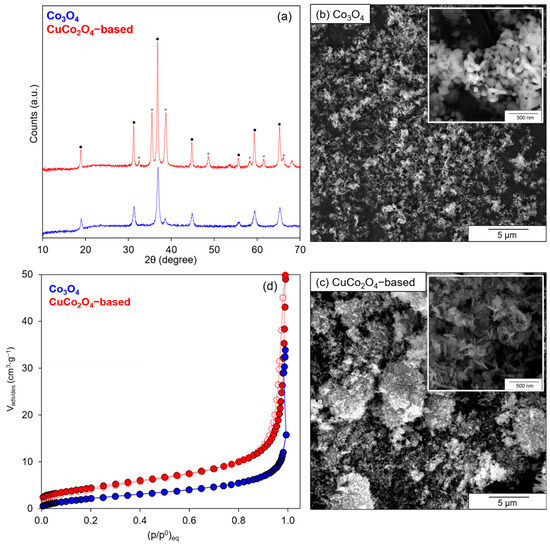
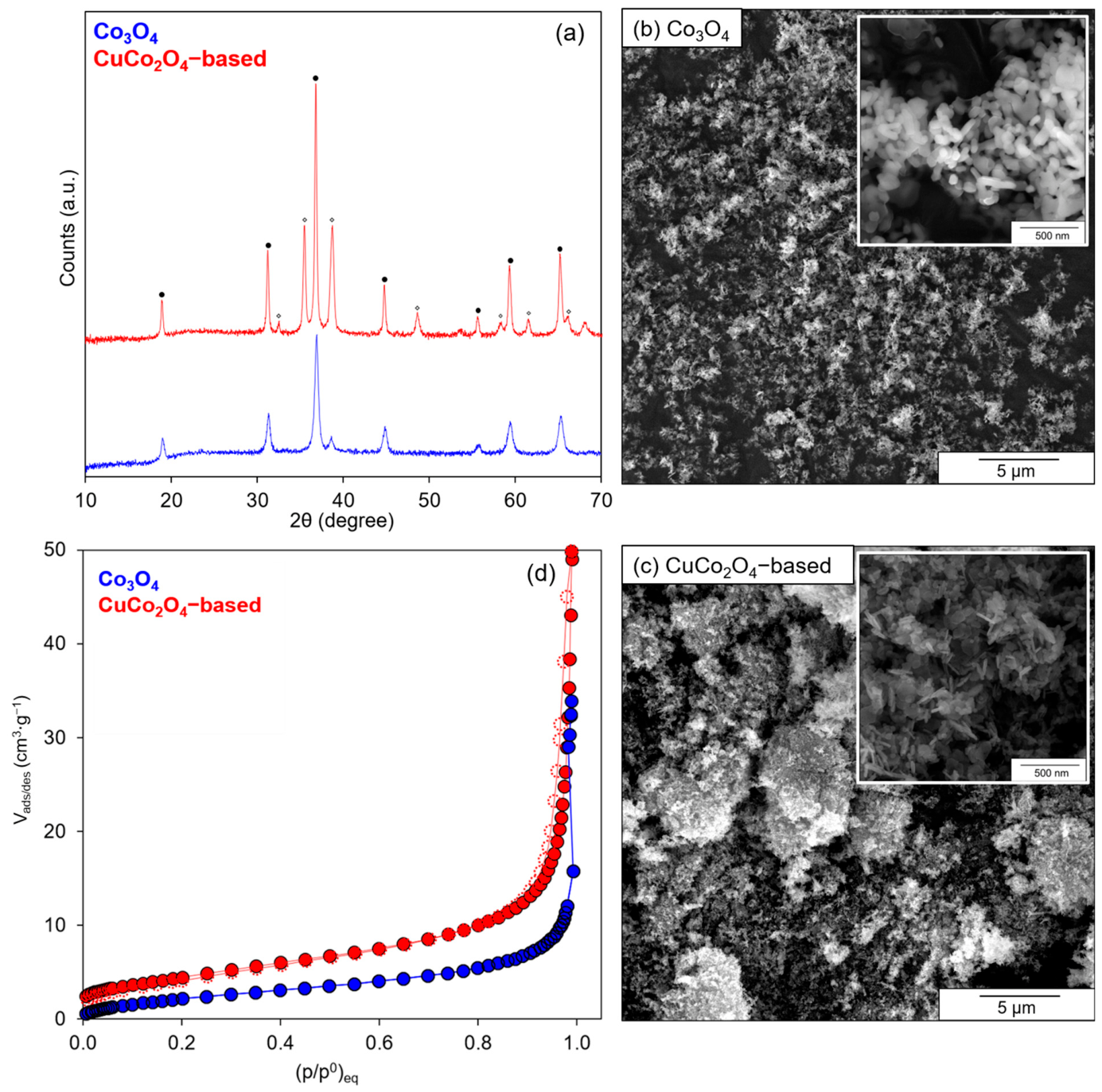
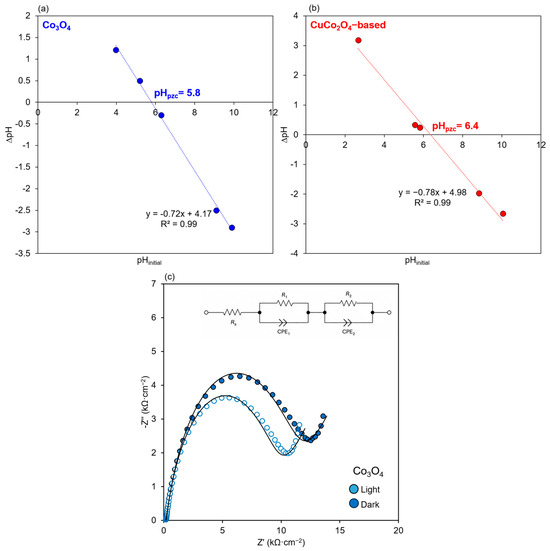
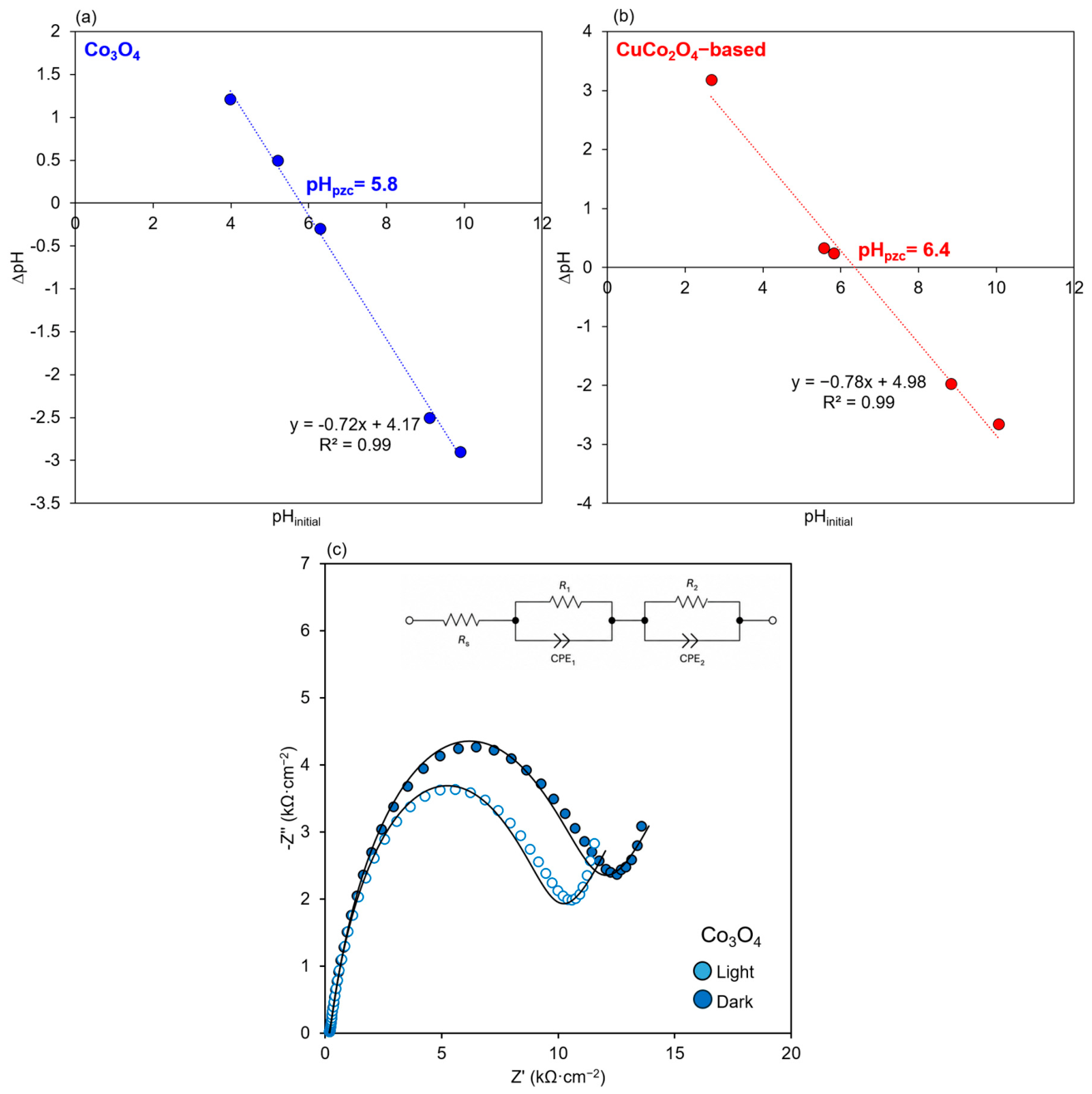
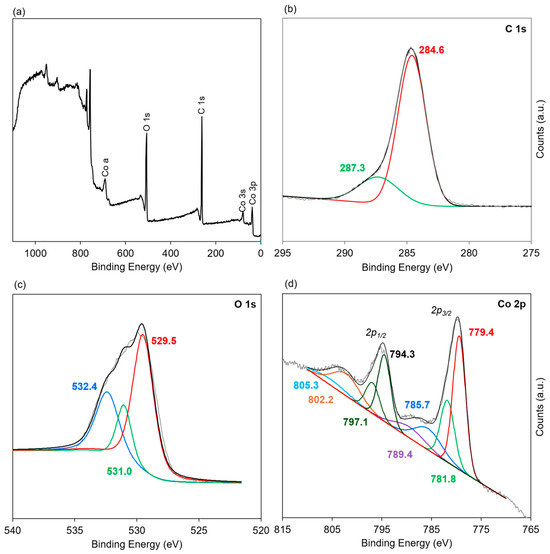
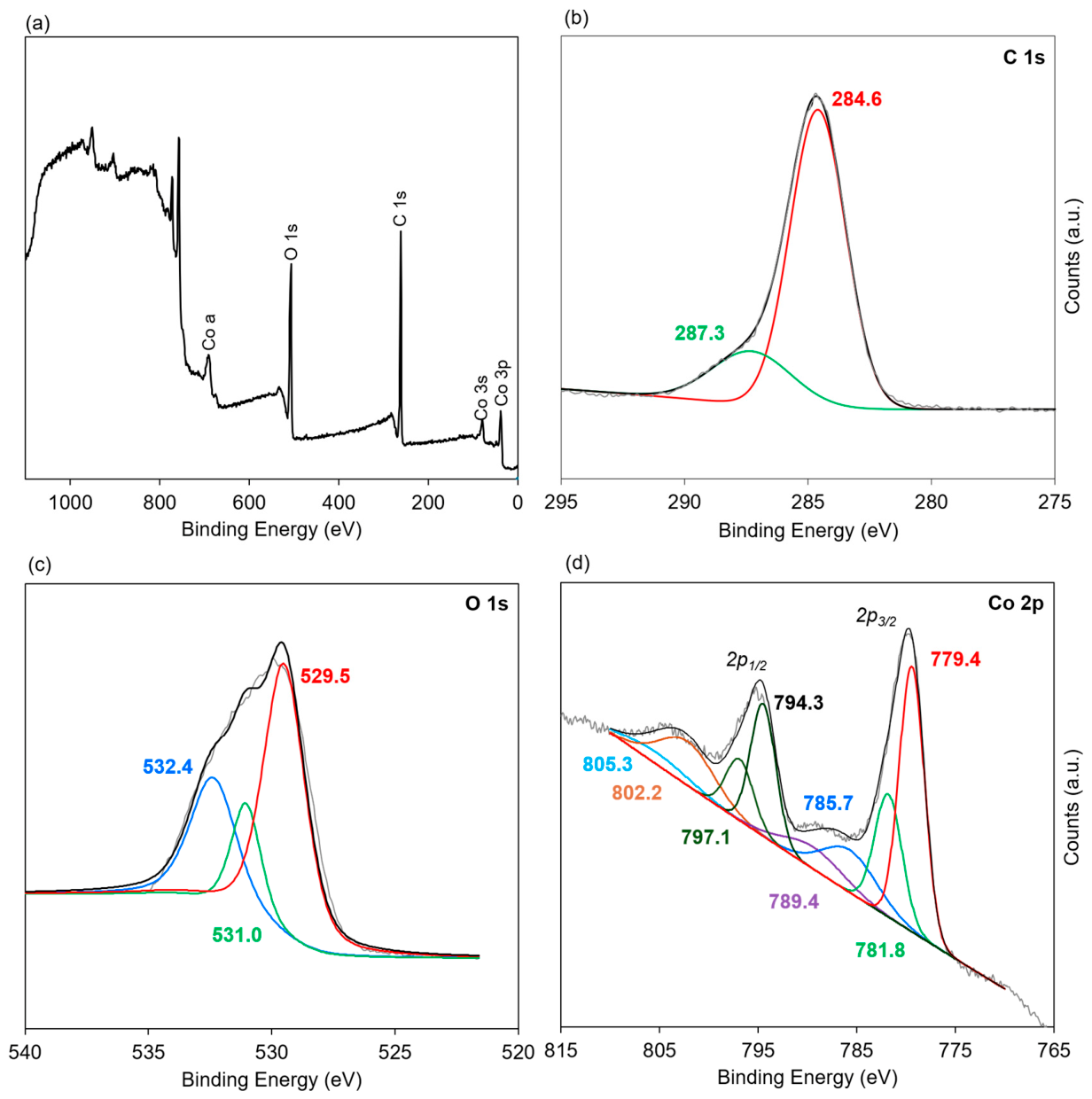
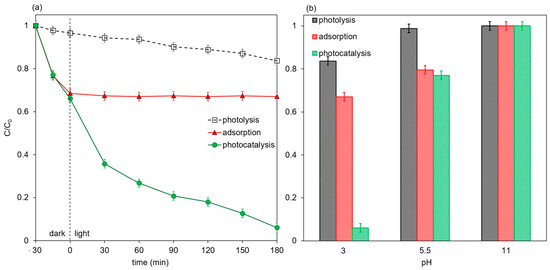
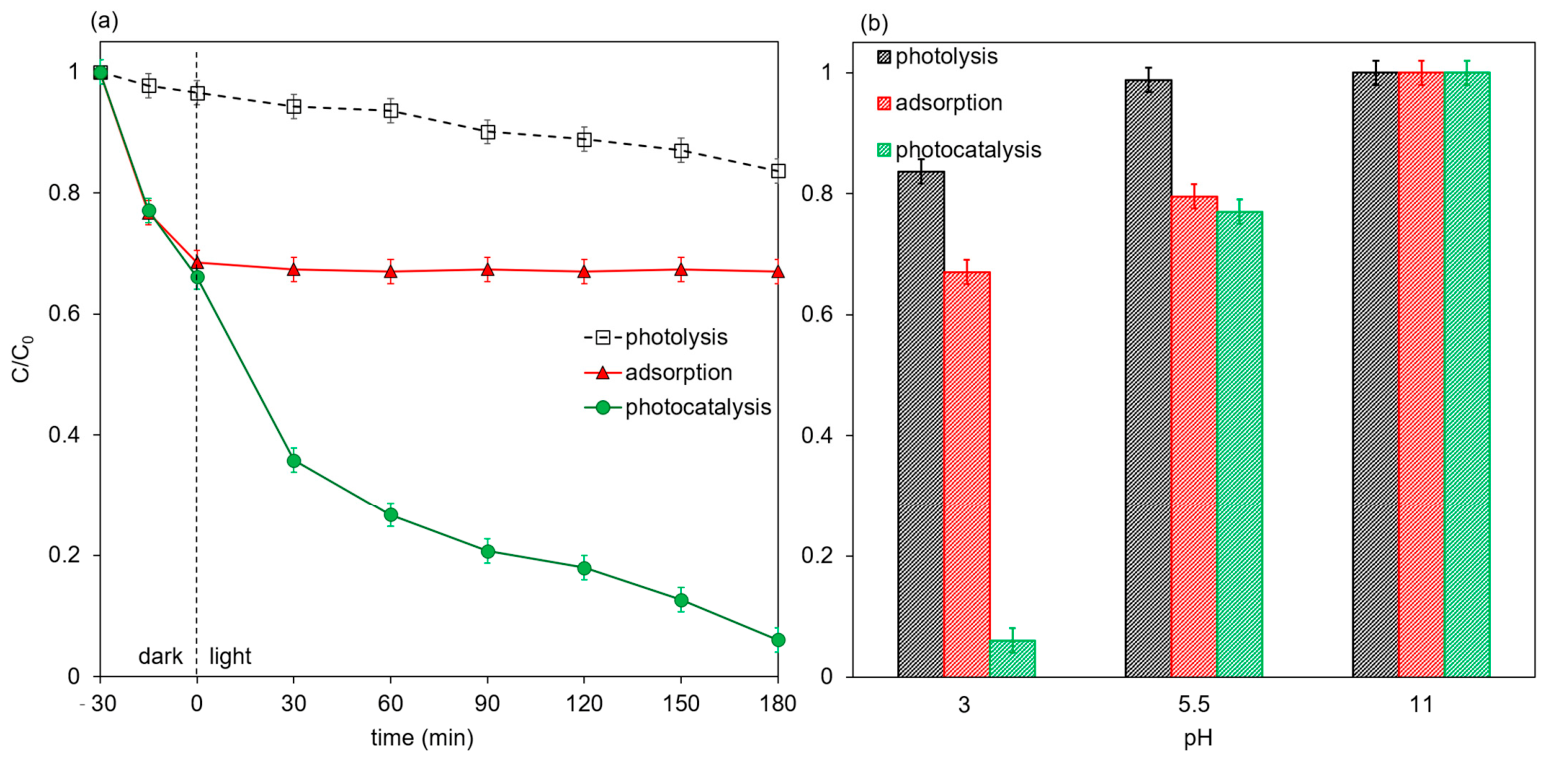
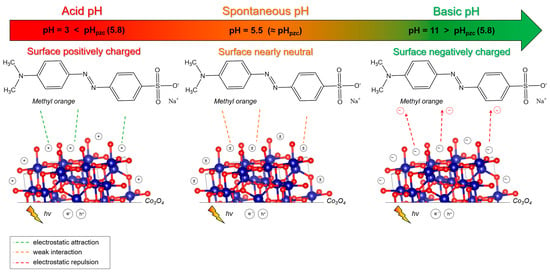
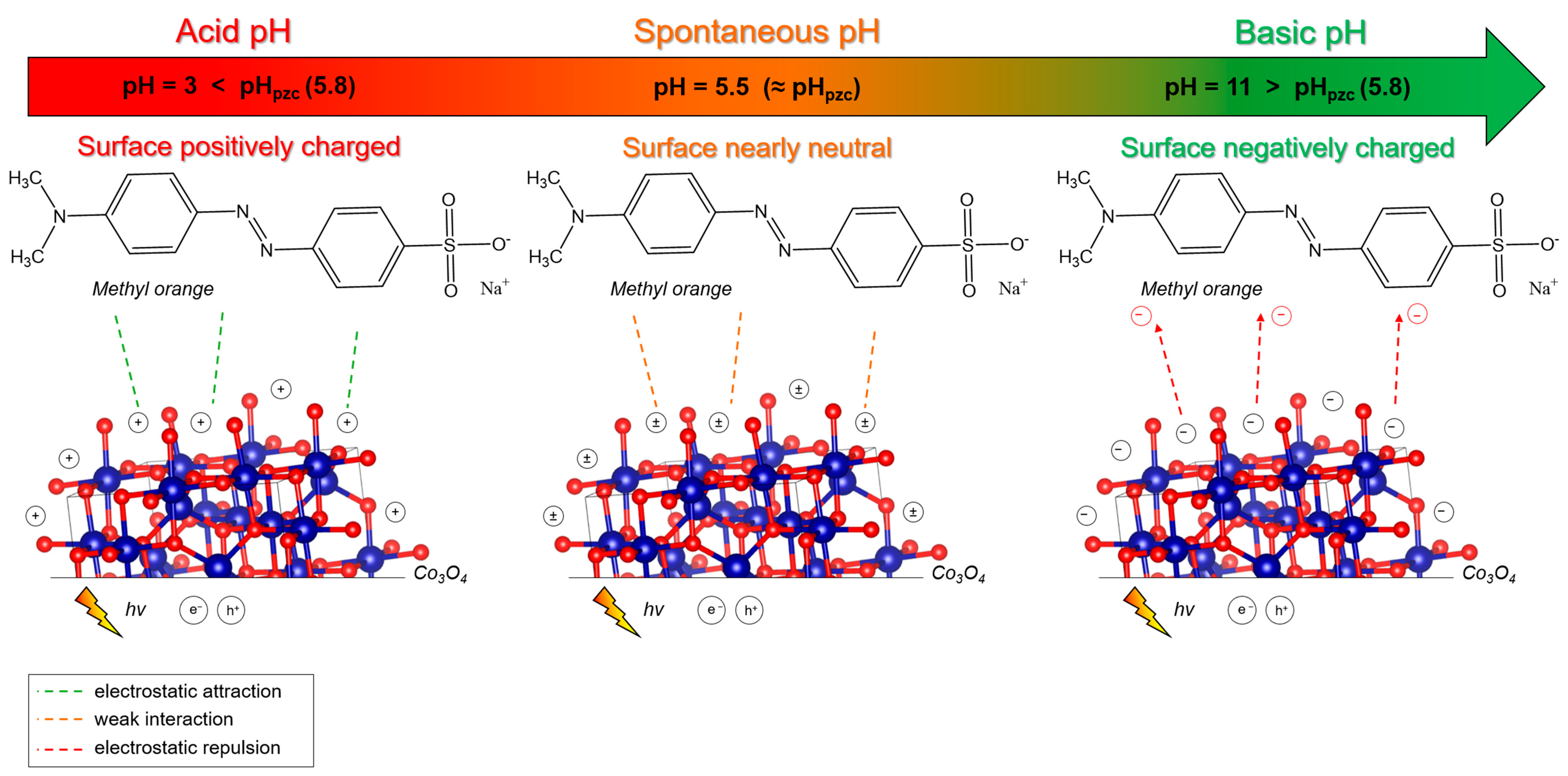
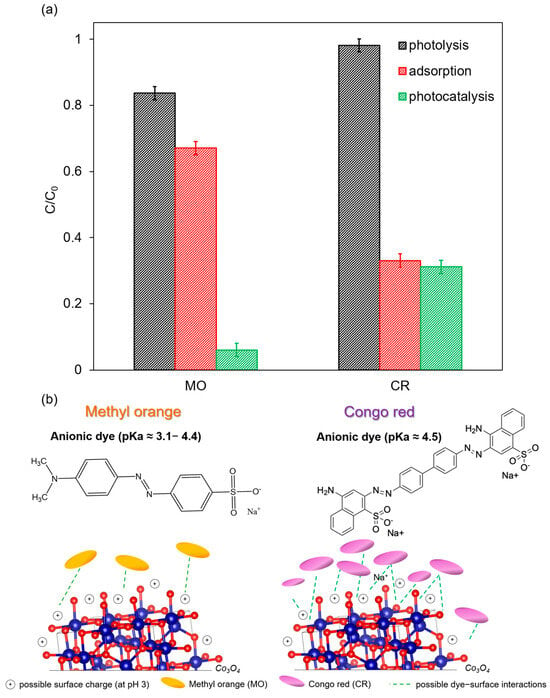
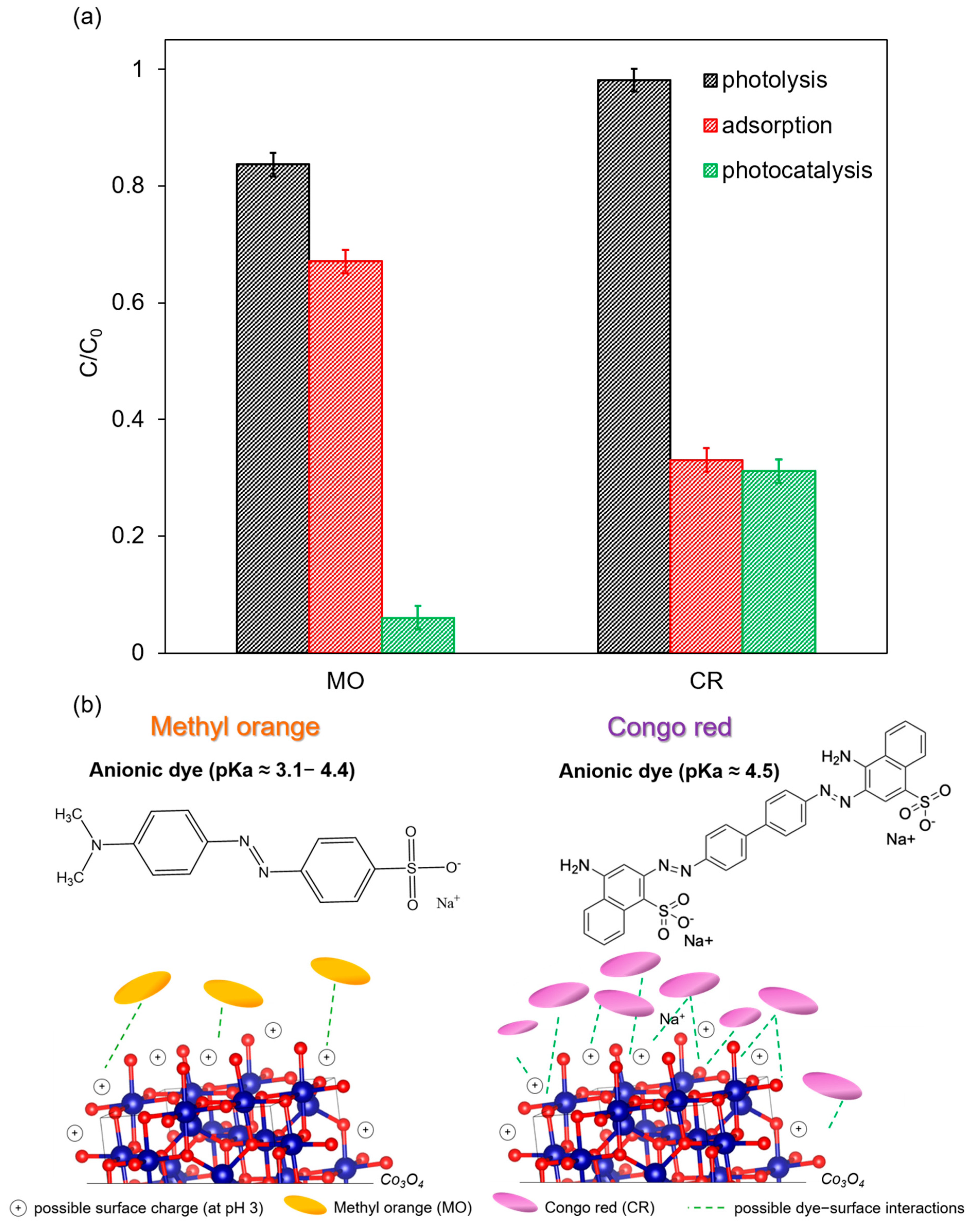
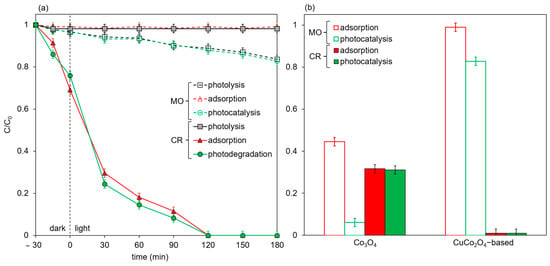
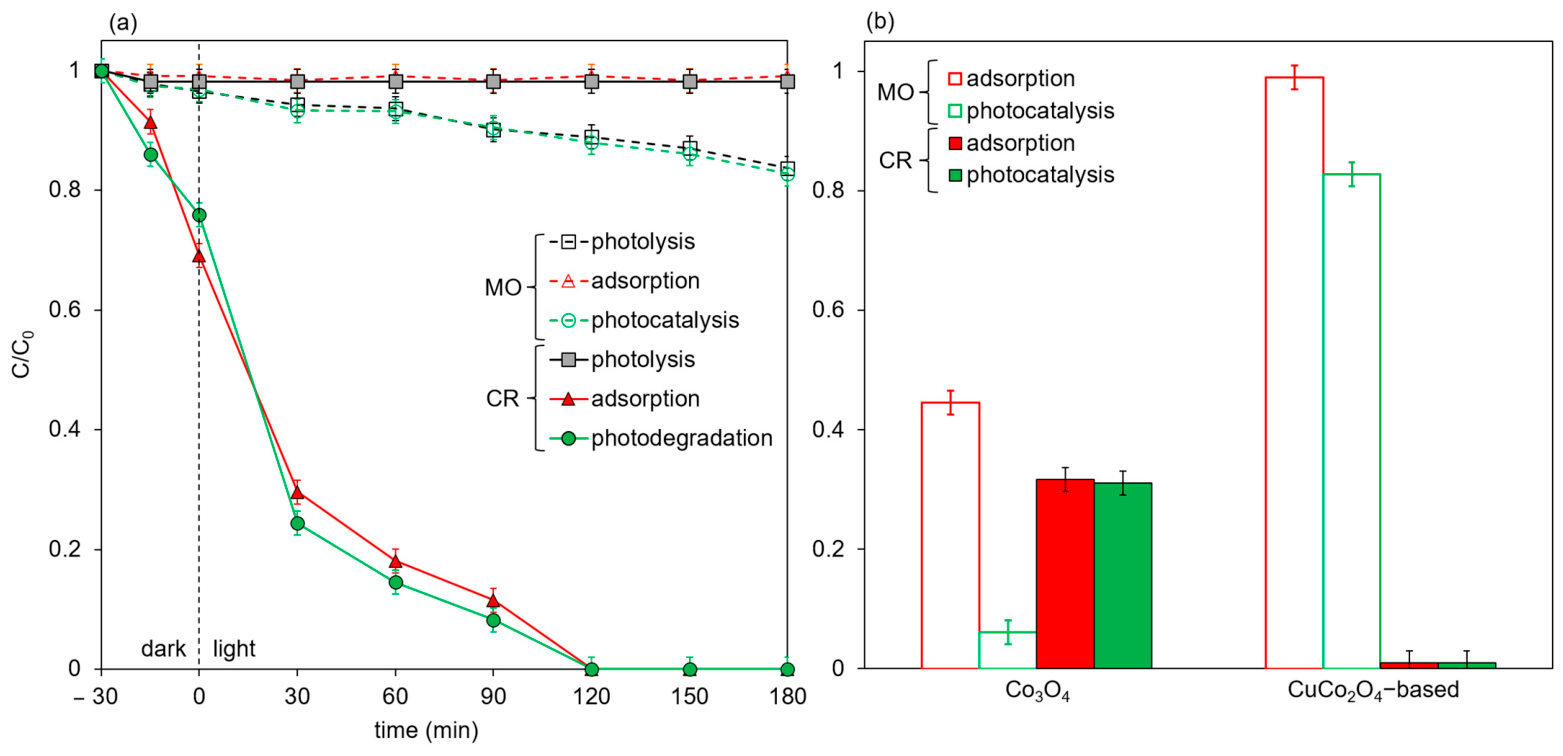
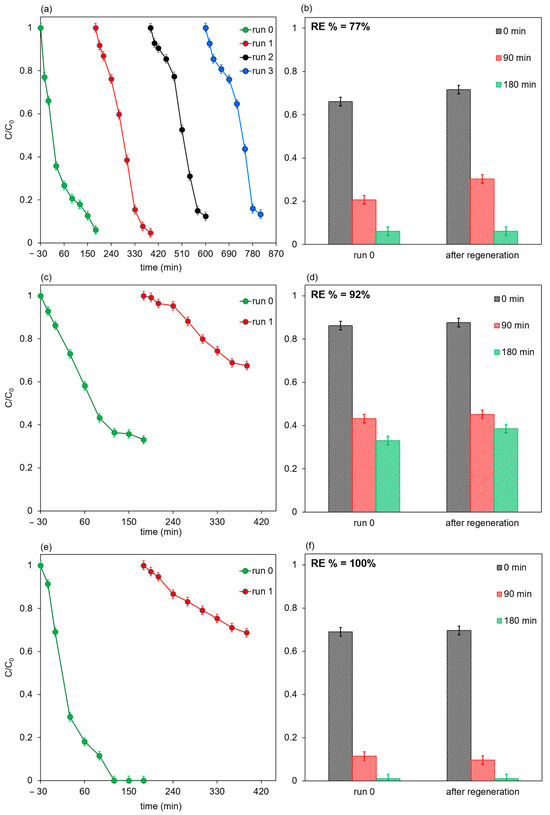
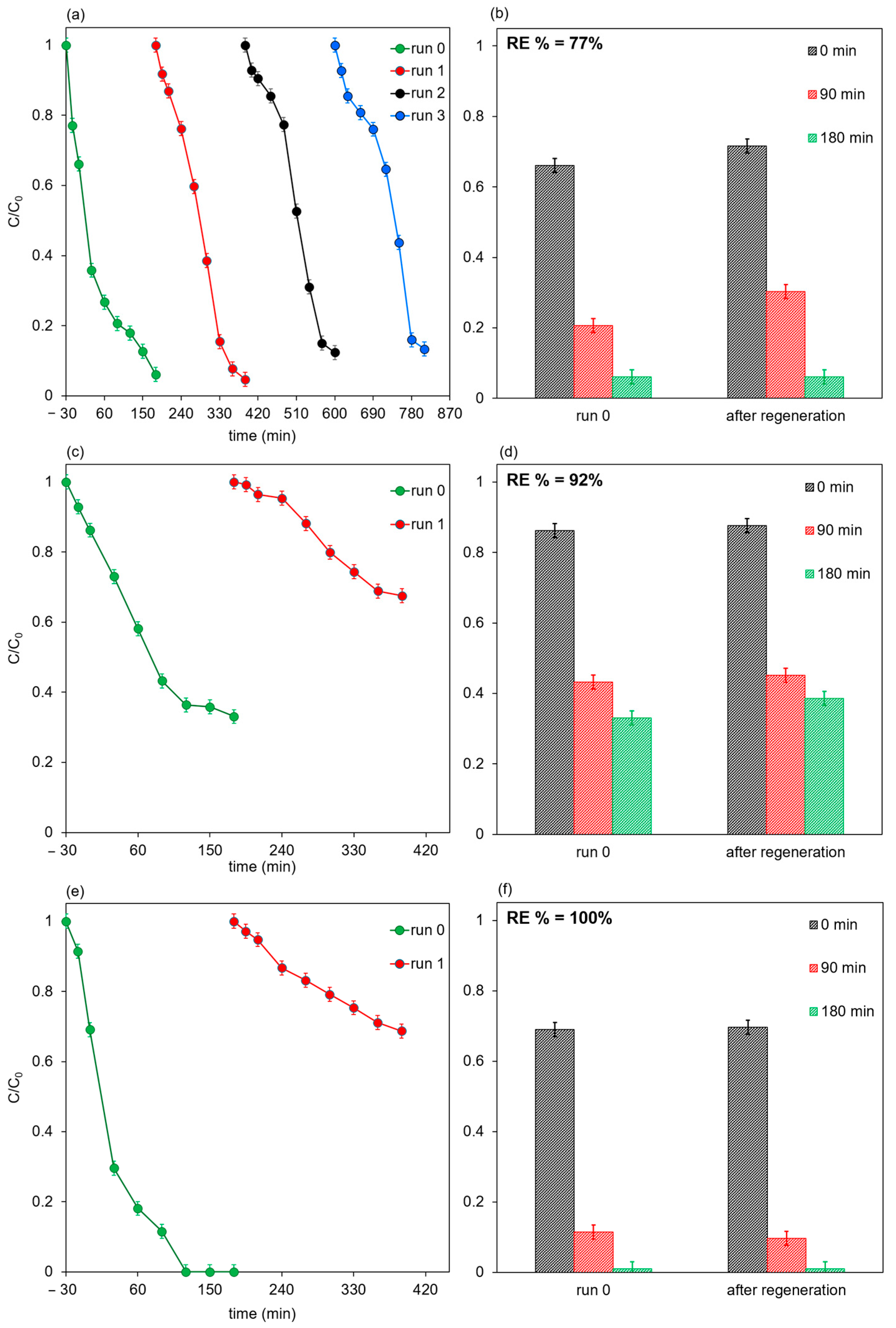
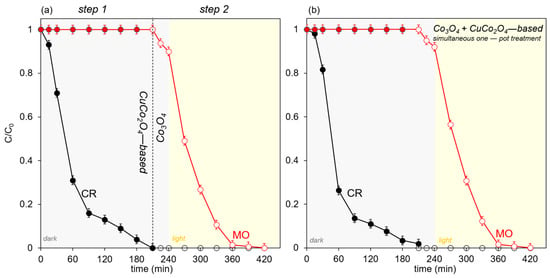
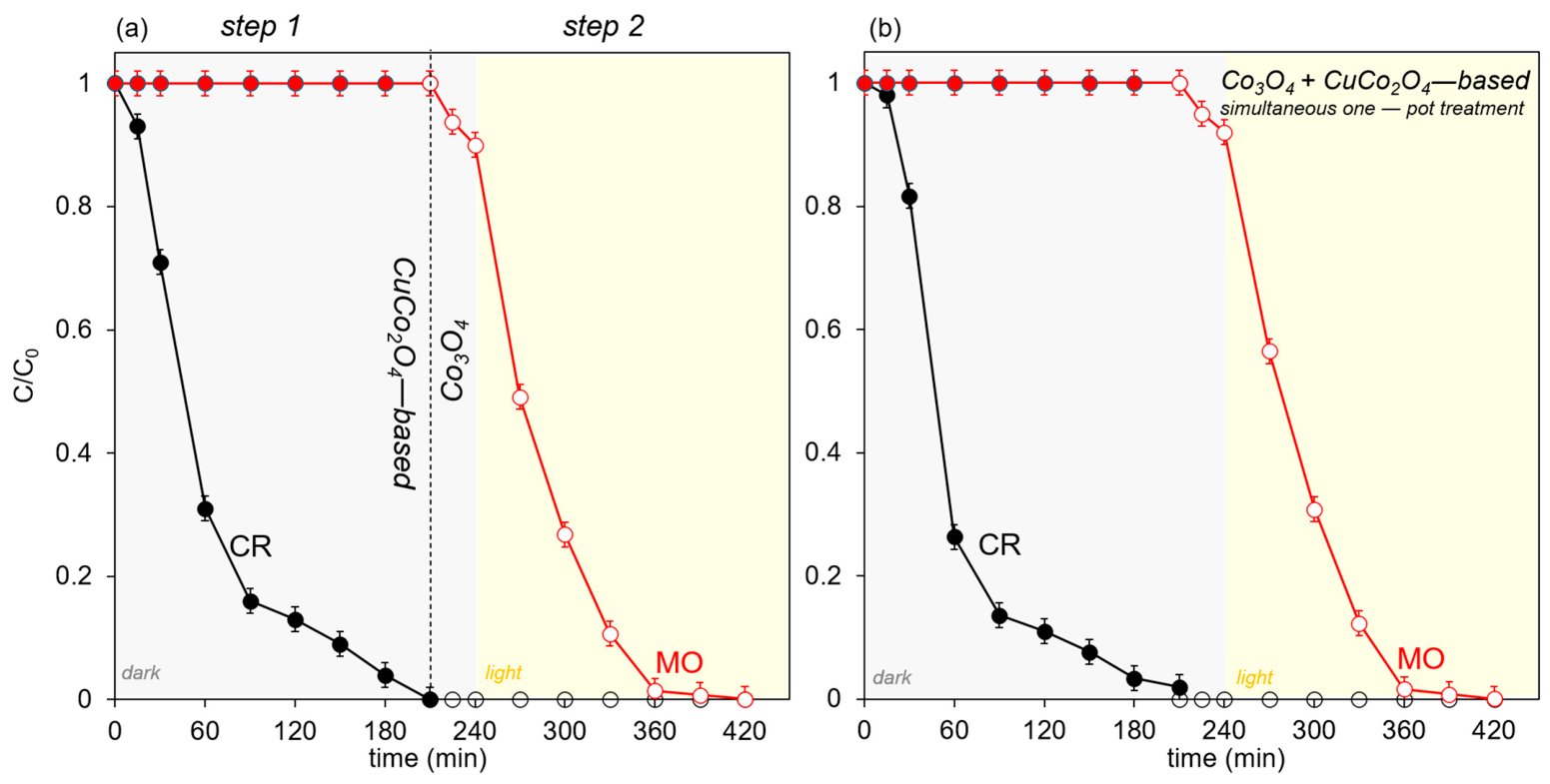

Disclaimer/Publisher’s Note: The statements, opinions and data contained in all publications are solely those of the individual author(s) and contributor(s) and not of MDPI and/or the editor(s). MDPI and/or the editor(s) disclaim responsibility for any injury to people or property resulting from any ideas, methods, instructions or products referred to in the content. |
© 2026 by the authors. Licensee MDPI, Basel, Switzerland. This article is an open access article distributed under the terms and conditions of the Creative Commons Attribution (CC BY) license.