


Highlights
- Combining chemical and biological methods can not only improve the efficiency of biomass-based hydrogen production but also convert the electricity-consuming process of traditional hydrogen production into an electricity-generating process.
- By utilizing the porous structure of biochar, inhibitors produced during fermentation can be effectively adsorbed, and an immobilization carrier can be provided for microorganisms—this significantly alleviates the product inhibition effect.
- Future research on catalysts should focus on the following directions: Rational Design of Nanocatalysts AI-Driven Development and Advanced Characterization Integrated Systems and Process Innovation Diverse Feedstocks and High-Value Product Systems.
Abstract
Hydrogen (H2) is a key clean energy carrier for achieving carbon neutrality, featuring both cleanliness and high efficiency. Biomass-to-hydrogen technologies, with the advantages of strong renewability and low emissions, provide a highly promising alternative to fossil fuel-based hydrogen production. This review summarizes the main pathways and latest research progress in catalytic hydrogen production from biomass, focusing on the role of catalysts and optimization directions in the two major processes of thermochemical and biochemical methods. Despite the rapid development in this field, the large-scale application of biomass-to-hydrogen technologies is still limited by issues such as catalyst deactivation, feedstock composition fluctuations, and low energy efficiency. Traditional biomass-to-hydrogen technologies cannot achieve breakthrough progress in large-scale production in the short term; however, through coupled emerging technologies like biomass electrooxidation for hydrogen production and on-site hydrogen production via aqueous ethanol reforming, biomass-based hydrogen production is expected to solve problems such as low energy efficiency and high transportation difficulties, thereby making an important contribution to the construction of a green and low-carbon hydrogen economy system. Future research should focus on the rational design of stable nanocatalysts, artificial intelligence-driven research and development as well as advanced characterization technologies and the application of integrated systems and process innovation, along with diverse feedstocks and high-value-added product systems.
1. Introduction
As an ideal clean energy carrier, hydrogen (H2) holds significant potential in the energy transition, the reduction of greenhouse gas emissions, and addressing the energy crisis [1]. In recent years, the rapid development of the hydrogen energy industry has brought new opportunities to the energy sector. However, traditional hydrogen production methods, such as natural gas reforming and coal gasification, are typically associated with high carbon emissions and substantial energy consumption [2], which challenges the sustainability of hydrogen production. To overcome this issue, biomass-to-hydrogen technology has gradually become a crucial alternative to conventional hydrogen production methods. As a renewable resource, biomass, with its favorable hydrogen-to-carbon ratio and low sulfur and nitrogen content, is an ideal feedstock for hydrogen production. Converting biomass into hydrogen through thermochemical and biochemical pathways not only helps to mitigate greenhouse gas emissions but also enables the resource utilization of pollutants.
As shown in Figure 1, biomass-to-hydrogen technologies can be broadly categorized into two main approaches: thermochemical and biochemical methods [3,4]. Thermochemical methods include gasification, pyrolysis, and supercritical water conversion, which transform biomass into a gaseous product, including hydrogen, under high-temperature or high-pressure conditions. Biochemical methods rely on the metabolic processes of microorganisms to convert organic matter into hydrogen. These processes typically feature lower energy consumption and fewer pollutant emissions, with a wide range of applicable feedstocks, and primarily include photolysis, photofermentation, and dark fermentation.
Figure 1.
The processing directions for hydrogen production from biomass.
Catalysts play a critical role in biomass-to-hydrogen processes. They can not only increase reaction rates and enhance selectivity but also enable hydrogen production under milder temperature and pressure conditions. Different types of catalysts have varying applications and effects in distinct hydrogen production processes. For example, in gasification, metallic catalysts (such as nickel, cobalt, and copper) can promote the reforming of organic intermediates and improve hydrogen yield [5]; whereas in photo- and dark-fermentation, specific promoters and enzymatic catalysts are beneficial for enhancing hydrogen production efficiency [6].
In recent years, researchers have made significant progress in the development and optimization of catalysts, especially in the study of novel catalytic materials. For instance, Metal–Organic Frameworks (MOFs), carbon-based materials, and nanocatalysts have shown excellent performance in enhancing catalytic activity during biomass gasification and reforming [7,8]. Furthermore, catalyst regeneration, resistance to poisoning, and stability are also key focuses of current research [9]. Improving the lifespan and economic viability of catalysts remains an urgent issue to be addressed in this field.
Although biomass-to-hydrogen technology has achieved promising results in laboratory and small-scale applications, its large-scale commercialization still faces a series of technical and economic challenges [10]. Firstly, there is a need to improve technological maturity and energy efficiency, particularly in catalyst development and reaction condition optimization. Secondly, the supply and handling of feedstocks present issues of instability and variability. Lastly, the cost of hydrogen production remains a primary factor limiting its market competitiveness.
This review introduces an innovative analytical framework and perspective distinct from previous works, focusing on scaled demonstration cases and systemic engineering challenges: We have significantly strengthened the in-depth analysis of pilot and industrial demonstration projects (as detailed in Section 5). The manuscript not only reports hydrogen production data but also critically examines the real-world problems exposed in these demonstrations, such as catalyst longevity, adaptability to complex feedstocks, reactor scaling, and multi-unit integration. This shift in focus from “ideal system performance” to “engineering system stability” is intended to address the gap in most reviews regarding the analysis of the transition “from lab to plant.”
Furthermore, the review integrates disruptive frontier technologies to anticipate shifts in R&D paradigms: A dedicated independent chapter (Section 6) prospectively explores how synthetic biology for creating cell factories and AI-driven catalyst design and process optimization can fundamentally reshape the R&D paradigm of this field. This is not a mere listing of existing technologies but emphasizes a future technological architecture of deep integration between “biological intelligence” and “computational intelligence,” pointing toward the strategic direction of achieving performance leaps through interdisciplinary convergence.
Therefore, this paper is not merely a compilation of the latest achievements in biomass-to-hydrogen conversion but serves as a “strategic assessment” and “roadmap analysis” that emphasizes critical comparison, engineering perspectives, and frontier integration. We hope this structured and innovative framework will provide researchers and decision-makers in both academia and industry with a reference that offers comprehensive insights and practical guidance, collectively promoting the leapfrog development of biomass-to-hydrogen technology toward greater efficiency, economic viability, and systemic sustainability.
2. Chemical Hydrogen Production
Figure 2 Illustrates the chemical method that forms the basis of the conversion approaches discussed in this section.
Figure 2.
Four directions of chemical hydrogen production from biomass.
2.1. Hydrogen Production via Gasification
Among the various pathways for hydrogen production from biomass, gasification has been extensively researched and applied due to its technological maturity, broad feedstock adaptability, and high hydrogen yield. The fundamental principle of biomass gasification for hydrogen involves converting solid organic matter into syngas, primarily composed of hydrogen (H2), carbon monoxide (CO), and carbon dioxide (CO2), through partial oxidation or steam reforming reactions at elevated temperatures [11]. In a typical gasification process, biomass initially undergoes drying and pyrolysis stages, releasing volatile components and tar. Subsequently, in the gasification zone, it reacts with oxygen, air, or steam to generate combustible gases. The core reactions of gasification include partial oxidation of carbon (C + 0.5O2 → CO), steam reforming (C + H2O → CO + H2), water–gas shift reaction (CO + H2O → CO2 + H2), and methane reforming (CH4 + H2O → CO + 3H2), among others. The equilibrium of these reactions is significantly influenced by temperature, pressure, and the ratio of the gasifying agent [12]. The suitable gasification temperature typically ranges from 700–950 °C, with higher temperatures favoring tar cracking and increased hydrogen yield [12].
Tar formation and removal represent a critical issue affecting gasification efficiency and downstream utilization. Tar, a class of high molecular weight aromatic compounds, tends to condense, clog pipelines, and poison catalysts, thereby reducing hydrogen purity and equipment operational reliability [13]. To mitigate tar generation, researchers have pursued two main strategies: optimizing gasification reaction conditions (e.g., increasing temperature, adjusting the gasifying agent ratio) to promote tar thermal cracking; and introducing catalysts to achieve tar reforming and complete conversion under milder conditions, thereby enhancing gasification efficiency and hydrogen yield [14].
Catalysts play a decisive role in catalytic gasification processes. They not only facilitate tar cracking and gaseous phase reforming reactions but also adjust the H2/CO ratio, improving the composition of the gasification products [15]. Nickel-based catalysts are recognized as one of the most effective catalyst systems currently available, owing to their excellent activity in methane reforming and tar cracking [16]. Supported catalysts such as Ni/Al2O3, Ni/CeO2, and Ni/SiO2 have demonstrated high hydrogen yields and tar removal efficiency in numerous studies. However, nickel catalysts suffer from issues like susceptibility to sintering, coking, and sensitivity to sulfur compounds and halogens, which limit their long-term stability [17]. To address these limitations, researchers have attempted to enhance their anti-coking and anti-poisoning properties by doping with rare earth elements (e.g., Ce, La), alkali metals, or noble metal promoters (e.g., Rh, Ru), while simultaneously improving reactivity through carrier structure modulation and the design of highly dispersed metal sites [18,19].
In recent years, the development of novel catalyst systems has further expanded the research boundaries of hydrogen production via gasification. Catalysts primarily facilitate tar molecule degradation and hydrogen generation through three pathways during gasification: oxidation, cracking, and reforming [20]. Firstly, tar is adsorbed onto the active metal sites on the catalyst surface, leading to the cleavage of C–C and C–H bonds. Secondly, partial oxidation reactions generate CO and CO2, providing substrates for the subsequent water–gas shift reaction. Finally, steam reforming and water–gas shift reactions further convert CO to H2, thereby enhancing hydrogen selectivity. The basicity and oxygen storage capacity of the support (e.g., oxygen vacancies in CeO2) help promote the oxidative cracking of tar molecules and the gasification of carbon deposits, thus maintaining catalyst activity. Metal–organic framework (MOF)-derived catalysts, porous medium-encapsulated Ni-Fe bimetallic composites, and MOF-derived composite structures have all demonstrated excellent anti-coking performance and tar conversion capability [21,22]. These materials typically feature highly controllable metal site distribution and large specific surface areas, while their carbon shell coating structures can effectively prevent metal sintering and maintain high activity. Furthermore, bimetallic or multi-metallic synergistic effects can enhance electron transfer capacity and redox cycling, thereby improving reaction rates and catalytic stability.
With the advancement of gasification technology, the configuration of catalytic beds and process integration modes have been continuously optimized. Currently, these mainly include in situ catalytic gasification and downstream catalytic reforming. In situ catalytic gasification directly cracks tar within the reaction zone, but catalysts are prone to deactivation due to high-temperature coking and ash contamination. Downstream catalytic reforming involves setting up an independent catalytic reactor after the gasification gas output to achieve tar removal and gas purification, facilitating catalyst regeneration. Comparison of in situ catalytic gasification and downstream catalytic reforming is shown in Table 1. In recent years, coupled catalytic systems combining moving beds and fluidized beds have gained attention [23]; by enabling online catalyst regeneration and tar capture, they can further enhance continuous operation performance.
Table 1.
Comparison of In situ Catalytic Gasification and Downstream Catalytic Reforming.
Furthermore, the chemical looping gasification method can ingeniously decompose the traditional gasification process into multiple steps through the circulation of solid oxygen carriers, with its core advantage lying in internal separation. The core component of chemical looping gasification is a typical three-reactor chemical looping system, which includes a fuel reactor, a steam reactor, and an air reactor. In the fuel reactor, biomass is oxidized by the oxygen carrier, generating a gas stream rich in CO2 and H2O; in the steam reactor, the reduced oxygen carrier reacts with steam to directly produce high-purity hydrogen; in the air reactor, the oxygen carrier reacts with air to restore its oxidized state and complete the cycle. Currently, at the research level, this method has achieved an annual production scale of millions of cubic meters of high-purity hydrogen, with the tar content in the fuel gas controllable at ≤2 g/Nm3 and the effective thermal efficiency of the system reaching up to 78.9%[110].
Overall, research on hydrogen production via gasification is transitioning from laboratory exploration to industrial validation stages [28]. Current research hotspots focus on developing anti-coking, anti-poisoning, and low-cost Ni-based and bimetallic catalysts, as well as utilizing MOF-derived, carbon-based composite, or structured carrier systems to improve catalyst lifespan and reactivity. Engineering challenges primarily include long-term catalyst stability, economic viability, and reaction controllability under complex feedstock systems [29]. Future research should emphasize catalyst regeneration mechanisms, the design of low-temperature high-efficiency gasification processes, and intelligent operation and monitoring technologies for coupled gasification and catalytic systems. Among these, chemical looping gasification (CLG) stands out as one of the most promising innovations, with demonstration scales already reaching an annual production capacity of millions of cubic meters of hydrogen. These systems achieve a high effective thermal efficiency of 78.9% while effectively controlling tar content.
2.2. Hydrogen Production via Supercritical Water Gasification (SCWG)
Supercritical Water Gasification (SCWG) is an efficient and promising technology for hydrogen production from biomass. Its core principle involves the complete decomposition of organic matter into gaseous products primarily consisting of H2, CO2, CH4, and small amounts of CO, using water as both the reaction medium and reactant in its supercritical state (the critical point of water is 374 °C, 22.1 MPa) [30]. Supercritical water possesses unique physicochemical properties: its dielectric constant decreases significantly, its ion product increases, and its viscosity and surface tension decrease. This allows it to dissolve non-polar organic compounds while efficiently coupling gas-phase and liquid-phase reactions. Compared to conventional dry gasification, SCWG can directly process biomass with high moisture content (such as sludge, algae, fermentation residues) without requiring an additional drying step, thereby significantly reducing energy consumption and avoiding tar formation.
Under supercritical conditions, biomass conversion primarily undergoes multiple steps including hydrothermal depolymerization, reforming, and the water–gas shift reaction [31]. In the initial stage, complex macromolecular organics (e.g., cellulose, hemicellulose, lignin) undergo thermal cleavage to generate low molecular weight intermediates, including organic acids, alcohols, and ketones. Subsequently, these intermediates are further reformed with steam participation to produce CO and H2. Finally, the water–gas shift reaction (CO + H2O → CO2 + H2) tends towards completion under high temperature and pressure, thereby achieving a high hydrogen yield. The supercritical water environment inhibits carbon deposition and promotes free radical reactions, resulting in higher selectivity of the reaction system and superior hydrogen yield compared to subcritical or dry gasification systems [32].
Catalysts play a key role in the SCWG system, significantly reducing the reaction activation energy, enhancing hydrogen selectivity, and improving carbon conversion rates. Common catalysts include alkali metals (e.g., K, Na), transition metals (e.g., Ni, Co, Ru), and their composite oxides. Potassium-based catalysts (K2CO3, KOH) effectively promote the water–gas shift and methane reforming reactions, thereby increasing hydrogen yield. Their mechanism primarily stems from the promotion of water molecule dissociation and C–O bond cleavage by alkali metals [33]. Ni-based catalysts are widely used due to their excellent activity for C–C bond cleavage and high hydrogen selectivity [30]. Ni/Co/Ru&Al2O3 catalysts have demonstrated excellent catalytic performance in multiple studies [34,35]: Co as a promoter enhances redox capacity and anti-coking performance, while the Al2O3 support provides good mechanical strength and dispersibility, thereby enhancing catalyst stability and cyclic life.
It is noteworthy that catalysts in the SCWG system are susceptible to deactivation due to the effects of high pressure, high temperature, and the aqueous environment [36]. The main deactivation mechanisms include metal particle sintering, support hydration, carbon deposition, and dissolution–redeposition processes. To improve catalyst stability and corrosion resistance, researchers have proposed various strategies, such as introducing rare earth element promoters (Ce, La) to enhance metal–support interaction, using carbon materials (activated carbon, graphene) or ceria–alumina composite supports to inhibit hydrothermal corrosion, and developing nanostructured catalysts to increase dispersion and anti-sintering properties [37,38]. Application and effect of different catalysts in supercritical water gasification (SCWG) technology is shown in Table 2.
Table 2.
Application and Effect of Different Catalysts in Supercritical Water Gasification (SCWG) Technology.
In recent years, SCWG research has gradually expanded from model compounds to complex biomass systems. In gasification experiments with different feedstocks such as sludge, algae, wood chips, and glycerol, catalyst selection plays a significant role in enhancing hydrogen yield [39]. Zn-Ni&TiO2 and Zn-Cu&TiO2 catalysts improved hydrogen selectivity in SCWG experiments with high-oxygen model compounds (e.g., furfural), while Co-Ni&TiO2 effectively increased carbon conversion rate [40]. Furthermore, noble metal catalysts like Ru and Pt can achieve high conversion rates even at lower temperatures, but their large-scale application is limited by cost. Composites of noble metals with Ni effectively reduce costs while improving catalytic efficiency and stability [41]. Additionally, bimetallic catalysts formed from Ni and rare earth metals are beneficial for improving hydrogen production efficiency, with Ce-Ni catalysts considered to have the highest H2 yield and selectivity. An optimal Ce content of 5 wt% resulted in a maximum H2 selectivity of 1.61 during SCWG of food waste at 480 °C for 30 min [42].
Through distinct technical pathways, the aforementioned demonstration cases strive to tackle the core challenges faced by Supercritical Water Gasification (SCWG) technology in practical applications—particularly the deactivation of catalysts in the harsh supercritical water environment, as well as difficulties in reactor scaling-up and system integration.
Enhancing catalyst durability and adaptability: to address the issues of catalyst sintering, carbon deposition, and corrosion in high-temperature, high-pressure aqueous environments, multiple strategies were adopted in the cases. Nickel-based catalysts were modified by adding secondary metals (e.g., Co, ZnO). Leveraging the synergistic effects between metals, the hydrothermal stability and anti-carbon-deposition capability of the catalysts were effectively improved. Additionally, it was found that when dealing with real wastewater of complex composition, replacing the catalyst support from γ-Al2O3 (gamma-alumina) to activated carbon (AC) significantly enhanced the catalyst’s stability under harsh conditions—providing a crucial insight for the treatment of actual wastewater.
Optimizing reactor design to address engineering challenges: in terms of reactors, studies explored different configurations to balance efficiency and feasibility. A continuous three-reactor system was employed, which separated the pyrolysis, oxidation, and catalytic processes. This design allowed the optimization of reaction conditions in each unit, achieving a carbon gasification efficiency of up to 96% at a relatively low temperature (673 K) while drastically shortening the total residence time. This breakthrough paves the way for reducing energy consumption and enabling continuous production. Furthermore, the continuous downward-flow tubular reactor used in another case represents a reactor design oriented toward industrial scaling-up, facilitating the continuity and large-scale implementation of the SCWG process.
Expanding feedstock adaptability and verifying process feasibility: these cases indicate that SCWG technology is actively shifting from processing simple model compounds to handling real, complex feedstocks. For instance, one case successfully treated real organic wastewater generated from the hydrothermal liquefaction of sludge, while another verified the feasibility of using SCWG to treat radioactive organic waste from nuclear power plants. These practices are critical for the eventual industrialization of SCWG technology, as they reveal real-world challenges encountered when processing actual materials (e.g., the impact of impurities on catalysts) and explore corresponding solutions.
Catalyst activity screening tests are typically conducted in batch pressurized reactors (autoclaves); to achieve continuous operation and process intensification, continuous tubular reactors (including downward-flow designs) and multi-reactor systems (e.g., systems with separate pyrolysis and catalytic units) are adopted, and such reactors have stronger relevance to large-scale applications; the selection of reactors directly affects catalyst performance, residence time, and overall process efficiency—this is evidenced by a case study showing that the carbon gasification efficiency can reach 96% in an optimized continuous system.
In summary, supercritical water gasification (SCWG) for hydrogen production offers distinct advantages, including high conversion efficiency, compatibility with high-moisture feedstocks, and environmental friendliness, positioning it as a crucial future direction for biomass-based hydrogen production. However, its large-scale industrialization still faces challenges that also define clear research priorities. The long-term stability of catalysts and their adaptability to complex feedstocks remain core bottlenecks, while reducing energy consumption and equipment costs without compromising efficiency is a persistent engineering challenge. A deeper understanding of the transformation pathways and impacts of impurity elements, such as sulfur, within the SCWG process is also required.
Current research focuses on enhancing catalyst durability, elucidating hydrothermal reaction mechanisms, and scaling up continuous reactor systems. Future research trends will emphasize the development of highly efficient, low-cost, and corrosion-resistant catalysts—particularly bi-metallic or multi-metallic systems with strong resistance to sintering and coking. The application of advanced techniques, such as in situ spectroscopy and molecular simulation, will be crucial for revealing the dynamic behavior of reaction intermediates and establishing catalyst structure–activity relationships. Furthermore, optimizing system integration and intelligent control technologies will drive the advancement of SCWG toward more efficient, low-carbon, and intelligent development.
2.3. Emerging Chemical Methods for Hydrogen Production
Beyond traditional methods like steam reforming, gasification, and pyrolysis, a series of emerging chemical pathways for hydrogen production have appeared in recent years, with microwave pyrolysis and high-temperature plasma methods being the most representative. These methods significantly alter the energy distribution and material conversion pathways within the reaction system through novel energy input modes, enabling more efficient biomass cracking and hydrogen generation. Unlike conventional pyrolysis, both microwave pyrolysis and plasma reactions can directly couple energy into the interior of the reactants within extremely short timeframes, causing selective cleavage of molecular bonds and rapid generation of gaseous products [43]. Such non-traditional hydrogen production technologies offer advantages including rapid heating rates, high process controllability, and high reaction efficiency, demonstrating significant potential in green hydrogen research.
Microwave pyrolysis for hydrogen production is based on the direct heating effect of microwave radiation on polar molecules or conductive particles. Microwave heating is a volumetric process enabling high energy density input within short durations, thereby avoiding temperature gradients and heat transfer bottlenecks inherent in conventional heating methods. Moisture, metal ions, and oxygen-containing functional groups in biomass can interact with the microwave electromagnetic field, causing rapid temperature rises and pyrolysis reactions. Research indicates that while pyrolysis proceeds rapidly under microwave radiation alone, the resulting gas often contains high tar levels and low hydrogen selectivity. The introduction of catalysts becomes crucial for enhancing hydrogen yield and suppressing tar formation.
In microwave pyrolysis systems, catalysts often serve not only as reaction promoters but also as microwave absorbers. Carbon materials and metal carbides can significantly enhance local electric field intensity, forming so-called “hotspots” that promote the fracture and reorganization of biomass organic structures. Carbon materials and carbon-containing composites can both drive reactions like biomass deoxygenation and C-C bond cleavage via surface active sites to optimize products and improve hydrogen selectivity, and efficiently absorb microwave energy, converting it into localized heat, thereby addressing uneven heat transfer in conventional heating through the “hotspot” effect [44]. Magnetite (Fe3O4) also exhibits dual functionality in microwave-assisted co-gasification of mixed plastics and biomass: on one hand, it acts as a catalyst to crack reaction intermediates, increasing hydrogen yield and reducing tar formation; on the other hand, it can transform into microwave-active phases during the reaction, continuously absorbing microwave energy to maintain “hotspot” temperature, ensuring efficient and continuous reaction progress [45]. Furthermore, catalysts derived from industrial solid wastes like coal gasification fine slag, rich in porous carbon and metal elements, exhibit superior microwave absorption capacity compared to traditional materials (e.g., SiC). They can not only simplify bio-oil composition, increase the proportion of phenolic compounds, but also promote fuel gas generation [46]. Catalytic oxygen carriers prepared from bauxite residue and waste materials provide a low-cost option for this technology, capable of adjusting the H2/CO ratio in syngas to obtain high-purity syngas, while also forming “hotspots” via microwave absorption, accelerating the cracking and reforming of plastic polymer chains, offering support for industrial application [47].
Furthermore, composite catalytic systems and structured catalysts demonstrate higher stability and selectivity in microwave pyrolysis for hydrogen production. Carbon-encapsulated Ni-Fe bimetallic nanoparticles (NiFe & C) can effectively prevent metal sintering and coking, while the carbon shell not only protects the active phase but also maintains electron conduction [48], potentially promoting C–H bond activation and H2 generation through electronic synergy; MOF-derived Ni–CeOₓ composite catalysts exhibit excellent tar reforming performance due to their high specific surface area and tunable oxygen vacancy structure [49]. Additionally, carbon-based foams or graphene-based supports can enhance microwave absorption efficiency [50], thereby achieving dual-functional coupling of “catalysis-wave absorption” to improve hydrogen yield.
High-temperature plasma method for hydrogen production is another advanced physico-chemical coupled pathway. This method utilizes high-energy electrons and active species generated by arc, microwave, or radio frequency plasma to achieve thorough cracking of biomass within extremely short times (typically milliseconds) [51]. The high-energy electrons, free radicals (e.g., ·H, ·O, ·OH), and excited-state molecules present in the plasma effectively disrupt C–C, C–H, and C–O bonds, promoting gaseous phase reforming and hydrogen generation. Compared to conventional pyrolysis, the plasma method features a “non-equilibrium high-energy” characteristic, where the reaction temperature can reach 3000–10,000 K, yet the average gas temperature of the system is relatively low, favoring rapid hydrogen production and suppressing tar formation. Moreover, in situ steam reforming of biogas is intensified within plasma systems, enhancing hydrogen selectivity. Hrycak [52] reported that during steam reforming of synthetic biogas (a CH4/CO2 mixture) in a 915 MHz microwave plasma system, the hydrogen production rate was 239 g [H2]/h, the energy yield was 36.8 g [H2]/kWh, and the methane conversion was 74.3%. Compared to dry reforming, this process increased the hydrogen production rate and corresponding energy yield by 1.5 times.
In high-temperature plasma hydrogen production processes, the introduction of catalysts can significantly enhance hydrogen selectivity and energy utilization efficiency. Catalysts are typically placed in the plasma jet outlet zone or on the reactor inner wall to promote partial oxidation and reforming reactions. Ni, Fe, Co, and their oxides are widely used in this system [53], and composite catalysts formed with supports like Al2O3, MgO, SiO2, and TiO2 exhibit excellent tar cracking and H2 generation performance [54]. Active species generated by the plasma (e.g., ·O, ·H) can synergize with active sites on the catalyst surface, forming a “plasma-catalysis synergistic effect” that significantly reduces the reaction activation energy. For example, Mei [55] investigated the plasma-catalytic steam reforming performance for a biomass gasification mixed tar model compound (toluene and naphthalene) in a gliding arc discharge (GAD) plasma reactor, proposing that the NiCo composite catalyst possessed stronger reducibility, easily forming a nickel–cobalt alloy, which promoted the conversion rate of the mixed tar compounds and contributed to the formation of the “plasma-catalysis” synergistic effect during the mixed plasma-catalytic tar reforming process.
As summarized in Table 3, microwave pyrolysis and high-temperature plasma methods provide innovative technological pathways for chemical hydrogen production. In both systems, catalysts play a central role—not only by regulating reaction pathways and product selectivity but also through synergistic coupling with energy fields to enhance energy utilization efficiency. The most promising future research directions primarily include: (1) developing materials with dual functionality of efficient microwave absorption and catalytic activation, enabling targeted energy transfer and selective molecular bond cleavage; (2) innovating plasma reactor designs and system integration by coupling plasma sources with unit processes such as in situ product separation membranes to construct compact and highly efficient integrated systems; (3) optimizing reactor configurations to reduce energy consumption and enable continuous, scalable operation.
Table 3.
Comparison of Microwave Method, Plasma Method, and Traditional Pyrolysis Method.
3. Biological Hydrogen Production Methods
Figure 3 illustrates the biological method that forms the basis of the conversion approaches discussed in this section.
Figure 3.
Four directions of biological hydrogen production from biomass.
3.1. Advanced Valorization Pathways for Solid-Phase Products
Photolytic Water Splitting (PWS) for hydrogen production is a renewable energy technology that utilizes solar energy to directly drive the cleavage of water molecules into hydrogen and oxygen. Its fundamental principle involves a photocatalyst absorbing light energy, converting photon energy into electron–hole pairs, which then drive redox reactions: photogenerated electrons participate in proton reduction to generate H2, while photogenerated holes oxidize water to generate O2 [59]. Traditional PWS systems typically employ inorganic semiconductor catalysts, such as TiO2, CdS, g-C3N4, etc. [60,61]. However, introducing biomass or biochar (e.g., derived from photosynthetic bacteria, microalgae, plant residues) into the photocatalytic reaction system can significantly enhance light absorption, electron migration, and catalytic reaction efficiency, thereby constructing a “bio-photocatalytic synergistic hydrogen production system.” Table 4 shows the effect of adding different types of biomasses on reaction efficiency in various photocatalytic reactions.
Table 4.
Some Biomass Sacrificial Agents Commonly Used in Photocatalytic Water Splitting for Hydrogen Production and Their Efficiencies.
The role of biomass in PWS for hydrogen production is mainly manifested in three aspects: (1) Acting as a renewable electron donor, promoting the separation and utilization of photogenerated electrons through a “sacrificial agent effect” [67]; (2) Serving as a structural substrate or modifier for photocatalytic materials, improving the catalyst’s specific surface area, band structure, and light absorption properties.
When carbohydrates such as glucose, cellulose, and starch are employed as sacrificial agents, their primary oxidation products include organic acids such as formic acid (HCOOH), acetic acid (CH3COOH), and lactic acid, along with CO2. For lignin model compounds like lignin, guaiacol, and vanillin utilized as sacrificial agents, the main oxidation products consist of aromatic acids (e.g., vanillic acid, p-hydroxybenzoic acid) and open-ring fatty acids (e.g., maleic acid, oxalic acid), ultimately leading to CO2. When biomass platform molecules such as glycerol and 5-hydroxymethylfurfural (HMF) serve as sacrificial agents, their primary oxidation products are glyceric acid, dihydroxyacetone, and formic acid (from glycerol); as well as 2,5-furandicarboxylic acid (FDCA) and formic acid (from HMF). For whole biomass or bio-waste materials like microalgae, straw, and sludge used as sacrificial agents, the oxidation products form a mixture encompassing all the aforementioned categories, including organic acids, CO2, and partially undegraded organic compounds.
Firstly, biomass, as an electron donor, plays an important role in promoting charge separation in PWS reactions. Since photogenerated electron–hole pairs recombine easily in pure water systems, leading to low quantum efficiency, sacrificial agents are often required to capture holes and reduce recombination [68]. Biomass and its derivatives (e.g., glucose, lignin, cellulose derivatives) possess strong reducing capacity, enabling them to react with holes to form oxidized intermediates. The biomass is oxidized and provides electrons, thereby driving the photocatalytic reaction to reduce water to hydrogen. Cellulose and starch have been confirmed as viable alternatives to high-value organic molecular donors (e.g., alcohols), both capable of driving sustained photocatalytic hydrogen production reactions with excellent catalyst stability and reproducibility [69].
Secondly, biomass can also serve as a structural substrate or co-catalyst for photocatalysts through carbonization or chemical modification. Using porous carbon (biochar), carbon dots (CQDs), or graphene-like materials obtained from biomass carbonization can effectively enhance the light absorption range of semiconductors, improve carrier mobility, and provide abundant reactive sites. For example, carbon quantum dots (CQDs) formed from edible Agaricus bisporus mushrooms via microwave radiation can be used as photosensitizers for TiO2, thereby doubling the hydrogen production activity [70]. A composite catalyst prepared using a mixture of CQDs and Co as a precursor exhibited hydrogen evolution activity 29.8 times that of pure CdS [71]. A CdS photocatalyst synthesized using black algae as a bio-template possessed a nanoscale agglomerated network microstructure, and its photocatalytic hydrogen production activity was 6 times that of template-free synthesized CdS [72].
Beyond serving as structural materials, living organisms themselves can directly participate in PWS reactions, forming bio-photocatalytic hybrid systems. Among these, photosynthetic bacteria and microalgae are research hotspots. These organisms contain natural light-harvesting complexes capable of efficiently absorbing photons in the visible region and achieving energy conversion through biological electron transport chains [73]. Furthermore, when photosynthetic bacteria are combined with semiconductor catalysts (e.g., CdS, ZnS, g-C3N4), the number of surface-loaded nanoparticles and the material–cell interface characteristics play crucial roles in the efficient generation and transfer of electrons [74]. The organisms can act as electron donors and energy bridges, efficiently transferring photogenerated electrons to the catalyst surface to participate in proton reduction reactions, thereby significantly enhancing the catalytic reaction outcome.
Overall, biomass-participated PWS for hydrogen production exhibits the sustainable characteristic of a “dual cycle of energy and matter.” By combining solar-driven photocatalytic systems with renewable biomass resources, it not only achieves clean hydrogen production but also provides a new pathway for the high-value utilization of biomass resources. Future research directions mainly include: (1) Developing multifunctional synergistic biomass-derived composite catalysts; (2) Elucidating the electron transfer mechanism between photosynthetic bacteria and semiconductor catalysts; (3) Constructing stable and efficient artificial photosynthetic systems to achieve high-efficiency conversion of light energy to chemical energy.
3.2. Photobiohybrid Hydrogen Production
Photo-biohybrid Hydrogen Production (PBHP) is a novel hydrogen production technology that has rapidly emerged in recent years at the intersection of solar chemical conversion and bioenergy. Its core idea involves constructing an “inorganic-biological” synergistic system by combining photocatalytic semiconductor materials with hydrogen-producing microorganisms, driving electron flow under light illumination to achieve clean hydrogen generation [75]. This system integrates the efficient light absorption of inorganic semiconductors with the biocatalytic functions of microorganisms, representing an important pathway for artificial photosynthetic hydrogen production directly driven by solar energy.
In the photo-biohybrid system, semiconductor photosensitizing materials (e.g., CdS, ZnO, g-C3N4) absorb visible light to generate photogenerated electron–hole pairs. The electrons can be transferred along transmembrane electron transport chains to the hydrogenase catalytic centers within the cells, thereby achieving proton reduction to generate hydrogen. For instance, using Shewanella oneidensis MR-1 as a model strain, a hybrid photosynthetic system constructed with self-assembled CdS semiconductors demonstrated that photogenerated electrons from CdS nanoparticles could reverse the extracellular electron transfer (EET) chain in S. oneidensis MR-1, activating the bacterial catalytic network under illumination. The hydrogen production of the hybrid system was significantly enhanced by 711-fold compared to the system with the bacterial species alone [76].
However, the efficiency of this process is often limited by the electron coupling efficiency at the bio-inorganic interface. Previous studies indicated that the binding between photosensitizing materials and cell surfaces often relied on non-covalent interactions such as electrostatic adsorption, hydrogen bonding, or hydrophobic interactions. This binding mode is loose in structure and poor in stability, highly susceptible to environmental factors like pH and ionic strength, leading to increased photogenerated electron recombination and low interfacial transfer efficiency. To overcome this bottleneck, Zhu [77] innovatively constructed a covalent biohybrid system based on a cell membrane-specific “click chemistry” reaction. They used carbon quantum dots as the photosensitive semiconductor, introduced alkyne (–C≡C–) modifications, combined with metabolic oligosaccharide engineering to introduce azide groups on the cell membrane surface, and achieved covalent bonding between the quantum dots and the cell membrane via copper-catalyzed azide–alkyne cycloaddition (CuAAC). This “membrane-localized click” reaction significantly shortened the bio-inorganic interface distance at the nanoscale, enhanced direct electron transfer capability, and endowed the hybrid system with excellent stability and environmental tolerance. The hydrogen production rate of the photo-catalytically driven covalent hybrid system was about 7.3 times higher than that of traditional non-covalent hybrid systems.
Carbon quantum dots can be prepared from biomass pyrolysis or natural organic acids (e.g., citric acid), combining renewability and biocompatibility. This means that while achieving efficient hydrogen production, the system also provides a new path for the high-value utilization of biomass carbon materials and green catalysis. Compared to metal-containing photosensitizers (e.g., CdS, Cu2O), biomass-derived carbon dots not only avoid heavy metal pollution but also allow tuning of the light absorption range and band structure through surface functionalization, laying the material foundation for future non-toxic, highly stable photo-biohybrid hydrogen production systems.
In summary, photo-catalytically driven biohybrid hydrogen production, by strengthening interfacial stability and direct electron transfer efficiency through chemical covalent coupling, achieves efficient conversion of light energy to chemical energy as shown in Table 5. Future research should focus on: (1) Molecular interface engineering optimization; (2) Design of multifunctional carbon-based photosensitizing materials; (3) Development of multi-enzyme synergistic reactions.
Table 5.
Hybrid Systems Constructed by Different Semiconductor Photosensitive Materials and Microbial Strains and Their Hydrogen Production Efficiency.
3.3. Photofermentative Hydrogen Production
Photofermentative Hydrogen Production (PHP) is a renewable energy technology that uses light energy to drive photosynthetic bacteria to convert organic substrates into hydrogen. Its reaction mechanism relies on the synergistic action of the photosynthetic electron transport system and nitrogenase or hydrogenase within the photosynthetic bacteria. After light energy is absorbed by the bacterial light-harvesting complexes, electrons flow through cytochrome and ferredoxin transport chains to nitrogenase, which reduces protons to generate hydrogen driven by ATP [79]. Unlike traditional PWS, PHP uses organic substrates (e.g., acetate, lactate, glucose, or biomass hydrolysates) as electron and carbon sources, thus enabling simultaneous energy recovery from biomass waste and clean hydrogen production [80].
In photofermentation systems, the introduction of catalysts plays a key role in promoting electron transfer, improving light-energy utilization efficiency, and stabilizing nitrogenase activity. Traditional pure biological systems are often limited by narrow light absorption ranges, low electron transfer efficiency, and enzyme activity inhibition, resulting in limited hydrogen yields. Therefore, constructing a “bio-photocatalytic composite system” [81] through the synergy between photocatalysts and photosynthetic bacteria is an effective way to couple light absorption, electron transfer, and biochemical catalytic processes. The introduction of semiconductor photocatalysts is one of the main strategies to improve the efficiency of photofermentative hydrogen production. Typical materials include TiO2, CdS, ZnO, g-C3N4, etc., which can absorb light energy and generate electron–hole pairs. Among them, photogenerated electrons can be utilized by photosynthetic bacteria as exogenous electron sources to participate in the nitrogenase-catalyzed proton reduction reaction; while photogenerated holes can be captured by organic substrates in the system, thereby inhibiting electron recombination.
Furthermore, surface modification and nanostructure design of catalysts can further enhance their interfacial coupling performance with bacteria. For example, using nitrogen-doped g-C3N4 or MoS2 nanosheets to modify CdS can expand the light absorption range and increase electron migration rates [82]; constructing heterojunction structures using graphene or carbon quantum dots can not only prevent CdS photocorrosion but also promote rapid electron transfer from the photocatalyst to the cell membrane surface [83]. Hierarchical composite materials, such as two-dimensional hybrid CdS nanosheets (NSs)/MoS2 layered heterojunction catalysts [84], and catalysts with amorphous molybdenum sulfide doped with Co as a cocatalyst for CdS (CdS/Co-MoSₓ) [85], are expected to achieve efficient and stable photogenerated electron supply, laying the foundation for the long-term operation of photofermentation systems. Integrated photofermentation-photocatalysis systems have become a research hotspot. By coupling light capture, electron transport, and biocatalytic processes in a single reactor, energy utilization and hydrogen production rates are significantly improved.
In summary, photofermentative hydrogen production, as a green hydrogen pathway combining photo-biochemical reactions with biomass resource conversion, possesses high theoretical energy efficiency and environmental sustainability as shown in Table 6. Future research should focus on: (1) Designing highly photo-responsive, low-toxicity, biocompatible catalysts; (2) Exploring the molecular mechanism of electron transfer between photocatalysts and photosynthetic bacteria; (3) Constructing continuous photobioreactors to achieve scalable and stable hydrogen production.
Table 6.
Hydrogen Production Efficiency of Hybrid Photosynthetic Systems Constructed by Different Semiconductor Photocatalysts and Different Bacterial Strains.
3.4. Dark Fermentative Hydrogen Production
Dark Fermentative Hydrogen Production (DFHP) is a process where organic substrates are converted into hydrogen by anaerobic microorganisms through metabolic pathways in the absence of light. This method relies on microbial glycolysis and anaerobic metabolic pathways to convert complex organic substrates (e.g., sugars, biomass hydrolysates, or organic wastewater) into hydrogen, volatile fatty acids (VFAs), ethanol, and CO2, among other products. Its main reaction mechanism can be summarized as follows: pyruvate is generated via the glycolysis pathway, which is then converted to acetyl-CoA via decarboxylation, accompanied by hydrogenase-catalyzed proton reduction to generate H2 [86]. This process requires no light input and can operate over a wide range of pH (5–7) and temperature (30–60 °C) conditions, making it one of the most operable routes among biological hydrogen production technologies.
In dark fermentation systems, the synergistic effect between catalysts and biomass substrates has a decisive influence on electron distribution and hydrogen yield [87]. Traditional pure biological systems are limited by electron loss to by-products (e.g., lactate, ethanol), typically resulting in low hydrogen yields. Introducing inorganic or biomass catalysts can effectively regulate metabolic flux, enhance substrate utilization efficiency, and selectivity of electron flow towards hydrogenase. Metal and metal oxide catalysts exhibit significant promoting effects in DFHP. Appropriate amounts of transition metals like Ni, Fe, Co, Mo can serve as cofactors for hydrogenase or ferredoxin, enhancing their electron transfer activity and increasing the relative abundance of microorganisms responsible for hydrolysis and acid production [88]. Furthermore, biomass-derived catalysts play a dual role in dark fermentation systems [89]: they can act as electron transfer mediators and improve the fermentation environment. Biochar surfaces are rich in oxygen-containing functional groups (e.g., hydroxyl, carboxyl), which can maintain system pH stability through adsorption and slow release, while promoting cell attachment and metabolic stability. Additionally, biochar can improve the fermentation environment and subsequently increase hydrogen yield by stimulating bacterial growth, enhancing key enzyme activity, regulating the NADH/NAD+ ratio, and improving electron transfer efficiency in the fermentation system [90]. In complex substrate systems, such as when using biomass hydrolysates or organic wastewater as substrates, the role of catalysts becomes more prominent. Biomass hydrolysates contain various inhibitory by-products (furfural, phenols, acetate, etc.) that can damage microbial metabolic systems. Adding metal catalysts helps adsorb toxic intermediates, alleviate metabolic inhibition, and also serves as an electron buffer to enhance hydrogenase activity, strengthening the dark fermentation reaction [91].
Besides material catalysis, metabolic pathway regulation and biological synergistic systems are also key to improving the efficiency of DFHP. Regulating the NADH/NAD+ ratio with exogenous catalysts can inhibit the generation of ethanol and lactate, directing more reducing equivalents towards the hydrogenase reaction. For example, using butyric acid stress combined with 4-methylpyrazole and oxalate to directionally regulate metabolic heterogeneity in anaerobic mixed cultures, constructing a synergistic system of acidogenic and hydrogen-producing bacteria, can further enhance metabolic efficiency through direct or mediated electron transfer, thereby increasing fermentative hydrogen production [92].
Furthermore, coupling dark fermentation with photocatalysis is a strategy to further increase hydrogen yield. The organic acids, alcohol etc., generated during dark fermentation can serve as electron donors for subsequent photocatalytic or photofermentative reactions, achieving energy and material recycling [93]. Catalysts in such coupled systems not only affect the substrate conversion rate but also determine the electron transfer pathway and energy recovery efficiency [94]. Bilwa Chandekar et al. evaluated the dark-fermentative hydrogen (H2) production potential of the isolated and identified Shigella flexneri strain SPD1. The hydrogen production yield has been significantly improved through the screening and identification of high-efficiency hydrogen-producing strains. When glucose was used as the substrate, the hydrogen production reached 3.20 mol H2/mol hexose; when cotton straw hydrolysate was used as the substrate, the hydrogen production was 2.92 mol H2/mol hexose; and at the 5 L scale, the hydrogen production reached 3.06 mol H2/mol hexose [95].
Vidal A et al. found that the Shewanella oneidensis (S. oneidensis) strain MR-1 produced 787.6 mL H2/L within 12 h using willow as the substrate, while the Cellulomonas japonicus (C. japonicus) strain achieved a hydrogen production of 851.6 mL H2/L within 36 h using hay as the substrate [96].
Lei Chen et al. discovered that applying the south (S) pole of a static magnetic field to Clostridium pasteurianum significantly improved hydrogen production efficiency, resulting in a hydrogen yield of 2.47 mol H2/mol glucose [97]. Bo Zhao et al. found that adding thermally modified maifan stone to the corn stover fermentation system enhanced hydrogen production by promoting the growth of specific microbial communities and enabling self-regulation of pH; the cumulative hydrogen production increased by 28.7%, which significantly facilitated the growth of Clostridium_sensu_stricto_1 and triggered secondary hydrogen production [98].
Dark fermentative hydrogen production, as a clean hydrogen pathway using biomass as a substrate, offers advantages such as high energy conversion efficiency, mild process conditions, and wide raw material sources as shown in Table 7. To overcome the bottlenecks of severe electron loss and low hydrogen yield in traditional Dark Fermentative Hydrogen Production (DFHP) systems, this study focuses on four key strategies: catalyst application, strain improvement, process optimization, and system integration. (1) Key Role of Catalysts: Metal/metal oxide catalysts (e.g., Ni, Fe, Co, Mo) can act as cofactors for hydrogenases or ferredoxins, enhancing electron transfer activity and enriching functional microorganisms. (2) Metabolic Pathway Regulation and Strain Improvement: By regulating the NADH/NAD+ ratio through exogenous catalysts or chemical stressors (e.g., butyric acid, 4-methylpyrazole), the production of by-products such as ethanol and lactic acid can be inhibited, directing more reducing power toward hydrogen-producing pathways. (3) Innovative Process Optimization Strategies: Beyond traditional parameter optimization, a variety of physical/chemical intensification processes have emerged. (4) System Integration Strategies: Coupling dark fermentation with photocatalytic/photofermentation processes is a forward-looking direction for further improving overall hydrogen production. This strategy enables the use of by-products (e.g., organic acids, alcohols) generated from dark fermentation as electron donors for subsequent photoreactions, realizing the cyclic utilization of materials and energy. In such coupled systems, catalysts play a decisive role in regulating electron transfer pathways and energy recovery efficiency.
Table 7.
Hydrogen Production Efficiency of Dark Fermentative Hydrogen Production Systems Constructed by Different Catalysts and Different Bacterial Strains.
In summary, through the integration of interdisciplinary approaches, DFHP technology is demonstrating significant development potential in improving hydrogen production efficiency, substrate adaptability, and system scalability.
4. Biomass-Coupled Hydrogen Production
4.1. Electrochemical-Coupled Hydrogen Production
This type of technology aims to innovate the traditional water electrolysis process and fundamentally reduce the energy consumption of hydrogen production through “alternative reactions”. The key to the alternative anode reaction lies in finding an oxidation reaction with a lower thermodynamic barrier to replace the oxygen evolution reaction (OER). Current research focuses on the electro-oxidation of biomass components such as lignin-derived aldehydes and glucose.
High-performance catalysts are the core. For instance, the Ag-CuxO/CF catalyst enables the oxidation of lignin-derived aldehydes at a low potential. The constructed flow fuel cell achieves a power density of 173.5 mW cm−2 at room temperature, while producing hydrogen at a rate of 1.96 mmol cm−2 h−1, transforming the “energy-consuming” process into an “energy-generating” one. In contrast, the FeWN2 electrocatalyst can achieve hydrogen production with 100% Faraday efficiency under industrial-scale current density (2.5 A cm−2) and operate stably in acidic conditions for more than 180 h. Beyond direct hydrogen production, this technology can also co-produce high-value-added chemicals (e.g., oxidizing glucose into lactic acid and formic acid), enhancing the economic viability of the entire system.
4.2. Photocatalytic-Coupled Hydrogen Production
This type of method utilizes solar energy to simultaneously achieve biomass valorization and hydrogen production. The core of this technology lies in the design of bifunctional photocatalysts that can effectively separate the active sites for oxidation and reduction reactions. For example, the Au/Zn3In2S6/Co3O4 hierarchical heterojunction photocatalyst can efficiently and selectively oxidize 5-hydroxymethylfurfural (HMF) to 2,5-diformylfuran (DFF) under visible light, while coupling with hydrogen production; its coupled reaction efficiency is the highest among the reported photocatalysts [99]. Another approach is the formic acid pathway: due to its high hydrogen content and easy dehydrogenation property, formic acid is also regarded as an excellent liquid hydrogen storage carrier. Some studies have used an engineered strain of the hyper-thermophilic archaeon Thermococcus onnurineus NA1 to successfully convert formate into hydrogen, demonstrating the potential of combining biological methods with liquid carriers for hydrogen storage and release [100].
5. Analysis of the Current Status of Biomass-to-Hydrogen Technologies
Although significant achievements have been made in biomass-to-hydrogen technologies at the laboratory and pilot stages, their widespread industrial adoption still faces various technical and economic challenges. Current research issues primarily focus on catalyst deactivation and insufficient stability, feedstock complexity and low conversion efficiency, limitations in energy utilization and process coupling, and poor engineering economics. Future development directions should advance from the perspectives of high-performance catalyst design, multi-process integration, system optimization, and intelligent control to realize efficient, low-carbon, and sustainable hydrogen production systems.
5.1. Existing Problems
- (1)
- Catalyst Deactivation
Catalyst deactivation remains a key factor constraining the efficiency of biomass-to-hydrogen processes. Traditional systems, represented by Ni-based catalysts, are prone to activity loss due to coking, sintering, and sulfur poisoning during gasification and steam reforming. Coking not only blocks catalytic active sites but also leads to increased pressure drop in the catalytic bed and higher energy consumption [5,16]. Although doping with rare earth elements (Ce, La) and constructing bimetallic systems (Ni–Fe, Ni–Co) can improve coking resistance to some extent [101], their long-term stability and regenerability still need enhancement. Furthermore, catalysts in supercritical water gasification systems are susceptible to carrier hydration and metal particle sintering under high temperature, high pressure, and hydrothermal conditions [102]. This issue not only reduces catalytic activity but also poses risks of metal element leaching and environmental pollution.
In biological hydrogen production, catalyst deactivation primarily manifests as photocorrosion and enzyme inactivation. For instance, photosensitive semiconductors like CdS are prone to photocorrosion under prolonged illumination, leading to decreased hydrogen production rates [103]. Biocatalytic centers such as nitrogenase and hydrogenase are also easily inactivated under oxygen exposure and metal ion imbalance conditions. Therefore, developing bio-compatible catalytic systems with anti-photocorrosion capability and high environmental stability (e.g., g-C3N4, carbon quantum dot composites) has become an important direction.
- (2)
- Feedstock Complexity and Insufficient Conversion Efficiency
Biomass feedstocks are diverse in type and exhibit significant compositional variations (different ratios of cellulose, hemicellulose, lignin). Their characteristics, such as high oxygen content, high ash content, and impurities, lead to diverse pyrolysis and gasification reaction pathways and abundant tar by-products, severely affecting hydrogen selectivity and purity [104]. Additionally, biomass with high water content (e.g., sludge, algae) is difficult to process in dry gasification, while in supercritical water systems, it can easily cause corrosion and phase separation issues. For biological fermentation processes, inhibitory substances in the substrate (furfural, phenols, organic acids) can significantly suppress microbial activity [105], leading to metabolic flux diversion and decreased hydrogen yield. Consequently, feedstock pretreatment and directional conversion technologies (e.g., thermochemical deoxygenation, solvent extraction, anaerobic hydrolysis) remain core steps for improving overall efficiency.
- (3)
- Limitations in Energy Efficiency and Process Coupling
Current hydrogen production pathways generally suffer from low energy utilization efficiency. For example, gasification processes require operation at high temperatures of 700–950 °C, resulting in high energy consumption [106]. Although supercritical water gasification eliminates the drying step, its operational pressure of 22.1 MPa increases system energy demand [107]. Biological hydrogen production methods, while operating under mild conditions, have low hydrogen production rates, long reaction cycles, and often require additional light sources or electron donors to sustain the reaction.
Simultaneously, the difficulty in effectively coupling energy and matter between different processes limits the overall conversion efficiency of the system. Traditional single systems (e.g., standalone photofermentation or dark fermentation) often utilize only part of the substrate’s energy, whereas coupled systems (e.g., combined dark-photo fermentation systems), although capable of recovering intermediates, face bottlenecks in electron transfer and reaction stability [108]. Therefore, constructing composite systems with multi-energy field coupling and process integration to achieve efficient transfer of reaction heat, electrons, and protons is key to enhancing energy utilization in the future.
5.2. Engineering and Economic Challenges
- (1)
- Cost and Scale-up Barriers
Most current hydrogen production systems remain at the laboratory or pilot stages, and their economic viabilities have yet to be validated. Catalyst costs, reactor investment, and operational energy consumption are significant factors constraining scale-up. Taking supercritical water gasification (SCWG) as an example, the system requires materials resistant to high temperatures and pressures, along with complex pressure control devices, resulting in high initial capital investment and maintenance costs [102]. Although noble metal catalysts (e.g., Ru, Pt) can significantly enhance hydrogen production efficiency, their widespread adoption is hampered by cost limitations [109]. Microwave and plasma technologies, despite offering high energy density and conversion rates, suffer from insufficient overall economics due to their electrical energy consumption and equipment depreciation [109]. Additionally, biological hydrogen production methods also incur relatively high costs associated with feedstock collection, cultivation condition control, and product gas separation.
Addressing these economic challenges requires breakthroughs in low-cost catalyst development and process energy recovery/utilization. Utilizing industrial solid wastes (e.g., coal gasification fine slag, bauxite residue) as wave-absorption-catalytic materials not only enables resource reuse but also significantly reduces costs. Furthermore, implementing waste heat recovery systems and reaction heat integration in thermochemical pathways can reduce energy consumption and improve overall energy efficiency.
- (2)
- Reactor Design and Process Stability
Reactor configuration and operating parameters critically determine hydrogen production efficiency. Traditional fixed-bed or fluidized-bed reactors exhibit shortcomings in catalyst regeneration and tar management, readily leading to catalyst clogging and increased pressure drop. For supercritical water systems, reactor sealing and corrosion-resistant design constitute significant engineering bottlenecks. Photobioreactors are limited by uneven light distribution and low mass-transfer efficiency, which restricts reaction rates [110]. Moreover, ensuring long-term stable operation during continuous processes necessitates addressing catalyst regeneration, gas–liquid separation, and online monitoring technologies
5.3. Environmental and Sustainability Issues
Although biomass-to-hydrogen has low-carbon characteristics, its sustainability is still affected by multiple factors. Firstly, seasonal and regional variations in biomass feedstocks cause unstable supply. Secondly, the collection and transportation of some feedstocks can introduce new carbon emissions and land use issues. Additionally, improper control in biological fermentation systems may generate waste liquid and by-product gases, increasing the environmental burden. Therefore, life cycle assessment methods should be applied to comprehensively evaluate the carbon footprint and energy recovery efficiency when assessing the sustainability of hydrogen production systems. In the future, it is necessary to establish coupled biomass-to-hydrogen and carbon capture, utilization, and storage (CCUS) systems to achieve negative carbon emission goals.
5.4. Large-Scale Production Practice of Biomass-Based Hydrogen Production
Currently, several representative large-scale and technology demonstration projects exist in the field of biomass-to-hydrogen. The most advanced among them is the Shanghai Boiler Works Taonan Project [111], which employs an integrated technology of pressurized fluidized bed biomass gasification and water electrolysis for hydrogen production. This project represents China’s first large-scale, continuously operated facility for producing green methanol from biomass.
The project utilizes a hybrid alkaline and proton exchange membrane (PEM) electrolyzer system, enabling flexible hydrogen production. The first phase aims for an annual production capacity of 50,000 tons of green methanol. The primary feedstock is straw, with an estimated annual consumption of approximately 180,000 tons.
Despite its promising prospects, the project faces certain identified constraints: (1) The hydrogen production process is dependent on wind-energy supply, making the stability of the renewable electricity supply a critical influencing factor. (2) The project features a long industrial chain and involves the complex integration of multiple technology systems, presenting significant engineering challenges.
To overcome the aforementioned barriers and enable the large-scale production of biomass-based hydrogen, researchers have proposed a variety of process intensification strategies in addition to developing new catalysts.
Coupling with Renewable Energy: Integrating biomass-based hydrogen production with wind power, photovoltaic power, and other renewable energy sources can balance the fluctuations of green electricity and achieve carbon emission reduction. For instance, the Goldwind Technology project mentioned earlier generates green hydrogen through “wind power + water electrolysis,” which is then combined with syngas produced by biomass gasification to synthesize green methanol.
Multi-Technology Series Connection: Examples include the coupling of “dark-photo fermentation” and the integration of biomass gasification with fuel cells. These strategies aim to enhance overall hydrogen yield and energy efficiency.
Chemical Looping Technology: This technology uses oxygen carriers (OCs) instead of air, which prevents syngas dilution by nitrogen and enables the direct separation of CO2 and H2, simplifying subsequent purification processes. Studies have shown that optimized oxygen carriers can also efficiently catalyze the cracking of tar [112].
Adsorption-Enhanced Processes: By simultaneously capturing CO2 during gasification or reforming reactions, the reaction equilibrium is shifted toward hydrogen production, thereby significantly increasing hydrogen concentration and yield. Research indicates that adsorption-enhanced steam reforming can achieve a high hydrogen concentration of 98.3% under optimal conditions.
5.5. Development Directions
The deep integration of cutting-edge technologies such as artificial intelligence and synthetic biology with chemical engineering offers promising alternative pathways to overcome the bottlenecks in biomass-to-hydrogen production. In essence, the core strategy involves advancing across three dimensions—intelligent design, efficient conversion, and system-level integration—to render the biomass hydrogen production process more cost-effective and efficient.
AI-Driven Design: To overcome the prolonged development cycles and high costs associated with catalyst design, future efforts can adopt AI-driven efficient design strategies. By integrating machine learning with quantum mechanical calculations, high-performance catalysts can be rapidly predicted and screened. This approach reduces catalyst development time from “years” to “days” and enables the discovery of unique structures that are difficult to achieve with conventional methods, such as Pt-Sc bimetallic catalysts, which have demonstrated an approximate 30% improvement in hydrogen production efficiency [113].
Synthetic Biology Approaches: To tackle the issues of low efficiency and limited substrate utilization in microbial hydrogen production, synthetic biology can be employed to reconstruct cellular factories. Utilizing genome-scale metabolic models (GEMs) to guide precise gene editing in microorganisms allows for the rational redesign of microbial metabolic networks. For instance, engineered E. coli (ΔadhE) has achieved a high hydrogen production rate of 23.29 μmol H2/mg protein·h−1 at 30 °C using lignocellulosic sugars [114].
Green Chemistry Innovations: To address the high energy consumption of conventional hydrogen production processes, innovative green chemistry pathways can be developed. Novel electrocatalysts can enable the efficient conversion of biomass at room temperature and low potentials. This transforms the traditional “energy-consuming process” of hydrogen production into an “energy-generating process.” For example, using lignin-derived aldehydes, a power density of 173.5 mW cm−2 has been achieved at room temperature, alongside a hydrogen production rate of 1.96 mmol cm−2 h−1 [115].
Chemical Engineering Solutions: To overcome challenges related to system complexity, low thermal efficiency, and difficulties in CO2 separation, chemical engineering process intensification and integration strategies can be implemented. Advanced reactor systems, such as chemical looping combustion (CLC), combined with process simulation software for system optimization and heat integration, can achieve in situ product separation and process simplification, directly producing high-purity hydrogen. Through system optimization, the CLC process has achieved an effective thermal efficiency (ETE) of 78.9%, along with internal CO2 separation and capture [116].
6. Disruptive Cutting-Edge Technologies for Biomass-Based Hydrogen Production
6.1. Construction of High-Efficiency Hydrogen-Producing Strains Driven by Synthetic Biology and Metabolic Engineering and Efficient
Utilizing synthetic biology and metabolic engineering to modify microorganisms and construct efficient hydrogen-producing “cell factories” represents a cutting-edge strategy to overcome bottlenecks in biological hydrogen production. Current research primarily revolves around three main directions: optimizing natural hydrogen production pathways, constructing non-natural synthetic pathways and implementing global regulation and adaptive evolution.
Optimizing natural hydrogen production pathways is a fundamental and direct strategy. The core objective is to enhance the expression and activity of key enzymes such as hydrogenases and to reconfigure intracellular electron transport chains, thereby channeling more reducing power (e.g., NAD(P)H, reduced ferredoxin) toward hydrogen production. For instance, in model engineering bacteria like Escherichia coli, researchers have successfully improved the stability and expression levels of hydrogenases through promoter engineering and protein engineering [117]. However, this strategy often faces inherent challenges, such as the extreme oxygen sensitivity of native hydrogenases and their strong dependence on specific cofactors.
To break free from the limitations of the host’s native metabolic network, constructing non-natural synthetic hydrogen production pathways offers broader design space. This strategy involves introducing exogenous, efficient hydrogenase systems (e.g., the formate hydrogen lyase complex from certain bacteria) or de novo designing artificial electron transfer pathways to create new carbon and electron flux outlets. For example, studies have successfully introduced and expressed exogenous hydrogenase gene clusters in cyanobacteria while knocking out competing pathways for energy storage compound synthesis, enabling continuous hydrogen production directly from light and water [2]. The key to the success of this strategy lies in ensuring that heterologous enzymes can be correctly expressed, folded, assembled within the host cell, and are compatible with the host’s original metabolic network and cofactor pool.
To maximize hydrogen production efficiency and achieve industrial robustness in strains, cutting-edge research increasingly focuses on implementing global fine-tuning and directed evolution of cell factories. By employing dynamic regulation tools like CRISPR interference (CRISPRi), metabolic pathways competing for reducing power or carbon flux (e.g., lactate, ethanol synthesis pathways) can be downregulated in real time. On the other hand, laboratory adaptive evolution under specific environmental stresses (e.g., high substrate concentration, presence of inhibitors) can screen for mutant strains capable of stable and efficient hydrogen production under high load [1]. The core philosophy of these strategies lies in balancing the microbial cell’s own growth requirements with target product synthesis, achieving a redistribution of metabolic resources from “cell growth” to “product synthesis.”
Future research in this field needs to further compare the advantages and disadvantages of different microbial hosts (e.g., strict anaerobes, photosynthetic bacteria, cyanobacteria, engineered E. coli) regarding substrate spectrum, hydrogen production efficiency, environmental tolerance, and process complexity. Emphasis should also be placed on addressing practical challenges faced by engineered strains when processing real, compositionally complex biomass hydrolysates, such as inhibitor toxicity and metabolic imbalance.
6.2. Machine Learning-Assisted Intelligent Development of Catalysts and Processes
Machine learning (ML) and artificial intelligence (AI) are reshaping the paradigms of catalyst development and process optimization in the biomass-to-hydrogen field, dramatically accelerating the journey from laboratory discovery to engineering application through data-driven approaches. Their core applications span three key areas: rational design, intelligent optimization, and mechanistic insight.
In the rational design of catalysts, ML enables virtual screening of high-performance catalysts by uncovering hidden relationships between “material descriptors” and “performance.” Researchers build datasets containing features like elemental composition, crystal structure, electronic band structure, and theoretical descriptors to train models for predicting the activity, selectivity, and stability of new materials (e.g., hydrogen evolution reaction catalysts, reforming catalysts). For instance, studies have used ML algorithms to efficiently screen potential high-performance compounds for photocatalytic water splitting from vast material libraries, reducing the time required from years (via traditional trial-and-error) to weeks. The bottleneck for this approach, however, lies in the scarcity of high-quality, standardized experimental databases and the lack of interpretability due to the “black-box” nature of some models.
In the field of intelligent process condition optimization, ML excels at handling the multivariable, nonlinear complex systems involved in biomass conversion. By integrating experimental data (e.g., temperature, pressure, pH, substrate concentration) with real-time sensor information, ML models (e.g., artificial neural networks, random forests) can establish mapping relationships between process parameters and multi-objective outputs like hydrogen production rate, yield, and energy consumption, rapidly navigating to the optimal process window. This provides a powerful tool for achieving personalized, adaptive optimization for different feedstocks and processes.
Going further, ML can also offer profound insights into reaction mechanisms and scale-up challenges. By analyzing complex data such as spectra or micrographs generated from high-throughput experiments or molecular simulations, unsupervised learning or deep learning models can identify key reaction intermediates, classify catalyst deactivation patterns, and even predict mass/heat transfer limitations that might arise during scale-up. For example, in extreme reaction processes like plasma gasification, ML models have been used to predict product distributions, providing crucial input for preliminary reactor design and operating condition determination. Despite the promising prospects, ensuring the predictive reliability of models trained on small-scale data after scale-up remains a core challenge in bridging the “valley of death” between lab and application.
Overall, machine learning represents a new R&D paradigm integrating data, computing power, and domain knowledge. Its future success will depend on interdisciplinary collaboration to build richer material and process databases and to develop a new generation of algorithms that combine high predictive accuracy with physical interpretability.
6.3. Systems Engineering Challenges in Hydrogen Storage and Continuous Production: The Case of Formic Acid
Transitioning laboratory-scale, batch hydrogen production technologies to large-scale, continuous industrial production necessitates overcoming comprehensive systems engineering challenges. The promising route of using “biomass-derived formic acid as a hydrogen carrier” serves as an illustrative example, clearly revealing the complex issues faced at the material, engineering, and control levels on its path from concept to plant.
First, challenges at the material level are fundamental. The core lies in developing catalysts with high activity, high selectivity, and long lifespan. For the low-temperature dehydrogenation of formic acid, precious metal-based catalysts (e.g., Pd, Ru) exhibit excellent activity but suffer from high costs and susceptibility to poisoning by intermediates like carbon monoxide (CO). Current research focuses on designing non-precious metal catalysts or optimizing the electronic structure of precious metals through alloying or specific support design to balance activity, stability, and cost. Concurrently, the corrosive nature of formic acid imposes material requirements for corrosion resistance in storage tanks and piping or may necessitate the development of in situ conversion processes to avoid long-term storage.
Second, engineering scale-up involves the fundamental redesign of reactor configuration and system integration. Transitioning from batch to continuous flow production is a prerequisite for industrialization. This requires designing specialized continuous flow reactors (e.g., fixed-bed, microchannel reactors) to precisely control residence time, optimize heat transfer, and enable online catalyst replacement or regeneration. Pilot studies are exploring the use of structured catalysts to enhance transfer processes. A deeper challenge lies in system integration: How to efficiently integrate the biomass-to-formic acid unit, the formic acid purification unit, and the dehydrogenation/hydrogen production unit in terms of heat and mass flow? Should the released CO2 be directly captured or planned for reuse? These decisions profoundly impact the overall process economics and carbon footprint.
Finally, advanced process control serves as the “brain” for achieving safe, stable, and efficient operation. Continuous systems require real-time, precise control of parameters like temperature, pressure, and material flow rates to maintain the catalyst’s optimal activity window and consistent product gas quality. An even greater challenge is the system’s dynamic response capability: How to make the hydrogen production rate quickly and smoothly match the fluctuating demand of downstream users (e.g., fuel cells, chemical plants). This necessitates the introduction of Advanced Process Control (APC) or even Model Predictive Control (MPC) strategies to build intelligent control systems with feedforward and feedback regulation capabilities.
Analyzing the formic acid route reveals that the industrialization of any biomass-to-hydrogen technology is a coordinated campaign integrating material innovation at the molecular scale, engineering innovation at the equipment scale, and integration innovation at the system scale. Future research must move beyond a singular focus on “performance optimization” and increasingly adopt a systems engineering perspective, considering manufacturability, integrability, and controllability early in the technology development phase to successfully cross the “valley of death” from publication to product.
7. Conclusions and Prospects
Through a comprehensive review and Technology Readiness Level (TRL)-based comparative analysis of various biomass-to-hydrogen pathways, this review reveals that the field is at a critical inflection point, transitioning from a phase of diverse laboratory-scale innovations toward a stage of rigorous engineering and industrialization. Based on the current progress, we propose the following critical perspectives and future outlooks:
- Imbalanced Technological Development and the Prominent “Valley of Death” Challenge: A significant disparity exists in the developmental stages of different technological pathways. While conventional gasification has entered the demonstration phase, it remains constrained by catalyst longevity and adaptability to complex feedstocks. Conversely, emerging technologies like plasma gasification, despite demonstrating superior performance in the lab, are commonly trapped in the “Valley of Death” between promising results and commercial viability, primarily due to challenges in energy efficiency and scaling costs. A critical paradox is that much of the current research effort focuses predominantly on maximizing hydrogen production rates under idealized laboratory conditions (e.g., mmol/g·h) under idealized conditions, while there is a severe shortage of studies focused on continuous operational stability over hundreds or even thousands of hours and process robustness when dealing with real, waste biomass featuring fluctuating moisture content and diverse impurities. Consequently, the future criteria for evaluating a technology’s worth must shift from “single-metric performance” to “comprehensive engineering feasibility,” encompassing scalability, operational flexibility, and techno-economic viability.
- System Integration Outperforms Unit Innovation, Calling for Cross-Scale Co-Design: This review highlights that optimizing a single unit (e.g., a novel catalyst) is yielding diminishing returns for overall system performance. Future breakthroughs will increasingly depend on “system integration” and “process intensification.” For instance, hybrid “two-step” systems coupling fast thermochemical cracking with mild biological fermentation hold promise for maximizing energy and carbon recovery. Integrating “green hydrogen” from water electrolysis with “blue hydrogen” from biomass gasification within a chemical looping framework could simultaneously address multiple objectives: renewable energy utilization, inherent CO2 separation, and enhanced hydrogen yield. This necessitates a paradigm shift from traditional, siloed vertical research to “horizontal collaboration across chemistry, biology, and engineering disciplines,” enabling co-design from the molecular scale all the way to plant-scale process simulation.
- Data- and Intelligence-Driven R&D Disrupts Traditional Trial-and-Error Models: Confronted with the extreme complexity of biomass systems (heterogeneous feedstocks, intricate reaction networks), the traditional R&D model reliant on experience and trial-and-error is becoming inadequate. As emphasized in Section 6, artificial intelligence and machine learning are demonstrating revolutionary potential in high-throughput catalyst screening, reaction mechanism discovery, and dynamic process optimization. A core future trend involves establishing specialized databases encompassing material genes, process parameters, and performance metrics, coupled with developing explainable AI models that integrate fundamental physico-chemical laws. Simultaneously, synthetic biology offers the possibility of engineering “tailor-made” hydrogen-producing microbes. By designing artificial cells capable of sensing environmental cues and autonomously regulating metabolic flux, dynamic adaptation to varying feedstock compositions can be achieved—an intelligent advantage unparalleled by any chemical catalyst.
- Future Outlook: Toward a Carbon-Negative and Circular Hydrogen Economy: Ultimately, the value of biomass-to-hydrogen technology lies not only in producing clean energy but also in its unique potential to achieve “carbon-negative” emissions. Tightly integrating biomass conversion with Carbon Capture, Utilization, and Storage (CCUS) technology is the crucial step to elevate it from “low-carbon” to “carbon-negative.” Future research should focus on developing low-energy, in situ CO2 separation processes (e.g., using sorption-enhanced reactors) and actively exploring synergistic utilization pathways for both the produced hydrogen and the accompanying CO2 (e.g., synthesizing green methanol). Only by embedding biomass-to-hydrogen within a broader carbon cycle and renewable energy system—constructing a closed-loop lifecycle from biomass collection and efficient conversion to diversified product utilization—can its full value for achieving deep decarbonization goals be unlocked.
In conclusion, the future of the biomass-to-hydrogen field belongs to research that squarely addresses engineering challenges, excels at system integration, and courageously embraces new data- and intelligence-driven paradigms. The true mark of the field’s maturity and its contribution to the global energy transition will be its evolution from pursuing “paper performance” to solving “real-world implementation challenges.”
Author Contributions
Q.X.: Conceptualization, methodology, investigation, formal analysis, writing—original draft, writing—review and editing. Y.S.: Methodology, investigation, formal analysis, writing—review and editing, funding acquisition. Y.F.: Supervision, project administration, funding acquisition. S.X.: Investigation, formal analysis, writing—review and editing. All authors have read and agreed to the published version of the manuscript.
Funding
This work was supported by the National Natural Science Foundation of China (No. 52476190), the National Natural Science Foundation of China (No. 52376171), Joint Training Demonstration Base Project for Graduate Students of “Guangzhou Institute of Energy Conversion, Chinese Academy of Sciences” in Guangdong Province.
Data Availability Statement
No new data were created or analyzed in this study.
Conflicts of Interest
The authors declared no conflict of interest.
References
- Cao, L.; Yu, I.K.M.; Xiong, X.; Tsang, D.C.W.; Zhang, S.; Clark, J.H.; Hu, C.; Ng, Y.H.; Shang, J.; Ok, Y.S. Biorenewable hydrogen production through biomass gasification: A review and future prospects. Environ. Res. 2020, 186, 109547. [Google Scholar] [CrossRef] [Scilit]
- Gholami, Z.; Gholami, F.; Šimek, J.; Svobodová, K.; Vakili, M. Hydrogen production for a decarbonized future: A review of production technologies. J. Ind. Eng. Chem. 2025, 153, 240–278. [Google Scholar] [CrossRef] [Scilit]
- Emisha, L.; Prince, D.; Vijay, S.J.; Bhagavathsingh, J.; Somu, P.; Basavegowda, N.; Haldar, D. Technological advancement in the production of biohydrogen from lignocellulosic biomass: A review. J. Environ. Chem. Eng. 2024, 12, 113084. [Google Scholar] [CrossRef] [Scilit]
- Karishma, S.; Saravanan, A.; Kumar, P.S.; Rangasamy, G. Sustainable production of biohydrogen from algae biomass: Critical review on pretreatment methods, mechanism and challenges. Bioresour. Technol. 2022, 366, 128187. [Google Scholar] [CrossRef] [Scilit] [PubMed]
- Dong, L.; Wu, C.; Ling, H.; Shi, J.; Williams, P.T.; Huang, J. Promoting hydrogen production and minimizing catalyst deactivation from the pyrolysis-catalytic steam reforming of biomass on nanosized NiZnAlOx catalysts. Fuel 2017, 188, 610–620. [Google Scholar] [CrossRef] [Scilit]
- Stephen, A.J.; Archer, S.A.; Orozco, R.L.; Macaskie, L.E. Advances and bottlenecks in microbial hydrogen production. Microb. Biotechnol. 2017, 10, 1120–1127. [Google Scholar] [CrossRef] [Scilit] [PubMed]
- Qin, L.; Wang, J.; Mao, H.; Ge, L.; Yao, C. Efficient cascade reactions involving esterification, hydrogen transfer, and lactonization for biomass conversion using MOF/Metal oxide composites as heterogeneous catalysts. Mol. Catal. 2024, 568, 114525. [Google Scholar] [CrossRef] [Scilit]
- Singh, T.; Sehgal, A.; Singh, R.; Sharma, S.; Pal, D.B.; Tashkandi, H.M.; Raddadi, R.; Harakeh, S.; Haque, S.; Srivastava, M.; et al. Algal biohydrogen production: Impact of biodiversity and nanomaterials induction. Renew. Sustain. Energy Rev. 2023, 183, 113389. [Google Scholar] [CrossRef] [Scilit]
- Li, S.; Guo, L. Stability and activity of a co-precipitated Mg promoted Ni/Al2O3 catalyst for supercritical water gasification of biomass. Int. J. Hydrogen Energy 2018, 44, 15842–15852. [Google Scholar] [CrossRef] [Scilit]
- Ghorbani, B.; Zendehboudi, S.; Saady, N.M.C.; Naterer, G.F. Hydrogen production and status in Canada: Foundations for a low-carbon future. Can. J. Chem. Eng. 2025, 103, 4125–4171. [Google Scholar] [CrossRef] [Scilit]
- Heidenreich, S.; Foscolo, P.U. New concepts in biomass gasification. Prog. Energy Combust. Sci. 2015, 103, 4125–4171. [Google Scholar] [CrossRef] [Scilit]
- He, Q.; Guo, Q.; Ding, L.; Wei, J.; Yu, G. CO2 gasification of char from raw and torrefied biomass: Reactivity, kinetics and mechanism analysis. Bioresour. Technol. 2019, 293, 122087. [Google Scholar] [CrossRef] [Scilit]
- Ramasubramanian, S.; Chandrasekaran, M. Optimization of Catalytic System for Tar Mitigation in Biomass Producer Gas. Int. J. Ambient Energy 2018, 41, 621–626. [Google Scholar] [CrossRef] [Scilit]
- Devi, L.; Ptasinski, K.J.; Janssen, F.J.J.G. A review of the primary measures for tar elimination in biomass gasification processes. Biomass Bioenergy 2003, 24, 125–140. [Google Scholar] [CrossRef] [Scilit]
- Guo, F.; Jia, X.; Liang, S.; Zhou, N.; Chen, P.; Ruan, R. Development of biochar-based nanocatalysts for tar cracking/reforming during biomass pyrolysis and gasification. Bioresour. Technol. 2019, 298, 122263. [Google Scholar] [CrossRef] [Scilit] [PubMed]
- Gao, N.; Salisu, J.; Quan, C.; Williams, P. Modified nickel-based catalysts for improved steam reforming of biomass tar: A critical review. Renew. Sustain. Energy Rev. 2021, 145, 111023. [Google Scholar] [CrossRef] [Scilit]
- Ren, J.; Cao, J.-P.; Yang, F.-L.; Liu, Y.-L.; Tang, W.; Zhao, X.-Y. Understandings of Catalyst Deactivation and Regeneration during Biomass Tar Reforming: A Crucial Review. ACS Sustain. Chem. Eng. 2021, 9, 17186–17206. [Google Scholar] [CrossRef] [Scilit]
- Alir, A.; Abdullah, T.A.T.; Johari, A.; Mohamud, M.Y.; Phey, M.L.P.; Nabgan, W.; Medina, F.; Ikram, M. The Efficiency of Carbon Conversion and Hydrogen Production from Tar Steam Reforming of Biomass Using Ni-Based Catalysts with Alkaline Earth Promoters. Catalysts 2023, 13, 472. [Google Scholar] [CrossRef] [Scilit]
- Wu, C.; Williams, P.T. Pyrolysis–gasification of plastics, mixed plastics and real-world plastic waste with and without Ni–Mg–Al catalyst. Fuel 2010, 89, 3022–3032. [Google Scholar] [CrossRef] [Scilit]
- Mohanty, R.; Mahanta, P.; Sharma, R.P. Recent Advances in Biomass Gasification to Improve the Quality of Syngas: A Comprehensive Review. Ind. Eng. Chem. Res. 2025, 64, 13950–13965. [Google Scholar] [CrossRef] [Scilit]
- Chen, Y.-Z.; Zhang, R.; Jiao, L.; Jiang, H.-L. Metal–organic framework-derived porous materials for catalysis. Coord. Chem. Rev. 2018, 362, 1–23. [Google Scholar] [CrossRef] [Scilit]
- Kathiraser, Y.; Ashok, J.; Kawi, S. Synthesis and evaluation of highly dispersed SBA-15 supported Ni–Fe bimetallic catalysts for steam reforming of biomass derived tar reaction†. Catal. Sci. Technol. 2016, 6, 4327–4336. [Google Scholar] [CrossRef] [Scilit]
- Novais, B.; Ramos, A.; Rouboa, A.; Monteiro, E. Air-Blown Biomass Gasification Process Intensification for Green Hydrogen Production: Modeling and Simulation in Aspen Plus. Energies 2023, 16, 7829. [Google Scholar] [CrossRef] [Scilit]
- Dilek, A.; Elif, B.; Emel, Z.G.; Can, O.H.; Alper, S. The catalytic influence of low-cost natural minerals on sewage sludge gasification for hydrogen production. Int. J. Hydrogen Energy 2025, 142, 966–980. [Google Scholar] [CrossRef] [Scilit]
- Wang, Z.; Zhang, C.; Xia, S.; Dong, Y. In-situ catalytic pyrolysis of biomass using low-dose alkali metal salts: The effect of salt type and temperature. J. Energy Inst. 2025, 119, 102012. [Google Scholar] [CrossRef] [Scilit]
- Quan, C.; Wang, M.; Gao, N.; Yang, T.; Fan, X.; Miskolczi, N. Enhanced hydrogen production from biomass gasification by in-situ CO2 capture with Ni/Ca-based catalysts. Biomass Bioenergy 2024, 182, 107110. [Google Scholar] [CrossRef] [Scilit]
- Zhang, Z.; Liu, L.; Shen, B.; Preparation, C.W. modification and development of Ni-based catalysts for catalytic reforming of tar produced from biomass gasification. Renew. Sustain. Energy Rev. 2018, 94, 1086–1109. [Google Scholar] [CrossRef] [Scilit]
- Galadima, A.; Masudi, A.; Muraza, O. Catalyst development for tar reduction in biomass gasification: Recent progress and the way forward. J. Environ. Manag. 2021, 305, 114274. [Google Scholar] [CrossRef] [Scilit] [PubMed]
- Nguyen, V.G.; Nguyen-Thi, T.X.; Nguyen, P.Q.P.; Tran, V.D.; Ağbulut, Ü.; Nguyen, L.H.; Balasubramanian, D.; Tarelko, W.; Bandh, S.A.; Khoa Pham, N.D. Recent advances in hydrogen production from biomass waste with a focus on pyrolysis and gasification. Int. J. Hydrogen Energy 2023, 54, 127–160. [Google Scholar] [CrossRef] [Scilit]
- Kruse, A.; Dinjus, E. Hot compressed water as reaction medium and reactant. J. Supercrit. Fluids 2007, 39, 362–380. [Google Scholar] [CrossRef] [Scilit]
- Matsumura, Y.; Minowa, T.; Potic, B.; Kersten, S.; Prins, W.; Vanswaaij, W.; Vandebeld, B.; Elliott, D.; Neuenschwander, G.; Kruse, A. Biomass gasification in near- and super-critical water: Status and prospects. Biomass Bioenergy 2005, 39, 362–380. [Google Scholar] [CrossRef] [Scilit]
- Byrd, A.; Pant, K.; Gupta, R. Hydrogen production from glycerol by reforming in supercritical water over Ru/Al2O3 catalyst. Fuel 2008, 87, 2956–2960. [Google Scholar] [CrossRef] [Scilit]
- Madenoğlu, T.G.; Cengiz, N.Ü.; Sağlam, M.; Yüksel, M.; Ballice, L. Catalytic gasification of mannose for hydrogen production in near- and super-critical water. J. Supercrit. Fluids 2015, 107, 153–162. [Google Scholar] [CrossRef] [Scilit]
- Ortiz, F.J.G.; Campanario, F.J. Hydrogen production from supercritical water reforming of acetic acid. acetol, 1-butanol and glucose over Ni-based catalyst. J. Supercrit. Fluids 2018, 138, 259–270. [Google Scholar] [CrossRef] [Scilit]
- Byrd, A.J.; Pant, K.K.; Gupta, R.B. Hydrogen Production from Ethanol by Reforming in Supercritical Water Using Ru/Al2O3 Catalyst. Energy Fuels 2007, 21, 3541–3547. [Google Scholar] [CrossRef] [Scilit]
- Pairojpiriyakul, T.; Croiset, E.; Kiatkittipong, W.; Kiatkittipong, K.; Arpornwichanop, A.; Assabumrungrat, S. Hydrogen production from catalytic supercritical water reforming of glycerol with cobalt-based catalysts. Int. J. Hydrogen Energy 2013, 38, 4368–4379. [Google Scholar] [CrossRef] [Scilit]
- Zhou, C.; Jin, H.; Ge, Z.; Guo, L. Study of potassium deactivation rule in supercritical water gasification of coal with K2CO3 as catalyst. J. Supercrit. Fluids 2024, 38, 4368–4379. [Google Scholar] [CrossRef] [Scilit]
- Li, S.; Zhu, B.; Wang, W.; Zhang, H.; Li, Q. Efficient and stable supercritical-water-synthesized Ni-based catalysts for supercritical water gasification. J. Supercrit. Fluids 2020, 160, 104790. [Google Scholar] [CrossRef] [Scilit]
- Okolie, J.A.; Mukherjee, A.; Nanda, S.; Dalai, A.K.; Kozinski, J.A. Catalytic Supercritical Water Gasification of Soybean Straw: Effects of Catalyst Supports and Promoters. Ind. Eng. Chem. Res. 2021, 60, 5770–5782. [Google Scholar] [CrossRef] [Scilit]
- Li, Z.; Gong, M.; Wang, M.; Feng, A.; Wang, L.; Ma, P.; Yuan, S. Influence of AlCl3 and oxidant catalysts on hydrogen production from the supercritical water gasification of dewatered sewage sludge and model compounds. Int. J. Hydrogen Energy 2021, 46, 31262–31274. [Google Scholar] [CrossRef] [Scilit]
- Jin, H.; Zhao, X.; Su, X.; Zhu, C.; Cao, C.; Guo, L. Supercritical water synthesis of bimetallic catalyst and its application in hydrogen production by furfural gasification in supercritical water. Int. J. Hydrogen Energy 2016, 42, 4943–4950. [Google Scholar] [CrossRef] [Scilit]
- de Vlieger, D.J.M.; Chakinala, A.G.; Lefferts, L.; Kersten, S.R.A.; Seshan, K.; Brilman, D.W.F. Hydrogen from ethylene glycol by supercritical water reforming using noble and base metal catalysts. Appl. Catal. B Environ. Energy 2011, 111, 536–544. [Google Scholar] [CrossRef] [Scilit]
- Yan, M.; Luo, C.; Rahim, D.A.; Liu, Y.; Wang, H.; Ye, J.; Sun, Y.; Kanchanatip, E. Development of nickel-based bimetallic catalysts for production of hydrogen-rich syngas via supercritical water gasification of liquid residue from hydrothermal pretreatment of food waste. Energy Convers. Manag. 2024, 314, 118687. [Google Scholar] [CrossRef] [Scilit]
- Shen, Y. Microwave-assisted pyrolysis of biomass and plastic wastes for hydrogen production. Green Chem. 2025, 27, 10402–10422. [Google Scholar] [CrossRef] [Scilit]
- State, R.N.; Volceanov, A.; Muley, P.; Boldor, D. A review of catalysts used in microwave assisted pyrolysis and gasification. Bioresour. Technol. 2019, 277, 179–194. [Google Scholar] [CrossRef] [Scilit] [PubMed]
- Abedin, A.; Bai, X.; Muley, P. Microwave-assisted catalytic gasification of mixed plastics and corn stover for low tar, hydrogen-rich syngas production. Int. J. Hydrogen Energy 2024, 77, 69–83. [Google Scholar] [CrossRef] [Scilit]
- Dong, Y.; Mao, S.; Guo, F.; Shu, R.; Bai, J.; Qian, L.; Bai, Y. Coal gasification fine slags: Investigation of the potential as both microwave adsorbers and catalysts in microwave-induced biomass pyrolysis applications. Energy 2021, 238, 121867. [Google Scholar] [CrossRef] [Scilit]
- Du, X.; Lei, J.; Zhu, C.; Sima, J.; Sun, C.; Wang, J.; Song, K.; Huang, L.; Huang, Q.; Yan, J. Microwave-assisted gasification of plastics for tunable syngas production via bauxite residue-based catalytic oxygen carriers. Chem. Eng. J. 2025, 510, 161606. [Google Scholar] [CrossRef] [Scilit]
- Zhuang, M.; Shi, W.; Wang, H.; Cui, L.; Quan, G.; Yan, J. Carbothermal Synthesis of Ni/Fe Bimetallic Nanoparticles Embedded into Graphitized Carbon for Efficient Removal of Chlorophenol. Nanomaterials 2021, 11, 1417. [Google Scholar] [CrossRef] [Scilit] [PubMed]
- Zhang, S.; Xiang, X.; Shen, Z.; Wang, Y.; Li, X.; Zou, X.; Xu, H.; Cao, Y.; Chen, H.; Wang, Y. Construction of high-performance NiCe-MOF derived structured catalyst for steam reforming of biomass tar model compound. Int. J. Hydrogen Energy 2022, 47, 32004–32014. [Google Scholar] [CrossRef] [Scilit]
- Sun, Z.; Guo, Z.; Tian, S.; Ding, H.; Wang, P.; Qiu, Y.; Du, B.; Li, G.; Bi, J.; Qian, L. Nanostructured Carbon-Based Composites for Microwave Absorption: A Review. ACS Appl. Nano Mater. 2023, 6, 18632–18644. [Google Scholar] [CrossRef] [Scilit]
- Lee, D.H.; Kang, H.; Kim, Y.; Song, H.; Lee, H.; Choi, J.; Kim, K.-T.; Song, Y.-H. Plasma-assisted hydrogen generation: A mechanistic review. Fuel Process. Technol. 2023, 247, 107761. [Google Scholar] [CrossRef] [Scilit]
- Hrycak, B.; Mizeraczyk, J.; Czylkowski, D.; Dors, M.; Budnarowska, M.; Jasiński, M. Hydrogen production by the steam reforming of synthetic biogas in atmospheric-pressure microwave (915 MHz) plasma. Sci. Rep. 2023, 247, 107761. [Google Scholar] [CrossRef] [Scilit]
- Liu, S.Y.; Mei, D.H.; Nahil, M.A.; Gadkari, S.; Gu, S.; Williams, P.T.; Tu, X. Hybrid plasma-catalytic steam reforming of toluene as a biomass tar model compound over Ni/Al2O3 catalysts. Fuel Process. Technol. 2017, 166, 269–275. [Google Scholar] [CrossRef] [Scilit]
- Mei, D.; Ashford, B.; He, Y.L.; Tu, X. Plasma-catalytic reforming of biogas over supported Ni catalysts in a dielectric barrier discharge reactor: Effect of catalyst supports. Plasma Process. Polym. 2016, 14, 1600076. [Google Scholar] [CrossRef] [Scilit]
- Yu, X.; Bu, Z.; Li, Q.; Li, J. Boosting hydrogen production in biomass pyrolysis via Pr—Doped Ni/ZrO2 catalysts. J. Energy Inst. 2025, 124, 102370. [Google Scholar] [CrossRef] [Scilit]
- Qin, W.; Yu, H.; Wang, C.; Qin, S.; Li, X. Experimental Study on Optimizing Hydrogen Production from Sludge by Microwave Catalytic Pyrolysis Using Response Surface Methodology. ACS Omega 2024, 9, 44474–44486. [Google Scholar] [CrossRef] [Scilit] [PubMed]
- Meng, S.; Chen, Y.; Cui, Z.; Gu, Y.; Xiao, H.; Liu, Y.; Yang, S.; Li, J.; Yu, K.; Wang, C.; et al. Plasma-Driven Dual-Membrane System for Intensified Hydrogen Production with Inte grated Ammonia Recovery. J. Am. Chem. Soc. 2025, 147, 42949–42963. [Google Scholar] [CrossRef] [Scilit] [PubMed]
- Mei, D.; Liu, S.; Wang, Y.; Yang, H.; Bo, Z.; Tu, X. Enhanced reforming of mixed biomass tar model compounds using a hybrid gliding arc plasma catalytic process. Plasma Process. Polym. 2016, 14, 1600076. [Google Scholar] [CrossRef] [Scilit]
- Hisatomi, T.; Domen, K. Reaction systems for solar hydrogen production via water splitting with particulate semiconductor photocatalysts. Nat. Catal. 2019, 2, 387–399. [Google Scholar] [CrossRef] [Scilit]
- Nikokavoura, A.; Trapalis, C. Alternative photocatalysts to TiO2 for the photocatalytic reduction of CO2. Appl. Surf. Sci. 2017, 2, 387–399. [Google Scholar]
- Lalitha, K.; Reddy, J.K.; Sharma, M.V.P.; Kumari, V.D.; Subrahmanyam, M. Continuous hydrogen production activity over finely dispersed Ag2O/TiO2 catalysts from methanol: Water mixtures under solar irradiation: A structure–activity correlation. Int. J. Hydrogen Energy 2010, 35, 3991–4001. [Google Scholar] [CrossRef] [Scilit]
- Kumaravel, S.; Alagarasan, J.K.; Yadav, A.K.; Ali, W.; Lee, M.; Khan, M.E.; Ali, S.K.; Bashiri, A.H.; Zakri, W.; Balu, K. Highly selective catalytic transfer hydrogenation of biomass derived furfural to furfural alcohol over Zr/SBA-15 catalysts. J. Phys. Chem. Solids 2024, 186, 111831. [Google Scholar] [CrossRef] [Scilit]
- Balsamo, S.A.; Fiorenza, R.; Condorelli, M.; Pecoraro, R.; Brundo, M.V.; Presti, F.L.; Sciré, S. One-Pot Synthesis of TiO2-rGO Photocatalysts for the Degradation of Groundwater Pollutants. Materials 2021, 14, 5938. [Google Scholar] [CrossRef] [Scilit]
- Bellardita, M.; Garlisi, C.; Venezia, A.M.; Palmisano, G.; Palmisano, L. Influence of fluorine on the synthesis of anatase TiO2 for photocatalytic partial oxidation: Are exposed facets the main actors? Catal. Sci. Technol. 2018, 8, 1606–1620. [Google Scholar] [CrossRef] [Scilit]
- Li, R.; Luan, J.; Zhang, Y.; Jiang, L.; Yan, H.; Chi, Q.; Yan, Z. A review of efficient photocatalytic water splitting for hydrogen production. Renew. Sustain. Energy Rev. 2024, 206, 114863. [Google Scholar] [CrossRef] [Scilit]
- Davis, K.A.; Yoo, S.; Shuler, E.W.; Sherman, B.D.; Lee, S.; Leem, G. Photocatalytic hydrogen evolution from biomass conversion. Nano Converg. 2021, 8, 6. [Google Scholar] [CrossRef] [Scilit] [PubMed]
- García-López, E.I.; Palmisano, L.; Marcì, G. Overview on Photoreforming of Biomass Aqueous Solutions to Generate H2 in the Presence of g-C3N4-Based Materials. ChemEngineering 2023, 7, 11. [Google Scholar] [CrossRef] [Scilit]
- Venu, S.P. Low-Cost Electron Donors for Hydrogen Fuel from Water Photolysis. Open Access Theses & Dissertations, University of Texas at El Paso, El Paso, TX, USA, 2025; p. 4436. [Google Scholar]
- Sargin, I.; Yanalak, G.; Arslan, G.; Patir, I.H. Green synthesized carbon quantum dots as TiO2 sensitizers for photocatalytic hydrogen evolution. Int. J. Hydrogen Energy 2019, 44, 21781–21789. [Google Scholar] [CrossRef] [Scilit]
- Meng, X.; Zhang, C.; Dong, C.; Sun, W.; Ji, D.; Ding, Y. Carbon quantum dots assisted strategy to synthesize Co@NC for boosting photocatalytic hydrogen evolution performance of CdS. Chem. Eng. J. 2020, 389, 124432. [Google Scholar] [CrossRef] [Scilit]
- He, J.; Zhou, H.; Xiao, G.; Chen, Y.; Yan, Z.; Wang, J. Biotemplated CdS Nano-Aggregate Networks for Highly Effective Visible-Light Photocatalytic Hydrogen Production. Nanomaterials 2022, 12, 1268. [Google Scholar] [CrossRef] [Scilit] [PubMed]
- Song, J.; Lin, H.; Zhao, G.; Huang, X. Photocatalytic Material-Microorganism Hybrid System and Its Application—A Review. Micromachines 2022, 12, 1268. [Google Scholar] [CrossRef] [Scilit]
- Wang, B.; Jiang, Z.; Yu, J.C.; Wang, J.; Wong, P.K. Enhanced CO2 reduction and valuable C2+ chemical production by a CdS-photosynthetic hybrid system. Nanoscale 2019, 11, 9296–9301. [Google Scholar] [CrossRef] [Scilit]
- Luo, B.; Wang, Y.Z.; Li, D.; Shen, H.; Xu, L.X.; Fang, Z.; Xia, Z.; Ren, J.; Shi, W.; Yong, Y.C. A Periplasmic Photosensitized Biohybrid System for Solar Hydrogen Production. Adv. Energy Mater. 2021, 11, 2100256. [Google Scholar] [CrossRef] [Scilit]
- Han, H.-X.; Tian, L.-J.; Liu, D.-F.; Yu, H.-Q.; Sheng, G.-P.; Xiong, Y. Reversing Electron Transfer Chain for Light-Driven Hydrogen Production in Biotic–Abiotic Hybrid Systems. J. Am. Chem. Soc. 2022, 144, 6434–6441. [Google Scholar] [CrossRef] [Scilit]
- Zhu, T.-Y.; Zhao, Y.-C.; Sha, C.; Nawab, S.; Liu, J.-Y.; Yong, Y.-C. Enhanced hydrogen production by robust covalent biohybrid based on cell membrane specific click chemistry. Bioresour. Technol. 2025, 427, 132410. [Google Scholar] [CrossRef] [Scilit] [PubMed]
- Lin, S.; Tao, Z.; Li, Z.; Li, S.; Wang, X.; Liu, X.; Huang, X. Enhancing photocatalytic hydrogen production from engineered Escherichia coli-biohybrid system via intracellular electron redirection. Chem. Eng. J. 2024, 499, 156488. [Google Scholar] [CrossRef] [Scilit]
- Ivanenko, A.A.; Laikova, A.A.; Zhuravleva, E.A.; Shekhurdina, S.V.; Vishnyakova, A.V.; Kovalev, A.A.; Kovalev, D.A.; Trchounian, K.A.; Litti, Y.V. Biological production of hydrogen: From basic principles to the latest advances in process improvement. Int. J. Hydrogen Energy 2023, 55, 740–755. [Google Scholar] [CrossRef] [Scilit]
- Hallenbeck, P.C.; Ghosh, D. Advances in fermentative biohydrogen production: The way forward? Trends Biotechnol. 2009, 27, 287–297. [Google Scholar] [CrossRef] [Scilit]
- Zhang, C.; Zhang, L.; Ma, Y.; Huang, H.; Wang, G.; Ma, S.; Li, Z.; Han, M. Improving photofermentative hydrogen productivity of photosynthetic bacteria using a formulated Fe and Mo metal supplemented lignocellulosic substrate. Int. J. Hydrogen Energy 2023, 49, 516–531. [Google Scholar] [CrossRef] [Scilit]
- Wang, G.; Zhou, F.; Yuan, B.; Xiao, S.; Kuang, A.; Zhong, M.; Dang, S.; Long, X.; Zhang, W. Strain-Tunable Visible-Light-Responsive Photocatalytic Properties of Two-Dimensional CdS/g-C3N4: A Hybrid Density Functional Study. Nanomaterials 2019, 9, 244. [Google Scholar] [CrossRef] [Scilit]
- Li, T.; Tsubaki, N.; Jin, Z. S-scheme heterojunction in photocatalytic hydrogen production. J. Mater. Sci. Technol. 2023, 169, 82–104. [Google Scholar] [CrossRef] [Scilit]
- Ma, S.; Xie, J.; Wen, J.; He, K.; Li, X.; Liu, W.; Zhang, X. Constructing 2D layered hybrid CdS nanosheets/MoS2 heterojunctions for enhanced visible-light photocatalytic H2 generation. Appl. Surf. Sci. 2017, 8, 352–365. [Google Scholar] [CrossRef] [Scilit]
- Lei, Y.; Hou, J.; Wang, F.; Ma, X.; Jin, Z.; Xu, J.; Min, S. Boosting the catalytic performance of MoSx cocatalysts over CdS nanoparticles for photocatalytic H2 evolution by Co doping via a facile photochemical route. Appl. Surf. Sci. 2017, 420, 456–464. [Google Scholar] [CrossRef] [Scilit]
- Hallenbeck, P. Biological hydrogen production; fundamentals and limiting processes. Int. J. Hydrogen Energy 2002, 27, 1185–1193. [Google Scholar] [CrossRef] [Scilit]
- Łukajtis, R.; Hołowacz, I.; Kucharska, K.; Glinka, M.; Rybarczyk, P.; Przyjazny, A.; Kamiński, M. Hydrogen production from biomass using dark fermentation. Renew. Sustain. Energy Rev. 2018, 91, 665–694. [Google Scholar] [CrossRef] [Scilit]
- Yang, Y.; Bu, J.; Tiong, Y.W.; Xu, S.; Zhang, J.; He, Y.; Zhu, M.; Tong, Y.W. Enhanced thermophilic dark fermentation of hydrogen production from food waste by Fe-modified biochar. Environ. Res. 2023, 244, 117946. [Google Scholar] [CrossRef] [Scilit]
- Lou, T.; Yin, Y.; Wang, J. Recent advances in effect of biochar on fermentative hydrogen production: Performance and mechanisms. Int. J. Hydrogen Energy 2024, 57, 315–327. [Google Scholar] [CrossRef] [Scilit]
- Bu, J.; Wei, H.-L.; Wang, Y.-T.; Cheng, J.-R.; Zhu, M.-J. Biochar boosts dark fermentative H2 production from sugarcane bagasse by selective enrichment/colonization of functional bacteria and enhancing extracellular electron transfer. Water Res. 2021, 202, 117440. [Google Scholar] [CrossRef] [Scilit]
- Rekha, B.; Saravanathamizhan, R. Preparation and characterization of biomass-based nanocatalyst for hydrolysis and fermentation of catalytic hydrolysate to bioethanol. Biomass Convers. Biorefinery 2023, 13, 1601–1612. [Google Scholar] [CrossRef] [Scilit]
- Huang, Z.; Yu, J.; Xiao, X.; Miao, H.; Ren, H.; Zhao, M.; Ruan, W. Directional regulation of the metabolic heterogeneity in anaerobic mixed culture to enhance fermentative hydrogen production by adaptive laboratory evolution. Int. J. Hydrogen Energy 2016, 41, 10145–10151. [Google Scholar] [CrossRef] [Scilit]
- Lo, Y.-C.; Chen, C.-Y.; Lee, C.-M.; Chang, J.-S. Photo fermentative hydrogen production using dominant components (acetate, lactate, and butyrate) in dark fermentation effluents. Int. J. Hydrogen Energy 2011, 36, 14059–14068. [Google Scholar] [CrossRef] [Scilit]
- Rezaeitavabe, F.; Saadat, S.; Talebbeydokhti, N.; Sartaj, M.; Tabatabaei, M. Enhancing bio-hydrogen production from food waste in single-stage hybrid dark-photo fermentation by addition of two waste materials (exhausted resin and biochar). Biomass Bioenergy 2020, 143, 105846. [Google Scholar] [CrossRef] [Scilit]
- Liu, Z.; Grinter, D.C.; Lustemberg, P.G.; Nguyen-Phan, T.D.; Zhou, Y.; Luo, S.; Waluyo, I.; Crumlin, E.J.; Stacchiola, D.J.; Zhou, J.; et al. Dry Reforming of Methane on a Highly-Active Ni-CeO2 Catalyst: Effects of Metal-Support Interactions on C−H Bond Breaking. Angew. Chem. Int. Ed. 2016, 55, 7455–7459. [Google Scholar] [CrossRef] [Scilit]
- Vidal, A.; Mohiuddin, O.; Chance, E.; Serrano-Blanco, S.; Howard, T.P.; Muñoz-Muñoz, J.; Velasquez-Orta, S.; Rios-Solis, L. Biohydrogen production through dark fermentation of agricultural waste: Novel strain and feedstock characterization. Bioresour. Technol. 2025, 434, 132839. [Google Scholar] [CrossRef] [Scilit]
- Lei, C.; Mingpeng, W.; Liangyue, C. Kinetic analysis of fermentative hydrogen production by Clostridium pas teurianum under static magnetic field. AMB Express 2025, 25, 747–749. [Google Scholar] [CrossRef] [Scilit]
- Bo, Z.; Ankai, Y.; Shengxian, C. Advancing two-stage hydrogen production from corn stover via dark fermentation: Contributions of thermally modified maifanite to microbial proliferation and pH self-regulation. Bioresour. Technol. 2024, 403, 130853. [Google Scholar] [CrossRef] [Scilit]
- Li, S.; Meng, S.; Zhang, H.; Puente-Santiago, A.R.; Wang, Z.; Chen, S.; Muñoz-Batista, M.J.; Zheng, Y.; Weng, B. Tailoring Redox Active Sites with Dual-Interfacial Electric Fields for Concurrent Photocatalytic Biomass Valorization and H2 Production. Adv. Funct. Mater. 2025, 35, 1616–3028. [Google Scholar] [CrossRef] [Scilit]
- Jung, H.; Lee, S.K.; Yang, J.; Lee, S.H.; Lee, H.S.; Kang, S.G. Exploration of formate as a liquid organic hydrogen carrier in biohydrogen pro duction through evolutionary and process engineering of hyperthermophilic archaeon. Bioresour. Technol. 2025, 425, 132318. [Google Scholar] [CrossRef] [Scilit]
- Chandekar, B.; Rohit, M.V.; Patel, K.S. Efficient dark-fermentation biohydrogen production by Shigella flexneri SPD1 from biowaste-derived sugars through green solvents approach. Bioresour. Technol. 2024, 410, 131276. [Google Scholar] [CrossRef] [Scilit] [PubMed]
- Okolie, J.A.; Rana, R.; Nanda, S.; Dalai, A.K.; Kozinski, J.A. Supercritical water gasification of biomass: A state-of-the-art review of process parameters, reaction mechanisms and catalysis. Sustain. Energy Fuels 2019, 3, 578–598. [Google Scholar] [CrossRef] [Scilit]
- Chen, Y.; Zhong, W.; Chen, F.; Wang, P.; Fan, J.; Yu, H. Photoinduced self-stability mechanism of CdS photocatalyst: The dependence of photocorrosion and H2-evolution performance. J. Mater. Sci. Technol. 2022, 121, 19–27. [Google Scholar] [CrossRef] [Scilit]
- Borges, P.T.; Lora, E.E.S.; Venturini, O.J.; Errera, M.R.; Maya, D.M.Y.; Isa, Y.M.; Kozlov, A.; Zhang, S. A Comprehensive Technical, Environmental, Economic, and Bibliometric Assessment of Hydrogen Production Through Biomass Gasification, Including Global and Brazilian Potentials. Sustainability 2024, 16, 9213. [Google Scholar] [CrossRef] [Scilit]
- Haroun, B.; El-Qelish, M.; Akobi, C.; Hafez, H.; Nasr, F.; Kim, M.; Nakhla, G. Biohydrogen production from lignocellulosic hydrolysate: Unveiling the synergistic impact of substrate concentration and furfural inhibition. Environ. Sci. Pollut. Res. 2024, 31, 60279–60297. [Google Scholar] [CrossRef] [Scilit]
- Zhang, Y.; Xu, P.; Liang, S.; Liu, B.; Shuai, Y.; Li, B. Exergy analysis of hydrogen production from steam gasification of biomass: A review. Int. J. Hydrogen Energy 2019, 44, 14290–14302. [Google Scholar] [CrossRef] [Scilit]
- Huang, C.; Xu, J.; Xu, S.; Shan, M.; Liu, S.; Yu, L. Optimizing H2 production from biomass: A machine learning-enhanced model of supercritical water gasification dynamics. Energy 2024, 312, 133490. [Google Scholar] [CrossRef] [Scilit]
- Kothari, R. A critical review on factors influencing fermentative hydrogen production. Front. Biosci. 2017, 22, 1195–1220. [Google Scholar] [CrossRef] [Scilit]
- Gao, J.; Zhao, J.; Xing, Z.; Guo, M.; Xie, H.; Ma, W.; Liu, J. Microwave-Powered Liquid Metal Degradation of Polyolefins. Adv. Mater. 2024, 37, e2412539. [Google Scholar] [CrossRef] [Scilit]
- Xiang, G.; Zhang, H.; Li, Y.; Liu, H.; Zhang, Z.; Lu, C.; Zhang, Q. Enhancing biohydrogen yield from corn stover by photo fermentation via adjusting photobioreactor headspace pressure. Bioresour. Technol. 2022, 369, 128388. [Google Scholar] [CrossRef] [Scilit] [PubMed]
- Yan, Y. Starting a New Journey with Alcohol, Creating a Green Future: A Documentary of the Integrated Demonstration Project of Wind Power Coupled with Biomass-based Green Methanol Constructed by Shanghai Electric in Taonan City. China Chem. Ind. News 2025, 3, 0106149. [Google Scholar]
- Sun, H.; Lu, J.; Wang, Z.; Liu, Z.; Fang, Y. Biomass based chemical looping partial oxidation and hydrogen generation process (CLPH) for inherently separated syngas generation. Chem. Eng. Sci. 2025, 320, 122620. [Google Scholar] [CrossRef] [Scilit]
- Zhen, S.; Wang, Y.; Wang, Y.; Wang, J.; Niu, X.; Li, K.; Su, D.; Duan, H.; Jia, B.; Qin, M.; et al. Machine-learning guided design of non-precious-metal high-entropy electrocatalysts for alkaline hydrogen evolution. eScience 2025, 100484. [Google Scholar] [CrossRef] [Scilit]
- Madavi, T.B.; Madathil, V.; Aishwarya, V.M.; Choi, K.-Y.; Chauhan, S.; Pamidimarri, S.D.N. In- silico guided tailoring of whole cells exploring the Genome-scale metabolic model for production of bio-hydrogen using lignocellulose derived sugars: Prioritizing higher growth rate and productivity. Int. J. Hydrogen Energy 2025, 177, 151586. [Google Scholar] [CrossRef] [Scilit]
- Xie, Z.; Zu, X.; Lai, Q.; Cao, Y.; Qiu, X. Electricity generation coupled with hydrogen production at room temperature by lignin-derived aldehyde flow fuel cell based on Ag-CuxO/CF electrocatalyst. Appl. Catal. B Environ. Energy 2025, 383, 126054. [Google Scholar] [CrossRef] [Scilit]
- Effiom, S.; Udu, D.; Abam, F.; Effiom, P.-C.; Bright, P.; Onochie, O.; Inah, O.; Saeed, B.; Magu, T. Autothermal reforming process simulation and optimization of a biogas-based chemical looping for hydrogen production with CO2 capture. Next Res. 2025, 3, 101109. [Google Scholar] [CrossRef] [Scilit]
- Yang, L.; Dong, Y.; Zhao, D.; Li, X.; He, J.; Lai, T.P.; Zhou, E.; Ueki, T.; Li, Y.; Meng, X.; et al. A Nanobiocatalyst-Driven Hybrid System for Efficient and Sustainable Hydrogen Production via Electron Flow Optimization. Adv. Mater. 2025, 37, e2508613. [Google Scholar] [CrossRef] [Scilit] [PubMed]
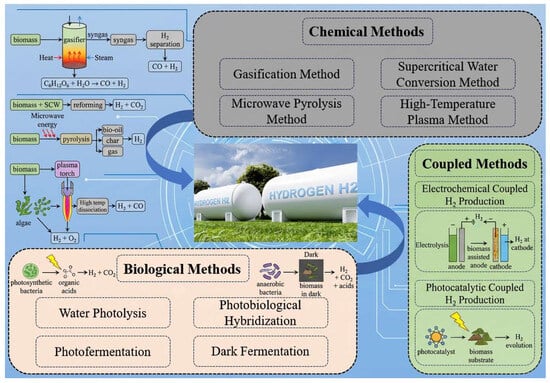
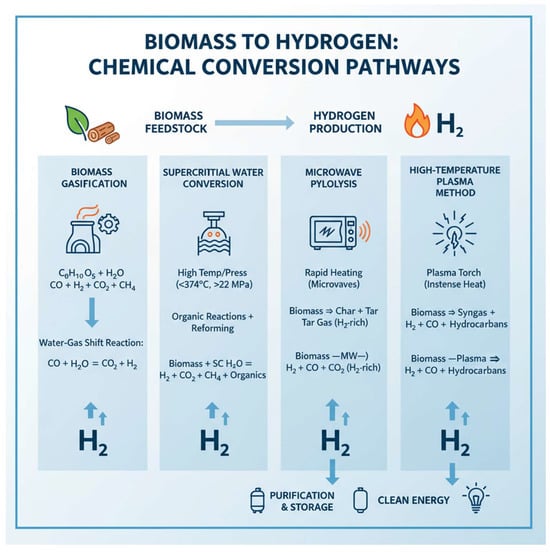
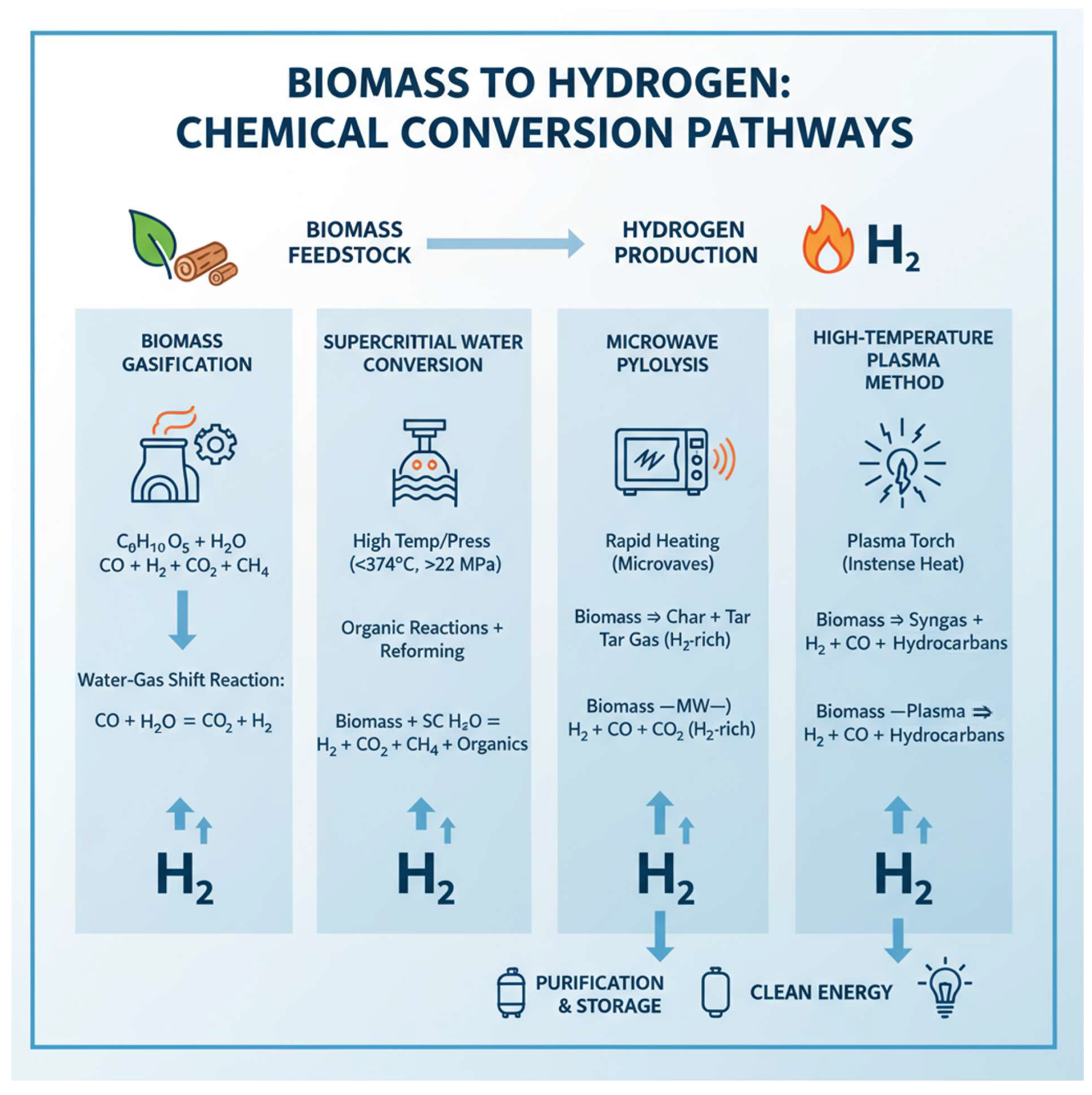
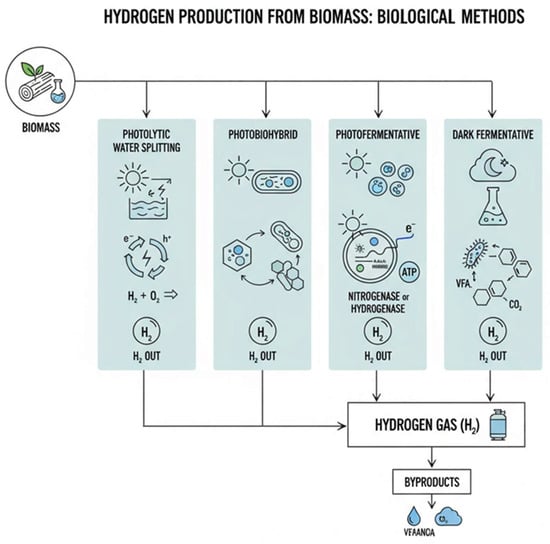
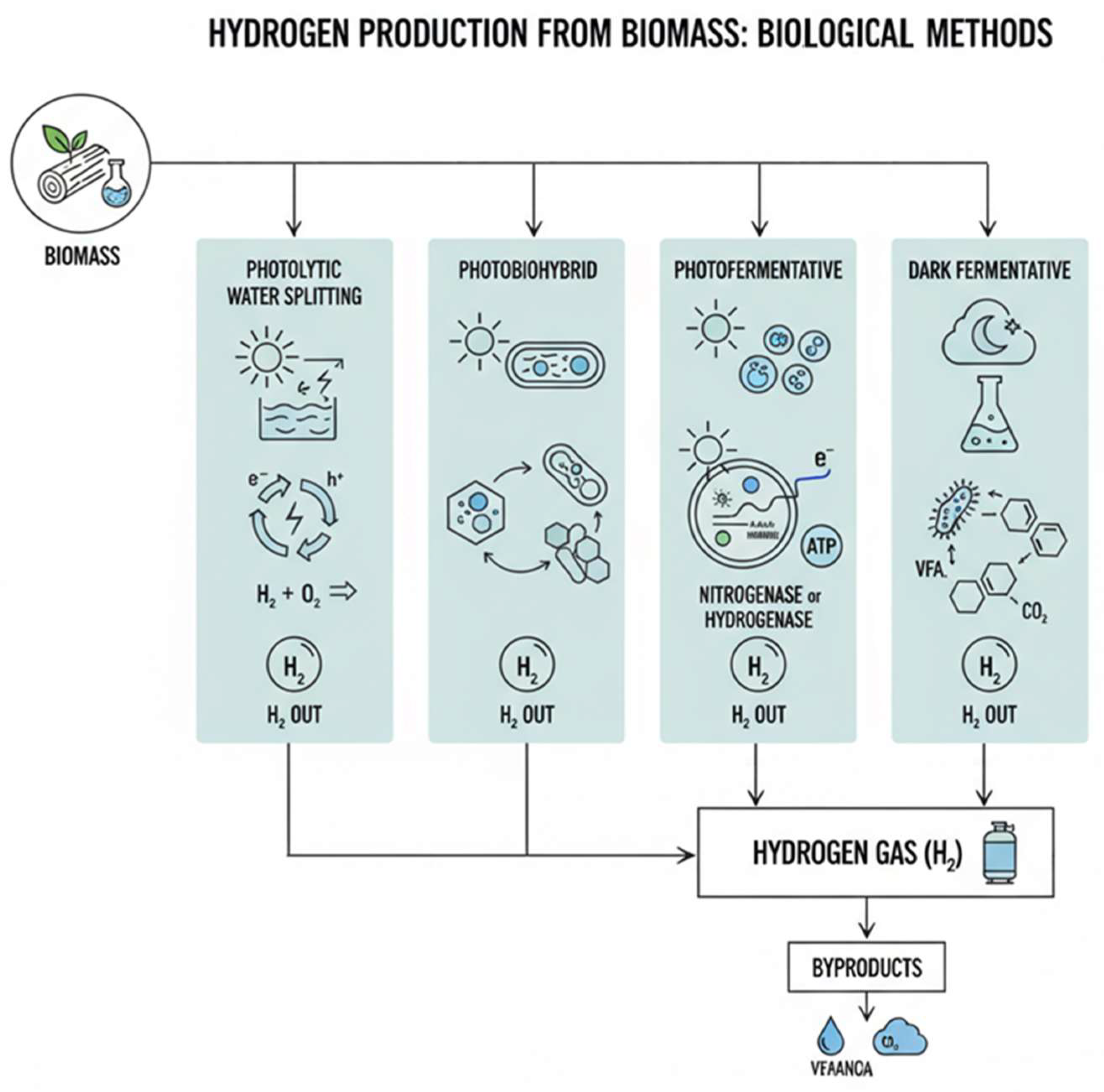

Disclaimer/Publisher’s Note: The statements, opinions and data contained in all publications are solely those of the individual author(s) and contributor(s) and not of MDPI and/or the editor(s). MDPI and/or the editor(s) disclaim responsibility for any injury to people or property resulting from any ideas, methods, instructions or products referred to in the content. |
© 2025 by the authors. Licensee MDPI, Basel, Switzerland. This article is an open access article distributed under the terms and conditions of the Creative Commons Attribution (CC BY) license.