Article

Study on the Interaction Between Ni2+ and SO42− on the Surface of ZSM-5 Catalyst and the Effect on n-Butene Oligomerization
1
Qingdao Institute of Bioenergy and Bioprocess Technology, Chinese Academy of Sciences, Qingdao 266101, China
2
University of Chinese Academy of Sciences, Beijing 100049, China
*
Author to whom correspondence should be addressed.
Catalysts 2026, 16(1), 3; https://doi.org/10.3390/catal16010003
Submission received: 11 November 2025 / Revised: 9 December 2025 / Accepted: 18 December 2025 / Published: 22 December 2025

Abstract

The identification of key active sites that determine oligomerization degree is a key focus of research in olefin oligomerization. The Ni/S-HZSM-5 catalyst has attracted widespread attention due to its excellent performance in this reaction. However, the interaction between SO42− and Ni2+ on the ZSM-5 support, especially quantitatively regulating their ratio, has been rarely investigated. In this study, we prepared a series of Ni/S-HZSM-5-x catalysts by fixing the Ni loading and varying the Ni/S molar ratio in the initial feedstock. Then, the obtained catalysts were characterized to systematically investigate how the Ni/S ratio affects their structure, properties, and n-butene oligomerization performance. The results indicate that tuning the Ni/S ratio enables the targeted regulation of surface acidity and electronic properties of the catalysts. The Ni/S ratio influenced the interaction between the Ni cation and SO42−-SO32− complex, which in turn altered the Lewis acidity of the catalysts. Further evaluation results reveal that n-butene conversion is positively correlated with the catalyst’s acidity, and the Ni2+/Ni+ ratio is positively correlated with the carbon chain length of the products. The surface form of NiSO4 is the primary factor determining Lewis acidity, which is directly associated with the chain-growth ability of the catalyst.

1. Introduction

Olefins oligomerization is a critical process for the high-value utilization of lower hydrocarbons. It is commonly employed to tailor carbon chain lengths of the products derived from Fischer–Tropsch Synthesis (FTS) and methanol to hydrocarbons (MTHs) [1,2,3]. As a classic acid-catalyzed reaction, the complex product distribution of olefin oligomerization is heavily dependent on the acidic properties of the catalyst [4,5]. The different acidity promoted the different reaction steps, such as hydrogen transfer, skeletal isomerization, oligomerization, cyclization, and cracking. In conventional research, Brønsted acid sites (BASs) can provide protons to form a corresponding carbocation intermediate for the olefin, and then insert into another olefin to achieve the growth of the carbon chain [6,7]. Therefore, the catalytic activity of this type of catalyst depends on the stability of the formed carbocation [8]. For Lewis acid sites (LASs), the olefin is coordinated with the carbon–carbon double bond of the olefin to form a metal-hydride or metal-alkoxy group as an intermediate and then coordinated with the next olefin to achieve carbon chain growth [4,9,10]. Both BAS and LAS play a crucial role in carbon chain growth. Therefore, a full understanding of the acidity of the catalyst is crucial for the development of highly-efficient olefin-oligomerization catalysts.
Identifying the active sites that control the oligomerization degree of olefins is a key focus in the study of acid sites for olefin-oligomerization catalysts. Metal coordination catalysis at metal sites is observed to be milder compared to acid catalysis at BAS, allowing for flexible control of product carbon chain length and fewer side reactions, like cracking and aromatization. As a promising oligomerization catalyst, heterogeneous nickel-based catalysts usually choose porous aluminosilicate materials such as amorphous silica–alumina (ASA) [11] and zeolite [9,12,13] as carriers. Paolo et al. [14] preliminarily analyzed the effect of ZSM-5 exchanged with different nickel salts on the oligomerization products of n-butene. Nickel loading promoted the acquisition of linear dimers. However, among various Ni-modified catalysts, those prepared with a NiSO4 precursor tend to show higher activity. Peng et al. [15] prepared a supported catalyst by loading NiSO4 on γ-Al2O3 using the impregnation method, and as co-catalyst for continuous oligomerization in a fixed-bed reactor. It was shown that the catalyst with moderate acid strength presented good performance in alkene oligomerization. K. Jens et al. [16] prepared a series of NiSO4-ReOx/Al2O3 catalysts and used them for the ethylene oligomerization. They found that the NiSO4 increases the surface acidity of alumina and simultaneously influences the electronic properties of the Ni sites. Sohn et al. [17] also studied the ethylene dimerization reaction over NiSO4/ZrO2 and NiSO4/Fe2O3-ZrO2 catalysts in a fixed bed and found that Fe, as promoter, can enhance the olefin oligomerization, and that catalyst activity was closely related to its acidity. Most research on supported NiSO4 catalysts has focused on the role of Ni cation or metal promoters, while the research of S contribution is often overlooked.
Calcination of SO42− on the surfaces of Al2O3 and SiO2 leads to the formation of superacid [18]. In addition, the presence of SO42− ions was considered to increase the acidity of Lewis acid centers (Al3+ and/or Ni2+) in the NiSO4/γ-Al2O3 catalyst that were associated with higher catalytic activity [19,20,21,22]. Chauvin et al. [23] preliminarily explored the effects of different anions on the activity and selectivity of propylene oligomerization. The authors speculated that sulfate could induce strong acid sites on Al2O3 that occur in parallel with the oligomerization catalyzed by Ni sites. The addition of the SO42− ion affects the surface acidity of the catalyst, but the relationship with the chemical environment of nickel species has not yet been clearly investigated [24].
To date, Ni/S-HZSM-5 catalysts have emerged as promising catalysts for olefin oligomerization, attracting considerable research interest. However, the nature of the active sites in Ni/S-HZSM-5 at the molecular level and, in particular, the role of the sulfate species and their interactions, remain poorly understood. In this work, we investigated these interactions from the perspective of quantitative regulation. We used a sheet-like ZSM-5 zeolite as the support and prepared a series of Ni/S-HZSM-5 catalysts with a fixed Ni loading but varying Ni/S molar ratios. The resulting catalysts were then characterized by XRD, NH3-TPD, and XPS to systematically investigate the effect of the Ni/S ratio on their structure and chemical properties. Finally, the relationship between the catalyst properties and their n-butene oligomerization performance was also discussed.

2. Results and Discussion

2.1. Textural Properties and Morphology of Catalysts

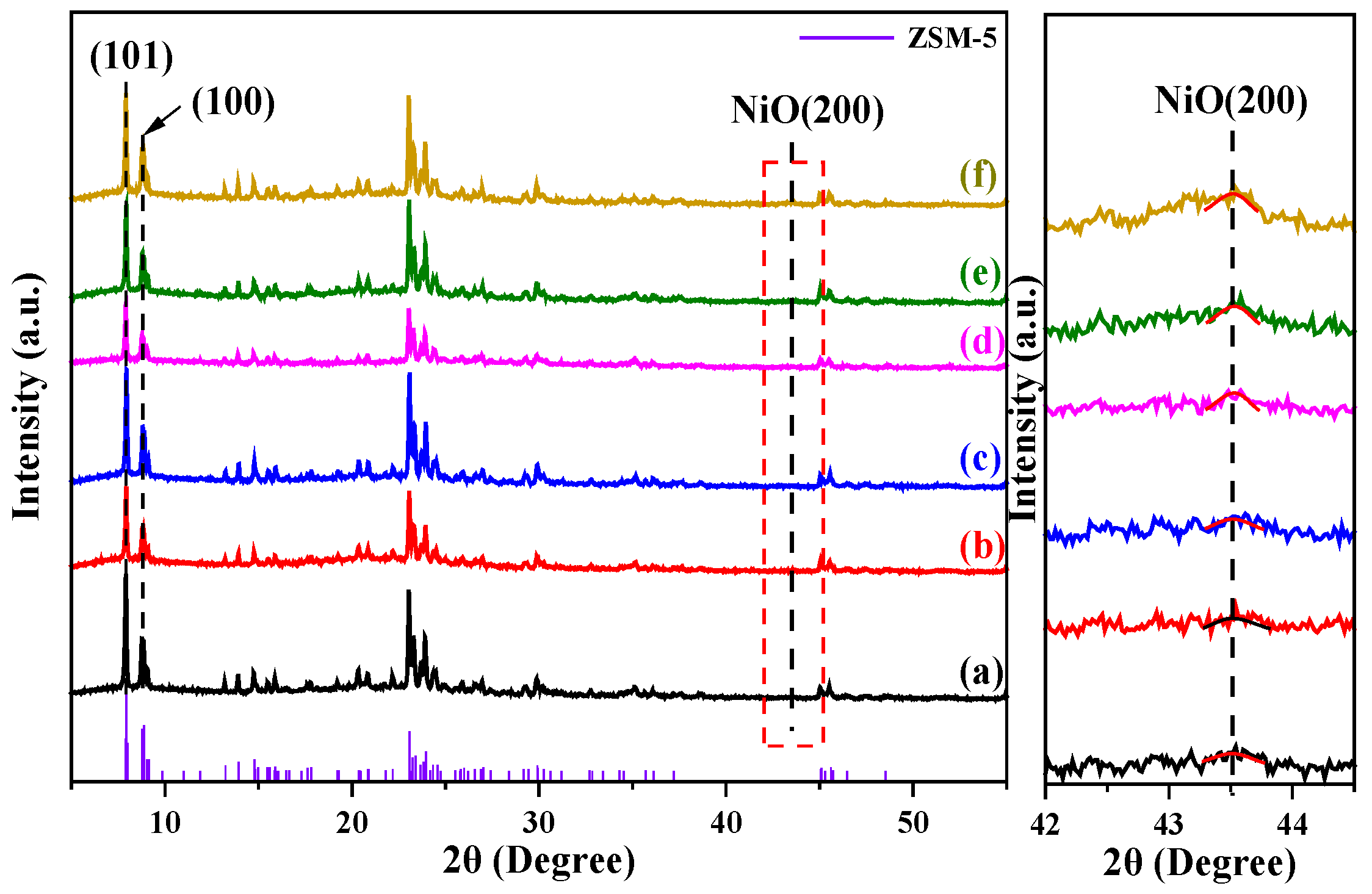
Figure 1 presents the XRD pattern of catalysts with different Ni/S ratios. The XRD patterns of all catalysts exhibit the characteristic diffraction peaks of MFI topology. The strong diffraction peaks corresponding to the (101) and (100) crystal planes suggest that the zeolite crystals are preferentially grown along the a-axis and c-axis directions, indicating that the ZSM-5 zeolite is a sheet crystal with a shorter b-axis thickness [25,26]. Additionally, there are no obvious diffraction peaks of NiSO4, indicating that nickel and sulfate species are uniformly dispersed in the catalysts. However, the catalysts also show peak for NiO (200) [27]. The intensity of the NiO peak (200) increases with the increasing Ni/S ratio. It suggests that the excess nickel perhaps presents as NiO.
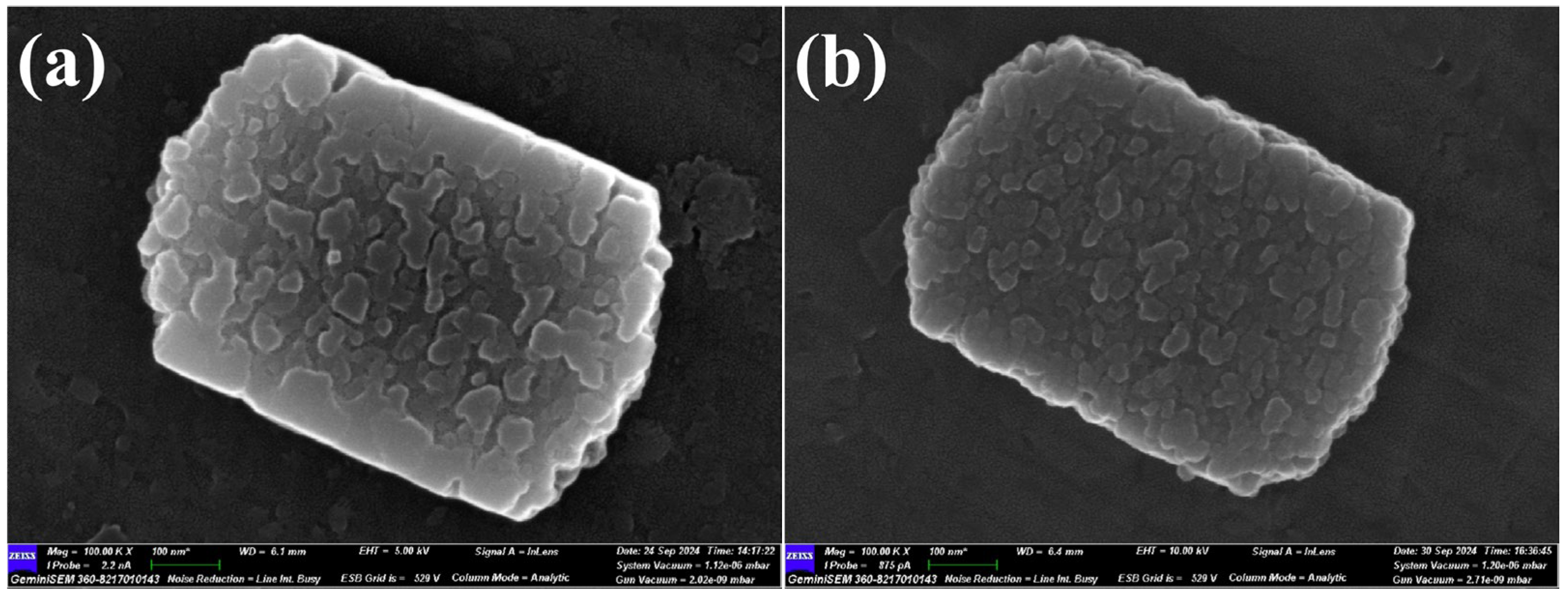
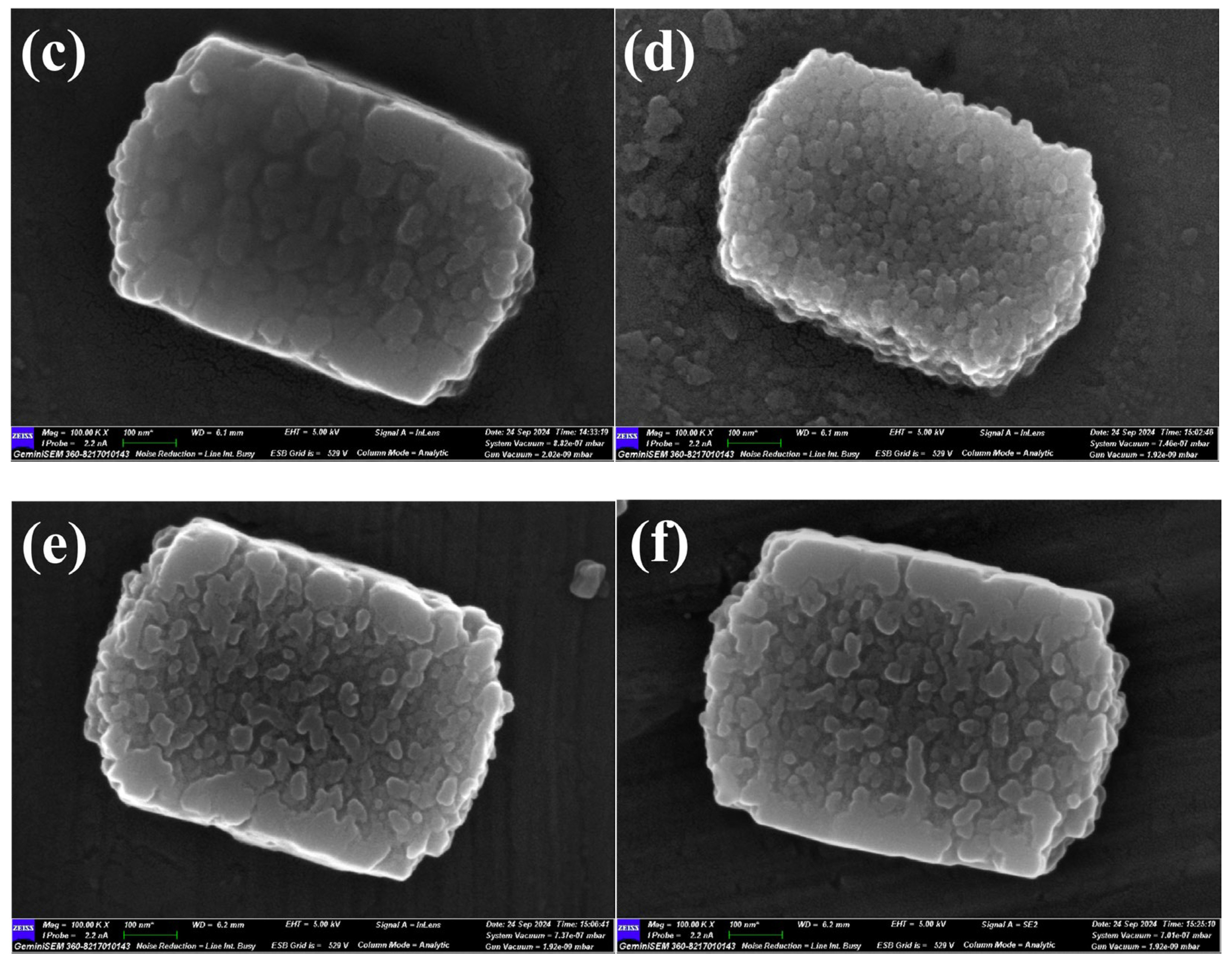
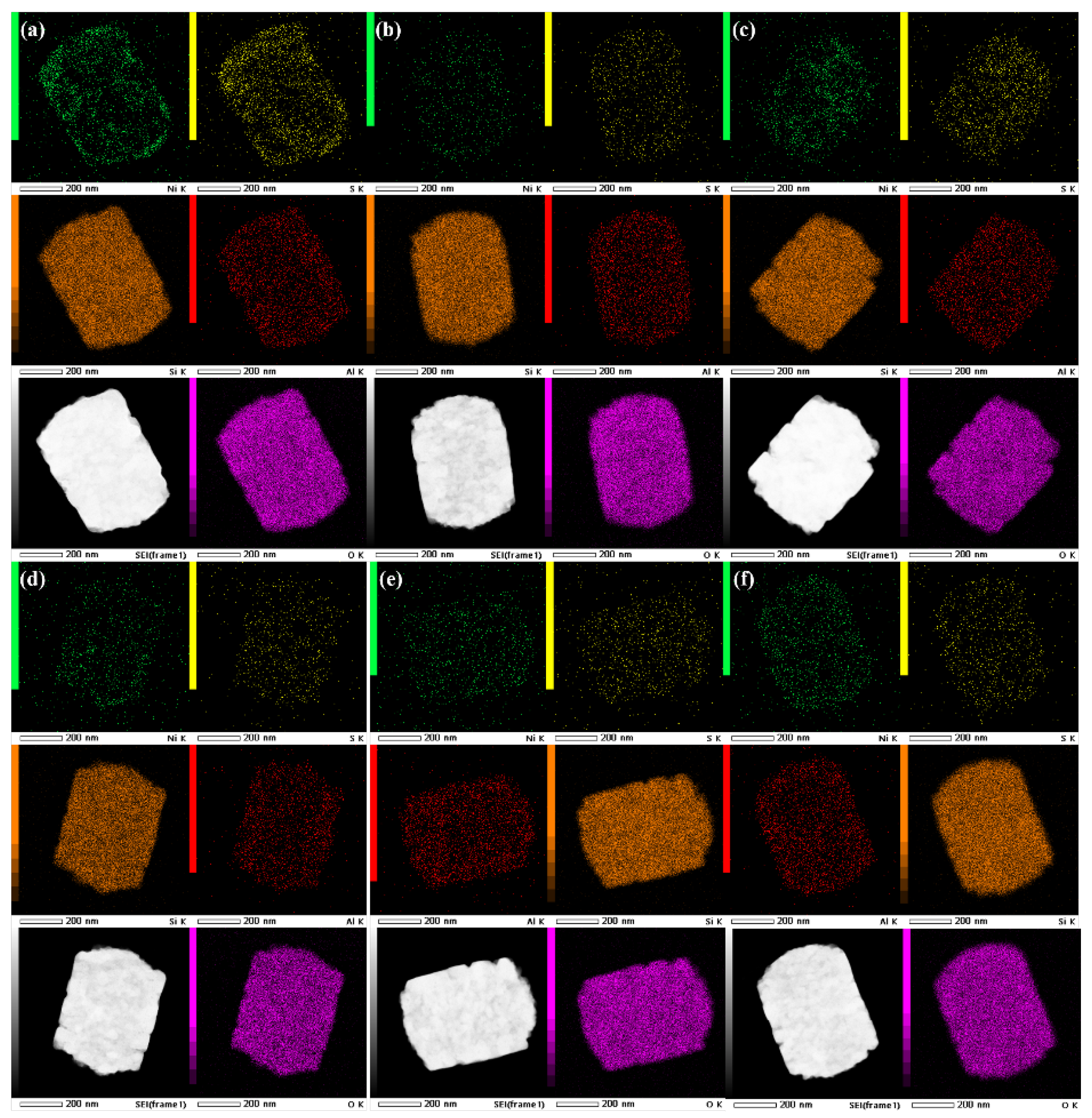
Figure 2 shows the SEM images of catalysts with different Ni/S ratios. All catalysts exhibited a uniform, flat hexagonal prism morphology with similar crystal sizes: 650–800 nm along the c-axis and 500–550 nm along the a-axis. The EDS mapping results in Figure 3 demonstrate that both Ni and S were incorporated into the HZSM-5 zeolite. The distribution of these elements is relatively uniform, with no evidence of aggregation. The XRD and SEM results indicate that adjusting the Ni/S ratio does not significantly affect the crystal structure and morphology of HZSM-5 zeolite, and nickel and sulfate species are uniformly dispersed in the catalysts.
The chemical composite and textural properties of the Ni/S-HZSM-5 catalysts are listed in Table 1. Through ICP analysis of the synthesized catalyst, the results show that the Ni/S ratio in the catalyst is consistent with the expected value. The textural property results show that the catalysts present with similar surface areas and pore volumes, and the surface areas are around 360 m2/g. Additionally, the proportion of the external specific surface area exceeds 40%, which also exceeds the proportion of similar ZSM-5 zeolite catalysts [28,29]. This also provides evidence that the catalyst has a flake-like morphology. Besides the influence of the pore structure, the catalyst can better reflect the effect of the interaction between NiSO4 and ZSM-5 on the n-butene oligomerization reaction.

2.2. Acidity Properties of Catalysts

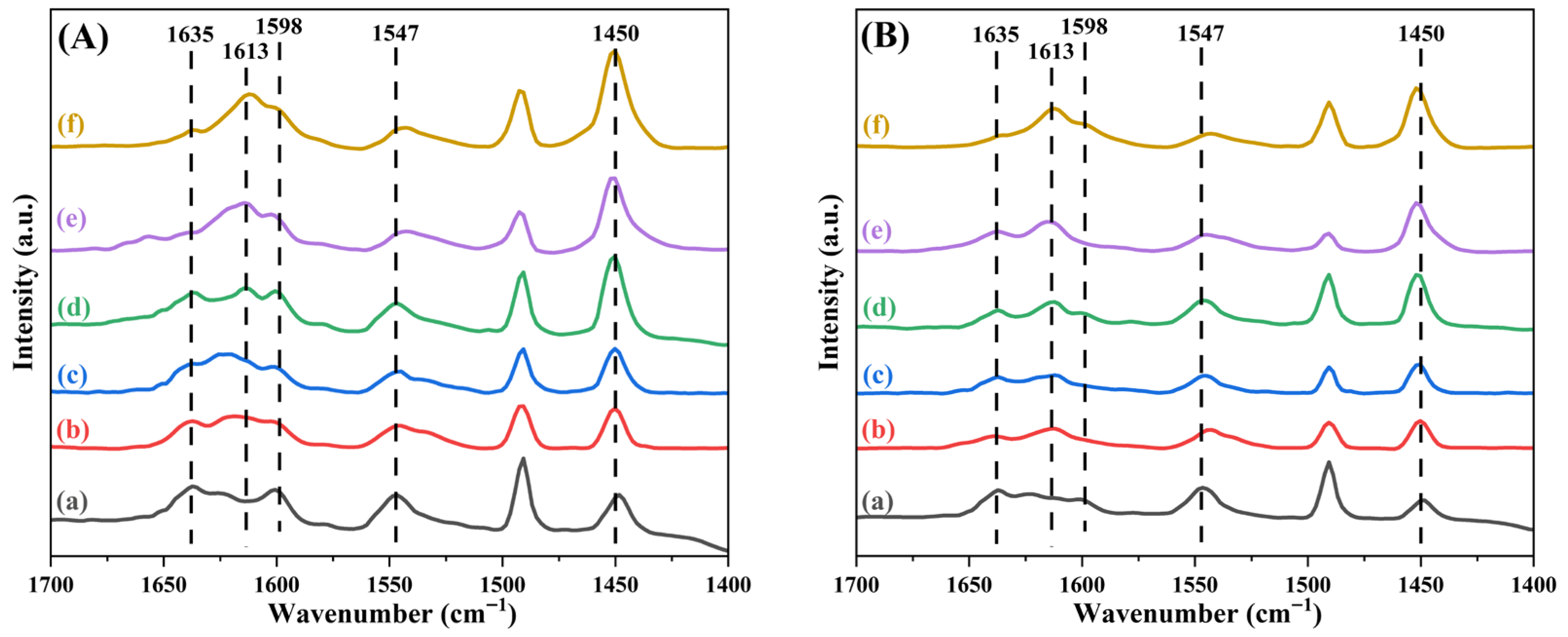
Py-IR and NH3-TPD were employed to characterize the acidity of the catalysts. Figure 4 shows the Py-IR spectra of the Ni/S-HZSM-5 catalysts recorded after desorption at different temperatures. As shown in Figure 4, the peaks at around 1450 cm−1 and 1613 cm−1 correspond to the characteristic vibration peaks of pyridine molecules adsorbed at LASs. The peaks at around 1547 cm−1 and 1635 cm−1 correspond to BASs [30]. The peak at 1598 cm−1 is assigned to the physical adsorption of pyridine by hydrogen bonding [31]. The quantitative analysis of BASs and LASs is presented in Table 2. As the Ni/S ratio increases, a corresponding decrease in the B/L ratio is observed, indicating a progressive transformation of acid site characteristics from Brønsted-dominated to Lewis-predominant on the catalyst’s surface. Notably, although the acid amounts measured at 300 °C are all lower than those measured at 150 °C, the same evolution trend in both BAS and LAS quantities with increasing Ni/S ratio remains unchanged.
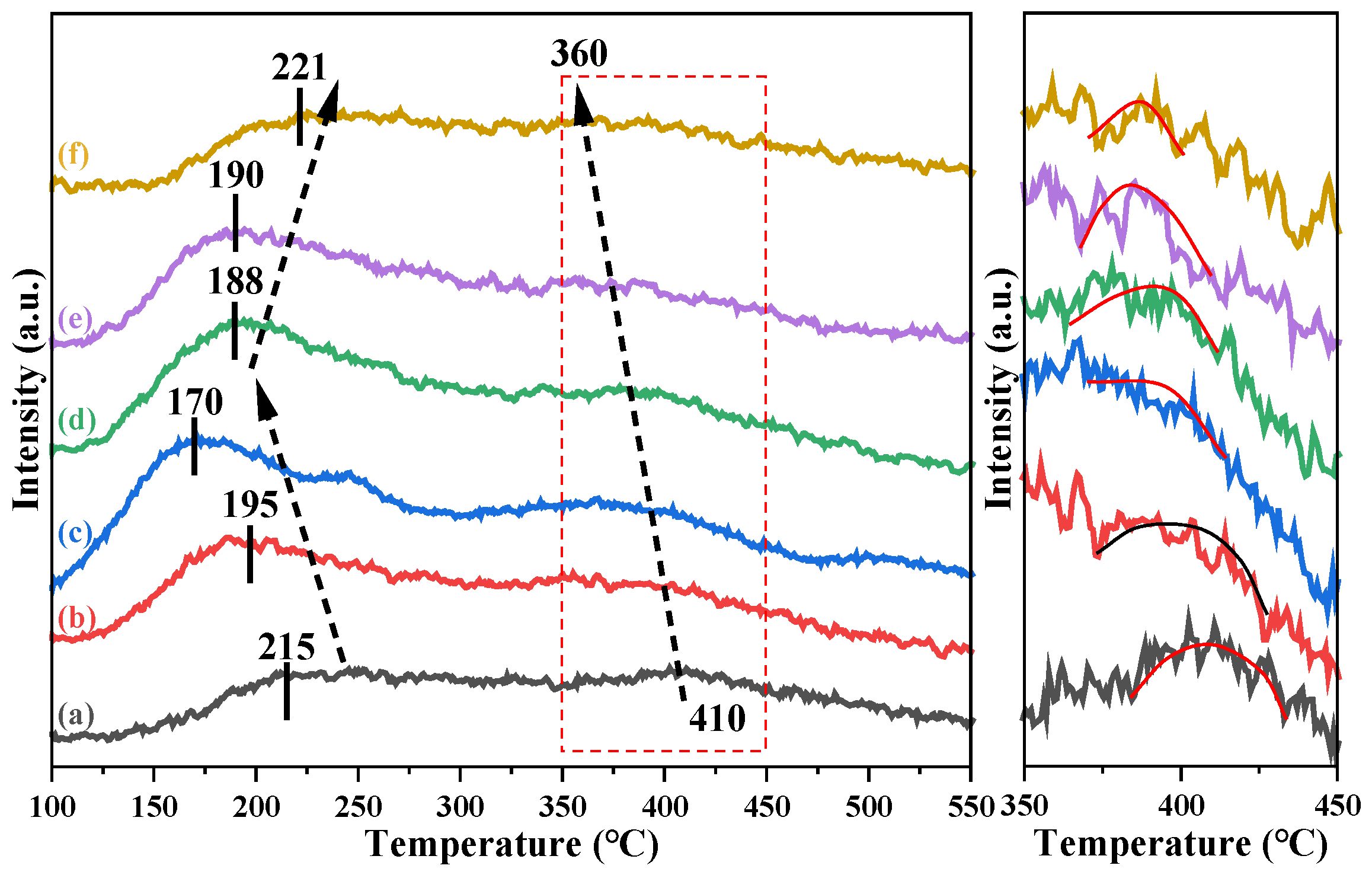
Figure 5 shows the NH3-TPD diagram of catalysts with different Ni/S ratios. All catalysts exhibit two desorption peaks: the low-temperature desorption peak assigned as weak acid sites at 170–220 °C, and the high-temperature desorption peaks assigned as strong acid sites at approximately 360–410 °C. With the Ni/S ratio increasing, the strong acid desorption peak shifts to a lower temperature. However, as the Ni/S ratio increases, the low-temperature desorption peak exhibits a trend of first decreasing from 215 °C to 170 °C and then increasing to 221 °C. This indicates that as the Ni/S ratio increases, the strong acid strength shows a monotonic decrease, while the weak acid strength follows a U-shaped trend, decreasing initially before increasing. Combined with the calculation of acid numbers in Table 2, it also can be seen that as the Ni/S ratio increases, the total acid numbers increase first and then decrease. The acid sites on the catalyst’s surface consist mainly of weak acid sites. Combined with the Py-IR results, the weak acids on the catalyst’s surface are likely to be primarily Lewis acids.

2.3. Nickel Species and Sulfur Species of Catalysts

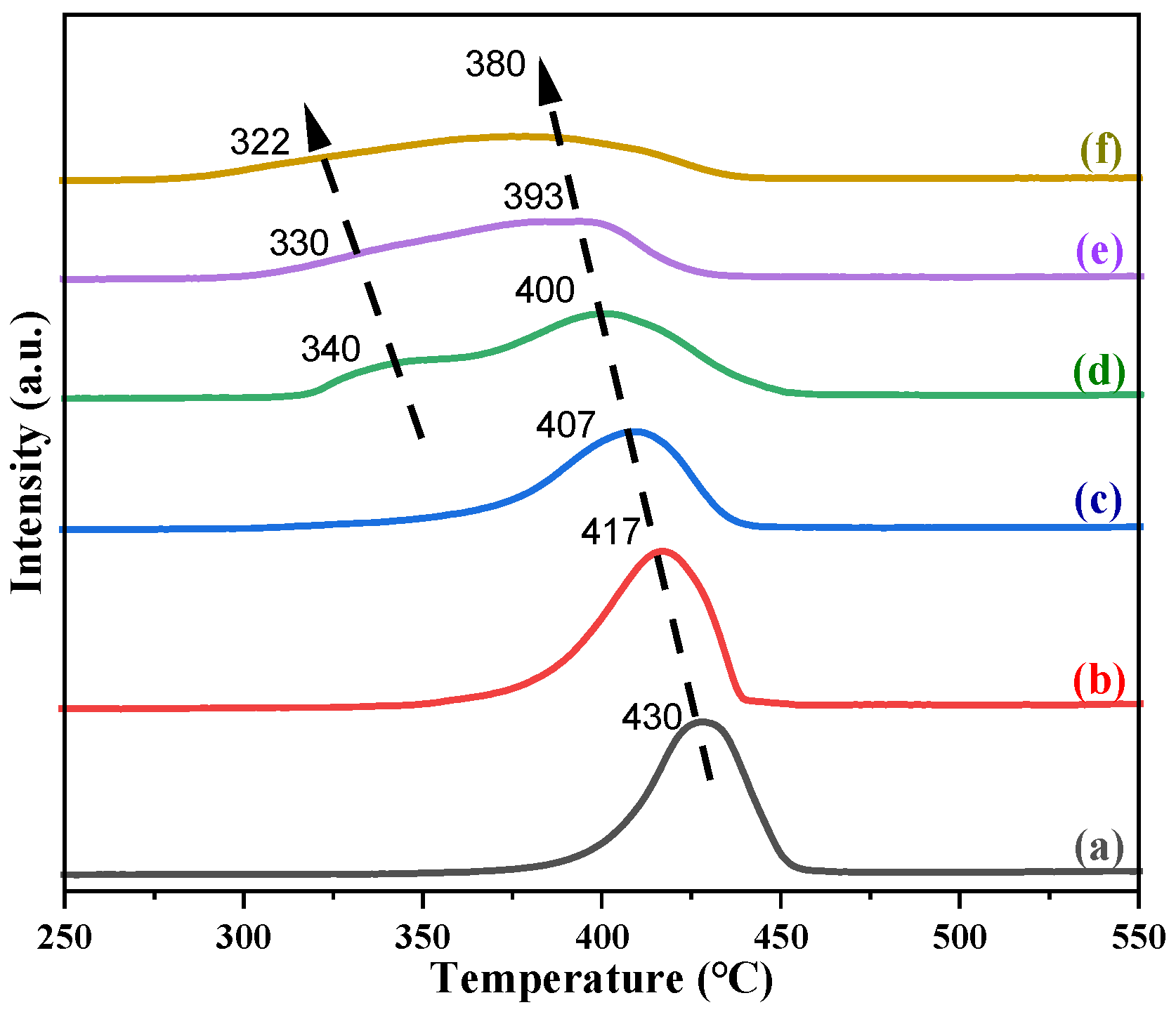
Figure 6 shows the H2-TPR results of catalysts with different Ni/S ratios. The temperature of the H2-consumption peaks reflects the ease of reduction of the various Ni species present and, hence, their chemical environment and the interaction strength with the HZSM-5 support. For the Ni/S ratios < 1, only one reduction peak is observed. However, when the Ni/S ratios ≥ 1, two reduction peaks appear in the catalysts. All of the catalysts present the reduction peak at high temperature (380–430 °C), which is attributed to the reduction in Ni cations (Ni+ and Ni2+) in the ion-exchanged position—anchored to silanol groups or AlO4 tetrahedra and located within the ZSM-5 crystal lattice. The low-temperature reduction peaks at 320–340 °C arise from bulk-like NiO particles located on the external surface that interact with the support only through weak van der Waals forces [32,33,34,35,36]. The H2-TPR results suggest that the reduction of sulfate leads to the formation of NiO, and the excessive sulfate promotes the stabilization of Ni cations species. These results are also confirmed by the XRD.
As the Ni/S ratio increases, both the high-temperature and low-temperature reduction peaks shift gradually toward lower temperatures. It indicates that with the Ni/S ratio increasing, the Ni cations and the NiO species become easier to reduce. In addition, as the Ni/S ratio increases, the change in Ni reducibility is positively correlated with the acid strength of the catalysts, as measured by the NH3-TPD. In comparison with the area of the reduction peak, the reduction peak for NiO is much smaller than that for Ni cation species. As the Ni/S ratio changes, the reduction peak area of NiO increases slightly. Ni cation species remain the predominant form of Ni.
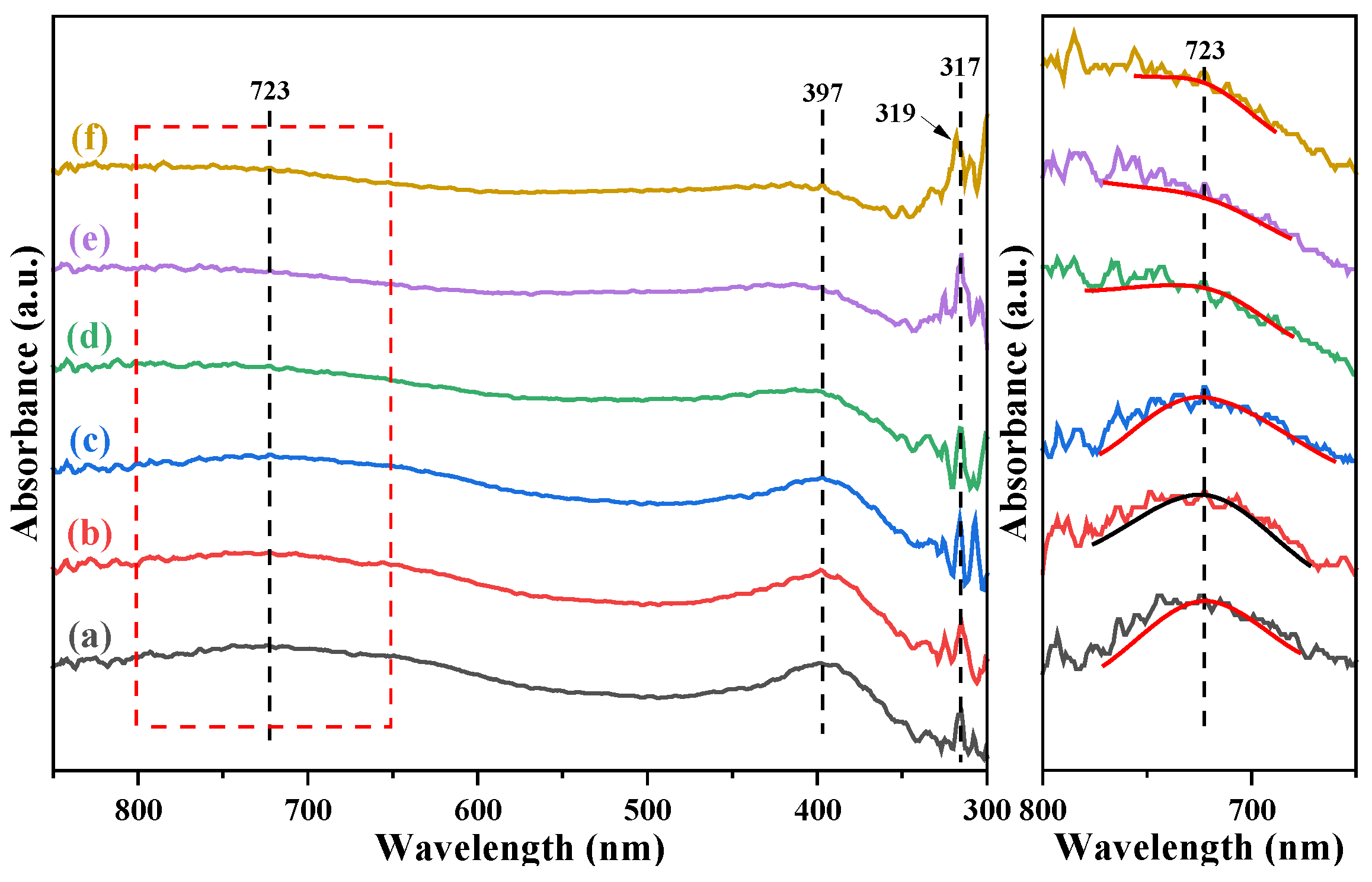
The UV–Vis spectra were used to investigate the electronic effect and nickel coordination of catalysts with different Ni/S ratios, as shown in Figure 7. The peak near 317 nm can be attributed to the band gap absorption of NiO, the peak at 397 nm is attributed to the ligand charge transfer of Ni2+ cation, and the absorption peaks 723 nm is attributed to octahedrally coordinated Ni2+ cation [37,38]. This indicates that the content of NiO increases, and the particles grow larger as well. Reduced at lower temperatures due to strong synergistic interactions, NiO thus exhibits broader and red-shifted UV-Vis spectral bands [39]. However, isolated Ni2+ cations in salts or zeolite frameworks are strongly coordinated to the support, leading to higher reduction temperatures and sharper, blue-shifted UV–Vis features due to a more distorted and localized ligand field. Correspondingly, the intensity of the peaks at 397 nm and 723 nm shows the opposite pattern, suggesting that the sulfate promotes the stabilization of Ni cation species. These conclusions are consistent with the H2-TPR results.
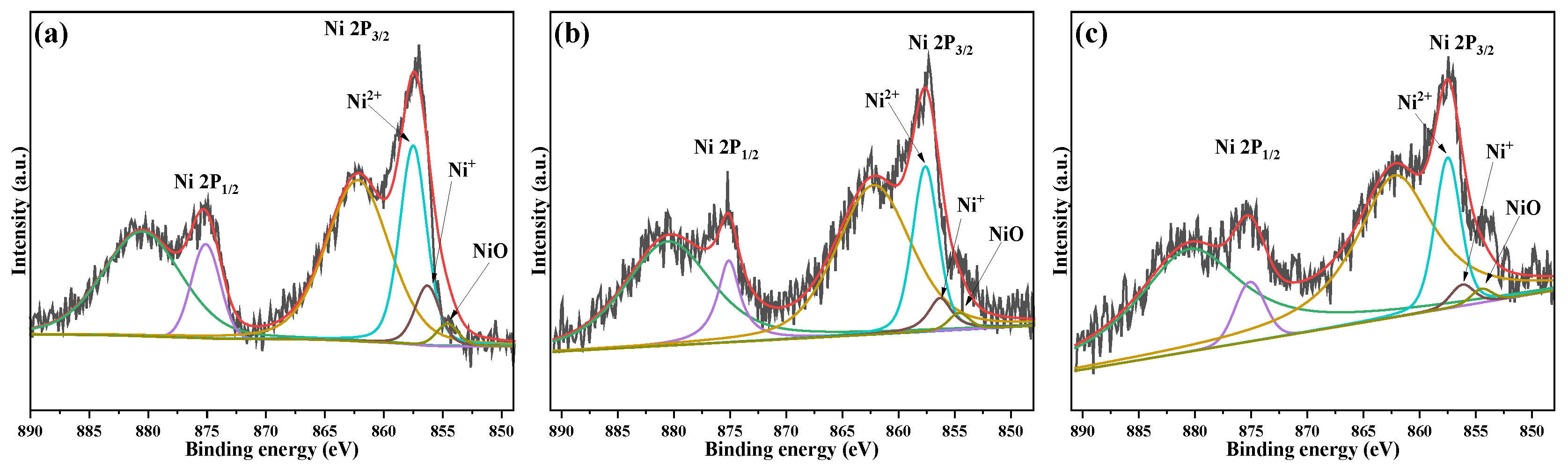
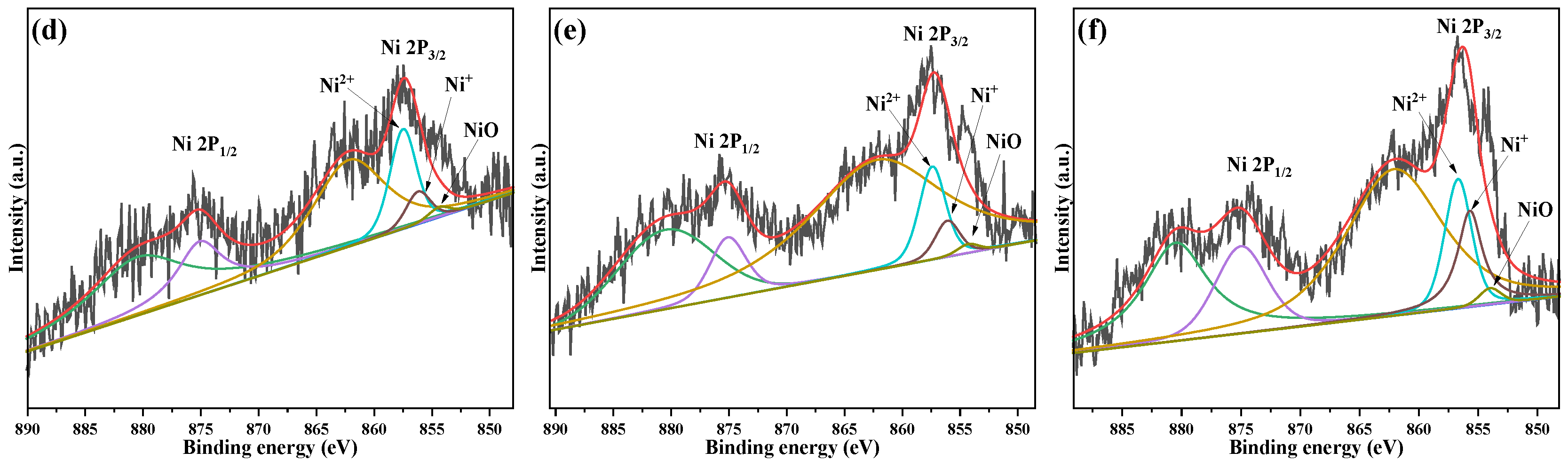
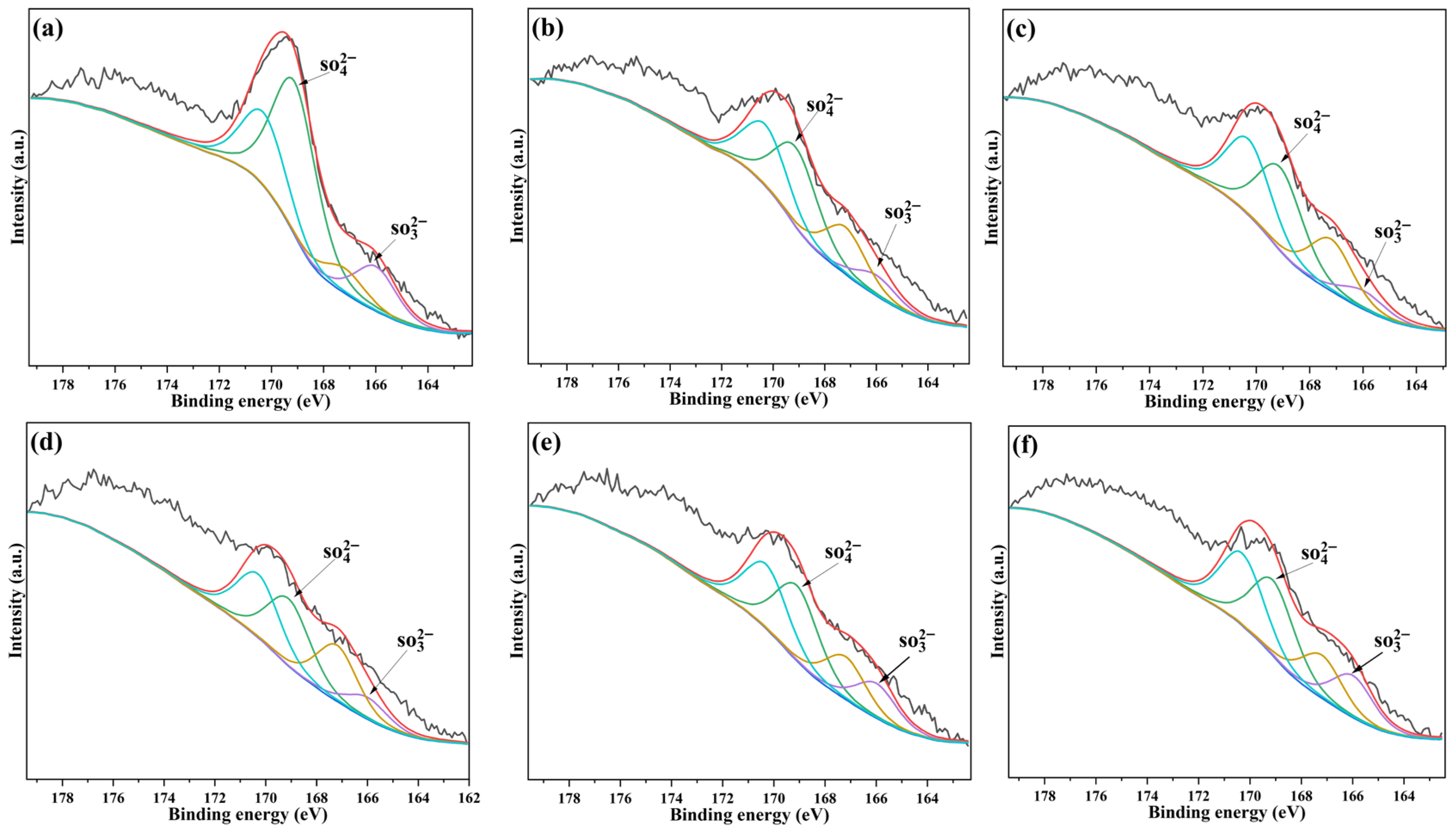
The evolution of surface Ni and S species with varying Ni/S ratios was investigated using XPS. The spectra were deconvoluted by peak fitting, based on experimental data and the literature-reported Ni peak positions, with the constraint that all catalysts share consistent satellite peak positions and doublet splitting. Figure 8 and Figure 9 show the Ni 2p and S 2p spectra of the catalysts with different Ni/S ratios, respectively. As shown in Figure 8, Ni is present on the catalyst’s surface in multiple chemical states, including Ni2+ cation, Ni+ cation, and NiO [31,40]. As the Ni/S ratio changes, the chemical composition of Ni species also changes. As shown in Figure 9, it is noteworthy that some SO32− species were detected together with SO42− groups, and SO42− and SO32− are the main existing forms of the S on the catalysts [31,41]. Compared to SO32−, the sulfur in SO42− has a greater electro-positivity and a stronger electron-withdrawing inductive effect [42,43]. The appearance of SO32− species suggests that the acidity of the catalyst is also influenced by the S species. In the signal deconvolution, each individual chemical species was assigned a fixed characteristic full width at half maximum (FWHM). The detailed fitting results for the XPS spectra are listed in Table 3. The fitting results reveal that the Ni2+ cation and Ni+ cation species are the predominant existing forms on the catalysts. As the Ni/S ratio increases, the (Ni2++Ni+)/NiO ratio decreases, while the Ni2+/Ni+ ratio increases first and then decreases. Similarly, the variation in SO42−/SO32− ratio also exhibits a volcanic trend as the Ni/S ratio increases.
Two Si-O-Al exchange sites in close proximity can stabilize a Ni2+ cation. ZSM-5 can serve as a support to achieve high Ni cation dispersion and stabilize the Ni cation species [9,44]. Therefore, the Ni cation species over the catalysts can be stabilized by the support and SO42−-SO32− complex, suggesting that the amounts of Ni cation species and the SO42−-SO32− complex are in a dynamic equilibrium and do not necessarily follow a stoichiometric relationship.
Furthermore, combined with the previous acidity-characterization results, it is evident that as the Ni/S ratio increases, the (Ni2++Ni+)/NiO ratio shows a positive correlation with the Lewis acid numbers and a negative correlation with the B/L ratio, indicating that the Ni cation primarily shows Lewis acidic properties over the catalysts. Additionally, the synergy between the SO42−-SO32− complex and the metal oxide or zeolite support is believed to prepare excellent superacid catalysts in the literature [18]. The Ni/S ratio influenced the composition of the SO42−-SO32− complex, which in turn altered the strength at the electron-deficient Ni cation sites [5,45]. The interaction of the SO42−-SO32− complex and Ni cation species determines the acidity of the catalyst.

2.4. Catalytic Performance of n-Butene Oligomerization

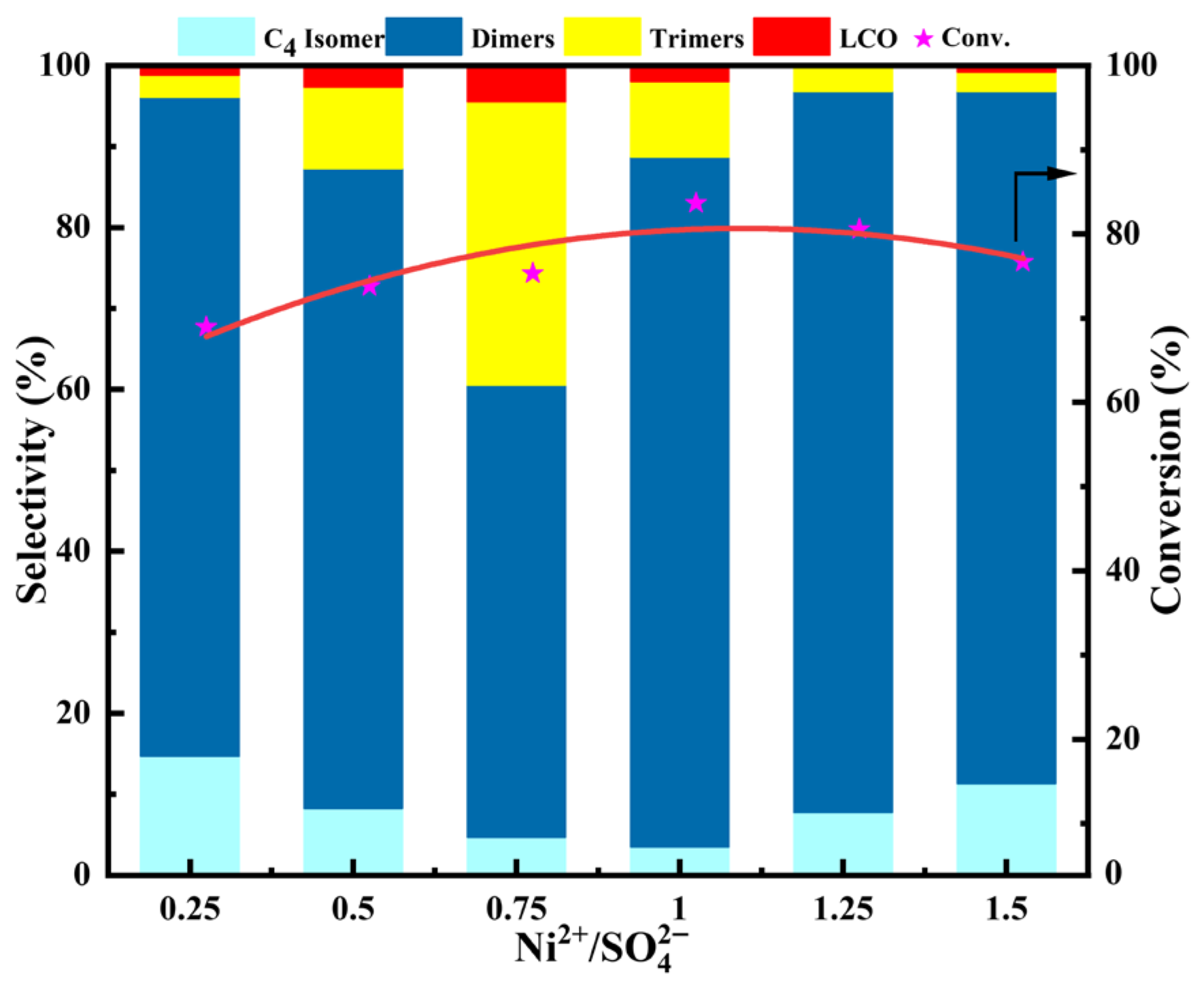
Figure 10 presents the n-butene oligomerization performance of the catalysts with different Ni/S ratios. As shown in Figure 10, the n-butene conversion exhibits a volcanic trend as a function of the Ni/S ratio, first increasing and then decreasing. It reaches a maximum of 83% at Ni/S ratio = 1. The main products are oligomers, which consist of dimers (products containing 5–8 carbon atoms), trimers (products containing 9–12 carbon atoms), and LCOs (longer-chain oligomers), achieving a selectivity of over 80% across all catalysts. The dimers and trimers are the main oligomerization products. Similarly, the oligomer selectivity shows an approximate volcanic trend. Notably, the maximum n-butene conversion and the maximum selectivity for oligomers are achieved on the same catalyst. Over the Ni/S-HZSM-5-1.0 catalyst, the oligomers selectivity can reach 95%.
However, the oligomers’ selectivity varies significantly among the different catalysts. The combined selectivity toward trimers and LCO is a key indicator of the catalyst’s chain-growth ability. As shown in Figure 10, this combined selectivity also exhibits an approximate volcanic trend as the Ni/S ratio increases. Although the Ni/S-HZSM-5-1.0 catalyst shows the highest overall oligomer selectivity, the combined selectivity toward trimers and LCO is lower than 10%. However, for the Ni/S-HZSM-5-0.75 catalyst, the combined selectivity toward trimers and LCO can reach 38.5%, presenting the strongest chain-growth ability of all the catalysts.
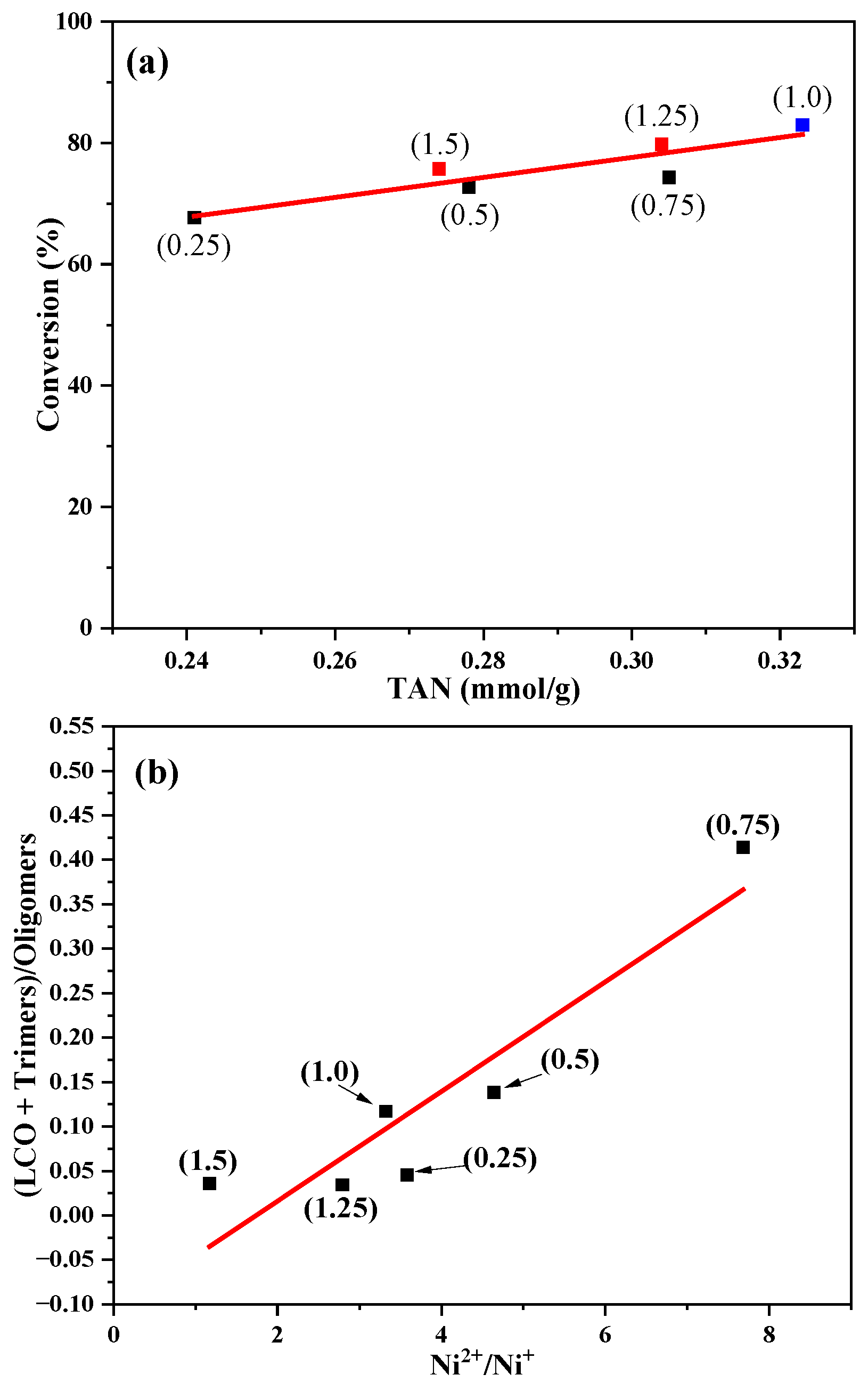
Figure 11 shows the relationship between the catalytic performance and the acidity and electrical properties of the catalysts. As shown in Figure 11a, the n-butene conversion is positively correlated with the total acid numbers of the catalysts. The total acid numbers of the catalyst exhibit a relatively symmetrical trend as the Ni/S ratio increases. According to Table 2, the Ni/S-HZSM-5-1.0 catalyst has the highest total acidity. Similar acid numbers are observed for the Ni/S-HZSM-5-0.5 and Ni/S-HZSM-5-1.5 catalysts, as well as for the Ni/S-HZSM-5-1.25 and Ni/S-HZSM-5-0.75 catalysts. Consequently, the n-butene conversion follows the same regularity: similar acid numbers lead to similar conversion. The total acid numbers of the catalyst are the primary factor determining the n-butene conversion. This is consistent with the results in the literature [46,47].
Identifying the active sites that determine the oligomerization degree of the n-butene is the key focus of this research. Figure 11b shows the relationship between the (LCO + trimers)/oligomers and the Ni2+/Ni+ ratio. It indicates that the oligomerization degree of the n-butene, which can be reflected by the (LCO + trimers)/oligomers, shows the positive relationship with the Ni2+/Ni+ ratio. Traditionally, Ni cations can accept electrons, which confer Lewis acid sites. However, the difference in electron-withdrawing ability between Ni2+ cation and Ni+ cation leads to a difference in their corresponding Lewis acidity.
The NH3-TPD results show that, with the increase in Ni/S ratio, the strength of weak acid sites first decreases and then increases. The XPS results show that the Ni2+/Ni+ ratio and SO42−/SO32− ratio exhibits an initial increase followed by a decrease trend as the Ni/S ratio increase. The Ni/S-HZSM-5-0.75 catalyst has the highest Ni2+/Ni+ ratio and SO42−/SO32− ratio, and the weakest acidity. The Ni/S-HZSM-5-0.75 catalyst exhibits the highest oligomerization degree. From the NH3-TPD and Py-IR results, the weak acids present on the catalyst surface appear to be primarily Lewis acids. Lercher et al. [44] regulated the oligomerization degree of n-butene oligomerization products by adjusting the Lewis acidity to favor the formation of dimers. Similarly, in this work, the change in n-butene oligomerization degree shows a consistent trend with the change in Ni2+/Ni+ ratio and SO42−/SO32− ratio. The existence form and electronic properties of Ni cation and SO4 complex on the catalyst surface affect the Lewis acidity, which in turn influences the selectivity for long-chain products.
Table 4 shows the comparison of the n-butene oligomerization results for Ni/S-HZSM-5 to the literature. The simultaneous attainment of high conversion and high oligomers selectivity under elevated space velocity (6.0 h−1). The dimers and trimers selectivity reach 81.9% and 33.7% respectively over the Ni/S-HZSM-5-1.0 catalyst and Ni/S-HZSM-5-0.75 catalyst. These catalysts exhibit superior performance in regulating oligomerization degree compared to previously reported catalysts.

3. Experimental Section

3.1. Catalysts Preparation

3.1.1. Synthesis of Sheet HZSM-5

The synthesis of sheet HZSM-5 zeolite was achieved via a seed-directed approach [52]. Firstly, the crystal seeds were prepared by mixing tetraethyl orthosilicate (TEOS) with tetrapropylammonium hydroxide (TPAOH, 25 wt.% in aqueous solution) at a molar ratio of TEOS: 0.36 TPAOH: 8.20 H2O. The mixture was continuously stirred in a water bath at 35 °C for 6 h, followed by increasing the temperature to 45 °C for 2 h. Finally, the mixture was transferred to a polytetrafluoroethylene liner and statically crystallized at 70 °C for 96 h to obtain a transparent and viscous seed suspension.
Firstly, 5.21 g TEOS, 1.43 g TPAOH, 0.75 g seed crystals, 0.47 g tetrapropylammonium bromide (TPABr), and 80 g deionized water were mixed to give solution A, which was stirred at 35 °C for 4 h until completely dissolved. Then, 0.04 g sodium aluminate and 22 g deionized water were mixed to give solution B; this solution was added dropwise to solution A under stirring, and the resulting mixture was stirred for 1 h. Next, 0.08 g NH4F and 20 g deionized water were mixed to give solution C, which was added dropwise to the above mixture and stirred for a further 0.5 h. After homogenization, the mother liquor was transferred into a PTFE-lined autoclave and subjected to static crystallization at 170 °C for 12 h. The crystallized product was centrifuged, washed to neutral pH, dried at 80 °C, and finally calcined at 540 °C for 6 h to obtain ZSM-5 zeolite. To prepare HZSM-5, the as-synthesized zeolite was ion-exchanged in 2 M NH4Cl solution (m(ZSM-5):m(NH4Cl solution) = 1:30 at 80 °C for 4 h. The solid was then centrifuged, washed, dried, and calcined again to yield the HZSM-5 catalyst. The Si/Al ratio of HZSM-5 zeolite measured by ICP is 50.2.

3.1.2. Ni/S-HZSM-5-x Catalyst Preparation

The Ni/S ratios were calculated based on the mole ratio of nickel and sulfur in catalysts. When Ni/S ratio < 1, nickel sulfate hexahydrate and ammonium sulfate are loaded. When Ni/S is 1, only nickel sulfate hexahydrate is loaded. When Ni/S > 1, nickel sulfate hexahydrate and nickel nitrate hexahydrate are loaded. Taking Ni/S = 0.25 as an example, 0.45 g of nickel sulfate hexahydrate, 0.68 g of ammonium sulfate, and 20 g of deionized water were used as the solution, and then 2 g of HZSM-5 zeolite powder was added and stirred at 80 °C for 3 h. The dried powder was calcined in a muffle furnace to 540 °C for 4 h. The obtained sample is denoted as “Ni/S-HZSM-5-0.25”. We then repeated the above procedure, and “Ni/S-HZSM-5-0.25”, “Ni/S-HZSM-5-0.5”, “Ni/S-HZSM-5-0.75”, “Ni/S-HZSM-5-1.0”, “Ni/S-HZSM-5-1.25”, and “Ni/S-HZSM-5-1.5” were prepared. The Ni loading was kept constant at 5 wt.% for all catalysts.

3.2. Catalyst Characterization

X-ray diffraction (XRD) analyses of the samples were conducted by Rigaku Smartlab 9 kW diffractometer (Rigaku, Tokyo, Japan) equipped with Cu Kα radiation (λ = 1.5418 Å). Measurements were performed over a 2θ range of 5–80° at a scanning rate of 20°/min. The crystal phase was determined by matching it with the standard PDF cards.
Scanning electron microscopy (SEM) images of the catalysts were obtained using Hitachi S-4800 instrument (Hitachi, Tokyo, Japan) at an acceleration voltage of 10 kV to characterize the morphology and crystal size. The samples were dispersed on an aluminum foil surface using ethanol and sprayed with gold.
Energy dispersive X-ray spectroscopy mapping (EDS-Mapping) images were observed on JEM-F200 (JEOL, Tokyo, Japan). The samples were dispersed in ethanol, and several drops of the suspension were dripped on a copper mesh containing a carbon film.
N2 physical adsorption and desorption experiments were tested using Micromeritics ASAP 2020 Physisorption Analyzer (Micromeritics, Norcross, GA, USA) at −196 °C to determine the specific surface area and pore structure-related parameters. The catalyst surface and the micropore volume were measured by the Brunauer–Emmett–Teller (BET) method and t-plot method.
Inductively coupled plasma–optical emission spectrometry (ICP-OES) results were obtained using an Agilent ICP-OES 730 (Agilent, Santa Clara, CA, USA) for analyzing the elemental compositions.
Pyridine-adsorbed infrared (Py-IR) spectra were recorded on a Thermo Nicolet 380 spectrometer (Thermo Fisher Scientific, Waltham, MA, USA) to quantify Brønsted acid sites (BASs, proton-donating Si–OH–Al groups) and Lewis acid sites (LASs, electron-accepting species such as non-framework Al species, tri-coordinated Al formed by dealumination or framework defects, and Ni species). The samples were outgassed at 450 °C for 2 h and cooled to 50 °C prior to contact with pyridine for 2 h. After the evacuation of adsorbed pyridine, IR spectra were recorded at 150 °C and 300 °C, respectively.
NH3 temperature-programmed desorption (NH3-TPD) was carried out on Auto-Chem II 2920 chemisorption analyzer (Micromeritics, Norcross, GA, USA). Before the measurements, the catalysts were pretreated in Ar stream and cooled down to 50 °C. NH3 (20 mL/min) was introduced at 100 °C for 1 h, followed by Ar purging for 2 h, and then the temperature was ramped from 100 to 700 °C at a rate of 10 °C/min and held for 30 min.
H2 temperature-programmed reduction (H2-TPR) was carried out on an Auto-Chem II 2920 chemisorption analyzer (Micromeritics, Norcross, GA, USA). The catalysts were pretreated with He stream to remove impurities from the catalyst’s surface. Then, the gas flow was changed to 10% H2/N2 mixture, and the temperature was ramped up to 900 °C at a ramping rate of 2 °C/min and held for 30 min.
Ultraviolet–visible (UV-Vis) diffuse reflectance spectra were recorded at room temperature using a Hitachi U-4100 spectrophotometer (Hitachi, Tokyo, Japan) over the wavelength range of 300–900 nm.
X-ray photoelectron spectroscopy (XPS) measurements were performed on Shimadzu AXIS SUPRA+ (Shimadzu, Kyoto, Japan). The binding energies were corrected by the standard binding energy of C 1s (284.8 eV), and the XPS spectra of different elements were obtained by split-peak fitting.

3.3. Catalyst Evaluation

The catalytic evaluation of n-butene oligomerization was carried out in a micro-fixed bed reactor with an inner diameter of 10 mm. The catalyst particles of 40–60 mesh were selected and mixed with the same volume of silica sand (40–60 mesh). Catalysts were first pretreated at 450 °C for 4 h to activate in N2 atmosphere. n-butene oligomerization was evaluated at 300 °C and 3 MPa with a weight hourly space velocity (WHSV) of approximately equal to 6 h−1. The hot trap and cold trap were maintained at 100 °C and 0 °C, respectively. The tail gas was analyzed online by GC (Agilent 7890A), and the oil samples were analyzed offline by GC-MS (Shimadzu GCMS-QP2010) and GC with an FID detector (Agilent 7820A).
Then, n-butene conversion (X, %) and product selectivity (Si, %) were calculated using the following equations:
X (%) = (ni − no)/ni × 100%
where ni and no are the amount of n-butene in the feed and product, respectively.
Si (%) = nCi/∑nCi × 100%
where nCi is the amount of Ci product, and ∑nCi is the total amount of products.

4. Conclusions

In this study, Ni/S-HZSM-5-x catalysts with tunable acidity and electronic properties were prepared by adjusting the Ni/S ratio, and their catalytic behaviors in n-butene oligomerization were systematically evaluated. The results demonstrate that the Ni/S ratio is the key factor for steering surface acidity and electronic structure. With the increasing Ni/S ratio, the total acid numbers of the catalysts first increased and then decreased, while the proportion of Lewis acid sites increased. The weak acid strength of the catalyst showed a trend of first increasing and then decreasing. Concomitantly, the weak-acid site density exhibits a volcano-type dependence on Ni/S. Characterization results reveal that the Ni/S ratio governs the chemical state of Ni species, specifically the ratios of (Ni2++Ni+)/NiO, Ni2+/Ni+, and the SO42−/SO32− complex. Catalytic tests show that n-butene conversion correlates positively with total acid amount and reaches 83% over Ni/S-HZSM-5-1.0. The highest oligomerization degree (long-chain selectivity) is achieved at Ni/S = 0.75, where the Ni2+/Ni+ ratio and SO42−/SO32− ratio are simultaneously maximized. Thus, the electronic properties of surface Ni cations and the SO42−/SO32− complex modulate surface acidity, which in turn dictates the yield of long-chain products. The Ni/S ratio of the Ni/S-HZSM-5 catalyst can be effectively tuned to regulate its acidity and surface electronic properties, thereby controlling product selectivity. This work establishes a direct descriptor (Ni/S ratio) for tailoring catalyst acidity and provides a straightforward strategy for designing selective solid-acid catalysts for olefin oligomerization.

Author Contributions

Conceptualization, X.X. and G.L.; methodology, X.X. and G.L.; formal analysis, J.L.; investigation, X.X., Y.G., and S.G.; data curation, X.X.; writing—original draft preparation, X.X.; writing—review and editing, G.L.; visualization, X.X., Y.G., and S.G.; supervision, G.L.; project administration, G.L.; funding acquisition, G.L. and J.W. All authors have read and agreed to the published version of the manuscript.

Funding

This research was funded by the National Natural Science Foundation of China (No. 22178367) the Natural Science Foundation of Shandong Province (ZR 2021MB108).

Data Availability Statement

The original contributions presented in this study are included in the article. Further inquiries can be directed toward the corresponding authors.

Conflicts of Interest

The authors declare no conflicts of interest.

References

  1. Olivier-Bourbigou, H.; Breuil, P.A.R.; Magna, L.; Michel, T.; Espada Pastor, M.F.; Delcroix, D. Nickel Catalyzed Olefin Oligomerization and Dimerization. Chem. Rev. 2020, 120, 7919–7983. [Google Scholar] [CrossRef] [Scilit] [PubMed]
  2. Halmenschlager, C.M.; Brar, M.; Apan, I.T.; de Klerk, A. Oligomerization of Fischer–Tropsch Tail Gas over H-ZSM-5. Ind. Eng. Chem. Res. 2016, 55, 13020–13031. [Google Scholar] [CrossRef] [Scilit]
  3. LiBretto, N.J.; Xu, Y.; Quigley, A.; Edwards, E.; Nargund, R.; Vega-Vila, J.C.; Caulkins, R.; Saxena, A.; Gounder, R.; Greeley, J.; et al. Olefin oligomerization by main group Ga3+ and Zn2+ single site catalysts on SiO2. Nat. Commun. 2021, 12, 2322. [Google Scholar] [CrossRef] [Scilit] [PubMed]
  4. McGuinness, D.S. Olefin oligomerization via metallacycles: Dimerization, trimerization, tetramerization, and beyond. Chem. Rev. 2011, 111, 2321–2341. [Google Scholar] [CrossRef] [Scilit]
  5. Liu, X.; Ling, Y.; Chen, X.; Liang, C. Engineering of sulfate ions migration in Fe2O3-doped NiSO4/Al2O3 catalysts to enhance the selective trimerization of propylene. Chin. J. Catal. 2025, 72, 376–391. [Google Scholar] [CrossRef] [Scilit]
  6. Nicholas, C.P. Applications of light olefin oligomerization to the production of fuels and chemicals. Appl. Catal. A Gen. 2017, 543, 82–97. [Google Scholar] [CrossRef] [Scilit]
  7. Yi, F.; Chen, H.; Huang, L.; Hu, C.; Wang, J.; Li, T.; Wang, H.; Tao, Z.; Yang, Y.; Li, Y. Effects of the acidity and shape selectivity of dealuminated zeolite beta on butene transformations. Fuel 2021, 300, 120694. [Google Scholar] [CrossRef] [Scilit]
  8. Koninckx, E.; Mendes, P.S.F.; Thybaut, J.W.; Broadbelt, L.J. Ethylene oligomerization on nickel catalysts on a solid acid support: From New mechanistic insights to tunable bifunctionality. Appl. Catal. A Gen. 2021, 624, 118296. [Google Scholar] [CrossRef] [Scilit]
  9. Moussa, S.; Concepción, P.; Arribas, M.A.; Martínez, A. Nature of Active Nickel Sites and Initiation Mechanism for Ethylene Oligomerization on Heterogeneous Ni-beta Catalysts. ACS Catal. 2018, 8, 3903–3912. [Google Scholar] [CrossRef] [Scilit]
  10. Forget, S.; Olivier-Bourbigou, H.; Delcroix, D. Homogeneous and Heterogeneous Nickel-Catalyzed Olefin Oligomerization: Experimental Investigation for a Common Mechanistic Proposition and Catalyst Optimization. ChemCatChem 2017, 9, 2408–2417. [Google Scholar] [CrossRef] [Scilit]
  11. Zhang, Q.; Wang, T.; Li, Y.; Xiao, R.; Vitidsant, T.; Reubroycharoen, P.; Wang, C.; Zhang, Q.; Ma, L. Olefin-rich gasoline-range hydrocarbons from oligomerization of bio-syngas over Ni/ASA catalyst. Fuel Process. Technol. 2017, 167, 702–710. [Google Scholar] [CrossRef] [Scilit]
  12. Martínez, A.; Arribas, M.A.; Concepción, P.; Moussa, S. New bifunctional Ni–H-Beta catalysts for the heterogeneous oligomerization of ethylene. Appl. Catal. A Gen. 2013, 467, 509–518. [Google Scholar] [CrossRef] [Scilit]
  13. Mlinar, A.N.; Shylesh, S.; Ho, O.C.; Bell, A.T. Propene Oligomerization using Alkali Metal- and Nickel-Exchanged Mesoporous Aluminosilicate Catalysts. ACS Catal. 2014, 4, 337–343. [Google Scholar] [CrossRef] [Scilit]
  14. Beltrame, P.; Forni, L.; Talamini, A.; Zuretti, G. Dimerization of 1-butene over nickel zeolitic catalysts: A search for linear dimers. Appl. Catal. A Gen. 1994, 110, 39–48. [Google Scholar] [CrossRef] [Scilit]
  15. Peng, Y.; Dong, M.; Meng, X.; Zong, B.; Zhang, J. Light FCC gasoline olefin oligomerization over a magnetic NiSO4/γ-Al2O3 catalyst in a magnetically stabilized bed. J. Am. Inst. Chem. Eng. 2009, 55, 717–725. [Google Scholar] [CrossRef] [Scilit]
  16. Li, L.; Chavan, S.; Ganjkhanlou, Y.; Groppo, E.; Sagstuen, E.; Bordiga, S.; Olsbye, U.; Jens, K.-J. Characterization of the NiSO4 site on a NiSO4-ReOx/γ-Al2O3 catalyst for tandem conversion of ethylene to propylene. Appl. Catal. A Gen. 2022, 637, 118598. [Google Scholar] [CrossRef] [Scilit]
  17. Sohn, J.R.; Lim, J.S. Ethylene dimerization over NiSO4 supported on Fe2O3-promoted ZrO2 catalyst. Catal. Today 2006, 111, 403–411. [Google Scholar] [CrossRef] [Scilit]
  18. Gillespie, R.J.; Peel, T.E.; Robinson, E.A. Hammett acidity function for some super acid systems. I. Systems H2SO4-SO3, H2SO4-HSO3F, H2SO4-HSO3Cl, and H2SO4-HB(HSO4)4. J. Am. Chem. Soc. 1971, 93, 5083–5087. [Google Scholar] [CrossRef] [Scilit]
  19. Sohn, J.R.; Cho, E.S. Promoting effect of Al2O3 on catalytic activity of NiSO4/ZrO2 for ethylene dimerization. Appl. Catal. A Gen. 2005, 282, 147–154. [Google Scholar] [CrossRef] [Scilit]
  20. Li, X.; Han, D.; Wang, H.; Liu, G.; Wang, B.; Li, Z.; Wu, J. Propene oligomerization to high-quality liquid fuels over Ni/HZSM-5. Fuel 2015, 144, 9–14. [Google Scholar] [CrossRef] [Scilit]
  21. Finiels, A.; Fajula, F.; Hulea, V. Nickel-based solid catalysts for ethylene oligomerization—A review. Catal. Sci. Technol. 2014, 4, 2412–2426. [Google Scholar] [CrossRef] [Scilit]
  22. Sarkar, A.; Seth, D.; Jiang, M.; Ng, F.T.T.; Rempel, G.L. Active Sites of a NiSO4/γ-Al2O3 Catalyst for the Oligomerization of Isobutene. Top. Catal. 2014, 57, 730–740. [Google Scholar] [CrossRef] [Scilit]
  23. Chauvin, Y.; Commereuc, D.; Hugues, F.; Thivolle-cazat, J. Nickel-based heterogeneous catalysts for olefin oligomerization: I. Support and anion effects. Appl. Catal. 1988, 42, 205–216. [Google Scholar] [CrossRef] [Scilit]
  24. Ling, Y.; Chen, X.; Tong, H.; Guan, W.; Chen, P.; Huang, Z.; Liang, C. Modulating the Interaction of NiSO4 and Nb2O5 Boosts the Dimerization of Propylene. Ind. Eng. Chem. Res. 2021, 60, 6959–6970. [Google Scholar] [CrossRef] [Scilit]
  25. Hao, J.; Cheng, D.-g.; Chen, F.; Zhan, X. n-Heptane catalytic cracking on ZSM-5 zeolite nanosheets: Effect of nanosheet thickness. Microporous Mesoporous Mater. 2021, 310, 110647. [Google Scholar] [CrossRef] [Scilit]
  26. Zhang, J.; Zhou, A.; Gawande, K.; Li, G.; Shang, S.; Dai, C.; Fan, W.; Han, Y.; Song, C.; Ren, L.; et al. b-Axis-Oriented ZSM-5 Nanosheets for Efficient Alkylation of Benzene with Methanol: Synergy of Acid Sites and Diffusion. ACS Catal. 2023, 13, 3794–3805. [Google Scholar] [CrossRef] [Scilit]
  27. Sharma, P.K.; Singh, M.K.; Sharma, G.D.; Agrawal, A. NiO nanoparticles: Facile route synthesis, characterization and potential towards third generation solar cell. Mater. Today Proc. 2021, 43, 3061–3065. [Google Scholar] [CrossRef] [Scilit]
  28. Zhu, P.; Wang, J.; Xia, F.; Zhang, W.; Liu, H.; Zhang, X. Alcohol-Assisted Synthesis of Sheet-Like ZSM-5 Zeolites with Controllable Aspect Ratios. Eur. J. Inorg. Chem. 2023, 26, e202200664. [Google Scholar] [CrossRef] [Scilit]
  29. Yang, J.; Gong, K.; Miao, D.; Jiao, F.; Pan, X.; Meng, X.; Xiao, F.; Bao, X. Enhanced aromatic selectivity by the sheet-like ZSM-5 in syngas conversion. J. Energy Chem. 2019, 35, 44–48. [Google Scholar] [CrossRef] [Scilit]
  30. Zhu, Z.; Xie, Z.; Chen, Q.; Kong, D.; Li, W.; Yang, W.; Li, C. Chemical liquid deposition with polysiloxane of ZSM-5 and its effect on acidity and catalytic properties. Microporous Mesoporous Mater. 2007, 101, 169–175. [Google Scholar] [CrossRef] [Scilit]
  31. Gu, Y.; Liu, S.; Li, C.; Cui, Q. Selective conversion of glycerol to acrolein over supported nickel sulfate catalysts. J. Catal. 2013, 301, 93–102. [Google Scholar] [CrossRef] [Scilit]
  32. Lee, K.; Hong, S.B. Ethene dimerization over Ni-beta catalysts prepared by solid-state ion exchange. Appl. Catal. A Gen. 2021, 615, 118059. [Google Scholar] [CrossRef] [Scilit]
  33. Shimura, K.; Yoshida, S.; Oikawa, H.; Fujitani, T. Impacts of Ni-Loading Method on the Structure and the Catalytic Activity of NiO/SiO2-Al2O3 for Ethylene Oligomerization. Catalysts 2023, 13, 1303. [Google Scholar] [CrossRef] [Scilit]
  34. Moussa, S.; Concepción, P.; Arribas, M.A.; Martínez, A. The nature of active Ni sites and the role of Al species in the oligomerization of ethylene on mesoporous Ni-Al-MCM-41 catalysts. Appl. Catal. A Gen. 2020, 608, 117831. [Google Scholar] [CrossRef] [Scilit]
  35. Grams, J.; Ryczkowski, R.; Chałupka, K.; Sobczak, I.; Rzeźnicka, I.; Przybysz, K. Impact of Support (MCF, ZrO2, ZSM-5) on the Efficiency of Ni Catalyst in High-Temperature Conversion of Lignocellulosic Biomass to Hydrogen-Rich Gas. Materials 2019, 12, 3792. [Google Scholar] [CrossRef] [Scilit]
  36. Popova, M.; Djinović, P.; Ristić, A.; Lazarova, H.; Dražić, G.; Pintar, A.; Balu, A.M.; Novak Tušar, N. Vapor-Phase Hydrogenation of Levulinic Acid to γ-Valerolactone Over Bi-Functional Ni/HZSM-5 Catalyst. Front. Chem. 2018, 6, 285. [Google Scholar] [CrossRef] [Scilit] [PubMed]
  37. Sun, Q.; Gao, H.; Mao, Y.; Sema, T.; Liu, S.; Liang, Z. Efficient nickel-based catalysts for amine regeneration of CO capture: From experimental to calculations verifications. AIChE J. 2022, 68, e17706. [Google Scholar] [CrossRef] [Scilit]
  38. Fan, L.; Wang, Y.; Zhai, X.; Yin, Q.; Zhang, J.; Zhu, Y.; Wang, L. Production of Oxygenates from CH4/CO2 Plasma Reaction Assisted by Ni/HZSM-5 Catalyst. Plasma Chem. Plasma Process. 2023, 43, 1979–1998. [Google Scholar] [CrossRef] [Scilit]
  39. Gallo, E.; Gorelov, E.; Guda, A.A.; Bugaev, A.L.; Bonino, F.; Borfecchia, E.; Ricchiardi, G.; Gianolio, D.; Chavan, S.; Lamberti, C. Effect of Molecular Guest Binding on the d–d Transitions of Ni2+ of CPO-27-Ni: A Combined UV–Vis, Resonant-Valence-to-Core X-ray Emission Spectroscopy, and Theoretical Study. Inorg. Chem. 2017, 56, 14408–14425. [Google Scholar] [CrossRef] [Scilit]
  40. Barton, R.R.; Carrier, M.; Segura, C.; Fierro, J.L.G.; Escalona, N.; Peretti, S.W. Ni/HZSM-5 catalyst preparation by deposition-precipitation. Part 1. Effect of nickel loading and preparation conditions on catalyst properties. Appl. Catal. A Gen. 2017, 540, 7–20. [Google Scholar] [CrossRef] [Scilit]
  41. Younes, M.K.; Ghorbel, A.; Rives, A.; Hubaut, R. Comparative Study of the Acidity of Sulphated Zirconia Supported on Alumina Prepared by Sol-Gel and Impregnation Methods. J. Sol-Gel Sci. Technol. 2003, 26, 677–680. [Google Scholar] [CrossRef] [Scilit]
  42. Wang, W.; Guo, H.; Liu, H.; Wang, X. Promoting Effect of SO42− on Desulfurization Activity on Ni/Supports for Fluidized Catalytic Cracking (FCC) Gasoline. Energy Fuels 2008, 22, 2902–2908. [Google Scholar] [CrossRef] [Scilit]
  43. Wang, H.; Qu, Z.; Dong, S.; Tang, C. Mechanistic Investigation into the Effect of Sulfuration on the FeW Catalysts for the Selective Catalytic Reduction of NOx with NH3. ACS Appl. Mater. Interfaces 2017, 9, 7017–7028. [Google Scholar] [CrossRef] [Scilit] [PubMed]
  44. Ehrmaier, A.; Liu, Y.; Peitz, S.; Jentys, A.; Chin, Y.-H.C.; Sanchez-Sanchez, M.; Bermejo-Deval, R.; Lercher, J. Dimerization of Linear Butenes on Zeolite-Supported Ni2+. ACS Catal. 2018, 9, 315–324. [Google Scholar] [CrossRef] [Scilit]
  45. Zhou, C.; Han, C.; Min, X.; Yang, T. Effect of different sulfur precursors on efficient chromium(VI) removal by ZSM-5 zeolite supporting sulfide nano zero-valent iron. Chem. Eng. J. 2022, 427, 131515. [Google Scholar] [CrossRef] [Scilit]
  46. Nivarthy, G.S.; Seshan, K.; Lercher, J.A. The influence of acidity on zeolite H-BEA catalyzed isobutane/n-butene alkylation1Dedicated to Professor Lovat V.C. Rees in recognition and appreciation of his lifelong devotion to zeolite science and his outstanding achievements in this field.1. Microporous Mesoporous Mater. 1998, 22, 379–388. [Google Scholar] [CrossRef] [Scilit]
  47. Liu, H.; Tao, K.; Zhang, P.; Xu, W.; Zhou, S. Enhanced catalytic performance for metathesis reactions over ordered tungsten and aluminum co-doped mesoporous KIT-6 catalysts. New J. Chem. 2015, 39, 7971–7978. [Google Scholar] [CrossRef] [Scilit]
  48. Zhang, X.; Zhong, J.; Wang, J.; Zhang, L.; Gao, J.; Liu, A. Catalytic performance and characterization of Ni-doped HZSM-5 catalysts for selective trimerization of n-butene. Fuel Process. Technol. 2009, 90, 863–870. [Google Scholar] [CrossRef] [Scilit]
  49. Silva, A.F.; Fernandes, A.; Antunes, M.M.; Ribeiro, M.F.; Silva, C.M.; Valente, A.A. Catalytic Conversion of 1-butene over Modified Versions of Commercial ZSM-5 to Produce Clean Fuels and Chemicals. ChemCatChem 2019, 11, 4196–4209. [Google Scholar] [CrossRef] [Scilit]
  50. Zhang, L.; Ke, M.; Song, Z.; Liu, Y.; Shan, W.; Wang, Q.; Xia, C.; Li, C.; He, C. Improvement of the Catalytic Efficiency of Butene Oligomerization Using Alkali Metal Hydroxide-Modified Hierarchical ZSM-5 Catalysts. Catalysts 2018, 8, 298. [Google Scholar] [CrossRef] [Scilit]
  51. Coelho, A.; Caeiro, G.; Lemos, M.A.N.D.A.; Lemos, F.; Ribeiro, F.R. 1-Butene oligomerization over ZSM-5 zeolite: Part 1—Effect of reaction conditions. Fuel 2013, 111, 449–460. [Google Scholar] [CrossRef] [Scilit]
  52. Zhang, J.; Ren, L.; Zhou, A.; Li, W.; Shang, S.; Liu, Y.; Jia, Z.; Liu, W.; Zhang, A.; Guo, X.; et al. Tailored Synthesis of ZSM-5 Nanosheets with Controllable b-Axis Thickness and Aspect Ratio: Strategy and Growth Mechanism. Chem. Mater. 2022, 34, 3217–3226. [Google Scholar] [CrossRef] [Scilit]
Figure 1. XRD patterns of Ni/S-HZSM-5 catalysts with different Ni/S ratios: (a) 0.25, (b) 0.5, (c) 0.75, (d) 1.0, (e) 1.25, and (f) 1.5.
Catalysts 16 00003 g001
Figure 2. SEM images of Ni/S-HZSM-5 catalysts with different Ni/S ratios: (a) 0.25, (b) 0.5, (c) 0.75, (d) 1.0, (e) 1.25, and (f) 1.5.
Catalysts 16 00003 g002aCatalysts 16 00003 g002b
Figure 3. EDS-mapping results of Ni/S-HZSM-5 catalysts with different Ni/S ratios: (a) 0.25, (b) 0.5, (c) 0.75, (d) 1.0, (e) 1.25, and (f) 1.5.
Catalysts 16 00003 g003
Figure 4. Py-IR spectra of Ni/S-HZSM-5 catalysts with different Ni/S ratios at 150 °C (A) and 300 °C (B): (a) 0.25, (b) 0.5, (c) 0.75, (d) 1.0, (e) 1.25, and (f) 1.5.
Catalysts 16 00003 g004
Figure 5. NH3-TPD desorption curve of Ni/S-HZSM-5 catalysts with different Ni/S ratios: (a) 0.25, (b) 0.5, (c) 0.75, (d) 1.0, (e) 1.25, and (f) 1.5.
Catalysts 16 00003 g005
Figure 6. H2-TPR desorption curve of Ni/S-HZSM-5 catalysts with different Ni/S ratios: (a) 0.25, (b) 0.5, (c) 0.75, (d) 1.0, (e) 1.25, and (f) 1.5.
Catalysts 16 00003 g006
Figure 7. UV-Vis spectra of Ni/S-HZSM-5 catalysts with different Ni/S ratios: (a) 0.25, (b) 0.5, (c) 0.75, (d) 1.0, (e) 1.25, and (f) 1.5.
Catalysts 16 00003 g007
Figure 8. Ni 2p XPS spectra of Ni/S-HZSM-5 catalysts with different Ni/S ratios: (a) 0.25, (b) 0.5, (c) 0.75, (d) 1.0, (e) 1.25, and (f) 1.5.
Catalysts 16 00003 g008aCatalysts 16 00003 g008b
Figure 9. S 2p XPS spectra of Ni/S-HZSM-5 catalysts with different Ni/S ratios: (a) 0.25, (b) 0.5, (c) 0.75, (d) 1.0, (e) 1.25, and (f) 1.5.
Catalysts 16 00003 g009
Figure 10. Catalytic results of n-butene oligomerization over the Ni/S-HZSM-5 catalysts with different Ni/S ratios (Reaction conditions: 3 MPa, 300 °C, TOS = 8 h, WHSV approximately equal to 6 h−1). Dimers are referred to as products containing 5–8 carbon atoms; trimers are referred to as products containing 9–12 carbon atoms; longer-chain oligomers (LCOs) are referred to as products containing more than 13 carbon atoms; and C4 isomers contain isobutene, 1,3-butadiene, etc.
Catalysts 16 00003 g010
Figure 11. (a) The relationship between total acid numbers (TAN) and n-butene conversion on the catalysts. (b) The relationship between combined selectivity toward trimers and LCO and the Ni2+/Ni+ ratio in catalysts. The numbers in parentheses refer to the corresponding Ni/S-HZSM-5 catalysts; for example, (0.25) refers to the Ni/S-HZSM-5-0.25 catalyst.
Catalysts 16 00003 g011
Table 1. Chemical composition and texture properties of Ni/S-HZSM-5 catalysts with different Ni/S ratios.
CatalystNi Content 1
(wt.%)
S Content 1
(wt.%)
Ni/S 2Surface Area 3 (m2/g)Pore Volume 4
(cm3/g)
SBET Smic Sext
Ni/S-HZSM-5-0.254.129.180.26364.51204.00160.500.086
Ni/S-HZSM-5-0.54.074.030.55365.48211.30154.180.088
Ni/S-HZSM-5-0.754.883.520.76360.76214.11146.650.088
Ni/S-HZSM-5-1.04.602.331.08373.87213.52160.350.088
Ni/S-HZSM-5-1.254.151.811.25357.32210.81146.500.086
Ni/S-HZSM-5-1.54.081.491.50360.84211.13149.720.086
1 Measured by ICP; 2 molar ratio; 3 calculated according to BJH; 4 calculated according to t-plot.
Table 2. Acidic properties of Ni/S-HZSM-5 catalysts with different Ni/S ratios.
CatalystTAN 1 (μmol/g)BAS 2
(μmol/g)
LAS 2
(μmol/g)
B/L 2BAS 3
(μmol/g)
LAS 3
(μmol/g)
B/L 3
Ni/S-HZSM-5-0.25241137.1666.802.0592.1233.402.76
Ni/S-HZSM-5-0.5278105.1058.481.8070.6039.091.81
Ni/S-HZSM-5-0.7530594.5172.731.3054.3941.601.31
Ni/S-HZSM-5-1.0323121.00135.220.8987.2578.021.12
Ni/S-HZSM-5-1.2530492.94168.540.5574.5292.160.81
Ni/S-HZSM-5-1.527484.29210.590.4054.71108.670.50
1 According to NH3-TPD calculation; 2 determined by pyridine desorption at 150 °C; 3 determined by pyridine desorption at 300 °C.
Table 3. Fitting results of Ni 2p and S 2p XPS spectra for Ni/S-HZSM-5 catalysts with different Ni/S ratios.
Catalyst(Ni2++Ni+)/NiONi2+/Ni+SO42−/SO32−
Ni/S-HZSM-5-0.2513.843.583.65
Ni/S-HZSM-5-0.514.604.644.12
Ni/S-HZSM-5-0.7515.067.684.54
Ni/S-HZSM-5-1.016.103.323.26
Ni/S-HZSM-5-1.2517.432.792.30
Ni/S-HZSM-5-1.517.961.171.91
Table 4. Comparison of the n-butene oligomerization results for Ni/S-HZSM-5 to the literature data.
CatalystT
(°C)
P
(MPa)
SV
(h−1)
Conv.
(%)
Products Distribution (%)Ref.
DimerTrimerLCO
Ni-HZSM-5-0.753003.06.074.353.733.74.3this work
Ni-HZSM-5-1.03003.06.083.081.99.01.9this work
Ni-HZSM-53501.02.078.855.839.84.4[48]
Ni-HZSM-54201.02.077.5~50.5~[48]
HZSM-52003.02.286.044.056.0~[49]
HZSM-53001.56.079.3~55.0~[50]
HZSM-52500.1~27.527.67.8~[51]
Disclaimer/Publisher’s Note: The statements, opinions and data contained in all publications are solely those of the individual author(s) and contributor(s) and not of MDPI and/or the editor(s). MDPI and/or the editor(s) disclaim responsibility for any injury to people or property resulting from any ideas, methods, instructions or products referred to in the content.