Review

Catalytic Production of Functional Monomers from Lysine and Their Application in High-Valued Polymers

1
National Engineering Research Center for Petroleum Refining Technology and Catalyst, Research Institute of Petroleum Processing Co., Ltd., SINOPEC, Beijing 100083, China
2
State Key Laboratory of Catalytic Material and Reaction Engineering, Research Institute of Petroleum Processing Co., Ltd., SINOPEC, Beijing 100083, China
*
Author to whom correspondence should be addressed.
Catalysts 2023, 13(1), 56; https://doi.org/10.3390/catal13010056
Submission received: 9 December 2022 / Revised: 20 December 2022 / Accepted: 21 December 2022 / Published: 27 December 2022
(This article belongs to the Special Issue Green Chemistry & Engineering towards Zero-Carbon Goals)

Abstract

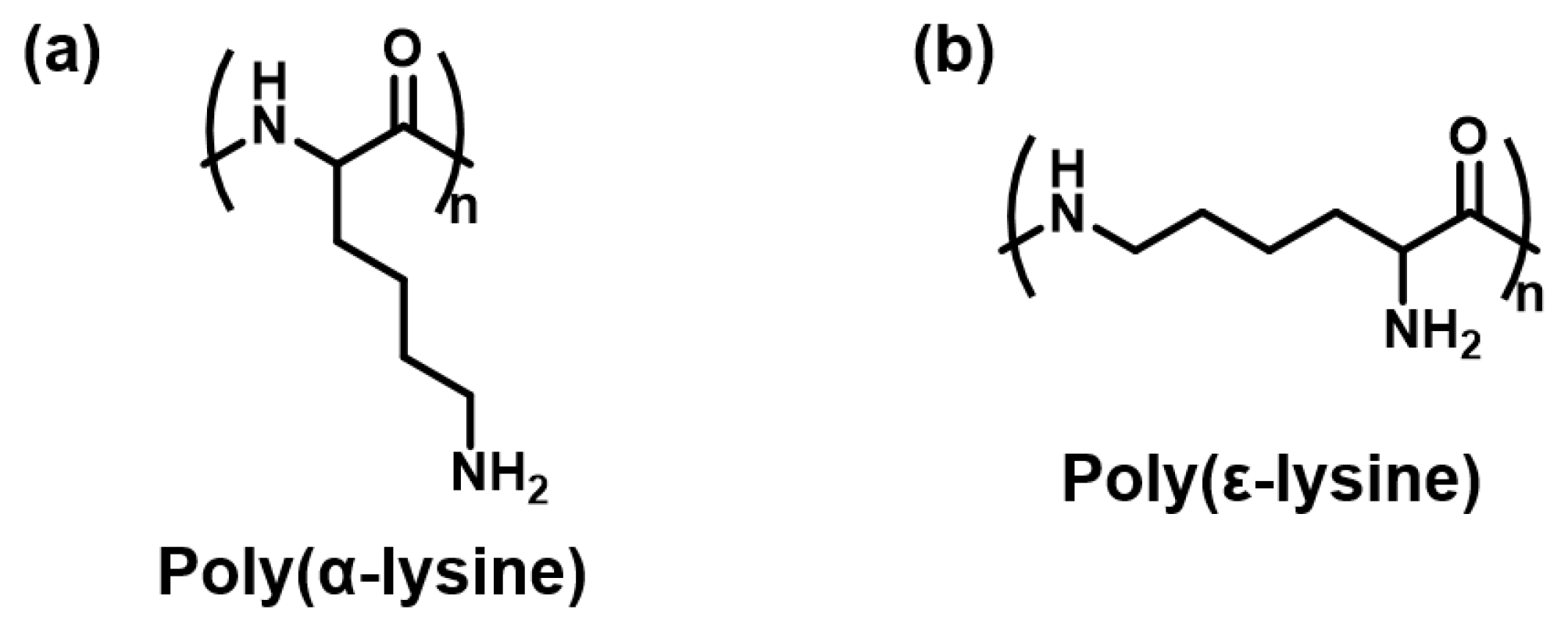
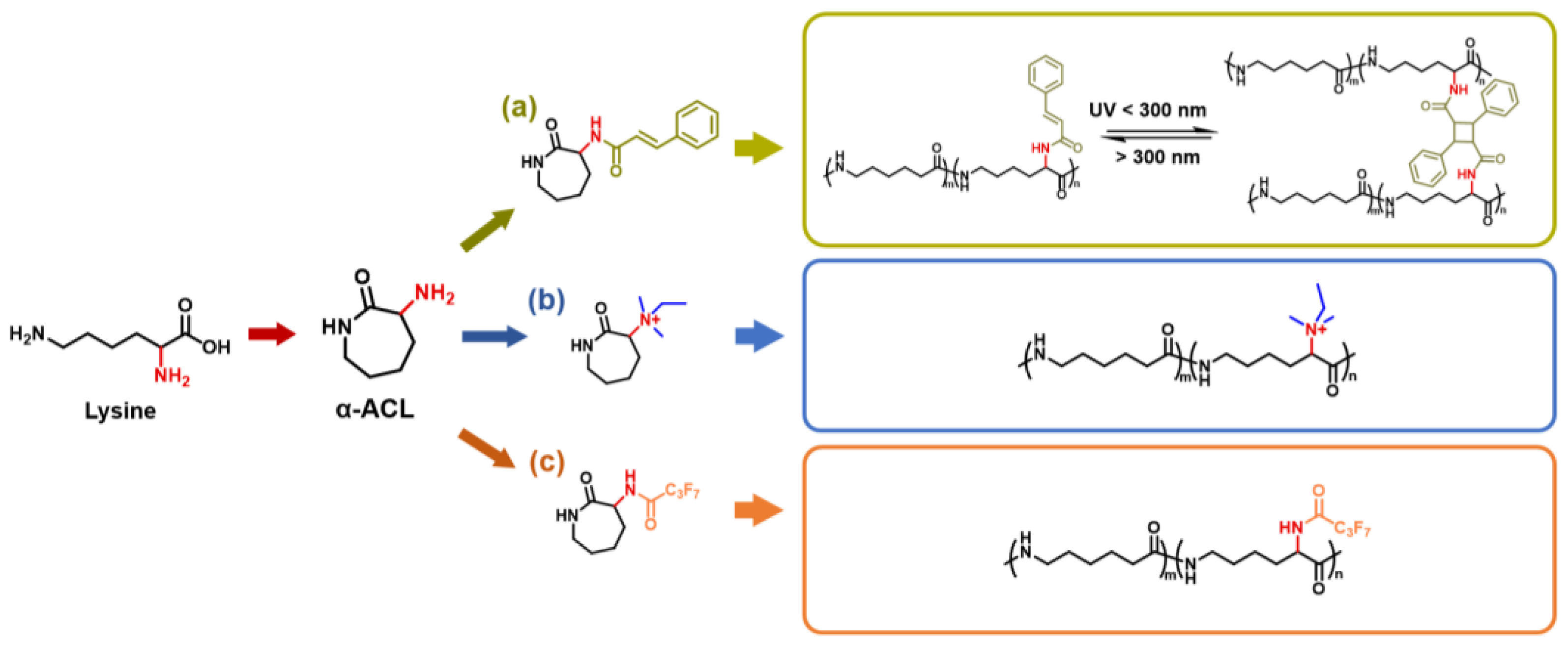
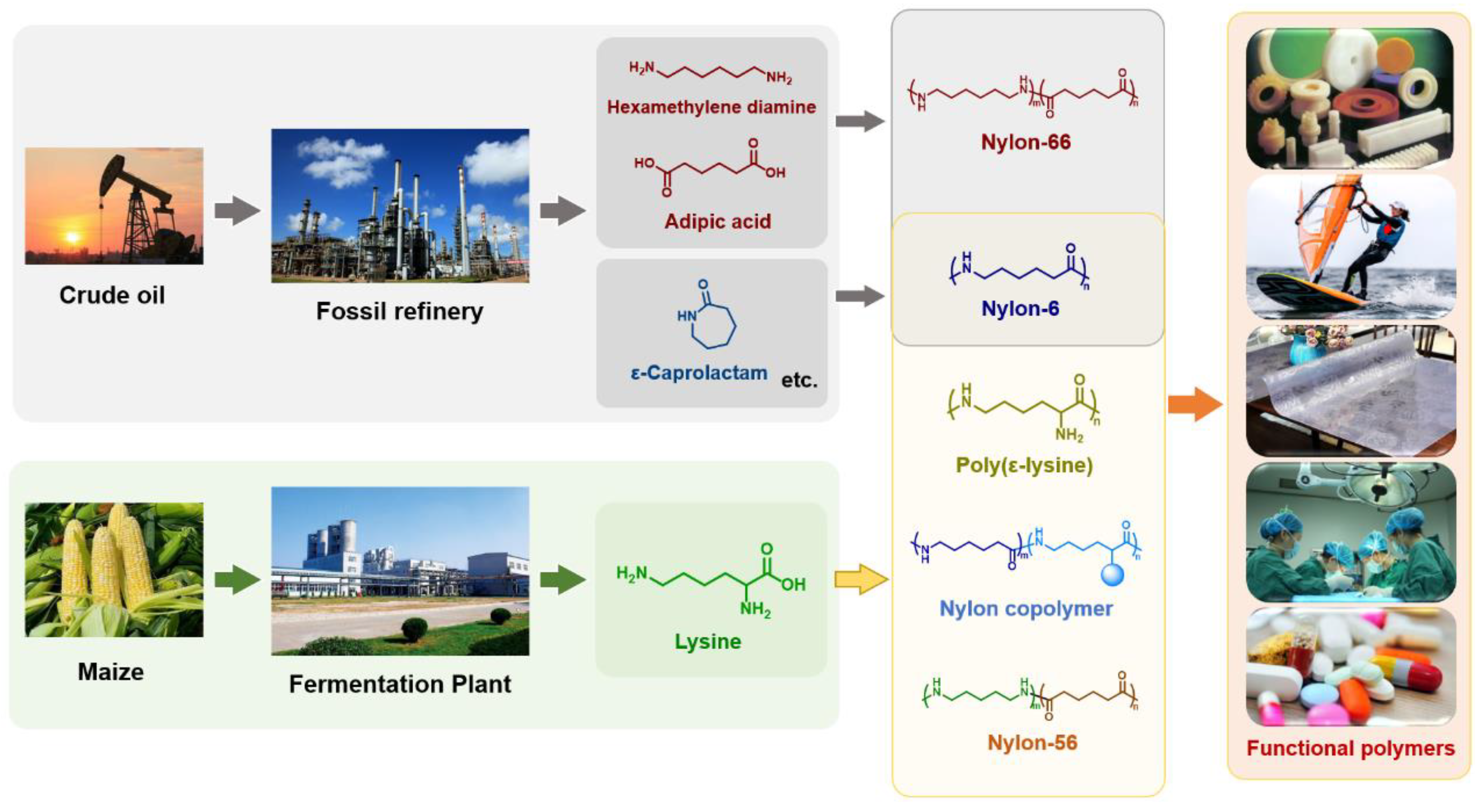
Lysine is a key raw material in the chemical industry owing to its sustainability, mature fermentation process and unique chemical structure, besides being an important nutritional supplement. Multiple commodities can be produced from lysine, which thus inspired various catalytic strategies for the production of these lysine-based chemicals and their downstream applications in functional polymer production. In this review, we present a fundamental and comprehensive study on the catalytic production process of several important lysine-based chemicals and their application in highly valued polymers. Specifically, we first focus on the synthesis process and some of the current industrial production methods of lysine-based chemicals, including ε-caprolactam, α-amino-ε-caprolactam and its derivatives, cadaverine, lysinol and pipecolic acid. Second, the applications and prospects of these lysine-based monomers in functional polymers are discussed such as derived poly (lysine), nylon-56, nylon-6 and its derivatives, which are all of growing interest in pharmaceuticals, human health, textile processes, fire control and electronic manufacturing. We finally conclude with the prospects of the development of both the design and synthesis of new lysine derivatives and the expansion of the as-synthesized lysine-based monomers in potential fields.
Keywords: lysine; catalytic process; lysine-based monomers; lysine-based polymers lysine; catalytic process; lysine-based monomers; lysine-based polymers