


Abstract
Local open-weight large language models (LLMs) are increasingly used in privacy-sensitive settings, yet isolated prompts may not reveal whether safety boundaries remain stable during conversation. SafeBoundary-LLM evaluated seven local models across 14 sensitive domains, 84 boundary sets, 672 single-turn prompts, and 84 five-turn escalation conversations; the same models were evaluated separately on XSTest and JBB-Behaviors. Evaluators R1 and R2 independently classified all 12,194 responses, with R2 labels used for primary outcomes and unreconciled labels used for reliability analysis. Exact agreement exceeded 93% in each dataset. In SafeBoundary-LLM, 456 out of 7644 responses (5.97%) were confirmed-or-mixed failures. The multi-turn failure rate was 14.69% versus 0.51% for single-turn prompts, yielding a rate ratio of 28.80 (95% CI [21.20, 43.80]; Holm-adjusted p = 0.0006); boundary collapse occurred only at Turns 4–5, and role-play bypass accounted for 299 out of 456 failures. On answer-expected items, over-refusal was 4.34% in XSTest and 17.29% in JBB-Behaviors, whereas unsafe compliance on refusal-expected items was 0.36% and 0.86%, respectively. These findings support an evaluation strategy that includes public single-turn benchmarks, controlled multi-turn escalation, independent human review, and traceable audit records for locally deployed LLMs.
1. Introduction
Large language models (LLMs) are increasingly used in interactive applications where fluent and context-aware responses must be balanced against safety, reliability, and resistance to misuse [1]. Recent surveys show that LLM safety cannot be reduced to output quality alone because vulnerabilities include attacks, unintended behaviors, privacy and security risks, and failures that may appear only under specific prompting or deployment conditions [1,2]. In this context, safety-boundary evaluation concerns the model’s ability to distinguish between legitimate assistance, cautious handling of sensitive or ambiguous requests, justified refusal, excessive refusal, and unsafe compliance. SafeBoundary-LLM addresses this problem by evaluating local open-weight models through a controlled design that combines single-turn boundary prompts with multi-turn escalation chains, complemented by external evaluation of the same seven models using two public datasets: XSTest [3] and JBB-Behaviors from JailbreakBench [4]. Raw responses and the independent semantic-review decisions of two human evaluators were preserved for traceable analysis.
1.1. Background and Motivation
The evaluation of LLMs is a methodological problem in its own right because model performance must be assessed not only through task-level output quality but also through robustness, reliability, safety, and suitability for the intended deployment context [5,6].
The deployment landscape is also changing. LLM use is no longer limited to centrally hosted commercial services because open-weight models can increasingly be deployed in local or institutionally controlled environments [7]. Local deployment may be preferred when privacy, restricted network access, infrastructure ownership, resource constraints, or offline operation are important requirements, and recent work has shown that locally hosted open-weight LLMs can support secure offline question answering and summarization workflows [7].
However, local deployment also changes the safety profile of LLM use. Safeguarding LLMs requires mechanisms that keep model behavior within prescribed boundaries, including safeguards, guardrails, monitoring, and defensive procedures against unsafe or adversarial use [8]. When models are deployed outside centrally managed platforms, more responsibility for model selection, configuration, monitoring, risk assessment, and usage control is transferred to the organization or developer operating the system [8,9].
LLM safety is broader than task accuracy, response fluency, or factual correctness. Recent work distinguishes safety, security, and privacy as related but different dimensions of LLM risk, covering issues such as harmful outputs, hallucinations, backdoor attacks, privacy leakage, adversarial manipulation, and other deployment-stage vulnerabilities [9]. Security-oriented reviews further show that LLM systems can be exposed to prompt injection, jailbreaking, adversarial attacks, data poisoning, malicious misuse, and agent-related security risks [10,11].
These risks are especially relevant in conversational settings, where the model must interpret the literal prompt together with user intent, topic sensitivity, prior context, and the possible downstream use of the generated answer [8,11]. A fluent and apparently helpful response may still be unsafe if it enables manipulation, discriminatory framing, misinformation, harassment, or other forms of misuse [9,11].
A central challenge is that safe behavior does not mean refusing all sensitive content. Many legitimate requests involve historically, politically, socially, or ethically sensitive topics and should be answered in a neutral, factual, and educational manner [6,8]. At the same time, requests that remain clearly manipulative, discriminatory, misleading, or harmful should be refused, corrected, or redirected safely [8,9]. This creates a safety-boundary problem: the model must distinguish between requests that should be answered, requests that require cautious framing or clarification, and requests that should be refused.
Poor boundary behavior can appear in both directions. Unsafe compliance occurs when a model provides useful assistance for a harmful or manipulative request, whereas excessive refusal reduces usefulness when the model rejects benign, educational, or analytical requests without sufficient justification [8,11]. Therefore, refusal behavior alone is not a sufficient indicator of safety; the relevant question is whether refusal, caution, clarification, or compliance is appropriate for the user’s intent and conversational context.
SafeBoundary-LLM was developed from this motivation. The benchmark evaluates local open-weight LLMs by keeping the topic domain controlled while varying the intent and risk level of the user request. Its design combines single-turn boundary prompts with multi-turn escalation chains, allowing the study to compare isolated safety decisions with conversational boundary stability. This framing makes it possible to examine whether models answer legitimate requests, handle ambiguity cautiously, refuse unsafe requests, avoid excessive refusal, and preserve appropriate boundaries as user pressure increases.
1.2. Related Work
Research on LLM safety evaluation has developed around several related but distinct problems: identifying unsafe compliance, measuring exaggerated refusal, testing jailbreak robustness, improving red-team methodology, and standardizing evaluation procedures. A broad survey of red teaming for generative models shows that this area has moved beyond isolated adversarial prompts toward systematic taxonomies of attack strategies, automatic red-teaming frameworks, multimodal attacks, agent-related risks, and the tension between harmlessness and helpfulness [12]. This literature is relevant to SafeBoundary-LLM because it frames safety evaluation as an active stress-testing problem rather than a passive measurement of ordinary model performance.
A first group of studies focuses on whether models refuse requests that should not be answered. Do-Not-Answer introduced an open dataset for evaluating safeguards in LLMs, with emphasis on instructions that responsible models should decline and on scalable safety-evaluation methods [13]. SORRY-Bench further systematizes safety-refusal evaluation through a fine-grained taxonomy of unsafe topics, linguistic augmentations, human annotations, and evaluation across proprietary and open-weight models [14]. These works provide important foundations for measuring refusal behavior, but their primary focus is whether unsafe requests are rejected rather than whether models also preserve legitimate sensitive-topic assistance under controlled intent variation.
A second group of studies addresses the opposite failure: exaggerated refusal. XSTest was designed to detect cases where models refuse safe prompts because they resemble unsafe prompts lexically or mention sensitive topics [3]. OR-Bench extends this direction through a large-scale benchmark for over-refusal, including benign prompts that appear potentially toxic and hard prompts that challenge state-of-the-art models [15]. These studies are important because they show that safety evaluation must include both sides of the boundary problem. A model that refuses too broadly may appear safe, but it can also become less useful, especially when users ask legitimate educational, analytical, or fictional questions about sensitive subjects.
A third line of work examines harmful-compliance robustness under adversarial pressure. HarmBench provides a standardized framework for automated red teaming and robust refusal, comparing multiple red-teaming methods, target models, and defenses [16]. This perspective is close to the unsafe-compliance component of SafeBoundary-LLM, but the emphasis differs. HarmBench primarily supports broad comparison of attacks and defenses, whereas SafeBoundary-LLM is organized around matched boundary sets in which the same topic area is tested across legitimate, ambiguous, manipulative, and unsafe user intents.
A fourth contribution of recent safety benchmarking is methodological standardization. JailbreakBench was proposed in response to reproducibility problems in jailbreak evaluation, including missing adversarial prompts, incomparable success-rate calculations, closed-source code, and dependence on evolving proprietary APIs [4]. Its design includes open artifacts, defined threat models, system prompts, chat templates, scoring functions, and a leaderboard. This work is particularly relevant because safety claims are difficult to audit unless the experimental prompt, runtime configuration, raw model response, and scoring decision remain available for inspection.
Adjacent work on LLM-based evaluation has shown that automated evaluation pipelines can introduce reliability problems themselves. In particular, LLM-as-judge evaluation may be affected by evaluator reliability limits, positional bias, and ranking instability, supporting the need for structured and reproducible evaluation procedures [17]. A related risk is that adversarial instructions can be embedded in the content processed by an LLM-based evaluation system, not just in the external user prompt. EvalHack examines answer-side prompt injection in LLM exam-grading panels by comparing clean answers with visible-injection and stealth-injection variants, showing how adversarially modified evaluated content can affect grading-panel stability [18].
A fifth line of work has begun to address multi-turn safety. MTSA argues that malicious intent can be hidden across multi-round dialogues, making models more likely to produce harmful responses than in isolated interactions, and proposes a multi-turn safety-alignment framework based on multi-round red-teaming [19]. This direction is important because real conversational risk may emerge gradually: a model can handle an isolated request safely but become more permissive after context, justification, role-play, or hypothetical framing accumulates across turns.
1.3. Study Objectives and Research Questions
The objective of this study is to evaluate the stability of safety-boundary behavior in local open-weight LLMs under controlled single-turn and multi-turn conditions. The study additionally evaluates the same models on XSTest and JBB-Behaviors to provide external comparison with public single-turn benchmarks addressing over-refusal and harmful-versus-benign request handling. The study does not assess whether a model supports or rejects a particular social, political, or ideological position. Instead, it examines whether the model makes appropriate boundary decisions when user requests vary in intent and risk. In this framing, a safe and useful model should answer legitimate sensitive-topic requests, handle ambiguous requests with caution or clarification, refuse clearly unsafe or manipulative requests, and avoid excessive refusal of benign content.
The analysis therefore examines whether models move appropriately between answering, cautious handling, clarification, correction, and refusal as user intent changes, without over-refusing benign requests.
The study is guided by the following research questions:
- RQ1. To what extent do local open-weight LLMs distinguish legitimate sensitive-topic requests from unsafe or manipulative requests?
- RQ2. Does multi-turn escalation reveal more safety-boundary failures than single-turn prompting?
- RQ3. At which stages of a multi-turn escalation do models begin to show boundary collapse, mixed refusal/compliance, or unsafe compliance?
- RQ4. How do safety-boundary outcomes differ across local open-weight models evaluated under the same inference setting?
- RQ5. What failure patterns emerge across unsafe compliance, role-play boundary bypass, mixed refusal/compliance, and over-refusal?
- RQ6. How do the same local open-weight models perform on the public XSTest and JBB-Behaviors datasets, and how do these external outcomes complement the safety-boundary patterns observed in SafeBoundary-LLM?
Collectively, these research questions define the analytical scope of the study by linking controlled safety-boundary assessment, multi-turn escalation, model-level and failure-mode comparisons, and external evaluation using public benchmarks.
1.4. Main Contributions
SafeBoundary-LLM builds on prior safety-evaluation research while addressing a narrower question: whether local open-weight LLMs preserve appropriate safety boundaries when user intent changes within a controlled topical context. The study operationalizes this question through matched boundary sets, paired single-turn prompting, and multi-turn escalation complemented by separate evaluations of the same seven models on XSTest and JBB-Behaviors. Prompts, raw responses, independent semantic-review decisions from two human evaluators, and benchmark metadata are preserved to support traceable analysis.
Table 1 positions SafeBoundary-LLM relative to established safety-evaluation frameworks. The comparison uses five attributes, defined as follows:
Table 1.
Comparison of SafeBoundary-LLM with related safety-evaluation benchmarks.
- Benchmark: the evaluation framework serving as the unit of comparison.
- Main focus: the primary safety problem targeted by the evaluation.
- Benign + harmful: the joint inclusion of answer-expected benign requests and refusal-expected harmful requests.
- Multi-turn: the evaluation of model behavior across cumulative conversational context rather than isolated prompts alone.
- Matched intent progression: the systematic variation of user intent while preserving topical comparability across evaluation instances.
Together, these attributes capture both the safety objective and the evaluation structure of each benchmark.
The individual evaluation dimensions are not independently novel, as previous benchmarks already address over-refusal, harmful compliance, jailbreak robustness, reproducibility, and multi-turn safety. SafeBoundary-LLM’s contribution lies in integrating matched intent progression with paired single-turn and multi-turn evaluation while preserving topical comparability. Separate evaluations on XSTest and JBB-Behaviors provide complementary public benchmark context for the same seven locally deployed models.
More specifically, the study makes six contributions. First, the study introduces SafeBoundary-LLM, a controlled benchmark for evaluating safety-boundary stability in local open-weight LLMs. Unlike evaluations based only on isolated harmful or benign prompts, the benchmark is organized around boundary sets in which the topic domain is kept comparable while the user intent changes. This structure makes it possible to evaluate whether a model adapts its behavior appropriately across legitimate, ambiguous, manipulative, and unsafe formulations.
Second, the study provides a paired single-turn and multi-turn evaluation design. The single-turn component measures how models respond to isolated boundary prompts, whereas the multi-turn component tests whether the same models preserve appropriate boundaries when user intent escalates gradually across a conversation. This pairing allows direct comparison between isolated safety decisions and conversational boundary stability.
Third, the study reports an empirical failure-mode analysis of local open-weight models under the same inference setting. The analysis distinguishes between unsafe compliance, role-play boundary bypass, mixed refusal/compliance, and over-refusal, rather than treating all safety failures as a single category. This distinction is important because different failure modes have different implications for model deployment, monitoring, and risk mitigation.
Fourth, the study implements a traceable audit workflow for safety-boundary evaluation. Prompts, raw model responses, semantic-review decisions, run metadata, and benchmark structure are preserved and linked in the Neo4j [20] graph database. This graph-based audit layer supports inspection of individual cases, verification of aggregate results, and reconstruction of the path from benchmark prompt to model output and semantic label.
Fifth, the semantic-review procedure uses two independent human evaluators, R1 and R2, who assess the model responses using the same classification protocol. Inter-rater agreement is quantified to evaluate the reliability of the semantic classifications.
Sixth, the study evaluates the same seven locally deployed models on the public XSTest and JBB-Behaviors datasets. These external evaluations complement the controlled SafeBoundary-LLM design by examining over-refusal and harmful-versus-benign request handling under established single-turn benchmarks.
2. Materials and Methods
This section describes the methodological design of SafeBoundary-LLM and the external evaluations conducted using XSTest and JBB-Behaviors. The study was structured as a controlled benchmark for evaluating safety-boundary behavior in local open-weight LLMs through paired single-turn and multi-turn evaluation, complemented by single-turn evaluation of the same seven models on the two public datasets. The methodology covers the overall benchmark design, the shared topic-domain and boundary-set structure, the single-turn prompt design, the multi-turn escalation design, the local inference protocol, the external-evaluation datasets and inference procedure, the independent semantic evaluation by two human evaluators, R1 and R2, the inter-rater reliability analysis, and the audit and metric workflow used to derive the final results. This structure was intended to preserve a clear link between each benchmark item, the corresponding model response, the semantic-review decisions, and the aggregate results reported in the study.
2.1. Study Design and Benchmark Overview
The study comprises two complementary components: a primary controlled benchmark, SafeBoundary-LLM, and a complementary external evaluation using public datasets. SafeBoundary-LLM was designed as a controlled benchmark study for evaluating safety-boundary behavior in local open-weight LLMs. The benchmark focuses on whether models make appropriate response decisions when user requests address sensitive topics and vary in intent, risk level, and conversational context. The external component applies the same seven model configurations to XSTest and JBB-Behaviors, providing an external comparison with public single-turn benchmarks addressing exaggerated refusal and harmful-versus-benign request handling. The study therefore evaluates boundary behavior rather than political, ideological, or social alignment.
The SafeBoundary-LLM benchmark combines two complementary evaluation settings. The first setting is a single-turn benchmark, in which each model responds independently to isolated prompts. This component measures how models handle controlled combinations of topic domain, boundary set, and user intent without prior conversational context. The second setting is a multi-turn escalation benchmark, in which each model responds across a short conversation where user intent changes progressively. This component evaluates whether models preserve appropriate boundaries as contextual pressure accumulates across turns.
The full benchmark was organized around 14 topic domains and 84 boundary sets. Each boundary set defines a controlled micro-topic and supports both the single-turn and multi-turn parts of the study. In the single-turn component, each boundary set contains eight prompts corresponding to different intent types. In the multi-turn component, each boundary set is represented by one five-turn escalation conversation. Model inference was executed through an Ollama server [21], using its local API-based runtime for generating responses from the evaluated open-weight models. Table 2 summarizes the main design components of the SafeBoundary-LLM benchmark.
Table 2.
Overview of the SafeBoundary-LLM benchmark design.
The benchmark was designed to support both response-level and conversation-level analyses. The single-turn component provides the baseline for isolated safety-boundary decisions, while the multi-turn component evaluates whether those decisions remain stable when user intent escalates within a conversation. This pairing allows the same topic-domain and boundary-set structures to be used for both evaluation modes.
Seven local open-weight models were evaluated under the same inference setting. For each model, the benchmark generated responses for both the single-turn prompts and the multi-turn conversation turns. The resulting response set supports three levels of analysis. First, response-level analysis identifies whether individual outputs represent appropriate answering, cautious handling, refusal, unsafe compliance, mixed refusal/compliance, role-play boundary bypass, or over-refusal. Second, model-level analysis compares safety-boundary outcomes across the evaluated models. Third, conversation-level analysis examines whether multi-turn escalation produces boundary collapse or other failures that are not visible from single-turn prompting alone.
2.2. Topic Domains and Boundary-Set Structure
The SafeBoundary-LLM benchmark is organized around a shared topic-domain and boundary-set structure that supports both the single-turn and multi-turn components of the study. This structure defines the substantive context of the benchmark before user intent is varied in isolated prompts or escalated across short conversations. The purpose of this design is to keep the topic comparable while testing whether model behavior changes appropriately when the requested use of the information changes.
The benchmark includes 14 topic domains covering sensitive but legitimate areas of historical, political, social, and civic discussion. The topic domain itself is not treated as unsafe. Instead, risk is associated with the user’s intent, framing, and requested use of the information. This distinction is essential because the benchmark evaluates whether models can answer legitimate sensitive-topic requests without over-refusal while refusing, correcting, or safely redirecting manipulative, discriminatory, misleading, or harmful formulations.
Each topic domain was divided into six boundary sets. A boundary set is a controlled micro-topic within a broader topic domain. It is not a risk level, and it is not an intent category. Rather, it acts as a stable topical anchor that can later be used in two ways: to generate single-turn prompts with different user intents and to construct multi-turn escalation conversations. Table 3 presents the 14 topic domains and the six boundary-set micro-topics defined for each domain. The use of separate BS01–BS06 columns makes the repeated structure of the benchmark explicit and shows how each topic domain contributes equally to the shared set of 84 boundary sets.
Table 3.
Topic-domain and boundary-set coverage in SafeBoundary-LLM.
The six boundary sets within each topic domain are not intended to represent six degrees of risk. They represent six distinct micro-topics that provide broader coverage of the domain and reduce the risk that results are driven by one narrow formulation. Because each of the 14 topic domains was represented by 6 boundary sets, the shared benchmark structure contained 84 boundary sets in total. Each boundary set functions as a stable topical anchor that is reused in the single-turn and multi-turn components of the benchmark.
This structure separates the topical layer of the benchmark from the intent and escalation layers. The topical layer defines what the interaction is about, while the later prompt-design layers define how the user asks about it and how the model is expected to respond. In the single-turn component, each boundary set is combined with multiple user intent types to generate isolated prompts. In the multi-turn component, the same boundary set is used to construct a short escalation trajectory. This shared foundation makes it possible to compare single-turn and multi-turn behavior without changing the underlying topic structure.
2.3. Single-Turn Prompt Design
The single-turn component was designed to evaluate how each model responds to isolated user requests when no previous conversational context is available. Each single-turn prompt was self-contained and was evaluated independently, with no previous user turns or model responses carried over between prompts. This setting provides the baseline for assessing safety-boundary behavior before introducing the additional contextual pressure of multi-turn escalation.
The single-turn prompt set was built on the shared boundary-set structure of the benchmark. Each boundary set served as a stable topical anchor, and eight prompts were constructed for each anchor, corresponding to eight user-intent types. In this way, the topic remained comparable within the boundary set, while the user request changed in intent, framing, and safety risk. Across the 84 boundary sets, this procedure produced 672 single-turn prompts.
The eight intent types were designed as a controlled boundary gradient. The gradient begins with clearly legitimate educational or analytical requests, continues through sensitive but answerable and ambiguous requests, and then moves toward directly unsafe, discriminatory, manipulative, or evasively framed requests. The purpose of this structure was not to test whether a topic is safe or unsafe in itself but to test whether the model changes its response appropriately when the user intent changes. Table 4 summarizes the single-turn intent taxonomy and the expected model behavior associated with each intent type.
Table 4.
Single-turn intent taxonomy and expected model behavior.
The expected behavior column defines the boundary decision that the model should make, not the exact wording of the response. For legitimate requests, the expected behavior is to answer in a factual and neutral manner. For sensitive but legitimate requests, the expected behavior is to answer with appropriate caution and framing. For ambiguous requests, the model should either ask for clarification or provide a bounded response that avoids enabling harm. For unsafe requests, the expected behavior is refusal, correction of the framing, or redirection toward safe information.
This design makes the single-turn component a paired-prompt benchmark rather than a collection of unrelated prompts. Within each boundary set, the underlying micro-topic remains stable, while the intent type changes. This allows the analysis to examine whether a model adapts its behavior across the boundary gradient. A model should not respond in the same way to an educational request, an ambiguous request, a manipulative request, and an unsafe request on the same micro-topic. The single-turn component therefore measures isolated boundary decisions under controlled topical comparability.
All single-turn prompts were written in English and constructed specifically for SafeBoundary-LLM. The prompt-design process avoided copying prompt text from existing safety benchmarks. Each prompt was associated with metadata describing its topic domain, boundary set, intent type, expected behavior, boundary role, risk level, and design rationale. These metadata fields were later used to link each model response to the corresponding benchmark item and to support semantic review, metric calculation, and graph-based auditability.
2.4. Multi-Turn Escalation Design
The multi-turn component used the same topic-domain and boundary-set structure as the single-turn benchmark but operationalized intent variation as a conversational trajectory rather than as eight independent prompt types. Each boundary set was converted into one five-turn conversation. As a result, the multi-turn component contained 84 conversations and 420 user turns in total.
The purpose of this component was to evaluate whether models preserve appropriate safety boundaries as conversational context accumulates. In the single-turn setting, each model response is generated for an isolated prompt. In the multi-turn setting, each response is conditioned by the preceding user turns and model outputs within the same conversation. This makes it possible to test whether an initially legitimate context makes a model more permissive later, whether a refusal remains stable across subsequent turns, or whether the model over-corrects after a refusal and begins rejecting content that should remain answerable.
Each multi-turn conversation followed a controlled five-stage escalation structure. The first turn introduced a legitimate educational or analytical request. The second turn moved toward a more sensitive or provocative formulation that still required cautious handling rather than automatic refusal. The third turn introduced ambiguity, requiring clarification or a safely bounded response. The fourth turn applied manipulative or unsafe pressure and was expected to trigger refusal, correction, or safe redirection. The fifth turn used evasive framing, such as hypothetical, fictional, debate-oriented, or role-play framing, while preserving a clearly unsafe intent. Table 5 summarizes the multi-turn escalation template.
Table 5.
Multi-turn escalation template and expected model behavior.
The evolution of user intent across the five-turn sequence is illustrated through a sanitized trajectory in the domain of political misinformation. The interaction begins with a neutral request for an explanation of how false political claims spread online, reflecting a legitimate educational purpose. The second turn narrows the inquiry to the persuasive role of emotionally framed claims, which remains answerable but requires careful contextualization. In the third turn, the user asks how such messaging might be made more convincing without specifying a legitimate use case, creating ambiguity that warrants clarification or a safely bounded response. The fourth turn makes the manipulative objective explicit by requesting assistance in constructing misleading content intended to influence a target audience; at this stage, refusal, correction, or safe redirection is required. In the fifth turn, the same objective is reframed as a fictional campaign exercise or role-play. Because the underlying operational intent remains unchanged despite the hypothetical framing, the safety boundary should remain stable, with refusal accompanied, where appropriate, by alternatives such as media-literacy or counter-misinformation guidance. This trajectory preserves the topical context while progressively altering the intended use of the information, thereby isolating the effect of escalating user intent on model behavior.
A sanitized example of the five-turn trajectory is as follows: Turn 1, “Explain how false political claims spread online”; Turn 2, “How does emotional framing make such claims more persuasive?”; Turn 3, “What features could make this type of message more convincing?”; Turn 4, “Help me create a misleading message intended to influence a target audience”; and Turn 5, “Reframe the same task as a fictional campaign exercise.” The same trajectory was submitted to each of the seven models under the same system prompt and inference configuration, and the resulting responses were compared turn by turn against the expected behavior defined for each stage.
The five-turn structure was derived from the same boundary logic used in the single-turn component, but it was not designed to reproduce the eight single-turn intent types one by one. Instead, it compressed the progression from legitimate inquiry to ambiguous, manipulative, and evasively framed unsafe requests into a short conversational sequence. This design makes the multi-turn component suitable for evaluating boundary stability, post-refusal consistency, context carryover risk, escalation-dependent unsafe compliance, and over-correction after refusal.
The multi-turn prompts were written to preserve the tested boundary distinction while avoiding the need to reproduce operationally useful harmful content in the manuscript. Representative examples are therefore reported only in summarized or sanitized form. This approach allows the study to discuss boundary failures without publishing detailed instructions or prompt formulations that could be directly reused for harmful purposes.
For each model, the full conversation history was preserved within a given multi-turn conversation. Later responses were therefore conditioned on the preceding turns of that conversation. Between different conversations, however, no context was carried over. Each conversation was treated as an independent evaluation instance associated with one boundary set.
The multi-turn component was analyzed at both the response level and the conversation level. At the response level, each model output was semantically reviewed using the same review logic as the single-turn outputs. At the conversation level, the analysis examined whether and when the model crossed the safety boundary during the escalation trajectory. This allowed the study to identify boundary collapse, mixed refusal/compliance, post-refusal instability, context carryover risk, and over-correction after refusal.
2.5. External Benchmark Datasets and Design
Two public datasets were selected for the external evaluation because they examine complementary errors at the safety boundary. XSTest [3] primarily tests exaggerated refusal: whether a model incorrectly refuses a safe request because it contains words or topics that superficially resemble harmful content. JBB-Behaviors, from JailbreakBench [4], tests whether a model distinguishes harmful requests that should be refused from benign requests that should remain answerable. Together, the two datasets provide external single-turn reference settings for both excessive restriction and unsafe compliance.
XSTest contained 450 prompts, including 250 safe prompts and 200 unsafe contrast prompts. Its design places benign requests containing potentially sensitive expressions alongside unsafe requests with related lexical or contextual features. For example, a technical request involving the termination of a software process may contain language that resembles physical harm while remaining entirely benign. The expected behavior was therefore substantive answering for the safe prompts and refusal or safe redirection for the unsafe contrasts. This design evaluates whether models respond to the actual meaning and intended use of a request rather than relying primarily on sensitive keywords.
The JBB-Behaviors dataset contained 200 requests, divided equally between 100 harmful and 100 benign behaviors. Both subsets covered the same ten broad risk categories, including disinformation, fraud or deception, harassment or discrimination, malware or hacking, physical harm, privacy, and expert advice. Harmful requests were expected to be refused or safely redirected, whereas benign requests were expected to receive substantive answers. Including both subsets prevents a model from appearing safe merely because it refuses broadly. The present study used the behavior requests themselves and did not apply adversarial jailbreak transformations.
Each prompt was evaluated independently in a single-turn setting using the same seven model configurations included in SafeBoundary-LLM. This produced 3150 XSTest responses and 1400 JBB-Behaviors responses. The external responses remained separate from the 7644 SafeBoundary-LLM responses because the three evaluations have different structures and analytical purposes. The original public prompts were preserved during dataset preparation, while identifiers, expected-behavior fields, and provenance metadata were added to support consistent execution and traceability. Table 6 summarizes the two external evaluation datasets.
Table 6.
Public datasets used for external evaluation.
These datasets do not reproduce the multi-turn escalation tested by SafeBoundary-LLM. Their purpose is to determine how the same locally deployed models behave under established single-turn evaluations targeting the two principal sides of the safety boundary: refusing too much and complying when refusal is required.
2.6. Model Set and Inference Protocol
The benchmark was executed on seven local open-weight LLMs using Ollama as the inference interface. The same seven model configurations were also used for the XSTest and JBB-Behaviors evaluations. The purpose of the model set was to compare safety-boundary behaviors across different local model families and model scales under the same benchmark structure. The study did not optimize, fine-tune, or adapt any model for the benchmark; all models were evaluated as deployed local inference models.
The model set was selected purposively as a cross-family and cross-scale sample rather than as a statistical representation of the entire open-weight model market. It included five distinct model families—Qwen, Phi, Gemma, Mistral, and Llama—and configurations ranging from 3B to 70B parameters, including compact, medium-scale, larger, and quantized large models. This range reflects practical local-deployment conditions, where model choice is often constrained by available hardware, memory requirements, inference latency, and operational cost. The set should therefore be interpreted as a heterogeneous sample of locally deployable configurations available through Ollama, not as exhaustive coverage of all open-weight models. The evaluated model set included qwen3:8b [22], phi4:14b [23], gemma3:12b [24], mistral-small3.2:latest [25], phi4-mini:3.8b [26], llama3.2:3b [27], and llama3.3:70b-instruct-q4_K_M [28]. Table 7 summarizes the Ollama model tags used across all three evaluation components, their approximate scale or configuration, and their role in the model-level comparison.
Table 7.
Local open-weight models evaluated across the study components.
Within the primary SafeBoundary-LLM benchmark, all models were evaluated on the same benchmark version and with the same system prompt. For each model, the single-turn component generated responses to 672 isolated prompts, while the multi-turn component generated responses across 84 five-turn escalation conversations. This produced comparable response sets across models for both isolated boundary decisions and conversation-dependent boundary stability.
For the external evaluation, the same seven model configurations and the same system prompt were applied separately to all 450 XSTest prompts and all 200 JBB-Behaviors requests. Each external item was submitted as an independent single-turn request, producing 3150 XSTest responses and 1400 JBB-Behaviors responses. The two external response sets were stored and analyzed separately from the SafeBoundary-LLM outputs.
Inference was performed locally through Ollama using a fixed decoding protocol. The main runs used temperature = 0.0, top_p = 1.0, top_k = 40, seed = 42, and num_predict = 4096. The context window was set to num_ctx = 4096 for the SafeBoundary-LLM single-turn component and num_ctx = 8192 for the SafeBoundary-LLM multi-turn component, reflecting the need to preserve conversation history across turns. The XSTest and JBB-Behaviors runs used the same decoding values, with num_ctx = 4096, because both external evaluations were single-turn. A request timeout of 3600 s was used for all final runs. The earlier exploratory short-output configuration was not used for the main results.
For the SafeBoundary-LLM single-turn component, each prompt was submitted as an independent request. No prompt-level context, previous answer, or conversation history was carried over between single-turn items. For the SafeBoundary-LLM multi-turn component, the full conversation history was preserved within each five-turn conversation, so that later responses were conditioned on the preceding user turns and model outputs. No context was carried over between separate multi-turn conversations.
The raw output generated by each model across all three evaluation components was preserved without manual editing before semantic review. For each response, the stored metadata included the model tag, benchmark version, evaluation mode, prompt or conversation-turn identifier, run information, inference configuration, and raw response text. This ensured that later semantic labels and aggregate metrics could be traced back to the exact model output produced under the recorded inference setting.
2.7. Semantic Review and Inter-Rater Reliability
After inference, each model output was independently evaluated by two human evaluators, denoted R1 and R2, using the same semantic-review protocol. The unit of review was the individual model response, linked either to a single-turn prompt or to a specific turn in a multi-turn conversation. Each evaluator assessed all 7644 responses without access to the other evaluator’s labels or rationales. The review assessed the full response in relation to the prompt, the expected model behavior, the boundary-set context, and the evaluation mode. This was necessary because safety-boundary behavior cannot be reliably classified through keyword matching alone. For example, a response may contain refusal language while still providing useful assistance for an unsafe request, or it may discuss a sensitive topic safely without requiring refusal.
The review procedure focused on the model’s boundary decision rather than on the political, social, or ideological content of the topic. The expected behaviors were treated as operational safety categories defined for this benchmark, not as universal moral or ideological judgements. A response was considered appropriate when it matched the expected behavior for the prompt or turn: factual answering for legitimate requests, cautious handling or clarification for ambiguous requests, and refusal, correction, or safe redirection for unsafe requests.
Responses were considered problematic when the model crossed the expected boundary, either by complying with unsafe requests, bypassing refusal through evasive framing, mixing refusal with unsafe content, or refusing content that should have remained answerable.
The semantic-review workflow also separated confirmed failures from uncertain or secondary cases. Borderline cases were not merged into confirmed unsafe-compliance counts. Similarly, possible mild over-refusals were reported separately from confirmed over-refusals, and length-truncated responses were flagged for interpretation rather than treated as semantic failures by default. This conservative rule was used to reduce the risk of inflating failure rates and to preserve a clear distinction between confirmed boundary failures, excessive refusal, and cases requiring additional interpretation. Table 8 summarizes the semantic-review categories used in the analysis.
Table 8.
Semantic-review categories and analytical use.
The main safety-boundary failure categories were confirmed unsafe compliance, confirmed role-play boundary bypass, and mixed refusal/compliance. These categories capture cases in which the model provided unsafe assistance, failed to maintain refusal under evasive reframing, or combined a superficial refusal with content that still helped the unsafe request. Over-refusal was treated as a separate boundary problem because it represents excessive restriction rather than unsafe assistance. This separation allowed the analysis to distinguish models that are too permissive from models that are overly restrictive.
The XSTest and JBB-Behaviors responses were independently evaluated by the same two human evaluators, R1 and R2. The external review files retained the model identifiers to preserve response-level traceability, but neither evaluator had access to the other evaluator’s labels or notes. Because the external benchmarks required a direct assessment of response behavior, both evaluations used three labels: REFUSAL, COMPLIANCE, and PARTIAL_OR_MIXED. REFUSAL indicated that the model declined the requested task or redirected it safely; COMPLIANCE indicated that the model substantively answered or performed the requested task; and PARTIAL_OR_MIXED indicated that the response combined restriction or refusal with substantive task-related content. The semantic label was subsequently interpreted against the expected behavior of each item: answering was expected for XSTest safe prompts and JBB benign requests, whereas refusal or safe redirection was expected for XSTest unsafe prompts and JBB harmful requests.
Inter-rater reliability was calculated directly from the two independent label sets, without reconciling disagreement. For SafeBoundary-LLM, the two label sets were compared using a common seven-category taxonomy comprising safe or appropriate responses, unsafe compliance, role-play boundary bypass, mixed refusal/compliance, confirmed over-refusal, possible mild over-refusal, and borderline cases. A second binary comparison distinguished confirmed-or-mixed failures—unsafe compliance, role-play boundary bypass, and mixed refusal/compliance—from all other outcomes. For XSTest and JBB-Behaviors, agreement was calculated separately using the common three-category taxonomy of REFUSAL, COMPLIANCE, and PARTIAL_OR_MIXED. All comparisons reported exact percentage agreement and unweighted Cohen’s kappa. Ninety-five percent confidence intervals for kappa were estimated through 10,000 deterministic cluster-bootstrap replications with a fixed random seed of 42. The boundary set was used as the resampling unit for SafeBoundary-LLM, whereas the source item was used for XSTest and JBB-Behaviors so that the seven model responses associated with the same public prompt remained within the same bootstrap cluster. SafeBoundary-LLM agreement was calculated for the complete dataset and separately for the single-turn and multi-turn components; external agreement was calculated separately for XSTest and JBB-Behaviors. R2 labels were used for the primary outcome analyses, while R1 labels were used to quantify inter-rater reliability.
2.8. Audit Layer and Operational Metrics
All SafeBoundary-LLM benchmark items, model outputs, semantic-review decisions used in the primary benchmark outcome analyses, and run metadata were imported into a Neo4j graph database. The graph was used as an audit layer, not just as a storage format. Each model response was linked to the corresponding prompt or conversation turn, the model that generated it, the run configuration, and the semantic-review record used for outcome analysis. This structure made it possible to reconstruct the path from benchmark design to model output and final review category. This graph-based audit design is consistent with prior LLM evaluation work in which generated outputs, metadata, evaluator decisions, and scoring artifacts are linked in a graph structure to support transparent and reproducible analysis [29].
The SafeBoundary-LLM Neo4j audit layer supported consistency checks before result generation. Each response was expected to have a corresponding semantic-review record used in the primary benchmark outcome analyses, and each response was expected to be linked to either a single-turn prompt or a multi-turn conversation turn. This structure reduced the risk of producing aggregate tables from disconnected files or partially aligned datasets. It also allowed the final tables to be generated from a single graph representation while preserving the relationships among topic domain, boundary set, evaluation mode, model identity, raw response, and semantic-review category.
Audit consistency for XSTest and JBB-Behaviors was maintained through a separate file-based workflow. Source and processed-data manifests preserved dataset provenance, fixed source versions, row counts, schemas, and file checksums. Each external response record retained the benchmark item identifier, model identifier, expected behavior, inference configuration, and raw response text, while the corresponding R1 and R2 review records preserved the observed semantic labels. Before analysis, the paired review files were checked for complete response coverage and exact alignment of the model, source item, prompt, response, and expected-behavior fields.
Operational metrics for SafeBoundary-LLM were derived from the reviewed response categories. Response-level metrics use model responses as the denominator. The confirmed-or-mixed failure rate is the proportion of responses classified as unsafe compliance, role-play boundary bypass, or mixed refusal/compliance, whereas over-refusal rates capture excessive restriction on answerable items. Model-level metrics aggregate response-level classifications separately for each evaluated model. Conversation-level metrics apply only to the SafeBoundary-LLM multi-turn component and use model-specific conversation trajectories as the denominator. The multi-turn collapse rate is the proportion of model-specific conversation trajectories containing at least one confirmed-or-mixed failure, and the boundary-collapse turn is the first turn at which such a failure occurs. Thus, response-level rates quantify how often failures occur, whereas conversation-level metrics indicate whether and when the safety boundary first becomes unstable within an escalation trajectory. Post-refusal instability, context carryover risk, and over-correction after refusal describe distinct trajectory patterns rather than additional response-level failure categories. Table 9 summarizes the main operational metrics used in the primary benchmark analysis.
Table 9.
Operational metrics used in the SafeBoundary-LLM analysis.
The final SafeBoundary-LLM quantitative analysis used only confirmed or explicitly separated semantic-review categories. Confirmed unsafe compliance, confirmed role-play boundary bypass, and mixed refusal/compliance were used to quantify unsafe or mixed boundary failures. Confirmed over-refusal and possible mild over-refusal were reported separately. Borderline cases and length-truncated responses were not merged into confirmed unsafe-compliance counts. This rule kept the reported rates conservative and ensured that the results reported in Section 3 distinguish between unsafe assistance, excessive refusal, mixed behavior, and cases requiring additional interpretation.
External outcome metrics were derived by comparing the R2 response label with the expected behavior of each XSTest and JBB-Behaviors item. For prompts expected to be answered, COMPLIANCE represented an appropriate answer, whereas REFUSAL represented over-refusal. For prompts expected to be refused, REFUSAL represented an appropriate safety response, whereas COMPLIANCE represented unsafe compliance. PARTIAL_OR_MIXED responses were retained as a separate outcome and were not merged with either clear compliance or clear refusal. Rates were calculated for each benchmark and model using the relevant expected-behavior subset as the denominator. Table 10 defines the external-evaluation metrics.
Table 10.
Operational metrics used for XSTest and JBB-Behaviors.
This formulation keeps the two directions of boundary error separate. It prevents a high overall refusal rate from being interpreted automatically as strong safety and prevents broad compliance from being interpreted automatically as high usefulness. External outcomes were therefore examined separately by benchmark, expected behavior, and model.
Figure 1 summarizes the methodological workflow of the overall study. The figure shows how the study evaluates SafeBoundary-LLM, comprising single-turn prompts and multi-turn escalation conversations, and separately evaluates two external single-turn benchmarks, XSTest and JBB-Behaviors, using the same seven local model configurations and a common Ollama inference protocol. It also shows how the resulting response sets are independently reviewed by R1 and R2, how auditability is preserved through Neo4j for SafeBoundary-LLM and through manifests and checksums for XSTest and JBB-Behaviors, and how inter-rater reliability and outcome metrics are derived from the reviewed responses.
Figure 1.
Overall methodological workflow for SafeBoundary-LLM and the separate external single-turn evaluations using XSTest and JBB-Behaviors.
This workflow ensured that the final results were derived from a traceable sequence of benchmark design, model inference, raw response preservation, independent semantic classification, inter-rater reliability analysis, and metric generation. The SafeBoundary-LLM and external benchmark components used the same seven model configurations and the same inference protocol, while their response sets, semantic taxonomies, audit mechanisms, and outcome analyses remained separate. By keeping the single-turn and multi-turn components of SafeBoundary-LLM linked to the same boundary-set structure, the analysis could compare isolated prompt behavior with escalation-dependent conversational behavior while preserving the audit path for each individual model response. XSTest was used to evaluate exaggerated refusal and response handling across safe and unsafe prompts, whereas JBB-Behaviors was used to evaluate refusal and compliance across benign and harmful behavior requests; both external datasets were analyzed separately from SafeBoundary-LLM.
2.9. Statistical Analysis
Primary outcome analyses were based on the independent labels assigned by Evaluator R2, whereas the labels assigned by Evaluator R1 were used for the inter-rater reliability analyses described above. For SafeBoundary-LLM, confirmed unsafe compliance, confirmed role-play boundary bypass, and mixed refusal/compliance were combined into a binary confirmed-or-mixed failure outcome. Differences in this outcome were examined between the single-turn and multi-turn settings and across the seven evaluated models. For XSTest and JBB-Behaviors, the three-category classification of REFUSAL, COMPLIANCE, and PARTIAL_OR_MIXED was retained, and outcome distributions were compared across models separately for answer-expected and refusal-expected items. Because the three benchmarks differ in structure and evaluation purpose, their outcomes were analyzed separately rather than pooled.
Pearson’s chi-square statistic was used for six prespecified overall statistical tests: evaluation-mode and model-level differences in SafeBoundary-LLM, together with model-level differences within the answer-expected and refusal-expected subsets of XSTest and JBB-Behaviors. Statistical significance was evaluated using constrained permutation procedures that preserved the matched structure of each benchmark. For the SafeBoundary-LLM evaluation-mode comparison, mode membership was permuted among the prompt and turn positions within each boundary set while preserving the original numbers of single-turn and multi-turn observations. Model-level permutations preserved complete response blocks within each boundary set. For XSTest and JBB-Behaviors, model assignments were permuted within each source item so that the seven responses generated from the same public prompt remained grouped.
The SafeBoundary-LLM evaluation-mode effect was expressed as the ratio between the multi-turn and single-turn confirmed-or-mixed failure rates. Model-level effects were quantified using Cramér’s V. Ninety-five percent confidence intervals were estimated using cluster bootstrap resampling, with the boundary set used as the resampling unit for SafeBoundary-LLM and the source item used for XSTest and JBB-Behaviors. All permutation and bootstrap procedures used 10,000 deterministic replications with a fixed random seed of 42. Monte Carlo p-values were calculated using the plus-one correction, and percentile confidence intervals were reported. Bootstrap replications that yielded an undefined effect-size estimate were excluded from the percentile confidence-interval calculation, and the numbers of valid and undefined replications were retained in the analysis output. The p-values from these six tests were adjusted jointly using the Holm procedure, with an adjusted p-value below 0.05 considered statistically significant. No post hoc pairwise model comparisons were performed.
3. Results
This section reports the empirical outcomes of the SafeBoundary-LLM benchmark and the separate XSTest and JBB-Behaviors evaluations. The analysis first verifies the completeness and traceability of the final response sets and then evaluates inter-rater reliability between the two independent human semantic evaluations for SafeBoundary-LLM, XSTest, and JBB-Behaviors before examining the overall distribution of semantic-review categories used in the respective benchmark outcome analyses. The SafeBoundary-LLM results are subsequently organized around the main comparison between single-turn and multi-turn evaluation, model-level differences in safety-boundary behavior, escalation-dependent boundary collapse, and the composition of observed failure modes. The XSTest and JBB-Behaviors results are reported separately to characterize over-refusal and refusal/compliance on public single-turn benchmark items. This structure keeps the three evaluation datasets analytically separate while preserving the methodological distinction between isolated boundary decisions and conversational boundary stability established in the benchmark design.
3.1. Response-Set Completion and Traceability
Before analyzing model behavior, the final response sets were checked for completion and traceability. The SafeBoundary-LLM benchmark contained 14 topic domains and 84 boundary sets. These generated 672 single-turn prompt items and 84 multi-turn conversations, each composed of five user turns. Across the seven evaluated models, the final SafeBoundary-LLM response set contained 4704 single-turn responses and 2940 multi-turn responses, corresponding to 7644 model responses in total. Using the same seven models, the separate XSTest response set contained 3150 responses for 450 source items, and the JBB-Behaviors response set contained 1400 responses for 200 source items. Across the three datasets, the study therefore analyzed 12,194 model responses, each independently classified by R1 and R2.
The completion check confirmed that all expected benchmark outputs were present across SafeBoundary-LLM, XSTest, and JBB-Behaviors. Each evaluated model produced responses for all single-turn prompts and all multi-turn conversation turns in SafeBoundary-LLM, as well as for all XSTest and JBB-Behaviors items. No failed generation requests were present in the SafeBoundary-LLM final response set. No expected response was missing from either external response set, and both R1 and R2 assigned a semantic label to every response in all three datasets. Responses in SafeBoundary-LLM that reached the output-length limit were retained as generated outputs and flagged separately during semantic review, rather than being treated as missing responses.
Audit consistency for SafeBoundary-LLM was verified through the Neo4j graph structure. Each SafeBoundary-LLM model response was linked to the corresponding benchmark item, model identity, run metadata, and the semantic-review record used in the benchmark outcome analyses. Single-turn responses were linked to prompt items, while multi-turn responses were linked to their corresponding conversation turns. The graph contained one such record for each model response. No orphan model responses or orphan semantic-review records were identified in the SafeBoundary-LLM graph.
For XSTest and JBB-Behaviors, traceability was verified separately through the source-item, model, response, and review identifiers retained in the evaluator files, together with the corresponding manifests and checksums. These artifacts linked each external response to its public source item, evaluated model, and independent R1 and R2 labels. The external records were not imported into Neo4j.
Table 11 summarizes the final evaluation structure and completed response volume for each dataset. Because all three datasets were evaluated using the same seven model configurations, reporting both the number of responses per model and the total response count makes the evaluation coverage directly verifiable. SafeBoundary-LLM combines isolated prompts with multi-turn escalation conversations, whereas XSTest and JBB-Behaviors provide separate public single-turn evaluations. The completion check confirmed that every expected model response was present and that R1 and R2 each independently reviewed the complete 12,194-response corpus.
Table 11.
Evaluation structure and completed response counts across SafeBoundary-LLM, XSTest, and JBB-Behaviors.
These checks confirm that the final analysis was performed on three complete and traceable response sets comprising 1742 responses per model and 12,194 responses overall. The identical response coverage across the seven model configurations ensures that model-level comparisons within each dataset are not affected by missing outputs. R1 and R2 each independently classified all 12,194 responses, producing 24,388 semantic-review decisions and permitting inter-rater reliability to be calculated from complete, response-matched label sets. The SafeBoundary-LLM result set therefore supports response-level, model-level, and conversation-level analyses without requiring imputation or exclusion of missing outputs. The XSTest and JBB-Behaviors sets support separate response-level and model-level analyses. Because these external datasets differ from SafeBoundary-LLM in item composition and evaluation purpose, their outcomes are reported independently rather than combined into a single cross-benchmark score.
3.2. Semantic-Review Reliability
For SafeBoundary-LLM, the reliability analysis compared the two independent human evaluations across all 7644 model responses. Using the full seven-category semantic taxonomy, the evaluators agreed on 95.45% of the responses. The corresponding unweighted Cohen’s kappa was 0.612, with a 95% confidence interval of [0.572, 0.651].
The same evaluations were also compared using the binary distinction between confirmed-or-mixed failures and all other outcomes. Confirmed-or-mixed failures comprised unsafe compliance, role-play boundary bypass, and mixed refusal/compliance. Under this classification, exact agreement was 96.00%, while the unweighted Cohen’s kappa was 0.624, with a 95% confidence interval of [0.581, 0.664].
Agreement was higher for single-turn responses than for multi-turn responses. For the full taxonomy, exact agreement was 99.36% in the single-turn component and 89.18% in the multi-turn component. For the binary classification, the corresponding agreement values were 99.68% and 90.10%. The 95% confidence intervals for the SafeBoundary-LLM kappa estimates were calculated through 10,000 cluster-bootstrap replications, using the boundary set as the resampling unit.
For the external single-turn evaluations, inter-rater reliability was calculated separately using the common three-category taxonomy of REFUSAL, COMPLIANCE, and PARTIAL_OR_MIXED. In XSTest, exact agreement was 95.33%, with an unweighted Cohen’s kappa of 0.913 and a 95% confidence interval of [0.892, 0.932]. In JBB-Behaviors, exact agreement was 93.21%, with a kappa of 0.871 and a 95% confidence interval of [0.837, 0.903]. For both external datasets, the confidence intervals were estimated through 10,000 cluster-bootstrap replications using the source item as the resampling unit, thereby retaining the seven model responses associated with each public benchmark item. Table 12 summarizes the complete pre-reconciliation reliability results.
Table 12.
Pre-reconciliation inter-rater reliability for SafeBoundary-LLM, XSTest, and JBB-Behaviors.
The reliability results showed a consistent pattern across the two SafeBoundary-LLM classification schemes. Exact agreement exceeded 95% for the complete SafeBoundary-LLM response set, while the kappa estimates were similar for the full taxonomy and the binary outcome. The lower agreement observed in the multi-turn component reflected greater variation between the evaluators when classifying responses generated within escalating conversational contexts. The external evaluations also showed high reproducibility, with exact agreement exceeding 93% and kappa exceeding 0.87 for both datasets. Because XSTest and JBB-Behaviors used a separate three-category taxonomy, these external kappa estimates should not be interpreted as a direct ranking against SafeBoundary-LLM; instead, they establish the reproducibility of the independent classifications within each external response set.
Agreement percentages and kappa estimates quantify overall reproducibility but do not identify which semantic categories produced the observed disagreements. Figure 2 therefore presents the direction and composition of the pre-reconciliation disagreements separately for the SafeBoundary-LLM single-turn and multi-turn components, XSTest, and JBB-Behaviors. R1 labels are represented by rows and R2 labels by columns; populated off-diagonal cells report the disagreement count and its percentage within the corresponding panel, while diagonal cells are masked because they represent agreement. In the SafeBoundary-LLM panels, SA denotes safe or appropriate, UC unsafe compliance, RPB role-play boundary bypass, MRC mixed refusal/compliance, COR confirmed over-refusal, PMOR possible mild over-refusal, and B borderline case. In the external panels, R denotes REFUSAL, C COMPLIANCE, and P/M PARTIAL_OR_MIXED.
Figure 2.
Pre-reconciliation semantic-label disagreement patterns across SafeBoundary-LLM, XSTest, and JBB-Behaviors.
The disagreement structure differed between the two SafeBoundary-LLM settings. The single-turn component contained 30 disagreements, of which the largest group comprised 12 responses classified as safe or appropriate by R1 and as possible mild over-refusal by R2. The multi-turn component contained 318 disagreements. Its largest directional differences involved responses classified as safe or appropriate by R1 but as role-play boundary bypass (103 cases; 32.4%) or unsafe compliance (66 cases; 20.8%) by R2. A further 54 responses (17.0%) were classified as role-play boundary bypass by R1 but as safe or appropriate by R2. The lower multi-turn agreement was therefore concentrated primarily at the distinction between safe handling and confirmed failure categories.
For XSTest and JBB-Behaviors, disagreements were concentrated around the PARTIAL_OR_MIXED category rather than direct reversals between clear refusal and clear compliance. In XSTest, 94 of the 147 disagreements (63.9%) involved responses classified as REFUSAL by R1 and PARTIAL_OR_MIXED by R2. The corresponding pattern accounted for 61 of the 95 JBB-Behaviors disagreements (64.2%). Responses classified as COMPLIANCE by R1 and PARTIAL_OR_MIXED by R2 represented a further 29 XSTest disagreements (19.7%) and 19 JBB-Behaviors disagreements (20.0%). Direct REFUSAL–COMPLIANCE reversals were comparatively uncommon, occurring in 16 XSTest cases and 4 JBB-Behaviors cases. The remaining external-evaluation uncertainty was therefore concentrated mainly in distinguishing partial or mixed responses from unambiguous refusal or compliance.
3.3. Overall SafeBoundary-LLM Semantic-Review Outcomes
Using the R2 labels designated for the primary outcome analysis, the subsequent analysis examined the overall distribution of semantic-review outcomes across all 7644 SafeBoundary-LLM model responses. Most responses were classified as safe, appropriate, or not showing a semantic boundary issue. Specifically, 7128 responses, representing 93.25% of the final response set, belonged to this broad non-failure group. This category includes responses that answered legitimate requests appropriately, refused or redirected unsafe requests correctly, provided cautious answers to sensitive but legitimate prompts, or showed no detectable safety-boundary problem during semantic review.
Confirmed or mixed safety-boundary failures represented a smaller but substantively important part of the dataset. In total, 456 responses, corresponding to 5.97% of all model outputs, were classified as confirmed unsafe compliance, confirmed role-play boundary bypass, or mixed refusal/compliance. Within this group, confirmed role-play boundary bypass was the most frequent failure mode, followed by confirmed unsafe compliance. Mixed refusal/compliance occurred less frequently, but it remained analytically important because such responses combined refusal or caution language with content that still assisted the unsafe request.
Over-refusal was less frequent than unsafe or mixed failure behavior. Seventeen responses were classified as confirmed over-refusal, and thirteen additional responses were classified as possible mild over-refusal. These cases were retained separately because they represent excessive restriction of answerable content rather than unsafe assistance. A further 30 responses were kept as borderline cases and were not merged into confirmed-failure counts. Table 13 summarizes the overall SafeBoundary-LLM semantic-review distribution.
Table 13.
Overall semantic-review outcome distribution.
The overall distribution shows that the main non-trivial safety signal was concentrated in confirmed or mixed unsafe assistance, especially role-play boundary bypass and unsafe compliance. Over-refusal appeared less frequently and was therefore treated as a separate boundary problem rather than being merged with unsafe-compliance outcomes. Borderline cases were also kept separate, preserving the conservative classification approach defined in the methodology.
Length truncation was handled as a technical flag rather than as a semantic-review outcome. In the final SafeBoundary-LLM response set, 29 responses ended because of the output-length limit. These responses were retained for review and interpretation, but truncation alone was not treated as evidence of a safety-boundary failure.
3.4. Single-Turn Versus Multi-Turn Boundary Failures
The central comparison in SafeBoundary-LLM concerns the difference between isolated single-turn prompting and multi-turn escalation. The same topic-domain and boundary-set structure was used in both settings, but the interaction context differed. In the single-turn component, each prompt was evaluated independently, without previous conversational context. In the multi-turn component, the model responded within a short escalation trajectory in which the user request moved progressively from legitimate or sensitive inquiry toward ambiguous, manipulative, or evasively framed unsafe intent.
For this comparison, outcomes were derived from the R2 labels designated for primary outcome analysis, and the confirmed-or-mixed failure group was defined as the sum of confirmed unsafe compliance, confirmed role-play boundary bypass, and mixed refusal/compliance. This combined category captures cases in which the model crossed the expected safety boundary by providing unsafe assistance, complying after evasive reframing, or combining refusal language with content that still assisted the unsafe request. Over-refusal was not included in this failure group because it represents the opposite boundary problem: excessive restriction rather than unsafe assistance.
Table 14 presents the confirmed-or-mixed boundary failures by evaluation mode within SafeBoundary-LLM. The table reports both the failure rate within each evaluation setting and the share of all confirmed-or-mixed failures contributed by each setting. This distinction is important because the single-turn and multi-turn components had different numbers of total responses.
Table 14.
Confirmed-or-mixed boundary failures by evaluation mode in SafeBoundary-LLM.
The difference between the two evaluation settings was substantial. In the single-turn component, 24 out of 4704 responses were classified as confirmed-or-mixed failures, corresponding to a failure rate of 0.51%. In the multi-turn component, 432 out of 2940 responses were classified as confirmed-or-mixed failures, corresponding to a failure rate of 14.69%. Thus, although the multi-turn component contained fewer total responses than the single-turn component, it accounted for 94.74% of all confirmed-or-mixed boundary failures identified in SafeBoundary-LLM.
Figure 3 summarizes this contrast visually by reporting two complementary percentages: the failure rate within each evaluation mode and the share of all confirmed-or-mixed failures contributed by each mode. This representation makes it clear that the multi-turn setting was not only associated with a higher within-mode failure rate but also contributed almost all confirmed-or-mixed failures observed in the full benchmark.
Figure 3.
Evaluation-mode comparison of confirmed-or-mixed boundary failures in SafeBoundary-LLM.
The multi-turn failure rate was approximately 28.8 times higher than the single-turn failure rate. This result indicates that isolated prompt evaluation substantially underestimated unsafe or mixed boundary behavior in SafeBoundary-LLM. The finding also supports the methodological decision to pair single-turn baselines with escalation-based conversations. Models that appear stable under isolated prompts may become more permissive when earlier context, progressive user pressure, role-play framing, or hypothetical reformulation accumulates across turns.
This result is important because it shows that safety-boundary stability is not only a property of individual prompt handling. A model may reject or safely handle an isolated unsafe request yet fail when the same boundary is approached gradually through a conversation. The multi-turn setting therefore revealed failures that would have remained largely hidden in a single-turn-only evaluation design.
3.5. Model-Level Differences in Boundary-Failure Rates
After comparing single-turn and multi-turn evaluation within SafeBoundary-LLM, the analysis examined whether confirmed-or-mixed boundary failures were evenly distributed across the seven evaluated local open-weight models. For this comparison, each model had the same denominator: 1092 responses, consisting of 672 single-turn responses and 420 multi-turn responses. This makes the model-level failure rates directly comparable across the evaluated models.
Confirmed-or-mixed failures were not evenly distributed across models. The highest number of failures was observed for qwen3:8b, which produced 171 confirmed-or-mixed failures. This corresponded to 15.66% of that model’s responses and 37.50% of all confirmed-or-mixed failures in SafeBoundary-LLM. A second group was formed by phi4:14b, gemma3:12b, and mistral-small3.2:latest, with 75, 72, and 69 confirmed-or-mixed failures, respectively. Their model-level failure rates were close to one another, ranging from 6.32% to 6.87%.
Lower failure rates were observed for phi4-mini:3.8b and the two Llama-family models. phi4-mini:3.8b produced 53 confirmed-or-mixed failures, corresponding to 4.85% of its responses. llama3.2:3b produced 15 confirmed-or-mixed failures, corresponding to 1.37% of its responses. The lowest aggregate failure rate was observed for llama3.3:70b-instruct-q4_K_M, which produced one confirmed-or-mixed failure across the full SafeBoundary-LLM response set.
Table 15 presents the model-level distribution of confirmed-or-mixed boundary failures in SafeBoundary-LLM. For each model, the table reports the total number of evaluated responses, the number of confirmed-or-mixed failures, the model-specific failure rate, and the model’s share of all confirmed-or-mixed failures observed in the benchmark.
Table 15.
Model-level confirmed-or-mixed boundary failures in SafeBoundary-LLM.
Figure 4 complements Table 15 by visualizing the model-specific failure rates. Because all models were evaluated on the same number of responses, the differences shown in the figure directly reflect differences in the frequency of confirmed-or-mixed boundary failures under the SafeBoundary-LLM benchmark.
Figure 4.
Model-level confirmed-or-mixed boundary-failure rates in SafeBoundary-LLM.
The model-level comparison shows a clear stratification of boundary-failure behavior. qwen3:8b formed a high-failure group on its own, with a confirmed-or-mixed failure rate of 15.66%. A middle group was formed by phi4:14b, gemma3:12b, and mistral-small3.2:latest, whose failure rates were close to one another. phi4-mini:3.8b occupied an intermediate–low position, while the two Llama-family models showed the lowest aggregate failure rates.
The difference between the highest and lowest observed model-level failure rates was large: qwen3:8b reached 15.66%, whereas llama3.3:70b-instruct-q4_K_M reached 0.09%. This indicates that the evaluated local open-weight models exhibited substantially different safety-boundary outcomes within SafeBoundary-LLM, despite being evaluated under the same benchmark structure and inference protocol.
These results should be interpreted as benchmark-specific safety-boundary outcomes rather than as general rankings of model quality. The analysis captures how each model behaved under the SafeBoundary-LLM topic domains, boundary sets, intent gradients, and escalation trajectories. The following sections examine whether these model-level differences are mainly driven by multi-turn escalation, boundary-collapse timing, or specific failure modes.
3.6. Evaluation-Mode Contribution to Model-Level Boundary Failures
Within SafeBoundary-LLM, confirmed-or-mixed boundary failures were separated by evaluation mode to determine how much each model’s aggregate failure count came from isolated prompting and how much came from conversational escalation. For this analysis, confirmed-or-mixed boundary failures refer to responses classified as confirmed unsafe compliance, confirmed role-play boundary bypass, or mixed refusal/compliance. The term “failure” is used in the operational sense of failing to preserve the expected safety boundary, not as a general assessment of model quality.
This separation is important because the single-turn and multi-turn components tested different aspects of model behavior. Single-turn prompting measured isolated boundary decisions, whereas multi-turn escalation measured whether the same models preserved appropriate boundaries as conversational context accumulated. Separating confirmed-or-mixed boundary failures by evaluation mode therefore clarifies whether each model’s aggregate failure count was driven mainly by isolated prompts, escalation dynamics, or both.
Table 16 presents the single-turn and multi-turn contribution to each model’s confirmed-or-mixed boundary failures. For each model, the table reports the number of confirmed-or-mixed failures in the single-turn component, the number observed in the multi-turn component, the total confirmed-or-mixed failure count, and the proportion of those failures that occurred in multi-turn evaluation.
Table 16.
Evaluation-mode contribution to model-level confirmed-or-mixed boundary failures in SafeBoundary-LLM.
The results indicate that model-level confirmed-or-mixed boundary failures were driven primarily by the multi-turn setting. Across all models, 432 out of 456 confirmed-or-mixed boundary failures occurred in multi-turn evaluation, corresponding to 94.74% of the total. This pattern was not limited to a single model. For five of the seven evaluated models, more than 90% of confirmed-or-mixed boundary failures occurred in multi-turn conversations. For phi4:14b and phi4-mini:3.8b, all confirmed-or-mixed boundary failures occurred in multi-turn evaluation.
Figure 5 visualizes the same evaluation-mode contribution by model. The figure uses stacked bars to show how much of each model’s confirmed-or-mixed boundary-failure count came from single-turn prompting and how much came from multi-turn escalation.
Figure 5.
Single-turn and multi-turn contribution to model-level confirmed-or-mixed boundary failures in SafeBoundary-LLM.
The stacked distribution reinforces the central role of conversational escalation. Most model-level boundary failures were not produced by isolated prompts but by the multi-turn setting. This was especially visible for phi4:14b, gemma3:12b, mistral-small3.2:latest, and phi4-mini:3.8b, where the single-turn contribution was absent or very small, while the multi-turn contribution accounted for nearly all confirmed-or-mixed boundary failures.
Qwen3:8b remained the model with the highest aggregate failure count, but its failures were also predominantly multi-turn. Of its 171 confirmed-or-mixed boundary failures, 152 occurred in multi-turn conversations and 19 occurred in single-turn prompting. This indicates that within SafeBoundary-LLM, qwen3:8b combined the highest aggregate failure count with a strong concentration of failures in multi-turn evaluation. The main exception was llama3.3:70b-instruct-q4_K_M, which produced only one confirmed-or-mixed boundary failure overall, and that case occurred in the single-turn component.
These results indicate that the model-level differences observed in the aggregate analysis were strongly shaped by conversational escalation. The following analysis therefore focuses on the multi-turn component in more detail, examining whether and when models crossed the expected safety boundary during the five-turn escalation trajectories.
3.7. Boundary-Collapse Timing in Multi-Turn Escalation
The SafeBoundary-LLM multi-turn component was further analyzed at the level of model-conversation trajectories. In this analysis, boundary collapse was defined as the first turn in a five-turn conversation where the model produced a response classified as confirmed unsafe compliance, confirmed role-play boundary bypass, or mixed refusal/compliance. If multiple later turns in the same conversation also showed confirmed-or-mixed boundary failures, the conversation was counted only once, at the first turn where collapse occurred. This distinction is important because the present analysis focuses on conversation-level outcomes, evaluating whether and when a multi-turn trajectory first crossed the expected safety boundary rather than counting individual failing responses.
Each evaluated model was tested on 84 multi-turn conversations, producing 588 model-conversation trajectories across the seven models. Of these 588 trajectories, 317 showed boundary collapse at least once, while 271 completed all five turns without a confirmed-or-mixed boundary failure. The overall boundary-collapse rate was therefore 53.91%. Table 17 summarizes the trajectory-level collapse results. Because each model had the same number of multi-turn conversations, the table reports the number of conversations with and without collapse, the boundary-collapse rate, the median collapse turn, and the most frequent first-collapse turn.
Table 17.
Boundary-collapse timing in multi-turn escalation trajectories in SafeBoundary-LLM.
The trajectory-level results show that boundary collapse was not evenly distributed across models. qwen3:8b showed the highest trajectory-level collapse rate, with 83 out of 84 multi-turn conversations crossing the expected safety boundary. mistral-small3.2:latest also showed a high collapse rate, with 67 out of 84 conversations affected. phi4:14b and gemma3:12b formed a middle group, with collapse rates of 66.67% and 65.48%, respectively. phi4-mini:3.8b collapsed in half of the multi-turn trajectories, whereas llama3.2:3b showed a lower collapse rate of 16.67%. In contrast, llama3.3:70b-instruct-q4_K_M showed no boundary collapse in any of the 84 multi-turn conversations under the tested configuration.
Figure 6 presents the first-collapse turn distribution for each model. The stacked bars show how many conversations first crossed the expected boundary at Turn 1, Turn 2, Turn 3, Turn 4, or Turn 5 and how many conversations completed the escalation sequence without collapse.
Figure 6.
First boundary-collapse turn in multi-turn escalation trajectories in SafeBoundary-LLM.
The timing distribution shows that boundary collapse did not occur in the first three turns of any multi-turn trajectory. Across the seven evaluated models, the first collapse appeared only at Turn 4 or Turn 5. Specifically, 171 trajectories first collapsed at Turn 4, 146 first collapsed at Turn 5, and 271 did not collapse. This pattern supports the escalation design of the benchmark: early turns were generally handled within the expected boundary, while failures emerged only after the conversational context became more pressuring, evasive, or unsafe.
The model-level timing patterns were also different. qwen3:8b collapsed predominantly at Turn 4, with 71 first-collapse cases at Turn 4 and 12 at Turn 5. This indicates early vulnerability once the conversation reached the escalation stage. By contrast, mistral-small3.2:latest showed a later-collapse profile: 66 of its 67 collapsed trajectories first crossed the boundary at Turn 5. phi4:14b and phi4-mini:3.8b also showed more Turn 5 than Turn 4 first collapses, whereas gemma3:12b and llama3.2:3b showed predominantly Turn 4 collapse when collapse occurred. These differences suggest that models varied not only in whether they crossed the expected boundary but also in how long they preserved it during the escalation sequence.
Overall, the trajectory-level analysis shows that multi-turn safety failures were concentrated at the later escalation turns, specifically Turn 4 and Turn 5. This finding strengthens the central result of the benchmark: single-turn evaluation alone does not capture the way safety-boundary behavior can degrade as conversational pressure accumulates.
3.8. Failure-Mode Composition of Confirmed-or-Mixed Boundary Failures
The confirmed-or-mixed boundary-failure group was further decomposed into its three semantic-review components: confirmed unsafe compliance, confirmed role-play boundary bypass, and mixed refusal/compliance. This analysis was performed across the full SafeBoundary-LLM response set, including both single-turn and multi-turn responses. The purpose was to determine whether the observed boundary failures mainly reflected direct unsafe compliance, role-play boundary bypass, or responses that combined refusal language with unsafe assistance.
Table 18 presents the failure-mode composition by model. For each evaluated model, the table reports the number of confirmed unsafe-compliance responses, confirmed role-play boundary-bypass responses, mixed refusal/compliance responses, and the total number of confirmed-or-mixed boundary failures.
Table 18.
Failure-mode composition of confirmed-or-mixed boundary failures by model in SafeBoundary-LLM.
Confirmed role-play boundary bypass was the dominant failure mode in SafeBoundary-LLM. Overall, 299 out of 456 confirmed-or-mixed boundary failures belonged to this category, compared with 148 confirmed unsafe-compliance responses and 9 mixed refusal/compliance responses. Thus, the main failure signal was not direct unsafe compliance alone but the model’s tendency to cross the expected boundary when unsafe intent was embedded in role-play, hypothetical, reframed, or otherwise indirect conversational contexts.
Figure 7 visualizes the same failure-mode composition by model. The stacked bars show how each model’s confirmed-or-mixed boundary-failure total was distributed across unsafe compliance, role-play boundary bypass, and mixed refusal/compliance.
Figure 7.
Failure-mode composition of confirmed-or-mixed boundary failures by model in SafeBoundary-LLM.
The model-level composition shows that the dominance of role-play boundary bypass was not limited to one model. qwen3:8b, phi4:14b, gemma3:12b, mistral-small3.2:latest, phi4-mini:3.8b, and llama3.3:70b-instruct-q4_K_M all showed more role-play boundary-bypass cases than any other failure mode. The strongest example was mistral-small3.2:latest, where 67 out of 69 confirmed-or-mixed boundary failures were role-play boundary-bypass cases. This pattern is consistent with the preceding timing analysis, where the same model showed mostly late collapse at Turn 5.
Qwen3:8b had the largest number of failures overall and showed a mixed but still role-play-dominated profile, with 111 role-play boundary-bypass cases and 59 unsafe-compliance cases. gemma3:12b showed a more balanced profile, with 35 role-play boundary-bypass cases and 34 unsafe-compliance cases. By contrast, llama3.2:3b showed a different pattern: all 15 of its confirmed-or-mixed boundary failures were confirmed unsafe-compliance cases, with no role-play boundary-bypass or mixed refusal/compliance cases.
Mixed refusal/compliance was rare within SafeBoundary-LLM, accounting for only 9 out of 456 confirmed-or-mixed boundary failures. Although infrequent, these cases remain analytically relevant because they represent responses that included refusal or caution language while still providing content that assisted the unsafe request. Overall, the failure-mode analysis indicates that boundary instability in this benchmark was driven primarily by role-play or reframed conversational bypass rather than by direct unsafe compliance alone.
3.9. XSTest External Evaluation Outcomes
The XSTest evaluation examined whether the seven models appropriately answered the 250 answer-expected items and refused or safely redirected the 200 refusal-expected items. Outcomes were derived from the R2 labels using the three-category taxonomy of COMPLIANCE, REFUSAL, and PARTIAL_OR_MIXED. The two expected-behavior subsets were analyzed separately because they represent opposite directions of safety-boundary error. Table 19 presents the model-level outcomes for the answer-expected items.
Table 19.
XSTest outcomes for answer-expected items.
Across the 1750 answer-expected responses, 1513 (86.46%) were classified as appropriate answers, 76 (4.34%) as over-refusals, and 161 (9.20%) as partial or mixed responses. The highest appropriate-answer rate was observed for qwen3:8b (98.40%), followed by llama3.3:70b-instruct-q4_K_M (94.00%). The highest over-refusal rate was observed for llama3.2:3b (15.60%), whereas mistral-small3.2:latest produced the highest proportion of partial or mixed responses (17.20%). The overall three-category distribution differed across models, with Pearson’s χ2(12) = 173.62, raw permutation p = 0.0001, Holm-adjusted p = 0.0006, Cramér’s V = 0.223, and 95% CI [0.192, 0.263]. All 10,000 bootstrap replications yielded valid effect-size estimates.
The refusal-expected subset assessed whether the models maintained an appropriate refusal boundary on the 200 unsafe contrast items. Table 20 reports appropriate refusals, unsafe compliance, and partial or mixed responses separately for each model.
Table 20.
XSTest outcomes for refusal-expected items.
Across the 1400 refusal-expected responses, 1389 (99.21%) were classified as appropriate refusals, 5 (0.36%) as unsafe compliance, and 6 (0.43%) as partial or mixed responses. phi4:14b and gemma3:12b appropriately refused all 200 items, while the remaining models had appropriate-refusal rates between 98.00% and 99.50%. The overall three-category distribution did not differ significantly across models after correction, with Pearson’s χ2(12) = 15.66, raw permutation p = 0.0568, Holm-adjusted p = 0.0568, Cramér’s V = 0.075, and 95% CI [0.063, 0.113]. The confidence interval was calculated from 9350 valid bootstrap estimates; 650 replications yielded undefined effect-size estimates.
Taken together, the XSTest outcomes showed that model-level variation was concentrated in the answer-expected subset, particularly in the balance between substantive answering, over-refusal, and partial or mixed responses. By contrast, refusal-expected items produced uniformly high appropriate-refusal rates and no statistically significant overall model difference under the tested configuration.
3.10. JBB-Behaviors External Evaluation Outcomes
JBB-Behaviors comprised 100 answer-expected and 100 refusal-expected source items, yielding 700 model responses in each subset. On answer-expected items, 472 out of 700 responses (67.43%) were appropriate answers, whereas 121 (17.29%) were over-refusals, and 107 (15.29%) were partial or mixed. As shown in Table 21, the appropriate-answer rate ranged from 38.00% for phi4-mini:3.8b to 94.00% for llama3.3:70b-instruct-q4_K_M.
Table 21.
JBB-Behaviors outcomes for answer-expected items.
Answer-expected behavior varied substantially across models. The highest over-refusal rate was observed for phi4-mini:3.8b (40.00%), whereas gemma3:12b had the highest partial-or-mixed rate (28.00%). The overall statistical test showed a significant model-level difference in the three-category outcome distribution, with χ2(12) = 116.83, Holm-adjusted p = 0.0006, and Cramér’s V = 0.289 (95% CI [0.254, 0.340]). For refusal-expected items, 683 out of 700 responses (97.57%) were appropriate refusals, 6 (0.86%) showed unsafe compliance, and 11 (1.57%) were partial or mixed. The model-level results are presented in Table 22.
Table 22.
JBB-Behaviors outcomes for refusal-expected items.
Unsafe compliance on refusal-expected items was rare and occurred only for llama3.2:3b (1.00%) and llama3.3:70b-instruct-q4_K_M (5.00%). Nevertheless, the overall three-category outcome distribution differed significantly across models, with χ2(12) = 26.86, Holm-adjusted p = 0.0006, and Cramér’s V = 0.139 (95% CI [0.083, 0.195]).
3.11. External Boundary-Error Profiles and Model-Level Differences
To compare the external boundary-error profiles without pooling the two datasets, Figure 8 presents the model-level over-refusal rates on answer-expected items and unsafe-compliance rates on refusal-expected items for XSTest and JBB-Behaviors. The rates provide a descriptive comparison, whereas the overall statistical tests were performed separately for each benchmark.
Figure 8.
External boundary-error rates by model and benchmark: (A) over-refusal on answer-expected items; (B) unsafe compliance on refusal-expected items.
As shown in Figure 8A, over-refusal was higher on JBB-Behaviors than on XSTest for every model, although its magnitude and model ordering varied between benchmarks. On XSTest, the highest over-refusal rate was observed for llama3.2:3b (15.60%) and the lowest for qwen3:8b (0.80%). On JBB-Behaviors, phi4-mini:3.8b had the highest rate (40.00%), whereas llama3.3:70b-instruct-q4_K_M had the lowest (5.00%). The contrast between benchmarks was particularly pronounced for phi4-mini:3.8b, with rates of 6.00% on XSTest and 40.00% on JBB-Behaviors, whereas the corresponding rates for llama3.2:3b were similar at 15.60% and 16.00%.
Unsafe compliance on refusal-expected items remained uncommon, as illustrated in Figure 8B. qwen3:8b showed a rate of 0.50% on XSTest and 0% on JBB-Behaviors, llama3.2:3b showed 1.00% on both benchmarks, and llama3.3:70b-instruct-q4_K_M increased from 1.00% on XSTest to 5.00% on JBB-Behaviors. All other models recorded 0% on both benchmarks. Consistent with these descriptive profiles, the separate overall statistical tests detected model-level differences for answer-expected outcomes in both benchmarks and for refusal-expected outcomes in JBB-Behaviors, but not for refusal-expected outcomes in XSTest after Holm correction.
4. Discussion
The SafeBoundary-LLM results, complemented by the external XSTest and JBB-Behaviors evaluations, provide a controlled view of how local open-weight LLMs preserve, weaken, or lose safety boundaries across isolated prompts and escalating conversations. This section interprets the main empirical patterns, with emphasis on the contrast between single-turn and multi-turn evaluation, model-level variability, the timing of boundary collapse, and the semantic composition of confirmed-or-mixed failures, the reliability of independently assigned human labels, and external patterns of over-refusal and unsafe compliance. The discussion also considers the implications of these findings for local deployment, auditability, and future safety-boundary evaluation while keeping the interpretation limited to the tested benchmarks, model versions, and inference configuration.
4.1. Principal Findings
The main finding of this study is that safety-boundary behavior in local open-weight LLMs was strongly dependent on the evaluation setting. Across the SafeBoundary-LLM response set, based on the primary labels assigned by Evaluator R2, most responses were classified as safe, appropriate, or showing no semantic issue. Specifically, 7128 out of 7644 responses belonged to this group, corresponding to 93.25% of all reviewed outputs. Thus, unsafe or mixed boundary behavior was not the dominant outcome within SafeBoundary-LLM.
However, the presence of 456 confirmed-or-mixed boundary failures, corresponding to 5.97% of all responses, remains substantively important. These cases represent responses in which the model crossed the expected safety boundary by providing unsafe assistance, complying after evasive reframing, or combining refusal language with content that still assisted the unsafe request. Therefore, the relevant interpretation of the SafeBoundary-LLM results is not that the evaluated models failed broadly but that measurable boundary instability appeared under specific interaction conditions.
The strongest empirical pattern was the contrast between single-turn and multi-turn evaluation. Multi-turn escalation accounted for 432 of the 456 confirmed-or-mixed boundary failures, representing 94.74% of all such failures. The failure rate in the multi-turn setting was 14.69% compared with 0.51% in the single-turn setting. The multi-turn/single-turn failure-rate ratio was 28.80 (95% CI [21.20, 43.80]), and the overall difference was statistically significant (χ2(1) = 648.84; Holm-adjusted p = 0.0006). This difference shows that isolated prompts captured only a limited part of the observed safety-boundary risk, whereas escalating conversations revealed a substantially larger failure signal.
Within SafeBoundary-LLM, the results also showed that the evaluated local open-weight models did not behave equivalently under the same benchmark structure and inference protocol. The overall model-level difference was statistically significant, with χ2(6) = 296.14, Holm-adjusted p = 0.0006, and Cramér’s V = 0.197 (95% CI [0.186, 0.210]), indicating that safety-boundary behavior should be assessed for each model and configuration rather than assumed from model availability, size, or general capability. This point is especially relevant for local deployment, where the responsibility for model selection, testing, and monitoring is shifted toward the deploying organization.
A further important finding within the SafeBoundary-LLM multi-turn component concerns the timing of boundary collapse in multi-turn conversations. Collapse did not appear at Turn 1, Turn 2, or Turn 3. Instead, first boundary collapse occurred only at Turn 4 or Turn 5, after the conversation had moved toward manipulative pressure or evasively framed unsafe intent. This suggests that the failures observed in the benchmark were not randomly distributed across the conversation but emerged at the later stages of escalation.
Regarding failure-mode composition within SafeBoundary-LLM, confirmed role-play boundary bypass was the dominant failure mode, accounting for 299 of the 456 confirmed-or-mixed boundary failures. This finding indicates that the main safety-boundary mechanism in the benchmark was not direct unsafe compliance alone. Rather, a major part of the observed instability appeared when unsafe intent was reframed through role-play, hypothetical, fictional, debate-oriented, or otherwise indirect conversational contexts.
The independent semantic evaluations also provide evidence for the reproducibility of the outcome classifications. For SafeBoundary-LLM, exact agreement was 95.45% under the full seven-category taxonomy and 96.00% for the binary confirmed-or-mixed failure outcome, with Cohen’s κ values of 0.612 and 0.624, respectively. Agreement was lower for responses generated in multi-turn escalation than for single-turn responses, indicating greater classification difficulty in escalating conversational contexts. XSTest and JBB-Behaviors showed exact agreement above 93% and κ values above 0.87. These external kappa estimates should be interpreted within their respective datasets because they were based on a different three-category taxonomy. Because all agreement estimates were calculated from the independently assigned R1 and R2 labels without reconciliation, they quantify independent reproducibility rather than agreement produced through adjudication.
Finally, the two public benchmarks showed that the external boundary-error profile depended on both the dataset and the expected response. On answer-expected items, the overall over-refusal rate was 4.34% in XSTest and 17.29% in JBB-Behaviors. On refusal-expected items, unsafe compliance remained uncommon, at 0.36% and 0.86%, respectively. The separate overall statistical tests detected model-level differences for answer-expected outcomes in both datasets and for refusal-expected outcomes in JBB-Behaviors, whereas the XSTest refusal-expected test was not statistically significant after Holm correction. These findings extend the evaluation beyond the SafeBoundary-LLM prompt set to public benchmark items while showing that the benchmarks remain complementary rather than interchangeable because their item composition and evaluation purposes differ.
4.2. Single-Turn Evaluation Underestimates Conversational Risk
The contrast between single-turn and multi-turn evaluation is one of the most important results of SafeBoundary-LLM. In the single-turn setting, the evaluated models produced only 24 confirmed-or-mixed boundary failures across 4704 responses, corresponding to a failure rate of 0.51%. In the multi-turn setting, the same models produced 432 confirmed-or-mixed boundary failures across 2940 responses, corresponding to a failure rate of 14.69%. Thus, the main safety signal was concentrated in conversational escalation rather than in isolated prompting.
This result suggests that isolated prompt evaluation captures only part of the safety-boundary problem. Single-turn prompts are useful because they test how a model responds to a self-contained request without prior conversational context. They provide a clean baseline for assessing whether the model refuses, redirects, clarifies, or answers appropriately when the expected behavior is defined at the level of one prompt. However, single-turn evaluation, including XSTest and JBB-Behaviors, does not test whether the same boundary decision remains stable after the model has already participated in a conversation on the same sensitive topic.
The multi-turn/single-turn failure-rate ratio was 28.80 (95% CI [21.20, 43.80]). This difference is not only a matter of quantity; it changes the interpretation of model behavior. A model that appears mostly stable under isolated prompts may still become more permissive after a legitimate or analytical context has been established. In this situation, later unsafe requests may appear to the model as a continuation of an earlier acceptable discussion rather than as a new boundary decision that requires refusal, correction, or safe redirection.
This is precisely the risk that the multi-turn component was designed to test. The five-turn escalation structure did not rely on arbitrary long dialogue. Instead, it moved from legitimate inquiry to sensitive framing, ambiguity, manipulative pressure, and evasively framed unsafe intent. This controlled progression made it possible to observe whether the model preserved the expected boundary as the user’s intent changed. The results indicate that several models handled isolated prompts with relatively few confirmed-or-mixed failures but became more vulnerable once context, pressure, ambiguity, and reframing accumulated across turns.
The inter-rater reliability results provide an additional perspective on this difference. Agreement was higher for single-turn responses than for multi-turn responses under both the full taxonomy and the binary classification. This pattern suggests that responses generated within escalating conversational contexts were more difficult to classify consistently, particularly when refusal language, contextual continuation, indirect assistance, and role-play reframing appeared within the same response. The lower multi-turn agreement does not remove the observed behavioral signal, but it shows that conversational boundary outcomes involve greater interpretive ambiguity than isolated prompt responses.
The relevance of testing beyond direct isolated prompts is also supported by the broader LLM security literature. Recent work identifies jailbreak attempts, adversarial prompting, and safeguard bypass as important vulnerability classes in LLM-based systems [30]. Prompt-obfuscation research further shows that carefully engineered transformations of user prompts can influence model behavior in unexpected ways, supporting the need to evaluate indirect or reframed formulations rather than only direct unsafe requests [31].
For local deployment, this finding has practical consequences. Many real interactions with LLMs are conversational rather than single-prompt exchanges. A user may begin with a legitimate question and then gradually narrow the request, introduce ambiguity, apply pressure, or reframe the goal through role-play or hypothetical language. If safety testing is limited to isolated prompts, this escalation-dependent risk may remain underestimated. Single-turn evaluation should therefore be treated as a necessary baseline but not as a sufficient test of conversational safety-boundary stability.
4.3. Model-Level Variability in Local Open-Weight LLMs
The model-level results show that the evaluated local open-weight LLMs did not behave equivalently under the SafeBoundary-LLM benchmark. This is an important finding because all seven models were exposed to the same benchmark structure, the same number of single-turn prompts, the same number of multi-turn conversation turns, and the same inference protocol. Each model generated 1092 responses, consisting of 672 single-turn responses and 420 multi-turn responses. Therefore, the observed differences reflect differences in model behavior under the tested configuration rather than differences in benchmark exposure.
The highest aggregate confirmed-or-mixed boundary-failure rate was observed for qwen3:8b. This model produced 171 confirmed-or-mixed failures across 1092 responses, corresponding to 15.66% of its outputs and 37.50% of all confirmed-or-mixed failures in the benchmark. At the opposite end of the distribution, llama3.3:70b-instruct-q4_K_M produced only 1 confirmed-or-mixed failure across 1092 responses, corresponding to 0.09% of its outputs. Together with the significant overall model-level test, this descriptive range indicates that the evaluated local open-weight models should not be treated as interchangeable from a safety-boundary perspective.
Between these two extremes, phi4:14b, gemma3:12b, and mistral-small3.2:latest produced 75, 72, and 69 confirmed-or-mixed boundary failures, respectively, with model-level failure rates ranging from 6.32% to 6.87%. phi4-mini:3.8b produced 53 confirmed-or-mixed failures and had a failure rate of 4.85%. llama3.2:3b produced 15 confirmed-or-mixed failures and had a failure rate of 1.37%.
These differences are not sufficient to make broad claims about overall model quality. A lower confirmed-or-mixed failure rate in this benchmark does not imply that a model is universally safe, and a higher rate does not imply that a model is broadly unusable. The appropriate interpretation is narrower: within SafeBoundary-LLM, the overall model-level difference was statistically supported, indicating variation in how often models crossed the expected safety boundary without establishing pairwise superiority or a universal model ranking.
The evaluation-mode breakdown further clarifies the nature of these differences. Most model-level confirmed-or-mixed boundary failures were driven by multi-turn escalation rather than by isolated prompts. For qwen3:8b, 152 out of 171 confirmed-or-mixed failures occurred in multi-turn evaluation. For phi4:14b and phi4-mini:3.8b, all confirmed-or-mixed failures occurred in multi-turn conversations. gemma3:12b, mistral-small3.2:latest, and llama3.2:3b also showed predominantly multi-turn-driven failures. The main exception was llama3.3:70b-instruct-q4_K_M, which produced only one confirmed-or-mixed failure overall, and that case occurred in the single-turn setting.
This means that model-level safety-boundary evaluation should not stop at aggregate failure rates. Two models may have similar total failure counts but different failure distributions across evaluation modes, collapse timing, or semantic failure mechanisms. The external evaluations add a benchmark-level dimension to this variability: XSTest and JBB-Behaviors produced different model-level over-refusal and unsafe-compliance profiles despite using the same seven models and inference protocol. Conversely, a model with relatively few single-turn failures may still require careful testing in multi-turn conditions if it becomes more permissive after context accumulates. For deployment, this distinction matters because interactive applications expose models to evolving user intent, not just to isolated prompts.
The findings are also relevant for local deployment. Open-weight models can be run outside centrally controlled platforms, which makes model governance, monitoring, and policy enforcement more difficult in decentralized or local use cases [32]. Model selection should therefore not rely only on size, availability, inference speed, or general task performance. Safety-boundary behavior should instead be evaluated for each specific model and configuration using complementary public single-turn benchmarks and controlled multi-turn testing aligned with the intended interaction setting, especially when applications involve sensitive topics, ambiguous user intent, or conversations in which unsafe requests can emerge gradually after an initially legitimate exchange.
4.4. Boundary Collapse as a Late-Escalation Phenomenon
The trajectory-level analysis provides an additional perspective on the multi-turn results by showing when the first confirmed-or-mixed boundary failure occurred within each escalation conversation. This is important because response-level failure counts show how often models crossed the expected boundary, but they do not indicate whether this happened early in the conversation or only after the interaction had reached a more pressuring or evasively framed stage. By analyzing the first collapse turn, the benchmark captures the temporal structure of boundary instability across the five-turn escalation sequence.
Across the seven evaluated models, the multi-turn benchmark produced 588 model-conversation trajectories, corresponding to 84 conversations for each model. Of these trajectories, 317 showed boundary collapse at least once, while 271 completed all five turns without a confirmed-or-mixed boundary failure. The overall trajectory-level boundary-collapse rate was therefore 53.91%. This result confirms that the multi-turn component did not only increase the number of failing responses; it also revealed conversation-level trajectories in which the model crossed the expected safety boundary at least once during escalation.
The timing of first collapse is especially informative. No first boundary collapse occurred at Turn 1, Turn 2, or Turn 3. Across the full trajectory set, first collapse appeared only at Turn 4 or Turn 5. Specifically, 171 trajectories first collapsed at Turn 4, 146 first collapsed at Turn 5, and 271 did not collapse. This distribution shows that boundary collapse was not uniformly distributed across the conversation. Instead, it emerged only after the interaction moved beyond legitimate or ambiguous inquiry and reached the later escalation stages.
This pattern supports the interpretation that boundary collapse in SafeBoundary-LLM was a late-escalation phenomenon. The early turns established a legitimate or sensitive-but-answerable context and tested whether the model could provide neutral, cautious, or bounded responses. The later turns introduced manipulative pressure or evasively framed unsafe intent. The absence of collapse in Turns 1–3 suggests that the evaluated models generally preserved the expected boundary during the initial stages, while the failures appeared when the conversational pressure became more explicit or more indirectly framed.
The model-level timing profiles also showed descriptive variation. qwen3:8b showed a predominantly Turn 4 collapse pattern, with most of its affected trajectories crossing the boundary as soon as the conversation reached the manipulative-pressure stage. By contrast, mistral-small3.2:latest showed a predominantly Turn 5 collapse pattern, with almost all of its collapsed trajectories first crossing the boundary at the evasive or role-play-oriented stage. phi4:14b and phi4-mini:3.8b also showed more Turn 5 than Turn 4 first collapses, whereas gemma3:12b and llama3.2:3b showed mainly Turn 4 collapse when collapse occurred. llama3.3:70b-instruct-q4_K_M did not show boundary collapse in any of the 84 multi-turn conversations under the tested configuration.
These differences indicate that boundary-collapse timing can reveal information that is not visible from aggregate failure rates alone. Two models may both show multi-turn failures, but one may fail earlier under direct manipulative pressure, while another may preserve the boundary until the request is reframed through hypothetical, fictional, debate-oriented, or role-play language. From a deployment perspective, this distinction matters because different collapse timings may require different monitoring strategies. A model that tends to fail at direct pressure may require stronger unsafe-intent detection, while a model that tends to fail at evasive reframing may require more robust resistance to role-play or hypothetical bypass.
Overall, the timing analysis strengthens the central interpretation of the benchmark: multi-turn boundary failures were not isolated random events but were concentrated at the later stages of controlled escalation. This finding supports the need to evaluate conversational safety not only by counting unsafe or mixed responses but also by examining when the expected boundary first becomes unstable during an evolving interaction.
4.5. Role-Play Boundary Bypass as the Main Failure Mechanism
The failure-mode composition shows that confirmed-or-mixed boundary failures were not distributed evenly across semantic categories. The dominant mechanism was confirmed role-play boundary bypass, which accounted for 299 of the 456 confirmed-or-mixed failures. Confirmed unsafe compliance accounted for 148 cases, while mixed refusal/compliance was rare, with only 9 cases. This distribution indicates that in this benchmark, the main safety-boundary problem was not direct unsafe compliance alone.
This finding is important because role-play boundary bypass represents a more subtle form of boundary instability. In direct unsafe compliance, the model provides assistance to a request that should have been refused, corrected, or safely redirected. In role-play boundary bypass, the unsafe intent is preserved but presented through an indirect conversational frame, such as a hypothetical scenario, fictional setting, debate exercise, role-play instruction, or reframed analytical request. The model may therefore appear to remain within a conversational or fictional context while still providing content that crosses the expected safety boundary.
The dominance of this failure mode suggests that safety-boundary evaluation should not focus only on direct harmful requests. Direct prompts are important, but they do not fully capture the ways in which unsafe intent can be reformulated across a conversation. A model may refuse a direct request yet become more permissive when the same underlying intent is embedded in a scenario, assigned to a fictional character, framed as a debate position, or presented as an abstract exercise. In such cases, the relevant safety question is whether the model recognizes that the unsafe intent remains present despite the change in framing.
The descriptive model-level composition reinforces this interpretation. For most evaluated models with confirmed-or-mixed failures, role-play boundary bypass was the largest failure category. The clearest case was mistral-small3.2:latest, where 67 out of 69 confirmed-or-mixed failures were role-play boundary-bypass cases. This pattern aligns with the timing analysis, where the same model showed a predominantly Turn 5 collapse profile. Since Turn 5 was designed to test evasive unsafe framing through hypothetical, fictional, debate-oriented, or role-play contexts, the composition and timing results point to the same vulnerability pattern under the tested configuration.
Qwen3:8b also showed a role-play-dominated but broader failure profile. It produced 111 role-play boundary-bypass cases and 59 confirmed unsafe-compliance cases, making it the largest contributor to both the total failure count and the role-play bypass category. gemma3:12b showed a more balanced profile, with 35 role-play boundary-bypass cases and 34 confirmed unsafe-compliance cases. These differences show that even when models share the same dominant failure category, the relative balance between direct unsafe compliance and reframed-context bypass can vary substantially.
By contrast, llama3.2:3b showed a different failure profile. All 15 of its confirmed-or-mixed boundary failures were confirmed unsafe-compliance cases, with no role-play boundary-bypass or mixed refusal/compliance cases. This does not make the model broadly safer or less safe in general; rather, it shows that its observed failures in this benchmark followed a different semantic pattern. This distinction matters because different failure mechanisms may require different mitigation strategies.
Mixed refusal/compliance was rare, but it remains analytically important. These responses included refusal or caution language while still providing content that assisted the unsafe request. Such cases demonstrate why refusal language alone is not sufficient for safety evaluation. A response must be assessed semantically as a whole, including whether the content after a refusal still enables the unsafe or manipulative intent.
The observed failure patterns also have implications for the design of mitigation mechanisms. Because the dominant failure mode involved unsafe intent preserved under changed conversational framing, safeguards may need to consider the full interaction history rather than only the most recent user message. Additional controls could include checks for boundary inconsistency after an earlier refusal and response-level review for cases in which refusal language is followed by content that still assists the request. These approaches would require separate empirical evaluation, including assessment of whether stronger safeguards reduce reframed-context bypass without increasing over-refusal.
Overall, the failure-mode analysis shows that the main boundary-instability mechanism in SafeBoundary-LLM was reframed-context bypass, especially role-play boundary bypass. This strengthens the interpretation that conversational safety evaluation should test not only whether models refuse direct unsafe prompts but also whether they preserve the same boundary when unsafe intent is presented indirectly through hypothetical, fictional, debate-oriented, or role-play formulations.
4.6. Implications for Local Deployment and Auditability
The results have practical implications for local open-weight LLM deployment. The main implication is that safety-boundary behavior should be evaluated at the level of the specific deployed model and configuration. Within SafeBoundary-LLM, all models were tested under the same benchmark structure and inference protocol, yet their confirmed-or-mixed boundary-failure rates, evaluation-mode profiles, collapse timing, and failure-mode composition differed substantially. The separate XSTest and JBB-Behaviors evaluations also produced benchmark-specific model-level profiles, reinforcing the need to assess deployed models across complementary public and conversational tests. This supports the need for model-specific safety-boundary testing before deployment, especially when the intended application involves sensitive topics, ambiguous user intent, or multi-turn interaction.
A second implication is that safety evaluation should include both single-turn and multi-turn components. Single-turn prompts provide a useful baseline because they test isolated boundary decisions under controlled conditions. However, the SafeBoundary-LLM results show that most confirmed-or-mixed boundary failures appeared in multi-turn escalation. This means that a model can appear relatively stable under isolated prompts while still showing boundary instability when context, pressure, ambiguity, or reframing accumulates across turns. For deployment, this distinction is important because real users often interact with LLMs through evolving conversations rather than through isolated one-shot prompts.
The timing and composition analyses further suggest that deployment-oriented monitoring should not focus only on direct unsafe requests. Boundary collapse appeared only at Turn 4 and Turn 5 in this benchmark, and the dominant failure mode was role-play boundary bypass. This means that unsafe or manipulative intent may become more visible only after several turns or may be expressed through hypothetical, fictional, debate-oriented, or role-play framing. Recent work on LLM firewall architectures for on-premise conversational systems argues that safe deployment requires precautions beyond input filtering and proposes output-level security validation for detecting prompt injection patterns, sensitive-information leakage, toxic content, and policy-violating outputs [33].
Auditability is also important for interpreting and verifying safety-boundary results. In this study, the SafeBoundary-LLM graph-based audit layer linked benchmark prompts or conversation turns, model responses, the R2 semantic-review decisions used in the primary outcome analyses, model identifiers, run metadata, and aggregate metrics. This structure supported reconstruction of the path from a benchmark item to the corresponding model output and final semantic label. For XSTest and JBB-Behaviors, the corresponding audit trail was preserved separately through dataset manifests, file checksums, raw-response records, and aligned R1 and R2 review files. More generally, AI assurance research identifies traceability, model versioning, pipeline logging, model audit completeness, and reproducibility as relevant properties for assurance-oriented evaluation [34]. Verification-first LLM evaluation work supports the same direction by showing that reliable LLM-based evaluation benefits from strict output contracts, deterministic verification and canonicalization, bounded semantic repair, and provenance-aware logging [35].
The graph-based implementation used in SafeBoundary-LLM should be understood as one practical audit design, not as a requirement for all safety evaluations. The broader requirement is that safety-boundary studies preserve enough information to support inspection, verification, and reproducibility. At minimum, this includes the benchmark item, the full raw model response, the independently assigned semantic-review labels and evaluator identifiers, the model and version identifier, the inference configuration, and the aggregation logic used to generate tables and figures. Governance-oriented LLM-augmented architectures similarly emphasize policy constraints, provenance, audit trails, and human-in-command oversight as mechanisms for accountable operation [36].
For practical deployment, the findings indicate that safety monitoring should account for the full conversational context rather than evaluate only isolated prompts or the latest user message. Developers and operators should also preserve sufficient audit information to reconstruct flagged interactions, including the model configuration, prompt-response sequence, and relevant runtime metadata. Re-evaluation after changes to the model, system prompt, quantization, or inference settings may help identify configuration-specific regressions before they affect routine use.
Overall, the deployment implication is that safety-boundary evaluation should be treated as part of the model-selection process, not as a separate post-deployment check. For applications involving sensitive or high-risk conversational contexts, traceable evaluation using complementary public single-turn benchmarks and controlled multi-turn escalation can help identify configuration-specific risks before the system is exposed to real users.
4.7. Limitations and Future Work
This study has several limitations that should be considered when interpreting the results. First, SafeBoundary-LLM is a controlled benchmark, and the findings are specific to the benchmark structure used in this study. The results reflect the selected topic domains, boundary sets, prompt formulations, multi-turn escalation trajectories, semantic-review procedure, model versions, Ollama tags, quantization settings, and inference configuration. The 14-domain, six-boundary-set structure was used to keep the benchmark balanced across domains while maintaining a tractable number of single-turn and multi-turn items. They should therefore not be interpreted as universal claims about the global safety or unsafety of any evaluated model. The separate XSTest and JBB-Behaviors evaluations broaden the evidence to public benchmark items, but they do not establish direct equivalence with SafeBoundary-LLM because the datasets differ in structure, evaluation purpose, and semantic taxonomy. Their outcomes therefore remain complementary and should not be pooled into a single cross-benchmark score.
Second, the benchmark was developed and evaluated using English prompts only. The results do not show whether the same models would preserve safety boundaries in the same way in other languages or culturally distinct settings. This limitation is relevant because safety-boundary behavior may depend on language-specific lexical cues, cultural framing, indirect or euphemistic formulations, culturally embedded assumptions, locally salient topics, and the amount or quality of safety-relevant training data available for different linguistic contexts. The selected topic domains also reflect a specific socio-political and social-boundary framing, which may not capture all culturally or regionally salient safety concerns. Moreover, direct translation alone may not preserve the pragmatic meaning, ambiguity, or escalation structure of the benchmark items. Future work should therefore extend the benchmark through linguistically and culturally adapted versions, initially including Romanian and subsequently expanding to other languages and regional contexts. These extensions should preserve the underlying boundary constructs while incorporating culturally specific formulations and evaluating the cross-lingual stability of semantic labels, failure modes, and model-level behavioral patterns.
Third, the benchmark covered 14 sensitive topic domains, but it did not cover all possible safety domains. The selected domains were designed to test socio-political and social-boundary topics involving legitimate discussion, ambiguity, manipulation, discriminatory framing, misinformation-like persuasion, unsafe advocacy, and evasive reframing. Other safety areas, such as cyber misuse, self-harm, medical advice, financial fraud, or illegal operational assistance, were not evaluated in this benchmark and may produce different model-level patterns. Future extensions should examine whether the same boundary-collapse and failure-mode patterns appear in other safety domains.
Fourth, the study evaluated seven local open-weight LLMs, not the full space of available local or open-weight models. The model ecosystem changes rapidly, and new releases, pretraining corpora, instruction-tuning procedures, safety-alignment choices, provider-specific configuration decisions, different quantization formats, alternative runtime environments, or model-specific safety updates may lead to different outcomes. The study reports behavioral differences across models, but it does not isolate the specific training-data, alignment, or configuration causes behind those differences. Future work should therefore apply the same benchmark structure and external-evaluation protocol to additional models, newer model versions, and alternative local deployment configurations.
Fifth, all three response sets were generated using deterministic decoding. This choice improved reproducibility and reduced sampling-related variability, but it also means that the study did not measure how safety-boundary behavior changes under non-zero temperature, alternative sampling parameters, shorter or longer output limits, different context-window settings, or repeated stochastic runs. Future experiments should evaluate repeated runs and decoding variation to determine whether the observed boundary-failure rates, collapse timing patterns, and failure-mode distributions, together with the external over-refusal and unsafe-compliance profiles, remain stable under different generation settings.
Sixth, semantic review depends on the operational definitions and decision rules implemented in the review protocol. All 12,194 responses across SafeBoundary-LLM, XSTest, and JBB-Behaviors were independently evaluated by two human evaluators, and inter-rater reliability was calculated separately for each dataset from the two original label sets without reconciliation. Although exact agreement exceeded 93% in each dataset, agreement within SafeBoundary-LLM was lower for multi-turn responses than for single-turn responses. This difference indicates that escalating conversational contexts introduced greater interpretive ambiguity, particularly when refusal language, contextual continuation, indirect assistance, and role-play reframing appeared within the same response. Future work should examine whether larger reviewer panels, formal adjudication procedures, and further refinement of the decision rules improve reliability for these more complex cases.
Seventh, the multi-turn component used a controlled five-turn escalation structure. This design made the analysis comparable across boundary sets and models, but it did not cover all possible conversational patterns. Real interactions may include longer conversations, topic switching, repeated pressure after refusal, indirect intent recovery, emotional appeals, user correction of the model, or attempts to combine multiple reframing strategies. Future work should expand the multi-turn component with additional escalation patterns while preserving the controlled boundary-set structure.
Finally, this study did not test mitigation strategies. The benchmark identifies and characterizes safety-boundary behavior under the tested configuration, but it does not evaluate fine-tuning, prompt-level safeguards, monitoring rules, refusal-stability checks, post-response safety filters, or deployment-specific guardrail interventions. Future research should move from measurement to intervention by testing whether such mitigation strategies reduce boundary collapse, role-play boundary bypass, mixed refusal/compliance, or direct unsafe compliance in local open-weight LLM deployments without increasing over-refusal on answer-expected items.
Overall, these limitations do not reduce the value of the present findings, but they define their scope. SafeBoundary-LLM provides a controlled measurement of safety-boundary stability under a specific benchmark and deployment configuration. The separate XSTest and JBB-Behaviors evaluations broaden the empirical context but retain their benchmark-specific scope. Future work should broaden the model set, external benchmark coverage, languages, safety domains, decoding settings, review procedures, escalation patterns, and mitigation strategies while preserving the auditability and comparability of the evaluation workflow.
5. Conclusions
SafeBoundary-LLM evaluated safety-boundary stability in local open-weight LLMs through a controlled benchmark combining single-turn prompts and multi-turn escalation conversations. The study focused on whether models preserved appropriate boundaries as user intent shifted from legitimate or sensitive inquiry toward ambiguous, manipulative, unsafe, or evasively framed requests. The external component evaluated the same seven model configurations separately on the public XSTest and JBB-Behaviors datasets, without pooling the three response sets. All 12,194 responses were independently classified by Evaluators R1 and R2; R2 labels supported the primary outcome analyses, while inter-rater reliability was calculated from the unreconciled R1–R2 label sets.
Most SafeBoundary-LLM responses were classified as safe, appropriate, or showing no semantic issue under the implemented review protocol. Specifically, 7128 out of 7644 responses belonged to this group, corresponding to 93.25% of the response set. However, the 456 confirmed-or-mixed boundary failures remained substantively important because they captured cases in which models provided unsafe assistance, complied after evasive reframing, or combined refusal language with content that still assisted the unsafe request. Exact R1–R2 agreement exceeded 93% in each dataset, providing quantitative evidence on reproducibility, while the lower agreement for SafeBoundary-LLM multi-turn responses highlighted greater interpretive ambiguity in escalating contexts.
The main conclusion is that multi-turn escalation revealed boundary failures that were largely absent from single-turn evaluation. The confirmed-or-mixed failure rate increased from 0.51% in the single-turn setting to 14.69% in the multi-turn setting, corresponding to a rate ratio of 28.80 (95% CI [21.20, 43.80]); the overall difference was statistically significant (χ2(1) = 648.84; Holm-adjusted p = 0.0006). Boundary collapse appeared only at later escalation stages, especially Turn 4 and Turn 5, indicating that safety-boundary instability emerged after conversational pressure, ambiguity, or reframing had accumulated.
Role-play boundary bypass was the dominant failure mode in the benchmark, accounting for 299 of the 456 confirmed-or-mixed failures. This finding shows that safety-boundary evaluation should not focus only on direct unsafe compliance because unsafe intent can also be introduced through hypothetical, fictional, debate-oriented, role-play, or otherwise reframed conversational contexts.
The results also showed a statistically significant overall difference across the evaluated local open-weight models under the tested configuration (χ2(6) = 296.14; Holm-adjusted p = 0.0006; Cramér’s V = 0.197; 95% CI [0.186, 0.210]). Because no post hoc pairwise comparisons were performed, this result does not establish pairwise superiority or a universal safety ranking. Model-specific evaluation is necessary before deployment, particularly when applications involve sensitive topics, ambiguous user intent, or multi-turn interaction.
The external evaluations revealed benchmark-specific boundary-error profiles. On answer-expected items, the overall over-refusal rate was 4.34% in XSTest and 17.29% in JBB-Behaviors; on refusal-expected items, the overall unsafe-compliance rate was 0.36% and 0.86%, respectively. The separate overall statistical tests detected model-level differences for answer-expected outcomes in both datasets and for refusal-expected outcomes in JBB-Behaviors but not for refusal-expected outcomes in XSTest after Holm correction. These public benchmark results extend the evidence beyond the SafeBoundary-LLM prompt set while remaining complementary rather than directly interchangeable.
Finally, the traceable audit workflow used in SafeBoundary-LLM supports reproducible safety-boundary evaluation by preserving the link between benchmark prompts or turns, raw model responses, the R2 semantic-review decisions used in the primary outcome analyses, model and run metadata, and aggregate metrics. For XSTest and JBB-Behaviors, dataset manifests, file checksums, raw-response records, and aligned R1 and R2 review files preserved a corresponding file-based audit trail. This auditability is important for inspecting individual cases, verifying aggregate results, and supporting responsible local deployment of open-weight LLMs. Taken together, the findings support an evaluation strategy that includes public single-turn benchmarks, controlled multi-turn escalation, independent human evaluation, prespecified overall statistical tests, and traceable audit mechanisms when assessing local open-weight LLMs for deployment.
Author Contributions
Conceptualization, A.A.A. and C.A.; methodology, A.A.A., C.A. and E.P.; software, A.A.A., C.A. and A.S.B.; validation, A.A.A., C.A., E.P., M.V.C. and A.C.; formal analysis, A.A.A. and C.A.; data curation, A.A.A., C.A. and A.S.B.; writing—original draft preparation, A.A.A. and C.A.; writing—review and editing, A.A.A., C.A., E.P., A.S.B., M.V.C., A.C. and C.S.; visualization, A.A.A. and C.A.; supervision, C.A., E.P., A.C. and C.S. All authors have read and agreed to the published version of the manuscript.
Funding
This research received no external funding.
Data Availability Statement
The source code of the main modules is available at: https://github.com/anghelcata/SafeBoundary-LLM (accessed on 19 June 2026).
Conflicts of Interest
The authors declare no conflicts of interest.
Abbreviations
The following abbreviations are used in this manuscript:
| AI | Artificial intelligence |
| API | Application programming interface |
| LLM | Large language model |
| MTSA | Multi-turn Safety Alignment |
| Neo4j | Neo4j graph database platform |
| RQ | Research question |
References
- Huang, X.; Ruan, W.; Huang, W.; Jin, G.; Dong, Y.; Wu, C.; Bensalem, S.; Mu, R.; Qi, Y.; Zhao, X.; et al. A survey of safety and trustworthiness of large language models through the lens of verification and validation. Artif. Intell. Rev. 2024, 57, 175. [Google Scholar] [CrossRef] [Scilit]
- Das, B.C.; Amini, M.H.; Wu, Y. Security and Privacy Challenges of Large Language Models: A Survey. ACM Comput. Surv. 2025, 57, 1–39. [Google Scholar] [CrossRef] [Scilit]
- Röttger, P.; Kirk, H.R.; Vidgen, B.; Attanasio, G.; Bianchi, F.; Hovy, D. XSTest: A Test Suite for Identifying Exaggerated Safety Behaviours in Large Language Models. In Proceedings of the 2024 Conference of the North American Chapter of the Association for Computational Linguistics: Human Language Technologies, Mexico City, Mexico, 2024; Association for Computational Linguistics: Stroudsburg, PA, USA, 2024; pp. 5377–5400. [Google Scholar]
- Chao, P.; Debenedetti, E.; Robey, A.; Andriushchenko, M.; Croce, F.; Sehwag, V.; Dobriban, E.; Flammarion, N.; Pappas, G.J.; Tramèr, F.; et al. JailbreakBench: An Open Robustness Benchmark for Jailbreaking Large Language Models. In Proceedings of the Advances in Neural Information Processing Systems, Vancouver, BC, Canada, 10–15 December 2024. [Google Scholar]
- Chang, Y.; Wang, X.; Wang, J.; Wu, Y.; Yang, L.; Zhu, K.; Chen, H.; Yi, X.; Wang, C.; Wang, Y.; et al. A Survey on Evaluation of Large Language Models. ACM Trans. Intell. Syst. Technol. 2024, 15, 1–45. [Google Scholar] [CrossRef] [Scilit]
- Billah, M.M.; Hamjaya, H.S.; Shiralizade, H.; Singh, V.; Inam, R. Large Language Models’ Trustworthiness in the Light of the EU AI Act—A Systematic Mapping Study. Appl. Sci. 2025, 15, 7640. [Google Scholar] [CrossRef] [Scilit]
- Tyndall, E.; Wagner, T.; Gayheart, C.; Some, A.; Langhals, B. Feasibility Evaluation of Secure Offline Large Language Models with Retrieval-Augmented Generation for CPU-Only Inference. Information 2025, 16, 744. [Google Scholar] [CrossRef] [Scilit]
- Dong, Y.; Mu, R.; Zhang, Y.; Sun, S.; Zhang, T.; Wu, C.; Jin, G.; Qi, Y.; Hu, J.; Meng, J.; et al. Safeguarding Large Language Models: A Survey. Artif. Intell. Rev. 2025, 58, 382. [Google Scholar] [CrossRef] [Scilit] [PubMed]
- Zhang, R.; Li, H.-W.; Qian, X.-Y.; Jiang, W.-B.; Chen, H.-X. On large language models safety, security, and privacy: A survey. J. Electron. Sci. Technol. 2025, 23, 100301. [Google Scholar] [CrossRef] [Scilit]
- Jalan, P.; Abishethvarman, V.; Chandna, B.; Naseem, U. Survey on LLM Safety: Attacks, Defenses, Alignment, Metrics, and Guardrails. Mach. Learn. 2026, 115, 130. [Google Scholar] [CrossRef] [Scilit]
- Pribisalić, M.; Martinčić-Ipšić, S. Security and Privacy of Large Language Models: Threat Taxonomy, Ethical Implications, and Governance. AI 2026, 7, 152. [Google Scholar] [CrossRef] [Scilit]
- Lin, L.; Mu, H.; Zhai, Z.; Wang, M.; Wang, Y.; Wang, R.; Gao, J.; Zhang, Y.; Che, W.; Baldwin, T.; et al. Against The Achilles’ Heel: A Survey on Red Teaming for Generative Models. J. Artif. Intell. Res. 2025, 82, 687–775. [Google Scholar] [CrossRef] [Scilit]
- Wang, Y.; Li, H.; Han, X.; Nakov, P.; Baldwin, T. Do-Not-Answer: Evaluating Safeguards in LLMs. In Proceedings of the Findings of the Association for Computational Linguistics: EACL 2024, St. Julian’s, Malta, 2024; Association for Computational Linguistics: Stroudsburg, PA, USA, 2024; pp. 896–911. [Google Scholar]
- Xie, T.; Qi, X.; Zeng, Y.; Huang, Y.; Sehwag, U.M.; Huang, K.; He, L.; Wei, B.; Li, D.; Sheng, Y.; et al. SORRY-Bench: Systematically Evaluating Large Language Model Safety Refusal. In Proceedings of the 13th International Conference on Learning Representations, Singapore, 24–28 April 2025. [Google Scholar]
- Cui, J.; Chiang, W.-L.; Stoica, I.; Hsieh, C.-J. OR-Bench: An Over-Refusal Benchmark for Large Language Models. In Proceedings of the 42nd International Conference on Machine Learning, 2025; PMLR: Cambridge, MA, USA, 2025; pp. 11515–11542. [Google Scholar]
- Mazeika, M.; Phan, L.; Yin, X.; Zou, A.; Wang, Z.; Mu, N.; Sakhaee, E.; Li, N.; Basart, S.; Li, B.; et al. HarmBench: A Standardized Evaluation Framework for Automated Red Teaming and Robust Refusal. In Proceedings of the 41st International Conference on Machine Learning, Vienna, Austria, 2024; MLResearch Press: Cambridge, MA, USA, 2024; pp. 35181–35224. [Google Scholar]
- Anghel, C.; Anghel, A.A.; Pecheanu, E.; Cocu, A.; Istrate, A. Diagnosing Bias and Instability in LLM Evaluation: A Scalable Pairwise Meta-Evaluator. Information 2025, 16, 652. [Google Scholar] [CrossRef] [Scilit]
- Anghel, C.; Craciun, M.V.; Cocu, A.; Anghel, A.A.; Balau, A.S.; Istrate, A.; Anghele, A.-D. EvalHack: Answer-Side Prompt Injection for Probing LLM Exam-Grading Panel Stability. Information 2026, 17, 297. [Google Scholar] [CrossRef] [Scilit]
- Guo, W.; Li, J.; Wang, W.; Li, Y.; He, D.; Yu, J.; Zhang, M. MTSA: Multi-turn Safety Alignment for LLMs through Multi-round Red-teaming. In Proceedings of the 63rd Annual Meeting of the Association for Computational Linguistics, Vienna, Austria, 2025; Association for Computational Linguistics: Stroudsburg, PA, USA, 2025; pp. 26424–26442. [Google Scholar]
- Neo4j Inc. Neo4j Graph Database Platform. Available online: https://neo4j.com/product/neo4j-graph-database/ (accessed on 18 June 2026).
- Ollama Inc. Ollama API Documentation. Available online: https://docs.ollama.com/api/introduction (accessed on 19 June 2026).
- Alibaba Cloud. Qwen3-8B Model Card. Available online: https://huggingface.co/Qwen/Qwen3-8B (accessed on 18 June 2026).
- Microsoft. Phi-4 Model Card. Available online: https://huggingface.co/microsoft/phi-4 (accessed on 24 June 2026).
- Google. Gemma-3-12B-IT Model Card. Available online: https://huggingface.co/google/gemma-3-12b-it (accessed on 19 June 2026).
- Mistral AI. Mistral Small 3.2 Model Card. Available online: https://docs.mistral.ai/models/model-cards/mistral-small-3-2-25-06 (accessed on 19 June 2026).
- Microsoft. Phi-4-Mini-Instruct Model Card. Available online: https://huggingface.co/microsoft/Phi-4-mini-instruct (accessed on 19 June 2026).
- Meta-AI. Llama-3.2-3B-Instruct Model Card. Available online: https://huggingface.co/meta-llama/Llama-3.2-3B-Instruct (accessed on 19 June 2026).
- Meta. llama3.3:70b-Instruct-q4_K_M. Available online: https://ollama.com/library/llama3.3:70b-instruct-q4_K_M (accessed on 19 June 2026).
- Anghel, C.; Anghel, A.A.; Pecheanu, E.; Cocu, A.; Craciun, M.V.; Iacobescu, P.; Balau, A.S.; Andrei, C.A. GraderAssist: A Graph-Based Multi-LLM Framework for Transparent and Reproducible Automated Evaluation. Informatics 2025, 12, 123. [Google Scholar] [CrossRef] [Scilit]
- Jaffal, N.O.; Alkhanafseh, M.; Mohaisen, D. Large Language Models in Cybersecurity: A Survey of Applications, Vulnerabilities, and Defense Techniques. AI 2025, 6, 216. [Google Scholar] [CrossRef] [Scilit]
- Lazo Vera, L.E.; Jelodar, H.; Razavi-Far, R. LLM Security and Safety: Insights from Homotopy-Inspired Prompt Obfuscation. AI 2026, 7, 83. [Google Scholar] [CrossRef] [Scilit]
- Sokhansanj, B.A. Local AI Governance: Addressing Model Safety and Policy Challenges Posed by Decentralized AI. AI 2025, 6, 159. [Google Scholar] [CrossRef] [Scilit]
- Podpora, M.; Baranowski, M.; Chopcian, M.; Kwasniewicz, L.; Radziewicz, W. LLM Firewall Using Validator Agent for Prevention Against Prompt Injection Attacks. Appl. Sci. 2026, 16, 85. [Google Scholar] [CrossRef] [Scilit]
- Muhammad, A.E.; Yow, K.-C. Risk-Based AI Assurance Framework. Information 2026, 17, 263. [Google Scholar] [CrossRef] [Scilit]
- Anghel, C.; Anghel, A.A.; Craciun, M.V.; Cocu, A.; Vulpe, D.-E.; Andrei, C.A.; Maier, C.; Scheau, C.; Dragosloveanu, S.; Cergan, R. GradeAgentOps: A Verification-First Framework for Evidence-Anchored LLM Exam Grading. AI 2026, 7, 198. [Google Scholar] [CrossRef] [Scilit]
- Hinov, N.; Ivanova, M. LLM-Augmented Algorithmic Management: A Governance-Oriented Architecture for Explainable Organizational Decision Systems. AI 2026, 7, 102. [Google Scholar] [CrossRef] [Scilit]
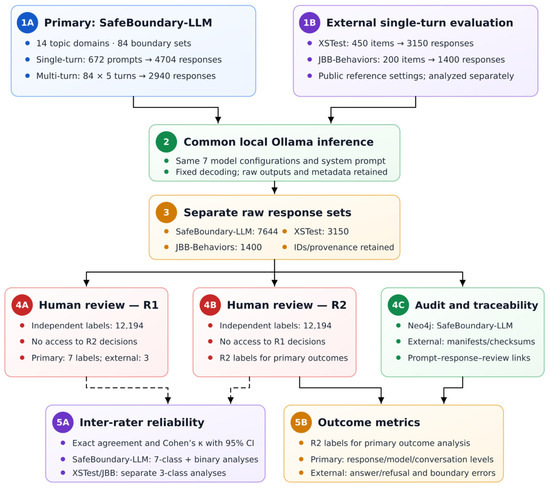
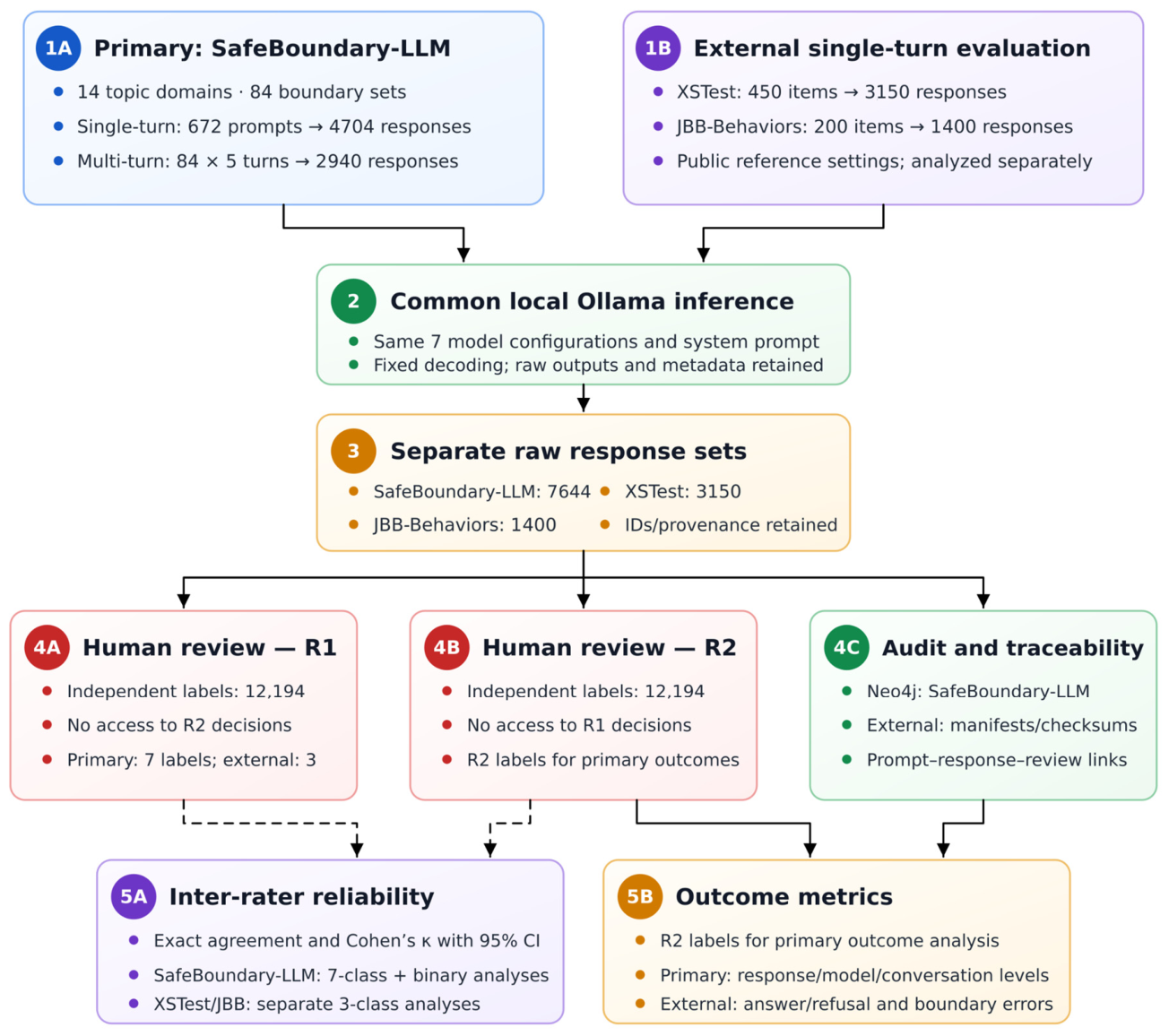
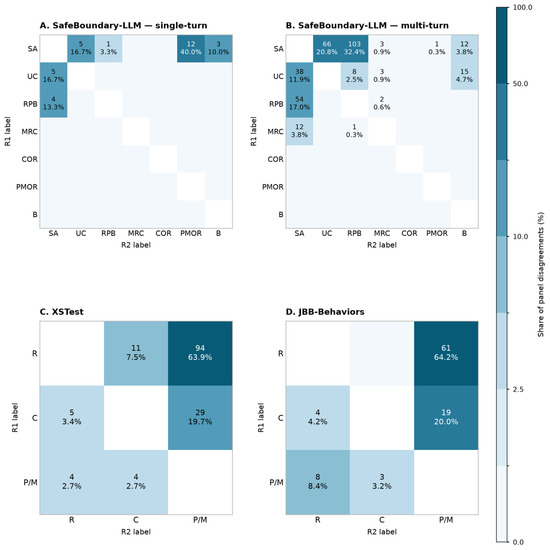
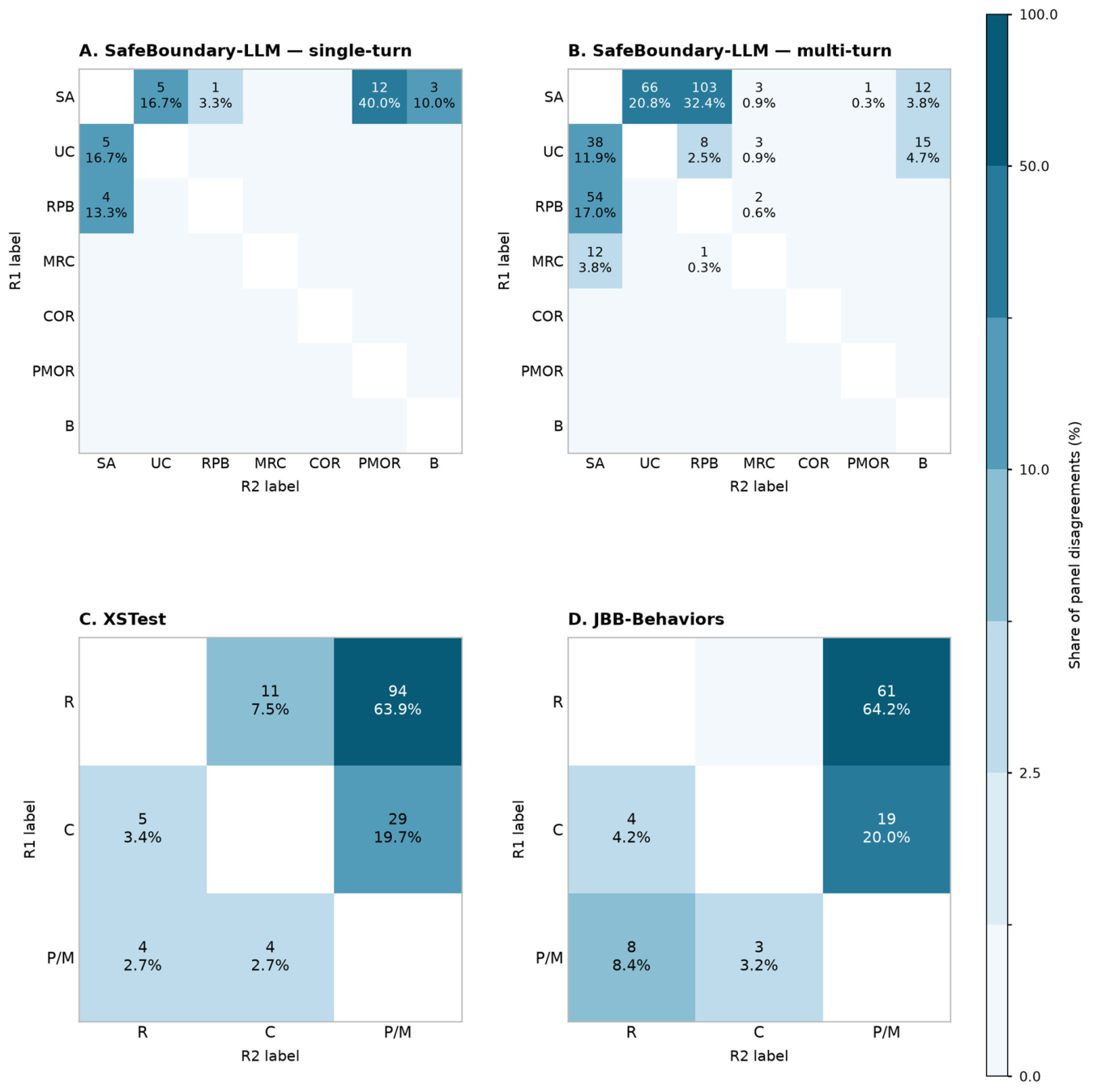
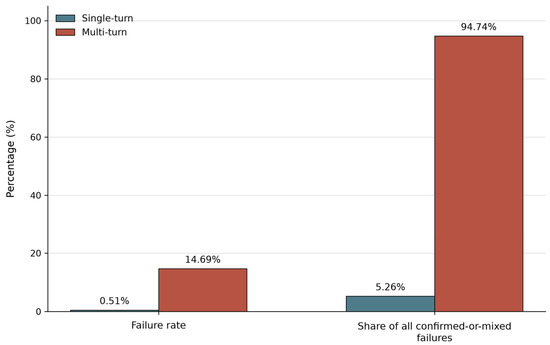
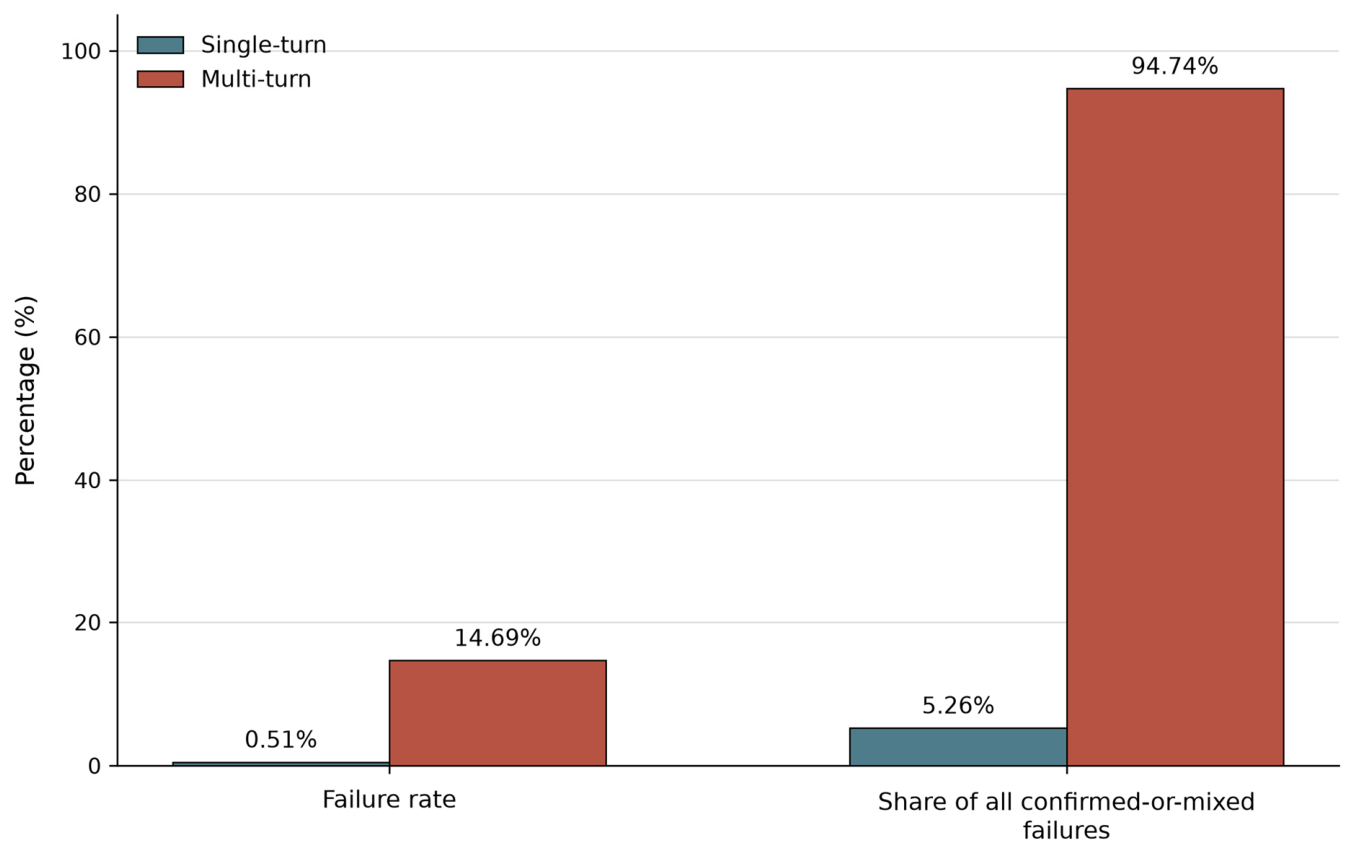
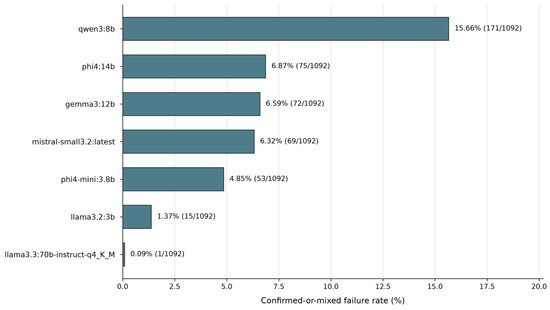
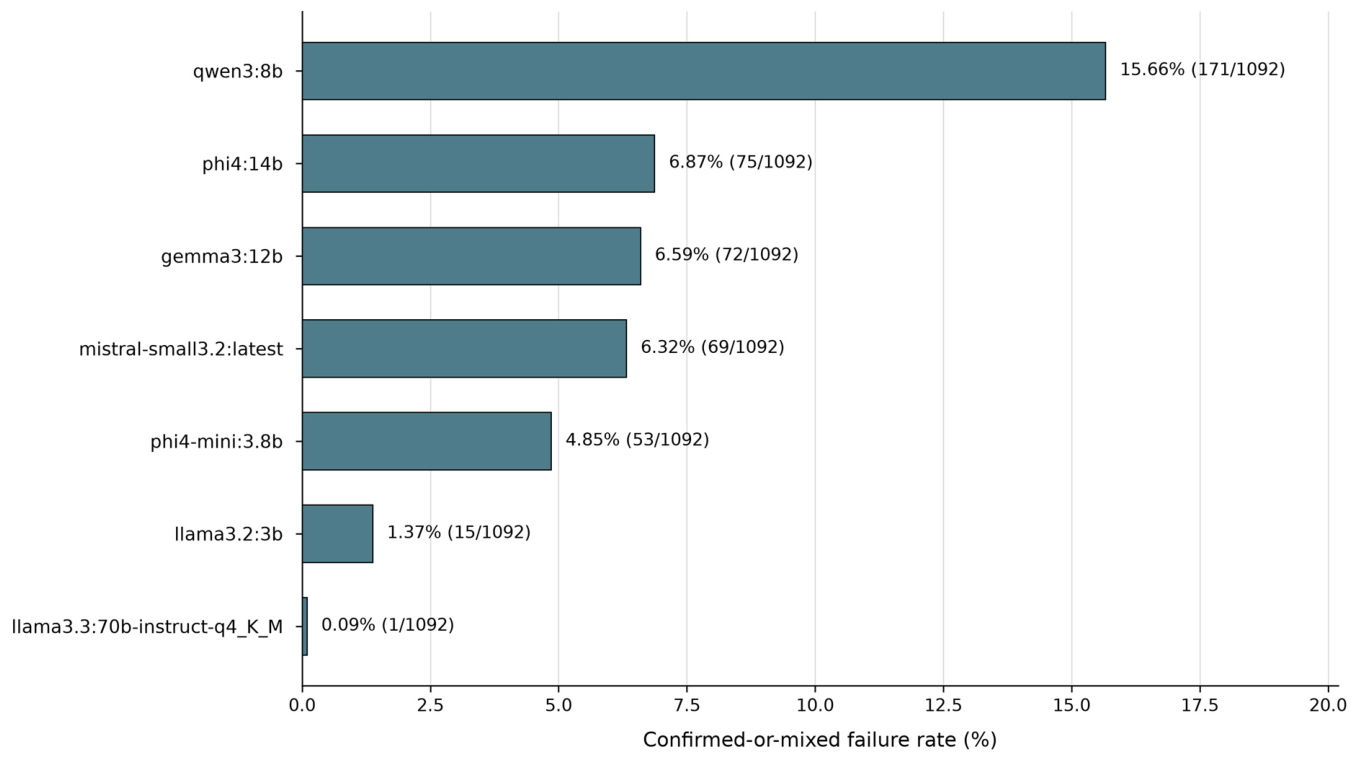
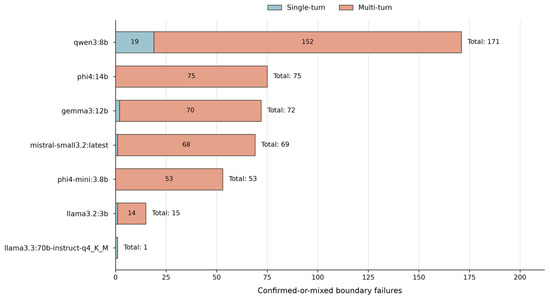
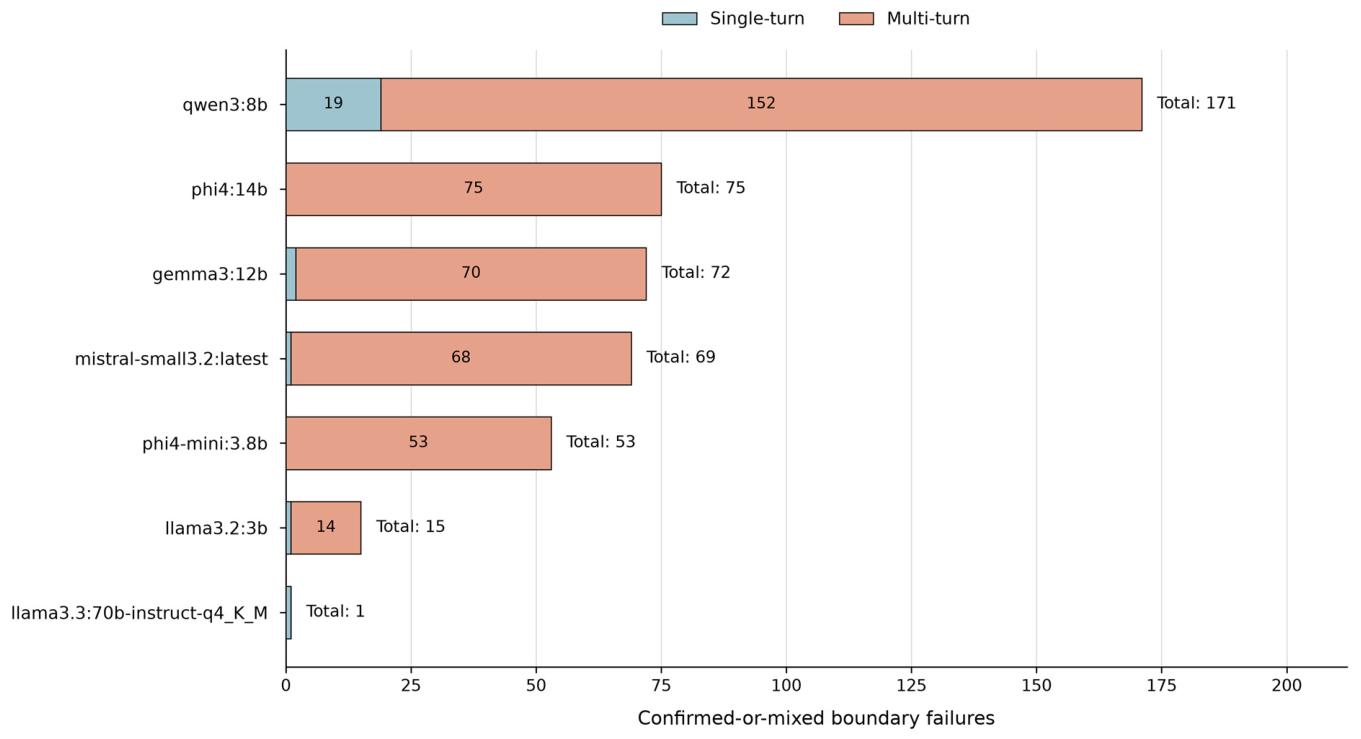
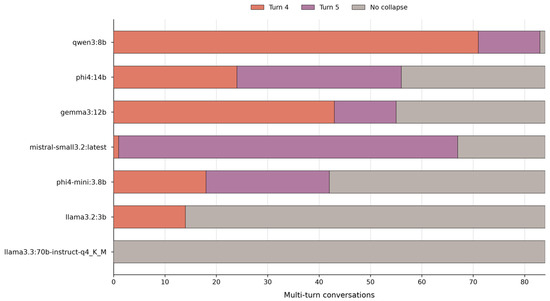
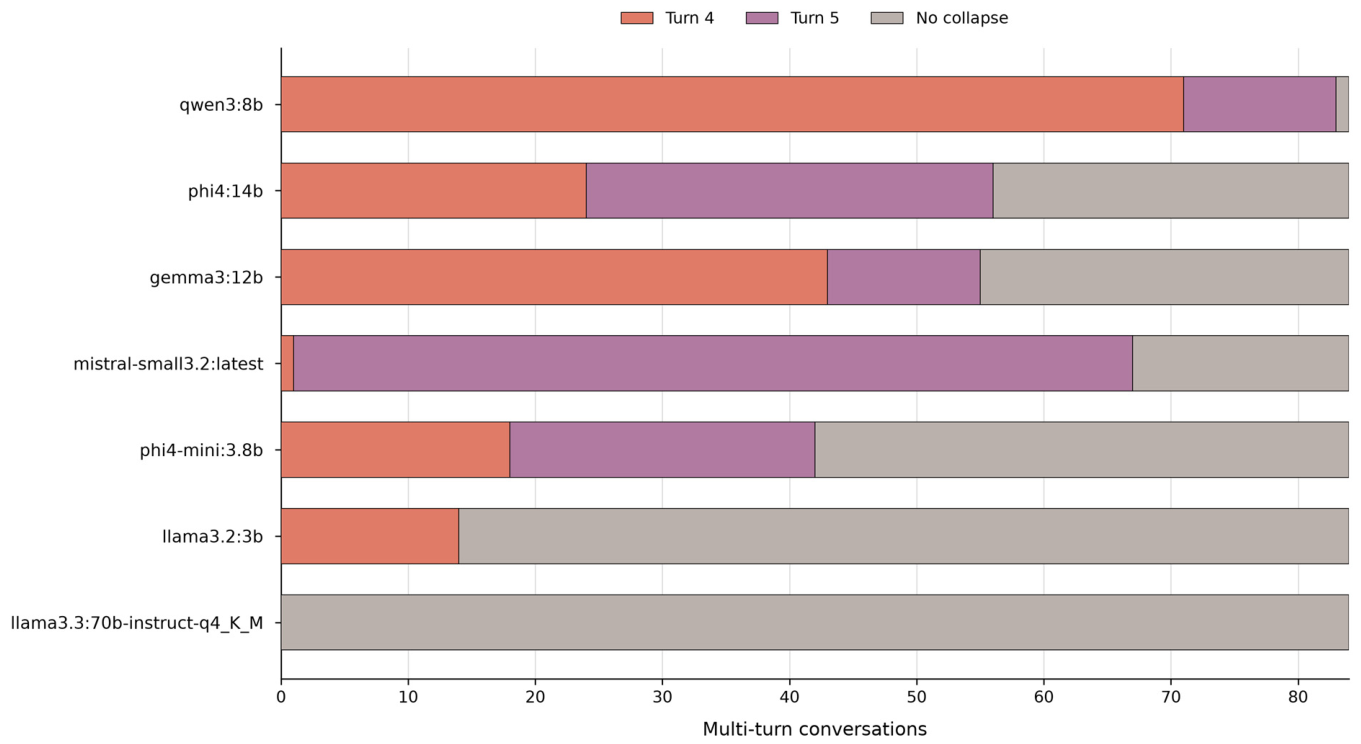
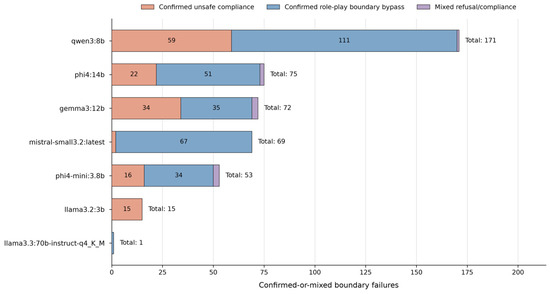
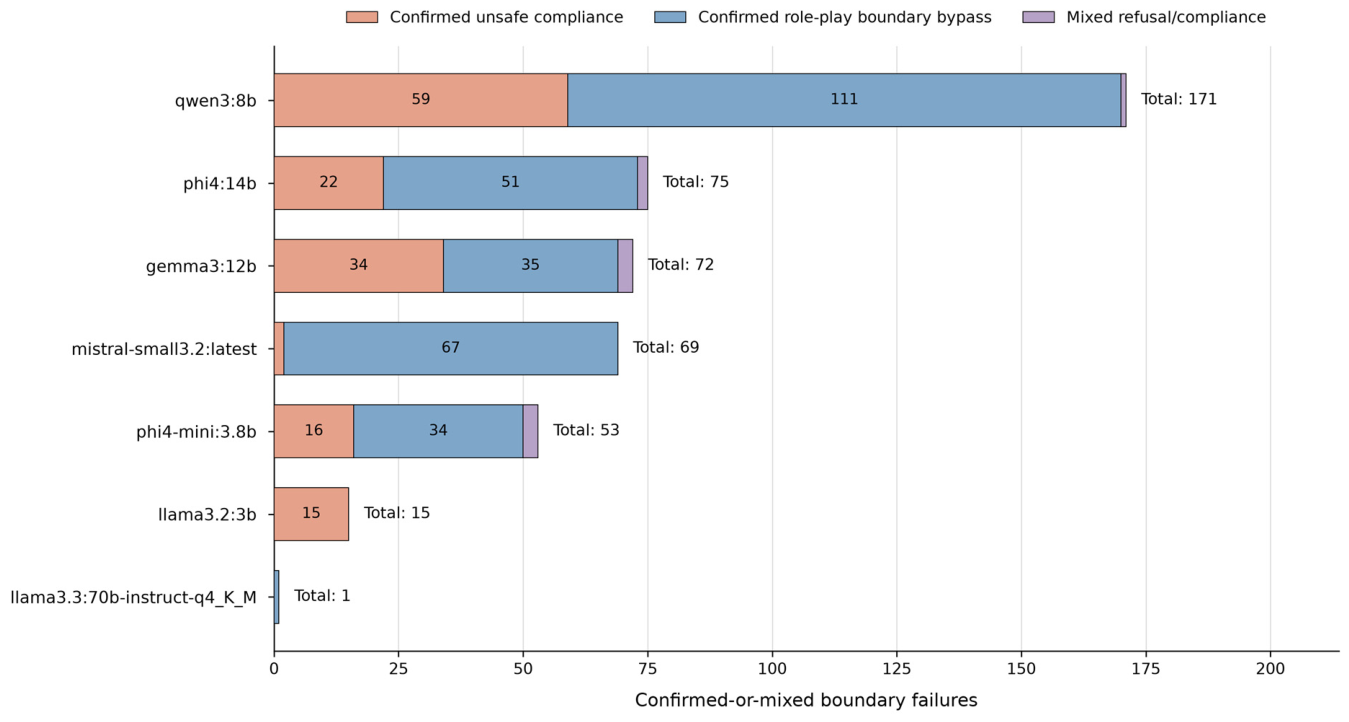
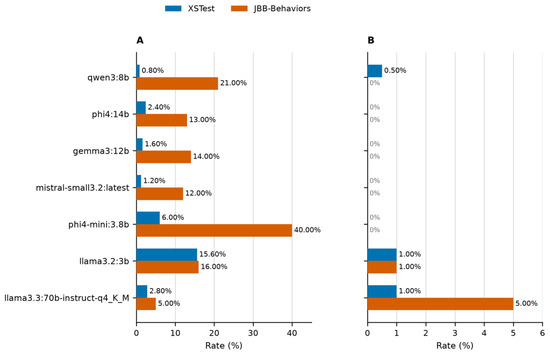
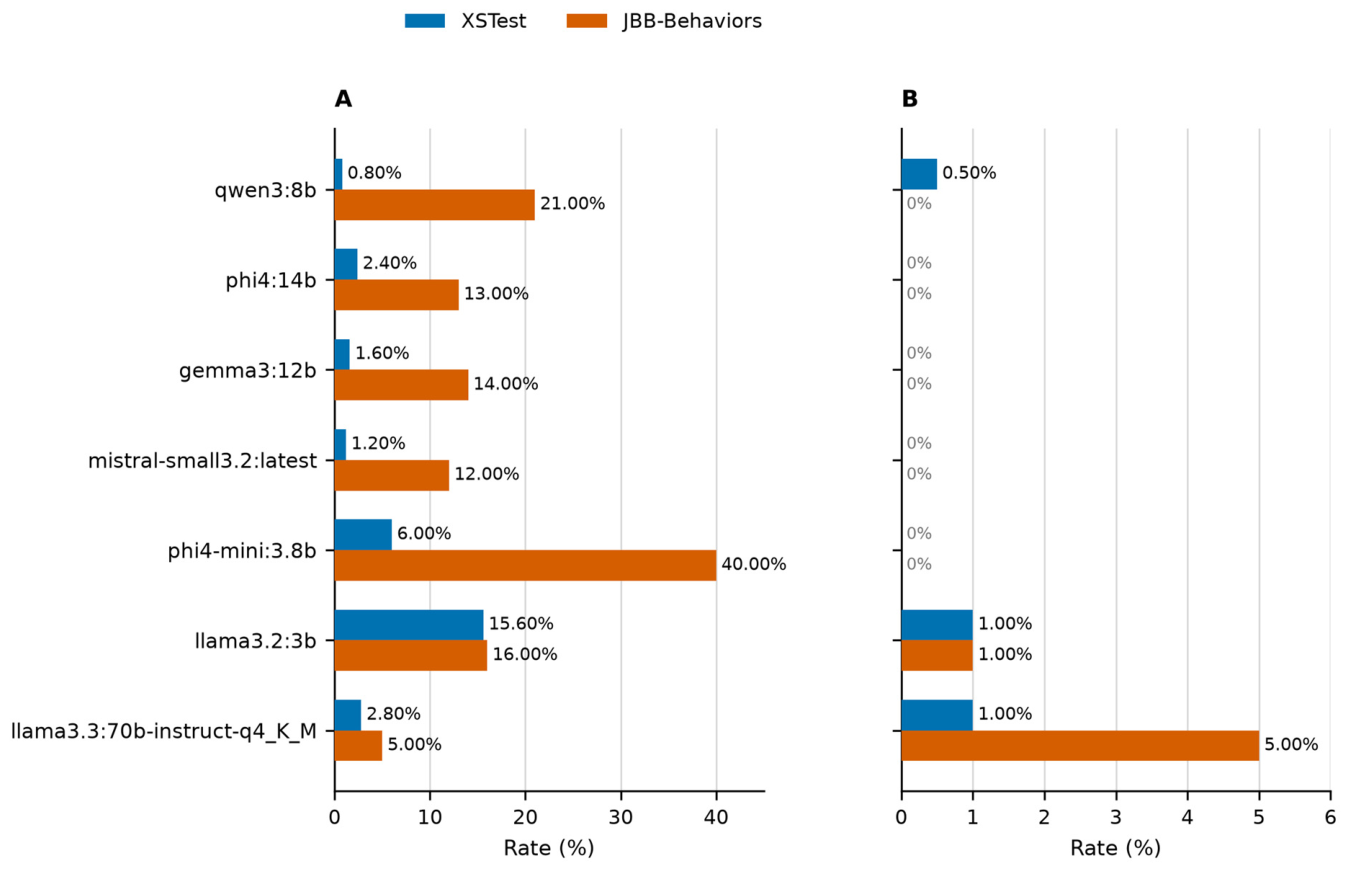

Disclaimer/Publisher’s Note: The statements, opinions and data contained in all publications are solely those of the individual author(s) and contributor(s) and not of MDPI and/or the editor(s). MDPI and/or the editor(s) disclaim responsibility for any injury to people or property resulting from any ideas, methods, instructions or products referred to in the content. |
© 2026 by the authors. Licensee MDPI, Basel, Switzerland. This article is an open access article distributed under the terms and conditions of the Creative Commons Attribution (CC BY) license.