


Abstract
A seatbelt is an essential aspect of safety in road traffic accidents. Although most traffic regulations enforce drivers and passengers to wear and fasten the seatbelt manually, AI-based techniques have been introduced for monitoring to improve safety standards. In this study, a new approach is proposed to address the monitoring problem of seatbelts. Deep learning (DL) classification based on adaptive Siamese Neural Network (SNN) has been developed utilizing the K-fold method for feature verification. The proposed adaptive K-Fold-based SNN approach utilizes a binary seatbelt dataset, with positive and negative classes, to verify the status of the seatbelt. The network involves sharing a convolutional feature extractor, followed by a distinct-based similarity function. To enhance model reliability, 5-fold cross validation is applied (k = 5), splitting the dataset into 5 subsets, where the model is trained on four sets and validated on the fifth one. The model was trained using binary cross entropy loss, Adam optimization, and performance metrics such as accuracy, precision, recall, and F1 score. The seatbelt dataset is basically designed for object detection models. In this work, we used a dataset in the verification model and achieved high-performance metrics. The model is implemented using a Python-based Jupyter Notebook 7.5.1. It achieved a high performance in seatbelt verification with an average Accuracy = 0.9989, average Precision = 0.9988, average Recall = 0.9990, and average F1 Score = 0.9989. The proposed adaptive K-Fold SNN model can ensure reliability and reduce the risk of over fitting.
1. Introduction
Seatbelt monitoring systems are crucial equipment in most modern vehicle safety systems, which have been designed to ensure that vehicle passengers are restrained properly in their seats, thereby reducing the risk of injury or fatality during traffic accidents. The last five decades showed an increasing demand in sensor technology, data processing, and vehicle safety with vehicle network scenarios [1,2]. Traffic policemen try their best to ensure the correct execution of traffic rules manually on highway roads, traffic intersections, and other places. However, it is very difficult, inefficient, and complicated to attain the required goal considering the limited number of police officers [3]. Wearing a seatbelt can easily save the lives of the driver and other passengers. Otherwise, they can be injured and may die.
In order to support traffic officers, automated monitoring and detection techniques are mandatory. Therefore, researchers in the institutions that are responsible for traffic safety are trying to propose automated methods for monitoring [4].
Seatbelts were first used early in the 20th century. Actually, they were launched in 1959 by the Volvo Company (Swedish) as stated by Nils Bohlin, a safety engineer at the Volvo Company [5]. Moreover, in 1970, the recorders marked the first trend in actual seatbelt monitoring steps via simple sensors in order to ensure that the seatbelt was actually fastened. Unfortunately, these systems were limited in providing detailed data on the seatbelt status.
Most technological methods used in seatbelt monitoring systems are: sensor-based integration systems for modern seatbelt monitoring based on advanced hall effect sensors, pressure sensors, computer vision-based systems and inertial measurement units (IMUs), machine learning and AI, and IoT-based smart systems. Several studies used AI to detect proper seatbelt usage, the integration of seatbelt monitoring systems with vehicle-to-everything (V2X) communication technologies for enhancing safety, and an occupant classification system (OCS) to monitor the connectivity of seatbelts and differentiate between elders, adults, children, and even empty seats [6].
In various fields of study, artificial intelligence methods, especially deep learning algorithms, play a vital role in beneficial outcomes and solving various image detection issues. However, most algorithms utilized in deep learning consume a lot of time for training and predicting a huge number of parameters and their associated weights. Nowadays, deep learning has been shown to be the most successful tool for achieving high-quality results across various practical domains [7,8,9,10,11].
The main goal of this study is to build a Siamese Neural Network to develop an automatic seatbelt monitoring system. The Siamese Neural Network is a special type of neural network structure that consists of at least two or more identical sub-networks. These sub-networks participate with the same weights and other networks, acting as a close partner to each other. The main intention of a Siamese network is to compare between two inputs and process them through these identical sub-networks and evaluate the degree of similarities between both inputs. However, the main contributions of this work are summarized in the following points:
- To enhance model reliability, the proposed network model involved a convolutional feature extractor supported by distinct similarity functions.
- The Siamese Neural Network requires paired input data for training. The dataset has been split into training and test sets before generating image pairs to avoid data leakage.
- The proposed Siamese Neural Network is designed for multi-class classification rather than verification.
- A comparison study to other exiting models in the literature was conducted to verify the effectiveness of proposed model.
Other sections of this paper are arranged as follows: Section 2 discusses previous related works on seatbelt monitoring; Section 3 explains the Siamese Neural Network, Section 4 describes the methodology in seatbelt monitoring and the utilized dataset; Section 5 explains the output obtained from experimental results; and finally, Section 6 discusses the conclusion and recommendation for future work.
2. Related Works
A study presented by Lwando et al. [12] suggested a seatbelt monitoring system utilizing pressure sensors that are embedded in the seatbelt buckle. The proposed monitoring system perceives whether the seatbelt is fastened correctly and also measures the tension of the seatbelt to guarantee proper usage. On the other hand, Ahmad et al. [13] presented a wearable measurement sensor-based system combined with the seatbelt. The proposed system utilizes accelerometers and gyroscope measurements in order to detect the usage of the seatbelt in real time.
In addition to the sensor-based systems discussed previously, computer vision-based systems have been adopted by several researchers. Rupal et al. [14] developed a deep learning algorithm in order to investigate various images captured from in-car cameras. The proposed system ensures whether the passengers are wearing seatbelts and evaluate the correctness of their usage. Moreover, Warusia et al. [15] developed this integration using You Only Look Once (YOLOv5) in real time, and they obtained an elevated precision in various conditions. However, obstruction and divergent parameters conditions were significant hurdles.
Most modern vehicles contain traditional belt fastness detection methods that can be easily tricked. Therefore, Kashevnik et al. [16] proposed a detection method by installing a camera inside the driver’s cabin to identify the seatbelt status. The proposed model was based on a YOLO neural network, which detects both the seatbelt and the corner detection, using a tiny-YOLO neural network to detect three cases, including the seatbelt is fastened, not fastened, or fastened behind the driver’s back.
A low-cost Internet of Things (IoT) monitoring system was employed by Yeqiang et al. [6]. In this model, a wireless sensor was adopted to collect and transmit the seatbelt status to the central unit to keep an eye on compliance in real-time. Not far from a Wireless Sensor Network (WSN), a well-tuned seatbelt system was incorporated with smart phones or Radio Frequency Identification (RFID) tags and vehicle far away communication to send alerts and reports on the specified seatbelt usage. Moreover, Wang and Ma [17] suggested a traffic management system to detect and recognize the safety seatbelts of drivers through smart IoT. Both researchers utilized YOLOv3 to detect and recognize stationary vehicles using the smart IoT management system.
Balci et al. [18] suggested a mobile seatbelt system that can be installed on the roof of a police car. A deep learning algorithm was utilized to detect the most traffic abuse cases at night utilizing a dataset of 2600 existent real images from the installed camera through a single shot multi-box detector (SSD). The results obtained an overall accuracy of 83% and 97% for the sensitivity rate. However, the decision-making process for the type of driver violation was not included. On the other hand, Elihos et al. [19] proposed a classification and object detection method for the driver’s seatbelt. A deep learning-based SSD algorithm was adopted utilizing 13,444 actual images captured in day and night situations, and the method achieved an accuracy rate of 91.9% with 94.5% precision in all situations.
A Convolutional Neural Network (CNN) model for two dimensions, driver and passengers, has been used in order to detect their positions. A proposed model by Chun et al. [20] was examined on a new database that consists of more than 100 video clips for drivers in 50 driving tests. In addition to the above database, the proposed model was evaluated again utilizing the MS COCO database by testing various model situations. Moreover, Hosam [21] suggested a deep convolutional neural network (CNN) for possible seatbelt detection in all weather conditions such as rain, night, clear, or hybrid. General weather condition detection was based on the sensor AlexNet (S-AlexNet) method. The proposed model achieved higher than 90% accuracy.
Seema and Sandeep [22] suggested a Machine Learning (ML) method to forecast the seatbelt usage information depending on driver activities and dynamic environmental aspects using historical data for elevating the monitoring precision. In addition to machine learning, a reinforcement learning model was proposed by Sara and Abdolhossein [23] to improve the seatbelt monitoring system in vehicles by taking into consideration various seat configurations and driver’s activities.
An algorithm for detecting passenger’s seatbelts was proposed by Yu et al. [24], utilizing a specific type of feature based on gradient orientation. To achieve this goal, narrowing the front window location and the driver face is considered. Then, the gradient orientation was calculated from pixel to pixel in the specified region. Moreover, the researchers reduced the interference using the sifting and template matching technique. In their work, 213 high-degree images from traffic intersections were considered to validate the proposed method, and hence, the achieved accuracy was 86%.
Zhang [25] studied the position forms for drivers and other passengers who are wearing the belt in various traffic intersections in three different phases: vehicle position, driver’s and passengers’ position, and seatbelt driver or passenger behavior. This behavior was detected based on both probability and statistical approaches via a specified roadmap method. The behavior decision was conducted using linear target recognition utilizing the perceptual grouping mechanism to enhance the driver’s seatbelt detection. This method may complicate the overall procedure of detection and prohibit real-time implementation.
Quick review of previous works indicates that most of them focused on seatbelt monitoring. However, the previous works revolve around three basic approaches:
- Object detection: Using You Only Look Once Versionx (YOLOx), Single Shot Detector (SSD), Fast Recurrent Neural Network (FRCNN).
- Classification: Using Convolutional Neural Network (CNN), and Fisher Vector (FV), and Support Vector Machine (SVM).
- Transfer Learning; Using Residual Network (ResNet), Xception.
However, no previous study has used a Siamese Neural Network (SNN). In this study, we proposed a modified version of SNN for classification instead of verification. The K-fold approach is involved within the proposed SNN model for reliable evaluation. In the methodology section, more details about the adapted mode have been presented.
Table 1 summarizes the past studies related to this work:
Table 1.
Past studies summary.
3. Siamese Neural Network Structure
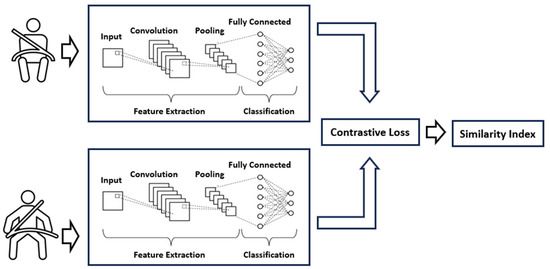
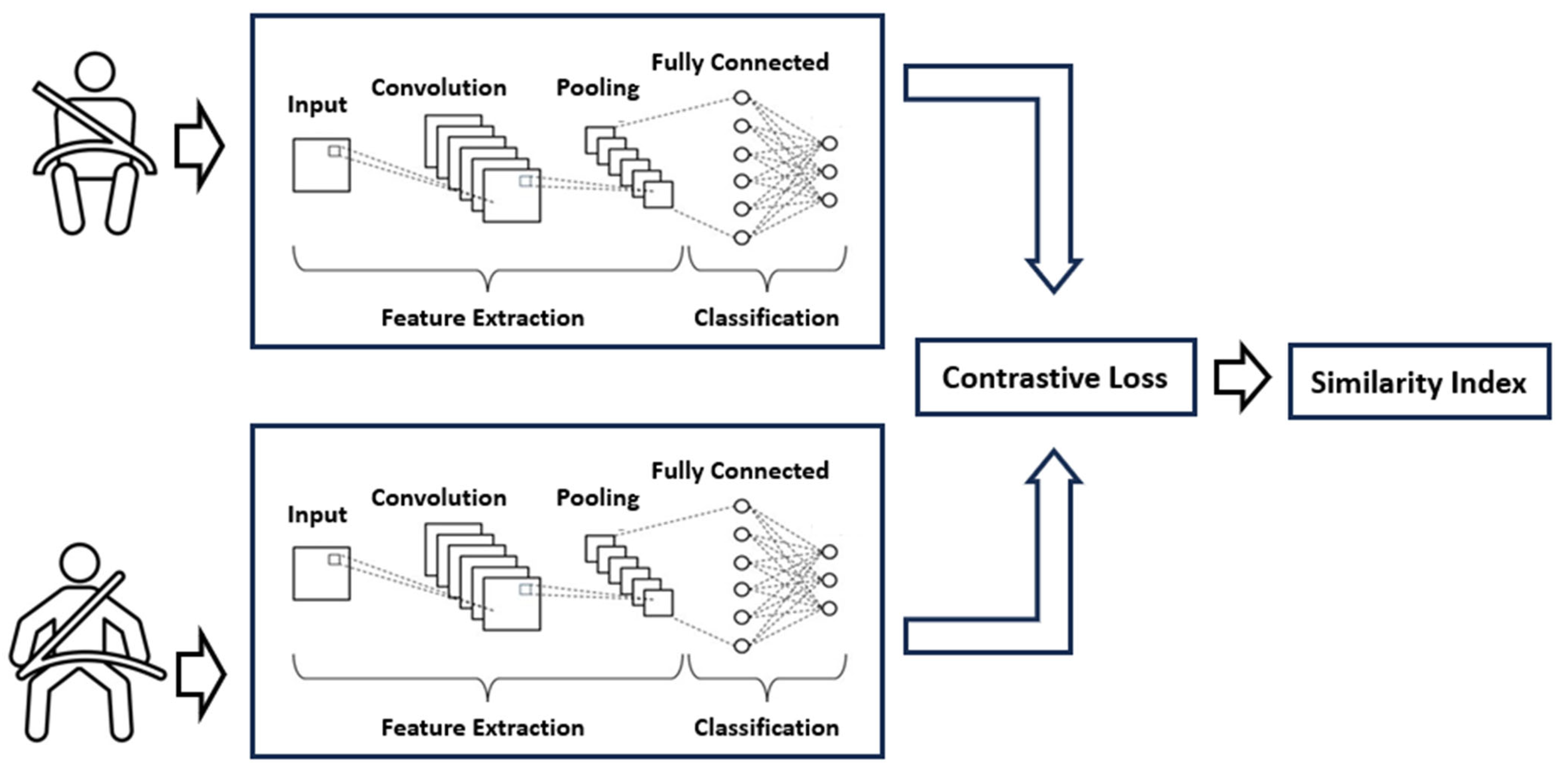
A Siamese Neural Network (SNN) is a special type of neural network architecture that consists of a twin pair of neural networks that share the same parameters and weights [39,40]. Its main objective is to identify whether a pair of data or images are identical or not. Its layers and functions will be discussed later, and its main block diagram is shown in Figure 1.
Figure 1.
Siamese Neural Network block diagram [40].
Input Layer
Each input layer consists of two grayscale images of size (100 × 100 × 1)
Features Extraction
Both inputs pass through the same features extractor (shared weights), which involves the following: Convolutional Neural Layer, Pooling Layer, and Dense Fully Connected Layers. The features extractor output is the features vector of each image:
Computing the Distance between Two Feature Vectors
To compare two features vectors F1 and F2, calculate the distance between them:
Fully Connected Layer and Sigmoid Activation
The distance vector D is passed through the fully connected layers, followed by the activation layer to evaluate the output similarity:
where W and b are learned parameters, σ(.) is the sigmoid function.
where y is the final prediction: y ≈ 1: images belong to the same class. y ≈ 0: images belong to different classes.
3.1. K-Fold Validation
It is a technique used to evaluate the performance of a model by dividing the dataset into K portions (folds). Then, the model is trained and validated multiple times to obtain a more reliable performance estimate [41,42,43]. When k = 5, the dataset is divided into 5 equal parts (folds). The model is trained 5 times, and each time a different fold is used for validation (testing), the remaining 4 folds are used for training, as denoted in Table 2.
Table 2.
The split of datasets when K-Fold = 5.
Since the model is tested five times on different validations sets, the results might vary slightly. Therefore, taking the average performance (Accuracy, Precision, Recall, and F1 Score) gives a more stable and realistic measure of how well the model will perform on a new dataset. By averaging the results across all folds, a fairer estimate of the model’s performance is obtained.
3.2. Model Evaluation
The model is trained and evaluated using the following performance metrics:
Accuracy: Measures the proportion of the correctly classified pairs.
Precision: Measures how well the model identifies all actual seatbelt users.
F1 Score: Represents the harmonic mean of precision and recall.
Confusion Matrix: Provides a detailed breakdown of model predictions.
Table 3 shows the confusion matrix elements.
Table 3.
Confusion matrix elements.
4. Methodology
The Siamese Neural Network (SNN) is considered one of the most powerful kinds of neural networks, and it typically consists of two or more identical sub-networks [41,44] that have the same architecture, parameters and even weights. These two subnetworks are related to each other by a loss function, which computes a similarity score between the two input samples depending on the feature extracted from the two subnetworks. Moreover, all network parameter updates are reflected in both subnetworks. In other words, all updates in one network weights will be automatically updated on the other network. Particularly, the Siamese Neural Network does not produce a multi-class classification. Instead, it produces a binary output between two input images (i.e., ‘1’ for similar and ‘0’ for dissimilar). SNN is not working under one-shot or few-shot learning. The SNN is fully supervised model using many labels data pairs of images, The SNN model based on supervision pairs similarity along multiple epochs.
The main objective of this paper is to develop a Siamese Neural Network for automatic seatbelt monitoring system with reduced parameters and low computational efforts while maintaining a superior capability and robustness to realize a rapid and precise monitoring. In this section, the outline of our approach is precisely described for each portion of the proposed model.
4.1. Method Overview
The block diagram of the proposed algorithm is shown in Figure 2. The algorithm begins by preparing the seatbelt dataset for both the positive and negative samples. Subsequently, the proposed algorithm conducts the recognition of the driver’s seatbelt by employing a Siamese network.
Figure 2.
Block diagram of the proposed multi-modal Siamese Neural Network for seatbelt classification.
4.2. Data Collection and Preprocessing
The basic dataset consists of four classes (seatbelt, helmet, gloves, and vest), and this dataset is designed for object detection. However, in this work, only the seatbelt class is taken. Table 4 summarizes the dataset properties [45].
Table 4.
Seatbelt dataset summary [45].
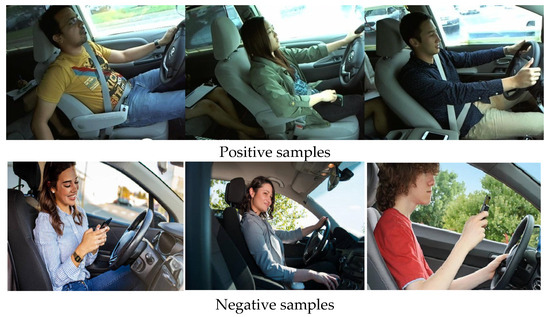
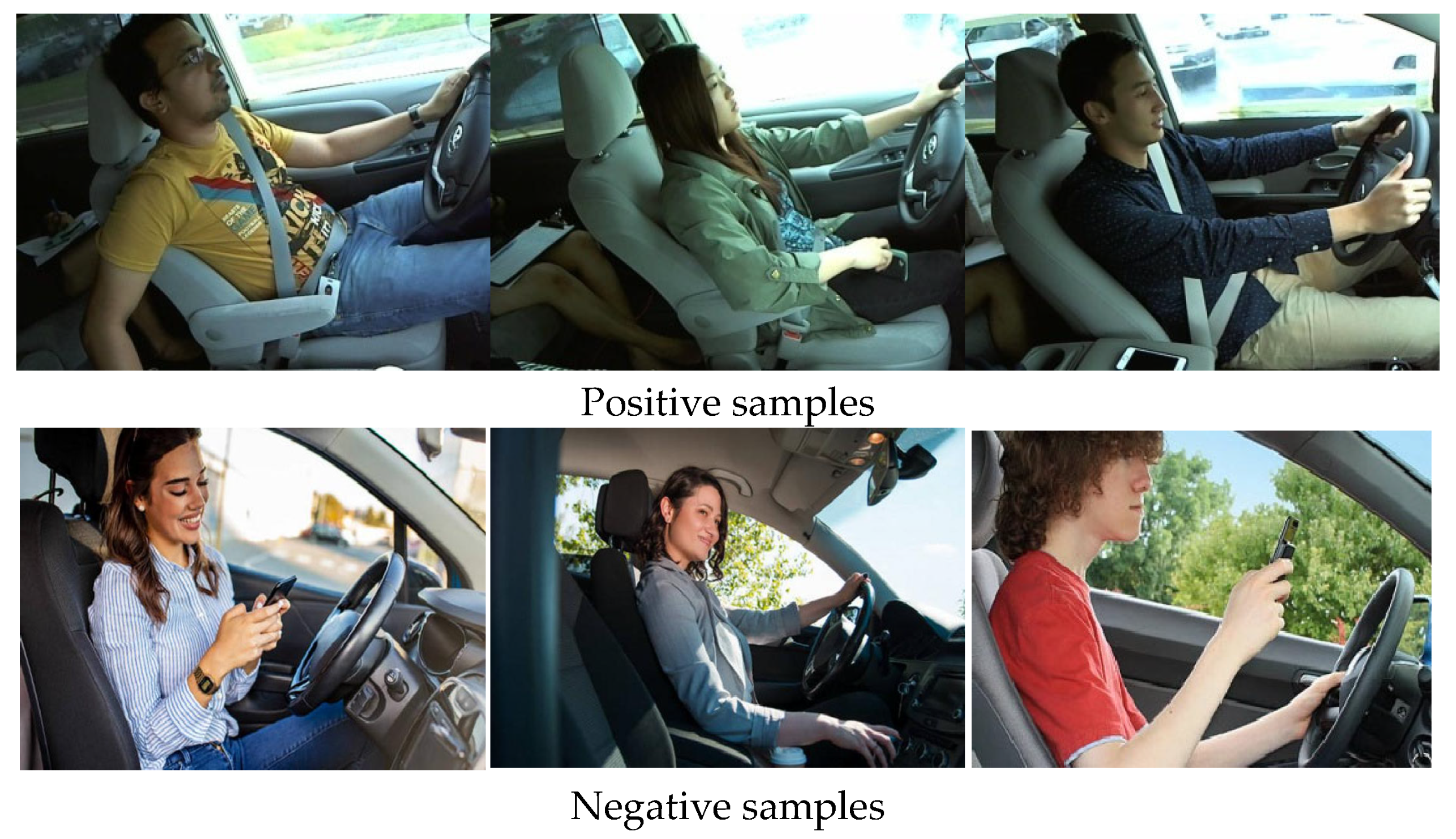
Figure 3 shows the samples for the two classes. Each raw image undergoes the following preprocessing operations:
Figure 3.
Seatbelt class samples [45].
Grayscale conversion: To reduce the calculation cost and eliminate the color channel from 3 channels to 1 channel, this step allows focusing on features.
Resizing: Unify the size of the input image into 100 × 100.
Normalization: Pixel values are scaled between 0 and 1 to improve training stability. Creating Image Pairs
The Siamese Neural Network requires paired input for training. The dataset was split into training (80%) and testing (20%) sets before generating the image pairs, where two types of training pairs are created:
Positive pairs (Label = 1): Two images from the same class (both with a seatbelt or neither with a seatbelt).
Negative Pairs (Label = 0): Two images from different classes (one with a seatbelt and the other with no seatbelt).
The main standards used for augmentation:
- Rotation: Random rotation within ±20°.
- Horizontal Translation: Width shift up to 10%.
- Vertical Translation: Height shift up to 10%.
- Zooming: Random zoom within ±20%.
- Horizontal Flipping: Random left-right flip.
- Brightness Adjustment: Random brightens in range (0.7–1.3).
- Fill mode: Nearest neighbor filling for empty pixels.
The augmentation is performed offline before training; furthermore, an identical augmentation is applied to both classes to balance the expansion, where the dataset is expanded from 8168 to 25,851.
4.3. The Proposed Model
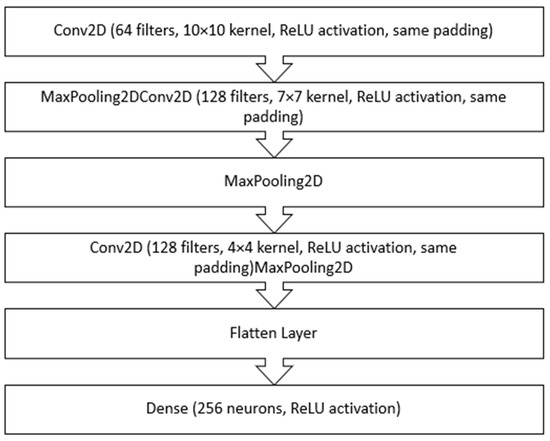
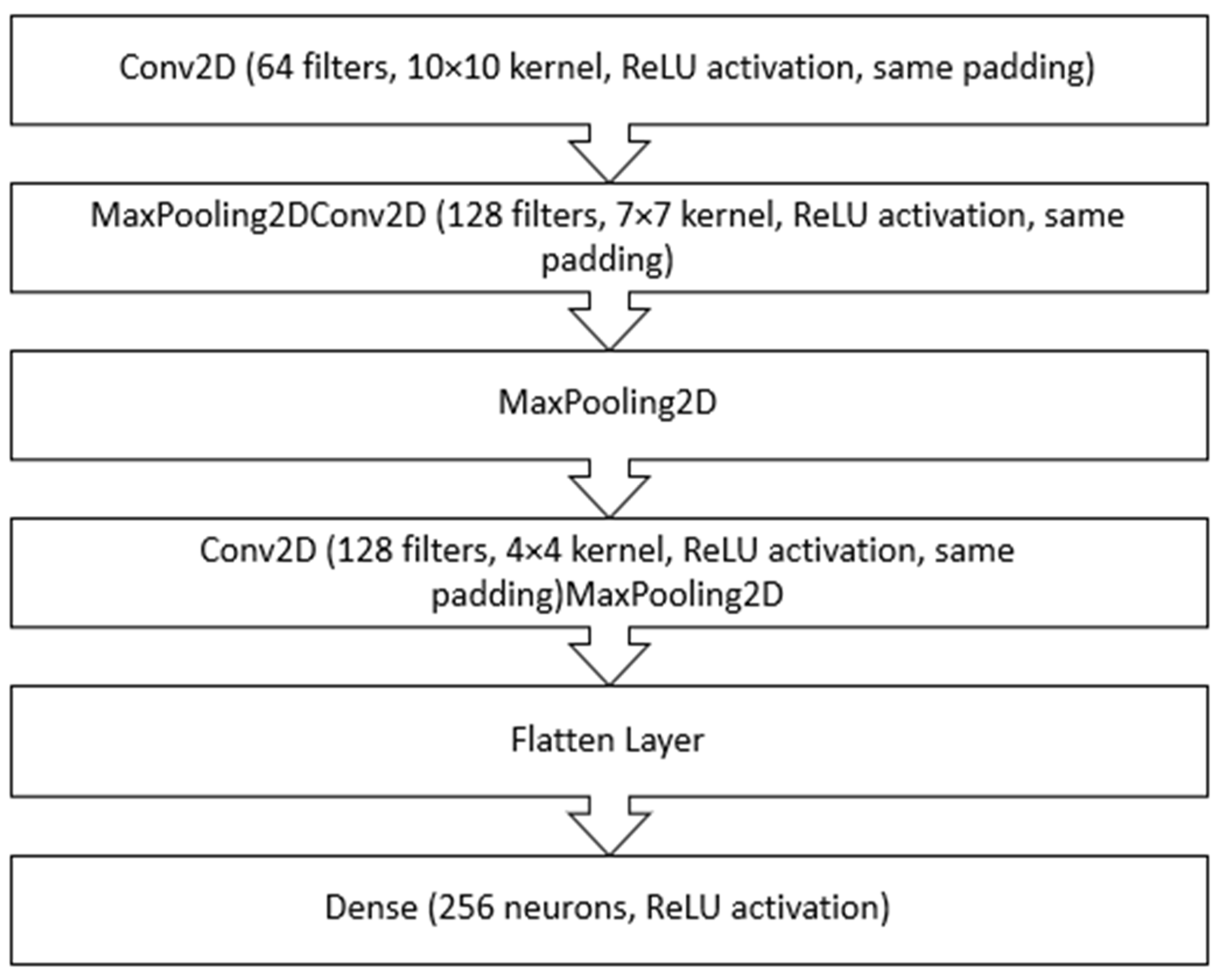
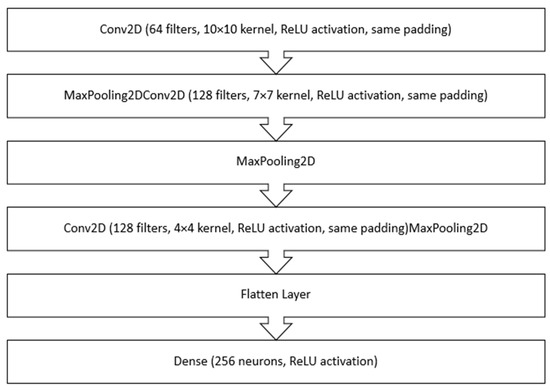
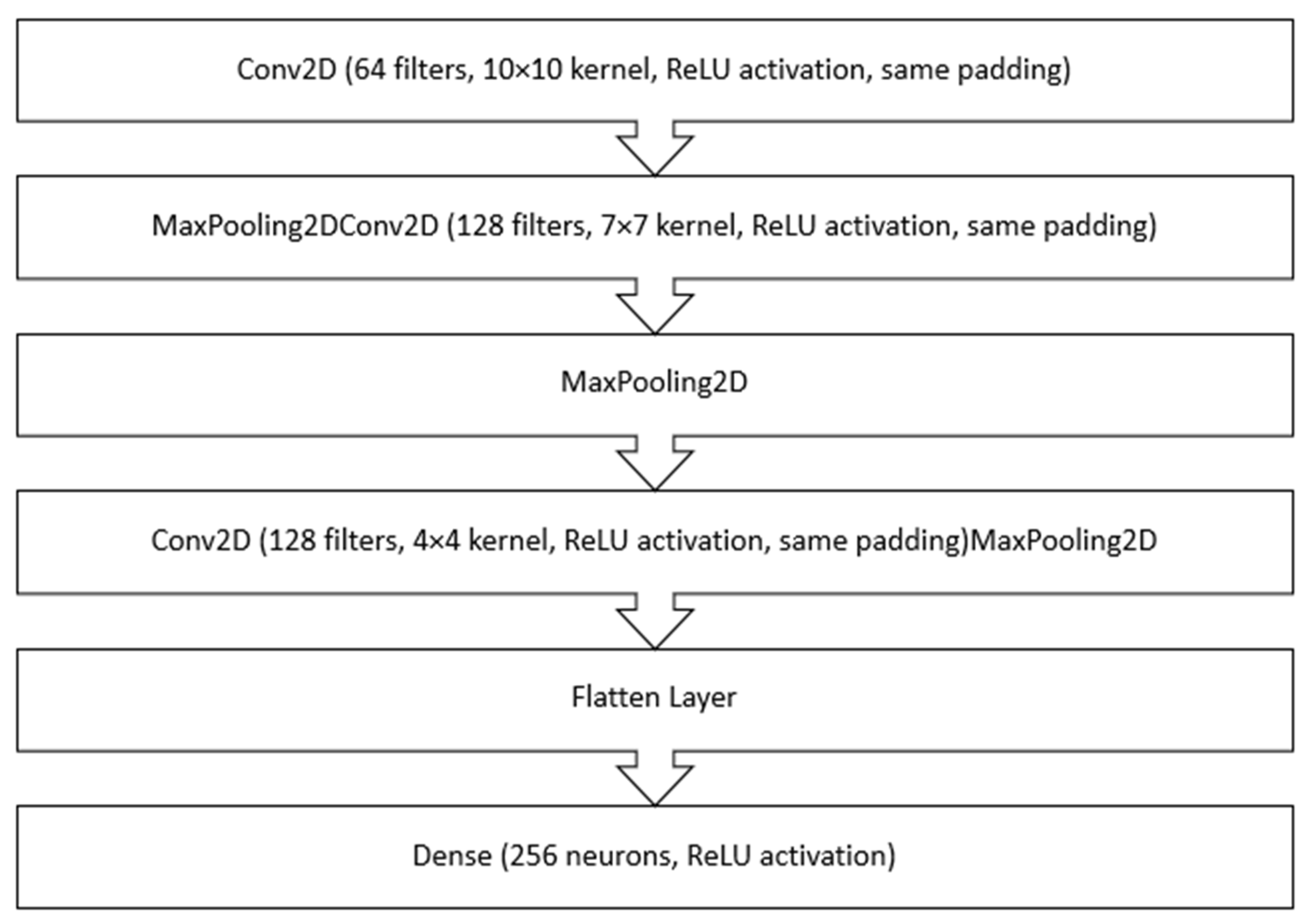
A Siamese Neural Network is implemented for seatbelt verification. The model consists of two identical convolutional branches for feature extraction. The base features an extraction network that is shared among input images consisting of specific layers, and these layers are denoted in Figure 4:
Figure 4.
Basic feature extraction network [44].
Similarity computation: This is the absolute difference between the two embedding features, which is calculated using the Lambda layer:
where is the features extracted for each image
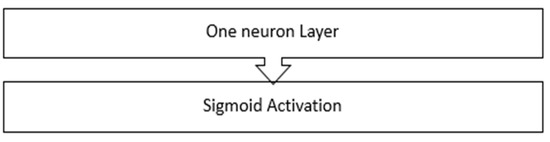
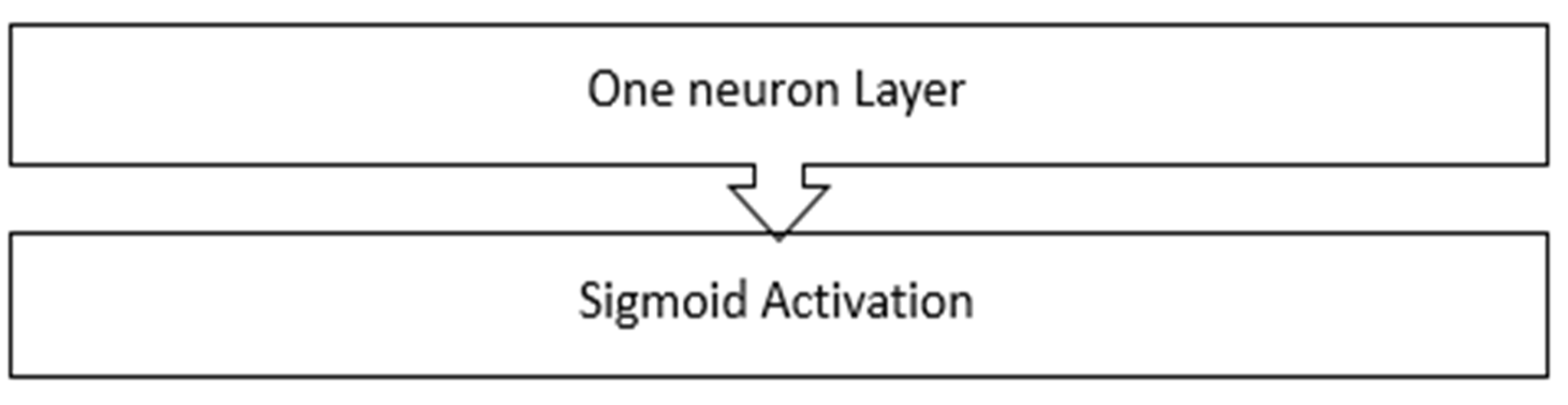
Final Classification Layer: This is the fully connected layer that consists of one neuron layer and sigmoid activation, as shown in Figure 5. It is used to classify image pairs as similar “1” or different “0”. Algorithm 1 denotes the proposed model in detail, while Algorithm 2 shows the procedure of splitting data and pair generating.
| Algorithm 1. Shows the proposed model |
| Inputs: Seatbelt dataset |
| Step 1: Load and preprocess images Set Dataset path, Load dataset, Resize into (100 × 100) |
| Step 2: Create image pairs for Siamese Positive (Same Class), Negative (Different Classes) |
| Step 3: Define Siamese Neural Network Base model and Siamese Network |
| Step 4: Train and evaluate with K-fold The dataset is split into 5 folds, for each fold: Train the model on 4 folds, test on 1 fold. Compute evaluation metrics (Accuracy, Loss, F1, Precision) and Confusion matrix. Save Score for average |
| Step 5: Compute final results: Average the metrics over all the folds Print the final performance results |
| Outputs: Average of Accuracy, Loss, F1, Precision, and Confusion matrix. |
Figure 5.
Final layer [44].
| Algorithm 2. Shows the procedure of splitting data and pair generating |
| Inputs: Seatbelt dataset |
| Step 1: Load dataset positive_images = load_dataset(positive_folder) negative_images = load_dataset(negative_folder) |
| Step 2: Split images into: 80% training, 20% test train_test_split |
| Step 3: Generate image separately Positive (Same Class), Negative (Different Classes) |
| Step 4: Reinitialized at the beginning of each K-fold: model = create_siamses_model() |
| Outputs: Splitting dataset |
The SNN model in our work is reinitialized at the beginning of each K-fold, model = create_siamses_model(), which ensures that each fold is trained from scratch using random initial weights to avoid the leakage of data.
5. Results and Discussion
The model is designed and implemented by the training of various Siamese networks, which was carried out utilizing the programming language Python 3-based Jupyter Notebook via MSI laptop with 12th generation Intel (R) Core (TM) i5-12500H@ 232 GHz, RAM 16.0 GB. By using K-fold = 5, the properties of the proposed model are summarized in Table 5.
Table 5.
Model summary.
The suggested method for seatbelt monitoring using the Siamese Neural Network utilized both positive and negative datasets with a total of 8618 images divided into 4118 and 4500 as positive and negative samples, respectively. The Siamese network is trained and tested utilizing the standard seatbelt dataset. Of the total data, 80 percent are used for training while the remaining 20 percent are used for the testing process.
Basically, the model is trained using gray images; hence, the time of processing is decreased because gray images use one layer. On the other hand, the colored images have more details of edges and features, but the processing time is multiplied by 3. So, the gray images are used in this investigation, and we compared it with colored as will be shown later in the results. As denoted the metrics are closed, and hence the application is real-time, so using the model with less processing time is better). The model presented the performance metrics shown in Table 6.
Table 6.
The performance metrics of the proposed model.
The model runs for 5 folds, for the two cases (without augmentation and with augmentation). For the two cases, the metrics (Accuracy, Precision, Recall, F1 Score, ROC, and AUC) are balanced and converged among folds, which mean the model is stable across folds. These results prove that the utilization of the Siamese Neural Network in seatbelt verification is more efficient than detection. In other words:
High Accuracy means the model classifies most samples correctly;
High Precision means the model predicted the samples as positive;
High Recall means the model identifies all actual positive samples;
High F1 Score means the model has strong balance between Recall and Precision;
High AUC means the model has strong distinguish between classes.
Figure 6.
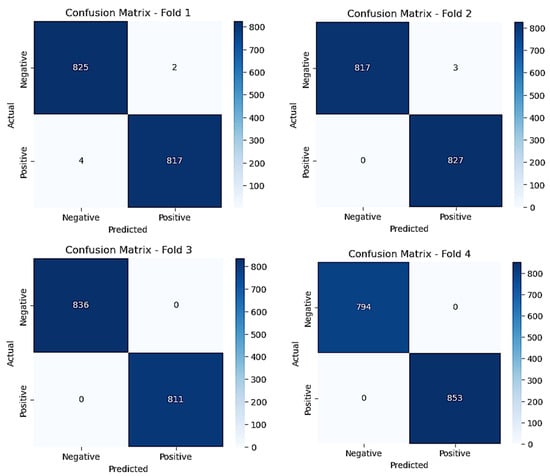
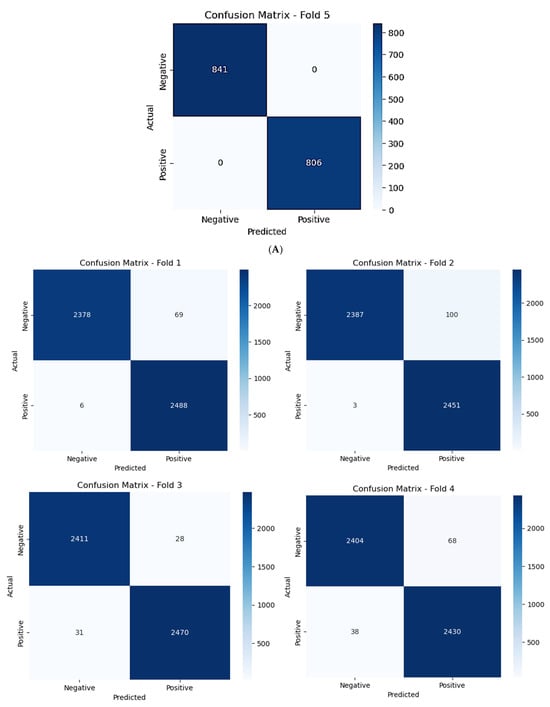
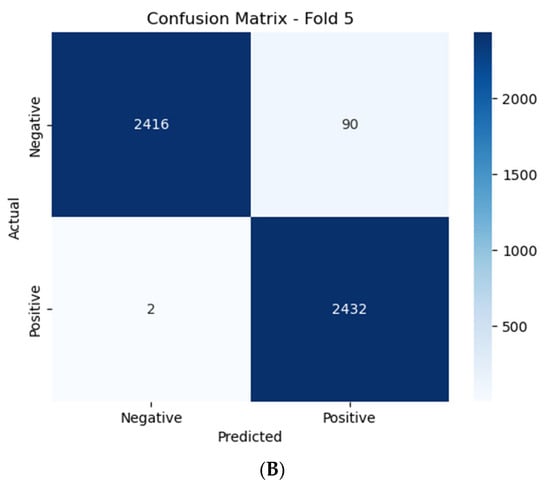
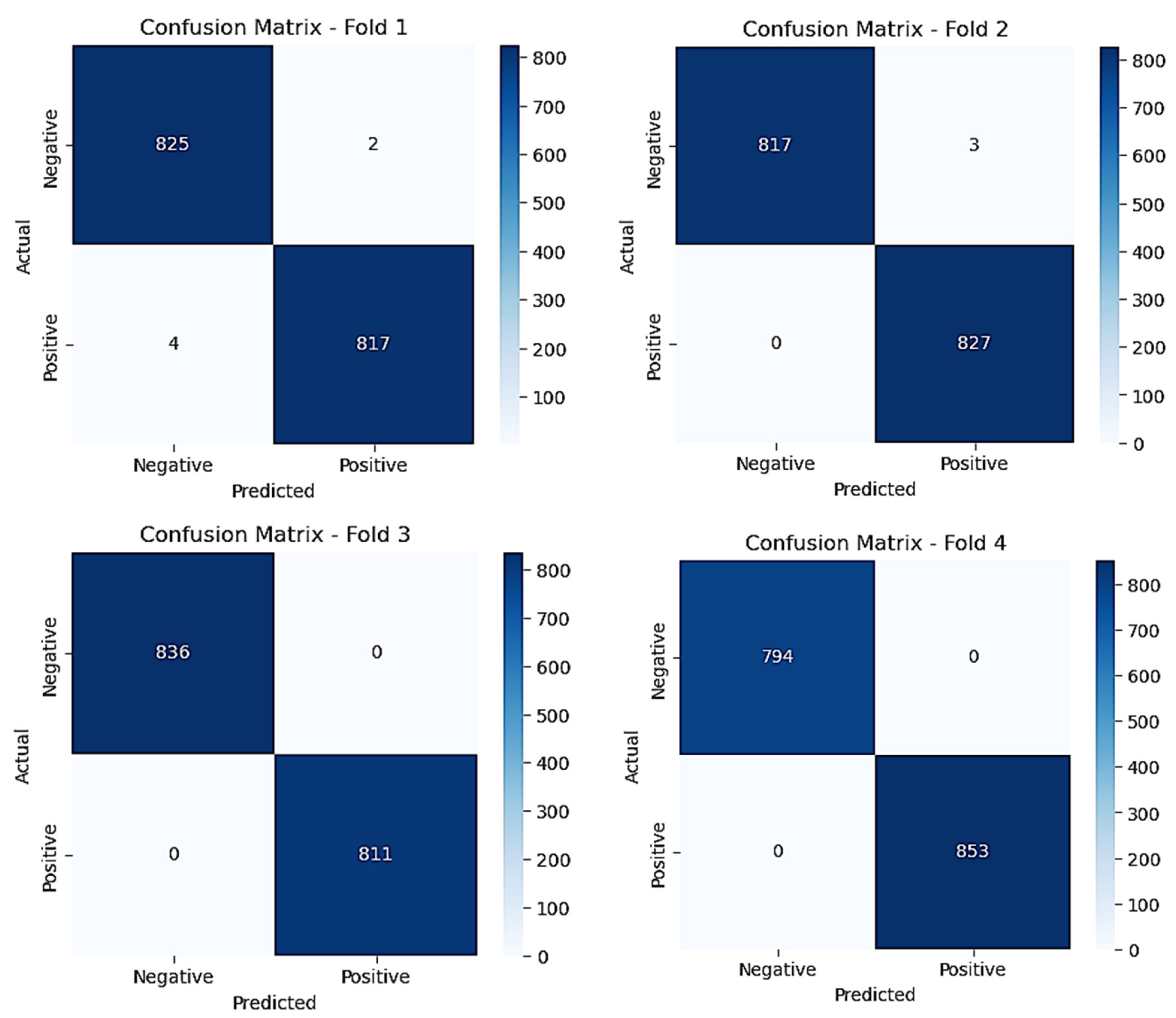
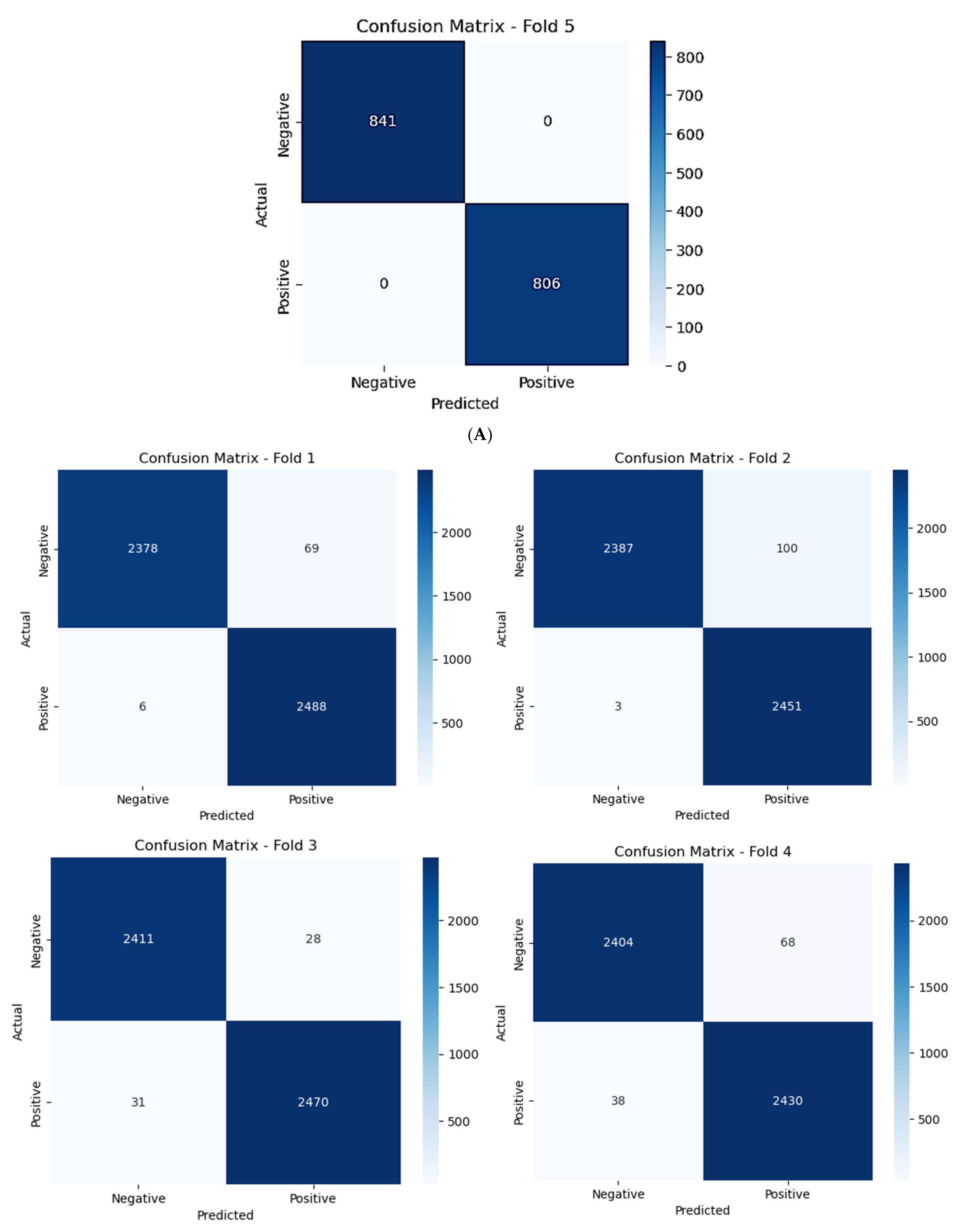
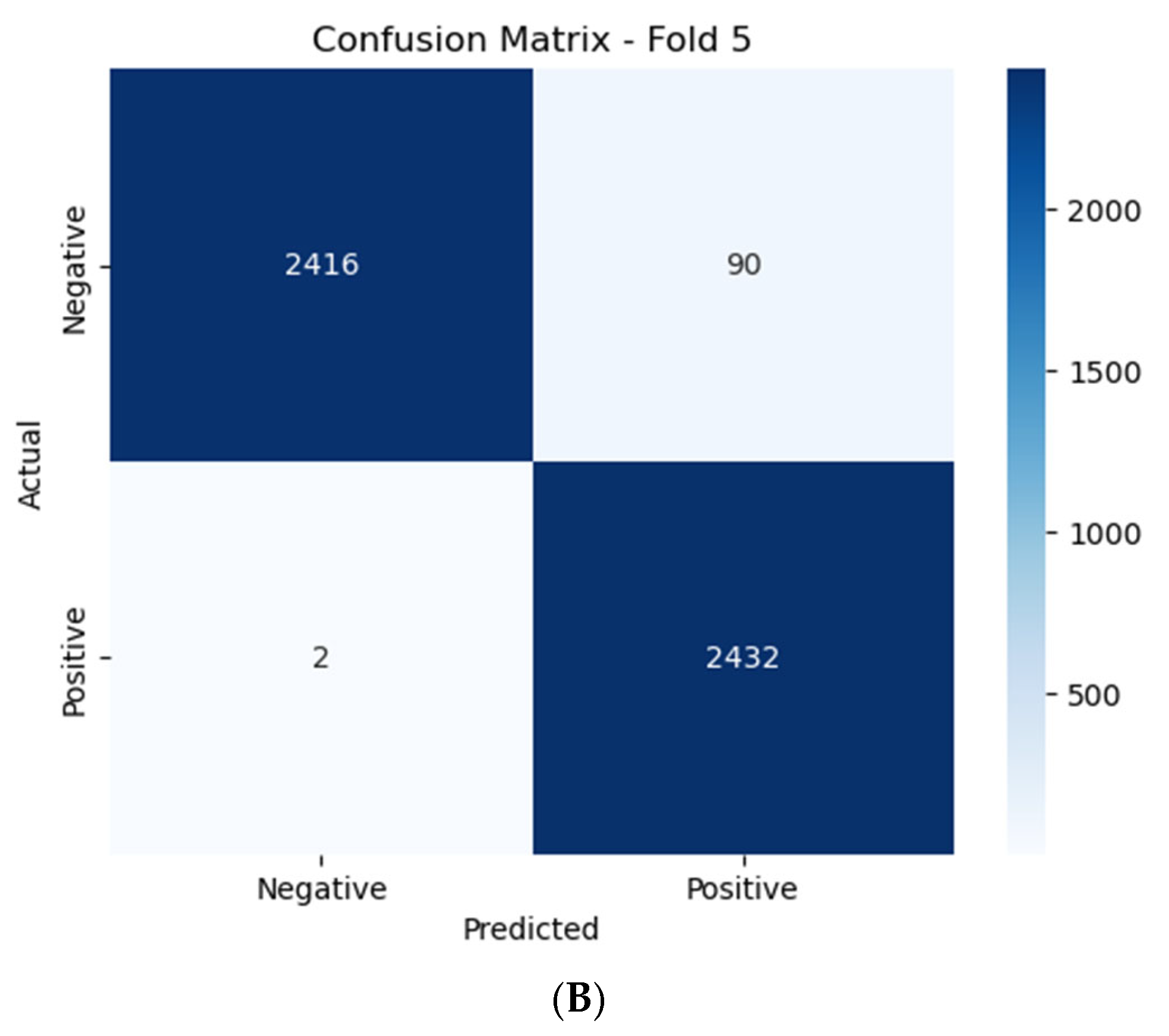
(A) Confusion matrix for each fold without augmentation. (B) Confusion matrix for each fold with augmentation.
By referring to Figure 6A, it can be concluded that the model is accurate, and it correctly classifies most samples. The highest number of samples predicted are true positive and true negative in folds = 1 and 2, while the model predicted 100% in fold = 3, 4, and 5. This outcome is an achievement.
The same thing is repeated for Figure 6B. The confusion matrix is stable across all folds.
By having another look at Table 6 and comparing between the two cases (without augmentation and with augmentation), all metrics are close in the two cases. This is because of the well training without overfitting, but the processing time in the case of augmentation is multiplied by 6. This is too much time. For this reason, in this work, the case without augmentation is used.
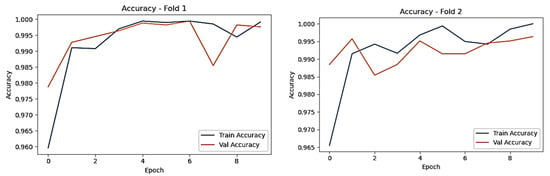
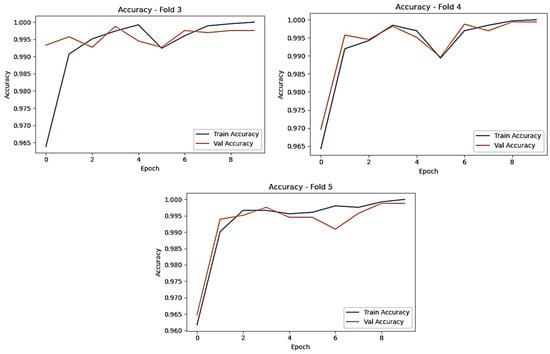
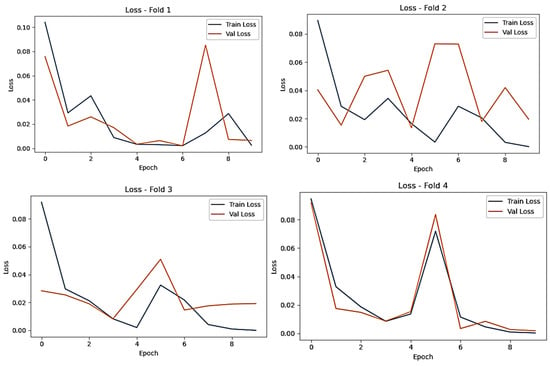
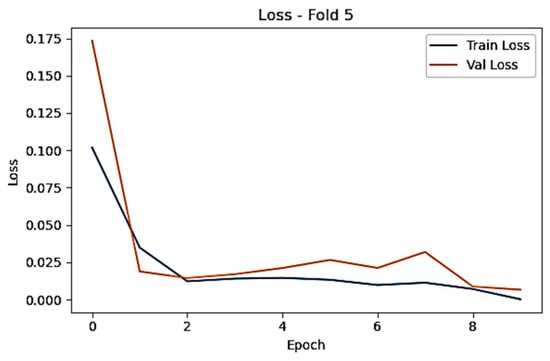
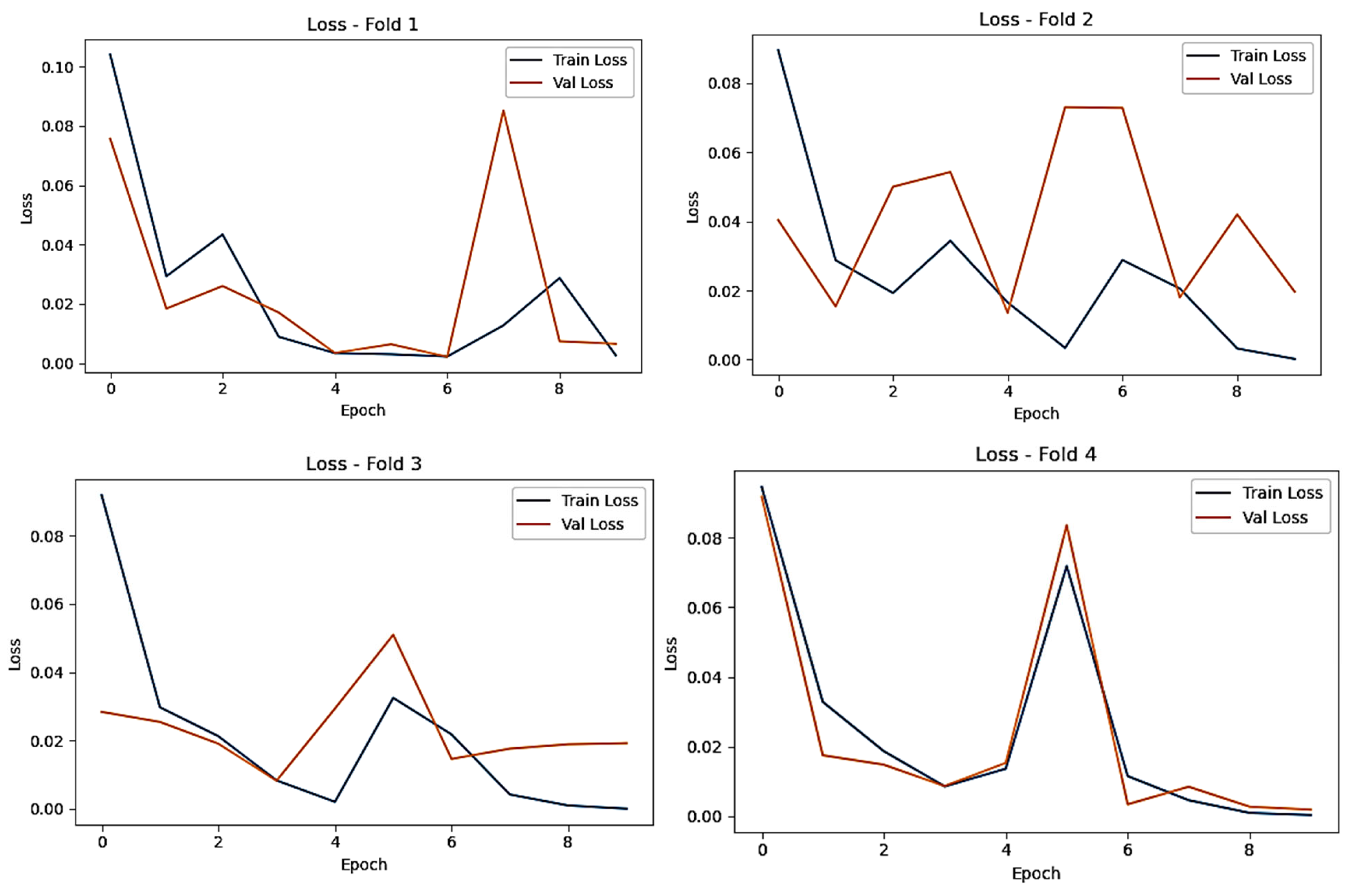
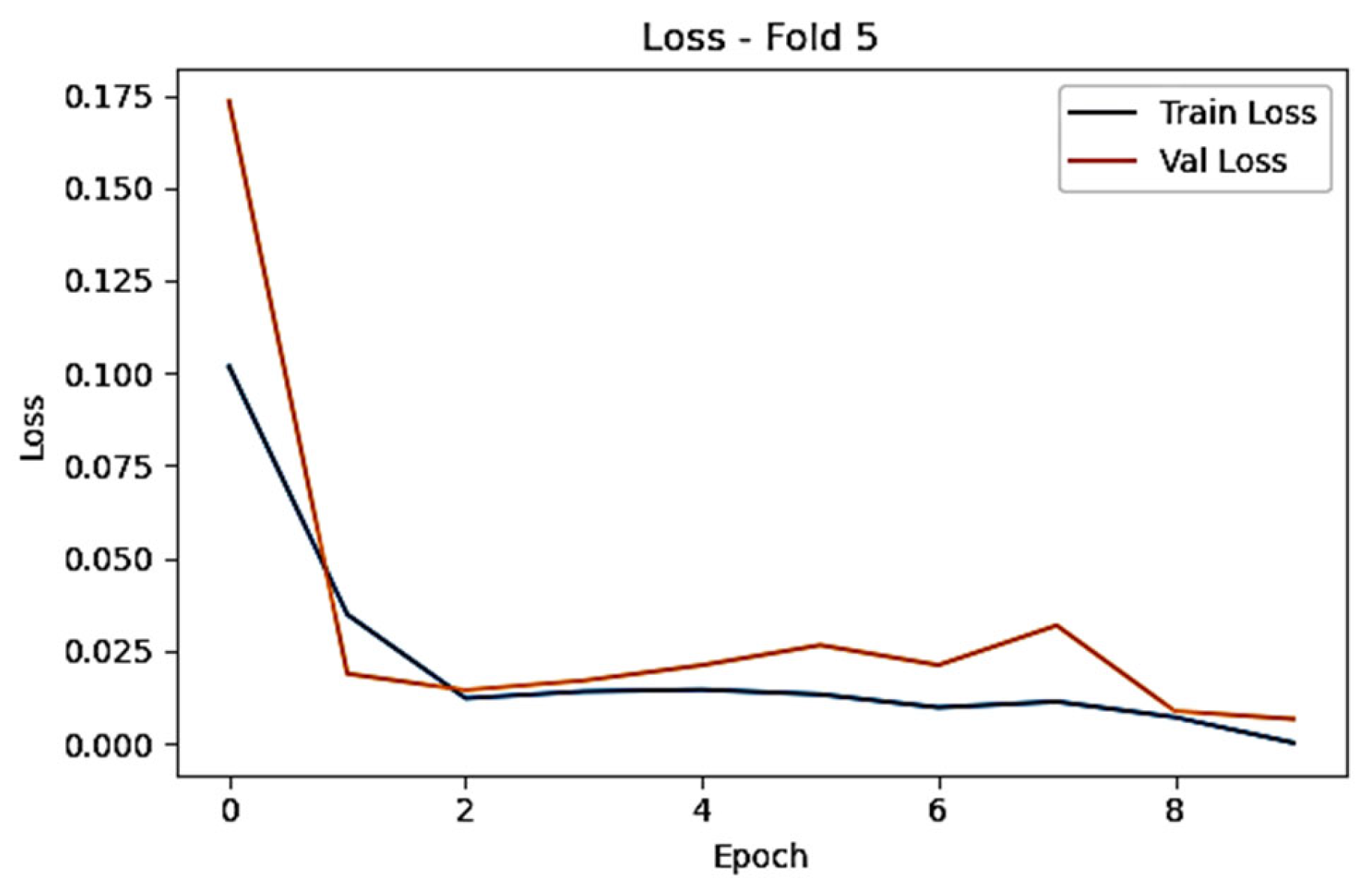
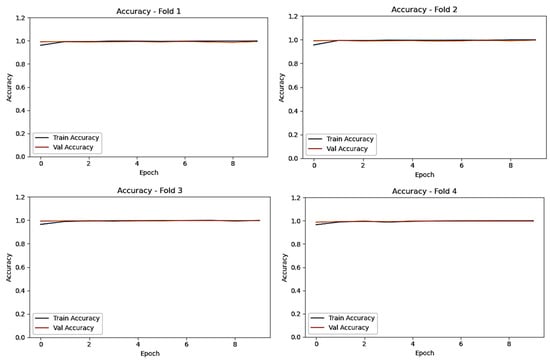
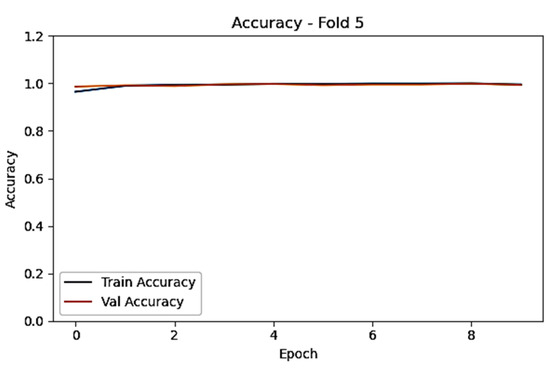
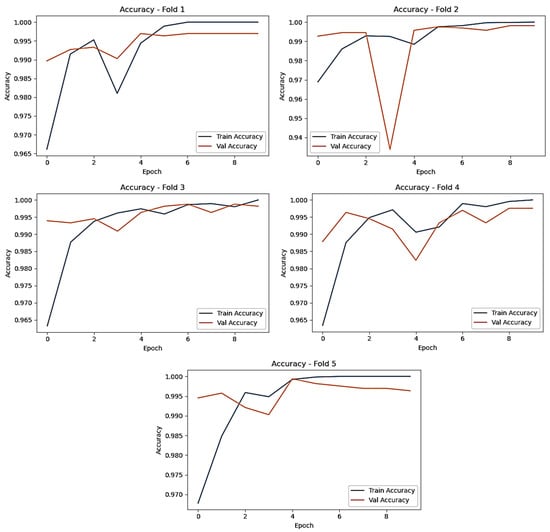
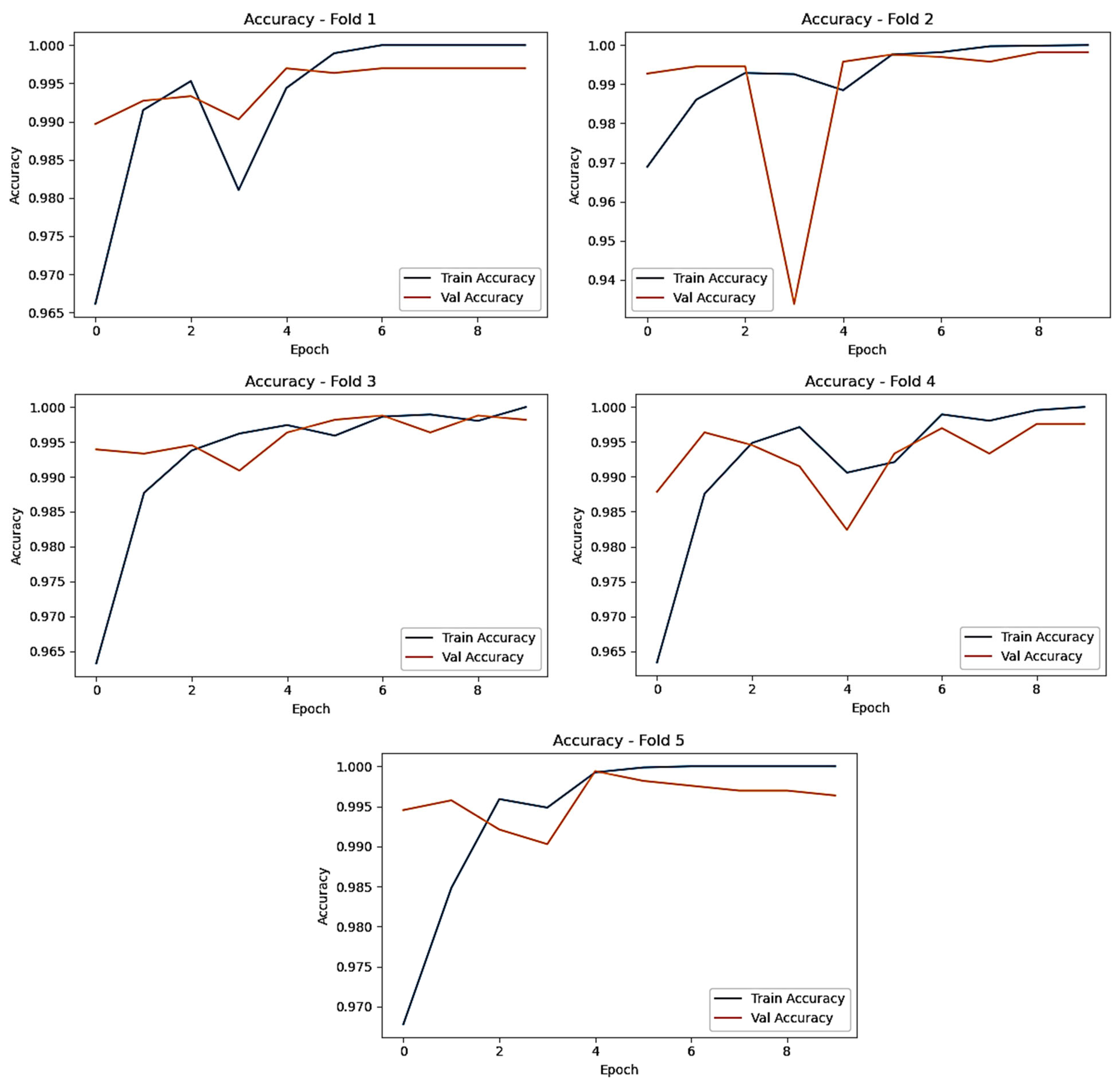
The Siamese Neural Network based on the K-fold strategy is applied in the suggested monitoring approach. The elevated accuracy values of 99.75% in training and 99.73% in testing were quite reasonable while the loss function is 0.0313 for both training and testing datasets, as shown in Figure 7 and Figure 8 for both Accuracy and Loss Function of the proposed model for each fold.
Figure 7.
Training and validation accuracy for each fold.
Figure 8.
Training and validation loss function for each fold.
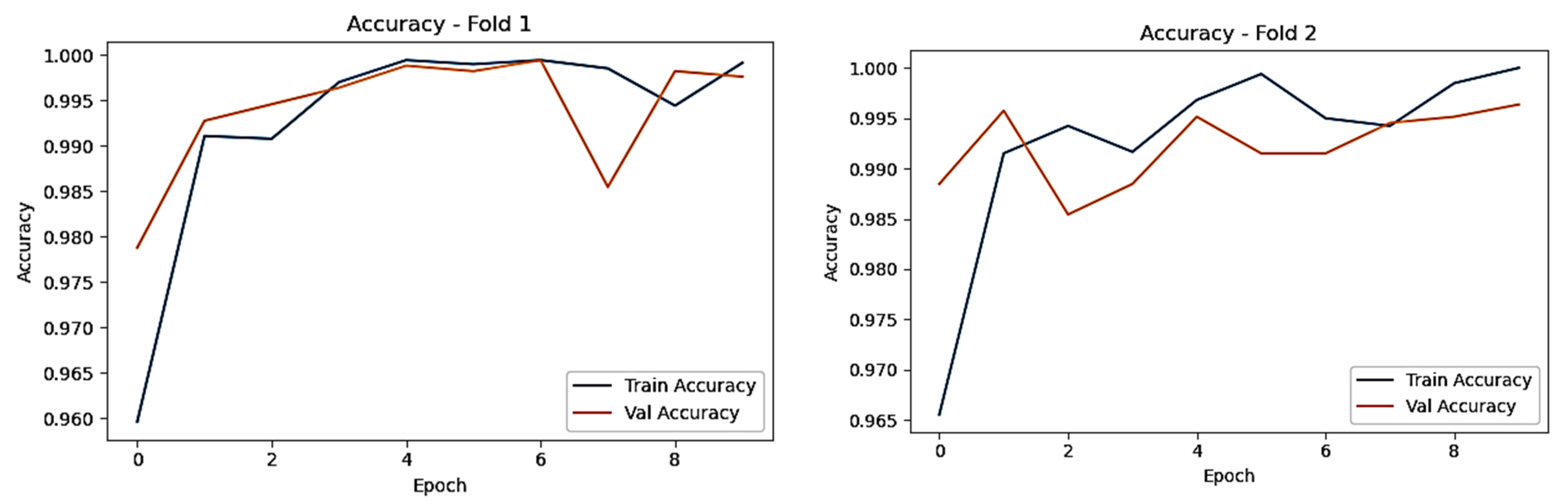
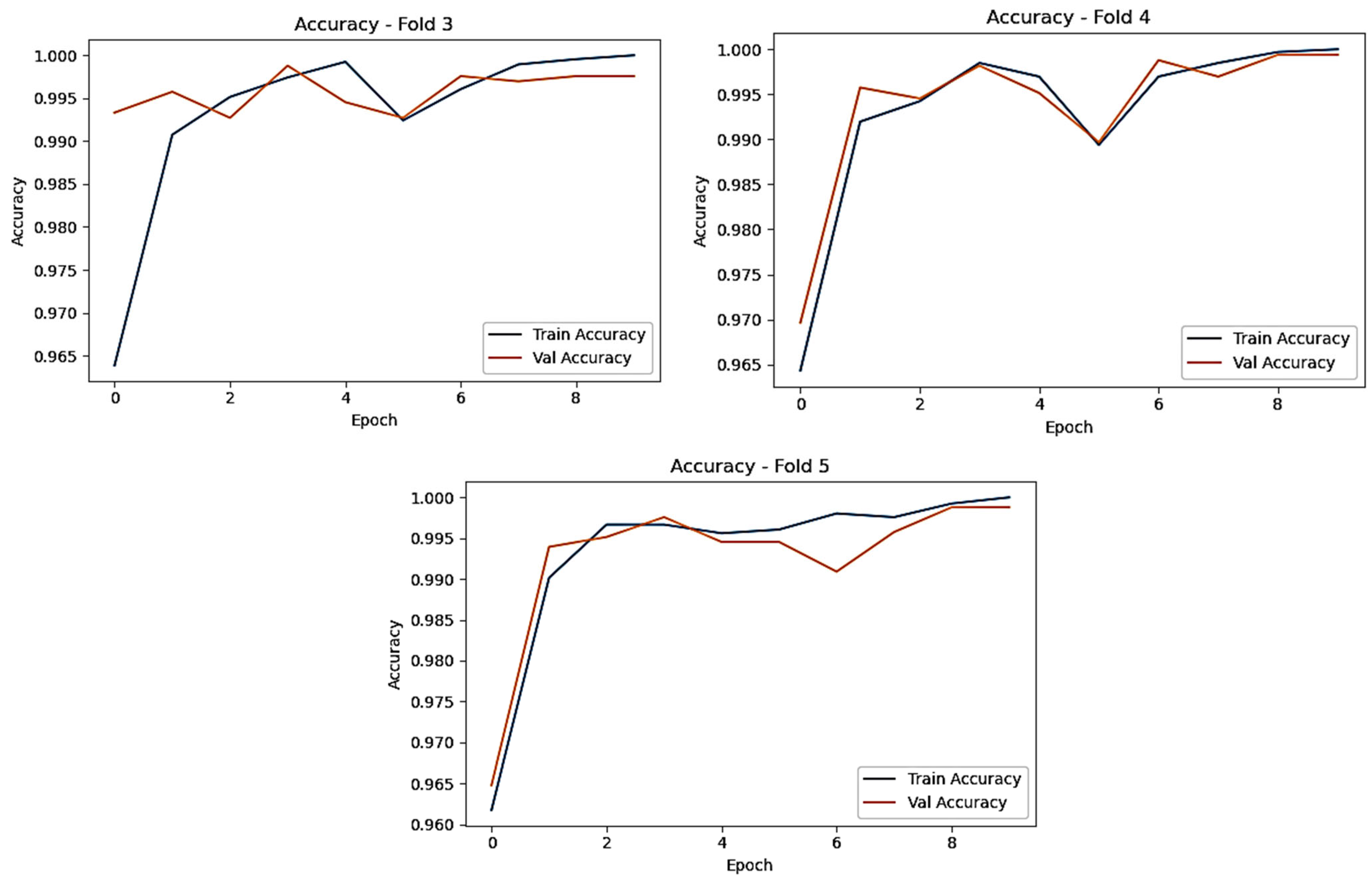
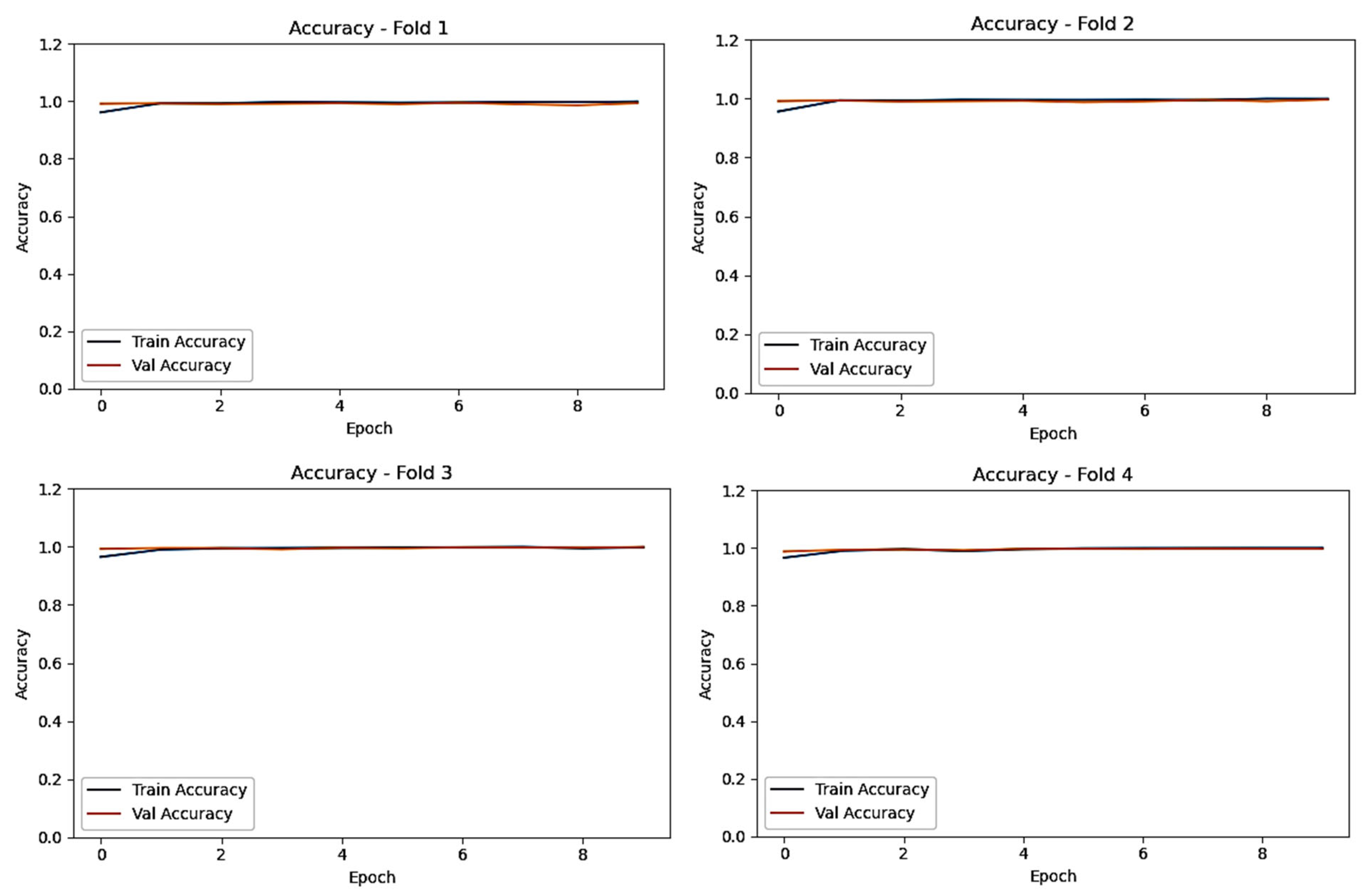
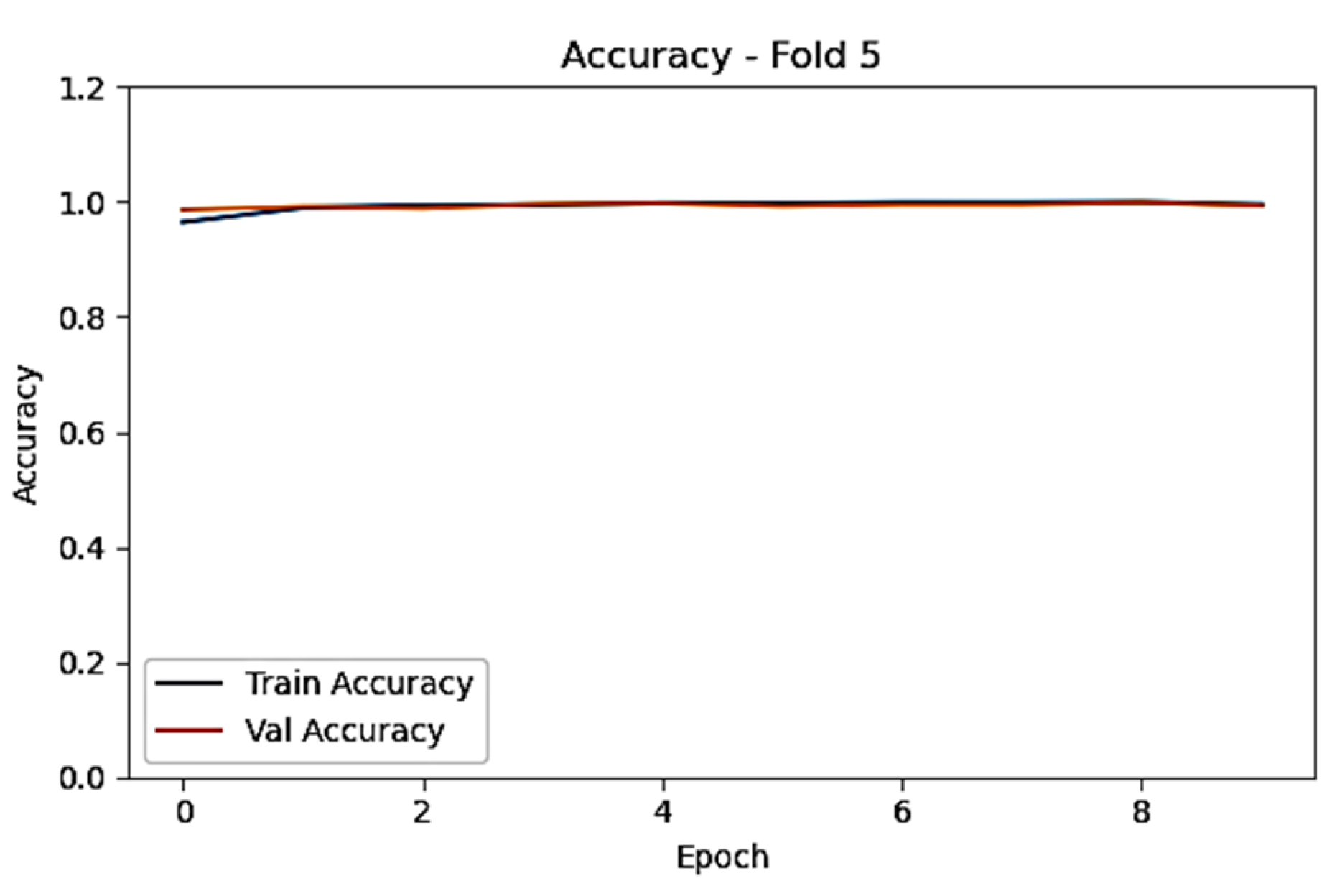
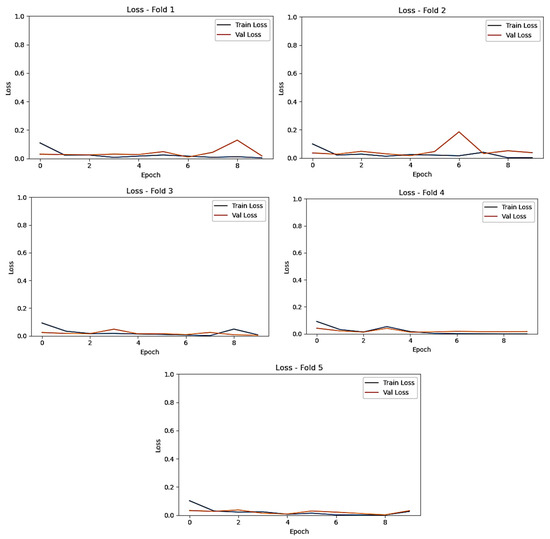
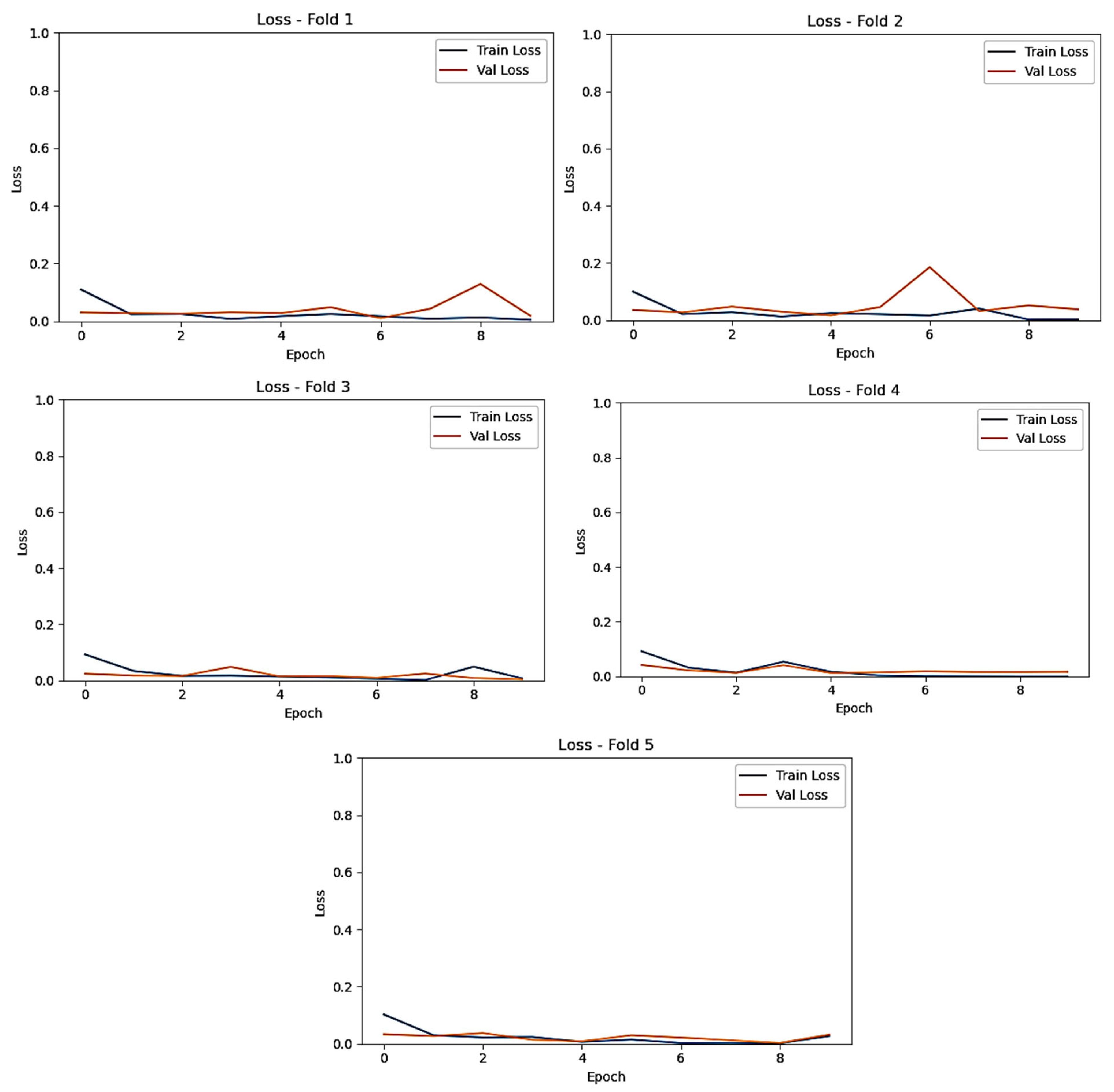
By examining Figure 7 and Figure 8, it can be noted that the overall Accuracy and Loss are satisfactory, which means that the average of the fifth fold is acceptable, Hence, in the previous figures of Accuracy and Loss Functions (Figure 7 and Figure 8), the scale used approximately 96–100% and 0–10%. Figure 9 and Figure 10 show the Accuracy and Loss Function with limits from 0 to 1.2 for accuracy and 0 to 1 for Loss.
Figure 9.
The Accuracy for each epoch using gray images.
Figure 10.
The Loss Function for each epoch using gray images.
A new sight to Figure 9 and Figure 10, the Accuracy and Loss Functions are showing stable training and satisfactory validation.
The big deal of feature extraction is what one should use. When using gray image, absolutely, the time of processing will be gained, but it affects training and accuracy, and when using colored images, the processing time increases, but the metrics improve.
In this model, the gray image is dependent because the results were accepted for a real-time model. At the same time, the results between the use of gray or colored images are closed. So, to obtain the benefits of time processing the gray images are used.
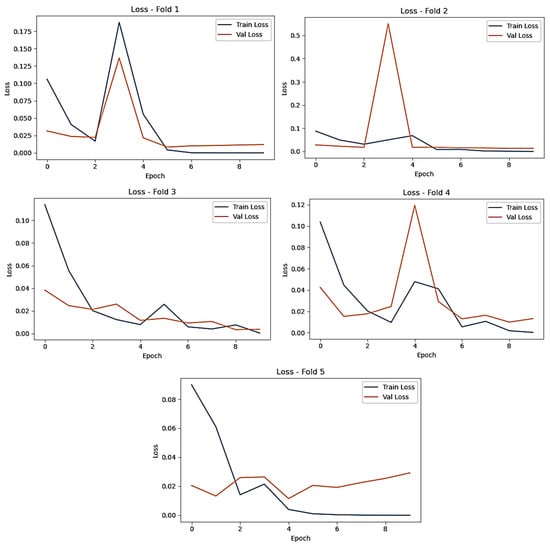
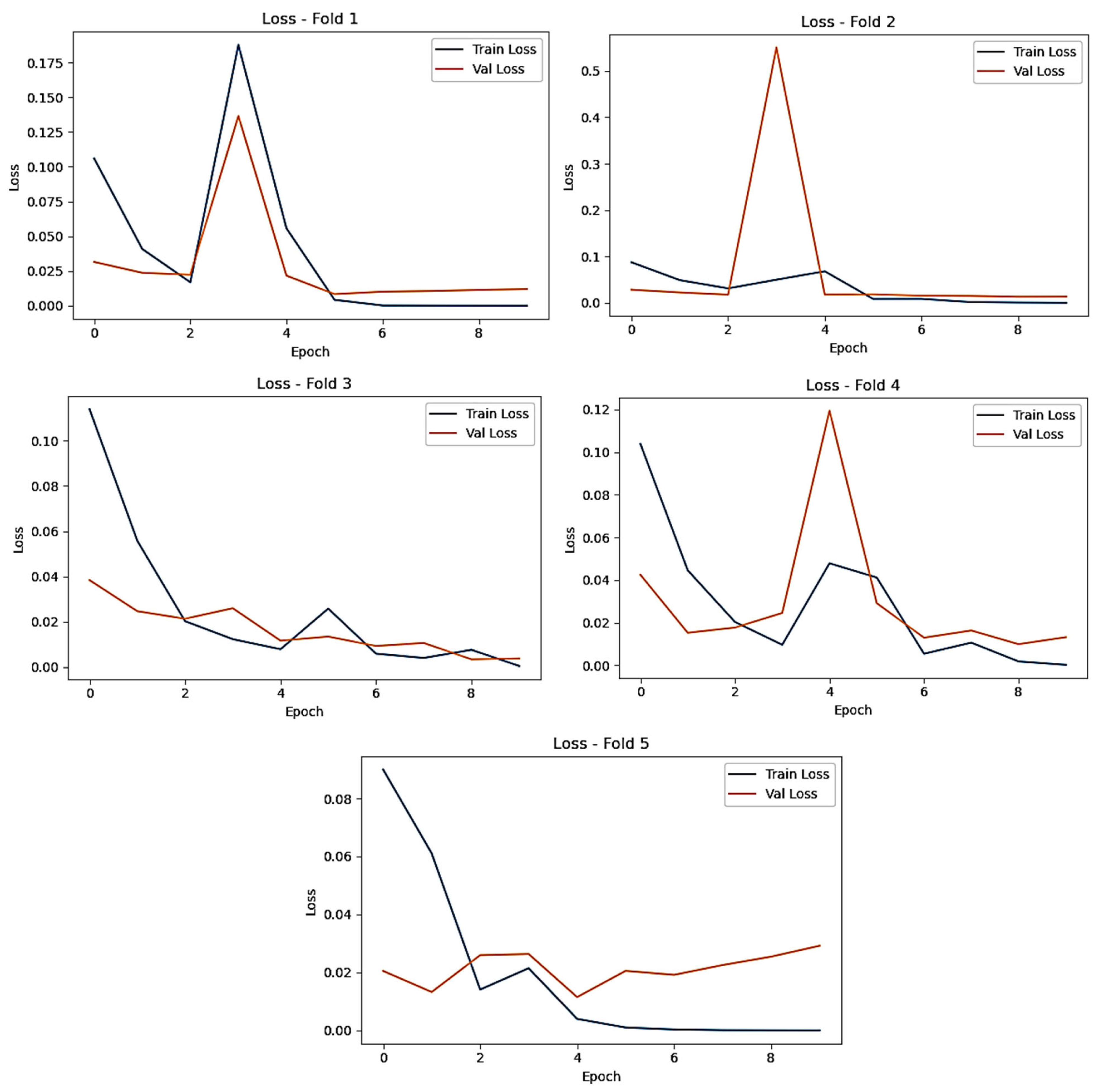
The following Figure 11 and Figure 12 show the Accuracy, Loss Function, and Confusion Matrix for each fold by using a color image in the training of the model.
Figure 11.
The Accuracy Function for each epoch depending on the colorful training images.
Figure 12.
The Loss Function for each epoch depending on the colorful training images.
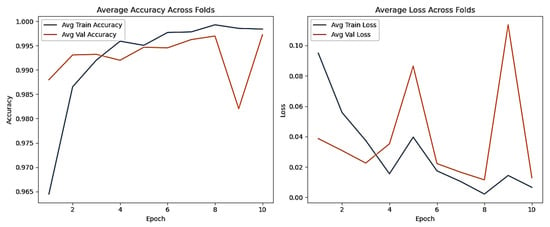
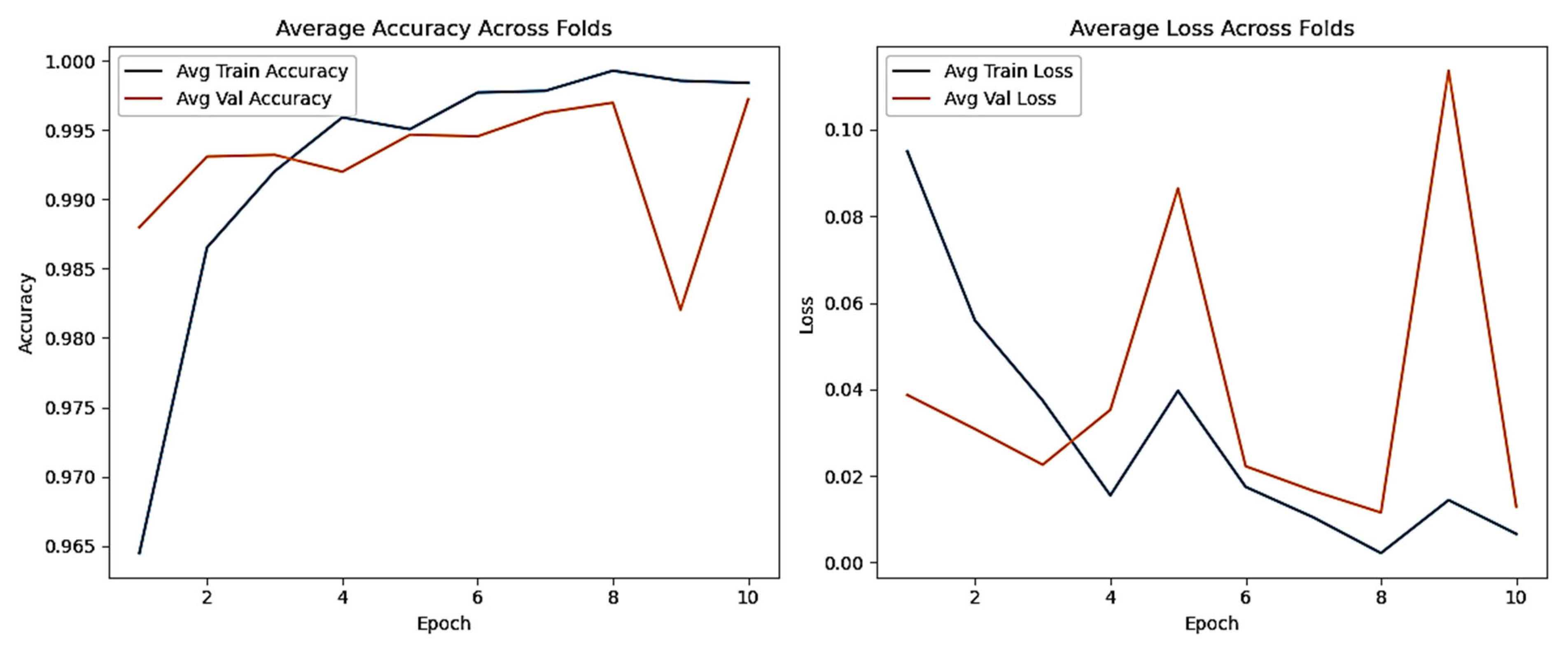
Figure 13 denotes the average Accuracy and Loss across folds, depending on the colorful training images.
Figure 13.
The average Accuracy and Loss across folds, depending on the colorful training images.
Figure 13 shows that the Accuracy and Loss Function is close to that when using gray, resulting from the proficiency of the proposed model, which succeeded in this work. Return to Table 5. The training Accuracy is raised to 99.28% from the second epoch and to 99.37% for the validation value. The Precision obtained is 0.9978. The superiority of the network performance from the second epoch is achieved as a result of applying the K-fold approach in the right case; however, the original domain matches the target domain.
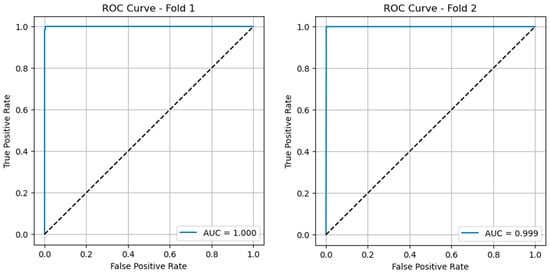
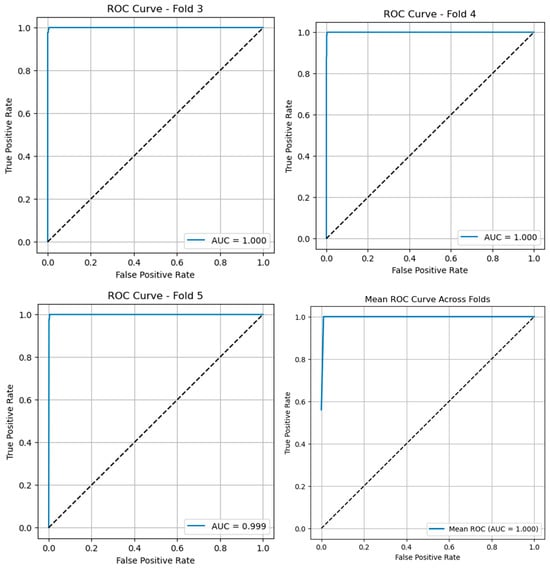
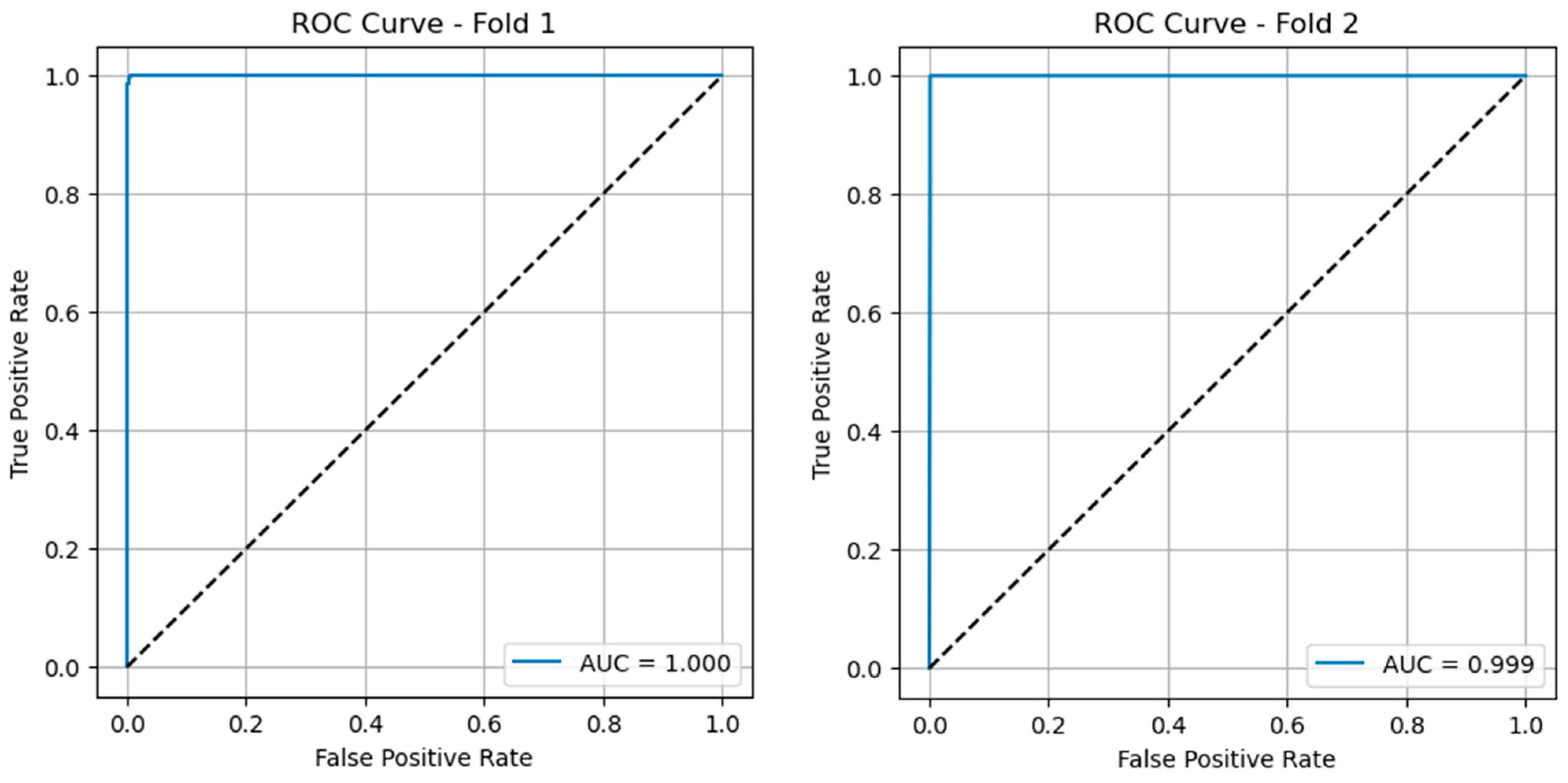
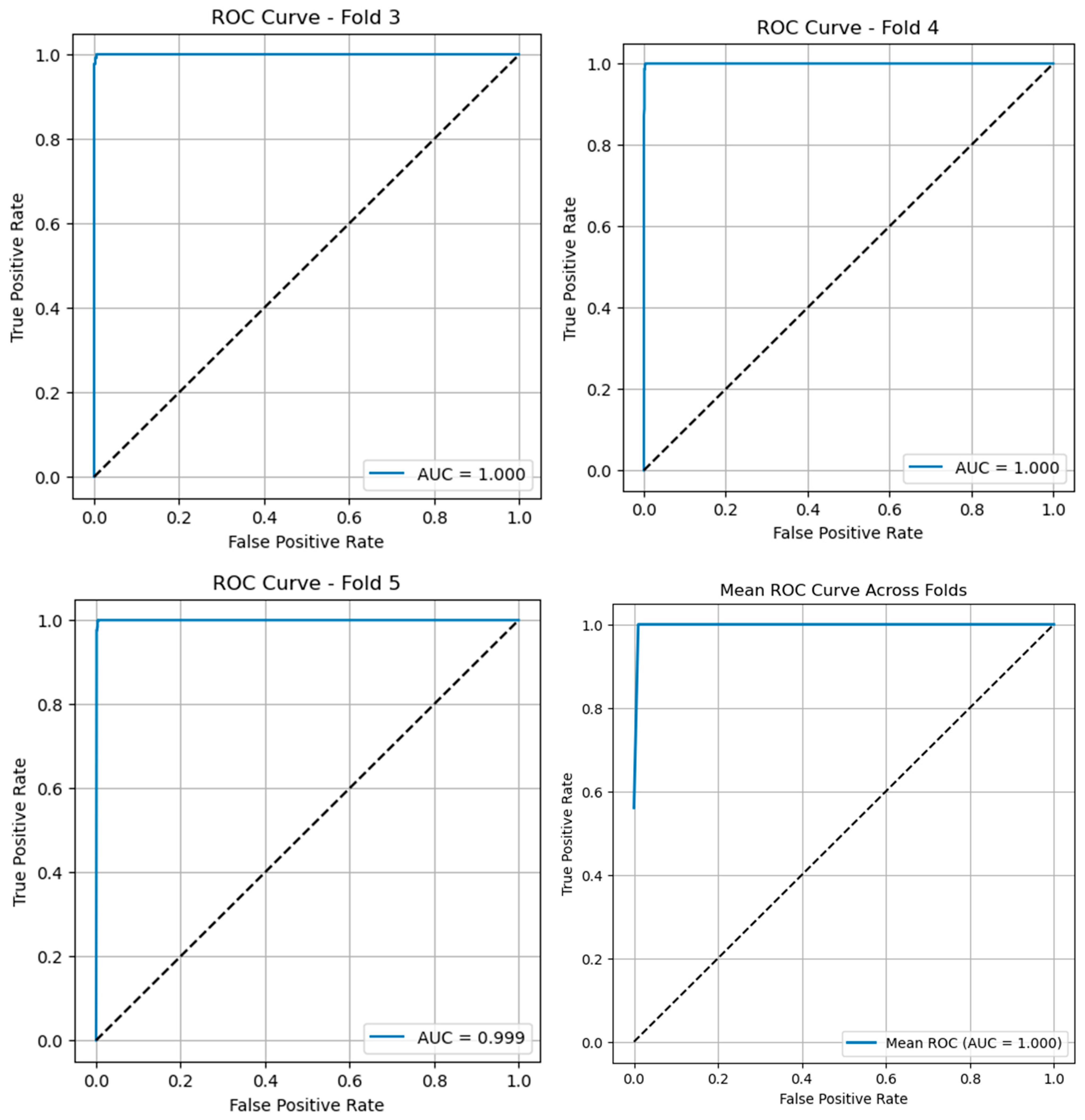
Figure 14 shows the ROC curves for each fold, and as denoted in each fold, the AUC is approximately 0.9996, which means an excellent distinction, where the model correctly distinguishes between positive and negative classes.
Figure 14.
The ROC curve for each fold and the average.
The suggested model has attained the best evaluation metrics by comparing the obtained results with other those of previous works. Most of the state-of-the-art methods in this field are based on detection approaches, while in the proposed work, the method is based on classifying the seatbelt datasets.
Moreover, to ensure the model does not enter into overfitting:
- The model proposed consistent achievement across each fold of validation, which means the model is stable rather than memorized
- In addition, when data augmentation was applied it clearly shows that the obtained result is very close to the output of the model without augmentation.
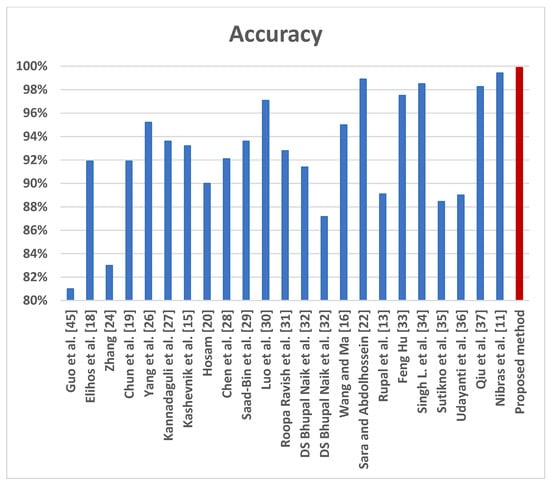
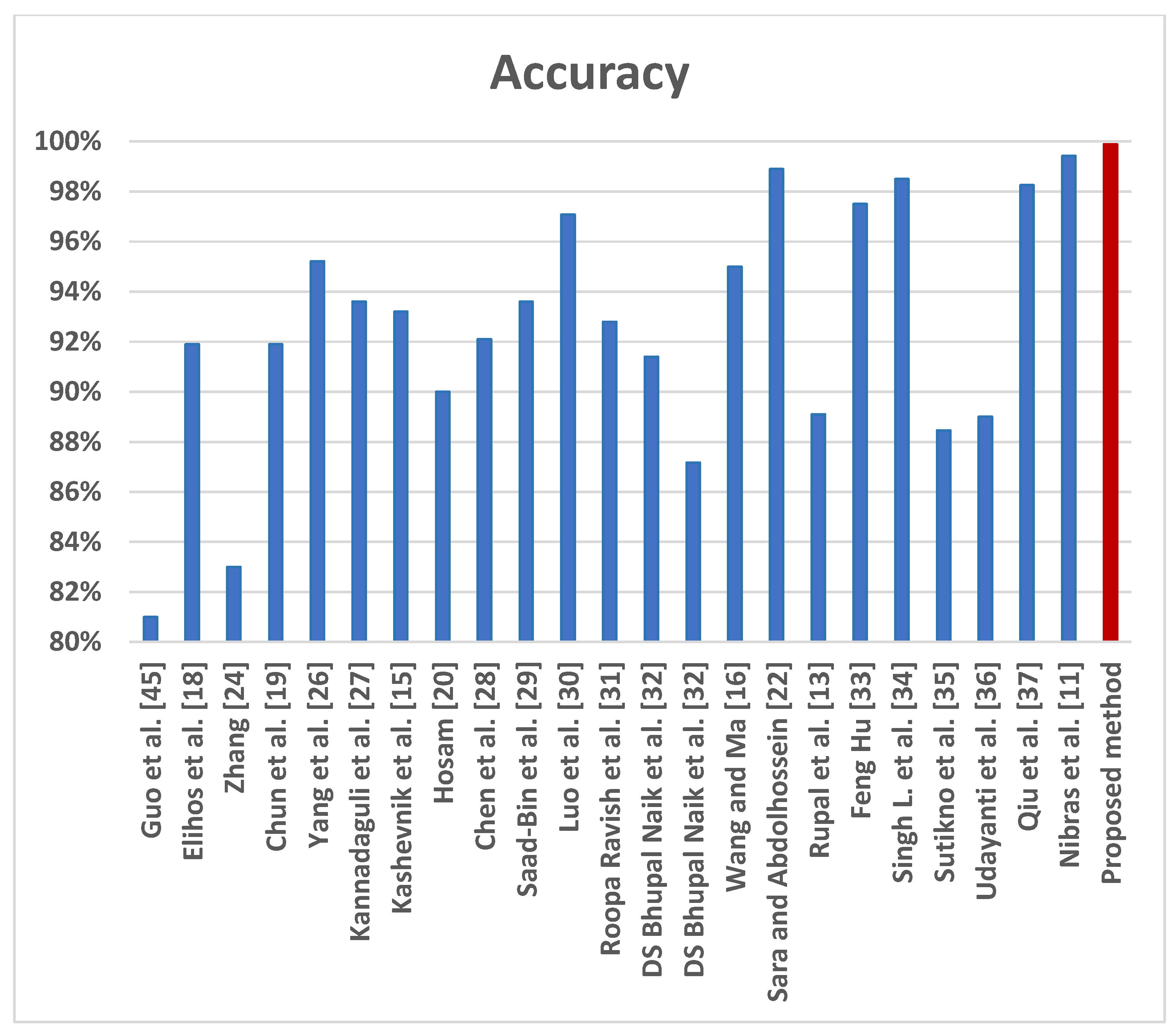
Finally, a comparison study between the Siamese network model and previous studies is explained in Table 7.
Table 7.
Performance comparison with previous works.
Moreover, Figure 15 denotes the previous studies as a flowchart.
Figure 15.
Flowchart of a comparison with a previous study [11,13,15,16,18,19,20,22,24,26,27,28,29,30,31,32,33,34,35,36,37,45].
Traditionally, The SNN model is matched and achieved good performance compared to object detection models. Regarding experimental rigor, the model used K-fold to prevent the bias obtained from data. Furthermore, all models that we compared with aimed to check whether the seatbelt was put on or not. The models (YOLO, SSD, and ResNet) are widely adopted for detection and used for seatbelts.
However, the object detection approach is more complex in binary classification; it is based on localization and classification. The intention is not to compare between classifiers and detectors, but the target is to contextualize model size deployment within the model’s characteristics.
By comparing our proposed model with the standard YOLOv8 and ResNet-50, Table 8 shows the comparison.
Table 8.
Comparison of the proposed model cost with YOLOv8 and ResNet-50.
6. Conclusions
Automatic seatbelt monitoring systems (ASMs) have shown an increasing trend in the last 10 years regarding the innovation in computer vision techniques, wearable sensors, and artificial intelligence. Challenges keep the previous systems from enhancing road safety and saving lives. In this study, a Siamese Neural Network was developed and evaluated for seatbelt verification using a dataset of positive and negative seatbelt images. The model was trained and validated using 5-fold cross-validation, ensuring a robust assessment of its performance. The model is implemented, trained, and evaluated using Python. The SNN is not working under one-shot or few-shot learning. The SNN is a fully supervised model using many label data pairs of images. The SNN model based on supervision pairs shows similarity along multiple epochs. In this work, SNN learned on two classes (positive and negative). The model used 5 folds for validation training: average Accuracy for 5 folds (99.89%), average Precision (99.88%), average Recall (99.90%), and average F1 Score = (99.89%). The high Accuracy refers to the ability of the model to distinguish between wearing and not wearing the seatbelt. The high Precision means the model failed to classify the negative image as positive, while the high Recall shows that the true images are classified correctly. These metrics are exceptional, and this means the model is safe and efficient. Additionally, the model is run twice, one time for colored images and the other for the gray image. The results showed close evaluation metrics for the two times; however, the model is based on real time. Therefore, the gray images are dependent for the decreased processing time. Given the outstanding results, this approach has strong potential for real-time seatbelt compliance monitoring in vehicles. Future work can focus on deploying the model in real world scenarios, optimizing it for different lighting conditions, angles, and motion blur and integrating with edge computing devices or traffic surveillance systems for practical implementation.
Author Contributions
Conceptualization, A.M.H. and F.F.A.; methodology, F.F.A., A.J.H. and S.M.R.; software, A.M.H. and S.M.R.; validation, F.F.A. and A.J.H.; formal analysis, A.M.H. and F.F.A.; investigation, A.M.H. and S.M.R.; resources, F.F.A.; data curation, A.M.H. and F.F.A.; writing—original draft preparation, A.M.H. and S.M.R.; writing—review and editing, F.F.A. and A.J.H.; visualization, A.M.H. and S.M.R.; supervision, F.F.A., A.J.H. and S.M.R. All authors have read and agreed to the published version of the manuscript.
Funding
This research received no external funding.
Data Availability Statement
The data presented in this study are available on request from the corresponding author.
Conflicts of Interest
The authors declare that they have no known competing financial interests or personal relationships that could have appeared to influence the work reported in this paper.
References
- Zhai, C.; Wu, W.; Xiao, Y.; Zhang, J.; Zhai, M.; Wu, Y. A novel throttle-based self-stabilizing control scheme integrated into an anisotropic continuum model to mitigate cyber-attacks in connected vehicle scenarios. Chaos Solitons Fractals 2025, 201, 117319. [Google Scholar] [CrossRef] [Scilit]
- Luo, Q.; Zang, X.; Cai, X.; Gong, H.; Yuan, J.; Yang, J. Vehicle Lane-Changing Safety Pre-Warning Model under the Environment of the Vehicle Networking. Sustainability 2021, 13, 5146. [Google Scholar] [CrossRef] [Scilit]
- Abdelwahab, H.T.; Abdel-Aty, M.A. Development of artificial neural network models to predict driver injury severity in traffic accidents at signalized intersections. Transp. Res. Rec. J. Transp. Res. Board 2001, 1746, 6–13. [Google Scholar] [CrossRef] [Scilit]
- Itu, C.; Toderita, A.; Melnic, L.-V.; Vlase, S. Effects of seat belts and shock absorbers on the safety of racing car drivers. Mathematics 2022, 10, 3593. [Google Scholar] [CrossRef] [Scilit]
- Bohlin, N.I. A Statistical Analysis of 28,000 Accident Cases with Emphasis on Occupant Restraint Value; SAE Technical Paper 670925; SAE International: Warrendale, PA, USA, 1967; pp. 2981–2994. [Google Scholar] [CrossRef] [Scilit]
- Lu, Y.; Chen, H.; Zhang, B. IOT-based Seat Belts Intelligent Monitoring System. In Proceedings of the 3rd International Conference on Materials Engineering, Manufacturing Technology and Control (ICMEMTC 2016); Atlantis Press: Dordrecht, The Netherlands, 2016. [Google Scholar] [CrossRef] [Scilit]
- Nayak, P.K.; Muduli, D.; Das, R.; Khillar, P.P.M. Enhancing Road Safety: Deep Learning-Based Automated Seat Belt Detection in Indian Traffic. In Proceedings of the 2024 1st International Conference on Cognitive, Green and Ubiquitous Computing (IC-CGU), Bhubaneswar, India, 1–2 March 2024; pp. 1–6. [Google Scholar] [CrossRef] [Scilit]
- Renuka, T.R.; Joby, N.J.; Soni, P. Automated Seat Belt Detection Using Surveillance Cameras for Indian Traffic: A Deep Learning Approach. In Proceedings of the 2025 4th International Conference on Advances in Computing, Communication, Embedded and Secure Systems (ACCESS), Ernakulam, India, 11–13 June 2025; pp. 91–96. [Google Scholar] [CrossRef] [Scilit]
- Xu, Y.; Li, X.; Liu, Y.; Liu, Y.; Chen, G. Research on Seat Belt Defect Detection Method Based on Deep Learning. Int. J. New Dev. Eng. Soc. 2025, 9, 73–79. [Google Scholar] [CrossRef] [Scilit]
- Liu, Y.; Zhang, J.; Shi, L.; Huang, M.; Lin, L.; Zhu, L.; Lin, X.; Zhang, C. Detection method of the seat belt for workers at height based on UAV image and YOLO algorithm. Array 2024, 22, 100340. [Google Scholar] [CrossRef] [Scilit]
- Salih, N.Z.; Alkhalid, F.F. The novel of using transfer learning approach for seatbelts automated surveillance. Int. J. Transp. Dev. Integr. 2024, 8, 141–147. [Google Scholar] [CrossRef] [Scilit]
- Nkuzo, L.; Sibiya, M.; Markus, E.D. A Comprehensive Analysis of Real-Time Car Safety Belt Detection Using the YOLOv7 Algorithm. Algorithms 2023, 16, 400. [Google Scholar] [CrossRef] [Scilit]
- Jalal, A.; Quaid, M.A.K.; Tahir, S.B.U.D.; Kim, K. A Study of Accelerometer and Gyroscope Measurements in Physical Life-Log Activities Detection Systems. Sensors 2020, 20, 6670. [Google Scholar] [CrossRef] [Scilit]
- Kapdi, R.A.; Khanpara, P.; Modi, R.; Gupta, M. Image-Based Seat Belt Fastness Detection Using Deep Learning. Scalable Comput. Pract. Exp. 2022, 23, 441–455. [Google Scholar] [CrossRef] [Scilit]
- Yassin, W.; Abdollah, F.; Ismail, A.; Ragam, P. Seatbelt Detection in Traffic System Using an Improved YOLOv5. J. Adv. Comput. Technol. Appl. 2023, 5, 1–17. [Google Scholar] [CrossRef] [Scilit]
- Kashevnik, A.; Ali, A.; Lashkov, I.; Shilov, N. Seat belt fastness detection based on image analysis from vehicle in-abin camera. In Proceedings of the 2020 26th Conference of Open Innovations Association (FRUCT), Yaroslavl, Russia, 20–24 April 2020; pp. 143–150. [Google Scholar] [CrossRef] [Scilit]
- Wang, Z.Y.; Ma, Y.J. Detection and recognition of stationary vehicles and seat belts in intelligent Internet of Things traffic management system. Neural Comput. Appl. 2022, 34, 3513–3522. [Google Scholar] [CrossRef] [Scilit]
- Balci, B.; Alkan, B.; Elihos, A.; Artan, Y. NIR camera based mobile seat belt enforcement system using deep learning techniques. In Proceedings of the 2018 14th International Conference on Signal-Image Technology & Internet-Based Systems (SITIS), Las Palmas de Gran Canaria, Spain, 26–29 November 2018; pp. 247–252. [Google Scholar] [CrossRef] [Scilit]
- Elihos, A.; Alkan, B.; Balci, B.; Artan, Y. Comparison of image classification and object detection for passenger seat belt violation detection using NIR & RGB surveillance camera images. In Proceedings of the 2018 15th IEEE International Conference on Advanced Video and Signal Based Surveillance (AVSS), Auckland, New Zealand, 27–30 November 2018; pp. 1–6. [Google Scholar] [CrossRef] [Scilit]
- Chun, S.; Ghalehjegh, N.H.; Choi, J.; Schwarz, C.; Gaspar, J.; McGehee, D. NADS-Net: A nimble architecture for driver and seat belt detection via convolutional neural networks. In Proceedings of the 2019 IEEE/CVF International Conference on Computer Vision Workshop (ICCVW), Seoul, Republic of Korea, 27–28 October 2019; pp. 2413–2421. [Google Scholar] [CrossRef] [Scilit]
- Hosameldeen, O. Deep learning-based car seatbelt classifier resilient to weather conditions. Int. J. Eng. Technol. 2020, 9, 229–237. [Google Scholar] [CrossRef] [Scilit]
- Rani, S.; Dalal, S. Comparative analysis of machine learning techniques for enhanced vehicle tracking and analysis. Transp. Eng. 2024, 18, 100271. [Google Scholar] [CrossRef] [Scilit]
- Hosseini, S.; Fathi, A. Automatic detection of vehicle occupancy and driver’s seat belt status using deep learning. Signal Image Video Process. 2022, 17, 491–499. [Google Scholar] [CrossRef] [Scilit]
- Yu, D.; Zheng, H.; Liu, C. Driver’s seat belt detection in crossroad based on gradient orientation. In Proceedings of the 2013 International Conference on Information Science and Cloud Computing Companion, Guangzhou, China, 7–8 December 2013; pp. 618–622. [Google Scholar] [CrossRef] [Scilit]
- Zhang, D.B. Analysis and research on the images of drivers and passengers wearing seat belt in traffic inspection. Clust. Comput. 2019, 22, 9089–9095. [Google Scholar] [CrossRef] [Scilit]
- Guo, H.; Lin, H.; Zhang, S.; Li, S. Image-based seat belt detection. In Proceedings of the 2011 IEEE International Conference on Vehicular Electronics and Safety (ICVES 2011), Beijing, China, 10–12 July 2011; IEEE: Piscataway, NJ, USA, 2011; pp. 161–164. [Google Scholar] [CrossRef] [Scilit]
- Yang, D.; Zang, Y.; Liu, Q. Study of Detection Method on Real-time and High Precision Driver Seatbelt. In Proceedings of the 2020 Chinese Control and Decision Conference (CCDC), Hefei, China, 22–24 August 2020; pp. 79–86. [Google Scholar] [CrossRef] [Scilit]
- Kannadaguli, P. FCOS Based Seatbelt Detection System Using Thermal Imaging for Monitoring Traffic Rule Violations. In Proceedings of the 2020 4th International Conference on Electronics, Materials Engineering & Nano-Technology (IEMENTech), Kolkata, India, 2–4 October 2020; pp. 1–6. [Google Scholar] [CrossRef] [Scilit]
- Chen, J.; Chen, S.; Bian, L. Multi-attribute self-attention guided vehicle local region detection based on convolutional neural network architecture. Int. J. Adv. Robot. Syst. 2020, 17. [Google Scholar] [CrossRef] [Scilit]
- Khalid, S.; Hazela, B. Employing Real-Time Object Detection for Traffic Monitoring. In Proceedings of the International Conference on Innovative Computing & Communication (ICICC), New Delhi, India, 20–21 February 2021. [Google Scholar] [CrossRef] [Scilit]
- Luo, J.; Lu, J.; Yue, G. Seatbelt detection in road surveillance images based on improved dense residual network with two-level attention mechanism. J. Electron. Imaging 2021, 30, 033036. [Google Scholar] [CrossRef] [Scilit]
- Ravish, R.; Rangaswamy, S.; Char, K. Intelligent Traffic Violation Detection. In Proceedings of the 2021 2nd Global Conference for Advancement in Technology (GCAT), Bangalore, India, 1–3 October 2021; pp. 1–7. [Google Scholar] [CrossRef] [Scilit]
- DS, B.; Naik, G.S.; Lakshmi, V.R.; Sajja, D.V. Nageswara Rao, Driver’s Seat Belt Detection Using CNN. Turk. J. Comput. Math. Educ. (TURCOMAT) 2021, 12, 776–785. Available online: https://turcomat.org/index.php/turkbilmat/article/view/1483 (accessed on 26 February 2026).
- Hu, F. Robust Seatbelt Detection and Usage Recognition for Driver Monitoring Systems. arXiv 2022, arXiv:2203.00810. [Google Scholar] [CrossRef] [Scilit]
- Singh, L.; Chaurasia, D.; Tiwari, N.K.; Upaddhyay, V.K.; Bajpai, A. Driver’s Seat Belt Detection Using CNN-SVM: A Hybrid Approach. In Proceedings of the 2024 IEEE 13th International Conference on Communication Systems and Network Technologies (CSNT), Jabalpur, India, 6–7 April 2024; pp. 898–904. [Google Scholar] [CrossRef] [Scilit]
- Sutikno, A.; Sugiharto, A.; Kusumaningrum, R. Automated Detection of Driver and Passenger Without Seat Belt using YOLOv8. Int. J. Adv. Comput. Sci. Appl. 2023, 14, 806–813. [Google Scholar] [CrossRef] [Scilit]
- Udayanti, E.; Kartikadarma, E.; Firdausillah, F. Convolutional Neural Network and LSTM for Seat Belt Detection in Vehicles using YOLO3. J. RESTI (Rekayasa Sist. Dan Teknol. Inf.) 2024, 8, 355–360. [Google Scholar] [CrossRef] [Scilit]
- Qiu, L.; Rao, J.; Zhao, X. Seatbelt Detection Algorithm Improved with Lightweight Approach and Attention Mechanism. Appl. Sci. 2024, 14, 3346. [Google Scholar] [CrossRef] [Scilit]
- Zhang, Z.; Wang, W.; Chen, W.; Xiao, Q.; Xu, W.; Li, Q.; Wang, J.; Liu, Z. Fault Diagnosis of Reciprocating Compressor Valve Based on Triplet Siamese Neural Network. Machines 2025, 13, 263. [Google Scholar] [CrossRef] [Scilit]
- Jiang, Y.; Lu, M.; Dong, Z.; Jiang, Z.; Jiao, W.; Tang, C.; Sun, J.; Xuan, Z. Adaptive Deeping Siamese Residual Network: A Novel Model for Few-Shot Bearing Fault Diagnosis. Machines 2025, 13, 193. [Google Scholar] [CrossRef] [Scilit]
- Hughes, L.H.; Merkle, N.; Bürgmann, T.; Auer, S.; Schmitt, M. Deep learning for sar-optical image matching. In Proceedings of the IGARSS 2019—2019 IEEE International Geoscience and Remote Sensing Symposium, Yokohama, Japan, 28 July–2 August 2019; pp. 4877–4880. [Google Scholar] [CrossRef] [Scilit]
- Uzer, M.S. Deep Learning-Based Classification Consisting of Pre-Trained Models and Proposed Model Using K-Fold Cross-Validation for Pistachio Species. Appl. Sci. 2025, 15, 4516. [Google Scholar] [CrossRef] [Scilit]
- Teodorescu, V.; Obreja Brașoveanu, L. Assessing the Validity of k-Fold Cross-Validation for Model Selection: Evidence from Bankruptcy Prediction Using Random Forest and XGBoost. Computation 2025, 13, 127. [Google Scholar] [CrossRef] [Scilit]
- Yang, W.; Li, J.; Fukumoto, F.; Ye, Y. HSCNN: A hybrid-Siamese convolutional neural network for extremely imbalanced multi-label text classification. In Proceedings of the 2020 Conference on Empirical Methods in Natural Language Processing (EMNLP); Association for Computational Linguistics: Stroudsburg, PA, USA, 2020; pp. 6716–6722. [Google Scholar] [CrossRef] [Scilit]
- Dataset. Seatbelt Dataset. Roboflow Universe. 2022. Available online: https://universe.roboflow.com/dataset-9xayt/seatbelt-0lhjh (accessed on 26 February 2026).

Disclaimer/Publisher’s Note: The statements, opinions and data contained in all publications are solely those of the individual author(s) and contributor(s) and not of MDPI and/or the editor(s). MDPI and/or the editor(s) disclaim responsibility for any injury to people or property resulting from any ideas, methods, instructions or products referred to in the content. |
© 2026 by the authors. Licensee MDPI, Basel, Switzerland. This article is an open access article distributed under the terms and conditions of the Creative Commons Attribution (CC BY) license.