


Simple Summary
Cutaneous adverse events frequently occur in patients receiving kinase inhibitors and can impair quality of life, reduce treatment adherence, and threaten the continuation of anticancer therapy. Although many preventive and reactive treatments are used, it remains unclear which approaches are most effective. This systematic review and meta-analysis evaluated these strategies in adults receiving kinase inhibitors. Preventive systemic antibiotics were associated with a reduction in severe cutaneous adverse events, while preventive topical treatments as a group reduced events across all severity grades. Differences between the included studies made it difficult to assess individual treatments, and evidence for reactive treatments remained limited. Further well-designed studies using standardized methods are needed to determine which treatments are most effective for specific types of cutaneous adverse events.
Abstract
Background: The use of targeted therapies in oncology has increased significantly, but associated cutaneous adverse events often impair quality of life and adherence. Despite numerous available interventions, there is no unified protocol, and many patients discontinue therapy due to adverse events. This systematic review and meta-analysis aimed to evaluate preventive and reactive interventions for cutaneous adverse events in adult cancer patients receiving kinase inhibitors. Methods: A search was performed in MEDLINE (via PubMed), EMBASE, and CENTRAL (The Cochrane Central Register of Controlled Trials), using predefined search terms. Outcomes were incidence, severity of cutaneous adverse events (grades 1–4 and 3–4), quality of life and adherence to oncologic therapy. Results: After screening 35,072 records, 9 studies (1853 patients, per protocol) met the inclusion criteria for the meta-analysis, while 52 were included in the systematic review. Preventive topical agents significantly reduced the incidence of grade 1–4 cutaneous adverse events (OR, 0.55; 95% CI, 0.38–0.80; p = 0.012; I2 = 16%), whereas systemic interventions showed no significant benefit in this category. Conversely, for grade 3–4 events, systemic interventions were associated with a significantly reduced incidence (OR, 0.24; 95% CI, 0.14–0.41; p = 0.002, I2 = 0%), while topical agents had no significant effect. For reactive interventions, no consistent evidence of effectiveness was found, with high heterogeneity and a limited number of studies. Conclusions: In patients receiving kinase inhibitors, systemic antibiotics were associated with a reduction in grade 3–4 cutaneous adverse events, while pooled topical interventions significantly reduced grade 1–4 events. However, the effectiveness of individual topical agents, including urea, remains uncertain.
1. Introduction
Cancer remains a major global health burden, with an estimated 20.7 million new cancer cases and 9.7 million cancer deaths worldwide in 2022 [1]. Over the past two decades, targeted therapies—particularly kinase inhibitors—have become an important component of cancer treatment, now accounting for 31% of FDA-approved oncology drugs. These agents are widely used in the treatment of cancers such as lung, colorectal, head, and neck malignancies and are generally less toxic than conventional cytotoxic agents but can cause specific side effects, such as cutaneous adverse events [2]. This is often related to the inhibition of receptors involved in skin homeostasis, such as EGFR, which is expressed in keratinocytes, sebaceous glands, and the epithelium of hair follicles, and it regulates keratinocyte proliferation and differentiation and supports epidermal barrier maintenance and wound healing. Inhibition of these receptors can disrupt epidermal integrity and trigger mobilization of inflammatory cells, potentially leading to characteristic cutaneous adverse events, although the exact pathophysiology remains unclear [3,4].
Cutaneous adverse events of kinase inhibitors are classified according to the CTCAE (Common Terminology Criteria for Adverse Events) criteria [5] developed by the National Cancer Institute (NCI) of the National Institutes of Health (NIH). This classification utilizes a standardized five-point scale to assess the severity of side effects, providing unique clinical descriptions for each type, allowing consistent assessment and comparison. Although these adverse events can be severe [6,7], they are rarely life-threatening. However, severe adverse events negatively affect quality of life and general well-being [8], reduce patient adherence, and compromise treatment efficacy, with 76% of the patients requiring dose modification or discontinuation of kinase inhibitor therapy when they occur [9,10,11].
Despite the availability of multiple preventive and therapeutic strategies, there is no consensus on the optimal approach to the management of these events [12]. To address this gap, we conducted a systematic review and meta-analysis to identify the most effective and well-tolerated interventions for the prevention and treatment of kinase inhibitor-induced cutaneous adverse events. We hypothesize that the implementation of evidence-based prevention and treatment strategies for the management of cutaneous adverse events would improve patient adherence and optimize clinical outcomes in patients receiving kinase inhibitor-based targeted therapy.
2. Materials and Methods
We conducted our systematic review and meta-analysis in accordance with the Cochrane Handbook [13] and report our results based on the recommendations of the PRISMA 2020 guidelines [14,15]. The protocol of the study was registered on PROSPERO (registration number CRD42023485089), and we fully adhered to it.
2.1. Eligibility Criteria
Trials were included that enrolled adult oncology patients treated with tyrosine kinase inhibitor-targeted therapy, excluding the pediatric population. Randomized controlled clinical trials, and prospective and retrospective cohort study types were included, and literature reviews, case studies, case series, case reports, background information, expert opinions, non-EBM guidelines, abstracts, comments, letters to the editor, and protocols were excluded. Language was not a limiting factor in the selection.
Articles were also required to address the prevention or management of cutaneous adverse events in adult cancer patients treated with kinase inhibitors targeting various receptors (EGFR, ALK, MET, FGFR, VEGFR, JAK, TRK, RET, BCR-ABL), alone or in combination with other treatments.
2.2. Search Strategy and Selection Process
On 21 November 2023, a systematic search was conducted in three databases—MEDLINE (via PubMed), EMBASE, and CENTRAL (The Cochrane Central Register of Controlled Trials)—using a predefined search key, which is available in the Supplementary Material (Figure S1). Articles were screened for duplicates, which were automatically and manually removed using the EndNote 21 (Clarivate Analytics, Philadelphia, PA, USA) citation and reference management tool [16] based on overlapping publication years, authors and titles. Remaining records were manually screened by title and abstract, followed by full-text review using Rayyan (Cambridge, MA, USA) [17]. Selection was performed by two independent reviewers (R.Á. and A.L.) who were blinded to the assessments of the other reviewer. Conflicts were resolved, and final articles were selected by consensus after the two reviewers were unblinded.
2.3. Data Extraction
Data from each eligible article were collected independently by two authors (R.Á. and A.L.). The information extracted was first author, year of publication, DOI reference, study type, type of adverse event, study population with the patient characteristics, types of interventions, intervention duration, follow-up duration and types of outcomes. Preventive or therapeutic treatments for established cutaneous adverse events (reactive treatment) were recorded, alone or in combination with other interventions. Outcomes assessed included efficacy (e.g., incidence of cutaneous adverse events, response to therapy, improvement of cutaneous adverse events, number of lesions of skin eruptions observed), change in quality of life, and adherence to the oncologic therapy.
2.4. Study Risk of Bias Assessment and Certainty of Evidence
The risk of bias was independently assessed by two authors (R.Á. and A.L.) according to the recommendations of the Cochrane Collaboration, using the Risk of Bias Tool 2 (RoB2) for randomized controlled trials of interventions [3,4,10,18,19,20,21,22,23,24,25,26,27,28,29,30,31,32,33,34,35,36,37,38,39,40], Risk Of Bias In Non-randomized Studies of Interventions (ROBINS-I) [9,41,42,43,44,45,46,47,48,49,50] and Methodological Index for Non-Randomized Studies (MINORS) for single-arm studies of interventions [51,52,53,54,55,56,57,58,59,60,61,62,63,64,65,66,67,68,69,70,71,72,73,74]. Disagreements were resolved by consensus. The quality of included studies was assessed using GRADEpro GDT [75].
2.5. Synthesis Methods
Odds ratios (ORs) were used as the effect size measure, along with 95% confidence intervals (CIs). To calculate both study-specific and pooled odds ratios, we extracted or calculated the number of patients in each group and the number of those who experienced the event of interest, based on data available in the included studies. When multiple types of adverse events (AEs) were reported within a study, we selected the type of AE that had the highest number of events in the intervention group. This approach ensured that we captured the most commonly occurring AE, thereby maximizing the amount of event information contributed by each study to the pooled analysis. Where intervention-specific meta-analyses were not feasible because of the limited number of studies, interventions were grouped into broader systemic and topical categories for quantitative synthesis. Pooled ORs based on raw data were calculated by the Mantel–Haenszel method [76,77]. To treat the zero cell count, we used the exact Mantel–Haenszel method (without continuity correction) (as recommended in the literature [78,79]). In the forest plots, for a cell count of 0, the individual study OR with a 95% CI was calculated by adding 0.5 as a continuity correction (it was used only for visualization in the forest plot). To estimate the heterogeneity variance measure (τ2), the Paule–Mandel method [80] (recommended by Veroniki et al. [81]) was used with the Q profile method for confidence intervals. For subgroup analysis, we used a fixed-effects “plural” model (aka. mixed-effects model). To assess the difference between subgroups, we used a “Cochrane Q” test (an omnibus test) between subgroups [82]. The null hypothesis was rejected at a significance level of 5%. All statistical analyses were performed with R (R Core Team 2024, v4.4.2 [83]) using the meta (Schwarzer 2019, v7.0.0 [84]) package for basic meta-analysis calculations and plots.
3. Results
3.1. Study Selection
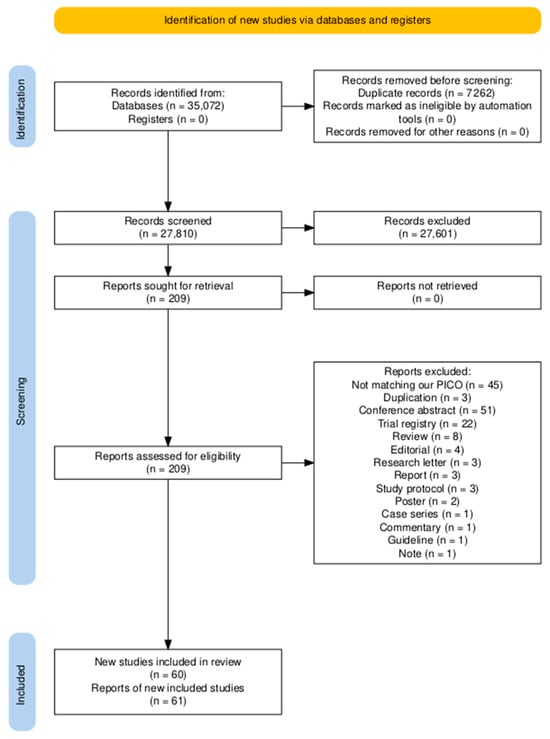
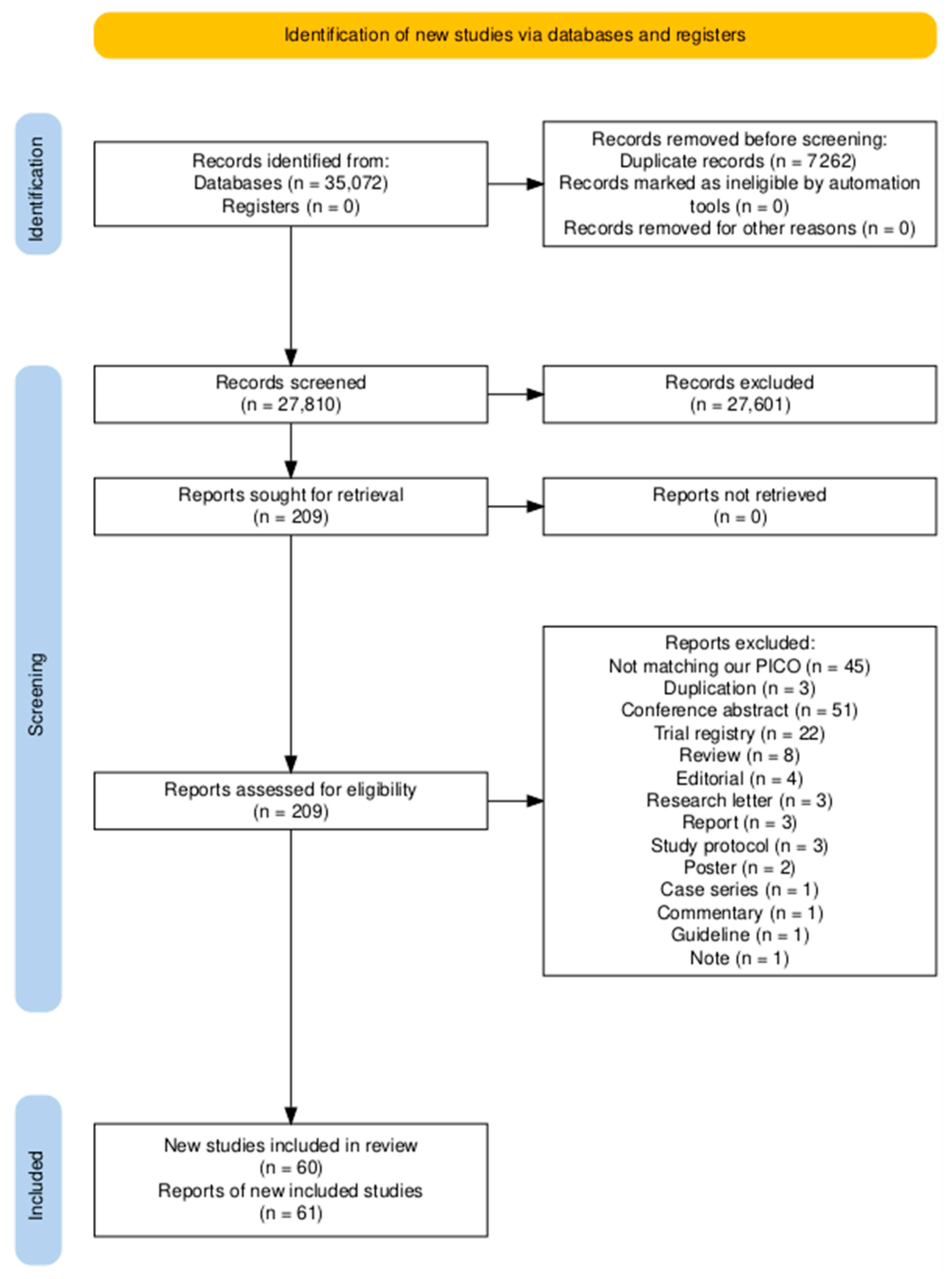
The search yielded 35,072 records, reduced to 27,810 articles after automatic and manual duplicate removal. The remaining records were screened by title and abstract, leaving 209 articles for full-text review. Of these, 148 were excluded for the reasons detailed in Figure 1, resulting in 61 eligible articles [3,4,9,10,18,19,20,21,22,23,24,25,26,27,28,29,30,31,32,33,34,35,36,37,38,39,40,41,42,43,44,45,46,47,48,49,50,51,52,53,54,55,56,57,58,59,60,61,62,63,64,65,66,67,68,69,70,71,72,73,74].
Figure 1.
PRISMA 2020 flow diagram of the search and screening process [85].
Nine studies [10,19,21,22,23,27,28,30,35] were included in the meta-analysis; all evaluated preventive interventions and were randomized controlled trials. The remaining 52 articles [3,4,9,18,20,24,25,26,29,31,32,33,34,36,37,38,39,41,42,43,44,45,46,47,48,49,50,51,52,53,54,55,56,57,58,59,60,61,62,63,64,65,66,67,68,69,70,71,72,73,74] could not be evaluated or pooled. They differed substantially in interventions, study designs, follow-up periods, and reported outcomes, and many did not provide comparable incidence or severity data suitable for quantitative synthesis. Therefore, these studies were assessed in the systematic review.
3.2. Basic Characteristics of Included Studies
Characteristics of included articles are detailed in Table S1 [3,4,9,10,18,19,20,21,22,23,24,25,26,27,28,29,30,31,32,33,34,35,36,37,38,39,40,41,42,43,44,45,46,47,48,49,50,51,52,53,54,55,56,57,58,59,60,61,62,63,64,65,66,67,68,69,70,71,72,73,74].
3.3. Quantitative Analysis
Intervention-specific meta-analyses were not feasible for most treatments because only a limited number of studies evaluated each individual intervention. Analyses according to specific types of cutaneous adverse events were also explored; however, further stratification resulted in small and fragmented subgroups that did not allow meaningful pooled estimates or a sensitivity analysis based on an alternative adverse-event selection approach.
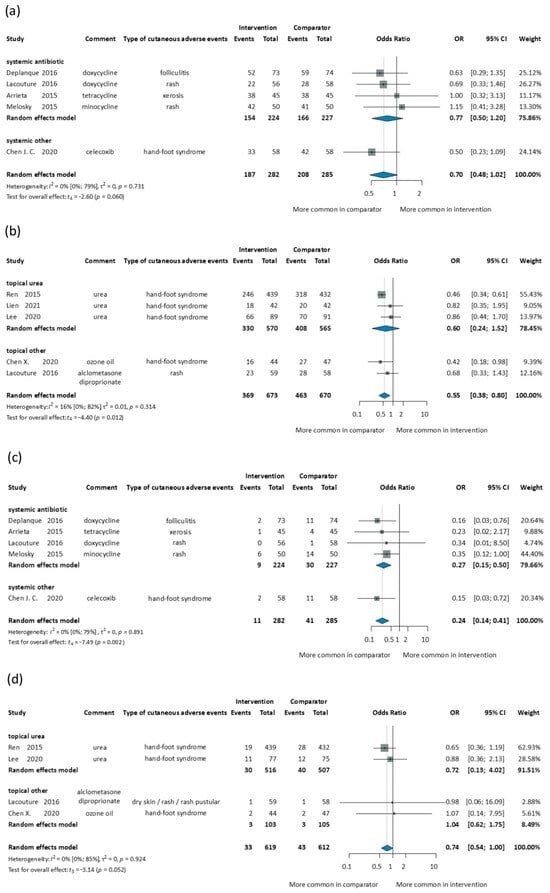
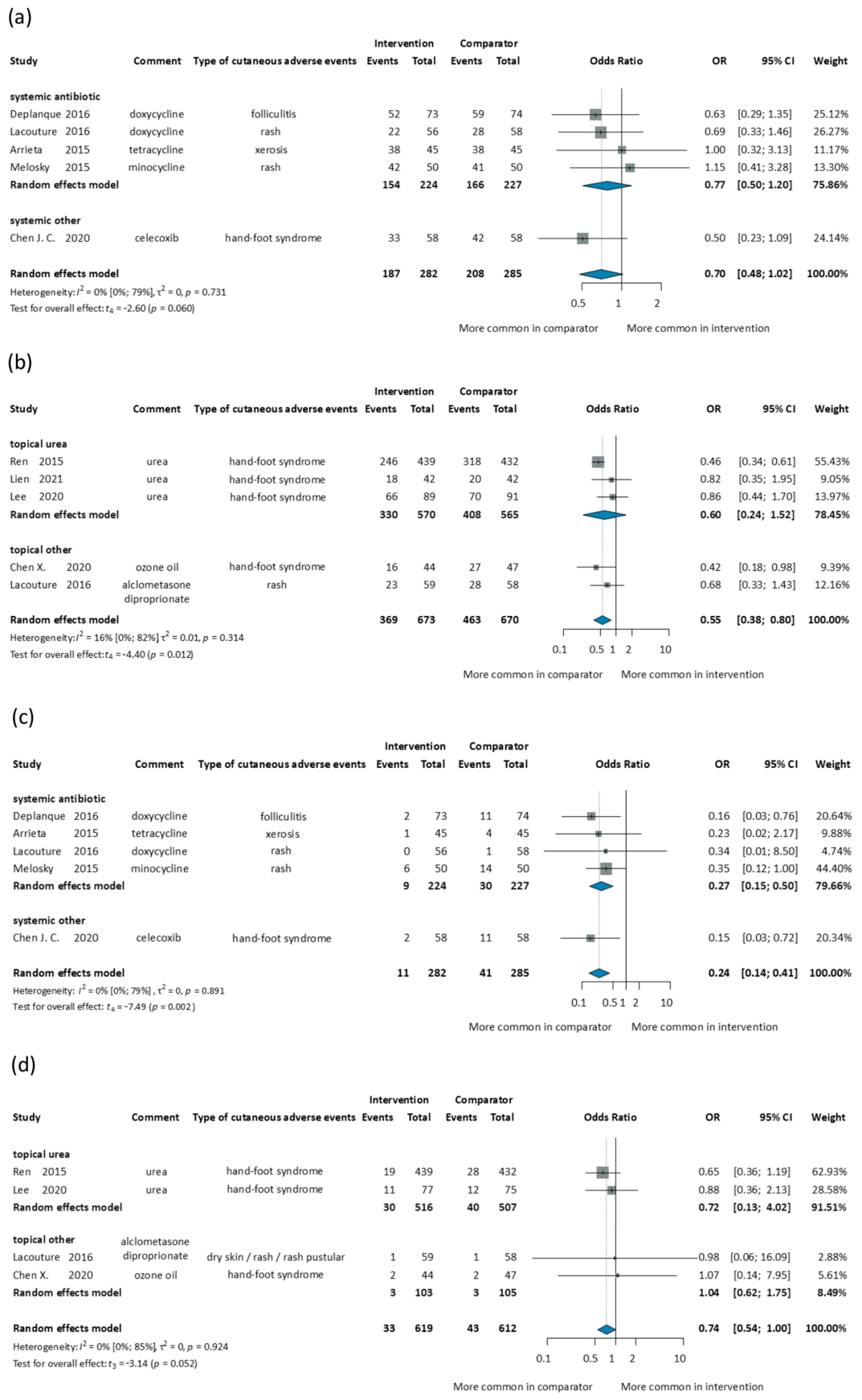
The overall analysis indicated that systemic interventions, including tetracyclines and celecoxib, did not significantly reduce the incidence of grade 1–4 cutaneous adverse events (OR, 0.70; 95% CI, 0.48–1.02; p = 0.060; I2 = 0%). When analyzed separately, tetracyclines also showed a non-significant effect compared to the control group (OR, 0.77; 95% CI, 0.50–1.20) (Figure 2a). In contrast, the overall analysis of topical interventions, including topical urea, ozone oil and steroid (alclometasone dipropionate), demonstrated a statistically significant effect when compared with controls (OR, 0.55; 95% CI, 0.38–0.80; p = 0.012; I2 = 16%). However, the urea subgroup did not show a significant effect in reducing adverse events (OR, 0.60; 95% CI, 0.24–1.52) (Figure 2b).
Figure 2.
Forest plots showing the incidence of cutaneous adverse events of varying severity (grades 1–4) associated with preventive medications in controlled studies; (a) systemic interventions for grade 1–4 adverse events [10,19,21,23,27]; (b) topical interventions for grade 1–4 adverse events [22,27,28,30,35]; (c) systemic interventions for grade 3–4 adverse events [10,19,21,23,27]; (d) topical interventions for grade 3–4 adverse events [22,27,28,35]. Squares represent study-specific effect estimates, with their size reflecting study weight; horizontal lines represent 95% confidence intervals, diamonds represent pooled effect estimates, and the vertical line represents the line of no effect (OR = 1).
In terms of grade 3–4 adverse events, the overall effect of all systemic interventions significantly reduced the incidence of grade 3–4 adverse events (OR, 0.24; 95% CI, 0.14–0.41; p = 0.002, I2 = 0%). The systemic tetracycline subgroup had a significantly reduced incidence of grade 3–4 adverse events (OR, 0.27; 95% CI, 0.15–0.50) (Figure 2c). In contrast, the overall effect of topical interventions did not significantly reduce grade 3–4 adverse events (OR, 0.74; 95% CI, 0.54–1.00), and the topical urea group could not be analyzed separately due to insufficient data (Figure 2d).
The heterogeneity and limited number of studies precluded a reliable assessment of the effectiveness of reactive treatments.
3.4. Qualitative Analysis
A summary of the studies included in the systematic review is presented in Table S2 (Supplementary Materials). Studies demonstrated different levels of evidence and focused on a broad spectrum of preventive and reactive systemic and topical interventions.
3.5. Risk of Bias Assessment and Certainty of Evidence
The RoB2 assessment indicated a low risk of bias or some concerns in randomized controlled trials. Non-randomized comparative studies had a critical risk of bias, while single-arm studies showed poor to moderate methodological quality. The results of the risk of bias assessments are shown in Figures S2 and S3 (RoB2 and ROBINS-I) and Table S3 (MINORS) in the Supplementary Materials. The GRADE assessment indicated a very low certainty of evidence for the quantitative outcome of incidence, as detailed in the Summary of Findings table (Table S4).
4. Discussion
Despite their efficacy, anti-tumor kinase-inhibitor treatments are often associated with cutaneous adverse events that can significantly reduce adherence to oncologic therapy. The most frequently reported cutaneous adverse events resulting from kinase-inhibitor therapies include acneiform rash (75–90%), dry skin (xerosis) (35–80%), itching (pruritus) (50%), nail bed inflammation (paronychia) (10–62%), hand–foot skin reaction (HFSR) (9–62%), and inflammation of the oral mucosa (mucositis) (5–15%) [8,86,87,88].
In terms of prevention, our results showed that systemic interventions, particularly systemic tetracyclines, were associated with a reduced incidence of grade 3–4 cutaneous adverse events related to kinase-inhibitor-based targeted oncologic therapies. Although data did not permit assessment of effects on specific event types, included studies consistently reported reductions in acneiform rash, folliculitis and xerosis when antibiotics were used prophylactically. Pooled topical interventions were associated with a significant reduction in grade 1–4 cutaneous adverse events; however, these interventions were clinically heterogeneous, and the urea subgroup alone did not reach statistical significance. The effect of systemic interventions on grade 1–4 events did not reach statistical significance, although the result suggested a possible reduction in risk. This may indicate a clearer effect on severe cutaneous adverse events and may be consistent with the moderate efficacy of tetracyclines reported in acne vulgaris [89]. Topical interventions do not appear to be sufficient to prevent the more severe cutaneous adverse events.
The results of our meta-analysis provide additional support for current guideline recommendations, which include systemic antibiotic use to mitigate severe cutaneous adverse events caused by kinase inhibitors [8,86]. While previous guidelines primarily emphasized general skin care as a preventive topical treatment strategy, our findings suggest a potential benefit of topical interventions overall; however, the effectiveness of individual topical agents remains uncertain.
Due to the limited and highly heterogeneous evidence base, a quantitative analysis of reactive treatment strategies was not feasible; therefore, the available treatments were summarized qualitatively. The available evidence supporting reactive management strategies is limited and varies substantially across interventions. The included studies differed substantially with regard to the kinase inhibitors associated with the cutaneous adverse events, the types of toxicity treated (e.g., acneiform rash, hand–foot skin reaction, and paronychia), the severity threshold at which reactive treatment was initiated, and the scales used for outcome assessment. Treatment initiation ranged from mild toxicity to grade ≥2 or grade 3 events. The interventions themselves were also diverse, including antibiotics, corticosteroids, NSAIDs, retinoids, polyphenols, vitamins and their derivatives, cardiovascular agents, traditional Chinese medicines, and non-pharmacological approaches such as laser therapy or surgical interventions. Treatments were administered orally, topically, or using a combination of both routes. Furthermore, some studies evaluated monotherapy, whereas others used combination treatment. Many studies lacked a control group, while in others the treatment provided to the control group was not clearly defined, such as “best supportive care.” Reported outcomes included complete and partial response, changes in adverse-event severity, time to improvement, changes in quality of life assessed using different instruments, treatment compliance, modification of the kinase inhibitor dose, and pain. To facilitate interpretation, these diverse outcomes were categorized into three broad domains: efficacy, quality of life, and compliance. Collectively, these differences substantially limited direct comparisons between interventions, and pooling the studies would therefore not have provided a clinically meaningful summary effect. Nevertheless, these studies provide clinically relevant information on the management of established cutaneous toxicities and were therefore retained in the qualitative synthesis.
Within the qualitative synthesis, several recurring management approaches were identified across specific types of cutaneous adverse events, including both preventive and reactive strategies. For acneiform rash [8,86,87,88], oral tetracyclines are commonly recommended together with topical antibiotics, corticosteroids, and general skin care. Alternative options such as traditional Chinese medicine [29] and Japanese honeysuckle extract [31] may be beneficial. As pruritus often co-occurs, effective rash control may relieve itching [8]; additional therapies include antihistamines, antiepileptics, doxepin, aprepitant, and topical menthol (1–3%) [8,86]. Paronychia prevention involves gentle hygiene and the use of topical antiseptics, antibiotics, or corticosteroids [8,86,87]; in severe cases, systemic antibiotics or surgery may be required. Topical betaxolol showed promise in two studies, although evidence remains inconclusive [47,74]. Hand–foot skin reactions [8,87,88] may respond to non-steroidal anti-inflammatory drugs and topical agents such as corticosteroids, keratolytics, hydrocolloid patches with ceramide [36], and heparin-based ointments [64]. Among systemic options, 300 mg/day of vitamin E may help [54], while perindopril was ineffective [65]. Xerosis may be managed with non-irritant moisturizers such as urea, colloidal oatmeal, or petroleum-based creams [86].
4.1. Strengths and Limitations
Our study has several strengths and limitations. It is the first comprehensive meta-analysis to evaluate the efficacy of preventive strategies for kinase inhibitor-induced cutaneous adverse events. We incorporated randomized controlled trials as well as prospective and retrospective observational studies, encompassing a large and diverse patient population. However, the included studies used heterogeneous interventions and methodologies. Only nine studies were eligible for quantitative analysis, most with small sample sizes. Moreover, the certainty of evidence for the main quantitative outcome was very low according to the GRADE assessment, which further limits the strength of clinical recommendations. Non-randomized comparative studies had a critical risk of bias, while single-arm studies showed poor to moderate methodological quality. In addition, underreporting of adverse events in the original trials may have led to incomplete outcome capture. Another limitation is that selecting a single adverse event when multiple outcomes were reported may have introduced outcome-selection bias.
4.2. Implications for Practice
Timely translation of research into clinical practice is essential to maintain up-to-date treatment guidelines [90,91]. Our findings suggest a potential preventive benefit of systemic antibiotics for severe cutaneous adverse events and of topical interventions for grade 1–4 events, although the effectiveness of individual topical agents remains uncertain. Current guidelines primarily provide recommendations for the management of specific cutaneous adverse events [8,86,87,88], whereas our meta-analysis provides pooled estimates of preventive effects across different kinase inhibitors and adverse events. Our findings therefore add quantitative evidence to existing guideline recommendations, although their interpretation should remain cautious because the certainty of evidence in our meta-analysis was very low. Effective prevention may improve quality of life and reduce the risk of discontinuing oncologic therapy.
4.3. Implications for Research
Further randomized controlled trials with standardized methodologies are needed to accurately characterize the spectrum of cutaneous adverse events associated with targeted therapies and to develop evidence-based preventive and therapeutic strategies tailored to each reaction. Future studies should employ standardized study designs focusing on a specific type of cutaneous adverse event induced by a given anticancer agent, with clearly defined interventions, routes of administration, follow-up periods, and study arms, including an appropriate control group. In particular, in studies evaluating reactive treatment strategies, baseline clinical severity should be standardized using a uniform grading scale, and a consistent primary endpoint should be used, such as improvement by at least one grade within a predefined time period. Other outcomes may be assessed as secondary endpoints, including time to improvement, quality-of-life scores, adherence to oncological therapy, and the need for dose modification. Greater standardization would facilitate comparisons between studies and enable future quantitative synthesis. Furthermore, identifying patient subgroups at highest risk during kinase inhibitor therapy will be essential to enable more personalized and effective supportive care.
5. Conclusions
In patients receiving kinase inhibitors, systemic antibiotics were associated with a reduction in grade 3–4 cutaneous adverse events. Pooled topical interventions reduced grade 1–4 cutaneous adverse events; however, the effectiveness of individual topical agents, including urea, remains uncertain.
Supplementary Materials
The following supporting information can be downloaded at: https://www.mdpi.com/article/10.3390/cancers18203263/s1, Table S1: Characteristics of included studies; Table S2: Summary of the results of studies included only in the systematic review; Table S3: Risk of bias assessment with MINORS tool of non-randomized single-arm studies; Table S4: GRADE assessment for controlled studies; Figure S1: Search key; Figure S2: Risk of bias assessment with RoB2 tool of randomized controlled trials of interventions for outcomes of (A) efficacy, (B) quality of life, and (C) adherence to oncological therapy; Figure S3: Risk of bias assessment with ROBINS-I tool of non-randomized more-arm studies.
Author Contributions
Conceptualization, R.Á., F.A.M., A.L., A.S.L., A.B. and N.K.; methodology, R.Á., F.A.M., A.L., A.S.L., A.B. and N.K.; investigation, R.Á. and A.L.; data curation, R.Á. and A.L.; validation, R.Á. and A.L.; formal analysis, A.W.; visualization, A.W.; writing—original draft preparation, R.Á.; writing—review and editing, F.A.M., A.B., N.K. and P.H.; supervision, A.B. and N.K.; project administration, R.Á. A.B. and N.K. contributed equally to the supervision of this work and share last authorship. All authors have read and agreed to the published version of the manuscript.
Funding
This research received no external funding.
Data Availability Statement
No new data were created in this study. The data used in this systematic review and meta-analysis are available in the full-text articles included in the review.
Acknowledgments
We are grateful to the team of the Centre for Translational Medicine for their support.
Conflicts of Interest
The authors declare no conflicts of interest.
Abbreviations
| EGFR | Epidermal Growth Factor Receptor. |
| ALK | Anaplastic Lymphoma Kinase. |
| MET | Hepatocyte Growth Factor Receptor. |
| FGFR | Fibroblast Growth Factor Receptor. |
| VEGFR | Vascular Endothelial Growth Factor Receptor. |
| JAK | Janus Kinase. |
| TRK | Tropomyosin Receptor Kinase. |
| RET | REarranged during Transfection proto-oncogene. |
| BCR-ABL | Fusion oncoprotein in chronic myeloid leukemia (CML). |
References
- Bray, F.; Laversanne, M.; Sung, H.; Ferlay, J.; Siegel, R.L.; Soerjomataram, I.; Jemal, A. Global cancer statistics 2022: GLOBOCAN estimates of incidence and mortality worldwide for 36 cancers in 185 countries. CA A Cancer J. Clin. 2024, 74, 229–263. [Google Scholar] [CrossRef] [Scilit] [PubMed]
- Scott, E.C.; Baines, A.C.; Gong, Y.; Moore, R., Jr.; Pamuk, G.E.; Saber, H.; Subedee, A.; Thompson, M.D.; Xiao, W.; Pazdur, R.; et al. Trends in the approval of cancer therapies by the FDA in the twenty-first century. Nat. Rev. Drug Discov. 2023, 22, 625–640. [Google Scholar] [CrossRef] [Scilit] [PubMed]
- Rerknimitr, P.; Suphankong, Y.; Panchaprateep, R.; Kerr, S.J.; Asawanonda, P. Pulsed-dye laser as an adjuvant treatment for papulopustular eruptions from epidermal growth factor receptor inhibitors, a randomized blinded split-faced controlled trial. Lasers Surg. Med. 2019, 51, 584–591. [Google Scholar] [CrossRef] [Scilit] [PubMed]
- Kim, Y.S.; Ji, J.H.; Oh, S.Y.; Lee, S.; Huh, S.J.; Lee, J.H.; Song, K.H.; Son, C.H.; Roh, M.S.; Lee, G.W.; et al. A Randomized Controlled Trial of Epidermal Growth Factor Ointment for Treating Epidermal Growth Factor Receptor Inhibitor-Induced Skin Toxicities. Oncologist 2020, 25, e186–e193. [Google Scholar] [CrossRef] [Scilit] [PubMed]
- NCI. Common Terminology Criteria for Adverse Events (CTCAE), version 5.0; NCI: Rockville, MD, USA, 2017. [Google Scholar]
- Gutzmer, R.; Wollenberg, A.; Ugurel, S.; Homey, B.; Ganser, A.; Kapp, A. Cutaneous side effects of new antitumor drugs: Clinical features and management. Dtsch. Arztebl. Int. 2012, 109, 133–140. [Google Scholar] [CrossRef] [Scilit] [PubMed]
- Lacouture, M.; Sibaud, V. Toxic Side Effects of Targeted Therapies and Immunotherapies Affecting the Skin, Oral Mucosa, Hair, and Nails. AM. J. Clin. Dermatol. 2018, 19, 31–39. [Google Scholar] [CrossRef] [Scilit] [PubMed]
- Lacouture, M.E.; Sibaud, V.; Gerber, P.A.; van den Hurk, C.; Fernández-Peñas, P.; Santini, D.; Jahn, F.; Jordan, K. Prevention and management of dermatological toxicities related to anticancer agents: ESMO Clinical Practice Guidelines. Ann. Oncol. 2021, 32, 157–170. [Google Scholar] [CrossRef] [Scilit] [PubMed]
- Masago, K.; Imamichi, F.; Masuda, Y.; Ariga, N.; Fujitomi, K.; Fukumine, Y.; Hatakenaka, K.; Fujita, S.; Katakami, N. Team Management of Skin Rash Associated with Use of Epidermal Growth Factor Receptor-Tyrosine Kinase Inhibitors. Asia Pac. J. Oncol. Nurs. 2018, 5, 430–434. [Google Scholar] [CrossRef] [Scilit] [PubMed]
- Melosky, B.; Anderson, H.; Burkes, R.L.; Chu, Q.; Hao, D.; Ho, V.; Ho, C.; Lam, W.; Lee, C.W.; Leighl, N.B.; et al. Pan Canadian Rash Trial: A Randomized Phase III Trial Evaluating the Impact of a Prophylactic Skin Treatment Regimen on Epidermal Growth Factor Receptor-Tyrosine Kinase Inhibitor-Induced Skin Toxicities in Patients with Metastatic Lung Cancer. J. Clin. Oncol. 2016, 34, 810–815. [Google Scholar] [CrossRef] [Scilit] [PubMed]
- Huynh Dagher, S.; Blom, A.; Chabanol, H.; Funck-Brentano, E. Cutaneous toxicities from targeted therapies used in oncology: Literature review of clinical presentation and management. Int. J. Womens Dermatol. 2021, 7, 615–624. [Google Scholar] [CrossRef] [Scilit] [PubMed]
- Salzmann, M.; Marmé, F.; Hassel, J.C. Prophylaxis and Management of Skin Toxicities. Breast Care 2019, 14, 72–77. [Google Scholar] [CrossRef] [Scilit] [PubMed]
- Higgins, J.P.T.; Chandler, J.; Cumpston, M.; Li, T.; Page, M.J.; Welch, V.A. Cochrane Handbook for Systematic Reviews of Interventions, version 6.5 (updated August 2024); Cochrane: London, UK, 2024.
- Page, M.J.; McKenzie, J.E.; Bossuyt, P.M.; Boutron, I.; Hoffmann, T.C.; Mulrow, C.D.; Shamseer, L.; Tetzlaff, J.M.; Akl, E.A.; Brennan, S.E.; et al. The PRISMA 2020 statement: An updated guideline for reporting systematic reviews. BMJ 2021, 372, n71. [Google Scholar] [CrossRef] [Scilit] [PubMed]
- Page, M.J.; Moher, D.; Bossuyt, P.M.; Boutron, I.; Hoffmann, T.C.; Mulrow, C.D.; Shamseer, L.; Tetzlaff, J.M.; Akl, E.A.; Brennan, S.E.; et al. PRISMA 2020 explanation and elaboration: Updated guidance and exemplars for reporting systematic reviews. BMJ 2021, 372, n160. [Google Scholar] [CrossRef] [PubMed]
- The EndNote Team. EndNote; Clarivate: Philadelphia, PA, USA, 2013. [Google Scholar]
- Ouzzani, M.; Hammady, H.; Fedorowicz, Z.; Elmagarmid, A. Rayyan—A web and mobile app for systematic reviews. Syst. Rev. 2016, 5, 210. [Google Scholar] [CrossRef] [Scilit] [PubMed]
- Amitay-Laish, I.; Prag-Naveh, H.; Ollech, A.; Davidovici, B.; Leshem, Y.A.; Snast, I.; Popovtzer, A.; Purim, O.; Flex, D.; David, M.; et al. Prophylactic Topical Treatment for EGFR Inhibitor-Induced Papulopustular Rash: A Randomized Clinical Trial. Dermatology 2021, 237, 988–994. [Google Scholar] [CrossRef] [Scilit] [PubMed]
- Arrieta, O.; Vega-González, M.T.; López-Macías, D.; Martínez-Hernández, J.N.; Bacon-Fonseca, L.; Macedo-Pérez, E.O.; Ramírez-Tirado, L.A.; Flores-Estrada, D.; de la Garza-Salazar, J. Randomized, open-label trial evaluating the preventive effect of tetracycline on afatinib induced-skin toxicities in non-small cell lung cancer patients. Lung Cancer 2015, 88, 282–288. [Google Scholar] [CrossRef] [Scilit] [PubMed]
- Chayahara, N.; Mukohara, T.; Tachihara, M.; Fujishima, Y.; Fukunaga, A.; Washio, K.; Yamamoto, M.; Nakata, K.; Kobayashi, K.; Takenaka, K.; et al. Adapalene Gel 0.1% Versus Placebo as Prophylaxis for Anti-Epidermal Growth Factor Receptor-Induced Acne-Like Rash: A Randomized Left-Right Comparative Evaluation (APPEARANCE). Oncologist 2019, 24, 885-e413. [Google Scholar] [CrossRef] [Scilit] [PubMed]
- Chen, J.C.; Wang, J.C.; Pan, Y.X.; Yi, M.J.; Chen, J.B.; Wang, X.H.; Fu, Y.Z.; Zhang, Y.J.; Xu, L.; Chen, M.S.; et al. Preventive effect of celecoxib in sorafenib-related hand-foot syndrome in hepatocellular carcinoma patients, a single-center, open-label, randomized, controlled clinical phase III trial. Am. J. Cancer Res. 2020, 10, 1467–1476. [Google Scholar] [PubMed]
- Chen, X.; Jiang, Y.; Zhang, Y.; Dai, W.; Fan, R.; Weng, X.; He, P.; Yan, F.; Guo, Y. Effect of ozone oil for prevention and treatment of sorafenib-induced hand-foot skin reactions: A randomized controlled trial. J. South. Med. Univ. 2020, 40, 1488–1492. [Google Scholar] [CrossRef] [PubMed]
- Deplanque, G.; Gervais, R.; Vergnenegre, A.; Falchero, L.; Souquet, P.J.; Chavaillon, J.M.; Taviot, B.; Fraboulet, G.; Saal, H.; Robert, C.; et al. Doxycycline for prevention of erlotinib-induced rash in patients with non-Small-cell lung cancer (NSCLC) after failure of first-line chemotherapy: A randomized, open-label trial. J. Am. Acad. Dermatol. 2016, 74, 1077–1085. [Google Scholar] [CrossRef] [Scilit] [PubMed]
- Jatoi, A.; Rowland, K.; Sloan, J.A.; Gross, H.M.; Fishkin, P.A.; Kahanic, S.P.; Novotny, P.J.; Schaefer, P.L.; Johnson, D.B.; Tschetter, L.K.; et al. Tetracycline to prevent epidermal growth factor receptor inhibitor-induced skin rashes: Results of a placebo-controlled trial from the North Central Cancer Treatment Group (N03CB). Cancer 2008, 113, 847–853. [Google Scholar] [CrossRef] [Scilit] [PubMed]
- Jatoi, A.; Ou, F.S.; Ahn, D.H.; Zemla, T.J.; Le-Rademacher, J.G.; Boland, P.; Ciombor, K.K.; Jacobs, N.L.; Pasche, B.; Cleary, J.M.; et al. Preemptive Versus Reactive Topical Clobetasol for Regorafenib-Induced Hand-Foot Reactions: A Preplanned Analysis of the ReDOS Trial. Oncologist 2021, 26, 610–618. [Google Scholar] [CrossRef] [Scilit] [PubMed]
- Jornsamer, C.; Theerawattanawit, C.; Wichayachakorn, C.; Panchaprateep, R.; Kerr, S.J.; Asawanonda, P.; Rerknimitr, P. Red light emitting diode as an adjuvant treatment for epidermal growth factor receptor inhibitors-induced paronychia. J. Dermatol. Treat. 2022, 33, 1990–1994. [Google Scholar] [CrossRef] [Scilit] [PubMed]
- Lacouture, M.E.; Keefe, D.M.; Sonis, S.; Jatoi, A.; Gernhardt, D.; Wang, T.; Doherty, J.P.; Giri, N.; Nadanaciva, S.; O’Connell, J.; et al. A phase II study (ARCHER 1042) to evaluate prophylactic treatment of dacomitinib-induced dermatologic and gastrointestinal adverse events in advanced non-small-cell lung cancer. Ann. Oncol. 2016, 27, 1712–1718. [Google Scholar] [CrossRef] [Scilit] [PubMed]
- Lee, Y.S.; Jung, Y.K.; Kim, J.H.; Cho, S.B.; Kim, D.Y.; Kim, M.Y.; Kim, H.J.; Seo, Y.S.; Yoon, K.T.; Hong, Y.M.; et al. Effect of urea cream on sorafenib-associated hand-foot skin reaction in patients with hepatocellular carcinoma: A multicenter, randomised, double-blind controlled study. Eur. J. Cancer 2020, 140, 19–27. [Google Scholar] [CrossRef] [Scilit] [PubMed]
- Li, C.L.; Hsia, T.C.; Yang, S.T.; Chao, K.C.; Tu, C.Y.; Chen, H.J.; Li, C.H. Efficacy of Prophylactic Traditional Chinese Medicine on Skin Toxicity of Afatinib in EGFR Mutation-Positive Advanced Lung Adenocarcinoma: A Single-Center, Prospective, Double-Blinded, Randomized-Controlled Pilot Trial. Integr. Cancer Ther. 2022, 21, 15347354221086663. [Google Scholar] [CrossRef] [Scilit] [PubMed]
- Lien, R.Y.; Tung, H.H.; Wu, S.L.; Hu, S.H.; Lu, L.C.; Lu, S.F. Validation of the prophylactic efficacy of urea-based creams on sorafenib-induced hand-foot skin reaction in patients with advanced hepatocellular carcinoma: A randomised experiment study. Cancer Rep. 2021, 5, e1532. [Google Scholar] [CrossRef] [Scilit] [PubMed]
- Liu, Z.; Tian, T.; Wang, B.; Lu, D.; Ruan, J.; Shan, J. Reducing Acneiform Rash Induced by EGFR Inhibitors with Honeysuckle Therapy: A Prospective, Randomized, Controlled Study. Front. Pharmacol. 2022, 13, 835166. [Google Scholar] [CrossRef] [Scilit] [PubMed]
- Meadows, K.L.; Rushing, C.; Honeycutt, W.; Latta, K.; Howard, L.; Arrowood, C.A.; Niedzwiecki, D.; Hurwitz, H.I. Treatment of palmar-plantar erythrodysesthesia (PPE) with topical sildenafil: A pilot study. Support. Care Cancer 2015, 23, 1311–1319. [Google Scholar] [CrossRef] [Scilit] [PubMed]
- Nishino, K.; Fujiwara, Y.; Ohe, Y.; Saito, R.; Miyauchi, E.; Kobayashi, T.; Nakai, Y.; Takahashi, T.; Shibata, T.; Hamaguchi, T.; et al. Results of the non-small cell lung cancer part of a phase III, open-label, randomized trial evaluating topical corticosteroid therapy for facial acneiform dermatitis induced by EGFR inhibitors: Stepwise rank down from potent corticosteroid (FAEISS study, NCCH-1512). Support. Care Cancer 2021, 29, 2327–2334. [Google Scholar] [CrossRef] [Scilit] [PubMed]
- Peng, Y.M.; Duan, H.; Zhang, J.; Sun, C.; Zhang, X.; Shen, W.; Zheng, S.; Tan, K.; Jiang, X.; Li, J.; et al. Application of Zizao Yangrong Granules for Treating Targeted Drugs-Related Skin Xerosis: A Randomized Double-Blinded Controlled Study. Integr. Cancer Ther. 2020, 19, 1534735420924832. [Google Scholar] [CrossRef] [Scilit] [PubMed]
- Ren, Z.; Zhu, K.; Kang, H.; Lu, M.; Qu, Z.; Lu, L.; Song, T.; Zhou, W.; Wang, H.; Yang, W.; et al. Randomized controlled trial of the prophylactic effect of urea-based cream on sorafenib-associated hand-foot skin reactions in patients with advanced hepatocellular carcinoma. J. Clin. Oncol. 2015, 33, 894–900. [Google Scholar] [CrossRef] [Scilit] [PubMed]
- Shinohara, N.; Nonomura, N.; Eto, M.; Kimura, G.; Minami, H.; Tokunaga, S.; Naito, S. A randomized multicenter phase II trial on the efficacy of a hydrocolloid dressing containing ceramide with a low-friction external surface for hand-foot skin reaction caused by sorafenib in patients with renal cell carcinoma. Ann. Oncol. 2014, 25, 472–476. [Google Scholar] [CrossRef] [Scilit] [PubMed]
- Tian, A.; Zhou, A.; Bi, X.; Hu, S.; Jiang, Z.; Zhang, W.; Huang, Z.; Shi, H.; Yang, B.; Chen, W. Efficacy of Topical Compound Danxiong Granules for Treatment of Dermatologic Toxicities Induced by Targeted Anticancer Therapy: A Randomized, Double-Blind, Placebo-Controlled Trial. Evid. Based Complement. Altern. Med. 2017, 2017, 3970601. [Google Scholar] [CrossRef] [Scilit] [PubMed]
- Vincenzi, B.; Trower, M.; Duggal, A.; Guglielmini, P.; Harris, P.; Jackson, D.; Lacouture, M.E.; Ratti, E.; Tonini, G.; Wood, A.; et al. Neurokinin-1 antagonist orvepitant for EGFRI-induced pruritus in patients with cancer: A randomised, placebo-controlled phase II trial. BMJ Open 2020, 10, e030114. [Google Scholar] [CrossRef] [Scilit] [PubMed]
- Wang, Y.; Yang, Y.; Xu, J.; Yu, J.; Liu, X.; Gao, R.; Zhang, L. Randomized double-blind trial of prophylactic topical Evozac® calming skin spray for gefitinib-associated acne-like eruption. OncoTargets Ther. 2014, 7, 1261–1266. [Google Scholar] [CrossRef] [Scilit] [PubMed][Green Version]
- Zhang, J.; Lu, X.; Zhang, X.; Tan, K.; Li, J.; Cui, H. Topical Zhiyang Pingfu Liquid for Moderate to Severe Skin Rash Associated with EGFRIs: A double-blinded randomized controlled trial. Integr. Cancer Ther. 2022, 21, 15347354221140409. [Google Scholar] [CrossRef] [Scilit] [PubMed]
- Bavetta, M.; Silvaggio, D.; Campione, E.; Sollena, P.; Formica, V.; Coletta, D.; Graziani, G.; Romano, M.C.P.; Roselli, M.; Peris, K.; et al. The effects of association of topical polydatin improves the preemptive systemic treatment on EGFR inhibitors cutaneous adverse reactions. J. Clin. Med. 2021, 10, 466. [Google Scholar] [CrossRef] [Scilit] [PubMed]
- Gerber, P.A.; Meller, S.; Eames, T.; Buhren, B.A.; Schrumpf, H.; Hetzer, S.; Ehmann, L.M.; Budach, W.; Bölke, E.; Matuschek, C.; et al. Management of EGFR-inhibitor associated rash: A retrospective study in 49 patients. Eur. J. Med. Res. 2012, 17, 4. [Google Scholar] [CrossRef] [PubMed]
- Goto, A.; Ozawa, Y.; Koda, K.; Akahori, D.; Koyauchi, T.; Amano, Y.; Kakutani, T.; Sato, Y.; Hasegawa, H.; Matsui, T.; et al. Clinical impact of minocycline on afatinib-related rash in patients with non-small cell lung cancer harboring epidermal growth factor receptor mutations. Respir. Investig. 2018, 56, 179–183. [Google Scholar] [CrossRef] [Scilit] [PubMed]
- Iimura, Y.; Shimomura, H.; Yasu, T.; Imanaka, K.; Ogawa, R.; Ito, A.; Suzuki, K.; Yamaguchi, G.; Kawasaki, N.; Konaka, C. NSAIDs may prevent EGFR-TKI-related skin rash in non-small cell lung cancer patients. Int. J. Clin. Pharmacol. Ther. 2018, 56, 551–554. [Google Scholar] [CrossRef] [Scilit] [PubMed]
- Kanazawa, S.; Yamaguchi, K.; Kinoshita, Y.; Muramatsu, M.; Komiyama, Y.; Nomura, S. Aspirin reduces adverse effects of gefitinib. Anticancer Drugs 2006, 17, 423–427. [Google Scholar] [CrossRef] [Scilit] [PubMed]
- Liu, T.H.; Wu, S.Y.; Tsai, S.L.; Wu, C.W.; Hou, C.C.; Lai, C.Y.; Tzeng, Y.S. Effective and enduring surgical treatment for targeted therapy-related paronychia: A retrospective study. Medicine 2022, 101, e31208. [Google Scholar] [CrossRef] [Scilit] [PubMed]
- Lu, C.W.; Wang, T.Y.; Yen, C.F.; Chen, K.H.; Wu, C.E.; Wang, C.L.; Hsu, P.C.; Fang, Y.F.; Li, S.H.; Ko, H.W.; et al. Using betaxolol for the prevention of paronychia induced by epidermal growth factor receptor inhibitors: A case–control cohort study. Int. J. Dermatol. 2021, 60, 179–184. [Google Scholar] [CrossRef] [Scilit] [PubMed]
- Naganuma, A.; Hoshino, T.; Ohno, N.; Ogawa, Y.; Murakami, T.; Horiguchi, S.; Uehara, D.; Suzuki, Y.; Hatanaka, T.; Kudo, T.; et al. β-Hydroxy-β-methyl Butyrate/L-Arginine/L-Glutamine Supplementation for Preventing Hand-Foot Skin Reaction in Sorafenib for Advanced Hepatocellular Carcinoma. In Vivo 2019, 33, 155–161. [Google Scholar] [CrossRef] [Scilit] [PubMed]
- Shinohara, A.; Ikeda, M.; Okuyama, H.; Kobayashi, M.; Funazaki, H.; Mitsunaga, S.; Shimizu, S.; Ohno, I.; Takahashi, H.; Ichida, Y.; et al. Efficacy of prophylactic minocycline treatment for skin toxicities induced by erlotinib plus gemcitabine in patients with advanced pancreatic cancer: A retrospective study. Am. J. Clin. Dermatol. 2015, 16, 221–229. [Google Scholar] [CrossRef] [Scilit] [PubMed]
- Wong, S.F.; Lindgren, A.; Mummaneni, M.; Byun, T.; Vasko, C.; Arenos, R.; Alexson, E.; Osann, K. A prospective crossover pilot study to evaluate the use of a topical wound gel in patients with cutaneous toxicity caused by epidermal growth factor receptor inhibitors. J. Support. Oncol. 2010, 8, 202–208. [Google Scholar] [CrossRef] [Scilit] [PubMed]
- Alexandrescu, D.T.; Vaillant, J.G.; Dasanu, C.A. Effect of treatment with a colloidal oatmeal lotion on the acneform eruption induced by epidermal growth factor receptor and multiple tyrosine-kinase inhibitors. Clin. Exp. Dermatol. 2007, 32, 71–74. [Google Scholar] [CrossRef] [Scilit] [PubMed]
- Bidoli, P.; Cortinovis, D.L.; Colombo, I.; Crippa, A.; Cicchiello, F.; Villa, F.; Cazzaniga, M.E.; Altomare, G. Isotretinoin plus clindamycin seem highly effective against severe erlotinib-induced skin rash in advanced non-small cell lung cancer. J. Thorac. Oncol. 2010, 5, 1662–1663. [Google Scholar] [CrossRef] [Scilit] [PubMed]
- de Noronha, N.M.; Lima, R.; Moreira, A.; Varela, P.; Barroso, A.; Baptista, A.; Parente, B. Description and management of cutaneous side effects during erlotinib and cetuximab treatment in lung and colorectal cancer patients: A prospective and descriptive study of 19 patients. Eur. J. Dermatol. 2009, 19, 248–251. [Google Scholar] [CrossRef] [Scilit] [PubMed]
- Bozkurt Duman, B.; Kara, B.; Oguz Kara, I.; Demiryurek, H.; Aksungur, E. Hand-foot syndrome due to sorafenib in hepatocellular carcinoma treated with vitamin E without dose modification; a preliminary clinical study. J. Buon 2011, 16, 759–764. [Google Scholar] [PubMed]
- Fernández-Guarino, M.; Pérez García, B.; de la Mora, I.A.F.; García-Millán, C.; Garrido López, P.; Jaén Olasolo, P. Treatment of acneiform rash by epidermal growth factor inhibitors with oral tetracyclines. Actas Dermosifiliogr. 2006, 97, 503–508. [Google Scholar] [CrossRef] [Scilit] [PubMed]
- Fuggetta, M.P.; Migliorino, M.R.; Ricciardi, S.; Osman, G.; Iacono, D.; Leone, A.; Lombardi, A.; Ravagnan, G.; Greco, S.; Remotti, D.; et al. Prophylactic Dermatologic Treatment of Afatinib-Induced Skin Toxicities in Patients with Metastatic Lung Cancer: A Pilot Study. Scientifica 2019, 2019, 9136249. [Google Scholar] [CrossRef] [Scilit] [PubMed]
- Grande, R.; Narducci, F.; Bianchetti, S.; Mansueto, G.; Gemma, D.; Sperduti, I.; Trombetta, G.; Angelini, F.; Gamucci, T. Pre-emptive skin toxicity treatment for anti-EGFR drugs: Evaluation of efficacy of skin moisturizers and lymecycline. A phase II study. Support. Care Cancer 2013, 21, 1691–1695. [Google Scholar] [CrossRef] [Scilit] [PubMed]
- Hwang, I.G.; Kang, J.H.; Oh, S.Y.; Lee, S.; Kim, S.H.; Song, K.H.; Son, C.; Park, M.J.; Kang, M.H.; Kim, H.G.; et al. Phase II trial of epidermal growth factor ointment for patients with Erlotinib-related skin effects. Support. Care Cancer 2016, 24, 301–309. [Google Scholar] [CrossRef] [Scilit] [PubMed]
- Ichiki, M.; Wataya, H.; Yamada, K.; Tsuruta, N.; Takeoka, H.; Okayama, Y.; Sasaki, J.; Hoshino, T. Preventive effect of kampo medicine (hangeshashin-to, TJ-14) plus minocycline against afatinib-induced diarrhea and skin rash in patients with non-small cell lung cancer. Onco. Targets Ther. 2017, 10, 5107–5113. [Google Scholar] [CrossRef] [Scilit] [PubMed]
- Ishikawa, H.; Hamauchi, S.; Tanaka, R.; Shino, M.; Yamazaki, K. Effectiveness of topical steroid therapy for prevention of Regorafenib associated Hand-foot Skin Reaction. J. Appl. Pharm. 2017, 9, 248. [Google Scholar] [CrossRef] [Scilit]
- Iwasaku, M.; Uchino, J.; Yamada, T.; Chihara, Y.; Shimamoto, T.; Tamiya, N.; Kaneko, Y.; Kiyomi, F.; Takayama, K. Rationale and design of a phase II study to evaluate prophylactic treatment of dacomitinib-induced dermatologic adverse events in epidermal growth factor receptor-mutated advanced non-small cell lung cancer (SPIRAL-Daco study). Transl. Lung Cancer Res. 2019, 8, 519–523. [Google Scholar] [CrossRef] [Scilit] [PubMed]
- Iwasaku, M.; Uchino, J.; Chibana, K.; Tanzawa, S.; Yamada, T.; Tobino, K.; Uchida, Y.; Kijima, T.; Nakatomi, K.; Izumi, M.; et al. Prophylactic treatment of dacomitinib-induced skin toxicities in epidermal growth factor receptor-mutated non–small-cell lung cancer: A multicenter, Phase II trial. Cancer Med. 2023, 12, 15117–15127. [Google Scholar] [CrossRef] [Scilit] [PubMed]
- Kim, E.J.; Ryu, M.H.; Park, S.R.; Beck, M.Y.; Lee, W.J.; Lee, M.W.; Kang, Y.K. Systemic Steroid Treatment for Imatinib-Associated Severe Skin Rash in Patients with Gastrointestinal Stromal Tumor: A Phase II Study. Oncologist 2020, 25, e1785–e1793. [Google Scholar] [CrossRef] [Scilit] [PubMed]
- Li, J.R.; Yang, C.R.; Cheng, C.L.; Ho, H.C.; Chiu, K.Y.; Su, C.K.; Chen, W.M.; Wang, S.S.; Chen, C.S.; Yang, C.K.; et al. Efficacy of a protocol including heparin ointment for treatment of multikinase inhibitor-induced hand-foot skin reactions. Support. Care Cancer 2013, 21, 907–911. [Google Scholar] [CrossRef] [Scilit] [PubMed]
- Melosky, B.L.; Lim, H.J.; Davies, J.M.; Gill, S.; Kollmannsberger, C.K.; Ho, M.Y.; Vandt, S.A.; Renouf, D.J. A phase II trial of the effect of perindopril on hand–foot skin reaction (HFSR) incidence and severity in patients receiving regorafenib for refractory mCRC. Cancer Chemother. Pharmacol. 2019, 83, 411–417. [Google Scholar] [CrossRef] [Scilit] [PubMed]
- Nishizawa, A.; Shinozaki, E.; Wakatsuki, T.; Satoh, T.; Yamazaki, N.; Oyamada, S.; Ariyoshi, K.; Kihara, K.; Tsuboi, M.; Yamaguchi, K. Efficacy of aluminum chloride in severe regorafenib-associated hand-foot skin reactions: A single-arm trial. BMC Cancer 2023, 23, 401. [Google Scholar] [CrossRef] [Scilit] [PubMed]
- Okajima, M.; Miura, S.; Watanabe, S.; Tanaka, H.; Ito, K.; Ishida, T.; Makino, M.; Iwashima, A.; Matsumoto, N.; Sato, K.; et al. A prospective phase II study of multimodal prophylactic treatment for afatinib-induced adverse events in advanced non-small cell lung cancer (Niigata Lung Cancer Treatment Group 1401). Transl. Lung Cancer Res. 2021, 10, 252–260. [Google Scholar] [CrossRef] [Scilit] [PubMed]
- Shou, L.; Shao, T.; Zhao, F.; Chen, S.; Chen, Q.; Shu, Q. The Efficacy and Safety of the Shouzu Ning Decoction Treatment for Multi-Kinase Inhibitors-Associated Severe Hand-Foot Skin Reaction. Cancer Manag. Res. 2021, 13, 45–53. [Google Scholar] [CrossRef] [Scilit] [PubMed]
- Shou, L.; Chen, J.; Shao, T.; Zhang, Y.; Zhao, S.; Chen, S.; Shu, Q. Clinical characteristics, treatment outcomes, and prognosis in patients with MKIs-associated hand-foot skin reaction: A retrospective study. Support. Care Cancer 2023, 31, 375. [Google Scholar] [CrossRef] [Scilit] [PubMed]
- Tohyama, M.; Sakaguchi, C.; Nishina, T.; Hyodo, I. Possible involvement of zinc deficiency in epidermal growth factor receptor inhibitor-induced xerotic dermatitis. J. Dermatol. 2021, 48, 1579–1583. [Google Scholar] [CrossRef] [Scilit] [PubMed]
- Wang, D.G.; Barrios, D.M.; Blinder, V.S.; Bromberg, J.F.; Drullinsky, P.R.; Funt, S.A.; Jhaveri, K.L.; Lake, D.E.; Lyons, T.; Modi, S.; et al. Dermatologic adverse events related to the PI3Kα inhibitor alpelisib (BYL719) in patients with breast cancer. Breast Cancer Res. Treat. 2020, 183, 227–237. [Google Scholar] [CrossRef] [Scilit] [PubMed]
- Wu, J.; Liu, D.; Offin, M.; Lezcano, C.; Torrisi, J.M.; Brownstein, S.; Hyman, D.M.; Gounder, M.M.; Abida, W.; Drilon, A.; et al. Characterization and management of ERK inhibitor associated dermatologic adverse events: Analysis from a nonrandomized trial of ulixertinib for advanced cancers. Invest. New Drugs 2021, 39, 785–795. [Google Scholar] [CrossRef] [Scilit] [PubMed]
- Yamamoto, K.; Nishiyama, S.; Kunisada, M.; Iida, M.; Ito, T.; Ioroi, T.; Makimoto, H.; Omura, T.; Harada, K.; Fujisawa, M.; et al. Safety and Efficacy of Bis-Glyceryl Ascorbate as Prophylaxis for Hand-Foot Skin Reaction: A Single-Arm, Open-Label Phase I/II Study (DGA Study). Oncologist 2022, 27, e384–e392. [Google Scholar] [CrossRef] [Scilit] [PubMed]
- Yen, C.F.; Hsu, C.K.; Yang, H.S.; Lee, C.N.; Chi, C.C.; Chung, W.H.; Wang, C.L.; Pang, J.S.; Wang, C.W.; Ko, Y.S.; et al. Treatment of epidermal growth factor receptor inhibitor-induced severe paronychia with pyogenic granuloma-like lesions with topical betaxolol: An open-label observation study. Int. J. Dermatol. 2020, 59, 326–332. [Google Scholar] [CrossRef] [Scilit] [PubMed]
- GRADEpro GDT: GRADEpro Guideline Development Tool [Software]. McMaster University and Evidence Prime, 2026. Available online: https://www.gradepro.org (accessed on 5 October 2026).
- Mantel, N.; Haenszel, W. Statistical Aspects of the Analysis of Data from Retrospective Studies of Disease. J. Natl. Cancer Inst. 1959, 22, 719–748. [Google Scholar] [CrossRef] [Scilit]
- Robins, J.; Greenland, S.; Breslow, N.E. A general estimator for the variance of the Mantel-Haenszel odds ratio. Am. J. Epidemiol. 1986, 124, 719–723. [Google Scholar] [CrossRef] [Scilit] [PubMed]
- Cooper, H.M.; Hedges, L.V.; Valentine, J.C. The Handbook of Research Synthesis and Meta-Analysis, 2nd ed.; Russell Sage Foundation: New York, NY, USA, 2009. [Google Scholar]
- Sweeting, M.J.; Sutton, A.J.; Lambert, P.C. What to add to nothing? Use and avoidance of continuity corrections in meta-analysis of sparse data. Stat. Med. 2004, 23, 1351–1375. [Google Scholar] [CrossRef] [Scilit] [PubMed]
- Paule, R.C.; Mandel, J. Consensus Values and Weighting Factors. J. Res. Natl. Bur. Stand. 1982, 87, 377–385. [Google Scholar] [CrossRef] [Scilit] [PubMed]
- Veroniki, A.A.; Jackson, D.; Viechtbauer, W.; Bender, R.; Bowden, J.; Knapp, G.; Kuss, O.; Higgins, J.P.; Langan, D.; Salanti, G. Methods to estimate the between-study variance and its uncertainty in meta-analysis. Res. Synth. Methods 2016, 7, 55–79. [Google Scholar] [CrossRef] [Scilit] [PubMed]
- Harrer, M.; Cuijpers, P.; Furukawa, T.A.; Ebert, D.D. Doing Meta-Analysis with R: A Hands-On Guide, 1st ed.; Chapman & Hall/CRC Press: London, UK, 2021. [Google Scholar]
- Team, R.C. R: A Language and Environment for Statistical Computing, version 4.4.2; R Foundation for Statistical Computing: Vienna, Austria, 2024. [Google Scholar]
- Balduzzi, S.; Rücker, G.; Schwarzer, G. How to perform a meta-analysis with R: A practical tutorial. Evid. Based Ment. Health 2019, 22, 153–160. [Google Scholar] [CrossRef] [Scilit] [PubMed]
- Haddaway, N.R.; Page, M.J.; Pritchard, C.C.; McGuinness, L.A. PRISMA2020: An R package and Shiny app for producing PRISMA 2020-compliant flow diagrams, with interactivity for optimised digital transparency and Open Synthesis. Campbell Syst. Rev. 2022, 18, e1230. [Google Scholar] [CrossRef] [Scilit] [PubMed]
- Lacouture, M.E.; Anadkat, M.J.; Bensadoun, R.-J.; Bryce, J.; Chan, A.; Epstein, J.B.; Eaby-Sandy, B.; Murphy, B.A.; Group, M.S.T.S. Clinical practice guidelines for the prevention and treatment of EGFR inhibitor-associated dermatologic toxicities. Support. Care Cancer 2011, 19, 1079–1095. [Google Scholar] [CrossRef] [Scilit] [PubMed]
- Galvin, M. Clinical Guideline for the Management of Skin Toxicity Associated with Systemic Anti-Cancer Therapy (SACT) in Adult Patients; NHS Scotland North: Dundee, UK, 2018. [Google Scholar]
- Williams, L.A.; Ginex, P.K.; Ebanks, G.L., Jr.; Ganstwig, K.; Ciccolini, K.; Kwong, B.K.; Robison, J.; Shelton, G.; Strelo, J.; Wiley, K.; et al. ONS Guidelines™ for Cancer Treatment-Related Skin Toxicity. Oncol. Nurs. Forum 2020, 47, 539–556. [Google Scholar] [CrossRef] [Scilit] [PubMed]
- Mavranezouli, I.; Daly, C.H.; Welton, N.J.; Deshpande, S.; Berg, L.; Bromham, N.; Arnold, S.; Phillippo, D.M.; Wilcock, J.; Xu, J.; et al. A systematic review and network meta-analysis of topical pharmacological, oral pharmacological, physical and combined treatments for acne vulgaris. Br. J. Dermatol. 2022, 187, 639–649. [Google Scholar] [CrossRef] [Scilit] [PubMed]
- Hegyi, P.; Petersen, O.H.; Holgate, S.; Erőss, B.; Garami, A.; Szakács, Z.; Dobszai, D.; Balaskó, M.; Kemény, L.; Peng, S.; et al. Academia Europaea Position Paper on Translational Medicine: The Cycle Model for Translating Scientific Results into Community Benefits. J. Clin. Med. 2020, 9, 1532. [Google Scholar] [CrossRef] [Scilit] [PubMed]
- Hegyi, P.; Erőss, B.; Izbéki, F.; Párniczky, A.; Szentesi, A. Accelerating the translational medicine cycle: The Academia Europaea pilot. Nat. Med. 2021, 27, 1317–1319. [Google Scholar] [CrossRef] [Scilit] [PubMed]
Disclaimer/Publisher’s Note: The statements, opinions and data contained in all publications are solely those of the individual author(s) and contributor(s) and not of MDPI and/or the editor(s). MDPI and/or the editor(s) disclaim responsibility for any injury to people or property resulting from any ideas, methods, instructions or products referred to in the content. |
© 2026 by the authors. Licensee MDPI, Basel, Switzerland. This article is an open access article distributed under the terms and conditions of the Creative Commons Attribution (CC BY) license.