The Smokers Health Multiple ACtions (SMAC-1) Trial: Study Design and Results of the Baseline Round
by
 , , , , , , , ,
Alberto Antonicelli
1,2 ,
,
Piergiorgio Muriana
2,*,
Giovanni Favaro
3,
Giuseppe Mangiameli
4,5,
Ezio Lanza
5,6,
Manuel Profili
6,
Fabrizio Bianchi
7 ,
,
Emanuela Fina
4,†,
Giuseppe Ferrante
5,8,
Simone Ghislandi
9,
Daniela Pistillo
10,
Giovanna Finocchiaro
11,
Gianluigi Condorelli
5,8,
Rosalba Lembo
12,
Pierluigi Novellis
2,
Elisa Dieci
2,
Simona De Santis
2 and
Giulia Veronesi
1,2 1
Faculty of Medicine and Surgery, School of Thoracic Surgery, Università Vita-Salute San Raffaele, 20132 Milan, Italy
2
Department of Thoracic Surgery, IRCCS Ospedale San Raffaele, 20132 Milan, Italy
3
Department of Anesthesia and Intensive Care, IRCCS Istituto Oncologico Veneto (IOV), 35128 Padua, Italy
4
Division of Thoracic Surgery, IRCCS Humanitas Research Hospital, 20089 Rozzano, Italy
5
Department of Biomedical Sciences, Humanitas University, 20072 Pieve Emanuele, Italy
6
Department of Interventional Radiology, IRCCS Humanitas Clinical and Research Center, 20089 Rozzano, Italy
7
Unit of Cancer Biomarkers, Fondazione IRCCS Casa Sollievo della Sofferenza, 71013 San Giovanni Rotondo, Italy
8
Cardio Center, IRCCS Humanitas Research Hospital, 20089 Rozzano, Italy
9
CERGAS and Department of Social and Political Sciences, Bocconi University, 20136 Milan, Italy
10
Center for Biological Resources, Humanitas Cancer Center, IRCCS Humanitas Research Hospital, 20089 Rozzano, Italy
11
Department of Medical Oncology, Humanitas Cancer Center, IRCCS Humanitas Research Hospital, 20089 Rozzano, Italy
12
Department of Anesthesia and Intensive Care, Section of Biostatistics, Università Vita-Salute San Raffaele, 20132 Milan, Italy
*
Author to whom correspondence should be addressed.
†
Current affiliation: Department of Thoracic Surgery, IRCCS San Raffaele Scientific Institute, 20132 Milan, Italy.
Cancers 2024, 16(2), 417; https://doi.org/10.3390/cancers16020417
Submission received: 12 November 2023
/
Revised: 13 January 2024
/
Accepted: 15 January 2024
/
Published: 18 January 2024
(This article belongs to the Special Issue Diagnosis and Innovative Treatment of Localized Lung Cancer)
Simple Summary
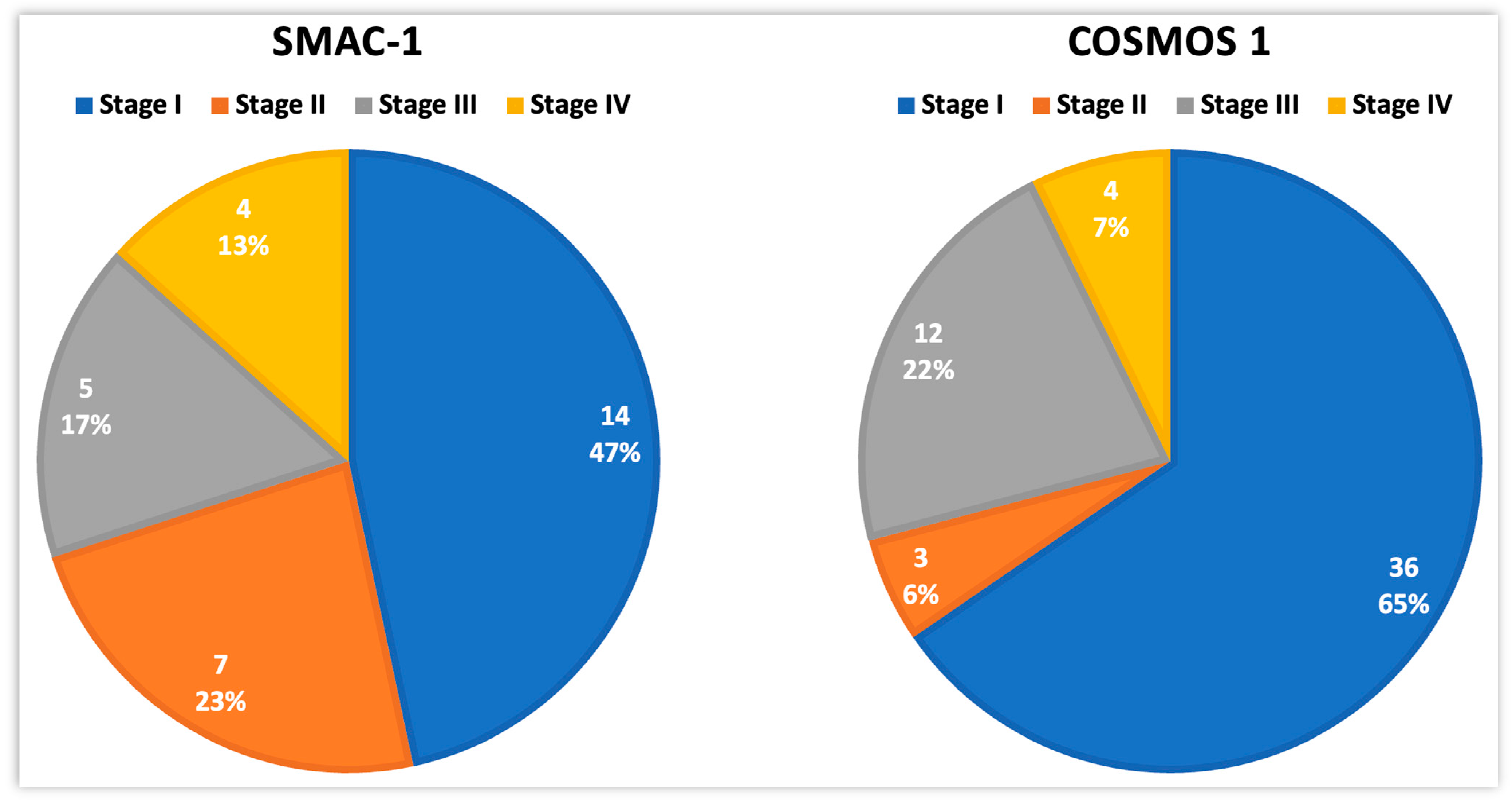
Lung cancer is still the leading cause of cancer-related death worldwide. The only recommended screening test for lung cancer is low-dose computed tomography (also called a low-dose CT scan). Early intervention is key as it improves the chances that treatments will lead to better prognoses. Various screening programs targeting high-risk individuals showed effectiveness in reducing the disease burden. Yet, in Italy, systematic ongoing prevention and control strategies are lacking, with no government at a national level. The SMAC Trial is an optimized multi-diseases screening program, with imaging, biological indicators, economic validation, general practitioner engagement, and awareness-to-patients elements. Thirty-two subjects were diagnosed with cancer, of which 30 were lung cancers (detection rate 2.7%); fourteen were cured (stage I on final pathology). We want our trial to stimulate further discussion among policy-makers to implement our efforts. In fact, lung cancer screening extends far beyond an imaging: a well-organized and comprehensive program is vital to ensuring high-quality and timely care through screening, diagnosis, and treatment. Thus, financial incentives for lung cancer screening sites are needed, too. As new technologies continue to emerge aiming to change lung cancer patients’ diagnostic and treatment journey, even more so early-detection via screening requires a continued support nationally.
Abstract
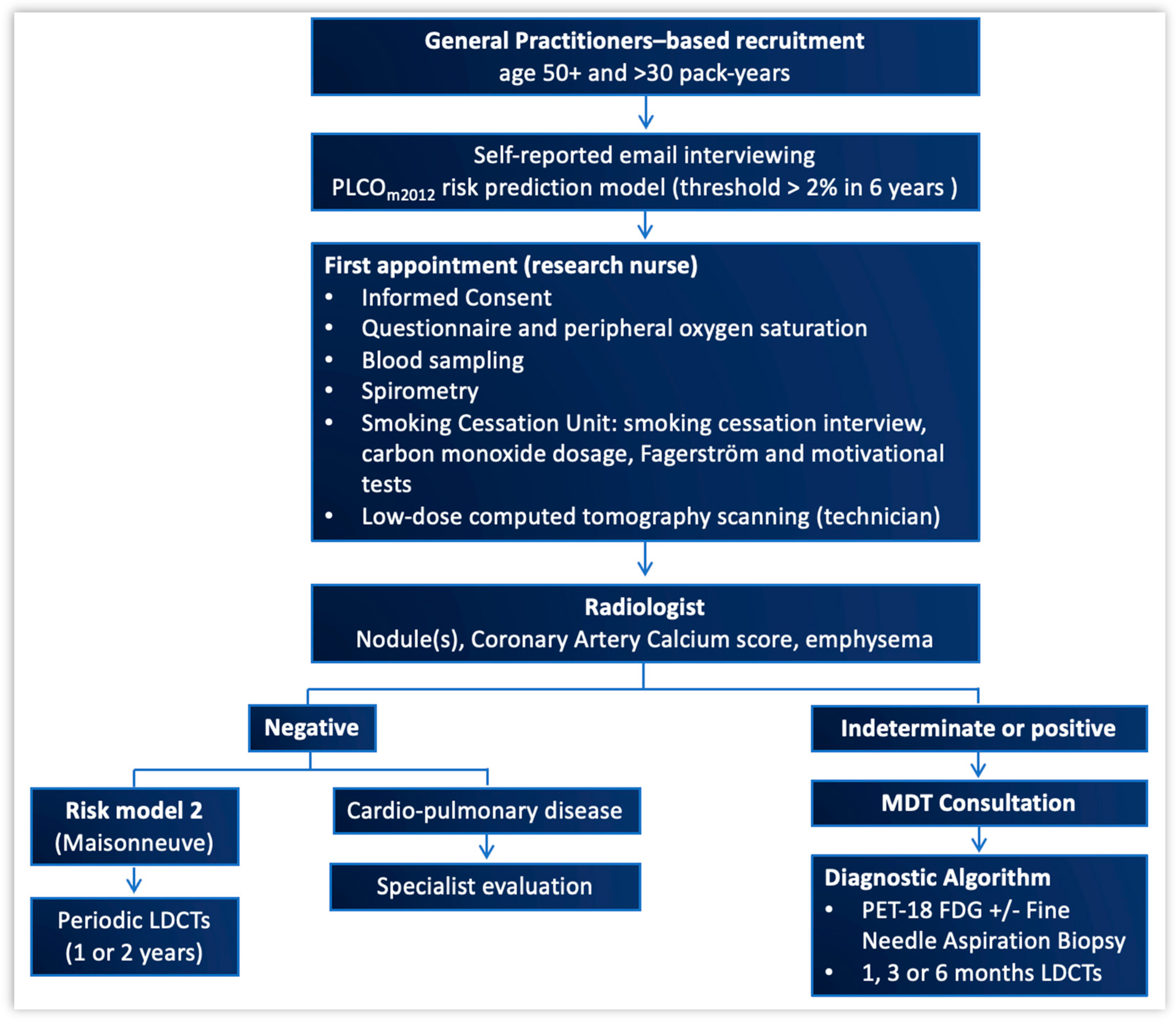
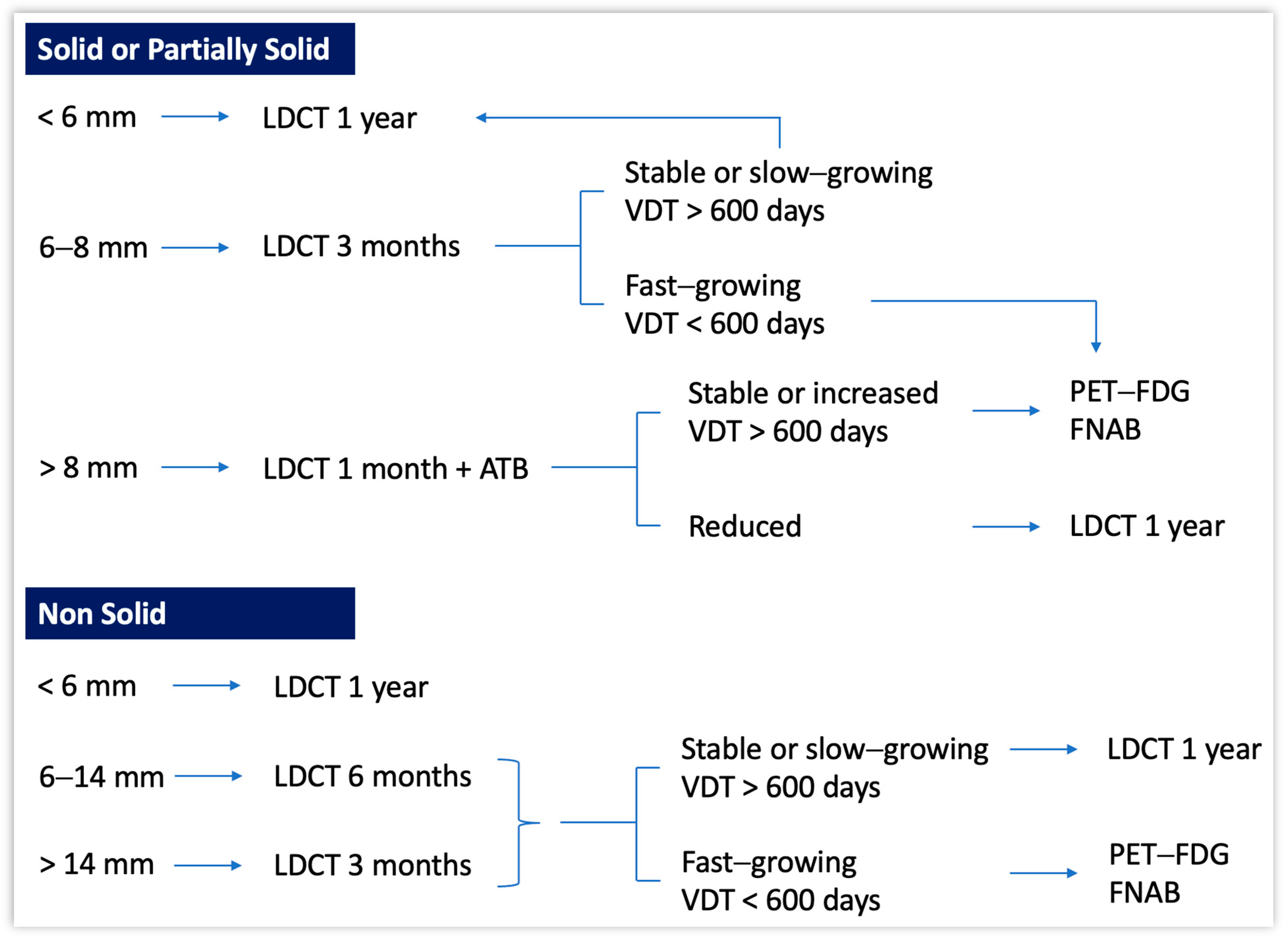
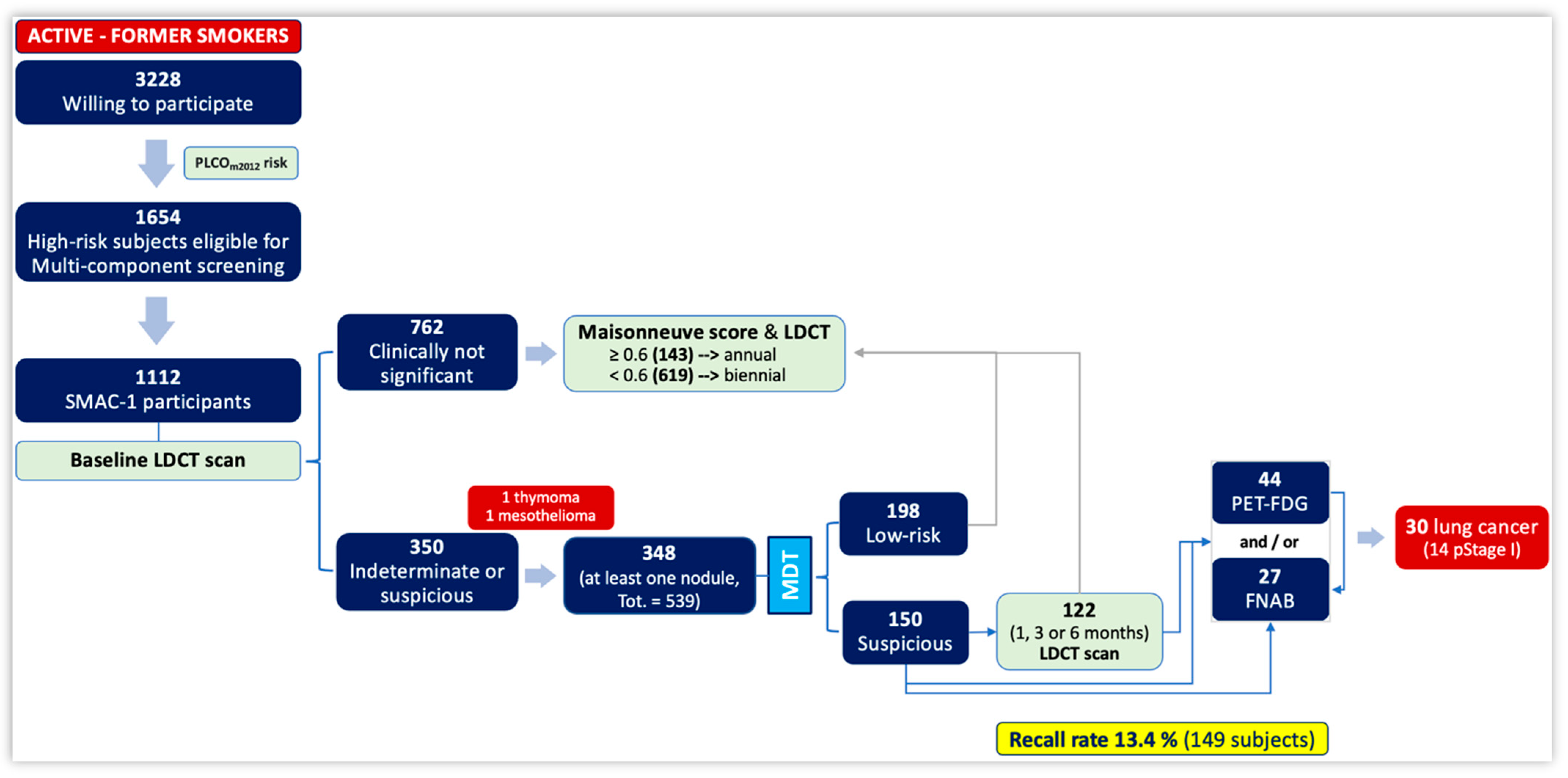
Background: Lung cancer screening with low-dose helical computed tomography (LDCT) reduces mortality in high-risk subjects. Cigarette smoking is linked to up to 90% of lung cancer deaths. Even more so, it is a key risk factor for many other cancers and cardiovascular and pulmonary diseases. The Smokers health Multiple ACtions (SMAC-1) trial aimed to demonstrate the feasibility and effectiveness of an integrated program based on the early detection of smoking-related thoraco-cardiovascular diseases in high-risk subjects, combined with primary prevention. A new multi-component screening design was utilized to strengthen the framework on conventional lung cancer screening programs. We report here the study design and the results from our baseline round, focusing on oncological findings. Methods: High-risk subjects were defined as being >55 years of age and active smokers or formers who had quit within 15 years (>30 pack/y). A PLCOm2012 threshold >2% was chosen. Subject outreach was streamlined through media campaign and general practitioners’ engagement. Eligible subjects, upon written informed consent, underwent a psychology consultation, blood sample collection, self-evaluation questionnaire, spirometry, and LDCT scan. Blood samples were analyzed for pentraxin-3 protein levels, interleukins, microRNA, and circulating tumor cells. Cardiovascular risk assessment and coronary artery calcium (CAC) scoring were performed. Direct and indirect costs were analyzed focusing on the incremental cost-effectiveness ratio per quality-adjusted life years gained in different scenarios. Personalized screening time-intervals were determined using the “Maisonneuve risk re-calculation model”, and a threshold <0.6% was chosen for the biennial round. Results: In total, 3228 subjects were willing to be enrolled. Out of 1654 eligible subjects, 1112 participated. The mean age was 64 years (M/F 62/38%), with a mean PLCOm2012 of 5.6%. Former and active smokers represented 23% and 77% of the subjects, respectively. At least one nodule was identified in 348 subjects. LDCTs showed no clinically significant findings in 762 subjects (69%); thus, they were referred for annual/biennial LDCTs based on the Maisonneuve risk (mean value = 0.44%). Lung nodule active surveillance was indicated for 122 subjects (11%). Forty-four subjects with baseline suspicious nodules underwent a PET-FDG and twenty-seven a CT-guided lung biopsy. Finally, a total of 32 cancers were diagnosed, of which 30 were lung cancers (2.7%) and 2 were extrapulmonary cancers (malignant pleural mesothelioma and thymoma). Finally, 25 subjects underwent lung surgery (2.25%). Importantly, there were zero false positives and two false negatives with CT-guided biopsy, of which the patients were operated on with no stage shift. The final pathology included lung adenocarcinomas (69%), squamous cell carcinomas (10%), and others (21%). Pathological staging showed 14 stage I (47%) and 16 stage II-IV (53%) cancers. Conclusions: LDCTs continue to confirm their efficacy in safely detecting early-stage lung cancer in high-risk subjects, with a negligible risk of false-positive results. Re-calculating the risk of developing lung cancer after baseline LDCTs with the Maisonneuve model allows us to optimize time intervals to subsequent screening. The Smokers health Multiple ACtions (SMAC-1) trial offers solid support for policy assessments by policymakers. We trust that this will help in developing guidelines for the large-scale implementation of lung cancer screening, paving the way for better outcomes for lung cancer patients.