


Abstract
This study presents the development and thermal characterization of a mechanically packaged Hetero-core optical fiber temperature sensor utilizing the thermal expansion of a silicone pad. To improve the insufficient optical-output recovery observed during cooling in our previous adhesive-fixed sensor, a poly(butylene succinate) (PBS)-based mechanical packaging structure was developed to replace direct adhesive fixation of the Hetero-core sensing region. Thermally induced deformation of the silicone pad produces variations in optical transmission loss, which are detected and converted into electrical voltage signals. Four sensor configurations, combining two silicone pad thicknesses and two Hetero-core insertion lengths, were evaluated using one specimen per configuration through three consecutive heating–cooling cycles over a temperature range of 20–80 °C. The experimental results demonstrated temperature-dependent responses with configuration-dependent differences in linearity, thermal hysteresis, and cycle-to-cycle repeatability. The configuration with a 2 mm thick silicone pad and a 2 mm Hetero-core insertion length exhibited the lowest average hysteresis (15.04% FS), whereas the configuration with a 5 mm thick pad and a 2 mm insertion length showed the lowest heating repeatability error (11.56% FS). The configuration with a 5 mm thick pad and a 3 mm insertion length exhibited the lowest cooling repeatability error (6.12% FS), indicating that the preferred sensor configuration depends on the performance criterion considered. Although further improvements in sensing performance and validation of measurement accuracy, response time, and device-to-device reproducibility are required, the results demonstrate the feasibility of the proposed approach for further development of optical fiber temperature sensors for abnormal-temperature monitoring in electrical equipment.
1. Introduction
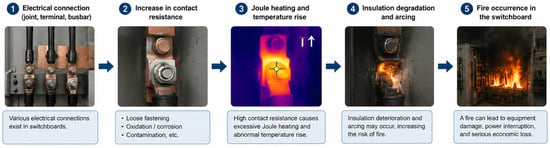
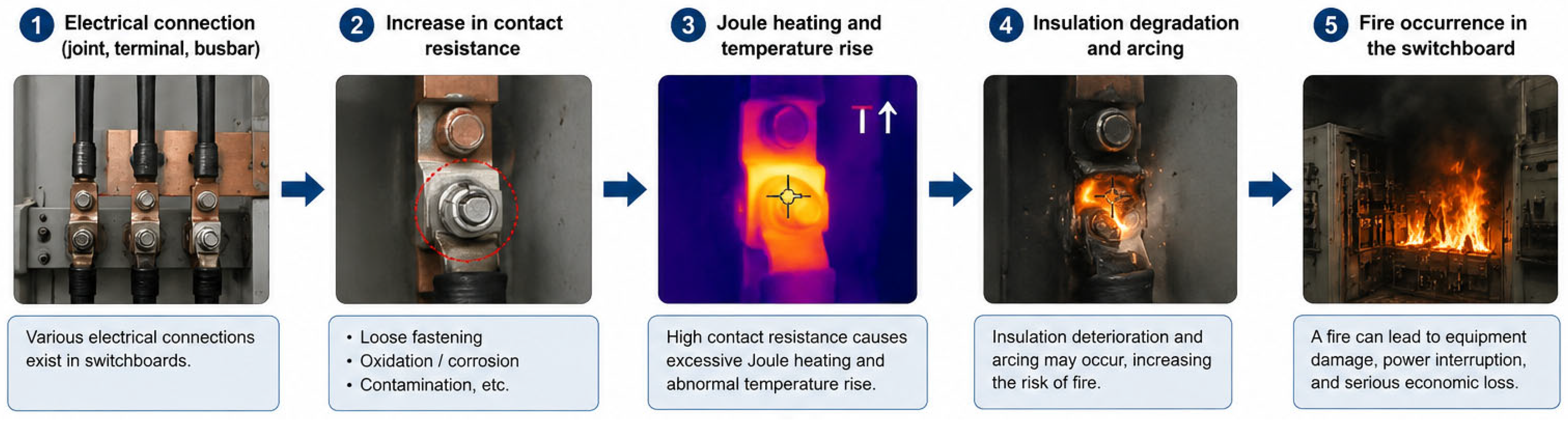
Electrical switchboards are essential components of power distribution systems, and their operational reliability is closely related to the safety of industrial facilities and public infrastructure. Abnormal temperature rise at electrical connection points, including busbar joints, circuit breakers, cable terminals, and other conductive interfaces, is one of the major precursors of switchboard failure. Poor electrical contact increases local contact resistance and generates excessive Joule heating, which may accelerate insulation degradation and eventually cause fire accidents. The typical progression from abnormal contact conditions to fire is illustrated in Figure 1. Therefore, continuous thermal condition monitoring is important for early fault diagnosis, preventive maintenance, and fire-risk reduction in electrical power systems [1,2,3].
Figure 1.
Mechanism of switchboard fire caused by abnormal temperature rise.
Various temperature monitoring technologies have been applied to electrical switchboards, including thermocouples, resistance temperature detectors, wireless temperature nodes, and infrared thermal imaging systems. Among these approaches, infrared thermography is widely used because it enables non-contact measurement over a relatively broad area. However, practical implementation inside a switchboard is often limited by narrow installation spaces, obstructed lines of sight, and the large number of electrical connection points requiring monitoring. Consequently, a single thermal camera can observe only a limited portion of the internal components, while complete coverage may require multiple imaging devices. These limitations increase system complexity, installation costs, and maintenance requirements, particularly in large industrial facilities containing numerous switchboards.
Optical fiber sensing provides an attractive alternative for thermal condition monitoring in electrically harsh environments.
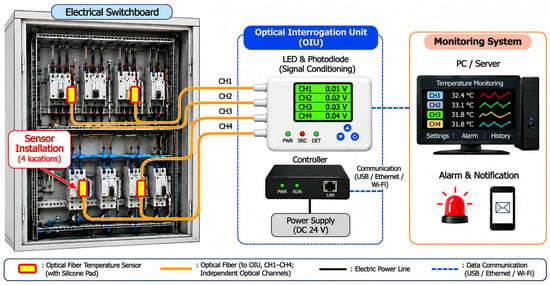
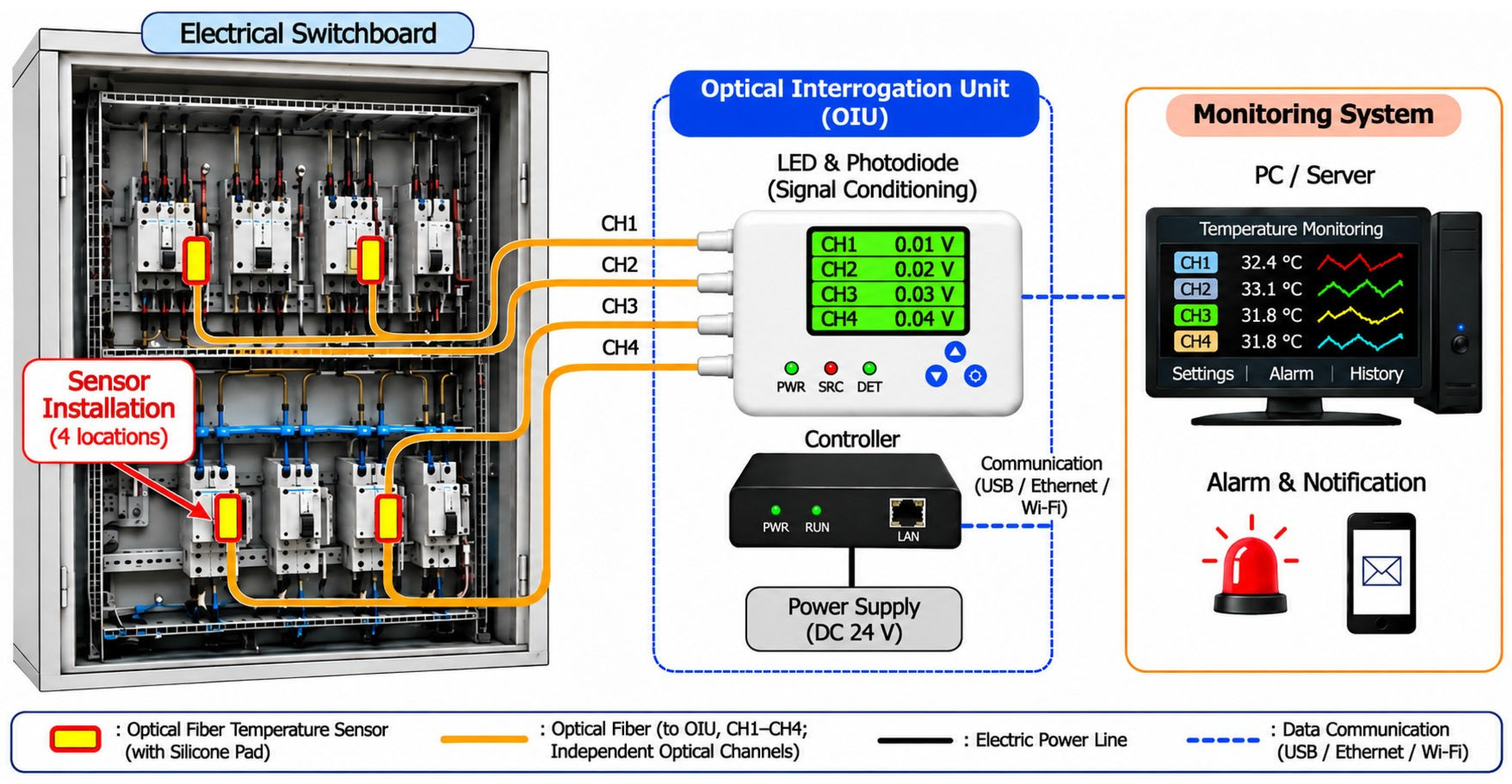
Figure 2 illustrates a conceptual configuration of an optical fiber-based temperature monitoring system for electrical switchboards. Multiple sensing points may be implemented using either independent optical channels or serially connected sensing elements with an appropriate optical interrogation and multiplexing technique. The schematic is intended to illustrate the general monitoring concept rather than a specific optical multiplexing architecture. In the present experiments, the temperature-dependent response of each sensor specimen was evaluated using a transmission-type optical interrogation unit (OIU). The OIU incorporates an LED light source and a photodiode-based detection and signal-conditioning circuit. Light transmitted through the Hetero-core sensing region is detected by the photodiode and converted into an electrical voltage signal for subsequent data acquisition. By utilizing optical fiber transmission rather than electrical sensing lines at the sensing locations, the proposed approach offers inherent immunity to electromagnetic interference and potential applicability to high-voltage electrical equipment [4,5,6].
Figure 2.
Application of the proposed sensor in electrical switchboard monitoring.
A practical optical fiber monitoring system generally consists of an optical source, a sensing element, an optical detection and signal-conditioning unit, a data acquisition device, and a monitoring or alarm interface. Optical sensing technologies have been widely applied in various fields, including hydrogen detection [7], pressure measurement [8], safety monitoring of civil infrastructure [9], and healthcare applications [10,11].
Among various optical fiber sensing technologies, including Fiber Bragg Grating (FBG) sensors and Brillouin Optical Time-Domain Reflectometry (BOTDR) [12,13,14], the Hetero-core optical fiber sensor developed by the authors employs an intensity-modulated sensing mechanism based on optical transmission loss [15,16,17]. Mechanical deformation of the Hetero-core sensing region changes its local bending condition and consequently alters the transmitted optical power. This variation is detected and converted into an electrical voltage signal by the OIU, enabling integration with conventional electronic data acquisition and monitoring systems.
The optical response of the Hetero-core sensing region is strongly influenced by its initial bending condition. Previous investigations by the authors have demonstrated that an approximately linear relationship between bending displacement and electrical output can be obtained when the initial bending state is appropriately established within an experimentally identified operating range [15,16,17]. Accordingly, the initial bending condition is selected based on this previously established linear operating region rather than being determined arbitrarily. However, variations in initial curvature and mechanical fixation conditions may influence the response characteristics of individual sensing modules. Furthermore, the linear displacement-to-voltage response of the Hetero-core sensing element does not necessarily ensure a linear temperature-to-voltage response of the complete sensor, which also depends on the thermomechanical behavior of the silicone pad and its mechanical coupling to the sensing fiber.
Based on these sensing characteristics, the Hetero-core optical fiber sensing principle can be extended to temperature monitoring by utilizing a material exhibiting relatively large thermal expansion. In the proposed approach, thermally induced deformation of a silicone pad is transferred to the Hetero-core sensing region, producing a measurable variation in optical transmission loss. The resulting electrical output can therefore be used to evaluate temperature-dependent sensing characteristics for potential applications in abnormal-temperature monitoring and early fire detection.
In our previous study [18], a silicone-assisted Hetero-core optical fiber temperature sensor was developed by directly bonding the optical fiber to a silicone thermal expansion pad. Thermally induced expansion of the silicone pad changed the bending state of the Hetero-core region and produced a measurable variation in optical power. The sensor exhibited approximately linear output characteristics during heating. However, repeated thermal cycling revealed insufficient recovery during cooling, together with pronounced thermal hysteresis and poor repeatability. These results suggested that the stability of the sensing response was influenced not only by the optical sensing element but also by the mechanical interface responsible for transferring thermal deformation to the fiber.
For practical industrial monitoring, sensor packaging should maintain consistent deformation transfer during repeated heating and cooling while protecting the optical fiber from mechanical damage. Direct adhesive bonding may introduce creep, stress relaxation, and temperature-dependent changes in the bonding interface, potentially contributing to residual strain and cycle-to-cycle output variation. However, the effects of mechanical fixation and packaging-related strain-transfer instability have received relatively limited attention compared with sensitivity, sensing range, and optical interrogation methods in previous fiber-optic temperature-sensing studies.
To address these limitations, the present study develops a mechanically packaged silicone-assisted Hetero-core optical fiber temperature sensor. A poly(butylene succinate) (PBS)-based support structure was introduced to replace direct adhesive fixation of the sensing fiber with mechanical fixation. The optical fiber was positioned in a machined groove, protected by a thin polytetrafluoroethylene (PTFE) film, and mechanically constrained using a PBS cover and screw-fastening mechanism. Although the PBS holder is bonded to the silicone pad, the sensing fiber itself is not directly bonded to the silicone, thereby reducing direct adhesive-related mechanical constraints on the optical sensing region. The proposed structure is intended to improve deformation transfer and recovery characteristics during repeated thermal cycling.
The main contributions of this study are summarized as follows:
- A mechanically packaged Hetero-core optical fiber temperature-sensing module was developed using intensity-modulated optical sensing and voltage-based signal acquisition through a custom-developed OIU.
- A PBS-based mechanical packaging structure was introduced to replace direct adhesive fixation of the sensing fiber, with the aim of improving thermal cycling recovery and reducing packaging-related strain-transfer instability.
- The effects of silicone-pad thickness and Hetero-core insertion length were experimentally evaluated using linearity, thermal hysteresis, and cycle-to-cycle repeatability as performance criteria.
- Configuration-dependent differences in hysteresis, recovery behavior, and repeatability were identified, providing experimental guidance for further optimization of mechanically packaged optical fiber temperature sensors.
2. Sensor Design and Packaging Structure
2.1. Hetero-Core Fiber Sensor Principle
Optical fiber sensors have attracted considerable attention in industrial sensing applications because of their corrosion resistance, electrical insulation, and immunity to electromagnetic interference. Since optical fibers transmit light rather than electrical signals along the sensing path, they are particularly suitable for applications in electrically harsh environments, such as electrical switchboards and high-voltage power systems.
Various optical fiber sensing technologies have been investigated for structural health monitoring and temperature measurement [19,20,21,22,23]. Although many of these techniques provide high measurement accuracy, some require sophisticated fabrication processes, expensive interrogation equipment, or specialized signal processing, which may limit their applicability to compact industrial monitoring systems.
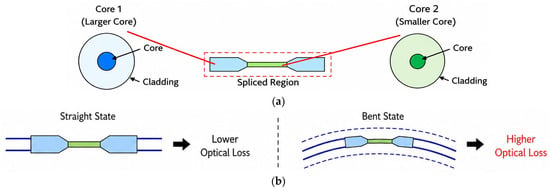
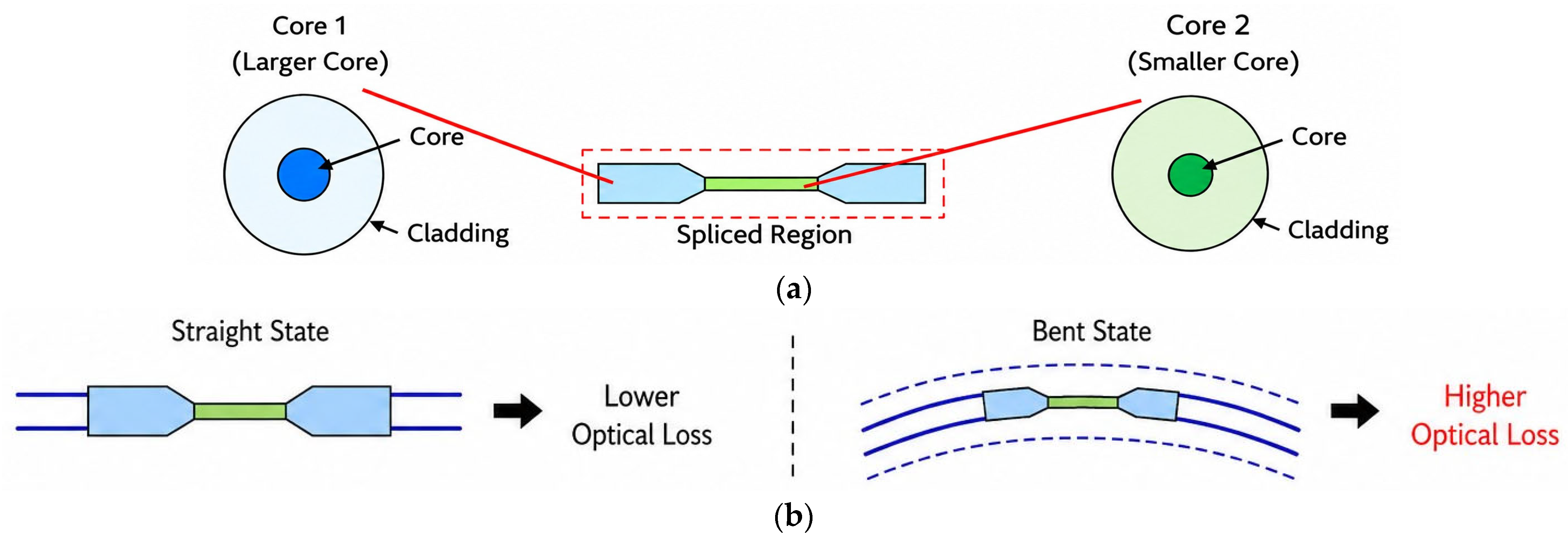
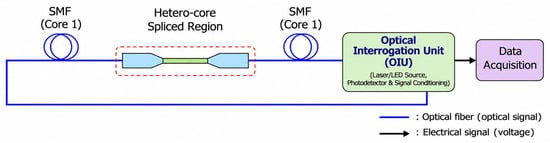
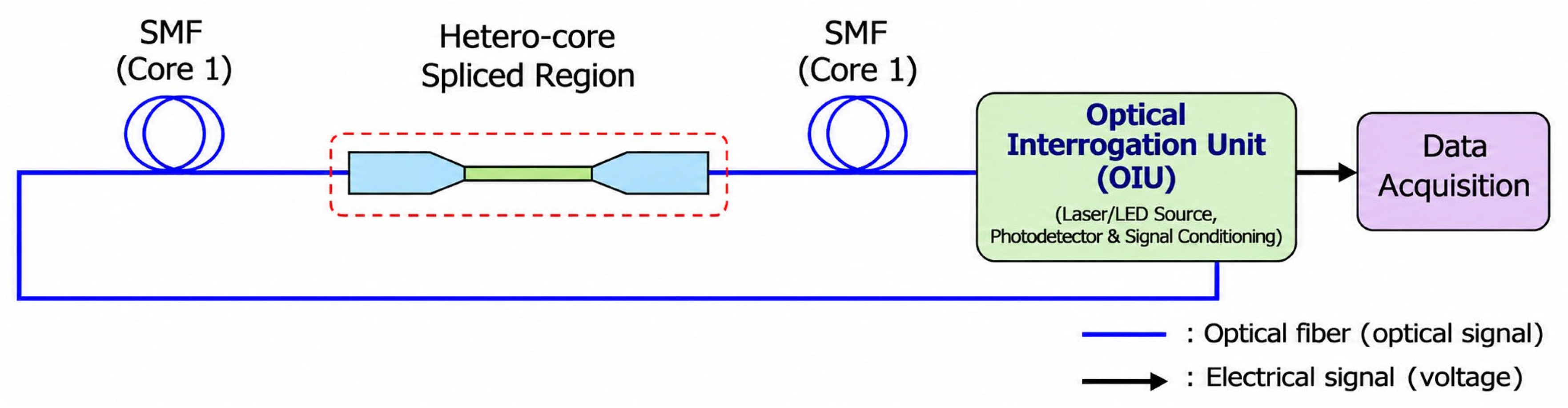
To address these limitations, the authors previously developed a Hetero-core optical fiber sensor based on optical transmission-loss modulation [15,16,17]. Unlike wavelength-based sensing techniques, this approach converts mechanical deformation into variations in transmitted optical power without requiring wavelength interrogation. As illustrated in Figure 3a, the Hetero-core sensing region is fabricated by fusion-splicing a short section of optical fiber with a 5 μm core diameter between two standard optical fibers having 9 μm core diameters. The core-diameter mismatch introduces optical transmission loss, which varies with the bending condition of the Hetero-core sensing region. The resulting optical power variation is detected using the measurement system illustrated in Figure 4, which incorporates an Optical Interrogation Unit (OIU) consisting of an LED light source, a photodiode, and an electrical signal-conditioning circuit.
Figure 3.
Structure and operating principle of the Hetero-core optical fiber sensor: (a) configuration of the Hetero-core sensing region; (b) variation in optical transmission loss induced by fiber bending.
Figure 4.
Schematic of the optical interrogation and voltage acquisition system used for the Hetero-core optical fiber sensor.
The bending-dependent optical characteristics of the Hetero-core sensing element were experimentally investigated in our previous study [15]. Under the fixation conditions examined in that study, with a distance of approximately 40 mm between the fiber fixation points, the optical transmission loss exhibited an approximately linear relationship with bending displacement over the investigated range of 2–5 mm. Here, bending displacement refers to the perpendicular distance between the straight line connecting the two fixation points and the center of the bent fiber region. This experimentally established relationship provides the basis for selecting an appropriate initial bending condition for the sensing element.
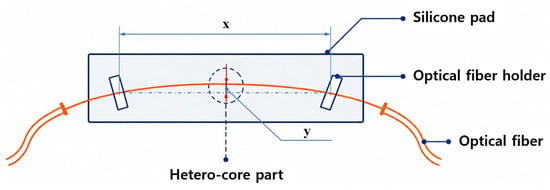
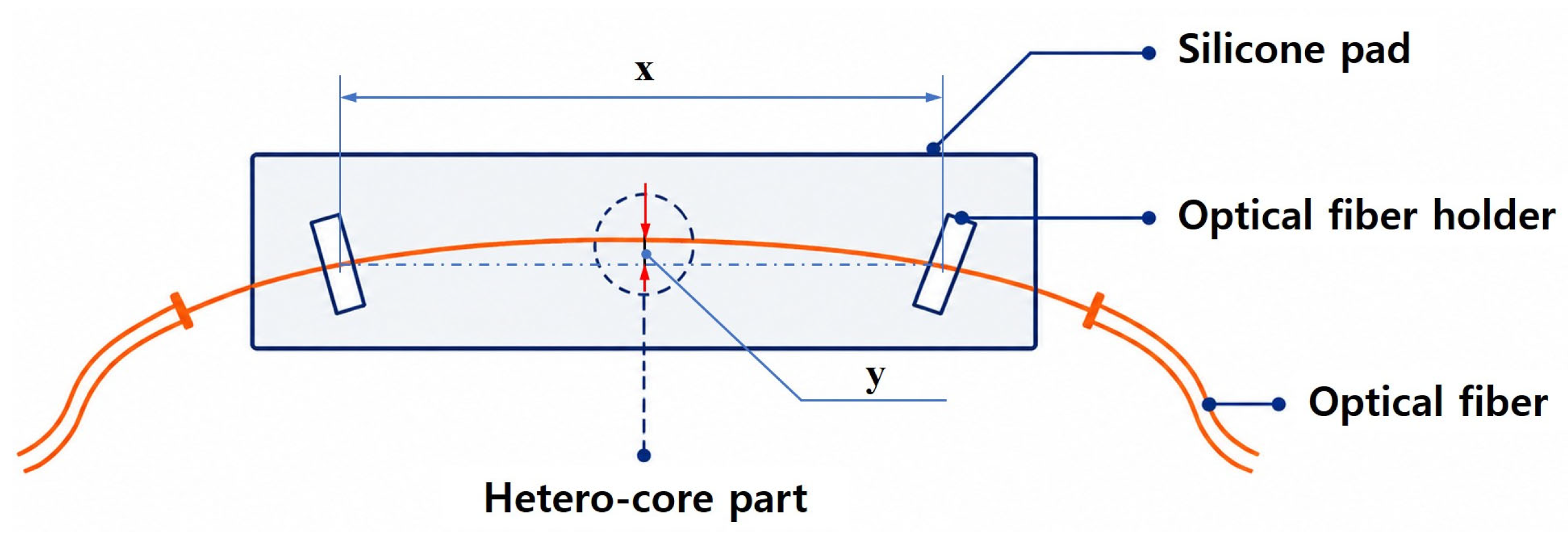
In the present study, the Hetero-core sensing region was initially maintained in a bent configuration, as schematically illustrated in Figure 5. Temperature-induced expansion and contraction of the silicone pad produce relative displacement between the fiber fixation points, thereby changing the bending condition of the Hetero-core sensing region. During heating, expansion of the silicone pad reduces the bending deformation, resulting in a decrease in optical transmission loss. During cooling, contraction of the silicone pad produces the reverse response.
Figure 5.
Schematic illustration of the initial bending configuration of the conventional adhesive-fixed Hetero-core optical fiber sensor (x: distance between fixation points; y: initial bending displacement).
Accordingly, temperature variation is indirectly converted into optical power variation through the mechanical deformation of the Hetero-core sensing region. The initial bending condition was established with reference to the previously verified displacement-dependent sensing characteristics [15]. However, the approximately linear relationship between bending displacement and optical transmission loss does not necessarily ensure a linear temperature-to-voltage response of the complete sensor. The overall thermal response is also influenced by the expansion characteristics of the silicone pad and the mechanical deformation-transfer behavior of the packaging structure. Therefore, the temperature-dependent linearity and thermal cycling characteristics of the proposed sensor were evaluated experimentally in this study.
2.2. Conventional Adhesive-Based Sensor
When a material is subjected to a temperature change, it undergoes dimensional variation due to thermal expansion. For a homogeneous material such as silicone, the linear thermal expansion can be expressed as
where ΔL denotes the change in length, α is the coefficient of thermal expansion (CTE), L represents the initial length of the material, and ΔT denotes the temperature variation. The corresponding axial strain is defined as
ΔL = αLΔT
Under the assumption of a constant CTE and unconstrained thermal expansion, the axial strain of the silicone pad is proportional to the temperature change. When this thermal deformation is mechanically transferred to the Hetero-core sensing region, it changes the bending geometry of the optical fiber and consequently modifies the optical transmission loss. The relationship between bending displacement and optical transmission loss can be represented approximately within the previously verified linear operating range [15] as
where ΔP represents the change in transmitted optical power, Δd denotes the change in bending displacement, and Kb is the displacement-dependent optical response coefficient. The sign and magnitude of this coefficient depend on the bending configuration and optical measurement conditions. The transmitted optical signal is detected by the photodiode incorporated in the Optical Interrogation Unit (OIU) and converted into an electrical voltage through the associated signal-conditioning circuit. Within the operating range of the detection circuit, the voltage variation can be expressed as
where ΔV is the variation in output voltage and Ko represents the optical-to-electrical conversion coefficient of the OIU. This conversion is based on photodetection and electrical signal conditioning rather than optical amplification.
ΔP ≈ KbΔd
ΔV ≈ KoΔP
2.3. Temperature-to-Voltage Conversion Mechanism
Based on the above relationships, the temperature-sensing mechanism consists of a sequence of thermal, mechanical, optical, and electrical conversion processes. A temperature change induces thermal expansion and axial strain in the silicone pad, which changes the relative positions of the fiber fixation points and consequently modifies the bending displacement and curvature of the Hetero-core sensing region. The resulting variation in optical transmission loss changes the optical power received by the photodiode in the OIU, producing a corresponding electrical voltage signal. Thus, the temperature-to-voltage conversion is achieved through silicone thermal expansion, mechanically induced fiber bending, bending-dependent optical transmission loss, and optical-to-electrical signal conversion.
In the conventional sensor developed in our previous study [18], the Hetero-core optical fiber was directly bonded to the silicone pad using an adhesive, as illustrated in Figure 5. This arrangement enabled the thermal expansion of the silicone pad to be transferred to the sensing fiber through the adhesive interface. However, the mechanical coupling characteristics of this interface may change during repeated heating and cooling because of creep, stress relaxation, and temperature-dependent adhesive behavior. These effects can influence the recovery characteristics, thermal hysteresis, and repeatability of the sensor output. Silicone rubber was selected as the thermal expansion material because of its flexibility, electrical insulation, thermal stability, and relatively large thermal expansion compared with metallic materials. Table 1 summarizes the representative physical properties of the silicone rubber pad employed in this study. Although the thermal expansion of silicone provides the mechanical input required for optical sensing, the actual temperature-to-voltage response depends on the combined behavior of the silicone pad, the fiber fixation structure, and the optical interrogation system.
Table 1.
Representative physical properties of the silicone rubber pad. [KCC Silicone, Seoul, Republic of Korea].
As shown in Figure 5, the conventional temperature sensor was fabricated by directly bonding the Hetero-core optical fiber to a silicone expansion pad using an adhesive. This simple configuration allowed thermally induced deformation of the silicone pad to be transferred to the Hetero-core sensing region through the adhesive interface.
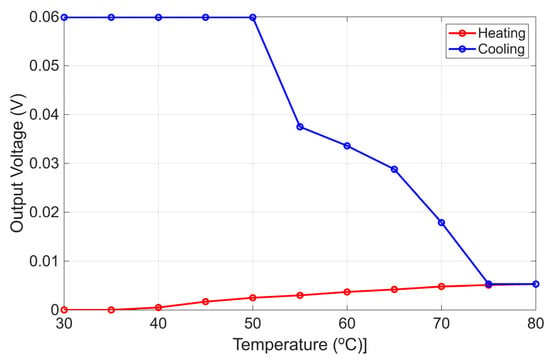
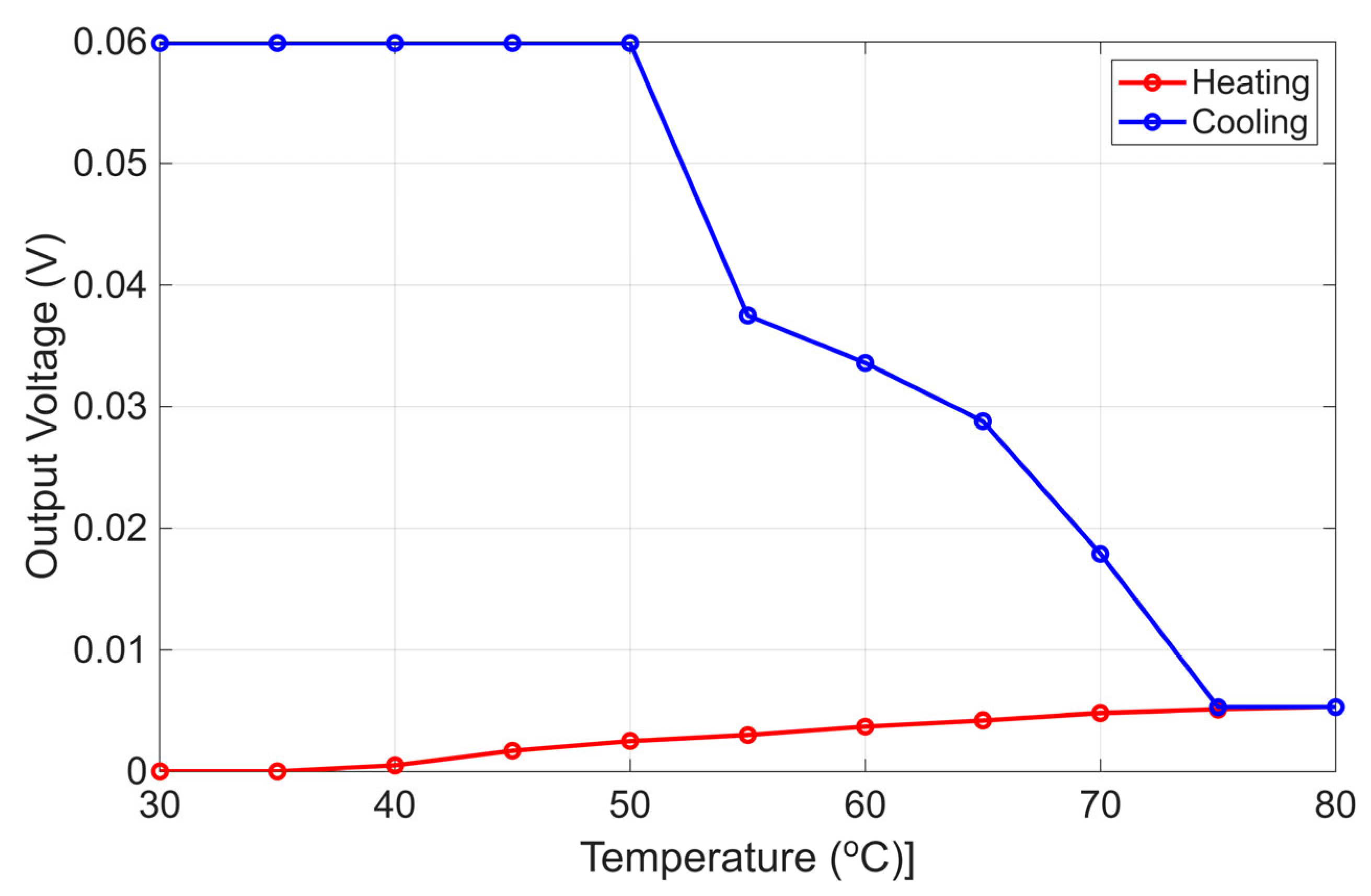
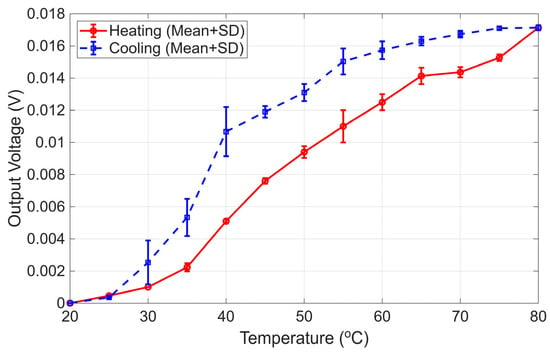
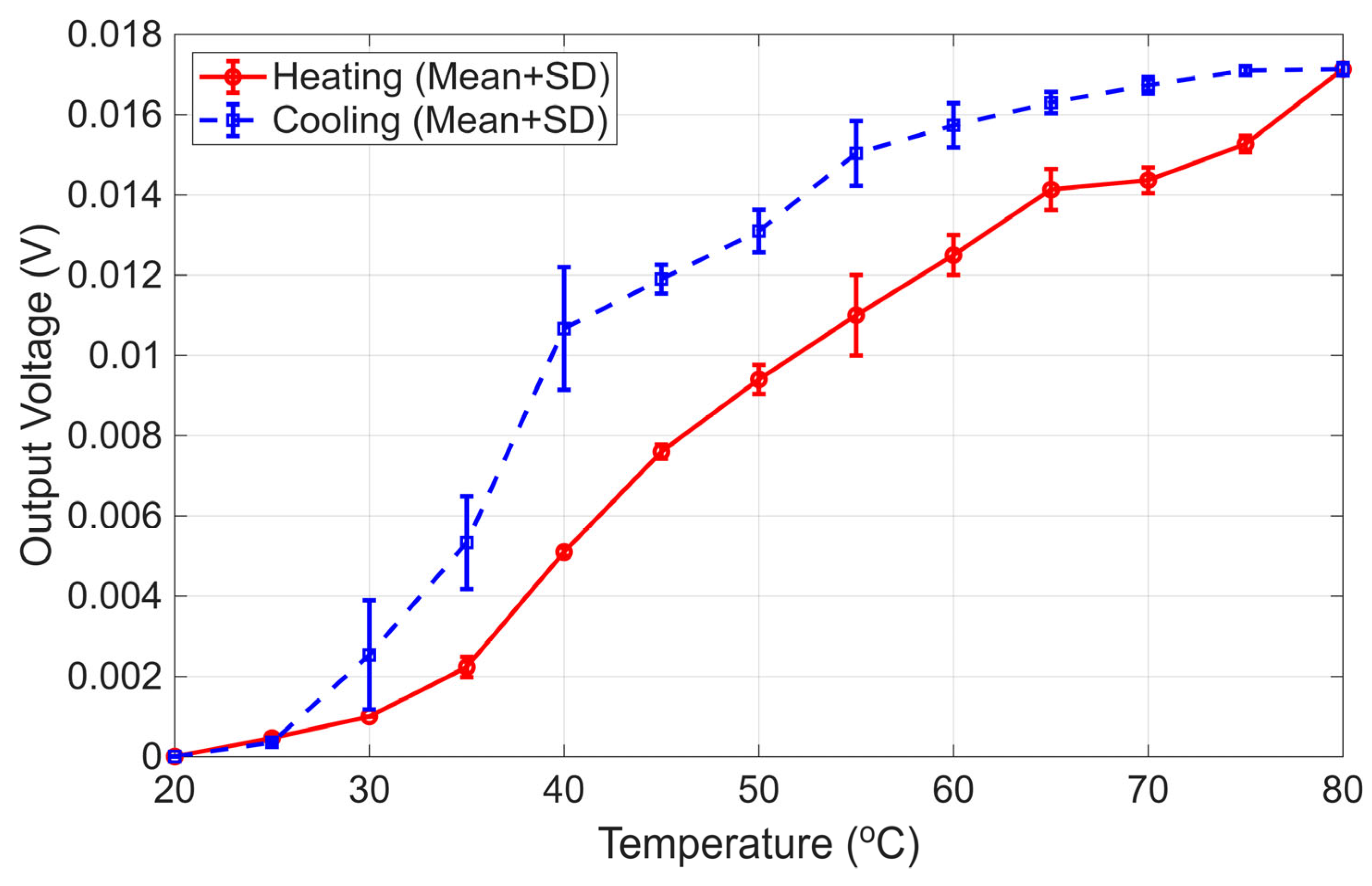
The temperature response of the conventional sensor is presented in Figure 6 [18]. During heating, the sensor exhibited an approximately linear output response, indicating that the thermal expansion of the silicone pad could be converted into a measurable optical signal. However, the cooling response showed pronounced nonlinearity and did not follow the original heating path, resulting in substantial thermal hysteresis and incomplete output recovery. The maximum temperature during the thermal cycling tests was approximately 80 °C.
Figure 6.
Thermal output characteristics of the conventional adhesive fixed Hetero-core optical fiber temperature sensor during heating and cooling cycles illustrating pronounced thermal hysteresis and poor recovery behavior [18].
These characteristics may be associated with changes in the mechanical deformation-transfer conditions between the silicone pad and the Hetero-core sensing region during thermal cycling. Potential contributing factors include the viscoelastic behavior of silicone and the adhesive layer, creep and stress relaxation, friction at mechanical interfaces, and thermally induced changes in the initial bending condition of the optical fiber. Such effects may prevent the sensing region from returning completely to its initial mechanical configuration, resulting in residual output deviation. However, the individual contributions of these mechanisms were not independently quantified and should therefore be regarded as possible explanations rather than experimentally confirmed causes.
Although the conventional sensor demonstrated the feasibility of temperature measurement using the Hetero-core optical fiber sensing principle, its insufficient recovery and repeatability during thermal cycling remained important limitations for practical applications. Accordingly, the present study investigates an alternative mechanical packaging structure in which direct adhesive fixation of the sensing fiber is replaced by mechanical fastening. The proposed design aims to reduce the influence of the direct fiber–adhesive interface while retaining the adhesive connection between the PBS holder and the silicone pad. Its temperature-dependent response, hysteresis, and cycle-to-cycle repeatability are evaluated experimentally to assess the effects of this packaging modification.
2.4. Design and Fabrication of the Proposed Sensor Module
As discussed in the previous section, the conventional adhesive-fixed Hetero-core optical fiber temperature sensor exhibited substantial thermal hysteresis and incomplete output recovery during cooling. These results suggested that the mechanical coupling between the silicone expansion pad and the sensing fiber could significantly influence the temperature-dependent response of the sensor.
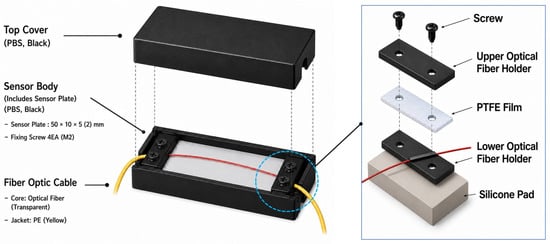
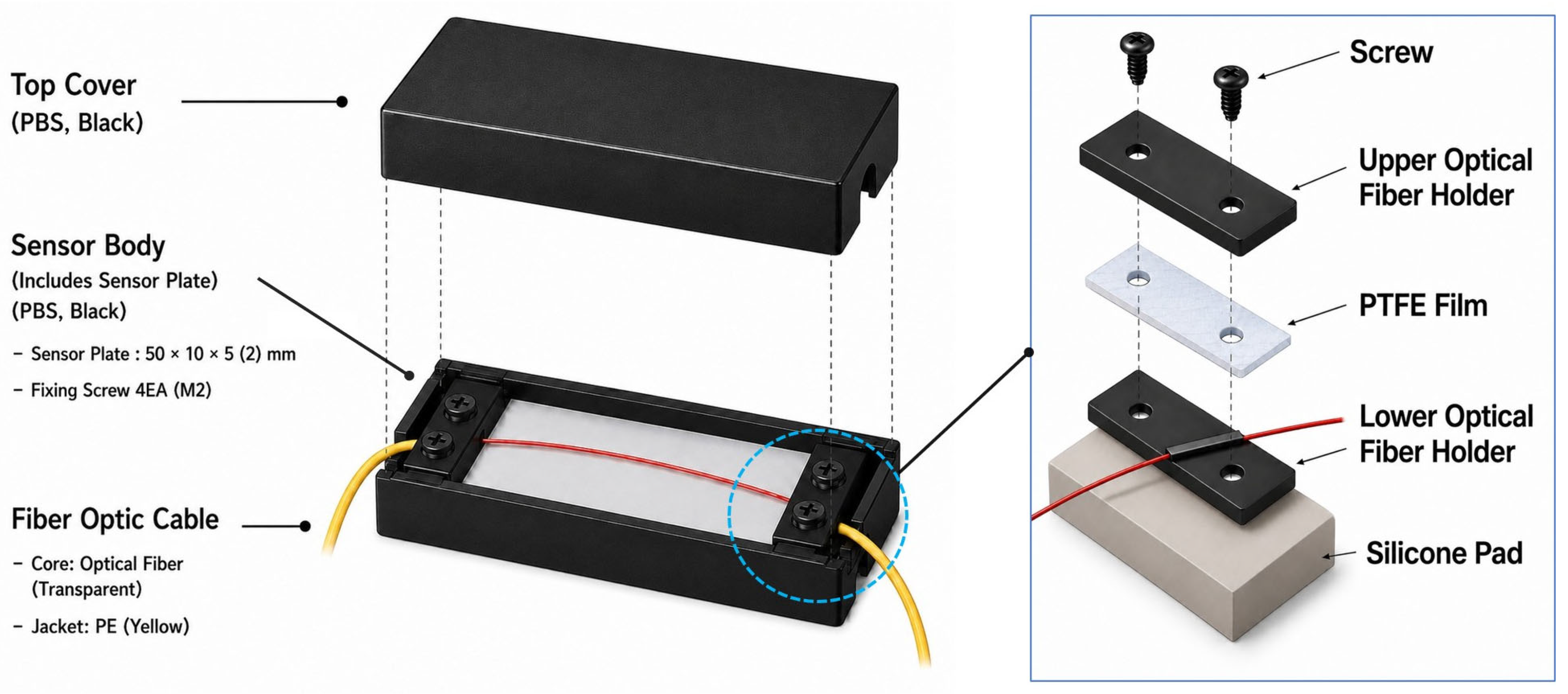
To address these limitations, the present study introduces a mechanically packaged sensor structure designed to reduce the dependence of fiber fixation on the direct adhesive interface. The proposed design employs a poly (butylene succinate) (PBS)-based holder and screw-fastened cover to mechanically constrain the optical fiber while transferring thermally induced deformation of the silicone pad to the Hetero-core sensing region. The overall configuration of the proposed sensor module is illustrated in Figure 7.
Figure 7.
Conceptual design of the proposed PBS-based mechanical packaging structure for the silicone-assisted Hetero-core optical fiber temperature sensor.
As shown in the enlarged view of Figure 7, the PBS holder is bonded to the silicone expansion pad, while the optical fiber itself is not directly attached to the silicone using an adhesive. Instead, the Hetero-core optical fiber is positioned in a machined groove within the holder and mechanically secured using a PBS top cover and fastening screws. A thin polytetrafluoroethylene (PTFE) film is inserted between the optical fiber and the top cover to protect the fiber from localized mechanical loading during fastening and thermal cycling. The assembled sensing structure is accommodated in a compact protective housing.
The proposed mechanical packaging structure is intended to provide more consistent fiber fixation and deformation transfer during repeated heating and cooling by eliminating direct adhesive contact with the sensing fiber. Nevertheless, the adhesive interface between the PBS holder and the silicone pad, together with the mechanical contact and fastening conditions within the holder, may still influence the mechanical response during thermal cycling. Therefore, the effects of the proposed packaging structure on temperature-dependent linearity, thermal hysteresis, and cycle-to-cycle repeatability were experimentally evaluated rather than assuming that the packaging modification completely eliminates these effects.
3. Experimental Setup
3.1. Temperature Chamber and Measurement System
To evaluate the thermal sensing performance of the proposed sensor module, four Hetero-core optical fiber sensor configurations were fabricated, as summarized in Table 2. All configurations employed silicone expansion pads with identical lengths and widths, while two pad thicknesses (2 mm and 5 mm) and two Hetero-core insertion lengths (2 mm and 3 mm) were investigated. The insertion length refers to the length of the 5 μm core optical fiber section fusion-spliced between two standard optical fibers. One specimen was prepared for each configuration. Table 3 summarizes the specifications of the experimental apparatus and optical fiber used in this study.
Table 2.
Specifications and characteristics of the fabricated sensing unit for experimental evaluation.
Table 3.
Specifications of experiment apparatus.
The sensor modules were fabricated in a compact configuration intended for surface-mounted temperature monitoring at electrical connection points in switchboards. However, the present experiments were conducted under laboratory conditions rather than in an operating electrical switchboard.
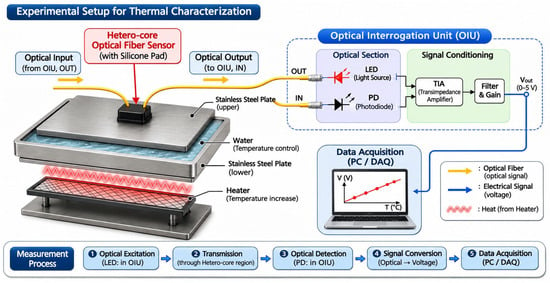
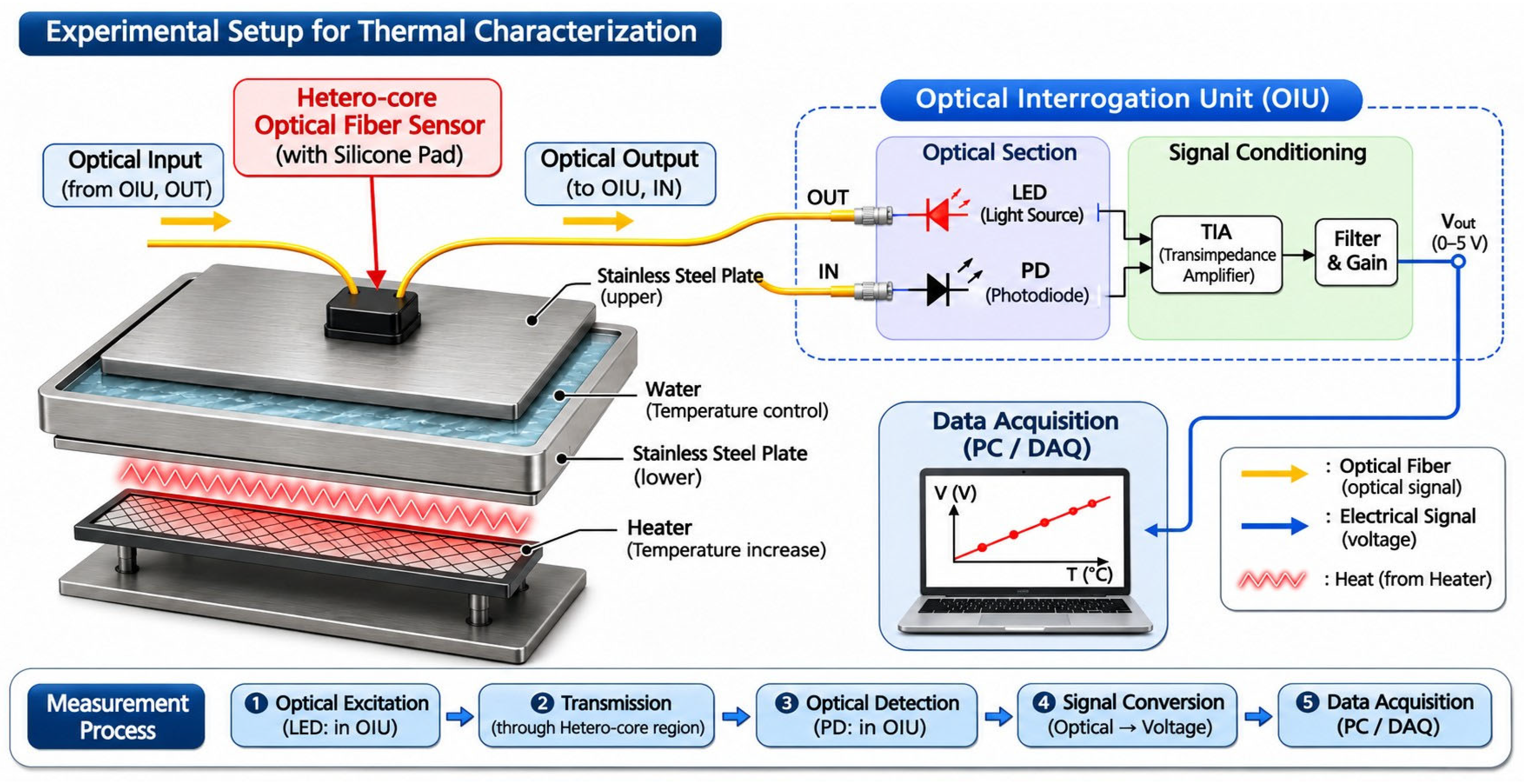
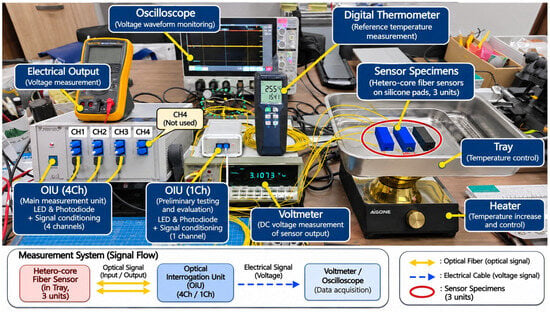
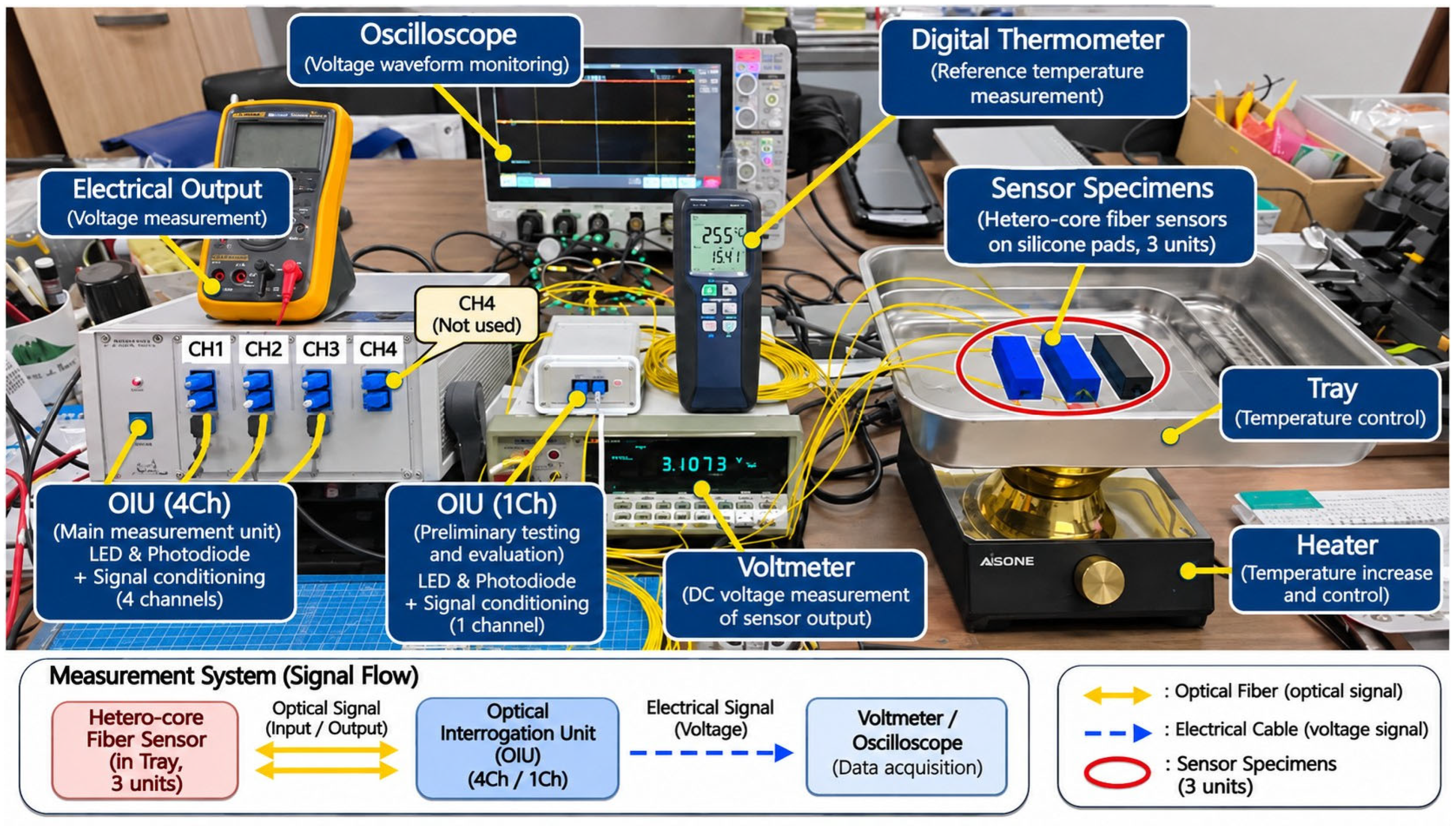
A temperature chamber was constructed to provide controlled thermal loading to the sensor modules. As illustrated in Figure 8, the apparatus consisted of a double-layer stainless-steel chamber positioned above an electric heater. The lower chamber contained water as the heat-transfer medium, while the sensor modules were placed on the upper stainless-steel plate. Heat generated by the heater was transferred through the water and supporting plate to the sensor modules. The experimental apparatus is shown in Figure 9.
Figure 8.
Schematic illustration of the experimental setup for thermal sensing measurements.
Figure 9.
Experimental setup for thermal characterization of the Hetero-core optical fiber temperature sensors, showing the four-channel Optical Interrogation Unit (OIU) used for the main measurements, the single-channel OIU employed for preliminary testing, and the associated optical and electrical measurement instruments.
The water temperature in the lower chamber was monitored using a digital thermometer and used as the reference temperature for evaluating the sensor responses. An infrared temperature measurement device was also employed to examine the surface temperature of the supporting structure. However, the actual temperature at the Hetero-core sensing region was not independently measured, and temperature uniformity across the sensing modules was not quantitatively verified.
Optical measurements were performed using a custom-developed Optical Interrogation Unit (OIU), whose main specifications are presented in Table 3. The OIU incorporates an LED light source operating at a wavelength of 1.31 μm, a photodiode for detecting transmitted optical power, and an electrical signal-conditioning circuit. Light emitted from the OIU passes through the Hetero-core sensing region, where temperature-induced bending deformation changes the optical transmission loss. The transmitted optical power is subsequently detected by the photodiode and converted into an electrical voltage signal. The four-channel OIU (4Ch OIU) shown in Figure 9 was used to acquire the sensor signals in the present experiments. The single-channel OIU (1Ch OIU), also visible in Figure 9, was used for separate testing and was not involved in the measurements reported in this study. The voltage outputs from the 4Ch OIU were monitored and recorded using the electrical measurement and data-acquisition instruments. Thus, the OIU performs optical interrogation and optical-to-electrical conversion rather than optical amplification.
Heating and cooling measurements were conducted over a temperature range of 20–80 °C at 5 °C intervals. During both heating and cooling, the reference temperature was sequentially adjusted to each target temperature. After the measured reference temperature reached the target value, a waiting period of approximately 30 s was allowed before recording the sensor output. During this period, the reference temperature typically fluctuated within approximately ±2 °C of the target temperature. The sensor output voltage was then recorded together with the corresponding reference temperature measured by the digital thermometer. Three consecutive heating–cooling cycles were performed for each sensor configuration to evaluate temperature-dependent linearity, thermal hysteresis, output recovery, and cycle-to-cycle repeatability.
Because heat was transferred through the water and stainless-steel supporting structure, the reference temperature could differ from the actual temperature of the Hetero-core sensing region, particularly during transient heating and cooling. Furthermore, the approximately 30 s waiting period and the observed temperature deviation do not necessarily establish complete thermal equilibrium at the sensing region. Therefore, the reported results represent sensor responses relative to the experimental reference temperature and should not be interpreted as independently validated absolute temperature-measurement accuracy.
3.2. Thermal Cycling Test
Thermal cycling experiments were conducted to investigate the temperature-dependent responses of the proposed Hetero-core optical fiber sensors under repeated heating and cooling conditions. Four sensor configurations were prepared by combining two silicone pad thicknesses (2 and 5 mm) and two Hetero-core insertion lengths (2 and 3 mm). For each configuration, three consecutive heating–cooling cycles were performed using the same fabricated specimen to evaluate within-specimen cycle-to-cycle repeatability.
The upper temperature limit was set to 80 °C because the proposed sensor is intended for monitoring abnormal temperature rise in electrical switchboards rather than measuring temperatures during an actual fire. The temperature range of 20–80 °C was selected to investigate the sensing characteristics relevant to early detection of abnormal heating while avoiding boiling-related disturbances in the water-based heating system.
During each experiment, the sensor module was placed on the upper stainless-steel plate of the temperature chamber shown in Figure 9. The reference temperature was increased from 20 °C to 80 °C and subsequently decreased to 20 °C in increments of 5 °C. At each target temperature, the system was allowed to stabilize for approximately 30 s before the sensor output was recorded. During this waiting period, the reference water temperature typically fluctuated within approximately ±2 °C of the target temperature. The corresponding output voltage was acquired using the four-channel Optical Interrogation Unit (4Ch OIU) and recorded together with the reference temperature measured by the digital thermometer. Before initiating the thermal cycling measurements, the OIU was operated for approximately 20 min to allow the optical source and electrical output to stabilize. The voltage data obtained during the three consecutive cycles were analyzed without cycle-specific baseline correction or normalization to a common initial voltage. Accordingly, variations in the initial output level between cycles were retained in the subsequent performance evaluation.
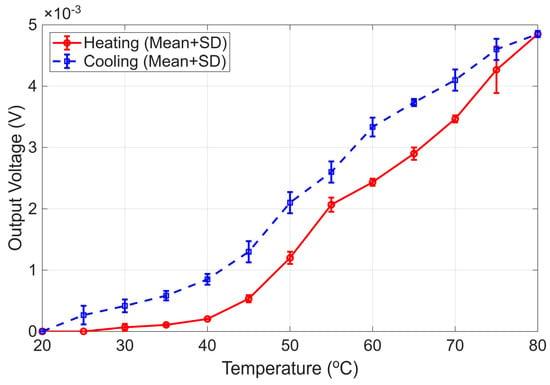
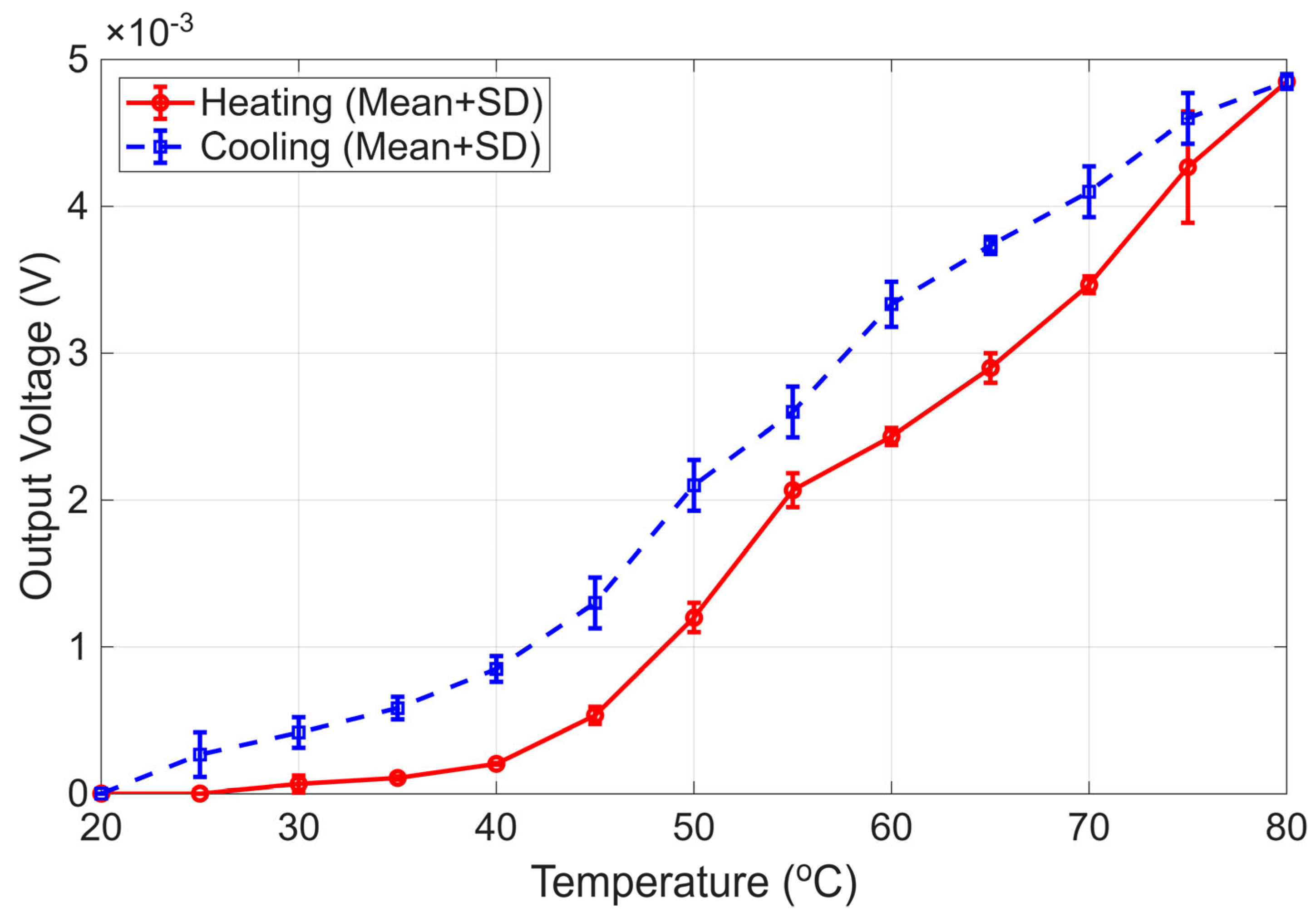
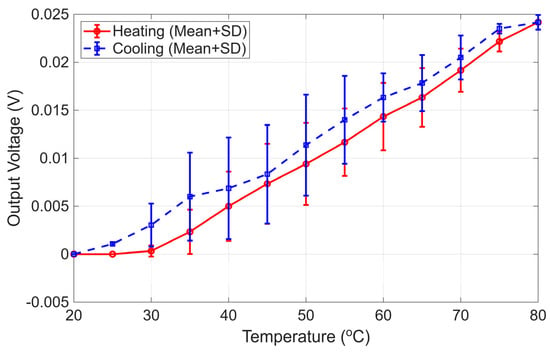
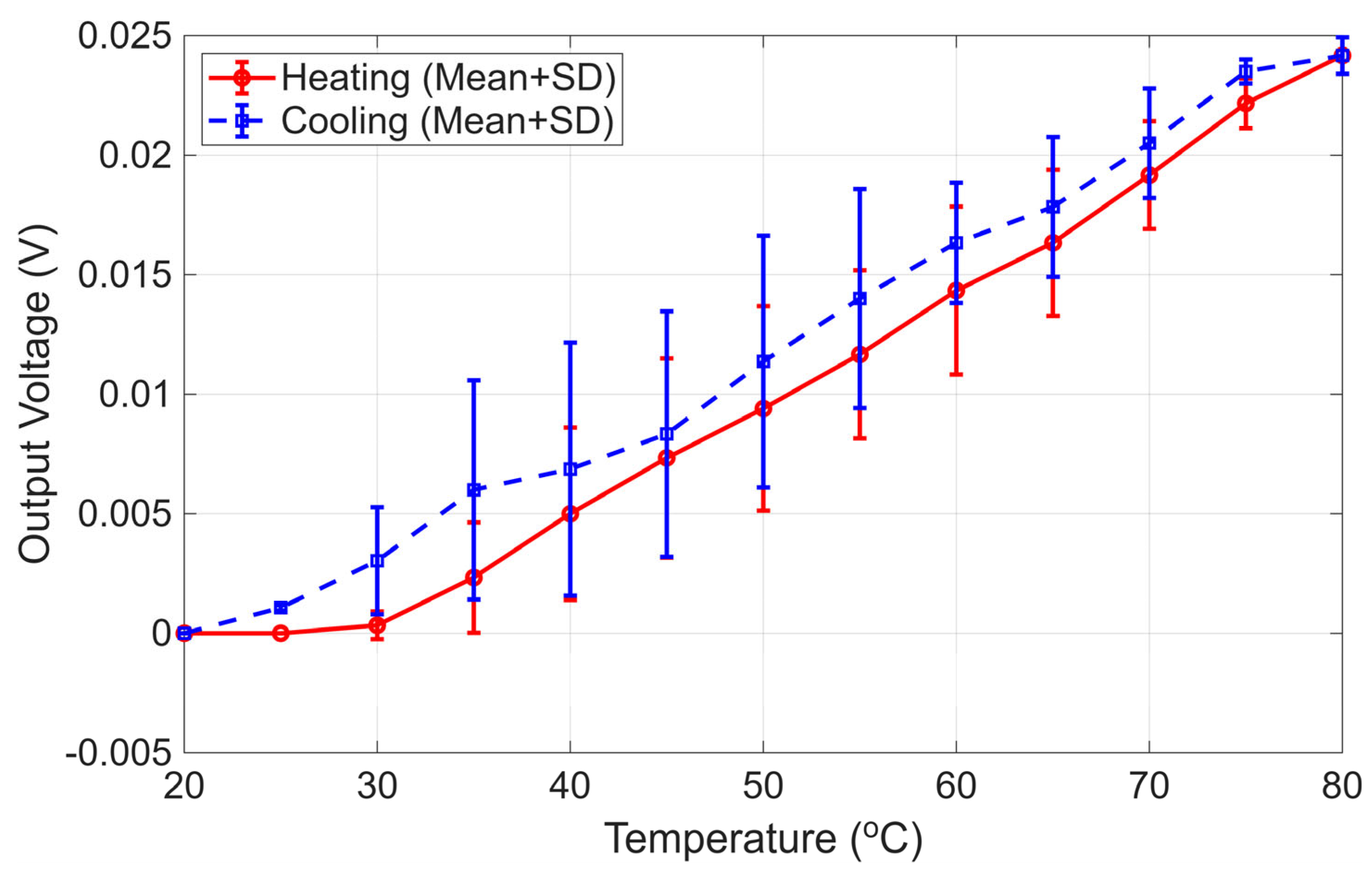
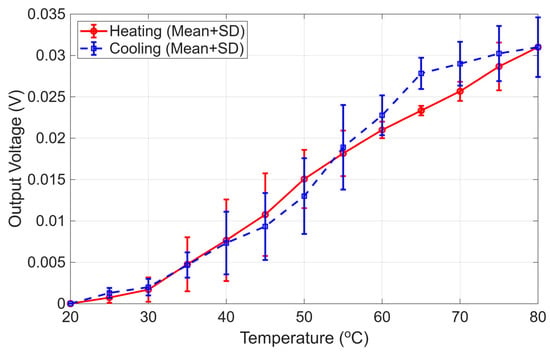
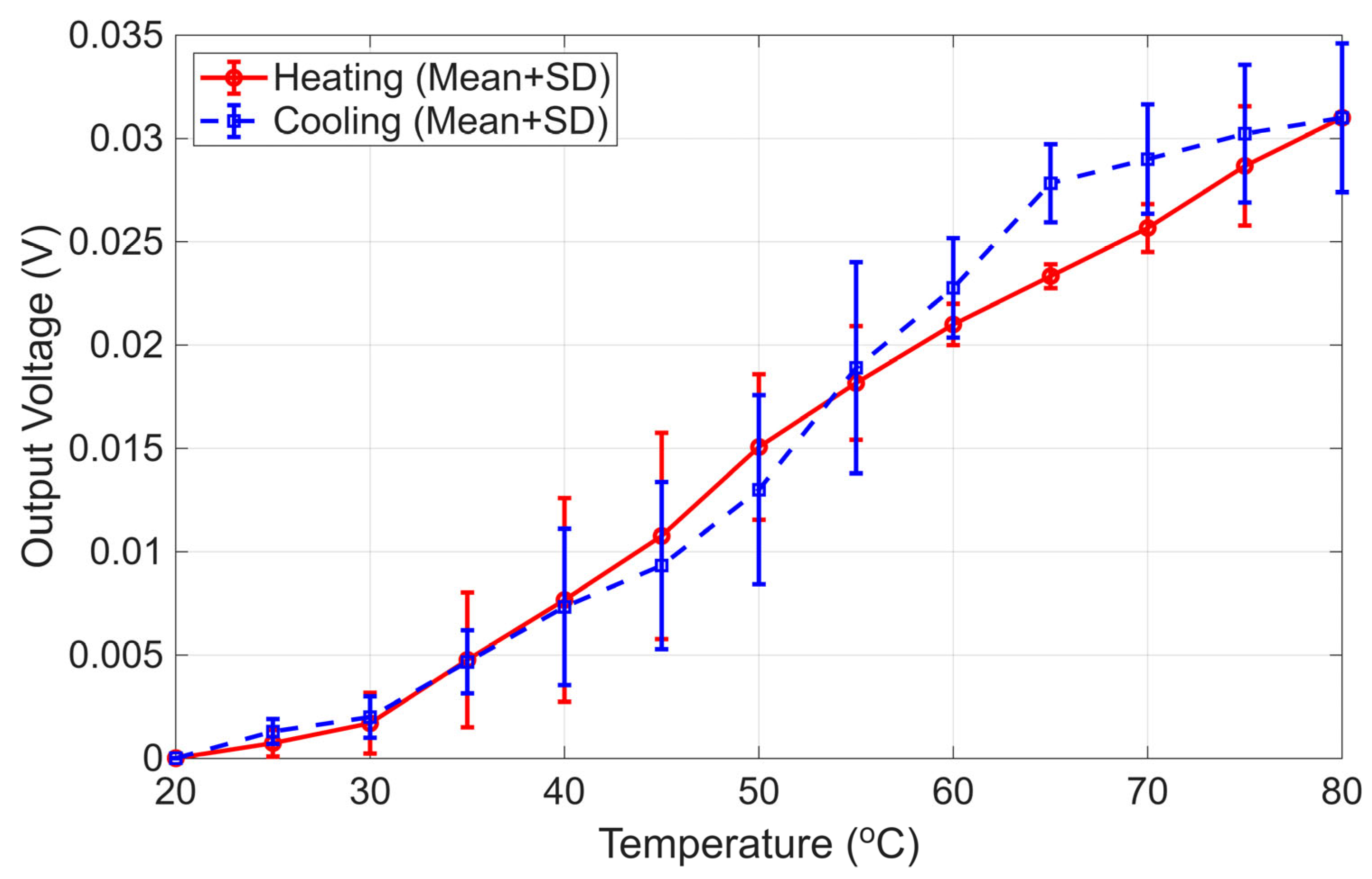
Figure 10, Figure 11, Figure 12 and Figure 13 present the mean temperature-dependent responses of the four sensor configurations. The red solid lines represent the mean output voltages during heating, whereas the blue dashed lines indicate the corresponding mean responses during cooling. Error bars represent the standard deviations calculated from the three consecutive cycles at each measurement temperature. The linearity of the heating and cooling responses was evaluated using first-order regression analysis, as described in Section 3.3.
Figure 10.
Mean output voltage of the proposed Hetero-core optical fiber temperature sensor (5t-3u, 5 mm silicone pad thickness and 3 mm Hetero-core insertion length) during heating and cooling. Error bars represent the standard deviation calculated from three consecutive heating–cooling cycles performed on the same specimen.
Figure 11.
Mean output voltage of the proposed Hetero-core optical fiber temperature sensor (5t-2u, 5 mm silicone pad thickness and 2 mm Hetero-core insertion length) during heating and cooling. Error bars represent the standard deviation calculated from three consecutive heating–cooling cycles performed on the same specimen.
Figure 12.
Mean output voltage of the proposed Hetero-core optical fiber temperature sensor (2t-3u, 2 mm silicone pad thickness and 3 mm Hetero-core insertion length) during heating and cooling. Error bars represent the standard deviation calculated from three consecutive heating–cooling cycles performed on the same specimen.
Figure 13.
Mean output voltage of the proposed Hetero-core optical fiber temperature sensor (2t-2u, 2 mm silicone pad thickness and 2 mm Hetero-core insertion length) during heating and cooling. Error bars represent the standard deviation calculated from three consecutive heating–cooling cycles performed on the same specimen.
The experimental results were evaluated in terms of temperature-dependent linearity, thermal hysteresis, output recovery, and cycle-to-cycle repeatability. Particular attention was given to differences associated with silicone pad thickness and Hetero-core insertion length. Since only one specimen was fabricated for each configuration, the repeatability results represent variations among consecutive thermal cycles of the same sensor rather than reproducibility among independently fabricated devices. Furthermore, the effects of reference-temperature fluctuations, optical-source instability, electronic drift, and unintended bending of the lead fibers were not independently quantified. These factors should therefore be considered when interpreting the measured sensor performance.
Among the four sensor configurations, the sensor with a 2 mm thick silicone pad and a 2 mm Hetero-core insertion length exhibited the smallest average thermal hysteresis, indicating relatively favorable agreement between the heating and cooling responses. However, the repeatability characteristics varied depending on the sensor configuration and whether heating or cooling was considered. In particular, the configurations exhibiting relatively low hysteresis did not necessarily provide the best cycle-to-cycle repeatability. These results suggest that silicone pad thickness and Hetero-core insertion length influence the thermal response through their combined effects on deformation transfer and bending behavior.
Although the averaged thermal response curves allow a qualitative comparison of the four sensor configurations, quantitative performance metrics are required for a more objective assessment. Therefore, the linearity, thermal hysteresis, and cycle-to-cycle repeatability of each configuration were evaluated and compared in the following section.
3.3. Performance Evaluation
To quantitatively evaluate the thermal sensing performance of the proposed Hetero-core optical fiber temperature sensors, three performance indices were employed: linearity, thermal hysteresis, and cycle-to-cycle repeatability. These indices were selected to characterize the temperature-dependent response and its consistency during repeated heating and cooling. The heating and cooling responses were evaluated separately where appropriate.
- a.
- Linearity
The linearity of the sensor response was assessed independently for the heating and cooling processes using first-order linear regression between the reference temperature and the corresponding output voltage. The coefficient of determination (R2) was used to evaluate the goodness of fit of the linear regression model:
where Vi is the measured output voltage, is the fitted voltage obtained from the regression equation, and is the mean output voltage. An R2 value approaching unity indicates superior linearity between temperature and sensor output. However, R2 does not directly represent the maximum linearity error of the sensor.
- b.
- Average Maximum hysteresis error
Thermal hysteresis was evaluated by calculating the maximum difference between the heating and cooling output voltages at corresponding reference temperatures. For each thermal cycle, the hysteresis error was normalized by the full-scale output voltage span (FS), which was independently determined from the maximum and minimum voltage values recorded during heating and cooling. The average maximum hysteresis Error for the j-th thermal cycle was calculated as
where Vh,j(Ti) and Vc,j(Ti) denote the output voltages during heating and cooling, respectively, at the i-th reference temperature Ti in the j-th thermal cycle, and VFS,j denotes the full-scale output voltage span for that cycle.
The average maximum hysteresis error was calculated from the three consecutive thermal cycles as
This averaged value was used to compare the hysteresis characteristics of the four sensor configurations.
- c.
- Repeatability
Repeatability was evaluated from three repeated thermal cycling experiments conducted under identical experimental conditions. The maximum deviation among the repeated measurements at the same temperature was normalized by the full-scale output according to
where Vmax (Ti) and Vmin (Ti) denote the maximum and minimum output voltages, respectively, among the three consecutive thermal cycles at the corresponding target temperature (Ti). VFS represents the full-scale output voltage span calculated from all voltage measurements obtained during the three cycles, independently for the heating and cooling processes.
The repeatability errors were evaluated separately for heating and cooling without cycle-specific baseline correction or normalization to a common initial voltage. Since only one specimen was tested for each configuration, the calculated repeatability errors represent within-specimen cycle-to-cycle variations rather than reproducibility among independently fabricated sensors.
4. Results and Discussion
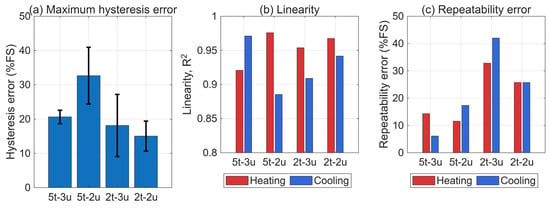
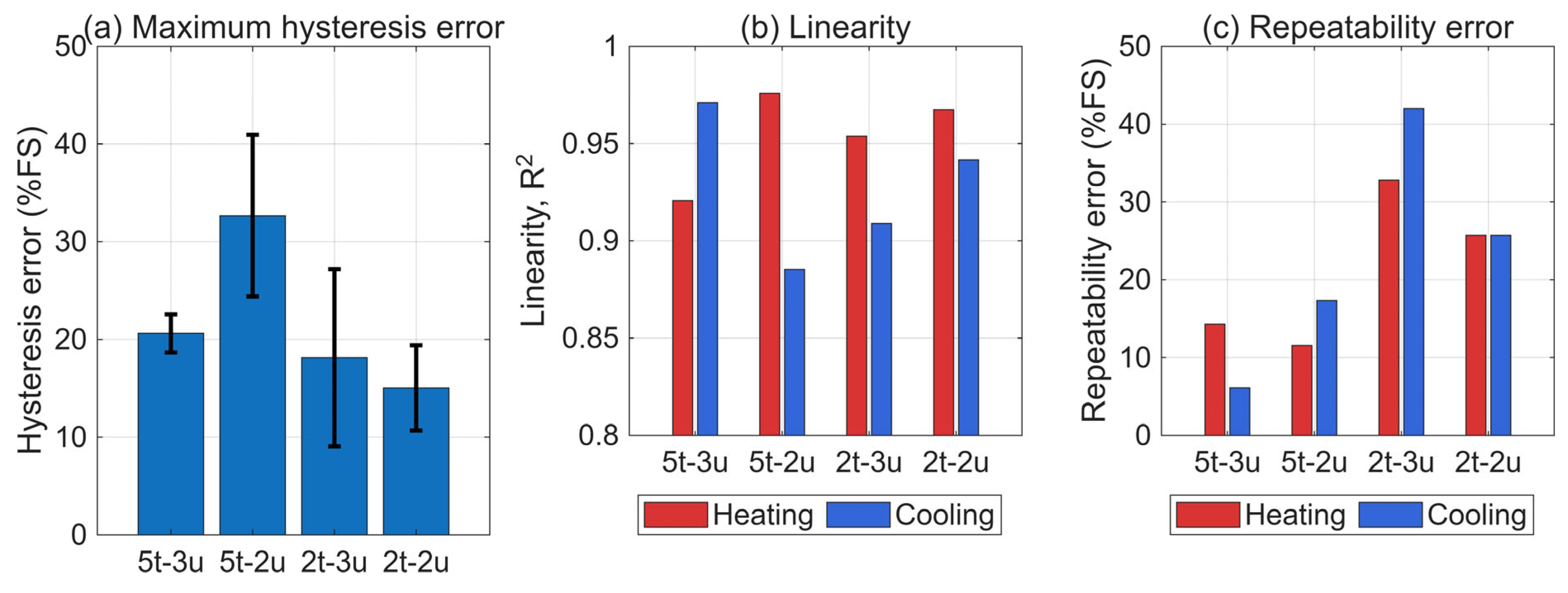
The thermal response characteristics of the four sensor configurations were evaluated through three consecutive heating–cooling cycles performed on the same specimen for each configuration over a temperature range of 20–80 °C. The quantitative results, including the average maximum hysteresis error, linear regression characteristics, and cycle-to-cycle repeatability, are summarized in Table 4 and graphically compared in Figure 14. Since only one specimen was evaluated for each configuration, the observed variations represent the thermal cycling behavior of individual specimens rather than device-to-device reproducibility.
Table 4.
Quantitative performance evaluation of the proposed Hetero-core fiber optic temperature sensors.
Figure 14.
Quantitative performance comparison of the proposed sensor configurations: (a) average maximum hysteresis error, (b) heating and cooling linearity, and (c) heating and cooling repeatability error.
Among the four sensor configurations, the 2t-2u sensor, consisting of a 2 mm thick silicone pad and a 2 mm Hetero-core insertion length, exhibited the lowest average maximum hysteresis error of 15.04% FS, followed by the 2t-3u configuration with 18.12% FS. The 5t-3u configuration showed an average maximum hysteresis error of 20.61% FS, whereas the 5t-2u configuration exhibited the highest value of 32.66% FS. These results indicate considerable differences in thermal hysteresis among the tested configurations. However, because only one specimen was tested for each configuration, the observed differences cannot be attributed exclusively to silicone pad thickness or Hetero-core insertion length. Specimen-specific variations in fabrication and mechanical assembly may also have contributed to the measured responses.
The linear regression analysis showed that all sensor configurations exhibited relatively high coefficients of determination during heating, with R2 values ranging from 0.921 to 0.976. The highest heating R2 value was obtained for the 5t-2u configuration (0.976). During cooling, the 5t-3u configuration exhibited the highest R2 value (0.971), whereas the 5t-2u configuration showed the lowest value (0.885). These results indicate that the goodness of fit to a linear temperature–voltage relationship differed between heating and cooling. The observed differences may be associated with changes in mechanical deformation transfer during thermal expansion and contraction. Potential contributing factors include the viscoelastic behavior of the silicone pad, deformation or relaxation at the adhesive interface between the PBS holder and the silicone pad, friction and interfacial slippage within the mechanical holder, and variations in the initial bending condition of the optical fiber. Thermal lag between the reference water temperature and the actual sensing-region temperature may also have influenced the measured responses. However, the individual contributions of these factors were not independently quantified. Furthermore, the R2 values describe the goodness of fit of the regression model and do not establish the absolute temperature-measurement accuracy of the sensor.
The repeatability analysis revealed differences among the four sensor configurations. During heating, the 5t-2u configuration exhibited the lowest maximum repeatability error of 11.56% FS, followed by the 5t-3u configuration with 14.29% FS. During cooling, the 5t-3u configuration showed the lowest repeatability error of 6.12% FS, whereas the 5t-2u configuration exhibited an error of 17.34% FS. In contrast, the 2t-3u configuration exhibited relatively large repeatability errors during both heating (32.80% FS) and cooling (42.00% FS). These findings indicate that the relative performance of the sensor configurations depends on whether the heating or cooling process is considered. Although the 5t-2u and 5t-3u configurations exhibited comparatively favorable repeatability during heating and cooling, respectively, the remaining errors indicate that further improvement in the consistency of the sensor output is required. The reported repeatability values characterize variations among three consecutive thermal cycles of the same specimen and should not be interpreted as reproducibility among independently fabricated sensors.
An important aspect of the present study is the introduction of a PBS-based mechanical packaging structure as an alternative to the direct adhesive fixation of the Hetero-core sensing fiber employed in the previous study [18]. As illustrated in Figure 6, the conventional adhesive-fixed sensor exhibited incomplete output recovery during cooling despite showing an approximately linear response during heating. In the proposed structure, the optical fiber is mechanically secured within a PBS holder rather than directly bonded to the silicone expansion pad. This arrangement modifies the mechanical interface through which thermally induced deformation is transferred to the Hetero-core sensing region. The experimental results confirm that the mechanically packaged sensor produces measurable temperature-dependent optical responses during repeated heating–cooling cycles. However, because a matched comparison with the conventional adhesive-fixed sensor was not conducted under identical experimental conditions, the extent of any performance improvement attributable specifically to the proposed packaging structure cannot be quantitatively established. Moreover, the adhesive interface between the PBS holder and the silicone pad remains present, and its possible contribution to the observed hysteresis cannot be excluded.
Several limitations should be considered when interpreting the experimental results. First, the use of one fabricated specimen for each configuration prevents a statistical assessment of manufacturing variability and limits the generalization of configuration-dependent differences. Second, the effects of screw-fastening preload, initial fiber bending, interfacial slippage, and thermomechanical deformation were not independently quantified. Third, the reference temperature was measured in the water-based thermal chamber rather than directly at the Hetero-core sensing region. Measurements were performed at 5 °C intervals after a waiting period of approximately 30 s, during which the reference temperature typically fluctuated within approximately ±2 °C of the target temperature. Consequently, the actual sensing-region temperature may have differed from the recorded reference temperature, particularly during transient heating and cooling. Such temperature variations and thermal lag may have contributed to the measured hysteresis and repeatability errors, together with mechanical deformation, material viscoelasticity, and optical or electronic signal variations. In addition, the present experiments did not independently establish the absolute temperature-measurement accuracy or dynamic response time of the proposed sensor.
Overall, the experimental results demonstrate the feasibility of obtaining temperature-dependent optical responses using the proposed mechanically packaged Hetero-core optical fiber sensor. The 2t-2u configuration exhibited the lowest average maximum hysteresis error (15.04% FS), while the 5t-2u and 5t-3u configurations showed the lowest maximum repeatability errors during heating (11.56% FS) and cooling (6.12% FS), respectively. These findings indicate that no single configuration achieved the best performance across all evaluation criteria. Although the proposed mechanical packaging structure provides an alternative to direct adhesive fixation of the sensing fiber, further optimization is required to reduce thermal hysteresis and improve repeatability. Future investigations should include controlled comparisons with conventional adhesive-fixed sensors, evaluation of multiple independently fabricated specimens, quantitative characterization of mechanical strain-transfer behavior, and validation of temperature-measurement accuracy and response time under representative electrical switchboard operating conditions. Such investigations will be necessary to establish the reliability and practical applicability of the proposed sensing approach.
5. Conclusions
This study presented the development and thermal characterization of a mechanically packaged Hetero-core optical fiber temperature sensor intended for abnormal-temperature monitoring in electrical equipment. A poly(butylene succinate) (PBS)-based mechanical support structure was introduced as an alternative to the conventional direct adhesive fixation of the sensing fiber, with the aim of improving mechanical fixation and investigating the thermal response characteristics of the sensing module.
Four sensor configurations were fabricated by varying the silicone pad thickness and Hetero-core insertion length. Their thermal characteristics were evaluated through three consecutive heating–cooling cycles performed on the same specimen for each configuration over a temperature range of 20–80 °C. The experimental results revealed configuration-dependent differences in linearity, thermal hysteresis, and cycle-to-cycle repeatability. The configuration with a 2 mm thick silicone pad and a 2 mm Hetero-core insertion length exhibited the lowest average maximum hysteresis error (15.04% FS). Meanwhile, the configuration with a 5 mm thick pad and a 2 mm insertion length showed the lowest maximum repeatability error during heating (11.56% FS), whereas the configuration with a 5 mm thick pad and a 3 mm insertion length exhibited the lowest maximum repeatability error during cooling (6.12% FS). These results suggest that the mechanical configuration and associated strain-transfer conditions may affect the thermal response of the Hetero-core optical fiber sensor, although their individual contributions could not be independently determined.
Although the proposed sensor exhibited measurable temperature-dependent optical responses, its performance in terms of thermal hysteresis and cycle-to-cycle repeatability requires further improvement. Moreover, the present experiments did not independently establish absolute temperature-measurement accuracy, dynamic response time, or device-to-device reproducibility. Therefore, the findings should be regarded as an experimental basis for further sensor development rather than as evidence of performance comparable to that of established precision temperature sensors.
Nevertheless, the proposed sensing approach offers potential advantages associated with optical fiber technology, including immunity to electromagnetic interference, electrical insulation, and remote optical signal transmission. These characteristics are particularly relevant to temperature monitoring in electrical switchboards and industrial equipment operating in electromagnetically harsh environments. With the development of appropriate optical interrogation and multiplexing architectures, the proposed sensing concept may also be extended to multi-point and distributed monitoring applications.
Future work will focus on optimizing the mechanical packaging and strain-transfer structure to reduce thermal hysteresis and improve repeatability. Further investigations should include controlled comparisons with conventional adhesive-fixed sensors, multiple independently fabricated specimens, quantitative evaluation of thermal and mechanical response characteristics, and validation of measurement accuracy, response time, and long-term stability under representative electrical equipment operating conditions. The development of suitable multi-point sensing and signal acquisition architectures will also be necessary for practical remote temperature monitoring applications.
Overall, this study provides experimental insight into the thermal behavior of mechanically packaged Hetero-core optical fiber sensors and establishes a basis for further development of electrically isolated, electromagnetic-interference-resistant temperature monitoring systems.
Author Contributions
Conceptualization, Y.-B.K. and E.-J.W.; methodology, Y.-B.K. and E.-J.W.; software, E.-J.W., T.-D.N., H.-J.K. and Y.-W.C.; validation, E.-J.W., T.-D.N., H.-J.K. and Y.-W.C.; formal analysis, E.-J.W., J.-S.P., C.-W.K. and Y.-B.K.; investigation, E.-J.W., C.-W.K. and Y.-B.K.; resources, E.-J.W., J.-S.P., C.-W.K. and Y.-B.K.; data curation, E.-J.W., C.-W.K. and Y.-B.K.; writing—original draft preparation, E.-J.W., T.-D.N., H.-J.K. and Y.-W.C.; writing—review and editing, E.-J.W., T.-D.N., Y.-B.K. and J.-S.P.; visualization, E.-J.W. and Y.-B.K.; supervision, Y.-B.K.; project administration, Y.-B.K.; funding acquisition, Y.-B.K. All authors have read and agreed to the published version of the manuscript.
Funding
This work was supported by the Pukyong National University Research Fund in 2026.
Institutional Review Board Statement
Not applicable.
Informed Consent Statement
Not applicable.
Data Availability Statement
The original contributions presented in this study are included in the article. Further inquiries can be directed to the corresponding authors.
Acknowledgments
The authors acknowledge the use of OpenAI ChatGPT(GPT-6) for assistance in preparing schematic illustrations and improving the English presentation of this manuscript. ChatGPT was not involved in the experimental design, data collection, data analysis, interpretation of the results, or scientific conclusions. All scientific content and final editorial decisions are the sole responsibility of the authors.
Conflicts of Interest
Author Hyoung-Jin Kim was employed by the company Samsung Electronics. The remaining authors declare that the research was conducted in the absence of any commercial or financial relationships that could be construed as a potential conflict of interest.
References
- Fraden, J. Handbook of Modern Sensors: Physics, Designs, and Applications, 5th ed.; Springer: Cham, Switzerland, 2016. [Google Scholar] [CrossRef] [Scilit]
- Bentley, J.P. Principles of Measurement Systems, 4th ed.; Pearson Education: Harlow, UK, 2005. [Google Scholar]
- Doebelin, E.O.; Manik, D.N. Measurement Systems: Application and Design, 6th ed.; McGraw-Hill: New York, NY, USA, 2011. [Google Scholar]
- Lee, B. Review of the Present Status of Optical Fiber Sensors. Opt. Fiber Technol. 2003, 9, 57–79. [Google Scholar] [CrossRef] [Scilit]
- Culshaw, B.; Kersey, A. Fiber-Optic Sensing: A Historical Perspective. J. Light. Technol. 2008, 26, 1064–1078. [Google Scholar] [CrossRef] [Scilit]
- Grattan, K.T.V.; Sun, T. Fiber optic sensor technology: An overview. Sens. Actuators A Phys. 2000, 82, 40–61. [Google Scholar] [CrossRef] [Scilit]
- Villatoro, J.; Monzón-Hernández, D. Fast Detection of Hydrogen with Nano Fiber Tapers Coated with Ultra-Thin Palladium Layers. Opt. Express 2005, 13, 5087–5092. [Google Scholar] [CrossRef] [Scilit] [PubMed]
- Wang, Y.; Chen, B.; Wu, G.; Xue, C.; Gao, L. Fiber-Optic Pressure Sensors: Recent Advances in Sensing Mechanisms, Fabrication Technologies, and Multidisciplinary Applications. Sensors 2025, 25, 6336. [Google Scholar] [CrossRef] [Scilit] [PubMed]
- Wu, C.; Sun, K.; Xu, Y.; Zhang, S.; Huang, X.; Zeng, S. Concrete Crack Detection Method Based on Optical Fiber Sensing Network and Microbending Principle. Saf. Sci. 2019, 117, 299–304. [Google Scholar] [CrossRef] [Scilit]
- Leal-Junior, A.; Diaz, C.A.R.; Avellar, L.M.; Pontes, M.J.; Marques, C.; Frizera, A. Polymer Optical Fiber Sensors in Healthcare Applications: A Comprehensive Review. Sensors 2019, 19, 3156. [Google Scholar] [CrossRef] [Scilit] [PubMed]
- Zawawi, M.A.; O’Keeffe, S.; Lewis, E. Intensity-Modulated Fiber Optic Sensors for Health Monitoring Applications: A comparative Review. Sens. Rev. 2013, 33, 57–67. [Google Scholar] [CrossRef] [Scilit]
- Kersey, A.D.; Davis, M.A.; Patrick, H.J.; LeBlanc, M.; Koo, K.P.; Askins, C.G.; Putnam, M.A.; Friebele, E.J. Fiber Grating Sensors. J. Light. Technol. 1997, 15, 1442–1463. [Google Scholar] [CrossRef] [Scilit]
- Hill, K.O.; Meltz, G. Fiber Bragg Grating Technology Fundamentals and Overview. J. Light. Technol. 1997, 15, 1263–1276. [Google Scholar] [CrossRef] [Scilit]
- Baldini, F.; Brenci, M.; Chiavaioli, F.; Giannetti, A.; Trono, C. Optical Fibre Gratings as Tools for Chemical and Biochemical Sensing. Anal. Bioanal. Chem. 2012, 402, 109–116. [Google Scholar] [CrossRef] [Scilit] [PubMed]
- Sasaki, H.; Kubota, Y.; Watanabe, K. A Hetero-core Splice Fiber Optic Displacement Sensor and the Accuracy Evaluation. Trans. Soc. Instrum. Control Eng. 2004, 40, 981–987. [Google Scholar] [CrossRef] [Scilit]
- Yamazaki, H.; Watanabe, K.; Mizuno, Y.; Nakamura, K. Optical Strain Gauge-Based on a Hetero-core Fiber Macro-Bending Sensor. IEEE Sens. J. 2020, 20, 13387–13393. [Google Scholar] [CrossRef] [Scilit]
- Kodokura, M.; Yamazaki, H.; Kasai, T.; Watanabe, K.; Nishiyama, M. Triaxial Accelerometer Based on a Semicircular Hetero-core Fiber-Optic Sensor. IEEE Sens. J. 2023, 23, 6638–6648. [Google Scholar] [CrossRef] [Scilit]
- Wi, E.J.; Kim, H.J.; Kitani, Y.W.; Hagiwara, Y.; Kim, Y.B. Thermal Monitoring of Electrical Switchboards Using a Silicone-Assisted Hetero-Core Optical Fiber Sensor. J. Power Syst. Eng. 2026, 30, 38–46. [Google Scholar] [CrossRef] [Scilit]
- Gangwar, R.K.; Kumari, S.; Pathak, A.K.; Gutlapalli, S.D.; Meena, M.C. Optical Fiber Based Temperature Sensors: A review. Optics 2023, 4, 171–197. [Google Scholar] [CrossRef] [Scilit]
- Tripathi, S.M.; Kumar, A.; Varshney, R.K.; Kumar, Y.B.P.; Marin, E.; Meunier, J.P. Strain and Temperature Sensing Characteristics of Single-Mode–Multimode–Single-Mode Structures. J. Light. Technol. 2009, 27, 2348–2356. [Google Scholar] [CrossRef] [Scilit]
- Wang, K.; Dong, X.; Kienle, P.; Fink, M.; Kurz, W.; Köhler, M.H.; Jakobi, M.; Koch, A.W. Optical Fiber Sensor for Temperature and Strain Measurement Based on Multimode Interference and Square-Core Fiber. Micromachines 2021, 12, 1239. [Google Scholar] [CrossRef] [Scilit] [PubMed]
- Toda, K.; Otsubo, K.; Noda, K.; Lee, H.; Nakamura, K.; Mizuno, Y. Fiber-optic Temperature Sensing Probe Using Low-coherence Light Source. In Proceedings of the 28th International Conference on Optical Fiber Sensors (OFS-28), Hamamatsu, Japan, 20–24 November 2023; Optica Publishing Group: Washington, DC, USA, 2023; Paper Th6.65. [Google Scholar] [CrossRef] [Scilit]
- Wang, Z.; Dong, Z.; Liu, Y.; Li, T.; Yu, T.; Du, Q.; Li, Y. High-Sensitive Fiber Optic Temperature Sensor Based on Range-Extended Multiorder Interference Demodulation. IEEE Sens. J. 2025, 25, 21642–21648. [Google Scholar] [CrossRef] [Scilit]

Disclaimer/Publisher’s Note: The statements, opinions and data contained in all publications are solely those of the individual author(s) and contributor(s) and not of MDPI and/or the editor(s). MDPI and/or the editor(s) disclaim responsibility for any injury to people or property resulting from any ideas, methods, instructions or products referred to in the content. |
© 2026 by the authors. Licensee MDPI, Basel, Switzerland. This article is an open access article distributed under the terms and conditions of the Creative Commons Attribution (CC BY) license.